THE MONTHLY DIGEST OF ACCUMULATED NEW MUSIC, THE SOCIAL INTER-GENERATIONAL/ECLECTIC AND ANNIVERSARY ALBUMS CELEBRATING PLAYLIST, AND ARCHIVE MATERIAL CHOSEN BY DOMINIC VALVONA

Continuing a series that started in 2023, the Digest is my one-stop column of the new and the old; a secondary home to all those releases I missed out on or didn’t get room to feature in either my Perusal reviews features or singular Our Daily Bread posts, plus a chance to celebrate timely anniversary albums and dip into my own record collection with the a special anything goes playlist, and to, finally, dip into the Monolith Cocktail Archives.
The New: this will be a briefing of a sort, with a short outline, thoughts and reactions to a number of recent albums from my inbox – currently a 1000+ releases a month on average!
The Social Playlist: choice music collected from across the ages, borders and genres, with a smattering of tracks from choice anniversary celebrating albums of worth and cult status. Consider it my unofficial radio show. The Archives: self-explanatory, but each month I chose past pieces from the extensive Monolith Cocktail back pages that have a timely ring to them.
___/NEW\___
Mohammad Syfkhan ‘I Am Kurdish’
(Nyahh)
To do justice to the backstory (one that’s filled with tragedy and yet musically inspiring) of the Syrian-Kurdish surgical nurse and musician-artist Mohammad Syfkhan, I’d need far more room. But in brief, the heralded ‘bouzouki’ (a round bodied, with flat top, long-necked lute with resonating and sharp metal strings strummed and picked with a plectrum, that was brought to Greece from Anatolian refugees) maestro and singer was forced to abandon his family’s home in the city of Raqqa during the senseless apocalyptic Syrian civil war. As various fractions fought against the Assad regime, Islamist’s most feared and brutal cult, ISIS, swooped in and proclaimed that atavistic Euphrates located city their capital: the centre of operations and a new sickening, destructive caliphate. As a minority Kurd, Syfkhan was already in danger, but when one of his son’s was murdered by the terror group, they had to join the growing diaspora of Syrians fleeing the country and region to escape persecution (by not only ISIS but Assad too); splitting the family between Germany and Ireland, where Syfkhan, his wife and young daughter were kindly taken in.
Poured into his debut album (although he started his own band The Al-Rabie Band decades ago back in Syria; and a very popular, sought-after troupe they were too) that loss and upheaval is balanced with certain joyous and romantic gusto. Longing for home mostly certainly, and yet making a new life in his adopted Leitrim sanctuary on the River Shannon; in the moment, spreading the traditional and more contemporary music of his Kurdish and Syrian roots whilst also collaborating with those native musicians and those that have also made that same Irish village their home too (including on this stunning album the composer, improviser, sound artist and saxophonist Cathal Roche, and the composer, improviser and cellist Eimear Reidy).
Like a ascending stairway, or flowing and resonating with evocative melodies magic, lute stirring ruminations sweep over Arabia and surrounding regions; referencing anonymous, collective and some original-penned compositions and dances to Islam’s ‘golden age’ of fairytale (‘A Thousand And One Nights’), Kurdish pride in the face of repression (the title-track of course) and its peoples’ struggle for independence and respect (‘Do Not Bow’), lovelorn enquires (‘Do You Have A Lover Or Not?’), and the missed daily activities, interactions of life back home in Raqqa Across it all the hand drums tab, rattle and roll; the cello arches, weeps and bows in sympathy; and the bouzouki lute swoons and rings out the most nimble and beautiful of ached and more up-tempo giddy tunes. There’s a real weight and energy at times, balanced out with slower emotional reflections; but when they go, they go! All the while you can trace the lineage, the scope of the sound back to the Middle East, to old Anatolia, more modern Turkey, and even the Hellenic; and from weddings parties to the courtly, to the caravan trails and souk. I couldn’t recommend this album enough; already sitting as it does in my favourite choice releases of 2024.
epic45 ‘You’ll Only See Us When The Light Has Gone’
(Wayside And Woodland)
With enervated and evaporated applied washes, and drifting along with a certain despondency, Ben Holton and Rob Glover’s long-running – but due to circumstances beyond their control, interrupted – epic45 project finds much to cover; from Brexit to the lunacy of the housing ladder; the parental cliques of the school gates to the death-by-a-thousands-cuts decline of England’s rural and seaside towns.
Already, unbelievably, four years since the last album (finding a favourable audience at this blog) Cropping The Aftermath (released during the height, more or less, of the Covid pandemic), You’ll Only See Us When The Light Has Gone arrives in the wake of setbacks – from the repercussions of both Brexit and Covid on touring (with the band’s Japanese tour cancelled, but also, Europe for us Brits, no longer part of the free-movement agreement, becoming a major pain-in-the-arse to circumnavigate) – to the on-going issues of Holton’s severe back problems.
But persist they did, and went away to produce this idiosyncratic take on the modern life is rubbish (and expensive) idiom. This is a resigned but rallying push back against life in, what they call, the ‘edgleland’, the ‘nowhere places’; pushed out onto the peripherals of society and inclusion. The very English preoccupations of owning a home permeate, from the ill-planned ‘floodplain’ sites that many are forced to accept, to the grander housing development promises of ‘stepping stones to country homes’. But this is a wider statement on a nation in crisis, and the pressures of keeping heads and minds above the crushing effects of unceasing disillusion; ‘dignity’ in the face of narcissistic cultural and political vacuous, the cost of living and bad health.
A very different record from its predecessor, Holton and Glover bring songwriting and vocals to the forefront; from the near forlorn shoegaze-y and woe of late 80s and early 90s indie, to what I can only describe as higher scale soulful indie and more modern effected R&B aches. But the music hasn’t exactly taken a back seat, with vapours of ‘Oh So’ period Charlatans, Neon Neon, Seefeel and The Last Sound, touches of soft power rock from the 80s and 70s, and the appearance of their former live, and My Autumn Empire, drummer Mike Rowley powering the breaks with evocations of Bloc Party at their most subdued and building a soft momentum when the drive is needed to escape the wispy drifting. Within that framework there are other nice little touches too: the glimpse of surface, environmental ambience and dialed-out conversations, a touch of folksy Iberia guitar here and there, and veil-like chime of the celeste.
epic45 somehow manage to retrieve hope and possibility from the ether of debilitating tiredness on an album that sees them move in more melodious and vocalised direction.
Boštjan Simon ‘Fermented Reality’
(Nature Scene)
Glitches in the cerebral; a coming to terms with the current age of high anxiety and alternative realities of a world in turmoil and flux; the debut solo turn from the Slovenian saxophonist and various electronic apparatus experimentalist Boštjan Simon puts the former instrument through a process of external effects to sound a surprisingly rhythmic vision of explorative jazz, broken beats, breakbeats, library music, kosmische and fourth world music.
Regular readers of the blog might recognize the name as part of the Slovenian trio of Etceteral, but Simon’s CV and involvement also runs to the groups Velkro and Trus!, plus a duo with the percussionist Zlatko Kaučuč. But now, stepping out on his own, he creates a soundboard and environment from a modified sax fitted with sensors to enable the triggering of oscillators in a modular system setup, using a new experimental interactive module called Octosense.
The results of which combine abstract blows, holds and wanes with more melodic and fluty vapours of sax, and Eastern German space programme oscillations with primal lunar bobbles and Asmus Tietchens popcorn. Taking the Jazz Messenger Jackie Mclean’s famous “saxophone is a drum” as a prompt, that instrument is reshaped in the style of Alex Roth and Andy Haas to explore new quadrants and feels of the keen and untethered: remarkably very melodious and tuneful in places, with some beats sounding like Madlib or Farhot at the helm. You can add Thomas De Pourquery to that list of reference points, but also Frédéric D. Oberland, Otis Sandsjö, Laurence Vaney, Joe Meek, Bernard Estardy (the last three in relation to the more playful, retro sounding bobbly liquids and satellite communication moments) and, on the near new age disorientated dance of ‘Gmnoe’, Ariel Kalma. That should be enough to go on for now. A solid, or not so solid but more open-ended and explorative, start to the solo career, Fermented Reality is a unique album of saxophone evocations and environmental probes.
Poppy H ‘Grave Era’
(Cruel Nature Records)
Zombie medication, zombie blades, zombie government: what a world to be dragged into. As the always awake screen lights up another terrible, distressing notification, or yet another crisis to weigh on the mind, the multi-instrumentalist, field recordist and producer Poppy H holds a phone up to society and openly records the decay, the innocuous and fleeting interactions of a world on standby as Rome burns to the ground all around them. Coping for many – and it’s neither their fault nor ours – is to keep keeping on with the daily grind; the one highlight of the day, picking up that mundane “flat white”.
All the commonality and evaporated stains of modern Britain are played out across a simultaneously creepy, lo fi bucolic, planetary, industrial and Fortean soundscape of café orders, snippets of conversations and crackles of interference. The Grave Era is certainly haunting and gray at times, and yet has a sort of reverberation of Andrew Wasylyk and the Cold Spells’ hallucinatory pastoral rusty piano, and a dreamy filter of piped church organ music – there’s even a sort of spell of what sound like the courtly music of Medieval or Tudor England at one point. For the most part, this is an album of chemical and more obscure prompts; a window in on the radioactive, plastic and technological flitching and glitch fabric of a fucked-up culture in turmoil and decline, yet far too inoculated through drugs (both the legal and illegal kinds) and the social media validation cult to face it or indeed change it. The sounds, production and vapours, visitations reminded me in equal parts throughout of the Sone Institute, Belbury Poly, Walter Smetek, Fiocz and Boards Of Canada, but go far further outside this country’s borders on tracks like the drifted passing melodious ‘Shaid & Irfan’, which could be a recording, as the traffic and daily business of others carries on in the foreground and background, of musicians from anywhere in North Africa, the Middle East, Afghanistan or Pakistan.
A country haunting itself, this is England in the dying embers of climatic, societal and political change; scored by a unique theme of recordings that masterfully encompass the erosion of action, living and hope in the “grave era”.
Meiko Kaji ‘Gincho Wataridori’
(WEWANTSOUNDS) 23rd February 2024
Heralding the transition of the cult Japanese actress-singer Meiko Kaji’s move to recording artist in the early 1970s, the vinyl specialists at WEWANTSOUND, in partnership with Teichiku Records, continue to reissue the leading star of B-movie and “ero guro” movie franchises’ back catalogue of influential albums. Following in the wake of last year’s Hajiki Uta LP, and reissued for the very first time, Tarantino’s crush (no Kill Bill’s bride without Kaji’s groundwork as the avenging Lady Snowblood; one of her most iconic roles) and untold influence for many over the decades, the star of many infamous Japanese schlock and brutal revenger horrors and violent killings sprees’ debut LP, Gincho Wataridori is up next in the roster.
Originally coaxed into the studio environment to sing the songs that would appear in and accompany a list of movie franchises (from Female Prisoner Scorpion to Blind Woman’s Curse and Stray Cat/Alleycat Rock), Kaji’s songbook repertoire expanded to include the Enka (a performative traditional form that often carried masked messages of political texts, later on, stylized with modern pop sensibilities in the post-war period), psych rock and Kayokyoku (a Japanese pop style with simple melodies and lyrics easy to play and sing along to).
The first of five albums recorded between 1972 and 1974 for Teichiku, the inaugural songbook in this run features a quartet of softly lush and Vaseline camera smeared dramatic fatale yearns and spindled, gently mallet(ed) funk-whacker and tremolo fuzzed dramas from both the Wandering Ginza Butterfly and Blind Woman’s Curse films – both Yakuza and Bōsōzoku themed revenge twists on the genre. The rest of the songs comprise of signature Oriental riffs on Axelrod, Bacharach, 60s French and Italian pop sirens and smoky cocktail cabaret jazz. Keji’s accompaniments are masterful, if light, and do the trick as her alluring, coquettish and often longed vocals rise to the occasion. Sven Wunder seems to make a Mosaic out of it, and a multitude of Hip-Hop artists have sampled it, but Gincho Wataridori remains a cult album ripe for reevaluation and attention.
Ap Ducal ‘U’
(Weisskalt Records)
Visioning a saturated spectral display of waveforms, moving bass lines and acid turned dials Camilo Palma (under his twelve year running project alter ego Ap Ducal) manages to blend kosmische and early synthesizer music with the German New Wave and post-punk genres, and various other cosmic electronics on his new succinct, minimalist entitled album U.
Collaborating with the Chilean musician Sebastián Román (otherwise known as Persona RS), Palma unites two sounds, two crafts to a fizzled, metallic filament cold wave soundtrack that moves between soft deep curves on the radar to the motorik and interstellar. Amongst the analogue electronics, the synthesized algorithms, the oft four-to-the-floor beat, and the paddled, rotor-bladed and tubular rhythms there’s echoes of Bernard Szajner, Sky Records, Heiko Maiko, Ulrich Schnauss, Michael Rothar, Eat Lights Become Lights, Basic Channel and Leonidas. ‘UUUU’ is a little different however: reminding me a bit of a Goblin Italo-Giallo horror soundtrack merged with the icy distillations and peregrinations of Edgar Froese; a bit of mystique, the occult and cold airy vacuums folded within the cold wave calculations.
Cosmic Couriers of a kind, the sonic partners on this forward propulsion make kosmiche and krautrock influences dance to a filter of tape music and minimalist techno. I’d say it was a successful conversion of all those inspirations/influences; making for a roaming and hypnotic experience.
____//THE SOCIAL VOLUME 83\\____
Continuing with the decade-long Social – originally a DJ club night I’d pick up at different times over the past 20 plus years, and also a café residency from 2012 to 2014 – playlist, each month I literally chose the records that celebrate anniversary albums, those that I’d love to hear on the radio waves or DJs play once and while, and those records that pay a homage and respect to those artists we’ve lost in the last month.
February has been a harsh harbinger of death, taking away from us both the mushroom incantation haiku experimental artist Damo Suzuki and motor city muthafucking jam kicking guitar-slinger antagonist Wayne Kramer. As a front man of a sort for Can during perhaps their most creatively fertile and influential period, from Soundtracks through to the Future Days opus, Suzuki also fronted numerous collaborative projects, his own “network” and “band”, whilst also knocking about with the post-punk-kruatrock legends Dunkelziffer. Tracks from more or less all of these ensembles appear here, alongside a couple of homages to the former MC5 rebel Kramer – ‘Ramblin’ Rose’ from the defining live rallying call for a generation Molotov Kick Out The Jams, something from his Citizen Wayne solo affair, and, just to be different, a track from his drug-addled hangout with Johnny Thunders, ‘They Harder They Come’.
Anniversary spots this month are taken up with covers of songs from Bob Dylan’s 1964 LP, The Times They Are A-Changin’, something off Amon Duul II’s less than celebrated, but much loved by me, Hijack LP from ’74, and tracks from Aretha Franklin’s Let Me In Your Life (50 this month), Mick Ronson’s Slaughter On 10th Avenue (another 50th celebration), Tangerine Dream’s Phaedra (see my archive piece below), Julian Cope’s Fried (40), Pavement’s Crooked Rain, Crooked Rain (30) and Down South’s Lost In Brooklyn (also 30 this month).
Scattered throughout are tracks I just love or dig from across the spectrum of time and genres, and, just recently loaded up onto streaming services and let out of the vaults, the title-track performance from the goddess of sublime mediative vibrations, Alice Coltrane’s Shiva-Loka Live album.
Tracks In Full:::::
Damo Suzuki ‘Wildschweinbraten (Single)’
Amon Duul II ‘Mirror’
Omar Rodriguez-Lopez and Damo Suzuki ‘Please Heat This Eventually Pt. III’
Wayne Kramer ‘Stranger In The House’
Hunger ‘Portland 69’
Aretha Franklin ‘Let Me In Your Life’
Damo Suzuki’s Network ‘Manager Cinderella’
CAN ‘Moonshake’
CAN ‘Don’t Turn The Light On, Leave Me Alone’
Johnny Thunders & Wayne Kramer ‘The Harder They Come’
Pavement ‘Elevate Me Later’
Dunkelziffer ‘Network’
Odetta ‘The Times They Are A-Changin’
Down South ‘Sitting Here’
Julian Cope ‘Me Singing’
Matt Donovan ‘Black Crow’
MC5 ‘Ramblin’ Rose’
Supersister ‘She Was Naked’
Mick Ronson ‘Growing Up And I’m Fine’
Billy Childish ‘Ballad Of Hollis Brown’
The Yankee Dollar ‘Live & Let Live’
Alice Coltrane ‘Shiva-Loka (Live)’
Tangerine Dream ‘Movements Of A Visionary’
Lee Hutzulak ‘Behind The Singing Bush’
Limber Limbs ‘Golden Rust’
James Quell ‘The World Got Taken Over By Billionaire Scum’
Arti & Mestieri ‘Saper Sentire’
PTC ‘Freestyle Na Vrtaci’
CIX ‘Clitor’s Eye’
CAN ‘I’m So Green’
____///ARCHIVES\\\____
Tangerine Dream ‘Phaedra’ Reaches 50 (From my original piece for the now sadly defunct London electronic music and architectural journal Vessel, nearly 14 years ago)
Phaedra the tragic mythological love-torn, and cursed wife of Theseus has lent herself to many plays, poetic prose, operas and even an asteroid. This rebuked siren from Greek tragedy is immortalised for a new epoch as part of the West Berlin synthesizer group’s re-textured sweeping experiments. Covering the entirety of side one, on this their first LP for Virgin, Phaedra is like an acid-trance choral eulogy of incipient multilayer motifs and arpeggiator modulations. The sounds of a ghost ship’s switchboard interlaced with twisting metallic reverb both gravitate and loom over a meandering pan-European work-out on this improvised track, which unintentionally, but rather pleasingly and to great effect, fluctuated in tone and tempo-atmospheric changes that played havoc with the analog equipment. Edgar Froese and his ever-rotating line-up of fellow freethinking cohorts had moved on from their so-called ‘Pink Period’ on the German Ohr label, to a more transcendental and ambient approach on the burgeoning Virgin imprint. Phase three in the Tangerine Dream life cycle saw them showered with, almost, unlimited funds and full use of the famous Virgin Manor Studios in Oxford – where fellow compatriots Faust recorded their IV album, a few months before. Flanking Froese on this adventure were the ex-Agitation Free drummer Chris Franke, and Peter Baumann; who’d already left the trio once before, returning just in time to record this musical suite.
Phaedra would be an album of firsts for the band with the introduction and use of sequencers and the MOOG. Franke would adopt DR. Robert Moog’s invention as a substitute to the bass guitar on the visionary soundscape ‘Mysterious Semblance At The Stand Of Nightmares’ – surely the catalyst and influence behind Bowie’s ‘Warszawa’. The polyphonic Mellotron, used to elegiac effect on the very same track, is tenderly coaxed and teased by Froese, whilst the VCS 3′s battleship pin board decked oscillation generator glides and bubbles throughout the four musical vistas of heavenly orchestrated electronica. Baumann explores the use of tape-echo and filtered effected flute on his own paean composed passage, ‘Sequent C’; a short wistful and haunting soundtrack to some imagined eastern elegy.
Released simultaneously in both Germany and the UK on the cusp of 1974, this album more than any ever by the Dream team cemented their reputation. With scant publicity and sporadic underground radio play, it sold in excess of 100,000 copies overseas and entered the top twenty album charts in Blighty, changing the fortunes of the Virgin label forever. However these prophets failed to drum-up the same exultation and adulation back in their homeland, barely shifting 6,000 records. Considered a sea-change in style and dynamics; a marked departure from their classic ‘Alpha Centauri’, this New Age themed cantata pitches itself somewhere between pantheism, mythology and a nebula traversing flight.
Choice/Favourite Albums Of The Year: Part One: A to F: A Journey Of Giraffes to Nick Frater
December 11, 2023
SELECTED BY GRAHAM DOMAIN, BRIAN ‘BORDELLO’ SHEA & DOMINIC VALVONA

Just when we thought it couldn’t get much worse: it did. 2023 has been yet another, if not even more depressing shit show on the world stage and closer to home. The stalemate defence of Ukraine, Hamas’ barbaric massacre and rape on the 7th October, and the Israeli retaliation; the ethnic cleansing of Armenians from the disputed Nagorno-Karabakh region; the cost of living crisis; threat of pandemics and all kinds of illness; bedbugs; A.I.; strikes; activism; fuel poverty; Iranian protests; and the continuing horror show of a zombie government dragging on, being just some examples. 2023 qualifies as one of the most incomprehensible years on record of any epoch; an ungovernable country in the grip of austerity point 2.0 (the architect of the last one now back to haunt us all again), and greater world untethered and at the mercy of the harridans on either side of the extreme political divide, the billionaire corporates and narcissist puritans.
Despite the myriad of problems that face artists and bands in the industry, from a lack of general interest to the increasingly punitive costs of touring and playing live, and the ever encroaching problems of streaming against physical sales and exposure, people just can’t quit making music. And for that we, as critics – though most of us have either been musicians or still are – really appreciate what you guys do. In fact, as we have always tried to convey, we celebrate you all. And so, instead of those silly, factious and plain dumb numerical charts that our peers and rivals insist on continuing to print – how can you really suggest one album deserves their place above or below another; why does one entry get the 23rd spot and another the 22nd; unless it is a vote count –, the Monolith Cocktail has always chosen a much more diplomatic, democratic alphabetical order – something we more or less started in the first place.
Whilst we are proud to throw every genre, nationality together in a serious of eclectic lists, this year due to various collaborators commitments, there will be a separate Hip-Hop roundup by Matt Oliver in the New Year. The lists, broken up this year into three parts (A to F, H to N, P to Z), includes those albums we’ve reviewed or featured on the site in some capacity, plus a smattering of those we just didn’t get the time to include. All entries are displayed thus: Artist in alphabetical order, then the album title, label, who chose it, a review link where applicable, and finally a link to the album itself.
A_

A Journey Of Giraffes ‘Empress Nouveau’ (Somewherecold Records)
Chosen & Reviewed By Dominic Valvona/ Link
‘Imbued by a suffusion of influences, most notably Harold Budd and Susumu Yokota (once more) but also Kazumichi Komatsu, Sakamoto & Sylvain, Andrew Heath and Eno, John Lane spins, weaves and spindles the essence of place and time; stirring up dulcimer-like tones of the Orient, a hand-ringing school (could also be a call to prayer, or assembly point prompt, perhaps the intermission signal at the opera or theatre) bell, or softly evoking a South American wilderness.
This is yet another essential album from one of the best artists working in this field of subtle, sometimes breathtaking and sublime, exploration – although this is experimenting without sounding like you’re experimenting, if that makes sense. It’s a joy to experience.’ DV
Dot Allison ‘Consciousology’ (Sonic Cathedral)
Chosen by DV/Reviewed by Matteo Maioli/Link
‘Folks? backstory? Chamber-pop? I do not know. All this and also none of it. Simply: Dot Allison.’ MM
Anohni and the Johnsons ‘My Back Was a Bridge for You to Cross’ (Rough Trade)
Chosen by Graham Domain
Anthéne & Simon McCorry ‘Florescence’ (Oscarson)
Chosen by DV/Reviewed by DV/Link
‘A both hallowed and moving merger of seasonal changes, suffused with a certain gravitas and meaning, the pastoral is revalued and sent out on a voyage of reflection. Florescence is yet another minimalistic work of sublime quality from a collaboration perfectly in-synch with each other.’ DV
Assiko Golden Band de Grand Yoff ‘Magg Tekki’ (Sing A Song Fighter/Mississippi Records) Chosen by DV/Reviewed by DV/Link
‘In action, they sound out a controlled raucous of rustling, shaking ancestral calls and conscious version of Afro-beat, Afro-jazz and Afro-soul; like Kuti sharing the stage with Laba Sosseh and Seckou Keita. As a counterbalance, a pause from the rolling and polyrhythmic drums, there are short interludes of time-outs in the community and under nature’s canopy of bird song: the sound of the breeze blowing through the trees overhead and all around, and of children playing in the background, as the kora speaks in communal contemplation.
At times they create a mysterious atmosphere of grasslands, and at other times, play a more serenaded song on the boulevards that lead down to the sea. On fire then, when in full swing, but able to weave a more intricate gentler sound too, the AGBDGY prove an exhilarating, dancing combo with much to share: the ancestral lineage leading back centuries, but lighting up the present.‘ DV
B__
Moonlight Benjamin ‘Wayo’
Chosen by DV/Reviewed by DV/Link
‘No one quite channels the “iwa” spirits and musical, drum-beating ceremony of Haitian vodou like one of its most exhilarating priestesses, Moonlight Benjamin. Returning with her atmospheric and grinded-scuzz swamp-blues foil Matthis Pascaud for a third manifestation of hungered electrified vodou-blues, Moonlight roughs up and adds a wider tumult of energy to her vocally incredible and dirt music imbued sound of deep southern roots, West African and Hispaniola influences: an all-round Francophone sound you could say, from Louisiana to Mali and, of course, her homeland of Haiti.
As wild as it is composed, Moonlight Benjamin takes the vodou spirits back home to Africa, before returning, via the bayou, to Haiti on another fraught electrified album of divine communication.’ DV
Blur ‘The Ballad Of Darren’ (Parlophone/Warner)
Chosen by Brian Bordello
‘An album of nostalgia, melancholy and heartbreak, and one of Blur’s best.’ BBS
Brian Bordello ‘Songs For Cilla To Sing’ (Think Like A Key)
Chosen by DV & GD/Reviewed by DV/Link
‘As ridiculous as it may seem on the surface, the lower than lo fi (making Sparklehorse sound like a flash git bombastic ELO in comparison), nee no fi King of the well-worn Tascam four-track and St. Helens idiosyncratic Les Miserable, was only one person away on the Venn diagram of Cilla Black’s orbit. His potential songbook of flange-y distorted (more through low grade recording techniques) and curmudgeon demos did make its way to the, then retired from singing, Liverpool songbird – in the three or four decades before her death more the star of TV presenting and hosting than performer.
If imagining Brian Epstein inviting Ian McCulloch to front The Tremolos, or The Red Crayola, Spaceman 3 and a budget Inspiral Carpets time-travelled back to 1962 sounds like one incredible proposition, then this songbook is for you.’ DV
The Bordellos ‘Star Crossed Radio’ (Metal Postcard)
Chosen by GD/Reviewed by GD/Link
‘The latest release by St Helens finest is a cabinet of curiosities containing some wonderful lo-fi gems and hitherto lost standards!
This album is one to treasure, an Aladdin’s cave of eclectic life affirming songs. The Bordellos are the fine web that holds the stars in place!’ GD
Jaimie Branch ‘Fly Or Die Fly Or Die Fly Or Die ((World War))’ (International Anthem) Chosen by DV/Reviewed by DV/Link
‘As an unwittingly last will and testament, the late experimental trumpeter Jaimie Branch’s final led album with her Fly Or Die ensemble is a beautiful collision of ideas and worldly fusions that pushes and pulls but never comes unstuck. In fact, despite the “world war” suffix backdrop this album of both hollered and more disarming protestation colourfully embraces the melodic, the groove and even the playful.
Fly Or Die Fly Or Die Fly Or Die ((word war)) is an accomplished album that channels the legacies of Chicago, New Orleans and New York to create an eclectic modern adventure in protest jazz.‘ DV
Julie Byrne ‘The Greater Wings’ (Ghostly International)
Chosen by GD
Bex Burch ‘There Is Only Love And Fear’ (International Anthem)
Chosen by DV/Reviewed by DV/Link
‘In the moment extemporized expressions in multiple locations, both in Europe and North America, the feels on Bex Burch’s new album are led or prompted by a hand made xylophone. Any yet, there’s no particular pattern nor pathway to these captured performances; Burch joined as she is by a myriad of notable artists/musicians, all of whom only met for the first time before each improvised performance.
Each day is a different sound and a new canvas for Burch, who transcends her bearings and musical boundaries. There’s rhythm to these improvisations, a real groove that at times counterbalances the passages of avant-garde expression to create a non-linear journey of emotions, thoughtfulness and sense of yearned fears.’ DV
C___
Luzmila Carpio ‘Inti Watana: El Retorno Del Sol’ (Bongo Joe)
Chosen by DV/Reviewed by DV/Link
‘Full of wonderment and magic, the Bolivian performer and composer Luzmila Carpio returns with her first all-encompassing album in a decade. Imbued with an ancestral heritage and language that predates the Conquistadors colonial apocalypse, Carpio weaves and plays with her Aymara and Quechua roots, its creation stories, shamanistic ceremonies and humble custodianship of nature.
Carpio invites us into her dreams and meditations with a wonderful message of universal care and respect for that which nurtures and feeds us; an unbroken link to civilizations like the Incas, propelled into the 21st century.’ DV
Billy Childish & CTMF ‘Failure Not Success’ (Damaged Goods Records)
Chosen by BBS
‘Quite simply what Billy Childish does best: spit feathers at an unplucked rock ‘n roll chicken.’ BBS
Chouk Bwa & The Ångströmers ‘Somanti’ (Bongo Joe)
Chosen by DV/Reviewed by DV/Link
‘Reuniting for a second explosive dynamic album of electrified Vodou and Mizik Rasin, the Haitian collective Chouk Bwa and the Belgian production duo The Angströmers once more propel ritual and ceremony into an otherworldly futuristic setting.
Music from another dimension, the Haitian roots music and performative religious invocations and words of wisdom from Chouk Bwa are sent through a vortex into the future on another successful union.’ DV
Julian Cope ‘Robin Hood’ (Head Heritage)
Chosen by BBS
‘An album of psych, folk and pop wizardry; one that matches up to the best of the man. Cope is on a run of brilliance that is equal to his run of greatness from the late 80s to early 90s. A national treasure, and one of the last living motherfuckers.’ BBS
Creep Show ‘Yawning Abyss’ (Bella Union)
Chosen by GD/Reviewed by GD/Link
‘Make no mistake, John Grant is a genius! As half of Creep Show he provides the moments of sheer joy! ‘Bungalow’ comes over like a song that could have been on any of his brilliant solo albums, post ‘Queen of Denmark’. It’s a fantastic vocal, the music dark, funny, sexy, – electronic music at its best and a good song to boot! Elsewhere we find him singing strange rhymes on the title track ‘Yamning Abyss’ – a song that grows on you with each play.’ GD
D____

Vumbi Dekula ‘Congo Guitar’ (Hive Mind/Sing A Song Fighter)
Chosen by DV/Reviewed by DV/Link
‘Removed from a full-on band setting of loud blazed, wailed horns, thundering drums and chanted vocals Kahanga “Vumbi” Dekula’s legendary guitar shines on a new solo album of his melodious virtuoso playing.
Hive Mind’s inaugural partnership with Winqvist’s own Sing-A-Song-Fighter label is both a joy and discovery; the Congolese star, more or less, singlehandedly capturing the listener’s attention with a captivating septet of natural, expressive performances.’ DV
Diepkloof United Voice ‘Harmonizing Soweto: Golden City Gospel & Kasi Soul’
(Ostinato Records) Chosen by DV/Reviewed by DV/Link
‘Incredibly moving and enriching for the soul, the united Diepkloof chorus has achieved the seminal with nothing more than their voices; releasing perhaps one of the year’s most essential records.’ DV
Dexter Dine ‘Flood’
Chosen by DV/Reviewed by Gillian Stone/Link
‘The self-defined Brooklyn, NY-based “apartment rocker” conjures a diverse and expansive sound that is a “mixture of melodic samples, multi-part drum grooves, and off-kilter saxophone solos”. From the Animal Collective vibes of “Flooded Meadows”, “Splatter In Two”, and “Lockeeper”, to the Juana Molina-esque “Peanutbutter”, to the Bossa Nova feel of “Valley Of Air”, the beats he creates are the driving force behind this electroacoustic pursuit.
Dine is a prolific artist, and his work is ethereal, striking, and drenched in both sunshine and melancholy.’ GS
Matt Donovan ‘Sleep Until The Storm Ends’
Chosen by DV/Reviewed by DV/Link
‘In the face of political, social discourse and ruin, lawlessness, loss and anxiety Donovan captures the evocative moments and scenes we all often take for granted; turning nighttime walks, the memories of loved ones into something musically and sonically lasting.
Barefoot Contessa daydreams sit well with clavichord buzz splintered boogies on yet another enriching and rewarding album that slowly unfurls its understated balm of warmth and also protestation gradually over repeated plays. On the fringes certainly, a true independent diy artist, Matt Donovan is far too good to stay under the radar. Do yourselves a favour, grab a copy on bandcamp now.’ DV
Dur-Dur Band Intl. ‘The Berlin Session’ (Outhere Records)
Chosen by DV/Reviewed by DV/Link
‘Marking the first session of new-recorded music since the halcyon days of their heydays in 80s Somali, the revivalist legacy incarnation of the Dur-Dur Band is back with a truly “international” sounding groove.
Simultaneously familiar whilst offering a fresh songbook (of a sort), the Dur-Dur Band Int. Berlin Session is as lilting as it is dynamic. Above all it’s always grooving to a unique fusion of worldly rhythms and beats, catapulting that Somali funk to new heights and hopefully making new fans with lively and cool performances. Nothing should keep you buying a copy.’ DV
Dutch Uncles ‘True Entertainment’ (Memphis Industries)
Chosen by GD
Dyr Faser ‘Karma Revenge’
Chosen by DV/Reviewed by DV/Link
‘It turns out that Dyr Faser are rather good at mixing the esoteric krautrock of the Amon Düül family (especially the Wagnerian acid-wash and otherworldly vocals of Renate Knaup-Krötenschwanz) with grunge, alt/post/space rock and doom; bridging morbid curiosities, spirals of melancholy with black sun fun, fun, fun! A great duo to discover. ” DV
E_____
Eamon The Destroyer ‘We’ll Be Piranhas’ (Bearsuit Records)
Chosen by BBS/Reviewed by BBS/Link
‘Performed with a wit and wisdom only matched by the beauty and musical genre hopping extravagance not seen since John Peel dropped his record collection down three flights of stairs… A madness of electronica, psychedelia, dance and pop; at times sounding like an inspired Momus after sharing magic mushroom soup with Cornelius and Ivor Cutler. Yes, there is magic in these tracks that one can lie back and completely lose themselves in…’ BBS
The Early Mornings ‘Ultra-Modern Rain’ EP (Practise Music/Rough Trade)
Chosen by GD/Reviewed by GD /Link
‘It is an exhilarating ride of moody bass lines, spikey guitar, distorted chords and garage drums with vocals by Annie Leader.’ GD
Ex-Norwegian ‘Sooo Extra’ (Think Like A Key)
Chosen by BBS/Reviewed by BBS/Link
‘Sooo Extra is the 14th album from Ex Norwegian and like all the other Ex Norwegian albums I have heard it is a rather excellent affair full of pop hooks and has a lovely undercurrent of darkness, a bittersweet taste of songwriting savvy you really do not come across everyday: sadly.’ BBS
F______

Fantastic Twins ‘Two Is Not A Number’ (House Of Slessor)
Chosen by DV/Reviewed by DV/Link
‘Competitive from the outset, birthed from a primordial cosmic womb, the Fantastic Twins in Julienne Dessagne’s otherworldly sci-fi fantasy go through hellish travails and separation before finding a final resolution. From the bawled birth of ‘I Was First’, the Berlin-based French producer, musician and vocalist explores the magic, duality and multiplicity of twins over an album of metallic, chrome and liquefied material sci-fi and otherworldliness: even the haunted and supernatural.
Albums from Carl Craig, Man Parrish, Fever Ray, Andy Stott and others, alongside the influence of Cosey Fanny Tutti, Chris Carter, Coil, Nina Simone and Pan Sonic can be added to the depth and range of this accumulative mood board and framework.
It proves a fertile concept and doorway to the investigations of the “psyche” and its relationship to all manner of inquisitive explorations. A most striking sophisticated debut from an artist with depth and curiosity.’ DV
Fat Francis ‘Oyster’
Chosen by DV/Reviewed by DV/Link
‘Disillusioned despondency and a touch of the roguish are filtered through softened hues of idiosyncratic lo fi beauty, as Fat Frances’ hardened, worn-down posterior reveals a heart-wrenching drip-drip pouring of poetic insecurity, dealt and languorous resignation.
Yet despite the wretchedness of the world, the austerity and the lawlessness and directionless malaise of our times, there’s a melodious magic to be found in this rough diamond’s (excuse the cliché) Northern lament. It’s as if Frances has somehow brought an air of Bonnie & Clyde folklore, or an enervated and far less violent Badlands to a West Yorkshire pastoral landscape.
Oyster has quickly become one of my favourite albums of 2023 – the balmy washes and heartache wistfulness drift of ‘Billy’, a worthy earnest but sublime song, being just one highlight. It should if life was fair, bring attention and plaudits to this artist, but I won’t hold my breath.’ DV
Fhae ‘Sombre Thorax’ (4000 Records)
Chosen by GD/Reviewed by GD/Link
‘This is a wonderful album of ethereal, ambient, dream-folk-pop that ebbs and flows like the tides and inhabits its own world of subtle beauty. Sometimes, mists of the sea seem to creep into the music and the edges of reality become blurred, the music shape shifting into another dimension!
A fantastic debut album, I can’t wait to hear more!’ GD
Fir Cone Children ‘The Urge to Overtake Time’ (Blackjack Illuminist Records)
Chosen by GD/Reviewed by GD/Link
‘This is fantastic album from Berlin based band Fir Cone Children. It sounds like it was recorded in 1979 when New Wave (Post Punk) creativity took hold for a couple of years and no two bands were the same!
Time Needs an Upgrade’ sounds like the Cure mixed with the Pop Group. ‘Snowblack’ sounds like Wire led by Jeff Lynne! ‘The Inability to Raise the Left Corner of my Mouth’ sounds like the Buzzcocks if they had been from San Francisco circa 1968. ‘It Feels Complete’ sounds like the Cramps if they had been Buddhist Monks! ‘Spider School’ sounds like the Scars mixed with the Undertones and Interpol. ‘One Hundred Years’ sounds like the Sound mixed with Wire and MBV! But moreover, although there are always comparisons to be made, Fir Cone Children have an individual spark; the music is much more than the sum of its influences! Perhaps, the best German band since Faust!’ GD
Flagboy Giz ‘Disgrace To The Culture’ (Injun Money Records)
Chosen by DV
‘Exciting bounce-hip-hop-modern-R&B cross-pollinations from the colorful, parading Mardi Gras tail-feather shaking chief, who once more leads with attitude and verve another street theatrics company of like-minded artists on a strut through New Orleans. The second album from motivator, performer, producer and MC, Flagboy Giz – he of the world famous Wild Tchoupitoulas Mardi Gras Indians -, and his crew of contributors, is a rambunctious hyper merger of The Meters, Neville Brothers, Lee Dorsey, Dr. John. Master P, Lil Wayne and DJ Jubilee. What’s not to like.’ DV
Flat Worms ‘Witness Marks’ (Drag City)
Chosen by DV
‘I’d like to believe the reemergence of the L.A. garage-punk-rockers is down to my glowing review of the their Live In L.A. album from 2022 (which made our choice albums of that year). But whatever the reasons, their return (back once again in the Ty Segall fold) is very much welcome; especially as they’ve lost none of that vociferous wired attitude and spirit. Witness Marks is an assured, mature and heavy vortex of growling and fierce, but slacker too, Gang Of Four, Salem Trials, Modern Lovers, The Fall and The Southern Death Cult sounds. And if that doesn’t grab you, nothing else will.’ DV
Flexagon ‘The Towers I: Inaccessible’ (Disco Gecko)
Chosen by DV/Reviewed by DV/Link
‘Through a near domination of the high seas, a skill in winning wars, a Norman lineage and generally to annoy the French, the Channel Islands have been a British dependency for centuries. During that time a whole lot of history has passed under the bridge; the last 200 years of which are channeled by the Guernsey native, artist and environmental, site-specific composer Flexagon.
A work of site-specific atmospheric stirrings and timelessness, The Towers I: Inaccessible album translates the off-limits sites of Guernsey into a multi-layered sonic map for inquiring minds. An Island life, history and shared trauma is transduced across a mix of styles and delivery methods as both repurposed and more derelict out of bounds architecture is allowed to breath and to tell stories of the history that’s passed through its doors. Even with the all too awful reminders of Guernsey’s occupation (finally liberated in the May of 1945 after nearly five years of German authoritarian rule; at least a thousand of its people deported to camps in Southern Germany) these towers transmit plenty of arresting Meta and fertile research, which Flexagon and his foils have turned into a lush, dreamy and mysterious veiled journey.’ DV
Nick Frater ‘Bivouac’
Chosen by BBS/Reviewed by BBS/Link
‘The art of the concept album is alive and well and living in the confines of Nick Frater’s new album Bivouac; an album about escaping post industrial Britain and seeking solitude in a woodland sanctuary.
All the tracks run into each other giving you the blanket of warmth and melody, which really is not a bad thing and with the coming Winter months can indeed be an essential requirement as it may be the only warmth we get this year. It’s sunshine pop after all. It brings to mind the magic of Jellyfish and Squeeze at their best. The 70s am pop of Andrew Gold, Billy Joel, Todd Rundgren all collide and cause an explosion of one of the most heart warming and joyful albums of the year.’ BBS
Hi, my name is Dominic Valvona and I’m the Founder of the music/culture blog monolithcocktail.com For the last ten years I’ve featured and supported music, musicians and labels we love across genres from around the world that we think you’ll want to know about. No content on the site is paid for or sponsored and we only feature artists we have genuine respect for /love. If you enjoy our reviews (and we often write long, thoughtful ones), found a new artist you admire or if we have featured you or artists you represent and would like to buy us a coffee at https://ko-fi.com/monolithcocktail to say cheers for spreading the word, then that would be much appreciated.
A May Digest: August Cooke, Andrew Hung, Amon Düül II, Julian Cope, Social Playlist #76…
May 25, 2023
New Music on our radar, archive spots and now home to the Monolith Cocktail “cross-generational/cross-genre” Social Playlist – Words/Put Together By Dominic Valvona

PHOTO CREDIT:: ZOE DAVIS
A new thread, feed for 2023, the Digest pulls together tracks, videos and snippets of new music plus significant archival material and anniversary celebrating albums or artists -sometimes the odd obituary to those we lost on the way. From now on in the Digest will also be home to the regular Social Playlist. This is our imaginary radio show; an eclectic playlist of anniversary celebrating albums, a smattering of recent(ish) tunes and the music I’ve loved or owned from across the decades.
May’s edition features new music from Andrew Hung, Laraaji & Kramer, Chocolate Hills, August Cooke and Läuten der Seele. And in the Archives there’s the 50th anniversary of Amon Düül II‘s Vive La Trance and 10th anniversary of Julian Cope’s Revolutionary Suicide to celebrate and look back on.
NEW MUSIC IN BRIEF
Andrew Hung ‘Ocean Mouth’
(Taken from the upcoming Deliverance album, released the 11th August on Lex Records)
Still envisioning hope in the expanses of what is a purer future constellation, former Fuck Button foil turn soundtrack composer and trick noisemaker producer (a pretty deft portrait painter too as it happens: see the Frank Auerbach-like artwork that accompany his solo releases) Andrew Hung is back with another candid, if universally reaching, album of diy methodology big sounds. Yes big, as in anthemic, with tracks that build towards cathartic outpourings. None more so than the first track to be aired from the upcoming Deliverance album (released by Lex again, later on in August) ‘Ocean Mouth’. A rave-y Bloc Party and White Lies in a hopeful union with a Robert Smith fronted Freur, Hung is both humbled and in heartfelt consolatory spirit as he progresses from fear to love whilst facing a litany of truths, anxieties and realisations: A therapy session of the highest musical quality. As with all Hung’s material, it only gets better and better, and this album looks set to be every bit as connective and reaching as 2021’s Devastations (a Monolith Cocktail choice album of that year no less).
Laraaji & Kramer ‘Submersion’
(Taken from the BAPTISMAL – Ambient Symphony #1album, released 2nd June by Shimmy Disc)
Divine styler of radiant ambiance zither spiritualism Laraaji can be found in communion with no less a pioneer than Shimmy Disc founder and downtown no wave doyen Mark Kramer, on this latest release from the New York label. Two pioneers of their form together over four movements of immersive, deeply affected mood music, draw on their extensive knowledge and intuition to create suites rich in the mysterious, the afflatus and more supernatural. Cycle One in this collaboration is a Baptismal symphony, the first part of which, ‘Submersion’, I’m sharing with you all today.
See also my review of Laraaji’s iconic ‘Ambient 3: Day Of Radiance’
Chocolate Hills ‘Mermaids’
(Taken from the Yarns from the Chocolate Triangle album, released by Orbscure on the 16th June)
Floating a fantastic voyage into the Bermuda Triangle, the long-running collaborative duo of Paul Conboy (Bomb The Bass, Metamono) and The Orb‘s Alex Paterson conjure up signature lost sounds and immersive languid soundscape on their new album together, Yarns from the Chocolate Triangle. Under the lunar and ether inhaled Chocolate Hills alias, the foils mine their vast experience and CVs of electronic, ambient, analogue cult sounds, library music, kosmische and new age to navigate that forbidden zone phenomenon of lost ships, aeroplanes and people. It makes for an interesting cartography, as this short teaser, ‘Mermaids‘, shows. Expect to hear more at a future date: maybe even a review.
See also my piece on Metamono’s Creative Listening
August Cooke ‘FLYING SWIMMING DREDGING’
(Single release via Poets Studio)
As debut’s go, this beautifully subtle chamber-pop draw from the London-based cellist, singer and composer George Cooke is a stunner. A tastefully orchestrated evocation of such luminaries as He Poos Clouds, Arthur Russell and Surfjan Stevens, Cooke (going under the August Cooke alias) slowly builds up an emotive momentum of understated lush hymnal magnificence. He’s aided by the full choir chorus and harmony of pupils from the West London Free School and the accentuated clarinet and saxophones of the Mumbai-based multi-instrumentalist Shirish Malhotra (Zakir Hussain, Symphony Orchestra of India). Theme wise, Cooke directly challenges the listener: if our planet was radically different, would our principles remain? A promising start indeed.
Läuten der Seele ‘Schlupfzeit’
(Taken from the Ertrunken Im Seichtesten Gewässer album, released 7th July on World of Echo)
A magical. mysteriously unveiled, often in childlike awe, world emerges on the latest recording from Christian Schoppik (aka Läuten der Seele); a fantastical peregrination of environmental changes on a particular spot.
“Somewhere in the Lower-Franconian vineyards lies a hidden and mostly unknown canyon, a place that often returns to the thoughts and dreams of Läuten der Seele’s Christian Schoppik. Though a much rarer occurrence now as a consequence of environmental change, chance encounters upon the area in the past would sometimes reveal small ponds amongst the reeds, teeming with life and populated by colonies of newts and the now endangered yellow bellied toad. The transience of the water and the wildlife it hosts, dependent on season or climate, lends the area an almost fantastical, dream-like quality. Was it ever even there at all? A secret place that may or may not be present holds vast appeal to some enquiring minds… Ertrunken Im Seichtesten Gewässer, the third Läuten der Seele album in two years, is inspired directly by these experiences. Translating as ‘drowned in the shallowest stretch of water’, a title as pregnant with dread as it is wonder, the themes present speak both to personal memories and a wider understanding of place and time, and how we might interpret our own position within an ever-changing, sometimes disappearing world.
The record is presented as two long-form pieces divided into four separate movements, each titled so as to reflect this natural environment and its intersection with imagination, relying on processes of collage that draw from myriad indeterminable samples, field recordings and various recorded instruments. Those familiar with Schoppik’s work, both as Läuten der Seele and with Brannten Schnüre, will find present many of his signature tropes – the way deeply layered collages render abstracted visions of the past alive in the present – though what is always significant about his approach is not so much aesthetic as the wider concepts it attempts to express and emote. Indeed, emotional response is key to the Läuten der Seele sound, how overlapping notions of nostalgia, memory and identity calibrate experience and understanding of who we are and the world around us, whether it’s a world that’s gone or another imagined into being. If you observe the artwork closely enough, you may find a clue as to the canyon’s location, though such specifics are beside the point. The music itself infers a wider sense of the impermanence that characterises hidden worlds, wherever they might be or whoever they might belong to.”
ARCHIVES/ANNIVERSARY
Amon Düül II’s Vive La Trance Reaches Its 50th Anniversary

Admittedly not one of Amon Düül II’s best, Vive La Trance embraced a weird concoction of Roxy/Bowie glam and earnest sincerity bordering on the whimsy at times. And yet, it had its moments too as my original essay on this much discounted album in the Bavarian band’s cannon will testify: especially almost debauched Weimar Republic punk hysterical ‘Ladies Mimikry’ and Renate Krötenschwanz-Knaup prophetic Kate Bush performance on ‘Jalousie’.
Grounding:
1972 to 1973 proved bumper years for the Duul, with five albums in total being released across that timespan.
Vive La Trance was the last album of what might be argued their most productive period: though it came with some derision. To be truthful, in part, this record is the sound of a band worn-out and fatigued, with its wide genre-spanning catalogue of songs and its rather awkward Euro rock clichés. The band now more than ever flittering with commercialism.
Recorded in the spring of ’73 Vive La Trance contains many highlights despite its more structured songwriting approach. Saying that though, they did manage to maintain an ear for the esoteric, and also still conveyed their political leanings.
Songs such as ‘Mozambique’ acted as a rallying testament to the man and his raping of both a nation and a continent in the name of colonisation. Furthermore it carries a dedication to Monika Ertl, who was killed by Bolivian security forces in Hamburg that same year – Ertl was a member of the Marxist revolutionary group alleged to have taken part in the assassination of the general responsible for capturing and killing Che Guevara. At the time she was bringing a former Nazi war criminal to justice and was leapt on by South American agents whilst back in her homeland.
This move away from their more pagan and Gothic sounding heyday didn’t lead them away from the harsh realities of the upheavals in society – oh no! Whilst in the UK we were dressing up in glitter and having a jolly good time with glam rock, Germany was still gripped with the Baader Meinhof fall-out and the political right still crushing those who didn’t toe the line. Amon Duul II remained resolute in their ideals.
This album has some more touching and less establishment baiting moments on it with songs like ‘Jalousie’, a Kate Bush sounding lament built on a wordplay of surveillance – using the double meaning translation of the title it describes a touching but fateful meeting of minds in a fleeting moment, an affair of sorts watched on by a third party.
The tune ‘Manana’ has another warm and glowing feeling to it as a mariachi backed band ambles its way pleasantly enough through a quick three minute little ditty.
Also featured on here is what can only be described as proto punk with the track ‘Ladies Mimikry’: an attempt at both Bowie and Roxy Music, which ends up sounding like none of them. Instead they create an entirely new genre.
The players on this album are made up of the usual hardcore that played on Wolf City and the UK tour; though they lost Danny Fichelscher on permanent loan to Popol Vuh.
Lothar Meid hung on in the background, though he now joined the lesser-known side act Achtzehn Karat Gold from whom Keith Forsey also joined.
New member Robby Heibl made a huge contribution to the new line up, playing seven different instruments throughout the record.
Falk U Rogner upped his contribution as now most of the band received writing credits and swapped around instruments. The vocals were shared mostly between Chris Karrer and Renate; backing came from a number of affiliates.
The albums artwork was provided by both Falk and Jurgen Rogner this time round with what looks like a drying out photo hung up by a clothes peg surrounded by a strange electrical storm background. Amon Duul II’s moniker is made up of machine looking letters, which are made to appear as if they are in motion, the albums title sits between the two undisturbed and rather plain.
Turning over to the back cover and you are met with a number of photos depicting the band in various states of dressing up. Their costumes look Elizabethan except for one member who’s dressed up in a lion’s costume. Renate gets away with being dressed in a floppy hat though one guy looks like the guitarist from Slade has dressed him.
They are all photographed in the middle of a road, no it’s not an analogy to the music found within.
Review
A Morning Excuse’ opens the album with a bird-call effect delivered from Falk’s VCS3, as a repetitive guitar riff slowly jars away in the background. Chris Karrer sings in a semi mock disdain at first before dropping to an emotional lament in the chorus; his attempts at holding on to some lost love are conveyed in this warming little pop song. This tune slightly boxes in any attempts for the free flowing musicianship of Amon Duul II to really let go, the plodding rhythm treads water until we hear the quirky twist half way through which emphasis that there is still ingenuity at work.
‘Fly United’ falls back on the previous folk echoes of Carnival In Babylon as Weinzierl plays some prime cuts of bass and adds some great lead guitar work. Renate and new boy Robby take on the vocals with a forlorn poetic series of spiritual slogans lifted from the headier days of the commune. The middle section breaks out in a nod to Wolf City before drawing to its conclusion: clocking in at a healthy three minutes.
Renate is given centre stage to perform a proto Kate Bush style vocal on ‘Jalousie’. This track is a slice of the fantastical, delivered as a soft focus ballad – it’s among the most endearing Duul tracks of all time. The title translates as both French for jealousy and is a type of Venetian blind window. This is a play on words then, which conjures up some romantic meeting of minds behind closed doors, whilst secrets are brought to the boil in a fleeting moment of connection: break out the fucking Mills & Boon.
A song of two parts, the middle section builds to a rolling rally cry with some subtle but moving melodies that cleverly encapsulates the affair as its being unveiled.
The long German titled ‘Im Krater Bluhn Wieder Die Baume’ roughly translates as “in the grater again Bluhn Baume”: nope still none the wiser!
A pastoral old folk like medieval canter that does its best to sound interesting but merely acts as an instrumental segue way. Falk’s organ is surrounded by light drum breaks and rock guitar licks as it merrily dawdles along on its short journey. It makes way for the classic three-part side one climax ‘Mozambique (Dedicated To Monika Ertl)’; a return to the past glories of Yeti.
The intro starts off with a pleasant enough African humming choir accompanied by a chorus of hand drums before being cut off and making way for some power folk. Renate on lead vocals sings quite literally of the white man’s rape of the continent; Mozambique has a history of civil war and rebellion, dealt a particularly harsh horrid blow from their old colonial masters. The chopping off of hands and other such ghoulish details follow as freedom is advocated through the good fight against the Westerners’ tyranny. The pace is picked up as it really starts motoring along and turns into some kind of space rock jam; the vocals become more harassed as Renate with shocking disdain makes us all feel bad. An eerie whispered message of “good night and fight” emerges from the fade out at the end of the epic seven-minute opus.
The Monika Ertl dedication in the title was for the daughter of Hans Ertl, a well-known German cameraman who was involved in the early Nazi Propaganda films before immigrating to Bolivia. There was a program of emigration to South America during the thirties, call it a colonisation of sorts, as thousands of Nazi sympathisers bought land and set up farms there. Monika turned against her father’s ideology to embrace Marxism, joining the Bolivian underground movement before being involved in the murder of the man thought responsible for the death of Che Guevara. In the same year that Amon Duul II recorded this album Monika was ambushed by Bolivian security force agents in Hamburg, at the time she was bringing a former wanted Nazi to trail. I think the band gave her a good send off. A fascinating women who if you ever get a chance you should look up.
Flipping over to side 2, the dry witted entitled ‘Apocalyptic Bore’ seeps through the speakers with its swirling UFO effects emulating from Falk’s faithful VCS3 and Harmonium. A voice over from Saturn via Sun Ra announces some cosmic slop before a sweet melodic acoustic 12- string perks up with a laid-back groove.
The story unfolds as higher beings decide to visit and make all our dreams come true, a paradise is created where anyone can do anything. This is backed up with at times a cringe worthy Euro rock shtick lead guitar solo. Of course time traveling becomes the norm as a time continuum is invented or something. People can live at any period in history at the same moment; let’s leave the crazy type Hawkings calculations aside.
No love, no war, no angst what a tiresome place.
Well what do you know! The kids hate it and get rather bored so the aliens decide to bugger off (“leaving for the great bear”): there’s gratitude for you!
‘DR’ is a tale of pills and bellyaches as prescription drugs are handed out willy nilly for all our ills. The music is awkward Bowie, and features some violin stabs to break up the track, though it eventually runs out of steam.
‘Trap’ lets Reante sing a tale of a credit card paying lover who obviously misread the signals somewhere down the line. Again a heavier structured track that almost has the first signs of the pub rock movement that was later to turn into punk emerging. The ending starts to get interesting but finishes in a predictable cut short manner.
‘Pig Man’ starts with a quasi-Lynyrd Skynyrd sounding intro before it breaks out into a lively little ditty. The jauntiness evokes some kind of unusual influences and doesn’t fit into any conventions I can think of. The lyrics stick it to those who left their conscience back in 69.
‘Manana’ means tomorrow, or it could be a reference to the Peruvian town. That aside it’s a slightly odd sounding song, which has a mariachi style band turns up to throw its lot in. Karrer does a good job on the vocals as some exotic type percussion accompanies him. It does grow on you over time.
The finale is the spiky titled ‘Ladies Mimikry’, a brooding bass line and melody sound, like the band is hauling themselves up a steep slope. Karrer’s vocals are at their most startled as he slowly loses his mind over the course of the track. A grinding punk like strutting backing sounds like a Gang Of Four in limbo. John Weinzierl on bass gets more and more angry as Karrer reaches the refrain of ladies mimicry; a loony inspired spitting delivery that sounds like he’s having electric shock therapy. A saxophone left over from Roxy Music’s debut album provokes a reaction akin to The Mothers Of Invention. Some serious hardcore theatrics at play; I can fully understand where punk came to take a breather before rearing its ugly head again in 1977.
Called the glam album by both fans and critics alike, it doesn’t really fall into any specific category and sounds distinctly German throughout.
Bowie and Roxy Music can be heard in here but not in the often derided way, I mean I’m sure Amon Duul II didn’t really want to sound like early art school glam rock.
Structured little tracks of the three minute length make this 11 track LP almost a commercial concern, the number of songs on display amount to more then the number found on the first two albums put together. This LP actually combines some very strange influences and falls into the Euro rock movement rather too well at times.
There are plenty of great moments on this album and it is still one of the best to come out of the period, unfortunately the next record Hijack even went further to confuse us all and upset many fans.
Julian Cope’s Revolutionary Suicide Is Ten This Month

Despite its promise of caustic spit and harmonious melodic nature, Julian Cope‘s ‘call-to-arms’ doesn’t hold back on the condemnation. As the title of both the leading track and album alludes, Cope’s revolutionary pride leaves the listener in no doubt. Not so much hectoring, or even bombastic, the arch druid of modern counter culture picks apart his prey with élan; attacking both failed revolutions from the here and now; lambasting the church; and bravely taking issue with the perceived – though the evidence does suggest that there is indeed a silent conspiracy – erasing from the history books, media and political stage of the horrific Armenian genocide of 1915, by the than Ottoman government: an episode, it must be said, that is hotly contested and hushed up to this day; the organised extermination of the country’s christian minorities – which also included numbers of Assyrians and Greeks too.
A middle age crisis told from Cope’s kitchen sink, or from his loft, Cope’s message may be confrontational and often blunt, yet its delivered via the influence of rebellious Detroit rock, quasi-Love and even the Sunset Strip – circa 1967. But also there’s more than enough of that 80s sound that Cope helped invent in the first place too. Actually, this is a really great little record. Almost idiosyncratic with an Englishness of a certain kind, and deprecation: despite the talk of storming the barricades, Cope is limping to man them and writing music with a real melodious and softened quality.
The Social Playlist #76

Anniversary Albums And Deaths Marked Alongside An Eclectic Mix Of Cross-Generational Music, Newish Tunes And A Few Surprises.
Just give me two hours of your precious time to expose you to some of the most magical, incredible, eclectic, and freakish music that’s somehow been missed, or not even picked up on the radar. For the Social is my uninterrupted radio show flow of carefully curated music; marking anniversary albums and, sadly, deaths, but also sharing my own favourite discoveries over the decades and a number of new(ish) tracks missed or left out of the blog’s Monthly playlists.
Volume 76 of this long-running playlist series pays tribute to those dear souls we’ve lost in the last month, including Ahmed Jamel, Andy Rourke and this month’s cover star Mark Stewart of the irrepressible Pop Group. There’s also a myriad of anniversary marked albums to make you feel very old; Deerhunter’s Monomania celebrates its tenth with the already mentioned Revolutionary Suicide album by Julian Cope, whilst Funkdoobiest‘s debut, Which Doobie U B?, the Guru‘s Jazzmatazz Volume 1 hip-hop-jazz imbued game changer and Blur‘s (perhaps one of the best named albums of all time) Modern Life Is Rubbish are all 30 years old this month. New Order‘s Power, Corruption And Lies is 40, and George Harrison‘s Living In The Material World, Paul Simon‘s There Goes Rhymin‘ Simon and the already referenced (see above) Amon Düül II album Vive La Trance have all reached the half century milestone.
Added to that list is music, recent and old from Barel Coppet, Tresa Leigh, Pavlov’s Dog, Bonnie Dobson, The Reds and more…(FULL TRACK LIST BELOW)
TRACKLIST
The Smiths ‘What Difference Does It Make? (John Peel Session 18/05/83)’
George Brigman And Split ‘Part Time Lover’
New Order ‘Ultraviolence’
The Pop Group ‘Thief Of Fire (Live At The Electric Ballroom 1979)’
Julian Cope ‘Paradise Mislaid’
Deerhunter ‘Dream Captain’
Barel Coppet ‘Missie L’abbe’
Ahmed Jamel ‘Speak Low’
Guru & N’Dea Davenport ‘Trust Me’
Thandii ‘Give Me A Smile’
Tresa Leigh ‘I Remember’
George Harrison ‘Try Some Buy Some’
Amon Duul II ‘Jalouise’
Julian Cope ‘Hymn To The Odin’
Bill Hardman & the Jackie McLean Quintet ‘Sweet Doll’
Ahmed Jamal ‘Footprints’
Funkdoobiest ‘Un C’mon Yeah!’
Ahmed Jamal ‘Feast’
Armando Trovajoli ‘Le notti dei Teddy Boys’
Pavlov’s Dog ‘Valkerie’
Bonnie Dobson ‘I Got Stung’
Ella Washington ‘Sweeter And Sweeter’
Paul Simon ‘One Man’s Ceiling Is another Man’s Floor’
The Smiths ‘William, It Was Really Nothing’
Blur ‘Chemical World’
Sunless ’97 ‘Illuminations’
Bomis Prendin ‘French Passport’
The Pop Group ‘The Boys From Brazil’
Andy Rourke ‘The Loan’
The Reds ‘Beat Away’
The Pop Group ‘St. Outrageous’
Des Airs ‘Ling’
Amon Duul II ‘Ladies Mimikry’
Sirokko Zenekar ‘Tukorember’
The Jimmy Castor Bunch ‘Psyche’
Sam Rivers ‘Hope’
Hi, my name is Dominic Valvona and I’m the Founder of the music/culture blog monolithcocktail.com For the last ten years I’ve featured and supported music, musicians and labels we love across genres from around the world that we think you’ll want to know about. No content on the site is paid for or sponsored and we only feature artists we have genuine respect for /love. If you enjoy our reviews (and we often write long, thoughtful ones), found a new artist you admire or if we have featured you or artists you represent and would like to buy us a coffee at https://ko-fi.com/monolithcocktail to say cheers for spreading the word, then that would be much appreciated.
Albums of 2018: Part One: Idris Ackamoor to The Moonwalks
December 3, 2018
Selected by Dominic Valvona, Matt Oliver and Gianluigi Marsibilio.

The decision making process:
Being the exhaustive and eclectic set of features our (choice) albums of the year are, we know you probably don’t need to or want to dally about reading a long-winded prognosis of our judgement process. But here it is anyway.
Continuing to shy away from fatuous rating systems and ‘best of lists’, the Monolith Cocktail endeavors to offer a more visceral and personal spread of worthy ‘choice’ picks, with no album dominating or holding any particular numbered position – unlike most of our contemporaries lists, stuck with the ridiculous task, for example, of explaining why one album is more deserving of their fatuous numbered spot than another.
With no hierarchical order, we’ve lined our album choices up alphabetically; split into two features – A (Idris Ackamoor) to M (The Moonwalks), andN (Thomas Nation) to (Thom Yorke) Z.
All of our favourite new and reissued albums and EPs from 2018 are of course considered to be the most interesting, vibrant and dynamic of the year’s releases. But the best? Granted, to make this list you have to have made some sort of impact, but we’d never suggest these entries were categorically the best albums of 2018: even if that might be true. Instead our list is an indicator of our amorphous tastes, rounding up another year in the life of the Monolith Cocktail, and we hope, introducing you to titles and artists/bands that may have dropped below the radar or got lost in the noise of more commercial better promoted releases.
All selections have been made by me (Dominic Valvona), Matt Oliver and Gianluigi Marisibilio.
A.
Idris Ackamoor and The Pyramids ‘An Angel Fell’ (Strut Records)
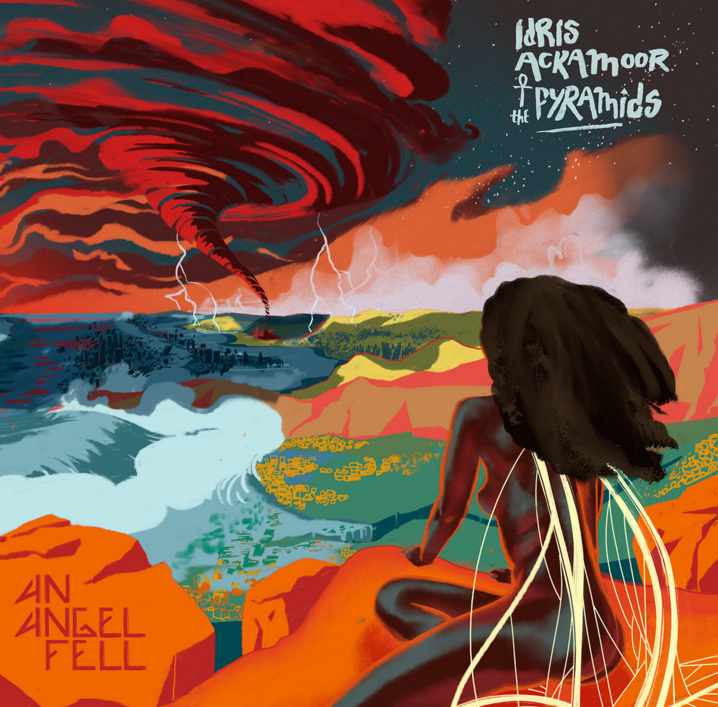
Serving a worthy musical apprenticeship from and imbued by the masters Coltrane, Rahsaan Roland Kirk and Cecil Taylor, the polymath musician, activist, director of The Pyramids ensemble and torchbearer of spiritual and Afrofuturist jazz, Idris Ackamoor once more makes holy communion with the cradle of civilisation on the lamentable An Angel Fell. Imploring a unified message, a connectivity, a reminder that we can all trace our ancestry back to the same place, Ackamoor follows up on ‘We All Be Africans’ with an epic sweeping album of Afro-jazz 2-Step ‘Warrior Dances’ and plaintive primal jazz catharsis.
Walking through the Valley of The Kings; sailing aboard Sun Ra’s Arkestra; conducting the empyrean; evoking Kuti’s Lagos Afrobeat jive; Ackamoor and his troupe traverse the mismia of a broken, corrupt world, delivering cries of anguish and auguers aplenty. Whether penning requiems to the gunned-down black victims of the US Justice system (‘Soliloquy For Michael Brown’), or in radiant prayer (‘Sunset’), they effortlessly and wondrously summon forth the leading lights of each musical genre they inhabit. Afrobeat, gospel, spiritual, funk, blues, future-past-present all come together in one of the year’s most important, enlightening and defining opuses.
(Dominic Valvona)
Ammar 808 ‘Maghreb United’ (Glitterbeat Records)

Throwing the traditional unwieldy Maghreb, before it was demarcated and split into colonial spheres of influence, back together again in the name of progress and unity, Sofyann Ben Youssef fuses the atavistic and contemporary. With past form as one half of the Bargou 08 partnership that gave a modern electric jolt to the isolated, capitulating Targ dialect ritual of the Bargou Valley on the northwestern Tunisia and Algeria border, Youssef under the moniker of Ammar 808 once again propels the region’s diverse etymology of languages, rhythms and ceremony into the present, or even future: hopefully a more optimistic one.
Jon Hassell’s ‘possible musics’ meets Major Lazer, the traversing adaptations from the Gnawa, Targ and Rai traditions and ritual are amorphously swirled or bounced around in a gauze of both identifiable and mystically unidentifiable landscapes. Mixing modern R&B, dub, electro effects with the dusky reedy sound of the evocative gasba and bagpipe like zorka, and a range of earthy venerable and yearning vocals from Morocco, Tunisia and Algeria artists, Youssef distorts, amps up or intensifies a resonating aura of transformative geography and time.
Nothing short of visionary. Full review…
(DV)
Angels Die Hard ‘Sundowner’ (Jezus Factory Records)
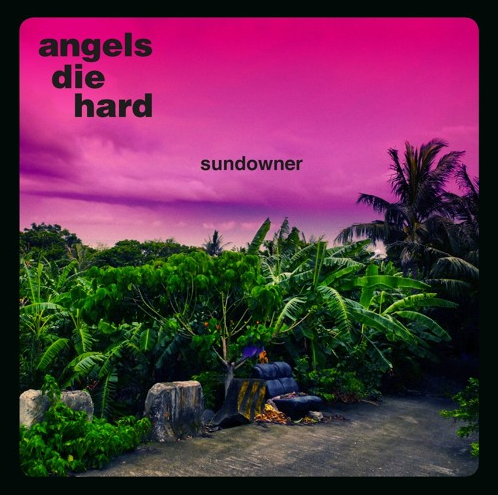
Admittedly taking some time to grow on me, the Angels Die Hard combo’s Monsterism Island meets Les Baxter ethnographic phantasm of a remote Southeast Asian archipelago instrumental concept album, Sundowner, has finely unfurled its full magic: just in time to be included in the annual albums of the year features.
Imbued with a legacy of progressive, alt-rock, psych, exotica and post-punk influences plus Julian Cope’s Krautrock compendium, the Angels transduce and channel a cornucopia of styles once more as they soundscape the tropical island of Andaman. An environmental clarion call as much as a progressive rocking exotica, Sundowner is dedicated, at least partially, to the environmental tragedy of the plastic-strewn oceans.
Beachcombing a radioactive luminous landscape of musical opportunity, from bummer downers to mind-expanding space rock jams, these Angels expand their horizons (literally), on the band’s best album to date. Some ideas work better than others of course, but when they do get it right they produce some fantastic opuses of amorphous abandon. Full review…
(DV)
Any Other ‘Two, Geography’ (42 Records)

The story of Adele Nigro (Any Other) is made of beautiful songs originating from a desire to subvert a rather conservative musical culture, just like the Italian one.
2018 has given us many beautiful pieces, of the most varied atmospheres, but to find a compact and complete album in each of its parts, touch refuge in Two, Geography (42 Records).
The numerous collaborations that Any Other has collected, as a musician, in recent years, have been invaluable to develop, refine and embellish her poetics.
The sonorities of the album are very distinct, and at the same time loquaciously soaked by all the experiences brought on stage (or in the studio) during the year that is inexorably past.
With Two, Geography, however, there is more, Adele coming out with her head held high, they are not only beautiful pieces that stand out for their immediacy and vitality, but also the international character of the project.
Any Other’s work was immediately presented as something else, for depth and acuity, starting from that ‘Roger Roger, Commander’ or from the same singles who announced Two, Geography.
The simplicity in intertwining linear arpeggios, bright rhythmic lines and a voice, both delicate and particular, makes us immediately think of the disc in a different way, we immediately understand that such a sound must be appreciated with attention and in its various nuances.
Since the first bars of ‘Silently. Quietly. Going Away’ (the first work of Any Other) you could see her skill in shaping a song form as a real opportunity for musical and textual speculation.
The song ‘Capricorn No’ is a monument of modernity that comes on, not only for its immediate and deep style, but because it plays with the atmosphere that you can hardly expect from an Italian artist.
The work as a whole is a challenge, a part of a musical resistance, a progressive push in the sea magnum of ideas that too often settle down, even in brilliant artists.
Any Other is the 2018, the beautiful and fundamental face to make us remember that, all in all, this year went well.
(Gianluigi Marsibilio)
B.
Anton Barbeau ‘Natural Causes’ (Beehive/Gare du Nord)

Ian Hunter via Robyn Hitchcock via Luke Haines via Julian Cope, wrapped inside an enigma, the Sacramento born, Berlin-based, Anton Barbeau changes his style of delivery repeatedly yet always maintains an idiosyncratic ingenuity in whatever he does. The results of an aborted project under the Applewax banner, made in the run up to the 2016 US elections, Natural Causes is the reflective, more open antithesis to what would have been a far darker and mournful proposition. Richly melodious and halcyon, this most brilliant new collection finds Barbeau both transforming some of the back catalogue (for the better) and penning new glorious sounding maverick pop songs: The quality of which are cerebral, memorable, melodic but also adventurous and inventive.
Barbeau and a congruous cast of guests lend a touching caress to a songbook of contemporary surreal lyrical musings and love songs. Unrushed, even breezy in places but hardly lacking intensity, there’s an air of nostalgia in homages to the radio stations and DJs that first sparked interest in the young Barbeau on the Hunter fronts Tom Petty band finale Down Around The Radio. And with a nod to one of the music cannons greatest ever records, The Beatles Sgt. Pepper kaleidoscope, a stab at a popsike hit (a missing link from one of Strange Days magazines 80s halcyon compilations) is made with a song that was originally written to be recorded at the venerated Fab Fours’ inner sanctum of Abbey Road, with the quirky Disambiguation.
Fans of Barbeau will be once again charmed by his unique songwriting abilities, and those still unfamiliar with the inimitable generation X artist of renown will find much to love about his psychedelic pop genius. Full review…
(DV)
MC Paul Barman ‘Echo Chamber’ (Mello Music Group)

“Potent politics, funky lounge lizard off-the-tops and bizarre hypotheses, burrowing its way through the toughest of leather bound volumes to have you picking the bones out for weeks on end” RnV May 18
In many ways this is the consummate Paul Barman album, but it bears repeating straight off the bat, while trying super hard to not sound incredulous, that ‘Echo Chamber’ features production from ?uestlove, DOOM and Prince Paul (funky/sidekick status, from stoop to playground), with additional contributions from Mark Ronson (upping the ludicrousness with a tweak of The Ronettes’ ‘Sleigh Ride’), Masta Ace and Open Mike Eagle. That’s some serious string pulling from an explicitly cult concern only reinforcing his standards in lewdness and a smart Aleck riot act both downplaying and toadying a racing IQ (his relocation to Mello Music Group keeps him in his own lane as well). Ridiculous as ever with the dictionary and remaining a brilliant observer – see ‘Youngman Speaks on Race’, and ‘Commandments’ going one better by taking the Decalogue to Sesame Street and Biggie’s Bed-Stuy – Barman carries on making the longest of long shots with battle raps that’ll bamboozle and WTF one-liners that Jackanory or congress will sadly never benefit from. Bigger, better and geekier than ever.
Bixiga 70 ‘Quebra Cabeça’ (Glitterbeat Records)
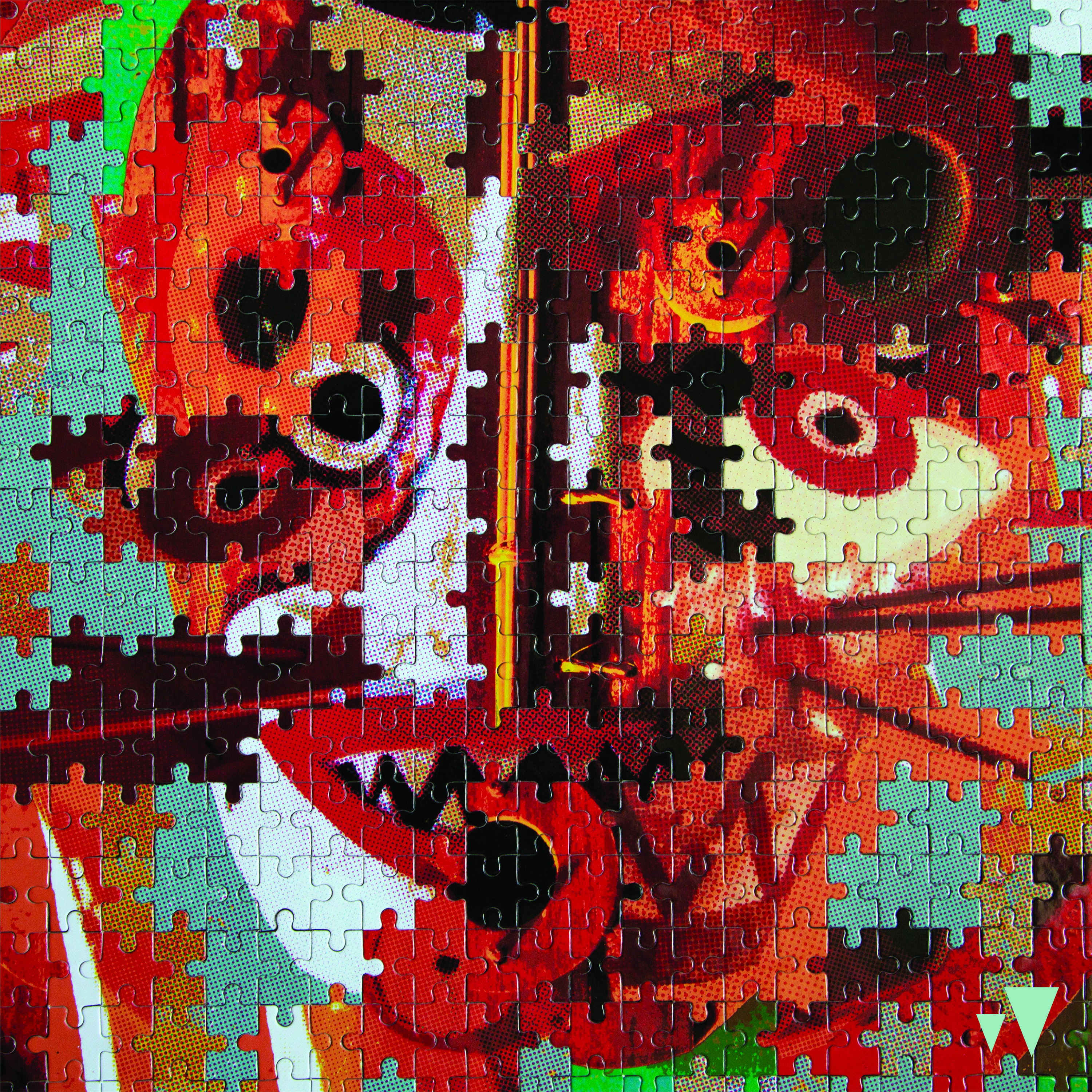
Translating as the ‘puzzle’, Bixiga 70‘s latest album is a full 360-degree panoramic evocation (both joyful and lamentable) of their homeland’s African roots. Translating those roots, an ancestry that runs through many of the band members (some individuals descended from the Africa-Caribbean religion of ‘candomble’ for instance), Bixiga are also inspired on this journey by some of the highly talented artists they’ve shared various stages with over the years. Artists such as the Ghanaian highlife singer Pat Thomas, the Nigerian sublime traversing saxophonist legend Orlando Julius and Brazilian octogenarian star João Donato. Incorporating the lot they merge their brass-y signature carnival funk and shaking Afrobeat sass with cosmic voodoo, Afro-jazz and sloping funk.
The quality as always shines through on every track, with the visions and evocations of both Africa and Bixiga’s city home of Sao Paulo articulated by an energetic but also ruminating soundtrack of the tribal, funky, cosmic, tropical, gospel and ritual. The slave portal of Benin, further outlying deserts of the sub-Sahara and busy rhythmic bustles of Nigeria are channeled via the melting pot hubs of Brazil on the group’s most epic, ancestral and geographical straddling album. It only remains to see just how great it will sound live on stage. Full review…
(DV)
The Bordellos ‘Debt Sounds’
Brian Bordello ‘The Death Of Brian Bordello’ (Metal Postcard Records)
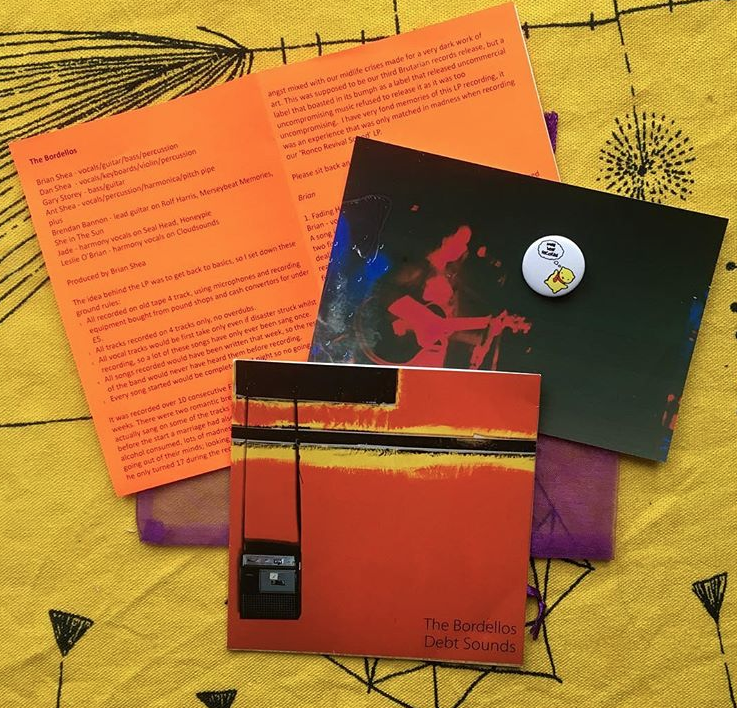
In a parallel universe the Jesus And Mary Chain never left East Kilbride; Julian Cope never formed the Teardrop Explodes; and Brian Wilson was in fact born in St. Helens in the late 1960s, and recorded all his opusus on a Tascam four-track, inspired by Mark E Smith. This alternative world is one the dysfunctional family circle The Bordellos inhabit. Probably the best lo fi rock’n’roll-meets-post-punk-meets-the-Spaceman 3 hapless band you’ve never heard of, the prolific group, headed by the patriarchal masthead Brian Bordello, have been luridly, sinisterly, laughably and pessimistically knocking-out their brand of disgruntled alternative yearnings for a decade or more with little attention from anyone other than us loyal fans – who probably need our heads examined in all honesty. You either get them or you don’t. And you could find some of their more confrontational dark humour (songs about the BBC killing John Peel, still loving the musical cannon of Gary Glitter, and on this album, Debt Sounds, some sinister predatory sexual allured shclock about Rolf Harris) too unsettling, even perverse.
Debts Sounds, in the manner of a Half Man Half Biscuit play-on-words, is The Bordellos low cost Pet Sounds. That may not be initially obvious. But stay with me on this one. Fashioned and realised by Brian from the band members and even affiliates, girlfriends and whatnots various outpourings and late night sessions into a most epic song book of unrequited love, sick love, obsessed love, compromised love, salacious love, and even some tender love – they excel themselves on the laid bare and touching ‘Spirograph’ and quasi-Beatles ‘My Life’ meets the hardened north romanticism of ‘I May Be Reborn’ (Take this for a line: “Every smoking chimney my Statue of Liberty”), Debt Sounds is full of great maverick performances and songwriting, made in a period of crisis, anxiety and manic depression. Ok…so more Don Van Vliet than Brian Wilson, but still a valid comparison.
Whereas will you hear odes, homages and eulogies to Jimmy Campbell and Faron’s Flamingos to a back track featuring vague indifferent shades of Thom Yorke, Cope, Velvet Underground, Red Crayola, Joy Division and the The Seeds? Nowhere that’s where. Brian Bordello’s Track-by-track breakdown…
Knocking out records on a whim, it seems inconceivable that the leader of the Bordellos has never actually released a solo effort until this year (and only a few weeks from the end of 2018). Paring down, enverated, Brian Bordello steps outside the family unit on his debut solo, The Death Of... Not expecting many flowers on that graveside elegy of a album title, Brian takes a sort of reflective pause and looks back on a litany of tropes that have come to encapsulate his resigned fatalism. With only a clipped, rough and unguarded acoustic guitar and his trusted Tascam for company, Brian pays tribute to rock’n’roll icons Eddie Cochran (again) and Mark E Smith (who Brain thinks should be canonised as a saint); wears his heart on his sleeve cooing songs about lingering memories of bunk-ups, unrequited wooing gone wrong and lost kitchen sink romances; and languishly but candidly weary sonnets on depression.
As lo fi as it can get, Brian’s most intimate, personal performances yet strip away all the caustic dissonance and fuzz to reveal his most brilliant songwriting. The Death Of is an often beautifully morose songbook that lays bare the talents of a true uncompromising outsider.
(DV)
Brace! Brace! ‘S/T’ (Howlin Banana)

Producing gorgeous hues of softened psychedelia, new wave, Britpop and slacker indie rock, this young but sophisticated band effortlessly melt the woozy and dreamy with more punchier dynamic urgency on their brilliant debut album.
Squirreled away in self-imposed seclusion, recording in the Jura Mountains, the isolation and concentration has proved more than fruitful. Offering a Sebastian Teller fronts Simian like twist on a cornucopia of North American and British influences, Brace! Brace! glorious debut features pastel shades of Blur, Gene, Dinosaur Jnr., Siouxsie And The Banshees (check the “I wrecked your childhood” refrain post-punk throb and phaser effect symmetry guitar of ‘Club Dorothée’ for proof) and the C86 generation. More contemporary wafts of Metronomy, Mew, Jacco Gardner, the Unknown Mortal Orchestra and Deerhunter (especially) permeate the band’s hazy filtered melodies and thoughtful prose too.
A near-perfect debut album, an introduction to one of the most exciting new fuzzy indie-pop bands of the moment. Full review…
(DV)
Apollo Brown & Joell Ortiz ‘Mona Lisa’ (Mello Music Group)

“Rugged but always smooth, reflective with a forked tongue…there’s a lot of comfort to be taken from the union of two opposing authority figures exercising supreme quality control” – RnV Nov 18
This duo’s mutual will to only work with the elite – Joell Ortiz as a member of Slaughterhouse, Apollo Brown extending his collaborative run after shared albums with Skyzoo, Ghostface Killah, Ras Kass, Planet Asia – is head start number one. Yes these are extremely experienced experts in their field who shouldn’t drop the ball, but 12 tracks, one emcee and one producer, two guests maximum, and everything absolutely finely tuned is still the best advantage to press home. A steadiness to both performances has BPMs instantly finding their sweet point so instrumental richness can build, settle, simmer and seduce, and vocals slip straight into the pocket housing an imperceptible line between recognition and vengeance. The introspection of ‘Mona Lisa’ pays respects with a feeling that it doesn’t pay to dwell, that while everything may be upbeat and secure – visuals of sauntering down a street and coloured in something like a high definition sepia – slippery slopes, with ‘Cocaine Fingertips’ the album’s most rotten apple and situations like the bittersweet resonance of ‘That Place’, are always around the corner. Another win for the seemingly indefatigable Mello Music Group as well.
(Matt Oliver)
C.
The Cold Spells ‘S/T’ (Gare du Nord)
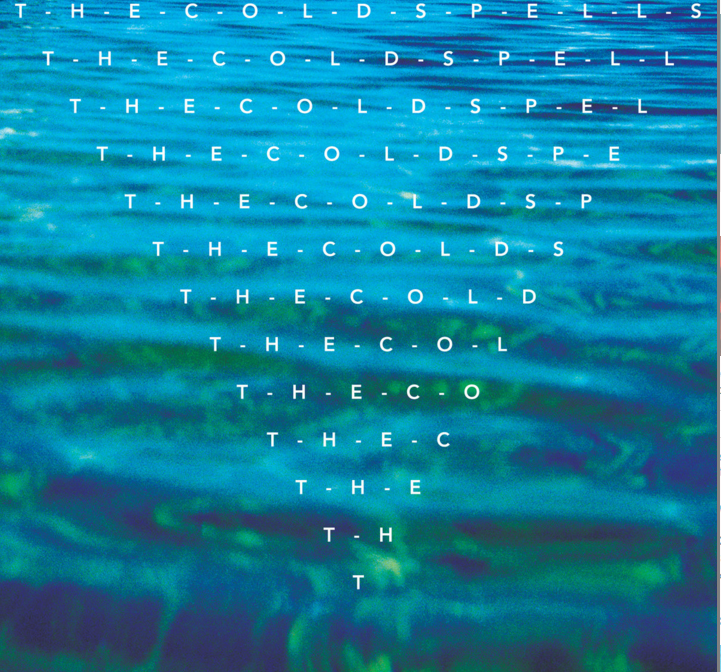
Esoterically gentle and wistful, The Cold Spells debut long player is a gauze-y organic and ambiguous (to a point) affair of undulating ‘moss covered’ circuitry, folk, quintessential English psych, paisley patterned hallucinogens and Kosmische.
Communing with the ether, connecting with the psychogeography of their chosen environment – from the soft Wiccan with forebode travail of Thomswood Hill to the alluded-to abandoned mental hospital waste ground near Hainault -, a host of spirits tune in and out of the continuous, though (as we’re told) not in a linear order, flowing suite of laudanum imbued Victoriana lyricism and Beatles-esque melody.
A surprise package, quietly unassuming, the trio’s encapsulation of an age of ghostly memories – the ancestors inhabit the band’s present to address the here and now concerns of a troubled, unstable world – is magical and gently lamentable; a perfect evocation of aicd folk and pastoral esotericism, as beautifully plaintive as it is ominous. Full review…
(DV)
D.
Die Wilde Jagd ‘Uhrwald Orange’ (Bureau B)
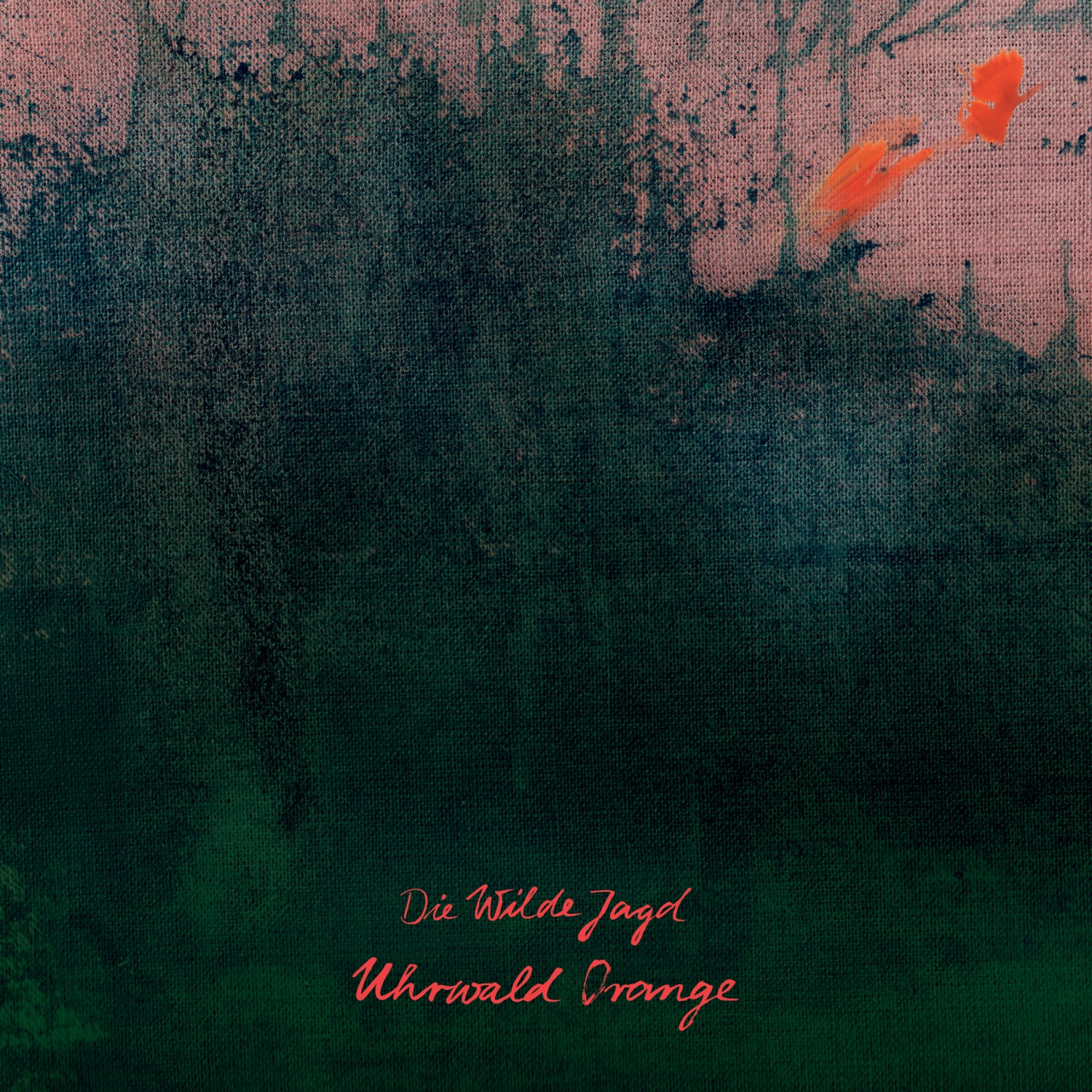
Fashioning a mysterious ‘Clockwood Orange’ world of Gothic and ominous dreamscapes, inspired by and named, in part, after the studio it was produced in, and by both the 17th century menagerie paintings of the Flemish artist Frans Snyder and the collected devotional Medieval period songs of the Llibre Vermell De Montserrat artifact, Die Wilde Jagd’s Sebastian Lee Philipp takes us on an eerie, cosmic and slinking travail through a throbbing sophisticated earthy electronic soundtrack. His musical partner on the group’s adroit debut self-titled experiment, producer Ralf Beck, is excused from the follow-up but lends out his extensive racks of vintage analogue synthesizers to Philipp, who transforms and obscures their banks of sounds into ghostly permutations, shadowy creatures and lurking, dancing and honking sonorous cries from a murky wilderness.
Uhrwald Orange is a classy imagined score, balancing cool, gleaming and aloof German electronica with menacing, nocturnal earthiness, yet also reaching for the celestial. One minute imbued with hints of Bauhaus, Killing Joke, Eno, Cluster, and Faust, the next slinking on to the Tresor club or Basic Channel dancefloor. In short: a most impressive album. Full review…
(DV)
Dur-Dur Band ‘Dur Dur Of Somalia: Volume 1, Volume 2 And Previously Unreleased Tracks’(Analog Africa)

A highlight in a catalogue of outstanding reissues from the Analog Africa label, intrepid crate digger Samy Ben Redjeb reprises the first two volumes of Somali fusion funk music from the legendary 1980s outfit, the Dur-Dur Band. Embodying a period in the decade when Mogadishu could boast of its cosmopolitan reputation – notably the European chic Via Roma stretch in the Hamar-Weyne district, a colonnade for café culture, cinema and of course music – the hybrid Dur-Dur Band moped up the polygenesis fever of their native city with effortless aplomb during their short heyday.
Saved from ‘tape-hiss’ and ‘wobbles’, remastered to sound the best they’ve ever sounded, these curious but above all loose-limbed nuggets successfully merged a myriad of Somalia traditions with a liberal smattering of disco, reggae (via the northern part of the country’s ‘Daantho’ rhythm style; an uncanny surrogate for Jamaica’s number one export), soul and funk. Mirroring a similar fusion thousands of miles away in New York, the Dur-Dur languidly produced an electrified no wave-new wave melting pot.
Split up across a triple LP and double CD formats the Dur-Dur Band’s first two albums proper, Volumes 1 and 2, and a couple of unreleased tunes feature on this, the first in a promised series of re-issues. Released originally in 1986, the first of these and the band’s debut album, Volume 1, has a rawer unpolished but snazzy sound that saunters, skips and grooves along with aloof coolness to sweltering laidback funk; opening with the wah-wah chops and a fuzzy organ stunner, ‘Ohiyee’ , which lays down a sophisticated but explosive spiritual dance floor thriller. Volume 2 by contrast seems a little brighter and tropical; beginning as it does with the dub echoed, Trenchtown pirate radio broadcast ‘Introduction’.
Going further than most to bring the sounds of Africa to a wider audience, the Dur-Dur Band release proved to be one of the label’s most difficult, as Redjeb tackled the geopolitical fall-out of a country devastated by civil war to bring us a most unique sounding and essential collection. Full review…
(DV)
E.
Elefant ‘Konark Und Bonark’ (9000 Records)

Emerging from the Belgium underground scene, with members from a myriad of bands, each one more obscure than the next, the Elefant in this room is a twisted agit-post-punk, boiler come forensic team suited troop of noise peddlers. Lurking around basement venues for a while now, the sludge metal and gallows Krautrock merchants have released a slurry of EPs but never a fully realized album until now.
For an album that grapples with Marilyn Manson, Swans, Killing Joke, Muse, industrial contortions and Germanic experimentation, Konark Und Bonark is a very considered, purposeful statement. Though things get very heavy, implosive and gloomy and the auger like ghosts in the vocals can sound deranged, there is a semblance of melody, a tune and hint of breaking through the confusing, often pummeling, miasma of artificial intelligence armageddon.
A seething rage is tightly controlled throughout, the sporadic flits and Math Rock entangled rhythms threatening to engulf but never quite reaching an overload, or for that matter, becoming a mess. Elefant’s prowling and throbbing sound of creeping menace and visions of an artificial intelligent domineering dystopia is an epic one. Arguably the band have produced their most ambitious slog yet and marked themselves out as one of Belgium’s most important exports of 2018. Full review…
(DV)
Bernard Estardy ‘Space Oddities: 1970-82’ (Born Bad)
‘Fragmented D’une Empreinte Magnétique: Rares 1966-2006’ (Gonzai Records)
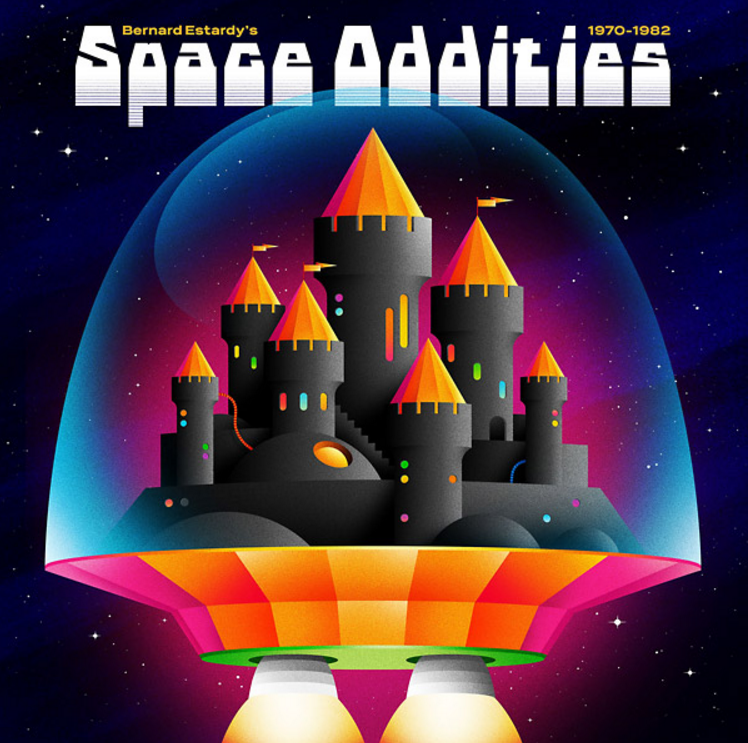
Because sometimes you just can’t decide, I’ve chucked in two reappraisal celebrating compilations of the odd, curious, thrilling and kitsch flights of fantasy musical fragments/sketches/soundtracks/compositions from the late and most gifted venerated French composer Bernard Estardy. I can’t even claim that these are great collections, let alone the best albums of the year, but they’ve kept me smiling all year.
Nicknamed ‘The Baron’, the founder of the CBE recording studio (which he set up in 1966) collaborated with a host of famous French icons in his time (arranging, producing or sound engineering for Johnny Hallyday, Francoise Hardy, Nino Ferrer, Michel Sardou and Jean Guidoni amongst others), but found an unleashed creative freedom as the master of consoles on his own excursions and dream flights of curiosity. Enjoying a resurrection of a sort in 2018, in part down to his daughter Julie Estardy‘s biography ‘The Giant’, Bernard’s eclectic back catalogue, from the realised to cutting room floor, is being reissued or rediscovered by a new generation through a number of different labels, both in France and internationally.
Two such compilations swept me up in their bombast; the first an album that couldn’t be described any better than the title it comes with, Space Oddities, and the second, Fragmented D’une Empreinte Magnétique, a Gauloises hotbed of weepy venerated organ romanticism and salacious sleek soundtracks. The first takes library music to the stars and beyond on a sassy opulent voyage of esoteric cosmic discovery. Jazz meets deep space on a drum-heavy collection of mysterious thrillers, phantasms and exotic awe. Tracks such as the more romantic, flute-y glide in space blues ‘Slow Very Slow’ sound like they could have made it to the ears of Goldfrapp or Greg Foat. The second of the pairing frequents more Earthy realms, pitching gospel with Bacharach yearnings, sentimental laments (the torn love soliloquy ‘It’s A Lovely Day To Die’ sums it up perfectly) and the strangest of deep-chested sung French cowboy soundtracks (A very Parisian journey to buy your ciggies, ‘La Route Au Tabac’, is rerouted through a lonesome pine trail). Both are as brilliant as they are audacious; a refreshing escapism and proof of a unique talent.
(DV)
Evidence ‘Weather or Not’ (Rhymesayers)
“From the moment he draws first breath on ‘Weather or Not’, Evidence embarks on a masterclass” – RnV Feb 18
A meteorological masterpiece showing that it’s rarely sunny in LA, whenever it rains it pours, and that Evidence is always bringing the weather with him. Ever laconic but whose economy of words is always wisely directed and word association seems slight but cuts deep, Ev walks the streets with collar up and hands dug into pockets, seemingly always in search of a contentment whose elusiveness he’s fine with. This prolongs a character pairing the enigmatic with a spokesman calling it straight down the line (“things I never thought about, trying to be elusive in the process, get forgot about”), a wallowing wanderer with whiplash in the tale and forever in control of his destiny (feel the tempered triumph of the concluding ‘By My Side Too’). A spread of AM band forecasts, a splash of psychedelic epiphanies and head nodders that buck like a bronco from Premier, Nottz and Babu, plus some Step Brothers espionage from Alchemist, allow the Dilated Peoples man to find you: because ‘Weather or Not’, you can’t run, you can’t hide.
(MO)
F.
Flora Fishbach ‘À Ta Merci’ (Blue Wrasse)

The French music press we’re told have fallen hook, line and synth for the alluring contralto voice of Flora Fishbach, who’s 80s revisionist pop twist on chanson oozes with such sophistication that its difficult not to embrace. Fishbach picked up the album révélation award at the Le Prix des Indés for best independent debut LP, winning high praise and plaudits galore ever since. Looking to make a similar impact across the Channel, the ‘bohemian darling’ has just released a deluxe edition of her electro pop requiem À Ta Merci. That decision is more or less echoed in the album’s title, which translates as, “at your mercy”.
Featuring the original running order and a bonus septet of gorgeous live recordings, this aloofly chic, yet theatrical, and especially when performing, animated album recasts Françoise Hardy as a disco pop and electro swooned crooner. Effortlessly channeling the vaporous dreamy pining of Kazu Makino on the moon dust sprinkled fantasy title-track and ambient textured, synthesizer bass bubbling yearned lament ‘Un beau langage’, and a Gallic Alison Goldfrapp on the opening ice-y cool malady ‘Ma voie lactée’, Fishbach adds a French nuance and sensibility to the synthesized pop ascetic: a signature you could say that despite the revivalist backing of electronic drum pads, post-punk sass, Moroder arpeggiator, Rococo harpsichord and hi-energy is unmistakably contemporary and French.
With the momentum already building in France and with the recent runaway success of music press darling Christine And The Queens (who I personally find utterly dull) I’m sure the UK will embrace this sophisticated chanteuse. This is overwhelmingly a better, more fun record than Christine’s (or the name she’s now adopted, Chris). Fishbach has certainly impressed me enough – what’s not impressive about referencing the philosophical aloof quandary that is Rimbaud’s “Je est un autre” (“I am another”) on a tropical slinking crystalline pop song, Un Autre Que Moi (“Another Me”) – to recommend her as one to watch in 2019. Full review…
(DV)
Fliptrix ‘Inexhale’ (High Focus)

“‘Inexhale’ masters the art of knocking you down with a feather: the pugilistic psychoanalysis is untouchable” – RnV Sept 18
It’s a little disingenuous to say Fliptrix became the High Focus main man this year, given he’s the driving force behind the label and already has a back catalogue of textbook pen and pad amplification. What with the label’s ever bubbling pool of talent seeing Ocean Wisdom blazing all and sundry, Jam Baxter expanding his cult appeal and two late night smokers from Coops, ‘Inexhale’ could’ve played the holding role and sat in the pack. But with breath control putting a copyright on the title and not a single word wasted, it’s an album that will leave you levitating. Be that from his street level strain of spirituality – letting the sharp end of something herbal work him over, or thoroughly aware of the rights and wrongs of his surroundings – or from the velocity of what’s spat (‘Inside the Ride’ doesn’t and won’t ever flop). Then flipping what the surroundings suggest, and never getting lost in the haze even with eyes at the reddest, Fliptrix finds the perfect medium between headphone moments and smacks to the head.
(MO)
Fofoulah ‘Daega Rek’ (Glitterbeat Records)
Bustling onto the transglobal London and Bristol scenes in 2014 with their earthy and urban bombastic fusion of Wolof African culture and dub electronica rich debut LP, the Fofoulah ensemble laid down the template for the a unique adventurous sound. Though taking its time to materialize, four years on, the follow-up album hasn’t just moved on but supersonically zoomed into the experimental void; even an esoteric, spiritual one at times.
Daega Rek, ‘the truth’ when translated from the Wolof language of coastal West Africa, sees Fofoulah’s saxophonist, keyboardist and producer Tom Challenger transmogrify the original Gambian talking drum of the group’s shamanistic rapping lead Kaw Secka and the accompanying percussion and propulsive drumming rhythms of his band members. (All of which were laid down at the Real World studios). Secka would then reappear in post-production to record his half spoken/half-rapped protestations and observations; the results all re-shaped into a ricocheting lunar-tropical bounding dub cosmology.
Skipping and skittish in motion; pushing the envelope as they pay tribute to lost brothers (‘Kaddy’ pays 2-Step rhythmic eulogy to the late photographer Khadija Saye who died in the Grenfell Tower disaster), the visceral taste of home (‘Chebou Jaine’ dedicated to Secka’s cousin, who cooked the best national Gambian dish) and search for the truth, Fofoulah lunge into the electrified dub ether of sonic adventure. Full review…
(DV)
G.
Goatman ‘Rhythms’ (Rocket Recordings)

An amorphous exploration of world ‘rhythms’ as transduced by one the mysterious Scandinavian GOAT band members through a an arsenal of filters, modulators and oscillations, the debut Goatman suite blends its polygenesis inspirations perfectly.
Offering up magical and scintillating rhythms galore, from Kuti’s compound Afrobeat to a tremolo and laser bouncing variant of RAM’s Haiti vibe, you can expect to hear the venerable tones of gospel, jazz, reggae, psych and pure ethereal acoustic Kosmische on this sonic flight of fantasy. Earthy yet light enough to soar, this impressive experiment side-project channels its influences perfectly to conjure up new musical ideas. Echoes of GOAT are never far away of course, yet this imaginative take feels more natural, more organic, and above all, more soulful. A fantastic debut.
(DV)
H.
Jack Hayter ‘Abbey Wood’ (Gare du Nord)
Bringing light, or at least opening up a psycho-geographical narrative dedicated to the very edges of a largely ignored London postcode – so far out on the South Eastern outskirts as to be part of Kent –, an earnest Jack Hayter composes a yearning lament to Abbey Wood on what is his first solo album in fifteen years.
Hayter’s deftly played, with twangs of bucolic and Baroque folk, blues, synthesized atmospherics, Americana and reverent chamber music, multilayered songbook connects with the psychogeography of his chosen location. From songs about the Abbey Wood diaspora and its position as a gateway to the world to laying cooing elegiac wreaths to those unfortunate victims of the WWII Arandora Star passenger ship tragedy, Hayter produces a lived-in musical novel, rich with references, landmarks and peopled by those who left an indelible, if at times fleeting, mark upon this much forgotten or passed over postcode: their ghosts, no matter how small the part they played in its story, never inconsequential; remembered and written about with a certain gravitas by the erstwhile troubadour, who performs the most accomplished and brilliant of testaments. Full review…
(DV)
Homeboy Sandman & Edan ‘Humble Pi’ (Stones Throw)
“A banquet of slaps that will become one of your five a day, and ultimately year” – RnV Oct 18
If seven or so tracks are good enough for Pusha T, Kanye etc, then they’re an ample fit for this elite underground swashbuckler of a showdown brought to us by the matchmaking Gods. Having flitted around the periphery for what seems forever, Edan returns with some of his best, ear-piercing archaeology to date as he shifts the B-boy-psych continuum once more; and Homeboy Sandman, both revelling in getting in the thick of it and firing off missives as he’s swept along for the ride, gets off the wall (“see me looking photogenic in the Book of Genesis, waving off medicines”), yet reels off some of the realest in recent times (it’s still, and shall remain, all about ‘Never Use the Internet Again’, which stylistically is actually a bit of a left-turn). The feeling pervades that the pair are proudly gladiatorial, indulging in friendly, unspoken competition as much as fighting the good fight as anointed hip-hop saviours. Let’s hope the sub 30-minute running time means the door is open for a second bout some time soon.
(MO)
J.
Juga-Naut & Sonnyjim ‘The Purple Door’ (Eat Good Records)
“Their usual, indomitable personas on the mic never skimp on Michelin-starred quality, and they still aren’t the ones to test if you think they’re pushing their luck” – RnV Aug 18
It’s an album largely based on elitist boasts, expensive trinkets and accessories and some pretty outlandish claims, but hey, these boys done good. Larger than life and living the playboy lifestyle making the ludicrous seem obtainable – you too can be a ‘Purple Door’ gold card holder – Juga-Naut and Sonnyjim transform the Midlands into St Tropez with a load of gala funk to make a red carpet entrance to, with just a hint of a twinkle in its eye like a felonious exile that has everyone’s backing. That said, you can’t live the life of a Rat Packer if you ain’t got the gab, and these two are no novices: the great suitability of their top table rhyme personas – Juga-Naut will have you believing every word he spits, Sonnyjim coming in dry and stonefaced yet smelling (and producing) like a million bucks – shares a love of all things gastronomic on the likes of ‘Duck Season’ that comes sweeping down a spiral staircase, while ‘Look Around’ takes a moment to act more tactfully, pledging family honour like a good fella. It might not be dining etiquette, but these two are pulling chairs from under the competition.
(MO)
Park Jiha ‘Communion’ (Glitterbeat Records)
Circumnavigating the globe to bring much-needed exposure to new sounds, Glitterbeat Records imprint tak:til gives a second wind to a suite of acuity serialism from Southeast Asia. Released originally in South Korea in 2016, the neo-classical musician/composer Park Jiha’s debut solo album Communion is given an international release by the label.
Inspiring what we’re told is a burgeoning Korean music scene (well, an alternative to the K-Pop craze), a chief progenitor of the movement Jiha alongside collaborative partner Jungmin Seo originally melded the country’s musical heritage with an eclectic range of contemporary sounds as the 숨[suːm] duo in 2007. Releasing the highly influential regional albums Rhythmic Space: A Pause For Breath (2010) and 2nd (2014), Park and Seo crossed the time zones to perform at both WOMAD and SXSW. Congruously putting the duo on hold to explore a more ‘personal’ and minimalistic ‘musical vocabulary’ as a solo artist, Jiha dexterously balances the air-y abstract breathes of the ‘piri’ double reed bamboo flute, the searing twang of the ‘saenghwang’ mouth organ and the softly paddled patter of the ‘yanggeum’ hammered dulcimer in what is a dialogue between a dulcet calm, the meditative and an entangled dissonance.
Transforming Korean traditions into a more experimental language that evokes the avant-garde, neo-classical and jazz yet something quite different, Park Jiha’s tranquil to entangled discourse evocations reach beyond their Southeast Asian borders both musically and metaphysically into something approaching the unique and amorphous. Full review…
(DV)
John Johanna ‘I’ll Be Ready When The Great Day Comes’ (Faith And Industry)
More a mini-album, even 12″ to be contrary, the beautifully cooed, warbled and ached venerable I’ll Be Ready When The Great Day Comes is nothing less than an afflatus anointed paean to a higher purpose. Informed by the mystical cosmology of the Eastern Orthodox Church, John Johanna‘s spiritual blues-y and gospel rock’n’rock hymns are both diaphanous and mesmerizing, even hypnotic; recalling visages of Morricone, Fleetwood Mac, Terakaft, Dirtmusic and Wovenhand as it wanders a picturesque but troubled soundscape.
On the devotional pilgrimage, the troubadour of the most evocative, stirring country burr, switches between aching falsetto yearning to lovelorn cowboy on the Andes romanticised cooing, and from the ethereal to fraught, as he makes communion.
No two songs are quite the same, as the wooing rustic sits next to (what can only be described as) the holy desert rock fusion of Native Indian and Afro-beat title track, and Bossa shuffle meets Yonatan Gat raindance. It all congruously comes together in one most divine service. A minor masterpiece.
(DV)
M.
Marlowe (L’Orange & Solemn Brigham) ‘Marlowe’ (Mello Music Group)
“Both excel in never revealing what’s steaming around the next corner, even when you’ve grabbed your toothcomb for the umpteenth time” – RnV July 18
Another yearly round up, another L’Orange inclusion. North Carolina stands up as latest collaborator Solemn Brigham rhymes his ass off: weirdly, without necessarily feeding off what the producer is trawling, and helping create something of an odd couple match made in heaven. L’Orange sets the scene, usually a funky hoedown, a sample-heavy brouhaha anticipating a stand-off or a psychedelic neck-snap. As is his wont, there’s a narrative to be spun, or some simple time-travelling to be done where no two bops are the same. Brigham on the other hand, blurbed as “summoning the holy spirit of Big L” without getting sucked into the danger zone, just jumps in with a garrulous B-boy stance and goes for it. Without L’Orange surrounding him in a world of imagination, give Brigham a park bench and a ghettoblaster and the results would be the same. What he does guarantee is that you’ll be going back to what he has to say, and whatever the variables, the energy and entertainment (grounded surrealism?) never dips. L’Orange may have found himself an emcee to keep on retainer.
(MO)
Hugh Masekela ’66-‘76’ (Wrasse Records)
A most poignant and timely reminder of one of the true greats, the mammoth 66-’76 collection shows a multifaceted Hugh Masekela: The exile. The trumpet maestro. The bandleader. The activist. The colonial revisionist. The angry young man. But also the conciliatory. These are just some of the many faces of the South African titan of jazz and African musical fusions that can be found inside the latest essential collection of the late great polymaths’ back durable catalogue.
Put together especially by Masekela and his good friend, producer and collaborator on a number of projects together, Stewart Levine, just before he passed away at the beginning of this year, the three disc spanning collection features key tracks from many of his most iconic and experimental albums (two of which are included in their entirety). But what makes this especially appealing to collectors and fans alike, is that many of these albums were never officially released in the UK and Europe before. Progressing in the chronological order they were recorded, we follow Masekela’s journey not just musically but politically across his most formative decade and his partnership with Levine and collaborations with such legendary ensembles as the Hedzoleh Soundz combo. From the combined jazz and Township fusions of The Emancipation Of Hugh Masekela all the way to criss-crossing the transatlantic slave routes on Colonial Man, this collection is a sheer joy. Full review…
(DV)
(MO)
Brona McVittie ‘We Are The Wildlife’
With the lightest, most deft of touches, Irish songstress and harpist Brona McVittie embarks on a voyage of ‘psycho-geographic’ inspired encapsulations of a mysterious, magical landscape and history on her debut album, We Are The Wildlife.
Tracing the sonic contours of London’s urban fringes and the rural landscapes of Mourne, McVittie pitches her fluttery diaphanous harp-led songbook somewhere between post-folk and the cinematic – helped along in part by the drifting trumpet evocations of film composer Hutch Demouilpied, who’s contributions sound at times like Miles Davis Dingo transported to an Irish peat bog.
Her ephemeral harp melodies and phrases often feel like a breath or just the merest hazy lingering presence of the instrument, which might in some ways be down to McVittie’s technique of playing them all on the guitar first before transcribing over. It certainly offers a different perspective and technique. And it certainly takes this heavenly traditional instrument into even more mystical, accentuate abstract realms, helped of course by an accompaniment of meadow flute (Keiron Phelan), sad bowed delicate strings (Richard Curran), searching fleeting slide-guitar and shuffling to full-on breakbeat drums (Myles Cochran). All of which amorphously pushes the often-ancient feelings and geography towards John Martyn and Bert Jansch one minute, towards the Incredible String Band or trip-hop the next.
Played with the lightest of touches, McVittie’s wildlife and Celtic inspired filmscape subtly crafts tradition into a cerebral suite of neo-classical and ambient folk. We Are The Wildlife is the most inviting and unique of debuts. Full review…
(DV)
Minyeshu ‘Daa Dee’ (ARC Music)

From the tentative first steps of childhood to the sagacious reflections of middle age, the sublime Ethiopian songstress Minyeshu Kifle Tedla soothingly, yearningly and diaphanously articulates the intergenerational longings and needs of belonging on her epic LP, Daa Dee.
Minyeshu left her native Ethiopia in 1996, but not before discovering and then learning from such acolytes as the doyen of the country’s famous Ethio-Jazz scene, Mulatu Astatke, and the choreographer Tadesse Worku and singers Mahmoud Ahmed, Tilahun Gessesse and Bizunesh Bekele. First moving to Belgium and then later to the Netherlands, the burgeoning star of the Ethiopian People To People music and dance production has after decades of coming to terms with her departure finally found a home: a self-realization that home wasn’t a geographical location after all but wherever she felt most comfortable and belonged:“Home is me!”
Evoking that sense of belonging and the theme of roots, but also paying a tribute and lament to the sisterhood, Minyeshu conveys with a sauntering but sorrowful jazzy blues vibe not only the burden and grind of daily life for many of her compatriots back home in the tumultuous climate of a fragmented and often chaotic Ethiopia, but also the joy of song and togetherness.
Not only merging geography but musical styles too, the Daa Dee LP effortlessly weaves jazz (both Western and Ethiopian) R&B, pop, dub, the theatrical, and on the cantering to lolloping skippy ‘Anteneh (It Is You?)’, reggae. Piano, strings and brass mix with the Ethiopian wooden washint flute and masenqo bowed lute to create an exotic but familiar pan-global sound. Minyeshu produces a masterful heartwarming, sometimes giddy, swirling testament that is exciting, diverse and above all else, dynamic. Her voice is flawless, channeling various journeys and travails but always placing a special connection to and emphasis on those special roots. Full review…
(DV)
Moonwalks ‘In Light (The Scales In The Frame)’ (Stolen Body Records)

At least geographically close to the spirit of the Motor City, if generations apart, Detroit’s Moonwalks brood in the shadows of the counterculture doyens that made it such an infamous breeding ground for snarling attitude garage, psych and acid rock in the 60s and early 70s.
Transitioning, so we’re told, from ad hoc abandon warehouse performances as a diy glam psych rock troupe to experimental space rock stoners, spiraling in a vaporous gauzy vortex of 80s British Gothic and acid shoegaze influences, the Moonwalks make a certain dynamic progression on their second full length album, In Light.
Sometimes they sound like a black magic rites Byrds and at others like a doomed The Glass Family on a bum ride. Their curtain call, The Joy Of Geraniums, is the most odd song of all; taking the Moonwalks into a whistling led peyote-induced trip to the Mojave Desert.
Vocally malaise the voices waft between Siouxsie Sioux, Bauhaus’ Peter Murphy and Slowdive’s Rachel Goswell. Of course it fits the nebulous cosmic doom and dreamy psych style of the group perfectly; ambiguously drifting through magical rites and sulky pretensions aplenty. Full review…
(DV)
Tickling Our Fancy 054: Oliver Cherer, Joss Cope, Gwyneth Glyn, Sad Man…
September 19, 2017
NEW MUSIC REVIEWS ROUNDUP
WORDS: DOMINIC VALVONA
A mixed bag, even for me, this month, with a triple haul of albums from the Kent estuary dreamers wishing to travel far, Gare du Nord. A trio of releases from Ian Button‘s pet project label includes a Pop-sike collection from Joss Cope, fairytale metaphor folk spells from Karla Kane and a ‘switched-on Bach’ like treatment of Vivaldi Baroque classics from modular synth composer Willie Gibson. We also have a new album of Victorian themed pastoral forebode that chimes with our times from Oliver Cherer; a brilliant experimental grunge, new wave and alt-rock experimental album from Martin Mânsson Sjöstrand; the debut album from Gwyneth Glyn for the new artist/label partnership Bendigedig; and finally, two chaotic avant-garde electronic music soundclashes from maverick artist Andrew Speckman, under his recently adopted Sad Man persona.
Read on….
Joss Cope ‘Unrequited Lullabies’ (6th October 2017)
Karla Kane ‘King’s Daughters Home For Incurables’ (6th October 2017)
Willie Gibson ‘Vivaldi: Seasons Change’ (13th October 2017)
All three released on the Gare du Nord.
Absent from my review selections for a while now, estuary romantics Gare du Nord – Ian Button’s independent label, run from an HQ that sits on the edge of the metropolis of London and the pastoral pleasantries of backwaters Kent – have sent us a triple bundle of releases, all earmarked for release in the first half of October. This autumnal flurry includes a new album of psychedelic pop soft bulletins from Joss Cope; an Anglophile hushabye fairytale of folk from Californian sun-kissed artist Karla Kane, of The Corner Laughers fame; and a transduced ‘switched-on’ modular synth treatment of Baroque Vivaldi classics from, the non de plume of George Baker, Willie Gibson.
A real mixture you’ll agree, the first of which, Cope’s Unrequited Lullabies, is in the mode of classic 60s revivalism and 80s psychedelic pop.
Sibling to arch druid polymath of the ‘head’ community, Julian, brother Joss Cope shares an equally colourful CV; serving and rubbing shoulders during his formative years with a number of famous and cult figures from the Liverpool music scene, including Echo & The Bunnymen Les Pattinson, Wah Heat’s Peter Wylie and Spiritualized’s Mike Mooney. Not before fleetingly spearheading Bam Caruso label favorites Freight Train – releasing the modestly pivotal album Man’s Laughter in 1985 – before splitting and joining ‘rivals’ the Mighty Lemon Drops, Joss left Liverpool to be absorbed into the Creation Records mayhem of London. During his spell in the capital he played with Crash, The Weather Reports and Rose McDowell before carving out a solo career, releasing two albums under the Something Pretty Beautiful banner.
Inevitably Joss would at some point cross paths with his elder brother, contributing famously to the Fried and St. Julian solo albums; co-writing with both Julian and his former Freight Train band mate Donald Ross Skinner the album tracks Pulsar and Christmas Morning.
Before this becomes just a biography, Joss would form and play with many more bands during the 90s and noughties – The United States of Mind, Dexter Bentley and Sergeant Buzfuz among them -, balancing music with a careers as a video director for MTV, narrator for a children’s BBC animation series and an online producer/activist for Greenpeace.
This latest chapter in a checkered backstory of affiliations sprung from Joss’ regular sleepovers in Finland, home to his current partner, the cartoonist Virpi Oinonen. In 2016 he began collaborating with the guitarist Veli- Pekka Oinonen, bassist Esa Lehporturo and percussionist Ville Raasakka trio of Helsinki talent, and the (what must be the most Irish of Irish sounding names in history) keyboardist O’Reilly O’Rourke on what would become this album, Unrequited Lullabies.
Not quite as gentle as the title suggests, but still quite meandrous, peaceable and safe, the lullabies, coastal tidal ebbs and flows and metaphorical drownings include the full range of influences from Joss’ earlier output on Bam Caruso; namely the cult label’s Circus Days compilations of obscurities and novelties from the mostly kaleidoscopic afterglow music scene of English psych and pop-sike. At various times you can expect to hear traces of 70s era Pretty Things, House Of Love, Mock Turtles, early Charlatans, Robyn Hitchcock, Dave Edmunds, XTC, The Eyes, and most obviously (and prominent) Syd Barrett. Controlled with assured maturity throughout, those influences loosely flow between the pastoral, shoegaze, backbeat pop and acid psychedelia.
Yet despite tripping occasionally into mellotron steered mild hallucinogenics, there’s nothing here that ventures beyond the ‘calico wall’; no surprises or raw energetics; no teeth rattling scuzz and fuzz or melting chocolate watchbands. Unrequited Lullabies is instead an understated effort, erring towards gestures of love – as Joss himself rather poignantly and regretfully puts it about one particular song, “Love songs to the children I never had…’ -, with a side order of ruminations and the sagacious forewarning advice of a late generation X(er) on the ‘good and bad’ aspects of life ‘in this magical place’. All played out to a most melodic songbook of classic psychedelic pop.
Time-travelling off on a completely different tangent, the Willie Gibson alter-pseudonym of one-time British soul journeyman George Barker (playing trumpet back in the late 60s and early 70s with J J Jackson, Tony Orlando and Dawn, and the “sweet soul music” Stax legend, Arthur Conley) transduces the Baroque classics of Vivaldi via a range of modular synthesizers; ala a strange kitsch sounding combination of Wendy Carlos, stock 80s paranormal soundtracks and a quaint sounding Kraftwerk.
Moving from soul into post-minimalist electronica on the cusp of a new era in technological advances, Barker was among the first recipients of the iconic all-in-one multi purpose digital synth/sampler/workstation, the Fairlight CMI; using its signature sound to produce sound design and music for radio and TV commercials in the 80s, whilst also lending his skills on this apparatus to Madness and Red Box on a number of recordings during the same period. Under the Ravenwood Music banner, Barker has carved out a career for himself as a producer and music publisher of synth based composition.
Modulating a fine sine wave between ‘on hold’ call-waiting style background electronica classicism and cult retro-futurism, this latest treatment of the Italian genius’ most familiar and celebrated set of opuses – Opus 8, Il Quatrro Staginoni i.e. ‘the four seasons’ – certainly has its moments. The actual execution, made more difficult by Barker’s process of ‘un-creatable’ layering, playing one part at a time with no recall, but constantly evolving his set-up and expanding until all that remains is the ‘control data’ – like the written score itself – is quite clever.
Split into triplets of quarters, each section features a subtle fluctuation of changes and melodies. The first trio of compositions, La Primavera 1 – 3, features fluttering arpeggiators, heralded pomp and glassy toned spritely descending and ascending robotic harpsichord. It sounds at times like a 80s video arcade symphony from Stranger Things. Both majestically reverent and cascading patterns follow, as Barker conducts his way through a carnival four seasons and trilling Baroque sitting room recital. Later on however, the L’Inverno 1 – 3 suite sends Vivaldi towards Georges Méliès visions of space; bounding and mooning around on a nostalgic romanticized dreamy lunar surface.
A future cult obscurity, Seasons Change is a knowing, clever exercise in retro-modular synthonics; returning to the classical source to produce a well-produced and crafted homage.

The final album release of October from the label is in conjunction with the group that US troubadour Karla Kane leads, The Corner Laughers: all three band members including husband Khoi Huynh, who co-produces and accompanies Kane throughout, appear on this album.
A cross-Atlantic venture between the two, Kane’s debut solo, King’s Daughters Home For Incurables, unveils its true intentions and angst from behind an enchanting, lullaby-coated folksy and disarming veneer. Partly post-Trump diatribe fashioned to a rich metaphor of Grimm tale whimsy and a Lewis Carroll meets a lilting Ray Davis like meander through – what I interpret as – a sulky ironic vision of an old insular England and aside at those who voted for Brexit, this songbook, written under the comforting shade of a beloved oak tree in Kane’s California backyard, states a clear position; knowing exactly which side of the fence it sits.
An Anglophile of a sort, much of this solo debut is informed by Kane’s experiences touring the UK. Recordings from an idyllic pastoral England, courtesy of Richard Youell, imbue endearing lulls with birdsong and the friendly buzz of bumblebees. Also from this ‘septic isle’, the idiosyncratic Martin Newell of the cult favorites Cleaners From Venus fame is invited to add a narrated stream of British institutions and romanticized descriptions of eccentric foibles and pastimes in a sort of Larkin-style (“cricket matches seen from trains”).
Mellifluously sung and played, though on a few occasions pushed through with bit of intensity and swelling anger, Kane’s sugar-coated ruminations are deeply serious; touching as they do on feminism, immigration and the anxieties of motherhood in what can, especially in the demarcated political bubble of social media, seem like an ever more oppressive climate. Kane does hold out hope however; as the accompanying PR blurb cites, Kane has a deep desire to summon optimism and hope in a dark world. Something I can confirm she conveys extremely well on this, her debut solo album.

Oliver Cherer ‘The Myth Of Violet Meek’
Wayside & Woodland, 29th September 2017
Wayside & Woodland, home to haunting folk, conceived not under an old steadfast oak tree but the man-made pylon, and super 8 nostalgic field recordings, has been busy of late. A flurry of activity has seen a duo of albums – an appraisal collection of Home Electronics produced in the 90s by the Margate dreamers of ambitious electro and new wave pop, They Go Boom!!, and the Bedrooms, Fields & Houses compilation sampler of label artists – released in recent weeks. And now, following in their wake, and earmarked for a 29th September release date, is this latest brilliant travail from Oliver Cherer, The Myth Of Violet Meek.
Probably most recognized for his Dollboy persona, Cherer’s varied musical affiliations and projects also includes the big beat Cooler, Non-Blank and experimental popsters Rhododendron. Here, he drifts towards a hazy fictional reminiscent style of folk and pastoral psych, a musical vision pulled from the ether and a Bellows Camera captured past, on this poignant fantastical tale of Victoriana.
Set in the Forest of Dean, this lamentable concept album (billed as ‘part-fiction’ ‘part fact’) weaves the dreamy folkloric story of the tragic Violet Meek (a play on words of ‘violence’); mauled to death or not by the dancing bears of a visiting circus troupe in the twisted and, musically alluded ominous maybe magical, tree thickened woods. Based we’re told on a vaguely real event that happened in the 1880s, Cherer’s story isn’t just a vintage walk in the past and melodic indictment on the cruelty of Victorian society towards women, but draws parallels with the continuing issues of inequality, chauvinism and mistreatment still prevalent in our own times.
This album is also a homage of a sort to Cherer’s own formative years as a teenager spent in the Forest of Dean – the diorama setting for this sorry tale – and a troubled and plaintive denouncement of the suspicions and distrust of a small community; casting out the strange misunderstood and foreign. It is the treatment of Violet though, slurred by innuendo – sharing a similar kind of ‘horseplay’ sexual predilection of idle gossip, and immature sniggers that continues to still colour the reputation of Catherine The Great – that lies at the heart of and moves on this beautifully articulated collection of harmonious crooning, lulling laments and leitmotif instrumentals.
This is an unforgiving unflattering portrayal of England, a nascent nostalgic one with little room for equality and the presence of outsiders, which is every bit as revealing about the present. As lovely, often dreamily so, as the music is the 70s pastoral accompaniment is often trembling and quivering, the fiddles distressed and bewitchery, enticing us into a esoteric psychogeography that features a languid brushed backbeat and Morris Dancers like flourish around the maypole on one song, but finds evil in the idyllic scenery on another.
Traces of 70s era Floyd, Wiccan folk, the Super Furry Animals and Darren Hayman’s civil war opus The Violence fill my senses; though Cherer stamps his own signature confidently among the inspirations and influences. Dollboy fans will find much to admire in this understated, assured and beautifully put together minor opus, as will those familiar with the Wayside & Woodland label output. A most stunning and beautiful work.

Sad Man ‘S/T’ (OFF Records), ‘CTRL’ (Self-released)
Both released on 8th September 2017
From the harebrained imagination of garden shed avant-garde (and often bonkers) electronic music composer Andrew Spackman, emanates another of his personas, the Sad Man. Like an unconscious, untethered, stream of sonic confusion and madness, Spackman’s experiments, played and transmogrified through a collection of purpose-built gizmos – including remodeled and shunted together turntables -, combine art school practice conceptualism with the last thirty years worth of developments in the electronic and dance music arenas.
Acid, techno, trip-hop, breakbeat, UNKLE, DJ Shadow and early Warp (especially the Aphex Twin) are all channeled through the Duchampian inspired artist’s brain and transformed into an often rambunctious, competitive soundclash.
Featured on the Monolith Cocktail under his previous Nimzo-Indian identity, Spackman’s newest regeneration is an exploration in creating ‘the saddest music possible’. It is far from that. More a sort of middle age resigned sigh and sonic assault with moments of celestial melodic awe than plaintive and melancholic despair. Perhaps throwing even more into the Sad Man transformation than he did with the Nimzo-Indian, all the signature wonky squiggles, interchanges; quirks and quarks remain firmly in place, though heavier and even more bombast.
Usually found, and despite my positive reviews, by mistake, languishing on Bandcamp, Spackman deserves a far wider audience for his maverick mayhem and curiosity. This month he plows on with a duo of Sad Man showcases; the first, a generous self-titled compilation of released through the Belgian enterprise OFF Records, the other, a shorter self-released keyboard command inspired album, CTRL. The former, launched from a most suitable platform, features an idiosyncratic collection of obscure recordings, spread over a traditional 2xCD format. Full tracks of caustic, twitchy, glitches-out cosmic mayhem and internal combustions sit alongside shorter sketches and edits, presenting the full gamut of the Sad Man musical vernacular. CTRL meanwhile, if it has a concept or pattern at all, seems to be a more quantifiable, complete experience, far less manic and thunderously chaotic.
Kosmische, acid gargles, breakbeats, trip-hop and the trusty faithful speeded-up drum beat pre-sets of late 80s and 90s techno music wrestle with each other for dominance on this seven-track LP – each track named after a key command, all five combining for some imaginary keyboard shortcut. Struggling to break through a constant rattling, distressed and distorted barrage of fuzzy panel-beaten breaks are cosmic symphonic melodies, stain glass organs and tablas. And so, pummeled, punch bag warping ride over serene glimpse of the cosmos, and raspy rocket thrusters blast off into more majestic parts of the galaxy. A space oddity for sure, a tumultuous flight into the unknown lunar expanses, but also a soundtrack of more Earthly chaos, CTRL is essentially a mental breakdown yet strangely also packed full of lighter more fun moments.
Thankfully neither of the Sad Man releases live up to the central ‘saddest music’ tenet, though probably best experienced in small doses to be on the safe side. This duo of offerings will hopefully cement a reputation for eccentric electronic cacophonies, and showcase an interesting body of work.
Gwyneth Glyn ‘Tro’
Bendigedig, 29th September 2017
Lighting the way for a new ‘integrated independent partnership’ between the Cardigan-based Theatr Mwldan, the polygenesis renowned ARC label, and artist, the first major solo album from assiduous writer, poet and songstress Gwyneth Glyn, effortlessly traverses the Welsh valleys, Scottish Highlands, Appalachian Mountains and West African landscapes with an assured earnestness and the most delicate of touches.
In what will be a long gap in scheduled releases – the next in line an album from Catrin Finch and Seckou keita won’t be out until April 2018 -, Glyn’s inaugural album of both Welsh and English language sung songs proves a wise choice with which to usher in the Bendigedig platform.
The Jesus College, Oxford philosophy and theology student and revue performer, with stints in the folk Americana group Coco Rose and the Dirty Cousins, was the Welsh poet laureate for children between 2006 and 2007, and it’s her native home to which she returns again on Tro. A journey back to Glyn’s roots in rural Eifionydd, after a five-year sojourn in Cardiff, Tro, or ‘turn’, is inherently a Welsh imbued songbook. However, despite ten of the thirteen odes, ballads, elegies and explorations being sung in the native tongue, Glyn’s transformations of universal and ancestral standards drift subtly across the Welsh borders into a Celtic and beyond inspired influence of sound and ideas.
Previous collaborations with Indian music artist Tauseef Akhtar and the already mentioned Senegal kora player Seckou Keita resonate on this ‘Wales meets the world’ self-styled album. Keita in fact adds a touch of plucked lilting Africa to many of the songs on Tro; joining the sounds of the metal tine African mbira, played throughout by Glyn’s producer and the multi-instrumentalist Dylan Fowler, who also performs on an array of equally exotic instruments from around the globe on Tro.
Dampened, often wafting along or mirroring the ebb and flow of the tides and shifts of both the ominous and changing prevailing winds, the backing of plucked mandocello, tabwrdd one-handed snare drum, bellowed shruti box and banjo sitar genteelly emphasis and pushes along the imagined atmospheres; moving from the Celtic to country genres, the Indian drone to the south of the equator music zones.
Glyn’s choice of cover material and her controlled but stirring, lingering vocals hint at America and Britain’s legacy of counterculture troubadour heroines, including Joan Baez, Vashti Bunyan, Joni Mitchell – a famous quote of Mitchell’s, ‘Chase away the demons, and they will take the angels with them’, is used as catalyst for Glyn’s music in the press release – and the not so political, more sedate, Linda Ronstadt. The train-like motion rhythm Ffair, – a translation of the Irish folk song She Moved Through The Fair – even sounds like a Celtic Baez, and the American/Scottish woe Y Gnawas (The Bitch) – an adaption of the old standard Katie Cruel – was first brought to Glyn’s attention via another revered voice of the times, Karen Dalton, who as you expect, made her own inimitable, unique mark upon the song when she covered it many moons ago.
Unfamiliar with the Welsh dialect as I am, I can only imagine that the lyrical tumults offer the usual fare of sad betiding’s and lament. Whatever the subject may be, she sings, nee swoons, with ease and comfort; the phrasing unforced, flowing but far from untethered. And so Glyn proves to be a singer of great talent and skill as she bares her soul across an age of pastoral, rural furrowed folk.
Ushering in the label/artist partnership on an adroit, though at times indolent, debut, Tro is a subtle refined encapsulation of the Bendigedig platform’s raison d’être; an enriching experience and showcase for an impressive singer. On the strength of this album alone that new venture looks set to be creatively rewarding.
Martin Mânsson Sjöstrand ‘Wonderland Wins’
Jangle Nest, September 2nd 2017
Recording under a variety of guises over the years, including Dog, Paper, Submarine and This Heel, the Swedish songwriter and multi instrumentalist Martin Mânsson Sjöstrand uses his own name once again on this, perhaps one of his most, omnivorous of albums. Stridently changing styles at a whim, Sjöstrand has previously tested himself with lo fi, instrumental surf, prog and alternative rock, but now tries his luck with a mixture of grunge, indie and new wave influences on the recently released Wonderland Wins.
Those influences play out over a combination of shorter incipient doodles and fleeting meditations and more complete songs; Pavement on the garbled megaphone vocal lo fi strummed In the Orbit Of The Neutron and sunshine pop remix of Calla Lily, Weezer on Man Of Self Contempt, and Nirvana, well, everywhere else. But saying that, you’re just as likely to pick up references to Guided By Voices, Devo, The Residents, Flaming Lips and DEUS on an album that doesn’t really have a theme as such or musical leitmotif.
There is a sort of coherency here however with the album’s brilliant Archers Of Loaf meets Placebo power pop alt-rocker Waiting: a full on electric Yank-twanged vocal version opens the album, and a stripped-down more poignant and sad live version (Live At The Animal Feed Plant) closes it. Waiting for a myriad of cryptic endings and a release, this standout minor anthem sounds like a missing gem from the grunge era of the early 90s.
Sjöstrand also likes to experiment, and those already mentioned shorter excursions certainly head off on curious tangents. The most silly being the self-titled fairground organ giddy romp; the most plaintive, the acoustically picked romantic “last dance”, Myling; and the most ominous, the force field pulsing bassline warning and crackling heavy transmission, The Moon Is A Playground.
A quirky take on a familiar back catalogue of inspirations, playing with a number of classic alt-rock tropes, Sjöstrand’s Wonderland is a well-produced, confident album of ideas, and more importantly has one or two great tunes.
 Monolith Cocktail Blog