The Perusal #49: Ndox Électrique, Rave At Your Fictional Borders, Tara Clerkin Trio, Wax Machine, Pidgins…
November 8, 2023
A WORLD OF DISCOVERIES REVIEWED BY DOMINIC VALVONA
(Unless stated otherwise, all releases are available now)

Ndox Électrique ‘Tëdak Mame Coumba Lamba ak Mame Coumba Mbang’
(Bongo Joe Records)

Continuing to circumnavigate the depths of Africa, on a quest to connect with the purest origins of that continent’s atavistic rituals, the Mediterranean punk and avant-rock motivators Gianna Greco and François R. Cambuzat seize on the adorcist practices of Senegal’s Lebu people.
The successor to that partnership’s Ifriqiyya Electrique collaboration with the descendants of Hausa slaves (a project that produced two albums of exciting Sufi trance, spirit possession performance and technology), the next chapter, Ndox Électrique, radically transforms the Lebu’s N’doep ceremonies of spirit appeasement.
Living in the peninsula of Cap-Vert, at the western most point in Senegal, the Lebu community lives side-by-side with their ancestral spirits. And in these ritualistic female-dominated performances of entranced elevation, loud drums, dancing, sweat and blood, they are summoned forth through possession to help heal the world.
Sneering at any kind of classification (this is neither ethnographical research nor “postcard” world music), Greco and Cambuzat immerse themselves, working hand-in-hand with their Senegalese ensemble cast of megaphone wielding vocalists and musicians. It’s a world away, you’d think, from their post-industrial, Gothic post-punk backgrounds – when not on the African trail, both musicians join forces with that iconic deity of the underground N.Y. scene, Lydia Lunch, to form the raucous Putan Club. But they’ve found a lively connection, merging the clattering, bounding (almost like timpani at times) and shuttled drums and instruments, Muezzin-like calls, and more sacrosanct voices and song with chugged, churned, squalled, engine kick-starting and ripping post-rock, industrial guitars and tech.
The opening rattled, lumbering catharsis ‘Jamm Yé Matagu Yalla’ is an introduction to this hyper-hybrid; a mix of Vodoun, Marilyn Manson, Islamic Sufi song and shredding Sunn O))). Those authentic, in the field, trances enter the creeping dreaded world of the late Scott Walker, and the post-punk specter of Rema Rema and Itchy-O, in the raw and intensified drama of ‘Lëk Ndau Mbay’.
Even though the voices are yelled through a megaphone to be heard above the heightened din, they come across as quite harmonious: hymnal in some cases. Certainly creating an atmosphere of ancient spirit communion and deliverance in the face of oppression, it’s the crunch and grind, and supernatural machinery of their European partners that gives it all a moody chthonian edge; firing up evocations of Faust, Coil and NIN. Actually, the fluted and riled ‘Indi Mewmi’ reminded me of both early Adam And The Ants and African Head Charge.
Between worlds the Ndox Électrique transformation moulds spheres of history and sound, whilst creating a dramatic new form of communication and ritual. Summoning up answers to a sickening society, both groups of participants in this blurred boundary exchange rev-up the sedate scene with a blast of authentic regeneration and dynamism. One that is neither wholly African nor European. Dimensions are crossed; excitement and empowerment, guaranteed.
Assiko Golden Band De Grand Yoff ‘Magg Tekki’
(Sing A Song Fighter/Mississippi Records) 10th November 2023

The second stopover in Senegal this month (see above), couldn’t be more different. The Ndox Électrique collaboration raised adorcist spirits in a hybrid of ritualism and industrial post-grind, whereas the lively Assiko Golden Band De Grand Yoff either raise the roof off the capital’s nightspots, or, find naturalistic contemplation to the sound of a delicately, thoughtfully spindled kora.
Whilst sharing the same geography, the AGBDGY take their cues instead from Dakar’s dynamite music scene, but also embrace the rhythmic percussive language of Fela Kuti and Tony Allen, and the Afro-jazz and soul of such artists as Peter King and Manu Dibango too.
The moniker itself represents the group’s base of influence in the Grand Yoff commune d’arrondissment of the Senegal capital; widened out further to include the traditional rhythms that passed through the infamous, ‘House of Slaves’, Gorée Island – although its importance and legacy has been disputed amongst scholars and the like in recent years, this once independent colonized port outlier from Dakar was a departure site for transporting slaves to the Americas. Fought over by the British and French, it later became part of the greater Dakar region, and a tourist destination memorial to that evil trade.
The message throughout these spheres of geography is one of cooperation, based upon the Sufi teachings of the Mouride Brotherhood: a large school of the Sufi Order, prominently in Senegal and Gambia, the adherents of which are known as ‘Mourides’ – translated from the Arabic to mean ‘one who desires’. In the local Wolof language, culture of Senegal those students of the faith are called ‘Taalibé’.
Exciting and unifying that community for twenty years now, their infectious sound of cross-pattern, clattering and cascading drums, and call-and-response vocals has been picked up by the combined facilitating partnership of Sing A Song Fighter and Mississippi Records labels. Sing A Song Fighter’s founder, Karl Jonas Winqvist, came across the collective whilst creating his own Senegalese fusion, the Wau Wau Collectif, back in 2018. From that same Sufi spiritual cross-pollination of dub, cosmic sounds and Wolof traditions fueled project, the poet-vocalist mouthpiece Djiby Ly steps forward to rouse the AGBDGY’s chorus responses and cross-section of pitched voices. And although the fourteen-strong drumming circle is obviously rhythm focused, there’s also the addition of the beautifully lilting balafon, picked and plucked woven kora, both suffused and pecking horns, fluted wind instruments and a both Marseille and Creole concertinaed bellow and squeeze of accordion.
In action, they sound out a controlled raucous of rustling, shaking ancestral calls and conscious version of Afro-beat, Afro-jazz and Afro-soul; like Kuti sharing the stage with Laba Sosseh and Seckou Keita. As a counterbalance, a pause from the rolling and polyrhythmic drums, there are short interludes of time-outs in the community and under nature’s canopy of bird song: the sound of the breeze blowing through the trees overhead and all around, and of children playing in the background, as the kora speaks in communal contemplation.
At times they create a mysterious atmosphere of grasslands, and at other times, play a more serenaded song on the boulevards that lead down to the sea. On fire then, when in full swing, but able to weave a more intricate gentler sound too, the AGBDGY prove an exhilarating, dancing combo with much to share: the ancestral lineage leading back centuries, but lighting up the present. Thanks for both partners in bringing this album to a wider audience, and indeed my attention.
Tara Clerkin Trio ‘On The Turning Ground EP’
(World Of Echo)

The recordings, releases, may have been a little thin on the ground in the last couple of years; marking the time between this latest EP and the trio’s last, the In Spring EP. But in that space they’ve carried on the writing, and extensively toured both Europe and Japan, with the odd track escaping the creative incubator on the way.
Originally a much bigger, expanded prospect, built around Tara Clerkin, the Bristol unit shed five of its members to create a slimmed down trio. Flanking Tara in their diaphanous vaporous version of trip-hop, dub and gauzy kosmische are Patrick Benjamin and Sunny-Joe Paradiso. Together they have formed a beautifully conceived vision, bookended by a pair of amorphous instrumentals.
On The Turning Ground is a series of hallucinations and evaporations. But that’s not to call them translucent, as all five tracks have a real substance and emotional pull. The opening ‘Brigstow’ is a subtle incipient brush and sift of vapours, submerged bass, ghostly notes from Mark Hollis’ piano, a echo of Gallic-dub accordion, and lingering xylophone. Howie B’s Music For Babies, France, Širom, Embryo and Don Cherry’s Organic Society flow in on a reverberated drift.
The first of three vocal tracks, ‘World In Delay’ follows; another gauzy morphine of dub scatter drums trip-hop that features a lucid, meandered wistful quality: like Sade fronting Lamb, accompanied also by Sakamoto’s piano, and produced by Massive Attack in the late 80s.
On an EP that reminds me of my own middle age, and my formative years in the electronic early 90s, ‘Marble Walls’ is like a lost dream from XL Recordings or Deconstruction. Built around an Ibiza-esque acoustic guitar loop, Tara (I’m assuming) wafts a floated vocal to Portishead and Lemon Jelly vibes. The titular turning ground is built around another lovely acoustic loop, which falls in a gentle cascade throughout, like something from the Baroque era, or from classical Iberia. The beats are more like UNKLE. The feels, atmosphere and vapours like Lush collaborating with Seefeel and Freak Heat Waves.
The final instrumental track, ‘Once Around’, draws this EP to a close with an escapist ambient dream sequence of soundtrack Raul Refreé, waves, bellows, celeste and morphed distant chamber music. Coming full circle, the empirical gorgeousness of this final spacious wisp mirrors the opening ‘Brigstow’, on what is a transported, effortlessly sublime trip of reimagined 90s (some 80s too) influences. But there is something very refreshing, modern and confident in the making: refreshing too. I’m a convert anyway.
Pidgins ‘Refrains Of The Day, Volume 1’
10th November 2023

The dictionary describes Pidgin as a grammatically simplified means of communication that develops between two or more groups of people that do not have a language in common: typically, its vocabulary and grammar are limited and often draws from several languages. Blowing all that open by drawing upon an amorphous palette of linguistic and worldly sources, the Pidgins duo of multi-instrumentalist Aaron With and drummer/percussionist Milo Tamez construct a removed musical dialect on the first volume of the Refrains Of The Day series (Volume 2 follows in 2024).
But it’s also an experiment in percussive rhythmic languages, using an eclectic assortment of instruments alongside insect chatter and bird-chirping moist rainforest field recordings. There’s some unusual apparatus indeed, used to emote a familiar yet otherworldly collage of environments: from the Laotian to the Chinese, Central American, African and alien. Much of this is down to the use of such unique instruments as the Cristal Baschet and glass harmonica: the former, made up of 56 chromatically tuned glass rods, which you rub with wet fingertips to illicit a ethereal sound, and the latter, uses series of glass bowls to produce tones by means of friction. Put with talking drums, the hurdy-gurdy and Chinese sheng, Maasai crosses paths with atavistic Mexican civilizations, Vodoun ceremony and emoted temple scenes in Xanadu.
It’s not surprising to find the duo referencing the fourth world and possible musics creations of Jon Hassell. But I’d also add Alice Coltrane, Desert Players Ornette Coleman, Ale Hop & Laura Robles and Walter Smetek to that pool of influences. When we hear a much effected, transformed voice, it’s either mysterious with longing and soulfulness, swimmingly quivered like Panda Bear, or, in the art experimentation form of Laurie Anderson using a Mogadon induced preset Speak And Spell.
New rituals, strange tongues and a obscure colloquialism emerge from drumming rhythms, whirly circled wind pipes, tines, metallic chimes and the morphed to produce an immersive world; one that’s simultaneously alien, naturalistic, primitive, supernatural, mystical, non-musical and complex. Nothing is quite how it seems in the pursuit of communicating a new multi-diverse sonic language; but that’s not to say it’s unsettling, just very interesting, as the direction of travel is not obvious. I look forward to hearing the next volume on this collaborative reinterpretation of language.
Rave At Your Fictional Borders ‘Potion Trigger EP’

With such an enviable CV of polygenesis creative outlets to his name, trick noisemaker and in-demand drummer Dave De Rose can be relied upon to guide himself and his collaborative partners towards ever-changing and open-ending musical horizons.
At the porous borders of cultural ambiguity, the latest communal project alludes to a ‘global awakening’: an expose of the ‘festering flaws in society’, and ‘the gradual realization that those in positions of power have forgotten their commitment to the people’ – if they ever did in the first place. Well amen to all that and more. Only, events seem to be running way ahead and out of control of governments and borders, with war on Europe’s door and in the Middle East.
But in turn, that nameless, unreferenced and untethered navigation of the current chaos is incredibly difficult to pin down. De Rose’s membership of Electric Jalaba, instigation of the Athens-London traversing Agile Experiments project and, most congruous, involvement with the doyen of Ethiopian music, Mulatu Astatke, are all drawn upon for a Rave At Your Fictional Borders. And as if the net hasn’t been cast widely enough already, De Rose is joined on this sonic adventure by Jon Scott (of GoGo Penguin note), Marius Mathiszik (Jan Matiz, I Work In Communications) and Henning Rohschürmann: you could say the melting pot has been truly stirred up.
Still rhythmic, even if the signatures are varied and at times like a drum kit engine slipping and spluttering in a staccato fashion, taking time to find traction and a groove, this quartet of performances has a certain drive and forward momentum. As vague as the provenance can be, with an amorphous bleed of the Atlas Mountains, Anatolia, the Hellenic, Balkans and East Africa, the opener (‘Fictional Border Crossings’) is brought in on a desolate mysterious temple wind, before building up the journey with an alchemy of silk Ethiopian mallet vibraphone, stylophone-like electric sparks, and sliding and shuffled prog-jazz drums. It sounds like a mirage.
Moving on, ‘Potion Trigger’ seems to merge CAN with Holy Fuck, Snapped Ankles and Richard H. Kirk; the rhythm a mix of dub, two-step, softened timpani and smashing splashes of cymbals. The mood becomes almost alien, the supernatural cries of incensed anger obscured but present as a fucked-up version of a air raid siren tries to wind up but dies out with a zip.
With a lolloped confident strut, echoed ricochet and rim shots, and hints of On-U Sound, Idris Ackamoor and Sly & Robbie, ‘New In Town’ ramps up the dub a notch, until a final phase of crystalized droplets cascade down on a cosmic plane. ‘Free At Last’, the jazz mantra of so many titles, locks into a nice intensity of Afrobeat, prog, electronica, jazz and breaks; like a moonbeam jam of Moses Boyd, Red Snapper and Battles. Not so much restless as always on the move, each track progresses along an unmade road: a map without borders or coordinates. Knowledge, experience and musicality come naturally, but it feels like these like-minded musicians were improvising, and just left in a room without preparation or communication to let go. There’s a knowing of course, and a concept that informs this EP, but this is an unconscious reaction to the present climate of fear, resignation and movement of people like no other.
Berke Can Özcan Ft. Arve Henriksen & Jonah Parzen-Johnson ‘Twin Rocks’
(Omni Sound)

Sharing an evocative and near illusionary hiking trial with his musical foils, the highly prolific Norwegian trumpeter Arve Henriksen, and equally impressive and in demand baritone saxophonist, Jonah Parzen-Johnson, the Istanbul-born polymath Berke Can Özcan finds inspiration from a mystical, mysterious, historical and enriching environment. The ‘Twin Rocks’ of the title references one such stirring, and in this case personal, stumbled upon highlight from the Lycian Way; a long distance charted (and uncharted for that matter) walk that hugs the Southwestern coastline of modern day Turkey.
In atavistic times, this region would have been known as Lycia, a flourishing state/nationality on the edge of Anatolia during the 15th and 14th centuries BC; the architectural remnants of which can be seen carved into the reddish rocky landscape. Siding with the Persian Empire during its apex of power and trade, Lycia was eventually controlled in turn by Ancient Rome, the Byzantines, Selijuks and Ottomans.
With all that history underfoot and all around, the composer, musician and instrument maker Özcan and his two sparring partners, create magic and an air of mystique; amorphously blending sonic aromas that evoke the Mediterranean, Iberian, Middle East and Turkey. And yet, Henriksen’s rasp, mizzle and oboe-like trumpet additions on the vaporous shaping ‘Buried Palms Garden’ and dreamy, melting ‘Snake Behind The Valley’, reminded me of Sketches Of Spain Miles and Chet Baker. Parzen-Johnson’s saxophone meanwhile, has echoes of Andy Haas, Ben Vance and the Pharaoh on the Oriental dub hallucination ‘Hidden Village’, and reminded me of Idris Ackamoor on the drifted ‘Red Pine Bridge And The Crystal Clear Dead-End’.
When evaporating or wafting across the landscape, or gazing at the light as it sparkles off the calm tidal waves, the jazz seed effortlessly germinates into trip-hop, with slow breaks and those languid Portishead vapours
Suffused with a gentle form of jazz and almost trippy, near–psychedelic atmosphere of mirages, heat warped effects and reversals, this felt and transient journey also features Özcan’s almost hushed, translucent vocals. Alongside an array of brushed, sifted and rhythmically softly beaten drum apparatus (steel to what sounds like a frame drum), the affected warbles of wildlife, bobbled and tinkled vibraphone and purposeful, ruminated upon Sakamoto piano notes, symbolic proclamations of intention, redress and reassurance are made: the “I would never be the snake behind” line inspired by the pathway taken around those significant, chanced upon twin rocks. Sometimes this comes across vocally like Alex Stölze, and at other times, like a soulful, removed version of Jon Marsh from The Beloved.
Nothing feels real, despite the familiarity, as nature and terrain, the fauna and remaining traces of ancient civilisation combine to inspire a dream spell absorption of the Lycian Way. Twin Rocks is an effortless sounding travelogue of landmarks transformed into imaginative poetry, meditation, and self-discovery.
Sam Newsome & Jean-Michel Pilc ‘Cosmic Unconsciousness Unplugged’

Joining the ranks of the great jazz (although they go beyond that, into the blues, classical and avant-garde) duos, the partnership of experimental soprano saxophonist and composer Sam Newsome and pianist, composer and educator Jean-Michel Pilc left a critically acclaimed marker with 2017’s Magic Circle album. Before that, and ever since, both foils in that collaborative duet built up enviable reputations, notably with Newsome as a soloist, and Pilc with his trio.
Despite all that experience, their second album together is all about spontaneity. Devoid of planning, of ‘preconceived ideas’, the ‘unconsciousness’ of the album title is uncoupled and set free in a restless motion. The succinct, matter of fact philosophy behind the concept: ‘it works or it doesn’t’.
And so both in improvised and transformative modes they interpret well-worn standards and create new explorations; always with a view to showcasing their respective instruments and instinctive abilities as they react to each other’s assured experimentation. This translates into both recognizable sounds and playing, and those more envelope-pushing tests of abstracted recondite expression. In Newsome’s case, modified attachments turns his saxophone into a circular squeezed and vibrato reed version of a didgeridoo, or, the sound of a strained valve that needs oiling. For amongst shortened pecks, piccolo-like flights and fluted melodies there’s dry whistles, restless flutters, the gasped and hinge-like: in one moment Coltrane and Wayne Shorter, the next, more like Sam Rivers and Anthony Braxton.
Pilc meanwhile, has a similar counterpoint of the semi-classical and avant-garde; using every part of his grand piano, from the inner spindled entangled guts to what sounds like a rhythmic taping of the lid. Obviously an adroit maestro, Pilc evokes a mix of Bill Evans, Cecil Taylor, Fabio Burgazzi (especially on the floated spellbound subconscious passage, ‘Bittersweet Euphoria Part 2’) and Stravinsky. And yet, the boundary testing instrumentation gels, feels descriptive and nearly always finds a connective melody of direction of travel.
Before I’d even read the track titles, listening without any reference points or info, I could detect a classy touch of Duke Ellington; a touch too of the Savoy label and even 1920s New York on the ship horn blown, Gershwin-esque tumble, mosey and slide, ‘Dancing Like No One’s Watching (But Everyone Is)’. That presence is made apparently obvious with the inclusion of the Duke’s signature, ‘Take The A Train’; the whistle and drive of a steam piston train rhythm all present and correct, but taken off the rails and into an untethered setting of swanned sax and hard bop punctuated runs. However, the old feel is undeniable. The duo also take a chance on the Duke’s ‘Solitude’; keeping the sentiments of fond remembrance and bitter loneliness, but finding much to play around with and reframe for an exploration of reflection.
Joining the old guard, there are also riffs on Jerome Kern and Oscar Hammerstein II’s musical number, ‘All The Things You Are’, and Irving Berlin’s ‘How Deep Is The Ocean’. The former dances on tiptoes to the old magic of the 1950s romantic jazz, whilst the latter is a somber reading of the original: the didgeridoo effect and a rough edged bristled vibration, the sweeps of a hidden brush and shifting tides all pointing towards something ominous, even alien, below the surface.
Away form the standards of jazz transformations, there’s the Alice Coltrane trinkets and wind chimes tingled and glinted, inner piano workings turn dulcimer and fluted sax climbing ‘Sounds From My Morning Window’, and the avant-garde boogie piano and chaotic strained sax tempest stirred, ‘The Storm Before The Quiet’. There’s some real class mixed with the unburdened pouring through every second of this album’s fifteen pieces; a real sense of freedom on the move, with the destination uncharted, unsettled and in some small part, mysterious. But as a showcase, the ‘unplugged’ consciousness platform reinforces the reputations of Sam Newsome and Jean-Michel Pilc’s explorative mastership and ingenious collaboration.
Wax Machine ‘The Sky Unfurls: The Dance Goes On’
(Batov Records)

Finding a more mellow tone under the influence of replenishing waters, the Lau Ro led Wax Machine project’s latest album offers a hazy and diaphanous musical landscape of rumination, wistful contemplation and enquiry.
Born in São Vicente, but leaving at the age of eight to emigrate to Italy, before eventually relocating to Brighton, the South American imbued group leader channels his global travels into the Wax Machine melting pot: a borderless, amorphous mix of the psychedelic, jazz, tropicalia and folk. After finally affording the airfare, Ro returned to his Brazilian homeland this year, spending five weeks reconnecting with family and the landscape. This heritage trip was followed up with a further five weeks of travel in Europe; navigating the waterfalls of the Pyrenees and Alps regions. Those stunning awe-inspiring vistas obviously had an effect, and so whilst concentrating the mind, Ro was moved to musically convey the thematic philosophically soulful concepts of ‘one’s own nature’, the breakdown of an individual’s identity, and the processes of reconnection.
New age in self-discovery tropes, the results are disarming, sensory, lush and gauzy across nine tracks of pastoral, hippie psychedlia, Latin, Laurel Canyon folk, dreamy and vaguely spiritual jazz, and more hallucinating spells.
Aiding Ro on this, mostly, relaxed traverse are Ozzy Moysey (on double bass and percussion duties), Adam Campbell (piano and keyboards), Isobel Jones (flute and vocals) and Tomas Sapir (drums, percussion and synths, plus the Clannad-like and veiled choral voices of Marwyn Grace and Ella Russell. Altogether in harmonious union, they drift and waft across a fantasy-style vision; allured towards ocean mirages, rivers, and of course, waterfall paradises.
The tropicalia sound of Ro’s heritage is back, and so when used to its fullest effect on such tracks as the lucid ‘Glimmers’, emotes the influence of Astrud Gibert and Giberto Gil. It must be said, as beautifully dreamy as it is, with touches of Hawaiian guitar, this coastal attraction lyrically could be about a drowning suicide; the Sarah Cracknell-esque wispy vocals protagonist seeming to sleepwalk helplessly into the ocean’s embrace, under a spell. In a similar – near uneasy if not psychedelic supernatural – way, the fluted, vaporous Holydrug Couple and Soundcarriers-like ‘Sister’ feels like an Italian Giallo moment. And the inter-dimensional radio set mystery, ‘Transmission’, reminded me of Belbury Poly scanning ghostly visitations from distant worlds.
Elsewhere, there are evocations of A Psychedelic Guide To Monsterism Island, the South Seas and the Valley Of The Dolls, with the Donovan, Fairport Convention, Greg Foat, The West Coast Experimental Pop Band, Misha Panfilov, Mark Fry and a calmer Marconi Notaro.
The Sky Unfurls: The Dance Goes On is a gauzy tapestry, created with much love, care and freedom; a wistful, rewarding experience of familiarity matched with Brazilian influences to produce a lush backdrop for questioning feelings and for making emotional connections of belonging.
Leisure FM ‘Fables EP’
(Ifm) 15th November 2023
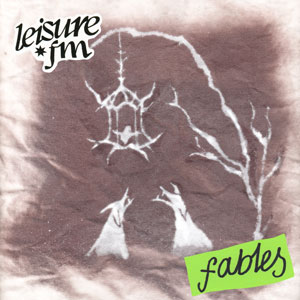
Occupying a liminal position between the weary and resignation on one hand, yet dreamily gazing through the chthonian gauze of both Lutheran and Eastern European morose and fatalistic fairytale and fables towards hope, the Leisure FM twins offer hallucinatory experiences and cathartic relief on their debut EP.
Although certainly Gothic and shadowy, Milena and Weronika Szymanek cast spells of dream-realism electronic pop and despondent futility in conveying the eternal struggles of the heart; a process that’s mentioned in the accompanying PR notes as akin to the punishing eternal labours of Sisyphus, doomed by the Greek god Zeus to roll a boulder up a hill, only to see it roll back down, and thus begins the whole sorry task again in a perpetual loop. Don’t feel too sorry for old Sisyphus though, the mythical founder king of Ephrya (or Corinth as it became known) wasn’t exactly the most pleasant or rational of rulers; punished for cheating death twice, but his rule was strewn with murdered bodies and other self-serving crimes.
Undeniably, with the existential thrown into the alchemy of occultism, there’s a suffused moodiness and supernatural feel to the quartet of songs on this EP. But with a touch of Blake’s afflatus anointed, diaphanous magic, there’s moments of Seraph light too. Caught between worlds you could say – between angels and demons -, the twins set out to process past experiences and feelings. Lyrically, these stories, chapters are merely implied. On the opening malady, ‘Weather Warning’, an opened heart is laid bare with an esoteric language caught on the haunted winds, whilst the vocally subdued and stripped of joy titular-track references the loss of identity in a violent relationship – imagine the Au Pairs and Propaganda in the bewitching hour, bruised physically and mentally.
In a flange-fanned, reverberated world of their own making, Leisure FM come on like a meeting of Nico, Lomi MC, the Cocteau Twins, Lana Del Rey and the Banshees. The production – which also includes a nice sympathetic, saddened dramatic stirring of strings – is near on perfect in setting the mood (thanks in part to third wheel producer Charlie Allen) and conjuring up veiled confessionals of the heart. In the less exotic studio environment of Woolwich, South London, Leisure FM sleepwalk through an imaginative dream-pop fairytale of existential melancholy and sharing.
ZAHN ‘Adira’
(Crazysane Records) 24th November 2023

As much as I can imagine driving at a motorik pace along the European motorway systems, travelling in a bumper sticker covered motorhome, from one less than glamorous location to the next, the latest opus-expanded album from the German trio of ZAHN is a more heavy trip into a vortex spun wrangle of far out prowls, oscillations and growling loaded holidaying travails.
Heads partners Chris Breuer and Nic Stockman are joined by Muff Porter’s and the live setup Einstürzende Neubauten recruit, Felix Gebhard, across eleven extended journeys in krautrock, the kosmische, doom, heavy and post-rock, and psychedelia. This concentrated unit expands on a number of tracks to accommodate like-minded foils; Markus E. Lipka (of Eisenvates note) for example, lending plectrum slides, rung-out and revving electrified rock guitar to the Black Angels and The Holy Family esoteric spell, ‘Amaranth’. The crazy diamonds Floydian-turn-Western-turn-riled-rocker ‘Schmuck’ features Radare’s Jobst M. Feit on squalling and bended wanes guitar duties, whilst Joanna Gemma Auguri apparently adds accordion flourishes to the prowling, thrashing and ghostly smoked soundtrack, ‘Tabak’.
Germanic (naturally) in tone, the sound of Klaus Dinger, Sky Records analogue files and early Guru Guru (on the Mayan vapour cosmic mystique of Bavarian fairground meets UFO, ‘Yuccatan 3E’) can be picked up on this road trip. However, having said that, the opener (‘Zebra’) features thick-stringed bass ala Boris and Swans, and the synthesized melodies of OMD and early Gary Numan (Tubeway Army). ‘Apricot’ seems to marry kosmsiche with hip-hop breaks, before slipping into halftime hovers of Floyd (again). ‘Velour’ is like a hallucinatory brush with Jessamine, Goblin and Slift, and the finale, ‘Idylle’ has a translucent quality of fanning Eno-esque ambience and more supernatural SURVIVE vibes.
Eating plastic, or Clingfilm, wrapped sandwiches by the side of the autobahn on holiday may not sound very exotic or exciting, but ZAHN transforms the innocuous travels across the continent of their youth with a gristly, cosmic and moody locked-in travelogue soundtrack of epic proportions.
Koma Saxo ‘Post Koma’
(We Jazz) 10th November 2023

What comes next in this “post” (post-modern? post-Covid? post-truth? post-band itself?) era for Petter Eldh’s loose configuration of collaborators? Already pretty much using jazz as a springboard for a road less (well) traveled, the Swedish composer, producer and bassist led unit of Koma Saxo were always in a constant motion of evolution; sounding like a band remixing itself in real time, as they blurred the lines between ‘live instrumentation’ and ‘repurposed sampling’. In practice, this ‘holistic vision of jazz now and soon’ sounds like Max Andrzejewski’s Hütte, 3TM and Ill Considered being remixed by J Dilla, Kutiman and the Cut Chemist.
Holding on to jazz, in its many forms, evocations of Anthony Braxton, Sam Rivers, Leon Thomas, Marion Brown (ala Temps Fou), Duke Ellington, Jeremy Steig and Bobbi Humphrey can be heard morphing and reshaped into a breakbeat, drum ‘n’ bass and hip-hop production. This can turn out like the Healing Force Project repurposing swing, or, like an exotic, wavy Jimi Tenor and the El Michaels Affair breaking bread with Binker & Moses on a fantasy Nordic islet. One minute you’ll at the Mardi Gras, the next, walking the low-strung elastic splinters of a Charlie Mingus bassline.
A cross-generational reach of jazz history is taken in a wild, beat cutting and cyclonic direction by a quality unit that’s as familiar with the spiritual, be bop, conscious, Afro, blues and Savoy labeled genres as they’re with Mo Wax, DJ Shadow, Four Tet and the Guru. Post Koma is yet another lively, progressive album from a jazz project always in a state of change.
Sone Institute ‘The Narrow Gate And The Stone Clock’
(Mystery Bridge Records)

The biblical mixed with the alien, paranormal and industrial, Roman Bezdyk’s latest hidden sounds generated album is an obscured and mysterious control of the atmospheric and dramatic.
Following on from 2021’s After The Glitter Before The Decay landscape of specters, shapes and broadcasts from a post-industrial wasteland, The Narrow Gate And The Stone Clock scores the ‘altered states’ of Bezdyk’s ‘consciousness’; informed by the New Testament’s metaphor/analogy on choosing the right pathway (‘But small is the gate and narrow the road that leads to life, And only a few find it’. – Matthew, or this one from Luke, ‘Enter through the narrow gate. For wide is the gate and broad is the road that leads to destruction, and many enter.’) and by the struck clock sounds of the church where he would meditate.
A road less obvious, the knocks on heaven’s gates, near ethereal female voices and subtle tones of Tangerine Dream’s cathedral analogue-synths and organ are enveloped by a creation story primordial sulphur of raining filaments, retro-space data calculations, Fortean radio set tunnings, Richard H. Kirk’s breathed condensation, the concrete, sound of scaffolding and Kriedler, Basic Channel and Autechre techno extractions. But within that description, there’s also a leitmotif of slot machine mechanisms, orbiting spheres, surface noise, metallic reverberations and scaly movements.
The presence of someone, or something from beyond this world is almost constantly present through this sub conscious journey from incipient creation to heavenly elevation. And so, although there’s plenty of near supernatural elements and acid rain Blade Runner moments, this synthesis of field recordings, mono synth, guitar, radio and FX improvisations also ascends to zither-like gilded stairs towards Laraaji, and the near meditative. But yes, this is a soundscape of great mystery; esoteric by design or not, like Gunter Westhoff and Bernard Szajner broadcasting from the ether as the mechanical church clock strikes and amorphous pathway is opened.
Hi, my name is Dominic Valvona and I’m the Founder of the music/culture blog monolithcocktail.com For the last ten years I’ve featured and supported music, musicians and labels we love across genres from around the world that we think you’ll want to know about. No content on the site is paid for or sponsored and we only feature artists we have genuine respect for /love. If you enjoy our reviews (and we often write long, thoughtful ones), found a new artist you admire or if we have featured you or artists you represent and would like to buy us a coffee at https://ko-fi.com/monolithcocktail to say cheers for spreading the word, then that would be much appreciated.
A LOOK AT WHAT’S OUT THERE/
Dominic Valvona’s Roundup

ALBUMS/LONGPLAYERS
El Khat Aalbat Alawi Op. 99’
(Glitterbeat Records) 25th March 2022

First off, this is an incredible album; an incredible energy and an incredible elliptical disjointed clattering and snozzled, heralded horn blown fusion of the music carried out of the Yemen, the greater Middle East and North Africa. The Eyal el Wahab led Arabian swirled and rhythmic jolted El Khat (named after the popular chewed drug) are simultaneously diy, even punk whilst also creating a bombastic and hypnotising dynamism.
In the melting pot of Tel Aviv-Yafo and in the more isolated – cut-off from the digital and online world – deserts the self-taught cellist (despite not, at the time, being able to read music, managing to join the Jerusalem Andalusian Orchestra) El Wahab and his band use both regional instruments and reconstituted junk to make a wild border traversed sound like no other. A collage of influences, initially sparked off by the Qambus electric sampler of traditional music from the 1960s (the ‘Qat, Coffee & Qambus: Raw 45s From Yemen’ compilation to give it the full title), the group’s second album rewires its Yemen roots and faint, distant musical memories with the psychedelic, garage-rock, gnawa, Ethio-jazz and the raw.
A fondly, missed and remembered culture lies at the heart of this album. Throughout the tensions in the Arabian Peninsular in the last century, and ever since the formation of the Israel state in the aftermath of WWII, Yemen’s Jewish population (which was considerably large), but many others too, were forced to leave their homes for sanctuary. And so many, through no fault of their own, have found themselves decamped, living in Israel like the El Khat band – some for a generation, others for at least three or more. This is where that fusion meets at the crossing; one that sounds like Lloyd Miller conducting a Cairo marching band kicking a tin can down the Kasbah, or, a melodic rattled chaotic brilliance of Zafer Dilek, Salah Rageb, Bargou 08, Yontan Gat and nimble Tuareg guitar soloing. I’d even suggest that they’re bedfellows of their Glitterbeat Record label mate’s blk/JKS: a merger of the atavistic and something entirely exciting and fresh.
The album title itself shares this undertaking of piecing together in a new way, their influences. The “alba” part of “Aalbat” references a small tin box that can contain ‘many treasures’, the “Alwai” is a homage to the popular late Yemeni singer Faisal Alwai, and the “Op. 99” bit intended to give the compositions “the same respect as Western classical music”.
Despite the impact of Covid restrictions in Israel, forced to record separately (although during an easing of those rules, El Wahab was able to usher a chorus of seven people into his living room) and delayed by a self-imposed offline retreat into the expansive desert for six months, it all comes together like a live, unpredictable performance.
Familiar Middle Eastern spices, dances, celebrations and string-frayed bowed and rubber-band like elasticated rhythms are layered with staggering, sometimes drunken stomped, bounced, bounding drums. Mergia organ dabs sit alongside beautiful and swimmingly trilled vocals as hazed connections to the Yemen homeland drift in and out of focus. Some of the distinctive sounds can be traced back to El Wahab’s carpentry skills, building unique instruments from thrown-away scrapes of metal, wood and plastic: hence at least a partial diy, homemade ascetic. Although he’s long since left that Jerusalem orchestra, El Wahab conducts, leads his very own clever ramshackle vision fit for a world in turmoil, of mass emigration. Aalbat Alwai Op. 99 builds a bridge between past longings and a chaotic future of sonic possibilities and polygenesis crossovers. Turning throwaway trash into a freeform expression of vitality, importance but also the social-political, El Khat turn the humble tin can into a resonator that sends out shockwaves across the globe.
Tone Of Voice Orchestra ‘S-T’
(Stunt Records) 11th March 2022

What do you get if you cross radio hall, echoes of Jazzmeia Horn, Solange and Middle Eastern vocals with folk music, sea shanties, the woody stretched bounce of Henri Texier and swoons across the Turkish border? I’ll tell you. You get the soulfully lush, quasi-classical transglobal collaboration between the Danish indie singer-songwriter Trinelise Væring and award-winning saxophonist Fredrik Lundin; helped by an expanded cast of singers and eclectic musicians.
Although this is a Danish enterprise the Tone Of Voice Orchestra evokes a myriad of influences; from the Celtic to Eastern Europe; from India and beyond with their debut album offering.
Vocally, in unison throughout, the lyric book is straight from the R&B and soul songbook; with yearned and wistfully lush ditties on female empowerment, broken down relationships and moving on, plus the foibles, frustrations of living in the modern epoch. All of which are diaphanous, light yet powerfully delivered. The opener, ‘He Loves Her For It’, kind of skewers that modern feel with voices, words and music more in keeping with some hurdy-gurdy churned droned timeless folky shanty. At times this open-ended fusion sounds like a Nashville En Vogue dropped off in a chain dragging Anatolia soundscape (‘You Saw Yourself Out’), and at others, like a yearned pondered Arun Ghosh caravan (‘Kom Hjemtil Mig’).
For his part, Lundin oozes jazzy saxophone sophistication with straight-up circling breaths, some smooching and then more abstract feelers for time, landscape and mood: on one occasion seeming to mimic a harmonica!
Gypsy encampments, meanders across the Balkans, lingering’s of old Iberia and Rajasthan, and exotic camel-motioned creeps through jungles beckon on an album of slinking and rolling beautiful mooching, swells and gravitas. A very impressive start to a multifaceted dynamic to seems to easily sit between the contemporary and past.
Kristine Leschper ‘The Opening Or Closing Of A Door’
(Anti- Records) 4th March 2022

A rekindled lush, if somnolent with yearns and longing, affair with the things that really matter, Kristine Leschper absolutely wows on her sublime new album rebirth.
Detached from the post-punk Mothers, Kristine has given herself the space to reassess, to reconnect and importantly create something anew and utterly spellbinding.
Despite a complexity of thematic strands, imbued in part by the poetry, activism and essayist statements of the late iconic writer June Jordan, Kristine adopts a languid, sensory wonderment that’s almost childlike. More natural, organic than synthesized – although there’s a suffusion of atmospherics, light arpeggiator and electronic waves that congruously boost the mood, or, give certain songs an almost outside-of-itself cosmic push – this gorgeous sounding album beautifully meanders, glides and drifts through a fluted and willow-whistled woodland of first-rate multi-layered arrangements and emotional pulls.
Within that magical world there’s glimmers of Eerie Wanda, ‘Uncoiled’ Diva Moon and Mazzy Star against the imaginative Panda Bear. Songs like the opening semi-pastoral ‘This Animation’ take time to build and change; growing naturally (that word again) from a pipped forest introduction to a slow-release of buoyant bass and more grand drumming drama. It grows stronger and more delightfully surprising as it goes on. Importantly, Kristine is looking at a rafter of emotions, sentiments in a less than ideal, imperfect world, and so rather than progress in a linear fashion, songs, lyrics, feelings all circle back around and offer tangents; especially musically with the funkier DFA Records laxed disco-yearn, almost resigned, ‘Blue’.
Hallowed organs, hand claps and bottle-like tapping percussion, gentle lingers of piano and a general sense of airiness and space are just a few elements that permeate this parchment of woodwind concertos, folk, intricate electronica and dreaminess.
The lyrics themselves are poetic, vulnerable and constantly loving: none more so than on the album’s final, stripped to just a piano and voice ‘Thank You’, which brings down the house with a sweetened gesture of thanks to those who’ve helped keep Kristine afloat in trying times. The fleeting, like “moonbeams”, empirical words, scenes are given weight, tethered in voice and sound with a real depth that seems in practice too be lightly administered. But that’s the genius of this whole album, a laid bare language of great importance made so lushly engaging as to sound like the very opposite; light enough to float off into the expanses.
I’m probably making a right hash of this review, fumbling around to show it in the right light, but The Opening Or Closing Of A Door is difficult to capture. A new chapter in the life of a highly talented musician, composer, this delightful album is one of the best I’ve heard in 2022. There’s no doubt in my mind that this move has been creatively a success, and it will take some beating to be knocked out of the final year lists.
The Lancashire Hustlers ‘Big Ask’
(Steep Hill) 25th February 2022

It’s a half full cup of ‘pukka’ brand tea kind of attitude that unfurls in a disarming manner on The Lancashire Hustlers sixth studio album proper: Big Ask. As always melodically ambrosian and nostalgic the Southport duo harmoniously sound simultaneously reassuring yet defeated on a songbook of ‘bittersweet melancholy’ and softly rolling lover’s paeans; love letters to the 60s and early 70s.
Between them Ian Pakes and Brent Thorley fill the space of a mini studio band and orchestra; sharing a myriad of eclectic instruments, many of which can found adding both exotic and psychedelic chimes, afterglows and bell rung eastern delights.
Like a Neil Finn led Honeybus or Revolver era Beatles breaking bread with Emitt Rhodes, this, now 25-year spanning, partnership washes through societal and romantic disenchantment, but also praise those muses, lovers that make them better people. In the first of those thematic camps the almost pleaded melodious ‘Your Cool Reactions’ finds the lads frozen out, unable to read that love interest’s face, whilst a harmony of The Kinks, solo McCartney and a reminiscent ‘Out Of Time’ tune accompanies a beautifully resigned vocal. The esoteric in comparison, and filmic even, malady ‘Surrender’ sees the lads “wavering” on the brink of giving in. Still, songs like the Slim Chance painted gypsy caravan amble along a blooming hedgerow landscape ‘Bluebell Panther’, and the lost See For Miles label compilation nugget, via Robert Wyatt and a happy-go-lucky Velvets, ‘Happiness On A String’ seem to suggest more sentimental declarations.
There’s also fleeting moments that lead to a lifetime of unsaid connective destiny and bliss (the universal spark, glassy bulb troubadour paean ‘We Knew It Though We Do Not Know’), and feelings of missing out as time slips away (the cowboy booted stirrups jangling southern blues organ imbued ‘No Patience’).
Dreamily and at times in a soulful slinking mood, echoes of Labi Siffre, Roger Bunn, John Compton, Bacharach, Jimmy Campbell and Fleetwood Mac permeate this comfortably light songbook of well-crafted, instantly memorable tunes. Everything, in a true distinctly English way, sounds and feels better over a cup of tea, and I’ll enjoy my ‘organic’ ‘peace’ labelled teabag gift supplied with the lad’s album: thanks for that Ian and Brent.
The Lancashire Hustlers once again, like a northern England Every Brothers, harmoniously and with a real sense of melody read the tea leaves to create a cherished collection of lovelorn malady and magic.
Koma Saxo w/ Sofia Jernberg ‘Koma West’
(We Jazz) 18th March 2022

A pleasant change in direction (of a sort) from the contorting saxophone heavy (hence the name) Koma Saxo as the dynamic ensemble expand their ranks and conjure up a sort of Scandinavian version of Ornate Coleman’s concerto American suite, as remixed by J Dilla and Leafcutter John.
The core sax brethren once more transform and disguise a suffusion of alto, soprano, tenor and slide, and double-bassist, pianist, percussionist, sampler Petter Eldh leads. Only now we have the addition of the aria-like and lucid ethereal voice of Sofia Jernberg permeating evocations of Linda Sharrock and airy diaphanous airiness to enjoy. Which works extremely well in offering some vocalised lulls, waves, syllables, vowels and intonation to the reworked jazz sounds.
Koma West as the name might indicate, references a conceptual geographical theme; the West part marking a soundtrack inspired and imbued by Petter’s west coast Swedish roots. To be specific, the formative years spent in the town of Lysekil, which sits at the southern tip of the Stångenäs peninsula, at the mouth of the Gullmarn fjord. A magical untethered purview of that landscape’s outstanding beauty, drum breakbeats converge with woodwind sprites, a skiffle simmer of jazz, the orchestrally classical and homegrown folk on an album suite of the organic and electrified.
Leitmotifs of a Scandinavian Bernstein and Prokiev can be heard in tandem with flowery levitations and a shadowy reverberation of a tune-up on the opening ‘Lo Ve Ko Ma’. Pastoral sounds, the transparent fleeted appearance of some concerto and room full of voices weave in and out of a woody and tinkled piano passage. It’s at this point that Koma Saxo sound almost like an entirely different group; nearly wholly acoustic, in a mirage of the dreamy. ‘Croydon Koma’ (strange change of location) sees the familiar Mo Wax-esque breaks return as Petter stretches the thrummed double-bass strings and a chorus of saxophone hoots and rasps.
An ode to the flowery landscape feature ‘Kaprifol’ finds this ensemble conjuring up a soulful R&B and Lee Dorsey-like classical puppetry; a lushly decorated wander amongst the fauna that takes on a Southern states of America backbeat feel. Talking of the south, there’s a hint of New Orleans on the high rising sax peppered, rattled double-bass Swedish jazz bolero ‘Koma Fred’.
Mother nature’s son collaborates with the incredible, lofty and airy meandered lyricism and utterances of Sofia to conjure up dolphin echoed coastlines, a menagerie of instrumental evoked bird life, the local folkloric traditions and something approaching a starry cosmic ceiling. Keeping it rooted in a childhood home, Petter’s “momvillian” mum, Kiki, is drafted in to play a repeated shortened concertinaed accordion riff on the hip-hop(ish) attitude ‘Ostron Accordion’.
A family affair, return to nature and a cosmic whole, the Koma Saxo with more than a little help from their friends (the highly thought of and lauded Kit Downes on piano, plus Maria Reich on violin and Lucy Railton on cello) take a pleasing and innovative turn in the road to match their often freshly chaotic jazz, elements of John Zorn and Alfa Mist, and the lofty. A contemporary woodland orchestra and untethered voice falls in with exciting, often broken-up, staccato jazz to musically score an inspiring Swedish topography. The spirit of collaboration lives on.
Kick ‘Light Figures’
(Anomic Records/Dischi Sotterranei/Sour Grapes) 16th March 2022

A dissected grind and more dreamy investigation of love’s opposing forces, we have the rubbered-up, sadomasochistic, the materialistic and the wanton lamented kinds as backdrop for Kick’s new album Light Figures. The Brescia ‘sweet noise’ makers duo, beefed up by a number of guests, and ‘curated’ production wise by Marco Fasolo, dig into a number of complementary opposites as they reach out to the dark side of our personalities and various wept augurs about self-destructive behaviour.
Despite the sometimes serious, dark nature and the brilliantly broody post-punk menace and industrial slicing, Chiara Amailia Bernardini’s vocals ache a certain melodious lushness; cooing and swooning occasionally like she’s fronting a 90s alt-rock or shoegaze band: a bit of Throwing Muses, Breeders. Often it recalls a leather-strapped Ravenettes and their version of knowing 60s backbeat girl group crushes. Chiara’s voice however, is more in keeping with a scorned, provocative PJ Harvey on the BDSM flange-affected ‘Rubberlover’, which also features a/lpaca’s Christian Bindelli aiding a salacious repeated “punish me” mantra about power versus submission. Over her trebly, Banshees and Ester Poly like basslines Chiara is more tauntingly alluring on the mythical allegorical ‘Sirens Never Sleep’; these Greek tempests luring sailors on to the deadly rocks through their mystical hypnotic voices sitting in for their all-too-real dangerous counterparts on the Internet; coaxing us all down misdirected rabbit holes and leading us astray.
Contorted guitar string scrapes from Chiara’s foil Nicola Mova bolster the cold steel grist, the gnarling and gnawing sinister spells, the piercing feedback that often seeps into the gothic. Yet by the album’s third track, ‘Eleven’, the mood evokes an acoustic and spindly chimed accompanied Renaissance set piece; a haunted pastoral dreamy romanticism, though the language (swapping between English, their Italian mother tongue and a completely made-up cadence) is thoroughly modern. ‘Viole’ is another one for the dreamers, featuring as it does a Prokofiev like fluted fairy tale wind instrument contribution from C’mon Tigre and Calibro 35’s Beppe Scardino, and a Shacks-esque languid float-y-ness. Sleepwalking into a climate apocalypse, the finale ‘Atlandtide’ features a doomy gnawed bass, yet seems to waltz towards its fate. It must be said that the duo and friends sound better when the bass and guitar growl, wails and sounds cool-y detached than in hallucinatory, languorous mode; when the fuzz and gristle have an unsettling mood, a leaning dread of Giallo post-punk. Light Figures seems to balance that bruised, scarred heart with the wispy and drifting, baiting and cooing protestations and resignation all the while. If bands like Peter Kernel are your crush then get a load of Kick; they’ve converted this critic.
Pjusk ‘Sentrifuge’
(Somewherecold Records) 18th March 2022

Shaping washed-out, layered abstractions of thoughts, time, moods and places from out of the “modular system” apparatus and what sounds like the air itself, the Norwegian electronic artist Jostein Dahl Gjelsvik tries something a little different with his newest Pjusk release.
Subtly sculpting ambiguous, mysterious ambient worlds that never quite settle – traversing as they do the dreamy, otherworldly, fabled and cosmic planes -, Jostein’s inaugural release for the crazily prolific Somewherecold imprint favours slow builds and reverberated undulations that merge the organic and mechanical; a soundtrack in which the reedy rasps of an obscured instrument can conjure up Tibetan mystique whilst pondering a cloudless, incandescent blue evening sky, or, convey kosmische-like space freighters travelling towards alien paradises.
Modulations, sine waves, chinked and chimed bottles, metallic purrs and burns, zip-wires, liquefied shapes, solar winds, mirrored reversal effects are used to create visions of a propeller-propelled leviathan machine hovering over beautifully rendered landscapes. The tinkling of a buoy on a topographic ocean; a patchwork of firework stars; ethereal cosmic sirens; places in which gravity doesn’t exist, Jostein’s centrifugal motioned ship glides across and lands amongst some magnificent contemplative and stirring scenes.
Occasionally a quiet synthesised beat, some drum pad rhythm adds a semblance of direction and propulsion. Traces too can be felt, heard of distant radiowaves, broadcasts; the drifted resonance of voices and music caught in the atmosphere. Shades of neoclassical Roedelius, some of Tim Story’s piano touches, a little bit of Mapstation, Edgar Frosse, Air Liquide and early Aphex spring to my loosened mind, on what is a really impressive slow-moving modular and tonal piece of escapism.
Anthéne & Simon McCorry ‘Mind Of Winter’
(Hidden Vibes)

“In the bleak mid-winter”, or not as the case maybe, as the considered partnership of Monolith Cocktail regular, the cellist polymath, Simon McCorry and guitar manipulator Brad Deschamps contour a wintery soundtrack of beauty and meditation.
Inspired by the late American modernist poet Wallace Stevens and his ‘epistemology’ school of sublime poetics ‘The Snow Man’, both experimental artists come together to draw an abstract atmosphere and landscape around that poem’s counterbalance mind set of beautifully described coldness and existential feelings of ‘nothingness’.
Although produced during the pandemic, events have been overshadowed in recent weeks by the heinous invasion of Ukraine, and so the fact that this ambient winter’s tale has found a home on the Ukrainian label Hidden Vibes seems to now carry more weight and resonance. But this incredible merger of obscured, veiled cello and effected guitar, field recordings and occasional bobbing tongue-drum knocked beats describes a season of evocative shaped electric-charged cumuliform and nimbostratus clouds, faraway glimmers of the Spring light and melted snow; the very opposite of a nuclear winter auger – which considering the despotic madman behind the button is Putin, doesn’t seem that far-fetched.
Under his Anthéne alais, Brad perfectly matches, under rides and envelopes Simon’s subtle arches, long drawn sustained bows and tonal gauze with threaded, drifted guitar notes, phrases, flange-like reverberations and radiowaves. In this Winter sky static crackles and piped metallic whistles signal dense clouds brushing against each other, whilst on the ground primordial hazy stirrings evoke both the mysterious and foreboding.
Serenity follows in the wake of more concentrated forces; field recordings of climbing over rocks and footsteps across wooden floors mark the presence of human interaction in this atmospheric space. There’s a real gravity to this poetic imbued soundtrack, an essence of the elements and movement. The Mind Of Winter is nothing less than a sublime turn and adroit piece of ambient conjuring from the congruous collaborators.
THE SHORTS

A ‘FOR UKRAINE’ SPECIAL:
As Imperialistic Putin makes good on his ten year plus campaign of lies, deceit and conquer, with the invasion of Ukraine, the millions watching on in despair have been unanimous in their support of that nation’s struggle against a Tsarist despot attempting to rewrite history. Whilst it is still uncertain just what heinous crimes he’s plotting – whether it will stop at the Ukraine, continue into former conquered Tsarist or Soviet territories, or manifest in a corridor to the Balkans -, our friends in the whole of Europe, Britain, North America and beyond have been rallying to the cause (a staggering £100 million has so far been raised in the UK, as if of the 7th March). Musicians have been among the first to turn-around projects, release special records, compilations in aid of the many charities working to help the immense refuge crisis; to bring the essentials to those fleeing and those trapped in cities and towns under siege. Here are just some of those good souls, donating the proceeds to this cause.
Note: unless dated, all release available from now.
Various ‘I Won’t Give Up’
A dramatic outpouring of grief and horror at the heinous events unfolding in Eastern Europe, the #iwontgiveup project brings together over twenty Czech, Ukrainian, Russian and Belarusian musicians to express opposition to the war in Ukraine; sending a clear message to the world that “we are all in this together”.
A combination of the well-known songs ‘Obijmi’ (Hug me) and ‘Bez boj’ (Without Fighting) by the cult Ukrainian rock band Okean Elzy this new version was produced by the Czech Republic-based producer and musician Igor Ochepovsky. It features a cross Eastern European cast that includes the studio drummer and singer David Koller, actor and singer Igor Orozovič, singers Monika Načeva and Lenka Dusilová, guitarists Michal Pavlíček and Nikita Krein, accordionists Aliaksandr Yasinski and Roman Zabelov, guitarist and balalaika player Kirill Yakovlev, double bassist Taras Volos, violinists Vartui Saribekian and Natalia Lisniak, cellist Simon Marek, violist Jan Forest, domra player Kateryna Vatchenko and pianist Olesya Ochepovskaya.
“For Ukrainians, Russians and Belarusians these are absolutely iconic songs that we all know well. Our nations and lives are connected not only by the melodies, but also by the themes of love, hope, courage and determination. The musicians involved are some of the finest artists I know. Apart from our love for music, we are also united by our dissenting attitude towards current events,” says Igor Ochepovsky, explaining the background of the project.
The recording of the song took place on Monday, 28th February, four days after the start of the war in Ukraine, in Boris Carloff’s Soundevice studio.
“When my wife Alena woke me up on Thursday morning with the news that the war had really started, I was shocked. I immediately wondered what I could do. We sent money to charities, I called all my friends in Ukraine and Russia, and checked to see if I could help at the borders. However, I am a musician, I speak to people through music. So Alena and I sprung into action and within two days we had everything arranged. Those involved cancelled their original plans to support the project, for which they deserve a big thank you,” says Ochepovsky.
Escupemetralla ‘Maldacena Duality’
(Single Track also featured on Side-Line Magazine’s Face the Beat 7: Session 7 compilation)
Mad, bad and dangerous to know, those dark purveyors of obscene twisted experiments, Escupemetralla are back with a hadron collider of regurgitating, churned science fiction mania and buzzing occult unease; a vortex trip down a Black Hole.
Appearing on its own merits via their own dark arts platform, ‘Maldacena Duality’ also appears for a good cause on the latest Face The Beat compilation from Side-Line Magazine. 129 tracks, listed in alphabetical order, the seventh session of menacing, scarred darkened sub genre electronica sees the proceeds go towards various charities plus the humanitarian crisis in Eastern Europe.
Solidarity ‘Blue And Yellow’ & “Yellow And Blue’
(Binaural Space)
The effort made during the last two weeks has brought a tear to my eye, with so many artists bonding together over the Internet to quickly turn-around projects like this one to raise money for various charities and the relief effort in Ukraine. Everyone deserves a pat on the back, they really do. Featuring another enviable cast of electronic, neoclassical and experiment artists, the Prague-based label/artist Binaural Space has released two Ukrainian flag colour coordinated compilation stunners.
Familiar to regular Monolith Cocktail readers/followers, volume two (Blue And Yellow) favourites like the polymath cellist Simon McCorry (who appears with Anthéne in one of my album reviews above), the ever-brilliant Whettman Chelmets and lower case minimalist genius Andrew Heath amongst the likes of Jad Baron, Dirk Jacobs, Greg Nieuwsma (another MC featured review in 2021) and Selvedge. Volume One of this moiety features MC regular Toxic Chicken and SEODAH, alongside Ash Electric, XENNON and Kodomo. Buy them both now.
The Post-Everything Collective & Friends Present: ‘Ukrainian Relief Compilation’
(The Post-Everything Collective) 31st March 2022
We did post this one up directly onto the FB page last week, but in case you missed it, another impressive compilation of eclectic finds and nuggets from the Post-Everything crew.
A staggering 60-track behemoth of a compilation, so chances are there will be something to suit every taste. A lot of stuff on here I’ve never heard of, so will enjoy digging. 100% of the profits are going towards the Save The Children foundation for Ukraine.
Various ‘Music For Ukraine’
(We Jazz)
Our favourite European jazz imprint/festival/shop We Jazz has pulled it out the hat with an enticing compilation of previously unreleased goodies. If you have followed us over the years you’ll know just how much the blog rates this jazz label; probably reviewing, featuring three quarters of their entire catalogue at some stage.
No highlights, as they are all worthy great selections from the label roll. There’s some really great material on here, enviable in fact. So sort it out and get handing over that cash.
100% of all proceeds go towards humanitarian aid in Ukraine via verified charity sources. All donations will be announced.
Various Artists ‘Pacification’
(Chitra Records) 18th March 2022
American ambient specialists Chitra Records is putting out a twenty-track compilation next week. Some great names on this one, including Federico Balducci & fourthousandblackbirds, who’s last collaboration received a favourable review from me. Pulling no punches, they’ve contributed the ‘Up To 15 Years in Prison And Fines Of Up To 5 Million Rubles’ track; reference to the recent passed laws of stamping out all protest and revulsion at Putin’s grand plans of conquest. Starring alongside them are Sebby Kowai, Adrian Lane and FlownBlue.
All proceeds from the digital sales of the compilation on Bandcamp for the first two weeks from the release date (until March 21, 2022) will be sent to the Red Cross Society of Ukraine.
Playlist/Dominic Valvona/Brian “Bordello” Shea/Matt Oliver

For those of you that have only just joined us as new followers and readers, our former behemoth Quarterly Playlist Revue is now no more! With a massive increase in submissions month-on-month, we’ve decided to go monthly instead in 2020. The June playlist carries on from where the popular quarterly left off; picking out the choice tracks that represent the Monolith Cocktail’s eclectic output – from all the most essential new Hip-Hop cuts to the most dynamic music from across the globe. New releases and the best of reissues have been chosen by me, Dominic Valvona, Brian ‘Bordello’ Shea and Matt Oliver.
Tracklist In Full:
Thiago Nassif ‘Soar Estranho’
Freak Heat Waves ‘Nothing Lasts Forever’
Lithics ‘Hands’
Ammar 808 ft. Susha ‘Marivere Gati’
Bab L’ Bluz ‘Gnawa Beat’
The Koreatown Oddity ft. Taz Arnold ‘Ginkabiloba’
Koma Saxo ‘Koma Mate’
Wish Master ‘Write Pages’
Gee Bag, Illinformed ‘I Can Be (Sam Krats Remix)’
Gorilla Twins ‘Highs & Lows’
Jeffrey Lewis ‘Keep It Chill In The East Village’
Armand Hammer ‘Slew Foot’
Public Enemy ‘State Of The Union’
Run The Jewels ‘Yankee And The Brave (ep.4)’
Gaul Plus ‘Church Of The Motorway’
Tamburi Neri ‘Indio’
Ty, Durrty Goodz ‘The Real Ones’
Fierro Ex Machina ‘A Sail Of All Tears’
Skyzoo ‘Turning 10’
Kahil El’Zabar ft. David Murray ‘Necktar’
Afel Bocoum ‘Avion’
Etienne de la Sayette ‘Safari Kamer’
The Lancashire Hustlers ‘Stuck In The Middle Of A Week’
Scarlet’s Well ‘Sweetmeat’
Campbell Sibthorpe ‘Good Lord’
Westerman ‘Drawbridge’
The Fiery Furnaces ‘Down At The So And So On Somewhere’
Kutiman ‘Copasavana’
Caleb Landry Jones ‘The Great I Am’
Bedd ‘You Have Nice Things’
The Original Magnetic Light Parade ‘Confusion Reigns’
Cosse ‘Sun Forget Me’
Bananagun ‘Modern Day Problems’
Salem Trials ‘Head On Rong’
Lucidvox ‘Runaway’
HighSchool ‘Frosting’
Jon Hassell ‘Fearless’
All our monthly playlists so far in 2020
Tickling Our Fancy 076: Abdullah Ibrahim, Föhn, Nicolas Gaunin, Julia Meijer, The Untied Knot, Qujaku…
July 12, 2019
REVIEWS
Words: Dominic Valvona

The 76th edition of Dominic Valvona’s ever-eclectic spread of recommendations and reviews includes new albums from the improvisation-heavy Krautrock-Kosmische-Post Punk duo The Untied Knot; the newly formed Gare du Nord label trio of haunted surf, rock ‘n’ roll and avant-garde Föhn, a group made up of the iconic Italian underground artist and poet Napo Camassa, label boss polymath Ian Button and Liverpool psychedelic stalwart Joss Cope; the first ever vinyl format release of Nicolas Gaunin’s exotic amorphous Noa Noa Noa LP; a new epic two-track EP of theatre of ritualistic doom psychedelia from the Japanese band Qujaku; a masterful lesson in compositional balance and experiment from the South African jazz icon Abdullah Ibrahim; and the debut album from the emerging Swedish songwriting talent Julia Meijer.
There’s also the recent EP from the balladry classical meets Trip-Hop and winding troubadour Munich-based artist Elizabeth Everts; another limited edition cassette of experimental abrasive soundscapes from the Crow Versus Crow label, in the form of a cathartic album of dissonance from Chlorine; and news and review of the upcoming flight of jazz fantasy single from the newly formed We Jazz label ensemble, Koma Saxo.
The Untied Knot ‘Falling Off The Evolutionary Ladder’
(Sonic Imperfections) Out Now
Imbued with a sense of scientific methodology and monocular dissection, the experimental United Knot duo of Nigel Bryant and Matt Donovan attempt once more to sonically convey the wonders and enormity and chaos of the universe on Falling Off The Evolutionary Ladder.
Possibly, in this form anyway, the duo’s last album the follow-up to the previous science paper laid out Descriptions Of A Flame (highly recommended at the time by us, an album of the year in 2015) continues to sear, wrangle and grind through an imprint of Krautrock, Kosmische, Shoegaze, Post-Punk (imagine a Lyndon free PiL) and Rock, and drone-like ambience.
With both band members serving a variation of roles in the improvisational and electronic music fields, Bryant and Donovan have all the experience and skills needed to create something that is refreshingly dynamic as it is ponderous. Playing hard and loose with a myriad of influences, Donovan’s constantly progressive drum rolls, tribal patters, cymbal burnishes and more skipping jazzy fills recall Faust’s Weiner ‘Zappi’ Diermaier and Guru Guru’s Mani Neumeier, whilst surprisingly, on the late 60s West Coast rock experiment ‘Rhythm From Three Intervals’ a touch of Mick Fleetwood. Meanwhile, Bryant, on both bass and atonal guitar duties (both also share the synth), channels Ax Genrich, Jah Wobble and Youth.
Though gleaming the geological, anthropological and chemical, they can’t help but be affected by the most concentrated themes of climate change and, especially in the duo’s hometown of London, knife crime. The echoes of an early Popol Vuh permeate the chthonian Anthropocene reference to a proposed dating title of a modern epoch: one that would mark an era that had seen the most significant human impact on the climate. ‘Span Of A Knife Fight’ is an untethered slasher; a sonic nervous breakdown of fretboard rock and the avant-garde, riled in fact. Though I’m not sure what the ‘Tattooed Brain’ is all about, it does have an air of 80s baggy, mixed with The Telescopes drone-wrangling: imagine The Pixies and Stone Roses sharing a spliff.
Far from weary and burnt-out, the Untied Knot go out on a high; stretching their influences with improvised skill and depth, a buzz saw, scrawling caustic but investigative soundtrack for the times.
Nicolas Gaunin ‘Noa Noa Noa’
(Hive Mind Records) 10th July 2019
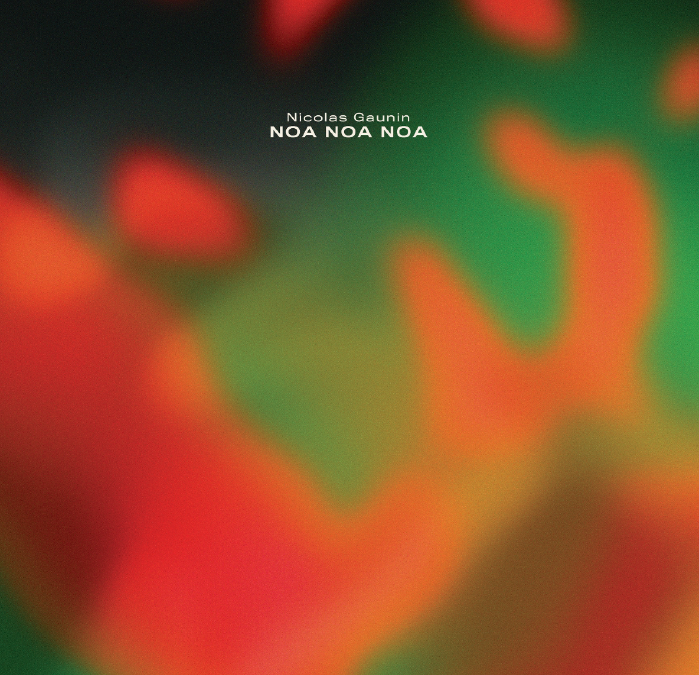
Vinyl (and the odd cassette tape) specialists with a considered taste for something different, the Hive Mind’s burgeoning roster of international discoveries once more gives a platform to the unusual and difficult to define.
Already, through a quartet of re-releases, bringing to a wider audience a range of established and emerging global practitioners, such as the late Gnawa maestro Maalem Mahmoud Gani and rising South American jazzy-traversing star Rodrigo Tavares, the Brighton-based imprint is now inviting us to immerse ourselves in the strange exotic minimalism of Italian electronic artists Nicola Sanguin, who’s original ambiguous mash-up of world music influences and surreal sound experiments Noa Noa was released by Artetetra Records in 2018. Now with an additional extra “noa” to the title this odd curiosity of atavistic African percussive rhythms and stripped radiophonics is getting another pass with its first ever vinyl release.
Using the barely interchangeable anagrammed Nicolas Gaunin name for his solo projects, Sanguin builds a both recognizable but exotically amorphous soundscape that at times recalls the Krautrock legends Embryo’s more percussive experiments in Africa, the dreamy mysterious invocations of Le Mystere Jazz de Tumbautau, Radio Tarifa, Ethno-jazz at its most untethered and Analogue Bubblebath era Richard James. And yet still, it doesn’t really sound like any of these, or, anything else for that matter.
Definitely in the sunnier light-hearted, more diaphanous and optimistic camp of electronic music – a scene that all things considered is duly reflecting the anxiety and uncertainty of the times, moving towards the dystopian – there’s still less than a bubbly, even euphoric radiance to these tropical heat intensive recordings: Many of which, we’re told, were recorded in one take. Abstract to say the least, vague sounds of thumb-piano, Serengeti and jungle wildlife, bamboo glockenspiel, clacking wooden and bass-heavy hand drums ride over, merge with or undulate under a minimalistic Techno workshop accompaniment. Noa Noa Noa is indeed a thing of curious evocation; a searing balmy transduced soundtrack worth investigating.
Abdullah Ibrahim ‘The Balance’
(Gearbox Records) 28th June 2019

Rightly occupying the same lauded heights of veneration as his late South African compatriot and good friend Hugh Masekela, the sagacious adroit Abdullah Ibrahim enthuses nothing but respect and praise for his activism and music; with even Nelson Mandela no less, anointing him as “South Africa’s Mozart”.
Embodying the many travails of that country, giving voice to the townships with, what many consider the unofficial national anthem of the anti-apartheid movement, ‘Manneberg’, Ibrahim (who converted to Islam in the late 60s, changing his artistic name from Dollar Brand in the process) spent decades fighting the system through his music: mostly jazz. In a former epoch, when merely performing that form in South Africa was seen as an act of resistance, the pianist-composer was mixing it up with his legendary jazz counterparts across the Atlantic, playing with a staggeringly impressive cast of doyens including Duke Ellington, Max Roach, John Coltrane and Ornette Coleman.
Now in his 84th year and four years since his last album, Ibrahim has returned to the studio, recording a counterpoint album of both full band arrangements and solo piano improvisations. The Balance, as the title suggests, does just that; balancing purposeful ruminating evocations with gentle pushes (outside the comfort zone) into more experimental skittish, sometimes, lively performances.
Recorded over the course of one day in the RAK studios in London last November, with his Ekaya troupe in full swing, this accentuate attuned album of sophisticated jazzery and the classical is rich with the musical language of those lauded greats he once played with: a early touch of 50s New York skyline Coltrane via Gershwin and Bernard Herrmann on the gracious balancing act between subtle gliding blues and more thriller heightened discordant notation ‘Dreamtime’, and Ellington on the flighty ascendant with chorus of saxophone and trumpet ‘Nisa’. There’s even a certain air of bouncing-on-the-balls-of-your-feet Broadway jazz on the lively ‘Skippy’.
Elsewhere the inspiration is more homegrown; the almost cartoonish scurrying score ‘Tuana Guru’ alludes to a mystical East but features an African soundscape of the wild and trumpeting. The fast skimming drum and busy bandy double-bass partnership opening ‘Jabula’ even features a joyful embrace of Highlife on a what is a celebratory-like composition of timeless quality.
Nuanced and masterfully performed, both on the bounce and when more agitated, and whether it’s in brushed burnished contemplation, or solo devotional élan, Ibrahim and his accomplished band of players do indeed find a nuanced balance between the classical and contemporary: a balance between those timeless qualities and the need for reinvention. A most dreamy, thoughtful way to pass away an hour or two with.
Koma Saxo ‘Port Koma/Fanfare For Komarum’
(We Jazz) 2nd August 2019
Fast becoming one of my favourite labels, the Helsinki-based We Jazz (as the moniker makes pretty clear) imprint ‘does jazz’: an innovative, progressive and thoroughly modern kind of jazz at that. Only last month I included a track from the blowout peregrination baritone sax and wired-up Jonah Parzen-Johnson, and last year, We Jazz label mate, Otis Sandsjö made my albums of the year features with his reconstructive, remix-in-motion, Y-OTIS – think Madlib deconstructing 3TM. Sandsjö, as it happens, is just one of a frontline triumvirate of saxophonists to appear in the exciting newly formed Koma Saxo quintet.
Assembled by the Berlin-based Swedish bassist/producer Petter Eldh, the horn heavy ensemble includes a veritable feast of European players, with Jonas Kullhammar and Mikko Innanen flanking Sandsjö, and Christian Lillinger on the drums. Though they made a performance debut at the label’s own festival last year, this double A side single, the exotic flight of fantasy entitled ‘Part Koma/Fanfare For Komarum’, is the troupe’s inaugural recorded release.
Cut from the same cloth but atmospherically and rhythmically different, ‘Port Koma’ is an ennui psychosis of breakbeats, prowling, jostling conscious jazz with Scandinavian thriller noir aspirations (Bernard Herrmann lifted and dropped in the cold ominous landscape of a Stig Larsson novel), whilst ‘Fanfare For Komarum’ is a spiritual carnival tooting parade of Sun Ra, Pharoah Sanders, Lloyd Miller, Leon Thomas and Spiritual Unity era Albert Ayler; a bustled procession through the Valley Of The Kings, a veneration to Ra.
Kept in check somehow, the forces at play on both tracks threaten to veer and spin off into separate directions, with the heightened Port sounding like three individual signatures simultaneously riding and sliding in and out of focus.
This is an exciting, traversing jazz odyssey; and so an essential purchase. We Jazz keep on delivering.
Föhn ‘Ballpark Music’
(Gare du Nord) 4th July 2019

Ever expanding the remit of his Kentish Estuary satellite label, Gare du Nord, Ian Button’s latest project provides a melodious if experimental base for the avant-garde sonic work and poetry of Italian artist Napo Camassa III. A stalwart of the late 1960s and 1970s Italian underground scene, a smattering of tapes from that period were due a mini-revival through Button’s highly prolific label. As fate would dictate, those tape recordings proved far too brittle to transfer, falling apart in the process. Taking this as an opportunity to instead create something new but in keeping with the spirit of Camassa’s experimental soliloquy and ad-libbed one line poetics, and quivered ghostly channeling seedy rock ’n’ roll vocals, the outsider music framed Ballpark Music merges the lingering, almost supernatural, presence of its influences with deconstructive homages and vague elements of jazz, surf and art-rock to produce something recognizable yet chaotic and skewered.
Balancing on the edge of this chaos the Button/Camassa dynamic, widened to bring in label mate and stalwart of the psychedelic/art-rock and Liverpool scenes Joss Cope (sibling to arch druid Julian, and just as active an instigator of countless bands in his own right over the decades), uses the well-chosen descriptive weather name of Föhn to articulate the relationship between the random, improvised and more structured, Föhn being a warm summer wind that blows in from the Alpine uplands; strong enough at times to blow tiles off a roof, at others, an enervated breeze, barely felt. Musically representing this windy phenomenon, the trio at their most blowy and heavy reaches for an abstraction of post-punk, no-wave, garage, shambling blues and Krautrock; at their most subtle and drift the surf noir dreaminess and mystery of The Beach Boys and evangelical spiritualism, gospel ye-ye and rock ‘n’ roll of Charlie Megira, Alan Vega and The Legendary Stardust Cowboy.
Tributes of a strange kind are paid to the latter in the form of a reference heavy trio of Beach Boys mirages. ‘Shiny Seeburg’, ‘The Scenenaut’ and ‘Wilson Mitt’ namecheck Pet Sounds and SMiLE as they weave nostalgia for a more giddy carefree, surface age – when the “deck chair” patterned shirt attired legends were chronicling the “fun, fun, fun” and teenage romance of the Boomers – with a certain lamentable weariness at what mental anguishes would soon befall the group’s genius, Brian Wilson: The first of these three tracks actually sounds like a deconstructed ‘Do It Again’.
The surf synonymous twang of that same era is celebrated on the Trashman-meets Sigue Sigue Sputnik meets Adam And The Ants ‘Surfin’ Dan Electro’, a quivery, rattle ‘n’ roll bandy homage to the iconic guitar.
Elsewhere there are hints of Alexandro Jodorowsky’s Holy Mountain soundtrack, Spiritualized and a vision of Wah! Heat as fronted by Malcolm Mooney.
Though the central tenant of nearly everything that Ian Button does musically is nostalgia (Button and his unofficial label house band, Papernut Cambridge, have also released more or less at the same time another volume of Nutflakes inspired cover versions), Föhn is one of the more interesting and progressive projects he’s been involved with of late; heeding the past certainly, but pushing the original concept for this enterprise to produce something anew, the wilder poetic assemblages of Camassa tethered, in part, to an amorphous melodious soundtrack.
Hopefully this is one area that Button will continue to pursue with his foils Camassa and Cope.
Julia Meijer ‘Always Awake’
(PinDrop Records) 12th July 2019
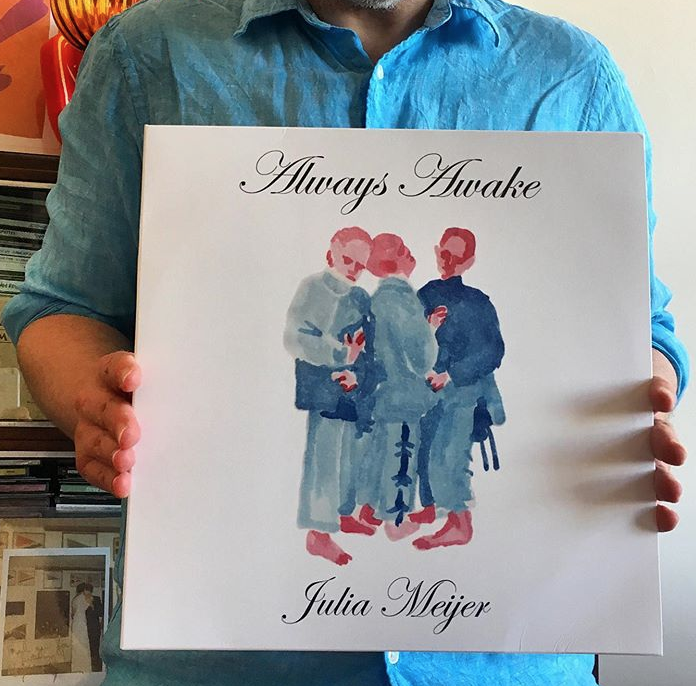
Making good on a trio of singles that promised a tactile skewed and angulated vision of Scandinavian pop; Julia Meijer’s debut album expands the musical horizons even further.
Subtle throughout, Always Awake showcases the Swedish-born (now Oxford-based) singer-songwriter’s naturalistic ability to switch between tightened new wave and the hymnal, and mix the glacial enormity of the Icelandic tundra, as so beautifully conveyed in prose by the frozen Island’s own late national hero poet Steinn Steinarr, with the vaporous veils of an English Avalon: Inspiration for the album (the first on the new label venture from the music management firm PinDrop) opener ‘Ocean’ flows from that first half of the 20th century poet’s very own ‘Hav’ peregrination, fashioned into a dreamy mirage that evokes Lykke Li drifting out of Mondrian’s abstracted Pier And Ocean series. Originally accompanying that stripped diaphanous plaint, the more eerie Gothic folksy ‘England’ errs towards Florence And The Machine, whilst the love-longed, synth-glistened ‘I’m Not The One’ has a hint of a fey Debbie Harry.
Featured recently on the Monolith Cocktail, the page turning metaphorical single ‘Train Ticket’, with its two-speed verse and chorus change, even imagines the New Young Pony Club channeling the Tom Tom Club.
Backed in this enterprise by a couple of Guillemots and their offspring (band members Greig Stewart on drums and Fyfe Dangerfield on Hammond duties, whilst Grieg’s daughter, Effie, adds a spell of saxophone) plus guitarist Andrew Warne and label honcho and all-round prolific polymath Sebastian Reynolds offering various synthesized parts, the sound palette is widened: as is for that matter Meijer’s vocals, which once more are deceptively subtle in filling the space, fluctuating gently between lulls, lyrical trill and partly Kate Nash narrated ‘whatevs’.
An electric debut of nuanced indie brilliance and melodious songwriting, far outgrowing the Scandi-pop tag, Always Awake is a fantastic eclectic record, and the ideal launch for a new label.
Elizabeth Everts ‘Contraband EP’
25th May 2019

An EP of contrasts, pianist-troubadour Elizabeth Everts fluctuates vocally between balladry pop and crystalline aria, and musically between the cheaper ticking metronome of a Casio preset and the more lofty rich swells of classical instrumentation. Her latest release, a beautifully off-kilter articulated EP called Contraband is a case in point: a mini-requiem of both lo fi and expensive.
Everts, ever the true confessional, lays herself open to various degrees of success over the EP’s controlled tumult of romantic brooding and lament. With Californian roots but living for the past decade or more in Munich, the melodious voiced Evert has a fairly unique sound that ebbs and flows continuously, weaving echoes of Tori Amos, Raf Mantelli and Fiona Apple with touches of lounge-jazz, trip-hop, the classical, and on the closing, almost played straight, attuned weepy ‘Black Is The Colour’ the elegiac folk of Christy Moore.
From the diaphanous rolling aria sowing of the opening ‘Harvest Time’ to the ethereal vibraphone flitting prowl of ‘I Just’ the Contraband EP is an experiment both in vulnerability and musicality: a subtle one at that. Everts is pushed gently to expand her horizons, which can only be a good thing.
Qujaku ‘In Neutral’
(So I Buried Records) 26th July 2019

Invoking an almost operatic daemonic theatre of an album last year (making our choice albums of 2018 features in the process) the Hamamatsu, Japan doom-weavers Qujaku return with a sprawling but intense new two-track EP, ahead of a mini European tour. Reflecting two sides of the psychedelic band’s ritualistic sound, title-track (dare I suggest) shows a more delicate, subtle visage (at least at the start anyway), whilst ‘Gloria’ pursues more of a gnashing and bestial course.
Building slowly towards its goal, ‘In Neutral’ turns a wafting wash of guitar noodling and wooing saxophone into a menacing Gothic-jazz incantation. ‘Gloria’ has more heft, bigger ritual drumming, slaying guitar and dark arts psychedelics – imagine the Acid Mothers on a bad trip.
Communing with ghosts, inhabiting an underworld, Qujaku once again conjure up an ambitious dissonance of doom, stoner, operatic, dark and witchery rock.
Be sure but be quick to pick up one of these EPs, as stocks are limited to only 200 copies.
Chlorine ‘Gallooner’
(Crow Versus Crow) 12th July 2019

Somehow managing to convey a cathartic tumult of anxieties and distress from a (mostly) high-voltage abstract soundscape, Gateshead-based multi-instrumentalist and visual artist Graeme Hopper creates a sort of autobiographical profile on his new LP for Crow Versus Crow.
Under the oxidizing halogen Chlorine moniker, Hopper’s latest set of recordings (limited in physical form to a run of 50 copies on cassette tape, but available as a digital download) traverse a caustic buzz of abrasive music-concrete and sentinel pylon metallic at its most ominous, yet offers a glimmer of light, even the barest of serial notation and tuning-up, at its most serene.
A reification of feelings you could say, the dissonance-frazzled, static and electrical steel-dragon whiplash licks of the daemonic goes scrap metal fairground gallop ‘Song For Silhouette’ could be read as an unsettling concentration of the mind. Craning leviathans and industrial machinery-in-motion meet obfuscated strings to fashion a strange rhapsody of esoteric frayed emotion on ‘My Trying Hands’, Lost And Tired’, whilst a more naturalistic ambience of distant dog barks and bird song offer a short release on ‘Confessions Of A Broken Temperament’.
Post-this and post-that, Gallooner subverts a myriad of genres from the experimental fields of exploration, be it industrial, Techno, ambient or noise, yet remains somehow removed from any of them. There’s even a sporadic breakout of veiled spontaneous free form drumming amongst the polygon-ambient electronics of the album’s track, ‘Perfect Lust’, and hints of either a ghostly fiddle or string instrument on a few others.
A conductor-charged pulse to the membrane; sculpting something that bears a resonance of both depression and alienation from the caustic wall of noise, Hopper has produced a most unlikely empirical soundscape.
 Monolith Cocktail Blog