The Perusal #74: F. Ampism, Aus, Burning Books, Mauricio Fleury…
December 3, 2025
A world of sonic/musical discoveries reviewed by Dominic Valvona. All entries in alphabetical order.

F. Ampism ‘The Vertical Luminous’
(Hive Mind) 5th December 2025
A curious and, as the title suggest, luminous biomorphic world of inner and outer bodied molecules, particles and matter, the Brighton-based F. Ampism cuts a most wonderfully playful, curious and intriguing album for the always enlightening and brilliantly experimental label Hive Mind this month.
Ampism (that’s Paul Wilson when uncloaked from their sonic pseudonym) delights in making atoms speak, communicate, sing, gargle, mewl and murmur in a world of floated forms and running, pouring waters. Of an organic nature, sounds both recognisable and not connect with the electronic to create hallucinogenic, near cosmic and twinkled aspects of both cerebral and microscopic observations. And within that sphere there’s a host of fluctuations: ‘Worm Moon’ a near silken spun and spindled delicate vague evocation of Japanese theatre and ambient jazz, whilst the serial rhythms and beats, the suspended alien forms and cup pours of ‘Lunar Mansions’ could be a union between Mira Calix and Carmen Jaci. Such is the gentleness and dreaminess of this amorphous fourth world and bubbling and burbling chemistry that even the synth possessed ‘Midi Evil’ whirls and discombobulates disarmingly and harmlessly. ‘The Severed Head Is Smiling’ is also hardly sinister, caught in a magic-realism of mirrors, hallowed tubular dimensions and the sounds of the bird house.
Lovingly produced, full of that luminosity and replenished liquid growth, the album evokes feelings of happiness, rumination, the inquisitive and of near alien visitations. Less studied and technical, and more an enjoyable life form of music and sounds that proves a most enjoyable and mostly beautiful experience.
Aus ‘Eau’
(Flau) 6th December 2025
Finely balanced, Japan’s national instrument, the koto, is disarmingly and organically taken from its courtly origins and placed in more intimate, attuned settings. With his adroit koto foil Eden Okuno, the Tokyo composer and producer Yasuhiko Fukuzono creates a both fragrant and descriptive subtle album of ambient music, minimalist and environmental electronica; unmistakably Japanese, with threads and traces of the neo-classical and Hogaku music traditions and even further back, and yet almost in the spheres of Fourth World experimentation and the futuristic.
Under the Aus alias, Fukuzono produces a new project that centres around the fine, delicate and spindled use of the half-tube zither koto. Said to be an “ancestor” of the Chinese guzheng, brought over to Japan during either the 7th or 8th century, it’s thirteen or seventeen-stringed forms, strung over movable bridges, are plucked by the fingerpicks on the player’s right hand. Depending on the piece the instrument can be tunned differently, and sometimes, the seventeen-string version, when used in an ensemble, takes on the duties of the bass. It has an instantly recognisable sound; the accompaniment to rumination and contemplation within the bamboo waterfall replenished gardens of Japan; the uncurling flowery weavings and the calligraphy-like strokes of the brush.
Here, Okuno’s keen playing skills dazzle with subtle aplomb, description and a cascade of repeating rhythms as an electronic bed of surfaces and effects are placed underneath or used like an envelope. There’s also an equally subtle use of the piano – the lower-case work of Andrew Heath, a touch of Roedelius and even Tim Story, but also Sakamoto, sprung to mind -, the suffused presence of various poured, ceremonial and dripped waters, and the chimes, the tinkles, jangles and rings of various percussive and wind chime features. Altogether it makes for a most beautifully felt work of sensibilities, the naturalistic and meditative and visceral scales. And within that sound you can hear the crafting and scraping of artistic tools, the atmospheres of the recording settings and spaces, and the near fuzzy hum of the tape.
Attentive to the surroundings, but also aware of pushing the use of the koto, saving it from its more ceremonial staidness and just so preparations, Fukuzono claims the instrument for his own purposes and experiments for something more modern and intimate. For those with a penchant for the music of Satomi Saeki, Jo Kondo, Laraaji – who has even recorded a track after the instrument -, Akira Ito, Masahiro Sugaya and the partnership of Francesco Messina and Raul Lovisoni. Flau continue to produce exquisite, thoughtful works of disarming skill.
Burning Books ‘Taller Than God’
(Ingrown Records) Released 17th November 2025
One day someone will write the great study on music made during the Covid pandemic. A period that defined an era, no matter the cultural, geographical and political differences, by providing far too much time for all of us to think and reflect on the pointlessness of our existence: or was that just me? A shared consciousness of anxiety, stress and uncertainty prevailed, which hasn’t really abated: getting worse if anything. That day is not today, however. But, just one of the latest releases to pop up in my inbox this month from the highly prolific Ingrown Records imprint (if you ever want to disappear down the proverbial rabbit hole, to find new artists on the periphery then head over to the label’s bandcamp page for hours if not days of aural discoveries), Burning Books’ dramatically entitled Taller Than God album, was created during that momentous period.
Despite the epic subject matters, the grappling with all life’s philosophical quandaries, much of the music produced from between 2019 to 2021 was usually quite understated. And even though there is a presence outside us, a looming leviathan to be found hovering and often bearing down over the sonic landscapes here, the production is itself a balance of isolated intimacy and the sonorous heaviness and awe of the gradual, glacial movements of time over that map. A personal attempt to make sense of the enormity without losing sight of the individual at the centre.
And so, the trials and travails, the feelings of mental anguish are all transduced into a stunning work of both ambience and weight, a merger of the haunted and the reflective, the deep and tingly. Enervated passages of past or found recordings, a dancing pirouetted dancer a top of an old music box, can be heard amongst the near Lynchian and prowling as memories pass through the veils and hues of the shadows cast upon the mountain sides and across the plains. Gleams and drones, ebbing waves contour and create various atmospheres, whilst the reverberating chings and fuzz of an electric guitar and bass articulate something more ominous and brooding. The electrification occasionally sounds more like a mirage, almost like the country ambience of Steve Gunn and Daniel Vickers on tracks like the humming tone, soft knocked ‘Mountains Move’. Within that scope, the fateful creep of ‘Death Is Forgetting’ sounds like a union between Mike Oldfield and John Carpenter. There are a few instances of this near supranatural feel and atmosphere to be found, alongside the mysterious deep sounds of a ship in the mist, the bowels letting out some esoteric ferryman’s call. Elsewhere there’s faint hints of Eno, A Lily and the heavy bowed evocations of Simon McCorry. And on the finale title-track a touch of Daniel Lanois amongst the glassy hues, drones, percussive crescendos and scale. Taller Than God ends on the reassurances of hope after immersing us all in a simultaneously personal and collective experience across a varied topography of emotions and reflections. An ‘ode to humanity’, no less, Burning Books has produced one of the very best and well-crafted, sophisticated but empirical albums of this genre in 2025.
Mauricio Fleury ‘Revoada’
(Altercat Records) 5th December 2025
The last time I saw the well-travelled Brazilian musician Mauricio Fleury live was nearly a decade ago, when bandmates from the Bixiga 70 troupe he helped found led a carnival conga of audience members through the aisles of a seated venue as part of Celtic Connections – held each year in Glasgow, my adopted home of the last ten years. That night, and for a further seven or eight years, he was part of a collective that fused the language of Fela Kuti (which they spoke fluently) with a menagerie of Latin influences and the sound of Brazil’s inner-city bustle and hustles. And although it is a much celebrated and critically applauded group, Fleury’s CV is filled with more enviable collaborations, including a meeting and jam session with none other than Afrobeat rhythm provider and progenitor Tony Allen and the “blacktronica” and soulful house luminaries Ron Trent, Theo Parrish and Steve Spacek. This was back in 2007, but alongside his work with both the Brazilian jazz and bossa nova piano icon João Donato and tropicalia titan songstress Gal Costa, proved a catalyst for a migratory-like album of personal indulgences/stories, dramas and experiment.
Stepping out on the solo pathway, inspired as much by the places he’s lived and toured as by his crate-digging passions, the architecture, parks, its exotic bird life, and more urban environments of Brazil and further afield act as melodiously assured but pliable and warm map references. For Revoada is a personal album of worldly influences that springs forth from Brazil into Europe and the gateway to the Mediterranean, the Middle East and Eastern Africa. Starting out in ‘Kadıköy’, a district on the Asian shore of the Bosporus straddling city of Istanbul that overlooks the Sea of Marmara, Fleury reminisces on a hectic hunt for records by the cool Anatolian rock icons Barış Manço, Erkin Koray and Cem Karaca; in the city for a jazz festival back in 2017. This led to dreams of all those records he didn’t manage to find and this composition: the trip also led to Fleury, now living in Berlin, picking up the saz. The album’s opener takes a spice of Koray, a pinch of the backing from Selda Bağcan’s records and matches it with Altin Gun and a warm feeling of clavichord soul and Med grooves: It sounds like the Isley Brothers sunbathing in old Anatolia. There’s just enough electrified fuzz to make this an acid-soul number, as reimagined by Batov Records.
The first trip is followed by memories of home and the playground environment and its formative hangouts. ‘Banhando’ can be translated from Portuguese to mean “showered’ or “bathed”, but in this context is a reference to the nature park in the southeastern Brazilian city of São José dos Campos, where Fleury grew up. With a big rolling intro of bossa that quickly shimmies into a Latin-jazz sound with hints of Brubeck, Ramsey Lewis, Ayzymuth’s ‘Seems Like This’ and Greg Foat, there’s a sense of both breezily laid out memories and reminisces that capture the very feel of the place. The keys sound like bulbs of light. We next head to the city in which Bixiga 70 was formed, São Paulo, and the classic Riviera Bar, a place that obviously holds many memories for Fleury. ‘Tanto Faz’ is meant to be inspired in part by the sound of old TV soap – which it does – but reminded me in part of a Latin Americanised Lalo Schifrin and Michael LeGrand in the middle of a whistle and fluted diaphanous melody of feathered friends.
Fleury himself plays a range of keyboards, analogue synths, the flute and guitar on this musical voyage, aided by longtime foils, a number of notable and exciting Brazilian artists and players, and good friends. On pliable, walking and flexible acoustic and electric basses is the renowned Latin Grammy Award winner, producer and guitarist Fabio Sá;on rolling, falling, splashed drums and dried bone rattled, Latin percussion is the versatile producer and music director Vitor Cabral; the vibraphone and effects of Beto Montag (on the album’s zappy, beamed and jazzy-funk retro-fitted finale ‘Briluz’); and as part of the tumultuous, thunder wrapped dramatic turn Andrés Vargas Pinedo whistled bird called woodwind and brass rich title track ensemble, the flute of Sintia Piccin, oboe of Julianna Gaona, bassoon and French horn of Richard Fermino and clarinet of María “Mange” Valencia. Sá was also asked to write the wind quintet of bird-like mimics on the exotic aviary inspired title-track. This is a composition of contrasts, beginning as it does with a more serious turbulence of wobble board-like thunder and stormy cymbals, both reflecting the themes of travails and more difficult times, and a second part that opens up with that bird call menagerie. Sá also wrote the album’s Eastern African, via the spiritual jazz route, detour, ‘Jimma’. Inspired and influenced by the Ethiopian Jazz luminary Mulatu Astatke, who he toured Brazil with a number of years back, Sá paid homage to the great multi-instrumentalist and arranger’s hometown with a composition of spontaneity; a camel ride like motion trail across the dunes, unseating and decamping to the Addis saloon for a loose Ethio-jazz jamboree around the piano. There are hints of not only Astatke, Hailu Mergia and Abdou EL Omari but The Sorcerers, Ndikhu Xaba and one of Fleury’s biggest influences and musical heroes, Sun Ra.
A most touching, reminiscing and delightful travelogue of places, dear memories, and evocations that shows off, in a disarming and harmoniously melodious and funky jazzy way, Fleury’s capabilities and skills as both a composer and musician. The solo route looks to be a delightful and pleasingly creative one on an album with much to offer, setting out various moods and journeys.
Hamouna Isewlan ‘Təlle Talyadt’
(Remote Records / Studio Mali) Released 28th November 2025
Like many of the desert blues and rock luminaries before and after him, Hamouna Isewlan’s new album is suffused by the nomadic freewheeling and artisanal skills of the Berber ancestral Tuareg people; a loosely atavistic-connected confederacy (to put it into any kind of meaningful context) of diverse tribes that have traditionally roamed Sub-Saharan Africa since time immemorial. If further context and history was needed, this diverse society of various people, grouped together in an age that demanded a label, the term of ‘Tuareg’ is highly contested: arguably brought into the lexicon through the language of European Colonialism, though etymology traces the term back further through multiple sources. But many in the community would prefer we used the original ‘Kel Tamashek’. Isewlan’s rootsarein Mali, a country that he has been forced to leave to seek sanctuary in Algeria due to the unstable conditions; though as I write this, events are overtaking me as both the capital of Bamako and Mali itself are at risk of collapse and takeover by Jihadist groups.
Carved out of France’s greater Western African empire, demarcated without any sympathy for its diverse populations and history, Mali was cut more or less into two on its inception; the poorer north, one such seat of the Kel Tamashek, was more or less left to wither by the south and the government who considered its nomadic peoples backward, uncouth and because of their lighter skin colour, inferior. Though extremely complicated and far more nuanced than space allows here (I recommend reading Tim Marshall’s The Power of Geography: The Maps That Reveal the Future Of Our World for an analysis of the entire Sahel region and its many conflict over the decades), the Kel Tamashek began a decades long fight to create a self-governing autonomous state known as the Azawad. Beginning in the late 1960s and continuing until more recent times, this struggle made worldwide headlines when it was hijacked spectacularly by more extremist Islamic insurgents. Worryingly gaining ground as a Trojan Horse within their nomadic allies’ fight for independence, the destructive Islamist horrified many when they took the ancient seat of West African learning and trade, Timbuktu, and preceded to demolish it like barbarians. Former Colonial masters France were forced to intervene, finally halting the insurgents progress before forcing all groups involved back to where they started: many of them back across the border. Far from ideal, the Islamist usurpers dissipated to a degree but then switched to sporadic acts of terrorism, carrying out smaller militia attacks in Mali’s capital. This was pre Covid of course and the situation has changed dramatically; the threat has intensified with many declaring Mali a state on the verge of a Jihadist takeover. Much of this has been down to the expulsion of France by a Malian junta, led by General Assimi Goita. But with their departure the junta was unable to secure the country or even the capital. They made an even greater mistake by hiring Russian mercenaries, who failed miserably to fight off the main jihadist insurgent group, Jamat Nasr al-Islam wal Muslimin (JNIM), an affiliate of al-Qaeda. The capital of Bamako has been under direct threat and siege by the group who, as The Times reported last month, “paralysed the Malian economy with a fuel blockade that has prevented harvesting in several regions and forced the government to ration power, close schools and restrict civilian movement.” Anything can happen, including another coup within the Malian military itself: the omens are looking bleak; the outcome a possible state run by Jihadists: another Afghanistan in the making. It is undeniable that the country is suffering, with no-go zones across Mali, the threat of extreme violence and of imposed strict Islamic rule in those places controlled by the Jihadist groups. The original Kel Tamashek campaign and fight has been hijacked, its concerns, politics were always more localised but have now been engulfed by terror groups hellbent on a complete takeover of the entire Sahel region.
However, despite all this turmoil music is still being made, life is still going on in the country: as tough as they may be. In the face of such geopolitical upheaval and violence Isewlan chooses to embrace various topics of love: the yielding kind; the plaintive; the yearned; the desired; and the declared. A most touching but also yearning album that tends to the subjects of betrayal, universal and more intimate and personal love.
His new album, under this name (Isewlan in the Tamashek Tuareg language translates poetically as “the mountains of the desert”), is a songbook full of wanton reflections of both a love lost and gained, projected against the desert landscapes of his homeland. You can literally follow the pathways, the very contours, love lines and sloping dunes of Mali through his resonating electrified guitar work and the percussive and drummed rhythms and grooves of the band; many of the tracks moving in a camel or hoofed horsed motion across that iconic terrain.
An incredible player, starting out like so many of his peers and inspirations crafting a rudimental guitar from just tin cans and planks of wood (and still out blasting, outperforming those Western guitar gods with every luxury to hand), Isewlan’s career began to take off during the early noughties after making the leap from performing at weddings to recording with the band he co-founded in 2012, Aratan N’Akalle. Inspired in equal parts by Tinariwen, Ali Farka Touré, Aboubacar Traoré “Karkar”, Mark Knopfler, but most surprising, REM, the burgeoning lead artist now creates multiple evocative mirages and dreamy wanderings from a romantic travail of heartaches and more pleasing paeans to the pursuit of love and his muse.
Musically buoyant, changing from a rockified blues that Southern Americans would recognise (‘War hi toyyed’) to the signature sound of Tuareg desert rock (‘Iamna Iahla’) and a sort of rural form of reggae (‘Tənhay titt in’), the album is full of rich evocations and great flange and reverberated demonstrations of playing. I’m also hearing that Dire Straits influence on the pining resonating ‘Agg Adduniya’, and Vieux Farka Touré on the clopped motioned title-track.
This album, incidentally, has been released by the Bamako label and studio project Remote Records, but been brought to my attention by Paul Chandler, who has chronicled Mali’s music scene for a good couple of decades now. If you’ve been following us for a while, you may recall my piece on Chandler’s most excellent Every Song Has Its End: Sonic Dispatches From Traditional Mali survey (volume 2 of Glitterbeat Records’ Hidden Musics series), which went on to make our choice albums of that year’s list. So, thank you for introducing us to an artist keeping the traditions alive but also in the moment; Təlle Talyadt is an electrifying experience of lovelorn sentiment, rhythm and blues and groove.
Modern Silent Cinema ‘Surveillance Film (Original Motion Picture Soundtrack)’
(Bad Channel Records) 1st December 2025
A veritable flurry of activity this month from Cullen Gallagher’s long-running Modern Silent Cinema project, with both redux versions of archival soundtrack albums The Man Who Stopped and Stared at the Clouds (premiering on CD, vinyl and digital, we’re told, on the 15th December) and Flesh Mother (released on vinyl and CD on the 29th December) plus the new Surveillance Film soundtrack album. But for the purposes of this review, I’m going to focus on the latter, and Gallagher’s fifth collaborative original motion picture score for the Baltimore-based experimental filmmaker Matt Barry.
Plot wise, Barry’s latest docu-fiction movie interweaves the filmmaker’s own questions of intent with theoretical discussions about surveillance aesthetics and early cinema. On previous projects Gallagher reverberations, resonated shakes of the psychedelic, post-rock, krautrock, scuzz and fuzz have been led by the guitar and various atmospherics experiments; the themes ranging from the art of Duchamp, Man Ray and Marc Allégret and Winsor McCay’s famous Gertie On Tour animation. Here though, the sound is inspired or influenced in part by the scores of Ennio Morricone and his oft foil and Italian peer Alessandro Alessandro, but also by the use of the jaw or Jew’s harp in the former’s iconic Western soundtracks – played by Billy Strange. That instrument’s springy and spongy signature bounces and leaps like the march hare across many of the Latinised and Greek mythologically entitled instrumental tracks and vignettes/passages. That crucial instrument forms Riley-like patterns, boings and rebounds, as glass-like bulb, the bell jar notes and the crystal ring out or chime on the first few tracks.
Evocations of Walter Semtak and A Journey Of Giraffes sprung to mind on the first half of the album, that and the essence of those Italian composers working on Giallo soundtracks, Alain Goraguer, and on one of the quartet of mythological referenced Empusa (a one-footed shape-shifting female) tracks John Barry scoring Harry Palmer in an Hellenic setting. Later on, the mood reminded me of the submersible synth and electronic scores of Shepard Stevenson; especially on the plastic tube-y paddled and Fourth World-light ‘Medius’ – named I believe after one of Alexander the Great’s officers and friends, a native of Thessaly. But there’s many changes, from the near supernatural to distorted, the kinetic and library music-esque. It can give a near paranoia feeling, or at times something close to terrifying and ominous. And then again, there’s a sense of mystery, of myth and the ghostly amongst the loosened wires, detuned and both toy-like and spooked piano workings.
Gallagher expands his palette of instruments and ideas for a highly atmospheric score that stands alone and yet doesn’t proving overbearing or distract from the film it accompanies. Well worth the cinema ticket.
Andrew Spackman ‘The Marcus Neiman Cookie Recipe Hoax’
(Mortality Table Records) 12th December 2025
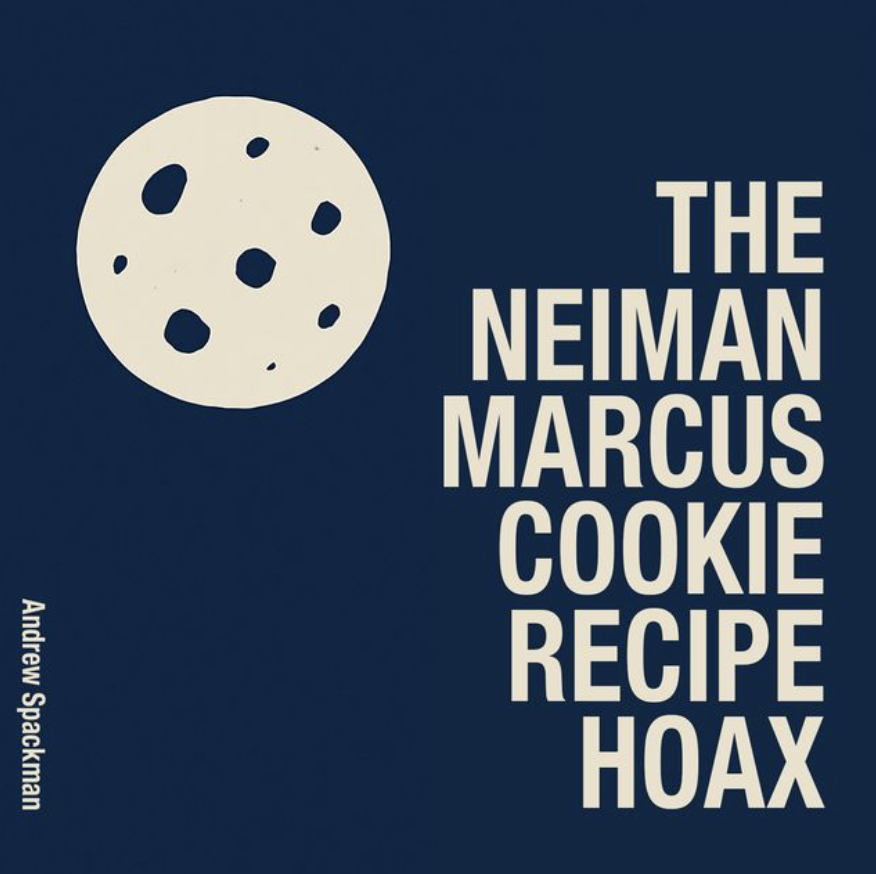
I’ve estimated that Andrew Spackman under his various alias and appellations (from the forlorn SAD MAN to Duchampian Nimzo Indian, Cars From The Future and The Dark Jazz Project) has easily released over thirty albums in just over the last decade. From boffin produced apparatus to techno glitches, distortions and soundtracks, the idiosyncratic inventive trick noise maker has tried his hand at everything, including a number of conceptually minded multimedia projects and stories.
Uncloaked, under his own name, Spackman builds an impressive sonic and melodic world from one of the Internet’s earliest viral bullshit hoaxes. The Marcus Neiman Cookie Recipe, as it was known, fuelled a whole industry of such faked indignations; not the only such lie to run and run, many varied episodes followed in its wake. For one of the best summaries, the Dallas (the city in which this hoax takes part) Eater obliges:
‘A woman visited “Neiman-Marcus Cafe” in Dallas and ordered a dessert after her dinner — the Neiman Marcus cookie. The woman was so enthralled by the delicious cookie that she asked an employee at the cafe if she could have the recipe. When the employee declined, the woman asked to purchase the recipe, and was told that it would cost her “two-fifty.” When the woman received her VISA statement a month later, she’d been charged $285 — $10 each for two salads, $20 for a scarf, and $250 for the famous cookie recipe.’ The outrage however was in mishearing the original “two-fifty”, which in her mind meant $2.50, not $250. And so, both incensed and in pique of revenge, she posted the recipe online for free. It doesn’t matter, as the recipe and entire incident was hokum – although the company at the centre of this lie did decide, after receiving opprobrium and a flood of angry letters, to eventually create their own cookie -, but the actual ingredients and baking instructions were pretty run-of-the-mill: nothing special. Over time, and various iterations the story has changed and the recipe with it: replacing certain ingredients, adding maybe more to the mix.
As a metaphor/analogy on the spread of such “compelling lies” and hyperbole, Spackman has cooked up a fantasy of his own; running with the original tale, handing out the ingredients and building up and scaling up a concept-based album of electronica and vague horns that sweep, drift, herald and toot across a plane of the cerebral, distorted and melodious.
Working across various electronic spines, with passages that conjure up the dramatic and at other times dissonant, the album’s ten tracks vary between shorter and long form passages. Between tubular pipes and scores, it can sound simultaneously like a lost futuristic Vangelis soundtrack or Mike Dred and Richard James lost in the fourth world peregrinations of Hassell and Pekka Airaksinen. There’s much to unravel, as each track develops in its own way and forms a hallucinatory experience of the buzzing, bristled, shaved, blowing and screwy.
Amongst the effects, the electronically synthesized there’s wah-wah-wah, heraldry to jazz tones and airs of sax, Budd-like tinkles and iterations of piano and pipes. A mix of avant-garde, a Riley nightmare on occasions, the most removed wisps of jazz, the cosmic, the metallic and machined and vapored voices, The Marcus Neiman Cookie Recipe Hoax is like a meeting between Variát, Popol Vuh, Robert Musci, and the Warp and Artetetra labels. Both in and projected outside the machine, new sound, sonic and sometimes melodious feelings are fed into the abstract, into entropy, the alarming and liquid. Whilst the themes, the inspiration are concrete, this soundtrack (I would call it it) shutters, expands and atmospherically offers more. Spackman is on a roll, with already a successful SAD MAN enterprise earlier this year, and now this on top of other recent filmic and art-electronic projects. Check back in a week or two to see if it has made my choice albums of the year list.
West Virginia Snake Handlers Revival ‘They Shall Take Up Serpents’
(Sublime Frequencies) Released 3rd October 2025
Reminding in part of the kind of religious sermon broadcasts used to great effect on Eno And Byrne’s My Life In The Bush Of Ghosts, but reverberated here, booming like a bluesman preacher half crazed by the effects of the poisonous serpents he wields and insists take’s a bite out of his arms to show a deadly, fateful commitment to faith, the performances and voices on this latest in-situ recording project by Ian Brennan (in cooperation and facilitated by Sublime Frequencies) is a revelatory reclamation of the original rock and roll and blues spirit. Or at least a more zealous form of the music used to accompany and rally literal interpretations (depending on sources, one that could be very skewed indeed) of lines from the Gospels of both Mark and Luke on healing and showing a strength of faith:
‘Behold, I give unto you power to tread on serpents and scorpions, and over all the power of the enemy: and nothing shall by any means hurt you.’ Luke 10:19
‘And these signs shall follow them that believe: In my name shall they cast out devils; they shall speak with new tongues. They shall take up serpents; and if they drink any deadly thing, it shall not hurt them; they shall lay hands on the sick, and they shall recover.’ Mark 16:17 – 18 (Thanks to Wikipedia for these quotes)
In all his time navigating the most dangerous and difficult to reach peoples and places in the world, it took a trip closer to home, to the only remaining West Virginian community of snake handlers, to witness a truly alien experience. Nothing could prepare for what awaited Ian on that fateful day, setting up his usual stripped-down apparatus of recording equipment, placing mics so as not to interfere or distract from the performances around the alter and platform for both bloodletting and speaker-breaking screaming exaltations.
To put it in more context, loosened and set free from the archetypal studio, Ian’s ad hoc and haphazard mobile stages have in the past included the inside of a Malawi prison, Mali deserts, and the front porches and back rooms of Southeast Asia: one of which was on the direct flight path of the local airport. Even that is only a tiny amount of a near forty release back-catalogue recorded over just the last two decades. As regular followers will know, I’ve interviewed and featured a majority of those projects from the field-recordist, producer, writer and violence prevention expert. But I have to say, this is one of the most incredible and wild yet.
From his own notes and descriptions ‘They Shall Take Up Serpents’ is linked to 2023’s Parchman Prison Prayer – Some Mississippi Sunday Morning album; back in the state penitentiary system, Ian recorded the songs of various prisoners inside the infamous maximum-security facility in the deep, deep South of America, finding a number of surprising performances of redemption and spiritual conversion. On the opposite bank geographically and spiritually speaking, showing certain divisions between the two forms and locations, the Appalachian side of this coin takes its lead from a controversial and dangerous (sometimes fatal) practice with its use of poisonous snakes. So dangerous in fact that at least a hundred prominent pastors have died over the last century, including founding father, the noted George West Hensley – an illiterate Prohibition era convicted moonshiner. Even if you survive, the omens are not great, with all medical intervention strictly forbidden. They do this to primarily test the faith, but also sometimes in the use of healing.
Excuse the pun, but a dying art, the practice as all but vanished from most parts of America; from 500 or more flocks in the 1970s to just a handful of dwindling pockets in the backwoods. As both a religion and way of life, scorned by Middle Class American, frowned upon by many as arcane, primitive and even backwards, the last surviving outposts of this rite stand now as a sort of twisted bastion against modernity and outsiders. The whole region has itself been decimated by globalisation and the move either overseas or away from its most prized industry of coal mining. Gutted out, as Ian would put it, this part of American is now infamous for its drug deaths: the highest per capita.
You may of course have seen the church of snake handler’s phenomenon via the 2020 HBO documentary Alabama Snake, which hones in on the 1991 attempted murder of Darlene Summerford by her husband, snake handling pastor Glenn Summerford (investigative journalist Dennis Covington originally covered this in his Salvation on Sand Mountain book), or through the National Geographic Channel aired Snake Salvation series of 2013 (again, another fatal snake bite killed the show’s main focus, Jamie Coots), or even the Sundance Film nominee Them That Follow, starring current in vogue star of the screen Walton Goggins. If you haven’t, then you’re in for a crazy, wild ride; a vehement demonstration of faith set to both the rawest and most pastoral rock ‘n’ roll and blues accompaniment.
The whole thing is insane, a reclamation of rock ‘n’ roll from Satan. For this church and their forebears believe they actually created the musical form: On the same crossroads as Robert Johnson, but instead of selling one’s soul for it, they wrestled it back from the devil. Near riotous – and Ian’s own descriptions are strikingly vivid, crazy and backdropped by the ritual of blood being spilled liberally from the climatic snake bite wounds; though it seems no one died this time thankfully.
It’s akin to witnessing the first flash of danger/excitement of the original rock ‘n’ roll spirit: say, Jerry Lee Lewis smoking his keys, setting alight to the piano for the first time. A spectacle, stripped back to the essence of performance, scripture and evangelism, every speech is delivered in a weird Captain Beefheart style – could this indeed be where the great progenitor of psych and off-the-grid rock ‘n’ roll and blues got it from in the first place. All the energy, palpitations, heaving convulsions and sweat comes through in the recordings. You could be there, in amongst the congregation as the musicians in the flock belt out roots rock ‘n’ roll like the Jon Spencer Blues Explosion in communion with John Lee Hooker and Canned Heat. Though it could also as easily evoke the MC5, and on the scuffle bluesy boogie ‘Jesus Has To Be #1’ a trace of ‘It’s All Over Now” and Taj Mahal. The more scuzzed-up doomed Biblical prophecy of ‘Prepare For The Time Of Famine’ recalled, to my ears anyway, both Wreckless Eric and electric Muddy Waters. And yet there’s also more refined moments of gospel to be found amongst the possessed teachings; an amble along a less rocky road to the banks of the River Jordon and onto heaven – however, it takes until the very end to hear a lead female vocal, much in the style of June Carter.
The titles are worthy of investigation alone: I never thought I’d ever see “ADHD Meds & Starbucks” in the same sentence together, or the supposedly reassuring and testing fateful last words of “Don’t worry, it’s just a snake bite” – the sub-title in brackets, being a disapproving and rhetorical “what happened to this generation”.
White men (and women) sing the blues in a fevered frenzy of the expelled and exhalated. Foreign, estranged, to even most of their fellow Americans, this practice is given free rein to astound and surprise the listener. Without any hint of the preconceived and without prejudice, Ian shines a light in on a controversial isolated community in the grip of social and economic disillusion and disparity: you could call it a retreat from the mechanisms of the outside world that works against such communities. Ian is neither an interloper nor ethnomusicologist in his role; choosing instead to let us decide or form opinion to these highly dangerous and volatile sermons, the words spoken, and acts invoked. This project is nothing short of a revelation; a glimpse into Godly anointed rock ‘n’ roll of a very disturbing and often evocatively punkish kind.
If you’ve enjoyed this selection, the writing, or been led down a rabbit hole into new musical terrains of aural pleasure, and if you can, then you can now show your appreciation by keeping the Monolith Cocktail afloat by donating via Ko-Fi.
For the last 15 years both me and the MC team have featured and supported music, musicians and labels we love across genres from around the world: ones that we think you’ll want to know about. No content on the site is paid for or sponsored, and we only feature artists we have genuine respect for /love or interest in. If you enjoy our reviews (and we often write long, thoughtful ones), found a new artist you admire or if we have featured you or artists you represent and would like to say thanks or show support, than you can now buy us a coffee or donate via https://ko-fi.com/monolithcocktail
REVIEW BY DOMINIC VALVONA

Various ‘Wagadu Grooves: The Hypnotic Sound Of Camara 1987-2016’
(Hot Mule)
Shedding light on a rarely told story, the latest showcase compilation from the Paris label Hot Mule unfolds the backstory and “hypnotic” sounds of Gaye Mody Camara’s iconic label; a story that encompasses the West African Soninke diaspora and legacy. The entrepreneur turn label honcho and umbrella for those artists both from the mainland French migrant community and from across swathes of what was the atavistic kingdom of the Soninke ethnic groups’ Wagadu, Camara, through various means and links, helped create a whole industry of music production in Paris during the 80s, 90s and new millennium.
Playing the part of project facilitators Hot Mule now provide the platform for a selection of infectious and languidly cool hypnotic and dipping, bobbing tracks from the Camara back catalogue: all chosen by Gaye himself and with the assistance of Daouda N’diaye, one of A.P.S’ (Association pour la Promotion de la langue et de la culture Soninké) historical members – bringing this project into the sphere of support, with the intention of drawing attention to this community; many of which have suffered under migration laws and been shoved unceremoniously into poor served housing schemes (the liner notes go into far more detail and context than I have room for, but are a highly, illuminating read).
But before we dive in a little background is needed, starting with the Wagadu of that title, by all accounts – even for these times – an opulent kingdom at the centre of the ivory, copper, bronze and gold trade across Western Sahel and beyond: linking to much of the known world a millennia ago. Ruled by the Mande-speaking Soninke ‘ghanas’ (when translated this title means war chiefs or warriors), with its capital in Mauritania, and its people spread across what we now know as Senegal and Mali, this regal palatial kingdom impressed all those who visited it, including the Arab trader Al-Bakri who witnessed its abundance of riches firsthand: ‘Gold was everywhere: even the ghana’s dogs had collars of gold and silver studded with a number of balls of metal’ – thanks to Simon Sebag Montefiore’s The World: A Family History tome for that quote and enlightening information on the subject. He also witnessed the more dreadful practices of human sacrifice; victims intoxicated with fermented drinks buried with their dead ghana and his treasures. But as laid out in the opening to the compilation’s liner notes, the mythical blood ties of this community are linked to the legend of the hydra-like serpent Biida; paid for his protection of prosperity and the providential with the offering of the life of the most beautiful virgin in the kingdom. This practice lasted it is said, right up until the 13th century when one such feted sacrifice, Siya Yatabéré, was thankfully championed by her faithful love interest Maamadi Sehedunxote, who armed with a large sword and astride his stallion cut off the head of this serpent, from which sprouted seven great gold mines and a curse: “With my end begins a period of calamity for you and your people. For seven years, seven months and seven days, not a drop of water will fall on Wagadu and your gold will turn to dust”.
This serpent’s tale is a lesson, we’re told, on the pratfalls of decadence, but also a fable about the start of this community’s decline, as this was the period in which the Soninke people on mass abandoned the ancestors customs and worship for Islam. Well-placed for conversion, the word of Islam spread and indeed started by caravan traders on the Sahel routes, both by the constant engagement with and by the sword, the Soninke joined the Muslim sweep across Africa. Although, according to Montefiore’s account, by the 11th century the self-titled Amir al Muslim (‘Commander of the Muslims’), Abu Bakr had pushed south and broken Wagadu and its lineage of ghanas – I must stress at this point, Ghana is not to be mixed up with what would eventually be the country of Ghana, which is further south and east of this original empire. Bakr was however killed, lucky shot it’s said, by a blind Soninke warrior’s arrow. His nephew, and co-ruler, Yusef Ibn Tashfin finished of the job before famously going on to attempt a conquest of Spain – just his luck that a certain El Cid was his contemporary and rallying point for a staunch defense of the region.
Despite achieving such a status as rulers of a much envied and powerful empire – fielding, it’s believed, an army of 200,000 – they were very much a nomadic people, spreading, as I’ve already mentioned, across Senegal and Mali, but further afield too. Considered a hardworking if reserved body of traders and farmers, they formed a reliable workforce: especially for the French who centuries later would come to colonize much of Western Africa and the Sahel. Moving forward in time, the Soninke proved vital as laborers and soldiers for France and its ambitious programe of conquest. A number were recruited in 1857 to the “tirailleurs Sénégalais” (although many of course weren’t from Senegal at all), the first regiment of black riflemen in the French colonial army. In the 20th century at least 135,000 black Africans fought on European soil in the most brutal campaigns of WWI. Tens of thousands of would later go on to join the Free French Forces and Resistance in WWII. Not the most encouraging and congruous of situations to migrate, but many would settle in mainland France, with different flows back and forth over the ensuing decades; right up, that is, until the more restrictive and prohibited changes in the mid 70s, when this easy travel between Africa and France was made much harder. Before this time, it would be mainly the men folk of the Soninke that made the journey to find prospects and employment abroad, keeping their earnings saved up, and either returning home at intervals or sending it back to their families. A shift in migration policy would mean that now the whole family would repatriate to France, bringing in far more women and children to the mix.
Music would be the bond however, as pioneers such as Gaye Mody Camara, who lends his name to the successful label he set up in the French capital during the later 70s, built up their own little business empires amongst the diaspora communities. The story of his ascendance on the music scene is laid out in the liner notes, and far too lengthy to outline here in full. But during the course his stewardship Gaye would rub shoulders with various iconic figures (such as the internationally renowned Guinean musician and producer Bonkana Maïga and owner of the Syllart Records label and the main distributor of tapes at the time, Ibrahima Sylla) on the scene as he moved between originally buying releases from others to resale in his own chain of establishments to producing and setting up his own cassette tape production facilities.
In-house and a label in its own right, the Camara imprint broke new Soninke acts and artists from across a wide range of countries in the Western African region. And as you will hear, fanned a four decade period of innovation and trends whilst still maintaining the essential essence and roots of tradition. Each and everyone represented on this collection has a story to tell about how they were discovered or how they came to Gaye’s attention; from the migrant housing centre to hearsay, the word-of-mouth and the gentlemen who insisted that Gaye listen to his wife’s cassette tape recordings and take charge of her career. The latter was the husband of Halime Kissima Touré, who went on to have a ‘fruitful’ collaboration with the label; so popular and integral to the story as to have three (if you manage to buy the digital bonus track edition) tracks showcased. A kind of younger Aby Ngana Diop desert queen of pop and admonition, Halime has a powerful, but not loud, voice that carries over a sauntering 80s style marimba-like rhythm and fluty synth on the cool-as-you-like ‘Koolo Fune’; scorns those parents who’d interfere in the upbringing of their peers’ children to a more Tuareg sand dunes dipping caravan trial rhythm, and vaporous synth, on ‘Alla Da Fo Ña’; and rather fatefully, to a laidback funky-lite clean groove, reminds us all, in accordance with the values of Islam, that ‘all life will one day come to an end’ on ‘Duna’.
Another of the many incredibly female voiced artists on this compilation, the gifted Malian songstress Babáni Kone comes from a lineage of Griot storyteller-musicians. To a languid elliptic-like hypnotizing groove, she evokes both Mariam Amadou and Fatim Diabte Haute Gamme, soaring and lilting across another of those glassy bulb notes marimba bobbles, on the knocked and rim clattered ‘Soyeba’.
If not the lead singer, there’s usually a chorus of female harmonies accompanying the various male compatriots of the Soninke ancestry; especially the opening phaser-effected and threaded kora (I think it’s a kora anyway), smoke machine synthesized, 90s R&B-lite ‘Kori’. The unifying themed, effortlessly hip languorous funk-pop number finds the thankful (giving a nod to his mentor Camara in the lyrics) Mamadou Tangoudia on warbled-vibrato duties, backed by an Ljadau Sisters-style chorus of soothed female accomplices. Tangoudia was apparently introduced to his champion by his landlady in the Mauritanian capital of Nouakchott; ‘seduced’ no less by his singing skills, Camara financed a trip to the Malian capital of Bamako to record the burgeoning star’s eponymous album in 2007; and this is the ‘stand-out’ track from it (so good that the label has added the instrumental version as a bonus to the collection; a great way to fully take in and absorb the sophisticated and just cool production). ‘Kori’ is a brilliant shoehorn into the modern era Soninke sound and production; one that subtly merges a familiar African soundtrack with the trends and various available innovations of the times; from French new wave disco (I’d argue that Ami Traoré’s exotic menagerie of whistles and tweets spotted discothèque-light ‘Tenedo’ fits the bill in that regard) to synth-pop and reggae (Diobe Fode’s trumpet blared, Acayouman-esque ocean view slink ‘Yexu’). The old country is very much still a major part of the source and rhythm, with Naïny Diabaté’s soulful ‘Sankoy Djeli’ sounding like there’s nimble-fingered Seckou Keita on the track soloing to an R&B production; and the guitar (if it is indeed that; again could be a kora or lute) on Mah Kouyaté’s ‘Soso’ sounds not a million miles away from a bendy, turned-over and spindly Lobi Traoré solo – imagine if Niles Rodgers had camped down in Bamako instead of Studio 54.
The sound is at all times amazing, and the voices commanding; a mix of those inherited Griot roots, the club, pop and caravan trial. And yes, most importantly, Wagadu does have the eponymous ‘grooves’ of the title: the ‘hypnotic’ bit too.
Hot Mule and partners have produced an essential introductory showcase/revitalisation of Soninke sounds: the very epitome of ‘cool’ and enlightenment. And with it, shed that metaphorical light on a story that needs shouting about. I can’t really fault the collection. And so recommend you make room for it, add to your listening list, and better still, purchase a copy ahead of the rush: I’m anticipating it will sell out fast.
Hi, my name is Dominic Valvona and I’m the Founder of the music/culture blog monolithcocktail.com For the last ten years I’ve featured and supported music, musicians and labels we love across genres from around the world that we think you’ll want to know about. No content on the site is paid for or sponsored and we only feature artists we have genuine respect for /love. If you enjoy our reviews (and we often write long, thoughtful ones), found a new artist you admire or if we have featured you or artists you represent and would like to buy us a coffee at https://ko-fi.com/monolithcocktail to say cheers for spreading the word, then that would be much appreciated.
Our Daily Bread 562: Ali Farka Touré ‘Voyageur’
March 2, 2023
ALBUM REVIEW/FEATURE
Dominic Valvona
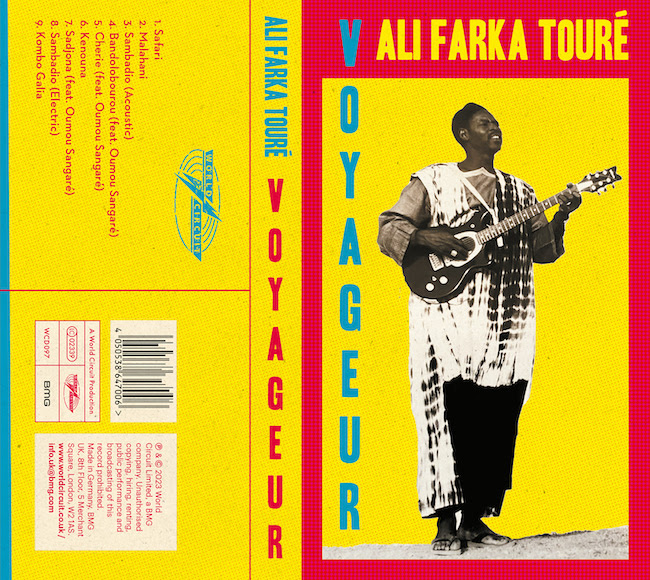
Ali Farka Touré ‘Voyageur’
(World Circuit) 3rd March 2023
With a name woven into the very fabric and soil of Mali, no one performer can claim to represent such a multifaceted culture and land quite like the venerated Ali Farka Touré. That rightly celebrated titan was able to channel the various traditions of a people as diverse as the Songhaï – the ancestors of a predominantly Muslim community that once dominated the Western Sahara in the 15th and 16th centuries – and the Bozo fishing communities of the Niger River. In between that, absorbed into his burgeoning craft, Ali’s many job roles – from subsistence farming on the family land to mechanic, taxi driver and ambulance driver – brought him into contact with the pastoralist Fula and endeared him to the wonderful pentatonic harp and female voiced music of the Wassoulou region – an historical and cultural area without defined borders that on a modern map amorphously spreads out into Mali, the Ivory Coast and Guinea.
Many of which, especially the Wassoulou sound, can rightly lay claim to giving birth to our Westernised form of blues music. But don’t ever dare utter its name, as Ali, when later exposed to and picked up by audiences in Europe and the States, was saddled with that “blues” tag. He would famously dismiss such comparisons, favouring the term “local” music instead. It’s an important distinction in understanding his music. With no real equivalence in the West, the music press and media were still quick to label it so. It must be said that after first encountering a six-string acoustic guitar after seeing a 1956 ballet performance in Guinea, Ali would be inspired to tune into the radio waves emanating from across the ocean, especially the burgeoning blues sounds of Albert King and John Lee Hooker – the artist who, if any, can be said to have come closest to Ali’s sound. But soul and R&B also played their parts, with a liking for James Brown and Otis Redding. What Ali played was authentic music, the roots of which were taken with the enslaved unfortunate souls across the Atlantic.
Born himself in the central Mali town of Niafunké, close to the region of Timbuktu and the lifeline of the River Niger, Ali’s initial one-string apprenticeship flowered into a sound few have equaled since. As ever a deft, skilled expressive storyteller on the six-string as he was on the traditional thumbed and nimbly picked instruments of his homeland, the rural star’s fortunes and access to the music industry changed when he took on a job as a recording engineer for Radio Mali in the 1970s. He would record a septet of influential albums during that period for the Paris label Son Afric. Enter the label behind this, and previous, Ali Farka Touré showcases, the 80s formed World Circuit, whose instigator Anne Hunt made a journey to Mali to find Ali – now semi-retired – in the hope of signing him up. Hunt was successful in facilitating the concerts in London that would lead, in part, to a rush of adulation and several world tours. As the momentum grew giddy, with an abundance of Western artists lining up to collaborate, Ali recorded a run of impressive influential albums with such notable icons as Ry Cooder – they would team up for the World Circuit released Grammy Award (one of many) winning Talking Timbuktu LP. But despite the creative successes something didn’t feel right spiritually, the pull of his homeland just too deep. And so, Ali would return home to his birthplace, but maintain a recording schedule with the release of both the village inspired Niafunké and the Savane (released posthumously) albums. His collaborations would continue too, with an impressive doublet of Grammy winners with the kora maestro Toumani Diabate.
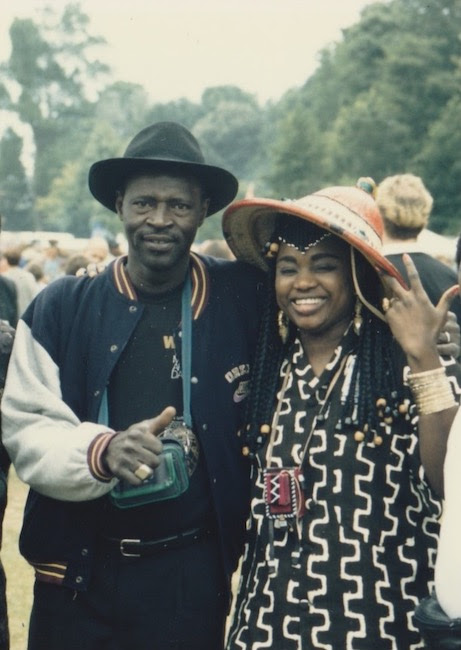
Photo credit: Henriette Kuypers
This latest project, produced by the label’s Nick Gold who spent time with the late Ali (his brilliant accompanying notes are full of vivid anecdotes and adventures spent with the Mali icon) and his scion, the equally gifted virtuoso Vieux Farka Touré (who I’m lucky enough to have seen live, and not blowing one’s own trumpet, has one of my lines, soundbites, used in his Wikipedia entry), is the first album of ‘unheard’ material from the legend since his 2010 posthumously released partnership with Diabate – released four years after his death from cancer in 2006. Voyageur is a welcoming addition to the catalogue, an incredible nomadic traverse of songs that capture Mali’s diversity and rich musical heritage; especially with his celebrated guests opening the sound up, travelling even further afield to those bordering regions that meet Mali.
Ali’s earthy timbre and twined, trilled, and constantly turning over guitar parts find a congruous union with the ngoni plucks of his guests Bassekou Kouyate (another leading light of the Mali scene) and Mama Sissoko, the R&B and soulful sax melodies and phrases of one-time James Brown sideman Pee Wee Elis and the majestic, carrying vocals of ‘The songbird of Wassoulou’ Oumou Sangaré.
Coalesced from a trio of recording opportunities (a 1995 session at Elephant Studios in London, a ‘91 session at Berry Street Studios, also in London, and captured recordings from the Hotel Mande in the Mali capital of Bamako in 2004) over a fifteen year span, the nine songs on this collection show a relaxed performer; the spiritual doyen of that often-used “desert blues” appellation almost effortlessly switching from flange fanning electric to spindled and rustic acoustic as he plucks out expressive paeans and yearns. Comparable acoustic and electric versions of the earnest Fula praised ode to ‘Sambadio’, the legendary fearless farmer, cultivator of the land, prove shining examples of this switch. The stripped-back campfire version heads down the rural, mosey route with a country hushed hoof-like rhythm, tool tilling sounds and a roots-based feel of Malian blues – even if we’re not supposed to use that term. Its electrifying companion is a merger of reedy tooted, pined, soulful highlife, Marvin Gaye and picked out guitar fanning.
But the album opens by administering the right kind of medicine with the Songhaï driven, stick rattling and fluty (courtesy of the Niger Fula flute player Yacouba Moumouni) swirls and undulations of the forthright vocalized ‘Safari’. The ‘medicine’ is this case refers to the guidance in bringing someone back to their senses. Ali sings that he has the medicine to cure ‘baliky lalo’ – “old men whose behavior is contrary to our customs and morals.” The song reminded me in part of fellow Malian guitar star Samba Touré. Later, and in a similar vein, the song of praise to the Bozo fishing elite who’ve mastered the water spirits, ‘Kombo Galia’, amps up that fuzzed electrified buzz with a sound that could be said to evoke swamp boogie and John Lee Hooker.
This album really comes alive with the addition of the beautifully, effortlessly commanding vocals of Oumou Sangaré. A World Circuit signing, friend to the late Ali, her ease permeates the lion-taming Fula Celebration to the Diona chief Amiri Amadou Dicko, ‘Bandolobourou’, and the acoustic, lifting and snozzled account of the Donso hunters, ‘Sadjona’. However, released in the run-up to this album, aired on YouTube last month, her lilted but resonating turn on the delicately spun and fluttered ‘Cherie’ duet (of a kind) is a particular highlight: a constantly nimble-fingered, light yet deeply felt laidback joy.
Ali Farka Touré aficionados will find this a welcome addition to the chronology, with recordings that many will have either never known about or been anticipating. But I’m sure there’s going to be surprises for even the most committed of fans. And for newcomers to Ali’s legacy, this album will prove a great entry point with its diversity and range, showing Ali with various collaborators and paying homage to several cultural styles, traditions. These songs are anything but unfinished scraps, demos, or downtime experiments. Instead, Voyageur is a collection of real quality.
Hi, my name is Dominic Valvona and I’m the Founder of the music/culture blog monolithcocktail.com For the last ten years I’ve featured and supported music, musicians and labels we love across genres from around the world that we think you’ll want to know about. No content on the site is paid for or sponsored and we only feature artists we have genuine respect for /love. If you enjoy our reviews (and we often write long, thoughtful ones), found a new artist you admire or if we have featured you or artists you represent and would like to buy us a coffee at https://ko-fi.com/monolithcocktail to say cheers for spreading the word, then that would be much appreciated.
Dominic Valvona’s Roundup

The Shorts (videos, tracks, singles)
Stephanie Santiago ‘Activa Tu Cuerpo’
(Movimientos Records)
Soulfully lucid with a tinge of jazzy R&B and a reverberation of Cumbia, the London-born ‘Colombianx’ burgeoning sensation Stephanie Santiago entrances with another vision of her Latin roots. Growing up as the daughter of Colombian musician parents – her father an accordionist, her mother a singer –, in a home filled with the joyous, sauntering music of South America, Stephanie embraced the ancestral vibes but lent them an expanded eclectic mix of sounds: from soul to jazz, reggaeton and even punk.
Via the Latin contemporary Movimientos Records label, Stephanie continues to find her place, sense of community in the bustled melting pot of London. From the Alma Carnavalera EP, and most recent single, the Monolith Cocktail is spreading the good word and happy to share the funk-dripped bass and dreamy rich ‘Activa Tu Cuerpo’.
Celestial North ‘When The Gods Dance’
A magical, softened driving gallop over Celtic folklore and hillsides, the diaphanous voiced Celestial North dreams big, dancing with the gods, on her new enchanted and cinematic swelled gauzy single. From our side of the border here in Scotland, but based in the splendor of the Lake District, the soloist counters turbulence and drama with atavistic veils from a mythology to create a whole new entrancing fantasy.
Orryx ‘Ifera’
(ZamZam Records)
The titular evocation from the Bristol-based artist Christelle Atenstaedt’s new EP, ‘Ifera’ sounds like it’s been woven from the ether. As a repeated chime rings out suffused atmospherics envelope a yearned vocal. Materializing from the vapours, a trance-y beat finds a sort of traction and drive. Under the Lovecraftian guise of Orryx, esoteric and Byzantine stirrings draw the listener into a slowly powerful world of gothic-pop and electronica.
Christelle combines ethereal vocal loops with a selection of hardware synths, samplers and effects pedals on the EP’s quartet of original tracks – the fifth being a remix from dark wave techno duo Fever 103°. Delve in, and succumb to the mantric powers of this hypnotic artist.
ALBUMS/EPs
Black Mango ‘Quicksand’
(Gusstaff Records)

Transforming Mali’s world-renowned signature blues sound – from the city streets, back lanes of the Bamako capital to Tuareg roaming desert regions – the visionary producer Philippe Sanmiguel has been instrumental in fusing that sound with rock music, atmospheric mirages and electronics.
Based in the capital for the last sixteen years, Philippe has amassed an enviable roll call of productions for such icons and talents as Samba Touré, Anansay Cissé, Tartit and Mariam Koné. During that time he’s enjoyed a creative partnership with the Glitterbeat Records label and its founding partner Chris Eckman. Alongside his foil Hugo Race (who appears on this album), Eckman’s Dirtmusic band was drawn to Mali a decade ago, recording sessions for both the Troubles and Lion City albums whilst in Bamako with Philippe.
An integral part of the scene then, I’m guessing it didn’t take much persuading to get most of those artists to appear on his new showcase, Quicksand.
Under the Black Mango alias, Philippe opens up his own compositions to the great and good of Mali, and admirers alike. Produced over several years in various recording sessions, each collaborator has been given “free range”. The results of which are equally as searching as they are dreamy: even hallucinogenic. The opening heat bending, dub-y ‘Bakeina’s Dream’ straddles both; melting in a desert setting as the earthy soulful vocals of Bocar Sana Coulibaly drift through from some mirage oasis. Bocar, a member alongside Ali Traoré (both also nephews of the late esteemed Ali Farke Touré) of Espoirs de Niafunké, makes a second appearance later on, joining the brilliant guitarist and artist Anansy Cissé on the meandered, spoke-plucked and gauzy ‘The First Stone’.
Pretty much one of the most popular and gifted guitarists to emerge from Mali, Samba Touré adds a sustained flange of bended notes and expressive lines to the Phantom Band meets Belgium alt-rock ‘Are U Satisfied’ – Philippe’s voice on this one almost channels Michael Karoli of Can’s languid lyrical, questioning malaise. Samba plays some nice electric-blues and semi-classical tones in harmony with the mandolin and harp-like airy spirals of the ngoni on the infinity ether R&B flavoured ‘Mad Girl’. Offering up the R&B, the soul on that same track is the celebrated Malian songstress, music teacher and Les Amazons d’Afrique super group member Mariam Koné. Mariam can also be found lending a searching cosmic gospel vocal on the Flyodian, astral and progressive tumultuous ‘Minamba’.
From Samba’s regular band setup the ngoni and tama (a hour-glass shaped talking drum, the pitch of which can be tuned mirror the human voice) maestro Djime Sissoko gets to let loose on the percussive heavy, spacey ‘Bankoni’. With buoyant drums, bottle taps, ricochets and buzzes this scrapped and scuttled finale marks a mysteriously veiled ending to a Mali traversing psychogeography of both magic and the all too real consequences of the violence that’s plagued, and continues to plague, the country and its borders.
Talking of those fraught, violent themes, the already mentioned Hugo Race moodily channels his Dirt Music calling on the bleeding ‘Heaven Sands’. Part swamp gator blues, part outback Mick Harvey, Hugo leads us across a much troubled, metaphorical landscape towards better days. Though Philippe’s dub-y, Terry Hall-like ‘Quicksand Blues’ has far more ominous, political references to a desert storm of terrorism, immigration and blood-soaked sand dunes. ‘Ghost Sand’ meanwhile is just that, an instrumental passage of haunted lingers, traces of those both missing or forced to abandon the deserts of Mali for the cities; out of displacement, conflict or poverty.
There’s a far greater talent pool involved on this album, which transcends Mali’s extraordinary legacy as arguably one of the true homes of the blues and rock genres. Quicksand marks a sagacious yet experimental achievement for the producer-musician and artist in his own right. A showcase for his own talents, his friends and for the country itself; roots music taken to another level and given a contemporary lift.
Further Reading::
Private Agenda ‘A Mannequin’
(Lo Recordings)
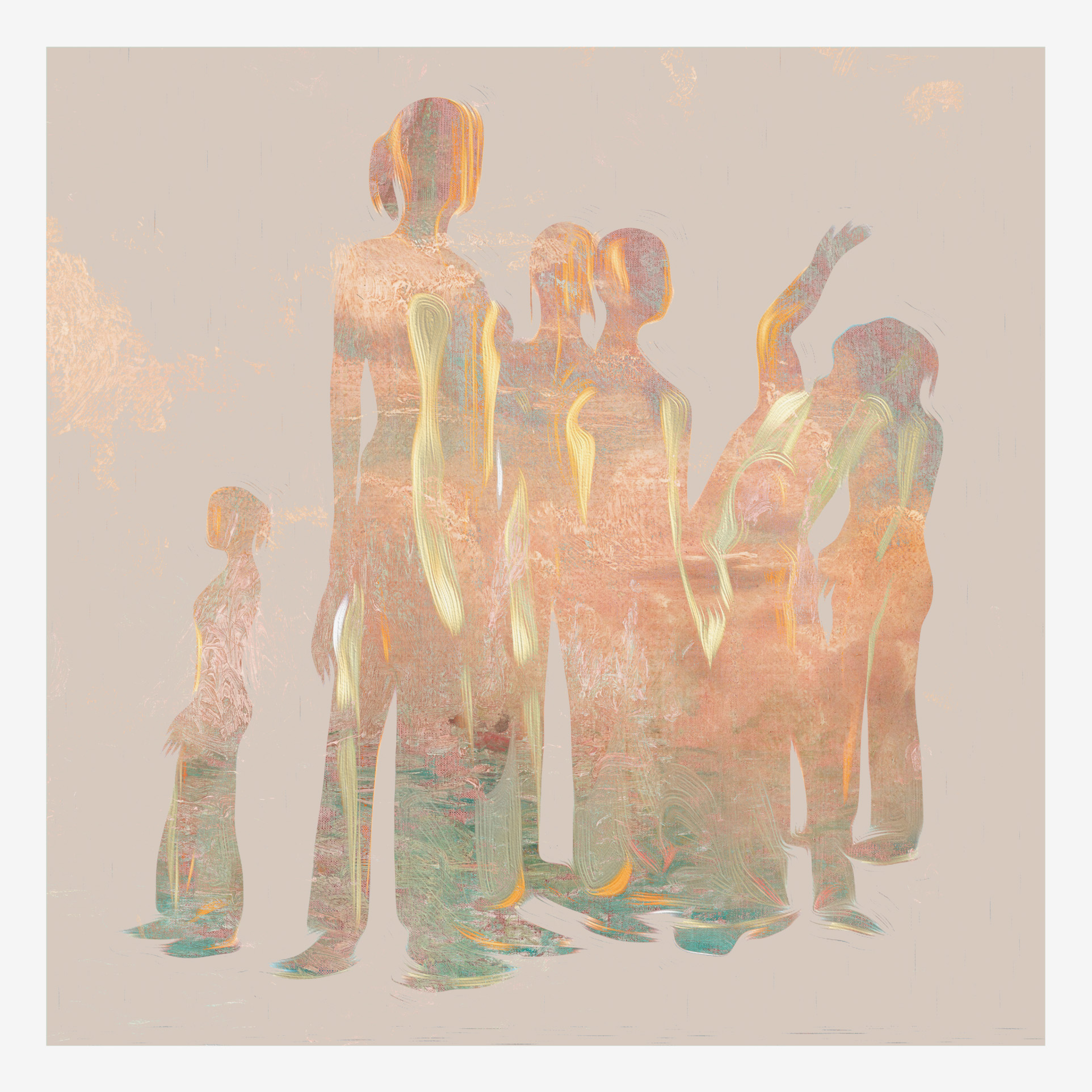
A sophisticated mood board of veiled, gauzy electronica with hints of real tinkered piano, A Mannequin is the second studio album from Berlin/London portal Private Agenda: the languorous sonic partnership of Sean Phillips and Martin Aggrowe.
Conceptually using each song and shorter breather, pause, to reflect particular character traits, and in doing so, asking certain questions about the ‘dichotomies’ that define us, this duo play around with a soundboard of synth-pop, nu-soul, ambient, downtempo, new age, chillwave, new wave, AOR gold and house music.
A fantasy with spells of starry, shimmery tinkled magic and more hazy, vaporous plaintiveness, this mostly dreamy, relaxed album glides or drifts through twelve degrees of being; starting with the ambient turn, the Air-like mirage ‘Irresistible’. I haven’t made my mind up if this is about holding a mirror up to narcissistic self-love or a complete 360 degrees turn, and in fact dreamily cooing for ore of it.
‘Neo-Nostalgia’ not just a track in itself, could be a perfect description for the whole record, with its constant lingering traces, the essence of 80s songwriter and synth pop, electronica, disco and yacht rock. The duelist ‘Gemini’ seems to lushly brood through Tokyo 80s glowing new wave, the Balearic new age, and yet also fit within the perimeters of the music of the cult Laurel Canyon singer-songwriter Ned Dohney.
There’s a change in musical mood, instrumentation by the fourth lovelorn song, ‘Touching’, which features an eloquent spell of classical light piano. It returns later on with just a hint of distant birdsong and a synthesized pre-set on the interlude-like ‘Purity’.
Elsewhere those floated ethereal vocals – which are never pushed, never sang in anger or even loudly – are wrapped in relaxed funk, castaway tropical percussion, neon-lit drama, opulent gauze and airy filters. With nothing strained, no real tensions, the music glides through a swirl of pre-Miami Vice Jan Hammer, Vangelis, Groove Armada, Spaceface, and on the finale, ‘Substance’, an exotic laidback pan-pipe hint of South American trance: As they’ve coined it, a ‘musical hyper-realism’.
Despite that laidback, even disarming if saddened at times production, the personality is seriously mined to create a fantasy come lyrical expression of who we truly are. A voyage of self-discovery you could say.
Saturno 2000: La Rebajada de Los Sonideros 1962 – 1983
(Analog Africa)
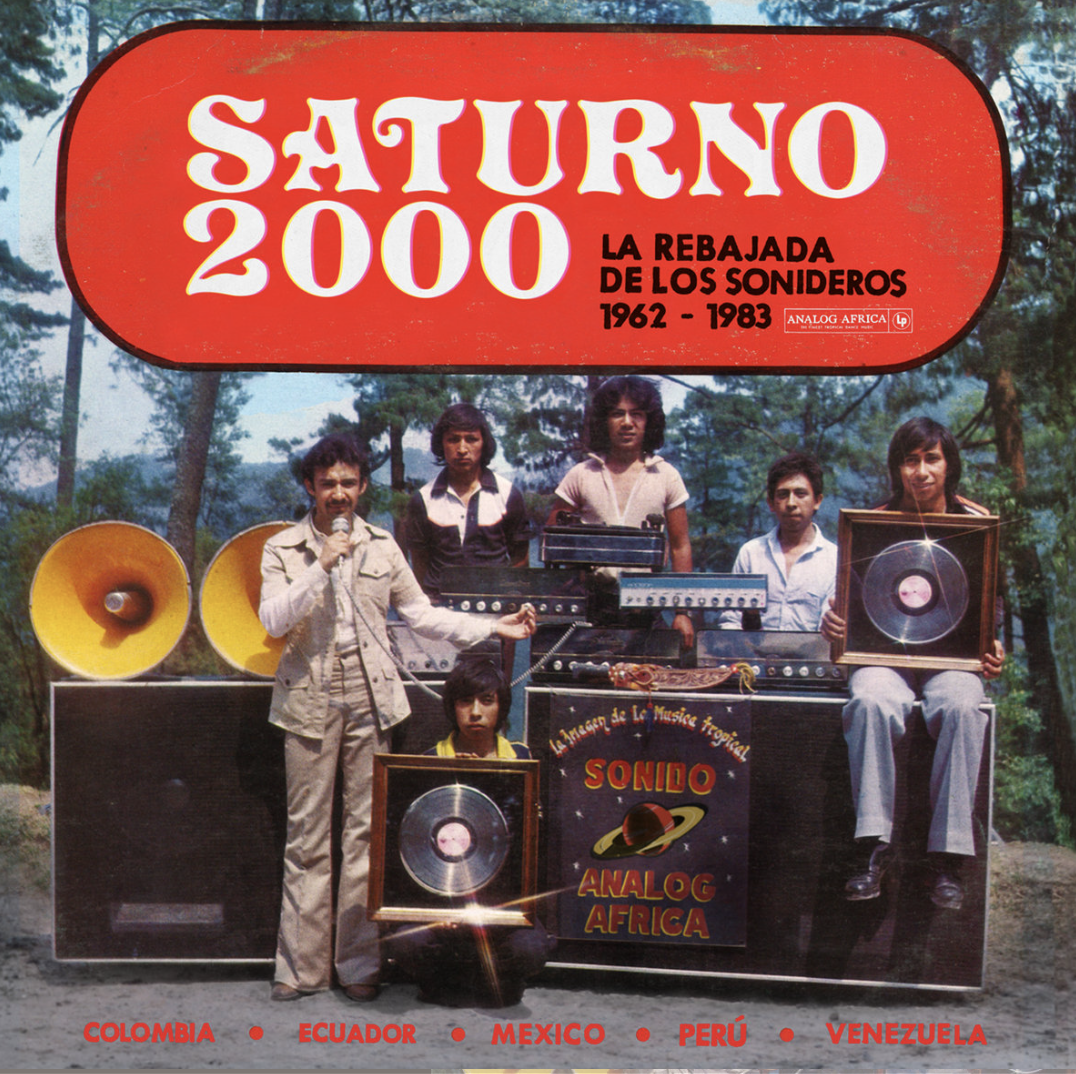
Once more landing on South and Central American shores Analog Africa airways celebrates the obscure ‘Rebajada’ phenomenon with what must be the only, if not first, compilation of its kind dedicated to that trippy, slowed-down form. Originally asked by Analog’s founder Samy Ben Redjeb back in 2010 to come up with an idea for a collection, noted DJ expert Eamon Ore-Giron (stage name DJ Lengua) offered up the Rebajada Mota Mix, which as a real slow-burner took time to reveal its magic. And so more then a decade on, this proposal now sees the light of day on a dedicated 15 track survey, taking in a twenty-one year period from ’62 to ’81.
First though, a little background. In a nutshell, ‘Rebajada’ is a well-coined name that literally translates as ‘to reduce, or to lower’, in this case slowing down the continent’s famous Cumbia and, to a lesser extent, Porro rhythms. Cumbia, a catch-all for a Latin American amalgamation of rhythms and folk dances drawn from the indigenous, enslaved African community and Spanish colonial cultures, and Porro, a style originally seeded in the Caribbean facing region of Colombia that evolved into a ballroom dance played by brass heavy bands and orchestras, are both simmered down with the speed and much of the gallop taken out so as to produce sometimes crazy but often sauntering, more relaxed dances. It’s a sound that allows the listener to drink it all in.
Brought to Mexico by ‘the sonidero’ (sound-system operators as they were known), tunes from Peru and Ecuador were by accident or luck transformed into a new style that sent the audience wild. Two cities and groups of people lay claim to initiating it though. In one corner the catalyst Pereas and Ortegas brothers, who travelled across Latin America crate digging before returning home to Mexico City. They sold their wares, finds to various sound-systems on the hunt for something new and fresh to blow away the competition. A number of which, in trying to match the beats of each region with that of Mexico City’s own styles began experimenting. One such maverick, Marco Antonio Cedilio of the Sonido Imperial fame, created a ‘revolutionary’ pitching system that could slow records down. In the opposing corner, the northern Mexican city of Monterrey and Sonidero Gabriel Dueñez, who by happenstance set in motion a chain of events that would see the city, lay claim to inventing the ‘Rebajada’ style. By escaping electrocution at the hands of a short circuit spark that nearly set his turntable on fire, the revolutions were slurred and slowed down by the damage, playing Cumbia at much reduced bpm and so creating this new rhythm and dance sensation. Another well-known sonidera, Joyce Musicolor, as mediator puts it best: “Rebajada, and the equipment to perform it, is from here [Mexico City] but it was Monterrey that popularized it.”
Contentious to this day, no matter what the truth, a new sound was born that grew and grew, yet remains relatively unknown outside Latin America. Here then is a survey of that scene, with a majority of the songs sounding unlike the originals; notable exceptions being the few classics composed by Polibio Mayorga, or rather the Ecuadorian Junior Y Su Equipo, and the Mexican Los Dinners group’s scrappy, tinny shuffled percussive and giddy-horse canter, bounding drum saunter ‘Sampuesana’.
Although we’ve heard a lot about Mexico, the lion’s share of choice selections are drawn from Venezuela, Ecuador, Colombia and Peru. Well, there’s actually only one apiece from both Venezuela and Colombia; the tremolo quivered Western themed reverberation of Duane Eddy, if produced by Joe Meek, ‘Infinito’ by Hugo Blanco Y Su Arpa Viajera, and the rattle-y percussive chapel squeeze-box, organ stuttered ‘La Danza Del Mono’ by Lucho Gavilanes.
Obviously when taken down a notch of two in the speed stakes it produces some funny as well as odd subgenres, and with the elements of low rent tech makes some tracks sound like 8-bit zappy and warbled versions of Andean pipe music. In that category you can include the oscillating ghost-synth like filtered Ecuadorian Junior Y Su Equipo group’s ‘La Borrachita’ and their second contribution, the googly, high-pitched and fluted ‘Bien Bailadito’.
From Peru, Los Santos’ cosmic futuro entitled ‘Saturno 2000’ (borrowed for this compilation’s title) sounds like a slowed fusion of Porro and Highlife with its raised and suffused blasted horns, galloped hand drums and distinct tropical Latin lilt. Monolith Cocktail followers and Analog Africa aficionados will recognize one name from the list, the Peruvian cat Manzanita. A compilation of his influential music was released only last summer by the label. Here, in a very different guise is his bottle-rolling duet of the slurred ‘Paga La Cuenta Sinverguenza’, and, with Su Conjunto, the more strung-out gangly guitar wondering ‘El Jardinero’.
Back to where it all got so peculiar and relaxed, the Mexican outfit Conjunto Tipico Contreras turn in a shunted, scrappy and concertinaed vision of a epic exotic film score from the MGM studio heydays; a record that has both a mix of the Mayan jungles and fertile crescent. The beat is destined, if not already, to be sampled.
Could Rebajada be the sound of this summer? It’s certainly a contender, just because it’s often so strange and hypnotising. You kind of hear the process, the slowness, yet it works as a sauntering, relaxed yet somehow still busy tropical shuffle. Having constantly documented all the best African nuggets, Samy and his partner on this compilation, Eamon, have put together an essential guide to a Latin American treasure trove.
Ethan Woods ‘Burnout’
(Whatever’s Clever Records)

From out of the rustic idylls of Western North Carolina emerges a cabin essence songbook; a disarming pastoral lilted and psychedelic melt of connectedness, and yet, also yearning heartache. Ethan Woods and friends absorbed the meandered thoughts that take shape when disconnected from the newsfeed roll of social media and bustle of the city, out on a summer balm encased porch, and under a wooded canopy.
First conceived back in Brooklyn between 2015 and 2017, Woods fine-tuned his collection of dreamy, mesmerizing songs when he moved to Asheville, North Carolina a year later. Created in-situ at the foothills of the Appalachians, but brushed-up upon returning to Brooklyn once more with added parts recorded at the now defunct Fort Briscoe during the pandemic, the fruits of Woods and his sympathetic ensemble is let loose just in time for the summer of 22.
From beginning to end Burnout unfolds over the course of a day, following the sundial’s shadow until nightfall drops. That’s when the nocturnal soundscape collage, performed in part by the electronic experimentalist Aaron Smith, opens up a whole new evocation of nighttime camouflaged hoots, insect chatter and an Americana ether of obscured sounds.
Apart from Aaron there’s contributions from Woods partner Lauren Gerndt, percussionist Matt Evans, Trevor Wilson, Sarah Goldfeather, Finn Shanahan, Karl Larson, Jude Shimer and Alvin the rooster. Yes that’s correct, a credit goes to the rooster, who sets the alarm and atmosphere. No contribution is too small: from Gerndt’s read out one-liner about teddy bears to helping in the development of the arrangements themselves.
In the press notes, as an ample description, we’re told to think Alan Lomax recording a super group of Sufjan Stevens and The Books. I’d suggest led by David Byrne with Paul McCartney, Animal Collective, Galaxie 500, Ladybug Transistor and Clap Your Hands And Say Yeah vibes. In all, a sort of ebb and flow of psych, troubadour, soft rock and enervated dirt music country.
Characters from childhood, like ‘Mrs. Moo’, are accorded a lo fi swim of the sentimental and playful, with humble spells of honesty. Never quite straight up, always melting in with the arable outdoors on waves and oscillations of marching drumbeats, cymbal splashes, distant snozzles, tinkled piano and lax acoustic guitar. Music finds form and a rhythm; an either melancholic or romantic emotive tune in untroubled and unguarded song forms. Most of which bleed into each other, almost like a continuous recording.
Woods pastoral retreat proves a most magical, heart rendering, if sometimes pining, place to spend an hour or two. I’m really impressed by this slow-burning trip that drops The Books off for the weekend in a log cabin for a soliloquy session of candid therapy.
Misha Sultan ‘Roots’
Gustavo Yashimura ‘Living Legend Of The Ayacucho Guitar’
(Both Hive Minds Records) 6th May 2022
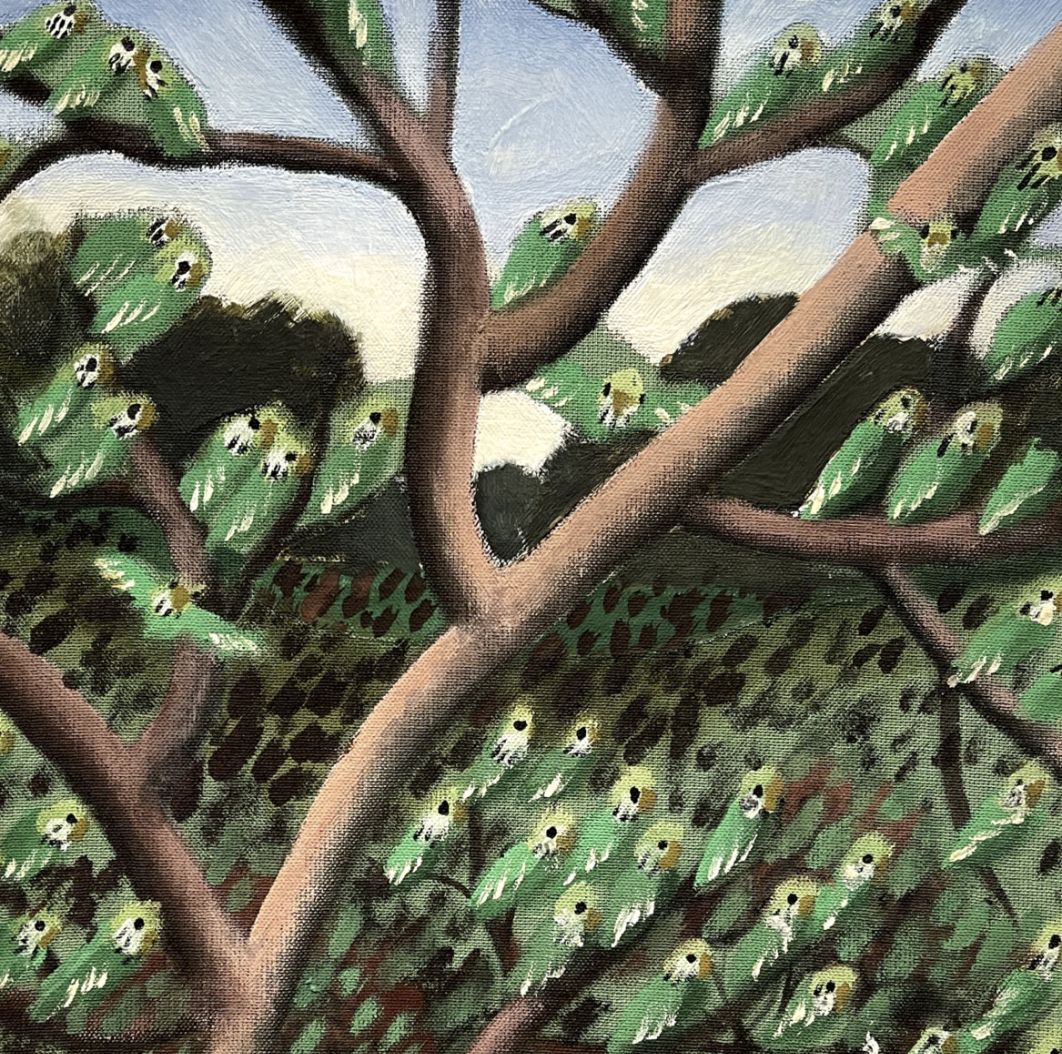
Nearing the label’s fifth anniversary (see my future purview celebration later this year) with no signs of flagging, Hive Mind Records are stepping up with two releases on the same day. Both cassette and digital albums couldn’t be more different too; with organic and global electronica from the Russian artist Misha Sultan and Peruvian Andes guitar evocations, flourishes from the Ayacucho-imbued maestro Gustavo Yashimura.
It shouldn’t really be that surprising, the eclectic richness of this dual release, as the label has previously traversed an electric Atlas Mountains, celebrated the colourful rituals of Gnawa music, and stopped over in Java, Highlife Western Africa and tripped out with the Acid mothers and Reynols.
The first of these showcases brings together the work of the multi-instrumentalist Misha Sultan, collecting pieces from 2015 to 2022. Hailing from the heart of Siberia, and industrious city of Novosibirsk, Misha was forced to leave his homeland.
The so-called ‘Chicago of Siberia’, on the banks of the Ob River, a crossing point of the legendary Trans-Siberian Railway and historically an important flashpoint of the civil war, informs, inspires some of the recordings. A geographical behemoth that sits between the Ural Mountains and Northern Asia, touching the Pacific Ocean in the East, Siberia isn’t just the exiled, infamous hardened remote atelier of literature, art and politics but a beautifully diverse landscape; the Eurasian melting pot as it were. Mirroring that diversity, Misha’s music travels to the Congo, Bali and Arabia whilst absorbing bits of kosmische, ambient, trance, washed-out psych, 90s chill-out, breakbeat and dub.
Real instruments, such as bubbled and shuttled mallets, flighty and dreamy flute and bamboo and metal percussion melt into synthesised waves, rays and atmospherics; some of which, on the odd track, are provided by the mysterious Mårble and Dyad. ‘Ant Invasion’ sets the tone, the scene, with a peaceable-like meadow field recording of hedgerow birds and tranquil washes of Mythos and Andrew Wasylyk. A shuffle of hand drums kick in and vague Ash Ra Tempel prompts take us towards more far eastern fringes. ‘Sand Ashram’ wobbles and bobs to Richard H. Kirk’s red sands invocations, Warp Records early Artificial Intelligence series, Banco de Gaia and the chill-out vibes of Liquid and William Orbit. ‘Why Are We Here?’ meanwhile could be either set in an Finis Africae vision of the Amazon, or indeed, Western Africa, whilst the railway station inspired ‘Beloostrov’ offers a fluted and drifting piano daydream aboard a train bound for the Finnish border. ‘Slow Flow’ with its shooting stars and whistles floats into spacey dub Orb territory, and the banjo-like radiance of ‘Bubbles’ moves from Indonesian evocations to Japan; well, something like that.
The final two tracks journey to the Congo and Bali; with the latter settling into a meditative mood amongst the New Year celebrations of the Balinese day of Silence.
Misha sonically travels the world, bringing together interesting references, emotions and atmospheres. He remains however rooted, connected to that Siberian topography and mood.
The second showcase of the Hive Mind set this month assembles a collection of adroit but also intensely skillful acoustic guitar music by the rather obscure champion of the Ayacucho Peru culture, Gustavo Yashimura.
Picking up the guitar in 1987, Gustavo travelled onto Uruguay to study, later on journeying to Japan where he played a classical style. He’d return home however in 2004 (still eager to learn and study) and would later take up the Andean style of guitar with the onus on the proud Ayacucho region of Peru. His teacher during that period was the 80-year-old veteran Don Alberto Juscamaita Gastelú, known famously as just Rahtako. It seems Gustavo learned much; straddling both the classics and more frantic modern styles.
In trying to reclaim the pre-colonial Spanish Ayacucho folklore and culture, these nimble and busy performances incorporate an age-old yearn.
A number of tracks (‘Dandé Te Fuistes Paloma’ and ‘Negra Del Alma’ being two of them) feature a heartening, aching female vocal: not quite Fado, but certainly on the lamentable side. Beautifully sung, expressive, they prove my particular highlights on this compilation.
Gaucho western horizons, ancient symbols on the plains, romantic flourished and dalliances stream forth from an incredibly fluid style; a mix of Spanish and the indigenous. Dainty, sizzling, blurry at times, Gustavo’s skills prove magical. Well worth adding to an eclectic collection. Better still buy both albums.
Ghost Power ‘S-T’
(Duophonic Super 45s)
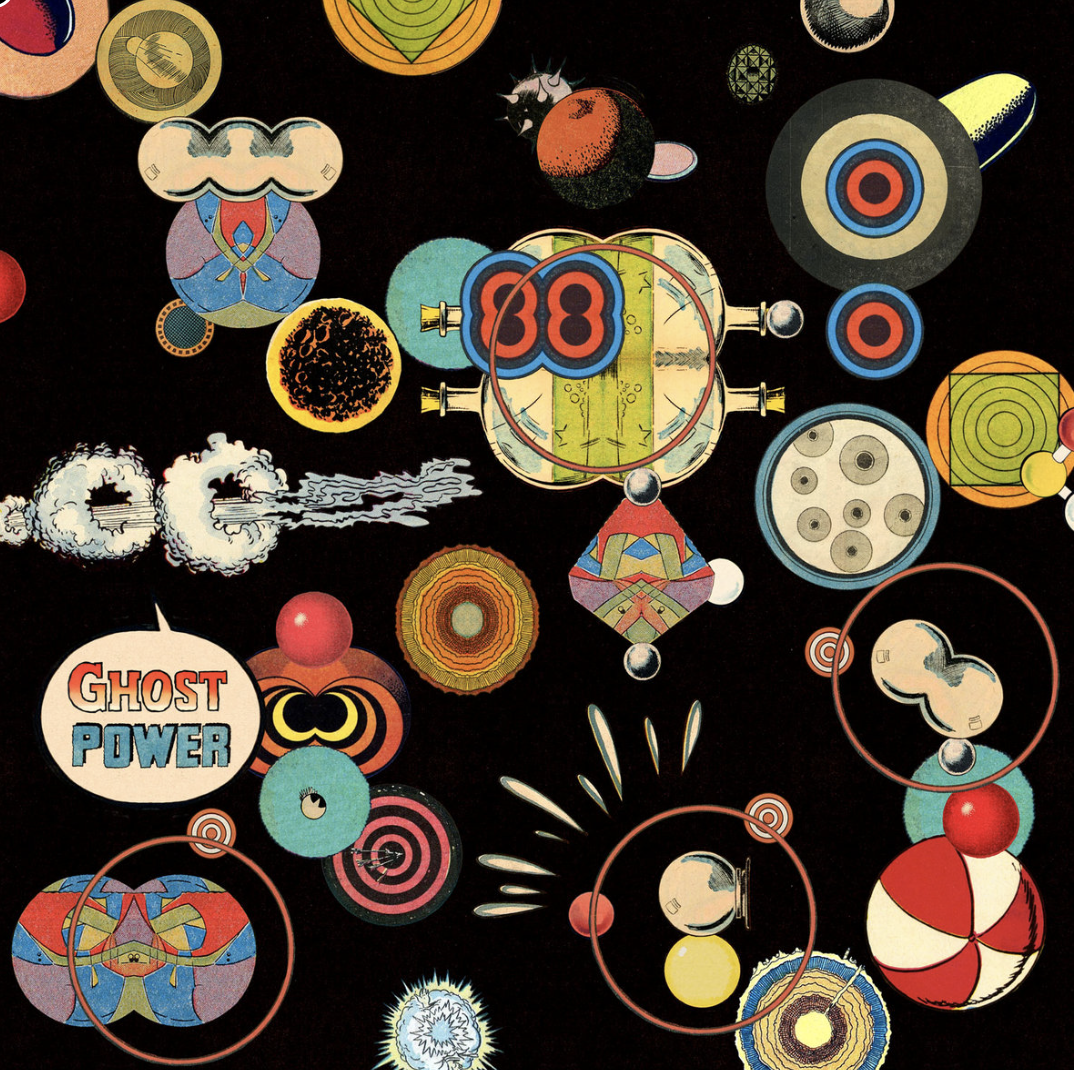
Two of the Duophonic Super 45s mail order label’s roster combine forces this month for a cult sounds coalesce of library music, soundtracks, psych and trip-hop. Serial offender in all things cultish, the kosmische universe and beyond, Stereolab’s Timothy Gane bounces nostalgic trips off his foil, Dymaxion instigator Jeremy Novak, under the newly minted Ghost Power guise.
Imbued by all that’s gone before them, recorded between sessions in both Berlin and New York (and remotely), the duo evoke a cosmology of cool and obscure mavericks on an album of fantasy (see the reference to Joseph Delaney’s witch assassin ‘Grimalkin’) and kitsch.
Matmos on a bum ride bubbles up inside a lava lamp with Bruno Spoerri and Arto Lindsay on the opening ‘Asteroid Witch’, whilst ‘Panic In The Isles Of Splendor’ could be the sort of obscurity dug up by the Finders Keepers label: that and a nocturnal insect rhythm of Alex Puddu and timpani soundtrack rousing piece of nonsense.
A transmogrification of an enviable record collection, in which Giallo schlock shares space on the shelves with space-disco-trance, 60s backbeats and Nino Nardini scores. Ghost power is a very knowing experiment in art for art’s sake; a knowledgeable take on library and cult sounds, with a few contemporary surprises.
Exterior ‘Umbilical Digital’
(Hobbes Music)

Without losing touch with rhythm and melody, the latest album from Edinburgh producer Doug MacDonald (under the guise of Exterior) is an experiment in texture, club sonics and live-sounding instrumentation. A largely percussive tapping, drum-skidding and bouncing affair, Umbilical Digital channels some quite eclectic tastes, with an array of both bpms and styles; from ambient scores to coarse abrasive guitar techno fusions.
The titular track, and opener, is a sophisticated metallic chrome propulsion of Basic Channel, Euro-trance and heightened warbles of something almost quivery and spooked. Yet by the second track, ‘Menu Diving Olympics’, the filters are subdued and more cosmic, the bass deeper, the beats like rattled ricochets, and the direction progressive. ‘Orthodox Dreams’ seems to have been partially lifted from the 90s: a bit of Sabers Of Paradise, a little Future Sound Of London. Yet it knocks and shakes, zaps and reverberates, to a contemporary mix of electronics.
The bottle, metal and tin rhythm tapping and pneumatic alarm clock bell chimed ‘Populist’ has a funky techno bent; reminding me of Psycho & Plastic and International Pony. ‘The Unbearable Shiteness Of Indie’ is less a polemic on guitar bands – MacDonald himself wielding one on this album; all feedback whines and caustic contouring – and more a floated, tunneled and slightly tropical merger between Sven Vath and Andy Weatherall.
The acid effects are subtly turned on for the trance-y geometric and soft thumped ‘Adoption’, and the Aphex Twin is sent down a flume on the slower beat-crunched, reversal tubular, robotic-stuttered ‘Tyranny Of Choice’. Carrying a certain weight, the finale, ‘Load Bearing’, goes all ambient and mysterious; a sort of soundtrack evocation of smoke forming on an otherworldly lake scene: creeping, sad with haunted, apparitional voices. As a last chill, it could be a lost Brian Reitzell score.
Synthesised music with a human touch, this album loses none of its experimental luster; still honed for the dancefloor as well as the head, whilst turning steel into something far more melodious. This is techno, electronica with a heart and purpose.
The Staple Jr. Singers ‘When Do We Get Paid’
(Luka Bop) 6th May 2022
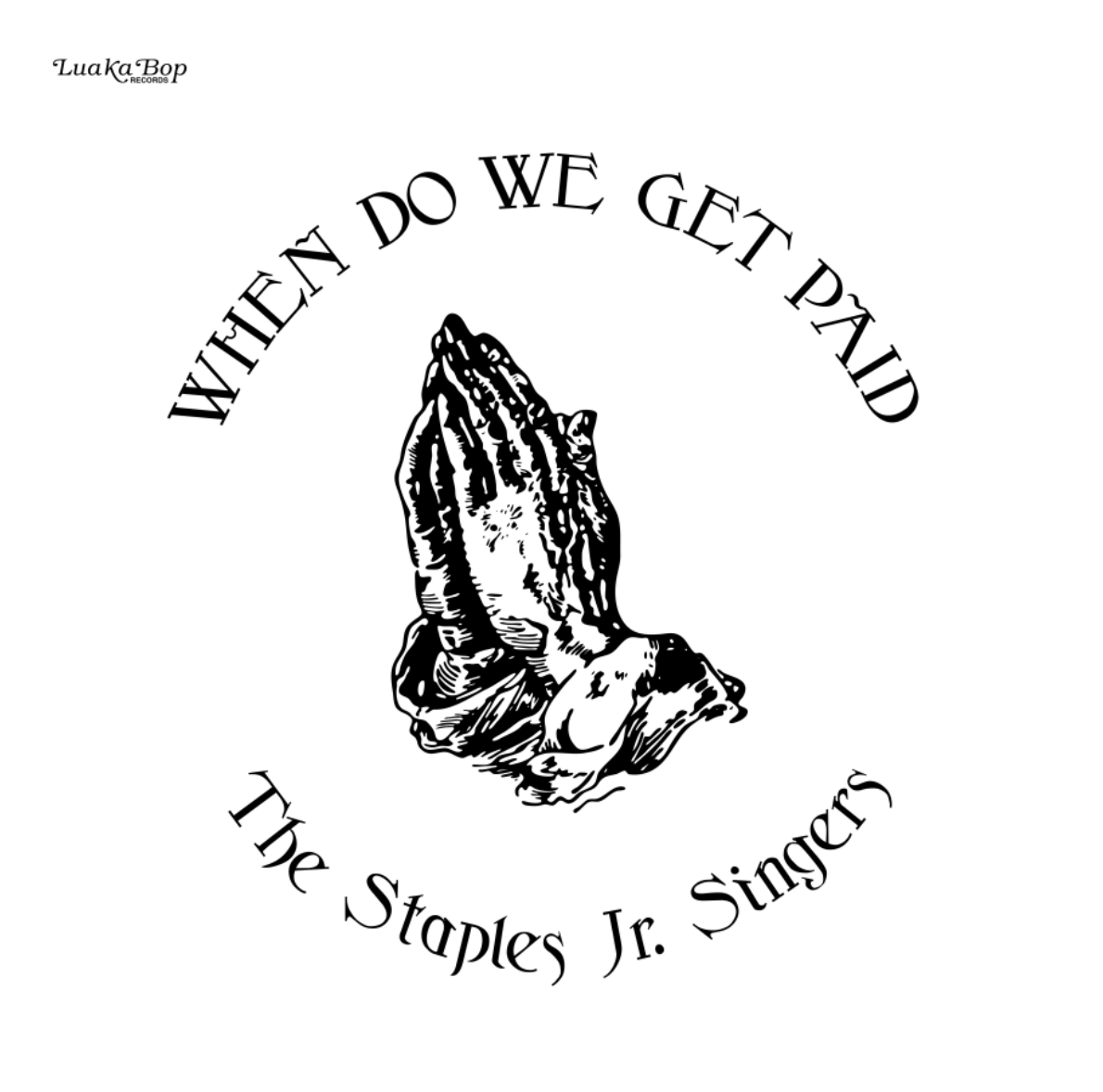
Revived five decades after its original, localized released in 1975, the good folk at Luka Bop make good on their incredible, enlightening compilation of obscured gospel and soul, The Time For Peace Is Now, with a dedicated reissue of The Staple Jr. Singers rarity When Do We Get Paid.
Pressed by that extremely young family unit themselves and sold at shows and on their neighbors front lawns, this rarefied showcase is finally getting an international release, prompting a number of live dates for the trio: their first in forty years!
From the banks of the Tombigbee River, honed in the family’s hometown of Aberdeen, Monroe County, the salvation searching, baptismal liturgy of Southern gospel gets an injection of conscious political soul, R&B, funk and delta blues. From the name you may have assumed that this trio were scions, the offspring perhaps of the divine stylers the Staple Singers. Without doubt a chip off the old block, the group’s moniker is purely used as homage in honour of their idols. Far younger, the Brown family of beautified and expressive soulful vocalists Annie and A.R.C. and guitarist Edward were in their teens when they recorded this, their sole, album in ’75. Yet despite being so young, the travails of the civil rights movement, social issues of the day, run throughout the trio’s equally earthy and heavenly soul music.
This was a sound touched by the afflatus yet grounded in the wake of Southern desegregation, unrest, the Vietnam War…the list goes on. So whilst Annie soars in full baby Staples mode, and with a vibe of Eula Cooper and Shirley Ann Lee about her, there’s plenty of attitude and sass to go around. Gospel music remains central however, with plenty of standard Bible belt exultations, paeans and passionate plaints. Some of which, no matter how familiar, seem to have some pretty unique and idiosyncratic rearrangement going on. Bolstered on the original recordings by bassist Ronnel Brown and Drummer Corl Walker, we’re treated to s Stax-like revue of reverence, the venerable and just down-country soulful funk. Echoes of Sam Cooke, Lulu Collins, Crusade Records, Chairman Of The Board and Nolan Porter follow humbled sermons on the soul train to Galilee. An electrifying songbook, When Do We Get Paid proves that this family trio possessed a raw talent, and could hold their own in a field packed with such incredible voices. It also proves there’s still much to learn and hear from that era of Southern soul and gospel. Great job Luka Bop.
Hi, my name is Dominic Valvona and I’m the Founder of the music/culture blog monolithcocktail.com For the last ten years I’ve featured and supported music, musicians and labels we love across genres from around the world that we think you’ll want to know about. No content on the site is paid for or sponsored and we only feature artists we have genuine respect for /love. If you enjoy our reviews (and we often write long, thoughtful ones), found a new artist you admire or if we have featured you or artists you represent and would like to buy us a coffee at https://ko-fi.com/monolithcocktail to say cheers for spreading the word, then that would be much appreciated.
Our Daily Bread 437: Khalab & M’ Berra Ensemble ‘M’ Berra’
April 13, 2021
ALBUM REVIEW/Dominic Valvona
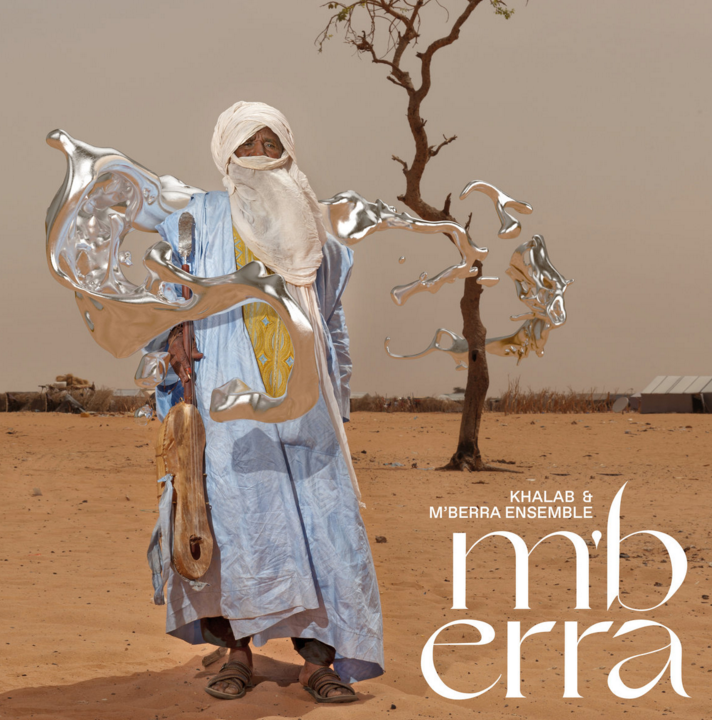
Khalab & M’ Berra Ensemble ‘M’ Berra’
(Real World Records) 23rd April 2021
Treating the hypnotizing and often mystical voices and music of the Tuareg with a less intrusive style of congruous trance, loops, re-contextualized captured moments and sophisticated synthesized effects, the Italian polymath (producer, DJ, author, broadcaster on Italy’s national radio station Rai Radioz) Raffaele Costantino, aka Khalab, approaches his collaboration with musicians from the M’ Berra Refugee Camp with a great sensitivity and respect.
On Khalab’s latest African partnership, this time with Arab and Tuareg members of the sprawling tented refuge, he draws attention to yet another sorry tale of forced dispossession; highlighting the plight and limbo status of the 60,000 Malian refugees stuck since 2012 over the border in neighboring Mauritania. In the ongoing, but only the most recent wave of fighting in Mali, many people have abandoned their homes in the desert bordered regions of the country, many caught up in the Tuareg’s near seventy-year fight for an autonomous state within the north-eastern reaches of Mali: known as the Azawad.
A review like this can’t hope to do the subject matter of this struggle justice or devote the space to all the atrocities and convoluted history, but in brief the Tuareg’s heritage is often opaque, with even the name argued over by etymologists: There are many in the community that would rather the term disappeared, preferring instead to use ‘Kel Tamashek’. A loose confederacy in one way of atavistic tribes, with a lineage to the Berber, who can be found throughout north and western Africa, the Tuareg have lived in Mali for a considerable time: centuries. In the last decade their fight against the Mali government over rights, representation and self-determination was hijacked by a boosted insurgency of international Islamic militants affiliated to ISIL. This ill-fated campaign nevertheless gained a lot of ground in its early stages, including the legendary ancient hub of learning and trade, Timbuktu; overwhelming the Mali government forces, who were forced to seek help from former colonial masters France. This intervention was semi-successful in stopping the momentum, and managed to gain much of the ground lost: however unstable that remains. It also didn’t help the cause when those Islamist forces more or less turned on the Tuareg Liberation groups.
Switching to terrorist guerilla tactics (including bombings), but still a major force to be reckoned with, the Islamist fighters have since spread mayhem to Mali’s neighbours in the region. The situation is made worse by an internal crisis in government in Mali (a coup last year brought in a still going, but unstable, interim government that is supposed to step down when elections can be held).
In this tumult of insecurity, is it any wonder Malians have fled?
Being a musician in this volatile environment has proved especially dangerous. Just last month on the blog we featured the Malian artist Anansy Cissé and his new album Anoura, which was put back by a culmination of problems that included a kidnapping and beating on the way to play at a festival in the country. It’s a common, shared experience of nearly everyone you speak to from the music community in Mali, who are trying desperately to eke out a living: many forced to abandon their homes for sanctuary in less dangerous parts of Africa, even the world.
Camped out in the Mauritania land of the lyrical griot storyteller, the many known and also fairly obscure musicians and singers that feature on this project are examples of this forced exodus. Featuring members of the Tamasheq speaking Tartit ensemble alongside others from the Arab and Tuareg communities, stories and harsh realities are voiced on an attuned album of desert song otherworldliness, the dreamy and rustic, earthy. Khalab having worked with an eclectic array of musical partners over the years, including the Malian percussionist maestro Baba Sissoko, takes his collaboration very seriously indeed; taking, we’re told, reverential ‘guidance’ from Tuareg ethnologist Barbara Fiore.
An entwined production of Tuareg roots and subtle (for the most part) electronica, Khalab takes the essence, sometimes just strands or excerpts of the source material and adds a sense of both Afro-Futurism and the cosmically trance-y. In similar sonic territory to Kutiman, Invisible System, Ammar 808 (at his most sub-bass frequency vibrating best) and even last year’s Vodou Alé treatment by Belgian electronic duo The Ångströmers of the Chouk Bwa troupe’s Haiti traditions, this vivid transformation sometimes offers the most translucent of electronic pulses, reverberations and washes to a stringy, spindled, trinket ringing and tinkering cattle trail wandering of and both the spiritual and aching messages of the Tuareg.
Some tracks seem to be just a gauzy atmospheric soundtrack memory of the nomadic life, whilst other performances are beefed-up with slow but punchy drum breaks. Polygon Kosmische synth shapes appear with rhythmic patter Techno on the looped buoyant motion (with a touch of Hailu Mergia keyboards) ‘Curfew’, and there’s a soulful House Music club groove that sits beneath a Modou Moctar like blues mirage on the festival sampled ‘Reste A L’Ombre’. Talking of Moctar, you can hear many similar echoes of the desert rock ‘n’ roll, blues vibe of groups like Tinariwen and Tamikrest; which is unsurprising as the members of Tartit who appear on this record share a similar heritage, roamed the same Timbuktu, Kidal and Gao trails.
Khalab knows when to let his partners breath, and even perform more or less without any additional synthesized effects or production; leaving the final say to a most beautiful hypnotizing, wandering desert yearned outro from the camp’s gifted primal blues players. Despite the crisis this project was born out of, Khalab and M’Berra Ensemble prove a transportive combination of imaginative, emotive and authentic Tuareg music and contemporary electronic sonic techniques. The music of displacement and anguish has seldom sounded so spellbinding and cosmic.
Of Interest…
Tamikrest ‘Tidal’
Kel Assouf ‘Black Tenere’
Invisible System ‘Dance To The Full Moon’
You can now help the Monolith Cocktail to continue and grow in this harsh climate through the mini-donation site Ko-Fi:
Hi, my name is Dominic Valvona and I’m the Founder of the music/culture blog monolithcocktail.com For the last ten years I’ve featured and supported music, musicians and labels we love across genres from around the world that we think you’ll want to know about. No content on the site is paid for or sponsored and we only feature artists we have genuine respect for /love. If you enjoy our reviews (and we often write long, thoughtful ones), found a new artist you admire or if we have featured you or artists you represent and would like to buy us a coffee at https://ko-fi.com/monolithcocktail to say cheers for spreading the word, then that would be much appreciated.
Our Daily Bread 435: Samba Touré ‘Binga’
March 29, 2021
ALBUM REVIEW/Dominic Valvona
Band Photo Credit: Karim Diarra
Samba Touré ‘Binga’
(Glitterbeat Records) 9th April 2021
Learning his craft as a member of the late and iconic Ali Farka Touré band, the Malian guitar star and artist Samba Touré soon found his own voice and signature style when he began a career as bandleader in the 90s. Samba’s wonderings and spirit of curiosity has seen him weave his Songhoy heritage with rock ‘n’ roll, r ‘n’ b and the blues to much acclaim; both nationally and internationally.
Yet for most of that time, especially within the last decade, this musical legacy has been created during the turbulence of war, drought, insurgencies and coups. Most of which Samba has addressed on his last three albums for the highly prolific global showcase label Glitterbeat Records. Two of those albums, Albala and Gandadiko, were both produced during the (still ongoing) Islamist terror group insurgency that more or less hijacked Mali’s Tuareg militants fight for an autonomous state within the Saharan bordering regions of the country. Spared at least some of the worst violence and atrocities having left his village home in the rural Malian region of Binga as a young man to find work in the capital of Bamako, Samba managed to record some most entrancing, captivating work; most of which called for unity and especially – a subject it seems very dear to his heart – issued calls to open the schools in Mali hit by security problems, strikes, but also in the last year, the worldwide Covid-19 pandemic. On Samba’s fourth release for the label, and a nod to his homely roots, Binga, he channels a wizened, grizzled Muddy Waters on the stately blues and stoic but incandescent with angry cries ‘Atahas’; a song, more like a protest, against the sorry state of education in the country.
As if the tumult couldn’t be even more, well…tumultuous; after halting the Islamist militants with the help of former colonialists France, the Malian army is currently in the frontline with units from Chad, Niger, Mauritania and Burkina Faso, alongside the UN, in multiple operations to stave off Isis affiliated groups on the Mali borders and in its neighbor’s backyards. Attacks on government targets, soldiers and civilians continue unabated however: even as recent as January 2021.
With all these pressures, Mali’s own government continues to lurch from one crisis to the next; an uneasy interim style leadership, peppered by young officers from the Army who staged a coup back in the summer of last year (the exact same time this album was recorded), currently holds power. That coup’s leader, Colonel Assimi Goita, holds the title of Vice President, though this is only until elections are held later in the year.

Reminiscing of better times, or at least a ‘golden epoch’ in the greater region’s history, Samba’s new album features an opening and bookended tribute to songs from the Songhoy era; an empire that once stretched across most of the Western Sahel, the largest such kingdom in Africa during the 15th and 16th centuries. That empire’s crowning glory, Timbuktu, lies just 100 Km from Samba’s birthplace: It’s reverence, almost destroyed in the recent fighting, still inspires. Covering a couplet of traditional Songhoy fair, Samba and his intimate band join a great legacy of compatriots who’s also covered, interrupted atavistic songs from that period. Recounting the exploits of that tradition’s ‘great figures’, Samba’s version of the ‘Tamala’ standard is helped along on its way by his relaxed signature weaves of trickled and nimbly spun notes, played over a sinking but rooted bluesy rhythm. With a courtly evocation, and the harmonized vocal accompaniment of guest Djeneba Diakité, Samba softly flows with a little buoyancy across a Sahel vision. ‘Terey Kongo’ meanwhile is almost elliptical in its rhythm; almost sensual to a point; a nice wash in fact for a tale about admiring looks at the Malian women on the riverbank, observed on a trip down the Niger river towards Timbuktu.
Drawing back a little from the fuller sound of his previous album Wande – Samba’s bass player having now moved to the States – Samba mainstays Djimé Sissoko (on the ngoni) and Souleymane Kane (on calabash) move in close and intimately on what’s billed as the Malian virtuoso’s ‘most personal album yet’. This trio is augmented in parts with the most subtle of brooding low synthesized atmospherics, some country waned harmonica and additional shaken and tub patting percussion. Nothing ever quite breaks out, yet the sound is full, deep and resonating all the same; and above all, just as hypnotic: like a dipped motion camel ride across the desert plains. It’s a beautiful undulated journey that features jammed horizon mirages (the matter of fact entitled ‘Instrumental’) and elegiac reverent tributes (‘Kola Cissé).
Once more Samba Touré embodies the music of the Songhoy on an album of mixed blessings: the bittersweet in counterpoint with sagacious optimism. Returning to the source, geographically and creatively, the Binga albums is as soulful as it is bluesy; as courtly as it is traversing; and a really satisfying immersive experience all round from one of Mali’s greatest exports.
See also…
Glitterbeat Records 5th Anniversary Special
Hi, my name is Dominic Valvona and I’m the Founder of the music/culture blog monolithcocktail.com For the last ten years I’ve featured and supported music, musicians and labels we love across genres from around the world that we think you’ll want to know about. No content on the site is paid for or sponsored and we only feature artists we have genuine respect for /love. If you enjoy our reviews (and we often write long, thoughtful ones), found a new artist you admire or if we have featured you or artists you represent and would like to buy us a coffee at https://ko-fi.com/monolithcocktail to say cheers for spreading the word, then that would be much appreciated.
Monolith Cocktail Monthly Playlist: September 2020:
September 28, 2020
PLAYLIST REVUE/Dominic Valvona/Matt Oliver/Brain ‘Bordello’ Shea

Join us for the most eclectic of musical journeys as the Monolith Cocktail compiles another monthly playlist of new releases and recent reissues we’ve featured on the site, and tracks we’ve not had time to write about but have been on our radar.
Expect to hear everything and anything; from Azerbaijan guitar heroes (very perceptive at the moment considering the geopolitical border shooting in the news), jazz peregrinations, lopsided psychedelic pop, stop-start funk, abstract deconstructions, Beach Boys imbued ebb and flow ruminating, sketches from a doyen of Krautrock, a cross pollination of 808 Maghreb and India, poignant personal ambient laments, plus a load of choice Hip-Hop cuts. 50 tracks in all.
Those Tracks In Full Are:
Songhoy Blues ‘Barre’
Leron Thomas ‘Endicott’
Nubya Garcia ‘The Message Continues’
Dele Sosimi, Medlar ‘Gudu Gudu Kan’
Sidi Toure ‘Farra Woba’
Floodlights ‘Matter Of Time’
Lou Terry ‘The View’
Lizzy Young ‘Obvious’
Sampa The Great, Junglepussy ‘Time’s Up (Remix)’
Marques Martin ‘Hailey’
Nicky William ‘Pathetic Fuck’
Gibberish ‘I Dreamed U’
La China de La Gasolina ‘El Camino’
The Green Child ‘Fashion Light’
Ludwig Dreistern ‘New Oddity’
Namir Blade ‘Stay’
This Is The Kit ‘Coming To Get You Nowhere’
Esbe ‘My Love Knows No Bounds’
Stella Sommer ‘The Eyes Of The Summer’
Brona McVittie ft. Isan & Myles Cochran ‘Falling For Icarus’
Badge Epoque Ensemble ft. U.S. Girls & Dorothea Pass ‘Sing A Silent Gospel’
Liraz ‘Injah’
Junkboy ‘Belo Horizonte’
Rustem Quilyev ‘Ay Dili Dili’
Phew ‘All That Vertigo’
Krononaut ‘Leaving Alhambra’
The Strange Neighbour ‘Stuntman’
dedw8, Conway The Machine, 0079 ‘Clean The Whole Room Out’
Syrup, Twit One, Turt, C.Tappin, Summers Sons ‘Burn Out’
Verb T, Illinformed ‘New Paths’
Good Doom ‘Zig Zag’
Sheltered Workshop Singers ‘Dan I Am’
Staraya Derevnya ‘Hogweed Is Done With Buckwheat’
Sheltered Workshop Singers ‘My Life’
Violent Vickie ‘Serotonin’
Julia Meijer ft. Fyfe Dangerfield ‘The Place Where You Are’
Mike Gale ‘Pastel Coloured Warm’
Michael Rother ‘Bitter Tang’
Extradition Order ‘Let’s Touch Again’
Schlammpeitziger ‘Huftgoldpolka’
Ammar 808 ft. Kali Dass ‘Ey Paavi’
Edrix Puzzle ‘Jonny Buck Buck’
SOMA, Shumba Maasai, Hermes ‘Rudeboi’
Babylon Dead ‘Nineteen84’
The Jux, Turkish Dcypha, Wavy Boy Smith ‘Lost In Powers’
Verbz, Mr. Slipz ‘2202 Fm’
Tune-Yards ‘Nowhere, Man’
Chiminyo ‘I Am Panda’
Sebastian Reynolds ‘Heartbeat’
Tamar Collocutor, Tenesha The Wordsmith, Rebecca Vasmant ‘Yemaya (Vasmant Mixmaster)’
Hi, my name is Dominic Valvona and I’m the Founder of the music/culture blog monolithcocktail.com For the last ten years I’ve featured and supported music, musicians and labels we love across genres from around the world that we think you’ll want to know about. No content on the site is paid for or sponsored and we only feature artists we have genuine respect for /love. If you enjoy our reviews (and we often write long, thoughtful ones), found a new artist you admire or if we have featured you or artists you represent and would like to buy us a coffee at https://ko-fi.com/monolithcocktail to say cheers for spreading the word, then that would be much appreciated.
Tickling Our Fancy 079: Aziza Brahim, The Mining Co., Alex Stordiau, Karkara, Compro Oro, Xylouris White, Invisible System, Rafiki Jazz.
October 11, 2019
Album Reviews
Words: Dominic Valvona
Photo Credit: Aziza Brahim taken by Ana Valiño

This week’s recommendations and reviews (for the most part) share a musical hunger for the polygenesis; combining and merging a cornucopia of international sounds and cultures to spread a message of universal suffrage. A case in point, the ever-evolving North-of-England assemblage of migrants and refugees, Rafiki Jazz feature voices and musicians from all over the globe: from Arabia to India. Their fourth and upcoming captivating album, Saraba Sufiyana, is featured in this roundup. Channeling a mystical Maghreb, the French trio of Karkara goes heavy and transcendent on their new acid-doom-rock epic, Crystal Gazer. The Belgium outfit Compro Oro manages to circumnavigate a myriad of international destinations without leaving the suburbs of their native home on the new dance jazz LP Suburban Exotica, and UK producer Dan Harper, under the Invisible System title, once more transforms the traditional and courtly music of Mali, on the new album Dance To The Full Moon. Closer to European shores, Xylouris White, the Hellenic framed project of Dirty Three drummer Jim White and Greek lute player Giorgos Xylouris, release a fourth installment of their Cretan soundscapes, The Sisypheans.
Leading the charge this week though is the encapsulating soulful Aziza Brahim with her upcoming new album, Sahari. Born in the hardened landscape of a Saharawi refugee camp on the border of Algeria and the Western Sahara, the beguiled vocalist now lives in a state of exile in Spain. Her latest album continues to draw attention to not only that plight but also that of all refugees on an album that tries some a little bit different musically.
Something a little different, and away from this general thread of global initiatives, Belgium composer Alex Stordiau releases his inaugural album of Kosmische imbued neo-classical visions, Poking Your Imagination, for Pure Spark Records.
Preview/Feature
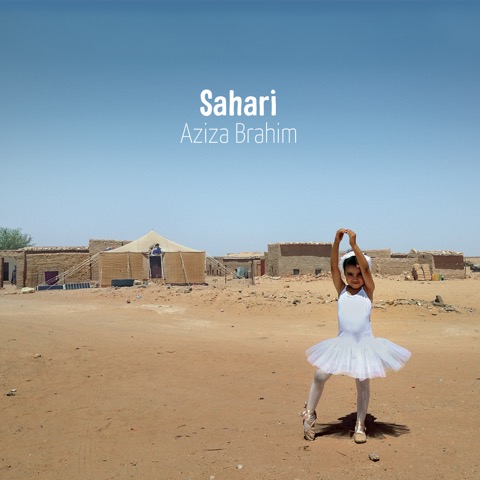
Aziza Brahim ‘Sahari’
(Glitterbeat Records) Album/ 15th November 2019
Bringing the message of the displaced Saharawi people to the world stage, Western Saharan musician/activist Aziza Brahim follows up both her critically rewarded 2014 album Soutak, and the no less brilliant 2016 serene protest of poetic defiance Abbar el Hamada album with her third for Glitterbeat Records, Sahari.
Born in the hardened landscape of a Saharawi refugee camp on the border of Algeria and the Western Sahara, beguiled vocalist Aziza embodies the wandering spirit of her people; their settled, though often borderless and disputed lands, previously claimed by Spain, were invaded in 1975 by Morocco. Though made up of many tribes with many different goals the Saharawi people mounted a fight back. It was in this climate that Brahim was hewed. Exiled in effect, her travails have extended to Cuba, where she was educated as a teenager, and Barcelona, where she now resides and makes music.
Imbued as ever with the desert soul of that disputed region, the latest record, with its visual metaphor of optimism in even the most desperate of backdrops and times – dreams of growing up to be a ballerina proving universal – attempts to marry the beautifully longing and heartache yearns of Brahim’s voice to a number of different styles and rhythms: A subtle change towards the experimental.
Previous encounters have channeled the poetic roots of that heritage and merged it with both Arabian Spain and the lilted buoyancy of the Balearics. Working with the Spanish artist Amparo Sánchez of the band Amparanoia, Brahim has chosen to add a congruous subtle bed of synthesized effects to the recording process: before performing live in the studio, but now recording in various places, the results collected together and pieced together in post-production. This methodology and sound furnishes Brahim’s longing traditional voice with certain freshness and, sometimes, shuffled energy. Songs such as the loose and free ‘Hada Jil’ lay a two-step dance beat underneath a desert song drift. Later on there are dub-y rim-shot echoes and undulating waves of atmospheric tonal synthesizer underpinning that blues-y startling timbre. However, the most surprising fusions to be found on Sahari are the Compass Point reggae-gait ‘Las Huellas’ and the Arabian soul channeling Fado ‘Lmanfra’. There’s even room for a piano on the balladry ‘Ardel el Hub’; a song that plaintively conveys the “impossibility of returning home”, a sentiment the activist Brahim is only too familiar with – denied entry or the right of return, effectively in exile.
The sound of the Sahrawi is never far off, despite the technological upgrade. That most traditional of handed-down instruments, the “tabal drum”, can be heard guiding the rhythm throughout; rattling away and tapping out a beat that changes from the threadbare to the clattering. Brahim’s vocals are as ever effortlessly enriching, captivating and trilling. I dare say even veracious.
Articulating a broader message of global suffrage, Brahim once more encapsulates the sorrows of the exiled and stateless on a sumptuous album, The wanderer and Saharan siren invites new dynamics without changing the intrinsic character and message of her craft, yet ventures beyond those roots to embrace bold new sounds. A most fantastic, poetic songbook that will further cement Brahim’s deserved reputation as one of the deserts most serene artists.
Reviews
Compro Oro ‘Suburban Exotica’
(Sdban Ultra) Album/ 18th October 2019

Illuminating Belgium suburbia with a cornucopia of entrancing and limbering sounds and rhythms from across the world, Compro Oro transport the listener to imaginative vistas on their latest album of jazz imbued exotics. Making waves as part of a loose jazzy Benelux scene, the troupe have even managed to rope in the help of Ry Cooder’s accomplished scion, the multi-instrumentalist talent Joachim Cooder, who adds an “effects-laden” mbira and percussion to a trio of imaginative tracks.
Like their comrades on that scene, Black Flower, the Compro sail into various melting-pot rich harbors, soaking up the atmosphere and embracing what they found, weaving the multilingual sounds into a vibrant soundtrack of tropical new wave pop, dance music, alt rock ‘n’ roll, Turkish-psych and Ethno-jazz fantasy. Cal Tjader, Mulatu Astatke and Marc Ribot are all cited as inspirations, their indelible mark suffused throughout this LP. Add to that trio a strange interpretation of Herbie Hancock (on the Somalia ease-up ‘Mogadishu’; imagine the Dur-Dur Band floating on a kooky jazz cloud above the tumultuous city), Soulwax (on the palm tree Latin dance funk ‘Miami New Wave’) and a rewired Modern Jazz Quartet (that will be the often twinkly and trickling use of vibraphone, but also the marimba too). The curtain call thriller ‘Kruidvat’ even evokes the darker stirrings of later period Can, and the wafting ambiguous snuffles of Jon Hassell.
For the most part dreamy and under a gauze-y veil, Suburban Exotica sashays and drifts across a musical landscape of Arabia, Anatolia, Eastern Africa, The Caribbean and Hispaniola without setting foot outside of their Belgium front door. The more you listen the more you discover and get out of this brilliant dance album of borderless jazz. What a treat to the ears and feet.
Invisible System ‘Dance To The Full Moon’
(ARC Music) Album/ 25th October 2019

An apt hand in transforming the traditional sounds of Mali, the British producer Dan Harper’s experiment in this field stretches back two decades; set in motion by the rudimental laptop-produced Acid Mali project he created whilst working as a Capacity Builder for a local Malian environmental NGO. So taken was Harper with the country, he ended up not only meeting his future wife there but setting up home and a studio in the capital, Bamako. His wife, Hawa, would introduce Dan to childhood friend and renowned guitarist Bandjougou, who in turn would bring in tow the dusty soulful rich vocalist Sambou koyaté to sing for him. Both artists appear on this new album alongside the griot siren Astou Niamé Diabaté, who as it turns out sang at Dan and Hawa’s wedding.
Taken from the same recording sessions as Dan’s previous album, Bamako Sessions, his latest transportive exploration under the nom de plume of Invisible System, once more lends an electrified and synthesized pulse to the spiritual soul of Malian music. Originally put together in a more languorous fashion with a variety of musicians coming and going, jamming in a mattress proofed room in a rented house in the capital, Dance To The Full Moon took shape at the end of a tumultuous and violent period in Mali’s history. Experiencing firsthand (literally on Dan’s own doorstep) the terrorist attacks that followed in the wake of a, finally curtailed, Islamist insurrection and the ongoing war between Mali’s government in the West and the Tuaregs of the North and Eastern desert borders, fighting to set-up an autonomous region, known as the Azawad. Though a certain stability has returned in part to Mali, attacks still occur sporadically; the effects of which permeate throughout the work of the country’s artists, the majority offering a conciliatory tone with the emphasis on unity and understanding. With that in mind, Dan’s album is rich with passionate expressive longing and intensity; the varied juxtapositions of the griot tradition and less rural, more urban vocals combine to deliver some startling performances.
The gently resonate accents and fanned waft of the Malian guitarist’s Kalifa Koné and Sidi Touré accentuate the brilliant vocal parts; a gathering of powerful griot acolytes, singers and even a rapper (Mali rap star Penzy) that includes the already mentioned trio of Bandjougou, Koyaté and Diabaté spiral between the sweetened and intense, the hymnal and physical. Dan boosts and filters those strong performances with a production of techno, modern R&B, dub and futuristic post-punk that sonically weaves in echoes of Massive Attack, Daniel Lanois, King Ayisoba and Dennis Bovell.
Nothing can ever truly improve upon the roots and soul of the traditional courtly music of Mali, its desert blues and Bamako rock of course, but you can push it into exciting directions. Dan’s rewired buzz and pulse does just that, giving a kick and lending an attuned production to the Mali soundscape.
Alex Stordiau ‘Poking Your Imagination’
(Pure Spark) Album/ 30th September 2019

Enticing former label mates from Edinburgh’s Bearsuit Records to his burgeoning venture Pure Spark, Tokyo electronic wizkid Ippu Mitsui welcomes the Brussels based composer Alex Stordiau to the ranks. Featuring alongside House Of Tapes Yuuya Kuno, Stordiau also previously appeared on the Mid Lothian Bearsuit roster – mentioned on this very blog for his standout Vangelis-style voyager waltz into the cosmos ‘Fulfilling Eclipse’, from the label’s The Invisible And Divided Sea compilation.
Like a missing neoclassical Kosmische suite from the Sky Records vault, Stordiau’s inaugural album for Mitsui’s imprint is a serene, though often dramatically stirring, exercise in sculpting retro-electronic soundtracks.
With a classical background, studying at various Belgium conservators, Stordiau combines elements of cascading, romantically accentuated piano and suffused strings with synthesized and computer programmed sine waves, glassy tubular glistened percussion and vaporous sweeps.
The Belgium visionary often works with Bristol musician Lee Williams, who plays, among other things, both electric guitar and bass, and sometimes drums. It sounds as if Williams is present once more, on hand with warm ponderous bass and the odd bit of wilder kooky lead guitar.
Track titles on Poking Your Imagination only go so far in describing each composition’s route on an album of undulating mood pieces. The opening descriptive ‘In The Tepid Shine’ is pure escapist air-bending; crafting vague echoes of Jean Michel Jarre with Roedelius’ more beautifully spherical elevations. Most of these tracks waver over the course of duration; changing or pausing between parts, starting off like the Blade Runner neon skyline lighted ‘Tree Healing’ with a darker, theatrical classical grandeur but suddenly joined by drums and a touch of Vangelis sci-fi. Elsewhere you’re bound to identify the space peril looming shadow of Tangerine Dream and the more popcorn kookiness of Cluster amongst the Baroque cathedral and gravity arcing visions.
A panoramic, mostly cosmic soundtrack of classical Kosmische and humanized electronica, Poking Your Imagination is an assiduous suite of the mysterious, scientific and dreamy.
The Mining Co. ‘Frontier’
Album/ 25th October 2019

Not that you can detect it from his lilted peaceable, if hearty, Americana burr, or the Western-alluded nom de plume that he goes under, but singer/songwriter Michael Gallagher was born in Ireland. Obvious now you’ve read his actual name I know, but just sound wise, it is difficult to hear that Irish bent. In a similar vein to such luminaries as Simon Bonney, the County Donegal troubadour subtly channels a timeless vision of the lyrical, pioneering old West (and South for that matter) on his new LP, Frontier.
Via a Nashville, Texas and New Mexico panorama, Gallagher tailors personal anxieties of disconnection, dislocation and growing pains with familiar old tropes on a songbook of “hangdog” country fare. A romantic album at that, with shades of a pining Josh T. Pearson, The Thrills, Lee Hazlewood, Tom Petty and the Eels, Frontier showcases the artist’s most tender swoons and yearnings. This is a soundtrack of purposeful blues, skiffles and mellow gospel, all softly laced with a subtle echo of Mariachi horns and tremolo twang.
Various memories of a childhood back in Ireland (the night Elvis died sounding a special resonance on the lilted lap-steel rich ‘The Promised Line’) and phobias (a rational fear in my book of flying inspiring the country-prayer ‘Empty Row’) are transported to wistfully articulate American musical settings; a landscape and sound it seems Gallagher belongs.
The third such album from his The Mining Co. alter ego, Frontier is full of romantic intent and stirring candid cathartic heartache; a shuffling songbook handled with care and tenderness that will unfurl its charms over time.
Xylouris White ‘The Sisypheans’
(Drag City) Album/ 8th November 2019

Less a Greek tragedy, more a kind of acceptance of one’s fate (or, play the hand you’re dealt and make the best of it), the Hellenic inspired collaboration project of Giorgos Xylouris and Jim White take their lead on the purgatory fate of boulder carrier Sisyphean from Albert Camus: to a point.
The absurdist doyen once wrote a famous tract on that Greek fella’s predicament: Punished by Zeus to roll a large boulder up a mountainside in Hades, each time he reached the top the boulder would roll right back down to the start. And so the process began all over again: An endless, thankless trudge and metaphor for all the all too real daily grind of life outside the mythological imagination. Or so you’d think. Camus however saw it not has a pointless waste of effort and slow punishing meaningless task but as a challenge: noble even. That Sisypheans’ repeated burden should be seen as an achievement, that the struggle should be enough to “fill a man’s heart”. Sisyphean has accepted his it and so should you, or, words and sentiment to that effect.
Of course, even deeper contentions can be found in Camus’ essay; how our tragic figure confined to a limited limbo landscape created in his mind a whole universe from it. Xylouris and White themselves pondered how he might experiment with carrying that burdensome rock; alternating hands, carrying behind his back and so on. Essentially though, this is about experiencing, seeing and discovering anew each day with a concentrated mind the things you take for granted: especially your surroundings. The duo initially turn to the atavistic in conveying these ideas and sentiments; using the suffused blown stirrings of the Greek flute (Aulos) and vibrato resonating spindly fanning tones of the laouto (a long-necked fretted scion of the lute family). In addition to these two lead instruments, the scene is set with shrouded misty and soulfully yearned voices, Giorgos’ son Nick on cello and on the serialism waning moodscape second track a ‘Goat Hair Bowed’ instrument. And so a sweeping, mournful at times, traverse that takes in dancing Grecian figures, wedding celebrations, bewailed lament and travels to the furthest reaches of the Greek borders: sailing at one point into the tumultuous mysterious vision of the much-disputed and fought over ‘Black Sea’.
However, the both taught and freeform, skittish experimental percussion and breaks of Dirty Three drummer White adds another dimension to the rootsy and earthy feel. Always tactile and congruous, White lifts or underpins certain tracks with avant-garde taps, clutters, rim rattles and jazzy frills and crescendos. A touch of progressive jazz, even Krautrock, that sends this project into more contemporary climes.
Between the chthonian and ethereal, the philosophical and viscerally dreamy, The Sisypheans minor epic is an extraordinary musical peregrination worth exploring: Music for the cerebral and the senses.
Rafiki Jazz ‘Saraba Sufiyana’
(Konimusic) Album/ October 2019

It’s no idle boast to suggest that the North of England based Rafiki Jazz could be one of the most diverse groups on the world stage. Testament of this can be heard on the troupe’s previous trio of polygenesis albums: an untethered sound that simultaneously evokes Arabia, the Indian Subcontinent, Northern African, the Caribbean, South America and Balkans.
With representatives from nearly every continent, many of which have escaped from their homelands to find sanctuary in the UK, Rafiki Jazz is an ever-evolving ensemble of migrants and refugees alike coming together to produce sweeping divine borderless music.
Their latest visionary songbook is a filmic panoramic beauty, no less worldly and stirring. The opening diaphanous spun ‘Su Jamfata’ encapsulates that perfectly; mirroring the group’s musical freedom and spiritual connection; lilting between a myriad of regions with stunning vocals that evoke both Eastern Europe and the Middle East. The following floaty and ethereal well-of-sorrows ‘Azadi’ even features a Celtic and folksy air (one that is repeated later on). This is in part due of course to the guest performances of both the English fiddle extraordinaire and songwriter Nancy Kerr and traditional Gaelic singer Kaitlin Ross. A third vocal addition, Juan Gabriel, can be heard lending a guttural throated underbelly to an already eclectic chorus of singers.
Buoyant tablas and spindled kora sit in perfect harmony with Arabian oud, tropical steel drums, the Brazilian berimbau and the varied voices of Sufi, Hebrew, Hindu, Egyptian-Coptic and Islamic, without ever feeling crowded or strained.
Saraba Sufiyana translates as “mystic utopia”, a title that epitomizes the group’s curiosity and respect for other culture as they build a brave new sonic world of possibility. One that takes in all the dramas and woes of the current international crisis and the lamenting poetry of venerable hardship – the final quartet cycle of prayer and spiritual yearning, ‘My Heart My Home’, beautifully conveys a multitude of gospel and traditional religious plaint, ending on the stirring Hebrew field song ‘Shedemati’. Twenty years in and still improving on that global remit, Rafiki Jazz delivers a magical and rich fourth LP. Devotional music at its most captivating and entrancing.
Karkara ‘Crystal Gazer’
(Stolen Body Records) Album/ 25th October 2019

There’s a hell of a lot wind blowing throughout the mystical and spiritually Toulouse trio of Karkara’s Crystal Gazer epic. North African wind that is; the exotic charms and mystery of the Maghreb on a swirling breeze, flows through and introduces each incantation heavy communal transcendence.
The mirage-shimmery title-track vignette even features a sirocco echo of ghostly enervated Tuareg desert guitars, whilst the electrified speed freak ‘Zarathoustra’ doesn’t just allude to Nietzsche’s infamous Thus Spoke but astrally heads back to the founding father of that mystical Persian faith via an eastern Link Wray and Gothic soup of Krautrock jazz and acid rock.
The counter flow breathes of another desert also permeate this LP, the sound of a veiled didgeridoo constantly present in building atmosphere and mysticism. Loud and physical, though not without some sensitivity, the trio chant, howl and pray their way through a vortex of flange and fuzz as they soar over a fantastical landscape that takes in the southern constellation star of “proxima centauri” and the gates of the Tunisian Medina, ‘Jedid’.
Allusions to seers, mystics and Gothic romantics abound, whilst the musical inspirations fluctuate between heavy space rock (Hawkwind) and Krautrock (Xhol Caravan, Embryo), post-punk (Killing Joke) and baggy (Stone Roses on a bum ride), and spooked, sleazy rock’ n ’roll (Alan Vega).
Transcended Tangier trips, Karkara aren’t exactly the first group to occupy this space, but they do it with volume and dreamy élan.
Our Daily Bread 291: Bassekou Kouyate & Ngoni ba ‘Miri’
January 7, 2019
Album Review/Dominic Valvona

Bassekou Kouyate & Ngoni ba ‘Miri’
(Outhere Records) 25th January 2019
The courtly sound of the Mali Empire from the 13th century, accompanying the griot tradition of storytelling for an age, the (usually) dried-animal skin wrapped, canoe-shaped ngoni lute has been electrifyingly revitalized in recent years thanks in part to the virtuoso dexterity and energy of one of its leading practitioners, Malian legend, Bassekou Kouyate.
Since making his debut just over a decade ago, Bassekou has quickly built up an enviable reputation both in Mali and internationally; arguably, through his myriad of collaborations, helping to share the versatile range of emotions and rhythms that emanate from the ngoni to a worldwide audience; inspiring, even, a new generation to pick this atavistic instrument up.
The ngoni (which more or less, when translated from the Bambara language of Western Africa, means lute) is notable for both its rapid blurry rhythms and spindled, articulated picking. On previous albums Bassekou has pushed the ngoni to its limits. Following up the more electrified 2015 LP, Ba Power (which made our albums of the year feature), with a fifth album of innovative paeans, hymns, protestations and calls for peace, Bassekou takes a more reflective pause for thought on Miri; gazing out across his crisis-ridden homeland, contemplating on how the fragmented landscape and people can be brought back together for the common good.
Backed as always by the family band that features his wife, the soulful and beautifully voiced ‘nightingale of the north’, Amy Secko, and his son, Madou Kouyate, on bass ngoni, but also now including his niece Kankou (making a special guest appearance on vocals), the Bamana entitled encapsulation of ‘dream’, or ‘contemplation’, Miri record touches base with Bassekou’s roots: Reconnecting, we’re told, with his Sega Blues solo debut of a decade before.
Though the Islamist insurgency that initially boosted – but soon hijacked – Mali’s indigenous Tuareg nomads decades-long fight for an independent state within the country’s Northern Eastern borders has been largely subdued, terrorist style attacks, corruption and adverse effects of climate change have conspired to keep Mali in a constant flux of turmoil. Bassekou in somber mood peaceably reacts to all these events; using Mali’s geography and history to either warn, condemn or preach forgiveness and unity.
The title-track itself, with its cycle of jazzy ngoni grooves and subtle percussive strikes, plaintively draws the listener’s gaze to the increasingly parched Niger River that runs alongside Bassekou’s remote village hometown of Garama, in the south of Mali. The consequences of this lifeline and essential water supply drying up are disastrous. Further tensions are referred to on the reedy-sounding cantering call for peaceful resolution, ‘Tabital Pulaaku’. Featuring the conciliatory humble tones of fellow Malian, guitarist/singer and a former disciple of the revered Ali Farka Touré, Afel Bocoum, this beautifully articulated song implores the wandering cattle herder Fula nomad community and local cultivators to stop the in-fighting and settle disputes amicably – a fractious state of hostility that has led to many deaths between the two groups.
Elsewhere on the album, Mali’s ancient past is used as an analogy for the jealousy, corruption and worst excesses of individual greed, currently crippling the country. The Abdoulaye Diabaté – born into the griot tradition – sagaciously lends his vocals to Bassekou’s experimental bottleneck slide ngoni techniques buoyant ‘Wele ni’; Diabaté weaving a parable from the Segou Koro royal court of the Bamana Kings, drawing parallels between the tale of a king whose self aggrandizement and position of power has separated him from both his people and reality, and the current Mali government.
Renowned as much for his collaborations and guest stars on previous records, Bassekou has crossed instruments with such luminaries as Taj Mahal and Samba Touré in the past. Miri is no exception, featuring as it does Malian sensation (and member of the Bamada West African supergroup) Habib Koité on the staccato Arabia to Mali desert traversing, hoofed percussion backed ‘Deli’, and the traditional instruments fused with rap Cuban troupe, Madera Limpia, on the Hispaniola jostling, lively ‘Wele Cuba’. This pool of talented guest spots also boasts the deft skills of Morocco classical and jazz multi instrumentalist Majid Bekkar – ascending and descending with lilt scenic accents a suitably diaphanous plucked mood on ‘Kanougon’ – and Snarky Puppy and Bokanté helmsman, motivator, Michael League. All of who congruously and skillfully accentuate the Bassekou family sound or bolster its energy further.
Concentrating the mind, the events and turmoil of a divided Mali inspire Bassekou to hold those most dearest even nearer (from family to friends) and pay tribute to those that have passed on (including an air-y beatitude to his mother on the album’s finale, ‘Yakare’). All the while attempting to heal the rifts through the soulfully adroit and fire-y ngoni music of the past and present.
A visceral picture of a land in crisis, yet one that has hope for a united Mali, Miri is a sublime connective and rallying collection of compelling and thrilling performances and songs (Sacko especially on fine form delivering the most tender and rich vocals throughout); another essential album from the ngoni master.
Note: Glasgow friends can catch Bassekou Kouyate & Ngoni ba performing this album and tracks from the back catalogue live at the internationally renowned Celtic Connections festival in the city this month; playing the Old Fruitmarket on Friday 25th January. Details…
Albums of 2018: Part Two: Thomas Nation to Thom Yorke
December 6, 2018
Albums Selected By Dominic Valvona and Matt Oliver.
Welcome to Part Two of our alphabetically ordered best/choice/favourite albums of 2018 feature. You can find Part One here…
The decision making process:
Being the exhaustive and eclectic set of features our albums of the year are, we know you probably don’t need to or want to dally about reading a long-winded prognosis of our judgement process. But in short, here it is anyway.
Continuing to shy away from fatuous rating systems and ‘best of lists’, the Monolith Cocktail endeavors to offer a more visceral and personal spread of worthy ‘choice’ picks, with no album dominating or holding any particular numbered position – unlike most of our contemporaries lists, stuck with the ridiculous task, for example, of explaining why one album is more deserving of their numbered spot than another.
With no hierarchical order, we’ve lined our album choices up alphabetically; split into two features – Part One: A (Idris Ackamoor) to M (Moonwalks); Part Two:N (Thomas Nation) to Z (Thom Yorke).
All of our favourite new and reissued albums and EPs from 2018 are of course considered to be the most interesting, vibrant and dynamic of the year’s releases. But the best? Granted, to make this list you have to have made some sort of impact, but we’d never suggest these entries were categorically the best albums of 2018: even if that might be true. Instead our list is an indicator of our amorphous tastes, rounding up another year in the life of the Monolith Cocktail, and we hope, introducing you to titles and artists/bands that may have dropped below the radar or got lost in the noise of more commercial better promoted releases.
All selections in PART TWO from me (Dominic Valvona) and Matt Oliver.
N.
Thomas Nation ‘Battle Of The Grumbles’ (Faith & Industry)
Fixed intently on the anguishes of identity in a post-Brexit voted England, yet bleaching his 1960s bucolic and 1970s lounge (erring towards yacht rock almost) imbued songbook with nostalgia, the lyrics themselves read as augurs yet embedded on parchment, Blue House front-man James Howard weaves a diaphanous if plaintively foreboding chronicle of the past and present.
Creating a whole new persona as Thomas Nation, his commitment to a hazy timeless sound, both rustic and ambitious, goes as far as using only his rough mono mixes; undeveloped and left in their most honest, purest form. You won’t be surprised to learn that Howard has also released his Nation moniker debut, Battle Of The Grumbles, on cassette tape.
Littered with references to this Island’s past (both at home and overseas), from the illustrated album cover scene of the 16th century ‘Battle of the Spurs’ (when the Holy Roman Empire teamed up with Henry VIII’s England) to more ambiguous stirrings and despondent yearnings that feature musical echoes from across that ages, Battle Of The Grumbles stands metaphorically at the precipice of the white cliffs of Dover awaiting Britain’s fate.
A gentle spirit, James Howard creates a pastoral nostalgic journey filled with augurs, despair and disillusion but always diaphanous. The first of what Howard hopes will be an annual ‘pilgrimage’, the Thomas Nation incarnation is a cerebral wonder through the essence of Englishness, questioning and probing the psyche as it meanders through the psychogeography and heart of the countryside. Full review…
(Dominic Valvona)
Tony Njoku ‘H.P.A.C’ (Silent Kid Records)

Bringing a very different perspective and life experience to the London avant-garde art and electronic music scene, the British-Nigerian producer with the earthy falsetto, Tony Njoku, articulates a most unique form of magical soul music on his stunning new album. Though undulated with an ethereal to malady suffused backing of sophisticated synthesized travails, Njoku’s vocals always seem to bobble and float above the choppy breaks and ebbing tides.
Adrift in so many ways, through his life experiences, transferring as he did at the age of fourteen to London from a life spent hiding his true personality in the toxic macho boarding schools of Lagos, the sensitive Njoku found at least one kind of solace; able to show a vulnerability and pursue the music career he really wanted having previously recorded a number of hip-hop albums (the first when he was only twelve) that proved entirely counterintuitive, but were completely in tune with Nigerian environment he grew up in. Yet in the arts community he joined in his new home of London, he found few Afrocentric voices or people he could identify with or relate to. From that isolation comes an album inspired by the ‘high art sonic’ forms of Arca and Anhoni, and by the metamorphosis nature of Bjork; Njoku’s own compositions feature a beautiful synthetic shuffle of Afrofuturism soul and more searing discordant synth waves that clash and distort on arrival but gradually sync and become part of the motion. From beauty to pain and release, and often back again, each track (and not in a bad way) seems open-ended; a constant flowing cycle of emotions, which can be healed during that moment, in that space and time, but will inevitably return: A calm followed by turbulence and hopefully the light.
Eloquently in a hymn like fashion between pained malady and the venerable, heavenly but also melancholic and turbulent, H.P.A.C is a futuristic soul album of delicate intellect. Full review…
(DV)
P.
Micall Parknsun & Mr Thing ‘Finish What We Started’ (Village Live)

“Mainstays trusted with hip-hop restoration…with all the answers for those exaggerating hip-hop’s downfall” – RnV July 18
Featuring “beats to make your eyebrow dip” and the flow of one of the UK’s most reliably disdainful when it comes to holding your own, Micall Parknsun and Mr Thing made the very good decision to turn 2017’s one-off ‘The Raw’ into a 40 minute non-apology for playing the game properly. With hip-hop mumbling its way to the dogs, this pair have fire in the belly for the unfashionable return to beats and rhymes designed to stick around and give a damn. Measured run-ups streaked with bluesy, soulful headspace occupancy (with drums front and centre each and every time), a crux of blockbusters and pure boom bap battery, all land like a two-footed tackle, Thing researching and sculpting ‘the real’ without making it a puff piece on nostalgia or announcing they’re here to save the world. Park-E does his utmost to remain an upstanding citizen, pushed to his limits by both Thing’s heavyweight kicks and snares and general scene lethargy. The emcee’s systematic, it’s on when I say so-flow, perfectly lands the elbow once the producer has left you staggering backwards.
(Matt Oliver)
Josh T. Pearson ‘The Straight Hits’ (Mute)

Changing his tune (literally) Josh T. Pearson, the lonesome blues Texan with a wagonload of baggage, heads out onto the range with a swag bag of more joyful, unencumbered ‘golden hits’ with his latest album for Mute Records.
Leaving behind the more apocalyptic gospel concepts of his work with the short-lived but acclaimed Lift To Experience, Pearson sets himself new parameters; adhering to a five-point rules system for transforming a “batch of tunes” he’d been working on for a decade. Earmarked originally for the ‘unrecorded’ Bird Songs album, the nine original songs on The Straight Hits are a lighter and as the title suggests ‘straighter’ attempt to change the mood.
Far from set in stone – the unwritten rock’n’roll law that all rules are written to be broken is invoked on the tender yearning A Love Song (Set Me Straight) – each song must at least try to follow Pearson’s self-imposed requirements: Number one, all songs must have a verse, a chorus and a bridge; two, the lyrics must run sixteen lines or less; three, they must have the word ‘straight’ in the title; four, that title must be four words or less; and five, they must submit to song above all else i.e. “You do as she tells you, whatever the song tells you”, “You bend to her, and not her to you.”
The Straight Hits is a most rallying rodeo that gives the Americana soundtrack a much-needed kick-in-the-pants; the themes of love, whether it’s the analogical kind, ‘take me right now’ kind, or lamentable kind, enacted across a varied but blistering songbook. Rejecting the stimulants and his demons, Pearson choses the good ol’ fashioned power and redemptive spirit of gospel ye-ye and country rock’n’roll. And don’t it sound just mighty fine and swell! Full review…
(DV)
Q.
Qujaku ‘Qujaku’ (So I Buried Records)
Occupying both the spiritual and cosmic planes, emerging from the gloom and holy sanctuaries of the dead, the brooding Hamamatsu-based Japanese band Qujaku wowed with their second album of operatic Gothic and psychedelic doom-mongering. Beginning as they mean to go on, the opening ‘Shoko No Hakumei’ suite, more an overture, is itself a full on Ring cycle (as conducted by Boris) that is dramatic and sprawling: running almost the entire length of a full side of a traditional vinyl album.
On a very large foreboding canvas, Qujaku build-up an impressive tumult across the album’s nine-tracks of prowling esotericism and galloping drum barrage immensity. Between crescendo-bursting three-part acts and shorter volatile slabs of heavy caustic drone rock, the group often evokes an Oriental Jesus And Mary Chain, Black Rebel Motorcycle Club and Spacemen 3, or Nine Inch Nails when at their most enraged. Psychedelic in the mode of The Black Angels, but also straying at their most languid and navel-gazing towards Shoegaze, Qujaku’s dark spanning cacophony of throbs and trembles bear many subtle nuances and becalmed breaks amongst the masses and maelstroms.
On an epic scale, dreaming big and intensely, Qujaku perform the most dramatic of daemonic theatre. Full review…
(DV)
R.
RAM ‘August 1791’
Considering the tumultuous bloody revolution from which an independent Haiti was born, RAM leader Richard A Morse‘s “Our existence is a political statement” mantra is unsurprising. Named after the initials of their road well travailed founder, RAM perform an entrancing spectacle of the ritualistic. Morse, originally born in Puerto Rico but brought up in Connecticut, spent the 80s rubbing shoulders with the polygenesis New York art and music scene’s Jean-Michel Basquiat and Warhol’s factory. His interest piqued by the new wave’s adoption of Afro-diaspora rhythms and world music, Morse decided to travel to his native homeland to study the Haitian sound.
The son of Haiti folk legend Emerante de Pradine, Morse was already well aware of his ancestral roots, but had yet to indulge in or absorb the rich history of the island fully. After an initial short trip, Morse found himself it seems so seduced and inspired by Haiti’s culture that he decided to stay for good. Marrying local dancer and singer Lunise, he kick started the frenzied, rambunctious troupe, channeling the ideas he picked up on in New York and merging them with the signature instrumentation and sounds of the local Vodou belief, mizik-rasin and the drifting currents of the Caribbean and Africa.
This year’s odyssey, guided by the spirits and with dedications to the marternel and those that have helped (including the pivotal film director Jonathan Demme, who prominently featured one of their tracks in his or award-winning Philadelphia movie in 1994) shaped the band over the years, springs from Haiti’s enslaved population’s struggle for independence from its European masters. August 1791, the year and month of revolution (inspired by their colonial masters own revolution), frames this tropical fusion of tragedy and sauntering joy. Returning to the legends that sparked this fight, such as the ill-fated former slave turned leader of revolt, Toussaint Louverture (driving out the Spanish and British but captured and imprisoned under Napoleon’s regime; languishing in a cell at Fort de Joux until he died in 1803), and first Emperor of Haiti, Jean-Jacques Dessalines (assassinated by disgruntled members of the burgeoning administration), RAM evoke the spark that set in motion the first free republic of African heritage people in the Western hemisphere. Their seventh album not only pays tribute but features a musical accompaniment from that era; with a sound more or less, when stripped to its essence, that would be familiar to the Creole and African communities of the late 18th century.
Uniting in a busy percussive fusion the Americas with the roots of Africa, RAM bustle and hustle traditions to produce a paean to the Island they call home.
(DV)
Soho Rezanejad ‘Six Archetypes’

Impressive in all its striking celestial and throbbing distressed staccato shimmer the experimental Danish artist Soho Rezanejad’s ethereal but equally futurist dystopian ambitious new LP, Six Archetypes, is a bold exploration of identity politics.
Interplaying six of the major character symbols (The Guardian, The Orphan, The Seeker, The Russian, The Idealist, The Prostitute) from the Tarot with Carl Jung’s Psychological writings on the collective and structured reality, Rezanejad weaves the complex contemporary themes of gender liquidity and self-discovery into an amorphous mix of electronica, darkwave and Gothic pop suites.
Though not always audible, Rezanejad’s untethered vocals – vaporous and often ghostly undulating in an aria style – whisper, coo, lull, pant, wrench and shout throughout the shard majestic and multilayered intricate backing of synthesized, programmed, modeled sounds. It’s a striking voice too. At times, such as the beautiful but serious stellar flight of the navigator, Bjork meets Chino Amobi, rotary opener Pilot The Guardian, she sounds like Nico. And at other times, such as the lush Bowie/Sylvian synchronicity, Soon, her vocals sound like a mixture of Jesus Zola and Lykke Li.
Returning to the soil, so to speak, Rezanejad saves her most heartfelt yearn until the end; lovingly but starkly impassioned, singing in her ancestral tongue of Farsi – Rezanejad is the daughter of first generation Iranian immigrants – the National Council Of Resistance Of Iran’s alternative national song in protest against the state’s heavy-handed ideology.
An ambitious debut opus of dark beauty and ominous despair, Six Archetypes is a highly impressive cosmology of gender, roots and futurism politics and narratives. Full review…
(DV)
S.
Sad Man ‘ROM-COM’

Haphazardly prolific, Andrew Spackman, under his most recent of alter egos, the Sad Man, has released an album/collection of giddy, erratic, in a state of conceptual agitation electronica every few months since the beginning of 2017.
The latest and possibly most restive of all his (if you can call it that) albums is the spasmodic computer love transmogrification ROM-COM. An almost seamless record, each track bleeding into, or mind melding with the next, the constantly changing if less ennui jumpy compositions are smoother and mindful this time around. This doesn’t mean it’s any less kooky, leaping from one effect to the next, or, suddenly scrabbling off in different directions following various nodes and interplays, leaving the original source and prompts behind. But I detect a more even, and daresay, sophisticated method to the usual skittish hyperactivity.
Almost uniquely in his own little orbit of maverick bastardize electronic experimentation, Spackman, who builds many of his own bizarre contraptions and instruments, strangulates, pushes and deconstructs Techno, the Kosmische, Trip-Hop and various other branches of the genre to build back up a conceptually strange and bewildering unique sonic shake-up of the electronic music landscape. Full review…
(DV)
Otis Sandsjö ‘Y-OTIS’ (We Jazz Records)
Imbued as much by the complex language of North American and European modernist jazz as those who use it to riff on in the hip-hop and electronic music genres, the adroit Gothenburg saxophonist and composer Otis Sandsjö transmogrifies his own jazz performances so they transcend, or at least amorphously (like liquid) expand into polygenesis soundscapes.
Y-OTIS reimagines a musical union between Flying Lotus and Donny McCaslin, or better still, Madlib reconstructing the work of 3TM; the flow, if you can call it that, sounding like a remix deconstruction in progress as the rapid and dragging fills and staggered rolls of his group’s drummer Tilo Webber are stretched out, inverted and reversed into a staccato to dynamic bursting set of breakbeats and loops. Mirroring all the various cut-and-paste techniques of the turntablist maestros, Sandsjö and his dexterous troupe of keyboardist Elias Stemeseder, bassist Petter Eidh and Webber sound like a group being remixed in real time, live: And it sounds brilliant, as you’re never quite sure where each of these compositions is going to end up.
Sandsjö’s debut album, released via the Helsinki festival and label platform We Jazz Records, is a multilayered serialism suite of ideas and experimental visions. All of which, despite that complexity and blending of sophisticated avant-garde jazz, hip-hop, R&B, trip-hop and dance music, keep an ear out for the melody. If the ACT label, or ECM, ever converges with Leaf and Anticon, Y-OTIS might well be the result. Full review…
(DV)
Scran Cartel ‘Blue Plaque Candidates’ (Scran Cartel)

“A great, belt-loosening spread grilling you with much more than just a bunch of culinary one-liners” – RnV Aug 18
Brit grafters MNSR Frites (Granville Sessions) and Benny Diction (Corners) read you the specials for twelve fascinating tracks, packing foot-related rhetoric from the moment the dinner bell sounds. It’s quite an accomplishment to master such a particular angle without it being a gimmick, and easy to forget that ‘Blue Plaque Candidates’ is not specifically a concept album, just an expression of culinary love. These two really know their cookbooks and have a shopping list that you can’t check out quick enough, from cordon bleu menu toppers to bread and butter basics and young at heart sweetshop favourites, the Estuary English plating your three squares a day with the same near-apathy as they do exotic, forbidden fruit. The jazzy, funky beats are garnish to the duo cookery schooling everyone, indulging in one sub-grime moment on the E-numbered ‘Dundee’, and a cultural knowhow showing that greed isn’t always good, adds weight to their sprattish statement of “we write and record rap songs about food”. A chef fingers’ kiss for this one.
(MO)
Skyzoo ‘In Celebration of Us’ (First Generation Rich)

“Some of the smoothest psychology and concrete consciousness you’ll hear this year. One to be toasted over and over” – RnV Feb 18
Giving ‘In Celebration of Us’ the grown man rap label is a bit of a giveaway given Skyzoo’s opening skit of confiding in a pal about giving up the streets for the sake of his newborn. The Brooklynite and new father speaks a lot of sense, a flow that will express disappointment rather than anger and keep the titular celebrations modest, and attracts a captive audience when aiming at your head twofold, comprehensively ensuring the wateriness of neo-soul doesn’t just ebb away, or the dustiness of Detroit-style beats fugs your judgement. Picture a sometimes reluctant lecturer, as everyman as the tales you’ll familiarise yourself with, but giving you the full education once the mic in his hand. Not clinging to verse, hook, verse structure, Skyzoo doesn’t ramble, rather makes certain that he’s examined everything from top to bottom, very much schooled in knowing that if something’s worth doing, do it properly. Enough to make you feel warm and fuzzy – there are some undeniably slick, R&B moves crossing over as well – and rather more pensive when presented with the cold light of day.
(MO)
The Last Skeptik ‘Under the Patio’ (Thanks for Trying)

“An album simmering down the summer’s sticky restlessness: dusky beats that never fade to black, understated in their genre reach” – RnV July 18
Intense from The Last Skeptik, extremely well connected and arguably more well rounded since after a spell of paying extra-curricular dues. Surrounding himself with a boiling pot of hungry emcees gets a maximum return from teeth gritted, rapid fire, pound the road, witty unpredictables, all of whom casually playing down their iron mic grip. Synth-wired, at times spindly beats either host the back-to-mine session or storm the stage, perfect for its roll call – Bonkaz, Kojey Radical, Doc Brown, Scrufizzer but four headliners to pick from – to move through and dominate while playing the back, with motive or just willing daylight away. While originally noted for soundtracking summer humidity, ‘Under the Patio’ is decidedly not an album for office hours. Dabbling in shades of the exotic and skilfully soulful throughout for an album of rough edges, it’s the careful contrasts – the haunting ‘Hide & Seek’ featuring Matt Wills, the inexplicable but permissible ‘Calm Down’ inviting The Manor round for a knees up (there’s the versatility for you) – and Skeptik’s own version of ‘Deep Cover’ on posse cut ‘Oxymoron’ – that triumph in their cohesion to give TLS a massive W.
(MO)
Stella Sommer ’13 Kinds Of Happiness’ (Affairs Of The Heart)

In the vogue of an age-old central European malady, the dour romanticism that permeates the stunning solo debut album from the German singer/songwriter Stella Sommer is wrapped in a most beautiful gauze of melodious uplift and elegiac heartache.
Artistically, as the results prove, making the best decision of her career, Sommer steps out for a sojourn from her role in the German band Die Heiterkeit. Far from an extension of that group (though band mates Hanitra Wagner and Phillip Wolf both join her on this album), there are of course concomitant traces of it. Sommer however makes louder but also accentuates these traces and lingering relationships; her lived-in, far-beyond-her-years vocal more sonorous and commanding than before.
Possibly as perfect as an album can get, 13 Kinds Of Happiness is an ambitious, slowly unveiling album of diaphanous morose. Pastoral folk songs and hymn-like love trysts are transduced by a Gothic and Lutheran choral liturgy rich backing that reimagines Nico fronting Joy Division, or Marianne Faithfull writhing over a Scary Monsters And Super Creeps era Bowie soundtrack (especially on the galloping Northern European renaissance period evoking thunderous drumming ‘Dark Princess, Dark Prince’; just one of the album’s many highlights). I don’t use that Nico reference lightly: Sommer channeling the fatalistic heroine’s best qualities atmospherically speaking.
A curious Teutonic travail of venerable lovelorn despair and modesty, Sommer’s debut LP will take time to work its magic. But work its magic it will. A tremendous talent lyrically and vocally, serious and astute yet melodically enriching and lilted, her sagacious deep tones are starkly dramatic, but above all, rewarding. Here’s to a solo indulgence that I hope long continues. Full review…
(DV)
Station 17 ‘Blick’ (Bureau B)
With near enough thirty years of experience behind them and a changeable lineup of both musicians with and without various disabilities, the Station 17 collective once more shift their focus and sound; moving away from the all-out pop of the last album Alles Für Alle for a more improvised travail through the Krautrock, Kosmische and experimental electronica cannon.
Free of predetermined structures, lyrics and ideas they enjoyed an improvised freedom; inviting a host of German musical royalty to take part in what is a collaborative recording experience – something they’ve done in the past, having worked with icons such as Michael Rothar and the late Holger Czukay. And so each of the album’s tracks feature the signatures sounds and quirks of its guests: The writhing prehistoric Krautrock-jazzy Le Coeur Léger, Le Sentiment D’un Travail Bien Fait for example features the guiding avant-garde, ‘musique concrète’ presence of drum and bass partnership of Jean-Hervé Péron (the French title track I dare say his idea) and Zappi Diermaier; key founders of the reverent agent provocateurs Faust, who in recent decades have broken away to form their own iteration of the group under the faUSt banner. And, though only as part of its most modern regeneration, Tangerine Dream’s Ulrich Schnauss appears to gaze through a progressive Kosmische tinged explored ‘astronomical telescope’ on the album’s heaven’s gate opening finale.
From another generation, Dirk Dresselhaus, aka Schneider TM, appears both as an engineer, capturing these sessions and crafting them into a coherent album, and as a collaborator on the kooky bossa nova preset Die Uhr Spricht. Andreas Spechtl of Ja, Panik! infamy appears alongside Station 17 singer Siyavash Gharibi on the poppier, Der Plan-esque Dinge, and another Andreas, Andreas Dorau, joins the same upbeat, marimba like candour on what we’re told is an “enduring appraisal of post-capitalist perversion”, Schaust Du, whilst Datashock travel through the primordial soup into another dimension on the Acid Mothers-hitch-a-ride-aboard-the-Cosmic Jokers-spaceship Zauberpudding.
Turning the dial on an imaginary radio station, attuned to all the highlights from Germany’s most experimental if rhythmic decades, Blick confidently absorbs the influences and inspirations of its multitude of guests to produce social commentary and reflect on the here and now. Full review…
(DV)
T.
Rodrigo Tavares ‘Congo’ (Hive Mind Records)
The amorphous traversing post-rock and jazz travelogue from Brazilian guitarist/composer Rodrigo Tavares is filled with a sense of contemplation and meditation, and a yearn for the spiritual. The spiritual is represented in Congo’s genesis; the catalyst for Tavares soundtrack inspired, in part at least, by a visit to the controversial ‘spiritual healer’ John of God – a medium, psychic surgeon of dubious repute -, who lives in the remote central Brazilian town of Abadiânia. The meditative, in this case, runs throughout the suggestive instrumental passages and vignettes that ponderously drift, cascade and ebb across a real and imagined borderless global soundtrack.
Suffused throughout this album you’ll find lingering traces of the ACT jazz label, minimalism, Tortoise post-rock, Brazilian legends Joâo Gilberto, Dorival Caymmi and Tom Jobim, and removed by quite a few degrees, a hint of the free-form untethered to any easy classification, evolving guitar experimentation of the Sun City Girls – as it happens a show in a remote former gay bar in Brazil by the same band was one of the stopovers on Tavares ‘transformative road trip’; the fruits of which and experience laying down the creative foundations for Congo.
Truly transglobal, Tavares helps take Brazilian music – like his fellow compatriot Sentidor – into often trance-y, unburdened and unlabored directions. With few rough edges, this congruous soundtrack makes for a ruminating, thoughtful smooth journey. Full review…
(DV)
Samba Touré ‘Wande’ (Glitterbeat Records)

In a country abundant with guitar virtuosos, the highly genial Samba Touré still stands out as one of Mali’s most celebrated and accomplished; transducing the travails, heartache but also joy of his homeland through his signature articulate nimble-fingered style of playing.
His third album for Glitterbeat Records – the first, Albala, was the label’s inaugural release in 2013 – Wande is billed as a warmer homely songbook: previous releases were produced during the Islamist insurgency that swept aside and hijacked the Northeastern Tuareg communities’ battle for autonomy in the north eastern regions of Mali. Far from a complete break, the sadness endures on Wande; though Touré sadness is a most beautiful, cantering and lingering one. Especially when paying tribute to his friend and collaborator, sokou fiddle maestro Zoumana Tereta, on the spoken word with wavering drifty, almost dub-like echo-y effects tracks of the same name, which features the late musician’s spindly evocations from beyond the ether.
Recorded in under two weeks, allowing weekends for band members to scratch a living playing at weddings, sessions for the album were relaxed, performances captured on their first take with few overdubs. The lo fi production feel of the rocking blues ‘Yerfara/We Are Tired’ could be a lost inspiration for 80s period Rolling Stones with its almost transmogrified Start Me Up like Richards riff. ‘Goy Boyro/The Good Work (Well Done)’ even begins with a Taj Mahal, BB King reminiscent introduction hook, before dipping over the horizon. But whatever you do, don’t call this is a desert blues album, or even an African one; Touré correctly insistent that this is contemporary ‘universal’ rock music.
Not quite such a leap of faith or different to previous albums, an unpolished and laidback methodology has produced a slightly more sagacious, free-floating quality and another essential Touré masterpiece. Full review…
(DV)
Ty ‘A Work of Heart’ (Jazz Re:Freshed)

“Almost feels like a magic carpet ride over the capital’s skyline; come and spread your arms if you really need a hug” – RnV Mar 18
Soft focus viewed with the wisest of eyes cutting through life’s smokescreen: the eminent UK statesman preserves the essence of never getting too high or too low. Ty has long had that trustworthy delivery of a life coach who can pep you up – inspirational with quiet authority – and tell you to man up without raising his voice, any hints at vulnerability given the very British keep calm and carry on treatment (“when you smile with me publicly I’m wearing a mask, gritting my teeth, a wolf in a bundle of sheep”). The liltingly clean production is what might turn a few ears belonging to those thinking hip-hop’s not for them – right from the off it’s of a Ty-tracked, toasted cinnamon bun snugness, a concrete jungle paved with a yellow brick road heading towards promised lands, but with the plain sailing carrying some turbulence. ‘A Work of Heart’ sounds as good as when Jack Frost comes knocking, as much as when the summer’s hose pipes were forbidden fruit. And like the first blooms of spring. AND the first leaves of autumn falling too.
(MO)
U.
U.S. Girls ‘In A Poem Unlimited’ (4AD)

Featuring most of the Toronto cast of collaborators that propelled the first U.S. Girls release for 4AD records, Half Free, forward, but stretched and lushly flexed into space boogie and other equally eclectic grooves by the city’s multi-limbed collective The Cosmic Range, Meg Remy’s latest cerebral pop revision tones down some of the vibrancy for acerbic, sax-wailing pouted-lips resignation and introversion.
Moving across the border from the USA with her husband and musical collaborator Maximilian Turnbull, aka guitar-slinging maverick Slim Twig, long before Trump reached The White House, Remy has broadened her postmodernist transmogrification of bleeding hearts 60s girl group meets tape-loops signature to accommodate femme fatale disco and funk since making a new home for herself in Canada.
The momentum of this album fluctuates throughout, and compared to Half Free, takes a lot to bed in and flow – and I’m still not sold on the two skits -, starting as it does with the aching ponderous slow burner Velvet 4 Sale – perhaps Remy’s most dark fantasy yet, imaging (just imagining mind) a role reversal of power, as she implores a girl friend to buy a gun for protection, impressing that the only way to change men is for women to use violence. An unsettling twist played out to a dragging soul fuzz backing track, the song’s central tenant imagines a world where women take up arms against men, though Remy ‘deplores violence’ of course. It’s followed by an equally sensually nuzzling sax and yearned vocal performance, and take on the Plastic Ono Band, Rage Of Plastic, before picking up with the album’s most bouncy weaponized boogie, M.A.H. – a chic Ronnie Spector fronting Blondie style diatribe broadside aimed at the democrats venerated saviour Obama, who Remy condemns for the charismatic charm seduction that pulled-the-wool over many supporters eyes, hiding the fact that he presided over a covert number of unsavory drone strikes.
Hardly disarming then, In A Poem Unlimited deplores the present hierarchy with a seething checked rage, set to a challenging but melodious soundtrack of yearning no wave, scintillating chic disco, Plastic Ono Band soul, vaporous 80s pop and even jazz. The patriarch comes in for some scathing poetic justice; played out to some of the year’s best tunes and performances. Full review…
(DV)
V.
Vukovar ‘Infinitum’ (Le Recours Forêts Production)
Vukovar/Michael Cashmore ‘Monument’
Among the most prolific of bands, Vukovar have released two of their most stunning albums in just the last quarter of 2018 alone. Keeping to the signature three-syllable grandly entitled Gothic statements of malcontent, melodrama, aggrandizement and melconholy, both Infintum and Monument romantically encircle the void better and with more sagacious quality than previous records. Though only in existence for barely three years, and perhaps already splitting up, Vukovar are improving on every release. Both are included because…well, I can’t make my mind up about which of these recent opuses of despair and hermetic exploration I prefer. Hell….they’re both great. And here’s why:
The fifth LP in the malcontent’s cannon, Infinitum, pulls at the mortal coil of human misery in a murky quagmire. An endless backing track of reverberating delayed snare strikes, a rolling timpani bounding bass drum, esoteric stately sounding waltzes, unwieldy bestial guitar, resigned new romantic synth and escaped melodies muddily, and often amorphously, swim and oscillate around a combination of longing, if worn down and depressed, swooning vocals and Rimbaud-meets-Crowley-meets-Kant-on-the-edge-of-an-abyss poetic despairing narration, on what is a bleak if at times gloriously dark beauty of an album.
Bound-up in their own self-imposed limitations, these anarchistic dreamers go one further than the Hebrew code of law commandments by adhering to 13 of their own; each one a rule or restriction in the recording process that couldn’t be broken, at any cost. So strict were these conditions that even if the band were close to finishing the album, any infringement no matter how minor, would result in the entire sessions being abandoned. Mercifully they made it through to the end; releasing a troubled, bleak lo fi ritualistic romance of an grand opus.
Cut from the same cloth, but collaborating with an undoubted influence, the group’s sixth LP, Monument, traverses the void with Current 93 stalwart and producer/composer Michael Cashmore (appearing under the guises of his Nature And Organization nom de plume). A congruous in what is a melancholy harrowing romantic partnership with the morbidly curious Vukovar, Cashmore leads with a vaporous, industrial and often godly (whichever God/Gods they be) brutalist swathe of sagacious moodiness. Arguably inheritors of Current 93 and, even more so, Coil’s gnostic-theological mysticism and brooding venerable communions, Cashmore seems the obvious foil. Current’s The Innermost Light and Coil’s (and John Balance’s swan song as it were) The Ape Of Naples both permeate this conceptual opus.
From haunting melodrama to harrowing decay, unrequited love to radiant escape, the loss of innocence and youth to sagacious death rattles, Vukovar prove ideal torchbearers of the cerebral Gothic sound and melancholic romanticism. A meeting of cross-generational minds with both partners on this esoteric immersive experience fulfilling their commitments, Monument shows a real progression for Vukovar, and proves a perfect vehicle for Cashmore’s uncompromising but afflatus ideas to flourish in new settings, whilst confirming his reputation and status.
Whatever happens next, this ambitious work will prove a most fruitful and lasting highlight in the Vukovar cannon; one that’s growing rapidly, six albums in with a seventh already recorded; another ‘momentous’ statement that affirms the band’s reputation as one of the UK’s most important new bands. Full reviews…
(DV)
Y.
‘Yiddish Glory: The Lost Songs Of World War II’ (Six Degrees)

In light of the recent Tree Of Life synagogue shootings in Pittsburgh, the increasingly uncomfortable language and hostility from the far Left, and the rising tide of European wide anti-semitism, this most tragic songbook of WWII Soviet Union laments from the Jewish community that joined Stalinist Russia’s defence against the Nazis, is a timely reminder of persecution from the graveyard of history. 400,000 men and women signed up to fight Hitler’s forces in one of the most bloody and apocalyptic campaigns in military history. If gratitude was ever warranted, the fate that awaited many of the survivors was anything but; mistrust and resentment instead led to swathes of the Soviet Union’s Jews being imprisoned, tortured and murdered by Stalin’s regime, their sacrifice for the mother nation all but airbrushed out of existence – almost.
Thought lost in the annals of time; suppressed, if not destroyed, the tragic but poetic WWII testaments, made lyrical prose, of just a small cross-section of Russia’s Jews is given the richly evocative and adroit production showcase it deserves by a collective of professors, producers and musicians. Originally unified in an anthology by an ethnomusicologist from the Kiev Cabinet For Jewish Culture, Moisei Beregovsky, alongside colleague Rovim Lerner, hundreds of Yiddish songs written by Red Army soldiers, victims and survivors of the Nazi’s massacres were gathered in the hope of being eventually published and performed. Unfortunately at the very height of the Communist Party’s purges in the decades that followed the end of WWII, both these well-intentioned preservationists were arrested. Subsequently the project was never finished, the work sealed up and hidden away. But as it would later transpire, not destroyed.
Transcribing these laments and firsthand accounts of endurance (many of which included testament evidence to various Nazi atrocities) would take patience, skill but above all respect. The results of this this most tragic desideratum are underscored by the musical director and violinist Sergei Erdenko‘s conducted stirring accompaniment ensemble of classically trained instrumentalists and singers; all of whom were brought together by the producer, and overseer (one amongst a whole group of people that have perserved, shared and made this project possible over the decades) Dan Rosenberg.
Songs of heroism, stoic belief, and even more violently encouraging prompts to machine gun as many Nazis as possible, are brought back to life. But despite the materials obvious harrowing and tragic heart-wrenching nature, the music throughout is a dizzying, waltzing mix of Yiddish, Roma, Klezmer, folk and even jazzy cabaret that’s often upbeat. The band does a sterling job in giving voice to those suppressed individuals and the songs that were believed lost forever, destroyed by a regime that would treat its loyal Jewish community, many of which made the ultimate sacrifice and wholeheartedly believed in the socialist doctrine, little better than the Nazis they so valiantly overcame. Yiddish Glory is not just a reminder however, or even just a revelation, but a beautifully produced and evocative performance. Full review…
(DV)
Thom Yorke ‘Suspiria (Music For The Luca Guadagnino Film) (XL Recordings)

I’ve no idea of the inimitable Thom Yorke‘s methodology and process – whether he composed directly to a cut of Luca Guadagnino‘s remake, or, went away on the premise that…well, it’s Suspiria, and this iconic Gallo trip knows exactly what sort of a soundtrack it thirsts for, so I’ll just make it up in me head -, but whatever it is, his evocative harrowing soundtrack technique works; providing an eerie balance of spine-chilling tension and beautiful dreamy waltzes.
Elevating further the progressive and ritualistic treatment of the original 1977 Suspiria movie soundtrack by Italy’s revered Goblin, Yorke’s mirror-y hypnotised lingered vignettes and bestial guttural scares are treated with earnest seriousness.
If a film could be even more stylised than its original forbearers, this post-millennial disturbed take by Gundagino is an artistically knowing, conceptually aloof indulgence for the senses that receives the most stunning, richly esoteric of soundtracks. Compelling, alluring and plaintive; using many of the arty macabre’s signature tricks, atmospheric mood stirrers and prompts – from heightened Gothic choral aches to Carpenter meets Oldfield piano note and tubular chiming nerve tinklers – Yorke sets out his soundtrack somewhere between the perimeters of Kubrick, magic realism, psychological drama, Dario Argento, Francois de Roubaix and his very own solo work.
The proof is in the candle-lit shadowy mood induced eating of course, and sitting as I was in the daylight of the early afternoon, I couldn’t help but feel unnerved enough to check behind the curtains for murderous witchery dance troupe teachers, who’s intent was to embed a sacrificial knife into my skull. Yes I was spooked.
A frightful but often ethereal magical score, Yorke matches his Radiohead foil, Jonny Greenwood in the field of soundtracks: an artform all in itself. I’ve no doubt it will become a cult album; equal to the sacred Goblin score, if not, dare I suggest, an improvement.
(DV)
 Monolith Cocktail Blog