The Digest for January 2026: New Music/The Social Playlist
January 16, 2026
The monthly Digest includes a clutch of accumulated short new music reviews and the social inter-generational/eclectic and anniversary albums celebrating playlist.
___THE NEW (All those latest & upcoming releases in brief) ___
The Bordellos ‘Who Do you think You Are? Paul McCartney?’
Single – (Metal Postcard Records) 7th January 2025
More The Rutles’ Stig than The Beatles’ McCartney, the latest self-depreciated, no-fi buzzing guitar string strummed piece of “silliness” from The Bordellos family (that’s Brian Shea and his brother Ant, and Brian’s son Dan) pays a handsome tomfoolery homage to good ol’ Paul.
The Bordellos were behind Half Man Half Biscuit and the Cleaners From Venus in the dole queue of the 1980s; powered by aphorism, a ridicule of the current industry, and a litany of muthafuckers from across the golden age of rock ‘n’ roll, punk and post-punk, psych and garage. Brian will be no stranger to followers of the Monolith Cocktail, having regaled us with his reviews over the years, and of course gracing these pages as a solo performer: think John Shuttleworth meets Sparklehorse.
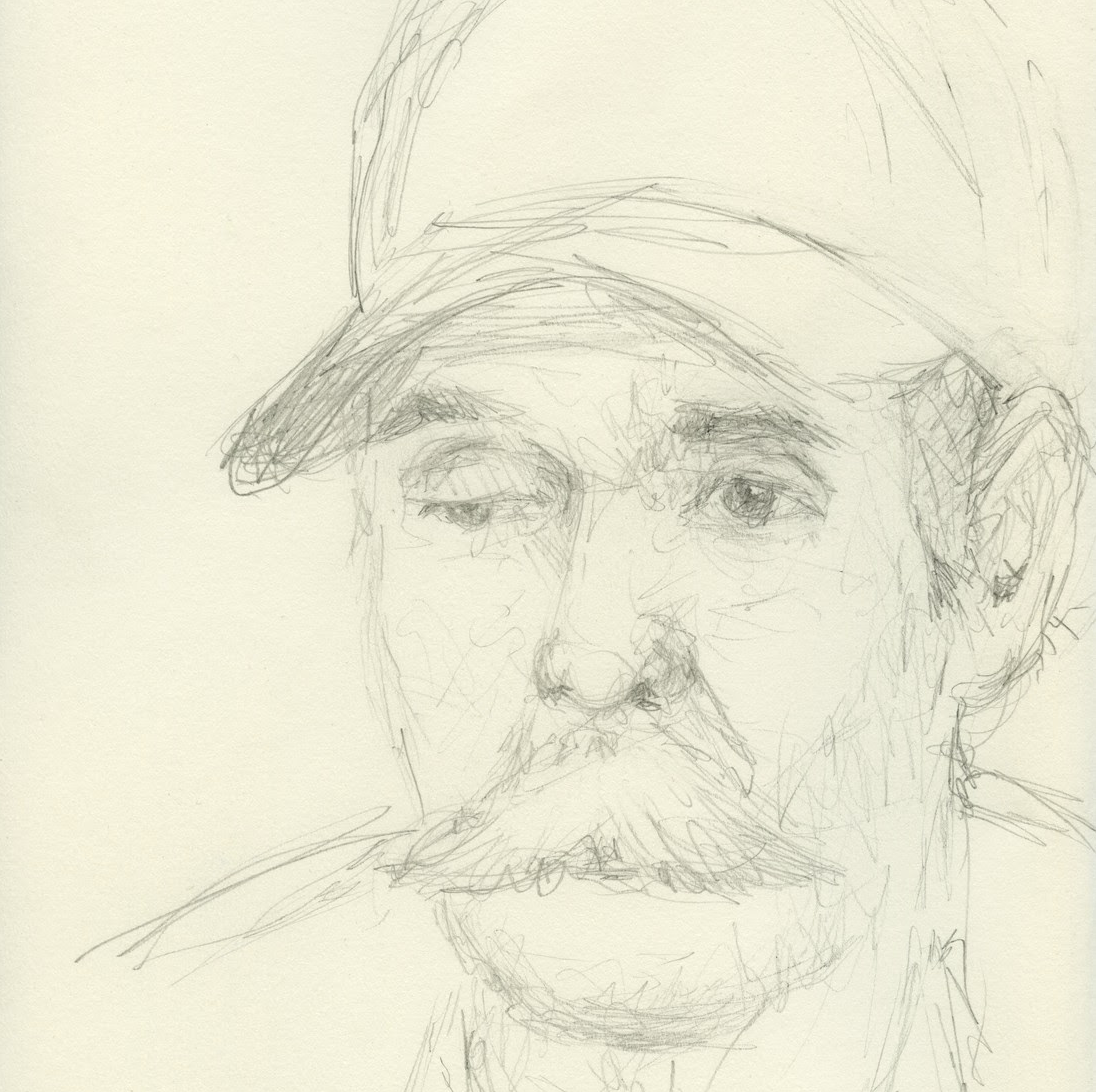
This latest single to be released by the Metal Postcard Records hub was influenced (I quote) “by [Brian’s] love of Paul McCartney and memories of walking up to Dead Fly Rehearsal rooms in the 80’s with my guitar and every time an old man in his garden would shout “Who Do You Think You Are? Paul McCartney”. As I walked past…it never got old for both him and me…I was tempted occasionally to buy a gun and shoot him and shout who do you think you are? John Lennon!”
If skiffle-indie-punk was a thing, then here it is in all its rudimental, near distorted jangled and sprung glory. It actually sounds less Paul and more like a sarky Lennon…that and a touch of Frank Sidebottom. No one quite manages to summarise a feeling, an era, a memory like The Bordellos, nor sound so brilliantly shambolic and devoid of even the rubber bands to replace the long loosened/slackened and fucked bands in their Tascam 4-track recorder. Off to a fine rambling start in 2026.
Greg Stasiw ‘Guesswork’
Album – (Hidden Harmony Recordings) 2nd February 2026
Greg Stasiw could quite rightly be called a polymath with a worldly scope of influences, having travelled and spent time in New York, Tokyo, Toronto, Paris, Boston, and Bratislava. Home, I believe, is New England on America’s Northeastern edge. The CV includes the occupations of experimental musician, visual artist and writer, but also include the study of anthropology, animation and illustration. Channelling all that into a musical sonic practice and the results are less happenstance than that title might suggest.
Guesswork was actually intended as a collaboration, a response to a visual stimulus created by the artist Phillipe Shewchenk. For one reason or another it was shelved, but Stasiw decided to continue experimenting and formulating a ponderous biomorphic set of ideas relating to a range of subjects, from plumbing systems for plants, to real locations and adjective prompts; many of which seem to point to nature, geography and the weather.
Ending up as Stasiw’s debut album, this amorphous blending of vignettes, studies, semi-improvised experiments sounds like a field trip conducted by Walter Smetek, Nicolas Gaunin and Hiroshi Yoshimura. It’s both recognisably trudging through the lush, the humid and exotic environments of Earth, yet simultaneously otherworldly and near sci-fi. To label it ambient would be a mistake, but minimalist all the same with its airs and the skying sound-scaping, the synth effects of kosmische and the new age combined with Harold Budd and his like.
Real sounds, like the bird life under a rich canopy, mix with percussive tools like a pestle and mortar, the knocks of heavy objects, the drawing of chains and desert sonar-like signals. A shuddery and often lovely reflective piano can be heard alongside a church-like organ producing the most melodic of paused moments. Thrusting gleams of light on the horizon; tunnelled chutes to new worlds; windy tundra’s; playful landscapes of bulb-like shaped notes; Stasiw magics up a stimulating, often pretty and with a sonorous depth, soundscape of possibilities and artistic mystery.
Tachube ‘Mincminc’ (Inverted Spectrum Records/PMGJazz)
Album – Released 4th January 2026
An international combination of band members and album facilitators/labels makes for a truly ambiguous and amorphous experiment with the latest moody and wild post-jazz exploration from the improvisational trio of Tachube. Based in the Serbian city of Novi Sad, a culmination of various musical strands and influences brings together Saint Petersburg electroacoustic/noise musician and founder of the Intonema label Ilia Belorukov (who performs on both the alto sax and rudimental, playful fluteophone), plus two active members of the Novi Sad free and ambient jazz and psychedelic dub scenes, Marko Čurčić on effects pedals and electric bass, and Nemanja Tasić on a minimised drum kit.
Their third collaborative release, platformed in conjunction with the independent boutique label and booking agency that spans in Hungary, Serbia and Turkey, Inverted Spectrum Records and the Macedonian label PMGJazz, Mincminc sounds like Anthony Braxton, Andy Haas and Sam Rivers creeping, prowling and consumed on a mysterious plain with Krononaut. It’s a combination of the improvised Polish and American freeform jazz schools, but also an emotional fit and squeeze of mythology, the darkness and the arid; enveloped as it all is by meta and the depth of the trio’s expanded spheres of influence and skills.
Incipient stirrings and jangles create the right mystique, with blows and the driest of alto expressions, quivered and shivered and shaved cymbals, busy undulated and descending bass runs and the knocks and mulch sounds of hidden sources building a serial and abstract atmosphere that vaguely invokes the Balkans and its geographical history, psychogeography and mystery. Something different in the jazz field; an expansion of ideas and moods and the extemporised.
Roudi Vagou & Läuten der Seele ‘Taghelle Nacht’
Album – (Quindi) 6th February 2026
Once more stepping out behind their aliases, the collaborative union of German artists Matthias Kremsreiter and Christian Schoppik (respectfully reimagined as Roudi Vagou and Läuten der Seele) transduce and manipulate ripples in time to invoke both blissfully dreamy and more mysteriously haunting sonic and musical ideas of nostalgia, German nationalism and geography.
Drawing upon their personal connections, their relationship to the lands and the city that moulded and influenced them both, this latest union could be filed under the hauntology label – a very good label as it happens, one that perfectly, if overused and misdirected on occasions, fits this interdimensional album of filmic score passages, vignettes and looped hallucinations. For Taghelle Nacht captures the “day-bright night” character of a simultaneously pastoral Heimatfilm era vision of German cinema, of the surreal, of fairytale and mirages whilst providing a suitably ghostly and occultist atmosphere.
It’s as if Roedelius and Moebius, or even Popol Vuh, fed the movie scores of Hans J. Salter, Philip Martell, Harry Robinson and Ronald Stein into a German time machine. Old matinee and classical suites, songs of the romanticised, the near ethereal coos of apparition sirens and angels, a fairground Bavarian Wurlitzer, the call of an esoteric nature (the field recordings of trampled walks across the land, the birds in the trees), and the sound of woodwind and brass are looped or obfuscated by the sounds of hidden whirly, unoiled sound sources, of Fortean machines and valves, folksy horror soundtracks, the concertinaed and bellowed and surface noise of old wax cylinders. Melodies and the wistful embrace of that old age are embraced and then somehow made more unreal and otherworldly as if transmitted through a séance or played on a possessed record player from an earlier age. And then again, you can pick out hints of Belbury Poly and their ilk, Martin Denny and Drew Mulholland across a haunting backdrop stepped in historical values, horrors and the mystical.
Charles ‘Poppy Bob’ Walker ‘Double-Wide’
Album – (Castle Dome Records) 10th February 2026
Outsider art from the 1980s, the left behind recordings of the fabled Charles ‘Poppy Bob’ Walker have already filled one such album of haunted imaginings, of mirages and dusty Western peregrinations. Released back in 2024, the Dirt Bike Vacation collection platformed a near secret archive of desert renderings, of loosened and ambient-esque country sketches. It reads however like one of those concocted projects, the alias of a very much still-breathing silent partner hiding behind anonymity. But reassuringly, this “normal guy”, who worked hard, kept some friends, though never married or had kids, liked nothing more than to drive off on various recording adventures in his old, yellow Datsun pickup.
The remembrance of an unassuming outsider, articulating or washing or crafting or letting his inner thoughts and observations and meditations of places in and around his Yuma, Arizona home ghostly emit through the lo fi amplified strings of his Martin D-28 guitar, onto his trusty and rudimental Tascam 4-track recorder. And as such an unassuming amateur working in the field, Walker’s music has, refreshingly, no one to please, no one to serve other than its creator’s own vision and perhaps improvised musings and contouring’s of the landscape, the thoughts and reification of mood and place.
At one turn taking on the mantle of a hidden Ry Coder soundtrack, or indeed invoking certain passages and refrains from Dylan’s Pat Garrett and Billy the Kid soundtrack, this latest collection’s controlled, mediated and shortened cinematic qualities build towards an alternative country-waned and mirage-like score. From incorporating a rustic banjo to the electrified vapours and more concrete panning and splayed strums and strikes of his guitar and the chorus of hidden sounds (from the railroad barrier’s bell-rung-like signal to the occasional use of reverberated lo fi synthetic drums, the esoteric rattle snake shaken ceremonies of the second cut, the windbreakers and even the sound of the tape’s hiss and surface sounds) Double-Wide feels like we’re watching a dreamy, hallucinating film of the surreal American West.
If you dig the art and experiments of such alt-country company as Myles Cochran, The Droneroom, the Gunn-Truscinski duo, Daniel Vickers and Chuck Johnson, then Walker should be as much a revelation as a familiar companion on the transformed leftfield road of such maverick artists.
___/The Monolith Cocktail Social Playlist Vol. 104___
The Social Playlist is an accumulation of music I love and want to share, with tracks from my various DJ sets and residencies over the years and both selected cuts from those artists and luminaries we’ve lost on the way and from those albums celebrating anniversaries each month.
In the latter camp we have the following anniversaries to mark:
The oldest celebration this month falls to Them’s mighty garage R&B raver I Can Only Give You Everything, taken from their 1966 LP Them Again. Van the man Morrison in full on maximum R&B glory; turn it up you muthafuckers! Still the best, guaranteed to get every dancefloor riotously jumping. The whole LP is peerless.
David Bowie’s Station To Station is 50 this month, and I’ve picked the Word On A Wing version used in Brett Morgen’s Moonage Daydream spectacular. Bowie’s epitaph Blackstar is 10 in January. I’ve decided on Sue (Or In A Season Of Crime).
Bob Dylan’s Desire is also 50 this month. Not the most sympathetic of subjects to mythologise, what with equal opportunities pain-in-the-neck Mafia types like Joey Gallo, but there’s merit with Oh Sister and its sublime backing vocals by Emmylou Harris (apparently, and very rare, overdubbed a day later). The musical attempt to clear the former middleweight boxer Rubin “Hurricane” Carter on Hurricane is overlong and sanctimonious in comparison.
Another 50th anniversary special, Cheyenne Fowler’s Cheyenne’s Comin’ boards the funky Stevie Wonder goes indigenous funk train. I was nice enough to give this original LP to my old pal James Bull a number of years; it probably now sits in his collection, getting an occasional airing on his turntable making in California.
Lou Reed’s country bar room bell-ringers Coney Island Baby is another LP celebrating the half century mark this month. I’ve gone for the opener, Crazy Feeling, not the best track, but still a favourite.
Only just making our albums of the year list last month with their first album in a decade (Touch), Tortoise’s Millions Now Living Will Never Die is unbelievably 30 this month. An album that defined a post-everything scene and year. And so, what to pick. How about the various gears-changing Glass Museum.
Very different, but from the same era. Britpop’s The Bluetones‘ Expecting To Fly is an unmistakable example of that era’s sound. Slight Return was the single, and track that made them, and still their best moment on wax.
Beth Ditto’s Gossip fired up the noughties, arriving with the vanguard of attitude post-no-wave, funk punk and such titans as the Yeah Yeah Yeahs. Some incredible fiery matriarchs stamped all over the sensibilities of the male dominated indie and rock scenes. The trio’s debut Standing In The Way Of Control is twenty this month, and I could have picked anything from an album that is almost a perfect encapsulation of the times it was made. But here’s Jealous Girls.
I never really need an excuse to feature Serge Gainsbourg, but to honour the memory of that French muse, chanteuse of new age French cinema and 60s starlet Brigitte Bardot here’s Initials B.B and the outlaw duet Bonnie & Clyde. Remarkably still such an icon, despite her best and most of her work being in the 1960s: retiring more or less early to concentrate on animal welfare for the next sixty years of her life.
From the newer section, or those recentish tracks that missed out on a place on the site’s Monthly Playlists, a smattering of tracks released in the last few months (occasionally a little further back). From the Live In Mestre Venezia series of outstanding performances, Get Happy by the ’84 union of sax and jazz pianist icons Sam Rivers and Mal Waldron; made available near the end of 2025. Also, and I’d bet a very popular choice amongst my peers, The House That Doesn’t Exist from Melody’s Echo Chamber’s Unclouded album, released last month; Leave by NEDA, released back in September; Volcano by Penza Penza, released last month; Pete Evans and Mike Pride’s exploratory alchemy of Substance X, also put out last month; Deanna Petcoff’s Not Too Proud, another December release; and Papernut Cambridge’s I’m A Photograph Of You, released just in the last couple of weeks.
From across time, across genres, across geography, a number now of tracks I either played in my various DJ sets over the years, wished I’d owned, or just came across in my research. This includes the mellotron imbued prog-rockers Gracious and Introduction; another prog obscurity, Kingdom Come and Spirit of Joy; American jazz trumpeter Kamal Abdul Alim and Al Nafs; German electronic and kosmische luminary and progenitor Conrad Schnitzler and Convex 4; the Memphis snot rocking garage thumping R&B outfit Compulsive Gambler’s and The Way I Feel About You; the Chicago post-rock-avant-garde Shrimp Boat and Pumpkin Love; the Cleveland garage-prog troupe Damnation ( their name whittled down for some reason by their label from The Damnation of Adam Blessing) and their funky-psych-Hammond cover of The Monkees’ Last Train To Clarksville; hip-hop royalty from the golden age, Showbiz & A.G. with Silence Of The Lambs; strange sampled fruit from Ether Bunny with the Bunny Jump; and because I was recently reminded of this song through Apple TV’s Palm Royale series, Moonshot by the dodgy, or found out, Buffy Saint Marie – not so indigenous American as she had us all believe, and yet, the music is just as sublime, the lyrics incredible.
As a special this time around, and to show at least some support for those bravely taking to the streets of many of Iran’s cities to protest against its authoritarian theocracy, and the crippling cost of living crisis (burdened by Western sanctions), I’ve chosen to include some choice music from the country’s inspiring female underground. Written – and just to show how these protests have continued since the pandemic, flaring up after brutal crackdowns, executions and state murder – back in 2023 my review of AIDA and Nesa Azadikhah’s co-founded Apranik Records compilation platform of Iranian artists is receiving another airing today (read below, with some modifications in light of recent events).
I’m also adding a number of tracks to this month’s social – the least I can do. The left’s moral compass seems stuck at outright condemnation. In fact, it has fallen completely silent on the matter, as thousands of body bags mount up on the Iranian streets. Whilst American influence, and Trump’s threats to strike at the regime if it doesn’t stop murdering its citizen protesters all feed into the conspiracy theories of Western interventionism, it must be pointed out that all previous protests – and we are talking a sizable percentage of the population that are fed up with the hardline authoritarianism; a whole younger generation wishing to have the same freedoms enjoyed in the West, the same opportunities – have failed under heavy handed suppression and sanctioned violence.
Let’s hope the Iranian people can make that change for a much better future.
Various ‘Intended Consequences’
(Apranik Records)
With a hellish multitude of flashpoints and distractions across the globe keeping the continuing fight for women’s liberation in Iran off the news rolls, it has become apparent that the Iranians themselves have been left to carry on the struggle with little support; that is until late last year and early 2026, with Trump weighing in with threatening strikes upon the regime and those that keep them there. In an ongoing war between the forces of the authoritarian religious state and a younger generation demanding an end to the erosions of their civil liberties and freedoms, heavily impeded by sanctions that began as a consequence of the country’s nuclear programme, the crisis in the country entered a dark bloody chapter in 2022 with the murder, in custody, of Masha Zhina Amini by the “morality police”.
After a rightful campaign of protest and action at such a heinous crime, a brutal crackdown by the state led to mass arrests and even executions (mostly of male supporters and activists, usually on trumped up charges). Further restrictions were invoked. And just as horrifying, in 2023 there was a nationwide spate of deliberate poisonings of schoolgirls (one of the groups who mobilised against the authorities in the wake of Amini’s cruel death). Defiant still, even in the face of such oppression, the brave women of Iran have strengthened their resolve only further.
In the face of such attacks, clampdowns, the music scene has responded with a strong message of resistance and solidarity. Despite everything, cities like the capital of Tehran have a strong music scene of contemporary artists, composers, DJs and performers working across all mediums, including art (which is probably why so much of the music is also so visceral, descriptive and evocative of imagery). One such collaborative force of advocates, AIDA and Nesa Azadikhah, co-founded the Apranik Records label, a platform for female empowerment.
Following 2022’s earlier Women Life Freedom compilation, a second spotlight volume delves further into not only the Tehran scene but picks out choice tracks from those female Iranians working outside the country in such epicenters as London (AZADI.mp3) and Berlin (Ava Irandoost).
Sonic wise it covers everything from d’n’b, trance, deep house and techno to sound art experimentation. The range of moods is just as diverse in that respect, from restlessness to the reflective and chaotic.
Contributions from both Azadikhah (the hand drum rattled d’n’b breaks and spacy, airy trance ‘Perpetual’) and AIDA (the submerged melodious and dreamy techno ‘Ode To Expectations’, which features the final love-predicament film sample, “You know that I love you, I really do. But I have to look after myself too.”) can be found alongside a burgeoning talent pool. The already mentioned London-based producer and singer AZADI.mp3 opens this collection with a filtered female chorus of collective mantra protest, set to a sort of R&B, 2-step and bass throbbed production, on ‘Empty Platform’– just one of many tracks that uses the sounds of a more traditional Iran, especially the daf drum, alongside modern and futuristic warped effects. The sound artist and composer Rojin Sharafi likewise features the rattled rhythms of hand drums and some hidden spindled instrument – like running a stick across railings – on her entrancing kinetic techno ritual of “trauma”, ‘dbkk’.
Abji_hypersun allows the sounds of the environment to seep into her slow-building track of field recordings, collage and breaks (two-stroke scooters buzz by as distant female conversations reverberate on the street). Part jungle breaks pirate radio, part Matthew David, Jon The Dentist and LTJ Bukem, ‘Resist The God Trick’ evokes a tunneled vision of haunted reminisces and resistance in the shadows.
Emsho’s ‘Down Time’ is a rotor-bladed electro mix of Basic Channel and The Chemical Brothers, and Aida Shirazi’s mysterious wind of dark meta ‘R.E.V.O.L.U.T.I.O.N’ spells out the rage with a shadowy, near daemonic scripture of wrath and revenge – a gothic synth sinister avenging angel promises that the women of Iran will neither “forget” nor “forgive” their oppressors, torturers and murderers. Farzané seems to evoke the alien, the sci-fi on her experimental, sometimes disturbing dial twisting and crackled ‘Quori’ transmission, and the Berlin-based DJ, video artist and music producer Ava Irandoost draws on Laraaji-like dulcimer tones for her dream mirrored kosmische evocation ‘CINEREOUS’. The Tehran composer, pianist and bassist Ava Rasti draws a close to the compilation with a classical-tinged, harmonic ringed, saddened piano-lingering performance, entitled ‘Eight Night’ – an atmospheric troubled trauma is encapsulated with the deftest of touches.
It might be my own nostalgic penchant for 90s electronic music (my formative years of course), but this series (if we can call it that) could be an Iranian version of the Trance Europe Express compilations brought out during that decade; a treasure trove of discoveries and whole scenes that opened up a world of previously unknown music to many of us not living in the epicenters of North America, the UK and Europe and beyond. Hopefully this latest platform of innovative artists from across the arts will draw the attention it deserves; the message hardly virtuous, in your face, but sophisticated: the very act of female Iranians making a name for themselves despite censorship and bans a sign of empowerment and resistance in itself. Few groups deserve our support (which in the West has been sadly absent) more, but don’t just purchase for the cause but for the musical strives being awakened and produced under tyrannical oppression, and because this is a solid collection of great electronic music.
If you’ve enjoyed this selection, the writing, or been led down a rabbit hole into new musical terrains of aural pleasure, and if you can, then you can now show your appreciation by keeping the Monolith Cocktail afloat by donating via Ko-Fi.
For the last 15 years both me and the MC team have featured and supported music, musicians and labels we love across genres from around the world: ones that we think you’ll want to know about. No content on the site is paid for or sponsored, and we only feature artists we have genuine respect for /love or interest in. If you enjoy our reviews (and we often write long, thoughtful ones), found a new artist you admire or if we have featured you or artists you represent and would like to say thanks or show support, than you can now buy us a coffee or donate via https://ko-fi.com/monolithcocktail
The Monthly Playlist selection of choice music, plus our Choice Albums list from the last month.

We decided at the start of the year to change things a little with a reminder of not only our favourite tracks from the last month, but also a list of choice albums too. This list includes both those releases we managed to feature and review on the site and those we just didn’t get the time or room for. All entries are displayed alphabetically.
Our Monthly Playlist continues as normal, with tracks from April (and a few from the end of March) chosen by me, Dominic Valvona, Matt Oliver and Brian ‘Bordello’ Shea.
Those Choice Albums____
Ayarwhaska ‘Dendritas Oscilantes’
(Buh Records) Review
Jonah Brody ‘Brotherhood’
(IL Records) Review
The Corrupting Sea ‘Political Shit’
(Somewherecold Records)
Manu Dibango ‘Dibango ‘82: La Marseille December ‘82’
(WEWANTSOUNDS) Review
Nana Horisaki ‘Scoppi’
(Kirigirisu Recordings)
iyatraQuartet ‘Wild Green’
Review
Pidgins ‘Refrains of the Day, Vol. 2’
(Lexical Records) Review
Pound Land ‘Can’t Stop’
(Cruel Nature Records) Review
Michael Sarian ‘ESQUINA’
(Greenleaf Records) Review
Conrad Schnitzler ‘RhythmiCon’
(Flip-Flap) Review
Sleepingdogs ‘DOGSTOEVSKY’
(Three Dollar Pistol Music)
Toxic Chicken ‘Mentally Sound’
(Earthrid) Review
The Playlist____
Joe Probet ‘Landslide’
Penza Penza ‘Carl Wilson’s Morning Routine’
Homeboy Sandman & yeyts. ‘Thanksgiving Eve’
Blu, August Fanon, Kota the Friend & R.A.P. Ferreira ‘Happy’
Aupheus w/ Kool Keith ‘It’s My Space’
Ukandanz ‘Yene Felagote’
Lamat 8 and Tartit ‘Afous Dafous (Yoga Flow)’
Manu Dibango ‘Waka Juju Part 3’
Michael Sarian ‘Glory Box’
sleepingdogs ‘sell fish’
Kannaste4 ‘Ups and Downs’
Your Old Droog & Edan ‘The Glitch’
Anarchitact, Myka 9, N ‘Daddication Pt. 1’
The High & Mighty, The Alchemist & Your Old Droog ‘The Rose Bowl’
Masai Bey & Kitchen Khemistry ‘Transit Authority’
Dr. Syntax & Palito ‘Sprung’
Claude Cooper ‘Happenings’
Batsauce ‘Murmurate – Instrumental’
Ammar 808 ‘Ah Yalila’
Kin’Gongolo Kiniata ‘Bunda’
Jonah Brody ‘The Ancestors Are Taking Workshops’
iyatraQuartet ‘Wild Green’
Wolfgang Perez ‘Preludio A Un Suicida’
Pidgins ‘Results Oriented’
Briana Marela ‘Vibrant Sheen’
Hectorine ‘Everybody Says’
The Pennys ‘Say Something’
Bernardo Devlin ‘5:45’
Ayarwhaska ‘Desasosiego2000’
Occult Character ‘New Mothball Empire’
VESCH ‘Who the Hell are You’
SUE ‘Get Over It’
Hi, my name is Dominic Valvona and I’m the Founder of the music/culture blog monolithcocktail.com For the last ten years both me and the MC team have featured and supported music, musicians and labels we love across genres from around the world: ones that we think you’ll want to know about. No content on the site is paid for or sponsored, and we only feature artists we have genuine respect for /love or interest in. If you enjoy our reviews (and we often write long, thoughtful ones), found a new artist you admire or if we have featured you or artists you represent and would like to say thanks or show
Archive spots and now home to the Monolith Cocktail “cross-generational/cross-genre” Social Playlist – Words/Put Together By Dominic Valvona

A new thread, feed for 2023, the Digest pulls together tracks, videos and snippets of new music plus significant archival material and anniversary celebrating albums or artists -sometimes the odd obituary to those we lost on the way. From now on in the Digest will also be home to the regular Social Playlist. This is our imaginary radio show; an eclectic playlist of anniversary celebrating albums, a smattering of recent(ish) tunes and the music I’ve loved or owned from across the decades.
July’s edition features Volume 78 of the Social plus, in honour of the late Yanna Momina, another chance to read my piece on her last recording, Afar Ways, and a 50th anniversary celebration of Can’s Future Days opus: their most complete, sublime album in my opinion.
The Social Playlist #77

Anniversary Albums And Deaths Marked Alongside An Eclectic Mix Of Cross-Generational Music, Newish Tunes And A Few Surprises
Repeating myself, but if this is your first time here, first of all, welcome, and secondly here’s the lowdown on what the Social is:
Just give me two hours of your precious time to expose you to some of the most magical, incredible, eclectic, and freakish music that’s somehow been missed, or not even picked up on the radar. For the Social is my uninterrupted radio show flow of carefully curated music; marking anniversary albums and, sadly, deaths, but also sharing my own favourite discoveries over the decades and a number of new(ish) tracks missed or left out of the blog’s Monthly playlists.
With tributes to those fallen comrades, we mark the passing of The Pop Group (second tragedy to hit that era-defining group, with Mark Stewart‘s death only a couple of months back) and Maximum Joy‘s John Waddington, the late Djibouti songstress Yanna Momina and highly influential avant-garde jazz saxophonist and clarinetist Peter Brötzmann.
There’s album anniversary celebrations as usual too, with the 50th anniversaries of Funkadelic‘s Cosmic Slop, Lou Reed‘s Berlin saga, Bob Dylan‘s Pat Garrett & Billy The Kid Soundtrack and Can‘s Future Days, the 40th anniversary of Whodini‘s 1983 debut, 30ths of Cypress Hill‘s Black Sunday and the Super Furry Animals Phantom Power.
Newish of a kind entires include Penza Penza, Alogte Oho & His Sounds Of Joy, J. Scienide, Brian Eno and Homeboy Sandman. Whilst from across the ages and genres there’s tracks from Camera237, Heaven & Earth, Andwella, Oberman Knocks, Kalacakra and more. 30 choice tracks in all.
___[TRACKLIST]___
Penza Penza ‘My Friend Ash’
Funkadelic ‘You Can’t Miss What You Can’t Measure’
Har-You Percussion Group ‘Feed Me Good’
Alogte Oho & His Sounds Of Joy ‘O Yinne!’
Lou Reed ‘Oh Jim’
Maximum Joy ‘Dancing On My Boomerang’
Kalacakra ‘Deja Vu’
Whodini ‘Magic’s Wand’
Cypress Hill ‘Break ‘Em Off Some’
The Pop Group ‘3:38’
Peter Brötzmann ‘Never Run But Go II’
Super Djata Band ‘Fassiya’
Benkadi International ‘Kolankoma’
Bobby Cole ‘Status Quo’
J. Scienide & Napoleon Da Legend ‘Bats In Wuhan’
Konstruckt/Peter Brötzmann ‘Tepe’
Brian Eno ’77 Million Paintings 3′
Yanna Momina ‘For My Husband’
Homeboy Sandman ‘Off The Rip’
The Prisonaires ‘Just Walkin’ In The Rain’
Bob Dylan ‘Billy 1’
Nicole Croisille ‘J’aime Pas Quand Tu Pars’
Andwella ‘Hold On To Your Mind’
Heaven & Earth ‘Song For Craig’
Super Furry Animals ‘Bleed Forever’
SPIME.IM ‘Heliotrope’
Oberman Knocks ‘Degonnt Type Runners’
Rabih Abou-Khalil ‘The Lewinsky March’
Camera237 ‘John Arne’
Can ‘Future Days’
ARCHIVES/ANNIVERSARY
Future Days The Big 5-0

BACKDROP
The dynamic German underground graphic artists Ingo Trauer and Richard S Ludlow’s artwork for the front cover of Can’s fifth studio album, Future Days, features a couple of mystical arcane symbols full of meaning, and steeped in ethnography.
Both the trident and Hexagram icons found on the cover add to the prevalent spiritual mood that now surrounded the group: producing extra layers of connotation and interweaving mysteries.
The Hexagram, an almost missed set of broken lines type logo that sits beneath the album’s title, is taken from the Chinese I Ching book of ancient symbols. Each of these symbols is made up out of a series of sticks sorted into six broken lines (Ying) and unbroken lines (Yang), which are given cryptic parables relating to their individual shape. Our featured configuration is known as Ting – The Cauldron, or, as Holding, so called because of its cooking pot like appearance.
The Cauldron represents the sharing of a well-prepared meal that acts as a ritual for cultivating bonds between communities. Ting itself symbolises the provision of both the body and the spiritual extras: an emphasis that shouldn’t be overlooked.
The trident carries its own abundance of meanings and features heavily throughout history and ancient mythology, especially of course in Greek mythology with Poseidon, and in Hinduism with Shiva.
Hindu myth refers to the three pronged weapon and spectre of power as representing past, present and future or the place where all three main energy channels in the body meet at the brow.
It also appears as a symbol of unification for the old Slavic tribes that once roamed the Ukraine, and crops up in Russia as a rallying cry for the downtrodden to band around in their hour of need.
Encryption is not entirely necessary but it may help build up a picture of where Can’s mindset was attuned during the making of Future Days, an album of majestic splendour and ethereal elevated beauty.
Indeed, you could say they were anointed with a heavy spiritual crusade, to produce a work of art good enough to be received in the highest echelons of heaven itself – the empyrean.
The serene shift away from the dance grooves and darkly esoteric improvised mind fucks of Ege Bamyasi and Tago Mago now made way for an exuberance of those much loved Afrobeat rhythms and ambient transcendental flowing soundscapes.
A much needed summer break of 1973 helped to refresh the band and put them at ease enough to create possibly their greatest coherent work yet.
But let’s go back for a moment to the previous year, which saw the ongoing dispute with their former manager Abi Ofarim and the worrying near death experience of Michael Karoli, whose perforated ulcer damn near cut his life short.
Karoli luckily recovered of course, though not until the spring of ’73 after being out of action, unable to even practice, for nigh on six months.
Carrying on as well as they could, Jaki Liebezeit and Holger Czukay turned their free time to producing a record for the solo artist Alex on the Ariola record label. Czukay was also putting the finishing touches to his own solo work Cannexias 5, an album of montage sound pieces.
Irmin Schmidt meanwhile locked himself away to study obsessively, while Damo Suzuki just…well, just hung about.
Financial problems once again became a worrying issue as with no touring and little in the way of soundtrack work, the band where finding it tough to survive.
Schmidt’s wife Hildegard was on hand to save the guys from disaster, rolling up her sleeves she acquired a bank loan, which went towards re-kitting the studio and setting up a 60 date tour for when Karoli eventually returned to the fold. This tour would be more like a workout than set of concerts, taking in the UK, France and the homeland all within the short period of spring 73: ending just in time to give them a brief summer holiday before recording started again.
During this period Damo would start to get cold feet and wander off, returning to his much missed Japan just before the start of the sessions for Future Days. In his absence the band began to start recording at the now re-christened Inner Space studios in Weilerswist, just outside Cologne.
This former cinema, transformed into a purpose built studio, was where the band had recorded the previous album Ege Bamyasi. New equipment and upgrades began to arrive much to Czukay and Schmidt’s delight, though there wasn’t much time to experiment as the new record’s deadline was earmarked for the autumn of 1973.
Czukay declined the engineering tasks this time around, wishing to concentrate fully on his bass playing duties. Instead a newly paid bunch of roadies were now responsible for all the lifting and setting up, allowing the guys to concentrate entirely on the task at hand. Czukay did however manage to still be in charge of editing and cutting – credit also goes to both Chris Sladdin and Volker Liedtke who recorded the sessions and mixed the record.
Damo’s eventual arrival – from a sabbatical in Japan – couldn’t arrive quick enough; already large swathes of the backing had been worked on and recorded, allowing only a small amount of room for his vocals and not as much interaction as he’d been used to on previous records.
His vocals suffered from a real murky low level mix, lending a certain ghostly and almost absent charm to the record that obscures Damo’s lyrics somewhat. Later on with the remastered CD versions these enervated vocal performances were amended and turned up, made cleaner: though this does alter the sound somewhat.
I can’t help but feel that his eventual departure was imminent when listening to Future Days: Can would feel a little lost without a lead vocalist, eventually having to share those duties between Karoli and Schmidt, though they already seemed to be heading towards a pure instrumental sound, and could have at a push, gone without Damo’s contributions.
When he does get his chance, Damo offers a guiding light through the epic opuscule; especially on the breath-taking odyssey of Bel Air, his repeating chorus perfectly encompassing the effortless allure found in the melody.
Future Days features only four tracks, three being over eight minutes long, with an entire side being bequeathed to that seminal peregrination.
The title track speaks for itself and sets the general atmosphere and themes that are echoed throughout, the album’s ending more or less finishing where it began. The Sun Ra invoking soundscape Spray adds some strange jazz and blues reworking to the album; an eight-minute display in the avant-garde direction, full of soul.
A short interlude can be found on side one with the Ege Bamyasi familiar three-minute evocative dance-like structure track, Moonshake. Neither is it a companion piece to Tago Mago or an extension of the tracks Vitamin C or I’m So Green, instead Moonshake manages to sound fresh and breaks new ground. Its short stomp intermission finely balances out the symphonic set pieces.
Side two concentrates all its efforts on the glorious sprawling Bel Air; uplifting heavenly elegance pours out of every nuance on this progressively sophisticated hymn to the days yet to come. The title is slightly wry, as this particular region is most fondly known as the affluent hillside suburb in L.A, mainly infamous for its celebratory residents hiding behind high walls and tight security. Founded and named by the oil tycoon turned congressman Alphonzo E Bell Sr in 1923, this area was originally earmarked as his own rich kingdom to pontificate and rule his bronze wrinkled fellow spoilt peers from. Did you know that it’s also ironically, and quite timely, the name of a rather unsafe and infamous slum area of Haiti? Though surely after the recent catastrophes, most parts of the island are now levelled out and share the same common denominator – fucked.
Coincidentally or not, Chevrolet made a pretty fine gas-guzzling model named the Bel-Air, which features in the James Bond film Live And Let Die, the same year as this album.
On the record itself this song is actually titled as Spare A Light, whether this is a further enlightened reference or not, I’m not sure. It has subsequently come to “light”, thanks to one Al de Baran, that it is the name of a cigarette. This would explain the “spare a light” alternative title, though other than a prop, favourite brand of cigs, doesn’t really have any meaning.
Czukay sums up the record as:-
“Electric symphony group performing a peaceful, though sometimes dramatic landscape painting”.
Recording took a speedy two months to complete and the album was, after all the touring and commitments, released on time.
Again the usual plaudits and champions extolled Future Days, praising the slight change in step that the band had taken.
Sales didn’t match their previous two albums but they had managed to win over some new fans with the airy new sound and meditatively heavenly direction.
This record managed two landmarks, one the first to not feature any soundtracks work and the last to feature Damo, who soon married his German girlfriend and converted to being a Jehovah’s Witness; turning his back on music for a considerable time and leaving Can for good.
A lot of critics and even fans such as Cope, describe this as the last truly classic album from the group, namely due to the departure of Damo, who added a certain focus and outsider dynamic.
Like many groups since and before ‘breaking up is so very hard to do’ and it prompted Can to perhaps look inward, becoming more introverted, lacking in direction.
Can would never manage to quite connect in the same way after Future Days, the chemistry would never reach the same consistency again.
REVIEW
Steam-powered machines and reverberating murky atmospheres in the mists, emerging to wrap themselves around the introduction to side one’s title track, ‘Future Days’. The creepy, almost unnerving opening starts to evaporate, making way for an array of soft shimmering percussion and cushioned gongs. Slowly fading in, the main rhythm section materializes at an articulate pace, shuffling along in a downplayed manner.
Jaki Liebezeit soon lets loose with his respective nod to Ghana and Nigeria, those Afrobeat and Highlife rhythms working up a sweat and continuing throughout the entire album. Peddling over the top of these infectious grooves is the team of Michael Karoli and Holger Czukay, who ratify the African treaty of influence with some precise shimmy hooks and riffage. They take this worldly influence and run with it through an intergalactic corridor, stopping off at the most inopportune moment to return free fall style back to Cologne.
Joining the cortege of unabandoned soulful melodies that now swirl around the track is an all in sundry display of shakers and chimes; adding some degree of sparkle.
A deft understated announcement from Damo floats upon the hotbed of rhythms, soft crooning strains of cryptic meaning unravel themselves over the course of the song before disappearing back into some kind of low mix ether.
Cryptic broken English pronunciations like:-
“I just think that rooms to end,
How commend them from their dreams?
Send the money for a rainy day,
For the sake of future days”
Backward meaning and confusing command of the language make for a mysterious unfathomable song subject, dropping in and out almost sporadically.
Now the unmistakable tones of accordion and violin seep into the magical mix as Damo moves over the congas, slapping them with abandon.
As the halfway mark is reached, Schmidt allows himself a chance to impress with a melodic display of surging swirling choruses and whirling shit storm echo a rallying call to arms. The tempo now quickens and Liebezeit raises the roof with his tight rolls and bursting cymbal clashes.
Damo, whose vocals had sounded like they’d been recorded in a different dimension, now gets to bleat out as though talking through an inverted megaphone. His verbal like threats escape the cacophony of layers that have so far held him back; with menace the lyrics project forth –
“You’re spreading that lie, you know that,
You’re getting down, breaking your neck.
When doing that was breaking home,
What have you done, free the night”
A deep protruding bass line delivered from Czukay rumbles on, low drawn out notes and disciplined melodies allow Karoli the space to pinpoint some celestial accents before the song draws to a close.
The final moments are played out with peculiar sandpaper rubbed sounds, which become louder and louder, all the while the bass drum of the real man-machine Liebezeit goes off like a rocket. He presses on the foot pedals like a jackhammer, pulverizing them into the ground.
Flittering tapes and Schmidt’s arpeggiator frenzied operatics compete with the now pumped up drums until someone on the studio console felt compelled to fade it all out. Only to have second thoughts and reverse his momentary decision and crank the fader straight back up.
Spray is more or less a song in two sections, the first namely a building progressive themed landscape suite, the second is a Damo led love ode.
Starting with the fraught shaking organs and attention seeking flourishes that emanate from the altar of Schmidt’s hammer house of horror invoking backline of synths and keyboards, we are party to a harrowing episode of simmering effects and bubbling chemist set theatrics, which emphasis the moody tone as the gothic meets Sun-Ra in an epic face off.
After Schmidt has so enthusiastically conveyed his sermon, Damo sets to work on the bongos, all the while the trebly tight delayed clash of cymbals resonate in his ears.
Czukay manages to play a highly amusing old rhythm and blues standard twelve-bar, before sliding off into an up-tempo octave free for all, executing the bass playing equivalent of doodling.
Entering this frayed stage is Karoli, who chops up some solid riffs and takes a gander through swamp rock, blues and even rockabilly, all the time bending his rhythm guitar around the loitering bass.
Dribs and drabs of metallic droplet sounds bring in a peculiar middle section, the music dieing down for a brief moment as the drums fade in and out of obscurity. Dreamy guitar and relaxed calm bass ride over the top, accompanying this interlude.
Damo’s smothered voice can just be made out, he meanders through the multi-story layering of impending sounds and effects the best he can.
Ineligible lyrics find it difficult to stand out, though the attempt brings a much welcome light and majestic cooing interjection, moving the piece into a highly spiritual direction.
Schmidt has the final word with his ambrosial sweeps and rapturous oscillating scales of abandon, that spoilt fidgety elbow of his crashes down to sign of the song.
‘Moonshake’ truly carries out its title wishes, by shaking up the so far celestial suite of symphonic concerto rich songs. This short wake up call acts as a momentary respite before we head back into the higher strata’s on side two.
An uncompromising jaunty dance track bursts in, foot-tapping afro-beat funk instantly grabs us by the lapels, even if were not wearing them.
Liebezeit conjures up a stalking infectious beat of repetitive sinewy snare and tight then tight hi-hat; the occasional crash cymbal interrupts his metronome trance like state.
Underpinning this boogie is Czukay’s melodic deep jazz bass and Karoli, who lends some Paul Simon type African bends and twangs.
A mirage of world music percussion is thrown in, cabasa’s, guiros and the djembe hand drums all make an appearance and are backed by some odd ratchet and cranking sounds.
Damo gets to lead the track with those vocals coming through loud and clear for a change, though what he’s singing is still uncertain.
The sounds close-knit barrage of ethnicity and sophisticated Afro-beat would rear its head on future recordings, such as the Saw Delight album.
Can transgress their peers by moulding dance fusion enriched jazz and funk to a long history of European avant-garde, producing an inert new German sound that no one else has been able to reproduce in quite the same manner.
Flipping over the original record we find the twenty-minute opuscule Bel Air, or Spare A Light as it’s entitled here.
We begin this series of four acts cinematic saga with the slow lapping waves washing over our feet, as the opening landscape is built up around us.
Karoli and Czukay both carouse with their lightly crafted bass and sonic exploration, gentle lush sustained plucks and harmonies waft from this partnership.
Pulsating soaring synths and seething unkempt melodies now take the lead, as Liebeziet gently tip toes in and taps out a sophisticated restrained beat on the cymbals, sometimes venturing onto some rolls.
Damo swoons and croons some fragmented story type ode :-
“And when nobody can say that you hate,
But then your story made the store right now.
And when you started to say that you hate,
You’re coming down to the start up gown”
Beautifully lamented in waves, the vocals act as a guiding lantern to this grandiose epic.
Soon a build up of toms and excited choppy guitars bring in a sea change, Czukay going into that free rolling octave hyperbole he does so well.
A hypnotic climax is reached as Karoli’ lightly phased guitar works up a funk rock lead in, straining on the last held notes for posterity.
The next act moves towards a more up-tempo dance mode, Soft Machine and Sly Stone mixed into a heavy rhythmic soul odyssey.
Czukay slides into a higher fret pilgrimage before running out of notes, returning instead to the rumbling undercurrent low notes that could bring down a plane.
Our oriental troubadour begins to free form lyrics all over the place, using his voice like a solo instrument, while a choral wooing chorus adds momentum.
Liebezeit beats his kit into submission, lifting off the drum stool as he kicks his feet through the bass drum and up the backside of Schmidt, who has not had much of a look in.
Crying guitar leads and hung over notes linger in the atmosphere, tensions now building towards a more serious direction.
As act three begins in the afterglow of chaotic clattering and high powered rhythms, a tranquil come down beckons as we wander through in a sumptuous meadow and woods on a summer’s day.
Birds and insects interacting with each other going about their business, this chilled blissful meander brings us to a comforting pause.
In the undergrowth lurks a muffled inaudible voice, almost an incantation that hides underfoot like some disturbed green man.
The main theme starts to fade back in, with Damo now reinvigorated and freshened up after the mid section stroll.
Karoli is given ample room to display his itinerary of textbook licks, caressing and attempting a sort of foreplay, seducing the angelic melody of the first act.
Lifting synths and alluring sweeping layers now pour from the magical laboratory of Schmidt; he conducts the graceful composition like a high priest, all hundred-yard stare, interlocked in a battle between the greater good.
Liebezeit totally psyched up lets go with a fever of drums, barracking and rattling along a now ballistic fashion, whilst Czukay wanders off on his own thread, all wide eyed and dreamy.
Damo ready to unleash the final punch now repeats the chimerical dreamy chorus of:-
“Spinning down alone, spinning down alone.
Spinning down alone, you spin alive”
This chaos theory breakdown certainly runs through all the emotions, bringing us back down to earth with a ceremonial crashing bang before reaching a climatic burst of nodding nonsense.
Can collapse into a stupefied like finale with Schmidt’s long ringing out organ note: like a future re-ordered piano ending from ‘A Day In The Life’.
Liebezeit won’t give up the ghost so easily, those crashing drums still milling around in the final throes of these dying embers.
Just when we believe it’s all over for good, our intrepid band come back for a curtain call, the main heavenly theme making an captivating return before finally concluding on the last bass notes of Czukay. And like that they are gone.
The ethereal divine Future Days album will stay with you for weeks on end, ringing around your mind in-between plays.
If one LP encapsulates the greatest moments in Can’s history, then this is it, with Bel Air being there finest performance.
No excuse is warranted – buy this record immediately and sit back ready to be baptised in the glow of this symphonic triumph.
In Honour Of The Late Yanna Momina

In tribute to the star of Ian Brennan’s in-situ style Afar Ways album, recorded back in 2022, another chance to read my glowing review of Momina’s distinctive, enigmatic and sagacious voice.
Crisscrossing a number of the world’s most dangerous and often remote locations for the Glitterbeat Records label since 2014, the renowned Grammy Award winning polymath-producer Ian Brennan has repeatedly remained hidden as his subjects open up and unload a lifetime of trauma, or, candidly lay bare some of the most stripped, free of artifice performances you’ll ever likely to hear.
And so it’s always a treat, an eye and ears opener to hear about the latest travelogue-rich production. On the occasion of the tenth release in this cannon, Brennan lands down in Djibouti, on the horn of Africa, to capture the evocative voice and music of the enigmatic Yanna Momina and ‘rotating cast of friends’, who passed around a couple of guitars and the slapped, struck percussive Calabash as the only means of accompaniment. Our producer’s usual hands-off approach allows this 76-year-old star to let rip; unleashing an incredible, unique vibrato trill and excitable expressive vocal that resonates loudly and deeply. There’s also a playful improvised outburst of primal-rap to enjoy on the animal-cooee hollered ‘The Donkey Doesn’t Listen’; the only backing on this occasion a wobbled human beatbox and bass thump. Yet a real groove is struck when it gets going, a sort of stripped ESG meets Funkadelic in the surroundings of ‘Aunt’ Momina’s stilted hut.
A member of the Afar people, an atavistic ancestry that spreads across the south coast of Eritrea, Northern Ethiopia and of course Djibouti (early followers of the prophet, practicing the Sunni strand of the faith), Momina is a rarity, a woman from a clan-based people who writes her own songs. This honoured artist – though not in the myopic, over-celebrated way in which we in the West would recognise the word – also plays the two-stringed ‘shingle’, an instrument played with nails. This is complimented – if you can call it that – by an improvised version of the maracas: basically a matchbox. But you would never guess it.
Recorded in a thatched hut, with the surrounding waters threatening to wash up into the ad-hoc studio, the outdoor sounds can’t help but bleed into the recordings: a distant crowing of birds, the fluctuation of creaks and a lapping tide. Intentionally this is an all-encompassing production that discards nothing and invites in the elements, the un-rehearsed, all to spark spontaneity and the magical moments that you’d never get if they were forced. It’s what Brennan is known for, a relaxed encouraging setup that proves free of the artificial and laboured.
The results are more akin to eavesdropping than a recording session, a once in a lifetime performance. And so nothing on this album feels pushed, composed or directed. Songs like the dancing ‘Honey Bee’ seem to just burst out of nowhere – a more full-on rhythmic joy of the Spanish Sahara bordering on the Balearic; an Arabian Gypsy Kings turn of loose and bendy-stringed brilliance.
This method also lends itself to coaxing out some of the most special if venerable performance, the heartbroken a cappella ‘My Family Won’t Let Me Marry The Man I Love (I Am Forced To Wed My Uncle)’ is Momina at her most intimate and lamentably fragile.
With a murmured hum turn loudly expressed vocal, Momina’s opening evocation ‘Every One Knows I Have Taken A Young Lover’ seems to stir up something both mystical and magical in its performer: a glow even. With a repeated thrummed strummed note and a barely rhythmic movement of percussion we’re transported to some very removed vision of deep-fried Southern blues. There’s more of that feel on the slap-y clap-y ‘Ahiyole’, this time though, of the Tuareg variety. And the beaten hand drummed ‘For My Husband’ has an air of voodoo Orleans about it.
Momina’s voice is however absent on the Andre Fanazara lead, ‘Heya’ (or “welcome”); another Spanish guitar flavoured soulful turn that features a collective male chorus of soothed, inviting harmonies.
Despite her years, Momina sounds full of beans; excited, fun and even on the plaintive performances, so alive. This isn’t a dead music, a version of the ethnographical, but a life affirming call of spontaneity in a world suffocated by over-produced pap and commercialism. Just when you think you’ve heard everything, or become somehow jaded by it all, Brennan facilitates something extraordinary and astounding. Cynicism died as soon as the first notes and that voice struck; this isn’t an exercise nor competition to see who can find the most obscure sounds, but a celebration and signal that there is a whole lot of great performers, musical performances that exist if you’d only look.
Choice Albums of 2022: Part One M to Z: Machine Girl to THE Zew.
December 15, 2022
The second part of the Monolith Cocktail teams favourite albums of 2022.

A recap in case you haven’t yet read part one
Well was I wrong last year when called 2021 the annus horribilis of all years. It has been soundly beaten by the shit-show that is 2022. The invasion of the Ukraine, cost of living crisis, another hideous wave of Covid – which even if the jabs are being rolled out, and the deaths rate, hospitalizations is nothing like the first wave back in 2020, is still causing major illness, absences and disruptions to a society already facing a heap of doomsday scenarios -, strikes, activism, fuel poverty, looming austerity, and the continuing horror show of a zombie government being just some examples. Yes 2022 qualifies as one of the most incomprehensible years on record of any epoch; an ungovernable country in the grip of austerity point 2.0, and greater world untethered and at the mercy of the harridans on either side of the extreme political divide, the billionaire corporates and narcissist puritans.
And yet, it has been another great year for music. Despite the myriad of problems that face artists and bands in the industry, from a lack of general interest to the increasingly punitive costs of touring and playing live, and the ever encroaching problems of streaming against physical sales and exposure, people just can’t quit making music. And for that we, as critics – though most of us have either been musicians or still are – really appreciate what you guys do. In fact, as we have always tried to convey, we celebrate you all. And so, instead of those silly, factious and plain dumb numerical charts that our peers and rivals insist on continuing to print – how can you really suggest one album deserves their place above or below another (why does one entry get the 23rd spot and another the 22nd; unless it is a vote count) –, the Monolith Cocktail has always chosen a much more diplomatic, democratic alphabetical order – something we more or less started in the first place. We also throw every genre, nationality together in a serious of eclectic lists: no demarcation involved.
The lists include those albums we reviewed, featured on the site in some capacity, and those we just didn’t get the time to include. All entries are displayed thus: Artist in alphabetical order, then the album title, label, who chose it, a review link where applicable, and finally a link to the album itself.
This year’s picks have been chosen by (Dominic Valvona), Brian ‘Bordello’ Shea, Matt Oliver, Andrew C. Kidd and Graham Domain.
M.

Machine Girl ‘Neon White OST-The Wicked Heart’ ACK
Billy MacKenzie ‘Satellite Life’ (Cherry Red Records) GD
Mai Mai Mai ‘Rimorso’ (Maple Death Records) DV
Review
Nduduzo Makhathini ‘In The Spirit Of Ntu’ (Blue Note) DV
Marlowe ‘Marlowe 3’ (Mello Music Group) MO
Luke Mawdsley ‘Luke Two’ (Spine Records) DV
Premiere
Simon McCorry ‘Scenes From The Sixth Floor’ DV
Review
Brona McVittie ‘The Woman in the Moon’ (Arts Council of N. Ireland) GD
Review
Amine Mesnaoui & Labelle ‘African Prayers’ (Lo Recordings) DV
Review
Milc & Televangel ‘Neutral Milc Hotel’ (Filthy Broke Records) MO
Modern Nature ‘Island Of Noise’ (Bella Union) DV
Tumi Mogorosi ‘Group Theory: Black Music’ (Mushroom Hour & New Soil) DV
Montparnasse Musique ‘Archeology’ (Real World) DV
Review
Mount Kimbie ‘MK 3.5: Die Cuts | City Planning’ ACK
Muramuke ‘S-T’ (Accidental) DV
Ali Murray ‘Wilderness of Life’ (Dead Forest Records) GD
Reviews
N.
Nicole Faux Naiv ‘Moon Rally’ (Bronzerat) DV
No Age ‘People Helping People’ (Drag City) DV
Review
No Base Trio ‘II’ (Setoladi Maiale) DV
Review
Noah ‘Noire’ (Flau) DV
Review
Che Noir ‘Food For Thought’ (TCF Music Group) MO
O.

Old Fire ‘Voids’ (Western Vinyl Records) GD
Review
Open Mike Eagle ‘A Tape Called Component System With The Auto Reverse’ (Auto Reverse Records) MO
Orange Crate Art ‘Contemporary Guitar Music’ (Somewherecold) DV
Review
P.
The Paxton/Spangler Septet ‘Ugqozi’ (Eastlawn Records) DV
Review
Peace De Résistance ‘Bits And Pieces’ DV
Penza Penza ‘Neanderthal Rock’ (Funk Night Records) DV
Le Pietre Dei Giganti ‘Vetie e Culti’ (Overdub Recordings) DV
Review
Plastic Candles ‘Dust’ (Paisley Shirt Records) BBS
Review
Plop & Junnu ‘S-T’ (Fiasko Records) DV
R.
Revelators ‘Revelators Sound System’ (37d03d records) GD
Reviews
J Rocc ‘A Wonderful Letter’ (Stones Throw) MO
Robert ‘Orange is the New Black’ (Antelope Records) MO
Scott Robertson ‘Footprints In The Butter’ (Subjungle) BBS
Review
S.
Salem Trials ‘Love Joan Jett’ (Metal Postcard Records) BBS
Review
SAULT ‘AIR’ (Forever Living Originals) ACK
Review
Say What ‘S-T’ (We Jazz) DV
Review
Shabaka ‘Afrikan Culture’ (Verve/Impulse!) DV
Ignacio Simón ‘Old Friends’ (Bandcamp) GD
Review
Širom ‘The Liquefied Throne Of Simplicity’ (Glitterbeat) DV
Sis ‘Gnani’ (Native Cat Recordings) GD
Review
Silverbacks ‘Archive Material’ (Full Time Hobby) GD
Review
The Soft Pink Truth ‘Is It Going to Get Any Deeper Than This?’ ACK
Spygenius ‘Jobbernowl’ (Big Stir Records) BBS
Review
Staraya Derevnya ‘Boulder Blues’ (Ramble Records) DV
Review
Stepbrothers featuring the Honourable Ted ‘S/T’ EP (German Shepherd Records) GD
Review
Shepard Stevenson ‘Man Down’ (Somewherecold) DV
Review
Stereolab ‘Pulse of the Early Brain’ (Duophonic and Warp Records) GD
Robert Stillman ‘What Does It Mean To Be American’ (Orindal Records) DV
Carl Stone ‘We Jazz Reworks Vol. 2’ (We Jazz) DV
Review
Gillian Stone ‘Spirit Photographs’ DV
Review
STS & RJD2 ‘Escape From Sweet Auburn’ (RJ’s Electrical Connections) MO
Misha Sultan ‘Roots’ (Hive Mind) DV
Review
Sweeney ‘Stay for the Sorrow’ (Sound in Silence) GD
Review
T.

Team Play ‘Wishes And Desire’ (Soliti) DV
Mauricio Takara and Carla Boregas ‘Grande Massa D’Agua’ (Hive Mind) DV
Review
Tone Of Voice Orchestra ‘S-T’ (Stunt Records) DV
Review
Trupa Trupa ‘B Flat A’ (Glitterbeat) DV
Review
V.
Various/Solidary ‘Blue And Yellow’ & ‘Yellow And Blue: Help For Ukraine’ (Binaural Space) DV
Review
Various ‘Live at WOMAD 1982’ (Real World) DV
Review
Various ‘Mensajes del Agua: Nuevos Sonidos Desde Peru Vol 1’ (Buh Records) DV
Various ‘Music For Ukraine’ (We Jazz) DV
Review
Various ‘Pierre Barouh And The Saravah Sound: Jazz, Gumbo And Other Hallucinatory Grooves’ (WEWANTSOUNDS) DV
Review
Various ‘Spirit Of France’ (Spiritmuse) DV
Review
Vera Di Lecce ‘Alter Of Love’ DV
Violet Nox ‘Eris Wakes’ (Infinity Vine) DV
Review
Vukovar ‘The Body Abdicator’ (Other Voices) DV/BBS
Review
W.

Wish Master & Axel Holy ‘First Nature’ (Official Recordings) MO
Ethan Wood ‘Burnout’ (Whatever’s Clever) DV
Review
Billy Woods ‘Aethiopes’ & ‘Church’ (Backwoodz Studioz) MO
X.
Iannis Xenakis ‘Electroacoustic Works’ (Karlrecords) ACK
Z.

THE Zew ‘IFI1IFO’ (Numavi Records) BBS
Review
Hi, my name is Dominic Valvona and I’m the Founder of the music/culture blog monolithcocktail.com For the last ten years I’ve featured and supported music, musicians and labels we love across genres from around the world that we think you’ll want to know about. No content on the site is paid for or sponsored and we only feature artists we have genuine respect for /love. If you enjoy our reviews (and we often write long, thoughtful ones), found a new artist you admire or if we have featured you or artists you represent and would like to buy us a coffee at https://ko-fi.com/monolithcocktail to say cheers for spreading the word, then that would be much appreciated.
 Monolith Cocktail Blog