The Digest for March 2026: New Music/The Social Playlist
March 9, 2026
The monthly Digest includes a clutch of accumulated short new music reviews and the social inter-generational/eclectic and anniversary albums celebrating picks.
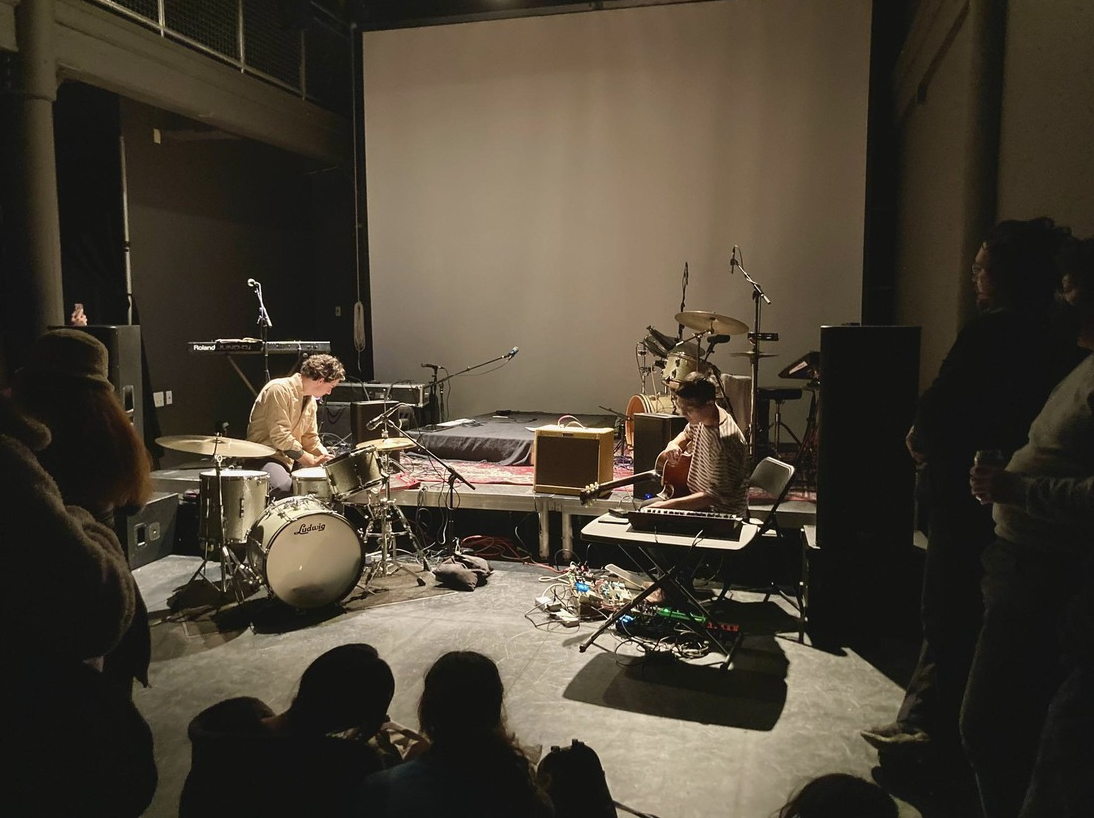
Image: Credited to the Asian Arts Initiative
Something a little different this month after missing February’s Digest deadline. In case readers/followers and those new to the site haven’t heard or seen on some of the blog’s social media platforms, I’ve been in the wars, spending a lot of time this year in hospital. Earlier this year after being ill for a while, I was diagnosed with an autoimmune kidney disease, but then was struck down, out of the blue (and totally unrelated) by a minor stroke. This has meant untold tests, appointments, and treatments, of which I’m merely just beginning to get my head around. I won’t lie, and whilst the stroke is still a mystery with no actual diagnoses as to why I had one yet, it has been a very frightening and confusing time. This will affect the site and my writing going forward, so I ask for some patience and understanding.
I’ve gathered together a number of reviews, pretty much completed before much of this happened for the new(ish) releases section. And for the archives and social playlist have decided to share videos of tracks taken from those albums enjoying various anniversaries this month (or thereabouts), from those dear artists/producers that have left our mortal realm.
___THE NEW (All those latest & upcoming releases in brief) ___
Camille Baziadoly ‘Skin On Fire EP’
(PinDrop) 6th March 2026
Somehow simultaneously intimate yet panoramic and universal, a whole emotive register of vulnerabilities emanates from the both aria-like cutting and yet also diaphanous breathed voice of the French-born, but Oxford-based, singer-songwriter Camille Baziadoly. The new EP, following on from last year’s favourably reviewed and received Fifteen album, opens with the former single and title-track, and from there, unfurls its beauty, its reverence and pained prangs of fragility across a quartet of newly written songs in the key of slowed-trip-hop-crunching-and-mechanized-winding dreampop and Gothic cinematic allurement.
Skin On Fire EP feels like a score; the soundtrack to what’s lyrically alluded to, an abstract feeling of recovery, therapeutic healing and self-care. From the very first line of declaration (“Skin is all I am”) to the loss and grief, the despondency and aches of the transfixed beatific yearned ‘Trial’ and the even more reverent, steamed and mirrored beat cranked ‘Under Water’. The former reminded me of a little of the dreamy, veiled music and voice of Celestial North, but the synths of Chromatics, whilst the latter, recalled the production of Julee Cruise and the submersible aquatic poetry and voice of Nino Gvilia and the atmospheres of This Mortal Coil. The final act, ‘Around You’, is perhaps the most tenderly if plaintive song of them all. Whether stepping outside and removed from this particular relationship, looking in from the ether and from behind the most minimalistic of backings, or lamenting someone else’s, Baziadoly fills the vapours with a real yearning.
Despite the care, gentleness and its subtleties in the use of both instrumentation and the electronic (from minimal but no less evocative piano and organ to various well-placed effects), the production has an air of gravitas and drama about it: of scale too if you like, and of ambition. Much of this is down to the highly prolific (and a constant presence on the Monolith Cocktail) Sebastian Reynolds, who in a producer’s role articulates, emphasis whilst also allowing Baziadoly’s voice to shine, resonate and breath. That production can at any time invoke the influence of Beach House, Air, and the Cocteau Twins.
It is the voice that truly makes this EP however, and its ability to soar towards the birds but also navigate the harsh realities, troubles and traumas of life, love and hurt. Baziadoly brilliantly and cerebrally emerges from the other side having shown such vulnerability and sang such heartaches of balladry to claim another transfixing success.
Márcio Cunha ‘Imaginary Soundtrack’
(Nostril Records) Released 8th January 2026
A sonic showreel collating a year’s worth of recordings made throughout the period of 2019 and 2020 – just as the world lurched fatally over the cliff edge of Covid -, the Portuguese experimental musician, composer and multidisciplinary artist Márcio Cunha’s newest release is a CV of possibilities. As a calling card and sampler of his obvious eclectic and omnivorous influences and talents, this generous thirty-six track work mines, traverse and explores a portfolio’s worth of stand-alone ideas, passages, vignettes, filmic scores, cosmic mirages and electronic motions, and comes together as one loose soundtrack.
Either submerged and muffled or clean and crystal, the overall atmosphere and sound is one of familiar Earth-bound electronica, instances of tangly and strung-out guitar and marching snares, and the buzz, fuzz and static generator force field charges of machines and the alien. For Cunha projects towards the stars, but often toward unseen, mysterious forces beyond our reaches.
Within that universe and orbit you can expect to hear techno, d ‘n’ b, kosmische, all kinds of beat-bouncing electronic, various mechanics, the more tribal, vapour waves, a roll of hand drums, liquidated electro, oscillations, the plastique, Basic Channel, Room Of Wires, Aphex Twin, Mouse On Mars, Sven Vath, Conrad Schnitzler, the industrial, music of the spheres, lunar indolent shimmies, wonky bell-ringing, the burbling, and the tubular. Some come with an added drama and celestial voiced airs, whilst others almost recall the post-punk. But there’s a general signature to be found throughout, connecting all these numerous experiments together; a sort of oeuvre with a general purpose and theme, guided or inspired by the unknown elements of the cosmos.
You’re bound to find something interesting, absorbing or able to send you off on some space adventure from this veritable CV of electronic experiments. A prolific range that will keep you invested for an hour or two.
The Early ‘I Want To Be Ready’
(Island House Recordings) 27th February 2026
Transposing a newly invested language of sonic, musical and extemporised ideas over the last five or six years together, the most recent version of an idea that was formed back in 2004, imbued by many of the Chicago undergrounds’ most enduring post-rock and post-jazz doyens (Tortoise being the most obvious glowing influence), sees guitarists and synths operator Alex Lewis and drummer and electronics manipulator Jake Nussbaum take inspiration from improvised dance.
Taking a lead from the central tenets of the choreographer, researcher and author Danielle Goldman’s 2010 published work I Want To Be Ready: Improvised Dance as a Practice of Freedom, the duo enact the book’s outlined “state of readiness for whatever’s to come”. As repeated and lifted from Goldman’s study, “A skilled improviser will be intimately familiar with her habitual ways of moving, as well as the shifting social norms that gives these movements meaning. Then, on a moment-to-moment basis, she figures out how to move.” This is a distillation of course, whittled down from years and acres of research enquiry. But as a starting point for The Early foils, this demonstratable exploration of improvisation proves a successful prompt to investigate or just let a feel lead the various forms of instrumentation towards interesting, tactile, multilayered and stirring spaces and horizons; some that melt, others that are near otherworldly or like mirages.
From the cluttering to reverberating and shuttering, the off jazzy breaks to post-rock mirages of wrangled, melting and spikier guitar entanglements and loops, meaning is transcribed via the caresses, the resonated touches, scuffs, the subtle streaks of movement up and down the nickel guitar strings, moments of melody, the drifted, the bending and various generated waves of electronica effects. Time itself falls freely in this space, the passing of it almost suspended for the duration as the duo feel their way with a kind of musical telepathy. From Tortoise-style blues to the Fourth World and the redolent explorations of Pacha Wakay, the sound of The Cosmic Range, the Zacht Autommat, of Daniel Lanois, the guitar work of Jeff Parker, Yonatan Gat, Steve Gunn and Christopher Haddow, and the pendulous near swung and thumping drumming of Werner ‘Zappi’ Deirmaier (especially on the Faust-like ‘SandClock’), there’s vague echoes of ethnic sounds and dreamt landscapes. It reminds me of a relatively obscure duo called Pidgins, and the way they stir up such familiar and yet almost unique soundscapes, horizons and atmospheres built from a stream of always evolving sources. And yet, once in the space, once together with the feelers spreading out, can magic up both dreams and the mysterious with equal skills. The non-musical and serial join together with passages of the rhythmic and melodious on an album that will unfurl its full creative expanses and oeuvre over numerous plays. A scion of the Chicago hothouse of such experiment, even if it was made in Philly, The Early pick up the baton and run with it.
MMBTUPM ‘Meditation Music Beyond The Unsleeping Psychopathic Mind’
(Hidden Harmony) 28th February 2026
Directed or merely amorphously suggested a direction by the multi-instrumentalist (mainly focused on the alto sax, the drums and synths, but I guess generally can get a sound out of anything) and prolific instigator Davin Brahja Waldman, the newly brought-together Meditation Music Beyond The Unsleeping Psychopathic Mind troupe of like-minded twisted and untethered artists/musicians invoke various apparitions, paranormal, spiritualist and new age vibrations from the Fortean transmitter on their inaugural session together.
Drawing from an ensemble that includes a triple-threat of saxophonists covering all the tones (Devin himself on alto of course, joined by Adam Kinner on tenor and Conner Bennett on soprano), another triple bill of keys, synth and vocalists (Annie Shaw, Sarah Good and Devin tour mate Nadah El Shazly), and various guitarists and drummers (Vicky Mettler and Alexei Orechin in the former camp, Daniel Gélinas and Philippe Melanson in the latter), Devin stirs up an improvised smog and hauntology of a both damaged and solace-finding bluesy psyche.
From stoking up supernatural atmospheres to charging up meditative pulsations fed through various generators, the atmosphere is heightened by a simultaneously feeling of unease and the unknown in equal measure. Redolent wafts, dried exhales and the pipe strains of jazz and such saxophone luminaries as Julius Hemphill, the Pharoah and Donny McCaslin are woven into a fabric of old RKO ghost scores, the wails, soars and apparitional otherworldly evoking vocal expressions and mewls of Matana Roberts, the synthesized calculus and data of esoteric technology, the brainwave experiments of Nehan, and the body movement mechanism rhythms of David Ornette Cherry. And even within that framework of the extemporised you’ll hear what can only be described as passages of New Orleans dockyard smog and procession, and a near child-like apparatus of ghost house toy instruments on the march.
A peculiar place and vibe are envisioned from an enviable pool of talent (Devin alone has performed with or played foil to Patti Smith, Thurston Moore, Lydia Lunch, his famous poet aunt Anne Waldman, and Malcom Mooney, but also steered his own Brahja band and been a member of Heroes Are Gang Leaders and Land of Kush) on their first outing together. A baptism of strange no wave jazz, the séance, the transcendental and paranormal cross streams in an improvised state awash and circulated by bellowed and wooden mechanised movements, bellows, roulette-like spins of bearings and the spellbound.
Phew & Danielle de Picciotto ‘Paper Masks’
(Mute) 20th February 2026
Whilst unassumingly stuck out in the hinterlands of experiment and electronica, a collaboration between Phew and Danielle de Picciotto proves an unmissable and intriguing phenomenon to experience and savour.
Phew’s own entry into this field of explorative and manipulated investigation and inquiry started with the instigation of the Osaka psychedelic-punk group Aunt Sally in 1978, which she fronted until their brief but influential burnout just a couple of years later. During the next decade Phew would work with an enviable cast of experimental doyens including Ryuchi Sakamoto, DAF’s Christo Haar, and, as if to tie in with this latest union, Danielle’s husband and foil Alex Hacke of Einstürzende Neubauten fame. Fast-forwarding to the noughties and the underground pioneer has performed live and recorded with The Raincoats’ Ana Da Silva, Jim O’Rourke and Ikue Mori and Yoshimi of the OOIOO/Boredoms/Saicobab arc of ensembles. Her solo work tends to err towards amorphous sonic sensibilities that exist both in the metallic gauze of space and in more concentrated earthly reverence.
Danielle meanwhile, is the co-founder of the Love Parade, the lead singer of the Space Cowboys, for a longtime, a stalwart member of Crime And The City Solution and member of Ministry Of Wolves. But for the last nine-years Danielle has been making some her most sublime and interesting work together with her husband Hacke under the “symbiotic” coupled Hackedepicciotto banner – standing at five albums thus far. Mixing anything from heightened snatches of beauty, romance and drama to a backdrop of the Biblical, cinematic and ominous, the Morricone, the Weimer and heavy meta, their sound and performances have proven as captivating as they are dream-like, Gothic and otherworldly.
Produced “quietly” we’re informed over the course of five years, the futuristic, alien and sci-fi contextualised, discombobulated and manipulated Paper Masks finds Danielle’s vocalised and spoken interests, stories, observations, fairy tales and inquisitive announcements transformed via Phew’s various apparatus of effects and minimalistic
Drawing on decades of experience whilst always responding to the now, both partners in this latest enterprise combine forces to create a unique space and soundscape; a cyber ecological plane of archaeology filled with the ghosts, traces, messages, and cerebral memories. Phew envelopes, wraps or places a factory of unseen mysterious alien machines and tech, acid squiggles, looming piercing arcs, code and high pitches and frequencies around, above and under Danielle’s both surreal and evocative wordage. From furry philosophers and ghosts to the tundra and fog, and the flights of whispered thoughts that are prompted by personalised memories and incidents, a transformed language of mewls, phrases, narration, song, the untethered and unshaped is now woven into a dialect both humanly distorted and droid-esque, mournful and ominous. And yet, at times, it feels or sounds like a fairy tale transposed to off-worlds and the age of technological symbiosis.
Simultaneously as haunting and mysterious as it is Intelligent and challenging, Paper Masks wears its many faces well to straddle the worlds of art, theatre, electronica, the spoken word and cyber. A signature Mute experiment and listening experience, and yet something very different and original. Let’s hope the two partners bring their talents together more often in the future.
Toshi Tsuchitori and Ryuichi Sakamoto ‘Disappointment–Hateruma’
(WEWANTSOUNDS) 27th February 2026
Whether it was building a unifying electronic music post-war future with the Yellow Magic Orchestra, building Bamboo houses of colour with David Slyvain, scoring the harrowing tragedy of war with Merry Christmas Mr. Lawrence, or winning gold at the Oscars/Grammys for his innovative soundtrack work, Ryuichi Sakamoto reworked neoclassical and electronica into a most influential new language – not totally at odds with its past, yet constantly evolving and probing at the edges of the undiscovered. But rewinding back further, to the incipient days of the early and mid 70s, whilst still a student at the Tokyo National University of Fine Arts and Music and a contributor to such influential outliers as Transonic Magazine, Sakamoto was navigating his way freely and untethered as a member of the multimedia group Gakushudan alongside future collaborative percussionist and ethnomusicologist Toshi Tsuchitori.
Crossing paths in those burgeoning days, the pair quickly worked upon their obvious musical/sonic chemistry to release a new language and interacted experience devoid of solid foundations and free of boundaries. Tsuchitori had recently returned from New York having imbued himself and embraced the philosophy of free form jazz luminary Milford Graves. For those unfamiliar with Graves natural fused approach, he drew upon Indian, African and Asian rhythms, playing with and for such icons as Sun Ra, Albert Ayler and Anthony Braxton. And if you have been following my Monolith Cocktail Social playlists over the years and months, will perhaps recognise Graves as the drummer totem alongside Arthur Doyle and Hugh Glover in the obscure but highly influential Children of the Forest trio.
Breaking from convention, the duo transmogrifies Shinto spirits and traditions and various other Japanese forms from across the centuries into a hurtled, collapsing, often racing and wild convergence of Western avant-garde forms, abstract-classical, free form jazz and the ambient. Certainly not music in any serial or familiar sense, these experiments, improvisations or whatever you wish to demarcate them are mostly devoid of rhythm and form; more expressive unyielding clashes and quietened passages of air, skying and the wind – passed through vents and metallic contraptions. Taking up a whole side, the opening ‘綾 (Aya)’ is one such climatic acceleration of drums, percussion and running, dashing and scuttling piano that recalls Graves and Billy Cobham stirring up voodoo spells, rituals and an entanglement of scrapes and rattles.
Later on, there’s what sounds like the marimba, the steel drums and more zippy prangs and hinged springs of piqued percussion. ‘a / Φ (musique differencielle 1°)’ however, sounds like something you’d expect to hear on an early Richard James album, and seems almost hypnotic: an early attempt in my mind at combining minimalist techno and mysticism. Playing with their lips and tongues at times, especially on the finale, ‘∫ / 𝔷 (musique differencielle 2°’, there’s another attempt to break away into something highly experimentally weird as, and I’m not sure who it is, puffs, shoos, exhales steam-like breaths and swats whilst the sticks roll across skins and rims, or sometimes fall imaginatively across an apparatus of world drums and percussive tools.
Released for the very first time on vinyl, this original 1976 LP (put out by the notable producer Yukio Kojima on his equally notable imprint label ALM Records) will find room with fans of Sakamoto, but also those craving something highly avant-garde and experimental, just with enough touches of African/Afro-Cuban/Asian and free form jazz drumming. Sakamoto wouldn’t dwell long on this phase of exploration, of breaking entirely from tradition and form, so get your fix whilst you can as I’m sure this highly sought-after vinyl package from the guys at WEWANTSOUNDS (one of my favourite such platforms over the last decade) will fly.
/ALBUM ANNIVERSARIES SECTION_______
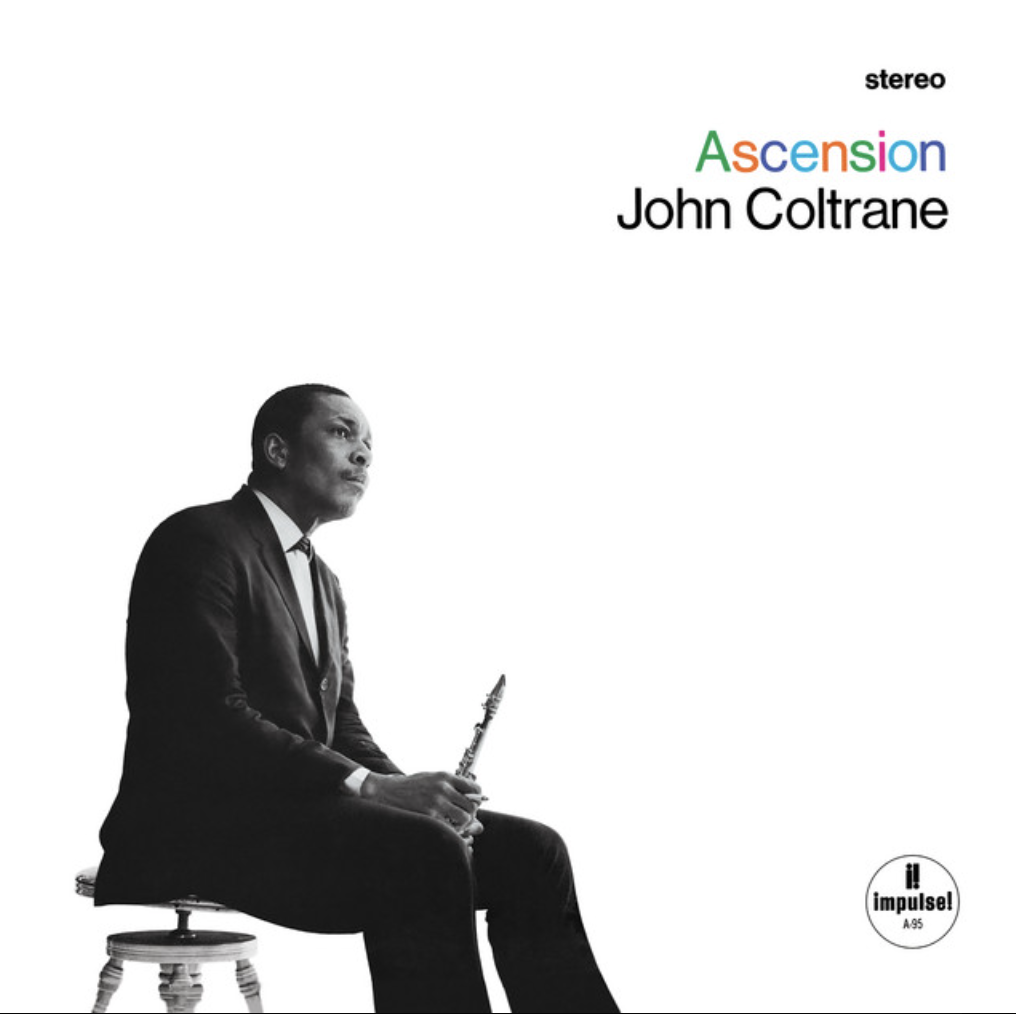
No playlist this month, but video selections tied to those albums celebrating anniversaries this month (and some from February too). Starting with demigod jazz sublime progenitor Coltrane and his 1966 LP Ascension.
Placebo meets Radiohead on the peripherals of Britpop, one of those unique bands form the period that should have been much bigger than they were: accumulating plaudits but not the sales and fame. Subcircus delivered one of the better LPs of that era with their debut Carousel.
Sparks Hello Young Lovers reaches its twentieth anniversary. The Gilbert And Sullivan of cerebral pop music takes the form to ever-new intelligent heights of absurdity and revelation. Daring to merge intellectual ideas and themes into an art form; yet never laborious, condescending or aloof, every song on this theatrical rock and pop suite features an infectious melody, satirical but heartfelt clever lyricism and the usual Noel Coward piano witticisms (updated for the modern age of course).
Time to rip it up with the screamin’ tantrum boom of The Sonics; Garage band proto-punk miscreant royalty, the band’s era defining Boom LP is unbelievably sixty years old.
One of Cope’s muthafuckers and idols, the Arthur Lee led Love dared to dream bigger with their Baroque flourishes, jangles and lamentable love requests. The tapestry songbook that is Forever Changes is also sixty years old this month.
Fast-forwarding to the 90s, and Howie B‘s influential LP, Music For Babies is thirty this month. In that Mo Wax trip hop way, here’s one of my faves, the title track:
Prince time. Parade is forty in March. And here’s my fave of all time video and track, Mountains. The man was incredible. How do you make the shakers effortlessly cool? Or running on the spot in Casanova Rose of Texas gear look cheekily sexy and sassy? Could be naff in anyone else’s hands, but works in the hands of such a singular talent. I miss the conceptual planning, the whole effort from pop stars today as AI does the heavy lifting, and most artists seem totally devoid of ideas. “Guitars and drums on the one!”
Mock 21st century terrordome meets art-punk new wave. Does anyone remember Sigue Sigie Sputnik? Well Flaunt It is forty this month, an LP perhaps ahead of its time or maybe not.
Something more cerebral and experimental now with a live version of the title cut from jazz guitarist progenitor Pat Metheny’s 1976 LP Bright Size Life. Still going strong, with recent releases, we hail back to the 70’s era of fusion-jazz.
__THE DEARLY DEPARTED/___
Pete Dello: Baroque scrolls and flourishes of yearned love, Pete Dello is best remembered as the lead singer of Honeybus during the 60s and for the hit single I Can’t Let Maggie Go. Which is enough in itself to be inducted into great hall of fame and pantheons. But growing up in my household it was Pete’s remarkable And Friends effort Into Your Ears that really resonated and led to my appreciation of his songwriting talents. Quintessentially English, forged from the worlds of Lewis Carroll and T.H. White, this cultish psychedelic Baroque folk songbook uses various characters (including the knightly earwig Harry) to imagine disarming songs of regret, the lovelorn, yearned and fantastical. If in raising a glass to Pete you explore any of his work, this is a great place to start.
John Maus: You got to feel for poor old Maus. Any other vocal pop group of the 60s era may have seen his rep fly. But unfortunately for Maus, he shared the stage with the genius baritone Scott Walker, who’s tones better suited the arrangements and the sense of scale and moodiness of sullen unrequited and dramatic love affairs. Both changed their names to better fit their newly formed Walker Brothers aggrandisement with third member and garage band royalty Gary Leeds (a former Standell no less). But whilst despite his own self-inflicted sabotages, Scott’s star rose, John’s merely fizzled out. And despite attempts to go solo after the Walkers first split in the late 60s, the trio in mosey mode donned cowboy denims and reformed in late ’74. Staying together until the dawn of the next decade before finally drifting aimlessly apart, they did manage to produce the coveted and extremely influential Nite Flights LP, which though unsuccessful in terms of sales is critically up there. In between regular jobs John knocked out the odd recording, but never returned to the heady days or success of the Walkers triumphant period in the 60s. And never really connected with his old foil Scott.
Simon Harris: Almost going unnoticed, but not to an old Britcore Hip-Hop head like me. Producer and Music of Life founder Simon Harris passed away last month. Its’ his highly influential and memorable comps from the 80s that cement the rep for me; platforming early raw tracks from the Demon Boyz, She Rockers, Derek B, Asher D & Daddy Freddy, Hijack, M.C. Duke and many others: part of the original stable of UK talent that fought back against the US wave of hip-hop, giving it a distinct UK twang and even harder edge at times. A real progenitor and leading light in the scene that deserves our full respect.
Country Joe McDonald: I couldn’t not mention counterculture figurehead Country Joe, who literally died in the last couple of days (as I write this). Obvious choice, but his famous crowd-led rendition of THE Vietnam protest song at Woodstock in ’69 – at the age of 17 he enlisted in the US Navy, stationed over in Japan. The Boomer journals will go in overdrive, so I’m not wasting time with obituaries or list of accomplishments. But suffice to say, Country Joe released a hell of a lot of quality protestations, rebellious yells, most notably with his The Fish comrades. Go seek out.
PART THREE OF THE MONOLITH COCKTAIL’S ALBUMS OF THE YEAR LISTS
Welcome to the concluding part of the Monolith Cocktail’s choice and favourite albums of the year lists (Part One and Part Two). Compiled by Dominic Valvona, Brian ‘Bordello’ Shea and Graham Domain, each entry is in alphabetical order, with this final run down starting at P and finishing at Z.
P________________
Pan Afrikan Peoples Arkestra ‘60’ (The Village)
Chosen by DV/Reviewed by DV/Link
‘Serving the South Central L.A. Black community from within for six decades (and counting), the late Horace Tapscott and his preservation Arkestra ensemble captured and reflected the social and racial injustices of that oppressed community with a righteous politically conscious and radical jazz style blueprint; a documentation, but also self-reliant stand against the state’s brutality and economic suppression.
The 60 album proves an important preservation of a self-reliant social activist institution, integral to the community in which it serves, teaches and rises up. A great encapsulation of that story, musical journey and the changes it has gone through, this will both excite the Ark’s fans and newcomers to the cause.’ DV
Nico Paulo ‘Nico Paulo’ (Forward Music Group)
Chosen by GD/Reviewed by GD/Link
‘This is a wonderful summery album of Bacharach-like melodies by the Portuguese-Canadian singer. A truly remarkable debut of ten self-composed wonderful songs that sound like standards.
Her voice is a bewitching combination of Judy Collins, Joni Mitchell and Natalie Mering (Weyes Blood). Musically it covers a wide spectrum of Tropicalia, Folk, Americana, Jazz and Pop. Her voice conveys real emotion and depth that is bounced off the beautiful melodies and lyrics.
A future classic that will undoubtedly have a far-reaching influence on stars not yet born!’ GD
Hawk Percival ‘Night Moods Vol. 1’ (Think Like A Key)
Chosen by BBS/Reviewed by BBS/Link
‘Oh my god! How I love Hawk Percival. She is like a lo-fi indie Noosha Fox (I am once again showing my age). But come on, ‘S-S-S-Single Bed’ was one of the singles of the 70s and I think that Hawk Percival shows the potential to make something equally as wonderfully magical, as this 6 track mini album shows so much pop suss and quirky originality.
It takes from the past – you can hear the timeless melodies from the 60s/70s – and twists it into something new. She plucks the spinning melodies from the air and weaves them into her own unique creation making an album of future desert island discs. I think Hawk Percival could well be one to watch.
This album is part of the DIY music series released by the excellent Think Like A Key records, and good on them for releasing this little lo-fi treasure.’ BBS
Polobi & The Gwo Ka Master ‘Abri Cyclonique’ (Real World)
Chosen by DV/Reviewed by DV/Link
‘Suffused, elevated and morphed with Parisian-based Doctor L’s jazz, electronica Francophone new waves and trip-hop, the ancestral Guadeloupe rural folk traditions of Léwòz and one of its renowned modern practitioners-deliverers Moïse Polobi is transformed into an environmental traverse. As the good doctor has proscribed so well for Les Amazon D’Afrique and the Mbongwana Stars, the roots of another form are, with subtle wondering and sophistication, given a unique sound experience.
A very personal album, this is the first to be released under Polobi’s own name. Previously the Guadalupe star has performed with his Indestawa Ka band, releasing eight albums and performing internationally. But this cyclonic whirlwind is something different, a galvanised, electrified and bolstered earthy and magical vision of his country’s past, present and future. It’s one of the most interesting albums yet in 2023, with a sound that reboots folkloric traditions in the face of an ever-encroaching modernity.’ DV
Psyche ‘Self-Titled Debut Album’ (Four Flies Records)
Chosen by GD/Reviewed by GD/Link
‘This is a brilliant album of funky Mediterranean psychedelic instrumentals that sits somewhere between Khruangbin and the Barry Gray Orchestra! Every track is a Gem! Wonderful!’ GD
R__________________
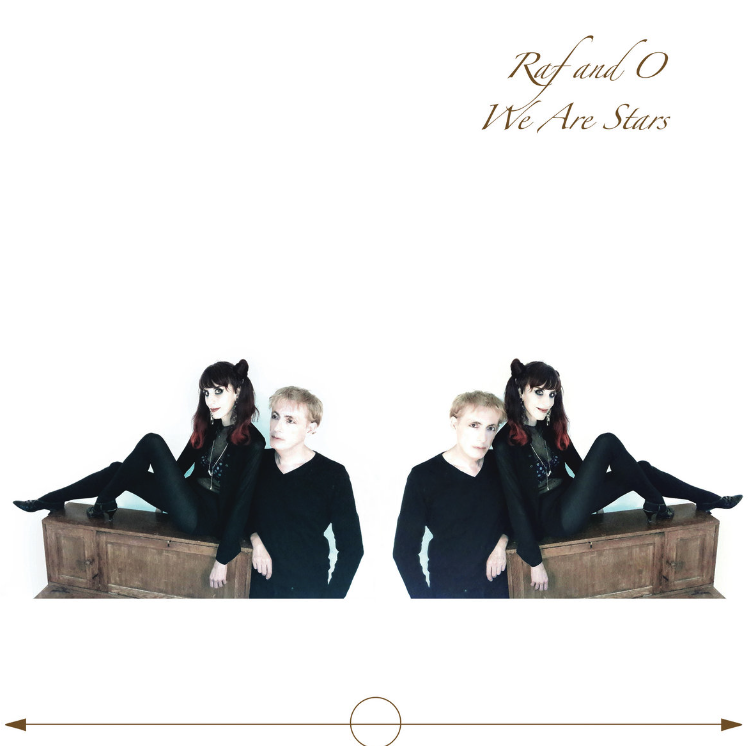
Raf And O ‘We Are Stars’ (Telephone Records)
Chosen by Dominic Valvona/Reviewed by DV/Link
‘Few artists have purposely entwined themselves so deeply with their idols than the Raf And O duo of Raf Mantelli and Richard Smith (the “O” in that creative sparked partnership). David Bowie and Kate Bush loom large, permeating near every note and vocal infliction of their idiosyncratic, theatrical, cinematic and up-close-and-personal intimate style of avant-garde pop and art school rock experimentation. Raf even has a Kate Bush tribute side project; coming the nearest I’ve yet heard of anyone to that maverick progenitor’s range-fluctuating, coquettish and empowered delivery, and her musicianship and erudite playful and adventurous songwriting.
An alternative time travelling theatre of interwoven fantasy, dream realism and the reimagined, We Are Stars is as playful with its unique style as it is only too aware of the deep held stresses, strains, pain and detachment that plagues society in the aftermath of a global pandemic, economic meltdown and war. Looking to the stars, but knowing that even escapist dreams of the cosmos have failed us, Raf And O (who I haven’t mentioned in name at all, but is an adroit craftsman of his form, accentuating, punctuating or loosely weaving a meandered musicality around Raf) take their concerns, observations and curiosities into ever more arty and intriguing directions. They remain one of the most individual acts in the UK; true inheritors of Bowie and Bush’s legacy and spirit.’ DV
Refree ‘El Espacio Entre’ (Glitterbeat Records)
Chosen by DV/Reviewed by DV/Link
‘Coming on like an Iberian vision of the Neel Murgai Ensemble and Hackedepicciotto trapped with Nacho Mendez (I’m thinking of the Ángeles y Querubines album) in an undefined, veiled timeline and atmosphere, the follow up sketchbook album of Raul Refree’s imagination is yet again a unique, “seamless”, amalgamation of reflective enquiry, soundtracks, semi-classical etudes and the visceral.
Not so much an album of performances as a quality production of fleeting descriptions, of moments captured in poignant scenery, Refree’s second such album of scores and sound pieces is an incredible, immersive mood board of magical and often plaintive thoughts, feelings, processes and films yet to be made. I’ve been sitting on this album for months and it never loses its initial pull, gut feeling, and yet I can also hear new things on every listen. Raul Refree is a great talent indeed.’ DV
Sebastian Reynolds ‘Canary’ (PinDrop)
Chosen by DV/Reviewed by DV/Link
‘After what seems like an age, and with a prolific string of projects, collaborations and EP releases behind him, Sebastian Reynolds finally unveils his debut solo album.
A near lifetime’s experience and musicology is called upon for a mostly sophisticated and subtle amalgamation of the electroacoustic, trance, EDM, electronic-chamber music, techno ambience and soundtracks on an album that draws on all of Reynolds passions and emotional threads. Self-help guidance with the neurons fired-up, the mind open, Canary counterpoints mistrust with wonderment, alarm with the rational and the optimistic. It has taken a while to arrive, but Reynolds debut expanded album of thoughts and ideas is a mature statement of quality. ‘ DV
Room Of Wires ‘Welcome To The End Game’ (Ant-Zen)
Chosen by DV/Reviewed by DV/Link
‘A buzz, whine, flex and resonating ring of zinc and alloy, of recondite machines, permeates another heavy set from the Room Of Wires duo. The latest in a strong catalogue of such dark materials and alien mystery, Welcome To The End Game ties together a complex of dystopian woes, rage and dramas into an interlayered twisting and expanding metal muscled album of electronic.
Room Of Wires navigate and balance the uncertainty with glimmers of escape, and moments of hope and release; the machinations and unseen forces that bear down upon us all at least dissipated enough to offer some light.’ DV
Seljuk Rustum ‘Cardboard Castles’ (Hive Mind)
Chosen by DV/Reviewed by DV/Link
‘Imbued by a rich history of place and time, and the trading winds that brought so many atavistic and less ancient civilizations to its natural harbor hub, Seljuk Rustum’s Kochi-base of creative activity is a city steeped in polygenesis sounds and ideas.
For the most part the musical mind of Rustum and his partners on this magical, entrancing and dreamy journey, reveals a great sonic knowledge, both a part of, yet also in some ways, escaping history.’ DV
S___________________
Salem Trials ‘What Myths Are We Living’ (Metal Postcard Records)
Chosen by DV & GD/Reviewed by Graham Domain/Link
‘Crawling along dark streets, shadows loom in every doorway, footsteps echo in the night silence. Cold sweat trickling down spine, dark rumblings from a dirty basement, shadows dancing on the barred windows. Fish bones in a mouth. Coughing up blood and the smell of urine. Decay and aftershave. Cracked voice and beer-stained floor. Each step shoes stick. Black trail like slime from a snail. A coffin landfill club of noise and danger! The night ignites with saw-like melodies and cavernous hypnotic rhythms kicking against the pricks! Smoke and dark truths bounce off the walls shaking flesh and brick, glass and bone. Inspiration as sonic affray, until the last notes flare into a howl of darkness. A murder of youth collapse through doors and out along streets. City centre lights, a loneliness of drinkers cast adrift, flowing like a cut artery in a thrombosis of social isolation. Music smashed against walls! Exciting! Unbreakable!’ GD
Ryuichi Sakamoto ‘Ongaku Zukan’ (WeWantSounds)
Chosen by GD/Reviewed by DV/Link
‘A timely, special release in the wake of the Japanese icon’s death in March of this year, the impeccable vinyl specialists WEWANTSOUNDS have reissued Sakamoto’s cult 1984 solo album Ongaku Zukan (or “Musical Encyclopedia”).
Sakamoto assails the mid 80s with his own manual, a merger of signatures and fresh horizons, but above all, rewriting the Japanese cannon whilst reaching into a future yet unwritten. There will be a lot of people very happy that this classic has been rejuvenated, whilst a new generation can hear what all the fuss is about. Not his best by any stretch of the imagination, but everything Sakamoto touched is worthy of investigation, and this feels like a bridge between periods. WWS has done us all a great favour in resurfacing this lost class piece of experimentation and groove.’ DV
Schizo Fun Addict ‘Love Your Enemies’ (Fruits Der Mer)
Chosen by BBS/Reviewed by BBS/Link
‘This album is one of the best and wormiest sounding albums I have heard in many years. It has the same magic and otherworldly but inwardly peaceful calmness about it as Pet Sounds, and there is something about Schizo Fun Addict that reminds me of the Beach Boys but without ever actually sounding like them – I will put it down to musical genius and heavenly inspiration.’ BBS
Seaming To ‘Dust Gathers’ (O Sing At Me)
Chosen by DV/Reviewed by Gillian Stone/Link
‘The structure and tracking of Dust Gatherers are utterly brilliant. Instrumental “AnOverture” introduces the juxtaposition of the electronic and symphonic elements the make up the album’s ethos. The next three tracks, “Blessing”, “Tousles”, and “Brave” are imbued with choral synths and swirling vocals. It is not until the fifth track, “Traveller”, that acoustic instruments come back into the fold, with the introduction of Seaming To’s clarinet. Clarinets then mesh beautifully with synths on “Water Flows”, followed by the instrumental synth piece “xenanmax”. The album then takes a left turn into the string-quartet-driven “Hitchhiker”, and pivots again into the Björk-style melodies and microbeats of “Look Away”. The final two songs on Dust Gatherers, which appear to be companion pieces, harken back to the golden era of jazz, finishing the record with a sense of timelessness. Piano ballad “Pleasures are Meaningless” alludes to the final track, jazz standard “Tenderly”, which is tethered down by pulsing clarinets and synth glitches. Ever present are Seaming To’s profoundly strong character vocals, which evoke goosebumps at every turn.’ GS
Silver Moth ‘Black Bay’
Chosen by GD/Reviewed by GD/Link
‘Cinematic tracks full of atmosphere and grandeur! 45 minutes of Bliss! It may become the holy grail of lost albums in future years – if it slips under the radar!’ GD
Slow Readers Club ‘Knowledge Freedom Power’ (Velveteen Records)
Chosen by GD/Reviewed by GD/Link
‘The fifth (official) album by Manchester band The Slow Readers Club comes across like a live album such is the energy captured in the recording. First track ‘Modernise’ is perhaps the most powerful, if least representative, song on the album. With its Chemical Brothers rave intro and pounding rhythm it also has the most individual sounding vocal on the album, a bit PIL like! It’s a song created to be exciting live and it serves that purpose well!
A great album of powerful anthemic songs and possibly their most consistent effort to date.’ GD
Lonnie Liston Smith ‘Cosmic Change’ (Jazz Is Dead)
Chosen by GD/Reviewed by DV/Link
‘Smooth soulful vibes, bulb-like notes and cosmic fanning rays from the great jazz-funk doyen Lonnie Liston Smith, who released his first album in 25 years in 2023. Thanks to the overseeing facilitators of the enriching Jazz Is Dead label project, Adrian Younge and Ali Shaheed Muhammad have coaxed the legendary artist, ensemble bandleader and sideman for such impressive luminaries as Miles Davis, Pharoah Sanders, Gato Barbieri and Leon Thomas, back into the studio; just one of many great names from the spiritual, conscious and funky-jazz rolls of inspiring talents.
Co-composing and collaborating with their chagrin Younge and Muhammad both work in the old magic with a sense of the new and forward; paying homage yet creating something new, performing the very kinds of influential music that had an impact on those who came later, namely the hip-hop fraternity (Jazzmatazz era Guru and the Digable Planets being just two such notable collaborators and acolytes). and of course, Liston is in supreme form as sagacious keyboard foil.’ DV
Snowcrushed ‘Snowcrush’
Chosen by BBS/Reviewed by BBS/Link
‘Snowcrushed’s A Frightened Man debut album was one of my fave albums of 2021; an album of beguiling atmospheric found sounds ambient gems. But on Snowcrush he’s gone on an alternative music journey of post-punk, Goth and Darkwave, and on occasion lo-fi folk – the excellent ‘Cowardice’ sounding like someone has taken Kurt Cobain’s tortured soul and spread it on Johnny Cash’s toast, which he ate before recording the American Recordings series of albums: A truly dark wonderful song. Although nothing else on the album quite matches up to the brilliance of ‘Cowardice’, which is no slight as not many other tracks I have heard this year matches up to it, the rest of the album is still full of unsettling dark gems.’ BBS
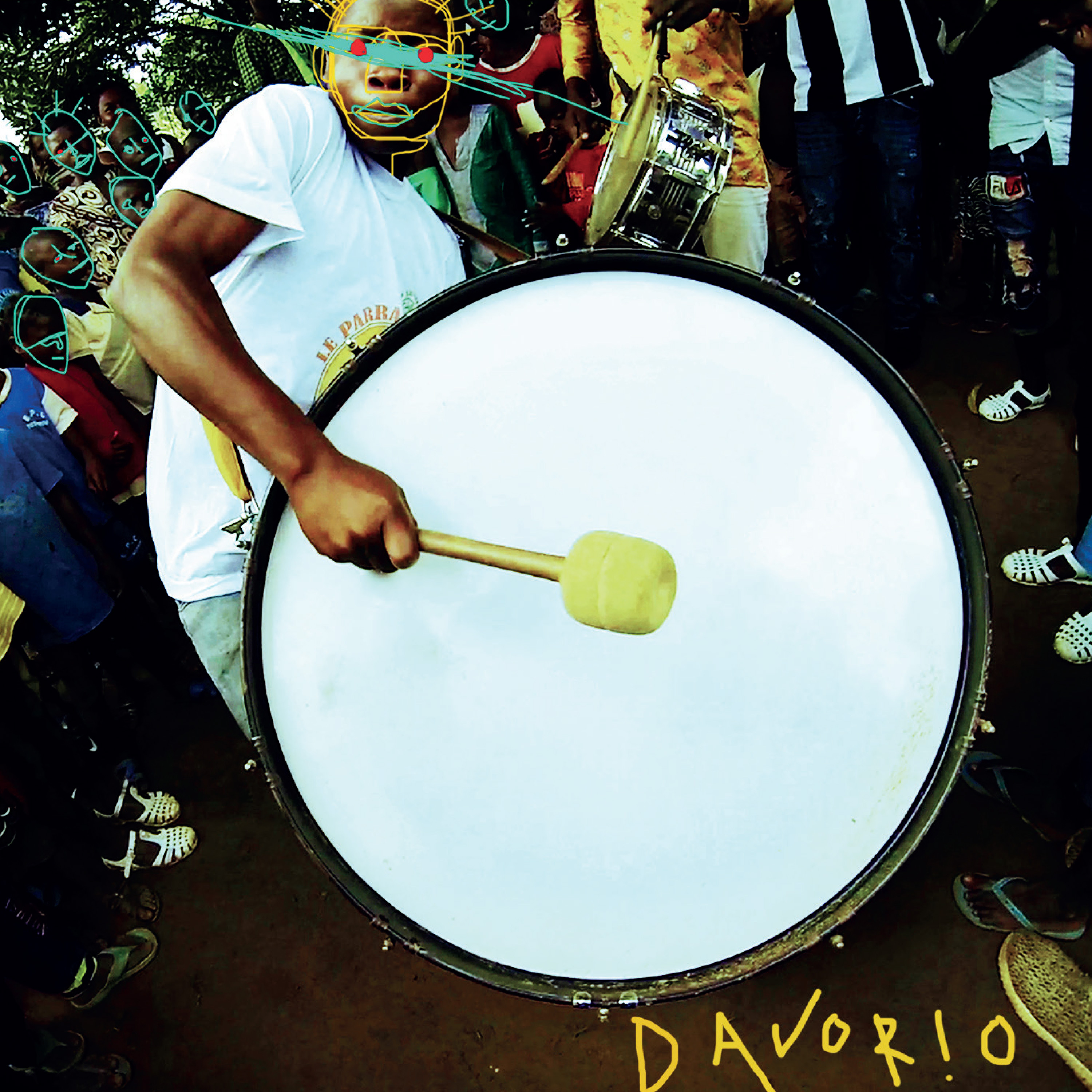
Samuele Strufaldi ‘Davorio’ (Música Mascondo)
Chosen by DV/Reviewed by DV/Link
‘Every expression has meaning, a story, which is then transformed by Strufaldi’s production into something almost dream like and cosmic yet still connected to the villagers’ roots. A transistor radio collage here, some Songhoy Blues on a bustling street with a small amp there; a display of rattled and scrapping percussion and hymnal stirrings merge with zaps, warbles and various embellishments. This cultural exchange with the Ivory Coast blurs the lines between worlds; an act of preservation, but much more, as the foundations of this culture prove intoxicating, dynamic and mesmerising.’ DV
Susanna ‘Baudelaire and Orchestra’ (Susanna Sonata Label)
Chosen by GD
T____________________

Tachycardie ‘Autonomie Menerale’ (Un-je-ne-sais-quoi)
Chosen by GD/Reviewed by GD/Link
‘This is the third album in a trilogy of ambient sound-art works by French composer Jean-Baptiste Geoffroy. Consisting of seven pieces of strange, dark, tribal, alien ambient dissonance and warm unnatural half-light!
In the first piece, ‘Parties sud puis nord’, tribal drums and hyper percussion are intermittently infiltrated by reverberating clangs and deep disturbed atmospheric noise. It is a strangely compelling listen! Although if listened to by those of a disturbed mind it may likely trigger psychosis, one-legged.
You will not find another album like this. It will penetrate your dreams bringing raptures of nightmare terror, joyous pain and nerve scraping pleasure. As the stones with eyes move closer, watching, surrounding your house, you may never ‘escape into night’ or feel at ease again!’ GD
Tele Novella ‘Poet’s Tooth’ (Kill Rock Stars)
Chosen by DV/Reviewed by DV/Link
‘A wistful, almost disarming, Tele Novella weave their magic on an album that takes its cues from Harold & Maude and a removed version of the heartbreak yearning vulnerability of Nashville and Texas country music; albeit a version in which Cate Le Bon and Aldous Harding sip despondently from a bottle of life’s despair. Better still, Mike Nesmith writing for Patsy Cline.
As whimsical and beautifully executed as it all is, Poet’s tooth is a moving album of timeless tropes, somehow delivered musically and visually through a slightly off, sometimes surreal, vision of the familiar. Natalie Ribbons and foil Jason Chronis dream up an idiosyncratic staged world, their moniker taken from the serial drama/soap opera phenomenon of the “television novel”, a format most prominently produced for the Latin American markets.
Adolescence escapism wrapped in a softened, but no less stirring, epiphany, Tele Novella has a surreal, dreamy quality about them. From the Tex-Mex border of yore to the contemporary Austin scene of City Limits, they weave a really impressive songbook that’s as Hal Ashby and Sidney Lumet as it is pining Country and Western. Poet’s Tooth is both lyrically and musically perfect; one of my favourite albums of 2023 – no idle boast. Prepare to be equally charmed and moved with a counterculture resurgence of quality, subtle comedy and tragedy, eccentric disillusion.’ DV
Tomo-Nakaguchi ‘The Long Night in Winter Light’ (Audio Bulb Records)
Chosen by GD/Reviewed by GD/Link
‘This is a beautiful album where each piece conjures-up a different vision of winter – the wonder of nature surviving and flourishing as the seasons change! As the composer himself says, the music reflects the beauty of nature – frost glistening on grass – a field of snow lit by moonlight – the night sky filled with stars! Like a ray of light, a ray of hope, this is beauty that shines through the darkest of times!’ GD
Ali Farka Touré ‘Voyageur’ (World Circuit)
Chosen by DV/Reviewed by DV/Link
‘This latest project, produced by the label’s Nick Gold who spent time with the late Ali (his brilliant accompanying notes are full of vivid anecdotes and adventures spent with the Mali icon) and his scion, the equally gifted virtuoso Vieux Farka Touré is the first album of ‘unheard’ material from the legend since his 2010 posthumously released partnership with Diabate.
Voyageur is a welcoming addition to the catalogue, an incredible nomadic traverse of songs that capture Mali’s diversity and rich musical heritage; especially with his celebrated guests opening the sound up, travelling even further afield to those bordering regions that meet Mali.
Ali Farka Touré aficionados will find this a welcome addition to the chronology, with recordings that many will have either never known about or been anticipating. But I’m sure there’s going to be surprises for even the most committed of fans. And for newcomers to Ali’s legacy, this album will prove a great entry point with its diversity and range, showing Ali with various collaborators and paying homage to several cultural styles, traditions. These songs are anything but unfinished scraps, demos, or downtime experiments. Instead, Voyageur is a collection of real quality.’ DV
Trupa Trupa ‘ttt’ (Glitterbeat Records)
Chosen by DV/Reviewed by DV/Link
‘The Polish outfit Trupa Trupa fashion their very own Faust Tapes out of an accumulation of sonic explorations, unfinished jams and rehearsal sessions, field recordings and play.
In the interval between recording new martial ttt is an almost seamless cassette offering of two experimental sound collages – coming in at just under the forty-minute mark. A development played out under the spell of psychedelic hallucination, mirage and more caustic machined distortions and abrasions, the triple “ts” experiment could be read as a really untethered avant-garde outlet for the band. Not that they’ve ever been conventional on that front with previous works melding and contorting, as they do, psych with no wave, post-punk, the industrial and indie to produce a multi-limbed psycho drama or revelation, the hypnotic and propulsive.
Trupa Trupa are in their ascendency all right, their creative collective consciousness constantly dreaming up fresh ways of hearing and articulating the wastelands of what was once called civilisation; the discourse all but filtered out for the most part on this immersive experience. They can do no wrong it seems at the moment, and must be considered one of the most important bands to emerge from Europe in the last decade. On the strength of this latest release it will be very interesting to know where they will go next.’ DV
V______________________
Various ‘New No York’ (Metal Postcard Records)
Chosen by BBS/Reviewed by BBS/Link
‘A compilation of music from Metal Postcard bands, but what all these bands have in common is Andy Goz. Yes, the guitar genius who’s in all these bands, and all the bands are of course pretty darn special.
New No York is a quite wonderful comp of post-punk invention and fury and no doubt will be soundtracking my next few weeks.’ BBS
Various ‘Parchman Prison Prayer – Some Mississippi Sunday Morning’ (Glitterbeat Records) Chosen by DV/Reviewed by DV/Link
‘Back in the state penitentiary system, the producer, author and violence prevention expert Ian Brennan finds the common ground once more with another cast of under-represented voices. Eight years on from his applauded, Grammy nominated Zomba Prison Project, Brennan, thousands of miles away from that Malawi maximum-security facility in the deep, deep South of America, surprises us with an incredible raw and “uncloyed” (one of Brennan’s best coined interpretations of his production and craft) set of performances of redemption and spiritual conversion.
There’s music, song and litany that would be recognizable to inmates from the turn of the last century, whilst others, tap right into the modern age. The Gospel’s message runs deep in the Southern realms, and encouragingly seems to motivate even those with little hope of being released. Hard times are softened by belief and redemption on a revelatory production. Returning to America after a myriad of recordings throughout the world’s past and present war zones, scenes of genocide and remote fabled communities, Brennan finds just as much trauma and the need for representation back home.’ DV
Various ‘Woman, Life, Freedom’ & ‘Intended Consequences’ (Apranik Records)
Chosen by DV/Reviewed by DV/Link /Link two
‘As the West’s attention is quite rightly invested in the ongoing Russian aggression in Ukraine, it’s fallen on artists, musicians to draw that intense scrutiny on the Iranian regime and its heinous treatment of women. Prompted by the death of Mahsa Jina Amini in the custody of the authorities last year, an ensuing battle of ideals and freedoms has ensued that threatens to topple the tyranny. However, the regime has pushed back harder and with an almost unprecedented violence started executing (mainly men so far) supporters and activists on trumped up, tortured confessional charges of treason. But even in the face of this bloody repression history is on the side of Iran’s younger more liberal generations.
In bringing that plight to Western attention and ears, Iranian artists AIDA and Nesa Azadikhah announced two volumes of not-for-profit compilations.
Both platform a multi-diverse cosmology of electronic female artists working both under endurable pains and censorship inside Iran, or self-exiled and making waves in the diaspora. Each compilation is a discovery of riches in the field of the avant-garde, techno, sound experimentation and protest. There’s been few worthier causes, and few that have been so ignored: the outrage, protests and marches here in the West sadly lacking and silent.’ DV
Violet Nox ‘Vortex And Voices’ (Somewherecold Records)
Chosen by DV/Reviewed by DV/Link
‘A sci-fi chemistry of vapours the Boston, Massachusetts electronic outfit Violet Nox once more entrance with a futuristic new age album of psy-trance, cerebral techno and acid ethereal-voiced self-realization/self-discovery. Wired into the “now” however, messages of self-love and inclusiveness waft and drift to a rhythmic, wavy vision of EDM, crossover rave music and soulful electronica.
For this newest venture – their first for the highly prolific and quality North American label Somewherecold Records – features, more than ever, the experimental, often effected, vocals of group member Noell Dorsey: a mix of hippie cooed yearn, Tracey Thorn, Claudia Brücken and Esbe if you will.
Whether it’s journeying into the subconscious or leaving for celestial rendezvous’, Violet Nox turn the vaporous into an electronic art form that’s simultaneously yearning and mysterious. Fizzing with techy sophistication and escapism, the American electronic group continue to map out a fresh sonic universe.’ DV
W_______________________
The Waeve ‘The Waeve’ (Transgressive)
Chosen by GD/Reviewed by GD/Link
‘The WAEVE are a new band formed by Blur’s Graham Coxon (vocals/sax/guitar/medieval lute) and The Pipettes’ Rose Elinor Dougall (singer/songwriter/piano/ARP 2000 Synth).
The interaction and balance between the two voices is perfect with each singer excelling in their introversion and reserve! The band do have their own sound – a strange mix of folk-rock, punk, no wave, psych and easy listening! A truly great album that deserves a wide audience! Give it a listen – you may be surprised!’ GD
The Wedding Present ’24 Songs’ (HHBTM Records)
Chosen by BBS
‘An album that collects the A and B-sides to the series of singles released last year by the mighty Wedding Present, so obviously one of the best of the year.’ BBS
Y__________________________
Dhafer Youssef ‘Street of Minarets’ (Back Beat Edition)
Chosen by GD
Z___________________________
Zohastre ‘Abracadabra’ (ZamZam)
Chosen by DV/Reviewed by DV/Link
‘Spinning and dancing around the phosphor glowing fire whilst invoking a polygenesis array of pagan, hermetic and galactic deities, the French-Italian combo cast magical spells of progressive, psychedelic, noise, primitivism, electronica and cosmic krautrock on their conjuring sonic Wurlitzer.
Reworking references from each of the duos respective countries into a dizzy and often accelerated kaleidoscope of acid-trip occult ritual and more moody, near eerie, mystical uncertainty, Héloise Thibault and Olmo Guadagnoli combine an electronic soundboard with drums as they hurtle, collide and work a frenzy around the maypole.
For those seeking to discover some lost tribe of extraterrestrial worshipping acolytes with a penchant for Zacht Automaat, Sunburned Hand Of Man and the Soft Machine then ZamZam Records have you covered with an occult and tripping invitation too good to be missed.‘ DV
Hi, my name is Dominic Valvona and I’m the Founder of the music/culture blog monolithcocktail.com For the last ten years I’ve featured and supported music, musicians and labels we love across genres from around the world that we think you’ll want to know about. No content on the site is paid for or sponsored and we only feature artists we have genuine respect for /love. If you enjoy our reviews (and we often write long, thoughtful ones), found a new artist you admire or if we have featured you or artists you represent and would like to buy us a coffee at https://ko-fi.com/monolithcocktail to say cheers for spreading the word, then that would be much appreciated.
The Perusal #47: Luzmila Carpio, Darius Jones, Carlos Niño & Friends, Sakamoto, Vumbi Dekula…
September 14, 2023
A WORLD OF DISCOVERIES REVIEWED BY DOMINIC VALVONA
(Unless stated otherwise, all releases are available now)

Luzmila Carpio ‘Inti Watana: El Retorno Del Sol’
(ZZK Records) 21st September 2023
Full of wonderment and magic, the Bolivian performer and composer Luzmila Carpio returns with her first all-encompassing album in a decade. Imbued with an ancestral heritage and language that predates the Conquistadors colonial apocalypse, Carpio weaves and plays with her Aymara and Quechua roots, its creation stories, shamanistic ceremonies and humble custodianship of nature.
With a providence that stretches back decades and a prolific catalogue of releases, the enigmatic icon has become a representative voice for the indigenous people of not only her Potosi home (a city and region in the Southern Highlands of Bolivia, dominated by its history of silver mining), but also the impressive, pristine “high plain” Altiplano region (said to be the most extensive high plateau on Earth outside of Tibet; the bulk of which is in Bolivia but straddles Peru and Chile too) and the South American continent as a whole. Speaking up and out again with an admittedly beautifully disarming voice, Carpio draws attention to various struggles and causes; lamenting with an almost Latin funeral march ‘requiem’ the self-centered quest for individualism and success at the expense of others on the spiritual-yearned, harmonium sustained and almost oriental ‘Requiem Para Un Ego’. A “critique on modern civilization”, Carpio uses a protagonist “powerbroker” figure who regrets a life of greed and avarice.
But for the most part Inti Watana: El Retorno Del Sol is a scenic enchantment of conversations with Mother Earth (or “Pachamam” as she calls her) and “Father Sun” (“Tata Inca”), that although localized projects its mystical and lilted beauty across the globe, opening doors to a wealth of rich instrumentation from Argentina, Armenia and Asia, and evocations of voices from The Steppes and beyond – reminding me in places of the Mongolian star Namgar and even a less avant-garde, hysterical Yoko Ono.
With the Argentinian producer and ZZK label stalwart Leonardo Martinelli, aka Tremor, on board there’s a further layer of more contemporary electronica and atmospheres added to the mix of Pre-Columbus rhythms. Under that alias of Tremor, Martinelli, alongside artists like Nicola Cruz and Chanche Vía Circuito, previously reworked the Bolivian icon’s music for a special ZZK collection in 2015. Back in that aura the synthesized production elements are quite subtle, but effective. Various vapours, wisps and drones help enforce a mystical, otherworldly, even mythological, experience.
Carpio’s voice is captivating, unusual, startling and majestic in equal measures; from the almost childlike “lada-dee” wonder of the Sentidor-like, softly trudging, dried shaking sticks opener ‘Kacharpayita’ to the rainforest menagerie of exotic trilled, chirped, tittered and whistled calls on the shivered bow stringed and more somber piano-backed whimsy, ‘Ofrenda De Los Pájaror’. She soothes a sort of lullaby on the reassuring toned Aymara dialect gauzy “celestial” tribune to the Earth, ‘Pachamama Desde El Cosmos’, and hums and warbles like a theremin on the floated bulb notes fluted new age Andean Shamanic ceremony, ‘Hacia La Luz’.
Altogether it evokes a whole cosmology of symbolist wildlife; of condors in majestic flight, strafing sacred atavistic mountains, and the sound of glacial waters flowing into the lush forests. In a manner, this is both a love letter to her home and a forewarning of the consequences of rapid modern encroachment upon the environment in question. Carpio invites us into her dreams and meditations with a wonderful message of universal care and respect for that which nurtures and feeds us; an unbroken link to civilizations like the Incas, propelled into the 21st century.
Darius Jones ‘fLuXkit Vancouver (i̶t̶s suite but sacred)’
(We Jazz/Northern Spy) 29th September 2023

Absorbing all the history and ethos of Vancouver’s multidisciplinary Western Front hothouse, the acclaimed alto-saxophonist, composer and bandleader Darius Jones conceptually, artfully embodies the spirit of that creative hub’s avant-garde, Fluxus/Duchampian foundations on his new album of free-jazz movements.
Commissioned by the artist run centre back in 2019, leading to a series of residences, Jones was able to spend some time with one of the institute’s octet of founders, the Vancouver visual/performance artist and Brute Sax Band instigator Eric Metcalfe, who alongside his fellow leopard spot Brutopia conceptual foil and wife Kate Craig and the artists Martin Bartlett, Mo Van Nostrand, Henry Greenshaw, Glenn Lewis, Michael Morris and Vincent Trasov created this space in 1973. If not all members of, they were at least inspired by the radical 60s and 70s Fluxus movement; a loose group of concrete poetry, mail art, installation, performance, urban planning, video and neo-dada noise music creators, the ranks of which included at any one time Terry Riley, Joseph Beuys, Yoko Ono, Nam June Paik, La Monte Young and of course its proto-founder, de facto leader, George Maciunas (who is said to have coined their moniker).
The Western Society, housed in what was originally the fraternal HQ of the Knights Of Pythias (which we shall come to later; inspiration for this album’s fourth and final suite, ‘Damon And Pythias’), also has a legacy of activism, but musical exchange programs too: hosting such notables as George Lewis and Ornate Coleman, who’s inspired art is suffused throughout Jones’ album. Picking up on those vibes, wired into a conceptual arts hive of activity on all sides, it’s unsurprising to find yet another celebrated Canadian artist bringing yet another cerebral vivid layer to the project. Film, video, photographer and installation artist Stan Douglas is a most congruous choice for providing the cover art. Although noted for his themes of class, the technical and societal aspects of mass media and failed, obsolete utopias, the Documenta stalwart once created a video installation in 1992, Hors-Champs, which included a performance of Albert Ayler’s 1965 composition ‘Spirits Rejoice’ by a quartet of American musicians who had moved to France during the free-jazz period of the 60s. By extension that musical freedom was associated with the rise of Black consciousness, but many of jazz’s bigwigs escaped the segregated, civil rights struggles and ignorance of America for Europe, and in particular France, where it was far more revered, appreciated; especially amongst the leftist, Marxist crowds.
Douglas has created an abstract image that’s neither painting nor photography for the album cover. Part of his DCT series (running since 2016), ‘Occ 6’ was created through manipulating frequencies, amplitudes and colour values at the point of a digitalization process where a photographic image is only represented by code. It looks like a kind of lightly blurred piece of op art, with nodes formed by the unique colourful electromagnetism. Where it fits in with this project of movements is purely abstract and visceral; part of a whole arts imbued theme with Jones producing the sonic renderings, paintings.
The Virginia-born and bred Jones feeds off a legacy whilst bringing an impressive CV of multi-diverse projects to the table (from trad-jazz to the avant-garde and freeform; from chamber to modern dance) and of course a Quintet of strings, bass and drum players. Merging the abstract, Jones combines the double bass of James Meger and drums of Gerald Cleaver with the dual front of violinists Jesse and Josh Zubot and cellist Peggy Lee, on an extemporized-like tumult, strain, drama and trauma of transmogrified out-there classical music, freeform jazz and wilder non-musical experimentation.
In these surroundings, at the Grand Luxe Hall, all six musicians push the proverbial envelope. Prompted by the titular “fLuXkit”, a collection of artworks and everyday objects placed in a small container or box, a whole opus of challenging expressive, consciousness imbued performances are given free flight to roam, prowl and tumble through space and time.
Inspired, as I mentioned, by the Western Front’s home, originally owned by the cultish sounding Knights Of Pythias, ‘Damon And Pythias’ references that fraternity’s foundation; namely the Greek legend of friendship, loyalty and honour in the time of Dionysius I of Syracuse in Hellenic Sicily. And yet this is a drama of Stravinsky, harangued and shrieked strings; a discombobulating distress of splayed drums, geese-like sax pecks and shrills, and factory machinery-like resonance. Art Ensemble Of Chicago meets The Modern Jazz Quartet across a whole seventeen-minutes of honked traffic, struggles and withering, this finale ends with a more tuneful, near chamber music linger of breath.
Named (I think we can softly assume) after the two violinists in this ensemble, ‘Zubot’ comes closet to the Fluxus idiom, with a highly experimental squawk, harried slot machine assemblage of La Monte Young, Joseph Bryd, Anthony Braxton and demigod, science fiction progenitor Coleman. The violins truly go all out, like Tony Conrad flitting, straining and pulling on taut strings until they cry. But the opening suite, ‘Fluxus VST 1S1’, takes all that art and runs it through noir-like suspense, hard bop, the far out, the troubled and dramatic. Jones impressive alto playing evokes Rahsaan Roland Kirk, Albert Ayler and Marion Brown, untethered and yet attentive, bird-like and even caressing and smoky. It’s one hell of a statement, with far too many individual highlights or worthy musicianship to mention (although as a former bassist myself, I will note James Meger, who here and later on, sounds like a strung-out Mingus thwacking and pulling at the bass).
However, ‘Rainbow’ has a self-declared influence of Duke Ellington’s Far East Suite. But I’d suggest a smoky incense too of 50s New York skylines: a touch of Gershwin perhaps and the Savoy label. It starts with a three-minute drum solo in the style of Billy Cobham; Gerald Cleaver working off the entire kit, firing off rolls, pumping the hi-hat pedal and tumbling a sort of tribal swing.
Jones and ensemble have created something emotionally charged and highly expressive (challenging too, in a good way) from a site and history. The home of the avant-garde in Vancouver proves fertile, fiery kindle for an impressive, raw at times, catharsis and unload of free thought and art.
Also released around the same time by one the partners in Jones conceptual album release, We Jazz have a just as impressive, free form and wild opus from the Norwegian drummer/composer Gard Nilssen to sale you. A debut in fact, Nilssen and his Supersonic Orchestra Family album is ambitious in scale and musicality; a real impressive first effort that in which Prikoviv, Ayler, Coleman, Braxton, Dolphy and Phil Ranelin mix it with Ill Considered, Binker & Moses and The Hypnotic Brass Band over an octet of extended suites. I can hardly do it justice in the brief space I’ve got left, but suffice to say, this is an incredible cacophony of every era in the jazz and classical cannon you can think of; everything from Latin to bop, the soulful, theatrical, wild and even stage. Wow. A real feat.
Carlos Niño & Friends ‘(I’m Just) Chillin’, On Fire’
(International Anthem) 15th September 2023

A slow musical movement, bathed in the new age transcendence of Alice Coltrane’s spiritual oasis, the latest album from the L.A. producer-percussionist Carlos Niño is a (mostly) disarming opus of afflatus and conscious jazz.
In a West Coast scene rich with multidisciplinary artists crossing genres and collaborating on their neighbor’s projects, Niño invites an abundance of notable friends to wash their feet in the calming waters of his organically evolving divine collage. Part jazz, part mysticism, part day spa and part fourth world music, (I’m Just) Chillin’, On Fire finds our host creating a experience that, literally, washes over the listener. A pause; a break from the vacuous all-up-your-face smartphone music that blights our lives with the artificial, you’re cordially invited to embrace something more lasting, connected and organic.
His who’s who of Californian natives and those who’ve made the State their creative home includes an actual Alice Coltrane protégé, the keyboardist, composer and actor Surya Botofasina. Niño oversaw the ashram acolyte’s 2022 devotional Everyone’s Children, and in kind, now features Botofasina on nearly half of this album’s communal peregrinations and hymnals; starting with a serenading and romantic turn on the John Coltrane love supreme, seashore scene of ‘Love Dedication (For Annelise)’ – Niño’s recurring shimmy percussion and tubular chimes adding a mystical spell of something almost transcendent and dreamy. His next appearance is alongside the Mesoamerican musical explorer Luis Pérez Ixoneztli on the lunar oasis hallucination of lush otherworldly presence and unseen machinery, ‘Am I Dreaming?’. And then, we hear him on a string of rattlesnake percussive spiritual jazz shimmers, washes and celestial balms.
Connecting both albums, the L.A. singer-songwriter Mia Doi Todd also appeared on Botofasina’s long player, and now joins that inimitable Outkast André 3000 and the German-American vocalist Cavana Lee for a Jon Hassell and Finis Africae-like vision on ‘Conversations’. It could be the Outback, the African bush; the condor hovered mountains of South America, or even, the Orient – especially with a touch of Sakamoto keys amongst the meditative bubbled healing waters.
The guest list keeps on giving, with a rather unsurprising appearance by one of the original divine stylers of experimental pulchritude and zither radiance, Laraaji. Eno, Budd and the already mentioned Hassell foil appears with the Woodstock producer and DJ Photay under the Afro-cosmic waterfall of ‘Maha Rose North 102021, Breathwork’. Laraaji’s heavenly touch gently permeates a noisy cascade of Vanney chemistry set effects, the fluted, tubular bells and plastic-paddled rhythms.
It’s a ridiculous, expansive circle of friends, far too numerous to list. But the saxophonist, Holophonor leader and Thelonious Monk Institute Of Jazz Performance alumni Josh Jackson, multi-instrumentalist songwriter, producer and player on records by such notables as Jay-Z, Lizzo and The Weekend, Nate Mercereau, and the multidisciplinary artist and drummer Jamire Williams all pop up the most across the album. Personally I found the contributions of the Maskandi/avant-garde fusion “savant” Sibusile Xaba almost otherworldly; his expressive merger of the alien and atavistic unique against the primordial water bathing and pouring’s of Jamael Dean’s piano and the kosmische, bird-like and computer game sounds of ‘Taaud’.
Deantoni Parks, who goes under the Technoself moniker, appears on the J. Dilla hip-hop-like, trinket glittered and wind chimes equinox ‘Flutestargate’, and the polymath, sometime Pan Afrikan Peoples Arkestra troupe member Maia features on the running man/woman, 2-step stumbled and softly bushed Iberian guitar new age jazz breakbeat vibe, ‘Transcendental Bounce, Run To It’. From replenishing streams, the Californian surf breaking on the shoreline to the branches of a memorable willow tree, Niño reflects, absorbs or echoes his surroundings on the soundtrack to his visionary spiritual retreat. The issues of the day do crop up of course, if in a more hushed, dwelled-on manner. But this is a lush conceptual fusion of new age jazz, much in the style of such luminaries as Alice Coltrane. A little repetitive, but beautiful all the same, this astral and more earthly opus is a singular concentration of divine intervention.
Richard Sears ‘Appear To Fade’
(Figureight Records) 29th September 2023

An efflux of muted, glassy notes blurred, muffled, and submerged by the tape-loop processes of his foil Ari Chersky, the very removed jazz and ambient serialism and modal improvisations of Richard Sears convey empirical passages of time, nostalgia, and locations. His fifth “led” album covers a transitional move from New York to Paris, and all the uncertainty, prospects it entails; including fond memories of his upbringing near the Santa Cruz coastline in Manresa, set to what sounds like a wax cylinder recorded timeless dream of crystal and brassier resonated piano and loop reversals.
With Chersky transforming an archive of live performed short pieces, through various tape methods of distortion and disintegration, the compositions on Appear To Fade are reduced in density but not value; sounding at times ghostly in an iteration of hiss, crackles and fog. Occasionally it sounds almost hallucinated, or like a mirage. And throughout, seems to take either a languid dive beneath the ocean, or float up on top, waiting to be brought back in on the tide. For obvious reasons, ‘Oceans’ makes this aquatic theme apparent, albeit with a near off-chord and tonal dissonance that strikes throughout this seabed discovery. ‘Flotsam’, as the title suggests, bobs up on top to a refracted lighted and pitter-patter like pretty tinkle of piano notes that evoke a pirouetting ballet music box. ‘Urchin’, to my ears anyway, is a sonic bedfellow to the two previous suites: a trippy splash of warping mystery below the waves.
Although channeling touches, influences of Nils Frahm, Kali Malone, Sakamoto and Johnny Greenwood (I’d add the “lower-case” minimalist Andrew Heath perhaps and Matthew David), Sears pays homage to the Estonian composer Toivo Tulev. The pianist/composer studied choral composition under his tutelage, and on his namesake track seems to warp that choral mystique and an atmosphere of the Estonian’s almost spooked ‘For My Little Sister’ piano piece into a haunting and melting suite of abstract modal jazz and semi-classicism.
Part of Sears sound is down to the soft pedal Una Corda, which makes the piano notes sound both glass-like and muted. This additional keyboard transformer is notably used on the album’s finale, ‘What I Meant To Say Was’, a deft delightful and timeless recital of jewelry box music, Novello and Bacharach.
Deteriorate rather than decay, there’s just the right amount of old tape disorientation to slow, warble, slur and sift the varied melodic piano pieces, and make them mysterious, magical or uncertain. Sepia veils play with memoary and time as those tape effects envelope and send Sears improvised touches back through a mirror. Together, a biosphere of recollection is transduced into dreamy fading fragments and traverses; art and music experiment in a curious union.
Ryuichi Sakamoto ‘Ongaku Zukan’
(WEWANTSOUNDS) 29th September 2023

A timely, special release in the wake of the Japanese icon’s death in March of this year, the impeccable vinyl specialists WEWANTSOUNDS have reissued Sakamoto’s cult 1984 solo album Ongaku Zukan (or “Musical Encyclopedia”).
In 1986 (or thereabouts) 10 Records/Virgin released a much different assembled version (with a different track list) of that album. But until now, there’s never been a faithful (as Sakamoto intended) version of that classic LP on the market. The original was released in both “regular” and “limited” editions, the former, with an extra 7” EP (which both included the ‘Replica’ and ‘Ma Mere L’ Oye’ tracks), and the latter, with a bonus 12” EP (this included another version of ‘Tibetan Dance’). WWS have remained faithful to that moiety of records, including the artwork and linear notes.
Hardly obscure despite a limited release outside of Japan, it does however remain one of the least well known, or written about – it’s one of the few album entries on Sakamoto’s Wiki page without any information or its own page. However, it marks a transitional period and an apex, as the Japanese doyen of electronic music finally brought a halt to his simultaneous work as a co-founding member of the Yellow Magic Orchestra after six years to concentrate on his solo and collaborative projects – of which there were many, from David Sylvain to Robin Scott.
In an enviable position as regards to exposure and creativity, Sakamoto had flirted with international stardom after the success of his acting role and debut score for the WWII Japanese prisoners of war movie Merry Christmas Mr. Lawrence – much of which was down to his co-star David Bowie’s portrayl of the bleached-out blond Maj. Jack “Strafer” Celliers; the Let’s Dance incarnated Bowie spending a lot of downtime with Sakamoto during the shoot, yet never, apparently, discussing the soundtrack that his co-star was shy to push even though he would have welcomed the input and help at the time.
The former jazz-inspired (namely Coltrane and Coleman) activist turn ethnomusicologist and early electronic pioneer went on to win one of each prestigious award for his soundtracks (Grammy, Oscar, Bafta and Golden Globe). It was on this high that he entered the Onkyo Haus Studio in Tokyo with around thirty basic tracks he’d made the previous year. And despite giving up the YMO, brought in his former band mates, Haruomi Hosono and Yukihiro Takahashi (who also sadly passed away this year) to help record his fourth solo outing. In addition to those foils, the lauded composer, producer, saxophonist, arranger and solo artist Yasuaki Shimizu (pushing the origami envelope with not only Sakamoto but the conceptual artist Nam June Paik and Helen Merrill), huge Japanese star, record producer and pioneer of the City Pop style, Tatsuro Yamashita, and avant-garde fusionist trumpeter (working with a host of experimental doyens like Bill Laswell and John Zorn) Toshinori Kondo offer up there skills across a fluctuating album of genres.
A “musical encyclopedia” no less, there’s a futuristic hybrid and yet sometimes retro fusion of ideas on display; the connective, permeating and overriding influence being Sakamoto’s use of the iconic digital synthesizer, sampler embedded workstation, the Fairlight CMI (an acronym of course for Computer Musical Instrument). Not the first to be seduced by this revolutionary game-changing apparatus. With its seemingly limitless capabilities at the time, Sakamoto was among its first maestros. The Australian invention was quickly snapped up by Peter Gabriel, Kate Bush, Prince, Hans Zimmer and Nick Rhodes, and more or less became one of the 80s key sounds. There’s even footage of a demonstration by Herbie Hancock that you can find on Youtube. Jan Hammer’s Miami Vice soundtrack wouldn’t sound the same without it.
By the time Sakamoto recorded this album, the Fairlight CMI was part of the fabric that powered the decade of excess. And you can hear its sequencing, its programming and sample palette on every second of this diverse musicology; starting with the first of the bookended ‘Tibetan Dance’ variants, the first version of which features keyboard activated drum-claps, repurposed percussive scrapes and ratcheting on a sort of Niles Rodgers-like production that seems to smoothly funk-up the Merry Christmas Mr. Lawrence theme. Slinking Bamboo pop with an Oriental melody, this peaceable white-funk score is extended on the second version, with additional Sign O’ The Times eara Prince acoustic guitar (very Spanish sounding), reversal effects and sleek downtime club chill-out vibes.
Moving on, ‘Etude’ suggests something classical, and in part this track evokes a tuxedo (as the cover art shows) donned host conducting a pop symphonic of Kyoto capital period pre-war Westernized Japanese officers club, or cocktail, lounge music. But merged with his Esperanto period Art Of Noise sampling experiments, and strangely, a warm soft bristled trumpeted vision of Calypso: even Ska. There are hints also to his eventual work with Robin Scott. Harpist sounds and a chuffed rhythm bring in the mysterious, cozy primordial soup shimmy ‘Paradise Lost’. Milton languishes in Polynesian waters on Taito’s Rainbow Islands to Czukay’s cuts and shunts, dialed in obscured broadcasts, cutes, vapours and a snuggled version of Coleman’s trumpet. ‘Self Portrait’ is like The Cars fused with sympathetic balladry style autobiographical reflection and Euro kitsch, and ‘Tabi No Kyokuhoku’ molds pined romantic smooching sax with Let’s Dance Bowie, electronic Shinto tubular bell ringing, City Pop and touches of the classical. ‘M.A.Y. In The Backyard’ could be a 80s thriller score; a pitter-patter notation drama of Bamboo music, Nyman, Cage, rolling marimba and Colombo! ‘Hane No Hayashide’ is a strange one; a sort of mesh of the Oriental, the misty, Herbie Hancock, art-pop and Einstein/Hawking’s cosmic science. It features the first real vocals, a singer-songwriter haze on “time”. ‘Mori No Hito’ is just as hazy, maybe foggy, and again features that transformed Shinto or ancient Japanese spiritual yin of percussive bells, played like harmonics. But ‘A Tribute To N.J.P’ feels like interloping on a personalized eulogy: heaven sent indeed. For much of that track the smoky jazz sax seems to duet with a sentimental 50s jazz style piano, but later on we hear ethereal dreams and a captured passage of a background conversation.
One of the original “extras”, ‘Ma Mere L’ Oye’ features the sort of cult Japanese childlike choir beloved by hip-hop crate diggers. It’s theater meets snuffled and raspy horns on a piece of both futurist Japan and yet also Samurai cult soundtrack. And if none of that grabs you, then I don’t know what will.
Sakamoto assails the mid 80s with his own manual, a merger of signatures and fresh horizons, but above all, rewriting the Japanese cannon whilst reaching into a future yet unwritten. There will be a lot of people very happy that this classic has been rejuvenated, whilst a new generation can hear what all the fuss is about. Not his best by any stretch of the imagination, but everything Sakamoto touched is worthy of investigation, and this feels like a bridge between periods. WWS has done us all a great favour in resurfacing this lost class piece of experimentation and groove.
Vumbi Dekula ‘Congo Guitar’
(Hive Mind Records/ Sing A Song Fighter)

Removed from a full-on band setting of loud blazed, wailed horns, thundering drums and chanted vocals Kahanga “Vumbi” Dekula’s legendary guitar shines on a new solo album of his melodious virtuoso playing.
Conceived by the Swedish producer and Wau Wau Collectif band member Karl-Jonas Winqvist, who released The Dekula Band (the group that Dekula set up in 2008) debut album Opika in 2019, the idea was to hear that expressive, resonating guitar sound with little more than a minimal accompaniment of itching and woody percussion, a Casio preset Rumba rhythm, bass melodica, the most cooing and lulling harmonic voices and glassy, tine-like standup piano. Intimate, stripped this project still amplifies a big sound that fills the space: Winqvist described it as an orchestra.
Before we delve in, a little background is needed. Dekula’s travails began at an early age, born with polio in the lush region of Kivu in the D.R.C. (a large area that includes and surrounds Lake Kivu). He grew up in a Swedish missionary home, where he picked up the guitar at an early age; quickly learning the country’s number one music export of Congolese Rumba and its quicker scion Soukous off the two styles leading luminaries: Dr. Nico and Franco being two of the most notable names in that cannon.
Believed to have entered the Congolese consciousness in the 1930s, imported from Cuba and fused with the Congo’s own traditional and folk music, Rumba took a distinctive turn. Embedded and now synonymous with this behemoth of a conflicted country, UNESCO even listed it as an “intangible” part f the D.R.C.’s culture. Another one of its chief practitioners was the iconic Verckys (anointed by James Brown no less as “Mister dynamite”), who went further than most in merging the style with a funk trunk of Pachanga, pop and soul. Incidentally, Verckys was a member (for a brief time) of Franco’s famous OK Jazz band.
Soukous, as I mentioned, is an offshoot of Rumba, faster in tempo with longer dance sequences and brighter intricate guitar. Both styles remain at the heart of Dekula’s sound, a signature of infectious joy and feeling to shuffle onto the dance floor.
Dekula’s journey continues with a move to Tanzania in the 80s, where he successfully auditioned for a lead guitarist spot in the Orchestra Maquis. This was the same period in which he “earned’ his nickname “Vumbi”, and gained a reputation for his soloing chops, drawing in the crowds. Another move, this time to Sweden in the 90s, saw him play in the Makonde Band and Ahmady Jarr’s Highlife Orchestra, before setting up his own group in 2008.
Forward into the Covid epoch and Winqvist encourages Dekula to record a solo album at the Helter Skelter studio in Stockholm, over two days during lockdown. Which unless I’d read, I’d have sworn it sounds more like the humid busy, bustled, horn-honked streets of Kinshasa than the Swedish capital; the opening dual-guitar jazzy-blues cascaded and brassy resonated ‘Afro Blues’ sounding like its been performed with a opened door onto the streets outside. A beautiful start, trails of loop-like fluid rhythmic brushed handwork express a constantly turning melody of bass-y and more higher classical African longing.
It’s followed by the sweetened daintily sprung and plucked ‘Maamajacy’, a kind of Cuban or Haitian beachcombers oceanic lullaby that features Winqvist and guest Emma Nordenstam wooing a gentle swaddled balm.
Feelings, sentiments of home (or homes even) perhaps, ‘Zanzibar, Kinshasa & Vällingby’ reminded me of South Africa and Zimbabwe musically. A warmth flows over you on this pastoral, green serenade. There’s a similar South Africa vibe on ‘Congo Yetu’, which also sounds like the outside world has been encouraged into the studio space, with an atmosphere of interaction and voices off the microphones. Another Rumba preset shimmy ‘Zuka’ is a nimble dance of near calypso, South Seas vibrations and a tine-like spindled fairground piano. This sort of lo fi, muffled piano gives the music a whole different dimension; like a merry-go-round, an end of the pier music hall sound somehow. More courtly, the lightly fanned and melodica resonating ‘Weekend’ has a slightly quicker canter and stream of higher-pitched notes.
Pulling us disarmingly into the D.R.C.’s current crisis, Dekula rightly draw attention to the continuing failure of the UN forces (the “blue helmets” as they are known) in his home state of Kivu on the self-explanatory finale, ‘UN Forces (Get Out Of The Democratic Republic Of Congo)’. Known through the French vernacular as the MONUSCO, this cross-international UN sanctioned force has done little to stabilize a critical flashpoint. Invited in since 1999 to protect a local population, many of them farmers, from an ever-widening conflict across the region and its borders, more than a 120 different armed groups, including Islamist insurgents, war over control of the land, people and rich mineral resources. The situation is bleak, with the blue helmets more or less frozen in their attempts to bring any sort of security to the province. And as the armed militias’ victims’ pile up, and protest gain momentum, have even shot some of the very people they are meant to serve and protect. Although the UN is due to withdraw next year, the government wants them to leave now as anger and resentment grows. Dekula brings out the banjo on this Rumba and blues canter, as he makes a reasonable argument against those contested protectors; neither vitriol nor plaintive, but almost shimmying to a peaceable message in the most grave of circumstances. It also kind of brings us right back to the now, and Dekula’s homeland; a nice finish and return to his roots. Congo Guitar proves a worthy and entertaining showcase of the maestro’s deft, descriptive playing; a fluid mix of Rumba, Soukous, the blues, rock-a-by-baby type soothing balms, the tropical and Afro-Cuban. Hive Mind’s inaugural partnership with Winqvist’s own Sing-A-Song-Fighter label is both a joy and discovery; the Congolese star, more or less, singlehandedly capturing the listener’s attention with a captivating septet of natural, expressive performances.
Louis Jucker & Le Nouvel Ensemble Contemporain ‘Suitcase Suite’
(Humus Records) 22nd September 2023

Packed for an open-ended travail of sonic, musical and lyrical experimentation, the Swiss singer-songwriter, producer, diy musician, event curator, music prize winner and Humus Records co-founder uses his assemblage of suitcases filled full of homemade effects and electroacoustic instrumentation to produce an almost mechanized clockwork workshop version of cerebral leftfield bluesy-indie and the new wave.
The lead singer of the “hardcore” Coilguns finds a more intimate outlet under his solo guise, and prompted by a self-enforced set of parameters, offers a more intriguing, mysterious proposition. Four years after his Nouvel Ensemble Contemporain commission, Jucker releases the results of a project guided by a number of conditions; namely that he would build all the instruments (in keeping with this artist’s methodology of tinkering and constructing such apparatus from various flea market and attic finds) himself; be present on stage to sing the songs with the rest of the orchestra; be allowed to make a record or two from it; and continue the project beyond its initial remit. And with that the Suitcase Suite (with all its various “suitcase” connotations and metaphors, but basically a means of transporting all his noise making instruments) unpacks an understated moody drama of resignation, dewy-eyed eulogies and heartache. All the while Jucker sounds like a cross between Cass McCombs, Damien Rice, Jeff Buckley, The Books and Thom Yorke straddling the singer-songwriter vernacular of indie-folk, the blues and both atmospheric vapour-set and subtle effects manipulated analogue electronics.
Wooden-like contraptions and more industrial generated motors drone away, or click, turn and ripple as Jucker either strokes harp-like instruments or artfully strike’s up the electric guitar. I mentioned in relation to the vocals Thom Yorke, but the musical environment, the sometimes-near ominous saddened mood is also near Radiohead-esque. But then, on tracks such as the 80s dry-ice stirred, sloping and constant signal beeped ‘Seasonable’, there’s a hovering flute and classical chamber tune-up of squiggles being whirled into a distressed tumult.
Caustic flapped effects; reverberations and crackles sit with subtle airs of sustained, concertinaed bellowed instrumentation on the Anne Calvi-like ‘My Windy Heart’. Those generators hum an almost darkened, haunted tone (a cross between John Carpenter and Tangerine Dream) on the increasingly wooed and cooed analogue tape undulated ‘Asylee’, and yet the voice and lyrics seem more plaintive and downbeat. There’s more of that motor-generated sound and tools working away on the album’s finale, ‘March Of The Fallen Scions’, albeit to a removed form of the American spiritual and shades of David Byrne. But personally, the downcast, near lo fi, reflective lament of loss, ‘The House We Let Them Take Away’, is a standout track; if not because it’s so different to the rest of the material. A subtle but rousing stirred contemplation on the loss of a family home that despite its state, held obvious significance and memories. We’re not really told the circumstances (foreclosure, debt, fire), but can sympathize with this gently spindled plaint. Confessionals and struggling emotions are laid out to a life support system of homemade instrumentation, the constant whirling zips and ripples of a suitcase workstation proving anything but limiting; rather inspiring a sophisticated use of the diy instead to produce a very different sort of record.
Late Aster ‘Light Rail Session EP’
(Slow & Steady Records/Bright Shiny Things) 29th September 2023

Diaphanous throughout as they merge hints, evaporations and more heralded swirling signs of a (cornet) trumpeting Don Cherry, Miles Davis and Chat Baker with synwaves and dream pop to produce what I would call vapour-jazz, the gauzy efflux San Francisco duo of Aaron Messing and Anni Hochhalter are somewhat unique.
Both classically-trained in brass instrumentation, but open-ended on their embrace of the ethereal and electronica, the blossoming Late Aster duo build upon their 2021 debut EP, True And Toxic, with a relenting but emotively-pulled quartet of previously unreleased “live” audio and visual tracks. On this voyage they extend the lineup to include the guitarist Charles Mueller and Mark Yoshizumi, who not only mastered this EP but also co-produced and co-engineered it with Mueller. They also brought in another fellow San Fran creative, the artist and photographer Deadeye Press, to film the session on hi-8 tape from a handheld video recorder – each track will be accompanied by its own visual hallucination and heat sensor trip.
Recorded in a day (the 9th of June to be specific) in the Light Rail studio of the title, the resulting traversing and wrapping, enveloping mirages are near translucent in delivery. Using an apparatus of brass (the already mentioned trumpet, but I think the French Horn too), fx pedals, drum machine/sampler, the Korg Miniloge and Moog Subharmonicon polyphonic synths, and of course a free-roaming creativity, they offer a trio of original peregrinations and one transformative vision of an old standard. The latter, ‘It Never Entered My Mind’, is a wispy, submerged and wafted vision of Rodgers & Hart’s 1940s musical plaint, covered by an assortment of stars and luminaries, from crooner Sinatra to Julie London and jazz notables like Stan Getz, Sarah Vaughan and Ella Fitzgerald. But this take seems to sail closet to Miles Davis’ Quintet recording, a solitary romantic pine of regret. Hochhalter sings a gauzy absorbed spell that’s barely there.
Songs like ‘Safety Second’ voyage towards the algorithms and arpeggiator of kinetic-pop and trance; a drifted Chet trumpet is present of course, but this feels less jazzy, more dreamy and cerebral. ‘Play It As It Lays’ sounds like the male/female duet affected ethereal sound of Hackedepiccitto in a cosmic starry embrace with Hugh Masekela, whilst ‘Ripple’ exists in a electronic-pop fog of Miles in Spain, near echoes of Mexico, Panda Bear and Colliery soul brass.
Effortlessly converging a removed version of the classical, jazz, dream pop and analogue-sounding electronica, Late Aster, in a live and filmed setting, produce moving music with a spacey, ethereal hazy feel. I love this EP, which bodes well for the duo’s inaugural album, released sometime in 2024.
Rita Braga ‘Illegal Planet’
(Comets Coming)

The stardust cowgirl, Lynchian chanteuse and idiosyncratic Portuguese siren Rita Braga is back with another disarming celluloid and kitsch songbook of alluring noir and daytime soap murder-mystery theatrics. I say disarming, because as fantastical, dreamy and exotic as it all is, there’s always a sense that something is not quite right: the plunge of a knife or drop of an axe, a creeping spine-tingling box of sounds, is never far away. A carnival of supernatural illusions and shivers permeates an often whimsical and lilting mood of warbled, wobbled lunar vibrations, Casio pre-set rhythms, shimmy and sauntering percussion, cinema organ and bobbing vibraphone and marimba.
At the heart of these off-kilter mambos, rumbas and jazzy enchantments lies a despondent feminist message, with Rita as femme fatale condoling lounge crooner and bewitching spell-caster, the star of her own Singing Detective musical, breaking the fourth wall to deliver beguiled thoughts on some very serious topics. Illegal Planet is bookended with dialogue borrowed from a film or TV show I’m not familiar with, the crux being that a mysterious “Rita” has enticed, charmed the male protagonist into her web and intrigues. The title-track features an exchange with a second male character, who more or less tries to shake his pal out of her spell, before the real Rita swoons sweet nothings from a spook-tinged cocktail lounge stage. Stereotypes are played with and owned you could say; Rita firmly in charge. Outside of that, the finale, ‘Unclassified’, with another line from that source, is a sleepy dusted, chiming outro of “thanks” and “gratitude” to the listener. But no matter how nice and whimsical, the “Please don’t forget to hit subscribe”, “one of the reasons I’m still alive”, lyrics (in my mind) can’t help but end on the all-too-real struggle of an artist in the online world: competing for validation, but more importantly attention, from the seldom found generosity of an audience increasingly used to freely streaming their favourite artists, or being blinded by the distractions of tiktok et al.
Rita has cast herself as costume-changing everywoman-like character, evoking Julee Cruise’s The Art Of Being A Girl on one role, and dreaming up fleeting exchanges with a mystical dog in a Belle Époque Paris setting in another. There’s also visits to Hawaii and the tropics (suggested by Rita’s beautifully played ukulele), out into the cosmos, the gothic and even a spot of climate change time-travelling – a hundred years to a boiling Earth, the colour scheme of burning scorched planet at least “cool” enough to pull-off a 70s retro style décor to match a bland IKEA world of decorated conformity.
We’re reminded too that “nothing comes from nowhere”; Rita pulling from out of the four winds, the ether, a bluesy kind of noirish yearning, accompanied by a smooching and aching saxophone. With no real prompts as such, maybe you can read a comment on cultural appropriation, culture recycling or just an echo that there really isn’t “anything new under the sun” so why worry about it. We all borrow. Then again it could be about the spread of information, or misinformation.
Kooky yet seductive, deep yet flighty and often fun, Rita’s masquerade of dames is a combination of Hollywood, Twin Peaks, Tim Burton, Pulp Fiction and a Renaissance Fair. But above all this is a world of its own making, a familiar sound magically screw-balled towards Rita’s worldview.
Trapped on the surface of a never-ending hell, Rita dreams up and fantasies in the glare and soft focus of the film camera. An “illegal” – with all what that word entails- alien cast adrift in a Walter Mitty world, Rita escapes the bland with eccentric élan on a finely crafted album of the imaginative and charmingly odd.
Hi, my name is Dominic Valvona and I’m the Founder of the music/culture blog monolithcocktail.com For the last ten years I’ve featured and supported music, musicians and labels we love across genres from around the world that we think you’ll want to know about. No content on the site is paid for or sponsored and we only feature artists we have genuine respect for /love. If you enjoy our reviews (and we often write long, thoughtful ones), found a new artist you admire or if we have featured you or artists you represent and would like to buy us a coffee at https://ko-fi.com/monolithcocktail to say cheers for spreading the word, then that would be much appreciated.
The April Digest 2023: Voodoo Drummer, African Head Charge, Marta Salogni and Tom Relleen, Social Playlist #75, Bowie, Sakamoto…
April 11, 2023
New Music on our radar, archive spots and now home to the Monolith Cocktail “cross-generational/cross-genre” Social Playlist
Words/Put Together By Dominic Valvona

A new thread, feed for 2023, the Digest pulls together tracks, videos and snippets of new music plus significant archival material and anniversary celebrating albums or artists -sometimes the odd obituary to those we lost on the way. From now on in the Digest will also be home to the regular Social Playlist (this month reaching its 75th edition); this is our imaginary radioshow, an eclectic playlist of anniversary celebrating albums, a smattering of recent(ish) tunes and the music I’ve loved or owned from across the decades.
April’s edition also features new music from the VOODOO DRUMMER, Peggy Seeger, Marta Salogni & Tom Relleen, Gabrielle Ornate, African Headcharge and Vukovar. And in the Archives there’s a trio of Bowie album celebrations; the 50th anniversary of Aladdin Sane, 40th of Let’s Dance and 30th of Black Tie White Noise (all released in the April of their respective years).
NEW MUSIC IN BRIEF
VOODOO DRUMMER ft. Blaine L. Reininger & Martyn Jacques ‘Aristophanes’ FROGS’
Inspired by he Ancient Greek playwright Aristophanes’ comedic play of the same title, Antiquity beckons on a new triumvirate set of movements from the Greek artist VOODOO DRUMMER and his contributing foils. On this Athenian mythological imbued single of neoclassical, the atavistic, avant-garde, theatrical and yet hopping playfulness, the drumming alter ego is joined by Stavros Parginos on cello, Blaine L. Reininger (of Tuxedomoon note) on violin and Martyn Jacques (Tiger Lillies) echoing the famous line from the play.
The microcosm style odyssey follows the liberating God Dionysus who, despairing of the state of Athens’ tragedies, travels to the underworld of Hades to bring the playwright Euripides back from the dead. And so we begin this adventure to the sounds of rattlesnake percussion, Hellenic pitter-patters, rolling drum rhythms and the plucks of 5th century BC Athens, before rowing across a splish-splashing pizzicato and majestically bowed lake (complete with a croaking frogs chorus), and a sort of Faust meets strangely quaint experimental late 60s vocal. The final movement strikes up a controlled tumult of screaming and harassed viola and “Afro-Dionysus” drums as Hades opens up and swallows whole. An inspired musical, sound experiment performance.
Peggy Seegar ‘The First Time Ever I Saw Your Face’
Of course they’ve all tried, some convincingly, others less so, but the rightly venerated doyen Peggy Seegar is the muse behind this iconic love yearn. And at the age of 87, with all the travails of age and loss, but wisdom and reflection it brings, Peggy reclaims this masterpiece for a new era. ‘The First Time Ever I Saw Your Face’ was originally written for Seeger by her then-estranged lover Ewan MacColl in early 1957. He sang it down a crackling transatlantic phone line to Peggy who had returned to the USA, unwilling to continue an affair with a married man. That was the only time he ever sang the song, but it went on to be covered by most of the greats, and become one of the great standards.
Simplistically stripped to just a piano accompaniment, Peggy’s gracefully works the magic.
Peggy says; I’ve had two life partners, one male and one female, and I have three children and 9 grandchildren. I’ve come to realise that the lyrics can be interpreted in so many ways. Ewan wrote the tune to mimic the heartbeat of someone wildly in love and I used to feel like a soaring bird when I sang this song. Now I’m grounded within it and that makes me happy.
The 2023 recording – released for the 67th anniversary of verse 2 (The first time ever I kissed your mouth…..) – arrives alongside the first segment of a new documentary about Peggy, Scenes From A Life, which details the history of the song.
Marta Salogni and Tom Relleen ‘Internal Logic II‘
A mirage; a twinkle of refractions and calling undulations; the alchemist’s stone drawing light through a filtered bendy lens. Yes, the surroundings found on the new sonic peregrination by Marta Salogni and Tom Relleen invite evocative visions, and convey ambiguous, mysterious settings, landscapes. ‘Internal Logic II’ is just one of a myriad of such electronic cartography inspired traverses from the duo’s upcoming album Music For Open Spaces (released 11th May 2023). If you don’t know the story, Relleen died from cancer just after recording this album, and so this is a posthumous tribute to the late experimental seeker, as a dreamy, deep listen showcase for his foil Salongi.
Conceived between the triangle of the reverent Joshua Tree shrine and desert, the Cornish coastline and London, award winning artist, producer and engineer Marta Salogni (Björk, Holly Herndon, Lucrecia Dalt) and the much missed musician and artist Tom Relleen (Tomaga, Oscillation) conjure alternative road trips, destinations and geography. The first track to be aired, ‘Internal Logic II’ ushers in a promising expanded work.
Gabrielle Ornate ‘Delirium’
Turning on the rawkish rock mode of St. Vincent, but in a 90s invoked musical setting of bohemia, the free-spirited Ornate is back with another full-on maximalist confident pop explosion of “delirious” empowerment. Delirium is just another strong dream spell statement from the versatile artist, who’s currently drawing attention through her Instagram account, the good old word-of-mouth and blogs like mine (although Ornate has also recently featured on the BBC Introducing platform). After a run of equally bestridden pop-rock gems, with hints of Prince and Christina Aguilera, Ornate must be contemplating that first album. I for one will be looking forward to that.
African Head Charge ‘Microdosing’
(On-U Sound)
Taking me back to the toking days of idle youth, splayed out around the Phibb’s house listening to the wafting smoking waves of reggae and dub emanating from Eric’s sound system, one of the most popular choice soundtracks to wile away those 90s hazed evenings was African Head Charge. Of course so very much more, and though generally in a languid intoxication from drugs or booze that iconic project had a lot going on, multilayered in the mix than we first appreciated: Proving highly influential in fact; that sound resonating with subsequent generations, regenerating my decade of the 90s.
After a twelve year layoff, the titans of that UK scene, On-U Sound, have announced the news of a new album entitled A Trip To Bolgatanga. That cult label’s instigator Adrian Sherwood once more joins AHC founding member Bonjo Iyabinghi Noah on another evolving, developing dubby-laden, amorphous Afro trip. Extending that partnership multi-instrumentalist Skip McDonald and fellow Tackhead co-conspirator Doug Wimbish. Drummer Perry Melius, whose involvement in the project dates back to the early 90s, adds a righteous rhythmic heft to a trio of tunes. In addition there are a number of notable fresh recruits. The horns and reeds of Paul Booth, Richard Roswell, and David Fullwood; Ras Manlenzi and Samuel Bergliter on keys; Vince Black on guitar. There’s additional percussion from Shadu Rock Adu, Mensa Aka, Akanuoe Angela, and Emmanuel Okine, strings from Ivan “Celloman” Hussey, plus the voice of the mighty Ghetto Priest. Very special guest, and one of Ghana’s foremost kologo players, King Ayisoba also provides vocals, and demonstrates his dexterity on the traditional two-stringed lute.
From that upcoming album (released July 7th) a taster of the album’s Ghanian roots odyssey, with ‘Microdosing’.
Vukovar ‘An Invisible Prison II/Eternally Yours’
And so the final death knell has been announced for Vukovar. After eight years – despite numerous wrangles and bust-ups, episodes of self-flagellation/self-destruction – the hermetic romantics of cold wave and all its musical bedfellows have signed their fate. The perron foundations are still strong however, with news of a new birth and direction (of a kind). This is a digest of course, so far too much water has flowed down the River Styx to cover in this brief feature, but I feel like a champion for this underground phenomenon – the Monolith has even played host to band members Rick and Dan and their various posts, serialisations over the last few years. And have pretty much covered near enough every release – which in that short period covers at least ten full albums, live ones too, singles and various other releases. And so I will leave you with links to the numerous reviews I’ve penned below.
Vukovar leave one last memento however: the final single, leaving present ‘An Invisible Prison II’ and a B-side of a sort, ‘Eternally Yours’. Treasure them both, as the funeral pyre burns, the alchemists of esoteric new wave are no more.
Vukovar/Michael Cash ‘Monument’
Vukovar ‘The Great Immurement’
Rick Clarke’s The Great Immurement
Rick Clarke ‘Astral Deaths & Astral Lights’
Dan Shea ‘Jukebox Lockdowns/Tribute to Simon Morris’
ARCHIVES/ANNIVERSARY
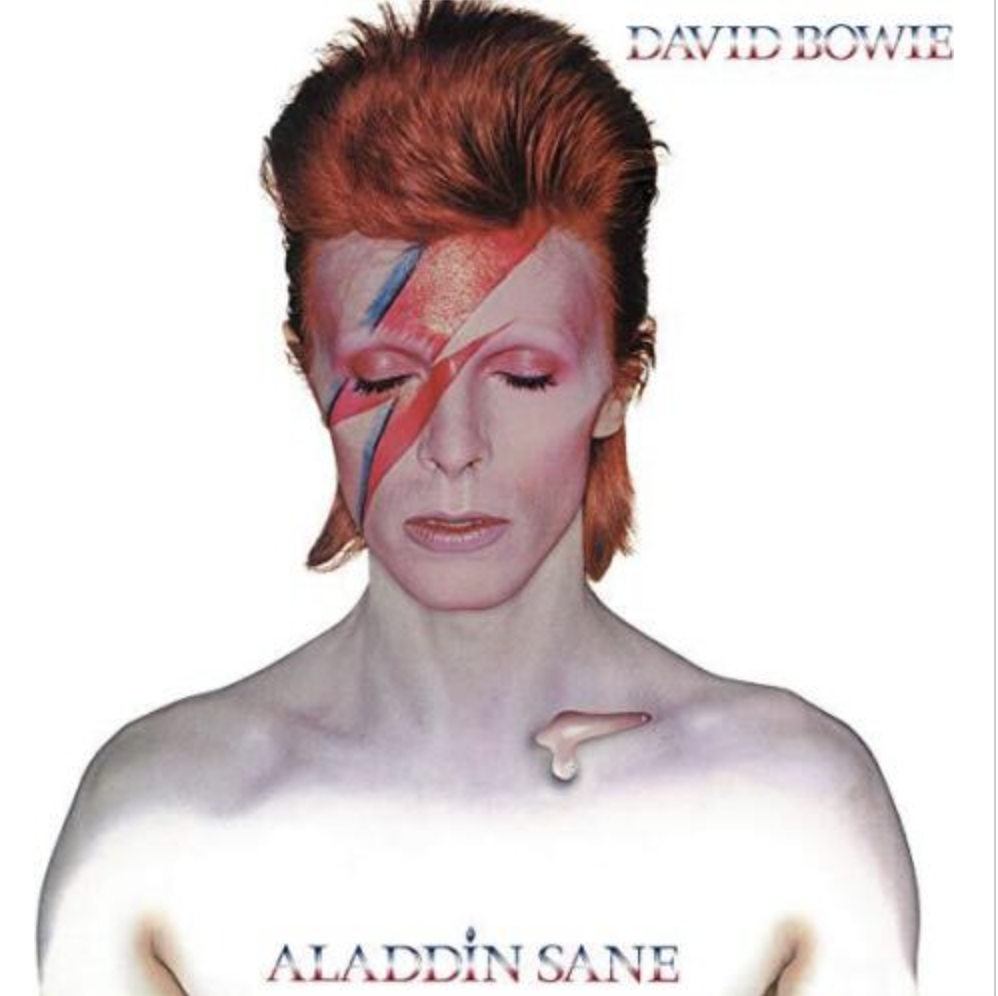
A trio of Bowie album anniversaries of one kind or another this April. The oldest of which, Aladdin Sane is unbelievably 50! Whilst Lets Dance is 40, and Black Tie White Noise is 30 this month.
Killing off Ziggy Stardust to assume the lightning anointed role of Aladdin Sane, Bowie’s split personality only partially moved on from its precursor. If Hunky Dory pretty much alluded to the USA from a distance, then Sane is living it.
From the scuzzed rock’n’roll chugging riffs to the Latin-Cuban styled piano flourishes and ‘give my regards to Broadway’, Bernstein/Brecht passing fancies (thank you Mike Garson on phenomenal pianist chops and theatrical duties), Bowie is cast adrift, absorbed in the aroma of the Americas as an unbalanced gender bending dame, trying to make sense of it all.
Fantastical, yet nostalgic in equal measure, the backlot of 50s drive-ins, Che Guevara styled revolution on the streets of Detroit and heart-crushing laments, effortlessly turn from tears to swaggered rock, with ‘Time’ hanging over proceedings as a monolithic reminder of death: the stereotype rock star death in particular, in the case of the New York Dolls‘ Billy Murcia, as immortalised in the song’s lyrics. That’s all without even mentioning the aching, plaintive malady of ‘Lady Grinning Soul‘; perhaps one of the best things Bowie had ever written to that point.
An ott full-on glamified version of the Stones‘ ‘Let’s Spend The Night Together’ signals Bowie’s intent, a precursor to his love letter to the British ‘beat group’ (1964-67) era, and the covers album Pin Ups – released later in the same year, as the final-finale death knell of Stardust and his alter egos. Glorious, one of Bowie’s greatest fantasies and never out if my top five, if occasionally making the number one spot.
Protesting his innocence, rather too strongly, the $17.5 million dollar-richer Bowie inadvertently struck commercial gold with his 15th studio album Lets Dance. The formative RCA years were replaced with an uneasy transition to EMI, whose pricey acquisition would at least boost the label’s coffers during the mid to late 80s.
Undervalued and inappropriately shafted, Bowie’s long-time collaborator Tony Visconti was dropped at the eleventh hour in favour of Chic’s Nile Rodgers.
What Rodgers brought to the table was a vibrant, polished, more swaggering sound. MTV friendly and able to rouse the masses to their feet – just listen to the infectious gilding that turned a simple backbeat and Kenny Logan-esque guitar lick into something way beyond pop on ‘Modern Love’.
Apart from a few well-meaning but dawdling numbers, this album was really a collection of potential, and in the case of ‘Cat People’, previously successful singles. A jumbled coherence of themes permeate however, as a faux-colonial, abroad in WWII backlit Singapore or Macao, mixed with sharp lemon meringue zoot suit, Bowie launched into a diatribe on domestic abuse, racism and oppression. Taking a special interest in the aborigines cause, he dedicated the eponymous title track to their struggle.
For every guarded metaphorical attack, there was a counterbalanced slide onto the dance floor – ‘Shake It’ one of the thin white duke’s less challenging but contagious soulful paeans to courtship. Presented as a ‘singers’ album, Bowie concentrated on honing his electric-blues vocal delivery, relinquishing the usual playing duties.
Despite selling six million copies and attracting a newfound audience, he resented the attention and increased pressure, especially as Let’s Dance was at odds with his original intentions. He’d blame Rodgers’ varnished production – though this never stopped them from working together again years later on Black Tie White Noise – for sending him in a commercial, but aridly dry artistic direction. However, it’s an impressive work of spritely charming and neon-glowing pop. Just the opening global hot-steeping trilogy of ‘Modern Love’, ‘China Girl’ and ‘Let’s Dance’ would be enough to justify Bowie’s tumultuous decade alone.
Bowie the glowing groom was above the trivial of platitude wedding vowels and practicing special moves for the couple’s signature last dance. For his marriage to Iman Abdulmajid, he composed a typically nuanced musical suite in lovesick tribute.
Part of this ceremonial accompaniment (the opening moiety of ‘The Wedding’ and bookended ‘The Wedding Song’) was integrated, in to what would be, his heralded solo comeback LP, Black Tie White Noise.
Meant as a representation of two entwined cultures, the vaguely eastern romantic saxophone and western backbeat were used as a leitmotif: seeping into a fair share of the album’s twelve tracks. Tied-in with a return to a city that had dominated his songbook with themes of isolation and drug addiction (from Young Americans to Lodger), L.A, would settle for Bowie’s take on the race issues of the day. Jetting in as the whole Rodney King episode sparked off an apocalyptic raging inferno, Bowie both scared and exhilarated, breathed in the toxic air for inspiration.
Eager to refrain from sounding too glib, he wrote the album’s title track as a counterbalance to the grinning, smug optimism found on the “United Colours of Benetton” billboards. Angling his wit at the ethnocentric MOR, Bowie himself liberally drops in slogans and motifs from Marvin Gaye, faux-reggae and New Jack Swing, as he duets with one of the scenes passing stars, Al B Sure!
Mixing it up in the ‘ghetto’, Bowie once again ropes in Niles Rodgers to add some funky gristle and sheen to the jazzy, soulful template. He also took notes from Miles Davis’s late 80s/early 90s adoption of street sounds and be bop; bringing in the revered former Art Ensemble of Chicago’s trumpet player, Lester Bowie, to blow the sort of signature-plaintive squeals and trapped bumble bee solos commonly found in Davis’s repertoire.
The influence works both ways of course, but the omnipresent Scott Walker has always forced Bowie to…well, improve himself. Not so much a competition – Bowie would never quite reach the stripped avant-garde morose of his American rival – the two artists nevertheless spur each other on. Paying back a favour, Bowie covers Walker’s 1978, traversing grown-up, ‘Nite Flights’ (attributed to The Walker Brothers, their last album together as a reformed trio), aping but doing it justice. Whether intentionally imbued by the Walker spirit, the original intended Tin Machine song, ‘You’ve Been Around’ (written with Reeves Gabrels) sounds even more like one of his than Nite Flights.
Former glorious foil, Mick Ronson is heard on the placid, smooth, cover of Cream’s ‘I Feel Free’ (instigated as a result of Ronson’s work on Morrissey’s Your Aresnal) and illusionary rich, autobiographical ‘Jump They Say’: the first time Bowie addresses his half-brother Terry’s suicide in the 80s, by equating his own metaphorical artistic leap.
The odd ‘pop-lite’ tune, Caribbean warbling karaoke ditty (‘Don’t Let Me Down & Down’) and garish, over-egged, rendition of Morrissey’s ‘I Know It’s Going To Happen Someday’ threw spanners into the works, yet Black Tie White Noise pointed towards a wider Bowie renaissance, as it triggered an impending tenure of solid, experimental releases.
Tracks and a few cover version surprises await on the Social Playlist below:
The Social Playlist #75
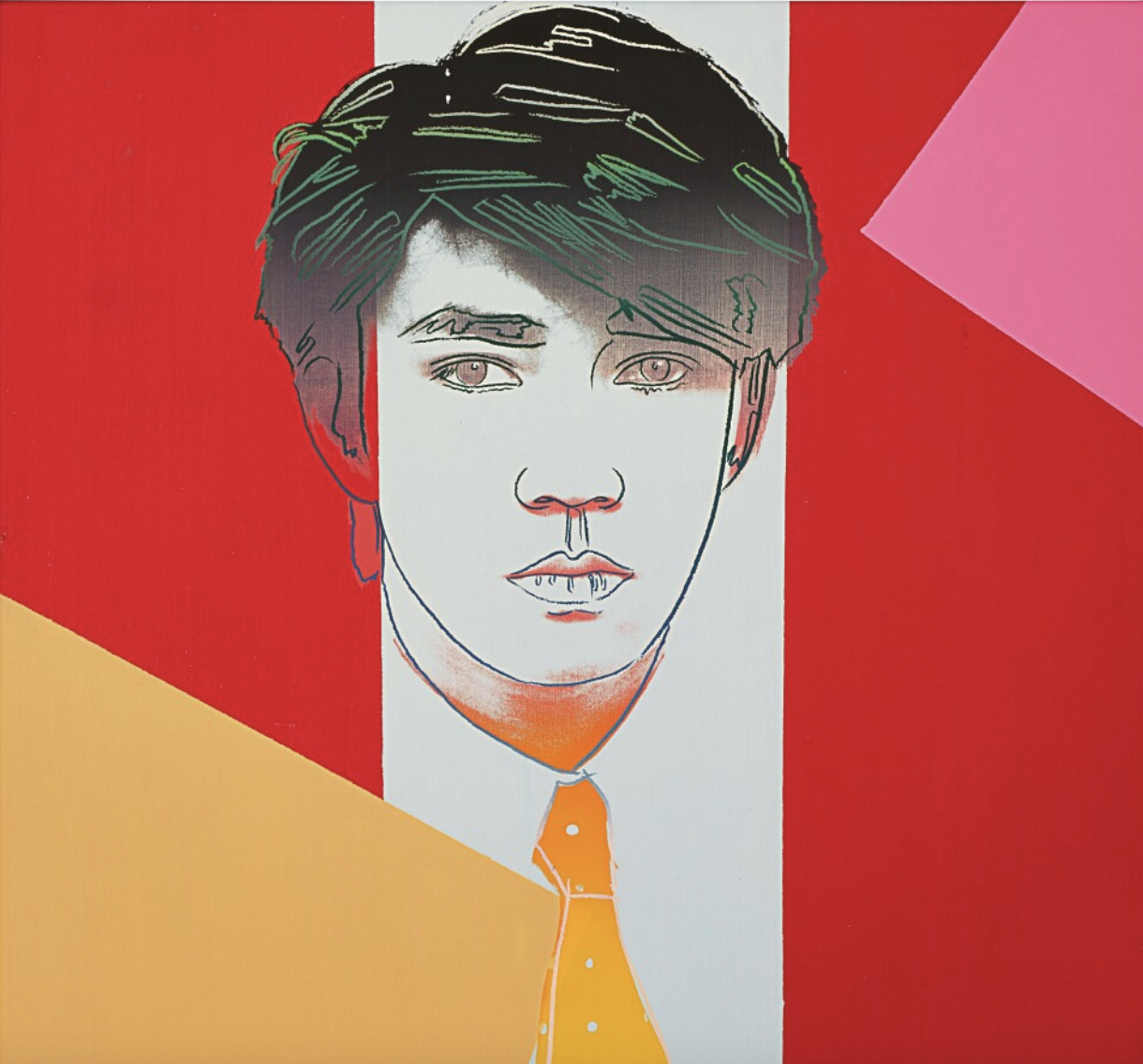
Anniversary Albums And Deaths Marked Alongside An Eclectic Mix Of Cross-Generational Music, Newish Tunes And A Few Surprises.
Just give me two hours of your precious time to expose you to some of the most magical, incredible, eclectic, and freakish music that’s somehow been missed, or not even picked up on the radar. For the Social is my uninterrupted radio show flow of carefully curated music; marking anniversary albums and, sadly, deaths, but also sharing my own favourite discoveries over the decades and a number of new(ish) tracks missed or left out of the blog’s Monthly playlists.
Volume 75 of this long-running playlist series pays a humble, but sizeable, elegy to the recently departed Japanese genius Sakamoto. Whether it was building a unifying electronic music post-war future with the Yellow Magic Orchestra, building Bamboo houses of colour with David Slyvain, scoring the harrowing tragedy of war with Merry Christmas Mr. Lawrence, or winning gold at the Oscars/Grammys for his innovative soundtrack work, the iconic composer reworked neoclassical and electronica into a most influential new language – not totally at odds with its past, yet constantly evolving and probing at the edges of the undiscovered. With over 50 albums, probably a lot more to pick from, I’ve purely chosen personal favourites from a mere smattering of his cannon.
As I mentioned in my Bowie archive spot, and part of this month’s anniversary celebrating albums selections, there’s a healthy dose of original versions and covers from Aladdin Sane, Let’s Dance and Black Tie White Noise. Joining the thinned white duke in the anniversaries are R.E.M. (Murmer is 40 this month), the Freestyle Fellowship (Intercity Griot‘s 30th) and the Yeah Yeah Yeahs (Fever To Tell‘s 20th).
Recent editions to Spotify include Don Cherry and foil Jean Schwarz paying homage to the deity Ornette Coleman on the ’77 Live special Roundtrip, ‘Cat Nip‘ from Levoit‘s Sharav album, and butt end of 2022 tracks from Raw Poetics and Elizabeth M. Drummond. Plus a real catch of choice music from across the ages and genres by New Young Pony Club, Sunny & The Sunliners, Oswald D’Andrea, Fred Pallem, Sweet Tee, Shira Small and others.
THAT TRACK LIST IN FULL________
Octopus ‘Panic In Detroit’
David Bowie ‘Shake It’
New Young Pony Club ‘Hiding On The Staircase’
Ryuichi Sakamoto ‘Just About Enough’
Pralo Ormi e la sua Orchestra ‘Black Pipe’
Ryuichi Sakamoto ‘The Garden Of Poppies’
Leslie Winer ‘John Says’
HEC ‘The Prettiest Star’
R.E.M. ‘West Of The Fields’
Yeah Yeah Yeahs ‘Black Tongue’
Alejandro Bravo ‘Naranjita’
Lulu ‘Watch That Man’
Sunny & The Sunliners ‘I Can Remember’
Oswald D’Andrea ‘Bambou Jump’
Harold McKinney ‘Freedom Jazz Dance’
Freestyle Fellowship ‘Heavyweights’
Ryuichi Sakamoto ‘ADELIC PENGUINS’
Elizabeth M. Drummond ‘Congratulations’
Metro ‘Criminal World’
Terry Riley & John Cale ‘Church Of Anthrax’
Leviot ‘Catnip’
Don Cherry & Jean Schwarz ‘Tribute To Ornette (Live)’
Fred Pellam & Le Sacre du Tympan ‘Stratageme 34’
Ryuichi Sakamoto ‘ISLAND OF WOODS’
David Bowie ‘Miracle Goodbye’
Sweet Tee ‘On The Smooth Tip’
Raw Poetic & Damu The Fudgemunk ‘A Mile In My Head’
Joe Mensah ‘Happy Beat’
Shira Small ‘Lights Gleam Lowly’
David Bowie ‘Nite Flights’
Ryuichi Sakamoto & David Slyvian ‘Heartbeat’
Cheval Sombre ‘Time Waits For No One’
Ryuichi Sakamoto ‘Before The War’
Shukar Collective ‘Calling Tagomago’
Ryuichi Sakamoto ‘riot in Lagos’
 Monolith Cocktail Blog