The Perusal #57: Hannah Mohan, Black Diamond, Society Of The Silver Cross, Passepartout Duo & Inoyama Land…
July 3, 2024
A WORLD OF SONIC/MUSICAL DISCOVERIES REVIEWED BY DOMINIC VALVONA
(Unless stated otherwise, all releases are available now)

Photo credit: George Rae Teensma
Hannah Mohan ‘Time Is A Walnut’
(Egghunt Records) 12th July 2024
Geographically settling long enough to pen this solo songbook offering, but anything but settled emotionally, the former And The Kids vocalist-songwriter Hannah Mohan attempts to process the break-up of all break-ups.
After leaving home at the age of sixteen, restless and curious, Mohan spent her formative years on the road, crisscrossing North America, busking and honing a creative craft. On returning home, after five years of travel and travail, Mohan formed And The Kids with a school friend. After a trio of albums between 2014 and 2019, and with the global pandemic’s nefarious effects on the music industry and wellbeing, the band unfortunately came to an end. Throw in the heartache, the confusing cross-signals of a fateful relationship, and you’ve suddenly accumulated a whole sorry mess of emotional pain and a lot of questions that need addressing or analyses.
Luckily Mohan is a highly talented musician and songwriter, able to turn sorrow and reflection into gold. For Time Is A Walnut is a rich album full of familiarity and yet melodically and lyrically idiosyncratic, shaped as it is to Mohan’s particular cadence, timbre and way-with-words.
Less moping and more a full gamut of hurt, weariness, despondency, incriminations and plaint, Mohan travels full circle on her break-up journey: from shock to vented indignation, from losing one self in the moment to escaping from reality. All the feelings of resentment, the pulling apart of a fragile soul, and decoupling sound surprisingly melodious and disarmingly anthemic throughout: even during the bitterest exchanges and grievances.
Hand-in-hand with producer and musician Alex Toth (of Rubblebucket and Tōth fame), working away with little sleep in Mohan’s basement, the resulting thematic songbook is filled with great alt-pop songs; some with a country lent, others suddenly mystified and misty with an air of atmospheric Celtic vibes, or, channeling 80s new wave German synth music – Toth, I assume, almost in DAF mode on the darker-lit, hurting ‘Peace Be The Day’.
Almost breezy in parts, there’s tunes galore as Mohan evokes the Cowboy Junkies, Angel Olsen, Tanya Donelly, Madder Rose, Sophie Janna (especially on the vapour-piped Ireland illusion ‘Runaway’) and Feist. But you can also throw in a touch of dry-ice 80s synth-pop and a touch of Bacharach on the whistle-y saddened beauty that is ‘Upside Down’.
In sympathy and often softly lifting, there’s a fair use of trumpet on the album. Less jazzy – although saying that, there’s vague suggestions of Chet Baker – and more Southern, nee Mexican serenade and atmosphere, that instrument’s suffused and occasional enervated brassy blazes is a perfect fit with Mohan’s candid, sanguine delivery.
A congruous choice of guest, working in a similar mode, songwriter-musician Lady Lamb features on the 60s troubadour echoed, vibrato-trilled sing-a-long anthem ‘Hell’. The details and the unforeseen circumstances, the ‘messy eroticism’ and loss, disconnection from someone else’s life are all lay bare in a melodious beauty.
Hannah Mohan rides the roller coaster of a drawn-out break-up with quirkiness and vulnerability, turning tortuous heartache into one of the best and most rewarding songbooks of the year. Mohan may have let her soul sing out, as she comes to accept an emotional turbulent period of stresses and anxieties and pain. But whether she’s finally pulled through the other side or not is up to you the listener.
Black Diamond ‘Furniture Of The Mind Rearranging’
(We Jazz)
Transported back in time, and then propelled forward into the now via Chicago’s musical legacy, its rich heritage of innovators and scope in the world of jazz, Artie Black and Hunter Diamond’s dual saxophone and woodwind focused vehicle can trace a line from the Windy City’s smokestack bluesy outlines of the 50s through the icons Sun Ra, Roscoe Mitchell, Eddie Johnson, Lester Bowie, Art Ensemble Of Chicago, Anthony Braxton and the hothouse of undeniable influence and talent, the Association For The Advancement Of Creative Musicians.
Across an ambitious double-album spread of both quartet and duo mode formations, those Black Diamonds don’t so much shine as smolder and fizzle to a smoky and simmering resonance and metropolis backdrop encroached by wild jungles and fertile growth.
The majority of this moiety evolution is handed over to the quartet ensemble, with Artie and Hunter joined by the softened taut but flexing and always on the move double-bassist Matt Ulery and the constant cymbal splashing and rolling, fills and tight woody rattling drum breaking drummer Neil Hemphill. That set both swells and finds pause to a certain lowness and more weighted pull of the freeform and melodic, the rhythmic.
Saxophones sound willowy as they either entwine, take turns on the climb, exhale drawn-out mizzles or drizzles; all the while the action recalls every formative era from the 1920s onwards, from the blues to the African, the spiritual, bop and the serenaded. All those cats mentioned in the opening paragraph pop up alongside the Pharoah, Ornette, Evan Parker (I’m thinking of the woodwind elements, which both Hunter and Artie switch between throughout), Mingus and on the opener, ‘Carrying The Stick’, Lalo Schfrin of all people.
From concrete to near pastoral dustings, a menagerie of bird-like brass and woodwind sings and stretches, often letting the steam out of those valves with a bristle and rasp. The drum and bass combo keep it all moving forward, developing, with Ulery’s slackened bass even opening a couple of tracks.
In a more stripped-down and even more experimental mode, Side D (in old money vinyl terms) of the album is given over to the duo format of sax and woodwind.
Leaning towards Braxton, John Zorn and Andy Haas in near-non-musical freedom of expression, they probe new, amorphous spaces without clear signage or reference to environments or moods. The saxophone often sounds reedier, more rasping, and is enveloped with the very sound of its brassy metallic resonance and surface makeup. Every exhaled breath is used to conjure up the mysterious, the onset of some unease, but also a pauses for certain moments of reflection.
Perhaps a mizmar played at dusk, an ominous peace or a meditative haze, these experiments, forms of tonal, timberical evocation are difficult to describe or catalogue. Only that they fit in with the freedoms, the expressions and language of the Chicago school of freeform inventiveness and exploration, deconstruction of an instrument.
Black Diamond run with the ‘stick’ or baton passed on by the Chicago hothouse of jazz notables and luminaries, proving themselves to be a quality, dynamic act ready to push forward. Rearranging the cerebral and musicality furniture as never sounded both so classy and explorative.
Damian Dalla Torre ‘I Can Feel My Dreams’
(Squama Recordings) 12th July 2024
Subtle in approach and process, the cross-fertilization of South American and European cultures, prompts and environments on Damian Dalla Torre’s second album, I Can Feel My Dreams, is a tangible synthesis of abstract feels, moods and an exchange of musical ideas.
Nodes, points in a larger dream-realism canvas reference the Leipzig-based multi-instrumentalist, composer and producer’s footprints across both continents.
Sparked by a residency to teach, write and practice his craft in the Chilean capital of Santiago, Torre absorbed all that city and its surroundings had to offer: the vistas, colours and art. With a certain amorphous guaze that magical landscape of rainforest canopy enveloped menageries, flowing waters, Andean fluted heights and valleys, and exotic lushness is merged effortlessly with complimentary vocal harmonies and assonant arias, dewy and caressed extended dainty picked harp, quivers of guitar, trembles of piano and spells of electronica. The realms of jazz, sparse techno, ambience, voice experiment, nature, futurism, sound art and the new age seamlessly yield and relent.
The haul of notable guests invited to play on the album is staggering, and in no way distracts from the main leitmotifs and direction of drifted, wispy travel. Instead, each guest enhances with a certain gracefulness and calm each musical expedition and piece of mood music. Unsurprisingly given Leipzig’s musical history and legacy (home to an enviable catalogue of classical music giants over the centuries; perhaps one of the biggest most impressive concentrations in that genre’s history of iconic composers and musicians), but also its more modern burgeoning jazz and electronic music scenes, there is a host of musicians and artists from or based in the German city taking part on the album; cue the blossoming ‘genre traversal’ Jan Soutschek, ensemble singer and soprano soloist Viola Blanche, guitarist and composer Bertram Burkert and jazz improviser, pianist and composer Jonas Timm. Add to that the Austrian-Ethiopian harpist Miriam Adefris, the Danish composer and arranger Christian Balvig, pianist Felix Römer and the range and influences probe even further and deeper. Altogether, from the replenishing waters of renewal to the generator and manipulated electronics of modernity, all these contributions prove beneficially harmonious and complete.
This is a biomorphic world in which echoes of Eno, Alice Coltrane, Talk Talk, Oh No Noh, and Lara Alarcon all coalesce and dream. The architect, Torre, manages to keep everything constantly green and lush; showcasing a flair for pulling together a myriad of sources to create something almost familiar by new.
Society Of The Silver Cross ‘Festival Of Invocations’
(8668 Records)
Stepping from the shadows after abstaining from the material world for the last five years, the matrimonial partnership of Joe Reinke and Karyn Gold-Reinke return with a second rebirth, regeneration of Indian, Byzantium, Egyptian and Gothic imbued pathos and bathos.
Harnessing the themes of fate, the eventual and unavoidable specter of death and its harbingers, its demons, and even its angels, the Seattle couple walks the path of hermetic cults, atavistic Indian spiritualism and magik to induce cosmic awakenings and transformations. With all of mortality’s connotations and meanings, death is also seen as a renewable force on this couple’s second album under the occultist Society Of The Silver Cross heading.
But there’s no escaping the atmospheric dread and the curiosity of deathly rituals invoked by the Indian-style drones, harmonium-pumped sustains and concertinaed bellows – part ‘Venus In Furs’ Velvets, part Alan Edgar Poe shipwreck hauntology shanty, and part courtly mysticism. And yet Karyn’s siren-esque duets with boa Joe can lift towards the light at times, escaping the Fortean broadcasting waves, the splashed crashed tumultuous sea-like cymbals and gongs, Book of the Dead mantras and distressed Andy Haas-like geese pecked sax (if it is indeed even a saxophone) hauntings.
But for a majority of the time the couple’s counterbalancing act of apparitional, bewitching and more baritone, from the bowels of the deep and human soul, vocals muster spiritualist visitations, a theatre of sorrow, past incarnations and an unbreakable multi-levelled circle of added magic both heavy and foreboding.
I was picking up spells of Death In June, Nick Cave’s duet with Kyle, Mick Harvey’s time with P.J. and Amanda Acevedo, Backworld, David Lynch, Dead Can Dance, Current 93 and Angels of Light. The folksy Gothic-art-music-shanty-motioned ‘When You Know’ (with my imagination) sees Serge Gainsbourg laying flowers on Jim Morrison’s alter in the Cimeti ére du Père-Lachaise. The mystical finale, ‘Rajasthan’, not only features those synonymous Indian tones but also has an air of the Spanish-Baroque guitar and a touch of The Limiñanas about it. Shrouded in rousing tribal dramatics and ether visions, the couple’s lasting nod to the land in which they spent much time absorbing the cultural-musical spiritualist vibes before making their debut singles and album (Verse 1), is steeped in the mists of time; invoking India’s largest state before eventual unification, and its history of early Vedic and Indus civilizations. “Rajasthan” is a portmanteau of words, but can be translated as the “Land of the kings”; its courtly, royal verbose and stately reputation echoes as the final word on this album of rebirth and the coming to terms with death. Making true on their previous chapter, Joe and Karyn once more follow the call of the silver cross-societal allure. Atmospheres, processions and possession that are more than just songs, you don’t so much liberally catch, or, casually listen to each propound and chant-like forewarning as enter a fully constructed world of elementals and alchemist mystique. These are drones, dirges and more opened-up astral projections that will stay with you days after first hearing them. A Festival Of Invocations is a chthonian play of supernatural, spiritualist and funeral parlor riches; a successful follow-up after a five year hiatus.
Droneroom ‘As Long As The Sun’
(Somewherecold Records) 19th July 2024
Amorphous Western sun-cooked melting mirage panoramas are stoked and drawn from the Droneroom’s long form guitar peregrinations. The sixth (I believe) alt-country drone-cowboy album from Blake Edward Conley’s singular experiment for the Somewherecold label, As Long As The Sun is a filmic soundtrack-like conjuncture of Paris, Texas, Blood Meridian and a myriad of supernatural and alien visions of the ‘big country’.
The Western sounds of the twang, rattle and bends is unmistakable, and the sounds we’ve taken for granted, like the freight train convey that hurtles down the tracks and with it’s velocity and size shakes the passing dinging and ringing rail barrier junction, but Conley’s familiar markers, references make them near hallucinogenic under the sun’s powerful debilitating rays. I can imagine Ry Coder fronting Ash Ra Tempel, or early Popol Vuh relocated to the arid planes of outlier Texas, or a mule-riding Don Quixote tilting at the shadows of cacti.
A contemplation of all life’s spiritual quandaries and fate no less, all elicited from the magnified and amplified reverberations, quivers, strokes, gestures, brushes and more driven rhythmic passages of the guitar. Fuzzed-up with flange and sustain, these descriptive lines, resonated waves and vibrations are like drawn-out echoes of Michael Rother, Gunn-Truscinski, Jason Pierce (in his Spaceman 3 days) and Yonatan Gat. On the searing, razored and heated coil moody ‘Last Train To Soda Spring’ (the small Idaho city which gets its name from the 100s of carbonated water springs that dot the landscape) there’s a build-up of layering and rhythms that breaches the hazy space rock barriers – Hawkwind crosses fully into Motorhead. Whilst the shamanic marooned, railroad vision, ‘East Facing Window’ has a kind of krautrock generator field around it that hums and pulsates, invoking both alien and paranormal activity – I’m thinking a little of Roedelius’s experimentation on Sky Records.
As Long As The Sun beats down upon Conley’s cowboy hatted noodle, its gravitas, life force and heat inspiring serious abstract empirical vistas, atmospheres and the soundtrack to a movie yet to be made.
Luke Elliott ‘Every Somewhere’
(AKP Recordings) 12th July 2024
Composing a more inclusive biosphere and exchange of cultures, influences and sounds, the Amsterdam-based, Leeds born, sound artist Luke Elliott transforms his source material of field recordings (from what could be acts of making in a workshop to tramples through the undergrowth of Moat Farm in Somerset and the windy tubular sea organ of Zadar in Croatia) into a fully working lunar off-world vision.
A new world no less, Every Somewhere’s vague, recognizable, or by happenstance, playful tastes of gamelan and Southeast Asia, early analogue modulations and patterns, tape music experiments and sonic land art (that already mentioned Zadar organ, which was built as a large scale land art instrument to bring some sort of random melodious colour to the Dalmatian coastal town’s monotonous concrete wall scape, rebuilt with haste after the devastations of WWII) are sampled then re-sampled, fed through effects and an apparatus to build a more sympathetic, attentive environment.
At least influenced in part by a fascination with Alfred W. Crosby’s ‘Colombian Exchange’ theory, as outlined in his 1972 propound book, which gave a now fashionable name to the legacy of colonialism and the destructive and loaded exchanges between the Western hemisphere and the then ‘New World’, Elliott’s imaginative world is more nurtured towards a beneficial exchange of cultures.
In a liminal zone between the earthly, otherworldly, near cosmic, dreamy and liquid, the kinetic, algorithmic, arpeggiator and magnetic atoms and transparent notes bobble and squiggle about over atmospheric ambience and to the rounded rhythms of paddled tubular obscured instruments. And then, once the guitar is introduced to tracks like the glassy delicate ‘Objects Of Virtue’, the mood changes towards a bluesy post-rock vibe.
Magical escapes, stargazing from the observatory, solar winds, near operatic cloudscaping and various gleams, glints and globules recall Goo Ages’s Open Zone album, Tomat, Raymond Scott, Edgar Froese and Zemertz.
Elliott’s debut for the astute AKP Recordings label maps tactile environments both intriguing and melodically mindful. It paves the way for new visions of a more equal future.
Passepartout Duo & Inoyama Land ‘Radio Yugawara’
(Tonal Union) 26th July 2024
The freely geographical traversing Passepartout Duo find congruous partners with collaborative foils Inoyama Land – those fine purveyors of Japanese Kankyō Ongaku, or environmental ambient new age music – on their latest balance of the tactile, organic and synthesized.
A free association of cultures and musical processes, despite laying down loose perimeters, the Italian/US duo of Nicoletta Favari and Christopher Salvito combine explorative forces with the Japanese musical partnership of Yasushi Yamashita and Makoto Inoue for a remarkable interaction with their surroundings, a mix of children’s instruments and percussive and wind apparatus.
Favari and Salvito have already appeared on the Monolith Cocktail, with reviews of both the Chinese art platform-backed Vis-à-Vis and Daylighting albums. Those experiments in the timbrical, rhythmic and melodic, imbued by the Meili Mountains, Lijiang and fabled imaging’s of Shangri-La, were created during and in-between the restrictions of the Covid pandemic. A year before news broke of that global crisis the duo travelled to Japan. Connecting with the Inoyama Band, a duo that had transformed the abstract feelings, magnetism, sublime transcendence and peace of the landscape since the 1980s, they were invited in to their host’s shared space sanctum – an auditorium inside Inoue’s family-run kindergarten in Yugawasa that doubles-up on Sundays as a studio.
Set out on tables for all participants, a myriad of playful and more studied instruments and a set of “game rules”. The quartet could only use the mix of electronic and acoustic instruments separately or altogether for ‘revolving duets’, with each taking turns to play through a cycle of ‘four duos’. But then ‘anything’ was permitted in that session, which lasted three hours. In this complete state, that long improvisation and set of prompts has been distilled into eleven more digestible parts. Within the sonic, contextual and languid peaceable realms of the Kankyō Ongaku genre and greater scope of Japanese acoustic-electronic music, there’s an air of Satoshi Ashikawa, Yasuaki Shimizu, Yoshio Ojima and Tomo-Nakaguchi about this album. You could add hints of Slow Attack Ensemble, Eno, the Hidden Notes label and Bagaski to a subtle layering environment that takes in all points of the compass, with chimed bulb-like notes and the ringing, searing and chimed bamboo music of Java, Tibet, Vietnam and the dreamy.
The recognizable sound of soft-mallet patterned and paddled glockenspiel and xylophone merge fluidly with hand bells, higher-pitch whistled recorders, concertinaed wafted melodica and harmonicas, and racks of wind chimes. Whilst atmospheric elements and the use of electronic devices create mysterious vapours, oscillated wisps, knocked rhythms and floppy disc sampled voices.
Gazing at diaphanous beamed and lit cloud formations from a comfortable snug in the landscape, or, submerged below Mexican waters inhabited by the strange aquatic Axolotl salamander, each part of this performance is somehow similar and yet variably different. Between the illusionary, dreamy, sonorous, see-through and swimmingly, two sets of adroit partnerships create organic meta and a sublime near-nothingness of slow musical peacefulness and environmental absorbed transience.
Myles Cochran ‘You Are Here’
(9Ball Records) 26th July 2024
Unhurried and once more placable, the all-round embracing American composer, songwriter, multi-instrumentalist and producer Myles Cochran follows up his 2021 debut album (Unsung) with another carefully spun canvas of subtle emotive pulls, TV and filmic-like soundtrack scores, ruminations and mirages.
Traversing an amorphous palette of Americana, the blues, classical, folk, experimental, Baroque and traditional, Cochran integrates his Kentucky roots with spells in New York City and the UK (where he’s lived for some time) whilst letting his unprompted imagination travel to more exotic climes and cerebral dreamscapes.
Although an adroit player of many instruments, Cochran’s work is mostly led, directed, informed and suffused by both the acoustic and electric guitar. Understated but keen and expressive, his choice of guitar is once again left to stir up visions of a celluloid panoramic and more mystifying melting Western America, the Appalachians, Ozarks and home. Only this time around he’s also invited in the accomplished cellist Michelle Packman and bassist Reggie Jones to add a transported subtle semblance of chamber music, period drama and jazz. Jones, playing a stand-up (or upright) bass throughout, emphasizes rhythm, a pace and sense of travel – especially so on the shaky rhythmic travelogue ‘Making Something Out Of Nothing’, which, by its title, indicates a conjuring of a composition, performance out of just playing or fiddling around, but evokes (for me) the imagined title sequences of some wintery Northern American drama, out on the road with the harsh, snowy landscape passing by the window of our protagonist’s truck. Meanwhile, the following countrified-meets-the-pastoral-and-renaissance crafted ‘Signs And Symbols’ has an air of Fran & Flora about it with the sounds of a breathy and fiddle-like cello.
Widening the vistas, the quiet inner battles of turmoil and conflict, sympathetic bowing and pining cello enhances the mood and subtle expressions of Cochran’s compositional style, which both ebbs and flows between the echoes of Chuck Johnson, Ry Cooder, Bill Frisell, John Fahey, Martin Renbourn and Jeff Bird.
There’s a pick up in the pace with dusty brushed drums, but for the most part it’s a quivery horizon gaze of sophisticated slow to mid-tempo observations and introspection. None more so then on the mature vocalized jazzy-bluesy and dusty ‘The Deepest Sea’, which sounds like Hugo Race or Chris Eckman in questioning Leonard Cohen mode backed by Chris Rea.
A culmination of travels, thoughts, hopes and fears, You Are Here further expands Cochran’s musicianship and influence. Those Americana roots are being pushed further into new pastures, helped by his cellist and bassist foils and freshly attuned ear. Eroded, waned, giving and dreamily melting in the heat, his guitar parts overlap and transmute into piano, strings and the ambient. Each track is like a short score, the qualities of which offer sensibilities and a way of following or telling a story, a moment in time or scene. In all: a very sensitive work of maturity and unrushed reflection.
___/+ THESE RECOMMENDATIONS IN BRIEF
Any regular readers will know that I pride myself in writing more in depth purview-style reviews with a wider context. This means I naturally take more time and effort. Unfortunately this also means that I can only ever scratch the surface of the 4000+ releases both the blog and I get sent each month. As a compromise of sorts, I’ve chosen to now include a really briefly written roundup of releases, all of which really do deserve far more space and context. But these are recommendations, a little extra to check out of you are in the mood or inclined to discover more.
Pocket Dimension ‘S-T’
(Cruel Nature Records)
Exploratory voyages into the kosmische and sci-fi, straight from the illustrated pages of Stewart Cowley’s Spacecraft 2000 – 2100 AD, the Lanarkshire-based artist Charlie Butler doesn’t so much launch as fire the languid thrusters into the mesmerizing, enticing and dream like voids of a soundtracked cosmos. On many levels, through four continuous stages, the drifted and wonder of space is balanced with fizzled raspy electronica and eventual IDM, siren wailing bends, shoots, and a rotating centrifugal force that seems to envelope the whole trip in both mystery and the presence of unknown forces hovering in the galactic ether.
Various ‘TRÁNSITOS SÓNICOS – Música electrónica y para cinta de compositores peruanos (1964-1984)’ (Buh Records)
Filling in the blanks in the story of South America’s experimental and avant-garde scenes, Buh Records throws the spotlight on Peru and a host of experimental boffins working to cross indigenous sounds with the new and yet to be discovered.
Off-world, futuristic, UFOs, tape manipulation, the shrills of something magnetic, steely industrial tools, reel to reel melting, mind bending and rattling old atavistic bones, assonant female voices, and shamen augers, this compilation includes examples from the likes of Arturo Ruiz del Pozo, Luis David Aguilar, and Corina Bartra; a wealth of cult composers struggling to explore new sonic boundaries in a country devoid of the apparatus, foresight and laboratory conditions. And so most of the atmospheric – sometimes heading towards chilling alien – and transmogrified Peruvian environmental peregrinations were recorded in private studios. The story and scope needs way more room than this piffy, glib little piece. Suffice to say, I highly recommend it.
Rehman Memmedli ‘Azerbaijan Guitara Vol. 2’
(Bongo Joe)
The history and travails of the fecund oil rich country of Azerbaijan are atavistic. This is a nation that has striven to gain independence from a string of empires: both Tsarist and Soviet Russia, Iran, Albania, and much further back, the great Mongol Khan Timur. Desired not only for its abundance in fossil fuels but for its geographical corridor to its fellow Transcaucasia neighbours of Georgia and Armenia in the west, to the south, Iran, in the north, Russia, and to the west, the vast inland lake, the Caspian Sea. And although at various times at war with its direct neighbour Armenia (recent flare ups have led to a startup in violence, and accusations of ethnic removal), the country’s close proximity to a mix of cross-cultural and geographical influences has led to an absorption of all kinds of musical styles.
Bongo Joe‘s second volume of ‘guitara’ music showcases is fronted by another Azerbaijan legend, Rehman Memmedli (the first volume was handed over to the equally iconic Rüstəm Quliyev), who first learnt the accordion and harmonica before picking up a relative’s guitar – but also the region’s synonymous traditional tar instrument too (an ornate curvy looking waisted long-necked lute). Suitably eclectic in styles, from belly dancing Turkey and Arabia to shimmy Bessarabia and local wedding music, Memmedli scores and scorches up and down the fretboard at speed. Spindling, bending, skirting and wobbling, and even sounding at times like an erratic stylophone, vistas and ruminating sonnets are conjured up from a nibble-fingered maverick: Persia, the Caucasus, and beyond are summoned forth from electrified scuzz and fuzz and drama.
Cumsleg Borenail ‘Fragile And Adaptive’
Video – Taken from the new album Time Is A pˈætɚn Of Shifting d͡ʒiˈɑːmətɹiz
Proving incredibly impossible to pin down, whilst impossible to fully keep a track of, such is the prolific output, the artist formerly known as Cumsleg Borenail has released a host of albums, EPs over just the last few months alone.
The latest, and discombobulating entitled, Time Is A pˈætɚn Of Shifting d͡ʒiˈɑːmətɹiz,will officially go live a week or so after this column. As a teaser, Borenail has fucked around with AI to produce this strange, biomorphic, tumorous metamorphous of metallic clay dancers, bound together in some super fucked up hallucinatory creepy body assimilation style video. I will admit that I fucking hate AI – ‘artificially inflated’ as someone has already quipped – so it is lost on me – for those who want the tech, ‘all models’ were ‘created in blender, then whapped into ADOBE to AI generate backgrounds and randomly alter model edges.’ But musically we are talking about whippy body music that channels Detroit mechanic funk techno and the sound of grooving over broken glass. Derrick May, Suburban Knight, Ron Trent in the mechanics of the surreal and industrial. As artificial as it all is, there’s a certain soul in this machine. I look forward to hearing the rest of the album later in the month.
Neon Kittens ‘In The Year Of The Dragon (You Were A Snake)’
(Metal Postcard Records)
System of downer sinewy post-punk, like the Pop Group falling on top of PiL, the latest video output from the ridiculously prolific Neon Kittens is another semi-metal-guitar-string buzz and grind of gnashing venom and risk. The vocals sound like a toss off and up of honey trap glossed fake AI and taking no crap no wave female provocateur in the mode of Michi Hirota, unimpressed by the snake-like actions of a former lover; the action, like a lost grated down stroke of Fripp(ery) from the Scary Monsters And Super Creeps LP.
Keep an eye out next week for Brian ‘Bordello’ Shea’s review of the band’s EP.
Dyr Faser ‘Crime Fever’
(Self-release)
Boston, Massachusetts duo of Eric Boomhower and Amelia May previously skirted the krautrock dreaminess of Amon Duul II on their hermetic, drowsy Karmic Revenge. They seem to change their sound, if only subtly, on each new album, and Crime Fever’s haunted, scuzzed playfulness leans more towards Lou Reed this time around – but only if he’d jammed with Dinosaur Jnr. Jefferson Airplane and Ty Segall.
Still, they maintain a buzzy, fuzzy, and even Byrds-like loose dusting of the psychedelic and a backbeat throughout, with those ether-giddy vocals tones of May invoking Blonde Redhead, Beach House, and of course a little of a slacker rock, shoegaze vision of Renate Knaup-Krötenschwanz.
Needs far more attention than I have the capacity to manage but have a read of my piece on their KR album from a while back to get enthused.
Hi, my name is Dominic Valvona and I’m the Founder of the music/culture blog monolithcocktail.com For the last ten years I’ve featured and supported music, musicians and labels we love across genres from around the world that we think you’ll want to know about. No content on the site is paid for or sponsored and we only feature artists we have genuine respect for /love. If you enjoy our reviews (and we often write long, thoughtful ones), found a new artist you admire or if we have featured you or artists you represent and would like to buy us a coffee at https://ko-fi.com/monolithcocktail to say cheers for spreading the word, then that would be much appreciated.
Monthly Playlist Revue: March 2024
March 28, 2024
ALL THE CHOICE MUSIC FROM THE LAST MONTH

From the discombobulated and sublime to the sound of AI in the death throes of a nervous breakdown, all tastes are covered, all borders breached on the Monthly Revue: Our chance to compile the best representation of the last month’s choice music, with tracks from both reviews and those we didn’t get time to feature but piqued our interest. Those picks come from myself, Dominic Valvona, plus Matt Oliver, Brian ‘Bordello’ Shea and Graham Domain.
Without further ado, here’s the link and full track list:::
Augusto Martelli & The Real McCoy ‘Calories’
Avalanche Kaito ‘Tanvusse’
Amateur Cult ‘Eyes’
Ill Considered ‘Linus With The Sick Burn’
Rosie Tee ‘Night Creature’
Circe ‘Blue Love’
Diamanda Galas ‘A Soul That’s Been Abused (Live)’
Madison McFerrin ‘God Herself (Tune-Yards Remix)’
Laetitia Sadier ‘Une Autre Attente’
Mark Trecka ‘New Dreaming Gestures’
Curling ‘Hi-Elixir’
NAH ‘People Lie And Suck’
Blu & Shafiq Husayn Ft. MED/THurz/YaH-Ra ‘We Bang’
Pastense & Uncommon Nasa ‘The Ills’
Cookin Soul/The Musalini/Tha God Fahim ’92 Olympics’
Ethnic Heritage Ensemble ‘Hang Tuff’
Mark E Moon ‘Daylight’
Renelle 893 & Bay29 ‘Art Thief’
Leaf Dog ‘Till I’m Clocking Out’
Dave Harrington/Max Jaffe/Patrick Shiroishi ‘Dance Of The White Shadow And Golden Kite’
Twin Coast ‘to feel (Donkey Basketball Remix)’
Cumsleg Borenil ‘exis-ANENCE-sixe, Exis Constraint’
Colin Johnco ‘L’air qui danse’
Lou Lyne & The Blue Almond Project ‘Saudade Tactia’
Luce Mawdsley ‘Latex Feather’
Charlie Risso ‘Good Track’
NCD Instigators ‘Shark Attack’
Felix Machtelinclx ‘Buwigabuwi’
Sinerider ‘Glowing’
Jonah Parzen-Johnson ‘What They Love’
Arushi Jain ‘You Are Irresistible’
Leonidas & Hobbes ‘Space Raga’
Regulat Henry (Moses Rockwell & Plain Old Mike) Ft. Dezmatic ‘Pedal Boat’
Homeboy Sandman ‘Do It Right’
Jynx716 & Che Noir ‘Second Impression’
Omniscence Ft. Toz Torcha ‘Stage Presence’
Mega Ran & Jermiside ‘Drop’
ZA! & Perrate ‘Steve Kahn’
Christian Wittman ‘Birth And Death Of An Unknown Star’
Andrew Heath & Mi Cosa de Resistance ‘Until We Meet Again’
Society Of The Silver Cross ‘Wife of the Sea – Temple Hymns Vol 1’
group O ‘ThickO/not thee brightest spark in ur Fukushima plant (37.3920666, 141.0749483)’
Alison Cotton ‘Crepuscule’
Tickling Our Fancy 077: BaBa ZuLa, Junkboy, Jodie Lowther, House Of Tapes, Society Of The Silver Cross, Taichmania, Trupa Trupa….
August 8, 2019
REVIEWS
Words: Dominic Valvona
Photo: (of BaBa ZuLa) Emir Sıvacı
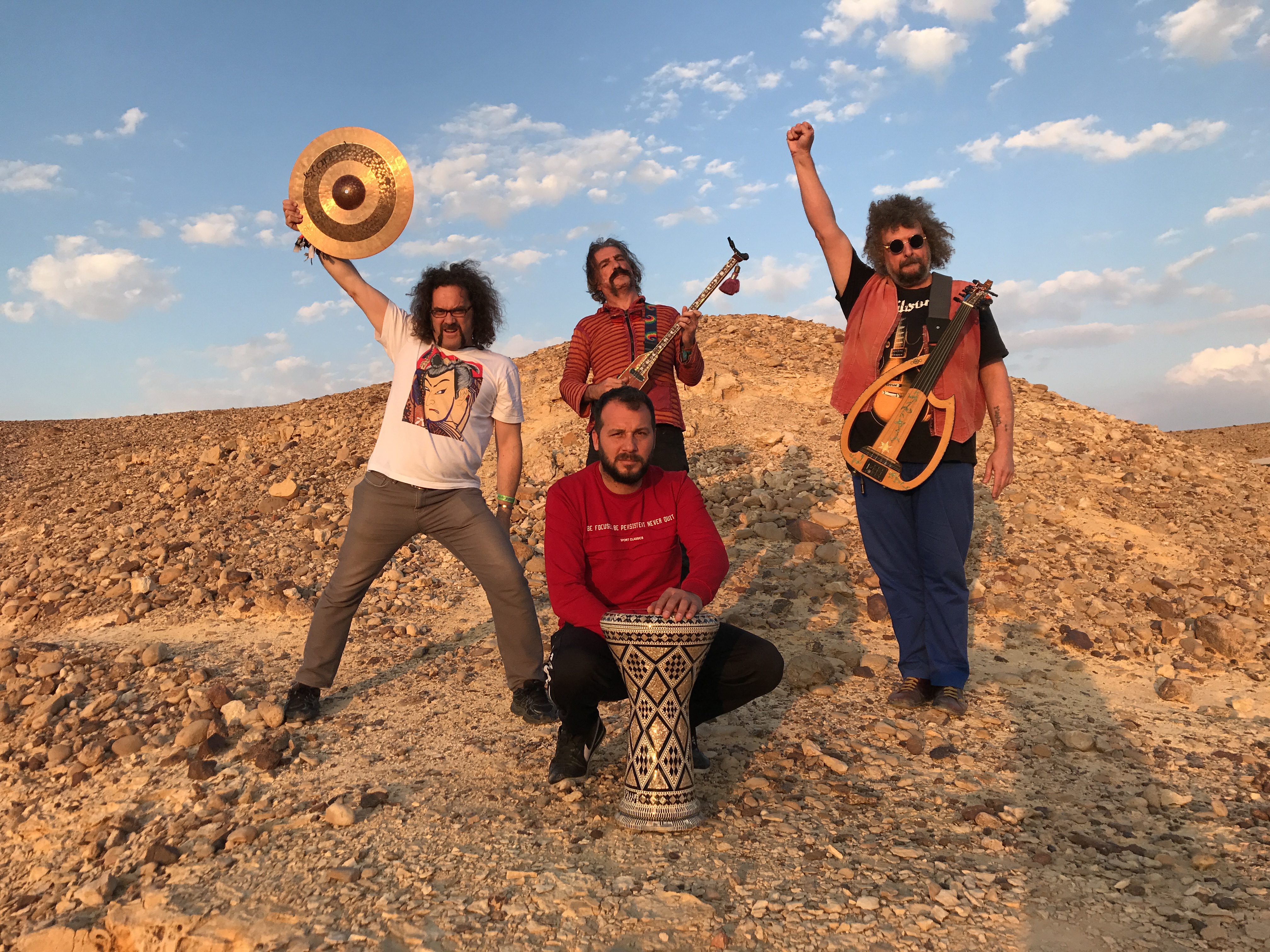
Freely traversing borders once more, Dominic Valvona’s regular roundup of discoveries and interesting finds this month circumnavigates Japan, Israel, Turkey, Poland before returning to the more chilled pastoral Estuary greenery of the Sussex and Essex landscapes. There’s a double-helping of upcoming releases from Glitterbeat Records stable with the return of the Turkish dub cosmology legends Baba ZuLa – their first studio LP in five years, Derin Derin – and a new album of post-punk limbering from the Gdansk band, Trupa Trupa. In a similar vane to the ZuLa, Israeli troupe Taichmania also fuse a cosmology of sounds, and use both the an electrified dynamism of the “oud” and “saz” to fuzz and amp up a merger of Middle Eastern traditions with jazz and prog. Their debut LP, Seventh Heaven is given the once-over. The trio of radio show host ethnomusicologist Matthew Nelson, Hopi musician Clark Tenakhongva and world-renowned flutist Gary Stroutsos come together on sacred ground to invoke a magical homage to the music of the Hopi people on the beautifully evocative LP Öngtupqa. Inspired by more Eastern mysticism the Seattle coupling of Society Of The Silver Cross release their debut long-suite, 1 Verse, and an amazing freefall-in-motion jazz exploration from Philip Gropper’s Philm, entitled Consequences.
There’s horror of a diaphanous apparitional kind with the latest solo album of invocations and ether siren sighed sonnets from Jodie Lowther, and the first album in five years from Junkboy, the marvelous scenic Trains, Trees, Topophilia, and, finally, the inaugural release from Ippu Mitsui’s brand new electronic music label, Pure Spark Records, the House Of Tapes two-track Embers Dreams.
BaBa ZuLa ‘Derin Derin’
(Glitterbeat Records) 27th September 2019

Stalwarts of Turkish cosmology dub, the Istanbul Ege Bamyasi acolytes BaBa ZuLa return to the fray with their first studio LP in five years. And what a time to make that return, as Turkey, or rather its increasingly apoplectic quasi-Sultan-in-waiting Recep Tayyip Erdoğan, continues a policy of conformism that endangers any form of oppositional descent, and threatens artists and critics alike with severe censorship. The once famous secular moderate bridge between Europe and Asia is growing hostile to the West as the administration errs towards a hardline form of Islam, and moves closer towards Putin’s Russia.
Maintaining a constant rebellious streak throughout their twenty-three year career, whatever the ruling regime, the recent turmoil propels the ZuLa to reconvene; raising their heads above the barricades in a creative act of defiance: Music for dangerous times.
Still led, in part, by the switched-on electric ‘saz’ maestro Osman Murat Ertel, the group weaves together another expansive soundtrack of vivid souk dub and sashaying rambunctious post-punk on Derin Derin. Inspired by a number of things, not just the current political climate, the album is imbued by BaBa ZuLa’s long-running collaborations with the late Jaki Liebezeit: who was himself in turn influenced by a myriad of Anatolian rhythms – which you can hear permeating throughout both the Can legacy and his own many collaborative projects over the decades. The Can metronome and drumming doyen sat in with the group on a number of occasions, and the resonance, at least, of those sessions can in part be felt on this newest album. Especially on the Krautrock pulse of the solo fuzzed saz-snarling ‘Kizil Gözlüm’, which runs through a gamut of Germanic sounds, from Can to Blixa Bargeld and 80s Berlin post-punk. There’s even an air of Michael Karoli’s signature cosmic flares and reverberating wanes, as played on an amped-up oud (or saz), on the Sublime Porte reimagined vision of King Tubby, ‘Port Pass’. In retrospect, the band considers Jaki as an unassuming mentor.
Another thread to this album is the group’s ancestral connection, with musical ties that stretch back generations: Ertel paying a special homage to his artistic forbearers, enthused by traditions but also the country’s psychedelic furors in the 60s and 70s. From the 150 year-old photographic plate process used to produce the album cover, to the inclusion of a song penned by Ertel, his wife and young son, ‘U Are The Swing’, there’s a deep sense of family and inheritance; BaBa ZuLa as custodians of the faith.
A third strand, the instrumental portions of this Oriental cosmic album grew out of a soundtrack commission; the group asked to record music for a documentary about falcons, created a suitably exotic echo of serene flight and soaring majesty, as they accentuated the bird-of-prey plunging and floating over evocative commendable heights. These do act as mini-branches, vignettes and interludes between the longer songs.
The rest of the album oscillates and saunters between camel ride momentum Arabian Desert blues (thanks in part to the inclusion of an electrified oud), futurist Bosphorus reggae (via On-U-Sound and the Warp label) and even alternative rock. In the process they find an echo-y balance between the haunting and abrasive, and the elasticated and intense. A mystical union of the entrancing, sweeping and often chaotic, BaBa ZuLa ‘s hybrid of Turkish and Middle Eastern exotica straddles time and geography to once more create a fearless rump of defiance, yet also inspiring some hope.
Trupa Trupa ‘Of The Sun’
(Glitterbeat Records) 13th September 2019

The second Glitterbeat release to feature in my roundup up this month, the counterbalanced Polish band Trupa Trupa couldn’t be further apart, sound wise, from the more languid looseness dub of their label mates Baba ZuLa.
Freshly signing over to the German-based label, the multi-limbed quartet play off gnarling propulsive post-punk menace and tumult with echo-y falsetto despondent vocals and hymnal rock on their fifth album, Of The Sun. Feeding into the history of their regularly fought-over home city, Gdansk, Trupa Trupa create a monster of an album steeped in psychodrama, dream revelation and hypnotic industrialism.
In a perpetual tug-of-war for dominion with its Prussian, then German neighbors Gdansk strategic and commercial position as Poland’s most important post has seen the famous city become a sort of geopolitical bargaining chip over the centuries because of its gateway to the Baltic. After one such episode in a “convoluted” legacy, the city and much of its surrounding atelier of villages were turned into the Free City state of Danzig after WWI; a part compromise result of the Versailles Treaty in 1919. Famous son-of-Gdansk, philosopher Arthur Schopenhauer is credited as a major influence on the group and this album, and though not strictly born within the city limits, the infamous madman of cinema, Klaus Kinski – in one of his most wild-eyed legendary roles as the obsessive loon opera impresario, Brian Sweeney “Fitzcarraldo” Fitzgerald – is also mentioned in the PR spill: the “great effort of pathetic failure” and “strain sublimating into nothing” of that barely veiled characterization proving fruitful suffrage and inner turmoil for the group.
A sinewy, pendulous embodiment of that environment and metaphysical philosophy, Trupa Trupa write “songs about extremes”, but use an often ambiguous lyrical message when doing it: usually a repeated like poetic mantra rather than charged protest. On one of those framed “extremes”, the wrangling guitar-heavy post-punk-meets-80s-Aussie-new-wave ‘Remainder’ sounds like Swans covering The Church, as the group repeat the refrain, “Well, it did not take place.”
Though taut, industrial with ominous machinations, there’s a surprising melodious quality to the turmoil and free fall of Trupa Trupa’s proto-Gothic rumblings. In amongst the slogging, chain dragging of the Killing Joke, PiL, Bauhaus and Gang Of Four are echoes of a wandering angelic House Of Love, Echo And The Bunnymen, early Stone Roses, Pavement and flange-fanned Siouxsie And The Banshees. Strangely, however, the dreamy haunted title-track evokes Thom Yorke in a dystopian Bertolt Brecht theatre, and the stripped-to-bare-bones acoustic ‘Angle’ even sounds like a odd, if charming, folksy harmonics pinged missive from Can’s Unlimited archives: Incidentally, Can’s walrus mustache maverick, Holger Czukay, was born in Gdansk, or rather Danzig as it was known at the time.
The PR spill that accompanies this nihilistic-with-a-heart LP is right to state, “Of The Sun is an unbroken string of hits.” There are no fillers, no let-up in the quality and restless friction, each track could exist as a separate showcase for the group’s dynamism: a single. East European, Baltic facing, lean post-punk mixes it up in the Gdansk backstreets and harbor with spasmodic-jazz, baggy, math-rock, psych, doom and choir practice as this coiled quartet deliver an angst-ridden damnation of humanity in 2019.
Taichmania ‘Seventh Heaven’
21st June 2019

The second group in this roundup to fuse the “saz” and “oud” within a cross-border traverse of Arabia and Turkey, Israeli troupe Taichmania take a similar line to BaBa ZuLa in freely merging musical cultures.
Well-traveled founding member, and the man whose name appears so prominently in the band moniker, Yaniv Taichman has a rich and varied pedigree having studied jazz at the Rimon College Of Music, Turkish music with Professor Mutlu Torun in Istanbul, and Indian music with Pt. Shivanath Mishra in Varanasi. His band mates, Sharon Petrover on drums, Yoni Meltzer on keys and electronics, and Lois Ozeri on bass, are no less musically worldly in that respect.
Stalwarts on the Israel scene in various forms, together under the Taichmania umbrella the quartet limber across a panoramic landscape of Sufi funk, souk-rock, prog and jazz on their debut suite, Seventh Heaven. A veritable elasticated fantasy of both intense hypnotic rhythms and desert peregrinations, this heavenly bound odyssey entwines the traditional sounds and scents of the Arabian Orient with zappy cosmic electronic undulations of synth atmospherics.
Broadcast samples from Middle East radio linger through a kind of spicy exotic brooding mix of Natasha Atlas and the Transglobal Underground on the opening ‘Arabesk’, whilst other such exotic intensity as the contorting spiraling title-track, and post-punk bendy ‘Saba’ are whole journeys, sagas, in their own right; moving between progressive-jazz fusion and futuristic Arabian vapours.
Taking classic leanings to the heavens and beyond, Taichmania knottily skip, scuffle, spindle, echo, quiver and solo through their magical influences to produce a live-feel Oriental soundtrack: heavy on the Prog!
Junkboy ‘Trains, Trees, Topophilia’
(Fretsore Records) 2nd August 2019

Regular readers will (hopefully) be aware that we premiered the Hanscomb brothers’ vibrato-mirage-y ‘Waiting Room’ single last month. This Baroque-pop fashioned nugget, bathed in a halcyon shimmer, proved an idyllic introduction to a pastoral album of geographical traversing instrumentals.
As its album title suggests, public transport(ive) and a strong sense of place have inspired the brothers first album since the much acclaimed 2014 album, Sovereign Sky: Both relocating years ago from Southend-On-Sea to the south coast ideals of Brighton, Junkboy siblings Mik and Rich compose a twelve-track suite to the back-and-forth journeys they made between the two counties of Essex and East Sussex. The “Topophilia” of that title, a term wrongly as it transpires attributed to John Betjeman, can be roughly translated as a love for certain aspects of a place that often gets mixed with a sense of cultural identity.
Passing through a myriad of versions of this landscape, influences include the troubled World War artists of England who depicted the torn-up apocalyptic aftermaths of Europe and the results of bomb raids across the English topography (becoming the doyens of the English modernist movement in the process), to the passing glimpses of the versant downs, beaches and “splendor towns” from a train window, and (friend and Junkboy photographer) Christopher Harrup’s Thames Estuary photo album. The first of these inspirations offers both a colour palette and a semi-abstract empirical vision of that countryside; messrs Paul Nash, Graham Sutherland and John Piper, a triumvirate of influential painters, providing a suitable rich canvas: Just one of the guests on this charming LP (and no stranger to this blog) Oliver Cherer even helps pen a Nash homage, ‘A Chance Encounter’ plays with the light musically on a magical pop melody of slow jazzy brass, relaxed drums and flute-y forlorn.
Disarmingly chilled yet full of wistful rumination, Junkboy’s Brighton-Seaford-Southend traverse wonders what it would sound like if Brian Wilson was born and bred on the English Rivera instead of Hawthorne, California; the beachcomber vibes of Pet Sounds permeating throughout this quint lush English affair. You can safely add vague notions of Britpop era Octopus, a touch of the Super Furry Animals more folksy psych instrumentals, some early Beta Band, echoes of 90s Chicago post-rock, and on the dreamboat bluegrass lilted-and-silted ‘Sweetheart Of The Estuary’ more than a nod to Roger McGuinn and pals.
Trains, Trees, Topophilia is a peaceable musical landscape littered with the ghostly reverb of railways station interchanges, mew-dewed laced green hillsides, tidal ebbs and flows and Cluniac Abbeys – the millennia-old, Benedictine scion religious brethren, brought over in droves after William The Conqueror’s invasion of England, make a historical connection between both the album’s Essex and East Sussex locations; the orders’ priory in the Prittlewell of the same song title, originally set up by Cluniac monks from Lewes, just outside Brighton.
Pastoral musical care for the soul, Junkboy’s instrumental album is a beautifully conveyed canvas of the imagined and idyllic; a subtle ode to the Southeast cartography and painters, poets, writers that captured it so perfectly. This is an album that will grow on you over time, revealing its sophistication and nuanced layers slowly but surely: a lovely hour to wile away your time.
Jodie Lowther ‘The Cat Collects’
26th July 2019
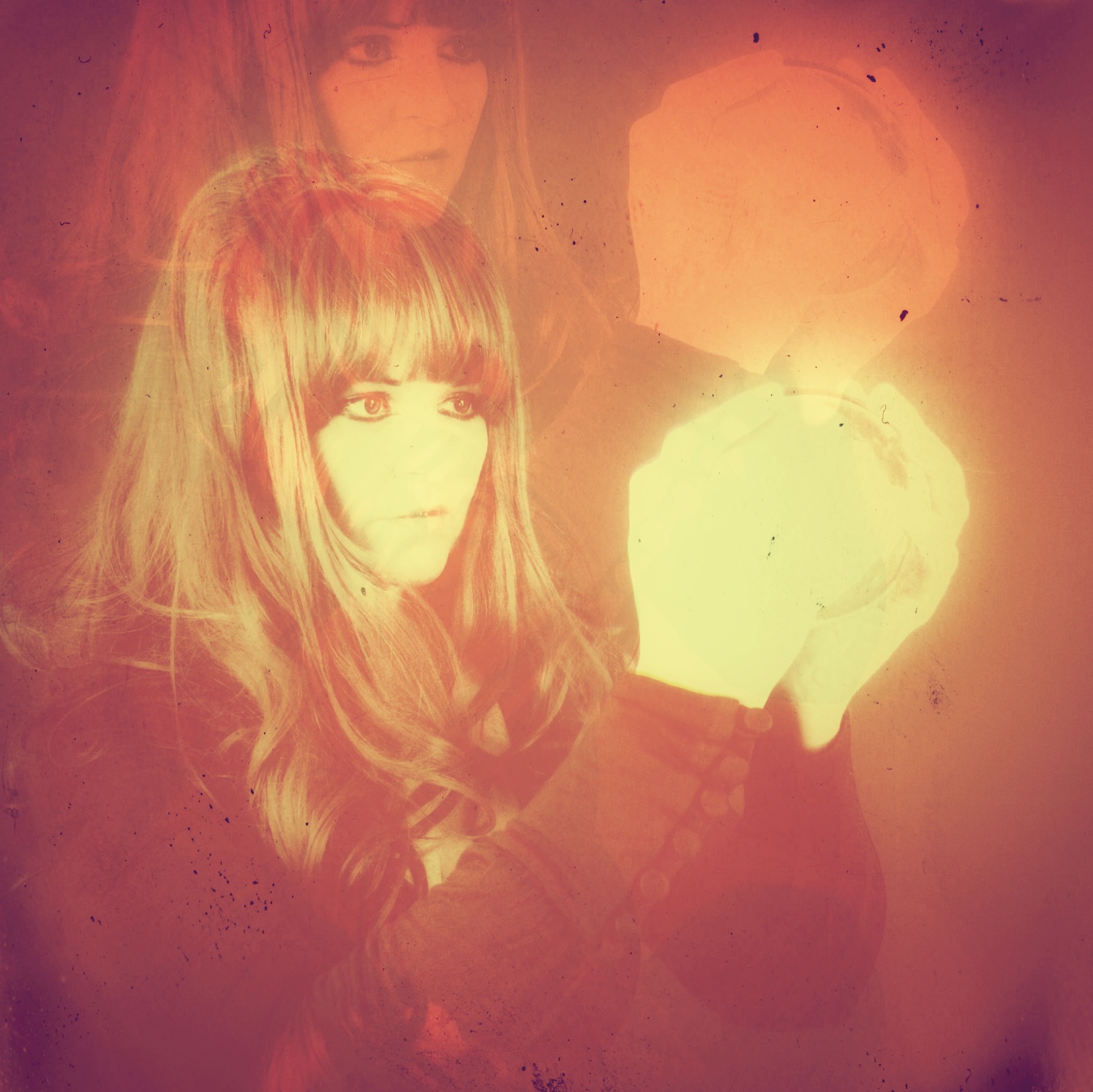
One apparitional half of the surrealist Quimper duo, vaporous siren Jodie Lowther has been known to, on occasion, float solo. Her latest haunted diaphanous malady, The Cat Collects, is (as ever) a magical suite of dream realism and supernatural theater.
Between the characters of ethereal seraph and alluring cat lover, Jodie warbles, coos and entrances with a voice so fragile and gauze-y as to be almost an evanescent whisper: Jodie transmitting her vocals from the spirit side of the ether like a aria woozy Mina Crandon.
Drifting in a seeping cantabile sigh throughout this witchery spell of spooky misty songs and graveyard crypt sonnets is a subtle backing of feint melodies and stripped electronica – think Ultravox marooned on the Forbidden Planet or, an early Mute Records vision of 70s British horror soundtracks (Amicus, Hammer, British Lion). From invocations of Vampire lovers to black magic nuptials, The Cat Collects stirs up the right balance of scares and esoteric enchantment on an album of mysterious, creeping beauty and hazy Gothic soundtracks.
Society Of The Silver Cross ‘1 Verse’
28th June 2019
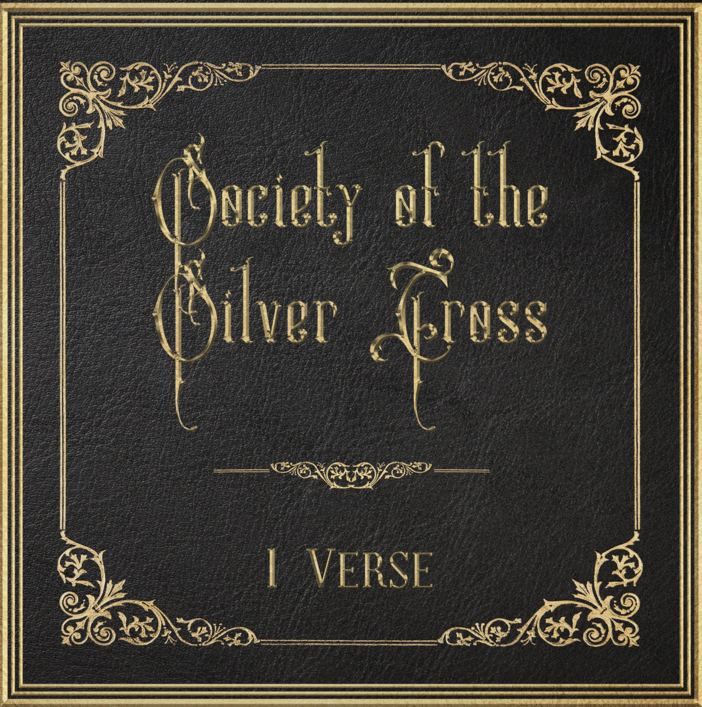
Over the last few months, and featured in previous editions of my roundups, the Seattle coupling of Joe Reinke and Karyn Gold-Reinke, under the auspicious appellation of the Society Of The Silver Cross, have presented us with a trio of evocative-enough Eastern death cult imbued video-singles. Making good on those mystical visions, the duo have released an album that both continues the Velvet Underground say “Om” Indian Gothic drone psychedelia of those tracks but also widens the musical palette to take in shoegaze, new wave and 90s alt-rock.
Still inspired by their spiritual travels to India, and adopting the invocation drone of the “shahi baaja” (Indian autoharp) and induced bowing of the “dilruba”, the Silver Cross explore the “transformative and renewing powers of death” as they flick through a bewitching songbook of Orientalism, Byzantium incense-scented opulence and bellowing sea shanty Edgar Poe scribed Gothic coastlines.
Leaving aside that run of singles (‘When You’re Gone’, ‘Kali Om’ and ‘The Mighty Factory Of Death’) the book of spells adorned 1 Verse piles on the melodrama of opiate arcane rites and woozy harmonium pumped esoteric atmospherics; opening with the repeated echo-y chanting ritual ‘Diamond Eyes’. In a similar mystical vain, distant tolled bells and the reverberations of a choral Popol Vuh creep into the holy processional lamented ‘Funeral Of Sorrows’. Yet, amongst the death marches and promises of spiritual release, rejuvenation and the inevitable there’s more radiant escapism in the form of spindled Baroque-psych (‘Dissolve And Merge’), alt-pop (‘Because’ imagines The Cars and Why? in holy communion) and even a bastardized Travelling Wilburys (‘Can’t Bury Me Again’).
Kneeling at the altar of a many-faced god/goddess the Silver Cross play freely with all those many influences; indulging in the Eastern arts but expanding horizons and even absorbing past Seattle imbued projects.
If you’ve only thus far heard the singles then much of the second half of this album will be a surprise. Dreamy mantra and morbid curiosity coalesce to produce a mesmerizing, hypnotic ritual; opening the door to further experimentation and proving a worthy new incarnation for Joe and Karyn to channel.
Tenakhongva, Stroutsos And Nelson ‘Öngtupqa: Sacred Music Of The Hopi Tribe’
(ARC Music) 26th July 2019
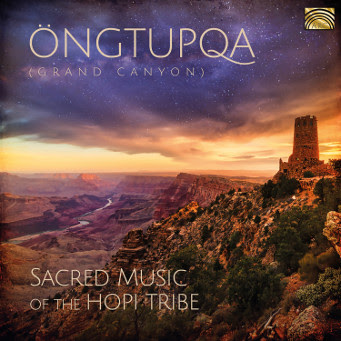
Breathing (literally) life back into the ancestral evocative paeans and spiritual communions of the Hopi people, the trio of radio show host ethnomusicologist Matthew Nelson, Hopi musician Clark Tenakhongva and world-renowned flutist Gary Stroutsos come together on sacred ground to invoke a magical homage.
First a little background. The Hopi, unlike many of their fellow communities of Native Indian tribes in the Americas, lived in more permanent villages, across swathes of South East Utah, North East Arizona, North West Mexico and South West Colorado. These dwellings, some very complex in their construction, gave birth to the Colonist appellation, the Pueblo People, but also because they were considered a more civilized, polite community; their concept of life based on a reverence for all things.
At the heart of this stirring earthy but often-transcendent project is the atavistic instrument that set it all in motion: the 1500-year-old Hopi long clay flute. Unearthed in the last century by the archeologist Earl Halstead Morris, who was leading a Carnegie Institute Expedition to the Prayer Rock district in North East Arizona in the 1930s, these hollow, reedless flutes were part of a thousand artifact haul of discoveries. Relatively remaining a mystery for decades to come, it wasn’t until further research in the 1960s that these flutes from the now renamed “Broken Flute Cave” could be confidently dated to around 620- 670 AD. What remains remarkable is that this sacred instrument was thought lost by the Hopi descendants themselves; disappearing hundred of years ago, until flute specialist Stroutsos with project instigator Nelson played a replica version in front of Hopi custodian Tenakhongva, who promptly invited him to play it in front of his entire family and then, at a later date, at a venerated spot near where the original clay flutes were found.
Part of the wider Canyon Music Festival in 2017, at the Mary Colter built Desert View Watchtower, the trio’s performance, with Nelson keeping rhythm on clay pot drums (keeping it all historically accurate, stretched-skin drums being out of time and step with the 7th century flutes), Strouthos improvising on flute and Tenakhongva singing whilst handling the percussive rasps, rattles and gourd, was filmed and recorded. An “approximation” of how the Hopi’s holy music would have sounded almost 1500 years ago, the Öngtupqa (the name given by the Hopi people to the canyon in which our trio played) nine-track suite remains untouched, unmodified or edited two years on.
Setting the atmosphere of both earthy soul connectedness and flighty astral mystery, the obviously talented and well-honed players perfectly capture the dream-like ritual and awe-inspiring panorama that surrounds them. If you were expecting the synonymous rain dance and powwow holler chants of much Native Indian music, think on. Öngtupqa is more entrancing, ambient in places, with the vocals, or chanting, graceful and often melodious but deep. Lifting out of the canyon to dizzying cloud-ruminating heights, you’ll still constantly reminded of the vast American outdoors and desert landscape: A rattlesnake shakes his distracting tail here, a panpipe flight of a condor or thunderbird over there on the mountainside.
An intimate tribute to the Hopi cycle of life (as Tenakhongva explains it, “…we were born within the Grand Canyon and when we are done, we return back to this place to rejuvenate life of a new beginning…”), the stories and music of that scared site are offered and opened-up to a global audience; a message of the communal, of preservation, being at the very heart of this vivid undertaking. The ancestors will be proud, as the two millennia old blessings and spiritualism of the Hopi is brought back to life.
House Of Tapes ‘Embers Dreams’
(Pure Spark Records) 7th August 2019
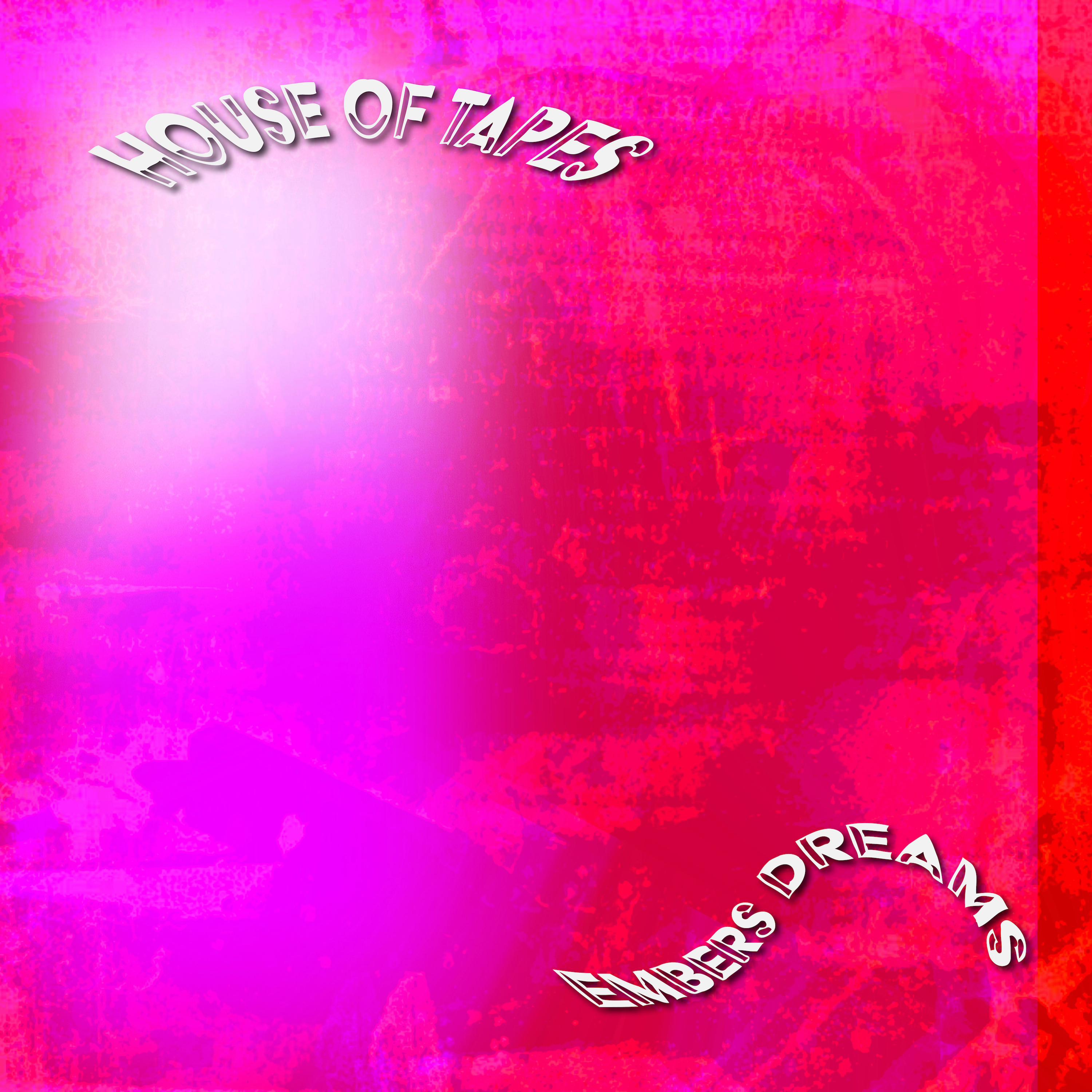
The Japanese electronic music wiz kid Ippu Mitsui has graced these roundups on a number of occasions over the years, and featured on numerous Monolith Cocktail playlists. Releasing a varied kaleidoscope of futuristic Tokyo electro-glides-in-blue and kinetic techno on a spread of labels, Mitsui originally came to my attention through his releases for the Edinburgh-based Bearsuit Records. Still recording ad hoc, Mitsui has now just launched his very own imprint, Pure Spark Records. Another one of Bearsuit’s extensive roster of mavericks, the inaugural release on that venture is from the experimental composer Yuuya Kuno, who under a variety of alter egos has prolifically knocked out a mix of the weird and sublime electronica.
Back recording under the House Of Tapes moniker in this instance (known as Swamp Sounds when passing sonic oddities through Bearsuit), Kuno’s two-track showcase, Embers Dreams, is a lucid, air-y and sophisticated affair. The “Embers” of that title is an inviting exotic amble through a moist-vegetated oasis of itchy, scratchy, woody and echo-y deep electro percussion, whilst the accompanying ‘Melted Ice’ offers a glass-y trance-y, robotics-in-motion slice of downtempo chiming soundtrack. A great subtle and deep piece of electronic manna and flow with which to launch Mitsui’s brand new label, House Of Tapes kickstarter is a serious piece of classy techno: an augur, a good omen I hope of what’s to come.
Philipp Gropper’s Philm ‘Consequences’
(Why Play Jazz)
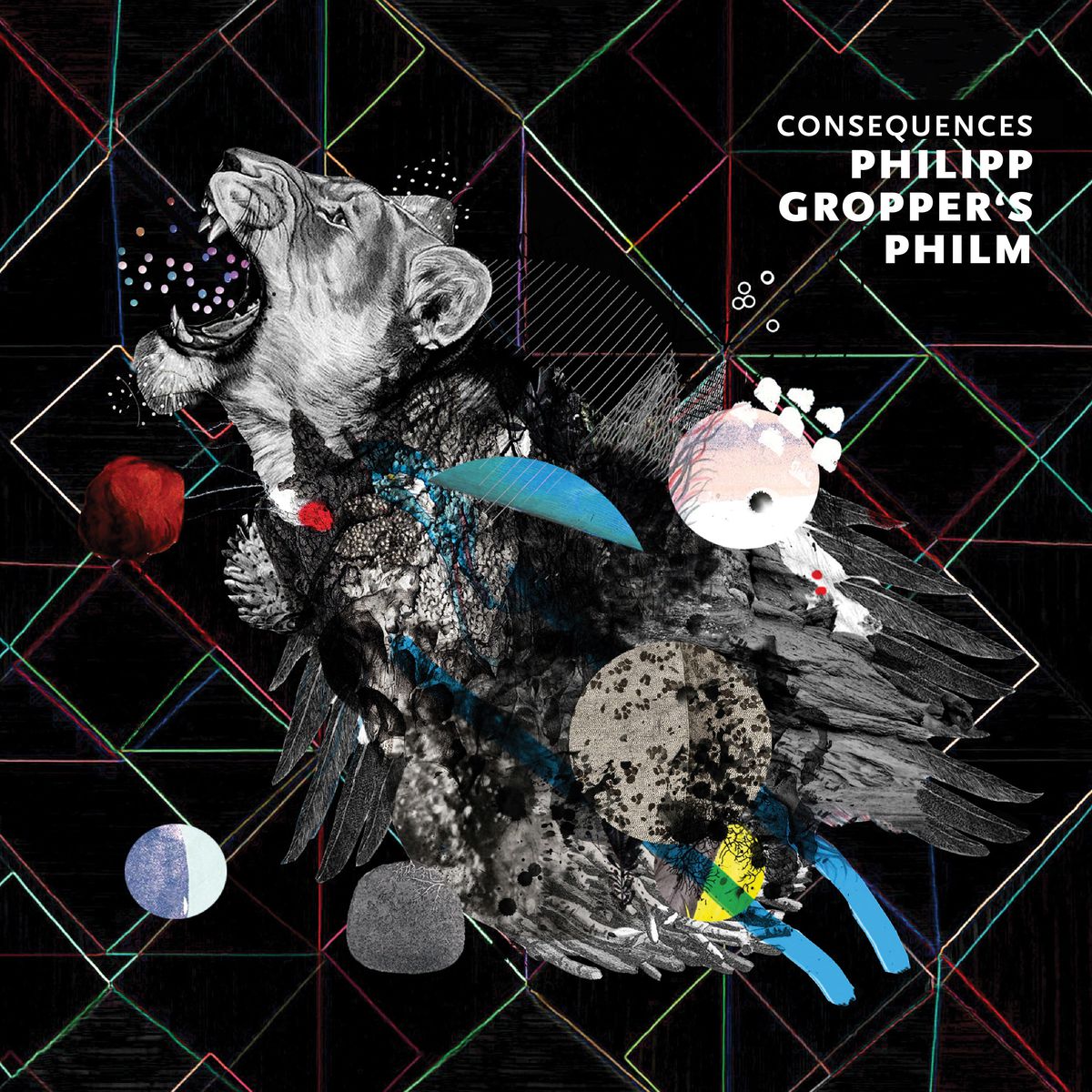
A balletic jazz freefall in motion, the latest tumultuous suite from the acclaimed “David Bowie of jazz”, tenor saxophonist/composer/bandleader Philipp Gropper (and his Philm troupe), is a highly experimental reification of contortions and sporadic, spasmodic chaos: albeit a controlled, kept-in-check, vision of an avant-garde one.
The multifaceted title of this orderly breakdown in heightened tensions and liberating angst can be read in many ways: The “consequences”, for example, of our political divisive times can be heard and read loudly crashing throughout this six track album of disjointed intensity; the fallout from all sides of the societal divide causing enough anxiety, suffering and despondency to fuel Gropper for the next decade or more. In fact the whole course of “neo-liberalism” itself is on trail (or at least its knock-on effects of intervention), however abstract that might be.
Space expletory wondrous track titles aside, the filthy lucre spiral of dependency and spluttering wild ’32 Cents’, and funneling discordant interchange ‘Thinking From The Future (Are You Privilaged?)’ are both the most obvious proponents of that socially “woke” commentary – though whose privilege needs to be checked exactly in this exchange is open to debate.
The concerns of “interpersonal” and “interrelationships” within this charged political landscape are also a major focus for the Berlin-based jazz man; adding to a uncertain free flow of both centrifugal spinning discourse and more haunted, sometimes diaphanous, twinkling.
Escaping the atmosphere, orbiting the cosmology of deep space, Gropper’s most serene dance of glistened, starry majesty and mystery is the astral soundtrack to ‘Saturn’. Both the enormity and expansive uncertainty of this planetary titan is expressed evocatively enough by Gropper’s otherworldly Theremin aria like reedy breaths on the tenor sax, as his companions bounce and skip around the planet’s rings. Saturn holds a strong fascination for all of us, but it can’t have escaped Gropper’s notice that jazz music’s most celestial star, and progenitor of Afrofuturism, Sun Ra, claimed to have ascended to Earth from his Saturn home.
The musicianship is, as you expect, first rate, with Gropper’s sax totally untethered, squawking, fluting, brilling and even trembling, whilst his band of Elias Stemeseder (on piano and synth), Robert Landfermann (on double-bass) and Oliver Steidle (on drums) react decisively with limbering, elasticated reflexes. Together hey create an iridescent breakdown and reconstruction of digital calculus, science-fiction and the cerebral; merging contemporary European jazz with elements of Coltrane, Coleman, Billy Cobham, Stockhausen, The Soft Machine and the electronic and hip-hop genres. Futurism and avant-garde classicism collide in an oscillating and tumbling fusion of complex ideas: Consequences is a musical language on the verge of collapse. How it all stays together is anyone’s guess. This is a most impressive adventure in jazz.
Quarterly Revue Playlist 2019: Part Two: Apparat, Cairo Liberation Front, Tinariwen, Sampa The Great, Seba Kaapstad…
June 25, 2019
PLAYLIST
Compiled: Dominic Valvona/Matt Oliver
Art: Gianluigi Marsibilio


From an abundance of sources, via a myriad of social media platforms and messaging services, even accosted when buying a coffee from a barristo-musician, the Quarterly Revue is expanding constantly to accommodate a reasonable spread that best represents the Monolith Cocktail’s raison d’etre.
As you will hear for yourselves, new releases and the best of reissues plucked from the team – me, Dominic Valvona, Matt Oliver, Brian ‘Bordello’ Shea, Andrew C. Kidd and Gianluigi Marsibilio (who also put together the playlist artwork) – rub shoulders in the most eclectic of playlists, with tracks as geographically different to each other as Belem and Palermo.
Digest and discover as you will, but we compile each playlist to run in order so it feels like the best uninterrupted radio show or most surprising of DJ sets.
Tickling Our Fancy 074: Society Of The Silver Cross, John Johanna, Mike Gale, Brickwork Lizards, GOATS…
May 28, 2019
Reviews Column: Dominic Valvona

Back after a short hiatus, my eclectic spread of recommendations and reviews features, as ever, a bumper edition of recent releases. There’s a suitably seasonal solo album from a Beach Boys imbued Mike Gale that wallows in the scorching rays, called Summer Deluxe; some live action from the Ottoman/Edwardian imbued period fusion of Arab and English music hall Brickwork Lizards, who’s new EP features a quartet of live recorded tracks from the St. Giles sessions; there’s a trippy psych peregrination hard sell from the Submarine Broadcasting Company in the form of a GOATS (not that one, this is another group entirely) cassette tape called Far Out; the latest beautifully, if despondently, articulated songbook from Oliver Cherer, I Feel Nothing Most Days; the musical suite in all its glory from Bethany Stenning’s multimedia conceptual art film The Human Project, released via the artist’s Stanlaey alter-ego. I review the fruits of a congruous union between Glitterbeat Records instrumental imprint tak:til and the ‘21st century guitar’ American label VDSQ Records, a new nocturnal hour suite from Chris Brokaw called End Of The Night; and there’s new album from the Benelux specialists Jezus Factory, the cathartic Wilderwolves rocker Inhale, Increase The Dose.
I also take a look at the latest album from the elasticated electro-pop and neo-Kraut Cologne-based Von Spar and friends, Under Pressure, plus singles from two afflatus acts, the Indian-imbued Society Of The Silver Cross (‘Kali Om’ and ‘The Mighty Factory of Death’) and Book Of Enoch, Judaic inspired John Johanna (‘Children Of Zion’).
Mike Gale ‘Summer Deluxe’
May 2019
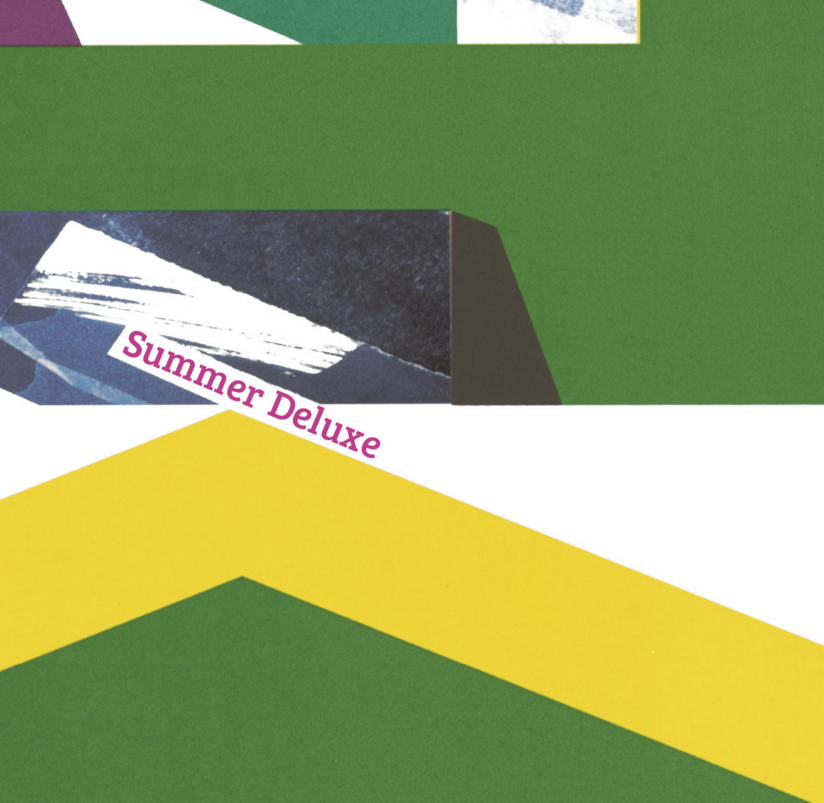
Once more escaping the short days and dreary dampness of an English winter, the Hampshire-based polymath Mike Gale (notable for his work with the Americana imbued Co-Pilgrim) suns himself again in the dappled rays of lilted surf pop on his new solo album, Summer Deluxe.
Liberally splashing about in the efflux surf of The Beach Boys the much-prolific Gale (this is his fifth album alone in just five years) hides a certain sorrow, longing and yearn under the most colorful and dreamy of melodious harmonies. Sometimes it’s just the one Beach Boy who springs to mind when listening to this seasonal paean: Dennis Wilson, who flits about with McCartney and The Animal Collective on the breezy but deeply felt ‘Barecaraa’, and a filtered version of Pet Sounds era Brian – via Sparklehorse and the little known She Sells Seashells Expo homage project by the lo fi American artist John Lane. There’s even a hint of Surf’s Up noir Brian Johnston echoing around the tranquil summer abandon of ‘You Have A Way’. But you get the picture: that Beach Boys influence is prominent; something that is impossible to pull-off unless you have the talent, which Gale obviously has and proves here, no matter how unassumingly he does it.
A beautifully articulated songbook throughout, the best is saved until (almost) last with the hymnal-turn-diaphanous upbeat chorus of bubbly-synth and wafting saxophone anthem ‘Every Cloud Has A Cloud’. A comfort blanket wrapped around the repeating plaint of “You feel like nothing’s really working out”, this final vocal track sounds like the weight of the shoreline is burdening a wistful Gale as he plunges into the ocean depths to escape.
Dazed and hazy, a hushed mirage of summer, the leaf-turning breeze of autumn is never far away, its arrival denoting all the connotations and metaphors you’d expect, that fleeting optimism of the summer masks and makes all our woes seem far less burdening. Summer Deluxe is swimmingly brilliant in its indie slacker charm; a scion indeed of the Beach Boys spirit.

Von Spar ‘Under Pressure’
(Bureau B) 10th May 2019
Finding it all a bit much, in a society the Von Spar have coined as “surveillance capitalism”, the Cologne-based “modular system” (their description not mine) convey delusion and anxiety on their first LP in five years, Under Pressure.
Far from dour, defiant and angry the Von Spar and guests lift the miasma and mood with a most classy soulful electro-pop and neo-Kraut dance album; a sophisticated affair that even opens with a two-part dream sequence, the first part, featuring the float-y hushed coos of the Japanese singer/songwriter Eiko Ishibashi drifting to a House music rewired vision of Tony Allen drumming and bouncing refracted polygons, the second part, brings in the familiar enervated falsetto soul of Canadian polymath Chris A. Cummings with a more gliding Italo House beat; the plaint sentiment of both being “all is well until it is not”. Cummings sweet malaise and wistful tones as principle vocalist can be heard on a quartet of equally chic dance tracks; the Yellow Magic Orchestra synth Orientalism drifty ‘Happiness’, winding spiraled prog-suspense mirage ‘Better Life’, and Duran Duran meets bubbly cosmic synth ray ‘Not To Forget’.
Adding an effortless lifetime of sassy dub and reggae scholarship to the Slits-in-chrome and Grace Jones stalking ‘Boyfriends (Dead Or Alive)’, the grand dame of music writing and post-punk Vivien Goldmine characteristically turns vulnerability into a strength, dismissing a string of exes in the process towards self-realization. Other notable doyens and cult figures include Stereolab’s iconic Kosmische siren Laetitia Sadier, who liltingly adds her signature float-y tones to the motorik electro-pop ‘Extend The Song’, and prolific idiosyncratic lo fi genius R. Stevie Moore, who turns in an anguished Laurie Anderson as A.I. psychiatrist performance (an inquisitive “should I worry”, becomes ever more agitated) on the Jah Wobble goes arpeggiator, feeding the consumer machine, ‘Falsetto Giuseppe’.
On an album that spans and twists so many genres, it is the closing shifting-shards panoramic turn rhythm tumbling instrumental, ‘Mont Ventoux’ that travels the furthest, moving from progressive West Coast psych folk to shades of Popol Vuh, Cluster, Vangelis and video-nastie synth soundtrack: A epic, reflective way to finish.
Under pressure maybe, but it doesn’t show as the Von Spar and friends produce a constantly evolving sophisticated dance album of soulful yearning.

Chris Brokaw ‘End Of The Night’
(tak:til) 24th May 2019
Representing a union between Glitterbeat Records experimental international instrumental imprint tak:til and the equally expletory American VDSQ, two tactile delights from the “21st century guitar’ label’s catalogue have been given a European-wide release for the very first time. Both released at the end of May, Chuck Johnson’s 2017 Balsams album will be available for the first time on CD, whilst the nocturnal inspired Chris Brokaw suite End Of The Night is an entirely new album of attentive and placable musings.
Review wise, I’ve only had time to peruse the latter, a swoozy, atmospheric accompaniment to the Codeine and Come band members various moods, reflections and observation, framed within the pitched idea by VDSQ label boss Steve Lowenthal as the “existential” pondered ideal “last record of the night” – the results of Brokaw and Lowenthal’s late night record listening sessions. Taking up the offer, to record that perfect twilight hour album, Brokaw collected ideas for years until the opportunity arose to finally put thoughts to tape.
Joining him on these various traverses and nuanced concentrations is an ensemble of congruous musicians, some recommended by Lowenthal. Appearing in a myriad of combinations, from duo to trio and quartet, is the “Chet Baker” redolent trumpet-player Greg Kelly (Chet being a big influence on Brokaw), violinist Samara Lubelski (who’s briefly played with, like Brokaw, Thurston Moore), viola player David Michael Curry, cellists Lori Goldston and Jonah Sacks, bass-player Timo Shanko and on drums, Luther Gray.
Channeling many of the artists he’s worked with, Thurston Moore, Evan Dando and Stephen O’Malley, as he deftly picks out descriptive notes and builds up a swell of resonance, Brokaw both dreamily and moodily drifts through gestures of jazz, post-rock, grunge, tremolo-echo-y country and on the reverb-heavy vapour drift, ‘Blue Out’, a cosmic kind of blues music. Suspense, even mystery and narrative are handled with descriptive poise, with the guitar-playing evoking traces of Jeff Buckley, Jonny Greenwood and on the hushed brushed drums, dipping motion ‘His Walking’, the results of melding Chris Isaak with J Mascis.
Meditative and lingering for the most part, End Of The Night counters somnolent reflection with cerebral ponder to create the desired nocturnal atmosphere; at least a great record to finish any session on, if not quite the “perfect” one.

Oliver Cherer ‘I Feel Nothing Most Days’
(Second Language Music) 26th April 2019
An artist most lyrically out of time, full of removed observations, set to the most relaxed and wafting of stripped accompaniments, a wistful Oliver Cherer exchanges the part fact/part fiction Victorian Forest of Dean folkloric diorama of The Myth Of Violet Meek for the vague resonating traces of the 1980s on his recent despondent entitled I Feel Nothing Most Days album.
The third such impressive songbook from the prolific Hastings-based earnest troubadour to be released under his own name (previous alter-egos have included DollBoy, Gilroy Mere, Rhododendron, The Assistant) in as few years, this often dreamy affair, originally conceived decades ago – a very young Cherer putting his burgeoning ideas on to a Yamaha 4-track cassette recorder in 1983 -, is imbued by the lingering articulated drip-fed and amorphous cycles of The Durutti Column, but also a wealth of similar ethereal artists, borders on shoegaze from the late 80s epoch of 4AD.
Attuned to the Durutti first time around no doubt, Cherer, by some cosmic-aligned luck, found that he owned Vini Reilly’s Fender guitar (the one used on Morrissey’s first solo LP, Viva Hate as well). Put to good use then, as Cherer reprises his early 80s (what was left of them; when salvaged from the attic and played on a modern cassette-player that two of the original quartet of tracks came out at half-speed, the remainder, in reverse) recordings, the mood of this album is gauzy memory; music pulled from another time, an ether even – some of this down to the harmonies, choral and often atmosphere-setting guest vocals of an apparition cooing Claudia Barton and Riz Maslen.
Despite the drifting, mirror-y visage of washed troubadour, Talk Talk, C86, shoegaze and even Yacht-rock, a barely concealed rage at the divisionist-driven tensions that have sown so much caustic discord in recent years; throwing a proverbial, sacrificial “baby” out with the bath water to the wolves on the veiled Robert Wyatt-esque ‘Weight Of The Water’, in what could be a denouncement on Brexit, and the sophisticated rock with hints of The Pale Fountains ‘Sinners Of The World’ is no less gently scathing.
Elsewhere Cherer moons on the wistfully enchanted French fantasy, ‘Seberg’, a lamentable swaddled delight r-imagination of a scene, played out to a reference heavy lyricism about the aloof, Gauloise smoke cool New Wave cinema icon Jean Seberg (Cherer playing an unlikely role of Jean-Paul Belmondo), and pens a magically sad, Laurel Canyon, swoon to dementia, fading memory and age on ‘An Unfamiliar Kitchen’.
Beautifully articulated throughout, the shifting memories of time assembling just long enough to provide a vaporous soundtrack, I Feel Nothing Most Days is despite the malaise, anguish and sense of injustice a lovely, soulful songbook; another essential Oliver Cherer release.
Stanlaey ‘The Human Project’
(Stanlaey Art) May 2019
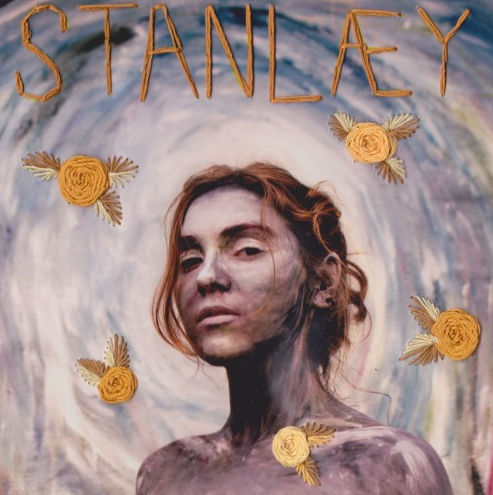
Two years after the premiere of Bethany Stenning’s ambitious multi-media The Human Project, the full-on immersive audio soundtrack from that film arrives in the form of a debut album; the first under Stenning’s amalgamated pseudonym of Stanlaey through her own imprint label. Featuring a cast of over seventy artists, actors/actresses, videographers and of course musicians, Stenning’s plaudit-attracting opus is heavy on the themes of both duality and juxtaposition; the myriad of twists and turns as the polymath artist studies our chaotic modern relationship with nature, symbolized visually and musically over a number of concept-driven performances.
Creating an alternative pastoral fairytale world, Stenning brings us a highly experimental beguiling soundscape that is often as bewildering as it is diaphanous and melodious. Untethered throughout, weaving amorphously between Earth Mother folk, jazz, R&B, Tricky-like trip-hop and the avant-garde The Human Project is in a constant state of movement as it attempts to articulate and phrase the seven elements that underpin it. Stenning’s distinct voice is itself difficult to pin down, fluctuating, soaring, meandering as it does in giddy childlike innocent wonder one minute, a ghost the next: Joanna Newsom, Bjork and Janelle Monae wrapped into one woodland sprite.
A quartet of conceptual video tracks from the album have already been drip-fed in the run-up to its release as an audio only experience – which works equally without its visual moiety as a whole new immersive experience -; the earthy winding Ghostpoet-esque ‘The Mountain Collector’, the bowl-pouring nod to antiquity’s poetic titan and striving yearn to escape an “Iron Age of destruction” for one of gold, ‘Ode To Ovid’, the breathy ethereal with Tibetan wind chimes metaphorical encapsulation of fluidity (elegantly portrayed by the harmonious display of acro-yoga in the video) ‘Properties Of Ice’, and the gauzy anguished forest spirit turns wild and intense lament to a brought-to-life mannequin wanting to escape their constraints, ‘Wooden Womb’, have already been doing the rounds.
This leaves the silvery moon pool serenade love song between a werewolf and ‘The Moon’, the Lamplighter meets Erased Tapes, dub-y ponderous flood of consciousness ‘Eldor’ (which features the rapping of Pedro DG Correia), and sonic splashed, undulated interpretation of water (its healing properties as much as a backdrop to Stenning’s emotions) ‘Aquarium’. There’s also, as a sort of extra unveiling, the angelic wafting through a void spell of ‘Orbs’, which originally was used to play out the end credits of The Human Project film.
Neither art, performance nor purely a soundtrack, this album is captivating and distinct, working on all levels: sound and music so often fails when brought into the conceptual field of creative arts, but Stenning has pulled it off wonderfully.

Brickwork Lizards ‘Live At St. Giles’
(Vyvyfyr Records) 17th May 2019
Plucked from the era of top hat and tails tea dances and the more rouge-ish double entendre romantically swooned crooning gin joints, the Ink Spots via Sublime Porte imbued Brickwork Lizards seem to have been lifted from an old His Master’s Voice label shellac record. A meeting of musical mind, the Oxford based troupe merge co-founder Tom O’Hawk’s penchant for clipped vocal harmony and the swing of the roaring 20s and early 30s with his musical foil Tarik Beshir’s romanticized and longing sounds of Turkey and the Orient to create a unique fusion.
Enjoying the spotlight that shines on this Arabic jazz ensemble, off the back of two albums (the second of which, 2018’s Haneen, was given the thumb’s up by myself on this blog) and joint-jumping live performances, the group’s vocalist, oud player and instigator Beshir was invited to work as a musical consultant on the new Disney Aladdin reboot; members of the Lizards even formed part of the Sultan’s palace house band.
It is the live performance quality of the band that is celebrated for posterity on their latest release, a four-track EP recorded in front of an audience at the Oxford Jazz at St. Giles showcase. All new, even if they sound nostalgic, the St. Giles quartet of vocal and instrumental maladies, swoons and bounding dances features both original-penned compositions and re-imaginings of Ottoman bohemia, and an even older Arabic love poem They begin with one of these homage transformations, the Anatolian Tango suspense turn Balkan-rush treatment of the legendary Ottoman composer Tanburi Cemil Bey’s turn-of-the-20th century sweep of the bay ‘Nikriz Longa’ instrumental. On the final performance, Beshir yearningly improvises with an Arabic love paean to a weepy and complicated, but effortlessly played, 10/8 beat accompaniment on the Mowashah tradition inspired ‘Sama’I Waltz’.
With one foot in the Bonzo Dog Doo Dah Band camp, the Lizards pay respect to the racy sincerity of the doo-wop harmony group the Ink Spots on the jazzy crooned ‘I Want To Spend The Night With You’. And on their ‘Dream A Little Dream Of Me’ evoking serenaded idyllic punt down the river ‘Roses’, you can easily imagine the Lizards lounging on the Sultan’s palace rug, wistfully sighing sweet nothings to their muse.
With certain élan and flair, not forgetting a real commitment to their form, the Brickwork Lizards refine and reinterpret their nostalgic inspirations to produce a re-electrified fusion that transcends both its Ottoman and quaint Edwardian music hall legacies. Going by these St. Giles recordings they prove a great band to catch live in the flesh.

GOATS ‘Far Out’
(Submarine Broadcasting Co.) 16th May 2019
As if there weren’t enough Goat orientated bands already to contend with, here’s another. This collective rabble (not to be confused with that equally tripping, but African-imbued, lot from Sweden) of moonlight acid and experimental pseudo daemonic cult mind-bending is led by the brilliantly-named maverick Alan Morse Davis, with Jorge Mario Zuleta, Dec Owen and a list of pseudonyms to back him up.
Astral planning the nonsensical, channeling a wealth of acid-rock, hippie folk, Kosmische, Krautrock and avant-garde inspirations, these Holy Mountain(side) goats chew on the most lethal of intoxicating hallucinatory strength grass. Following up on their previous self-titled LP – which I’m told did some impressive sales – the GOATS latest wheeze, appropriately entitled Far Out, is one continuous forty-minute exploratory track of spliced sections, released on that most revived and limited of formats, the cassette tape.
Setting off through a reversal-heavy drug-y drone daze our navigators on this trip meander through an ever-changing soundscape of Incredible String Band commune ditsy childish folk, indigestion-hampered throat singing, early period Amon Duul II Gothic chorus of angels and Germanic myth, caustic confusion noodling, Spacemen 3 go baggy go Velvets psych-garage lo fi, and harmonium bellowed Indian fantasy mirage. That’s without mentioning the vortex sucking sample of The Creation’s ‘How Does It Feel To Feel’, the doodling melting evocations of the Acid Mothers Temple and the blown-out wafts of Kraut-jazz trumpet that get thrown in to what is a most experimental soundtrack; equally in search of hippie nirvana and free love aboard the Hawkwind mothership as amorphous fuckery.
Far Out is an often-ridiculous collage built around a few more thrashed-out, almost conventional, song ideas and meanderings. As ‘head music’ goes the GOATS have sown together a mind-melting rich peregrination of sketches, passing fancies, the afflatus and out-right weird to create their very own disturbed vision; a release that is more ennui, hard come-down Gong communing with Popol Vuh than Faust Tapes.

Wilderwolves ‘Inhale, Increase The Dose’
(Jezus Factory) 29th May 2019
From the Benelux alternative and experimental rock specialists Jezus Factory, and featuring a heavy-guitar rotation of guests and collaborators from the Angels Die Hard, Broken Circle Breakdown and Eriksson/Delcroix triangle of bands from that region, arrives the second LP of sincere anxiety and travail from the Wilderwolves. A vehicle for the songwriting of Alain Rylant, who also sings and plays guitar, the Wilderwolves lean towards introspective rage on the finely produced Inhale, Increase The Dose; though there’s a certain ambiguity in the lyrics, waiting to be decoded, and a lot of violence (metaphorical or not) meted-out and suffered in a number of moody love tussles.
Pitched then as an album about love, though with a side caveat that “it’s about everything” and “it’s about nothing”, all seen and experienced through the self-medicated haze of lethargy; Rylant attempts to rattle the listener (and himself) from a resigned stupor.
Full of the wrangling, sinewy, angulated and sometimes caustic guitar shapes we’ve come to expect from the label’s roster, the various cast of musicians on this album work their way through grunge, stoner, post-rock, Britpop and Americana. On the desperate sinking ‘Smoked’ and bloodied sinister ‘Tooth And Claw’ they brush-up against Placebo at their more refined, and on the post relationship fall-out of ‘Your Scars’ it’s a combination of Alice In Chains and Grant Lee Buffalo. The more relaxed, ambling ‘Underwater’ however, reminds me of an Arcade Fire song I’ve long since forgotten the title of.
A personal, candid offering that taps into the current need to share the sort of woes, stresses and anxieties usually left on the psychiatrist’s couch, in hope that it will somehow help, Inhale, Increase The Dose is a great cathartic indulgence that rocks.
Singles
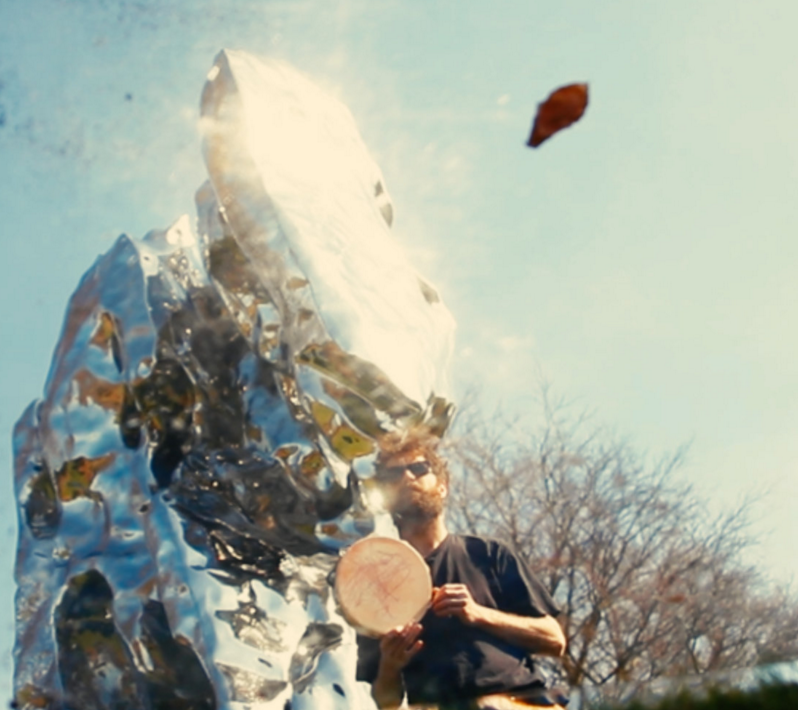
John Johanna ‘Children Of Zion’
(Faith & Industry) Out Now
Ahead of a new biblical-inspired album in July, the first holy revelation from John Johanna’s upcoming Judaic apocalyptic Seven Metal Mountains opus is the lilting, cymbal resonating heavy, but deep, ‘Children Of Zion’.
Slightly lighter of touch, though just as steeped in religious liturgy, the latest single from the Norfolk artist once more traverses the Holy Land with a call-to-service melt of desert-blues, post-rock and psychedelic folk. Conceptually built around the ancient apocalyptic work laid down in the Book Of Enoch (the protagonist of that cannon being Noah’s grandfather, who’s visits to heavenly realms and augurs of doom are presented through visions, dreams and revelations), Johanna’s Seven Metal Mountains symbolize “the world empires that have successfully oppressed and controlled mankind”.
‘Children Of Zion’ has Johanna adopting a faux-reggae Arabian gait to deliver a message of worshipful defiance; throwing the moneylenders out of the temple, bringing down the towers of Babylon so to speak: “No politician gonna heal me/Only love and self control.” A return to Zion it is, the most venerated of sites; a return to the garden, Johanna has found his calling once more.
For those wowed and won-over (I previously included Johanna’s previous Afro-blues, gospel and rustic Americana rich mini LP, I’ll Be Ready When The Great Day Comes in last year’s ‘choice albums’ features), prepare yourself for another divine communion.
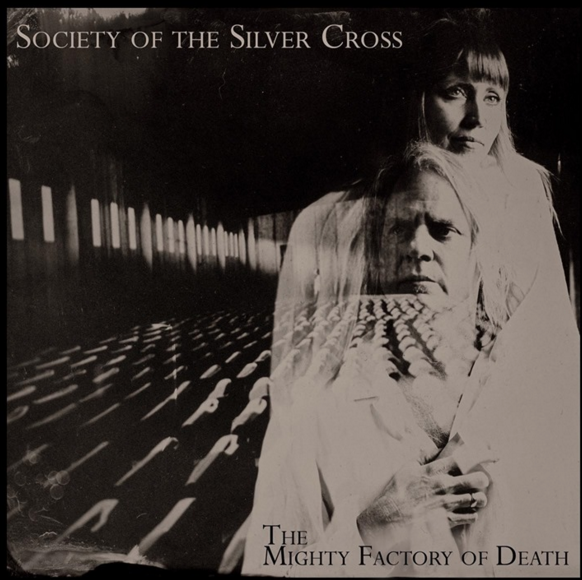
Society Of The Silver Cross ‘Kali Om’ and ‘Mighty Factory Of Death’
Both out now
Nothing less than a clarion call for an “awakening to the universality of all people and things”, the second single of enlightened cosmic pathos from the matrimonial Seattle band once more merges a spiritual penchant for India with grunge and the Gothic. The afflatus Joe Reinke and Karyn Gold-Reinke couple behind the dramatic sounding Society Of The Silver Cross have shifted their musical tastes and inspirations in recent years after travelling; taking a hiatus to the Indian subcontinent after the break-up of Joe’s Alien Crime Syndicate. Fully imbued, bringing not only the message but also the stirring sounds of holy innovation with them back to Seattle, the couple have embraced the use of the Indian autoharp (known as the “shahi baaja”), bellowed harmonium and a droning inducing bowed instrument called the “dilruba”.
Far more Gothic, darker even, than anything you’d hear in the divine rituals of those Indian inspirations, this conversion is often full of daemonic stirrings and gauze-y mists of shoegaze and grunge. ‘Kali Om’ being the second such mix of these influences is a song that once more features an effective if succinct message and musical leitmotif in it’s opening chimes that signals a continuation of their debut single, ‘When You’re Gone’. ‘Kali”, the great redeemer, “Om”, the universal sound of consciousness, is a suitably atmospheric evocation; rich with dreamy mantra, spindled and lush tones, hints of Moorish Spain and of course, the ethereal lingering voice of Karyn.
Following in its ebb and flow, the group’s third single offers a more stark, morbid outlook through its ‘The Mighty Factory Of Death’ title, yet is no less lush and ethereal, when it does break from its gong-sounding harrowed majesty and doom. From the pages of The Book Of The Dead, this Egyptology-ringing acceptance of the fates levitation-towards-the-light breaks from its heavy veil to find heavenly relief. Indian veneration communes with Cobain’s Nirvana and The Velvet Underground, the Society Of The Silver Cross magic up an evocative enough message with both their recent singles.
The debut album, 1 Verse, is due out at the end of June.
Words: Dominic Valvona
Tickling Our Fancy 072: Katie Doherty & The Navigators, Abdesselam Damoussi & Nour Eddine, 3 South & Banana, Günter Schickert…
February 14, 2019
Reviews Roundup: Dominic Valvona
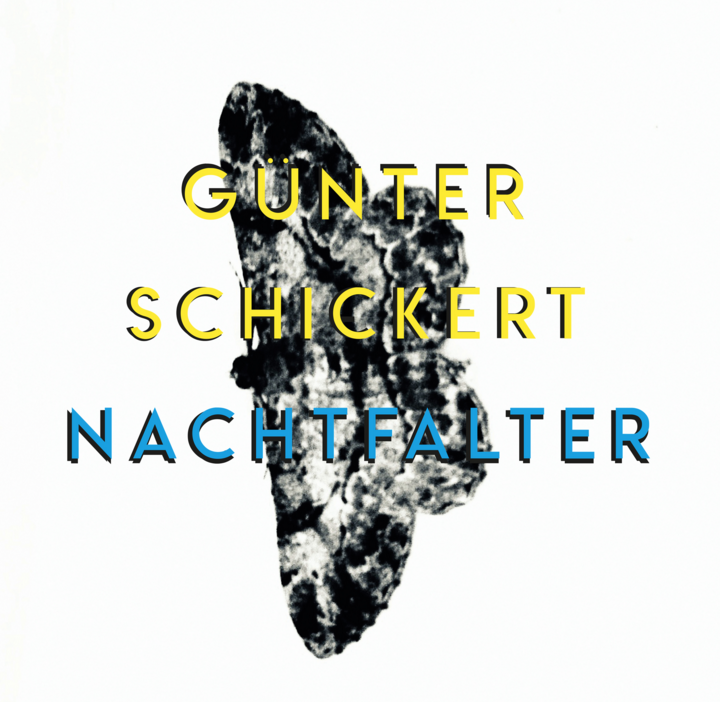
Each month Dominic Valvona brings us the most eclectic recommendations roundups, with reviews of albums, singles and EPs from across the globe and genres.
This latest edition includes a brand new album of unsettling cosmic traverses from Krautrock and Berlin guitar legend Günter Schickert – working with Ja, Panik main man Andreas Spechtl – based around the concept of his home city’s transport system and a moth; the return of the peaceable voiced folk maiden Katie Doherty and her The Navigators pals; the debut album of Latintronica, psych, prog and Kosmische peregrinations from the Argentine artist Santiago Córdoba, ‘En Otres Lugares’; a trio of World Music showcases from the prolific ARC Music catalogue, with collections from the Vietnamese zither maestro Tri Nguyen, the co-production and musical Sufi mystical transforming partnership of Abdesselam Damoussi & Nour Eddine and traditional Thrace mythological imbued Rodopi Ensemble; the debut solo album of ‘attic noise’ from Benelux alt-rock scenester Heyme Langbroek; and the brilliant new album of sentimental dreampop from Toronto musician Charlie Berger, under his newest incarnation With Hidden Noise.
There’s also the upcoming playful psychedelic pop and tropical lilted dance around the Berlin architecture EP, Rooftop Trees, from Aurélien Bernard – under his 3 South & Banana alter ego; the latest in a line of singles from the Oxford-based Swedish angulated indie pop songstress Julia Meijer;and the profound afflatus elegiac opener, ‘When You’re Gone’, from the marital fronted Settle band Society Of The Silver Cross.
Albums
Günter Schickert ‘Nachtfalter’
(Bureau B) 15th February 2019
Notable progenitor of flanging echo-pedal guitar, free-jazz instigator of the traversing cosmic GAM, No Zen Orchestra and Arumaruma (among the least obscure succession of groups), the Berlin Krautrock legend Günter Schickert continues, like so many of his surviving WWII born and Boomer generation comrades, to circumnavigate the sonic unknown; probing for tears in the fabric, looking to penetrate new horizons.
An extension of Schickert’s previous solo flights of guitar exploration – the 1975 Brain label debut Samtvogel, and the Sky label follow-up of 1980 Überfällig – Nachtfalter features all the signature echo-y reverberations and waning searching guitar accentuations. Recorded back in the summer of 2018, in collaboration with Ja, Panik navigator Andreas Spechtl, who refashioned Schickert’s untethered live performances, adding his very own drum accompaniments and loops, this instrumental album evokes both the cosmic mysticism of Ash Ra Tempel and the more haunting, ominous deep space Kosmische of Tangerine Dream. Spechtl’s production, drum patterns and effects however, add a touch of tubular metallic sheen, futuristic tribal percussion and nuanced Techno to the otherworldly, often threatening, mood.
There are two inspirations at work on this LP; the naturalistic progress and presence, and then demise, of the moth that this album is named after (this said moth also features in the artwork) and the motion, rhythm of public transport in the city of Schickert’s birth. As the artist himself says, “I was born in Berlin and I am a true city child.” And like so many before and after, the city has left it’s indelible mark; the beat (not to be confused with the Dusseldorf birthed ‘motorik’ rhythm of Klaus Dinger) on Nachtfalter mirrors the industrious clang, rattle and cycle of Berlin’s metro and buses to an extent, though the northern European atmosphere of the city’s psychogeography attracts a more darker, eerie misaim throughout. The opening ‘Nocturnus’ (as the title might imply) is especially creepy with its Kubrick monolith pulse and unsettling conch shell horn – imagine Faust and Tangerine Dream invoking the arrival of a cosmic Viking long ship, emerging from the mists. The final all-encompassing merging of Schickert’s full gamut of guitar manipulations and strides, ‘Reflections Of The Future’, even evokes moments of John Carpenter’s synth-tracked horrors.
Despite the heart-of-darkness moods and craning instrumental eulogies to the moth that by happenstance entered the studio (clinging to the ceiling all night before dropping dead the next morning) during recordings, there are occasional bursts of energetic thumping rhythm: bordering on juddering Electro on the gliding, county bowed guitar arching and leaning ‘Wohin’ (which translates as ‘Where’: indeed where?!!). There are glimmers of light to be found amongst the darkened unknowing mystery, and far from suppressive and heavy, Schickert’s guitar roams freely, drifting, wafting and expansively has he accents the spaces before him.
An impressive cool transformation of the guitar innovator’s echoed enveloping signatures and traverses, Nachtfalter benefits enormously from Spechtl contemporary and energetic production. A dynamism and touch of modern electronica is added to the Krautrock messenger’s articulations to produce a most unsettling, interesting of musical experiences.
https://soundcloud.com/bureau-1/sets/gunter-schickert-nachtfalter/s-U0Dbo
Santiago Córdoba ‘En Otros Lugares’
(Sounds And Colours) 8th February 2019
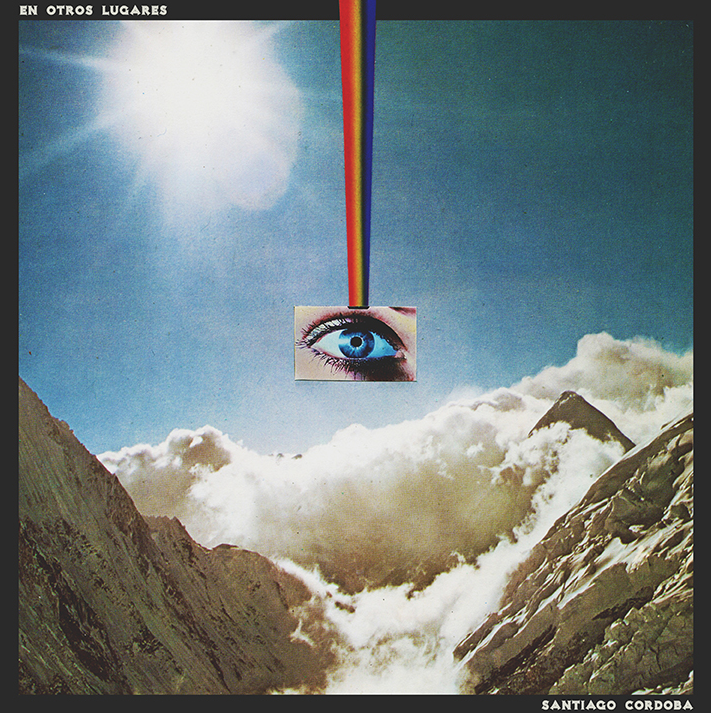
A gateway to everything worth celebrating (as much as it might also be confounding and a mystery to many) about the South American and Central American continent, the Sound And Colours hub, which includes one of the most in-depth of reference and news sites, guide books and events, has proved a rich essential source for me. Whether it’s through the site’s cultural, political and historical purview style series of accessible guides to Peru, Brazil and Colombia, or their considered catalogue of music projects, I’m kept up-to-speed and introduced to some of the continent’s most interesting artists and scenes. The latest of which is the emerging and burgeoning solo artist Santiago Córdoba, who releases his panoramic multi-city composed suite En Otros Lugares on the site’s in-house label this month.
ormerly a percussionist band member of the ‘revolutionary’ Tango outfit Violentango, the Argentine born Córdoba left his native home in 2016 for a ‘peripatetic’ life, moving from one place to the next; making a fleeting base of operations for himself in Madrid, Italy and Beirut. Backpacker travails and the sounds of each short-stay imbue this eclectic travelogue; though these often free-spirited peregrinations also stir up cosmic, magical and transcendental horizons as much as the Earthly: As the album title itself alludes, En Otros Lugares translates as “in other places” or “elsewhere”.
Both geographically and musically diverse, the opening panorama, ‘La Llamada’ (“the flamed”), traverses an amorphous Andean outback landscape, filled with ghostly echoes, arid hums and a trance backing, whilst Fuck Buttons meet School Of Seven Bells astral planning over the Amazon on the progressive psychedelic ‘A Dos Leagues’ (“two leagues”).
Post-rock influences merge with Latintronica, 2-Step, free-jazz crescendos, the Kosmische, Refree like harmonic plucks and brushed guitar, and radio transmissions tuned to poignant past figures of interest on a condor flight of fantasy and mystical voyage of thoughtful meditation.
The former Tango agitator expands his tastes and picks up a host of new instruments to fashion an impressive ambitious slow-burner of a debut album. Another brilliant South American export.
Katie Doherty & The Navigators ‘And Then’
(Steeplejack Music) 25th January 2019

Sidetracked, in a positive and inspiring way, by a detour into stage production, folk maiden Katie Doherty has probably taken a lot longer than she envisioned to release another album.
The award-winning songwriter released her debut, Bridges, to favorable reviews back in 2007 and went on to share the stage with such luminaries as Karine Polwart, the McGarrigle Sisters and Ray Davis on a giddying trajectory, before (as Doherty herself puts it) ‘life got in the way’. In that time Doherty, far from idle, took on roles as both a composer for a number of Northern Stage productions and as a MD for a Royal Shakespeare Company production. It is these roles, and ‘broadening’ of horizons that now inform Doherty, her Navigators (Shona Mooney on fiddle and vocals and Dave Gray on the button accordion melodeon) and wider backing group (which includes more chorus vocalists, a cellist, percussionist and double bassist) on the concertinaed pastoral theatrical And Then.
Three tracks specifically sound like they were plucked from the stage. And in a roundabout way they were; the peaceable air-y bellowed shanty dedication to ‘leaving a beloved city behind’ ‘Yours’ and gentle-building lulled symphony finale ‘We Burn’ were both originally commissioned by the November Club for ‘Beyond The End Of The Road’, and the enchanting picturesque scene-setting waltz ‘Heartbeat Ballroom’ was commissioned by the Wallsend Memorial Hall for the reopening of the town’s grandiose ballroom.
Marking ‘change’ in various forms and analogies Doherty’s themes encompass the change of the seasons, the life-altering change of bringing up a child in a changing society hooked-up 24 hours to, an often, poisonous internet, and the rapidly escalating changes in society as a consequence of the equality debate: Doherty, in the shape of an enervated ‘anti-apology’ framed protest, takes a dignified stance on the album’s title track, giving a more considered intensity to a R&B pop-folk backing as she reassures us that “This is not war music. This is not a fighting song.”
Such heavy important anxieties, such as the pressures of expectation (epically in our validation age of social media shaming, easy inflamed indignity and virtue signaling) and responsibility are woven into a lovely songbook, as Doherty’s lightly caressing vocals waft and dance to a mix of Celtic tradition, snow flurry landscape malady, buoyant sea motion affairs of the heart and Eastern European travails.
After years spent away from the studio, Katie Doherty emerges with a purposeful and composed reflective collection of distilled folk.
Heyme ‘Noise From The Attic’
(Jezus Factory) TBA

Spending much of his formative musical education in the Benelux, playing with a litany of alternative underground rock and experimental angulated Antwerp bands (Kiss My Jazz, IH8 Camera and Lionel Horowitz & His Combo), the Dutch-born musician Heyme Langbroek now sets out on a solo mission with his curious debut, and self-explanatory entitled, album Noise From The Attic.
Settling (for the last six years at least) in Poland Heyme puts all his past experiences into an understated album of songs and instrumentals created by the use of a loop station; Heyme using this unit to build a basic track which he then plays over the top of with various overlapping melodies, rhythms and improvisations. A quaint routine, Heyme’s attic noises, as the title makes clear, were all recorded in the said attic garret of his house, mostly on alternate Sundays. It might be nothing but by choosing the traditional day of liturgy worship to record his music on, it could be read as a metaphor for cathartic release; unburdening ideas, sentiments and regrets at the altarpiece of a home-recording studio.
Tethered to the past as much as moving forward experimentally, Noise From The Attic is imbued by many of the same performance recording techniques as used by the Antwerp collective of Kiss My Jazz; a group that Heyme served with alongside members from, perhaps Belgium’s most revered and recognized alt-rock group, dEUS. Heyme even reprises one of the band’s estranged songs, ‘Burn In Hell’; a woefully mooning ‘fuck you’ break-up submerged beneath a vacuum of Hawaiian rock’n’roll warbles. On the remainder of the LP he despondently wanes to a suffused template of Casio keyboard like presets, snozzled oozing Roxy Music and Hansa Studio Bowie saxophone, forlorn northern European melodies and chugging guitar. Within those perimeters the moody attic troubadour of alternative lo fi brooding pop does a Sparks, on ‘Klara’, evokes 70s era Floyd, on the mentally fatiguing ‘Paranoid’, adopts Blixa Bargeld’s tonsils and trans-European malady, on ‘Where She Goes (She Goes)’, and channels Eno’s ‘Another Green World’, on the far from discordant row, ‘Noisz’.
Showing the ‘proverbial’ Dutch courage, unloading worn, grizzled sentiments the solitary Heyme provides one of the year’s most peculiar reflective solo experiments. Fans of the solo work of the former dEUS guitar triumvirate of Rudy Trouve, Mauro Pawlowski and Craig Ward will find a fourth such inspired maverick to add to the list.
With Hidden Noise ‘Beside The Sea’
(Loss Leader Records) 18th January 2019

Rising with a certain languid tremble from the nocturnal wintery Canadian frontiers before dissipating back into the ether of a somnolent dreampop soundscape, Charlie Berger under the guises of his newest project, White Hidden Noise, wafts in and out of a fluxes state of pining and sighed romanticism.
Well versed in the dreampop, shoegaze and slowcore departments the Toronto musician-singer-songwriter’s diaphanous brooding album is a congruous continuation in a career that includes stints with Soft Wounds, Slowly and Tone Mirrors, and the launch of his own diy label, Loss Leader Records – of which this LP is released through. In that mode, with influences like Low (a huge influence in fact), Cigarettes After Sex and The Red House Painters lingering throughout the wistful fabric, the veiled Beside The Sea opus dreams big. Berger woos expansive heartache across the panoramas; meditating on the loss of memory to a considered purposeful backing that builds from suffused lulls to gradually built-up and swelled indie-shoegaze choruses.
The album title and gentle prompts, including the artist’s own guidance that this eight-track suite could be “moody late night driving music”, pretty much sets the listener up as to the mood, environment and sentiment. Amongst the bendy tremolo flanges and placid rhythms of the brushed cymbal and echo-y forlorn, the trio of songs, ‘The Other Korea’, ‘Close The Door’ and ‘Look’, placeably break out from their dreamy state into beautiful shoegaze-y Britpop anthems – hues of Slowdive, Gene and Sway drift around in the general absorption of influences.
It could just be me, but I can even hear a touch of early REM in the fanned-drift and soft pained harmony of ‘Further More’ and The Bends era Radiohead on the opening tenderly swooned ‘Window’ metaphor heavy plaint.
Berger’s yearned and pined ‘drive time’ soundtrack beckons the listener into a moody dreamy atmosphere of emotive outpourings; the subject of these songs remaining a lingering presence, lost, with only the traces of those memories remaining. Beside The Sea is a beautiful album – ok, some tracks do overstay their welcome – that reimagines Low as a British 80s dreampop combo.
Rodopi Ensemble ‘Thraki-Thrace-The Path Of Dionysus’
(ARC Music) 25th January 2019
Abdesselam Damoussi & Nour Eddine ‘JEDBA-Spiritual Music From Morocco’
(ARC Music) 25th January 2019
Tri Nguyen ‘The Art Of The Vietnamese Zither-Đàn Tranh’
(ARC Music) 22nd February 2019

Among the most prolific of world music and folk labels the ARC Music catalogue spans eras, genres and geography: In-depth surveys, collections and performances from the Welsh vales to Andean Mountains, from the South African veldts to Arctic Tundra. Probably sending us the most CDs of any label on a weekly basis, ARC’s diverse schedule is always worth further inspection, even if the cover art and packaging suggests the kind of CD you might pick up from a garage – filed under ethnocentric muzak. Far from it, each release is always a showcase of adroit musicianship with only the best examples of every style and tradition covered.
Usually built on the foundations of each respective artists or troupe’s heritage, these albums offer a contemporary twist on occasion: even a fusion.
Not so much randomly but just taking a trio of recent releases from the ARC stable we find three very different examples of this with the music of the atavistic recalled Thracian imbued Rodopi Ensemble, the masterful Vietnamese zither expert Tri Nguyen and Sufi-inspired advocates of Moroccan spiritual music partnership, Abdesselam Damoussi & Nour Eddine. All three commit a new energy to very old forms, and merge with influences outside their source material.
The first of this trio reverts back to the ancient moniker of what was straddling region that encompassed Southern Bulgaria, North West Turkey and the tip of Greece, Thrace; an area dominated by the 240 Km stretching mountain range behemoth that lends its name to this quintet’s ensemble, Rodopi. Steeped in Greek mythology, the Rodopi is synonymous for being the final resting place of Queen Rhodope and her husband King Haemus of Thrace; the lovers, so it is told in legend, rather unwisely offended the Gods Zeus and Hera, and were punished by being turned into the said mountain range.
Inspired by this homeland, Rodopi musically travel through Ottoman dervish, fluting Egyptian and Balkan folk on an erudite and immaculately performed collection of matrimonial, free form and scarf-waving giddy dances. Providing a swirling, but when acquired equally poised forlorn performance, the spindled spiraling lute and Kanun, heavy range of percussion (from the exotic ‘riqq’ to ‘dara-bakka’ and bendir’), swooned clarinet and weeping violin conjure up a vivid homage to a continuously changing landscape. In dual-language, songs and titles cross between Greek and Turkish; wrapped up in the obvious history of the two former dominant Empires: whether it’s in the traditional romantic flower and fauna metaphorical accompaniment of Asia Minors Greek refugees ‘Menexédes Kai Zouboulia’ (Violets And Hyacinths), or, in the tribute to the ensemble’s late clarinetist, Sol Hasan, on the improvisational ‘Roman Havasi’ (The Air Of Gypsies).
A wonderful dance of yearning remembrance and tradition, the music of Thrace is brought back to life with a touch of contemporary dynamism, flair and love.
Presenting the Vietnamese Zither, otherwise known as the sixteen-string Đàn Tranh, in a new light, ‘bi-cultural’ practitioner Tri Nguyen uses both his classical Western training and Vietnamese ancestry to delicately accentuate a collection of poetically brush-stroked scenes and moods. This congruous marriage of forms and cultures often results in moments and swells that evoke the gravitas of the opera or ballet, yet seldom drown out the light deft touches of the lead instrument.
Just as renowned for his adroit pianist articulations as he is for bringing the Đàn Tranh – a cousin of the Chinese ‘guzheng’, Japanese ‘koto’ and Korean ‘gayageum’ – to a wider international audience, Nguyen caresses a diaphanous web of descriptive quivers over classical strings and percussion on this latest showcase.
Emphasizing his native homeland and the countries that border it he mirrors the elements (the flow of a stream; the droplets of gentle rain), wildlife (the blackbird singing proudly; a galloping stoic horse) and moods (a contemplative sad refrain that ushers in a seasonal and metaphorical change; the joy of returning home after a sojourn spent away).
From lullaby to the Imperial, whether it’s a picturesque meditation or a tale from the time of China’s Three Kingdoms, the musical performances are beautifully immaculate. In truth, too classical and varnished for my taste, I have to admire the faultless musicianship.
Personally the more interesting for me of these three ARC titles is the co-production partnership of Moroccan composers Abdesselam Damoussi and Nour Eddine, who bring together a cast of authentic Sufi singers and musicians on the dynamic Jedba album showcase.
With backgrounds in everything from Hip-Hop to Jazz, Rock, Electronica, World Music and (in Eddine’s case) the Vatican’s vaults of Classical music, both musician-producers provide an exciting backing of bombastic percussion and hypnotizing rhythms to the venerable spiritual mystique of the Sufi tradition. Literally invited and transported into the studio from their impromptu performances in the famous walled marketplace of Jemaa el-Fnaa, located in the heart of Marrakech, a cast of mystics, poets and players from various tribes and disciplines gathered together for one collective exchange: The “Jedba” of the title referring to a collective dance in which people from multi faiths including Jewish, Christian and Muslim hold hands in a symbol of harmony and friendship; “united in love of the divine”.
The magic is in the fusion, as instruments as exotic and diverse as the wind equivalent of the Scottish bagpipes, the ‘ghaita’, rasps over a swanning break beat like percussion on the opening title-track, or, Arabian female tongue trills excitably warble in divine celebration over a dramatic filmic bounding accompaniment on the song-of-praise ‘Allah Hay’. Encompassing Berber desert rock, the adoring commanding vocals of Yemdah Selem (the ‘diva’ of desert music as Damoussi puts it), the solitary prayers of the bred and born Sufi and imam of a mosque in Tangiers, Said Lachhab, and giddy dance, the chants and exaltations of these Marrakech street performers is given a new dynamism and energy via the dual purpose of preservation and in beaming this entrancing mystical tradition to a new audience.
EPS
3 South & Banana ‘Rooftop Trees’
(Some Other Planet Records/Kartel) 1st March 2019

Stepping-out from the sunny-dispositional ranks of the psychedelic indie and tropical lilted London-based Cairobi – formerly, for a decade previous to the name-change in 2017, Vadoinmessico – the group’s drummer Aurélien Bernard follow’s up on his last two singles with a new EP of bright disarming soft-shoe shufflers.
The French-born but Berlin-based all rounder uses his adoptive home as inspiration, though musically the compass is pointing towards the tropical equator. The angulated skip and catchy opening track, ‘Magdalen Eye’, treats Berlin as a jump-off point; its architecture and history (where do you start?!!) echoing and reverberating in what sounds like a psychedelic dream pop with Nirvana grunge drop Ariel Pink. It also reminds me of the recent brilliance of fellow French new wavers, grunge and indie sensations Brace! Brace! The very French-esque float-y and whistle-y ‘Soleil’, sung in the native tongue, wistfully bids farewell to the long Berlin winter as the “first warmer sunny days of April” ease in.
Named after one of Bernard’s previous singles, the four-track EP includes 2018’s ‘Rooftop Trees’ and ‘Fake Jungle’ records. The first of which poses a meditation on the tensions between man-made and natural structures to a woozy psychedelic jaunt: Literally dancing to architecture, Bernard dapples the catchiest of psych and cool Gallic pop on a concrete environment. The latter, rather unbelievably, was inspired by a one-off jam session with James Brown (a throwback to Bernard’s days as a session drummer in Las Vegas), and sounds like a swimmingly Malian Syd Barrett produced by Nino Ferrer.
Light and jaunty but with a depth and sense of concern, Bernard’s oddly entitled 3 South & Banana alter-ego delivers a sumptuous cantaloupe lolloping EP of playful catchy brilliance.
Singles
Julia Meijer ‘Train Ticket’
15th March 2019

It seems almost obligatory, at least in the last decade, to affix the fatuous term of Scandi-pop to every single artist or band emerging from Sweden: whether they play guitars or programme synths. Native Swede songstress-musician Julia Meijer is no different. Even though she lives in Oxford her taciturn, slightly skewed angulated indie-pop sound falls easily into the Scandi-pop fold of classification.
With a string of singles behind her, Meijer is finding her feet; trying out new things on every one, with the only real consistency being quality and depth.
The latest, Train Ticket, is no different. A collaborative affair that features a couple of Guillemots in the ranks (Greig Stewart on drums and Fyfe Dangerfield on suffused low-ray burnished Hammond organ) and Oxford’s busiest polymath of the moment Sebastian Reynolds (Flights Of Helios, the Solo Collective, Mahajanaka project) on swallow undulated synth duties, Meijar’s musical partners construct a counterbalance between a Kate Nash fronted New Young Pony Club version of art school indie and looser, almost, quasi-Talking Heads African lilted mirage-y chorus.
Every bit as taut and tense as Meijer planned – reflecting the lyrical anxious sentiments of uncertainty, expectations and disappointments –yet bendy and supple when that same tension is lifted, the page-turning autobiographical Train Ticket proves to be yet another sophisticated slice of unsure protagonist yearned pop, and wrangled, just raw and edgy enough, indie.
Still adapting and evolving, Julia Meijer has laid down a quality series of singles thus far, all slightly different. We’ll be able to soon experience the full effect when she delivers that debut album, Always Awake, in May.
Society Of The Silver Cross ‘When You’re Gone’

Feasting out on the strength of their most afflatus (and only) single, ‘When You’re Gone’, the venerable marital-fronted Society Of The Silver Cross have built up quite a momentum and drawn some considerable weighty acclaim. Wafting on to my radar at the end of last year – included on the last Monolith Cocktail ‘choice’ playlist of 2018 – this bellowed harmonium and zither-droned esoteric profound elegy reimagines the Velvet Underground led by a lapsed-Catholic Kurt Cobain.
Achingly diaphanous despite its forlorn succinct wise cycle of lyrics (“When you’re gone, you’re gone, you’re gone. We’re only here for a while. We’re only here for a day.”), this humbled sea shanty-motion mystery was in part inspired by the band’s husband and wife protagonists’ travels across India; part of that Velvet imbued sound enacted by the Indian auto-harp, the shahi baaja.
With the spotlight drawn towards this Seattle outfit’s Joe Reineke and Karyn Gold-Reineke partnership, the Society Of The Silver Cross does also include a small but extended cast of enablers on an accompaniment that features the mellotron, accordion and host of similar evocative instruments.
Vividly dreamy in a plaintive humbled atmosphere filled with various visual references of haunting iconography, Society Of The Silver Cross’s inaugural single is a most sagacious opener; a stark but confident creation of real quality and depth that merges the underground with Gothic Americana. Brilliant.
Words: Dominic Valvona
 Monolith Cocktail Blog