The Digest for March 2026: New Music/The Social Playlist
March 9, 2026
The monthly Digest includes a clutch of accumulated short new music reviews and the social inter-generational/eclectic and anniversary albums celebrating picks.
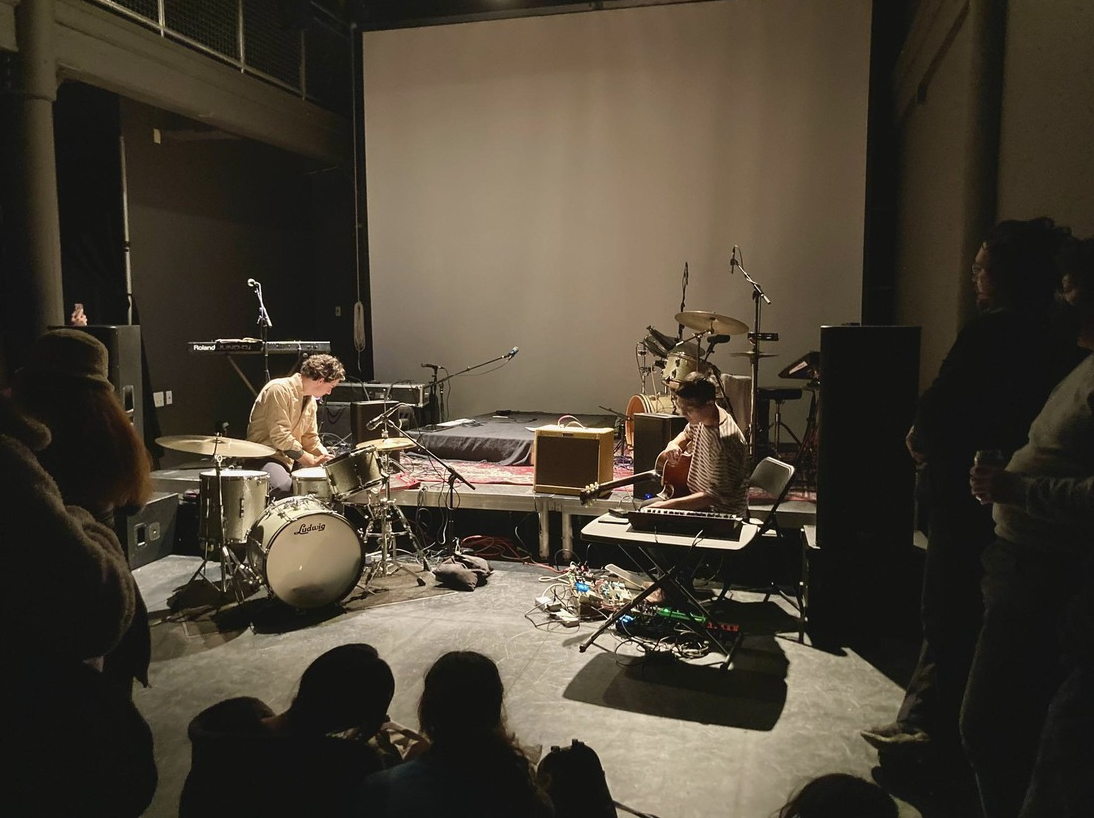
Image: Credited to the Asian Arts Initiative
Something a little different this month after missing February’s Digest deadline. In case readers/followers and those new to the site haven’t heard or seen on some of the blog’s social media platforms, I’ve been in the wars, spending a lot of time this year in hospital. Earlier this year after being ill for a while, I was diagnosed with an autoimmune kidney disease, but then was struck down, out of the blue (and totally unrelated) by a minor stroke. This has meant untold tests, appointments, and treatments, of which I’m merely just beginning to get my head around. I won’t lie, and whilst the stroke is still a mystery with no actual diagnoses as to why I had one yet, it has been a very frightening and confusing time. This will affect the site and my writing going forward, so I ask for some patience and understanding.
I’ve gathered together a number of reviews, pretty much completed before much of this happened for the new(ish) releases section. And for the archives and social playlist have decided to share videos of tracks taken from those albums enjoying various anniversaries this month (or thereabouts), from those dear artists/producers that have left our mortal realm.
___THE NEW (All those latest & upcoming releases in brief) ___
Camille Baziadoly ‘Skin On Fire EP’
(PinDrop) 6th March 2026
Somehow simultaneously intimate yet panoramic and universal, a whole emotive register of vulnerabilities emanates from the both aria-like cutting and yet also diaphanous breathed voice of the French-born, but Oxford-based, singer-songwriter Camille Baziadoly. The new EP, following on from last year’s favourably reviewed and received Fifteen album, opens with the former single and title-track, and from there, unfurls its beauty, its reverence and pained prangs of fragility across a quartet of newly written songs in the key of slowed-trip-hop-crunching-and-mechanized-winding dreampop and Gothic cinematic allurement.
Skin On Fire EP feels like a score; the soundtrack to what’s lyrically alluded to, an abstract feeling of recovery, therapeutic healing and self-care. From the very first line of declaration (“Skin is all I am”) to the loss and grief, the despondency and aches of the transfixed beatific yearned ‘Trial’ and the even more reverent, steamed and mirrored beat cranked ‘Under Water’. The former reminded me of a little of the dreamy, veiled music and voice of Celestial North, but the synths of Chromatics, whilst the latter, recalled the production of Julee Cruise and the submersible aquatic poetry and voice of Nino Gvilia and the atmospheres of This Mortal Coil. The final act, ‘Around You’, is perhaps the most tenderly if plaintive song of them all. Whether stepping outside and removed from this particular relationship, looking in from the ether and from behind the most minimalistic of backings, or lamenting someone else’s, Baziadoly fills the vapours with a real yearning.
Despite the care, gentleness and its subtleties in the use of both instrumentation and the electronic (from minimal but no less evocative piano and organ to various well-placed effects), the production has an air of gravitas and drama about it: of scale too if you like, and of ambition. Much of this is down to the highly prolific (and a constant presence on the Monolith Cocktail) Sebastian Reynolds, who in a producer’s role articulates, emphasis whilst also allowing Baziadoly’s voice to shine, resonate and breath. That production can at any time invoke the influence of Beach House, Air, and the Cocteau Twins.
It is the voice that truly makes this EP however, and its ability to soar towards the birds but also navigate the harsh realities, troubles and traumas of life, love and hurt. Baziadoly brilliantly and cerebrally emerges from the other side having shown such vulnerability and sang such heartaches of balladry to claim another transfixing success.
Márcio Cunha ‘Imaginary Soundtrack’
(Nostril Records) Released 8th January 2026
A sonic showreel collating a year’s worth of recordings made throughout the period of 2019 and 2020 – just as the world lurched fatally over the cliff edge of Covid -, the Portuguese experimental musician, composer and multidisciplinary artist Márcio Cunha’s newest release is a CV of possibilities. As a calling card and sampler of his obvious eclectic and omnivorous influences and talents, this generous thirty-six track work mines, traverse and explores a portfolio’s worth of stand-alone ideas, passages, vignettes, filmic scores, cosmic mirages and electronic motions, and comes together as one loose soundtrack.
Either submerged and muffled or clean and crystal, the overall atmosphere and sound is one of familiar Earth-bound electronica, instances of tangly and strung-out guitar and marching snares, and the buzz, fuzz and static generator force field charges of machines and the alien. For Cunha projects towards the stars, but often toward unseen, mysterious forces beyond our reaches.
Within that universe and orbit you can expect to hear techno, d ‘n’ b, kosmische, all kinds of beat-bouncing electronic, various mechanics, the more tribal, vapour waves, a roll of hand drums, liquidated electro, oscillations, the plastique, Basic Channel, Room Of Wires, Aphex Twin, Mouse On Mars, Sven Vath, Conrad Schnitzler, the industrial, music of the spheres, lunar indolent shimmies, wonky bell-ringing, the burbling, and the tubular. Some come with an added drama and celestial voiced airs, whilst others almost recall the post-punk. But there’s a general signature to be found throughout, connecting all these numerous experiments together; a sort of oeuvre with a general purpose and theme, guided or inspired by the unknown elements of the cosmos.
You’re bound to find something interesting, absorbing or able to send you off on some space adventure from this veritable CV of electronic experiments. A prolific range that will keep you invested for an hour or two.
The Early ‘I Want To Be Ready’
(Island House Recordings) 27th February 2026
Transposing a newly invested language of sonic, musical and extemporised ideas over the last five or six years together, the most recent version of an idea that was formed back in 2004, imbued by many of the Chicago undergrounds’ most enduring post-rock and post-jazz doyens (Tortoise being the most obvious glowing influence), sees guitarists and synths operator Alex Lewis and drummer and electronics manipulator Jake Nussbaum take inspiration from improvised dance.
Taking a lead from the central tenets of the choreographer, researcher and author Danielle Goldman’s 2010 published work I Want To Be Ready: Improvised Dance as a Practice of Freedom, the duo enact the book’s outlined “state of readiness for whatever’s to come”. As repeated and lifted from Goldman’s study, “A skilled improviser will be intimately familiar with her habitual ways of moving, as well as the shifting social norms that gives these movements meaning. Then, on a moment-to-moment basis, she figures out how to move.” This is a distillation of course, whittled down from years and acres of research enquiry. But as a starting point for The Early foils, this demonstratable exploration of improvisation proves a successful prompt to investigate or just let a feel lead the various forms of instrumentation towards interesting, tactile, multilayered and stirring spaces and horizons; some that melt, others that are near otherworldly or like mirages.
From the cluttering to reverberating and shuttering, the off jazzy breaks to post-rock mirages of wrangled, melting and spikier guitar entanglements and loops, meaning is transcribed via the caresses, the resonated touches, scuffs, the subtle streaks of movement up and down the nickel guitar strings, moments of melody, the drifted, the bending and various generated waves of electronica effects. Time itself falls freely in this space, the passing of it almost suspended for the duration as the duo feel their way with a kind of musical telepathy. From Tortoise-style blues to the Fourth World and the redolent explorations of Pacha Wakay, the sound of The Cosmic Range, the Zacht Autommat, of Daniel Lanois, the guitar work of Jeff Parker, Yonatan Gat, Steve Gunn and Christopher Haddow, and the pendulous near swung and thumping drumming of Werner ‘Zappi’ Deirmaier (especially on the Faust-like ‘SandClock’), there’s vague echoes of ethnic sounds and dreamt landscapes. It reminds me of a relatively obscure duo called Pidgins, and the way they stir up such familiar and yet almost unique soundscapes, horizons and atmospheres built from a stream of always evolving sources. And yet, once in the space, once together with the feelers spreading out, can magic up both dreams and the mysterious with equal skills. The non-musical and serial join together with passages of the rhythmic and melodious on an album that will unfurl its full creative expanses and oeuvre over numerous plays. A scion of the Chicago hothouse of such experiment, even if it was made in Philly, The Early pick up the baton and run with it.
MMBTUPM ‘Meditation Music Beyond The Unsleeping Psychopathic Mind’
(Hidden Harmony) 28th February 2026
Directed or merely amorphously suggested a direction by the multi-instrumentalist (mainly focused on the alto sax, the drums and synths, but I guess generally can get a sound out of anything) and prolific instigator Davin Brahja Waldman, the newly brought-together Meditation Music Beyond The Unsleeping Psychopathic Mind troupe of like-minded twisted and untethered artists/musicians invoke various apparitions, paranormal, spiritualist and new age vibrations from the Fortean transmitter on their inaugural session together.
Drawing from an ensemble that includes a triple-threat of saxophonists covering all the tones (Devin himself on alto of course, joined by Adam Kinner on tenor and Conner Bennett on soprano), another triple bill of keys, synth and vocalists (Annie Shaw, Sarah Good and Devin tour mate Nadah El Shazly), and various guitarists and drummers (Vicky Mettler and Alexei Orechin in the former camp, Daniel Gélinas and Philippe Melanson in the latter), Devin stirs up an improvised smog and hauntology of a both damaged and solace-finding bluesy psyche.
From stoking up supernatural atmospheres to charging up meditative pulsations fed through various generators, the atmosphere is heightened by a simultaneously feeling of unease and the unknown in equal measure. Redolent wafts, dried exhales and the pipe strains of jazz and such saxophone luminaries as Julius Hemphill, the Pharoah and Donny McCaslin are woven into a fabric of old RKO ghost scores, the wails, soars and apparitional otherworldly evoking vocal expressions and mewls of Matana Roberts, the synthesized calculus and data of esoteric technology, the brainwave experiments of Nehan, and the body movement mechanism rhythms of David Ornette Cherry. And even within that framework of the extemporised you’ll hear what can only be described as passages of New Orleans dockyard smog and procession, and a near child-like apparatus of ghost house toy instruments on the march.
A peculiar place and vibe are envisioned from an enviable pool of talent (Devin alone has performed with or played foil to Patti Smith, Thurston Moore, Lydia Lunch, his famous poet aunt Anne Waldman, and Malcom Mooney, but also steered his own Brahja band and been a member of Heroes Are Gang Leaders and Land of Kush) on their first outing together. A baptism of strange no wave jazz, the séance, the transcendental and paranormal cross streams in an improvised state awash and circulated by bellowed and wooden mechanised movements, bellows, roulette-like spins of bearings and the spellbound.
Phew & Danielle de Picciotto ‘Paper Masks’
(Mute) 20th February 2026
Whilst unassumingly stuck out in the hinterlands of experiment and electronica, a collaboration between Phew and Danielle de Picciotto proves an unmissable and intriguing phenomenon to experience and savour.
Phew’s own entry into this field of explorative and manipulated investigation and inquiry started with the instigation of the Osaka psychedelic-punk group Aunt Sally in 1978, which she fronted until their brief but influential burnout just a couple of years later. During the next decade Phew would work with an enviable cast of experimental doyens including Ryuchi Sakamoto, DAF’s Christo Haar, and, as if to tie in with this latest union, Danielle’s husband and foil Alex Hacke of Einstürzende Neubauten fame. Fast-forwarding to the noughties and the underground pioneer has performed live and recorded with The Raincoats’ Ana Da Silva, Jim O’Rourke and Ikue Mori and Yoshimi of the OOIOO/Boredoms/Saicobab arc of ensembles. Her solo work tends to err towards amorphous sonic sensibilities that exist both in the metallic gauze of space and in more concentrated earthly reverence.
Danielle meanwhile, is the co-founder of the Love Parade, the lead singer of the Space Cowboys, for a longtime, a stalwart member of Crime And The City Solution and member of Ministry Of Wolves. But for the last nine-years Danielle has been making some her most sublime and interesting work together with her husband Hacke under the “symbiotic” coupled Hackedepicciotto banner – standing at five albums thus far. Mixing anything from heightened snatches of beauty, romance and drama to a backdrop of the Biblical, cinematic and ominous, the Morricone, the Weimer and heavy meta, their sound and performances have proven as captivating as they are dream-like, Gothic and otherworldly.
Produced “quietly” we’re informed over the course of five years, the futuristic, alien and sci-fi contextualised, discombobulated and manipulated Paper Masks finds Danielle’s vocalised and spoken interests, stories, observations, fairy tales and inquisitive announcements transformed via Phew’s various apparatus of effects and minimalistic
Drawing on decades of experience whilst always responding to the now, both partners in this latest enterprise combine forces to create a unique space and soundscape; a cyber ecological plane of archaeology filled with the ghosts, traces, messages, and cerebral memories. Phew envelopes, wraps or places a factory of unseen mysterious alien machines and tech, acid squiggles, looming piercing arcs, code and high pitches and frequencies around, above and under Danielle’s both surreal and evocative wordage. From furry philosophers and ghosts to the tundra and fog, and the flights of whispered thoughts that are prompted by personalised memories and incidents, a transformed language of mewls, phrases, narration, song, the untethered and unshaped is now woven into a dialect both humanly distorted and droid-esque, mournful and ominous. And yet, at times, it feels or sounds like a fairy tale transposed to off-worlds and the age of technological symbiosis.
Simultaneously as haunting and mysterious as it is Intelligent and challenging, Paper Masks wears its many faces well to straddle the worlds of art, theatre, electronica, the spoken word and cyber. A signature Mute experiment and listening experience, and yet something very different and original. Let’s hope the two partners bring their talents together more often in the future.
Toshi Tsuchitori and Ryuichi Sakamoto ‘Disappointment–Hateruma’
(WEWANTSOUNDS) 27th February 2026
Whether it was building a unifying electronic music post-war future with the Yellow Magic Orchestra, building Bamboo houses of colour with David Slyvain, scoring the harrowing tragedy of war with Merry Christmas Mr. Lawrence, or winning gold at the Oscars/Grammys for his innovative soundtrack work, Ryuichi Sakamoto reworked neoclassical and electronica into a most influential new language – not totally at odds with its past, yet constantly evolving and probing at the edges of the undiscovered. But rewinding back further, to the incipient days of the early and mid 70s, whilst still a student at the Tokyo National University of Fine Arts and Music and a contributor to such influential outliers as Transonic Magazine, Sakamoto was navigating his way freely and untethered as a member of the multimedia group Gakushudan alongside future collaborative percussionist and ethnomusicologist Toshi Tsuchitori.
Crossing paths in those burgeoning days, the pair quickly worked upon their obvious musical/sonic chemistry to release a new language and interacted experience devoid of solid foundations and free of boundaries. Tsuchitori had recently returned from New York having imbued himself and embraced the philosophy of free form jazz luminary Milford Graves. For those unfamiliar with Graves natural fused approach, he drew upon Indian, African and Asian rhythms, playing with and for such icons as Sun Ra, Albert Ayler and Anthony Braxton. And if you have been following my Monolith Cocktail Social playlists over the years and months, will perhaps recognise Graves as the drummer totem alongside Arthur Doyle and Hugh Glover in the obscure but highly influential Children of the Forest trio.
Breaking from convention, the duo transmogrifies Shinto spirits and traditions and various other Japanese forms from across the centuries into a hurtled, collapsing, often racing and wild convergence of Western avant-garde forms, abstract-classical, free form jazz and the ambient. Certainly not music in any serial or familiar sense, these experiments, improvisations or whatever you wish to demarcate them are mostly devoid of rhythm and form; more expressive unyielding clashes and quietened passages of air, skying and the wind – passed through vents and metallic contraptions. Taking up a whole side, the opening ‘綾 (Aya)’ is one such climatic acceleration of drums, percussion and running, dashing and scuttling piano that recalls Graves and Billy Cobham stirring up voodoo spells, rituals and an entanglement of scrapes and rattles.
Later on, there’s what sounds like the marimba, the steel drums and more zippy prangs and hinged springs of piqued percussion. ‘a / Φ (musique differencielle 1°)’ however, sounds like something you’d expect to hear on an early Richard James album, and seems almost hypnotic: an early attempt in my mind at combining minimalist techno and mysticism. Playing with their lips and tongues at times, especially on the finale, ‘∫ / 𝔷 (musique differencielle 2°’, there’s another attempt to break away into something highly experimentally weird as, and I’m not sure who it is, puffs, shoos, exhales steam-like breaths and swats whilst the sticks roll across skins and rims, or sometimes fall imaginatively across an apparatus of world drums and percussive tools.
Released for the very first time on vinyl, this original 1976 LP (put out by the notable producer Yukio Kojima on his equally notable imprint label ALM Records) will find room with fans of Sakamoto, but also those craving something highly avant-garde and experimental, just with enough touches of African/Afro-Cuban/Asian and free form jazz drumming. Sakamoto wouldn’t dwell long on this phase of exploration, of breaking entirely from tradition and form, so get your fix whilst you can as I’m sure this highly sought-after vinyl package from the guys at WEWANTSOUNDS (one of my favourite such platforms over the last decade) will fly.
/ALBUM ANNIVERSARIES SECTION_______
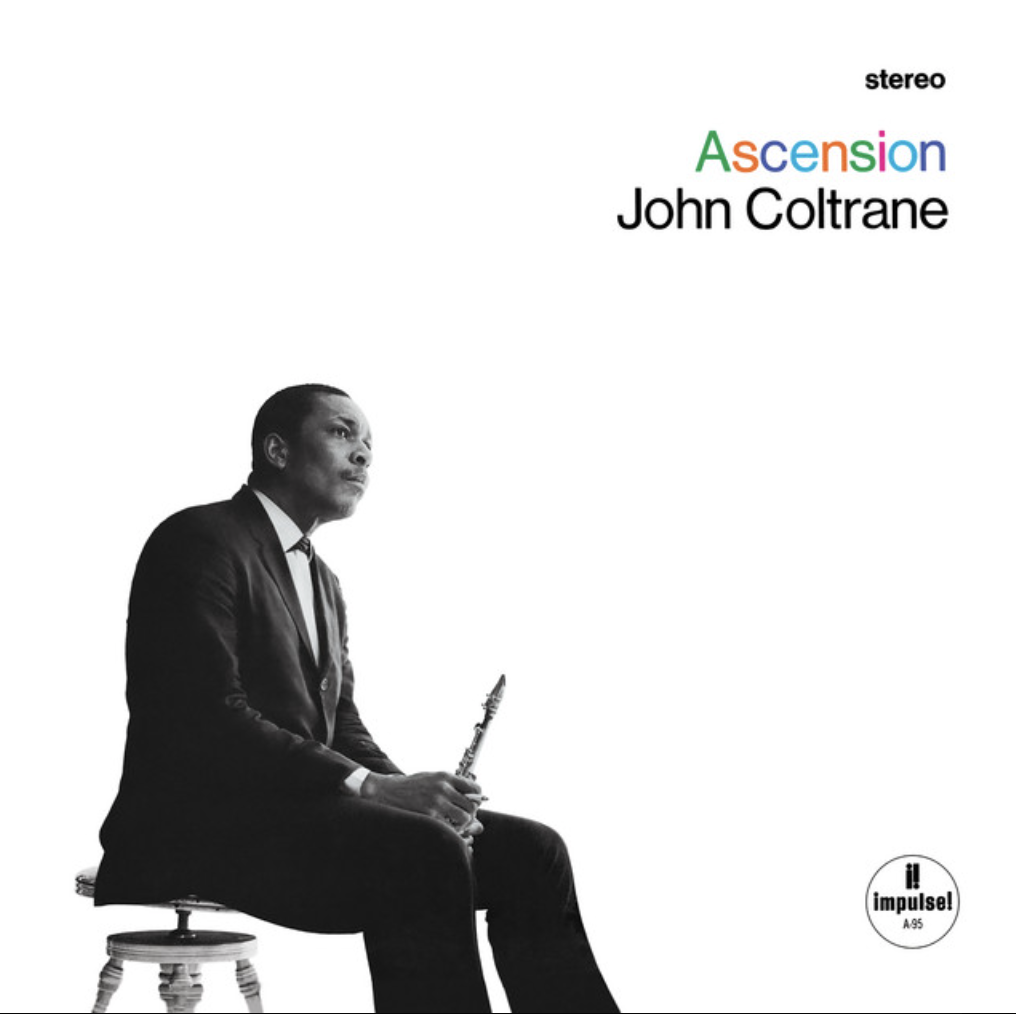
No playlist this month, but video selections tied to those albums celebrating anniversaries this month (and some from February too). Starting with demigod jazz sublime progenitor Coltrane and his 1966 LP Ascension.
Placebo meets Radiohead on the peripherals of Britpop, one of those unique bands form the period that should have been much bigger than they were: accumulating plaudits but not the sales and fame. Subcircus delivered one of the better LPs of that era with their debut Carousel.
Sparks Hello Young Lovers reaches its twentieth anniversary. The Gilbert And Sullivan of cerebral pop music takes the form to ever-new intelligent heights of absurdity and revelation. Daring to merge intellectual ideas and themes into an art form; yet never laborious, condescending or aloof, every song on this theatrical rock and pop suite features an infectious melody, satirical but heartfelt clever lyricism and the usual Noel Coward piano witticisms (updated for the modern age of course).
Time to rip it up with the screamin’ tantrum boom of The Sonics; Garage band proto-punk miscreant royalty, the band’s era defining Boom LP is unbelievably sixty years old.
One of Cope’s muthafuckers and idols, the Arthur Lee led Love dared to dream bigger with their Baroque flourishes, jangles and lamentable love requests. The tapestry songbook that is Forever Changes is also sixty years old this month.
Fast-forwarding to the 90s, and Howie B‘s influential LP, Music For Babies is thirty this month. In that Mo Wax trip hop way, here’s one of my faves, the title track:
Prince time. Parade is forty in March. And here’s my fave of all time video and track, Mountains. The man was incredible. How do you make the shakers effortlessly cool? Or running on the spot in Casanova Rose of Texas gear look cheekily sexy and sassy? Could be naff in anyone else’s hands, but works in the hands of such a singular talent. I miss the conceptual planning, the whole effort from pop stars today as AI does the heavy lifting, and most artists seem totally devoid of ideas. “Guitars and drums on the one!”
Mock 21st century terrordome meets art-punk new wave. Does anyone remember Sigue Sigie Sputnik? Well Flaunt It is forty this month, an LP perhaps ahead of its time or maybe not.
Something more cerebral and experimental now with a live version of the title cut from jazz guitarist progenitor Pat Metheny’s 1976 LP Bright Size Life. Still going strong, with recent releases, we hail back to the 70’s era of fusion-jazz.
__THE DEARLY DEPARTED/___
Pete Dello: Baroque scrolls and flourishes of yearned love, Pete Dello is best remembered as the lead singer of Honeybus during the 60s and for the hit single I Can’t Let Maggie Go. Which is enough in itself to be inducted into great hall of fame and pantheons. But growing up in my household it was Pete’s remarkable And Friends effort Into Your Ears that really resonated and led to my appreciation of his songwriting talents. Quintessentially English, forged from the worlds of Lewis Carroll and T.H. White, this cultish psychedelic Baroque folk songbook uses various characters (including the knightly earwig Harry) to imagine disarming songs of regret, the lovelorn, yearned and fantastical. If in raising a glass to Pete you explore any of his work, this is a great place to start.
John Maus: You got to feel for poor old Maus. Any other vocal pop group of the 60s era may have seen his rep fly. But unfortunately for Maus, he shared the stage with the genius baritone Scott Walker, who’s tones better suited the arrangements and the sense of scale and moodiness of sullen unrequited and dramatic love affairs. Both changed their names to better fit their newly formed Walker Brothers aggrandisement with third member and garage band royalty Gary Leeds (a former Standell no less). But whilst despite his own self-inflicted sabotages, Scott’s star rose, John’s merely fizzled out. And despite attempts to go solo after the Walkers first split in the late 60s, the trio in mosey mode donned cowboy denims and reformed in late ’74. Staying together until the dawn of the next decade before finally drifting aimlessly apart, they did manage to produce the coveted and extremely influential Nite Flights LP, which though unsuccessful in terms of sales is critically up there. In between regular jobs John knocked out the odd recording, but never returned to the heady days or success of the Walkers triumphant period in the 60s. And never really connected with his old foil Scott.
Simon Harris: Almost going unnoticed, but not to an old Britcore Hip-Hop head like me. Producer and Music of Life founder Simon Harris passed away last month. Its’ his highly influential and memorable comps from the 80s that cement the rep for me; platforming early raw tracks from the Demon Boyz, She Rockers, Derek B, Asher D & Daddy Freddy, Hijack, M.C. Duke and many others: part of the original stable of UK talent that fought back against the US wave of hip-hop, giving it a distinct UK twang and even harder edge at times. A real progenitor and leading light in the scene that deserves our full respect.
Country Joe McDonald: I couldn’t not mention counterculture figurehead Country Joe, who literally died in the last couple of days (as I write this). Obvious choice, but his famous crowd-led rendition of THE Vietnam protest song at Woodstock in ’69 – at the age of 17 he enlisted in the US Navy, stationed over in Japan. The Boomer journals will go in overdrive, so I’m not wasting time with obituaries or list of accomplishments. But suffice to say, Country Joe released a hell of a lot of quality protestations, rebellious yells, most notably with his The Fish comrades. Go seek out.
THE MONTHLY DIGEST INCLUDES A CLUTCH OF ACCUMULATED NEW MUSIC REVIEWS; THE SOCIAL INTER-GENERATIONAL/ECLECTIC AND ANNIVERSARY ALBUMS CELEBRATING PLAYLIST; AND CHOICE PIECES FROM THE ARCHIVES.

Image: Violet Nox artwork by Allison Tanenhaus
_/THE NEW___
Bedd ‘Do Not Be Afraid’
31st October 2025
After an initial break from the site – this is down to me, and not the band -, the Oxford bedd project led by singer-songwriter, composer and producer Jamie Hyatt has now appeared twice in the space of just a few months: firstly, back in the June Digest with a bridging style EP entitled Monday 10:55, and now, this month, with a full debut album called Do Not Be Afraid.
Repeating myself again, sometimes I excel myself with a descriptive summary, and with one of bedd’s most early singles, ‘Auto Harp’ (released during the lockdowns of 2020) I described the sound as “an understated breath of fresh air from cosmic suburbia”. This beauty of a single was followed at a later date, during Covid isolation, by a premiere of ‘You Have Nice Things’, which seemed to have continued with its small-town landmarked sense of isolation and sad detachment on the EP’s title-track, the very specifically timed capture of nocturnal plaint and heartache ‘Monday 10:55’.
None of the tracks on that EP feature on this debut album, but it does gather up a string of previous singles, stretching back over the years, including ‘Party On dude (Endless)’, which featured on Jon Spira’s The Life and Deaths of Christopher Lee homage film in 2024. The track itself, is a two-parter of a sort, starting off with more haunted wistful piano tones, synthesized atmospherics and chemistry set sounds, before suddenly entering a party vibe of 80s old school hip-hop and electro samples and scratches and Chic-like funk: think Lovebug Starski meets Whistle and Doug E. Fresh in the graveyard. Jamie, the mastermind behind bedd and instigator of The Family Machine, The Desires and Medal trio of bands, has scored a few film projects over the years: most notably the Elstree 1976 documentary film that chronicles the making and legacy of Star Wars. You could say that this filmic quality and experience, a bit of scale and drama, has helped to lift much of the material, giving crescendo, a build-up and oomph to the mainly indie-rock and electronic-pop influenced sounds. Sometimes the near fatalistic tone of the voice and lyrics rises above the melancholy, malady and eulogy to twinkle and glisten with a big swell or sense of something much bigger: the universal perhaps.
Before going any further, I need to name the band that has formed around Jamie for this project, which includes “a range of celebrated local Oxford musical talent”. There’s bass player Darren Fellerdale and guitarist Neil Durbridge, both bandmates from Hyatt’s previous project The Family Machine, plus the guitarist Tom Sharp, electronic musician and producer Tim Midlen (aka The Mancles of Acid) and drummer Sam Spacksman. Together, they push the fragility and vulnerability towards the stars with music that sits comfortably between a traditional band set up and the electronic (much of which is atmospheric, rather than in the form of synth waves or bass lines and such; far more in the manner of the cosmic, of adding something more magical, of transmissions, the odd captured recordings of chatter and the environment); they sound on occasions vaguely Britpopish, a little like Radiohead circa Pablo Honey and The Bends, Jeff Buckley, Benjamin Shaw, and on the shorter saddened song track about expectations, of life and being left deflated ‘Bed Sheet’, like both Blur and Gene.
I’ve already used the word fatalistic, and with references to Bowie’s Ziggy period world ending calamity (‘Five Years’), and despondent impressions of our social media and self-obsessed culture and its ways of dealing with tragedy, death and loss (‘Gone’ and ‘I Whoo Yeah’), you’d be right to expect it. And yet, the candidness of Jamie’s lyrics, especially on the nostalgic and fragile eulogy ‘Everything’s Coming Around’, have lift and a quality of endurance as our protagonist pushes through a weight of memories. Cutting through beautifully the filters of an Instagram encased world, Jamie transforms real concerns, injury and failures into something very magical and full of memorable tunes, hooks and feeling. A great album from a fine project indeed.
Yusef Mumin ‘Journey To The Ancient’
(WEWANTSOUNDS) 31st October 2025
Continuing to unearth those both privately pressed and obscure recordings from a golden period of free from conscious and Black identity jazz, the reissue specialists at WEWANTSOUNDS have collaborated with the notable musician Yusef Mumin to bring some of his previously unreleased peregrinations and expressions to vinyl for the first time ever. Following on from last year’s extraordinary Black Artist Group ‘For Peace And Liberty, In Paris December 1972’ special (of which there are some musical parallels), the label has brought together a quartet of recordings from the multi-instrumentalist, co-band leader and pioneer’s personal archive. Bringing an expanded context, and a framing of the history, the relevance, the influences and sparks of inspiration, prominent jazz writer Pierre Crépon joins the dots with some insightful liner notes, making for a very desirable package.
Whilst I won’t just repeat Crépon’s studied but creatively written research and notes, a rough outline of Mumin’s career is needed before we go any further. Born Jospeh W Phillips on August 25th, 1944, the wartime baby grew up in Cleveland, a city that would prove a hub, crossroads for all kinds of societal, spiritual, radical and cultural activities. Drawn from a young age to such luminaries of the jazz form as The Modern Jazz Quartet and Yusef Lateef, but also classical pioneers such like Igor Stravinsky, Phillips would develop his own musical language, inspired by reading liberally a great many esoteric works: taking an interest in everything from Zen Buddhism to the Kabbalah, the Zohar, but eventually finding a calling from Islam. Cleveland during this time, as a growing epicentre of Black Nationalism, of Black self-preservation and worth, hosted such groups as the Nation of Islam (where they set up Mosque No. 18), a Moorish Science Temple and branches of the Ahmadiyya (an international Muslim movement started in India in 1889 by Mirza Ghulam Ahmad, who purported to be divinely appointed as both the Mahdi and Messiah). I’m not sure when, but in the tradition of such Islamic faith conversations, Phillips adopted the Yusuf Mumin name – a reconnection with his African/Islamic roots, a rebirth if you like and shedding of a European-Christianised identity, the mark of ownership.
Taking up alto saxophone, absorbing a fecund of jazz sounds and developments taking shape in the 1960s – from Ornette to Sun Ra and Ayler (an artist he’d have a lifeline interest in, a praise for; his own art said to be a continuation of what the free form tenor saxophonist started), Mumin gravitated towards the trumpeter Norman Howard, who’s credentials included a stint with Ayler: namely playing on his iconic Spirits LP. They formed a group together for a fleeting passage of time before Mumin co-founded his most iconic partnership a year or so later, the Black Unity Quartet. The original quartet soon pared down to the now legendary trio of Mumin (on reeds), the cellist Abdul Wadud and drummer Hasan Shahid (weirdly, and I must point this out, when searching online for a bio or any details of this short-lived group, there are multiple versions of this lineup being shared, examples of misinformation: names spelt wrong, instruments attributed wrongly too.) They’re predominantly known for the cult status and rarity of their only LP, Al-Fatihah, recorded in the December of ’68. Privately pressed with no interference, but crucially no publicity or push from a label, it would take decades for this record to be re-issued and given a larger significant launch and place in free form jazz history – an interview with Mumin, and a playlist selection featured in the Wire magazine at the time of this release. Inspired by the afflatus and the opening chapter of the Quran – the first seven verses of prayer that gives guidance and mercy -, Al-Fatihah can be translated into English as roughly “The Opening” and “The Key”. Carrying on this journey, going on to collaborate with an enviable cast of jazz greats Charles Tyler, Horace Tapscott, Arthur Blythe and Butch Morris, Mumin built up an impressive archive of his own recordings; some of which are now finally seeing the light of day as the Journey To The Ancients album.
With only his Dan Nuby double-bass credited pseudonym and the drummer William Holmes (an “associate” we’re told of the blistering alto free form, modal and hard bop luminary Sonny Simmons) as company, Mumin’s quartet of recordings are brought together for a fitting showcase of spiritual, longed, radical free-play and searching, questioning roots jazz. Despite featuring different themes, it feels like a complete work: a missing act from the celebrated cannon that connects the spiritual and political quest for African American liberty with a hunger for the homelands, and unity under the crescent flag. As my reading goes, the short opening passage of Bakumbadei, is a divine song of longing, and an invocation. As both Mumin himself and Crépon’s make clear, the title “relates to power of definition, or new wine, as offerings to the fathers.” Playing the cello, both as a mark of respect to his former foil Wadud (rightly acclaimed as one its finest practitioners in the jazz and classical fields) and because it just sounds so evocatively deep and almost pained in expressing a majesty, a dignity, and classical strain of the atavistic, Mumin also sings with an equally deep, but not quite baritone, voice, repeating the title chant, spell.
The very next piece, and title-track, now opens the door into a more extensive world of ancient caravan trail jazz. Incipient stirrings, shakes of Kahil El’Zabar and drifted rasps of saxophone moodily conjure up a landscape of some dreamt-up vision of Arabian North Africa, of the Middle East and the Fertile Crescent, but also of something far more out there in an alternative plane or dimension. A spiritual, pining Afro-journey with classical traces and a touch of the New York Art Quartet, Jospeh Jarman, Maurice McIntyre and the James Tatum Trio Plus. An awakening you could say, its sets the pathway up for what’s to come.
‘A Distant Land’ is another of those searches, this time for a new Jerusalem or a land in the sky. What could be tablas set up a more bended and buoyant Eastern feel of the longed. The spaced-out bass notes, sometimes ponderous, make steps on this slow rhythmic trial as the flute now, half in the style of Llyod McNeill and half in the style of Jeremy Steig chuffs and blows its course across a deep dive of temples and jungle.
More unsteady, with Holmes’ improvised like and active minor tumults of free form drumming, ‘Diaspora Impressionism’ is a tumble and uneven keel expression of the misplaced people, but also a response to the pain, ancestral trauma and indignity, the travails of the Transatlantic slave trade legacy. At time Mumin is blowing almost dry, without any spit, in reaching that encapsulation of hurt and anger; there’s parts in which he is literally, or sounds like it, fighting with his instruments as the fraught sax mimics the viola and violin. And yet amongst the splashes and rolls, there’s passages of rhythms and melody to be found; a yearning moment or two in which the trials and tribulations find some sort of peace. But as this combo go at it, they perform a wild form of jazz that has parallels with the art of the Children of the Forest, Wayne Shorter, Evan Parker’s more far out material, Ayler, Sunny Murray and Dewey Redman.
An album of beauty and toil; of consciousness and the imagination; a balanced and congruous set of recordings that feels like a unifying statement of divinity, experimentation, hardships and free expression. WWS have done it again and retrieved a vital album from a key and pioneering artist/musician in the story of free form jazz.
NiCKY ‘with’
(PRAH Recordings) 28th October 2025
Broadening the scope and the queer landscape musically whilst inviting in some congruous collaborative bedfellows since their last outing, with the by EP in 2024, the London songwriter and performance artist simply known as NiCKY presents a new songbook of haunted, touching, tender and resilient balladry, theatre-esque numbers, behind closed doors masquerades and near heartbreaking drama.
From the very first brush of tambourine and affecting touch of late-night saloon poised piano on the opening beautiful, but hunting, declaration ‘I Saw You’, I was sold. Slowly charged with expressions of both vulnerability and lust, played out in the dimmed lit recesses of an after-hours drinking hideaway, with one eye in anticipation of the next affair, the next pick-up, yet desiring a special frisson and love, with the passing influence of Lou Reed, John Cale, Stephan Trask and Anohni, NiCKY reworks lyrics originally conceived by the queer Irish playwright and activist Colm Ó Clúbhán and the theatre group that he became a member of once immigrating from his native Ireland to London in the early 70s, the Brixton Faeries: their activities emerging from the noted Railton Road squats. In its original form, the song first featured in the “agit-pop play about cottaging” GENTS, but finds a new avenue of expression, disarmed with a different kind of poignancy and heartache, and now repurposed for a restaging of Ó Clúbhán’s Reasons For Staying play – an avenue for telling the marginalised stories of the Irish diaspora in the capital, centring on the lives of its queer characters, but also of those women seeking abortions. It’s a highlight for me on a generous EP of such “uninhibited” serenades, off-Broadway cabaret turns, and the requited.
Already off to a great start then, the second number, ‘The Fall’ features the iconic French chanteuse, writer (from the International Times to plays), one-time tightrope walker (taking to the high wire or rope for such diverse companies as COUM Transmissions and Jérôme Savary’s Grand Magic Circus in Paris) and celebrated underground icon (memorably appearing and performing in Derek Jarman’s Jubilee and also, apparently taking part in Andrew Logan’s Alternative Miss World gala) Hermine Demoriane, who’s circus skills come in handy, metaphorically speaking, on a song about emotional support. Providing a safety net, Dermoriane’s unmistakable unique voice (for some reason, reminding me of Isabella Rosselini when she tries on a French accent) spins circus analogies to a piano led ballad that reminded me in part of both Mark Kuzelek and Elton. You can also pick up the soft, near brushed and slipped, drums I believe, of another guest, the alt-jazz, R&B and soul multi-instrumentalist and artist Donna Thompson, and the squeezed subtle wistful saxophone of either Euan Hinshelwood (who also produces and plays some bass on the EP) or CJ Calderwood (the multi-disciplinary artist and composer, who you may recognise as a member of both Lol K and Good Sad happy Bad): sorry, it doesn’t specify which one played on this track.
I use the words torch song, but in a lazy fashion, and it might be out of place here: Though you could perhaps argue that the heartbreaking curtain call, the swan song of ‘Fool’s Convention’ is one such torch song; apparently, so the notes say, a fusion of Kylie’s ‘I Believe In You’ and Nat King Cole’s ‘Nature Boy’. But there is a held, restrained, emotional charge to each of these songs that is hard to put a finger on.
In a liminal spot between resolution and malady; between hurt and lovelorn celebration; the rest of the album falls between Bob Fosse imbued theatre-musical and the music of John Howard, the observatory songwriting of Soho night owls, and a contemporary vision of a wistfully voyeuristic Ivor Novello cataloguing the goings ons and affairs at private views and parties in the capital. Although, the piano riff on ‘LDN Wars’ did remind me for some reason of Bruce Hornsby.
Variations on the signature include both the longed American dreamy stage number ‘Pink Pony Club’, which finds NiCKY adopting more of a Jack Shears persona; carried over into the next track, ‘Private Glance’, which has a Brazilian carnival meets Latin Miami atmosphere, and sounds at any one time like a shimmy-chimmy parade of Grace Jones, Midnight Magic and Roxy.
A most excellent second EP from an artist with much to share and shed on the themes of queer identity, vulnerability and resilience; the craft is superb and affecting. Definitely a choice release this month, if not this year.
Pray-Pax ‘The Lolita Years’
(Zel Zele) 24th October 2025
You’ve got admire anyone who can riff on CAN’s ‘Chain Reaction’ whilst deliberating on sexual and material fancies in the style of Lydia Lunch, but this is just one such take-away from a compilation style overview of the pioneering sound and musical theatre of the 1980s French duo. Combing a Krautrock sample with speeding cars and snatches, manipulations of Musique concrète, they turn a play-of-words on ‘Can’t’ to something approaching no wave post-punk swing. And they do this fusion of the haywire, the silly, the maverick, the dadaist and modern throughout a collection that brings together a multi-disciplinary array of their “unearthed” pieces.
A moiety, a part of the expanded Lolita Danse collective of dancers, artists, set designers and musicians – both that and the name of this survey possibly the very worst thing to ever look up online; that French obsession and flirtation with the taboo and all that -, Pray-Pax provided the soundtrack to an organised chaos of individual expressions and contemporary dances: an act that takes in circus-like acrobatics, the anarchic, kinetic and contemporary. And as part of a greater reprieve of this ensemble’s work, from ’81 to ’89, the design studio Mestiza Estudo is set to publish the Lolita Danse archive at the end of the year. As the press release outlines: “The book features material drawn from a selection of more than 10,000 images that document not only the collective’s performances but the entanglement of their personal and professional lives. This will form a portrait of the collective in motion: sets, costumes, music, videos, drawings, rehearsals, and more. The archive extends far beyond the visual: travel journals, letters, sound recordings, press clippings, and videos trace the full sweep of their creative ecosystem.”
Herding a messy story, from an ensemble that performed either solo in duets or as a group, and one that managed to slip any form of easy categorisation – never unifying under one banner, nor outlying or defining any particular sound or style -, the Istanbul/London shared label and NTS radio show platform Zel Zele present a fourteen (sixteen in the case of the digital formats, with the extras being bonus material as such) track document of art-music and sound fusions.
Behind the Pray-Pax moniker lies the creative instigators Thierry Azam and Alain Michon. These very capable experimental musicians combined the cabaret of the absurd, the frightening and playful with a sound collage that warped, reversed, cut-up and transmogrified everything from no wave to Iberian classical guitar, jazz, the classical, Fluxus, the concertinaed music of old France, post-punk, alt-Catholicism, the mysterious, noirish and the work of Francois Bayle and Pierre Schaeffer – especially on the opening flippery of the vague Afro-rhythmic, marimba bobbled, transmission synching cut-up ‘Domani non c’e sarà più’ (or “tomorrow there will be no tomorrow”), which sounds like a concrete version Holger Czukay, David Byrne and La Monte Young sharing the stage together.
There’s a combination of ideas that run from the rhythmic, the vocalised (though also examples of the talked, narrated and pranked) and beat driven to those that are soundtrack-like or just really odd. Tracks like ‘Down in the North’ sound like a phantom haunting The Residents and Art of Noise, whilst ‘Prudnik Blues’ sounds like a no wave jazz bluesy noirish juxtaposition of Cecil Taylor, Ramuntcho Matta and John Laurie. ‘Le Harve’ imagines Moebius and Roedelius decamping to the Northern French coastline, ‘No Regrets’ seems to transform some silver screen score from the 1920s into a Mexican mule ridden clip-clopping and French serenaded exotic experiment from Sakamoto’s Esperanto album. But bells also chime, pool balls are pocketed, dogs bark, wisps of ether draw across the crypt, and the rain falls on a number of atmospheric pieces. And within those perimeters you can detect passing traces of Devo, The Flying Lizards, Cage, and Lizzy Mercier Descloux.
Your mind has to do the conjuring without the performances (although there is a video of ‘Can’t’), and for that these pieces of music prove very intriguing, imaginative and in some instances, convulsive and hip in that downtown NYC way. In all, a very interesting survey of musicians combining performance art, dance and sound for a snapshot of the French experimental 80s.
Violet Nox ‘Silvae’
(Somewherecold Records) 21st October 2025
Building new worlds, futuristic landscapes and intergalactic safe havens in the wake of vapour trails of laconic, hypnotizing new age psy-trance mysticism, Violet Nox once more embrace Gaia, Greek mythological etymology, astrology and science-fiction/fact on their latest album, the poetically entitled Silvae.
The Boston, Massachusetts trio of synthesists and electronic crafters Dez DeCarlo and Andrew Abrahamson, and airy searching siren vocalist and caller Noell Dorsey occupy a dreamy ethereal plane that fits somewhere between Richard H. Kirk’s Sandoz, Vangelis, Lisa Gerrard, Banco de Gaia and ecological revering dance music – though that trio has expanded its ranks, indeed very pliable, over the course of the last decade.
On their eighth album together (released via the highly prolific and influential North American label Somewherecold Records) the topics of identity, androgyny, resolution, self-discovery, self-love and resistance are lifted towards the stars, pumped and projected through the veils of ambience, trance, dub, EDM, rave, electro-pop, cold wave, techno and more. The trio dreamingly, and in the moment, explore new textures, dynamics and atmospheres, and perhaps, produce their finest work to date: certainly, in places, the sound is more electronic-pop, with vague traces of New Order, Propaganda’s Claudia Brücken and 808 State – their sort of melodica like flutiness especially.
With references, title wise and lyrically to ancient Greek named guardian stars (“Arcturus”, brightest star in the Boötes constellation, notable for its seemingly red colouring, and observed, described by Ptolemy and Chaucer) and the ghostly visages of deep space to the “crescent” shaped cartilage of the knee (“Meniscus”), the album’s themes explore protection, recovery and pain (both physical and mental). Through the beckoning, the near operatic at times scaling, and drifted vocals of Dorsey they find relief, a second chance, in an astrosphere of near organic and sophisticated synthesizer and electronic apparatus plug-ins, effects, pads and keys. And sounds at any one time like a merger between Tangerine Dream, LFO and Massive Attack.
Whether it’s journeying into the subconscious or leaving for celestial rendezvous, Violet Nox turns the vaporous into an electronic art form that’s simultaneously yearning and mysterious, cinematic and ready for the dance floor. Fizzing with techy sophistication and escapism, the American electronic group continue to map out fresh cerebral sonic visions on their new, and again, possibly best album yet.
___/The Monolith Cocktail Social Playlist Vol. 102___
For the 102nd time, the Social Playlist is an accumulation of music I love and want to share, with tracks from my various DJ sets and residencies over the years and both selected cuts from those artists and luminaries we’ve lost on the way and from those albums celebrating anniversaries each month.
A couple of months back I celebrated the 100th edition of this series, which originally began over 12 years ago. The sole purpose being to select an eclectic and generational spanning playlist come radio show, devoid of podcast-esque indulgences and inane chatter. In later years, I’ve added a selection of timely anniversary celebrating albums to that track list, and paid homage to some of those artists lost on the way. In the former camp this month, and to tie in with the Archive spots on Ryuichi Sakamoto ‘Esperanto’ LP from 1985 and, though I actually missed the original release date in September, U.S. Girls’ Half Free LP from 2015. Other anniversary albums this month or year include François Hardy’s L’amitie (60), The Who’s By Numbers (50), Sparks Indiscreet (also 50), Grace Jones Slave To The Rhythm (40), Shriekback Oil And Gold (40), Pulp Different Class (30 this month, which I find hard to believe), DANGERDOOM ‘The Mouse & The Mask’ (20), Super Fury Animals ‘Love Kraft’ (20) and Broken Social Scene self-titled LP from 2005.
On the radar but missing out on a place in the blog’s Monthly Choice Music Playlist, I like to include a number of newish releases – anything really from the last four or five months of 2025. In October this list includes something from the L.A. collective Human Error Club, Alejandrito Argenal, Tetsuo ii, and Connect The Dots Movement collaboration with Sol Messiah.
The rest of this month’s social is made up of tunes loved, played out from across the last 60 or more decades: LICE (that rap union between Aesop Rock and Homeboy Sandman, which just so happens to be a decade old this year), François Tusques and Noel Mcghie, Harold Alexander, schroothoup, Angel Bat Dawid, Sandii, Inherit The Moon…
That Full track list is…
François Hardy ‘En t’attendant’
The Who ‘Dreaming From the Waist’
Broken Social Scene ‘Ibi Dreams Of Pavement (A Better Day)’
Mordicai Jones ‘Son Of A Simple Man’
Steve Reid ‘Kai’
Harold Alexander ‘New York Sister’
Sol Messiah & Connect The Dots Movement ‘What Goes Around’
Lice (Aesop Rock & Homeboy Sandman) ‘Katz’
Sparks ‘The Lady Is Lingering’
SANDII ‘Drip Dry Eyes’
Grace Jones ‘Slave To The Rhythm’
Super Fury Animals ‘Frequency’
Great Speckled Bird ‘Long Long Time To Get Old’
Shriekback ‘Nemesis’
Ryuichi Sakamoto ‘A Wongga Dance Song’
François Tusque & Noel Mcghie ‘Va Et Viens’
Pulp ‘Live Bed Show’
U.S. Girls ‘Sororal Feelings (Live)’
Alejandrito Argenal ‘Apasionada’
DANGERDOOM ‘The Mask’
HUMAN ERROR CLUB ‘FROGTOWN’
Angel Bat Dawid & Naima Nefertari ‘Black Stones of Sirius’
Tetsuo ii ‘Praise the Sun’
schroothoop ‘Bilkschade’
Amadou Diagne ‘Freedom’
We All Inherit the Moon ‘When We Finally Fall Asleep, Pt. 1’
Possible Humans ‘Absent Swimmer’
Polyrock ‘Cries and Whispers’
Trifle ‘Old Fashioned Prayer Meeting’
Excepter ‘Maids’
___/Archives___
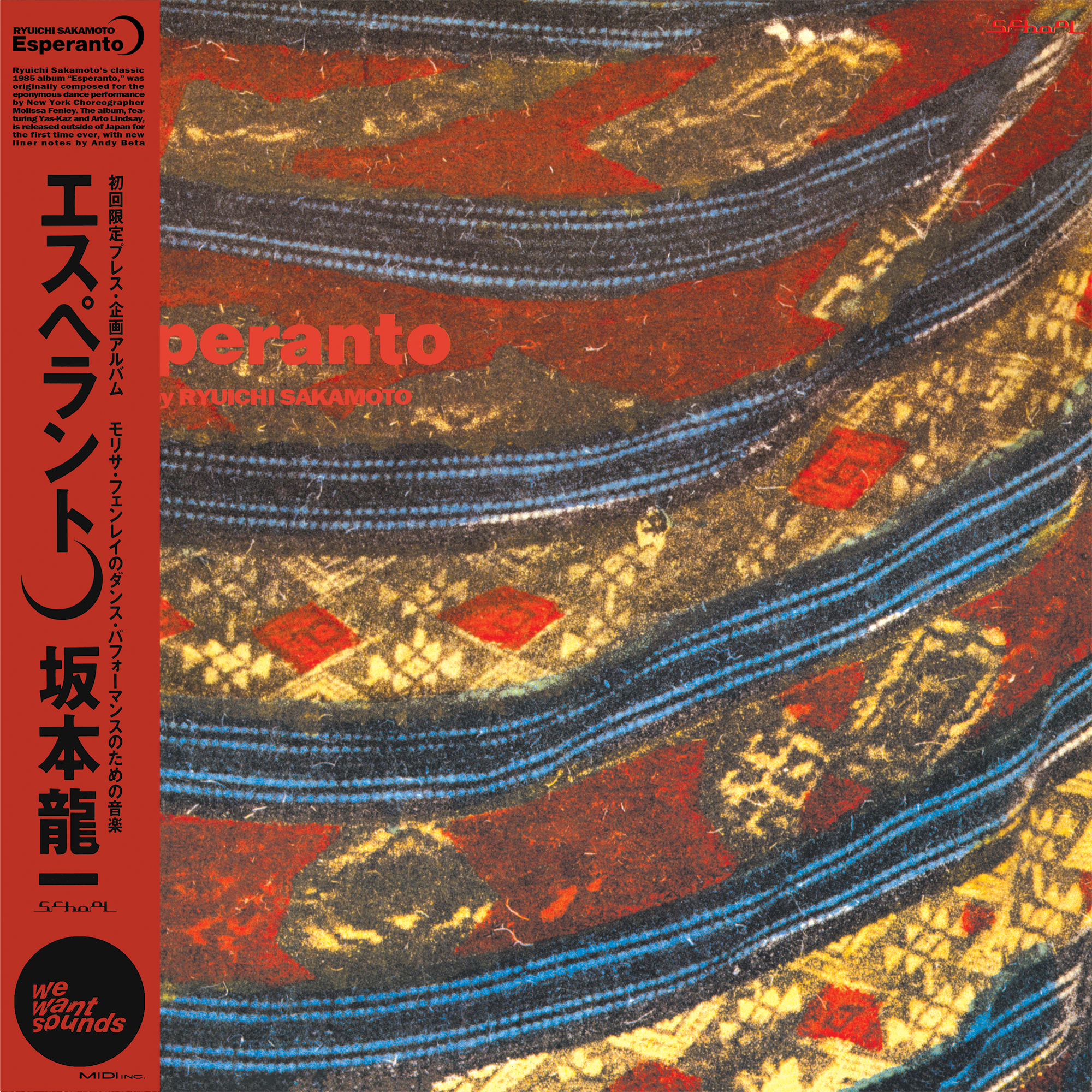
Ryuichi Sakamoto ‘Esperanto’
(Originally released October 5th 1985, and re-released by WEWANTSOUNDS in 2021)
Already riding the visionary synth waves with the Yello Magic Orchestra and through his inspirational projects with David Sylvian, Sakamoto went on to score success with the plaintive, harrowing Merry Christmas Mr. Lawrence soundtrack. The sixth solo release in that oeuvre however was a return to his more leftfield, challenging roots: a marked change from the semi-classical emotional pulls of the film soundtrack. A kind of cutting-edge theatre and ballet, Esperanto was composed for a performance by the New York choreographer Molissa Fenlay with contributions from the Lounge Lizard’s experimentalist guitarist Arto Lindsay and the Japanese percussionist Yas-Kaz. You’ll have to use your imagination to how it all worked visually – though later on art luminaries Kit Fitzgerald and Paul Garrin turned this soundtrack into a conceptual video project.
Sounding very much of its time, on the burgeoning apex of dance music and early hip-hop, electro, this polygenesis experiment often evokes both the Art Of Noise and Herbie Hancock’s ‘Rockit’. Using a super-sized computer and state-of-the-art tech, Sakamoto merged futuristic Japanese theatre with a mechanical Ballets Russes, workshop shunts and huffs with the plastic, and electronic body music with Hassell’s fourth world music inspirations.
Snatches of voices, dialogue get cut-up and looped in a primal techno performance of mechanics, rippled and tapping corrugated percussion, synth waves and oscillations, serial piano dashes and rolls, and Japanese spiritual garden enchantments. At any one time you can pick up the echoes of the Penguin Café Orchestra, Phillip Glass, Stockhausen, Kraftwerk, Depeche Mode, Eno and Populäre Mechanik within the often mysterious, exotic performativity. Motoring, bobbing or in staccato mode, Sakamoto produces a futurist dance set of suspense and experiment, an omnivorous feast of programmed and real sounds. Though very dated by today’s technological wizardry standards, the electro workshop Esperanto remains an iconic, very much sought after work well worth its admission price and indeed reissue status.
U.S. Girls ‘Half Free’
(4AD) 25th September 2015
Beckoned to the label hotbed of deconstructive cerebral pop 4AD, the Illinois raised, Toronto relocated, polygenesis songstress Meg Remy continues to entrance with her latest U.S. Girls album Half Free. Transmogrifying the template evocation of Ronnie Spector and The Shirelles with a fresh perspective and penchant for glitter ball maladies, neon lit dub and glamorous scintillating bubblegum pop, Remy’s moiety of revisionary girl group backbeats and venerable candid highly unsettling laments address a myriad of issues, from disparity between the sexes to the growing pains of modern womanhood – cue the unsettling vignette ‘Telephone Play No.1’, which plays out as a phone call catch-up between siblings but then unnervingly reinforces a deep resentment on stereotype psychology.
Remy’s most dazzling, hypnotically eclectic album yet, both thematically and musically, Half Free is essentially a highly sophisticated and gracefully slick pop triumph: On a parallel, alternative timeline this could have been (stay with me on this one) a Camille Paglia championed Madonna era masterpiece from the mid 80s; her veracious sensual heartache and woozy dream like escapism is certainly evoked at various times throughout the album. Madonna aside, Meg takes on the mantle of various female personalities and vamps, but often desexualizes and reduces their carnal allure to a sense of isolation and discomfort. Her cast of troubled personas this time around owes a debt to the characters of John Cassavetes and Michael Ondaatje, and to the broken-down protagonist of a lost 70s plaintive disco classic.
Channelling the wallowing despair of Ronnie Spector, and loosely walking the line of the troubled Nora Bass from Ondaatje’s Coming Through Slaughter novel, on the opening churning looped melodrama ‘Sororal Feelings’, Meg’s sisterly pleads of the broken wife yearningly progress through a Lee Hazelwood envisioned deep southern soundtrack: the strange fruit and methodology metaphorically replaced: “Going to hang myself. Hang myself from a family tree.” An emotional draining start, which grows on you with repeated plays, Sororal is followed up by the super-charged dub reggae hybrid ‘Damn That Valley’ – perhaps the most refreshing slice of on-message pop in 2015. Taking her cue from the acclaimed journalist Sebastian Junger’s Afghanistan front reportage War chronicles, Meg rages with a reverberating wall of sonic shrilling and grief as an imagined war widower riling against the futility and platitude sentiments of the government. Beating out an electro sound clash, part N.Y. City no wave of the early 80s, part Mikey Dread Jamaican sunshine dancehall, long-time collaborator and Toronto producer Onakabazien takes it to the next level.
Already aired, ‘Damn That Valley’ is the most colourfully vibrant of a trio of songs released since May in the run up towards the release of the LP. The second of these, ‘Woman’s Work’, closes the album. Extended from its more radio and video friendly version to a fading seven-minute plus requiem, the female gaze is sinisterly reproached by a Cindy Sherman posing façade and operatically Baroque gilded Moroder soundtrack. Amplifying the venerable atmospherics, Meg is joined by the siren sonic ethereal pitch of Ice Cream’s Amanda Grist – who can also be heard doubling-up on the Damn That Valley vocals – as they traverse an eerie veil of Catholic electro.
Released in more recent weeks, the last of this trio ‘Window Shades’ revives Gloria Ann Taylor’s original 70s unrequited disco ballad ‘Love Is A Hurting Thing’. Stumbled upon by Meg’s husband and DFA label signed artist Slim Twig (who contributes throughout the album); a touch of Madonna blusher and woozy glitter ball noir is added, whilst the universal theme is updated: apparently written after Meg watched the cod-autobiographical documentary Part Of Me, the meme circus spotlight on the life of Katie Perry that even with a soft coating of saccharine idolisation exposes the cracks and fatuous nature of celebratory.
Elsewhere on the album Meg appropriates the bubble gum glam of Bolan and the spikey punk beat of The Misfits on ‘Sed Knife’ (a minimal poem set to a bouncing backbeat, originally released as the B-side to 2012’s ‘Rosemary’). Whilst she offers an elegantly cool, misty oscillating sonorous bass-y air of mystique, – piqued by cold war jarred piano note suspense – clandestine variant on the spy thriller soundtrack with ‘New Age Thriller’: The actual battle it seems is between self-respect and male pressure. Red lipstick marks the collar of the churning, western guitar twanged, murky ‘Red Comes In Many Shades’, which itself borrows from the put-upon, downbeat beauty of Nancy Sinatra. Whether intentional or not, the song sounds like a slowed down version of New Age Thriller, and thematically dissects the struggles, and in this case, the betrayal of an affair.
Honing the darkness and plight of what was always celebrated as the innocent, teenage growing pains of adolescence with more gravitas, Meg’s robust themes swim amorphously through the dry-ice, crystal waves of the late 70s and 80s to produce a post-modern pop triumph. Progressing from the basement tapes and reverberated Spector sonic loops of the past to her latest incarnation as the pining pop artist, Meg Remy’s production values are highly ambitious: her previous work a precursor series of experimental outings. Without a doubt Half Free is her best, most mature, meticulous and glorious sounding collection of songs yet.
If you’ve enjoyed this selection, the writing, or been led down a rabbit hole into new musical terrains of aural pleasure, and if you can, then you can now show your appreciation by keeping the Monolith Cocktail afloat by donating via Ko-Fi.
For the last 15 years both me and the MC team have featured and supported music, musicians and labels we love across genres from around the world: ones that we think you’ll want to know about. No content on the site is paid for or sponsored, and we only feature artists we have genuine respect for /love or interest in. If you enjoy our reviews (and we often write long, thoughtful ones), found a new artist you admire or if we have featured you or artists you represent and would like to say thanks or show support, than you can now buy us a coffee or donate via https://ko-fi.com/monolithcocktail
THE MONTHLY DIGEST INCLUDES A CLUTCH OF ACCUMULATED NEW MUSIC REVIEWS; THE SOCIAL INTER-GENERATIONAL/ECLECTIC AND ANNIVERSARY ALBUMS CELEBRATING PLAYLIST; AND CHOICE PIECES FROM THE ARCHIVES.

____/THE NEW
Annarella and Django ‘Jouer’
ALBUM (We Are Busy Bodies/Sing A Song Fighter)
Born from the Senegalese imbued and inspired hub built around Sweden’s Wau Wau Collectif, another cross-cultural project that embraces that West African nation’s (and its neighbours) rich musical heritage. Fusing the roots, landscape and themes of Senegal with those of Europe, the partnership of Swedish flutist Annarella and the Malian born ngoni master Django absorbs the very atmosphere of that westernmost African republic, transposing and transforming age old traditions with a hybrid of contemporary musical effects and influences and guest list of diverse musicians and voices.
But before we go any further, delve deeper into this partnership’s debut album, a little background information/ context is needed. A key member of Karl Jonas Winqvist’s Wau Wau Collectif gathering since 2016, making the motivational trip to Senegal that more or less inspired that group’s sound, network of collaborators and friends – a trip that also planted the seed for Winqvist’s Sing A Song Fighter label, a partner in the release of the this album alongside We Are Busy Bodies -, the Örebro born flutist Annarella, believe it or not, trained as a psychologist. Honed on woodwind, but able to play a variety of instruments, Annarella has chosen a more playful approach to her craft: an eclectic one at that.
Annarella’s musical foil, meanwhile, was born in Mali and brought up in the ancient griot tradition of storytelling. The family tree of which is impressive. His cousin was the late and great kora (a 21-string long-necked harp-like instrument crafted out of a gourd, covered in cow skin) virtuoso Toumani Diabaté, who famously partnered with another legend, Ali Farka Touré, for a duo of Grammy Award winning albums. And his uncle was the master balafon (one of Mali and Western Africa’s most recognised sounds, the balafon is a gourd-resonated xylophone) player Kélétigui Diabaté. It’s no surprise then that Django picked up the ngoni, a (normally) animal skinned wrapped canoe-shaped lute instrument synonymous for accompanying the griot storyteller: A tradition that, some say, dates back to the Malian Empire of the 12th century. Django however upped sticks and made the move to Senegal and the capital of Dakar many years ago. It’s a city that is abstractedly threaded into the very fabric of this album: immortalised alongside Annarella’s hometown on the album’s first single and this debut album’s third track.
Whilst on tour together as part of the Wau Wau, they found themselves wiling away the downtime hours by jamming. A spark was ignited. A project formed. But for a time, both musicians had to return to their respective homes, where it seems they set to work on composing and laying down tracks for each other, ideas and prompts to riff on.
The sphere of influence grew further, as both participants in this international peregrination invited in several musicians and artists to carry the music into articulate and more atmospheric new spaces. Joining the duo were of course Winqvist, as co-producer and a member of the filled-out rhythmal section that also includes Lars Fredrik Swahn and Pet Lager, the renowned Swedish folk musician and multiple instrumentalist Ale Möller, who provides not only trumpet but the Jew’s harp, accordion, melodica and the double-reed shawm, and Django’s wife, Marietou Kouyaté, on harmonical vocals.
Altogether, this circle of impressive talent conjures up an atmosphere of the willowy, mystifying, hazy, rhythmically shuttering, dreamy, ached and yearning. Because whilst uniting two cultures together in a most congruous sounding, melodious and beautiful union, there are both musically felt and more obvious appearances of social and economic protestation to be found.
After the fluted leafy pastoral airs and light nimble twine of the intro, the gentle hi-hat claps, Arabian-like shawm, whistles, chuffs and fluty blows of the Francis Bebey motion ‘Aduna Ak Asaman’, and the near Malian Turag camel drive with bird-like woodwind and Chet Baker mirage trumpeted ‘Dakar-Örebro’, there’s a short tunning-like, freely and spiritual jug carrying backed snippet of the American economist Richard David Wolff besmirching the virtues of capitalism on ‘No More’. A noted Marxist economist, part of the Rethinking Marxism movement, Wolff’s words chime with the rampart, unforgiving nature of what I would call a twisted form of capitalism; the ill effects felt no more so than on the scarred, mined lands of Africa and its people. Picking up the ‘Megaphone’, the style is more African with a soft Dirt Music backbeat, the voices more reminiscent of Amadou & Mariam. That vocal partnership can be heard again on the longed and languid sand dune contoured, flighty and reedy trill fluted ‘Sarajalela’.
Django’s home environment and the outlier around it seeps into and materializes like a dreamy haze across all the album’s tracks, as evocations of the classical, of jazz and the blues mixes with the local stew of diverse languages. Tracks like ‘Degrees of Freedom’ are more mystical sounding, near cosmic, as the band saunter like gauze under the moon and across the desert’s sandy tides. There’s the Arabian, the African, the otherworldly and fantastical all rolled into a seamless hover and spindle of enchantment and mystery. ‘Hommage á Dallas Dialy Mory Diabate’ however, is just a pretty, sentimental passage of loving tribute – the tune is very familiar, but I’m kicking myself to place it.
Jouer, which translates from the French into “play”, is just that, a lovely stirring union of the playful that seamlessly entwines the two musician’s respective practices with sympathy, respect and the earthly concerns of our endangered societies and world. Hopefully this collaboration will continue and grow over the years; there’s not been a better one since Catrin Finch teamed up with Seckou Keita.
Peter Evans ‘Extra’
ALBUM (We Jazz) 25th October 2024
A meeting of avant-garde minds to savour, the union of Peter Evans with Koma Saxo and Post Koma instigator and bassist Petter Eldh and New York downtown experimental rock and jazz drummer pioneer Jim Black is every bit as dynamic, explosive, torqued, moody, challenging and exciting as you’d imagine.
Heading this trio and making his debut on Helsinki’s We Jazz label-festival-magazine platform (one of the best contemporary jazz labels in the universe, certainly quality wise and highly prolific with it), the New York-based musician and noted improviser synchronizes and leads a constant movement of breakbeat drums and wood stretched, thumbing and busy bass on his small, higher octave pitched, piccolo trumpet.
A crossroads of separate entangled influences and backgrounds, legacies, with all three practitioners in this Evans-fronted project and their CVs stretching back a few decades, the avant-garde rubs up against the blues, hard bop, atmospheric set scores, hip-hop style breaks, the electronic and classical. By using both the piccolo and flugelhorn on this album, some passages sound like Wynton Marsalis playing over Mozart, or Alison Balsom lending classical airs to an Alfa Mist production.
The classical brass is however adopted and adapted to stir up a wind and tumult of uncertainty as to what’s coming next. For the action, the rhythm and direction is as tightly wound as it is loose and slowed down: the ‘Nova’ passage, this album’s shortest track, seems to lurk in a strange otherworldly atmosphere of mysterious thriller piano prompts and vibrated percussive and cymbal shivered resonance. The following track, ‘Movement 56’, starts off with the brass sounding like it’s being played through a cone, before buzzing and expanding, contouring a cosmic calculus performance of the alien, unsure, spatial and lunar. It finishes with a bended generator motored ripple and signal that wouldn’t sound out of place on a Bernard Szajner record.
Elsewhere the action blows and gallops between moods and intensity. The opening ‘Freaks’ has a busy rhythm section, yet tampered, the nearly skims along (imagine Ben Riley circa ‘The Bridge’, a recognisable sprouting of Art Blakey, and touch of Mingus) that evokes 60s NYC skylines (but no swing) and the downtown happenings of the 80s with something quite bluesy but very of the moment. Meanwhile, Evan’s short and longer cyclonic trumpet breaths recall Ralph Alessi, Tomasz Stańko and Miles Davis. On the staccato fashion prowl of ‘Boom’, it’s Chet sharing room with Kirk Knuffke over a slightly less erratic and menacing Last Exit.
There’s so much to love about Extra. A combo that has worked together before I believe, shows how to find a perfect challenging balance of the dashed, of action and the more tactile and explorative without losing that essential breakbeat and woody stretched body resonating and pulled spring bass rhythm and movement: that movement always being ever forward. Never dwelled on, nor really repeated, this feels like an improvised session without the need for analysis or instruction from its leader Evans. Possibly one of the best jazz albums you’ll hear all year, with a spot saved for the choice albums of the year lists, Extras is a thoroughly inventive and exciting dynamism of contemporary luminaries at the height of their skills and knowledge.
Yaryu ‘For Damage’
ALBUM (Ramble Records – AUS/ Centripetal Force – US/ Cardinal Fuzz – UK)
25th October 2024
Eclectic Japanese collective Yaryu, birthed just a couple of years ago, invite a host of peers and influential teachers from the country’s acid, psych, cosmic and astral scenes to sprinkle some magic on the new album, For Damage.
Led by bulb-note and caressing soulful electric pianist, wafted and concertinaed melodica player, atmospheric stirring autoharpist, synthesist and percussionist Hyzo, the group play host to members of Sundays & Cybele, Dhidalah and the freak out titans of the form, the Acid Mothers Temple. In all, at least seventeen participants, playing everything from the instruments of a conventional band set-up to woodwind, traditional Japanese and brass. Some of which also lend various forms of vocalisation, from the mewling to folky, strange and supernatural.
Fanning out and expanding the range of spiritual and emotional influences, the album starts out with a seamless continuation of elemental waters (trickles, pours, running streams to more settled, light refracting twinkles), the leafy and blossoming, diaphanous and glittery. The gentle opening introduction of ‘Up The Creek’ is a beautiful guide to this magical, enchanted, but simultaneously mystical and mystery balance of tranquilly and the otherworldly; sounding at times like Mythos connecting with Hiroshi Yushimura and Meitei, and existing in the same realms of Kankyō Ongaku, or “environmental music”. ‘Asobe’ (which I think means “not working”, but spelt slightly different, could be a reference to the Shinto priestesses that performed rituals that appeased the souls of the dead during the Heian period) drifts towards dry bone rattled, ceremonial caravan of Alice Coltrane, Bernie Maupin and Pharoah Saunders vibes.
But though keeping in that relatively subtle direction, ‘Nagare’ seems a little jazzier and more soulful as it follows the currents of running water. It features a cornet-like trumpet, some soft whistles, a near wafted Hawaiian guitar – think Makoto Kubota – and hand drums in the mode of Curtis Mayfield as it sets out some idyllic castaway plane. ‘Utena’ floats close to the Far East Family Band, but with a Fleetwood Mac bassline, constant metronome like ticking away and shimmering cymbals. But by the time we reach the atavistic sounding ‘Gandhara’ (the ancient Indo-Aryan civilization centred in what it is today present northwestern Pakistan and northeastern Afghanistan), the mood is far more mystical and shrouded; a Japanese Gothic-psych visitation from the psychogeography of the wailed and ghostly. ‘Sacrifice’ is noirish in comparison but begins with a sort of Cluster-like synth-pop rhythm, before shimmering and soulfully gliding into Greg Foat territory. It evokes sun-lounging attendees at the shrine on one of Japan’s most exotic, paradise island borders.
The album finishes on what in old money vinyl terms would be the whole side of an album, and the near twenty-minute “melody” suite ‘Shirabe’. A wilderness of trees and roots and creaking, croaking bird life is converged with tranquil jazzy evocations, woodpecker knocks, soft and low inviting sax blows and subtle funky guitar. As the peregrination continues, that sax goes into Donny McCaslin mode, and connects to the weird and cosmic.
Another name to add to the rich legacy of cult, psychedelia, folk, esoteric and cult sounds emanating from Japan, Yaryuand their distinguished guests connect with the elements, the spirits and sprites, and the roots of their magical astral plane on several levels to create a both earthly, supernatural and spiritual daydream. Tending the garden whilst offering up mysticism and languid stirrings of the elements.
The Tearless Life ‘Conversations With Angels’
ALBUM (Other Voices Records) 27th October 2024
Both a transference of souls from the now cremated – or laid to rest, depending on your choice of metaphorical ritual death – Vukovar plus a host of orbiting “other voices”, the make-up of The Tearless Life remains relatively, and intentionally, shrouded, obscured.
What we do know is that this new entity is a meeting of minds that have spent the last decade ploughing their own unique vision of hermetic, esoteric alchemy of synth-pop, industrial, post-punk, darkwave and a form of neo-new-romantism influences. And whilst they remained criminally overlooked – sometimes due to their own self-sabotage – they attracted such acolytes and luminaries of the genre as Rose McDowall, Michael Cashmore and the late Simon Morris, all of whom proved worthy foils on various Vukovar-headed collaborative releases.
Taking a while to materialize, The Tearless Life’s debut opus is both the announcement of new age, but also a bridge between this latest incarnation and the former Vukovar invocation – they are in essence, a band that continues to haunt itself. Old bonds remain, sound wise and lyrically, but with a new impetus of murky, vapoured, gossamer, mono and ether effected solace, tragic romanticism, pleaded and afflatus love, spiritual inspired yearning and allegorical hunger.
The void needs to be fed in a Godless world as they say, as addictions, troubled relationships, the longing for a special someone who remains aloof, untouchable and beyond reach, and the metaphysical coalesce with an all-consuming passion.
Talking to angels, conversing with both the seraph and the fallen, the daemons and spirits of the alchemist’s alternative dimensions, the group transduce the writings of that most visionary seer John Dee, the opium eater Thomas De Quincey, William Blake, and the far more obscure Samuel Hubbard Scudder, who’s 19th century, fairy-like, Frail Children of the Air: Excursions Into The World Of Butterflies publication of philosophical essays lends its title to a song of tubular airy manifestations, distortion, wisped spiralling piques and beautified touching emotional anguish.
Atmospheric at every turn, swilling around in the shrouds, a Victorian music box and toll of peeling bells can evoke the creeping, the mysterious and tormented. Psychological trauma, and physical pains roam the wards of a mental hospital; stained-glass rays anoint lovers; death’s touch is never far away; the talking of tongues and language of the shriven invokes fantasies; and the spectre of morose dines on the unfortunates to create an esoteric banquet.
Some of these songs will sound familiar to those missing Vukovar, but The Tearless Life seem to have integrated a duality of harmonies and vocals much better. The music is itself at least attempting to find the light at the end of the tunnel, touching upon snatches, vague influences of Nature And Organisation, Death in June, Jarboe, Brian Reitzell, the Pale Fountains, Scorpion Wind, Les Chasseurs De La Niot, Alan Vega, and on the pump organ-like remembrance of darkened soul mates, ‘The Mistress’, a combination of Purple Rain era Prince and Ultravox!
My only disappointment is in the production, which could be so much more dynamic and clearer, instead of being so murky. I think it loses some of its impact. But this is minor in comparison to the depth, quality and atmospherics of such an ambitious undertaking. For this album transfers poetry, the writings and fiction of the hermetic and the dreamers wonderfully, if plaintively. If the world was indeed not so bereft of celestial beings’ wisdom and advice as it is, it would rightly receive the critical acclaim it deserves. Conversations With Angels is epic; the first step in, what I hope, will be a fruitful conversation to divine enlightenment, curiosity, psychological and philosophical intelligent synth-pop.
i4M2 ‘Shut Up’
ALBUM (Drone Alone Records)
Whilst eliciting feelings of grand, sometimes overbearing, landscapes and a sense of movement from granular gradients, frazzled fissures, currents under the he didnt appellation back in the summer, the shrouded Oxford-based producer, guitarist and musician now ventures out under the new guise of i4M2.
Although similarly charged with electricity, white noise, static and magnetic filings Shut Up is a very different record indeed. Gone are, for the most part, the blocks of drones for a tubular metallic coursing of melodic music, found sounds and field recordings of captured voices from a city environment, and the mysterious near supernatural at times: or perhaps more unknown, hard to figure out, and maybe alien. Whilst recognisable glimpses of overheard and taped conversations, of a company of choral singers, and wobbled broadcasts of a kind suggest humanity, there’s much machine coded, synthesised and cybernetic surface noise and unnerving drama to be found.
Inspired in part by the “…pirate-radio noise the kids play on their mobile phones at the back of the bus in London.” And by the energy of all those “…cool beats and ideas”, this debut album channels those sparks of inspiration into a sophisticated construction of techno, electronica, the metallic, buzzing and fizzled. Beats arrive in the form of the rotor-bladed, the wing flapped, corrosive, spun, padded and sizzled. Together with those passages and undulations of melody and tune, it sounds like a mix of Nik Colk Void, early Tresor, The Pyrolater, Aphex Twin, Carter and Tutti, Oberman Knocks and Boards of Canada.
Both forms of the London scenester dropped in rural Oxford are great, but for me, I think this latest alter ego just about edges it. Seek it out.
Suumhow ‘5ilth’
ALBUM (n5MD)
You could consider the fifth album from the Belgian experimental duo of Suumhow as a sonic companion piece to i4M2’s ‘Shut Up’ (see above); fizzing as it is with electrical charges, frazzles and sculpted, purposed distorted crunches and metal filings, but balanced by a certain sensitivity and pull towards hazy, gauzy light forces. For there is melody, a tune to be found amongst the bristled blizzard effects and slabs of static buzzing, the corrosive and outright “filthy”. That last one being especially prominent in both the language and text used to promote this album, and in the distorted joy of sonic bombardment and bracketed vibrated grimy, glitchy drilling.
5ilth is by nature a counterpoint of distressed post-industrial techno, the leftfield, the pneumatic and ricocheting, which then opens out into calmer, more reflective ambient passages and square waves; sometimes floating or maybe drifting above the clouds, and other times, ascending towards the light. Far from brutal, despite the rasping scrunched beats, and chain clinked synthesized percussion, the mood is mostly mysterious and dreamy, with some parts akin to gliding in the stratosphere – see the obliquely, not giving anything away, entitled ‘F’. Like rips and tears in the fabric, yet somehow harmonically compatible, the duo’s work craftily spins a harsh, ratcheted and crackled abrasion of sounds and effects with ambient stirring evocations of thought, quite wanderings and reflection.
I hate to repeat myself, but as with the last review, I’m hearing Aphex Twin, but this time in the company of Petrolio, Room of Wires, Emptyset and Forest Swords. Which I think is a very inviting proposition.
Rich God ‘Unmade’
ALBUM (Somewherecold Records) 31st October 2024
The third such album of static-charged dissonance and fizzles, sculpted to and rendered to provide the sound, score and expression of the concrete this month, the pairing of Blake Edward Conley, who regular readers will recognise as the droneroom, and Jason T. Lamoreaux, who goes under The Corrupting Sea appellation, will appeal to those who like to read the abstract messages and gauge a sense of place, time and mood from industrial noise and corrosive electricity.
Mainstay and founding artist of the experimental label, Somewherecold Records, Jason teams up with one of his most prolific label singings to sculpt meaning from the frazzled generated noise, crunched barrages of drums and the sifting, fizzled and warped rhythms. Conway’s usual signature of minimal alt-country and drone cowboy electric guitar tracings, brushes, hovered notes and sun-cooked melting vistas is absorbed and sometimes crushed almost by Jason’s industrial effects and mettalic needling.
With nothing to go on, theme wise or explanation wise to the album’s seven titles, it is left to us the listener to make what we will of this union. But my reading is a transmogrified vision of post-industrial rust belt horror and trauma. There’s certainly prompts in the use of samples taken from broadcasts, perhaps the TV – which often sounds like a flickering portal set to the paranormal and Fortean -, with some guy’s diatribe against the banks or stock exchange/Wall Street (“If money is evil, then that building is hell!”) and a radio phone-in exchange about some horrific psychosomatic condition (the words murder scene and suicide both pop up).
In what sounds like a psychogeography of old machinery, the apparatus of production and a troubled society, Unmade whips up a blizzard of crickets on a sweltering day on the road towards a run-down and foreboding field of decay; conjures up the empty silos, rusted conveyer belts of a desolate wrecked farming community; and uses the needle scratches of a polygraph test and the resonance of steel mill saws to channel a recognisable fear.
Whipped and industrialised, yet also showing less harsh and abrasive fragments, pauses in the rippled tears of the bestial, spooky, alien and caustic, Unmade is like a distortion of Bleaeck, Raime, Atsushi Izumi, Cabaret Voltaire and IDM influences. Not the easiest of listens, and certainly challenging, but worth the effort, as two experimental artists combine their signature qualities into a heavy loaded sonic statement for the times we find ourselves in.
Andy Haas ‘For The Time, Being’
ALBUM (Resonantmusic)
Time has never sounded so warped and amorphous, bereft of reference in a space that morphs into serialism, the surreal, the painful, the otherworldly, paranormal, conceptual and indescribable. Yes, once more the experimental saxophonist Andy Haas ventures into sonic territories seldom explored with his latest (I believe either 19th or 20th release for the Resonantmusic label) album of abstract trauma, avant-gardism, playfulness, and physicality. For this album is indeed a physical experience, focussed as it is on the Andy’s unique method of strapping a small tremolo box to his leg so that he can control the depth and the rate of extreme panning whilst playing the sax, and manipulating slowly spun vinyl records.
The discombobulating, shrieking, sonorous diffusions and effects hit hard at times, leaving a real sense that the soundwaves have penetrated the listener’s body and senses: To get the full effect, Andy stresses that For The Time, Being is experienced best on a system with better low end response: laptop speakers just won’t cut it.
Out on the fringes for at least five decades (and counting), with a brief period of commercial success as a founding member of the Canadian new wave band Martha And The Muffins (leaving the group after three albums to pursue more adventurous pathways in the New York underground scene of the early-to-mid 80s) , Andy’s original sparks of inspiration and catalysts for picking up the saxophone (his first instrument being one he rented for $5 a month in the 70s) were jazz avant-garde supremos Anthony Braxton and Evan Parker, who he witnessed playing together in concert at an early age back in the 70s. Both icons of the form permeate much of Andy’s work, including this newest experiment. But you can add a channelling of such diverse company as John Zorn, Marc Ribot, Zeena Parkins, Ikue Mori, Thurston Moore, Keiji Haino and Fred Firth, all artist’s Andy has worked with since the 80s, to that sound palette.
In more recent times, during the late nineties and the noughties, he’s collaborated with stringed-instrumentalist Don Fiorino on three extraordinary albums (American Nocturne, Don’t Have Mercy and Accidentals), toured and recorded with the Plastic Ono Band-esque reinvention of Meg Remy’s U.S. Girls, and been a member of Matt ‘Doc’ Dunn’s The Cosmic Range. Again, feeding into an already expansive field of influences.
But here, in solo mode, the perimeters, experiences are all reset and transmogrified into an intense, frightening and sometimes near cartoonish world of spatial manipulation and hallucination. This is jazz at its furthest boundaries, the avant-gardism of Fluxus, of Monty Young, Alan Sondheim (specifically T’ Other Little Tune LP), Richard Maxfield, David Tudor and Takehisa Kosugi combining with the dry, bristled and trilled raspy reedy blows, plastic tube-like sucks, flapped air and wind, the hinging and the movement of valves and atonal resonance, and the more melodic flutters and mizmar-like drones of Braxton, Parker, Roscoe Mitchell, Ornette Coleman, Marshall Allen and Oliver Lake.
Each track varies between unseen sources of accelerating motors, hovering drones overhead, the disorientating, the wounded, the near sci-fi and triggered, with signals and codes manipulated like slowing and speeding reel-to-reel tapes. Reality is questionable and the sense of time (although there is a parenthesis “nocturne” reference on one track) akin to a fever dream. Andy produces a unique physically effective sound experiment that is impossible to define; his saxophone simultaneously recognisable and yet parping, droning and in a cycle that pushes that instrument towards the tactile and spatial.
___/PLAYLIST: THE MONOLITH COCKTAIL SOCIAL VOLUME 91
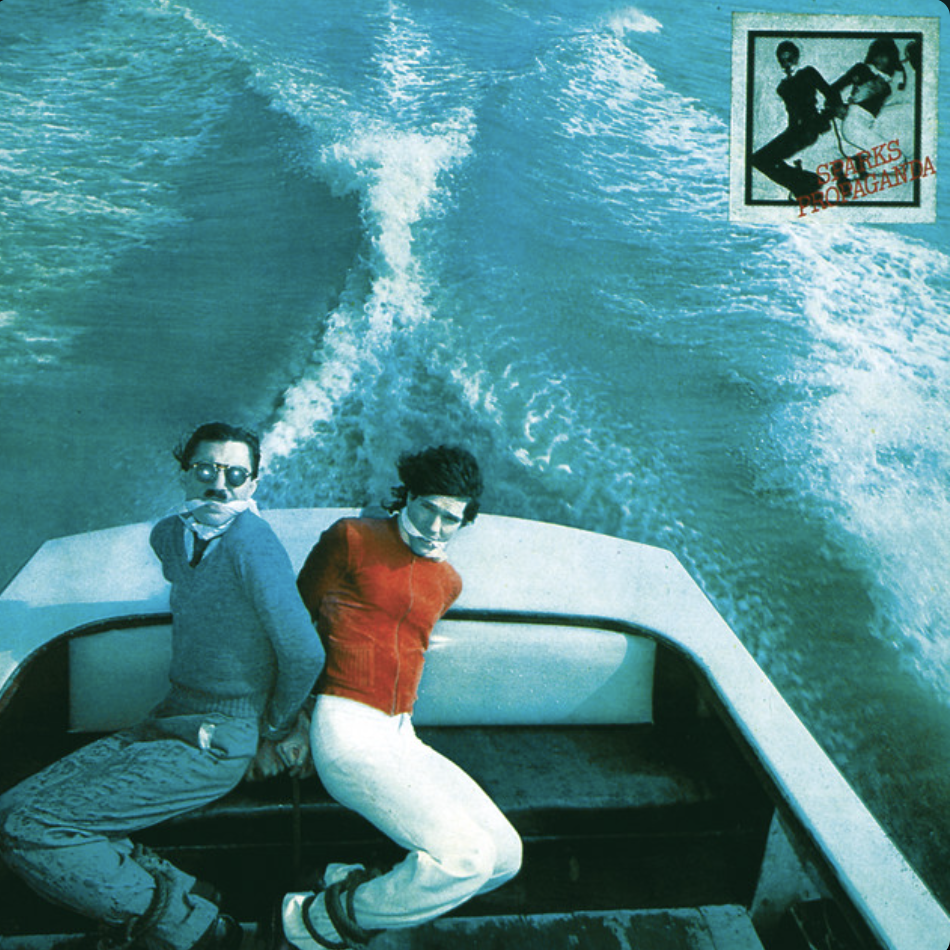
The Social Playlist is an accumulation of music I love and want to share, tracks from my various DJ sets and residencies over the years, and both selected cuts from those artists, luminaries we’ve lost and those albums celebrating anniversaries each month.
Running for over a decade or more, Volume 91 is as eclectic and generational spanning as ever. Look upon it as the perfect radio show, devoid of chatter, interruptions and inane self-promotion.
First up the LP anniversaries, starting with 50th nods to Sparks Propaganda (in my estimates, the double-acts’ best 70s album), Redbone’s Beaded Dreams Through Turquoise Eyes, Yumi Arai’s Misslim, and The Rolling Stones It’s Only Rock ‘n Roll – see below in the archives section for my little summary, if dismissive, piece on the album.
Released this month forty years ago, there’s tracks from The Fall’s The Wonderful And Frightening and Cabaret Voltaire’s Micro-Phonies. Jumping forward another decade, and I’ve also included a track from the Digable Planets’ 94’ released Blowout Comb. Another leap forward and I’ve chosen to also mark the tenth anniversary of Scott Walker’s collaboration with Sunn O))), Soused – you can read my original piece on the album in the archive below; one of my finest hours I reckon.
Whilst the Monolith Cocktail’s Monthly Playlist is all about the newest music, I miss things or just don’t have room to feature everything. And so, the Social offers room to some of those newish, recent releases that missed out. This month there’s choice tracks from Heyme, Waaju and Majid Bekkas, The Bordellos, Reverand Baron and Calvin Love, and Paten Locke.
You’ll also find, from across the decades, borders and genres, a smattering of musical choices from Heltah Skeltah, Lowlife, Samuel Prody, Gilli Smyth, The Sun Also Rises, Michel Magne, Debile Menthol, Lita Bembo, Art Zoyd, Tudor Lodge, Tommy Keene, The Silver Dollar, Vince Martin & Fred Neil, Yoch’ko Seffer, Male and Mahjun.
TrAcKlIsT iN fUlL
Michel Magne ‘Cine qua pop’
Debile Menthol ‘Tante Agathe’
Samuel Prody ‘She’s Mine’
Tudor Lodge ‘The Lady’s Changing Home’
Tommy Keene ‘My Mother Looked Like Marilyn Monroe’
The Rolling Stones ‘Dance Little Sister’
Cabaret Voltaire ‘James Brown’
The Bordellos ‘King Of The Bedroom’
The Fall ‘2 X 4’
Male ‘Bilk 80’
The Jazz June ‘Silver Dollar’
Mahjun ‘L’un dans I’autre’
Art Zoyd ‘Alleluia’
Yochk’o Seffer ‘GONDOLAT’
Waaju and Majid Bekkas ‘Fangara (Live Edit)’
Yumi Arai ‘On the Street of My Home Town’
Lita Bembo ‘Muambe’
Digable Planets Ft. Guru ‘Borough Check’
Paten Locke ‘Widdit’
Heltah Skeltah ‘Clan’s, Posse’s, Crew’s & Clik’s’
Redbone ‘Cookin’ with D’Redbone’
Heyme ‘Downtown Train’
Reverend Baron & Calvin Love ‘Famous Feelin’’
Scott Walker & Sunn O))) ‘Brando’
Lowlife ‘Again And Again’
Citymouth & People’s Palms ‘Singlecycles’
Gilli Smyth ‘Shakti Yoni’
The Sun Also Rises ‘Wizard Shep’
Vince Martin & Fred Neil ‘Morning Dew’
Sparks ‘Bon Voyage’
/ARCHIVES_____
This month, I’m reviving my archived pieces on The Rolling Stones It’s Only Rock ‘n Roll, which is fifty years old this month, and the late Scott Walker’s unholy alliance with Sunn O))), Soused, which reaches its tenth anniversary in October.
Relax, It’s Only Rock ‘n Roll. The Stones ’74 LP is 50 this month. (Appearing originally in my four part potted history of the group).
The basic premise of the Stones 12th album was to give their critics, especially the punctilious music writer Lester Bangs, the bird-finger.
Bangs’ condemnation at the paucity and profligate decline of the group was particularly scathing – quite justified in some respects – and only increased with each new release.
Incredulous at the growing derision and, as they viewed it, over-the-top analyses of their music, this album makes no bones about its regression back into the rock ‘n roll womb: albeit a version of that initial scene performed by a languid miscreant bunch of lolloping posers reprising oldies from the blues-R&B-r’n’r cannon.
The self-titled track and single from It’s Only Rock ‘n Roll (And I Like It) was strangely – so it’s claimed by Richards – conceived by a testy Jagger and recorded with his new “soul mate” Bowie as a rough demo. Such was the internal drift between the Stones creative partnership that Jagger often composed and thrashed out ideas away from his Glimmer Twins foil. During this break in communications, Richards was hanging out with The Faces lead guitarist and crow-haired sporting Ronnie Wood at his London studio. Wood had begun recording a solo LP and had asked along both Richards and Mick Taylor to add a touch of sleazy blues. Whilst at one of these relaxed sessions, Jagger dropped in and cut a version with Woods and, Small Faces/Faces drummer, Kenny Jones, but also produced another version with his comrades at a later date (Woods again played on this, contributing the rhythm guitar part on the 12-string). Regardless of who had their paws on it, It’s Only Rock ‘n Roll (And I Like It), is a stereotypical Stones pruning swaggered anthem, one that leans very heavily upon the strutting glam-rock pout of T-Rex.
Geographically separated, and as usual, sabre-rattling with the establishment, the band pushed-on, even though by now Richards’s increasing drug-fuelled skirmishes looked certain to scupper any attempts to successfully record.
To top it all, Taylor’s growing resentment at the lack of credit and acknowledgement for his contributions set the ball in motion for his resignation from the band a year later. Yet despite his disgruntlement, Taylor hung-on in there, playing on a majority of the albums ten-songs but not the title-track single; even though he appears in the video.
Without their due-diligent and overseeing producer, Jimmy Miller, the production fell to the aggrandising pairing of Jagger & Richards. Miller, a stalwart member of their inner circle and sometimes sobering force for good, had finally succumbed to his drug habit (picked-up whilst working with the band) and left, leaving the pair to take control for the first time since Their Satanic Majesties Request. And we all know how that turned out!
Scott Walker + Sunn O))) ‘Soused’ – Harrowed by thy name.

The usual rolled-out cliché of criticism that always greets every Scott Walker release, charts the enigmatic artist’s pop light to experimental morose career arc; from the teen swoon idol heady days of the Walker Brothers, via monastic alienation and Jacques Brel inspired crooner of esoteric idiosyncrasies, to existential avant-garde isolation.
Inhabiting the darkest recesses of humanity and history for at least half of that time, we should be used to this morbid curiosity, worn with earnest pride by Walker, who peers into the abyss on our behalf. Confronting with a meta-textural style the barbarity and failings of humanity for at least thirty odd years then, any developments in the Walker peregrination, shouldn’t really surprise anyone: at least the critic.
In what was met with certain trepidation or surprise by many, his unholy union with the habit adorned disciples of hardcore drone Sunn O))) is actually a very shrewd and congruous partnership; a 50/50 immersive experience, with both parties seemingly egging each other on. Walker for his part lyrically less cryptic, the Sunn chaps pushed to produce one of their most poetic and nuanced beds of sustained drones yet, and on this occasion, even cracking out various wild shortened, punctuating and unyielding riffs – verging on full metal and heavy rock riffage. Letting rip with a resonant field of sustained one-chord statements and caustic stings that bend or longingly fade out into a miasma, trying to find a meaning in these drones is akin to an Auger interpreting symbols and signs from the entrails of a wretched, just slain sacrificial beats. Yet it does work, and the bare minimal, fuzzy and wrenching bed of murmuring, primal guitars perfectly set up the intended atmosphere.
Once again, Daemonic forces have conspired. The result, a five act guttural opus, entitled Soused – in this instance the title is to be taken as a plunging or submersion into liquid or water, rather than a slang for hard liquor intoxication (though if it were, the brew on offer would be hemlock!).
What starts out and continues as a sort of proxy chorus (the nearest you’ll ever get to one on a Walker outing), the introductory crystallised, even dreamy, sense of melodic relief that introduces the album’s first musical tome, ‘Brando’, is soon corrosively despoiled by the menacing first strikes of a signature Sunn O))) chord and bullwhip.
A rather odd theme for Walker to build a threatening tower of misery from, the song alludes to the obligatory sacrificial martyrdom of the title’s Marlon Brando. Whether as self-flagellation, Brando had a penchant for taking on or even bringing (off his own back, so to speak) the act of taking a brutalised beating to his roles: from vigilante beatings in The Wild One to feeling the sharp end of a Elizabeth Taylor horse whipping in Reflections In A Golden Eye. Brando’s fatalistic characters were either the naïve well-intentioned disaffected (Terry Malloy in On The Waterfront) or assassinated disenchanted mavericks (Colonel Kutz in Apocalypse Now). The repeated lashings of a bull whip in this instance, however, refer to his role as the conniving bank robber Rio in the western One Eyed Jacks; one of the movie’s most memorable scenes being when Rio is administered the whipping of his life by a disgruntled and wronged former criminal partner, Dad Longworth (played by Karl Malden), in front of the towns people.
Perhaps this series of observations, first set off by watching One Eyed Jacks, from Walker is over-played, but it is remarkable as you play back through the actor’s movie catalogue and find a connective theme of taking the blows and even death on the chin. Probably reading too much into now and Walker does have a history of wry and acerbic wit, but Brando could be said to be offering his body up to the mortal sins as a punch bag (taking method acting literally) or was just masochistic (Last Tango In Paris M’lud). You decide, it makes for one reason or another a most apocalyptic soundtrack, mixing as it does, doom with Walker’s almost uplifting, visionary vocals to a flaying cycle of whip happy bullies.
Biblical in more ways than one, the standout mega-bestial centrepiece must be the harrowing ‘Herod 2014’; an atavistic disturbing chapter from the Roman occupied Middle East, it alludes to, what many historians say, is a wholly fictional tale of King Herod’s decreed infanticide of his kingdom (allowed by the Roman occupiers to reign over Judea and surrounding areas). Bathed in a sonorous reverberation of fearful discordance and a distressed unworldly cry of danger, this twelve-minute opus is stalked by the harangued forces of malcontent and revved-up torturous drones. The conceptual allusions, which can’t help but echo through time to the present, are far bigger than this baby cull, the region has, after all, always been awash with both the fabled and all too real episodes of death and misery for thousands of years. Yet despite this, the song is itself one of Walker’s best and even most melodically poetic, sitting happily with the material on his last two albums, The Drift and Bish Bosch.
Lyrically traumatic, but almost beautifully hewn from the English language, the opening lines bellow a nuanced scene-setting intellect, more novelistic pyschogeography than song: ‘She’s hidden her babies away. Their soft gummy smiles won’t be gilding the memory.’ In setting up the horrid event and psychological primal emotions that resonate with his audience, Walker goes on to mention two of the most famous painters to depict this crime, Nicolas Poussin and Rubens, who both fashioned their own (setting it in their own time) Massacre of The Innocents.
Herod 2014 straddles the LP like a monolithic titan. A real horror show, both wrenching yet also surprisingly compelling.
You would perhaps be fond of some relief after sitting through all that, but Walker won’t let you off that easily; summing another Sunn 0))) crackled, anvil- beating, industrial chorus of esoteric dread. ‘Bull’ is fraught with tension, languidly striking with stabbing guitars and post-industrial riffs one minute, sinking into the mire of silence and emerging like a troubled crooner monk the next. Heavy and brooding with mechanical timepieces, crowing shadows and subterranean spirits moving amongst the low buzzing presence of a pant-messing sustained drone, the Bull is unsettling to say the least, like a game of tag in the Labyrinth of the Minotaur. And the song with the longest outré of all; Walker finishing off his cryptic lines halfway through, leaving the last four minutes to his comrades to play out.
‘Fetish’ as it may already suggest is a sadomasochistic affair. A soundtrack set to some cannibalistic or serial killer shocker, where the action is carried out entirely on a Mona Hatoum barbed wire bed in a meatpacking factory. Thrashing around and violently piqued by a harassed beak like attack, the backing is a maelstrom of dentist drills, panting shakers and eerie hanging silence, until it breaks out with the album’s first drum break and rhythmic holy chorus. Throughout, Walker swoons in resignation, dropping lines like, “acne on a leaper”, and “glim away little brute”, in a disjointed narrated sombre tone that gets more dangerous as the song churns to its climax. A ritualistic metaphor, the song’s central tool of terror, the blade or scalpel, is held as an abstract reference point to gleam some meaning, whether it pertains to the cosmetic, life-threatening surgery, torture, the sexual or even tattooing, Walker and Sunn O))) build a nuanced layer upon layer of industrial buzzing queasiness to a trope.
Be under no illusion with the finale to this Dante inferno, the ‘Lullaby’ tones on offer here in no way promise a good night’s sleep. This is after all Walker’s crooned eulogy to assisted lullaby suicide, and the sound of death’s hallucinatory vibrations, gradually taking hold.
Interpreting the song in her own enigmatic way, Ute Lemper bravely grappled with the song for her 1999 album, Punishing Kiss, but Walker now takes back what he at first giveth, converting it into an even gloomier anthem with his monastic brethren.
You can almost hear the percussive ticking of a Newton’s cradle: the mortal clock running out as the drugs take effect; comfort is not an option. The whole thing sounds like a seething hotbed of psychological thrillers and horror, played out remorsefully until the final bleep of the life support signals the end. Walker never nails home his own social or political solutions, and so this, very much a topic debated in recent years and ongoing, is more a diorama set piece, which neither condones nor condemns assisted suicide.
Disturbing throughout, this unnerving suite is obviously not to be recommended to those already on the knife-edge or for those who stay clear of the news or anything that may remind them of human suffrage. You also need stamina and plenty of nerve to sit through this uncomfortable 49-minutes of music at its most challenging. Not so much hostile as shredded by a repeating rotor blade cutting action that piques and prods, even the quietest passages are threatened by an unseen presence of danger. Hell knows (literally) how this album would go down live, the option tentatively hanging in the air, depending on its reception; a possibility that could see the maverick auteur and theatrical seven-day avant-gardist performing for one of the first times in eons.
Both parties in this experiment prove their mettle, reinforcing their reputations but producing an album that is not only accessible to the devotees and followers but also those who’ve previously skirted around taking a walk through the catacombs of the bleakest recesses of a conflicted mind.
THE MONTHLY DIGEST OF ACCUMULATED NEW MUSIC; THE SOCIAL INTER-GENERATIONAL/ECLECTIC AND ANNIVERSARY ALBUMS CELEBRATING PLAYLIST; AND ANNIVERSARY PIECES FROM THE ARCHIVES.

THE NEW\___
boycalledcrow ‘Kullau
(Mortality Tables)
A musical atmospheric hallucination and psychedelic dream-realism of a roadmap, the latest transduced-style album from Carl M Knott (aka a boycalledcrow) takes his recollections, memory card filled photo albums, samples and experiences of travelling through Northern India between 2005 and 2006 and turns them into near avant-garde transported passages of outsider art music.
Escaping himself and the stresses and anxieties that had been plaguing him since adolescence, Knott chose to pick up the road less travail(ed) after graduating; making new friends along the way, including the artist (known as James) who provided the album’s image.
If you are aware of the Chester-based composer’s work under numerous labels, and his experiments with weird folk music and signature revolving, splayed, dulcimer and zither-like guitar transformations then Kullu will – albeit more psychedelic and mirage-like – fit in nicely with expectations.
Place names (that album title refers to the village, an ancient kingdom, of ‘Kullu’, which sits in the ‘snow-laden mountain’ province of Himachel Pradesh in the Western Himalayas), Buddhist self-transformation methods (the extremely tough self-observation process of “non-reaction” for the body and mind known as “Vipassana”), Hindu and Jainism yogis (the “Sadhu”, a religious ascetic, mendicant or any kind of holy person who has renounced the worldly life, choosing instead to dedicate themselves to achieving “moksha” – liberation – through meditation and the contemplation of God) and language (the localized distinctive Kullu dialect and syntax of “Kanashi”, currently under threat) are all used as vague reference points, markers in this hallucinatory grand tour.
These captured moments and memories are often masked. It’s the sound of Laaraji stepping across such dizzying spiritually beautiful high altitudes and descending into the valley below; the brief sound of tablas and an essence of reverberating Indian stringed instruments suddenly taking on abstracted forms or reversed and melted into a hazy dream cycle. Nothing is quite what it seems; the imagination reminiscing freely and taking source recordings off on curious tangent. And yet it all makes sense, and somehow quantifies, soundtracks a landscape and period we can identify and experience. You can even work out that much of that plucked, cylindrical, pitch and speed-shifted string sound is coming from the £27 guitar that Knott bought whilst on those same travels (picked up in Dehradun to be specific).
But as with all of Knott’s peregrinations, queries, unrestricted gazes, the sound is very much his own. If you would like some idea of what we are dealing with, maybe Walter Smetak, Land Observation in colour, Fabbrica Vuota, Gunn-Truscinski Nace, and with the playfully strange psychedelic ‘Tuktuk’ ride, a merger of Tortoise, Yanton Gat and Animal Collective. Mind you, the vague echoes of piped church music on ‘Bear River’ (which “bisects” the valley region in which Kullu sits) are closer to the spiritual new age and kosmische – perhaps a hint of David Gasper. If Knott’s soundboard is anything to go by he did indeed find that much needed replenishment of the senses and escape from the mental and health pressures of stress that handicapped his progress. He’s created dreamy encapsulation of a time without burden and restriction; an experience totally free of worry and the strains of the material world out near the roof of the Earth. The results of which can be heard to have clearly been beneficial artistically. Kullu is another magical, strange and explorative soundscape/soundtrack from an independent artist quietly getting on with harnessing a unique sound and way of capturing the impossible.
Amy Aileen Wood ‘The Heartening’
(Colorfield Records)
Not in the literal sense, but the award-winning drummer, multi-instrumentalist, composer and engineer Amy Aileen Wood takes centre stage on her new album for the Colorfield Records label.
The supporting foil on a range of albums and performances with such notable names as Fiona Apple (more from her later), St. Vincent, Tired Pony and Shirley Manson, Wood was initially approached by Colorfield instigator Pete Min (the imprint that’s run out of Min’s Lucy’s Meat Market studios in L.A.) to lead her own solo outing. And although Wood’s stand-out tactile feels and descriptive drumming skills maybe on show and at the forefront, the L.A. based polymath, whilst also playing a wide worldly range of instruments, invites a number of in-demand session players and artists to collaborate, including Apple. An unsurprising choice seeing as Wood’s was not only a member of the recording band on Apple’s Fetch The Bolt Cutters album but also its co-producer. From that same circle, the “veteran” bassist Sebastian Steinberg provides pliable and subtly effective upright bass parts to a majority of the tracks on The Heartening. Apple, for her part, offers cooing “dadodahs” and assonant light dreaminess on the album’s opener, the womb-breached submersed turn Can Unlimited Klezmer ‘Rolling Stops’, and both sighs and giggles of ‘self-love’ on the gamelan cascaded self-help indie-wonk ‘Time For Everything’. Another one of the various guests’ spots goes to Kelsey Wood (relation?), who coos and ahs on the kinetic Alfa Mist-esque ‘Slow Light’.
The Heartening is essentially, if removed and discombobulated or enhanced by a palette of different styles and influences, a jazz album; especially with the addition of the L.A. based saxophonist (amongst other talents) Nicole McCabe, who pushes those personalized thematic exploratory performances and freeform expressions towards flashes of Ivor Pearlman, Alex Roth, Donny McCaslin (I’m thinking especially of his cosmic dissipations), Dave Harrington (funny enough, referenced in the PR notes) and Savoy label era Yusef Lateef.
But the musicality is far reaching, hopping around and landing at one point in Java, the next, in Eastern Europe (those stirring closed-eyes arches, sighs and solace style strings of the renowned Daphne Chen reminding me of Fran & Flora and Alex Stolze’s Galicia classical sympathies). You could also throw in breakbeats, the downtempo, the no wave and various fun fusions into the mix; everything from J Dilla to NAH, TV On The Radio, Arto Lindsay, John Zorn and Lucrecia Dalt.
Wood’s own style of drumming (though as I mentioned, the multi-instrumentalist, true to that title, plays everything from nostalgic iconic midi synths and drum pads to the West African balafon and twines flicked kalimba) is halfway busy and halfway intuitive: a mix of Valentina Mageletti and Emre Ramazanoglo.
Wood is certainly a talented player and full of ideas, as the action moves constantly between the natural and improvised. With a mix of trepidation and “intrigue” Wood’s proves an able leader and catalyst. I’d say this solo venture was the successful start to a new pathway and adventures.
Virgin Vacations ‘Dapple Patterns’
From a multitude of sources, across a number of mediums, the concentrated sonic force that is Virgin Vacations ramp up the queasy quasars and the heavy-set slab wall of no wave-punk-jazz-maths-krautrock sounds on their debut long player. With room to expand horizons the Hong Kong (tough gig in recent years, what with China’s crackdowns on the free press and student activists; installing authoritarian control over the Island) ensemble lay out a both hustled, bustled and more cosmic psychedelic journey, from the prowling to the near filmic and quasi-operatic -from darkened forebode to Shinto temple bell-ringing comedowns that fade out into affinity.
Operating in a liminal realm between the ominous and more mysteriously idyllic; changing mood, sense of place and the sound on every other track; the ensemble channel everything from the Hifiklub, Angels Die Hard and The Pop Group in a wail of bugle horns post-punk jazz (ala Blurt and a vocal-less Biting Tongues) to ‘Gomorrha’ CAN, the Dead Kennedys, film-score Sakamoto, Hawkwind and the Holy Family. That’s of course when they’re not orbiting the celestial jazz of Sun Ra merged with Herbie Hancock on the heavenly spheres and alien evoked ‘Jupiter’: even this track grows into a manic nightmare of broken distorted radio sets.
The trip is a cosmic range of ideas, some driven others far more dreamy, psychedelic and even erring towards the orchestral – there’s plenty of bulb-like note-twinkled glockenspiel to go around too. It begins with a krautrock expulsion of dark materials and ends on a Tomat-like – in union with the Acid Mothers – dissipation of enveloped interplanetary temple vibrations. This only touches the surface however, and Virgin Vacations take flights of fantasy regularly whilst maintaining a heavy-pulsation of uncertainty. Energy is channeled in the right direction, with a force that manages to tap into the anxious and radical whilst finding air to breathe and dappled patterns spread of the title.
he didnt ‘nothingness manifested’
(Drone Alone Records) 24th May 2024
Granular gradients, frazzled fissures and currents appear in the thick set wall of drones emitted by the Oxfordshire-based electronic musician, guitarist and producer’s new numerically demarcated album.
Reading into the monolithic slab sided scale and ambitions of he didnt’s manifestations, these, mostly, long walls of whined, bended, looped, abrasive and sustained guitar and electronic waveforms elicit the feelings of landscape: one that can feel simultaneously overbearing, grand but in motion. Metallic filaments or the pitter-patter of acrid rain, ‘nothingness manifestations III-V’ builds a sonic picture over its duration of some almost alien atmospheric enveloped weather front – reminding me of Hans Zimmer’s bits on Blade Runner 2049, His Name Is Alive, Fiocz and a venerated Tangerine Dream. ‘nothingness manifestations II’ is similar with its alien evocations yet near bestial and slithery too – I’m hearing vague signs of Faust, Sunn O))) and even Spaceman 3 for some reason. Perhaps picking up inspiration from one previous support slot, he didnt channels The Telescopes, minus Stephen Lawrie’s drudgery vocals, and a touch of the J&MC on that heavy meta hewed opener.
But there’s holes too in what is more like a mesh block of wielding drones, with a glimmer, a movement of light audible in the grainy textured fabric around the self-described “void”. In short, something from nothing, materialisations from patterns in the sonic concrete that may just evoke something much bigger.
Ziad Rahbani ‘Amrak Seedna & Abtal Wa Harameyah’
(WEWANTSOUNDS)
Vinyl reprisal specialists WEWANTSOUNDS, in-between reviving and offering remastered runs of cult music from Japan, Egypt and elsewhere, have been picking their way through the back catalogue of the Lebanese polymath Ziad Rahbani (musician, composer, producer, playwright, satirist and activist).
Following on from the crate diggers’ choice 80s Middle Eastern disco-funk-balladry-soul-jazz-Franco-Arabian classic Houdou Nisbi (released by the label in 2022), the Amrak Seedna & Abtal Wa Harameyah combined moiety of congruous theatre play soundtracks offers a generous helping of performance choruses, instrumental theme tunes, ad spots and variations of the main signatures.
Whilst the ongoing sectarian driven civil war (between 1975 and 1990) raged, there was a surreal duel existence of stoicism, the Lebanese people carrying on with life in the face of religious rivalry, unprecedented violence, and infamous acts of massacre (a 150,000 fatalities, maybe more). Importantly Lebanese artists, musicians continued to create – some from abroad as part of a mass exodus (estimates are that a million citizens left the country to escape the horror during that period). Disarming as the musical motifs, dancing rhythms and messages was, cultural idols like Ziad (famously the scion of the feted musician and national star Assi Rahbani and the legendary celebrated siren Fairuz) were fervently political. And among his many talents, Ziad would collaborate with the most vocal of them, including the pioneer singer-songwriter of Arabian political song, Sami Hawat, who appears alongside a whole cast of other notable vocalists on this double helping of stage performances.
Written by fellow Lebanese playwright and actor Antoine Kerbaji, the main acts and catalysts for Ziad’s inspired fusion of the Occidental and Middle East, speak of the times in which they were created. Originally released on the Beirut-based cult label Relaxin in 1987, the emotions run high as the streets outside were paved in bloody retribution along the lines of not only religion (the Christian minority’s rule of decades, and elitist nepotism finally coming to a crashing head as the country’s demographic shifted to a Muslim majority, inflated by two migrations and expulsions from Israel of sizable Palestinians populations in the late 1940s and 60s) but also Cold War divisions. The passion is evident in the various cast or male/female led choruses of yearning expression and more swooning allurement – sometimes almost reminding me of Bollywood, and the dance or romance, courtship between a male and female lead.
Musically however, this is a mixed assortment of near classical piano motifs, Arabian stringed instrumental segments, the new wave, disco and funk fusion and movie soundtrack influences. Glaringly an obvious steal, there’s the recurring use of John Barry’s 007 signature score across a large slice of these tracks. Adopting that most famous iconic mnemonic and its variations, Ziad seems to pinch it back from its own Western takes on the music from his country and the wider region. Marvin Hamlisch dabbled in this area for The Spy Who Loved Me – although his take was on Egyptian disco -, as to did Bill Conti – a mix of Med sounds for For Your Eyes Only. So much of this reminds me of both those top rate composers, especially the near thriller style production and clavichord MOR funky fusion sounds of ‘Al Muqademah 1 (Introduction 1)’. Later on it sounds like Ziad riffs on Hamlisch’s score for The Sting on the relaxed jazzy vaudeville saloon barrel organ reminisce ‘Kabbaret Dancing’.
Away from the 007 themes there’s hints of John Addison and Michael Legrand on the Franco-Arabian boogie musical number ‘Al Piano’, and Richard Clayderman on the beautiful romantic-esque flourish of piano scales, runs and lucidity ‘Slow’. The music slips into the Tango at will, or transports the listener back to the noir 1930s. Although, ‘Mashhad Al Serk’ is a strange one, resembling funky calypso transmogrified with reggae and the new wave. I’m at a loss on occasion to describe what it is I’m hearing, as the palette is so wide and diverse. But in summary, both albums offer a cabaret and theater conjecture of fluidity that takes in the Middle East and fuses it with Western classicism, movie and TV themes, funk and 80s production signatures. Previously only ever released in the Lebanon, WWS have done the decent thing and revived these stage play soundtracks, offering us all a chance to own these expressive and enlightening recordings.
THE SOCIAL PLAYLIST VOLUME 86\____
The Social Playlist is an accumulation of music I love and want to share, tracks from my various DJ sets and residencies over the years, and both selected cuts from those artists, luminaries we’ve lost and those albums celebrating anniversaries each month.
Running for over a decade or more, Volume 86 is as eclectic and generational-spanning as ever. Look upon it as the perfect radio show, devoid of chatter, interruptions and inane self-promotion.
In this edition I’ve chosen to mark the 50th anniversaries of Sparks Kimono In My House, Bowie’s Diamond Dogs, Slapp Happy’s Self-Titled – but referred to as Casablanca Moon, after the opening track -, and Popol Vuh’s Einsjager & Siebenjager albums. A decade closer, and into the 80s, I’ve included tracks from my favourite French new wave spark and cool chanteuse Lizzy Mercier Descloux and her Zulu Rock LP of ’84, plus a slightly different performance of Echo & The Bunnymen’s ‘The Killing Moon’ (the original single also included on the Liverpool’s band’s Ocean Rain of course). Another leap closer, and its 30th anniversary nods to the Beastie Boys ambitious double-album spread Ill Communication, Jeru The Damaja’s The Sun Rises In The East, and The Fall’s Middle Class Revolt. The final anniversary spot this month goes to our very own Brian ‘Bordello’ Shea, or rather the whole Shea brood and their might lo fi cult vehicle The Bordellos. The group’s summary of the world and music industry, Will.I.Am, You’re Really Nothing, is ten years old this month.
We lost even more iconic mavericks and leaders of the form this last month or so. Grabbing, quite rightly, the most attention is the loss of Steve Albini. The legacy is ridiculous, and to be honest, far too many people have already dedicated the space for me to now chip in – I will be frank, where do you start? And so I have chosen to give him a mention but not to pay the homage due. We also lost the last remaining member of the motor city five, Dennis “Machine Gun” Thompson, who pummeled and, quite literally, kicked out the fucking jams. I’ve already made note and selected tracks from their catalogue when poor old Wayne Kramer passed just a few months back, and also their manager – for a time between drug busts – John Sinclair. The Detroit misfits are no more. What a sad state of affairs.
I have however chosen to mark the passing of UK rap icon MC Duke and king of twang, and one of the most important, influential guitarists of all time, Duane Eddy.
There’s a couple of “newish” selections – tracks that I either missed or didn’t get room to include in the Monolith Cocktail team’s Monthly Playlists (next edition due in a week’s time) – from Masei Bey and Martina Berther which I hope will prove intriguing. The rest of the playlist is made up of a smattering of tracks from Tucky Buzzard, Prime Minister Pete Nice, The Bernhardts, Nino Rota, It It, Clive’s Original Band, The Four King Cousins and more.
TRACK LIST________
Sparks ‘Barbecutie’
Tucky Buzzard ‘Time Will Be Your Doctor’
Haystacks Balboa ‘Bruce’s Twist’
David Bowie ‘1984’
Masei Bey ‘Beat Root’
Beastie Boys Ft. Q-Tip ‘Get It Together’
Jeru The Damaja ‘You Can’t Stop The Prophet’
Prime Minister Pete Nice Ft. Daddy Rich ‘Rat Bastard’
MC Duke ‘I’m Riffin 1990 Remix’
Helene Smith ‘Willing And Able’
The Bernhardts ‘Send Your Heart To Me’
Tala Andre Marie ‘Wamse’
Lizzy Mercier Descloux ‘Dolby Sisters Saliva Brothers’
Orchestre regional de Segou ‘Sabu Man Dogo’
Slapp Happy ‘Casablanca Moon’
Nino Rota ‘L’Uccello Magico’
Duane Eddy ‘Stalkin”
Dreams So Real ‘History’
Echo & The Bunnymen ‘The Killing Moon – Life at Brian’s Version’
The Bordellos ‘The Gospel According To Julian Cope’
The Fall ‘Middle Class Revolt’
It It ‘Dream Joel Dream’
David Bowie ‘Rock ‘n’ Roll With Me’
The Bordellos ‘Straight Outta Southport’
Clive’s Original Band ‘Oh Bright Eyed One’
Jodie Lowther ‘Cold Spell’
Martina Berther ‘Arrow’
Fursaxa ‘Poppy Opera’
Popol Vuh ‘Wo Bist Du?’
The Four King Cousins ‘God Only Knows’
ARCHIVES\_____

When gracing the Monolith Cocktail with his very own column of reviews was still years away, Brian “Bordello” Shea was featured for his own music as part of the mighty lo-fi malcontents The Bordellos – Brian one of the co-founding Shea sibling forces behind that celebrated cult outfit. Still for my money one of their finest moments on record, the group’s Will.I.Am, You’re Really Nothing (released at a time when that annoying, talentless opportunist was all over the telly and in the charts in the UK) diatribe is ten years old this month. To celebrate, reprise that essential songbook, I’m once more sharing my original review from 2014. Every word of it still, unfortunately, still holds today.
The Bordellos ‘Will.I.Am, You’re Really Nothing’
(Small Bear Records) Released 31st May 2014
It was Blur, in one of their only true flashes of inspiration, who came closest to summing up the times with their dejected conclusion that, “modern life is rubbish”. That was the early 90s, but depending on how long in the tooth, worn-down and jaded you are, every age can be viewed with the same disappointing sigh of resignation.
Yet, surely the present times take some beating, at least to us, the self-appointed custodians of the past, who remember an age when the culture seemed…. well, at least exciting, linear and comprehendible, instead of appropriated without thought or context, screwed-over and manipulated for largely commercial results, and slotted in to a handy off-the-peg lifestyle choice. Pop has eaten itself, with the lifecycles of trends and music becoming ever shorter.
It is with all this in mind that The Bordellos set out their manifesto. Leveling their criticism at commercial radio and TV especially, they aim their guided missile attacks at the harbingers of the Ed Sheeran topped Urban/Black music power lists, and what seems more and more like the UK publicity wing of conservatism, the BBC. The St. Helens, via a disjointed Merseybeat imbued lineage, family affair replace the “happy-go-lucky” lightweight and deciding suspect womens rights champion, totem of Pharrell Williams, Will.I.Am and all his partners in floppy platitude pop, rock and folk with the arch druid of counter-cultural esotericism and miscreant obscure musical sub-genres (Kraut to Jap via Detroit rebellious and experimental rock) Julian Cope. Grinding out a dedicated epistle to Cope, the trio’s sermon ‘The Gospel According To Julian Cope’ prompts a road to Damascus conversion to the spirit of rock’n’roll, in all its most dangerous guises.
De facto idol, Mr.Cope, pops up again on ‘My Dream Festival’, which as the title suggests is a list of the ideal, once in a lifetime, free festival lineups of lineups; read out in a quasi-Daft Punk ‘teachers’ style bastardized litany to an accompanying Casio pre-set drum track and watery effects. The Casio rhythm pre-sets and occasional sound bites come in handy again on the jaunty, deadpan disco jolly, ‘Elastic Band Man’ – a transmogrified Human League meets John Foxx – and on the broken-up, Robert Wyatt emotional drudge, ‘Between Forget And Neglect’.
Despite going at it hammer and tongs on their anvil-beating Cope Gospel, The Bordellos latest long-player protestation is a forlorn and intimate downbeat record. They can still be relied upon to rattle off a list of grievances and opprobrious pun harangued song titles: from the LP’s play-on-words adopted The Smiths song, reworked to accommodate a big fuck-you to that irritable twat, Will.I.Am, to name-checking another hyperbole anomaly of our Youtube, Google, Facebook, Twitter masters’ bidding, the no less frustratingly lame ‘Gangnam style’ viral – joining the call from last year’s Bring Me The Head Of Justin Bieber EP, for another public execution.
But it’s with a certain lamentable introspection that they also tone the vitriol down to attend to matters of the heart: The kiss-me-quick, misty-eyed ballad to love on a northern coast seaside town, ‘Straight Outta Southport’, and the Hawaiian slide guitar country rock ode, ‘The Sweetest Hangover’, both, despite their tongue-in-cheek titles, bellow a fondness for lovelorn adventures and plaintive break-up regret; proving that despite the bellicose calls for the corporal punishment of the foppish elite and its commercial pop music stars, there is a tender side to the group.
Sounding like it was recorded on an unhealthy dose of Mogadon, Will.I.Am, You’re Really Nothing is a composed grumble from the fringes of a battered musical wilderness. A last cry if you will from the pit-face of rock’n’roll.
Also this month, Bowie’s repurposed Orwellian theatre production Diamond Dogs reaches its 50th anniversary.

David Bowie ‘Diamond Dogs’
(RCA) 1974
“As they pulled you out of the oxygen tent, you asked for the latest party…” And with that the future dystopian, biota canine, leapt from its slumber “onto the streets below”: howling for more.
Bowie never really wanted to be a musician as such: or at least not wholly a musical act. His destiny lied with the grease paint of theatre and allure of cinema. Diamond Dogs of course allowed him to create a spectacle, melding the two disciplines together.
Fate would force the original concept to morph into the achingly morbid and glam-pop genius we’ve now come to love: a planned avant-garde, ‘moonage’, treatment of Orwell’s revered novel 1984 was rebuked by the author’s estate.
Still those augural references to state control and totalitarianism are adhered to throughout – both lyrically and in the song titles –, but attached to visions of a new poetic hell!
The loose, all-encompassing, metaphysical language may promise melancholy and despair, yet it also knows when to anthemically sound the rock’n’roll clarion call too.
Decreed as the leading highlight’s of the album by the majority –
Diamond Dogs (single), Rebel Rebel (single), 1984
Pay attention to these often overlooked beauties –
Rock’n’Roll With Me (single), Sweet Thing
Hi, my name is Dominic Valvona and I’m the Founder of the music/culture blog monolithcocktail.com For the last ten years I’ve featured and supported music, musicians and labels we love across genres from around the world that we think you’ll want to know about. No content on the site is paid for or sponsored and we only feature artists we have genuine respect for /love. If you enjoy our reviews (and we often write long, thoughtful ones), found a new artist you admire or if we have featured you or artists you represent and would like to buy us a coffee at https://ko-fi.com/monolithcocktail to say cheers for spreading the word, then that would be much appreciated.
The Monolith Cocktail Social Playlist #64: The Fall, Your Old Droog, DakhaBrakha, The Jam…
March 4, 2022
PLAYLIST/Curated by Dominic Valvona
The Monolith Cocktail Social is one of two long-running playlist series on the blog. Running in tandem with the Monthly Revue, which represents all the new music both I and the MC team have been listening to and writing about during the month, the Social is a cross-generational, eclectic imaginary radio show, where anything goes: featuring tracks from the last 50 or more years.
Volume #64 features tracks from a number of anniversary celebrating albums. Kicking off proceedings, ‘Jawbone And the Air-Rifle’ is plucked from The Fall‘s 1982 Hex Education Hour, and from the same year, I’ve picked ‘Just Who Is The 5 O’Clock Hero’ from on The Jam‘s swansong The Gift, and the title track from Sparks‘ Angst In My Pants. There’s also the title cut from The Disposable Heroes Of Hiphoprisy‘s 92 special, Hypocrisy Is The Greatest Luxury, a gospel inspired southern roller from The Rolling Stones 72 opus Exile On Main Street and the title track from Faust‘s incredible So Far album.
In solidarity with our Ukraine friends, going through hell-on-earth at the hands of a raving despot, intent on reconquering the collapsed Soviet Union empire and a bit of Peter The Great’s grandiose plan, plus building a corridor to the Balkans, I’ve chosen some venerable, traditional and more contemporary tracks from the country’s artists (and choirs). Step forward the National Choir Of The Ukraine, Your Old Droog, Oleska Suyhodolyak and DakhaBrakha. I could resist including the Bee Gees beautified ‘Odessa‘ too.
Mingling amongst that lot are eclectic tracks from Pugh Rogefeldt, Dennis The Fox, Wau Wau Collectif, OKI, Solid Space, Life Pass Filter, Jim Ford and many others…
THOSE TRACKS IN FULL ARE:::
The Fall ‘Jawbone And the Air-Rifle’
The Jam ‘Just Who Is The 5 O’Clock Hero’
Pugh Rogefeldt ‘Love, Love, Love’
Dennis The Fox ‘Piledriver’
Yesterday’s Children ‘Sad Born Loser’
Rarelyalways & Hanni El Khatib ‘Manic’
The Disposable Heroes Of Hiphoprisy ‘Hypocrisy Is The Greatest Luxury‘
National Choir Of The Ukraine ‘Sviatyj Boje’
Cold Specks ‘Winter Solstice’
The Rolling Stones ‘I Just Want To See Your Face’
Wau Wau Collectif ‘Yaral Sa Doom’
Sven Wunder ‘Magnolia’
Georgia Anne Muldrow ‘Ayun Vegas (Ft. Ayun Bassa)’
Your Old Droog ‘Odessa (Ft. Billy Woods)’
La La Lars ‘Haxa’
Heshoo Beshoo Group ‘Emakhaya’
Fabrizio De Andre ‘Primo Intermezzo’
Sparks ‘Angst In My Pants’
Oleska Suyhodolyak ‘Gutsul Kolomyika (Dance-Song)’
OKI ‘Yaykatekar Dub (Love Dub)’
John Lurie ‘AI AI AI AI’
Sourakata Koite ‘Kano’
Solid Space ‘Radio France’
The Primitives ‘The Ostrich’
DakhaBrakha ‘Vynnaya Ya’
Mike Cooper ‘Boogie Boards And Beach Rubbish’
Robert Wyatt ‘Heaps Of Sheep’
Lua ‘Pozzanghere e Sigarette’
Life Pass Filter ‘Queen Ghat’
Faust ‘So Far’
Lonnie Holley ‘Crystal Doorknob’
The Blue Angel Lounge ‘Bewitch My Senses’
palliatives for dirty consciences ‘breakthrough’
Brigid Dawson And The Mothers Network ‘Ballet Of Apes’
Jim Ford ‘Point Of No Return’
Bee Gees ‘Odessa (City On The Black Sea)’
Monolith Cocktail Social #57: CV Vision, Guru Guru, Falle Nioke & Sir Was, Greentea Peng, Sparks…
July 7, 2021
Dominic Valvona’s Eclectic/Generational Spanning Playlist
An imaginary radio show, a taste of my DJ sets, the Monolith Cocktail Social is a playlist selection that spans genres and eras to create the most eclectic of soundtracks. Among the international and generational spanning selection of the old and new, is a smattering of tributes to anniversary celebrating albums (Guru Guru Hinten, Poor Righteous Teachers Pure Poverty, Sparks Whomp The Sucker, Super Fury Animals Rings Around The World).
Tracks:
Poor Righteous Teachers ‘Methods Of Droppin’ Mental’
Greentea Peng ‘This Sound’
Little Annie ‘I Think Of You’
Lives Of Angels ‘Imperial Motors’
Kit Sebastian ‘Lady Grinning Soul’
CV Vision ‘Should I Tame Me Endless Mind’
The Groupies ‘Hog (I’m A Hog For You Baby)’
Sam Gopal ‘Escalator’
Guru Guru ‘Bo Diddley’
Glass Beams ‘Taurus’
Nicole Paquin ‘Dis Lui Que Je L’Aime’
Sparks ‘Suzie Safety’
Magic Castles ‘Lost Dimension’
Darker My Love ‘What A Man’s Paris’
Jose Mauro ‘Rua Dois’
Khruangbin ‘Right’
George Harrison ‘Run Of The Mill (Session Outtakes And Jam)’
Super Fury Animals ‘Juxtaposed With U’
A Cooper/Emerald Web/S. Mcloughlin ‘Hexagons Above Dovestones’
Ìxtahuele Xenia Kriisin ‘The Lion’
King Just ‘Warrior’s Drum’
Krack Free Media ‘Difference Dealer (Spot The Difference Pt. II)’
The Awakening ‘Mode For D.D.’
True Loves ‘First Impression’
International Harvester ‘Kuk-Polska’
Trader Home ‘The mixed Up Kind’
Mário Rui Silva ‘Kazum-zum-zum’
Falle Nioke & Sir Was ‘Wonama Yo Ema’
Caroline ‘Skydiving Onto The Library Roof’
Hans Koller & Wolfgang Dauner ‘Adea’
Mazaher ‘Yawra & Rekousha’
DM Bob & The Deficits ‘Into My Own Thing’
Real Live ‘Pop The Trunk’ Riz Ortolani ‘Riti e Folklore’
Quarterly Playlist: Part Four: U.S. Girls, TootArd, Sparks…
December 18, 2017
CHOICE TRACKS OF 2017: PART FOUR
SELECTION: DOMINIC VALVONA, AYFER SIMMS, MATT OLIVER

Wrapping up 2017 with the final part of our quarterly playlist revue, Matt Oliver, Ayfer Simms and Dominic Valvona have chosen another eclectic genre spanning collection of ‘choice’ tracks from the latter end of the year. From the Golan Heights (TootArd) to the cantons of Switzerland (Ester Poly), from weaponised disco pop (U.S. Girls) to attacking vibrant Curaçao electro protest (Kuenta i Tambú), from Gilbert and Sullivan cerebral pop (Sparks) to unearthed lost golden 60s nuggets (Cymbeline), this last curtain call of the year playlist reflects our tastes and opinions, and reflects what has been an anxious, unsettling twelve months.
Tracklist:
Mark Barrott ‘The Pathways Of Our Lives’
Snapped Ankles ‘Hanging With The Moon’
Kuenta i Tambu ‘E Kalakuna’
TootArd ‘Laissez Passer’
Mustafa Ozkent ‘Kasap’
Los Camaroes ‘Mbembe Ndoman’
The Movers ‘Kansas City’
U.S. Girls ‘Mad As Hell’
Destroyer ‘Cover From The Sun’
Wild Ones ‘Invite Me In’
The Moth Poets ‘The Shabby Gentlemen’
Ester Poly ‘Dienstag’
Alpine Those Myriads ‘Mail Order Doom (WHWGH)’
L’Orange ‘Cooler Than Before’
Danny Watts & Aye Mitch ‘Young & Reckless’
Evidence ‘Jim Dean’
Thavius Beck ‘Akhenaten’
Ocean Wisdom ‘Eye Contact’
Antiheroes, Lee Scott & Salar ‘No Sleep Till Mars’
Psycho & Plastic ‘Boojum’
Alexander Stordiau ‘Fulfilling Eclipse’
Solo Collective: Anne Muller & Alex Stolze ‘Solo? Repeat! (Live)’
Audiac ‘Gospels Unreal’
Bjork ‘Arisen My Senses’
Miles Cooper Seaton ‘I Am That’
Gwyneth Glyn ‘Tanau’
The Cornshed Sisters ‘The Message’
Girl Ray ‘Preacher (Radio Edit)’
Wesley Gonzalez ‘Piece Of Mind’
Cymbeline ‘Strax Nedenfor Tomen’
Martian Subculture ‘Chewing Gum’
John Howard ‘From The Morning’
Sparks ‘I Wish You Were Fun’
Previous Quarterly Playlists from 2017:
Part 3
Part 2
Part 1
CHOICE ALBUMS/EPS OF 2017 PART TWO: M – Z
SELECTION/WORDS: DOMINIC VALVONA, MATT OLIVER and AYFER SIMMS
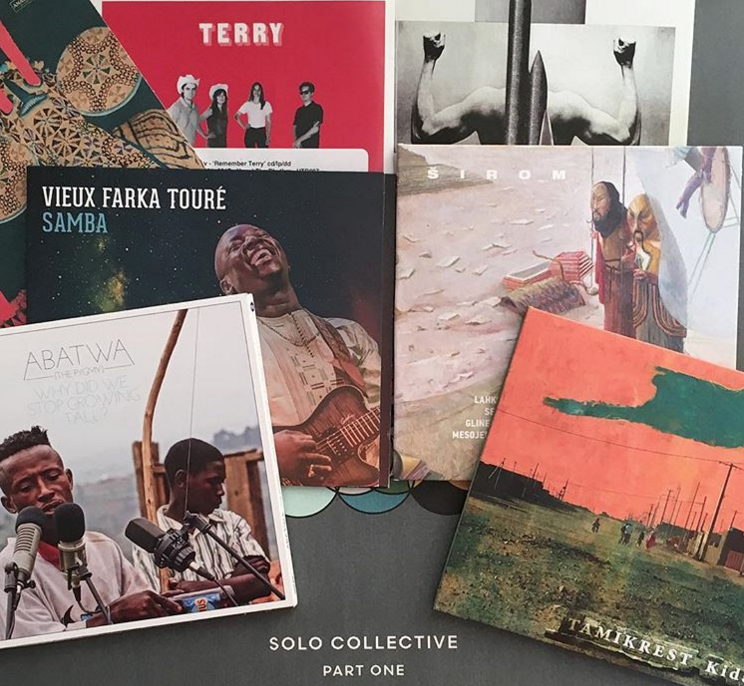
M – Z : Mazzi & SOUL Purpose to Msafiri Zawose.
Welcome to part two of our mega ‘choice albums/EPs of 2017’ feature. If you haven’t already checked it out, have a good perusal of part one, as the second part is a continuation, carrying on in an alphabetical order from where we last left off.
The decision making process:
Continuing to shy away from fatuous rating systems and ‘best of lists’, the Monolith Cocktailendeavors to offer a more eclectic spread of worthy ‘choice’ picks, with no album dominating or holding any particular numbered position – unlike most of our contemporaries lists stuck with the ridiculous task, for example, of explaining why one album is more deserving of their fatuous number 32 spot than another.
Lined up in alphabetical order then, our favourite new and reissued albums and EPs from 2017 are of course considered to be the most interesting, vibrant and dynamic of the year’s releases. But the best? Granted, to make this list you have to have made some sort of impact, but we’d never suggest these entries were categorically the best albums of 2017, even if that might be true. Instead our list is an indicator of our amorphous tastes, rounding up a year in the life of the Monolith Cocktail, and we hope, introducing you to titles and artists/bands that may have dropped below the radar or got lost in the noise of more commercial better promoted releases.
M.
Mazzi & SOUL Purpose ‘The Building’ (SOUL Purpose)

“A towering B-boy document gives familiar samples new life and piles banks of bricks and mortar beats and rhymes you can always back to do the business”. RnV, Feb 17
The Building by established New Jersey movement Mazzi & SOUL Purpose is built on two levels and ends up a skyscraper, to a specification of telepathy that works from close range or miles away. Mazzi as emcee rhymes his ass off for fifteen tracks without leaving you behind (“love what you’re doing and you’ll never have to work a day in your life”) and not without addressing the state of the world, relationship complexities and being prepared to fight (with the listener playing the twelfth man).
The SOUL Purpose movement begins with a mash-up of every essential hip-hop break known to man, going on to cover cavernous, fusionist swells of sound, B-Boy skippers, deep cover gangster business, and samples found in Boots adverts/Sugababes singles and on Madonna tours. That the album was also helping do its bit for good causes added an extra layer to the album’s complete package status. Matt Oliver
Nicole Mitchell ‘Mandorla Awakening II: Emerging Worlds’ (FPE Records)

Taken from a 2015 live performance commissioned by the Chicago Museum of Contemporary Art, the erudite American jazz flautist, composer, bandleader, educator, scion of Afrofuturism, former president of Chicago’s Association for the Advancement of Creative Musicians and a founder of The Black Earth Ensemble, Nicole Mitchell’s outstanding Mandorla Awakening II: Emerging Worlds conceptual suite, straddles two evocatively imagined contrasting worlds: the tumult of a patriarchal world, called The World Union, in decay against the egalitarian desire of the advanced utopia called Mandorla, where technology and nature, freedom and tolerance are in ultimate synchronization.
Set in the year 2099 this multimedia project, which includes a short novella, blurs the line between philosophy, mysticism, modern art, science fiction and radical political critique on what is both a diaphanous and moody groundswell soundtrack of contorting confusion and beautiful flute accompanied polygenesis magic. To suggest this album of instrumental peregrinations and odysseys and poetically conscious soulful lectures and passionate, Last Poets meet Pharaoh Sanders, declarations – courtesy of Avery R Young – can be simply classed as a jazz is to ignore how amorphous the musicality of Mitchell and her reconfigured Black Earth Ensemble is in transcending the genre. With an expansive range of instruments and sounds, including Kojiro Umezaki on shakuhachi, Renée Baker on violin, Tomeka Reid on both cello and banjo, Alex Wing on electric guitar and oud, Tatsu Aoki playing bass, shamisen and taiko, and Jovia Armstrong handling percussion, the paradise versus dystopia exoticism of the ‘awakening’ simultaneously evokes orientalism, fantasy, nature, the classical and the atavistic.
At its heart, articulating the nervous but adventurous, pinning but diaphanously elevating characteristics of the narrative, Mitchell’s flute performances are stunning and spiritual throughout, even gracious. And the direction of travel is never quite certain, but always impressive and questioning.
As a frame for this conceptual suite, Mitchell asks: “What would a world look like that is truly egalitarian, with advanced technology that is in tune with nature?” We may never know, but the tumultuous journey towards it certainly sounds magnificently ominous and beautifully experimental. Dominic Valvona
N.
Nolan the Ninja ‘Yen’ (Left of Center)

“Aggressive, eyeballing rhymes to get you bouncing, and beats strategically picking their punches”. RnV, Oct 17
In his bid “to retire before I’m 35” and “trying to see a million before I go to sleep”, Nolan the Ninja absolutely busts a gut to get his rhymes hurrying up his pension plan. Landing haymakers on dosed up vintage Queensbridge and clatters of muddy kicks and snares that can call up a posse from miles, the Detroit dragon slayer also knows that living by an all-or-nothing mindstate means every single syllable has to have the clarity to rightfully shatter ciphers.
Getting Royce 5’9” to guest on Calisthenics is a smart move in seeing whose chest is first to tighten, and Chess is the least civil checkmate recorded as everything threatens to spin of control. The album actually decelerates – or likelier, gives the music a chance to catch up – to show that the go-for-mine Nolan can manage the throttle when soulful drops start clearing the debris. MO
O.
Open Mike Eagle ‘Brick Body Kids Still Daydream’ (Mello Music Group)

“Maintaining his rightful place in the line of ghetto superheroes”. RnV, Aug 17
Two tracks define the multi-talented emcee’s latest intricacies and humour, cosmopolitan accessibility and underground elusiveness. Open Mike Eagle draws himself from his shell by completely rewriting the rules on what it means to be hard in hip-hop on No Selling. Despite the Dark Comedy compère being a nostalgic peacekeeper for a lot of Brick Body…, capable of bringing up an argument about which condiment is king of the kitchen to prove a greater point, the album’s political piece de resistance, My Auntie’s Building, fights for what he believes in with tangible rage, a housing project held close providing the album with an explosive conclusion that might have got lost further up the album sequence.
We disagree that “everything is better when you don’t know nothing” – everyone needs Eagle in their corner – but can certainly vouch for the confirmation of “I promise you, I will never fit in your descriptions”. MO
P.
Hermeto Pascoal ‘Viajando Com O Son (The Lost ’76 Vice-Versa Studio Session)’
(Far Out Recordings)
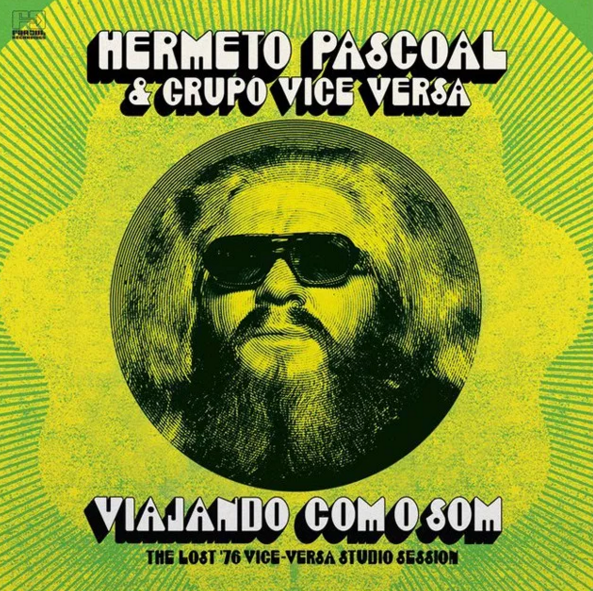
Thankfully surfacing forty odd years after the fabled ’76 sessions at Rogério Duprat’s São Paulo Vice Versa studio, the extemporized jazz performances of Hermeto Pascoal and his impressive Paulo troupe sound every bit as fresh and dynamic as the day they were recorded.
Held in high esteem, in the upper echelons of experimental traversing exotic jazz pantheon, anointed by a hyperbolic Miles Davis who called him “the most impressive musician in the world” after catching him play live, Pascoal’s transcendent voyages from Brazil have become the stuff of legends. Crate-diggers and jazz or indeed even world music aficionados have always salivated at the prospect of such material being found and released, and the missing Viajando Com O Son session is up there with the most desired.
Unburdened by such trivialities as time and composition, this four track suite shimmers with the celestial as it dreamily saunters through a tropical rainforest groove on the opening Dança do Pajé; quacks and quivers through a percussive bending bright organ peregrination on Mavumvavumpefoco and mysteriously and surreptitiously explores an exotic landscape, tip toeing and lovingly serenaded by magical flutes, on Natal. However, the main, twenty-six minutes long, expansive highlight, Casinha Pequenina, follows on from the previous tracks with similar leitmotifs played out and taken into ever more experimental directions: from Miles Davis to Guru Guru.
The Lost ’76 Vice-Versa Studio Session is a lush tropical jazz odyssey from the Brazilian maverick and genius that’s well worth every penny. DV
Piano Magic ‘Closure’ (Second Language Music)

Calling time on a twenty-year career with one last swansong, the Anglo-French Baroque indie dreamers Piano Magic echo the sentiments and themes of their 2000 song No Closure on their final majestic and profound album, Closure.
Drawn to a despondent melancholy, a most diaphanous one at that, the sagacious founder member and songwriter Glen Johnson is aided in his last ever enterprise by Franck Alba (guitars), Jerome Tcherneyan (drums, percussion), Alasdair Steer (bass) and the band’s original drummer from their debut gig at the infamous Wag Club, Paul Tornbohm, now providing keyboards. Wounded and troubled as ever by the lingering traces and ghosts of past relationships and liaisons, Johnson’s resigned poetics attempt to meet head-on those feelings he just can’t seem to lay to rest: as Johnson calls it, the “mythical formal conclusion”, the need to “move on” from broken relationships is not so easy. And so he croons, “Let’s get this thing sewn up” on the Morricone meets Ry Cooder cinematic title track, knowing full well that “…you never get closure.” The supernatural echoes of a lost love, channeled through a dusty answering machine message séance, on Landline leave the singer’s voice paled and weakened; lamenting loss form the far side of the ether. Marooned as a passive onlooker to the goings-on in the backstreets of his southeast London neighbourhood, a voyeuristic, removed Johnson (in Talk Talk mode) vanishes almost completely before our very ears. The song’s sad lyrics it must be said are a most beautiful kind of misery.
Magnificent in their despair, the musicianship poised, purposeful and subtly stirring, Piano Magic’s last ever fling is one of the band’s most accomplished, and definitely one to savour. As near perfect as any Piano Magic suite can be, Closure proves that you can perhaps after all find a satisfactory ending. DV
R.
Reverse Engineer ‘Elusive Geometry’ (Floored Music)
Both in the moniker by which the Edinburgh-based ‘sonic experimentalist’ Dave House is known by, and deduced from the title of his latest album, Elusive Geometry, we can view the sound-artist’s music as a restructuring of sounds and mechanics.
House unravels, strips and inverts his apparatus of field recordings and sampled instruments to reconstruct new, often mysterious and at times foreboding soundscapes; some of which recall Jon Hassell’s Fourth World Musics explorations: a trace of the Javanese or Malay can be heard like a veil hanging over the uneasy densely packed traverse of cascading crystal droplets, marimba and tubular echoed Proto, and a similar, familiar yet obscured sense of place can be heard on the bamboo shuttling Insider, which also features the bobbing and dipped percussion and tablas of sound-designer and producer Pete Vilk.
A transformation of House’s themes of ‘transition, self (re)discovery and moving on’, the precise chemistry of his compositions and use of collaborators – the already mentioned Vilk is joined by the jazz vocalist Matty Eeles, harpist Esther Swift and BAFTA award-winning cellist Atzi Muramatsu – sends these explorations off into numerous nuanced, but untethered, atmospheres. Masked looming leviathans, honked saxophone like probes, coils and springs, stone and vegetation, the odd guitar strike drift over or interweave through sophisticated minimalist beats and breaks – the most abstract and discordant drum break of which features on the hallucinatory Decoherence -, with the mood fluctuating between both controlled uncertainty and more deconstructive chaos.
Elusive Geometry will tease out and reveal its textures and intricacies slowly, each listen drawing your attention to some other interesting interplay and sparse sound. House has in short created a brilliant album of thoughtful, moody transitions and discovery. DV
S.
Miles Cooper Seaton ‘Phases In Exile’ (Ascension Hall Recordings)
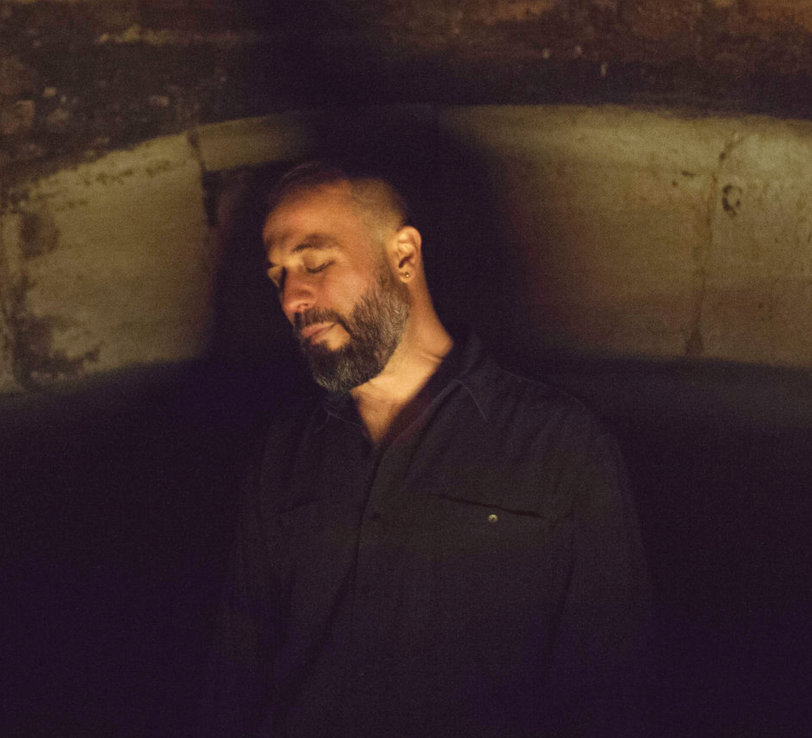
This music is a cinematic poetic recitation, an eloquent art object; sticking to the blurry lines of your shadow while you float through this existence, this street, this town-deserted-or this day, mundane. That dreamy music with the aura of a long lost ocean is the sound of the beyond: you will see, in a cloud, half stunt postures of people trying to deal with mourning. Their eyes wide open yet unsure of how to breathe. And while they exhale, the music pours as if descending from a kind heaven, nested in peace, cooing for drenched figures of the earth.
Miles Cooper Seaton is the ghost who reaches out, entrusting us with a sensation of hope and relief, tranquility, a loophole, mindfulness. Forgive and forget. In the morning dreamers try to get a hold of their visions, trying to catch a glimpse of that faint reality; Miles’ music is lingering too. It tinkles and echoes with a slowness. This is how the rhythm goes, lingering among a field of green, yellow barns, with an horizon of blue and grey shades, some drops sweep the face of a child who understands it all. The clamorous pearls are just from the fierce-y wind. Inside he is all right. The album is dense and tortured. Inside he is all right; the child has grown, and given us these notes. Ayfer Simms
Sentidor ‘Am-Par-Sis’ (Sounds And Colours)
A most congruous if challenging futuristic Rio de Janeiro psychogeography remix of sounds and ideas, built around the transformed cut-up samples and influence of one of Rio’s most famous sons, Tom Jobim, and his post-bossa nova peak leftfield experiment Passarim, fellow compatriot and burgeoning experimental music star João Carvalho creates one of the year’s most haunting and magnificent lush ambient suites, Am-Par-Sis.
Synonymous and celebrated for bringing bossa nova to the world, Jobim’s explorations outside the genre had gone largely unnoticed. Under his alter ego, Sentidor, Carvalho sheds new light on the legendary artist’s innovative experiments whilst also drawing on the drone, ambient, trance, funk carioca, classical and plunderphonics styles to create a uncertain multi-textured augur for future generations to ponder over.
On, what is the most traversing of ambient and collage concept albums, he poses a number of questions, such as: How would Jobim’s record be interpreted by a new generation whose connection with the past and the rest of the world has been cut? How would the record be used in creating new rituals? How can art be reorganized and rebuilt democratically? It also questions the very ideas of what constitutes as the public domain in the modern world and whether something sacred should be preserved or rather gather dust and slowly turn into something else.
Via the power of a seamless, amorphous soundtrack of ethereal pulchritude, cascading veiled piano, ether Panda Bear like voices and song, atmospheric manipulations, transmogrified melodies, whispery winds, Neu! boat trips, reversed samples and magic Carvalho sets out to mull over and articulate these questions. DV
Shadow ‘Sweet Sweet Dreams’ (Analog Africa)

For the first time branching out towards the Caribbean Islands, Africa Analog turn their attention to one of Trinidad & Tobago’s most enigmatic music stars, Winston Bailey, better known as Shadow.
Previously marooned on a desert island of obscurity, panned by critics at the time and failing to sale, Bailey’s bouncing scintillating Soca-boogie and Calypso hybrid lovesick dance floor tracks were ahead of their time. Unlike anything coming out of the islands at the time, these often bright, swaying pop love spurned and springy ballads took the island’s sound into the cosmos.
Bailey started out in the mid 70s reinvigorating the Calypso genre, adding a slick production to the atavistic roots sound that made its way across the Atlantic via the slave trade, and giving it panache and a slinky radiating candour. Though originally used as a tool for social commentary, the synonymous rhythm of the Caribbean is channeled into a number of space age love songs. But despite the lamentable aspects, Bailey’s vocals are sunbaked with ripe swoon and lilting soul, fit for the dancefloor.
A missing masterpiece waiting to be (re) discovered, Sweet Sweet Dreams is simply a beautiful pop album. DV
John Sinclair & Youth ‘Beatnik Youth Ambient’ (Ironman Records)
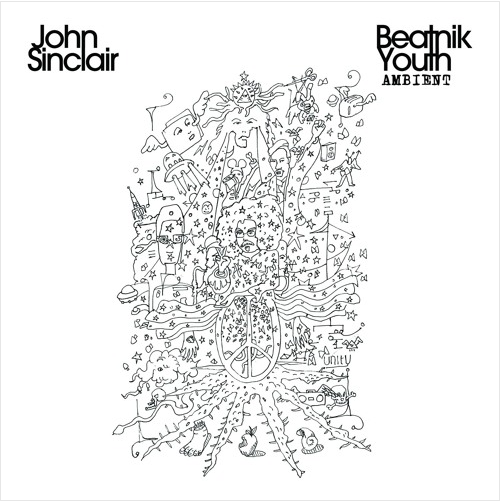
Synonymous for steering and kicking out the jams in his short role as manager of Detroit’s renowned rebel rousing motherfuckers The MC5, renegade poet, scholar, activist and establishment rattler John Sinclair is also remembered for his free radical zeal and dalliances with the law – leading to a short spell in the slammer. Keeping his hand in so to speak, but taking up residency in Amsterdam – a much safer bet -, the beatnik jazz sage continued, and as you can hear on this latest recording, continues, to record and perform in a host of setups with a multitude of contributors and backing bands.
The appropriately (in every sense) entitled Beatnik Youth Ambient mini LP is a foretaste, and as the title implies, ambient treatment version of material from a full-length album, released a couple of months later. The “Youth” of that title refers of course to the Killing Joke bassist turn in-demand producer Martin Glover. Arguably one of the most consistent producers over the last few decades in the UK, Glover, under his Youth alter ego, has taken on more or less most forms of music and worked on both commercial and underground experimental projects. He now provides Sinclair’s “literary synthesis” with a suitable “beatnik ambient” soundtrack: a serialism quartet of turmoil, turbulent jazz and dreamier trance.
Running through a vivid purview of postwar counterculture, bringing to life the energy and excitement that writers such as Kerouac (who gets referenced a lot) captured when seeing the Bebop jazz revolution and its great proponents perform, Sinclair delivers a magical enthusiastic experience on another track, evoking Thelonious Monk’s 1957 LP of the same name, Brilliant Corners. Titans of American beatnik and psychedelic literature lineup, Burroughs, Ginsberg and Neal Cassady (“…had the ability to park a car anywhere”, just one of his talents alongside his status as the “human bridge between the 50s and 60s.”), rubbing shoulders with jazz music’s new guard Lester Young, Byrd and Gillespie; immortalized by Sinclair to “head music” cosmos of jazzy lamenting woe, ghostly squawking and hooting saxophone and swirling mirages.
If anything, Beatnik Youth Ambient leaves the listener pining for a lost age; Sinclair’s evocative prose and delivery lifted (and cradled at times) by Youth’s congruous seething tensions and floaty dream-like production, which enthrall me to once again get stuck in to the “beat generation” and spin those Savoy label jazz totem recordings again. A prompt for the present times, the zeal of the postwar “baby boomers” (those with a soul anyway) counterculture not necessarily translating to generations X, Y and Z, even if it is needed; Sinclair’s language is nevertheless just as powerfully descriptive and energizing now as it was over forty years ago. DV
Širom ‘I Can Be A Clay Snapper’ (tak:til/Glitterbeat)
With an unspecified, but as the name suggests, emphasis on the “tactile”, Glitterbeat Records new imprint label gives a welcome platform to entrancing experimental tonal performances and sonic polygenesis traverses alike. In the latter camp is this Slovenian peregrination suite from the landlocked, Alps nestling country’s visceral sonic conjurors, Širom.
Evoking memories and feelings, both real and imagined, with a soundtrack thick with atavistic connections, the trio of punk and post-rockers turn experimental folk and acoustic instrumental cartographers convey a personal relationship to their homeland, on their second album together under the Širom banner.
Yet whatever the backgrounds, traces of North Africa, the Adriatic and the Middle East, the performances sail scenically through a dreamy otherworldly representation of Slovenia: Oriental, alien and Balkan visions permeate the plucked, malleted, chimed and purposefully played compositions, which subtly and rather cleverly build up complicated layers and various overlapping time signatures during the course of their journey.
Theremin like siren voices drift in and out, enacting the myth and seraph, whilst on the watermill turning Everything I Sow Is Fatal Sun Ra travels with John Cale and Pharaoh Sanders on a pilgrimage to Samarkand. The most recurring sounds however pay testament to the Balkans ghosts. The folkloric stirrings, lulls and yearning of Slovenia’s past bordering both a pan-Europa of migration and grief – stretching back a millennia – are transduced into often haunted vistas and metaphysical passages.
A most impressive and expansive inaugural Balkans travail; different from the previous two releases on this burgeoning new imprint, yet keeping to the tactile, accentuate and imaginative remit, whilst conjuring up mystical new soundscapes. DV
Solo Collective ‘Part One’ (Nonostar)

Gathered together in a congruous union under the Solo Collective umbrella, the Anglo-German partnership of virtuoso performers/composers Anne Müller, Seb Reynolds and Alex Stolze take turns in the spotlight and provide supporting roles with a cast of additional collaborators on the chamber pop meets traversing evocations suite Part One.
An interconnected triangle of familiar themes and musicality, with each musician also individually experimenting and creating their own solo pathway, in their respective field, all three artists have crossed paths and worked together previously on a variety of projects; some of which, in alternative neo-classical stripped versions, appear on this album. For instance, the original pizzicato acoustic-electronic Don’t Try To Be, from the violinist Stolze’s 2016 EP, Mankind Animal, now features Müller’s yearning emphatic cello, and is striped of its synthesizer electronics in favour of woodblock percussion and doleful low bass notes to create a more tragic and sad version.
A showcase for a particularly harmonious partnership of individuals with a pan-Europa vision of collaboration and crossing sublime musical boundaries, Part One – of what I hope will be a continuing venture – proves to be a stirring neo-classical ambient collection of solo and ensemble performances; each artists sharing and pooling their obvious talents to find a common interplay and a bond to create a challenging but mostly beautiful album. DV
Sparks ‘Hippopotamus’ (BMG)
Bombastically pitched as a “comeback” album, unseasonal followers and those not so familiar with the maverick siblings Sparks career may have been under the impression that the much-hyped Hippopotamus marked some kind of return from an imagined sabbatical, a retirement or an emergence from the wilderness. It was nothing of the sort of course, their last official Sparks albums may have been released in 2008 (Exotic Creatures Of The Deep) and 2009 (The Seduction Of Ingmar Bergman), yet they also went on to collaborate with Franz Ferdinand in 2015 for the mighty team-up FFS. Three albums in seven years isn’t bad, considering the rate most groups knock out records these days, and considering Ron Mael is in his early seventies and brother Russell is only a few years behind.
Maybe what the media meant was a return to form. Admittedly – apart from FFS, which made our albums of the year in 2015 – the music hasn’t quite matched the quality of their 70s output or indeed the 2002 triumph Lil’ Beethoven and the 2006 follow-up Hello Young Lovers. Hippopotamus I can thankfully say is very much Sparks at the top of their game.
The Gilbert And Sullivan of cerebral pop music takes the form to ever-new intelligent heights of absurdity and revelation. Daring to merge intellectual ideas and themes into an art form; yet never laborious, condescending or aloof, every song on this latest theatrical rock and pop suite features an infectious melody, satirical but heartfelt clever lyricism and the usual Noel Coward piano witticisms (updated for the modern age of course).
Communicating both the frankly bizarre and the almost insignificant of contemporary foibles (from the middle class anxiety of stylish furniture design, on the Kierkegaard ponders Scandinavian Design, to the difficult to usually rhyme with anything in any song, surreal assortment of metaphorical, or very real, items and figureheads tormenting Russell in his room on the title track), the Mael Brothers frame all their ditties within a melodramatic often plaintive setting of levity.
Minor concertos and pop triumphs abound, as Sparks use the usual assortment of figureheads, including Edith Piaf and an ambiguous French film director auteur, to articulate their feelings on an assortment of theatrical and operatic (the almost aria style domestic imaginings of The Macbeths on the Living With The Macbeths duet) anthems – though of course, Piaf “always said it better”.
Cleverly creating social and political satire and commentary without the rage, finger wagging and virtue signaling, Sparks remain one of the most consistent bands – or duos if you like – in music history; five decades on and still producing epic pop, the likes of which has seldom been equaled. DV
Strange U ‘#LP4080’ (High Focus)

“#LP4080 has a deftness that allows it to be daft; a first class bizarre ride to and from the far side”. Our Daily Bread 234, Feb 17
It’s always fun and games when King Kashmere/The Iguana Man/Lord Rao starts spraying jocular, juvenile sci-fi syllables and delirious, crowd-pleasing hooks at will. When he hits hyperspace, he’s an unstoppable force of nature few can compare to – “you enjoy buying trainers, a person like me enjoys firing lasers” – though his intergalactic court jester act belies the wicked yarns he spins about our alien overlords and fantastical set-plays (environmental health, relationships, politics) that are closer than you think.
Helming a future primitive craft with Dr Zygote, mechanic to an 8-bit jalopy with head knocks and funky splutters aplenty, Strange U float through the cosmos as an entertainingly erratic two-man crew. Despite being recorded in a studio far, far away, LP#4080 has got its head screwed on with attention to the fundamentals – the MC-producer combination, prime beats and rhymes, a concept that works, and a spectacle promising multiple revisits. MO
T.
Tamikrest ‘Kidal’ (Glitterbeat Records)
Still without a homeland, though liberated from their draconian partners, the Tuareg are once again left, as wanderers in their own lands, the unofficial guardians and custodians of the Saharan wilderness. For now only a dream, best realized and protested through music, the rock’n’roll Bedouins Tamikrest emerge once more from the barren landscape with a message of “power and resistance”, on their fourth, equally entrancing, album Kidal. Paying homage to the strategically and spiritually important cultural trading town of the title, the highly-acclaimed (and rightly so) Tamikrest exude both the sadness and suffering of the dispossessed people who cling to the southwestern Saharan hub that is Kidal: a town which has seen its fair share of fighting, fought over, conquered and reconquered over time, it remains a symbolic home to the Tuareg. This is after all the town that nurtured them and where it all began.
Preserving an increasingly endangered ancestral culture and language, Tamikrest’s cause cannot be separated from their music. Yet, rather than protest with bombast or angry rhetoric, they articulate their woes with a poetic, lyrically sauntering cadence. Oasmane Ag Mosa’s earthy lead vocals resonate deeply, even if his timbre maintains a stoic dignified pitch. Backed by Aghaly Ag Mohamedine and Cheick Ag Tiglia on backing and duets, a lulling sweetness transcends, which on occasions adds a certain romanticism to the impassioned struggle. Swaying effortlessly between the meandering and up-tempo, the accentuated dynamics of Mosa and Paul Salvagnac’s entwined, untethered and contoured guitar work, Mohamedine’s “gatherer” Djembe rope-tuned goblet drumming, Nicolas Grupp’s askew backbeats and Tiglia’s smooth, free-roaming bass lines transport the listener to the mystical topography of the desert.
Assiduous, confident and articulate, the musicianship shows not so much a progression as a balance between the meditative and rock’n’roll spirit of the Tuareg musical resistance. Tamikrest are as brilliant as ever musically, and Kidal is, despite its plaintive and lamentable subject woes, a beacon of hope in an ever-darkening world of uncertainty. DV
Tanzania Albinism Collective ‘White African Power’ (Six Degrees Records)

In so many respects a “spiritual follow-up” to the acclaimed producer Ian Brennan’s Grammy Award-nominated Zomba Prison Project and follow-on from the equally evocative and raw Hanoi Masters sessions, White African Power attentively and respectfully draws out the repressed voices of the Albino community in Tanzania. Brennan’s productions often serve as a kind of hands-off form of creative counseling and healing; helping people to overcome trauma, such as the survivors of Pol Pot’s genocide in Cambodia. He’s renowned for being the most inconspicuous of in the field and on location producers, letting the atmosphere and elements, the moment if you like, and even serendipity bleed into the performances he captures for posterity. And the production methodology used for this latest project, recording the songs of the Standing Voice Community of Ukerewe, is no different.
A safe haven, Ukerewe, where Ian travelled to in 2016 to document their plight, is the largest inland island in Africa, only reachable by a four-hour ferry ride. Its community is, hardly surprising, haunted by their experiences. Self-conscious, avoiding eye contact, it proved a difficult task for the producer to encourage his subjects to open up. But open up they did, and the results are often surprisingly melodious, poetic, and diaphanous if raw and emotional. Far from a harrowing catalogue of despair and pity, the 23 recordings on this collection prove illuminating.
Fitting no obvious style, these amorphous performances do however resonate both with the delta blues of Louisiana and the stark, stripped down and earthy blues of South East Asia. Touches of raw African dusty tradition do appear, ascending and descending alongside gospel and soulful voices, naturally echoed, sighed and open-heartedly sung with a pure vulnerability. They’re accompanied either by stark lo fi electric guitar performances, that range from scratchy, straggly proto-punk to slower scrabbly emotive twangs, or an acoustic backing of rubber-band and bottle shaking percussion. Standing out production wise though is the classical – imagine Brahms on harpsichord transferred to East Africa in the 80s – reverberating cradling deep soulful ballad, Never Forget The Killings.
Ian Brennan coaxes another startling, eye opening, set of recordings from the victims of trauma; one that proves every bit as impressive as it does plaintive and sad. The collective will astonish, if not surprise listeners, those suppressed voices, thankfully released and given an international platform, sound emotionally honest and revelatory. DV
Terry ‘Remember’ (Upset The Rhythm)

The disarming world-weary punk and quirky pop touting quartet of Melbourne scenesters, banding together under the ubiquitous Terry moniker, follow up a prolific run of 2016 EPs and their debut LP with another acerbic witted, snappy melodious release of profound disenchantment and wistful “wish fulfillment”.
Continuing with the shared girl/boy dynamic of lulling, placeable idiosyncratic vocals and flexible punk, country and new wave bubblegum backing, Terry look to expand their repertoire on Remember. The combined musical savvy and experiences of band members Amy Hill (of Constant Mongrel and School Of Radiant Living), Al Montfort (UV Race, Dick Diver, Total Control), Zephyr Pavey (Eastlink, Russell St Bombings and also Total Control) and Xanthe White (Mick Harvey, Primo) push the quartet into all kinds of nonchalant mischief. The gang embraces nonplussed French new wave chanteuse vibes on the brilliant breezy, mosey country lilting, Toy Love meets Serge Gainsbourg Take Me To The City (one of the tracks of the summer), and snappy, bouncy indie synth pop on Rio. At their most raucous, rough and ready to tumble, Terry softens the edges of The Damned on both their keystone kops rave-up Start The Tape and spiky frazzling Give Up The Crown.
Suggesting nothing more rebellious than a cheeky smoke behind the bike sheds, the group’s knockabout catchy hooks and charm cloak a personal profound response to the political and personal anxieties and dramas of the times. And they do this with a certain aloof coolness and adroit ear for a great tune, making this 2017’s most melodious and catchy album of knowing pop slanted punk. DV
Vieux Farka Touré ‘Samba’ (Six Degrees Records)

A studio recording with a difference, played out and developed live in front of just fifty lucky people in Saugerties, N.Y., Vieux Farka Touré’s latest album blurs the boundaries between performance and the processes of making an album.
Ever the consummate maestro and backed by an equally accomplished band of musicians, there was some initial apprehension on Touré’s part about allowing an audience into the studio. Though we have the finished product, free of any mistakes, restarts and disagreements, it seems this audience far from unnerving the band, egged it on, with the results sounding effortless and natural. There were overdubs of course and one of the songs was recorded back home in Mali – the calabash driven Ni Negarba. But far from cutting corners or relying on the back catalogue, Touré has fashioned an entirely new songbook of vocal and instrumental material for Samba. Some of which amorphously touches upon unfamiliar influences, including reggae on the unapologetically roots-y swaying Ouaga.
Touré is as the Songhai title of his new album Samba translates, the second son of the late Ali Farka Touré, a doyen of the Mali music scene himself who left an indelible mark. If we expand on the title’s meaning, “Samba” is a byword for “one who never breaks”, “who never runs from threats, who is not afraid”. It is even said that those adorned with the name are “blessed with good luck.” Inspired by his ancestry, imbued with three generations, Touré’s album is suffused with special tributes to his family. Outside the family sphere, Touré confronts both Mali’s recent Jihadist takeover – only stopped and defeated by the intervention of the country’s former colonial masters, France – on the radiantly rippling, chorus of voices, funky blues number Homafu Wawa, and environmental issues on the dexterously nimble-fingered bluesy rock, Nature.
The almost never-ending efflux, the constant lapping waves of textures that Touré plays, which offer a cyclonic bed on which to add the deftest licks, have never sounded so sagacious and free flowing. This ain’t no Saharan Hendrix at work, this is something else entirely, and better for it. This is the devotional, earthy soul of Mali, channeled through a six-string electric guitar. DV
V.
VVV ‘Bozo Boyz’ (VVV)
“The trio take apart prowling club beats powered by the high beams of an 80s sportscar”. RnV, Nov 17
Preceded by Apocalypse Trent poking fun yet completely understanding modern hip-hop’s rules, the Nottingham trifecta of Vandal Savage, Cappo and Juga-Naut are a heavy rotation of individual voices.
Rhymes and word associations – pop culture, mind’s eye observations, opaque battle bars covered in enough 80s hairspray to tear the ozone layer a new one – jut out at free-flowing, at times unworkable angles, yet are held together by undeniable dope infused with a carried over drop of cheek.
Flicking VVVs at club beats, a slim line 80s synth chassis is rolled out to maximum effect (an evolutionary eye-opener for East Midlands rap fans – this won’t be their usual milk and two sugars). Both chilled and chilling, sonically Bozo Boyz lives an alternate life of soundtracking a slasher movie making a wrestler’s entrance to the ring. One of the more idiosyncratic hip-hop picks on this list, it’s VVV for victory. MO
Various ‘Hidden Musics 4: Abatwa: Why Did We Stop Growing Tall?’
(Glitterbeat Records)

Ian Brennan, yet again, probing the furthest, most inhospitable and outright dangerous places in the world to record marginalized voices, journeys to the post genocide borderlands of Rwanda on the fourth volume of Glitterbeat Records illuminating Hidden Musics series.
Taking the unmarked, haphazard, road (less traveled) to the edges of Rwanda, avoiding the animosity and embers of vengeance that still burn and remain between the country’s minority Tutsis and majority Hutu communities, Brennan visited and recorded for posterity the Abatwa tribe’s seldom heard lament, anger and incredible soulful, if raw, blues.
The Abatwa name remains mostly unknown outside Africa, that’s because, due to their limited growth, we know them better as the ‘Pygmy’. A derogatory name loaded with infamy, yet preferred by the very people it derides, the tribe rather that put-down than (as Brennan puts it) “the official PC mouthful/post-genocidal replacement: The people who were left behind because of the facts of Rwandan history.”
What you get from this community is battery powered electronics and rusty, ramshackle dusty instruments coming together in hybrids that evoke ritual, the ceremonial but equally the blues, soul and hip-hop; all played with an undeniably emotional Rwandan verve and lilt. Make no mistake; this is performance in its most deconstructive raw form. Devoid of embellishments and overbearing production, recorded in situ with only the rudimentary elements and atmosphere for company, and it sounds great. It is nothing short of revelatory; field recordings of hope and recovery created in the face of despair. DV
Various ‘Pop Makossa: The Invasive Dance Beat Of Cameroon 1976-1984’
(Analog Africa)
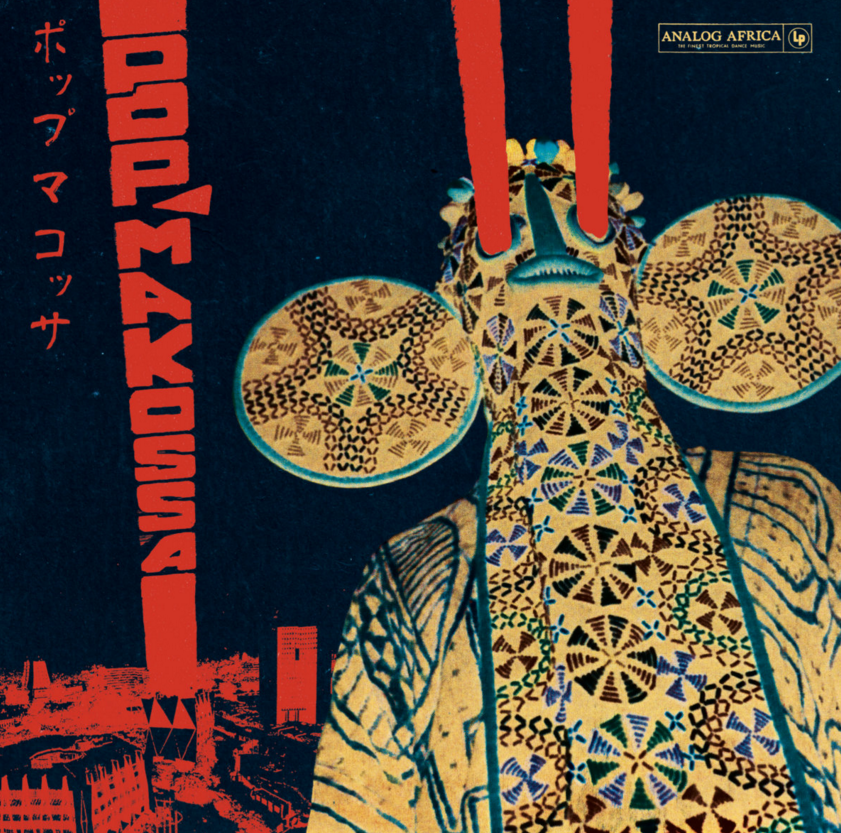
The latest in a tenure adventure of excavating lost treasures from the African continent; Analog Africa’s main man Samy Ben Redjeb once more digs deep, sifting through a daunting mountain-size pile of records and recordings as he draws the spotlight on Cameroon’s Makossa scene of the 70s and 80s.
Originally the traditional rhythm and funeral dance of Cameroon’s Sawa and Essewé peoples, later transformed in the country’s cities as it collided with everything from merengue and rumba to Highlife and disco, Makossa, which means, “to dance” in the Cameroon Douala language, is a highly loose and adaptable style: as you will hear on this twelve-track collection of hits and rarities from the golden era of pop makossa.
Honing in on the period when makossa rubbed-up against funk and disco, this balmy dance beat compilation’s pulse is luminous and fluid and most importantly, funky. This is in major part down to some of the most smooth, bouncing, slick and relaxed but constantly busy of bass lines – Cameroon’s bass players rightly revered as among the best throughout the world – and the constantly shuffling hi-hats, tom rolls and splashing drums.
Every bit as “invasive”(and infectious) as the extended album title suggests, the classy pop massoka sound – once considered the unofficial national sound of Cameroon – is waiting to be rediscovered and let loose once again. In what seems like a recent shift in direction at the Analog Africa label, with the emphasis on the late 70s and 80s – from last year’s Space Echo collection from Cape Verde to reissues of Trinidad & Tobago star Shadow’s Sweet Sweet Dreams and the Benin solo singer Vincent Ahehehinnou’s Best Woman – this latest survey continues to unearth musical treats from the same era, albeit in different geographical settings, yet sharing many of the same production and trends traits. In short, another classy sun-basking exposé of the most sauntering, scintillating African pop from one of the top labels in the field. DV
Vukovar ‘Puritan’ (The Brutalist House)
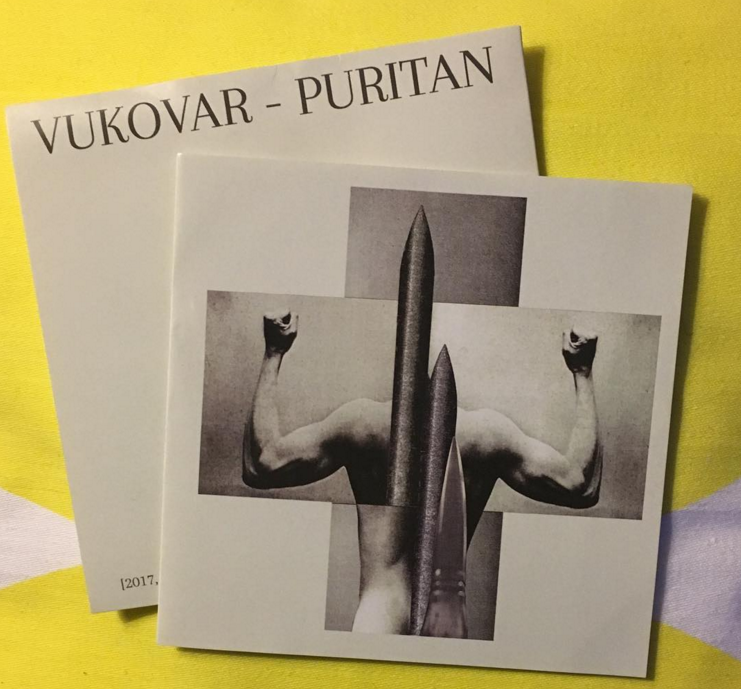
Following in the tradition of their three-syllable sloganist album titles, Vukovar’s fourth LP drums home the Puritan mantra and analogies; a cleansing if you will of the status quo, a year zero, and perhaps also a return to the roots and communal deliverance of protest in music – not, I hope, the ‘puritanical’ steeple hat and buckle shoe wearing bible bashing of zealots, burning heretics at the stake, nor the bloody zeal of so many badly turned-out revolutions that end up creating just as terrible a reign of tyranny. The only fires here are the metaphorical kind; a funeral pyre of mediocrity, a bonfire of vanities, the-bland-leading-the-bland towards a conversion of raw intensity, dangerous, shamanistic performed anarchistic rock’n’roll: well I think that’s the idea.
As the band’s previous album, Fornication showed, Vukovar have at least listened to many of the right bands; released at the start of the year, this amorphous, transmogrified covers style collection featured reconfigured homages to a host of iconic luminaries including David Sylvian, Coil, The Monks, The Birthday Party and Neu!. Cultish in a manner, the band’s influences and manifesto statements of propaganda intent, plus allusions to cultural regicidal and ability to shrink from publicity – even self-sabotage any signs of success or promotion – suggests a band that takes itself very seriously. Yet even with countless references to history’s outsiders, philosophers, discontent mavericks, revolutionaries and demons throughout their previous trio of albums, and the elegiac resignation that shadows them, they waltz sublimely (for a majority of the time), rather than rage in romanticized contempt, as Olympus slowly grumbles.
Between the Gothic skulking and crystalline rays of shared 80s synth new romanticism Vukovar wander transfixed in a nightmare state of both despair and indolent antagonism; with stark lyrics more descriptively visceral than forced down the listener’s throat. Donning the vestiges of the Puritan, the front man, an amalgamation vocally of both Ian Curtis and Bernard Sumner, sets the scene (“I am a sinful man, yet an honest man”) to a backing track of slung low growled bass, Jesus and Mary Chain’s bastardize Spector drum death knells and the miasma threat of Nick Cave’s Bad Seeds on the opening inflicted and gradually ascendant Nietzsche propound Übermensch.
The most complete and best produced encapsulation of Vukovar’s sound and venom yet, balancing both their experimental raw and ritualistic live performances with melancholic post-punk, and even brooding new romanticism pop, Puritan offers a travail through the dirge and gloom of our (end) times with all its sinful and cleansing, often biblical, connotations and language. Though it also often sounds like some kind of personal tortured Nick Cave love requiem, unfolding in the midst of chaos, looking over the edge into the abyss, the heretics taking over the asylum. DV
Y.
Your Old Droog ‘Packs’ (Fat Beats)

“Working a number of hustles and stakes-high dice games, with a penchant for humour and words to the wise on a varied album with no time to waste”. RnV, Mar 17
Your Old Droog’s crowning glory pays the utmost attention to album constructs. Packs is 11 tracks all vying to be the jump-off, featuring skits that help rather than hinder, and guests like Danny Brown and Edan giving the action a hot cameo.
In running his own Grand Theft Auto route through New York (if there’s ever a Baby Driver sequel, or Marvel need a new street hero, surely Droog’s your man), storylines find time to dispense worldly wisdom that you’d be foolish to leave unheeded, and punchlines show that firing from that borderline meh mouth of his, is always smarter than letting off a few from the trigger finger. A 30 minute car chase always in complete control, cool with wrenching the steering wheel off-road before resuming its day-to-day cruising, and whose crucially compact composition makes it a red letter day for the rewind button. The Nas comparisons are now ancient history. MO
Z.
Msafiri Zawose ‘Uhamiaji’ (Soundway Records)

Handing on the baton, so to speak, to another generation, the late great Gogo Tanzanian musician Hukwe Zawose’s equally talented son Msafiri takes up the reigns on his latest album for Soundway Records, Uhamiaji.
From the heartlands of Tanzania, Msafiri in collaboration with the much-respected Santuri platform – enablers and promoters for a much neglected East African music scene – and SoundThread’s Sam Jones has created a vibrant and sauntering, drifting adventure in dub and Afrofuturism jazz from the gogo traditions. Building to a degree on his father’s own 2002 experimental collaboration with ambient electronica producer Michael Brook, on the album Assembly, Msafiri takes his heritage into new and expansive sonic territories whilst intrinsically sounding African.
Buzzy, bright, hypnotic and at times trickling like watery vibes, this amorphous album is an odyssey of the lilting, danceable, meditative and peaceable. A peregrination of mystery, a journey across acoustic and electric frontiers musically and vocally, Uhamiaji is both a most beautiful and imaginative album. DV
PLAYLIST
SELECTIONS: DOMINIC VALVONA, MATT OLIVER AND AYFER SIMMS

The second quarterly revue of 2017 gathers together a faithful purview of the last three months of reviews and articles on the Monolith Cocktail. Myself, Matt Oliver and Ayfer Simms have chosen a mere smattering of our favourite music from that period; featuring both tunes from albums/singles/EPs/collections we’ve reviewed or featured on the site and some we just never had the time to include.
Our customary eclectic playlist features synthesized peregrinations and quirky electronica from Ippu Mitsui, AXL OTL and Swamp Sounds; forlorn desert blues and experimental polygenesis traverses and bombast from Ifriqiya Electrique, King Ayisoba, Tanzania Albinism Collective and Songhoy Blues; a smattering of choice cuts from Matt Oliver’s Rapture & Verse hip-hop review, including Raekwon, Prozack Turner, Brother Ali and Shabazz Palaces; plus pop makossa vibes from Cameroon, aria electric guitar cosmological paeans from Anna Coogan, heavy doom psychedelia from the Black Angels and much, much more. In all: A sense of anxiety. A sense of angst. A sense of unease. And a sense of wonder.
Tracks:
Ippu Mitsui ‘Bug’s Wings’ (review)
AXL OTL ‘Ondes Beta’
Swamp Sounds ‘Skull Disco’ (review)
In Flagranti ‘Sidewalk Salsa’
Flamingods ‘Mixed Blessings’
King Ayisoba (ft. Wanlov da Kubolor & Big Gad) ‘Africa Needs Africa’ (review)
Ifriqiyya Electrique ‘Arrah arrah abbaina-Bahari-Tenouiba’ (review)
Tanzania Albinism Collective ‘Tanzania Is Our Country, Too’ (review)
Vieux Farka Toure ‘Bonheur’ (review)
Tanzania Albinism Collective ‘Mistreated’
Colin Stetson ‘Spindrift’
Uncle Pops & The Dumbloods ‘Harry Smith’s Paper Planes’ (review)
Raekwon ‘Crown Of Thorns’
BocaWoody (ft, Blu Rum 13) ‘At It Again’ (review)
The Last Skeptik (ft. Scrufizzer, Mikill Pane, Dream Mclean, Al The Native) ‘Drumroll Please’ (review)
DJ Format & Abdominal ‘Still Hungry’ (review)
Prozack Turner ‘Obsession’ (review)
Danger Mouse & Run The Jewels ‘Chase Me’ (review)
Ramson Badbonez & DJ Fingerfood ‘Hypnodic’ (review)
Jehst (ft. Eric Biddines & Strange U) (review)
Brother Ali ‘Own Light (What Hearts Are For)’ (review)
Shabazz Palaces (ft. Thaddillac) ‘Shine A Light’ (review)
El Michels Affair (ft. Lee Fields & The Shacks) ‘Tearz’ (review)
Alex Stolze ‘Don’t Try To Be’ (review)
Earlham Mystics ‘Truth’
Andrew Wasylyk ‘Under High Blue Skies’ (review)
Bill Loko ‘Nen Lambo’ (review)
Vincent Ahehehinnou ‘Best Woman’
Songhoy Blues ‘Bamako’
The Black Angels ‘Hunt Me Down’ (review)
Faust ‘Lights Flicker’ (review)
Oiseaux-Tempete ‘Baalshamin’
Anna Coogan ‘The Lonely Cry Of Space And Time’ (review)
Sergio Beercock ‘Jester’ (review)
Sparks ‘What The Hell Is It This Time?’
Der Plan ‘Lass die Katze stehn’ (review)
Arcade Fire ‘Creature Comfort’
Lucy Leave ‘Talk Danish To Me’
Vassals ‘Sea Spells’ (review)
Mount Song ‘Nothing’ (review)
Carlo Mazzoli ‘Avalanche Blues’ (review)
Happyness ‘Tunnel Vision On Your Part’ (review)
 Monolith Cocktail Blog