Most Loved and Enjoyed Highlighted Albums of 2024: Part Two: M – Z
December 16, 2024
Part Two of the Monolith Cocktail’s most loved and favourite albums of 2024 lists: from M to Z. Put together by Dominic Valvona and Brian ‘Bordello’ Shea.

Picking up on where we left off with Part One of the Monolith Cocktail’s most enjoyed and loved albums of 2024, Part Two continues to list all entries in alphabetical order, starting with M. So without further ado, here is the concluding spread of chosen albums – although anything we reviewed during the year should be considered a winner in that regard.
M_____________
Felix Machtelinckx ‘Night Scenes’ (Subexotic Records)
Chosen Dominic Valvona, reviewed originally by Graham Domain/Review
“The new album from Belgium singer, songwriter and producer Felix Machtelinckx is a strange album. In part electronic, it has an ethereal dreamlike quality where the music seems distant and the vocals sound as though they have been beamed through space from a distant galaxy.
Night Scenes is an intriguing album that is hard to define, but one that grows in definition, depth and subtle beauty with each play. It might prove to be a contender for album of the year.” GD
Marcelo D2 & SambaDrive ‘Direct-to-Disc’ (Night Dreamer)
Chosen by DV/Review
“Transforming choice tracks from his back catalogue of solo albums, put out between 1998 and 2013, the influential and acclaimed Brazilian rapper Marcelo D2 replaces the samples, breaks and scratching for a live, reactive Latin-jazz and samba trio.
As part of the championed ‘direct-to-disc’ series overseen by the Night Dreamer label, the South American hip-hop legend laid down ten performed tracks backed by the brilliant SambaDrive direct onto vinyl at the Haarlem Artone Studio in Holland. With no cuts, no edits, as little interference as necessary, these recordings sound near spontaneous, in the moment. The attitude, the passion, the crammed-in flow and more peppered lyricism is still very much on show, only now lilted towards a jazzier and Latin-fuelled backing that balances the urgency and freewheeling of the rapping with something more pliable, dissipating, funky and stylishly cool. Marcelo D2 & SambaDrive have created something very special; not so much an improvement as an alternative fruitful vision of Samba-rap. “ DV
Luce Mawdsley ‘Northwest & Nebulous’ (Pure O Records)
Chosen by DV/Review
“Over several years now the former Mugstar guitarist Luce Mawdsley has progressively shorn the more predatory slurred spoken-word mise-en-scenes and lurid, sleazy torturous self-harm from their music; gradually removing the “verbasier” programmed-like demonic effects from their voice and freeing themselves from a circled abyss of sonnets.
An holistic record that rescores the English scenery and places held near for Luce, the unfolding stages are both beautifully conveyed and hallucinatory in equal measure; a retold fairytale without any prompts, and without a human cast; a window in on the enchantments but also non-hierarchical, non-binary and free nature of the wilds and geography: a metaphor for Luce’s struggles to find an identity that feels natural, safe and unburdened. One part classical, one part Americana, and one part folksy (a touch of the Celtic too) there’s still a very modern twist to what we may identify as the familiar: imagine Prokofiev on an acid trip, or Ry Cooder in an English pasture laying down breadcrumbs for Hampshire & Foat.” DV
The Mining Co. ‘Classic Monsters’ (PinDrop Records)
Chosen by DV/Review
“Continuing to mine his childhood the London-based singer-songwriter Michael Gallagher once again produces a songbook of throwbacks to his formative adventures as a kid growing up in Donegal in Ireland.
His previous album almanac, Gum Card, touched upon a silly fleeting dabble with the occult, but this latest record (his sixth so far) is filled with childhood memories of hammy and more video nasty style supernatural characters, alongside a whole host of “weirdos”, “freaks” and “stoners”.
Once more back in his childhood home, frightened to turn the lights off, checking for Christopher Lee’s Dracula and the Wolfman under his bed, yet daring himself to keep watching those Hammer house of horror b-movies, Salem’s Lot and more bloody shockers, Gallagher links an almost lost innocence with a lifetime of travails, cathartic obsessions and searching desires.
I’m still astounded by the lack of support for his music or exposure, as Gallagher’s The Mining Co. vehicle is worthy of praise, airplay and attention. Hopefully it will be sixth album lucky for the Irishman.” DV
Hannah Mohan ‘Time Is A Walnut’ (Egghunt Records)
Chosen by DV/Review
“Geographically settling long enough to pen this solo songbook offering, but anything but settled emotionally, the former And The Kids vocalist-songwriter Hannah Mohan attempts to process the break-up of all break-ups.
Mohan rides the roller coaster of a drawn-out break-up with quirkiness and vulnerability, turning tortuous heartache into one of the best and most rewarding songbooks of the year. Mohan may have let her soul sing out, as she comes to accept an emotional turbulent period of stresses and anxieties and pain. But whether she’s finally pulled through the other side or not is up to you the listener.” DV
Jamison Field Murphy ‘It Has To End’ (Tomato Flower)
Chosen by Brian ‘Bordello’ Shea/Review
“Ah yes this is more like it. At last, an album with warmth, soul experiment and beauty. Just when I was beginning to think that it was a thing of the past James Field Murphy turns up with this home recorded gem, an album that combines all the things I love about the magic of music: songs with melody, “That Boy” could well be an outtake from The Beach Boys Smiley Smile album, and “It has To End” has a wonderful bonkers McCartney feel to it [remember McCartney was the most experimental of all the Beatles], and this track combines pop with experimental to a beautifully short and wistful degree. “Hate” is another beautiful song; yes indeed, a hate that is alright to love and love it I do. I love the tape pops in the background: you really cannot beat recording on tape.
It Has To End is a rare thing, an album you do not want to end. It’s an album I will be returning to on a regular basis over the coming months as James manages to balance off pop/psych beauty with experimentation perfectly.” BBS
N______________
NCD Instigators ‘Swimming With Sharks’ (Metal Postcard Records)
Chosen by BBS/Review
“The NCD Instigators were Tony, Brendan, and Desi Bannon, three brothers from Newcastle County Down in Northern Ireland who decided to form a band in the 80s together after many years of playing in various other bands. They took their love of metal, prog, folk and rock and home recorded several albums for their own pleasure, burning them onto CDRs to give to friends and family and playing the occasional gig.
There is just something quite magical about this album, and it is sad that now it is only being released years after the fact and that Tony (bass and vocals) is no longer with us, having passed away in 2020. Hopefully this release will ignite some long overdue interest in this underground lost great band from Northern Ireland.” BBS
Neon Kittens ‘It’s A NO Thing’ (Metal Postcard Records)
Chosen by BBS/Review
“The Kittens have a magic and their own sound: The guitar wizardry of Andy G (In a ideal world David Bowie would not be dead and Andy would be his guitarist songwriter partner) and the spoken, I am going to shove my stiletto shoe heel into your yearning heart, vocal coolness of Nina K. The Neon Kittens are one of those rare bands; we need them more than they need us.” BBS
Neutrals ‘New Town Dream’
Chosen by BBS/Review
“This is splendid stuff, an album of supreme guitar jangle, of well written and catchy songs about life in a small town that at times musically reminds me of early Wedding Present and The Pastels with such wonderfully British lyrics; although I wonder when “Travel Agents Window’s” was written as he mentions buying a bag of chips for 50p, when was the last time you managed to buy a bag of chips for 50p? Maybe life in this small town isn’t as bad as the Neutrals think. I do love this album though. I love the romance of everyday life songs, like little mini-Kitchen sink dramas filmed in grainy black and white. This is quite a gem of an album.” BBS
Not My Good Arm ‘Coffee’
Chosen by BBS/Review
“They take Rock ‘n’ Roll, Ska, Punk and Soul and tie it up and skin it alive whilst berating it with the sort of political soulful joyful nous that hasn’t been heard or witnessed since the Mighty Dexy’s Midnight Runners held the Top Of The Pops viewers enrapt with their explosion of attitude and musical good taste back in the early 80’s. Yes indeed, Coffee is a Northern indie soulful romp of an album by a band that I can imagine being a hell of a good night out to watch and by the looks of it gig on a very regular basis. So, keep your eyes scanned as they may be coming to your locality soon. I understand you can pick up a copy of Coffee on CD from their gigs, as by the looks of it they’ve not yet updated their bandcamp: probably too busy putting the fun into funk.” BBS
O_______________
OdNu + Ümlaut ‘Abandoned Spaces’ (Audiobulb)
Chosen by DV/Review
“Drawn together on what proves to be a deeply intuitive union for the Audiobulb label, the Buenos Aires-born but NY/Hudson resident Michel Mazza (the OdNu of that partnership) and the US, northern Connecticut countryside dweller Jeff Düngfelder (Ümlaut) form a bond on their reductive process of an album, Abandoned Spaces.
Tracks are given plenty of time to breathe and resonate, to unfurl spells and to open-up primal mirage-like and psyche-concocted soundscapes from the synthesized and played. And although this fits in the ambient electronic fields of demarcation, Abandoned Spaces is so much more – later on in the second half of the eight-track album, the duo expresses more rhythmic stirrings and even some harsher (though we are not talking caustic, coarse or industrial) elements of mystery, inquiry and uncertainty.” DV
Berke Can Özcan & Jonah Parzen-Johnson ‘It Was Always Time’ (We Jazz)
Chosen by DV/Review
““It Was Always Time”, and it was always meant to be, for the telepathic readings of both creative partners in this project prove synchronised and bound, no matter how far out and off-kilter their experiments of curiosity go or take them.
The Turkish polymath drummer and sound designer Berke Can Özcan and his foil the Brooklyn-based baritone/alto saxophonist and flutist Jonah Parzen-Johnson, have worked together before, namely on the former’s Lycian atavistic geographical infused and inspired Twin Peaks album, last year.
But before even that, back in the April of 2022, Parzen-Johnson found himself boarding a flight to Istanbul to perform a one-off gig with Özcan. Incredibly the two had never met until thirty minutes before going on stage for a soundcheck. The gig must have proved a creative, dynamic success as both musicians have now come together under the equal billing of this new album, recorded for the Helsinki-based hub We Jazz.
From the dubby to tribal, the esoteric to cloud gazing, Berke Can Özcan and Jonah Parzen-Johnson play out their fears and joys across an exciting album of possibilities and expressive, erring on the heavenly at one point, feelings. A fruitful combination that will endure, and hopefully reconvene in the future.” DV
P_______________
Pastense Ft. Uncommon Nasa ‘Sidewalk Chalk, Parade Day Rain’ (Uncommon Records)
Chosen by DV/Review
“Continuing to attract and surround himself with like-minded curious, inventive artisans of prose from the underground leftfield hip-hop scene, the Long and Staten Islands’ rapper and producer/beatmaker Uncommon Nasa now facilitates Pastense’s return with a post-pandemic opus of metaphysical, cosmological unravelled consciousness alchemy.
With no let-up in the quality of the expansive lyrical metaverse, tech comes in conflict with the forest’s birds and nature’s fight for survival amongst the concrete and chemically poisoned wells of so-called progression on an artistically simulated and stimulating canvas of thoughts and connectivity.
Pastense, in partnership with Nasa, creates a most excellent mind-expanding universe, and in doing so, one of the year’s best hip-hop albums: this is an artist and record worth championing.” DV
Ivo Perelman, Chad Fowler, Reggie Workman and Andrew Cyrille ‘Embracing The Unknown’ (Mahakala Music) Chosen by DV/Review
“A true “cross-generational” (with two of the participants born in the 1930s) coming together of avant-garde, freeform and hard bop talent, the ensemble quartet of Ivo Perelman, Chad Fowler, Reggie Workman and Andrew Cyrille “embrace” experiment. You could call it an extemporized gathering, with no prior arrangements and not much in the way of dialogue.
Making the abstract seem even more so, yet somehow conveying mood, emotions and self-expression, this descriptive and totally improvisational master class in free-thought-jazz somehow captures the internal struggles and reflections of the mind during an age of high anxiety, rage, divisiveness and unease.” DV
James P M Philips ‘Spite, Bile & Beauty’ (Turquoise Coal)
Chosen by BBS/Review
“Punk, folk, rock and a medieval becoming strangeness all collide to bring us another album of psychedelic whimsy from the head and heart of James P M Phillips: an album of joy, sadness, humour and pain. Whether it be the quite wonderfully disturbingly jagged “My Head Is Full Of Rats” or the quite beautiful folk strum of “My New Friend”, James has his own unique way of making music and writing songs; dipping his own original thought patterns into a hybrid of musical genre hopping eccentricity.” BBS
Poppycock ‘Magic Mothers’
Chosen by BBS/Review
“The whole album is joy. I love the mix of jazz, folk and psychedelic pop: alas, if only the last Zombies album was as enjoyable as this.” BBS
Pound Land ‘Live At New River Studios/ Worried’ (Cruel Nature Records)
Chosen by DV, but reviewed originally by Brian ‘Bordello’ Shea
“This new album by Pound Land is a double whammy of an affair. The first side recorded live, captures the band without guitar but with a rather fetching squelching punk rock synth suppling the health out of the watching masses. Pound Land are of course a punk and post punk rock outfit of political magnitude. A band that captures the atmosphere of living in this divided land we call the United Kingdom and make a hell of a fine racket while capturing the atmosphere as the live side of this cassette magically proves. The second side is taken up by the thirty-one-minute track, “Worried”, which is a fine sonic journey of sadness, horror and experimental splendour that takes in dub, punk, and electro soundscapes; a dream of a nightmare track that really needs to be heard by all.” BBS
R__________________
Revival Season ‘Golden Age Of Self Snitching’ (Heavenly Recordings)
Chosen by DV
Totally missed at the time by us (well, we did feature ‘Chop’ on the February edition of the Monthly playlist), this incredible union between Brandon “BEZ” (B Easy) Evans and beatmaker/producer Jonah Swilley is so “now” it hurts. A synergy that captures the times it was forged in, Golden Age Of Self–Snitching crafts electronic dance music both dystopian and club, hip-hop, 2-Step, the kind of fusions that TV On The Radio used to generate, locked beats and breaks and dub into a commentary on societal change, protestation and revolution. An essential flow of concentrated angst, frustrations and observation criminally overlooked, and which should make every end of year list of there was any real justice in this god damn forsaken world. DV
Kevin Robertson ‘The Call Of The Sea’
Chosen by BBS/Review
““The Call Of The Sea” is the fourth solo album from Kevin Robertson, a man who is also one of the vocalists/guitarists from Scottish guitar band The Vapour Trails. And here we have him once again showering us with sublime melodies. Melodies that are wrapped in Byrdsian like guitar jangle and vocal harmonies that have just stepped from scratched vinyl copies of ye olde mid-sixties beat boom collectables stopped for a cup of the finest Earl Grey with late 80’s early 90’s Scottish indie guitar wunderkinds’ Teenage Fanclub and Superstar while scribbling on postcards to send their love to those old scouse reprobates Shack and The La’s and the Coral.” BBS
S___________________
Salem Trials ‘View From Another Window’ (Metal Postcard Records)
Chosen by BBS/ Review
“The Salem Trials are clinically rambunctious. They are never further than being an arm’s length away from genius. They have their own sound: their own model of post-punk if you like. They take all the usual subjects (The Fall, Wire, Gang Of Four, the Blue Orchids and Subway Army) and mix them with a no wave sound coming from the streets of New York in the late 70s early 80s. They release albums constantly – this is actually the first of 2024 though, and fits in nicely with the army of their previously released albums.
Andy still being the inspired guitarist that he is, riffing like a cross between Keith Richards, Tom Verlaine and Brix Smith with a army of admirers gathering in her Dis guarded nightwear, and Russ still being the nutter on the bus wearing the splatter ballistic cop t-shirt and spitting feathers at the naked chickens queuing up outside to be the first in line for the latest modern contraption while he is creating art at its best out of the fuzzy felt of yesteryears clowns hats. You really have to love the Salem Trials.” BBS
The Salisman Communal Orchestration ‘A Queen Among Clods’ (Cruel Nature Records)
Chosen by BBS/Review
“I love the psychedelic otherworldliness of SCO. I love the way the lead vocalist phrases his words. He sings with the soul of an sad imperfect empathetic angel, you actually believe in what he is saying, “[If I Wasn’t ]So Godam Blue” is so goddamn beautiful, and with some pretty wonderful lyrics: “remember those days when I pissed in the street, well that is not my style anymore”. Pure heartbreak poetry at its best. The following track “Rum Punch” is as equally beautiful, a psych country-tinged beauty full of sadness and pathos.
I really do love this album SCO have the perfect blend of magic and tragic, and “A Queen Among Clods” is defiantly one of the most impressive and heartfelt original sounding albums I have had the pleasure to write about this year. A true stunner.” BBS
Sly & The Family Drone ‘Moon Is Doom Backwards’ (Human Worth)
Chosen by DV/Review
“A wrestling match on the barricades between the forces of Marxism, Populism, the consumer culture, nepotism, and encroaching forces of a technological dystopia, the collective forces of this group provide a reification-style soundtrack to the crisis of our times. Often this means escaping via a trapdoor to beyond the ether, or, to off worlds and mysterious alien landscapes. But we’re always drawn back into the horror, stresses and contorted darkness of reality; a sonic PTSD manifested in industrial noises from Capitalism’s workshop.
Poltergeist’s jamming activity, fizzles of sound waves and transmissions from the chthonian, ghost ship bristled low horns and higher pitched shrieks, bestial tubular growls, cymbal shaves, disturbances in the matrix, a short melody of pastoral reeds, drums that sounding like a beating. This is the sound of Moon Is Doom Backwards; pushing and striving to score this hideous age through the cerebral and chaotic.” DV
Juanita Stein ‘The Weightless Hour’ (Agricultural Audio)
Chosen by DV/Review
“And perhaps it all comes to this, that after twenty-five years in the music business as both the frontwoman of the Howling Bells and as an established solo artist Juanita Stein has finally found the strength of her own voice and creative force. Stepping out from behind the safeguards of noisy rock to find that silence resonates deeper and further, Juanita erases everything but the most vital, emotionally receptive and connective elements from her music to produce a sagacious, confident (despite the fragility and vulnerability in places) songbook of personal memories.
The Weightless Hour is the perfect album from a great voice and songwriter, who’s now able to find that distance from the events of the past and a new sense of reflected candidness and honesty in motherhood. Juanita’s true self and strength opens-up, the noise diminished for something far more powerful. Not so much defiant as confident. A definite album of the year.” DV
Mohammad Syfkhan ‘I Am Kurdish’ (Nyahh)
Chosen by DV/Review
“Like an ascending stairway, or flowing and resonating with evocative melodious magic, lute stirring ruminations sweep over Arabia and surrounding regions; referencing anonymous, collective and some original-penned compositions and dances to Islam’s ‘golden age’ of fairytale (‘A Thousand And One Nights’); Kurdish pride in the face of repression (the title-track of course) and its peoples’ struggle for independence and respect (‘Do Not Bow’); lovelorn enquires (‘Do You Have A Lover Or Not?’) and the missed daily activities, interactions of life back home in Raqqa. Across it all the hand drums tab, rattle and roll; the cello arches, weeps and bows in sympathy; and the bouzouki lute swoons and rings out the most nimble and beautiful of ached and more up-tempo giddy tunes.” DV
T____________________
The Tearless Life ‘Conversations With Angels’ (Other Voices Records)
Chosen by DV/Review
“Both a transference of souls from the now cremated – or laid to rest, depending on your choice of metaphorical ritual death – Vukovar plus a host of orbiting “other voices”, the make-up of The Tearless Life remains relatively, and intentionally, shrouded, obscured.
Taking a while to materialize, The Tearless Life’s debut opus is both the announcement of new age, but also a bridge between this latest incarnation and the former Vukovar invocation – they are in essence, a band that continues to haunt itself. Old bonds remain, sound wise and lyrically, but with a new impetus of murky, vapoured, gossamer, mono and ether effected solace, tragic romanticism, pleaded and afflatus love, spiritual inspired yearning and allegorical hunger.
Talking to angels, conversing with both the seraph and the fallen, the daemons and spirits of the alchemist’s alternative dimensions, the group transduce the writings of that most visionary seer John Dee, the opium eater Thomas De Quincey, William Blake, and the far more obscure Samuel Hubbard Scudder, who’s 19th century, fairy-like, Frail Children of the Air: Excursions Into The World Of Butterflies publication of philosophical essays lends its title to a song of tubular airy manifestations, distortion, wisped spiralling piques and beautified touching emotional anguish.
Conversations With Angels is epic; the first step in, what I hope, will be a fruitful conversation to divine enlightenment, curiosity, psychological and philosophical intelligent synth-pop.” DV
TRAINING + Ruth Goller ‘threads to knot’ (Squama Recordings)
Chosen by DV/Review
“Two connective forces in the experimental, inventive contemporary jazz scenes combine their experiences and art on this sonic and musical hybrid.
There’s enough threads, nodes and junctions in between to feed off, but both partners in this knotted tension and more spiritual, lofty, airy and aria-like ether Linda Sharrock “ah’d” fusion of influences and prompted sparks of inspiration read each other very well. Directed by, and riffing off, the “Exquiste Corpse” parlour game so beloved by the Surrealist movement, the trio of players expand beyond the jazz idiom into shadow worlds, the mysterious, supernatural, cosmic and near industrial.
Pretty much out on the peripherals of jazz, ascending, flexing, rasping, soothing and breathing iterations and more untethered expressions of freeform music, TRAINING + Ruth Goller fashion organic fusions from a process that promises the wild, tumultuous, wrangled and strange, yet also provides the melodic and dreamy.” DV
Twile (featuring Laura Lehtola) “Hunger Moon” (Cruel Nature Records)
Chosen by BBS/Review
““Hunger Moon” is an album that combines folk, trip-hop, electronica and magic, and weaves together a tapestry of undiluted majestic swoonincity that has not been heard since the Portishead debut album “Dummy”.
Hunger Moon really does not put a foot out of place as it flows and hooks you into its warm strangeness, cradling you and sweeping you up to a safe place where dreams are free to play and cast shadows over your deepest thought and emotions. Eight tracks to soundtrack you as you come down from your highest high. Truly magnificent.” BBS
V______________________
Various ‘Athos: Echoes From The Holy Mountain’ (FLEE)
Chosen by DV/Review
“Context is vital: history essential. For the publishing house/record label/curatorial/ethnologist platform FLEE has spent a year unravelling, digging and excavating and researching their grand project dedicated to the Athos monastic community.
No one quite puts in the work that FLEE and their collaborators do, with the scope and range of academia wide and deep. Musically, across a double album vinyl format there’s a split between those artists, DJs and producers that have conjured up new peregrinations influenced by the source material, and a clutch of recordings taken in the 1960s and in recent times of the Daniilaioi Brotherhood Choir, Father Lazaros of the Grigoriou monastery, Father Germanos of the Vatopedi and Father Antypas – there’s also attributed performances to the Iviron and Simonopetra monasteries too.
As an overall package however, Echoes From The Holy Mountain is a deep survey of a near closed-off world and all the various attached liturgical and historical threads. FLEE reawaken an age-old practice, bringing to life traditions that, although interrupted and near climatically hindered, stretch back a millennium or more. No dusted ethnographical academic study for students but an impressive and important purview of reverential dedication and a lifetime of service, this project offers new perspectives and takes on the afflatus. Yet again the platform’s extensive research has brought together an international cast, with the main motivation being to work with tradition to create something respectful but freshly inviting and inquisitive. The historical sound, seldom witnessed or heard by outsiders, is reinvigorated, as a story is told through sonic exploration.” DV
Various Artists ‘I’m Glad About It: The legacy Of Louisville Gospel 1958 – 1981’ (The Louisville Story Program/Distributed Through Light In The Attic) Chosen by DV/Review
“When Ben Jones, one of the many voices of authority and leading lights of the Louisville gospel legacy, enthuses that the talent at every Black church during the golden years chronicled in this ambitious box set was akin to witnessing and hearing “ten Aretha Franklins at every service”, he’s not boasting. Jones’ contributions, as outlined in this multimedia package’s accompanying 208-page full colour booklet, lays down the much unrepresented story of a thriving, enduring scene. Alongside a host of reverent members of the various Evangelist, Pentecostal, Baptist and Apostolic churches, artists, instigators and custodians, his informative, animated and passionate words draw you into a most incredible cross-community of afflatus bearers of the gospel tradition. For the Louisville scene was and continues to be every bit the equal of its more famous and celebrated rivals across the American South. And that Aretha quote is no exaggeration, as you will hear some of the most incredible voices and choirs to ever make it on to wax, or, in some cases, make it onto the various radio stations and TV shows that promoted this divine expression of worship. 83 songs, hymns and paeans of assurance, great comfort, tribulations and travails from a gospel cannon of pure quality, moving testament and joy.
‘I’m Glad About It: The legacy Of Louisville Gospel 1958 – 1981’ is an unprecedented example of just how to display and facilitate such a multifaceted project of documentation and archive – in the package I received there were links to a brilliant visual timeline and archive of some 1000 songs recorded by 125 different gospel artists. A labour of love and recognition, taking over three years to put together, The Louisville Story Program has not just set out to preserve but also equip the communities they serve with a genuine platform which can be added to overtime. But importantly, they’ve brought in a number of inspiring voices to help build a concise story of legacy and continued influence of the city and gospel music in general – Ben Jones citing Drake and Kayne unable to find a beat that they didn’t hear in church.” DV
Various ‘Congo Funk! – Sound Madness From The Shores Of The Mighty Congo River (Kinshaha/Brazzaville 1969-1982)’ (Analog Africa) Chosen by DV/Review
“A tale of two cities on opposites sides of the same river, the Congo, the latest excursion for the Analog Africa label celebrates and showcases an abundance of dynamite, soul and funk tracks from the two capitals of Kinshasa and Brazzaville.
Congo Funk in all its many variations is put under the spotlight, with an outstanding set list of fourteen tracks (whittled down from a container’s worth of singles) that will enthral and educate in equal measures. Essential dance floor fillers await.” DV
Various ‘Ghana Special 2: Electronic Highlife & Afro Sounds In The Diaspora 1980-93’ (Soundway Records) Chosen by DV/Review
“The first decade of the new millennium proved a fruitful period for (re) discovering Africa’s rich dynamic and explosive music heritage, with both (through their various Afro-funk and Afro-psych compilations) Soundway Records and Analog Africa (in particular their influential African Scream Contests) spoiling connoisseurs and those with just a curiosity alike to sounds rarely heard outside the continent. The former’s original five album Ghana Special spread was one such indispensable collection from that time; a perfectly encased box set survey of one of Africa’s most important musical junctions. Now, unbelievably, a full twenty years later Soundway have followed up that “highlife” triumph with a second volume; moving the action on into a new decade. Ghana Special part two is a refreshing map of the diaspora fusions and hybrids that spread across Europe during a time of movement and turmoil from Ghana’s hotbed of influential stars and musicians. In highlighting the stories and journeys of Ghana’s émigrés, and in introducing us to those sounds, movements that remain either forgotten or just not as celebrated, Volume 2 will become as indispensable as the first.” DV
Various ‘Ulyap Songs: Beyond Circassian Tradition’ (FLEE)
Chosen by DV/Review
“Broadening the scope, the guest list of collaborators stretches the imagination; often completely uncoupled from the source material. All together in one bumper package of ethnomusicology, it makes perfect sense, futuristic alternative planes and visions of a forgotten – mostly passed down orally – tradition. This is a document and testament to the hardiness, perseverance and survival of a culture massacred, exiled and incarcerated, the remnants of a culture almost lost in time, but proving to be very much alive and intriguing to our ears. FLEE and their collaborators, aiders have put together a brilliant, thorough piece of musical research that bristles and wafts with a bounty of possibilities.” DV
Various ‘Wagadu Grooves: The Hypnotic Sound Of Camara 1987-2016’ (Hot Mule)
Chosen by DV/Review
“Shedding light on a rarely told story, the latest showcase compilation from the Paris label Hot Mule unfolds the backstory and “hypnotic” sounds of Gaye Mody Camara’s iconic label; a story that encompasses the West African Soninke diaspora and legacy. The entrepreneur turn label honcho and umbrella for those artists both from the mainland French migrant community and from across swathes of what was the atavistic kingdom of the Soninke ethnic groups’ Wagadu, Camara, through various means and links, helped create a whole industry of music production in Paris during the 80s, 90s and new millennium. The sound is always amazing, and the voices commanding, a mix of those inherited Griot roots, the club, pop and caravan trial. Most importantly Wagadu does have that eponymous ‘groove’ of the title: the ‘hypnotic’ bit too.” DV
Violet Nox ‘Hesperia’ (Somehwerecold Records)
Chosen by DV/Review
“Building new worlds, futuristic landscapes and intergalactic safe havens, and leaving vapour trails of laconic, hypnotizing new age psy-trance mysticism, a message of self-discovery and of resistance in their wake, Violet Nox once more embrace Gaia, Greek and Buddhist etymology and astrology to voyage beyond earthly realms.
Referencing mythological starry nymphs, a sun god’s charioteer, Agamemnon’s granddaughter and scientific phenomenon as they waft, drift and occasionally pump through veils of ambience, trance, dub, EDM and techno, the Boston, Massachusetts trio (although this core foundation is pliable and has expanded its ranks on previous releases) of synthesists and electronic crafters Dez DeCarlo and Andrew Abrahamson, and airy, searching siren vocalist and caller Noell Dorsey, occupy a dreamy ethereal plane that fits somewhere between Vangelis, Lisa Gerrard, Mythos, Kavinsky, Banco de Gaia and ecological revering dance music.” DV
Virgin Vacations ‘Dapple Patterns’
Chosen by DV/Review
“From a multitude of sources, across a number of mediums, the concentrated sonic force that is Virgin Vacations ramp up the queasy quasars and the heavy-set slab wall of no wave-punk-jazz-maths-krautrock sounds on their debut long player. With room to expand horizons the Hong Kong (tough gig in recent years, what with China’s crackdowns on the free press and student activists; installing authoritarian control over the Island) ensemble lay out a both hustled, bustled and more cosmic psychedelic journey, from the prowling to the near filmic and quasi-operatic -from darkened forebode to Shinto temple bell-ringing comedowns that fade out into affinity.” DV
Z__________________________
Tucker Zimmerman ‘I Wonder If I’ll Ever Come True’ (Big Potato Records)
Chosen by DV
Whilst living in idyllic seclusion in Belgium during the 1970s, the venerated but underrated idiosyncratic US-born troubadour/singer-songwriter Tucker Zimmerman left the door ajar to friends (namely Ian A Anderson & Maggie Holland) and the like to spin a collection of unburdened, unpressured homegrown recordings. The results, unsurprisingly magical, halcyon and unassumingly poignantly poetic. The first ever release for ‘I Wonder If I’ll Ever Come True’ is as revelatory as much as it is sublime, felt, intimate, boosting a reputation and clamour for an overlooked maestro. DV
If you enjoyed or were introduced to new discoveries and wish to support us, you can donate the price of a coffee to https://ko-fi.com/monolithcocktail
The Perusal #56: Staple Jr. Singers, A Journey Of Giraffes, L’ Étrangleuse, Head Shoppe, Pastense…
June 4, 2024
A WORLD OF SONIC/MUSICAL DISCOVERIES REVIEWED BY DOMINIC VALVONA
(Unless stated otherwise, all releases are available now)
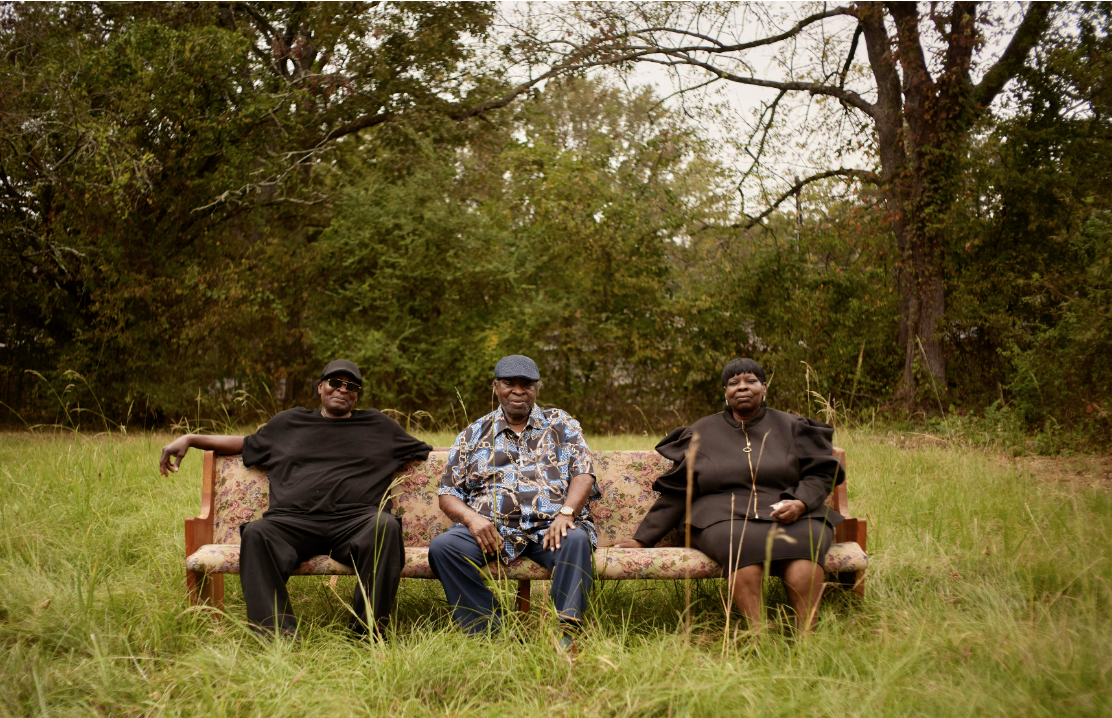
(R.C. Brown, Edward Brown and Annie Brown Caldwell by Adam Wissing)
The Staple Jr. Singers ‘Searching’
(Luka Bop) 14th June 2024
Revived five decades after its original localized release in 1975, the folk at Luka Bop made good on their incredible, enlightening compilation of obscured gospel and soul, The Time For Peace Is Now, with a dedicated reissue of The Staple Jr. Singers rarity When Do We Get Paid.
Pressed by that extremely young family unit themselves and sold at shows and on their neighbors front lawns, that rarefied showcase finally received an international release a couple of years ago, prompting a number of live dates for the trio: their first in forty years! Now, and with an extended cast of second and third generation family members, and with the producing talents of Ahmed Gallab (probably better known under his Sinkone artist name), they’ve recorded their first album proper, Searching – a revived title and re-recorded song that previously opened When Do We Get Paid, given a more echoed, stripped and intimate accompaniment the second time around.
Recorded live over two nights in the reverent and supportive surroundings of The Message Center church in West Point, Mississippi, this family affair picks up from where they left off: as if it were yesterday rather than fifty years ago. Those afflatus voices are not so young now of course, but remain still soulfully enriching and youthful in spirit.
Originally from the banks of the Tombigbee River, the family’s sound was, and continues to be, honed in their hometown of Aberdeen, Monroe County. A salvation searching, baptismal liturgy of Southern gospel is injected with a congruous merger of conscious political soul, R&B, funk and delta blues: the very epitome of the Southern crossroads.
From the name you may have assumed that this trio were scions, the offspring perhaps of the divine stylers themselves: The Staple Singers. But, although without doubt a chip off the old block, the group’s moniker is purely used as homage to their idols. Far younger than Mavis and her siblings and pop when they started out in the mid 70s, the Brown family of beautified and expressive soulful vocalists Annie (appearing here as Annie Brown Caldwell) and R.C., and guitarist Edward were in their teens when they made their first recordings. Yet despite being so young, the travails of the civil rights movement and social issues of the day ran throughout the trio’s equally earthy and heavenly soul music. This was a sound in honor to the Lord yet grounded in the wake of Southern desegregation, unrest, the Vietnam War…the list goes on. So whilst Annie soared in full baby Staples mode, and with a vibe of Eula Cooper and Shirley Ann Lee about her, there was plenty of attitude and sass to go around.
Gospel music remained, and still remains central, with plenty of standard Bible belt exultations, paeans and passionate plaints. Some of which, no matter how familiar, seem to have some pretty unique and idiosyncratic rearrangements going on. Bolstered on those formative recordings by bassist Ronnel Brown and drummer Corl Walker, we were treated to a Stax-like revue of beatitude, the venerable and just down-country soulful funk. Echoes of Sam Cooke, Lulu Collins, Crusade Records, Chairman Of The Board and Nolan Porter followed humbled sermons on the soul train to Galilee. An electrifying songbook, When Do We Get Paid proved that this family trio possessed a raw talent, and could hold their own in a field packed with such incredible voices.
Fifty years later, backed this time by R.C.’s son Gary and grandson Jaylin, and Edward’s son Troy, and with the modern sensitive and magical production of the Sudanese-American musician polymath Gallab, it’s now a much more mature version on show.
Shining through at every turn with rarefied authenticity, the Brown familytakes time to softly preach a bluesy soulful gospel of intimate travails and personalized soul-searching. On the redemptive trail whilst also facing the afterlife, and yet comforting with a praised message of deliverance, the lyrics confirms the family’s dedication to walking that righteous path. And yet, amongst the Muscle Shoals bathed organs and relaxed and soothed B.B. King and Otis Rush twanged and sustained bluesy guitar evocations there’s also echoes of a magical realms hovering Dr. John on both the opening backbeat shuffled ‘Living In The World Alone’ and on the Orleans twilight dreamy juju invocation ‘Don’t Need No Doctor’. For the most part the Brown family lets the studio environment of laughter and encouragement seep out amongst the pews, as they slip between visions of a Pastor Champion fronted bluesy-country The Rolling Stones, Percy Sledge and James Carr.
Fifty years is a lifetime to wait for such talented voices to awaken, when it seems that even amongst such gifted peers and icons The Staple Jr. Singers could have still stood out. It’s been well worth it though, with a most wizened and truthful unfiltered timeless bluesy-gospel sound of communal worship and support.
A Journey Of Giraffes ‘Retro Porter’
(Somewherecold Records) 7th June 2024
The sound of John Lane’s most prolific and artistically successful alias, A Journey Of Giraffes, is given more time (almost unlimited time) and space than ever to unfurl on the ambitious opus-spanning Retro Porter album of ambient empirical suites.
An expansion upon Lane’s previous work – especially last year’s choice album entry, Empress Nouveau – each evolving sensory piece allows all the Baltimore composer’s signatures, motifs and serialism-like enquires to recollect memories of places and scenes, of the abstract, over the course of what sounds like a whole day.
Once more akin to Hiroshi Yoshimura, Susumu Yokoto or Harold Budd absorbing the holiday reminisces of Iberia, Retro Porter picks up on the arts and crafts decorative tracery sketches of Empress Nouveau, taking inspiration this time around from the artistry of Gaudí with references to the cemented-together broken tile shards mosaic method of “Trencadis” and his most ambitious, unfinished cathedral of beatific indulgences, the proposed eighteen spires of The Basílica i Temple Expiatori de la Sagrada Família in Barcelona – the largest unfinished Catholic church in the world. Gaudí originally envisioned crowning this behemoth of a church with his monumental depictions of the Apostles, the four Evangelists, the Virgin Mary and Jesus, but only eight of the eighteen statues were completed – the near century-running project was brought a halt during the Spanish Civil War for obvious reasons, but much later, suffered setbacks due to Covid and remains at this present time a building site still.
And so, the influential Spanish architect’s legacy is picked up, his use of folk art and idiosyncratic framing of the Catalan jewel used as a methodology and inspiration for Lane’s own soundscaping craft and mosaic building ambient compositions. The album title however, I believe, is a reference to Lane’s second inspiration, Walter Benjamin’s The Arcade Project preoccupation; the work, a montage-style critique on the “commodification of things” in the age of La Belle Époque. Reflecting the growth of the “bourgeois” class, framed against the glass-roofed arcades of consumerism in late 19th century France, Benjamin writes of change as the new century beckons: and modernism with it. Originally conceived in 1927, it would take thirteen years to finish; completed just as Nazi Germany occupied Benjamin’s homeland, forcing the thinker-writer to flee. Much like Retro Porter, there’s a recurring semblance of the passing of time, of feelings that can’t easily be expressed and said, formed or quantified but an essence of which conjures up emotional pulls and a sense of environment.
Stained-glass passages, bulb-like notes of inspiration, resonated and tubular metallic rings, linger and drift and float in the vapours and obscured fogs of Lane’s creation. In a constant ebb and flow of iterations, reversals, each track is like the chapter of an extensive soundtrack; a balance between a removed channeling of real tangible geography, architecture and masked. And although all these sounds and inspirations draw upon Europe, and both composition wise and sonically hint at Andrew Heath and Matthew David’s corridors of voices, environment and movement, it all still somehow sounds vaguely Japanese: with just the merest hint of Java too.
Like a dialogue with the past, history and the detritus of previous generations that inhabited Lane’s spaces seem to be constantly present: visitations from unidentified vessels like layers of geology. At times we’re subtly pulled towards the shadows, the alien and otherworldliness. But then some passages are edging more towards Laraaji, to cathedral anointed Popol Vuh and the cloudy bellowed Orb. I’d suggest shades too of Andrew Wasylyk, a trumpet-less Jon Hassell, a Mogadon Panda Bear (especially on the extended opening suite, ‘Happy Every Holiday’), Phew and His Name Is Alive.
Mirages, imaging’s, the sound of birds in the iron lattice gardens of an ostentatious arcade percent as described in late 19th century novella’s, sonorous pitches, the softened sound of a taiko drum at the Kabuki theatre, various hinges, dulcimer-like strokes all evaporate then solidify to create an ambient opus; a lifetimes work coalesced into one expansive, layered work of soundscape art and abstraction. Lane has allowed his mind to wander and explore organic and cerebral long form ideas like never before to produce, perhaps, his most accomplished unrestricted work yet.
Pastense Ft. Uncommon Nasa ‘Sidewalk Chalk, Parade Day Rain’
(Uncommon Records)
Continuing to attract and surround himself with like-minded curious, inventive artisans of prose from the underground leftfield hip-hop scene, the Long and Staten Islands’ rapper and producer/beatmaker Uncommon Nasa now facilitates Pastense’s return with a post-pandemic opus of metaphysical, cosmological unraveled consciousness alchemy.
Joining the Uncommon fold and orbit, the eloquently descriptive and connective rapper Pastense emerges from the dystopia of COVID; navigating the current social, divisive and polarizing ills of the modern world by taking sanctuary amongst the city’s sometimes innocuous, passed over and by, patches of life-affirming “beauty”. In a world of urban chaos, destruction and impending war our main protagonist finds solace and inspiration, but also embarks on a whole universal journey of connections prompted by the smallest of curiosities. Inspired by his father’s own ever-inquisitive fascination with the world around him – describing his dad as “the kind of person that will pull over the car just to look at a interesting stone” – and his artistry – providing the artwork for this album’s cover and CD inlay -, he attempts to find the rays of hope in a shadowy miasma of volatility.
With a Your Old Droog crossed with Beans-like delivery, those lyrical links reference both high and low art, culture, basketball gods, the pulling down of statues – at one point connecting the recent destruction wrought and fueled by the BLM movement with the famously, quite literally, armless Venus de Milo – and death: or rather its unavoidable approach.
Creatively opening up the mind and memory banks to contemplate life’s travails and inevitabilities, Pastense cleverly runs free with his highly descriptive and omnivorous evocations. These deliveries are prompted by such original influences as the Portrait of Whistler’s Mother to the unframed beauty of graffiti on the side of a subway train and the way the rain droplets form like “pearls” on the metal debris and rusted machines of industry and transit, left to degrade in every corner of the city. The latter resonates later with the venerated NBA legend Erol Monroe, known as “The Pearl”. It’s as if everything is linked, and comes full circle, with the recurring words, phrases and name-checks popping up across the album’s twelve tracks of astral-planeing, dream realism and sci-fi expansive universal mining: What can’t be solved on Earth, is looked for in the cosmology and future.
With Uncommon as his foil, offering his own lucid candid lines but also building a both menacing and unique sound and sampled world of fluty prog-jazz, video nasties and 80s sci-fi like soundtracks, cult Samurai flicks, mystique and krautrock, Pastense’s visions come to vivid psychedelic life. It’s as if we’d been pulled into The Matrix, or the retrograde arcade where Tron still sits tucked away in the shadows, as those heavy synths invoke dystopian Vangelis, Schulze, later Tangerine Dream, Bernard Szajner, Zeus B. Held and others.
There’s some really cool productions nods, some I just can’t place, including a thriller-type brooding rolling piano (Lalo Schifrin perhaps?) on ‘The Ills’, and a sort of post-krautrock loosened faux-reggae beat that sounds like either the Phantom Band or Dunkelziffer on ‘Broken Statues’. Hopefully Uncommon and Pretense will take this as a compliment, but the whole thing has that Madlib vibe and quality; a touch of the moodier parts from BDP’s final album, Sex and Violence too – especially the atmospherics of ‘The Real Holy Place’ speech. There’s certainly no wastage, nothing out of place; which isn’t to suggest it is lean, but just perfectly aligned, layered and mixed. I especially like the go-go meets Tonto slow roll of ‘Journey Back To Reality’, which also reminded me of the UK’s very own King Kashmere.
From the extended pool of Uncommon Records there’s signature lyrical contributions from Shortrock, Guilty Simpson (highly recommended if you are in the mood for digging), Guillotine Crowns (the Hills To Die On comes highly recommended by me and our resident hip-hop aficionado Matt Oliver), Shortfuze and Junclassic. None of these guest spots seem like opportune showboating, nor are they incongruous to the flow and direction of travel, and the themes. It is yet another example of the rich tapestry of talent that is out there and being missed in favour of vacuous grudge theatrics and tiktok trends.
The fruity shogun beat-provider, Banana Samurai remixes the bonus version of the oasis picturesque urban-building ‘Beautiful’; the beats more staggered and now featuring a ringing glassy resonance and echo.
With no let up in the quality of the expansive lyrical metaverse, tech comes in conflict with the forest’s birds and nature’s fight for survival amongst the concrete and chemically poisoned wells of so-called progression on an artistically simulated and stimulating canvas of thoughts and connectivity.
Pastense, in partnership with Nasa, creates a most excellent mind-expanding universe, and in doing so, one of the year’s best hip-hop albums: this is an artist and record worth championing.
L’ Étrangleuse ‘Ambiance Argile’
(La Curieuse) 7th June 2024
Drawing once more upon his ngoni training and visits to Mali’s capital and centre of musical influence, Bamako, Maël Salètes continues to entwine the sound of his feted African lute instructor Abdoulaye ‘Kandiafa’ Koné and reverberations of Lobi Touré, Bassekou Kouyate and Ali Farka Touré into the Lyon-based L’ Étrangleuse partnership. With his vocalist and harp-playing foil Mélanie Virot, West Africa travels to the dream-reality rural imaging’s of Eastern France’s Swiss border on the duo’s first album since before the Covid crisis.
Whilst setbacks hampered their progress in lockdown limbo, and with years of anxiety building a less certain future for live performance and recording, they decided a rebirth was in order; a revitalized reboot of the signature cross-pollinated sound they’d honed and explored. Already bringing in the drummer Léo Dumont straight after the duo’s last album, 2019’s Dans Le Lieu du Non-Où, but on hold whilst the pandemic crippled the world, a fourth member, the bassist Anne Godefert (also appearing under the electronic guise of Noon) completed the refashioned quartet in 2022. Both obviously double-up the live like sound (billed in the PR notes for the most part as “the sound of four musicians playing live in a room”) but also expand the possibilities and direction of travel. In this setting, in this case, that translates into both nimble tactile plucked and turned over Tuareg desert contoured blues, Bamako fuzz rock, and riffs that could have easily made Maël’s contributions to the Somaliland freedom fighter activist and siren, Sahra Halgan, mixed with rustic folky, psychedelic and post-punk.
Lyrically and vocally, whether whispered or sung or in choral-like harmony and spoken, the quartet channel (in part) the writing processes and dream-realism of Toni Morrison and Russell Banks, and the poetry of Dadaist modernist progenitor and international socialist Srecko Kosovel – leaving an incredibly influential legacy behind despite dying at the age of 22, the poet remains one of Slovenia’s most noted icons and literary figures of the 20th century.
Fantasy is transcribed across a French/Swiss landscape in the age of great anxiety and uncertainty, as the gnarled and scuzzed is balanced with the pastoral and African. At times it comes across like Ben Zabo meets the Incredible String Band and The Raincoats, and at other times, like Hugo Race crossing the arid Malian outlier with Peter Kernal, Crispy ambulance and the Holydrug Couple. The title-track conjured up Faust, but with R.E.M.’s Mike mills on harmony duties. Meanwhile, Mélanie’s delightful harp, falling at times like bucolic snowflakes, reminded me of Catrin Finch’s collaboration with Seckou Keita.
With constant rhythmic and motion changes, the entire album feels quite naturalistic: “organic” as the PR notes say. Nothing feels pushed, artificial, augmented or forced anyway. Although older than Merril Wubslin and Ester Poly it’s those Mitteleuropa dimension hovering groups that L’ Étrangleuse evoke the most as they hoof it, gallop, meander and navigate the clay beneath their feet.
In a dream world of their own reinvention the newly formed quartet expand the worldliness and dreaminess for a both fantastical and recognized fuzz tone album of experimentation.
Head Shoppe ‘S-T’
(Meadows Heavy Recorders)
Mellowed hermetic dimensions are crossed as California’s pine coves and Idyllwild meadows, and the famous city park lungs of Mexico City are given magical-like properties. Yes, the 1960s West coast imbued Head Shoppe, with vague influences of progressive folk and rock, the psychedelic, krautrock and more modern fare as the Unknown Mortal Orchestra, reference their own escapist pastures and an iconic psychogeography held sacred by the Toltecs and then the Aztecs on a self-titled debut LP.
Away from the mania and chaos of the metropolis sprawl, the Eric Von Harding led troupe, which includes Blake Jordon and the album’s producer Kenneth James Gibson sharing keyboard duties, plus Joe De Flore on flute, Eric and Rhea Harding on apparitional coos and dreamy voices and Charlie Woodburn on drums, finds sanctuary in more bucolic retreats. The Chapultepec Park of the opening magically wistful hauntology instrumental name-checks one such hideaway. One of the largest parks in Mexico City, a place of safety held sacred by the ancients, its most defining typography is a hill. Named by the Toltec’s, it translates as “grasshopper hill”, and it’s the sound of those insects that can be heard later on in a humid heat on the album. And although the musical direction of softly turning guitar, enchanted and meandrous airs is closer to Eroc, Sproatly Smith and Belbury Poly there’s a supernatural atmosphere application of otherworldly Latin America in evidence on both the bone rattled, looking glass transformed cover of Violeta Parra’s iconic “prayers of gratitude” ‘Gracis A La Vida’, and on the out-of-body ‘Drive Back From Idyllwild’. The former, with its slow released burnished cymbal reversals and mirage-like dreaminess, channels Alice Coltrane (at the start anyway), Raul Refree, Society Of The Silver Cross and Barrio Lindo on a rattlesnake Blood Meridian reimaging of the classic Peruvian yearn. The latter of the two hovers over a Tex-Mex border version of Twin Peaks, as scored by Broadcast.
Another of the backyard locations, ‘Saunders Meadow’ features some more of that hermetic, pagan naturalistic alchemy; a heavy pollen gauze lingers to a spell of twine and harmonic picked acoustic folksy guitar, felt-ripping flutters, bulb shaped notes, quivery wobbled Moog and Arp and evocations of Mythos, Walter Wegmuller and The Focus Group.
‘Séance’ is every bit as apparitional ether dwelling as it implies. Crossing into the spirit world with Fortean passages of visitation and supernatural elementals, it reminded me in part of Alex Harvey’s more bewitching excursions.
A final ‘Candlelight Vigil’ however, features Faust’s seagulls’ effects, the oceanic lapping tides, country-tone acoustic wanes, pagan-hippie enchantment and touches of Jacco Gardner and the UMO. With a diaphanous mystique of portal-hopping Head Shoppe balance the supernatural with inviting pastoral psych on an occult LP of organic, spiritual simplified escapism; a most spellbinding transported and naturalistically unfurled debut that takes the familiar and makes it sound somehow freshly hallucinating and languidly traversing.
Charlie Kohlhase ‘A Second Life’
(Mandorla Music) 7th June 2024
Maybe it’s with the passing of time, forty years give or take, since the AIDS epidemic, or that despite the initial stigma, ignorance, the lack of compassion and worse, lack of treatment that the autoimmune condition is now, in the space of just one generation (even less) now relatively treatable, understood and certainly far freer from discrimination – there will always be pockets of prejudice and misunderstanding of course, but sufferers no longer face the discrimination, ostracizing they once did; and importantly, it is no longer the death sentence it was neither. Defining the 80s, with gloomy predictions and health campaigns of monolithic doom, AIDS swept through creative society with a scythe; a whole lost generation remembered, amongst its ranks some of the most gifted and accomplished artists/writers/musicians of the age, but still missing. And yet in the last two decades, perhaps even longer, it has been all but forgotten, or at least cosigned to the history books.
Well, that was until now, with concurrent public enquires on the scandal of infected blood both in the UK and USA – as of writing, the UK chair’s damning verdict is both enraging and scary, laying out how governmental ministers and doctors, experts in the NHS acted complicity in covering up infected blood supplies tainted with not only HIV but Hepatitis A, B and C given to hemophiliacs: 30,000 of which were infected between 1971 and 1991, resulting in at least 3000 deaths over time. That scandal aside, HIV and the illness it causes, AIDS is still considered more or less parked: that is unless you are a sufferer.
Contracting HIV in more recent times, a decade ago, the “multi-reedist” and composer Charlie Kohlhase gained the courage to “come out” to his jazz circle, encouraged to tell his story, express his journey by a younger queer jazz musician. The Boston jazz scene stalwart and instigator gives thanks to the Massachusetts health board for his treatment, whilst marking the personal loss of those near to him and the “40 million” people who died from the disease at a time when medical advancements were still a long way off.
A “second life” then, Kohlhase is equally thankful for contracting HIV in more enlightened times, finding empathy in a scene that’s embraced his free-floating and free-jazz triple saxophone explorations since the 80s. Already leading his own Quartet by the end of that decade, Kohlhase also played with the Saxophone Support Group and collaborated long term with the noted John Tchicai, who’s own ‘Berlin Ballad’ composition is sympathetically translated on this new album – still with a certain romantic reflective air of the city, but now with colliery-like brass, a touch of Louis Armstrong and trinket percussive dangles and a shake of Afro-spiritual jazz.
A member of Boston’s Either/Orchestra from ’87 to 2001, rejoining for a second phase in 2008, the baritone-tenor-alto swapping composer also widened his craft collaborating with the Ethiopian icons Mahmoud Ahmed and Mulatu Astatke.
But it’s the lasting relationship with his Explorers Club troupe that is called upon for this latest mix of original material and re-purposed, reconfigured compositions by a host of progenitors and deities of the form. Undergoing various changes over the years, the Explorers Club is now expanded to a Octet, the lineup of which features tenor saxophonist Seth Meicht, trombonist Jeb Bishop, trumpeter Dan Rosenthal, tubist Josiah Reibstein, guitarist Eric Hofbauer, bassist Tony Leve and drummer Curt Newton. In various combinations, with a change in dynamics between all the brass and variations of accompaniment, there’s space enough for each participant to maneuver, diverge and then come together to blend a host of jazz and bluesy styles.
Homages are paid, dues given, to the titans of the free-form and experimental, but also to less championed influences like the jazz pianist, composer and arranger Elm Hope, who recorded with such luminaries as Coltrane and Rollins, working for a large part in the be-bop and hard-bop styles. Hooked on heroin, convicted and encumbered by the authorities in NYC, Hope briefly moved out West, working with Harold Land for a short spell of time (another influence I would suggest is in evidence on this album). Taken far too soon to tragic circumstances, it’s Hope’s noirish plaintive reminisce, ‘Eyes So Beautiful As Yours’ that finds its way on to the album. An empathic version with the evocations of city dockyard blues and Gershwin musical solace, the romantic sympathies remain on what is the most congruous of adaptations.
A moiety of Don Cherry and the science fiction titan Ornette Coleman, ‘Man On The Moon’ borrows liberally and riffs on both icons whilst also channeling Sun Ra, Marshall Allen and Knoel Scott on a celestial wind. The action, part cosmic wild birds, part snuggled elephant trunk rises and part lunar bound.
The album’s more soulful curtain call, ‘Tetractys’, riffs on the American trombonist and composer Roswell Budd’s catchy “four-bar line”. After a serenade and subtle swing, a little echo of Freddie Hubbard, each band member drops out, one-by-one, to mimic the melodious lullaby lull until a harmonious company of voices replaces all the instruments.
Back tot the very start, the personalized ‘Character-Building Blues’ opener is an almost relaxed, a little playful, loose arrangement of New Orleans brass, light jazz guitar hummed meanders and hops, a baritone soliloquy and rustled buzzing trumpet. There are obvious bluesy expressions of doubt, some more woeful uncertain times, but overall it’s a great melodious and yet explorative free-from performance to kick things off with.
The sphere of influence widens on the next arrangement, ‘No Such Explorers’. Inspired in part by the spirited “inganga” music of Burundi, and more dance beat orientated, there’s a bounce and Savoy label skyline sound that also conjures up evocations of Hugh Masekela and Paul Chamber. There are swells of drama, a pecking geese-like wildness and woody harmonic prowling and pulled double bass intro that’s rather cool.
‘Lennette’ – a “portmanteau” of Ornette and the jazz pianist, composer, arranger and teacher Lennie Tristano – has a swing to it, but also features bouts of Roscoe Mitchell heightened stage crescendos, NYC fire escape moon gazing and bleats.
Overall, the Explorers Club lives up to their name across a cross-pollination of moods and descriptive free form languages. Timeless influences seamlessly come together with more heralded, squealed brassy resonance and burnished untethered expressions, and the abstract with the more melodic and tuneful. The sound of many struggles, diagnosis is transduced into an incredible testimony; a “second life”, rebirth that’s sprouted a first rate intelligent and free-spirited leap into the light.
The Nausea ‘Requiem’
(Absurd Exposition/Buried In Slag And Debris)
Anju Singh’s dark materials have developed over time; the breadth and depth expanding from black death metal to chamber and classical heavy meta(l) and dissonance. Under The Nausea inducing guise Singh coalesces the embryonic sound ideas of her 2017 album Requiem Aeternam, and even older catalyst explorations that stretch right back to 2005, for a transmogrified vision of the Latin liturgical and ceremonial.
As any Catholic will know, they can’t half send converts off in morose gilded drama; the funeral services can be lengthy, arcane and solemn. Singh’s own experiences as a young child attending such affairs has struck a chord (or two); the impact, “confusion” and “tears” of which have inspired a strong fascination, leading to such works as this latest repurposed Requiem. With everything that title holds, the history and connotations, Singh processes the various levels of the Latin and Orthodox Greek churches’ writings and etymology on death and fate.
A member of such blood-curdling and morbidly curious bedfellows as Grave Infestation and Ceremonial Bloodbath, the unnerving caustic Fortean-tuned industrial distress that consumes each suite and vignette on this new album is about as close as it gets to those extreme dark invocations. For the multi-instrumentalist stirs up an atmosphere of chthonian Hellenic myth and harrowing distress from Klezmer Galicia, the Balkans and the Middle East through the tonal and psychical experiments of the violin and viola. Already coined as “doom chamber”, this often heightened, sawed, scratched, frayed, attack and stressed style of eliciting and sometimes torturing forebode, trauma and apocalyptic grief summons up vague invocations of Tony Conrad and The Theatre Of Eternal Music, Phillip Glass, Xaos, Scott Walker’s scores for film, Fran & Flora and Luce Mawdsley. And caught between “ascension” and purgatory, reciting Kyrie Eleison and considering the “end”, centuries of melancholic liturgy and dread are stoked up for monumentally disturbing and serious elegies, death marches and Dante spirals into the abyss.
The coarse-charged frazzled override of bestial manifestations, scored marble floors, metal tank reverberations, claw-marked pews, afterlife TV sets, factory noise and apparitions threaten to engulf the classical instrumentation, but the malady, pastoral rustic and fairytale style attuned strings seem to make it out the other side alive.
The album’s enflamed violin artwork is partially right in visioning some funeral pyre; a fiery cleanse of one of the album’s central vessels. But despite the ominous chills, harrowing psychogeography and feel the use of the classical and chamber can sound quite ascendant and sadly yearning in all its dark beauty. Singh’s artistry culminates in a remarkable Requiem for our end times.
QOA ‘Sauco’
(Leaving Records) 21st June 2024
Collaborating with Argentina’s biosphere of fauna, flora, bird and insect life Nino Corti, under the QOA nom de plume, creates a blossoming, growing synthesis of organic and synthesized meta and matter; absorbing the healing, thoughtful and curiosity of a native wilds rich in biodiversity and cleansing balms.
Corti is both replenished by the surroundings and simultaneously plaintive at those elements that have been lost from the atavistic oasis; nature’s medicine cabinet and haberdashery, as referenced in the track-titles, offering up “Senna” – the plant’s leaves and fruit providing a natural laxative amongst other properties – and “Sauco” – used as a dye for basketry by the Coahuilla Indians of Northern Mexico. There are also references to the flowering plant “Lippia Alba”, and the “Anartia” and ‘Zafiro del Talas” butterfly families. From outside the Americas, there is a strange excursion to Japan in the shape of the “Yatai”, or “food cart” that typically sells ramen and other foods. And to further expand the horizons of influence and inspiration, there’s also a reference to the “swamp deer”, the “Barasingha”, found in subcontinent India.
Sonically unfolding and refractive like an engineered life form amongst the glass insect chatter and itches, the crystalized bulbs and filaments, the recurring flow and splash of running water, the jug-like marimba bobs and pebble kinetics envelop transportive airs of Sakamoto and Sylvian Orientalism and soft malleted instruments. And, unsurprisingly considering one of the musician and multimedia artist’s many projects includes a “committed” role as a member of a Gamelan collective, you can hear vague suggestions of Balinese music in the amorphous blending’s of musical and field-recording geography.
Corti pulls you in gently to a both recognizable and almost alien lush, piped, filtered and gladded green world. Ale Hop, the Elusive Geometry of The Reverse Engineer, Autchre, Moebius and Schulze were all brought to mind(fullness) when listening to these absorbed light-bringing tracks, which at times take on a rhythmic quality with mechanized dances of exotic electronica and psytrance.
Alive and in growth at every turn, this is a fecund of meandered and directed chiming, chromatics, searing, sonorous nature, a paradise in the midst of an ever crushingly dull oppressive world of harm and destruction.
___/+ THESE RECOMMENDATIONS IN BRIEF
Regular readers will know that I pride myself in writing more in-depth purview-style reviews with a wider context. This means I naturally take more time and effort. Unfortunately this also means that I can only ever scratch the surface of the 2000+ releases both the blog and I get sent each month. As a compromise of sorts, I’ve chosen to now include a really briefly written roundup of releases, all of which really do deserve far more space and context. But these are recommendations, a little extra to check out of you are in the mood or inclined to discover more.
The Lazy Jesus ‘UA Tribal Vol. 2’
(Shouka) 21st June 2024
A collaborative cross-continental union of the Ukrainian producer The Lazy Jesus, the Peruvian duo Dengue Dengue Dengue and the Argentinian producer JaiJiu, the second volume in this experiment transform’s the former’s heritage of traditional pipe music with bass culture, cumbia and the tribal.
A mizmar-like mystery of faraway places is woven together, through remixes and augmentation, with the stick clattering dance rhythms of South America and Ammar 808-like stumbling and reverberating bass, transporting the source Ukrainian instrumentation beyond its borders into hypnotising realms. A very successful merging of cultures (creating a lost continent of sounds) that makes for some interesting and entrancing club-like imaginings.
Various Artists ‘Turkish Back Porch Scene EP: Vol. 1’
(Bone Union Records) Available Right Now
Hovering Delta slide, bluegrass and heat melting dirt music from the imagined back porches of various (of all places) venues in Turkey, by a clutch of blues-imbibed players, the inaugural EP from the Bone Union label is authentically rich with the genre’s history and legacy, and yet freshly inviting and worth the entrance fee. A mix of standards (Sarp Keskiner’s faithful version of Mississippi Fred McDowell’s quivered sliding ‘Big Stars Falling’) and originals (Bora Çeliker’s ambled old-timer wistful ‘Pine Hill Blues’), each performance is as close as you can get to its source: homage but also the act of passing down to a new generation some of the most authentic of roots sounds. The geography and destination will of course surprise many; a different angle for sure, and reminder that the Blues is universal: think a Turkish Sun Records meets Alan Lomax.
Cumsleg Borenail ‘Another Acid Spew’
Available Right Now
I’ve been meaning to and trying to get a few words up on the site about the prolific discombobulating, A.I. hallucinogenic phantasmagoric maverick that is Cumsleg Borenail for bloody ages. Every time I’m about to, and I think I’ve got a hold on the latest broadcast from that electronic-transmogrifying artist’s over-stimulated mind, another release drops and I’m once more playing catchup. Anyway, I’ve managed to catch this latest squelchy frenzy of high tweaks, acid burbled bubble-baths, bell-tolls and playful twitchy protestations. Think Autechre rewire Lenny Dee’s circuits whilst the Sad Man throws a few spanners into the acid spewing works. Mad, dangerous but good to know, the inner madness and fuckery of Borenail is unveiled in fits and more chemical farting magnificence.
Grotesque Misalignment ‘S-T’
(Syrup Moose Records) 28th June 2024
Prowling amid the gothic, hermetic, post-punk, noisy and bestial the electrifying Grotesque Misalignment sacrifice the Daevid Allen, Killing Joke, Vampire Rodents and other such references on the altar of doom skulking menace. The mysteriously shrouded group, though intensely loaded on the “heavy”, can surprise with their more subtle passages, and even have a swing at times to their rhythm that could almost be interrupted as jazzy! But in the main, this is doom, chthonian metal crawling through a primal abyss.
Saccata Quartet ‘Septendecim’
(We Jazz) 28th June 2024
Avant-hard jazz from the impressive attacking foils Nels Cline, Chris Corsano, Darin Gray and Glenn Kotche, otherwise known as the Saccata Quartet. Stretching, squalling, tearing, drawing wild intensity and ariel droning and alien broadcasts from their apparatus, the free-jazz foursome sound like a harrowing and galloping, scattering merger of Faust, Roscoe Mitchell, Sam Rivers, Zappa and AEOC in a dense experimental world of scares and uncertainty. What’s not to love about that.
E.L. Heath ‘Cambrian’
(Wayside & Woodland) 7th June 2024
Perfectly congruous bedfellows of such scenic cartographers as Junkboy, and for that matter, the entire Wayside & Woodland roster, E.L. Heath’s rolling versent ambles and hazy countryside meanders evoke a pastoral picture of misty recollection, history and daydreams. Trainspotting has seldom sounded so diaphanous as Heath makes personalized, emotively drawn stops along the Cambrian Coast Railway; passing through the loveliest of scenic locations whilst wistfully sighing at the “decommissioned” stations, and unsympathetic, politically motivated and hardened discissions that have left scars across this humbling countryside vista. Totally captivating, a most wispy train ride down memory lane (or should that be memory tracks?).
Hi, my name is Dominic Valvona and I’m the Founder of the music/culture blog monolithcocktail.com For the last ten years I’ve featured and supported music, musicians and labels we love across genres from around the world that we think you’ll want to know about. No content on the site is paid for or sponsored and we only feature artists we have genuine respect for /love. If you enjoy our reviews (and we often write long, thoughtful ones), found a new artist you admire or if we have featured you or artists you represent and would like to buy us a coffee at https://ko-fi.com/monolithcocktail to say cheers for spreading the word, then that would be much appreciated.
ALBUM REVIEW/MATT OLIVER

Guillotine Crowns ‘Hills to Die On’
(Uncommon Records)
Do not read between the lines: these crowns haven’t been made to sit comfortably atop underground sovereigns. Hills To Die On is an uprising as well as an upholding of 80s-made disaster, predicting a New York-Chicago futurism that’s actually right under your fingernails, dirt and all. In orators Uncommon Nasa, whose clipped bravado, capable of coiling ad infinitum until he’s constricting your windpipe, and Short Fuze, no less strident but a case of always having to watch the quieter ones in times of distraction, Guillotine Crowns fuck up the b-boy stance and the front rows they’re liable to jump into. Dystopia may be the easy catch-all term to apply to this album of margin-ignoring hip-hop, and these are no gilded garlands on display; but when added to its deeply rooted survivalist spirit, just being without ever seeking hero status, Hills To Die On becomes music to spray skyscrapers by.
As with the Monolith Cocktail-approved, 2019 Uncommon Nasa project City As School with Kount Fif, indie/leftfield hip-hop titans Company Flow and Cannibal Ox, both of whom are referenced in rhyme, are where yardstick parallels are drawn and which give the album a weird throwback status caught in forward thinking-retro fantasy-modern living crossfire. Throw this back to times of Anticon/Def Jux etc (in which Nasa earned his stripes) and you’re hopeful for the scene all over again, thrilled by the likes of ‘Horseman Armour’ and ‘Scope of the Guillotine’ spewing out abstract angles hiding as straight lines and taking no shortcuts in unseating speakers.
The duo recognise the need to mobilise, but also the parameters of the friends/enemies axis. Whereas the resistance of ‘They Can’t Kill Us All’ is comparable to an all-for-one zombie outbreak, ‘The Product’ has Guillotine Crowns accepting the Sword of Damocles as both potential sealer of fate and a means of going for self amongst online/media minefields. Dense, dry and pretty unforgiving without being indecipherable, GC embark on “around-the-clock stakeouts to reset history” with enough ear catching references – Pelle Pelle sweatshirts, shouts to EPMD, Wu-Tang, DOOM and “Flava Flav with the 12Gauge” – to ease furrowed brows. The pertinence of their streams of consciousness will eventually emerge like a word balloon, forced into your eyeballs as a revision of the Clockwork Orange syllabus.
“My life is fast forward, while yours is a series of pauses” says the crushing headswim of ‘Rebel Crowns’, proposing the question of “do you want to be right, or do you want to be correct?” that through the wrong mic would just be look at me-level pretentious. And like any hip-hop act, underground or mainstream, the pair know the worth of a good hook that punters can take as gospel or make a tattoo of, acknowledging rap’s saviour-like status on the come up and pledging allegiance to the grind. The two leaders are joined on the mic by a bunch of street corner-dwelling savages slash town criers – Jyroscope, Duke01, Gajah, Tracy Jones, Skech185 a sometimes improbable cross-section of survivors and reinforcements to reroute the tide.
The sound of everyday anarchy is dominated by drum machines bullying backdrops like they’re about to cause the 80s music scene to splinter. Guitar chords are crowbarred if not sawn off, and holographic, peace-seeking synths become something more gothic and sinister, analogous to arcade machines becoming sentient. The programming of effects and percussion make tracks itch, irritating your inner ear. ‘Art Dealers’ sounds like ‘Brooklyn Zoo’ in a backpack. The scarily beautiful ‘Generosity’, with its damning hook sample, sounds jettisoned in space, while providing rhymes for the ages that measure the distance of returning to reality.
The dissonant ‘Bare Hands’ projects a robot uprising with the metropolis as its playground, whose hook of “I will destroy you with my bare hands…my power is limitless, you can’t come close to stopping me” both boosts and belies its Gotham-like setting, with ‘Hills’ providing a triumphant, comic book-coloured sci-fi fanfare and a chorus to leap headlong into for anyone needing a new manifesto. Rarely does the Hills… have time to check its pulse across 46 minutes; ‘Tape Deck’ tries to act dreamy, but can’t get no sleep. The industrial grind of ‘City Breathing’ is made for tank-as-low rider, and ‘Killer’, with Short Fuze calculating villainously, reaches the apex of the album’s claustrophobia living in a police state.
Hills To Die On is classic anti-socialism in the shock-of-the-new, ghettoblaster on full blast sense, though suffering the establishment, rather than just being anti-establishment, seems to be the Guillotine mindstate. All hail the Crown rulers setting standards from home to the Terrordome.
Our Daily Bread 461: Uncommon Nasa ‘Only Child’
August 3, 2021
ALBUM REVIEW/DOMINIC VALVONA

Uncommon Nasa ‘Only Child’
(Uncommon Records) 6th August 2021
Encompassing the local and surrounding areas of the city he’s never left, the leftfield candid hip-hop artist Uncommon Nasa takes a poignant look back at his roots on his sixth studio album, Only Child. For a rap artist known for their open delivery, this latest soliloquy and sagacious lyrical roll is possibly the most personal yet.
Now into his early forties (the release date is actually the day after Nasa’s 43rd birthday) and as the slurred and slowed down sample on the album track ‘Your Hands will Turn To Rust’ remarks, “I’m the kind of a guy who is now in that ageing late thirty, early forty bracket in which suddenly there is a tremendous bittersweet poignant feeling about wanting to go back to another time…” And so it is the same for Nasa: dispensing wisdom, the short tales of those who made an impact on his life, and the growing pains, memories of those formative years on both Long Island and Staten Island (where he still lives).
The album title describes Nasa’s unique perspective, growing up without siblings; spending a lot of time alone but developing a rich, cerebral imagination, lyrical skills and an eclectic taste in music. Now decades on, and with his long time partner the open-minded reflective rapper runs, meanders and drops lines about all the connections and ‘what ifs?’ About the tropes that so many of us in a similar age bracket (that’s me: the only child) either agonize over or ponder. With no children of his own (again, that’s also me), the lineage stops when Nasa leaves this mortal coil (God forbid!). Although the musical legacy and his view of the world will live on: “If I die, just see it as I did”.
Nasa flies solo on this album: and all the better for it. So many hip-hop artists fill their work with umpteen cameos – the bread and butter of so many emcees, hoping to appeal to a multiple of fans. Only Child is however produced by the Baltimore ‘beat-placer’ Messiah Musik , who’s lent his trade to Mach-Hommy’s ‘Pray For Haiti’ and cuts by Billy Woods and Quelle Chris. Messiah has worked with Nasa before of course, on the 2014 release, New York Telephone. He now provides a highly atmospheric, often psychedelic, moody and mysterious cosmic soundscape on this brilliant epiphany. Against Nasa’s intelligent trains of consciousness that production proves a congruous fit; subtle, minimal at times, with the most evocative of leftfield jazzy-prog touches. The elemental particle opener, ‘Quark Strangeness In The Hour Of Chaos’, for instance has that echo-y atmosphere of harmonic pining jazzy-prog looseness (bordering on Pink Floyd), as Nasa’s strung-out and just as loose inner thoughts drip and starkly limber up. It actually reminded me a little of Sex And Violence era BDP, with its almost foreboding unveiling of thoughts from a dark tech dystopia.
Already picked up by Monolith Cocktail collaborator Matt Oliver (who also included Nasa’s Kount Fif produced 2019 album, City As School, in our choice albums list) for our monthly revue playlist, precursor single ‘U86’ features some reworked Southeast Asian or Japanese soundtrack; the Oriental bed for a track about tuning into the localized TV station of the title, which offered a window into a whole world of music for a young Nasa, including Tears For Fears. Not shy in conveying his feelings, Nasa raps, “Tears For Fears, I cried when I heard that song, I don’t know why I listened to it for so long.” By the time we reach the Run The Jewels mirage title-track the production has changed to embrace a lunar Peruvian panpipe! Later on, the theme music from some 70s detective or thriller series, accompanied by crunched turning over drum breaks, wraps itself around another album single, ‘Brooklyn Soup’: a psychogeography like walk in the boroughs.
That eclectic ear for a sample, break continues with ‘Vincent Crane’; a discovery that Nasa implores as, “just one example of things you should, might know.” The fateful travails of the bi-polar Crane, who spent most of his life in and out of clinics after suffering a mental breakdown during his first tour of the USA with the Crazy World Of Arthur Brown in 1968, permeated an evocative songbook, which decades later left an indelible mark upon Nasa. Before a tragic overdose in 1989, Crane would collaborate with Brown on a “deep cut” album and set up Atomic Rooster with a pre supergroup ELP Carl Palmer. I think Nasa uses a short piano break from Atomic’s Made In England LP (the introduction before ‘Breathless’) as he waxes lyrical about not only Crane but the common trajectory of all music genres in general over time: “Turns out that if you give a genre a few decades, the same roads are sought.”
Only Child is a mature, often bittersweet, review of a life lived and the characters that made it what it was and is; from Nasa’s parents to the uncompromising figure of ‘Metal Mike’). Nasa goes deep; entangled in a multitude of slipstreamed thoughts and mixed feelings; observations and reflections on the realties of middle age in a society that doesn’t ever want to comprehend their own deaths, let alone grow old. Certain memories pop up and prove relevant in this process, from his mother’s repeated echoing warnings (“If you touch that fence, your hand’s will turn to rust”) to the more innocuous details of his Brooklyn diorama.
It’s not just age that prays on the mind, but the unprecedented times in which we all find ourselves; sixteen months on after the initial Covid lockdowns and fear prevailed miasma of a virus determining how we live. This proves a good as any time to take stock and reflect; something Nasa does with dexterous skill and a cerebral half spoken winding brilliance (close in tone and brilliance to Aesop Rock). Nasa’s just claimed a top spot on the hip-hop pyramid with one of the best albums in 2021.
Hi, my name is Dominic Valvona and I’m the Founder of the music/culture blog monolithcocktail.com For the last ten years I’ve featured and supported music, musicians and labels we love across genres from around the world that we think you’ll want to know about. No content on the site is paid for or sponsored and we only feature artists we have genuine respect for /love. If you enjoy our reviews (and we often write long, thoughtful ones), found a new artist you admire or if we have featured you or artists you represent and would like to buy us a coffee at https://ko-fi.com/monolithcocktail to say cheers for spreading the word, then that would be much appreciated.
Choice Albums of 2019: Part Three: Chris Quelle to Yugen Blakrok.
December 10, 2019

Choice Albums of 2019 Part Three: Chris Quelle to Yugen Blakrok
Welcome to the final part of our ‘choice albums’ features of 2019. To reiterate once more in case you missed parts one and two, because we’ve never seen the point in arguing the toss over numerical orders, or even compiling a list of the best of albums of the year, the Monolith Cocktail’s lighter, less competitive and hierarchical ‘choice albums’ features have always listed all entrants in alphabetical order (since our inception, a decade ago). We also hate separating genres and so everybody in these features, regardless of genre, location, shares the same space.
Choice were made by Dominic Valvona, Matt Oliver, Brian ‘Bordello’ Shea and Gianluigi Marsibilio.
Previous parts:
One
Two
Q…………….
Quelle Chris ‘Guns’
(Mello Music Group)

“The definition of enterprising, Quelle Chris remains a singular underground voice, loading latest album ‘Guns’ with intelligent angles on a topic never far from the news” – RnV Apr 19
You’ve got guns, we’ve got guns, the serious ones…Quelle Chris leaps to your attention at the best of times, now notwithstanding an album called Guns and his head engulfed in firearms on the sleeve – he could well have parodied the world’s accessory of choice such is the way he owns his own lane (the next album will guaranteed to be off on a completely different tangent). Instead of simply just pointing and shooting, his firing range is well-rounded opinion and scenario without turning Guns into documentary, his chuntering under his breath potent enough to never have to repeat himself, and knitted tightly enough to get you going back over and over. He holds back some of his stock off-kilterness – “I was never a weirdo, they just had to acclimate” – for production that can go from slight and soulful to screwface to thick and sludgily underground. That said, we can’t pass by the fact that on ‘Straight Shot’, he builds into a solemn contemplation somehow featuring comedian James Acaster as an apparitional, free-roaming sensei. (Matt Oliver)
R………………
Raf And O ‘The Space Between Nothing And Desire’
(Telephone Records)

Imbued by both the musicality and spirit of David Bowie, Scott Walker, David Sylvian (both as a solo artist and with the fey romantics Japan), Kate Bush and in their most avant-garde mode, Bjork, the South London based duo of Raf (Raf Montelli) and O (Richard Smith) occupy the perimeters of alternative art-rock and experimental electronica as the true inheritors of those cerebral inspirations.
Sublime in execution, subtle but with a real depth and levity, TSBNAD is an astonishing piece of new romantic, avant-theater pop and electronica that dares to unlock the mind and fathom emotion. I’m not sure if they’ve found or articulated that space they seek, between nothing and desire, but the duo have certainly created a master class of pulchritude magnificence. Lurking leviathans, strange cosmic spells and trips into the unknown beckon on this, perhaps their most accomplished and best album yet; an example of tactile machinations and a most pure voice in synergy.
The influences might be old and well used, but Raf And O, as quasi-torchbearers, show the way forward. They deserve far more exposure and acclaim, and so here’s hoping that TSBNAD finally gains this brilliant duo their true worth. (Dominic Valvona)
Rafiki Jazz ‘Saraba Sufiyana’
(Konimusic)

It’s no idle boast to suggest that the North of England based Rafiki Jazz could be one of the most diverse groups on the world stage. Testament of this can be heard on the troupe’s previous trio of polygenesis albums: an untethered sound that simultaneously evokes Arabia, the Indian Subcontinent, Northern African, the Caribbean, South America and Balkans.
The troupe’s latest visionary songbook is a filmic panoramic beauty, no less worldly and stirring. The opening diaphanous spun ‘Su Jamfata’ encapsulates that perfectly; mirroring the group’s musical freedom and spiritual connection; lilting between a myriad of regions with stunning vocals that evoke both Eastern Europe and the Middle East. Saraba Sufiyana translates as “mystic utopia”, a title that epitomizes the group’s curiosity and respect for other cultures as they build a brave new sonic world of possibility. One that takes in all the dramas and woes of the current international crisis and the lamenting poetry of venerable hardship – the final quartet cycle of prayer and spiritual yearning, ‘My Heart My Home’, beautifully conveys a multitude of gospel and traditional religious plaint, ending on the stirring Hebrew field song ‘Shedemati’. Devotional music at its most captivating and entrancing. (DV)
Rapsody ‘Eve’
(Jamla)

“An unflinching belief system sees off the ill-equipped not so much striking a chord as demolishing it with style” – RnV Sep 19
Certainly not short on confidence or ambition – second track ‘Cleo’ goes for self over Phil Collins’ most famous ode to lifeguards – this is good and sassy throughout from an emcee going from strength to strength. ‘Eve’ = education, verbs, entertainment, dovetailing with the knowledge and understanding of Sa-Roc and the fearlessness of Rah Digga. “To be more than a woman now comes with some ties” – but digging in and challenging the status quo is all Rapsody knows, not by just saying that women on the mic aren’t going quietly, but you should know that they’ve always been putting in work. Every track is named after an influential female figure (‘Oprah’, ‘Serena’), and 9th Wonder’s lion’s share of production is a direct reflection of the orator – wise, feisty, a savant of pure hip-hop’s nuts and bolts, playful, and able to take on anyone on away turf. A safe pair of hands for the artform’s future that’s celebratory, but adamantly not cutting corners. (MO)
Ras Kass ‘Soul on Ice 2’
(Mello Music Group)

“In the mood for a high score body count, maximising velocity on every single word as if it’s his last” – RnV Sep 19
If you’re fake, wack or simply don’t measure up to his standards, eternal underdog Ras Kass will call you on it, the ‘sequel’ to 1995’s Soul On Ice roaring out the traps with two opening cuts that should soundtrack summits and state of emergency think tanks. In a way the phony stasis of hip-hop should keep up its shoddy work – it’s all ammunition for the West Coaster to dismantle and hopefully reroute some career paths. More than just a battler to the death doling out deliciously vindictive punchlines, the world in its entirety is made to wobble on its axis once Ras has got stuck into society as well: again, thank God life is hurtling towards hell in a handbasket, so Ras can take its photo like an end of rollercoaster insta-snap. His knowledge of album flow and addition of prestige guests, plus production that 1) makes Ras flip his lid and 2) makes him even more potent when reducing the heat…how many more warnings do you need? Go get. (MO)
Royal Trux ‘White Stuff’
(Fat Possum Records)

Royal Trux has returned without great proclamations and arrogance, to put themselves to the test with a music scene completely revolutionized since the early 90s. The duo have maintained the avant-garde drive and the desire to be something else, completely different from whatever the word Rock means today, because even if important projects such as The War On Drugs, The National or others are easily indicated in one vein, the Royal Trux remain other, but not only in terms of sound, their choice is an aptitude that deeply distances the duo from any other band.
Twin Infinities (1990) could be a good problem, such a monumental work of historical impact can lead to comparisons, further comparisons, but in the end an album like White Stuff also touches important peaks in songs like ‘Sic Em Slow’ or ‘Under Ice’. The psychedelic progression is preponderant in tracks like ‘Purple Audacity #2’, and the dreamlike wandering that lasted about 20 years offers a solid and iconic cue. Hagerty and Herrema show that they can complete themselves extensively, but above all they can make up for each other at the limits of the other, hiding personal and non personal smears and imperfections: it’s clear that the tumultuous journey that ended in 2001 is an example of what it means to complete, wander and start again. (GM)
S………………
Sad Man ‘Untitled Album’ ‘Indigenous & Indigenous 2’

Haphazardly prolific, Andrew Spackman, under the plaint alter ego of the Sad Man, improves with every release he puts out. Included yet again in the choice features, a trio of releases from 2019 cement a growing reputation for pushing the electronic music envelope. Still on the peripheral, Spackman has been working like a boffin from his shed, building the homemade musical contraptions that form the base of his loony and radical deconstructions for years.
Perhaps coming near to his most perfect album yet, Untitled is a full spread of cosmic techno imbued and ridiculous pottering’s, debris, flotsam and more celestial dancefloor goers. The Indigenous moiety of releases however further muddies the waters, as Spackman’s improvised mixes of his own tracks go into jazzier, tribal and skittish realms of unpredictability. All three are worthy of your attention. (DV)
Sampa the Great ‘The Return’
(Ninja Tune)

“A debut to have critics clamouring” – RnV Aug 19
Brought to the fore by the fantastic front foot funk of Final Form, The Return is an event calling the shots as to which top 10s it’ll occupy in the year’s retrospectives. Culturally rich, musically articulate and ambitious, and with a rhymer fighting for every movement and inch of space with a heavy side of attitude blowing bubblegum bombs, The Great one carves out a singular mic presence. The album’s extended length turns the Aussie-based sovereign’s debut into act-by-act theatre, full of moving parts and motifs in shifting through global soul and jazz, always evolving and with twists, turns and exclamation points to jolt you from you wind down and settle you back down from a vicious dancefloor circle. These variations mean that even if your powers of endurance aren’t up to much, you can still make two or three separate playlists from the styles she assimilates and owns, including the crowns previously held by Hill and Badu. (MO)
SAULT ‘5’ and ‘7’
(Forever Living Originals)

Knowing next to nothing about this limbered band of no wave funk ravers, I completely came across this release by chance. SAULT has released two albums of similar sassy ESG meets Liquid Liquid buffalo girls hopscotch this year; the sound of New York, an 1980s one I admit, but they have given it a touch of the contemporary to make it once more dynamically and soundly relevant and alive.
There’s nothing in it really, both albums are equally class in merging political funk with post punk, Annie, R&B, early Hip-Hop and neo-soul to infectious heights of both smooth and elasticated contorting. Buy both. (DV)
Seba Kaapstad ‘Thina’
(Mello Music Group)

Soulfully churning a cornucopia of intricate but organic kinetics and beatific yearnings, the polygenesis Seba Kaapstad create a beautiful cosmology on the sumptuous Thina. Capturing the moment and mood with the most meandrous and softened of diaphanous deliveries, they merge R&B with jazz, hip-hop with neo-soul to forge a seamless celestial and spiritual imbued traverse. Joyful and lamentable in equal measures, Seba Kaapstad lushly reaches dizzying heights on this magically sophisticated bowed, arching, liquid soundtrack. (DV)
Silver Sound Explosion ‘Pop Dithyramp’

Hooray the Silver Sound Explosion is back together after splitting about six or seven years ago. They were and are a wonderful band from the Manchester area. They recorded many demos that make up this their debut LP. And after much encouragement and prompting by myself, they have finally released it.
They’re led by Ben Fuzz, one of those songwriters who has soaked up the spirit and history of Rock N roll and releases the spirit in finely written pop songs that take in 60s pop, garage rock, late seventies power pop and the post punk 80s indie, and mesh it all together to make the most perfect pop imaginable.
You will be hard pressed to find a better debut LP this year; an LP that deserves much more than a small scale release on the bands band camp: creeping out without any fanfare. And it is a pay what you want to download release at that. So what you waiting for?! Fill your winklepickers. A true undiscovered gem that needs discovering. (Brain ‘Bordello’ Shea)
Širom ‘A Universe That Roasts Blossoms For A Horse’
(tak:til/Glitterbeat)

Channeling the varied topography of their respective parts of the Slovenian landscape via a kitchen table of both recognizable instrumentation and found assemblage (everything including the kitchen sink and water tank), the Širom trio of Iztok Koren, Ana Kravanja and Samo Kutin create another vivid album of dream realism with their second LP, A Universe That Roasts Blossoms For A Horse. Inspired by this environment yet ambiguous, they float across the borders to evoke a certain mystery and yearn to create something new. In so doing, they’ve coined the term ‘imaginary folk’ to describe their amorphous blending of geographical evocations and echoed fables.
From the Mongolian Steppes to sorrows of East Europe and the hints of the Appalachians and Sumatra, Širom draw inspiration – whether intentional or not – from a fecund of sources; the Slovenian backdrop melting into a polygenesis mirage. With this spiritual, ritual, dreamy longing for a kaleidoscope of real and imaginary cultures the trio’s second album for the Glitterbeat label’s instrumental imprint tak:til is as poetically wondrous as it is (sometimes) supernatural and otherworldly. An alternative folk fantasy imbued in part by the hard won geography, Širom once more wander unafraid across an ever-ambiguous musical cartography that (almost) fulfills their wish to produce something unique: A soundtrack of infinite possibilities. (DV)
Snapped Ankles ‘Stunning Luxury’

The whirring and exciting sounds of post punk circa 2019 coming at you like a extravagant wholemeal piece of chiffon scarred alternative disco meat; the sound of Devo fucking the brains and beats out of the B52s whilst the horny ghost of Mark E Smith watches on making cutting asides whilst stomping on the hopes and dreams of the not yet born love child of David Byrne and Lena Lovich.
Stunning Luxury is dirty, it is funky, it is experimental, it is blistering rock ‘n’ roll. (BBS)
Stereo Total ‘Ah! Que! Cinema’

This LP is bloody genius. Any LP that kicks off with a track that sounds like The Prodigy but played on a Bontempi organ is not going to go very wrong, and then carries on with the pure blissfulness of French lo-fi garage pop.
This LP is so good it has pissed me off a little. I thought I’d made the album of the year with the Bordello and Clark Atlantic Crossing LP, but this has knocked it into a cocked hat. But I don’t mind, especially when there are bands capable of making records of such beauty; when bands can come on like Stereolab one minute and a French Velvet Underground the next – ‘Brazil Says’ is a track worthy of the Velvets at their finest: pure pop heaven.
I think the playing of Ah! Quel Cinema may become a daily event this year; an LP to lose yourself in the pure beauty of perfect lo fi pop. (BBS)
SUO ‘Dancing Spots And Dungeons’
(Stolen Body Records)

Stolen Body Records have released some wonderful albums this year, and here is yet another one. This is a fine pop album, all power punk chords and girl group kisses. Part Blondie part Suzi Quatro, it really has a late 70s feel to it; the kind of record you can imagine blasting from your old tiny transistor on a summer night. An LP with a lovely warm sound (maybe one of the best sounding records I’ve have heard all year) it embraces all that is magical about pop music; it is sexy, laid back, moving and fun all at the same time, an album of extremely well written and crafted guitar pop songs with a 70s new wave twist. Dancing Spots And Dungeons is a really lovely sounding record. (BBS)
T………………
The Telescopes ‘Exploding Head Syndrome’

There is no place like drone, well not at least if you are a member of The Telescopes: Just over thirty minutes of top class dronery, not something I normally spend my Friday evenings listening to but as they say a change is as good as a rest.
If this LP were a debut album by some young new psychsters they would be being raved about and hailed to the rafters as the second coming, the next new big thing. I hope the same platitudes are heaved onto this wonderful LP by this wonderful band, as it really has taken me by surprise how much I love it and I feel guilty in not expecting to like it. For that The Telescopes I offer my humble apologies you have indeed blown my head. (BBS)
Thirty Pounds Of Bone and Philip Reeder ‘Still Every Year They Went’
(Armellodie Records)

This is a bewitching LP of old sea shanties recorded on a working fishing boat at sea; a wonderful idea and quite stunningly performed. There is a beauty in the loftiness which captures the dark magic romance of the sea and also keeps alive some quite genius beautiful old folk songs.
Acoustic guitars blend beautifully with the sound of crashing waves and sea birds weaving a spellbinding web of sound. In this day and age of here-today- thrown-away-tomorrow it makes more than a refreshing change to hear a album that you will keep and play and be a mainstay in your music collection for the rest of your days: a truly beautiful collection. (BBS)
Toxic Chicken ‘Uncomfortable Music’

This LP has everything that I love about the magic and joy of music. It has humour and a madness that at times reminds me of the great Syd Barrett and the wonderful White Noise Electric Storm LP. It is eccentric pushed to the extreme. Songs with the subject matter of eating politicians and love songs for cats and for Mother Nature and what is bad about England, but that track only being under two minutes long does not quite manage to list everything.
Uncomfortable Music is certainly an enjoyable and rewarding listening experience, and at times, the subject matter does live up to its title. But this album is a pay-what-you-want to download, so is well worth a listen. Another great album from a great artist: And I mean artist. And the track ‘Little Snail’ is the best dance track I have heard all year. (BBS)
Owen Tromans ‘Between Stones’
(Sacred Geometry)

In the spirit of maverick adventure, Hampshire-based singer-songwriter Owen Tromans walks a similar path to the arch druid of counterculture and psychogeography traversing, Julian Cope. The co-founder of the most informative sonic accompanied rambling fanzine guide, Weird Walks, Tromans (and his co-authors) circumnavigates the hidden British landscape of run-down flat roof pubs whilst waxing lyrical about the fantasy role-play meets Black Metal flowering of the Dungeon synth scene, and the more well-known traipsed chalk pits and megalith landmarks.
The soundtrack is important, both as an enriching experience and communicative tool. And on Between Stones the soundtrack could be said to be a surprising one. Ambling certainly; wandering this sceptered Isle imbued typography with all the ancient lore it entails, yet far from held-down to the British sound, Tromans actually channels a English pen pal version of R.E.M. and the great expansive outdoor epic trudge of Simon Bonney on the album’s hard-won stirring opus ‘Grimcross’: Imagine an 80s American college radio John Barleycorn. There’s even a touch of a mellower Pixies and early Dinosaur Jnr. on the grunge-y ‘Vague Summer’, and hints of Mick Harvey throughout the rest of the album.
Beautifully conveyed throughout with subtle Baroque-psych chamber strings and a country falsetto, Tromans follows the desire lines, hill forts and undulating well-travail(ed) pathways on a most ruminating magical songbook; a thoughtful and poetic accompaniment that goes hand-in-hand with those “weird” and wonderful walks. (DV)
Trupa Trupa ‘Of The Sun’
(Glitterbeat Records)

Freshly signing over to the German-based label Glitterbeat, the multi-limbed quartet play off gnarling propulsive post-punk menace and tumult with echo-y falsetto despondent vocals and hymnal rock on their fifth album, Of The Sun. Feeding into the history of their regularly fought-over home city, Gdansk, Trupa Trupa create a monster of an album steeped in psychodrama, dream revelation and hypnotic industrialism.
A sinewy, pendulous embodiment of their Polish city environment and metaphysical philosophy, Trupa Trupa write “songs about extremes”, but use an often ambiguous lyrical message when doing it: usually a repeated like poetic mantra rather than charged protest. On one of those framed “extremes”, the wrangling guitar-heavy post-punk-meets-80s-Aussie-new-wave ‘Remainder’ sounds like Swans covering The Church, as the group repeat the refrain, “Well, it did not take place.”
The PR spill that accompanies this nihilistic-with-a-heart LP is right to state, “Of The Sun is an unbroken string of hits.” There are no fillers, no let-up in the quality and restless friction, each track could exist as a separate showcase for the group’s dynamism: a single. East European, Baltic facing, lean post-punk mixes it up in the Gdansk backstreets and harbor with spasmodic-jazz, baggy, math-rock, psych, doom and choir practice as this coiled quartet deliver an angst-ridden damnation of humanity in 2019. (DV)
U……………….
Uncommon Nasa & Kount Fif ‘City as School’
(Man Bites Dog)

“Blockbuster burners laid end to end as outlaws of the corridors, “trust the process, avoid the nonsense” at all costs” – RnV Nov 19
If Uncommon Nasa and Kount Fif were headmasters, the pep rally would be a Deftones meltdown and the Ofsted inspection would get ‘Funcrusher Plus’, ‘The Cold Vein’, ‘The Multi Platinum Debut Album’ etc straight on the syllabus. Blocky, rocking beats, rhymes that hang with a critical pause and judder across the page for greatest impact, b-boys and backpackers and headbangers all in the same corner…City as School gives hope as to what the underground can still be. By mining the last great boundary and perspective shift from the mid to late 90s, its drum machines and steel rain synth sweeps also sound like a comic book metropolis to sink yourself in, and its New York influence replicates there being so much to take in amidst a battery of dazzling lights, but with something always rumbling in the sewers. “History don’t repeat, it rhymes” is Nasa & Fif’s ‘O Captain My Captain’ call to arms – class not to be dismissed. (MO)
The Untied Knot ‘Falling Off The Evolutionary Ladder’
(Sonic Imperfections)

Imbued with a sense of scientific methodology and monocular dissection, the experimental United Knot duo of Nigel Bryant and Matt Donovan attempt once more to sonically convey the wonders and enormity and chaos of the universe on Falling Off The Evolutionary Ladder.
With both band members serving a variation of roles in the improvisational and electronic music fields, Bryant and Donovan have all the experience and skills needed to create something that is refreshingly dynamic as it is ponderous. Playing hard and loose with a myriad of influences, Donovan’s constantly progressive drum rolls, tribal patters, cymbal burnishes and more skipping jazzy fills recall Faust’s Weiner ‘Zappi’ Diermaier and Guru Guru’s Mani Neumeier, whilst surprisingly, on the late 60s West Coast rock experiment ‘Rhythm From Three Intervals’ a touch of Mick Fleetwood. Meanwhile, Bryant, on both bass and atonal guitar duties (both also share the synth), channels Ax Genrich, Jah Wobble and Youth.
On what could be the duo’s, in this incarnation, last furore together, the Untied Knot sound far from weary and burnt-out: going out on a high. They stretch their influences with improvised skill and depth, a buzz saw, scrawling caustic but investigative soundtrack for the times. (DV)
V………………….
Vampire Weekend ‘Father of The Bride’
(Columbia Records)

Vampire Weekend sings on Father of The Bride, of a humanity that lives on a suffering planet. The album is, however, an opportunity to subvert a catastrophic narrative and, in fact, throughout the work, it raises, through a series of pop melodies perfectly designed by Ezra Koenig and his companions, an aura of incredible positivity. Vampire Weekend give their best in songs like ‘Married In a Gold Rush’ or ‘Jerusalem, New York, Berlin’, which through a dialogue between various piano chords draws a line that links stories, eras and ideas, not only in music but also in politics. The key to the album is the story of a humanity that, on the brink of a catastrophe, finds the right coordinates to find itself, to be reborn.
The Vampire Weekend in each of the 18 tracks try to deconstruct, both conceptually and semantically, the idea of an end in itself chaos applied to the world. The essence of the poetic and tragic paradox of life itself is sung in ‘Harmony Hall’: “I don’t wanna live like this, but I don’t wanna die”.
Vampire’s songs always show an ethereal shine, this characteristic has always been fundamental for their clear and absolutely unique songwriting. The culture in which Ezra & co are immersed is a melting pot functional to the construction of a strong identity, and that in a few years has also established itself in the live dimension of the band. The album plays with the tragic and stimulating oppositions of contemporary society, confronts itself with the cultural and technological change that pushes all of us to a deeper analysis, which also touches on issues such as faith and the mystery of humanity.
Ezra Koenig is a pop-priest, but he doesn’t need to draw moral conclusions, he simply points to a new way to tell us the tales of the world.
Exactly in this set of meanings and themes moves this band that, in recent years, has shown to be a multifaceted reality but perfect.
The strength is all in the centered ability to develop a story, an idea and a vision of the world that is transformed into storytelling that speaks and is combined with the present. (GM)
Verb T & Pitch 92 ‘A Question of Time’
(High Focus)

“Grown man hip-hop in the business of casual downtime – will see off those that can’t handle ‘Time’ on their hands” – RnV Sep 19
One of the UK’s great unflinching voices – get all up in his grill and he won’t bat an eyelid, just deconstruct you with a slight shrug – teams with a producer becoming a fixture on the phones of homegrown hip-hop’s best and brightest. A muscular sound full of fluid funk melodies, dimming the lights before snapping out of it with Mobb Deep levels of hectic on ‘Frostbitten’, is glided over by modern life manifestos with the usual one-take snap that could go back to chatting at the bar at any moment. This is the 14th+ album Verb T has put his name to in a remarkably consistent run, but there’s much more to simply knowing what you’re gonna get. He won’t be starting anything stupid, but has formed yet another partnership of strong potential when in cahoots with someone who sounds like he’s tracked his partner’s every move for the whole of the noughties (also see Pitch 92’s ‘3rd Culture’ collaboration from this year). Beats and rhymes not to be questioned. (MO)
Vukovar ‘Cremator’
(Other Voices Records)

In a constant state of erratic flux, you never know which particular inception of Vukovar will show up when the time comes to laying down their brand of hermetic imbued visions for posterity, the only constant being de facto avatar, whether anyone agreed or not to this appointment, Rick Antonsson.
Suffused with disillusion, as they row across a veiled River Styx (or in this case, as alluded to in the yearning slow junk ride over the lapping black waves of tortured cries of ‘The River Of Three Crossings’, the Japanese Buddhist version of that mythological destination), Vukovar and converts add more fuel to a bonfire of vanities to an overall sound that reimagines Bernard Summer as the frontman of a Arthur Baker produced Jesus And Mary Chain.
Though always wearing their influences on their sleeves, there’s also this time around a trio of cover versions, both obvious and more obscure. These include a despondent if scuzzed growling bass with radiant synth live version of the Go-Betweens ‘Dive For Your Memory’, a cooed ethereal voiced dreamy, with phaser-effects set to stun, diaphanous vision of Psychic TV’s ‘The Orchids’, and, most poignant, a gauze-y heaven-bound ghostly homage (complete with Hebrew vocals) to the late Tel Aviv cowboy Charlie Megira, on the hymnal ‘Tomorrow’s Gone’.
Cremator is a death knell; the end of one era and setting in motion of a new chapter: whatever that ends up looking or sounding like. It just happens that they’ve bowed out in style with, perhaps, the original lineup (of a sort) most brooding masterpiece yet. Long may they continue, in one form or another. (DV)
W…………………..
White Fence ‘I Have To Feed Larry’s Hawk’

The unassuming maverick artist Tim Presley paints outside the lines; his idiosyncratic applied coloring-in like a double vision of kaleidoscopic floating blurriness. Deeply felt yet softened and often languid in practice, Presley’s off-kilter musings blend lo fi psychedelia with quirky troubadour sadness, jilting punk, library music, and early analogue synthesized music, and on this latest album of sweetened, hazy malady, the Kosmische to create the most dreamy of soft bulletins.
Amorphously wafting between the bucolic and tragic psychedelic whimsy of England, the Warm Jets era of Eno, the fragility lament of Nilsson and the cerebral lurch of The Swell Maps, Richard Hell and David Byrne, Presley’s bendy vulnerabilities sound understated and lo fi but dream big. The title-track, with postmodernist élan, embodies this spirit perfectly, merging the magical if unsure twinkle of Willy Wonka with Pete Dello, Syd Barrett and a slacker Ray Davis. Suffused venerable organs, monastery-like intonations, and the lightest of washes all sit well with the gangly disjointed lolloping guitars and the woozy drug-induced new wave rock’n’roll longing of such tragic mavericks as Johnny Thunders, who Presley dreamt appeared before him, from beyond the grave, with a message of encouragement: “To be honest and simple”.
Tethering a multitude of ideas and influences to something more concrete and solid can’t have been easy, but I Have To Feed Larry’s Hawk captures those blurred reimaging’s within the amorphous boundaries of a successful off-kilter album of dreamy magnificence and wonky indulgences. (DV)
Y……………………
Your Old Droog ‘Transportation’
(Mongoloid Banks)

“The smoothest source of scornful, so-what couplets and eyewitness accounts” – RnV May 19
An end of year round up in itself given that Droog release two more stellar albums within months of one another, Transportation edges out the prior It Wasn’t Even Close (though just buy both and be done with it) on account of its vaguely attached vehicular theme (see the ad campaign-in-waiting ‘Taxi’). Otherwise it’s Droog groundhog day: punchlines to pull faces to, and that ever pleasingly natural delivery that for all its cheek-pinching aggression is like a serene countryside commute, while a batch of funk, soul and psych rock rifles gambol and prance (YOD doesn’t seem to have a natural habitat beats-wise, everything’s fair game to get taken). Also housing a bunch of sampled misfits, the kind of which you’d only meet on the night train or on the highway with their thumbs out, ‘My Plane’, including the most straightforwardly effective dis on everyone, and ‘Train Love’ smooth it out with a knowing nod, still creating an expressive world as easy on the eye as the ear. (MO)
Yugen Blakrok ‘Anima Mysterium’
(IOT)

“Prophecies and riddles raining down like an RPG sherpa, where you best take the right path or else” – RnV Jan 19
Hip-hop has a long, varied and invariably inaccurate relationship with the scientific and forces of another nature. On Anima Mysterium, South Africa’s Yugen Blakrok pulls back the curtain to her own vision of Alice in Wonderland, a grimly relentless world of full moon theoreticals, secret handshakes and rune-patterned combination locks to burial ground gates. Karma is looking bad, and believable, with this one. With her expressive doom-mongering, Kanif the Jhatmaster’s 50 shades of black production is as big a trigger for imaginations running wild, leaving you fearful as to what’s not being revealed, intimation and presence of blank gaps as powerful as revealing truths by torch light. Which brings up another premise – Yugen, delivering parables like she herself is being subjected to some sort of mind control. You’ll be hard pressed to find an album from the last 12 months that sounds like anything like this one: umpteen rewinds later and you’ll still only be half way towards the truth. (MO)
 Monolith Cocktail Blog