The Perusal #48: Crime & The City Solution, Tele Novella, Chouk Bwa & The Angströmers, Yara Asmar…
October 5, 2023
A WORLD OF DISCOVERIES REVIEWED BY DOMINIC VALVONA
(Unless stated otherwise, all releases are available now)

Chouk Bwa & The Angströmers ‘Somanti’
(Bongo Joe)
Reuniting for a second explosive dynamic album of electrified Vodou and Mizik Rasin, the Haitian collective Chouk Bwa and the Belgian production duo The Angströmers once more propel ritual and ceremony into an otherworldly futuristic setting.
Originally crossing paths back in 2016, formulating a project performance two years later followed by the release of the partnership’s inaugural album, Vodou Alé, in 2020, this Euro-Haitian combination was interrupted by the Covid pandemic. Unable to meet in the flesh, as it were, for two and a half years they still managed to release a string of 12” EPs; the bridge to what would be that eventual reunion in the May of 2022 and an intensive workout tour of Europe.
This enabled them to record their second album together, Somanti, in a Brussels studio; the culmination of tour performances and interactions, quickly recorded in just one day, such was the energy.
Framed as a more “mature” record, and different in focus to Vodou Alé, there’s now an emphasis on the ritual, ceremonial aspects of this African exported religion, spiritualism and rites, and the sagacious proverbs that are hailed, harnessed and playfully invoked by the Vodou chorus of voices. The hypnotizing and galloping barrage of drums are back, with each ritual subscribed its own rhythm and call. But if we go deeper, the hotbed of Haitian independence Gonaïves-hailing Chouk Bwa also invoke their ancestral African homelands; that being the once powerful, rich and pivotal kingdom of Oyo (growing to become the largest Yoruba speaking state in what is now eastern Benin and western Nigeria); the central African kingdom of Kongo (a Portuguese vassal but independent state with 600 years of history behind it); and key regional kingdom of Dahomey in what is now within the borders of Benin (once uncoupled from a tributary state to the larger Oyo, a global trading post built unfortunately on slavery and conquest). The latter of which, a prominent source of Vodun, the belief system that was torn from its roots and shipped with the poor souls that were transported into slavery, to the Americas and Hispaniola.
That age-old roots music, summoning of spirits, pummeled, beaten and danceable rhythm is given a transformation by the Belgian duo, who zap it with shooting laser beams and cosmic fuzz, fizzles, buzzes of oscillations and reverberations. The dub genes of Lee Scratch Perry, African Head Charge and Major Lazer can be heard throughout, alongside post-punk, Ammar 808, Moonlight Benjamin and Ifriqiyya Electrique on an album of both mysticism, danger (in an exciting way) and spirit world communion.
The groove on the female lead and group sung ‘Fèy Nan Bwa’ is like a cool no wave vision of Vodou-House music – it actually reminded me of Glasgow’s own international project, The Green Door Allstars. But that contemporary fused electronica of magnetic force fields, echoes, phasers, subsonic bass thumps and metallic elements never overshadows the authentic rollicking, tribal bounding and bobbing drums and the expressive, sometimes bordering on hysterical and manic vocals/voices.
Music from another dimension, the Haitian roots music and performative religious invocations and words of wisdom from Chouk Bwa are sent through a vortex into the future on another successful union.
Crime & The City Solution ‘The Killer’
(Mute) 20th October 2023

A decade on from the last project inception of the Simon Bonney and Bronwyn Adams led Crime & The City Solution, and yet another restless move back to one of the city’s that solidified their gothic, hard won reputation and shadowy presence, Berlin.
If 2013’s American Twilight was suffused with the dying embers and toxic fumes of Detroit, with its mass unemployment, foreclosures and desperations, then The Killer seems almost resigned to the fate and inhumanity of our divisive post-Covid times. Incidentally, American Twilight was itself released after an even longer hiatus of twenty years, and with a, near enough, entirely different lineup. Although conceived back in Bonney and Adams native Australia (where Crime & The City Solution were born in the late 70s, burning up the Sydney and Melbourne scenes before following their skulking bedfellows of Nick Cave and Mick Harvey to London, and then onto Wim Wender’s Wings Of Desire backdrop Berlin) during the harsh conditions of lockdown, the band and production were forged in the German capital. The roll call of which includes Frederic Lyenn (on piano, bass and synth), Donald Baldie (guitar), Georgio Valentino (synth and guitars), Chris Hughes (drums and percussion) and Joshua Murphy (piano and guitar). That ensemble is overseen, or rather, ‘conducted’ as it were, by the highly respected producer Martin J. Fiedler.
Originally conceived as a PhD application on decision-making in Afghanistan during the late 1980s, the initial brief was expanded by Bonney’s work delivering aid programmes across the Indo-Pacific region, his professional and personal relationship with Adams, his brief time in post-invasion Ukraine, and lyrically by the ‘syncopated’ delivery rap styles of Mos Def and Talib Kweli’s Black Star collaboration. Although America isn’t mentioned, its leading part in the events that unfolded during the 80s in Afghanistan is impossible to deny. As part of the Cold War strategy to checkmate an expansion-driven Soviet Union, America unintentionally stirred up a viper’s nest in aiding the Mujahedeen and warlords in their outgunned fierce war against the invading aggressor. In forcing the Soviets into a humiliating withdrawal, followed by the entire collapse of the Bloc and regime, and the fall of the Berlin Wall, those Cold War partners turned on their enablers, as they became hardline Islamist fanatics.
Decades later, and after the still never reconciled bloody Balkan wars, and it’s the turn of Putin’s Russia to unleash barbaric bloodshed. But this time, after successfully propping up the heinous regime of Assad in Syria, death and destruction has been dragged to Europe’s front door. The scenes of dead bodies may keep Bonney awake at night, but it’s also the resilience, the matter-of-fact manner in which lives go on in the face of such despairing evil that filters through to the music, themes and lyrics of The Killer. Just as one of his idols, Scott Walker, could convey horror and resignation but love too, Bonney and his foil and muse, Adams, churn up a tempest of emotional tumult in which romance of the hungered, yearned, longed and sentimental kind offers some sense of humanity: the spirit not yet crushed by the enormity of it all. And again, though never mentioned, it is to a both Southern Gothic and Cormac McCarthy-esque America that they turn musically. For this is the broody, Biblical Western terrain the band and their Bad Seeds, Wovenhand peers have trodden for decades; a kind of almost esoteric Americana and dark moody Southern rock ’n’ roll signature that offers haloed magnificence, reverence in the face of apocalyptic dread.
The album begins with the morbidly sinister entitled ‘Rivers Of Blood’ and Bonney’s plaintive, ached declarations for his muse, under a blood moon lit panorama. Danger prowls the Chris Isaak on the road with Cave mood, as a broken Bonney pines with fatalistic worship for his flame, and makes sense of, processes the turmoil in his psyche.
‘Hurt You, Hurt Me’, with its subtle sentimental, wept strings, sounds more like a loose duet between Avalon era Bryan Ferry and Patti Smith. Two voices starting at different points, shadowing each other, emote pain and suffering, and breath languid despondency on frosted glass. Angels cry and faith is promised on a flange affected entwined romance.
A sullen longing pervades the dramatic, slow, testament-poetic ‘River Of God’ (another of those river metaphors). And yet despite the various references to death, the suffrage of the “children of war” and somber tones, there’s a message that “you can be anything you want to be” after all, and a sprouting of wings encouragement – the very opposite of Icarus’ sticky fall to Earth.
As mentioned and alluded to earlier, Bonney pays a most deeply felt form of romantic thanksgiving to his partner Adams with the resounding ‘Brave Hearted Woman’. Going through sophisticated changes – from Cohen to Dylan and Barrett vibrato psychedelics -, Bonney, with the occasional lofty yearns from Adams herself, shares his passionate wants for the woman he so obviously holds in the highest of regards, respects, loves, falls to his knees for, and forms part of his very fibre: “She is ecstasy, filled inside me”; “You are creation for all to see”.
I’m sure it’s Adams’s coos on the next song, ‘Killer’, a piece of torn gothic withering noir, malevolence and redemption. It’s yet another protagonist who’s no damn good, strung out, morose and struggling with self-identity, their place in the world, and perhaps, their heinous crimes. Those syncopated influences that I mentioned much earlier, can be heard weaving an almost non-stop serious-voiced incantation of consciousness and gristlier Western preacher’s song. It seems to take notes from Amon Düül II (Yeti period) and The Rolling Stones.
It’s followed by the outlaw pained ‘Witness’ wake-up call and the seriously hard won conclusion of ‘Peace In My Time’. With a resigned sadness to suffering and a gothic simmered weep of Diamanda Galá style piano arrangement, the latter song, and finale, finds some reconciliation with a world in eternal chaos and torment; Bonney unsurprised, yet not humbled, to the atrocities and harm that we humans dish out on a hourly basis. And yet, there’s an eventual peace in the valley moment there; a glimmer that love will lead Bonney out of the nightmare of his own troubled psyche.
As a statement on Afghanistan, the references are very cryptic, symbolic and veiled. Rather it’s a catalyst, prompt for the Bonney and Adams and the band to expand those horizons and murky textures, and to say much about the external and internal state of the world we live in.
Tele Novella ‘Poet’s Tooth’
(Kill Rock Stars)

A wistful, almost disarming, Tele Novella weave their magic on an album that takes its cues from Harold & Maude and a removed version of the heartbreak yearning vulnerability of Nashville and Texas country music; albeit a version in which Cate Le Bon and Aldous Harding sip despondently from a bottle of life’s despair.
As whimsical and beautifully executed as it all is, Poet’s tooth is a moving album of timeless tropes, somehow delivered musically and visually through a slightly off, sometimes surreal, vision of the familiar. Natalie Ribbons and foil Jason Chronis dream up an idiosyncratic staged world, their moniker taken from the serial drama/soap opera phenomenon of the “television novel”, a format most prominently produced for the Latin American markets.
It’s a world in which, much like Harold and Maude, the bonus of youth is squandered until a mature presence at the very opposite end of the aging equation – with death not far away and looking to grasp every opportunity of youthful risk and carefree adventure – closes the circle with a life lived without regret. That cult movie said much about the Boomers age of high anxiety, caught in the headlamps fretting away their youth; stuck between suicide and depression, hard drugs (proscribed and otherwise) in the face of a society moving past the hopes of the last decade into the violence and despondency of the 70s: Take your pick, from Nixon to Vietnam, the crushing resistance in the Soviet Bloc and so on…
Roles are reversed, with Maude more childlike (yet wise) and the morbidly curious Harold, fearing for experiences yet to materialize, on a death trip. The most obvious reference to this movie’s odd romance can be found in the video for the band’s toy box like, almost twee but charmingly evocative ‘Broomhorse’, which features one such dark comedic episode, with Chronis playing the part of a bathtub, wrists slashed suicidal Harold in a magical world of 70s furnishings and wallpaper. Maude is from a pre-war generation, with the all too real traumatic experiences of her youth literally tattooed on her arm, and yet attempts to bring her partner round to the possibilities of perseverance and making do with one’s lot in life – Harold is a typical lost child of the wealthy Socialite classes; in material and nepotistic terms rich, yet devoid of connection and mentally adrift.
Before I start running away with myself, and this becomes some sort of screen review, the purpose of all this analysis is that Poet’s Tooth is suffused with those same themes; borrowing heavily from the Hal Ashby playbook of tragic-comedy and the screwball to make some sense of the world now. And yet this is only one aspect of the album.
Ribbons and Chronis – joined it must be mentioned by Danny Reisch, who handles the drums, samples, loops and field recordings but is also involved with the production too – hail from an increasingly creatively changing Austin, Texas. And so this is also a 21st century take on that State’s cowpoke, steers and rodeo signature of yodeled hangdog country music; only the heartbreak is coming from a female protagonist’s point. Not a new concept but any stretch, but still undervalued. But this is a whole other version of that; the Country & Western scores of Morricone and music of Sacri Cuori, Bonnie Dobson, K.d. Lang, Chris Isaak merged with an air of Lynch’s go to composer Angelo Baldametti, Kathy Smith, Gene Clark, Elyse Weinberg, the Laurel Canyon, Georgia Greene and Rosemary Clooney.
This music is both knowing and naïve, charming and disturbing. For there’s an esoteric alchemy of pitched-perfect fluid poetry on the surreal pillow, Lewis Carroll and Sandy Denny reading the Tarot, ‘The Unicorn’ song. Part renaissance, part death pact, part Percy Sledge’s reverent church organ, and part Temperance Society, Ribbon’s captivating voice charms us into a magical kingdom that at first seems to hide a much creepier menace; the language fantastical but progressively alluding to “poison”, “zombies” and what can only be described as some cultish gathering, waiting on “angels” to arrive. Meanwhile, the titular song – utterly compelling and beautiful – alludes to “incantation”, a “goblin”, a “cloak” and a “cauldron” on a song that sounds more fairytale than dark bewitching arts. Although of the metaphorical kind – A mosey June Carter and Lee Hazelwood type of down-on-the-ranch country tune, with a rhythmic horse canter -, there’s a ‘Vampire Cowgirl’ to add to that sense of the “other”. There is the mention of war too; or a war: The Vietnam War? The Iraq War? The American Civil War perhaps?
But just when you get some sort of measure, songs like ‘Eggs In one Basket’ takes an arty Baroque turn (courtesy of the autoharp I’m sure), via Gainsbourg and 60s cult French/Italian cinema: I say Baroque, it could easily by Tudor. Imagine the Thomas Crown Affair scored by Michel Legrand as Fellini directs and you’ll half way there.
Adolescence escapism wrapped in a softened, but no less stirring, epiphany, Tele Novella has a surreal, dreamy quality about them. From the Tex-Mex border of yore to the contemporary Austin scene of City Limits, they weave a really impressive songbook that’s as Hal Ashby and Sidney Lumet as it is pining Country and Western. Poet’s Tooth is both lyrically and musically perfect; one of my favourite albums of 2023 – no idle boast. Prepare to be equally charmed and moved with a counterculture resurgence of quality, subtle comedy and tragedy, eccentric disillusion.
Raf And O ‘We Are Stars’
(Telephone Records) 27th October 2023

Few artists have purposely entwined themselves so deeply with their idols than the Raf And O duo of Raf Mantelli and Richard Smith (the “O” in that creative sparked partnership). David Bowie and Kate Bush loom large, permeating near every note and vocal infliction of their idiosyncratic, theatrical, cinematic and up-close-and-personal intimate style of avant-garde pop and art school rock experimentation. Raf even has a Kate Bush tribute side project; coming the nearest I’ve yet heard of anyone to that maverick progenitor’s range-fluctuating, coquettish and empowered delivery, and her musicianship and erudite playful and adventurous songwriting.
The death of Bowie however, must have had a crushing effect on the duo, who, perhaps, covered his music better than anyone else: at least in spirit. They got close to their hero through the supportive words of Bowie’s key pianist foil of the 70s, Mike Garson. But an audience with the thin white duke eluded them. It’s a pity, as I think he would have certainly connected with the duo’s fifth album, We Are Stars. He certainly would have recognized the signatures and the references, both the in your face eulogies, homages to his most dedicated of alien roles in The Man Who Fell To Earth, and the less obvious but musically inspired ones too.
Omnipresent throughout, there’s the angular, shredded and bended guitar of Scary Monsters era Robert Fripp and Carlos Alomar, and the strangely interesting progressions of the arty-pop and dress-up of that album, but also some pre-Ziggy albums too. ‘Tommy Newton’ stands out of course; the Icarus alien fallen to Earth in the hope of returning with water to save his family on an arid distant star, is woven into a fatalistic existential love eulogy, as told in the third person by Mary-Lou, his estranged human love interest: if you can call her that. Recognizable plots and scenes from Walter Tevis’ novel and Nicolas Roeg’s film versions – later given a second wind in the form of the Lazarus ‘off-Broadway’ musical, based on Enda Walsh’s book vision, and with lyrics provided by Bowie -, appear in a non-linear, otherworldly mournful tragedy. Loving the alien, Mary-Lou’s character introduced the distracted, disconcerted Newton to some of Earth’s vices, little knowing his true identify until the dramatic reveal: unknowingly waylaying his task, plied with alcohol and the foibles, deceit and nature of humankind. Raf embodies this dislocated figure, lost and cast adrift in a thematic void; pining for what was and what could have been.
But it’s not all about Bowie and his famous film role. That last track also reminds me of Deux Filles, and so much of this soundtrack to the current restless age of high anxiety, disconnection and our reliance on technology, swims around in a most curious new wave suffusion of 70s and 80s sounds. The opener, ‘Still Sitting In Our Time Machines’, actually seems to recall the duo’s decade-old Time Machine EP, but has a more cosmic, canoodled, neo-romantic soul funk sound and feel. With a message for retro nostalgia, with nothing moving on since the last time machine voyage, the early 80s portal is reopened.
Raf comes close to Lene Lovich on the Radiohead crosses paths with a Latin-flavoured Banshees ‘Andy Warhol’. Warhol is the theme here on this yearned, wooed and urgent changeable curio; or rather the pop art icon’s obsession by a homeless character.
The titular song itself once more enters a starry void; those common celestial objects and all their various metaphors, analogies form the substance to an alternative, stressful The Man Who Fell To Earth soundtrack, yet recalls the influence of Tricky and Portishead.
It’s all change by the time we reach the avant-garde electronic pop ‘Every Time It’s Bleak We Dance’, with Raf now channeling a merger of Alison Goldfrapp and Liela Moss, but with a meandrous European allurement. Stranger too, the makeup in ‘Eyeliner’ is blusher coquettish Bush languidly draping an arm around Jane Birkin at her most untethered, whilst Joe Meek’s reverb pings and ‘Telstar’ whizzes by. Ah yes, as if to reinforce a thematic thread of retro-futurism there’s a lot of 1950s space sounds and effects: part of the sci-fi tapestry. But it’s the 1960s, albeit a fantastical version, I’ve dreamt up as a critic to describe the beguiling oddity ‘Waterloo’; a beautiful sentiment to an inspiring, supportive partner, and not a cover of The Kink’s standard paean to London. In my mind this sounds like Lou Reed penning a Berlin period balled, time travelling back to the early 60s and handing it over to beat group era Rolling Stones, who in turn, pass it on to Marianne Faithful.
If you’ve never had the pleasure of experiencing Raf And O in a live setting before, then drink in the intimacy of the club lounge-esque ‘The Guardian Of Your Mind’. During or in between Covid lockdowns, the duo performed a series of incredibly striking, fragile and artful concerts online; and this stripped, but no less powerful, untethered, vibrato echoed and Raül Refree-esque performance shows you what you missed.
An alternative time travelling theatre of interwoven fantasy, dream realism and the reimagined, We Are Stars is as playful with its unique style as it is only too aware of the deep held stresses, strains, pain and detachment that plagues society in the aftermath of a global pandemic, economic meltdown and war. Looking to the stars, but knowing that even escapist dreams of the cosmos have failed us, Raf And O (who I haven’t mentioned in name at all, but is an adroit craftsman of his form, accentuating, punctuating or loosely weaving a meandered musicality around Raf) take their concerns, observations and curiosities into ever more arty and intriguing directions. They remain one of the most individual acts in the UK; true inheritors of Bowie and Bush’s legacy and spirit.
Yara Asmar ‘Synth Waltzes And Accordion Laments’
(Hive Mind Records)

In a diaphanous gauze of dream-realism, the Beirut multi-instrumentalist, composer, video artist and puppeteer Yara Asmar conveys a sense of dislocation, loss and remembrance on her second album for one of the Monolith Cocktail’s favourite labels, Hive Mind.
Last year’s Home Recordings palette of serialism, atonal atmospheres, ambience and minimal semi-classical melodies has been expanded upon, with an emphasis on the synth and accordion of the title. Surrounded by a sound source of electronics, toy xylophones, a metallophone, music box, percussive mobiles and wind chimes, and of course her grandmother’s handed-down green-coated accordion, Asmar seems to float once more above a city in turmoil and distress; a place in which psychogeography and family history haunt present Beirut. For as beautiful, immersive and dreamy as it all is, these ‘waltzes’ and ‘laments’ seem to have an almost supernatural, even spooky feel: The veiled wisps, high sounded whistles and bubbled ‘Everything Is Wrapped In Cling Film’ reminded me of both Jodie Lowther and Lucrecia Dalt in that regard; bewitching but not so much scary. The fate prompting ‘It Is 5PM And Nothing Bad Has Happened To Us (Yet)’ actually reminded me of that knowing supernatural and library music group, Belbury Poly. I guess what I mean is that this sound, mood is more like the suffused enveloping veils of the ether, a translucent resonance, reverberation of Asmar’s family tree and the lives they lived then esoteric.
This is the sonic memory of that family’s toil, trauma, but also the small observations of daily life, For example, ‘three clementine’s on the counter of a blue-titled sun-soaked kitchen’; scenes that hold more than just a descriptive title for a good painting. Like that kitchen scene, those meanings soak through to emote a magical garden in a bustling city.
A bellow or concertinaed accordion movement can say so much. That same accordion was originally made in a workshop in the German town of Trossingen; a stones throw from Asmar’s residency in the Black Forest, last March. Locally famous it would turn out; people recognized its maker’s mark and directed Asmar to visit the source. Although the town was a farming community, during the winter they’d turn their hands towards building clocks and accordions. Asmar’s workable heirloom, keepsake, was recorded in an old ledger at the back of the workshop that made it; sent to the Lebanon on the 21st October 1955 with seven other models. That date, or near enough, marks the release of this album, and that providence is inspiring enough to inform some of the direction of wafted travel and emotions contained within.
Better times perhaps, less upheaval; maybe with hope for something, whatever happened or was dreamed for in the past, the present is full of uncertainty. Clinging to those memories, there are abstract sonic feelings of limbo and loneliness; a call to those that left the city, but also a reference to those that returned or stayed throughout. ‘Are These Your Hands? Would You Like Them Back?’ the only peregrination to feature a clear voice, features the poetic questioned turmoil of Majd Chidiac, who poses a consciousness of lament, unfairness and grief to a Carlos Niño-like spell of xylophone-esque bulb notation, atmospheric wisps and dreamy uncertainty. Elsewhere there are the faint, obscured or just ether-emitted signs of either a siren spiritual voice, or those that are more sorrowful and harrowing: Not so much haunted as the apparitional calls for remembrance and recognition of that which was lost or taken away.
And yet, there is a real alluring, magical pull to those strange warm ambient reverberations and removed ideals of waltzes. It’s much in part down to the accordion (French sounding on some tracks, and like a church organ on others) that these visions sound so unique; taking ambient music in a different direction and to a different environment that few have attempted before. Saying that, although performed in Beirut it remains universal, with themes and feelings we can all recognise, or at least sympathise with. But Asmar stays true to her home; bringing us adroit but empirical examples of quality ambient and explorative music that hopes to convey stories from the family photo album; the observed scenes from childhood made real in a sonic, immersive experience.
Bex Burch ‘There Is Only Love And Fear’
(International Anthem) 20th October 2023

In the moment extemporized expressions in multiple locations, both in Europe and North America, the feels on Bex Burch’s new album are led or prompted by a hand made xylophone. Any yet, there’s no particular pattern nor pathway to these captured performances; Burch joined as she is by a myriad of notable artists/musicians, all of whom only met for the first time before each improvised performance. That collaborative roll call was picked by International Anthem’s Scottie McNiece and Dave Vettrainoi, the same label responsible for invitng the percussionist, producer and instrument maker over to the US to make this album.
Proving fruitful foils, the eclectic polymaths Ben LaMar Gay and Macie Stewart, the in-demand bassist and composer Anna Butterss, drummer Mikel Patrick Avery and Tortoise member and multi-instrumentalist Dan Bitney pop up alongside Rob Frye (on clarinet and flutes), Diego Gaeta (piano), Ben Lumsdaine (the second drummer to join this cast), Oren Marshall (tuba) and Anton Hatwich (another bassist is seems) across various location stimulated pieces of music. Yorkshire, The Baltic Sea, Berlin, SüdTirol, Wyoming, L.A. and a storefront in Bridgeport, Chicago stand in as the stages for descriptive sound work and grooves that traverse between freeform/cosmic/spiritual/Afro-jazz and the arty and avant-garde. But even within that scope there’s elements of Appalachian country, Hassell’s fourth world possible musics series, the 80s no wave melting pot of Ramuntcho Matta and The Lounge Lizards, and the more contemporary partnership of Matthew Herd, Will Glaser and Liam Noble. And it all begins with nature’s spell on the cuckoo-proclaimed rhythmic trudge through the woods, ‘Dawn Blessings’. Burch lightly introduces us to the glassy bulb bobble of her beatific xylophone on a slowly awakening intimate landscape.
The great outdoors is suffused across much of Burch’s ‘love’ and ‘fear’ emotive passages; a chorus of birdcalls, chirps and warbles, the sound of the sea crashing against the beach, the breeze itself mixed with human interactions such as the bustle and greetings on the street, an appreciative audience in the garden and the feint recordings of conversations. Intimate and up close, even on the more avant-garde needs to draw breath, you can hear all the squeezed and winded blows, the strained exhales of the brass and woodwind on the Anthony Braxton-like ‘If I Was You I’d Be Doing Exactly The Same’. Well, the first part anyway, as this same sucked and almost inaudible reedy rasped piece goes on to feature more recognizable instruments, an increase in volume, and hits a Marshall Allen and Yusef Lateef burst of jazz energy.
The rhythm, groove is changed again on ‘You Thought You Were Free’; a kind of amalgamation of the Art Ensemble Of Chicago, Sun Ra, New Orleans Nightcrawlers and Hugh Masekela herding percussive cattle across a police siren urban street corner.
‘This Is The Sound Of One Voice’ is a pretty clear title description, featuring as it does a soothed faint female “doo-doo” woo over, what sounds like, tine plucks and scrappy, scuffled and shaken percussion (Širom meets Alice Coltrane’s healing balm).
‘On Falling’, which I take it is in the more anxious fear category, sounds like watery plops and the quiet slow turn of a winding down music box.
Burch’s instrument of choice, a bought handmade xylophone, often sounds like a vibraphone or Gamalan mettlaphone. On the Laraaji-esque ‘Don’t Go Back To Sleep’ you can hear a polyrhythm trickled variation of that xylophone: Two of them in fact, crossing over into separate timing signatures.
Each day is a different sound and a new canvas for Burch, who transcends her bearings and musical boundaries. There’s rhythm to these improvisations, a real groove that at times counterbalances the passages of avant-garde expression to create a non-linear journey of emotions, thoughtfulness and sense of yearned fears.
Mike Reed ‘The Separatist Party’
(We Jazz/Astral Spirits) 27th October 2023

It wasn’t planned this way, and both releases are from entirely different labels, but the drummer, composer and band leader Mike Reed’s new album shares collaborators with the previous album (see above) by Bex Burch. It’s also entrenched in the same Chicago hothouse. For also appearing on Burch’s There Is Only Love And Fear is the multi-instrumentalist, singer, poet Ben LaMer Gay and flute clarinet maestro Rob Frye. Both join Reed’s oft-used live performance appellation, The Separatist Party; now used as a album title for his latest album project.
And added to that Constellation in-situ hive of creativity (the C being the multi arts venue in Reed’s hometown that he’s successfully owned and operated since 2013) is Cooper Crain on guitar, synth and engineer duties; Dan Quinlivan on synth; and Marvin Tate on vocals.
Drawn together under less celebratory circumstances, the Chicago AACM hot-housed Reed and his talented troupe explore the societal, political and monetary crisis of ‘forced seclusion’; inspired, influenced by both the renowned New York Times reporter and non fiction author N.R. Kleinfield’s 2016 Pulitzer Prize nominated essay on the death of George Bell, and the restricted rules of Covid lockdowns. The former, a sad indictment on isolation, the lack of human contact and neighborly care, the latter, a self enforced curtailment of freedoms that led to a tsunami of mental problems, and again, isolation. Bell’s fate is said to have haunted readers, including Reed: We all unfortunately know or have heard of such scenarios; the hoarder neighbor with no family, the neighbor that no one looks in on; dying without anyone even noticing for a week. In the case of this Jackson Heights (79th Street to be exact) resident, the authorities, of which there were many, struggled to piece his life together. The Pulitzer Prize site described Kleinfield’s expose as a ‘part detective, part eulogy, and part exploration of a city’s bureaucracy of death’.
Although not named specifically, the first chapter in what will be a three-album cycle, finds a vocalized and musical language that demonstrates this growing epidemic and its causes. This can sometimes be delivered with clear urgency, and at other times with a more abstract but emotive expressive performance, from a band totally in synch, yet still able to crisscross, counter and push at the direction of travel. What I mean by that is, in spite of the tumult, untethered freedoms, there’s never a chance this music will come unstuck, nor descend into chaos.
With a voice pitched somewhere between blues-rock performer, Malcolm Mooney and Amiri Baraka, spoken and word artist poet Marvin Tate adds a very loose narration. On the opening synth undulated and drum shuffled ‘Your Soul’, Tate’s intensity strengthens as he sorts through a “mosh pit” of a life lived, laid bare with cryptic descriptions: “I reached the wooden floor/Decades of old shit.” A hoarder’s accumulation piled high; nonsocial and maddening to those who don’t get it, or understand. The musical style is partially Idris Ackamoor, partially Kahil El’ Zabar and a little Don Cherry’s Organic Society. It’s followed up by the Werner ‘Zappi’ Diermaier drum motioned, and Hugh Masekela conducted Mardi-Gras ‘A Low Frequency Nightmare’, which now moves on over into a semi-Krautrock-jazz lane. That same track features some great trumpet action (hence the Masekela reference), and a Donny McCaslin cosmic synth signature that envelops his saxophone peregrinations. ‘We Just Came To Dance’ has Tate repeating the titular statement over a backing or primal Chicago House music, as played by El’ Zabar, and laid out in Embryo’s African percussion explorations. It pops and clops along like Basquiat’s figure limbering and breaking down a 80s NYC no wave boardwalk.
A musical partner to Reed over recent years, the incredible visionary Nicole Mitchell springs to mind on the fluted and diaphanous constellation yin of ‘Floating With An Intimate Stranger’. Almost in the spiritual waterfall vein, this feels like a tranquil spot to gather one’s thoughts; take a pause and then float on up into the astral.
Rolling in on a Sam Rivers’ vibe and tumble of drums, ‘Hold Me, Hold Me’ is more a case of spurned pleas of unrequited love declaration. And yet it’s followed by the cupped trumpet serenade of ‘Our Own Love Language’, which features dappled electric piano and Bobbi Humphrey style flute; taking romance into the spheres of Knoel Scott and early Miles Davis.
Tate is back to walk through a neighborhood photo album of foibles, connections, anecdotes and fate, on the centerpiece track, ‘One Of Us’. Amongst the characters (the guy too fucked-up on booze to make anything of an invitation to join The Temptations, to some guy who could punch like “Tyson”) and location spots on this bluesy saunter, Tate regales the story of someone he grew up with (attending the same “fucked-up schools” and church): “one of us”. And despite being on the receiving end of the “N” word from Mary Wells (I’m not sure if this is “the” Mary Wells, Motown songstress, fucked over by that label and many others during a career of false starts and travails), her idiosyncrasies and failures, is someone whose loss is to be marked and mourned: a missed part of the community. That final vocal statement of the album proves one of its most insightful and visceral.
Reed and his troupe pull off a real feat in drawing the listener into a rich Chicago imbued and eclectic soundtrack: that’s Chicago Jazz, Godspell, Blues and House merging with New Orleans, Afro, the spiritual, and consciousness styles of jazz. A deep emotive statement about societal ills and seclusion is made by a seriously class act. I look forward to the next cycle in this conceptualised body of work.
Raül Refree & Pedro Vian ‘Font De La Vera Pau’
(Modern Obscure Music) 20th October 2023

A most auspicious occasion, the Iberian pairing of avant-garde polymaths Raül Refree and Pedro Vian marks a rightly welcoming proposition for those of us in the experimental scene.
A familiar name to Monolith Cocktail readers over the years, Refree has gained plaudits for his transformation of the Flamenco tradition, with such doyens of the form as Rosalía and Rocío Márquez, and for his Fado reinvention partnership with the extraordinary and captivating Lina. In between those projects he’s also produced a number of albums for other artists, including Sonic Youth’s Lee Ranoldo. That relationship in particular has led to Refree’s wider role in the contemporary New York scene. As a composer he’s scored music for various films, some of this material released in the form of his Spanish sketchbook, La Otra Mited, followed up by the El Espacio Entre album, released at the beginning of the year: an album I rated highly at the time, describing it as a ‘Spanish Neel Murgai Ensemble and Hackedepiccotto trapped with Nacjo Mendez in an undefined, veiled timeline and atmosphere…’ It’s no surprise, considering the ambiguous blurring of boundaries between disciplines and styles that Refree is set to make his theatre director’s debut next year.
Finding it hard to believe, but Vian is a stranger to this site. Making his debut appearance in the MC, the Catalan producer, musician, composer and DJ also runs the deep thinkers’ experimental label that is facilitating this album of nine explorative suites. Vian has previously released a trio of solo albums and a collection of singles for his imprint, and last year, after instigating an ‘immersive’ live set at the Sonar Festival, released the Cascades collaboration with the Piedmont-born composer and producer Mana; setting him up nicely for this tactile, sometimes physical, stretch of piano, synth and organ – those being the main trio of instruments used on Font De La Vera Pau; the replenishing, fluctuating fountain waters of serialism, the atonal and the more melodic.
Simply labeled with no prompts or points of reference, each improvised sounding piece is a passage in itself and yet part of a whole performance, with both partners taking the familiar into curious, mysterious and often alien settings. And yet, when the droplets of piano notes, and moist resonance evoke the subterranean (a pool of water in the cavern), the sound of chirping birds and the sunlit woods opens up a window into the fresh air.
The low but soft rumbles of bass piano and metallophone like playing of that instrument’s inner workings conjures up hints of Alice Coltrane’s Turiya Sings, Terry Riley and Fluxus. Even the piano’s lid and frame is used in the process, tapped to create a rhythm of a kind. And at other times, it all sounds like a glass-strung vision of Chinese music, or something from South Korea: dal:um spring to mind. But then there’s obscured valves, whistles of a strange pitch, the hovering presence of spacecraft and evocations of slow ships moving through a vapour.
Surface noises; the sound of a running film projector, there’s more to decipher from what appears to be minimalistic, marginal changes and hidden instrumentation.
The fluctuating undercurrents, patterns, trickles of melodious notes float between echoes of Harold Budd, John Lane, Sylvain & Sakamoto, The Corrupting Sea, Vangelis, Roedelius and Susma Yokota on a hard to define collaboration. Not so much out of either foil’s comfort zone, this partnership does offer something challenging; a link back to their respective catalogues, and yet intuitively, texturally and tonally something a little different. It is another immersive experience in avant-garde, in the moment exploration.
Fantastic Twins ‘Two Is Not A Number’
(House Of Slessor) 13th October 2023

Competitive from the outset, birthed from a primordial cosmic womb, the Fantastic Twins in Julienne Dessagne’s otherworldly sci-fi fantasy go through hellish travails and separation before finding a final resolution. From the bawled birth of ‘I Was First’, the Berlin-based French producer, musician and vocalist explores the magic, duality and multiplicity of twins over an album of metallic, chrome and liquefied material sci-fi and otherworldliness: even the haunted and supernatural.
This is the dry-ice coldness of futurism merged with the Lynchian, strung out and drifting in a cerebral void. The title of this album, Two Is Not A Number, paraphrases a quote from the schizophrenic monkey in Lynch’s What Did Jack Do?, but is also suffused by the atmospheric esoteric wisps and vapours of that cult auteur’s go-to composer, Angelo Baldametti.
With a sizable apparatus of the electronic, synthesized and sequenced, Dessagne creates a refined concept, imbued with influences and a multimedia stimulus of ideas and sparks. In the PR spill, which more or less writes the review for itself, Sun Ra’s New Horizons is mentioned as resonating with Dessagne’s approach to music: “The sight of boundless space reaching ever outward as if in search of itself.” Another reference point is the Blight Of The Twin documentary, filmed in Vodun practicing Benin. As an added layer it forms another piece in the collage, taking in, as it does, the cultural mythology of this atavistic African religion and its ritual celebration of twins.
On the number counting, cyborg techno building ‘Land Of Pleasure Hi Fi’, one or both of the twins is cast adrift in that infinite space; repeating the ached “Feel alone in space” line as Basic Channel, The Pyrolator and Cabaret Voltaire coolly and intelligently pulse and reverberate away.
Albums from Carl Craig, Man Parrish, Fever Ray, Andy Stott and others, alongside the influence of Cosey Fanny Tutti, Chris Carter, Coil, Nina Simone and Pan Sonic can be added to the depth and range of this accumulative mood board and framework. And you can indeed pick up all of it, especially in the second data count of ‘Silver Moon Dial’, which is very Germanic, but a little Cosey too. Yet is also the most club-like of techno tracks too; a sort of Boiler Room session remix of Dessagne’s music in real time.
The vocals are wafted and manipulated in vapours, but sound at their most agitated and conniption-like a smoother Diamanda Galás apparition, and at other times when more icy, cleaned by the frosted synth waves, like Fever Ray, Ladytron and Zola Jesus.
The Fantastic Twins at the heart of this album are brought into a gauzy tubular paddled and padded melodic dream hallucination of a technological world; reconciled at last in the final Sylvain and Sakamoto-esque ‘All Of This Is Resolved’: the lasting statement of reassurance, connection and family unity being “I’ve come to take you home with me”.
It proves a fertile concept and doorway to the investigations of the “psyche” and its relationship to all manner of inquisitive explorations. A most striking sophisticated debut from an artist with depth and curiosity.
Lukid ‘Tilt’
(Glum)

It might well be a sizable break between Luke Blair’s last solo Lukid alias expanded work and this newest album (eleven years in all!), yet the North London artist has still been busy and prolific: as his CV will testify. In that period of time Luke has worked with Jackson Bailey under the Rezzett duo title; formed his own label, Glum; created another pseudonym, Refreshers, for his more dance focused productions; and of course notched up credits as a composer for projects with the BBC, ESPN, Palace Skateboards, the American Ballet Theatre and Arsenal Football club. And in between that there’s also been a smattering of releases on a number of other notable labels. I think we can all agree it’s a very full schedule.
Those of you waiting on a new Lukid album will not be disappointed. If more ‘refined’, composed and ‘simplistic’ than before, there’s still a real rhythm to Luke’s form of subtle but effective electronica. A ‘tilt’ perhaps of process, method and outcomes, this is a minimalistic iteration styled vision of dance music, submerged in lo fi veils, fuzz and gauze.
At the most purposely-produced low quality filtered end, ‘Confessions Of A Wimpy Kid’ sounds like an old cassette recording from an early 90s rave; compressed and under a sizzle of static, the tape so poor as to wind in and out of becoming inaudible, as if disappearing into water: More the memoary, mirage of a Techno track, played in the open air.
Despite the lo finess and more stripped-down approach, this is a danceable album: of a sort. There’s a bounce, spring to the rhythms that easily flow between deep House and Techno. But the percolated muffled beat and percussion of the opening track, ‘End Melody’, evokes a vague suggestion of Finis Africae and Jon Hassell (albeit it without Jon’s purred trumpeted wisps).
The subtle old school Techno tempered ‘Harringey Leisure’ has the air of a bobbed fourth world marimba or bamboo instrument; part African, part South American perhaps, but nestled in North London.
The environment seems to bleed into some tracks; distant, obscured chatter, utensils in a kitchen perhaps, extending out into the ‘Daisy Cutter’ rotor arppegiator, playful and Roedelius-like soundtrack garden lawn.
The almost foggy, gauzy ‘The Great Schlep’ has a more classical sound: more in the style of Reich or Glass, albeit with a Techno undulation. And the final ‘End Loop’ seems to hazily ebb in the clouds on a Boards Of Canada vibe. But for the majority of the time there’s a real subtle network of sophisticated generated beats that recall everyone from Richard H. Kirk to Tim Hecker, Black Dog and Autechre gently powering along trance-y and attenuated square waves. Tilt is an album of real quality; a cerebral distillation of Ambience, Techno, House and Electronic forms into some reification of time and moments caught before they disappear in smoke. This is a great returning album from the Lukid alias, one of the best in its field in 2023.
boycalledcrow ‘//MELODY_MAN’
(Waxing Crescent Records) 27th October 2023

The face behind the most recent incarnation of the Chester-based sound artist, Carl M Knott, earlier this year revealed a very unique vision of folk music with the Nightmare Folk album. Mysterious, near supernatural and alien in a manner, but hardly nightmarish: just different. Filtered, rotor-bladed, flipped and fluttered through various effects, and seen through many angles, the familiar sounds of a nylon-stringed guitar were transmogrified beyond recognition.
That previous album was in part, inspired by William Gibson’s dystopian sci-fi novel Virtual Light. And although there’s no direct mention of that alt-futuristic San Francisco plotted work here, the second boycalledcrow album of the year is musically, sonically and atmospherically similar. And that translates as both melodically spindled and tabbing guitar being concertinaed and chopped up through various effects across passages or score that are alien, esoteric and hallucinatory. This is a kind of pastoralism and primitivism folk music, channeled through a Fortean radio set, the obscured machinery of alien spacecraft, and the stray heavens.
Between darker passing phases of heavier set metallics (‘8lob’), a Lucrecia Dalt and Emptyset invocation (‘1414[]’), and ambient solar pleasantries (the eventual Boards Of Canada and Ariel Kalma softly radiant ‘SUNSun+’, and the changing course of the elephant machine noisy, turn crystalized Peter Schickele fluted, ‘FOREST/…\MOON’), there’s vague speed-shifted hints of dulcimer and zither; paddled, tub-hand thwacked rhythms; removed versions of techno electronics; shadowy forces; and strange folkloric dances from another dimension.
I’m picking up Laraaji, Xqui, Black Dog, Eno & Fripp and Panda Bear’s Portuguese-imbued Tomboy vibes. And yet, //MELODY_MAN, with its coded, distinct titles, is a quite idiosyncratic and unique vision: folk music from off-worlds and alternate histories…some not yet written.
Andrew Heath ‘Scapa Flow’
(Disco Gecko)

Always developing and exploring his self-coined ‘lowercase minimalism’ craft, the adroit Andrew Heath has produced a number of sublime and empirical albums for the Disco Gecko label over the years. His latest carries on the good work with a deep ambient reading of the Scapa Flow body of water that lies surrounded by the Orkney Islands of the Mainland, Graemsay, Burray, South Ronaldsay and Hoy.
A geopoetry; a psychogeography of that famous body of shallow waters, Heath’s gauzy drifts, serene washes, glassy piano notes, Myles Cochran and Joe Woodham-like post-rock refracted guitar bends and harpic zither spindles coalesce to score an effective mysterious soundtrack to the former naval base and battleship graveyard.
Closer to Norway than the capital of Scotland, it’s unsurprising that the Orkney Islands have a shared history with the Vikings; both on land and with Viking kings mooring their longboat fleets in the waters – as recorded in the famous sagas. The Vikings called it ‘Skalpaflós’ (‘bay of the long isthmus’); a name that through dialectal changes stuck. Fast-forward to the War Of The Three Kingdoms during Charles I’s ill-fated reign, and Scapa Flow (as it was now known) was the anchorage point of operations for the 1st Marques of Montrose’s preparations to raise a rebellion in Scotland, from his Herderinnan ship.
By the turn of the 1900s, in the face of German expansionism and a build up of their naval forces, the British looked towards protecting their North Sea borders. Although a number of harbours were considered, Scapa Flow would eventually be chosen for mooring the northern wing of British sea power. When the cataclysm of war finally did come, in 1914, German U-boats attacked it: unsuccessfully I might add. Although the Vanguard was a non-combatant casualty of that period, exploding and sinking beneath the waves; one of the harbor’s noted war graves. The Germans would be forced to surrender their fleet just four years later; through subterfuge they would famously scupper their ships rather than hand them over. Joining those shipwrecks, twenty odd years later, German submarines managed to penetrate Scape Flow and sink the anchored HMS Royal Oak (a WWI era battleship). Days later, the Luftwaffe would go on to damage HMS Iron Duke.
The Royal Navy pulled out of the site during the 1950s, whilst the petroleum industry moved in. Scapa Flow became the main hub for oil and gas operations in he Orkneys after that, hosting the Flotta Oil Terminal. Amongst the near haunted calls and apparitions from under the shallow waters, there’s traces or an essence of hidden industrial machinery, the pulling of chains and swept brushes of work.
Some titles helpfully set the scene, mood, and subject matter sparks of inspiration. They also point to Heath’s expansion of the main theme, outbound from the Orkney Islands to the autonomous (but considered part of the Kingdom Of Denmark) archipelago of the Faeroes, and generally out into the North Seas and beyond. For example, the opener is a reference to the powerful warm Western boundary current of the ‘North Atlantic Drift’.
Mostly capturing a shrouded, blanketed feel of the environment, its past livelihoods, distress and natural powers, this album mines the impressions left behind; from the murky depths where the light barely touches, to the prowling silent creep of submersibles.
Andrew plays a combination of instruments, merged with ambient and real sounds that falls somewhere between such notable artists as his old foil Roedelius, Eno, John Lane (i.e. A Journey Of Giraffes), Jon Tye, Ulrich Schnauss and Flexagon. Stirrings from beneath are conveyed with a subtle drama and sonic history on yet another exemplary album of minimalist music.
Hi, my name is Dominic Valvona and I’m the Founder of the music/culture blog monolithcocktail.com For the last ten years I’ve featured and supported music, musicians and labels we love across genres from around the world that we think you’ll want to know about. No content on the site is paid for or sponsored and we only feature artists we have genuine respect for /love. If you enjoy our reviews (and we often write long, thoughtful ones), found a new artist you admire or if we have featured you or artists you represent and would like to buy us a coffee at https://ko-fi.com/monolithcocktail to say cheers for spreading the word, then that would be much appreciated.
A (near) 150 albums survey of the year, with choice eclectic albums chosen by the Monolith Cocktail Team.

Well was I wrong last year when I called 2021 the annus horribilis of all years. It has been soundly beaten by the shit-show that is 2022. The invasion of the Ukraine, cost of living crisis, another hideous wave of Covid – which even if the jabs are being rolled out, and the deaths rate, hospitalisations is nothing like the first wave back in 2020, is still causing major illness, absences and disruptions to a society already facing a heap of doomsday scenarios -, strikes, activism, fuel poverty, Iranian protests, and the continuing horror show of a zombie government being just some examples. Yes 2022 qualifies as one of the most incomprehensible years on record of any epoch; an ungovernable country in the grip of austerity point 2.0, and greater world untethered and at the mercy of the harridans on either side of the extreme political divide, the billionaire corporates and narcissist puritans.
And yet, it has been another great year for music. Despite the myriad of problems that face artists and bands in the industry, from a lack of general interest to the increasingly punitive costs of touring and playing live, and the ever encroaching problems of streaming against physical sales and exposure, people just can’t quit making music. And for that we, as critics – though most of us have either been musicians or still are – really appreciate what you guys do. In fact, as we have always tried to convey, we celebrate you all. And so, instead of those silly, factious and plain dumb numerical charts that our peers and rivals insist on continuing to print – how can you really suggest one album deserves their place above or below another (why does one entry get the 23rd spot and another the 22nd; unless it is a vote count) –, the Monolith Cocktail has always chosen a much more diplomatic, democratic alphabetical order – something we more or less started in the first place. We also throw every genre, nationality together in a serious of eclectic lists: no demarcation involved.
The lists include those albums we reviewed, featured on the site in some capacity, and those we just didn’t get the time to include. All entries are displayed thus: Artist in alphabetical order, then the album title, label, who chose it, a review link where applicable, and finally a link to the album itself.
Because of the sheer number of entries, we’ve split that list in to two parts: Part One (A – L) starts with Anthéne & Simon McCorry and finishes with Lyrics Born; Part Two (M-Z) begins with Machine Girl and finishes with The Zew.
This year’s picks have been chosen by (Dominic Valvona), Brian ‘Bordello’ Shea, Matt Oliver, Andrew C. Kidd and Graham Domain.
A.
Anthéne & Simon McCorry ‘Mind Of Winter’ (Hidden Vibes) Dominic Valvona
Review
Seigo Aoyama ‘Prelude For The Spring’ (Audiobulb) DV
Review
Armstrong ‘Happy Graffiti’ Brian ‘Bordello’ Shea
Review
Yara Asmar ‘Home Recordings 2018-2021’ (Hive Mind) DV
Review
Avalanche Kaito ‘S-T’ (Glitterbeat) DV
Review
Avantdale Bowling Club ‘TREES’ Andrew C. Kidd
B.
Caterina Barbieri ‘Spirit Exit’ (Warp Records) ACK
Review
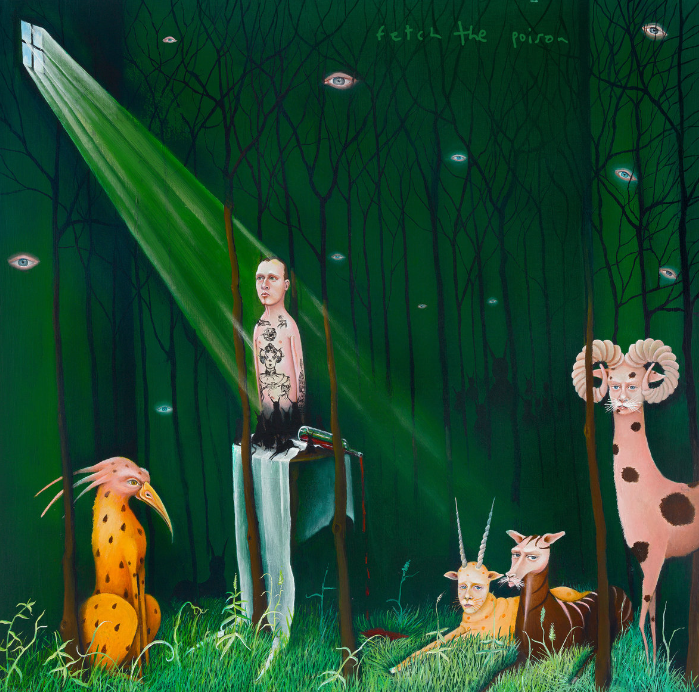
Jam Baxter ‘Fetch the Poison’ (Blah) Matt Oliver
Oliver Birch ‘Burning Daylight’ BBS
Review
Black Mesa ‘Research Facility’ (猫 シ Corp. ‘Selected Works’) ACK
Brigitte Beraha ‘Blink’ DV
Review
Brian Bordello ‘Cardboard Box Beatles’ (Metal Postcard Records) DV
Review
The Bordellos ‘Ronco Revival Sound’ (Metal Postcard Records) Graham Domain
Review
Boycalledcrow ‘Wizards Castle’ (Waxing Crescent Records) BBS
Review
Broadcast ‘The Maida Vale Sessions’ (Warp Records) GD
Apollo Brown & Philmore Greene ‘Cost of Living’ (Mello Music Group) MO
Brown Calvin ‘dimension//perspective’ (AKP Recordings) DV
Review
C.
Loyle Carner ‘Hugo’ (EMI) MO
Tom Caruana ‘Strange Planet’ (Tea Sea Records) MO
Cities Aviv ‘Man Plays The Horn’ (D.O.T.) DV
Claude ‘A Lot’s Gonna Change’ (American Dreams) DV
Review
Clouds in a Headlock ‘Breakfast in Phantasia’ (Offkiltr/Fat Beats) MO
Julian Cope ‘England Expectorates’ BBS
Link
D.
The Dark Jazz Project ‘S-T’ (Irregular Frequencies) DV
Review
Aftab Darvishi ‘A Thousand Butterflies’ ACK
Review
The Difference Machine ‘Unmasking the Spirit Fakers’ (Full Plate) MO
Review
Ferry Djimmy ‘Rhythm Revolution’ (Acid Jazz) DV
Matt Donovan ‘Habit Formation’ DV
Review
The Doomed Bird Of Providence ‘A Flight Across Arnham Land’ DV/BBS
Review
Dubbledge ‘Ten Toes Down’ (Potent Funk) MO
Review
E.
Eamon The Destroyer ‘A Small Blue Car – Re-made/Re-modelled’ (Bearsuit Records) BBS
Review
El Khat ‘Albat Alawi Op.99’ (Glitterbeat) DV
Review
Kahil El’Zabar Quartet ‘A Time For Healing’ (Spiritmuse) DV
Roger Eno ‘The Turning Year’ (Deutsche Grammophon) GD
Review
Eerie Wanda ‘Internal Radio’ (Joyful Noise Recordings) DV
Exociety ‘Deception Falls’ (Exociety) MO
F.
Fera ‘Corpo Senza Carne’ (Maple Death Records) DV
Catrin Finch & Seckou Keita ‘Echo’ (bendigedig) DV
Review
Flat Worms ‘Live In Los Angeles’ (Frontier Records) DV
Review
Forest Robots ‘Supermoon Moonlight Part Two’ (Subexotic) DV
Review
Nick Frater ‘Aerodrome Motel’ (Big Stir Records) BBS
Review
Future Kult ‘S-T’ (Action Wolf/AWAL) DV
Review
G.
Mike Gale ‘Mañana Man’ DV
Premiere
Dana Gavanski ‘When it Comes’ (Full Time Hobby / Flemish Eye) GD
Review
Gold Panda ‘The Work’ (City Slang) ACK
The Good Ones ‘Rwanda…You See Ghosts I See Sky’ (Six Degrees) DV
Review
Goon ‘Hour of Green Evening’ (Demode Recordings) Graham Domain
Review
Guillotine Crowns ‘Hills to Die On’ (Uncommon Records) MO
Review
Gwenno ‘Tresor’ (Heavenly Recordings) GD
H.
Aldous Harding ‘Warm Chris’ (4AD) GD
Healing Force Project ‘Drifted Entities Vol. 1’ (Beat Machine Records) DV
Review
Sven Helbig ‘Skills’ (Modern Recordings) DV
Review
Bruno Hibombo ‘Parting Words’ DV
Houseplants ‘II’ (Win Big Records) DV
Review
John Howard ‘From The Far Side Of A Miss’ (Kool Kat) DV
Review
I.
IBERI ‘Supra’ (Naxos World Music) DV
J.

Juga-Naut ‘Time & Place’ (Juga-Naut) MO
JPEGMAFIA ‘OFFLINE!’ ACK
K.
Kamikaze Palm Tree ‘Mint Chip’ (Drag City) BBS
Review
Kick ‘Light Figures’ (Anomic Records/Dischi Sottoernnei/Sour Grapes) DV
Review
King Kashmere ‘Woof’ (High Focus) MO
Evan Kertman ‘Rancho Shalom’ (Perpetual Doom) BBS
Review
KMRU ‘Temporary Stored’ ACK
L.
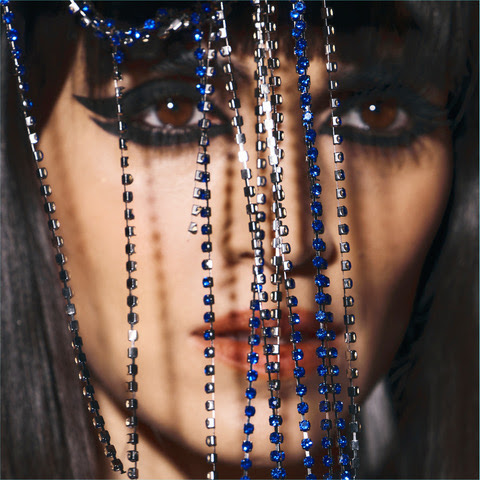
Labelle ‘Éclat’ (Infiné) DV
Review
The Legless Crabs ‘Always Your Boy’ (Metal Postcard Records) BBS
Review
The Legless Trials ‘Cheese Sandwich’ (Metal Postcard Records) BBS
Kristine Leschper ‘The Opening Or Closing Of A Door’ (Anti-) DV
Review
Liraz ‘Roya’ (Glitterbeat) DV
Review
Francesco Lurgo ‘Sleep Together Folded Like Origami’ (Bosco Records) DV
Review
Lyrics Born ‘Mobile Homies’ (Mobile Home Recordings) MO
Review
Keep an eye out later this week for Part Two.
Hi, my name is Dominic Valvona and I’m the Founder of the music/culture blog monolithcocktail.com For the last ten years I’ve featured and supported music, musicians and labels we love across genres from around the world that we think you’ll want to know about. No content on the site is paid for or sponsored and we only feature artists we have genuine respect for /love. If you enjoy our reviews (and we often write long, thoughtful ones), found a new artist you admire or if we have featured you or artists you represent and would like to buy us a coffee at https://ko-fi.com/monolithcocktail to say cheers for spreading the word, then that would be much appreciated.
The Perusal #35: Al-Qasar, Forest Robots, Clear Path Ensemble, Lampen, Noah, Yara Asmar…
September 7, 2022
DOMINIC VALVONA’S ECLETIC REVUE
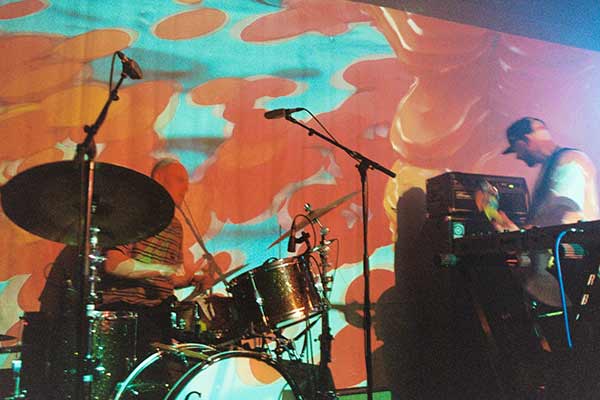
Al-Qasar ‘Who Are We?’
(Glitterbeat Records) 16th September 2022

Bubbling up from the Barbès Algerian enclave of Paris (the 18th Arrondissment boulevard that’s home to the yet to be gentrified and tourist-friendly passed Little Algeria community) and crisscrossing continents, the Al-Qasar group fuzz-up and electrify the sound of Arabia and its diaspora.
Helmed by instigator-in-chief Thomas Attar Bellier that neighborhood bustle is elevated and blasted back out into the world at large, absorbing and picking up sonic waves, spikes from Northeast Africa to a hardcore California and a rich tasting Sublime Porte.
It all helps of course that Attar Bellier is a global nomad, having lived in New York, Lisbon and Paris, but also having worked in the recording studios of L.A. during that circumnavigation of multicultural living he produced enough tracks of his own, releasing the well-received Miraj EP.
I get the impression that this is a fluid project, but at the time of this, the debut longplayer, Attar Bellier has opened up the ranks to include Jaouad El Garouge on vocals and a number of instruments synonymous with Moroccan Gnwa and North African traditions, Guillaume Théoden on bass and sub-bass duties, Nicolas Derolin on a myriad of percussive and hand drum instruments and Paul Void on drums. That seems the core anyway, but in this electric saz tangling and psychedelic post-punk rich sound there’s a cast of guest pioneering musicians to add yet another layer, another sonic perspective.
From the start there’s Sonic Youth’s guitar-sculptor Lee Ranaldo providing multi-layers of sustain, whines and abrasions to both the opening Swans meet Faust squall turn spindled and more familiar Middle Eastern electric fez intro ‘Awtar Al Sharq’, and the second, dervish-spun spirited and phlegm-voiced tour of Anatolia, The Balkans and Arabia, ‘Awal’.
That legend of the California punk scene, miscreant Dead Kennedys founder Jello Biafra goes free-radical on the staccato jangling ‘Ya Malak’. In a kind of John Sinclair mode, he reads out a poignant translation of a poem by the famous Egyptian revolutionary poet Ahmed Fouad Negam, updated for the cataclysmic state of the world in 2022, and the crumbled, violently oppressed post Arab Spring. This is where, despite the Cairo-futurism, the rattled and slapped hand drum energy, that the political motivations, the despair and anger comes to the fore; all that history, the post-colonial tumult and also fall-out from an Arabian-wide protest movement seeking modernization, the right to earn and end to greed. Read through a tiny transistor style radio Biafra’s agitator spirit turns this into a sort of Arabian Fugazi.
Moving on, but just as political, the New York-based Sudanese vocal doyen Alsarah (of Alsarah & The Nubatones renown) brings her impressive expressive outpourings and trill to the rattlesnake desert song ‘Hobek Thawrat’. In that soulful, rising loved-yearned voice there’s a protest against the coup on her homeland, the chorus itself repeating a slogan from the recent demonstrations. A sound of the Sahel, the women folk of Tinariwen and a little Bab L’Bluz Gnawa hover over this beautifully delivered protestation.
It runs throughout, this sound’s birthplace, but Al-Qasar pay a special homage on the (so good they name it twice) ‘Barbès Barbès’, which also features the electric oud pioneer Mehdi Haddab (of Speed Caravan note). Metal work drums, a nice rolling groove and souk candour prove a friendly hustled soundtrack for a meander in the heavily African outpost. Haddab gets a solo of a kind, providing a romanticized, poetic and folksy oud, with bursts of blurred quickened neat fretwork that borders on Baba ZuLu style psychedelic rock.
The finale, ‘Mal Wa Jamal’, features the longing ached vocals of the Egyptian singer Hend Elrawy soaring over an inspirial organ and almost post-punk push. Elraway’s beautiful wails prove disarming as the song’s lyrics concern a female-centric outlook on prostitution and its consequences. There’s attitude certainly, but it’s all wrapped up in a fizzled, fuzzy and mystical film of Arabian dance and fantasy. No surprise that they’ve been added to the Glitterbeat Records label roster, an imprint for just this sort of fusion; one in which you’ll hear an Arabic Muscle Shoals merging with Anatolian psych, a touch of Electric Jalaba and Şatellites if remixed by Khalab. A brilliant package of transformed traditions wrapped up in electrifying futurism; the sounds of Arabia, North Africa and beyond are thrust into a dynamic, unifying and eclectic direction.
Clear Path Ensemble ‘Solar Eclipse’
(Soundway Records) 9th September 2022

Out of the Wellington jamming session hothouse incubator and blossoming jazz scene in New Zealand Cory Champion rides the sun-birched rays and waves to cook-up a congruous album of many flavours. From a knowing position the jazz percussionist flows freely between a 70s ECM back catalogue of inspirations and the funk, fusion, spiritual and more freeform genres of his chosen art form.
Under the Clear Path Ensemble alias – his second such alias, also going under the Borrowed CS title when making leftfield deep house and techno cuts – Champion channels both Latin and Uniting Of Opposites style brassy Indian reverberations on the golden ‘Kihi’; offers up an acid jazz turn retro zippy-zappy late 70s disco funk fusion on ‘Drumatix’; and magic’s up a post-Bitches Brew Mile Davis band mystery of African-flavoured marimba and jug-poured, lava-lamp liquid cosmic spiritualism on ‘Revolutions’. But the mood, musicality changes again when we reach the jazzy-suspense score ‘Absolvo’: an early 70s cool cult vision of a Lalo Schifrin thriller.
The finale, ‘Tennis Ball’, could be said to have taken Liquid Liquid’s percussion, beats and a bit of the Style Council’s laidback washy soul-funk. And the dreamy seasonal solstice ‘Sunrise Motif’ finds a blend of the Modern Jazz Quartet, the willowy fluted bucolic and Nate Morgan. All the while translucent bulb-like notes flow or float from the vibraphone as other light-footed percussive vibrations dance and softly quicken the pace.
A harp run here and muffled, mizzle sax or trumpet there; a touch of electric piano and pining strings on anther track; all elements that come together across a changing groove.
Clive Zanda meets a less busy Michael Urbaniek on a minor jazz odyssey of nostalgic but very much alive and contemporary fusions, Champion’s second album in this role is a sophisticated, smooth but also freeform set of moods, visions and counterflows. It proves a perfect fit for the eclectic and much-praised Soundway label.
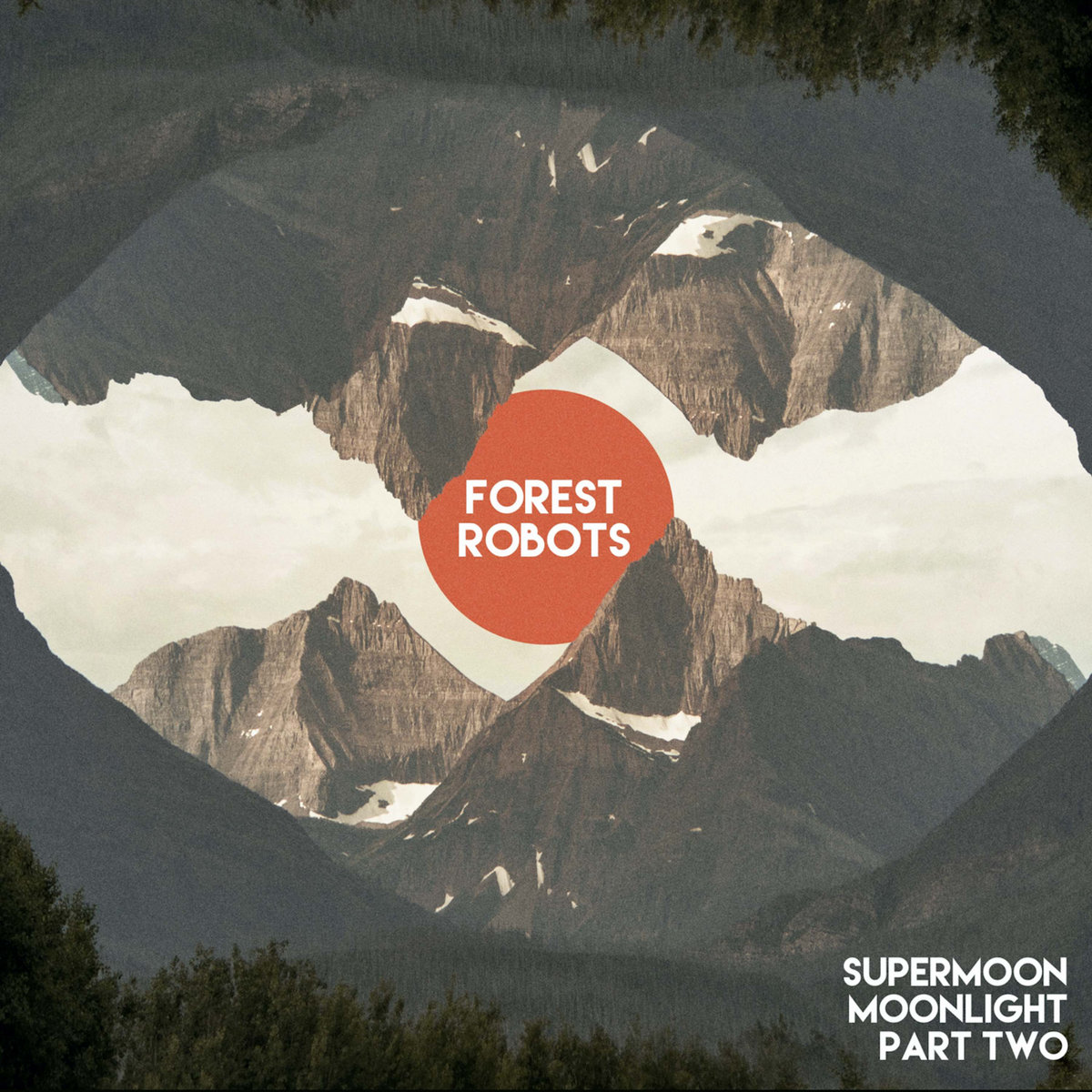
Forest Robots ‘Supermoon Moonlight Part Two’
(Subexotic)

After an initial redolent arpeggiator wave of Roedelius, a rainbow of trance, vapoured breathed coos and transience follows, marking what will be an entirely different kind of record for the Californian electronic artist and topographical trekker Fran Domingeuz.
Under the Forest Robots alias/umbrella, Fran has produced numerous adroit, studied and evocative ambient and neoclassical soundtracks to the myriad of landscapes and forest trials he’s traversed over the years. As the world dramatically succumbed to a global pandemic, and the chance to escape to the wilds became scarce, the signature form stayed but now the music was suddenly a therapy and a vehicle for channeling the anxiety, stresses of such uncertain times.
Now (thankfully) with the worse behind us, Fran emerges with the ‘long gestating’ follow-up to Part One of his Supermoon Moonlight suites from 2018. Although recording sessions for Part Two started back in 2019 it has taken a while to finally process the last couple of years and to finish and release this beautifully conceived album of suffused and uplifting hope.
The geography and National Geographic almanac proverb-like and Zen titles remain (‘All The Rivers Born In The Mountains’, ‘Wind Always Runs Wilder Along The River’s Current’) but the underlying theme has Fran exploring the complexities of parenthood and the ‘kind of spiritual and emotional legacy a father would wish to leave for his kids.’ A warming sentiment and inspired prompt makes for a very different kind of album though. From the same gifted mind and ear yet swimming in the sine waves of trance, synth-pop, 90s techno and dance music this is relatively a new but welcoming direction, expansion on his signature sound.
Upbeat as much as reflective, the feel is often dreamy; the gravity and awe of nature gently present; cut-out mountainsides, flowing connective rivers and a canopy of redwoods, the stage is set as stars shoot across the night skies and moonbeams illuminate.
In the slipstream and bubbled undulations The Beloved shares space with The Orb, Stereolab, 808 State, Sakamoto, Vince Clarke, Boards Of Canada, I.A.O., the Aphex Twin and Ulrich Schnauss. This is a beautiful combination that filters the aftermath of the rave culture, the burgeoning British minimal techno scene of the early 90s Warp label, 80s synth-pop and electronic body music. Yet there’s room for a certain crystallised chilled sparkle of the Chromatics and the Drive time moody, ruminated dry-ice scores of Cliff Martinez within that beat-driven glow. And the elements of charcoal fires crisply burning and flickering, and the poured waters have a certain Luc Ferrari influence – albeit far less avant-garde.
Playful and sophisticated with a surprising dance-y pulse and radiant outlook, Part Two should act as a testimony to an inspired and inspiring composer. I think his kids will be rightly proud of their dad and his musical legacy: electronic music with a soul and purpose.
Machine ‘S-T’
(WEWANTSOUNDS)

Back again in The Perusal (becoming a 2022 regular) those vinyl specialists at WEWANTSOUNDS have remastered and pressed that rarest-of-rare conscious-soul-funk LPs, the obscure assembled Machine’s self-titled debut (and only) album from 1972.
The rumour-mill is strong on this one; the cause of its £500 plus price tag on Discogs believed to be a result of either a very limited release or no release at all – shelved as it were. It could be down to the sheer quality of the competition, arriving as it did in the wake of similar social-political soul as Marvin Gaye’s What’s Going On and Curtis Mayfield’s Superfly (but also his albums previous to that). Both prove a massive influence on this smooth and funky eight-track showcase.
What we do know however is that the make up of this group included a trio of well-rehearsed session players from the All Platinum Studios stable in New Jersey. That included main man Michael Watson on vocals and guitar, bass-player Curtis McTeer (also playing with labelmates The Rimshots) and drummer Donald McCoy, who were then fattened out with the organist/pianist Ray Jones, another bassist, Frank Prescod, and both Dee and Cordy Pridges on horns. On the same label and one of the most established, successful acts The Whatnauts lent both their backing vocalists and, rather oddly, their manager (credited on percussion) Bunch Herndon to this widening lineup. And on top of all that, the notable Sammy Lowe (arranging for such distinguished company as Nina Simone, Sam Cooke and James Brown) offers a subtle suite of strings to the mix, taking it down the Rotary Connection route.
The Whatnauts prove a pretty integral ingredient to the Machine track list, lending both the ‘Only People Can Save The World’ and ‘Why Can’t People (Be Color Too?)’ songs to the album. Machine keep the sentiment of both, but add both an almost bucolic and pastoral gospel-rayed yearn to the first, and up the Gator funk and Stevie Wonder boogie on the Sly Stone on-message second.
They open on the relaxed but simmered Southern-funk-hits-the-streets-of-NYC style ‘Time Is Running Out’. Fred Wesley & The J.B.’s buzzy licks meet Maxayn attitude sass, sweet sax and touch of ‘Brotherman’ The Final Solution on a conscious-political workout – the repeated vocal refrain apparently ad-libbed.
Very much of its time and again on-message, ‘World’ tunes into the Vietnam War and its impact on and confliction with the African-American community. The actual groove is quite percussive with a touch of The Temptations Psychedelic Shack, Mayfield and The Meters.
There’s a seagull hovering harbor scene, not a million miles away from Otis’ wistful gaze, on the gear-changing ‘Trails’. It starts with that atmospheric rumination, a hint of the Latin and some romantic allusions before quickening into a banjo-rhythmic strumming West coast jive. It then goes on to wail and cry with a sequel of electric guitar. ‘Lock Your Door’ however could be a lost Northern Soul dancer, and the balladry pined ‘Boots In The Snow’ is another of those Marvin Gaye try-outs, with a touch of 70s Motown.
An enervated Nat Turner, Undisputed Truth, Mary Jane Hooper, Johnny Pate with those Mayfield and Gaye inspirations, Machine stepped-out to lead their own socially conscious project. But whilst the elements are all present, the sound isn’t quite unique enough, overshadowed as they were by a multitude of bands/artists working in the same groove and message. Still, at least you can now own a real rarity without forgoing this month’s rent, gas or mortgage payment. And it’s well worth a spin at that.
Noah ‘Noire’
(Flau Records) 26th August 2022

Ever the diaphanous siren of soothed vaporous experiments and song, the Hokkaido-born artist Noah once more drifts and floats across a sophisticated combination of futuristic etudes and distilled electronica. Following on from the beautiful balletic-inspiredÉtoile (given a glowing review by my good self), this latest emanation of whispered and cooed translucence is just as lovely and swathed in dreamy effects.
A collection of tracks from between a pre-Covid era of 2015-2020, the Noire album is awash with studied yet effortless sounding sonic theme variations; a nine-track congruous suite that riffs on Noah’s signature of ghostly plinky-plonked semi-classical piano (occasionally an electronic one by the sounds of it) and minimal 808-style synthesized waves, percussion and bobbled beats.
Noah’s breathless vocals and atmospherics seem to be reaching us from the ether: often just the reverberations of some distant hazy whisper. The opening transparent slow spiral ‘Twirl’ could be a distant relation to Julee Cruise; an enchanted but haunted echo from a palatial ballroom, yet still highly intimate. ‘Odette’ oozes languorous modern soul and R&B, like Solange drifting over the Boards of Canada.
Undulated by softened kinetic ratchets, screws and turns there’s a coming together of purposeful techno and more rhythmic retro house beats, enervated as to never overpower the general woozy and beautifully longing mood.
Shorter reflections, pieces are balanced by extended tracks and the heavenly, bobbing and echoed looped single ‘Gemini – Mysterious Lot’; the sound relaxing as it moves from transformed Sakamoto to cool dreamy pop.
Remaining something of an enigma Noah appears and then floats away, leaving a lingering presence with music created in a dream. Noire is another great, captivating showcase for that talent.
Lampen ‘S-T’
(We Jazz) 9th September 2022

A re-release of a kind, in case you both missed it the first time around or because of its limited run on CD, the free and post-jazz Finnish duo Lampen are now offering their 2020 self-titled album on vinyl for the first time – a very nice package it is too.
I would be one of those people that did miss it the first time around, and so I now find myself discovering its highly experimental, explorative qualities, imbued as they are by the Japanese art of “kintsugi” (or “golden joinery”), the repairing art of mending areas of breakage with lacquer dusted or mixed with powdered gold, silver and platinum. As much a philosophy as a method of repair, the breaks and cracks are treated and documented rather than disguised or thrown away.
The binding metal dust is like a woven vein and testament to that object’s knocks and history. With all its obvious metaphors the Lampen lads are less than careful, seeming to deconstruct and rebuild simultaneously in an act of free-spirited concentration: if that makes sense. For they break and stretch the performances yet, because their craft is obviously brilliant, they seem to always be in unison, synchronicity throughout.
Across five crawling and more crescendo splashed tracks, guitarist Kelle Kalima and percussionist/sampler Tatu Rönkkö rattle and wane; bend and set in motion a tumult of krautrock, progressive, industrial, post-punk, psychedelic and avant-garde workouts and soundtracks. In abandoned rusted turbine dominated factories, mysterious chambers but also hovering over lunar terrains Lampen evoke hints of Rhyton, Peter Giger, Krononaut, The Mount Fuji Doomjazz Orchestra, King Crimson, Faust and The Mosquitoes. All good and appealing to those like me longing to hear jazz pushed into such directions.
Rather surprisingly, amongst the sustained drones, harmonic pings and sculpting Kalima’s guitar bursts into acid-country indie-rock territory – think, of all people, John Squire on the Stone Roses second album. There’s even spots of no wave and dub to be found emerging from various tangents and untethered directions.
Impressive throughout, whether that’s in slow motion or more maelstrom driven bursts, Lampen’s debut album is a barely contained, unnerving in places, cranium-fuck of excellent moody jazz and industrial resonating experiment. Second time around then, the duo offer us another chance to indulge in their brand of unbridled post-jazz. I think you should take them up on the offer.
Qrauer ‘Odd Fazes’
(Nonostar) 22nd September
Following on from their debut Heeded showcase for Alex Stolze’s burgeoning Nonostar label back in April, arrives an extended debut album from the German electronic duo Qrauer, who transduce chamber music, the semi-classical and percussive into a sophisticated transformation of minimalist-techno and intelligent EDM suites.
The combined, refined but ever open skills of percussionist, producer and remixer Christian Grochau and his foil the pianist, multi-instrumentalist and composer Ludwig Bauer come together to fluidly remodel their chosen instruments into a both mindful and danceable work of electroacoustic moods and soundscape sonic worlds.
Instead of a pulled-together album of 12”’s and mixes and the like, Odd Fazes feels like a complete journey from beginning to end, with shorter more ambient gazing vignettes alongside longer more evolving pieces. And so you have the trance-y, droned and transformed glitch-y orchestral spell of the incipient stirring ‘Reg. Capture’ followed immediately by the polyrhythmic, clean percussive and galvanized EDM noirish ‘Drumthrives’. Or the Drukqs era Aphex Twin piano – played on a distant echo-y stage – beautifully, but slightly off-kilter, resonating ‘Fuq’ following on from the Artificial Intelligence series trance and suspense soundtrack ‘Cool Edit’. This offers a variation and nice set of breaks between the more techno pumped movers and sonic imaginations.
Later on, Nonostar labelmate Anne Müller adds her swoonstress cello to a couplet of evocative tracks. The first of which, ‘Rund’, has an air of the Aphex Twin (again) about it. Circling bowl rings, kinetic twists and percussive itches are woven into a mild tempo EDM pulse as Müller’s trembled and attentive cello saws and plucks are turned into repeating, recontextualized beats or motifs. On ‘Oval’ the adroit, experimental cellist seems to revive some of her stirring, pining gravitas from the Solo Collective project she shares with both Nonostar founder Stolze and, another labelmate, Sebastian Reynolds. There’s also a hint, I think, of fellow cellist and experimental artist Simon McCorry too on this deeply felt mournful piece.
Multi-textured with a constant movement and undulated beat that builds and builds yet never settles for the predictable euphoric, anthem moment, there’s a lot of clever, purposeful work at play. I haven’t even mentioned the layers of satellite and moon-bending refractions, nor the cosmic flares, the droplets of notes, cooed waveforms, fizzes and experimental recondite sound sources that have been meticulously thought-out. Again, just like the Heeded EP, the debut album is another cerebral rework of electronic body music, techno, EDM and the classical; a complete dancefloor-ready and mindful journey.
Simon McCorry ‘Scenes From The Sixth Floor’
(Shimmery Moods)

Turning the worries and mental strains of ill health into something creatively rewarding, the highly prolific cellist sound sculptor and composer Simon McCorry is thankfully back on the experimental electronic scene after a stay in hospital last Christmas. After a period of healing, recuperation, McCorry assembles a sort of soundtrack to that worrying, anxious period.
Following a loose ‘mental thread’ (as he puts it) Scenes From The Sixth Floor is an evocative and ruminating work of both studied ambient peregrinations and post-club techno comedowns; beginning with the cult kosmische drop through Tarkovsky’s glass portal, ‘Falling Through The Mirror Backwards’. Part illusion, part Moebius scores Hitchcock’s Spellbound, it’s the sound of our composer freefalling through a gauzy blanket, unable to latch onto the sides or gain traction as he spirals in sedated state to earth. Yet this there’s also no panic, rather a hallucinatory feel.
The next track, ‘Fragmentation’, is the first of two pieces developed from previous commissions/projects. Originally, albeit loosely, based on a Mad Hatter’s Tea Party dance piece, the landscape on this piece is less Lewis Carroll surrealism and more an evolving soundtrack that absorbs Bleiche Brunnen period Asmus Tietchens, Bernard Szajner sci-fi, Tangerine Dream, John Carpenter and Sven Vath. From the primal liquid blobs to the supernatural and futuristic, McCorry creates a whole atmospheric world before building steadily towards a patter beat of early 90s set techno (R&S/Harthouse).
Another developed idea, ‘The Sea Of Stories’ takes its cue from Philip Ridley’s feted Moon Fleece book – an intense and thrilling exploration of memory and identity. One of the only tracks with which you can hear a mostly untreated, transformed as it is, cello, McCorry’s instrument of virtuoso choice aches and arches movingly whilst a constant arpeggiator waterfall cascades onto shimmered, light catching waves. Be careful, if you close your eyes you could just find yourself carried away on the tide.
Up above now to the skies and the stirring and soaring ‘The Secret Life Of Clouds’. A beautiful if almost little mysterious, unsure passage, I picked up Schulze, Frosse and even a touch of Air Liquide on this natural phenomenon. But it’s Roedelius’ fairground piped style of playfulness and new classical analogue electronica that’s felt on the arpeggiator-bounced ‘Surfacing’; although this mood changes with another of those post-club undulations, pitter-pattering way at the end.
Tubular marimba and small thrusts of Kriedler and Pyrolator make up the mid-temp techno styled ‘Earth Best’, and the angrier entitled ‘Day Of Wrath’ has a certain European yearn and another echo of Roedelius’ whistled Bavarian fairground vibes. The cello, which remains pretty much hidden throughout the album, now starts to materialize, producing a weepy bowed melody and sense of purpose. Constantly enriching the ambient genre and beyond McCorry has bounced back with a reflective and developed soundtrack of perfectly crafted and moving compositions, some of which contain a certain mystery, dreamy-realism that remains to be deciphered. Proving the cello still has some way to go as an imaginative and explorative tool, the gifted player finds new tones, textures and spells of magic to further that instrument’s sound, use and reach. It’s good to have him back is all I can say. And this album further cements an already impressive reputation as a true innovator and master of the form.
REZO ‘Sew Change’
30th September 2022

Shy of just eighteen months the Irish duo of REZO follow up last year’s debut album Travalog with another relaxed, gentle-of-touch songbook, Sew Change. The seeds of this particular brand of disarming but deeply moving craft were sown from a distance, with both partners in this project recording their parts in separate locations on that debut. Nothing quite concentrates the mind as an epidemic and its confinement, and so the introspection flowed on that record, which despite the distance geld perfectly: in keeping with both musician’s Ireland and Med environments, the music effortlessly blended a touch of the Balearics with more soft-peddled Americana and singer-songwriter material.
As a sort of bridge back to Travalog, the spoken-word return down memory lane family themed ‘You Are What You Wear’ repurposes the sleepy, laidback rolled and Damon Alban-esque with a lick of Baxter Dury ‘Life During Lockdown’ backing. Only this time there’s an additional soulful female cooed chorus and the subject is Colm O’Connell’s family-run knitwear factory in the city centre of Dublin. Within that idyllic-natured return to a more carefree childhood, the whole gamut of life, death and remembrance is narrated both fondly and poignantly.
Concentrating on what’s most important, attempting to right some wrongs and holding one’s hands up to past mistakes, Colm and his foil Rory McDaid ease through some highly sensitive subjects to a musical accompaniment of Americana (once more), synthesized shading and gentle spacey takeoff sparkles, enervated bobbing dance music, piano-led balladry and wistful acoustics. However, within that scope they evoke a Muscle Shoals spiritual Rolling Stones, and a little Billy Preston, on the gospel organ sustained (with a cheeky hint of ‘Let It Be’ I might add) ‘I’m Not Enough’.
Talking of the sensitive, and careful not to cancel themselves in the process, the duo filter their concerns on the increasingly problematic and volatile theme of cancel culture on the Med-twanged, gauzy ‘Erays’. Like passing through gargled spacy waters and a dry-ice machine they make sure to carefully word their take; misspelling “Erase” as a nod to rays of sunshine and hope in this struggle over censorship. They also seem to tackle teenage suicide and mental health issues on the iconic Dublin Nine Arches set drama ‘Boy On A Bridge’, and explore the grief of dementia by marrying solo McCartney to the Eels on the synth undulating ‘Sometimes’.
Already included on July’s monthly playlist, ‘Your Truth’ still stands out as one of the album’s best offerings. On a song about the cost of “freeing your mind”, or the indulgences of going too far, that Americana feel is taken in a novel direction with softly padded congas, a smooth bass and veil of psychedelic-indie ala later MGMT – I’m also positive I can also hear a touch of TV On The Radio.
In its entirety Sew Change is a completely realised album of reminisces, reflections and softly hushed reconciliations, set to a gentle wash of the spiritual, Irish snug and saloon bar piano, a lilted Dylan-esque lyrical cadence (see the nativity-evoked ‘Hiding In Plain View’) and hazy suffusion of synth. The duo expand the palette without upsetting the formula to produce a complimentary follow-up every bit as slowly captivating.
John Howard ‘From The Far Side Of A Far Miss’
(Kool Kat) 9th September 2022
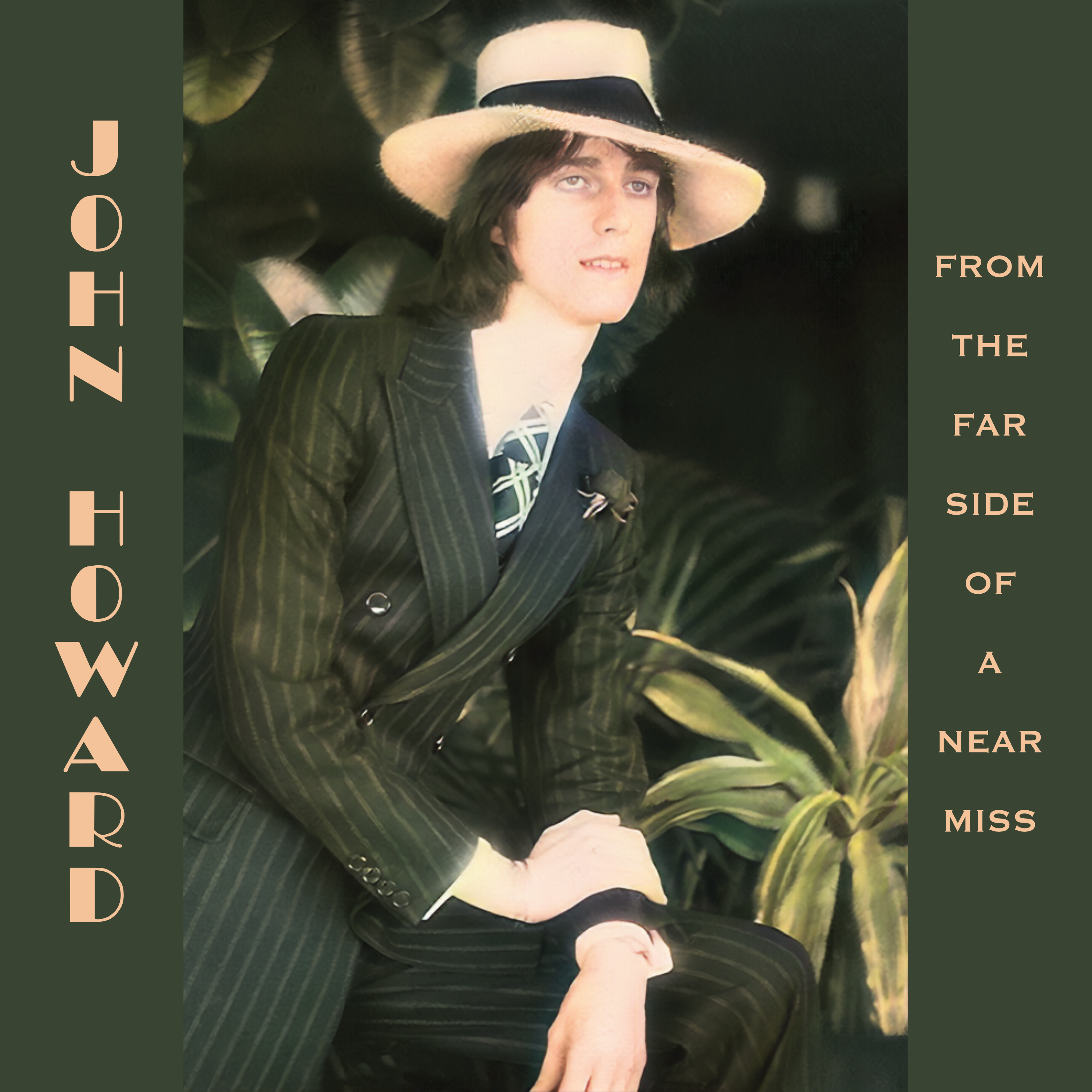
Following in the slipstream of his third and final volume of memoirs (In The Eyeline Of Furtherance) the singer-songwriter John Howard, with the wind in his sails, is back with yet another album. But instead of the usual songbook formula this is a continuous one-track work of disarming, gentle brilliance that runs to over thirty-five minutes.
You could say it was a return to Howard’s long form songwriting experiments of 2016 and the Across The Door Sill album, or perhaps even a reaction to (one of his heroes of the form) Bob Dylan and his Boomer odyssey ‘Across The Rubicon’, which more or less charts an entire epoch. Howard is a bit younger than Dylan of course, but both artists seem to be making some of their best work at this stage in their lives: uncompromising and unburdened by expectation or the need to suck up to fashions, labels, even the public they share an envious position. That Dylan mini-opus only lasted a mere seven-minutes in comparison, whilst Howard’s grand effort runs and runs, covering as it does a lifetime as a proxy soundtrack to his series of autobiographies.
Far more melodious than his hero’s reflections, this scrapbook photo album reminisce features Howard’s signature balladry-troubadour and stage musical verve of poetically candid prose, sung both wistfully and with a certain yearn.
Love is all though as Howard sets scene after scene, analogy after analogy; reconciling his past to a watery-mirrored piano-led score that’s constantly moving, picking up suffused strings, Dylan’s harmonica, a bucolic burnished harpsichord, a planetarium mood piece starry synth and light dabbing’s of congas and shaker. In what could be a reference to his own semi-cover version album Cut The Wire, there’s a hint of the Incredible String Band and also Roy Harper about this extended performance; especially Howard’s version of the former’s ‘In The Morning’. Later on it’s a lilt of The Beach Boys, bobbing on the “ripples of forever” line. Yet it’s unmistakably a John Howard sound, a lovingly executed piece of songwriting that more than holds its own across thirty-five minutes plus of ebbing drama.
But this is also a two-way conversation with Howard playing both sides of a long affair; the part of old lovers and new, friends, acquaintances and family, their words echoing now in the mists of the time that’s left. Dylan, that recurring idol, acts as a silent partner in one such discourse, as Howard sings about artistic integrity and his inspirations, a pantheon of uncompromising doyens. And in that same particular passage we also have Monroe and the Fab Four popping up; a Hard Days Night Beatles name-checked in what is both a celebrated yet fraught with delusion and remembrance chapter on this long winding road.
I particularly enjoyed the more salt-of-the-earth café scene diorama; Howard in voyeuristic mode describing a very unlikely cast, using both a kid who’s reading a Russian literary titan and a priest faraway in reflective thought (perhaps regret) as conduits for naming even more idols and favourites: “The kid who’s reading Tolstoy, listening to The Rolling Stones; I can hear old Jagger’s laughter floating from his phone.” Great lines by the way. The priest is “remembering Bowie’s Low”, which could of course be a reference to the same priest featured in the lyrics to ‘Five Years’ now contemplating a life that’s perhaps not all it seems.
Addressing, redressing whilst swanning through fantasies of a swish Ritz, 5th Avenue and Caesars Palace, imaging an alternative stratospheric career trajectory, headlining the Albert Hall, Howard takes us on a rolling, fluctuating journey through of his thoughts, dreams (realized and abandoned), regrets and hurt. By the end of this epic piece the final phrase, sung in a lasting glow, says it all: “It simply is what it always was”. Dylan couldn’t have put it much better.
An ambitious undertaking, From The Far Side Of A Far Miss is the work of an artist still willing to take chances and explore. Whilst his peers rely on the back catalogue, or drum out the same music they made over fifty plus years ago, Howard seems entirely comfortable in his own skin as a wiser yet still spritely young-at-heart artist composing music on his own terms. Fresh new introspections, concepts abound as he shows there’s still so much more to share and create.
Yara Asmar ‘Home Recordings 2018-2021’
(Hive Mind Records) 16th September 2022
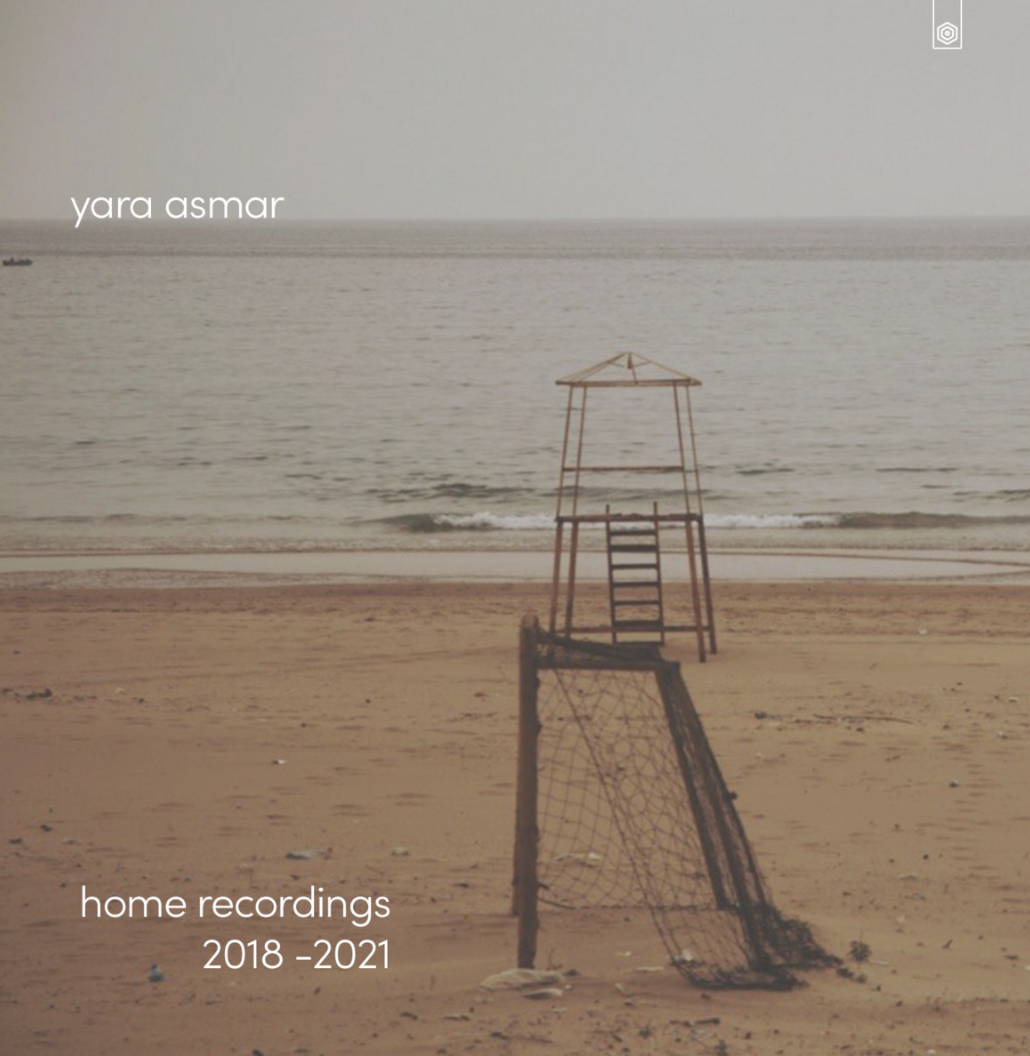
The latest discovery on the Hive Mind radar emanates from Beirut, with the serialism and tonal atmospheres, ambient and minimal semi-classical melodies of Yara Asmar.
In a tumultuous climate, referenced in a sampled conversation piece on ‘Is An Okay Number’ and in the unsaid but moody reflections and vaporous drifts that push out into the unknown and untethered, the twenty-five year old multi-instrumentalist, video artist and puppeteer manages to often leave the earthly mess of a region in crisis and float out above the city.
From an airy viewing platform we can identify swirls, waves, gauzy veils and echoes of the concertinaed (courtesy of Asmar’s grandparents’ accordion), tubular metallic rings and tingles (that will be the metallophone), a serious but graceful piano, a music box, hinges and searing gleams and a beatified magical spell of Christian church liturgy. The latter source was recorded by Asmar from church hymnal services around the Lebanon; transduced into the hallowed yet otherworldly and mysterious, given a gentle waltz-like ghostly quality and only sense of a presence. A reference to country’s much troubled religious turmoil? The art of remembrance? Spiritualism? Or the familiar sounds of an upbringing? Whatever the reason it sounds both equally as ethereal, as it does supernatural: passages into other realms.
Tracks like ‘We Put Her In A Box And Never Spoke Of It Again’ are almost lunar in comparison to those hymns; lending a moon arc of Theremin-like UFO oscillations and cult library cosmic scores to this set of peregrinations and field-recordings. Yet for the most part this is a truly dreamy, translucent and amorphous album of delicate classicism, explorative percussion and ambient; an ebb and flow of reverberations and traces of moods, thoughts that literally floats above the clouds and out beyond the Lebanese borders. These home recordings recorded onto cassettes and a mobile phone capture something quite unique, in what are the most unique of times.
Valentina Magaletti & Yves Chaudouët ‘Batterire Fragile’
(Un-Je-Ne-Sais-Quoi) 23rd September 2022
Is it performance art or just performance? Probably both as the lauded drummer extraordinaire Valentina Magaletti once more sits behind the artist Yves Chaudouët’s conceptualized porcelain drum kit.
If you follow either of these artists then you’ll know that this is the second installment of recordings to be taken from the original project back in 2017. Conceived by the painter turn multimedia artist Chaudouët as an exploration in texture and friction, wood, metal and rubber were all added to the porcelain kit; the effects of which, in the hands of such an accomplished musician traverse the concrete, avant-garde, art rock, breakbeat, the classical and freeform and dark jazz.
It’s been a couple of years since I last featured the highly prolific composer/producer and percussionist Magaletti, featuring her ‘tropical concrete’ communal with Marlene Riberio, Due Matte. In this space Magaletti continuously rattles, rolls, skids, skiffles, dusts and lays spidery tactile rhythms and strokes down as mooning, wailed and frayed bowed primal supernatural atmospherics stir.
We could be in Southeast Asia, Tibet or West Africa, even the Caribbean with passages that sound like steel drums bouncing away. We could also be in a subterranean chamber as resonating echoes of this tinny, metallic and deadened kit ricochet of the walls. Reductionist theatre, ceramic jazz, a paranormal drumming séance, the mood isn’t always easy to gauge. But as experimental as it is Magaletti is constantly rhythmic throughout; switching yet always hitting a beat, and even in some parts something that resembles a groove. An exercise on concept but also percussive, drumming performance, this collaboration straddles both the art and musical camps to bring us something quite different yet always engaging, interesting and virtuoso.
Hi, my name is Dominic Valvona and I’m the Founder of the music/culture blog monolithcocktail.com For the last ten years I’ve featured and supported music, musicians and labels we love across genres from around the world that we think you’ll want to know about. No content on the site is paid for or sponsored and we only feature artists we have genuine respect for /love. If you enjoy our reviews (and we often write long, thoughtful ones), found a new artist you admire or if we have featured you or artists you represent and would like to buy us a coffee at https://ko-fi.com/monolithcocktail to say cheers for spreading the word, then that would be much appreciated.
 Monolith Cocktail Blog