The Monthly Playlist For May 2024
May 31, 2024
CHOICE TRACKS FROM THE LAST MONTH, CHOSEN BY DOMINIC VALVONA/MATT OLIVER/BRIAN ‘BORDELLO’ SHEA

Representing the last 31 days’ worth of reviews and recommendations on the Monolith Cocktail, the Monthly Playlist is our chance to take stock and pause as we remind our readers and flowers of all the great music we’ve shared – with some choice tracks we didn’t get room or time to feature but added anyway.
Virgin Vacation ‘RED’
The Johnny Halifax Invocation ‘Thank You’
Chris Corsano ‘The Full-Measure Wash Down’
Essa/Pitch 92 Ft. Kyza, Klashnekoff, Tony D., Reveal, Doc Brown, Perisa, Devise, Nay Loco ‘Heavyweight$’
Hus KingPin ‘Tical’
Nana Budjei ‘Asobrachie’
Amy Rigby ‘Dylan In Dubuque’
The Garrys ‘Cakewalk’
La Luz ‘Always In Love’
Bloom De Wilde ‘Ride With The Fishes’
El Khat ‘Tislami Tislami’
Gabriel Abedi ‘Bra Fie’
Ibelisse Guardia Ferragutti & Frank Rosaly ‘TURBULENCIA’
Red Hot Org, Laraaji, Kronos Quartet, Sun Ra ‘Daddy’s Gonna Tell You No Lie’ (THIS MONTH’S COVER ART)
King Kashmere, Alecs DeLarge, HPBLK, Booda French, Ash The Author ‘Astro Children (Remix)’
Oddisee ‘Live From The DMV’
Amy Aileen Wood ‘Time For Everything’
Low Leaf ‘Innersound Oddity’
Jake Long ‘Celestial Soup’
Jonathan Backstrom Quartet ‘Street Dog’
Gordan ‘Sara’
Cuntroaches ‘III’
Morgan Garrett ‘Alive’
Cadillac Face ‘I Am The Monster’
Tucker Zimmerman ‘Advertisement For Amerika’
Poppycock ‘Magic Mothers’
Little Miss Echo ‘Hit Parade’
Olivier Rocabois ‘Stained Glass Lena’
Ward White ‘Slow Sickness’
Lightheaded ‘Always Sideways’
The Tearless Life w/ Band Of Joy ‘The Leaving-Light’
Michal Gutman ‘I’m The Walker’
Malini Sridharan ‘Beam’
Micha Volders & Miet Warlop ‘Hey There Turn’
Copywrite, Swab ‘Vibe Injection’
Napoleon Da Legend, DJ Rhettmatic ‘The King Walk’
Dabbla, JaySun, DJ Kermit ‘No Plan’
Gyedu-Blay Ambolly ‘Apple’
Brother Ali, unJUST ‘Cadillac’
Hometown Heros, DJ Yoda, Edo. G, Brad Baloo ‘What You Wanna Do’
Cities Aviv ‘Style Council’
Illangelo ‘The Escape’
Mofongo ‘Manglillo’
Aquaserge ‘Sommets’
Xqui, David Ness ‘The Confessions Of Isobel Gowdie’
Conrad Schnitzler ‘Slow Motion 2’
Noemi Buchi ‘Window Display Of The Year’
Hi, my name is Dominic Valvona and I’m the Founder of the music/culture blog monolithcocktail.com For the last ten years I’ve featured and supported music, musicians and labels we love across genres from around the world that we think you’ll want to know about. No content on the site is paid for or sponsored and we only feature artists we have genuine respect for /love. If you enjoy our reviews (and we often write long, thoughtful ones), found a new artist you admire or if we have featured you or artists you represent and would like to buy us a coffee at https://ko-fi.com/monolithcocktail to say cheers for spreading the word, then that would be much appreciated.
BRIAN ‘BORDELLO’ SHEA’S REVIEW SECOND REVIEWS ROUNDUP OF MAY – INSTANT REACTIONS.

_____UNLESS STATED OTHERWISE, ALL RELEASES CAN BE PURCHASED RIGHT NOW
___/THE SINGLES\___
Bloom De Wilde ‘Ride With The Fishes’
Bloom De Wilde is back with this lovely taster single “Ride With The Fishes”, taken from her forthcoming album, which is due out later in the year. “Ride with The Fishes” is a jaunty pop gem that has a faint jazzy charm that will seduce and then abandon you only to then return without warning many times during the day and night, and each time will seduce you and then abandon you each time, once more leaving you in the height of tenterhooks awaiting the magical all too brief tuneful seduction.
Schizo Fun Addict ‘Elevation Versus Sabotage’
As any regular reader of my Monolith Cocktail new releases round ups will already know, I adore Schizo Fun Addict: a band that never disappoints and one I would hold up in comparison to any of the greats from the musical past.
They have a rare quality, a soulful heavenly innocence and belief in the healing power of music that really cannot be faked. And with this, their brand new single, they once again do not disappoint.
The A-side “Elevation Versus Sabotage” is a sublime jumble of post-punk guitar jangle – imagine The Byrds replacing Gene Clark and David Crosby with the girls from The B52’s and stumbling upon Delia Derbyshire high on E and trying to invent Acid-house. And the B –side, which really should be Double A-Side, is equally bewitching. “Coming To You” is a blissful reawakening of hope, melancholy and peace that once again draws you into what was all to briefly special from the Manchester music scene of the late 80’s before it became Madchester – if only the second Stone Roses album was as beautiful as this.
Johnny Halifax Invocation ‘Thank You’
This is rather wonderful in all its stompin glory. There is something quite Jimi Hendrix Experience-like about it. It both rocks and rolls in equal measure, and is darn sexy (darn sexy is a much underused review phrase). Have I tripped (in the falling sense) and banged my head and gone back to the splendour of 1968, I wonder… Darn Sexy.
___/THE ALBUMS-EPS\___
Eamon The Destroyer ‘Alternate Piranhas EP’
(Bearsuit Records) 31st May 2024
If entertaining electro psychedelica is your apple tree then this bunch of grapes is just what you want to enlighten your garden of delight. Imagine Dr Frankenstein as a mad music creator instead of the twisted misguided do gooder with a god complex, this EP could well be his creation, with parts taken from various musical genres and stitched together to make this a monster of a release.
Psych, indie, electro, folk, rock and shoegaze are all dabbled and twisted with, creating tracks with a healthy dose of originality and darkness and fortitude, with a underlying healthy dose of anger. Alternate Piranhas is a fine EP.
Little Miss Echo ‘S-T’
7th June 2024
Little Miss Echo are no fools. They have decided to self release their self-titled debut at the beginning of the summer, as this wonderful pop album is the perfect summer album. And so those in the know will be able to soundtrack their summer with this album of supreme popitude.
The late sixties and early 70s Beach Boys and Jellyfish collide with Stereolab and Saint Etienne and Air to create an album of wonky pure pop bliss. This is music you want playing from your car radio as you drive around town, or to soundtrack your night out. This is music with beauty and melody, written with great style and songwriting ability. It really needs and deserves to reach a large audience.
Al Hotchkiss ‘The Best & Bratwurst Of W.A. Hotchkiss – Volume None’
(Howling Moon Records)
Is Al Hotchkiss the Scottish Billy Childish, a man who over the last twenty years or so released music constantly under various guises. Here we have a fourteen-track compilation of some of those songs and guises: and an excellent compilation it is too. Psychedelic 60s influenced Garage rock mingles with blues and country influenced songs of wonder.
Al really deserves to be better known and is crying out to be discovered by a wider audience. It’s quite a mystery why he has not as he is head and shoulders above 99 percent of the artists who release music influenced by 60s rock ‘n’ roll and Garage Psych.
This album is a must have for all Garage rock enthusiasts, and really Al Hotchkiss should have a copy of Shindig magazine dedicated to the great man and his music.
Michal Gutman ‘Never Coming Home’
(Cruel Nature Records)
“Never Coming Home” is a darkly beautiful album; an album of twisted musical discovery, with songs worthy to fall from the lips and the pen of the great Dory Previn; songs that pull you into a strange and beguiling solitude place, where you only have memories and fears and regrets for company. Musically stark and bewitching like an unused broken fairground ride: a bass guitar has never sounded so much like the faded remnants of an old lover’s final kiss. “Never Coming Home” is quite simply stunning.
Pork Tapeworm ‘Taenia Solium EP’
This EP is made up of seven songs in less than six minutes and really does not give you chance to get bored. Six minutes of spiky guitar punk rock with short and sweet melodies. Imagine early Nirvana with the post punk artiness of Elastic. A really enjoyable listen.
Lightheaded ‘Combustible Gems’
(Slumberland)
“Combustible Gems” by the Lightheaded actually lives up to its name, as the album is indeed full of gems. Whether they are combustible or not is open to question – has anyone ever tried setting fire to twee indie-pop songs? I know lots of people who would love to, but me, well I’m rather fond of the jangly guitar and odes of love gone both wrong or right, and the Lightheaded have perfected the magic of the jangly guitar cheap keyboard and tuneful melody down to the tee (or should that be twee). This is an album for all those aficionados of C86 to lap up enjoy and add to their collection.
Hungrytown ‘Circus For Sale’
(Big Stir Records) 21st June 2024

This is the fourth album from Hungrytown, but the first I have had the pleasure of hearing, and indeed it is a pleasure as psych folk with more than a hint of baroque pop is right up my street. There is a beauty and calmness to it that one can lose themself in and ignore and forget briefly the day-to-day turmoil that surrounds them. Vocalist Rebbecca Hall is blessed with a magically sweet innocent voice that floats and weaves its way through the musical sea of melodious tranquility that wraps itself around the listener: pure bliss.
THE MONTHLY DIGEST OF ACCUMULATED NEW MUSIC; THE SOCIAL INTER-GENERATIONAL/ECLECTIC AND ANNIVERSARY ALBUMS CELEBRATING PLAYLIST; AND ANNIVERSARY PIECES FROM THE ARCHIVES.

THE NEW\___
boycalledcrow ‘Kullau
(Mortality Tables)
A musical atmospheric hallucination and psychedelic dream-realism of a roadmap, the latest transduced-style album from Carl M Knott (aka a boycalledcrow) takes his recollections, memory card filled photo albums, samples and experiences of travelling through Northern India between 2005 and 2006 and turns them into near avant-garde transported passages of outsider art music.
Escaping himself and the stresses and anxieties that had been plaguing him since adolescence, Knott chose to pick up the road less travail(ed) after graduating; making new friends along the way, including the artist (known as James) who provided the album’s image.
If you are aware of the Chester-based composer’s work under numerous labels, and his experiments with weird folk music and signature revolving, splayed, dulcimer and zither-like guitar transformations then Kullu will – albeit more psychedelic and mirage-like – fit in nicely with expectations.
Place names (that album title refers to the village, an ancient kingdom, of ‘Kullu’, which sits in the ‘snow-laden mountain’ province of Himachel Pradesh in the Western Himalayas), Buddhist self-transformation methods (the extremely tough self-observation process of “non-reaction” for the body and mind known as “Vipassana”), Hindu and Jainism yogis (the “Sadhu”, a religious ascetic, mendicant or any kind of holy person who has renounced the worldly life, choosing instead to dedicate themselves to achieving “moksha” – liberation – through meditation and the contemplation of God) and language (the localized distinctive Kullu dialect and syntax of “Kanashi”, currently under threat) are all used as vague reference points, markers in this hallucinatory grand tour.
These captured moments and memories are often masked. It’s the sound of Laaraji stepping across such dizzying spiritually beautiful high altitudes and descending into the valley below; the brief sound of tablas and an essence of reverberating Indian stringed instruments suddenly taking on abstracted forms or reversed and melted into a hazy dream cycle. Nothing is quite what it seems; the imagination reminiscing freely and taking source recordings off on curious tangent. And yet it all makes sense, and somehow quantifies, soundtracks a landscape and period we can identify and experience. You can even work out that much of that plucked, cylindrical, pitch and speed-shifted string sound is coming from the £27 guitar that Knott bought whilst on those same travels (picked up in Dehradun to be specific).
But as with all of Knott’s peregrinations, queries, unrestricted gazes, the sound is very much his own. If you would like some idea of what we are dealing with, maybe Walter Smetak, Land Observation in colour, Fabbrica Vuota, Gunn-Truscinski Nace, and with the playfully strange psychedelic ‘Tuktuk’ ride, a merger of Tortoise, Yanton Gat and Animal Collective. Mind you, the vague echoes of piped church music on ‘Bear River’ (which “bisects” the valley region in which Kullu sits) are closer to the spiritual new age and kosmische – perhaps a hint of David Gasper. If Knott’s soundboard is anything to go by he did indeed find that much needed replenishment of the senses and escape from the mental and health pressures of stress that handicapped his progress. He’s created dreamy encapsulation of a time without burden and restriction; an experience totally free of worry and the strains of the material world out near the roof of the Earth. The results of which can be heard to have clearly been beneficial artistically. Kullu is another magical, strange and explorative soundscape/soundtrack from an independent artist quietly getting on with harnessing a unique sound and way of capturing the impossible.
Amy Aileen Wood ‘The Heartening’
(Colorfield Records)
Not in the literal sense, but the award-winning drummer, multi-instrumentalist, composer and engineer Amy Aileen Wood takes centre stage on her new album for the Colorfield Records label.
The supporting foil on a range of albums and performances with such notable names as Fiona Apple (more from her later), St. Vincent, Tired Pony and Shirley Manson, Wood was initially approached by Colorfield instigator Pete Min (the imprint that’s run out of Min’s Lucy’s Meat Market studios in L.A.) to lead her own solo outing. And although Wood’s stand-out tactile feels and descriptive drumming skills maybe on show and at the forefront, the L.A. based polymath, whilst also playing a wide worldly range of instruments, invites a number of in-demand session players and artists to collaborate, including Apple. An unsurprising choice seeing as Wood’s was not only a member of the recording band on Apple’s Fetch The Bolt Cutters album but also its co-producer. From that same circle, the “veteran” bassist Sebastian Steinberg provides pliable and subtly effective upright bass parts to a majority of the tracks on The Heartening. Apple, for her part, offers cooing “dadodahs” and assonant light dreaminess on the album’s opener, the womb-breached submersed turn Can Unlimited Klezmer ‘Rolling Stops’, and both sighs and giggles of ‘self-love’ on the gamelan cascaded self-help indie-wonk ‘Time For Everything’. Another one of the various guests’ spots goes to Kelsey Wood (relation?), who coos and ahs on the kinetic Alfa Mist-esque ‘Slow Light’.
The Heartening is essentially, if removed and discombobulated or enhanced by a palette of different styles and influences, a jazz album; especially with the addition of the L.A. based saxophonist (amongst other talents) Nicole McCabe, who pushes those personalized thematic exploratory performances and freeform expressions towards flashes of Ivor Pearlman, Alex Roth, Donny McCaslin (I’m thinking especially of his cosmic dissipations), Dave Harrington (funny enough, referenced in the PR notes) and Savoy label era Yusef Lateef.
But the musicality is far reaching, hopping around and landing at one point in Java, the next, in Eastern Europe (those stirring closed-eyes arches, sighs and solace style strings of the renowned Daphne Chen reminding me of Fran & Flora and Alex Stolze’s Galicia classical sympathies). You could also throw in breakbeats, the downtempo, the no wave and various fun fusions into the mix; everything from J Dilla to NAH, TV On The Radio, Arto Lindsay, John Zorn and Lucrecia Dalt.
Wood’s own style of drumming (though as I mentioned, the multi-instrumentalist, true to that title, plays everything from nostalgic iconic midi synths and drum pads to the West African balafon and twines flicked kalimba) is halfway busy and halfway intuitive: a mix of Valentina Mageletti and Emre Ramazanoglo.
Wood is certainly a talented player and full of ideas, as the action moves constantly between the natural and improvised. With a mix of trepidation and “intrigue” Wood’s proves an able leader and catalyst. I’d say this solo venture was the successful start to a new pathway and adventures.
Virgin Vacations ‘Dapple Patterns’
From a multitude of sources, across a number of mediums, the concentrated sonic force that is Virgin Vacations ramp up the queasy quasars and the heavy-set slab wall of no wave-punk-jazz-maths-krautrock sounds on their debut long player. With room to expand horizons the Hong Kong (tough gig in recent years, what with China’s crackdowns on the free press and student activists; installing authoritarian control over the Island) ensemble lay out a both hustled, bustled and more cosmic psychedelic journey, from the prowling to the near filmic and quasi-operatic -from darkened forebode to Shinto temple bell-ringing comedowns that fade out into affinity.
Operating in a liminal realm between the ominous and more mysteriously idyllic; changing mood, sense of place and the sound on every other track; the ensemble channel everything from the Hifiklub, Angels Die Hard and The Pop Group in a wail of bugle horns post-punk jazz (ala Blurt and a vocal-less Biting Tongues) to ‘Gomorrha’ CAN, the Dead Kennedys, film-score Sakamoto, Hawkwind and the Holy Family. That’s of course when they’re not orbiting the celestial jazz of Sun Ra merged with Herbie Hancock on the heavenly spheres and alien evoked ‘Jupiter’: even this track grows into a manic nightmare of broken distorted radio sets.
The trip is a cosmic range of ideas, some driven others far more dreamy, psychedelic and even erring towards the orchestral – there’s plenty of bulb-like note-twinkled glockenspiel to go around too. It begins with a krautrock expulsion of dark materials and ends on a Tomat-like – in union with the Acid Mothers – dissipation of enveloped interplanetary temple vibrations. This only touches the surface however, and Virgin Vacations take flights of fantasy regularly whilst maintaining a heavy-pulsation of uncertainty. Energy is channeled in the right direction, with a force that manages to tap into the anxious and radical whilst finding air to breathe and dappled patterns spread of the title.
he didnt ‘nothingness manifested’
(Drone Alone Records) 24th May 2024
Granular gradients, frazzled fissures and currents appear in the thick set wall of drones emitted by the Oxfordshire-based electronic musician, guitarist and producer’s new numerically demarcated album.
Reading into the monolithic slab sided scale and ambitions of he didnt’s manifestations, these, mostly, long walls of whined, bended, looped, abrasive and sustained guitar and electronic waveforms elicit the feelings of landscape: one that can feel simultaneously overbearing, grand but in motion. Metallic filaments or the pitter-patter of acrid rain, ‘nothingness manifestations III-V’ builds a sonic picture over its duration of some almost alien atmospheric enveloped weather front – reminding me of Hans Zimmer’s bits on Blade Runner 2049, His Name Is Alive, Fiocz and a venerated Tangerine Dream. ‘nothingness manifestations II’ is similar with its alien evocations yet near bestial and slithery too – I’m hearing vague signs of Faust, Sunn O))) and even Spaceman 3 for some reason. Perhaps picking up inspiration from one previous support slot, he didnt channels The Telescopes, minus Stephen Lawrie’s drudgery vocals, and a touch of the J&MC on that heavy meta hewed opener.
But there’s holes too in what is more like a mesh block of wielding drones, with a glimmer, a movement of light audible in the grainy textured fabric around the self-described “void”. In short, something from nothing, materialisations from patterns in the sonic concrete that may just evoke something much bigger.
Ziad Rahbani ‘Amrak Seedna & Abtal Wa Harameyah’
(WEWANTSOUNDS)
Vinyl reprisal specialists WEWANTSOUNDS, in-between reviving and offering remastered runs of cult music from Japan, Egypt and elsewhere, have been picking their way through the back catalogue of the Lebanese polymath Ziad Rahbani (musician, composer, producer, playwright, satirist and activist).
Following on from the crate diggers’ choice 80s Middle Eastern disco-funk-balladry-soul-jazz-Franco-Arabian classic Houdou Nisbi (released by the label in 2022), the Amrak Seedna & Abtal Wa Harameyah combined moiety of congruous theatre play soundtracks offers a generous helping of performance choruses, instrumental theme tunes, ad spots and variations of the main signatures.
Whilst the ongoing sectarian driven civil war (between 1975 and 1990) raged, there was a surreal duel existence of stoicism, the Lebanese people carrying on with life in the face of religious rivalry, unprecedented violence, and infamous acts of massacre (a 150,000 fatalities, maybe more). Importantly Lebanese artists, musicians continued to create – some from abroad as part of a mass exodus (estimates are that a million citizens left the country to escape the horror during that period). Disarming as the musical motifs, dancing rhythms and messages was, cultural idols like Ziad (famously the scion of the feted musician and national star Assi Rahbani and the legendary celebrated siren Fairuz) were fervently political. And among his many talents, Ziad would collaborate with the most vocal of them, including the pioneer singer-songwriter of Arabian political song, Sami Hawat, who appears alongside a whole cast of other notable vocalists on this double helping of stage performances.
Written by fellow Lebanese playwright and actor Antoine Kerbaji, the main acts and catalysts for Ziad’s inspired fusion of the Occidental and Middle East, speak of the times in which they were created. Originally released on the Beirut-based cult label Relaxin in 1987, the emotions run high as the streets outside were paved in bloody retribution along the lines of not only religion (the Christian minority’s rule of decades, and elitist nepotism finally coming to a crashing head as the country’s demographic shifted to a Muslim majority, inflated by two migrations and expulsions from Israel of sizable Palestinians populations in the late 1940s and 60s) but also Cold War divisions. The passion is evident in the various cast or male/female led choruses of yearning expression and more swooning allurement – sometimes almost reminding me of Bollywood, and the dance or romance, courtship between a male and female lead.
Musically however, this is a mixed assortment of near classical piano motifs, Arabian stringed instrumental segments, the new wave, disco and funk fusion and movie soundtrack influences. Glaringly an obvious steal, there’s the recurring use of John Barry’s 007 signature score across a large slice of these tracks. Adopting that most famous iconic mnemonic and its variations, Ziad seems to pinch it back from its own Western takes on the music from his country and the wider region. Marvin Hamlisch dabbled in this area for The Spy Who Loved Me – although his take was on Egyptian disco -, as to did Bill Conti – a mix of Med sounds for For Your Eyes Only. So much of this reminds me of both those top rate composers, especially the near thriller style production and clavichord MOR funky fusion sounds of ‘Al Muqademah 1 (Introduction 1)’. Later on it sounds like Ziad riffs on Hamlisch’s score for The Sting on the relaxed jazzy vaudeville saloon barrel organ reminisce ‘Kabbaret Dancing’.
Away from the 007 themes there’s hints of John Addison and Michael Legrand on the Franco-Arabian boogie musical number ‘Al Piano’, and Richard Clayderman on the beautiful romantic-esque flourish of piano scales, runs and lucidity ‘Slow’. The music slips into the Tango at will, or transports the listener back to the noir 1930s. Although, ‘Mashhad Al Serk’ is a strange one, resembling funky calypso transmogrified with reggae and the new wave. I’m at a loss on occasion to describe what it is I’m hearing, as the palette is so wide and diverse. But in summary, both albums offer a cabaret and theater conjecture of fluidity that takes in the Middle East and fuses it with Western classicism, movie and TV themes, funk and 80s production signatures. Previously only ever released in the Lebanon, WWS have done the decent thing and revived these stage play soundtracks, offering us all a chance to own these expressive and enlightening recordings.
THE SOCIAL PLAYLIST VOLUME 86\____
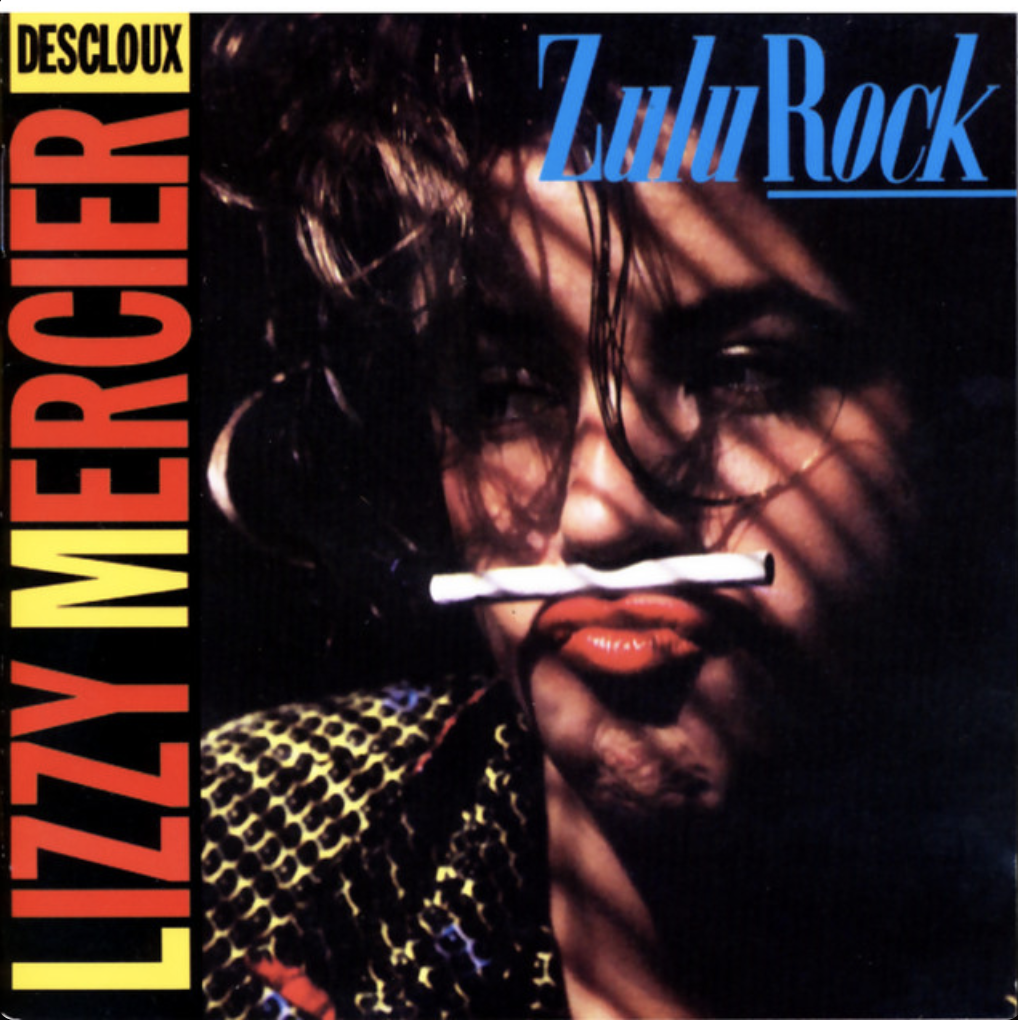
The Social Playlist is an accumulation of music I love and want to share, tracks from my various DJ sets and residencies over the years, and both selected cuts from those artists, luminaries we’ve lost and those albums celebrating anniversaries each month.
Running for over a decade or more, Volume 86 is as eclectic and generational-spanning as ever. Look upon it as the perfect radio show, devoid of chatter, interruptions and inane self-promotion.
In this edition I’ve chosen to mark the 50th anniversaries of Sparks Kimono In My House, Bowie’s Diamond Dogs, Slapp Happy’s Self-Titled – but referred to as Casablanca Moon, after the opening track -, and Popol Vuh’s Einsjager & Siebenjager albums. A decade closer, and into the 80s, I’ve included tracks from my favourite French new wave spark and cool chanteuse Lizzy Mercier Descloux and her Zulu Rock LP of ’84, plus a slightly different performance of Echo & The Bunnymen’s ‘The Killing Moon’ (the original single also included on the Liverpool’s band’s Ocean Rain of course). Another leap closer, and its 30th anniversary nods to the Beastie Boys ambitious double-album spread Ill Communication, Jeru The Damaja’s The Sun Rises In The East, and The Fall’s Middle Class Revolt. The final anniversary spot this month goes to our very own Brian ‘Bordello’ Shea, or rather the whole Shea brood and their might lo fi cult vehicle The Bordellos. The group’s summary of the world and music industry, Will.I.Am, You’re Really Nothing, is ten years old this month.
We lost even more iconic mavericks and leaders of the form this last month or so. Grabbing, quite rightly, the most attention is the loss of Steve Albini. The legacy is ridiculous, and to be honest, far too many people have already dedicated the space for me to now chip in – I will be frank, where do you start? And so I have chosen to give him a mention but not to pay the homage due. We also lost the last remaining member of the motor city five, Dennis “Machine Gun” Thompson, who pummeled and, quite literally, kicked out the fucking jams. I’ve already made note and selected tracks from their catalogue when poor old Wayne Kramer passed just a few months back, and also their manager – for a time between drug busts – John Sinclair. The Detroit misfits are no more. What a sad state of affairs.
I have however chosen to mark the passing of UK rap icon MC Duke and king of twang, and one of the most important, influential guitarists of all time, Duane Eddy.
There’s a couple of “newish” selections – tracks that I either missed or didn’t get room to include in the Monolith Cocktail team’s Monthly Playlists (next edition due in a week’s time) – from Masei Bey and Martina Berther which I hope will prove intriguing. The rest of the playlist is made up of a smattering of tracks from Tucky Buzzard, Prime Minister Pete Nice, The Bernhardts, Nino Rota, It It, Clive’s Original Band, The Four King Cousins and more.
TRACK LIST________
Sparks ‘Barbecutie’
Tucky Buzzard ‘Time Will Be Your Doctor’
Haystacks Balboa ‘Bruce’s Twist’
David Bowie ‘1984’
Masei Bey ‘Beat Root’
Beastie Boys Ft. Q-Tip ‘Get It Together’
Jeru The Damaja ‘You Can’t Stop The Prophet’
Prime Minister Pete Nice Ft. Daddy Rich ‘Rat Bastard’
MC Duke ‘I’m Riffin 1990 Remix’
Helene Smith ‘Willing And Able’
The Bernhardts ‘Send Your Heart To Me’
Tala Andre Marie ‘Wamse’
Lizzy Mercier Descloux ‘Dolby Sisters Saliva Brothers’
Orchestre regional de Segou ‘Sabu Man Dogo’
Slapp Happy ‘Casablanca Moon’
Nino Rota ‘L’Uccello Magico’
Duane Eddy ‘Stalkin”
Dreams So Real ‘History’
Echo & The Bunnymen ‘The Killing Moon – Life at Brian’s Version’
The Bordellos ‘The Gospel According To Julian Cope’
The Fall ‘Middle Class Revolt’
It It ‘Dream Joel Dream’
David Bowie ‘Rock ‘n’ Roll With Me’
The Bordellos ‘Straight Outta Southport’
Clive’s Original Band ‘Oh Bright Eyed One’
Jodie Lowther ‘Cold Spell’
Martina Berther ‘Arrow’
Fursaxa ‘Poppy Opera’
Popol Vuh ‘Wo Bist Du?’
The Four King Cousins ‘God Only Knows’
ARCHIVES\_____

When gracing the Monolith Cocktail with his very own column of reviews was still years away, Brian “Bordello” Shea was featured for his own music as part of the mighty lo-fi malcontents The Bordellos – Brian one of the co-founding Shea sibling forces behind that celebrated cult outfit. Still for my money one of their finest moments on record, the group’s Will.I.Am, You’re Really Nothing (released at a time when that annoying, talentless opportunist was all over the telly and in the charts in the UK) diatribe is ten years old this month. To celebrate, reprise that essential songbook, I’m once more sharing my original review from 2014. Every word of it still, unfortunately, still holds today.
The Bordellos ‘Will.I.Am, You’re Really Nothing’
(Small Bear Records) Released 31st May 2014
It was Blur, in one of their only true flashes of inspiration, who came closest to summing up the times with their dejected conclusion that, “modern life is rubbish”. That was the early 90s, but depending on how long in the tooth, worn-down and jaded you are, every age can be viewed with the same disappointing sigh of resignation.
Yet, surely the present times take some beating, at least to us, the self-appointed custodians of the past, who remember an age when the culture seemed…. well, at least exciting, linear and comprehendible, instead of appropriated without thought or context, screwed-over and manipulated for largely commercial results, and slotted in to a handy off-the-peg lifestyle choice. Pop has eaten itself, with the lifecycles of trends and music becoming ever shorter.
It is with all this in mind that The Bordellos set out their manifesto. Leveling their criticism at commercial radio and TV especially, they aim their guided missile attacks at the harbingers of the Ed Sheeran topped Urban/Black music power lists, and what seems more and more like the UK publicity wing of conservatism, the BBC. The St. Helens, via a disjointed Merseybeat imbued lineage, family affair replace the “happy-go-lucky” lightweight and deciding suspect womens rights champion, totem of Pharrell Williams, Will.I.Am and all his partners in floppy platitude pop, rock and folk with the arch druid of counter-cultural esotericism and miscreant obscure musical sub-genres (Kraut to Jap via Detroit rebellious and experimental rock) Julian Cope. Grinding out a dedicated epistle to Cope, the trio’s sermon ‘The Gospel According To Julian Cope’ prompts a road to Damascus conversion to the spirit of rock’n’roll, in all its most dangerous guises.
De facto idol, Mr.Cope, pops up again on ‘My Dream Festival’, which as the title suggests is a list of the ideal, once in a lifetime, free festival lineups of lineups; read out in a quasi-Daft Punk ‘teachers’ style bastardized litany to an accompanying Casio pre-set drum track and watery effects. The Casio rhythm pre-sets and occasional sound bites come in handy again on the jaunty, deadpan disco jolly, ‘Elastic Band Man’ – a transmogrified Human League meets John Foxx – and on the broken-up, Robert Wyatt emotional drudge, ‘Between Forget And Neglect’.
Despite going at it hammer and tongs on their anvil-beating Cope Gospel, The Bordellos latest long-player protestation is a forlorn and intimate downbeat record. They can still be relied upon to rattle off a list of grievances and opprobrious pun harangued song titles: from the LP’s play-on-words adopted The Smiths song, reworked to accommodate a big fuck-you to that irritable twat, Will.I.Am, to name-checking another hyperbole anomaly of our Youtube, Google, Facebook, Twitter masters’ bidding, the no less frustratingly lame ‘Gangnam style’ viral – joining the call from last year’s Bring Me The Head Of Justin Bieber EP, for another public execution.
But it’s with a certain lamentable introspection that they also tone the vitriol down to attend to matters of the heart: The kiss-me-quick, misty-eyed ballad to love on a northern coast seaside town, ‘Straight Outta Southport’, and the Hawaiian slide guitar country rock ode, ‘The Sweetest Hangover’, both, despite their tongue-in-cheek titles, bellow a fondness for lovelorn adventures and plaintive break-up regret; proving that despite the bellicose calls for the corporal punishment of the foppish elite and its commercial pop music stars, there is a tender side to the group.
Sounding like it was recorded on an unhealthy dose of Mogadon, Will.I.Am, You’re Really Nothing is a composed grumble from the fringes of a battered musical wilderness. A last cry if you will from the pit-face of rock’n’roll.
Also this month, Bowie’s repurposed Orwellian theatre production Diamond Dogs reaches its 50th anniversary.

David Bowie ‘Diamond Dogs’
(RCA) 1974
“As they pulled you out of the oxygen tent, you asked for the latest party…” And with that the future dystopian, biota canine, leapt from its slumber “onto the streets below”: howling for more.
Bowie never really wanted to be a musician as such: or at least not wholly a musical act. His destiny lied with the grease paint of theatre and allure of cinema. Diamond Dogs of course allowed him to create a spectacle, melding the two disciplines together.
Fate would force the original concept to morph into the achingly morbid and glam-pop genius we’ve now come to love: a planned avant-garde, ‘moonage’, treatment of Orwell’s revered novel 1984 was rebuked by the author’s estate.
Still those augural references to state control and totalitarianism are adhered to throughout – both lyrically and in the song titles –, but attached to visions of a new poetic hell!
The loose, all-encompassing, metaphysical language may promise melancholy and despair, yet it also knows when to anthemically sound the rock’n’roll clarion call too.
Decreed as the leading highlight’s of the album by the majority –
Diamond Dogs (single), Rebel Rebel (single), 1984
Pay attention to these often overlooked beauties –
Rock’n’Roll With Me (single), Sweet Thing
Hi, my name is Dominic Valvona and I’m the Founder of the music/culture blog monolithcocktail.com For the last ten years I’ve featured and supported music, musicians and labels we love across genres from around the world that we think you’ll want to know about. No content on the site is paid for or sponsored and we only feature artists we have genuine respect for /love. If you enjoy our reviews (and we often write long, thoughtful ones), found a new artist you admire or if we have featured you or artists you represent and would like to buy us a coffee at https://ko-fi.com/monolithcocktail to say cheers for spreading the word, then that would be much appreciated.
OUR FRIENDS AT Kalporz BRING OUR ATTENTION TO A NEW BAND
AUTHORED BY Nicola Guerra TRANSLATED BY Dominic Valvona
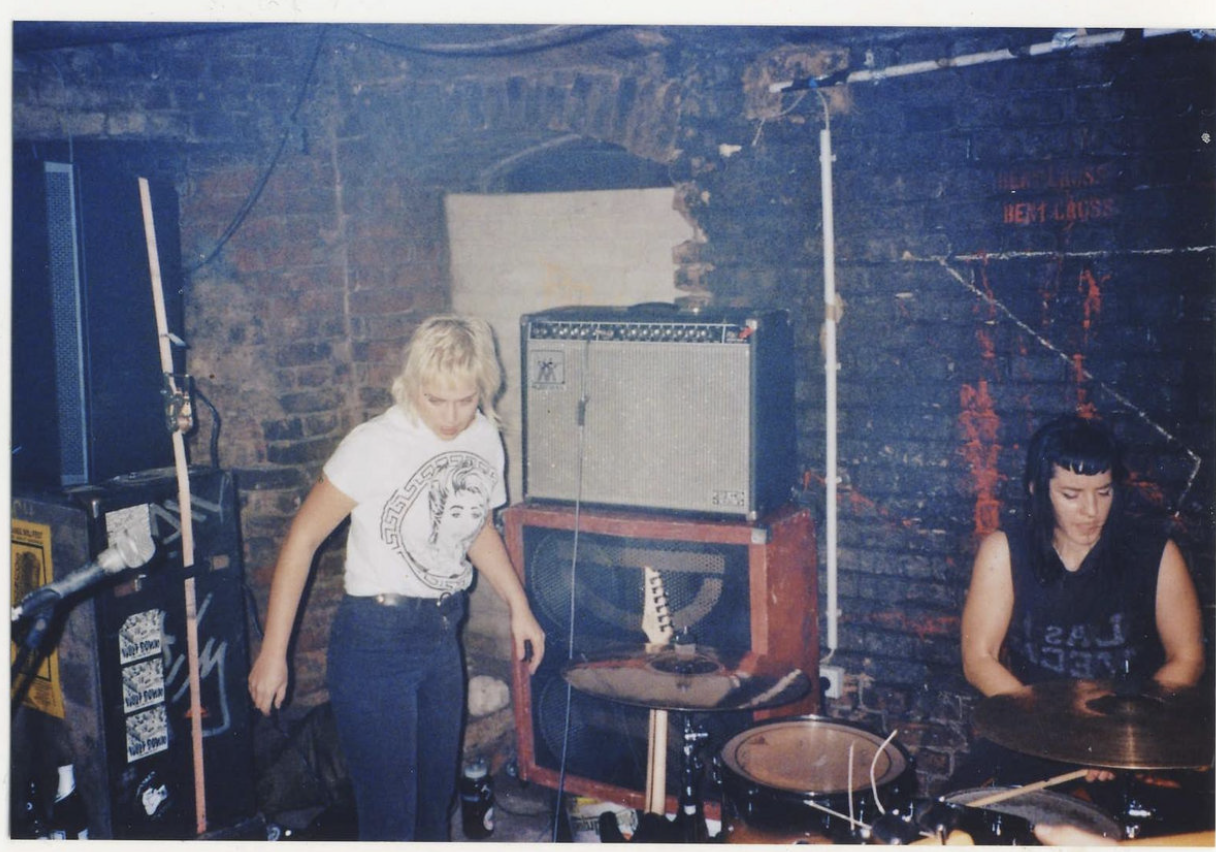
Continuing our successful collaboration with the leading Italian music publication Kalporz , the Monolith Cocktail shares and translates reviews, interviews and other bits from our respective sites each month. Keep an eye out for future ‘synergy’ between our two great houses as we exchange posts during 2024 and beyond. This month regular Kalporz Nicola Guerra introduces us to the noise of cacophony Berlin trio Cuntroaches, who released their debut album back in February.
Cuntroaches ‘S-T’
(Skin Graft)
The name would be enough to include them among the groups that make chaos a reason for living.
Then you listen to these 30 minutes at full volume while life goes on normally around you, and you’ve already fallen in love with it.
Because how can you not love those who commit terrorism without killing anyone? How can you not love those who, in a world of people who are set and all the same, decide to set up a refuge of noise to isolate themselves from it?
Still me and my clique of (music) junkies ask ourselves why we are increasingly attracted to this.
It’s not music. The melody is practically non-existent. Cacophony under the pitch black blanket of noise.
A German trio making their debut that is intimidating to watch.
No, it’s not the attraction towards something ever more extreme, it’s the ability to deal with discomfort by doing something.
Here, it is the action of these groups that makes everything more true.
And taking action is always better than living passively.
SCORE: 77/100
A ROUNDUP OF NEW MUSIC REVIEWS BY CULT INSTIGATOR OF THE NO-FI, AND SIBLING BAND MEMBER OF THE MIGHTY BORDELLOS, BRIAN SHEA.

La Luz Photo by Ginger Fierstein
____/SINGLES\____
La Luz ‘I’ll Go With You’
(Sub Pop)
I like this. It has a feel of 1968 psychedelica without sounding like it was recorded in the 60s; a song that captures a hazy lazy summers day of yearning and going in and out of dream like states with the silent wish of eccentricity transferred onto the watching eyes of the passing expectant teenage wish monger who has just discovered the magic of Odyssey and Oracle. A woozy gem of a single.
The Tearless Life ‘The Leaving Light’
The Tearless Life’s second single “The Leaving Light” is a rather fetching blissful experimental pop song that reminds one of both early Mercury Rev and a Psychic TV. In a rare playful pop mode it features Johnny Brown from Band Of Holy Joy on vocals, who offers up the first sprouts of sunshine on the dismal horizon that has been 2024 so far. It’s a one that could well end up blasting from your local alternative radio station if there is any justice in this land of ours.
Amy Rigby ‘Dylan In Dubuque’
(Tapete Records)
I like this single even if it is basically Elvis Costello’s ‘Tokyo Storm Warning’ with different lyrics. But if you are going to rip off someone why not rip off the best. It’s better than ripping off Oasis or some other overrated non-entity. And the new lyrics are very good even if they are not as good as Elvis Costello’s ‘Tokyo Storm Warning’.
The Garrys ‘Cakewalk’
(Grey Records)
I like this single. A smooth sultry drift into twangy guitar psych; the kind of beauty that you would find on the one and only album Livin’ Love by the Feminine Complex way back in 1969 – high praise indeed. Hopefully The Garrys will not be too long in delivering an album.
____/ALBUMS\____
Poppycock ‘Magic Mothers’
24th May 2024
I remember playing on the same bill as Poppycock a number of years ago in Oldham. I didn’t realise they where still going, but I am very pleased they still are as I enjoyed their set that night. And it is always nice to share a bill with a post punk legend, as Poppycock includes Ex Fall/Blue Orchids member Una Baines.
Magic Mothers is their debut album, and a rather nice album it is as well. It’s a slightly jazzy psych folk affair reminiscent at times of the all girl lost Sixties psych band The Feminine Complex – especially the album opener ‘Let It out’, which is rather beautiful indeed. And my favourite track on the album, ‘Lizardman’ is full on psychedelic (another gem of a track): one I can imagine her former band The Blue Orchids performing. The whole album is joy. I love the mix of jazz, folk and psychedelic pop: alas, if only the last Zombies album was as enjoyable as this.
Neon Kittens ‘It’s A NO Thing’
(Metal Postcard Records)
I am pleased to say that the Neon Kittens are back with a new album, another album of post-punk no wave sexiness. I do love the Kittens. They’re a band I think are only a BBC 6 music play away from crossing over to the mainstream. And I’m sure that one-day will be claimed to have been discovered by John Robb as he was brushing his kitchen floor.
The Kittens have a magic and their own sound: The guitar wizardry of Andy G (In a ideal world David Bowie would not be dead and Andy would be his guitarist songwriter partner) and the spoken, I am going to shove my stiletto shoe heel into your yearning heart, vocal coolness of Nina K. The Neon Kittens are one of those rare bands; we need them more than they need us.
Nicolette And The Nobodies ‘The Long Way’
(Arthaus Music)
It’s very rare, that I get country music sent to me to review. Which is both a good and bad thing, as on the whole I really don’t like modern country music. But I do love country music from the 50s, 60s and 70s, and I’m pleased to say that Nicolette and The Nobodies have taken their influences from those decades.
I grew up in a house that was soundtracked by country music, as my late father was obsessed with it. And at an early age and I could sing the back catalogue of Johnny Cash, Dolly Parton and George Jones and many others off by heart. The greatest compliment I can give this album is that it would not have sounded out of place soundtracking my childhood, in that old terrace house in St Helens. An album that lovers of old-fashioned country music should add to their collection.
Tibshelf ‘In The Ellington Conception’
(Cruel Nature Records)
Can you imagine if the mighty Krautrock legends Faust had decided they wanted to jump the disco and dance bandwagon of 1976 (what do you mean you haven’t …what on earth do you do to pass the time?!), for that is what the opening track “Threshold” on this fine cassette reminds me off, all funky get down and get with it strangeness noise boogie.
The rest of the album is equally entertaining with the sound of Stings mate Shaggy getting locked in an amusement arcade with only video games for company on the track “All Mega” and the sublime “Faders” – my favourite of the quite excellent five tracks. It is always a pleasurable way to spend half an hour or so lost in the instrumental artform (with the occasional sampled vocal/voice), especially when it combines quirkiness, experimentation, melody and danceability in such a natural rewarding way.
Ward White ‘Here Come The Dowsers’
(Think Like A Key) 17th May 2024
I get sent lots of albums of this type to review; the power pop-tinged guitar-based singer-songwriter variety all of varying quality. After a while it can all get very samey, and if you listen to a few in a row you can actually get confused about what artist you are trying to write about, trying to find something a little different to cling onto. But I’m happy to report with Ward White there is no such problem. White is a guitar based singer songwriter with power pop leanings, but has a slightly artier feel; a man with a more upper class quality to his voice with a touch of the 70s Scott Walker, John Howard and lyrically painting pictures/vignettes with a precise detail that at times remind me of the wonderful Ami Mann.
So if anyone is currently drowning in the mass of power pop guitar based albums being released and wondering which to go for next, I would plump for this excellent album of songs tinged with a much superior air than your common everyday power pop offerings.
Cadillac Face ‘Songs For The Trees’
(Weltschmerzen)
This is a beautiful album; an album of lo-fi singer-songwriting bewitchery. An album full of heart and soul, broken hearts and tortured soul: the best kind of heart and soul. This is the best kind of lo-fi album, one that demonstrates that beautiful songs of fragility are best recorded in a way that sounds like it is going to fall into little pieces at anytime, as brittle as the heart that is writing and singing and performing the magic; proving that sometimes all you need is an acoustic guitar and songwriting talent with something to sing about.
The Perusal #55: Liraz, Ibelisse Guardia Ferragutti & Frank Rosaly, Ghana Special 2, Bab L’ Bluz…
May 7, 2024
A WORLD OF SONIC/MUSICAL DISCOVERIES REVIEWED BY DOMINIC VALVONA
(Unless stated otherwise, all releases are available now)

Various ‘Ghana Special 2: Electronic Highlife & Afro Sounds In The Diaspora 1980-93’ (Soundway Records) 10th May 2024
The first decade of the new millennium proved a fruitful period for (re) discovering Africa’s rich dynamic and explosive music heritage, with both (through their various Afro-funk and Afro-psych compilations) Soundway Records and Analog Africa (in particular their influential African Scream Contests) spoiling connoisseurs and those with just a curiosity alike to sounds rarely heard outside the continent. The former’s original five album Ghana Special spread was one such indispensable collection from that time; a perfectly encased box set survey of one of Africa’s most important musical junctions.
Now, unbelievably, a full twenty years later Soundway have followed up that “highlife” triumph with a second volume; moving the action on into a new decade. Crossing over, just, from the inaugural edition’s 1968 to 1981 span, Ghana Special 2: Electronic Highlife & Afro Sounds In The Diaspora picks up in the 80s as Ghana’s signature highlife phenomenon went through yet another evolution, incorporating the tech of the time: from drum machines to synths. From marching big bands and tea dances in colonial times to the explosive embrace of wailing R&B and funk, highlife kept on moving through the decades. And as that helpful title makes clear, this eighteen-track survey hones in on the electronic enhanced, augmented phase of that genre’s development during a period in which many of Ghana’s most promising music stars had been forced to leave for Europe and further afield.
The diaspora in this case a result of a particular authoritarian period in Ghana’s post-colonial history. Following Ghana’s promising independence from Britain in the late 50s the political landscape tossed around between the rule of military coups and civil governments: the only constant, Ghana’s impressive musical pedigree and its influence across the continent. In light of particularly damaging and disastrous economic policies in the late 70s, and with the quelling and censorship of musicians – previously so popular that their support or protestations could prove vital in a political leader’s survival – there was a mass exodus of talent.
As the new decade beckoned Ghana became a hostile environment for its artists, many of whom would join the migratory caravan of workers leaving to find jobs in an increasingly welcoming West Germany (a booming economy and desperate need for workers resulted in a relaxation of the immigration laws and work permits). The cities of Berlin, Hamburg and Dusseldorf were havens for this influx of Ghanaians; proving a fruitful network for a new musical fusion between the locals and their new arrivals called “Bürger life”, named after the German word for “citizen”. A hybrid of German new wave, post krautrock loosened dance sounds and modern tech, Bürger life transformed the original Afro-musical trends through such progenitors of the scene as George Darko and Charles Amoah. Both artists feature here, Darko with his sun-hazed fusion of Masekela, Sunny Adé, the Phantom Band and Lounge Lizards ‘Kaakyrie Nva’, and Amoah with the 80s modern R&B pop steal and whistled and tingled starry ‘Fre Me (Call Me)’. Of a similar ilk, Starlife’s cosmic suffused ‘Amoma Koro’ sounds like a tropical soca infused Flow Motion (and Out Of Reach) era CAN at times.
Speaking of soca (the “soul of calypso” shorthand), that Afro-Caribbean style can be found on the funky disco sauntering, “wahoo”, opener ‘Ebe Ye Yie Ni’ by The Godfathers, and on Pat Thomas’s swayed plea ‘Gye Wani’ – the highlife horns all still in attendance, blazed but subdued and more relaxed. The Gold Coast vocalist and songwriter (Ebo Taylor foil to boot) Thomas had previously worked with the iconic Marijata trio back in Ghana, but emigrated to Berlin in 1979, like so many artists on this compilation.
A standout tune (of many) and extensive workout (like many tracks on this compilation, more like a 12” dance mix in duration), the Pepper, Onion, Ginger & Salt ingredients named obscurities turn out a smooth crossover of downtown NYC (think Don Cherry produced by Ramuntcho Matta), Osibisa and the Lijado Sisters – there’s even a sort of quasi-loose rap vocal at one point. Another standout name (as it were), the revitalized in recent years Ghanian icon Gyedu Blay Ambolley is famous for his breakout hit ‘Simigwa-Do’ and early adoption of hip-hop – fusing it with highlife to form the highly influential and inventive “hiplife” genre. Ambolley appeared on the original Ghana Special by the way. But on this occasion, in a new decade and phase, he picks up hints of Grace Jones and Herbie Hancock on the Island life funky ‘Apple’.
At this point I can’t not mention Dadadi’s fun ‘Jigi Jigi’ track, a soca-light flight from Accra to Havana in the mode of a carnival celebrating Kid Creole.
Synthesized and programmed, the old highlife rhythms/percussion is just about audible as the smother 80s technology rounds out much of the rougher signatures, replacing some traditional instruments and sounds with keys and keytar, slap bass and wobbly effects. But the sleekness can’t hide those vibrant roots, even when embracing reggae, boogie and the new wave. Ghana Special part two is a refreshing map of the diaspora fusions and hybrids that spread across Europe during a time of movement and turmoil from Ghana’s hotbed of influential stars and musicians. In highlighting the stories and journeys of Ghana’s émigrés, and in introducing us to those sounds, movements that remain either forgotten or just not as celebrated, Volume 2 will become as indispensable as the first. If you were fortunate enough (and without rubbing it in, I was lucky enough to purchase the original on its release) in acquiring that first box set then this latest compilation will sit beside it very nicely. And that is my way of saying that you should buy a copy.
Bab L’ Bluz ‘Swaken’
(Real World)
An embodiment of the Moroccan “Nayda” (“up”) youth movement for change in the Arab World, the fuzz-toned electrified Bab L’ Bluz launched their debut album in a tumultuous political climate; just as COVID gripped the global newsfeeds and moved the focus away from the fallout from the Arab Spring.
Fronted and built around the playing energy and voice of Yousra Mansour, this female-led troupe embraces the influences of rock-blues gods Led Zeppelin and Morocco’s very own version of The Rolling Stones, Nass El Ghiwane, matching it with a myriad of Arabian sounds and traditions from North and Western Africa; all of which are transformed from their conservative and male dominating roots into a feminist-strong message of empowerment.
Mansour’s protestations for equality – in everything from inheritance laws to the gender wage gap and roles in society – rung out in the wake of civil unrest, governmental crackdowns and censorship to the buzz and clattering/rustled rhythms of acid-garage-blues-psych-rock and Morocco’s age-old Gnawa tradition of spiritualist invocation and trance. Previously the sole (more or less) preserve of the patriarch, and against the odds, Mansour learnt to play many native Moroccan styles: standing out especially for studying the “guembri”, a three-stringed bass-like lute that is then electrified.
That debut album set a blaze, evoking Arabia’s own experiments in the 1970s with rock music fusions, the psychedelic and prog-rock whilst, like a tornado or whirling dervish, spinning through the region and absorbing everything on offer, from Mauritania Griot and Hassani to Chabbi and the Islamic dances, poetry and exalted music of Morocco itself. This same hybrid of sounds continues on the group’s newest album, Swaken, a title that when translated from the region’s Darija dialect (the main language of the Nayda movement) encompasses the transcendent rituals of Morocco’s spiritual possession ceremonies.
Invoking visitations and a dialogue with the past, Bab L’ Bluz (made up of Mansour and band mates Brice Bottin, Ibrahim Terkemani and Jérôme Bartolome) open up their signature edge and buzz to even more influences than usual. After honing their performances on an extensive tour schedule, they’ve taken on a far rockier, even heavier sound. Led Zeppelin at both their loudest and also most acoustic permeate this album’s eleven tracks spread – that and early 70s The Who, especially on the closing roused and riled ‘Mouja’. And with the whistled and airy peul flute making an appearance, there’s even a hint of progressive folk too.
The scope then is wide, taking in echoes of Liraz-style pop, the Sahara and North African desert song of Aziz Brahim, the blowing piped Sufi music of Bargou 08, the evolved Gnawa music of Houssam Gania, trills of Griot, Modern R&B and evocations of Nahawa Doumbia, Dimi Mint Abba, Baba Zulu and Noura Mint Seymali. The lyrical messages sung across the Berber trails, in the cities and in the shadow of the sand dunes are just as varied: anger at inaction and lament for the growing number of suicides and cases of depression in Morocco being just two such subjects.
Bab L’ Bluz scale new heights whilst also reflecting with passages of more acoustic downtime as they once again amplify and kick into touch conformity and restraint. New vices twist and transport Arab traditions and the spiritual communions for a both rock-heavy and electrifying new wave album of polemic, the mystical, cosmic and the blues. Nothing less than an essential album from an essential band built for our times.
Liraz ‘Enerjy’
(Batov Records) 17th May 2024
It’s hardly surprising that with the ongoing conflict between the nefarious Iranian regime and its neighbours, and with the continued oppression of its own population, that attempting to show the Middle Eastern titan in a good light is frustratingly difficult (an understatement in itself). Especially when you’re Jewish and part of that atavistic empire’s age-old Jewish community that stretches right back to Persia’s Biblical entry in the Old Testament: A community originally bound in chains, the spoils of conquest marched into slavery in 727BC, but eventually granted citizenship and even given the right of return to build a new temple in Jerusalem by the more enlightened Cyrus in the 6th century BC. Or that one of your most famous roles on screen is playing a clandestine Mossad agent on a mission to infiltrate the Iranian air defenses so that Israel can disable a nuclear reactor (the Apple+ series Tehran). But the actress, dancer, and electronic pop siren Liraz Charhi was willing to give it a good go, covertly recording several cinematic lensed Middle Eastern fantasies with a myriad of Iranian musicians under the radar of the ayatollah hardliners, over the internet.
In a climate in-which tolerance is scarce, and with most creative forms and freedoms of expression attracting, at the very least, suspicion, and at the worse, imprisonment, even death, trying to make a record with a strong feminine message seems an almost impossibly dangerous task: Liraz’s collaborators on the album’s Zan and Roya remain anonymous indefinitely for their own safety.
Liraz’s family were forced to escape during the tumultuous upheavals of Iran’s revolution in the 70s; setting up home in Israel’s capital, Tel Aviv, a safe haven for those escaping an ever-authoritarian Islamic regime. That city has grown to become an artistic community of foreigners, living cheek-in-jowl with both an older Israeli population and diaspora of Jews from around the globe. Liraz however, still feels bound to that Iranian heritage. And it seems when listening to her evocative soothed and lush bright vocals, she is the latest in a long line of strong outspoken women from that community. A baton has been handed down you could say.
Feeling adrift, Liraz upped sticks to become an actress in L.A. Little did she know that the city would open her eyes to another concentration of Iranian émigrés, including many from the Iranian-Jewish community. Whilst starring in major productions such as Fair Game and A Late Quartet, Liraz would find comfort and a sense of belonging in that diaspora. She’d learn much absorbing both the ancient musical traditions and the pop and disco that filled the clubs in a pre-revolutionary, pro-miniskirt Tehran, including such famed Iranian acts as Googoosh and Mahasty.
It was much in part down to the courage of the women in this astoundingly large community (so large that L.A. is nicknamed “Tehrangeles”) that emboldened Liraz to take up singing. She would record her debut Persian imbued album Naz in 2018, inspired by those whose only outlet and determination of self-identity and freedom was through music. Two years later and once more ingrained in that atavistic land’s richly woven musical history, she enacted a clandestine connectivity between cultures on the “second chapter”, Zan.
Prompted by the death of Mahsa Jina Amini in the custody of the authorities in 2022, an ensuing battle of ideals and freedoms from the women and a new generation in Iran threatened to topple the tyranny. However, the regime has pushed back harder than ever and with an almost unprecedented violence started executing (mainly men so far, with the rapper Toomaj Salehi only just in the last week or so sentenced to death for criticising the regime) supporters and activists on trumped up, tortured confessional charges of treason. Women are routinely taken off the streets by the so-called morality police and raped, whilst only in the last year school age girls from all over the country were poisoned. But even in the face of this bloody repression history is on the side of Iran’s younger more liberal generations. However, with the barbaric, evil attack on Israel by Hamas on October 7th 2023, Iran has weighed in with various proxy attacks. In the last month – after Israel attacked their consulate in Syria – Iran has escalated its campaign, launching, in one night, a 300-plus missile/drone attack on Israel itself. In a less dramatic tit-for-tat, Israel launched a retaliatory missile at the Isfahan region inside Iran.
The unfolding horror in the wake of Hamas’s emboldened sickening attack last year, has seen the IDF level Gaza to near rubble and dust; the casualty and deaths, whether you believe Hamas’s figures or not, are impossible to justify. Battle lines have been drawn across the world; protest marches have now become part of the daily routine.
One of the most scary and depressing consequences of this conflict has been with the record-breaking growth of anti-Semitism across Europe and North America. Division has been sown down political lines of grievance: you either stand with Palestine or Israel it seems, with no room for nuance, the complexities let alone balance. The sheer mindlessness and oblivious lack of decency by many is staggering; with opinions cast, placards held, and slogans shouted by people without the faintest clue or knowledge of what they pontificate. You can quite rightly rile against or denounce both parties in this escalating conflict, but to only take one side is disingenuous at best, at worst, deplorable. Yes, the catalyst argument is trotted out every time, but if we want history lessons and context, we should go back not just 70-odd years but a thousand, two thousand.
It’s with this in mind that Liraz has become just one of the voices behind the #MeTooUnlessYouAreAJew campaign that grew in the face of complete silence and inaction from the world community when Hamas murdered and eviscerated and raped its Israeli victims on that fateful day – they continue to use sexual violence as a weapon against the female hostages that were taken on that same day, a number of which remain in and around Gaza, yet to be handed back. Those hostages that have been freed, made it out alive and been rescued by the IDF, testify to such heinous crimes. Feeling betrayed and abandoned at the lack of any outcry or even a recognition of these events at the UN, in international circles, and on International Women’s Day, a movement was born. Liraz was recently invited to represent that movement at the UK’s House Of Lords, where she read out a poignant, personal (as with so many citizens of Israel, Liraz lost members of her own extended family and friends that day) statement.
“I suffer terribly from all the human pain in this war on both sides. I wish for the abducted to return to their families in Israel. I want the suffering of the innocent Palestinian people to end. I am praying for peace and justice for all.”
And so, her latest EP of dazzling Middle Eastern and Arabian disco and fuzz toned psychedelia arrives with a message of hope, reconciliation. The message: “Now is the time to change the energy (or “Enerjy”) frequency”.
After releasing a couple of albums for Glitterbeat Records, the Persian-Israeli star takes up residence at the Middle Eastern grooves promoting Batov label – perhaps Liraz’s natural home. Working with the highly prolific Israeli singer-songwriter, guitarist & musical producer, Uri Brauner Kinrot, who’s groups include Ouzo Bazooka and Boom Pam – both of which can be picked up across all four tracks on this fantastical dynamic empowered EP – Liraz probably reaches her zenith as a feminist siren of The Levant, balancing pure Egyptian-Moroccan-Lebanese-Israeli glitterball zappy nostalgic exotic disco and pop with Anatolian psych and feminine strength.
Once more in the Farsi language, she sings equally from a position of power and yearning; like an Iranian chanteuse swooning and swirling, mystical and soulful. Liraz bangs the tambourine to Arabian-futuristic grooves, cosmic rays, vapour swirls, wisps of mirages and some of the most danceable music to have left the region in years. Within that framework I’m hearing shades of Altın Gün, Elektro Hafiz, and a host of equally charismatic singers from the Arab world.
You really can’t fault the quality and production, the songs and delivery. The emotional charge, the anguish and lament are unmistakable, even at its most lush and upbeat. Liraz disarms a powerful statement with elan and skill to produce an incredible lively and danceable record of pop excellence.
Ibelisse Guardia Ferragutti & Frank Rosaly ‘MESTIZX’
(International Anthem X Nonesuch)
Transformed and remoulded for a more progressive age the “MESTIZX” title of this partnership’s debut album takes the Spanish term for “mixed person” (namely, a union between those indigenous people in the Latin conquered territories of South America and the Spanish) away from its colonial roots and repurposes it on an album of dream realism duality.
With the multimedia performer and singer Ibelisse Guardia Ferragutti’s Bolivian and the jazz drummer Frank Rosaly’s Puerto Rican heritages, the pre-colonial history of South America is woven into a contemporary revision of magic, organic forms and ritual rhythms mixed with elements and a suffusion of Chicago post-rock, post-jazz and alternative Latin leftfield pop.
Without repeating the storytelling liner notes and various quotes, the duo explore their “outsider”, “other”, status as the ancestors of that mixed ethnicity: neither wholly a part of the atavistic nor Spanish (and to a point, as they crossover into Brazil, Portuguese) lineages they both feel detached, and to some degrees, uprooted from their legacy, and yet take advantage of it to weave such worldly creative perspectives. In a state of certain flux, between worlds, the music and song on this imaginative and explorative album balances the mystical with invocations and the calls of nature. They do this, enabled by an extended cast of friends from both within and outside the International Anthem label community; merging congruously the skills and voices of Matt Lux, Ben LaMar Guy and Bitchin Bajas’ Rob Frye (to name just a few of the many contributors) to expand the remit beyond the Amazon, the Bolivian tin-mined mountains and landscapes to take in mirage evocations of the alien, the sci-fi and naturalistic.
This is music that draws you in; unfurls its depths over time. The vocals are simultaneously beautiful yet split on occasions into a spirit shadow form; a near apparitional invocation that’s separated from its sister, a guide that takes us back to the old phantasmagoria of pre-colonial conquest, when Bolivia was yet to be demarcated, owned and named after its European conquistador’s ancestor and was still separated between the Incas and various independent tribes in the country’s northern and southern lowlands. That voice carries and yet seems at times almost lulled and translucent beside the water carrier percussion, the attentive and descriptive drums (only occasionally breaking out into, well…a sort of jazz breakbeat of a kind) and rainforest canopy of either mimicked or real bird life and exotica. This is a world in which the Afro-rhythms of Höröya, the psychedelic nature of Caetano Veloso and Paebiru find room next to the Sao Paulo Underground, Ale Hop, Cucina Povera, Jaimie Branch, Art Ensemble Of Chicago, Don Cherry’s Organic Music Society and Tortoise. And from that reference pool, you can tell that the lineage goes back far: all the way to the original rituals and folk music of the people that first trod on those sacred grounds.
There’s much to admire in this world of the untamed and wild, with new perspectives, mixed histories and the largely melodious reverberations of the lost exercising a new language of ownership. Ibelisse Guardia Ferragutti and Frank Rosaly perfect and expand their organic explorations, bewitching messages and oracles on an intriguing, moving and dreamily trippy debut album.
Goran Kajfeš Tropiques ‘Tell Us’
(We Jazz)
Through various developments drawn together over the last decade and more, the Croatian heritage Swede trumpeter, composer, producer and bandleader Goran Kajfeš once more sets in motion another “hypno-jazz” opus under his Tropiques exotic moniker.
Those who know, who might recall, the name will have perhaps already heard this branch of his expanded guided ensemble: going since 2011. But there’s also his equally praiseworthy absorption of jazz ideas troupe, the Subtropic Arkestra, and a myriad of other set-ups, including both the Fire! Orchestra and Angles 9.
Goran has an impressive CV as a session player to boot, playing with such luminaries of the form as Lester Bowie, who’s influence rings out on the latest Tropiques’ odyssey.
The first of those groups (and indeed the second) acts as a crossover, a recruiting ground for the Swedish-based make up of Goran’s ensemble; his pianist and keys foil Alexander Zethson, acoustic bassist Johan Berthling and violinist Josefin Runsten all served in the Fire! Orchestra. Runsten was brought in with fellow adroit strings maestro and cellist Leo Svensson Sander to expand the sound and bring a feel of uplift to the dynamics, in so doing, expanding the ranks from a core quartet to a sextet. Each band mate brings with them a convoluted family tree of intersected and separate gigs in other groups, from Trondheim Jazz to Dungen, Oddjob and Sven Wunder. And between them, this sextet covers everything from award-winning jazz recordings to composing for film and the stage.
With a sense of movement and openness that seems to organically unfold, and to unfurl and grow like winter buds opening in the first weeks of spring, the Tropiques’ latest album together is a thing of synthesis and nature balanced with the messages, hopes and celebration of conscious spiritual jazz from another age.
It all begins with the incipient classical feels of Riley and Nyman and an air of sympathetic bowed and “possible musics” Širom-esque Galicia and the Balkans before flowering into those spiritual Alice Coltrane vibes. Goran’s almost drowsy trumpet awakens on this deep dived scene of Afro-spiritualism; it’s sound evoking hints of the already mentioned Lester but early Don Cherry and Jaimie Branch. Meanwhile, Zethson’s tinkled sensations, runs and liquid scales flow reminded me of Nduduzo Makhathini and the keys found on Bobby Jackson recordings. Runsteen and Sander’s violin/cello partnership slowly grows and blloms into a lush light orchestral spell.
But it’s the influence, as stated in the accompanying PR notes, of John Coltrane’s Crescent LP – the incredible luminary’s quartet on that iconic recording including such notable icons as McCoy Tyner, Jimmy Garrison and Elvin Jones – that stands out; a spot-on absorption of that mid 60s record vital, the building blocks of which can be heard being riffed on and off of.
The middle movement, ‘Magmatique’, seems to perhaps take its inspiration from the kosmische instead, starting as it does with the piano ambience of Popol Vuh’s Florian Fricke. The trumpet sounds almost cupped as the bass quietly stretches and mumbles away. That is until the drums take on a more breakbeat style that stirs up the influence of hip-hop. The strings, however, go from muted Skies Of America Ornette to the more drawn and flighty influence of Michael Ubriank. There’s also a certain progressive or sort of post-rock feel; like Radiohead making a jazz album under the tutorage of Ill Considered and the Chicago Underground duo.
On a slow boat to China, or perhaps sailing across the east China seas to land somewhere on blossom canopy Japanese shores, ‘Prije I Posle’ (translated from the Croatian, “before and after”) dreamily embraces Far Eastern signatures; at times, on the wind, replicating near zither-like strokes and brushes, and the bulb-shaped notes of some kind of Oriental glockenspiel. The drums though take on an almost d’n’b rhythm, whilst the kabuki theatre unfolds, and Goran’s trumpet exhales Chat’s woes and sad romantic illusions of yielding yearns. As summer takes hold, this odyssey fades out with the vague caresses of Alice Coltrane and Dorothy Ashby; and a cycle is completed.
Amorphously travelling on an eclectic pathway that includes all kinds of jazz styles, the transcendental, kosmische, lush, classical and the ensemble’s own Swedish homeland’s adoption of prog and pysch, the Goran-led Tropiques prove their mettle with a deep “slow music” rich journey in three movements. Environment counterbalanced by open-ended developments and the inner cerebral make for an impressive opus that proves so easy to take in and enjoy.
Jake Long ‘City Swamp’
(New Soil) 17th May 2024
Stepping out on his own but once more backed by the same who’s who of contemporary UK jazz musicians that formed the eclectic lineup on previous recordings under the Maisha title, the drummer, composer and producer Jake Long conjures up a Bitches Brew of funk, soul, spiritual, Afro and fusion jazz on his debut as a solo artist.
From a pool of talent that includes Nubya Garcia, Binker Golding, Tamar Osborn, Shirley Tetteh, Artie Zaite, Amané Suganami, Al Macsween, Twm Dylan and Tim Doyle – many of whom have crossed paths with each other on projects outside the sphere of the Long led Maisha ensemble – a both cosmic and despairing suffused odyssey of the intuitive and electrifying is formed. In the ruins of societal decay and riled-up division, looking out across an increasingly soulless gentrified London (where all these artists and musicians reside) lost to corporate greed and a breakdown in community relations, Long and his troupe tread the uncertain pathways of the primal city swamp and sift through the “ideological rubble” of dystopian collapse – a term absorbed and borrowed from the political theorist and lecturer in digital media and society Alex Williams, echoed in Mark Fisher’s Capitalist Realism: Is There No Alternative.
Reassembled at a later date from a series of extended recordings at the Lightship 95 studios in the capital, made during 2019, that landscape and decay has only got worse with the further loss of public spaces and supportive networks, arts spaces and music venues. And yet this album is not so much a raging polemic nor untamed and unruly cry from the soul – well, it has its moments of course but nothing so abstract and tortured as to sound angry. In fact, for most of the time golden percussive threads, floated bulb-like organ notes, a mantra trickle and shimmer of Alice Coltrane and spiritual jazz vibrations indicate escapism for the lunar and astral: the spiritual balance much needed in such dire times of avarice, social media validation and the pursuit of fame. But then, as the action picks up, we’re into the territory of Maggot Brain phase Funkadelic, Owen Marshall, Herbie Hancock, Bernie Worrell and Miles Davis’ Lost Septet. An extra thread, or layer, arrives in the form of King Tubby, African Head Charge and the On-U Sound label reverberated and echoed dub; often taking the jazz elements into the hallucinatory and dreamy.
Within those spheres of influence you can also pick up hints of Byard Lancaster, Joe Henderson, Marion Brown, Last Exit, (very specific) Slow Foot era Norman Conners, the Pharoah, and Bobby Hutcherson and Harold Land’s simmered down partnership as the music moves between the strange JuJu vodun Orleans spell of ‘Swamp’ to the more melodious, almost romantically, played horns evoked soul-jazz-on-the-streets-of-70s-NYC vibes ‘Silhouette’ – I’m also hearing signs of The John Betsch Society on this one. With time on their side, movements, passages and direction of travel is performed and assembled without distraction and limits; with some tracks breaking the ten-minute barrier to move through various fluctuations of light and shade, squalling and smashing crescendo and more near ambient vapours and mists of mysticism and reflective soul-bearing.
It’s impossible to pick out any one contribution, any one performer, as the entire ensemble interweave and act as parts in a much greater expansive world of metaphorical expressions, descriptions and atmospheres; all feeding into a haunted magical entwined statement on the symptoms of urban decay and the nightmare of a post-capitalist society with little to offer, little to give and little in the way of answers to all our ills. A Bitches Brew for our end times.
Morgan Garrett ‘Purity’
(Orange Milk Records) 17th May 2024
Daemonic wrenches, caustic slabs of derangement and Fortean paranormal invocations grind against chemically poisoned alternative grunge-country indolence and the unraveling clusterfuck morose mind of Morgan Garrett on his latest collection of both menacing and playfully disturbing experiments.
A “culmination of over a decade’s worth of collaborative and relentless” discombobulations and harrowed heavy-set-to-lo-fi-and-no-fi resignations, torn dispersions and traumatic-drawn cries for help, the Purity album is a troubled trip across a morbidly hallucinated inner and outer landscape, with the age of anxiety, COVID, war, record level cancers, environmental catastrophe, cost of living crisis, societal and generational division, governmental incompetence, lawlessness, drug dependency and technological/AI capitulation being just some of the topics, grievances and stresses to unpick.
Garrett’s status in the American experimental scene is in no doubt as he mines a lifetime of pain and transmogrifies both his own work and that of Scott Walker’s, the Sun City Girls, Swans, Daevid Allen, the Boredoms, Dean Blunt, Fugazi, the Putan Club and others. Within that scope of references expect to hear Garrett speaking in slithery tongues, transmitting from Mina Crandon’s spiritualist parlour whilst twanging away like some scarred deeply troubled and vicious figure from Blood Meridian on LSD, and somehow twinning a fucked-up Pavement with a paranormal screamed Skip Spence. Hell’s fires lap away as nu-metal, the industrial and heavy mental/heavy meta crush all resistance and resolve and those country/American leanings. There’s sure enough a soul in that there slumbered and more beaten-up hallucination; a pained maverick clawing their way out of a opioid languish, stripped of dignity and resilience, across a battlefield they once called home. Then again, I could be reading too much into it all.
Malini Sridharan ‘Tombuex’
(Birdwatcher Records) 10th May 2024
Death is a fairytale, a fantasy, a mythological poetry that’s navigated with almost diaphanous and playful devotional curiosity by the Brooklyn-based composer and multi-instrumentalist Malini Sridharan on her new album Tombeux.
With a title that derives from the French plural for “tomb” or “tombstone” but also refers to a musical commemoration style of composition that was all the vogue back in the 16th century – originally in poet form but later musically transposed with the accompaniment of lute and plucked instruments -, Sridharan assails Ursula K Le Guin’s Earthsea cycle of fantasy novels, the Greek-Roman ideas of Hades, the venerated devotions of the celebrated Indian Hindu mystic poet Mirabai, and the loss of those nearer to home. For this chamber/classical set of vocalized suites deals with that unavoidable fate: death. But with such a lucidity and magic, and candidness that it never seem too elegiac of morbid. Only skirting the chthonian, the suites and song on this album turn more towards yearns of the pastoral, bucolic and courtly: Closer to the fairy-like tapestry weaved folk of Joanna Newsome and the brass-y more sweetened trunk-like low bass-y tones of the euphonium and woodland and bird-like flutiness of Prokofiev, of Elgier and Vaughn Williams.
The mini stories that make up Tombuex are almost shorn of melancholy and mournful dirge. This is both down to Sridharan’s shared entwined influences of both India and Michigan roots, and her diverse range of literary, historical sources – the Indian classical strains that you hear are in some part from her father, and the curiosity for history, archeology and Medieval music that permeates this album, from her mother. And so the brassy resonance of the sitar, twinkles of vibraphone, duck-billed sound of the bassoon and shake of bells (all played by Sridharan) merge perfectly with a full Western-sounding classical woodwind and brass ensemble to elicit the tearful and dramatic, the fantastical and regal, whilst weaving a tale of bereavement in its many forms.
The lasting resting places of both Greek-Roman myth (Hades) and the speculative-fiction writer Le Guin’s Earthsea afterworld (The Dry Land) are invoked by a filmic-like score and Sridharan’s modern day Bhajans and Medieval-style rounds. And through it all, she creates a soft wellspring of personal connections, longings and a sense of loss: A remembrance that exudes lovely dreaminess and certain majesty in the face of pain.
Tombeux is an ambitious work of the classical that bridges both time and worlds to address in its literary, literal and poetic forms the spectre and history of death and how to face it without spiralling into the void. Nothing less than a very impressive work that expands Sridharan’s ambitions further.
Hi, my name is Dominic Valvona and I’m the Founder of the music/culture blog monolithcocktail.com For the last ten years I’ve featured and supported music, musicians and labels we love across genres from around the world that we think you’ll want to know about. No content on the site is paid for or sponsored and we only feature artists we have genuine respect for or love. If you enjoy our reviews (and we often write long, researched and thoughtful ones), found a new artist you admire or if we have featured you or artists you represent and would like to buy us a coffee at https://ko-fi.com/monolithcocktail to say cheers for spreading the word, then that would be much appreciated.
 Monolith Cocktail Blog