Our Daily Bread 381: DeathDeathDeath, The Legless Crabs, No Exits, It’s Karma It’s Cool…
May 27, 2020
Reviews/Brian ‘Bordellos’ Shea

Brian ‘Bordello’ Shea joined the Monolith Cocktail team in January 2019. The cult leader of the infamous lo fi gods, The Bordellos, has released countless recordings over the decades with his family band of hapless unfortunates, and is the owner of a most self-deprecating sound-off style blog. His most releases include The Bordellos beautifully despondent pains-of-the-heart and mockery of clique “hipsters” ode to Liverpool, and, under the guises of the Idiot Blur Fanboy moniker, a stripped down classic of resignation and Gallagher brothers’ polemics.
Each week we send a mountain of new releases to the self-depreciating maverick to see what sticks. In his own idiosyncratic style and turn-of-phrase, pontificating aloud and reviewing with scrutiny an eclectic deluge of releases, here Brian’s latest batch of recommendations.
With all live gigs and events more or less quashed for the foreseeable future, buying music (whether it’s physical or through digital platforms such as Bandcamp) has never been more important for the survival of the bands/artists/collectives that create it. We urge you all to keeping supporting; to keep listening.
The Legless Crabs ‘Be A Sadist’
LP/Available Now
If you remember a few weeks ago I reviewed a single from The Legless Crabs declaring them the future of rock n roll. Well they have just compiled a free to download LP of all their singles and EPs, and released it as a free to download compilation.
Essential is the word dear readers, essential! The early Mary Chain meets the Shaggs with a touch of Daniel Johnson and Pussy Galore thrown in, it’s dark and it has guts and a do not give a fuck attitude. It is a shambolic noisy stew of noise but with wonderfully written melodies and lyrics. The best band to come from the USA since the Banana Splits: no doubt about it.
No Exits ‘No Exists EP’
Available Now

The 80s post punk sound really is making a bit of a re-emergence, and why not, as when it’s done well it’s a fine thing indeed: and No Exits do it very well indeed.
Their music takes me back and has me thinking of very early Dead Or Alive and Theatre Of Hate with a touch of Soft Cell, and something about it really reminds me of Theatre Of Sheep (maybe its their guitar sound), but very entertaining nonetheless. So if the 80s post punk swirl is your thing you should really enjoy this fine EP.
The Loungs ‘Hey Brain’
(Fresh Hair Records) Single/Available Now

It’s nice to have those St Helens Psych Monkees The Loungs back after a far too long a layoff since their gem of a third LP, the 2015 baroque flavoured Short Circuit. And this little beauty carries on where that fine album left off. ‘Hey Brain’ being a quirky short stroll through the Summery psych of one’s past, recalling the woozy delights of the Super Furry Animals with a hint of the Zombies and Cat Stevens, but with a charm of their very own. A true delight, which could of only been better if it was called, “Hey Brian”.
DeathDeathDeath ft. Lomi MC ‘Love Is A Construct’
(Numavi Records) Single/Available Now

I love this. It’s rather quite beautiful and whoever says they don’t make pop music as quite magical as they used to do should be made to listen to this on repeat until they admit they are wrong. It has a wonderful warm quality about it that takes my aging mind back to the wonderful music of Jane and Barton. A soft summer aural seduction that I advise music lovers of all ages should allow themselves to be seduced by. They won’t be sorry.
Graham Domain ‘Waking World’
(Metal Postcard Records) EP/Available Now

What we have here is another EP from one of Manchester’s greatest hidden musical secrets. Yes, there is something quite engrossing about the music of Graham Domain, a certain quiet dignified subtle madness that completely beguiles. It has a dark seductive charm from the tinkling piano and synth strings and jazz bass that lures you into the textured dream of the songs, and as it pulls you in and you begin to lose yourself in the magic you then notice the beauty of the lyrics and the phrasing: nobody quite sings like Graham Domain anymore. I’m sure that somewhere along the line the quiet genius of his music will find a audience and hopefully the large one it deserves, plus on the track ‘What Love Means’ there is the best crazy synth solo one can ever hope to hear.
Bloom De Wilde ‘The Heart Shall Be Rewarded By The Universe’
LP/Available now

If only life could be as wonderfully magical as this album. Bloom De Wilde has an aura about her that emits a certain belief in the beauty of life, with her songs of nature and love, she gives one hope in these times of backbiting misery and disease that music and love can be the answer. Maybe we all need to return to the spiritual freedom of 1967 and not be wrapped up in the junk and social media that clouds up our minds and hearts, for this album casts a mighty spell that is bewitchingly hypnotic, that slowly seeps through the layers of self doubt mistrust and ego and has you smiling again, has you laughing, has you counting your blessings and looking forward to living your life and making the most of it as you only have one life so why not make the most of it. The Heart Shall Be Rewarded By The Universe is one of those rare albums that is made with pure love and should be treated with pure love: a shimmering delight.
Drew Davies ‘Drew Davies’
(AD1) LP/Available now

Is the good old 80s the new 60s? I wonder as I’m getting sent a load of music that is so influenced by the decade. This LP by Drew Davies could have easily been released in that decade – if I hadn’t known better I would have thought this was a reissue of some album that slipped under the radar at the time.
Drew Davies obviously worships at the altar of David Bowie, which indeed is no bad thing. He could have worshiped at the altar of Stefan Denis, and do we really need that. Instead we are treated to the kind of album a major label would have released in the 80s pretending that it was an indie. It has the same polished Alt rock glamour and choruses that has the audience punching the sky while keeping one eye for the queue at the bar to thin out so you can send your girlfriend. It is in no way the greatest LP you will hear this year or any year from the 80s but you will certainly hear worse, and any fans of Billy Idol or 80s Bowie or even John Moores Expressway [remember them] will certainly enjoy this album as I did, as melodies and glamour do not age.
Dog Paper Submarine ‘Slippery Satellites’
(Small Bear) Album/Available Now

So we finally get the final LP by Dog Paper Submarine, two years after it was recorded, and it was indeed worth the wait as it is as always fine indie rock: part dEUS part Pixies, but all Dog Paper Submarine.
Clattering guitars, instrumental surf basslines, melodies that prod and gouge and caress are all one wants from their indie rock. To be honest I’m not a huge indie rock fan, I find it incredibly dull mostly these days, which again from a personal point of view makes this album and Dog Paper Submarine even more impressive, as this is a album I will play and enjoy, and that should be enough for any music lover.
Salem Trial ‘Head On Rong’
(Metal Postcard Records) Single/Available Now

I love this. From the start the explosive wall of Thin Lizzy like double lead guitars leap out at you and joyfully throttle you ears to death in the nicest possible way, whilst Beefheart like vocals and a melody catchy enough to hook yourself make for a whopper. It’s a song that has me yearning for the wild and drunken nights at the Royal Alfred in the late 80s, while being entertained by the wonderful local band The Volunteers, who made one mini album of sublime Beefheart frenzy called Bladder Of Life. This song reminds me of those days. That’s high praise indeed believe me. ‘Head On Rong’ is a must have for music lovers old and young alike.
It’s Karma It’s Cool ‘Woke Up In Hollywood’
Album/Available Now

If your thing is music with sparkling guitars and joy filled melodies then this album is for you. At times recalling Lloyd Cole with his Commotions and maybe a poppy REM after overdosing on the sun, songs shimmer and cast shadows of one string Rickenbacker guitar solos, the kind that The Bangles would embrace and comb their hair to whilst kissing posters of Gene Clark.
Woke Up In Hollywood is an album that exists to take one back to the golden days of the California sounds from the mid 60s through to power pop of the early 80s; from The Byrds to The Tremblers, even at times reminding me of the English Beat.
If you like, this is an album that should come with a large cut-out sun to hoist up into your room as the heat and pure light emerges from your stereo or laptop.
Tickling Our Fancy 086: Les Frères Smith, Love-Songs, Valentina Magaletti & Marlene Ribeiro, Soft Plastics…
May 25, 2020
Reviews Roundup/Dominic Valvona

Easing the boredom of coronavirus lockdown – though many of our international followers, and those across the border in England, are tentatively coming out of isolation – join me from the safety of your own home once more on a global journey of discovery. Let me do all the footwork for you as I recommend a batch of interesting and essential new releases from a myriad of genres. All of which I hope you will support in these anxious and trying times. With all live gigs and events more or less quashed for the foreseeable future, buying music (whether it’s physical or through digital platforms) has never been more important for the survival of the bands/artists/collectives that create it.
This week’s roundup takes on an unplanned devotional vibe, with many of the featured albums/EPs inspired or imbued by religious music and themes. The cellist, composer Simon McCorry is a case in point, his latest ambient drone soundscape The Light Only Blinds is guided in part by the Catholic liturgy of a Requiem Mass; though drifts and expands into the universal and space itself. Equally the stirring hushed beatific new EP from Swedish artist David Åhlén, ‘My Face Will Shine’, is also (among other things) inspired by Christian liturgy: especially the Biblical Psalms. Meanwhile, Bhajan Bhoy, the alter ego of Ajay Saggar, proves a transcendence of spiritual, talking to Yogi, style Kosmische and post-punk reverence. A strange performative alchemy is struck up between the collaborative union of Valentina Magaletti and Marlene Ribeiro on their mysterious, primal ‘tropical concrete’ communion Due Matte.
Not so spiritual, and untouched by the afflatus, Daniel J. Gregory (and his Carnivorous Plants) composes and assembles a ambient and lingering post-rock blues soundscape to the images he captured on a old Soviet camera, Fela Kuti disciples Les Frères Smith pack a punch on their explosive Afrobeat imbued new LP, Mutation. Love-Songs release their inaugural convolution of the organic and synthesized, Nicht Nicht, for the Hamburg label Bureau B. And finally, there’s the inaugural album from Carey Mercer’s new project Soft Plastics; an extraordinary, ambitious album at that.
Les Frères Smith ‘Mutation’
(Amour et Son) LP/22nd May 2020

Adepts of the Fela Kuti patois, the self-described musical ‘smugglers’ Les Frères Smith not only emulate their inspiration but even feature the Afrobeat progenitor’s youngest scion Seun Kuti on the group’s latest, and third, infectious bustle, Mutation.
Speaking Kuti fluently this eleven-strong group doesn’t just imitate the sun-bleached heralded horns, Tony Allen shuffles and entrancing grooves of the Nigerian superstar’s music but also channel his loosely delivered vocal protestations too. Always keeping it funky and suffused with a sauntered jostle even in the face of ever-growing tensions, the threat of increasingly hostile nationalism and the rise of populism the political slogans are liberally peppered or soulfully woven into the tapestry by the group’s rallying flanked singers and motivators Swala Emati and Prosper Nya. Les Frères Smith fill-in for Seun’s Egypt 80 on the splashed drum and Clav frills ‘No Waiting’: An impatient message of African unity rides over a signature nimble Afrobeat performance that has Seun deliver a usually cool vocal and swinging saxophone.
Of course these sonic contraband handlers of the faith will find their politics, freedom of movement even harder to evangelize in the current miasma of epidemic lockdown. For now, we’ll just have to let them musically take us on a backpack tour of riches. Because they don’t just fly Air Lagos but make stopovers in Cameroon (check out those basslines), Ghana, Guinea and on the shimmery fluted desert escape ‘Arouah’, Arabian North Africa. What they call the “Afrikanbeat” is a smooth merger of all these geographic scenes. Throw in some nitty, nifty Congolese guitar licks, some Orlando Julius lilted Afrojazz, reminisces of The Sweet Talks and Ebo Taylor, and then from across the seas, add a pinch of stateside soul sister Lauryn Hill, Erykah Badu, some Stevie Wonder and even a touch of The Brand New Heavies to find all the sunshine hustle grooves you could want.
Bedeviled, limbering, relaxed, Les Frères Smith lend a Gauloise flair to the Afrobeat blueprint on an album of bustled liberating energy.
Soft Plastics ‘5 Dreams’
(Paper Bag Records) LP/5th June 2020
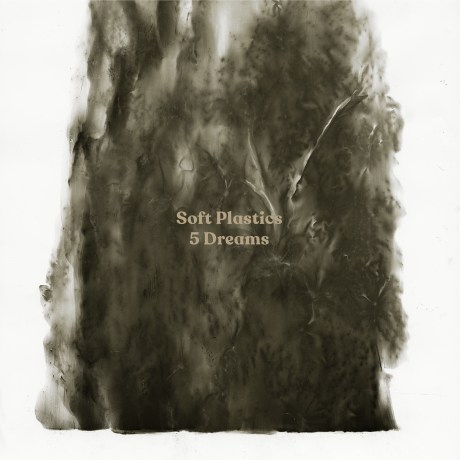
From the embers of Frog Eyes rises Carey Mercer’s vivid dreamology, the Soft Plastics; an extraordinary-voiced inhabited vision, playful, untethered yet also intense. With partner and creative foil Mel Campbell at his side and an intimate circle of musicians – many of which are from the ranks of fellow Canadian scenesters Destroyer – Mercer’s abstract dreams are channeled into a magical, if often sad, songbook of lyrical symbolism, metaphor and passages of trauma.
Everyone is probably aware of the idiosyncratic songwriter’s travails, coming out the other side of throat cancer years ago; the very best outcome an affect on his music career and obviously his already unique bellowed, sibilant, fluctuating, weaving vocals. Though free from a cohesive theme as such, amongst the recurring lyrics of “swirling”, allusions to a green miasma, “wyld thyngs” and an actor’s diorama there’s the constant presence of “angels”: guardians perhaps. But it’s the album’s references (again, perhaps) to Mercer’s most dramatic episode on ‘The Party’s Still On’ that evocatively alludes to that diagnosis: “Knocked on the roof of my mouth, and said “shelter me in warmth”.
With some visions weighing heavier than others, and some darker, the inaugural LP under the Soft Plastics furnishing uses the imagery and lucid recall of Mercer’s dreams. These “remembrances” were sent to soundboard Joshua Wells (just one of the Destroyer cast that feature and help facilitate this album) as a foundation for, what is, a visceral journey through the musician/vocalist’s imaginings and augurs. It’s an ambitious world – not many albums come with a contextual-style essay. 5 Dreams “exists in a land that is deeply wet, dark, flooded” we’re told. The dank dampness is however broken by the occasional “gilded sun-beam” that “comes out of nowhere”, at which point “the song just stops and stares in bloody awe at what we are given, what we might see.”
Almost theatrical, the musical stage is expansive and deep; a counterbalance between the darkness and light. Sins, the omnipresence of a nuclear threat (of the winter, and family stasis kind), the pains of loss, and the biblical feature heavily on a soundtrack that omnivorously feeds on elements of lilted mariachi horns, industrial post-punk, ragged soul, new wave, shoegaze, pop, indie-dance, funk and Mercer’s back catalogue (Frog Eyes, Swan Lake). This means wandering hints of Blixa Bargeld, Talk Talk, Alex Harvey, Wolf Parade, The Mekons, New Pornographers and The Rapture. With a vocal freedom, between the languidly winding and more intense falsetto, the pathway traverses wildly imagined southern borderlands; a virtual dystopia where the hangman’s rope looms as a warning; a place where fascism lurks in the small towns. There’s something not quite right with this scene however; an artificial construct, peopled by willing (or unwilling) actors, playing the part of Mercer’s vivid dreamscapes and actions.
Mercer’s dream weaving evocations are, as I’ve already said, extraordinary on this ambitious, mesmeric album suite. Cryptic and charged, wondrous and yet dark, the Soft Plastics go further and deeper into the psyche to fathom the unfathomable. 5 Dreams warrants a place in every choice and best of the year lists at the end of this anxious, epidemic ravaged year. It really is that good.
Bhajan Bhoy ‘Bless Bless’
(Wormer Bros. Records) LP/5th June 2020
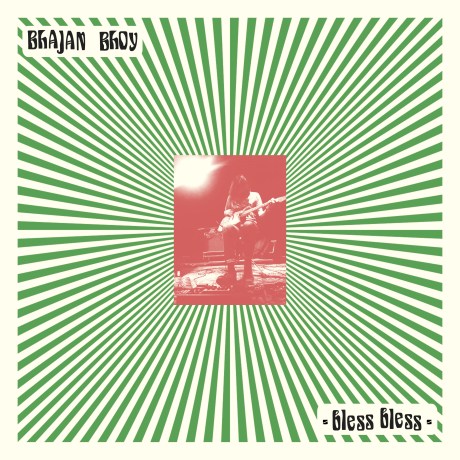
Veiled in swathes of reverence and an afterglow of Gothic shoegaze, post-punk and the kosmische Ajay Saggar turns his fanned, flange reverberating guitar towards the transcendental on his first solo outing. Recently appearing in my January roundup as part of the Deutsche Ashram collaboration with Merinde Verbeck, Saggar extends that duo’s vaporous spiritual waves and dreamy translucence on this six-string led Eastern cosmology.
In case you missed the “blessed” anointed direction of this heavenly – if just as moodily mysterious and full of trepidation – panoramic opus, the alter ego “Bhajan” of this incarnation’s name refers to the amorphous devotional music of the Indian subcontinent. Synonymous with Hinduism, but also Jainism, this melodic raga form of worship has no set rules, and so fits in well with Saggar’s formless framework of layered melting guitar phrases, gossamer radiance, space-echo unit delay and ripples in the cosmic fabric atmospheres. Bhajan can be translated as “revere”, but also can be read as “sharing” too, and that’s what Saggar does: sharing his spiritual oeuvre of the esoteric and meditative.
We’re “welcomed” to this service with a brassy vibrating mantra: an introduction set-up for what’s to follow. The pouring guitar washes of Manuel Gottsching’s Ash Ra Temple permeate the album’s first long wave devotion ‘Strung Out’, which also features the Washington artist Prana Crafter as congruous communal collaborator. Those lingering six-string explorations increase with intensity as the traverse goes on; bending and craning with fuzz and scuzzy sustain in a Gunter Schickert fashion. Second guest spot goes to Holly Habstritt Gaal; her lulling siren coos beckon from the ether on the ethereal post-punk free-falling embrace ‘Cascade’.
On a pilgrimage of the magick and Indian mysticism, Saggar aligns wisps of Popol Vuh mantra otherworldliness with cause winds on the strangely titled ‘Stuck In A Barrel’, and casts a pulsing prodded synthesized spell of Roedelius arpeggiator and the Tangerine Dream on ‘Magicho’.
Whether drifting off after trekking the ‘King’s Mountain’, or circumnavigating the Kush interior, Saggar finds enlightenment in a cosmic vacuum. Sensory glides, harmonic rings, creepier growls, the twinkled and dub-y all merge on this ebbing tide of devotional music. Emerging from this isolation with a spirit of wonderment, Bhajan Bhoy reimagines a kosmische version of The Mission; a space rock Slowdive on an expansive multilayered guitar meditation.
Love-Songs ‘Nicht Nicht’
(Bureau B) LP/22nd May 2020
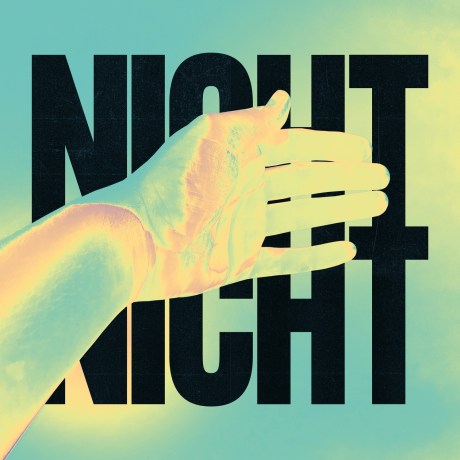
It shouldn’t come as a surprise to find the visceral electro-acoustic trio from Hamburg gravitating towards that incubator of Kosmische and expletory German electronica, the Bureau B label: A label that’s ranks include not just the second (or third) generation of Germany’s electronic and experimental music revolution but also some of the progenitors that started it, from surviving members of Faust to Roedelius.
Love-Songs inaugural convolution of the organic and defined for the label absorbs much of that pioneering providence, especially the Kosmische and the quasi-tribal, quasi-ceremonial wood-rim-clatter drums of Faust’s Zappi Diermaier.
A mysterious, sometimes Byzantium, invocation of the improvised, the synthesized and the acoustic, Nicht Nicht is a veiled world of amorphous resonance. There’s the use of Chinese cymbals that hints towards Tibetan and East Asian mysticism, what sounds like a clarinet or oud offers Egyptian fantasy, and the cattle bells evoke mountain cowherds of the Steppes. Add to this the utterances and chanted cadence of Love-Song’s vocalist Thomas Korf, which aren’t so much sung as lyrically described as they occupy the gauzy space. Korf’s lyrics are described as ‘Surrealist’, ‘Dada’, though I’d have no idea as he sings in German throughout.
Electronically sonic wise, pulsating bass throbs echo throughout this labyrinth alongside carefully, dare say sophisticated, arpeggiators, dark wave undercurrents and, when it really gets going, cybernetic techno beats. Suffused and vibrating with that air of mystery, Love-Songs create a stirring environment of reverberated tubular synthesized evaporations and both naturalistic scuttled rhythms and percussive trinkets. Nicht Nicht finds a balance between the two on a most experimental fusion of Kosmische, Techno and the mystical; an album that finds the trio pushing the boundaries further than ever.
Valentina Magaletti & Marlene Ribeiro ‘Due Matte’
(Commando Vanessa) LP/11th June 2020

A communion of sonic forebode and untethered visions of the universal, the collaborative Due Matte performance ascension brings together Valentina Magaletti (of Vanishing Twins fame) and her foil Marlene Ribeiro (of both Gnod and Negra Brancia) to forge an uninterrupted exploration of what the artistic partnership has coined “tropical concrete”. A counterbalance of the improvised and form, the natural and augmented, synthesized effects and the acoustic, this tropical concrete soundscape weaves recognizable instrumentation with (as the ‘concrete’ of that term would suggest) a masked assemblage of found objects and utensils. And so, an ever-present tolled, processional frame drum patters out a repetitive beat as the trinkets of tapped bottles, scrapped tin and other metallic objects trickle or scratch across a mysterious alchemy of Latin esotericism and an ever-shifting echoed soundbed of filters.
Metal bucketing, the circled ringing of bowls, brushes across the surface of a drum skin, water-carriers, revolving mechanisms, rasps and rustling noises and sounds are all the more mysterious as they spiral or spindle on this magic-reality soundtrack. In a fluxes between the supernatural and dreamy, the lucid and hypnotizing reverberations of an ambiguous world, cast adrift of its moorings, stirs up various references: whether intentional or by happenstance – a spell of South East Asia one moment, the Nile and even an atavistic Iberia the next.
Cooing voices and obscured talking add another layer of mystique to the serial Gothic, religious and fantastical elementals.
This, the third release on the burgeoning Italian ‘boutique label’ Commando Vanessa, was originally performed as part of Francisca Marques’ curated project Hysteria; a result of the collaborators artistic residency at Sonoscopia in Porto, a project conceived to ‘offer a look at female production and creation in today’s musical universe, creating new bridges between creators and audiences.’ The fruits of this strange, mostly uncalculated vision of artistic freedom traverse a mirror-y, occasionally primal, world of abstracted death knolls and rituals, under a killing moon. Let’s hope there’s more to come from this congruous union in the future.
Simon McCorry ‘The Light Only Blinds’
(Herhalen Recordings) EP/14th May 2020

Proving prolific in this year of anxious isolation and lockdown misery, composer, artist and adroit cellist of renown Simon McCorry is once more conjuring up evocative soundscapes, both introspective and universal, on his latest ambient suite The Light Only Blinds. After two recent Monolith Cocktail premieres of McCorry standalone singles – the minimalist Acid Techno imbibed ‘Pieces Of Mind’ last month, and the stirring atonal ‘The Nothing That Is’ in February –, and following in the wake of the fully-realized escapist, haunted environments and materialized spaces of the ambiguous atmosphere-building Border Land LP, McCorry offers a trio of light inspired meditations on the power, immensity and light-giving properties of the Sun.
Veiled, longing and at times inhabiting the awe and mystery of Kubrick’s cinematic visions of space, the arid lunarscapes and terrains of this lightened sonic escapism are both magisterial and daunting. Though alien in parts, with passing leviathans and gauzy metallic gleams, saws and waves suffused throughout, the EP is not just bathed in the rays of the Sun but also loosely imbued by the themes (hence the Latin liturgy titles, ‘Sanctus’, ‘Benedictus’ etc.) of the Catholic Requiem Mass. Instead of the David Axlerod route, McCorry gravitates towards the almost supernatural Atmosphères, Lux Aeterna, Requiem and Aventures suites of revered composer György Ligeti; all of which of course featured in Kubrick’s 2001AD, A Space Odyssey opus.
But this sacred wonderment at the Sun was also developed from the sound design work for a play that the ambient and neoclassical composer worked on in early March. “The theatre we were working in closed around us and the play only went as far as the first dress rehearsal. I’d been experimenting with a couple of analogue monosynths and liked the idea of using these as the sole source of sound design material. They have an unpredictable organic nature and paradoxically sound unnatural and alien. The play, Born Bad written by Debbie Tucker Green, is an intense family drama with a lot not said or on the verge of being said, it is an exercise in a slow build of tension that never quite overwhelms but threatens too as more and more is revealed. I wanted the sound design to be as if it is was the space, the hum of the electric appliances, lighting and heating, occasionally clawing it self into consciousness from a bed of churning chaos that lies behind everything.
The prevailing bed of those hums, undulations and waves sit under a synthesis of universal secrets, as enervated solar winds blow across the moonscapes and interiors, and shrouded movements trigger unearthly stirrings and shooting stars fly by in the night sky. An escapist soundtrack, McCorry’s subtle enlightened contemplations prove atmospherically evocative, another quality suite of minimalist gravity.
David Åhlén ‘My Face Will Shine’
(Jivvär) EP/15th May 2020

You may remember we premiered the Swedish singer, songwriter and multi-instrumentalist David Åhlén’s moving hymnal ‘If I Have You’ single, recently on the Monolith Cocktail. A whispery diaphanous veiled plaint that’s informed and inspired by the artist’s study of mystical Judeo-Christian texts on the Swedish Island of Gotland, and his own personal faith, this most beatific and angelic of songs also features on the new release, the devotional My Face Will Shine EP.
Though faith has once more concentrated the minds of many during this epidemic – you could say there’s been a resurgence -, society in general still casts a cynical derision of suspicion at those who practice religion. A lot of Christian music is of course dire, especially the modern happy-clappy sort. Åhlén though has found a gossamer balance between the choral-backed worship lament of tradition and a breathtakingly heart aching form of chamber pop.
Particularly moved by the Biblical Psalms, lyrics from the first single – lines such as “deep calls to deep in the roar of your waters” – are directly inspired by Psalm 42, as David explains: “Many of the lyrics for the EP are about the mystery of our soul speaking to God and the longing that follows”. Musically steeped in this traditional influence and spiritual yearning, ‘If I Have You’ like the rest of the music on this EP are elevated further towards the heavenly by the inclusion of the holy tones of The Boy’s Choir Of Gotland and a an attentive, sympathetic chamber ensemble.
Åhlén’s hushed and cooed falsetto softly ascends the Cloisters atmosphere like a yearning, robed, Antony Hegarty taking communion. The reverence is suffused across all four spiritual elevations, from the beautifully wooed and bowed longing string accompanied stunner ‘My Face Will Shine’, through to the ethereal Biblical cosmology ‘Shamayim’ (the Hebrew word for “heaven”).
My Face Will Shine offers a full immersion into the devotional and longing; a connection to a higher calling you could say; a step away from our own preoccupations into the moody chamber pop of holy reverence. Aside from the spiritual leanings, many will find this an incredibly constructed heartfelt and beautiful record.
Daniel J. Gregory & Carnivorous Plants ‘Dusty Starlight’
(Kirigirisu Recordings) LP/Available Now

From rifling through workshop drawers like a sound burglar, to lending the most lingering traces of post-rock and blues-y guitar to attuned radio/TV broadcasts from an unspecified European geography, Daniel J. Gregory’s minimal sonic collage for the Japan-based Kirigirisu label is an album of channeled refracted landscapes. From mountains to coastlines and cities, Gregory’s serial synthesis of guitar and textured drones and winding mechanisms soundscapes give a sound and visceral life to pictures taken on an ‘old Soviet camera’.
A photo album given an assemblage of ambient resonate waveforms and more noisy musique-concrète, Dusty Starlight passes through ‘Blue Holland’ colour palette waterways and scrapped contours of a vague landscape. Foreign transmissions intermittently crackle and spark into action but offer only more mystery. You can even hear the artist himself counting in, or, in soliloquy style mumbling under his breath on the rummaging ‘V’.
Over various hums, signals, static, chains, clicks, camera loading and caustic interference Gregory plays various electric guitar renderings. Played with a light touch, these sometimes reverberating, often rippled and drifting trails linger between touches of Craig Ward, Spaceman 3 era Jason Pierce and Raül Refree. On the album’s final Roman numeric entitled ‘VII’ there’s even a hint of a more enervated, less dark, Sunn O))). But this could be framed as a kind of post-rock blues; a style not too dissimilar to the label boss Neil Debnam’s very own Broken Shoulder/Flying Kites alter egos.
A soundtrack in many ways that offers a strange collage of found, usable object manipulations and tremulous experimental guitar, the Dusty Starlight album looks through a removed lens at a scarred, displaced landscape. One that’s more mysterious and subtly stirring than dystopian or even haunting. This old Soviet tech offers another angle on ambient experimentation.
Hi, my name is Dominic Valvona and I’m the Founder of the music/culture blog monolithcocktail.com For the last ten years I’ve featured and supported music, musicians and labels we love across genres from around the world that we think you’ll want to know about. No content on the site is paid for or sponsored and we only feature artists we have genuine respect for /love. If you enjoy our reviews (and we often write long, thoughtful ones), found a new artist you admire or if we have featured you or artists you represent and would like to buy us a coffee at https://ko-fi.com/monolithcocktail to say cheers for spreading the word, then that would be much appreciated.
Album Review/Enrico Stradi

Continuing in 2020 with our collaboration with the leading Italian music publication Kalporz, the Monolith Cocktail will be cosying up and sharing reviews, interviews and other bits from our respective sites each month. Keep an eye out for future ‘synergy’ between our two great houses as we exchange posts.
This month an in-depth, beautifully written purview by Enrico Stradi of the new Perfume Genius album, Set My Heart On Fire Immediately.
Perfume Genius ‘Set My Heart On Fire Immediately’
(Matador, 2020)
“My mission is always to get out of myself”: the story of Perfume Genius‘ fifth and last album can start from here, from these words spoken in a recent interview, and from the feeling of inconsolable awareness they emanate. In fact, it may sound like an excessive generalization, but despite this it has something true, to write that the entire production of the talented Seattle producer refers to the body, to his body as a man and artist. A theme that in the course of the songs and records has been explored in its multiple meanings: the body as the place where the symptoms of Crohn’s disease, from which Mike Hadreas suffers from birth, are manifested; the body as an emotional dimension, where the effects of unsolved relational and affective difficulties collide; the body as a territory of identity and aesthetic claim, as painful as it is proud, as fragile as it is spontaneous, of its belonging to the queer community. In short, Perfume Genius’ relationship with his own physicality is a relationship that has been – despite the most painful implications, or perhaps in nature of them – a vital lymph, the burning substance, alive and propulsive of art. And this continues to be so, even in his latest work, Set My Heart On Fire Immediately, in which Hadreas continues his very personal exploration of himself.
On the fifth album just released for Matador comes to life the new transformation of the author, who ten years after his debut album has been able to tell his twisted and suffered universe in the form of lo fi piano ballads (Learning, 2010), dramatic sentimental heartaches (Put Your Back N 2 It, 2012), enlightening and powerful claims, not only sexual, in pop sauce (Too Bright, 2014) and ethereal and sparkling baroque (No Shape, 2017). Set Your Heart On Fire Immediately represents the most recent evolution in this exploratory path, and marks a moment full of meanings for the author – not by chance, the opening of the album is entrusted to two verses that only a few seconds later we can fully understand: “Half of my whole life is gone / Let it drift and wash away”. Thus begins the first track, ‘Whole Life’, an orchestral construction of violins that seems almost to be placed there to try to reconnect to the last album No Shape, almost to resume an interrupted speech. But those verses are in that precise position because they have the task of telling something else from what we already know, namely the precise will to move away from everything Perfume Genius has embodied so far. And in fact, a few seconds later, here is ‘Describe’ with its dirty, distorted, rough and dusty riff, so unexpected that it almost hurts in its expressive power. It is the sound of an explosion, of a burning fire, of a heart on fire. What we are witnessing is not only a crucial moment of the album, but an effect of sudden expansion that Hadreas has carefully studied, codified and repeated other times during the fifty minutes of the album, without ever losing the effect of expressive unpredictability. A moment that is, in a few words, one of the keys to reading this, Set My Heart On Fire Immediately: a work that feeds on the same varied and heterogeneous musical material of which it is composed.
Throughout its duration the album gives in fact sudden shifts of atmosphere and sound, warmth and intensity. The lyrics give the music a meaning similar to oxymoron: in the writing of the emotional torments, physical and mental disorders or in the story of emotional suffering we pass from the extended sounds of ‘Without You’ to the falsetto accompanied harpsichord of ‘Jason’; from the funky ‘On The Floor’ to the wandering and dreamlike ramblings of ‘Leave’, from the hypnotic dramas of ‘Just A Touch’ to the warm and dark synth of ‘Your Body Changes Everything’ or the rough guitars of ‘Some Dream’ (here another of those memorable explosions mentioned above). In interpreting each of these passages Hadreas shows a masterful familiarity, almost comparable to that of a contemporary dancer who during his performance transforms his body taking various forms and positions. The comparison with dance is not here by chance: in 2019 Perfume Genius took part in a choreographic performance co-directed by Kate Wallich and titled The Sun Still Burns Here, and he himself admits the decisive impact on his latest album.
The muscular strength that emanates from this record comes from afar, is the result of a fervent and insatiable experimental curiosity, and represents a new and unpublished chapter in the story of the relationship with one’s own body. Rather than trying to escape from its physicality, as it happened in previous albums and in the quote we reported at the beginning, in Set My Heart On Fire Immediately Hadreas puts it to the test, with all the effort that this effort requires, trying from time to time in different or unexplored territories. And not only musical, but also visual, equally important for what he intends to communicate: do you remember the way feelings like anger and pain, love and suffering were expressed before this album? Those intimate contortions of ‘Learning’, the vibrant heart inside ‘Too Bright’? Do you remember the lipstick from ‘Hood’? The skates from ‘Fool’? The sequins from ‘Queen’? The bucolic, Shakespearean races from ‘Slip Away’? Look at him now, Mike Hadreas, on the cover of the record, shirtless and stained with motor oil, with that fierce, battling look. Look at him rolling around on the ground soiled with dirt or performing a choreography that resembles a duel to the death. Look at him, while for the first time he faces openly those masculine and masochistic imaginations he has always felt repulsive and threatening: now he even challenges them, embodies them, and radically changes their symbolic connotations. It is an achievement of his. A liberation. It is yet another metamorphosis. Perfume Genius is another person again.
Premiere:(Single): Admlithi ‘Radal’
May 21, 2020
Premiere/Dominic Valvona

Admlithi ‘Radal’
(In Black Records) Single/22nd May 2020
The mysterious Scottish enigma Admlithi returns from the veils with a minor opus of gossamer and gliding synthesized hymnal beauty. Following on from his 2018 debut album for Armellodie Records, Tyrants, the producer and multi instrumentalist breathes diaphanous life into his latest mini-opus ‘Radal’; a hushed, attentive epic that takes its title from the manufactures of the buoyant tubular sounding electronic tabla that drives it along (purchased, we’re told, at a car boot sale for five pounds: now that’s what you call a bargain).
Already using an eclectic palette of post-punk, electronica and jittered psychedelics, with influences as diverse as The Associates, The Chameleons, Kate Bush, Kraftwerk, Japan and Erasure, Admlithi now channels the sophisticated searing and atmospheric synth work of Vangelis as he subtly reaches towards the heavenly stratosphere. Yet despite the reverent and unearthly vapours, lyrically the song is about “trying to dig tunnels back to the happiest time in your life only to find the earth is full of boulders.” Travails have seldom sounded so scenic and hallowed.
The Monolith Cocktail is delighted to be sharing that single, released through our pals at the Glasgow label hub In Black Records, ahead of its release on the 22nd May.
Hi, my name is Dominic Valvona and I’m the Founder of the music/culture blog monolithcocktail.com For the last ten years I’ve featured and supported music, musicians and labels we love across genres from around the world that we think you’ll want to know about. No content on the site is paid for or sponsored and we only feature artists we have genuine respect for /love. If you enjoy our reviews (and we often write long, thoughtful ones), found a new artist you admire or if we have featured you or artists you represent and would like to buy us a coffee at https://ko-fi.com/monolithcocktail to say cheers for spreading the word, then that would be much appreciated.
New Music Roundup/Dominic Valvona

The Perusal is my regular one-stop chance to catch up with the mounting pile of singles, EPs, mini-LPs, tracks, videos and oddities that threaten to overload the Monolith Cocktail’s inboxes each month. A right old mishmash of previews, reviews and informative inquiry, this weeks assortment includes shout outs to The Bundy Bunch, CURRENTMOODGIRL, Double Françoise, Telemachus, We Jazz Records live serious of jazz recordings, and Sounds And Colours 10th Anniversary compilation special.
Telemachus ‘Greed ft. Jerome Thomas’
(High Focus) Video track taken from the upcoming LP Boring And Weird Historical Music/22nd May 2020
Floating untethered once more, UK producer and artist David L.G. Webb traverses another amorphous musical geography on his latest album under the Greek mythology inspired Telemachus pseudonym. An outlet for explorations that take in an eclectic range of sounds, musics and soundtracks, from West Africa to the Caribbean, the Earthly and cosmic, Telemachus dreamily and longingly encompasses spells of jazz, the spiritual, hip-hop, trip-hop, neo-soul, ambient, electronica and down tempo. A break from Webb’s pioneering work, under the Chemo moniker, on the UK hip-hop scene – producing and working with luminaries and stalwarts Verb T, Kyza, Kashmere, Manage, Jehst, Triple Darkness, Jam Baxter and Onoe Caponoe – this flight of fantasy incarnation is a loose and free travelogue of the spiritual and imaginative that has so far delivered a trio of albums since 2011.
Released ahead of the latest yearning but, mostly, peaceable opus Boring And Weird Historical Music, the soulfully laced, softly tripped jazzy and vaporous video track ‘Greed’ features the achingly blessed sweeping vocals of neo-soul artist Jerome Thomas; just one of many guests, alongside RHI, Chris Belson, Killa P and Penelope Oddity, that feature on this polygenesis, blossoming album.
Keep your eyes peeled for a full review of that album in the next two weeks.
OK:KO/Alder Ego/Timo Lassy & Teppo Mäkynen ‘Ateneum 2019 (We Jazz Live Plates VOL. 2)’
(We Jazz) LP/May 22
A favorite label hub of mine, contemporary jazz specialists We Jazz Records have released an enviable catalogue of avant-garde, experimental, electrifying records over the years. A showcase for artists from the label’s city home of Helsinki, but also branching out with suites from fellow Scandinavians across the border and beyond, they’ve recently announced news of a series of live performance compilations.
Featuring a rich array of that roster, each volume is split between a trio of acts and ensembles, the performances all taken from various concerts in and around the Finnish capital in 2019. Today’s featured preview, Volume 2, was recorded in the Spring of last year at the historic Ateneum Art Museum in the city. Label mates Timo Lassy & Teppo Mäkynen, OK:KO and Alder Ego each get two tracks on this magical, energetic and exploratory live compilation.
Led by drummer Okko Saastamoinen, the Helsinki quartet OK:KO open the album with a sophisticated, slinky splash of Savoy meets European avant-garde jazz. Group pianist Toomas Keski-Säntti changes from piano to Fender Rhodes, which the accompanying burb suggests, is ‘a little touch that opens up new avenues in their sound.’ Versions of tracks from the group’s 2019 debut Syrti are given a new lease of energy, with the rolling, contorted title-track from that album and the looping splashed ‘Piik’ taken on free-falling excursion.
Another drummer led combo, Joonas Leppänen’s Alder Ego quartet of Finnish talent transcends and go deep with a double-bass heavy version of ‘Cubism’ – which featured on their 2018 LP for the label, II – and offer up a new peregrination of scintillating, slinking, vaulting and New York skyline marauding sax appeal, ‘Mystery Room Nr. 6’.
The Helsinki duo of Timo Lassy & Teppo Mäkynen meanwhile, turn in mesmerizing, Don Cherry meets Dizzy and Calloway swing like visions of ‘Fallow’ and ‘Goldenrod’; a duo of tracks taken from their eponymous 2019 LP.
Finland is proving a hothouse for emerging and already established talent, and this second volume in the live series offers insight and enjoyment (let’s not forget that) of that contemporary jazz blossoming. We Jazz is proving a reliable name of quality and discovery in the form. Take a punt, you won’t be disappointed.
Various ‘Sounds And Colours: 10 Years Anniversary Compilation’
(Sounds And Colours) Album/Available Now
A gateway to everything worth celebrating about Latin American, the Sound And Colours platform, which includes one of the most in-depth of reference and news sites, guide books and events, has proved a rich essential source for me over the years. Whether it’s through the site’s cultural, political and historical published purview style series of accessible guides to Peru, Brazil and Colombia, or their considered catalogue of music projects, I’m kept up-to-speed and introduced to some of the continent’s most interesting artists and scenes. This includes the panoramic escapist electronica, progressive traversing music of Santiago Córdoba; the futuristic Rio de Janeiro leftfield bossa transmogrifications of João Carvalho (better known as leading experimental Brazilian light Sentidor); and the Costa Rican musical ethnologist Nillo (Johnny Gutierrez). All three of which appear alongside Sergio Mendoza’s Arizona-Mexican fusion Orkesta Mendoza (appearing in a triangle with Mexican Institute of Sound and Calexico) and the leading Rio talent (responsible for at least a 100 recordings) Alexandre Kassin on this generous tenth anniversary fundraiser.
A thankless task at the best of times, with countless sites and blogs closing down at a fair old rate for both a lack of support financially – proving hard enough just to cover costs, let alone make money or a wage from it – and indifference, Sounds And Colours is like many of us also now caught in the effects of lockdown. Wishing to retain that status as ‘a vital platform for Latin American musicians, filmmakers, artists, writers and other creative souls to find an appreciative audience’, the site is looking to its audience for help in keeping it going. And so marking ten years in serving that community, this 25-track compilation that stretches a musical geography, includes everything from electronica to psych to avant-garde to pop is both a celebration and vital way to support them. And as opposed to so many lockdown specials, fundraisers, this is indeed a rich and brilliant collection of new, rare and previously unreleased music.
You can visit the site bandcamp page here to find out how you can help keep this platform afloat.
The Bundy Bunch ‘POS’
(In Black Records) Single/Available Now
Creating a squall of attention for themselves with their slackened brand of lo fi hostility wrapped around jangled surf garage punk mischief, Norway’s knockabout serial killer pun Bundy Bunch follow up on their debut single with another mix of half time slumber and quickened American yoof twanged sulky hysteria. Despite that rough exterior and the eventual “piece of shit” breakdown at the end of this, the band’s second single, the Kopervik trio keeps things melodic and, even, fun. It’s a sound that could be described as a brash barreling Drums meets The Hunches.
Following up the band’s inaugural ‘BELUSHI SPEEDBALL’, ‘POS’ once more has a message about drugs misuse and hijinks. Guitarist/vocalist Ole Marius Saltvik explains: “the lyrics are the social effects certain drugs have on people, and how stupid it can make them act.” Basically, quitting being a dick. Infectious, free-spirited, The Bundy Bunch are a thrill and tonic to the pensive seriousness of lockdown. Take a hit for yourselves.
CURRENTMOODGIRL ‘The Letter L’
(Self-Release) Single/Available Now
A skulk of coiled and shutter clicking machinery and synthesized percussion, Greta Edith’s (who you may know from both Bernard + Edith and Pearl City) disturbing but strangely alluring new visionary alter ego, CURRENTMOODGIRL is as foreboding as it is playful. Some of this is down to the playground like warped innocence of Edith’s childish but knowing vocals.
Today’s featured track, the inaugural release of this new incarnation, is the self-released track ‘The Letter L’. Described as, “A playground clap game that got out of hand”, the paddled and flickered sonic project debut is accompanied by an equally unnerving homemade music video, described as: ‘An alliterative fever dream of monochrome-on-red before a tangled & disheveled ballerina, Dancing like no one is watching.’
Posing as many questions, queries as postulating answers, the CURRENTMOODGIRL alter ego leads the listener ‘down the primrose path’ with a ‘study of the emotional life’s mercurial swings and the female self’. A transmogrification of Manchester’s industrial past, a love of film scores and the local GASH rave scene, Greta’s newest project occupies a strange dream reality. This first offering signifies a most enticing if daunting introduction to that world.
Double Françoise ‘Les Bijoux’
(Freaksville Music) LP/5th June 2020
As the moniker suggests, Double Françoise are about as French as it can get. The Gauloise smoky perfumed Chanteuse pop duo, couplet of Maxence and Elisabeth Jutel seem to have the providence and effortless cool élan to pull off the melodic melancholy and resigned love of such sirens and doyens of the form as Alice Dona, François Hardy, Sylvie Vartan and of course, Serge Gainsbourg and his retinue of femme muses. But this reminiscing musical couple actually derive their name from both the playwright, novelist Sagan Françoise – famous for her disillusioned bourgeois protagonist driven diorama romantic themed works – and the fatalistic actress Dorléac Françoise – the 1960s international starlet on the verge of great things who died at the age of 26 in a car accident.
The debut album, Les Bijoux, is said to be ‘a culmination of years of living together’; an album that ‘beautifully juxtaposes effortless, diaphanous pop with existential subject matter.’ Using an apparatus of Italian keyboards, tape recorders and Atari computers, the duo encompass everything from the French New Wave to the breezy, violin serenaded reminisces of the pastoral provinces. Though they also manage to evoke a Gallic vision of Lee Hazlewood & Nancy Sinatra, and on the shakers groove ‘Alcool Fort’, Jean-Luc Godard captured Rolling Stones – with also a hint of Chrissie Hynde. By the time we get to the ‘Loin De Toi’ we’ve heard Gilberto bossa, discothèque new wave, ye ye, gypsy jazz and dreamy electronic pop.
Sensual, breezy, giddy, waning, resigned, breathless and love-pained, everything you want from French pop music with depth and an edge.
Ahead of the album’s release in June, the Monolith Cocktail is sharing the duo’s title-track teaser/video.
Hi, my name is Dominic Valvona and I’m the Founder of the music/culture blog monolithcocktail.com For the last ten years I’ve featured and supported music, musicians and labels we love across genres from around the world that we think you’ll want to know about. No content on the site is paid for or sponsored and we only feature artists we have genuine respect for /love. If you enjoy our reviews (and we often write long, thoughtful ones), found a new artist you admire or if we have featured you or artists you represent and would like to buy us a coffee at https://ko-fi.com/monolithcocktail to say cheers for spreading the word, then that would be much appreciated.
Premiere (Single): Provincials ‘One-Armed Swordsman’
May 15, 2020
Premiere Single/Dominic Valvona

Provincials ‘One-Armed Swordsman’
(Sacred Geometry) Single/Video
Released during the tumult and crisis of 2019, in the throes of post-Brexit negotiations, alternative-folk duo Provincials produced the mesmerizing and spellbinding miasma The Dark Ages. At the time it can be seen as a protestation against the forces of Nationalism, even Imperialism, but as Covid-19 reaps its harvest and sweeps across the world in 2020 you can’t help but see it now as an augur of an all too real plague-crisis Dark Age. Despite the dread, the duo portrayed that Domesday dystopia with a diaphanous lulled and beautifully administered deft touch, painting a bleakly poetic diorama of being swept under a despairing riptide. That album – the duo’s second – was an increasingly more experimental move away from the serene changing-of-the-seasons joyful reflection of their earlier work, especially the Ascending Summer EP: which seemed like a dreamy folk ode and peaceable traverse of the English scenery.
Meandering along a path that stretches from the Norman church dotted shingly shoreline of the southeast coast of Romney to a revenge-soaked Iberia, taking in the trauma, stress of The Crimean War and WWI, Provincials conjured up a lamentable present on that last minor-epic. Recorded in the same period but left off the album, today’s premiere ‘One-Armed Swordsman’ was deemed perhaps too wild, different and incongruous to sit on that songbook. Not a problem, as the duo has found the ideal time to release it as a separate entity in the most anxious of epochs, and furnished with a rustic-set esoteric symbolized video, shot in lockdown isolation. In separate rural homes, Seb Hunter hangs his head wearily from atop of the stable, strains the lyrics from some dusty tome form behind his eagle like garden sculpture and re-strings his ‘baritone-growled’ guitar, whilst siren foil Polly Perry flails and dances round the Theremin. Both exude the pining mood of our alienated stasis.
A precursor to their third LP (scheduled for the Spring of 2021), to be released on Weird Walks co-founder and psychogeography musical artist Owen Tromans’ marvelous expletory landscape inspired label, Sacred Geometry, this gnarled, grunge-y plaintive tumult was recorded and produced by Dan Parkinson at Wooden Heart Studios, Hampshire. Dan also plays the grinded-out drums, which take time to emerge from the opening sustained gristle and entanglement of Hunter’s experimental guitar and Polly’s Theremin fluctuations lead-in.
A pained expression waiting to be let out, the encumbered ‘One-Armed Swordsman’ sounds like a torrid merger of Swans, Dinosaur Jnr. and Ultrasound. Marking a change perhaps in direction, this single may have been recorded in less daunting times, but encompasses the feelings of disconnection and nervousness in the now. We wait to hear the results of lockdown on the Provincials next album in the Spring of 2021.
Related posts from the Archives:
Provincials ‘Dark Ages’ Review
Provincials ‘Ascending Summer EP’ Review
Owen Tromans ‘Between Stones’ Review
You can now support the Monolith Cocktail via the micro-donation platform Ko-Fi.
Hi, my name is Dominic Valvona and I’m the Founder of the music/culture blog monolithcocktail.com For the last ten years I’ve featured and supported music, musicians and labels we love across genres from around the world that we think you’ll want to know about. No content on the site is paid for or sponsored and we only feature artists we have genuine respect for interest/love. If you enjoy our reviews (and we often write long, thoughtful ones), found a new artist you admire or if we have featured you or artists you represent and would like to buy us a coffee at https://ko-fi.com/monolithcocktail to say cheers for spreading the word, then that would be much appreciated.
Premiere (Single): Myles Cochran ‘It’s Like This’
May 14, 2020
Premiere/Dominic Valvona

Myles Cochran ‘It’s Like This’
(9Ball Records) Single/15th May 2020
Somewhere on the outskirts of a recognizable American panorama, a hazy semblance of Myles Cochran’s Kentuckian bluegrass roots can be heard resonating on his newest subtly evocative single, ‘It’s Like This’. A continuation of the composer, songwriter, multi-instrumentalist and producer’s previous ‘Early Dark’ traverse (released just a few months ago), today’s premiere is an attuned and sophisticated merger of vaguely reminiscent, rustically dreamy guitar, waned and bowing strings, spindled movements and various lightly administered production effects. Here is how Myles sums up this musical assemblage of ideas and inspirations:
“Roots and country music were in the air when I was growing up and they still shape my aesthetic. My love of improvised music, whether Miles Davis or Talk Talk, also informs what I do, and the American Primitive guitarists such as John Fahey and Leo Kottke made a deep impact. To me, all these aren’t disparate influences, but make beautiful sense together”.
A both lingered minimalist and sonorous soundtrack, with echoes of such titans of the form as Ry Cooder, Robert Fripp, Warren Ellis, Daniel Lanois, Steve Reich and even Mick Harvey, ‘It’s Like This’ was composed, produced and performed by Myles at his rural studios in the UK and France. Myles is joined on this oft-emotional tarverse by the cello virtuoso Richard Curran, who supplies the atmospherically charged low bows.
Marking a sort of flurry of activity from the Kentucky born artist, now residing full-time in the UK, this latest single is being released via Myles own 9Ball Records label ahead of the June 19th EP, My Own Devices. Myles will follow this up, we’re told, with an album entitled UNSUNG.
If you like what you found, hear and see on the Monolith Cocktail, you can now support us via the micro-donation platform Ko-Fi:
Hi, my name is Dominic Valvona and I’m the Founder of the music/culture blog monolithcocktail.com For the last ten years I’ve featured and supported music, musicians and labels we love across genres from around the world that we think you’ll want to know about. No content on the site is paid for or sponsored and we only feature artists we have genuine respect for /love. If you enjoy our reviews (and we often write long, thoughtful ones), found a new artist you admire or if we have featured you or artists you represent and would like to buy us a coffee at https://ko-fi.com/monolithcocktail to say cheers for spreading the word, then that would be much appreciated.
Monolith Cocktail Social (Playlist): Volume #XLV: Little Richard, Tony Allen, Kraftwerk, Embryo, Officer!…
May 13, 2020
Playlist/Dominic Valvona
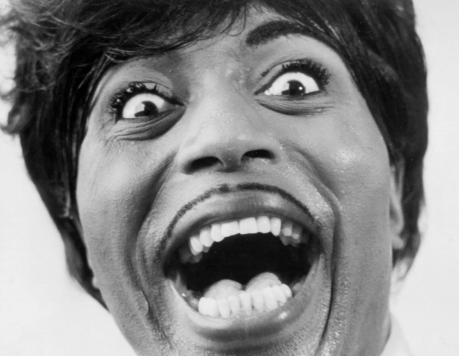
Cool shit that the Monolith Cocktail founder and instigator Dominic Valvona has pulled together, the Social playlist is a themeless selection of eclectic tracks from across the globe and ages. Representing not only his tastes but the blogs, these regular playlists can be viewed as an imaginary radio show, a taste of Dominic’s DJ sets over 25 plus years. Placed in a way as to ape a listening journey, though feel free to listen to it as you wish, each playlist bridges a myriad of musical treasures to enjoy and also explore – and of course, to dance away the hours to.
The latest volume includes a few tributes to those we’ve lost; a sprinkle of rock deity Little Richard, Afrobeat and Afrojazz doyan Tony Allen, and electronic music progenitor Florian Schneider amongst the unusual usual mix of post-punk, transcendence, psychedelic, electronic, folk, acid country, dreams…blah blah blah. We could go on and on. Just listen and have a whale of a time, even in these most anxious of times.
Tracks in full:
Little Richard ‘King Of Rock And Roll’
Rasputin’s Stash ‘What’s On Your Mind’
Rodian G.A. ‘Nu Tu Vei Fi’
Nat Turner Rebellion ‘Laugh To Keep From Crying’
24 Carat Black ‘Brown-Baggin”
Hieroglyphics ‘All Things’
Faine Jade ‘Ballad Of The Bad Guys’
Joe Byrd & The Field Hippies ‘Nightmare Train’
Blonde On Blonde ‘Circles’
Merrell Fankhauser & H.M.S Bounty ‘Everybody’s Talkin”
Banco Del Mutuo Soccorso ‘Cento Mani e Cento Occhi’
Peter Janes ‘For The Sake Of Time’
Le Orme ‘Summer Calling’
Jeff Simmons ‘Appian Way’
Lula Cortes & Lailson ‘Satwa’
Anandi Bhattacharya ‘Jai Ganesh’
Yusef Lateef ‘Ching Miau’
Tony Allen ‘Cool Cats’
Oliver Nelson ‘Anacrusis’
Embryo ‘Code 7’
yuk. ‘Kulam’
Autechre ‘sinistrailAB air’
Jennifer Touch ‘Chemistry’
Kraftwerk ‘Pocket Calculator’
Lizzy Mercier Descloux ‘Sports Spotnicks’
Jean-Luc Ponty ‘With A Little Help From My Friends’
Allan Wachs ‘The Lord Will Provide’
Delaney & Bonnie ‘Poor Elijah’
Will Boelts ‘Boring’
Dunkelziffer ‘(Do Watch You Can) Prof.’
Officer! ‘Anagrams’
Little Richard ‘Hound Dog’
Essential Logic ‘Quality Crayon Wax O.K.’
Granicus ‘Hollywood Star’
Tony Allen ‘Nepa’
David Sancious ‘further In The Forest Of Feelings’
Damara ‘Mmamamkhabtha’
Afro-Haitian Experimental Orchestra ‘Salilento’
Boogie Down Productions ‘Remix For P Is Free’
Keith Hudson ‘Man From Shooters Hill’
Julian Koster ‘The Sea Of Tranquility’
Kraftwerk ‘Endless Endless’
And for those without Spotify access, a smattering of video versions:
REVIEWS/Brian ‘Bordello’ Shea

Brian ‘Bordello’ Shea joined the Monolith Cocktail team in January 2019. The cult leader of the infamous lo fi gods, The Bordellos, has released countless recordings over the decades with his family band of hapless unfortunates, and is the owner of a most self-deprecating sound-off style blog. His most releases include The Bordellos beautifully despondent pains-of-the-heart and mockery of clique “hipsters” ode to Liverpool, and, under the guises of the Idiot Blur Fanboy moniker, a stripped down classic of resignation and Gallagher brothers’ polemics.
Each week we send a mountain of new releases to the self-depreciating maverick to see what sticks. In his own idiosyncratic style and turn-of-phrase, pontificating aloud and reviewing with scrutiny an eclectic deluge of releases, here Brian’s latest batch of recommendations.
With all live gigs and events more or less quashed for the foreseeable future, buying music (whether it’s physical or through digital platforms such as Bandcamp) has never been more important for the survival of the bands/artists/collectives that create it. We urge you all to keeping supporting; to keep listening.
Princess Thailand ‘And We Shine’
(À Tant Rêver du Roi and Luik Records) Album/Available Now
If the swooning sound of post punk is the thing that swings your swinger then this fine album by Princess Thailand is the thing for you. Siouxsie and The Banshees attitude and early Cure like darkness melts over the proceedings like a black-hearted vamp of loneliness offering you one last grasp of togetherness. Guitars and sultry vocals merge with the feeling and memories of 80s post punk and, dare I say it, Goth to bring together an enjoyable flange filled half hour or so of dark sparkle angst.
Sir Robert Orange Peel ‘Are You Mod Enough’
(Metal Postcard Records) Single/Available Now

Welcome to another musical history lesson from Sir Robert Orange Peel; this time teaching us all about the mod culture fashions from the 60s: myself being too young to remember such a thing, but old enough to remember the late 70s revival. The joys of being a rockabilly in the early 80s, leather jacket winklepicker boots and huge Stray Cats like quiff surrounded by the be-parkered ones at a early 80s Kinks gig: and what a gig it was.
This is a joyful hipster swing of a track; one you could imagine Michael Cain sipping on a whisky and coke to, wearing horn rimmed glasses whilst watching the mini skirted beauties shaking their tail feather and there long lank hair swaying to this organ led beat happening at the London groovy discotheque.
Sir Bobby Jukebox ‘Friendship Gift’
(Already Dead Records) Album/22nd May 2020

Is there anyone out there old enough to remember the early 90’s and the wonderful joyful happy sounds of the Frank And Walters, who mastered in releasing catchy indie pop with melodies that caressed all the parts you wanted caressing by joyful indie music whilst hiding the dark underbelly of sadness.
Well if you do, this could well be for you. It has the same magical qualities but with the added spice of diy everything but kitchen sink woozy psychedelia, the injection of a “nah nah” chorus rush frenzies, and the Postcard era jangle of guitars – especially on ‘the has Edwyn entered the room’ ‘You Only Dance’. A joyful sugar rush of an album.
Bigflower ‘Hold You In Place’
Single/Available Now

Another day in lockdown and another slice of dark wonderful distorted searing guitar from the equally wonderful bigflower, an artist that should be celebrated not ignored: if this was the 90s when people still gave a shit about new music bigflower would be all over late night radio and in the serious music press. As this is Monolith Cocktail, and one of the only remaining serious music blogs still standing [no clickbait 10 songs about making tea from us] it is our duty to review and to publicize such a serious talent.
If dark beautiful guitar music that you can dive into and totally submerge yourself in is your thing, bigflower is certainly the man/artist/band for you. Get downloading: it’s free. And tell your guitar loving friends to do the same.
Palavas ‘Centerpiece’
(Wormhole World) Album/Available Now

Discordant noise merges with electro soundscapes that paint a sweeping aural picture of dark beauty, sometimes verging on the slightly psychedelic industrial sound that Throbbing Gristle used to thrive in producing; and I would advise any fans of Throbbing Gristle to give this festival of noise [noise in the best way] a go as I think they could well enjoy and be intrigued by this sound wash of danger. Once again Wormhole World Records produce the goods.
Salvatore Baglio ‘Sonic Doom: A Lo- Fi Home Companion’
Album/Available Now

Lo-fi is what I do best musically, so when I’m introduced to a 25-track album of such lo-fi beauties I’m indeed like a pig in muck. Recorded in various places on various recording equipment over the last 20 years by Salvatore Baglio, and compiled into this gem of a release.
Songs that makes one think of XTC, Guided By Voices, Cleaners From Venus, Clinic, and The Beach Boys at their crazy best amongst many other, what these songs have are invention, melody and tongue in cheek humour, and a great amount of songwriting talent.
There is the wonderful warmth that one gets from using cassette tapes to record that this album and these songs benefit greatly from; the warmth most of these songs, if not all of these songs, couldn’t be improved upon by using a state of the art 64 track studio, for what people do not quite grasp is that to succeed in making truly great lo-fi music you have to be a hugely talented songwriter with a inventive mind as you cannot hide behind 32 tracks of synths or millions of overdubs and get some producer to cover up some of your weaker tracks with studio trickery, and this album really does not have any weak tracks.
From the experimental instrumentals to stunning guitar pop all are polished gems. Some achievement that over the 25 tracks one does not find their minds wandering or wanting to skip songs. This really is a album all music lovers need to dive into and lose themselves in; a truly wonderful album and a masterclass in songwriting.
Nightingales ‘Four Against Fate’
(Ting Global Productions) LP/22nd May 2020

The Robert Lloyd warble is a thing of punk and post punk beauty, and here we are still in 2020 still enjoying the lyrical dexterity and humour of the great man: and long may it continue. As always songs of post punk verve leap from the speakers drenching you in memories of late night glories of listening to the much-missed John Peel; it really is like the last 35 years have not happened.
This album is simply timeless guitars jangling and twisting and distorting – as all great post punk guitars should do. Melodies reach out and throttle you while gently pulling on your heart strings reminding you no matter how bad things seem to be getting their are wonderful bands and characters like the Nightingales making enjoyable discordant pop songs full of wit adventure and wonder.
Xqui ‘Microchasm’
(Wormhole World) LP/15th May 2020

Found sounds or found zounds if you want to be funky, and I’m in a funky mood, the kind of mood where I feel like listening to cut up sounds welded together to make music with or without melody, the kind of thing you may find attractive whilst cutting a garden hedge or two. You can imagine Fred Astaire walking down a staircase whilst surrounded by beauties in fine gowns in black and white photos, whilst some guy is annoyingly recording the clip clop of his feet and making a strange trance like dance track from the aftertaste of the be-swathed one.
Found Zounds as I am now fond of calling them are something to be admired and beholden in a fashion not known by man, or men depending how many there are, or women even – let’s not be sexist about this. If you want to start and experiment into making found zounds you could not do worse than giving this a listen and losing yourself in the found zound wizardry of Xqui.
Simon Klein ‘Cat’
(Gare Du Nord) Single/Video/15th May 2020

Ah at last I was just beginning to despair of finding something I liked enough to be kind to in a review when this bountiful in bounce beauty came into my email box; a song that flounces with a fine subtle rockabilly beat, the kind of song that one twists to in their kitchen whilst waiting for the kettle to boil. And did you notice I wrote song and not track for it has lyrics and melody and everything. It is a song you can both dance to and stroke your chin to: hurrah!
Premiere (track): Yonic South ‘On’
May 8, 2020
Premiere/Dominic Valvona

Yonic South ‘On’
(La Tempesta Dischi) Taken from the upcoming Twix & Dive EP/14th May 2020
Almost sweet and breezy in its cause static fuzz, busy shimmered bed of cymbals and chewed up slacker guitars, today’s premiere teaser showcases an earlier, more naïve, heart-on-the-sleeve incarnation of the Italian switcheroo Sonic Youth mischief makers, Yonic South. Taken from the upcoming new EP, Twix & Dive (which, as the title might suggest, is at least partially a fascination with the famous chocolate caramel bar), ‘On’ strikes a dang chord before slipping into a yearning howl of scuzzy, bending lo fi.
Following up on last year’s debut EP Wild Cobs, the garage punk agitators have already gone nostalgic with their latest record; going back, as they have, to the heady early days; back before they corralled, current, drummer ‘Johnny Lad’ into the band. Twix & Dive is made up of both brash post-punk derangements and more dwindling C86 Anglophile guitar dirges: the sound of a band finding their sonic calling you could say.
With an interest for UK culture of the 90s and 2000s, the Italian troupe of members from the Bee Bee Sea and Miss Chain & The Broken Heels fraternity, turn in a raucous garage punk rumble of Oasis’s ‘Rock ‘n’ Roll Star’, and pen a hypnotic Hooky bassline imbued grinding tribute to one of Anfield’s finest, Steven Gerrard (now, interesting fact, managing my own preferred Glasgow club of Rangers). Just one of many fascinations – previous popular culture icons of fun include the viral Techno Viking – an obsession with Liverpool football club results in a eulogy like track suffused with the sound of the Kop ringing out as the anointed footballer reads a farewell message to the stands.
For those unfamiliar with the Yonic South’s fanaticism and surreal humour, their sound is a cacophony of Thee Oh Sees, Black Lips, The Jesus & Mary Chain, Country Teasers and Swell Maps.
Their prolific touring schedule has seen them deliver riotous live performances around their native Italy and on a recent European tour, which saw them share stages with the likes of King Khan, Preoccupations, and Warmduscher.
For your aural displeasures, the Monolith Cocktail presents teaser, ‘On’.
https://soundcloud.com/yonic_south/onys
Hi, my name is Dominic Valvona and I’m the Founder of the music/culture blog monolithcocktail.com For the last ten years I’ve featured and supported music, musicians and labels we love across genres from around the world that we think you’ll want to know about. No content on the site is paid for or sponsored and we only feature artists we have genuine respect for /love. If you enjoy our reviews (and we often write long, thoughtful ones), found a new artist you admire or if we have featured you or artists you represent and would like to buy us a coffee at https://ko-fi.com/monolithcocktail to say cheers for spreading the word, then that would be much appreciated.
 Monolith Cocktail Blog