Our Daily Bread 296: Telescopes ‘Exploding Head Syndrome’, Kungens Män ‘Chef’, The Paris Street Rebels ‘I Don’t Want To Die Young’
January 23, 2019
Reviews Collection – Brian ‘Bordello’ Shea
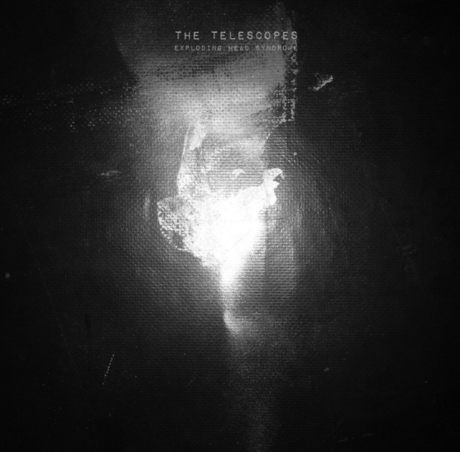
The Telescopes ‘Exploding Head Syndrome’
(Tapete Records) 1st February 2019
There is no place like drone, well not at least if you are a member of The Telescopes: Just over thirty minutes of top class dronery, not something I normally spend my Friday evenings listening to but as they say a change is as good as a rest.
I was to be honest not expecting to like this as a lot of people I know who like the Telescopes get on my tits, you know the type, the kind who think The Brian Jonestown Massacre are the second coming. But this is very enjoyable. And I’ve always had a bit of a soft spot for the Telescopes: I loved the LP they released on Creation, one of the best five albums that much over rated label released.
This is in fact a very fine pop LP, it has melodies, it has textured whispered vocals, it has tunes that remind me of both Syd’s Pink Floyd and The Velvet Underground – if only the last Jesus And Mary Chain LP was as good as this I might have played it more than the one and a half times that I did.
If this LP were a debut album by some young new psychsters they would be being raved about and hailed to the rafters as the second coming, the next new big thing. I hope the same platitudes are heaved onto this wonderful LP by this wonderful band, as it really has taken me by surprise how much I love it and I feel guilty in not expecting to like it. For that The Telescopes I offer my humble apologies you have indeed blown my head. A fine LP.
Kungens Män ‘Chef’
(Riot Season Records) February 15th 2019
Kungens Män hail from Stockholm, Sweden and have been around as a musical unit since 2012 so the press release tells me, which is a very good thing as I had never heard of them before.
This to be honest is not the type of music I normally sit at home and devour but this is in fact very good indeed. An LP of four long improvised instrumental tracks, the first track ‘Fyrkantig Böjelse’ is a fine eleven minute piece of sonic jazz rock – imagine late 60’s Santana, The Velvets and Sonic Youth jamming over the drum beat of Jaki Liebezeit from Can: and yes it is as good as it sounds.
The second track ‘Öppen För Stängda Dörrar’ at just over the eight minute mark, being the shortest track on the LP, takes us on a gentler ride. More synth dominated, I can imagine it being used in one of those wonderful
80’s horror movies, as it has a John Carpenter feel to it, and again is a quite stunning piece of music. ‘Män Med Medel’ follows this; a ten-minute plus track of fuzzed up psych rock, the kind of track you can imagine
soundtracking Julian Cope dressed in leather simulating having sex with the floor to. The final track ‘Eftertanke Blanka Krankheit’ takes us back to the underground, the Velvet Underground, and could well be my favourite of the four; the three guitars intertwine beautifully as the bass and drums keep a hypnotic slow groove of a beat.
All Hawkwind fans need hear this, or even better, own it. So fantastic in fact that if I grew wings and could fly I would have this track playing on my mp3 player as I dive-bombed the less worthy below.
This really is a hell of an album and I would recommend it to all space rock aficionados.

The Paris Street Rebels ‘I Don’t Want To Die Young/ Freakshow’ double A-Side
February 15th 2019
The press release says for fans of the Libertines and the Clash, well I like the Libertines and The Clash and I like the Paris Street Rebels. They may not be the most original soundings of bands – they remind me of the early Manic Street Preachers: even the names are similar.
What I like is that they’re four young men who have taken the glamour of T Rex and injected themselves with the early workings of the Subway Sect and The Clash, picked up their guitars and decided to try and change things through the power of rock n roll. Whether they succeed or not really does not matter, at least they are trying, which is more that can be said of ninety per cent of the current crop of young guitar bands, all they want is to get played on daytime BBC 6 Music and play in front of the middle class festival goers who will stand and wave inflatable fruit and farm animals at them. I of course could be wrong, The Paris Street Rebels might want the same and in fact they certainly could achieve this hell on earth as the songs are commercial enough on I Don’t Want To Die Young – there is even a beautiful Byrds like chiming guitar riff -, but I believe they also have fully functioning brains and are not afraid to use them, which in this day and age is a rarity.
I say ones to watch. And I wish them all the luck in the world.
Brian ‘Bordello’ Shea is the patriarchal leader of the mighty St. Helens cult underground favourites The Bordellos. We throw a slew of releases at him each week and see what sticks.
Review & Recommendations Roundup – Dominic Valvona
Kicking off 2019 this inaugural edition of Dominic Valvona’s eclectic roundup of new releases includes the new, and only second solo, autobiographical framed album from art/sex/music icon Cosey Fanni Tutti; the dual-album celebration of Germany’s Station 17 collective (originally formed as a musical therapeutic experiment between a Hamburg group of mentally handicapped residents and musicians), marking thirty years of experimental sonic sculpting and collaboration; the dazed jingle-jangle shoegaze from the London outfit Deep Cut – releasing their first album for the Gare du Nord label –, a new album from Tim Presley’s White Fence of soft psychedelic, new wave, fragile troubadour and yearning off-kilter analogue electronic bulletins; a single-type release of bewitching romantic morose from the Uruguay duo Clovvder and a real bona-fide 7” slice of vinyl from legendary English psychedelic luminary Twink and the Gare du Nord label’s unofficial house band all-stars, Papernut Cambridge and Picturebox.
Chasing up releases from the fag-end of 2018 I also take a look at the repackage appraisal of the rare and much sought-after 1978 Celtic-folk album from Flibbertigibbet, Whistling Jigs To The Moon, and a collection of previously unreleased recordings from the obscure 60s/70s, genre spanning Paraguay duo JODI, plus delve into the mind of the music composer artist Garrett N., who follows up (tens year later) on his debut album with an ambitious progressive suite of high quality-produced hard rock, funk, sound collage, Hip-Hop, psych and astral synth, Let’s Get Surreal.
Albums
Cosey Fanni Tutti ‘Tutti’
(Conspiracy International) 8th February 2019

After five decades at the cutting edge of subversive performance, conceptual art, and with pushing the envelope of cerebral industrial electronic music there’s no sign of stopping the grand dame icon of the leftfield Cosey Fanni Tutti from continuing to deconstruct and contextualise the limits of the sonic abyss.
Even in recent framed ‘autobiographical’ years, Cosey could hardly be accused of languishing on past glories; the results of a pinnacle year in retrospection revitalized and worked to produce this, Cosey’s only solo album since 1982’s Time To Tell. It could be said that the controversially open artist’s – who has all but laid herself bare physically and sexually in the pursuit of pushing the boundaries of morality, taste and censorship – practice is wholly autobiographical; Tutti being no different in that respect.
Originally created as a soundtrack for the Harmonic Coumaction film as part of a wider COUM Transmissions retrospect (the Dadaist, and to an extent, Fluxus inspired enfant terror group of which Cosey, alongside Throbbing Gristle’s Genesis P-Orridge, co-founded in 1969) that opened the Hull, UK City of Culture celebrations in 2017, the caustic but often vaporous diaphanous eight soundscapes that make-up this latest album can be read as a continuum of Cosey’s biography (published in the same year) and on-going assessment.
Untethered to any particular place or time, spanning the decades to inform both present and future, Tutti is meant to be both an extension yet ‘stand alone document’. Transformed, manipulated and re-processed in the ‘now’, the various abstract perspectives and past incarnations are presented as a sophisticated soundtrack of mostly serialism shifting moods and evocations.
Nuanced and subtle, Cosey refines a legacy that includes Throbbing Gristle and various Chris Carter partnerships to produce a minimalist Techno with ominous otherworldly atmospherics, wafting esoteric style jazz pines and both inner and outer minded cosmological elemental style conceptual album. The title-track itself layers lingering mysterious exotic lingers of jazzy saxophone over distant pounded kinetic beats, cutting tetchy subdued mechanics and suffused drones that touch upon that sonic legacy.
Elsewhere on this series of suites pattering beats cloak alien avian squawks on the wilderness of ‘Drone’; hollow winds blow through metallic rotations on the wizened alluded ‘Sophic Ripple’; Cosey’s veiled apparition lulls drift amorphously in liquid reverberations on ‘Heily’; and leviathans pass over a bending Tangerine Dream like expanse on ‘En’.
Those more familiar with Cosey’s history might recognize title references, sonic prompts, and the use of atavistic arcane spiritual language (the album’s cascading crystalized mirror, ‘Orenda’, using and channeling the Iroquois group of Native American tribes’ name for the spiritual power inherent in people and their environment; the force behind divination, prophecy and soothsaying, amongst others), yet Tutti is a deconstructive breakdown of that same past, built back-up and put together to offer a new dialogue and visage going forward.
Not so much a revelation as ‘continuum’, Cosey’s first solo album in over thirty-six years is a clever atmospherically mysterious and sagacious soundtrack that transmogrifies a lifetime of ‘art, sex and music’ into a most recondite purview of effective electronica.
Station 17 ‘Werkschau’ & ‘Ausblick’
(Bureau B) 1st February 2019
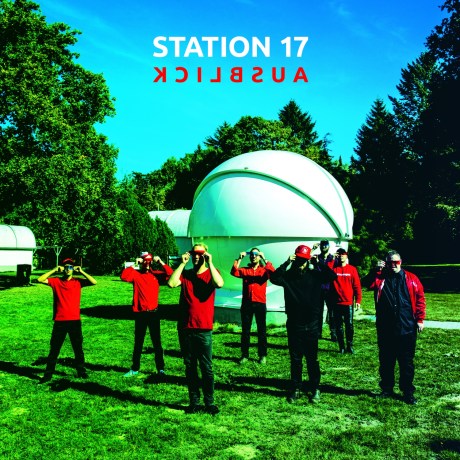
Growing and developing way beyond the initial perimeters of a social experiment between the mentally handicapped residents of a Hamburg community and the independent musician Kai Boysen, Station 17 (as they would become known) has made a sizable and influential mark on the German music scene. From humble beginnings as a stimuli therapeutic project in 1989, the always evolving collaborative group has blossomed into an internationally acclaimed touring band, released over ten albums of eclectic experimentation and worked with an enviable cast of cross-generational artists: from members of the old guard such as Can, Faust, Tangerine Dream and Neu! to more contemporary Techno and electronic artists as DJ Koze, Datashock and Kurt ‘the Pyrolator’ Dahlke.
Spontaneous throughout, the constantly-changing lineup behind Station 17 effortlessly merge and rework Krautrock, Kosmische, Pop, Post-Punk and Techno music into something unique and, above all, democratized: the varying disabilities of the collective’s cast inevitably feed into the process, yet offer no barrier to creativity.
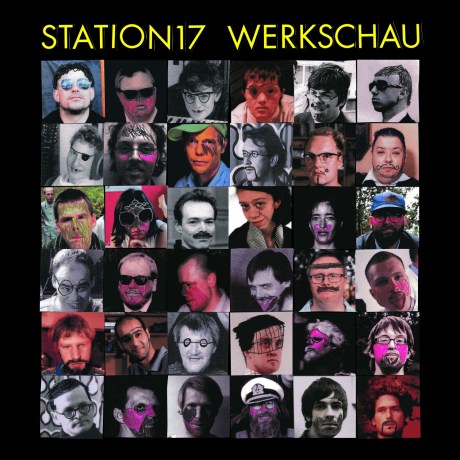
Celebrating thirty years of such experimental and inspired music exploration and performance, on the 1st of February Station 17 will both pause to take stock of the back catalogue, with the retrospective collection Werkschau, whilst looking forward to new sonic horizons, with the release of their eleventh LP proper, Ausblick – a companion piece to last year’s Blick (which made our albums of the year features). The first of these albums – sporting a homage to Can’s Landed album cover art – Werkschau crisscrosses the group’s cannon; from the 1990 self-titled debut album right up to the already mentioned 2018 triumph, Blick.
Certain albums gravitated towards the trends and zeitgeist of the times, but tracks, often a decade or more apart, sit together well with no discernable difference in quality or production. The first trio of tracks for instance, stretch across three decades; moving between the panted, mooning and gasped vocal free-form post-punk of ‘Feeger’, from the Debut LP, to the industrial drum’n’bass, Kraftwerkian meets NIN ‘Budemeister’, taken from the 2006 LP Mikroproffer, and the shimmery bossa electro-pop of ‘Techno Museum 2’, taken from the 1997 LP, Bravo. Elsewhere there are shades of limbering DFA Records-sign-Populare Mechanik, on the 2011 Fieber album track ‘Uh-Uh-Uh’; Bowie oozing over the Art Of Noise on, what could be homage to the Hamburg district and city’s infamous pirate insignia football club, ‘St. Pauli Der Hat Heute Geburts Tag’; and the luminous lunar bound’s of Can’s ‘Dizzy Dizzy’ can be heard permeating another 2011 track, ‘Zuckermalone’.
https://soundcloud.com/bureau-1/sets/station17-werkschau
Guest appearances/collaborations being Station 17’s forte this retrospective includes an abundance of them; including the gangly-Hip-Hop Fetter Brot match-up ‘Ohne Regen Kein Regenbogen’ and the slick sonar reverberated Yellow Magic Orchestra hued, Michael Rothar travelling ‘Bogie Bogie Báka’. (Both tracks of which are taken from the collaborative dedicated 2008 album, Goldstein Variation). It also neatly ties-in with the group’s upcoming album rather well, featuring as it does Station 17’s bridging collaboration with Andreas Spechtl of Ja, Panik! fame, ‘Dinge’, taken from the last album Blick: The upcoming Ausblick conceived in the PR spill as that record’s congruous twin. A companion piece, it shares more or less the very same lineup of guests, featuring once more the mischievous faUSt instigators Zappi and Jean-Hervé, new wave pop appropriator Andreas Dorau, the power-up Düsseldorf and Berlin straddling duo of one-time Ashra and Klaus Schulze drummer Harald Grosskopf and former Kraftwerk, Neu! and Pissoff journeyman Eberhard Kranemann, Tangerine Dream convert Ulrich Schnauss, contemporary electronic artist Schneider TM and of course, Spechtl.
Though this time around tracks seem to be far more expansive on the whole, loose and cosmic, especially the Pyrolator team-up ‘Geisterstunde, Baby’, which bounds and bends to a craning Jah Wobble-esque elasticity, and the Soon Over Babaluma galactic dusting ‘Un Astronaut’, which features both Schneider and old Krautrock hand, founder of GAM and echo guitar pioneer, Günter Schickert.
Wafting aromas of Eastern mystery, free-form jazz and liquid serialism permeate this album as Techno meets with Industrial, post-punk funk and My Life In The Bush Of Ghosts era bass lines; resulting in one of Station 17’s most sophisticated, mature and thoughtful albums yet. A Teutonic odyssey, Ausblick’s enviable guest list certainly helps, yet it is the enthusiasm and spirit of the collective’s ‘wohngruppe’ that enrich and offer a distinct perspective.
Not resting on their laurels, Station 17 simultaneously looks back whilst cosmically being propelled forward, releasing both their new and retrospective albums on the same day. Thirty years in, those humble origins far exceeding expectations, Station 17 continue to produce the goods.
https://soundcloud.com/bureau-1/sets/station-17-ausblick-preview
White Fence ‘I Have To Feed Larry’s Hawk’
(Drag City) January 25th 2019

The unassuming maverick artist Tim Presley paints outside the lines; his idiosyncratic applied coloring-in like a double vision of kaleidoscopic floating blurriness. Deeply felt yet softened and often languid in practice, Presley’s off-kilter musings blend lo fi psychedelia with quirky troubadour sadness, jilting punk, library music, and early analogue synthesized music, and on this latest album of sweetened, hazy malady, the Kosmische, to create the most dreamy of soft bulletins.
Wise in his choice of associations, Presley has in recent years formed a fruitful bond with fellow American maverick Ty Segall – their latest collaboration, Joy, was released back in the summer of 2018 -, and Welsh artist Cate Le Bon – pairing up to form the odd lolloping DRINKS. It was whilst bunking down at Le Bon’s grotto in the Lake District in the winter that he wrote the songbook that would eventually become I Have To Feed Larry’s Hawk; the admittedly rudimental skilled Presley, sat crafting ideas on Le Bon’s piano whilst she was out adding another string to her already stretched polymath bow, designing wooden furniture at night school.
Once back in the States, imbued even further by his recent move from L.A. to San Francisco, Presley called upon fellow lo fi graduate and face of Lazy Magnet, Jeremy Harris, to help mold and transform his halcyon transatlantic sketches. Harris is credited as the all-round talent that learnt and then, more or less, played and recorded this curious collection in the San Fran located studio of former Bees founder and producer, Paul Butler.
Amorphously wafting between the bucolic and tragic psychedelic whimsy of England, the Warm Jets era of Eno, the fragility lament of Nilsson and the cerebral lurch of The Swell Maps, Richard Hell and David Byrne, Presley’s bendy vulnerabilities sound understated and lo fi but dream big. The title-track, with postmodernist élan, embodies this spirit perfectly; merging the magical if unsure twinkle of Willy Wonka with Pete Dello, Syd Barrett and a slacker Ray Davis. Suffused venerable organs, monastery-like intonations, and the lightest of washes all sit well with the gangly disjointed lolloping guitars and the woozy drug-induced new wave rock’n’roll longing of such tragic mavericks as Johnny Thunders, who Presley dreamt appeared before him, from beyond the grave, with a message of encouragement: “To be honest and simple”. Opening up to a point, Presley’s sighed, understated vocals deliver lyrics swaddled in psychedelic analogy and lazed daydreaming resignation.
Closing the album, the final two-part suite of Ham Reductions, is an experiment in perpetual arpeggiator analogue-electronics. Split in to ‘A: Morning’ and ‘B: Street & Inside Mind’ bookends, these pleasant retro-futurist never-ending instrumentals both evoke the familiarity of Cluster and Eno. Reconfiguring a binary computerized language, each piece is probed and piqued by glistened but more caustic harsher interruptions flows and the sound of the traffic: The inner workings of Presley’s mind transduced into calculating, ruminative passages from another era.
Tethering a multitude of ideas and influences to something more concrete and solid can’t have been easy, but I Have To Feed Larry’s Hawk captures those blurred reimaging’s within the amorphous boundaries of a successful off-kilter album of dreamy magnificence and wonky indulgences.
Flibbertigibbet ‘Whistling Jigs To The Moon’
(Sommer) December 5th 2019
JODI ‘My Espontáneo’
(Out-Sider Music) December 5th 2019
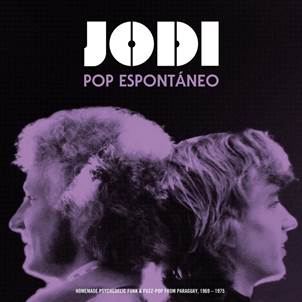
Feeding an insatiable hunger for obscure (sometimes for good reason) missives and forgotten links in the chain of music history, the Spanish Guerssen hub of multifaceted labels dishes up an abundance of rarities from around the world, and across time. Two such rare finds have piqued my interest this month, the first from the Paraguay duo JODI, and second, a reissue of the fleeting Celtic lunar imbued Flibbertigibbet album, Whistling Jigs To The Moon.
Faithful to the name, the Out-Sider Music imprint digs out a hotchpotch of previously unreleased recordings from the Wenger brothers, Joem and Dirk. Gathered together under the Pop Espontáneo title – a title that only goes so far in describing the duo’s highly diverse styles and influences – this compilation captures the brother’s at their most experimental, as they graduated from the schoolmates band The Rabbits to the sibling duo JODI and later still, after signing a contract with EMI-Argentina, IODI.
Isolated to a degree in their Paraguay homeland, cut-off to an extent from their peers, an unburdened and unpressured JODI relentlessly recorded an abundance of genre-bending songs and instrumentals at their 8-track studio in Asunción. The results of which, in the main, were self-financed and released in very small numbers privately.
Early adepts of the Moog, which they use with a cosmic relish throughout the majority of these recordings, the Wenger’s could be said to have been innovators in South American psychedelic boogie and space-age disco rock. Aggrandizing the brothers further, the PR spill and accompanying linear notes hold them up as pioneers; diy and lo fi doyens whose sound was ahead of its time. To be fair, at times you think you’re hearing the kernel of Ariel Pink or R Stevie Moore, but far from humble beginnings, the Wenger’s certainly had the cash to spill, owning as they did a state-of-the-art studio, a mellotron, moog and clavinet, which were hardly cheap or even easy to come by at the time of their late 60s and early 70s flowering.
If you’ve already heard Out-Sider’s repackage of the duo’s 1971 album, Pops de Vanguardia – possibly, as claimed, the first lo fi diy garage-psych album to be produced on the continent – you’ll be familiar with their method of blending Santana-like Latin rock with clavinet croaking heavenly funk and psychedelic garage to produce melodious pop. Digging deeper into the archives and stockroom, their ‘sound-alikes’ collection unearths such hidden gems as ‘Change Your Mind About Me’, which pitches soft American 70s rock with phaser-guitar and tropical percussion; the Steppenwolf-in-leather bastardized Beatles riff at the discotheque Glam-rocking, ‘Take Me Higher’; the Brian Auger rock’n’roll meets psych sermon, ‘Sunburst Of Bees’; and The Monkees harmonize over The Smoke, ‘I Will Wait For You’. But you’re bound to hear smatterings of Bolan, Mick Ronson, Sensations Fix, Amen Corner and The Kinks on this crisscrossing compilation.
Technically proficient they use all kinds of tricks, effects and overlays to skewer their visionary rock music pop. And if this kind of thing interests you, then you’ll be pleased to hear that the booklet describes all these various methods and the instruments used in great detail – guitar wise, the brothers showed a penchant for the Fender Jaguar and Jazz bass. Unfortunately enervated by the pressures of recording for a major label, the German-Paraguay brothers were forced to record more commercially viable hits. And so these recordings are only seeing the light of day forty odd years later, after the JODI heydays of the mid 70s.
This is a worthy collection and obscure curiosity that could lead to revival of forgotten treats from 60s/70s Paraguay; the sons and daughters of the German diaspora that ended up there, sharing an unconscious link to similar pioneering musical innovations back in the Krautrock homeland.

In a different direction entirely, the Sommer imprint revival of the critically well-received but commercially poor Whistling Jigs To The Moon album by Flibbertigibbet looks to place the Celtic-South African troupe in the upper echelons of prog and psych-folk greats.
Formed after the break-up of the earlier cult Irish group Mellow Candle by band members Alison O’Donnell and David Williams, after an unsuccessful 1972 album release for the Deream label – Swaddling Songs despite the attention and band’s reputation, failing to revive the Candle’s fortunes -, the prevailing Flibbertigibbet was born in the immigrant and local communal houses and clubs of the South African folk scene. Leaving the Emerald Isle after that Candle’s light went out for good, O’Donnell and Williams hooked-up in South Africa with ex-pats Barrie Glenn and Jo Dudding to form the earnest, romantically lamentable band of well-travail(ed) musicians.
From initial live performances in a homely community, the obviously gifted and talented group of like-minded folk lovers were soon patronized; their admirer and facilitator, Prof. David Marks soon offering them the help to record and release, what would be, their debut LP. Expanding the ranks further with classical first violinist Francesco Cignoli, jazz bassist Dennis Lalouette, string-bassist Nippy Cripwell, flutist Colin Shapiro and fiddle player Dave Lambert, they recorded an attentive songbook of beautifully lulled traditional folk sagas.
Taking old Irish standards, but also weaving their own deft tapestries, they dance jigs in drunken stupor to the moon cycles and swoon like the French Lieutenant’s Woman, waiting on the smugglers cove for loved-ones to return. They do this with the most understated of lilting charm, evoking the subtlest hues of Fairport Convention prog and the softest of psychedelic rock influences.
The stalwarts of bucolic and coastal folk are all present and correct – from English Oak and seafaring analogies to the protestations of the oppressed working classes -, as Flibbertigibbet travel back and forth across timelines. Special mention must go to O’Donnell’s voice, which is diaphanous and longing, channeling Sandy Denny, Linda Ronstadt and The Poppy Family as she woos and sighs over both the perfectly administered acoustic and electrified backing – itself a mix of the Trees, American country-folk rock, Fotheringay and Fleetwood Mac, but also a faithful interpretation of far older, more bodhran frame drum led, traditional forms too.
Saved hopefully from obscurity and the clutches of record-dealers – the original 1978 album fetching a pretty price online, if you can indeed find a copy – this repackaged appraisal of a folk rarity should be well-received by the folk and head music communities. Beautifully crafted storytelling from a band with much to offer, Whistling Jigs To The Moon is an enjoyable and stirring treat for the soul.
Deep Cut ‘Different Planet’
(Gare du Nord) January 25th 2019
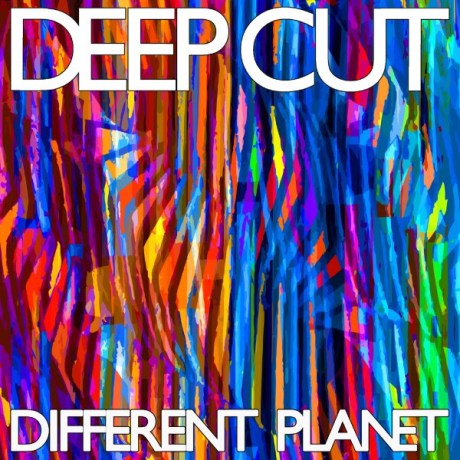
As if Ian Button isn’t busy enough already juggling a multitude of projects, he’s not only the drummer in the London-based Deep Cut band but also facilitating the release of their third LP, Different Planet, through his very own Kentish cottage industry imprint, Gare du Nord (a good time to mention that labels impressive showing in our albums of the year list).
Formed around the dreampop shoegazing indie pop songwriting of the group’s founder, Mat Flint, and Emma Bailey, Deep Cut could be said to appeal to the Gare du Nord label’s penchant for nostalgia. Squeezing plenty of mileage out of The Byrds (8 Miles of it in fact on the track ‘Washed Up’), Lush, My Bloody Valentine, Jesus And Mary Chain, Throwing Muses and Ride, they inhabit another decade – though considering how bloody popular the 80s and Britpop eras both are, they’ve probably hit upon a winning formula.
In a spirograph haze of jingle-jangle paisley hued fuzz, drifting lingering cooing vocals and attitude power pop, the former Revolver frontman and Death In Vegas bassist Mat adds shades of his previous bands sound to the make-up; pitching up with trip-hop indie beats on the baggy-candour ‘Spiraling’, and switching on the Fujiya And Miyagi version of the motorik, on the early pulsing Sheffield electronic ‘Alarm Button’.
Playing with that lush signature of cracking indie pop, Emma (shadowed on backing vocals and harmony throughout by Mat) can at any one time channel Tanya Donelly, Sonya Madan and Miki Berenyi simultaneously. Though as breezy and shrouded in vapours as it is, Emma has a certain swagger and attitude that manages to pierce the daze.
The backing meanwhile shifts between all those already mentioned reference points, but can also throw up a few surprises, especially with vague passing influences such as Cabaret Voltaire, Ringo Deathstarr, Teenage Fanclub, Altered images and the Happy Mondays all swirling around.
A decent sound with plenty of variation, subtitles and energy, Deep Cut refine and breathe life back into the yearning shoegaze and Britpop of another era. With conviction, well-crafted songwriting and a captivating lead singer, they manage to stand apart from their influences just enough to avoid cliché and a reliance on the nostalgic.
Garrett N. ‘Let’s Get Surreal’
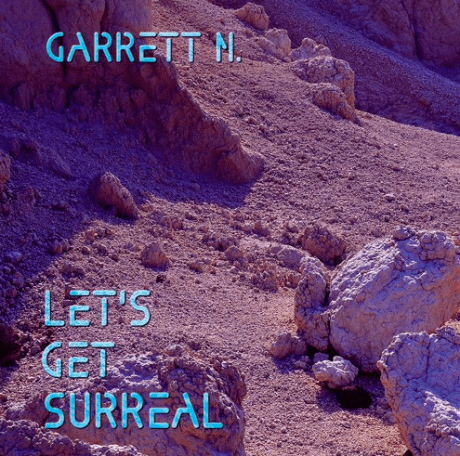
Channeled into an eclectically blended opus of a showcase, in a sense a purview of Garrett’s tenure as a composer and sound designer creating incidental music and soundtracks for a litany of American networks, the pun-tended riff entitled Let’s Get Surreal runs through the full gamut of its creator’s skillset and tastes. In the decade since his first and only other album thus far, Instrumentals And Oddities, there’s been a hell of a lot water-under-the-bridge, and Garrett’s album at times seems like one out-of-sync with its time: Leitmotifs and themes, including a growing cacophony of multiple George Bush Juniors reading out his infamous address to a nation speech on the eve of the second Gulf War (overlapping and twisted until the word “terrorism” echoes like a broken mantra), are evoked on the WMD condemnation, undulated by a Kubrickian menacing drone, ‘Saddam/Espace’ – just one example of a subject overtaken by a catalogue of equally destructive and important events; the incessant hunger for stimulation, reaction and validation of 24-hour news feeds quickly replacing world events at such a rate as to make anything longer than a few years back seem ancient history.
The sound quality indicates a talent for production: Garrett N. is attempting to bring hi-fidelity and a verve of polish back to music production; arguably a lost art in so many ways, especially in an era when availability and convenience is valued above audio quality, and when music is accessed, predominantly, through compressed digital streaming platforms on smartphones. If nothing else, Let’s Get Surreal sounds good in its bombast; loud when it needs to be, clean and crisp when more thoughtfully meditative and ambient. It makes a refreshing change to hear it.
The music itself is epically framed, following a concept that errs towards progressive rock and beats opera; there’s even an ‘Overture’ to kick things off, part of a triple suite of tracks that (surreal indeed) morphs Michael Caine’s anecdotes about gay slurs and allusions to a changing musical landscape of 70s Floyd, ethereal synth work, hues of heavy Muse prog guitar gestures, brighter shades of MGMT and psychedelic pop and Todd Rundgren. Continuous with recurring hooks, bridges and fades connecting each track on this hour plus filmic soundtrack, Let’s Get Surreal blends lofty noodling with longing composure as it confidently zaps and fuses the cosmic with Hip-Hop instrumentalism, library music with 80s flange rock, 8-bit robotics with conga funk, and low-riding RNB with the psychedelic.
A curious album from an obviously talented music producer and musician, this ambitious suite does seem like a home-studio project from a bedroom maverick, dressed-up as a resume, yet remains an impressive expansive astral oddity of constantly progressive and twisting musical tastes: An album where nothing, quite literally, is spared!
Singles
Twink ‘Brand New Morning/ Dream Turn into Rainbows’
(Gare du Nord) February 1st 2019
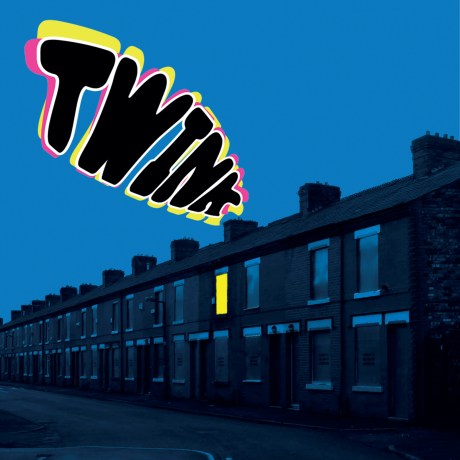
A match made in halcyon nostalgic haven, quintessential English psychedelic journeyman Twink (the nom de plume of former Pretty Things, Pink Fairies, Tomorrow, and the fleeting Stars instigator, Mohammed Abdullah John Adler) breaks bread with Ian Button’s Gare du Nord label’s unofficial house bands, Papernut Cambridge and Picturebox, on his latest bucolic single.
Taking a while to materialize on wax, the Gare du Nord lineup of Button, Robert Rotifer, David Woolf and Robert Halcrow first worked with Twink back in 2017; backing one of the doyens of early psych for a series of ‘rare’ shows, which included a guest slot at Kaleidoscope’s 50th anniversary Tangerine Dream jamboree.
Essentially Twink’s spotlight, the (traditional) A-side, ‘Brand New Morning’, was co-written with Picturebox main man Halcrow. A genital kind of vicarage Baroque-chimed harpsichord period Syd Barrett dream capsule from psychedelic rock’s back pages, this earnest Village Green enchanted ditty breaths in the optimism of a sunny-side-up kind of day. The more interesting companion B-side, ‘Dreams Turn Into Rainbows’, is a flute-y and mellotron dreamy romantic yearned number. Building from folky psychedelics echoes into a diaphanous Moody Blues fantasy, Twink’s repeated sentiment of, “I still dream about you/ But dreams they turn into rainbows”, is carried on the currents and vapours of his backing troupe’s melodious lush lingers.
Ever expanding the catalogue of nostalgic and halcyon age signings, Ian Button’s label dissects the past but lives in the present, whether it’s the 60s, 70s or even 80s (see the label’s Deepcut LP, which also features in this roundup): The metaphors and analogies proving timeless, even if the music isn’t. Twink is an obvious fit and addition to a label so endeared with England’s less celebrated mavericks.
By the time this review reaches you, the limited-to-200-copies vinyl single should be available via the shared Twink Bandcamp page. A digital copy for streamers is also being made available.
Clovvder ‘Traits’
November 13th 2018

Invoked during an ‘astral winter by the seas’ of the Uruguay port city they call home, Montevideo, the Gothic atmospheric conjurers Clovvder and their most recent couplet of eerie and poetically forlorn bewitching drones (Traits) merges the ominous with the ritualistic diaphanous surrealism to unsettling, spiritualist effect.
Channeling the unconventional morality of the celebrated surrealist Uruguayan-born French writer/poet Isidore Lucien Ducasse’s Les Chants de Maldoror, ‘old gods’, magik and hermetic beliefs, the duo’s Tanky and CO3RA personal peer dramatically into the void as they navigate the aloof philosophical quandaries of existence and self: The second of the two tracks, ‘Solipsismo’ can be translated as both ‘alone’ and ‘self’, a prompt in this case to the eternal downer that the ‘self is all that exists’.
Tar black waters, swirls of minimal dark majesty, resignation, and wispy apparitions posing descriptive esoteric longing lyricism (“Black abysses, swirling/I felt born in me”) materialize in waves across both of Traits haunted soundtrack evocations. A sad melancholic beauty and glints of escapism however lift the mood of the drowning-in-the-River-Styx vibe.
Relatively obscure, with only a handful of singles online, Clovvder may well dissipate back into the ether that they appeared from; their non-linear visions and dark arts sorcery poetic minimalism (imbued in part by the genius experimental cinema of Russia’s exalted Andrei Tarkovsky: Scenes from his loose amorphous interconnected autobiographical movie The Mirror are used to accompany ‘Hydrophila’) demand total absorption and the time to take hold.
Difficult to place; neither electronica, field recordings, drones or that dismissive ‘Witch’ prefix trend, Traits is closer to the perimeters of occult soundtrack magic realism poetry and despondent esoteric romanticism.
Words – Dominic Valvona
Our Daily Bread 295: Ustad Saami ‘God Is Not A Terrorist’
January 17, 2019
Album Review: Dominic Valvona

Ustad Saami ‘God Is Not A Terrorist’
(Glitterbeat Records) January 18th 2019
No-one quite sums up the dangerous lunacy of field recording in the world’s most hostile, often deadly, environments better than the Grammy award-winning producer, author and (very handy as it goes) violence prevention expert Ian Brennan. Self-deprecating with it, and candid, Brennan’s linear notes capture the cultures and locations of his many in-situ raw recording sessions with a stimulating honesty.
Probably appearing more than any other producer on this blog, including an interview, Brennan’s prolific career is as long as it is varied. Choosing an international cast (some more obscure and hidden than others; some more poignant and tragic too) drawn from forgotten, even, shunned communities. Whether it’s capturing the roadside roasted mouse sellers turn rustic otherworldly bluesmen Malawi Mouse Boys, or members of the persecuted Albino community in Tanzania, Brennan’s raison de terre still stands: “My concern is not cultural authenticity, but emotional truth and uncloying performances. Purity without baggage!”
And so, letting his subject naturally perform in the purest of settings – usually outside the confines of a modern equipped studio -, he travels to the remotest, hostile of places. Among his most enduring partnerships, the continuing relationship with Glitterbeat Records has taken him to quite a few of the most dangerous hotspots; especially for the Hidden Music series of albums. Previous editions of this series have found Brennan braving Rwanda, Cambodia and Vietnam. But the most foolhardy yet, and subject of Volume 5 of this healing music survey collection, takes him to Pakistan.
As he reminds us, “In the land where Osama Bin Laden last hid”, a “state so feared that the US government does not allow its staff to stay in hotels anywhere in the entire country”, Pakistan is a highly volatile, military heavy state: The most worrying concern being that they’re a nuclear state. If further proof was needed of the trigger-finger tensions, Brennan sets the vivid scene further: “Driving in from the airport I noticed a man cleaning what I thought was a musical instrument, but then realized was a machine gun. Weaponry is another visual motif throughout the city. En route, we passed celebrity-soldier sponsor billboards for house paint. Here, army officers carry a similar hollow cache to reality stars in America.”
Despite the evident dangers, he’s here to record for posterity the mesmerizing atavistic voice of the country’s much-revered classical singer, Ustad Saami, whose specialized Surti microtonal and multilingual expressions, accompanied by dipping buoyant tabla and long-drawn out harmonium drones, may very well die out when he does. Despite the somewhat provocative title, the beauty, serenity and sincerity of Saami’s music seems far from controversial. Yet to the more extremist sections of the Islamic faith, his spiritual yearnings represent a rebellious, defaming voice, an individual breaking with the hardline insistence of a myopic form of worship. For Saami’s blended form of Farsi, Sanskrit, Hindi, the ancient and dead language of Vedic, ‘gibberish’, Arabic and Urdu predates Islam. As the spread of a dogmatic Islam spreads across the globe, and as we’ve seen in Mali, a distrust but violently imposed break from anything outside the doctrine and history of Islam has seen the ritual burning of instruments and ban of most musical forms.

Photo credit: Marilena Delli
With all this in mind, the task of recording, in what was an energy-sapping all-night session – though the spritely vigorous 75 year-old maestro proved he could play all night, even into the next morning without a break, his companions were knackered – such afflatus magical music seems (to put it mildly) daunting.
Almost in a trance, the impressive Hindustani Khayál classical 49-note scale system Saami uses (deriving from the Arabic for ‘imagination’, this style was originally conceived by, we’re told, a mixed race royal whose lifelong endeavor was to make peace with duality through art) can hypnotize and draw the listener in. Though it sounds far from intense, it takes some concentration and endurance to play uninterrupted – at least two of the tracks on this collection run over the ten-minute mark. A predecessor to an even older form called Qawwal, Khayál it seems is more about feeling and atmosphere, the lyrics of the call-and-response performances almost incidental.
Sharing this divine music with the world before it disappears – the inevitability of a tradition only ever passed down possessively between family members -, the God Is Not A Terrorist sessions connect with a thousand and more years of encapsulating praise. Simultaneously uttering earthy deep longings and soaring tribute to a higher plain, Saami and his troupe pay amorphous service to the holy on ‘God Is’; “Om” and in phlegm voiced dedication ponderously elevate with a paean to romance on ‘My Beloved Is On The Way’; woo and yearn in the dusk of ‘Twilight’; and in a swirl of bellowed harmonium, lull entranced on the transportive ‘Longing’.
An incredible recording, thankfully in the hands (more hands-off) of an accomplished producer, Saami Ustad’s endangered music is safely shared to a global audience. As preservation goes, this latest volume in a much accomplished and surprising series of ethnomusicology is a mesmeric study in keeping a form alive in the face of persecution and fate.
Words: Dominic Valvona
Our Daily bread 294: La Rappresentante di Lista ‘Go Go Diva’
January 15, 2019
Album Review – Gianluigi Marsibilio
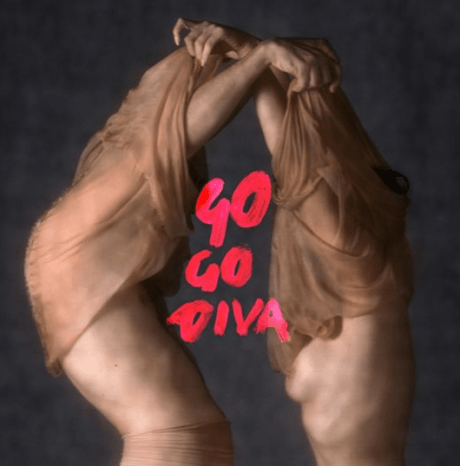
La Rappresentante di Lista ‘Go Go Diva’
(Woodworm) December 14th 2019
In these years when music and art are more and more volatile, liquid, passing through Spotify and other media, La Rappresentante di Lista has made a bold album that touches you, crumples and turns on the incredible search for sounds, combined with the use of much necessary themes.
Go Go Diva is an album that draws from the perspective of a woman beyond the #MeToo movement; Go Go Diva is a disc-woman who speaks to the multitudes, with a disarming graciousness.
Some pieces of the album are really more courageous and necessary than the thousand articles published in the New York Times. The sound atmospheres are always sought after and, even on disc, theatrical, scenically beautiful and satisfying. The listener is transported to a land of irrational alienation, where every brilliant preconception is mixed up and merged.
La Rappresentante di Lista therefore does something very rare for a contemporary artist, it makes us think: the album leads us on a journey, free from any ideology but which narrates the being, the essence.
The path of the album follows, in some passages, the work in poetry of Ursula Andkjær Olsen. In one of the passages from her collection, released in 2018, entitled Third-Millennium Heart, the author says: “The heart could be a castle, for instance. You can jump from level to level very fast. The architectural words are very important in naming the body”. The heart of the album is like a multi-layered castle made of architectures of words and bodies. It is a good way to represent the intentions and sounds of Go Go Diva, which is an architectural album, to be admired in detail and as a whole.
The record lives and dies in every piece. Go Go Diva has a variety of shapes, an incredible number of cartridges to shoot.
From ‘Questo Corpo’ to ‘Glória’ the sound vocabulary is absolutely heterogeneous and feeds a bit of all tastes, but above all shows how over the years this project is growing under the search for a complete and deep eclecticism. Each song is able to shoot the cards, for example ‘Poveri Noi’ comes as a storm in the track list and just this jolt in the atmosphere of every theme touched upon, from pregnancy to being a young woman, a new depth.
The potential of this album will be expressed in a live certainly suitable for strong entities: where thoughts, feelings and noises can be mixed into a single body.
Go Go Diva is a scream, an immersion, a promise, a hope to be grasped.
Words – Gianluigi Marsibilio
Album Reviews – Brian Bordello

Welcome our 2019 signing, Brian Bordello, to the Monolith Cocktail fold. The self-depreciating maverick patriarch of the dysfunctional cult lo fi Bordellos will henceforth be, in his own idiosyncratic style and turn-of-phrase, pontificating aloud and reviewing with scrutiny an eclectic deluge of releases for us. Here’s his inaugural couplet review of upcoming albums by Cleaning Women and Eerie Wanda.
Eerie Wanda ‘Pet Town’
January 25th 2019
The lost sounds of childhood summers, the finger clicking bliss of a Joe Meek hit, the beauty of the lost rainbow in an angels wish, this LP by Eerie Wanda makes me recall all this.
Pet Town is a fine album indeed at times it gives me the same feelings of joy I have when playing The Beach Boys much-underrated classic Friends; songs wrapped up in the power of the pureness in being alone.
This is simple in its beauty and the beauty is its simpleness, the vinyl etchings of acoustic nights wrapped in your ex’s arms soundtracked by a lovingly compiled mixtape of the Marine Girls and Holly Golightly’s softer moments.
This LP is one of pure delight, a lo-fi lovers dream date, a shy boys aural pin up, this is what you imagine the sound of the girl you wanted but was never confidant enough to ask out whispering I want you in your ear.
The sparseness of the backing, the wonderful percussion sound gives the whole affair a cocoon of warmness. There are so many things to love, like the way the song ‘Sleepy Eyes’ starts with the same guitar chords as Elvis Presley’s
‘Jailhouse Rock’ and finishes with a psychedelic organ solo, and the handclaps on the ‘Hands Of The Devil’ are rockabilly percussion par excellence.
Summing up, this is an LP to wrap around you to keep you warm in the coming winter months and the LP to play as you walk in the summer sun remembering how happy sad life can be. A stunner.

Cleaning Women ‘Intersubjectivity’
(Svart Records) 15th February 2019
I can honestly say I’ve never heard of the Cleaning Women before; a band from Helsinki who make their instruments from cleaning implements, or so they say, and who am I not to believe them it would explain why this music is so shiny and refreshing to listen to.
This LP brings back memories of growing up in the North West of England listening to the strange pop post punk sounds of the mid 80s; bands that were not scared to try something different and at the same time not afraid to make music with melody, style and beauty. And this LP has all those things in abundance.
Intersubjectivity is truly a thing of great beauty. It’s not often that you hear an album that reminds you of the 80s pop gods Aha and Can at the same time; an LP that makes you want to go back and revisit your love for the mighty Laibach whilst wishing I still had the energy to frug wildly to the captivating post punk of ‘We Work It Out’, or, to wrap myself in a sleeping bag and pogo to the funky Captain Beefheart meets Julian Cope of ‘Living On The Streets’.
This is my first review of 2019 and if all the music I write about is as exciting as this what a year it will be, or this could be a great one off and everything in comparison will be a crushing disappointment, a warning for you 2019 the standard has been set high…
Words: Brian Bordello
Album Review / Dominic Valvona

Deerhunter ‘Why Hasn’t Everything Already Disappeared?’
(4AD) January 18th 2019
Loaded with despondent query and concept-fueled reference points (both in the literature and geographical senses), Deerhunter’s latest nuanced road trip across a ruined divided landscape poses many open-ended and visceral questions: And doesn’t exactly answer them.
As the current instability (take your pick: Brexit, Trump, Putin, rise of right wing populism in Europe and South America…. the list goes on and on) across the globe keeps Bradford Cox awake at night, the frontman’s pen scribbles away at a fair old rate in anxious irritation at the imposing chaos, on the band’s latest album for 4AD: The songwriting, it must be said, more honed and (daresay) melodically accessible than ever.
Making sense of the miasma, sending back woozy postcards from the languid ‘slipstream’ and hazily cooing eulogies to a constant theme of loss and a poisoning of the well of human kindness, Deerhunter repeatedly yearn like they did on their previous cerebral triumph, Fading Frontier, about the fading away of everything they hold dear. That album mined a similar discourse of disappearing humility, and musically captured, with an equally assuage tactile brilliance, the prevailing mood of the times through a steady daze of synthesized and melodious jingle-jangly troubadour indie pop.
Though proclaiming that ‘nostalgia is toxic’ in the sub-headed description of the surprisingly Bolan glam hued, cynical ‘Futurism’, Deerhunter’s penchant for reinvention never truly breaks free from the shackles of the past. Woozy elements abound of Bowie and Eno’s partnership on Low and Heroes, a languid John Lennon and The Plastic Ono Band, the Tubeway Army and, weirdly, a more credible Starsailor. Aiming to circumnavigate familiarity and a link to rock’s back pages, they discard separate amplifier setups to plug directly into the mixing desk. The results of which, played out over a flattish drumming backbeat, airy vaporous synthesizer sculpting build-ups, nuzzled suffused saxophone, bobbing undulated marimba, gentle romantic piano flourishes and pizzicato strings, often subdues the guitar sound entirely, which is light on lead but heavy on the acoustic rhythm.
Adding an aura of lilted and dreamy idiosyncrasy, cult Welsh experimentalist Cate Le Bon makes up part of the extended production and guest appearance crew. Lining up alongside long-term Deerhunter producer Ben H. Allen III, plus Ben Etter and the band themselves, Cate’s qualitative musical eccentricities add some sparkle and strange off-kilter ethereal wooing to the overall sound. You can hear her subtle Baroque harpsichord playing on the album’s first single, ‘Death In Midsummer’ – a slow unfurled highlight that despite its melodious warm quality sets out on an elegiac walkabout, inspired in part by a macabre photograph from the Russian Revolution -, and sad aerial harmony on the somber Heroes LP imbued ‘Tarnung’ – subtitled notes allude to a ‘walk through Europe in the rain’.
Not only produced by a number of collaborators, the tracks themselves were recorded in a number of inspired, prompted towns throughout the southern hemisphere of the USA; from Cox’s attic in Atlanta to the Seahorse Sound Studio in L.A. and a couple of locations in Texas. Among these, the poignant Marfa, Texas setting of the fated last film performance of James Dean, Giant. That last summer of 1955, before Dean tragically crashed his somewhat untamable sports car just months later in September of that same year, is played out in the tropical marimba and heavenly allured synthesized buoyant ‘Plains’. As with most of the songs on this album, the bubbly but languid swoozy swansong to Dean draws vague analogies to the fate of change. Cox doesn’t so much implore us to break from the past and fondness for what may have never existed, as gently and with tactile restraint, offers direction: swooning at one point to follow him through “the golden void”.
However, Why Hasn’t Everything Already Disappeared? is an elegy of remembrance to those that have been left behind in the pursuit of progress too. Cox even chooses to swim against the tide of these ennui attention-span self-absorbed times by penning and playing more cerebral, nuanced and subtly experimental music in the face of instant gratification and validation – the ‘eternally jetlagged’ visage of the Tron and Blade Runner-esque, glistening ‘Détournement’, is an uneasy strange hallucinatory vision of that future-present symbiosis.
Billed, in part, as an unpredictable sci-fi album about the present, WHEAD? offers a sensibility and melodious weary, clipped amorphous survey of a disappearing humanity, on the verge of a Cormac McCarthy dystopia. Yet it sounds, mostly, brilliant, personal and at times languidly beautiful.
Dominic Valvona (founder/editor/chief instigator of the Monolith Cocktail)
Our Daily Bread 291: Bassekou Kouyate & Ngoni ba ‘Miri’
January 7, 2019
Album Review/Dominic Valvona
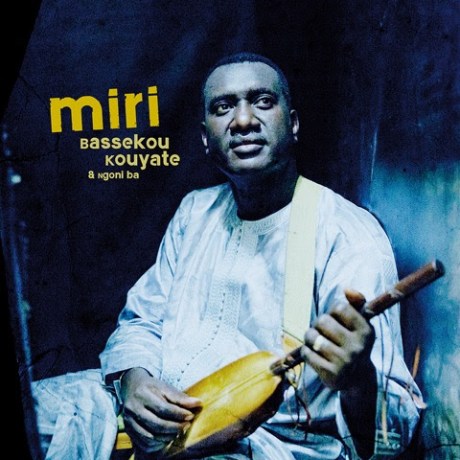
Bassekou Kouyate & Ngoni ba ‘Miri’
(Outhere Records) 25th January 2019
The courtly sound of the Mali Empire from the 13th century, accompanying the griot tradition of storytelling for an age, the (usually) dried-animal skin wrapped, canoe-shaped ngoni lute has been electrifyingly revitalized in recent years thanks in part to the virtuoso dexterity and energy of one of its leading practitioners, Malian legend, Bassekou Kouyate.
Since making his debut just over a decade ago, Bassekou has quickly built up an enviable reputation both in Mali and internationally; arguably, through his myriad of collaborations, helping to share the versatile range of emotions and rhythms that emanate from the ngoni to a worldwide audience; inspiring, even, a new generation to pick this atavistic instrument up.
The ngoni (which more or less, when translated from the Bambara language of Western Africa, means lute) is notable for both its rapid blurry rhythms and spindled, articulated picking. On previous albums Bassekou has pushed the ngoni to its limits. Following up the more electrified 2015 LP, Ba Power (which made our albums of the year feature), with a fifth album of innovative paeans, hymns, protestations and calls for peace, Bassekou takes a more reflective pause for thought on Miri; gazing out across his crisis-ridden homeland, contemplating on how the fragmented landscape and people can be brought back together for the common good.
Backed as always by the family band that features his wife, the soulful and beautifully voiced ‘nightingale of the north’, Amy Secko, and his son, Madou Kouyate, on bass ngoni, but also now including his niece Kankou (making a special guest appearance on vocals), the Bamana entitled encapsulation of ‘dream’, or ‘contemplation’, Miri record touches base with Bassekou’s roots: Reconnecting, we’re told, with his Sega Blues solo debut of a decade before.
Though the Islamist insurgency that initially boosted – but soon hijacked – Mali’s indigenous Tuareg nomads decades-long fight for an independent state within the country’s Northern Eastern borders has been largely subdued, terrorist style attacks, corruption and adverse effects of climate change have conspired to keep Mali in a constant flux of turmoil. Bassekou in somber mood peaceably reacts to all these events; using Mali’s geography and history to either warn, condemn or preach forgiveness and unity.
The title-track itself, with its cycle of jazzy ngoni grooves and subtle percussive strikes, plaintively draws the listener’s gaze to the increasingly parched Niger River that runs alongside Bassekou’s remote village hometown of Garama, in the south of Mali. The consequences of this lifeline and essential water supply drying up are disastrous. Further tensions are referred to on the reedy-sounding cantering call for peaceful resolution, ‘Tabital Pulaaku’. Featuring the conciliatory humble tones of fellow Malian, guitarist/singer and a former disciple of the revered Ali Farka Touré, Afel Bocoum, this beautifully articulated song implores the wandering cattle herder Fula nomad community and local cultivators to stop the in-fighting and settle disputes amicably – a fractious state of hostility that has led to many deaths between the two groups.
Elsewhere on the album, Mali’s ancient past is used as an analogy for the jealousy, corruption and worst excesses of individual greed, currently crippling the country. The Abdoulaye Diabaté – born into the griot tradition – sagaciously lends his vocals to Bassekou’s experimental bottleneck slide ngoni techniques buoyant ‘Wele ni’; Diabaté weaving a parable from the Segou Koro royal court of the Bamana Kings, drawing parallels between the tale of a king whose self aggrandizement and position of power has separated him from both his people and reality, and the current Mali government.
Renowned as much for his collaborations and guest stars on previous records, Bassekou has crossed instruments with such luminaries as Taj Mahal and Samba Touré in the past. Miri is no exception, featuring as it does Malian sensation (and member of the Bamada West African supergroup) Habib Koité on the staccato Arabia to Mali desert traversing, hoofed percussion backed ‘Deli’, and the traditional instruments fused with rap Cuban troupe, Madera Limpia, on the Hispaniola jostling, lively ‘Wele Cuba’. This pool of talented guest spots also boasts the deft skills of Morocco classical and jazz multi instrumentalist Majid Bekkar – ascending and descending with lilt scenic accents a suitably diaphanous plucked mood on ‘Kanougon’ – and Snarky Puppy and Bokanté helmsman, motivator, Michael League. All of who congruously and skillfully accentuate the Bassekou family sound or bolster its energy further.
Concentrating the mind, the events and turmoil of a divided Mali inspire Bassekou to hold those most dearest even nearer (from family to friends) and pay tribute to those that have passed on (including an air-y beatitude to his mother on the album’s finale, ‘Yakare’). All the while attempting to heal the rifts through the soulfully adroit and fire-y ngoni music of the past and present.
A visceral picture of a land in crisis, yet one that has hope for a united Mali, Miri is a sublime connective and rallying collection of compelling and thrilling performances and songs (Sacko especially on fine form delivering the most tender and rich vocals throughout); another essential album from the ngoni master.
Note: Glasgow friends can catch Bassekou Kouyate & Ngoni ba performing this album and tracks from the back catalogue live at the internationally renowned Celtic Connections festival in the city this month; playing the Old Fruitmarket on Friday 25th January. Details…
Quarterly Playlist Revue 2018: Part Four: Deerhunter, Jimi Tenor, Open Mike Eagle, Marianne Faithfull…
December 11, 2018
Playlist: Selected by Dominic Valvona/ Matt Oliver
Priding ourselves on the diverse, pan-global playlists we collate for your aural pleasure and indulgence, the Monolith Cocktail Quarterly Revue series is the eclectic behemoth of them all. With no demarcation of any kind or rules we mix the harrowing and gothic with beckoning polyrhythmic dancefloor screamers, flights of panoramic fantasy with raging protestations, and the most sublime peregrinations with experimental cries from the wilderness.
Everything you find on this playlist has either featured on the site over the last three months or been in our general orbit (the sheer volume of music we get sent means there is inevitably issues of space and time, and so some great tracks just don’t make it; this is our chance to feature those lost tracks).
We’ve also included the previous three playlists. And only leaves me to say on behalf of the Monolith Cocktail, thank you for supporting us during 2018.
Tracks:
Deerhunter ‘Death in Midsummer’
Psychedelic Porn Crumpets ‘My Friend’s A Liquid’
Brace! Brace! ‘Whales’
Slift ‘Fearless Eye’
Stika Sun ‘Psychedelic Three’
Jimi Tenor ‘Walzeth’
Fofoulah ‘Kaddy’
Paula Rae Gibson & Kit Downes ‘If You Ask Me’
The Alchemist ‘Mac 10 Wounds (Instrumental)’
François de Roubaix ‘Amour Sur Les Rails’
Homeboy Sandman & Edan ‘The Gut’
Thom Yorke ‘Suspirium’
Open Mike Eagle ‘Single Ghosts’
Westside Gunn & Benny ‘B.I.G Luther Freestyle’
Apollo Brown & Joell Ortiz ‘That Place’
Lyrics Born & Aloe Blacc ‘Can’t Lose My Joy’
Chuck D ‘freedBLACK’
Beans with ZVK & Dan Wenniger ‘The Ugly, The Ugly, And The Ugly’
Unloved ‘Love’
Marianne Faithfull ‘They Come At Night’
Ex:Re ‘I Can’t Keep You’
Masta Ace & Marco Polo ft. Pearl Gates ‘Still Love Her’
Damu The Fudgemunk ‘Fire’
MysDiggi ‘Evil Within’
Bixiga 70 ‘Primeiramente’
The Scorpios ‘Mashena’
Moulay Ahmed El Hassani ‘Lklam Lakhar’
The Rebels Of Tijuana ‘Erotique’
Cappo & Cyrus Malachi ‘Aqua Lungi’
Annexe The Moon ‘Full Stop’
Paul Jacobs ‘Easy (Warm Weather)’
Gloria ‘Heavy’
Deanna Petcoff ‘Stress’
David Cronenberg’s Wife ‘Rules’
Sunshine Frisbee Laserbeam ‘Running From My Ghost’
Insolito UniVerso ‘Vuelve’
François de Roubaix ‘Daughters Of Darkness Opening’
Vukovar & Michael Cashmore ‘Little Gods’
Cousin Silas & The Glove Of Bones ‘Saturn Incoming Dub’
Qluster ‘Lindow’
Refree ‘Tirania’
Society Of The Silver Cross ‘When You’re Gone’
Steve Gunn ‘New Moon’
Ben Osborn ‘Fast Awake’
Panda Bear ‘Dolphin’
Delicate Steve ‘O Little Town Of Bethlehem’
Part Three
Part Two
Part One
Our Daily Bread 290: EX:RE ‘EX:RE’
December 10, 2018
Album Review: Gianluigi Marsibilio
EX:RE ‘EX:RE’
(4AD) Digital: 30th November 2018; Physical: February 2019
“Praise of Delicacy” could be a good title to present this 2018: A year that has seen the release of such captivating albums as Adrienne Lancker’s Symbol and Snail Mail’s Lush, and the Boygenius EP.
The “delicacy’ in a world that can be easily defined by the title of this year’s Mudhoney album, Digital Garbage: a rare gift of an album that hides a further ability to affirm a strong musical idea of identity.
If we talk about this we can’t help but think about the music of Daughter and the voice of Elena Tonra. An unexpected and beautiful spinoff of which, arrives in the form of Tonra’s solo Ex:Re project and self-titled debut.
From the outset, on listening to this record, we can understand perfectly the individual emotions narrated in the songs. Private instants are full of fantasies that reconnect to a personal universe, as ambivalence is transduced into light.
The circle of 2018 is therefore ideally closed with this great test of Tonra’s ability, which has shown to enhance her past artistic experiences – as we can hear in songs like ‘Liar’.
There is, in many tracks, this influence of his past works, characterized by a perfect redundancy sewn on the acoustic passages. The most interesting concepts, befitting of her delicate voice, are developed in songs like ‘The Dazzler’ or ‘5AM’.
Playing on a razor’s edge between the acoustic and electronic proves an extra ingredient for lyrics that are really poetic sketches. The songs are like Norman Rockwell’s painting and the stories in the record interface like people in the hall of a grand hotel.
In songs like ‘Where The Times Went’ you can feel a strong inclination to self-criticism, the songs are not thrown and left to themselves but represent the completion of an artistic journey.
If we remember Vladimir Nabokov as a magician reference in translating Puskin, Elena Tonra can represent a turning point in a singer-songwriter who needs to translate urgencies and intimacy at its best.
As Ex:Re she has written the final page of this year’s diary.
(GM)
Albums of 2018: Part Two: Thomas Nation to Thom Yorke
December 6, 2018
Albums Selected By Dominic Valvona and Matt Oliver.
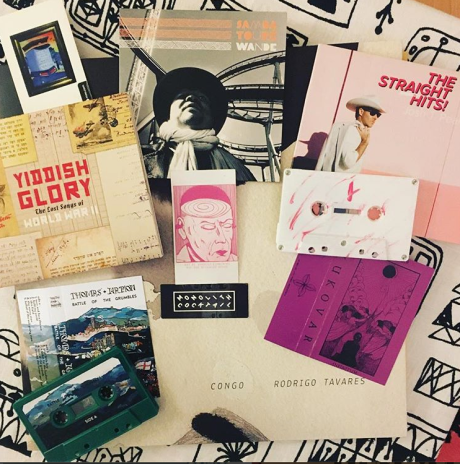
Welcome to Part Two of our alphabetically ordered best/choice/favourite albums of 2018 feature. You can find Part One here…
The decision making process:
Being the exhaustive and eclectic set of features our albums of the year are, we know you probably don’t need to or want to dally about reading a long-winded prognosis of our judgement process. But in short, here it is anyway.
Continuing to shy away from fatuous rating systems and ‘best of lists’, the Monolith Cocktail endeavors to offer a more visceral and personal spread of worthy ‘choice’ picks, with no album dominating or holding any particular numbered position – unlike most of our contemporaries lists, stuck with the ridiculous task, for example, of explaining why one album is more deserving of their numbered spot than another.
With no hierarchical order, we’ve lined our album choices up alphabetically; split into two features – Part One: A (Idris Ackamoor) to M (Moonwalks); Part Two:N (Thomas Nation) to Z (Thom Yorke).
All of our favourite new and reissued albums and EPs from 2018 are of course considered to be the most interesting, vibrant and dynamic of the year’s releases. But the best? Granted, to make this list you have to have made some sort of impact, but we’d never suggest these entries were categorically the best albums of 2018: even if that might be true. Instead our list is an indicator of our amorphous tastes, rounding up another year in the life of the Monolith Cocktail, and we hope, introducing you to titles and artists/bands that may have dropped below the radar or got lost in the noise of more commercial better promoted releases.
All selections in PART TWO from me (Dominic Valvona) and Matt Oliver.
N.
Thomas Nation ‘Battle Of The Grumbles’ (Faith & Industry)
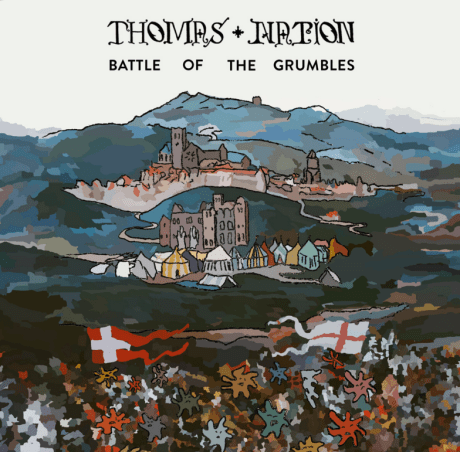
Fixed intently on the anguishes of identity in a post-Brexit voted England, yet bleaching his 1960s bucolic and 1970s lounge (erring towards yacht rock almost) imbued songbook with nostalgia, the lyrics themselves read as augurs yet embedded on parchment, Blue House front-man James Howard weaves a diaphanous if plaintively foreboding chronicle of the past and present.
Creating a whole new persona as Thomas Nation, his commitment to a hazy timeless sound, both rustic and ambitious, goes as far as using only his rough mono mixes; undeveloped and left in their most honest, purest form. You won’t be surprised to learn that Howard has also released his Nation moniker debut, Battle Of The Grumbles, on cassette tape.
Littered with references to this Island’s past (both at home and overseas), from the illustrated album cover scene of the 16th century ‘Battle of the Spurs’ (when the Holy Roman Empire teamed up with Henry VIII’s England) to more ambiguous stirrings and despondent yearnings that feature musical echoes from across that ages, Battle Of The Grumbles stands metaphorically at the precipice of the white cliffs of Dover awaiting Britain’s fate.
A gentle spirit, James Howard creates a pastoral nostalgic journey filled with augurs, despair and disillusion but always diaphanous. The first of what Howard hopes will be an annual ‘pilgrimage’, the Thomas Nation incarnation is a cerebral wonder through the essence of Englishness, questioning and probing the psyche as it meanders through the psychogeography and heart of the countryside. Full review…
(Dominic Valvona)
Tony Njoku ‘H.P.A.C’ (Silent Kid Records)

Bringing a very different perspective and life experience to the London avant-garde art and electronic music scene, the British-Nigerian producer with the earthy falsetto, Tony Njoku, articulates a most unique form of magical soul music on his stunning new album. Though undulated with an ethereal to malady suffused backing of sophisticated synthesized travails, Njoku’s vocals always seem to bobble and float above the choppy breaks and ebbing tides.
Adrift in so many ways, through his life experiences, transferring as he did at the age of fourteen to London from a life spent hiding his true personality in the toxic macho boarding schools of Lagos, the sensitive Njoku found at least one kind of solace; able to show a vulnerability and pursue the music career he really wanted having previously recorded a number of hip-hop albums (the first when he was only twelve) that proved entirely counterintuitive, but were completely in tune with Nigerian environment he grew up in. Yet in the arts community he joined in his new home of London, he found few Afrocentric voices or people he could identify with or relate to. From that isolation comes an album inspired by the ‘high art sonic’ forms of Arca and Anhoni, and by the metamorphosis nature of Bjork; Njoku’s own compositions feature a beautiful synthetic shuffle of Afrofuturism soul and more searing discordant synth waves that clash and distort on arrival but gradually sync and become part of the motion. From beauty to pain and release, and often back again, each track (and not in a bad way) seems open-ended; a constant flowing cycle of emotions, which can be healed during that moment, in that space and time, but will inevitably return: A calm followed by turbulence and hopefully the light.
Eloquently in a hymn like fashion between pained malady and the venerable, heavenly but also melancholic and turbulent, H.P.A.C is a futuristic soul album of delicate intellect. Full review…
(DV)
P.
Micall Parknsun & Mr Thing ‘Finish What We Started’ (Village Live)
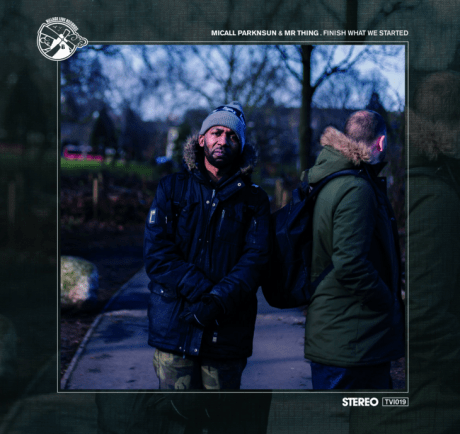
“Mainstays trusted with hip-hop restoration…with all the answers for those exaggerating hip-hop’s downfall” – RnV July 18
Featuring “beats to make your eyebrow dip” and the flow of one of the UK’s most reliably disdainful when it comes to holding your own, Micall Parknsun and Mr Thing made the very good decision to turn 2017’s one-off ‘The Raw’ into a 40 minute non-apology for playing the game properly. With hip-hop mumbling its way to the dogs, this pair have fire in the belly for the unfashionable return to beats and rhymes designed to stick around and give a damn. Measured run-ups streaked with bluesy, soulful headspace occupancy (with drums front and centre each and every time), a crux of blockbusters and pure boom bap battery, all land like a two-footed tackle, Thing researching and sculpting ‘the real’ without making it a puff piece on nostalgia or announcing they’re here to save the world. Park-E does his utmost to remain an upstanding citizen, pushed to his limits by both Thing’s heavyweight kicks and snares and general scene lethargy. The emcee’s systematic, it’s on when I say so-flow, perfectly lands the elbow once the producer has left you staggering backwards.
(Matt Oliver)
Josh T. Pearson ‘The Straight Hits’ (Mute)
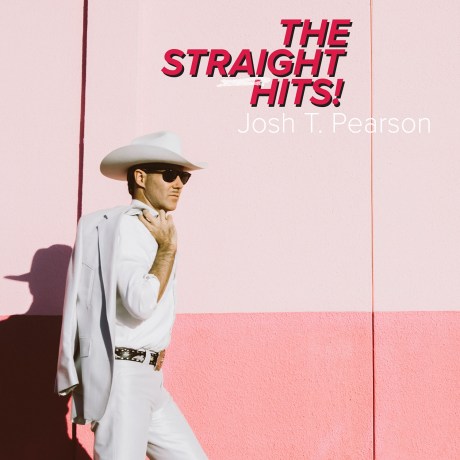
Changing his tune (literally) Josh T. Pearson, the lonesome blues Texan with a wagonload of baggage, heads out onto the range with a swag bag of more joyful, unencumbered ‘golden hits’ with his latest album for Mute Records.
Leaving behind the more apocalyptic gospel concepts of his work with the short-lived but acclaimed Lift To Experience, Pearson sets himself new parameters; adhering to a five-point rules system for transforming a “batch of tunes” he’d been working on for a decade. Earmarked originally for the ‘unrecorded’ Bird Songs album, the nine original songs on The Straight Hits are a lighter and as the title suggests ‘straighter’ attempt to change the mood.
Far from set in stone – the unwritten rock’n’roll law that all rules are written to be broken is invoked on the tender yearning A Love Song (Set Me Straight) – each song must at least try to follow Pearson’s self-imposed requirements: Number one, all songs must have a verse, a chorus and a bridge; two, the lyrics must run sixteen lines or less; three, they must have the word ‘straight’ in the title; four, that title must be four words or less; and five, they must submit to song above all else i.e. “You do as she tells you, whatever the song tells you”, “You bend to her, and not her to you.”
The Straight Hits is a most rallying rodeo that gives the Americana soundtrack a much-needed kick-in-the-pants; the themes of love, whether it’s the analogical kind, ‘take me right now’ kind, or lamentable kind, enacted across a varied but blistering songbook. Rejecting the stimulants and his demons, Pearson choses the good ol’ fashioned power and redemptive spirit of gospel ye-ye and country rock’n’roll. And don’t it sound just mighty fine and swell! Full review…
(DV)
Q.
Qujaku ‘Qujaku’ (So I Buried Records)

Occupying both the spiritual and cosmic planes, emerging from the gloom and holy sanctuaries of the dead, the brooding Hamamatsu-based Japanese band Qujaku wowed with their second album of operatic Gothic and psychedelic doom-mongering. Beginning as they mean to go on, the opening ‘Shoko No Hakumei’ suite, more an overture, is itself a full on Ring cycle (as conducted by Boris) that is dramatic and sprawling: running almost the entire length of a full side of a traditional vinyl album.
On a very large foreboding canvas, Qujaku build-up an impressive tumult across the album’s nine-tracks of prowling esotericism and galloping drum barrage immensity. Between crescendo-bursting three-part acts and shorter volatile slabs of heavy caustic drone rock, the group often evokes an Oriental Jesus And Mary Chain, Black Rebel Motorcycle Club and Spacemen 3, or Nine Inch Nails when at their most enraged. Psychedelic in the mode of The Black Angels, but also straying at their most languid and navel-gazing towards Shoegaze, Qujaku’s dark spanning cacophony of throbs and trembles bear many subtle nuances and becalmed breaks amongst the masses and maelstroms.
On an epic scale, dreaming big and intensely, Qujaku perform the most dramatic of daemonic theatre. Full review…
(DV)
R.
RAM ‘August 1791’

Considering the tumultuous bloody revolution from which an independent Haiti was born, RAM leader Richard A Morse‘s “Our existence is a political statement” mantra is unsurprising. Named after the initials of their road well travailed founder, RAM perform an entrancing spectacle of the ritualistic. Morse, originally born in Puerto Rico but brought up in Connecticut, spent the 80s rubbing shoulders with the polygenesis New York art and music scene’s Jean-Michel Basquiat and Warhol’s factory. His interest piqued by the new wave’s adoption of Afro-diaspora rhythms and world music, Morse decided to travel to his native homeland to study the Haitian sound.
The son of Haiti folk legend Emerante de Pradine, Morse was already well aware of his ancestral roots, but had yet to indulge in or absorb the rich history of the island fully. After an initial short trip, Morse found himself it seems so seduced and inspired by Haiti’s culture that he decided to stay for good. Marrying local dancer and singer Lunise, he kick started the frenzied, rambunctious troupe, channeling the ideas he picked up on in New York and merging them with the signature instrumentation and sounds of the local Vodou belief, mizik-rasin and the drifting currents of the Caribbean and Africa.
This year’s odyssey, guided by the spirits and with dedications to the marternel and those that have helped (including the pivotal film director Jonathan Demme, who prominently featured one of their tracks in his or award-winning Philadelphia movie in 1994) shaped the band over the years, springs from Haiti’s enslaved population’s struggle for independence from its European masters. August 1791, the year and month of revolution (inspired by their colonial masters own revolution), frames this tropical fusion of tragedy and sauntering joy. Returning to the legends that sparked this fight, such as the ill-fated former slave turned leader of revolt, Toussaint Louverture (driving out the Spanish and British but captured and imprisoned under Napoleon’s regime; languishing in a cell at Fort de Joux until he died in 1803), and first Emperor of Haiti, Jean-Jacques Dessalines (assassinated by disgruntled members of the burgeoning administration), RAM evoke the spark that set in motion the first free republic of African heritage people in the Western hemisphere. Their seventh album not only pays tribute but features a musical accompaniment from that era; with a sound more or less, when stripped to its essence, that would be familiar to the Creole and African communities of the late 18th century.
Uniting in a busy percussive fusion the Americas with the roots of Africa, RAM bustle and hustle traditions to produce a paean to the Island they call home.
(DV)
Soho Rezanejad ‘Six Archetypes’

Impressive in all its striking celestial and throbbing distressed staccato shimmer the experimental Danish artist Soho Rezanejad’s ethereal but equally futurist dystopian ambitious new LP, Six Archetypes, is a bold exploration of identity politics.
Interplaying six of the major character symbols (The Guardian, The Orphan, The Seeker, The Russian, The Idealist, The Prostitute) from the Tarot with Carl Jung’s Psychological writings on the collective and structured reality, Rezanejad weaves the complex contemporary themes of gender liquidity and self-discovery into an amorphous mix of electronica, darkwave and Gothic pop suites.
Though not always audible, Rezanejad’s untethered vocals – vaporous and often ghostly undulating in an aria style – whisper, coo, lull, pant, wrench and shout throughout the shard majestic and multilayered intricate backing of synthesized, programmed, modeled sounds. It’s a striking voice too. At times, such as the beautiful but serious stellar flight of the navigator, Bjork meets Chino Amobi, rotary opener Pilot The Guardian, she sounds like Nico. And at other times, such as the lush Bowie/Sylvian synchronicity, Soon, her vocals sound like a mixture of Jesus Zola and Lykke Li.
Returning to the soil, so to speak, Rezanejad saves her most heartfelt yearn until the end; lovingly but starkly impassioned, singing in her ancestral tongue of Farsi – Rezanejad is the daughter of first generation Iranian immigrants – the National Council Of Resistance Of Iran’s alternative national song in protest against the state’s heavy-handed ideology.
An ambitious debut opus of dark beauty and ominous despair, Six Archetypes is a highly impressive cosmology of gender, roots and futurism politics and narratives. Full review…
(DV)
S.
Sad Man ‘ROM-COM’
Haphazardly prolific, Andrew Spackman, under his most recent of alter egos, the Sad Man, has released an album/collection of giddy, erratic, in a state of conceptual agitation electronica every few months since the beginning of 2017.
The latest and possibly most restive of all his (if you can call it that) albums is the spasmodic computer love transmogrification ROM-COM. An almost seamless record, each track bleeding into, or mind melding with the next, the constantly changing if less ennui jumpy compositions are smoother and mindful this time around. This doesn’t mean it’s any less kooky, leaping from one effect to the next, or, suddenly scrabbling off in different directions following various nodes and interplays, leaving the original source and prompts behind. But I detect a more even, and daresay, sophisticated method to the usual skittish hyperactivity.
Almost uniquely in his own little orbit of maverick bastardize electronic experimentation, Spackman, who builds many of his own bizarre contraptions and instruments, strangulates, pushes and deconstructs Techno, the Kosmische, Trip-Hop and various other branches of the genre to build back up a conceptually strange and bewildering unique sonic shake-up of the electronic music landscape. Full review…
(DV)
Otis Sandsjö ‘Y-OTIS’ (We Jazz Records)

Imbued as much by the complex language of North American and European modernist jazz as those who use it to riff on in the hip-hop and electronic music genres, the adroit Gothenburg saxophonist and composer Otis Sandsjö transmogrifies his own jazz performances so they transcend, or at least amorphously (like liquid) expand into polygenesis soundscapes.
Y-OTIS reimagines a musical union between Flying Lotus and Donny McCaslin, or better still, Madlib reconstructing the work of 3TM; the flow, if you can call it that, sounding like a remix deconstruction in progress as the rapid and dragging fills and staggered rolls of his group’s drummer Tilo Webber are stretched out, inverted and reversed into a staccato to dynamic bursting set of breakbeats and loops. Mirroring all the various cut-and-paste techniques of the turntablist maestros, Sandsjö and his dexterous troupe of keyboardist Elias Stemeseder, bassist Petter Eidh and Webber sound like a group being remixed in real time, live: And it sounds brilliant, as you’re never quite sure where each of these compositions is going to end up.
Sandsjö’s debut album, released via the Helsinki festival and label platform We Jazz Records, is a multilayered serialism suite of ideas and experimental visions. All of which, despite that complexity and blending of sophisticated avant-garde jazz, hip-hop, R&B, trip-hop and dance music, keep an ear out for the melody. If the ACT label, or ECM, ever converges with Leaf and Anticon, Y-OTIS might well be the result. Full review…
(DV)
Scran Cartel ‘Blue Plaque Candidates’ (Scran Cartel)

“A great, belt-loosening spread grilling you with much more than just a bunch of culinary one-liners” – RnV Aug 18
Brit grafters MNSR Frites (Granville Sessions) and Benny Diction (Corners) read you the specials for twelve fascinating tracks, packing foot-related rhetoric from the moment the dinner bell sounds. It’s quite an accomplishment to master such a particular angle without it being a gimmick, and easy to forget that ‘Blue Plaque Candidates’ is not specifically a concept album, just an expression of culinary love. These two really know their cookbooks and have a shopping list that you can’t check out quick enough, from cordon bleu menu toppers to bread and butter basics and young at heart sweetshop favourites, the Estuary English plating your three squares a day with the same near-apathy as they do exotic, forbidden fruit. The jazzy, funky beats are garnish to the duo cookery schooling everyone, indulging in one sub-grime moment on the E-numbered ‘Dundee’, and a cultural knowhow showing that greed isn’t always good, adds weight to their sprattish statement of “we write and record rap songs about food”. A chef fingers’ kiss for this one.
(MO)
Skyzoo ‘In Celebration of Us’ (First Generation Rich)

“Some of the smoothest psychology and concrete consciousness you’ll hear this year. One to be toasted over and over” – RnV Feb 18
Giving ‘In Celebration of Us’ the grown man rap label is a bit of a giveaway given Skyzoo’s opening skit of confiding in a pal about giving up the streets for the sake of his newborn. The Brooklynite and new father speaks a lot of sense, a flow that will express disappointment rather than anger and keep the titular celebrations modest, and attracts a captive audience when aiming at your head twofold, comprehensively ensuring the wateriness of neo-soul doesn’t just ebb away, or the dustiness of Detroit-style beats fugs your judgement. Picture a sometimes reluctant lecturer, as everyman as the tales you’ll familiarise yourself with, but giving you the full education once the mic in his hand. Not clinging to verse, hook, verse structure, Skyzoo doesn’t ramble, rather makes certain that he’s examined everything from top to bottom, very much schooled in knowing that if something’s worth doing, do it properly. Enough to make you feel warm and fuzzy – there are some undeniably slick, R&B moves crossing over as well – and rather more pensive when presented with the cold light of day.
(MO)
The Last Skeptik ‘Under the Patio’ (Thanks for Trying)

“An album simmering down the summer’s sticky restlessness: dusky beats that never fade to black, understated in their genre reach” – RnV July 18
Intense from The Last Skeptik, extremely well connected and arguably more well rounded since after a spell of paying extra-curricular dues. Surrounding himself with a boiling pot of hungry emcees gets a maximum return from teeth gritted, rapid fire, pound the road, witty unpredictables, all of whom casually playing down their iron mic grip. Synth-wired, at times spindly beats either host the back-to-mine session or storm the stage, perfect for its roll call – Bonkaz, Kojey Radical, Doc Brown, Scrufizzer but four headliners to pick from – to move through and dominate while playing the back, with motive or just willing daylight away. While originally noted for soundtracking summer humidity, ‘Under the Patio’ is decidedly not an album for office hours. Dabbling in shades of the exotic and skilfully soulful throughout for an album of rough edges, it’s the careful contrasts – the haunting ‘Hide & Seek’ featuring Matt Wills, the inexplicable but permissible ‘Calm Down’ inviting The Manor round for a knees up (there’s the versatility for you) – and Skeptik’s own version of ‘Deep Cover’ on posse cut ‘Oxymoron’ – that triumph in their cohesion to give TLS a massive W.
(MO)
Stella Sommer ’13 Kinds Of Happiness’ (Affairs Of The Heart)
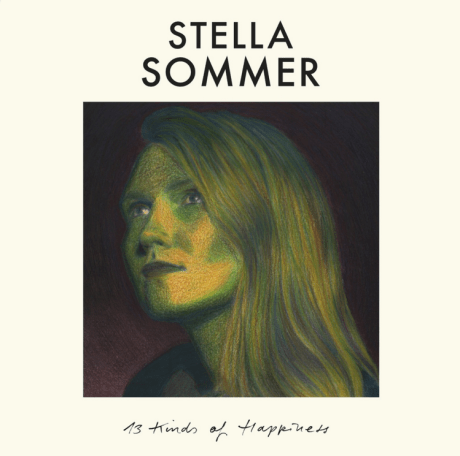
In the vogue of an age-old central European malady, the dour romanticism that permeates the stunning solo debut album from the German singer/songwriter Stella Sommer is wrapped in a most beautiful gauze of melodious uplift and elegiac heartache.
Artistically, as the results prove, making the best decision of her career, Sommer steps out for a sojourn from her role in the German band Die Heiterkeit. Far from an extension of that group (though band mates Hanitra Wagner and Phillip Wolf both join her on this album), there are of course concomitant traces of it. Sommer however makes louder but also accentuates these traces and lingering relationships; her lived-in, far-beyond-her-years vocal more sonorous and commanding than before.
Possibly as perfect as an album can get, 13 Kinds Of Happiness is an ambitious, slowly unveiling album of diaphanous morose. Pastoral folk songs and hymn-like love trysts are transduced by a Gothic and Lutheran choral liturgy rich backing that reimagines Nico fronting Joy Division, or Marianne Faithfull writhing over a Scary Monsters And Super Creeps era Bowie soundtrack (especially on the galloping Northern European renaissance period evoking thunderous drumming ‘Dark Princess, Dark Prince’; just one of the album’s many highlights). I don’t use that Nico reference lightly: Sommer channeling the fatalistic heroine’s best qualities atmospherically speaking.
A curious Teutonic travail of venerable lovelorn despair and modesty, Sommer’s debut LP will take time to work its magic. But work its magic it will. A tremendous talent lyrically and vocally, serious and astute yet melodically enriching and lilted, her sagacious deep tones are starkly dramatic, but above all, rewarding. Here’s to a solo indulgence that I hope long continues. Full review…
(DV)
Station 17 ‘Blick’ (Bureau B)
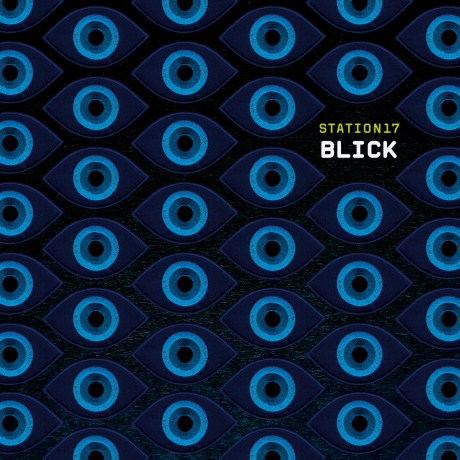
With near enough thirty years of experience behind them and a changeable lineup of both musicians with and without various disabilities, the Station 17 collective once more shift their focus and sound; moving away from the all-out pop of the last album Alles Für Alle for a more improvised travail through the Krautrock, Kosmische and experimental electronica cannon.
Free of predetermined structures, lyrics and ideas they enjoyed an improvised freedom; inviting a host of German musical royalty to take part in what is a collaborative recording experience – something they’ve done in the past, having worked with icons such as Michael Rothar and the late Holger Czukay. And so each of the album’s tracks feature the signatures sounds and quirks of its guests: The writhing prehistoric Krautrock-jazzy Le Coeur Léger, Le Sentiment D’un Travail Bien Fait for example features the guiding avant-garde, ‘musique concrète’ presence of drum and bass partnership of Jean-Hervé Péron (the French title track I dare say his idea) and Zappi Diermaier; key founders of the reverent agent provocateurs Faust, who in recent decades have broken away to form their own iteration of the group under the faUSt banner. And, though only as part of its most modern regeneration, Tangerine Dream’s Ulrich Schnauss appears to gaze through a progressive Kosmische tinged explored ‘astronomical telescope’ on the album’s heaven’s gate opening finale.
From another generation, Dirk Dresselhaus, aka Schneider TM, appears both as an engineer, capturing these sessions and crafting them into a coherent album, and as a collaborator on the kooky bossa nova preset Die Uhr Spricht. Andreas Spechtl of Ja, Panik! infamy appears alongside Station 17 singer Siyavash Gharibi on the poppier, Der Plan-esque Dinge, and another Andreas, Andreas Dorau, joins the same upbeat, marimba like candour on what we’re told is an “enduring appraisal of post-capitalist perversion”, Schaust Du, whilst Datashock travel through the primordial soup into another dimension on the Acid Mothers-hitch-a-ride-aboard-the-Cosmic Jokers-spaceship Zauberpudding.
Turning the dial on an imaginary radio station, attuned to all the highlights from Germany’s most experimental if rhythmic decades, Blick confidently absorbs the influences and inspirations of its multitude of guests to produce social commentary and reflect on the here and now. Full review…
(DV)
T.
Rodrigo Tavares ‘Congo’ (Hive Mind Records)
The amorphous traversing post-rock and jazz travelogue from Brazilian guitarist/composer Rodrigo Tavares is filled with a sense of contemplation and meditation, and a yearn for the spiritual. The spiritual is represented in Congo’s genesis; the catalyst for Tavares soundtrack inspired, in part at least, by a visit to the controversial ‘spiritual healer’ John of God – a medium, psychic surgeon of dubious repute -, who lives in the remote central Brazilian town of Abadiânia. The meditative, in this case, runs throughout the suggestive instrumental passages and vignettes that ponderously drift, cascade and ebb across a real and imagined borderless global soundtrack.
Suffused throughout this album you’ll find lingering traces of the ACT jazz label, minimalism, Tortoise post-rock, Brazilian legends Joâo Gilberto, Dorival Caymmi and Tom Jobim, and removed by quite a few degrees, a hint of the free-form untethered to any easy classification, evolving guitar experimentation of the Sun City Girls – as it happens a show in a remote former gay bar in Brazil by the same band was one of the stopovers on Tavares ‘transformative road trip’; the fruits of which and experience laying down the creative foundations for Congo.
Truly transglobal, Tavares helps take Brazilian music – like his fellow compatriot Sentidor – into often trance-y, unburdened and unlabored directions. With few rough edges, this congruous soundtrack makes for a ruminating, thoughtful smooth journey. Full review…
(DV)
Samba Touré ‘Wande’ (Glitterbeat Records)

In a country abundant with guitar virtuosos, the highly genial Samba Touré still stands out as one of Mali’s most celebrated and accomplished; transducing the travails, heartache but also joy of his homeland through his signature articulate nimble-fingered style of playing.
His third album for Glitterbeat Records – the first, Albala, was the label’s inaugural release in 2013 – Wande is billed as a warmer homely songbook: previous releases were produced during the Islamist insurgency that swept aside and hijacked the Northeastern Tuareg communities’ battle for autonomy in the north eastern regions of Mali. Far from a complete break, the sadness endures on Wande; though Touré sadness is a most beautiful, cantering and lingering one. Especially when paying tribute to his friend and collaborator, sokou fiddle maestro Zoumana Tereta, on the spoken word with wavering drifty, almost dub-like echo-y effects tracks of the same name, which features the late musician’s spindly evocations from beyond the ether.
Recorded in under two weeks, allowing weekends for band members to scratch a living playing at weddings, sessions for the album were relaxed, performances captured on their first take with few overdubs. The lo fi production feel of the rocking blues ‘Yerfara/We Are Tired’ could be a lost inspiration for 80s period Rolling Stones with its almost transmogrified Start Me Up like Richards riff. ‘Goy Boyro/The Good Work (Well Done)’ even begins with a Taj Mahal, BB King reminiscent introduction hook, before dipping over the horizon. But whatever you do, don’t call this is a desert blues album, or even an African one; Touré correctly insistent that this is contemporary ‘universal’ rock music.
Not quite such a leap of faith or different to previous albums, an unpolished and laidback methodology has produced a slightly more sagacious, free-floating quality and another essential Touré masterpiece. Full review…
(DV)
Ty ‘A Work of Heart’ (Jazz Re:Freshed)

“Almost feels like a magic carpet ride over the capital’s skyline; come and spread your arms if you really need a hug” – RnV Mar 18
Soft focus viewed with the wisest of eyes cutting through life’s smokescreen: the eminent UK statesman preserves the essence of never getting too high or too low. Ty has long had that trustworthy delivery of a life coach who can pep you up – inspirational with quiet authority – and tell you to man up without raising his voice, any hints at vulnerability given the very British keep calm and carry on treatment (“when you smile with me publicly I’m wearing a mask, gritting my teeth, a wolf in a bundle of sheep”). The liltingly clean production is what might turn a few ears belonging to those thinking hip-hop’s not for them – right from the off it’s of a Ty-tracked, toasted cinnamon bun snugness, a concrete jungle paved with a yellow brick road heading towards promised lands, but with the plain sailing carrying some turbulence. ‘A Work of Heart’ sounds as good as when Jack Frost comes knocking, as much as when the summer’s hose pipes were forbidden fruit. And like the first blooms of spring. AND the first leaves of autumn falling too.
(MO)
U.
U.S. Girls ‘In A Poem Unlimited’ (4AD)

Featuring most of the Toronto cast of collaborators that propelled the first U.S. Girls release for 4AD records, Half Free, forward, but stretched and lushly flexed into space boogie and other equally eclectic grooves by the city’s multi-limbed collective The Cosmic Range, Meg Remy’s latest cerebral pop revision tones down some of the vibrancy for acerbic, sax-wailing pouted-lips resignation and introversion.
Moving across the border from the USA with her husband and musical collaborator Maximilian Turnbull, aka guitar-slinging maverick Slim Twig, long before Trump reached The White House, Remy has broadened her postmodernist transmogrification of bleeding hearts 60s girl group meets tape-loops signature to accommodate femme fatale disco and funk since making a new home for herself in Canada.
The momentum of this album fluctuates throughout, and compared to Half Free, takes a lot to bed in and flow – and I’m still not sold on the two skits -, starting as it does with the aching ponderous slow burner Velvet 4 Sale – perhaps Remy’s most dark fantasy yet, imaging (just imagining mind) a role reversal of power, as she implores a girl friend to buy a gun for protection, impressing that the only way to change men is for women to use violence. An unsettling twist played out to a dragging soul fuzz backing track, the song’s central tenant imagines a world where women take up arms against men, though Remy ‘deplores violence’ of course. It’s followed by an equally sensually nuzzling sax and yearned vocal performance, and take on the Plastic Ono Band, Rage Of Plastic, before picking up with the album’s most bouncy weaponized boogie, M.A.H. – a chic Ronnie Spector fronting Blondie style diatribe broadside aimed at the democrats venerated saviour Obama, who Remy condemns for the charismatic charm seduction that pulled-the-wool over many supporters eyes, hiding the fact that he presided over a covert number of unsavory drone strikes.
Hardly disarming then, In A Poem Unlimited deplores the present hierarchy with a seething checked rage, set to a challenging but melodious soundtrack of yearning no wave, scintillating chic disco, Plastic Ono Band soul, vaporous 80s pop and even jazz. The patriarch comes in for some scathing poetic justice; played out to some of the year’s best tunes and performances. Full review…
(DV)
V.
Vukovar ‘Infinitum’ (Le Recours Forêts Production)
Vukovar/Michael Cashmore ‘Monument’
Among the most prolific of bands, Vukovar have released two of their most stunning albums in just the last quarter of 2018 alone. Keeping to the signature three-syllable grandly entitled Gothic statements of malcontent, melodrama, aggrandizement and melconholy, both Infintum and Monument romantically encircle the void better and with more sagacious quality than previous records. Though only in existence for barely three years, and perhaps already splitting up, Vukovar are improving on every release. Both are included because…well, I can’t make my mind up about which of these recent opuses of despair and hermetic exploration I prefer. Hell….they’re both great. And here’s why:
The fifth LP in the malcontent’s cannon, Infinitum, pulls at the mortal coil of human misery in a murky quagmire. An endless backing track of reverberating delayed snare strikes, a rolling timpani bounding bass drum, esoteric stately sounding waltzes, unwieldy bestial guitar, resigned new romantic synth and escaped melodies muddily, and often amorphously, swim and oscillate around a combination of longing, if worn down and depressed, swooning vocals and Rimbaud-meets-Crowley-meets-Kant-on-the-edge-of-an-abyss poetic despairing narration, on what is a bleak if at times gloriously dark beauty of an album.
Bound-up in their own self-imposed limitations, these anarchistic dreamers go one further than the Hebrew code of law commandments by adhering to 13 of their own; each one a rule or restriction in the recording process that couldn’t be broken, at any cost. So strict were these conditions that even if the band were close to finishing the album, any infringement no matter how minor, would result in the entire sessions being abandoned. Mercifully they made it through to the end; releasing a troubled, bleak lo fi ritualistic romance of an grand opus.
Cut from the same cloth, but collaborating with an undoubted influence, the group’s sixth LP, Monument, traverses the void with Current 93 stalwart and producer/composer Michael Cashmore (appearing under the guises of his Nature And Organization nom de plume). A congruous in what is a melancholy harrowing romantic partnership with the morbidly curious Vukovar, Cashmore leads with a vaporous, industrial and often godly (whichever God/Gods they be) brutalist swathe of sagacious moodiness. Arguably inheritors of Current 93 and, even more so, Coil’s gnostic-theological mysticism and brooding venerable communions, Cashmore seems the obvious foil. Current’s The Innermost Light and Coil’s (and John Balance’s swan song as it were) The Ape Of Naples both permeate this conceptual opus.
From haunting melodrama to harrowing decay, unrequited love to radiant escape, the loss of innocence and youth to sagacious death rattles, Vukovar prove ideal torchbearers of the cerebral Gothic sound and melancholic romanticism. A meeting of cross-generational minds with both partners on this esoteric immersive experience fulfilling their commitments, Monument shows a real progression for Vukovar, and proves a perfect vehicle for Cashmore’s uncompromising but afflatus ideas to flourish in new settings, whilst confirming his reputation and status.
Whatever happens next, this ambitious work will prove a most fruitful and lasting highlight in the Vukovar cannon; one that’s growing rapidly, six albums in with a seventh already recorded; another ‘momentous’ statement that affirms the band’s reputation as one of the UK’s most important new bands. Full reviews…
(DV)
Y.
‘Yiddish Glory: The Lost Songs Of World War II’ (Six Degrees)

In light of the recent Tree Of Life synagogue shootings in Pittsburgh, the increasingly uncomfortable language and hostility from the far Left, and the rising tide of European wide anti-semitism, this most tragic songbook of WWII Soviet Union laments from the Jewish community that joined Stalinist Russia’s defence against the Nazis, is a timely reminder of persecution from the graveyard of history. 400,000 men and women signed up to fight Hitler’s forces in one of the most bloody and apocalyptic campaigns in military history. If gratitude was ever warranted, the fate that awaited many of the survivors was anything but; mistrust and resentment instead led to swathes of the Soviet Union’s Jews being imprisoned, tortured and murdered by Stalin’s regime, their sacrifice for the mother nation all but airbrushed out of existence – almost.
Thought lost in the annals of time; suppressed, if not destroyed, the tragic but poetic WWII testaments, made lyrical prose, of just a small cross-section of Russia’s Jews is given the richly evocative and adroit production showcase it deserves by a collective of professors, producers and musicians. Originally unified in an anthology by an ethnomusicologist from the Kiev Cabinet For Jewish Culture, Moisei Beregovsky, alongside colleague Rovim Lerner, hundreds of Yiddish songs written by Red Army soldiers, victims and survivors of the Nazi’s massacres were gathered in the hope of being eventually published and performed. Unfortunately at the very height of the Communist Party’s purges in the decades that followed the end of WWII, both these well-intentioned preservationists were arrested. Subsequently the project was never finished, the work sealed up and hidden away. But as it would later transpire, not destroyed.
Transcribing these laments and firsthand accounts of endurance (many of which included testament evidence to various Nazi atrocities) would take patience, skill but above all respect. The results of this this most tragic desideratum are underscored by the musical director and violinist Sergei Erdenko‘s conducted stirring accompaniment ensemble of classically trained instrumentalists and singers; all of whom were brought together by the producer, and overseer (one amongst a whole group of people that have perserved, shared and made this project possible over the decades) Dan Rosenberg.
Songs of heroism, stoic belief, and even more violently encouraging prompts to machine gun as many Nazis as possible, are brought back to life. But despite the materials obvious harrowing and tragic heart-wrenching nature, the music throughout is a dizzying, waltzing mix of Yiddish, Roma, Klezmer, folk and even jazzy cabaret that’s often upbeat. The band does a sterling job in giving voice to those suppressed individuals and the songs that were believed lost forever, destroyed by a regime that would treat its loyal Jewish community, many of which made the ultimate sacrifice and wholeheartedly believed in the socialist doctrine, little better than the Nazis they so valiantly overcame. Yiddish Glory is not just a reminder however, or even just a revelation, but a beautifully produced and evocative performance. Full review…
(DV)
Thom Yorke ‘Suspiria (Music For The Luca Guadagnino Film) (XL Recordings)
I’ve no idea of the inimitable Thom Yorke‘s methodology and process – whether he composed directly to a cut of Luca Guadagnino‘s remake, or, went away on the premise that…well, it’s Suspiria, and this iconic Gallo trip knows exactly what sort of a soundtrack it thirsts for, so I’ll just make it up in me head -, but whatever it is, his evocative harrowing soundtrack technique works; providing an eerie balance of spine-chilling tension and beautiful dreamy waltzes.
Elevating further the progressive and ritualistic treatment of the original 1977 Suspiria movie soundtrack by Italy’s revered Goblin, Yorke’s mirror-y hypnotised lingered vignettes and bestial guttural scares are treated with earnest seriousness.
If a film could be even more stylised than its original forbearers, this post-millennial disturbed take by Gundagino is an artistically knowing, conceptually aloof indulgence for the senses that receives the most stunning, richly esoteric of soundtracks. Compelling, alluring and plaintive; using many of the arty macabre’s signature tricks, atmospheric mood stirrers and prompts – from heightened Gothic choral aches to Carpenter meets Oldfield piano note and tubular chiming nerve tinklers – Yorke sets out his soundtrack somewhere between the perimeters of Kubrick, magic realism, psychological drama, Dario Argento, Francois de Roubaix and his very own solo work.
The proof is in the candle-lit shadowy mood induced eating of course, and sitting as I was in the daylight of the early afternoon, I couldn’t help but feel unnerved enough to check behind the curtains for murderous witchery dance troupe teachers, who’s intent was to embed a sacrificial knife into my skull. Yes I was spooked.
A frightful but often ethereal magical score, Yorke matches his Radiohead foil, Jonny Greenwood in the field of soundtracks: an artform all in itself. I’ve no doubt it will become a cult album; equal to the sacred Goblin score, if not, dare I suggest, an improvement.
(DV)
 Monolith Cocktail Blog