The Monthly Digest includes a clutch of accumulated new music reviews, this year’s Halloween Playlist selection, a piece from the Archives and jukebox selection of anniversary celebrating LPS.
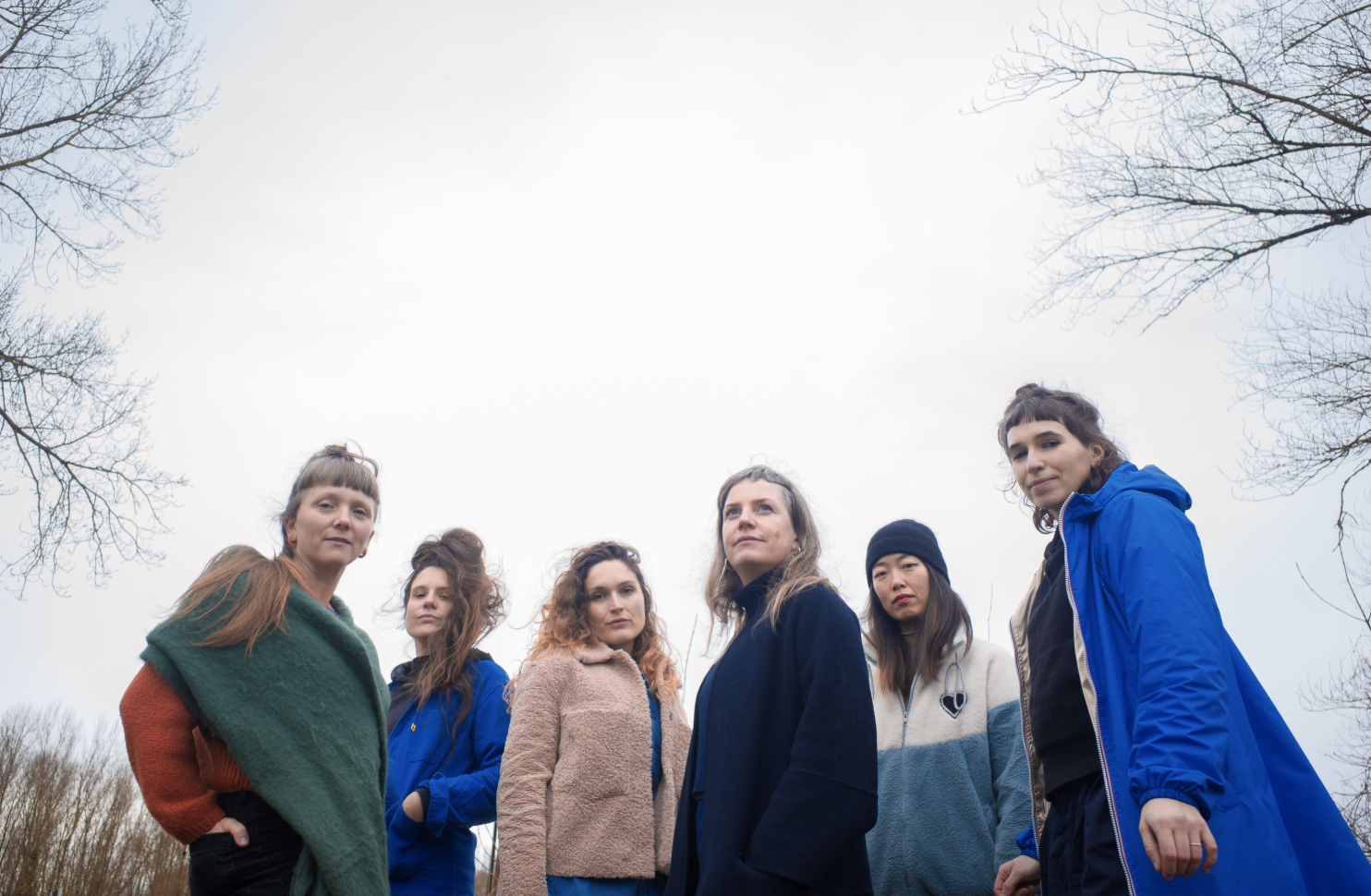
Photo Credit: Seismes photographed by Flavie Herbreteau
___/NEW MUSIC REVIEWS____
(All Entries in Alphabetical Order)
Brian Bordello ‘Who Killed Kurt Cobain’
(Metal Postcard Records) 6th October 2026
So, I was wondering with such a propounded rather than questioning title (the ? being missing from the title) if Brian Bordello was going to join in with the ghoulish online obsessive conspiracy set who cry foul play, nee murder about their iconic martyr, or, was going down the same vivid but multilayered route as the artist Sandow Birk and his gruesome, near cartoonish, depiction of Kurt Cobain’s death. Brian has gone for something even less clear, disarmed by the manner in which he’s recorded his first single in a long while, and more than a bit muggy and muddy.
Birk’s The Death of Kurt Cobain, Seattle oil on canvas artwork, painted not long after Cobain’s suicide in April of 1994, leaves little to the imagination – a riff on, and inspired by Harry Wallis’s 1856 painting of The Death of Chatterton, an even younger poet who famously committed suicide. Sensationalist even, Birk, brought up on the punk surf culture and street life of Southern California in the 70s and 80s, was influenced by the docudramas and the intrusive TV of the times. Brian doesn’t so much as follow this line but is candid and does play on the obsessions of fans who just can’t accept the most simple or plausible answer to their musical idol’s death: contrary to all the evidence.
Cobain’s fatalistic choices seemed inevitable after untold overdoses, and several earlier suicide attempts (according to Courtney Love). It’s a convoluted history, filled with contradictory accounts: inevitably coming to Netflix soon. And leaves room to doubt Kurt’s intentions. Though the facts as they stand support Kurt asking his old pal Dylan Carlson to obtain the shotgun that finally did him in, but for “self-protection” purposes. Whatever the motivation, a shotgun is some statement to make; the police photos, some only released to the public gaze decades later, are horrific and vivid; the effects of shooting your face off only too sickening to gawp at. Such a violent dispatch for a sensitive soul; perhaps knowing that there would be no way to turn back, and a small chance of survival, after already taking various concoctions of pills only to be saved by medics, and on one occasion, with an injection of naloxone by Love. And yet, it seems such a nasty way to go: the shock and cleanup for those he must have known would eventually find him denotes either an incredibly twisted fucked-up mind or someone making a disturbing and callous statement. It must be noted the police had been called on another occasion, confiscating both pills and a gun from Kurt: though Kurt vehemently denied he was trying to commit suicide.
It’s said via so many sources that Kurt was on the verge of splitting the band, pulling out of that year’s Lollapalooza, and yet Michael Stipe was adamant that Kurt was formulating a new Nirvana LP and direction, only to cancel the making of a demo – Stipe, from what I’ve read, seems to stick with the suicide narrative; almost finding it inevitable with the person he not only saw as a peer but friend.
On that tragic day in 1994, Kurt was found by an electrician who’d come to the house to install a security system. A note, addressed to his imaginary childhood friend Boddah, was found amongst the mess, part of it shared on Wiki and elsewhere stated that Kurt had not “felt the excitement of listening to as well as creating music, along with really writing…. for too many years.” Plausible…a statement that the creative will, and the love had run dry. It didn’t help that Kurt was only 27 when he died, feeding into the whole infamous “27” death cult of stars conspiracy.
Choosing a sad chapter from grunge rock’s front pages with which to make a solo return – Brian’s day job family band of a sort, The Bordellos recently released the ‘Oh Nora’ single, reviewed on these pages earlier this month – ‘Who Killed Kurt Cobain’ is yet another lower than lo-fi home recording on rudimental apparatus. The production, part of its charm and rawness, threatens to distort or break down at any second, as Brian’s Daniel Johnston meets John Shuttleworth vocals, Half Man Half Biscuit wit and wordplay, and the C86 jangled guitar prove both lamentable and shitty. It starts off well if you like, almost in sympathy (“Was he killed by too much love?” as one line goes, could be read with a double meaning: a clue, the Love part, the generic word or name of a certain suspect put forward by the naysayers), before eventually and near dreamily declaring the whole affair wasn’t a suicide at all, dialling into the whole conspiratorial discourse. And yet as I’ve already said, there’s a touch of sweetness and a lull to the coarser and dissonant aspects of this recording.
A difficult figure to sympathise with I grant you, but poor old Love comes in for the harshest criticism, her name as one of the most favoured candidates in a bizarre hotbed of murderous plots; although herself a heroin addict and right handful, staving off attempts to take their child into care because of their actions and drug dependency, Love come out alive and flourishes even despite setbacks and her poor behaviour, whilst arguably the real talent (and so the narrative goes) and golden ticket Kurt ends up with a blown-off face, dead at just 27 years of age. Perhaps he really was just drained, lacking the will to go on, stuck in a cycle of melancholic tragedy.
Sceptics will never be satisfied their idol left them high and dry and will never be happy with the manner of Kurt’s death or the investigation that surrounded it. And with no end of armchair experts, analysts – the boon of the internet age – on hand to refute and counterclaim against the evidence, Kurt’s suicide will remain forever suspicious. (I happen to not care but can’t see why Kurt wouldn’t just pull the trigger on his life and hurt from everything I’ve read; from the music I’ve experienced and the hectic fuss and self-destructive nature of his life).
Brian promises or threatens (depending on your view) to release a full songbook at some point in the near future; this time through the Cruel Nature Records label as opposed to dropping from out of nowhere with no fanfare nor any publicity at all, on Metal Postcard Records. Expect a full review when the time comes.
The Clean Crime Scene ‘Raw Cuts’
(Blank Verse/Brothers Club) 30th October 2026
Finally arriving after years of cultivation, the debut album from John Simek’s scuzzed and fuzzed and purposely muddied produced The Clean Crime Scene project is here. From its earliest foundations during the summertime family vacations of childhood reminisces on the Jersey Shore in 2021, where John recruited fellow Richmond, Virginia musicians Jay Wilder (the lead guitarist of this outfit, who also offers up some bass chops and plays keys) of Contraption and The Venus Explosion note, Ralph Nicastro (playing drums and some bass) of Sam Tropez, wreaths and Sparks Fly From A Kiss, and Colin Carhart (sharing drumming duties) also of wreaths, to the follow up recordings involving his wife Diana Simek, who layed down vocals back home in their own studio, and further contributions on violin and keys from Will Pattie (of The Fossil Collection note), Raw Cuts took some time to formulate and mold into its final shape.
Even then, with ‘fatigue’ setting in, during 2024-2025 John enlisted the help of John Trainum, whose eclectic credits include Kayne West, Kate Bolinger and Destructo Disk. Credited however, with providing keys on this album’s second track, ‘Elevator To Nowhere’, it was Trainum’s more professional Spacebomb studio in Richmond that provided the space needed to boost this vision. But this was still not quite done, and earlier this year John ‘relinquished’ the job of mastering to the Grammy Award winning engineer Alan Douches; quite the coup, as Douches’ own CV of credits includes some staggeringly incredible names from the noughties renaissance of indie and dance music – the LCD Soundsystem to Animal Collective and Sufjan Stevens – alongside established bands of previous decades – like Misfits and Motorhead. As I mentioned already that production has a muddy film that envelopes the sound in almost mono-like lo-fi quality, one that fuzzes and buzzes and murkily adds something creepy, dungeon-like, drudge-like to the ambitious indie-grunge-garage-rock-punk-shoegaze chemistry of the band’s songs.
With all that in mind, the album’s reference points, contacts mention everyone from Ty Segall to the Brian Jonestown Massacre and Mazzy Star: all good calls…no arguments from me. But I’m not sure if it is intentional or not, but nothing is made of the band’s almost fuzzed-up country-rock sound, with songs like the already mentioned ‘Elevator To Nowhere’ reminding me of a more spiky Long Ryders – albeit sharing the stage with the leather clad biker chic The Raveonettes and a less languid and needle sharing Royal Trux (especially vocal wise, when both John and Diana are either in a sort of grunge-y duet or calling and responding to each other’s lines). The flick-knife back-alley opener, ‘Backstabbers & Moneygrabbers’ reminded me in part of Neil Young’s Crazy Horse revival of the 90s and modern day, mixed with a subtle bit of R.E.M., the Throwing Muses and the two Kim’s (that’s Kim Deal and Kim Gordon).
A full-on grunge-y mood fest of relationships, street level grime and more sinister creepy material, Raw Cuts goes on to evoke PJ Harvey and The Pixies (‘Black Ice Blackout’), Some Girls era Stones and candy indie-country rock (‘In The Ground’), an Iggy fronting The Dandy Warhols (‘Don’t Mind At All’) and at many other times, the Spacemen 3.
The group mange to reconcile the dirge-y and gnarl with the more softened female tones of Mazzy Star and their ilk to slumber and indolently find some balance between the chalk outlined forensic scars of our ungovernable times and hushed voiced requited love reciprocations. Dirty as much as it is dreamily gazing at the criminal enterprise that is modern life, Raw Cuts is a simultaneously mucky and melodic surprise.
August Cooke ‘On The Line’
(Poets Studio) 20th October 2026
It might have taken a while (three years to the date…well, almost) to follow up the “sublime” (as I called it at the time) debut EP, Like Rivers, from the obviously talented London-based cellist, singer and composer August Cooke, but the wait has been more than worthwhile.
Studied and yet brilliantly dreamy in its echoes of theatre, of matinee movie scores, of the post-classical, of the psychedelic and diaphanous, the On The Line EP further plunges into a magical soundscape and musical songbook of the yearned and vulnerable. But before we go any deeper, a little background info is warranted, and a brief note on the EP’s participants and foils:
The nom de plume of one George Cooke, the August moniker was debuted back in 2023. Before that, Cooke trained as a cellist and completed his undergraduate degree in music at St. Peter’s College, Oxford University in 2013. Further studies in 2015 led to Cooke completing a post-graduate degree in Musical Performance from the Royal College of Music. Alongside this formal training he formed and toured with his inaugural band, Marvellous Medicine. The press release goes on to inform us that he was mentored by such luminaries as the cellist Alexander Chaushian in London and sarangi maestro Sarwar Hussain in Kolkata.
Cooke is joined on his second release by the versatile musician, producer and composer Felix Higginbottom (who works across both the jazz fields and the TV/Film scores landscape), clarinet player Benjy Sandler and the bassist and composer Daniele Gulino. Mostly appearing on the odd track but providing additional scope and attentive rises and falls to Cooke’s overall mastery of filmic quality set pieces and maladies. Benjay offers a classical swell on the Animal Collective communes with Dhani Harrison ‘Nila’. In the dreamy mode, this small epic sets off with filtered echoes of gamelan of something more Indian in source, but languidly chuffs to piped-like rhythms. I may be off, but I thought the title reminded me of something more mythological, so I looked it up. Nila is Sanskrit in etymology, the name of a Vanara (usually represented as monkeys, apes or forest dwellers) chieftain in the army of the Hindu deity Rama, who appears in the Hindu epic poem Ramayana, leading in battle against the malevolent supernatural rakshaska and King Ravana of Lanka. Whatever this has to do, allegorical, metaphorical or story wise is anyone’s guess, but I’m sure that its Indian influence is there.
Gulino meanwhile, offers a heavy but lovely dubby-style bass to the Panda Bear soft bulletin drama ‘Mountain Down’. There’s elbowed intense cello that reminds me of Fran & Flora, maybe Alison Cotton too, and an overall sound that recalls C Duncan.
The rest of the EP is magnificent in its diaphanous and near foggy mystery, with the title-track quavering through a magic picturesque forest of psych-folk and Parachute era Pretty Things, and Fearless era Pink Floyd. But then you suddenly catch a strange resemblance of the Lynchian in the form of a voiceless Twin Peaks-like score. The finale, ‘Gasoline’ could be an Italo-Arabian dream match between Jack Nietzsche and David Arnold but reproduced by The Music Tapes. It has, well like most of the EP, a cinematic quality, but then again it all sounds intimate despite the scale that’s softly revealed.
Possibly one of my favourite listening experiences of 2026, A most pleasant if stirring, even near elegiac in places, immersion into the lucid feelings and poetically clothed metaphors of memories, recalls and reminisces that threaten to tear apart or break. If the current timescale is repeated, expect the next EP, or an album indeed, in October of 2029: I joke of course, we’d like something far earlier please. Still the burgeoning star of his own project, Cooke breaths life into familiar sounds and genres, yet seems to hold up well as he offers something uniquely individual and introspective.
Josh Johnson ‘Animative’
(International Anthem/Nonesuch) 23rd October 2026
A second release from a member of the International Anthem family this month (albeit in conjunction with fellow congruous label partners Nonesuch), the saxophonist, composer, producer, synthesist, sideman and collaborator Josh Johnson, in “animative” style, draws in a reputable and enviable cast of guests on his latest untethered experiment in both the synthesised and electroacoustic.
Whilst dropping in from time-to-time on the Monolith Cocktail for analysis and review – his 2023 collaborative trio with Gregory Uhlmann and Sam Wilkes made my choice albums of that year -, I’ve hardly touched upon Johnson’s resume: which includes being also part of Jeff Parker’s ETA IVtet, the Small Medium Large ensemble; on the production side he’s credited with producing the singer-songwriter, poet and outstanding bassist Meshell Ndegeocello’s Grammy Award-winning The Omnichord Real Book album, as well as Chilli Pepper Flea’s Honore project. As it happens, the eclectic traversing Ndegeocello makes an appearance on this new album; lending a fat quivery bass line that crosses between soul, funk and R&B to the Herbie Hancock vibed ‘High Step’ (from my own backyard and days of making music in the backwaters of the Isle of Wight, it also reminded me of Paul Butler’s early Pnu Riff experiments, Herbie being a major influence on that project). That near conventional, when laid alongside the rest of the album (though I don’t mean that in a bad or disrespectful way), funky jazz track also brings in the talents of both the multi-instrumentalist, audio engineer, mixer, highly prolific producer and International Anthem stalwart Ben Lumsdine and the drummer, programmer and producer Brandon Combs on the, near flat-like, filtered drums. Lumsdine gets another chance before that on the near fuzzy tubular Chicago skyscape musing of ‘Reece’. Beneath Johnson’s saxophone – which has a kind of spray effect and spiralling frequency to it -, Lumsdine splashes on the cymbals and plays another kind of flattened nice roll of a beat.
Whilst we are talking about those guests, yet another talented drummer and percussionist, Aaron Steele, is credited with additional production chops and samples on the reverberated piano focused, flat tubular paddled, and vaporising bass purred ‘Mill’; a near 80s-like TV score of lament and mystique that, later on, features a turn towards the Latin percussive and rhythm wise. The second appearance this month (see Jeremiah Chiu’s album review nearer the beginning of this column), Chicago jazz trumpeter, composer and bandleader Marquis Hill can be heard alighting fourth world like trumpet to the golden jangly cosmic ‘Upstairs 2021’ – staircase to the spiritual? The universal? The inspired? Extending the roll call, IA label artist Macie Stewart (the multi-instrumentalist has worked with everyone from Rob Mazurek to Bex birch and Damon Locks, and partners up with Lia Khol in a duo project) floats violin on the Ariel Kalma and Phillip Glass-like circulating and filtered sax blown ‘It Can Be Everywhere’.
Yet another one of the multi-tasking polymaths involved on the album is the Grammy Award-winning arranger, bassist, composer and producer Paul Bryan, who applies subtle bass to the old spiritual swanned bluesy and Egyptologist jazz stirred ‘Close’ – think Leon Thomas via the Pharoah and Kahil El’Zabar. Joining Bryan and Johnson is the drummer, engineer, producer and bassist of some repute, Marlon Patton, who sloshes and jangles around on shuffled bop-style drums.
Covering most of the album already with those guest spots, Johnson is credited as the solo performer on four tracks, his multi-instrumental palette extending from sax to synth, sampler, piano, Rhodes keys, percussion and bass clarinet. The opener, ‘Idiofone’ – I’m not sure if this is a reference to the triangular vibrated idiophone -, sets the Reich/Glass/Gasper tone of hollowed tubular rhythmics and gated lopped saxophone, a distillation of Chicago electro-jazz and house music – more of that later on -, and the aquatic. ‘Jazz Chord Possession’ sounds like a transmogrified Kraftwerk via Mantronix and the Information Society, and ‘Aughts Hymnal’, just like its title, is a Penguin Café hymn of futurism and the spiritual.
Animative is a great word for this album’s rhythms of life and musings, its cross-germination of art music, jazz, trance, minimal techno, house and electronica; the fuel for which namechecks the late great Eddie Harris and Mal Waldron amongst the sagacious conjured and “transportive” teachings of the genius Wayne Shorter, and the West African philosophical writings and non-Western ideas of time and being of Dagara diviner, teacher and author Malidoma Patrice Somé, and, most surprisingly, the “dreamlike fiction” of Italo Calvino. This indicates a real depth at play, and yet this music is so accessible and inviting indeed, animated. A successful culmination of influences and personal growth, wisdom and the measuring of time by an artist simultaneously as experimental as they are immersed in musicality and encapsulating an abstract feel.
Ocean Moon & Silver Ley ‘Prismatic Fields’
(Open Universe) 16th October 2026
A benevolent union and blossoming of organic meta and foliage from Jon Tye and Bethany Ley; both appearing under their respective guises of Ocean Moon and Silver Ley for a diaphanous and dreamy abstract articulation of both untethered and more functional traverses of nature and the ‘metaphysical’.
Under the descriptive encapsulation of Prismatic Fields, the two foils travel freely, floating ideas and congruously head towards sparkles of light on a most beautifully constructed album.
The seeds were planted for this collaboration between the Cornwall-based artist and multi-tasker Tye and the Bristol-based producer, composer, harpist and vocalist Ley when the former was invited to ‘envision a series of releases for the German production music library Sonotan.’ That same platform then launched the experimental outlet and subsidiary label, Ocean Universe: of which this is its ‘inaugural release’, I believe.
They’ve interestingly dedicated the album to the botanist, author, and former director of the Centre for Native Peoples and the Environment at the State University of New York College of Environmental Science and Forestry Robin Wall Kimmerer; taking a leaf (excuse the pun) from her writings and teachings on her propounded Traditional Ecological Knowledge approach – which, according to Wiki, ‘she describes as a “way of knowing”.’ TEK is described as ‘an empirical approach based on long-term observation and relationship.’ Which also includes those cultural and spiritual considerations often marginalised by the Western scientific community.
In almost heavenly realms, crossing between the bamboo and lotus music of Asia, and drawing (especially) upon Ley’s talents of merging classical studies and learning with the electronic, floated Fourth World musical evocations prove gauzy manna for watery cascades, glistened harp, circulated, wafted, cooed, lulled and dabbed luminous vocals, and softened rhythms of life and fauna organic beats.
On a spectrum that takes in everything from the Future Sound of London and Amorphous Androgynous to Cuushe, Laaraji, Catrin Finch, Susumu Yokota, Sakamoto and Zoe Polanski, magical mulled moments and amorphous horizons converge to build an inviting oasis of the lunar and goldenly cascaded, a world of both rainbows and enervated mystery and exploration.
Qualm ‘Let’s Find Those Parrots In The Clouds’
(Zinnober Records) 23rd October 2026
Despite the unease and doubt that’s suggestive of this undefined troupe’s name, there’s next to no qualms about the direction of travel: free form jazz that probes at, and in a toppling fashion, freefalls towards poetic descriptive cerebral and more sky bound inquires.
Recruited from a number of criss-crossing and shared bands, including members of the Horse Lords, DRNTTCKS and ZEMENT, Qualm is an ever-developing project of players pulled from both America and Europe. Founded and steered (if that’s the word in a thoroughly democratic lineup of amorphous unfixed improvisors) by saxophonist, guitarist, synth operator and vocalist Philipp Hager, the group has seen various changes since its formation in 2020. This however is Qualm’s debut ‘full-length’ album; a showcase of their signature improvised form, given the time and the breadth to unfurl a menagerie of imbued metaphorical open-ended entitled “qualms”.
Across a quartet (quintet if you purchase the digi versions) of medium and longer form pieces/performances all recorded in a one day session, composer, saxophonist and sound artist Andrew Bernstein, drummer and percussionist Christian Büdel and electronic musician and bassist Sebastian Dyrschka draw upon their respective resources and influences to evoke everyone from the Pharoah to Peter Brotzmann, Sam Rivers, Nucleus, the Flow Trio, Polish free-jazz of a Biblical nature (see the near esoteric , wisped and vibrato-like breaths saxophone haunted ‘It Takes Not Much To Light The Fuse On The Powder Keg, Which We’ve Built Ourselves, Just To Avoid Dealing With Our Own Demons’) and Robert Dick’s Third Stone From The Sun LP.
As I described earlier, and on the opener, the group literally topple forward, splishing and splashing through a free-spirited vision of Iris Ackamoor style Afro-jazz as they sun worship The John Batsch Society and Prince Lasha whilst contemplating analogies to uncompromising zebras. That introduction track runs to twelve minutes in length and picks up various ideas as it moves constantly forward in a hurried flustering fashion: shooed percussive parts, changes to the drums from rattled sticks across rims to scrapes and brushes across deadened metals, a touch of Embryo krautrock and the Pharoah piping. But there’s a distinct recall of swing on the second performance, ‘A Sudden Qualm Of Sickness Overcame Us, While We Were On A Tub Riding Down To The River To find A Place To Dream’ (I’ve read shorter poems than that title), which also features, later on, more hysterical piques of Brotzmann and Mats Gustafasson.
‘Holy Smoke, It Flies High In The Sky’ reminded me in part of a Hugh Masekela vibe, but the swanned, bird-like flights of Wayne Shorter and an overgrown with wildlife and foliage boardwalk dance of 60s New York City jazz. Bonus track, ‘Sometimes You Have To Cut Things Here And There’ has a more willowy, greenery touch of the whistled and fluted, the fluttery and vibrating as the saxophone’s brass materials are coaxed and blown in a more Andy Haas fashion. Eventually, after both moments of theatre and dissonance, the synthesized vapours and rituals probe towards something like the new age, pagan and cosmic.
We may just have found those parrots of the title, floating up there in a dream-like suspended animation, as the Qualm quartet and friends let their skills do the metaphorical and allegorical talking. A great debut full of ideas and a well-balanced show of improvised musicianship from the free-form school of experiment and dynamics.
Séismes ‘SeùlSeùl’
(Carton) 30th October 2026
Without upsetting anyone’s preferred pronouns, I’m assuming that its ok to state this is an all-female sextet working within – but very loosely – the free jazz and fourth world fields of experimentation and both magical and mysterious abstractions. And it shouldn’t be the case in 2026, but this is extremely rare.
Felt via healing balms of the near new age and exotic, and by passages of intensity, the Séismes (translates as “earthquakes”) lineup of Mélanie Loisel (on double bass), Tatiana Paris (guitar), Léa Ciechelski (saxophone, flute), Aline Bissey (also on flute), Yurie Hu (keyboard, viola) and Marine Flèche (drums) also all contribute vocals and electronic effects to an improvised recorded debut album that combines both European and Korean influences and cultural sources.
Encouraging the geographic, scenery and projections of dramatic introspection and bathos, the “alone” aspects of the SeùlSeùl album title describe both standing amongst the exotic foliage and moving in unison with the rhythms of nature: at peace and yet also animated and fidgety. The troupe’s scope of influences and improvised exploration draws (to these ears anyway) upon Jon Hassell, Roberto Musci, Nicole Mitchell, Laraaji, Alice Coltrane and Walter Smetek, but delves even further and broadly to conjure up some surprises along the way. In practice this means nature’s rustles, the air and breeze act as a backdrop to the group’s atonal wind and brass instrument huffs, chuffs, hinges, dreamy drifts and articulations; to the scratchy, textural, scrapes and chinks of the tin and metal percussion; and the flexed but also sensitive combination of scuttled stick rolling and more rhythmic drums. And then you have the electronic aspects – that’s various oscillations, generator like Fortean crackles and plastique resonance – and the voices, which can be either in a singing fashion or delivered through the duet of flutes and the saxophone – sometimes sounding very vocally cooed and at others like some odd cuckoos.
There’s much to pick out from this imaginative and stirring assemblage performance; the familiar recall of Max Andrejewski’s Hutte & Guests take on Robert Wyatt on the Nordic-sounded and deliciously blurry fresh look at the world ‘Glasses’, and the near Krautrock momentum built up on the plastic pipped and Metheny guitar harmonics tweeting, percussive shaking and intense climatic ‘Du Jaune’ (“yellow”). There’s a John Zorn dimension to the title-track, and a mix of Franco-Hawaii, the magically rural, and the Balkans on the vocoder-effected vocalised ‘Pasteque’ – the parting vocals sound very folksy, almost Celtic. And you could almost suggest a touch of Staraya Derevnya on the poetically abstract ‘Cheveux au Vent’ (“hair blowing in the wind”).
All in all, an impressive debut of the ecological vibed, the organic fused with the electronic pulses and generators of modernity and dreamy lofty aspirations of untethered free sonic, atonal and rhythmical experimentation. Deerhoof meets Tortoise and Sam Rivers in a hinterland balanced somewhere on the astral panes between France and South Korea. In other words: this is for those who wish to immerse themselves in new soundscapes and visions.
_____/HALLOWEEN PLAYLIST FOR 2026____
Something different this month on the Digest, as I suspend the Social Playlist until November for this year’s Halloween Playlist: Manly P. Hall’s Secret Jukebox. Hoots and larks aplenty alongside psychic sonic defences and the disturbed.
This year’s gruesome track listing in full:
White Reaper ‘Friday The 13th’
Wovenhand ‘Dead Dead Beat’
Shriekback ‘Nemesis’
SHITNOISE ‘Whine In A Coffin’
Electric Sandwich ‘Devil’s Dream’
The Breedling ‘Torn Asunder’
Peter Evans ‘Witchcraft’
Sum of R ‘Waltz Of Death’
Dry Ice ‘Mary Is Alone, Pt. 1’
Dr. Doom ‘Body Bag’
Super Grupa Bez Falszywej Skromnosci ‘Satan’s Concept’
Bernard Szajner ‘Execute’
Wjerstean ‘Creature’
The Tryp ‘The Lizard Sheds It’s Skin’
The Flatliners ‘Gravelinerz’
Okay Temiz & Johnny Dyani ‘The Night – Gece’
From Nursery To Misery ‘The Fatal Bite’
Nolan Potter’s Nightmare Band ‘Bad Vibes’
Dyr Faser ‘Taste Of Blood’
Sonic Youth ‘Death to Our Friends’
Double Happys ‘Moss Monster’
Schizo Fun Addict ‘Tease Murderess’
Society of the Silver Cross w/ Blood And Sun ‘Unraveled’
Xqui w/ Lynn Gerrard ‘From The Crypt’
Cowboy Junkies ‘Me and the Devil’ Trifle ‘Devil Comin’’
And if you’re still not satisfied; totally wound up still, here’s a smattering of past sacrileges:
___/ARCHIVES____
Again, something different this month, and due to a suspension of the long running Monolith Cocktail Social Playlist series, a chance to still share choice tracks from those artists and bands celebrating particular LP anniversaries this October.
Sixty this month:
A live free form vision of Cecil Taylor’s ‘Steps’, originally released on record in 1966 as part of the jazz pianist luminary’s Unit Structures LP.
A supposedly live version of ‘Fire Engine’ by the acid freak 13th Floor Elevators. The original of course appears on their 1966 LP the Psychedelic World Of…, which is also sixty this month.
Let’s have some fun now, as we celebrate The Monkees self-titled debut LP, released this month back in ’66. A version of ‘Last Train To Clarksville’ by the Damnation of Adam Blessing.
And…a TV show mimed ‘Sweet Young Thing’….
Fifty:
Lester Bangs might not have had a kind word for it, but Patti Smith’s 1976 follow up to Horses, Radio Ethiopia undeniably has its moments. Right? Anyway, I’ve gone for the opener, ‘Ask The Angels’ which may or may not reinforce your prejudices.
Nearing the end (or over the finishing line) of CAN’s creatively pioneering epoch, 1976’s Flow Motion LP of cod-reggae lilted undulations is rarely held dear in even the heads hearts. Never mind that it was perhaps most people’s introduction to the band, through that album’s preening flux-disco hit single of ‘I Want More’. Personally Saw Delight, released just the next year, recovered their global traversing credentials and reputation – though many will argue with me on this, I think it’s one of their best late albums after Future Days.
In celebratory mode, and originally featured on the 1997 released triple remix album Sacrilege – various hip and Mute related and imbued artists taking turns to turn in and out, transmogrify and pay humble respect to CAN’s back catalogue – Air Liquid did a visitation transference remix of the Flow Motion title-track.
The modestly prolific Sparks nearly always have some anniversary or other, having straddled and released LPs during every decade from the 70s onwards – the Gilbert & Sullivan of pop are still at it over fifty years later, still recording and still out on the road. From 1976’s Big Beat LP, a live rendition of ‘Nothing To Do’, taken from the Lil Beethoven album tour, of which the Mael brothers also released a DVD – essential purchase!!!
Forty:
Something very Oar(ish) Skip Spence and the Jefferson Airplane about this. Yes, believe it or not, and despite its 60s sound, the Cowboy Junkies ‘Baby Please Don’t Go’ and the White Off Earth Now!! LP it appears on is forty years old!! This debut announces the Canadians-do-midwestern-esque drowsy drugged-up new country indie group to the world.
Thirty:
From the Wu-Tang Clan’s dojo of adjacent extended solo member headed albums, careering on to a scene that needed refreshing in ’96, Ghostface Killah’s Ironman shadow superhero persona. The obligatory team-up ‘Daytona 500’ features both Raekwon and Cappadonna keeping the Wu signature going.
Also this month, plucked from the Archives, my October 2016 review of Orkesta Mendoza’s Mexican deep dive ¡Vamos A Guarachar! album.
Orkesta Mendoza ‘¡Vamos A Guarachar!’
LP released by Glitterbeat Records on the 7th October 2016
A scion of the Calexico-Giant Sand-Xixa axis of Arizona/South and Central American cultural exchange, Okestra Mendoza keep the faith in these tumultuous times. Whilst President Trump certainly seems a possibility, thankfully the blowhards proposed border control wall is presently only a threat. Not that that will stop the Galexico band member and co-producer Sergio Mendoza from inhaling the intoxicant thrills, exotica and voodoo of Mexico and beyond. The multi-instrumentalist bandleader grew up in the “hinterlands” of Arizona after all, listening to the sounds emanating from the Mexican AM/FM radio stations. This heady mix of cumbia, mambo, mariachi, big band orchestras and the salacious swaggered ranchos was eventually channelled into a cornucopia of collaborative projects and bands. Merging these traditional forms with tremolo twanged rock’n’roll, psychedelia and electronic vibes Mendoza has created a timeless junction between neighbours on both the previous Orkesta LP (Mambo Mexicano) and the latest ¡Vamos A Guarachar!
Inhabiting a supernatural imagination of the cactus-strewn borderlands, where the otherworldly amorphously interchanges with ritual and reality, ¡Vamos A Guarachar! is both mysterious and fantastical yet equally kitsch. Imbued with the cumbia rhythm, which has enjoyed an electrified renaissance over recent years, Mendoza weaves both the dance styles sauntering hip swivel and more galloping raciness into the rich melting pot. ‘Cumbia Volcardora’ is a perfect example of this; wafting in the southern breezes with its cantina serenaded horns, ? And The Mysterians style ghost house organ, theatrical voodoo narration and Spanish vocals. A similar pattern of cross-pollination continues throughout the album: on the two-speed ‘Redoble’ the band fluctuate between a more up-tempo chase to Brazilian rocksteady and evoke both the feverish Mambo of the title but also a Balkan polka on ‘Mambo A La Rosano’.
Between ages with a penchant for a strange nostalgia, as seen through an esoteric lens, ‘Misterio’ is a curious tango crooned matinee that sounds like a lost theme tune from the 1950s. There is a Mexican film of the same name from 1980, which starred Juan Ferrara as a TV star who blurs reality with the plot of a soap opera he’s filming. It’s quite conceivable that this could be the band’s inspiration, the lamentable enchantment a good fit for the movie’s fantastical waltzing premise.
Though the esoteric and alien quivering magnetism atmosphere casts a spell over the album, there’s a host of quirky turns and a lot of fun to be had. For a starter there’s a kooky homage, or augur, to the spirit of the racoon on ‘Mapache’, and the zappy, rock guitar gnarling candy treat ‘Caramelos’. The times may be changing for the worse in Mendoza’s backyard, but the Orkesta put a raucous, colourful and upbeat shine on the political miasma, defending and celebrating the “honest cultural exchange” between both sides of the divide with relish and a certain oddness.
If you’ve enjoyed this selection, the writing, or been led down a rabbit hole into new musical terrains of aural pleasure, and if you able, then you can now show your appreciation by keeping the Monolith Cocktail afloat through the Ko-Fi donation site.
Halloween 2025: The Hell’s Bells Playlist
October 27, 2025
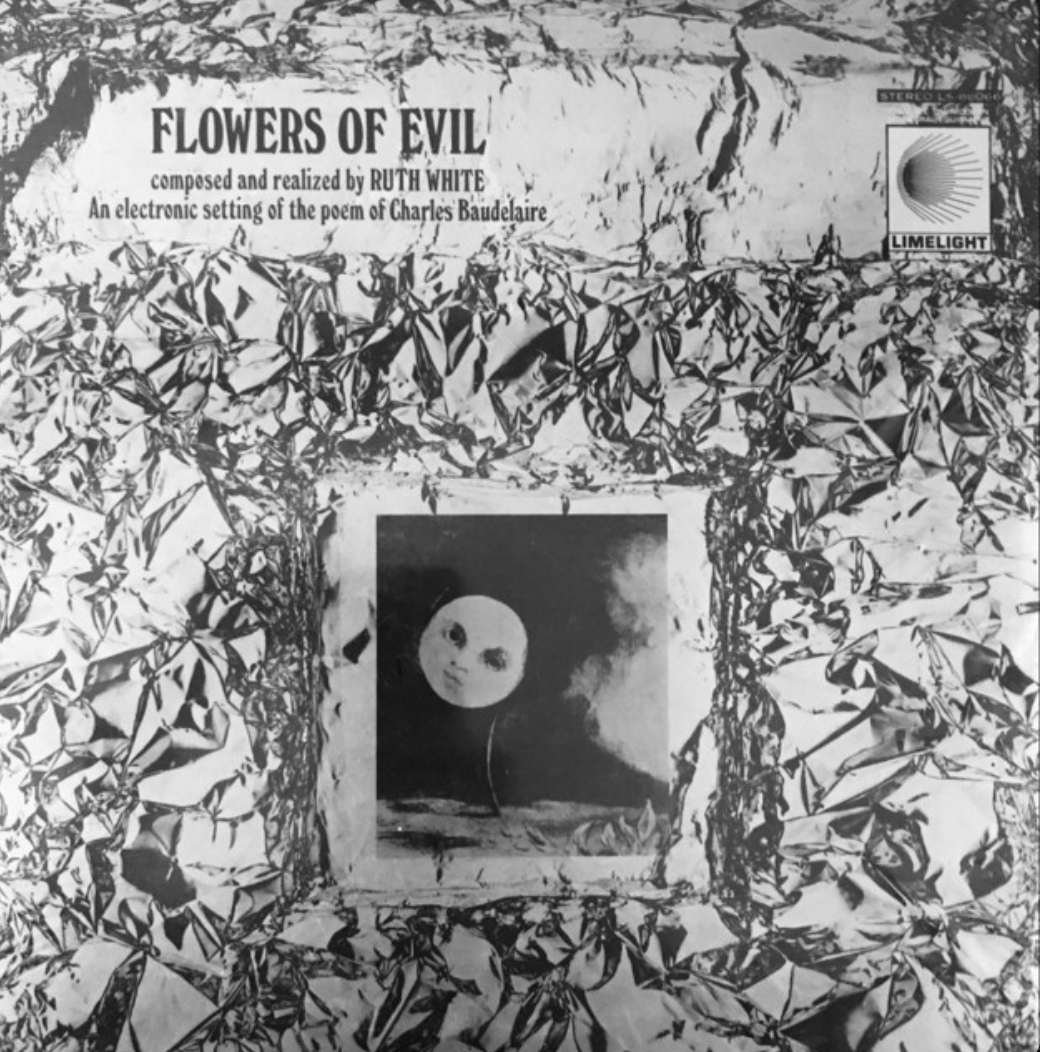
Fiendish sounds and fever dreams, the devil’s music selection this year is, as ever, a twisted tale of soundtracks, freakish and macabre passages, harrowed indie, horrorcore rap, the theatrical, esoteric post-punk and rock ‘n’ roll jukebox mischief. The selection this year devilishly devised by Dominic Valvona.
Pulp ‘The Mark of the Devil’
My Solid Ground ‘The Executioner’
The Wytches ‘Coffin Nails’
The Awkward Silences ‘Haunted by my own ghost’
Byron Lee & The Dragonaires ‘Frankenstein’
Naked City ‘Graveyard Shift (Live in Quebec 1988)’
itsokaylove & Black Wick ‘The Grim Denial’
Casper Ghostly & Uncommon Nasa ‘Floor Thirteen’
Lords Of The Underground ‘Psycho’
Fatboi Sharif, Driveby & Lungs ‘Basquiat Painted Transylvania’
itchy-O ‘Entangled|Unbinding – JG Thirlwell Remix’
The Northern Lighthouse Board ‘Ancient Sorceries’
Ruth White ‘The Litanies of Satan’
Nick Kuepfer ‘Vampyro’
Thomas Truax ‘The Cannibals Have Captured Our Nicole Kidman (Sebastian Reynolds Remix)’
The Eurosuite ‘Reflection Monster’
Kitchen Cynics ‘Phosphorus Tenement’
Lalo Schifrin ‘A Pact with Satan’
Pere Ubu ‘Satan’s Hamster’
Sonic Youth ‘Satan Is Boring’
30 Door Key ‘Cavern Of The Seasons Gone By’
Tetsuo ii ‘The Howling’
The Pretty Things ‘Death’
Mint Tattoo ‘Mark Of The Beast’
Librarians With Hickeys ‘Ghoul You Want’
The Legless Crabs ‘Sleep Sweet Satan’
Candice Gordon ‘Cannibal Love’
So Beast ‘Beastride’
Society of the Silver Cross ‘Mourning the Night’
A smattering of previous Halloween playlists and posts:
From 2012: Selection of Youtube videos and tunes.
Halloween 2024: Chthonian Party Tunes: King Gizzard, Vampire Rodents, Dust, Paten Locke, Head Shoppe…
October 24, 2024
THIS YEAR’S FIENDISH PLAYLIST SELECTED BY DOMINIC VALVONA
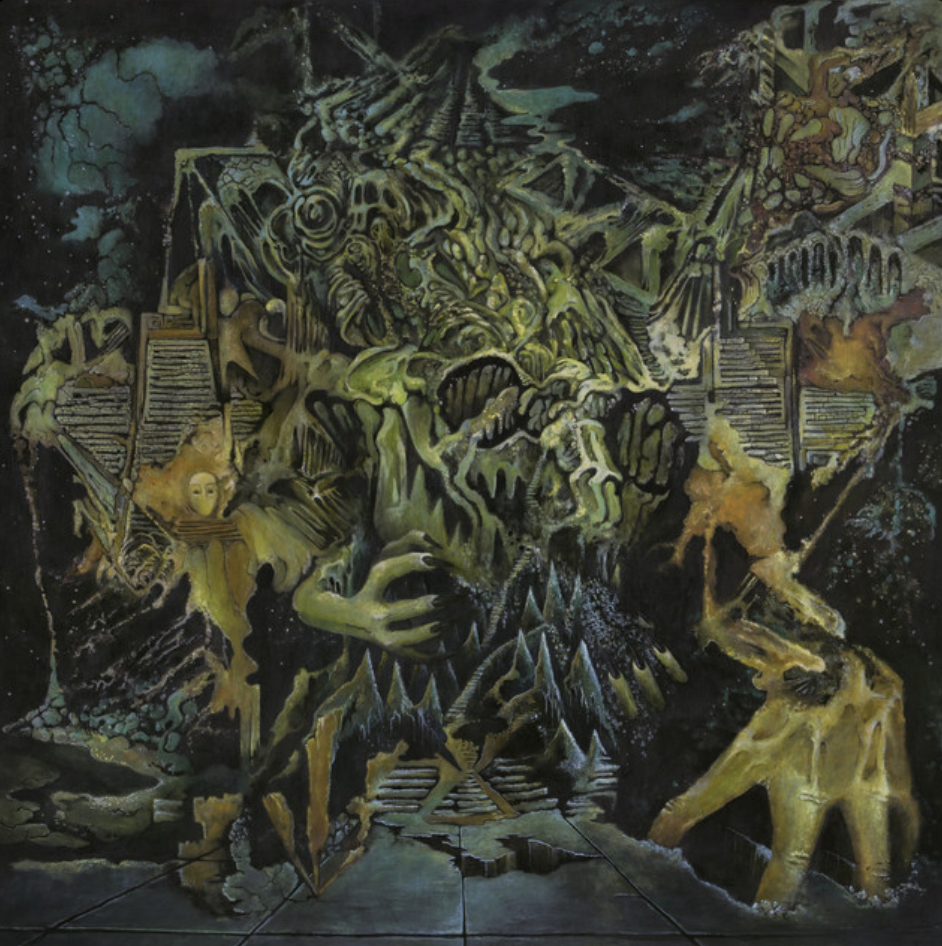
Morbid curiosities, ghoulish treats, horrorcore, and japes aplenty in this year’s Halloween playlist, as Dominic Valvona picks out 33 spooked, daemonic, Fortean and atmospheric tracks from across the decades and from an array of genres.
For your weekend mis-pleasures, sabbaths or monster mashing rave-ups, an ideal playlist of the macabre, esoteric and hellish.
Philip Martell ‘The Devil Rides Out Main Theme’
Shakane ‘Dance of the Dead’
Bass Drum of Death ‘No Demons’
Aphrodite’s Child ‘Babylon’
Andarta ‘Dehumanise’
King Gizzard & The Lizard Wizard ‘Vomit Coffin’
Vampire Rodents ‘Creeper’
CIX ‘Male Fantasies’
Vampire Lust ‘Lucretia My Reflection’
The Nausea ‘Respice Finem’
Drew Mulholland & Garden Gate ‘Witching Hours’
Tudor Lodge ‘Willow Tree’
Dhidalah ‘Dead’
Nicole Faux Naiv ‘Neocortex’
Ivan The Tolerable ‘Time Is A Grave’
Giuseppi Logan Quartet ‘Dance of Satan’
The Bollock Brothers ‘Horror Movies’
Dust ‘Learning To Die’
Lincoln Street Exit ‘Die’
Hawkestrel ‘Now I’m Feeling Zombiefied’
Pidgins ‘These Models Scale’
Faust ‘Beam Me up, Scotty’
Vox ‘Metaphysical Back Alley’
RJD2 ‘The Horror’
Paten Locke ‘Canseco’
MadShroom MC, Wolftone ‘WOLF SCAT’
Peter Principle ‘Werewolves at the Gates’
Dylan Jack Quartet ‘Of Caves, Tombs and Coffins’
Dando Shaft ‘The Black Prince Of Paradise’
Andre Tschaskowski ‘Threat and Suspense Pt. 11’
Modern Silent Cinema ‘The Moving Coffin’
Head Shoppe ‘Seance’
Philip Martell ‘Dracula AD 72 Main Theme’
Halloween Special Part II: Itchy-O ‘Sypherlot/Hallowmass’
October 27, 2021
ALBUM PREVIEW/REVIEW: Dominic Valvona
PHOTO CREDITS: Memorandum Media and Michael Rehdish
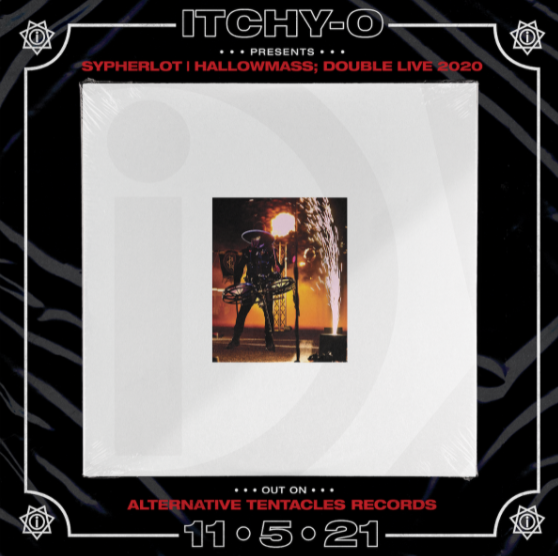
Itchy-O ‘Sypherlot/Hallowmass: Double Live 2020’
(Alternative Tentacles) 5th November 2021
At their satanic majesty’s pleasure the Denver invocation, and 57-strong collective, Itchy-O decided last year to record for posterity two of their esoteric-industrial-drive-in shows. If you’ve never set eyes on this immersive spectacle for all the senses, the Itch both resemble and sound like a LED light show and workshop sparked carnival of Holy Mountain Alejandro Jodorowsky, Mad Max, Ministry and a drum rattling regiment from the Mexican day of the dead.
With morbid curiosity this behemoth of a performance ritual have mostly kept recordings to a minimum, with captured live activities popping up either on Youtube or exclusively streamed via a chosen platform. Across an epic scale double-album format, two such chthonian and daemonic concerts appear on wax; the first, Sypherlot, captured an August performance in the “expansive” parking lot of Denver’s Mission Ballroom, the second, Hallowmass, captured a Halloween communal cleansing at the Colorado city’s now demolished New Tech Machinery building. Both occasions took off despite the miasma and restrictions of the pandemic, and both signaled a cathartic and provocative gesture in the last year of Trump’s presidency. Above all, Itchy-O seek to “eviscerate” both old and new ideas of entertainment and live music.
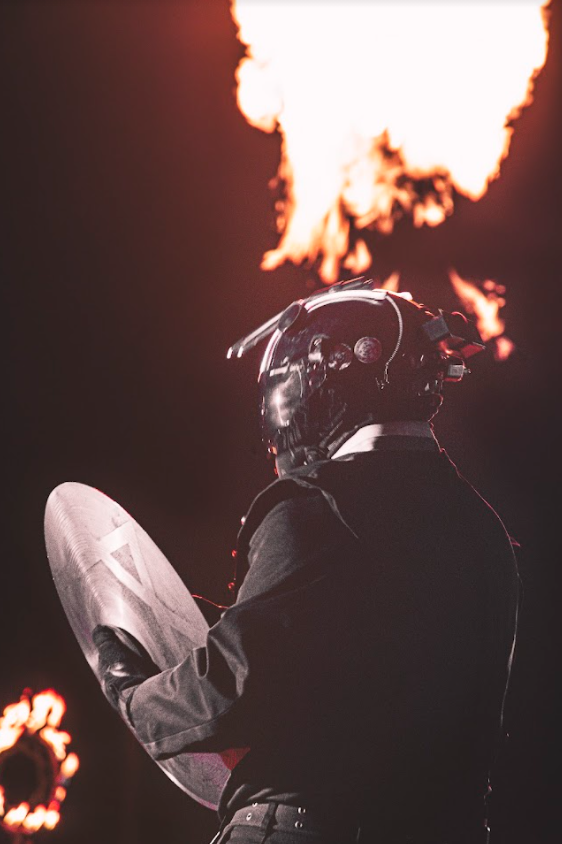
Like a macabre theatre in which various belief systems and deities are called forth, the masked, almost anonymous costumed cast provide a real dark arts sanctuary, which they haven’t always limited to their own pentangle spread arena, but gatecrashed various events, festivals and even appeared onstage with David Byrne and St. Vincent.
Last August’s Sypherlot show (if the recordings are anything to go by) conjured up occult forces from across the globe and time: The MGM back lot sword and sandal meets krautrock doom rumbled march of ‘Saptaloka’ even referenced both Buddhist and Hindu cosmological realms of existence. Growled distorted and fuzzed up metal wielding guitar riffs and scowls, a carnival of lost souls vision of Brazilian samba drum chaos, slithered metallic tentacles and gestured bestial menace prove the order of the day. Under a ‘Blood Moon’ atavistic rituals and mantras receive a regimental rhythmic rattle and deeper thudding bass accompaniment and a vague scent of Haiti, Africa, Arabia. ‘Gallow’s Disco’ shows some…well, gallows humour of a kind as the dead man walking swings and dances to a strange transmogrification of samba drums and whistles – a bit more of that Brazilian carnival of the dammed vibe. By the time we’ve made it through the creeps, ghouls and Biblical scale heavy metal doom rocking drama, we’re led into a primordial soup of ectoplasm grief, wails and ghostly visitations.
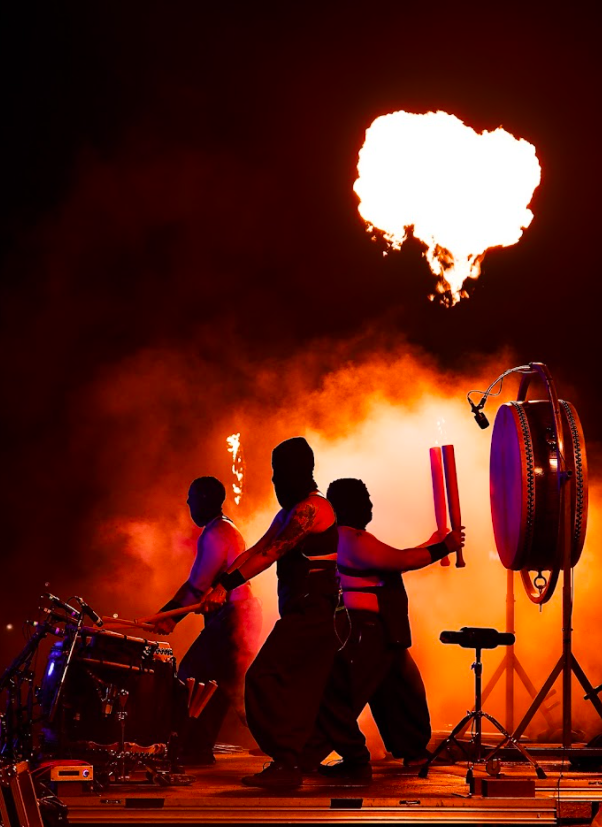
Originally a three-night run last Halloween, the second half of this double-album, Hallowmass, is every bit as supernaturally menacing and esoteric in scope, with its communions with the old gods. In fact, ‘Dance Of The Anunnaki’ makes reference to deities from the ancient world, from the Babylon and Sumerian to the Assyrian. The atmosphere is mystical Tibet, chariots of the gods Maya, Byzantium and alien. Mind you the opening ‘Mystrabia, Under The Lake’ sounds like Jah Wobble meets Sunn O))). With a signature chorus of taiko drummers and devilish sonics the acolytes beat and clatter away whilst tuning into spook radio.
Monolithic sized Sabbath riffs and flamed tequila shots permeate an often surprisingly rhythmic black mass bonfire night; the meeting point for a ritual burning of the stresses, agonies of such end times. Hallowmass was an opportunity for attendees to hand over artifacts, mementos and representations to be burned and sacrificed, a ceremony to “honour impermanence” and “the loss felt so heavily” during the Covid pandemic.
The car seat audience certainly felt connected, part of these theatrical rites and magick entertainment: You can hear that with through the ad hoc applause of car horns after each mammoth track. Without the visuals, live spark it could all seem flat, disconnected, but sonically this wild double-album is as atmospheric as it gets; a bombastic esoteric circus of doom, torment but also spooked levity – put it this way, I get the impression Itchy-O don’t take themselves too seriously. Released oddly on what will be our Bonfire night celebrations, the album obviously screams Halloween – admittedly the album will be on sale at the collective’s three-night Hallowmass performance this year. Anyway, it’s a great piece of occult, and cult for that matter, musical performance to both enflame and raise the spirits.
Hi, my name is Dominic Valvona and I’m the Founder of the music/culture blog monolithcocktail.com For the last ten years I’ve featured and supported music, musicians and labels we love across genres from around the world that we think you’ll want to know about. No content on the site is paid for or sponsored and we only feature artists we have genuine respect for /love. If you enjoy our reviews (and we often write long, thoughtful ones), found a new artist you admire or if we have featured you or artists you represent and would like to buy us a coffee at https://ko-fi.com/monolithcocktail to say cheers for spreading the word, then that would be much appreciated.
Halloween Part One: The Horrorscope Playlist
October 25, 2021
PLAYLIST SPECIAL: Dominic Valvona
Caught by the ghoulies (that must have hurt), creeping through the haunted vestiges of a civilization: a rotting corpse of despair, yet filled with mischievous howlers. Contacted through séance; invoked by demonic numbskulls. It can only mean one thing: it’s time for the annual Monolith Cocktail Halloween playlist.
Soft souls and those with a nervous disposition look away now; cover thy ears. For 2021 was a most frightening year of plague, war, pestilence and all together real crisis. The Four Horsemen looked to me to be circling, if not resting on the hard shoulder, preparing for a swift Armageddon, whilst those with the zillions fucked off into space to escape this wretched, cursed world– I’m only jealous.
There’s a whole lotta witch-burning going on this year, with all things bewitching from Troyka, Pointed Sticks, Sam Gopal. The Devil in his many guises appears courtesy of The Halo Benders, Drab City, Peace And Love, Raw Material, El Ritual and Last Exit. And we have macabre jazz from Leon Thomas, a funky fresh Dracula from soul force Don; and black magick invocation from Al Lover.
But don’t despair as the Gloria angels have come prepared with ‘Holy Water’ and th1rt3en and Pharoahe Monch have brought along ‘The Exorcist’.
Check out in a few days time our review of the upcoming Itchy-O double album.
Track List:
The Halo Benders ‘Devil City Destiny’
Billy Changer ‘Black Angel’
Walter Daniels, Oblivians & Monsieur Jeffery Evans ‘Rockin’ In The Graveyard’
Pointed Sticks ‘The Witch’
Sam Gopal ‘Season Of The Witch’
Gloria ‘Holy Water’
True West ‘Lucifer Sam’
Al Lover ‘Black Magick Starter Jacket’
th1rt3en & Pharoahe Monch ‘The Exorcist’
Drab City ‘Devil Doll’
Don ‘Soul Dracula’
Peace And Love ‘Against The Devil’
Univeria Zekt ‘Something’s Cast A Spell’
Zior ‘Vampire Night’
El Ritual ‘Satanas’
Maria Monti ‘Il Serpente Innamorato’
Last Exit ‘Devil’s Rain’
The Terminals ‘Psycho Lives’
Mister Modo ‘Dark Ambient Theme 4’
Peter Schickele ‘The Priest Of The Raven Of Dawn’
Sunforest ‘Magician In The Mountain’
Raw Material ‘Race With The Devil’
Xqui X Sound Effects Of Death & Horror ‘Timete’
Between ‘Katakomben’
Leon Thomas ‘Shape Your Mind To Die’
Stefano Torossi ‘Fearing Much’
Dogfeet ‘Armageddon’
Also may like to tackle these grim playlists:
Halloween Playlist Special
October 28, 2020
Playlist
Dominic Valvona/Brian ‘Bordello’ Shea

Though 2020 has been the “annus horribilis” of annus horribilis years, we can at least come together to burn effigies, light the red candles, draw the pentagram, commune with the spirits (much more of those this year) and, well, strong arm the poor citizens of the world into giving out candy. Fear not (or do) we at the Monolith Cocktail haven’t just compiled one, but two ghoulish playlists this year for your celebrations at the weekend: Dominic Valvona’s devilish mix and Brain ‘Bordello’ Shea’s rock ‘n’ roll, garage raves from the graves selection.
TRACK LIST.:.ONE:.
The Flatlinerz ‘Channel 66’
Mr. Hyde ‘Truth Of The Beast’
The Spaceshits ‘Piss On Your Grave’
Iron Claw ‘Skullcrusher’
Rick Van der Linden ‘Witches’ Dance’
The Sorcerers ‘The Horror’
Tucker Zimmerman ‘Talking To The Demon’
Orphan Egg ‘We Have Already Died’
Tonbruket ‘Tarantella’
Bulbous Creation ‘Satan’
Peter Thomas Sound Orchester ‘Der Hexer’
Eddy Detroit ‘Evil Dark Face’
Johann Johannsson ‘Forging The Beast’
Dead Moon ‘Graveyard’
Syd Dale ‘Black Shape’
Snowy Red ‘The Right To Die’
Bat For Lashes ‘Vampires’
Alessandro Alessandroni ‘Dance Of Death’
David Liebe Hart ‘Haunted By Frankenstein’
Les Maledictus Sound ‘Monster Cocktail’
Alex Chilton, Ben Vaughn & Alan Vega ‘The Werewolf’
Night Beats ‘Dial 666’
Sunburned Hand Of The Man ‘Ritual Hex Tape’
Wall Of Voodoo ‘Dark As The Dungeon’
Sandro Brugnolini ‘Villa Polanski’
Foetus ‘Lilith’
Writing On The Wall ‘Lucifer Corpus’
Raw Material ‘Race With The Devil’
Gurumaniax ‘Ghosts Of Odin’
Dennis Farnon ‘Dark Glass (A)’
Byard Lancaster ‘Satan’
By Dominic Valvona
TRACK LIST.:.TWO.:.
Dave Edmunds ‘The Creature From The Black Lagoon’
Gene Vincent & His Blue Caps ‘Cat Man’
Larry & The Blue Notes ‘Night Of The Sadist’
Daniel Johnston ‘Devil Town’
Teenage Fanclub ‘Vampire’s Claw’
Andrew Gold ‘Spooky, Scary Skeletons’
The Fuzztones ‘Ghost Clinic’
Eddie Noack ‘Psycho’
The Cramps ‘The Creature From The Black Lagoon’
The Shangri-Las ‘Monster Mash’
Magnet ‘Masks/Hobby Horse’
Vincent Price ‘House On Haunted Hill (I)’
The Bordellos ‘Whistling Through The Corpses’
Occult Character ‘Forty Million Skeletons (Can’t Be Wrong)’
Salem Trials ‘Ugly Puppets’
Julian Cope ‘Reynard The Fox’
Elvis Costello & The Attractions ‘The Invisible Man’
Billy Fury ‘Don’t Jump’
Eartha Kitt ‘I Want To Be Evil’
By Brian ‘Bordello’ Shea
Halloween Playlist: Ghouls, Ghosts & Goblins: Acanthus, Les Baxter, Gravediggaz, Vukovar…
October 25, 2019
PLAYLIST
Dominic Valvona

Cult B-movie European soundtracks, spine-tingling schlock and spooked, chain-rattling horror fuzztones aplenty. Yes, its that time of the year again, the bewitching hour is nigh, and so another one of Dominic Valvona’s special Halloween playlists.
To accompany any freaks ball, ghoulish themed soiree, candelabra lit dinner party, macabre shindig and black mass, the perfect soundtrack of devilish nonsense. Includes the bell tolled meaning doom of Acanthus, the kool aid hell-trippers St. John Green, the rebel county seedy James Gang, horrorcore rap doyens The Gravediggaz, the despairing Gothic romantics Vukovar, bewitched folk troupe Sproatly Smith and many more.
Previous ghastly selections:
Dominic Valvona’s review roundup of new releases

As ever, another fine assortment of eclectic album and EP reviews from me this month, featuring new releases from David Cronenberg’s Wife, Kid Kin, Jack Ellister, Paul Jacobs, Quimper, Spaciousness and Paula Rae Gibson & Kit Downes.
In brief: I take a gander at new EPs from the cinematic post-rock artist, composer and producer Peter Lloyd, who releases his swathes of guitar-electronica under the Kid Kin pseudonym, and the Autumnal songbook of self-deprecating, sardonic love trysts and illusions from London’s bastions of antifolk, David Cronenberg’s Wife.
Album wise there’s the beautifully penned troubadour psychedelic folk and scenery instrumentals of Jack Ellister’s Telegraph Hill – his first LP for the You Are The Cosmos label -; the barreling scuzzy garage and synth psychedelic lo fi magnificence of Paul Jacob’s Easy; the esoteric surrealist magic-realism of Quimper’s Perdide, a new age ambient compilation; Spaciousness, from London’s Lo Recordings that attempts to praise and explore the ambient musical genre, in what is the first in a series of collections from the label; and the first, and challenging, collaboration between the experimental siren Paula Rae Gibson and British jazz pianist Kit Downes, Emotion Machine.
Paul Jacobs ‘Easy’ (Stolen Body Records) 19th October 2018

The very first sloppy collides of a track on this most fuzzy of hurtling and chaotic albums of vapour-wave pop, stonking garage and psychedelic twists and turns, could be, for all I can make out, a reversed bastardization of Bowie’s own ‘Holy Holy’. It certainly has the proto-Glam and strung-out rock’n’roll stomp of that record, but the maverick Paul Jacobs slurs and languidly warps, whatever it is, into a distortion-levels noisy Ty Segall.
Jacobs, who has already released eight albums of similar dizzying Kool Aid induced barrages (mostly on his own), indolently throws-up vague musical references throughout his latest album for the Stolen Body Records label; whether that’s turning on his best Lodger/Scary Monsters intonations and strutting messily but surely to an amalgamation of Liars and Blancmange on the cheque-cashing ‘Expensive’, or, whistling to the Native Indian backbeat of Adam And The Ants on ‘Laundry’, or, channeling PiL, the Killing Joke and Spiritualized on the Gothic spooked to deranged dreamy lullaby escape of ‘Trouble (Last Song)’. But you’re just as likely to hear passing shades of Sam Flax, Ariel Pink and Alan Vega swirling and bobbing about in the cycle wash of clattering sound clashes: It might all sound like a shamble. But it’s a most magnificent, bewildering and dynamic shamble.
Vocally Jacobs is masked under a lo fi mono-like production, which makes it difficult to catch what he’s on about at times. The odd whispered, crooned and melted lyric from these often mundane metaphorically entitled songs offer clues: a pop at the music industry here, soliloquy delivered anxiety, searching for purpose, there.
Layering a garage punk guitar with 1980s drum pad tom rolls, spacey chimes with vapours of post-punk, Paul Jacobs’ barreling, pummeling tunes are far more nuanced and sophisticated than I’ve described: Noisy of course, attuned as it is to a DIY sound, but brimming with riffs, hooks and splashes of radiant synth and psychedelic pop.
Cut from the same cloth as, the already mentioned, Liars, Ty Segall and Ariel Pink, Easy is an amazing record, a breakdown in motion, a racket that takes its core garage rock pretensions into the future.
Jack Ellister ‘Telegraph Hill’ (You Are The Cosmos) 27th November 2018

Penning a most placeable album, keeping it for the most part intimate, Jack Ellister’s latest collection of hazy troubadour balladry is turned down low and sweet, played out mostly on the acoustic guitar.
Normally associated with the Fruits de Mer label, releasing a string of singles and albums for them over the last six years, Ellister’s personable third album has found a new home on the You Are The Cosmos imprint.
An almost solitary affair, the multi-instrumentalist playing almost everything but the drums (played by long time collaborators Tomasz Helberg and Nico Stallmann), Telegraph Hill is an often lilted and twilled songbook of melodious psychedelic folk. The Telegraph Hill of that title refers to Ellister’s home studio in South East London, which can be read as an indication of his homely themes of belonging, of finding solace in the simple things and loved ones. The focus of many of these songs being the love-of-his-life muse, he expresses a joyful contentment throughout; wistfully and dreamily waxing lyrically like a lovesick Romeo.
Originally conceived as an EP bridge between albums, the nine-track Telegraph Hill is quite short in running time, and features a few instrumentals, two of which are more like passing interludes that seem to be added as padding; especially the final great American plains, Andes and Australian Outback merging, softened Native Indian stomp and gliding bird flight descriptive guitar peregrination, ‘Condor’. To be fair, the pastoral empirical ‘Maureen Feeding The Horses’, with its encapsulation of a rural scene (a moment in time) that captures a trapped kaleidoscopic sun shining through glass, illuminating this naturalistic aside, fits perfectly. ‘Icon Chamber’ however, seems an odd throwaway library music experiment from the laboratory in comparison.
Ellister is at his best when tenderly strumming a paean and singing; his fuzzy voice evoking a young Leonard Cohen on the Medieval chamber folksy ‘Roots’ (one of the album’s highlights), both Donovan and Tim Burgess on the trippy warbled flute-y and drum shuffling ‘High Above Our Heads’, and Syd Barrett on the Floydian via an enervated samba saunter ‘Mind Maneuvers’.
From pea-green seas of psychedelic nursery rhymes to 18th century inns, Ellister’s magical stirring atmospheres and folksy odes sound at any one time like visages of Caravan, The Incredible String Band, Fairfield Parlour, Spiritualized, Mike Cooper, Primal Scream and Roy Harper. Unobtrusive and unguarded, Telegraph Hill lays Ellister’s sensitive soul bare on what is, for the most part, a most assiduous halcyon earnest album of brilliantly crafted songs.
Kid Kin ‘Kid Kin EP’ November 2018

Never mind the worms the ‘Early Bird’ of the new EP from the Oxford multi-instrumentalist, producer, composer Peter Lloyd, has in this instance, caught the cyclonic glassy arpeggio rays of a multilayered crescendo instead. The third instrumental track from an EP of wide-lens anthemic post-rock visceral evocations, ‘The Early Bird’ features Lloyd’s signature ‘quiet/loud’ suffused climaxes and build-ups of various synth lines and descriptive, waning guitars.
Conceived as an encapsulation of his ‘connective’ ebb and flow live shows, Kid Kin is best experienced in its entirety, from beginning to end. Each track is separated – though ‘The Early Bird’ is followed by the Four Tet remix-esque radiant kinetic ‘Gets The Worm’, but in title split only – with no particular overlay or link. But squeeze them together into one continuous performance it would work well.
Saving his music from erring too close to Ad lands staple ideal of epic rock (U2, Coldplay), the opening ‘Jarmo’ vista sounds like a lost Mogwai soundtrack. The swelling, mindful but lifting towards the light ‘War Lullaby’ (which also features a strange 8-bit pinball ricocheting moment of electronica chaos) isn’t more than a fjord’s distance from sounding like Sigur Rós: a good thing in this case.
Confidently soundscaping post-rock panoramas, Peter Lloyd’s synthetic swathes and resonating layered guitar mini opuses are missing a documentary film. So descriptive is the drama and narrative. If immersing yourself in an ambient cinematic rock vision of moody and stirring expanses sounds right up your proverbial street; if you’re tired of post-rock’s old guard, then take a punt on the Kid.
Quimper ‘Perdide’ October 10th 2018
Curious oddities from beyond the ether and surface of Stefan Wul’s sci-fi paperback world of Perdide (the planet immortalized in the French author’s cult The Orphans Of Perdide) permeate the latest surreal musical séance from the beguiled Quimper duo.
A timely release for the bewitching hour, summoning up, as it does, vague vapours of Eastern European art house magical-realism, and imbued by both the 1970s library music and British horror soundtracks favoured by the Belbury Poly, The Advisory Circle and Berberian Sound Studios period Broadcast, Quimper once more occupy the esoteric heights.
Lynchian, peculiar, innocence turned into something otherworldly, the John Vertigen and his apparition vocalist foil Jodie Lowther (who also illustrates all their various releases) duo float, waft and shuffle around the most mysterious and kooky settings.
A whispery translucent cooed lullaby about the ‘Lovely Bees’, can eerily take on a most unsettling feeling, as Lowther’s vocals, or rather the most distant traces of them, channel a childish-like Japanese spirit to the accompaniment of a sinister dreamy sounding Roj. Elsewhere on this claustrophobic haunting soundtrack, Quimper imagine Mike Oldfield and John Carpenter communing, on the shivery spirit conjuring ‘Skin Without Size’; transduce an enervated vision of Richard James’ Polygon Windows through a ghost’s dissection, on ‘Vivisection’; dance to a mambo beat whilst a 1920s magic show opens a trapdoor to some snake god on ‘False Serpent Opens Doors’; and enact mellotron-mirage bucolic worship on, ‘Christ In A Field Of Caravans’.
They do all this from behind a gauze-y film of soft, wooing reverberation; only the essence, the air-y remains of what was once concrete, have been captured; broadcast, it sounds, through a Medium. Lynch should rightly love this stuff, especially Lowther’s untethered, so delicate and lingering as to not exist at all, nursery rhyme like siren calls. Perdide is one of the duo’s most interesting, realized albums yet, an illusionary surrealist world of creeping dreamscapes.
Various ‘Spaciousness: Music Without Horizons’ (Lo Recordings) 2nd November 2018

Tainted in part by its reputation for pseudo-hippie idealism and penchant for irritating whale song and the sounds of the rainforest – the soundtrack to countless holistic day spas -, new age music summons up a myriad of less than flattering connotations. Of course, as this first in a series of showcase purviews will prove, there’s actually much more to this often-maligned musical form.
In partnership with former Coil member Michael J York and musician/writer polymath Mark O Pilkington’s Attractor Press platform, Lo Recordings are here to celebrate its resurgence and more aloof, spiritual and philosophical highlights. As part of a wider project that will include writing, still and moving images and live events, the overlapping, multi-connective Spaciousness compilation provides an audio lineage; balancing peregrinations from both new age (but also embracing deep listening and post-classical) music’s progenitors and rising stars.
A leading luminaire, the divine styler of radiant transcendence, Laraaji, has by happy accident given this double-album straddling selection its title. Laraaji, who has himself, enjoyed a renewed interest in the last few years, especially for his ties to Brian Eno, and of course spiritual ambient quests, pops up partnering the Seahawks on the suitably aquatic undulated ‘Space Bubbles’ tribute to new age inspiration, dolphin-whisper, floatation tank and mind expanding drugs evangelist, John C Lilly. Another of the pioneers, Lasos, appears alongside the contemporary artist Carlos Gabriel Niño (one of the new guard, bridging the gap between the new age, the meditative, jazz and free form; signed to David Matthew’s – more of him later – expletory Leaving Records). The pair plays around with light on their majestic searing, glistening panoramic finale, ‘Going Home’. Lasos alongside another great doyen of the genre, Steven Halpern, were among the first artists to subvert and work outside the perimeters of the mainstream music industry; circumnavigating it by dealing direct with their audience through mail order cassettes.
Two of the already mentioned catalysts for Spaciousness, instigators behind Strange Attractor Press, also appear (under the Teleplasmite nom de plume) paying homage to a visionary muse, Ingo Swann. Propounding ‘remote views’, an artist and psychic, the duo construct a suitable Kosmische vaporous evocation on the roaming ‘Song For Ingo Swann’. Posthumous tribute is also paid to the late composer Susumu Yokota, with an ‘inter-generational span’ remix by DK of his dissipated ‘Wave Drops’ exploration; a soundscape of horse snorts, abstract saxophone, steam and Far East moorings.
The second wave of this new age movement is represented by artists such as MJ Lallo, who’s venerated, and equally expansive 2001: A Space Odyssey like, traverse, ‘Birth Of A Star Child’ is featured. Written originally for the Vatican in the 1980s, this version has been borrowed from a recent compilation of her home studio recordings, Take Me With You (1982-1997), this monastery in space choral eulogy was made by processing computerized drums, synth and Lallo’s voice through a Yamaha SPX 90 digital effects unit to produce an otherworldly, ageless sense of ominous awe.
Possibly one of the better-known figures of the last decade or more in his field, the renowned musician/producer and Tangerine Dream affiliate member in recent years, Ulrich Schnauss, partners with Lo Recordings founder Jon Tye on the jazzy desert wandering ‘Orange Cascade’. The duo’s diaphanous lulling visionary textures explore the intersection between live instrumentation (wafts of saxophone, sitar and flute in this case) and synthesized sound.
The most contemporary wave, so to speak, is represented by Matthew David’s (as Mindflight) Jon Hassell resonant stratospheric hymn ‘Ode To Flora’; Cathy Lucas’ ‘mating song of quarks’ primal soup bubbling and vague jazzy translucent ‘Chatterscope’; and Yamaneko’s ‘one big stare out of a bedroom window at 2 am’ sanctified, page-turning, mysterious ‘Lost Winters Hiding’. All these artists add to, or share, the vastness of space with their new ageism and cerebral ambient forbearers; a sign if any were needed that we could all do with a pause and a deeper purposeful meditative break from the divisive-ratcheted noise of our times.
In waves and cycles, the transcendent and deeply thoughtful search for peace and new horizons is gathering a pace. And what better example of its reach, scope and lineage (and future) than this inaugural Spaciousness purview; a collection that will do much to illuminate as push forward the limits of the new age and its various ambient sub genre strands and astral flights of fantasy. A great start to a wider investigation.
Paula Rae Gibson & Kit Downes ‘Emotion Machines’ (Slowfoot Records) 2nd November 2018

Amorphously set adrift into the abstract, untethered in compositional serialism, renowned photographer and experimental siren Paula Rae Gibson and collaborative foil, the acclaimed, award-winning British jazz pianist Kit Downes set out on a most challenging travail on the new album, Emotion Machine.
Already deconstructively – though also at times melodiously flowing – applying both equally stark and diaphanous vocals to a quartet of albums, Gibson’s minimal, but often striking, voice is in its element up against and submerged beneath Downes’ fine layering and often attenuate arrangements. Neither strung-out jazz nor avant-garde cabaret, the duo’s inaugural collaboration together is more conceptual sound design and dissonant drone than musical, with the odd flurry of neo-classical piano, some transduced cello and a splash of brushed-shuffled drumming offering the only traces or recognizable instrumentation throughout.
Re-translating their Delta Blues, Icelandic art-rock and early musical inspirations in a frayed somber and emotionally retching environment of uncertainty, they inhabit a miasma of toil and pained expression. In this gloom of uneasy, sometimes plaintive, surroundings the pauses, resonance and spaces are just as important as the minimalist instrumental accents and stripped-down-to-their-refined-essence-of-understanding fashioned lyrics: Gibson’s mix of concomitant couplets, stanzas and one-liners are left hanging in the expanses whilst Downes quivery, motor-purring snozzled and waned backing fades, dissipates or stops dead.
From the ethereal to the contralto, beautifully gossamer to ominously discordant, Emotion Machines is an efflux between the timeless and contemporary. Conceptually and artistically pushing the musical boundaries, as much a performance piece as cerebral exploration of the voice, Gibson and Downes interchange their disciplines to produce an evocative suite of poignant expressive heartache and drama.
David Cronenberg’s Wife ‘The Octoberman Sequence’ (Blang) 26th October 2018 (Download)/ 2nd November (Ltd. 12” Vinyl)

Weaponizing sardonic wit and despondency with élan, the antifolk cult London band, David Cronenberg’s Wife, offer up a signature serving of slice-of-life anxiety-riven and cross-signaled love derisions on their Autumnal EP.
Featuring a doublet of previously unrecorded resigned romantic numbers but fronted by the ‘live stalwart’ ‘Rules’ – two versions in fact; the single edit, a safe for the dour risk-averse airways, omits the only swearing word in the song: “Fuck around” -, The Octoberman Sequence is a most generous release from the DIY scenesters. ‘Rules’ itself is a galloping anthem that builds momentum and just keeps rolling on, pouring a hearty scorn on life-plans, the anguish life choices of the hand wringing middle classes, and Hollywood’s false platitude perfections as a strutting backing track of ? And The Mysterians/Sir Douglas Quintet organ stabs and proto Stooges (as fronted by Ian McCulloch) plows on. It’s easy to hear why this has become a live favourite. For one thing it dismembers the bullshit, spits out the unthinkable (the rules for s stress-free life, “Don’t marry”, tick, “Don’t have kids”, tick, being the first of the DCW’s seven-rule commandments), but above all, sounds great.
As for those previously unrecorded songs, the slumbered voice-over ridicule with lulled female accompanied ‘You Should See’ sets up our misdirected protagonist on a awkward date: So awkward in fact and indecisive, our lead’s inner monologue and own assured boastful knowledge of literature prompts him to spill the sexual predilections of Marcel Proust, before shuffling off home to “Masturbate over films made in the Czech Republic”. The other song, ‘The Dude Of Love’, is a 1960s good ol’ Freebird Southern boogie with a Kinks style chorus semi-stalker ditty. A rich, seedy, tableau of delusional creeps on the London Underground – one, a Lynyrd Skynyrd reject, the other, our awkward, but still egotistical, friend who seems to have totally misread the signals.
Nestled alongside these are the more serious intoned appendage love muscle punned ‘Love Organ’, and dour counterculture meets lamentable country blues troubadour ‘Song For Nobody’ – a kind of Dylan-as-pinning-cowboy paean turn disgruntled love rat finality that ends on a sour note.
Corralling the ditsy platitudes and unrealistic expectations of love in the age of #MeToo, DCW with wicked relish rattle and roll to their own unique post-punk, post-country and antifolk bombast on what is another clever and candid realized songbook of self-depreciation and protestation.

