The monthly Digest includes a clutch of accumulated short new music reviews, the social inter-generational/eclectic and anniversary albums celebrating playlist and pieces from the Archives.
___/NEW MUSIC REVIEWS___
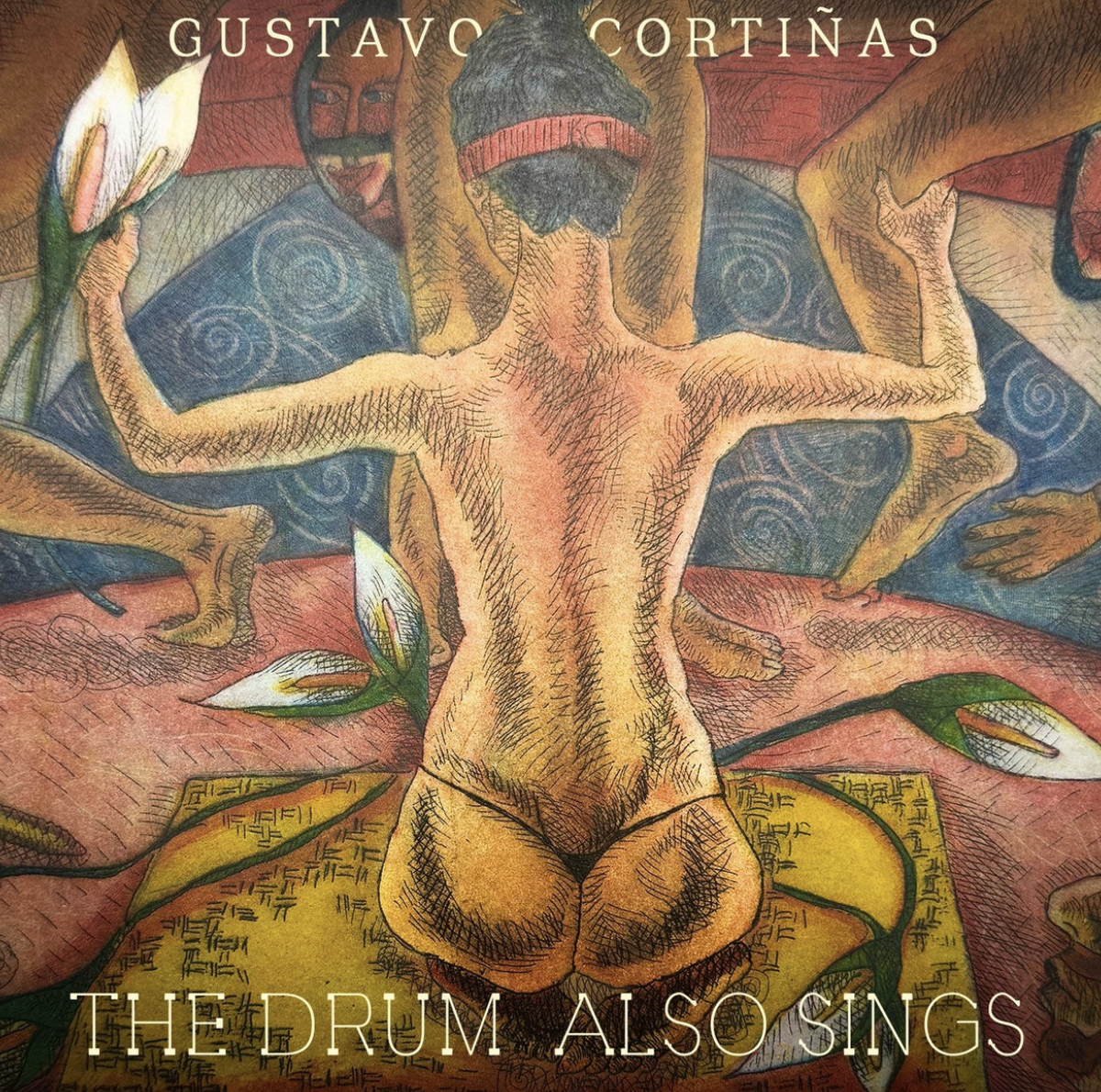
Gustavo Cortiñas ‘The Drum Also Sings’
Released 5th June 2026
Hot-housed within the great Chicago hothouse of influences but stretching way beyond to encompass and be imbued by the talking, communicating, expressive, storytelling drums that made their way across the Atlantic (to both North and South America) from Africa through the heinous slave trade, the latest album by the impressive and noted drummer polymath Gustavo Cortiñas does indeed sing but also gesticulates and splashing around in describing both the abstract and the visceral.
Exchanging rhythms and phrases with his peers, the Chicago-based (via a craft studied and at both New Orleans and Northwestern Universities) drummer extraordinaire, composer, producer and educator shares the studio with not only the living but the luminaries of jazz past: namechecking the rightly exalted and praised Max Roach, championing his famous melodic drumming style, but also at times during the more tumultuous but controlled parts the late great icon’s Absolution period. And via Roach, there’s also a reference to the late Blue Note anointed Chicago great, Big Sid Catlett on one of the album’s triumvirate of “dialogues”. Part II of that same communication with the past, bounded forward into the now, is a collective improvisation of a Papa Jo Jones phrase, the band leader and drummer famously who “anchored” the Count Basie Orchestra during the 1930s and 1940s.
With that much pioneering talent onboard Cortiñas expands the ranks to include the duo percussive and drumming dynamism of Dave King and Isaiah Spencer; the former of course a founding member of both the Bad Plus and Happy Apple, and the latter, the Chicago-born and active instigator of a much enviable exciting and groundbreaking scene both as a collaborator and as the band leader of his own sextet. Whether feeding off of their host, or pummelling away, or finding a secondary rhythm and counterpoint, or rustling and feeding their hand expressions through various snake-like and dry beaded percussive instruments, they match, entwine and often expand each performance across a healthy relay of styles and influences: from Afro-Latin to New Orléans, the carnival and the vine swings of Art Blakey, the big band swing too of the 1920s, and play of Baby Dodds.
But whilst the drums talk a parade of contemporary feminine voices reach back and forth across time, cultures and geography and meaning to sing or speak. The young Tzotzil poet Angelina Suyul, can be heard uttering in the Mayan phonetic across the textually scuffed, sieved, scrapped and constantly rolling, forward momentum expression of Roy Haynes and Anthony Williams-like ‘The Spontaneity Of Heartbeats’, whilst the Chilean singer-songwriter, visual artist and sculptor of electronic folklore, La Paula Horrera,lends a diaphanous lullaby turn fierce and phonetic-dancing plead to the barricade of emotions and swinging drumming and percussive attuned ‘Your Resilience Is Resistance’. Also hailing from the South American continent is the Argentinian vocalist Martya de Humahuaca; a voice that both moves on the air and convulses in an atavistic-like aria over stick-beaten tribal dance rhythms and lolloping rolls. From the much-loved, on this blog anyway, and praised Chicago label hub of International Anthem, polymath (by my reckoning the CV includes composer, improvisor, clarinettist, pianist, vocalist and educator) Angel Bat Dawid interprets Psalm 23 on the closing well of powerful litany and increasingly wildly and disruptive scripture. Reiterating certain lines (that’s the whole “My Lord is my Shepard”, and “Yea, though I walk through the valley of the shadow of death” speech) with ever more energetic and possessed hysterics, Dawid takes the Biblical via the American Spiritual for a tumultuous outpouring of the gabbled and pointed.
Tracing and improvising with the strong and enduring beat that drove jazz, swing, the big bands, the Latin and more, Cortiñas and his foils roll across a porous borders geographically, technically and rhythmically; experimenting with the litany but also with a rewilding of influences, inspirations whilst making expressive overtures and references to Roach and his peers (even those that in turn inspired that giant of the drumming world).
DJ Grzyb & The Make-Believe Ensemble ‘The Return Of DJ Grzyb’
(HUVESHTA RITUALS) Released 10th June 2026
Through a sonic and multilayered ricochet and echoed leitmotif of psy-dub, psy-trance and IDM, fantastical myths are tied together with amorphous cross-references to both Eastern European and Far Eastern folklore, the occult, the hermitic and supernature.
The return of Warsaw-based producer, DJ and live performer Tamten, under the mystically aligned club-sounds anchorite alias of DJ Grzyb, marks a collaborative sonic, rhythmic and absorbed geography of both mushroom induced invocations and new age mantras. Reeling in both a Polish and international cast of artists and musicians, playing a multitude of worldly instruments or using their voices to evoke the right mood, Tamten and friends embark on a sort of quasi-holy mountain rave-up, but one that’s been recorded at Lee Scratch Perry’s Black Ark and then transported to a supernatural and fabled terrain of dream-magic and half-realities. Step forward the roll call of Marysia Osu on lattice-worked and glistened harp; Silky Oolong (aka, we’re told, the later ego of Kaja Domańska) lending an almost mystically entrancing cyber voice whilst giving instruction to a majority of the tracks; Milo Kurtis multitasking with vocals, clarinet, ocarina, percussion and the oddly curious tine twanged zanaz; Sทา้ว หมาหยยุ on an assortment of Thai instruments, including the chuffed and blown Khaen, the thick finger cymbal chimed and rung ching and the traditional bamboo pi phu thai instrument; Andrzej Dudek-Dürer on the brassy resonating sitar and the long-necked tanpura; Otto Topola adding whispery poetics to the lunar shuttering beat trancey ‘The Big Red Moon’, Marysia Osu as a second harpist on a quartet of tracks; Naphta (the alias of Pawel Klimczak) putting down thick wobbled stringy guitar reverberations and plastic tubbed-like percussion on muffled and then galloping ‘The Three Deaths’.
Almost continuous, each track sems to lead into the next, or at least sit in its languid altered state of drugged-up ritual together like a sort of concept album for the raved-up spiral tribe. Left of field reports, mountain worship and tales of the psychogeography fuse with the sound of David Wojnarowicz being transformed via Amorphous Androgynous, the Dead Skeletons, Cosma and Cousin Silas And the Glove Of Bones. Oddities are thrown up by this club-like dream-trance of ideas and traditional transmogrified sounds: The pan-piped Shepard’s ‘The Matys Song’ sounds like The Golden Child score meets Banca de Gaia, whilst the Indian-entranced evocation of ‘Hall Of All Weather Gods’ sounds like something from David Ornette Cherry’s Organic Nation Listening Club.
Reality and myth converse on the pine forest (though it oftens feels musically like the rainforests of new age musical South America) dancefloor on an album that celebrates as much as mystifies and plays with Polish folklore, its history and geographical porous borders of extended fables and alternative worships. Probably sounds even better and makes more sense on mushrooms.
Kirigirisu Recordings Double-Bill
Autodetuned ‘Clutter’
Meadow Argus ‘Dreams Are Another Doorway’
Both released 29th May 2026
A double helping of abstracted tones and sonic atmospheres from former Audio Antihero label stalwart Neil Debnam (of Flying Kites note, and after an accident which put him out of action for a time, the more stripped back Broken Shoulder outlet) and his Tokyo-based platform. After neglecting the label for a fair time, I’ve added to just two recentish releases from the sporadic schedule.
First up and it’s the latest project from the Madrid-based sound artist Juan Cepas, Autodetuned. Eager followers of the genre and its adjoined nodes of influence might recognise Cepas for his improvised partnership with José Mª Pérez-Flor in the 500 Goats duo: first initiated during the Covid pandemic. “Tones over tunes” is the watch word for this solo exploration of concreate and alien industrial experiments.
With an apparatus of contact microphones, effects chains, reverberating trebly guitar strings, various unidentified and unknown metallic tools and objects, pitches and field recordings the results are akin to taking a fantastic voyage of the paranormal inside the very substances of concrete, stone and metal themselves: like a endoscope inside the textures and binding agents of amorphous materials used as foundation building blocks of the various chambers, chasms and more tubular corridors being investigated. Then again, it’s often more akin to the sci-fi, to off-worlds and the haunted presence of mysterious actors funnelling, whistling, stretching out and broadcasting from the Fortean TV set. Signals and communications from the fabric of this strange tonal world are charged with crispy electricity, the overspill of dust speckled rain and the gargle of curious amphibians moulded from cement.
Next, we have a hauntology of dream scenarios, wanderings, fragments that appear during the hours of sleep, problems or enquires that need to be worked out during those somnolent and relaxed hours, by Tynam Krakoff’s Meadow Argus sonic outlet.
The accompanying Bandcamp descriptive spill/part review in itself by Joe Posset kind of does my job for me (it’s a damn fine articulated description of the album for sure) and mentions Boards of Canda (when they were good) as a reference. Spot on with that observance.
But I guess I’d better add something of my own.
Dreams Are Another Doorway opens into a strange, near ghostly and unconscious state of disembodied snatches of dialogues and enquires on the brain. The miracle of thought processes, the retained snippets and incidents, the conversations and ideas that we mull over in that unconscious state are played out over scratchy films of old gramophone and radio broadcasts, ambient ebbs and a ghostly mirage of a sea shanty-like harmonium. Reminisces, the sound of shared laughter is blended with mysterious sound effects and enervated waves of the near ominous and untethered.
From seas of tranquillity to altered states of reality via vague echoes of Mo Wax, Leaf label, The Northern Lighthouse Board, the Orb and even a passing of jazz, Krakoff’s latest soundscape is an immersive experience that will do anything but send you off to sleep. There’s far too much, even in its most ambient and longform passages, to pick out and experience for that. This strange tape embodies an indolent and almost woozy experiment in entering a dreamlike state of inquisitiveness and also a clockwork satsuma of half-remembered interactions, broadcasts and information.
New York City Chapters vs Weird Shit U.S.A. 2 ‘Slow Diet Ketamine Era’
(Artetetra) 30th June 2026
Hallucinating tape spools and the corner ketamine dealer skits converge for a most warped generator of sound and vocal snippets and snatches on this discombobulating and transmogrified mix tape from the weirdo union of Aaron Anderson’s latest illusion-guise and the “sampledelia” and “digital feed hijacking” duo of New York City Chapters.
From dialling into the passing TV broadcasts from across the street vendor’s store to fucking with a stream of Meta and a drug-induced digestion of breaks, misplaces of jazz, the sounds and voices of New York City, the looping eccentricities of just fucking around with effects and speed shifts, and the slicing and spicing of a mental record collection, there’s much to unpick from the tape’s two sides of leftfield mind-bending clatter, clutter and looping lunacy. And yet, it makes sonic sense: in some ways. For using the city as a backdrop, a sound lab and lobotomy, they’ve made a sort of Matthew David vision of New York that filters but embraces its most crazy biomorphic extremities: from the reshaping of the architecture to a sudden appearance of Alica Keys most iconic if insufferable anthem and passages of hip-hop, jive talk and jazz. But then you also get a stream of consciousness that sounds like a Mogadon-induced cut-up of Odd Nosedam, Edan and Cities Aviv. There’s a loop of “I want to break free” Feddy Mercury against pop-like funk, 4 Tet, the Dream Warriors, Bowie and mizmar-horns.
Part 2 has a slightly different take, with passages more…well, only just slightly more melodic and not so manic. There’s a lot of growly cyber bass, but plenty of warped spells of tuneful reverberations, dub, no wave and more current electronic experimentation.
Together it makes for the craziest of sonic fever dreams; a kind of more energized and charged-up cLOUDDEAD if you like.
___/THE MONOLITH COCKTAIL SOCIAL PLAYLIST VOL. 107____
The Social Playlist is an accumulation of music I love and want to share; tracks from my various DJ sets and residencies over the years; and both selected cuts from those artists, luminaries we’ve lost and those albums celebrating anniversaries each month.
Running for over a decade or more now, Volume 107 is the latest eclectic and generational spanning playlist come radio show from me – the perfect radio show in fact, devoid of chatter, interruptions and inane self-promotion.
As with most months, I inevitably mark the passing of those artists we’ve recently lost, and as this is the first opportunity to do so, there’s a smattering of entries from the late genius of the jazz form and saxophonist extraordinaire Sonny Rollins. Going right back, almost to the beginning and the mid 1950s, I’ve gone for ‘Valse Hot’ from the Plus 4 LP with Clifford Brown, Max Roach, Richie Powell and George Marrow – an enviable lineup – then some action from Live At the Village Vanguard with ‘Old Devil Moon’, and finally something from the Freedom Suite.
From the world of art, creating a landscape that anyone with sense would happily walk into and never leave again, I’ve paid a little homage to the late painter David Hockney. Nico Muhly is inspired by a palette full of signature themes from the Hockney collection, but I’ve opted for one of the most obvious and celebrated, ‘Pools’. And I couldn’t leave the TV Personalities and their ‘David Hockney’s Dairy’ knockabout out.
My haul of Anniversary albums this month includes Bob Dylan’s Blonde On Blonde, which is sixty years old this month. But I’ve gone for covers versions rather than the originals to mix it up, choosing Julie Felix’s impression of ‘Sad Eyed Lady Of The Lowlands’, and Marianne Faithfull’s interpretation of ‘Visions Of Johanna’. Also celebrating its sixth this year is Aretha Franklin’s R&B and gospel showcase, Soul Sister, The Mothers Of Invention’s whackoo trip ‘Freak Out!, and Wayne Shorter’s Speak No Evil opus. Jumping forward another decade and there’s choice tracks from both La Dusseldorf’s eponymous LP of ’76, and the garage rock ‘n’ roll, Byrd’s psych, bubblegum revivalist new wavers the Flamin’ Groovies’ Shake Some Action.
From 1986, there’s nods to The Smiths’ The Queen Is Dead, Madonna’s True Blue, and The Fall’s Bend Sinister (trueful, I’m a bit early with this one as I’m sure it was released a little later in the year). Forward yet another decade and its tunes from Placebo’s self-titled debut LP and Beck’s Odelay. And finally, from the archive spots below, tracks from both Bowie’s Labyrinth soundtrack LP (released in 1986) and Spain’s Carolina LP (a mere decade old in June).
From my collection, and the ever-growing list of releases I wished I’d owned, a complete random selection with tracks from A Clean Kitchen Is A Happy Kitchen, A Dancing Beggar, La Shark, aCivilian, Adhelm, Screaming Urge, From Nursery To Misery, Selezione Naturale…
Complete Track List is as follows:
Sonny Rollins ‘Someday I’ll Find You’
Aretha Franklin ‘Can’t You Just See Me’
The Mothers Of Invention ‘Trouble Every Day’
The Fall ‘Gross Chapel – British Grenadiers’
A Clean Kitchen Is A Happy Kitchen ‘Yellow’
Screaming Urge ‘War’
Placebo ‘Bionic’
aCivilian ‘Cheat’
Le Shark ‘I Know What You Did Last Summer’
Television Personalities ‘David Hockney’s Diary’
Nico Muhly ‘Pools’
Marianne Faithfull ‘Visions Of Johanna’
The Smiths ‘Cemetery Gates’
Flamin’ Groovies ‘I Can’t Hide’
La Dusseldorf ‘La Dusseldorf’
Sonny Rollins ‘Old Devil Moon – Live At The Village Vanguard’
Adhelm ‘Swin’
Selezione Naturale ‘Ritmo Avanti’
A Dancing Beggar ‘Here Come the Wolves’
Julie Felix ‘Sad Eyed Lady Of The Lowlands’
Madonna ‘Live To Tell’
David Bowie ‘Magic Dance’
From Nursery To Misery ‘The Oak Tree’
Wayne Shorter ‘Wild Flowers’
Chance ‘Too High To Land’
Beck ‘Diskobox’
Spain ‘The Depression’
Platonica Erotica ‘Pawnshop’
Tim Hollier ‘Evolution’
Sonny Rollins ‘Valse Hot’
____/ARCHIVES_____
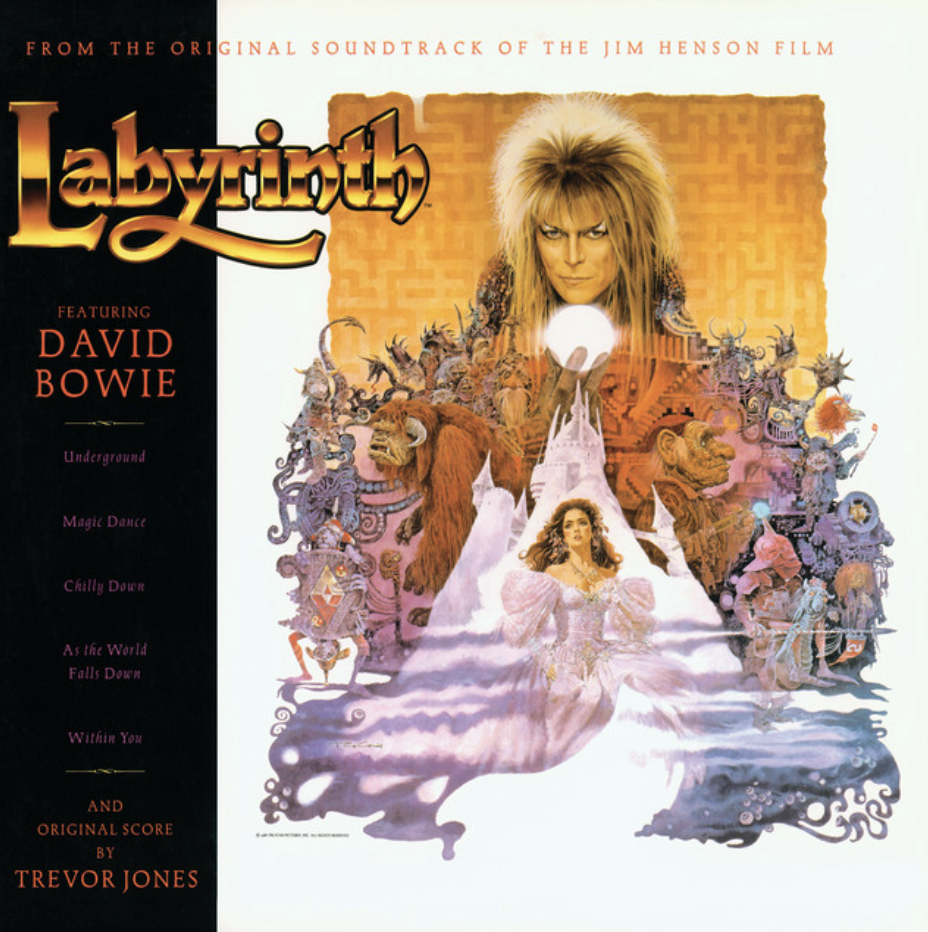
It was forty years ago since David Bowie donned his pantomime garb and took on the role of camp arch villain in Labyrinth; or rather, the soundtrack album was released to the general public. For better or worse, here’s my appraisal, plucked from part three of my Bowie homage, published over a decade ago. And from a mere decade ago, plucked from the archives for June 2016, my original review of Josh Haden‘s slowcore Americana Spain alias LP, Carolina.
Labyrinth (EMI) 1986
Dressed to kill as the pantomime dame in a pupated fantasy world, Bowie moons forlornly in the children’s movie of Labyrinth. Cast as the archetypal misguided villain Jareth, our cracked actor fulfils his need to sing and dance, from behind another façade.
For those expecting a whimsical affair, the Trevor Jones and Bowie soundtrack is itself full of both mellifluous romantic waltzes and ominous discordance. Of course, the South African composer of over fifty films, was used to scoring this sort of picture, having already done Time Bandits and The Dark Crystal. Bowie however offers up some pining laments, capturing the spirit of his conceited but lovelorn goblin king. In fact, though obviously directed at a younger audience, the vocal tracks have an instant commercial allure to a mature market too, tapping into the new fan base, which he picked-up on Let’s Dance.
In truth the fun-frolicking joyous ‘Magic Dance’ and gospel backed ‘Underground’ are better than anything off his previous release Tonight (with the exception of ‘Blue Jean’ and ‘Loving The Alien’). The slippery chameleon was however ‘losing his edge’, identified as a crooning balladeer in a sharp lapelled suit, devoid of new ideas. The next few years wouldn’t change that opinion.
Spain ‘Carolina’
(Glitterhouse Records) 3rd June 2016
With a poignant prompt, Carolina is the first album by Josh Haden’s musical project Spain since the death of his father Charlie in 2014. Amongst the most renowned and celebrated jazz bassists of the last century, working with such major heavyweights as Keith Jarrett and Ornette Coleman, the late Charlie was for obvious reasons a handy mentor to his son, contributing throughout with advice and even playing on the records. Tribute would be too strong a word, instead imbued by and referenced in a number of themes, Charlie’s spirit is omnipresent throughout.
It has however given Josh pause for thought: solace and reflection being the album’s key subjects. Though the very nature of the ‘slowcore’ music Josh, alongside other innovators of the genre such as Low and Willard Grant Conspiracy, has become renowned for is based on if not constantly paying homage to the great Americana songbook of the past two hundred years. Coming almost full circle, the literally titans of the 1929 great depression, both in fiction and reportage, chime with the events of 2008. Even when the protagonist of a beautifully descriptive lament eulogies an American victory in the 1777 campaign for independence on ‘Battle Of Saratoga’, Josh has his mind on the present: augurs for the future, compelled by events in the past.
Entrenched in not just the history of the expansive, pioneer spirit America but in its music too, the opening alt-country swoon ‘Tennessee’ absorbs the ghosts of Nashville and Memphis. A grand vista indeed that captures the American state in a tale of loss and escape – the protagonist losing land, trapped by history itself – ‘Tennessee’ has a plaintive quality of resignation. No less steeped in myth, ‘Apologies’ moves the action to Beverly Hills, Josh joined by a female counterpoint vocal on the repeating, “There was a witness” refrain, sings almost softly as though floating through or above the unfolding events.
Josh goes onto evoke both an air of The Band’s Rick Danko on both the stirring ballads ‘Lorelei’ and ‘Starry Night’, and a heavier alternative rock and blues, often reminiscent of a cowboy twanging Pearl Jam, tone on ‘For You’.
Life on the homestead, the American War of Independence, Steinbeck’s visions of the great depression, mining disasters and William Faulkner’s short sentence encapsulation of a time and events are woven into both Josh’s formative years growing up in Malibu, and a more contemporary setting to create a deeply moving album.
Here’s the message bit we hate, but crucially need:
If you’ve enjoyed this selection, the writing, or been led down a rabbit hole into new musical terrains of aural pleasure, and if you able, then you can now show your appreciation by keeping the Monolith Cocktail afloat through the Ko-Fi donation site.
Our Daily Bread 288: Refree ‘La Otra Mitad’
November 19, 2018
Album Review/Dominic Valvona
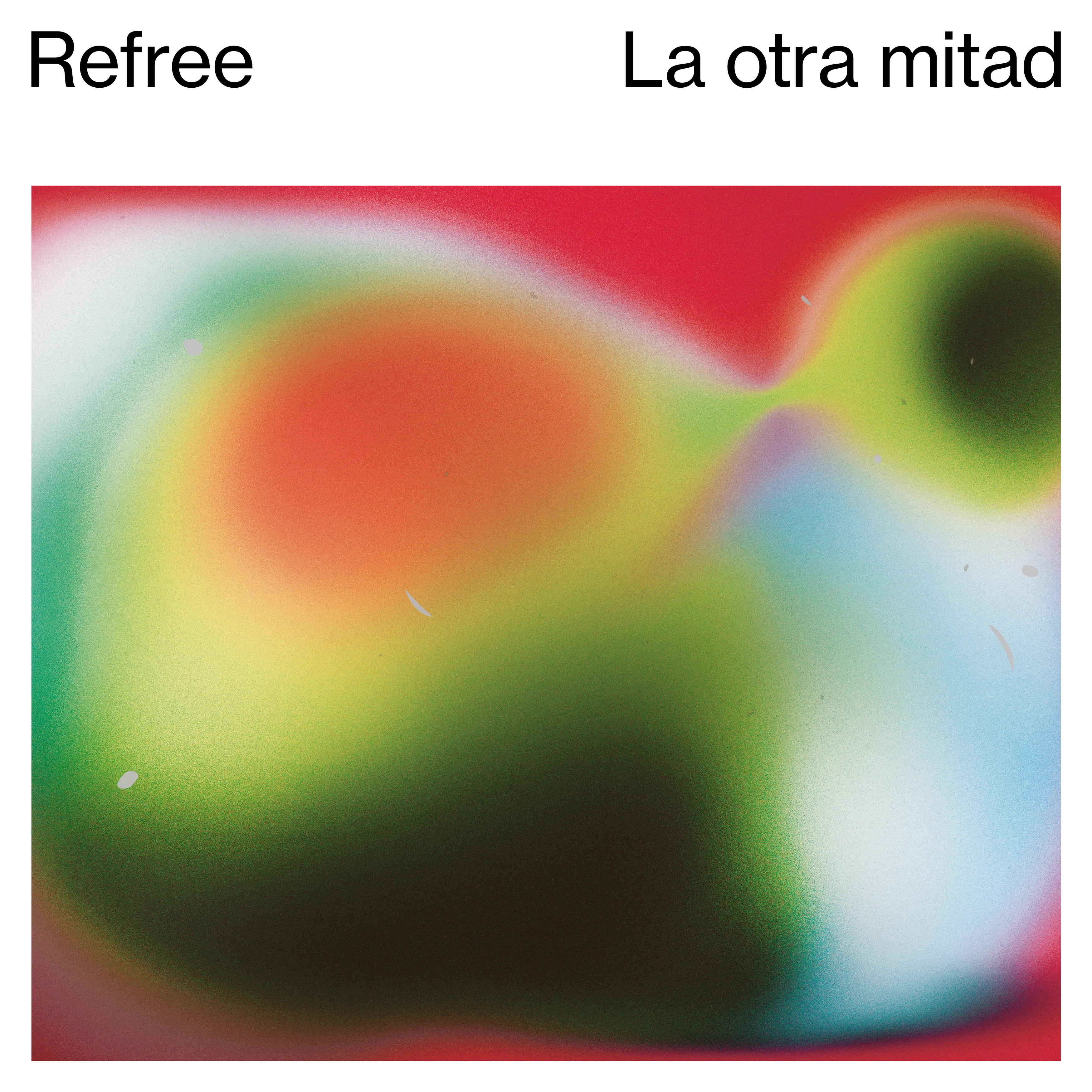
Refree ‘La Otra Mitad’ (tak:til/Glitterbeat Records) 7th December 2018
Recording in the field, catching both on-set and off the dialogue, conversations and even the spontaneous warbling song of a child, the lion’s share of the material on the renowned Spanish producer and film music composer (also solo artist in his own right) Raül Refree’s La Otra Mitad album was created for film director Isaki Lacuesta’s movie exploration of Flamenco, Entre dos Aguas.
Capturing both the essence and environment of the movie’s San Fernando location, and spirit of the non-professional cast, Refree’s often-reflective compositions and sketches represent his unique approach to conveying the abstract and visceral.
Representing at times what I, with my admitted ignorance of the form, recognize as the toiled, yearning and sometimes diaphanous flourishes of the highly-skilled Flamenco tradition, Refree performs the odd deft solitary passage but mostly reconfigures this signature Spanish style, remodeling it into an amorphous soundscape, or reversing it through a vacuum of suspense – ‘Dar a luz (Mix 1)’, which when translated into English means ‘giving birth’, and so makes sense as the sensation sounds like someone being rushed backwards out of a womb-like tunnel of both radiance and trepidation. Tracks such as ‘Barbacoa’ are literal, the composer recording the mood and conversation of the film crew and actors in their downtime at a barbecue; the results of which when edited in Refree’s in-situ studio sound intimate, yet like an ambient mirage. But sometimes the voices are in song, the Flamenco singers Rocio Márquez, Niño de Elche and Pilar Villa find their sonorous wails, lulls and beautifully expressed vocals sampled and turned into the ghostly and transported. Though the brighter, in praise, and less transformed ‘Cuando Salga El Sol (When The Sun Rises)’ is left to work its delightful Flamenco magic.
Lacuesta had in mind the relationship enjoyed by Neil Young and Jim Jarmusch on the collaborative score for the movie Dead Man, when approaching Refree. And in some way there is a semblance of that process; Refree pushing traditional sources into contemporary directions, his eclectic CV, which includes both co-producing and collaborating with Sonic Youth’s Lee Ranaldo (Electric Trim), and Spanish enigmas Silva Pérez Cruz and Rosalía, channeled through an experimental traverse of ideas; from the picturesque to tragic, fleeting to sobering.
Originally earmarked for a two-volume duo of instrumental-leaning 10” solo EPs, La Otra Mitad couples what was two separate envisaged projects together on one album. Volume Two, the soundtrack, I’ve already discussed; Volume One however is a different, but concomitant, proposition. Named after the guitars it was performed on, Jai Alai Vol 01 (as it was titled) featured a series of reflective pining, waning and timeless solo guitar compositions. The LGO played (is that even a guitar?) track features Flamenco gestures and resonating echoes of Ry Cooder country, but also, on the second of the ‘LGO’ performances, a hint of the Middle East permeates an intense to wound-down, heavy to light, ratcheted spring folksy rhythm. The moiety of ‘Ramírez’ experiments feature a plucked, harmonics twanging nuanced guided hand; both sounding classical and sad but transcending subtly their time and place.
An amorphous, removed album of guitar articulations, moods, location and voice that somehow seems simultaneously tethered to Spain yet peculiarly outside of it. An experiment in reification and the aleatory, capturing the essence but also transient, Refree creates an unusual aural experience that’s difficult to categorize; neither avant-garde nor world music as such, nor is it in the perimeters of rock, it is instead a most unique collection.
Our Daily Bread 256: Pharaway Sounds 70s Spanish rumba-funk, disco, cosmic and Flamenco pop reissues extravaganza!
August 28, 2017
FEATURE
WORDS: DOMINIC VALVONA

Spearheading a reappraisal of Spain’s adventurous experiments and fusions, transforming and modernizing the country’s ancestral folk and Flamenco traditions during the decade of Studio 54 and a boom in Costa del Sol tourism, the Guersson label imprint Pharaway Sounds is reissuing a number of difficult to source rarities over the next few months. Starting with the double-bill release of Trigal’s Baila Mi Rumba and El Turronero’s New Honda albums next month, Pharaway will be unearthing a range of vinyl crate-digger favorites and novelty treasures from a host of artists and bands who embraced the fervor to reinterpret and inject modernity into Spain’s musical legacy.
Remastered from original tapes, with political, historical context and in-depth notes on the recordings, artists and material swelling the retro-chic packaging each album and compilation, which also includes Morena Y Clara’s No Llores Más and Dolores Vargas’ La Terremoto (amongst others) has more than enough detail to keep the listener busy and informed.
The first two albums, both originally conceived and released on the Belter label, offer an eye opening revelatory mix of dramatic Eurovision pop, cabaret, rumba-funk, laser-y synth disco, jazz, and above all, transmogrified Flamenco.
Receiving a similar showcase, Finders Keepers released a brilliant Belter double album compilation back in 2010; shining a light on one of Spain’s most important labels during the late 60s and 70s. Though neither of the artists/bands in this series – “the grooviest and funkiest band of the scene”, Trigal, and troubadour Manuel Mancheño, reinvented and rechristened El Turronero – featured on that purview, both are held in high regard and considered influential: especially amongst those obscure rare sample enthusiasts; the boogie hangover and yearned longing theatrical gypsy funk New Hondo (influenced as much by Saturday Night Fever as dreamy Arabia) even sent the LCD Soundsystem’s honcho James Murphy into a spin trying to source a copy a few years back.

Buoyed by an “adventurous in-house” team of producers and sound engineers at Belter – namely Josep Llobell, Jean Barcons and Lauren Postigo– the Andalusia trio Trigal pushed traditional rhythms and forms towards a mixed bag of genres on their gypsy-rock sassy dancefloor cavorting Baila Mi Rumba LP. Featuring the married coupling of Antonio “Tony” Carmona and Maria Victoria “Vicky” Cabrera, and Rafael Romera, the original set-up went under the Tres Del Sur moniker, performing Latin American classics in tourist nightspots during the late 60s. A new contract took them to the States touring Army bases and clubs, with a brief trip across to Jamaica. Bringing home the funk, soul and the current explosion in Blaxploitation soundtracks they’d heard during their American sojourn, the Sur on their return became the Trigal. Replacing Romera with the virtuoso guitarist and former Los Adams band member Manuel “Manolo” Gallego Carter and drafting in pianist/composer Ramon Farrán the band opened their minds and went eclectic: fully embracing a smorgasbord of 70s trends and fads.
https://soundcloud.com/user-99941444/sets/trigal-baila-mi-rumba-snippets
The second of two albums for the belter label, Baila Mi Rumba is by fat their most adventurous: marking a brief inventive period for the group, who would only survive a few years more, eventually breaking up for good as the new decade dawned. Bright, lively and scintillating with cabaret-like slinky funk, Trigal did their best to sex-up the Flamenco and rumba. The trio’s soft porn “ahhhs” and brassy sassy horn heavy Med pop sound borders on San Francisco detective movie schlock, Vegas and a louche Santana in Harlem funk. Sauntering, fiery and just on the right side of being kitsch, the album has a certain infectious bombast and showbiz veneer. It’s also actually pretty good, and brazenly funky: even if it is aping, with a naïve spirit, the American music scene. Above all though, they do manage to drag Spain’s traditional forms into the glitzy, suave and sexy decade of disco and super funk.

Available on streaming sites already, though this is far from a satisfactory alternative to holding a physical copy, El Turronero’s New Hondo is another iconic “modernized” take on Spain’s earnest heritage. Though following a traditional route as a dedicated performer of atavistic toiled musical styles, the dramatic, longing voiced Manuel Mancheño’s reinterpretations for Belter upset the country’s cultural purist lobby: the self-proclaimed preservers of the country’s musical traditions weren’t averse to pouring scorn on anything new or experimental, epically in the heightened oppressive epoch of Franco’s last years in power. Going along with the changes in fashion and the yearning need to modernize, Mancheño proved a good sport in changing tact and performing to a contemporary and not so contemporary – flagging behind musical genres that were already becoming outdated – soundtrack.
With a name change to El Turronero the serious toned singer laid down his deep ruminations and lovelorn yearnings on a bed of Italo disco, pop, funk and boogie. Rather handy for the uninitiated like me, the original album came with plenty of notes and prompts, including the style of each song: from “tanguillos” to “malagueña”, all of which are given a 80s sheen and glossy production revamp.
Trembling with the theatrics of a requiem and Morricone spaghetti western score, the opening boogie Les Penas (a la cãna style of gypsy music that will challenge the skills of any adroit vocalist) sets the scene between cult kitsch and Euro pop extravagance. From then on in, countless instruments and sounds are thrown into the transglobal tapas; marimba and sitar on Si Yo Volviera a Nacer; Caribbean cod-reggae disco on Eres Lava de un Volcãn; and dewy-eyed condor strafing mountaintop pan flutes on Y La Raźon.
Despite being equally sentimental and daft, New Hondo has some stand out dynamic breaks and grooves. And it’s obvious why this record has been a collectors item for so long. This repackaged version gives us a chance to actually own a physical copy.
https://soundcloud.com/user-99941444/sets/el-turronero-new-hondo-snippets
Following in this double-bill wake is a host of Balearic disco and hip cuts, though many don’t as yet have a release date. There’s the strange Spanish female duo Morena y Clara. Launched by bizarre flamenco producer Lauren Postigo, they released a string of 45s and three LPs (highly sought after now) for the Discophon label, a worthy rival to Belter. They mixed a heavy dose of breaks, fuzz wah-phaser guitar and Moog soundtrack with rumba, flamenco, psychedelic rock, funk and disco. This illuminating, cute album features their “psychotronic” hits No llores más, Dejé de quererte, Buscando alegría and many others.

Continuing the ladies first rumba disco and pop fusions, there’s also an anthology dedicated to the 70s period of Dolores Vargas, known as “The Earthquake” due to her wild and frenzied dancing style. In these songs, released 1970-1975, you’ll hear a killer sound and production mix of funk, rock and pop, and of course Vargas’ powerful vocal delivery. The collection will include the “gipsy-funk” numbers A la pelota, Anana Hip and La Hawaiana along with a bizarre cover version of Chirpy Chirpy Cheep Cheep.
Lastly, Pharaway are set to release a couple of compilations, Rumbita Buena: Rumba Funk & Flamenco Pop from the Belter & Discophon archives, 1970 – 1976 and Tani: Disco Rumba And Flamenco Boogie, 1976 – 1979. Featuring as the titles suggest, a collection of tracks from two of Spain’s leading cult labels, the first comp features, “14 dance-friendly tracks taken from overlooked 45s and LPs”. And the second, “12 disco-rumba-flamenco bombs, a time machine to the “boites’ and discotheques of the late 70s and the perfect soundtrack to an imaginary “Kinki” cinema soundtrack.”
It is an extravaganza, marking as it does a serious attempt to bring some glory and reverence to a forgotten period of the Spanish music scene.

