Rapture & Verse: April 2018: Dr Octagon, Louis VI, A$AP Rocky, Jean Grae and Quelle Chris…
April 24, 2018
MATT OLIVER‘S ESSENTIAL HIP-HOP ROUNDUP
Singles/EPs
By any means necessary, Illaman will ‘Geddit’, rifling through Sumgii’s kitchen sink bass scuttle. No boos when G00se jumps to his desk and welcomes to you the spot-on six track ‘Living Poets Society’, pitching himself against sinuously looped funk so he can give the mic what for with lyrics that “are rejected scripts from The Exorcist”. Harvs le Toad’s ‘Garlic Mayo’ EP is a strong platter of elegant neck warmers, taken away from the fireside by the candour of Kemastry, Vitamin G and Bill Greene. The nimble step ups of Louis VI tip their hat to how ‘Jazz Got Me’, joined by Mick Jenkins for a quiet storm warming the spot just lovely as rhymes dart between licks and plucks.
Westside Gunn continues to fire across the compass with the imposing Mr Green, “FLYGOD Is Good... All The Time” pushing big and dusty drum snaps and that trigger happy, badaboom flow spraying stupidly close bystanders. Off-kilter with a happy, cosmic ending, Blacktop Megaphone’s three track spitball starring Denmark Vessey, DrxQuinnx, Khallee and Angele Anise could only be called ‘Post Reality’. The intense vortex spun by Haleek Maul’s ‘In Permanence’ EP is perfect end-of-days/modern day guerrilla hip-hop, soulfulness and shoots of recovery encased in twisted electronics and blasted with raw-throated verbs. Least subtle muse of the month goes to A$AP Rocky rinsing Moby on ‘A$AP Forever’, a hotchpotch so brazen it’s almost admirable.
Albums
Several false starts after the startling original, Dr Octagon is back doing the rounds, Kool Keith reading a print out from his random scenario generator as his thesis of ‘Moosebumps – An Exploration Into Modern Day Horripilation’ reunites the pimp-practitioner with the screwdriver sonics of Dan the Automator and Qbert. A couple of hardcore/‘I’m Destructive’ moments in the top pocket, it’s otherwise prime time, KK cue card rambling/shopping list recitals to space-staged conspiracies, at least going some way to restoring the good doctor’s name.
A collaboration sure to put a knot in the shorts of fanboys everywhere, ‘Czarface Meets Metal Face’ pretty much delivers on comic book and underground hip-hop hype. Inspectah Deck plays a controlled, governing hand. Esoteric will battle anybody, and doesn’t care who you tell. DOOM is even more aloof when staring the cataclysmic dead in the eye. DJ 7L is a threat throughout on the beats with a succession of meaty blows. Plenty to dissect then; in proper comic book style, this boat race battle will run and run.
Nowadays it’s a boost to your credibility, maturity and back catalogue to take a trip to the opera house. Nas is the latest to dig out his dicky bow, his Kennedy Center performance of ‘Illmatic’ from top to bottom with the National Symphony Orchestra, caught for posterity. The prodigal son of the projects now has America’s amphitheatres in his pocket, thief themes now a grandiose, surround sound spectacle. If you think it’s superfluous, Nas not dropping a single note in the spirit of the original is worth putting your top hat and tails for.
Strong on the basics with one foot in the club, Del & Amp Live coast out of ‘Gate 13’ with shiny beats that indulge in P-funk boogie without over-flossing, nor complying to trap 101. Del’s customary wordery successfully challenges itself to come off the top without reaching for the moon, despite the occasional Amp Live nudge into Deltron 3030 colonies. Don’t let this one slip under the radar.
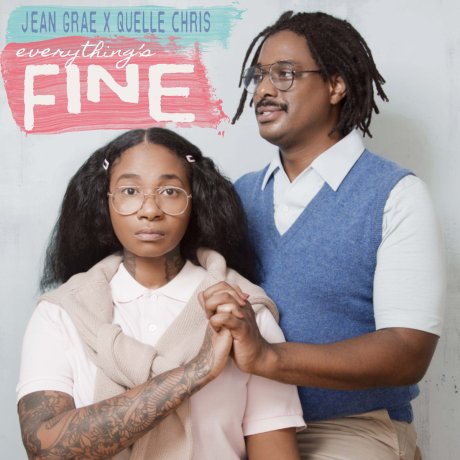
You believe Jean Grae and Quelle Chris when they declare ‘Everything’s Fine’, an album full of contrasting textures and combinations from the power couple. Lo-fi to highly charged to deeply underground, socially aware to conceptual to off the wall, unyielding to free and flowing and far reaching (including cameos from Nick Offerman, Hannibal Buress and Your Old Droog). Casual listens are strictly off limits.
For when you’re kicking back but still scheming, Maxo’s ‘Smile’ grins through gritted teeth, all bleary neo-soul beats and off-the-chest, mind working overtime assertions. Once Cavalier opens up his ‘Private Stock’, you’re prey to fuggy funk – Iman Omari with the lion’s share – and easy-on-the-streets style you can’t help but fall back to. “Your recipe depend on your prowess” forces opposition to cook the books. Stepping in the right direction ‘On Their Way’, Dillon and Batsauce flow through highs and lows (see ‘Splash’ drowning its sorrows segueing into the Greg Nice upper ‘Come On’) with turn of phrase and funkiness of lick, wisdom to throw wide open and also crumbs of comfort to keep to yourself. “As long as we get fed, then nobody gets hurt” – so do yourself a favour and throw them a bone.
The best of Wretch32 and label mate Ocean Wisdom, Coops runs the graveyard shift to deal with the grey matter of ‘No Brainer’. Over a bedrock of deep watery keys and sultry atmospheres jamming on the low, Coops’ clutch flow is perfect for seeing situations through to daybreak, mixing the kinetic and lullabies both cradling and on the creep. Uncomplicated and concise, let it take hold as shadows lengthen. British bulldog spirit ignorant to minding Ps and Qs, Smellington Piff – “the definition of a drunken scholar, living in squalor” – is the school of seven bells graduate forcibly removing those in his way. ‘No Fixed Abode’ is an energetic knuckle sandwich full of big, thoroughly well produced head nodders and sabre-truth rhymes as the Piff hits the stand towards the top of the UK brat pack.
Live from the doss house, Cult of the Damned’s squalid ciphers come so solid on “Part Deux: Brick Pelican Posse Crew Gang Syndicate”, the all-star suicide squad wearing a “Burger King crown with your queen feeding me”. Def/undead rhymes tilt the balance of lopsided boom-bap phantasms, probably done the old fashioned, wet-finger-in-plug-socket way. Not far behind, Wundrop and Kemastry are ice cold in their provision of ‘Frosty Raps’, hammering out a reality while surroundings start reddening eyeballs. Forging ahead against the smother of midnight, the pair achieve the fine art of making the squalid sound like a super sharp shooter.
Poseur exterminator Big Toast continues to spray society’s roaches on ‘Call It On’, joined by Jack Diggs showing a spite-concealing jazz hand on the beats, and stepping to the mic with equally indignant gusto. Focus mode on full alert and guaranteed to end in blood, sweat and tears, the pair pile in as the pints are poured. The human condition analysed in that cold up North flow, Savvy aka Asaviour takes risks and expands outside of his bread and butter in ‘The Battle for Hearts and Minds’, with extensive, well rounded theatre addressing the state of the world.
A splice of soul gold, Kuartz’ ‘Kuartz FM’ is most debonair on the dials, heading down the highway with wind in hair and song in heart. Determined to make the sun put its hat on, instrumentals create a love zone playlist with the right amount of kick-snare slap to it. For those who enjoyed Calvin Valentine’s ‘Plush Seats’, make room for the addition of ePP supplying vocal garnish and taking care of the source on the free upgrade ‘Chrome Seats’.
Mixtapes
(Pulitzer prize winner) Kendrick Lamar rhymes over Dr Dre beats. Wipe that drool away and rejoice that DJ Critical Hype has got his wondrous sewing machine out and impeccably stitched together a capital Compton grey album so high grade, it’s ‘The Damn Chronic’, to the sound of a million hip-hop messageboards imploding.
https://audiomack.com/embed/album/dj-critical-hype/the-damn-chronic
Tickling Our Fancy 063: Tony Njoku, Yonatan Gat, Black Light White Light, The Lancashire Hustlers…
April 20, 2018
REVIEWS

Interesting releases from across the world and music spectrums; Tickling Our Fancy is the, Monolith Cocktail founder, Dominic Valvona’s most eclectic of reviews roundups. With no themes, demarcations of any kind, or reasoning other than providing a balanced platform for the intriguing, the great and at times, most odd releases, I bring you this month’s latest selection.
A packed installment this week with the Ennio Morricone suffused debut album from The Magic City Trio, Amerikana Arkana; Black Light White Light’s Martin Ejlertsen takes the band on a Lynchian’ inspired psychedelic journey to new horizons; Op Art meets free-rock, jazz and Krautrock in Geneva 1972 on the latest obscure reissue from the Mental Experience label, Mouvements; Andrew Spackman is back as the spasmodic ennui conjuring electronic music wiz Sad Man, with his latest collection of garden shed productions, Slow Bird; British-Nigerian producer Tony Njoku shares his distinct and stunning soulful avant-garde electronica on his new album, H.P.A.C.; and the Israeli maelstrom guitarist Yonatan Gat records his first album, an expansive entangle of shared history and sounds, for Glitterbeat Records imprint tak:til. There’s also the lush dreamy soulful psychedelic debut track from Evil Bone; the third album from the mysterious Edinburgh electronic and rock guitar welding maverick Bunny & The Invalid Singers; and the upcoming psychedelic pop nostalgic afterglow brilliance of The Lancashire Hustlers.
Tony Njoku ‘H.P.A.C’ Silent Kid Records, 27th April 2018
Bringing a very different perspective and life experience to the London avant-garde art and electronic music scene, the British-Nigerian producer with the earthy falsetto, Tony Njoku, articulates a most unique form of magical soul music.
Though undulated with an ethereal to malady suffused backing of sophisticated synthesized travails, Njoku’s vocals always seem to bobble and float above the choppy breaks and ebbing tides.
Feeling an outsider, transferring at the age of fourteen to London from a life spent hiding his true personality in the toxic macho boarding schools of Lagos, the sensitive Njoku found at least one kind of solace; able to show a vulnerability and pursue the music career he really wanted having previously recorded a number of hip-hop albums (the first when he was only twelve) that proved entirely counterintuitive, but were completely in tune with Nigerian environment he grew up in. Yet in the arts community he joined in his new home of London, he found few Afrocentric voices or people he could identify with or relate to. The arts and, especially avant-garde, music scenes are dominated by what Njoku calls the ‘affluent bourgeoisie’. Though to be fair anything that falls outside the most commercial perimeters is patronized and subsidized in one form or another. And this is obviously reflected in what is a majority European culture: resulting in a lack of voices from Africa. It means that Njoku stands out, but in a positive sense; his music amorphously blending both cultures successfully to create something familiar yet somehow fresh and untethered.
Inspired by the ‘high art sonic’ forms of Arca and Anhoni, and by the metamorphosis nature of Bjork, Njoku’s own compositions feature a beautiful synthetic shuffle of Afrofuturism soul and more searing discordant synth waves that clash and distort on arrival but gradually sync and become part of the motion. From beauty to pain and release, and often back again, each track (and not in a bad way) seems open-ended; a constant flowing cycle of emotions, which can be healed during that moment, in that space and time, but will inevitably return: A calm followed by turbulence and hopefully the light.
Remain Calm, a song in two parts, starting with a romantically plaintive half of bobbing tablas floating on an increasingly choppy mental exerted ocean of troubles before being overpowered and capsized by more stressed and sharper sonic invasions, exemplifies Njoku’s shifting emotional turmoil. It’s also one of the album’s standout tracks; recently featured in our first choice songs of 2018 playlist last month.
The rest of H.P.A.C. is as equally diaphanous, despite the longing, hurt and frailty on display. Remaining buoyant in the face of an increasing voluminous distress on My Dear The Light Has Come; aching on the moonbeam blues All Its Glory; plunging from a cosmic enveloped precipice by the end of the sea of reverb consuming Surely This Is As Good As It Gets; and left “twisted out if shape” like an “origami swan” on the whistle R&B lilted As We Danced, Njoku shares his vulnerabilities like an open book. And doesn’t it sound just wonderful: eloquently in a hymn like fashion between pained malady and the venerable, heavenly but also melancholic and turbulent, a futuristic soul album of delicate intellect. Anguish has seldom sounded sweeter.
Yonatan Gat ‘Universalists’ tak:til/Glitterbeat Records, 4th May 2018

Photo credit: Caio Ferreira.
Banned from performing in his native homeland of Israel for taking his former band Monotonix’s confrontational style of rock’n’roll live and, literally, direct to the audience, Yonatan Gat has channeled the buzz and maelstrom of his entangled guitar work into a productive and creatively eclectic solo career since relocating to New York a number of years ago.
Toning down the shock of Monotonix for something more expansive and ambitious, as the title and imagery of his latest album for Glitterbeat’s more experimentally traversing and meditational imprint tak:til suggests, the Universalists of Gat and his drum and bass wingmen, Gal Lazer and Sergio Sayeg, expand their tumultuous galloping desert transcendence style of echo-y tremolo and fuzz beyond the sand dunes towards the imaginary psychogeography of atavistic Europe, Southeast Asia and Northwest America.
Holding up his guitar like some sort of offering, or a transmitter to the sky, Gat stands as a vessel for a cerebral multilayering of musical influences. Nothing is quite what it seems; ghostly visages of Alan Lomax’s 1950s recording of the Trallalero monosyllabic derived polyphonic style of choral folk song, practiced in the mountain villages and port of Genoa, appear on the opening eloquently shambling (the drums majestically in time rolling down a hill) Cue The Machines, and excerpts from the traditional work songs of Mallorca culture romantically waft over drifting guitar and ambient mirages on Post World. Further on, Gat fuses the Algonquin Eastern Medicine Singers pow wow drum group with his trio’s sinewy trance and scratch work to stomp out a shamanistic post-punk ritual on the Native Indian inspired Medicine.
Gat counterbalances his own group’s mystical maelstroms of pummeling, unblinking rapid rambunctiousness and more dream world jazzy shuffling with passages, memories and textures from socially and geopolitically important traditions. Chronology for example, a peregrination of many segments, features not only a scuzzed-up throw down version of Middle Eastern guitar and a vocal sample (sounding a lot like it was pulled from the ether) of a Spanish harvest song, but also entwines a passage from the famous Czech composer Antonín Dvořak’s String Quartet in F Major: better known as the chamber piece standard, The American Quartet. Written during the composer’s time spent both teaching at the N.Y.C. National Conservatory and living amongst the Czech exiles in the desired haven state of Iowa, this New World Symphony as he called it, is included for its own embrace of Native Indian culture, the Irish immigrants folk songs and the music of the misfortunate African slaves.
Of course you don’t have to pick up on all these deeper references as the music speaks for itself; the ‘universalists’ message of borderless, timeless exploration and shared need for a release from these hostile dangerous times is clear.
Black Light White Light ‘Horizons’ Forwards Backwards Recordings, 20th April 2018
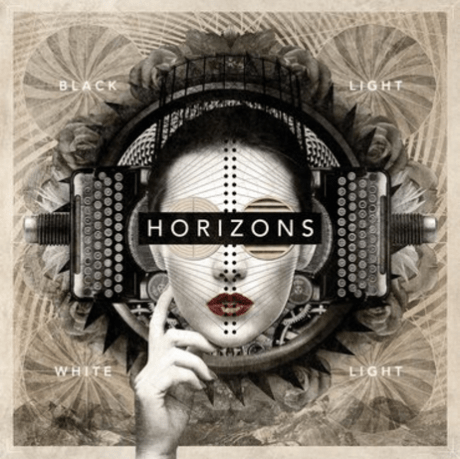
Created out of a desire in 2015 to take stock of the band’s short but impressive back catalogue, the Danish and Swedish exchange Black Light White Light, or more importantly the group’s central focus, singer/songwriter and guitarist Martin Ejlertsen, plow forward with their third vaporwave psychedelic rock hadron collider LP, Horizons.
Obviously as the title would suggest, horizons new and expanding are key; the group in co-operation with new drummer Viktor Höber and producer/engineer and fellow musician Christian Ki, putting into practice, during there basement sessions deep underground in Copenhagen, a vaporous often Gothic pop rock vision of cinematic influenced charter duality and darkly lit escapism.
Though never quite as surreal and twisted, or as violently indifferent as Ejlertsen’s key inspirations, David Lynch and Nicolas Winding Refn, there’s still plenty of cryptic lyricism – usually sung under the smog of megaphone effects and resonating trembled fuzz – and sinister mystery. Take the progressive The Fool, which begins with hints of The Cult, Moody Blues and The Beatles but gradually creeps towards the choral and eastern esotericism of Wolf City period Amon Düül II.
Tailoring each track slightly to throb or hazily permeate with a myriad of musical styles and influences, the group attune themselves to The Painted Palms psychedelic pop on the opening King Kong; transduce the Madchester golden age on the halcyon Teenage Drum; evoke Yeti Lane on the more relaxed space rock pulse of Illusions/Emotions; and pass through the lobbies of both DFA Records, and Factory Records, and pick up melodies and inspiration from Jacco Gardner, Pink Floyd, The Stone Roses and Broadcast on the remainder of the album’s eleven tracks.
Floating between harder, barracking drums led psych rock and a shoegaze dreamy portal, Horizons is no matter how serious and mysterious the intentions (and I’m sure, after catching the odd line amongst the veiled effects, there is some dark and prescient themes being alluded to), filled with nuanced melodies and glimmers of pop. Billed as a very different kind of Black Light White Light album, Ejlersten going as far as strongly considering releasing it under an entirely separate project moniker, the horizons explored and discovered on this record prove very fruitful indeed.
The Magic City Trio ‘Amerikana Arkana’ Kailua Recording, 20th April 2018

It’s as if Ennio Morricone had skulked into town himself, as they very first tremolo resonating notes strike and the lush orchestration sweeps in to announce the arrival of this cinematic Americana imbued suite. A Western adventure of melancholic beauty, the debut album from The Magic City Trio treads familiar ground as it pays homage to a century and more of the frontier spirit and tragedy.
Covering everything from pre-war country music to modern hillbilly noir, this gathering of musicians and artists, which includes The June Brides’ Frank Sweeney and Annie And The Aeroplanes’ Annie Holder serenading and out front, mosey, ponder and lamentably create their own visionary cinematic songbook. Liltingly duets in the manner of an imagined partnership between Lee Hazlewood and Emmylou Harris feature throughout, whilst hints are made to The Flying Burrito Brothers one minute and a lonesome pinning Richard Hawley on the ranch, the next. Sweeney and Holder certainly set the mood when embracing references as varied as Steinbeck’s depression era novels and the murder ballads of the old west borderlands.
Missing out on scoring the golden age of Westerns then, The Magic City Trio (which expands to accommodate a number of guests) walk the walk, talk the talk, but update the old tropes for a post-modernist take. The opening, beautifully crooned, Black Dog Following Me even tackles depression; a subject hardly congruous to the stoic ‘man’s gotta do what a man’s gotta do’ machismo of cowboy yore. It sounds like an unforgiving vision as re-imagined by a 70s period Scott Walker, earmarked for a revisionist Tarantino Western.
You can’t fault the careful and lightly applied musicianship, nor the deliberately pronounced and richly swooned vocal partnership; whether it’s in the mode of a mariachi soundtrack quilted murder scene (22), or a lilting pedal steel, Sweetheart Of The Rodeo, eulogy to a dear departed friend (Goodbye My Friend).
Far more than a pastiche or mere homage, Amerikana Arkana is a subtly attuned to modern sensibilities version of a lost classical Western soundtrack: a most diaphanous and sweetly lamentable one at that.
Mouvements ‘Mouvements’ Mental Experience, March 22nd 2018

How they find them is not our concern, but those fine excavators of miscellaneous avant-garde and leftfield treasures, Mental Experience, don’t half unearth some obscure artifacts. One of their latest reissues is the amorphous experiment between extemporized music and op art Mouvements. This Geneva underground scene missive was originally released as a private box set, limited to only 150 copies and sold at art galleries.
Instigated by the guitar player (though free and easy across a whole instrument spectrum) Christian Oestreicher after meeting the artist and painter Richard Reimann at the Aurora art gallery in Geneva, the Mouvements project emulated what was an already flourishing scene of cross-pollinated arts.
Oestreicher on his part, attempted a process of reification through a mix of free-jazz, musique-concrete, psych rock, tape effects manipulation and Krautrock; Reimann would provide the reference point metallic and shimmered geometric artwork.
Sessions for the eventual album began in 1972; recorded at an ad hoc studio in an occupied mansion using a trio of Revox machines. Joining Oestreicher with his improvisations were friends Jean-Fançois Boillat (of Boillat-Thérace obscurity), Blaise Catalá and Jerry Chardonnens – names which probably mean more to the ‘head’ community, but we can take as granted were probably notable in their fields. Allowing his influences to permeate and flow through each gesture, riff and applied layering, Oestreicher’s troupe – gathered round in a circle to perform – sound like a hazy mixture, a primordial soup and veiled ramble of Zappa, early Can, Ornette Coleman, Chuck Berry, Soft Machine, Amon Düül II and the neo-classical.
Conceived as a concept album, there’s a constant, if interrupted, ebb and flow to proceedings; one that moves between minimal garblings and full-on psychedelic jazzy rock’n’roll. A number of recurring instruments, such as the violin and guitar, return us to some sort of thematic semblance, something to follow and recognize. Oestreicher’s guitar (as you might expect) has a prominent role to play; riffing and contorting rock’n’roll licks with snatches of Manuel Göttsching and jazz.
Often sounding as though they’d been recorded from outside or from the other side of a partitioning wall, these ‘mouvements’ vary in their intensity: the opening Largo Pour Piano Et Océan starts the album off on an isolated beach vista; the serialism piano plucking away therapeutically as the waves hit the shore and lonely breeze blows through. But the next track, Goutte De Sang En Feu takes off into a jamming freestyle of barnyard fiddle folk, Mothers Of Invention and Floh De Cologne. There’s even an attempt at a sort of Afro-funk on the vignette Ailleurs, and Le Voyage Sperber has a concoction of West Coast lounge and Lalo Schifrin soundtrack funky jazz running through it.
The main album’s eight tracks pretty much say it all, but included with this reissue bundle is a smattering of bonus tracks; all of which generally riff on or are cut from the same clothe: The Playwriter’s Drift for example, another variation on the Zappa transmogrified rock groove, and the eighteen minute opus, My Guitar Is Driving Me Mad (Take 2), is a strange attempt by Oestreicher to exorcise his instrument over a creepy psychedelic jam.
A spark of interest for those unfamiliar with the Swiss branch of the art-rock crossover in the early 70s, this most intriguing artifact from the period focuses on a hitherto forgotten, or at least passed over, development in the story of European avant-garde; a time when Op Art and free-music experimentation collided. Not to everyone’s tastes, and covering a lot of familiar ground – the sound quality on my CD was very quiet -, Mouvements is nonetheless a curious suite.
https://soundcloud.com/mental-experience-594217473/sets/mouvements-mouvements-snippets
Sad Man ‘Slow Bird’ 16th April 2018

Featured regularly over the years, the contorted machinations and transmogrified electronic music experiments of artist/composer Andrew Spackman have kept us both entertained and dumbfounded. Building his own shortened, elongated and mashed-up versions of turntables and various plucked, rung or clanged instrumentation in his garden shed, his process methods would seem almost impossible to replicate let alone repeat. And so this often ennui shifting and dislocation of the avant-garde, techno, breakbeat and Kosmische sounds often unique.
Previously causing mayhem under the – Duchampian chess move favorite – Nimzo-Indian moniker, Spackman has now adopted a new nom de plume; a home for what he intends to be, like the name suggests, the most saddest music. Yet with a few releases already under his tool belt, the latest epic, Slow Bird, is more an exploration in confusion and ghostly visages of the cosmos than a melancholic display of plaintive moping. There are by all means some moody, even ominous, leviathans lurking and the odd daemonic vocal effect, but as with most of the tracks on this LP they constantly evolve from one idea into the next: anything from a panic attack to the kooky.
With a menagerie theme running throughout the many song titles, it’s difficult to tell if the source of any of them began with the bird in question or not. The title track itself certainly features flighty and rapid wing flapping motions, yet rubs against more coarse machinery, knife sharpening percussive elements and Forbidden Planet eeriness. Parrot by comparison, sounds like an inverted PiL, languidly reversed to the undulations of bongos, whilst Sparrow pairs Cecil Taylor piano serialism with, what sounds like, a wooden ball rolling across a tabletop. It’s not only the feathered variety being used as bait for spasmodic and galactic manipulation. There’s a Bear Reprise (another repeating theme; ‘reprises’ of one sort or another popping up a lot) of all things, which consists of 808 claps, broken electro and particle dispersing glassy sprinkles, and a very weird tuba like theme tune, dedicated to the Slug.
A cacophony of clever layering and ever-changing focus takes tubular metallics, UNCLE drum break barrages, Ippu Mitsui, Add N To (X), giddy oscillations, haywire computer and staccato phonetic languages, Vader mask style breathing, glints of light beams, the Aphex Twin on xylophone and produces his own, whatever that is, niche of electronic composition. It can feel a slog and overwhelming at times, but Slow Bird is one of his most progressive and well-produced releases yet; mayhem at its best.
Evil Bone ‘In Vain’ 13th April 2018
Battling to overcome the mentally and physical debilitations of anxiety disorder, the artist (who I only know as John) behind this new solo project, Evil Bone, seeks a reification of its enervated effects on the soporific, halcyon In Vain. The title, a quite resigned one, refers to his attempts to beat it: all to no effect. Though, as John candidly muses, it is now a part of his make up, and in many ways impacts on the music he creates.
Despite often stifling creativity, the first track from Evil Bone is a haze of languid shoegaze and soulful dream pop that recalls Slowdive and The Cocteau Twins cloud bursting in vaporous anguish. Influenced by more modern psychedelic vaporwave bands such as the Unknown Mortal Orchestra and Tame Impala (both can be detected here), John is also quite taken with hip-hop, R&B and soul music; especially Anderson Paak and Kendrick Lamar – music with a more colourful sound and soulful vibe. And this can be heard on In Vain’s lush soul-tinged wafted undulations; taking it away from simple lingering dreamwave production towards something with a little more depth and lilt.
Promising an extended release later in the year, In Vain sets the marker for beautifully layered anxious psychedelic pop.
Bunny & The Invalid Singers ‘Fear Of The Horizon’ Bearsuit Records, 20th April 2018
Quite the enigma, the music of Edinburgh solo musician/artist Dave Hillary seems to be adrift of reference, familiarity and classification (an easy one anyway). Though his image is plastered (or is it!) indiscriminately amongst a collage of collected imagery, from holiday postcards to family moments and music paraphernalia, on the inlay of his latest album, his identity has been largely guarded.
Mysterious then, unsettled, the experimental electronic music with textured industrial and squalling rock guitar style of sonic noodling Hillary produces is more akin to an amorphous collection of soundtracks than identifiable song material. Evocations, moods, setting the scene for some futuristic heart of darkness, Hillary fashions a gunship waltz of tetchy synthesized percussion, fairground noises, whistling satellites and rocket attacks on the fantastical entitled Eamon The Destroyer, whilst on the title track, he plays around, almost plaintively, with folksy acoustic plucked notation, sighing strings, twinkly xylophone and arched electric guitar. Hints of the Orient (I’m imagining Hong Kong for some reason) linger on both the weird cut-up The Positive Approach To Talkative Ron and the marooned, twanged and bowed Cast Adrift. Yet, even with title prompts, you could be anywhere on these unique vistas and musings. The closest you’ll find to this meandering is the Leaf label, or the experimental Jezus Lizard sanctioned experiments of Craig Ward.
Fear Of The Horizon is the third such album from the interchangeable Bunny & moniker – Hillary’s debut, Fall Apart In My Backyard, released under the Bunny & The Electric Horsemen title. However, the Bearsuit Records stalwart, constantly popping up on the label’s maverick compilations, and one-time member of Idiot Half Brother and Whizz Kid, is at his most mysterious and serious as Bunny & The Invalid Singers. Truly plowing his very own furrow, Hillary’s warped evolving, sometimes clandestine, electronic and steely guitar evocations once more wander into unusual territory.
The Lancashire Hustlers ‘Stuck In A Daydream’ Steep Hill, 11th May 2018

Following on from the warm afterglow of their last outbound journey, Adventure, the London-based (though originally hailing from Southport) duo of lilted psychedelic pop once more dip liberally into the 60s (and early 70s) songbook on their fourth album, Stuck In A Daydream. It’s never quite clear, nostalgia being their bag and signature, if The Lancashire Hustlers are seeking sanctuary in that halcyon age, or commenting wryly on those who seek to turn back the tide of change and return to a preconceived ideal that never quite existed. It is of course what every generation does; fondly celebrating a time they never lived through, and ‘Generation X’ is no different; though the evidence is pretty overwhelming and convincing, the ‘Baby Boomers’ possibly living through an extraordinary golden age, never to be repeated. The duo of Brent Thorley and Ian Pakes sing fondly of that era, relishing in nostalgia on the Celesta dappled and cabassa percussive pining Valley Of The Dinosaurs. Reaching a falsetto pitch at one point, Thorley pays homage to that, not so, lost world; a sort of quasi I Just Wasn’t Made For These Times sentiment.
Suffused with their hazy recondite influences throughout, they channel Jimmy Campbell, Badfinger, Bread and Let It Be era Beatles alone on the first yearning and rolling piano glorious pop song, Consider Me. With a troubadour glow of bouncing lovelorn abandon, the harmonious and ‘considered’ lightness of touch on this perfectly crafted opener is instantly cozy and familiar to the ear. It’s a brilliant breezy start to the album, and exemplifies the duo’s move towards more direct, simpler songwriting.
Later on we hear lullaby twinkled mobiles that hang over daydreamers in the style of Fairfield Parlour; the sea shanty whimsy lament of a lovesick merman as fashioned by The Kinks; troubled relationships as re-imagined by an art philistine metaphorical Rubber Soul era George Harrison; and a sad eulogy to an absent friend as plaintively sung by Gram Parsons.
Let loose in the music box, expanding their repertoire and softened harmonious bulletins, they not only add a wealth of interestingly plucked and dabbed instrumentation (kalimba, taishogoto, metallophone and mellotron) but bring in Rob Milne of the jazzy Afrobeat Nebula Son to play both lingering accentuate flute and bass clarinet and more intense saxophone on a number of the duo’s exotic adventures.
Finding solace in the never-ending 60s revival, The Lancashire Hustlers’ timeless songbook can feel like a nostalgia trip. However, its age old themes speak volumes about the here and now, offering shelter and an antidote to these tumultuous times; those gilded metaphors speaking volumes about the here and now.
Our Daily Bread 270: Josh T. Pearson ‘The Straight Hits’
April 9, 2018
REVIEW: DOMINIC VALVONA
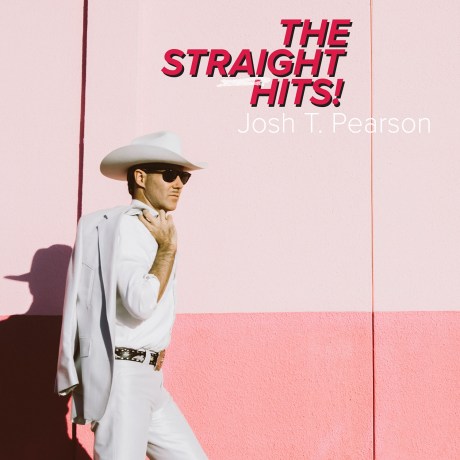
Josh T. Pearson ‘The Straight Hits’ Mute, 13th April 2018
Changing his tune (literally) Josh T. Pearson, the lonesome blues Texan with a wagonload of baggage, heads out on to the range with a swag bag of more joyful, unencumbered ‘golden hits’ on his latest album for Mute Records.
Rather ironic for an artist who despite writing and recording for decades has only one previous solo album to his name (2011’s agonizing confessional Last Of The Country Gentlemen), The Straight Hits feels like a ‘best of’ songbook.
Leaving behind the more apocalyptic gospel concepts of his work with the short-lived but acclaimed Lift To Experience, whose 2001 masterpiece The Texas Jerusalem Crossroads left such an indelible mark on the dirty country and Americana blues scenes, Pearson sets himself new parameters; adhering to a five-point rules system for transforming a “batch of tunes” he’d been working on for a decade. Earmarked originally for the ‘unrecorded’ Bird Songs album, the nine original songs on The Straight Hits are a lighter and as the title suggests ‘straighter’ attempt to change the mood.
Though just as heavy reference wise to the faith, obsessions, cruelties and power of love, Pearson has overcome the all-too real addictions and the collapse of his marriage to fire-off a distilled, riff heavy version of cowboy romance. Motivated recently to share more (“before it’s too late”), an epiphany of a sort sparked by the divisions of the 2016 US elections moved him to question if it was better to spread joy then mope and spread more anger. But it was whilst reading (as you do) the 14th century epic poem The Conference Of The Birds by Attar of Nishapur that Pearson muses, finally turned on the creative tap and helped ease this songbook’s passage.
Far from set in stone – the unwritten rock’n’roll law that all rules are written to be broken is invoked on the tender yearning A Love Song (Set Me Straight) – each song must at least try to follow Pearson’s self-imposed requirements: Number one, all songs must have a verse, a chorus and a bridge; two, the lyrics must run sixteen lines or less; three, they must have the word ‘straight’ in the title; four, that title must be four words or less; and five, they must submit to song above all else i.e. “You do as she tells you, whatever the song tells you”, “You bend to her, and not her to you.”
This probably cuts the fat, indulgence certainly, and makes for a more dynamic sound; especially on the alternative sports anthem opener Straight To The Top! – A pumped-up straight chaser, straight out the gate explosion of country slurred rock and gospel that sounds like Jeff Buckley at the rodeo. Conceived as the sort of fired-up soundtrack Pearson would like to hear, though he says he’s no particular fan, at an American football game, as he prepares for a high-five celebration with his fellow fans. It’s a great start. A fucking great start actually; the faith amped up to match his evangelical bounce back from the precipice: “If you knock me down, I’m gonna rise again. Time after time, there’s no way you can win.”
Taking on a curled lip croon Pearson goes on to sing about interloping lovers on the kooky desert cosmic Straight At Me – playing with the analogies of the old west, and in particular the reservations, the protagonist of this song a native Indian – whilst he reimagines Richard Hell leading The Pretenders through the High Chaparral and bawdy salon piano sing-a-long on Give It To Me Straight. The travails of love are played out to a mix of these more rowdy new wave of Americana hits and more lonesome, serious laments; some of which have a touch of irony, such as the calmer acoustic resigned Damn Straight, the album’s sole cover – originally by the Austin singer/songwriter Jonathan Terrell -, the author of which pines over losing his girl to the seductive power of Nashville’s famous cowboy swooners and crooners. Namechecking a litany of country music legends (“Waylon, Willie and Merle”), the achy-breaky heart singer pines “How could you take her just like that?”, “How could she leave me for a man she don’t even know?”
The Straight Hits is a most rallying rodeo that gives the Americana soundtrack a much-needed kick-in-the-pants; the themes of love, whether it’s the analogical kind, ‘take me right now’ kind, or lamentable kind, enacted across a varied but blistering songbook. Rejecting the stimulants and his demons, Pearson choses the good ol’ fashioned power and redemptive spirit of gospel ye-ye and country rock’n’roll. And don’t it sound just mighty fine and swell!
Brian Bordello of the contrary and provocative lo fi rock’n’roll group The Bordellos infamy, takes us on a track by track tour through the band’s latest album Debt Sounds.
Words: Dominic Valvona/ Brian Bordello
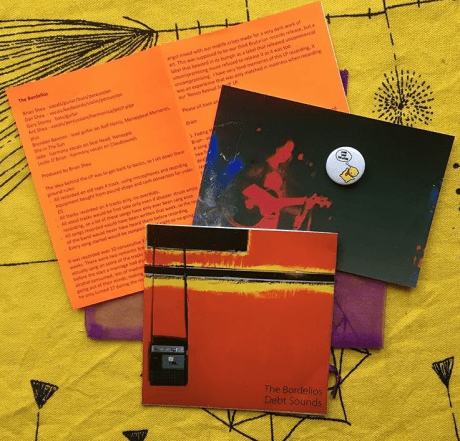
The Bordellos, the uncompromising bastions of lo fi rock’n’roll, have been chipping away at the peripherals of the music industry for years to no effect. Though this shouldn’t come as much of a suprise; provocative subjects including serial sex offenders Gary Glitter and Rolf Harris, and the languorous drip-fed accusations (whether through a wearing down of malaise or real attempts to shoehorn him out the door in the name of ‘blandifcation’) that the BBC ‘killed John Peel’ don’t exactly help their cause.
From their St Helens base the family band spew and regurgitate a continual flow of musings, lovesick plantive melancholy and cumdrudgry attacks on the state of modern culture. Knocking out releases at a weekly rate, the band could give the late Mark E Smith a run for his money in number of pontification packed rambles.
I’ve probably written more about this contrary group than any other in the last five years plus. Mostly because despite the basic, drone-y and cheap production The Bordellos bare their souls like all the most effectual and best rock’n’roll icons. In a nutshell: songs about broken hearts played on broken guitars. And yet despite this lo fi aesthetic, the band are ambitious; referencing a myriad of musical influences, and incorporating all manner of instruments and sounds into their music.
Their latest LP, Debt Sounds, is no different – a mix between Gene Vincent, The Jesus And Mary Chain and Rey Crayola – in this respect. Fueled once more by the acrimony of tattered relationships, family fall-outs, too many late nights and cynicism, The Bordellos indolently unburden themselves upon the audience.
As no review – and I’ve tried – can really do The Bordellos sound any justice, I’ve asked the band’s elder statesman and steersman Brian Bordello permission to share his inimitable penned notes. A sort of track by track narrative, these descriptions and articulations are worthy of sharing; a window in on the workings and mindset that produced them.
And so without further ado I hand you over to Brian…
The Cast
Brian Shea — vocals – guitar – bass – percussion.
Dan Shea — vocals — keyboards – violin – percussion.
Gary Storey -bass – guitar.
Ant shea – vocals – percussion – harmonica – pitch pipe.
plus
Brendan Bannon – lead guitar on Rolf Harris, Merseybeat Memories and She in The Sun.
Jade — harmony vocals on seal head on Honeypie.
Leslie o’Brien –harmony vocals on Cloudsounds.
produced by Brian Shea
These are the rules and background:
The idea behind the LP was to get back to basics, so I set down these ground rules, all recorded on old tape 4 track, using microphones and recording equipment bought from pound shops and cash converters [under £5].
1. all tracks recorded on 4 tracks only: no overdubs
2 all vocal tracks would be first take only even if disaster struck whilst recording ,so a lot of these songs have only ever been sang once.
3 all songs recorded would have been written that week. So the rest of the band would never have heard them before recording.
4 every song started would be completed that night so no going back.
It was recorded over 10 consecutive Friday nights. During which there was two romantic break ups – the two ex girlfriends actually sang on some of the tracks to add to the spice. Just before the start a marriage had also just broken up…there was lots of alcohol consumed lots of madness, it is the sound of four people going out of their minds, looking back I wonder how Dan managed as he only turned 17 during the recording of this album, but his teenage angst mixed with our midlife crises made for a very dark work of art.
This was supposed to be our third Brutarian records release , but a label that boasted in its bumph of releasing uncommercial uncompromising music refused to release it as it was too… uncompromising!
I have very fond memories of this lp recording it was a experience that was only matched in madness when recording our Ronco revival sound LP.
The Tracks:
A song inspired by the frustration of being in a band that had released two fine albums that had sold bugger all and the problems that arise from dealing with the music industry and all its evil ways. This subject has reappeared many times over the years on Bordellos LPs . This was the first. “Each night I dream of rats of record contracts.”
When this song was being recorded there was a huge Summer thunderstorm and rain started to pour through the roof and down the walls of Ants living room. Due to the bad state of his brickwork. So as I was trying to get my best brokenhearted vocal performance, whilst Ant was running around the house with buckets. Muttering the immortal line “Life is too short for guttering”. This was another no show night from Gary so he is not on it ,and Dan recorded harmony vocals but because of the only one vocal take rule the mic did not pick them up very well ,if you have the hearing of a dog you may hear them. “I look in the mirror and my curse has been reversed.”
There was originally 4 verses written for this song as each verse was meant to be sung by a different band member but this was another Gary no show night so we just replaced his verse with Dans fine garage punk influenced keyboard solo. The Seeds where a huge influence on this track. “I felt so alive I feel dead now.”
This song was written many years before Rolf Harris became a known sex pest ,but I always thought there was something slightly sleazy about the man. My irish cousin who was over visiting Brendan plays the lead guitar on this track and it is he you can hear laughing in the background when I sing the line Rolf Harris is my sexual hero. This was a very drunken night; Gary turned up already pissed as a newt and proceeded to lay down the bass even though he had never heard the song and we were drunk enough to let him, so it was recorded in one take. Dan was the only sober member and told me the story of Gary insisting in cleaning up Ants house after I left and before Ant got home from a gig which consisted of him just extending all the mic stands fully pointing at the ceiling, after doing that he proceeded to record a 20 minute bass instrumental, which sadly has been lost in the mists of time. “I cum before two little boys comes on so I can sing a long.”
Brian – vocals/ guitar. Gary – electric guitar. Ant- pitch pipe. Dan percussion/harmony. Jade- harmony vocal.
Brian -vocals/guitar. Gary- bass. Ant – percussion.
Another song written on the subject of being in a unsuccessful struggling band trying to make ends meet, at this time I was wrapped up with dealing with business with our then record label Brutarian and their distribution worries and the lack of success in getting reviews, radio play and such [nothing changes]. “I suffer for my art though they won’t stock it at Walmart.“
Probably my fave Bordellos song and many other people’s. A song of tender reflection. I remember recording the vocals as Gary and his young son Tom came crashing through the front door. The look I gave them must of been daggers like as they stopped in their tracks – for obvious reasons it cannot be heard on the recording. This song is made by Dans excellent keyboards. We have tried this song many times and never recaptured the magic on this first version. There was magic in the room that night. “Every smoking chimney my statue of liberty.”
Yet another song about the music business and predicting its decline and the sorry state it is in today. One of my favorite lyrics, I remember being astounded at Dans vocal, his first ever lead vocal and being so impressed with his delivery: he was only sixteen at this point. I remember Ant sulking because there was no room for a bongo track, us deciding a lead guitar track would be more effective, there only being 4 tracks. “The stroke of my quill just ain’t paying the bills.”
Brian – vocals/guitar. Dan – percussion. Ant – harmony vocals/ plastic whistle. Leslie- harmony vocals.
Yet another no show night from those part timers Gary and Ant. They where not a fan of the lo/fi recording method and the slapdash one vocal take rule, they much prefered recording in the 32 track barn studio we recorded our previous two albums. I think the tension actually added to the feel of Debt Sounds. I remember Gary saying we needed a new mic and me replying just gaffer tape the fucker it will do. So for this session it was just myself Dan and cousin Brendan; a song written after having a long conversation with former member of The Big Three and Faron’s Flamingos, the man Faron himself and how never making the big time still haunted him. “Oh how the memories linger just want to be Faron’s Flamingos to be free.”
Brian – vocals/guitar.
This track was recorded towards the end of the ten weeks if I remember correctly, and we were at the stage of equipment falling apart, and part of the percussion on this was Dan beating Ants settee with a broken mic stand whilst I was strutting around the room with the other part of it in a Freddie Mercury type way recording the vocals. “But I kept my shirt on.”
I did not play on this as Gary was a much better guitarist than me. Another case of the vocal mic not working and it kept cutting out as we recorded it, but due to me insisting we stick with the only one vocal take allowed we have this strange slightly scary take. Dan was as mad as hell by the end of it as you can tell with the last line; probably the only line that is fully audible. This is one of my fave tracks on the LP. “As my pathetic life unfurls.”
Another song with cousin Brendan on lead guitar. Recorded the same night we did merseybeat memories – not my fave song on the LP, my vocal really is quite poor. The percussion is Dan playing a Wok with a wooden spoon: just give me some of that wok n roll music. “She walks in the summer rain and confuses my religion.”
This was another no show night by Gary. Ant was there with his soon to be ex girlfriend. A song about the coming to the end of a relationship was ideal for this nights recording as the atmosphere was pretty hostile around Ants that night. I recorded the vocal whilst accompanied by Ant and Leslie giving each other death stares. They had an argument in the kitchen which myself and Dan recorded on one of the tracks unknown to them and we used it very quietly running throughout the finished song. A work of true darkness. “There’s no passion anymore just friction. When did this habit turn from a addiction.”
Brian/vocals/guitar/percussion. Gary – bass. Dan- percussion/screams/violin. Jade- vocals.
This was my LP really: like Brian Wilson used the Beach Boys to make Pet Sounds, I used the Bordellos to make Debt Sounds.
Tickling Our Fancy 062: The Turbans, Sonido Gallo Negro, Anton Barbeau, Catrin Finch & Seckou Keita, Nonpareils…
March 27, 2018
Dominic Valvona’s new music reviews roundup.

Interesting releases from across the world and music spectrums; Tickling Our Fancy is the most eclectic of reviews roundups. With no themes, demarcations of any kind, or reasoning other than providing a balanced platform for the intriguing, the great and at times, most odd releases, I bring you this month’s latest selection.
I have a truly international spread of releases for you all, even more than usual with one band in particular, the backpacker collective The Turbans, featuring band members from the UK, Eastern Europe, Levant, Africa, Balkans and beyond. I take a look at their borderless debut album for Six Degrees Records. From Mexico way, there’s the b-movie space mambo and cumbia occult of Sonido Gallo Negro: newly signed to Glitterbeat Records and releasing their third album Mambo Cósmico. Uniting for the second time together on a recording, Welsh harpist maestro Catrin Finch and Senegal kora star Seckou Kieta reunite for diaphanous and reflective celebration of the two instruments and their respected native homeland’s heritage on SOAR. Closer to home there’s the latest inimitable psychedelic pop album, Natural Causes, by Anton Barbeau; an EP of blossoming, Kaleidoscopic dance pop from the Leeds duo Lost Colours; the first solo album project to see light after the break-up of The Liars, with Aaron Hemphill’s Nonpareils solo debut Scented Pictures; Sebastian Reynolds’ Mahajanaka odyssey, now finally getting a soundtrack release; and the tortured industrial noise and biblical raging of the Boston duo Water Fragment.
Nonpareils ‘Scented Pictures’ Mute, 6th April 2018

With the Liars now, more or less, the sole concern of Angus Andrew, the first fruits of the schism that split the original band up is now unveiled in the shape of Aaron Hemphill’s solo nom de plume Nonpareils: chosen because it’s a “name that didn’t evoke a single person or a producer name, but hopefully something that sounded more like a group or a band…something plural.”
Moving to Berlin in 2015, a year before he left the Liars, Hemphill has had a good two years break from his former band mate, but instead of reflection or acrimonious scorn he’s decided to deliver a cyclonic churning and confusing barrage of sonic displacement; a window in on the woozy state of Hemphill’s mind, all those ideas, snippets and memories channeled through a abstract and broken staccato and heavy reverb obstruction that’s still capable of throwing out some pretty good hooks and tunes.
‘Metaphysically reconstructed pop’ as Hemphill himself calls it, the druggy feel and lingering traces on his inaugural solo debut, Scented Pictures, was all recorded in Berlin using the most haphazard and off-kilter of processes. Recording ‘stacks’ of acoustic instruments whilst ‘doing the silliest’ of experiments upon them, Hemphill also encouraged the engineer on these sessions to distract and hinder him as he bashed away on the drums (without a click-track), and set up the microphones, when on the piano, to deliberately “fall away from the body of the instrument.” And so there is a strange disconnection and time-lapse, in which everything sounds like it’s running away from its main source or languidly slurring, that runs throughout this album. It ties in to the theme of “time-accelerating” and Hemphill’s premise of a “sensory experience of memory”, which encourages the brain to fill-in the gaps of what is a constantly trudging, stuttering soundtrack of disorientated peculiarities. None more so than The Timeless Now, which sounds like a churned and slurred breakdown of time itself, set to eternal damnation and spinning like a centrifugal space sequence.
Amongst the reversed effects, stumbled drums, tetchy loop oscillations there’s hints of Mogadon induced Atlas Sound (on the surprisingly Spector trippy dream pop plaint Makes Me Miss The Misery Girls), a Coil/John Cale hybrid (Cherry Cola), vaporous synth (ala the Eno-esque Press Play), Alan Vega (more specifically the title track, which also includes a subtle trace of Neukölln Bowie, but his ghostly presence can be heard on many tracks) and R. Stevie Moore.
Often resembling a scratched CD having a fit of the jitters; often obscured under a veil of languorous multilayering; often sounding distant; Hemphill still retains an ear for melody, combining the abstract with post-punk, rock’n’roll and techno to produce something dreamy. His ideas are distilled into a seething disorientation of time and memories; tapping in to the anxious and confusion of our times. Not so distant from the Liars sound, yet different enough to be challenging, Scented Pictures is an enigma waiting to be unraveled.
Sonido Gallo Negro ‘Mambo Cósmico’ Glitterbeat Records, 6th April 2018

Serving up a mystical occult of a third album, the sauntering Sonido Gallo Negro take a trip aboard one of Erich Von Däniken’s ancient astronaut controlled UFO to draw in a wealth of cosmic affected South American styles and exotica.
Slinking all the way the nine-piece outfit reach out beyond the Mexican borderlands to embrace the multicultural dance rhythms brought to the Americas via Africa and the Middle East and of course the centuries ingrained influence of the Hispaniola.
Already interpreting and reframing the popular cumbia – what was originally the folkloric rhythmic dance practiced by the Africans who were en mass displaced and brought to work in Columbia – and mambo on previous records, the group now include a hybrid mix of ‘cha cha’, the Mexican ceremonial dance known as ‘danzón’, and the Sinú River sprung brass orchestra come Caribbean region of Colombia ballroom style ‘porro’.
Oscillating over the Nazca Lines or creeping through the Theremin quivering sorcery mists of Catemaco, every song has an exotic but kitsch like charm; no more so than with the world famous cover of the Mexican bandleader Pablo Beltrán Ruiz’s mambo turn crooner swaying Quién Será?, covered and transformed into an almost comic dash, with Farfisa organ prods and Dick Dale tremolo.
Encompassing Santo vs. the creatures from Mars b-movie cosmic effects (Mambo Cósmico, but also throughout), deity worshipping ritual frazzling (Cumbia Ishtar), bird-like trilled exhales from the cha cha hot-stepping carnival (La Foca Cha Cha Cha), sultry ballroom with Spanish flair (Danzún Fayuquero) and Surf twanged otherworldliness (Danza del Mar), Sonido Gallo Negro perform everything with a lively flair; both busy but controlled.
Like a Mexican Head Hunters celebrating the rich musical diversity and occultist symbolism – from the mysterious allure of Mesoamerican pyramid building societies to magic shamanism – of the Americas, Sonido Gallo Negro meld all their influences together in one big bubbling melting pot of fun.
The Turbans ‘The Turbans’ Six Degrees Records, 6th April 2018

Collecting band members as they busked together in such exotic locations as Kathmandu, the two instigators, and fellow ‘half-Iranian/half-British nomads’, behind the international backpackers The Turbans, (the self-confessed ‘seventh best guitar player in the band’) Oshan Mahony and violinist Darius Luke Thompson, have amalgamated countless styles and cultures towards a largely upbeat celebration of borderless solidarity.
The term for this cross-pollination of the Levant, Balkans, India and Africa, coined by the group’s Kurdish percussionist Cabber Baba, is ‘music from manywheres’, though their base and center for at least half the time when not on tour is Hackney in London – the other half spent in Goa. They sing of this attachment to Hackney, celebrating its multicultural allure and spirit to a loose backing of electrified souk rock and jostled hand drums on the paean tribute song of the same name.
It would take an age to document each of this globe-stretching group’s credentials and heritage, let alone mention all the additional guests that make this, The Turbans, debut album so richly amorphous, traversing as it does so many cultural and national references. Songs such as the folkloric wandering Sinko Moy, written by the group’s former Bulgarian pop star and Django Ze front man, Miroslav Morski, for instance features the lulling atmospheric choral backing of The London Bulgarian Choir, who project us the diaspora and view from the Carpathians, but then other elements of musicality and tone hint at Cairo, Timbuktu and even Ireland. This shifting sense of location is The Turbans signature; one minute gazing from atop of a camel, searching over sand dune landscapes, the next, regaling a romantic atavistic paean to Flamenco accompaniment in Moorish Spain.
Featuring a rambunctious mix of characters, from Belarus oud player Maxim Shchedrovitzki to guembri maestro Simo Lagnawi, the group throw Tuareg blues, gypsy music, Moroccan pop covers, colonial Tunisian lounge music and Greek folk into one gumbo pot of both harried japes and more serene contemplation.
Political by being so diverse in a climate of hostile nationalism and closed borders, The Turbans don’t so much push an agenda as reference the various travails by which many of its members had to overcome to reach these shores. And so this album is more a celebration of universal collaboration.
Recorded, of all places, in a previously abandoned 500 year old property on the borders of Scotland and England, in the Northumberland farmhouse turned community arts centre where the group’s co-founder Mahony grew up, you’d be hard-pressed to find a more international sound right now.
Catrin Finch & Seckou Keita ‘SOAR’ bendigedig, 27th April 2018

Only two releases in and the bendigedig label – an independent partnership between Theatr Mwldan in Cardigan, Wales and ARC Music – is already proving to have erudite tastes for the finer examples of beautifully-crafted folk and traditional music from the versants of Wales and beyond. Following on from the recent Gwyneth Glyn album Tro, the internationally renowned harpist Catrin Finch once more draws parallels musically and culturally between her native Wales and the West African homeland of musical partner Seckou Keita, on the working duo’s second album together, SOAR.
In a similar vein to her fellow compatriot, Glyn, who just as effortlessly blended her Welsh lilted tones with those of the Indian ghazal singer Tauseef Akhtar on the Ghazalaw LP collaboration and has also supported Keita on tour, Finch merges the angelic elegance of the harp with the equally elegant, spindly diaphanous sound of the harp-like Kora, as played by the maestro from Senegal,
Combining the two distinct, but as you’ll hear highly congruous, instruments together and bringing both experts extensive knowledge and talents to the fore (and the bios of these two practitioners is highly impressive and wide), the duo weave an intricate melodious album that celebrates both their diversity and shared goals.
Originally coming together for the award-winning Clychau Dibon LP in 2013, the harp partnership continue with that album’s avian theme, using it as a springboard for another articulated series of paeans and serious reflections. Though it might not be the most obvious of geographical connections, both artists seamlessly tie their respective backgrounds and heritage together, starting with the divine ‘soar’ and flutter of the Dyfi Osprey on the opening bird of prey homage, Clarach. Immortalizing the first Osprey in modern times to be born in Wales after an absence of 300 years (persecuted to extinction by the end of the 17th century), its survival and 3,000 mile migration to West Africa is celebrated by mirroring its travail between the two continents; this majestic creature’s freedom finds solace and respect through the duo’s charming melodies and interplay. It’s a forced migration, and the theme of colonization, that’s given a more jazzy-blues harp voice on the trembled-held poignant 1677. Tilted after the year that Vice-Admiral Jean Il d’Estrees stormed the Dutch fort on the island of Gorèe off the coast of Keita’s birthplace of Senegal, captured in the name of his master King Louis XIV, it marks the point in history where rule in the region passed to France. Gorèe would become a notorious slave trading port over the next century. Capturing the motion of rocking boats in the interaction between the two instruments, the duo mimic a murky back and forth pattern in plaintive remembrance to those who have left the West African coast behind for a better life, and for those who weren’t so lucky.
Staying close to Keita’s heart, they also perform a reinterpretation of the lovely tribute to Yama Ba; written by Keita’s uncle and fellow kora maestro Solo Cissokho as a paean to the woman who believed in him when times were tough, and was willing to invest in his future, buying him the equipment he needed to amplify his instrument. From the semi-nomadic Fulani people who live all over West Africa, Yama Ba is given a peaceable, softly accentuated homage, with Finch replacing and transforming the original melody played by Cissokho’s bassist Kevin Willoughby. There’s also an inviting gesture of effortless warmth on the Senegal split-language entitled Tèranga Bah: A nod to the country’s version of ‘great hospitality’, Tèranga translates as ‘hospitality’ in the Wolof dialect, Bah as ‘great’ in Senegal’s other most common tongue Mandinka. And one of the oldest tunes in the Senegambia kora repertoire, the difficult (only played we’re told by experienced practitioners) Baisso is twinned with an excerpt from Bach’s Goldberg Variations on the surprisingly seamless and classical reverent turn joyfully serene Bach To Baisso hybrid.
Back to the valleys of Wales, and one of the album’s most serious tunes, Finch commemorates an event, a catalyst for an insurgence in Welsh nationalism that led to a groundswell of protest and even sabotage. Cofiwch Dryweryn is a gorgeous lament to the flooding in 1965 of the Tryweryn valley in north Wales; flooded to create the Llyn Celyn reservoir that supplied water to the city of Liverpool. Those unfortunate enough to have lived or worked its land were forced to leave; an action that led to much resentment and went towards a revival in self-determination – though it would of course take a further forty years for Wales to get a devolved powers from Westminster. Here, lost almost in the flow of the watery gushes and drama, Finch’s whispery tones echo the feelings, “remember Tryweryn”, as Keita lends a yearning vocal and kora pinning accompaniment.
It’s often difficult to hear when one instrument begins and another ends, the kora and Welsh harp in such synchronicity. The earthy spindled kora and plucked ebb and flow of the serene harp both prove the most complimentary of companions. The two heritages and ancestral combine for a united front on the plight of not just a migratory bird but people and ideas too. The exchange articulated with beauty and élan.
Sebastian Reynolds ‘Mahajanaka EP’ Nonostar, 20th April 2018

Finally releasing the soundtrack part of his beautifully transcendental Mahajanaka odyssey style dance and music collaboration, the Oxford musician/composer/promoter and member of the Flights Of Helios collective Sebastian Reynolds launches an EP’s worth of variations to promote the upcoming live performance of the Mahajanaka Dance Drama at the Wiltshire Music Centre 2nd April 2018. The beautifully softly malleted and chiming peregrination original is transformed subtly and serenely over the course of a live performance – performed with his Solo Collective triumvirate band mates Alex Stolze, Anne Müller and Mike Bannard – and two remixes.
A keen enthusiast of eastern and oriental cultures, especially Buddhism, Reynolds travelled to Thailand a while back as part of a British Council/Arts Council England funded trip. During that visit he laid down the groundwork for the Mahajanaka project, a collaboration fusion of both traditional Thai forms and Western contemporary dance and music, which reinterprets the ancient stories of Buddha on his multiple incarnations journey of perfection towards becoming fully enlightened.
Partners on this reimagining project include Neon Dance and the acclaimed dancer/choreographer Pichet Klunchun, and on the score itself, features both long-term collaborator Jody Prewett (keyboard) and the Thai pop group The Krajidrid Band under the direction of composer/producer Pradit Saengkrai. Recorded playing the classical Thai “piphat” ensemble music, The Krajidrid Band’s evocative sacred finger cymbal chimes and peaceable soft mallet accompaniment is sampled and looped by Reynolds to produce a gently overlapping and mysterious ambient flight of fantasy. It certainly creates the right mood, successfully merging the source material with the atavistic, transformed by Reynolds’ signature process of reinvention.
Featuring his chamber electronic partners from the already mentioned and most brilliant Solo Collective project, there is a trembled bow and gentle stirring strings version, included alongside the original. Performed at the Roter Salon, Berlin on the 6th February 2017, this live recording adds a gently lilting undulation of European cello and violin, courtesy of Müller and Stolze, to the ceremonial Thai drones and lush divine resonance. Taking it in another direction, albeit subtly, the Emseatee remix adds a ice-y vapour and tight enervated clattery beats, ala Bonobo, to the Southeast Asian suite, whilst the Atlasov remix subtly wafts this soundscape towards a gauze-y The Orb and Artificial Intelligence era Warp label direction. Though nothing quite matches the original Jon Hassell like venerable peregrination, a most beautiful evocation of the Buddha enlightenment transported to another realm.
https://soundcloud.com/sebastian-reynolds/mahajanaka
Anton Barbeau ‘Natural Causes’ Beehive/Gare du Nord, 13th April 2018

Ian Hunter via Robyn Hitchcock via Luke Haines, wrapped inside an enigma, the Sacramento born, Berlin-based, Anton Barbeau changes his style of delivery repeatedly yet always maintains an idiosyncratic ingenuity in whatever he does. Posing in a not too dissimilar fashion to Julian Cope on the cover of his latest (and 23rd) album Natural Causes, he looks to all intents and purposes, standing amongst the long stones, like nature’s son on a Ley Lines trip. You can hear a hint of the arch druid of heads own, more, digestible and melodious brand of psychedelic pop running through Natural Causes, but not exclusively, as he opens up to the 12-string élan of the decade he was born in to: the 60s.
Not so much softening up as choosing a more personal, peaceable approach to ‘glorious sounding’ maverick pop, Barbeau has produced something quite stunning and timely (Barbeau fast approaching his 50th birthday): a cerebral album both instantly memorable, melodic and yet adventurous and inventive.
The results of an aborted project under the Applewax banner, made in the run up to the 2016 US elections, Natural Causes is the reflective, more open antithesis to what would have been a far darker and mournful proposition. In part a request from Barbeau’s French label Beehive (released in conjunction with Monolith Cocktail favourites, Gare du Nord), the album that would eventually grow out of the abandoned Applewax would include remakes of past classics alongside new material.
Having another bite at old faithful, Magazine Street, he amps up the jangle factor and production on this country-rock Byrds meets Green Pajamas classic. There’s also reinforced crisp breezy versions of Creep Tray – this time featuring the lush undulated backing vocals of Karla Kane, who guests on a quintet of songs, adding everything from harmonies to “OMs” – and the fuzzed-out vortex, Just Passing By.
In between the all too fleeting to be effective as anything other than paused intermission style vignettes, Barbeau and a congruous cast of guests lend a touching caress to a songbook of contemporary surreal lyrical musings and love songs. Unrushed, even breezy in places but hardly lacking intensity, there’s an air of nostalgia in homages to the radio stations and DJs that sparked interest in the young Barbeau, on the Hunter fronts Tom Petty band finale Down Around The Radio. And with a nod to one of the music cannons greatest ever records, The Beatles Sgt. Pepper kaleidoscope, a stab at a popsike hit (a missing link from one of Strange Days magazines 80s halcyon compilations) is made with a song that was originally written to be recorded at the venerated Fab Fours’ inner sanctum of Abbey Road, with the quirky Disambiguation, which evidently does have a tenuous link to the Beatles, featuring as it does McCartney (and Pretenders) wingman Robbie McIntosh on 12-string guitar. Meanwhile, the discombobulating time-signature Coffee That Makes The Man Go Round is humbly declared to feature the “second greatest riff ever”, and is in part inspired by one of the 60s most underrated bands, Family.
Perhaps one of the most touching declarations and attempts at a lilting anthem, Summer Of Gold, which features Nick Saloman and Ade Shaw of Bevis Frond fame, and Michael Urbano who works with Neil Finn, sounds like Crowded House backed by a Mellotron accentuated rich Amon Duul II. Adopting an entirely different sound, Barbeau covers a strange space in which Sparks collaborated with Squeeze on Secretion Of The Wafer, and channels George Harrison (yes another Beatles link) on the Krishna referencing peaceful Mumble Something.
Fans of Barbeau will be once again charmed by his unique songwriting abilities, and those still unfamiliar with the inimitable generation X artist of renown will find much to love about his psychedelic pop genius.
Lost Colours ‘A Different Life EP’ 61seconds, 14th March 2018

Featured last month, Lost Colours’ life-affirming cosmos pop single One Space Left sits at the center of their new follow-up extended EP, A Different Life. That debut song, a visceral explosion of colour encapsulating the Leeds-based duo’s optimistic abandon in producing psychedelic pop, with a lilt of globe-travelling trance, to put a smile on your face.
Featured either side of it is a trio of similar universal voyages and a number of various remixes, starting with the slow boat to Goa via the South China Seas caressed and lingering Organic Adventures. Building a relaxed soundtrack into a stronger, more rallying trip-hop explosion, the scale of this adventure expands to include waves of indie rock guitar, strings and crashing drum breaks. On a more jazzy soul trip, part Chemical Brothers, part Acid-jazz, the title track and Technicolor High both feature the earthy indie soulful vocals of Sam Thornton. The first of these is a horns, flute accented cyclonic propelled thrust through “the cosmos”, the second, an indie-dance Coldplay traverse.
A Different Light receives two remix treatments, both of which stretch, chop up or strip the original; the Abstract Orchestra transformation slinky but sharp and optimizing the jazz elements; the Night Stories, amping up the swirls and adding velocity drum’n’bass to the mix. Technicolor High is given the LC Nightshades Euro club treatment, with bongos, vapour trails and ambient pauses.
The Lost Colours duo, already lively for the past few years on the remix scene themselves, have been biding their time, steadily building up material for their move over into producing their own original blossoming, Kaleidoscopic material. They sound to be on the right path, their debut and new EP an unashamed joyful and lifting experience of psychedelic and exotic trance dance music.
Waterman Fragment ‘Waterman Fragment’ Available now on Bandcamp

Though something of an unknown entity, I do know for certain that the often brutal and discordant Waterman Fragment convincingly grind through the miasma, shock and stresses of our unstable, conflict-beckoning world on there recently released self-titled LP. Started by two self-confessed “music survivors” of the 90s New England noise/skronk scene, the Waterman Fragment duo have moved on to summon forth a caustic barrage of demons with this incarnation of metal pummeling, warped and tortuous flagellation.
Quite vivid and fired-up, when you can hear them, the mostly spoken (or barracked through a megaphone) lyrics have a real depth and poetic menace. Layers of meaning and references strike at the bowels of hell; the aftermath of an aerial bombing raid that hits a zoo becomes a quasi prose style menagerie version of Guernica, on the hypnotic quagmire dissection of death from above, A King And A Smak In A Calm. Warning it’s strong stuff, but here’s an example of that distressing vivid lyricism: “Beneath deep rubble reptiles squirm. The aquarium explodes. Monkeys and gorillas flee, hair singeing as they run. Shattered glass aviaries empty themselves. Trapped in their temple, elephants die. Rats work the huge rib cages and mounds of entrails to make a golem, filling its head with flies, as the city shines red through a gate knocked off its hinges in the background.”
The finale, which almost bounces and shimmer along by comparison to the rest of the album, moving along to a double-time mix of the Moon Duo, Sigue Sigue Sputnik, Suicide and The Normal, is an elegiac unflinching discourse on the Crystal Meth epidemic sweeping America (but the rust belt in particular): “A lumber saw took his leg, lost all his teeth to crystal meth.”
Harrow be thy name and all that, there’s plenty of Biblical quotation or allusion to it anyway to be found; extracts of Psalm 51 can be found on the fork-tongued exorcism at the foot of the Babel Tower, The Hyssop – a reference to the brightly coloured shrub found in Southern Europe and The Middle East, mentioned in the bible, known for its medicinal properties as an antiseptic. The Swans argue with 4AD era Scott Walker soundtrack certainly sounds like a brooding combat between the esoteric bible and dark forces. There’s plenty of rage, a lot of the daemonic, and plenty of the Old Testament prophecy amongst the blood and guts and tearing flesh.
A theme of breaking free, shouted over the white noise, and the need to breathe; shedding the old skin, escaping the augurs of destruction; and escaping the Skynet possible future of automation and our robot overlords on the repeated steel ring fence kicking and foot pedal throbbing industrial Function: “Come meet the robot god, your soul’s entrusted to take off his metal mask. I’m staring back at you. I am the function of pure self destruction, anti-reproduction, and pro-automation.”
Sawed, drilled, stamped, teared, hammered and bashed, you really will feel like you’ve been savaged and beaten by the time you reach the end. A challenge certainly; the paranormal, biblical, esoteric no match for the realities of human nature and its darkest misdeeds, distilled through the harsh Gothic and industrial noise soundtrack of the uncompromising Waterman Fragment duo. For those who embrace the gloom and mire consider this a most heavy serious recommendation from me.
Glitterbeat Records 5th Anniversary: A Celebration
March 22, 2018
Words: Dominic Valvona

If the Glitterbeat Records label had a remit, ‘a raison d’etre’, it would be all about transcending borders, whether it’s the physical, geographical or subconscious kind, to bring the most ‘vibrant’ and ‘committed’ of artists to a global audience. Finding existing and ‘possible musics’ (to borrow a term from the label’s own reissue of Jon Hassell and Brian Eno‘s iconic 1980 transformative soundscape experiment, Fourth World Volume One: Possible Musics) from across the world, the independent German-based sister label to Glitterhouse Records has in a short timeframe helped reshape and redefine what we know as ‘world music’ – a fatuous term in itself, still largely used to denote anything outside the comfort zone of Western commercial music.
Originally putting out a catalogue of sublime and obscure records from some of Malia’s most important, traversing desert blues and rock artists (from Ben Zabo to Tamikrest and the Songs For Desert Refugees compilation) on Glitterhouse, world traveler bluesman Chris Eckman of Dirtmusic fame (the labels unofficial in-house band) went on to co-found the Glitterbeat imprint with Peter Weber in 2013. The inaugural release on that label, now celebrating its fifth anniversary, was a 12″ remix of Ben Zabo’s Dana by Mark Ernestus (Rhythm & Sound, Basic Channel), released sometime around March 22nd, 2013.
From the already mentioned desert blues stars of Mali and ‘beyond’, Eckman’s ever growing roster of contemporary sonic adventurers hail from a number of other African countries, including Ghana, Mauritania and the Bargou Valley bordering Algeria. And has since gone on to expand its remit and reach out to include music from the Balkans, Southeast Asia, the Levant and South America.
As you can imagine, this global expansion encompasses a myriad of musical styles, many of which were in serious danger of disappearing into obscurity if not for the work of music ethnologists such as Paul Chandler and Grammy Award winning field-recordist/producer Ian Brennan (we were lucky enough to interview Ian a couple of years ago), who both recorded for posterity ‘lost voices’ and atavistic guardianship documented collections for the label under the Hidden Musics series.
So busy and bustling with potential releases, in the last couple of years they’ve set up a congruous imprint of their own, the tak:til scion: an extension and home for more transcendental, meditative and experimental material that doesn’t quite fit the main label. Featuring a mix of re-released and remastered iconic albums from the ambient, soundscape and devotional genres – including the already mentioned inaugural Jon Hassell and Brian Eno collaboration -, Tak:til has featured Širom‘s Slovenian odyssey I Can Be A Clay Snapper and 75 Dollar Bill‘s psychedelic desert rock and trance of the Maghreb, avant-garde, jazz and even swamp boogie delta blues transient W/M/P/P/R/R.
From handkerchief waving Albanian songs of sorrow to Istanbul dub; from hybrid collaborations such as Tony Allen‘s album with some of Haiti’s finest musicans, the Afro-Haitian Experimental Orchestra, to the electric griot psych of Noura Mint Seymali; from the Turkish pregriation and siren vocals of Gaye Su Akyol to the carnival funk of Bixiga 70; Glitterbeat Records has helped uncover a whole new musical world of discovery for people like me. It’s no surprise that they’ve won the WOMAX label of the year so many times, and attracted heaps of acclaim. I’ve more or less featured every single one of their forty plus releases, and seldom found a dud. And Glitterbeat Records have appeared more times than any other label in our end of year features.
To celebrate the label’s fifth anniversary, I’ve chosen both personal favourite releases and tracks from the back catalogue.
Lobi Traoré ‘Bamako Nights: Live At Bar Bozo 1995’ 2013
From the very beginning, one of Glitterbeat Records earliest releases, Bamako Nights captures the loose, almost extemporized sounding, drift of the late Malian legend Lobi Traoré (who died at the age of 49 in 2010); capturing one of his ‘packed-to-the-rafters’ live shows from the feted and iconic Bar Bozo. The singer/songwriter takes the crowd with him as he meditatively affects an adroit passage through Mali’s social and political pains. Attenuate guitar lines bolstered by flanger; licks powered by enveloping sustain; and a band whose steady yet often expletory solo spotted, bubbling bass and rapid percussion bind the nuanced accents together, all prove rhythmically hypnotic.
To have been a-fly-on-the-wall at one of these intimate, intense, shows must have been a magical experience; especially as Traoré kept the anticipation building; the appreciative audience either enthralled by every descriptive note and earthy toiled vocal or adding their own backing chorus of spiritual hollering and hand clapping: You’ll be hard-pressed to find a greater live experience and encapsulation of the atavistic West African blues.
Samba Touré ‘Albala’ 2013
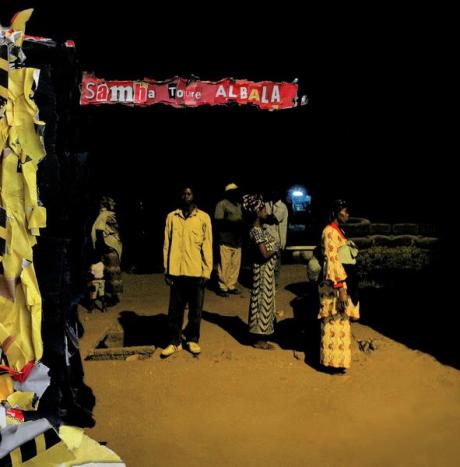
As Mali continues to exist in a fragile union after the recent Islamic hijacked insurgency (curtailed by former colonial masters France with additional support from the UK), a host of the country’s great and good (Bassekou Kouyate, Fatoumata Diawara, Baba Salah, Tamikrest to name just a few), compelled to speak out, have added gravitas to their praised sweet tribal blues in defiance of the regimes that would have banned or at the very least censored their music. Known for his work with the late Malian legend, Ali Farka Touré, Samba Touré is an amiable enough chap whose previous acclaimed albums, Songhaï Blues and Crocodile Blues, were more genial affairs, shows his disapproval with a grittier, riskier brand of protest on Albala.
Albala – translated from the Songhaï language as ‘danger’ or ‘risk’ – is a darker, albeit lamentably so, album. But so delicately melodious and nimble is the delivery that the cries of woe remain hymn-like and hypnotically diaphanous: the blues may have turned a deeper shade of forlorn yet still sways with meandrous buoyancy and restrained elegance.
A traditional accompaniment from Touré’s regular band mates Djimé Sissoko (on ngoni) and Madou Sanogo (tapping out a suitable candour on congas and djembe), with guest performances from celebrated ‘master’ of the one-stringed violin, the souk, Zoumana Tereta, and fellow Malian ‘neo-traditional’ singer Aminata Wassidje Touré is bolstered by effective guitar and keyboard layers from Hugo Race (The Bad Seeds, Dirtmusic, Fatalists). This subtle mix works wonders, giving the overall sound a mystical delta blues feel, resplendent with fuzz, wah-wah and wailing soul.
Aziza Brahim ‘Soutak’ 2014

Born in the hardened landscape of a Saharawi refugee camp on the border of Algeria and the Western Sahara, beguiled vocalist Aziza Brahim embodies the wandering spirit of her people; their settled, though often borderless and disputed lands, previously claimed by Spain, were invaded in 1975 by Morocco. Though made up of many tribes with many different goals the Saharawi people did mount a fight back. It was in this climate that Brahim was hewed.
Soutak, or ‘your voice’, is centered on just that. The backing is striped to a degree, so the poetic reverberated vocals can echo and warble soulfully without interruption. Though there is no mistaking that strong, robust and primal Saharan spirit, the congruous accompaniment is a mix of both Balearic and folk rock styles – especially the deep sleek bass guitar notes that slide and weave under Brahim’s distinctive voice.
Produced by Chris Eckman (of Dirtmusic fame), whose assiduous talents have done wonders with Malian blues rockers Tamikrest and Bamako Afrobeat artist Ben Zabo, Soutak was recorded live in Barcelona: the fluid lilting cosmopolitan sound of that city is unmistakable.
Serene and subtly sung, the choral, almost desert gospel hymns take time to unfurl their charms, so be patient. Once again Glitterbeat and Eckman have a classic world music crossover on their hands.
Dirtmusic ‘Lion City’ 2014

Connecting the ‘dirt music’ environment of an unforgiving Australian outback with the Cajun swamplands, desert and bustling African townships, Glitterbeat Records co-founder and producer of their awe-inspiring roster of world music greats, Chris Eckman, leads his nomad troupe across esoteric and meditative terrain soundscapes.
At times almost alien, their borderless approach to mixing rock, blues and (mostly) West African music in a seamless wash, creates something both mysterious and original. Recorded at the same time as their last album Troubles, in Bamako, Lion City couldn’t help but be guided politically and socially by the upheaval in Mali. A testament to the eerie developments and a lament that also offers hope, Dirtmusic and their guests (which include such luminaries as the Ben Zabo Band and Samba Touré) prove that you can work alongside African artists without succumbing to condensation.
Far more successful if not authentic than anything Albarn or indeed the ‘Radio’ polygenesis collectors The Clash could ever produce, these Westerners move serenely, blurring the cultural boundaries as they circumnavigate the psychogeography of the chaotic city and romanticized but often harsh sand dune landscapes of both West and North Africa. You could say it was a culmination of the entire Glitterbeat labels stock, condescend into one challenging soundtrack.
Noura Mint Seymali ‘Tzenni’ 2014
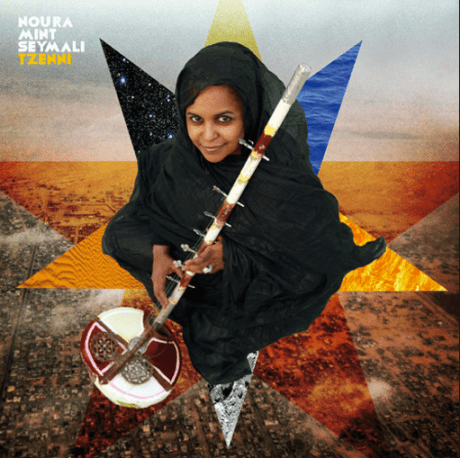
The technicalities, pentatonic melodies and the fundamental mechanics aside, nothing can quite prepare you for that opening atavistic, panoramic vocal and off-kilter kick-drum and snare; an ancestral lineage that reaches back a thousand odd years, given the most electric crisp production, magically restores your faith in finding new music that can resonate and move you in equal measure.
Hailing from the Islamic Republic of Mauritania, nestled in between Algeria, Senegal, Mali and the Western Sahara, with the Atlantic lapping its shoreline, Noura Mint Seymali keeps tradition alive in a modern, tumultuous, climate. Her homeland – run ever since a coup in 2008, by the former general Mohamed Ould Abdel Aziz, duly elected president in 2009 – was rocked by the immolation sparked Arab Spring and subsequent youth movement protests, all of which were violently suppressed by the authorities. Add the omnipresent problems of FGM, child labour and human trafficking to the equation and you have enough catalysts to last a lifetime. However, Noura’s veracious commanding voice responds with a dualistic spirit, the balance of light and shade putting a mostly positive, if not thumping backbeat, to forlorn and mourning.
Recorded in New York, Dakar and in the Mauritania capital of Nouakchott, Tzenni transverses a cosmopolitan map of influences and musical escapism. The original heritage still remains strong, yet the ancient order of griot finds solace with the psychedelic and beyond.
Jon Hassell/Brian Eno ‘Fourth World Vol.1: Possible Musics’ 2014
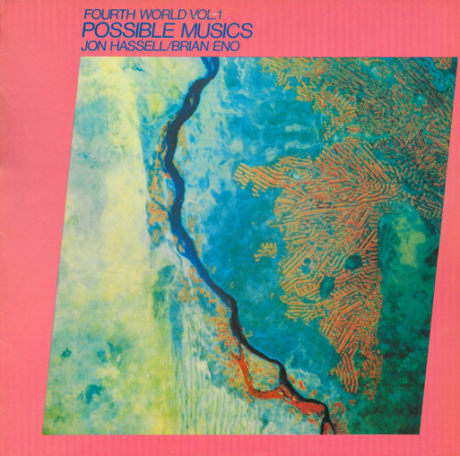
Already riding high on a crust of acclaimed production projects and numerous semi-successful collaborations and solo albums, when Brian Eno touched down in New York City in 1978 he would unintentionally help direct another important development in ambient and world music (and also end up staying for five-years). Absorbed in what the city had to offer him musically, Eno came across the stripped and atmospherically rich experiments of trumpeter/composer Jon Hassell, who’s own pathway from adroit pupil of Stockhausen to seminal work on Terry Riley’s harangued piano guided In C, encompassed an polygenesis of influences: a lineage that draws inspiration from avant-garde progenitors like La Monte Young, and travels far and wide, absorbing sounds from Java to Burundi.
Though a minor figure in the sense of worldwide recognition, and never one to brush with any sort of commercial popular appeal, Hassell irked out his own personal philosophy. With a handy masters degree in composition, he attempted a reification of what he would term the “fourth world”; a style that reimagined an amorphous hybrid of cultures; a merger between the traditions and spiritualism of the third world (conceived during the “cold war” to denote any country that fell outside the industrious wealthier west, and not under the control of the Soviet Empire) and the technology of the first.
Untethered to any particular landscape and age (though traversing for the most part the mysterious, veiled continent of a inter-dimensional Africa), geographical and environmental alluded titles act as points of reference; alluding both to such diverse subject matter as the traditional songs of the Central African pygmy tribes (Ba-Benzéle) and the latitudes and weather phenomenon of an undisclosed landscape or city (Rising Thermal 14° 16’ N; 32° 28’ E).
Moving at a similar pace throughout, the lingering vapours drift over and enclose the listener; hinting always at some mystical or miasma presence; steeping each composition in a sepia of low emitting foggy harbour like droning horns, plastic pipe sounding percussion, tape echo experimentation, panoramic glides over the savannahs and of course Hassell’s stripped bare, reedy and masked stirring trumpet.
An almost continuous set of transient movements, the mood varied from lightly administered rhythmically slow paced pieces to cerebral blankets of panoptic memory; a style coined as “future primitive”. Reissued by Glitterbeat Records under their visionary imprint Tak:til, this album can be read as a principle guiding light and inspiration for their roster and ambitions.
Various ‘Hanoi Masters: War Is A wound, Peace Is A Scar’ 2015
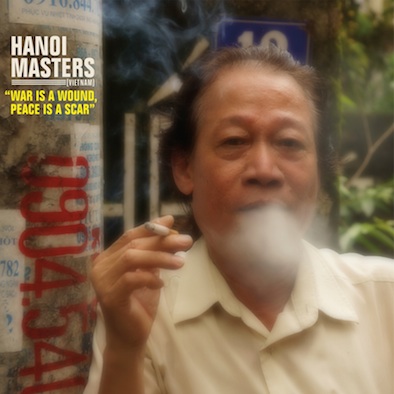
A side excursion, travelling due east to Asia and breathing in the evocative songs of Vietnam, Glitterbeat Records launched their new series of field recordings entitled Hidden Musics with the Hanoi Masters compilation. Finding a congruous musical link with their usual fare of West African releases, the label sent Grammy-award winning producer Ian Brennan (credits include, Tinariwen, Malawi Mouse Boys, The Good Ones) to Vietnam in the summer of 2014 to record some of the most lamentable and haunting resonating war-scarred music. Indelibly linked to what the indigenous population call ‘the American war’, the examples of both yearning and praise pay tribute to the fallen: delivered not in triumphant or propagandist bombast but in a gentle meditative manner, these survivors, forty years on from the end of the harrowing and catastrophic (the repercussion still reverberating in the psyche of the burned America and its allies) war, were still undergoing the healing process.
Tinged with an omnipresent lilting sadness these songs are imbued with battle scars (hence the albums subtitle War Is A wound, Peace Is A Scar), featured artisans and traditional music masters who had joined the cause, sometimes for the first time in years, allow their voices to be heard once again and recorded for posterity.
Considering the history and ill blood between cultures – though this has eroded as capitalism takes hold and the country opens up – it has in the past been difficult to investigate the serene and attentive beauty of the Vietnam music scene, but this earnest and adroit study into a world seldom covered proves enlightening and humbling.
Bixiga 70 ‘III’ 2015
Speaking Fela fluently with marked respect and reverence, going as far as to borrow part of the late Nigerian bandleader and doyen of Afrobeat’s backing group moniker, Bixiga 70 may be inspired and informed by Kuti but they do so much more with his high energy polyrhythms and feverish hot-footed anthems. The eclectic Sao Paulo band, who joined the Glitterbeat family in 2015, add even more flavour to the Afrobeat template on this their third album. Energised by their performances in the hotbeds of fusion, from North Africa to Europe, and working with a decentralised method of producing new material, the III album reaches out and embraces an even richer array of world sounds.
Incorporating the rhythms and dances of their own continental home, Bixiga shake and shimmy to the local customs of cumbia and the sensual hip movements of the carimbo on a trio of slinky paeans to the indomitable spirit of joyous release. Congruously they go, flowing from one source to the next deftly, passionately and with a raw powered energy, our Brazilian friends relationship with Glitterbeat has proved to be a sound move; an ideal home for the group’s ever expanding fields of sound and exploration.
Afro-Haitian Experimental Orchestra ‘A.H.E.O’ 2016
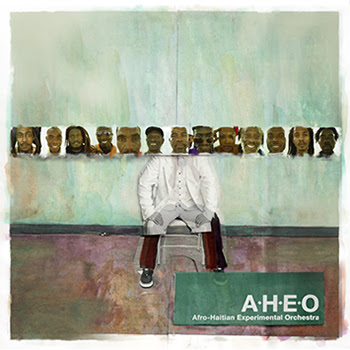
Progenitor and embodiment of the Afrobeat drum sound, still in high demand four decades after his explosive partnership with Fela Kuti, the much-venerated Tony Allen extends his infectious percussion style beyond the African homeland. Sharing an obvious entwined history with Africa, the shared Hispaniola Island of Haiti proves both an esoterically mysterious and congruous collaborative foil to Allen’s distinct drumming patois.
Invited to perform in 2014 by the French Institute Of Haiti’s director Corinne Micaelli, Allen’s visit would end with a public broadcasted concert in the main square of the capital, Port-au-Prince. Collaborating with Allen would be a cross-section of local percussionists and singers recruited by vocalist, dancer, ‘voodoo priest’ and director of the Haitian National Bureau Of Ethnology, Erol Josué; Josué would himself lend his sweet yearning and reflective tones to two of the tracks on this album.
The call went out and the great and good of the Haitian music scene came. Racine Mapou de Azor, the Yisra’El Band, Lakou Mizik and RAM. Another Monolith regular and one-time Port-au-Prince resident, Mark Mulholland was drafted in as the experimental orchestra’s guitarist, and as it would turn out, eventual legacy overseer. With only five days of studio rehearsal time to gel and work out their performance, the sessions proved both, as Mulholland observed, ‘chaotic’ and overwhelming’.
Elevating beyond the borders it was created behind, the Afro-Haitian Experimental Orchestra root foundations shuffle and shake free of their stereotypes to move freely in an increasingly amorphous musical landscape. You’re just as likely to hear vibrations and traces of Dub, native Indian plaintive ghostly echoes, Sun Ra’s otherworldly jazz and funk as to hear the indigenous Haiti sounds and Afrobeat pulse. Tony Allen is once more at the heart of another bustling, dynamic explosion in rhythm.
Various Artists ‘Hidden Musics Vol 2. Every Song Has Its End: Sonic Dispatches From Traditional Mali’ 2016

Though no less an achievement, the second volume in Glitterbeat Records “Hidden Musics” series offers the full gamut not just musically but visually too, and is a far more ambitious documentation of a troubled country’s lost tradition than the 2015 Hanoi Masters survey. Expanding to include 11 concatenate videos, Every Song Has Its End is the most complete purview of Mali’s musical roots yet. This is due to the project’s mastermind and architect Paul Chandler, who has documented Mali’s music scene for more than a decade.
Forgotten in some extreme cases, ignored or considered as Mali’s past by new generations, maestros of the 6-string Danh, such as Boukader Coulibaly, and the Balafon, Kassoun Bagayoko, are celebrated and interviewed for this collection. Whether it’s traversing the Gao region in the northwest to record the earthy desert pants of the female vocal ensemble, Group Ekanzam, or capturing a Sokou and N’goni love paean performance by Bina Koumaré & Madou Diabate in the heart of the country, this chronicle of the pains, virtues, trauma and spirit of the country’s musical heritage is an extraordinary love letter and testament to the country.
Bargou 08 ‘Targ’ 2017
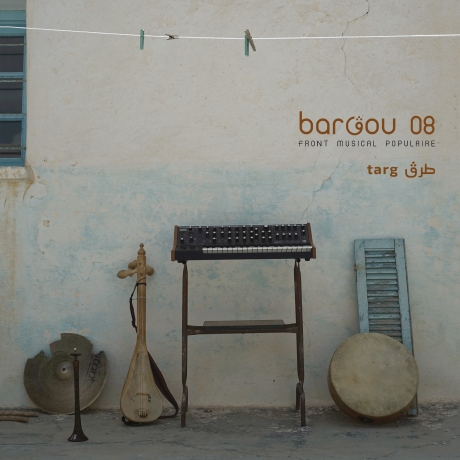
Ahh…the sounds of a dusky reedy gasba flute; the tactile patted and burnished bendir drum; the rustic, earthy strung loutar, and the flowing, soaring scale vocals of the Bargou 08 project’s chief instigator Nidhal Yahyaoui, set an impressive atmosphere in the first couple of minutes of the album’s opening track, Chechel Khater. And that’s all you’d need, except there’s another eight equally evocative and thrilling tracks to hear.
The source of this sound derives from a relatively uncharted region that lies obscured between the mountains of northwest Tunisia and the Algerian border, called the Bargou Valley, which despite its barren isolation, has cultured a unique musical fusion, stretching back hundreds of years. Captivating and magical enough in its ancestral unchanged form, the songs of the valley, sung in the local Targ dialect (a language that is one part Berber, the other Arabic), are given a contemporary jolt that transforms the atavistic paeans, odes and poetry of yore into an intoxicating swirling rapture of electronic North African funk.
Filled with a legacy of turmoil and tension that goes back an aeon the album’s many themes, from describing a lover’s vital attributes on Mamchout to laments of alienation, resonate strongly with the growing unease of events, initiated six years ago by the Arab Spring. Tunisia itself is facing a struggle and teetering on the edge, with no guarantee that certain cultures won’t just disappear or be fragmented in the ensuing melee. Originally setting out to document his Bargou Valley home’s musical heritage before it disappeared, Yahyaoui has successfully and thankfully, with his musical partner, producer and the album’s keyboard player Sofyann Ben Youssef captured this rich mesmeric culture for posterity. And in doing so, produced a masterpiece that will endure.
Širom ‘I Can Be A Clay Snapper’ 2017
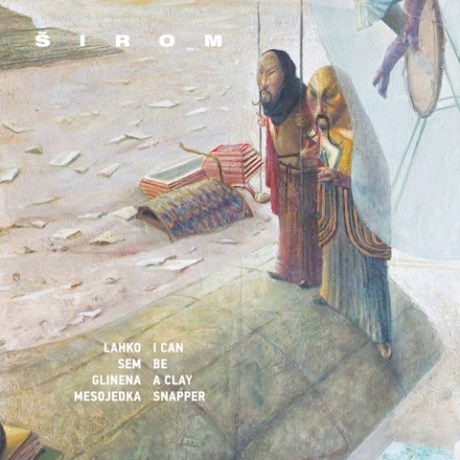
With an unspecified, but as the name suggests, emphasis on the “tactile”, Glitterbeat Records new imprint label gives a welcome platform to entrancing experimental tonal performances and sonic polygenesis traverses alike. In the latter camp is this Slovenian peregrination suite from the landlocked, Alps nestling country’s visceral sonic conjurors, Širom.
Evoking memories and feelings, both real and imagined, with a soundtrack thick with atavistic connections, the trio of punk and post-rockers turn experimental folk and acoustic instrumental cartographers convey a personal relationship to their homeland, on their second album together under the Širom banner.
Yet whatever the backgrounds, traces of North Africa, the Adriatic and the Middle East, the performances sail scenically through a dreamy otherworldly representation of Slovenia: Oriental, alien and Balkan visions permeate the plucked, malleted, chimed and purposefully played compositions, which subtly and rather cleverly build up complicated layers and various overlapping time signatures during the course of their journey.
Theremin like siren voices drift in and out, enacting the myth and seraph, whilst on the watermill turning Everything I Sow Is Fatal Sun Ra travels with John Cale and Pharaoh Sanders on a pilgrimage to Samarkand. The most recurring sounds however pay testament to the Balkans ghosts. The folkloric stirrings, lulls and yearning of Slovenia’s past bordering both a pan-Europa of migration and grief – stretching back a millennia – are transduced into often haunted vistas and metaphysical passages.
A most impressive and expansive inaugural Balkans travail; different from the previous two releases on this burgeoning new imprint, yet keeping to the tactile, accentuate and imaginative remit, whilst conjuring up mystical new soundscapes.
Tamikrest ‘Kidal’ 2017
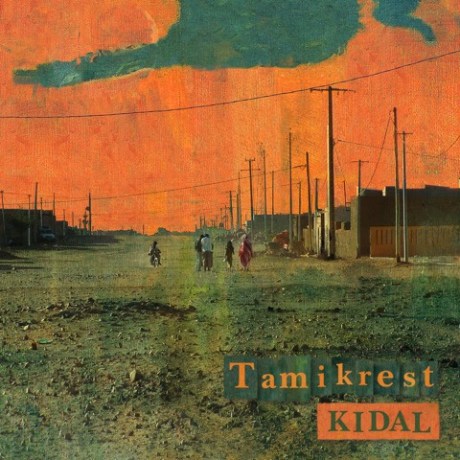
Still availed of a homeland, though now liberated from their draconian Islamist partners, the Tuareg are once again left as wanderers in their own land, the unofficial guardians and custodians of the Saharan wilderness. For now only a dream, best realized and protested through music, the rock’n’roll Bedouins Tamikrest emerge once more from the barren landscape with a message of “power and resistance” on their fourth, equally entrancing, album Kidal. Paying homage to the strategically and spiritually important cultural trading town of the title, the highly-acclaimed (and rightly so) Tamikrest exude both the sadness and suffering of the dispossessed people who cling to the southwestern Saharan hub that is Kidal: a town which has seen its fair share of fighting, fought over, conquered and reconquered over time, it remains a symbolic home to the Tuareg. This is after all the town that nurtured them and where it all began.
Assiduous, confident and articulate, the musicianship shows not so much a progression as a balance between the meditative and rock’n’roll spirit of the Tuareg musical resistance. Tamikrest are as brilliant as ever musically, and Kidal is, despite its plaintive and lamentable subject woes, a beacon of hope in an ever-darkening world of uncertainty.
Ifriqiyya Électrique ‘Rûwâhîne’ 2017

Capturing something quite unique, the collaborative industrial post-punk and avant-garde rock scenes of Europe clash head-on with the descendants of the Hausa slaves atavistic rituals styled group, Ifriqiyya Electrique, create an often unworldly chthonian conjuncture of Sufi trance, spirit possession performance and technology.
A film project and now immersive sonic experience, inspired by the important Banga music traditions and the accommodating, rather than exorcising, of spirits ceremonial wild dances and call and response chanted exaltations of the black communities – originally transported to the region from sub-Saharan Africa – in the oasis towns of southern Tunisia, this astounding meeting of cultures and history is anything but scenic.
Formed in the Djerid Desert, the idea forged by field-recordist and veteran guitarist of the politically-charged Mediterranean punk and “avant-rock” scenes, François Cambuzat, and bassist Gianna Greco – both of which occasionally join forces with that livewire icon of the N.Y. underground, Lydia Lunch, to form the Putan Club -, the Ifriqiyya Electrique spans both continents and time. For their part, Cambuzat and Greco provide the grind, industrial soundscape texturing, sonorous drones and flayed guitars, but mostly, the “electrique”, whilst, offering a dialogue with the spirits and the tradition, Banga musician Ali Chouchen – joined in the live theatre by an expanded cast of fellow voices, krabebs and Tunisian tabla players from the community, which includes Tarek Sultan, Yahia Chouchen and Youssef Ghazala – provides peripheral sounding evocative echoed and esoteric vocals and equally haunting nagharat.
Spiritual conversations transformed and realigned with the machine age turmoil of industrial noise, Arthur Baker style rock and hip-hop production, post-punk and even Teutonic techno, Rûwâhîne is a rambunctious unique force.
Park Jiha ‘Communion’ 2018

Circumnavigating the globe to bring much-needed exposure to new sounds, Glitterbeat Records imprint tak:til gives a second wind to a suite of acuity serialism from Southeast Asia. Released originally in South Korea in 2016, the neo-classical musician/composer Park Jiha’s debut solo album Communion is given an international release by the label of repute.
Inspiring what we’re told is a burgeoning Korean music scene (well, an alternative to the K-Pop craze), a chief progenitor of the movement Jiha alongside collaborative partner Jungmin Seo originally melded the country’s musical heritage with an eclectic range of contemporary sounds as the 숨[suːm] duo in 2007. Releasing the highly influential regional albums Rhythmic Space: A Pause For Breath (2010) and 2nd (2014), Park and Seo crossed the time zones to perform at both WOMAD and SXSW. Congruously putting the duo on hold to explore a more ‘personal’ and minimalistic ‘musical vocabulary’ as a solo artist, Jiha dexterously balances the air-y abstract breathes of the ‘piri’ double reed bamboo flute, the searing twang of the ‘saenghwang’ mouth organ and the softly paddled patter of the ‘yanggeum’ hammered dulcimer in what is a dialogue between a dulcet calm, the meditative and an entangled dissonance.
Transforming Korean traditions into a more experimental language that evokes the avant-garde, neo-classical and jazz yet something quite different, Park Jiha’s tranquil to entangled discourse evocations reach beyond their Southeast Asian borders both musically and metaphysically into something approaching the unique.
Playlist
Matt Oliver’s Essential Hip-Hop Review
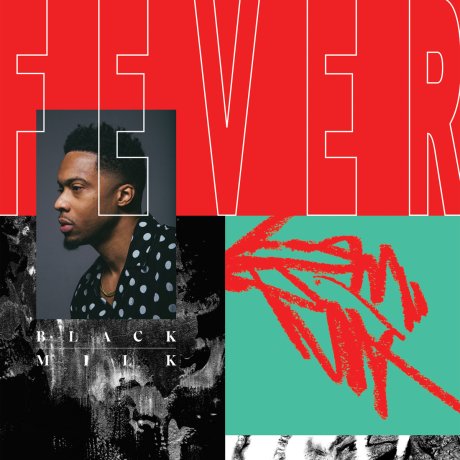
So, it turns out that 50 Cent isn’t a bitcoin millionaire after all. And that Talib Kweli found about the Black Star album reunion on the internet, like the rest of us. So Rapture & Verse has had its fingers burnt while attempting to keep ‘em on the pulse. We’ve been consoling ourselves instead with the possibility of that zillion dollar Wu-Tang album being relisted on eBay – we’re more likely to bid on that than go for a Record Store day reissue of Cam’ron’s finest hour – and that a trip to Busta Rhymes Island (a legitimate map location, not a Flipmode Squad theme park) could be just the job to escape this frightful weather.

Singles/EPs
Del the Funky Homosapien and Amp Live – not in the roles of Nicky Campbell and Carol Smillie – wheel up the ‘Wheel of Fortune’, a banger that pleasingly doesn’t travel straight up and down as the club dictates. Music to fry by, ‘Fajita Effect’ is the Doppelgangaz letting loose another dollop of that ‘Dopp Hopp’, East-to-West funk that’ll make you guard your grill. MED and Guilty Simpson pledge ‘Loyalty’ with a set of easygoing back-and-forths nudging you to fling your windows wide open, save for ‘Face Down’ making you eat mat.
‘Donkey Punch!’ from Wundrop & Kemastry is here to make an ass of us all, an unsteady hallucination turned into actual fact. More Juga-Naut for you on ‘Found Objects’ means more East Midlands elitism, striking blows and a pose over half-inched favourites and rocking some of his own wares with a dissertation worth of references to chew over. The right honourable Harvs le Toad gives the airwaves some zing with ivory tinkler ‘Minty Fresh’, Vitamin G and Louis Loan tipping their hat to a beatsmith taking his jazz all the way to Walford.
Pragmatic in the face of joy, lo-fi curio ‘Plus One’ by Pan Amsterdam balances spring-has-sprung strings with a deadweight flow locked between Jonwayne and Count Bass D. Killer horns lift the firing Bishop Nehru up to the ‘Rooftops’, and ‘The Mood’ lifted by Smoke DZA featuring Joey Bada$$ would be relegated to just another trapper by numbers were it not saved by a lovely ice cream van riff wafting over the top. Back with a new set of scalpels, Dr Octagon – Kool Keith, Q-Bert and Dan the Automator – prescribe a one-way ticket to ‘Area 54’, full of that ‘cosmetic, kinetic, ultramagnetic” good stuff measuring you for a bodybag.
Albums
Calming yet still able to speak up, Ty’s ‘A Work of Heart’ almost feels like a magic carpet ride over the capital’s skyline, especially with singles ‘Brixton Baby’ and ‘Eyes Open’. Or the navigating of London backstreets like it’s a gambol though the countryside, despite there always being potholes en route. Or set adrift on memory bliss before stubbing its toe. You get the idea, so come and spread your arms if you really need a hug.
Apathy’s continued research into finding six million new ways for you to pop your clogs, means ‘The Widow’s Son’ is a fourteen round fight for your life (the title track calling in a favour from He-Man). Producers DJ Premier, Pete Rock, Buckwild, Nottz and Stu Bangas spread out in a bid to keep up with punchlines and wordplay battling into the fantastical. Remember, “while you rocking man-buns, I’m cocking handguns”. The second Prhyme instalment of Premier and Royce 5’9” continues their restoration job of hip-hop integrity. It still might not be enough for hardcore dream team assemblers, yet there are far worse concepts than an emcee extending his hot streak right from the off, and the producer richly rounding out the boom bap rat-a-tat, without either stuttering in stride.
Black Milk confidently advises you to catch his ‘Fever’, smooth neo-soul style that keeps your ear pressed hard to the speaker, and whose live band wisdom is velvety enough to give you a universally appealing education that cuts through the smoke. 2018 has another seat filled for best of reservations come Christmas.
It’s rare for an instrumental album/beat tape to sound so luxurious, but Calvin Valentine isn’t skimping when putting his feet up in the ‘Plush Seats’, 20, sub two minute silk cuts of soul and funk to have you glued to your pew. On the clunkier but no less funkier side, Exile’s excerpt in the ‘Baker’s Dozen’ series chops away to great effect, treating the MPC like a punch bag and still able to get smooth with it. ‘Sunlight Grace/O\Moonlight Vibes’ tells you all you need to know about Sai Wai, a pulse-steadying emcee keeping fires burning once jazz has closed shop for the day and has a date with a long hot bath in mind. Good for what ails you.
Still sounding like they’re working on Her Majesty’s Secret Service and still not giving the game away, The Herbaliser’s ‘Bring Out the Sound’ mixes lavish funk escapades with hip-hop involving peak-time Rodney P and beats styled as B-boy informants. Also eating away at hip-hop’s wider possibilities, Cut Chemist steps up to add songs and scope to his signature turntable torque. Edan, Mr Lif, Chali 2na, Myka 9 and Biz Markie fulfil mic duties as wings are spread into dusty, enquiring indie-dance and electronica that helps build an intriguing album that’s more a fluid soundclash than dazed collision.
Germany’s DJ Obsolete lays down jazzy failsafes in the field of pleasantly mature, springtime-in-the-90s boom bap, with features from Blabbermouf, Gee Bag, Warpath and Nomadic. ‘The Mandela Effect’ pays careful attention to expectations of the headnodders panel, and keeps it swift and to the point. Inviting you to wallow with them in sour times, the dejection of Dove Rock and Jackson Jones’ ‘A Pretty Way of Saying Ugly Things’ points loops downwards and posts spiritedly accepting lyrics peering over the fence, way too smart for being moored in the back of beyond. Gritty, windswept drama on a countdown to D-day, you shouldn’t expect anything else from the John Does also known as The Incredible Disappearing Man. On their eponymous album, grimly determined rhymes keep their head, buffeted and taunted by beats bound by the hands of fate.
For those up for some “unapologetic nerdcore boom bap schizophrenia”, Dngr Eyelnd open ‘A Lovely Room of DEATH’, a destination plastered in warning signs yet one where the madness is kept methodical, an intimidator honouring beats and rhymes protocol by arguing that “if this ain’t real hip-hop, then Taylor Swift is classic rock”. Make your reservation now. The tumultuously grungy Moodie Black and their symbol for ‘Lucas Acid’ fill the moshpit with feedback and threats, death rattles and loud, industrial spite; not a place for smiley faces. ‘Bulletproof Luh’ comes cultish – an at-odds flow from Mach Hommy stone-facedly seeks a ride or die chick, over far more adventurous, self-produced sampledelic beats.
Mixtapes
He’s been there, done that, got the T-shirt and now has the Presidential cap to match. DJ Yoda’s ‘Make Mixtapes Great Again’ is his usual long shot of heavyweight hip-hop, TV and pop nostalgia, declassified secret weapons and mischief closing the gaps in between. Expect Prodigy in combat with Bob Holness, KRS-One duetting with Bobby Brown, Paul Barman taking a sleigh ride, a 128K version of ‘Forgot about Dre’, Huey Lewis and The News, and so on and so on.
This month’s moving pictures: C.A.M. takes to the streets, Quelle Chris & Jean Grae take it to the arcade, 4orce and King Kashmere take a hike, and the late Craig Mack shows who’s boss.
Quarterly Revue Playlist 2018 Part One:
March 15, 2018
The Quarterly Playlist chosen by Dominic Valvona, Matt Oliver and Ayfer Simms
A reasonable assessment of the last three months, the Quarterly Playlist features an eclectic selection of ‘choice’ tracks from the Monolith Cocktail team. From across the musical spectrum, songs from the far east sit alongside glittering pop; traversing meditations share room with hip-hop and the Kosmische.
The inaugural revue playlist of 2018 features Plastic Ono Band sultry protest pop from U.S. Girls, fragmented reeling breakbeats from Cut Chemist and friends, Motorik mooning from Station 17, electrified dance jazz from Hailu Mergia, mystical cosmic cumbia from Sonido Gallo Negro, a cappella paean to Nelson Mandela by the Afrika Mamas, direge-y garage rock from the Moonwalks and 38 other equally interesting and varied tracks from across the globe.
Tracks in full:
‘Incidental Boogie’ U.S. Girls (review)
‘Look At Your Hands’ Tune-Yards (review)
‘Well Who Am I’ Band Of Gold
‘Die Cut (Theme)’ Cut Chemist feat. Deantoni Parks (review)
‘(((leapfrog)))’ MC Paul Barman (review)
‘Addis Nat’ Hailu Mergia
‘Ein Knall’ Station 17 feat. Harald Grosskopf and Eberhard Kranemann (review)
‘The Timeless Now’ Nonpareils
‘1001 Nights’ Ouzo Bazooka (review)
‘Fresh Product’ Awate
‘Anything Goes’ Andy Cooper feat. Abdominal (review)
‘Efrati’ Fadaei
‘Black Sambo’ Skyzoo (review)
‘Kingz & Bosses’ Slim Thug feat. Big K.R.I.T. (review)
‘That Jazz’ Coops (review)
‘Cumbia Ishtar’ Sonido Gallo Negro
‘A Casa De Anita’ Camarao
‘All That We Are’ Brickwork Lizards (review)
‘Hlala Nami’ Hot Soul Singers
‘Le Château’ Fishbach (review)
‘Into Space’ Sailing Stones
‘Illogical Lullaby’ Hatis Noit (review)
‘Also’ Astrid Sonne (review)
‘Reptile’ Soho Rezanejad (review)
‘Remain Calm’ Tony Njoku
‘Air Rage’ Lukas Creswell-Rost (review)
‘Embers’ Flights Of Helios (review)
‘And The Glamour Fell On Her’ Brona McVittie feat. Myles Cochran and Richard Curran (review)
‘Same Old, Same Old’ The Cold Spells (review)
‘Winter Bound’ Hampshire & Foat (review)
‘Vidsel-Sthlm, Enkel’ Bättre Lyss (review)
‘Akokas’ Tal National
‘The Border Crossing’ Dirtmusic (review)
‘I’ll Be Ready When The Great Day Comes’ John Johanna
‘Diego Says Hello’ Modulus III (review)
‘Communion’ Park Jiha (review)
‘De Roda’ Rodrigo Tavares (review)
‘You Get Brighter’ John Howard (review)
‘Tata Madiba’ Afrika Mamas (review)
‘In Between Stars’ Eleanor Friedberger
‘No Place Like Home’ Life Pass Filter’ (review)
‘I Don’t Wanna Dance (with My Baby)’ Insecure Man
‘Israel Is Real’ Moonwalks (review)
‘Men Of The Women’ Peter Kernel (review)
‘We Have Always Lived In The Palace’ Sunflowers (review)
Our Daily Bread 268: Hatis Noit ‘Illogical Dance’
March 13, 2018
Words: Dominic Valvona
Hatis Noit ‘Illogical Dance’ Erased Tapes, 23rd March 2018
An ‘illogical dance’ of voices, a serialism of language, the range of Hatis Noit’s vocals are as sublime as they are artfully experimental. Since finding her calling at the age of sixteen after hearing a lone voice singing in the hallowed sanctuary of the women’s temple in Lumbini, Tibet, the backpacking Noit began a self-taught travail in both the spiritual and avant-garde; adopting and synchronizing a myriad of techniques in a quest to convey ‘nature’s many sounds’ and form a ‘beautiful conversation that isn’t restricted to words like the human language is.’
The Japanese performer, who hails from a small town on the country’s second largest island, Hokkaido, has studied the native Gagaku style of classical music and takes her name from Japan’s lotus flower folklore – the stem of this exotic symbolic flower is said to represent the living world, its roots the spirit world. Yet, this astonishing dialect and vocal articulation reaches beyond those shores to absorb the operatic, pop music, Gregorian chants, atavistic Bulgaria and Balkans styles and, what sometimes sounds like, Orthodox Russia.
Initially improvised, all of the sounds you hear on this impressive EP are sourced entirely from Noit’s voice; re-aligned, cut up and transmogrified into a trio of sonic explorations that reflect the scope of, what is, our oldest ‘powerful’ instrument: the voice. Noit channels a cornucopia of styles, all of which are reconstructed and formed into an abstract dialect both spatial and organic, yet also building towards the ebbs and flows of a diaphanous multilayered cacophony.
Named after the famous oil-transfer monoprint of the same name by one of the most proficient and influential artists of the twentieth century, Paul Klee, Angelus Novus is a stunning hallowed (almost a choral-like hymn), deeply expressive voice-scape that sounds almost cinematic. Cloister hushed whispers are layered, stuttered or harmonically clustered with various breathy and accentuate yearning and amorphous trilling on what is an astounding performance. Anagram c.i.y. has a sharper edge, utterances more chaotic, Noit’s various vocal deconstructions propelled forward in a bity staccato fashion.
There are two versions of Illogical Lullaby included on this showcase EP, the original version, an elegant synchronization of soaring aria, the choral and hummed, and the retreated version from the brilliant Baltimore partnership Matmos, a changeable filmic soundtrack inspired by a scene from the Russian auteur Andrei Tarkovsky’s bleak, harrowing movie Andrei Rublev. Known for their collaboration with the similarly experimental siren Bjork, Matmos take the Illogical Dance through various stages of transformation, from charming echo-y loops to Medieval sinister intensity and quirky electronica; adding rain, thunder and Foley effects to reflect an imaginary score for one of Andrei Rublev’s most philosophical acts. They create a suitable mirror-y vision that takes Noit’s voice into even more explorative realms.
Highly impressive, far from a cold art-y conceptual study devoid of soul, rhythm and direction, Noit has produced a most beautiful abstract odyssey for the voice. A revelatory progression that goes some way towards creating a fresh dialogue in modern music.
Dominic Valvona’s essential reviews roundup
Interesting releases from across the world and music spectrums; Tickling Our Fancy is the most eclectic of reviews roundups. With no themes, demarcations of any kind, or reasoning other than providing a balanced platform for the intriguing, the great and at times, most odd releases, I bring you this month’s latest selection.
We have the ninth, and apparently most ‘honest’ personal album yet from the renowned soundtrack composer Bob Holroyd, The Cage; a pair of releases from Ian Button’s inimitable Gare du Nord label: the ‘musical gift to a friend’s son’ EP of charming alt-American and pop from the Lille-based Life Pass Filter, Joseph, and Jack Hayter’s most brilliant psycho geographical folk survey of London’s Abbey Wood; the fiery and petulant art school Swiss/Canadian duo Peter Kernel’s third, and most impressive, album The Size Of The Night; the tenth album from the German experimental group Station 17, Blick, which features the cream of Germany’s experimental electronic and avant-garde including members of Tangerine Dream and faUSt; Die Wilde Jagd’s second album of adroit industrial and organic electronica, Uhrwald Orange; and the latest magical, Kosmische and psychedelic cult sounds songbook from David Thayer and friends Little Tornadoes project, Apocalypse!.
Jack Hayter ‘Abbey Wood’ Gare du Nord, 23rd March 2018

Bringing light, or at least opening up a psycho-geographical narrative dedicated to the very edges of a largely ignored London postcode – so far out on the South Eastern outskirts as to be part of Kent –, an earnest Jack Hayter composes a yearning lament to Abbey Wood on what is his first solo album in fifteen years.
This doesn’t mean that our Jack has been indolent or on a respite; the former Hefner band member who also helped found Dollboy and the South London group Sponge Finger, has during that period been working with fellow Hefnerian Darren Hayman as well as Oliver Cherer, Ralegh Long and the Gare du Nord label’s house band turn supergroup, Papernut Cambridge. Many of those artists, including the Gare du Nord team leader Ian Button – in the capacity of host for this album, and as a drummer on the graceful, lilted and warbled guitar duet with Suzanne Rhatigan, Bigger Than The Storm – contribute to this earthy rustic minor opus; with the equally gifted storyteller Cherer – his last album, The Myth Of Violet Meek appeared in our 2017 ‘choice albums’ features – adding a omnivorous like range of instruments (piano, horns), tools (saw) and his voice throughout the Foley like atmospheres and moods; Long tinkling the ivory on the swirling fairground blues The Strangers Fair; and Riz Maslen provides ‘ethereal’ and eerie sorrowful lulling accompaniment to a quartet of songs in the first half of this album.
Talk about slumming it; living for his art, Hayter’s literature, and pun and landmark panoply was created in the most unconducive to creativity and safety environmental of a derelict Children’s home in Abbey Wood. With no utilities plumbed or wired in, Hayter took showers under a hose, cooked on a camping stove and slept on a bed made from warehouse pallets. For security he kept a very big stick handy. ‘Cold but free’, a self-imposed lifestyle, he was at least qualified to regale tales of isolation and hardship; experiencing the daily grind of survival on one of the capital’s unloved outposts; from the shitty end of life’s (other) big stick.
Featuring long forgotten laments and forlorn vignettes, two of the most vivid and haunting being the bookended tragedy of the Arandora Star; Hayter laying cooing elegiac wreaths to those unfortunate souls aboard the WWII requisitioned Blue Star Line passenger ship who died in the Atlantic Ocean, sunk by a German U-boat on July 2nd 1940, whilst travelling to Canada with hundreds of interned German and Italian citizens. The first part, written with Trudie Willingham, is a much-desired remembrance service to the unmarked watery grave, whilst the album’s final swansong is an Italian language translated and narrated eulogy, featuring the voice of Slyvia De.
Just as poignant is the equally haunting and sad But I Didn’t Know Frankie, a softly spoken word tale of woe, with a choral-like ghostly accompaniment, about the aforementioned stranger: sleeping rough, the circumstances of misfortune unknown but death on a fateful frozen night – unable to gain access to a warm sanctuary inside the Abbey Wood’s sub station – immortalized by Hayter; the exact spot marked out in a sympathetic but matter-of-fact tone: “They say he died right here, frozen solid underneath this window.”
Connected in some way to the Abbey Wood diaspora or its position as a gateway to the world via fateful songs that draw in the one-time gold rush phenomenon outpost of the British Empire, Bendigo in Victoria, Australia (on the Mick Harvey with a pinch of Dire Straits I Sent My Love To Bendigo), and the stoic symbol of a solitary Mulberry Tree that attracts a beautifully resigned woven historiography, which via the arrival of a curious Chinese girl name checks the silk trade – or lack of one – but turns into a malady about Abbey Wood’s melancholic scenery. Playing on local haunts, such as John Cleland’s infamous 18th century Fanny Hill heroine/survivor turn pub name, on the disjointed Georgian Fanny On The Hill, Hayter can transport the listener back to the age of Thackeray – to a bawdry alehouse, a resigned diorama of highway men forced into brigandry and misbehavior – as easily as draw upon the present for inspired re-readings of abuse, tragedy and grief.
Abbey Wood deftly played with twangs of bucolic and Baroque folk, blues, synthesized atmospherics, Americana and reverent chamber music, is a multilayered songbook; a lived-in musical novel, rich with references, landmarks and peopled by those who left an indelible, if at times fleeting, mark upon this much forgotten or passed over postcode: their ghosts, no matter how small the part they played in its story, never inconsequential; remembered and written about with a certain gravitas by Hayter, who creates the most accomplished and brilliant of testaments.
Station 17 ‘Blick’ Bureau B, 9th March 2018
With near enough thirty years of experience behind them and a changeable lineup of both musicians with and without various disabilities, the Station 17 collective once more shift their focus and sound; moving away from the all-out pop of the last album Alles Für Alle for a more improvised travail through the Krautrock, Kosmische and experimental electronica cannon.
Leaving the city, retreating to a point from the ‘modern world’, the Hamburg group spent a few weeks in the ‘summery seclusion’ of a coastal idyll, recording their tenth album at the Watt’n Sound Studio, near to the North Sea coastline. Free of predetermined structures, lyrics and ideas they enjoyed an improvised freedom; inviting a host of German musical royalty to take part in what is a collaborative recording experience – something they’ve done in the past, having worked with icons such as Michael Rothar and the late Holger Czukay. And so each of the album’s none tracks features the signatures of its guests: The writhing prehistoric Krautrock-jazzy Le Coeur Léger, Le Sentiment D’un Travail Bien Fait for example features the guiding avant-garde, ‘musique concrète’ presence of drum and bass partnership of Jean-Hervé Péron (the French title track I dare say his idea) and Zappi Diermaier; key founders of the reverent agent provocateurs Faust, who in recent decades have broken away to form their own iteration of the group under the faUSt banner. And, though only as part of its most modern regeneration, Tangerine Dream’s Ulrich Schnauss appears to gaze through a progressive Kosmische tinged explored ‘astronomical telescope’ on the album’s heaven’s gate opening finale.
Bringing out their very own homage to Germany’s golden age of analogue synth and motorik, journeymen and label mates Eberhard Kranemann (a founding member no less of early Kraftwerk and Neu!) and Harald Grosskopf (drummed on a number of Klaus Schulze and Ash Ra Tempel albums) have a ‘blast’ on the post-punk mooning Ein Knall; running through the full Klaus Dinger catalogue, from Neu! to Japandorf.
From another generation, Dirk Dresselhaus, aka Schneider TM, appears both as an engineer, capturing these sessions and crafting them into a coherent album, and as a collaborator on the kooky bossa nova preset Die Uhr Spricht. Andreas Spechtl of Ja, Panik! infamy appears alongside Station 17 singer Siyavash Gharibi on the poppier, Der Plan-esque Dinge, and another Andreas, Andreas Dorau, joins the same upbeat, marimba like candour on what we’re told is an “enduring appraisal of post-capitalist perversion”, Schaust Du, whilst Datashock travel through the primordial soup into another dimension on the Acid Mothers-hitch-a-ride-aboard-the-Cosmic Jokers-spaceship Zauberpudding.
Turning the dial on an imaginary radio station, attuned to all the highlights from Germany’s most experimental if rhythmic decades, Blick confidently absorbs the influences and inspirations of its multitude of guests to produce social commentary and reflect on the here and now. A sort of Bureau B label all-stars – the German label rapidly, more or less, signing up everyone of note from the last five decades; a home to most of the country’s experimental electronic music and Krautrock pioneers – this latest album from Station 17 uses its pool of talent and resources well, balancing the edgy with a melodic, motoring, cruising sensibility.
https://soundcloud.com/bureau-1/sets/station17-blick-preview
Peter Kernel ‘The Size Of The Night’ On The Camper Records, 9th March 2018

Visually composed (except for the differing skateboard graphic style track listings) with one half of this Swiss/Canadian duo, Barbara Lehnhoff’s elegant, almost stately, childhood dog Arrow gazing out with a certain ruminating calm on the album cover, the music that lies within this sleeve is anything but.
Not surprising for a duo that originally met whilst attending the visual communications school in Switzerland, the already mentioned Canadian Lehnhoff choosing film whilst her foil, Swiss native, Aris Bassetti chose graphic design, both collide in bringing their own baggage and ideas together for an explosive art school sound.
Formed in 2006 under the figurehead moniker of Peter Kernel – an ambiguous character they funnel all their musical protestations and fantasies into – but only now releasing, on their very own imprint, a third album, it seems the duo aren’t so much succumbing to procrastination as taking their time and waiting for the right moment to launch a barrage of musical discourse. The previous album, the darkly resigned entitled White Death & Black Heart, was launched off the back of a UK/European tour supporting the most brilliant Wolf Parade in 2008 (I vividly remember attending the Brighton leg of this same tour); it was the band’s Spencer Krug who invited them to open for the acclaimed Canadian indie band.
Playing over 600 gigs, from diverse spots at the Montreux Jazz Festival and Milan Fashion Week, Peter Kernel have in recent years been nominated for awards at the Swiss Music Grand Prix and Swiss Live Talent for their dynamic live performances. Congruous to their artistic disciplines they also scored the music for Swiss-Peruvian director Klaudia Reynicke’s Il Nido film, and rearranged their own back catalogue for piano, harp, cello, harmonium and viola under the auspicious of the orchestral project, Peter Kernel & The Wicked Orchestra.
Hardly light of material in these anxious ‘hashtag’ prefixed times; the duo’s latest album title philosophically channels the complex duality of human behavior. Under the cover of the ‘night’ they posture such enquiring questions as, “What is the size of the night?”, and, “How can we measure the night?”. To them, the night acts as cipher, a totem for its ominous fears and obvious darkness, but also its mystery and allure.
The cloak of darkness is however lifted, as both Lehnhoff and Bassetti try to find a balance and acceptance that they can simultaneously be both “sensitive” and “assholes!”. Expressing “this new consciousness” between bouts of light and shade post-punk, grunge, doom and the psychedelic, they throw themselves into and hurtle with a controlled energy, into the night.
This is an album filled with musical surprises, spiraling as the duo does through petulant yelped Katie White (of The Ting Tings fame) fronted Royal Trux lovelorn spite (There’s Nothing Like You), marauding Raincoats dub-y bass verses breakbeat drums lumbering coquettish sarcasm (Pretty Perfect) and what sounds like transmogrified Lee Hazlewood and Nancy Sinatra western style chanson duets (The Fatigue Of Passing The Night); all of which is a positive in my view. At their most esoteric they channel the Black Angels channeling The Beatles on the book of the dead kick Drift to Death, and oozing with dark exotic distaste (flipping between English and Italian), they venture towards the Middle East or Byzantine on Men Of Women.
Most of the themes that are currently keeping the Twittersphere active are covered, though more in the manner of sympathetic deciphered enquiry and at times, metaphorical nagging doubt; or as with the sloganize looping shout out The Shape Of Your Face In Space, a host of “isms” is spewed forth, like an exercise in expelling fear.
Never a cacophony, always in control, The Size Of The Night finds the duo at their apex; a good balance of dynamics and rhetoric that stretches post-punk to the max.
Bob Holroyd ‘The Cage’ HTML, 9th March 2018

Composing some of the most intimate and personable of cinematic music for an impressive number of movies and mainstream TV shows over the last two decades – from The Sopranos to Panorama; The Dark Knight to Coast – Bob Holroyd’s sophisticated peregrinations have embraced ambient, minimalism, world music, classical and jazz to create a diverse body of work: Whether its the use of the percussive sounds he picked up on his travels throughout Africa and Asia for the club sound of African Drug, or in highlighting the plight of the Kalahari Bushmen through the collaborative Sanscapes project, Holroyd crosses cultural boundaries in his quest to produce interesting, engaging musical narratives and thoughtful soundtracks. The likes of which Coldcut, Four Tet, Nitin Sawhney and Steve Roach have felt compelled to remix over the years.
With what could be his most ‘personal’, intimate and honest album yet, Holroyd cites work in therapy and an exploration of the complex emotions that make up “every moment of our lives” as inspiration. The metaphorical ‘cage’ of his ninth album title references a (to a point) self-imposed barrier; one created subconsciously to guard against “negative emotions”; a safeguard that “ultimately made” Holroyd “unapproachable to others” and even himself. Instead of trying to escape that cage, he enlarges its dimensions, widening the bars to accommodate all emotions, all feelings, experiences and people: “If EVERYTHING is in the Cage then I am more free then if I were keeping all influences out.” This sudden epiphany results in Holroyd’s “liberating” new approach to recording; lifting the constraints of the past in favour of a more organic process of just recording what feels right on the day.
Despite the turmoil and complexity of whatever lies beneath those subconscious thoughts, the twelve ambient suites on this album are mostly contemplative and peacefully ruminative, subtle in creating what are, spaces to think. Prompting track titles offer an emotive starting point or describe a relevant response to the ambient woven textures that follow. Inner Mind Sigh sounds like just that; a slow pause, in-take of breath and dissipated exhale of cerebral reflection set to a trickling neo-classical purposeful piano and throb of neurons. Falling Together with its gossamer David Sylvain vibes and refraction like Jah Wobble bass notes tumbles deftly through the movement of the droplet falling piano; and, no surprises, Into The Light, which could be a missing Mogwai score, finds a passage out of the dimmer gauze of the subterranean into (you guessed it) the light!
Manipulating the many tools and instruments at his disposal, and those of his contributors, Holroyd reverses, shapes and bends the subtle guitar, piano, cello and minimal synthesized textures into open space. Notes and plucked reverberations often hang or float in a mix of Eno-esque traverses and more mechanically turned interplays between kinetic elements. The rare occasions when a rhythm is struck up, such as the Four Tet like Woven, the movement is kept sparse and controlled, despite the roaming wavering intentions.
Looking inwards to expand outwards, Holroyd encapsulates a myriad of cerebral elements and processes into a soundtrack of deep, tender and measured reflections; a slow release of composure that longs to escape like a gauze-y mist from The Cage.
Little Tornadoes ‘Apocalypse!’ River Jones Music, 9th March 2018

More or less making music of one kind or another, under a host of names, over the past thirty years, David Thayer’s most recent project, Little Tornadoes, channels cult sounds, Kosmische, psych, counter-culture country, post-rock, 70s pastiche French chanson and even acid-jazz to dreamily muse over the end times.
Born in the States, Thayer began making music in his native San Jose on the cusp of the 90s, before making his way towards San Francisco during that decade, setting up a bi-weekly event, inviting the cream of the techno movement to play at the Bahia Cabana Club. A change of international scenery, the eclectic collector and absorber of various music scenes made a move to Europe as the new millennium dawned; finding a hub for his sonic and political activities in Zurich. From the squat scene performances as the Xeno Volcano in Switzerland and Germany, revitalizing the infamous and original fountain of Dadaism, the Cabaret Voltaire (alongside Mark Divo), taking over the running of the Sue Ellen Bar in Zurich, and in setting up the Iniciativa project to recuperate the contaminated waters of the Bogota River in Colombia, Thayer’s interests are far reaching and varied.
His second album as the Little Tornadoes, like most of what he does, involves a myriad of contributors, including long-term collaborator and foil Laetitia Sadier of Stereolab fame – who of course, Thayer has worked with on numerous occasions in the past and when the group were still active – on bass line duties and backing vocals. Keeping up the Kosmische and psychedelic vibe are guest spots from a trio of drummers, Holden/Astrobal member Emmanuel Mario, Tortoise’s John Herndon, and Hans Hansen as well as some more bass guitar from Amin Khatir, guitar from Joel Raif and vocals from both Caroline Sallee and Giorgio Tuma.
Leaning heavily towards that Stereolab sparkle and pop lilt, and also lightly underpinned with a melodious country drift, Thayer’s Apocalyptic entitled vision gently meanders through a relaxed if ominous on occasions songbook of Super Furry Animals psychedelic sunshine, languid Raincoats dub gait post-punk, subconscious Andean shoegaze and Altered Images fronted by Cate Le Bon indie pop. Setting up a range of scenes, Thayer and friends muse like broody French noir characters acting out a resigned affair over coffee and Gauloise on Cherie La Mouche; take a languorous space walk on Ursa Major; drift off on a sun lounger beside the Sea of Tranquility on Water Song; and return to Thayer’s desert origins on the drunken piano and country breakdown, Texas.
There’s plenty of well-crafted songs on this album; most of which are short in duration and so devoid, thankfully, of indulgence and extended experimental tedium. Each idea breezes in, no matter how troubled or serious the lyrical themes, travelling between its various inspirations and musical collages with a light touch. Apocalypse! is a candy-coloured psychedelic, cosmic and country trip; sighing over the anxieties and stresses of what could be the end times.
Life Pass Filter ‘Joseph EP’ Gare du Nord, Available now
Unsurprisingly for a label with such a romantically gestured affinity for the city of Paris’ most famous railway station – a label based in the English county of Kent, where the Eurostar hurtles through, passing on its way between London and the Continent before hitting the Channel Tunnel – would at some point add a bona fide French act to their growing roster. The curious Lille-based collaboration between composer/sound designer Antoine Boucherikha and graphic designer Anne Hélou, under the moniker of Life Pass Filter, have marked their inaugural debut for Ian Button’s Gare du Nord label with a succinct EP of endearing advice and comfort; a present to Joseph Chevalier-Poher, the first-born among the duo’s inner circle of closet friends.
A celebration but also a document that records the change when young adults suddenly become parents and proper grown-ups with responsibilities, the Joseph EP is a melodious encapsulation of the ‘sweetness of childhood’ and a peaceable message to the “adult this boy will one day grow up to be”.
Consciously hinting at 60s and modern pop, you could be mistaken for believing this was an American artist at work; the scent of France all but obscured by their penchant for a stateside sound. To a mostly lilting acoustic accompaniment, Boucherikha sings a vibrato effect song of assurance, welcoming the “little man” into the world on the slightly tropical wistful opener, and offers the sweet adage that there’s “no place like home” on the repeating, twanged pedal-looping song of the same title. There’s a psychedelic gauze-y feel to Morning Lights, which sounds like a soothing Flaming Lips playing at the crèche. And the finale, Lullaby, sends the little guy off to up the wooden hill to Bedfordshire; a dreamland where Beck gentle coos and plucks away in quivered bliss.
Short but sweet, this intimate celebration has a curious undertone of seriousness too, a present of knowing and depth that makes this EP anything but saccharine playtime treat. Young Joseph should feel honoured and blessed that someone is bothered to save this moment for posterity; a testament to hope, sagacious wisdom and childhood.
Die Wilde Jagd ‘Uhrwald Orange’ Bureau B, 6th April 2018
Fashioning a mysterious ‘Clockwood Orange’ world of Gothic and ominous dreamscapes, inspired by and named, in part, after the studio it was produced in, and by both the 17th century menagerie paintings of the Flemish artist Frans Snyder and the collected devotional Medieval period songs of the Llibre Vermell De Montserrat artifact, Die Wilde Jagd’s Sebastian Lee Philipp takes us on an eerie, cosmic and slinking travail through a throbbing sophisticated earthy electronic soundtrack. His musical partner on the group’s adroit debut self-titled experiment, producer Ralf Beck, is excused from the follow-up but lends out his extensive racks of vintage analogue synthesizers to Philipp, who transforms and obscures their banks of sounds into ghostly permutations, shadowy creatures and lurking, dancing and honking sonorous cries from a murky wilderness.
Building each track up gradually, with over half the album’s tracks running over ten minutes in length, these soundscapes and semi-organic, semi-industrial pulsing dance tracks twist and contort, with elements rotating from the background to foreground. Live sounding drums and limbering My Life In The Bush of Ghosts style bass lines move it all forward, with tracks such as the clip clopping hoofed bestial, industrial laced pop 2000 Elefanten heading towards a strange amalgamation of Depeche Mode and DAF; especially when there’s stoic Teutonic soul-in-the-machine vocals and sleek techno pulses flashing.
Merging post-punk, Kosmische, dance music and darker evocations of the clandestine and sinister together, Philipp conjures up arcane and futuristic, esoteric and Eastern mystical visions; from the balalaika echoed, prowling Popol Vuh venerable soundtrack of Kreuzgang (translates as Cloister), which could as easily be set in Tibet as the Medieval Lutheran Benelux, to the Velvet Underground and Nico ponder tribal cult witchery, Ginsterblut (Broom Blood).
Die Wilde Jagd’s progressive sound is tight, rhythmic and cleverly put together. Uhrwald Orange is a classy imagined score, balancing cool, gleaming and aloof German electronica with menacing, nocturnal earthiness, yet also reaching for the celestial. One minute imbued with hints of Bauhaus, Killing Joke, Eno, Cluster, and Faust, the next slinking on to the Tresor club or Basic Channel dancefloor. In short: a most impressive album.
https://soundcloud.com/bureau-1/sets/die-wilde-jagd-uhrwald-orange-preview
 Monolith Cocktail Blog