Our Daily Bread 258: Candice Gordon
September 5, 2017
REVIEW
WORDS: AYFER SIMMS
PHOTO CREDIT: MAREN MICHAELIS

Candice Gordon ‘Garden Of Beasts’
Proper Octopus, 8th September 2017
A sober freedom, a cry of rage, murky coal and relentlessness: We are, we are and we are sedate because it is not the 60s going into the heavy hippy careless indulgent époque anymore nor the hangover of it, nor the 90s with the backlash of foolishness and the dismantling of the old order. But…even then, in the mud there was a disheveled hope, a rebellious tenacious grip, a real control with the ultimate proof of the extermination of their ‘own selves’ for some (a lot) of them.
Reality destroys yes, but beyond the icy purity, warmth keeps us together.
With Candice Gordon it is smooth; the grimy world she exhibits discretely is quickly eclipsed by her gentle and earnest voice, one that hides, not a cheap insubordination toward the mass of us but a dreamy mise en scéne of “a” reality, sunny after all. She promises not a better world: our anticipation is sweetly tempered by words such as “the laws of nature are in command”, but beyond those it is the whole attitude of the voice’s variations and tones against the overwhelmingly swell feeling brought on by chords, drums and basses which makes us feel safe and welcomed. There is reassurance and why? Asking myself I simply looked up really deep in the night, luckily as Gordon uttered the words “my conscious was an effigy”, I saw stars, many, far and up close, and widening my eyes I realised: we see it upbeat and we are thankful for the sky to be greater than us, displaying conundrums and an array of moods, between gothic and robotized mortals. It’s Rock’n’Roll. Candice is deeply that.
Freedom is not your friend but your lover. And the sultry, oriental, romantic and dark Candice is very good at convincing the listener of that.
Our Daily Bread 257: Maalem Mahmoud Gania ‘Colours Of The Night’
September 1, 2017
REVIEW
WORDS: DOMINIC VALVONA
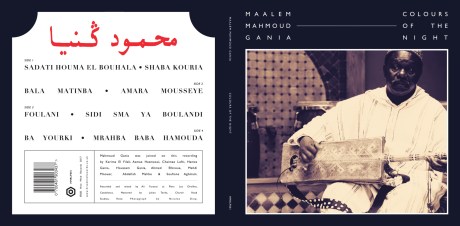
Maalem Mahmoud Gani ‘Colours Of The Night’
Hive Mind Records, September 8th 2017
Adding its name to an already crowded but all the same welcome market of world music reissues and contemporary undiscovered obscurities, Brighton based label Hive Mind Records announces its intentions and presence with an album of Gnawa trance recordings from the late great Maalem Mahmoud Gania.
The near-exulted star of the Moroccan honed Gnawa – a style of traditional Islamic dance, music and poetry with roots spread across the sub-Saharan crescent of Africa; considered by many to be one of the origins of the “blues” rhythm – and artisan of the genre’s key instrument, the camel-skin covered three-string lute like “guimbri”, released an extensive catalogue of recordings for labels such as Tichkaphone, La Voix El Maaraf and Sonya Disques.
Colours Of The Night however, the final studio recording by Gania, will be the first solo release by the artist outside his native homeland to be released on vinyl: six performances spread over four sides of vinyl to be exact.
For the uninitiated, Gnawa is a highly hypnotic experience based around the repetition of a musical phrase, a few succinct lines of poetic devotion or a communion with the spiritual for a duration that can last hours. Performances tend to bleed into each other, and so what can seem like one uninterrupted piece of music are, often, three or four different songs strung together. Building up an entrancing rhythm of spindly plucked vibrating guimbri and metallic scratchy percussion (courtesy of the iron castanets, the “krakebs”), call and response vocals in paean and lament break the instrumental monotony. Though there’s room for nuanced fleches and riffs to add variety, intonation and intensity. These are all the key components then; of a style that evokes both the sound of Arabia and desert blues traditions.
Equally influencing others whilst, it seems, also embracing and exploring sounds from further afield himself, during his illustrious career Gania worked with artists as diverse as Pharaoh Sanders, Bill Laswell and Carlos Santana. Enriching his own recordings perhaps, the suffused mirage-like synthesizer that hovers over the horizon on this album’s Sidi Sma Ya Boulandi track shows a late penchant for electronic keyboards and ambient waves of atmospheric soundscaping: though this is the only time the instrument is used on these specific recordings.
Stringy, wiry, occasionally a tone or two lower and played like a quasi-bass guitar, Gania’s playing style is raw, deep and always infectious: from blistering solos to slower and lighter ruminating descriptive articulations; this is equally matched by his atavistic soulful voice and the chorus of swooning, venerated female and male voices and harmonies that join him on each track.
As an introduction, Colours Of The Night would be better experienced in sections – a side at a time perhaps. After a while it can all sound a little tiring. Gania advocates will however find this a worthy addition to the legacy.
Hive Mind start as they mean to go on, with the full sanctioning of the Gania family and artists who appear on this album, releasing a most brilliant set of recordings that could so easily have disappeared off the radar. As inaugural releases go, this one is definitely a winner.
Our Daily Bread 256: Pharaway Sounds 70s Spanish rumba-funk, disco, cosmic and Flamenco pop reissues extravaganza!
August 28, 2017
FEATURE
WORDS: DOMINIC VALVONA

Spearheading a reappraisal of Spain’s adventurous experiments and fusions, transforming and modernizing the country’s ancestral folk and Flamenco traditions during the decade of Studio 54 and a boom in Costa del Sol tourism, the Guersson label imprint Pharaway Sounds is reissuing a number of difficult to source rarities over the next few months. Starting with the double-bill release of Trigal’s Baila Mi Rumba and El Turronero’s New Honda albums next month, Pharaway will be unearthing a range of vinyl crate-digger favorites and novelty treasures from a host of artists and bands who embraced the fervor to reinterpret and inject modernity into Spain’s musical legacy.
Remastered from original tapes, with political, historical context and in-depth notes on the recordings, artists and material swelling the retro-chic packaging each album and compilation, which also includes Morena Y Clara’s No Llores Más and Dolores Vargas’ La Terremoto (amongst others) has more than enough detail to keep the listener busy and informed.
The first two albums, both originally conceived and released on the Belter label, offer an eye opening revelatory mix of dramatic Eurovision pop, cabaret, rumba-funk, laser-y synth disco, jazz, and above all, transmogrified Flamenco.
Receiving a similar showcase, Finders Keepers released a brilliant Belter double album compilation back in 2010; shining a light on one of Spain’s most important labels during the late 60s and 70s. Though neither of the artists/bands in this series – “the grooviest and funkiest band of the scene”, Trigal, and troubadour Manuel Mancheño, reinvented and rechristened El Turronero – featured on that purview, both are held in high regard and considered influential: especially amongst those obscure rare sample enthusiasts; the boogie hangover and yearned longing theatrical gypsy funk New Hondo (influenced as much by Saturday Night Fever as dreamy Arabia) even sent the LCD Soundsystem’s honcho James Murphy into a spin trying to source a copy a few years back.

Buoyed by an “adventurous in-house” team of producers and sound engineers at Belter – namely Josep Llobell, Jean Barcons and Lauren Postigo– the Andalusia trio Trigal pushed traditional rhythms and forms towards a mixed bag of genres on their gypsy-rock sassy dancefloor cavorting Baila Mi Rumba LP. Featuring the married coupling of Antonio “Tony” Carmona and Maria Victoria “Vicky” Cabrera, and Rafael Romera, the original set-up went under the Tres Del Sur moniker, performing Latin American classics in tourist nightspots during the late 60s. A new contract took them to the States touring Army bases and clubs, with a brief trip across to Jamaica. Bringing home the funk, soul and the current explosion in Blaxploitation soundtracks they’d heard during their American sojourn, the Sur on their return became the Trigal. Replacing Romera with the virtuoso guitarist and former Los Adams band member Manuel “Manolo” Gallego Carter and drafting in pianist/composer Ramon Farrán the band opened their minds and went eclectic: fully embracing a smorgasbord of 70s trends and fads.
https://soundcloud.com/user-99941444/sets/trigal-baila-mi-rumba-snippets
The second of two albums for the belter label, Baila Mi Rumba is by fat their most adventurous: marking a brief inventive period for the group, who would only survive a few years more, eventually breaking up for good as the new decade dawned. Bright, lively and scintillating with cabaret-like slinky funk, Trigal did their best to sex-up the Flamenco and rumba. The trio’s soft porn “ahhhs” and brassy sassy horn heavy Med pop sound borders on San Francisco detective movie schlock, Vegas and a louche Santana in Harlem funk. Sauntering, fiery and just on the right side of being kitsch, the album has a certain infectious bombast and showbiz veneer. It’s also actually pretty good, and brazenly funky: even if it is aping, with a naïve spirit, the American music scene. Above all though, they do manage to drag Spain’s traditional forms into the glitzy, suave and sexy decade of disco and super funk.

Available on streaming sites already, though this is far from a satisfactory alternative to holding a physical copy, El Turronero’s New Hondo is another iconic “modernized” take on Spain’s earnest heritage. Though following a traditional route as a dedicated performer of atavistic toiled musical styles, the dramatic, longing voiced Manuel Mancheño’s reinterpretations for Belter upset the country’s cultural purist lobby: the self-proclaimed preservers of the country’s musical traditions weren’t averse to pouring scorn on anything new or experimental, epically in the heightened oppressive epoch of Franco’s last years in power. Going along with the changes in fashion and the yearning need to modernize, Mancheño proved a good sport in changing tact and performing to a contemporary and not so contemporary – flagging behind musical genres that were already becoming outdated – soundtrack.
With a name change to El Turronero the serious toned singer laid down his deep ruminations and lovelorn yearnings on a bed of Italo disco, pop, funk and boogie. Rather handy for the uninitiated like me, the original album came with plenty of notes and prompts, including the style of each song: from “tanguillos” to “malagueña”, all of which are given a 80s sheen and glossy production revamp.
Trembling with the theatrics of a requiem and Morricone spaghetti western score, the opening boogie Les Penas (a la cãna style of gypsy music that will challenge the skills of any adroit vocalist) sets the scene between cult kitsch and Euro pop extravagance. From then on in, countless instruments and sounds are thrown into the transglobal tapas; marimba and sitar on Si Yo Volviera a Nacer; Caribbean cod-reggae disco on Eres Lava de un Volcãn; and dewy-eyed condor strafing mountaintop pan flutes on Y La Raźon.
Despite being equally sentimental and daft, New Hondo has some stand out dynamic breaks and grooves. And it’s obvious why this record has been a collectors item for so long. This repackaged version gives us a chance to actually own a physical copy.
https://soundcloud.com/user-99941444/sets/el-turronero-new-hondo-snippets
Following in this double-bill wake is a host of Balearic disco and hip cuts, though many don’t as yet have a release date. There’s the strange Spanish female duo Morena y Clara. Launched by bizarre flamenco producer Lauren Postigo, they released a string of 45s and three LPs (highly sought after now) for the Discophon label, a worthy rival to Belter. They mixed a heavy dose of breaks, fuzz wah-phaser guitar and Moog soundtrack with rumba, flamenco, psychedelic rock, funk and disco. This illuminating, cute album features their “psychotronic” hits No llores más, Dejé de quererte, Buscando alegría and many others.

Continuing the ladies first rumba disco and pop fusions, there’s also an anthology dedicated to the 70s period of Dolores Vargas, known as “The Earthquake” due to her wild and frenzied dancing style. In these songs, released 1970-1975, you’ll hear a killer sound and production mix of funk, rock and pop, and of course Vargas’ powerful vocal delivery. The collection will include the “gipsy-funk” numbers A la pelota, Anana Hip and La Hawaiana along with a bizarre cover version of Chirpy Chirpy Cheep Cheep.
Lastly, Pharaway are set to release a couple of compilations, Rumbita Buena: Rumba Funk & Flamenco Pop from the Belter & Discophon archives, 1970 – 1976 and Tani: Disco Rumba And Flamenco Boogie, 1976 – 1979. Featuring as the titles suggest, a collection of tracks from two of Spain’s leading cult labels, the first comp features, “14 dance-friendly tracks taken from overlooked 45s and LPs”. And the second, “12 disco-rumba-flamenco bombs, a time machine to the “boites’ and discotheques of the late 70s and the perfect soundtrack to an imaginary “Kinki” cinema soundtrack.”
It is an extravaganza, marking as it does a serious attempt to bring some glory and reverence to a forgotten period of the Spanish music scene.
Tickling Our Fancy 053: Chicago Afrobeat Project, Deben Bhattacharya, Odd Nosdam, Širom, Nosaj Thing
August 21, 2017
NEW MUSIC REVIEWS
WORDS: DOMINIC VALVONA

This latest roundup of the imaginative, exploratory, venerable and refined musical discoveries includes a second collection of film and field recordings from the late legend ethnomusicologist Deben Bhattacharya; the third peregrination from Glitterbeat Records’ new imprint tak:tile, Širom’s Slovenian soundscape odyssey I Can Be A Clay Snapper; a rebooted soul-in-the-machine electronica collection from Nosaj Thing; and the latest ambient soundtrack from Odd Nosdam.
But first of all we have a reenergized Afrobeat collaboration between the genre’s doyen rhythm guru, Tony Allen, and the eclectic, protest driven, Chicago Afrobeat Project, called What Goes Up.
Read on…
Chicago Afrobeat Project Feat. Tony Allen ‘What Goes Up’
September 15th, 2017

Starting life as a shifting collective of musicians jamming in a artist’s loft, channeling the fervor of Afrobeat’s progenitor Fela Kuti, the Chicago Afrobeat Project initially covered the Nigerian icon’s back catalogue before developing their own variant style. Transducing the sound of downtown Lagos and the Afro-Spot nightclub via the rich musical heritage of their own native metropolis, the group, now settling with a regular lineup, open the studio doors to embrace the city’s famous blues, soul, R&B, jazz, gospel, house and hip-hop culture.
Expanding on and playing with the Afrobeat foundations but staying true to the roots of the African fusion that first merged the popular Ghanaian Highlife hybrid with funk and soul, the project members invite a number of vocalists and rappers from the area to enthuse, lead and prompt the music towards the political; reinforcing the main message and activism behind much of Kuti’s own, often dangerous, protestations and rebellious denouncements.
As if it wasn’t already enough, the Afrobeat ante is upped with the appearance of Kuti’s wingman and rhythm guru, Tony Allen. Showing those youngsters a thing or two, Allen brings certain levity, a craft and connection to the source, to this ten-track album. Flown in especially from his home in Paris, Allen, who’s also recently recorded a tribute album to Art Blakey (which he says fits in well with the Chicago Afrobeat Projects What Goes Up), doesn’t just turn up to add a roll and drum flair here and there, he plays on all the tracks, laying down the foundations, leading the way and rattles off his trademark polyrhythm shuffles, jazz timed syncopations and, most important of all, infectious grooves: the fight against injustice has never rarely so funky.
The elder statesman of Afrobeat, sounding almost effortless with his limbering and relaxed drumming, brings a sagacious quality to What Goes Up, though his comrades bring the bright and heralding horns, laser zappy synths, church organ and sunny Hammond sustained rays to the get-down.
Guests, of which there are many, on this sweltering and sauntering conscious album include a new jack swinging, bordering on gospel house style hook, protesting JC Brooks (Race Hustle and Sunday Song); an Igbo lullaby and Afro-futurist meets atavistic soul of Western Africa Oranmiyan (Cut The Infection, Must Come Down and Afro Party); the soulfully sassy, tumbling R&B songstress Kiara Lanier (No Bad News); and a metaphorical conversationalist style Rico Sisney and Maggie Vagle (as sparring partner) of Sidewalk Chalk (Marker 48).
As Rico Sisney puts it on the skit for environmental justice, Marker 48: “Something’s gotta change!” And over the course of the album the collective tackle every kind of current injustice filling up the newsfeed: from the alarming murder rate in the inner cities, including Chicago’s own widely publicized tragic rates and by extension the Black Lives Matter campaign; racial profiling and harassment; tensions between communities; and of course, Trump.
Speaking Kuti fluently, channeling the Afrobeat totems and the most hustling, hot footing rhythms, the Chicago collective offer a unique take on the genre under the watchful eye of Tony Allen. Bridging two generations, adding some fresh licks and eclectic sounds from their own backyard, they do more than most in reenergizing the Afrobeat blueprint.
Nosaj Thing ‘Parallels’
Innovative Leisure, 8th September

An urgent rewire; a forced reboot; the fourth album from the Los Angeles-based electronic producer/composer/performer Jason Chung, under his Nosaj Thing alter ego, focused the mind like no other project before. As a warning to us all that backing up your hard drive is not only vital and reassuring but also a security precaution, Chung lost three years worth of demos, sketches and compositions, many of which were destined for this LP, in a robbery whilst out on tour with Warp Record’s signing Clark.
Losing all his equipment and a number of precise hard drives, all of which were never backed-up or saved anywhere else, meant that Chung would have to start from scratch, and as it has proven, reexamine not only his methods of storage and quality control but also his process of creativity.
Parallels is in fact billed as some kind of “epiphany” for Chung; a journey into “uncharted territories” for an artist renowned for his collaborative fusions with Kendrick Lamar, Kid Cudi and Chance The Rapper. Changing direction and playing to it to his advantage, Chung uses this as an opportunity to explore deeper expanses. Far from wild and edgy however, Parallels is a quite vaporous but controlled soulful listening experience. Counterpointing various succinct philosophical questions (‘Dystopia or Paradise’, “Love or Regret?’) and themes (‘Emotions vs. Technology’, ‘Soul vs. Machines’) Chung’s electronic suffusions linger in a woozy sometimes haunting fashion between his many juxtapositions, yet always remains connected with a touch of humanity: from the resonating visages of a taped conversation with a security guard watching over the Picasso & Rivera: Conversations Across Time exhibition, to the trio of varying degrees of ethereal and soulful vocal contributions from guests Kazu Makino, Steven Spacek and Zuri Marley.
Emerging from the ether, Chung opens the album with a veiled drone rumble, piano arpeggiator and ring of articulate beats before hooking up with London producer/singer Spacek on the haunted broody lament, set to a Polygon Windows meets minimalist R&B pop, All Point Back To You. A precursor, a taster, of what you can expect to hear on the future Makino/Chung collaborative EP (released we’re told at some point later on in 2017), the breathlessly whispered cooed and chilled suffrage How We Do, adds a ticking drum beat and Japan style ice-y synth to the gauzy shoegazing Blonde Redhead signature. Nocturnal dreamy downtempo house, ambient meditations and finely-tuned kinetic soul-in-the-machine meanders follow, before reaching Marley’s rich soaring to lilting contour hovering past love affair ruminations on Way We Were.
Finely chilled, articulated electronica, amorphously floating between escapism and dystopia, Parallels never quite settles on either. And despite a number of equations that pitch technology and the machine against humans, Chung’s music has a real soul and yearning.
Odd Nosdam ‘LIF’
Sound In Silence
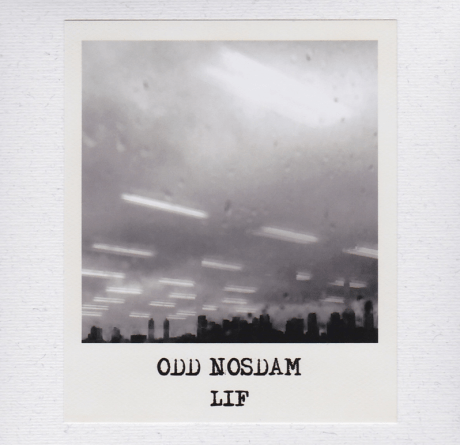
Few have changed the direction of hip-hop and modern ambient soundscapes like David P. Madson, the co-founder of both one of rap music’s most experimental outfits, cLOUDDEAD, and the seminal Anticon label. Forging a post millennium course with a number of collaborators, including Dose One, Yoni Wolf and Jel, Madson deconstructed, eviscerated and then rebuilt a more avant-garde, strung-out and expansive vision for hip-hop.
Under the Odd Nosdam title, inspired by the minimalist composers, and on this latest soundscape immersion, the degrading in quality traces and language of sound/video artist and composer William Basinski’s The Disintegration Loops IV, he delves ever deeper into the ambient sphere.
Informed by a prolonged spell of “nonstop rain” in his native Bay Area home, the LIF album transduces the West Coast of America’s winds and rains weather patterns into an analogue controlled, filtered and manipulated field of ebbing and flowing pulsing electricity. The capital three lettered titles (codes? Abbreviations?) fade in and out; like passing through a cloudy overcast or static resonating wave, which eventually dies out. Subtly alluded to, drizzling downpours are simulated, falling on glass, on the slight Japanese sounding RAI, and detuned TV set feedback accentuated moiety KEI I and KEI II. Whilst far gentler droplets fall like notes on the enervated rasping vignette AIN.
Prompts and themes of loneliness – and when listening to the varied ambient passages, you’ll find plenty of space to ruminate in isolation -, love and fear are key to unlocking, or at least perhaps deciphering, these ten mood compositions: articulated at times through subtle plucked out notation, bellowed harmonium, dreamy ascents above the clouds and floating lingers of melody. Refining emotion from a pylon hum, showers of rain or generators, Madson’s minimalist soundscapes traverse the Kosmische and ambient genres with a contemporary feel and movement.
Deben Bhattacharya ‘Musical Explorers: Krishna In Spring’
ARC Music, 25th August 2017
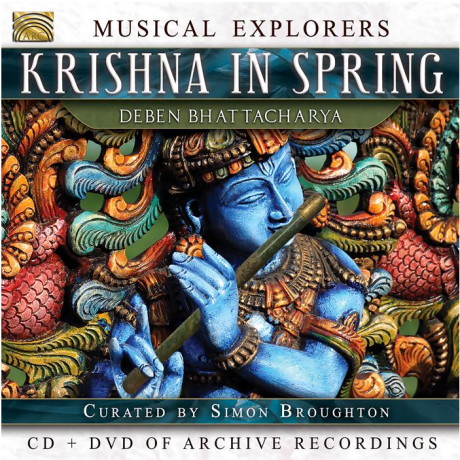
In praise of the field recordists, leading world music label ARC continues to champion the music and film recordings of the late ethnomusicologist Deben Bhattacharya in its latest series venture, Musical Explorers.
The project was launched back in June with Bhattacharya’s 1950s and late 1960s spanning Colours Of Raga, which included an introduction and illuminating set of notes from Songlines editor-in-chief, author of the “rough guides” to world music, Simon Broughton, who once again offers context and insight on this, the second volume in the series.
A self-taught producer, recording not only the sounds of his native India but also the Middle East, Asia and Europe, Bhattacharya travelled extensively cataloguing rare performances, bringing his exotic wonders to a his adopted British home and audience via various BBC commissioned documentaries and radio programs.
As the title suggests, Krishna In Spring is a paean of instrumentals, dances and venerable verses dedicated to, perhaps, the most venerated and famous deities in Hindu mythology. Demon vanquisher, protector of the common people, the mischievous incandescent blue portrayed god represents the “spirit for life” and for his tumultuous love affair with Radha. Said to have the common touch; never happier than when cavorting and leaping and springing about with milkmaids in his role as humble cow herder, Krishna is often depicted flute in hand, amongst the earnest folk. Almost every love song in the Hindu songbook is in his honour or at least references him. The diaphanous articulated Indian bamboo flute, the Bansuri, is even used as a colloquial signature and evocation of his presence.
Taking the full extended performances, seen and heard briefly on the soundtrack, from the title’s twenty-five minute documentary come public information film (first aired in 1969), Bhattacharya captures a panoply vision of the famous Holi Festival: the “festival of colours” that ushers in the Spring, dedicated to the deeds and spirit of Krishna, or as Bhattacharya himself puts it, “…to surrender oneself to the spirit of life. That is the message of Krishna in Spring.”
Humongous sized drums; bicycle-pump tie-dye abandonment; women browbeating their menfolk with broom handles, enacting Radha’s stormy love affair with Krishna; silky clothed flag carriers and joyful communion, the Holi Festival footage, even in its scratchy washed-out by time and quaintly narrated form, encapsulates a vivid, chaotic worship. It is a festival steeped in tradition and seems out of time with modernity, but as we are told in the album’s accompanying notes, continues to be practiced in the exact same way today.
Glimpses, as I said, of the evocative drones, syllabic ‘bols’ speak and poet exultations are played-out in their entirety on this collection’s eight sweet and beautiful audio recordings. Half of which feature the backing of R.K. Bharati laying down elegant melodies and drones on the short-necked Indian fiddle, the ‘sarangi’, Hidayat Khan taping out various coda and frenzied sophisticated patterns on the tabla, and Chiranjilal planting atmospheric brassy drones foundations.
Touched with the afflatus, there are fine examples of dusky hour pentatonic scale flightiness and serenaded flute pulchritude to Krishna throughout, including Suraj Narayan Purohit and Indermall Mathur’s Raga Bhupali, the adulating voiced incantation to the many names and trials of the beloved deity Devotional Song Of The Ballabh Sect In Praise Of Krishna performed by Amarlal, and the lengthy lyrical prose turn conversational drama, based on the late 14th century poet Chandidas’ original and the subsequent additional litany of poet contributions throughout the ages, Mathur, performed by singers from the Mitra-Thakur family.
Every bit as revelatory, especially to those unfamiliar with India’s multifaceted belief systems and extraordinary musical heritage, as the first of Bhattacharya’s collections in the Musical Explorers series, Krishna In Spring does however offer an even deeper and varied window on classical Indian music: A celebration of sounds that traverse Rajasthan, West Bengal but above all the holy.
Širom ‘I Can Be A Clay Snapper’
tak:til, 8th September 2017
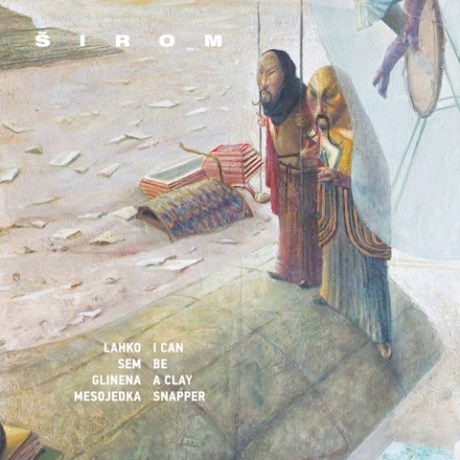
With an unspecified, but as the name suggests, emphasis on the “tactile”, Glitterbeat Records new imprint label gives a welcome platform to entrancing experimental tonal performances (launched earlier this year with 75 Dollar Bill’s Wood/Metal/Plastic/Pattern/Rhythm/Rock and Joshua Abrams & Natural Information Society’s Simultonality albums) and sonic polygenesis traverses alike. In the latter camp is this Slovenian peregrination suite from the landlocked, Alps nestling country’s visceral sonic conjurors, Širom.
Evoking memories and feelings, both real and imagined, with a soundtrack thick with atavistic connections, the trio of punk and post-rockers turn experimental folk and acoustic instrumental cartographers convey a personal relationship to their homeland, on their second album together under the Širom banner.
Though part of a litany of Empires, including the Habsburgs, Italian and either through their own forced amorphous cultural, ancestral ties with neighboring regions and peoples, became part of the Croat-Slovenian and Yugoslavian annexations at one time, Slovenia has despite its size and battle for independence, maintained a distinct identity. In less glowing terms but pretty accurate, the writer Simon Winder in his Habsburg travel saga Danubia, described what we know as the modern Slovenia as being, “[…] stuck together from the rubble of the [Habsburg] Empire’s end, with its core made up from the Duchy of Carniola with bits of Styria, Gorizia, Istria and a small piece of the old Hungarian county of Vas.”
One of the central themes of I Can Be A Clay Snapper, and amongst the country’s most richly abundant resources, is water; the leitmotif of which appears throughout the album’s five odysseys, evoking mountain streams, lazy lowland meandering rivers and the mysterious vanishing water of Karst through a sonic transcription.
Revisiting a number of locations held dear, including some that proved very difficult to reach, Samo Kutin, Iztok Koren and Ana Kravanja travelled to locations as diverse as the bright yellow turnip rape fields of Prekmurje to the snowy mountain top of Kal above the village of Čadry to channel their inspirations and compose from improvisations this, often, meditative peaceable experience. As if the music didn’t quite signal the intentions and psychogeography well enough already, the trio have also made a film, Memoryscapes, to document this landscape surveying experiment: each, the album and the film, influencing and informing the other.
Though all three of Širom have different varied experiences to share, with both Kutin and Kravanja citing punk rock as a starting point, both playing apart in various bands in the Slovenian capital before eventually crossing paths at an improvisational music workshop and forming the kalimba-based Najoua duo, and Koren meanwhile, feeling a peculiar shame at listening to music during his childhood, but making it up for it ever since, serving in a succession of metal and post-rock bands, they manage to accommodate each other’s particular strengths, personalities and depth. Which can’t be easy especially when you glance at the scope of instrumentation used; each band member a deft practitioner of instruments as cosmopolitan and eclectic as the balafon, banjo, mizmar, lyre, ribab and as humdrum – but when put to good use and made into a impromptu device for making a rhythm or unusual sound – as common everyday objects such as a pair of drawers and household junk.
Yet whatever the backgrounds, traces of North Africa, Adriatic and the middle East, and individual influences, the performances sail scenically through a dreamy otherworldly representation of Slovenia: Oriental, alien and Balkan visions permeate the plucked, malleted, chimed and purposefully played compositions, which subtly and rather cleverly build up complicated layers and various overlapping time signatures during the course of their journey.
Theremin like siren voices drift in and out, enacting the myth and seraph, whilst on the watermill turning Everything I Sow Is Fatal Sun Ra travels with John Cale and Pharaoh Sanders on a pilgrimage to Samarkand. The most recurring sounds however pay testament to the Balkans ghosts. The folkloric stirrings, lulls and yearning of Slovenia’s past bordering both a pan-Europa of migration and grief – stretching back a millennia – are transduced into often haunted vistas and metaphysical passages.
Changing tact so to speak, following the first two and ahead of a fourth re-issue (a second volume of Jon Hassell’s pioneering Fourth World ambient evocations is to be released just a few weeks after Širom’s LP), I Can Be A Clay Snapper is the first tak:til imprint to meander into south central Europe. And what an impressive and expansive inaugural Balkans travail it is too; different from the previous two releases, yet keeping to the tactile, accentuate and imaginative remit; whilst conjuring up mystical new soundscapes.
Rapture & Verse: August: Stig Of The Dump, DOOM, Kutmah…
August 15, 2017
HIP-HOP REVUE
WORDS: MATT OLIVER

Singles/EPs
Straight into it this month, and re-emerging as per the ID, Nomad rides five tracks produced by the Richardson Brothers – dusty, but crisp with it – with a moth-eaten mic and the flow of someone who’s been up all night. No fear though, ‘Preludes’ has the canniness that has long defined the slumbering SFDB imprint. Coming off the top turnbuckle, Legion of Goon luminaries Stig of the Dump and Stu the Don hold a B-boy stance until godly status prevails, ‘YKWTI’ shellacking you with North East show and prove. Less delicacy, more slow boiler with a kick below the tongue, ‘Sushi’ has Bisk, Milkavelli, Salar and Lee Scott huddling against the elements and keeping it low key.
Booda French skulks like a sensei pickpocket on the equally discreet ‘Masterpiece’: give him an inch and he’ll sneak a mile. Champions of ‘The Working Class’, The Other Guys ease back with a batch of instrumentals handing you a cold beer at the end of a day’s toil, with a shot of something stronger to go with it. With expert reminiscing from no less sages than Masta Ace and Large Professor, Son of Sam’s ‘Come a Long Way’ is a heartening, butter smooth breakaway doing big things for the imminent album. As Diamond D waits on him, you can tell culinary mic crusher Dillon has been dying to dine out on the line “I had to link up with Diggin’ In The Crates/the homie Dillon keeps the fork diggin’ in the plates”. Notes for ‘Feast’: earthy, with a twang. Drip feeding you fresh dirt, DOOM’s achingly intense ‘Negus’ with Sean Price is the dark alley you shouldn’t pass through after dark.
Albums
Selfie takers. Broken Britain contributors. Portuguese football managers (maybe). ‘You Are Not Special’ is the call of the towering Big Toast and Ill Move Sporadic’s slap-up studio skills, blocking today’s culture of aspiration with dollops of common sense. Match a highly strung yet heavyweight flow and fast bowler-beats targeting your unguarded bonce with a touch of sidespin, and this is reality brought down to earth with a major bump. A specialist subject for this year’s UK curriculum that won’t fail you.
Getting his kingpin on where power and respect can never be overstated, Da Flyy Hooligan goes for his on ‘S.C.U.M.’, brusquely piling his platinum plate high with producer Agor keeping him decked out in fine and furious funk styles. The iron braided West Londoner preaches designer danger, a wardrobe ready for war and the trigger temper and snap of a mantrap, momentarily checked by a tribute to Sean Price.
Ideas about newfound maturity have been bandied about upon the release of Tyler The Creator’s ‘Flower Boy’. If anything he’s making his character more complex, and probably even more polarising when lavish funk and soul musicianship beds down the articulate thoughts of an at-odds soul inviting in Frank Ocean, Estelle, Jaden Smith and Lil Wayne. The fact he’s still able to rip a few new ones without a second thought and turn over Dee-lite’s greatest hit, suggests the nous of his operations has gone up a few gears.
The psychedelic experience shattering the rainbow and ransacking the pot of gold at the end of it, Kutmah’s dense layering exacts ‘The Revenge of Black Belly Button!’ Though unwieldy, his instrumental curveballs are fascinating, electronic hip-hop shapeshifts and fly-by-night sketches-made-epic finding some sort of groove, and the right accompaniment when needs be in Holy Smoke, Jonwayne, N8noface and Chris P Cuts. Cornering the B-Boy/android/mad scientist market, Kutmah’s ‘TROBB’ crash-lands hip-hop and gets high off the fumes before simmering down.
Blues, soul, boom bap: Illinformed’s instrumental ‘The Age of Ignorance’ swaggers on through with lots of character, whether that be honourable old timer or the brashly pimpish, from well executed loop work. Don’t take Mic Legg’s ‘Chill Yard’ as seen (or heard); a beat tape full of finger-tapping pleasantness and loop doodles turned steady rockers, with a nice slice of subversion undercutting your comfort zone as the chill develops into an icepick. Aver’s ‘Die Berlin Dateien’ is another classy lounger pouncing on any whiff of danger, like putting your feet up with a pistol still stashed in your sock: a wind down zone for those playing with flick knives like a fidget spinner. Throwing in a lot of funk and whatever radio reception he can get on his road trip aiming to beat the setting of the sun, Don Leisure as the mysterious convoy leader ‘Shaboo’ pieces together a treasure map full of prize breaks and tantalising titbits. Bin the sat-nav and up the volume. Laidback and steaming the creases out of your day, Jermiside cuts the mic and goes resplendently horizontal as he takes ‘A Moment Between Places’.
‘Step Up to Get Your Rep Up’: a cast-iron call out from home bankers Heavy Links, El Tel, Habitat and Donnie Propa pumping out pure Lincolnshire firepower and reliably safeguarding hip-hop’s essentials with the best of British. With runaway chatter reminiscent of a certain bottle blond motormouth in his prime, Rick Fury as the don ‘Lego Scarface’ reps Newcastle at length with entertaining, can’t-sit-still facts and fuck-yous. “Broke since Donovan rocked that dreamcoat”, he’s backed by 80s patron DJ A.D.S., including a memorable meddling in the affairs of Foreigner. Ho’way the lad.
Value for money comes as standard from Tanya Morgan’s ‘YGWY$4 (You Get What You Pay For)’. Donwill and VonPea peak with a slick ease of unifying, buxom funk, pulling the (purse) strings of the best outdoor shindig you’ve ever attended, including skits that keep the album moving and spirits high. A party album also acting as the responsible adult, giving you the benefit of experience while mixing it with the in-crowd. We need a ‘Resolution’, and we’ve also long needed Mr Lif and Akrobatik to reunite as The Perceptionists. Though missing DJ Fakts One, it’s the perfect two-man blend of street and book knowledge, keeping the faith, mic swaps and the narrative style that served ‘Black Dialogue’ so well, and knowing when to attack (including some surprise trap offensives) and when to defend.
Once Danny Lover has had you over for ‘The Church Restaurant Official Soundtrack’, sucker punching you into a beanbag that continues to sag from under you, imagine if trap came loaded with an actual trapdoor; and instead of the bass booming from the boot, it was more a primal, tribal heartbeat of an unknown force or being. That’s kind of the deal with ZGTO – Shigeto and ZelooperZ – who shun the club for ‘A Piece of the Geto’. The slang stays the same, but when entwined with the inhospitable below the underground, a strange voodoo is summoned as sharp and threatening as trap’s regular 808 players. Uncommon Nasa’s ‘Written at Night’ invokes the fire in which independent rap burned in its late 90s heyday, beats and rhymes fired at awkward angles but grittily entrenched in the underground as it clocks up the light years. Guilty Simpson, Mike Ladd and King Kashmere are on hand with extra sonic screwdrivers.
Raydar Ellis is back with a ‘Bang!’, the ‘Late Pass’ provider dropping eight engaging tracks going straight up and broadening out as a source of infotainment until you’re sticking ‘em up in appreciation. Playful, introspective and tightly coiled all at once, Open Mike Eagle’s ‘Brick Body Kids Still Daydream’ has “been woke so long I might need to take a nap”, provides the hard man anthem of the year, and concludes with supreme condemnation: all while maintaining his rightful place in the line of ghetto superheroes.
Mixtapes
For those itching to get their Halloween decorations up, Onry Ozzborn has got your back for when the gates of hell swing open. ‘Black Phillip’ is only 35 minutes long, but that’s more than enough time for your speakers to pay attention as if guided by poltergeist power. The sound of looking at the sun for too long, Ireland trap tranquilizers NEOMADiC revel in summer’s last moments with ‘The NEOMADiC Tape’: boys in their own bubble personalising the snooze button experience.
Tune into Rap Noir’s weather forecast, understated negotiating from Action Bronson, and Dave East telling you to pace yourself.
Our Daily Bread 255: Vukovar ‘The Clockwork Dance’
August 4, 2017
Single/Video Exclusive
Words: Dominic Valvona
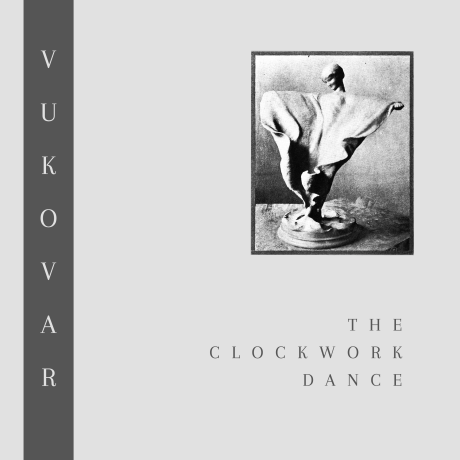
Vukovar ‘The Clockwork Dance’
4th August 2017
“Resistance is token. Commence the clockwork dance.”
Vukovar – a band name that signifies the abject horror of the Croatian City that saw one of the worst atrocities in the Balkan civil war implosion of the 90s – would, if you asked them, say they were frustrated and perturbed by the delays of releasing material, and the process, self-aggrandizement, of promotion.
However, the trio remains quite prolific, having already released three albums of spiraling blissful apocalyptic post-punk and discordant heavy Krautrock flavours since their inception in 2015. And now ahead of a fourth, Puritan, the group unveil a new single, The Clockwork Dance as an advance warning.
Waltzing with romantic anarchist melancholy towards the end times, the despondent outsiders ponder melodically in a swirling Gothic version of a Phil Spector backbeat, almost in a dream like stasis. Quietly anthemic and yet calmly settling, The Clockwork Dance evokes a rapturous OMD joining Echo & The Bunnyman and The The on Nero’s veranda, contemplating the futility of it all.
If like me, you love the group’s more melodious, bordering on cerebral pop, balance between broody and soaring shimmery majesty, and in particular the band’s baptism of fire debut Emperor (more specifically the tracks Koen Cohen K and The New World Order) then you’ll embrace this latest sublime lament.
The B-side as it were, is a live version of Quiet from the group’s second album Voyeurism, which acts as a showcase for the band’s darker, rowdy and raw form of performance and howling rage. Channeling The Birthday Party, Bauhaus and the shaman blues style of The Doors, Vukovar put the frighteners on the original; bending and stretching Quiet with a stalking trebly bass and bedeviled and bedraggled rock’n’roll punctuations, before playing out on a long extended fuzzy rippling electronic drone.
Following up on this year’s transmogrified covers album, Fornication, Vukovar’s fourth (and again, featuring a three syllable title) Puritan will be released on the 25th October 2017. If The Clockwork Dance is any indication, then I’m pretty excited at the prospect of what might be one of the year’s best releases.
ALBUM REVIEW
WORDS: MATT OLIVER

Danny Lover ‘The Church Restaurant Official Soundtrack’
Blah Records, 11th August 2017
Anyone who’s read past Rapture & Verse columns won’t have failed to notice the recurring themes of the seedy and illicit from Bisk, Sam Zircon, Morriarchi, Lee Scott and Stinkin Slumrock that have put Blah Records on the map of UK hip-hop’s nether regions. Almost reinventing, or inverting, the concept of chopped and screwed (an infamous, Southern United States technique of slowing down albums until the source material becomes an almost out of body experience), their dazed means of sloth-hop, teetering against the tide in a substance-addled state of straitjacketed comfort, is distinctive the moment it feels like setting up shop underneath the flesh.
So where does Ontario’s Danny Lover fit into all this?
Like Blah’s aforementioned wigged out lieutenants, Lover is a scabrous vessel for stuffing up the ether, building up a lo-fi back catalogue (‘Career Suicide’ – described by R&V as “like a head-on smash in slo-mo” – ‘Cigarette Kisses, Death Wishes’, ‘My Best Friends Keep Dying’ – on paper, decorating Lover with scythe and cowl), groping at stooping beats and going way past an attack of the munchies. Don’t think because he’s more withdrawn/broken than some of his label mates, that he’s any less dialed in or aware of how to pimp the vibe into something gratifyingly gratuitous.

Reducing all the glamour from hip-hop’s ostentatious ways, Lover may be treading water, but The Church Restaurant… goes beyond the blasé. Production from his go-to guy, the late 19 Thou$and, is a distillation of once was: not stark or even empty as you might anticipate, its business done in the dying embers. ‘Secrets’ has all the brags of a flosser: the fact eyes are rolling beyond the skull adds a different, unsettling dimension of hip-hop showmanship. The IDGAF persona is in its own way, harder to rationalise (as in you must be an easier target when you’re of a flaky-sounding mind state), and even harder to combat as an opponent when time either stands still or travels backwards. In the battle of bark versus bite, once Lover’s gummy venom soaks in, slow surrender becomes inexplicably inevitable.
‘Skinny Pimp’ lolls pleasantly in a soft focus string loop, but the strung out vibe both conveys and emits paralysis. On ‘Food’ an airy, fading flashback, Lover sounds like he’s doing his best to cut through with rhymer’s authority: the fact he’s unsuccessful, wanting to leap into the front row but finding his feet stuck, is part of the album’s temptation, leaving it to MiCon and Mos Pants to pep things up akin to scoffing on forbidden fruit. A touch of emotional fragility on ‘Rose Garden’ adds and asks more questions of the personality presumed too baked to tap into anything private, and ‘Peel Street High’ is the benchmark for the album’s wonderland offering what-could-have-been; washed out swagger undercut with bass, lapsed boom bap and debilitation.
A live translation must be 99% out of the question, and you’re not getting quotable by the barrel either. Because of the ironic, laconic delivery coming desert-dry, you may happen upon a one-liner that reaches catchphrase/t-shirt slogan status: Lee Scott’s trademark Scouse sneer alongside Salar on ‘Rare Nirvana’, smears a can’t-be-arsed guitar loop thinking it’s still gonna make it as a rock star. If birds are already circling your head and pink elephants are regularly at eye level, curiosity will get the better of you as the cult of ‘The Church…’ compels you.
REVIEWS/PREVIEWS ROUNDUP
WORDS: DOMINIC VALVONA
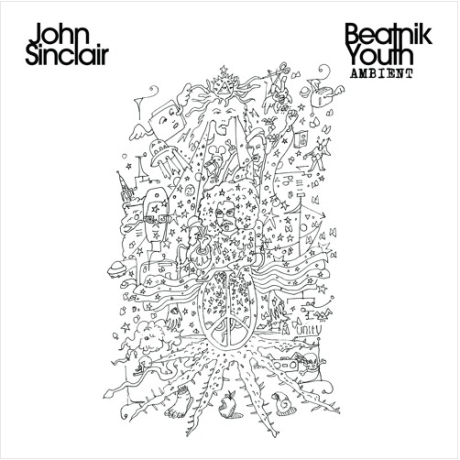
Not that I ever mean to do it, but this month’s roundup does have a tenuous theme of sorts, or rather many of the releases in this, the 52nd edition of my eclectic revues, are more or less all experimenting with the electronic music format in one way or another. The sagacious counterculture totem and beatnik poet of renown, John Sinclair leads the charge this month, his vivid jazz lyricism recitations put to an evocative soundtrack by Youth on the mini-album Beatnik Youth Ambient. Jono Podmore’s recently re-launched label, Psychomat, follows up on the inaugural release with another electronic peregrination – this time far more melodic and dreamy –, from the mysterious Reason Stendec. Working in isolation and apart, never meeting in person, the Room Of Wires duo release their third EP of otherworldly and atmospheric techno and downtempo beats, Black Medicine. And an assortment of artists from the ambient, trance, electronica fields contribute towards the One String Inspiration project, highlighting and collecting money for the Syria Relief charity effort.
We also have the latest and it seems final album of outsider New York slacker pathos from Charles Griffin Gilson, otherwise known as CHUCK. Calling it quits on his alter ego, due to a multitude of reasons, Gilson records his sincere CHUCK swan songs collection, Frankenstein Songs For The Grocery Store, for the Audio Antihero label.
Read on for full analysis and review…
John Sinclair ‘Beatnik Youth Ambient’
Ironman Records, 28th July 2017

Synonymous for steering and kicking out the jams in his short role as manager of Detroit’s renowned rebel rousing motherfuckers The MC5, renegade poet, scholar, activist and establishment rattler John Sinclair is also remembered for his free radical zeal and dalliances with the law.
Even too hardcore for the MC5, Sinclair’s foundation of the anti-racist socialist White Panthers, and his countless associations with equally revolutionary counterculture players and shakers, marked him out; leading as it did to the now infamous drug bust for marijuana possession in 1969. Whilst his love for the herb and gesticulations, whether through poetry or diatribes, is in no doubt, the way this particular bust was set-up (for what was a very insignificant amount of drugs) is considered heavy-handed and unjustifiable. Handed an initial ten-year sentence, Sinclair’s status in the “heads” and political agitators communities had singled him out as a poster child for deterring the like-minded boomer generation from stepping out of line. Fortunately (to a degree) this sentence and media furor galvanized support and sympathy and reduced that ten-year stretch to two, with Sinclair emerging from jail in 1971.
Keeping his hand in so to speak, but taking up residency in Amsterdam – a much safer bet -, the beatnik jazz sage continued, and as you can hear on this latest recording, continues, to record and perform in a host of setups with a multitude of contributors and backing bands.
The appropriately (in every sense) entitled Beatnik Youth Ambient mini LP is a foretaste, and as the title implies, ambient treatment version of material from a full-length album, due to be released later on in September. The “Youth” of that title refers of course to the Killing Joke bassist turn in-demand producer Martin Glover. Arguably one of the most consistent producers over the last few decades in the UK, Glover, under his Youth alter ego, has taken on more or less most forms of music and worked on both commercial and underground experimental projects. But he’s perhaps better known for pushing the boundaries of dub through his own productions and with a number of other artists; notably setting up the WAU! Mr. Modo imprint with fellow Orb band member Alex Paterson in 1989.
He now provides Sinclair’s “literary synthesis” with a suitable “beatnik ambient” soundtrack: a serialism quartet of turmoil, turbulent jazz and dreamier trance.
Split into two sides, Sinclair’s sagacious burr recitations are left to flow with only an occasional echo, reverb or metallic ominous effect added for atmosphere or to reinforce the sentiment and hallucinatory philosophy. The opening history lesson, Do It, which enthuses this generation to once again upend the status quo, turns Sinclair’s cerebral lyricism into a quasi-dance track rallying cry: the lingering reflective melodic and amorphous synth chorus in the first half of the track gradually joined by an Orb-like cloud-bursting trance beat.
Running through a vivid purview of postwar counterculture, bringing to life the energy and excitement that writers such as Kerouac (who gets referenced a lot) captured when seeing the Bebop jazz revolution and its great proponents perform, Sinclair delivers a magical enthusiastic experience on the next peregrination and nod to Thelonious Monk’s 1957 LP of the same name, Brilliant Corners. Titans of American beatnik and psychedelic literature lineup, Burroughs, Ginsberg and Neal Cassady (“…had the ability to park a car anywhere”, just one of his talents alongside his status as the “human bridge between the 50s and 60s.”), rubbing shoulders with jazz music’s new guard Lester Young, Byrd and Gillespie; immortalized by Sinclair to “head music” cosmos of jazzy lamenting woe, ghostly squawking and hooting saxophone and swirling mirages.
The greatest “head trip” however is saved until last. Sinclair channeling Captain Beefheart delivering the most “high” meandering TED talk ever, translates, or rather makes a reification of the almost impossible to articulate spark and feelings that kick started the whole boomer generation of beatniks, on the spiritual jazz voyage Sitarrtha. Sitars shimmer, an electric guitar twists and contorts, snares are played in a military, misty revolutionary reveille style, and the saxophone battles on as Sinclair implores us to grasp his message: a return to the real.
A eulogy of a sort, certainly homage, fellow renegade and jailbird, the late convivial Welsh sage Howard Marks reads out a befitting War On Drugs. Part epistle, part rambling thoughts, Marks, the cosmic prophet, weaves between the nonsensical and profound, the intimate and enraged. An obvious candidate and fellow drug evangelist, Marks makes a welcome addition to Sinclair’s congregation.
If anything, Beatnik Youth Ambient leaves the listener pining for a lost age; Sinclair’s evocative prose and delivery lifted (and cradled at times) by Youth’s congruous seething tensions and floaty dream-like production, which enthrall me to once again get stuck in to the “beat generation” and spin those Savoy label jazz totem recordings again. A prompt for the present times, the zeal of the postwar “baby boomers” (those with a soul anyway) counterculture not necessarily translating to generations X, Y and Z, even if it is needed; Sinclair’s language is nevertheless just as powerfully descriptive and energizing now as it was over forty years ago.
Reason Stendec ‘Impulsion EP’
Psychomat, 17th July 2017

Wingman to Can’s Irmin Schmidt and the late Jaki Liebezeit, on both a myriad of band legacy projects and various collaborations over the years; solo electronic music composer, and professor to boot; and in the last few years, part of the analogue manifesto enthused trio, Metamono; Jono Podmore has just recently, in the last two months, after a twenty year hiatus, re-launched his 90s Psychomat record label. The aim being to release, in both physical and digital formats, a cerebral experimental run of electronic music 7”s.
Featured on the Monolith Cocktail in June the inaugural extemporized Podmore & Swantje Lichtenstein partnership of serialism amorphous avant-garde backing and exploratory spoken word, Miss Slipper/Lewes, and subsequent series of remixes that followed, laid down the foundations and signature ascetics of the label. Record number two, Reason Stendec’s Impulsion EP, congruously keeps up the momentum: just as shrouded in mystery; every bit as challenging, but this time around for more melodic and flowing, and on Podmore’s (under his Kumo persona) remix treatment transforms the original material into a bubbling Roland TRs acid techno (reminiscent of Waveform Transmission era Jeff Mills and Derrick Carter) thumper.
An interesting story lies behind that Reason Stendec moniker, which helps to reinforce a sense of mystique. “Stendec” was the last, and as it turned out confounding, word of a Morse code message sent by the crew of the doomed Lancastrian flight between Buenos Aires and Santiago on August 2nd 1947. Turning into a conspirator dream factory of ever outlandish, convoluted theories, including the obligatory alien abduction angle, the Stendec saga had to wait 51 years to be finally laid to rest. It certainly had all the right components for a conspiracy or unworldly mystery, disappearing completely as it did, with no signs of wreckage, no bodies and the most cryptic of messages left to unscramble. But as it turned out the plane crashed, the impact as it hit one the looming mountain ranges triggered an avalanche that buried and entombed the plane and passengers for decades in an area known as the Tupungato glacier. As it thawed over those years, the plane was exposed and finally discovered by mountain climbers.
With this in mind, Reason Stendec cast a spell of otherworldliness; wafting along on a ghostly visage of Pan-European and Arabian sounding influences: like a breeze over an imaginary sand dune landscape, heightened by knife-sharpening percussion.
Like Grace Jones’ Parisian tango en vogue dalliances and contralto husky romantic burr crossed with a restrained Diamanda Galas, the vocals on this track follow the sonic contours; switching from an opening chant to English, French and German. A Vocal Mix version of the same track manipulates, pitch-shifts, bit-crushes, and refashions the voice into various forms: ominous and cybernetic, ritualistic and floating; one minute quivering towards the operatic, the next, in an incantation style.
A languid, lingering and sophisticated turn, the Impulsion EP is another electronica adventure and move in the right direction; both befitting the Psychomat label’s raison d’être yet cerebrally drifting off into more melodic, flowing directions.
CHUCK ‘Frankenstein Songs For The Grocery Store’
Audio Antihero, 18th August 2017

Bowing out (or bailing out) on a high note with another signature collection of pathos rich idiosyncratic slacker anthems and plaints, Charles Griffin Gilson calls time on his alter ego CHUCK. Stating a number of reasons for this closure, including his recent marriage, hitting thirty and honestly feeling he just hasn’t got it in him anymore, Gilson releases his final swansong, Frankenstein Songs For The Grocery Store, on the perfect home for such a maverick artists, Audio Antihero.
A most generous offering it is too: fifteen observatory songs and instrumentals of wistful, often of a despondent, bent, with ruminations on diets, exercise, work, love, TV and animals – more in the metaphorical sense.
An outsider of a kind, originally upping sticks from his Massachusetts home to New York, Gilson’s CHUCK persona whimsically, though often stirringly sad, looks at the foibles of living in the metropolis. This is exemplified in the most direct way on the bubbly knockabout (tongue-in-cheek) tribute to New York and its citizens, New Yorker, which lists a number of postcard landmarks made (in)famous in song and reputation (from Rockaway Beach to Hipster Williamsburg), and the personal traits, such as their stereotype brash offensive manner, of many of its residents: “Get the hell outta my way/Now go and die.”
Though just as domineering theme wise is the ‘social media’ constraints and context of a wider world, encroaching upon (as much as deriving from) these New York musings. This can be heard on the millennial blues trysts Becky and Bodies, which both feature a number of references to our obsession for validation in the online world. The pains of never growing up, streaming lives through a never-ending feed of updates and memes, Gilson encapsulates in his slightly nasal lo fi emo meets Tom Petty, Jonathan Richman, Clouds and Daniel Johnston waking up late in a Williamsburg bedsit style of delivery the regrets and anxieties of a generation growing up in a society that’s never offline: one that conducts its love affairs over a smart phone.
There’s a real sadness to many of these relationship-themed laments; the modern travails of long-distance love in an ever-connected but alienating world, and as with the Dylan-esque flowing turn pizzicato Arcade Fire rousing Caroline, an almost resigned to fate, shrugged, relationship with the ill-suited cavalier subject of the title: “My friends say you’re wasting my time/Baby I don’t mind.”
Whether dreamily drifting along to tropical palm swaying alluded notes, lasers, synthesizer presets and fanned phaser effects, Gilson sings of both unrequited love, gaining and regaining love in a languorous candid manner: removed but betraying a real fragility and care for his characters.
And so we bid fond well to CHUCK, though whether that means a more grown-up post-millennial with commitments Gilson emerges in its wake remains to be seen and heard. I only know that it’s a real shame that he’s decided to call time on his creation. Frankenstein Songs For The Grocery Store is a fitting swansong.
Various Artists ‘One String Inspirations’

So much has happened on the international stage since the April release date of this benefit for Syria album, yet the bitter catastrophic Syrian civil war still rages on unabated by talks and the erosion of ISIS in the country and bordering regions (especially more recently, Iraq). Now in its seventh year with no sign of ending anytime soon, the ensuing humanitarian tragedy throws more desperate Syrian refugees to the mercy of people smugglers and their cadre. Entangled with a never-ending flood of those escaping the devastation of this conflict and with those escaping poverty and violence from across a wide area of the Middle East, Asia and Africa, the Mediterranean has, even this summer, seen huge numbers desperately making the crossing to Europe.
Statistics are staggering: the Syria Relief charity website, which all funds from this release go towards, refers to 6 million children inside the warzone currently needing urgent humanitarian assistance, alone. With this glaring travesty in mind, the 28-track One String Inspiration compilation offers a stirring collection of poetic (and not so poetic: see the bish bosh no-nonsense punk raging Hostile Skies by 3 Chords & A Lie) indictments and bleak instrumental soundtrack atmospheres. The premise of which, alluded to in some ways via the title, challenges each artist to feature either a found or self-made instrument in their composition. Not that any of the results sound restrictive, even if it means some artists have had to move outside their “comfort zones” in the process.
Most of the contributions could be classed in the ambient or experimental sound and mood categories: The opening tabla rattling, spinning travail Night Journey To The Coast by Bowmer Holmes setting the right scene of magical Middle Eastern promise and reflection. Serene veiled drones and obscured leviathan movements follow with the Melodic Energy Commission’s Hole In Timeless and the transmogrified Animal Waves, by Can, put through a wobbly switched-on Bach treatment Budget Airlines from Detlev Everling – which shows a certain sense of humor and offers a kooky respite from the moodier material.
Tribal futurism, ratchet-y workshop mechanics, Transglobal Underground laments and duck quacks abound until reaching the stark folksy plaintive lyricism of Anna Knight’s unapologetic indictment on the refugee crisis, With His Lifejacket. Following the fateful plight of one poor unfortunate child, drowned like so many others crossing the straits to Europe, Knight somberly mourns but also attacks the inhumanity and cruelty of it all.
Full-on warping drum’n’bass and techno (courtesy of the tetchy Kitchen Sink Drama by Glove Of Bones) at its most lively, tapping an object to produce a serial environmental accompaniment at its most minimalist, and whistling to a wood shavings itchy dub track at its most strange, One String Inspiration features a diverse and generous range of wonders; many of which evoke the Warp (early on in its creation), Leaf and First World labels.
A few months on and just as vital, the collection in its own small way keeps the crisis in the spotlight, as more and more artists do their bit and make sense of such chaos.
Room Of Wires ‘Black Medicine’
Section 27
For a duo of sonic experimentalists that have never met – working apart in total isolation -, the Room Of Wires partnership, no matter how seething with ominous twists and turns, is a complimentary synchronized meeting of minds.
The rather anonymous, faceless downtempo and in industrial techno composers manipulate, churn and whip up a mysterious combination of futuristic atmospheres and inner turmoil on their third, most recent, EP Black Medicine.
Beginning as they mean to progress, the kinetic chain snaking opener Game Over builds gradually, weaving touches of Kraftwerk, Basic Channel and Mike Dred to a rhythmic soundscape of harmonious discord. Undulating spheres, radio waves, obscured broadcasted voices and stretching creaks and expanding steel structures move overhead on the following space journey Protected Space, whilst Temple Run juxtaposes lumbering bit-crushing monolith punctuations with a haunting Oriental siren chorus.
Unsettling and sonorous in places, yet able to lift the miasma and darkness with lightened breaks of more serene, glowing synth waves, Room Of Wires constantly offer glimmers of humanity and nature: even if the voices, transmissions sound lost and ebbing away like ghostly visages. A mouthful of Black Medicine that won’t do you any harm.
Playlist: The Monolith Cocktail Social #29
July 21, 2017
A PLAYLIST FROM OUR IMAGINARY RADIO SHOW OR ‘SOCIAL’
Chosen by Dominic Valvona
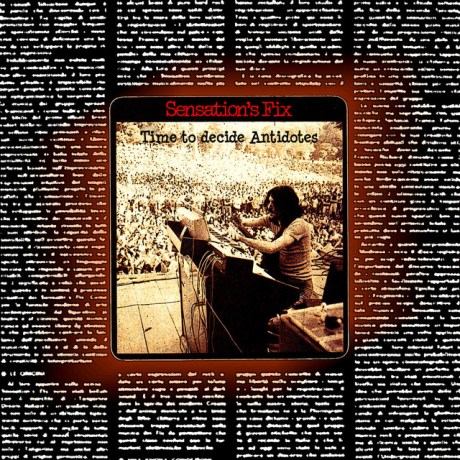
In danger of repeating myself, but for newcomers to the site here’s the premise of my playlist selections. Previously only ever shared via our Facebook profile and on Spotify our regular Monolith Cocktail Social playlists will also be posted here on the blog itself.
With no themes or demarcated reasoning we pick songs from across a wide spectrum of genres, and from all eras. Reaching edition #29 and still as eclectic as ever, this latest playlist chosen by me, Dominic Valvona, features Canadian Hollywood tipping rock glory from Neil Merryweather, the funk, the whole funk and nothin’ but the funk from Bernie Worrell, Afrobeat garage from Wells Fargo, beautiful flighty jazz transmogrifications of The Beatles via Ramsey Lewis, and experimental peregrinations of fantasy from Nicole Mitchell. There’s also tracks from Monomono, Gurumanix, The Stepkids, Trane, Leland, Sensations Fix (a regular at the Monolith over the years), Syrinx and many more (see full tracklist below).
Tracklist:-
Neil Merryweather ‘Hollywood Blvd.’
Birth Control ‘Hope (Single Version)’
Sensations Fix ‘Substance Of U’
Bernie Worrell ‘Woo Together’
Soul Explosives ‘Tryin To Get Down’
Rim Kwaku Obeng, The Believers, KASA ‘I’m A Song Writer’
Tee Mac ‘Nepa Oh Nepa’
Shintaro Sakamoto ‘死者よ’
Tommy Mcgee ‘Come On’
Peace ‘I Don’t Know’
John Holt ‘Help Me Make It Through The Night’
Buckley ‘My, My, My’
The Beach Boys ‘With A Little Help From My Friends’
Peter Giger ft. Trilok Gurtu, Family Of Percussion, Archie Shepp, Wolfgang Dauner and Albert Mangelsdorff ‘Trans Tanz’
Goran Kajfes Subtropic Arkestra ‘Dokuz Seki/Esmerim’
Marco Di Marco ‘Le Mors Aux Dents’
The Last Poets ‘It’s A Trip’
Wells Fargo ‘Love Of My Life’
Monomono ‘Get Yourself Together’
Jesse Davis ft. Eric Clapton ‘Washita Love Child’
Gurumaniax ‘Voodoo Touch’
Min Bul ‘Champagne Of Course (Instrumental)’
Ramsey Lewis ‘Black Bird’
Ahmed Malek ‘Les Vacances De L’inspecteur Tahar’
Joe Maneri ‘Paniots Nine’
Shirley Nanette ‘All Of Your Life’
Eduardo Araujo and Silvinha ‘Sou Filho Deste Chão’
The Stepkids ‘Sweet Salvation’
Autumn ‘Goblin’s Gamble’
Pretty ‘Mustache In Your Face’
Trane ‘Still Burning Bright’
Hard Stuff ‘Jay Time’
Leland ‘I’ve Got Some Happiness’
Boots For Dancing ‘Salt In The Ocean’
Family Fodder ‘Savoir Faire (Single Version)’
Gabor Szabo ‘Song Of Injured Love’
Nicole Mitchell ‘Dance Of Many Hands’
Syrinx ‘Syren’
THE ESSENTIAL HIP-HOP REVIEW
WORDS: MATT OLIVER

Prodigy, Mobb Deep, 1974-2017
The clickbait-certified Rapture & Verse has been keeping its cool by ducking into reissues of old skool watersheds from Boogie Down Productions, Special Ed, Run DMC, Del tha Funkee Homosapien and Souls of Mischief, and noting Main Source are on their way to London for a 25th anniversary ‘Breakin Atoms’ tour. Everywhere else, the heat has been melting minds and addling brains, what with 90s legends found sporting socialite attire, the honourable Ugly God cornering a battle rap niche by slagging himself off, Chance the Rapper in a supposed trademark dispute with a pastry chain, and of course Jay-Z releasing a new album, belatedly working out what to do when life gives you lemons.
Singles/EPs
Confucius MC and Mr Brown are all about ‘The Artform’, a straight up seven track EP radiating heat from an undisclosed location. Rhymes retort with polar-level poise to beats turning the screw, and both send the temperature rising until it becomes an interrogation tactic. In ‘The Garden of Eden’, Benaddict stays true, a leisurely stroll allowing his thoughts to roam freely and find their target with finely detailed accuracy. ‘I Arrived Late’ announces Verb T, but you’ll forgive his tardiness when the chipper yet advisory rhymes and bubbly organ-pushed beats of Pitch 92 get you out your seat. Not quite a fascist regime and requiring little instruction, Too Many T’s’ ‘God Save the T’s’ bounces on through, mics attached to wrecking ball elastic.
To an itchy, tripped out beat from BBS, Lost Identity cuts through the haze on ‘Plaque’, spitting hard and unperturbed by the shadows inching up towards him. New York-Yorkshire monopoly Madison Washington show the power of non-conformity on the ‘Code Switchin’ EP, a half dozen shake up where Malik Ameer and thatmanmonkz keep their cool when mixing rolling funk and flows, and creating scenes with arch alchemy. Spectacular Diagnostics gets close to the edge, so don’t push him – ‘Rambo Bars’ a big boom bap deal thrashed out by Conway the Machine, Chris Crack and Nolan the Ninja. With Apollo Brown barely cueing a fusty, unsteady piano loop, Planet Asia and Willie the Kid reveal ‘Dalai Lama Slang’ to put the peace firmly in its place.
Four tracks from DJ Shadow, including his recent collaboration with Nas and a typically steamin’ performance from Danny Brown, bugged out electro boom bap and cinematic cyber engineering, make ‘The Mountain Has Fallen’ an EP with plenty of chameleon behaviour. Simultaneously spacious and claustrophobic, Grieves precedes a new LP by trying to hold back encroaching walls on the eerily gracious ‘RX’. Crowning the ‘Samurai Killa’, Big Bob reading up on how to create a dynasty involving nunchucks and ancient scriptures is enough for five hungry combatants to vie for the belt. John Reilly is a sure shot smoothly cocking back when ‘High Noon’ comes around: simple as.
Albums
Fresh from his fine Frankenstein project fusing Nas and Madlib, David Begun introduces Eminem and Pete Rock to his bootleg laboratory. Suffice to say it’s unsettling to hear the cartoon capers and savage psychosis of Slim Shady smoothed out by The Chocolate Boy Wonder, but that’s the essence of ‘Marshall and The Soul Brother’ for you. Fresh from redressing ‘The Symphony’, the posse cut’s posse cut now found wearing daisy chains, maverick soundsmith Will C sets out to ‘Bless the Beats & Children’ with his hip-hop hot take on The Carpenters. Tastefully calibrated instrumentalism is the pleasing result to get all cynics onside.
For the hardcore head nod faction, Tone Chop and Frost Gamble make a good case for the fact ‘Respect is Earned Not Given’. New York honour is defended through raspy chew ups and spit outs, unequivocal titles such as ‘Get Beat Down’, ‘Walk the Walk’ and Guillotine Chop’, and producer process that cools down and wades in once his vocalist finds his lane. Chop and Gamble land their punches as a safe bet. Though a different beast from his old man, the one and only Big Punisher, the ‘Delorean’-riding Chris Rivers is super lyrical, coming on hardcore while still leaving plenty of room for the clubs and the ladies. Although prey to the age old quandary of attempting to nail every modern hip-hop convention, Rivers’ photo is never found fading, a good quality, next generation endorsement of capital punishment.
A drop of ‘Dopp Hopp’ a day will keep the haters away, The Doppelgangaz keeping you on your toes despite placing their worth on the cusp of a spiralized trip. The lyrical NY jabs and way of thinking from beneath superhero/clergy robes will have this creep up on the button marked ‘repeat’ until it progresses to heavy rotation. By design or otherwise, everything feels summery, completed by the G-funk themes of ‘Roll Flee’ and ‘Beak Wet’.
A free download for a limited time celebrating 30 years of shutting ‘em down, Public Enemy’s ‘Nothing is Quick in the Desert’ keeps fire in its belly, can still shred an axe and dismissively fires off messages that still can’t be argued with (particularly with social media giving them a whole new profile to blast at). Street struck off some back alley black magic are LMNO and Twiz the Beatpro. Either riding the bull into the red rag as ‘Cohorts’ or found twitching under the influence of the illusionary, there’s an unseen pull making it an album that offers more than just tough-tipped, rough lipped beats and rhymes.
More smooth criminal masterminding from that man Giallo Point, this time with the sure and spiky Smoovth leading operations, makes ‘Medellin’ a mob merry-go-round reaching out to a varied cast (Sonny Jim, Vinnie Paz but two on call) of cold hearts applying heat. Actually quite a relaxed listen, transporting you to a world of mythological opulence while secretly measuring you for concrete shoes. Vince Staples’ negotiation of fresh house, garage and twists on trap veers between foot down force and playing suitably vacant for the club’s benefit. With the miscellany of ‘Big Fish Theory’, come for the rebel, stay for the rhythms.
Mixtapes
A daunting reconstruction of peace out of crumpled MPCs and repurposed trap, Clams Casino’s ‘4’ gets industrially scalded hip-hop beats to smash into post-dubstep introspection, stirring a beast raging inside abstract beauty, and making you nod into a complex but satisfying headspace. Though it’s long understood there are six million ways to die, Royce da 5’9” has got the next six million trademarked with the incredible show & prove of ‘The Bar Exam 4’, destroying vernacular establishment for 28 tracks and 90 minutes at a frankly preposterous level of breaking mics down to their very last compound.
Come and watch Datkid turn the world inside out, a face-off between Tyler and A$AP Rocky, and The Mouse Outfit’s latest uprising.
 Monolith Cocktail Blog