End of the Year Revue For 2025: Part One: A to M
December 11, 2025
Choice Highlights From The Last Year
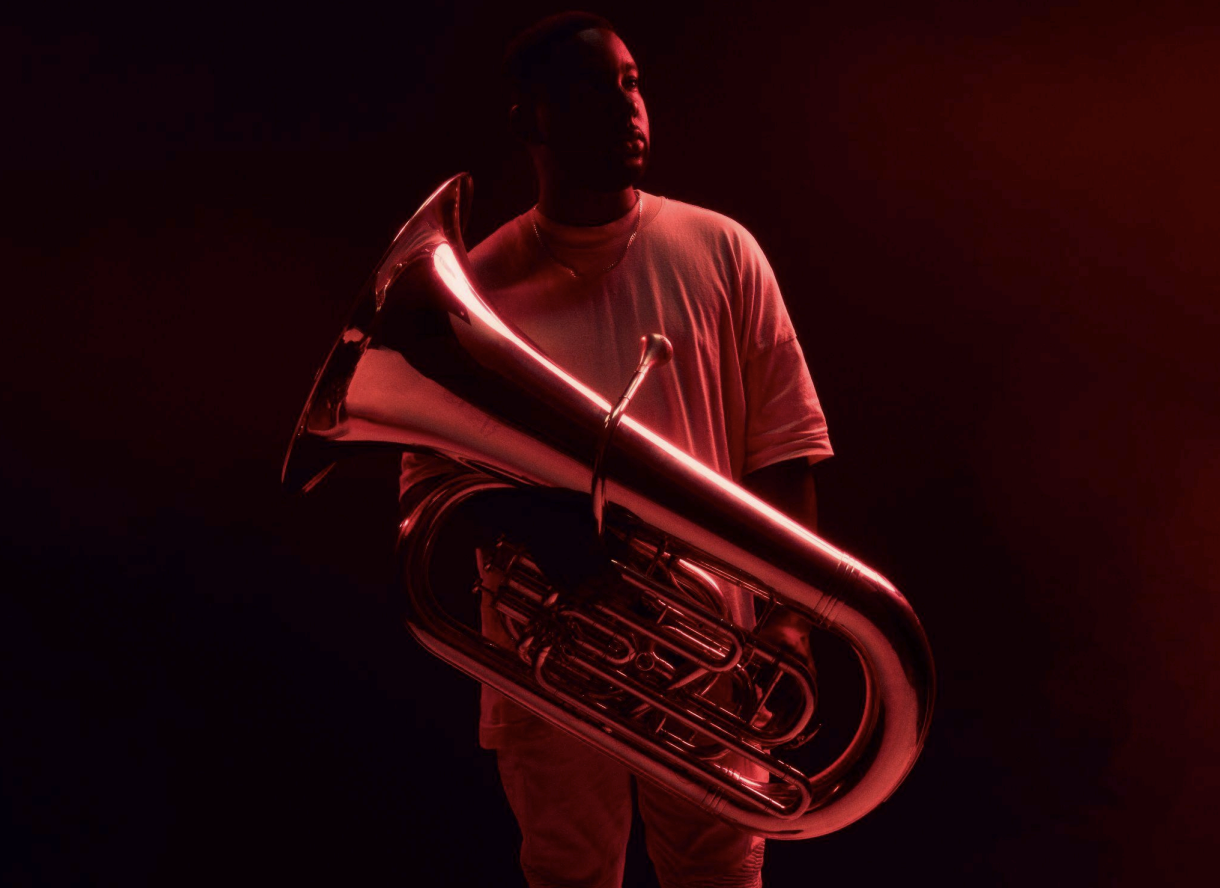
I said I wasn’t going to do it this year. And this may be the last. But here is the first part of a comprehensive revue listing of choice albums (some extended EPs too) from 2025 that we returned to the most, enjoyed or rated highly. See it as a sort of random highlights package if you will.
As usual a most diverse mix of releases, listed alphabetically – numerical orderings make no sense to me unless it is down to a vote, otherwise what qualifies the placing of an album? What makes the 25th place album better than the 26th and so on…
Whilst there is the odd smattering of Hip-Hop releases here and there, our resident selector and expert Matt Oliver has compiled a special 25 for 25 revue of his own, which will go out next week.
Without further ado….the first half of that selected works revue:
A.
A Journey Of Giraffes ‘Emperor Deco’ (Somewherecold Records)
Review by Dominic Valvona
Alien Eyelid ‘Vinegar Hill’ (Tall Texan)
Review by Brian ‘Bordello’ Shea
Allen, Marshall ‘New Dawn’ (Week-End Records)
Review by Dominic Valvona
Armstrong ‘Handicrafts’
Review by Brian ‘Bordello’ Shea
Audio Obscura ‘As Long As Gravity Persists On Holding Me to This Earth’
Review by Dominic Valvona
Aus ‘Eau’ (Flau)
Review by Dominic Valvona
B..
Balloonist, The ‘Dreamland’ (Wayside & Woodland)
Review/Piece by Dominic Valvona
Barman, MC Paul ‘Tectonic Texts’
Picked by Dominic Valvona
Bedd ‘Do Not Be Afraid’
Review by Dominic Valvona
Bird, Jeff ‘Ordo Virtutum: Jeff Bird Plays Hildegard von Bingen, Vol 2’
(Six Degrees Records) Review by Dominic Valvona
Blanco Teta ‘‘La Debacle las Divas’ (Bongo Joe)
Review by Dominic Valvona
Bordellos (with Dee Claw)/Neon Kittens, The ‘Half Man Half Kitten’
(Cruel Nature Records) Review by Dominic Valvona
Braxton, Anthony ‘Quartet (England) 1985’ (Burning Ambulance)
Picked by Dominic Valvona
Brody, Jonah ‘Brotherhood’ (IL Records)
Review by Dominic Valvona
Brother Ali ‘Satisfied Soul’ (Mello Music Group)
Picked by Dominic Valvona
Burning Books ‘Taller Than God’ (Ingrown Records)
Reviewed by Dominic Valvona
C…
Cindy ‘Saw It All Demos’ (Paisley Shirt Records)
Reviewed by Brian ‘Bordello’ Shea here
Craig, Kai ‘A Time Once Forgotten’ (Whirlwind Recordings)
Review by Dominic Valvona
Crayola Lectern ‘Disasternoon’ (Onomatopoeia)
Review by Dominic Valvona
Cross, Theon ‘Affirmations: Live at Blue Note New York’ (New Soil)
Review by Dominic Valvona
Cubillos, Julian ‘S-T’ (Ruination Record Co.)
Review by Dominic Valvona
Cumsleg Borenail ‘10mg Citalopram’ (Cruel Nature Recordings)
Review by Dominic Valvona
Joel Cusumano ‘Waxworld’ (Dandyboy Records)
Review by Dominic Valvona
D….
Dammann Sextet, Christopher ‘If I Could Time Travel I Would Mend Your Broken Heart aka Why Did The Protests Stop’ (Out of Your Head Records) Review by Dominic Valvona
Darko The Super ‘Then I Turned Into A Perfect Smile’
Picked by Dominic Valvona
Dyr Faser ‘Falling Stereos’
Picked by Dominic Valvona
E…..
Eamon The Destroyer ‘The Maker’s Quilt’ (Bearsuit Records)
Review by Brian ‘Bordello’ Shea
Expose ‘ETC’ (Qunidi)
Reviewed by Brian ‘Bordello’ Shea here
F……
Farrugia, Robert ‘Natura Maltija’ (Phantom Limb/Kewn Records)
Reviewed by Dominic Valvona here
Fir Cone Children ‘Gearshifting’ (Blackjack Illuminist Records)
Review by Brian ‘Bordello’ Shea
Fortunato Durutti Marinetti ‘Bitter Sweet, Sweet Bitter’ (Quindi Records/We Are Time)
Review by Dominic Valvona
G…….
Goldman, Ike ‘Kiki Goldman In How I Learned To Sing For Statler And Waldorf’
Review by Brian ‘Bordello’ Shea
Good Ones, The ‘Rwanda Sings With Strings’(Glitterbeat Records)
Review by Dominic Valvona
H……..
Haas & Brian g Skol, Andy ‘The Honeybee Twist’
Review by Dominic Valvona
Howard, John ‘For Those that Wander By’(Think Like A Key)
Review by Brian ‘Bordello’ Shea
I………
Ishibashi, Eiko ‘Antigone’ (Drag City)
Picked by Dominic Valvona
iyatraQuartet ‘Wild Green’
Review by Dominic Valvona
J……….
Jay, Tony ‘Faithless’
Review by Brian ‘Bordello’ Shea
Johanna, John ‘New Moon Pangs’(Faith & Industry)
Review by Dominic Valvona
K………..
Kheir , Amira ‘Black Diamonds’(Sterns Music/Contro Culture Music)
Review by Dominic Valvona
Khodja, Freh ‘Ken Andi Habib’(WEWANTSOUNDS)
Review by Dominic Valvona
Kweli, Talib & J Rawls ‘The Confidence Of Knowing’
Picked by DV
L…………
Lassy Trio, Timo ‘Live In Helsinki’ (We Jazz)
Picked by Dominic Valvona
Last Of The Lovely Days, The ‘No Public House Talk’(Gare du Nord)
Review by Brian ‘Bordello’ Shea
Lt. Headtrip & Steel Tipped Dove ‘Hostile Engineering’ (Fused Arrow Records)
Review by Dominic Valvona
LIUN + The Science Fiction Band ‘Does It Make You Love Your Life?’
(Heartcore Records) Review by Dominic Valvona
Locks, Damon ‘List Of Demands’ (International Anthem)
Reviewed by Dominic Valvona here
M………….
Mikesell, Emily & Kate Campbell Strauss ‘Give Way’ (Ears & Eyes Records)
Reviewed by Dominic Valvona here
Mirrored Daughters ‘S/T’ (Fike Recordings)
Review by Dominic Valvona
Mohanna, Nickolas ‘Speakers Rotations’ (AKP Recordings)
Review by Dominic Valvona
If you’ve enjoyed following and reading the Monolith Cocktail in 2025, and if you can, then please show your appreciation by donating to our Ko-Fi account. The micro donation site has been vital in keeping us afloat this year.
For the last 15 years both me and the MC team have featured and supported music, musicians and labels we love across genres from around the world: ones that we think you’ll want to know about. No content on the site is paid for or sponsored, and we only feature artists we have genuine respect for /love or interest in. If you enjoy our reviews (and we often write long, thoughtful ones), found a new artist you admire or if we have featured you or artists you represent and would like to say thanks or show support, than you can now buy us a coffee or donate via https://ko-fi.com/monolithcocktail
The Monthly Playlist selection of choice music, plus our Choice Albums list from the last month.

A couple of months back we decided to change things a little with a reminder (if you like) of not only our favourite tracks from the last month, but also a list of choice albums too. This list includes both those releases we managed to feature and review on the site and those we just didn’t get the time or room for. All entries are displayed alphabetically.
Our Monthly Playlist continues as normal, with tracks this month chosen by me, Dominic Valvona, Matt Oliver and Brian ‘Bordello’ Shea.
A Journey Of Giraffes ‘Emperor Deco’
(Somewherecold Records) Review
MC Paul Barman ‘Tectonic Texts’
Elea Calvet ‘Seasons’
Inturist ‘Tourism’
(Incompetence Records) Review
Eiko Ishibashi ‘Antigone’
(Drag City)
Timo Lassy Trio ‘Live In Helsinki’
(We Jazz)
Nickolas Mohanna ‘Speakers Rotations’
(AKP Recordings) Review
Che Noir & Superior ‘Seeds In Babylon’
Alberto Novelle & Rob Mazurek ‘Sun Eaters’
(Hive Mind Records) Review
Andrew Rumsey ‘Collodion’
(Gare du Nord) Review
Schizo Fun Addict ‘An Introduction To…’
(Fruits der Mer) Review
Snapped Ankles ‘Hard Times Furious Dancing’
Sonnyjim & Kong Artisan ‘Effortless, Almost Dead’
(Noel & Poland Records)
Russ Spence ‘Phase Myself’
(Metal Postcard Records) Review
Macie Stewart ‘When The Distance Is Blue’
(International Anthem) Review
Gregory Uhlmann, Josh Johnson, Sam Wilkes ‘Uhlmann Johnson Wilkes’
(International Anthem) Review
The Young Mothers ‘Better If You Let It’
(Sonic Transmissions) Review
Previous Monthly Choice Releases:
And now, the tunes of the month playlist selection:
Snapped Ankles ‘Pay The Rent’
Psychedelic Porn Crumpets ‘Weird World Awoke’
MC Paul Barman, Donwill ‘Killinagame’
Jansport J, Airplane James, Sham1016 ‘T-Top’
Alessandro Alessandroni ‘Militari in allarme’
Black Mynah ‘Colleen’
Che Noir, Superior ‘Sovereignty’
Droogie Otis, Boldy James ‘Everything Designer’
Timo Lassy Trio ‘Rumble Outro – Live’
Gregory Uhlmann, Josh Johnson, Sam Wilkes ‘Marvis’
Takuro Okada ‘Howlin’ Dog’
Inturist ‘Special Offer’
Elea Calvet ‘Bad Joke’
Sweeney ‘Love Is A Waste Of Time’
Eiko Ishibashi ‘Antigone’
Meggie Lennon ‘Connexion Astrale’
Apollo Brown ‘Honestly Don’t’
The Moose Funk Squad ‘Cheetah Piss’
Black Josh, Lee Scott ‘Aw, Here It Goes’
Queen Herawin, Pretty Bulli, Illa Ghee ‘Denial’
The Young Mothers ‘Better If You Let It’
Lord Finesse ‘Habits of Desperation’
Sonnyjim, Kong The Artisan, Lord Sko ‘Idiot Savant’
clipping. ‘Polariods’
Macie Stewart, Lia Kohl ‘I Forgot How To Remember My Dreams’
Nickolas Mohanna ‘Past Light Cone’
Previous Industries ‘Adriana Furs’
Sporaterra ‘Unglued’
PremRock, Sebb Bash ‘Did You Enjoy Your Time Here…?’
Flying Tulpa ‘Signless’
Andrew Rumsey ‘The Memorial Service Orders of Friends’
Nick Frater ‘One Minute’
Honor Saint William ‘THE IDIOT’
Puce Moment ‘Bugaku’
Alberto Novello & Rob Mazurek ‘Ricochet Edge Verse’
El Leon Pardo ‘Viaje Sideral’
Mick Harvey & Amanda Acevedo ‘Juliette’
Hi, my name is Dominic Valvona and I’m the Founder of the music/culture blog monolithcocktail.com For the last ten years both me and the MC team have featured and supported music, musicians and labels we love across genres from around the world: ones that we think you’ll want to know about. No content on the site is paid for or sponsored, and we only feature artists we have genuine respect for /love or interest in. If you enjoy our reviews (and we often write long, thoughtful ones), found a new artist you admire or if we have featured you or artists you represent and would like to say thanks or show support, than you can now buy us a coffee at https://ko-fi.com/monolithcocktail
The Perusal #65: The Young Mothers, Inturist, Nickolas Mohanna, A Journey Of Giraffes…
March 5, 2025
A World of Sonic/Musical Discoveries Reviewed by Dominic Valvona

Photo Credit: The Young Mothers shot by Malwina Witkowska
The Young Mothers ‘Better If You Let It’
(Sonic Transmissions) 21st February 2025
Those (Young) Mothers of reinvention transform crate digging reminisces and nostalgic hummed melodies from the age of the Great American Songbook on their new album, Better If You Let It.
Whilst maintaining the freeform principles and eclectic range that has come to define them; cut loose from obligation, any burden, and so free to roam and extend their scope of influences as they please, The Young Mothers return after an interregnum of setbacks, relocation and both forced and unforced breaks: some of that time can be blamed on the global inconvenience of Covid and the resulting lockdowns.
Corralling such a loose configuration of able and notable musicians and artists together is no mean feat; especially with the diversity of schedules, with every willing collaborator and band member in such high demand or leading their own projects. But all six players managed to commune in 2022; coming together to record the group’s third album in Oslo, the capital of TYM’s founding instigator and electric/acoustic bassist Ingebrigt Håker Flaten. The group was actually first conceived when Flaten moved in the opposite direction from Norway – after sojourns with such noted groups as the Norwegian Ornette Coleman imbued trio Neon – to Austin, Texas, back in 2009. Not wasting much time, Flaten’s rich Nordic legacy of contemporary jazz met head-on with the arid Southern state’s burgeoning scene of experimental and leftfield polygenesis collaboration. But after a decade or more of improvising both live and in the studio, Flaten decided to move back home: hence the location of this new album.
But there is a secondary connection to the Nordic scene and homeland through the sextet’s vibraphonist, drummer, percussionist and voice Stefan González, who’s late father, the revered Texan jazz trumpeter Dennis González, recorded an album in Oslo together with some of Norway’s most notable musicians in the early 90s: By the way, that González musical legacy also includes bassist brother Aaron; both siblings play together in various setups, most notably as Akkolyte. Stefan and the group pay tribute to Dennis’s memory, that time and location, on the sombre and mysteriously whispery track, ‘Song For A Poet’. Taking a near esoteric, near Sufi mystical and wild turn with the use of collaborating voices from Klara Weiss and Malwina Witkowska, the mood is at first chthonian, shadowy and near foreboding until the tints and bulb-like vibraphone notes of Milt Jackson and the Modern Jazz Quartet tinkle and hover, and digeridoo-like blows merge with bristled reed breaths in an amorphous dimension of feeling-it-out-jazz and exploration of abstract commemoration and recall.
I must at this point mention the rest of TYM’s lineup, which includes a name Monolith Cocktail regulars will hopefully be familiar with, Frank Rosaly. The attuned, experimental drummer extraordinaire appeared alongside his foil the multimedia performer and singer Ibelisse Guardia Ferragutti on last year’s enriching MESTIZX album – one of my favourite and choice albums of 2024. Sharing the drums with González, but also switching to electronic programming,he’s joined by the Shape of Broad Minds polymath Jawwaad Taylor on trumpet, rhymes and electronic programming, accomplished player Jason Jackson on both tenor and baritone saxophone, and Plutonium Farmer and Flaten regular sparring partner Jonathan F. Horne on guitar.
Between them, they cover everything from post-rock to freeform jazz, hardcore, hip-hop and death metal – I presume its González’s daemonic black metal-esque growling on the album finale ‘Scarlet Woman Lodge’, as he is credited in the liner notes with “voice” duties alongside drumming, percussion and vibraphone.
I think I’m right in saying that this is the first album in which all the participants share writing duties. The inspiration and source, a “whimsical” ballad, behind the opening title-track for instance, was first brought to the band by Jackson as a sort of tribute to the Great American Songbook. In turn inspired by rifling through old records from another age, this original idea, the melody, was transformed, deconstructed, reinvented and fused with the rap style rhyming of the Freestyle Fellowship, The Roots, Death Grips and Talib Kweli, the fuzz scuzz guitar of Monster Movie period Michael Karoli, the soulfulness and vibraphonic twinkle of Isiah Collier and the already referenced Modern Jazz Quartet, and the feels of old time Art Pepper, but all performed by Madlib remixing in real time Isotope 217 and Zu.
There’s a whiff still of nostalgia on the next track, ‘Hymn’, which recalls the Savoy label, the sound of Gillespie, but reconfigured by the Pan Afrikan Peoples Arkestra. As that title suggests, this is a spiritual of a kind that twangs and stirs until reaching a climatic passage of buzzing, croaking, straining saxophone pleads. ‘Lijm’ glues together elements of Q-Tip, clipping., Rahsaan Roland Kirk, Trenchmouth and Sault, with the pulse and current this time being more tuned towards the electronic: flips, mechanical devices and data sit with and underneath the action and the activist coaching.
Engaging and embracing past influences and inspirations, the eclectic ensemble pushes further in stretching the boundaries. And despite the range and scope, the many musical threads, it all comes together quite congruously to produce the perfect rounded album of nostalgic and free jazz, hip-hop, no wave, hardcore and acid rock, and electronica. A definite choice album for March and 2025.
Inturist ‘Tourism’
(Incompetence Records) 14th March 2025
Engaging at the best of times with a wealth of regional cultural/musical/sonic influences and passions, the producer, musician, former Glintshaker instigator and multidisciplinary artist Evgeny Gorbunov continues to transform his various exiled travails and more pleasing creative pilgrimages into magical, playful and odd adventures under the Soviet era borrowed Inturist guise: itself a reference to the sole Soviet era tour operator and travel agency for foreign visitors to the country before the fall of the Berlin Wall.
Sparked by an interest for Southwest Asia and North Africa, Gorbunov’s latest travelogue is a curiosity of mirages, bendy sun-bleached guitar, elastic and rubbery pliable plastic and tubular rhythms, morphed Salyut space programme soundboards, library music oddities and psychedelic primitivism. More attuned to the abstract and both vapoured and hallucinatory transformations of his travels beyond the Russian homeland to the Balkans and Israel than the geopolitical crisis of our times, the worldly sonic traveller finds a balance between the strange and bejewelled. An entire voyage of aural discovery awaits like an escape from the destructive carnage unfolding in real time, with Gorbunov caught between both the Russian invasion of Ukraine and Israel’s fight with Hamas.
Originally in forced exile, having left Russia as it menaced and then set in motion one of the most cruelling and horrifying conflicts of the age, Gorbunov moved to Belgrade, the capital of Serbia – a country fraught with its own history of war and the cracking down in recent times of civil liberties and a free media. However, there would be journeys made further afield, including the city of Tel Aviv (Trump take note, there is already a Middle Eastern Rivera of a kind, and this is it), where he recorded and produced some of the tracks on this fifteen-track travel guide. Luckily not on the frontline of the murderous Hamas insurgency that led to an ever-widening revenge of score-settling by Israel (they’ve been very busy, clearing up a lot of the mess for the West in the process; fighting on at least four different fronts; weakening Iran’s grip and influence; and eradicating much of that empire’s proxies in the bargain), the very last Tel Aviv studio session in 2023 took place on the fatalistic date of October 7th . But this is an album of intriguing, idiosyncratic peculiarities; of sound invention and engagement with a landscape both imagined and real.
Moving seamlessly across that map, influences from the avant-garde, kosmische, psychedelic, ethnic, new age, trance, otherworldly, tropical and no wave cross paths to form a novel retro-futuristic and transmogrified vision of exotic and folkloric ethnography and etymology. As part of that cosmopolitan project, there’s references to the Russian dance and driving-horses harness of “Troika” to the French dialect phrase for “winter landscape” “Paysage d’Hiver”. The former, and opener, is said to include a dance that mimics the prancing of horses puled by a sled or carriage. Musically there’s little to reference this, as the bandy ripping effects of lightly torn felt, the lunar effects of a Soviet era sci-fi movie and padded rhythms amorphous conjure up a movement and direction of a kind. The latter sure has some vague dull sun sparkle of light sharply hitting the wintery scape as a loose spring and twangy Charlie Megira guitar flicks over another cosmonaut lunar spell of retro-space sounds.
The Soviet underground meets Überfällig era Gunther Schickert and Finis Africae on the huffed and mewing voiced, valve opening effects twiddling ‘Special Offer’; and there’s something Malaysian, albeit very removed, sounding on the fluted, piped and tubular blown ‘Reminder’. But if you were looking to get a hold on the overall sound, which changes constantly as it vaguely picks up percussive and rhythmic, folksy and traditional hints of Afro-Brazil, the Balkans and Asia, then imagine Populäre Mechanik booking a surreal tour of those regions with Ramuntcho Matta, Gene Sikora, Sun City Girls, Ganesh Anandan, Moebius & Plank and Aksak Maboul in tow.
A great approach to sound collage and the transference of special held scenes, memories – especially those that offer nostalgia for the cold war period optimism of Soviet technology and the space programme – and trippy dreams, the Tourism album envisions oscillated, melting, animated and cult flights of fantasy that repurpose the terrain and topography. In short: one of my favourite albums of 2025.
Gregory Uhlmann, Josh Johnson, Sam Wilkes ‘Uhlmann Johnson Wilkes’
(International Anthem) 14th March 2025
Hot-housed in various creative incubators both in Chicago and L.A., the triumvirate gathering of guitarist, composer and producer Gregory Uhlmann, saxophonist, composer, multi-instrumentalist and award-winning producer Josh Johnson and bassist, arranger, composer and producer Sam Wilkes can all draw upon a wealth of experience and influences from the jazz world and beyond.
Crossing paths on numerous occasions – only last October both Uhlmann and Johnson appeared on fellow International Anthem artist Anna Butterss’ Mighty Vertebrate album –, all three exceptional musicians and artists congruously join together for an extraordinary attuned, sensitive and improvisational project that fuses the electroacoustic with a removed vision of chamber jazz, Americana and the experimental.
As a most tantalising prospect, this trio was conceived and set in motion by a couple of live shows – you’ll hear the polite but encouraging audience on the first two tracks – and a session at Uhlmann’s pad in L.A. And from that, a near organic growth of both attentive and stirring moods and ideas prompted an evocative language of harmonics, carefully placed twitches and plucks, sustained serenity, moving melodious hallucinations, strained misty breathes, subtle ambient and trance-y beds and wisps, vapours of synthesized effects, and plastique and pad pattered tubular rhythms.
With references to a brand of especially creamy and luxuriously textural toothpaste, the Armenian name for “sunshine” and a Mexican turnip, an international and abstract world of motivations is transduced into a mood music of the dreamy, introspective, soulful, ebbing and amorphous. From landscape gazing with Daniel Vickers, Myles Cochran and 90s David Sylvian (‘Unsure’) to floating in a warbling dreamy alien mirage (‘Shwa’), the performances, interactions effortlessly convey images, emotions as they both daintily and like a vapour of steam seem to drift or chirp along in an almost shapeless form.
In keeping with a theme of introspection, of the loner seeking a moment away from the onslaught of noise and distraction, the trio have chosen to loosely cover McCartney’s wistful break away from the idiosyncratic surreal, music hall and madcap rambunctiousness of the Magical Mystery Tour coach trip, ‘The Fool On The Hill’. It’s a lovely gesture; an indulgent mizzle and long exhaled alto sax breath of hazy and watery trickling finery that blends echoes of healing balm Alice Coltrane and Kamasi Washington with an ambient tremulous and beautiful haze. They’ve pretty much kept the signature melody but stretched it out and dispensed with the whistled flute and felt capped folksy magic for something more in the spiritual mode. A lovely finish to a sympathetically attentive and masterfully felt album that balances the unhurried with the prompted, playful and abstract.
A Journey Of Giraffes ‘Emperor Deco’
(Somewherecold Records) 7th March 2025
I’m taking it personal now. For after years and years of trying to sell the adroit, visionary ambient, neoclassical, electronic works of John Lane, and showcasing the American’s prolific catalogue of explorative opuses, he remains largely ignored: cast out on the fringes. Not that I give a shit about validation, but it would be nice if bandcamp at least wrote a feature, or that his work was played across the airwaves internationally and more regularly.
I’ve championed the unassuming composer since the very start, going back to the very inception of this blog fifteen years ago. From the early days of experimentation and the beachcomber bedroom transformations of Pet Sounds under the Expo guise to his various projects under the A Journey Of Giraffes moniker, I’ve pretty much covered everything John has ever transmitted. And after all this time, I find it bewildering that his music hasn’t managed to cut through.
Arguably John’s most enduring partnership in recent years has been with the North American label Somewherecold Records, who’ve released around eight of his albums, including this concomitant partner to 2023’s Empress Nouveau. There’s been other releases in between, but planned at the time, and now seeing fruition, is his masculine answer to that feminine album’s subtle and decorative qualities, Emperor Deco.
A change musically as he balances the tactile and the refined crafted filigree of that previous conceptual work, the curves and softer lines of Art Nouveau are now replaced by the geometric crystals, the harder light catching shapes and lines of Art Deco – there’s even a reference, title-wise, to famous the Bohemia makers/manufacturers of crystal Art Deco-styled glassware “Karl Palda”. Playing with those era defining art movements, in a literal and metaphorical sense but symbolically too, John now emphasis the noirish and bluesy, the brooding and remunerative.
For Nouveau, arriving during the Belle Epoque of a golden age that soon crumbled during the onset of World War I, its applied softened ideals and art is identified by John as feminine. Whilst Deco is synonymous with the roaring 20s: the feelgood period that despite everything was soon caught up in the Great Depression and then the rise of European Fascism. And this art form, from the design of products to architecture, is defined as masculine by John. Both now converge to form a whole.
Still very much in the ambient field of exploration. And still showing signs of the subtle craft and influence of John’s musical guru Susumu Yokoto. The mood music now embraces a soft layer of smoky, wafted, cuddled, strained, blown, accentuated saxophone and carefully placed synthesized drumbeats and rhythms: of a kind. For John has essentially created a removed version of a jazz album; something more akin to Alfa Mist or Jacek Doroszenko transforming the essence of Pharoah Sanders, Sam Gendel (both are referenced in the accompanying notes), Petter Eldh and Archie Shepp.
You could suggest there was also a “spiritual jazz” vogue to the sound, especially with the shake of trinkets, the amorphous echoes of bells and percussion that could be from the Far East, Tibet and North Africa, and of course the spindled sounds that could have been caressed and woven by Alice Coltrane or Laraaji. And that’s without mentioning the jazzy bulb-like electric piano notes and, what could be, the vibraphone, which has more than an echo of the Modern Jazz Quartet about it.
Add to this noirish, spiritual jazzy feel another subtle layer of Jon Hassell fourth world musics and a resonance of Nyman, Glass, Finis Africae and Sylvain and the perimeters are further expanded, his range growing ever more expansive. We can also hear the odd memory recall from those seashells collecting Brian Wilson-like Expo experiments of old, which when mixed with the jazz elements makes for a winning combination.
John inhabits this space at times like a mizzle, a gauze, effortlessly absorbing references, sounds and moods as he languidly and beautifully captures his concerns, moods and offerings of escapism from the full-on assault of the daily grind. There’s depth, a touch of sadness, but for the most part this is like a mirage or dream that repurposes the sound of jazz.
After last year’s long form Retro Porter (one of my choice albums of 2024) John’s deco-imbued, romantic and smoky album returns to the shorter track format with a generous offering of twenty-two musical pieces, experiences and evocations that never drag, seem indulgent or test the patience: You could say John has found the perfect length of time in which to express himself on an album in which each track is perfectly realised and executed; existing both as a singular moment, passage of time, and yet also forming part of a one whole experience of repeating signatures. This could (should) be the album that finally cements John’s reputation as one of the most imaginative and prolific artists working in this, or these, fields of compositional experimentation.
Nour Symon ‘I am calm and angry • e’
(Magnetic Ambiances) 7th March 2025
Nour Symon’s orchestrated and instigated reification of angst, rage and activism speaks just as much about the present decade’s movement against authoritarianism, the State commodification of education and health, and the erosion of civil rights as it does about this work’s main inspiration, the “Printemps érable” protests of 2012.
You could say that the expressions, the sonic and orchestral devices, the use of voices and poetry, of manifesto and barricade rattling are all just as prescient in the aftermath of the pandemic as they were thirteen years ago when a groundswell of support grew up around demonstrations against the proposed doubling of tuition fees in the province: increasingly expanding the remit, widening the disgruntlement, everyone from labour unions to environmentalists, leftists and marginalised groups ended up supporting a growing resentment, the ranks of which numbered around 250,000 at its peak.
Despite various setbacks – the lockdowns had a knock-on effect for this project, forcing an abandonment of the original plan to work with the Montérégie Youth Symphony Orchestra – the Egyptian-Quebec composer transforms the energy and directs an abstract despair into an avant-garde electroacoustic and experimental voiced theatre of the absurd, dramatic, expressionist and pained. In many ways a cross-generational grief and pull of despair, political activism and action, this album’s notable contemporary poet collaborator Roxanne Desjardin draws upon the 1980s and 1990s countercultural writings of the iconic Quebec poets Denis Vanier and Josée Yvon.
Ambitious and covering a multitude of disciplines from visual and text art (a graphic score was conceived to communicate the concept) to performance, orchestral transmogrification, opera and video, I am calm and angry • e uses a host of renowned, prize nominated poets, soloist musicians and ensembles; far too many to mention in detail here, but all integral to conveying the very real emotional maelstrom and rage of protest. Across six tracks, divided liberally into the Supermusique Ensemble and Collective Ad Lib groupings, mewling, contorting, accented, untethered, enunciated and experimental theatre-like voices circle and ride the contours, rises and quirks of a fusion between the classical avant-garde, experimental arts, Musique concrète, and, of all things, a removed version of freeform jazz.
Recognisable instruments from the wind, strings and brass sections join together with artistic impressionistic symbolism, percussion and electronic elements to evoke forebode, the unearthly, dramatic, mooning, unbalanced and abstract. Reference points within that overlapping sphere of influences and musical threads/connections includes (to these ears anyway) Charlie Morrow, Stockhausen, Cage, György Ligeti, Xenakis, the Art Ensemble of Chicago, Don Cherry and on the heralded, whip-cracked and concertinaed collective agonised ‘I will die in a closed room’, a strange fusion of Alex North and The Drift era Scott Walker.
Unbalanced with the ground constantly shifting below, the tumultuous and agitated are invoked and revoked in a musical experiment of plummets, falls and rises. A mix of French, amorphous and descriptive languages is adopted in a successful attempt to merge the poetic arts with protest, manifesto and performance, whilst physically stimulating the emotions and trauma of such protest.
Nickolas Mohanna ‘Speakers Rotations’
(AKP Recordings) 7th March 2025
A study in time, of impermanence, this uninterrupted continuous work from the New York based artist/composer emits miraged rippling vibrations across amorphous futurist Americana panoramas; stirs up the presence of alien craft overhead; and cloaks mysterious voices and sounds in an ever-changing sonic reverberation and feedback of instrument transmogrification and effected loops and field recordings.
As each track merges into the next, this adroit and evocative survey of a concept both atonally and rhythmically conjures new worlds of fourth world music, the kosmische and shadowy. Mohanna breaths futuristic sci-fi propeller-like zip-lines and long drawn air into the trombone, evokes the guitar drones and hanging astral mind-scaping and astral mysticism of Ash Ra Tempel, and plucks and pulls subtly in a resonating echo the tines of some hidden stringy apparatus. Grand gestures of a kind are made as the visionary scope of fogged and gauzy inner and outer space manifestations sits on a liminal border between the Cosmic Jokers, Daniel Lanois, Faust, Chuck Johnson, the Droneroom and Bill Orcutt.
I’ve now sat through this album over three times, and fully appreciate its skills in evoking not just the hypnotic but the near ominous, and for the way it seems to seamlessly keep changing the mood and the stay intriguing.
Ships of many kinds prowl the metallic fissures and beds of guitar sustain, and the doomish rumbles of the leviathan elements resemble the Lynchian and Bernard Szajner’s alternative score for Dune. And as one sound, one wave dissipates into the ether, or is left behind a weather front, something even more curious, sometimes beautiful, emerges: the brassy saloon bar-like chiming, trembling and spindled piano that starts to take hold in the last part of ‘Hollow In The Rock’ and continues into the finale, ‘Past Light Cone’, reminded me of the heavenly Laraaji.
This is AKP Recordings inaugural release of 2025, and it is of the highest quality. An improvisational soundtrack that vaguely shapes imaginative terrains and textures via the art of speaker rotation, manipulation and the use of the electronic and tactile, this album merges the interplanetary looming hovers of UFOs and sound generators with the cerebral and mystical: the voices, if that is indeed what they are, equally evoking throat-singers and something more hermitic and paranormal. I’d happily recommend this album to anyone wishing to immerse themselves for three quarters of an hour and will be highlighting it as one of my choice picks from the month.
he didnt ‘Distraction Threshold’
(drone alone productions) 14th March 2025
After a sideways venture under the newly conceived guise of i4M2 last year, the mysteriously kept secret Oxfordshire-based electronic musician, guitarist and producer returns under his main he didnt moniker; a project he’s honed over the last few years and across several albums of granular gradients, frazzled fissures, currents and thick set walls of drones.
Creating a certain gravitas that demands more from the listener, his latest album of concreted contours, ripples, movements and metallurgical sonics opens with a fifteen-minute statement of noisy concentrated filaments and machine-made purrs and propellers. Not so much industrial as a longform immersion of drones and cryptic soundscaping, there’s elements of hallowed organ from the church of the Tangerine Dream and early Kluster meeting with the sustained guitar waves of The Spacemen 3 and The Telescopes.
An ominous rippling effect of sci-fi conjures up a frozen tundra ghost world on the album’s title-track. Carrying over that troubling set of propellers from an overhead alien presence or supernatural dimension, the mood is chilling. ‘I Realise Now How It Is Connected To My Youth’ is even darker and menacing; like Jóhann Jóhannsson’s soundtrack for Mandy sharing room on the ghost ship’s bow with Coil and Svartsin. Harrowing images of supernatural psychogeography are dredged up from the recall of the artist’s past on a troubled doom mission.
A little different sonic wise, ‘Luminescent Medium’ brings in a slow deadened drum and a semblance of repurposed dreamy synth-pop. A singular reverberated and echoed hit is all that is needed to change the mood here, as the Cocteau Twins meet the BoC, Cities Aviv and the Aphex Twin in a fizzled arena of helicopter-like rotor blades, Matthewdavid-like real and unreal transmogrified field recordings and broadcasts, and a most out-of-place gallop of horses. It is as hallucinogenic as it is churningly moody and serious.
Distraction Threshold is very much slow music for the masses hooked up to their devices, unable to concentrate for more than a nanosecond let alone make any sort of deep connection or form a relationship with the sounds emanating from their tinny speakers. The aural equivalent of finding profound prophecy and divination from entrails or seaweed, this heavy meta gloomed and movable pull of uncertainty, trauma and metal machine chills focuses the mind with answers and questions to our present and past disturbed natures, as it builds or prompts deeply felt and evoked images and moods. he didnt continues to mine for drone-inspired gold on yet another successful atmospheric work of both the abstract and vivid.
Sporaterra ‘Seven Dances To Embrace The Hollow’
(Präsens Editionen / La Becque Editions) 14th March 2025
Multimedia spheres of sound and performance art, of theatre, of sonics and various forms of music merge on this latest fully realised album from the Italian-Polish duo Sporaterra. Convening under this guise since 2019, artists Magda Drozd and Nicola Genovese roam the catacombs, the psychogeography, the halls and lands of a reimagined Europe and beyond to conceptualise a dream realism of mystery, invocation and intelligent aural archaeology. They uncover and then transform their curiosities and inquiry into something both hermetic and disturbing; old ghosts retrieved from across time, going back as far as the primal, through to ancient Rome, the Renaissance and Baroque époques.
The time-travelling Seven Dances To Embrace The Hollow album unveils itself over seven suites of Mummers parades, Dante imbued evocations, hauntings, mystical disturbing bestial gargles and snarls, and fairytale. Under that Sporaterra entitled partnership – a name that translates as “above the ground” –, the two artists inhabit some strange timelines as they dance to both the heralded and otherworldly manifestations of frame drummed and foggy sonorous cornu accompanied procession and arcane ritual (think Dub Chieftain and Sharron Kraus), the crystal cut dulcimer and glassy bulbs twinkled evocations of Southeast Asia (Park Jiha), the suffused and swaddled atmospheric sax tones of Colin Stetson and Donny McCaslin, and the stirrings of These New Puritans, Italian prog and Sproatly Smith.
Whether it’s the fate of the scaffold, reverberations from the coliseum, Medieval merriment, monastic choral drama, and vocal mewling and mooning, there’s signs of some esoteric presence to be felt throughout. Old lives and movements, actions conjured from beneath are brought to the surface, with the recognisable made anew and slightly estranged. In short: an electroacoustic sonic archaeological dig into the phantom layers of the conceptual, intuitive and imaginative.
Hi, my name is Dominic Valvona and I’m the Founder of the music/culture blog monolithcocktail.com For the last ten years I’ve featured and supported music, musicians and labels we love across genres from around the world that we think you’ll want to know about. No content on the site is paid for or sponsored and we only feature artists we have genuine respect for /love. If you enjoy our reviews (and we often write long, thoughtful ones), found a new artist you admire or if we have featured you or artists you represent and would like to buy us a coffee at https://ko-fi.com/monolithcocktail to say cheers for spreading the word, then that would be much appreciated.
Most Loved and Enjoyed Highlighted Albums of 2024: Part One: A – L
December 10, 2024
Welcome to part one of the Monolith Cocktail’s most loved and favourite albums of 2024 lists.
Picked by Dominic Valvona and Brian ‘Bordello’ Shea.

Despite the tumult of problems that face artists and bands in the music industry, from a lack of general interest to the increasingly punitive costs of touring and playing live, the worrying trend of venue closures, the ever-encroaching domination of streaming against physical sales and exposure, and the onslaught of AI, people just can’t quit making music. And that’s all without listing the political, social and economic woes that continue to make life unbearable for most of us; the scandalous forces of austerity/cost-of-living crisis and post-Covid hangover threatening to constantly drag us under. We, as critics – though most of us have either been musicians or still are – really appreciate what you guys, the music makers, do in the face of such intense stresses.
In fact, as we have always tried to convey, we celebrate you all. And so (as I say every year) instead of those silly, factious and plain dumb numerical charts that our peers and rivals insist on continuing to print – how can you really suggest one album deserves their place above or below another; why does one entry get the 23rd spot and another the 22nd; unless it is a vote count, and even then, does it really come down to a popularity contest? –, the Monolith Cocktail has always chosen a much more diplomatic and democratic alphabetical order – something we (more or less) started in the first place.
The lists are broken up this year into two parts, A-L, and M-Z, and include those albums we’ve reviewed or featured on the site in some capacity, plus a smattering of those we just didn’t get the time to include. All entries are displayed thus: Artist (in alphabetical order) then the album title, label, who it was chosen by and a review link, if there is one. We also included quotes and summaries underneath.
Before we precede, we’d like to thank the following contributors to the site this year: Dominic Valvona, Brian ‘Bordello’ Shea, Matt Oliver, Graham Domain, Mikey McDonald and Andrew C. Kidd, plus our Italian friends at Kalporz. Also, our gratitude and love for all our supporters during the year, and to those that have donated to https://ko-fi.com/monolithcocktail We really can’t have continued without it.
A_
A Journey Of Giraffes ‘Retro Porter’ (Somewherecold Records)
Chosen by Dominic Valvona/Review
“The sound of John Lane’s most prolific and artistically successful alias, A Journey Of Giraffes (no stranger to the blog, and often featured in our choice end of year features) is given almost unlimited time and space to unfurl on the ambitious opus-spanning Retro Porter album of ambient empirical suites.
An expansion upon Lane’s previous work – especially last year’s choice album entry, Empress Nouveau – each evolving sensory piece allows all the Baltimore composer’s signatures, motifs and serialism-like enquires to recollect memories of places and scenes, of the abstract, over the course of what sounds like a whole day.
Mirages, imaging’s, the sound of birds in the iron lattice gardens of an ostentatious arcade percent as described in late 19th century novella’s, sonorous pitches, the softened sound of a taiko drum at the Kabuki theatre, various hinges, dulcimer-like strokes all evaporate then solidify to create an ambient opus; a lifetimes work coalesced into one expansive, layered work of soundscape art and abstraction. Lane has allowed his mind to wander and explore organic and cerebral long form ideas like never before to produce, perhaps, his most accomplished unrestricted work yet.” DV
Annarella and Django ‘Jouer’ (We Are Busy Bodies/Sing A Song Fighter)
Chosen by DV/Review
“Born from the Senegalese imbued and inspired hub built around Sweden’s Wau Wau Collectif, another cross-cultural project that embraces that West African nation’s (and its neighbours) rich musical heritage. Fusing the roots, landscape and themes of Senegal with those of Europe, the partnership of Swedish flutist Annarella and the Malian born ngoni master Django absorbs the very atmosphere of that westernmost African republic, transposing and transforming age old traditions with a hybrid of contemporary musical effects and influences and guest list of diverse musicians and voices.
Django’s home environment and the outlier around it seeps into and materializes like a dreamy haze across all the album’s tracks, as evocations of the classical, of jazz and the blues mixes with the local stew of diverse languages. Tracks like ‘Degrees of Freedom’ are more mystical sounding, near cosmic, as the band saunter like gauze under the moon and across the desert’s sandy tides. Jouer, which translates from the French into “play”, is just that, a lovely stirring union of the playful that seamlessly entwines the two musician’s respective practices with sympathy, respect and the earthly concerns of our endangered societies and world. Hopefully this collaboration will continue and grow over the years; there’s not been a better one since Catrin Finch teamed up with Seckou Keita.” DV
Fran Ashcroft ‘Songs That Never Were’ (Think Like A Key)
Chosen by Brian ‘Bordello’ Shea/Review
“There is a uniqueness about this album; a trueness and soul you do not come across often much in these days of music to be played on phones. These are songs that could have been written anytime over the last 50 or so years, with some quite beautiful melodies and great lyrics; songs made for and by a music lover…already one on my end of the year best list.” BBS
B__
Donald Beaman ‘Fog On Mirror Glass’ (Royal Oakie)
Chosen by DV/Review
“The play and course of light, the recurring “phantom” and a beautiful subdued, nigh on elegiac poetry conjures up a simultaneous union of the beatific and longing on the latest solo effort from Donald Beaman.
Like a drifter’s songbook of subtle, intimate and home-recorded wanderings, metaphors and the like for yearned and plaintive romantic loss, fondness, the passing/measuring of time, and the urge to find comfort and solace, Fog On Mirror Glass uses memories of the weather, the way the light touched or dimmed at a given moment in time, and the smallest of witnessed movements/touches to evoke the right atmosphere of gossamer and sparsity.
In all, a most impressive and understated songbook of honest quality and performance, themed largely around the way light falls upon any given metaphor, analogy, phrase, description and texture. Unadorned, the feelings are left to pull and draw the listener into a most intimate world. Each play reveals more, as the album really begins to grow on you. A fine record indeed.” DV
Beauty Stab ‘Guide/Frisk’
Chosen by BBS/Review
“After a five plus year wait, we have the debut, and who knows, only album from the one time much tipped for big things Beauty Stab. An album filled with sex sleaze and glamour but with a healthy or unhealthy dose of darkness.
The sound and feel of eighties chart land I think has a big influence on Beauty Stab. They do share a name with ABC’s second album after all, and I can almost hear Martin Fry emote over the bass heavy synth pop funk of “Manic”.
“GUIDE/FRISK” is a wonderful and inventive crafted album that celebrates the joy and darkness and power that great pop music can bring to your life and really deserves to be heard by all.” BBS
Black Artist Group ‘For Peace And Liberty, In Paris December 1972’ (WEWANTSOUNDS)
Chosen by DV/Review
“Saved from obscurity and jazz lore, the previously believed “long-lost” recordings of the Black Artist Group’s radical free, avant-garde, spiritual and Afro jazz (with a side order hustle of funk) performance in Paris has been thankfully unearthed, dusted off and remastered in a project partnership between the band and the French Institut national de l’audiovisuel. Facilitating this operation are the reissue revivalist vinyl specialists WEWANTSOUNDS – regularly featured in my review columns over the years -, who’ve invited various connoisseur experts to provide liner notes, essays and photographic images to this package.
At times we’re talking Coltrane and Sun Ra, and at other times Roscoe Mitchell, Carlos Garnett and the Art Ensemble Of Chicago. You can also pick up some Chick, a touch of Cymande, of Art Blakey, Sam Rivers and Anthony Braxton. But to be specific, if you dig Rahsaan Roland Kirk’s ‘Safari’, Ornette Coleman’s ‘Lonely Woman’ and Don Cherry’s Organic Music Society then you’ll really need to part with the cash and have this on your shelf asap: not before blasting it out from your turntable.” DV
Black Diamond ‘Furniture Of The Mind Rearranging’ (We Jazz)
Chosen by DV/Review
“Transported back in time, and then propelled forward into the now via Chicago’s musical legacy, its rich heritage of innovators and scope in the world of jazz, Artie Black and Hunter Diamond’s dual saxophone and woodwind focused vehicle can trace a line from the Windy City’s smokestack bluesy outlines of the 50s through the icons Sun Ra, Roscoe Mitchell, Eddie Johnson, Lester Bowie, Art Ensemble Of Chicago, Anthony Braxton and the hothouse of undeniable influence and talent, the Association For The Advancement Of Creative Musicians.
Across an ambitious double-album spread of both quartet and duo mode formations, those Black Diamonds don’t so much shine as smoulder and fizzle to a smoky and simmering resonance and metropolis backdrop encroached by wild jungles and fertile growth.” DV
Bloom De Wilde ‘The Circular Being’
Chosen by BBS/Review
“I love the muse and the music of Bloom de Wilde. It has a tender all-consuming innocence and hope that calmly plays Rock Paper Scissors with a wistful sadness and melancholy.
Bloom writes songs that offer hope against all the odds; songs that embrace the eccentrics and outsiders, all the underdogs in life. Maybe that is why I feel a connection to her music and at times find myself totally engrossed with her beautiful tapestry of pop, jazz, folk and psychedelia, which she has woven with great love and skill to make great art.
Bloom is a fine songwriter, which may sometimes be overlooked due to the wonderful eccentricities of her personality and is a quite an accomplished and original lyricist, as this fascinating eleven song album of love, hope and magic shows.” BBS
The Bordellos ‘Nobody’s Listening’ (Metal Postcard Records)
Chosen by DV/Review by Graham Domain
“This is another perfect ‘slice of life’ album from The Bordellos. If all they had was a pair of spoons and a cassette-recorder, they would still be driven to record these hazy snapshots of life, in the same way that L S Lowry splashed his canvas with the daily drudgery and drama of the northern working-class. Was anyone paying attention to Mr Lowry at the time? No! But today there are hotels, theatres and tree-lined streets named after him. (Even Bowie was one to acknowledge the match-stalk painters genius titling his best album Low)!” Graham Domain
boycalledcrow ‘Kullau (Mortality Tables)
Chosen by DV/Review
“A musical atmospheric hallucination and psychedelic dream-realism of a roadmap, the latest transduced-style album from Carl M Knott (aka a boycalledcrow) takes his recollections, memory card filled photo albums, samples and experiences of travelling through Northern India between 2005 and 2006 and turns them into near avant-garde transported passages of outsider art music.
Place names (that album title refers to the village, an ancient kingdom, of ‘Kullu’, which sits in the ‘snow-laden mountain’ province of Himachel Pradesh in the Western Himalayas), Buddhist self-transformation methods (the extremely tough self-observation process of “non-reaction” for the body and mind known as “Vipassana”), Hindu and Jainism yogis (the “Sadhu”, a religious ascetic, mendicant or any kind of holy person who has renounced the worldly life, choosing instead to dedicate themselves to achieving “moksha” – liberation – through meditation and the contemplation of God) and language (the localised distinctive Kullu dialect and syntax of “Kanashi”, currently under threat) are all used as vague reference points, markers in this hallucinatory grand tour.” DV
Brevity ‘Home Is Where Your Dog Is’ (Think Like A Key)
Chosen by BBS/Review
“The wonderfully named “Home Is Where your Dog Is” is the unreleased album, plus some demo recordings, by late the 60’s early 70’s Chicago rock band Brevity, a band who never actually got to release anything at the time but had interest and encouragement from both Island Records and Frank Zappa’s Bizarre/Straight Records. Truth be told, released here for the first time by Think Like A Key Records, it is indeed a bit of a lost and now found musical treasure.
“Home Is Where Your Dog Is” is one of those rare lost albums that actually deserves to be labelled a lost classic, and the added demos actually have an indie/post punk feel to them that reminded me strangely of very early Pulp in their more acoustic like days. Yes, one of my favourite albums I have had the pleasure to listen to this year: a true Gem of an album.” BBS
Charlie Butler ‘Wild Fictions’ (Cruel Nature Records)
Chosen by DV/Review originally by Brian ‘Bordello’ Shea
“The music is all that you hoped it would be, for music without hope is hopeless and this is anything but that; it is the cream cake among lesser mortals.” BBS”
C___
Chris Corsano ‘The Key (Became the Important Thing [and Then Just Faded Away])’
(Drag City) – Chosen by DV
The prolific free-jazz, avant-garde and avant-hard drumming innovator Chris Corsano can be found as an instigator or willing foil across a multitude of experimental collaborations (recently on the MC appearing alongside Nels Cline, Darin Gray and Glenn Kotche as part of the We Jazz signed-off Saccata Quartet) but his soloist works are just as numerous and far reaching/influential. I lost count of appearances and album releases in 2024, but this constant rhythmic and non-rhythmic progressing album is my favourite, taken from back in June.
Literally letting rip with an apparatus of recognisable and often non-musical implements, Corsano fuses a noise and splash of ripping and tearing sounds with no wave Kraut-punk (think CAN, Faust), West African drumming, alternative jazz and jazz-prog-rock. Untethered, clever, and anarchistic in equal measures. DV
Alison Cotton ‘Engelchen’ (Rocket Recordings)
Chosen by DV/Review
“In the wake of the barbaric terrorism of Hamas on October 7th, and the ensuing destructive retaliation/ obliteration of Gaza by Israel since, there seems little room – let alone nuance and balance – on the debate; battle lines have been drawn and divisions sowed. And so, this inspired tale of ‘derring-do’ (originally performed live at the Seventeen Nineteen Holy Church in Sunderland) performance suite from the Sunderland composer Alison Cotton is a most timely reminder of dark history, but also of altruistic acts of kindness.
Scoring the story of the innocuous Cook sisters, Ida and Louise, and their incredibly brave rescue attempts to save the lives of twenty-nine Jews from occupied Europe during the build-up and eventual outbreak of WWII, Cotton ties in the modern plight of refugees escaping similar persecutions.
Less a morbid, dark soundtrack to the evils of the Nazi regime and Holocaust, Cotton instead conveys the enormity and the danger of the Cook’s enterprise through slow tidal movements, tones, intonations and changes in the atmosphere. Throughout it all a prevailing presence and emotional pull can be felt: The mood music of grief, the plaintive and sorrowful cumulating in a beautifully played series of arrangements and suites that are as sombre as they are beautiful and moving – reminding me in parts of Alex Stolze, Anne Müller, Simon McCorry and Aftab Darvishi.” DV
D____
Ëda Diaz ‘Suave Bruta’ (Airfono)
Chosen by DV/ Review
“A rarefied artist who manages to merge dream-realism with both the traditional and contemporary, Ëda Diaz occupies multiple realms of geography to produce sublime and club-lite Latin-European R&B pop music. Between spheres of influence, her French-Colombian heritage is bonded across an exotic soundboard of effects, precise cut electronica, and transformed repurposed old dances and song; the latter of which includes an electrified form of currulao, ‘wonky’ Colombian salsa, bolero, bullerengue, vallenato and ‘dembow’. I absolutely love this spellbinding, vulnerable and playful Latin-Euro vision.” DV
E_____
Kahil El’Zabar’s Ethnic Heritage Ensemble ‘Open Me, A Higher Consciousness Of Sound And Spirit’ (Spiritmuse Records) – Chosen by DV/Review
“Originally hot-housed in the Association for the Advancement of Creative Musicians (the mid-1960s nonprofit organization instigated by Muhal Richard Abrams, Jodie Christian, Steve McCall and Phil Cohran in Chicago, which El’Zabar himself once chaired) incubator, El’Zabar’s percussive, drumming rhythms for the mind, body and soul channelled the windy city’s rich musical lineage of jazz, blues, R&B, soul, Godspell and what would become house and dance music.
Following on from last year’s Spirit Gather tribute to Don Cherry (which featured the worldly jazz icon’s eldest son David Ornette Cherry shortly before his death) this latest conscious and spiritual work channels that rich legacy whilst worshipping at the altar of those icons, progenitors and idols that came before; namely, in this instance, Miles Davis, Eugene McDaniels and McCoy Tyner.
El’Zabar’s once more heals, opens minds and elevates with another rhythmic dance of native tongues and groove spiritualism. The ancient roots of that infectious groove and the urgency of our modern times are bonded together to look back on a legacy that deserves celebrating. After fifty years of quality jazz exploration and collaboration, El’Zabar proves that there is still much to communicate and share as he and the EHE recast classics and original standards from the back catalogue.” DV
Empty House ‘Bluestone’ (Cruel Nature Records)
Chosen by DV/Review
“The megalithic period “cromlech” (frequently interchanged with and referred to a “dolmen” too) construction of large stone blocks that stands within the borders of the Pembrokeshire Coast National Park, in the village of Pentre Ifan, acts as a gateway to the imagination for the Blackpool-based musician Fred Laird, who goes under the moniker of Empty House.
Avalon mists descend across a communication with the landscape, whilst shriven archaic reenactments stir-up the hallucinatory and esoteric. Old vacuums of air blow through the spaces in between the stones as a haunted geology shrieks, howls, mourns and swirls. And a wispy passage of monastery choral voices carries on the wind as children giggle and the neolithic generator revs up vibrations and pulses from the afterlife. The Incredible String Band makes merry with Julian Cope; Steve Hillage joins Ash Ra Tempel; and Affenstunde period Popol Vuh invokes ghostly parallel histories with Xqui and Quimper on a tour of Ley lines. Atmospheres and scenes from a long history of settlement, of the spiritual, envelope the listener on a most subtle but rich field recording trip.” DV
Peter Evans ‘Extra’ (We Jazz)
Chosen by DV/Review
“A meeting of avant-garde minds to savour, the union of Peter Evans with Koma Saxo and Post Koma instigator and bassist Petter Eldh and New York downtown experimental rock and jazz drummer pioneer Jim Black is every bit as dynamic, explosive, torqued, moody, challenging and exciting as you’d imagine.
A crossroads of separate entangled influences and backgrounds, legacies, with all three practitioners in this Evans-fronted project and their CVs stretching back a few decades, the avant-garde rubs up against the blues, hard bop, atmospheric set scores, hip-hop style breaks, the electronic and classical. By using both the piccolo and flugelhorn on this album, some passages sound like Wynton Marsalis playing over Mozart, or Alison Balsom lending classical airs to an Alfa Mist production.
One of the best jazz albums you’ll hear all year, with a spot saved for the choice albums of the year lists, Extras is a thoroughly inventive and exciting dynamism of contemporary luminaries at the height of their skills and knowledge.” DV
F______
Ibelisse Guardia Ferragutti & Frank Rosaly ‘MESTIZX’ (International Anthem X Nonesuch)
Chosen by DV/Review
“Transformed and remoulded for a more progressive age the “MESTIZX” title of this partnership’s debut album takes the Spanish term for “mixed person” (namely, a union between those indigenous people in the Latin conquered territories of South America and the Spanish) away from its colonial roots and repurposes it on an album of dream realism duality.
With the multimedia performer and singer Ibelisse Guardia Ferragutti’s Bolivian and the jazz drummer Frank Rosaly’s Puerto Rican heritages, the pre-colonial history of South America is woven into a contemporary revision of magic, organic forms and ritual rhythms mixed with elements and a suffusion of Chicago post-rock, post-jazz and alternative Latin leftfield pop.
There’s much to admire in this world of the untamed and wild, with new perspectives, mixed histories and the largely melodious reverberations of the lost exercising a new language of ownership. Ibelisse Guardia Ferragutti and Frank Rosaly perfect and expand their organic explorations, bewitching messages and oracles on an intriguing, moving and dreamily trippy debut album.” DV
G_______
Michal Gutman ‘Never Coming Home’ (Cruel Nature Records)
Chosen by BBS/Review
““Never Coming Home” is a darkly beautiful album; an album of twisted musical discovery, with songs worthy to fall from the lips and the pen of the great Dory Previn; songs that pull you into a strange and beguiling solitude place, where you only have memories and fears and regrets for company. Musically stark and bewitching like an unused broken fairground ride: a bass guitar has never sounded so much like the faded remnants of an old lover’s final kiss. “Never Coming Home” is quite simply stunning.” BBS
Nino Gvilia ‘EP Number 1: Nicole’ & ‘EP Number 2: Overwhelmed By The Unexplained’ (Hive Mind Records) – Chosen by DV/Review
“Creating a musical, lyrical eco system of their own, soundtracked by folk, minimalism, the hallucinatory and pastoral – with only the final vaporous misty esoteric second EP’s titular track changing from cuckoo-like voiced loops and sympathetic strings to disturbing futuristic daemonic augur –, the Nino Gvilia encompassed guise ebbs and flows with the movement of the replenishing waters, the lakeside and mill turning scenes of the surroundings, to produce a disarming hymn. Idiosyncratic in beauty, I’d recommend this diaphanous accomplished mini opus to those with a penchant for Hatis Noit, Seaming To, Tia Blake and Roberto Musci.”
H________
Hackedepicciotto ‘The Best Of Hackedepicciotto (Live In Napoli)’ (Mute)
Chosen by DV/Review
“As a duo in recent years, Alexander Hacke and Danielle de Picciotto under the twinned Hackedepicciotto moniker, have channelled their diverse experiences as members/instigators of such groups as Einstürzende Neubauten, Crime And The City Solution and the Space Cowboys, into a signature sound that embraces the cabaret and soundtrack gravitas of post-punk, post-industrial, electronica, the esoteric, weird folk and twisted fairytale: which they themselves have described as “symphonic drone”.
Their fifth album, the partial sonic and lyrical autobiography, part photo album scrap book dedication, Keepsakes, was released last year. As with most of their catalogue, the duo’s albums are either recorded in a stirring, inspiring location, or in a different country. The most recent being no exception, recorded as it was at Napoli’s legendary Auditorium Novecento using the famous venue’s stock of various instruments. That album now forms the focal or centre point for this live release of choice bell tolled maladies and drone sonnets from the duo’s back catalogue. Performed over two nights, they’ve chosen to return to the Auditorium Novecento setting that made Keepsakes such an atmospherically rich and momentous, dramatic record. And so, they perform a quartet of songs from that most recent album alongside picks from the Menetekel (2017), The Current (2020), The Silver Threshold (2021) and Perseverantia (2023) albums. And it proves a winning formula as the perfect showcase, and a more unique approach to performing the “best of” their back catalogue.” DV
Christopher Haddow ‘An Unexpected Great Leap’ (Erol’s Hot Wax)
Chosen by DV/Review
“A comfort blanket bookended by the reassuring signs of life via the sounds of an ultrasound, Christopher Haddow’s first steps out as a solo artist (flanked on either side by the contributions of Josh Longton on double-bass and Jamie Bolland on piano) capture the abstract feelings of parenthood. An Unexpected Great Leap is in fact, partially, an ambient tool to send both Christopher and his artist wife Athene Grieg’s son Louie off to sleep.
You may know Christopher as the former lead guitarist of Paper Planes and as a member of Jacob Yates and the Pearly Gates, but under his own name and with a different, more personal, direction he’s beautifully, imaginatively and conceptually complimented his wife’s visual feels of parenthood with a searching and settling album of ambient Americana and womb music.” DV
Sahra Halgan ‘Hiddo Dhawr’ (Danaya)
Chosen by DV/Review
“Few artists from the disputed region of Somaliland could qualify better than the singer, freedom fighter and activist Shara Halgan to represent their country’s musical legacy. As an unofficial cultural ambassador and symbol for female empowerment Halgan’s journey is an inspiring one: Forced out of her homeland during a destructive civil war – in which she played a part in nursing and “comforting” fighters from Somaliland’s secession movement, sometimes alleviating suffering through song –, Halgan had to flee abroad to “survive” hardships and dislocation in France, but eventually, a decade after the overthrow of Siad Barre’s ruling military junta, returned home to motivate and promote proud in Somaliland’s cultural heritage.
It was during her time in France, removed from her roots and homesick, that Halgan would meet the musicians that went on to form her studio and touring band: step forward percussionist and founder of the French-Malian group BKO Quintet, Aymeric Krol, and the guitarist and member of the Swiss ensemble Orchestre Tout Puissant Marcel Duchamp and L’etrangleuse, Maël Salètes. Both appear on the latest, and third Halgan album, alongside newest recruit Régis Monte, who adds “vintage organ” and “proto-electronic embellishments” to the heady and fuzzed mix.
Enriched soul music with an edge and buzz, Halgan and her troupe strike a balance between the heartfelt and empowered on electrifying album; that focal voice sounding so fresh and young yet wise and experienced, able to encapsulate a whole culture whilst moving forward.” DV
Herandu ‘Ocher Red’ (Hive Mind Records)
Chosen by DV/Review
“Trance is spun with bass noodling, Ethio-jazz, post-punk funk, Moroccan and Arabian cassette culture, retro space age keys, no wave dance music and the Aphex Twin to create an interesting explorative zap, skip, playful, mysterious and dreamy vision that mirrors the Gavrilov brothers feelings of their native landscape, and the episodes of life, the shaping of their creativity, born in that Siberian setting.” DV
Herald ‘Linear B’ (Errol’s Hot Wax)
Chosen by DV/Review
“If mid-70s Eno working his magic with Merriweather Post Pavilion sounds like a match anointed in heaven then Lawrence Worthington’s ridiculously long-delayed debut album is going to send you into a woozy alt-pop state of bliss. The latter partner in that ideal fantasy of influences is hardly surprising, with the Animal Collective’s “infrequent” co-founding member Josh Dibb (aka Deakin) playing the part of co-producing foil and soundboard. And although the eventual Linear B album was first conceived twenty plus years ago, when the Animal Collective and Panda Bear and a menagerie of congruous bands were building an alternative-psych-pop scene – the darlings (quite rightly) of Pitchfork and the burgeoning MySpace culture -, and when the musical palette of sounds is produced on cheap 90s Casio and Yamaha equipment, Worthington’s Herald nom de plume still resonates and feels refreshingly dreamily idiosyncratic.
The results set a personal psychedelic language of feels and character-dotted whimsy to a maverick alt-synth-pop production: imagine Syd Barrett, K. Leimar and Edward Penfold backed by a Factory Records White Fence or Panda Bear. Unassumingly lo fi yet symphonic, you can hear hints of neo-romantics, colder synth spells, the post-punk, the Bureau B label’s cult German new wave and post-krautrock offerings, John Cale and a very removed vision of The Beach Boys.” DV
Holy Matter ‘Beauty Looking Back’
Chosen by DV/Review
“Bathed in a new diaphanous light, Leanna Kaiser steps away from her ambient shrouded Frances With Wolves duo (albeit with an embraced cast of familiar faces and musicians) to take up the soloist guise of Holy Matter.
Following up on a tapestry of enchanted and dreamy singles, woven from gossamer threads of fairytale and fantasy, the musician, songwriter and filmmaker now unfurls an entire beautiful album of nostalgic imbued troubadour-folk, softened psychedelia and country woes, sad lilted resignation, solace, reflection and pathos.
Gazing both lamentably and in sighed resignation from metaphorical fairytale towers and vantage points emphasised by poetic weather patterns, Kaiser gently exudes a longing sense of wistful pulchritude. The past is always near, inescapable and worn like a comfort blanket; moulded to Kaiser’s desires, sorrows, reflections and duality. Holy Matter proves an interesting alluring and enchanting creative progression for Kaiser, her debut solo a refreshing take on the familiar and the tropes of time. “ DV
Hungrytown ‘Circus For Sale’ (Big Stir Records)
Chosen by BBS/Review
“This is the fourth album from Hungrytown, but the first I have had the pleasure of hearing, and indeed it is a pleasure as psych folk with more than a hint of baroque pop is right up my street. There is a beauty and calmness to it that one can lose themself in and ignore and forget briefly the day-to-day turmoil that surrounds them. Vocalist Rebbecca Hall is blessed with a magically sweet innocent voice that floats and weaves its way through the musical sea of melodious tranquillity that wraps itself around the listener: pure bliss.” BBS
K___________
Kitchen Cynics & Margery Daw ‘As Those Gone Before’ (Cruel Nature Records)
Chosen by BBS/Review
“I admit I have a bit of a soft spot for weird, strange folk music, I put it down to watching too much Bagpuss and The Clangers as a toddler: wasn’t the 70’s a wonderful decade to be a child. So, this fine album of weird, strange folk songs is right down my summer pathway stroll of mischievous delight.
Kitchen Cynics & Margery Daw go from the childlike tales of the sinister folk whimsy “Christopher Tadpole” to the dark and cold clawing of “Mole Man“; if you wondered what story time at the nursery school on summer isle might sound like, these gems will answer your wonderings. “The Four Trains That Killed Me” and “Last Of The Little Lost Lambs” are both wonderfully John Cale like in the darkness and utter beauty as much as “Accused Isle” is like listening to a slightly deranged Pam Ayres on the old Radio Luxembourg via an old transister radio under the bed clothes in the darkest of nights [wasn’t the 70’s a wonderful decade to be a child]. “As Those Gone Before” is a true magical gem of off-kilter folk whimsy, an album of true eccentric magnificence.” BBS
L____________
The Legless Crabs ‘No Condoms, Just Satan’ (Metal Postcard Records)
Chosen by BBS/Review
“The sound of rock ‘n’ roll future and past collide in this nineteen-track beauty of anger and attitude: songs that deal with the strangeness of living in this world today.
From the Cramps like “I Catfished My Brother” and the sonic escapades of “Rope Bunny”, to the heaviness and sludge-rock dark humour of “Shark Lover” this is an album that should be all over alternative radio, and once again, has to compete with far less talented and easier and blander beige alternative rock.” BBS
Letters from Mouse ‘Clota’ (Subexotic Records)
Chosen by DV/Review originally by Graham Domain
“In Celtic mythology, the Goddess Clota was patron of the River Clyde and brought purity to the natural landscape. The album pieces reflect the beauty of nature and how nature evolves and changes, both with the day and with the changing of the seasons.
Altogether it’s a beautiful album that deserves to be heard by many. It is also a great ambient album for meditation or creative work such as painting. Wonderful.” GD
LINA_ ‘Fado Camões’ (Galileo Music)
Chosen by DV/Review
“Back this time with the British producer and musician Justin Adams and a small ensemble, LINA_ takes on the classical 16th century poetics of Portugal’s most famous literary son, Luís Vaz de Camões.
Musically tender, accentuated and like a fog, mist at times, even vapour of the mere essence of a score, there’s echoes of old Spain, the Balearics, North Africa, the Middle East but also Turkey and the Hellenic. LINA_ is a leading light, pushing the boundaries without losing the soul, truth and appeal of the music she adopts and transforms. Fado Camões is another artistic triumph.” DV
The Loved Drones ‘Live at Atelier Rock HUY’
Chosen by BBS/Review
“The Loved Drones have a power and an all-round likability and uniqueness that all the great bands have. They are a band who plough their own furrow through live casting off tangent animal shapes at the sun, raising two fingers to the lack of talent and originality that currently is forced upon us by the mainstream radio and press. The Loved Drones are quite wonderful.
“The Hindenburg Omen” is a instrumental that a blockbuster film should be made just so it can be included on the soundtrack, and “Humans Can’t Compete” once again is brimming with a Cope-like magnificence. These eight live tracks show what a great band we have in our mists and really should be heard and appreciated by all of us music lovers who love mind bending space hopping cosmic musical delights.” BBS
The Perusal #56: Staple Jr. Singers, A Journey Of Giraffes, L’ Étrangleuse, Head Shoppe, Pastense…
June 4, 2024
A WORLD OF SONIC/MUSICAL DISCOVERIES REVIEWED BY DOMINIC VALVONA
(Unless stated otherwise, all releases are available now)
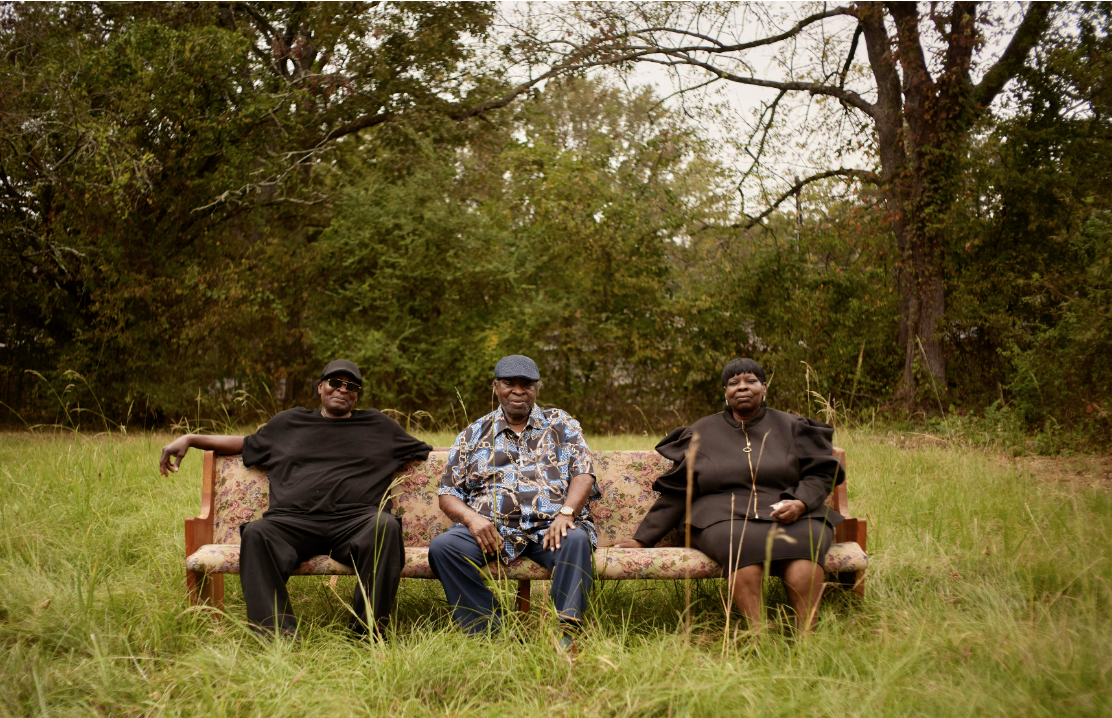
(R.C. Brown, Edward Brown and Annie Brown Caldwell by Adam Wissing)
The Staple Jr. Singers ‘Searching’
(Luka Bop) 14th June 2024
Revived five decades after its original localized release in 1975, the folk at Luka Bop made good on their incredible, enlightening compilation of obscured gospel and soul, The Time For Peace Is Now, with a dedicated reissue of The Staple Jr. Singers rarity When Do We Get Paid.
Pressed by that extremely young family unit themselves and sold at shows and on their neighbors front lawns, that rarefied showcase finally received an international release a couple of years ago, prompting a number of live dates for the trio: their first in forty years! Now, and with an extended cast of second and third generation family members, and with the producing talents of Ahmed Gallab (probably better known under his Sinkone artist name), they’ve recorded their first album proper, Searching – a revived title and re-recorded song that previously opened When Do We Get Paid, given a more echoed, stripped and intimate accompaniment the second time around.
Recorded live over two nights in the reverent and supportive surroundings of The Message Center church in West Point, Mississippi, this family affair picks up from where they left off: as if it were yesterday rather than fifty years ago. Those afflatus voices are not so young now of course, but remain still soulfully enriching and youthful in spirit.
Originally from the banks of the Tombigbee River, the family’s sound was, and continues to be, honed in their hometown of Aberdeen, Monroe County. A salvation searching, baptismal liturgy of Southern gospel is injected with a congruous merger of conscious political soul, R&B, funk and delta blues: the very epitome of the Southern crossroads.
From the name you may have assumed that this trio were scions, the offspring perhaps of the divine stylers themselves: The Staple Singers. But, although without doubt a chip off the old block, the group’s moniker is purely used as homage to their idols. Far younger than Mavis and her siblings and pop when they started out in the mid 70s, the Brown family of beautified and expressive soulful vocalists Annie (appearing here as Annie Brown Caldwell) and R.C., and guitarist Edward were in their teens when they made their first recordings. Yet despite being so young, the travails of the civil rights movement and social issues of the day ran throughout the trio’s equally earthy and heavenly soul music. This was a sound in honor to the Lord yet grounded in the wake of Southern desegregation, unrest, the Vietnam War…the list goes on. So whilst Annie soared in full baby Staples mode, and with a vibe of Eula Cooper and Shirley Ann Lee about her, there was plenty of attitude and sass to go around.
Gospel music remained, and still remains central, with plenty of standard Bible belt exultations, paeans and passionate plaints. Some of which, no matter how familiar, seem to have some pretty unique and idiosyncratic rearrangements going on. Bolstered on those formative recordings by bassist Ronnel Brown and drummer Corl Walker, we were treated to a Stax-like revue of beatitude, the venerable and just down-country soulful funk. Echoes of Sam Cooke, Lulu Collins, Crusade Records, Chairman Of The Board and Nolan Porter followed humbled sermons on the soul train to Galilee. An electrifying songbook, When Do We Get Paid proved that this family trio possessed a raw talent, and could hold their own in a field packed with such incredible voices.
Fifty years later, backed this time by R.C.’s son Gary and grandson Jaylin, and Edward’s son Troy, and with the modern sensitive and magical production of the Sudanese-American musician polymath Gallab, it’s now a much more mature version on show.
Shining through at every turn with rarefied authenticity, the Brown familytakes time to softly preach a bluesy soulful gospel of intimate travails and personalized soul-searching. On the redemptive trail whilst also facing the afterlife, and yet comforting with a praised message of deliverance, the lyrics confirms the family’s dedication to walking that righteous path. And yet, amongst the Muscle Shoals bathed organs and relaxed and soothed B.B. King and Otis Rush twanged and sustained bluesy guitar evocations there’s also echoes of a magical realms hovering Dr. John on both the opening backbeat shuffled ‘Living In The World Alone’ and on the Orleans twilight dreamy juju invocation ‘Don’t Need No Doctor’. For the most part the Brown family lets the studio environment of laughter and encouragement seep out amongst the pews, as they slip between visions of a Pastor Champion fronted bluesy-country The Rolling Stones, Percy Sledge and James Carr.
Fifty years is a lifetime to wait for such talented voices to awaken, when it seems that even amongst such gifted peers and icons The Staple Jr. Singers could have still stood out. It’s been well worth it though, with a most wizened and truthful unfiltered timeless bluesy-gospel sound of communal worship and support.
A Journey Of Giraffes ‘Retro Porter’
(Somewherecold Records) 7th June 2024
The sound of John Lane’s most prolific and artistically successful alias, A Journey Of Giraffes, is given more time (almost unlimited time) and space than ever to unfurl on the ambitious opus-spanning Retro Porter album of ambient empirical suites.
An expansion upon Lane’s previous work – especially last year’s choice album entry, Empress Nouveau – each evolving sensory piece allows all the Baltimore composer’s signatures, motifs and serialism-like enquires to recollect memories of places and scenes, of the abstract, over the course of what sounds like a whole day.
Once more akin to Hiroshi Yoshimura, Susumu Yokoto or Harold Budd absorbing the holiday reminisces of Iberia, Retro Porter picks up on the arts and crafts decorative tracery sketches of Empress Nouveau, taking inspiration this time around from the artistry of Gaudí with references to the cemented-together broken tile shards mosaic method of “Trencadis” and his most ambitious, unfinished cathedral of beatific indulgences, the proposed eighteen spires of The Basílica i Temple Expiatori de la Sagrada Família in Barcelona – the largest unfinished Catholic church in the world. Gaudí originally envisioned crowning this behemoth of a church with his monumental depictions of the Apostles, the four Evangelists, the Virgin Mary and Jesus, but only eight of the eighteen statues were completed – the near century-running project was brought a halt during the Spanish Civil War for obvious reasons, but much later, suffered setbacks due to Covid and remains at this present time a building site still.
And so, the influential Spanish architect’s legacy is picked up, his use of folk art and idiosyncratic framing of the Catalan jewel used as a methodology and inspiration for Lane’s own soundscaping craft and mosaic building ambient compositions. The album title however, I believe, is a reference to Lane’s second inspiration, Walter Benjamin’s The Arcade Project preoccupation; the work, a montage-style critique on the “commodification of things” in the age of La Belle Époque. Reflecting the growth of the “bourgeois” class, framed against the glass-roofed arcades of consumerism in late 19th century France, Benjamin writes of change as the new century beckons: and modernism with it. Originally conceived in 1927, it would take thirteen years to finish; completed just as Nazi Germany occupied Benjamin’s homeland, forcing the thinker-writer to flee. Much like Retro Porter, there’s a recurring semblance of the passing of time, of feelings that can’t easily be expressed and said, formed or quantified but an essence of which conjures up emotional pulls and a sense of environment.
Stained-glass passages, bulb-like notes of inspiration, resonated and tubular metallic rings, linger and drift and float in the vapours and obscured fogs of Lane’s creation. In a constant ebb and flow of iterations, reversals, each track is like the chapter of an extensive soundtrack; a balance between a removed channeling of real tangible geography, architecture and masked. And although all these sounds and inspirations draw upon Europe, and both composition wise and sonically hint at Andrew Heath and Matthew David’s corridors of voices, environment and movement, it all still somehow sounds vaguely Japanese: with just the merest hint of Java too.
Like a dialogue with the past, history and the detritus of previous generations that inhabited Lane’s spaces seem to be constantly present: visitations from unidentified vessels like layers of geology. At times we’re subtly pulled towards the shadows, the alien and otherworldliness. But then some passages are edging more towards Laraaji, to cathedral anointed Popol Vuh and the cloudy bellowed Orb. I’d suggest shades too of Andrew Wasylyk, a trumpet-less Jon Hassell, a Mogadon Panda Bear (especially on the extended opening suite, ‘Happy Every Holiday’), Phew and His Name Is Alive.
Mirages, imaging’s, the sound of birds in the iron lattice gardens of an ostentatious arcade percent as described in late 19th century novella’s, sonorous pitches, the softened sound of a taiko drum at the Kabuki theatre, various hinges, dulcimer-like strokes all evaporate then solidify to create an ambient opus; a lifetimes work coalesced into one expansive, layered work of soundscape art and abstraction. Lane has allowed his mind to wander and explore organic and cerebral long form ideas like never before to produce, perhaps, his most accomplished unrestricted work yet.
Pastense Ft. Uncommon Nasa ‘Sidewalk Chalk, Parade Day Rain’
(Uncommon Records)
Continuing to attract and surround himself with like-minded curious, inventive artisans of prose from the underground leftfield hip-hop scene, the Long and Staten Islands’ rapper and producer/beatmaker Uncommon Nasa now facilitates Pastense’s return with a post-pandemic opus of metaphysical, cosmological unraveled consciousness alchemy.
Joining the Uncommon fold and orbit, the eloquently descriptive and connective rapper Pastense emerges from the dystopia of COVID; navigating the current social, divisive and polarizing ills of the modern world by taking sanctuary amongst the city’s sometimes innocuous, passed over and by, patches of life-affirming “beauty”. In a world of urban chaos, destruction and impending war our main protagonist finds solace and inspiration, but also embarks on a whole universal journey of connections prompted by the smallest of curiosities. Inspired by his father’s own ever-inquisitive fascination with the world around him – describing his dad as “the kind of person that will pull over the car just to look at a interesting stone” – and his artistry – providing the artwork for this album’s cover and CD inlay -, he attempts to find the rays of hope in a shadowy miasma of volatility.
With a Your Old Droog crossed with Beans-like delivery, those lyrical links reference both high and low art, culture, basketball gods, the pulling down of statues – at one point connecting the recent destruction wrought and fueled by the BLM movement with the famously, quite literally, armless Venus de Milo – and death: or rather its unavoidable approach.
Creatively opening up the mind and memory banks to contemplate life’s travails and inevitabilities, Pastense cleverly runs free with his highly descriptive and omnivorous evocations. These deliveries are prompted by such original influences as the Portrait of Whistler’s Mother to the unframed beauty of graffiti on the side of a subway train and the way the rain droplets form like “pearls” on the metal debris and rusted machines of industry and transit, left to degrade in every corner of the city. The latter resonates later with the venerated NBA legend Erol Monroe, known as “The Pearl”. It’s as if everything is linked, and comes full circle, with the recurring words, phrases and name-checks popping up across the album’s twelve tracks of astral-planeing, dream realism and sci-fi expansive universal mining: What can’t be solved on Earth, is looked for in the cosmology and future.
With Uncommon as his foil, offering his own lucid candid lines but also building a both menacing and unique sound and sampled world of fluty prog-jazz, video nasties and 80s sci-fi like soundtracks, cult Samurai flicks, mystique and krautrock, Pastense’s visions come to vivid psychedelic life. It’s as if we’d been pulled into The Matrix, or the retrograde arcade where Tron still sits tucked away in the shadows, as those heavy synths invoke dystopian Vangelis, Schulze, later Tangerine Dream, Bernard Szajner, Zeus B. Held and others.
There’s some really cool productions nods, some I just can’t place, including a thriller-type brooding rolling piano (Lalo Schifrin perhaps?) on ‘The Ills’, and a sort of post-krautrock loosened faux-reggae beat that sounds like either the Phantom Band or Dunkelziffer on ‘Broken Statues’. Hopefully Uncommon and Pretense will take this as a compliment, but the whole thing has that Madlib vibe and quality; a touch of the moodier parts from BDP’s final album, Sex and Violence too – especially the atmospherics of ‘The Real Holy Place’ speech. There’s certainly no wastage, nothing out of place; which isn’t to suggest it is lean, but just perfectly aligned, layered and mixed. I especially like the go-go meets Tonto slow roll of ‘Journey Back To Reality’, which also reminded me of the UK’s very own King Kashmere.
From the extended pool of Uncommon Records there’s signature lyrical contributions from Shortrock, Guilty Simpson (highly recommended if you are in the mood for digging), Guillotine Crowns (the Hills To Die On comes highly recommended by me and our resident hip-hop aficionado Matt Oliver), Shortfuze and Junclassic. None of these guest spots seem like opportune showboating, nor are they incongruous to the flow and direction of travel, and the themes. It is yet another example of the rich tapestry of talent that is out there and being missed in favour of vacuous grudge theatrics and tiktok trends.
The fruity shogun beat-provider, Banana Samurai remixes the bonus version of the oasis picturesque urban-building ‘Beautiful’; the beats more staggered and now featuring a ringing glassy resonance and echo.
With no let up in the quality of the expansive lyrical metaverse, tech comes in conflict with the forest’s birds and nature’s fight for survival amongst the concrete and chemically poisoned wells of so-called progression on an artistically simulated and stimulating canvas of thoughts and connectivity.
Pastense, in partnership with Nasa, creates a most excellent mind-expanding universe, and in doing so, one of the year’s best hip-hop albums: this is an artist and record worth championing.
L’ Étrangleuse ‘Ambiance Argile’
(La Curieuse) 7th June 2024
Drawing once more upon his ngoni training and visits to Mali’s capital and centre of musical influence, Bamako, Maël Salètes continues to entwine the sound of his feted African lute instructor Abdoulaye ‘Kandiafa’ Koné and reverberations of Lobi Touré, Bassekou Kouyate and Ali Farka Touré into the Lyon-based L’ Étrangleuse partnership. With his vocalist and harp-playing foil Mélanie Virot, West Africa travels to the dream-reality rural imaging’s of Eastern France’s Swiss border on the duo’s first album since before the Covid crisis.
Whilst setbacks hampered their progress in lockdown limbo, and with years of anxiety building a less certain future for live performance and recording, they decided a rebirth was in order; a revitalized reboot of the signature cross-pollinated sound they’d honed and explored. Already bringing in the drummer Léo Dumont straight after the duo’s last album, 2019’s Dans Le Lieu du Non-Où, but on hold whilst the pandemic crippled the world, a fourth member, the bassist Anne Godefert (also appearing under the electronic guise of Noon) completed the refashioned quartet in 2022. Both obviously double-up the live like sound (billed in the PR notes for the most part as “the sound of four musicians playing live in a room”) but also expand the possibilities and direction of travel. In this setting, in this case, that translates into both nimble tactile plucked and turned over Tuareg desert contoured blues, Bamako fuzz rock, and riffs that could have easily made Maël’s contributions to the Somaliland freedom fighter activist and siren, Sahra Halgan, mixed with rustic folky, psychedelic and post-punk.
Lyrically and vocally, whether whispered or sung or in choral-like harmony and spoken, the quartet channel (in part) the writing processes and dream-realism of Toni Morrison and Russell Banks, and the poetry of Dadaist modernist progenitor and international socialist Srecko Kosovel – leaving an incredibly influential legacy behind despite dying at the age of 22, the poet remains one of Slovenia’s most noted icons and literary figures of the 20th century.
Fantasy is transcribed across a French/Swiss landscape in the age of great anxiety and uncertainty, as the gnarled and scuzzed is balanced with the pastoral and African. At times it comes across like Ben Zabo meets the Incredible String Band and The Raincoats, and at other times, like Hugo Race crossing the arid Malian outlier with Peter Kernal, Crispy ambulance and the Holydrug Couple. The title-track conjured up Faust, but with R.E.M.’s Mike mills on harmony duties. Meanwhile, Mélanie’s delightful harp, falling at times like bucolic snowflakes, reminded me of Catrin Finch’s collaboration with Seckou Keita.
With constant rhythmic and motion changes, the entire album feels quite naturalistic: “organic” as the PR notes say. Nothing feels pushed, artificial, augmented or forced anyway. Although older than Merril Wubslin and Ester Poly it’s those Mitteleuropa dimension hovering groups that L’ Étrangleuse evoke the most as they hoof it, gallop, meander and navigate the clay beneath their feet.
In a dream world of their own reinvention the newly formed quartet expand the worldliness and dreaminess for a both fantastical and recognized fuzz tone album of experimentation.
Head Shoppe ‘S-T’
(Meadows Heavy Recorders)
Mellowed hermetic dimensions are crossed as California’s pine coves and Idyllwild meadows, and the famous city park lungs of Mexico City are given magical-like properties. Yes, the 1960s West coast imbued Head Shoppe, with vague influences of progressive folk and rock, the psychedelic, krautrock and more modern fare as the Unknown Mortal Orchestra, reference their own escapist pastures and an iconic psychogeography held sacred by the Toltecs and then the Aztecs on a self-titled debut LP.
Away from the mania and chaos of the metropolis sprawl, the Eric Von Harding led troupe, which includes Blake Jordon and the album’s producer Kenneth James Gibson sharing keyboard duties, plus Joe De Flore on flute, Eric and Rhea Harding on apparitional coos and dreamy voices and Charlie Woodburn on drums, finds sanctuary in more bucolic retreats. The Chapultepec Park of the opening magically wistful hauntology instrumental name-checks one such hideaway. One of the largest parks in Mexico City, a place of safety held sacred by the ancients, its most defining typography is a hill. Named by the Toltec’s, it translates as “grasshopper hill”, and it’s the sound of those insects that can be heard later on in a humid heat on the album. And although the musical direction of softly turning guitar, enchanted and meandrous airs is closer to Eroc, Sproatly Smith and Belbury Poly there’s a supernatural atmosphere application of otherworldly Latin America in evidence on both the bone rattled, looking glass transformed cover of Violeta Parra’s iconic “prayers of gratitude” ‘Gracis A La Vida’, and on the out-of-body ‘Drive Back From Idyllwild’. The former, with its slow released burnished cymbal reversals and mirage-like dreaminess, channels Alice Coltrane (at the start anyway), Raul Refree, Society Of The Silver Cross and Barrio Lindo on a rattlesnake Blood Meridian reimaging of the classic Peruvian yearn. The latter of the two hovers over a Tex-Mex border version of Twin Peaks, as scored by Broadcast.
Another of the backyard locations, ‘Saunders Meadow’ features some more of that hermetic, pagan naturalistic alchemy; a heavy pollen gauze lingers to a spell of twine and harmonic picked acoustic folksy guitar, felt-ripping flutters, bulb shaped notes, quivery wobbled Moog and Arp and evocations of Mythos, Walter Wegmuller and The Focus Group.
‘Séance’ is every bit as apparitional ether dwelling as it implies. Crossing into the spirit world with Fortean passages of visitation and supernatural elementals, it reminded me in part of Alex Harvey’s more bewitching excursions.
A final ‘Candlelight Vigil’ however, features Faust’s seagulls’ effects, the oceanic lapping tides, country-tone acoustic wanes, pagan-hippie enchantment and touches of Jacco Gardner and the UMO. With a diaphanous mystique of portal-hopping Head Shoppe balance the supernatural with inviting pastoral psych on an occult LP of organic, spiritual simplified escapism; a most spellbinding transported and naturalistically unfurled debut that takes the familiar and makes it sound somehow freshly hallucinating and languidly traversing.
Charlie Kohlhase ‘A Second Life’
(Mandorla Music) 7th June 2024
Maybe it’s with the passing of time, forty years give or take, since the AIDS epidemic, or that despite the initial stigma, ignorance, the lack of compassion and worse, lack of treatment that the autoimmune condition is now, in the space of just one generation (even less) now relatively treatable, understood and certainly far freer from discrimination – there will always be pockets of prejudice and misunderstanding of course, but sufferers no longer face the discrimination, ostracizing they once did; and importantly, it is no longer the death sentence it was neither. Defining the 80s, with gloomy predictions and health campaigns of monolithic doom, AIDS swept through creative society with a scythe; a whole lost generation remembered, amongst its ranks some of the most gifted and accomplished artists/writers/musicians of the age, but still missing. And yet in the last two decades, perhaps even longer, it has been all but forgotten, or at least cosigned to the history books.
Well, that was until now, with concurrent public enquires on the scandal of infected blood both in the UK and USA – as of writing, the UK chair’s damning verdict is both enraging and scary, laying out how governmental ministers and doctors, experts in the NHS acted complicity in covering up infected blood supplies tainted with not only HIV but Hepatitis A, B and C given to hemophiliacs: 30,000 of which were infected between 1971 and 1991, resulting in at least 3000 deaths over time. That scandal aside, HIV and the illness it causes, AIDS is still considered more or less parked: that is unless you are a sufferer.
Contracting HIV in more recent times, a decade ago, the “multi-reedist” and composer Charlie Kohlhase gained the courage to “come out” to his jazz circle, encouraged to tell his story, express his journey by a younger queer jazz musician. The Boston jazz scene stalwart and instigator gives thanks to the Massachusetts health board for his treatment, whilst marking the personal loss of those near to him and the “40 million” people who died from the disease at a time when medical advancements were still a long way off.
A “second life” then, Kohlhase is equally thankful for contracting HIV in more enlightened times, finding empathy in a scene that’s embraced his free-floating and free-jazz triple saxophone explorations since the 80s. Already leading his own Quartet by the end of that decade, Kohlhase also played with the Saxophone Support Group and collaborated long term with the noted John Tchicai, who’s own ‘Berlin Ballad’ composition is sympathetically translated on this new album – still with a certain romantic reflective air of the city, but now with colliery-like brass, a touch of Louis Armstrong and trinket percussive dangles and a shake of Afro-spiritual jazz.
A member of Boston’s Either/Orchestra from ’87 to 2001, rejoining for a second phase in 2008, the baritone-tenor-alto swapping composer also widened his craft collaborating with the Ethiopian icons Mahmoud Ahmed and Mulatu Astatke.
But it’s the lasting relationship with his Explorers Club troupe that is called upon for this latest mix of original material and re-purposed, reconfigured compositions by a host of progenitors and deities of the form. Undergoing various changes over the years, the Explorers Club is now expanded to a Octet, the lineup of which features tenor saxophonist Seth Meicht, trombonist Jeb Bishop, trumpeter Dan Rosenthal, tubist Josiah Reibstein, guitarist Eric Hofbauer, bassist Tony Leve and drummer Curt Newton. In various combinations, with a change in dynamics between all the brass and variations of accompaniment, there’s space enough for each participant to maneuver, diverge and then come together to blend a host of jazz and bluesy styles.
Homages are paid, dues given, to the titans of the free-form and experimental, but also to less championed influences like the jazz pianist, composer and arranger Elm Hope, who recorded with such luminaries as Coltrane and Rollins, working for a large part in the be-bop and hard-bop styles. Hooked on heroin, convicted and encumbered by the authorities in NYC, Hope briefly moved out West, working with Harold Land for a short spell of time (another influence I would suggest is in evidence on this album). Taken far too soon to tragic circumstances, it’s Hope’s noirish plaintive reminisce, ‘Eyes So Beautiful As Yours’ that finds its way on to the album. An empathic version with the evocations of city dockyard blues and Gershwin musical solace, the romantic sympathies remain on what is the most congruous of adaptations.
A moiety of Don Cherry and the science fiction titan Ornette Coleman, ‘Man On The Moon’ borrows liberally and riffs on both icons whilst also channeling Sun Ra, Marshall Allen and Knoel Scott on a celestial wind. The action, part cosmic wild birds, part snuggled elephant trunk rises and part lunar bound.
The album’s more soulful curtain call, ‘Tetractys’, riffs on the American trombonist and composer Roswell Budd’s catchy “four-bar line”. After a serenade and subtle swing, a little echo of Freddie Hubbard, each band member drops out, one-by-one, to mimic the melodious lullaby lull until a harmonious company of voices replaces all the instruments.
Back tot the very start, the personalized ‘Character-Building Blues’ opener is an almost relaxed, a little playful, loose arrangement of New Orleans brass, light jazz guitar hummed meanders and hops, a baritone soliloquy and rustled buzzing trumpet. There are obvious bluesy expressions of doubt, some more woeful uncertain times, but overall it’s a great melodious and yet explorative free-from performance to kick things off with.
The sphere of influence widens on the next arrangement, ‘No Such Explorers’. Inspired in part by the spirited “inganga” music of Burundi, and more dance beat orientated, there’s a bounce and Savoy label skyline sound that also conjures up evocations of Hugh Masekela and Paul Chamber. There are swells of drama, a pecking geese-like wildness and woody harmonic prowling and pulled double bass intro that’s rather cool.
‘Lennette’ – a “portmanteau” of Ornette and the jazz pianist, composer, arranger and teacher Lennie Tristano – has a swing to it, but also features bouts of Roscoe Mitchell heightened stage crescendos, NYC fire escape moon gazing and bleats.
Overall, the Explorers Club lives up to their name across a cross-pollination of moods and descriptive free form languages. Timeless influences seamlessly come together with more heralded, squealed brassy resonance and burnished untethered expressions, and the abstract with the more melodic and tuneful. The sound of many struggles, diagnosis is transduced into an incredible testimony; a “second life”, rebirth that’s sprouted a first rate intelligent and free-spirited leap into the light.
The Nausea ‘Requiem’
(Absurd Exposition/Buried In Slag And Debris)
Anju Singh’s dark materials have developed over time; the breadth and depth expanding from black death metal to chamber and classical heavy meta(l) and dissonance. Under The Nausea inducing guise Singh coalesces the embryonic sound ideas of her 2017 album Requiem Aeternam, and even older catalyst explorations that stretch right back to 2005, for a transmogrified vision of the Latin liturgical and ceremonial.
As any Catholic will know, they can’t half send converts off in morose gilded drama; the funeral services can be lengthy, arcane and solemn. Singh’s own experiences as a young child attending such affairs has struck a chord (or two); the impact, “confusion” and “tears” of which have inspired a strong fascination, leading to such works as this latest repurposed Requiem. With everything that title holds, the history and connotations, Singh processes the various levels of the Latin and Orthodox Greek churches’ writings and etymology on death and fate.
A member of such blood-curdling and morbidly curious bedfellows as Grave Infestation and Ceremonial Bloodbath, the unnerving caustic Fortean-tuned industrial distress that consumes each suite and vignette on this new album is about as close as it gets to those extreme dark invocations. For the multi-instrumentalist stirs up an atmosphere of chthonian Hellenic myth and harrowing distress from Klezmer Galicia, the Balkans and the Middle East through the tonal and psychical experiments of the violin and viola. Already coined as “doom chamber”, this often heightened, sawed, scratched, frayed, attack and stressed style of eliciting and sometimes torturing forebode, trauma and apocalyptic grief summons up vague invocations of Tony Conrad and The Theatre Of Eternal Music, Phillip Glass, Xaos, Scott Walker’s scores for film, Fran & Flora and Luce Mawdsley. And caught between “ascension” and purgatory, reciting Kyrie Eleison and considering the “end”, centuries of melancholic liturgy and dread are stoked up for monumentally disturbing and serious elegies, death marches and Dante spirals into the abyss.
The coarse-charged frazzled override of bestial manifestations, scored marble floors, metal tank reverberations, claw-marked pews, afterlife TV sets, factory noise and apparitions threaten to engulf the classical instrumentation, but the malady, pastoral rustic and fairytale style attuned strings seem to make it out the other side alive.
The album’s enflamed violin artwork is partially right in visioning some funeral pyre; a fiery cleanse of one of the album’s central vessels. But despite the ominous chills, harrowing psychogeography and feel the use of the classical and chamber can sound quite ascendant and sadly yearning in all its dark beauty. Singh’s artistry culminates in a remarkable Requiem for our end times.
QOA ‘Sauco’
(Leaving Records) 21st June 2024
Collaborating with Argentina’s biosphere of fauna, flora, bird and insect life Nino Corti, under the QOA nom de plume, creates a blossoming, growing synthesis of organic and synthesized meta and matter; absorbing the healing, thoughtful and curiosity of a native wilds rich in biodiversity and cleansing balms.
Corti is both replenished by the surroundings and simultaneously plaintive at those elements that have been lost from the atavistic oasis; nature’s medicine cabinet and haberdashery, as referenced in the track-titles, offering up “Senna” – the plant’s leaves and fruit providing a natural laxative amongst other properties – and “Sauco” – used as a dye for basketry by the Coahuilla Indians of Northern Mexico. There are also references to the flowering plant “Lippia Alba”, and the “Anartia” and ‘Zafiro del Talas” butterfly families. From outside the Americas, there is a strange excursion to Japan in the shape of the “Yatai”, or “food cart” that typically sells ramen and other foods. And to further expand the horizons of influence and inspiration, there’s also a reference to the “swamp deer”, the “Barasingha”, found in subcontinent India.
Sonically unfolding and refractive like an engineered life form amongst the glass insect chatter and itches, the crystalized bulbs and filaments, the recurring flow and splash of running water, the jug-like marimba bobs and pebble kinetics envelop transportive airs of Sakamoto and Sylvian Orientalism and soft malleted instruments. And, unsurprisingly considering one of the musician and multimedia artist’s many projects includes a “committed” role as a member of a Gamelan collective, you can hear vague suggestions of Balinese music in the amorphous blending’s of musical and field-recording geography.
Corti pulls you in gently to a both recognizable and almost alien lush, piped, filtered and gladded green world. Ale Hop, the Elusive Geometry of The Reverse Engineer, Autchre, Moebius and Schulze were all brought to mind(fullness) when listening to these absorbed light-bringing tracks, which at times take on a rhythmic quality with mechanized dances of exotic electronica and psytrance.
Alive and in growth at every turn, this is a fecund of meandered and directed chiming, chromatics, searing, sonorous nature, a paradise in the midst of an ever crushingly dull oppressive world of harm and destruction.
___/+ THESE RECOMMENDATIONS IN BRIEF
Regular readers will know that I pride myself in writing more in-depth purview-style reviews with a wider context. This means I naturally take more time and effort. Unfortunately this also means that I can only ever scratch the surface of the 2000+ releases both the blog and I get sent each month. As a compromise of sorts, I’ve chosen to now include a really briefly written roundup of releases, all of which really do deserve far more space and context. But these are recommendations, a little extra to check out of you are in the mood or inclined to discover more.
The Lazy Jesus ‘UA Tribal Vol. 2’
(Shouka) 21st June 2024
A collaborative cross-continental union of the Ukrainian producer The Lazy Jesus, the Peruvian duo Dengue Dengue Dengue and the Argentinian producer JaiJiu, the second volume in this experiment transform’s the former’s heritage of traditional pipe music with bass culture, cumbia and the tribal.
A mizmar-like mystery of faraway places is woven together, through remixes and augmentation, with the stick clattering dance rhythms of South America and Ammar 808-like stumbling and reverberating bass, transporting the source Ukrainian instrumentation beyond its borders into hypnotising realms. A very successful merging of cultures (creating a lost continent of sounds) that makes for some interesting and entrancing club-like imaginings.
Various Artists ‘Turkish Back Porch Scene EP: Vol. 1’
(Bone Union Records) Available Right Now
Hovering Delta slide, bluegrass and heat melting dirt music from the imagined back porches of various (of all places) venues in Turkey, by a clutch of blues-imbibed players, the inaugural EP from the Bone Union label is authentically rich with the genre’s history and legacy, and yet freshly inviting and worth the entrance fee. A mix of standards (Sarp Keskiner’s faithful version of Mississippi Fred McDowell’s quivered sliding ‘Big Stars Falling’) and originals (Bora Çeliker’s ambled old-timer wistful ‘Pine Hill Blues’), each performance is as close as you can get to its source: homage but also the act of passing down to a new generation some of the most authentic of roots sounds. The geography and destination will of course surprise many; a different angle for sure, and reminder that the Blues is universal: think a Turkish Sun Records meets Alan Lomax.
Cumsleg Borenail ‘Another Acid Spew’
Available Right Now
I’ve been meaning to and trying to get a few words up on the site about the prolific discombobulating, A.I. hallucinogenic phantasmagoric maverick that is Cumsleg Borenail for bloody ages. Every time I’m about to, and I think I’ve got a hold on the latest broadcast from that electronic-transmogrifying artist’s over-stimulated mind, another release drops and I’m once more playing catchup. Anyway, I’ve managed to catch this latest squelchy frenzy of high tweaks, acid burbled bubble-baths, bell-tolls and playful twitchy protestations. Think Autechre rewire Lenny Dee’s circuits whilst the Sad Man throws a few spanners into the acid spewing works. Mad, dangerous but good to know, the inner madness and fuckery of Borenail is unveiled in fits and more chemical farting magnificence.
Grotesque Misalignment ‘S-T’
(Syrup Moose Records) 28th June 2024
Prowling amid the gothic, hermetic, post-punk, noisy and bestial the electrifying Grotesque Misalignment sacrifice the Daevid Allen, Killing Joke, Vampire Rodents and other such references on the altar of doom skulking menace. The mysteriously shrouded group, though intensely loaded on the “heavy”, can surprise with their more subtle passages, and even have a swing at times to their rhythm that could almost be interrupted as jazzy! But in the main, this is doom, chthonian metal crawling through a primal abyss.
Saccata Quartet ‘Septendecim’
(We Jazz) 28th June 2024
Avant-hard jazz from the impressive attacking foils Nels Cline, Chris Corsano, Darin Gray and Glenn Kotche, otherwise known as the Saccata Quartet. Stretching, squalling, tearing, drawing wild intensity and ariel droning and alien broadcasts from their apparatus, the free-jazz foursome sound like a harrowing and galloping, scattering merger of Faust, Roscoe Mitchell, Sam Rivers, Zappa and AEOC in a dense experimental world of scares and uncertainty. What’s not to love about that.
E.L. Heath ‘Cambrian’
(Wayside & Woodland) 7th June 2024
Perfectly congruous bedfellows of such scenic cartographers as Junkboy, and for that matter, the entire Wayside & Woodland roster, E.L. Heath’s rolling versent ambles and hazy countryside meanders evoke a pastoral picture of misty recollection, history and daydreams. Trainspotting has seldom sounded so diaphanous as Heath makes personalized, emotively drawn stops along the Cambrian Coast Railway; passing through the loveliest of scenic locations whilst wistfully sighing at the “decommissioned” stations, and unsympathetic, politically motivated and hardened discissions that have left scars across this humbling countryside vista. Totally captivating, a most wispy train ride down memory lane (or should that be memory tracks?).
Hi, my name is Dominic Valvona and I’m the Founder of the music/culture blog monolithcocktail.com For the last ten years I’ve featured and supported music, musicians and labels we love across genres from around the world that we think you’ll want to know about. No content on the site is paid for or sponsored and we only feature artists we have genuine respect for /love. If you enjoy our reviews (and we often write long, thoughtful ones), found a new artist you admire or if we have featured you or artists you represent and would like to buy us a coffee at https://ko-fi.com/monolithcocktail to say cheers for spreading the word, then that would be much appreciated.
Choice/Favourite Albums Of The Year: Part One: A to F: A Journey Of Giraffes to Nick Frater
December 11, 2023
SELECTED BY GRAHAM DOMAIN, BRIAN ‘BORDELLO’ SHEA & DOMINIC VALVONA

Just when we thought it couldn’t get much worse: it did. 2023 has been yet another, if not even more depressing shit show on the world stage and closer to home. The stalemate defence of Ukraine, Hamas’ barbaric massacre and rape on the 7th October, and the Israeli retaliation; the ethnic cleansing of Armenians from the disputed Nagorno-Karabakh region; the cost of living crisis; threat of pandemics and all kinds of illness; bedbugs; A.I.; strikes; activism; fuel poverty; Iranian protests; and the continuing horror show of a zombie government dragging on, being just some examples. 2023 qualifies as one of the most incomprehensible years on record of any epoch; an ungovernable country in the grip of austerity point 2.0 (the architect of the last one now back to haunt us all again), and greater world untethered and at the mercy of the harridans on either side of the extreme political divide, the billionaire corporates and narcissist puritans.
Despite the myriad of problems that face artists and bands in the industry, from a lack of general interest to the increasingly punitive costs of touring and playing live, and the ever encroaching problems of streaming against physical sales and exposure, people just can’t quit making music. And for that we, as critics – though most of us have either been musicians or still are – really appreciate what you guys do. In fact, as we have always tried to convey, we celebrate you all. And so, instead of those silly, factious and plain dumb numerical charts that our peers and rivals insist on continuing to print – how can you really suggest one album deserves their place above or below another; why does one entry get the 23rd spot and another the 22nd; unless it is a vote count –, the Monolith Cocktail has always chosen a much more diplomatic, democratic alphabetical order – something we more or less started in the first place.
Whilst we are proud to throw every genre, nationality together in a serious of eclectic lists, this year due to various collaborators commitments, there will be a separate Hip-Hop roundup by Matt Oliver in the New Year. The lists, broken up this year into three parts (A to F, H to N, P to Z), includes those albums we’ve reviewed or featured on the site in some capacity, plus a smattering of those we just didn’t get the time to include. All entries are displayed thus: Artist in alphabetical order, then the album title, label, who chose it, a review link where applicable, and finally a link to the album itself.
A_

A Journey Of Giraffes ‘Empress Nouveau’ (Somewherecold Records)
Chosen & Reviewed By Dominic Valvona/ Link
‘Imbued by a suffusion of influences, most notably Harold Budd and Susumu Yokota (once more) but also Kazumichi Komatsu, Sakamoto & Sylvain, Andrew Heath and Eno, John Lane spins, weaves and spindles the essence of place and time; stirring up dulcimer-like tones of the Orient, a hand-ringing school (could also be a call to prayer, or assembly point prompt, perhaps the intermission signal at the opera or theatre) bell, or softly evoking a South American wilderness.
This is yet another essential album from one of the best artists working in this field of subtle, sometimes breathtaking and sublime, exploration – although this is experimenting without sounding like you’re experimenting, if that makes sense. It’s a joy to experience.’ DV
Dot Allison ‘Consciousology’ (Sonic Cathedral)
Chosen by DV/Reviewed by Matteo Maioli/Link
‘Folks? backstory? Chamber-pop? I do not know. All this and also none of it. Simply: Dot Allison.’ MM
Anohni and the Johnsons ‘My Back Was a Bridge for You to Cross’ (Rough Trade)
Chosen by Graham Domain
Anthéne & Simon McCorry ‘Florescence’ (Oscarson)
Chosen by DV/Reviewed by DV/Link
‘A both hallowed and moving merger of seasonal changes, suffused with a certain gravitas and meaning, the pastoral is revalued and sent out on a voyage of reflection. Florescence is yet another minimalistic work of sublime quality from a collaboration perfectly in-synch with each other.’ DV
Assiko Golden Band de Grand Yoff ‘Magg Tekki’ (Sing A Song Fighter/Mississippi Records) Chosen by DV/Reviewed by DV/Link
‘In action, they sound out a controlled raucous of rustling, shaking ancestral calls and conscious version of Afro-beat, Afro-jazz and Afro-soul; like Kuti sharing the stage with Laba Sosseh and Seckou Keita. As a counterbalance, a pause from the rolling and polyrhythmic drums, there are short interludes of time-outs in the community and under nature’s canopy of bird song: the sound of the breeze blowing through the trees overhead and all around, and of children playing in the background, as the kora speaks in communal contemplation.
At times they create a mysterious atmosphere of grasslands, and at other times, play a more serenaded song on the boulevards that lead down to the sea. On fire then, when in full swing, but able to weave a more intricate gentler sound too, the AGBDGY prove an exhilarating, dancing combo with much to share: the ancestral lineage leading back centuries, but lighting up the present.‘ DV
B__
Moonlight Benjamin ‘Wayo’
Chosen by DV/Reviewed by DV/Link
‘No one quite channels the “iwa” spirits and musical, drum-beating ceremony of Haitian vodou like one of its most exhilarating priestesses, Moonlight Benjamin. Returning with her atmospheric and grinded-scuzz swamp-blues foil Matthis Pascaud for a third manifestation of hungered electrified vodou-blues, Moonlight roughs up and adds a wider tumult of energy to her vocally incredible and dirt music imbued sound of deep southern roots, West African and Hispaniola influences: an all-round Francophone sound you could say, from Louisiana to Mali and, of course, her homeland of Haiti.
As wild as it is composed, Moonlight Benjamin takes the vodou spirits back home to Africa, before returning, via the bayou, to Haiti on another fraught electrified album of divine communication.’ DV
Blur ‘The Ballad Of Darren’ (Parlophone/Warner)
Chosen by Brian Bordello
‘An album of nostalgia, melancholy and heartbreak, and one of Blur’s best.’ BBS
Brian Bordello ‘Songs For Cilla To Sing’ (Think Like A Key)
Chosen by DV & GD/Reviewed by DV/Link
‘As ridiculous as it may seem on the surface, the lower than lo fi (making Sparklehorse sound like a flash git bombastic ELO in comparison), nee no fi King of the well-worn Tascam four-track and St. Helens idiosyncratic Les Miserable, was only one person away on the Venn diagram of Cilla Black’s orbit. His potential songbook of flange-y distorted (more through low grade recording techniques) and curmudgeon demos did make its way to the, then retired from singing, Liverpool songbird – in the three or four decades before her death more the star of TV presenting and hosting than performer.
If imagining Brian Epstein inviting Ian McCulloch to front The Tremolos, or The Red Crayola, Spaceman 3 and a budget Inspiral Carpets time-travelled back to 1962 sounds like one incredible proposition, then this songbook is for you.’ DV
The Bordellos ‘Star Crossed Radio’ (Metal Postcard)
Chosen by GD/Reviewed by GD/Link
‘The latest release by St Helens finest is a cabinet of curiosities containing some wonderful lo-fi gems and hitherto lost standards!
This album is one to treasure, an Aladdin’s cave of eclectic life affirming songs. The Bordellos are the fine web that holds the stars in place!’ GD
Jaimie Branch ‘Fly Or Die Fly Or Die Fly Or Die ((World War))’ (International Anthem) Chosen by DV/Reviewed by DV/Link
‘As an unwittingly last will and testament, the late experimental trumpeter Jaimie Branch’s final led album with her Fly Or Die ensemble is a beautiful collision of ideas and worldly fusions that pushes and pulls but never comes unstuck. In fact, despite the “world war” suffix backdrop this album of both hollered and more disarming protestation colourfully embraces the melodic, the groove and even the playful.
Fly Or Die Fly Or Die Fly Or Die ((word war)) is an accomplished album that channels the legacies of Chicago, New Orleans and New York to create an eclectic modern adventure in protest jazz.‘ DV
Julie Byrne ‘The Greater Wings’ (Ghostly International)
Chosen by GD
Bex Burch ‘There Is Only Love And Fear’ (International Anthem)
Chosen by DV/Reviewed by DV/Link
‘In the moment extemporized expressions in multiple locations, both in Europe and North America, the feels on Bex Burch’s new album are led or prompted by a hand made xylophone. Any yet, there’s no particular pattern nor pathway to these captured performances; Burch joined as she is by a myriad of notable artists/musicians, all of whom only met for the first time before each improvised performance.
Each day is a different sound and a new canvas for Burch, who transcends her bearings and musical boundaries. There’s rhythm to these improvisations, a real groove that at times counterbalances the passages of avant-garde expression to create a non-linear journey of emotions, thoughtfulness and sense of yearned fears.’ DV
C___
Luzmila Carpio ‘Inti Watana: El Retorno Del Sol’ (Bongo Joe)
Chosen by DV/Reviewed by DV/Link
‘Full of wonderment and magic, the Bolivian performer and composer Luzmila Carpio returns with her first all-encompassing album in a decade. Imbued with an ancestral heritage and language that predates the Conquistadors colonial apocalypse, Carpio weaves and plays with her Aymara and Quechua roots, its creation stories, shamanistic ceremonies and humble custodianship of nature.
Carpio invites us into her dreams and meditations with a wonderful message of universal care and respect for that which nurtures and feeds us; an unbroken link to civilizations like the Incas, propelled into the 21st century.’ DV
Billy Childish & CTMF ‘Failure Not Success’ (Damaged Goods Records)
Chosen by BBS
‘Quite simply what Billy Childish does best: spit feathers at an unplucked rock ‘n roll chicken.’ BBS
Chouk Bwa & The Ångströmers ‘Somanti’ (Bongo Joe)
Chosen by DV/Reviewed by DV/Link
‘Reuniting for a second explosive dynamic album of electrified Vodou and Mizik Rasin, the Haitian collective Chouk Bwa and the Belgian production duo The Angströmers once more propel ritual and ceremony into an otherworldly futuristic setting.
Music from another dimension, the Haitian roots music and performative religious invocations and words of wisdom from Chouk Bwa are sent through a vortex into the future on another successful union.’ DV
Julian Cope ‘Robin Hood’ (Head Heritage)
Chosen by BBS
‘An album of psych, folk and pop wizardry; one that matches up to the best of the man. Cope is on a run of brilliance that is equal to his run of greatness from the late 80s to early 90s. A national treasure, and one of the last living motherfuckers.’ BBS
Creep Show ‘Yawning Abyss’ (Bella Union)
Chosen by GD/Reviewed by GD/Link
‘Make no mistake, John Grant is a genius! As half of Creep Show he provides the moments of sheer joy! ‘Bungalow’ comes over like a song that could have been on any of his brilliant solo albums, post ‘Queen of Denmark’. It’s a fantastic vocal, the music dark, funny, sexy, – electronic music at its best and a good song to boot! Elsewhere we find him singing strange rhymes on the title track ‘Yamning Abyss’ – a song that grows on you with each play.’ GD
D____

Vumbi Dekula ‘Congo Guitar’ (Hive Mind/Sing A Song Fighter)
Chosen by DV/Reviewed by DV/Link
‘Removed from a full-on band setting of loud blazed, wailed horns, thundering drums and chanted vocals Kahanga “Vumbi” Dekula’s legendary guitar shines on a new solo album of his melodious virtuoso playing.
Hive Mind’s inaugural partnership with Winqvist’s own Sing-A-Song-Fighter label is both a joy and discovery; the Congolese star, more or less, singlehandedly capturing the listener’s attention with a captivating septet of natural, expressive performances.’ DV
Diepkloof United Voice ‘Harmonizing Soweto: Golden City Gospel & Kasi Soul’
(Ostinato Records) Chosen by DV/Reviewed by DV/Link
‘Incredibly moving and enriching for the soul, the united Diepkloof chorus has achieved the seminal with nothing more than their voices; releasing perhaps one of the year’s most essential records.’ DV
Dexter Dine ‘Flood’
Chosen by DV/Reviewed by Gillian Stone/Link
‘The self-defined Brooklyn, NY-based “apartment rocker” conjures a diverse and expansive sound that is a “mixture of melodic samples, multi-part drum grooves, and off-kilter saxophone solos”. From the Animal Collective vibes of “Flooded Meadows”, “Splatter In Two”, and “Lockeeper”, to the Juana Molina-esque “Peanutbutter”, to the Bossa Nova feel of “Valley Of Air”, the beats he creates are the driving force behind this electroacoustic pursuit.
Dine is a prolific artist, and his work is ethereal, striking, and drenched in both sunshine and melancholy.’ GS
Matt Donovan ‘Sleep Until The Storm Ends’
Chosen by DV/Reviewed by DV/Link
‘In the face of political, social discourse and ruin, lawlessness, loss and anxiety Donovan captures the evocative moments and scenes we all often take for granted; turning nighttime walks, the memories of loved ones into something musically and sonically lasting.
Barefoot Contessa daydreams sit well with clavichord buzz splintered boogies on yet another enriching and rewarding album that slowly unfurls its understated balm of warmth and also protestation gradually over repeated plays. On the fringes certainly, a true independent diy artist, Matt Donovan is far too good to stay under the radar. Do yourselves a favour, grab a copy on bandcamp now.’ DV
Dur-Dur Band Intl. ‘The Berlin Session’ (Outhere Records)
Chosen by DV/Reviewed by DV/Link
‘Marking the first session of new-recorded music since the halcyon days of their heydays in 80s Somali, the revivalist legacy incarnation of the Dur-Dur Band is back with a truly “international” sounding groove.
Simultaneously familiar whilst offering a fresh songbook (of a sort), the Dur-Dur Band Int. Berlin Session is as lilting as it is dynamic. Above all it’s always grooving to a unique fusion of worldly rhythms and beats, catapulting that Somali funk to new heights and hopefully making new fans with lively and cool performances. Nothing should keep you buying a copy.’ DV
Dutch Uncles ‘True Entertainment’ (Memphis Industries)
Chosen by GD
Dyr Faser ‘Karma Revenge’
Chosen by DV/Reviewed by DV/Link
‘It turns out that Dyr Faser are rather good at mixing the esoteric krautrock of the Amon Düül family (especially the Wagnerian acid-wash and otherworldly vocals of Renate Knaup-Krötenschwanz) with grunge, alt/post/space rock and doom; bridging morbid curiosities, spirals of melancholy with black sun fun, fun, fun! A great duo to discover. ” DV
E_____
Eamon The Destroyer ‘We’ll Be Piranhas’ (Bearsuit Records)
Chosen by BBS/Reviewed by BBS/Link
‘Performed with a wit and wisdom only matched by the beauty and musical genre hopping extravagance not seen since John Peel dropped his record collection down three flights of stairs… A madness of electronica, psychedelia, dance and pop; at times sounding like an inspired Momus after sharing magic mushroom soup with Cornelius and Ivor Cutler. Yes, there is magic in these tracks that one can lie back and completely lose themselves in…’ BBS
The Early Mornings ‘Ultra-Modern Rain’ EP (Practise Music/Rough Trade)
Chosen by GD/Reviewed by GD /Link
‘It is an exhilarating ride of moody bass lines, spikey guitar, distorted chords and garage drums with vocals by Annie Leader.’ GD
Ex-Norwegian ‘Sooo Extra’ (Think Like A Key)
Chosen by BBS/Reviewed by BBS/Link
‘Sooo Extra is the 14th album from Ex Norwegian and like all the other Ex Norwegian albums I have heard it is a rather excellent affair full of pop hooks and has a lovely undercurrent of darkness, a bittersweet taste of songwriting savvy you really do not come across everyday: sadly.’ BBS
F______

Fantastic Twins ‘Two Is Not A Number’ (House Of Slessor)
Chosen by DV/Reviewed by DV/Link
‘Competitive from the outset, birthed from a primordial cosmic womb, the Fantastic Twins in Julienne Dessagne’s otherworldly sci-fi fantasy go through hellish travails and separation before finding a final resolution. From the bawled birth of ‘I Was First’, the Berlin-based French producer, musician and vocalist explores the magic, duality and multiplicity of twins over an album of metallic, chrome and liquefied material sci-fi and otherworldliness: even the haunted and supernatural.
Albums from Carl Craig, Man Parrish, Fever Ray, Andy Stott and others, alongside the influence of Cosey Fanny Tutti, Chris Carter, Coil, Nina Simone and Pan Sonic can be added to the depth and range of this accumulative mood board and framework.
It proves a fertile concept and doorway to the investigations of the “psyche” and its relationship to all manner of inquisitive explorations. A most striking sophisticated debut from an artist with depth and curiosity.’ DV
Fat Francis ‘Oyster’
Chosen by DV/Reviewed by DV/Link
‘Disillusioned despondency and a touch of the roguish are filtered through softened hues of idiosyncratic lo fi beauty, as Fat Frances’ hardened, worn-down posterior reveals a heart-wrenching drip-drip pouring of poetic insecurity, dealt and languorous resignation.
Yet despite the wretchedness of the world, the austerity and the lawlessness and directionless malaise of our times, there’s a melodious magic to be found in this rough diamond’s (excuse the cliché) Northern lament. It’s as if Frances has somehow brought an air of Bonnie & Clyde folklore, or an enervated and far less violent Badlands to a West Yorkshire pastoral landscape.
Oyster has quickly become one of my favourite albums of 2023 – the balmy washes and heartache wistfulness drift of ‘Billy’, a worthy earnest but sublime song, being just one highlight. It should if life was fair, bring attention and plaudits to this artist, but I won’t hold my breath.’ DV
Fhae ‘Sombre Thorax’ (4000 Records)
Chosen by GD/Reviewed by GD/Link
‘This is a wonderful album of ethereal, ambient, dream-folk-pop that ebbs and flows like the tides and inhabits its own world of subtle beauty. Sometimes, mists of the sea seem to creep into the music and the edges of reality become blurred, the music shape shifting into another dimension!
A fantastic debut album, I can’t wait to hear more!’ GD
Fir Cone Children ‘The Urge to Overtake Time’ (Blackjack Illuminist Records)
Chosen by GD/Reviewed by GD/Link
‘This is fantastic album from Berlin based band Fir Cone Children. It sounds like it was recorded in 1979 when New Wave (Post Punk) creativity took hold for a couple of years and no two bands were the same!
Time Needs an Upgrade’ sounds like the Cure mixed with the Pop Group. ‘Snowblack’ sounds like Wire led by Jeff Lynne! ‘The Inability to Raise the Left Corner of my Mouth’ sounds like the Buzzcocks if they had been from San Francisco circa 1968. ‘It Feels Complete’ sounds like the Cramps if they had been Buddhist Monks! ‘Spider School’ sounds like the Scars mixed with the Undertones and Interpol. ‘One Hundred Years’ sounds like the Sound mixed with Wire and MBV! But moreover, although there are always comparisons to be made, Fir Cone Children have an individual spark; the music is much more than the sum of its influences! Perhaps, the best German band since Faust!’ GD
Flagboy Giz ‘Disgrace To The Culture’ (Injun Money Records)
Chosen by DV
‘Exciting bounce-hip-hop-modern-R&B cross-pollinations from the colorful, parading Mardi Gras tail-feather shaking chief, who once more leads with attitude and verve another street theatrics company of like-minded artists on a strut through New Orleans. The second album from motivator, performer, producer and MC, Flagboy Giz – he of the world famous Wild Tchoupitoulas Mardi Gras Indians -, and his crew of contributors, is a rambunctious hyper merger of The Meters, Neville Brothers, Lee Dorsey, Dr. John. Master P, Lil Wayne and DJ Jubilee. What’s not to like.’ DV
Flat Worms ‘Witness Marks’ (Drag City)
Chosen by DV
‘I’d like to believe the reemergence of the L.A. garage-punk-rockers is down to my glowing review of the their Live In L.A. album from 2022 (which made our choice albums of that year). But whatever the reasons, their return (back once again in the Ty Segall fold) is very much welcome; especially as they’ve lost none of that vociferous wired attitude and spirit. Witness Marks is an assured, mature and heavy vortex of growling and fierce, but slacker too, Gang Of Four, Salem Trials, Modern Lovers, The Fall and The Southern Death Cult sounds. And if that doesn’t grab you, nothing else will.’ DV
Flexagon ‘The Towers I: Inaccessible’ (Disco Gecko)
Chosen by DV/Reviewed by DV/Link
‘Through a near domination of the high seas, a skill in winning wars, a Norman lineage and generally to annoy the French, the Channel Islands have been a British dependency for centuries. During that time a whole lot of history has passed under the bridge; the last 200 years of which are channeled by the Guernsey native, artist and environmental, site-specific composer Flexagon.
A work of site-specific atmospheric stirrings and timelessness, The Towers I: Inaccessible album translates the off-limits sites of Guernsey into a multi-layered sonic map for inquiring minds. An Island life, history and shared trauma is transduced across a mix of styles and delivery methods as both repurposed and more derelict out of bounds architecture is allowed to breath and to tell stories of the history that’s passed through its doors. Even with the all too awful reminders of Guernsey’s occupation (finally liberated in the May of 1945 after nearly five years of German authoritarian rule; at least a thousand of its people deported to camps in Southern Germany) these towers transmit plenty of arresting Meta and fertile research, which Flexagon and his foils have turned into a lush, dreamy and mysterious veiled journey.’ DV
Nick Frater ‘Bivouac’
Chosen by BBS/Reviewed by BBS/Link
‘The art of the concept album is alive and well and living in the confines of Nick Frater’s new album Bivouac; an album about escaping post industrial Britain and seeking solitude in a woodland sanctuary.
All the tracks run into each other giving you the blanket of warmth and melody, which really is not a bad thing and with the coming Winter months can indeed be an essential requirement as it may be the only warmth we get this year. It’s sunshine pop after all. It brings to mind the magic of Jellyfish and Squeeze at their best. The 70s am pop of Andrew Gold, Billy Joel, Todd Rundgren all collide and cause an explosion of one of the most heart warming and joyful albums of the year.’ BBS
Hi, my name is Dominic Valvona and I’m the Founder of the music/culture blog monolithcocktail.com For the last ten years I’ve featured and supported music, musicians and labels we love across genres from around the world that we think you’ll want to know about. No content on the site is paid for or sponsored and we only feature artists we have genuine respect for /love. If you enjoy our reviews (and we often write long, thoughtful ones), found a new artist you admire or if we have featured you or artists you represent and would like to buy us a coffee at https://ko-fi.com/monolithcocktail to say cheers for spreading the word, then that would be much appreciated.
Our Daily Bread 565: A Journey Of Giraffes ‘Empress Nouveau’
March 23, 2023
SUBLIME AMBIENT MUSIC REVIEWED BY DOMINIC VALVONA

A Journey Of Giraffes ‘Empress Nouveau’
(Somewherecold Records) 31st March 2023
Six albums into his partnership with the North American home of ambient and electronic music, Somewherecold Records, the unassuming composer John Lane once more peaceably reveals another finely-crafted, tactile album of subtle vision and beauty. His most successful conversion since swapping the beachcomber Pet Sounds imbued musical language of Expo (hinted at later on) to pick up the mantle of ambient and neoclassical composition under the A Journey Of Giraffes moniker, John has traversed various themes, from the love letter Kona album to Susumu Yokota to the Caucasus atmospheres of Armenia.
With various sonic, musical leitmotifs, a mystically suggestive title and references to the atavistic, to Iberian memories and delicate decorative tracery, the veiled, perfumed Empress Nouveau glides and sails, emerges and, just as subtly, disappears across dreamy spells of wistfulness, promise and the intriguing; a voyage, but not necessarily a linear journey.
Imbued by a suffusion of influences, most notably Harold Budd and Susumu Yokota (once more) but also Kazumichi Komatsu, Sakamoto & Sylvain, Andrew Heath and Eno, Lane spins, weaves and spindles the essence of place and time; stirring up dulcimer-like tones of the Orient, a hand-ringing school (could also be a call to prayer, or assembly point prompt, perhaps the intermission signal at the opera or theatre) bell, or softly evoking a South American wilderness.
Classical tones comfortably sit with the synthesized and crystalized as lightly patterned motifs, bulb-like notes and pizzicato strings resonate, and melodious flakes fall. Amongst that soft, occasionally chiming and sparkling, musicality you can detect the odd passage of saxophone, a diaphanous music box, burbled and wobbly bubbles, tine-like plucks of what could be a mbira, Mosquito Coast pan-piped mysteries, the Baroque and a chirping, chattering, knee-rubbing chorus of insects. With a surprising evocation of John’s seashells gathering Brian Wilson inspired Expo incarnation from a near decade ago, ‘Little Flowers On A Stone’ has a real touch of The Wonderments and Van Dyke Parks about it, albeit stripped of those lush vocal harmonies.
On an even keel throughout, whether that’s giving a soundtrack to the memories of traveling to the quaint Alicante city/municipality of Elda for instance, or, referencing the female chemist and Mesopotamian court overseer Tapputi, whose name can be found etched on a 1200 B.C. cuneiform tablet, Empress Nouveau remains an ocean-liner serenely floating across a milk sea and vaporous waves. But then there are also a number of allusions to the artisan craft of pottery and ornamentation (‘Bamboo Majolica’ and ‘Baroque Filigree’) to be found in the melodic ether and peaceful motions of this gentle traverse. This could itself be a metaphor for John’s own applied craftsmanship in carefully and artfully composing such effective quality ambient and neoclassical stirrings.
This is yet another essential album from one of the best artists working in this field of subtle, sometimes breathtaking and sublime, exploration – although this is experimenting without sounding like you’re experimenting, if that makes sense. It’s a joy to experience.
The John Lanes Files – Links To Previous Albums Featured On The Monolith Cocktail
A Journey Of Giraffes ‘Spool’
AJOG ‘Kona’
AJOG ‘F²’
AJOG ‘Armenia’
Expo ‘She Sells Seashells’
Hi, my name is Dominic Valvona and I’m the Founder of the music/culture blog monolithcocktail.com For the last ten years I’ve featured and supported music, musicians and labels we love across genres from around the world that we think you’ll want to know about. No content on the site is paid for or sponsored and we only feature artists we have genuine respect for /love. If you enjoy our reviews (and we often write long, thoughtful ones), found a new artist you admire or if we have featured you or artists you represent and would like to buy us a coffee at https://ko-fi.com/monolithcocktail to say cheers for spreading the word, then that would be much appreciated.
Our Daily Bread 456: A Journey Of Giraffes ‘Spool’
July 9, 2021
ALBUM REVIEWS/Dominic Valvona
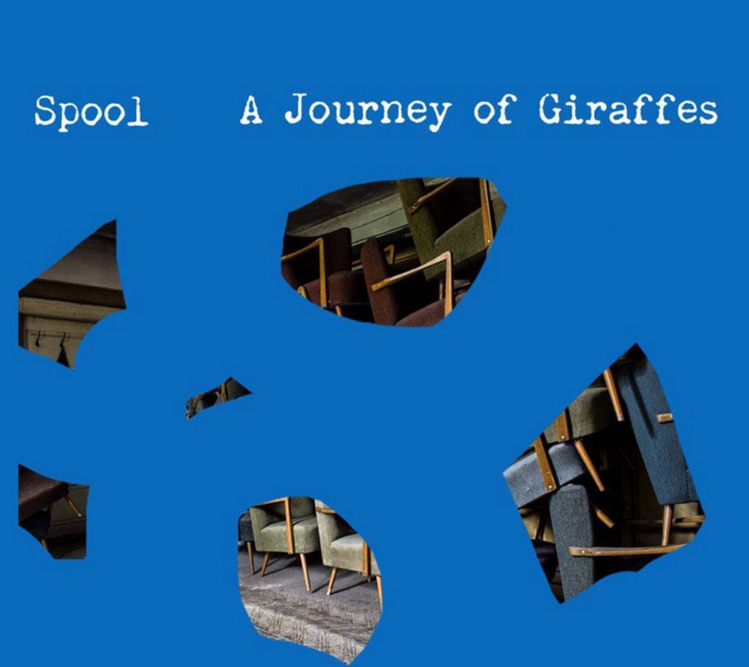
A Journey Of Giraffes ‘Spool’
(Somewherecold Records) 9th July 2021
The criminally unknown John Lane – in obscurity parading under the delightfully envisioned A Journey Of Giraffes appellation – transduces abstract and complex concepts into ambient soundtracks of the mysterious, diaphanous and often strange.
Five albums in with the ridiculously prolific North American label, Somewherecold Records, Lane once more explores and expands his sound; changing and modifying his deep understanding of the ambient genre on every release. And as with each project, the unassuming artist is inspired by a chosen theme: perhaps a work of art, a location or a book (see both the Armenia and Kona albums for example).
The latest album, Spool, is no different in that respect, being subtly, almost amorphously imbued by the late WG Sebald’s acclaimed trilogy of cerebral travelogues: The Rings Of Saturn, The Emigrant and Vertigo. Lane taps into the author’s preoccupied themes of the ‘loss of memory’ and ‘decay of civilizations, traditions and physical objects’.
Spool is bookended in this respect by two fairly low key New Jersey boroughs only ever observed by Lane from a car window; fleetingly glanced at as turnings on signposts whilst driving up and down the ‘turnpike’. Yet both locations have led Lane’s imagination cogs to start turning, as he daydreams about the lives of those who’ve made those small towns their home. ‘Swedesboro’, as the name makes pretty clear, was founded by Swedish immigrants over three hundred years ago, and is known for its fine balance of ‘urban forestry’ (thank you Wikipedia). Here, that inconspicuous enclave is soundtracked by suffused fuzz, ascending elevators, lingering electric piano notes and indistinct workshop sounds: like a Twin Peaks sawmill. ‘Glassboro’ meanwhile, built on an early history of glass making, gets an almost ghostly, etched and translucent score – there’s also a constant communicative knock like sound that could be someone stuck in a tank.
The album’s other geographical reference points are the beautiful Japanese woodblock printed artwork scene ‘Slope At Senko’ and ‘Campfire On Gibraltar’. Kawase Hasus’ original enervated snow blizzard picture is rendered a suitable evocative flutter that sounds like someone changing channels on a static fuzzy snowy TV set on the first of those tracks, whilst the second is a near hymnal cooed embrace of the elements, set around that title’s crackling flame licked campfire side.
Elsewhere the album embodies the idea of the traveller, who can never settle, yet soaks up the psychogeography, depth and atmosphere of each place they visit. Lane does this with compositions that stir the merest traces of the Japanese school of ambient electronica and electric piano notes that wouldn’t sound out of place on both Roedelius and Thomas Dinger’s solo works.
Lane’s Spool is yet another layer, another explorative page on a log journey that I hope leads to greater recognition. Composing in relative isolation, releasing unheralded works of brilliance, he damn well deserves it.
Hi, my name is Dominic Valvona and I’m the Founder of the music/culture blog monolithcocktail.com For the last ten years I’ve featured and supported music, musicians and labels we love across genres from around the world that we think you’ll want to know about. No content on the site is paid for or sponsored and we only feature artists we have genuine respect for /love. If you enjoy our reviews (and we often write long, thoughtful ones), found a new artist you admire or if we have featured you or artists you represent and would like to buy us a coffee at https://ko-fi.com/monolithcocktail to say cheers for spreading the word, then that would be much appreciated.
Choice Albums of 2020: Part One (A – E)
December 7, 2020
Dominic Valvona/Matt Oliver/Brian ‘Bordello’ Shea

Dominic Valvona Forward:
Christ what a depressing annus horribilis 2020 was. Putting aside the pandemic, this was another divisive turd of a year, with hyperbolic indignities and the childish naïve persecution of nearly everything and everyone outside the virtue-card carrying trends of “black square” signaling. Whilst many of my peers were casting the aspirations, collecting bracken for the ritual burnings of the faithless, and delivering the most hypercritical of grandstanding statements on diversity, we were continuing as ever as the outsiders to carry on with a normal service of sharing the most eclectic music from artists across the globe. So many of the most voluminous in this regard are the most guilty of not adhering to their own pontifications: I won’t list them here, but they know who they are; the sort of blog/site that hasn’t even featured a black artist, or not many, let alone bother to look outside their myopic viewfinder to Africa, Southeast Asia and beyond.
We also lost many comrades and sisters this year, including the king of rock ‘n’ roll Little Richard, the late great Afrobeat rhythm provider Tony Allen, Bill Withers, Vera Lynn, Betty Wright, Phil May, Emit Rhodes, Andy Gill, Peter Green, Eddie Van Halen, Spencer Davis, Kenny Rogers, Florian Schneider, Genesis P-Orridge Manu Dibango, Andrew Weatherall, Ennio Morricone and even the poor old derided Des O’Conner. A right bastard of a year I think we can all agree on.
A challenging year, the effects of which will be felt for a long time to come, 2020 has nevertheless been a great year for new music (thank god).
Because we’ve never seen the point in arguing the toss over numerical orders, or even compiling a list of the best of albums of the year, the Monolith Cocktail’s lighter, less competitive and hierarchical ‘choice albums’ features have always listed all entrants in alphabetical order. We also hate separating genres and so everybody in these features, regardless of genre, location, shares the same space.
Void of points systems and voting, the Monolith Cocktail team selection is pretty transparent: just favourites and albums we all feel you, our audience, should check out. Alongside my good self, Matt Oliver and Brian ‘Bordello’ Shea have made the selections this year.
Spread over three parts, the inaugural selection runs from 3 South And Banana to Extradition Order.
Numbers.
3 South And Banana ‘S/T’
(Some Other Planet)
Bouncing and lolloping onto the psychedelic pop and indie scene like a Francophone Shintaro Sakamoto, Aurélien Bernard brought us a most lightly touched but infectious kaleidoscope jangle of a self-titled debut album this year.
Swapping the drum stool and tenure with the sunny-disposition Vadoinmessico – leaving as the band transitioned into Cairobi – for a polymath solo career, the French born, Berlin-based, Bernard has an idiosyncratic musical style; weaving a cantaloupe gait and a lyrical mix of French and English vocals together in a colourful, often fun, way. Radiant, oceanic, translucent and even cosmic with a Gallic shrug of wistful fatalism, the 3 South & Banana cosmos of rooftop fauna wonderment is a swell place to be in these dark, uncertain times. (Dominic Valvona)
Review In Full
A..
A Journey Of Giraffes ‘Armenia’
(Somewherecold Records)
Seeming to get better with every release, the unassuming maverick ambient and soundscape explorer behind this most picturesque of animalistic monikers, John Lane, has in recent years been highly prolific in churning out the most subtle but deeply effective under-the-radar soundtracks. To be fair it was a toss-up between this, the atavistic Caucasus transverse Armenia, and his “archipelago of the mind” Sunshine Pilgrim Map peregrination: both great albums of ambient and experimental discovery.
Though he couldn’t have foreseen how prescient this part of the world would become in 2020, with an ongoing uneasy truce between modern Armenia and their Azerbaijan neighbours after a recent fight of the disputed Nagorno-Karabakh region, Lane has managed to catch this mysterious land with a 44-track oeuvre of psychogeography, myths, ancient readings and poetry forms. From the air-y and sublime to the more ominous, primal and fraught, minimal evocations sit alongside more churned oblique scrapped moody horrors. Voices from the old religions swirl and echo amongst the hewn stone monuments to Armenia’s ghosts on an outstanding mesmerizing soundtrack of differing stirring soundscapes, traverses, contemplations and ruminations. (DV)
Review In Full
Idris Ackamoor And The Pyramids ‘Shaman!’
(Strut Records)
Serving a worthy musical apprenticeship from and imbued by the masters Coltrane, Rahsaan Roland Kirk and Cecil Taylor, the polymath musician, activist, director of The Pyramids ensemble and torchbearer of spiritual and Afrofuturist jazz, Idris Ackamoor once more makes holy communion with the cradle of civilization on the Egyptology cosmology of conscious political statements, Shaman! Imploring a unified message, a connectivity, a reminder that we can all trace our ancestry back to the same place, Ackamoor follows up on We All Be Africans and the epic sweeping album of Afro-jazz 2-Step “Warrior Dances” and plaintive primal jazz catharsis An Angel Fell, with another masterpiece of the form.
From the burnished Sunbear developing bloodied opus of the Pharaoh Sanders, Brother Ah, Jazz Epistles and Sarah Webster Fabio merging breakout title track to the Afrobeat gospel bolero of ‘Eternity’, an enlightening magical travail of the state of the union is sumptuously paired with the wisdom of the ancients. Narrated and sung howls of anguish are soundtracked and serenaded by a jazz-led voyage of gospel, soul, funk and magic. What an album: an odyssey through the divisive debris of modern America. (DV)
Tony Allen & Hugh Masekela ‘Rejoice’
(World Circuit Records)
Becoming a final bow in the end for both participates in this perfect synergy of Afrojazz, the now late Afrobeat doyen, drummer extraordinaire Tony Allen and his foil trumpet virtuoso, bandleader, activist and South African national treasure, the even later Hugh Masekela, finally got an airing of their 2010 recordings together this year.
With renewed resolution, Allen and producer Nick Gold, with the blessing and participation of Hugh’s estate, unearthed the original tapes and finished recording the album last year at the same London studio where the original sessions had taken place. Allen and Masekela are accompanied on the record by a new generation of well-respected jazz musicians who help lay down a loose Francophone swinging jazz backing to savior: every bit as effortlessly cool, bouncing and smoky as you’d expect. There’s even a nod to Allen’s old bandleader and Afrobeat progenitor Fela Kuti on this smooth bustling, Blue Note in Africa, laidback work of genius.
This album is the sound of two artists in their element, a performance never to be repeated, and sadly one of the final recordings of Allen now. But as the title says: Rejoice! (DV)
Read In Full
Axel Holy ‘WonderWorld’
(Split Prophets)
Given the way Axel Holy’s mind works you just know WonderWorld is gonna turn the distorted, freaky reflections found in the hall of mirrors into reality. This ain’t no Scooby Doo haunted theme park caper: the otherwise Baileys Brown slaloms through the queues of demonic smiles for every ride that’s a trap house of horrors. Knowing he can’t leave anything to chance as to what’s real and what’s a genetically modified mirage, yet well aware that fakes and foes never go into hiding, Holy cocks back and breaks the illusion with all of his sawn-off might, possibly under the influence to heighten the experience. ‘Statement’ induces screams as it goes faster, ‘Let It Go’ does a classic switcheroo of upping the anxiety by withdrawing just a touch, and ‘On The Gram’ craftily dispels social media culture, complete with a chorus simply made for a lip synced reel, though like Brown’s ‘Still Fresh’ from last year, there’s definite loosening up towards the album’s end. Grimy, geared to leave your ears ringing and with fellow misfits Jack Danz and Datkid involved, WonderWorld, as a wise scribe once said, will leave you “Delirious like Eddie Murphy”. (Matt Oliver)
B…
BaBa ZuLa ‘Hayvan Gibi’
(Night Dreamers)
Capturing one of the best performances from the rebellious stalwarts of Anatolian cosmic dub and psych, BaBa ZuLa, the Night Dreamers label’s “direct-to-disc” series proved a congruous creative hothouse for the Istanbul legends.
Fusing the folkloric with solar flares of Krautrock, souk reggae, 60s and 70s Turkish psych and cosmic-blues the rambunctious group come on like a Sublime Porte vision of Can’s Ege Bamyasi and Soundtracks albums, only replacing much of the Teutonic legends setup with more traditional instruments like the “oud” and “saz”: albeit electrified and fuzzed up to the gills.
Recorded before lockdown in the pre-pandemic nightmare, Hayvan Gibi (which means ‘to act with the natural grace of an animal’) includes six almost untethered, unleashed vivid performances from the mavericks. It’s an album that seeks to fulfil the “live” feel and energy that some fans have commented has been lacking on previous studio albums.
A let loose BaBa ZuLa is a most incredible experience; a scuzzed, scuffed, trinket shimmery, rippling and blazing rhythmic energy and dynamism both intense and yet also a mirage of reggae and dub imbued Anatolia mountain gazing. It’s also a reminder of what we’ve been missing in these dragging pandemic restrictive times. (DV)
Read In Full
Bab L’ Bluz ‘Nayda!’
(Real World Records)
The changing (and welcoming it is too) face of Moroccan music, Bab L’ Bluz offers a voice to those previously left marginalized and left out with an electrified and rebellious vision of the country’s Islamic Gnawa dance, music and poetry exaltations; the ululation trills and storytelling of the Mauritania “Griot” tradition; and the popular folk music of Chabbi.
Led by the “guembri” player and leading siren, Yousra Mansou, who has caused quite a reaction for taking up an instrument traditionally the preserve of men in Morocco, they blend Arabian-Africa with a contemporary view of political upheaval and drama in a post Arab-Spring landscape. Reclaiming the heritage but looking forward, the group injects the godly music and romance of Arabian-Africa with a new energy and dynamism. A 21st century blues excursion of dreamy and political vigor. (DV)
Read In Full
Batsauce ‘Helter Skelter’
(Full Plate)
Inevitably beatmakers got busy when it came to making a song and dance out of the pandemic, with Batsauce, the Berlin-based producer and underground stalwart with the all-too-perfect moniker, delivering boom bap bad news from his ‘quarantine beat suite’, Helter Skelter a notable entry in creating a 2020-style instrumental biopic out of a mass of disaster movie samples. From the get-go the assembled cast are under no illusions that a worldwide disease is real and happening – no such silver screen/real world naivety here – starting off slow and tentatively before the fever begins to take hold. Mixing up pensive jazz, soul and psych with drums scooped from the doldrums, twitchy, string-lead horror themes worthy of the album’s title compete with bold flourishes that switch between signifying cometh the hour, cometh the man, and said leading role going in head first without the guarantee of making it back. Crucially the dialogue is strategically placed, never overloaded, so as to let the music really run the narrative of what becomes a titanic struggle, and where tellingly the conclusion throws up some worst case scenarios without completely delivering the Hollywood happy-ever-after. Here’s hoping that Batsauce doesn’t have to have a sequel up his sleeve. (Matt Oliver)
Big Toast & 184 ‘Who Shit In The Sandpit?’
(Revorg)
Not that he needed the trivial matter of 2020 being a complete debacle to fuel his next fed up invective, but Big Toast’s patience reaches dangerously thin levels on this charming titled, eye/nose-gougingly sleeved ode to the money men, privileged elite, ignorant, in-the-flesh stereotypes, Gazza and general ringmasters to the UK circus. Splattered with damning evidence that’s as clear as day but still needs repeating, some might say it’s easy to home on in the obvious targets responsible for the myriad fiascos in these uncertain times. But Toast, eyes rolling to the heavens until his sockets start to fracture, and whose unhurried words mimicking the puppet mastery of those at the lectern, linger like…well, a bad smell, is not the sort of protestor satisfied with just chucking eggs and milkshakes at those who won’t be told. The title track’s lighters-up, all-in-together chorus confirms his man of the people status, and closing track ‘Us/Them’ is a high quality fade to grey conclusion. All to the tune of 184’s claustrophobic, nostalgia-erasing boom bap, equidistant to the edge of doom and foggily attempting a scramble to safety. The fact you can’t help but laugh at such a desperate state of play is an oh-so-British reaction as well. (MO)
Black Josh ‘Mannyfornia’
(Blah)
Bumping beats whiplashed through the windscreen and straight to the point rhymes that are one false look from Falling Down, Black Josh as Manchester’s mayor of Mannyfornia – the “Sweg Lord – you don’t want him living next door” – creates civilisation that avoids the big city of dreams prefix and instantly nails the ain’t-always-what-it-seems kicker instead. Lockdown restrictions get laughed out of town as well, with Metrodome on the electoral boards deconstructing and hotwiring speakers. The likes of ‘Demon’ sees sinkholes open up and swallow all before it, treated by Josh as minor inconvenience – “I’m only living cos I have to” – and the title track is an aggravated state of emergency to endear your neighbours to, like Dizzee Rascal’s ‘Old Skool’ gone rogue “on a highway to Hell, but I’m undertaking”. Wired on substance intake and the need to hit as many killshots as possible, only half-quelled on ‘Smoke’ and ‘Endz’ as the album’s back end begins to conserve energy, Mannyfornia is restless, anti-social and doesn’t play fair, but Josh is not one to change his game just cos circumstances are different. (MO)
Black Taffy ‘Opal Wand’
(Leaving Records)
When filing under hip-hop Opal Wand is the cheat code of this list, particularly when the scope of what is ostensibly an instrumental trap album immediately appears limited. Fear not though – in the hands of Black Taffy aka Dallas alchemist Donovan Jones, Opal Wand perfects the classic axis of massive (and massively rigid) bottom ends, and riffs atop darting like fireflies, unfolding the arms of the screwfaces and feeding them optimism sourced from The Sorcerer’s Apprentice. Subtle vinyl crackle scoring similar Disney-style sources, and sorrowful Eastern Bloc ballets tiptoeing across dark but exotic landscapes, help bring about another educated one-two – that of the album being based on a booming system when the cascades of strings command you to light incense and candles. Jones continues to shift the pre-conceived by blinding you with the fantastical until disquiet begins to percolate in the distance from ‘A Foxes Wedding’. Synth-shone secrets and doubts begin to reveal themselves on the spirit-raising ‘Palms Up’, and when fear of the unknown takes hold, then the basses, still giving nothing away other than fluttering their eyelashes at low-riders, come into their own. With plenty to interpret, let its curiosity consume you on a cold winter’s eve. (MO)
Bloom De Wilde ‘The Heart Shall Be Rewarded By The Universe’
(Self-Release)
If only life could be as wonderfully magical as this album. Bloom De Wilde has an aura about her that emits a certain belief in the beauty of life, with her songs of nature and love she gives one hope in these times of backbiting misery and disease that music and love can be the answer.
Maybe we all need to return to the spiritual freedom of 1967 and not be wrapped up in the junk and social media that clouds up our minds and hearts, for this album casts a mighty spell that is bewitchingly hypnotic, that slowly seeps through the layers of self doubt mistrust and ego and has you smiling again, has you laughing, has you counting your blessings and looking forward to living your life and making the most of it as you only have one life so why not make the most of it. The Heart Shall Be Rewarded By The Universe is one of those rare albums that is made with pure love and should be treated with pure love: a shimmering delight. (Brian ‘Bordello’ Shea)
Read In Full
Brian Bordello ‘The King Of No-Fi’
(Metal Postcard Records)
Oh the irony as Brian Bordello himself picked this one for his choice selection of albums from the year: got to hand it to him, the front of the bloke! But then why not, as it seems nearly all blogs and such are now nothing more than promotional platforms for the advancement of their own writers and clique fan club. For those who aren’t aware, Brian has been contributing to the MC for the last couple of years, so this does seem strange: pop will eat itself and all that. Here though is why you should buy it:
The self-anointed king of no-fi returns with another songbook of quasi-demoed wistful despondency and self-deprecation; a stripped-back one-track display of rough charms that cuts to the heart of the cult St. Helens malcontent’s sardonic, but also extremely vulnerable, annoyances about modern life.
Channeling various maverick troubadours, post-punk poets (Dan Treacy springs to mind) and a Brylcreem of rock ’n’ roll idols (ironically enough the release of this album intentionally fell on the anniversary of the true king, Elvis’ death), Brian postulates on a lack of energy and rage in music, the death of the mutherfucker personalities, a bevy of “scarlet” women and lost innocence. Brian can be a romantic sod at times, even sentimental; writing some real tender poetic lines amongst the scorn and despair, with even a hint of Bacharach on ‘Banana Splits’ (yeah, imagine that!). Various stolen kisses, evocations of less complicated, less divisive magical times permeate the album despite the constant references to the death of this and that and the lamentable resignations and threats to give it all up. Sometimes Brian just tersely pays homage to his icons, such as Lou Reed and Billy Fury. (BBS/DV)
Read In Full
Apollo Brown & Che’ Noir ‘As God Intended’
(Mello Music Group)
The embodiment of up-from-the-bootstraps verve and an advocate of what doesn’t kill making you stronger, Buffalo’s Che’ Noir won’t let anyone or anything get in her way right from the very first bar. Despite the dual billing on As God Intended, this is very much her headline act: Apollo Brown retreats into the role of unspoken mentor, nodding his approval from afar without needing too much to prompt sometimes cold-blooded, always measured actions, just rolling out his usual metronome of warm but wary, street-raised, Detroit soul bumps that have seen it all and done it all before. ‘12 Hours’ is an absolute classic storyteller (no spoilers here), and from finding true financial value (‘Money Orientated’, offset by the pull of ‘Worth Gold’) to how to stand up (‘The Apple’, ‘Freedom’ and its theorem of “what’s worse than being physically dead is mentally dying”) and respecting the architects (‘94’), the ice queen bravado is open to just a hint of vulnerability, so that Noir teeters (‘Daddy’s Girl’ and ‘Winter’ contrast relationship obstacles) but never loses her balance. True grit from a fighter expressing her worth as “just a chick from the ‘hood doing Adele numbers”. (MO)

C….
Lucia Cadotsch ‘Speak Low II’
(We Jazz)
Tripping a light fantastic across a curious and congruous selection of covers and standards, two of We Jazz’s (sort of) house band members, Otis Sandsjo (of Y-OTIS reconstructive hip-hop jazz fame) and Peter Eldh (of the masterful Koma Saxo), once more join forces with the amorphous voiced Lucia Cadotsch to re-shape the unfamiliar familiar under the umbrella of the Berlin-based Swiss singer’s Speak Low Trio. Equally as untethered on a serialism pathway of musical freedom, this broadened set-up that includes both the prestigious ECM label solo pianist Kit Downes and cellist Lucy Railton, meanders, drifts, floats and hovers over a flowing oeuvre of German stage numbers, ancient folk laments, avant-garde troubadour maladies and jazz balladry across a second volume of such loose interpretations.
Songs from artists as diverse as Eno, Duke Ellington, Brecht and Randy Newman are pulled into this beautifully adventurous cosmos. A mirage of bowed, haunted and rasping rhythms and spiraling tonal work Speak Low II is an unburdened songbook of amorphous jazzy reinterpretations that dares to play with the original source material, whilst showcasing the effortlessly gossamer and stretching lush range of Lucia’s magical voice. (DV)
Read In Full
Cambatta ‘LSD: Lunar Solar Duality’
(Mello Music Group)
A dose of ‘LSD’ is perhaps a slight departure for Mello Music Group, who once again have had a calendar year the envy of the hip-hop underground. While Cambatta’s label debut unlocks the power of hallucinogens, the super scientific raised from the sewer breaks down the DNA of life, the universe and everything (the maths behind ‘Nxggxrla Txsla’ and ‘Grand Number TheoRam’ will blow your headphones). His persona is a complex, carnivorously blunt mix of Nostradamus, Mr MFN eXquire and prime era Canibus, street apothecary, religious myth buster and otherworldly being, etched with a grim determination to convince everyone of his gospels, particularly as his backdrop is several hell-like leagues beneath the surface at odds with the radiant sleeve (“only in the midst of chaos am I comfortable”). Entertaining in their encyclopaedic intensity, ‘Fall of Feinix’ is a slow-burning cauldron of drug rage (“my spirit animal is a cold turkey”), and ‘33’ is an exceptional, messianic (and very simply formatted) autobiography, but two ear-openers on an album realigning the sun, moon and stars in a bid you flip your belief system. (MO)
Chouk Bwa & The Ångströmers ‘Vodou Alé’
(Bongo Joe Records)
Like so many others before them, allured to the voodoo hypnotism of the shared Hispaniola Island of Haiti, Belgian production duo The Ångströmers spent a residency immersing and absorbing the local fusion of ‘mizik rasin’, and working with the Gonaïves-borne collective of Chouk Bwa. The results of which prove congruous and electrifying; a synthesis of Soukri voodoo polyrhythms and bassier dub electronica that proves so attuned to both sensibilities and in-sync as to be difficult to separate the natural ritual from the augmented and synthesized.
A primal ceremony of tumbled, fluttered cylindrical rhythms sucked into a vortex of warped dub and ringing oscillations, this union proves just how intoxicating and electrifying the voodoo spell can be. Given a sympathetic undercurrent and resonance of atmospheric electronica, the ritual sound and outpour of Haiti is reframed, guided into the 21st century. Not so much a novel direction as a subtle electronic music boost to tradition. (DV)
Read In Full
COOPS ‘Crimes Against Creation’
(High Focus)
High Focus were found doing High Focus things throughout 2020, making it a tight call on whether to include Light Work by the Duracell-powered creativity of Fliptrix, Onoe Caponoe’s breakneck night terror Invisible War, or The Four Owls’ victorious Nocturnal Instinct (full length review here). Edging past the post is the concise Coops at a skinny eight tracks and twenty five minutes long, that slightly jaded twang between Wretch 32 and Ocean Wisdom both nonchalant and spiteful at once, making him engagingly hard to read between peacekeeping and reacting – at his most relaxed you can still tell that Coops is itching to right wrongs. Holding the streets down under a nice and jazzy shade is producer Talos, who in parallel can turn up the pressure with no discernible tell, hitting the Queensbridge block as Coops knuckles up on the seething ‘Piss Poor’, with a chorus that outdoes any get rich quick-schemers. Picking off opponents with scything simplicity – when annoyed by everyone, Coops calls out all and sundry as per ‘Factory Reared’ passing through a farm for would-be emcees – Crimes is a classy album that won’t wilt in the heat of the moment. (MO)
Julian Cope ‘Self Civil War’
(Head Heritage)
Julian Cope is one of the last living motherfuckers in rock ‘n’ roll. He is the spirit personified. He has the adventure talent and intelligence to realise that music is not just something to hum along to on the radio whilst doing the dishes. He knows that being in a band is not a past time but a crusade; it is a life affirming art force that fires the mind, belly’s and loins of old and young alike, and Self Civil War is his latest quest, his latest crusade.
A man now in his sixties would be expected maybe to put his feet up and look back on the past outpourings of a fine, much underrated back catalogue. But no, Julian goes and makes his best album since Jehovah Kill.
Self Civil War is an album that combines all his musical loves beautifully: Krautrock, Psych, Prog, folk and of course pure undiluted pop. This is an album of pure invention, inspiration and adventure. This is the sound of a whirling dervish sticking his fingers up at the industry, a man who does not have to think outside the box, as he has no box, and hopefully never will have. He is a true one-off and this album is the sound of a true one-off on top of his game. (BBS)
Corticem ‘Planetarium’
(Submarine Broadcasting Company)
Less Holst The Planets magnum opus, more lo fi Krautrock purview of a sinister, mysterious cosmology, beamed from a subterranean bunker in Krakow, Corticem’s Plantetarium dials into the present pandemic dystopia whilst casting a soundtrack of awe at those heavenly bodies. I say from Krakow, and a bunker, but the trio have lost their previous studio/rehearsal space; the loss of which acting as an unfortunate stimulus for the mix of industrial, entrancing, cosmic and experimental exploration on this minor-opus of concentrated malcontent, despondency and rage. Formed by members of the “songs strange and not so-strange” Sawak in the Polish city, Corticem finds the trio of orbital sonic cosmonauts Bogdan Markiewicz, Antonello Perfetto and Greg Nieuwsma looking to escape towards the stars but anchored to the malaise and mounting horrors of terra firma: A world gripped in Covid distress. A liberal dark material contortion of Swans, the faUSt pairing of Jean-Hervé Peron and Zappi Diermeir, Mythos, the satellite refraction broadcasts of Gunther Wusthoff, The Cosmic Range, Itchy-O and Ash Ra Tempel, this caustic and often impending oeuvre offers as dystopian and alarming, alien and otherworldly soundtrack to the end times. What’s not to like. (DV)
Read In Full
Cousin Silas And The Glove Of Bones ‘Kafou In Avalonia’
(Submarine Broadcasting Company)
Reimaging a time when Earth’s landmasses were being reshaped, the atavistic geological inspired futurist dub unit pose a cultural “what if?” with their fourth “set”, Kafou In Avalonia. Wishful dreaming Cousin Silas And The Glove Of Bones picture an alternative reality; one in which Avalonia still existed as a gateway between all Earth’s cultures and peoples. It acts as the crossroads that might have set out an entirely different course for civilization; a more integrated, less fractious one perhaps. In this setting Haitian, Brazilian, Angolan and Nigerian deities, spirits and rituals converge with an experimental soundtrack of post-punk dub, Kosmische and electronica. Invoking a lost world, a quasi-Atlantis, they merge voodoo ceremony and tribal incantation with sonorous throbbing basslines, barracking drums, heavy reverb and craning Manuel Gottsching like guitar. Ancestral ghosts meet synthesized futurism on this mystical transformed aural geography, as recordings of various rituals swirl in and around a cosmic soup. A supernatural and celestial, seeping and vaporous vortex of polygenesis sources are gathered together to create an imaginative cosmology hybrid. If The Future Sound Of London and Ash Ra Tempel recorded an album at Lee Scratch Perry’s black ark studio it might very well have sounded something like this. (DV
Crack Cloud ‘Pain Olympics’
(Meat Machines)
A rambunctious expanded collective of filmmakers, artists, designers, and of course musicians, drawn together through drug addiction, the Vancouver-based Crack Cloud channel recovery through much healthier pursuits; raiding the post-punk and no wave wardrobes to form an ever ambitious agit-art-group of malcontents. Rinsing out both the Arcade Fire and Broken Social Scene along the way, the seven-strong main cohort of this group effort work-in the Gang Of Four, Talking Heads, The Shivers, Officer!, Lydia Lunch, Andy Haas, Pixies and Devo to produce a surprisingly less hostile verdict on the state of the union in 2020.
Pain Olympics is an epic eclectic of torment, frustration and also soaring ethereal voiced scales. The opening diorama ‘Post Truth’ is like a fucked-up, squalid underpass musical on a MGM movie set that moves from a drizzle of industrial Fat White Family post-punk to twinkled These New Puritans dreamy dramatic choral sirens and a performance of electronic Stomp. But changing the makeup, as they do continuously on this album, they go for a creeping merger of La Haine Hip-Hop and Eno on ‘Favour Your Fortune’. All the while the tensions and tawny angulations of PiL, Wire and Crispy Ambulance wane and conspire in the background. Crack Cloud have managed to convey the unease whilst dreaming big on an album I can’t recommend enough. (DV)
The Cult Of Free Love ‘Visions’
(Northern Star Records)
What we have here is the first release from the born again influential underground label Northern Star; a label that released the four CD Psychedelica series of compilations that caught the mood and excitement of the bourgeoning new psychedelic scene of the time. This series of releases influenced many a new band and caught some now very well known and established bands early in their careers. So to kick off the rebirth of the mighty fine label we have the second album from The Cult Of Free Love, and to be honest if this album had been released on the Fruits Der Mer label it would have already sold out and been acclaimed as a modern psychedelic masterpiece. Yes, this album is that good.
Orb like trance and late 80’s acid house mingle with the lost summer of love of ‘67 to weave a spell of blissed out magic. There is no one highlight on Visions as the whole album is one long stream of melody and blissed out splendor. This album I cannot recommend enough to anyone with a love of modern psychedelia or somebody wanting to know what it was like to visit the legendary Hacienda in its pomp: An album to turn this winter of discontent into the third summer of love. (BBS)
D…..
The Dandy’s Boutique ‘Delightful Weirdo’
(Self Release)
I know nothing of The Dandy’s Boutique, an artist I came across being played on the excellent Graham Duff radio show on Totally Radio; the track being the rather wonderful ‘Stay Away’, which has a bass riff and a half part “Girls and Boys”, part grab your handbag put it in the middle of the dancefloor and boogie: Is there anything quite as life affirming as a DIY disco ditty?!
Anyway, ‘Stay Away’ happens to kick off this rather lovely album; an album that combines synth-pop, dance and indie-pop to great effect, and is indeed greatly affecting, especially on the synth ballad ‘Don’t Let Go’. And goes on exploring the virtues of having humour, originality and talent; ‘Pitter Patter’ being a fine instrumental, reminding me what the Great Joe Meek may have done if left alone with a synth for an hour or so. What I like most about this album is the overwhelming atmosphere of melancholy even on the upbeat dance tracks like ‘Passing The Time’. There is a certain feel that I find quite refreshing. I think Dandy’s Boutique might not quite realize how good they actually are, as this is a fine album indeed and people should give it a listen. (BBS)
Read In Full
Miles Davis ‘The Lost Septet’
(Sleepy Night Records)
Those lucky bastards, and I mean the Viennese crowd lucky enough to have experienced this whomping, sleazed, dark and beastly jazz-rock maelstrom from the late great Miles Davis and his Septet troupe, on the night of the 5th November 1971. Of course they didn’t bloody appreciate it, still hung up on old tooting-in-blue Davis, when the maestro had moved on into the well of mental destruction, hauling his crew across Europe in that pivotal year of bad juju.
Capturing the grandee of eclectic jazz futurism and an ark of godly status albums (In A Silent Way, Bitches Brew, Live Evil and Jack Johnson), The Lost Septet (so-called because this magic collection of cats never recorded together in the studio, and so this exists as one of the only testaments to this grouping actually ever happening) simpers, thralls, gushes and boogies in that trumpet genius’s famous “rock phase”. The enviable lineup of Keith Jarrett, Gary Bartz, Michael Henderson, Ndugu Leon Chancler, Charles Don Alias and James Mtume Foreman prowl, skulk, whelp and burble through the riffed-on material, pushing jazz into hard psychedelic heavy rock. Davis’s pal-up with Hendrix was proving a serious influence, and you can hear that throughout this deeply challenging live opus.
From cathouse salacious slinking ‘Honky Tonk’ to a Shamanistic sledge ride through the Ghetto styling of ‘What I Say’, and the sumptuous laidback funk sucker ‘It’s About That Time’, you’d be hard pressed to find anyone sounding this fucking great and dangerously brooding in 2020. Hence why despite being fifty years old, it is still one of the best things you can hope to hear this whole year. Thank Christ it has been saved from bootleg rarity to a proper release in the year of pandemic. (DV)
Dean & Britta ‘Quarantine Tapes’
(Double Feature Records)
Thank god for the diaphanous, hushed pairing of Luna band mates Britta Philips and Dean Wareham (also formerly of Galaxie 500 fame) to lift spirits and offer a hymnal communal in times of anxious uncertainty. The aptly named Quarantine Tapes is made up of cover versions recorded during the first wave of lockdown, some in the home studio, others taken direct from livestream performances.
It helps that the material is so damn good in the first place, yet the duo’s languid and hauntingly beautiful Lee Hazelwood trademark sound gives a certain translucent and touching quality to songs from acts as diverse as Kraftwerk, The Clash and the late (sadly passing away only this year in March) no wave disco icon Christine. Maybe as a gesture to another unfortunate loss this year (Florian Schneider) they perform a magical, advent version of the candescent Kraftwerk hymn ‘Neonlicht’ (or ‘Neon Lights’) that is just lovely. Elsewhere they give The Bee Gees plaintive ‘Massachusettes’ a touch of Laurel Canyon, and perform a languorous cover of Bardo Pond’s ethereal elegy opus ‘Ride Into The Sun’.
Capturing the current mood music well, the lockdown duo offers a most disarming and quite affair of the heart in mentally fatiguing and depressing times. (DV)
Die Wilde Jagd ‘Haut’
(Bureau B)
Birthed into another chthonian landscape of incipient stirrings, Sebastian Lee Philipp’s third such ambitious experimental suite continues where the previous eerie 2018 LP, Uhrwald Orange, left off: Lurking, stalking and disappearing into a recondite mystery of esoteric electronica and Techno. Earthy then, with evocations of a wild, veiled terrain populated by the whispering bewitched, strange rituals and metaphysical forces, Haut is a brilliantly realized slow-burning expansive supernatural soundtrack imbued with elements of Krautrock, Kosmische, the psychedelic, avant-garde, industrial and atavistic.
Once more joined by co-producer foil Ralf Beck and live performance drummer Ran Levari, Die Wilde Jagd’s instigator songwriter/producer channels notions of memory, premonition and birth into a filmic quartet of drawn-out chapters.
It’s certainly an imaginative world that awaits the listener on this third grandiose experiment. One that takes a breather, holding back on the beats and kicks for a more expansive and creeping sound production; those anticipated reveals kept on a tight rein. A sign of real quality and patience, Haut marks both a continuation but slight change in the dynamics as Philipp and Beck further erode and stretch the perimeters of Techno and electronic music. (DV)
The Dupont Circles ‘In Search of the Family Gredunza’
(Beautiful Music Records)
The combination of the majestic jangle of c86 and Beatle boots is and can be a thing of great beauty, especially when it is performed with the vigour and enthusiasm that the – near legendary in some circles – cult band The Dupont Circles gives it. A debut album that has taken 30 years to arrive and now brought to us by the beautiful in name and beautiful in nature and music Beautiful Music Records label.
The Dupont Circles love a good melody and a witty lyric and a 60s garage rock guitar riff: the track ‘Tick Tock’ wouldn’t sound out of a place on a Rubbles comp; a rather marvellous adventure of a track as is the psych tinged Joe Meek like following instrumental, ‘Sputnik’. My Personal favourite track on this album though is the wonderful Television Personalities like ‘53 Bicycles’ – there is also a cover of the TP’S ‘How I Learned To Love The Bomb’. This album is a joyful romp through the magical world of The Dupont Circles; a world where the guitar and Farisa organ is king and the national anthem alternates between “My Generation” and “I Know Where Syd Barrett Lives”. A rather marvellous land I want to move to immediately. (BBS)
Bob Dylan ‘Rough And Rowdy Ways’
(Columbia)
Greyhound bus philosopher, medicine show huckster and Boomer Bible troubadour wanderer, Dylan performs another one of his grand illusions in encompassing a whole generational epoch on his latest songbook. Perhaps among his best work in decades, the “Rough And Rowdy” sagacious chapter in a nigh sixty-year career manages to be both elegiac and playful in equal measures; cramming in every kind of reference point, from historical characters to pop culture and the travails of the Kennedys and their aspirations on the epic eulogy finale ‘Murder Most Foul’: A death knell bookend to the previous fifty years of a dominant America that marks perhaps the failures of a whole generation.
He’s Anne Frank, Indiana Jones and then some (names in lyrics that should elicit groans but somehow don’t sound glib and ridiculous) on an album that’s impact can be measured in swigs from a bottle of fine red wine. A humbled legend accompanied by the subtlest, thinnest of brushed drum shuffles, Hawaiian bowed and bluesy guitar, this is a relaxed Dylan, custodian of the faith, raunchy and statesman like yet juggling resignation with serenaded romance, reverence and death. ‘My Own Version Of You’ runs through a lyrical rasp of persecution, slavery and ideals turned murderous (From Troy to The Crusades to Marx), whilst the hymnal lulled and cooed soothing gospel ‘I’ve Made Up My Mind To Give Myself To You’ sounds like a genuine token of faith and spiritual willingness. Dylan is almost handing down the baton to the sisterhood on the beautiful saving grace attempt at a spiritual anthem on ‘Mother Of Muses’. Yet Dylan strikes up some of that down ’n’ dirty earthy electrified blues, on the homage to the power of the tragic turned-on blues progenitor Jimmy Reed and his influence.
From Elm Street to the Aquarian Age, and across the Rubicon, Dylan seems as weary as he is unapologetic and nostalgic; dragging that (nearly) 80 year old timbre and soul through the mire to once more offer a grizzled but not yet finished Boomer commentary on our sorry arses. This is the record we deserved and needed, as Dylan proves to be a godsend. Yes it’s nostalgic, and there isn’t any pinning of virtues to any particular political angst, but Dylan isn’t going to make it easy for you. A great work of art that just keeps giving. (DV)
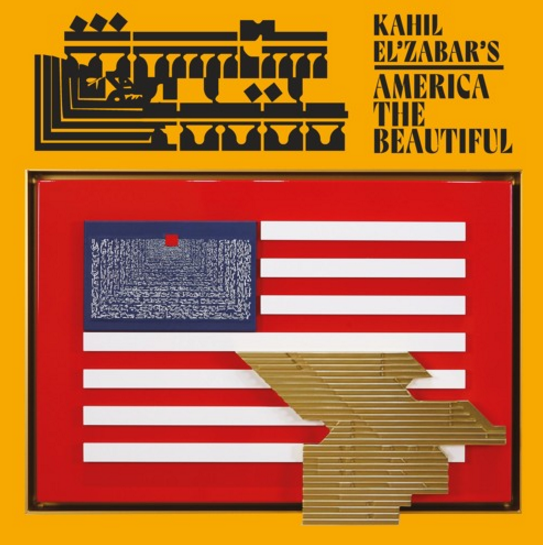
E……
Kahil El’Zabar ‘Spirit Groove Ft. David Murray’ & ‘America The Beautiful’
(Spiritmuse)
Continuing a creative partnership with the Spiritmuse label, Chicago jazz luminary Kahil El’Zabar has released two essential ambitious sweeping titles in 2020; working yet again with an ever changing lineup of fellow visionaries and rising virtuosos from his home city and beyond. The first of which is the Spirit Groove album collaboration with David Murray, the second, America The Beautiful, sees the School of The Association for Advancement of Creative Musicians alumni and five decade jazz veteran piece together a suitable afflatus cry from the despair of modern America.
Spirit Groove, sees a reconnection, a spiritual bound between the Chicago jazz drumming and percussionist doyen El’ Zabar and his tenor sax and bass clarinet maestro foil Murray. Quenching the soul with that “spiritual groove”, they’ve laid down a both swinging and mesmeric alternative jazz service of mediation but also, and above all, they push for a positive change in the most inflamed and dangerous of times. El’ Zabar’s atavistic with a modern pulse soul and jazz experiments are coupled with Murray’s untethered long and short breath saxophone contortions on an album of new, specially written material and expansions of compositions from the back catalogue.
The second title sees him build a fully realized album around the aggrandized anthem, America The Beautiful. An extraordinary portrait of the current mood, El’ Zabar’s conscious divine spiritual jazz opus channels the contorted soul of Chicago’s rich musical heritage; spanning eras as old as ancient Africa, the be-bop, swing eras, leaping through the avant-garde and 80s dance music culture to create a soulful and always grooving purview of the American social-political divide in 2020: Election year. From Coltrane to Bernstein, primitive Chicago House to Charles Wright & The Watts 103rd Street Rhythm Band, this is an expansive dig into the soul, heart and health of a nation in divisive turmoil: A healing process in fact.
Both albums offer a congruous communion of transformative, essential jazz, just when we needed it. (DV)
Extradition Order ‘American Prometheus’
(Blang/Gare du Nord/HLP19/I Blame/Jezus Factory)
Willed on by a whole quintet of labels, the first album in a good few years from the excitable and soulful no wave Warrington troupe Extradition Order is a poignant return to the American history books. Dedicated in part to founding member Nick Boardman who passed away in 2018 (his legacy permeates this album, whether as a guiding influence or through his bass hooks and singing), the Order’s vessel this time around is “the destroyer of worlds”, polyglot genius behind the fateful A-bomb Manhattan Project, J. Robert Oppenheimer.
Taking the album’s title from the Oppenheimer biography of the same name, American Prometheus is a guide to a visceral concept of the lamentable, profane and hysterical. Just as the band did with their both pining and erratic opus to the Kennedy dynasty (on the 2015 Kennedy LP), the extended cast of unfortunate and listless wives, lovers, set adrift family members, rivals and enablers are given a voice in the linear story of this incredible scientist; one who, as it turns out, had quite the checkered and controversial life story. With colliery soul requiems, prowling hints of Blurt, cheerleader Grease rah-rah and bursts of My Life Story, The Pop Group, Style Council and The Mekons, Extradition Order find parallels in 2020 by blowing open the myths and dramas behind the conflicted Oppenheimer: warts and all. American Prometheus is another mini triumph from a band that manages to bridge the fury and wrath of punk with the contorting squawks and funk of no wave and the brassy heralded romantic yearns of northern soul: good going guys. (DV)
Read In Full
Hi, my name is Dominic Valvona and I’m the Founder of the music/culture blog monolithcocktail.com For the last ten years I’ve featured and supported music, musicians and labels we love across genres from around the world that we think you’ll want to know about. No content on the site is paid for or sponsored and we only feature artists we have genuine respect for /love. If you enjoy our reviews (and we often write long, thoughtful ones), found a new artist you admire or if we have featured you or artists you represent and would like to buy us a coffee at https://ko-fi.com/monolithcocktail to say cheers for spreading the word, then that would be much appreciated.
The Monolith Cocktail Playlist Revue: Feb 2020: Chassol, U.S. Girls, Juga-Naut, Pongo…
February 28, 2020
PLAYLIST
Dominic Valvona/Brian Shea/Matt Oliver

The behemoth Quarterly Playlist Revue is now more! With a massive increase in submissions month-on-month, we’ve decided to go monthly in 2020. The February playlist carries on from where the popular quarterly left off; picking out the choice tracks that represent the Monolith Cocktail’s eclectic output. New releases and the best of reissues have been chosen by me, Dominic Valvona, Brian ‘Bordello’ Shea and Matt Oliver.
The full track list is as follows:
A Journey of Giraffes ‘Into The Open Air’
Graham Costello’s Strata ‘Cygnus (Edit)’
Calibro 35 ft. MEI ‘Black Moon’
The Four Owls ‘Honour Codes’
Juga-Naut ‘Jackson Pollock’
Chassol ‘Rollercoaster Pt.2’
Dream Parade ‘Adderall’
U.S. Girls ‘4 American Dollars’
Piney Gir ‘Puppy Love’
November Bees ‘Pot Called Pan’
Joss Cope ‘Indefinite Particles’
Slift ‘Hyperion’
Martin Mansson Sjostrand Trio ‘Overkilghetsflykten’
Bob Destiny ‘Wang Dang’
Dueling Experts ‘Dark Ninjas’
TrueMendous ‘That Don’t Mean’
Confucuis MC ‘Look Deeper’
Lewps Hekla ‘Rose Gold Ruger Pose’
Pulled By Magnets ‘Gold Regime People Die’
The Dream Syndicate ‘The Regulator (Single Edit)’
Mai Mai Mai ft. Maria Violenza ‘Secondo Coro Delle Lavandaie’
Sad Man ‘Door’
Pongo ‘Quem Manda No Mic’
Ranil ‘Cumbia Sin Nombre’
Nordine Staifi ‘Zine Ezzinet’
Adebukonla Ajao And Her Group ‘Aboyin Ile’
Mazzi & Tac ‘Brackets’
Dillion & Batsauce ‘Self Medicated’
Elaquent & Chester Watson ‘Airwalk’
A Journey Of Giraffes ‘Poet’s Muse’
Jimi Tenor ‘Lassi Laggi’
Seu Jorge & Roge ‘Sarava’
John Howard ‘It’s Not All Over Yet’
Birgitta Alida ‘Closely’
Anytime Cowboy ‘Story Of Skin Island’
King Krule ‘Comet Face’
Brian Bordello ‘Liverpool Hipster Set’
Postcards ‘Dead End’
Zinn ‘Diogenes’
Mazeppa ‘The Way In’
Vivienne Eastwood ‘Hanging Gardens’
Village Of The Sun, Binker & Moses ‘Village Of The Sun’
Simon McCorry ‘The Nothing That Is’
 Monolith Cocktail Blog