The monthly Digest includes a clutch of accumulated short new music reviews, the social inter-generational/eclectic and anniversary albums celebrating playlist and a piece from the Archives.
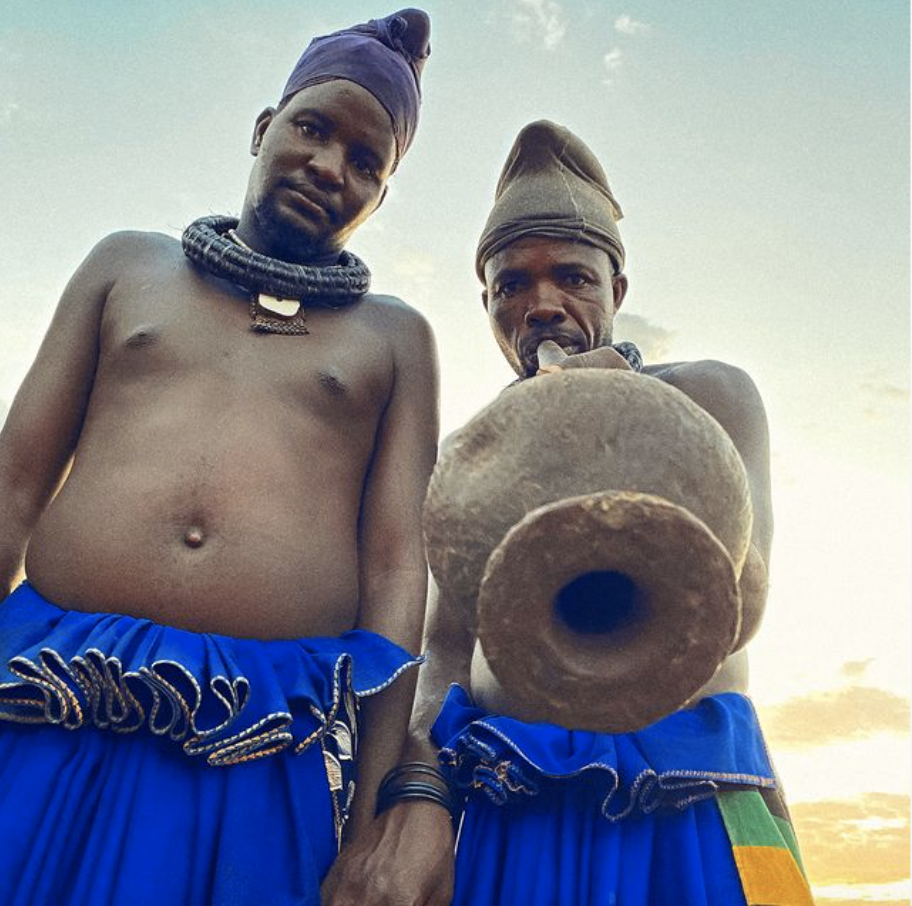
Photo Credit: Marilena Umuhoza Delli
___/NEW MUSIC REVIEWS SELECTION___
al niente ‘al niente’
(Discreet Archive) Released 10th July 2026
Drawing upon a diverse range of experiences, experiments and study, the Italian quartet of notable players known as al niente form a bond and untethered atonal, mostly non-musical and avant-garde language together to produce this atmospheric performance of the improvised and text-based compositions. The latter of which includes an interpretation of the composer and cellist Stefan Thut’s ‘Some, 1 – 4’, which finds a suitable spot amongst the near-quiet of nothingness and stirrings of resonated, shaved and hinging brass, the dry rasps and the steam-like released whistles of the flute. A double-bass thumbs or plucks a one note prompt (or reaction) as the silence acts not so much as a pause but a repeated use of space and abstract tone in itself: an important, integral part of the whole response to the initial sounds that set each performance in motion.
You can find it on the Bandcamp description yourself, but Thut describes this rendering and process of his template thus:
“What remains here of traditional notation is the succession of two elements and the vertical arrangement as in a four-voice setting. At first glance the columnar image receives a liquefaction as it expands through the action of making sound. But the repeated actions of the four performers also bring it back to the static of the image yielding an impression.”
The reference to voices is interesting, and easy to imagine replacing the instruments and resonation on not just this track but the others: a removed form of vocals I’d admit, more, and chiming with the quartet’s signature, atonal in execution.
Comprising of Beatrice Miniaci on both flute and bass flute, Cosimo Fiaschi on soprano saxophone, Gabriele Pagliano on double-bass and Luca Venitucci on the accordion and what’s termed “objects”, the quartet work in a kind of avant-garde, non-musical mode that evokes the most minimalist fields of jazz and the avant-garde; sieving, shifting and stretching the possibilities of the elements of breath and instrumental textured experiment.
Within that expanse of light and shaded microtonal and held suffused progressions and dialogues there’s light refractions and various pitches interacting with the industrial sounds of the workbench, of mechanics and tools, or with near esoteric leanings and released steam. Mysterious and almost esoteric in places, recorded somewhere in the city of Rome where the quartet are based, they conjure up as much atmosphere as they evoke a certain skill of untethered musicianship and reaction. Windows are opened – literally sounding at times like the hinges being activated – on this abstract horizon swell and permeation of Anthony Braxton and his peers, the tradition of innovative atonal experimentation and the avant-garde in Europe, and Ariel Kalma.
The Breedling ‘A Straunge And Terrible Wunder’
(Wrong Speed Records) 4th August 2026
Sticking close to home with a horror show score of electronic dark arts and Satanic conjuring, Chris Spalton (under The Breedling guise) soundtracks the supernatural and folkloric psychogeography of his county by reviving the hell hound legend of the bedevilled Black Shuck.
To borrow from Rev. Abraham Fleming’s August of 1577 dated account of the infamous beast – as repeated orally and with just a sensational touch of exaggeration for publishing purposes -, the most dramatic legendary description, passed down through the generations, and obviously unsubstantiated, of the East Anglian miscreant is as follows:
“This black dog, or the divel in such a likenesse (God hee knoweth al who worketh all,) running all along down the body of the church with great swiftnesse, and incredible haste, among the people, in a visible fourm and shape, passed between two persons, as they were kneeling uppon their knees, and occupied in prayer as it seemed, wrung the necks of them bothe at one instant clene backward, in somuch that even at a momet where they kneeled, they stragely dyed.”
Or better still and heading the title of this latest album from the Norfolk-based artist, Fleming summarised this beast and its most notorious episode as a “Strange and terrible wunder”.
Sightings and accounts continue, and just like UFO sightings, each period in history is reflective of its own hangups, fears and cultural obsessions. But in this mode and time, recalling the late Tudor era’s own distresses and religious fervours and religious wars, the bestial hound is no dressed-up Baskerville masquerade but a symbol of the daemonic sent to rip out the throats of the metaphorical flock of Christianity, or at the very least to frighten the congregation into towing the right pathway. Then again, there’s not much defence when such sharp-clawed and blood thirsty imaginings are about to pounce on the unsuspecting.
Inhabiting a world not unlike that of Robert Eggers nightmares, with a dash of quintessential English rural occultism and weirdlore, a chill of spine-tingling Gallo Italian horror and an apparatus best described as industrial foreboding and sinister. And yet there’s a darkly rooted use of ambience too, and incipient quietened passages in which the wind, the atmosphere is held off just long enough to escape the doom-laden electronica, the NIN-esque squalls, steely guitar resonance and hammered, nail-gunned (like a brutal version of modern diy workshop crucifixion) and beaten drumbeats.
Entwinned with the bracken density and shadows of the English woodlands, oscillations and prowls are exchanged for the creaking floors of an old mill struck out in isolation in the wilds or the sound of tormented individuals being tortured and ripped limb from limb. And yet, you can detect a suffusion or perhaps just a passing influence of Haxan Cloak, Umberto, Ital Tek and Lucrecia Dalt amongst the hell’s gateway of snared, growling, almost gaggled and howling, biting hounds and dark bewitched invocations. There is however some gleam of relief in the dying embers of the finale, a sudden navigation of the rotated and circled esoteric environment turns up in the clearing to the sound of bird song and a reminder that none of this has been real: or has it?
Spalton delivers an immersive, ominous soundtrack of real quality; a dungeon doom and folkloric rural electrified reading of a timely legend that demands attention. |It would be good to see some director pick this up for a movie, but until then, let the sonic distress and mystery invoke its own images and story.
Himba Hymn Collective ‘Ghosts Of Namibia’s Skeleton Coast’
(Sublime Frequencies) Released 8th May 2026
Possibly the most featured producer and in-situ instigator of inspiring, exceptional and jaw-dropping recordings on the Monolith Cocktail since its inception, Ian Brennan’s highly prolific output (not just musically, he’s also an incredibly expressive and candid writer too, as demonstrated by his accompanying descriptive linear notes) most recent release completely slipped my notice: an unheralded release it seems by Sublime Frequencies.
Joined on each of his global expeditions, as always, by his partner and foil the Italian-Rwandan photographer, author and filmmaker Marilena Umuhoza Delli, Ghosts Of Namibia’s Skeleton Coast finds the acclaimed producer, musician, writer and violence prevention advocate practising what he preaches in recording the unheard voices and performances of some of the world’s most isolated, ignored, disadvantaged, and marginalized.
Described by Ian as the ‘Most disproportionate travel to recording time ratio we’d ever risked.’ With ‘Four days flight, four days driving (two entirely off-road) to record for a few hours’ Ian and Marilena travelled to the world’s driest and oldest desert (not atavistic but even older, back to prehistoric times) in Namibia, on the southwestern coastline of Africa to capture the unique voices of the age-old Himba people; perhaps one of the most objectified and photographed tribes in the world, yet until now rarely given the space or platform to perform vocally and musically. The muse of National Geographic and untold covers for their famous red-hued moisturised and decorated skin – a second skin and mix of animal fat and ochre powder, it is both used as a sort of sunscreen that protects them from the harsh and unforgiving sun and cosmetically – and eroticized state of undress – the women usually going about their daily lives and routines topless -, the females, but men too, celebrate beauty.
With their near unbroken ancestral traditions, the Himba live a still largely pastoral existence, eking out a living through their most prized possession: cattle. Sharing much with their fellow Namibian’s, the Herero (both originally migrating from elsewhere in Africa to settle in the most sparsely populated large country on the continent, the two groups also share a Bantu ancestry), every hamlet features a central ‘Kraal’ where the cattle and goats are herded for safety each night.
The Himba are smattered in and around the Namibia desert, which despite its arid and dry reputation lies along the cool coastal exterior of the country, with the ocean to its side. Stretching for 1200 miles and reaching up to 100 miles inland, this vast challenging landscape is famous for its trade routes and important movement of both minerals and fish. Relatively stable these days – in fact, one of the safest places in Africa – that same desert and the country as a whole has suffered from some very dark, tumultuous and violent periods; including what has been called the first genocide of the 20th century, when the Colonialist rulers of what was then German South West Africa carried out a heinous and ruthless execution of the Herero and the Namaqua peoples after a rebellion by Chief Samuel Maharero – started after decades of slavery, persecution, the confiscation of cattle and starvation. The Germans originally colonised the region in 1884; an act of occupation, a stemming or barrier to the British Empire who were expanding westwards. Anywhere from 50,000 to 65,000 people were killed during the bloody years between 1904 and 1907, but the Dutch originated settlers the Boars were also known to have had their conflicts and subjugations of the same people too. War has followed, both civil and from across the borders, but Namibia is a much changed and settled country, a favourite to backpackers and tourists alike.
But with a near unbroken tradition, the Himba continue to draw attention to their idiosyncratic way of life and exotic (if I’m allowed to dare use that word) look. But the focus here is on their songs and performances, with a requested amassed cluster of both women and men captured for posterity on tape by Ian and shared to an international audience. With a rudimental or striped down travel kit of apparatus, recordings are usually raw, caught in the very moment when something is about to happen; a spontaneity; a one-off for the conditions and environment in which it has been sealed.
Ian’s own descriptions make my job easier, and I could literally just copy and paste his insights, his descriptions and directness. He really manages to evoke the scene, the ardent journey to the middle of a most unforgiving desert location, conjuring up the smells, the atmosphere, the cast of various performers brilliantly. My personal favourite is when Ian manages to reference the reduced life expectancy figure for the region as sixty with a request that he’d made earlier for the Himba villagers to specifically put forward their elders for the recordings. When Ian and Marilena finally make it, they are met with a group of men who aren’t so much as elderly as near the same age as Ian himself (hardly queuing up just yet to get his pension), and so proving just how reduced that life expectancy really is in these harsh conditions.
Ian just as brilliantly describes what you are about to hear: a psychedelic vocal tapestry, esoteric even in parts. The use of what’s called the Cattle Gun (a rarefied found these days we’re told, expensive and coveted, this lengthy horn, taken from the Oryx antelope, is coated in mud, and can be described as kind of strange jazz horn come breathed rattle) and the way in which the Himba cup their hands to cover their mouths in order to create the effect of chorusing and flanging is extremely helpful in understanding what you are about to experience.
Let’s take the psychedelic description first. You can hear it permeating nearly every track as a strange effect of hallucination and mirage. But when you get to the stringy strummed ‘Friend’s Who’ve Passed’ its entwinned with a rootsy vision of Beefheart and the blues. The vocal (I believe attributed to lead vocalist Tjamburu) is near garbled and active in its elegiac act of remembrance.
Esoterically there’s the opening introduction to the tribe’s reenactment of lion attack upon its prized cattle. Summoning up the heaving chest exhales and sweat, the growling threat and devouring jaws and clawed menace of a predator, the group effort of interactions and overlayered voices is near supernatural and bestial in invoking such a carnage.
As with so many of Ian’s previous truly international recordings there’s so much to pick up, so many crossovers or reverberations with traditions and music from other regions. You could be mistaken for thinking the pleaded ‘Please Help Me’ was an ancient recall from the Mississippi voice of spiritual gospel to the motherland – there’s an odd, near unmusical, languid if indolent enervated accompaniment (if you can call it that) of metal or tin being occasionally scrapped and shaved in the background, which only makes the whole thing more happenstance and surreal. ‘Don’t Cry (Your Father & Grandfather Are Good)’ reminded me a little of the harmonious unions of voices heard across the border in South Africa, albeit in the hallucinogenic mode, and the trilling, rolled tongue echoes – accompanied by what sounds like a klaxon going off – and laughing gas inhaled-like octave change of voice into the realms of the childish and silly ‘Be Brave In The Face Of Death’ reminded me of a far-off recollection of dub crossed with King Ayisoba.
Vocally otherworldly and yet also drawing on physicality, justifiable grievances, the confrontational, there’s a balance of the soulful, the earthy and the impassioned; using breathing and various mouth pulled and loose lipped trills to express both the painful and the ritualistic; indignation and communication.
Not so much worthy as essential listening to everyone who really wishes to get clued up and experience the sounds, the joy, the spontaneity and passions of music and performance from outside the mediocre TikTok trending dominated scope of the West and its global markets. Uncluttered and truthful, catalogued not as a Lomax-esque curiosity, and uncoupled from that whole World Music cloying presumption of posterity and study – even though these recordings will reserve and keep account of the Himba and their performances -, these expressions are very much still alive and just as important as the songs sung by the ancestors.
Nicola Miller’s Living Things ‘SPIT!’
(Watch The Ends The Night) 7th August 2026
Bouncing through a lively Latin and French Quarters whilst throwing up reminiscent city jazz skylines of the 50s and 60s and chasing the dramas of Noir and feeding off the spirit of the Big Easy, renowned Canadian saxophonist and composer (also, as you will hear, a deft hand on the flute too) Nicola Miller and her quartet troupe send out lively and excitable free form vibes on their latest album together, SPIT!
Spit in its various forms, from the driest reedy evocations to the most spittle and flappy lipped experiments of actionist jazz and its avant-garde cousin, this extraordinary display of loose and dynamic performances swings on the jungle vine whilst promenading and heralding down the New Orleans streets, thumping along the San Fran pavements of Lalo Schifrin and scoring the chaos and bustle of the boardwalks.
And then again, such as through the three-part ‘Telecommunications’ suite, you get the brass resonating, woodpecker woody block percussive and rasped reedy sucked valve work, the bristling and brushed abstracts of such icons as Anthony Braxton and Rosco Mitchell, Mats Gustafason and Ivo Perelman. Throw in the blues, and the puddle duck, pastoral chamber classical familiars of Prokofiev and the whole deal gets even more interesting, expanded and ambitious.
Imbued by her Nova Scotia base (subtle hints on the smog bound shipping horns of Doug Tielli’s trombone, and a general feel of the maritime can be heard suffused throughout the album), and already collecting an enviable haul of plaudits for her craft following the release of the Living Things’ 2024 debut (released on fellow Canadian label Cacophonous Revival), Miller now amps up the “extrovert” in her and “fires” up the band to produce a both experimental and untethered album of first class jazz performance and musicianship.
With reference points to a whole history of such jazz explorations and freedoms, Satchmo meets Sam Rivers, Eric Dolphy and Peter Brotzmann on the opening city lights, blasted and blared, brassy and swung opener; Miller’s alto sax going through various phases of the winding, the strangled and vibrated whilst Tielli’s sliding and elephant trunk raising trombone recalls a mix of Phil Ranelin and Theon Cross.
The already mentioned ‘Telecommunications’ triptych passes through just as many phases, from the flapped and dried-up breaths and cuckoo-like knocks and steamed resonance of Part I to the 50s jazz sonnet, greenery and wounded cornet-like strange harks of Part II and the busier film score excitements and confusions of Part III.
‘Where’ The Line’ settles into a strange duck-clarinet (that will be clarinettist and second saxophone player Frank Gratkowski, a former mentor to Miller whilst she was studying for her Masters) described bluesy and dreamy lost world of the misty and mysterious; obscure renderings of foggy ship horns again, with a walking stealthy bass line courtesy of Nicolas D’Amato, plunge us subtly into a primal swamp or an old coastline, with obscure recalls of Gershwin and Bix Beiderbecke.
Though not wholly dedicated to the troupe’s versatile drummer Nick Fraser, the finale, as its ‘Drummers Are Bad’ title may indicate, neither scolds nor lets the sticks man hog the entire track. Fraser does get to scuttle, skittle and feel his way in the avant-garde vogue around his kit in the name of unrestrained quickened and fired up improvisation; his foils equally building towards the wild, and a duck-billed excitement of brass and cartoonish chases along a pastoral pathway left overgrown and blanketed by the mists.
An incredible album from a burgeoning project of gifted, experienced and still inventive players surrounding the main instigations and prompts of their leader Miller. One of the best jazz albums so far in 2026, and that’s about as good a recommendation as you can get from me.
Tristan da Cunha ‘Maris Stella’
(Boring Machines) Released 10th July 2026
Touched by the afflatus the Italian trio of Francesco Vara (using the guitar to imitate the strings), Luca Scotti (on drums), and Nicolò Vara (on viola) make neo-classical and ambient oblations to the titular “star of the sea”, the ancient allegorical and metaphorical Latin name given to the Virgin Mary.
A reification of faith and guidance perhaps, or the act of being saved from the troupe’s overriding theme and concept of “isolation”, Maris Stella is deep adagio, often elegiac and mystical, suffusion of subtle atonal and more melodic and dramatic suites and vignettes – the latter labelled “interludio” like moments of reflection and pause; the first being an ambient corridor of rough textual tension on the bow, and the second, more like a verset of hallowed evensong and pipped liturgy.
Pitched somewhere between Reich and Alison Cotton with the imbued influences of Arvo Pärt,Godspeed You! Black Emperor and Stars of the Lid in tow, the score, the minor opus and longer form suites encompass post-rock, chamber music, soundtracks/scores, and obviously the religious – hear the gentle genuflections of the viola and its companions, or the sanctified choral voices that appear from a Mediterranean chapel on the mysterious ‘The Veil’.
Sometimes burnished, often shimmery cymbals and the deadened hit of the drum conjure up images of stirred-up waves splashing against the hull of the trio’s boat; an invitation to navigate both slowly and supernaturally amongst the recondite tides of the serious and classy, the careful and subtly monumental. Searching woes follow melodious escapes, venerability and the venerated but make, apart from the title, no obvious references other than musically to the church, but Mary stands as the abstract lighthouse, a sanctuary and point of lifting transcendence in the silence of loneliness and detachment of the modern era.
Whatever the intentions, the island borrowed Tristan da Cunha named trio combine reverence, the blessed age old iconography of the Christian church, and the matriarchy with an experimentally skilful use of ambience and various classical ideas; changing the traditional setup of a chamber ensemble by replacing the strings (except the viola, which is used almost like a lead instrument here) with the guitar and drums to evoke a number of expansive musical concepts and ideas that lead into other disciplines.
A complete work of art and a beacon with which to draw upon in this moment of crisis and isolation.
___/THE MONOLITH COCKTAIL SOCIAL PLAYLIST VOL. 108____
Despite Spotify’s many attempts to piss me off and burry my numerus playlists, I’m still persevering. You may or may not have noticed holes and a smattering of said playlists suddenly disappearing. I’m pruning. And to be honest, after compiling over 300 of them since 2012 I’ve slowed down and fucked up my account to the point in which it has become tiresome to use. So, I’ve trimmed out those less popular playlists, and the ones with holes in them – various copyrights being either removed or now out of date, labels and those responsible for said artists and tracks either leaving the site or for some other reason taking down individual tracks from their catalogue without any explanation; luckily I’ve never, and I hope way too good at what I do to have ever included anything AI in my playlists over the years or recently, so that doesn’t hold as a reason.
In case you were wondering, or haven’t seen it on Reddit, social media posts or on notice boards, Spotify has at least decided to act by clamping down on AI created music, with some hilarious results as arbitrator of what constitutes the artificial and what doesn’t. There’s a methodology I’m told, which has unfortunately caught some true boba fide artists in the net. However, it was Spotify in the first place that was inventing and predominantly lifting up AI artists in their own playlists and on the platform as a whole.
By the way, if you are having trouble finding me on Spotify, I’m there under my name: Dominic Valvona.
I’m going to try and keep everything from the covid years onwards, but you may now see gaps in the back catalogue as I move forward. And so, we come to this month’s Social, and the same old template of new and old tunes, cult and anniversary celebrating album tunes alongside some more recent ones that didn’t make the site’s Monthly playlist.
Sadly, and inevitably, I also mark the passing of those we’ve lost. In this case, and just a week or so ago, the British jazz-rock-prog-fusion community lost keyboardist and composer Dave Greenslade. An incredible CV, wealth of experiences, Dave’s journey took him from the burgeoning bluesy/R&B scene of London to Casablanca, a stint with the Ram Jam R&B/soul revue troupe motivated and led by Geno Washington and the virtuoso boasting Colosseum, before forming the just as legendary doubled-up keys instigated Greenslade – as every obituary almost in disbelief repeats, a group that dared to dispose of the role of lead guitar: the audacity!
On the Anniversary LPs front, there’s one big Sixtieth birthday to The Byrd’s Fifth Dimension and a fiftieth nod to The Beach Boys’ 15 Big Ones. Another decade closer and its fortieth salutations to Doug E. Fresh’s Oh My God, 2 Live Crew’s The 2 Live Crew Is What We Are, R.E.M.’s Life’s Rich Pageant and the Spacemen 3’s Sound Of Confusion. Leaping through the decades, I’m also marking the twentieth anniversaries of TV on the Radio’s Return To Cookie Mountain and Thom Yorke’s Eraser. And as featured in this month’s archives below, a tenth nudge to Ed Scissor & Lamplighter’s Tell Them It’s Winter.
The rest of this list is made up of intergenerational reaching tracks from Alcatraz, Lapera, Bal Pare, Sophie Nzayisenga, Double Happys, Evil Weiner, plus more recentish tunes from Clementine March and J Sciende. Lots more of course, to make up the thirty tracks in the July social revue.
Track list in full:::
The Beach Boys ‘Susie Cincinnati’
TV On The Radio ‘A Method’
Clementine March ‘Upheaval (First Version)’
The Byrds ‘Captain Soul’
Colosseum ‘Three Score And Ten, Amen’
Okay Temiz & Johnny Dyani ‘I’m A Green Lamp – Yesil Fener’
Angry Angels ‘Apparent-Transparent’
Greenslade ‘Time To Dream’
Hopkins-Bradley ‘Funny, But The Way I Feel’
Evil Wiener ‘Koo Koo’
R.E.M. ‘Fall On Me’
Double Happys ‘Some Fantasy’
Colosseum ‘The Machine Demands A Sacrifice’
J Sciende & Opio ‘Krush Groove Kangol’
Doug E. Fresh ‘The Show – Oh My God! Remix’
2 Live Crew ‘2 Live Is what We Are…(Word)’
Himba Hymn ‘Who Is going to Welcome The White People?’
Sophie Nzayisenga ‘Story of Nyangezi’
heka & GG Skips ‘High Tide’
Spacemen 3 ‘Rollercoaster (Live)’
Bal Pare ‘Die Idioten’
Naomie Klaus ‘Can You Tell Me What Is Micronet?’
Thom Yorke ‘The Clock’
Thick Pigeon ‘Sudan’
Human Greed ‘Freeview’
Ed Scissor & Lamplighter ‘TTIW’
Lapera ‘Catarsi’
Alcatraz ‘Where The Wild Things Are’
Walter Daniels/Oblivians/Monsieur Jeffery Evans ‘It Don’t Take Too Much’
Greenslade ‘Siam Seesaw’.
___/ARCHIVES___
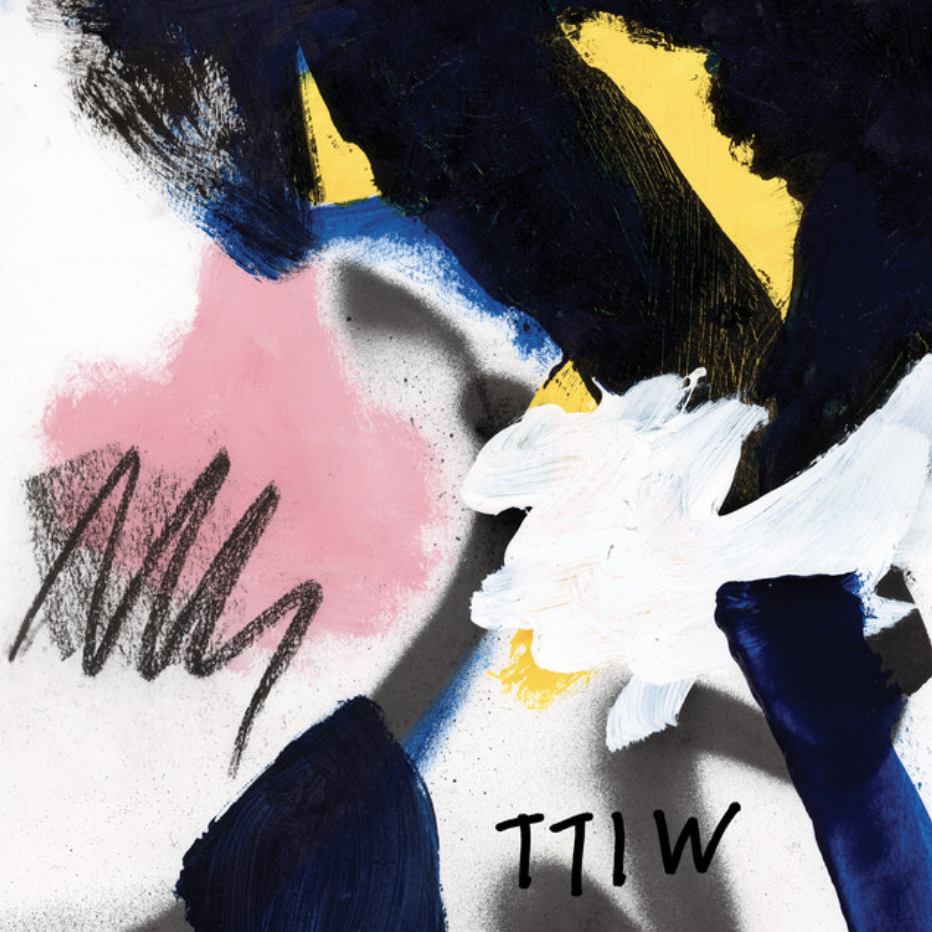
Ed Scissor & Lamplighter ‘Tell Them It’s Winter’
Released by High Focus Records, July 15th 2016
Emerging damaged and deeply troubled from the miasma underbelly of modern life, the congruous leftfield hip-hop partnership of wordsmith Ed Scissor and Glasgow-based producer Lamplighter convey a sad poetic beauty in their dystopian visions.
Much has been made of the duo’s caustic, and at times nihilistic, articulations and augurs. And their latest remote collaboration – the duo rarely share the same room as each other during the writing/recording process – Tell Them It’s Winter does explore familiar morbid curiosities, both musically and lyrically.
Yet, despite the travails, despite the gloom and all too real drudgery of an algorithm-driven society, Ed and his Lamplighter foil offer glimmers of light. Reminding us constantly of the universal infinite, Ed describes forces beyond the mundane. References to astrology, metaphysics and science flow like relentless streams of consciousness from Ed’s lips in a delivery style that shifts between rap, spoken word and, even, grime. Abstract elements of hip-hop and trip-hop mix seamlessly with the Shakespearean and biblical to produce the poetry, whilst tetchy minimal electronica and slow methodical beats layered over cLOUDDEAD expansive atmospheres and traces of neo-classical strings and looped recordings of old scratchy records create the backdrop to Ed’s winter of discontent.
Each track is free of demarcation and often floats off on different pathways before returning to focus once again on the central mood. There’s no room for prowess and flexing, Ed’s verses constructing a framework of unflinching honesty. Cormac McCarthy and Winterfell metaphors aside (the critics consensus analogies and reference points it seems for this album), the impending Machiavellian horsemen of doom bolted a long time ago. Tell Them It’s Winter is, if anything, a reminder that nothing has changed and that the central tenets of human suffrage carry on unabated in the 21st century.
Here’s the message bit we hate, but crucially need if we are to continue:
If you’ve enjoyed this selection, the writing, or been led down a rabbit hole into new musical terrains of aural pleasure, and if you able, then you can now show your appreciation by keeping the Monolith Cocktail afloat through the Ko-Fi donation site.

