THE MONTHLY DIGEST INCLUDES A CLUTCH OF ACCUMULATED NEW MUSIC REVIEWS; THE SOCIAL INTER-GENERATIONAL/ECLECTIC AND ANNIVERSARY ALBUMS CELEBRATING PLAYLIST; AND CHOICE PIECES FROM THE ARCHIVES

(Cover Star Macie Stewart. Photo credit Shannon Marks)
_____/THE NEW____
Macie Stewart ‘When The Distance Is Blue’
(International Anthem) 21st March 2025
Perhaps one of the most prolific collaborators of recent years, across several mediums, the multi-instrumentalist, composer, songwriter and artist Macie Stewart has come to represent a flourishing, explorative contemporary music scene with multitudes of connections and threads. Apart from projects with choreographer Robyn Mineko, Sima Cunningham, and the Pacific Northwest Ballet, Stewart has become a stalwart of the International Anthem family, contributing and helping steering releases by Rob Mazurek – who literally appears below this review with his foil Alberto Novelle -, Bex Birch, Damon Locks, Makaya McCraven and Alabaster DePlume.
Another foil, featuring in the intimate ensemble that plays on this Stewart’s first solo album for the imprint – the actual debut solo LP, Mouth Full Of Glass came out a few years back on another label -, is Lia Khol, a cellist and sound artist who already collaborates with Stewart in a duo. There’s also the addition of both the equally versatile artist Whitney Johnson (credits include the Verma band and the avant-pop lo-fi Matchess alias) on viola, and Zach Moore on double-bass. This is where those inter-connections must end, as I could just carry on regaling all the various entries from the bio and dedicate this review piece to one of the most enviable of CVs in the music scene. But we must not get distracted, and instead now look at the album.
When The Distance Is Blue could be read as…well, perhaps blue in mood. But this is an album that slips poetically in and out of consciousness, inhabiting, ruminating over and in some cases writing the aural equivalent of a love letter to the spaces in-between the tangible and the environment, with background passages of field recorded interactions taken from public places. For instance, the famous Tsukjii district of Tokyo, near to the Sumida River (reclaimed originally from lowland marshes) is referenced as the title for an atmospheric piece of recorded street side, market interactions. It carries on over and bridges the reverberating, sifted, swept and delicately plucked and vibrated opening suite ‘I Forgot How To Remember My Dreams’ and the near atavistic recalled, apparitional haunted voiced ‘Murmuration/Memorization’. The former of which features Khol’s clean cello and Stewart’s meticulously struck piano notes in a near forlorn but beautifully evocative mood. It reminded me of both Cage and Reich, of the Japanese school of contemporary classical music, and even a little of Sebastian Reynolds work with cellist Anne Muller. The latter, which is named, in part, after the stunning synchronised patterns of large groups of starlings as they come together in flight, seems to dial into something old or timeless; an elliptical dance of Tony Conrad like bows, Hellenic-like spirit voices rising and falling like their avian subjects, and the neoclassical.
The album title, and the underlying theme, is inspired, imbued by the American writer and activist Rebecca Solnit’s A Field Guide to Getting Lost book. I’ve unfortunately not read it, but the L.A. Times summarised the nine essay pieces that make up this work as: “An intriguing amalgam of personal memoir, philosophical speculation, natural lore, cultural history, and art criticism.” Elsewhere it’s been described as a wondering and lurching zigzag through history, politics and art, with the author described as a “Intellectual nomad” by The Guardian’s Josh Lacey when he reviewed it. But all can agree about the book’s themes of change and transformation. Of which Stewart taps into, recording the almost unnoticed; an essence of a particular time and place; a captured seasonal moment of rumination and episodes that left their mark. Across this a near perfect length album, a complete journey is sounded out through both attentive and deeply felt strings, piano, percussion, wordless voices and double bass. It’s a liminal sound that evokes Sakamoto, Cale, Alison Cotton and a sense of the Oriental slow movement, as it moves beautifully and moodily between pizzicato plucks, the cascaded, watered, resonated and bowed. I’ll say it again, as perfect a vision as you can get, everything about When The Distance Is Blue is just so right; every feeling, note, sensibility carefully pitched in a dreamy and ached, subtle and often mysteriously intriguing way.
Alberto Novelle & Rob Mazurek ‘Sun Eaters’
(Hive Mind Records) 28th March 2025
A moment in time; an afternoon’s encounter. The symbiotic alignment and then transformation of the improvised and layered, sonic and sound art foils Alberto Novelle and Rob Mazurek transduce timbral elements and textures into an amorphous act of existence on their collaborative release for the discerning internationalist label Hive Mind Records.
Created in a day, extemporised to a point, the Sun Eaters album, despite its rhythms, is a serialism of encounters and reactions to recognisable lines, soundings, echoes, flutters, melodic addresses, nature trial organic serenades, shakes, tingles, jangles and bleats from Mazurek’s trumpet, flute and percussion of bells. His partner on this exploration transforms these instruments into hallucinatory and playful electronic, modular and oscillated new atmospheres and ambiguous soundscapes that simultaneously evoke Jon Hassell’s Fourth World inventions, the collaborative work of Ale Hop and Laura Robles, the Aphex Twin, Carmen Jaci and King Champion Sounds.
When you address both participants extensive and envious CVs, you can only assume that together they will make something very experimental and unique, but not so academic and avant-garde as to create something dry, theoretical and impenetrable. Before we can any further, just a brief summary of the experience brought to the Dobialab studio that day in Northeastern Italy. I was only the other month referencing Mazurek in relation to Damon Locks and his List Of Demands LP. The cornetist and interdisciplinary innovator featured Locks in his Exploding Star Orchestra lineup, just one of the numerous groups the countercultural Chicago figure and influencer had instigated over the decades; most notably Isotope 217, the varied Chicago Underground ensembles, and one of my favourites, the Sau Paulo Underground offshoot. I could list umpteen other incredible collaborations (his work with Jeff Parker to name just one), and run-off a long list of influential labels that have carried his work (my friends at International Anthem for one) over the years, but you can get this all off the various bios circulating on the internet. His foil, Novello, often “repurposes found or decontextualised analogue devices to investigate the connections between light and sound in the form of contemplative installations and performances” under the JesterN guise – I borrowed that from his Bandcamp page by the way, hence the italics. He’s assisted such notable talent as Alvin Lucier, David Behman, Nicholas Collins and Trevor Wishart, and improvised with such luminaries as Evan Parker, Butch Morris and Karl Berger.
Combining these experiences, echoes of Don Cherry, Peter Evans and Miles casting shadows across an arid Latin sounded landscape are sampled and looped, turned into a language of abstract data, mechanics, transmissions, signals and pitch registers. There’s a buoyancy swimming below the synthesized beds that indicates a certain rhythm and movement. And yet at times the pair seem to be floating in the cosmos or lost in an illusion as they pull the AEoC through the mirror backwards and shake and rustle the cow bells of a herd heading for Tibetan shrines. Those bells by the way also ring out like tubular long pipes or like a sleigh ride into spiritual transcended. But I can’t help feeling there’s a lot of fun at play too on these peregrinations, especially on the Mexican wrestler referenced snake-rattled and mirage-esque ‘Luchadores Sudden Embrace’.
Taking a completely different direction, the fungi studied inspired finale, ‘A New Mycological Framework of Narrative’, is the sound of Richard H. Kirk’s wordless mewling and mantras, a touch of Kriedler and even Kraftwerk, and Finnis Africae being fed into a strange soundboard and apparatus of conductors.
A different kind of creation, this six-track reconfiguration seems to just be. Neither non-musical nor musical; neither avant-garde nor defined; the results are beyond simplified categorisation. Mood pieces? Sensory exploration? Textual exercises in ambiguity? Abstracted visions conjured out of an apparatus and range of acoustic instruments? All viable descriptions perhaps for an amorphous collaboration. Followers of both artists will be happy with the outcome.
El León Pardo ‘Viaje Sideral’
(AYA Records) 21st March 2025
A “sideral”, or celestial bodies related, “voyage”, the new inviting album from the Colombian brass, wind and multi-instrumental encompassing artist El León Pardo is imbued by pre-colonial Colombian magic and contemporary musical hybrids that fuse cumbia with the Afro-Caribbean and cosmic.
Noted for spreading the word and virtuosity of his chosen instruments and culture to the world through his work with Ondatrópica, Curupira and Frente Cumbiero, Pardo is imbued by the sound and symbolism of the “Kuisi” end-blown flute, and Sierra Nevada de Santa Marta mountain range in which its whistly trill echoed; the loose Colombian originated infectious rhythm of cumbia, which in more recent times has switched the European influence of accordion for electric guitar, but has been restyled and modernised throughout time to include the trends the day; and the ancient Pre-Colombian Zenu people of the Sinú River Valley and their atavistic flute.
Channelling all this to conjure up a dream realism peregrination, dance and wonderment, Pardo invites a number of Colombian foils to join him on a sometimes-surreal corridor to the stars. Taking up the offer is fellow eclectic polymath Edson Velandia, emcee N. Hardem of LNI and Soul Am Beats fame, and “nueva (“new”) cumbia” motivators Frente Cumbiero, who’s main instigator Mario Galeano is also a member of both the already mentioned Ondatrópicaand Los Pirañas groups. This trio’s contributions further expand the scope of influences and ideas, heading down into the lively Bogota barrios, or snake rattling and sauntering into a spellbinding oblivion of magic eye Colombia and the cosmos.
As the tile translates, there’s a relationship between the stars, the celestial spheres, playing out on Viaje Sideral. A both playful and deep immersion of universal mirages and dream states that simultaneously sound Andean and yet futuristic and cosmological, the album’s nine tracks use tradition and modern tech to build up an alternative reality. Analogue synths echo and modulate those space sounds: a representation of beamed astral planes and spectral rays, and travellers from other worlds landing in the mountain valleys of Colombia.
Whilst traditional instruments, the chuffed, short and longer, more drifting and circular convulsed flutes and pipes, both brassy and Latin trumpet, reference imaginative invocations of his homeland. Factor in some of that Afro-Caribbean influence and a touch of Mad Professor dub effects to this playful, inviting, danceable, percussive infectious, pop-y, soulful (there’s even some electric guitar parts that I would swear were Rhythm & Blues flavoured) and mystical, and you have a dreamt landscape brought to vivid, rhythmic life. El León Pardo isn’t however just about the magic, but by using the instruments he does, bonds with and sticks up for those pre-Colonial indigenous roots as a form of activism and conservation, education. This is nothing short of a great imaginative Colombian trip, equally at home under a menagerie canopy of exotic conjuring as it is in space.
Puce Moment ‘Sans Soleil’
(Parenthèses Records) 21st March 2025
Tuning in via the kosmische, new age, trance and ambient imbued modular electronic laboratory to the courtly and Imperial Gagaku tradition, the Puce Moment reconfigure purposeful Japanese ceremony, dance and music to conjure up an otherworldly, haunting and mystical soundscape under a “sunless” sky – if you directly translate that album title of “Sans Soleil”.
Travelling to the notable Japanese city of Tenri (the old capital of Japan, for a very brief period during the late 5th century rule of Emperor Ninken) in 2020 to record and work with the local Gagaku Music Society, the French duo of Nicolas Devos and Pénélope Michel recontextualised an old but continuous form originally performed for the elite. They expanded this exploration turn transformation further with the addition of the São Paulo born choreographer and dancer Vania Vanneau: furthering the soundscape project into dance, visual movement and performance art.
For those unaware of this Japanese form, Gagaku’s roots can be traced back to the 6th century, perhaps earlier, when Japanese delegates were sent to China to learn about its culture. They are said to have brought back a fusion of both Chinese and Korean music, instruments and dances to the Imperial court; to be performed at banquets for the elite. But some historical sources suggest that it was through the spread of Buddhism, making its way across from China to Japan. And one of the main dances, the “Bugaku”, involves the wearing of intricate Buddhist costumes and masks.
Familiar sounds of this form include the famous barrel-shaped wooden “taiko” drum, the “Koto” 13-string zither, the “Biwa” short-necked lute and the “Shō” wind instrument – used for one of the six titles of this peregrination and mood musical work. All of which, I believe, can be heard both in their recognisable form and morphed and woven into a modulated, generated, filtered atmosphere of electronic apparatus drones, fizzes, oscillations and amorphous mysticism.
Hinting at rips in the fabric, a misty geography and periods of historical meaning and reference, Sans Soleil summons ghosts, voices from the ether and the four winds and wisps of Jon Hassell, Hiroshi Yoshimura, Popol Vuh, Tony Conrad’s work with Jennifer Walshe and Ash Ra to magic up a sound world that sits on the border of the alien and cosmic, landscape and pure atmosphere: The word used is liminal. This convergence of trance-y, lucid synthesised sounds and voices on the air merges dreamily and spookily with Japanese tradition, ceremony and choreography to create something more akin to an experience, an immersion and dance.
Alessandro Alessandroni ‘Paesaggio Bellico’
(Four Flies Records) 18th March 2025
Like much of mainland Europe scared, brutally traumatised and worn out by WWII, Italy and its battle-ravaged population pretty much became risk adverse to war. Although eventually changing sides back to the Allies, the ill-fated bedfellows of the Nazi Axis alliance were, apart from the diehards/racists/antisemites/psychopaths, were always ill at ease goosestepping to the tune of Hitler. In fact, no matter how history has been warped, the Italians put down and made the butt of so many jokes, the country had some of the largest numbers of partisans fighting against the Fascist regime – percentage wise in all of Europe, Italian partisans were far more likely to be killed and murdered by the Nazis than anyone else.
Italy favoured internal civil war over the international: a war of ideologies, corruption, state and philosophy that rages to this day. Terrorism and organised crime concentrated the mind. But no one in Italy could turn away from the events that followed in the wake of WWII: the Iron Curtain and Cold War to Korean, Vietnam and so on. And that brings us to the work of the stellar talented and connected iconic and cult Italian composer Alessandro Alessandroni, who scored an impressive range of war themed documentaries and films during a career that spanned a good half of the 20th century.
Born on the release date of this latest battle, war and psychological collection (18th March), Alessandroni came of age during the rise of fascism and the events that would lead to the Allies invasion of first Sicily then mainland Southern and Central Italy, the horrific bloody battle of Monte Cassino and the brutal air raid bombardments that destroyed so much of the country – an agreement between both sides thankfully saved Rome and several other important cultural cities.
During a period between 1969 and 1978, the maverick and highly influential composer and multi-instrumentalist recorded a catalogue of scores and atmospheric pieces, suites that dealt with not only the military aspects but the trauma of war and its effects upon those who both fought and faced its wrath. After the smut and titillation of the Music From Red Light Films 1976-1980 collection, the Italian label Four Flies unearths an impressive and quality selection of these tracks, previously left dormant in the vaults.
A peer, foil, mentor and friend to such luminaries as Ennio Morricone, the Rome born maestro and artist first made a name for himself with his Spaghetti Western twang-y Duane Eddy signature guitar and whistling scores for the highly influential film director Sergio Leone. But Alessandroni also founded the wordless octet vocal group I Cantori Moderni (“The Modern Choristers”), which featured his wife Giulia De Mutiis, and went on to form the brief prog-rock-psych group The Braen’s Machine with fellow Italian cult composer Piero Umiliani.
During the late 1970s he was scoring more and more mondo trash, erotica and garish S&M horror – see Lady Frankenstein and Killer Nun. And yet, the quality of his work is never in doubt; often elevating such tawdry, amateurish affairs to cultish status by the music alone. Although far from serious, it seems Alessandroni’s craft is likened to playing with an amusement park of ideas, sounds and instruments: entertaining but also captivating in equal measures. With an ear attuned to the contemporary fashions, but the classical and traditional too, a lot of musical ground is covered in his compositions: from Italian folkloric standards to disco, library music and the salacious.
In turn, this package (the vinyl copy features 15 tracks, whilst the digital is expanded to include 29) channels much of that legacy, but with far more seriousness, artistic depth, emotion and compassion. Most of those familiar with his work will instantly recognise the signatures and the palette; from the spine-tingling chills and fears of his Giallo-like scores to the arpeggios, the twang and pick of his Wild West evocations – namely on the couplet of cloud hanging “Pattugliamento Aereo” (“Air Patrol”) pieces; although the second “Aereo” matches that with vague Alice Coltrane harp-like plucks and a subtle prog-esque organ.
Where sentimentality and a touching relief is needed, tracks like ‘Lettere dal Fronte’ (“Letters from the Front”) air towards Bacharach and Morricone, and feature that recurring Baroque chamber sound of harpsichord or clavichord that gives each occasion a sense of spindled timelessness. ‘I Sopravvissuti’ (“The Survivors”) is a lovely touching sentimental piece that evokes both the balletic scores of Aram Khachaturian (sounds uncannily like his suite from Kubrick’s 2001: A Space Odyssey) and wartime period classical music. Talking of 2001, with the use of the I Cantori Moderni ensemble of wordless voices both appearing like apparitions and spirits of lost and dead souls, or like some removed version of ecclesial requiem choristers, there’s also a semblance of the stirring visionary ominous fears and otherworldliness of György Ligeti.
Quite rightly, the ‘Dachua’ suite should evoke an enormity of horror, but this score is more in the mode of supernatural horrors from the crypt than genocide shock. It sounds like some lost silent film theme of haywire Baroque piano: a combination of devilment and madness, with one hand delicately lacing the keys, and the other, hitting near off-key jarred and out-of-key notes. And whilst sounding the most terrible aspects of war, from execution to the shelled-out ruins of a psychologically destroyed mind, the music strikes up the military snare, playing it like a spraying machine gun, or, building up an unsettling drama of pain and anguish: all managed beautifully, even when dipping into Library music, the hallucinating, dreamy and psychedelic.
Military timpani and drills aplenty amongst the plaintive recall of the acts and dogs of war, this survey features supernatural forces, cold chills, suspense, loss, remembrance and hope.
The suites, atmospheric pieces, scores and signature found on this Paesaggio Bellico are all far too good to be left undisturbed, languishing in the vaults of cult obscurity. Fans, heads and even those with a cursory interest should investigate.
___/THE SOCIAL PLAYLIST VOLUME 95
The Social Playlist is an accumulation of music I love and want to share; tracks from my various DJ sets and residencies over the years; and both selected cuts from those artists, luminaries we’ve lost and those albums celebrating anniversaries each month.
Running for over a decade or more now, Volume 95 is the latest eclectic and generational spanning playlist come radio show from me – the perfect radio show in fact, devoid of chatter, interruptions and inane self-promotion.
Each month I mark the passing of those artists we’ve recently lost, and as this is the first opportunity to do so, I’ve included homages to the last “doll” David Johansen, the soul music’s Carol King, Roberta Flack, vibes innovator and jazz fusionist Roy Ayers and troubadour Bill Fay.
Anniversary albums wise there’s tracks from Herbie Hanock’s Maiden Voyage (celebrating its 60th anniversary this year), Bob Dylan’s Bringing It All Back Home (also unbelievably 60 years old), David Bowie’s Young Americans (50 this month; see my short analysis in the Archives section below), Parliament’s Chocolate City (also 50), Sonic Youth’s Bad Moon Rising (40 this month), Radiohead’s The Bends (30 years old this month), Gene’s Olympian (another 30th) and Edan’s Beauty And The Beat (where does the time go…seriously! How can this LP be 20 years old this month?!).
As usual, I like to throw in a smattering of cross-generational tracks and some more recent ones – those that missed out on the previous Monthly playlists of new music. In the latter camp, we have a resurfaced (so not strictly new) live version of Throbbing Gristle’s ‘Convincing People’ from Volksbühne, Berlin, recorded on New Year’s Eve in 2005; an imaginative reverberating study, peregrination from Dorothy Carlos; and some mirage grunge indie from Raisa K. In the former, a number of oldies from Krumbsnatcha, 21. Peron, Stanton Davis’ Ghetto/Mysticism, Gloria Jones, Flutronix, Berlin Brats, Pete Dello and more… Expect no substitutes. Expect no algorithmic replicants. Expect no AI bullshit. All playlists are compiled without any external influences, totally conceived by whatever I wish.
IN FULL:
New York Dolls ‘Private World’
Gloria Jones ‘Cry Baby’
Roy Ayers ‘Ain’t No Sunshine’
Roberta Flack ‘Compared to What’
Parliament ‘Ride On’
Edan ‘Promised Land’
Herbie Hancock ‘The Eye Of The Hurrican’
21. Peron ‘Bes’
Bill Fay ‘Dust Filled Room’
Radiohead ‘My Iron Lung’
David Johansen ‘Heart of Gold’
Berlin Brats ‘(I’m) Psychotic’
New York Dolls ‘Don’t Start Me Talking’
Sonic Youth w/ Lydia Lunch ‘Death Valley ‘69’
Throbbing Gristle ‘Convincing People Live’
Dorothy Carlos ‘Balm’
Raisa K ‘Affectionately’
Roberta Flack ‘Some Gospel According to Matthew’
David Bowie ‘Can You Hear Me’
Roy Ayers ‘Pretty Brown Skin’
Stanton Davis’ Ghetto/Mysticism ‘Space-A-Nova II’
Krumbsnatcha ‘Closer To God’
King Honey w/ Hezekiah, Gos and Chief Kamachi ‘Trinity’
Georges Bodossian ‘Punching Bull’
Flutronix ‘Crazy’
Meridionale des cayes ‘Zanmi femme’
Bob Dylan ‘Love Minus Zero’
Bram Tchaikovsky ‘Robber’
Gene ‘Olympian’
Pete Dello and Friends ‘Arise Sir Henry’
___/ARCHIVES
Each and every month, I use the digest as a good excuse to once more retrieve congruous and related posts from the archives. This month, to tie in with the 50th anniversary of David Bowie’s “plastic soul” period, a short piece on one of the soul crooning pale duke’s best album’s Young Americans – well, in my opinion top three.
And from this time, near enough, a decade ago, another chance to read my review of Glitterbeat Record’s Hanoi Masters: War Is A wound, Peace Is A Scar album, raw and therapeutic sessions recorded by Ian Brennan and released during March of 2015.
Disingenuous to a fault, the cracked actor’s ‘plastic soul’ conversion, raised more than a few pencilled-in eyebrows and frowns.
Totally free of his carrot-topped mullet crown, he now hotfooted across the Atlantic to Philly, intoxicated by the city of brotherly love’s sweet, lovelorn soul music.
A new face in town, the burgeoning ‘thin white duke’ employed a cast of ethereal backing singers (including an as yet famous Luther Vandross) and kindred musicians (notably Bowie’s new lead-guitarist foil, Carlos Alomar) on his cocaine-fuelled pursuit.
Calling in the favours, fellow alienated Brit in residence, John Lennon, helped write the cynical snide ‘Fame’ (he plays on the recording and adds harmonies too) and let Bowie cover his stirring cosmological trip, ‘Across The Universe’ – much maligned, but I really dig this version, and even play it regularly in my DJ sets.
Reflective, sophisticated, Bowie and his detractors may have labelled him with derogatory terms, yet there’s no denying it’s another successful musical adoption: truly up there with his best ever work; a complete showman chameleon transformation. Even one of his most infamous haranguers Lester Bangs couldn’t help but admire it: the only Bowie LP he ever gave him credit for.
Decreed as the leading highlight’s of the album by the majority –
Young Americans (single), Win, Fame (single)
Pay attention to these often overlooked beauties –
Somebody Up There Likes Me, Across The Universe
Various ‘Hanoi Masters: War Is A wound, Peace Is A Scar’ (Glitterbeat Records)
A side excursion, travelling due east to Asia and breathing in the evocative songs of Vietnam, Glitterbeat Records launch a new series of field recordings entitled Hidden Musics. Finding a congruous musical link with their usual fare of West African releases, the label sent Grammy-award winning producer Ian Brennan (credits include, Tinariwen, Malawi Mouse Boys, The Good Ones) to Vietnam in the summer of 2014 to record some of the most lamentable and haunting resonating war-scarred music.
Indelibly linked to what the indigenous population call ‘the American war’, the examples of both yearning and praise pay tribute to the fallen: delivered not in triumphant or propagandist bombast but in a gentle meditative manner, these survivors, forty years on from the end of the harrowing and catastrophic (the repercussion still reverberating in the psyche of the burned America and its allies) war still undergoing a healing process.
Tinged with an omnipresent lilting sadness these songs are imbued with battle scares (hence the albums sub-title War Is A wound, Peace Is A Scar), as the featured artisans and traditional music masters who had joined the cause, sometimes for the first time in years, allow` their voices to be heard once again. Brennan’s notes are littered with these various connections to the war: ‘…a thirteen year old whose job was to sing to the troops to boost morale and provide solace. Another was a former AK-47 issued village leader who had not sung in over forty years and proved to be the most dead-on vocally.’
‘Un-mediated’ and as raw as you’ll ever likely to hear these fragile, half-forgotten songs without being there yourself, played on the most obscure accompaniment of moon-shaped 2-stringed and zither instruments – including the strange K’ni, a plucked instrument clasped between the teeth, the local dialectic language spoken through the single string to produce a weird otherworldly vocoder like effect –, each documented performance is a lingering trace of an old world. Industrialisation and technology it seems has no respect for the past, increasingly infringing on even the most remote and relatively atavistic traditions in the mantra of “progress”, replacing those indigenous songs with the cultural imperialism of their south east Asian neighbours (Japan and South Korea) K-pop and karaoke genres. Here then, before they vanish forever, Vietnam’s victors speak; from the sweetly yearned Phạm Mộng Hải eulogy to departed souls For The Fallen to the dew dropping off the blossom love paean to her homeland, Nguyễn Thị Lân sung Road To Home, each purposeful – with the occasional clanging up tempo surprise – song is a revealing glimpse into loss, exile and resistance.
Considering the history and ill blood between cultures – though this has eroded as capitalism takes hold and the country opens up – it has in the past been difficult to investigate for the serene and attentive beauty of the Vietnam music scene, but this earnest and adroit study into a world seldom covered proves enlightening.
Hi, my name is Dominic Valvona and I’m the Founder of the music/culture blog monolithcocktail.com For the last ten years both me and the MC team have featured and supported music, musicians and labels we love across genres from around the world: ones that we think you’ll want to know about. No content on the site is paid for or sponsored, and we only feature artists we have genuine respect for /love or interest in. If you enjoy our reviews (and we often write long, thoughtful ones), found a new artist you admire or if we have featured you or artists you represent and would like to say thanks or show support, than you can now buy us a coffee at https://ko-fi.com/monolithcocktail
The Perusal #50: Lea Bertucci, Universal Harmonies & Frequencies, June McDoom, Kenneth Jimenez, George Demure…
December 6, 2023
A WORLD OF DISCOVERIES REVIEWED BY DOMINIC VALVONA
(Unless stated otherwise, all releases are available now)
Universal Harmonies & Frequencies ‘Tune IN’
(Yeyeh)

Recorded in a five day window before their collaborative performance at the electronic music Dekmantel Festival (held in the Amsterdamse Bos, in the Netherlands), Jamel “Hieroglyphic Being” Moss and foil Jerzy Maczyński’s improvised sessions cover a lot of eclectic ground.
Marshall Jefferson meets Marshal Allen; jazz transduced through an electronic wave of electronic body movement, house, techno, trance and ambience, the project reconfigures, transforms and resets the perimeters with a spontaneous search for answers, realms, spaces and spiritual inquiry.
From an original soundboard of twenty-six long form peregrinations, whittled down and either left in their improvised form or reworked and reproduced under the guidance of recording engineer Rein De Sauvage Nolting (known on the scene as RDS), twelve finalized tracks emerged, selected by label facilitator Pieter Jansen. Each track finds a more exotic, mysterious and sometimes chaotic way to follow the rhythm and groove. For this is a strange and refreshing vision of dance music; an acid shooting laser beam and Artificial Intelligence album series imbued trip of whirly birds, alchemist mysticism, sci-fi and Pynchon metaphysics.
There’s fun to be had too, but a considered, sophisticated freedom of experience and influences that puts a diverse range of saxophone contours, breathing lungs-like expulsions of ruminated air, rasps, quacks and spirals with synthwaves, counter flows, various synthetic apparatus and a whole electronic ecology. Just the opening titular-track (running to twelve minutes) alone progresses through a shimmy-shimmer polygon analogue score of Sky Records kosmische, Lukid, psy-trance, house, Basic Channel, Beaumont Hannant and warbled synth-funk. Changing course, ‘Can U Hear The Hum’, which follows, marries Amazonian foliage and a squirreling Harmonia with the Inre Kretsen Grupp. And when we get to hear Moss and his motivational speeches on ‘Multidimensional Transformations’, it’s like Ramuntcho Matta go-going to early Chicago house music.
The fantasy mystery, ‘The Book Of Forbidden Knowledge’, reminded me of Bowie and his last ever foil, Donny McCaslin, and the tubular reed strained and piped ‘The Fifth Science’, has a touch of Matthew “Doc” Dunn’s Cosmic Range and his work with the saxophonist Andy Haas.
Within that stretch of the imagination, there’s moments of controlled tumult, the faraway sounds of a removed North Africa, crystallised visionary vistas, beautifully constructed mists, and waterside meditations. To put it another way, this partnership is like Floating points meets The Black Dog, Klaus Schulze, Benjamin Lew and Rebecca Vasmant in the most unique, transported of dance clubs: And that’s a very inviting proposition indeed.
June McDoom ‘With Strings EP’
(Temporary Residence Ltd.) Out Now Digitally/Vinyl Arrive February 24th 2024

Credit: Bella Newman
Despite the diaphanous, wispy and hushed delivery, June McDoom’s voice is anything but evanescent or forgettable. Because just like one of her most cherished heroines, Judee Sill, every word and expression is believable as a lived experience of heartbreak, yearning and a close relationship with the elementals of an ethereal, but deeply felt, nature.
On the follow-up to her debut EP, the burgeoning McDoom leads with a watery replenished and droplet-mimicking rendition of Sill’s environmental devotional, ‘Emerald River Dance’. The tragic, resurrected to cult status in recent years, troubadour’s fatalistic life was like something out of the gospels: updated in the bohemia of the Laurel Canyon. Forced into prostitution and petty crime to feed her drug addiction, and with a string of coerced and unhealthy marriages/relationships, Sill first came into contact with the afflatus sound that would become her trademark when in reform school during the 1960s; spending time learning the liturgy and gospel music whilst picking up the church organ. In a similar vein to the no less unfortunate Karen Dalton – a peer with an equally ill-fated car crash of failed marriages and addiction, and who’s stripped-back, unpretentious folk style is echoed on this EP -, Sill, despite her obvious talent and the circles she moved in (signed to Geffen’s Asylum Records, with a song bought and made famous by The Turtles no less, and her debut single, ‘Jesus Was A Cross Maker’, produced by Graham Nash), remained an obscure cult figure on the peripherals of the folk music scene. Possibly garnering more attention forty odd years later than she did in her own time. Every song, recording, newly discovered demo is heavily loaded, and yet transcendent.
McDoom has her work cutout, and yet breathes a new life into this near Southern spiritual hymn of softened beatific poetry. The original words remain intact, but with the added “I will hear what it is” line; McDoom placing herself within the sentiment of this aquatic and pastoral embrace. A favourite song for years, part of McDoom’s live repertoire, it proves the perfect congruous opener.
A second cover, and age-old standard of the Celtic set that translates across cultures and time, the traditional ballad, ‘Black Is The Colour Of My True Love’s Hair’, has roots (it’s believed) in Scotland. Nina Simone performed an impressionable version, and the American-in-Paris Tia Blake recorded an incredible minimalistic rendition. Both inspired McDoom to record a version; channeling in particular Blake, who is another interesting, fleeting artist from the folk cannon that disappeared off the radar, recording only one album of traditional songs at the age of nineteen in the French capital. Traversing, rather effortlessly I’d say, the Baroque, Appalachians and old Iberia, McDoom conjures up an apparitional-style mist of lament and dreaminess on her near-filmic and airy heaven-bound transformation.
As that EP title makes clear, With Strings doesn’t so much embellish as sympathetically accentuates and carefully brings home the emotional, touching and longed sentiment of McDoom’s stripped-down style with the small, intimate introduction f chamber strings and harp. Reimagining both ‘On My Way’ and ‘The City’ with this magnificent accompaniment that’s one part semi Baroque classical, and one part Alice Coltrane and cosmic, the vocals are further enhanced with the otherworldly three-part harmonies of Cécile McLorin Salvant and Kate Davis: Between them, their CVs and voices are imbued by jazz, French choral music, Creole, pop and the classics. Together it all reaches a near ethereal magic of the untethered and gauzy, with a semblance of the blues, country, and folk and spiritual. And yet, it’s all so modern sounding. ‘The City’ especially, has a breathless air and the space to progress: to confess too. Like a long list Lomax recording born anew, mixed with the beauty of Mercury Rev and The music Tapes, McDoom’s lacey arts and crafts vulnerability is soothed through a gauzy yesteryear. This city plaint is nothing short of sublime.
McDoom’s inspirations are worn on the sleeves, and yet I keep racking my brain to fathom who she reminds me of. An American Maria Monti? A softer Natalie Ribbons? Maybe a passing resemblance to Connie Converse perhaps? McDoom settles somewhere in-between them all as a refreshing, heavenly talent as she disarms the hurt and depth of emotional turmoil, inquiry and wonder with the most beautiful and impressive of deliveries. Certainly, one to watch.
Kenneth Jimenez ‘Sonnet To Silence’
(We Jazz)

Taking a leap into the untethered realms of Kenneth Jimenez’s dreams, the jump off point for his newest album literally takes flight. The Brooklyn-based bassist, composer and quartet bandleader runs for the mountains and sprouts wings; flying over the valley and the versant contours of free jazz and hard-bop: ala New York style.
This bird-like weightless journey often takes in the bustle, chaos of the city, and the excitable energy of his southern neighborhood (or “barrio” in this case) and ports. As the titles suggest, there’s a reference to Jimenez’s Costa Rican roots, and more than a spirit of that Central American’s oasis diverse landscape and bird life. But off the beaten track, Sonnet To Silence truly roams free between mirages and the strains of concentrated expression.
With Angelica Sanchez on piano, Gerald Cleaver on drums and Hery Paz on saxophone, the action is in a constant, almost restless state of movement: of the flighty, swanned, rolling, sprung, stretched, chuffed, pulled and heightened. Between them the quartet invoke Liberty era Jeremy Steig and Prince Lasha & Sonny Simmons on the whistled and wiry drawn-out and busy ‘Dia Laboral’ (“working day”), and Roscoe Mitchell and the Art Ensemble Of Chicago on the frayed taut double-bass stretched (Jimenez is an obvious talent in this department), turn bluesy and tumultuous, ‘El Patio’ (“the backyard”).
The dockyard 50s and 60s New York evoked ‘Mr. Shipping’ has a slight swing, plus a touch of both Marion Brown and Cecil Taylor – Sanchez in full flow, switching effortlessly between the melodious and experimental with almost jarred prods and block chords; reminding me at times, of Alice Coltrane accompanying Pharoah Sanders, but a little resonance of Oscar Patterson too.
So much is happening on this incredible, engaging and sometimes challenging (in the best possible way) album, which draws you in and then ups or changes the tempo, mood and direction. This is free jazz at its most promising; certainly encouraging and with dreamy quality that lifts you up into an imaginative vision of soaring and more complicated expression. Kenneth Jimenez and his quartet have produced one of the leading jazz albums of 2023.
Unwavering ‘Songs From A Tomb EP’
The solo moniker of one Matt Bennett, Unwavering has made an impact with now three of the blog’s writers. Before me, both Graham Domain and Brian ‘Bordello’ Shea pretty much nailed this atmospheric project of indie-folk: as difficult as it is to describe.
Following on from the debut album, Freeze/Thaw/Chorus, and last year’s Ley Lines In The Forth (great title by the way) EP, the Lothian winter’s mists and ‘dreich’ dampness seep into the new EP of acoustic evocations, blessings and stirrings. From the crypt, mausoleum to the nave, Bennett sends out both resonating roused rhythm guitar strikes and quieter, almost ambient in parts, passages of mediation and near despondency.
A hauntology of the downbeat – Brian ‘Bordello’ Shea described it as akin to a downcast Stone Roses, without Mani and Reni – and capture of the abstract environments – catching floating dust particles in a weakened beam of light, shining in through the cellar’s iron gridded window – from which it seems he is performing, there’s a real strange, cultish and sometimes hallowed beauty to the music. His guitar fills the cavern, the church and basement; resounding and loud but always melodious and effecting.
And through it all, he channels centuries of psychgeography; the marks left upon the landscape’s he’s trawled; the erosions and evaporated essences of what were. All of this is merged with personal inner feelings, remembrance and wounded modern travails, written, so it sounds, with a quill by candlelight.
At times it sounds like fellow Scot, Ali Murray, and at other times like the Cocteau Twins pairing with Steve Mason and Parachute era Pretty Things (that’s especially so on the hallucinatory, ambient textural and foggy ‘Slow Digression’), but also a hint of stripped 80s acoustic Goth and even Joan Of Arc. Bennett himself name-checks Kurt Vile, Harold Budd and Low, all of which ring true. But this EP is really quite idiosyncratic, between realms, time and spaces; a unique folk-indie inspired songbook that works outside the usual perimeters, length and borders of song writing. A really interesting discovery waits.
George Demure ‘Ear Candy Dandy + Bonus Album Dandy In Dub’
(Hobbes Music)
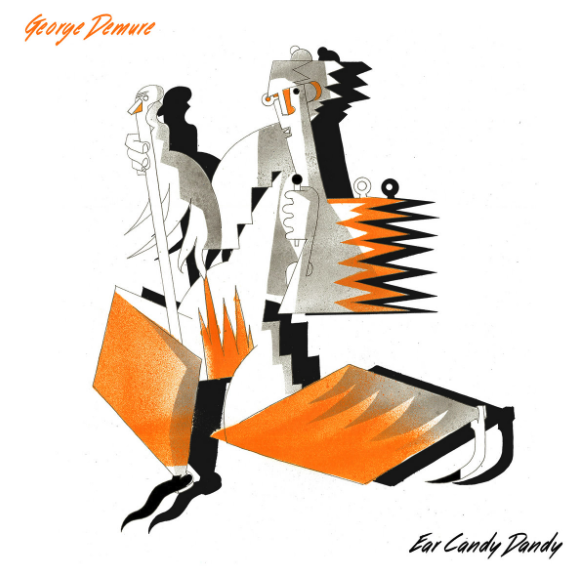
On a bobbled and float-y, light sunbeam dappled vapor of deep house, garage, electro, kosmische, leftfield pop electronica, dub and new wave (both the German and UK’s), the Edinburgh DJ/producer and singer-songwriter George Thomson continues the good work he laid down on the last EP: 2021’s well-received The Record Store.
With the same self-imposed limitations that he set back then, his latest George Demure alias album (expanding to a eighteen-track package with the addition of the Dandy In Dub bonus) makes a sophisticated use of a drum machine, two analogue synths (a mono and poly version) and a computer (to record upon). And yet, as sparse as that sounds, Thomson manages to fully expand his subtle sonic, musical, rhythmic and effects universe even further; channeling four decades of experience in both the Scottish and English capitals.
The CV is impressive and varied, starting out (roughly at the same time as myself, but geographically 500 miles away) in the burgeoning techno and house scenes of the early 90s in Edinburgh. After building up a reputation for producing his own music under the George T moniker, he made a move to London in the 2000s. The ‘T’ was put on hiatus however, and George Demure was born. This still gave Thomson ample time to collaborate with others, namely in recent years as one half of the Jeanga And George partnership. Facilitators and labels for those multiple projects and appellations include NRK, Stickman, 2020 Vision, Crosstown Rebels, Tirk, Greco-Roman, Optimo, Output Recordings and, now, Hobbes Music.
It shouldn’t come as any surprise to find Thomson well versed and full of ideas; using this album, in a fashion, to rediscover and connect with his formative years. A culmination if you like, of his years in the scene. But this is a very fresh projection of that, with both vocal tracks and instrumentals that bob about with the lightest of touches and skill. That’s not to say there isn’t depth, as no matter how soft they are, the bass does thump and the machinery and generators add something concrete and textural to the music.
Of one production, there’s still a wide variety of ideas and genres across the original album’s ten tracks and the bonus moiety’s further eight variants of sung, instrumental and ‘beat’ tracks. The opening, ‘Hello Mr. George’, offers an awakening rural scene, complete with bird song. Bouncing drum pads patter out a gentle bip-bop beat enveloped by light chords on a dappled electronic piano-like synth across a morning idyllic scene. By the time we reach the chimmy new wave-esque ‘Dub In Your Bubble’, and the opening crooned vocal of “Johanna”, we’re almost in the yearning schmooze territory of the crooner. Though as the song progresses, it becomes apparent that it’s more Robin Scott than Scott Walker; mixed I might add with a touch of the Sabres Of Paradise. Another vocal track, ‘Circles’, sounds more like a soulful leftfield downcast Matthew Dear.
An after hours downtime serenade, ‘Late Again’, that features Stevie ‘Chicago’ Christie whizzing Felix Da Housecat vibes past satellites, is a particular highlight – imagine Eno and Scott’s M persona making pop music together. By contrast, the therapy session, ‘Blah De Blah’, sounds like Polygon Windows lost in a haze of Bowie and Level 42! All the vocals have a real drift to them; almost languorous and untethered; a kind of free association soul-house-pop vibe that gives.
Elsewhere, the impeccable production mixes rotor-bladed Moroder with EDM; Kriedler with the melodica dub cloud operations of The Orb and FSOL; and the outdoor environments of epic45 with Roedelius and Thomas Dinger. Within that scope kinetic sounds are matched with the cosmic, vaporous and far out ‘jack-your-body’ moves. It’s a most lovely, swimmingly blend of motivations, feels and deep grooves that effortlessly comes together in a generous offering of electronic music: the very epitome of the Hobbes label’s remit in delivering leftfield unique visions of now techno, house and club sounds.
Lea Bertucci ‘Of Shadows And Substance’
(Cibrachrome Editions)

From the chthonian bowels of the geological to the vaporous airs of archaic pseudo-scientific sexism, the New York-based composer, producer, performer, saxophonist and label founder (of the Cibrachrome Editions imprint, under which this album is being released) Lea Bertucci continues to capture the intangible and abstract on her latest work, Of Shadows And Substance – a title borrowed from an episode of the Twilight Zone.
Two scored performances; two separate commission; each atonal experiment is an avant-garde and prompted reaction to a theme that simultaneously hides its sources, instrumentation, sense of place and time, yet evokes a certain recognisable mood.
Covering what used to be two sides of the traditional vinyl LP, these congruous long form pieces tap into Bertucci’s research methodology and serialism of composition and interpretation; stimulating the actions and atmospherics, but granting a form of autonomy to the musicians taking part. This includes an “intonation” tuning structure, the textural and semi-improvisational, and the use of the cello, double bass, harp, percussion and electronic apparatus.
As the album title might suggest, Side One’s ‘Vapours’ piece is, in part, informed by the literal description of the word: that is, a molecule existing on the verge of a liquid, gaseous or solid state. But it’s also a reference to the, far from sympathetic and almost dismissive, term to diagnose types of hysteria in women from a bygone age. Commissioned and played by the Italian Quartetto Maurice, these two interpretations mask the familiar with a highly experimental treatment, strain, stretching whining and searing atonal performance that conjures up shades of Walter Smetek, John Cale, Simon McCorry, Cale, Riech and Fluxus. At one point, when the intensity builds towards an otherworldly, unnerving drama of sawing and heightened tensions, there’s more than a trace of György Ligeti.
Maintaining a constant resonance of metallic sheens, rubs and refraction – in some manner, almost melodic, in the most removed sense of the word -, there’s a permeating connection that carries on throughout the various stages of drones, drawn-out bows, frictions, chaffs and didgeridoo-like blows. Neither vapourous nor hysterical, but somewhere in between, the Quartetto summon some unique visions of distress and abstracted classicism.
In a similar vein, the title-track sonically conveys the arse-end, final days of the anthropogenic epoch. Commissioned this time by the Philadelphia creative foundation, the ARS Nova Workshop, and performed by Henry Fraser, Lester St. Louis, Lucia Stravros and Matt Evans, this twenty-minute plus movement digs deep into the Earth. Like Scott Walker mining an atavistic psychogeography, layers of crust are removed to reach the present state of geological trauma: Or as Bertucci puts it, ‘a meditation on time-travel’ and ‘measure of accumulated events over glacial periods of time’; ‘a metaphor for social and environmental shifts’. This translates into shimmery vibrated cymbals, barely recognized saxophone rasps, the thump of primordial creatures chained to the bedrock, and spooked piano. By the close, the hovered instrumentation is in the airy realms of a calmer, more settled gauze.
Challenging in the best possible way, this couplet of performances is so textural that you could grasp it in your hands. A gateway, window into an experimental atonal world, Of Shadows And Substance is an inventive and intriguing proposition from a unique and adventures artist.
Xqui ‘Melting With Ice’

In the time it takes me to cast my critical mind and ear over this release from Xqui, there will most certainly have been at least another, if not more, projects cast out from the experimental creator’s hothouse studio: such is the abundant output from this highly prolific artist. Across an array of labels and facilitators, and in both a solo and collaborative capacity, Xqui occupies a liminal space between ambient music, sound art, musique concrete, transformed field recordings, hidden source material and voice exploration/transmogrification. Anything recognisable is made anew, strange and alien within this amorphous blending of the synthesised and technological – which isn’t to say these ideas aren’t organic, or that they lose that connection with their environmental, atmospherics settings. It’s safe to say that you never quite know what to expect with each release, such is the diversity and range.
Leaning more towards synthwaves and a chemical, scientific, numerical calculus of sum-parts and references, Melting With Ice draws us into an alternative futuristic and space-searching world of veiled machinery hums, generators, percolators and soft pulses; a sci-fi odyssey of Ligeti, Richard H. Kirk and the Theremin-like arias and apparitional sirens of Star Trek. But this is balanced out with a more naturalistic alchemy of watery elements, an exotic aviary of birds, and subtle hints of the pastoral.
Playing with voices, speech, annunciation and phonetics, Xqui uses a range of effects to convey just the mysterious, curious essence of conversations, whispers, breaths, expulsions of air, the choral and informed. ‘Cherry Red, Neon Blues’ is different in that regard. Here we find a Simon Armitage type poetically inhabiting a Gary Numan-like Blade Runner cybernetic set of neon-buzzed, hummed and lit removed romanticisms and forebode.
There’s a ghost in the matrix, aboard the cosmic flights of deep space probing, and under the Earth, as the ice caps melt and everything from the molecular to most expansive chasms changes: for the better or worse.
The minimalistic, with shades of Twin Peaks and Vangelis, ‘Pygmalion Effect’ references the famous psychological phenomenon in which high expectations lead to improved performances/outcomes in any given area, whilst low expectations lead to the opposite. Its name of course comes from the sculptor in Greek mythology who fell so in love with his ‘perfectly beautiful’ sculpture that it came to life. Make what you will of that. But as usual, based on the quality labyrinth of past creations, expectations are usually high for an Xqui album. And this is no exception; another highly evolved sound world that somehow makes even the innocuous more sci-fi or otherworldly, and attaches a deeper meaning, an experience to it: for example, the passing traffic driving through puddles as the rain hits the pavements to cause its own splash-back tide on ‘Sunrise Waves’; a recording enveloped in the thoughtful and searching. I recommend you check this one out, and the entire catalogue for that matter.
Alessandro Alessandroni ‘Alessandroni Proibito Vol. 2 (Music From Red Light Films 1976-1980)
(Four flies Records)
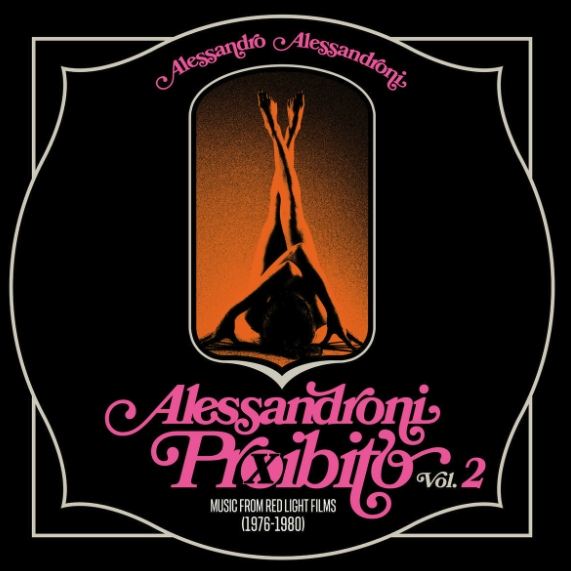
The stellar talent of over forty film scores, part of the great Italian composers epoch of the 1960s and 70s, and owner of one of the most iconic whistles and guitar riffs in cinematic history, really deserved so much more; putting his name to the forgettable skin-flick exploitation movies that don’t even get named on this second volume of obscurities from the Alessandro Alessandroni vault.
The dire schlock smut quintet of movie scores that inform this latest Italo-soundtrack maverick limited edition run from the Italian Four Flies label, have disappeared off a cliff. However, Alessandroni’s modest home studio scores remain, with a smattering of tracks from each now spread over a quintet of 7” vinyl singles, collected together in an alluring box set.
A peer, foil, mentor and friend to such luminaries as Morricone and Piero Umiliani, the Rome born composer, multi-instrumentalist maestro and artist must have hit the skids by the time these red light movies were released. For despite making a name for himself with that Spaghetti Western twang-y Duane Eddy signature and his highly influential work for Sergio Leone, by the the late 70s he was scoring more and more mondo trash, erotica and garish S&M horror – see Lady Frankenstein and Killer Nun. And yet, the quality of his work is never in doubt; often elevating such tawdry, amateurish affairs to cultish status by the music alone.
Although far from serious, it seems Alessandroni’s craft is likened to playing with an amusement park of ideas, sounds and instruments: entertaining but also captivating in equal measures. With an ear attuned to the contemporary fashions, but the classical and traditional too, a lot of musical ground is covered in his compositions: from Italian folkloric standards to disco, library music and the salacious. The second Proibito volume is no exception, with soft-pop-lit dalliances with the blues and Turkish-sounding guitar (the desire prowled sleazy, deep heat floor show, ‘Luci Rosa’: translating as “pink lights”), 10cc soft rock erotic body contouring (the lulled, wandering fingers caress down the spine ‘Tahiti Joint’), and Gallo humping orgasms (the weird spooked, moist-dripped cave (oh-ah!) and piano wire malarkey shivered ‘Climax’). Some of those tracks feature erotic wordless allurements and enticements, with Alessandroni’s wife, the fellow Roman and singer-actress Giulia De Mutiis, providing the sexy coquettish trapeze artist vibe expressions of dizziness on the Broadway stage circus act, ‘Ticket’. I think she also provides the Betty Davis-like oozed erotica on the smoky and funky ‘Miss X’.
In case you’re interested, Mutiis has credits for roles in 15 Scaffolds For A Murderer, The Laughing Woman and Any Gun Can play, but also joined her husband’s octet vocal group, The Modern Choristers (in 1961), which specialized in those choral wordless calls and atmospheres: appearing on many a film score. Apparently other family members were also corralled into Alessandroni’s experiments, although no one else is specially mentioned in the notes, and there are plenty of those siren voices to be heard throughout this compilation. The main man appears himself, delivering the “do-doing” and “bah-bahs” on the new wave discotheque and art-rock ‘Racing’.
As a member of the Italian set of pioneers and new wave, it’s unsurprising to hear echoes of the already mentioned Umiliani (both partners in the supposed anonymous rock group Braen’s Machine in the 70s), Giuliano Sorgini, Roberto Pregadio and Paolo Casa (especially his clavichord and electric piano, Stevie Wonder-esque moments). But with the use of the mandolin, accordion and melodica too, plus that famous guitar twang, you could be mistaken for thinking you’ve been transported to any port on the Med, South America and further East – especially when that spindled guitar starts to ape the resonating rings of a sitar. There’s a craft. There’s fun. There’s a swerve of soul-funk and frolicking titillation in these previously unreleased on vinyl recordings that make it worth the admission price. For those fans of Trunk Records and Finders Keepers, but also anyone with a penchant for the cult and Italian cinema, you’ll love this collection of smut recordings with élan.
Don Fiorino & Andy Haas ‘Accidentals’
(Resonantmusic)

After two decades of intermittent collaboration, Don Fiorino and Andy Haas have found a common language of challenging, free-expressive experimentalism and exploration together. Speaking that sonically, atonal and often non-musical dialect fluently across the previous albums of Death Don’t Have No Mercy and (the monolith cocktail profiled) American Nocturne, these two highly impressive musicians/artists have pushed thresholds and boundaries to emit a tumult of squeezed, pulled, squealed, entangled, gabbling, whistled and indescribable sounds from a host of stringed instruments and the saxophone. The duo’s third album is no exception, with eighteen descriptive, indicated and playful titles of the pressurized, near-distorted, flutter, fizzed, bandy and bended.
But before we go any further, a little CV check. Former Muffin, saxophonist maestro and transformer Andy Haas first blazed and scorched Martha’s ‘Echo Beach’ hit in ’78, before relocating from Canada to New York City in the early 80s; making a name for himself in the post-punk, no-wave and avant-garde scenes, and collaborating with such luminaries as John Zorn, Ikue More, Marc Ribot, Ken Aldcroft (which comes the closet to Haas’ improvisations with Fiorino)…the list goes on. Nearly two decades later and Haas relocated back to Toronto, just in time to prove an in-demand foil to a new generation of artists and producers; firstly joining the orbit of collaborators around Matthew ‘Doc’ Dunn’s head music super group, The Cosmic Range, and then Meg Remy’s U.S. Girls led vehicle, performing on 2018’s In A Poem Unlimited and on the subsequent tour – I personally witnessed Haas blowing up a storm on the tiniest sax I’d ever laid eyes on! A multitude of projects, solo albums fill the gaps in-between; many of which were released on this album’s label, Resonantmusic.
Likewise, Fiorino’s backstory spans the decades with a diverse range of improvisational projects as an incredible guitarist and painter – the latter informing the former. This expands to the glissentar, lap steel, bass, banjo, lotar and mandolin, and covers a host of influences from across the globe. You can find him filed under the Radio I-Ching trio and The Hanuman Sextet, but he also appears on the late drummer Dee Pop’s various projects, and with Daniel Carter, John Sinclair and Adventures In Bluesland.
It all amounts to a lifetime of experimentation for both partners in this venture.
Accidentals isn’t the easiest of listens; rooted by the sounds of it, and by that title, to the accidental results of close quarter improvised wrangling and inquisitiveness; the captured, freeform and untethered results recorded in-between longer performances perhaps? An intimate reaction to downplay perhaps?
By chuffing, rasping, stretching out and releasing tensions on the saxophone, and with Fiorino switching between his racks of stringed instruments, there’s some wild and crazy far-out flexed, physical contortions. Valves let out the steam slowly, as unrecognizable sources trill, flutter, suck, ripple and resonate. When on the fretless bass, it sounds like Bunny Bruen or Percy Jones or Mohini Dey thwacking, patting, tabbing and slapping full-trebled thickened strings. Haas meanwhile channels everyone from Antony Braxton and Roscoe Mitchell to Marshall Allen and Jeremy Steig. Within that sphere of inspiration, his sax finds moments of melody, serenade and the heralded.
Whilst there are evocations of jazz-fusion, La Monte Young, Walter Semtek, Federico Balducci, Zappa, the Middle and Far East, the personal ‘Eulogy 4 Dee’ (that’s Fiorino’s foil and band mate, the drummer Dee Pop) crosses Mali with Louisiana Delta Blues and Mardi Gras for a purposeful goodbye. And the flit, flighty and reed-squeezing ‘Curled Time’ merges Stooges Fun House with the sort of uncoying, stripped of artifice stringed recordings found on Ian Brennan’s recordings from forgotten parts of the world. But for the majority of the time, Accidentals is an album of abstraction, extraction and free-play, performed by two musicians at the height of their perceptive and explorative skills; the language now almost telepathic, with no prompts needed for expressing the chaos, tumult and stresses of the environment and greater geopolitical climate.
Cándido ‘La Muerte de Occidente’
(Natural Sciences)

On the face of it, nothing could be more incongruous than a practicing, bona fide Hare Krishna making gothic-punk house music. And yet, Cándido has done just that. Gone are the mantra chants, yoga and tambourines for an embrace of 80s underground electro Streetsounds, 303s and 808s, post-punk industrial S&M, the German new wave, EBM and jack-your-body early house music. For despite the opening Laraaji-like spiritual chimes and trinkets, this is an occultist club scene rave-up back dropped by the spiraling ‘death of the western world’.
A lively sound clash from the Buenos Aires underground, this album (Cándido’s debut for the Manchester imprint Natural Sciences) is less Zen and more dungeon; a dance music vision permeated by radio waves and samples of the reaper’s prophecy, film clips, cults, political epitaphs and a salacious Latin vamp (courtesy of the featured Contacto). In practice that all sounds like Mantronix, Cabaret Voltaire and Steve ‘Silk’ Hurley bruising it with Meat Beat Manifesto, or, an ashram soundtracked meeting between Nitzer Ebb, the Revolting Cocks, Rockit era Herbie Hancock, Farley Jackmaster Funk, Executive Slacks and Rammellzee.
It’s a unique take that has more in common with the Spiral Tribe, Chicago house scene, and Catholic guilt kinks than spreading the word of karma. In fact, it can all sound more gothic and illicit then blessed and spiritually enlightening. The only reincarnation going on here is in the beats. Cándido’s electro funeral pyre proves an infectious beat-driven 80s collider of underground dance music and industrial cut-and-shunt: An alternative route to transcendence.
Hi, my name is Dominic Valvona and I’m the Founder of the music/culture blog monolithcocktail.com For the last ten years I’ve featured and supported music, musicians and labels we love across genres from around the world that we think you’ll want to know about. No content on the site is paid for or sponsored and we only feature artists we have genuine respect for /love. If you enjoy our reviews (and we often write long, thoughtful ones), found a new artist you admire or if we have featured you or artists you represent and would like to buy us a coffee at https://ko-fi.com/monolithcocktail to say cheers for spreading the word, then that would be much appreciated.
Monolith Cocktail Social Playlist: #XLIV: Clothilde, Keef Hartley Band, Finis Africae, Eno & Cale, Haruomi Hosono…
April 6, 2020
PLAYLIST/Dominic Valvona

Cool shit that the Monolith Cocktail founder and instigator Dominic Valvona has pulled together, the Social playlist is a themeless selection of eclectic tracks from across the globe and ages. Representing not only his tastes but the blogs, these regular playlists can be viewed as an imaginary radio show, a taste of Dominic’s DJ sets over 25 plus years. Placed in a way as to ape a listening journey, though feel free to listen to it as you wish, each playlist bridges a myriad of musical treasures to enjoy and also explore – and of course, to dance away the hours to.
For those of you without access to Spotify, we’ve chosen a random smattering of tracks from Youtube.
Tracks
The Lovin’ Spoonful ‘Revelation: Revolution ’69’
Dyke & The Blazers ‘Swamp Walk’
Keef Hartley Band ‘You Can Choose’
Steamhammer ‘Supposed To Be’
Klaus Doldinger’s Passport ‘Schirokko’
Som Tres ‘Eu Já Tenho Você’
Freda Payne ‘Let It Be Me’
Emitt Rhodes ‘Let’s All Sing’
Keyboard ‘I Wish You know’
Clothilde ‘Saperlipopette’
N’Goma Jazz ‘Kupassiala Kuawaba’
Tabou Combo ‘Haiti’
Dick Khoza ‘Zumbwe (Baby Tiger)’
Def Jef ‘Get Up 4 The Get Down’
Souls Of Mischief ‘A Name I Call Myself’
Honey Cone ‘Deaf, Blind, Paralysed’
The Last Electro-Acoustic Space Jazz & Percussion Ensemble ‘One For The monica Lingas Band’
Sum Pear ‘Bring Me Home America’
J Scienide & Kev Brown ‘100 Grand’
Paper Garden ‘Lady’s Man’
Brian Eno & John Cale ‘Lay My Love’
Mick Ronson ‘Growing Up And i’m Fine’
David Johansen ‘Here Comes The Night’
Ben Von Wildenhaus ‘The Limping Axeman’
Marconi Notaro ‘Ah Vida Avida’
Alessandro Alessandroni ‘Babylon City’
Between ‘Scatter’
Finis Africae ‘Zoo Zulu’
Gescom ‘C2’
Luke Vibert ‘Funky Acid Stuff’
Cos ‘Video Boma’
Haruomi Hosono ‘Sports Men’
Blurt ‘Let Them Be (Live)’
Essential Logic ‘The Order Form’
Parasites Of The Western World ‘Mo’
Rob Jo star Band ‘Stone Away’
Semi-Colon ‘Ebenebe’
Sam Rivers ‘Crux’
N’Ghare Hi Power Band ‘Campus Rock’
Dr. Alimantado ‘NO Gwaan SOH’
VIDEOS
 Monolith Cocktail Blog