A world of sonic/musical discoveries reviewed by Dominic Valvona. All entries in alphabetical order.
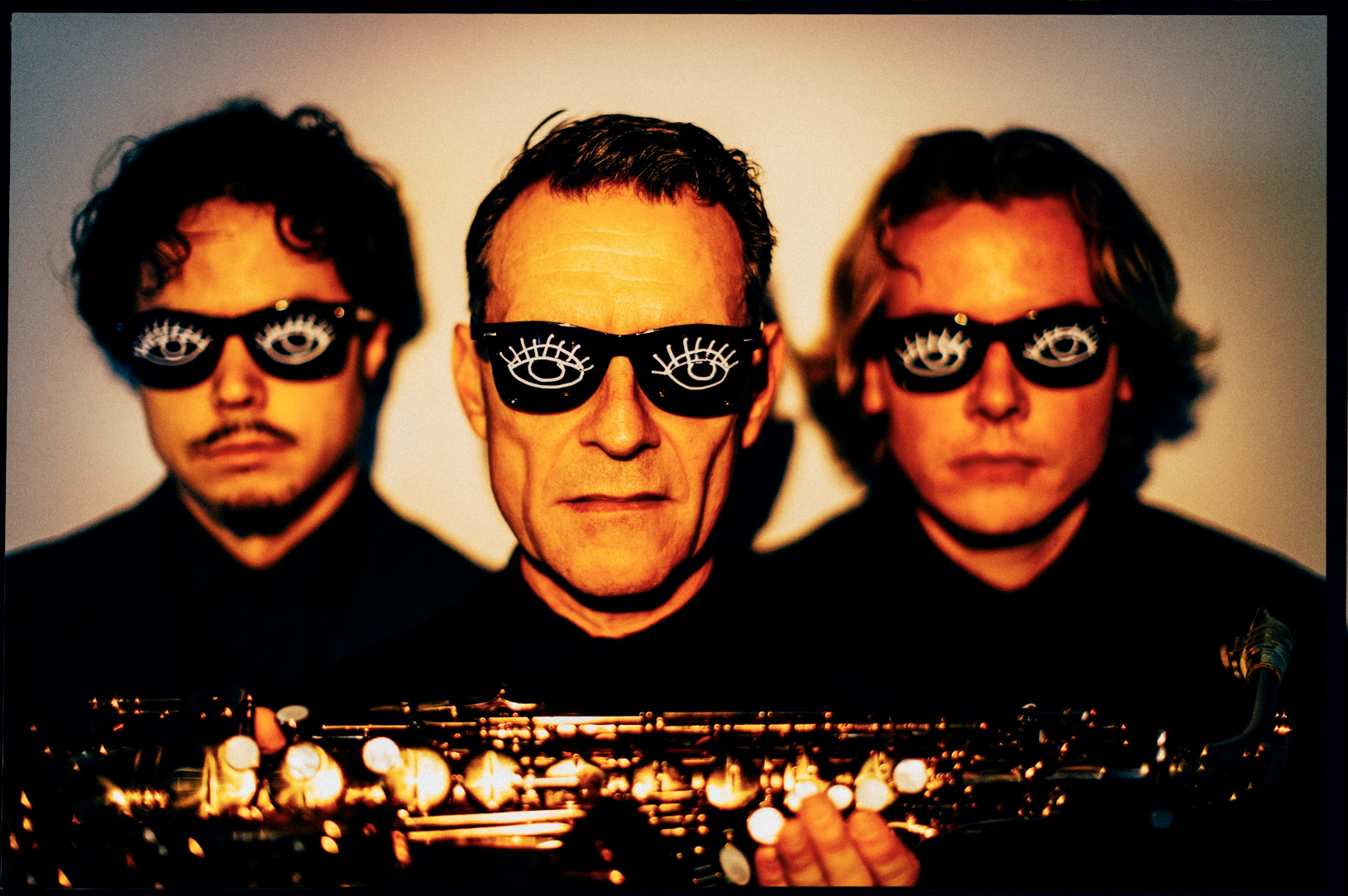
Image Credit: Jonathan Herman
Andy Haas ‘In Praise Of Insomnia’
(Resonantmusic) Released 1st February 2026
I’ve been saddled with insomnia for years, but unlike the highly talented and explorative, and curious saxophonist Andy Haas, I’ve found it difficult to put those waking hours to good use creatively; let alone on the auspicious seasonal occasion of the Winter Solstice, the date on which all these recordings were played and then saved for posterity. I must say, since the double whammy of a kidney autoimmune disease and a minor stroke, my own personal problems of insomnia have pretty much disappeared – I don’t recommend it however! But put to good use here, Andy ushers in the light changes, the almost religious and spiritual emotions and feels of the environment. His sax mirrors the fluctuations and expressions of playing without the hindrance, burden or weight of expectation; just one guy expressing himself and current moods, his experiences of life in the moment on a special day.
Whilst not wishing to repeat myself, I struck up an online and postal friendship with Andy after first writing about the highly experimental saxophonist, trick noise maker and effects manipulator’s turn touring as a band member with Meg Remy’s Plastic Ono Band-esque U.S. Girls a few years before Covid. The former Muffin, NYC side man to the city’s attracted maverick luminaries of the avant-garde and freeform jazz, and prolific collaborator with Toronto’s most explorative and interesting artists, has sent me regular bulletins (and physical copies) of his various projects ever since. Some have been in the solo mode, others with friends, foils and collectives. In Praise Of Insomnia is free of artifice and augmentation; the sound of a singular saxophone and circular breaths (the only other apparatus or consideration is Andy’s stereo manipulations of each track once its finished) alive with a language that admirers and followers of such luminaries as Sam Rivers, Jonah Parzen-Johnson, Evan Parker and Roscoe Mitchell will recognise. It has history and roots, but exists in the now with its squalls, shrills, the fluted, drones, curves, peaks and reedy vibratos that often sound like a mizmar – in fact I sometimes pictured minarets when closing my eyes and just letting the playing transport me from my boring surroundings at home in a dreary, wet Glasgow.
Free and wild, and yet also thought through, almost considered and concentrated, each track (prompted by descriptive and personalised titles) shows purpose; the subject matters often plaint, questioning or disheartened at the metaphorical darkness of the age, but also noting the artist’s own mood changes, and his battles with insomnia itself. It would also make a great soundtrack.
Benjamin Herman ‘The Tokyo Sessions’
(P-Vine Records in Japan/Roach Records & Dox Records the rest of the world) 27th March 2026
Though this is possibly the first time I’ve ever featured the London born but Netherlands raised alto-saxophonist Benjamin Herman on the site, his influence across the European arena of jazz looms large. With over fifty albums and untold thousands of the live gigs (either as a solo artist or as the frontman of the New Cool Collective troupe) to his name during the last thirty or so years, Herman has pretty much convincingly expanded his talents to play foil, collaborator and instigator to projects that span the musical and creative genres – from hip-hop to poetry, to rubbing alongside pop stars and embracing everything from Afrobeat to Latin and film, to the more anarchic and wild.
Venturing out to the far East with double-bassist Thomas Pol and drummer and producer of this album Jimmi Jo Hueting, Herman and his musical partners absorbed everything that was on offer from the eclectic Tokyo hothouse districts of Shimokitazawa and Koenji. Expanding the ranks to include a rich ensemble of guest from the Japanese jazz scene and beyond, they recorded these inspired sessions at the well-known “recording sage” Akihito Yoshikawa’s equally famous Studio Dede hotspot.
Paying homage, spiritual recognition and cultivating the mystique and mystery of Japan’s landscape, its culture, its traditions and abundance of talented jazz players, there’s haywire-like chops of floppy disk experimental Sakamoto, the shrouded misty sounds of Shinto and fluted and blown bamboo music amongst an abundance of reference points from elsewhere. With accomplished musicians like Ko Ishikawa on the Sho (a mouth organ), Tomoaki Baba on sax and Shinpei Ruike on trumpet (bringing a blue shade reminisce of Miles Davis sadness to the studio referenced ‘Dede’) there’s tributes to the Japanese scene and one of its capital’s most famous jazz nightspots, the NRFS abbreviated “no room for squares” – as borrowed from Hank Mobley’s iconic Blue Note released LP of 1964, and more than an inspiration here I believe.
But amongst those cultural appeals, a distillation of the Japanese scene and environment, there’s literal blurts of no wave and post-punk jazz, the noirish and cinematic, show tunes, swing, funk, the wired, colourful, willowy and many examples of mirages and swamp-like veiled mysterious.
At any one time then, you can expect to hear a free flow and agitation of downtown NY, the city skyline jazz scenery of the 50s and 60s, Last Exit, Snapped Ankles, John Zorn, Biting Tongues, Mats Gustafason, Donny McCaslin’s work with Bowie, Jimi Tenor, Comet Is Coming, the Nordic school of jazz, Tong Allen, Lalo Schifrin and John Barry! (in the closing moments of the spy soundtrack does Blue Note ‘Tokyo Moon’ you can hear what sounds like a riff on the 007 theme). Yes, I think we can agree a lot to take in. But with a generous offering of 13 great tracks and no fillers, this Tokyo session is going to appeal to many.
Ombrée ‘Calvaire’
(I Shall Sing Until My Land Is Free) Released 2nd February 2026
Seemingly apt if in an entirely different geographical setting, far from the torn-up battlefields, this album is tied via its facilitator to the Ukraine supporting I Shall Sing Until My Land Is Free label, and its founders own sonic manifestations of doom-laden scared environments: In the case of both Dmyto Fedorenko and Kateryna Zavoloka it’s their native and brutalised country, now in its fifth year of defensive action against the barbaric invasion forces of Putin’s Russia. Meanwhile, coming to terms with their own loss, Ombrée uses a similar soundboard and apparatus of industrial noise, metal machine music, sonorous bass guitar frequencies and slabbed vibrations and crackled pylon charges to process the death of his father, who passed away in February of 2025.
Prompted or set in motion by the sounds of the surroundings and the village’s church bells, Calvaire invokes memory through both field recordings and expressions of death’s many manifestations. Ombrée’s father, we’re told, would have probably hated this musical invocation, illusion and dark meta-built encapsulation of that mourning process, but for its creator and us the album is both a guttural and sophisticated response to its subject.
To the distant echoes of tolled bells and a Gothic atmosphere of an older rural France – the toil of the land, the echoes perhaps of old wars and tragedies still very much of the everyday scenery and psyche – Ombrée scratches the needles of detectors and equipment over the terrain to produce a death noise industrial slab of static, the paranormal, the razored and ghostly. Apparitions in the shadows at every turn; the venerable sounds and atmospheres of the funeral and wake; the coarse fibres of broken electricity and magnetic forces; the Fortean radio set tuned into the afterlife; and the dark materials of trauma uncovered by the plough and spade all come together in one suitably unsettling memorial.
Rocé ‘Palmier’
(Hors Cadres) Released 20th March 2026
With a softer and more melodious flair for an ever-widening use of music references and inspirations, the French-international hip-hop veteran Youcef Kaminsky (better known as Rocé) seamlessly blends new compositions of Latin, French, Italian, North African and South American flavours with modern spells of R&B, rap and electronica on his incredible new album Palmier (“Palm Tree”).
On a disarming pathway, Youcef taps into his roots and his mixed heritage (born in Algeria with his formative years spent in Paris) to rap, sing, report and recall with both emergency and poetic conscious fluidity. And whilst learning of his parents own extraordinary stories and backgrounds – his dad’s history within various anti-colonist resistance movements around the world (Adolfo Kaminsky, as that family name may suggests, are Russo-Algerian French in origin), and his checkered career as a photographer and master forger – and the depth to Youcef’s own studies and extensive recording output, this album has less of a revolutionary zeal and more a sense of real warmth and beauty to it. Listeners will find a sound that’s just as open to the embrace of Morricone as café society jazz, Issac Hayes, cool classical French maladies and American vocoderised soul. In other words: pure class. And yet there’s still an edge to it, a realism and sense of suspense, of the shadows, of current concerns in the search for balance, harmony and identity.
There’s seldom been much like it; the attempt to merge so many cultural markers and ideas and experiences; to recall those innocent and important feelings and places that matter – not in hip-hop anyway. The musicianship and contrast between rapping and a band of jazzy and classical or chamber musicians did remind me a little of Marcelo D2 & SambaDrive ‘Direct-to-Disc’ LP from a couple of years back. But it remains rather unique, crossing over as it does into so many classy and fully lush genres.
You can certainly, even if you don’t understand the French dialect and language, gauge the emotion and the intensity, the themes and scenes conjured out of the notebook and from each instrument. It also helps that guest vocalist, the worldly, Natacha Atlas does much to soothe and dreamily invoke a certain romantic plaint of North Africa to the deft electric piano-like tinged ‘La Voie Laactee’. And whilst we are at it, a shout out to Nathalie Ahadji’s dreamy, wafted and mizzle-like saxophone; to Cisko Delgado’s soulful and light jazzy cosmic keys (though also credited with bass and on arrangements); and to Samy Bishi’s sweeping, near cinematic in places, violin – Youcef can be heard himself picking up the violin on one of the album’s airy mirage-like interludes.
Compositions and songs are mapped out like a personal cosmology of jazzy suites, neighbourhood reportage, frank discussion and more sympathetic articulations and dreams. A great album in short that entertains as much as it educates and impresses.
Nicolas Remondino ‘Hieratico’
(OOH-sounds) 27th March 2026
Scrapes, shavings, rubs, carvings, tangles of tin and metal; various percussive and drum apparatus timbres, textures along with the unidentified sound of spokes are all used to illuminate crepuscular observed moments and experiment in a soundscape of almost silent disturbances, shadows and observations on Nicolas Remondino latest album. Filed under the solo name this time around, Hieratico includes a host of cameos and an appearance from one of the many groups he’s founded over the years, the Dròlo Ensemble. Many voices and musicians join the fold, appearing often for a brief moment, or suffused amongst the avant-garde, explorative and minimalist passages, churns, circular brushing movements of a simultaneously venerable, supernatural and esoteric nature.
Appearing, I believe, for the very first time on the site, Remondino studied under the improvising luminary of classical and jazz piano, Stefano Battaglina. Remondino appears variously under the LAMIEE moniker when in the solo guise but also founded the Tabula Rasa and Silentium ensembles. There’s also been an extensive list of collaborations, some of which appear on this album. And as if to reflect these various foils and their homelands, track titles seem to be in multiple languages: Italian, Spanish, Portuguese, Corsican, but also as far away as Japan. There are some solid names with renowned reputations on the abstract, avant-garde and musique concrète fronts, including the highly respected and experienced musician and vocalist Limpe Fuchs, who’s mantric “no formalism” approach to soundscaping and fluctuated peaks and meandered twisted spoken words can be heard on the strange ching and chimed gamelan-esque ‘Blue Hymn’. The trio of Pierre Bastien (perhaps best known for the Meccano machine Mecanium orchestra), Massimo Silverio (singer-songwriter and composer) and Marco Baldini (a Florence-based composer) manifest some unease amongst the low tuba-like Close Encounters calls and cathedral organ permeation of ‘Tombal’. You could call it an inter-generational balance of ideas, or just feeling out the right sound, the right atmospheres.
Dialects traced back to the time of the Romans, with the Carnic region of the Alps, can be heard in abstracted forms alongside mountain goat trails into, what sounds like, the various ranges that surround Tibet and a reification of the I Ching. Sounds like felt and various materials are wrapped or brushed over the mic, and bottles are rattled, sheets of metal wobbled to resemble a strange thunder, and spoken passages, poems of s sort are pronounced with both wistful resignation and disturbing disquiet.
At times it reminds me of cLOUDEAD and at others of Walter Smetek, but also a whole load of experimental Italian contemporaries too. But at its heart, the album seems unique in its surroundings and processes; the atmosphere and mood personal yet dealing with abstract ideas in a nocturnal climate of freedom and textural experiment. That’s a recommendation by the way!
Snake De ‘Alla Sorrentina’
(Kythibong) 27th March 2026
The results of emptying out an assemblage of hard drives, Dictaphones, mobiles and other assorted devices and units of storage, the collaborative duo of Maxime Canelli and Aymeric Chaslerie put together a less linear and more abstracted, surreal and sci-fi album of eroded fragments, passages, extemporised hauntings and sci-fi interiors.
With a bilingual language of prompted and descriptive titles, each piece seems to have manifested from the ether or the recalled. Like La Monte Young playing exquisite corpses with the Olivia Tremor Control, Basic Channel and a host of kosimsiche innovators, Alla Sorrentina merges the concrete with the tubular, the kinetic, the alien and avant-garde: and many points between. There are touches of the melodic and tuneful amongst the collage and the fragments of data, voices (even continental laughter), static, cosmic bells and the varied jingles and jangles, the hanging and scrapes of the Zodiak and Swiss Cabaret Voltaire art-theatre percussion.
An enervated Faust Tapes perhaps, the album also reminded me in places of playful Cluster and Roedelius. The remnants of near church-like keys are placed with the alpine, the galactic and spells of hallucinatory dream weaving. You could catch something Japanese, something of the Fluxus composers and those working in early electronica as the carousal of sonic ideas and influences circulates. And you can read a lot into the oscillations, the staccato signals, hums, harmonic pings, the indigestive-like masked voices, and the metallic visions of extraterrestrial life.
It’s the sound of liquid bowls; it’s a world both underwater and luna; an hallucination of accumulated sounds, atmospherics, field recordings, tunings, hidden percussive objects, whistled and blown tubes, a baby’s cry and removed surroundings. Something a little different anyway, worthy of investigation and absorption.
Gregory Uhlmann ‘Extra Stars’
(International Anthem) Released 6th March 2026
The innocuous, those meandered thoughts, incidents and gestures magnified, and the noted observations witnessed of nature and its interactions are transformed into a unique musical language by the composer and guitarist (though should really say multi-instrumentalist at this point) Gregory Uhlmann.
A rightly celebrated and held in esteem regular of the L.A scene and constant presence on the rightly revered and much liked International Anthem label, with turns in the collaborative SML collective, a foil to both Perfume Genius (who appears on this album) and to Josh Johnson and Sam Wilkes (last year’s Uhlmann Johnson Wilkes album made my choice release of the year roundup) and to fellow label mate Anna Buterss (anther collaborator who makes an appearance, popping up on bass), Uhlmann has finally found time to go solo with an enriching synthesis of luminescent and ruminated quandaries, descriptions and serendipitous wonders.
Extra Stars inhabits a familiar if now made dreamy, lunar, sometimes oddly and beautifully world and environment; some of it used as prompts and reference points, like Lucia, which refers to the lodge where both Uhlmann and his partner stayed out on the famous Cabrille Highway that runs between San Francisco and Santa Barbara. Less an innocent Beach Boys-like celebration of Big Sur culture and more a tine’s ticking and Mulatu Astatke and Getatchew Mekurya embraced mizzled and snozzled hum of languid unease, the field recorded waves that crashed all around during that stay appear more like tape hiss and noise and point towards the “unnerving”. Though, with Alabasters deft wistful and near serenaded touches it is a beauty of a track. Actually, there’s a feel of that near Ethiopian influence, mixed with something further east and oriental on the beautifully Matmos does cosmic Joe Meek and Django ruminating Days – what a dreamer of a lulled tune that one is. I’m hearing the composition and playing of Emahoy Tsege Mariam Gebru too, but a lot of the calculus of flutters, bulb-like notation, cascades, harmonic twangs, numbers and multi-layered techniques of such luminaries as Riley, Cage, Reich and Spiegel; all made that more appealing, magical, sparkled, lunar and dotty!
There’s a good and transformative use of the guitar, the mellotron and organ, amongst other expanded instrumentation. And even a use of the voice, with guest Tasha Viets-Vanlear’s “bah” voice put through different pitches and sequences on Voice Exchange.
This really is a most delightful and imaginative album, a whirly trip of modulations, sequences at ease, quirks and warbles. Touching on everything from new age avant-garde to the kosmische (some hints of Cluster and their peers), the American school of pioneering electronics, the post-whatever it is that bands like Tortoise do, echoes of Sakamoto at his most loose and experimental, ambience and cosmic shimmered atmospheres. It makes for an intriguing, often woozy and dreamily transformative listening experience.
Here’s the message bit we hate, but crucially need:
If you’ve enjoyed this selection, the writing, or been led down a rabbit hole into new musical terrains of aural pleasure, and if you able, then you can now show your appreciation by keeping the Monolith Cocktail afloat through the Ko-Fi donation site.
The Perusal #65: The Young Mothers, Inturist, Nickolas Mohanna, A Journey Of Giraffes…
March 5, 2025
A World of Sonic/Musical Discoveries Reviewed by Dominic Valvona

Photo Credit: The Young Mothers shot by Malwina Witkowska
The Young Mothers ‘Better If You Let It’
(Sonic Transmissions) 21st February 2025
Those (Young) Mothers of reinvention transform crate digging reminisces and nostalgic hummed melodies from the age of the Great American Songbook on their new album, Better If You Let It.
Whilst maintaining the freeform principles and eclectic range that has come to define them; cut loose from obligation, any burden, and so free to roam and extend their scope of influences as they please, The Young Mothers return after an interregnum of setbacks, relocation and both forced and unforced breaks: some of that time can be blamed on the global inconvenience of Covid and the resulting lockdowns.
Corralling such a loose configuration of able and notable musicians and artists together is no mean feat; especially with the diversity of schedules, with every willing collaborator and band member in such high demand or leading their own projects. But all six players managed to commune in 2022; coming together to record the group’s third album in Oslo, the capital of TYM’s founding instigator and electric/acoustic bassist Ingebrigt Håker Flaten. The group was actually first conceived when Flaten moved in the opposite direction from Norway – after sojourns with such noted groups as the Norwegian Ornette Coleman imbued trio Neon – to Austin, Texas, back in 2009. Not wasting much time, Flaten’s rich Nordic legacy of contemporary jazz met head-on with the arid Southern state’s burgeoning scene of experimental and leftfield polygenesis collaboration. But after a decade or more of improvising both live and in the studio, Flaten decided to move back home: hence the location of this new album.
But there is a secondary connection to the Nordic scene and homeland through the sextet’s vibraphonist, drummer, percussionist and voice Stefan González, who’s late father, the revered Texan jazz trumpeter Dennis González, recorded an album in Oslo together with some of Norway’s most notable musicians in the early 90s: By the way, that González musical legacy also includes bassist brother Aaron; both siblings play together in various setups, most notably as Akkolyte. Stefan and the group pay tribute to Dennis’s memory, that time and location, on the sombre and mysteriously whispery track, ‘Song For A Poet’. Taking a near esoteric, near Sufi mystical and wild turn with the use of collaborating voices from Klara Weiss and Malwina Witkowska, the mood is at first chthonian, shadowy and near foreboding until the tints and bulb-like vibraphone notes of Milt Jackson and the Modern Jazz Quartet tinkle and hover, and digeridoo-like blows merge with bristled reed breaths in an amorphous dimension of feeling-it-out-jazz and exploration of abstract commemoration and recall.
I must at this point mention the rest of TYM’s lineup, which includes a name Monolith Cocktail regulars will hopefully be familiar with, Frank Rosaly. The attuned, experimental drummer extraordinaire appeared alongside his foil the multimedia performer and singer Ibelisse Guardia Ferragutti on last year’s enriching MESTIZX album – one of my favourite and choice albums of 2024. Sharing the drums with González, but also switching to electronic programming,he’s joined by the Shape of Broad Minds polymath Jawwaad Taylor on trumpet, rhymes and electronic programming, accomplished player Jason Jackson on both tenor and baritone saxophone, and Plutonium Farmer and Flaten regular sparring partner Jonathan F. Horne on guitar.
Between them, they cover everything from post-rock to freeform jazz, hardcore, hip-hop and death metal – I presume its González’s daemonic black metal-esque growling on the album finale ‘Scarlet Woman Lodge’, as he is credited in the liner notes with “voice” duties alongside drumming, percussion and vibraphone.
I think I’m right in saying that this is the first album in which all the participants share writing duties. The inspiration and source, a “whimsical” ballad, behind the opening title-track for instance, was first brought to the band by Jackson as a sort of tribute to the Great American Songbook. In turn inspired by rifling through old records from another age, this original idea, the melody, was transformed, deconstructed, reinvented and fused with the rap style rhyming of the Freestyle Fellowship, The Roots, Death Grips and Talib Kweli, the fuzz scuzz guitar of Monster Movie period Michael Karoli, the soulfulness and vibraphonic twinkle of Isiah Collier and the already referenced Modern Jazz Quartet, and the feels of old time Art Pepper, but all performed by Madlib remixing in real time Isotope 217 and Zu.
There’s a whiff still of nostalgia on the next track, ‘Hymn’, which recalls the Savoy label, the sound of Gillespie, but reconfigured by the Pan Afrikan Peoples Arkestra. As that title suggests, this is a spiritual of a kind that twangs and stirs until reaching a climatic passage of buzzing, croaking, straining saxophone pleads. ‘Lijm’ glues together elements of Q-Tip, clipping., Rahsaan Roland Kirk, Trenchmouth and Sault, with the pulse and current this time being more tuned towards the electronic: flips, mechanical devices and data sit with and underneath the action and the activist coaching.
Engaging and embracing past influences and inspirations, the eclectic ensemble pushes further in stretching the boundaries. And despite the range and scope, the many musical threads, it all comes together quite congruously to produce the perfect rounded album of nostalgic and free jazz, hip-hop, no wave, hardcore and acid rock, and electronica. A definite choice album for March and 2025.
Inturist ‘Tourism’
(Incompetence Records) 14th March 2025
Engaging at the best of times with a wealth of regional cultural/musical/sonic influences and passions, the producer, musician, former Glintshaker instigator and multidisciplinary artist Evgeny Gorbunov continues to transform his various exiled travails and more pleasing creative pilgrimages into magical, playful and odd adventures under the Soviet era borrowed Inturist guise: itself a reference to the sole Soviet era tour operator and travel agency for foreign visitors to the country before the fall of the Berlin Wall.
Sparked by an interest for Southwest Asia and North Africa, Gorbunov’s latest travelogue is a curiosity of mirages, bendy sun-bleached guitar, elastic and rubbery pliable plastic and tubular rhythms, morphed Salyut space programme soundboards, library music oddities and psychedelic primitivism. More attuned to the abstract and both vapoured and hallucinatory transformations of his travels beyond the Russian homeland to the Balkans and Israel than the geopolitical crisis of our times, the worldly sonic traveller finds a balance between the strange and bejewelled. An entire voyage of aural discovery awaits like an escape from the destructive carnage unfolding in real time, with Gorbunov caught between both the Russian invasion of Ukraine and Israel’s fight with Hamas.
Originally in forced exile, having left Russia as it menaced and then set in motion one of the most cruelling and horrifying conflicts of the age, Gorbunov moved to Belgrade, the capital of Serbia – a country fraught with its own history of war and the cracking down in recent times of civil liberties and a free media. However, there would be journeys made further afield, including the city of Tel Aviv (Trump take note, there is already a Middle Eastern Rivera of a kind, and this is it), where he recorded and produced some of the tracks on this fifteen-track travel guide. Luckily not on the frontline of the murderous Hamas insurgency that led to an ever-widening revenge of score-settling by Israel (they’ve been very busy, clearing up a lot of the mess for the West in the process; fighting on at least four different fronts; weakening Iran’s grip and influence; and eradicating much of that empire’s proxies in the bargain), the very last Tel Aviv studio session in 2023 took place on the fatalistic date of October 7th . But this is an album of intriguing, idiosyncratic peculiarities; of sound invention and engagement with a landscape both imagined and real.
Moving seamlessly across that map, influences from the avant-garde, kosmische, psychedelic, ethnic, new age, trance, otherworldly, tropical and no wave cross paths to form a novel retro-futuristic and transmogrified vision of exotic and folkloric ethnography and etymology. As part of that cosmopolitan project, there’s references to the Russian dance and driving-horses harness of “Troika” to the French dialect phrase for “winter landscape” “Paysage d’Hiver”. The former, and opener, is said to include a dance that mimics the prancing of horses puled by a sled or carriage. Musically there’s little to reference this, as the bandy ripping effects of lightly torn felt, the lunar effects of a Soviet era sci-fi movie and padded rhythms amorphous conjure up a movement and direction of a kind. The latter sure has some vague dull sun sparkle of light sharply hitting the wintery scape as a loose spring and twangy Charlie Megira guitar flicks over another cosmonaut lunar spell of retro-space sounds.
The Soviet underground meets Überfällig era Gunther Schickert and Finis Africae on the huffed and mewing voiced, valve opening effects twiddling ‘Special Offer’; and there’s something Malaysian, albeit very removed, sounding on the fluted, piped and tubular blown ‘Reminder’. But if you were looking to get a hold on the overall sound, which changes constantly as it vaguely picks up percussive and rhythmic, folksy and traditional hints of Afro-Brazil, the Balkans and Asia, then imagine Populäre Mechanik booking a surreal tour of those regions with Ramuntcho Matta, Gene Sikora, Sun City Girls, Ganesh Anandan, Moebius & Plank and Aksak Maboul in tow.
A great approach to sound collage and the transference of special held scenes, memories – especially those that offer nostalgia for the cold war period optimism of Soviet technology and the space programme – and trippy dreams, the Tourism album envisions oscillated, melting, animated and cult flights of fantasy that repurpose the terrain and topography. In short: one of my favourite albums of 2025.
Gregory Uhlmann, Josh Johnson, Sam Wilkes ‘Uhlmann Johnson Wilkes’
(International Anthem) 14th March 2025
Hot-housed in various creative incubators both in Chicago and L.A., the triumvirate gathering of guitarist, composer and producer Gregory Uhlmann, saxophonist, composer, multi-instrumentalist and award-winning producer Josh Johnson and bassist, arranger, composer and producer Sam Wilkes can all draw upon a wealth of experience and influences from the jazz world and beyond.
Crossing paths on numerous occasions – only last October both Uhlmann and Johnson appeared on fellow International Anthem artist Anna Butterss’ Mighty Vertebrate album –, all three exceptional musicians and artists congruously join together for an extraordinary attuned, sensitive and improvisational project that fuses the electroacoustic with a removed vision of chamber jazz, Americana and the experimental.
As a most tantalising prospect, this trio was conceived and set in motion by a couple of live shows – you’ll hear the polite but encouraging audience on the first two tracks – and a session at Uhlmann’s pad in L.A. And from that, a near organic growth of both attentive and stirring moods and ideas prompted an evocative language of harmonics, carefully placed twitches and plucks, sustained serenity, moving melodious hallucinations, strained misty breathes, subtle ambient and trance-y beds and wisps, vapours of synthesized effects, and plastique and pad pattered tubular rhythms.
With references to a brand of especially creamy and luxuriously textural toothpaste, the Armenian name for “sunshine” and a Mexican turnip, an international and abstract world of motivations is transduced into a mood music of the dreamy, introspective, soulful, ebbing and amorphous. From landscape gazing with Daniel Vickers, Myles Cochran and 90s David Sylvian (‘Unsure’) to floating in a warbling dreamy alien mirage (‘Shwa’), the performances, interactions effortlessly convey images, emotions as they both daintily and like a vapour of steam seem to drift or chirp along in an almost shapeless form.
In keeping with a theme of introspection, of the loner seeking a moment away from the onslaught of noise and distraction, the trio have chosen to loosely cover McCartney’s wistful break away from the idiosyncratic surreal, music hall and madcap rambunctiousness of the Magical Mystery Tour coach trip, ‘The Fool On The Hill’. It’s a lovely gesture; an indulgent mizzle and long exhaled alto sax breath of hazy and watery trickling finery that blends echoes of healing balm Alice Coltrane and Kamasi Washington with an ambient tremulous and beautiful haze. They’ve pretty much kept the signature melody but stretched it out and dispensed with the whistled flute and felt capped folksy magic for something more in the spiritual mode. A lovely finish to a sympathetically attentive and masterfully felt album that balances the unhurried with the prompted, playful and abstract.
A Journey Of Giraffes ‘Emperor Deco’
(Somewherecold Records) 7th March 2025
I’m taking it personal now. For after years and years of trying to sell the adroit, visionary ambient, neoclassical, electronic works of John Lane, and showcasing the American’s prolific catalogue of explorative opuses, he remains largely ignored: cast out on the fringes. Not that I give a shit about validation, but it would be nice if bandcamp at least wrote a feature, or that his work was played across the airwaves internationally and more regularly.
I’ve championed the unassuming composer since the very start, going back to the very inception of this blog fifteen years ago. From the early days of experimentation and the beachcomber bedroom transformations of Pet Sounds under the Expo guise to his various projects under the A Journey Of Giraffes moniker, I’ve pretty much covered everything John has ever transmitted. And after all this time, I find it bewildering that his music hasn’t managed to cut through.
Arguably John’s most enduring partnership in recent years has been with the North American label Somewherecold Records, who’ve released around eight of his albums, including this concomitant partner to 2023’s Empress Nouveau. There’s been other releases in between, but planned at the time, and now seeing fruition, is his masculine answer to that feminine album’s subtle and decorative qualities, Emperor Deco.
A change musically as he balances the tactile and the refined crafted filigree of that previous conceptual work, the curves and softer lines of Art Nouveau are now replaced by the geometric crystals, the harder light catching shapes and lines of Art Deco – there’s even a reference, title-wise, to famous the Bohemia makers/manufacturers of crystal Art Deco-styled glassware “Karl Palda”. Playing with those era defining art movements, in a literal and metaphorical sense but symbolically too, John now emphasis the noirish and bluesy, the brooding and remunerative.
For Nouveau, arriving during the Belle Epoque of a golden age that soon crumbled during the onset of World War I, its applied softened ideals and art is identified by John as feminine. Whilst Deco is synonymous with the roaring 20s: the feelgood period that despite everything was soon caught up in the Great Depression and then the rise of European Fascism. And this art form, from the design of products to architecture, is defined as masculine by John. Both now converge to form a whole.
Still very much in the ambient field of exploration. And still showing signs of the subtle craft and influence of John’s musical guru Susumu Yokoto. The mood music now embraces a soft layer of smoky, wafted, cuddled, strained, blown, accentuated saxophone and carefully placed synthesized drumbeats and rhythms: of a kind. For John has essentially created a removed version of a jazz album; something more akin to Alfa Mist or Jacek Doroszenko transforming the essence of Pharoah Sanders, Sam Gendel (both are referenced in the accompanying notes), Petter Eldh and Archie Shepp.
You could suggest there was also a “spiritual jazz” vogue to the sound, especially with the shake of trinkets, the amorphous echoes of bells and percussion that could be from the Far East, Tibet and North Africa, and of course the spindled sounds that could have been caressed and woven by Alice Coltrane or Laraaji. And that’s without mentioning the jazzy bulb-like electric piano notes and, what could be, the vibraphone, which has more than an echo of the Modern Jazz Quartet about it.
Add to this noirish, spiritual jazzy feel another subtle layer of Jon Hassell fourth world musics and a resonance of Nyman, Glass, Finis Africae and Sylvain and the perimeters are further expanded, his range growing ever more expansive. We can also hear the odd memory recall from those seashells collecting Brian Wilson-like Expo experiments of old, which when mixed with the jazz elements makes for a winning combination.
John inhabits this space at times like a mizzle, a gauze, effortlessly absorbing references, sounds and moods as he languidly and beautifully captures his concerns, moods and offerings of escapism from the full-on assault of the daily grind. There’s depth, a touch of sadness, but for the most part this is like a mirage or dream that repurposes the sound of jazz.
After last year’s long form Retro Porter (one of my choice albums of 2024) John’s deco-imbued, romantic and smoky album returns to the shorter track format with a generous offering of twenty-two musical pieces, experiences and evocations that never drag, seem indulgent or test the patience: You could say John has found the perfect length of time in which to express himself on an album in which each track is perfectly realised and executed; existing both as a singular moment, passage of time, and yet also forming part of a one whole experience of repeating signatures. This could (should) be the album that finally cements John’s reputation as one of the most imaginative and prolific artists working in this, or these, fields of compositional experimentation.
Nour Symon ‘I am calm and angry • e’
(Magnetic Ambiances) 7th March 2025
Nour Symon’s orchestrated and instigated reification of angst, rage and activism speaks just as much about the present decade’s movement against authoritarianism, the State commodification of education and health, and the erosion of civil rights as it does about this work’s main inspiration, the “Printemps érable” protests of 2012.
You could say that the expressions, the sonic and orchestral devices, the use of voices and poetry, of manifesto and barricade rattling are all just as prescient in the aftermath of the pandemic as they were thirteen years ago when a groundswell of support grew up around demonstrations against the proposed doubling of tuition fees in the province: increasingly expanding the remit, widening the disgruntlement, everyone from labour unions to environmentalists, leftists and marginalised groups ended up supporting a growing resentment, the ranks of which numbered around 250,000 at its peak.
Despite various setbacks – the lockdowns had a knock-on effect for this project, forcing an abandonment of the original plan to work with the Montérégie Youth Symphony Orchestra – the Egyptian-Quebec composer transforms the energy and directs an abstract despair into an avant-garde electroacoustic and experimental voiced theatre of the absurd, dramatic, expressionist and pained. In many ways a cross-generational grief and pull of despair, political activism and action, this album’s notable contemporary poet collaborator Roxanne Desjardin draws upon the 1980s and 1990s countercultural writings of the iconic Quebec poets Denis Vanier and Josée Yvon.
Ambitious and covering a multitude of disciplines from visual and text art (a graphic score was conceived to communicate the concept) to performance, orchestral transmogrification, opera and video, I am calm and angry • e uses a host of renowned, prize nominated poets, soloist musicians and ensembles; far too many to mention in detail here, but all integral to conveying the very real emotional maelstrom and rage of protest. Across six tracks, divided liberally into the Supermusique Ensemble and Collective Ad Lib groupings, mewling, contorting, accented, untethered, enunciated and experimental theatre-like voices circle and ride the contours, rises and quirks of a fusion between the classical avant-garde, experimental arts, Musique concrète, and, of all things, a removed version of freeform jazz.
Recognisable instruments from the wind, strings and brass sections join together with artistic impressionistic symbolism, percussion and electronic elements to evoke forebode, the unearthly, dramatic, mooning, unbalanced and abstract. Reference points within that overlapping sphere of influences and musical threads/connections includes (to these ears anyway) Charlie Morrow, Stockhausen, Cage, György Ligeti, Xenakis, the Art Ensemble of Chicago, Don Cherry and on the heralded, whip-cracked and concertinaed collective agonised ‘I will die in a closed room’, a strange fusion of Alex North and The Drift era Scott Walker.
Unbalanced with the ground constantly shifting below, the tumultuous and agitated are invoked and revoked in a musical experiment of plummets, falls and rises. A mix of French, amorphous and descriptive languages is adopted in a successful attempt to merge the poetic arts with protest, manifesto and performance, whilst physically stimulating the emotions and trauma of such protest.
Nickolas Mohanna ‘Speakers Rotations’
(AKP Recordings) 7th March 2025
A study in time, of impermanence, this uninterrupted continuous work from the New York based artist/composer emits miraged rippling vibrations across amorphous futurist Americana panoramas; stirs up the presence of alien craft overhead; and cloaks mysterious voices and sounds in an ever-changing sonic reverberation and feedback of instrument transmogrification and effected loops and field recordings.
As each track merges into the next, this adroit and evocative survey of a concept both atonally and rhythmically conjures new worlds of fourth world music, the kosmische and shadowy. Mohanna breaths futuristic sci-fi propeller-like zip-lines and long drawn air into the trombone, evokes the guitar drones and hanging astral mind-scaping and astral mysticism of Ash Ra Tempel, and plucks and pulls subtly in a resonating echo the tines of some hidden stringy apparatus. Grand gestures of a kind are made as the visionary scope of fogged and gauzy inner and outer space manifestations sits on a liminal border between the Cosmic Jokers, Daniel Lanois, Faust, Chuck Johnson, the Droneroom and Bill Orcutt.
I’ve now sat through this album over three times, and fully appreciate its skills in evoking not just the hypnotic but the near ominous, and for the way it seems to seamlessly keep changing the mood and the stay intriguing.
Ships of many kinds prowl the metallic fissures and beds of guitar sustain, and the doomish rumbles of the leviathan elements resemble the Lynchian and Bernard Szajner’s alternative score for Dune. And as one sound, one wave dissipates into the ether, or is left behind a weather front, something even more curious, sometimes beautiful, emerges: the brassy saloon bar-like chiming, trembling and spindled piano that starts to take hold in the last part of ‘Hollow In The Rock’ and continues into the finale, ‘Past Light Cone’, reminded me of the heavenly Laraaji.
This is AKP Recordings inaugural release of 2025, and it is of the highest quality. An improvisational soundtrack that vaguely shapes imaginative terrains and textures via the art of speaker rotation, manipulation and the use of the electronic and tactile, this album merges the interplanetary looming hovers of UFOs and sound generators with the cerebral and mystical: the voices, if that is indeed what they are, equally evoking throat-singers and something more hermitic and paranormal. I’d happily recommend this album to anyone wishing to immerse themselves for three quarters of an hour and will be highlighting it as one of my choice picks from the month.
he didnt ‘Distraction Threshold’
(drone alone productions) 14th March 2025
After a sideways venture under the newly conceived guise of i4M2 last year, the mysteriously kept secret Oxfordshire-based electronic musician, guitarist and producer returns under his main he didnt moniker; a project he’s honed over the last few years and across several albums of granular gradients, frazzled fissures, currents and thick set walls of drones.
Creating a certain gravitas that demands more from the listener, his latest album of concreted contours, ripples, movements and metallurgical sonics opens with a fifteen-minute statement of noisy concentrated filaments and machine-made purrs and propellers. Not so much industrial as a longform immersion of drones and cryptic soundscaping, there’s elements of hallowed organ from the church of the Tangerine Dream and early Kluster meeting with the sustained guitar waves of The Spacemen 3 and The Telescopes.
An ominous rippling effect of sci-fi conjures up a frozen tundra ghost world on the album’s title-track. Carrying over that troubling set of propellers from an overhead alien presence or supernatural dimension, the mood is chilling. ‘I Realise Now How It Is Connected To My Youth’ is even darker and menacing; like Jóhann Jóhannsson’s soundtrack for Mandy sharing room on the ghost ship’s bow with Coil and Svartsin. Harrowing images of supernatural psychogeography are dredged up from the recall of the artist’s past on a troubled doom mission.
A little different sonic wise, ‘Luminescent Medium’ brings in a slow deadened drum and a semblance of repurposed dreamy synth-pop. A singular reverberated and echoed hit is all that is needed to change the mood here, as the Cocteau Twins meet the BoC, Cities Aviv and the Aphex Twin in a fizzled arena of helicopter-like rotor blades, Matthewdavid-like real and unreal transmogrified field recordings and broadcasts, and a most out-of-place gallop of horses. It is as hallucinogenic as it is churningly moody and serious.
Distraction Threshold is very much slow music for the masses hooked up to their devices, unable to concentrate for more than a nanosecond let alone make any sort of deep connection or form a relationship with the sounds emanating from their tinny speakers. The aural equivalent of finding profound prophecy and divination from entrails or seaweed, this heavy meta gloomed and movable pull of uncertainty, trauma and metal machine chills focuses the mind with answers and questions to our present and past disturbed natures, as it builds or prompts deeply felt and evoked images and moods. he didnt continues to mine for drone-inspired gold on yet another successful atmospheric work of both the abstract and vivid.
Sporaterra ‘Seven Dances To Embrace The Hollow’
(Präsens Editionen / La Becque Editions) 14th March 2025
Multimedia spheres of sound and performance art, of theatre, of sonics and various forms of music merge on this latest fully realised album from the Italian-Polish duo Sporaterra. Convening under this guise since 2019, artists Magda Drozd and Nicola Genovese roam the catacombs, the psychogeography, the halls and lands of a reimagined Europe and beyond to conceptualise a dream realism of mystery, invocation and intelligent aural archaeology. They uncover and then transform their curiosities and inquiry into something both hermetic and disturbing; old ghosts retrieved from across time, going back as far as the primal, through to ancient Rome, the Renaissance and Baroque époques.
The time-travelling Seven Dances To Embrace The Hollow album unveils itself over seven suites of Mummers parades, Dante imbued evocations, hauntings, mystical disturbing bestial gargles and snarls, and fairytale. Under that Sporaterra entitled partnership – a name that translates as “above the ground” –, the two artists inhabit some strange timelines as they dance to both the heralded and otherworldly manifestations of frame drummed and foggy sonorous cornu accompanied procession and arcane ritual (think Dub Chieftain and Sharron Kraus), the crystal cut dulcimer and glassy bulbs twinkled evocations of Southeast Asia (Park Jiha), the suffused and swaddled atmospheric sax tones of Colin Stetson and Donny McCaslin, and the stirrings of These New Puritans, Italian prog and Sproatly Smith.
Whether it’s the fate of the scaffold, reverberations from the coliseum, Medieval merriment, monastic choral drama, and vocal mewling and mooning, there’s signs of some esoteric presence to be felt throughout. Old lives and movements, actions conjured from beneath are brought to the surface, with the recognisable made anew and slightly estranged. In short: an electroacoustic sonic archaeological dig into the phantom layers of the conceptual, intuitive and imaginative.
Hi, my name is Dominic Valvona and I’m the Founder of the music/culture blog monolithcocktail.com For the last ten years I’ve featured and supported music, musicians and labels we love across genres from around the world that we think you’ll want to know about. No content on the site is paid for or sponsored and we only feature artists we have genuine respect for /love. If you enjoy our reviews (and we often write long, thoughtful ones), found a new artist you admire or if we have featured you or artists you represent and would like to buy us a coffee at https://ko-fi.com/monolithcocktail to say cheers for spreading the word, then that would be much appreciated.
The End of the Month Revue: Playlist & Choice Album Releases
January 30, 2025
THE MONTHLY PLAYLIST SELECTION PLUS A NEW FEATURE IN WHICH WE CHOOSE OUR CHOICE ALBUMS FROM THE LAST MONTH.

Something a little different for 2025: a monthly review of all the best music plus a selection of the Monolith Cocktail team’s choice albums. Chosen this month by Dominic Valvona and Matt Oliver from January’s post.
The 32 tunes for January 2025:
Noémi Büchi ‘Gesticulate Elastically’
Cumsleg Borenail ‘Topological Hausdorff Emotional Open Sets’
Psychedelic Porn Crumpets ‘March on for Pax Ramona’
Hifiklub & Brianna Tong ‘Angelfood’
Divorce ‘Pill’
Trinka ‘Navega’
Gnonnas Pedro and His Dadjes Band ‘Tu Es Tout Seul’
Rezo ‘Molotov – The Sebastian Reynolds Remix’
The Winter Journey ‘Words First’
Saba Alizadeh ‘Plain of the Free’
Miles Cooke & Defcee ‘zugzwang’
Eric the Red & Leaf Dog ‘Duck and Dive’
Harry Shotta ‘It Wasn’t Easy’
Kid Acne, Spectacular Diagnostics & King Kashmere ‘AHEAD OF THE CURVE’
Damon Locks ‘Holding the Dawn in Place (Beyond Part 2)’
Talib Kweli & J. Rawls ‘Native Sons’
Emily Mikesell & Kate Campbell Strauss ‘Recipes’
Ghazi Faisal Al-Mulaifi & Boom.Diwan ‘Utviklingssang – Live’
Nyron Higor ‘Me Vestir De Voce’
Ike Goldman ‘Bowling Green’
Elea Calvet ‘Filthy Lucre’
Expose ‘Glue’
Neon Kittens ‘Enough of You’
Occult Character ‘Tech Hype’
Dyr Faser ‘Physical Saver’
Russ Spence ‘Phase Myself’
The Penrose Web ‘Hexapod Scene’
Park Jiha ‘Water Moon’
Robert Farrugia ‘Ballottra’
Memory Scale ‘Afternoon’s Echoes’
Joona Toivanen Trio ‘Horizons’
Timo Lassy Trio ‘Moves – Live’
Choice Albums, thus far in 2025
So, for an age I’ve been uneasy with the site’s end of year lists: our choice albums of the entire year posts, which usually take up two or three posts worth, such is the abundance of releases we cover in a year. I’ve decided to pretty much scrape them going forward. Instead, each month I will pick out several albums we’ve raved about, plus those we didn’t get time to review but think you should take as granted approved by the Monolith Cocktail team. Some of these will not be included in the above playlist. Each album is listed alphabetically as I hate those numerical voting validation lists that our rivals put out.
Cindy ‘Saw It All Demos’ (Paisley Shirt Records)
Reviewed by Brian ‘Bordello’ Shea here
Cumsleg Borenail ‘A Divorced 46 Year old DJ From Scunthorpe’
Picked by Dominic Valvona
Dyr Faser ‘Falling Stereos’
Picked by Dominic Valvona
Expose ‘ETC’ (Qunidi)
Reviewed by BBS here
Farrugia, Robert ‘Natura Maltija’ (Phantom Limb/Kewn Records)
Reviewed by DV here
Kweli, Talib & J Rawls ‘The Confidence Of Knowing’
Picked by Matt Oliver & DV
Locks, Damon ‘List Of Demands’ (International Anthem)
Reviewed by DV here
Mikesell, Emily & Kate Campbell Strauss ‘Give Way’ (Ears & Eyes Records)
Reviewed by DV here
Occult Character ‘Next Year’s Model’ (Metal Postcard Records)
Picked by DV
Philips Arts Foundation, Lucy ‘I’m Not A Fucking Metronome’
Reviewed by BBS here
Toivanen Trio, Joona ‘Gravity’ (We Jazz)
Reviewed by DV here
Winter Journey, The ‘Graceful Consolations’ (Turning Circle)
Reviewed by DV here
ZD Grafters ‘Three Little Birds’
Reviewed by DV here – technically released digitally the end of last year, but vinyl arriving sometime in February
For those that can or wish to, the Monolith Cocktail has a Ko-fi account: the micro-donation site. I hate to ask, but if you do appreciate what the Monolith Cocktail does then you can shout us a coffee or two through this platform.
The Perusal #62: Kotra, Niton, Ruth Goller, The Dark Jazz Project, Martin Tétreault…
December 3, 2024
A WORLD OF SONIC/MUSICAL DISCOVERIES REVIEWED BY DOMINIC VALVONA
PHOTO CREDIT: PAULA RAE-GIBSON
(Unless stated otherwise, all releases are available now)

Kotra ‘Grit Light’
(I Shall Sing Until My Land Is Free)
As Putin’s invasion of the Ukraine depressingly continues unabated, passing the 1000 days mark a few weeks ago – which also happens to near enough coincide with the Ukraine’s commemorations of the Holodomer, a timely reminder of “mother” Russia’s destructive despotism and politically sanctioned revenge policies -, it falls upon labels like the electronic artists Dmyto Fedorenko and Kateryna Zavoloka’s I Shall Sing Until My Land Is Free to spread the sound of the sonic resistance. A soft power, a cultural emissary of that country’s experimental scene, the profits from its roster of artists, which includes both its founders, are donated to several self-defence and humanitarian foundations and local volunteer activists.
To paraphrase the opening from my 2024 review of Fedorenko (appearing under his Variát moniker) and the harsh and confrontational Japanese artist Merzbow’s Unintended Intentions collaboration, nothing concentrates the mind more than witnessing the brutal barbaric dystopian-scarred landscapes of war-torn Ukraine, and the carnage, loss of lives in the meat grinder of a bastardised WWI battle for survival. The fear, destruction of this conflict has been transmogrified into the abrasive, concrete debris soundscapes of nightmares on both that album and others; the Berlin-based Fedorenko appearing under a number of different guises, channelling heavy abstractions of sophisticated, industrial, intelligent techno and dance music across a swathe of concepts and works.
Escalating into the broader war many had forewarned, but unless willing to accept capitulation, further violent barbarity and the military conquest of even more of Eastern Europe, the Baltic nations and Balkans, there is no real painless conclusion to this invasion. Trump’s boastful rhetoric is just that. But worrying all the same, as negotiations, which can’t truly be anything other than favourable to Putin in any scenario offered, seem very likely in the New Year. The transactional President will want to wrap this horrifying, economically destructive war up, and so there is a rush now for both sides to gain their territorial footholds (the Ukraine’s incursion and hold over swathes of the Russian Kursk region will be vital in any deal negotiated; one of the country’s most successful military coups, and almost in itself the sole campaign that unnerved and setback Putin’s war machine the most). At long last the UK and America have given the go-ahead for long range missile attacks – though confined to the Kursk region. But it has come at such a late stage, even too late, just as the encumberment Ukraine supporting Biden administration is about to leave the White House. If delivered sooner alongside the delayed Leopard tanks and the F-16s (or in the numbers that President Zelensky asked for), we may very well be seeing the Ukraine in a much more favourable position. As it is, one of the only leverages that Trump could have used, those long range ATACMS, has been played. And what the Ukraine needs more than anything else is manpower.
Still, Putin’s Russia has failed to bully the Ukraine into subjugation and defeat. Russia’s military, for all the world to see, has been shown up on the battlefield and forced into sacrificing untold numbers in suicidal missions to gain mere yards of empty landscape. Drones have had the better of the Russians across the trenches and out at sea against the Black Sea fleet on numerous occasions. And in recent months, they’ve been joined by anywhere between ten to eleven thousand troops from North Korea in an attempt push the Ukrainians out of the Kursk. But even more unnerving and dramatic for the Russians is the unfolding events in Syria, which have taken Putin’s ally Assad by complete surprise. Insurgent/rebel groups opposed to the Syrian dictator have, even to their own astonishment, gained a vital foothold in Aleppo – the first time the Syrian government has lost control of the strategic and important city since the start of the civil war. A stretched Russia is currently bombing the hell out of them. The world is hanging on to see what happens next.
Bearing testimony to what has taken place and what might be about to happen in 2025, Fedorenko once more takes on the guise of another of his many faces, that of Kotra, to charge up the electrodes and electrical barbed wire with another heavy bass suffused and industrial techno album of electrification, force fields and buzzed machine hive activity. From dissonance and pulverizing bass noises a rhythm is hewn and honed; a buzz and scaffold of signals, of invisible forces and currents fused together with a bounce.
Carried across an hour-long immersion of sonic forbode and shuttered, tubed, kinetic and frazzled IDM-styled beats, there’s a thematic atmosphere of heavy payload alienness and humming, engineered and motorised machines. Some of these sounds mirror the ominous buzz of drones in the theatre of war, and others, the propeller-like hovered flight of bombers. In short, picture Rob Hood or Jeff Mills on Tresor, maybe even Basic Channel, collaborating with Carter Tutti Void whilst caught up in industrial scale warfare. I Shall Sing Until My Land Is Free have proved their worth in exporting such electronic experimentation to an international audience if nothing else. But this truly is music with a serious intention, forged in the darkness of barbaric invasion, from those who fight culturally and physically for the survival of their country’s identity.
Niton ‘11’
(Shameless Records/Pulver und Asche Records)
A connection to the Island of my birth, the Italian-Swiss trio of Niton bears the name of the small village on the Isle of Wight where Marconi famously and successfully transmitted some of the first wireless waves. On the 23rd of January 1901, on the verge of a new century, just a day after the death of Queen Victoria and that enduring epoch, the Italian inventor’s transmission reached from the southernmost tip of the Island to Lizard in Cornwall. By the end of that same year Marconi would attempt to reach America.
As we locals pronounce it, “Knighton” – which is really confusing as there is an actual Knighton on the Island too; we differentiate them by calling the latter “K-nighton” -, Niton lies close to the more famous and larger one-time Victorian resort of Ventnor on the southern coast. Marconi’s picturesque spot is the site of St. Catherine’s Lighthouse, looking out to the great beyond, where no land can be sited, and all that lies ahead is the expanse of the English Channel. Many have attached significance to this location over the years, and this experimental electronic-acoustic group have decided to adopt it as a link from one age to the next; of progression, the sense of opportunity and technological advancement against the implications of more foreboding era in which democratized altruism has turned into a dystopian nightmare.
Choosing a significant date of correspondence, “11th January 1901”, from the lead up to that successful experiment, the trio invite the French-born British composer, multidisciplinary artist and researcher Olivia Louvel to run Marconi’s written words through the Fortean radio set on the opening atmospheric piece from side B of their newest, and fourth, album. Currently (or so when I looked it up recently on Louvel’s own site) studying a PhD at Brighton – where coincidently I worked before making the move to Glasgow in 2015 – in the interplay of voice and sculpture across that University’s fine arts and sound art departments, the award-winning artist doesn’t just read aloud but transforms the material by playing with the language, from Italian to English and vice versa. Historical timelines are recalled but also erased by blankets of foggy time, separation and vaporous disembodied elements, as Louvel sounds both of that Victorian-on-the-cusp-of-a-new-century era and yet futuristically oblique.
A reference to that date, but also the number of collaborative artists taking part for the first time in expanding Niton’s sonic investigation and freedoms, 11 marks the group’s tenth anniversary and new approach.
Widening participation with an international cast, electronic violinist Zeno Gabaglio, analogue synthesist Luca Xelius and “amplified objects” manipulator El Toxyque work with both noted veterans and exciting burgeoning artists across a diverse range of genres and disciplines to provide something different; avenues, turns, peregrinations toward the surprising, intense or avant-garde.
Just to pluck out a few examples, the twin contributions of the Casablanca singer-songwriter and solo artist Meryem Aboulouafa and the award-winning Swiss poet, Babel festival for literature and translation founder/artistic director Vanni Bianconi open the album by airing an Italian poem read out and mystified with poignancy and pain of the bittersweet over a wispy mirage of amorphous Arabian and North African desert stirrings. But it’s followed by a complete change in direction with the glitch kinetics and quarks, the Duchampian bicycle wheel spokes turning and rattled, and drum smacked, punched and physically handled abstract ‘Spin-orbit interaction’, which features the experimental drummer-percussionist Julian Sartorius. There are experiments too that sound like a very removed vision of jazz with the English saxophonist John Butcher channelling Mats Gustafsson and Andy Haas strained sucked dry vibes and Krononaut-like abstract chills, visitations and alienness on the alternative Bureau B label-esque ‘I was dying’. And the Ex and Dog Faced Hermans guitarist Andy Moor provides resonating copper stringy wrangle, scraped and scratchy lines, carries, sustained hovers that sound like a fusion of the Red Crayola, Derek Bailey and Yonatan Gat on the psych-jazzy and mysterious living, breathing entity ‘Huella infinite’.
But perhaps the most out-there of these collaborations is with the Cameroon shaman Achille Ateba Mvando, who both ceremonially and excitable utters and dances the ancestors Bantu rituals to a combination of traditional hand drums and handclapped rhythms and more modern buzzes, glitches and starry projected ambience – reminding me in some ways of both Bantou Mentale and Avalache Kaito.
Transcribing a feel, a sense of history, invention and amorphous globalism, Niton and their foils/partners converse with the past whilst venturing further into electronic experiment and soundscaping on an immersive album of sonic atmospheres, investigation and evocation.
Ruth Goller ‘SKYLLA’
(International Anthem) 6th December 2024
For those that missed out at the time on the Italian-born but London-based composer, bassist and experimental vocalist Ruth Goller’s 2021 debut LP, those gracious folk at International Anthem have pressed another batch of vinyl copies: Such was the initial demand, and three years on, a clamour to own Goller’s inaugural soloist fronted album, that it felt right to make it available again. Originally released on longtime collaborator Bex Burch’s Vula Viel Records label – also, confusingly, the name of the composer, percussionist, producer and instrument maker’s group -, SKYLLA showcased an inner lucidity of expressive vocalisation and pinged, plucked, spindled and resonating bass guitar harmonics that garnered a host of plaudits.
But this timely reissue arrives in the wake of Goller’s impressive scope of activities since that album’s release, and just a few months after the release of the follow-up, SKYLLUMINA. The CV is way too prolific to list in its entirety here, but the expletory composer and bass player’s most notable credits include two of the most important and influential groups to set off a jazz renaissance in recent years, Acoustic Ladyland and Melt Yourself Down. Goller has also performed with such luminaries as Kit Downes, Sam Amidan, Marc Ribot and (Sir) Paul McCartney, and plays with both Let Spin and Vula Viel. And just in the last month Goller teamed up with the German drumming and saxophone TRAINING combo of Max Andrzejewski and Johannes Schleiermacher for the wild, tumultuous, wrangled and strange, yet also melodic and dreamy threads to knot album – a collaboration so good that it makes this year’s choice albums list, which goes out in the next week.
In an experimental, expressive and often otherworldly atmosphere – like a cross between introspective cerebralism, the alien and, later, the near chthonian and darkened –, Goller’s Nordic/Icelandic-like vocal utterances, soundings and spatial harmonical airings mirror the vibrating and trebly harmonic twangs, pulls and language of both the electric and double-bass. Accompanied by the attuned, often choral and tripsy sprite vocals of Alice Grant and Lauren Kinsella, the odd caught recognisable word is entwined with coos of the pastoral, the neoclassical, ethereal and pronounced and instrumental gangly strands and shuttered and bassy sonorous reverberations.
You could imagine Bjork, flanked by Susanna and Hatis Noit, conducting an alternative ceremony or a Northern European pagan woodland choir to the experimental bass guitar work of Jaco Pastorius and evocations of dal:um, Gunn-Truscinski, Ramuntcho Matta and on ‘In more turbulent times, she managed to take the perfect shot’ a touch of Refree – there’s what I can only describe as a transmogrified feel of the Iberian to this track. The vibes on the final third part of the album are more ominous, almost menacing, and recall the work of Scott Walker and Boris; albeit with more untethered, lighter voices floating about.
If any of that sounds like an invitation to rediscover Goller’s unique entwinned dance and abstract airs of voice and bass then you’d better make sure you get that copy ordered pronto, as the last time it sold out quickly.
To coincide with this reprise, Goller and filmmaker Pedro Velasco have created a suitable visual abstract swim of a video for the album track ‘What’s really important she wanted to know, pt. 2’. Filmed entirely underwater at a local public pool, the conceptual feelings of both floating and swimming in an abstract liquid are cut to the harmonic pings, padded springy climbs of the music.
The Dark Jazz Project ‘5’
(Irregular Patterns)
After a prolific fluctuation of identities and experiments, the singular maverick electronic and art-house boffin Andrew Spackman hung-up his former SAD MAN alias (after a splurge of numerous releases over the last five years) a few years back to crunch the codes of jazzcore under The Dark Jazz Project title.
‘100% political, 100% jazz, 100% dark’ we we’re told, this most recent platform for Andrew’s often sporadic leaps in electronic music and crushing techno filament cut ups is about as removed from that jazz tag as you can get. Any semblance to jazz has been lost under a heavy tubular and granular transmogrification of the ominous, mysterious and, well, dark. And after three albums in that mode, and after another change in the direction of travel with this April’s cult (re)score of The Cabinet of Dr. Caligari, Spackman drops a surprise album of material that further expands the boundaries – the only recurring theme being that you won’t find a shred of jazz.
Album number “5” combines the apparitional dance music and pop synth vocals of seafarer’s ghosts, dream creations and new age with the techno of the Artificial Intelligence series, House music and a range of sounds that can only be described as whistled pipes, magnetic, kinetic, crystalised and bassy.
Beneath, above and consumed by metaphorical and thematic waves, a shipping forecast of hallucination, ethereal allure, and the emotive is transduced and transmogrified through Spackman’s unique apparatus. For glimpses of Radiance Basic Channel, the acid of LFO, and dreaminess veils of epic45 morph into spells of Mixmaster Morris and 808 State on the 90s meets Ibiza entranced ‘The Boat Is Sinking’ – no, not a screaming tumult of shipwrecked fear and danger, but far more soulful electronic mirage of haunted dance music.
Tracks like ‘Too Far Away’ weave giddy high octave, near cartoonish, EDM singing with Depeche Mode and Mark Franklin, and the spatial counterpoint between space age fantasy and the more unsettling ‘Testpiece’ sounds like acid rain hitting a windowpane whilst Moroder sequences a trip through the mists of time. The opening thwack turn rhythmic, drum pad crunched metallic spindled ‘Thunder’, features turnkey twists and a strange, obscured sound source horn that sounds like something from Eno and Jon Hassell’s “possible musics” explorations.
For a reference and theme, Spackman maps out a new sound by utilising the plaint songs of love lost upon the waves. Meanwhile, the album’s artwork, credited to B.S. Halpern, illustrates the density of commercial shipping throughout the world’s oceans. But, as with so many of Spackman’s projects, those prompts are transformed into something alien and cerebral, yet also striking, discombobulating. I will say, it is among his most soulful and melodious works to date. A layered album of many strands musically and sonically, the voices, mostly ghostly but in a nice melodic dreamy way, go well together with the balance of electronic forces. Considering, and I lost track a while back now, that Spackman has probably released nigh on fifty albums and pieces since this blog started, he continues to equally surprise and develop.
Xqui & Dog Versus Shadows ‘Dwell Time’
(Subexotic) 6th December 2024
Mundane behemoths of consuming spending, the Arndale chain of America-style shopping malls, first exported to UK shores in the early 1960s, provides the environment and atmosphere for the latest project by the sonic partnership of Xqui and Dog Versus Shadows.
Lancashire artist Xqui will need little introduction to regular followers of the Monolith Cocktail. The highly prolific artist, occupying a liminal space between ambient music, sound art, musique concrete, field recordings, hidden source material, found sounds and voice experimentation/transference, has frequented my reviews roundups for years; always playing catch-up, he no sooner releases one project than another arrives along the pipeline a week or two later. But featuring for the first time on the site, Dog Versus Shadows is the nom de plume of the Nottingham-based and no less prolific Lee “Pylon”, who switched roles from platforming an abundance of experimental electronic sounds as the host of the underground radio show Kites & Pylons (broadcast on Doncaster’s Sine FM) to making music himself.
As part of a trilogy of shopping centre albums, made by a host of experimental contemporary artists for the Subexotic Records label, this duo transduces the innocuous consumption and day-to-day thoroughfare of such commercial spaces into J.G. Ballard style dystopias, the sci-fi, esoteric, playful, and inter-dimensional. Defined as the length of time a shopper spends in a shopping centre – from the moment they enter till the moment they leave -, the language of capitalist spending theory, “Dwell Time”, is enveloped by the synthesized, warped, mechanized and consumed atmospherics, sine waves, filters, effects, degraded surface sounds, rhythms, chemistry, liquids and data of electronic music.
Whilst no particular Arndale centre is named or made obvious – there were 23 of them built, from Aberdeen to Dartford -, the most infamous is probably Manchester, which was devastated by an IRA bomb in the mid 90s. Closer to home – well Lee’s anyway, there’s also one in Nottingham. Derided, quite rightly, for their original brutalist and unsympathetic architecture, and the way they popped up over the rubble and dust of far more congruous, loved Victorian High Streets, they’ve often served as the blights of modernity, a totem for all modernist ills and the degradation of far less consumerist-obsessed times, when shopping was a gentler and more localised affair. From the lay-out to displays and choice of pipped “muzak”, the Arndale – a portmanteau of its architects Arnold Hagenbach and Sam Chippendale – meccas of pointless spending lure the consumer into an artificial, alternative reality in which time, location doesn’t exist.
Here, the duo emphasis this dreamier fantastical but alien and looming ominous despair, balancing indoor water feature idyllic whimsy and enchantment, the projected paradise of shop display Flamingos with forbode, unease and the surreal. And so, they somehow express the hallucinatory transfixed shopper’s gaze at plastic exotica, so entranced that for a moment they zone out into a weird void, or, make something as ordinary as roller shutters, the mechanisms, and drudgery of opening or closing up take on something far more dramatic and overbearing – there’s what sounds like a enervated lash or whip that trashes away indolently throughout. ‘Bargain Bin Shuffle’ takes on a sort of train-like rhythm, whilst the retro ‘A Fancy Electronic Gadget’ tweets and bobbles like something from the minds of Bruno Spoerri and Nino Nardini. Weirdly, the title-track sounds like an ethnographic Dadaist take on Javanese music.
Mark E. Smith once prompted a Northern uprising over these encroaching dystopian examples of rampant consumerism, on his 1980 track ‘N.W.R.A.’; lyrically picturing the day it was razed to the ground (which nearly happened 16 years), with “security guards hung from moving escalators” – rather strong. Chiming even then with the loss of community shops to such temples of commercialism, it marked a worrying change in habits and spending powers. Xqui and Dog Versus Shadows channel such apocalyptic concerns, protestations and the mundane and artificialness of such environments into something approaching a both playful, retro, knowing and sci-fi soundtrack of transmogrified muzak.
Various Artists ‘Fauna’
(n5MD) 10th December 2024
A deeply connective reminder about what we owe to the natural environment and its wildlife, the newest compilation from Oakland-based label n5MD finds roster signing Franck Zaragoza (otherwise known as Ocoeur) curating a curious and emotionally pulled gathering of congruous ambient peregrinations, scores and vapoured sensibilities that abstractedly, or otherwise, fall under the topic heading.
The label statement drives at humanities growing divisions, pursuit of consumerist and selfish pleasures, destructive consumptions and exploitation of the planet. All this at the expense of our animal friends; our lengthy historical relationship one of detachment to their pain, emotions and needs. Released on International Animal Rights Day (December the 10th), and with proceeds going towards the French organization L214 (taking their name from the French rural code in which animals are described, or translated, as “sensitive beings”, this group’s origins grew out of a campaign to abolish the cruel practices of foie gras, and mass industrial scale meat and dairy production), Fauna gathers together the work of an international host of mostly solo electronic and neoclassical composers, musicians and duos. Many of which have released or continue to release music on the Californian label.
It’s curator himself, Zaragorza, lends a beautifully cooed and vaporous ambient evocation to the compilation. The French minimalist, known for his introspective pieces and soundtracks for video games and documentaries, appears under his long-standing Ocoeur moniker with the rather pleasing and drifted ‘Second Chance’.
But the album opens with the Turin artist Memory Noise, who ushers in the collection with the recollected vapours, adult and children’s voices of laughter and play, airy and surface atmospheric ‘L’ora’, which reminded me of both the Aphex Twin’s Selected Ambient Works Volume 2 LP and Eno. Memories resonate amongst the sine waves, shrouds of time and melodious textures on this stirring piece.
Within the fields of ambient music and its many pathways there’s examples of artists using subtle if deep and sonorous neoclassical piano (the Athens born but France-based multimedia composer of note, Zinovia Arvanitidi’s capitulating and heavenly play of elemental nature ‘Light And Clouds’, which is exquisite and moving, and reminded me of both Hania Rani and Nils Frahm), and what sounds like guitar (Micah Templeton-Wolfe, otherwise known as Stray Theories, use of a lingered and drifted guitar line on the glassy chimed, deep thinking if broody ‘Veil’ adds a touch of Land Observation to a Boards of Canada backdrop).
In the more ominous category, the Sardinian composer Martina Betti scores a dramatic psychogeography of welled suspense and lament and foreboding electricity on the incredibly evocative ‘Invisible Cities’. Whilst there’s a real hymnal beauty and emotional felt pull on Mikael Lind’s patter-like melodies and searching lullaby turn heightened strings stirring ‘Fur and Feathers’ – think a lamented tearful Sigur Ros collaborating with Harold Budd; one of the compilation’s highlights for me.
An emotional ambient coalesce of like-minded artists, aiming to make the world a better place, and to rebalance our neglective relationship and dominion over those we share planet Earth with, the benevolent Fauna is a gift, a magical and often mood-shifting immersive draw of top-quality stirring electronica.
Martin Tétreault ‘Vraiment plus du Snipettes!!!’
(DAME/Ambiances Magnétiques) 6th December 2024
As the exclamation marks denote this is the third such volume of retrieved archival experiments produced via an apparatus of record player, cassettes, radio and various surface sounds from the free improvisation Québec innovator Martin Tétreault. With over sixty releases under his belt there’s a lot of material floating about: a lot of it previously unused.
Although there’s been considerable gaps in this series, which initially began back in 1992 with the limited cassette collection Snipettes!, followed by a “reprise” in 2007 after that inaugural instalment was re-released on CD, the latest volume continues to draw upon the idiosyncratic turntablist’s more “irreverent” sonic, dialogue, concrete and musical collages. For there is levity, a sense of fun, playfulness, wit in the way each avant-garde etude, passage or improvised performance is spliced (more in the sense of how it sounds than actual methodology) and put together.
At the centre of it all, or most of this play, is the turntable, which often sounds as if it is being impeded or led astray through pitch and speed manipulation and covered or wrapped by hidden materials. Less Qbert or DJ Shadow and more Basquiat or Nam June Paik qualifying for an avant-garde version of the DMC World Championships, captured extracts of serious theory, science, philosophy, lectures, the state of consciousness are morphed, twisted or shunted by a lifetime of accumulated snippets from TV, radio, cartoons, theatre, the opera, the rock concert and the art world. High meets low art, popular soundtracks meet the Afro-Cuban, and retro futuristic predictions of computer power, of domed utopias and the like come up against the mooning, the loony and ridiculous.
At times it plays out like Fluxus skits, and at others, finds a new rhythm and groove bordering on Afro-jazz or no wave or even funk from the transformed source material. A bastardised jazz-prog-noodling Zappa can suddenly also evoke Django Reinhardt fronting The Fugs; an informative French speaker is taken over by staccato nylon-strung Caribbean music and an off-kilter transformation of the Tango; Michèle Bokanowski “cirque’ comes to town under a bendy hallucination of shooting effects and Library music zaps; an echo of Jef Gilson is lost in the background cacophony of classical theatre; articulated ideas on science and reality sit next to feminine coquettish French annunciation and the scraping, rubbing and distorted abrasion of paper; and retro computerised calculus and sci-fi is paired with the spooky gothic theatrics of Edgar Allen Poe. These are just some of the happy accidents or intended results (in my mind) of these often humorous and amusing snippets. The uninspiring concrete mundanity of loading the tape recorder and other mechanised clicks, the dialling of an old telephone, stretch the imagination, whilst also stretching the listener’s patience in what can only be described as another of these Tétreault teases or in-jokes.
Originally these recordings would have been directly recorded on to a reel-to-reel, bypassing any mixing console. And so all the “quirks” the surface noises, the fizzes, crispy crinkles and muffles are kept as part of the makeup, the character; as Tétreault puts it, in keeping with preserving as much of the original recordings as possible.
Reanimating and morphing a diverse range of collected fragments from lessons in hypnotising to Marx Brothers like nights at the opera, and from echoes of the Art Ensemble of Chicago to recontextualised lofty addresses and sketches, Vraiment plus du Snipettes!!! is in many ways an antidote to the seriousness and earnestness of this art form.
Facilitated by the Canadian Ambiances Magnétiques – just one of the many labels that gathers under the Distribution Ambiances Magnetiques (or DAME as it is known) platform umbrella – this third collection of fragments, variations further cements Tétreault’s playful and experimental legacy, whilst also introducing a new generation to his pioneering work in the field of turntable-led, but also radio and cassette tape, exploration and transference. I’d recommend to anyone interested in Philip Jeck, Christian Marcley, People Like Us and Milan Knizak.
Black Temple Pyrämid ‘Frontier Plains Wonderers’
(Cruel Nature Records)
Someone could easily dedicate a blog to just reviewing the output of Cruel Nature Records. This onslaught of a label catalogue can boast of around 58 releases in 2024 alone, ranging from the sublime to barracking and raw, the kosmische to avant-garde.
Brian ‘Bordello’ Shea has already dipped his toe into the prolific giving waters, reviewing a couple of records from the November schedule last month, but I’m going to pick up on a returning entity, the obscured Black Temple Pyrämid, who featured on this site back in 2021 with the veiled atmospheric acid-hippie folk, post-punk and kosmische style The Hierophant album – released on the most brilliant underground label Submarine Broadcasting Co.
Details remain succinct, but opening gateways into cultist worlds, imbued by the Teutonic luminaries of acid, trance krautrock, the Pyrämid seem to broadcast from Colorado. This latest album was previously “nestled” amongst a number of releases held together within Patrick R. Pärk’s Desolate Discs hexalogy, released back in October. Now uncoupled in its full visionary glory, the experience is one of hallucination, the paranormal, the pagan, the hermitic, the entrancing, the disturbed and alien.
Across a quartet of both rhythmic and soundtrack-style preignitions, the mood is one of mysterious immersion, occultist weird folk, of amorphous sounds from different geographical realms and vague religious atmospheres; starting with the near sinister industrial steam-pressed tunnel slow-beaten and clang-reverberated ‘Fishers Peak Worship Song’, which could be a slowed down version of a monotonous Neu! traveling down a metallic corridor with Fritch and A.R. & Machines until the krautrock vibes become overbearing, eating away at this Faust-like march.
‘6,651 Days’ (which I think I’ve calculated as eight years and a few months) is an oddity and off-kilter dance of Krautrock-jazz, Bex Burch and Brahja-like Ethnic fusions, and American Monoexide elements, whilst ‘Alchemy of Emptiness’ draws, at first, on John Carpenter and Goblin, before a supernatural fusion of Current 93 and Drew Mulholland passages emerge. You can throw in a transformed version of techno 2-step, steely effects pedal Ash Ra Tempel, ethereal spells of renaissance hermitic invention and the sound of a guitar being sawed or sheared on a workshop grinder.
The finale is a 23-minute soundtrack of twisted dirge-y post-punk and mystical pagan ceremonial rites and mood music. Suffrage, the state of it all, this traditional whole side of an LP spanning score keeps a constant smirched and gloomy rolling, beating rhythm whilst adding or subtracting, or congruously moving into varied passages of the choppy, the skippy, mystical, pained, recollected and at the very end a droning stained-glass ray of hope. I’m calling this is an atmospheric convene between The Legendary Pink Dots, a more subdued GOAT, the Velvets and Nature And Organisation.
Pitching it just right as always, Black Temple Pyrämid invoke mystery, thought and the abstract feelings of “loss” and “mid-life growth” in a temporal framework of visions.
For the last ten years I’ve featured and supported music, musicians and labels I and the blog’s other collaborators love across genres from around the world that we think you’ll want to know about. No content on the site is paid for or sponsored and we only feature artists we have genuine respect or love for. If you enjoy our reviews (and we often write long, thoughtful ones), found a new artist you admire, or if we have featured you or artists you represent and would like to buy us a coffee at https://ko-fi.com/monolithcocktail to say cheers for spreading the word, then that would be much appreciated.
The Monthly Playlist for October 2024
October 31, 2024
CHOICE MUSIC FROM THE LAST MONTH ON THE MONOLITH COCKTAIL: TEAM EFFORT

The Monthly Revue for October 2024: Sixty choice tracks from the last month, chosen by Dominic Valvona, Matt ‘Rap Control’ Oliver and Brian ‘Bordello’ Shea. Features a real shake up and mix of tracks we’ve both covered in our review columns and articles over the last month.
We’ve also added a smattering of tracks that we either didn’t get the room to feature or missed at the time. Covering many bases, expect to hear and discover new sounds, new artists. Consider this playlist the blog’s very own ideal radio show: no chatter, no gaps, no cosy nepotism.
tRaCkLiSt
Anna Butterss ‘Bishop’
Peter Evans w/ Petter Eldh and Jim Black ‘Fully Born’
Juga-Naut ‘Two Thousand’
Mark Ski & Katiah One ‘I’m A Gamer’
Hemlock Ernst & Icky Reels ‘Break Time/In The Factory’
The Eurosuite ‘Bagman’
Not My Good Arm ‘Let em burn’
TRAINNING + Ruth Goller ‘lineage’
SCHØØL ‘The End’
Cosmopaark ‘Olive Tree’
Sassyhiya ‘Boat Called Predator’
Paten Locke & Dillon ‘JustRockin’
Sadistik & Alla S. ‘Figure with Meat’
Philmore Greene ‘Money Over Vegas Story’
Habitat 617 & DJ Severe ‘Soundclash’
Mr Slipz, Vitamin G, Jehst & Farma G ‘The Internet’
Rev. Eddie James and Family ‘Jesus Will Fix It’
Khalab ‘I Need A Modem (Nihiloxica Remix)’
Distropical ‘Independent Cricket League’
Greentea Peng ‘TARDIS (hardest)’
Che Noir & Rapsody ‘Black Girl’
Exterior ‘Boreal (Edit)’
Elea Calvet ‘Don’t make me go’
Juanita Stein ‘Mother Natures Scorn’
The Tearless Life ‘Beyond the Thread the Spinners Span’
Newburg Radio Chorus ‘Stand Up for Jesus’
Donald Beaman ‘Old Universe’
Groupe Derhane ‘IIkmge Tillnam’
The Poppermost ‘I Don’t Want To Know’
The Armoires ‘Ridley & Me After the Apocalypse’
Mike Chillingworth ‘Friday The Thirteenth’
Rachel Eckroth & John Hadfield ‘Saturn’
Niwel Tsumbu ‘Afrique Moderne’
Annarella and Django ‘Aduna Ak Asaman’
Alex Stolze ‘Tumult’
Violet Nox ‘Umbre’
Rhombus Index ‘Giiflora’
freddie Murphy & Chiara Lee ‘Terra Nova Part II’
Suumhow ‘E’
Cumsleg Borenail ‘Words Formed Around Swollen Gums Then Puked’
Yellow6 ‘Restart’
Max Jaffe ‘The Droopy’
Kungfoolish ‘Guns Down’
Skuff ‘Doozie’
Habitat 617, Lee Ramsay & Scorzayzee ‘The Settlement’
Sonnyjim, Giallo Point & Farma G ‘Exotic Cough’
Wish Master & Sonnyjim ‘Crème de la Crème’
Aidan Baker & Stefan Christhoff ‘Januar Pt.4’
Ex Norwegian & John Howard ‘What Are We Doing Here?’
The Junipers ‘While You Preside’
The Smashing Times ‘Mrs. Ladyships and The Cleanerhouse Boys’
Yaryu ‘Gandhara’
The Bordellos ‘I’m A Man’
Farma G & Jazz T ‘In Between The Lines’
The Expert & NAHreally ‘Sports!’
Wish Master, Kong The Artisan & Datkid ‘Masterpiece’
Jabee & Marv Won ‘Money Ain’t Everything’
Sparkz & Pitch 92 ‘Start And Show’
Clbrks & NickyDiesel ‘ADIOS’
Newburg Radio Chorus ‘Calvary’
Hi, my name is Dominic Valvona and I’m the Founder of the music/culture blog monolithcocktail.com For the last ten years I’ve featured and supported music, musicians and labels we love across genres from around the world that we think you’ll want to know about. No content on the site is paid for or sponsored and we only feature artists we have genuine respect for /love. If you enjoy our reviews (and we often write long, thoughtful ones), found a new artist you admire or if we have featured you or artists you represent and would like to buy us a coffee at https://ko-fi.com/monolithcocktail to say cheers for spreading the word, then that would be much appreciated.
The Perusal #60: Anna Butterss, Niwel Tsumbu, TRAINNING + Ruth Goller, Donald Beaman…
October 10, 2024
A WORLD OF SONIC/MUSICAL DISCOVERIES REVIEWED BY DOMINIC VALVONA
(Unless stated otherwise, all releases are available now)

Anna Butterss ‘Mighty Vertebrate’
(International Anthem)
Branching out once more to lead a company of long-time collaborators on an expletory journey of groove and rhythm (because no matter what the concept, the theory, the strategy, this album has both), bassist and composer Anna Butterss fuses the likely and unlikely into a new album of expressive possibilities, landscapes and feels.
The scope of wandering into new worlds, conjuring up new moods and peregrinations is large. Mainly a result of wanting to write music after a long period of extensive touring, Mighty Vertebrate is a refreshing outlet of ideas prompted by Oblique Strategy-like stimulations. Hardly restricting, as I’ve already laid out, these strategies spark creative trains-of-thought, of process, methodology and performance. So, for example, as Butterss describes, they are “…going to make a song where the bass doesn’t function in the role of a bass”, or, “…make a song that uses groups of three-bar phrasing”. And so on. Technical yet simultaneously vague and even open-ended, this amorphous set of rules merely acts as a starting point: not only for the in-demand bassist but their foils as well. And despite all that technical musical language and the range of influences, sounds, ideas, the bass guitar (sometimes Butterss switches to the upright) is mostly recognisable: sounding on occasion quite funky (think Bootsy Collins) and soulful, rather than avant-garde and deconstructed.
Moving in the right-on circles in L.A., and very much in-demand for not only heading their own projects but collaborating and improvising with such notable names as Jeff Parker, Makaya McCraven, Phoebe Bridges and Jason Isbell, the Australian-born artist is a member of that city’s Small Medium Large super-quintet. Members of that same group now join their bandmate on their solo adventure, with both Gregory Uhlmann (on guitar) and Josh Johnson (on saxophone) contributing parts throughout alongside International Anthem’s (pretty much) in-house sound mixer, Call & Response concert series founder, in-demand drummer and multi-instrumentalist Ben Lumsdaine (acting as the album’s co-producer and percussionist). Added to that quality lineup, the L.A. based guitarist and composer, “prolific sideman”, oft member of the highly influential Tortoise and founding member of both Isotope 217 and the Chicago Underground, Jeff Parker offers up a special one-off turn on the electro 80s, Japanese new wave and jazz twiddling fusion ‘Dance Steve’.
Hints and recalls from all the above’s own groups, ensembles and projects can be heard at one time during the duration of Mighty Vertebrate. And why not? This is one talented bunch of players and innovators, working in a very hot scene right now; encouraged by one of the most prolifically brilliant labels of recent years in contemporary jazz and beyond. And yet it feels like a culmination of musical threads being put together, whether intentionally or just going with the energy, the directional prompts of the moment.
Across many of the tracks there’s a balafon-like bobble and shuttering woody percussive influence of Africa (Mali, perhaps Kenya too), a simmered down Afrobeat rhythm ala Tony Allen in places, and the saxophone of Peter King. This fuses with a Tortoise, Yoshiaki Ochi and Ramuntcho Matta vibe on the opening ‘Bishop’, and merges with touches of label mates Jeremiah Chiu And Sofia Honer, Antibalas and LAGOSS on the fluted and smoky sax serenaded ‘Shorn’.
The more gently inclined and peaceable ‘Ella’ reminisce takes a jazzier blues and American prog approach. And the following mirage shimmered ‘Lubbock’ (named after the Texan city with a famous son, Buddy Holly, and famously nicknamed “Hub City”) reminded me of both Daniel Vickers and Daniel Lanois. ‘Breadrich’ is a real mix, with its crunching more gnarly bass, Cobham fusion jazz inklings and Brides Of Funkenstein meets cosmic 80s Italian new wave vibes. And then at other times it’s more like Ariel Kalma, Chick Corea’s Elektric Band, Alfa Mist, Joe Zawinul, Coltrane, and Matthew Halsall. But regardless of all that, Butterss finds a near intuitive pathway of individuality that crosses borders, timelines, moods, musical signatures and structures to find rhythm and groove balanced by emotional pulls to important reference points and feelings in their life. I’m not even sure if you’d call it leading so much, but this solo gig proves a stimulating treasure trove of musical and sonic ideas with purpose and skill.
TRAINNING + Ruth Goller ‘threads to knot’
(Squama Recordings) 18th October 2024
Two connective forces in the experimental, inventive contemporary jazz scenes combine their experiences and art on this sonic and musical hybrid.
Although both participants have crossed paths previously, this is the inaugural adventure from the German drumming and saxophone combo of Max Andrzejewski and Johannes Schleiermacher and the serial UK jazz movement instigator Ruth Goller. Regular readers may have recognised the former pairing, both being synonymous with the HÜTTE name, an ensemble that began back in 2011, and featured on the Monolith Cocktail back in 2019 with their radical take on the music of Robert Wyatt. Born out of more recent rehearsals, the TRAINNING appellation has stuck for now, and it is in this form that they appear now – although that Northern European HÜTTE influence is hard to resist.
Goller’s CV is way too impressive and prolific to list in its entirety here, but the composer and bass player’s most notable credits include two of the most important and influential groups to set off a jazz renaissance in recent years, Acoustic Ladyland and Melt Yourself Down. Goller has also performed with such luminaries as Kit Downes, Sam Amidan, Marc Ribot and (Sir) Paul McCartney, and plays with both Let Spin and Vula Viel.
There’s enough threads, nodes and junctions in between to feed off, but both partners in this knotted tension and more spiritual, lofty, airy and aria-like ether Linda Sharrock “ah’d” fusion of influences and prompted sparks of inspiration read each other very well. Directed by, and riffing off, the “Exquiste Corpse” parlour game so beloved by the Surrealist movement, the trio of players expand beyond the jazz idiom into shadow worlds, the mysterious, supernatural, cosmic and near industrial.
Although popular in France amongst many circles, the Surrealists used the exquisite corpse game as a subversive collaborative drawing exercise in which each participant added whatever subconscious extension they could dream up to a chain of hidden images, the results of which when revealed could result in the weirdest of oddities. With the likes of grand doyen of the form, and way beyond, Max Ernst taking part alongside Dali and Miró you might have big bird’s plumage next to the shapely naked crossed legs of a muse and tennis racket feet. It’s used differently here however, generations on, and in musical form, with one of the players either writing bars or music, but then passing only the last bar, or sometimes only the last two notes, onto the next, then the same again to the next player and so on until a song’s skeleton was formed.
Far from exotic creatures and humans of dreams and nightmares, the results are a mix of chaotic freeform, post-punk prowling, the down beat, the foggy and the fourth world experiments and suffused atmospheres of Jon Hassell.
Both the TRAINNING lads also play synths and guitars, and so the range of sounds and instruments is expanded even further than sax, drums, voice and bass: sometimes towards the electronic. There are oscillations, arpeggiators and synth lines that hint at the kosmische and early analogue sound: from Conrad Schnitzler to Kraftwerk and Schulze. The guitars meanwhile have more than a hint of Marc Ribot about them, especially in passages on the hovering, alt-country ritual of ‘Backlog’ – this one is as disturbing as it is mysterious and vague with its post-rock doom threads, singular thumped drum, shimmered hazy rattle shakes of percussion and harmonic picks and plucks.
Elsewhere, old as dirt, ‘Agelong’ walks in the shadows of Scott Walker and Krononaut; the bass guitar, gnarled and trebly in a post-punk fashion, lurking and shaking in an atavistic gloom. And the messy off-kilter escalation that grows out of the opening electronics of ‘Threadfin’ is more like Last Exit and Peter Brötzmann. But then as the track progresses the mood changes again, merging math rock and punk no wave with Ethio jazz, veiled gauzy voices and instances of a more soothed Ivo Pearlman in a spiritual communion with Matana Roberts. By contrast, ‘Finback’ reminded me of Tortoise in some parts, and Donny McCaslin in others, whilst the dotted cone-like electronics that bring in ‘Lineage’ change shape and form, breaking out into a spell of Ill-Considered jamming with Nocturnal Emissions.
Pretty much out on the peripherals of jazz, ascending, flexing, rasping, soothing and breathing iterations and more untethered expressions of freeform music, TRAINNING + Ruth Goller fashion organic fusions from a process that promises the wild, tumultuous, wrangled and strange, yet also provides the melodic and dreamy.
Niwel Tsumbu ‘Milimo’
(Diatribe Records)
So, what does it sound like when a Democratic Republic of Congo born and raised virtuoso guitarist brought up on that central African region’s homegrown Soukous, studies the classical, relocates to Ireland, and finds themselves recording their debut LP at Peter Gabriel’s famous Real World label studios with the assistance of the renowned engineer Dom Shaw. Well, it sounds almost courtly, Iberian, Baroque, intricate, studied, and bluesy with a jazzy lilt and underlying feel of the homeland. For such is the range of Niwel Tsumbu’s skills as a deft and expressively rich maestro of the nylon-stringed guitar that the blending of international inspirations and absorptions is near effortlessly merged to create something quite unique.
Outlined in the press blurb, Tsumbu’s music and direction of travel is as influenced by the classical genius of Bach as it is by the Spanish Flamengo maestro Paco de Lucía and jazz deity Charlie Parker. Match this with the inspirational sounds of François Luambo Luanzo Makiadi, aka the legendary “Sorcerer of the guitar” Franco, one of the most influential figures in Congolese music in the last century (one time leader of the mighty TPOK Jazz band), and Congolese Rhumba’s more up-tempo and brighter, more intricately played scion/offshoot, Soukous, and you have a real worldly fusion of cultures at play.
With not much more than a guitar, and on only one occasion, a voice that seems to follow that guitar’s versant and twirling patterns, you can hear legato, glissando and the “rubato” (from the Latin for “stolen time”) signature of expressing rhythmic freedom by slightly speeding up and the slowing down the tempo forms of those referenced inspirations. It’s de Lucía, with a little Sabicas too, on the opening ‘Rubato’ reflection, and on the entwinned gypsy classical, plucked and pricked ‘Polyphony’; Bach, with touches of courtly old England on the trio of ‘Etude’ shorts; and Parker, joined by Wes Montgomery, on the near romantic dappled and picked ‘Tirizah’. The open-ended finale of watery motioned notes, ‘To Be Continued’, could be Bach resurfacing during the jazz age of 1920s America. And the sliding intro title-track has a nylon buzzy toned resonation of Mali blues to it.
The album’s most experimental performance/composition, ‘The Silence Within’, takes a completely different turn. A resonation of harmonics, a shimmer and rung pluck of notes hangs and lingers in the echoed canyons of Tsumbu’s inner sanctum.
With both a depth and real intricate lightness of touch to the often rapid, near seamless phrases, runs, articulations and intonations on this solo offering, and with a foot in both Africa and abroad, a classical learning is blended with a contemporary ear and musically well-travelled soul to produce a modern guitar gem.
Donald Beaman ‘Fog On Mirror Glass’
(Royal Oakie) 25th October 2024
The play and course of light, the recurring “phantom” and a beautiful subdued, nigh on elegiac poetry conjures up a simultaneous union of the beatific and longing on the latest solo effort from Donald Beaman.
Like a drifter’s songbook of subtle, intimate and home-recorded wanderings, metaphors and the like for yearned and plaintive romantic loss, fondness, the passing/measuring of time, and the urge to find comfort and solace, Fog On Mirror Glass uses memories of the weather, the way the light touched or dimmed at a given moment in time, and the smallest of witnessed movements/touches to evoke the right atmosphere of gossamer and sparsity.
Although backed on his previous four outings by a full band, Beaman has stripped right back, recording the bulk of the material in his own living room: where he sat and wrote most of the songs. Longtime stalwart Kit Land helped Beaman set up a makeshift studio of a sort, whilst also contributing bass and keys, and that room’s resonance and reverberated surface sounds can be heard throughout. It also gives the album sound an almost lo fi quality at times: in a good way. Yet despite that pared down approach, Beaman states that this album emerged from an idea he had to “present solo performances in conversation with full-band work”. And so, he brings in Michael Nalin on brushing and dusting light drum duties – occasionally those same accentuated, snare resonating rattled and languid drums gather some more pace and rhythm -, Jen Benoit to add a subtle and emotional touch of attentive backing vocals to the stairway of winding time, ‘Awhile’, and the yearned, disconsolate ‘Usual Phantom’, and Ken Lovgren on additional guitar for the slow-paced, fatigued title-track.
In a former life part of The Doubles band, and a mover on the turn of the new millennium New York City scene, Beaman has in one guise or another shared stages with a staggeringly impressive range of artists, from the late Jonathan Richman to Sharon Van Etten, Mdou Moctar and Marisa Anderson, and toured with an eclectic list of noughties influencers.
But his music, and in this instance, is like a Venn diagram of Cass McCombs, Bob Dylan, Bert Jansch, Jeffery Silverstein, Jake Xerxes Fussell, The Mining Co. and early Fleetwood Mac. However, the opening lovely trickled and drifted warmth and resonance of ‘Glass Bottom Boat’, formed in New York and finished once making it to his new home of North California, has an air of Robbie Robertson playing some Baroque or near Greek beauty on a mandolin about it – by the way, I don’t believe it is actually a mandolin being played on the record, just has that feel. A wanderer’s tale; an alternative aquatic floating road trip in the humid heat, it’s perhaps one of my favourite songs on the album.
Some songs also have almost a country and bluegrass feel to them, like the skiffle and shuffled “drawn by the light” ‘Old Universe’ – one of those themes of distilling the entire gravity of it all, the world, the universe, into a moment captured, a gesture, a turn or look in a very particular room, on the stairwell or in an idyllic but less than homely scene by a river. There’s also the inclusion of a church-like organ to add some kind of beatific bathed light on the Leonard Cohen-esque ‘Your Dreaming Eyes’.
In all, a most impressive and understated songbook of honest quality and performance, themed largely around the way light falls upon any given metaphor, analogy, phrase, description and texture. Unadorned, the feelings are left to pull and draw the listener into a most intimate world. Each play reveals more, as the album really begins to grow on you. A fine record indeed.
Rhombus Index ‘hycean’
(See Blue Audio)
Named after the hypothetical type of planet with liquid water oceans under a hydrogen atmosphere – in other words, a promising candidate for habitability -, Rhombus Index’s fourth album for the discerning introspective ambient and electronic label See Blue Audio reflects on the ever expanding, and encroaching, fusion of artificial intelligence and the organic. Sonically in wonderment, if near joyously radiant and positive in places, that relationship between nature and the digital is stimulating, regenerative and subtly hypnotically entrancing.
Back in solo mode after his collaboration with See Blue Audio label mate f5point6, the West Yorkshire artist and crafter of biomorphic worlds continues that “symbiotic” union by releasing his album on the same day as his foil. Both are similarly cut from the same kinetic ambient and electronic cloth it seems.
hycean however, has a certain life force of softly bobbing bulb-like notes, melodic wave forms, gentle ebbing synthetic tides, dancing atoms and dispersing playful pollen fizzes that builds towards insect wing fluttered and rotor-bladed itchy ticking techno beats. The natural shapes of geography are mapped out on a soundboard of the blanketed, submerged, the beaming and vaporous. In fact, the gentle ambient undulated ‘Coastal Curve’ uses a “sonification of coastal path measurement data” to evoke the desired effect.
Sometimes the beats are more active, like on ‘Flotsam’. Here they sound almost like some kind of transformed version of sticks or hand drums, or even tablas, tapping away in a near soft d’n’b style. ‘Digital Anemone’ (from looking it up, I’ve come up with “anemone” being the word for a genus of flowering plants in the buttercup family) doesn’t so much break out into but builds lovingly towards a joyful beaming dance of subtle techno and trance.
A musical photosynthesis; a sonic growth of fauna, flora and algae; hycean is both an audio and image generated fusion – see the videos and accompanying artwork – of crystallisation, the blooming and expanding: an image manifestation that shows nature in a very alien new light. Part Dr. Alex Paterson ‘Loving You Live’, part Seefeel, part eco trance, it will (excuse the pun) really grow on you with each new listen.
Poppy H ‘Wadham Lodge’
(Self-Release)
Haunted invocations of past lives and half lost and half hallucinatory recalled memories swim around in the metallic filament ether of Poppy H’s imagination on the mysteriously veiled experimental artist’s latest release.
In “celebration” of the cassette format – the first physically tactile album in a while from the prolific composer -, all the foibles of that format are emphasised and played with; from the degradation in quality, changes in speed, and the signature surface sounds of tape itself, to the physical presses of the stop, pause and play buttons on a tape recorder. Finding its way onto tape culture, the expletory concept and processes used to conjure up Wadham Lodge – apart from the name of the semi-professional East London football team Walthamstow F.C.’s home ground, and the Tudor era Wadham patrons who founded an Oxford Collage, I’m not sure if this title is borrowed, meant to be based on a real place or a reference, or made up – are new. Physical recordings of his catalogue of work, both old and unreleased, were played and mixed live simultaneously, and accompanied by original live improvisation and compositions. This multilayered process was then captured and mixed, like much of his work, on to a mobile phone.
An interesting and novel concept that results in Fortean transmissions, mirages and vague traces of human activity, conversations and environment. Greyed out, filtered and often in a lo fi magnetic shroud that borders on the paranormal and apparitional, more melodic tunes, mechanised beats and sonic illusions manifest from the mystical fabric of reconstructed time.
Memories are fed into a cryptic model of visitations and sonic consciousness. Take ‘loosely based on grief’, which merges the familiar – albeit manipulated and filtered – sounds of industry and the train yard contact points – the iron scuffed and screeched sounds of a train moving down the tracks – with a Faust Tapes-like foreign broadcast. Or the woody mechanical slot machine-like sounds that merge with a mist of a supernatural Murcof and the Aphex Twin and tweeting bird life on the time measured ‘wild stab in the dark’. From these prompts, these maybe half lingered forgotten thoughts of scenes and the moving world around him, emerge visages and emotions.
It’s the sound of the Boards of Canada, Matthewdavid, Lukid and Oberman Knocks half reminisced, and captured on to ghost tapes. Another unique experiment from Poppy H that elicits new visions.
The Galactic Cowboy Orchestra ‘Lost In Numbers’
(Independent) 11th October 2024
Losing themselves in the mathematical technicalities, phrasings and time signatures of a tumultuous, but kind and melodious, jazz-prog-country-indie-alt-rock fusion, the highly talented Galactic Cowboy Orchestra run the numbers forwards, backwards and every which way their dynamic performances take them.
Originally founded back in 2009 by bassist extraordinaire John Wright, imbued and prompted by the music of such notable influences as King Crimson, Mahavishnu Orchestra and The Dixie Dregs, the quartet have since fashioned their own form of technically challenging music that expands beyond the fusion sphere into all kinds of genres and moods.
The most recent iteration of the group features John’s wife and electric violin/lead vocalist foil Lisi Wright, drummer/percussionist Mario Dawson and acoustic and electric guitarist Dan Neale (who also occasionally picks up the mandolin, in true prog rock instrument switching style). Across various themes they masterfully gallop, spike and pique, riding a constant shimmer and splash of cymbals and percussion, as they fuse a squalling Michael Urbaniak and Jessica Pavone with Arti & Mestieri, a noodling Jaco Pastoruis and King Crimson: and that’s just on the opening title-track. When Lisi sings however, the mood is more like The Charlottes or Belly, even Madder Rose, backed by Zappa or Rush – see the math rock prog and alt 90s female-led ‘Righteous’ and more enchanting lyrical winding ‘Faith, Peace, Hope’.
To further the sound and influences even further, the group mimic the speedy flourishes and scales of the Raga Piloo on ‘In Passing’ – entwinning the traditional Indian form with ariel-like violin and active busy drums -, and sound positively supernatural, otherworldly on, what I take to be a tamed riff on Coltrane’s even wilder, maddening ‘Ascension’.
The Galactic Cowboy Orchestra’s new album (their sixth I believe) is for those seeking something different in the jazz and rock-fusion worlds, something as melodic and tuneful as it is technically clever and complicated.
Groupe Derhane/ freddie Murphy & Chiara Lee ‘Batch #4’
ALBUM (Purplish Records)
When not in the company of the celebrated Tuareg musician-guitarist Mdou Moctar (in a roll that includes bass, guitar, backing vocals, drum machine and producing duties) Mikey Coltun runs his Purplish Records label, dropping unconventional releases in “batches”: a singing of which is the already mentioned Moctar. With this unique method, Coltun twin’s artists from completely different backgrounds, international zones and genres, in a double cassette package.
Volume #4 really attracts polar opposites, with albums from both the Niger Tuareg band Groupe Derhane, fronted by Issouf Derhane, and the Italian experimental partnership of freddie Murphy and Chiara Lee, who also go under the name of Father Murphy, channelling Catholic guilt through natural and synthetic manipulation.
What unites both participants is a shared reification of the concepts, atmospheres and geographies of deserts; Derhane, with the most exquisite camel motioned rhythm and with that signature desert blues and rock guitar resonance, contouring and paying respect, whilst also longing, for the south central Saharan region of Ténéré (which in the Tuareg language literally means “desert”), and the Murphy/Lee duo scoring the overwhelming nothingness of the white desert landscapes of Antarctica for fellow Italian film director Lorenzo Pallota. Both works find their creators embedded in the landscape, performing and extracting the mood of the place.
With a remarkable back story of travails and movement, Issouf Derhane started off life in the Tuareg (though it must be pointed out, depending on who you ask, that many from this community of freewheeling Beaudoin prefer the term Kel Tamashek instead of the later Tuareg colonial loaded name) encampment of Tidene in Niger, a hub as it turns out for exceptional musicians, including Omara “Bombino” Moctar. But he was quickly swept up, we’re told, and itching to travel, ending up in Libya where he picked up the guitar. As the horrific, destabilising shitstorm of that country’s civil war broke out, and the Gaddafi regime tumbled, Derhane was forced to move once again, returning to Niger and the city of Agadez, the “gateway to the desert”, in 2015. This is where he met a fellow guitar enthusiast by the name of Mohamed. A connection was made, fuelled by shared roots, and together they formed the Groupe Derhane band, which quickly became a bit of a sensation in Tuareg circles.
Channelling a tumultuous time in the Tuareg plight, with the fight still ongoing for autonomy within the regions that spread across Niger, Chad, Mali and the Sahel, the increasingly alarming over-desertification and effects of climate change, and preservation of their way of life, the Derhane group encapsulate a longing and paean for home and their roots that sounds entrancing, beautifully and emotionally charged. The clapped rhythms, motions of the camel trail and shifting sand dune contours, and constantly turning, brightly resonating and buzz of the guitar are close to the sound of such Tuareg icons of the form as Faris, Terakraft and Tinariwen. It’s not mentioned in the notes, but I take it that both the opening ‘Tamidtin’ and closing ‘Ténéré’ are both riffs on or covers of Tinariwen’s songs, albeit with a less bassy and low vocal, more echo and brightness.
There’s a subtle use of the synthesized and electronic, which makes the reverberating and buoyant ‘Khay Tamadroyte Tamacheq’ sound near cosmic and throbbing.
The six-track showcase is an invitation to dig deeper, consume and absorb a burgeoning talent on the Tuareg scene.
Sharing this dispatches double-bill, the Torino-based sonic partnership of freddie Murphy (the lower case is intentional) and Chiara Lee channel a whole different kind of desert. More an isolated, white awe-expansive tundra, they transform the abstract forbode, mystery and overwhelming senses of vast Antarctica into a soundtrack for Lorenzo Pallotta’s experiences aboard an icebreaker. On his return from this field trip, the film director emphasised the shock of readjustment in a land where the sun never sets; where time has no meaning, or at least is hard to measure. Pallotta also described the vibrations, the breakage of the vessel as it cut through the ice, sounding like a constant earthquake.
All of this is fed into a soundtrack of the paranormal, primal, fogged, beastly and wonderous. Manipulated off-world readings, hums, surfaces noises, drones, dissonance and obfuscated voices provide the paranoid, the esoteric and a sense of movement through a world with no borders, nothing concrete but just space: lots of white space. Nurse With Wound, Throbbing Gristles, Gunther Westhoff and Szajner lost in the cold psychogeography, the Antarctic is as disturbing as it is a polar adventure vision of the Heart Of Darkness. But then the finale double of ‘Intermezzo + Closer’ sounds like an electronic kosmische scenery of Dinger and Cluster and cult Library music; the radiant magnetic lights of the southern hemisphere shimmy to a tubular dance.
Consider the mood set, the senses retuned.
Batch number four is yet another unique pairing of influences and sounds; two different geographies, different methods, yet both sharing a general theme of landscape and all the unsaid or unsayable abstract feelings, atmospheres that go with it.
Pyramid Waves ‘Screaming Brain’
(Syrup Moose Records) 18th October 2024
A cerebral haemorrhage; a blunt force of industrial sonics, caustic electronica and Fortean distress, the fifth work of traumatic discourse and dissonance from the French duo of Pyramid Waves drills into the four pillars of our dysfunctional modern society: that being, addictions, mental health, anxiety and cravings.
A bastard trauma of Front Line Assembly, Test Dept. and Merzbow, the Screaming Brain improvisations (recorded at their home studio) will leave you in no doubt as to the pained sufferings of its creators.
Demarcated into four parts of static white noise, analogue reverberations and interdimensional radio transmissions, crunch and crumbled beats, and echoed voices from some distant harrowing memory, doors to a tumultuous mind are opened to forces from beyond the mortal world. Because whilst the gristle for this album is all very real, the sounds grate, spin, switch towards a phantasm of the paranormal and alien. It’s as if a trapped psychogeography of echoing stresses and long dormant troubled episodes in the cortex has been wired into a supernatural apparatus of haunted and bestial sonorous severe disturbances.
Unsettling to put it mildly – especially the repeating dreamy melodic piano part that plays and meanders over a coarse bed of fearful distortion on ‘Trapped Underwater’ -, this uncomfortable but fascinating pull into the metal torture workshop of neuroscience squeals, slaps meat, drills and thumps its way to challenging and meeting its psychological demons.
If Richard H. Kirk, Richard James and SEODAH invoked Cthulhu whilst all in a room together, hunched over an apparatus of transistors, generators, motors, tools, drum pads and effects, then this is surely what it would sound like. Screaming Brian by name and nature, Pyramid Waves dissect the psyche of our troubling times, and the battles faced by the individual screwed-up by the system with horror and hurt.
Hi, my name is Dominic Valvona and I’m the Founder of the music/culture blog monolithcocktail.com For the last ten years I’ve featured and supported music, musicians and labels we love across genres from around the world that we think you’ll want to know about. No content on the site is paid for or sponsored and we only feature artists we have genuine respect for /love. If you enjoy our reviews (and we often write long, thoughtful ones), found a new artist you admire or if we have featured you or artists you represent and would like to buy us a coffee at https://ko-fi.com/monolithcocktail to say cheers for spreading the word, then that would be much appreciated.
The Perusal #52: Meril Wubslin, Maria Arnqvist, Ghost, Otis Sandsjö…
February 13, 2024
A WORLD OF DISCOVERIES REVIEWED BY DOMINIC VALVONA
(Unless stated otherwise, all releases are available now)

Maria Arnqvist ‘Mary Rose And The Purple Quintet’
(Sing A Song Fighter)
An incredible, adventurous concept (of a sort) album from the Swedish multi-instrumentalist and composer that not only showcases a breadth of ideas but also draws upon a wealth of worldly musical escapes and travels, Mary Rose And The Purple Quintet! is an ambitious statement.
One half of the self-professed “voodoo punk, art rock and psychedelic” Swedish duo Siri Karlsson, Maria Arnqvist weaves and sows the seeds for her own solo idiosyncratic fantasy on this character-driven songbook of piano-led or prompted quality vocalized and instrumental evocations.
Classically trained on the ivories, the source of this album’s deeply felt, keen and artfully beautiful material springs forth or subtly flows with an ever-moving cascade; a torrent; a disturbed pool or undulation of waves. Arnqvist proves highly talented in this regard; a near maestro of the instrument in fact, with certainly familiar echoes of what has come before – everything from the obvious classical strains and accentuated touches to the avant-garde of the name-checked Philip Glass and feels of quintessential balladry – but made a new when effortlessly merged with such instruments as the West African kora, an air of the folkloric and strange. Sousou Cissoko plays that kora incidentally, spindled melodically and woven beautifully – it reminded a little of the harpist Catrin Finch’s collaborative partnership with Seckou Keita.
There’s also a sort of Flyodian-progressive and Afro-jazz throaty and more float-y saxophone on a couple of songs. Add chamber-like and dramatic symphonic strings to that soundtrack – every track on this album could be a score in itself – and you have something very special and different and (that word again) worldly: at least transportive. You’ll be unsurprised to learn that Arnqvist has traveled abroad a lot, with stays absorbing the local sounds of instruments in Ouagadougou in Burkino Faso, and Boston in the States. When pulled together the results are both sophisticated and playful; the mood and balance shifting between the oddball theater of late 19th century barrel organ stoked Wild Western saloon japes and shoreline yearned morning choruses to the elements. In fact, this could be an alternative Western, with the unsympathetic roasting sun shimmers and hoofed giddy-up momentum of ‘I Caught You Runnin’ evoking some kind of amalgamation of David Carradine’s Kung Fu, the Mongolian song of Namger, and Sakamoto’s piano – a pursuit across a mirage salt plains perhaps?
At other times the mood is more folksy-classical; although the enchanting opener (a sort of overview overture) seems to reflect a restless spirit, spinning between timeless tones, West African dances and the drama of Mick Harvey’s more stirring sober scores.
The vocals are sung in English when recognizable, as Arnqvist also lyrically and with a melodious air also just swoons or coos the tune, thoughts and descriptive vowels. And the lyrics build up a poetic picture of dramas, emotional ties, scenery and acts, whilst never really making anything explicit as such. Natural elements are left to speak, as Mary Rose and that Purple Quintet meander, fluctuate up and down the scales, quiver and ride the tumultuous softened waves of this loose story.
An enchanting and softening restless spirit is at work on this astonishing, well-thought out and enacted solo turn from the Swedish talent; an album that will gently unfurl its magic and depth over repeated plays and time: and for that, will only get better on each listen.
Lothar Ohlmeier, Rudi Fischerlehner & Isambard Khroustaliov ‘In The Glooming’
(Non-Applicable) 16th February 2024

From the perceptive, intuitive and often haywire minds of the applauded Lothar Ohlmeier, Rudi Fischerlehner and Isambard Khroustaliov (the nom de plume of one Sam Britton) trio, another exploration into the probed parts of the grouping’s psyche, art forms, inquiry and mischief-making. Thematically wise however, this is latest experiment at the edges of electroacoustic serialism and free-roaming is about the trio’s friendship, perseverance, trust and handle on being human: in a world of ever encroaching technological takeover I’d suggest.
Drawing on their myriad of respectable experience over the decades, with Ohlmeier bringing along his bass clarinet (a pretty deft and extraordinary saxophonist too), Fischerlehner on drums and percussive elements, and Khroustaliov rewiring his electronic apparatus, all three participants pull from the “gloaming” (an expressive word taken from Irish lexicon that describes the “twilight”) a strange sound world and performance of avant-garde jazz, Fortean supernaturalism, the alien, odd and indefinable,
Recorded over in the former Cold War walled East Berlin – make what you will of that location -, melodious, almost at times sweetened and floated, clarinet wafts and occasionally strains amongst the clicks, reversals, signals and oscillations of circuitry and transmogrified data language. All the while sifted, brushed, hinged and more bell shaken percussive instruments often amorphously find a rhythm, a hit or timpani roll in the vagueness of an idea and direction. Unsettled and yet never really hostile, totally maniacal or mad, this is a world in which ECM, Sam Newsome, Roscoe Mitchell, The Art Ensemble Of Chicago and Eric Dolphy merge with Walter Smetek (I’m thinking of his 1974 Smetek LP especially), Valentina Magaletti, Affenstunde Popol Vuh, Angelo Bignamini and Lea Bertucci. A track like the tracing of time, weirdly tweaked and near whistled ‘End Zone’ sounds positively sci-fi and a little ominous. Whilst, the classical unhinged toy workshop combination of elements on ‘Violet Weeds’ sounds like Prokofiev conducting Autuchre for a performance of Brian Aldiss’ Hothouse. And ‘Pixel Head’ re-engineers the matrix for an odd futuristic charge of static and cable disarray. Sharing is caring as they say, and this trio seems to deeply feel that connection and intuitive spirit of freedom in creating something challenging, but also in those very special interactive moments: moments inspired in a manner by that twilight hour between the dark and light. A curious, wild and untethered yet professionally made work that defies boundaries.
Meril Wubslin ‘Faire Cą’
(Bongo Joe Records) 1st March 2024

Taking their Mitteleuropa mummers vision on the trail to, of all places, Lewisham in southeast London, and the studio of Kwake Bass, the Meril Wubslin trio cast more hallucinatory hypnotic rhythms in new surroundings without leaving that signature mysterious dimension that hovers between French-speaking Lausanne and Brussels.
Bass (or to give him his full due and title, Giles Kwakeulati King-Ashong) has worked with a myriad of influential and explorative figures over the years (from MF Doom and Roots Manuva to Lianne La Havas and Kate Tempest), so carries more than a touch of class and cache of ingenuity and talent. And yet far from changing the sound, based a lot on repetitive rustic nylon-stringed-like guitar rhythms and both scrappy and dreamy spelled percussion, the producer has continued to aid in magic-ing up a strange rural mysterious combination of Rufus Zuphall, These New Puritans, The Knife, Goat, Holydrug Couple and Die Wilde Jagd.
When the dual male and female vocals – shared and in a strange harmonic symmetry – mistily arise from the mystique and often dreamy-realism of humming motored esoteric vapours and woozy oscillations, they evoke a very removed version of Chanson with Sister Dominique and the pagan song of Summerisle. In fact, there’s a quite a lot of esoteric and folksy-like references sound wise, from the processional to tribal. And a cross-timeline of influences that stretch back into the Medieval. On occasion those hypnotic rhythms and percussive scrapes conjure up Gnawa trance, or the herding of goats in the mountains during older, simpler, primal times. And yet, there’s also a semblance of the Blues, of Dirt Music, to be found amongst the glassy bobbled vibraphone wobbles, trippy drum breaks, pastoral drug lingers, vague visitations from another dimension, UFOs and surreal echoes.
A diaphanous and occult balance of the rural and otherworldly, of enchantment and suffused otherness, Faire Cą is yet another promising statement of headiness and entrancing spells from the trio.
Ghost ‘S-T’, ‘Second Time Around’ and ‘Temple Stone’
(Drag City Records)
Following in the wake of Masaki Batoh’s most recent of incarnations, the brain waves initiated Nehan project album An Evening With (reviewed last month in my Perusal column), Drag City are reissuing a triple-bill of vinyl albums from the Japanese acupuncturist, musician and apparatus building artist’s most enduring and long-running ensemble Ghost.
Tying in with the fortieth anniversary of that evolving, line-up-revolving group’s conception, and the tenth anniversary of its completion, disbandment, their first run of albums from the 1990s is being given another pressing by the label that originally repressed them in the first place, three decades before: that run quickly selling out off the back of Ghost’s Lama Rabi Rabi debut album release for the American Drag City Records imprint. Originally released by the Japanese P.S.F. label on CD, that triplet of records laid down the foundations for a nomadic commune trip of acid wooziness, otherworldly folklore, abandoned temple spirit communions and visions.
Hauntingly formed in Tokyo in 1984 by underground and head music stalwart Batoh, their existence and presence on the scene were as veiled, translucent and hermitic as their name suggested. Pretty much adapts of Amon Düül II (from Phallus Dei to Dance of The Lemmings) and Popol Vuh, but also the psychedelic and folk movements of the UK in the 60s and 70s (from the Incredible String Band to Third Ear Band, Haps Hash And The Coloured Coats and Floyd), and closer to home, such native acts as the Far East Family Band and Acid Mothers Temple, these hallucinatory seekers explored various forms of transcendental music and tradition – although, in the PR briefing they’ve been compared to Os Mutantes. All of those reference points can be heard over their self-titled debut (1990) and Second Time Around (92) and Temple Stones (94) albums; reissued here on appropriate psychedelic clear coloured vinyl for the first time in 25 years.
Recurring currents and vibrations can be found on all three albums; the last of which is slightly confusing with a lot of crossover track-titles from the previous two; it must be stressed however, that even though they use the exact same names on Temple Stones, they are different, produced it sounds like, from the same session, but either an alternative to or riff on the original source and tune, atmosphere. Starting with the demigod, deity or presence theme of the “Moungod” on the self-titled album, the ghostly visitations traverse misty-veiled shrines, mountainous trails to meetings with kite-flying yogis, Shinto ceremonies and holy cavern settings. Surprisingly avoiding any real freak outs – ok, the occasional build-up of acid rock thrashing, splashing and tumult, but relatively subdued on that part – the music and atmospherics are often drowsy sounding; spiritually wafting along and even traditional: imagine Popol Vuh, the Incredible String Band and Floyd meets Alejandro Jodorowsky on the Holy Mountain. There’s also a touch of Julian Cope and Jason Pierce, even The Cult amongst the Taoism and other venerated mysterious leanings and moss. And, something that will carry over onto all the albums, there’s a constant air of the Medieval, the courtly and a touch of psychedelic folksy parchment; from maypole dances to willowy recorders whistled and fluty pagan pastoral processions and merriment.
Second Time Around is produced in the same mold, but seems to also have a more progressive feel, and even an air of the Celtic about it; another occult folksy-acid journey through mythological and spiritual tapestries. ‘People Get Freedom’ introduces us to a spindled lattice of gong washes and harpist sound-tracked moss gardens; the stepping stones trip then extending out towards a culmination of talking to Yogi ADII, the Moody Blues and wistful waltzes on the title-track. ‘Awake In A Middle’ however, sounds more like Satanic Majesty’s era and ‘Ruby Tuesday’ Stones, a more doleful King Crimson and fiddly acoustic dreamy Yes. There are murmurings and the odd bit of mooning, spooky chanting, and mantras to give it that occult, otherworldly sound from the ether, the gods, and the transcendental planes.
Finally, the Temple Stone album suffusion of veneration and mystique wonders around those ancient alters like an apparitional collective of the Flower Travellin’ Band, Yatha Sidhra and The Mission. Disturbed mood music and background wails and shouts are balanced with strange primal vapours, acid-folk (again), downer almost shoegaze vocals (although, on the old and magical rural never-world of ‘Freedom’, it sounds like AD II’s very own Chris Karrer), Indian brassy resonance, paused thoughtful piano and overhead drones.
All three albums are brilliant at pulling you into the Ghost troupe’s world of mysticism, drifted travels, psychedelic projections and wanderings. And not one of them is any better than the other, quality wise. Together they form a near-linear bond, capturing a short period in the band’s early-recorded history – the first of these albums appearing six years after the group’s initial conception -, which lasted thirty years. If this introduction style purview and review does grab you, then be quick, as I suspect these vinyl editions will fly off the Drag City Records shelves.
Otis Sandsjö ‘Y-OTIS TRE’
(We Jazz Records) 23rd February 2024
Following up previous albums in the Y-OTIS series, part TRE continues to deconstruct, shape and rebuild in real time the untethered sessions of the Berlin-based, but Swedish born, tenor saxophonist/clarinetist Otis Sandsjö’s studio experiments. With what has been called a “mixtape-like DNA” methodology, Otis with his long-standing foil and Koma Saxo leader Petter Eldh, and keyboardist Dan Nicholls, plus changing ensemble of musicians, remix themselves as they go along; fracturing, stumbling, free-falling, flipping, enveloping, cutting-up and sampling their jams into freeform opportunities and ideas.
The third album is much in the same vein: albeit this time around sounding more like a transmogrification of 90s and 2000s R&B and soul, with echoes and reverberations of slow elongated and stretched breaks. In practice this results in passing moments of J Dilla, Jimi Tenor, Madegg, Gescom, Four Tet, Healing Force Project and Shabazz Palaces tripping-out on jazz, funk and the blues. But that’s only half the story, as hinged and sirocco winded brass and woodwind is flipped out and put with an ever-changing revolution of morphed d’n’b, broken hip-hop beats, vague memory reflexes of Gershwin and the Savoy label era, The NDR Bigband, Philipp Gropper’s Philm and the most wobbly.
Nothing is quite how it seems, as the fluctuations and changes in the groove, timings and direction of travel often end up somewhere different; take the horizon opening ‘orkaneon’, which begins with a Ariel Kalma-style sustained, trance-y new age sax but finishes on Herbie Hancock being vacuumed and flipped by Squarepusher. In short: another successful adventure in the kooky jelly mould of hip-hop-breakbeat-jazz and beyond.
Various Artists ‘Merengue Típico: Nueva Generación’
(Bongo Joe)

A new year and a new musical excursion for the Bongo Joe label; a first foray and survey of the Dominican Republic’s localized ‘frantic’ Merengue phenomenon.
Sharing its Hispaniola Island location with Haiti (a most tumultuous relationship that’s led to various periods of civil war and bloodshed between the two former brutalized European colonies), the Dominican Republic is well placed to absorb the surrounding cultures of both the Caribbean and Latin America, with Merengue being just one these genres. The style was originally tied-in with the Spanish invaders, taking root on the Island in the early 1800s and played on traditional European instruments like the ‘bandurria’ style guitar. As time went by (especially in the more modern ‘Típico’ era) some of those original instruments were replaced by the accordion (introduced via German trade ships), the güira and the more localized two-headed ‘tambora’ drum (salvaged from rum barrels).
Its Island bedfellow of Salsa might be more globally renowned but Merengue is far older and established; a national dance and music used at various points in the country’s history and fight for independence as a rallying call, a unified and shared common bond: although, in one of the more controversial periods, Merengue was pushed and promoted by the military commander turn dictator, Rafael Leónidas Trujillo (nicknamed “El Jefe”). This particular compilation covers the creative boom after Trujillo’s death in the early 1960s – assassinated after a bloody, brutal regime that resulted in the estimated deaths of 50,000 people, including a sizable number of Haitians, and a number of opposition figures overseas. As the reins, paranoia of oppressive rule dissipated, culture grew once more with optimism. Merengue got a new lease of life with contemporary modernizations and expansions to the sound: now featuring strings and the bass. Pioneering figures like the iconic female trailblazer (and one of the stars of this collection) Fefita La Grande helped take the style forward and broke down barriers in a largely male dominated scene. The Afro-Hispaniola influences remained, as did the signature ‘quintillo’ five-beat rhythm, but there was a new step, confidence and joy to the music, which you will hear on this selection of nuggets reissued for the first time ever, chosen by the Funky Bompa – the alias of crate-digger Xavier Dalve.
Ten showcase tunes of quickened concertinaed ribbing (‘picaresque’ style), dancing, sauntering and jauntiness await; music from such commanding artists as the already mentioned Fefita but also the reeling sweetened and passionate tones of the mysterious Valentin and the Trio Royecell. Scuffling and skiffled, with the güira sounding like a scraped metallic washboard or cheese-grater, groups like the Trio Rosario step to a upbeat squeeze of accordion and touch of the Creole on the fun opening ‘Cuando Yo Muera’. But even when the themes, lyrics are meant to be more plaintive, even bluesy like Aristides Ramierz’s ‘Los Lanbones’, the action is less cantina woes and more “amigo” friendly light-heartedness.
The reach, influences, carry far and wide with knockabout she-shanty bellows, folk and the sounds of Afro-Cuba, Haiti and Colombia ringing away to an infectious, speedy and constantly lively rhythm. As an introduction to that, Merengue Típico offers an insightful party album survey of a Dominican Republic phenomenon, in many cases, still unknown to the greater world outside the Latin community. Here’s an infectious invite to put that gap in the musical knowledge right.
The Corrupting Sea ‘Cold Star: An Homage To Vangelis’
(somewherecold Records) 1st March 2024

Mainstay and foundation artist of the label he created, somewherecold’s Jason T. Lamoreaux pays “homage” and fealty to his hero Vangelis on his latest outing as The Corrupting Sea.
Arguably the Greek titan of the electronic and soundtrack form’s most enduring and influential work in the field of cinema and sci-fi, it is the icon’s distilled acid-pin-drop-rain atmospheric waterfall of dystopian mystery noirish Blade Runner score that inspires Jason’s Cold Star suites of synth evocations. The North American composer does this by fluently channeling that data, language and mood music whilst finding rays of hope and chinks in the metallic ominous granular skies.
Track titles will be familiar with even those with only a cursory interest in the grim futurescape and philosophical quandaries of artificial intelligence and what it is to be human storyline, of this bleak but incredibly affecting and prescient film – even more so in light of the introduction of such gimmicky but frightening programs as ChatGPT, and the encroaching possibilities of AI’s applications in making much of what we do redundant: even in the creative fields. For example, the ‘Voight-Kampff’ empathy test used to weed out the “Replicant” from the human in the film based on Richard K. Dick’s Do Androids Dream of Electric Sheep?, is just one such obvious timely example; here, in this state, chiming with softened sleigh bells, shimmery starry waves and crisp little explosions of grainy fuzz bit-crushes.
But as I’ve already mentioned, Jason finds some levitated release of hope in the cogs of technological progress; see the tenderness and reflection that is applied to the short ‘Like Tears In The Rain’ suite, which references Rutger Hauer’s iconic replicant character’s last fatalistic scene and memorable quote of the film: “lost in time…like tears in the rain”. The femme fatale of the picture if you like, ‘Rachael’ (with all that name’s Biblical significance) is also a balance of sci-fi and carefully placed stirrings; the calls of the analogue, of Jarre, of arpeggiator cascaded notes and android data.
Tracks like the grainy chomping and zip-line rippling ‘Four Years’ – the programmed-in longevity of replicants, so they supposedly don’t get the time to achieve human emotions and to rebel from their servitude of heavy lifting and soldiery in futuristic off-worlds – are not so much unsettling, but do have detuned bends and an assailing sense of uncertainty and the alien about them.
‘Replicant Hunters’ which opens this album, is pure Vangelis, but also has a hint of the Klaus Schulze about it too; square waves and bobbed bulb-like notes pass like cruisers in the alt-future nights.
Incidentally, that album title, Cold Star, references the cosmological phenomenon of “failed stars”, or “brown drawfs” as they are also known; a star that doesn’t have enough mass to sustain nuclear fusion in their cores, and so is cold or tepid to the touch. But there is nothing cold or dying about this six-track score, as a final sanctuary of hopefulness in a hopeless bleak dystopia is found on ‘Refuge’ amongst the static-charges and last gasps of a ticking hi-hat rhythm. Corridors are built into these moments of escape and clarity, as Jason pays respect and comes full circle back to his original influence on first starting out in the world of electronic experimentation and mood music.
OdNu + Ümlaut ‘Abandoned Spaces’
(Audiobulb) 10th February 2024
Drawn together and what proves to be a deeply intuitive union for the Audiobulb label, the Buenos Aires-born but NY/Hudson resident Michel Mazza (the OdNu of that partnership) and the US, northern Connecticut countryside dweller Jeff Düngfelder (Ümlaut) form a bond on their reductive process of an album, Abandoned Spaces.
The spaces in that title alongside reference prompts, inspirations motivated by the Japanese term for ‘continuous improvement’, “Kaizen”, and the procrastinated state of weakness of self-will known as the “Akrasia Effect”, are subtly and dreamily wrapped up in a gentle blanket of recollection. The lingering traces of humanity, nature and the cerebral reverberate or attentively sparkle and tinkle as wave after wave of drifty and pristine bulb-like guitar notes hover or linger, and passing drums repetitively add a semblance of rhythm and an empirical and evanescent beat.
The word ‘meticulous’ is used, and that would be right. For this is such a sophisticated collaboration and a near amorphous blending of influences, inspirations and styles: for instance, you can hear an air of Federico Balducci and Myles Cochran in the languorous guitar sculpting and threading, and an essence of jazz on the brushed and sifting, enervated hi-hat pumping drum parts. On the hallucinatory title-track itself there’s a strange touch of Byzantine Velvet Underground, Ash Ra Tempel and Floyd, and on the almost shapeless airy and trance-y ‘Unforeseen Scenes’ a passing influence of Mythos and the progressive – there’s also the first introduction of what sound like hand drums, perhaps congas being both rhythmically padded and in a less, almost non-musical way, flat-handily knocked.
Tracks are given plenty of time to breathe and resonate, to unfurl spells and to open up primal, mirage-like and psyche-concocted soundscapes from the synthesized and played. And although this fits in the ambient electronic fields of demarcation, Abandoned Spaces is so much more – later on in the second half of the eight-track album, the duo express more rhythmic stirrings and even some harsher (though we are not talking caustic, coarse or industrial) elements of mystery, inquiry and uncertainty. Here’s hoping OdNu + Ümlaut continue this collaboration, as this refined partnership proves a winning formula.
Hi, my name is Dominic Valvona and I’m the Founder of the music/culture blog monolithcocktail.com For the last ten years I’ve featured and supported music, musicians and labels we love across genres from around the world that we think you’ll want to know about. No content on the site is paid for or sponsored and we only feature artists we have genuine respect for /love. If you enjoy our reviews (and we often write long, thoughtful ones), found a new artist you admire or if we have featured you or artists you represent and would like to buy us a coffee at https://ko-fi.com/monolithcocktail to say cheers for spreading the word, then that would be much appreciated.
The Perusal #48: Crime & The City Solution, Tele Novella, Chouk Bwa & The Angströmers, Yara Asmar…
October 5, 2023
A WORLD OF DISCOVERIES REVIEWED BY DOMINIC VALVONA
(Unless stated otherwise, all releases are available now)

Chouk Bwa & The Angströmers ‘Somanti’
(Bongo Joe)
Reuniting for a second explosive dynamic album of electrified Vodou and Mizik Rasin, the Haitian collective Chouk Bwa and the Belgian production duo The Angströmers once more propel ritual and ceremony into an otherworldly futuristic setting.
Originally crossing paths back in 2016, formulating a project performance two years later followed by the release of the partnership’s inaugural album, Vodou Alé, in 2020, this Euro-Haitian combination was interrupted by the Covid pandemic. Unable to meet in the flesh, as it were, for two and a half years they still managed to release a string of 12” EPs; the bridge to what would be that eventual reunion in the May of 2022 and an intensive workout tour of Europe.
This enabled them to record their second album together, Somanti, in a Brussels studio; the culmination of tour performances and interactions, quickly recorded in just one day, such was the energy.
Framed as a more “mature” record, and different in focus to Vodou Alé, there’s now an emphasis on the ritual, ceremonial aspects of this African exported religion, spiritualism and rites, and the sagacious proverbs that are hailed, harnessed and playfully invoked by the Vodou chorus of voices. The hypnotizing and galloping barrage of drums are back, with each ritual subscribed its own rhythm and call. But if we go deeper, the hotbed of Haitian independence Gonaïves-hailing Chouk Bwa also invoke their ancestral African homelands; that being the once powerful, rich and pivotal kingdom of Oyo (growing to become the largest Yoruba speaking state in what is now eastern Benin and western Nigeria); the central African kingdom of Kongo (a Portuguese vassal but independent state with 600 years of history behind it); and key regional kingdom of Dahomey in what is now within the borders of Benin (once uncoupled from a tributary state to the larger Oyo, a global trading post built unfortunately on slavery and conquest). The latter of which, a prominent source of Vodun, the belief system that was torn from its roots and shipped with the poor souls that were transported into slavery, to the Americas and Hispaniola.
That age-old roots music, summoning of spirits, pummeled, beaten and danceable rhythm is given a transformation by the Belgian duo, who zap it with shooting laser beams and cosmic fuzz, fizzles, buzzes of oscillations and reverberations. The dub genes of Lee Scratch Perry, African Head Charge and Major Lazer can be heard throughout, alongside post-punk, Ammar 808, Moonlight Benjamin and Ifriqiyya Electrique on an album of both mysticism, danger (in an exciting way) and spirit world communion.
The groove on the female lead and group sung ‘Fèy Nan Bwa’ is like a cool no wave vision of Vodou-House music – it actually reminded me of Glasgow’s own international project, The Green Door Allstars. But that contemporary fused electronica of magnetic force fields, echoes, phasers, subsonic bass thumps and metallic elements never overshadows the authentic rollicking, tribal bounding and bobbing drums and the expressive, sometimes bordering on hysterical and manic vocals/voices.
Music from another dimension, the Haitian roots music and performative religious invocations and words of wisdom from Chouk Bwa are sent through a vortex into the future on another successful union.
Crime & The City Solution ‘The Killer’
(Mute) 20th October 2023

A decade on from the last project inception of the Simon Bonney and Bronwyn Adams led Crime & The City Solution, and yet another restless move back to one of the city’s that solidified their gothic, hard won reputation and shadowy presence, Berlin.
If 2013’s American Twilight was suffused with the dying embers and toxic fumes of Detroit, with its mass unemployment, foreclosures and desperations, then The Killer seems almost resigned to the fate and inhumanity of our divisive post-Covid times. Incidentally, American Twilight was itself released after an even longer hiatus of twenty years, and with a, near enough, entirely different lineup. Although conceived back in Bonney and Adams native Australia (where Crime & The City Solution were born in the late 70s, burning up the Sydney and Melbourne scenes before following their skulking bedfellows of Nick Cave and Mick Harvey to London, and then onto Wim Wender’s Wings Of Desire backdrop Berlin) during the harsh conditions of lockdown, the band and production were forged in the German capital. The roll call of which includes Frederic Lyenn (on piano, bass and synth), Donald Baldie (guitar), Georgio Valentino (synth and guitars), Chris Hughes (drums and percussion) and Joshua Murphy (piano and guitar). That ensemble is overseen, or rather, ‘conducted’ as it were, by the highly respected producer Martin J. Fiedler.
Originally conceived as a PhD application on decision-making in Afghanistan during the late 1980s, the initial brief was expanded by Bonney’s work delivering aid programmes across the Indo-Pacific region, his professional and personal relationship with Adams, his brief time in post-invasion Ukraine, and lyrically by the ‘syncopated’ delivery rap styles of Mos Def and Talib Kweli’s Black Star collaboration. Although America isn’t mentioned, its leading part in the events that unfolded during the 80s in Afghanistan is impossible to deny. As part of the Cold War strategy to checkmate an expansion-driven Soviet Union, America unintentionally stirred up a viper’s nest in aiding the Mujahedeen and warlords in their outgunned fierce war against the invading aggressor. In forcing the Soviets into a humiliating withdrawal, followed by the entire collapse of the Bloc and regime, and the fall of the Berlin Wall, those Cold War partners turned on their enablers, as they became hardline Islamist fanatics.
Decades later, and after the still never reconciled bloody Balkan wars, and it’s the turn of Putin’s Russia to unleash barbaric bloodshed. But this time, after successfully propping up the heinous regime of Assad in Syria, death and destruction has been dragged to Europe’s front door. The scenes of dead bodies may keep Bonney awake at night, but it’s also the resilience, the matter-of-fact manner in which lives go on in the face of such despairing evil that filters through to the music, themes and lyrics of The Killer. Just as one of his idols, Scott Walker, could convey horror and resignation but love too, Bonney and his foil and muse, Adams, churn up a tempest of emotional tumult in which romance of the hungered, yearned, longed and sentimental kind offers some sense of humanity: the spirit not yet crushed by the enormity of it all. And again, though never mentioned, it is to a both Southern Gothic and Cormac McCarthy-esque America that they turn musically. For this is the broody, Biblical Western terrain the band and their Bad Seeds, Wovenhand peers have trodden for decades; a kind of almost esoteric Americana and dark moody Southern rock ’n’ roll signature that offers haloed magnificence, reverence in the face of apocalyptic dread.
The album begins with the morbidly sinister entitled ‘Rivers Of Blood’ and Bonney’s plaintive, ached declarations for his muse, under a blood moon lit panorama. Danger prowls the Chris Isaak on the road with Cave mood, as a broken Bonney pines with fatalistic worship for his flame, and makes sense of, processes the turmoil in his psyche.
‘Hurt You, Hurt Me’, with its subtle sentimental, wept strings, sounds more like a loose duet between Avalon era Bryan Ferry and Patti Smith. Two voices starting at different points, shadowing each other, emote pain and suffering, and breath languid despondency on frosted glass. Angels cry and faith is promised on a flange affected entwined romance.
A sullen longing pervades the dramatic, slow, testament-poetic ‘River Of God’ (another of those river metaphors). And yet despite the various references to death, the suffrage of the “children of war” and somber tones, there’s a message that “you can be anything you want to be” after all, and a sprouting of wings encouragement – the very opposite of Icarus’ sticky fall to Earth.
As mentioned and alluded to earlier, Bonney pays a most deeply felt form of romantic thanksgiving to his partner Adams with the resounding ‘Brave Hearted Woman’. Going through sophisticated changes – from Cohen to Dylan and Barrett vibrato psychedelics -, Bonney, with the occasional lofty yearns from Adams herself, shares his passionate wants for the woman he so obviously holds in the highest of regards, respects, loves, falls to his knees for, and forms part of his very fibre: “She is ecstasy, filled inside me”; “You are creation for all to see”.
I’m sure it’s Adams’s coos on the next song, ‘Killer’, a piece of torn gothic withering noir, malevolence and redemption. It’s yet another protagonist who’s no damn good, strung out, morose and struggling with self-identity, their place in the world, and perhaps, their heinous crimes. Those syncopated influences that I mentioned much earlier, can be heard weaving an almost non-stop serious-voiced incantation of consciousness and gristlier Western preacher’s song. It seems to take notes from Amon Düül II (Yeti period) and The Rolling Stones.
It’s followed by the outlaw pained ‘Witness’ wake-up call and the seriously hard won conclusion of ‘Peace In My Time’. With a resigned sadness to suffering and a gothic simmered weep of Diamanda Galá style piano arrangement, the latter song, and finale, finds some reconciliation with a world in eternal chaos and torment; Bonney unsurprised, yet not humbled, to the atrocities and harm that we humans dish out on a hourly basis. And yet, there’s an eventual peace in the valley moment there; a glimmer that love will lead Bonney out of the nightmare of his own troubled psyche.
As a statement on Afghanistan, the references are very cryptic, symbolic and veiled. Rather it’s a catalyst, prompt for the Bonney and Adams and the band to expand those horizons and murky textures, and to say much about the external and internal state of the world we live in.
Tele Novella ‘Poet’s Tooth’
(Kill Rock Stars)

A wistful, almost disarming, Tele Novella weave their magic on an album that takes its cues from Harold & Maude and a removed version of the heartbreak yearning vulnerability of Nashville and Texas country music; albeit a version in which Cate Le Bon and Aldous Harding sip despondently from a bottle of life’s despair.
As whimsical and beautifully executed as it all is, Poet’s tooth is a moving album of timeless tropes, somehow delivered musically and visually through a slightly off, sometimes surreal, vision of the familiar. Natalie Ribbons and foil Jason Chronis dream up an idiosyncratic staged world, their moniker taken from the serial drama/soap opera phenomenon of the “television novel”, a format most prominently produced for the Latin American markets.
It’s a world in which, much like Harold and Maude, the bonus of youth is squandered until a mature presence at the very opposite end of the aging equation – with death not far away and looking to grasp every opportunity of youthful risk and carefree adventure – closes the circle with a life lived without regret. That cult movie said much about the Boomers age of high anxiety, caught in the headlamps fretting away their youth; stuck between suicide and depression, hard drugs (proscribed and otherwise) in the face of a society moving past the hopes of the last decade into the violence and despondency of the 70s: Take your pick, from Nixon to Vietnam, the crushing resistance in the Soviet Bloc and so on…
Roles are reversed, with Maude more childlike (yet wise) and the morbidly curious Harold, fearing for experiences yet to materialize, on a death trip. The most obvious reference to this movie’s odd romance can be found in the video for the band’s toy box like, almost twee but charmingly evocative ‘Broomhorse’, which features one such dark comedic episode, with Chronis playing the part of a bathtub, wrists slashed suicidal Harold in a magical world of 70s furnishings and wallpaper. Maude is from a pre-war generation, with the all too real traumatic experiences of her youth literally tattooed on her arm, and yet attempts to bring her partner round to the possibilities of perseverance and making do with one’s lot in life – Harold is a typical lost child of the wealthy Socialite classes; in material and nepotistic terms rich, yet devoid of connection and mentally adrift.
Before I start running away with myself, and this becomes some sort of screen review, the purpose of all this analysis is that Poet’s Tooth is suffused with those same themes; borrowing heavily from the Hal Ashby playbook of tragic-comedy and the screwball to make some sense of the world now. And yet this is only one aspect of the album.
Ribbons and Chronis – joined it must be mentioned by Danny Reisch, who handles the drums, samples, loops and field recordings but is also involved with the production too – hail from an increasingly creatively changing Austin, Texas. And so this is also a 21st century take on that State’s cowpoke, steers and rodeo signature of yodeled hangdog country music; only the heartbreak is coming from a female protagonist’s point. Not a new concept but any stretch, but still undervalued. But this is a whole other version of that; the Country & Western scores of Morricone and music of Sacri Cuori, Bonnie Dobson, K.d. Lang, Chris Isaak merged with an air of Lynch’s go to composer Angelo Baldametti, Kathy Smith, Gene Clark, Elyse Weinberg, the Laurel Canyon, Georgia Greene and Rosemary Clooney.
This music is both knowing and naïve, charming and disturbing. For there’s an esoteric alchemy of pitched-perfect fluid poetry on the surreal pillow, Lewis Carroll and Sandy Denny reading the Tarot, ‘The Unicorn’ song. Part renaissance, part death pact, part Percy Sledge’s reverent church organ, and part Temperance Society, Ribbon’s captivating voice charms us into a magical kingdom that at first seems to hide a much creepier menace; the language fantastical but progressively alluding to “poison”, “zombies” and what can only be described as some cultish gathering, waiting on “angels” to arrive. Meanwhile, the titular song – utterly compelling and beautiful – alludes to “incantation”, a “goblin”, a “cloak” and a “cauldron” on a song that sounds more fairytale than dark bewitching arts. Although of the metaphorical kind – A mosey June Carter and Lee Hazelwood type of down-on-the-ranch country tune, with a rhythmic horse canter -, there’s a ‘Vampire Cowgirl’ to add to that sense of the “other”. There is the mention of war too; or a war: The Vietnam War? The Iraq War? The American Civil War perhaps?
But just when you get some sort of measure, songs like ‘Eggs In one Basket’ takes an arty Baroque turn (courtesy of the autoharp I’m sure), via Gainsbourg and 60s cult French/Italian cinema: I say Baroque, it could easily by Tudor. Imagine the Thomas Crown Affair scored by Michel Legrand as Fellini directs and you’ll half way there.
Adolescence escapism wrapped in a softened, but no less stirring, epiphany, Tele Novella has a surreal, dreamy quality about them. From the Tex-Mex border of yore to the contemporary Austin scene of City Limits, they weave a really impressive songbook that’s as Hal Ashby and Sidney Lumet as it is pining Country and Western. Poet’s Tooth is both lyrically and musically perfect; one of my favourite albums of 2023 – no idle boast. Prepare to be equally charmed and moved with a counterculture resurgence of quality, subtle comedy and tragedy, eccentric disillusion.
Raf And O ‘We Are Stars’
(Telephone Records) 27th October 2023

Few artists have purposely entwined themselves so deeply with their idols than the Raf And O duo of Raf Mantelli and Richard Smith (the “O” in that creative sparked partnership). David Bowie and Kate Bush loom large, permeating near every note and vocal infliction of their idiosyncratic, theatrical, cinematic and up-close-and-personal intimate style of avant-garde pop and art school rock experimentation. Raf even has a Kate Bush tribute side project; coming the nearest I’ve yet heard of anyone to that maverick progenitor’s range-fluctuating, coquettish and empowered delivery, and her musicianship and erudite playful and adventurous songwriting.
The death of Bowie however, must have had a crushing effect on the duo, who, perhaps, covered his music better than anyone else: at least in spirit. They got close to their hero through the supportive words of Bowie’s key pianist foil of the 70s, Mike Garson. But an audience with the thin white duke eluded them. It’s a pity, as I think he would have certainly connected with the duo’s fifth album, We Are Stars. He certainly would have recognized the signatures and the references, both the in your face eulogies, homages to his most dedicated of alien roles in The Man Who Fell To Earth, and the less obvious but musically inspired ones too.
Omnipresent throughout, there’s the angular, shredded and bended guitar of Scary Monsters era Robert Fripp and Carlos Alomar, and the strangely interesting progressions of the arty-pop and dress-up of that album, but also some pre-Ziggy albums too. ‘Tommy Newton’ stands out of course; the Icarus alien fallen to Earth in the hope of returning with water to save his family on an arid distant star, is woven into a fatalistic existential love eulogy, as told in the third person by Mary-Lou, his estranged human love interest: if you can call her that. Recognizable plots and scenes from Walter Tevis’ novel and Nicolas Roeg’s film versions – later given a second wind in the form of the Lazarus ‘off-Broadway’ musical, based on Enda Walsh’s book vision, and with lyrics provided by Bowie -, appear in a non-linear, otherworldly mournful tragedy. Loving the alien, Mary-Lou’s character introduced the distracted, disconcerted Newton to some of Earth’s vices, little knowing his true identify until the dramatic reveal: unknowingly waylaying his task, plied with alcohol and the foibles, deceit and nature of humankind. Raf embodies this dislocated figure, lost and cast adrift in a thematic void; pining for what was and what could have been.
But it’s not all about Bowie and his famous film role. That last track also reminds me of Deux Filles, and so much of this soundtrack to the current restless age of high anxiety, disconnection and our reliance on technology, swims around in a most curious new wave suffusion of 70s and 80s sounds. The opener, ‘Still Sitting In Our Time Machines’, actually seems to recall the duo’s decade-old Time Machine EP, but has a more cosmic, canoodled, neo-romantic soul funk sound and feel. With a message for retro nostalgia, with nothing moving on since the last time machine voyage, the early 80s portal is reopened.
Raf comes close to Lene Lovich on the Radiohead crosses paths with a Latin-flavoured Banshees ‘Andy Warhol’. Warhol is the theme here on this yearned, wooed and urgent changeable curio; or rather the pop art icon’s obsession by a homeless character.
The titular song itself once more enters a starry void; those common celestial objects and all their various metaphors, analogies form the substance to an alternative, stressful The Man Who Fell To Earth soundtrack, yet recalls the influence of Tricky and Portishead.
It’s all change by the time we reach the avant-garde electronic pop ‘Every Time It’s Bleak We Dance’, with Raf now channeling a merger of Alison Goldfrapp and Liela Moss, but with a meandrous European allurement. Stranger too, the makeup in ‘Eyeliner’ is blusher coquettish Bush languidly draping an arm around Jane Birkin at her most untethered, whilst Joe Meek’s reverb pings and ‘Telstar’ whizzes by. Ah yes, as if to reinforce a thematic thread of retro-futurism there’s a lot of 1950s space sounds and effects: part of the sci-fi tapestry. But it’s the 1960s, albeit a fantastical version, I’ve dreamt up as a critic to describe the beguiling oddity ‘Waterloo’; a beautiful sentiment to an inspiring, supportive partner, and not a cover of The Kink’s standard paean to London. In my mind this sounds like Lou Reed penning a Berlin period balled, time travelling back to the early 60s and handing it over to beat group era Rolling Stones, who in turn, pass it on to Marianne Faithful.
If you’ve never had the pleasure of experiencing Raf And O in a live setting before, then drink in the intimacy of the club lounge-esque ‘The Guardian Of Your Mind’. During or in between Covid lockdowns, the duo performed a series of incredibly striking, fragile and artful concerts online; and this stripped, but no less powerful, untethered, vibrato echoed and Raül Refree-esque performance shows you what you missed.
An alternative time travelling theatre of interwoven fantasy, dream realism and the reimagined, We Are Stars is as playful with its unique style as it is only too aware of the deep held stresses, strains, pain and detachment that plagues society in the aftermath of a global pandemic, economic meltdown and war. Looking to the stars, but knowing that even escapist dreams of the cosmos have failed us, Raf And O (who I haven’t mentioned in name at all, but is an adroit craftsman of his form, accentuating, punctuating or loosely weaving a meandered musicality around Raf) take their concerns, observations and curiosities into ever more arty and intriguing directions. They remain one of the most individual acts in the UK; true inheritors of Bowie and Bush’s legacy and spirit.
Yara Asmar ‘Synth Waltzes And Accordion Laments’
(Hive Mind Records)

In a diaphanous gauze of dream-realism, the Beirut multi-instrumentalist, composer, video artist and puppeteer Yara Asmar conveys a sense of dislocation, loss and remembrance on her second album for one of the Monolith Cocktail’s favourite labels, Hive Mind.
Last year’s Home Recordings palette of serialism, atonal atmospheres, ambience and minimal semi-classical melodies has been expanded upon, with an emphasis on the synth and accordion of the title. Surrounded by a sound source of electronics, toy xylophones, a metallophone, music box, percussive mobiles and wind chimes, and of course her grandmother’s handed-down green-coated accordion, Asmar seems to float once more above a city in turmoil and distress; a place in which psychogeography and family history haunt present Beirut. For as beautiful, immersive and dreamy as it all is, these ‘waltzes’ and ‘laments’ seem to have an almost supernatural, even spooky feel: The veiled wisps, high sounded whistles and bubbled ‘Everything Is Wrapped In Cling Film’ reminded me of both Jodie Lowther and Lucrecia Dalt in that regard; bewitching but not so much scary. The fate prompting ‘It Is 5PM And Nothing Bad Has Happened To Us (Yet)’ actually reminded me of that knowing supernatural and library music group, Belbury Poly. I guess what I mean is that this sound, mood is more like the suffused enveloping veils of the ether, a translucent resonance, reverberation of Asmar’s family tree and the lives they lived then esoteric.
This is the sonic memory of that family’s toil, trauma, but also the small observations of daily life, For example, ‘three clementine’s on the counter of a blue-titled sun-soaked kitchen’; scenes that hold more than just a descriptive title for a good painting. Like that kitchen scene, those meanings soak through to emote a magical garden in a bustling city.
A bellow or concertinaed accordion movement can say so much. That same accordion was originally made in a workshop in the German town of Trossingen; a stones throw from Asmar’s residency in the Black Forest, last March. Locally famous it would turn out; people recognized its maker’s mark and directed Asmar to visit the source. Although the town was a farming community, during the winter they’d turn their hands towards building clocks and accordions. Asmar’s workable heirloom, keepsake, was recorded in an old ledger at the back of the workshop that made it; sent to the Lebanon on the 21st October 1955 with seven other models. That date, or near enough, marks the release of this album, and that providence is inspiring enough to inform some of the direction of wafted travel and emotions contained within.
Better times perhaps, less upheaval; maybe with hope for something, whatever happened or was dreamed for in the past, the present is full of uncertainty. Clinging to those memories, there are abstract sonic feelings of limbo and loneliness; a call to those that left the city, but also a reference to those that returned or stayed throughout. ‘Are These Your Hands? Would You Like Them Back?’ the only peregrination to feature a clear voice, features the poetic questioned turmoil of Majd Chidiac, who poses a consciousness of lament, unfairness and grief to a Carlos Niño-like spell of xylophone-esque bulb notation, atmospheric wisps and dreamy uncertainty. Elsewhere there are the faint, obscured or just ether-emitted signs of either a siren spiritual voice, or those that are more sorrowful and harrowing: Not so much haunted as the apparitional calls for remembrance and recognition of that which was lost or taken away.
And yet, there is a real alluring, magical pull to those strange warm ambient reverberations and removed ideals of waltzes. It’s much in part down to the accordion (French sounding on some tracks, and like a church organ on others) that these visions sound so unique; taking ambient music in a different direction and to a different environment that few have attempted before. Saying that, although performed in Beirut it remains universal, with themes and feelings we can all recognise, or at least sympathise with. But Asmar stays true to her home; bringing us adroit but empirical examples of quality ambient and explorative music that hopes to convey stories from the family photo album; the observed scenes from childhood made real in a sonic, immersive experience.
Bex Burch ‘There Is Only Love And Fear’
(International Anthem) 20th October 2023

In the moment extemporized expressions in multiple locations, both in Europe and North America, the feels on Bex Burch’s new album are led or prompted by a hand made xylophone. Any yet, there’s no particular pattern nor pathway to these captured performances; Burch joined as she is by a myriad of notable artists/musicians, all of whom only met for the first time before each improvised performance. That collaborative roll call was picked by International Anthem’s Scottie McNiece and Dave Vettrainoi, the same label responsible for invitng the percussionist, producer and instrument maker over to the US to make this album.
Proving fruitful foils, the eclectic polymaths Ben LaMar Gay and Macie Stewart, the in-demand bassist and composer Anna Butterss, drummer Mikel Patrick Avery and Tortoise member and multi-instrumentalist Dan Bitney pop up alongside Rob Frye (on clarinet and flutes), Diego Gaeta (piano), Ben Lumsdaine (the second drummer to join this cast), Oren Marshall (tuba) and Anton Hatwich (another bassist is seems) across various location stimulated pieces of music. Yorkshire, The Baltic Sea, Berlin, SüdTirol, Wyoming, L.A. and a storefront in Bridgeport, Chicago stand in as the stages for descriptive sound work and grooves that traverse between freeform/cosmic/spiritual/Afro-jazz and the arty and avant-garde. But even within that scope there’s elements of Appalachian country, Hassell’s fourth world possible musics series, the 80s no wave melting pot of Ramuntcho Matta and The Lounge Lizards, and the more contemporary partnership of Matthew Herd, Will Glaser and Liam Noble. And it all begins with nature’s spell on the cuckoo-proclaimed rhythmic trudge through the woods, ‘Dawn Blessings’. Burch lightly introduces us to the glassy bulb bobble of her beatific xylophone on a slowly awakening intimate landscape.
The great outdoors is suffused across much of Burch’s ‘love’ and ‘fear’ emotive passages; a chorus of birdcalls, chirps and warbles, the sound of the sea crashing against the beach, the breeze itself mixed with human interactions such as the bustle and greetings on the street, an appreciative audience in the garden and the feint recordings of conversations. Intimate and up close, even on the more avant-garde needs to draw breath, you can hear all the squeezed and winded blows, the strained exhales of the brass and woodwind on the Anthony Braxton-like ‘If I Was You I’d Be Doing Exactly The Same’. Well, the first part anyway, as this same sucked and almost inaudible reedy rasped piece goes on to feature more recognizable instruments, an increase in volume, and hits a Marshall Allen and Yusef Lateef burst of jazz energy.
The rhythm, groove is changed again on ‘You Thought You Were Free’; a kind of amalgamation of the Art Ensemble Of Chicago, Sun Ra, New Orleans Nightcrawlers and Hugh Masekela herding percussive cattle across a police siren urban street corner.
‘This Is The Sound Of One Voice’ is a pretty clear title description, featuring as it does a soothed faint female “doo-doo” woo over, what sounds like, tine plucks and scrappy, scuffled and shaken percussion (Širom meets Alice Coltrane’s healing balm).
‘On Falling’, which I take it is in the more anxious fear category, sounds like watery plops and the quiet slow turn of a winding down music box.
Burch’s instrument of choice, a bought handmade xylophone, often sounds like a vibraphone or Gamalan mettlaphone. On the Laraaji-esque ‘Don’t Go Back To Sleep’ you can hear a polyrhythm trickled variation of that xylophone: Two of them in fact, crossing over into separate timing signatures.
Each day is a different sound and a new canvas for Burch, who transcends her bearings and musical boundaries. There’s rhythm to these improvisations, a real groove that at times counterbalances the passages of avant-garde expression to create a non-linear journey of emotions, thoughtfulness and sense of yearned fears.
Mike Reed ‘The Separatist Party’
(We Jazz/Astral Spirits) 27th October 2023

It wasn’t planned this way, and both releases are from entirely different labels, but the drummer, composer and band leader Mike Reed’s new album shares collaborators with the previous album (see above) by Bex Burch. It’s also entrenched in the same Chicago hothouse. For also appearing on Burch’s There Is Only Love And Fear is the multi-instrumentalist, singer, poet Ben LaMer Gay and flute clarinet maestro Rob Frye. Both join Reed’s oft-used live performance appellation, The Separatist Party; now used as a album title for his latest album project.
And added to that Constellation in-situ hive of creativity (the C being the multi arts venue in Reed’s hometown that he’s successfully owned and operated since 2013) is Cooper Crain on guitar, synth and engineer duties; Dan Quinlivan on synth; and Marvin Tate on vocals.
Drawn together under less celebratory circumstances, the Chicago AACM hot-housed Reed and his talented troupe explore the societal, political and monetary crisis of ‘forced seclusion’; inspired, influenced by both the renowned New York Times reporter and non fiction author N.R. Kleinfield’s 2016 Pulitzer Prize nominated essay on the death of George Bell, and the restricted rules of Covid lockdowns. The former, a sad indictment on isolation, the lack of human contact and neighborly care, the latter, a self enforced curtailment of freedoms that led to a tsunami of mental problems, and again, isolation. Bell’s fate is said to have haunted readers, including Reed: We all unfortunately know or have heard of such scenarios; the hoarder neighbor with no family, the neighbor that no one looks in on; dying without anyone even noticing for a week. In the case of this Jackson Heights (79th Street to be exact) resident, the authorities, of which there were many, struggled to piece his life together. The Pulitzer Prize site described Kleinfield’s expose as a ‘part detective, part eulogy, and part exploration of a city’s bureaucracy of death’.
Although not named specifically, the first chapter in what will be a three-album cycle, finds a vocalized and musical language that demonstrates this growing epidemic and its causes. This can sometimes be delivered with clear urgency, and at other times with a more abstract but emotive expressive performance, from a band totally in synch, yet still able to crisscross, counter and push at the direction of travel. What I mean by that is, in spite of the tumult, untethered freedoms, there’s never a chance this music will come unstuck, nor descend into chaos.
With a voice pitched somewhere between blues-rock performer, Malcolm Mooney and Amiri Baraka, spoken and word artist poet Marvin Tate adds a very loose narration. On the opening synth undulated and drum shuffled ‘Your Soul’, Tate’s intensity strengthens as he sorts through a “mosh pit” of a life lived, laid bare with cryptic descriptions: “I reached the wooden floor/Decades of old shit.” A hoarder’s accumulation piled high; nonsocial and maddening to those who don’t get it, or understand. The musical style is partially Idris Ackamoor, partially Kahil El’ Zabar and a little Don Cherry’s Organic Society. It’s followed up by the Werner ‘Zappi’ Diermaier drum motioned, and Hugh Masekela conducted Mardi-Gras ‘A Low Frequency Nightmare’, which now moves on over into a semi-Krautrock-jazz lane. That same track features some great trumpet action (hence the Masekela reference), and a Donny McCaslin cosmic synth signature that envelops his saxophone peregrinations. ‘We Just Came To Dance’ has Tate repeating the titular statement over a backing or primal Chicago House music, as played by El’ Zabar, and laid out in Embryo’s African percussion explorations. It pops and clops along like Basquiat’s figure limbering and breaking down a 80s NYC no wave boardwalk.
A musical partner to Reed over recent years, the incredible visionary Nicole Mitchell springs to mind on the fluted and diaphanous constellation yin of ‘Floating With An Intimate Stranger’. Almost in the spiritual waterfall vein, this feels like a tranquil spot to gather one’s thoughts; take a pause and then float on up into the astral.
Rolling in on a Sam Rivers’ vibe and tumble of drums, ‘Hold Me, Hold Me’ is more a case of spurned pleas of unrequited love declaration. And yet it’s followed by the cupped trumpet serenade of ‘Our Own Love Language’, which features dappled electric piano and Bobbi Humphrey style flute; taking romance into the spheres of Knoel Scott and early Miles Davis.
Tate is back to walk through a neighborhood photo album of foibles, connections, anecdotes and fate, on the centerpiece track, ‘One Of Us’. Amongst the characters (the guy too fucked-up on booze to make anything of an invitation to join The Temptations, to some guy who could punch like “Tyson”) and location spots on this bluesy saunter, Tate regales the story of someone he grew up with (attending the same “fucked-up schools” and church): “one of us”. And despite being on the receiving end of the “N” word from Mary Wells (I’m not sure if this is “the” Mary Wells, Motown songstress, fucked over by that label and many others during a career of false starts and travails), her idiosyncrasies and failures, is someone whose loss is to be marked and mourned: a missed part of the community. That final vocal statement of the album proves one of its most insightful and visceral.
Reed and his troupe pull off a real feat in drawing the listener into a rich Chicago imbued and eclectic soundtrack: that’s Chicago Jazz, Godspell, Blues and House merging with New Orleans, Afro, the spiritual, and consciousness styles of jazz. A deep emotive statement about societal ills and seclusion is made by a seriously class act. I look forward to the next cycle in this conceptualised body of work.
Raül Refree & Pedro Vian ‘Font De La Vera Pau’
(Modern Obscure Music) 20th October 2023

A most auspicious occasion, the Iberian pairing of avant-garde polymaths Raül Refree and Pedro Vian marks a rightly welcoming proposition for those of us in the experimental scene.
A familiar name to Monolith Cocktail readers over the years, Refree has gained plaudits for his transformation of the Flamenco tradition, with such doyens of the form as Rosalía and Rocío Márquez, and for his Fado reinvention partnership with the extraordinary and captivating Lina. In between those projects he’s also produced a number of albums for other artists, including Sonic Youth’s Lee Ranoldo. That relationship in particular has led to Refree’s wider role in the contemporary New York scene. As a composer he’s scored music for various films, some of this material released in the form of his Spanish sketchbook, La Otra Mited, followed up by the El Espacio Entre album, released at the beginning of the year: an album I rated highly at the time, describing it as a ‘Spanish Neel Murgai Ensemble and Hackedepiccotto trapped with Nacjo Mendez in an undefined, veiled timeline and atmosphere…’ It’s no surprise, considering the ambiguous blurring of boundaries between disciplines and styles that Refree is set to make his theatre director’s debut next year.
Finding it hard to believe, but Vian is a stranger to this site. Making his debut appearance in the MC, the Catalan producer, musician, composer and DJ also runs the deep thinkers’ experimental label that is facilitating this album of nine explorative suites. Vian has previously released a trio of solo albums and a collection of singles for his imprint, and last year, after instigating an ‘immersive’ live set at the Sonar Festival, released the Cascades collaboration with the Piedmont-born composer and producer Mana; setting him up nicely for this tactile, sometimes physical, stretch of piano, synth and organ – those being the main trio of instruments used on Font De La Vera Pau; the replenishing, fluctuating fountain waters of serialism, the atonal and the more melodic.
Simply labeled with no prompts or points of reference, each improvised sounding piece is a passage in itself and yet part of a whole performance, with both partners taking the familiar into curious, mysterious and often alien settings. And yet, when the droplets of piano notes, and moist resonance evoke the subterranean (a pool of water in the cavern), the sound of chirping birds and the sunlit woods opens up a window into the fresh air.
The low but soft rumbles of bass piano and metallophone like playing of that instrument’s inner workings conjures up hints of Alice Coltrane’s Turiya Sings, Terry Riley and Fluxus. Even the piano’s lid and frame is used in the process, tapped to create a rhythm of a kind. And at other times, it all sounds like a glass-strung vision of Chinese music, or something from South Korea: dal:um spring to mind. But then there’s obscured valves, whistles of a strange pitch, the hovering presence of spacecraft and evocations of slow ships moving through a vapour.
Surface noises; the sound of a running film projector, there’s more to decipher from what appears to be minimalistic, marginal changes and hidden instrumentation.
The fluctuating undercurrents, patterns, trickles of melodious notes float between echoes of Harold Budd, John Lane, Sylvain & Sakamoto, The Corrupting Sea, Vangelis, Roedelius and Susma Yokota on a hard to define collaboration. Not so much out of either foil’s comfort zone, this partnership does offer something challenging; a link back to their respective catalogues, and yet intuitively, texturally and tonally something a little different. It is another immersive experience in avant-garde, in the moment exploration.
Fantastic Twins ‘Two Is Not A Number’
(House Of Slessor) 13th October 2023

Competitive from the outset, birthed from a primordial cosmic womb, the Fantastic Twins in Julienne Dessagne’s otherworldly sci-fi fantasy go through hellish travails and separation before finding a final resolution. From the bawled birth of ‘I Was First’, the Berlin-based French producer, musician and vocalist explores the magic, duality and multiplicity of twins over an album of metallic, chrome and liquefied material sci-fi and otherworldliness: even the haunted and supernatural.
This is the dry-ice coldness of futurism merged with the Lynchian, strung out and drifting in a cerebral void. The title of this album, Two Is Not A Number, paraphrases a quote from the schizophrenic monkey in Lynch’s What Did Jack Do?, but is also suffused by the atmospheric esoteric wisps and vapours of that cult auteur’s go-to composer, Angelo Baldametti.
With a sizable apparatus of the electronic, synthesized and sequenced, Dessagne creates a refined concept, imbued with influences and a multimedia stimulus of ideas and sparks. In the PR spill, which more or less writes the review for itself, Sun Ra’s New Horizons is mentioned as resonating with Dessagne’s approach to music: “The sight of boundless space reaching ever outward as if in search of itself.” Another reference point is the Blight Of The Twin documentary, filmed in Vodun practicing Benin. As an added layer it forms another piece in the collage, taking in, as it does, the cultural mythology of this atavistic African religion and its ritual celebration of twins.
On the number counting, cyborg techno building ‘Land Of Pleasure Hi Fi’, one or both of the twins is cast adrift in that infinite space; repeating the ached “Feel alone in space” line as Basic Channel, The Pyrolator and Cabaret Voltaire coolly and intelligently pulse and reverberate away.
Albums from Carl Craig, Man Parrish, Fever Ray, Andy Stott and others, alongside the influence of Cosey Fanny Tutti, Chris Carter, Coil, Nina Simone and Pan Sonic can be added to the depth and range of this accumulative mood board and framework. And you can indeed pick up all of it, especially in the second data count of ‘Silver Moon Dial’, which is very Germanic, but a little Cosey too. Yet is also the most club-like of techno tracks too; a sort of Boiler Room session remix of Dessagne’s music in real time.
The vocals are wafted and manipulated in vapours, but sound at their most agitated and conniption-like a smoother Diamanda Galás apparition, and at other times when more icy, cleaned by the frosted synth waves, like Fever Ray, Ladytron and Zola Jesus.
The Fantastic Twins at the heart of this album are brought into a gauzy tubular paddled and padded melodic dream hallucination of a technological world; reconciled at last in the final Sylvain and Sakamoto-esque ‘All Of This Is Resolved’: the lasting statement of reassurance, connection and family unity being “I’ve come to take you home with me”.
It proves a fertile concept and doorway to the investigations of the “psyche” and its relationship to all manner of inquisitive explorations. A most striking sophisticated debut from an artist with depth and curiosity.
Lukid ‘Tilt’
(Glum)

It might well be a sizable break between Luke Blair’s last solo Lukid alias expanded work and this newest album (eleven years in all!), yet the North London artist has still been busy and prolific: as his CV will testify. In that period of time Luke has worked with Jackson Bailey under the Rezzett duo title; formed his own label, Glum; created another pseudonym, Refreshers, for his more dance focused productions; and of course notched up credits as a composer for projects with the BBC, ESPN, Palace Skateboards, the American Ballet Theatre and Arsenal Football club. And in between that there’s also been a smattering of releases on a number of other notable labels. I think we can all agree it’s a very full schedule.
Those of you waiting on a new Lukid album will not be disappointed. If more ‘refined’, composed and ‘simplistic’ than before, there’s still a real rhythm to Luke’s form of subtle but effective electronica. A ‘tilt’ perhaps of process, method and outcomes, this is a minimalistic iteration styled vision of dance music, submerged in lo fi veils, fuzz and gauze.
At the most purposely-produced low quality filtered end, ‘Confessions Of A Wimpy Kid’ sounds like an old cassette recording from an early 90s rave; compressed and under a sizzle of static, the tape so poor as to wind in and out of becoming inaudible, as if disappearing into water: More the memoary, mirage of a Techno track, played in the open air.
Despite the lo finess and more stripped-down approach, this is a danceable album: of a sort. There’s a bounce, spring to the rhythms that easily flow between deep House and Techno. But the percolated muffled beat and percussion of the opening track, ‘End Melody’, evokes a vague suggestion of Finis Africae and Jon Hassell (albeit it without Jon’s purred trumpeted wisps).
The subtle old school Techno tempered ‘Harringey Leisure’ has the air of a bobbed fourth world marimba or bamboo instrument; part African, part South American perhaps, but nestled in North London.
The environment seems to bleed into some tracks; distant, obscured chatter, utensils in a kitchen perhaps, extending out into the ‘Daisy Cutter’ rotor arppegiator, playful and Roedelius-like soundtrack garden lawn.
The almost foggy, gauzy ‘The Great Schlep’ has a more classical sound: more in the style of Reich or Glass, albeit with a Techno undulation. And the final ‘End Loop’ seems to hazily ebb in the clouds on a Boards Of Canada vibe. But for the majority of the time there’s a real subtle network of sophisticated generated beats that recall everyone from Richard H. Kirk to Tim Hecker, Black Dog and Autechre gently powering along trance-y and attenuated square waves. Tilt is an album of real quality; a cerebral distillation of Ambience, Techno, House and Electronic forms into some reification of time and moments caught before they disappear in smoke. This is a great returning album from the Lukid alias, one of the best in its field in 2023.
boycalledcrow ‘//MELODY_MAN’
(Waxing Crescent Records) 27th October 2023

The face behind the most recent incarnation of the Chester-based sound artist, Carl M Knott, earlier this year revealed a very unique vision of folk music with the Nightmare Folk album. Mysterious, near supernatural and alien in a manner, but hardly nightmarish: just different. Filtered, rotor-bladed, flipped and fluttered through various effects, and seen through many angles, the familiar sounds of a nylon-stringed guitar were transmogrified beyond recognition.
That previous album was in part, inspired by William Gibson’s dystopian sci-fi novel Virtual Light. And although there’s no direct mention of that alt-futuristic San Francisco plotted work here, the second boycalledcrow album of the year is musically, sonically and atmospherically similar. And that translates as both melodically spindled and tabbing guitar being concertinaed and chopped up through various effects across passages or score that are alien, esoteric and hallucinatory. This is a kind of pastoralism and primitivism folk music, channeled through a Fortean radio set, the obscured machinery of alien spacecraft, and the stray heavens.
Between darker passing phases of heavier set metallics (‘8lob’), a Lucrecia Dalt and Emptyset invocation (‘1414[]’), and ambient solar pleasantries (the eventual Boards Of Canada and Ariel Kalma softly radiant ‘SUNSun+’, and the changing course of the elephant machine noisy, turn crystalized Peter Schickele fluted, ‘FOREST/…\MOON’), there’s vague speed-shifted hints of dulcimer and zither; paddled, tub-hand thwacked rhythms; removed versions of techno electronics; shadowy forces; and strange folkloric dances from another dimension.
I’m picking up Laraaji, Xqui, Black Dog, Eno & Fripp and Panda Bear’s Portuguese-imbued Tomboy vibes. And yet, //MELODY_MAN, with its coded, distinct titles, is a quite idiosyncratic and unique vision: folk music from off-worlds and alternate histories…some not yet written.
Andrew Heath ‘Scapa Flow’
(Disco Gecko)

Always developing and exploring his self-coined ‘lowercase minimalism’ craft, the adroit Andrew Heath has produced a number of sublime and empirical albums for the Disco Gecko label over the years. His latest carries on the good work with a deep ambient reading of the Scapa Flow body of water that lies surrounded by the Orkney Islands of the Mainland, Graemsay, Burray, South Ronaldsay and Hoy.
A geopoetry; a psychogeography of that famous body of shallow waters, Heath’s gauzy drifts, serene washes, glassy piano notes, Myles Cochran and Joe Woodham-like post-rock refracted guitar bends and harpic zither spindles coalesce to score an effective mysterious soundtrack to the former naval base and battleship graveyard.
Closer to Norway than the capital of Scotland, it’s unsurprising that the Orkney Islands have a shared history with the Vikings; both on land and with Viking kings mooring their longboat fleets in the waters – as recorded in the famous sagas. The Vikings called it ‘Skalpaflós’ (‘bay of the long isthmus’); a name that through dialectal changes stuck. Fast-forward to the War Of The Three Kingdoms during Charles I’s ill-fated reign, and Scapa Flow (as it was now known) was the anchorage point of operations for the 1st Marques of Montrose’s preparations to raise a rebellion in Scotland, from his Herderinnan ship.
By the turn of the 1900s, in the face of German expansionism and a build up of their naval forces, the British looked towards protecting their North Sea borders. Although a number of harbours were considered, Scapa Flow would eventually be chosen for mooring the northern wing of British sea power. When the cataclysm of war finally did come, in 1914, German U-boats attacked it: unsuccessfully I might add. Although the Vanguard was a non-combatant casualty of that period, exploding and sinking beneath the waves; one of the harbor’s noted war graves. The Germans would be forced to surrender their fleet just four years later; through subterfuge they would famously scupper their ships rather than hand them over. Joining those shipwrecks, twenty odd years later, German submarines managed to penetrate Scape Flow and sink the anchored HMS Royal Oak (a WWI era battleship). Days later, the Luftwaffe would go on to damage HMS Iron Duke.
The Royal Navy pulled out of the site during the 1950s, whilst the petroleum industry moved in. Scapa Flow became the main hub for oil and gas operations in he Orkneys after that, hosting the Flotta Oil Terminal. Amongst the near haunted calls and apparitions from under the shallow waters, there’s traces or an essence of hidden industrial machinery, the pulling of chains and swept brushes of work.
Some titles helpfully set the scene, mood, and subject matter sparks of inspiration. They also point to Heath’s expansion of the main theme, outbound from the Orkney Islands to the autonomous (but considered part of the Kingdom Of Denmark) archipelago of the Faeroes, and generally out into the North Seas and beyond. For example, the opener is a reference to the powerful warm Western boundary current of the ‘North Atlantic Drift’.
Mostly capturing a shrouded, blanketed feel of the environment, its past livelihoods, distress and natural powers, this album mines the impressions left behind; from the murky depths where the light barely touches, to the prowling silent creep of submersibles.
Andrew plays a combination of instruments, merged with ambient and real sounds that falls somewhere between such notable artists as his old foil Roedelius, Eno, John Lane (i.e. A Journey Of Giraffes), Jon Tye, Ulrich Schnauss and Flexagon. Stirrings from beneath are conveyed with a subtle drama and sonic history on yet another exemplary album of minimalist music.
Hi, my name is Dominic Valvona and I’m the Founder of the music/culture blog monolithcocktail.com For the last ten years I’ve featured and supported music, musicians and labels we love across genres from around the world that we think you’ll want to know about. No content on the site is paid for or sponsored and we only feature artists we have genuine respect for /love. If you enjoy our reviews (and we often write long, thoughtful ones), found a new artist you admire or if we have featured you or artists you represent and would like to buy us a coffee at https://ko-fi.com/monolithcocktail to say cheers for spreading the word, then that would be much appreciated.
Our Daily Bread 594: Sebastian Reynolds ‘Canary’
October 3, 2023
ALBUM REVIEW/DOMINIC VALVONA
Sebastian Reynolds ‘Canary’
(PinDrop Records)
After what seems like an age, and with a prolific string of projects, collaborations and EP releases behind him, Sebastian Reynolds finally unveils his debut solo album. Then again, the musician, artist, producer, remixer, PR and label boss has been busy: both creatively and privately.
A quick run-through of the CV since 2017 reveals two impressive volumes of electronic-chamber music with the Anglo-German Solo Collective (a trio that included the virtuoso cellist Anne Müller alongside Reynolds’ longtime foil, the violinist, electronic music star Alex Stolze, who makes several appearances on this album); the multimedia Jataka texts inspired Maṇīmekhalā dance and musical scored drama with a host of collaborators, including the Neon Dance company, chorographer Pichet Klunchun and The Jongkraben Ensemble; The Universe Remembers, Nihilism Is Pointless and Crows run of cerebral EPs; and the long distance running inspired Athletics EP (a sporting passion for Reynolds, who’s a pretty decent amateur runner and contender in his own right). That’s without taking into account all his production and remixing duties, or his various stints in other groups. And as you will hear on the Canary album of augurs and forewarnings, there’s been much to process from a private life of loss: but joy too.
You could say this has all been channeled into the sonic tapestry of this expanded statement: the grief of losing his mother and baby, Noah; a study of Buddhism and meditation practices; and quest for realisation and rationality in an increasingly hostile world of self-absorption, vacuous validation, the non-committal and self pity.
Finding plenty of sample material from the self-help industry of podcasts (personally I find the whole medium tedious, and one of the very worse ways of communication) and endless analysis (enough already), Reynolds’ Canary (as in the famous trope of the ‘canary in the coal mine’ warning) album is part counselling manual, part encouraging transcendence, part cerebral, and part grief management. And whereas Akira The Don used Jordon Peterson, Reynolds envelopes the “when things get crazy, don’t get crazy too” actualisation mantra of the former Navy SEAL, Iraq combatant turn author and podcaster Jocko Willink in wavy vapours, psy-trance and Orb-like wafts of ambience. The author of Extreme Ownership peddles a more responsible approach to coping with whatever life throws at you; in a fashion, the very opposite of the confessional therapeutic method that puts the individual before and above every one else. And then there’s Carl Jung, who’s quantified abstracts of the consciousness and its relation to reality crops up on the opening oboe-fluted-melodica vaped ‘Sleeping Meadow’; a floated crossover of post-punk dance music, FSOL, 808 State and Yann Tierson.
Certainly a thinker, Reynolds weaves his penchant for such philosophical enquires and curiosities, both scientific and spiritual – see the repeating theme of Buddhist liturgy references suffused throughout the album. The more modern scientist scholars of serial podcasts, Sam Harris and Lex Fridman, appear on the Pali language (the traditional language of the Theravada Buddhist scriptures) entitled ‘Viññāna’. A conversation on the “nature of mind” and “consciousness” is lifted and given a suitable Eastern feel and touch of Vangelis, Boards Of Canada and Black Dog; a buoyant dip of tablas on a slow march towards the mysterious.
In the same sphere, ‘Temple Gong’ stirs up more of those Buddhist vibes with its mallet-like bamboo flutters of gamelan and Eastern menagerie; and the two-part ‘Vimutti’ suite, which features the already mentioned Stolze on chamber violin woes and more wispy experimental touches (merging with the synthesised), is the filmic soundtrack to a mirage retreat of enveloping washes, Ajay Saggar and Jóhann Jóhannsson.
Circling back on grief and the process period of the initial shock at the passing of family members, the eventual acceptance and the coping strategies that are needed are aired on a number of tracks. The ambient wafted, faint piano dappled, muffled padded deep plunge into conveying death and memories themed ‘Shortest Day’ mourns the loss of Reynolds’ mother who passed away in the summer of 2016. As the seasonal and metaphorical light fades away, this improvisational bedded piece proves a subtle augur, recorded as it was three years before his computer engineer mother died; her, now much missed, comforting voice just about audible in the last wisps and vapours of the track. Growing up surrounded by now defunct, nostalgic electronic equipment and computers – the objects, apparatus and tools amassed by his mother who built computers for Research Machines -, Reynolds was always destined to pursue a pathway in electronic, synthesised and computerised music it seems.
Tragically, Reynolds and his partner Adrienne lost their baby Noah in the July of 2020. And all the sorrow and questions that such an incomprehensible event can manifest are channeled into the wept, hurt and ached emotionally charged ‘Fetus’. Submerged in a moving electronic score of McCorry and Jed Kurzel-like plaintive and deepened cello drones (courtesy of Jonathan Ouin), higher pitched whistles of a kind and subtle hints of mystical gamelan gongs, bowls being vibrated, a life is both missed and remembered in an abstract sonic suite.
The finale, ‘The After Life’, is more about acceptance; the fate we’re all promised at some point. The vibe is more twinkly, childlike and starry, like Banco de Gaia’s trance-Tibetan train chuffing through Prokofiev’s woodwind magical forest. A release, some kind of comfort, the next incarnation awaits if you’re a student of Buddha.
But back to the defining themes of Canary once more; the titular track of which features a speech by JFK – the dream martyr of interlocking, multilayered crisscrossing conspiracy theories the world over. It does feed into the whole third, fourth, fifth column of paranoia (which doesn’t mean they’re not out to get you!) theory, his prophetic words on secret societies (the secret state) and the concealment and sinister nature of such cabals sealing his fate. Of course it’s circumstantial, the food of podcasts, the alt-right and alt-left, but there’s some essential truth to operating in the light, with information open to all citizens. Unfortunately overreach and the increasing encroachment of hostile forms of authoritarianism have spread eerily and with ease in recent times. Any form of true democracy on the ropes; beaten black and blue from every direction. To a near sci-fi trance of moody veiled African mysticism (a touch of Ethiopian vibes about it) and a slow frame or hand drum, the soon-to-be assassinated president’s monologue is left to be absorbed like a sagacious fatalistic omen: spooky stuff indeed.
A near lifetime’s experience and musicology is called upon for a mostly sophisticated and subtle amalgamation of the electroacoustic, trance, EDM, electronic-chamber music, techno ambience and soundtracks on an album that draws on all of Reynolds passions and emotional threads. Self-help guidance with the neurons fired-up, the mind open, Canary counterpoints mistrust with wonderment, alarm with the rational and the optimistic. It has taken a while to arrive, but Reynolds debut expanded album of thoughts and ideas is a mature statement of quality.
Hi, my name is Dominic Valvona and I’m the Founder of the music/culture blog monolithcocktail.com For the last ten years I’ve featured and supported music, musicians and labels we love across genres from around the world that we think you’ll want to know about. No content on the site is paid for or sponsored and we only feature artists we have genuine respect for /love. If you enjoy our reviews (and we often write long, thoughtful ones), found a new artist you admire or if we have featured you or artists you represent and would like to buy us a coffee at https://ko-fi.com/monolithcocktail to say cheers for spreading the word, then that would be much appreciated.
Our Daily Bread 590: Violet Nox’Vortex And Voices’/Droneroom ‘The Best Of My Love’
September 1, 2023
A SOMEWHERECOLD RECORDS DOUBLE BILL/DOMINIC VALVONA

Violet Nox ‘Vortex And Voices’
(Somewherecold Records) 15th September 2023
A sci-fi chemistry of vapours the Boston, Massachusetts electronic outfit Violet Nox once more entrance with a futuristic new age album of psy-trance, cerebral techno and acid ethereal-voiced self-realization/self-discovery. Wired into the “now” however, messages of self-love and inclusiveness waft and drift to a rhythmic, wavy vision of EDM, crossover rave music and soulful electronica.
For this newest venture – their first for the highly prolific and quality North American label Somewherecold Records – features, more than ever, the experimental, often effected, vocals of group member Noell Dorsey: a mix of hippie cooed yearn, Tracey Thorn, Claudia Brücken and Esbe if you will.
A siren-in-the-machine, Dorsey expresses dreaminess, sadness and on the near mystical, wispy and lightly dub-y ‘Loki’, a past life as some Egyptian wraith – yes, I get that the title would favour something more Nordic in atmosphere and theme, but this regression into an old incarnation sounds more like a oboe trippy hallucination of Egyptology.
Often expanding the set-up, apparatus and lineup, this time around the Gaia attuned ensemble consists of core members Dez DeCarlo (on synth/effects pedals), foil Andrew Abrahamson (“synthesis”, sampler and clocked machines) and the already mentioned Dorsey. Musically, sonically they keep up the trance and minimal techno, melodic and kinetic rhythmic signatures, whilst erring towards club-like sung vocals and electronic pop. But it’s a real mix of synthesized influences, cybernetics and cosmic voyages into the internal and external mind.
The opening magnesium cooking vapoured and ached ‘Ascent’ evokes elements of Musicology, The Higher Intelligence Agency and Jarré; a lost trance-y peregrination from the early Warp label files. The more ominous, leviathan shadowed drama in granular cyberspace, ‘Chaos’, reminded me more of Harthouse, even Kraftwerk (those mesh-sizzled compressed drum pads especially), and the light note arpeggiator cascading and floated gauzy ‘Senzor’ sounds like a mix of Sven Vath and Vangelis’ Blade runner score.
Whether it’s journeying into the subconscious or leaving for celestial rendezvous’, Violet Nox turn the vaporous into an electronic art form that’s simultaneously yearning and mysterious. Fizzing with techy sophistication and escapism, the American electronic group continue to map out a fresh sonic universe.
Droneroom ‘The Best Of My Love’
(Somewherecold Records) 22nd September 2023
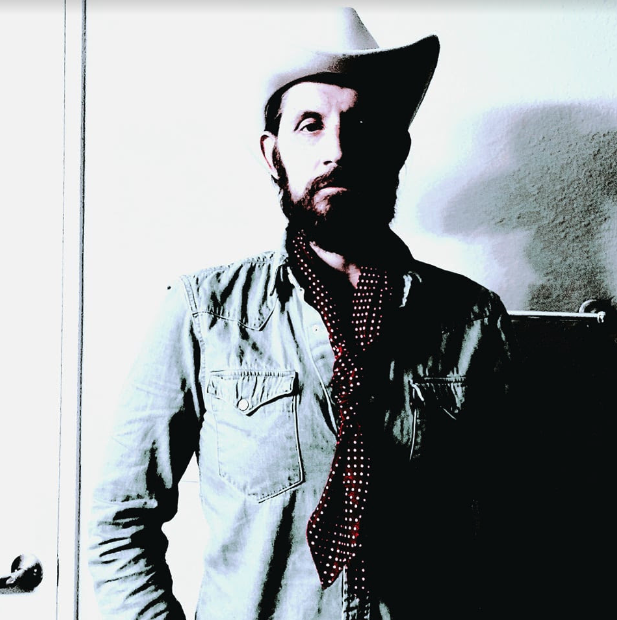
The barest hovering of a held note and most minimal of traced finger work, brushes and brassy resonance is enough to conjure up arid vistas, rumination and “sullen” emotions on Blake Edward Conley’s fifth album for the North American label Somewherecold.
The Louisville-based guitarist-composer can convey or draw out deep-held feels, sentiments and remembrance from scarcely rhythmic loops and drones – hence the Droneroom moniker. And whilst recording stations include the arrival/departure lounges of the Soulsville, Memphis TN and Denver International airports – Las Vegas too –, this latest vaporous and resonated transformation pictures mirages on mysterious desert horizons and both McCarthy and Lynch’s supernatural, occult ghosts of the old American West; think Ry Coder as an alternative choice for The Blood Meridian, or, the Gunn-Truscinski duo collaboration scoring Paris, Texas. ‘You Can’t Piss In The Same River Twice’ (sound advice) goes even further in evoking something both alien but recognisable. A filtered, muffled spherical vortex spins around like some off-world portal as Conley picks at and sort of strums a very removed vision of bluegrass on a brassy-resonating banjo.

‘Other Desert Cities’ sounds more like an enervated Sunn O))) with Brian Rietzel in a haze of blurred and more trilled echoes of nothingness. And yet a landscape image of something other and paranormal emerges from razor buzzes, scaly nickel strings and soft harmonies. It’s as if there’s a prevailing presence of someone, a thing, even time itself. ‘Cole Morse Was A Friend Of Mine’ whilst not so much elegiac, does paint a personalized desolate empty world of dust and reflection. It’s followed by another tribute/homage/thank you allusion to remembrance. ‘Nothing Of Value Is Ever Truly Lost (For Jess)’ is filled with warm feelings, a fondness, that’s weaved into an intimate gentle cascade of melodic country-folk-Americana guitar stirrings (reminding me a little of Raul Refree) that sound almost sitar like.
Abandonment, oaths, mourning and love hang like tangible descriptions in rippled, palpitating and softly juddered panoramas. Loops, vibrato, fanning effects are both wispy and sonorous; the guitar and banjo both recognisable and oblique on an album that applies an ambient and drone mystery to what you could call an abstract expansion of Americana.
 Monolith Cocktail Blog