A world of sonic/musical discoveries reviewed by Dominic Valvona. All entries in alphabetical order.
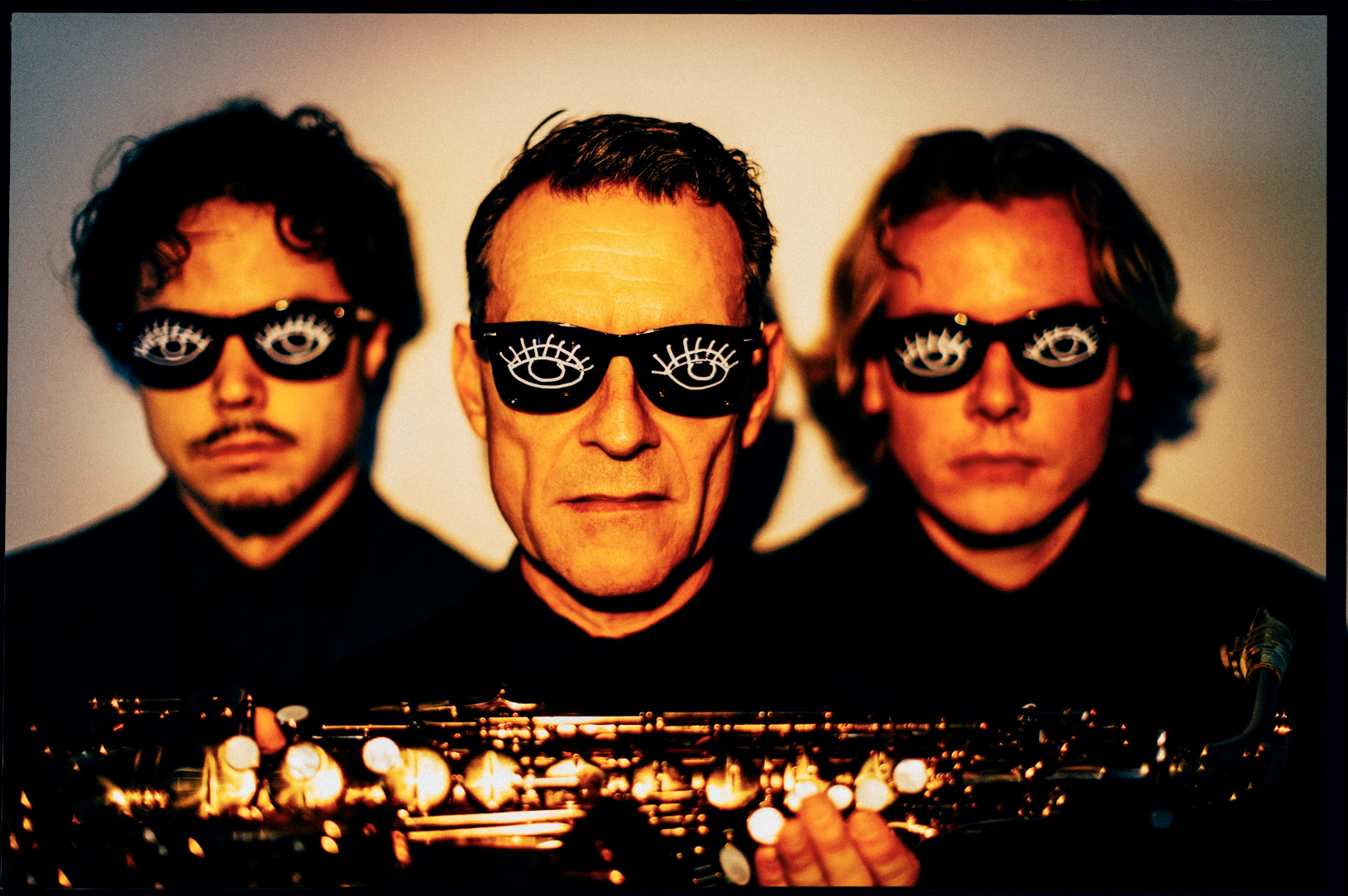
Image Credit: Jonathan Herman
Andy Haas ‘In Praise Of Insomnia’
(Resonantmusic) Released 1st February 2026
I’ve been saddled with insomnia for years, but unlike the highly talented and explorative, and curious saxophonist Andy Haas, I’ve found it difficult to put those waking hours to good use creatively; let alone on the auspicious seasonal occasion of the Winter Solstice, the date on which all these recordings were played and then saved for posterity. I must say, since the double whammy of a kidney autoimmune disease and a minor stroke, my own personal problems of insomnia have pretty much disappeared – I don’t recommend it however! But put to good use here, Andy ushers in the light changes, the almost religious and spiritual emotions and feels of the environment. His sax mirrors the fluctuations and expressions of playing without the hindrance, burden or weight of expectation; just one guy expressing himself and current moods, his experiences of life in the moment on a special day.
Whilst not wishing to repeat myself, I struck up an online and postal friendship with Andy after first writing about the highly experimental saxophonist, trick noise maker and effects manipulator’s turn touring as a band member with Meg Remy’s Plastic Ono Band-esque U.S. Girls a few years before Covid. The former Muffin, NYC side man to the city’s attracted maverick luminaries of the avant-garde and freeform jazz, and prolific collaborator with Toronto’s most explorative and interesting artists, has sent me regular bulletins (and physical copies) of his various projects ever since. Some have been in the solo mode, others with friends, foils and collectives. In Praise Of Insomnia is free of artifice and augmentation; the sound of a singular saxophone and circular breaths (the only other apparatus or consideration is Andy’s stereo manipulations of each track once its finished) alive with a language that admirers and followers of such luminaries as Sam Rivers, Jonah Parzen-Johnson, Evan Parker and Roscoe Mitchell will recognise. It has history and roots, but exists in the now with its squalls, shrills, the fluted, drones, curves, peaks and reedy vibratos that often sound like a mizmar – in fact I sometimes pictured minarets when closing my eyes and just letting the playing transport me from my boring surroundings at home in a dreary, wet Glasgow.
Free and wild, and yet also thought through, almost considered and concentrated, each track (prompted by descriptive and personalised titles) shows purpose; the subject matters often plaint, questioning or disheartened at the metaphorical darkness of the age, but also noting the artist’s own mood changes, and his battles with insomnia itself. It would also make a great soundtrack.
Benjamin Herman ‘The Tokyo Sessions’
(P-Vine Records in Japan/Roach Records & Dox Records the rest of the world) 27th March 2026
Though this is possibly the first time I’ve ever featured the London born but Netherlands raised alto-saxophonist Benjamin Herman on the site, his influence across the European arena of jazz looms large. With over fifty albums and untold thousands of the live gigs (either as a solo artist or as the frontman of the New Cool Collective troupe) to his name during the last thirty or so years, Herman has pretty much convincingly expanded his talents to play foil, collaborator and instigator to projects that span the musical and creative genres – from hip-hop to poetry, to rubbing alongside pop stars and embracing everything from Afrobeat to Latin and film, to the more anarchic and wild.
Venturing out to the far East with double-bassist Thomas Pol and drummer and producer of this album Jimmi Jo Hueting, Herman and his musical partners absorbed everything that was on offer from the eclectic Tokyo hothouse districts of Shimokitazawa and Koenji. Expanding the ranks to include a rich ensemble of guest from the Japanese jazz scene and beyond, they recorded these inspired sessions at the well-known “recording sage” Akihito Yoshikawa’s equally famous Studio Dede hotspot.
Paying homage, spiritual recognition and cultivating the mystique and mystery of Japan’s landscape, its culture, its traditions and abundance of talented jazz players, there’s haywire-like chops of floppy disk experimental Sakamoto, the shrouded misty sounds of Shinto and fluted and blown bamboo music amongst an abundance of reference points from elsewhere. With accomplished musicians like Ko Ishikawa on the Sho (a mouth organ), Tomoaki Baba on sax and Shinpei Ruike on trumpet (bringing a blue shade reminisce of Miles Davis sadness to the studio referenced ‘Dede’) there’s tributes to the Japanese scene and one of its capital’s most famous jazz nightspots, the NRFS abbreviated “no room for squares” – as borrowed from Hank Mobley’s iconic Blue Note released LP of 1964, and more than an inspiration here I believe.
But amongst those cultural appeals, a distillation of the Japanese scene and environment, there’s literal blurts of no wave and post-punk jazz, the noirish and cinematic, show tunes, swing, funk, the wired, colourful, willowy and many examples of mirages and swamp-like veiled mysterious.
At any one time then, you can expect to hear a free flow and agitation of downtown NY, the city skyline jazz scenery of the 50s and 60s, Last Exit, Snapped Ankles, John Zorn, Biting Tongues, Mats Gustafason, Donny McCaslin’s work with Bowie, Jimi Tenor, Comet Is Coming, the Nordic school of jazz, Tong Allen, Lalo Schifrin and John Barry! (in the closing moments of the spy soundtrack does Blue Note ‘Tokyo Moon’ you can hear what sounds like a riff on the 007 theme). Yes, I think we can agree a lot to take in. But with a generous offering of 13 great tracks and no fillers, this Tokyo session is going to appeal to many.
Ombrée ‘Calvaire’
(I Shall Sing Until My Land Is Free) Released 2nd February 2026
Seemingly apt if in an entirely different geographical setting, far from the torn-up battlefields, this album is tied via its facilitator to the Ukraine supporting I Shall Sing Until My Land Is Free label, and its founders own sonic manifestations of doom-laden scared environments: In the case of both Dmyto Fedorenko and Kateryna Zavoloka it’s their native and brutalised country, now in its fifth year of defensive action against the barbaric invasion forces of Putin’s Russia. Meanwhile, coming to terms with their own loss, Ombrée uses a similar soundboard and apparatus of industrial noise, metal machine music, sonorous bass guitar frequencies and slabbed vibrations and crackled pylon charges to process the death of his father, who passed away in February of 2025.
Prompted or set in motion by the sounds of the surroundings and the village’s church bells, Calvaire invokes memory through both field recordings and expressions of death’s many manifestations. Ombrée’s father, we’re told, would have probably hated this musical invocation, illusion and dark meta-built encapsulation of that mourning process, but for its creator and us the album is both a guttural and sophisticated response to its subject.
To the distant echoes of tolled bells and a Gothic atmosphere of an older rural France – the toil of the land, the echoes perhaps of old wars and tragedies still very much of the everyday scenery and psyche – Ombrée scratches the needles of detectors and equipment over the terrain to produce a death noise industrial slab of static, the paranormal, the razored and ghostly. Apparitions in the shadows at every turn; the venerable sounds and atmospheres of the funeral and wake; the coarse fibres of broken electricity and magnetic forces; the Fortean radio set tuned into the afterlife; and the dark materials of trauma uncovered by the plough and spade all come together in one suitably unsettling memorial.
Rocé ‘Palmier’
(Hors Cadres) Released 20th March 2026
With a softer and more melodious flair for an ever-widening use of music references and inspirations, the French-international hip-hop veteran Youcef Kaminsky (better known as Rocé) seamlessly blends new compositions of Latin, French, Italian, North African and South American flavours with modern spells of R&B, rap and electronica on his incredible new album Palmier (“Palm Tree”).
On a disarming pathway, Youcef taps into his roots and his mixed heritage (born in Algeria with his formative years spent in Paris) to rap, sing, report and recall with both emergency and poetic conscious fluidity. And whilst learning of his parents own extraordinary stories and backgrounds – his dad’s history within various anti-colonist resistance movements around the world (Adolfo Kaminsky, as that family name may suggests, are Russo-Algerian French in origin), and his checkered career as a photographer and master forger – and the depth to Youcef’s own studies and extensive recording output, this album has less of a revolutionary zeal and more a sense of real warmth and beauty to it. Listeners will find a sound that’s just as open to the embrace of Morricone as café society jazz, Issac Hayes, cool classical French maladies and American vocoderised soul. In other words: pure class. And yet there’s still an edge to it, a realism and sense of suspense, of the shadows, of current concerns in the search for balance, harmony and identity.
There’s seldom been much like it; the attempt to merge so many cultural markers and ideas and experiences; to recall those innocent and important feelings and places that matter – not in hip-hop anyway. The musicianship and contrast between rapping and a band of jazzy and classical or chamber musicians did remind me a little of Marcelo D2 & SambaDrive ‘Direct-to-Disc’ LP from a couple of years back. But it remains rather unique, crossing over as it does into so many classy and fully lush genres.
You can certainly, even if you don’t understand the French dialect and language, gauge the emotion and the intensity, the themes and scenes conjured out of the notebook and from each instrument. It also helps that guest vocalist, the worldly, Natacha Atlas does much to soothe and dreamily invoke a certain romantic plaint of North Africa to the deft electric piano-like tinged ‘La Voie Laactee’. And whilst we are at it, a shout out to Nathalie Ahadji’s dreamy, wafted and mizzle-like saxophone; to Cisko Delgado’s soulful and light jazzy cosmic keys (though also credited with bass and on arrangements); and to Samy Bishi’s sweeping, near cinematic in places, violin – Youcef can be heard himself picking up the violin on one of the album’s airy mirage-like interludes.
Compositions and songs are mapped out like a personal cosmology of jazzy suites, neighbourhood reportage, frank discussion and more sympathetic articulations and dreams. A great album in short that entertains as much as it educates and impresses.
Nicolas Remondino ‘Hieratico’
(OOH-sounds) 27th March 2026
Scrapes, shavings, rubs, carvings, tangles of tin and metal; various percussive and drum apparatus timbres, textures along with the unidentified sound of spokes are all used to illuminate crepuscular observed moments and experiment in a soundscape of almost silent disturbances, shadows and observations on Nicolas Remondino latest album. Filed under the solo name this time around, Hieratico includes a host of cameos and an appearance from one of the many groups he’s founded over the years, the Dròlo Ensemble. Many voices and musicians join the fold, appearing often for a brief moment, or suffused amongst the avant-garde, explorative and minimalist passages, churns, circular brushing movements of a simultaneously venerable, supernatural and esoteric nature.
Appearing, I believe, for the very first time on the site, Remondino studied under the improvising luminary of classical and jazz piano, Stefano Battaglina. Remondino appears variously under the LAMIEE moniker when in the solo guise but also founded the Tabula Rasa and Silentium ensembles. There’s also been an extensive list of collaborations, some of which appear on this album. And as if to reflect these various foils and their homelands, track titles seem to be in multiple languages: Italian, Spanish, Portuguese, Corsican, but also as far away as Japan. There are some solid names with renowned reputations on the abstract, avant-garde and musique concrète fronts, including the highly respected and experienced musician and vocalist Limpe Fuchs, who’s mantric “no formalism” approach to soundscaping and fluctuated peaks and meandered twisted spoken words can be heard on the strange ching and chimed gamelan-esque ‘Blue Hymn’. The trio of Pierre Bastien (perhaps best known for the Meccano machine Mecanium orchestra), Massimo Silverio (singer-songwriter and composer) and Marco Baldini (a Florence-based composer) manifest some unease amongst the low tuba-like Close Encounters calls and cathedral organ permeation of ‘Tombal’. You could call it an inter-generational balance of ideas, or just feeling out the right sound, the right atmospheres.
Dialects traced back to the time of the Romans, with the Carnic region of the Alps, can be heard in abstracted forms alongside mountain goat trails into, what sounds like, the various ranges that surround Tibet and a reification of the I Ching. Sounds like felt and various materials are wrapped or brushed over the mic, and bottles are rattled, sheets of metal wobbled to resemble a strange thunder, and spoken passages, poems of s sort are pronounced with both wistful resignation and disturbing disquiet.
At times it reminds me of cLOUDEAD and at others of Walter Smetek, but also a whole load of experimental Italian contemporaries too. But at its heart, the album seems unique in its surroundings and processes; the atmosphere and mood personal yet dealing with abstract ideas in a nocturnal climate of freedom and textural experiment. That’s a recommendation by the way!
Snake De ‘Alla Sorrentina’
(Kythibong) 27th March 2026
The results of emptying out an assemblage of hard drives, Dictaphones, mobiles and other assorted devices and units of storage, the collaborative duo of Maxime Canelli and Aymeric Chaslerie put together a less linear and more abstracted, surreal and sci-fi album of eroded fragments, passages, extemporised hauntings and sci-fi interiors.
With a bilingual language of prompted and descriptive titles, each piece seems to have manifested from the ether or the recalled. Like La Monte Young playing exquisite corpses with the Olivia Tremor Control, Basic Channel and a host of kosimsiche innovators, Alla Sorrentina merges the concrete with the tubular, the kinetic, the alien and avant-garde: and many points between. There are touches of the melodic and tuneful amongst the collage and the fragments of data, voices (even continental laughter), static, cosmic bells and the varied jingles and jangles, the hanging and scrapes of the Zodiak and Swiss Cabaret Voltaire art-theatre percussion.
An enervated Faust Tapes perhaps, the album also reminded me in places of playful Cluster and Roedelius. The remnants of near church-like keys are placed with the alpine, the galactic and spells of hallucinatory dream weaving. You could catch something Japanese, something of the Fluxus composers and those working in early electronica as the carousal of sonic ideas and influences circulates. And you can read a lot into the oscillations, the staccato signals, hums, harmonic pings, the indigestive-like masked voices, and the metallic visions of extraterrestrial life.
It’s the sound of liquid bowls; it’s a world both underwater and luna; an hallucination of accumulated sounds, atmospherics, field recordings, tunings, hidden percussive objects, whistled and blown tubes, a baby’s cry and removed surroundings. Something a little different anyway, worthy of investigation and absorption.
Gregory Uhlmann ‘Extra Stars’
(International Anthem) Released 6th March 2026
The innocuous, those meandered thoughts, incidents and gestures magnified, and the noted observations witnessed of nature and its interactions are transformed into a unique musical language by the composer and guitarist (though should really say multi-instrumentalist at this point) Gregory Uhlmann.
A rightly celebrated and held in esteem regular of the L.A scene and constant presence on the rightly revered and much liked International Anthem label, with turns in the collaborative SML collective, a foil to both Perfume Genius (who appears on this album) and to Josh Johnson and Sam Wilkes (last year’s Uhlmann Johnson Wilkes album made my choice release of the year roundup) and to fellow label mate Anna Buterss (anther collaborator who makes an appearance, popping up on bass), Uhlmann has finally found time to go solo with an enriching synthesis of luminescent and ruminated quandaries, descriptions and serendipitous wonders.
Extra Stars inhabits a familiar if now made dreamy, lunar, sometimes oddly and beautifully world and environment; some of it used as prompts and reference points, like Lucia, which refers to the lodge where both Uhlmann and his partner stayed out on the famous Cabrille Highway that runs between San Francisco and Santa Barbara. Less an innocent Beach Boys-like celebration of Big Sur culture and more a tine’s ticking and Mulatu Astatke and Getatchew Mekurya embraced mizzled and snozzled hum of languid unease, the field recorded waves that crashed all around during that stay appear more like tape hiss and noise and point towards the “unnerving”. Though, with Alabasters deft wistful and near serenaded touches it is a beauty of a track. Actually, there’s a feel of that near Ethiopian influence, mixed with something further east and oriental on the beautifully Matmos does cosmic Joe Meek and Django ruminating Days – what a dreamer of a lulled tune that one is. I’m hearing the composition and playing of Emahoy Tsege Mariam Gebru too, but a lot of the calculus of flutters, bulb-like notation, cascades, harmonic twangs, numbers and multi-layered techniques of such luminaries as Riley, Cage, Reich and Spiegel; all made that more appealing, magical, sparkled, lunar and dotty!
There’s a good and transformative use of the guitar, the mellotron and organ, amongst other expanded instrumentation. And even a use of the voice, with guest Tasha Viets-Vanlear’s “bah” voice put through different pitches and sequences on Voice Exchange.
This really is a most delightful and imaginative album, a whirly trip of modulations, sequences at ease, quirks and warbles. Touching on everything from new age avant-garde to the kosmische (some hints of Cluster and their peers), the American school of pioneering electronics, the post-whatever it is that bands like Tortoise do, echoes of Sakamoto at his most loose and experimental, ambience and cosmic shimmered atmospheres. It makes for an intriguing, often woozy and dreamily transformative listening experience.
Here’s the message bit we hate, but crucially need:
If you’ve enjoyed this selection, the writing, or been led down a rabbit hole into new musical terrains of aural pleasure, and if you able, then you can now show your appreciation by keeping the Monolith Cocktail afloat through the Ko-Fi donation site.
End of the Year Revue For 2025: Part One: A to M
December 11, 2025
Choice Highlights From The Last Year
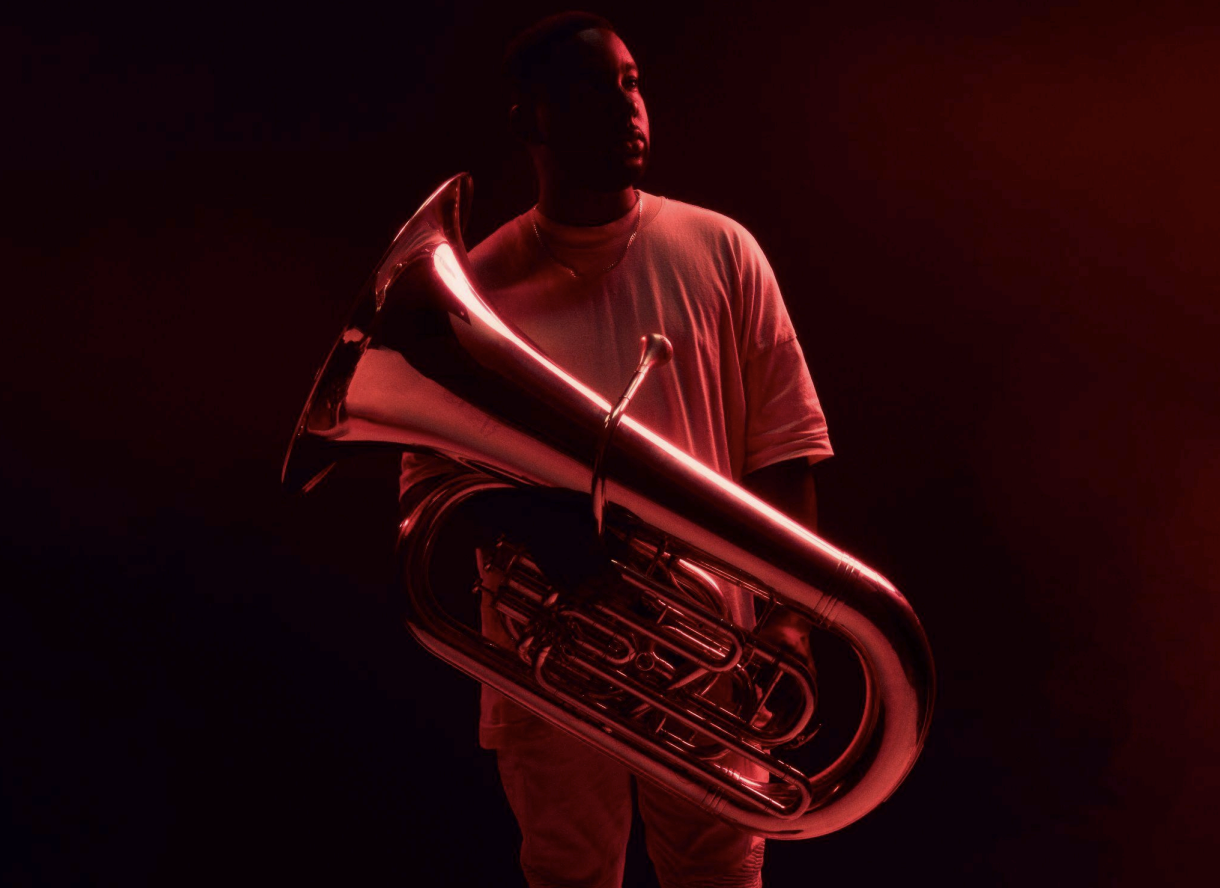
I said I wasn’t going to do it this year. And this may be the last. But here is the first part of a comprehensive revue listing of choice albums (some extended EPs too) from 2025 that we returned to the most, enjoyed or rated highly. See it as a sort of random highlights package if you will.
As usual a most diverse mix of releases, listed alphabetically – numerical orderings make no sense to me unless it is down to a vote, otherwise what qualifies the placing of an album? What makes the 25th place album better than the 26th and so on…
Whilst there is the odd smattering of Hip-Hop releases here and there, our resident selector and expert Matt Oliver has compiled a special 25 for 25 revue of his own, which will go out next week.
Without further ado….the first half of that selected works revue:
A.
A Journey Of Giraffes ‘Emperor Deco’ (Somewherecold Records)
Review by Dominic Valvona
Alien Eyelid ‘Vinegar Hill’ (Tall Texan)
Review by Brian ‘Bordello’ Shea
Allen, Marshall ‘New Dawn’ (Week-End Records)
Review by Dominic Valvona
Armstrong ‘Handicrafts’
Review by Brian ‘Bordello’ Shea
Audio Obscura ‘As Long As Gravity Persists On Holding Me to This Earth’
Review by Dominic Valvona
Aus ‘Eau’ (Flau)
Review by Dominic Valvona
B..
Balloonist, The ‘Dreamland’ (Wayside & Woodland)
Review/Piece by Dominic Valvona
Barman, MC Paul ‘Tectonic Texts’
Picked by Dominic Valvona
Bedd ‘Do Not Be Afraid’
Review by Dominic Valvona
Bird, Jeff ‘Ordo Virtutum: Jeff Bird Plays Hildegard von Bingen, Vol 2’
(Six Degrees Records) Review by Dominic Valvona
Blanco Teta ‘‘La Debacle las Divas’ (Bongo Joe)
Review by Dominic Valvona
Bordellos (with Dee Claw)/Neon Kittens, The ‘Half Man Half Kitten’
(Cruel Nature Records) Review by Dominic Valvona
Braxton, Anthony ‘Quartet (England) 1985’ (Burning Ambulance)
Picked by Dominic Valvona
Brody, Jonah ‘Brotherhood’ (IL Records)
Review by Dominic Valvona
Brother Ali ‘Satisfied Soul’ (Mello Music Group)
Picked by Dominic Valvona
Burning Books ‘Taller Than God’ (Ingrown Records)
Reviewed by Dominic Valvona
C…
Cindy ‘Saw It All Demos’ (Paisley Shirt Records)
Reviewed by Brian ‘Bordello’ Shea here
Craig, Kai ‘A Time Once Forgotten’ (Whirlwind Recordings)
Review by Dominic Valvona
Crayola Lectern ‘Disasternoon’ (Onomatopoeia)
Review by Dominic Valvona
Cross, Theon ‘Affirmations: Live at Blue Note New York’ (New Soil)
Review by Dominic Valvona
Cubillos, Julian ‘S-T’ (Ruination Record Co.)
Review by Dominic Valvona
Cumsleg Borenail ‘10mg Citalopram’ (Cruel Nature Recordings)
Review by Dominic Valvona
Joel Cusumano ‘Waxworld’ (Dandyboy Records)
Review by Dominic Valvona
D….
Dammann Sextet, Christopher ‘If I Could Time Travel I Would Mend Your Broken Heart aka Why Did The Protests Stop’ (Out of Your Head Records) Review by Dominic Valvona
Darko The Super ‘Then I Turned Into A Perfect Smile’
Picked by Dominic Valvona
Dyr Faser ‘Falling Stereos’
Picked by Dominic Valvona
E…..
Eamon The Destroyer ‘The Maker’s Quilt’ (Bearsuit Records)
Review by Brian ‘Bordello’ Shea
Expose ‘ETC’ (Qunidi)
Reviewed by Brian ‘Bordello’ Shea here
F……
Farrugia, Robert ‘Natura Maltija’ (Phantom Limb/Kewn Records)
Reviewed by Dominic Valvona here
Fir Cone Children ‘Gearshifting’ (Blackjack Illuminist Records)
Review by Brian ‘Bordello’ Shea
Fortunato Durutti Marinetti ‘Bitter Sweet, Sweet Bitter’ (Quindi Records/We Are Time)
Review by Dominic Valvona
G…….
Goldman, Ike ‘Kiki Goldman In How I Learned To Sing For Statler And Waldorf’
Review by Brian ‘Bordello’ Shea
Good Ones, The ‘Rwanda Sings With Strings’(Glitterbeat Records)
Review by Dominic Valvona
H……..
Haas & Brian g Skol, Andy ‘The Honeybee Twist’
Review by Dominic Valvona
Howard, John ‘For Those that Wander By’(Think Like A Key)
Review by Brian ‘Bordello’ Shea
I………
Ishibashi, Eiko ‘Antigone’ (Drag City)
Picked by Dominic Valvona
iyatraQuartet ‘Wild Green’
Review by Dominic Valvona
J……….
Jay, Tony ‘Faithless’
Review by Brian ‘Bordello’ Shea
Johanna, John ‘New Moon Pangs’(Faith & Industry)
Review by Dominic Valvona
K………..
Kheir , Amira ‘Black Diamonds’(Sterns Music/Contro Culture Music)
Review by Dominic Valvona
Khodja, Freh ‘Ken Andi Habib’(WEWANTSOUNDS)
Review by Dominic Valvona
Kweli, Talib & J Rawls ‘The Confidence Of Knowing’
Picked by DV
L…………
Lassy Trio, Timo ‘Live In Helsinki’ (We Jazz)
Picked by Dominic Valvona
Last Of The Lovely Days, The ‘No Public House Talk’(Gare du Nord)
Review by Brian ‘Bordello’ Shea
Lt. Headtrip & Steel Tipped Dove ‘Hostile Engineering’ (Fused Arrow Records)
Review by Dominic Valvona
LIUN + The Science Fiction Band ‘Does It Make You Love Your Life?’
(Heartcore Records) Review by Dominic Valvona
Locks, Damon ‘List Of Demands’ (International Anthem)
Reviewed by Dominic Valvona here
M………….
Mikesell, Emily & Kate Campbell Strauss ‘Give Way’ (Ears & Eyes Records)
Reviewed by Dominic Valvona here
Mirrored Daughters ‘S/T’ (Fike Recordings)
Review by Dominic Valvona
Mohanna, Nickolas ‘Speakers Rotations’ (AKP Recordings)
Review by Dominic Valvona
If you’ve enjoyed following and reading the Monolith Cocktail in 2025, and if you can, then please show your appreciation by donating to our Ko-Fi account. The micro donation site has been vital in keeping us afloat this year.
For the last 15 years both me and the MC team have featured and supported music, musicians and labels we love across genres from around the world: ones that we think you’ll want to know about. No content on the site is paid for or sponsored, and we only feature artists we have genuine respect for /love or interest in. If you enjoy our reviews (and we often write long, thoughtful ones), found a new artist you admire or if we have featured you or artists you represent and would like to say thanks or show support, than you can now buy us a coffee or donate via https://ko-fi.com/monolithcocktail
THE MONTHLY DIGEST INCLUDES A CLUTCH OF ACCUMULATED NEW MUSIC REVIEWS; THE SOCIAL INTER-GENERATIONAL/ECLECTIC AND ANNIVERSARY ALBUMS CELEBRATING PLAYLIST; AND CHOICE PIECES FROM THE ARCHIVES.

(Photo by Todd Weaver)
___THE NEW___
Ingebrigt Håker Flaten’s (Exit) Knarr ‘Drops’
(Sonic Transmissions) 22nd August 2025
Growing, developing and expanding the remit from what was meant to be a one-off commission, brought together especially for the Vossajazz Festival, the troupe is now on its third titanic fusion rich studio album proper. Set in motion by Ingebrigt Håker Flaten (who also runs the Sonic Transmissions label, home to the ensemble’s recordings) a number of years back, the (Exit) Knarr now acts as the ‘main creative vehicle’ for the Norwegian bassist going forward it seems.
Settling with a reasonable lineup on this third chapter but inviting in a number of guests on the album’s statement piece, a transformed vision of jazz deity Wayne Shorter’s ‘Deluge’ piece from the revered and influential 1965 album release JuJu, on this outing the sextet takes prompt or inspiration from a more visual source. In the sphere of the Russian maverick abstract visionary and Bauhaus professor Wassily Kandinsky and Swedish mystic and abstract progenitor – some would say the true and first ever abstract artist, beating her peers (Malevich and Mondrian) to pure abstraction by a few good years – Hilma af Klint, a number of graphic scores have been used to foster untethered freedoms and play from a group already in the freeform mode. In one way, addressing perhaps the lack of knowledge, the place in which she should stand, there’s an unsaid elevation of Klint, an early adopter of the very spiritualism, Theosophy, that first led the way for Mondrian and many of his circle to dare to strip away every last visage, reference of the world for abstraction. Arguably Klint can be said to preceded Kandinsky and the others to this goal. And her work is filled with the iconic circular shapes, the colurs that would go on to inspire Sonia Delaunay and many others.
As a visual methodology, these scores go some way to painting a reification of a partly live studio performance and the ‘tweaked’ effected and transmogrified aftermaths.
Bringing together Amalie Dahl on alto, Karl Hjalmar Nyberg on tenor and electronics, Marta Warelis on piano and also on electronics, Jonathan F. Horne on guitar, Olaf Olsen on drums and of course IHF on what sounds like both electric and double bass, the album divides two longer form performances with a couple of shorter pieces. Speaking the experimental language of Anthony Braxton with garbled, hysterical and squeezed abandon, and inspired by the equally freeform pioneering Mats Gustafasson and his No Ensemble, the ensemble open with an already mentioned version of Shorter’s ‘Deluge’; taking the original’s more controlled bluesy swing style of simmering and serenaded and crooned sax for a tumultuous ride on the open seas of both discord and crested freefalls. It starts with twisted guitar wire grabbing and neck sliding and incipient tethered drums but soon develops into a recognisable, familiar feel before numerous swells and peaks resemble a fusion of the Henry Grimes Trio (cicra ‘Fish Story’ if we’re being specific), Rashied Ali, the Anthony Braxton Quartet, Keith Jarratt and Darius Jones. Wild in places, with the guitar going on to sound like a sci-fi dialect of tabbed beeps and switches, and the horns squeezed until the pips fall out, the action is shared out equally between all participants without losing a single instrument.: and that’s when you consider there’s also the guests, Mette Rasmussen on a second alto and a second drummer, Veslemøy Narvesen added to that untamed tidal wave experiment.
The album title is next. A change of a kind in tempo and thought this shorter composition articulates those droplets in various ways on a performance that sounds more open air than studio recorded. The sound of a dragon fly’s wings in rapid hovered form hangs around in a chamber-esque atmosphere of musing and pondering. Part JAF Trio, part ECM and part classical-minded jazz of a certain vintage, the gentle cascade of drips and drops fall very nicely and mysteriously on this Scandinavian ice float.
A second centrepiece if you like, ‘Kanon’ is dedicated to the renowned Norwegian drummer, composer and free jazz improvisor of note Paal Nilssen-Love. From his parents famous Stavanger jazz club located incubator to the capital and onto wide world recognition, Paal played with such notable company as Mats Gustafasson and Peter Brotzmann’s Chicago Tentet, before going on to set up his own All Ears festival. As an inspiration to a generation of Norwegians, Paal’s influence is huge. And in this mode, at this time, the sextet conjures up a semblance of his artform and free experimentation. But first, it all starts with some speaking panning of a curled up rattling drum roll, the quivers and quavers of the piano and what could be the attempt to match the sound of a buzzing bee. But it all soon develops into a wilder proposition of Masayuki Takayanagi, Eric Dolphy (I’m thinking specifically here of Out To Lunch!), Roscoe Mitchell, Andy Haas, Bill Dixon and Last Exit. It keeps changing; whether that’s in the action, dynamics between players, the tampering down parts that then peak into hysterical cries of squeezed, rasped and the burbled. A surprising passage of play even takes on a Lalo Schifrin vibe nearer the end.
The finale is left down to a performance that’s manipulated (or ‘tweaked’ as it’s written here), stretched out and elongated into a sci-fi hallucination. As if being treated and remodelled in real time, it sounds like the band is being pulled via a prism into the mirror backwards. It reminded me of the We Jazz label and their own retreated, remixed projects over the years. But stands as a more electronically led production that offers up a slightly off-kilter and magically alien version of their sound.
Ingebrigt Håker Flaten’s (Exit) Knarr colour new directions with an extended palette of ideas and sounds; heading towards breaking point before returning back to a recognition of the free form jazz movement that we can recognise. Source it out.
Andy Haas & Brian g Skol ‘The Honeybee Twist’
1st August 2025
Striking up an online and postal friendship since first writing about the highly experimental saxophonist, trick noise maker and effects manipulator when touring as a band member with Meg Remy’s Plastic Ono Band-esque U.S. Girls a few years before Covid, the former Muffin, NYC side man to the city’s attracted maverick luminaries of the avant-garde and freeform jazz, and prolific collaborator with Toronto’s most explorative and interesting artists, has sent me regular bulletins (and physical copies) of his various projects. Some have been in the solo mode, others with friends, foils and collectives.
Running off just a smattering of those releases (a majority of which have been with the highly obscure Resonantmusic imprint) from the last decade or so, and you have three extraordinary albums with the stringed-instrumentalist Don Fiorino (American Nocturne, Don’t Have Mercy and Accidentals), various appearances on records by Matt ‘Doc’ Dunn’s The Cosmic Range, the warped and discombobulating For The Time, Being solo act, and the avant-garde improvised performative triumvirate of SCRT with regular collaborator David Grollman and Sabrina Salamone.
Andy Haas now partners up with fellow Toronto native Brian g Skol for an unusual duet of saxophone and drums. Although it was recorded back in that city in 2024, the finished concentration and spatial experiment is now seeing the light with an official release via Haas’s own Bandcamp profile. I’m glad it hasn’t disappeared into obscurity, as it is one of the best, most radical but surprisingly rhythmic and pumped, worldly sounding album’s he’s made; much of this is down to the visual artist and percussionist/drummer Skol’s expressive and grasp/ear for international influences of rhythm, from both the Latin and Afro-South American to North Africa and the influence of Jaki Liebezeit.
The Honeybee Twist is a strange union between two instruments seldom pitted against each other; certainly not in this setting, with Haas once more wildly controlling the panning of his serialism style and both atonal and shrilling, bristled circular breathing sax and Skol combining hand drums, various percussive elements and drum kit breaks to provide a beat, a groove or more sporadic passages of the tactile, textures and tumultuous.
From nothing, reifications of the fire thief Prometheus, compounds, a vertical axis used in a 3-D space to show depth and elevation, self-assembly and play of words take some form of shape across an album of mystery, extemporization, and musing. Whilst stirring up these evocations, these reference points, both players traverse and kick around Arabian landscapes, Jon Hassell’e fourth world, the extremes of Eric Dolphy, Albert Ayler, Sonny Simmons, Andrew Cyrille and Evan Parker, and the factory. The opening mythologically entitled ‘The Eagle And Prometheus’, sounds like a sax and drums transmogrification of Battles; leaping straight in with beating drums, splashes of cymbal and that signature circular breathing technique. This is where I believe you can hear an echo of Saw Delight era CAN relocated to Egypt or the Arabian souk: Haas’s sax starts to sound more like a shrilling vibrating mizmar or even a zurna, and Skol’s drums could be mistaken for the daf and riz on occasion.
Against the near constantly moving, feeling and exploring drums and percussion, Haas’s effected sax goes from blues to freeform jazz, to reflections and colloquy and soliloquy. There’s a harshness and roughness at times to that instrument as it goes through various warbles, buzzes, rasps and drones.
Despite the title of ‘Maybe I’m A Machine’, there is no mistaking that this is a very human interaction between two highly experienced experimental artists circumnavigating any kind of easy label, demarcation. The notes of an abstract nature bristle, vibrate and trill to a near amorphous global rhythm on a most experimentally original collaboration. Please seek it out.
Maria Elena Silva ‘Wise Men Never Try Vol. II’
1st August 2025
As promised last month, the second volume in the Wise Men Never Try series from the near evanescent and relaxed but deeply effecting singer and musician Maria Elena Silva.
After previous releases, some of which featured such notable company as Jeff Parker and Marc Ribot, and after stripping back Bob Dylan’s courtly enigmatic dames to their most essential essences with interpretations of both ‘Queen Jane’ and a summoned bell rung ‘Sad-Eyed Lady of the Lowlands’, the Chicago homed Maria has turned to readapting, revaluating and transposing various themed songbooks from America’s past. Volume I, reviewed in the July Digest, turned to the pages of the Great American Songbook with familiar standards made anew and enigmatic through the emotively ethereal, connective, almost otherworldly and with a real sense of depth and something approaching the tactile – especially instrument wise.
Under that same ‘umbrella title’ the second volume travels further back in time to the America Civil War period of rousing, rallying, sorrow, tragedy and hope sheet music; much of the material used to bolster a flagging campaign by the Union during the early and mid-years of that horrifying, destructive and divisive war – arguably never really settled, with suspicion still between the North and South of the country culturally, politically and economically. In fact, recalling songs from nigh on 160 years ago has never seemed more prescient; chiming true with the age we find ourselves in right now. A balance is struck, history revisited, propaganda resized, and the sentimental repurposed. But arguably, the emphasis in this case is on the music of the eventual winners in this five-year conflict; although a number of the songs and rallying calls for the Union were also adopted and adapted by the Confederacy after they’d seen the effect it had on boosting morale and symbolising the cause.
Once more in an intimate setting with just the accompaniment of Erez Dessel on piano, Tyler Wagner on double-bass, and Maria on guitar, the Civil War period is amorphously twisted into minimalist meanders and dreamily untethered shapes of the tactile, the avant-garde, and descriptive. At the heart of it all, Maria’s voice is relaxed and diaphanous; pitched somewhere between folk, the Celtic, the traditional and the jazzy. The tragically played out ‘Booth Killed Lincoln’ sounds a little like Joan Baez in parts. It certainly, in all its traditionalist lament, has an air of Dylan about it and the Laurel Canyon circle of female troubadours. Like a play in itself, the acts, steps that lead to the assassination of Abraham Lincoln on that fateful day, at that fateful performance at the Ford Theatre, Washington D.C., could be lifted off the sensational pages of that time’s broadsheets. Lincoln’s last breath, rather ironically to the last, is very much Dylan: “Of all the actors in this town, I loved John Wilkes Booth the best.” Musically, there’s but an essence of accompaniment, with the double-bass strings sounding more like a wooden set of spokes and a sort of dampened drum. The odd harmonic is twinged.
However, the album strikes a jarring chord of dissonance, a heavily pressed and free form piano opening gambit of Keith Jarrett and Thomas Schultz. Interpreting the American composer of romance and patriotism George Frederick Root’s most popular rallying call, ‘Battle Cry Of Freedom’, Maria seems to counterbalance Dessel’s passing storms, shades of forbode, salon bar upright tones, uncertainty, the abstract and discordant with disconsolate beauty. A second Root interpretation, the succour giving ‘Tramp Tramp Tramp’ (aka ‘The Prisoner’s Hope’, written in the later stages of the war) is sympathetic to the original, but more melodiously jazzy.
Some of the material leans towards country: albeit a version that exists in a fog of the Appalachians and Woodstock. There’s even a moment on ‘Abraham’s Daughter’ where either the double-bass or guitar resembles a banjo. And the album’s most unusual break from the formula (though to use that word is doing Maria and her foils a disservice), the finale ‘My Old Horse Died’, features a far more rustic, loosely and buzzier more carelessly strummed guitar and the sound of what could be some kind of replicated plucking/picking tines. I do love this song; it sounds like Dylan writing a filmic Western song to feature in Little Big Man or McCabe & Mrs. Miller. As far as I can hear, there isn’t much in the way of horses, but some ironic metaphor for loss, wistful financial and property woes: “Swallowed the place where my home stood. Mortgage guy came round, claimed the hole in the ground where my home once stood.” It almost sounds drunken this slice of Western music from the counterculture.
Remembrance, tragedy, the call to arms, and above all, the encouraging original lyrics of the abolitionist (one of the key themes, subjects of many of these songs) ring like wispy or beautified and pining poetry from the battle fields of America. Only, that same divisive rage, the splits, the distrustfulness and hunger for independence rages still to this day; a constant cry wolf of civil war is voiced whenever the political class weaponizes its losses, or failure to win an election. Handled with subtly, and a classy skill that stretches out the meaning, the lyricism, the mood and intention further, a new spotlight has been drawn upon these historical songs; taken into an avant-garde territory without losing sight of a melody, a form or shape, Maria and her foils create a rather unique and incredible atmosphere; bringing dusted off Civil War pamphlets, sheet music and the like to a new audience. Every bit as encapsulating and dreamy as Volume I. It will be interesting to see what Volume III offers, and where Maria goes next. An excellent, spellbinding series so far.
Saul Williams, Carlos Niño & Friends ‘Saul Williams meets Carlos Niño & Friends at TreePeople’ (International Anthem) 28th August 2025
An enviable collaborative union of talent from both the East and West coasts of an America on the eve (or thereabouts) of Trump’s inauguration, under the TreePeople canopy of righteous indignation at the state of a nation, gathered the totemic voiced poetic polymath Saul Williams, the divine styler, multi-instrumentalist, percussionist and producer of afflatus and new age conscious jazz and its many strands, Carlos Niño, and a host of congruous musical friends from a scene of ever-expanding inter-connections. You can’t get any more symbolic than this; setting up for an experimental – perhaps extemporized in part – performance beneath the black oak and walnut trees in Coldwater Canyon Park, L.A. Recorded at the time and now seeing the light (so to speak) eight months later into the new Presidency, this ensemble piece’s headlined foils and longtime friends since the 1990s, combine forces across an archaeological dig of free associations.
But before peeling back the layers of this psychogeography, a little about the artists involved in this part explorative, part free expressive, part oratory and part theatre. Not that Niño would boast, but the highly prolific producer, ‘expansive percussionist’, experimental composer, connector and communicator, has made albums as and with such notable luminaries as Ammoncontact, Build An Ark, The Life Force Trio, and others. And also overseen the Alice Coltrane protégé – the keyboardist, composer and actor – Surya Botofasina’s2022 devotional Everyone’s Children. All the while, leading or instigating his own loose ensemble of multidisciplinary artists and the & Friends banner. This time around, those friends include recurring foil Nate Mercereau (the solo artist in his own right’s skills include the guitar, composing, songwriting, live sampling and improvising), Aaron Shaw (the horn player has worked with such notable icons and names as Elijah Blake, Anderson Paak., Dave Chappelle, Herbie Hancock, and made music for TV and film), Andres Renteria (the L.A. percussionist/drummer and DJ has worked with an impressive host of artists over the year: Jose Gonzalez, Father John Misty, Flying Lotus and Nick Waterhouse), Maria The Artiste (hot-housed in the AACM of Chicago, the woodwind player, vocalist, vibraphonist, bandleader and composer is also a member of the late Horace Tapscott initiated, and now six decade running, Pan Afrikan Peoples Arkestra), Francesca Heart (the partial alias of Italian artist, researcher and electronic artist with a skill at playing the conch shell Francesca Mariano, who makes new age music of a kind on computers), Kamasi Washington (the saxophonist who’s profile has possibly been highest over the last twenty years, after ushering in a revival of a sort on spiritual, odyssey jazz, has picked up a number of awards and plaudits for his work and collaborations) and Aja Monet (the lauded and awarded contemporary poet, writer, lyricist and activist can be heard joining Williams with a forewarned and haunting poetic vision on ‘The Water is Rising/as we surpass the firing squad’).
Needing no introduction, but getting one anyway, American rapper, singer, songwriter, musician, poet, writer, and actor Saul Stacy Williams first came to attention during the late 1980s on the New York café poetry scene. The burgeoning innovator, mixing beat/poetics/slam and hip-hop, soon stood out. A big break came as the lead in the awarding winning Marc Levin directed movie SLAM in the 90s; the phenomenon of slam poetry, its reach via competitive performance outside academia, set free from the stiff studied branches of the elite institutions. The list of peers that Williams has performed with is incredible; from blast master KRS-One to illmatic Nas, The Fugees, beat poet Allen Ginsberg and Black arts movement luminary Sonia Sanchez. Williams has also been a driving force behind the Brooklyn Afro-punk movement, written a libretto for Ted Hearne’s LA Philharmonic produced oratorio PLACE and two symphonies by the late Swiss composer, Thomas Kessler, based on two books of Saul’s poetry, Said the shotgun to the head and The Dead Emcee Scrolls. The scope and range are wide indeed, with both Williams film roles and a stint on Broadway as the lead in the first hip-hop musical, Holler If You Hear Me – based upon the lyrics of Tupac Shakur – to consider. And on top of that a sextet of studio albums and quartet of poetry books, all translated into multiple languages. The self-titled album debut of which was produced by Rick Rubin. There’s so much more of course; a whole Wikipedia page in fact to delve into.
But what’s important is that the experience, creative richness and innovativeness of all participants in this movement of change is in no doubt. And when all brought together like this, the results have a real depth and breadth, weaving together so many connective threads of outrage and riled injustice and indignation. This is meta, an alternative, sometimes more felt than real, history toiled over until exposing the roots.
To distil this performance down to jazz would be an injustice in itself, as the ensemble and their two leads accentuate, ring and punctuate, and, without rhythm in most cases, build a spiritual, conscious and traumatic atmosphere around and bedded beneath the either peppered, prophesied, near uninterrupted flow of racial injury, of hurt, of rage and recourse. The musical and sound elements certainly recall some of the signatures of jazz; of artists such as Coleman, the Pharoah, the Art Ensemble of Chicago, of Don Cherry, The John Betsch Society, of Brother Ah and Idris Ackamoor. But nothing quite frames this performance, demarcated into four parts with an after show of appreciation and emotional final word sit-down with the audience. For amongst the collage of the atavistic and primal, as prehistoric beasts lift their heads disturbed by the stirring hands of the dig, and Edan’s wildlife emerges from the grasslands, and the sax sings a parched reedy song, the percussion mirrors the sounds of dry bones and beads, and the vibraphone’s bulb-like notes float like particles in the style of Jamal, Williams delivers omens and a associative thread of technological, economic, political, social ills. Williams sounds one part Quelle Chris, another part Amiri Baraka on that opening “land map”: that cradle of uncivilised repeal. Later on, as the poetics seem to be less interrupted or stretched, the style is more Watts Prophets; especially on ‘We are calling out in this moment’, which links together the origins of Manhattan and its stock exchange with the original Lenape peoples that once farmed it, cultivated it and called it home before the arrival of the Dutch and then the English. Origin stories connect with the occupy movement, Black Lives Matter in a flurry of redress; the financial epicentres slave trading roots almost matter-of-factly and shockingly mapped out.
Later on, Williams is joined by Aja Monet for the new age balm turn African wilderness haunting ‘‘The Water is Rising/as we surpass the firing squad’, who’s contribution amongst the vibraphone tinkles and dreamy serenaded saxophone wafts and lingers and pines, and the “insect gossip”, recalls Tenesha The Wordsmith passing the mic to the Last Poets, once Williams takes up his post in front of the said allegorical “firing squad”.
Sitting down with the audience at the very end of this astonishing performance – bordering on both the theatre, the counterculture, and the activist -, and after the stats, the re-purposed jargon, the rebalance of history as it was and is, a time of emotional pleading and reminder that there is still work to be done. But that message is one of community and the need to build and maintain networks of support in the tough times; not to wallow or give in. But as one stage in the fight this album marks a new enterprise and platform for greater harmony and a safe place for experimentation. International Anthem can do no wrong, as they continue to facilitate such creative sparks of inventive free play and poetry.
___/The Monolith Cocktail Social Playlist Vol. 100___
For the 100th time, the Social Playlist is an accumulation of music I love and want to share; with tracks from my various DJ sets and residencies over the years and both selected cuts from those artists and luminaries we’ve lost on the way and from those albums celebrating anniversaries each month.
Running for nearly 12 years now, Volume 100 is the latest eclectic and generational spanning playlist come radio show from me – the perfect radio show in fact: devoid of chatter, interruptions and inane self-promotion.
Here’s to the hundredth edition, which features a homage or two to Terry Reid and Howie Tee, who we both lost recently. Self-coining his own nickname, Reid’s voice was lionised as “superlungs” for his incredible vocal prowess. But as an all-round package, voice, guitarist and rock artist of universal repute – in any article or description, Reid is anointed as the ‘artists’ artist’ -, Reid could shake the foundations of blue-eyed soul and maximum R&B, blues rock and heavy rock. His name was touted around the 1960s, courted to front or join countless luminaries, from Led Zep and Deep Purple (he turned them both down). There’s many eclectic steps on the way, including a penchant for the Latin rhythms of Brazil (falling into his orbit during 1969, Gilberto Gil and Caetano Veloso, recently exiled by the military dictatorship of Brazil, were helped by Reid’s attorney to come to London; they would go on to flank Reid at the seminal Isle of Wight Pop Festival almost a year later in 1970), a direction into introspective jazz, desert mountain commune living and session work for Don Henley, Jackson Browne and Bonnie Raitt – this came after Reid more or less decided to retire from his solo career. A rich life lived. So, in my selection I’ve gone for a smattering spread of tracks from the cannon, starting back at the beginning with the title track from the 1968 LP bang bang you’re Terry Reid plus ‘The Hand Don’t Fit The Glove’, ‘Rich Kid Blues’, ‘Live Life’ and ‘Ooh Baby (Make Me Feel So Young)’.
From a whole other sphere of the musical landscape, Howie Tee, the hip-hop and new jack swing hit maker of repute during the 80s and 90s. Born in the UK, but raised up in Flat Bush, Brooklyn, Tee’s (or the name his folks would recognise, Howard Anthony Thompson) musical protectory took flight with a break in the early electro crew CDIII. Already familiarising himself with the mixing desk and production tools, Tee quickly jumped ship to producing, his first success being in conjunction with U.T.F.O.’s Kangol Kid, with the commercially hot hip-hop group Whistle. At the same time Tee also put together the equally successful Real Roxanne collaboration, scoring with ‘Bang Zoom (Let’s Go-Go)’ – which as the name suggests, rides on the go-go phenomenon. There would also be production credits for records by Cash Crew, Seeborn & Puma, E.S.P. and Izzy Ice. Tee then became the in-house producer for the New Jersey-based independent label Select Records, producing relative hits for Special Ed and Chubb Rock. But it wasn’t all hip-hop orientated, for in 1991 he mixed and co-produced Color Me Badd’s ‘I Wanna Sex You Up’: a Billboard number one. And he also made remixes for such diverse acts as Madonna and Maxi Priest. I’ve chosen both Special Ed and the Real Roxanne, plus Chubb’s bromance cut, ‘DJ Innovator’.
In a celebratory mood, I’ve also kept up the monthly inclusion of anniversary album tracks, with 60th nods to The Beatles Help, Dylan’s Highway 61 Revisited (I’ve gone for, what I hope, is two not so common of known cover versions from both) and Miles Davis E.S.P. There’s also 50th glass raisers to Cortex’s cult favourite, Troupeau Bleu, Don Cherry’s pioneering Brown Rice, and Eno’s Another Green World.
Every month I like to collect up some of the more newish or recent tracks that didn’t make the Monthly playlist selection – either for lack of space or I just forgot to include at the time. In that category there’s Elaine Howley’s diaphanous, translucent ‘Hold Me In A New Way’, Mike Cooper’s vague South Seas, Pacific exotic mirage ‘Eternal Equinox’, U.S. Girls’ Jane (Doe) Country and Plastic Ono Band funk ‘No Fruit’, the collaborative PAUER/Wolfgang Perez/Der Wandler/Magic Island union’s yearning ‘Falling Over You’, and Pons hi-energy 80s work-it no wave dance diatribe ‘Fast Money Music’. There’s also a track from the recently released, and featured, Woody at Home Vols 1 and 2 – Guthrie hanging round like Banquo’s ghost over Dylan, who’s Highway is revisited this month.
The rest of the playlist is made up of cross-generational from across the ages by Jaz-O, Baby Washington, Isan Slete, Vincent Over The Sink, Phantom Payn Days, Lynn Castle, Mad Walls, Massacre and more…
TRACK LISTING:
The Real Roxanne FT. Howie Tee ‘Bang Zoom (Let’s Go-Go)’
Pons ‘Fast Money Music’
Themselves ‘Roman is as Roman Does’
Waylon Jennings ‘You’ve Got To Hide Your Love Away’ Mariangela Celeste & Vangelis ‘Honolulu Baby’
Woody Guthrie ‘One Little Thing An Atom Can’t Do’
Frankie Valli & The Four Seasons ‘Queen Jane Approximately’
Terry Reid ‘The Hand Don’t Fit The Glove’
Baby Washington ‘The Ballad Of Bobby Dawn’
Terry Reid ‘Rich Kid Blues’
U.S. Girls ‘No Fruit’
Lynn Castle ‘You Are the One’
John Baldry ‘It Ain’t Easy’
Isan Slete ‘Lam Phloen’
Terry Reid ‘Bang, Bang (My Baby Shot Me Down)’
Miles Davis ‘R.J.’
Jaz-O ‘Put The Squeeze On ‘Em’
Special Ed ‘I Got It Made’
Cortex ‘Automne – Colchiques’
Brian Eno ‘Sky Saw’
Furniture ‘My Own Devices’
Mad Walls ‘Lily’
Massacre ‘Bones’
Terry Reid ‘Live Life’
Mint Tattoo ‘Wrong Way Girl’
Terry Reid ‘Ooh Baby (Make Me Feel So Young)’
Chubb Rock Ft. Howie Tee ‘DJ Innovator’
Don Cherry ‘Degi-Degi’
Elaine Howley ‘Hold Me In A New Way’
Mike Cooper ‘ETERNAL EQUINOX’
Xul Solar ‘Sigh’
Vincent Over the Sink ‘Number Theory’
Phantom Payn Days ‘primitive chamber music phone call blues’
Woody Guthrie ‘I’m A Child Ta Fight’
Willis Earl Beal ‘Like A Box’
Marcos Resende & Index ‘Nina Nenem’
___/Archives___
From the exhaustive Archives each month, a piece that’s either worth re-sharing in my estimates, or a piece that is either current or tied into one of our anniversary-celebrating albums. From the former category, my original review of Willis Earl Beal’s nite flights soul harrowed and ached Noctunes album, released a decade ago this month.

Willis Earl Beal ‘Noctunes’
(Tender Loving Empire) Released 28th August 2015
Whether stretched beyond the realms of fact and fiction or not, the many travails of Willis Earl Beal fit the outsider artist profile perfectly. With more deaths/rebirths than the Dali Lama’s had reincarnations, Beal’s self-made and put-upon myth status as the Zorro masked articulate esoteric blues and soul poet, only reinforces the mystery that surrounds him. Hardly the result of an easy life – one that’s seen him grow up in a sort of odd isolation, plagued by both physical and mental health; a consequence in no small part of his injuries sustained when trying out for the army.
His musical epiphany arrived whilst down-and-out in Albuquerque, New Mexico. The untrained, and at one time homeless, but naturally gifted songwriter recorded the rawest of lo fi tracks, leaving them with his hand drawn cover art at various coffee shops around town, alongside flyers seeking a girlfriend with his phone number written on them. These unassuming offerings eventually made their way onto the cover of Found Magazine in America and from there, fell into the hands of XL Recordings Jamie-James Medina. Originally signing to the labels Bronx-based offshoot Hot Charity, releasing two well-received albums – his debut Acousmatic Sorcery in 2012 and Nobody Knows follow up in 2013 – Beal succumbed to either ennui, despondency or the pressures of suddenly being foisted into the music business and quit. Beal slopped off into a self-imposed exile in the backwoods of Olympia, Washington, and became the Noctunes crooner.
As the title suggests – a riff on nocturnes – these twelve nocturnal lullabies, paeans and plaintive ballads evoke the romantic nighttime meditations. Stripped to the barest of accompaniments, yearningly swooning with the occasional burst of a drawn-out primal scream, high notes and pained wallowing, Beal creates a haunted soundtrack. Part southern river ambient journey, part soul-baring soliloquy.
Once again dodging definition, he takes the mournful strings and suffused hymn like aspects of his previous recordings and ditches the bounce and R&B elements for minimalism. Still channelling Otis Redding with a side order of Bill Withers and echoing traces of TV On The Radio’s most dilatory maladies, Noctunes is, when prescribed in small doses, a visceral stirring experience. Choosing to say more with a lot less, lyrics, which if uttered by many other artists would sound like mere platitudes, are given a gut-wrenching and despondent leverage when leaving Beal’s lips.
Often draining, and at times laying it on a bit too thick, the album’s impact can be enervated when digested in one session. Lingering manifestations rather than epiphanies, it feels like our protagonist is unburdening his heart. A tough call on paper, yet the bare faint undertones of funeral parlour organ, stuttering jazz style drums, murmuring hums and synths lift the songs gently above morose and indulgence.
We need your help. If you’ve enjoyed this selection, the writing, or been led down a rabbit hole into new musical terrains of aural pleasure, and if you able, then you can now show your appreciation by keeping the Monolith Cocktail afloat by donating via Ko-Fi.
For the last 15 years both me and the MC team have featured and supported music, musicians and labels we love across genres from around the world: ones that we think you’ll want to know about. No content on the site is paid for or sponsored, and we only feature artists we have genuine respect for /love or interest in. If you enjoy our reviews (and we often write long, thoughtful ones), found a new artist you admire or if we have featured you or artists you represent and would like to say thanks or show support, than you can now buy us a coffee or donate via https://ko-fi.com/monolithcocktail
THE MONTHLY DIGEST INCLUDES A CLUTCH OF ACCUMULATED NEW MUSIC REVIEWS; THE SOCIAL INTER-GENERATIONAL/ECLECTIC AND ANNIVERSARY ALBUMS CELEBRATING PLAYLIST; AND CHOICE PIECES FROM THE ARCHIVES.

____/THE NEW
Annarella and Django ‘Jouer’
ALBUM (We Are Busy Bodies/Sing A Song Fighter)
Born from the Senegalese imbued and inspired hub built around Sweden’s Wau Wau Collectif, another cross-cultural project that embraces that West African nation’s (and its neighbours) rich musical heritage. Fusing the roots, landscape and themes of Senegal with those of Europe, the partnership of Swedish flutist Annarella and the Malian born ngoni master Django absorbs the very atmosphere of that westernmost African republic, transposing and transforming age old traditions with a hybrid of contemporary musical effects and influences and guest list of diverse musicians and voices.
But before we go any further, delve deeper into this partnership’s debut album, a little background information/ context is needed. A key member of Karl Jonas Winqvist’s Wau Wau Collectif gathering since 2016, making the motivational trip to Senegal that more or less inspired that group’s sound, network of collaborators and friends – a trip that also planted the seed for Winqvist’s Sing A Song Fighter label, a partner in the release of the this album alongside We Are Busy Bodies -, the Örebro born flutist Annarella, believe it or not, trained as a psychologist. Honed on woodwind, but able to play a variety of instruments, Annarella has chosen a more playful approach to her craft: an eclectic one at that.
Annarella’s musical foil, meanwhile, was born in Mali and brought up in the ancient griot tradition of storytelling. The family tree of which is impressive. His cousin was the late and great kora (a 21-string long-necked harp-like instrument crafted out of a gourd, covered in cow skin) virtuoso Toumani Diabaté, who famously partnered with another legend, Ali Farka Touré, for a duo of Grammy Award winning albums. And his uncle was the master balafon (one of Mali and Western Africa’s most recognised sounds, the balafon is a gourd-resonated xylophone) player Kélétigui Diabaté. It’s no surprise then that Django picked up the ngoni, a (normally) animal skinned wrapped canoe-shaped lute instrument synonymous for accompanying the griot storyteller: A tradition that, some say, dates back to the Malian Empire of the 12th century. Django however upped sticks and made the move to Senegal and the capital of Dakar many years ago. It’s a city that is abstractedly threaded into the very fabric of this album: immortalised alongside Annarella’s hometown on the album’s first single and this debut album’s third track.
Whilst on tour together as part of the Wau Wau, they found themselves wiling away the downtime hours by jamming. A spark was ignited. A project formed. But for a time, both musicians had to return to their respective homes, where it seems they set to work on composing and laying down tracks for each other, ideas and prompts to riff on.
The sphere of influence grew further, as both participants in this international peregrination invited in several musicians and artists to carry the music into articulate and more atmospheric new spaces. Joining the duo were of course Winqvist, as co-producer and a member of the filled-out rhythmal section that also includes Lars Fredrik Swahn and Pet Lager, the renowned Swedish folk musician and multiple instrumentalist Ale Möller, who provides not only trumpet but the Jew’s harp, accordion, melodica and the double-reed shawm, and Django’s wife, Marietou Kouyaté, on harmonical vocals.
Altogether, this circle of impressive talent conjures up an atmosphere of the willowy, mystifying, hazy, rhythmically shuttering, dreamy, ached and yearning. Because whilst uniting two cultures together in a most congruous sounding, melodious and beautiful union, there are both musically felt and more obvious appearances of social and economic protestation to be found.
After the fluted leafy pastoral airs and light nimble twine of the intro, the gentle hi-hat claps, Arabian-like shawm, whistles, chuffs and fluty blows of the Francis Bebey motion ‘Aduna Ak Asaman’, and the near Malian Turag camel drive with bird-like woodwind and Chet Baker mirage trumpeted ‘Dakar-Örebro’, there’s a short tunning-like, freely and spiritual jug carrying backed snippet of the American economist Richard David Wolff besmirching the virtues of capitalism on ‘No More’. A noted Marxist economist, part of the Rethinking Marxism movement, Wolff’s words chime with the rampart, unforgiving nature of what I would call a twisted form of capitalism; the ill effects felt no more so than on the scarred, mined lands of Africa and its people. Picking up the ‘Megaphone’, the style is more African with a soft Dirt Music backbeat, the voices more reminiscent of Amadou & Mariam. That vocal partnership can be heard again on the longed and languid sand dune contoured, flighty and reedy trill fluted ‘Sarajalela’.
Django’s home environment and the outlier around it seeps into and materializes like a dreamy haze across all the album’s tracks, as evocations of the classical, of jazz and the blues mixes with the local stew of diverse languages. Tracks like ‘Degrees of Freedom’ are more mystical sounding, near cosmic, as the band saunter like gauze under the moon and across the desert’s sandy tides. There’s the Arabian, the African, the otherworldly and fantastical all rolled into a seamless hover and spindle of enchantment and mystery. ‘Hommage á Dallas Dialy Mory Diabate’ however, is just a pretty, sentimental passage of loving tribute – the tune is very familiar, but I’m kicking myself to place it.
Jouer, which translates from the French into “play”, is just that, a lovely stirring union of the playful that seamlessly entwines the two musician’s respective practices with sympathy, respect and the earthly concerns of our endangered societies and world. Hopefully this collaboration will continue and grow over the years; there’s not been a better one since Catrin Finch teamed up with Seckou Keita.
Peter Evans ‘Extra’
ALBUM (We Jazz) 25th October 2024
A meeting of avant-garde minds to savour, the union of Peter Evans with Koma Saxo and Post Koma instigator and bassist Petter Eldh and New York downtown experimental rock and jazz drummer pioneer Jim Black is every bit as dynamic, explosive, torqued, moody, challenging and exciting as you’d imagine.
Heading this trio and making his debut on Helsinki’s We Jazz label-festival-magazine platform (one of the best contemporary jazz labels in the universe, certainly quality wise and highly prolific with it), the New York-based musician and noted improviser synchronizes and leads a constant movement of breakbeat drums and wood stretched, thumbing and busy bass on his small, higher octave pitched, piccolo trumpet.
A crossroads of separate entangled influences and backgrounds, legacies, with all three practitioners in this Evans-fronted project and their CVs stretching back a few decades, the avant-garde rubs up against the blues, hard bop, atmospheric set scores, hip-hop style breaks, the electronic and classical. By using both the piccolo and flugelhorn on this album, some passages sound like Wynton Marsalis playing over Mozart, or Alison Balsom lending classical airs to an Alfa Mist production.
The classical brass is however adopted and adapted to stir up a wind and tumult of uncertainty as to what’s coming next. For the action, the rhythm and direction is as tightly wound as it is loose and slowed down: the ‘Nova’ passage, this album’s shortest track, seems to lurk in a strange otherworldly atmosphere of mysterious thriller piano prompts and vibrated percussive and cymbal shivered resonance. The following track, ‘Movement 56’, starts off with the brass sounding like it’s being played through a cone, before buzzing and expanding, contouring a cosmic calculus performance of the alien, unsure, spatial and lunar. It finishes with a bended generator motored ripple and signal that wouldn’t sound out of place on a Bernard Szajner record.
Elsewhere the action blows and gallops between moods and intensity. The opening ‘Freaks’ has a busy rhythm section, yet tampered, the nearly skims along (imagine Ben Riley circa ‘The Bridge’, a recognisable sprouting of Art Blakey, and touch of Mingus) that evokes 60s NYC skylines (but no swing) and the downtown happenings of the 80s with something quite bluesy but very of the moment. Meanwhile, Evan’s short and longer cyclonic trumpet breaths recall Ralph Alessi, Tomasz Stańko and Miles Davis. On the staccato fashion prowl of ‘Boom’, it’s Chet sharing room with Kirk Knuffke over a slightly less erratic and menacing Last Exit.
There’s so much to love about Extra. A combo that has worked together before I believe, shows how to find a perfect challenging balance of the dashed, of action and the more tactile and explorative without losing that essential breakbeat and woody stretched body resonating and pulled spring bass rhythm and movement: that movement always being ever forward. Never dwelled on, nor really repeated, this feels like an improvised session without the need for analysis or instruction from its leader Evans. Possibly one of the best jazz albums you’ll hear all year, with a spot saved for the choice albums of the year lists, Extras is a thoroughly inventive and exciting dynamism of contemporary luminaries at the height of their skills and knowledge.
Yaryu ‘For Damage’
ALBUM (Ramble Records – AUS/ Centripetal Force – US/ Cardinal Fuzz – UK)
25th October 2024
Eclectic Japanese collective Yaryu, birthed just a couple of years ago, invite a host of peers and influential teachers from the country’s acid, psych, cosmic and astral scenes to sprinkle some magic on the new album, For Damage.
Led by bulb-note and caressing soulful electric pianist, wafted and concertinaed melodica player, atmospheric stirring autoharpist, synthesist and percussionist Hyzo, the group play host to members of Sundays & Cybele, Dhidalah and the freak out titans of the form, the Acid Mothers Temple. In all, at least seventeen participants, playing everything from the instruments of a conventional band set-up to woodwind, traditional Japanese and brass. Some of which also lend various forms of vocalisation, from the mewling to folky, strange and supernatural.
Fanning out and expanding the range of spiritual and emotional influences, the album starts out with a seamless continuation of elemental waters (trickles, pours, running streams to more settled, light refracting twinkles), the leafy and blossoming, diaphanous and glittery. The gentle opening introduction of ‘Up The Creek’ is a beautiful guide to this magical, enchanted, but simultaneously mystical and mystery balance of tranquilly and the otherworldly; sounding at times like Mythos connecting with Hiroshi Yushimura and Meitei, and existing in the same realms of Kankyō Ongaku, or “environmental music”. ‘Asobe’ (which I think means “not working”, but spelt slightly different, could be a reference to the Shinto priestesses that performed rituals that appeased the souls of the dead during the Heian period) drifts towards dry bone rattled, ceremonial caravan of Alice Coltrane, Bernie Maupin and Pharoah Saunders vibes.
But though keeping in that relatively subtle direction, ‘Nagare’ seems a little jazzier and more soulful as it follows the currents of running water. It features a cornet-like trumpet, some soft whistles, a near wafted Hawaiian guitar – think Makoto Kubota – and hand drums in the mode of Curtis Mayfield as it sets out some idyllic castaway plane. ‘Utena’ floats close to the Far East Family Band, but with a Fleetwood Mac bassline, constant metronome like ticking away and shimmering cymbals. But by the time we reach the atavistic sounding ‘Gandhara’ (the ancient Indo-Aryan civilization centred in what it is today present northwestern Pakistan and northeastern Afghanistan), the mood is far more mystical and shrouded; a Japanese Gothic-psych visitation from the psychogeography of the wailed and ghostly. ‘Sacrifice’ is noirish in comparison but begins with a sort of Cluster-like synth-pop rhythm, before shimmering and soulfully gliding into Greg Foat territory. It evokes sun-lounging attendees at the shrine on one of Japan’s most exotic, paradise island borders.
The album finishes on what in old money vinyl terms would be the whole side of an album, and the near twenty-minute “melody” suite ‘Shirabe’. A wilderness of trees and roots and creaking, croaking bird life is converged with tranquil jazzy evocations, woodpecker knocks, soft and low inviting sax blows and subtle funky guitar. As the peregrination continues, that sax goes into Donny McCaslin mode, and connects to the weird and cosmic.
Another name to add to the rich legacy of cult, psychedelia, folk, esoteric and cult sounds emanating from Japan, Yaryuand their distinguished guests connect with the elements, the spirits and sprites, and the roots of their magical astral plane on several levels to create a both earthly, supernatural and spiritual daydream. Tending the garden whilst offering up mysticism and languid stirrings of the elements.
The Tearless Life ‘Conversations With Angels’
ALBUM (Other Voices Records) 27th October 2024
Both a transference of souls from the now cremated – or laid to rest, depending on your choice of metaphorical ritual death – Vukovar plus a host of orbiting “other voices”, the make-up of The Tearless Life remains relatively, and intentionally, shrouded, obscured.
What we do know is that this new entity is a meeting of minds that have spent the last decade ploughing their own unique vision of hermetic, esoteric alchemy of synth-pop, industrial, post-punk, darkwave and a form of neo-new-romantism influences. And whilst they remained criminally overlooked – sometimes due to their own self-sabotage – they attracted such acolytes and luminaries of the genre as Rose McDowall, Michael Cashmore and the late Simon Morris, all of whom proved worthy foils on various Vukovar-headed collaborative releases.
Taking a while to materialize, The Tearless Life’s debut opus is both the announcement of new age, but also a bridge between this latest incarnation and the former Vukovar invocation – they are in essence, a band that continues to haunt itself. Old bonds remain, sound wise and lyrically, but with a new impetus of murky, vapoured, gossamer, mono and ether effected solace, tragic romanticism, pleaded and afflatus love, spiritual inspired yearning and allegorical hunger.
The void needs to be fed in a Godless world as they say, as addictions, troubled relationships, the longing for a special someone who remains aloof, untouchable and beyond reach, and the metaphysical coalesce with an all-consuming passion.
Talking to angels, conversing with both the seraph and the fallen, the daemons and spirits of the alchemist’s alternative dimensions, the group transduce the writings of that most visionary seer John Dee, the opium eater Thomas De Quincey, William Blake, and the far more obscure Samuel Hubbard Scudder, who’s 19th century, fairy-like, Frail Children of the Air: Excursions Into The World Of Butterflies publication of philosophical essays lends its title to a song of tubular airy manifestations, distortion, wisped spiralling piques and beautified touching emotional anguish.
Atmospheric at every turn, swilling around in the shrouds, a Victorian music box and toll of peeling bells can evoke the creeping, the mysterious and tormented. Psychological trauma, and physical pains roam the wards of a mental hospital; stained-glass rays anoint lovers; death’s touch is never far away; the talking of tongues and language of the shriven invokes fantasies; and the spectre of morose dines on the unfortunates to create an esoteric banquet.
Some of these songs will sound familiar to those missing Vukovar, but The Tearless Life seem to have integrated a duality of harmonies and vocals much better. The music is itself at least attempting to find the light at the end of the tunnel, touching upon snatches, vague influences of Nature And Organisation, Death in June, Jarboe, Brian Reitzell, the Pale Fountains, Scorpion Wind, Les Chasseurs De La Niot, Alan Vega, and on the pump organ-like remembrance of darkened soul mates, ‘The Mistress’, a combination of Purple Rain era Prince and Ultravox!
My only disappointment is in the production, which could be so much more dynamic and clearer, instead of being so murky. I think it loses some of its impact. But this is minor in comparison to the depth, quality and atmospherics of such an ambitious undertaking. For this album transfers poetry, the writings and fiction of the hermetic and the dreamers wonderfully, if plaintively. If the world was indeed not so bereft of celestial beings’ wisdom and advice as it is, it would rightly receive the critical acclaim it deserves. Conversations With Angels is epic; the first step in, what I hope, will be a fruitful conversation to divine enlightenment, curiosity, psychological and philosophical intelligent synth-pop.
i4M2 ‘Shut Up’
ALBUM (Drone Alone Records)
Whilst eliciting feelings of grand, sometimes overbearing, landscapes and a sense of movement from granular gradients, frazzled fissures, currents under the he didnt appellation back in the summer, the shrouded Oxford-based producer, guitarist and musician now ventures out under the new guise of i4M2.
Although similarly charged with electricity, white noise, static and magnetic filings Shut Up is a very different record indeed. Gone are, for the most part, the blocks of drones for a tubular metallic coursing of melodic music, found sounds and field recordings of captured voices from a city environment, and the mysterious near supernatural at times: or perhaps more unknown, hard to figure out, and maybe alien. Whilst recognisable glimpses of overheard and taped conversations, of a company of choral singers, and wobbled broadcasts of a kind suggest humanity, there’s much machine coded, synthesised and cybernetic surface noise and unnerving drama to be found.
Inspired in part by the “…pirate-radio noise the kids play on their mobile phones at the back of the bus in London.” And by the energy of all those “…cool beats and ideas”, this debut album channels those sparks of inspiration into a sophisticated construction of techno, electronica, the metallic, buzzing and fizzled. Beats arrive in the form of the rotor-bladed, the wing flapped, corrosive, spun, padded and sizzled. Together with those passages and undulations of melody and tune, it sounds like a mix of Nik Colk Void, early Tresor, The Pyrolater, Aphex Twin, Carter and Tutti, Oberman Knocks and Boards of Canada.
Both forms of the London scenester dropped in rural Oxford are great, but for me, I think this latest alter ego just about edges it. Seek it out.
Suumhow ‘5ilth’
ALBUM (n5MD)
You could consider the fifth album from the Belgian experimental duo of Suumhow as a sonic companion piece to i4M2’s ‘Shut Up’ (see above); fizzing as it is with electrical charges, frazzles and sculpted, purposed distorted crunches and metal filings, but balanced by a certain sensitivity and pull towards hazy, gauzy light forces. For there is melody, a tune to be found amongst the bristled blizzard effects and slabs of static buzzing, the corrosive and outright “filthy”. That last one being especially prominent in both the language and text used to promote this album, and in the distorted joy of sonic bombardment and bracketed vibrated grimy, glitchy drilling.
5ilth is by nature a counterpoint of distressed post-industrial techno, the leftfield, the pneumatic and ricocheting, which then opens out into calmer, more reflective ambient passages and square waves; sometimes floating or maybe drifting above the clouds, and other times, ascending towards the light. Far from brutal, despite the rasping scrunched beats, and chain clinked synthesized percussion, the mood is mostly mysterious and dreamy, with some parts akin to gliding in the stratosphere – see the obliquely, not giving anything away, entitled ‘F’. Like rips and tears in the fabric, yet somehow harmonically compatible, the duo’s work craftily spins a harsh, ratcheted and crackled abrasion of sounds and effects with ambient stirring evocations of thought, quite wanderings and reflection.
I hate to repeat myself, but as with the last review, I’m hearing Aphex Twin, but this time in the company of Petrolio, Room of Wires, Emptyset and Forest Swords. Which I think is a very inviting proposition.
Rich God ‘Unmade’
ALBUM (Somewherecold Records) 31st October 2024
The third such album of static-charged dissonance and fizzles, sculpted to and rendered to provide the sound, score and expression of the concrete this month, the pairing of Blake Edward Conley, who regular readers will recognise as the droneroom, and Jason T. Lamoreaux, who goes under The Corrupting Sea appellation, will appeal to those who like to read the abstract messages and gauge a sense of place, time and mood from industrial noise and corrosive electricity.
Mainstay and founding artist of the experimental label, Somewherecold Records, Jason teams up with one of his most prolific label singings to sculpt meaning from the frazzled generated noise, crunched barrages of drums and the sifting, fizzled and warped rhythms. Conway’s usual signature of minimal alt-country and drone cowboy electric guitar tracings, brushes, hovered notes and sun-cooked melting vistas is absorbed and sometimes crushed almost by Jason’s industrial effects and mettalic needling.
With nothing to go on, theme wise or explanation wise to the album’s seven titles, it is left to us the listener to make what we will of this union. But my reading is a transmogrified vision of post-industrial rust belt horror and trauma. There’s certainly prompts in the use of samples taken from broadcasts, perhaps the TV – which often sounds like a flickering portal set to the paranormal and Fortean -, with some guy’s diatribe against the banks or stock exchange/Wall Street (“If money is evil, then that building is hell!”) and a radio phone-in exchange about some horrific psychosomatic condition (the words murder scene and suicide both pop up).
In what sounds like a psychogeography of old machinery, the apparatus of production and a troubled society, Unmade whips up a blizzard of crickets on a sweltering day on the road towards a run-down and foreboding field of decay; conjures up the empty silos, rusted conveyer belts of a desolate wrecked farming community; and uses the needle scratches of a polygraph test and the resonance of steel mill saws to channel a recognisable fear.
Whipped and industrialised, yet also showing less harsh and abrasive fragments, pauses in the rippled tears of the bestial, spooky, alien and caustic, Unmade is like a distortion of Bleaeck, Raime, Atsushi Izumi, Cabaret Voltaire and IDM influences. Not the easiest of listens, and certainly challenging, but worth the effort, as two experimental artists combine their signature qualities into a heavy loaded sonic statement for the times we find ourselves in.
Andy Haas ‘For The Time, Being’
ALBUM (Resonantmusic)
Time has never sounded so warped and amorphous, bereft of reference in a space that morphs into serialism, the surreal, the painful, the otherworldly, paranormal, conceptual and indescribable. Yes, once more the experimental saxophonist Andy Haas ventures into sonic territories seldom explored with his latest (I believe either 19th or 20th release for the Resonantmusic label) album of abstract trauma, avant-gardism, playfulness, and physicality. For this album is indeed a physical experience, focussed as it is on the Andy’s unique method of strapping a small tremolo box to his leg so that he can control the depth and the rate of extreme panning whilst playing the sax, and manipulating slowly spun vinyl records.
The discombobulating, shrieking, sonorous diffusions and effects hit hard at times, leaving a real sense that the soundwaves have penetrated the listener’s body and senses: To get the full effect, Andy stresses that For The Time, Being is experienced best on a system with better low end response: laptop speakers just won’t cut it.
Out on the fringes for at least five decades (and counting), with a brief period of commercial success as a founding member of the Canadian new wave band Martha And The Muffins (leaving the group after three albums to pursue more adventurous pathways in the New York underground scene of the early-to-mid 80s) , Andy’s original sparks of inspiration and catalysts for picking up the saxophone (his first instrument being one he rented for $5 a month in the 70s) were jazz avant-garde supremos Anthony Braxton and Evan Parker, who he witnessed playing together in concert at an early age back in the 70s. Both icons of the form permeate much of Andy’s work, including this newest experiment. But you can add a channelling of such diverse company as John Zorn, Marc Ribot, Zeena Parkins, Ikue Mori, Thurston Moore, Keiji Haino and Fred Firth, all artist’s Andy has worked with since the 80s, to that sound palette.
In more recent times, during the late nineties and the noughties, he’s collaborated with stringed-instrumentalist Don Fiorino on three extraordinary albums (American Nocturne, Don’t Have Mercy and Accidentals), toured and recorded with the Plastic Ono Band-esque reinvention of Meg Remy’s U.S. Girls, and been a member of Matt ‘Doc’ Dunn’s The Cosmic Range. Again, feeding into an already expansive field of influences.
But here, in solo mode, the perimeters, experiences are all reset and transmogrified into an intense, frightening and sometimes near cartoonish world of spatial manipulation and hallucination. This is jazz at its furthest boundaries, the avant-gardism of Fluxus, of Monty Young, Alan Sondheim (specifically T’ Other Little Tune LP), Richard Maxfield, David Tudor and Takehisa Kosugi combining with the dry, bristled and trilled raspy reedy blows, plastic tube-like sucks, flapped air and wind, the hinging and the movement of valves and atonal resonance, and the more melodic flutters and mizmar-like drones of Braxton, Parker, Roscoe Mitchell, Ornette Coleman, Marshall Allen and Oliver Lake.
Each track varies between unseen sources of accelerating motors, hovering drones overhead, the disorientating, the wounded, the near sci-fi and triggered, with signals and codes manipulated like slowing and speeding reel-to-reel tapes. Reality is questionable and the sense of time (although there is a parenthesis “nocturne” reference on one track) akin to a fever dream. Andy produces a unique physically effective sound experiment that is impossible to define; his saxophone simultaneously recognisable and yet parping, droning and in a cycle that pushes that instrument towards the tactile and spatial.
___/PLAYLIST: THE MONOLITH COCKTAIL SOCIAL VOLUME 91
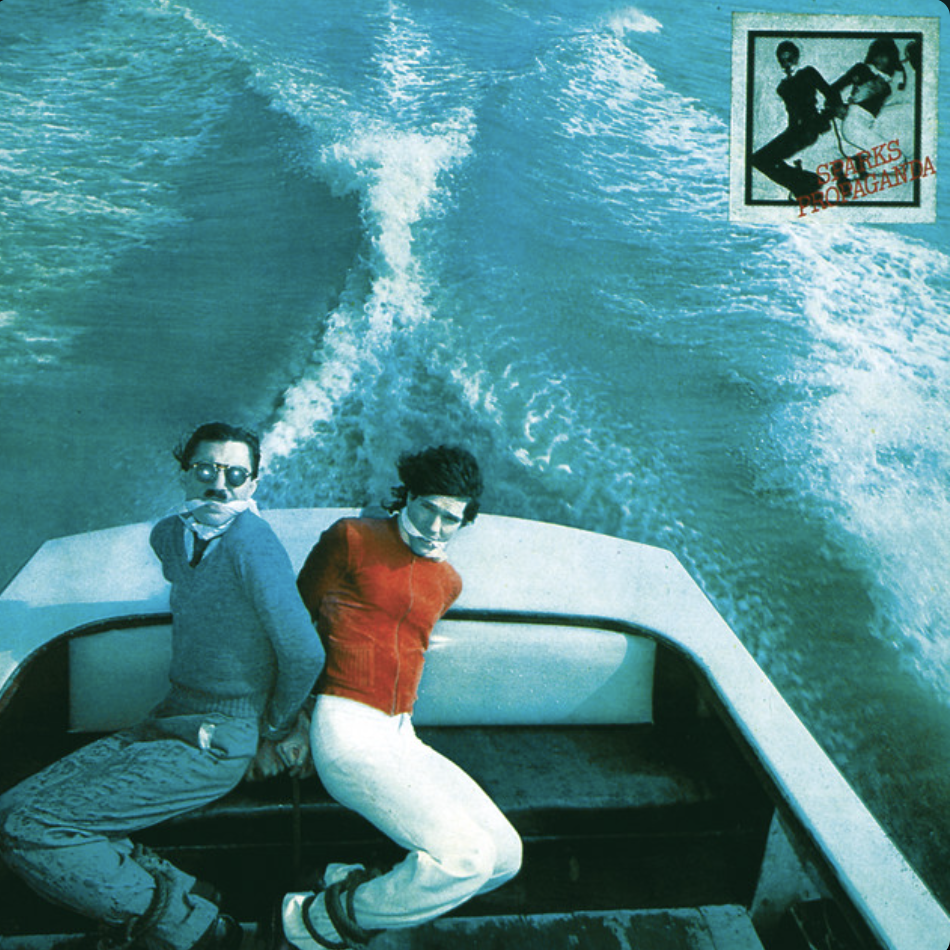
The Social Playlist is an accumulation of music I love and want to share, tracks from my various DJ sets and residencies over the years, and both selected cuts from those artists, luminaries we’ve lost and those albums celebrating anniversaries each month.
Running for over a decade or more, Volume 91 is as eclectic and generational spanning as ever. Look upon it as the perfect radio show, devoid of chatter, interruptions and inane self-promotion.
First up the LP anniversaries, starting with 50th nods to Sparks Propaganda (in my estimates, the double-acts’ best 70s album), Redbone’s Beaded Dreams Through Turquoise Eyes, Yumi Arai’s Misslim, and The Rolling Stones It’s Only Rock ‘n Roll – see below in the archives section for my little summary, if dismissive, piece on the album.
Released this month forty years ago, there’s tracks from The Fall’s The Wonderful And Frightening and Cabaret Voltaire’s Micro-Phonies. Jumping forward another decade, and I’ve also included a track from the Digable Planets’ 94’ released Blowout Comb. Another leap forward and I’ve chosen to also mark the tenth anniversary of Scott Walker’s collaboration with Sunn O))), Soused – you can read my original piece on the album in the archive below; one of my finest hours I reckon.
Whilst the Monolith Cocktail’s Monthly Playlist is all about the newest music, I miss things or just don’t have room to feature everything. And so, the Social offers room to some of those newish, recent releases that missed out. This month there’s choice tracks from Heyme, Waaju and Majid Bekkas, The Bordellos, Reverand Baron and Calvin Love, and Paten Locke.
You’ll also find, from across the decades, borders and genres, a smattering of musical choices from Heltah Skeltah, Lowlife, Samuel Prody, Gilli Smyth, The Sun Also Rises, Michel Magne, Debile Menthol, Lita Bembo, Art Zoyd, Tudor Lodge, Tommy Keene, The Silver Dollar, Vince Martin & Fred Neil, Yoch’ko Seffer, Male and Mahjun.
TrAcKlIsT iN fUlL
Michel Magne ‘Cine qua pop’
Debile Menthol ‘Tante Agathe’
Samuel Prody ‘She’s Mine’
Tudor Lodge ‘The Lady’s Changing Home’
Tommy Keene ‘My Mother Looked Like Marilyn Monroe’
The Rolling Stones ‘Dance Little Sister’
Cabaret Voltaire ‘James Brown’
The Bordellos ‘King Of The Bedroom’
The Fall ‘2 X 4’
Male ‘Bilk 80’
The Jazz June ‘Silver Dollar’
Mahjun ‘L’un dans I’autre’
Art Zoyd ‘Alleluia’
Yochk’o Seffer ‘GONDOLAT’
Waaju and Majid Bekkas ‘Fangara (Live Edit)’
Yumi Arai ‘On the Street of My Home Town’
Lita Bembo ‘Muambe’
Digable Planets Ft. Guru ‘Borough Check’
Paten Locke ‘Widdit’
Heltah Skeltah ‘Clan’s, Posse’s, Crew’s & Clik’s’
Redbone ‘Cookin’ with D’Redbone’
Heyme ‘Downtown Train’
Reverend Baron & Calvin Love ‘Famous Feelin’’
Scott Walker & Sunn O))) ‘Brando’
Lowlife ‘Again And Again’
Citymouth & People’s Palms ‘Singlecycles’
Gilli Smyth ‘Shakti Yoni’
The Sun Also Rises ‘Wizard Shep’
Vince Martin & Fred Neil ‘Morning Dew’
Sparks ‘Bon Voyage’
/ARCHIVES_____
This month, I’m reviving my archived pieces on The Rolling Stones It’s Only Rock ‘n Roll, which is fifty years old this month, and the late Scott Walker’s unholy alliance with Sunn O))), Soused, which reaches its tenth anniversary in October.
Relax, It’s Only Rock ‘n Roll. The Stones ’74 LP is 50 this month. (Appearing originally in my four part potted history of the group).
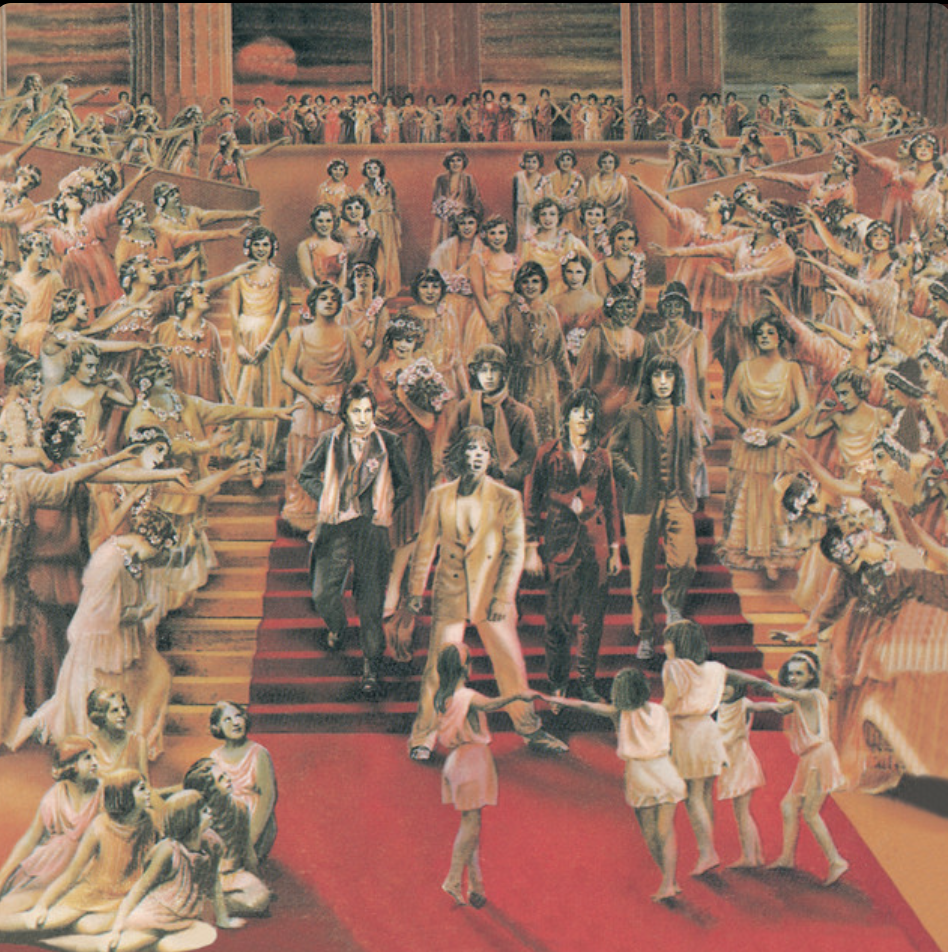
The basic premise of the Stones 12th album was to give their critics, especially the punctilious music writer Lester Bangs, the bird-finger.
Bangs’ condemnation at the paucity and profligate decline of the group was particularly scathing – quite justified in some respects – and only increased with each new release.
Incredulous at the growing derision and, as they viewed it, over-the-top analyses of their music, this album makes no bones about its regression back into the rock ‘n roll womb: albeit a version of that initial scene performed by a languid miscreant bunch of lolloping posers reprising oldies from the blues-R&B-r’n’r cannon.
The self-titled track and single from It’s Only Rock ‘n Roll (And I Like It) was strangely – so it’s claimed by Richards – conceived by a testy Jagger and recorded with his new “soul mate” Bowie as a rough demo. Such was the internal drift between the Stones creative partnership that Jagger often composed and thrashed out ideas away from his Glimmer Twins foil. During this break in communications, Richards was hanging out with The Faces lead guitarist and crow-haired sporting Ronnie Wood at his London studio. Wood had begun recording a solo LP and had asked along both Richards and Mick Taylor to add a touch of sleazy blues. Whilst at one of these relaxed sessions, Jagger dropped in and cut a version with Woods and, Small Faces/Faces drummer, Kenny Jones, but also produced another version with his comrades at a later date (Woods again played on this, contributing the rhythm guitar part on the 12-string). Regardless of who had their paws on it, It’s Only Rock ‘n Roll (And I Like It), is a stereotypical Stones pruning swaggered anthem, one that leans very heavily upon the strutting glam-rock pout of T-Rex.
Geographically separated, and as usual, sabre-rattling with the establishment, the band pushed-on, even though by now Richards’s increasing drug-fuelled skirmishes looked certain to scupper any attempts to successfully record.
To top it all, Taylor’s growing resentment at the lack of credit and acknowledgement for his contributions set the ball in motion for his resignation from the band a year later. Yet despite his disgruntlement, Taylor hung-on in there, playing on a majority of the albums ten-songs but not the title-track single; even though he appears in the video.
Without their due-diligent and overseeing producer, Jimmy Miller, the production fell to the aggrandising pairing of Jagger & Richards. Miller, a stalwart member of their inner circle and sometimes sobering force for good, had finally succumbed to his drug habit (picked-up whilst working with the band) and left, leaving the pair to take control for the first time since Their Satanic Majesties Request. And we all know how that turned out!
Scott Walker + Sunn O))) ‘Soused’ – Harrowed by thy name.

The usual rolled-out cliché of criticism that always greets every Scott Walker release, charts the enigmatic artist’s pop light to experimental morose career arc; from the teen swoon idol heady days of the Walker Brothers, via monastic alienation and Jacques Brel inspired crooner of esoteric idiosyncrasies, to existential avant-garde isolation.
Inhabiting the darkest recesses of humanity and history for at least half of that time, we should be used to this morbid curiosity, worn with earnest pride by Walker, who peers into the abyss on our behalf. Confronting with a meta-textural style the barbarity and failings of humanity for at least thirty odd years then, any developments in the Walker peregrination, shouldn’t really surprise anyone: at least the critic.
In what was met with certain trepidation or surprise by many, his unholy union with the habit adorned disciples of hardcore drone Sunn O))) is actually a very shrewd and congruous partnership; a 50/50 immersive experience, with both parties seemingly egging each other on. Walker for his part lyrically less cryptic, the Sunn chaps pushed to produce one of their most poetic and nuanced beds of sustained drones yet, and on this occasion, even cracking out various wild shortened, punctuating and unyielding riffs – verging on full metal and heavy rock riffage. Letting rip with a resonant field of sustained one-chord statements and caustic stings that bend or longingly fade out into a miasma, trying to find a meaning in these drones is akin to an Auger interpreting symbols and signs from the entrails of a wretched, just slain sacrificial beats. Yet it does work, and the bare minimal, fuzzy and wrenching bed of murmuring, primal guitars perfectly set up the intended atmosphere.
Once again, Daemonic forces have conspired. The result, a five act guttural opus, entitled Soused – in this instance the title is to be taken as a plunging or submersion into liquid or water, rather than a slang for hard liquor intoxication (though if it were, the brew on offer would be hemlock!).
What starts out and continues as a sort of proxy chorus (the nearest you’ll ever get to one on a Walker outing), the introductory crystallised, even dreamy, sense of melodic relief that introduces the album’s first musical tome, ‘Brando’, is soon corrosively despoiled by the menacing first strikes of a signature Sunn O))) chord and bullwhip.
A rather odd theme for Walker to build a threatening tower of misery from, the song alludes to the obligatory sacrificial martyrdom of the title’s Marlon Brando. Whether as self-flagellation, Brando had a penchant for taking on or even bringing (off his own back, so to speak) the act of taking a brutalised beating to his roles: from vigilante beatings in The Wild One to feeling the sharp end of a Elizabeth Taylor horse whipping in Reflections In A Golden Eye. Brando’s fatalistic characters were either the naïve well-intentioned disaffected (Terry Malloy in On The Waterfront) or assassinated disenchanted mavericks (Colonel Kutz in Apocalypse Now). The repeated lashings of a bull whip in this instance, however, refer to his role as the conniving bank robber Rio in the western One Eyed Jacks; one of the movie’s most memorable scenes being when Rio is administered the whipping of his life by a disgruntled and wronged former criminal partner, Dad Longworth (played by Karl Malden), in front of the towns people.
Perhaps this series of observations, first set off by watching One Eyed Jacks, from Walker is over-played, but it is remarkable as you play back through the actor’s movie catalogue and find a connective theme of taking the blows and even death on the chin. Probably reading too much into now and Walker does have a history of wry and acerbic wit, but Brando could be said to be offering his body up to the mortal sins as a punch bag (taking method acting literally) or was just masochistic (Last Tango In Paris M’lud). You decide, it makes for one reason or another a most apocalyptic soundtrack, mixing as it does, doom with Walker’s almost uplifting, visionary vocals to a flaying cycle of whip happy bullies.
Biblical in more ways than one, the standout mega-bestial centrepiece must be the harrowing ‘Herod 2014’; an atavistic disturbing chapter from the Roman occupied Middle East, it alludes to, what many historians say, is a wholly fictional tale of King Herod’s decreed infanticide of his kingdom (allowed by the Roman occupiers to reign over Judea and surrounding areas). Bathed in a sonorous reverberation of fearful discordance and a distressed unworldly cry of danger, this twelve-minute opus is stalked by the harangued forces of malcontent and revved-up torturous drones. The conceptual allusions, which can’t help but echo through time to the present, are far bigger than this baby cull, the region has, after all, always been awash with both the fabled and all too real episodes of death and misery for thousands of years. Yet despite this, the song is itself one of Walker’s best and even most melodically poetic, sitting happily with the material on his last two albums, The Drift and Bish Bosch.
Lyrically traumatic, but almost beautifully hewn from the English language, the opening lines bellow a nuanced scene-setting intellect, more novelistic pyschogeography than song: ‘She’s hidden her babies away. Their soft gummy smiles won’t be gilding the memory.’ In setting up the horrid event and psychological primal emotions that resonate with his audience, Walker goes on to mention two of the most famous painters to depict this crime, Nicolas Poussin and Rubens, who both fashioned their own (setting it in their own time) Massacre of The Innocents.
Herod 2014 straddles the LP like a monolithic titan. A real horror show, both wrenching yet also surprisingly compelling.
You would perhaps be fond of some relief after sitting through all that, but Walker won’t let you off that easily; summing another Sunn 0))) crackled, anvil- beating, industrial chorus of esoteric dread. ‘Bull’ is fraught with tension, languidly striking with stabbing guitars and post-industrial riffs one minute, sinking into the mire of silence and emerging like a troubled crooner monk the next. Heavy and brooding with mechanical timepieces, crowing shadows and subterranean spirits moving amongst the low buzzing presence of a pant-messing sustained drone, the Bull is unsettling to say the least, like a game of tag in the Labyrinth of the Minotaur. And the song with the longest outré of all; Walker finishing off his cryptic lines halfway through, leaving the last four minutes to his comrades to play out.
‘Fetish’ as it may already suggest is a sadomasochistic affair. A soundtrack set to some cannibalistic or serial killer shocker, where the action is carried out entirely on a Mona Hatoum barbed wire bed in a meatpacking factory. Thrashing around and violently piqued by a harassed beak like attack, the backing is a maelstrom of dentist drills, panting shakers and eerie hanging silence, until it breaks out with the album’s first drum break and rhythmic holy chorus. Throughout, Walker swoons in resignation, dropping lines like, “acne on a leaper”, and “glim away little brute”, in a disjointed narrated sombre tone that gets more dangerous as the song churns to its climax. A ritualistic metaphor, the song’s central tool of terror, the blade or scalpel, is held as an abstract reference point to gleam some meaning, whether it pertains to the cosmetic, life-threatening surgery, torture, the sexual or even tattooing, Walker and Sunn O))) build a nuanced layer upon layer of industrial buzzing queasiness to a trope.
Be under no illusion with the finale to this Dante inferno, the ‘Lullaby’ tones on offer here in no way promise a good night’s sleep. This is after all Walker’s crooned eulogy to assisted lullaby suicide, and the sound of death’s hallucinatory vibrations, gradually taking hold.
Interpreting the song in her own enigmatic way, Ute Lemper bravely grappled with the song for her 1999 album, Punishing Kiss, but Walker now takes back what he at first giveth, converting it into an even gloomier anthem with his monastic brethren.
You can almost hear the percussive ticking of a Newton’s cradle: the mortal clock running out as the drugs take effect; comfort is not an option. The whole thing sounds like a seething hotbed of psychological thrillers and horror, played out remorsefully until the final bleep of the life support signals the end. Walker never nails home his own social or political solutions, and so this, very much a topic debated in recent years and ongoing, is more a diorama set piece, which neither condones nor condemns assisted suicide.
Disturbing throughout, this unnerving suite is obviously not to be recommended to those already on the knife-edge or for those who stay clear of the news or anything that may remind them of human suffrage. You also need stamina and plenty of nerve to sit through this uncomfortable 49-minutes of music at its most challenging. Not so much hostile as shredded by a repeating rotor blade cutting action that piques and prods, even the quietest passages are threatened by an unseen presence of danger. Hell knows (literally) how this album would go down live, the option tentatively hanging in the air, depending on its reception; a possibility that could see the maverick auteur and theatrical seven-day avant-gardist performing for one of the first times in eons.
Both parties in this experiment prove their mettle, reinforcing their reputations but producing an album that is not only accessible to the devotees and followers but also those who’ve previously skirted around taking a walk through the catacombs of the bleakest recesses of a conflicted mind.
THE MONTHLY DIGEST OF ACCUMULATED NEW MUSIC, THE SOCIAL INTER-GENERATIONAL/ECLECTIC AND ANNIVERSRAY ALBUMS CELEBRATING PLAYLIST, AND ARCHIVE MATERIAL CHOSEN BY DOMINIC VALVONA

Continuing a series that started in 2023, the Digest is my one-stop column of the new and the old; a secondary home to all those releases I missed out on or didn’t get room to feature in either my Perusal reviews features or singular Our Daily Bread posts, plus a chance to celebrate timely anniversary albums and dip into my own record collection with the a special anything goes playlist, and to, finally, dip into the Monolith Cocktail Archives.
The New: this will be a briefing of a sort, with a short outline, thoughts and reactions to a number of recent albums from my inbox – currently a 1000+ releases a month on average!
The Social Playlist: choice music collected from across the ages, borders and genres, with a smattering of tracks from choice anniversary celebrating albums of worth and cult status. Consider it my unofficial radio show.
The Archives: self-explanatory, but each month I chose past pieces from the extensive Monolith Cocktail back pages that have a timely ring to them.
_((THE NEW))_
LINA_ ‘Fado Camões’
(Galileo Music)
Fado dramatist with the spellbinding voice, LINA_ follows up her impressive collaboration with Raul Refree with another unique reading of the famous Portuguese form of sullenness, sorrow and plaint. On that previous project, the diaphanous and emotionally sonorous pulling songstress and composer transformed the music of the Fado legend and actress Amália Rodrigues; filtering that icon’s songbook through a modern production of minimalistic gauze and sonic atmospheric effects.
Back this time with the British producer and musician Justin Adams (credits include projects with Robert Plant, Tinariwen, Eno and Sinead O’Conner to name but a few) and a small ensemble, LINA_ takes on the classical 16th century poetics of Portugal’s most famous literary son, Luís Vaz de Camões. So titan a figure in that country’s rich history, his medieval period language of lyrical romantic aches, mortality and nature is said to be the basis of Portuguese itself: often called the “language of Camões”. Integral to the very soul of Portugal then, it’s fitting that such a talent as LINA_ is behind this interpretation of his work; transcribing it’s prescient and near timeless reach to the music of Fado. Examples of which include, when translated into English from the original lyrical language, “They hear the tale of my misfortunes, and cure their ordeals with my hell”. Tortured but also overwhelmingly beautiful and romantic throughout, it suits the musical form very well across twelve near magical songs of air-y mysticism, the venerable, yearning and dreamy. Musically tender, accentuated and like a fog, mist at times, even vapour of the mere essence of a score, there’s echoes of old Spain, the Balearics, North Africa, the Middle East but also Turkey and the Hellenic. You can also add the supernatural to that list too: a passing over into the ether. At times other times there is an almost semi-classical feel, merged with Iberian and Galician new wave, with some songs standing out as radio-friendly floated diaphanous pop visions of the Fado spirit.
Incredible throughout, LINA_ once more proves herself the most striking if not talented artist in this field of exploration and music; bring together beautifully and evocatively time honoured traditions and the legacy of literary Portugal with the country’s most prized and famous export to magic up another essential album. LINA_ is a leading light, pushing the boundaries without losing the soul, truth and appeal of the music she adopts and transforms. Fado Camões is another artistic triumph.
Andy Haas/David Grollman ‘Act Of Love’
The experimental NYC percussionist-assemblage artist and knight of the Ghosts Of The Holy Ghost Spermic Brotherhood (alongside saxophonist Andy Haas and the late multi-tasking Michael Evans) David Grollman knows more than most about the cruelties of the Alzheimer’s Disease; losing his wife, the poet Rita Stein-Grollman to Early Onset Alzheimer’s in early 2023.
Funneled and channeled into this most recent album with Haas, Grollman and his sonic partner of avant-garde arts and evocations reflect the very essence of loss through an apparatus of Dadaist and Fluxus apparatus: namely in Grollman’s case the balloon, with the textured tactile touches and stretches of its latex surface wrinkling as it expels its air; in a manner, like the life force slowly leaving the deflated body and personality of what someone once was as they lose themselves to this incurable disease. Meanwhile on sax, Haas deals in exaggerated long, slowly drawn-out breathes and blows; sometimes appearing to lift the weight that sits on his lungs, and at other times making noises that resemble steam and the pressure of valves being released and squeezed. Together it sounds like La Monte Young, John Zorn, Anthony Braxton and Marshall Allen in remembrance.
But then there’s another dimension, the brilliant, often acerbic poetry of Rita (written before she succumbed to the disease), which is read out in both almost laconic and grumpy confrontational style by David. Another piece of text, ‘Message From ME’, which the title makes obvious, is a voicemail left by the already mentioned and late Michael Evans (who passed away back in 2021), another knock-about figure on the scene and much missed member of the Ghosts Of The Holy Ghost Spermic Brotherhood. Act Of Love is a challenging and strained but obviously emotional well of remembrance, with the harsh and more attentive abstractions of the performances somehow managing to convey that which can’t always be said or represented.
Variát & Merzbow ‘Unintended Intentions’
(I Shall Sing Until My Land Is Free) – Released the end of last year
Unsurprisingly concentrating the mind, the brutal barbaric dystopian-scarred landscapes of war-torn Ukraine have been transmogrified into the abrasive, concrete debris soundscapes of nightmares by the trick noisemaker of dissonance and pulverizing noise, and co-instigator of the Prostir label, Dmyto Fedorenko (aka Variát). As his homeland continues to be bombarded and churned up by the invading forces of the despot Putin, Fedorenko teams up with fellow noise sculptor of some standing, Masami Akita – the harsh and confrontational Japanese artist behind the 500 plus back catalogue Merzbow project – to reshape the needled, scowled, squalled, overbearing, sinister, menacing and static coarse ruins: the only hope of which, is in the “resilience” of the Ukrainian people holding back the tide of destruction and evil.
Crushing morbid forces merge with the air raids of drone attacks, decay, coded signals, charged force fields, transistors, the Fortean radio set and the alien. Occasionally a keyboard chord materializes, along with the recognizable sounds of toms and breaks – the drums sounding like at times like they’re being beaten with boxing gloved pummeling hands. At one point it could be the set of a roofless cathedral, another, from the charred remains of a devastating fire: I could of course be projecting all this.
Throbbing Gristle, Gunther Wüsthoff, Jóhann Jóhannsson, Sunn O))) (if they cashed in their guitars for synths and a laptop), Oberman Knocks, Boris and Scott Walker are all brought to mind. And yet this is a unique collaborative pneumatic and caustic vision from the two artists, one that can’t help but evoke the devastating, mindless and distressing scenes unfolding. And if you needed any prompting or a reminder, profits for this release all go to supporting ‘Ukraine resistance against Russia’ with donations made to self-defense and humanitarian foundations. PS: Thanks by the way to the label, I Shall Sing Until My Land Is Free, for the CD and stickers; always appreciated to receive something physical in an increasingly soulless, downloaded or streaming, non-committal world.
Various ‘Hyperboloid 2024’
(Hyperboloid Music)
I had to try and shoehorn this end-of-year compilation from the Latvian label in to the Digest this month. Twenty-five visionary trance-y and techno tracks from the roster’s myriad of artists – a sort of Balkans and beyond Warp label Artificial Intelligence series for the new age and new century -, there’s variations of the electronic genre spread out across a generous showcase that marks yet another creatively successful year for the imprint. Old skool rave breaks sit next to entrancing vista soundscapes; d’n’b with hardcore; and near Grimes-like pop electronica with thoughtful rumination. Get stuck in.
Roma Zuckerman ‘Phenomenon of Provincial Mentality’
(Gost Zvuk)
Filaments, electric currents, crispy buzzes and granular fizzles combine to form the most redacted and evocative of minimal techno, deep house and EBM-esque dance music on the Siberian producer’s archival showcase for the Gost Zvuk label. Charged, pulsing and rhythmic at all times, Roma Zuckerman’s spheres of influences run through glimpses and throbs of Basic Channel, Kreidler, Rob Hood and Dave Clarke, twinned and merged with an alternative cosmonaut Soviet era vision of Sky Records. And most surprising of all, on the collection’s finale, ‘Compañeros’, there’s a move toward windy-fluted Latin American with the use of a Spanish pastoral rhythm guitar. Voices, the echoes and morphed ravings, communications and alien warped effects of which, play their part too; at times sounding like Richard H. Kirk, and at others, like some two-way radio cosmic interface between ground control and Soyuz shuttle. A highly recommended slice of deep bass, futuristic and simultaneously retro-futuristic minimalist techno that will almost definitely make the end of year lists.
(((THE SOCIAL/VOLUME 82)))

Continuing with the decade-long Social – originally a DJ club night I’d pick up at different times over the past 20 plus years, and also a café residency from 2012 to 2014 – playlist, each month I literally chose the records that celebrate anniversary albums; those that I’d love to hear on the radio waves or DJs play once and while; and those records that pay a homage and pay respects to those artists who we’ve lost on the way.
January starts with one such sad but celebratory nod to the late Marlena Shaw, who passed away last weekend (I’m incidentally writing this at the start of the third week of the month). The California Soul(stress) had some real sass and attitude, as proven by the provocative, taking-no-shit, title of her 1974 LP, Who Is This Bitch, Anyway?; from which I’ve included the short gospel-light ‘The Lord Giveth And The Lord Taketh Away’. Also 50 this year, there’s tracks from Pekka Pohjola’s Harakka Bialoipokku, Harmonia’s ‘Musik Von Harmonia’ and (sticking with a kosmische/krautrock theme) something from the quartet of albums made under the auspices of The Cosmic Jokers nom de plume – a supergroup that never really was, the main participants of which included such lauded icons as Manuel Göttsching, Klaus Schulze, Jürgen Dollase and Harald Grosskopf fucking around in Dieter Dierks’ studio; the results of which, unknowingly recorded by Rolf-Ulrich Kaiser and Gille Lettman at the time were put out during 1974 – Schulze was incandescent enough to sue over the whole affair.
40th anniversary nods go to Finnis Africae’s incredible fourth world self-titled peregrination, Bob Dylan’s Planet Waves and Harold Budd & Eno’s prized and influential The Pearl LP. A decade later and there’s also tracks from The Wake’s Tidal Wave Of Hope and Air Liquide’s Nephology (see my archive essay style piece further down the column).
I usually leave the most current and newest of tracks to the Monolith Cocktail’s Monthly Playlist (next edition due next week), but have included recent(ish) tracks from Igor Osypov, Bagaski, Nicole Mitchell and, not really new but reissued late last year, a track from the originally 1984 released Ein Bundel Faulnis in der Grube album by Holger Hiller (of Palais Schaumburg German new wave fame) – reissued that is by krautrock/kosmische specialists Bureau B.
The rest is for you to discover; a smattering of eclectic delights, wonders and nuggets from across time and from across the globe. Actually, if you are reading this, and if you have time, I’d really like some feedback on the length of these playlists. I’ve gradually tightened the running order down to around the 30 mark and the length under 3 hours – down from 33 last year, and before that anything from 40 to 100!!! Let me know if this is a ridiculous number, or just right.
___TRACK LISTING AS FOLLOWS:
Marlena Shaw ‘The Lord Giveth And The Lord Taketh Away’
Bob Dylan ‘Tough Mama’
Ethel-Ann-Powell ‘The Jaybird Song’
Acayouman ‘Si Ou Ladje Moin’
The Wake ‘Britain’
A Passing Fancy ‘Your Trip’
The New Tweedy Brothers ‘I Can See It’
Americo Brito ‘Sabe Na Panama’
J.O. Araba ‘Kelegbe Megbe’
Finnis Africae ‘Zoo Zula’
The Cosmic Jokers ‘Power Drive’
Ike Yard ‘Beyondersay’
Air Liquide ‘Semwave’
Holger Hiller ‘Chemische und physikalische Entdeckungen’
Harmonia ‘Sonnenschein’
Fireballet ‘Carrollon’
Pekka Pohjola ‘Hereillakin uni jatkuu’
Dhidalah ‘Adamski’
Son Of Bazerk ‘The Band Got Swivey On The Wheels’
Bagaski ‘Hawkish Torso’
Joe Mubare ‘Number 8’
Nicole Mitchell ‘You Know What’s In There’
Igor Osypov ‘Vango’
Lard Free ‘Warinbaril’
Teengenerate ‘Something You Got’
Tasavallan Presidentti ‘Weather Brightly’
Second Hand ‘I Am Nearly There’
Duffy Power ‘Glimpses Of God’
Grothbros ‘Tollah Tra Flex’
((((ARCHIVES))))
Air Liqude ‘Nephology – The New Religion’ Is 30 Years Old This Month

Selective electronic musicians often come out with the line that they’ve been influenced on a particular album by the Krautrock greats, citing such luminaries as Roedelius, Michael Rothar, Klaus Schulze, Irmin Schmidt etc. – as though they were in some way picking up the baton and running with it.
Of course most of this is a whole crock of shit, as hardly anyone essentially understood that those innovators from the 70s were always moving forward and re-inventing their sound, never usually dwelling on the past; just copying it or reprising it totally misses the point.
OK, so I’m sort of meandering off on a tangent, but basically you can take a look at the likes of Neu!, Cluster, Kraftwerk and CAN and see they were making something fresh and new; to really take on their train of thought means to push those delineated boundaries even further.
Heir apparent to the synthesizer and analogue re-wiring school of exploration, were, and still are, the Cologne duo of Air Liquide. They took up their forefathers brave new world mantle, and built an ambitious and inspiring variation based around the technological leaps in music production; concentrating on the styles of Techno and Acid House.
Their seminal opus of 1994, Nephology, adopts vestiges of cinematic, industrial, ambient and dub; producing an impressive soundtrack that stands up well even by today’s standards, and adheres to the German desires of progress.
The duo comprised of the exceptionally talented Cem Oral and Ingmar Koch, better known as Jamin Unit and Dr. Walker, both entrenched in technical know-how – Koch was the lucky recipient of a Roland JX3P synthesizer on his 14th birthday, a gift that led to him being hired by Korg to program sounds for a number of their iconic models.
Koch began recording in the late 80s, composing, as he puts it, assembly line House and Hip Hop tracks for the German labels Hype! and Technoline. The latter label went bankrupt, prompting him to join a course on electronic composition at a University in Cologne. He would soon meet fellow student and synth enthusiast Oral, and find that he also shared a common interest for groups like Tangerine Dream, CAN, Heaven 17, early New York Hip Hop and Chicago acid: working together seemed almost inevitable.
By the end of 1991 Air Liquide was born, with their first EP release following in a matter of months, and a self-titled debut at the end of 1992. Their second album, the 1994 released Nephology opus, really upped the ante with its mostly innovative themes and layered tracks modeled around the more sophisticated tones of intelligent Techno and dance music – future projects saw the duo experimenting with Gabba hardcore and ethereal fashioned traversing styles of trance.
Singing from the same hymn sheet as The Orb, and many similar ambient acts, they immersed themselves in a haze of new-age touchy-feely rhetoric, using both celestial horizons and the skies above as the central theme to hang their music to: That Nephology title is itself taken from the, originally Greek, word for clouds; adopted as the terminology for the study of their formations – interestingly over the last century it has remained a rather marginalised and forgotten art…well, that was until the recent interest in global warming.
The 14-track album is split into various sections, with the main tracks interspersed amongst the otherworldly type segue ways and vignettes.
A central atmospheric resonance runs throughout, evoking a cosmological and space-age mood, one that has an often ominous or threatening feel to it; charged with rippling static effects.
Mainly we are treated to some indolently and cleverly multi-layering techniques, produced from an impressive display of iconic analogue/electronic equipment, including the Roland Tr 808, Jupiter 8, ARP 2600 and a pair of Moogs.
Side one of this double album entirely consists of acid drenched grooves and bouncing taut techno. The grand opening of ‘The Cloud’ emerges refined and full of empyrean quality from the ether, its tightened rolling drums and throbbing bass cascade over an electrified wild jungle rich sound collage; sounding like a Germanic 808 State. As though in tribune to Klaus Schulze and his cohorts, the duo interweave startling ambient sequences, dousing the beats in swathes of metallic walled corridor sounds and whispering missed conversations.
This swirling tome is followed by the more Chicago house style of ‘Semiwave’; a sauntering announced rhythmic workout, full of ever-tightened repetitive percussion, moody dramatic bass and lethargic plonking notes. Ethereal strains of some distant cooing float in and out of the track, setting the look-to-the-skies above scene perfectly, sending us hurtling ever further into the stratosphere.
Caustic meatier bass lines and squelchy 909 bleeps flourish on the bonus track ‘Auroral Wave’ – seems this and one other tune, are not included on all versions.
Hardened ticking away drums and pre-set handclaps encounter Mo Wax space-esque sustains, whilst moving along at a Mannuel Göttsching pronounced building pace.
Air Liquide manage to absorb many different styles of music including dub; the strong use of dark moody bass can be found on tracks like ‘THX is on’, where Sly and Robbie meet Carl Graig’s Plastic People period flow. There’s also room for Hip Hop, with the duo re-working Cypress Hill’s ‘Insane In The Brain’ for their own beguiling electro track ‘Stratus Static’. They manage to meld both the stoner-induced sample of the Hill’s track with what sounds like a dub-esque clattering Art of Noise, to produce something quite original and sublimely dizzying.
Scattered throughout are more light-hearted moments, including ‘If There Was No Gravity’, where they take on the ambient workshops of both The Orb and Orbital. Wispy willowy female vocals poetically describe a sort of dipsy journey through the clouds, the lyrics leaning towards cliché almost:
“How you’d love to live up there,
Kiss the sun and walk on air.
If there was no gravity,
You’d be in nephology”.
Dubtastic bass lines bumble along to fill the sweeping calm and dreamy melodics, in a display of evanescent pulchritude. The looming presence of Kubrick, or rather the meticulous chosen soundtracks that go hand-in-hand with his films, add dramatic passages of tension and suspense. ‘Die Reisse Im Teekeesel’ (loosely translated as ‘Those travels in the tea boiler’) uses 2001 A Space Odyssey harrowing soundscapes, with the chanting evocative mantras from ‘So Spoke Zarathustra’ to add intrepid doom. Both ‘Kymnea’ and ‘Im Grlenmeyerkolben I and II’ echo and groan with menacing moments plucked straight from A Clockwork Orange: Walter (Wendy) Carlos’s switched on treatment of Henry Purcell’s ‘Music For The Funeral Of Queen Mary’, and the tormented ‘Timesteps’ are brought to mind.
Eerily the duo can’t help but intersperse a sober and haunting array of imbued cinematics, dropping in hints of Dune, Star Trek and The Thing to create an often emotive or imaginative atmospherics, which lends the album a certain gravitas.
On the closing track, ‘The Clouds Have Eyes’, they end on a chaotic hypnotic flourish. Helicopter chopping Jeff Mills style beats rapidly rotate, as an operatic style haunted choral sweep swirls around in the tumultuous cyclonic blades. That almost disturbing voice-like loop, calls out from the melee as though an apparition from some distant planet or dimension: a perfect finish.
Nephology does undoubtedly sound of its time to some extent; tied in some respects to a particular epoch, yet though it’s over thirty-years old it somehow rises above sounding dated. In fact recent revivals of the late 80s and early 90s electronic scenes – where labels such as R & S, Harthouse, Structure and Rising High fed the deep thinking dance music appetite – have encouraged a mini-renaissance and re-valuation. In 2024 you could easily slip a bit of the old Nephology into the club, and no one would blink.
Hi, my name is Dominic Valvona and I’m the Founder of the music/culture blog monolithcocktail.com For the last ten years I’ve featured and supported music, musicians and labels we love across genres from around the world that we think you’ll want to know about. No content on the site is paid for or sponsored and we only feature artists we have genuine respect for /love. If you enjoy our reviews (and we often write long, thoughtful ones), found a new artist you admire or if we have featured you or artists you represent and would like to buy us a coffee at https://ko-fi.com/monolithcocktail to say cheers for spreading the word, then that would be much appreciated.
The Perusal #50: Lea Bertucci, Universal Harmonies & Frequencies, June McDoom, Kenneth Jimenez, George Demure…
December 6, 2023
A WORLD OF DISCOVERIES REVIEWED BY DOMINIC VALVONA
(Unless stated otherwise, all releases are available now)
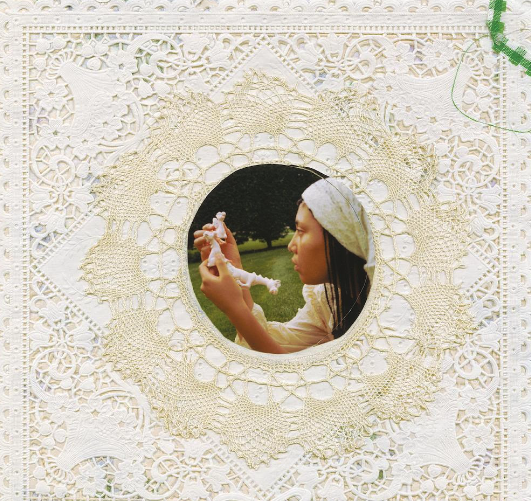
Universal Harmonies & Frequencies ‘Tune IN’
(Yeyeh)

Recorded in a five day window before their collaborative performance at the electronic music Dekmantel Festival (held in the Amsterdamse Bos, in the Netherlands), Jamel “Hieroglyphic Being” Moss and foil Jerzy Maczyński’s improvised sessions cover a lot of eclectic ground.
Marshall Jefferson meets Marshal Allen; jazz transduced through an electronic wave of electronic body movement, house, techno, trance and ambience, the project reconfigures, transforms and resets the perimeters with a spontaneous search for answers, realms, spaces and spiritual inquiry.
From an original soundboard of twenty-six long form peregrinations, whittled down and either left in their improvised form or reworked and reproduced under the guidance of recording engineer Rein De Sauvage Nolting (known on the scene as RDS), twelve finalized tracks emerged, selected by label facilitator Pieter Jansen. Each track finds a more exotic, mysterious and sometimes chaotic way to follow the rhythm and groove. For this is a strange and refreshing vision of dance music; an acid shooting laser beam and Artificial Intelligence album series imbued trip of whirly birds, alchemist mysticism, sci-fi and Pynchon metaphysics.
There’s fun to be had too, but a considered, sophisticated freedom of experience and influences that puts a diverse range of saxophone contours, breathing lungs-like expulsions of ruminated air, rasps, quacks and spirals with synthwaves, counter flows, various synthetic apparatus and a whole electronic ecology. Just the opening titular-track (running to twelve minutes) alone progresses through a shimmy-shimmer polygon analogue score of Sky Records kosmische, Lukid, psy-trance, house, Basic Channel, Beaumont Hannant and warbled synth-funk. Changing course, ‘Can U Hear The Hum’, which follows, marries Amazonian foliage and a squirreling Harmonia with the Inre Kretsen Grupp. And when we get to hear Moss and his motivational speeches on ‘Multidimensional Transformations’, it’s like Ramuntcho Matta go-going to early Chicago house music.
The fantasy mystery, ‘The Book Of Forbidden Knowledge’, reminded me of Bowie and his last ever foil, Donny McCaslin, and the tubular reed strained and piped ‘The Fifth Science’, has a touch of Matthew “Doc” Dunn’s Cosmic Range and his work with the saxophonist Andy Haas.
Within that stretch of the imagination, there’s moments of controlled tumult, the faraway sounds of a removed North Africa, crystallised visionary vistas, beautifully constructed mists, and waterside meditations. To put it another way, this partnership is like Floating points meets The Black Dog, Klaus Schulze, Benjamin Lew and Rebecca Vasmant in the most unique, transported of dance clubs: And that’s a very inviting proposition indeed.
June McDoom ‘With Strings EP’
(Temporary Residence Ltd.) Out Now Digitally/Vinyl Arrive February 24th 2024
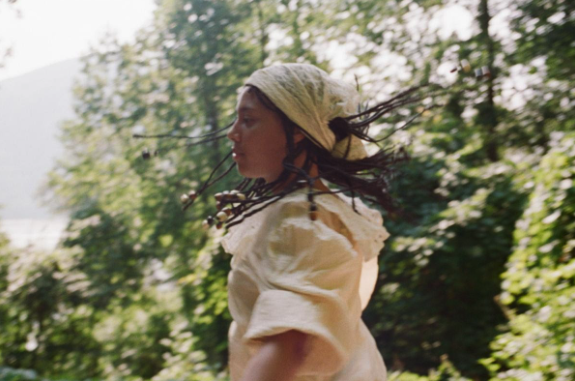
Credit: Bella Newman
Despite the diaphanous, wispy and hushed delivery, June McDoom’s voice is anything but evanescent or forgettable. Because just like one of her most cherished heroines, Judee Sill, every word and expression is believable as a lived experience of heartbreak, yearning and a close relationship with the elementals of an ethereal, but deeply felt, nature.
On the follow-up to her debut EP, the burgeoning McDoom leads with a watery replenished and droplet-mimicking rendition of Sill’s environmental devotional, ‘Emerald River Dance’. The tragic, resurrected to cult status in recent years, troubadour’s fatalistic life was like something out of the gospels: updated in the bohemia of the Laurel Canyon. Forced into prostitution and petty crime to feed her drug addiction, and with a string of coerced and unhealthy marriages/relationships, Sill first came into contact with the afflatus sound that would become her trademark when in reform school during the 1960s; spending time learning the liturgy and gospel music whilst picking up the church organ. In a similar vein to the no less unfortunate Karen Dalton – a peer with an equally ill-fated car crash of failed marriages and addiction, and who’s stripped-back, unpretentious folk style is echoed on this EP -, Sill, despite her obvious talent and the circles she moved in (signed to Geffen’s Asylum Records, with a song bought and made famous by The Turtles no less, and her debut single, ‘Jesus Was A Cross Maker’, produced by Graham Nash), remained an obscure cult figure on the peripherals of the folk music scene. Possibly garnering more attention forty odd years later than she did in her own time. Every song, recording, newly discovered demo is heavily loaded, and yet transcendent.
McDoom has her work cutout, and yet breathes a new life into this near Southern spiritual hymn of softened beatific poetry. The original words remain intact, but with the added “I will hear what it is” line; McDoom placing herself within the sentiment of this aquatic and pastoral embrace. A favourite song for years, part of McDoom’s live repertoire, it proves the perfect congruous opener.
A second cover, and age-old standard of the Celtic set that translates across cultures and time, the traditional ballad, ‘Black Is The Colour Of My True Love’s Hair’, has roots (it’s believed) in Scotland. Nina Simone performed an impressionable version, and the American-in-Paris Tia Blake recorded an incredible minimalistic rendition. Both inspired McDoom to record a version; channeling in particular Blake, who is another interesting, fleeting artist from the folk cannon that disappeared off the radar, recording only one album of traditional songs at the age of nineteen in the French capital. Traversing, rather effortlessly I’d say, the Baroque, Appalachians and old Iberia, McDoom conjures up an apparitional-style mist of lament and dreaminess on her near-filmic and airy heaven-bound transformation.
As that EP title makes clear, With Strings doesn’t so much embellish as sympathetically accentuates and carefully brings home the emotional, touching and longed sentiment of McDoom’s stripped-down style with the small, intimate introduction f chamber strings and harp. Reimagining both ‘On My Way’ and ‘The City’ with this magnificent accompaniment that’s one part semi Baroque classical, and one part Alice Coltrane and cosmic, the vocals are further enhanced with the otherworldly three-part harmonies of Cécile McLorin Salvant and Kate Davis: Between them, their CVs and voices are imbued by jazz, French choral music, Creole, pop and the classics. Together it all reaches a near ethereal magic of the untethered and gauzy, with a semblance of the blues, country, and folk and spiritual. And yet, it’s all so modern sounding. ‘The City’ especially, has a breathless air and the space to progress: to confess too. Like a long list Lomax recording born anew, mixed with the beauty of Mercury Rev and The music Tapes, McDoom’s lacey arts and crafts vulnerability is soothed through a gauzy yesteryear. This city plaint is nothing short of sublime.
McDoom’s inspirations are worn on the sleeves, and yet I keep racking my brain to fathom who she reminds me of. An American Maria Monti? A softer Natalie Ribbons? Maybe a passing resemblance to Connie Converse perhaps? McDoom settles somewhere in-between them all as a refreshing, heavenly talent as she disarms the hurt and depth of emotional turmoil, inquiry and wonder with the most beautiful and impressive of deliveries. Certainly, one to watch.
Kenneth Jimenez ‘Sonnet To Silence’
(We Jazz)

Taking a leap into the untethered realms of Kenneth Jimenez’s dreams, the jump off point for his newest album literally takes flight. The Brooklyn-based bassist, composer and quartet bandleader runs for the mountains and sprouts wings; flying over the valley and the versant contours of free jazz and hard-bop: ala New York style.
This bird-like weightless journey often takes in the bustle, chaos of the city, and the excitable energy of his southern neighborhood (or “barrio” in this case) and ports. As the titles suggest, there’s a reference to Jimenez’s Costa Rican roots, and more than a spirit of that Central American’s oasis diverse landscape and bird life. But off the beaten track, Sonnet To Silence truly roams free between mirages and the strains of concentrated expression.
With Angelica Sanchez on piano, Gerald Cleaver on drums and Hery Paz on saxophone, the action is in a constant, almost restless state of movement: of the flighty, swanned, rolling, sprung, stretched, chuffed, pulled and heightened. Between them the quartet invoke Liberty era Jeremy Steig and Prince Lasha & Sonny Simmons on the whistled and wiry drawn-out and busy ‘Dia Laboral’ (“working day”), and Roscoe Mitchell and the Art Ensemble Of Chicago on the frayed taut double-bass stretched (Jimenez is an obvious talent in this department), turn bluesy and tumultuous, ‘El Patio’ (“the backyard”).
The dockyard 50s and 60s New York evoked ‘Mr. Shipping’ has a slight swing, plus a touch of both Marion Brown and Cecil Taylor – Sanchez in full flow, switching effortlessly between the melodious and experimental with almost jarred prods and block chords; reminding me at times, of Alice Coltrane accompanying Pharoah Sanders, but a little resonance of Oscar Patterson too.
So much is happening on this incredible, engaging and sometimes challenging (in the best possible way) album, which draws you in and then ups or changes the tempo, mood and direction. This is free jazz at its most promising; certainly encouraging and with dreamy quality that lifts you up into an imaginative vision of soaring and more complicated expression. Kenneth Jimenez and his quartet have produced one of the leading jazz albums of 2023.
Unwavering ‘Songs From A Tomb EP’
The solo moniker of one Matt Bennett, Unwavering has made an impact with now three of the blog’s writers. Before me, both Graham Domain and Brian ‘Bordello’ Shea pretty much nailed this atmospheric project of indie-folk: as difficult as it is to describe.
Following on from the debut album, Freeze/Thaw/Chorus, and last year’s Ley Lines In The Forth (great title by the way) EP, the Lothian winter’s mists and ‘dreich’ dampness seep into the new EP of acoustic evocations, blessings and stirrings. From the crypt, mausoleum to the nave, Bennett sends out both resonating roused rhythm guitar strikes and quieter, almost ambient in parts, passages of mediation and near despondency.
A hauntology of the downbeat – Brian ‘Bordello’ Shea described it as akin to a downcast Stone Roses, without Mani and Reni – and capture of the abstract environments – catching floating dust particles in a weakened beam of light, shining in through the cellar’s iron gridded window – from which it seems he is performing, there’s a real strange, cultish and sometimes hallowed beauty to the music. His guitar fills the cavern, the church and basement; resounding and loud but always melodious and effecting.
And through it all, he channels centuries of psychgeography; the marks left upon the landscape’s he’s trawled; the erosions and evaporated essences of what were. All of this is merged with personal inner feelings, remembrance and wounded modern travails, written, so it sounds, with a quill by candlelight.
At times it sounds like fellow Scot, Ali Murray, and at other times like the Cocteau Twins pairing with Steve Mason and Parachute era Pretty Things (that’s especially so on the hallucinatory, ambient textural and foggy ‘Slow Digression’), but also a hint of stripped 80s acoustic Goth and even Joan Of Arc. Bennett himself name-checks Kurt Vile, Harold Budd and Low, all of which ring true. But this EP is really quite idiosyncratic, between realms, time and spaces; a unique folk-indie inspired songbook that works outside the usual perimeters, length and borders of song writing. A really interesting discovery waits.
George Demure ‘Ear Candy Dandy + Bonus Album Dandy In Dub’
(Hobbes Music)
On a bobbled and float-y, light sunbeam dappled vapor of deep house, garage, electro, kosmische, leftfield pop electronica, dub and new wave (both the German and UK’s), the Edinburgh DJ/producer and singer-songwriter George Thomson continues the good work he laid down on the last EP: 2021’s well-received The Record Store.
With the same self-imposed limitations that he set back then, his latest George Demure alias album (expanding to a eighteen-track package with the addition of the Dandy In Dub bonus) makes a sophisticated use of a drum machine, two analogue synths (a mono and poly version) and a computer (to record upon). And yet, as sparse as that sounds, Thomson manages to fully expand his subtle sonic, musical, rhythmic and effects universe even further; channeling four decades of experience in both the Scottish and English capitals.
The CV is impressive and varied, starting out (roughly at the same time as myself, but geographically 500 miles away) in the burgeoning techno and house scenes of the early 90s in Edinburgh. After building up a reputation for producing his own music under the George T moniker, he made a move to London in the 2000s. The ‘T’ was put on hiatus however, and George Demure was born. This still gave Thomson ample time to collaborate with others, namely in recent years as one half of the Jeanga And George partnership. Facilitators and labels for those multiple projects and appellations include NRK, Stickman, 2020 Vision, Crosstown Rebels, Tirk, Greco-Roman, Optimo, Output Recordings and, now, Hobbes Music.
It shouldn’t come as any surprise to find Thomson well versed and full of ideas; using this album, in a fashion, to rediscover and connect with his formative years. A culmination if you like, of his years in the scene. But this is a very fresh projection of that, with both vocal tracks and instrumentals that bob about with the lightest of touches and skill. That’s not to say there isn’t depth, as no matter how soft they are, the bass does thump and the machinery and generators add something concrete and textural to the music.
Of one production, there’s still a wide variety of ideas and genres across the original album’s ten tracks and the bonus moiety’s further eight variants of sung, instrumental and ‘beat’ tracks. The opening, ‘Hello Mr. George’, offers an awakening rural scene, complete with bird song. Bouncing drum pads patter out a gentle bip-bop beat enveloped by light chords on a dappled electronic piano-like synth across a morning idyllic scene. By the time we reach the chimmy new wave-esque ‘Dub In Your Bubble’, and the opening crooned vocal of “Johanna”, we’re almost in the yearning schmooze territory of the crooner. Though as the song progresses, it becomes apparent that it’s more Robin Scott than Scott Walker; mixed I might add with a touch of the Sabres Of Paradise. Another vocal track, ‘Circles’, sounds more like a soulful leftfield downcast Matthew Dear.
An after hours downtime serenade, ‘Late Again’, that features Stevie ‘Chicago’ Christie whizzing Felix Da Housecat vibes past satellites, is a particular highlight – imagine Eno and Scott’s M persona making pop music together. By contrast, the therapy session, ‘Blah De Blah’, sounds like Polygon Windows lost in a haze of Bowie and Level 42! All the vocals have a real drift to them; almost languorous and untethered; a kind of free association soul-house-pop vibe that gives.
Elsewhere, the impeccable production mixes rotor-bladed Moroder with EDM; Kriedler with the melodica dub cloud operations of The Orb and FSOL; and the outdoor environments of epic45 with Roedelius and Thomas Dinger. Within that scope kinetic sounds are matched with the cosmic, vaporous and far out ‘jack-your-body’ moves. It’s a most lovely, swimmingly blend of motivations, feels and deep grooves that effortlessly comes together in a generous offering of electronic music: the very epitome of the Hobbes label’s remit in delivering leftfield unique visions of now techno, house and club sounds.
Lea Bertucci ‘Of Shadows And Substance’
(Cibrachrome Editions)
From the chthonian bowels of the geological to the vaporous airs of archaic pseudo-scientific sexism, the New York-based composer, producer, performer, saxophonist and label founder (of the Cibrachrome Editions imprint, under which this album is being released) Lea Bertucci continues to capture the intangible and abstract on her latest work, Of Shadows And Substance – a title borrowed from an episode of the Twilight Zone.
Two scored performances; two separate commission; each atonal experiment is an avant-garde and prompted reaction to a theme that simultaneously hides its sources, instrumentation, sense of place and time, yet evokes a certain recognisable mood.
Covering what used to be two sides of the traditional vinyl LP, these congruous long form pieces tap into Bertucci’s research methodology and serialism of composition and interpretation; stimulating the actions and atmospherics, but granting a form of autonomy to the musicians taking part. This includes an “intonation” tuning structure, the textural and semi-improvisational, and the use of the cello, double bass, harp, percussion and electronic apparatus.
As the album title might suggest, Side One’s ‘Vapours’ piece is, in part, informed by the literal description of the word: that is, a molecule existing on the verge of a liquid, gaseous or solid state. But it’s also a reference to the, far from sympathetic and almost dismissive, term to diagnose types of hysteria in women from a bygone age. Commissioned and played by the Italian Quartetto Maurice, these two interpretations mask the familiar with a highly experimental treatment, strain, stretching whining and searing atonal performance that conjures up shades of Walter Smetek, John Cale, Simon McCorry, Cale, Riech and Fluxus. At one point, when the intensity builds towards an otherworldly, unnerving drama of sawing and heightened tensions, there’s more than a trace of György Ligeti.
Maintaining a constant resonance of metallic sheens, rubs and refraction – in some manner, almost melodic, in the most removed sense of the word -, there’s a permeating connection that carries on throughout the various stages of drones, drawn-out bows, frictions, chaffs and didgeridoo-like blows. Neither vapourous nor hysterical, but somewhere in between, the Quartetto summon some unique visions of distress and abstracted classicism.
In a similar vein, the title-track sonically conveys the arse-end, final days of the anthropogenic epoch. Commissioned this time by the Philadelphia creative foundation, the ARS Nova Workshop, and performed by Henry Fraser, Lester St. Louis, Lucia Stravros and Matt Evans, this twenty-minute plus movement digs deep into the Earth. Like Scott Walker mining an atavistic psychogeography, layers of crust are removed to reach the present state of geological trauma: Or as Bertucci puts it, ‘a meditation on time-travel’ and ‘measure of accumulated events over glacial periods of time’; ‘a metaphor for social and environmental shifts’. This translates into shimmery vibrated cymbals, barely recognized saxophone rasps, the thump of primordial creatures chained to the bedrock, and spooked piano. By the close, the hovered instrumentation is in the airy realms of a calmer, more settled gauze.
Challenging in the best possible way, this couplet of performances is so textural that you could grasp it in your hands. A gateway, window into an experimental atonal world, Of Shadows And Substance is an inventive and intriguing proposition from a unique and adventures artist.
Xqui ‘Melting With Ice’

In the time it takes me to cast my critical mind and ear over this release from Xqui, there will most certainly have been at least another, if not more, projects cast out from the experimental creator’s hothouse studio: such is the abundant output from this highly prolific artist. Across an array of labels and facilitators, and in both a solo and collaborative capacity, Xqui occupies a liminal space between ambient music, sound art, musique concrete, transformed field recordings, hidden source material and voice exploration/transmogrification. Anything recognisable is made anew, strange and alien within this amorphous blending of the synthesised and technological – which isn’t to say these ideas aren’t organic, or that they lose that connection with their environmental, atmospherics settings. It’s safe to say that you never quite know what to expect with each release, such is the diversity and range.
Leaning more towards synthwaves and a chemical, scientific, numerical calculus of sum-parts and references, Melting With Ice draws us into an alternative futuristic and space-searching world of veiled machinery hums, generators, percolators and soft pulses; a sci-fi odyssey of Ligeti, Richard H. Kirk and the Theremin-like arias and apparitional sirens of Star Trek. But this is balanced out with a more naturalistic alchemy of watery elements, an exotic aviary of birds, and subtle hints of the pastoral.
Playing with voices, speech, annunciation and phonetics, Xqui uses a range of effects to convey just the mysterious, curious essence of conversations, whispers, breaths, expulsions of air, the choral and informed. ‘Cherry Red, Neon Blues’ is different in that regard. Here we find a Simon Armitage type poetically inhabiting a Gary Numan-like Blade Runner cybernetic set of neon-buzzed, hummed and lit removed romanticisms and forebode.
There’s a ghost in the matrix, aboard the cosmic flights of deep space probing, and under the Earth, as the ice caps melt and everything from the molecular to most expansive chasms changes: for the better or worse.
The minimalistic, with shades of Twin Peaks and Vangelis, ‘Pygmalion Effect’ references the famous psychological phenomenon in which high expectations lead to improved performances/outcomes in any given area, whilst low expectations lead to the opposite. Its name of course comes from the sculptor in Greek mythology who fell so in love with his ‘perfectly beautiful’ sculpture that it came to life. Make what you will of that. But as usual, based on the quality labyrinth of past creations, expectations are usually high for an Xqui album. And this is no exception; another highly evolved sound world that somehow makes even the innocuous more sci-fi or otherworldly, and attaches a deeper meaning, an experience to it: for example, the passing traffic driving through puddles as the rain hits the pavements to cause its own splash-back tide on ‘Sunrise Waves’; a recording enveloped in the thoughtful and searching. I recommend you check this one out, and the entire catalogue for that matter.
Alessandro Alessandroni ‘Alessandroni Proibito Vol. 2 (Music From Red Light Films 1976-1980)
(Four flies Records)
The stellar talent of over forty film scores, part of the great Italian composers epoch of the 1960s and 70s, and owner of one of the most iconic whistles and guitar riffs in cinematic history, really deserved so much more; putting his name to the forgettable skin-flick exploitation movies that don’t even get named on this second volume of obscurities from the Alessandro Alessandroni vault.
The dire schlock smut quintet of movie scores that inform this latest Italo-soundtrack maverick limited edition run from the Italian Four Flies label, have disappeared off a cliff. However, Alessandroni’s modest home studio scores remain, with a smattering of tracks from each now spread over a quintet of 7” vinyl singles, collected together in an alluring box set.
A peer, foil, mentor and friend to such luminaries as Morricone and Piero Umiliani, the Rome born composer, multi-instrumentalist maestro and artist must have hit the skids by the time these red light movies were released. For despite making a name for himself with that Spaghetti Western twang-y Duane Eddy signature and his highly influential work for Sergio Leone, by the the late 70s he was scoring more and more mondo trash, erotica and garish S&M horror – see Lady Frankenstein and Killer Nun. And yet, the quality of his work is never in doubt; often elevating such tawdry, amateurish affairs to cultish status by the music alone.
Although far from serious, it seems Alessandroni’s craft is likened to playing with an amusement park of ideas, sounds and instruments: entertaining but also captivating in equal measures. With an ear attuned to the contemporary fashions, but the classical and traditional too, a lot of musical ground is covered in his compositions: from Italian folkloric standards to disco, library music and the salacious. The second Proibito volume is no exception, with soft-pop-lit dalliances with the blues and Turkish-sounding guitar (the desire prowled sleazy, deep heat floor show, ‘Luci Rosa’: translating as “pink lights”), 10cc soft rock erotic body contouring (the lulled, wandering fingers caress down the spine ‘Tahiti Joint’), and Gallo humping orgasms (the weird spooked, moist-dripped cave (oh-ah!) and piano wire malarkey shivered ‘Climax’). Some of those tracks feature erotic wordless allurements and enticements, with Alessandroni’s wife, the fellow Roman and singer-actress Giulia De Mutiis, providing the sexy coquettish trapeze artist vibe expressions of dizziness on the Broadway stage circus act, ‘Ticket’. I think she also provides the Betty Davis-like oozed erotica on the smoky and funky ‘Miss X’.
In case you’re interested, Mutiis has credits for roles in 15 Scaffolds For A Murderer, The Laughing Woman and Any Gun Can play, but also joined her husband’s octet vocal group, The Modern Choristers (in 1961), which specialized in those choral wordless calls and atmospheres: appearing on many a film score. Apparently other family members were also corralled into Alessandroni’s experiments, although no one else is specially mentioned in the notes, and there are plenty of those siren voices to be heard throughout this compilation. The main man appears himself, delivering the “do-doing” and “bah-bahs” on the new wave discotheque and art-rock ‘Racing’.
As a member of the Italian set of pioneers and new wave, it’s unsurprising to hear echoes of the already mentioned Umiliani (both partners in the supposed anonymous rock group Braen’s Machine in the 70s), Giuliano Sorgini, Roberto Pregadio and Paolo Casa (especially his clavichord and electric piano, Stevie Wonder-esque moments). But with the use of the mandolin, accordion and melodica too, plus that famous guitar twang, you could be mistaken for thinking you’ve been transported to any port on the Med, South America and further East – especially when that spindled guitar starts to ape the resonating rings of a sitar. There’s a craft. There’s fun. There’s a swerve of soul-funk and frolicking titillation in these previously unreleased on vinyl recordings that make it worth the admission price. For those fans of Trunk Records and Finders Keepers, but also anyone with a penchant for the cult and Italian cinema, you’ll love this collection of smut recordings with élan.
Don Fiorino & Andy Haas ‘Accidentals’
(Resonantmusic)

After two decades of intermittent collaboration, Don Fiorino and Andy Haas have found a common language of challenging, free-expressive experimentalism and exploration together. Speaking that sonically, atonal and often non-musical dialect fluently across the previous albums of Death Don’t Have No Mercy and (the monolith cocktail profiled) American Nocturne, these two highly impressive musicians/artists have pushed thresholds and boundaries to emit a tumult of squeezed, pulled, squealed, entangled, gabbling, whistled and indescribable sounds from a host of stringed instruments and the saxophone. The duo’s third album is no exception, with eighteen descriptive, indicated and playful titles of the pressurized, near-distorted, flutter, fizzed, bandy and bended.
But before we go any further, a little CV check. Former Muffin, saxophonist maestro and transformer Andy Haas first blazed and scorched Martha’s ‘Echo Beach’ hit in ’78, before relocating from Canada to New York City in the early 80s; making a name for himself in the post-punk, no-wave and avant-garde scenes, and collaborating with such luminaries as John Zorn, Ikue More, Marc Ribot, Ken Aldcroft (which comes the closet to Haas’ improvisations with Fiorino)…the list goes on. Nearly two decades later and Haas relocated back to Toronto, just in time to prove an in-demand foil to a new generation of artists and producers; firstly joining the orbit of collaborators around Matthew ‘Doc’ Dunn’s head music super group, The Cosmic Range, and then Meg Remy’s U.S. Girls led vehicle, performing on 2018’s In A Poem Unlimited and on the subsequent tour – I personally witnessed Haas blowing up a storm on the tiniest sax I’d ever laid eyes on! A multitude of projects, solo albums fill the gaps in-between; many of which were released on this album’s label, Resonantmusic.
Likewise, Fiorino’s backstory spans the decades with a diverse range of improvisational projects as an incredible guitarist and painter – the latter informing the former. This expands to the glissentar, lap steel, bass, banjo, lotar and mandolin, and covers a host of influences from across the globe. You can find him filed under the Radio I-Ching trio and The Hanuman Sextet, but he also appears on the late drummer Dee Pop’s various projects, and with Daniel Carter, John Sinclair and Adventures In Bluesland.
It all amounts to a lifetime of experimentation for both partners in this venture.
Accidentals isn’t the easiest of listens; rooted by the sounds of it, and by that title, to the accidental results of close quarter improvised wrangling and inquisitiveness; the captured, freeform and untethered results recorded in-between longer performances perhaps? An intimate reaction to downplay perhaps?
By chuffing, rasping, stretching out and releasing tensions on the saxophone, and with Fiorino switching between his racks of stringed instruments, there’s some wild and crazy far-out flexed, physical contortions. Valves let out the steam slowly, as unrecognizable sources trill, flutter, suck, ripple and resonate. When on the fretless bass, it sounds like Bunny Bruen or Percy Jones or Mohini Dey thwacking, patting, tabbing and slapping full-trebled thickened strings. Haas meanwhile channels everyone from Antony Braxton and Roscoe Mitchell to Marshall Allen and Jeremy Steig. Within that sphere of inspiration, his sax finds moments of melody, serenade and the heralded.
Whilst there are evocations of jazz-fusion, La Monte Young, Walter Semtek, Federico Balducci, Zappa, the Middle and Far East, the personal ‘Eulogy 4 Dee’ (that’s Fiorino’s foil and band mate, the drummer Dee Pop) crosses Mali with Louisiana Delta Blues and Mardi Gras for a purposeful goodbye. And the flit, flighty and reed-squeezing ‘Curled Time’ merges Stooges Fun House with the sort of uncoying, stripped of artifice stringed recordings found on Ian Brennan’s recordings from forgotten parts of the world. But for the majority of the time, Accidentals is an album of abstraction, extraction and free-play, performed by two musicians at the height of their perceptive and explorative skills; the language now almost telepathic, with no prompts needed for expressing the chaos, tumult and stresses of the environment and greater geopolitical climate.
Cándido ‘La Muerte de Occidente’
(Natural Sciences)

On the face of it, nothing could be more incongruous than a practicing, bona fide Hare Krishna making gothic-punk house music. And yet, Cándido has done just that. Gone are the mantra chants, yoga and tambourines for an embrace of 80s underground electro Streetsounds, 303s and 808s, post-punk industrial S&M, the German new wave, EBM and jack-your-body early house music. For despite the opening Laraaji-like spiritual chimes and trinkets, this is an occultist club scene rave-up back dropped by the spiraling ‘death of the western world’.
A lively sound clash from the Buenos Aires underground, this album (Cándido’s debut for the Manchester imprint Natural Sciences) is less Zen and more dungeon; a dance music vision permeated by radio waves and samples of the reaper’s prophecy, film clips, cults, political epitaphs and a salacious Latin vamp (courtesy of the featured Contacto). In practice that all sounds like Mantronix, Cabaret Voltaire and Steve ‘Silk’ Hurley bruising it with Meat Beat Manifesto, or, an ashram soundtracked meeting between Nitzer Ebb, the Revolting Cocks, Rockit era Herbie Hancock, Farley Jackmaster Funk, Executive Slacks and Rammellzee.
It’s a unique take that has more in common with the Spiral Tribe, Chicago house scene, and Catholic guilt kinks than spreading the word of karma. In fact, it can all sound more gothic and illicit then blessed and spiritually enlightening. The only reincarnation going on here is in the beats. Cándido’s electro funeral pyre proves an infectious beat-driven 80s collider of underground dance music and industrial cut-and-shunt: An alternative route to transcendence.
Hi, my name is Dominic Valvona and I’m the Founder of the music/culture blog monolithcocktail.com For the last ten years I’ve featured and supported music, musicians and labels we love across genres from around the world that we think you’ll want to know about. No content on the site is paid for or sponsored and we only feature artists we have genuine respect for /love. If you enjoy our reviews (and we often write long, thoughtful ones), found a new artist you admire or if we have featured you or artists you represent and would like to buy us a coffee at https://ko-fi.com/monolithcocktail to say cheers for spreading the word, then that would be much appreciated.
A LOOK AT WHAT’S OUT THERE: Dominic Valvona’s Reviews Roundup
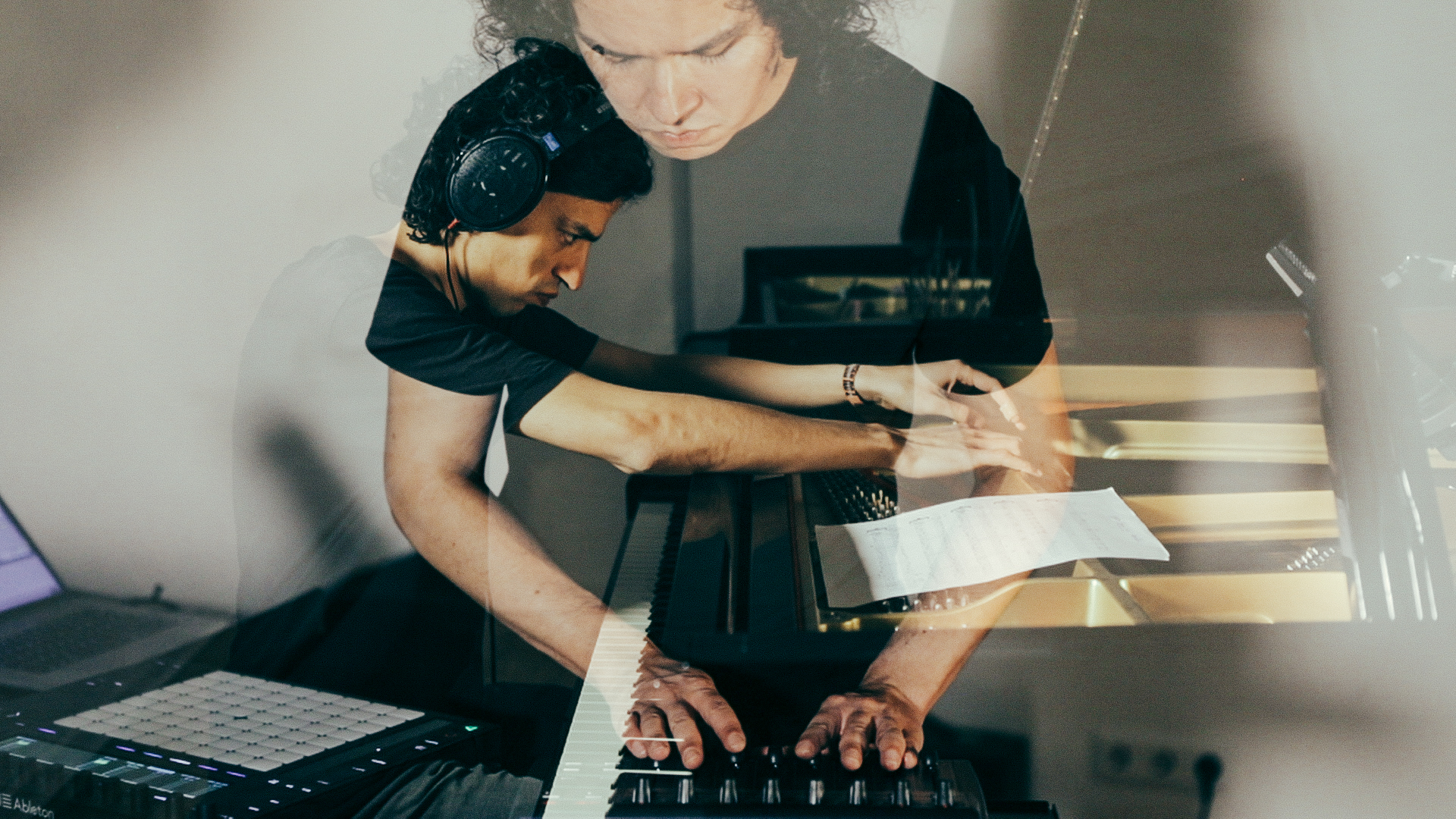
Amine Mesnaoui & Labelle ‘African Prayers’
(Lo Recordings) 1st April 2022

Back again conducting wonders, Jérémy Labelle finally makes the album he always dreamed of with friend and musical partner, the Moroccan-in-Paris pianist, Amine Mesnaoui, 15 years after first crossing paths on the Seine riverbank. As backstories go it’s a fated one, Labelle DJing a Techno set (just one of many musical genres under his belt) suddenly leaping into action to save his future collaborator and party attendee, drowning in the iconic river. Thrown together under the most insane conditions, both musician-composers formed a bond, which is now transduced into a most atmospheric mood suite of atavistic ritual, ceremony and futurism.
Already riding high this year off the back of his expansive universal vision of Maloy music and the classical, this January’s Éclat album, Labelle now appears alongside his classical and jazz studied foil on a both electroacoustic and avant-garde transformation of the North African, but more specifically Moroccan, Gnawa Ritual of the Seven Colours liturgy.
Performed traditionally with the entrancing music of the ‘maâlem’ masters and the spiritual guidance of a ‘shuwafa’ (a clairvoyant, of a kind) this important communion, invocation of the seven main manifestations of the divine ‘demiurgic’ activity calls for the seven saints and ‘mluk’ who are all represented by various shades of colour – hence the name. To go deeper into the meaning, this ritual represents a prismatic decomposition of the original light/energy; the first sacrifice and genesis of the universe as outlined in this Islamic belief and form of religious songs, rhythms, poetry and dance.
However, instead of the signature hypnotic scratchy, scrapped energy of the ‘guembri’ we instead have Mensnaoui’s modified brassy, buzzy resonating piano, which has various objects, props inserted into its strings, and Labelle’s array of electronic interactions and effects to stimulate the mystery and ethereal prayer of that arcane ritual. The mood is every bit as mystical and venerable, only those colourful representations now extend into Cage-style modern classical experimentation, deconstructive spiritual jazz and electronica.
‘Lueur’, ‘white” the colour of the Gnawa religion itself, does have a hint of spindled desert contouring Arabia yet features softened but deep bass stamps and thuds and quivery trills of something otherworldly. Those ‘celestial spirits’ are invoked on the “dark blue” shaded ‘Pérjastre’, stirred up by both chimed and spidery runs up and down the piano’s strings, the sound of softened foot pedal movements, percussive shimmers and breaths from the ether.
The rhythms really get moving on the colour ensemble of ‘Krazé Muneataf Tanzen’, the tribal and avant-garde coming together in a reimagined dance that evokes a meeting between Jeff Mills and Afrikan Sciences. On the aquatic, liquid ‘Bleu Noir’ (the album’s lead single, and in case you didn’t guess, represents the colour “light blue”, a symbol of the ocean and sky) Mesnaoui plays freely with trickled and cascading notes, sounding not that far off from the experimental works of Abdullah Ibrahim.
Familiar African percussion, cattle and long tubular bells and piano turn into electrified forms of futurism. It’s certainly a different perspective, playful, explorative yet attuned to the source material, inspiration. This is Gnawa music and ritual as you’ve never heard it; moving into new realms of sonic enterprise. Just don’t wait so long next time guys, as this is a match made in the elementals.
Nicolas Zullo ‘Credendoti Montagna’
(Ibexhouse) 18th March 2022
The Italian philosophy student turn songwriter Nicolas Zullo interprets and translates a fertile imagination into a lucid dream theatre on his debut solo album, Credendoti Montagna: that’s “believing you are a mountain” to my non-Italian speaking friends.
Unravelling a most poetic psyche, Zullo is aided by Mirko Bianchini on bass, Eduardo Dinelli on drums, Umberto Ciccarelli on keys and the notable Alessandro Fiori on synths, violin and choirs; he also helps to record these enigmatic songs, journeys of the mind, which gently unfurl to traverse the Renaissance, psychedelic, folk, prog, Britpop, 70s soft rock and spells of 60s troubadourism.
Imbued with the bellissimo diverse splendours of the Viareggio, with its gorgeous coastlines, lakes and mountains, these softened studies move with ease through a magical world: simultaneously Freudian and Flyodian! That’s both a Syd-era Pipers At The Gates Of Dawn and a post-Syd Dark Side Of The Moon meets The Wall versions of the Floyd I might add. Unconsciously perhaps, though Zullo name checks a list of artists he grew up absorbing, there’s a light of touch lean towards the Floyd across at least half this album. That and beatified echoes of 10cc, Tame Impala, The Beatles, Ralph McTell, Donovan, Dylan’s harmonica, and 60s/70s Italian cinema soundtracks. Although the part cabaret, part circus trippy ‘Se Fussi’ (“if I were”) is like a Sgt. Pepper Jacques Brel.
Submerged into an enchanted songbook and subconscious of swoons, swirls, romanticism and reflection the listener will find the soft, almost pop-lit with touches of the neoclassical, just quirky enough to hold the attention. Throughout a bathos and pathos of interpretation, and an escape from the ugly machine, there’s a lovely fluid lyricism – OK I’m going on the timbre, candour, feeling, as despite my name and roots I cannot speak Italian. Zullo has crafted a spellbinding, impressive debut, a magnificent, sensory dream-realism of scale and erudite musicianship.
Bart Davenport ‘Episodes’
(Tapete Records) 25th March 2022
A revolving door of labels, from mod to blues singer and soft rock troubadour, Bart Davenport seems to inhabit them all, and many others, on his new episodic songbook.
There’s a certain 60s backbeat in evidence, and chinks and brassy rings of The Beatles and The Byrds, Powerman era Kinks, crooning swoons from the Scott Walker playbook (a sort of reminiscence of ‘Deadlier Than The Male’, removed to Turkish shores, on the eastern psych Ipcress Files scored ‘Naked Man’)and 70s singer/songwriter vibes. Fans of the L.A. artist will feel comfortable anyway, as Bart, in a disarming, melodically timeless fashion, immortalises idiosyncratic characters, lovelorn remiss and more psychedelic episodes from an everyday diorama.
Bart’s joined in this enterprise by regular band mates Jessica Espeleto (on bass) and Wayne Faler (on lead guitar). The invitation is however extended beyond those two regulars. Complimenting the Davenport combo is drummer Graeme Gibson, who eases that backbeat I mentioned on the album’s wanton Baroque and Glenn Tilbrock-like ‘It’s You’ (one of my favourites by the way); percussionist Andres Renteria (of Jose Gonzales and Roderigo Amaranto note), providing sauntered shakers and (I take it) the quasi-Curtis Mayfield soft soul hand drums on the tropicola-like George Michael on AM radio ‘Easy Listeners’; and Aaron M. Olson, adding inspiral suffused organ to the second eastern-psych, with Spanish flourishes and deft Rolling Stones guitar scales, ‘Strange Animals’. Aaron has already, in the past, produced the Bart & The Bedazzled’s previous album Blue Motel, so he knows this set-up well. Swelling with subtle cinematic, romantic and sentimental strings, Dina Macabee lays down a number of original arrangements; notably on the Greek/Med serenaded ‘Billionaires’ and more acoustic folk-psych yearn ‘Alice Arrives’. The first of those is a quite forlorn, if laughable wistful window in on the tech giant oligarchs: messers Bezos, Gates and Zuck radiating a deep sadness and emptiness, as witnessed by our troubadour. They soon have the last laugh as they board a rocket bound to some new idyllic utopia they can fuck up. The second of these songs uses a befitting psychedelic language of paisley and flowery acid-folk, a mix of Fairport Convention acoustic backing and Ralph McTell delivery.
Bart proves he has an ear for a familiar tune, as he regales heartfelt declarations, ambles through modern life and interacts with a strange cast. His melodious craftsmanship often hides, at least some, of the deeper social tragedy and lamentable ills of a world in deep shit. Yet, it’s all there in full comical glory. Episodes will really grow on you as a first rate songbook from an artist who knows how to write a good tune.
Harry Christelis & Pedro Velasco ‘Scribbling’
(Ubuntu Music) 25th March 2022

It’s a title that suggests the mere scribbled doodles, unplanned accumulations of two musicians idling away their time until something more meaningful, better comes along to focus on. In fact the congruous (as it would appear) and adroit partnership of acclaimed guitarists Harry Christelis and Pedro Velasco is anything but: improvise most certainly but skilfully measured and crafted all the same.
Both based in London – though of course Pedro is originally from Portugal – and so crossing paths over the years (actually first coming together to play at a concert in 2016 in the capital) via their respective improvised experimental and jazz set-ups (from Harry’s part in the Walrus Trio, Jamie Doe’s The Magic Lantern and his very own Moostak Trio, to Pedro’s own trio, Akimbo and Machimbombo led turns), this pairing once more teamed-up, just before lockdown restriction in the December of 2020. As the pandemic (hopefully) ebbs and life in the UK gradually starts to look more normal, those mental strains of isolation and themes of disconnection now seem almost to pale insignificance to the onset of war in Eastern Europe. Scribbling’s intentions remain just as relevant, important, to find solace, a space in which to escape the distractions of our modern overpowering Internet age. As a platform to ‘focus, to develop’ and measure time in a more serene way this album of both shared and individual composed mood music gently evokes and mines each artist’s state of mind and musings at that particular point in time.
Chimes, gestures, subtle phrases and caresses of the blues, jazz, neoclassical, Iberian evoke everything from late Clapton and Ferderico Balducci to Myles Cochran and Pink Floyd. Pedro’s off world hovered ‘Nos Entrentos do Silênco’ (“In between the silence”) even has an air of the Kosmische about it: a bit of Ash Ra Tempel perhaps. Laidback jazzy summer wine melodies share the space with atonal mirages and more abstract vignettes; tracks that concentrate more on the effects, spidery finger tabs on buzzing electrified guitar strings and the sound manipulation, contouring of amp hums and reverb.
Both guitarists never seem to indulge themselves, nor overfill that special emotive space with excessive soloing. There’s even room for the synthesized, with a constant presence of ambient waves, drones, tape reversals, tubular metals and more sci-fi computerised sums. Together these elements, atmospheres add mystery, calculation, and the cosmic to proceedings: the electronic bits on the opener, ‘Paul’s Closet’, even reminded me of a very early Aphex Twin.
A fine balance of contemplation, the measuring of time in a reflective way, and pedal board hardware trickery is struck. The artful and obvious articulate skills of both Harry and Pedro emote far deeper connections, descriptions and horizons than mere daubing’s. Scribbling is a fine piece of sagacious, subtle musicianship.
Yamash’ta & The Horizon ‘Sunrise From West Sea Live’
(WEWANTSOUNDS) 1st April 2022
Reissue specialists WEWANTSOUNDS (their caps lock signature not mine) continue to drop rarities, cult favourites and avant0garde eccentricities with the first ever reissue of Yamash’ta & The Horizon’s ’71 dream team live special, Sunrise From West Sea. This edited down spilt peregrination of freefrom jazz, kool-aid and Fluxus-like classical deconstruction, performed at the Yamaha Hall in Tokyo on April 18th of that year, can now be yours on vinyl; remastered, it should be added, from the original tapes.
The Julliard and Bekrlee alumni and Japanese genius Stomu Yamash’ta assembles an enviable cast, joined in this far-out improvisation by fellow jazz pianist compatriot and Berklee student Masahiko Satoh, the Julian Cope Japrocksampler noted and Fluxus instigator/composer/violinist/artist Takehisa Kosugi on electric violin, and electrified shamisen player (a traditional three-string Japanese instrument played with a ‘bachi’ plectrum) Hideakira Sakurai. All together, untethered from reality and the rules of composition this Japanese quartet inhabits an alien soundscape of the submerged and wildly bendy!
From the depths of Atlantis to the South China Seas into an archipelago of Pacific Island native drumming circles, the associations are free and loosely ethnological and yet beyond any real tangible geography that exists.
As you might expect from a critically renowned percussionist (hailed no less by John Cage, who he worked with on occasion, as one of the world’s best) there’s plenty of hand-drumming and rasps, thrashes of obscured percussive instrumentation to be found, both serial and galloping or, slapped into something that resembles a rhythmic propulsion. In the meantime Satoh seems to scratch and physically pull at the inner workings of his piano; occasionally tinkling with actual recognisable notes. Taj Mahel Traveller Kosugi pinches, strains and bows away at the catgut; somehow making the electric-violin sound otherworldly, wailing and quivered. In a similar vein Sakurai transports us to some abstract, primordial vision of the Far East, again, only now and then offering his shamisen instrument an easy ride with recognisable frayed stirrings and yearns.
‘Part 2’ is almost filmic in places, which is unsurprising as both Yamash’ta and Satoh were engaged in or, about to score some movies. Yamash’ta already well versed having a collaborative relationship with the English conductor Peter Maxwell Davies, who’s score for Altman’s 1972 Images movie would feature his contributions, also instigated, ran the Red Buddha Theatre and had his music used in Roeg’s The Man Who Fell To Earth and later, the BBC’s Hitchhiker’s Guide To The Galaxy. Satoh would most notably go on to provide the score for the 1973 cult erotic psychedelic anime Bellodonna of Sadness.
Four avant-garde travellers cross paths and dream about the life-giving forces on the West Sea horizon in a show of explorative mania, trepidation, supernatural and cosmic hovering. This is a weird performative space of tightrope walked resonated string instrument drama, whale song, shuttled percussion and abstract forces. The sort of thing Cope would lap up and recommend to the head music community.
Ben Vida And Lea Bertucci ‘Murmurations’
(Cibachrome Editions) 1st April 2022
Stalwarts of the NYC experimental scene Ben Vida And Lea Bertucci appear together for the first time as an electroacoustic and transformed voice duo. At opposite sides of the same mountain in the famous arts and music retreat of Woodstock, both artists initially began conversing as friends before taking the plunge and developing a special ‘non-hierarchical’ improvised collaboration.
Although more or less obscuring, coating in various effects each other’s contributions, murmurs of Lea’s wind instruments and rasped, reedy saxophone can just be detected amongst the magnetic fizzles and slithery, tentacle tape thrashing. Live tape manipulation, modular synth, sampling, real-time instrumental and vocal improvisation are all set in motion to create an often alien, avant-garde and often low-grade industrial atmosphere; a cosmic soundtrack and art gallery installation score.
It constantly feels as intimate as it does expansive, with the looming and hovering presence of some kind of extra-terrestrial craft. There are hums, pulses that could be motors, and the sound of rippled propellers in the air. Some passages even evoke the lunar. Yet there’s also the resonance of some eco-system: strange bird echoes, insects chatter and the most humid of sub-tropical heats buzz – think A.I. exotica of Clarke’s Rendezvous With Rama.
Fluted hinged and solar windy funnelled real instruments blow across a sulphur spool of vapour and wispy ghostly waves. Occasionally you can hear the most un-rhythmic of tub patters in that atmosphere.
Both artists work with the human voice too, offering Cuushe-like utterances of an undefined language, and on the album’s title-track, a transformed, broken-up conversation between Ben and Lea. Phonetic breakdowns, sucked up and reversed snippets of dialog turn into harped arias and the giggles.
This could be a static-charged paradise or a virtual existence in the bubble, whatever it is Murmurations has some strange, explorative sonic worlds and new esoteric-like communication processes to draw the listener in.
Kumo ‘Three Tigers’
(Self Release)
Unless you’re Chinese or a student of that country’s culture or, like the electronic polymath Jono Podmore, an acolyte of its martial arts (in this case the Taoist-imbued Tai Chi), it may very well have escaped your notice that 2022 is the year of the ‘Tiger’.
Born under that Chinese Zodiac cycle myself I was always curious to its omens, augurs. Of which, the Tai Chi teaching Jono seems to have predicated an omen, a very bad one, when asked by a student back in February (the official start of the Chinese calendar) what to expect in the year of the Tiger. His answer: war! And so perhaps we can blame him now for what’s happened in light of the invasion of Ukraine – only kidding.
However, we’re informed that despite this magnificent animal’s more dangerous attributes, ‘there are many tigers’ to decipher, to draw meaning from: the ‘strength’ to overcome problems, its beauty, even calmness.
Exploring all these aspects, traits and metaphorical quandaries, symbols Jono draws from the atavistic Tai Chi teachings on his latest Kumo alias release. And just like that regal big cat’s dualism – ‘a force for peace and reconciliation as a harbinger of war’ – the trio of electronic encapsulations, calligraphy brushed evocations, are a surprising mix of the experimental and dynamic.
In a more serene setting the opening ‘Tiger Lies Down’ surveys an electrified Spring landscape of lush flowing, cascaded waters, our magnificent beats wandering an ambient-charged calm that encourages tranquillity and meditative pause: at least a moment to retract those claws anyway. Undulating this natural scene is a subtle, nuanced bobbing Orb and Banco da Gaia like trance beat, synthesized percussive shimmers and dissipating steam. Things do turn a little wild at the end with a contortion of transmitted wiry signals; a sound that will return later on.
Upping the energy, ‘(Retreat To) Ride Tiger’ prowls a techno and house infused bob and bounce beat of Jeff Mills, Juan Atkins and Felix Da Housecat coming together for Basic Channel. Representing the tiger’s reluctance to take passengers, but taking that wild ride anyway, the waves, dance pulses, glints of spiritual mystery and danger keeps on coming.
The final push to holy peaks brings our subject to the mountains for perhaps the most serial, explorative track of the three. Edging through tubular bamboo and undergrowth, Jono guides us through an arching, bendy and looming electronic terrain. Oscillating spirits, the echoes of a sacred space envelope a sensory tread. Those signal frequencies from the fist track make that return I mentioned, as the tone become more otherworldly, mythical and cosmic.
Neither in the spirit of Eno’s own Tiger mountain excursions nor in the manner of Orientalism, Jono surprises with a soundtrack representation devoid of those Chinese musical signatures. Instead, traversing ambient, techno, soundscaping and the kosmische he paints a unique homage, respectful acknowledgment to China’s ancient symbolism and the most majestic, powerful (unfortunately endangered; much of which is down to the Chinese themselves hunting them down to extract their magical properties for medicines) of creatures. Juts please don’t act the Cassandra again! We have enough on our plates already without more predictions!
Adams, Dunn & Haas ‘Future Moons’
New York postcard penpal Andy Haas (you can find Andy’s Covid years series of regular Museum of Modern Art imbued postcards on our Instagram account) with regular Toronto foil Matthew ‘Doc’ Dunn and Kieran Adams travel untethered to one of our nearest constellations and beyond on the starry Future Moons.
A contortion of wailed avant-garde, galactic freeform jazz, cosmic courier kosmische and far-out peregrinations, each sonic astronaut brings something both different and explorative to the far-flung outer limits.
But before we travel any further, a little provenance is needed. Adams CV includes the synth pop group DIANA and various stints alongside Bonjay, the Weather Station, and Joseph Shabason. His latest project is Vibrant Matter. Dunn’s been a chief instigator in the experimental Canadian scene, most notably as the driver behind The Cosmic Range collective. Haas’ near five-decade career includes the Canadian new wave trailblazers and international hit makers Martha And The Muffins, and an enviable catalogue of collaborative ensemble projects with Mar Ribot, Zeena Parkins, John Zorn, Ikue Mori, Don Fiorino, U.S. Girls plus Dunn’s Cosmic Range. Here and now, Haas’ fluted, spiralled and wild signature saxophone contours and trilling blowouts veer off like a mirage of Sam Rivers, Pete Brützmann and former foil Zorn as Adams and Dunn’s drums and electronic apparatus run amok in hyper space, hinting at Ilhan Mimaroglu, Anatoly Vaprirov and Dzyan.
Within that swanned nebula and astral worship there’s oboe-like sounds from a removed Arabia, strangled screams, flailed wails and cries and library music like leaps, bubbly chemistry, space gate light speed tripping, holy disorder and modal jazz blues: sonnets, screaming declarations and flowery offerings to majestic universal bodies. Strung-out in the highest heavens of space this exploratory, expressive trio navigate an abstract starry passage to new dimensions.
How You Can Help Us Continue In 2022:
Hi, my name is Dominic Valvona and I’m the Founder of the music/culture blog monolithcocktail.com For the last ten years I’ve featured and supported music, musicians and labels we love across genres from around the world that we think you’ll want to know about. No content on the site is paid for or sponsored and we only feature artists we have genuine respect for /love. If you enjoy our reviews (and we often write long, thoughtful ones), found a new artist you admire or if we have featured you or artists you represent and would like to buy us a coffee at https://ko-fi.com/monolithcocktail to say cheers for spreading the word, then that would be much appreciated.
Tickling Our Fancy 069: Minyeshu, Dr. Chan, Brace! Brace!, Grand Blue Heron, Don Fiorino and Andy Haas…
October 9, 2018
Dominic Valvona’s new music reviews roundup

Another fine assortment of eclectic album reviews from me this month, with new releases from Papernut Cambridge, Sad Man, Grand Blue Heron, Don Fiorino and Andy Haas, Junkboy, Dr. Chan, Minyeshu, Earthling Society and Brace! Brace!
In brief there’s the saga of belonging epic new LP from the Ethiopian songstress Minyeshu, Daa Dee, a second volume of Mellotron-inspired library music from Papernut Cambridge, the latest Benelux skulking Gothic rock album from Grand Blue Heron, another maverick electronic album of challenging experimentation from Andrew Spackman, under his most recent incarnation as the Sad Man, a primal avant-garde jazz cry from the heart of Trump’s America from Don Fiorino and Andy Haas, the rage and maelstrom transduced through their latest improvised project together, American Nocturne; and a bucolic taster, and Music Mind compilation fundraiser track, from the upcoming new LP from the beachcomber psychedelic folk duo Junkboy.
I’ve also lined up the final album from the Krautrock, psychedelic space rocking Earthling Society, who sign off with an imaginary soundtrack to the cult Shaw Brothers Studio schlockier The Boxer’s Omen, plus two most brilliant albums from the French music scene, the first a shambling skater slacker punk meets garage petulant teenage angst treat from Dr. Chan, The Squier, and the second, the debut fuzzy colourful indie-pop album from the Parisian outfit Brace! Brace!
Minyeshu ‘Daa Dee’ (ARC Music) 26th October 2018
From the tentative first steps of childhood to the sagacious reflections of middle age, the sublime Ethiopian songstress Minyeshu Kifle Tedla soothingly, yearningly and diaphanously articulates the intergenerational longings and needs of belonging on her latest epic LP, Daa Dee. The sound of reassurance that Ethiopian parents coo to accompany their child’s baby steps, the title of Minyeshu’s album reflects her own, more uncertain, childhood. The celebrated singer was herself adopted; though far from held back or treated with prejudice, moving to the central hub of Addis Ababa at the age of seventeen, Minyeshu found fame and recognition after joining the distinguished National Theatre.
In a country that has borne the scars of both famine and war, Ethiopia has remained a fractious state. No wonder many of its people have joined a modern era diaspora. Though glimmers of hope remain, and in spite of these geopolitical problems and the fighting, the music and art scenes have continued to blossom. Minyeshu left in 1996, but not before discovering such acolytes as the doyen of the country’s famous Ethio-Jazz scene, Mulatu Astatke, the choreographer Tadesse Worku and singers Mahmoud Ahmed, Tilahun Gessesse and Bizunesh Bekele; all of whom she learnt from. First moving to Belgium and then later to the Netherlands, the burgeoning star of the Ethiopian People To People music and dance production has after decades of coming to terms with her departure finally found a home: a self-realization that home wasn’t a geographical location after all but wherever she felt most comfortable and belonged: “Home is me!”
The beautifully stirring ‘Yetal (Where Is It?)’ for example is both a winding saga, with the lifted gravitas of swelling and sharply accented strings, and acceptance of settling into that new European home.
Evoking that sense of belonging and the theme of roots, but also paying a tribute and lament to the sisterhood, Minyeshu conveys with a sauntering but sorrowful jazzy blues vibe the overladen daily trudge of collecting wood on ‘Enchet Lekema’; a hardship borne by the women of many outlier Ethiopian communities. Though it can be read as a much wider metaphor. The blues, in this case, the Ethiopian version of it (perhaps one of its original sources) that you find on ‘Tizita’ (which translates as ‘longing’ or ‘nostalgia’), has never sounded so lilting and divine; Minyeshu’s cantabile, charismatic soul harmonies, trills and near contralto accenting the lamentable themes.
There is celebration and joy too; new found views on life and a revived tribute to her birthplace feature on the opulently French-Arabian romance ‘Hailo Gaja (Let’s Dance)’, and musically meditating, the panoramic dreamy ‘Yachi Elet (That Moment)’ is a blissed and blessed encapsulation of memories and place – the album’s most traversing communion, with its sweet harmonies, bird-like flighty flutes and waning saxophone.
Not only merging geography but musical styles too, the Daa Dee LP effortlessly weaves jazz (both Western and Ethiopian) R&B, pop, dub, the theatrical, and on the cantering to lolloping skippy ‘Anteneh (It Is You?)’, reggae. Piano, strings and brass mix with the Ethiopian wooden washint flute and masenqo bowed lute to create an exotic but familiar pan-global sound. Minyeshu produces a heartwarming, sometimes giddy swirling, testament that is exciting, diverse and above all else, dynamic. Her voice is flawless, channeling our various journeys and travails but always placing a special connection to those Ethiopian roots.
Don Fiorino and Andy Haas ‘American Nocturne’ (Resonantmusic) 16th September 2018
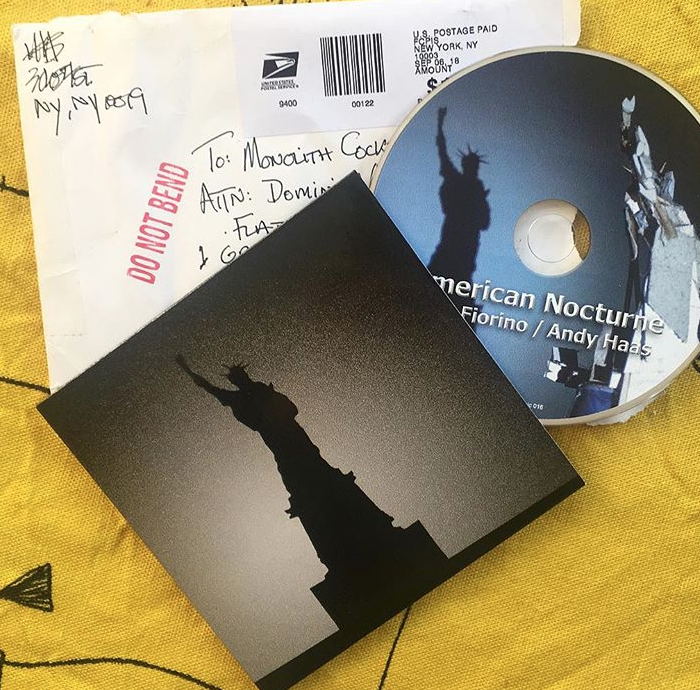
Amorphous unsettling augers and outright nightmares permeate the evocations of the American Nocturne visionaries Don Fiorino and Andy Haas on their latest album together. Alluded, as the title suggests, by the nocturne definition ‘a musical composition inspired by the night’, the darkest hour(s) in this case can’t help but build a plaintive warning about the political divisive administration of Trump’s America: Nicola Plana’s sepia adumbrated depiction of Liberty on the album’s cover pretty much reinforces the grimness and casting shadows of fear.
Musically strung-out, feeding off each other’s worries, protestations and confusion, Fiorino and Haas construct a lamentable cry and tumult of anger from their improvised synthesis of multi-layered abstractions.
Providence wise, Haas, who actually sent me this album after seeing my review of a U.S. Girls gig from earlier in the year (he was kind enough to note my brief mention of his Plastic Ono Band meets exile-in-America period Bowie saxophone playing on the tour; Haas being a member of Meg Remy’s touring band after playing on her recent LP, In A Poem Unlimited), once more stirs up a suitably pining, troubled saxophone led atmosphere; cast somewhere between Jon Hassell and Eno’s Possible Musics traverses, serialism jazz and the avant-garde. The Toronto native, originally during the 70s and early 80s a band member of the successful Canadian New wave export Martha And The Muffins, is an experimental journeyman. Having moved to New York for a period in the mid 80s to collaborate with a string of diverse underground artists (John Zorn, Marc Ribot, Thurston Moore and God Is My Co-Pilot) he’s made excursions back across the border; in recent times joining up with the Toronto supergroup, which features a lion’s share of the city’s most interesting artists and of course much of the backing group that now supports Meg Remy’s U.S. Girls, the Cosmic Range (who’s debut LP New Latitudes made our albums of the year feature in 2016). He’s also been working with that collective’s founder, Matt ‘Doc’ Dunn, on a new duo project named KIM (the fruits of which will be released later this year). But not only a collaborator, Haas has also recorded a stack of albums for the Resonantmusic imprint over the years (15 in total), the first of which, from 2005, included his American Nocturne foil, Fiorino. An artist with a penchant for stringed instruments (guitar, glissenter, lap steel, banjo, lotar, mandolin), Fiorino is equally as experimental; the painter musician imbued by blues, rock, psychedelic, country, jazz, Indian and Middle Eastern music has also played in and with a myriad of suitably eclectic musicians and projects (Radio I Ching, Hanuman Sextet, Adventures In Bluesland and Ronnie Wheeler’s Blues).
Recorded live with no overdubs, the adroit duo is brought together in a union of discordant opprobrious and visceral suffrage. Haas’ signature pained hoots, snozzled snuffles and more suffused saxophone lines drift at their most lamentable and blow hard at their most venerable and despondent over and around the spindly bended, quivery warbled and weird guitar phrases of Fiorino. Setting both esoteric and mysterious atmospheres, Haas is also in charge of the manic, often reversed or inverted, and usually erratic drum machine and bit-crushing warped electronic effects. Any hint of rhythm or a lull in proceedings, and it’s snuffed out by an often primal and distressed breakdown of some kind.
Skulking through some interesting soundscapes and fusions, tracks such as the opening ‘Waning Empire Blues’ conjures up a Southern American States gloom (where the Mason-Dixon line meets the dark ambient interior of New York) via a submerged vision of India. It also sounds, in part, like an imaginary partnership between Hassell and Ry Cooder. ‘Days Of The Jackals’ has a sort of Spanish Texas merges with Byzantium illusion and ‘New Orphans’ transduces the Aphex Twin into a shapeless, spiraling cacophony of pain.
With hints of the industrial, tubular metallic, blues, country, electro and Far East to be found, American Nocturne is essentially a deconstructive jazz album. Further out than most, even for a genre used to such heavy abstract experimentation, this cry from the bleeding heart of Trumpism opposition is as musically traumatic as it is complex and creatively descriptive. Fiorino and Haas envision a harrowing soundtrack fit for the looming miasma of our times.
Papernut Cambridge ‘Mellotron Phase: Volume 2’ (Ravenwood Music/Gare du Nord) 5th October 2018

A one-man cottage industry (a impressively prolific one at that) Ian Button’s Eurostar connection inspired label seems to pop up in every other roundup of mine. The unofficial houseband/supergroup and Button pet project Papernut Cambridge, the ranks of which often swell or contract to accommodate an ever-growing label roster of artists, is once again widening its nostalgic pop and psychedelic tastes.
Following on from Button’s debut leap into halcyon cult and kitsch library music, Mellotron Phase: Volume 1 is another suite of similar soft melodic compositions, built around the hazy and dreamy polyphonic loops of the iconic keyboard: An instrument used to radiant, often woozy, affect on countless psych and progressive records. That first volume was a blissful, float-y visage of quasi-David Axelrod psychedelic litany, pop-sike, quaint 60s romances and a mellotron moods version of Claude Denjean cult lounge Moog covers.
This time around the basis for each instrumental vision is the rhythm accompaniments from Mattel’s disc-based Ontigan home-entertainment instrument. These early examples of instrumental loops and musical breaks were set out across the instrument’s keys so that chord sequences and variations can be used to construct an arrangement. Mellowed and toned-down in comparison to the first volume, though still featuring drum breaks, percussion, bass and on the Bacharach-composes-a-screwball-tribute-to-French-Western-pulp-fiction (Paris, Texas to Paris, France) ‘A Cowboy In Montmartre’, an accordion. If the French Wild West grabs you then there’s plenty of other weird and wonderful mélanges to be found on this whimsically romantic, sometimes comically vaudeville, and often-yearning fondly nostalgic album. The swirling cascade of soft focus tremolo vibrations of the stuttered ‘Cha-Cha-Charlie’ sounds like Blue Gene Tyranny catching a flight on George Harrison’s Magical Mystery Tour. The Sputnik space harp pastiche of ‘Cygnus Probe’ is equally as Gerry Anderson as it is Philippe Guerre, and ‘Boss Club’ reimagines Trojan Records transduced through lounge music. Kooky Bavarian Oompah Bands at an acid-tripping Technicolor circus add to the mirage-like mellotron kaleidoscope on ‘Sergeant Major Mushrooms’, Len Deighton’s quintessentially English clandestine spy everyman, as scored by John Barry, cameos on the clavinet spindly and The Kramford Look-esque ‘Parker’s Last Case’, and Amen Corner wear their soft soul shufflers on the Tamala backbeat ‘Soul Brogues’.
A curious love letter to the forgotten (though a host of champions, from individuals to labels, have revalued and showcased their work) composers and mavericks behind some of the best and most odd library music, Mellotron Phase will in time become a cult album itself. As quirky as it is serenading, alternative recalled obscure soundtracks that vaguely recall Jean-Pierre Decerf, Jimmy Harris, Stereolab, Jean-Claude Vannier and even Roy Budd are given a fond awakening by Button and his dusted-off mellotron muse.
Sad Man ‘ROM-COM’ October 2018
Haphazardly prolific, Andrew Spackman, under his most recent of alter egos, the Sad Man, has released an album/collection of giddy, erratic, in a state of conceptual agitation electronica every few months since the beginning of 2017. Many of which have featured in one form or another in this column.
The latest and possibly most restive of all his (if you can call it that) albums is the spasmodic computer love transmogrification ROM-COM. An almost seamless record, each track bleeding into, or mind melding with the next, the constantly changing if less ennui jumpy compositions are smoother and mindful this time around. This doesn’t mean it’s any less kooky, leaping from one effect to the next, or, suddenly scrabbling off in different directions following various nodes and interplays, leaving the original source and prompts behind. But I detect a more even, and daresay, sophisticated method to the usual skittish hyperactivity.
Showing that penchant for exploration tracks such as the tribal cosmic synwave ‘Play In The Sky’ fluctuate between the Twilight Zone and tetchy, tentacle slithery techno; whilst the shifting bit-crush cybernetic ‘Hat’ sounds like a transplanted to late 80s Detroit Art Of Noise one minute, the next, like a isotope chilled thriller soundtrack. Reverberating piano rays, staggered against abrasive drumbeats await the listener on the sadly melodic ‘King Of ‘. That is until a drilling drum break barrels in and gets jammed, turning the track into a jarring cylindrical headbanger. ‘Coat’ whip-cracks to a primitive homemade drum machine snare as it, lo fi style, dances along to a three-way of Harmonia, The Normal and Populare Mechanik, and the brilliantly entitled ‘Wasp Meat’ places Kraftwerk in Iain Banks Factory.
Almost uniquely in his own little orbit of maverick bastardize electronic experimentation, Spackman, who builds many of his own bizarre contraptions and instruments, strangulates, pushes and deconstructs techno, the Kosmische, Trip-Hop and various other branches of the genre to build back up a conceptually strange and bewildering new sonic shake-up of the electronic music landscape.
Grand Blue Heron ‘Come Again’ (Jezus Factory) October 19th 2018

Grand Blue Heron, or GBH as it were, do some serious grievous harm to the post-punk and alt-rock genres on their latest abrasive heavy-hitter, Come Again. Partial to the Gothic, the Benelux quartet prowl in the miasma; skulking under a repressed gauze and creeping fog of doom as they trudge across a esoteric landscape of STDs, metaphorical crimes of the heart and rejection.
Born out of the embers of the band Hitch, band mates Paul Lamont (who also served time with the experimental Belgium group and Jezus Factory label mates, A Clean Kitchen Is A Happy Kitchen) and Oliver Wyckhuyse formed GBH in 2015 as a vehicle for songs written by Lamont. Straight out of the blocks on their thrashing debut Hatch, they’ve hewn a signature sound that has proven difficult to pin down.
Both boldly loud with smashing drums and gritty distorted guitars, yet melodic and nuanced, they sound like The Black Angels and Bauhaus working over noir rock on the vortex that is ‘Wwyds’, a grunge-y Belgium version of John Lyndon backed by The Pixies on the controlled maelstrom title-track, and Metallica on the country-twanging, pendulous skull-banger ‘Head’. They also sail close to The Killing Joke, Sisters Of Mercy (especially on the decadent wastrel Gothic ‘The Cult’), Archers Of Loaf and, even, The Foo Fighters. They rollick in fits of rage and despondency, beating into shape all these various inspirations, yet they come out on top with their own sound in the end.
Playing live alongside some pretty decent bands of late (White Denim, Elefant, The Cult Of Dom Keller) the GBH continue to grow with confidence; producing a solid heavy rock and punk album that reinforces the justified, low-level as it might be, hype of the Belgium, and by extension, Flanders scene.
Dr. Chan ‘Squier’ (Stolen Body Records) October 12th 2018

Keeping up the petulant garage-punk-skate-slacker discourse of their obstinate debut, the French group with just a little more control and panache once more hang loose and play fast with their spikey influences on the second LP Squier.
Hanging out with a disgruntled shrug in a 1980s visage of L.A. central back lots, skating autumn time drained pools in a nocturnal motel setting, Dr. Chan crow about the transition from adolescence to infantile adulthood. Hardly more than teenagers themselves, the band seem obsessed with their own informative years of slackerdom; despondently ripping into the status of outsiders the lead singer sulkingly declares himself as “Just a young messy loser” on the opening boom bap garage turn space punk spiraling ‘Wicked & Wasted’, and a “Teenage motherfucker” on the funhouse skater-punk meets Thee Headcoats ‘Empty Pockets’.
The pains but also thrills of that time are channeled through a rolling backbeat of Black Lips, Detroit Cobras, Brian Jonestown Massacre, The Hunches, Nirvana and new wave influences. The most surprising being glimmers of The Strokes, albeit a distressed version, on the thrashed but polished, even melodic, ‘Girls!’ And, perhaps one of the album’s best tracks (certainly most tuneful), the bedeviled ride on the 666 Metro line ‘The Sinner’, could be an erratic early Arctic Monkeys missive meets Blink 182 outtake.
The Squier is an unpretentious strop, fueled as much by jacking-up besides over spilling dumpsters, zombified states of emptiness and despair as it is by carefree cathartic releases of bird-finger rebellious fun. Reminiscing for an adolescence that isn’t even theirs, Dr. Chan’s directed noise is every bit informed by the pin-ups of golden era 80s Thrasher magazine as by Nuggets, grunge and Jon Savage’s Black Hole: Californian Punk compilation. The fact they’re not even of the generation X fraternity that lived it, or even from L.A. for that matter, means there is an interesting disconnection that offers a rousing, new energetic take. In short: Ain’t a damn thing changed; the growing pains of teenage angst still firing most of the best and most dynamic shambling music.
Brace! Brace! ‘S/T’ (Howlin Banana) 12th October 2018

Looking for your next favourite French indie-pop group? Well look no further, the colourful Parisian outfit Brace! Brace! are here. Producing gorgeous hues of softened psychedelia, new wave, Britpop and slacker indie rock, this young but sophisticated band effortlessly melt the woozy and dreamy with more punchier dynamic urgency on their brilliant debut album.
Squirreled away in self-imposed seclusion, recording in the Jura Mountains, the isolation and concentration has proved more than fruitful. Offering a Sebastian Teller fronts Simian like twist on a cornucopia of North American and British influences, Brace! Brace! glorious debut features pastel shades of Blur, Gene, Dinosaur Jnr., Siouxsie And The Banshees (check the “I wrecked your childhood” refrain post-punk throb and phaser effect symmetry guitar of ‘Club Dorothée’ for proof) and the C86 generation. More contemporary wafts of Metronomy, Mew, Jacco Gardner, the Unknown Mortal Orchestra and Deerhunter (especially) permeate the band’s hazy filtered melodies and thoughtful prose too.
At the heart of it all lies the subtly crafted melodies and choruses. Never overworked, the lead-up and bridges gently meet their rendezvous with sweet élan and pace. Vocals are shared and range from the lilted to the wistful and more resigned; the themes of chaste and compromised love lushly and wantonly represented.
This is an album of two halves, the first erring towards quirky new wave, shoegaze-y hearty French pop – arguably featuring some of the band’s best melodies -, the second, a more drowsy echo-y affair. Together it makes for a near-perfect debut album, an introduction to one of the most exciting new fuzzy indie-pop bands of the moment.
Junkboy ‘Old Camera, New Film’ – Taken from Fretsore Record’s upcoming Music Minds fundraiser compilation; released on the 12th October 2018
Quiet of late, or so we thought, the unassuming South Coast brothers Hanscomb have been signing love letters, hazy sonnets and languorous troubadour requests from the allegorical driftwood strewn yesteryear for a number of years now. The Brighton & Hove located siblings have garnered a fair amount of favorable press for their beautifully etched Baroque-pastoral idyllic psychedelic folk and delicately softly spoken harmonies.
To celebrate the release of their previous album, Sovereign Sky, the Monolith Cocktail invited the duo to compile a congruous Youtube playlist. Proper Blue Sky Thinking didn’t disappoint; the brothers’ Laurel Canyon, Freshman harmony scions and softened psychedelic inspirations acting like signposts and reference points for their signature nostalgic sound: The Beach Boys, Thorinshield, Mark Eric, The Lettermen, The Left Bank all more an appearance.
A precursor to, we hope, Junkboy’s next highly agreeable melodious LP, Trains, Trees, Topophilia (no release date has been set yet), the tenderly ruminating new instrumental (and a perfect encapsulation of their gauzy feel) ‘Old Camera, New Film’ offers a small preview of what’s to come. It’s also just one of the generous number of tracks donated to the worthy Music Minds (‘supporting healthy minds’) cause by a highly diverse and intergenerational cast of artists. Featuring such luminaries as Tom Robinson, Glen Tilbrook and Graham Goldman across three discs, the Fretsore Records release coincides with World Mental Health Day on the 12th October.
Sitting comfortably on the second disc with (two past Monolith Cocktail recommendations) My Autumn Empire, Field Harmonics and Yellow Six, Junkboy’s mindful delicate swelling strings with a hazy brassy, more harshly twanged guitar leitmotif beachcomber meditations prove a most perfect fit.
Earthling Society ‘MO – The Demon’ (Riot Season) 28th September 2018

Bowing out after fifteen years the Earthling Society’s swansong, MO – The Demon, transduces all the group’s various influences into a madcap Kool-aid bathed imaginary soundtrack. Inspired by the deranged Shaw Brothers film studio’s bad-taste-running-rampart straight-to-video martial arts horror schlock The Boxer’s Omen, the band scores the most appropriate of accompaniments.
The movie’s synopsis (though I’m not sure anyone ever actually wrote this story out; making it up in their head as they went along more likely) involves a revenge plot turn titanic spiritual struggle between the dark arts, as the mobster brother of a Hong Kong kickboxer, paralyzed by a cheating Thai rival, sets out on a path of vengeance only to find himself sidetracked by the enlightened allure of a Buddhist monastery and the quest to save the soul of a deceased monk (who by incarnated fate happens to be our protagonist’s brother from a previous life) killed by black magic. A convoluted plot within a story of vengeance, The Boxer’s Omen is a late night guilty pleasure; mixing as it does, truly terrible special effects with demon-bashing Kung Fu and Kickboxing.
Recorded at Leeds College of Music between November 2017 and February of 2018, MO – The Demon is an esoteric Jodorowsky cosmology of Muay Thai psychedelics, space rock, shoegaze, Krautrock and Far East fantasy. Accenting the mystical and introducing us to the soundtrack’s leitmotif, the opening theme song shimmers and cascades to faint glimmers of Embryo and Gila; and the craning, waning guitar that permeates throughout often resembles Manuel Göttsching later lines for Ash Ra Tempel. By the time we reach the bell-tolled spiritual vortex of the ‘Inauguration Of The Buddha Temple’ we’re in Acid Mothers territory, and the album’s most venerable sky-bound ascendant ‘Spring Snow’ has more than a touch of the Popol Vuh about it: The first section of this two-part vision features Korean vocalist Bomi Seo (courtesy of Tirikiliatops) casting incantation spells over a heavenly ambient paean, as the miasma and ominous haze dissipates to reveal a path to nirvana, before escalating into a laser whizzing Amon Duul II talks to Yogi style jam. The grand finale, ‘Jetavana Grove’, even reimagines George Harrison in a meeting of minds with Spiritualized and the Stone Roses; once more setting out on the Buddhist path of enlightenment.
Sucked into warped battle scenes on the spiritual planes, Hawkwind (circa Warriors On The Edge Of Time) panorama jams and various maelstroms, the Earthling Society capture the hallucinogenic, tripping indulgences of their source material well whilst offering the action and prompts for another set of heavy psych and Krautrock imbued performances. The Boxer’s Omen probably gets a much better soundtrack than it deserves, as the band sign off on a high.
 Monolith Cocktail Blog