Dominic Valvona’s Eclectic Reviews Roundup (Unless stated otherwise, all releases are available to buy now).

The Holy Family ‘Go Zero’
(Rocket Recordings) 21st July 2023
A convergence of the chthonian, Fortean, symbolist, magical and Biblical under the murky multilayered literary canopy of Brian Catling’s atavistic Vorrh forest, the newest work of hermetic density from The Holy Family feeds on the late creative polymath’s epic surreal-fantasy and on the “hypothetical” time repression theory of the group’s founding member, David Jason Smith.
The album title, Go Zero, was coined as a mantra; an incantation and leitmotif for Smith’s philosophical propound idea that “we are [all] continually moving forward into our past until we arrive at our birth-creation – the Tree Of Knowledge…or “Going Zero””. This idea is writ large across a monolithic three-part suite dedication. Although unmistakably part of the same dark materials, the family set in motion a different kind of supernatural manifestation and afflatus alchemy with this mini opus. It begins with tribal, tubular-paddled beats and vaporous voices before building into the helter-skelter of the double drumming (Smith in unison with the newest recruit Joe Lazarus, who takes on more of the rhythm and lumbered drumming duties – Smith handing over to concentrate on vocals and synth) centrepiece, ‘Part II’. Locked-in to an intense behemoth, Tago Mago period Can are thrown into a brilliant psychedelic-prog-free-jazz-post-punk hadron collider of The Sunns, Black Angels, Rema-Rema, Atomic Rooster, Hawkwind and whomping post-Bitches Brew Miles Davis. The grinded bass line reminds me of Liquid Liquid and Killing Joke. The final part ends on a oscillating, airy bed of more peaceable, dreamy and starry occult yearning and sighing; a misty conclusion of a kind to that return-to-the-Kabbalah-like-birth theorem.
The first half, or five tracks, of the album feature at least two pieces based on characters (recognized by those who’ve managed to unravel the heavy symbolist, surreal and often almost impenetrable prose of the author) from the late British author and artist Brian Catling’s The Vorrh trilogy. Evangelized by the equally heralded Alan Moore as “a Phosphorescent masterpiece”, and the first great literary work of its kind in the 21st century (the magik imbued comic book titan turn novelist it must be stated, did write the forward for that same series), the alternative, colonialist, time-travelled series of books mixes facts and fiction, both real and imaginary people in a fantastical phantom world built around a sentient African forest, older than mankind and said to hold all knowledge. The forest is inspired itself by Raymond Roussel’s Impressions Of Africa, and that French writer makes an appearance as part of an expansive cast. The main protagonists include a hunter and his Cyclops sidekick, who attempt to penetrate (in every sense of that word and its various connotations) the off-limits dense magical forest.
Just as Catling saw no demarcated boundaries, lines in his writing and artistic practices, The Vorrh trilogy reflects an amorphous breakdown of barriers, liberties, language, prose and storytelling. Personally I’ve never read it: any of it. But the Family coven has used the voyeuristic sounding Watcher and creepy Chalky’s Eyes references. The former, a stained glass window light permitted and anointed pause in the doom-laden eeriness, the latter, a bad juju swirled apparitional voiced and jangled cart driven journey under occult pastoral skies.
Away from those inspirations, ‘Crawling Out’ summons forth the spirit world from a throb of Swans, John Carpenter and Mandy scoring Jóhann Jóhannsson evocations: it must be said that David’s voice is in ghostly form once more, mysterious and wispy and anything but “holy”. The track that follows, ‘Bad Travelling’, is more like a Satanic Royal Trux sharing the Ouija board with early Gary Numan and White Ring. ‘Hell Born Babel’, as the title makes quite clear, turns up the daemonic factor by ten. A Biblical scowl and squall of heavy meta(l) rock drums, doom and dark prog influences acts with evil intentions. Destruction, the toppling of totems, is unleashed in a cathexis pain of noise and chaos.
A phantasmagoria of occult manifestations, conjured or drawn from out the old soil, from out of the ether, The Holy Family’s Go Zero album offers darkness with glimmers of light. The Holy of their name, taken from the controversial Angela Carter narrated documentary on Christ’s depiction in the Western art cannon, not so forgiving and Christian, but an open vassal for confronting and exploring the divine and ungodly. Guidance there is none, as the band unnerve, rush, grind or prowl across a mystical dreaded mind fuck of a world that mirrors our own mortal chaotic, ungovernable hell hole. In short, it’s a great dense trip with dramatic voodoo and accelerated velocity.
Various ‘Coco María Presents Club Coco ¡AHORA! The Latin Sound Of Now’
(Bongo Joe)

Sauntering into the summer with a second volume showcase of Latin flavours, the international DJ, crate digger, radio and soon-to-be online TV show host Coco María curates a lively, sometimes daft, party playlist of contemporary artists and groups transforming the sounds of Central And South America. Whilst the inaugural compilation – triggered in part by the Mexican-born worldly traveller’s burgeoning, if “discreet”, online radio show for Berlin’s Cashmere Radio and later, her takeover of Worldwide FM’s breakfast show, renamed the Breakfast Coco Club – honed in on the highly popular, and far-reaching, sounds of the versatile Cumbia and other such Latin-American styles, the second installment is framed as an alternative take on those original forms by a new generation.
Through innovation, transmogrification in some cases, and on occasion with eccentric playfulness, everyone on this compilation is taking those yesteryear inspirations forward, or on a wonky trajectory. However, that Latin sound, rhythm and infectious call to sway, swing and even hula, remains unmistakable.
With a truly international cast, our host María has found acts and individuals both scattered across Colombia, Peru and Venezuela and in Europe, as she facilitates the “Latin Sound Of Now”. As if to illustrate that music’s reach, and a unique take, the compilation begins with a swimmingly, dreamy spell of John Baker and Martin Denny-like near Polynesian vibes from the Israeli producer Raz Olsher, who evokes a mirage of Cumbia and gently scrapped and tinkled percussion in the waiting hours, on ‘Pacific Dreams’. This is bookended with Olsher’s light dance of Afro-Latin instruments (sounds like a Balafon, but I could be wrong) ‘Vamonos Cocos’.
After setting the scene, in the hours between the band setting up, relaxing with a beer at the bar, the tempos accelerated with the arrival of Colombia’s excitable proxy supergroup Los Pirañas. Well versed players from the Meridian Brothers, Chúpame el Dedo, Frente Cumbiero and Ondatropica Romperya fraternity congregate under the Bogota retro-futurist flag to unleash a signature warbled and fun, shaken and pots and pans rattled conga that evokes the Day of the Dead, the carnival, mambo and Joe Meek on that trio’s lively ‘Puerta del Sol’ kitsch quiver.
María, not content with a long list of creative outlets, can be heard singing on the next featured tune, ‘Sacudete’, by the Rotterdam-based of Venezuelan distraction combo Lola’s Dice. With a swirl of wispy allurement, María entices the listener to enter the hypnotic, trippy world of spooky synths and hazy sumptuous mystery.
Moving southwest of the Netherlands and into France, The Guess What duo have a personal connection to the selector; having encouraged and helped María to move from “tunesmith” to DJ. In kind, they get to share two doses of eccentric tomfoolery and knowing cult shenanigans. ‘Children’s Favourite’, as the title suggests, is a quirky squelch and warbled acid twist of Cumbia set to the background of kids playing in the background, and ‘Stickle Brick’ is a modular-sounding zap of breaks, Space, early Jan Hammer, Bernard Estardy and Ray Cathode, sunning it on the South American Pacific coastline.
One name that immediately leaps out at you, from the running order, is that of the notable Acid Coco siblings of Paulo and Andrea Olarte Toro, who have been electrifying and fusing Colombian music for more than two decades. Bridging eras and legacies, their Latintronica blueprint can be heard next to the holiday fun vibes, modern R&B and finger dancing synth pads on the swaying ‘Seguimos Sonriendo’.
But discoveries for me include the flange and chorus effects guitar accompanied, soulful, dream pop mixed with Iberian longing ‘Las Mijas’ by the Ronca duo, and Iko Chérie’s muffled and gauzy Pacific Island paradise of Finis Africae and Jon Hassell-esque vapours ‘Lepidopetra’. The latter, under the alter ego of the multifaceted French artist Marie Merlot, filters the Latin essence and a sort of Casio Bossa preset with surrealist and diaphanous veils of exotica. The former, I could imagine being performed with both accentuate plaint and vigor on stools by the duo, who seem to have conjured up a lovely piece of pop and neo-soul.
Another notable pick from the track list is that of the “mysterious” Peruvian producer known as Dip In The Dub. A keen listener we’re told of María’s show, this anonymous maverick without a single release to their name, reached out. And now, they’ve managed to appear on the Coco party line, putting forward an Arabian airways vision of the Cumbia sound with ‘La Cumbia Del Sufi Que No Sabía Bailer’. Tuareg rock is merged effortlessly with the Acid Arab, Omar Souleyman, the mizzle of North African Sufism and the sounds of Afro-Brazil and Colombia to create a real global fusion.
However, María digs out a popular set finisher from the 80s to more or less close on, pulling out Ronald Snijder’s 1985 hit ‘Off The Groove’. Hailing from the smallest sovereign state in all of South America, the former Dutch colony of Suriname, Snijder, and his trademark excitable flute skills, mixes his heritage with a melting pot of funk and disco on a smooth 12” groove of 80s tropical flavourings. Prince, Trouble Funk, Sly & Robbie and Stevie Wonder roll into one chuffed and rasped fluted boogie of slick and relaxed Latin-light perfection.
Coco María’s tastes prove inviting and also fun throughout this changeable saunter of transformations and hotfooted dance floor allurements. Within what is arguably a blurred definition of the genre, both regular followers and new listeners alike will find a scintillating array of artists and acolytes carrying the torch for an infectious groove into the 21st century and beyond. The Latin Sound Of Now is an encouraging expansion of María’s original compilation, a spotlight on the developments of a scene full of new discoveries. Horizons will be opened.
African Head Charge ‘A Trip To Bolgatanga’
(On-U Sound)

Dub-centric rhythm providers African Head Charge enter the sonic fray once more after a twelve-year hiatus. The four-decade spanning project, once arguably a driving force behind such eclectic, electric Jamaican and African peregrinations, is back with a simultaneously familiar yet evolving sound that’s inspired and imbued by the project’s co-founder steward Bonjo Tyabinghi and his Ghanaian oasis home for all those years, Bolgatanga.
Lying in the Red Volta River Valley in the east of the country, this melting pot of Ghanaian communities is an ideal junction of sounds; mostly the individual and almost unique in variation talking and rhythmic drums of the West African tribes that migrated to this southern terminus point on the ancient Trans-Saharan trade route. Initially bringing his Rasta Jamaican heritage to this basement conceived experiment – originally, alongside On-U Sound label instigator and foil Adrian Sherwood, recording in the basement of a studio in London’s China Town during the “dead” unwanted and cheap hours -, Bonjo now plugs into the creatively happy surroundings of his family-orientated Ghana home.
Adding to the herbalist dub, reggae, raga, electronica, bass culture ingredients there’s spells of kolo lute and exuberant “mah” and “bah” earthy vocal expressions: courtesy of the Ghanaian klaxon-sounding King Ayisoba. On his own records the King performs a guttural and howled vision of hiplife; a Ghanaian style of music that mixes rap and electric beats with more traditional rhythms. You can hear his scratchy, bandy two-string lute elastics and bawls on the album’s Lee Scratch Perry-esque, wah-wah phaser(ed) and excitable opening ‘A Bad Attitude’. The wise and consolable mantra of which is to take time to mend a negative, quarrelsome mindset: “A Bad attitude is like a flat tyre/You can’t go anywhere until you change it.” The self-anointed royal is back on the fluty-whistled, Upsetters-esque (ala Super Ape), light-footed, bounced hand-drumming ‘Never Regret A Day’; a call that’s as boastful sounding as it is vocal in “seizing the day”.
Ayisoba is not the only guest on this African-infused journey. On an album of abundant drumming, AHC stalwart Perry Melius makes a welcome return to the field (his drummer contributor stretching right back to the 90s), and a turn or two from the Ghetto Priest. On both drowsy fanfares and yearn wafted serenade (think Orlando Julius) horn duties, Paul Booth, Richard Roswell and David Fullwood add to the general languid, trippy mood. On the soft-gauzy, Adamski boards Banca di Gaia’s world trance express, ‘Accra Electronica’, it sounds like the reeds ensemble have picked up a clarinet or oboe, whilst a cornet trumpet nestles a suitable laidback line. But it’s blowpipes and snake-charmer oboe on the following jungle exotic soundscape, ‘Push Me Pull You’.
Actually there’s far too many guests, players to list, but in the mix there’s strings, organ and a wealth of percussion being remolded, warped and ricocheted by Sherwood; an effects menagerie of wildlife, Augustus Pablo, Ammar 808, Future Sound of London, Jah Wobble, Transglobal Underground cosmic and reverberating dub from the On-U Sound founder and AHC co-conspirator. A twelve-year break without diminishing the vibrancy, AHC’s trip to Bolgatanga and Ghana has been rewarding and sonically expanding: An exploration with righteous cause that cements the project’s legacy.
Mokoomba ‘Tusona – Tracings In The Sand’
(Outhere)

It’s taken a while, what with an exhaustive tour schedule and the pandemic that engulfed and shut down the entire globe (near enough), but the Zimbabwe group Mokoomba have followed up on their 2017 album Luyando with another warm blast of sincere heartfelt celebration and disarming grief.
As a bridge to that previous album they’ve included a trio of reworked, or “remix”, versions of Luyando songs as part of the Tusona songbook. The “personal lament”, felt even back then, at leaving their inspired Victoria Falls and Zambezi River home to go on tour ‘Kulindiswe’ was originally acoustic, but is now given an uplift of hand drums, clip-clop gallop percussion, cheery horns, a smoothly upturned bass accompaniment and an Afro-jazz like kick. Meanwhile the original hunting song ‘Njawane’ has been completely rerecorded, sounding rock-like and bluesy to start with, before taking on a more commercial Zimbabwe pop sound. Both tracks, as well as the bobbled and balafon sounded Mukanda initiation (a bush camp for boys from the Luvale and Chokwe cultures to learn their heritage whilst transitioning into adulthood) and Makishi masquerade inspired ‘Kumukando’, feel totally congruous, in keeping with this new album’s overall direction and sound.
Whilst Luyando cemented the group’s ethnicity, their story, hopes and fears, Tusona emerges from the fallout of the Covid pandemic with personal songs of loss, love and the anguish, anxieties and sadness at being away from home. The music continues to draw from a fusion of traditional styles, soukous, salsa, township rock, soul and more contemporary street dance movements; at any one time evoking the music of Adewale Ayuba, Andy Brown & The Storm, Oliver Mtukudzi, Masekela and The Green Arrows.
There’s now an additional brilliance of bright softened rising and heralding Highlife horns too, courtesy of the Ghana octet Santrofi, plus experiments with plaint-delivered aching commercialized R&B, dance music and what sounds like emotionally weeping harp. Almost verging on Euro-dance music of the heartbreaking ballad kind, ‘Marina’ features the pained, suffering voice of the Zimbabwe House music artist Ulethu. Too saccharine for me, and the sentiments are indeed worthy (the pandemic likened to a flood, a pestilence unleashed on the world), but its probably the weakest song on the entire album.
Recent singles ‘Makisi’ and ‘Nzara Hapana’ are by contrast two of the album’s brightest and infectious tunes. The former, a “huge feast” ceremony and masked dance that brings together the entire Luvale community is unmistakably South African (Masekela and upbeat Township buzz), but also transports me to South America with its relaxed salsa rhythms and Cuba style piano. Despite the context – a man writes a letter of loving reassurance to his wife, letting her know that he will always provide, going as far as to write a will so she is taken care of -, the second of those singles is a soft-blessed romantic and busy signature of Highlife and South African influences.
Solar-rock fanfares to abundant harvests, extracts of Ladysmith Black Mambazo-like soothed harmonies and harp-tinged electronic undercurrents that plaintively build a picture of eulogy, Tusona is an album of equal grief as it is paean and homage: homage to the band’s Tonga and Luvale roots and the rituals, gatherings, initiations and practices that made them. But then, with a host of guests from both inside and outside Zimbabwe in tow, this is also an album that embraces a wide range of traditions, voices and sounds from the African continent. Their gift however is that they can turn hardship, the continuing crisis of Mugabe’s ruinous reign, and songs of loss into those of perseverance with an infectious horn glazed production that blazes brightly.
Celestial North ‘Otherworld’

Whilst focusing on the here and now, the diaphanous Scottish-born artist Celestial North channels an imaginative past of atavistic harmony and balance. As she wanders through the veils and mists of menhir and sacred stone marked landscapes on a mission to enchant, the wispy ethereal voiced siren offers disarming songs of empowerment, pagan alternative lifestyles and solutions to the “modern apocalypse” we call living in the 21st century: a time of high anxiety, detachment, divisiveness and catastrophe.
Already coined by the artist as “pagan euphoria”, North seems to regress through past lives to an age before the Hellenic, and later on, Christian civilizations had taken hold over the old Britons and forbearers in the Celtic North and West. It’s as if the Bronze Age is suddenly sent hurtling in to the modern world.
Although, as I’ve already written about the graceful magic and dreaminess of the ambrosian homoeopathically, idyllic retreat imbued ‘Yarrow’, you can well imagine this Edinburgh fairy of folktronica and Gaelic wafted dreampop walking straight out of a Pre-Raphaelite diorama; or, inhabiting the same space as the Bloomsbury Group: bohemian in one sense, and child of nature in the other.
Relocating in recent years to the equally rural ideal of Cumbria, and the town of Kendal, the drifting spirit has befriended that county’s Sea Power natives; with the band’s “Woody” named as the producer of this Otherworld vision. There’s just a very mild influence of that band’s sound to be found on this album however; the building bassline and incipient stirrings on the half-narrated, poetic nature cosmology ‘Are You Free’, which has the Sea Power sense of mild anthemic epiphany. As a statement that outdoor theatre of “gypsy” freedoms and a celestial-lit wilderness – in which a camp side tent is turned into the temenos to a woodland temple -, is a beautifully conveyed paean to North’s upbringing and wholesale embrace of nature’s ways.
Within the alchemy of ages, the wispy, and even often just an essence of cooed, lofted apparitional and seraph vocals, you can hear stirrings of Clannad alongside forward driven tribal ritualistic drums and dance beats: some Euro-dance, others closer to techno. This often sounds like a merger of Dolores O’ Riordan, Circe, Grimes, Rules and Kate Bush. Sharing bloodlines with one-time conquest invaders, The Vikings, the riled titans rousing ‘Olympic Skies’ reminded me of Lykke Lei. Whilst the almost Macbethian, hermetic ‘The Stitch’ reminded me of the Monolith Cocktail’s very own collaborator and artist, the Icelandic-Canadian Gillian Stone. You can hear some of that Scandi-synth influence on the atmospheric, legato piano spell ‘When The God’s Dance’.
Surprisingly, although musically and performance wise quite at one with the album’s sound, there’s a cover of R.E.M.’s beautifully yearned ‘Nightswimming’. Originally appearing on a God Is In The TV (of which I’m a former alumnus) charity album last year, North’s take maintains much of the feels, sentiment, but offers a bewitching chamber-pop vision of a pagan Chromatics, and a plonk of the classical as a soft splash of cymbals crash and roll away.
Deeply felt, a reaction to the unstoppable progress of an encroachment of forces beyond any of our control, and the endless vacuous nature of an on-screen life spent craving constant validation, Celestial North finds sanctuary in the “otherworld” of her creation. Rousing messages of comfort sit with lightly administered reinforced messages against the god-like veneration of those undeserving of such praise and status. I’m sure there’s metaphors, analogies abound, a yearn for acceptance and a righteous crusade, but the translucent swept and cooed voice makes it all seem so vaporously misty and sweetly light. Who could forgive North for escaping the miasma and suffocation for dream worlds and pagan, Wiccan and old ideals: even if they never existed. An enriching and confidently striding album debut that will, or should, propel her into the spotlight.
Jonny Wickham ‘Terra Bora’
(Fresh Sound Records)

Like most of us forced to readapt during the Covid lockdowns, the London-based composer and bassist Jonny Wickham turned to the Japanese world view of ‘wabi-sabi’, refocusing his efforts on a Afro-Brazilian inspired and imbued project as a creative outlet in a time of uncertainty.
That Japanese form, way of thinking is an artistic sensitivity as much as ephemeral feeling of beauty that celebrates the passage of time and its sublime damages. As the author Taro Gold puts it: “Nothing lasts, nothing is finished, and nothing is perfect”. And so just accept and embrace it.
With that acceptance, a sense of “balance and intent” is found and a framework, a process by which Wickham can create with unburdened joy and playfulness. His debut album as bandleader is indeed a floated and lucid Afro-Latin fusion of South American rhythms that both melt and shimmer like mirages, or, work up a sweat to the rattled sounds of Samba and carnival repinique and tamborim drums.
With a CV that includes appearances with Caravela, Waaju, Samba Azul, The London Jazz Orchestra and Juanita Euka, Wickham speaks a polyglot musical language. And on Terra Bora, which translates as “good earth” (the name also of a fine Portuguese wine), a merger of Latin-jazz, Afro-Brazilian, Tropicália, neo-soul and blues music effortlessly flows together. It’s as if Quarteto Nova Bossa, Bei Mir Bist Du Shön Ramset Lewis, Cal Tjader, Teotima and Gilberto Gil were altogether in one studio; sauntering and in procession, absorbing all Rio’s delights, or languidly following the curved snaking roads that cling to the impressive valley heights above the city.
Drawing on a wealth of rhythms, patterns and dance forms, and with an impressive ensemble of musicians (from Waaju band mate Ben Brown on the drum kit to Jeremy Shaverin on an array of Brazilian percussive instruments, including the “reappropriated” frying pan frigideira and carnival drums), Wickham lays down a set of the shaking, reflective, mused and more loose. Recent single, ‘Space And Time’, is a fine example of this craft and the ease in which multiple styles come together for a harmonious hybrid. Perhaps one of the most modern-sounding tunes on the album, the cosmic-luminous ‘Space And Time’ uses a mix of African-originated dances used in both the Capoeira martial art and the Candomblé religion: the former, Maculelê, is performed in a circle (called a “roda”) using sticks or machetes, the latter, Ijexa and Maracato rhythms, are used in the ceremonies, processions of a religion that fuses the worship of African spirits and gods with the saints of Catholicism. Those lively traditions are then augmented with Stevie Wonder 70s clavichord, the spiritual and the contemporary relaxed feel of On The Corner records and neo-soul/R&B. The last of those styles especially when the relaxed contour floating voice of Irinin Arabatzi lightly levitates over the music; the multilingual international singer sounding like both Erykah Badu and Céu orbiting the Sun-Ra cosmos.
Arabatzi’s Greek heritage, stays in Brussels and eventual move to London give’s her voice a distinct lilt and range; positively meandering through the sun-ray-burnished and bleached pastel twists and turns of the Brazilian backdrop to poetic memories, ‘Mono No Aware’; and bluesy on the “nostalgic” serenaded and swooned jazzy cabaret, resigned forgiving love affair, ‘Neon Muse’. But that voice is almost perky and soaring, in a sort of jazzy doo-wop 60s way, on the Sunny King Adé meets soul revue Latin themed ‘Millennium Seagull’.
It sounds like that Japanese philosophy paid off, as Terra Bora is an exceptional fusion of cultures that gel together to create a special, intimate and loose, languorous vision, expansion of the Afro-Brazilian sound – a movement that is itself an amalgamation of abundant African and native South American music, ceremony, dances, religion and even martial arts. Jonny Wickham has a masterful, but subtle and light touch as bandleader on bass and a number of shaking, rattling and scrapped instruments. Each track is a dance of the romantic, the unrequited and descriptive that sets an imaginable Latin-American scene, perfect for the summer months ahead. Latin-jazz has seldom sounded so fresh and lucid.
Ziúr ‘Eyeroll’
(Hakuna Kulala) 28th July 2023

The experimental producer/musician Ziúr whips and pummels a cast of interdisciplinary collaborators into a vociferating, mewling and energetic release of pent-up rage, anxieties and stresses on the new caustic-abrasive album, Eyeroll.
Out the other side of one pandemic and into the unfolding gloom of a cost-of-living crisis and war in Europe, the omens remain pretty bleak. In such dystopian times who better to have in your orbit than one half of the transmogrifying, compressed and distorting industrial-scarred noise makers Emptyset, the artist/musician/composer James Ginzburg. The corrosive, warped serial techno elements (just one part of the album’s make up) do actually remind me of Ginzburg and his foil Paul Paurgas’ force-field of dread: that and the industrial psychodramas and eeriness of Petrolio. Those futuristic-nihilist traits can be found with the dark sustained drones he provides on the tellingly entitled, ‘If The City Burns I Will Not Run’; a future shock from projected ruins that also features the recurring Middle East And North African-imbued “expressionist”, “chanter” (among other such attributes, an actor and composer too) Abdullah Miniawy, who’s unrelenting Arabic commentary is gradually distorted into the alien and demonic. Ginzburg also strikes a hallucinating lamentable freedom chord or two on the piano, for the other Miniawy-voiced, oil drum bounding, Middle Eastern toned ‘Malikan’.
The Egyptian creative polymath also plays the trumpet on both this unhinged exuberance of distress and tribal strung-out jazz and other tracks. It’s a reedy raspberry turn sour coarse drift and touch of Irreversible Entanglements on the former, but a rasped mizzle on the Iceboy Violet exasperated turn ‘Move On’, and blown in cycles like sirocco winds, bleated and screeched on the deranged ‘Nontrivial Differential’. The middle track of that trio invites the Manchester leftfield hip-hop inspired artist Iceboy to uncomfortably meander with disarming mental fatigue over a semi-Walter Smetek and Lamplighter squeezed cables production by Ziúr. The other is one of three tracks to feature the Welsh experimental noise artist Elvin Brandhi, who’s improvisational lyrics are often delivered in piques of hysterics and yelps, or, stretched out like a throaty human guiro.
Over cracked vodou histrionics, serial ethno drums and bashes of the Putan Club, Einstürzende Neubauten and Fofoulah, Brandhi stubs out a health warning pack of “shitty cigarettes” in a wail and flaying peppered manner of Poly Styrene and Nwando Ebizie. The mantra is that “patience is gold”, on another Brandhi spotlight, ‘Cut Cut Quote’; a winding, often violently yelled chaos of wrecked Afro-Haitian and scaffold beats.
That just leaves the interdisciplinary of interdisciplinary artists, Juliana Huxtable (writer, performer, DJ, Shock Value club instigator and model) who, “unburdened by the microscopic”, adds a dripping seduction of outsider poetics to an undulated lamented chant and buzz. Against a soundboard of Tricky, Rema-Rema, Cities Aviv, Rip Rig & Panic and Dog Faced Hermans there’s the odd (in a good way) left-of-even-leftfield turns like the bendy pedal steel mirage ‘Lacrymaturity’. Echoes of Charlie Megira melt into the trippy fabric of this harmonic-twanged cosmic cowboy finale. Ziúr’s sonic language overall is ambitious in dredging the debris of our ruinous mentally-fucked landscape; reconstructing from the carnage a more inclusive, impassioned if drilled and scratched queer vision of primal-industrial-tribal-techno-funneled and boundless malaise. Very exciting if dark and morose in places, Eyeroll is an incredible listening experience filled with energetic, but also dreaded rhythms, soundscapes and actionist provocation that takes techno music in new directions.
Fat Frances ‘Oyster’

Disillusioned despondency and a touch of the roguish are filtered through softened hues of idiosyncratic lo fi beauty, as Fat Frances’ hardened, worn-down posterior reveals a heart-wrenching drip-drip pouring of poetic insecurity, dealt and languorous resignation.
Yet despite the wretchedness of the world, the austerity and the lawlessness and directionless malaise of our times, there’s a melodious magic to be found in this rough diamond’s (excuse the cliché) Northern lament. It’s as if Frances has somehow brought an air of Bonnie & Clyde folklore, or an enervated and far less violent Badlands to a West Yorkshire pastoral landscape. The curtain call, ‘Some Kid’, is a sentimental but rebellious tale of escape that’s accompanied by just an echoed, ballad-troubadour lush piano. Romantic allusions, that age old trope of running away with your partner in crime, disarmingly lets on to those roughish qualities I mentioned; a diamond ring, we can only guess, taken involuntary from the “some kid” of the title.
Frances hometown of Todmorden is twinned with the Appalachians in one way, but then distilled with mirage gauzes of Syd Barrett in another. He sounds positively Dylan-esque with a hint of Edward Penfold and Mike Gale on the tender, renewed yet broken and dour ‘Everything’: “Sometimes, days are just for getting through”.
An “oyster” emerges from the grit on the wistful Verve meets Steve Mason short, but an unassuming anthem in it’s own right, ‘No Consequences’; a moving if pissed-off and despondent call to live without “fault”, “forgiveness”. This is reprised on the Billy Bragg-like electric guitar spiked and buzzy ‘No Allegiance’; a bendy tremolo of Charlie Mergira turns into an anti-authoritarian folk tune of the wounded and anarchistic. And yet, again, it’s another sad declaration of the worn-down.
I hate to even mention him, but there is a slight hint of Jake Bugg; albeit the music is far more lush, melodic and interesting; less parochial even if the dialect and language is unmistakably Yorkshire in providence. Mind you, there’s some real surprises musically; a dreamy mirage of epic45 on the nature trail and parish reverent ‘The Worm In The Wood’; Talk Talk piano vibes and a semblance of 80s new wave and Robyn Hitchcock on the gauzy hex in the dales ‘Witches’ Mark’; and what sounds like an alternative 70s, not quite glam, ballad mix with touches of Corey Hanson and The Beatles, astonishing heartbreaker ‘Horses’: grander without losing that lo fi spirit, it’s one of the album’s most affecting and realized songs.
Piped church organ permeates the haze of a roughened but heartfelt drained tapestry of incredibly candid soul-searching. Travails of every kind are disarmed with a summery feel. Oyster has quickly become one of my favourite albums of 2023 – the balmy washes and heartache wistfulness drift of ‘Billy’, a worthy earnest but sublime song, being just one highlight. It should if life was fair, bring attention and plaudits to this artist, but I won’t hold my breath. If it counts for anything, I really appreciated it. Thanks to a certain Monolith Cocktail collaborator and Vukovar stalwart, this record made its way along the proverbial word-of-mouth network to me: and I’m grateful for that. Let’s hope I can in turn persuade you all to take a look at this hidden gem.
Daniel Alexander Hignell-Tully ‘I Hope They Let Us Hunt Like Men In The Next Life’ (Difficult Art And Music)

Between the blurred overspill of the academic, studied and explorative arts the composer, performance artist and PhD accredited researcher Daniel Alexander Hignell-Tully facilitates a site-specific (of a kind) imbued score of, barely musical, multimedia psychogoegraphy.
Originally performed at the Fort Process Festival in 2020, and now released in its improvised form by the experimental boutique label of note, Difficult Art And Music (rarely has a name been more appropriate), the two-part title track piece is a sort of translation of the Lewes composer’s graphic score of the squiggles, shapes and mapped free movements of a group of dancers, led through the scrublands and wilderness of an Italian landscape. Created during a residency at a repurposed candy factory, the surrounding environment offered not only the picturesque and a sense of mystery but danger too. For bordering this location are hunting grounds, where stepping over the line in the wrong place at the wrong time could potentially end up in a stray bullet or two hitting the curious bystander, walker and explorer.
Once marked that score was handed over to a group of musicians, which included Hignell-Tully (on synth and piano) and the violinists Kev Nickells and John Guzek, to interpret. I say musicians; the preface language used is “community”, with the “values” and “relations” of each mark and piece of text to be “assigned by mutual agreement among” that communal group. However, this is a “fixed score”, with each mark being an instruction rather than “gestural” stroke for “pitch, time and density”.
The results stir up a dance through the thorny brushed bushes, the winding and off-track pathways of a simultaneously ominous, wild and alien topography. Scratchy nailed and stretched fingers scrape and tear across both the violin’s strings and its wooden resonated body, whilst generated fields hum from the friction. A sheep-like “baa” and bleating can be heard as the atmosphere evokes distress and sharpened claws. And yet there’s also a semblance of Eastern European fiddled malady and a hint of the classical, even folkloric. As part one of this moiety continues – though not in a linear or progressive sense – the hovering sounds of lunar oscillations and ghostly warbles point to some sort of UFO or supernatural visitation. Something looms, hangs in the air like a mysterious presence; evidence of past events, lives and the history of this chosen site and surrounding areas; the danger too of a hunting ground soaked in bloody violence and trauma. Nickells and Guzek transform their double-act of abstract evocations with heightened plucks, weeping melody and various piercing stresses and pulls. The action, if you can call it that, slides, encircles and drags; yet it can also feel springy and light.
Part 2 is an expansion of the main body, but those moon-bendy, library music synth parts are more prominent and wobbly. And we can detect some kind of thumb cymbals percussive, and shaking instruments amongst passages of rustling, the fizzled and frazzled, and dissonance noise.
A third piece, ‘Percussive Piano As A Process Of Line Making’, offers another window in on the explorative research-like compositional methods of Hignell-Tully’s practice. An “early iteration of the composer’s line making score”, released at a later date under the ‘Lines’ and ‘Weaves’ titles via the Hallow Ground Records label, this solo piece fluctuates between spaces of breathed-like resonating chords and the more chaotic and struck. Taciturn with both a lightened and heavier-handed touch, the melodic and jarring, the almost off-key, follow the same direction. Submerged under some watery-like effect, singular notes and chords play like lapping tides on an experiment that can sound like a mix of Ligeti, Cage and Cale.
From factory and hunting grounds to the invisible crash and splash of an upright piano, all three pieces disturb, invoke or suggest an array of reactions to both a psychogeography and liminal process. Study and improvisation blur the lines with sound art and compositional exploration that pushes our understanding of the form.
Hi, my name is Dominic Valvona and I’m the Founder of the music/culture blog monolithcocktail.com For the last ten years I’ve featured and supported music, musicians and labels we love across genres from around the world that we think you’ll want to know about. No content on the site is paid for or sponsored and we only feature artists we have genuine respect for /love. If you enjoy our reviews (and we often write long, thoughtful ones), found a new artist you admire or if we have featured you or artists you represent and would like to buy us a coffee at https://ko-fi.com/monolithcocktail to say cheers for spreading the word, then that would be much appreciated.
New Music on our radar, archive spots and now home to the Monolith Cocktail “cross-generational/cross-genre” Social Playlist – Words/Put Together By Dominic Valvona
A new thread, feed for 2023, the Digest pulls together tracks, videos and snippets of new music plus significant archival material and anniversary celebrating albums or artists -sometimes the odd obituary to those we lost on the way. From now on in the Digest will also be home to the regular Social Playlist. This is our imaginary radio show; an eclectic playlist of anniversary celebrating albums, a smattering of recent(ish) tunes and the music I’ve loved or owned from across the decades.
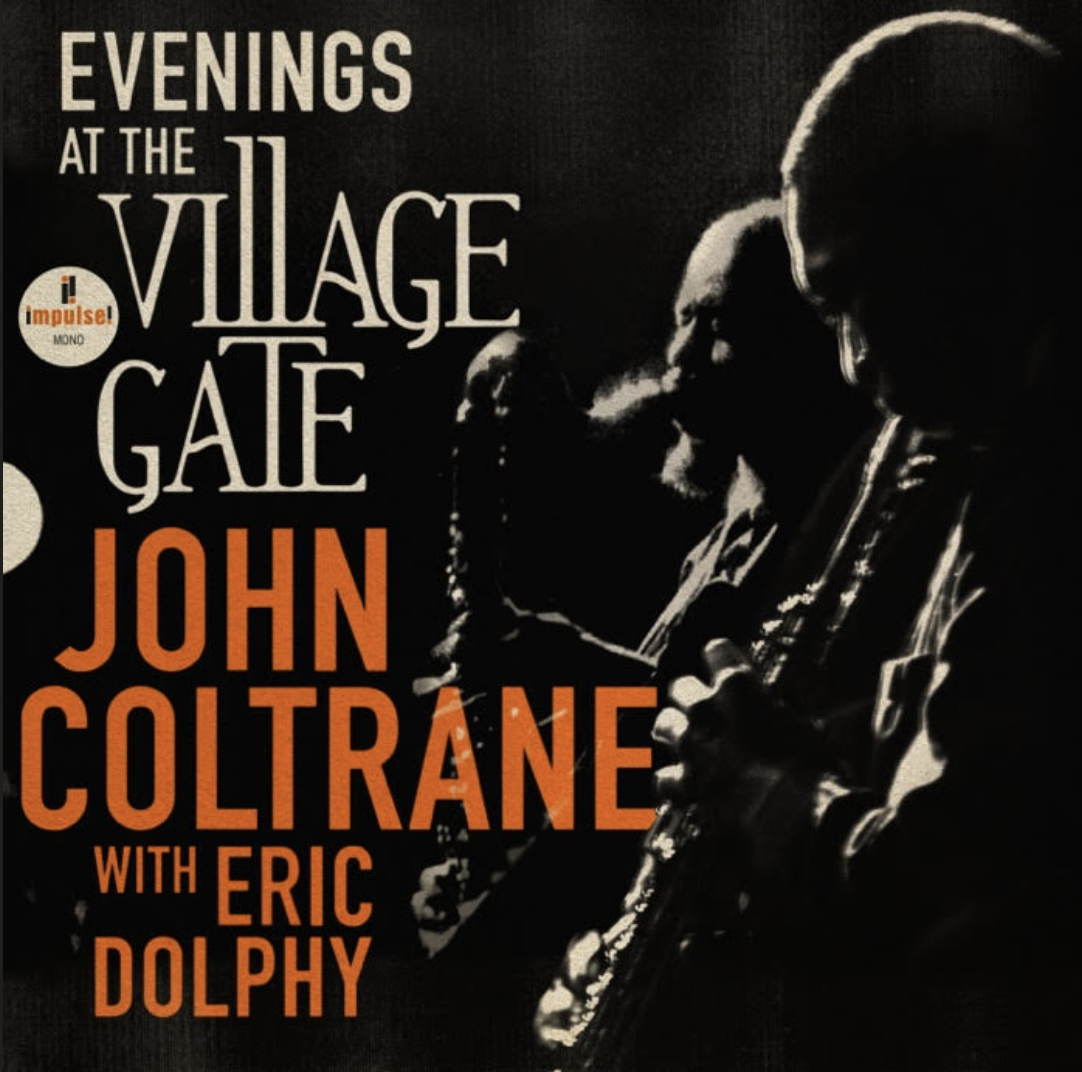
June’s edition features something old but new (if that makes sense), with an unearthed, “never heard before”, teaser of Coltrane and Dolphy at the Village Gate residency in the summer of ’61 – believe me when I say this is unbelievable. Plus new, new music from Celestial North, Omar Ahmad, Granny Smith and Hackedepicciotto. And in the Archives there’s the 50th anniversary of the Dusseldorf organic futurists, Neu! and their second, matter-of-factly entitled, album, 2.
NEW MUSIC IN BRIEF
John Coltrane Ft. Eric Dolphy ‘Impressions’
(Taken from EVENINGS AT THE VILLAGE GATE: JOHN COLTRANE WITH ERIC DOLPHY, released by Impulse! July 14th)
Staggering to think how many other lost recordings remain hidden, overlooked in the vast archives of The New York Public Library for the Performing Arts. I mean, imagine this incredible, exciting, evolution in jazz performance laying dormant forever, never to be heard again. It doesn’t bear thinking about.
Titan of the form John Coltrane and his celebrated quintet rip it up on this salvaged tape of performance gold from the summer of ’61 residency at the iconic Village Gate in Greenwich Village. Flanked and imbued by the powers of such luminaries as McCoy Tyner, Reggie Workman, Elvin Jones and Eric Dolphy, but an ever evolving cast of players, there was a trailblazing comet of talent igniting the jazz scene that glorious summer. The upcoming album will feature eighty minutes of never-before-heard music; offering a glimpse into a powerful musical partnership that ended much too soon – Dolphy sadly passed away three years later and this recording is the only live recording of their legendary Village Gate performances. In addition to some well-known Coltrane material (‘My Favorite Things’, and ‘Greensleeves‘), there is a breathtaking feature for Dolphy’s bass clarinet on ‘When Lights Are Low‘ and the only known non-studio recording of Coltrane’s composition ‘Africa‘ that includes bassist Art Davis. Another Dolphy communion, and Coltrane number, ‘Impressions‘, has been dropped as a teaser in the run-up to the official release, on the 14th July 2023. Enjoy the magic wail, bawl, spiralling tumult and energy of this phenomenal exchange between the deities, as they really tease out the best in each other: the quality of the recoding is outstanding too. Could it be, one of the best albums of 2023 will be a recording from 1961! Yes is the short answer.
Omar Ahmad ‘Cygnet Song’
(Single taken from the Inheritance album, released by AKP Recordings on 7th July)
The second single to be shared in the run-up to the attentive Palestinian-American composer/producer/DJ/sound artist Omar Ahmad‘s solo debut turn Inheritance, a peaceable calm of reverberated pattering rain and gentle, trickled contemplative acoustic guitar disarms deeper feelings of loss and the distant sirens of the emergency services blaring in the backdrop. ‘Cygnet Song’ is, as that title suggest, a swanned, slightly somber, enchantment of the ugly duck syndrome – a subject that is close to the artist’s heart; feeling for so long like that proverbial fledgling ignored, isolated, but eventually finding an inner beauty and self-realisation. Revisiting childhood once more, “lamenting the time lost” worrying about peer groups and the actions of others, Ahmad now turns over a descriptive guitar melody and picked sorrow under, what sounds like, a waterfall. Fragility finds a musical partner in playfulness on a loose stringed trickle of warmth.
Celestial North ‘Otherworld’
(Taken from the Otherworld album, released 7th July)
About as “pagan euphoria” as it gets, the Scottish-born siren and child of nature’s hermetic powers, Celestial North is once more dreamily occupying the twin planes of ethereal pop and apparitional electronica on her newest single, and teaser for the upcoming album of the same name, ‘Otherworld’.
The, now, Kendal relocated artist describes this latest vapour trail across menhir marked Ley Lines and dales as, “A rabble-rousing pick-me-up on days when life feels a bit much, a reminder that it will all be ok and that we are never truly alone in this world. Providing the beat and movement of life for us all to shake it off together.” And with a countenance and gauzy wisp voice that wouldn’t seem out of place on a Pre-Raphaelite diorama canvas, nor on some object beautifully crafted by the Celts, worlds and epochs are brought together in a techno-Avalon spell of Circe, Grimes and Rules. From the magic of Cumbria, where Sea Power (formerly “British” until the namedrop protestation in recent post-Brexit years) also hail (although, as I myself did bump into them from time to time, they are also and were a part of the Brighton scene for some considerable time; originally moving from Cumbria down to the Southern seaside belle of a city), and whose band member “woody” has produced the album, stirs something quite diaphanous and yet powerful. The omens pray good for the album, which drops in less than a month’s time.
Granny Smith ‘Egypt’
I seldom come across such perfect musical and visual alignments, but the latest and “greatest” (I’m told) step in the Toronto-born artist Jason Bhattacharya‘s journey is an incredible piece of artistry. Inspired by the painter grandparents he never got to meet, and using super8 film stills and photographs as prompts of remembrance and self-discovery, Bhattacharya’s slowly-released adroit applied washes of layered solo/acoustic/wah guitar, bass, piano, bongos and percussion are lent a constantly changing imagery both busily sketched and illusionary by Dan Trapper. Rushes of more arid landscapes change into sequences of lusher, meadow riversides and an evolving turn of flickery buildings, including a pyramid, through a combination of stopmotion animation and AI image generator software called Stable Diffusion.
Both beautifully etched and yet in a constant flux of memories and thought, Bhattacharya, appearing under his Granny Smith alias, creates something simultaneously timeless yet in the now; his deeply felt yet translucent quality composition suggesting an ambiguous psychogeography of the titular “Egypt”, but also the Levant and India – towards the end of this near entranced track, the guitar starts to sound almost like a sitar. Imaginative footsteps through a personal history are fully realised with a perfect symmetry of music and video art.
Hackedepicciotto ‘Schwarze Milch’
(Taken from the upcoming Keepsakes album, released by Mute on the 28th July 2023)
Entwined in a symbiotic marriage of creative ideas and sonic invention, the husband and wife team of Alexander Hacke and Love Parade co-founder Danielle de Picciotto have between them a notable worthy CV of explorations to channel in their own musical adventures together. Apart, Alexander has been a stalwart foil in Einstürzende Neubauten, whilst his wife, is and has been part of the Crime And The City Solution troupe. Together they’ve both appeared in the Ministry Of Wolves alternative nursery rhymes and fairytales project with Paul Wallfisch and Mick Harvey.
For the same label, Mute, the travailed and sagacious coupling have ventured out on the universal highway of cerebral experiment. Their last album, The Silver Threshold, made our choice albums of 2021 roundup; a universal, lockdown yearn of the Biblical kind. Choosing to embrace an old cliche, their latest album, Keepsakes, is billed as their most personal yet, with each track dedicated to a friend. But the recording environment also plays its part; this time in the form of the famous Auditorium Novecento in Napoli. With the likes of Enrico Caruso and his peers gliding through its doors, and a vast array of instruments to play with, including Ennio Morricone’s celeste, the sound has been expanded like never before.
From that upcoming album (released on the 28th July; a review forthcoming from us next month by the way) we share the surreal Weimar cabaret jazz brushed, hurdy gurdy winded ‘Schwarze Milch’. I can only decipher that this is a reference to the German-Mongolian film drama, which in English translates as “Black Milk”, directed and starring the German-Mongolian Uisenma Burchu, who plays the part of one of the film’s leading sisters character from two cultures, Wessi. Described by the Hollywood Reporter as a “sexually liberated drama of the Steppes”, it tells the story of two sisters reuniting after decades; Wessi’s character having left Mongolia for West Germany (in real life the director/actress’ family actually did move from that homeland to East Germany right before reunification) now makes a less than successful return home. I could have misread this entirely though, and the song may have sod all to do with it.
Back to the song itself, which is shared in narrated weirdness by the couple, who also don various animal mask (both pagan and odd) as they pick up each different instrument on this tubular, sifted, droning and smoked, snozzled sax rich languid look into an alternative world. A stage theatrical. A circus. A variety show complete with a ventriloquist dummy, childlike playfulness and yet something almost disturbing and mysterious, its Brecht meets Thomas Traux and the Bad Seeds in a basement magic show. I don’t know about you, but I’m looking forward to hearing the rest of the album.
ARCHIVES/ANNIVERSARY
Neu! 2 Reaches Its 50th Anniversary This Year
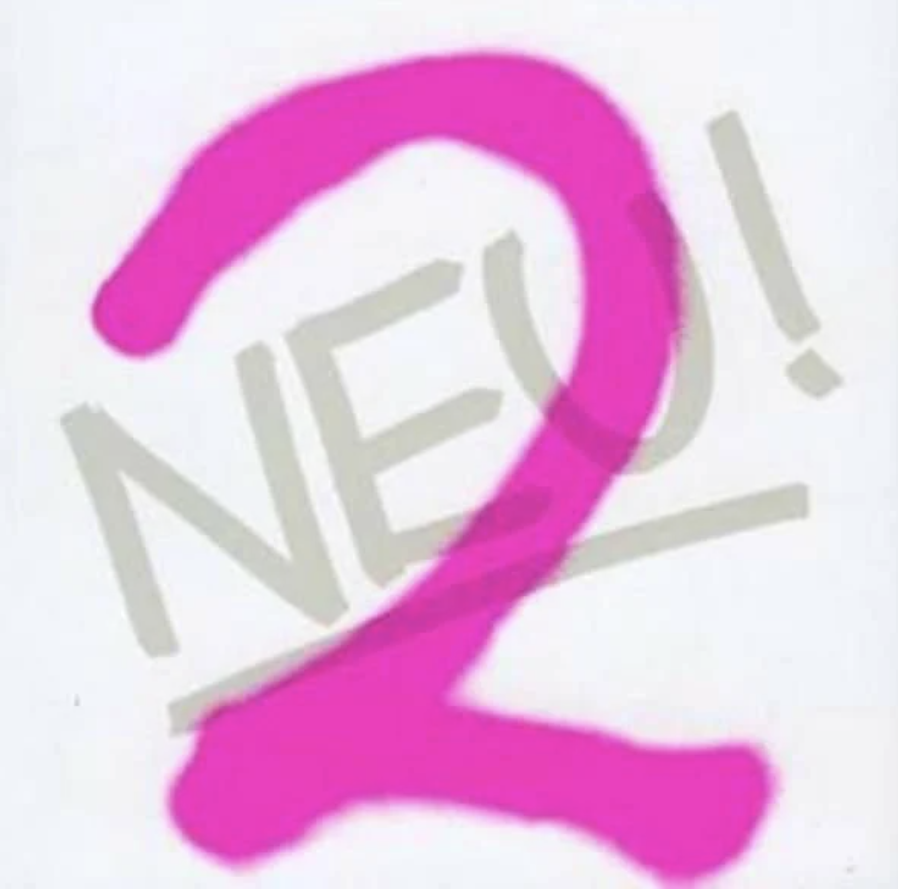
Following the extolled reception and success of their stark, but incipient strident motorik debut, the Dusseldorf organic futurists hit the road for a tour. With former Kraftwerker Eberhard Krahnemann taking on bass duties, Neu! performed a number of concerts before being pressured to get back into the studio. Both Michael Rother and Klaus Dinger became slightly uneasy, it seems the much applauded Neu! desideratum blueprint resonated so well with both critics and fans that the duo became spooked – Rother would of course jump ship and join the recently formed Harmonia, but make an eventual return back into the arms of his musical partner, after much hand-wringing, for the Neu! 75 reunion. Things were made even worse when recording for the follow-up album actually began. After only laying down the inaugural vista spread of ‘Für Immer’, they were promptly told by the Brain record label that the budget had run out, there was no more money in the coffers.
A few months previously Neu! had made a single as a stop gap between LPs, though the label was dead set against it, out of commercial concerns. The double A-side of ‘Neuschnee/Super’ featured those marked references from their first album, but also came equipped with harder and more broodier proto-punk snarls and growls. Appearing on Neu! 2 alongside ‘Für Immer’ to make up for the startling gap now left after funds ceased, these tracks still only amounted to a running time of 18-minutes. Whether it was the production wizard of Krautrock’s idea or Dinger and Rother’s, it was decided that the recorded tracks should be cut up and pasted to make up a strange D.I.Y collage type fashioned suite. Only this merely equated to Dinger speeding and slowing down ‘Neuschnee’ and ‘Super’ on a record player, then re-recording them, or just holding his thumb down on the reel-to-reel machine and recording it; an idea that must have been hoisted up the flagpole and saluted by all concerned. The result was quite frankly weird, but not in a good way. In fact it sounds for the most part like a tomfoolery exercise in taking the piss: a fuck you to the label. Dispersed amongst the key tracks and ludicrous speed variant nonsense are a number of experimental atmospheric pieces and doomly staggered vignettes, which allude to esoteric imagined landscapes and scary extremes of mental cacophony.
Once again the Neu! branded moniker was brandished like a washing powder product. A spray can 2 marks the only difference from their last affair, whilst inside scrawled track names and info shadowed by photo booth passport photos, are crossed out and re-written.
‘Neu! 2’ lacks the calming vision of their famously lauded original ‘Neu!’ soundtrack. Full of miscalculated slip-ups, pressured ideas and short-change experiments, this miss-fire companion still radiates with some heightened moments of hymn like joy and traversing triumphs. Both ‘Für Immer’ and ‘Neuschnee’ build on the foundations of ‘Hallogallo’; adding richer textures and searing layers to the motif. ‘Super’ and ‘lila Engel’ meanwhile rough it out with Faust and metal; giving the duo an escape route towards darker musical pleasures. Short change accusations hinder this album to a degree. Rother famously took to the woods with Dieter Moebius and Hans-Joachim Roedelius to join their Harmonia project, after this album was released. Dinger meanwhile, began working on the La Dusseldorf imprint with both his brother Thomas and Plank’s tape operator, Hans Lampe, though their first offering wasn’t released until 1975. After a brief hiatus, both men made-up their differences – Rother and Dinger clashed often over direction and whether they should play live or not – and returned for the reunion ‘Neu! 75’ record in 1974, and later in the 80s for what would be the last hurrah of ‘Neu! 4’, an album Rother fell out over with his sparring partner.
But What Does It Sound Like?
Anticipation steadily builds as the very first stirrings of the Neu! signature, pulsing, motorik drill, incipiently fades into view. Prolonged laconic pronounced drums work their magic as Rother’s suffused guitar strains delicately kiss the flange coated textures of sound; produced from a mixture of Japanese banjo, fiddle, piano and various electronic devices. ‘Für Immer’ means “forever”, which this richly striding companion piece to the hallowed ‘Hallogallo’ certainly tries to achieve. Heavier interjections are implemented as though we were becoming dazed from the hypnotic, suffused, snarling jam of pulchritude. Echo-chamber shakes and vortex warping effects twist the percussion and pliable guitar mantras through a quantum leap, before emerging from a inter-dimensional mind bender back into the main groove all over again. Those recurrent waterside motifs continue, as lapping waves crash against the river bank, ‘Für Immer’ is caught in the tide and is beckoned beneath the waters to make way for the next section of ‘Neu! 2’. Isolation tank suffocated drums wallow in oscillating cycles of space-rock; ‘Spitzenqualität’ is coated in reverb and, yet more flange, as it manipulates timings with both distorted scathing guitar and laboured drumming: a desolate plains search and slow methodical pause of a tune.
Neu! tunes seldom end, they just tend to fizzle out or evaporate. With that in mind, ‘Gedenkminute’ takes over from its preceding triggered outro, wafting in on the last remaining resonating pools of sound. This short interlude drags us through some Edgar Allen Poe descriptive rich graveyard, the wind blowing menacingly as a haunted Germanic girls voice communicates to us from the other side. Thank the lord for the battering ram metal psych barrage of ‘Lila Engel’ (“Lilac Angel”) – surely a joke, this doomed warning of a tome is far from angelic or seraph. Sounding like the godfather to both the Southern Lord franchise of biblical droning rock, and to industrial punk. Dinger’s no-fucking-nonsense power tool drums compete with Rother’s revving, ringing-out licks, over a three-tier build-up. Each level increases in volume and savageness: yeah you never knew they could mix it with those barbarians of the wild frontier, Faust.
A collage of trickery and ameliorate masking awaits on side two, Neu! stretching the boundaries of what a band can get away with. Coming up short on material, they manipulatively assuage their own tracks starting with ‘Neuschnee’, which is introduced at 78 rpm. Dinger and Rother actually record the original single version sped-up – you even hear the hiss and crackles of the vinyl. Ridiculous high-pitched sounds give it a comedic Egyptian mystical garb, as the stylus jumps when it hits any scratches. ‘Super 16’ follows the same premise, only at 16 rpm. Slow over-aching momentum of a tune, this sounds like another doom inspired hellish crawl through the pits of Hades. – imagine Richard James remixing Boris and naming it ‘Satanic Moonscape’.
At last the authentic ‘Neuschnee’ is given an airing at the right speed. Thumb-plucked instruments ease in another classy Neu! motoring opus. Rother’s guitar now weeps and sings a glorious bewailing paean, whilst Dinger taps out some kind of secret code, hitting a cycle of drumrolls, and ending each run with a customary exclamation mark cymbal crash. ‘Casseto’ is a short vignette of caustic and harrying heaviness. The banging evil soundclash transcends nightmarish, repeating scariness. Back to the fatuous with ‘Super 78’, as now we are introduced to the crazily speeding variant of this key track, plucked from their original single. Once again a manic wheeze of squeezed demonic acid-mice, and galloping nonsensical bewilderment; fucked with and played to a skeptical audience – file under eccentric diversion tatic.
‘Hallo Excentrico!’ features half the title of their most famed and applauded track, but that’s where the similarities end. Dinger once more pisses about with the tape machine, his cohorts chattering away in the corner blissfully oblivious to the recording process. But it all gets swept up by the Teutonic brain food of ‘Super’, which pitches the signature whacker-whacker chops of Rother with a Stooges motor city Nuremburg stomp. A sublime smiling primal-scream and unscripted series of chants roll around in the background – signs of the Dinger archetype La Dusseldorf sound is woven here. ‘Neu! 2’ opens up the duo’s musical horizons, at times for the better, and at other times, its highly debatable. A harder and climatic dark side is implemented with their meditative explorations containing more layers and development of sound. Of the eleven-tracks, at least a third can be taken with a pinch of salt. Whether they generally believed that or this pokery would open up revelations or set off new discoveries remains iffy. The fact they’d been left in the shit with no money to finish recording may explain things. Still their second tome offers ethereal and inspired anthems, which in my view, are more influential then their debut.
The Social Playlist #77
Anniversary Albums And Deaths Marked Alongside An Eclectic Mix Of Cross-Generational Music, Newish Tunes And A Few Surprises.
Repeating myself, but if this is your first time here, first of all, welcome, and secondly here’s the lowdown on what the Social is:
Just give me two hours of your precious time to expose you to some of the most magical, incredible, eclectic, and freakish music that’s somehow been missed, or not even picked up on the radar. For the Social is my uninterrupted radio show flow of carefully curated music; marking anniversary albums and, sadly, deaths, but also sharing my own favourite discoveries over the decades and a number of new(ish) tracks missed or left out of the blog’s Monthly playlists.
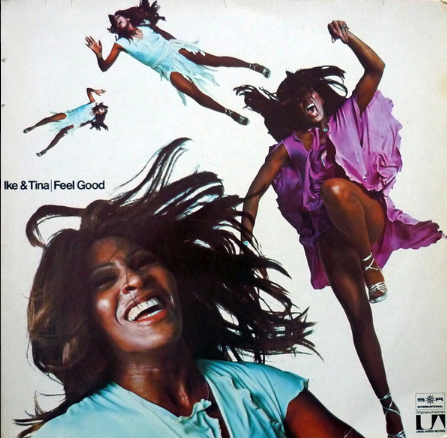
First off, couldn’t resist paying a little tribute to the late Barry Newman, who famously played the counterculture idol, disillusioned ex-cop and racing driver Kowalski, cranked on speed, star of the iconic drive through the heart of a Vietnam-fucked America Vanishing Point – musically, and all that goes with it, utterly stolen hook line and sinker by Primal Scream. I’ve chosen the main soul busting theme from a original soundtrack that plays like a radio station. And, what sort of lowlife piece of shit would I be if I didn’t pay homage to the Acid Queen of rawkish soul, R&B and rock, Tina Turner. A smattering from golden period Tina awaits.
Anniversary wise, there’s 50th celebrations this month of albums by Donny Hathaway (Extension Of A Man), Arthea Franklin (Hey Now Hey) and Roger McGuinn (Self-Titled), and 30th salutations from the Intelligent Hoodlum (Self-Titled) and Manic Street Preachers (Gold Against The Soul).
Added to that list is music, recent and old, from New Air, Szun Waves, Zacht Automaat, Bob Dylan, Kassi Valazza, The Shivvers, Bloodrock, Ezy Minus and many more…
_________TRACKLIST__________
Jimmy Bowen ‘Super Soul Theme’
Amiri Baraka ‘Kutoa Umoja’
Ike & Tina Turner ‘Such A Fool For You’
Aretha Franklin ‘Hey Now Hey (The Other Side Of The Sky)’
Donny Hathaway ‘The Slums’
Intelligent Hoodlum ‘Black And Proud’
Lynx 196.9 ‘No Apologies’
Ike & Tina Turner ‘She Came In Through The Bathroom Window’
Rick Asikpo ‘Ebun Oluwa’
Pixinguinha ‘Pula Sapo’
MUF ‘Wrong Age’
New Air Ft. Cassandra Wilson ‘Achtud El Buod (Childern’s Song)’
Flow Trio – Joe Mcphee ‘Incandescence’
Szun Waves ‘In The Moon House’
Double Happys ‘Needles And Plastic’
Manic Street Preachers ‘Roses In The Hospital’
Roger McGuinn ‘My New Woman’
Kassi Valazza ‘Room In The City’
Bob Dylan ‘When I Paint My Masterpiece’
Oracle Sisters ‘Lunch And Jazz Chords’
Hadley Caliman ‘Old Devil Moon’
James Henry & The Olmpics ‘Sticky’
Sandro Brugnolini ‘Amo Me (Vocal Version)’
Ike & Tina Turner ‘Bold Soul Sister’
The Shivvers ‘Hey Deanie’
Okan Dincer ‘Mutlu Ol’
BroselMaschine ‘The Old Man’s Song’
Bloodrock ‘Don’t Eat The Children’
Kraan ‘Prima Klima – Live At Porta Westfalica 1975’
Carlo Rustichelli ‘Missione Bionde Platino’
Ezy Minus ‘Nuvole Che Passano’
Zacht Automaat ‘Bite The Invisible Hand’

God I hate the hard sell, but Kowalski’s spirit says be cool and support the Monolith Cocktail. Life is hard but it goes much smoother with the help of a good friend and recommender of taste like my good self. If my departure, and that of the greater MC team, leaves a sad big hole in your lives, or the contemplation of this site’s death leaves you unable to sleep at night, you can always donate to our Ko-Fi micro-donation platform here. Thank you in advance. But hey, no worries if you can’t, we are all struggling in one way or another.
Singles Night At The Monolith Cocktail HQ: Montparnasse Musique, Lunar Bird, Gabrielle Ornate, Future Kult…
August 24, 2022
SINGLES/VIDEO TRACKS ROUNDUP
BY DOMINIC VALVONA
PHOTO CREDIT: ERIC BECKMAN

A one-off revue of recent and upcoming singles and videos being dropped that I didn’t have room for in my perusal roundups, I’m trying something very new with this post, as the blog’s never specifically done this sort of thing before.
Montparnasse Musique ‘Bonjour’
(Real World Records)
A welcoming polygenesis, South African lilted and woozy pattered beat teaser for the forthcoming album from the duo Montparnasse Musique, ‘Bonjour’ is full of pan-African essences, rhythms and goodwill. A collaborative affair, the new single features both Muambuyi and Mopero Mupemba of the Congotronics outfit, the Kassai Allstars. Another layer to this complimentary electric mix, a congruous, scene-setting music video has been created – shot on the streets of Kinshasa – by the renowned filmmaker Renaud Barrett (Systeme K!, KOKOKO!).
Carrying on from where they left off with their self-titled EP, Aero Manyelo and Nadjib Ben Bella combine their South African and Algerian roots with both the old and new to create a 21st century African hybrid that mixes ritual, ceremony and ancient mysticism with what’s happening on the streets and dancefloors of the continent now. The debut album dig, Archeology is due out on the 11th November 2022. Expect a review in the coming months.
Future Kult ‘We’
(Action Wolf Records/AWAL)
One of my favourite renegade soundclashs of 2022, the Berlin-based Welsh-Austrian sonic-visual partnership of Sion Trefor and Benjamin Zombori pump out their fourth and newest single ‘We’ this week.
In the wake of their highly recommended self-titled pan-global sounds album (by us), arrives another eclectic, omnivorous power grab that drags the vacuous, soul-destroying and destructive selfish, image obsessed malignant hyperbole of the 21st century onto the dance floor. Moodily bouncing to the sound of barricade drums and climatic EDM, with shades of Battles, Front 242, The Juan Maclean and Midnight Juggernauts, the Future Kult duo and friends turn anguish and riled-up anger into an infectious broody anthemic electronic flashpoint. It gets better on every play I’m telling you. And Benjamin’s visual effects add a cosmic energy to the sound.
Lunar Bird ‘Venilia’
Excuse my ignorance for one second, but I did think the title of this latest diaphanous, magical enchantment from the Joan Miro-inspired Lunar Bird was just another spelling of the word ‘vanilla’. It is of course ‘Venilia’ the Roman deity associated with the winds and the sea that proves a both lofty and atavistic poetic subject for another dreamwave wisp of a song from the band. Allured hallucinatory towards that goddess, the lush Beach House-like soundtrack of synthesised fizz, gauzy psychedelic breathlessness and swimmingly vibed restlessness entwines mythology with a beautiful language of rebirth and longing; an Italian cinematic beach paradise in song – even if it is probably the band’s claimed home of Wales.
Celestial North ‘Yarrow’
Like a muse siren from the canvases of the Pre-Raphaelites or the cooed breathless yearns of a chivalry medieval tapestry depicting some magical garden of escapism, Celestial North once more steps over into the ethereal realms with this enchanted botanical themed suite. A meditative fauna dwelling score of beautiful piano tinkled reflection and sentiment, misty synthesised dreamy atmospherics and diaphanous sighed voices, has the air of something magical and sublime. ‘Yarrow’ then is something of a healing balm; nature’s ways distilled into a most stirring but pleasant mirage.
The Edinburgh artist, now based in the Lake District, has been graciously releasing tracks in the run up to the debut album, earmarked for this September. I suggest you keep an ear out for that album.
Violet Nox ‘Magnetar’
(Aumega Project Records – Germany/Infinity Vine – USA)
Available since the end of July 2022
From the Gaia attuned Eris Wakes album, another colourful, textural exploration visualisation to accompany an aria voiced (courtesy of the trained opera singer and guest vocalist Noell Dorsey) electronic state of consciousness. Yes, the Boston synth collective (working around and off the core of Dez De Carlo and Andrew Abrahamson) send out more positive if mysterious vibes with Chris Konopka’s magnetic filings turn psychedelic corrosion video for the ticking House rhythmic, phaser waves and buoyant drum pad bobbled ‘Magnetar’. Artist Konopka manages to add allure and to entrance a track that is already fairly wispily cosmic and trance-heavy.
Gabrielle Ornate ‘The Undying Sleep
Proving quite the prolific artist, the colourful mélange imbued Gabrielle Ornate has just released her seventh single, The Undying Sleep. More pop, slightly less bohemian, the language remains but the trance and maximalist production is upped another level with a slow release of cosmic fizzled star bursts, churned trip-hop like beats and St. Vincent-style guitar licks. Teardrops fall into the ether under the hippie eye of Horus on another hit record from the burgeoning artist. One to watch as they say.
Barrio Lindo ‘Espuma de Mar’
(Shika Shika)
A move by the Latin American folktronica artist Barrio Lindo (alias of Agustín Rivaldo) to create music for the listener to get lost in, this new wafted, dreamy project was made with friends on the outskirts of Buenos Aires in early 2020. The sea foamed imbued Espuma de Mar album is filled with refined, studied evocations of a jazzy tinged, ambient and woozy South America, Africa and the Caribbean, and chamber orchestral music.
The title-track traverse features the hazy blows, lingers and spells of Mariana Iturri (on flute and vocals), Nicolás Lapine (on trumpet), Ignus on drums and Rumbo Tumba and removes Latin lilted moves to somewhere entirely different, even ethereal. The album is due out on the 23rd September 2022.
Hi, my name is Dominic Valvona and I’m the Founder of the music/culture blog monolithcocktail.com For the last ten years I’ve featured and supported music, musicians and labels we love across genres from around the world that we think you’ll want to know about. No content on the site is paid for or sponsored and we only feature artists we have genuine respect for /love. If you enjoy our reviews (and we often write long, thoughtful ones), found a new artist you admire or if we have featured you or artists you represent and would like to buy us a coffee at https://ko-fi.com/monolithcocktail to say cheers for spreading the word, then that would be much appreciated.
The Monthly Playlist Revue: May ’22: Junior Disprol, Misha Sultan, Vera Di Lecce, Celestial North…
May 30, 2022
THE PLAYLIST
Dominic Valvona/Matt Oliver/Brian Bordello Shea

All the choice tracks from the last month, plus a few missed ones we’ve corralled from last month, the Monolith Cocktail team’s playlist revue is both a catch-up and showcase of the blog’s eclectic and mind bending tastes. Sitting in on this month’s selection panel is Dominic Valvona, Matt Oliver and Brian ‘Bordello’ Shea.
TRACK LIST IN FULL IS:
Junior Disprol Ft. Krash Slaughta ‘Rotund Shogun’
Deca ‘Tuning’
Exterior ‘Orthodox Dreams’
FAST DE ‘Miss Trutti Finally Found Her Gem’
Pussy Riot Ft. Slayyter ‘HATEFUCK’
Masai Bey ‘Stanza X’
BITHAMMER! ‘Make You Mine’
Flat Worms ‘Into The Iris (Live)’
Salem Trials ‘Vegaville’
Walker Brigade ‘Disease’
Team Play ‘Sunrise’
James Howard ‘Baloo’ Adam Walton ‘Mary Sees U.F.O.S.’
Joviale ‘UW4GM’
Shabaka ‘Black Meditation’
Kritters ‘New York’
Ralph Of London ‘Lys’
Ethan Woods ‘Utopia Limited (Cuddly Tie-In)’
Staples Jr. Singers ‘I’m looking For A Man’
Ramson Badbonez ‘Rap Bio’
Mr. SOS & Maxamill ‘War Criminal’
The Difference Machine ‘Old Men’
Omega Sapien ‘Jenny’
Mr. SOS ‘Peace & Prosperity’
Jermiside & The Expert Ft. Tanya Morgan ‘Crime Rule The City’
Quelle Chris ‘DEATHFAME’
Wish Master & Billy Whizz ‘THOUGHTS OF THOUGHTS’
Guillotine Crowns ‘Killer’ Orryx ‘Eldritch’
Celestial North ‘When The Gods Dance’
Henna Emilia Hietamäki ‘Protesti’
Lucrecia Dalt ‘No One Around’
STANLAEY ‘Fluorescent Fossils’
Your Old Droog ‘Go To Sleep’
Tommaso Moretti Ft. Ben LaMar Gay ‘A Call For Awareness’
Black Mango Ft. Samba Touré ‘Are U Satisfied’
Avalanche Kaito ‘Flany Konare’
Tomo-Nakaguchi ‘Halation’
Private Agenda ‘Splendour’
Sebastian Reynolds ‘Four-Minute Mile’
Chouk Bwa & The Ångströmers ‘Agwetaroyo’
Misha Sultan ‘Nyepi’
The Master Musicians Of Jajouka ‘Khamsa Khamsin’
Gustavo Yashimura ‘Las Prendas del Corazon’
Stephanie Santiago ‘Activa Tu Cuerpo’
Gabrielle Ornate ‘Free Falling’
Black Monitor ‘Xexagon77’
Borban Dallas & His Filipino Cupids ‘Too Convenient’
Martha And The Muffins ‘Save It For Later’
Super Hit ‘Blink 182’
Reverend Baron ‘Let The Radio Play’
Alas The Sun ‘Distant Drone’
Jelly Crystal ‘I Tryyy’
LINN ‘Happiness Is Real’
Lenka Lichtenberg ‘That Monster, Custom’
Brigitte Beraha ‘Blink’
Vera Di Lecce ‘Altar Of Love’
Francesco Lurgo ‘I Am Already Far Away’
Hi, my name is Dominic Valvona and I’m the Founder of the music/culture blog monolithcocktail.com For the last ten years I’ve featured and supported music, musicians and labels we love across genres from around the world that we think you’ll want to know about. No content on the site is paid for or sponsored and we only feature artists we have genuine respect for /love. If you enjoy our reviews (and we often write long, thoughtful ones), found a new artist you admire or if we have featured you or artists you represent and would like to buy us a coffee at https://ko-fi.com/monolithcocktail to say cheers for spreading the word, then that would be much appreciated.
Dominic Valvona’s Roundup

The Shorts (videos, tracks, singles)
Stephanie Santiago ‘Activa Tu Cuerpo’
(Movimientos Records)
Soulfully lucid with a tinge of jazzy R&B and a reverberation of Cumbia, the London-born ‘Colombianx’ burgeoning sensation Stephanie Santiago entrances with another vision of her Latin roots. Growing up as the daughter of Colombian musician parents – her father an accordionist, her mother a singer –, in a home filled with the joyous, sauntering music of South America, Stephanie embraced the ancestral vibes but lent them an expanded eclectic mix of sounds: from soul to jazz, reggaeton and even punk.
Via the Latin contemporary Movimientos Records label, Stephanie continues to find her place, sense of community in the bustled melting pot of London. From the Alma Carnavalera EP, and most recent single, the Monolith Cocktail is spreading the good word and happy to share the funk-dripped bass and dreamy rich ‘Activa Tu Cuerpo’.
Celestial North ‘When The Gods Dance’
A magical, softened driving gallop over Celtic folklore and hillsides, the diaphanous voiced Celestial North dreams big, dancing with the gods, on her new enchanted and cinematic swelled gauzy single. From our side of the border here in Scotland, but based in the splendor of the Lake District, the soloist counters turbulence and drama with atavistic veils from a mythology to create a whole new entrancing fantasy.
Orryx ‘Ifera’
(ZamZam Records)
The titular evocation from the Bristol-based artist Christelle Atenstaedt’s new EP, ‘Ifera’ sounds like it’s been woven from the ether. As a repeated chime rings out suffused atmospherics envelope a yearned vocal. Materializing from the vapours, a trance-y beat finds a sort of traction and drive. Under the Lovecraftian guise of Orryx, esoteric and Byzantine stirrings draw the listener into a slowly powerful world of gothic-pop and electronica.
Christelle combines ethereal vocal loops with a selection of hardware synths, samplers and effects pedals on the EP’s quartet of original tracks – the fifth being a remix from dark wave techno duo Fever 103°. Delve in, and succumb to the mantric powers of this hypnotic artist.
ALBUMS/EPs
Black Mango ‘Quicksand’
(Gusstaff Records)

Transforming Mali’s world-renowned signature blues sound – from the city streets, back lanes of the Bamako capital to Tuareg roaming desert regions – the visionary producer Philippe Sanmiguel has been instrumental in fusing that sound with rock music, atmospheric mirages and electronics.
Based in the capital for the last sixteen years, Philippe has amassed an enviable roll call of productions for such icons and talents as Samba Touré, Anansay Cissé, Tartit and Mariam Koné. During that time he’s enjoyed a creative partnership with the Glitterbeat Records label and its founding partner Chris Eckman. Alongside his foil Hugo Race (who appears on this album), Eckman’s Dirtmusic band was drawn to Mali a decade ago, recording sessions for both the Troubles and Lion City albums whilst in Bamako with Philippe.
An integral part of the scene then, I’m guessing it didn’t take much persuading to get most of those artists to appear on his new showcase, Quicksand.
Under the Black Mango alias, Philippe opens up his own compositions to the great and good of Mali, and admirers alike. Produced over several years in various recording sessions, each collaborator has been given “free range”. The results of which are equally as searching as they are dreamy: even hallucinogenic. The opening heat bending, dub-y ‘Bakeina’s Dream’ straddles both; melting in a desert setting as the earthy soulful vocals of Bocar Sana Coulibaly drift through from some mirage oasis. Bocar, a member alongside Ali Traoré (both also nephews of the late esteemed Ali Farke Touré) of Espoirs de Niafunké, makes a second appearance later on, joining the brilliant guitarist and artist Anansy Cissé on the meandered, spoke-plucked and gauzy ‘The First Stone’.
Pretty much one of the most popular and gifted guitarists to emerge from Mali, Samba Touré adds a sustained flange of bended notes and expressive lines to the Phantom Band meets Belgium alt-rock ‘Are U Satisfied’ – Philippe’s voice on this one almost channels Michael Karoli of Can’s languid lyrical, questioning malaise. Samba plays some nice electric-blues and semi-classical tones in harmony with the mandolin and harp-like airy spirals of the ngoni on the infinity ether R&B flavoured ‘Mad Girl’. Offering up the R&B, the soul on that same track is the celebrated Malian songstress, music teacher and Les Amazons d’Afrique super group member Mariam Koné. Mariam can also be found lending a searching cosmic gospel vocal on the Flyodian, astral and progressive tumultuous ‘Minamba’.
From Samba’s regular band setup the ngoni and tama (a hour-glass shaped talking drum, the pitch of which can be tuned mirror the human voice) maestro Djime Sissoko gets to let loose on the percussive heavy, spacey ‘Bankoni’. With buoyant drums, bottle taps, ricochets and buzzes this scrapped and scuttled finale marks a mysteriously veiled ending to a Mali traversing psychogeography of both magic and the all too real consequences of the violence that’s plagued, and continues to plague, the country and its borders.
Talking of those fraught, violent themes, the already mentioned Hugo Race moodily channels his Dirt Music calling on the bleeding ‘Heaven Sands’. Part swamp gator blues, part outback Mick Harvey, Hugo leads us across a much troubled, metaphorical landscape towards better days. Though Philippe’s dub-y, Terry Hall-like ‘Quicksand Blues’ has far more ominous, political references to a desert storm of terrorism, immigration and blood-soaked sand dunes. ‘Ghost Sand’ meanwhile is just that, an instrumental passage of haunted lingers, traces of those both missing or forced to abandon the deserts of Mali for the cities; out of displacement, conflict or poverty.
There’s a far greater talent pool involved on this album, which transcends Mali’s extraordinary legacy as arguably one of the true homes of the blues and rock genres. Quicksand marks a sagacious yet experimental achievement for the producer-musician and artist in his own right. A showcase for his own talents, his friends and for the country itself; roots music taken to another level and given a contemporary lift.
Further Reading::
Private Agenda ‘A Mannequin’
(Lo Recordings)
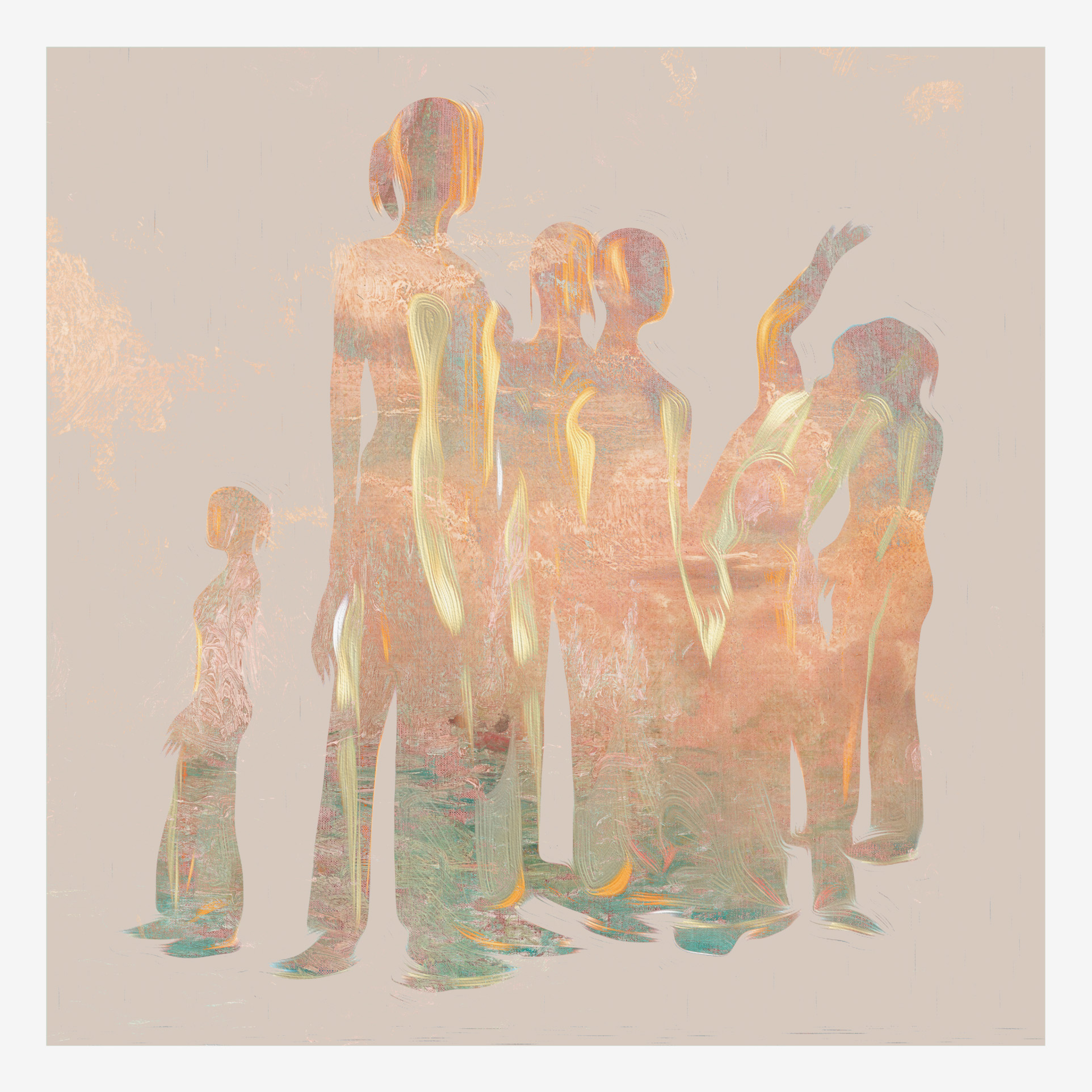
A sophisticated mood board of veiled, gauzy electronica with hints of real tinkered piano, A Mannequin is the second studio album from Berlin/London portal Private Agenda: the languorous sonic partnership of Sean Phillips and Martin Aggrowe.
Conceptually using each song and shorter breather, pause, to reflect particular character traits, and in doing so, asking certain questions about the ‘dichotomies’ that define us, this duo play around with a soundboard of synth-pop, nu-soul, ambient, downtempo, new age, chillwave, new wave, AOR gold and house music.
A fantasy with spells of starry, shimmery tinkled magic and more hazy, vaporous plaintiveness, this mostly dreamy, relaxed album glides or drifts through twelve degrees of being; starting with the ambient turn, the Air-like mirage ‘Irresistible’. I haven’t made my mind up if this is about holding a mirror up to narcissistic self-love or a complete 360 degrees turn, and in fact dreamily cooing for ore of it.
‘Neo-Nostalgia’ not just a track in itself, could be a perfect description for the whole record, with its constant lingering traces, the essence of 80s songwriter and synth pop, electronica, disco and yacht rock. The duelist ‘Gemini’ seems to lushly brood through Tokyo 80s glowing new wave, the Balearic new age, and yet also fit within the perimeters of the music of the cult Laurel Canyon singer-songwriter Ned Dohney.
There’s a change in musical mood, instrumentation by the fourth lovelorn song, ‘Touching’, which features an eloquent spell of classical light piano. It returns later on with just a hint of distant birdsong and a synthesized pre-set on the interlude-like ‘Purity’.
Elsewhere those floated ethereal vocals – which are never pushed, never sang in anger or even loudly – are wrapped in relaxed funk, castaway tropical percussion, neon-lit drama, opulent gauze and airy filters. With nothing strained, no real tensions, the music glides through a swirl of pre-Miami Vice Jan Hammer, Vangelis, Groove Armada, Spaceface, and on the finale, ‘Substance’, an exotic laidback pan-pipe hint of South American trance: As they’ve coined it, a ‘musical hyper-realism’.
Despite that laidback, even disarming if saddened at times production, the personality is seriously mined to create a fantasy come lyrical expression of who we truly are. A voyage of self-discovery you could say.
Saturno 2000: La Rebajada de Los Sonideros 1962 – 1983
(Analog Africa)
Once more landing on South and Central American shores Analog Africa airways celebrates the obscure ‘Rebajada’ phenomenon with what must be the only, if not first, compilation of its kind dedicated to that trippy, slowed-down form. Originally asked by Analog’s founder Samy Ben Redjeb back in 2010 to come up with an idea for a collection, noted DJ expert Eamon Ore-Giron (stage name DJ Lengua) offered up the Rebajada Mota Mix, which as a real slow-burner took time to reveal its magic. And so more then a decade on, this proposal now sees the light of day on a dedicated 15 track survey, taking in a twenty-one year period from ’62 to ’81.
First though, a little background. In a nutshell, ‘Rebajada’ is a well-coined name that literally translates as ‘to reduce, or to lower’, in this case slowing down the continent’s famous Cumbia and, to a lesser extent, Porro rhythms. Cumbia, a catch-all for a Latin American amalgamation of rhythms and folk dances drawn from the indigenous, enslaved African community and Spanish colonial cultures, and Porro, a style originally seeded in the Caribbean facing region of Colombia that evolved into a ballroom dance played by brass heavy bands and orchestras, are both simmered down with the speed and much of the gallop taken out so as to produce sometimes crazy but often sauntering, more relaxed dances. It’s a sound that allows the listener to drink it all in.
Brought to Mexico by ‘the sonidero’ (sound-system operators as they were known), tunes from Peru and Ecuador were by accident or luck transformed into a new style that sent the audience wild. Two cities and groups of people lay claim to initiating it though. In one corner the catalyst Pereas and Ortegas brothers, who travelled across Latin America crate digging before returning home to Mexico City. They sold their wares, finds to various sound-systems on the hunt for something new and fresh to blow away the competition. A number of which, in trying to match the beats of each region with that of Mexico City’s own styles began experimenting. One such maverick, Marco Antonio Cedilio of the Sonido Imperial fame, created a ‘revolutionary’ pitching system that could slow records down. In the opposing corner, the northern Mexican city of Monterrey and Sonidero Gabriel Dueñez, who by happenstance set in motion a chain of events that would see the city, lay claim to inventing the ‘Rebajada’ style. By escaping electrocution at the hands of a short circuit spark that nearly set his turntable on fire, the revolutions were slurred and slowed down by the damage, playing Cumbia at much reduced bpm and so creating this new rhythm and dance sensation. Another well-known sonidera, Joyce Musicolor, as mediator puts it best: “Rebajada, and the equipment to perform it, is from here [Mexico City] but it was Monterrey that popularized it.”
Contentious to this day, no matter what the truth, a new sound was born that grew and grew, yet remains relatively unknown outside Latin America. Here then is a survey of that scene, with a majority of the songs sounding unlike the originals; notable exceptions being the few classics composed by Polibio Mayorga, or rather the Ecuadorian Junior Y Su Equipo, and the Mexican Los Dinners group’s scrappy, tinny shuffled percussive and giddy-horse canter, bounding drum saunter ‘Sampuesana’.
Although we’ve heard a lot about Mexico, the lion’s share of choice selections are drawn from Venezuela, Ecuador, Colombia and Peru. Well, there’s actually only one apiece from both Venezuela and Colombia; the tremolo quivered Western themed reverberation of Duane Eddy, if produced by Joe Meek, ‘Infinito’ by Hugo Blanco Y Su Arpa Viajera, and the rattle-y percussive chapel squeeze-box, organ stuttered ‘La Danza Del Mono’ by Lucho Gavilanes.
Obviously when taken down a notch of two in the speed stakes it produces some funny as well as odd subgenres, and with the elements of low rent tech makes some tracks sound like 8-bit zappy and warbled versions of Andean pipe music. In that category you can include the oscillating ghost-synth like filtered Ecuadorian Junior Y Su Equipo group’s ‘La Borrachita’ and their second contribution, the googly, high-pitched and fluted ‘Bien Bailadito’.
From Peru, Los Santos’ cosmic futuro entitled ‘Saturno 2000’ (borrowed for this compilation’s title) sounds like a slowed fusion of Porro and Highlife with its raised and suffused blasted horns, galloped hand drums and distinct tropical Latin lilt. Monolith Cocktail followers and Analog Africa aficionados will recognize one name from the list, the Peruvian cat Manzanita. A compilation of his influential music was released only last summer by the label. Here, in a very different guise is his bottle-rolling duet of the slurred ‘Paga La Cuenta Sinverguenza’, and, with Su Conjunto, the more strung-out gangly guitar wondering ‘El Jardinero’.
Back to where it all got so peculiar and relaxed, the Mexican outfit Conjunto Tipico Contreras turn in a shunted, scrappy and concertinaed vision of a epic exotic film score from the MGM studio heydays; a record that has both a mix of the Mayan jungles and fertile crescent. The beat is destined, if not already, to be sampled.
Could Rebajada be the sound of this summer? It’s certainly a contender, just because it’s often so strange and hypnotising. You kind of hear the process, the slowness, yet it works as a sauntering, relaxed yet somehow still busy tropical shuffle. Having constantly documented all the best African nuggets, Samy and his partner on this compilation, Eamon, have put together an essential guide to a Latin American treasure trove.
Ethan Woods ‘Burnout’
(Whatever’s Clever Records)
From out of the rustic idylls of Western North Carolina emerges a cabin essence songbook; a disarming pastoral lilted and psychedelic melt of connectedness, and yet, also yearning heartache. Ethan Woods and friends absorbed the meandered thoughts that take shape when disconnected from the newsfeed roll of social media and bustle of the city, out on a summer balm encased porch, and under a wooded canopy.
First conceived back in Brooklyn between 2015 and 2017, Woods fine-tuned his collection of dreamy, mesmerizing songs when he moved to Asheville, North Carolina a year later. Created in-situ at the foothills of the Appalachians, but brushed-up upon returning to Brooklyn once more with added parts recorded at the now defunct Fort Briscoe during the pandemic, the fruits of Woods and his sympathetic ensemble is let loose just in time for the summer of 22.
From beginning to end Burnout unfolds over the course of a day, following the sundial’s shadow until nightfall drops. That’s when the nocturnal soundscape collage, performed in part by the electronic experimentalist Aaron Smith, opens up a whole new evocation of nighttime camouflaged hoots, insect chatter and an Americana ether of obscured sounds.
Apart from Aaron there’s contributions from Woods partner Lauren Gerndt, percussionist Matt Evans, Trevor Wilson, Sarah Goldfeather, Finn Shanahan, Karl Larson, Jude Shimer and Alvin the rooster. Yes that’s correct, a credit goes to the rooster, who sets the alarm and atmosphere. No contribution is too small: from Gerndt’s read out one-liner about teddy bears to helping in the development of the arrangements themselves.
In the press notes, as an ample description, we’re told to think Alan Lomax recording a super group of Sufjan Stevens and The Books. I’d suggest led by David Byrne with Paul McCartney, Animal Collective, Galaxie 500, Ladybug Transistor and Clap Your Hands And Say Yeah vibes. In all, a sort of ebb and flow of psych, troubadour, soft rock and enervated dirt music country.
Characters from childhood, like ‘Mrs. Moo’, are accorded a lo fi swim of the sentimental and playful, with humble spells of honesty. Never quite straight up, always melting in with the arable outdoors on waves and oscillations of marching drumbeats, cymbal splashes, distant snozzles, tinkled piano and lax acoustic guitar. Music finds form and a rhythm; an either melancholic or romantic emotive tune in untroubled and unguarded song forms. Most of which bleed into each other, almost like a continuous recording.
Woods pastoral retreat proves a most magical, heart rendering, if sometimes pining, place to spend an hour or two. I’m really impressed by this slow-burning trip that drops The Books off for the weekend in a log cabin for a soliloquy session of candid therapy.
Misha Sultan ‘Roots’
Gustavo Yashimura ‘Living Legend Of The Ayacucho Guitar’
(Both Hive Minds Records) 6th May 2022
Nearing the label’s fifth anniversary (see my future purview celebration later this year) with no signs of flagging, Hive Mind Records are stepping up with two releases on the same day. Both cassette and digital albums couldn’t be more different too; with organic and global electronica from the Russian artist Misha Sultan and Peruvian Andes guitar evocations, flourishes from the Ayacucho-imbued maestro Gustavo Yashimura.
It shouldn’t really be that surprising, the eclectic richness of this dual release, as the label has previously traversed an electric Atlas Mountains, celebrated the colourful rituals of Gnawa music, and stopped over in Java, Highlife Western Africa and tripped out with the Acid mothers and Reynols.
The first of these showcases brings together the work of the multi-instrumentalist Misha Sultan, collecting pieces from 2015 to 2022. Hailing from the heart of Siberia, and industrious city of Novosibirsk, Misha was forced to leave his homeland.
The so-called ‘Chicago of Siberia’, on the banks of the Ob River, a crossing point of the legendary Trans-Siberian Railway and historically an important flashpoint of the civil war, informs, inspires some of the recordings. A geographical behemoth that sits between the Ural Mountains and Northern Asia, touching the Pacific Ocean in the East, Siberia isn’t just the exiled, infamous hardened remote atelier of literature, art and politics but a beautifully diverse landscape; the Eurasian melting pot as it were. Mirroring that diversity, Misha’s music travels to the Congo, Bali and Arabia whilst absorbing bits of kosmische, ambient, trance, washed-out psych, 90s chill-out, breakbeat and dub.
Real instruments, such as bubbled and shuttled mallets, flighty and dreamy flute and bamboo and metal percussion melt into synthesised waves, rays and atmospherics; some of which, on the odd track, are provided by the mysterious Mårble and Dyad. ‘Ant Invasion’ sets the tone, the scene, with a peaceable-like meadow field recording of hedgerow birds and tranquil washes of Mythos and Andrew Wasylyk. A shuffle of hand drums kick in and vague Ash Ra Tempel prompts take us towards more far eastern fringes. ‘Sand Ashram’ wobbles and bobs to Richard H. Kirk’s red sands invocations, Warp Records early Artificial Intelligence series, Banco de Gaia and the chill-out vibes of Liquid and William Orbit. ‘Why Are We Here?’ meanwhile could be either set in an Finis Africae vision of the Amazon, or indeed, Western Africa, whilst the railway station inspired ‘Beloostrov’ offers a fluted and drifting piano daydream aboard a train bound for the Finnish border. ‘Slow Flow’ with its shooting stars and whistles floats into spacey dub Orb territory, and the banjo-like radiance of ‘Bubbles’ moves from Indonesian evocations to Japan; well, something like that.
The final two tracks journey to the Congo and Bali; with the latter settling into a meditative mood amongst the New Year celebrations of the Balinese day of Silence.
Misha sonically travels the world, bringing together interesting references, emotions and atmospheres. He remains however rooted, connected to that Siberian topography and mood.
The second showcase of the Hive Mind set this month assembles a collection of adroit but also intensely skillful acoustic guitar music by the rather obscure champion of the Ayacucho Peru culture, Gustavo Yashimura.
Picking up the guitar in 1987, Gustavo travelled onto Uruguay to study, later on journeying to Japan where he played a classical style. He’d return home however in 2004 (still eager to learn and study) and would later take up the Andean style of guitar with the onus on the proud Ayacucho region of Peru. His teacher during that period was the 80-year-old veteran Don Alberto Juscamaita Gastelú, known famously as just Rahtako. It seems Gustavo learned much; straddling both the classics and more frantic modern styles.
In trying to reclaim the pre-colonial Spanish Ayacucho folklore and culture, these nimble and busy performances incorporate an age-old yearn.
A number of tracks (‘Dandé Te Fuistes Paloma’ and ‘Negra Del Alma’ being two of them) feature a heartening, aching female vocal: not quite Fado, but certainly on the lamentable side. Beautifully sung, expressive, they prove my particular highlights on this compilation.
Gaucho western horizons, ancient symbols on the plains, romantic flourished and dalliances stream forth from an incredibly fluid style; a mix of Spanish and the indigenous. Dainty, sizzling, blurry at times, Gustavo’s skills prove magical. Well worth adding to an eclectic collection. Better still buy both albums.
Ghost Power ‘S-T’
(Duophonic Super 45s)
Two of the Duophonic Super 45s mail order label’s roster combine forces this month for a cult sounds coalesce of library music, soundtracks, psych and trip-hop. Serial offender in all things cultish, the kosmische universe and beyond, Stereolab’s Timothy Gane bounces nostalgic trips off his foil, Dymaxion instigator Jeremy Novak, under the newly minted Ghost Power guise.
Imbued by all that’s gone before them, recorded between sessions in both Berlin and New York (and remotely), the duo evoke a cosmology of cool and obscure mavericks on an album of fantasy (see the reference to Joseph Delaney’s witch assassin ‘Grimalkin’) and kitsch.
Matmos on a bum ride bubbles up inside a lava lamp with Bruno Spoerri and Arto Lindsay on the opening ‘Asteroid Witch’, whilst ‘Panic In The Isles Of Splendor’ could be the sort of obscurity dug up by the Finders Keepers label: that and a nocturnal insect rhythm of Alex Puddu and timpani soundtrack rousing piece of nonsense.
A transmogrification of an enviable record collection, in which Giallo schlock shares space on the shelves with space-disco-trance, 60s backbeats and Nino Nardini scores. Ghost power is a very knowing experiment in art for art’s sake; a knowledgeable take on library and cult sounds, with a few contemporary surprises.
Exterior ‘Umbilical Digital’
(Hobbes Music)

Without losing touch with rhythm and melody, the latest album from Edinburgh producer Doug MacDonald (under the guise of Exterior) is an experiment in texture, club sonics and live-sounding instrumentation. A largely percussive tapping, drum-skidding and bouncing affair, Umbilical Digital channels some quite eclectic tastes, with an array of both bpms and styles; from ambient scores to coarse abrasive guitar techno fusions.
The titular track, and opener, is a sophisticated metallic chrome propulsion of Basic Channel, Euro-trance and heightened warbles of something almost quivery and spooked. Yet by the second track, ‘Menu Diving Olympics’, the filters are subdued and more cosmic, the bass deeper, the beats like rattled ricochets, and the direction progressive. ‘Orthodox Dreams’ seems to have been partially lifted from the 90s: a bit of Sabers Of Paradise, a little Future Sound Of London. Yet it knocks and shakes, zaps and reverberates, to a contemporary mix of electronics.
The bottle, metal and tin rhythm tapping and pneumatic alarm clock bell chimed ‘Populist’ has a funky techno bent; reminding me of Psycho & Plastic and International Pony. ‘The Unbearable Shiteness Of Indie’ is less a polemic on guitar bands – MacDonald himself wielding one on this album; all feedback whines and caustic contouring – and more a floated, tunneled and slightly tropical merger between Sven Vath and Andy Weatherall.
The acid effects are subtly turned on for the trance-y geometric and soft thumped ‘Adoption’, and the Aphex Twin is sent down a flume on the slower beat-crunched, reversal tubular, robotic-stuttered ‘Tyranny Of Choice’. Carrying a certain weight, the finale, ‘Load Bearing’, goes all ambient and mysterious; a sort of soundtrack evocation of smoke forming on an otherworldly lake scene: creeping, sad with haunted, apparitional voices. As a last chill, it could be a lost Brian Reitzell score.
Synthesised music with a human touch, this album loses none of its experimental luster; still honed for the dancefloor as well as the head, whilst turning steel into something far more melodious. This is techno, electronica with a heart and purpose.
The Staple Jr. Singers ‘When Do We Get Paid’
(Luka Bop) 6th May 2022
Revived five decades after its original, localized released in 1975, the good folk at Luka Bop make good on their incredible, enlightening compilation of obscured gospel and soul, The Time For Peace Is Now, with a dedicated reissue of The Staple Jr. Singers rarity When Do We Get Paid.
Pressed by that extremely young family unit themselves and sold at shows and on their neighbors front lawns, this rarefied showcase is finally getting an international release, prompting a number of live dates for the trio: their first in forty years!
From the banks of the Tombigbee River, honed in the family’s hometown of Aberdeen, Monroe County, the salvation searching, baptismal liturgy of Southern gospel gets an injection of conscious political soul, R&B, funk and delta blues. From the name you may have assumed that this trio were scions, the offspring perhaps of the divine stylers the Staple Singers. Without doubt a chip off the old block, the group’s moniker is purely used as homage in honour of their idols. Far younger, the Brown family of beautified and expressive soulful vocalists Annie and A.R.C. and guitarist Edward were in their teens when they recorded this, their sole, album in ’75. Yet despite being so young, the travails of the civil rights movement, social issues of the day, run throughout the trio’s equally earthy and heavenly soul music.
This was a sound touched by the afflatus yet grounded in the wake of Southern desegregation, unrest, the Vietnam War…the list goes on. So whilst Annie soars in full baby Staples mode, and with a vibe of Eula Cooper and Shirley Ann Lee about her, there’s plenty of attitude and sass to go around. Gospel music remains central however, with plenty of standard Bible belt exultations, paeans and passionate plaints. Some of which, no matter how familiar, seem to have some pretty unique and idiosyncratic rearrangement going on. Bolstered on the original recordings by bassist Ronnel Brown and Drummer Corl Walker, we’re treated to s Stax-like revue of reverence, the venerable and just down-country soulful funk. Echoes of Sam Cooke, Lulu Collins, Crusade Records, Chairman Of The Board and Nolan Porter follow humbled sermons on the soul train to Galilee. An electrifying songbook, When Do We Get Paid proves that this family trio possessed a raw talent, and could hold their own in a field packed with such incredible voices. It also proves there’s still much to learn and hear from that era of Southern soul and gospel. Great job Luka Bop.
Hi, my name is Dominic Valvona and I’m the Founder of the music/culture blog monolithcocktail.com For the last ten years I’ve featured and supported music, musicians and labels we love across genres from around the world that we think you’ll want to know about. No content on the site is paid for or sponsored and we only feature artists we have genuine respect for /love. If you enjoy our reviews (and we often write long, thoughtful ones), found a new artist you admire or if we have featured you or artists you represent and would like to buy us a coffee at https://ko-fi.com/monolithcocktail to say cheers for spreading the word, then that would be much appreciated.
 Monolith Cocktail Blog