The Monthly Playlist For July 2024
July 30, 2024
CHOICE MUSIC FROM THE LAST MONTH ON THE MONOLITH COCKTAIL:TEAM EFFORT

The Monthly Revue for July 2024: forty choice tracks chosen by Dominic Valvona, Matt ‘Rap Control’ Oliver and Brian ‘Bordello’ Shea. Features a real shake up and mix of tracks we’ve both covered in our reviews, and those we either didn’t get the room to feature or missed at the time.
____/THOSE TRACKS IN FULL ARE::::::
Penza Penza ‘Much Sharper, More Focused’
Party Dozen ‘Money & The Drugs’
Red Tory Yellow Tory ‘I Hate The Internet’
Kount Fif Ft. Pawz One & Jimmi Da Grunt ‘Cronos’
YUNGMORPHEUS & Alexander Spit ‘A Working Man’
Nicole Faux Naiv & Sunday’s Child 9 ‘Ocenas’
Dyr Faser ‘Are You Out There’
Hannah Mohan Ft. Lady Lamb ‘Hell’
New Starts ‘A Little Stone’
Cuuterz & Dubbul O ‘More Hype’
Lupe Fiasco ‘Til Eternity’
Pataka Boys (PAV4N, Sonnyjim, Kartik) ‘Brown Sauce’
Black Diamond ‘Lost Motion’
Ivan The Tolerable ‘A Hitch, A Scratch’
Dillion & Batsauce ‘Make History’
Previous Industries (Open Mike Eagle, Video Dave, STILL RIFT) ‘Montgomery Ward’
Doctor Zygote & Jam Baxter ‘All Air’
Mr. Key & Illinformed ‘All Right OK’
Common & Pete Rock ‘Lonesome’
Blu & Evidence ‘The Land’
Kid Acne ”95 Wild (Kista Remix)’
Fliptrix & Illinformed ‘Making Waves’
Luke Elliott ‘Land Soft’
Passepartout Duo & INOYAMALAND ‘Xiloteca’
Damian Dalla Torre ‘I Can Feel My Dreams’
Enrique Pinilla ‘Prisma’
Cumsleg Borenail ‘jˈuː fˈʌkɪn lˈa͡ɪ͡ɚ’
Society Of The Silver Cross ‘When You Know’
Myles Cochran Ft. Michelle Packman ‘The Stories We Tell Ourselves’
John Howard ‘I Am Not Gone’
Kevin Robertson ‘Subway Hold’
Rəhman Məmmədli ‘Uca Dağlar Başında’
The Legless Crabs ‘A Real True Man’
The Good Ones ‘Umuhoza, The Worst Days Are Over’
Bhutan Balladeers ‘The Day You Were Born’
Cody Yantis ‘Midland’
Floating World Pictures ‘Hearts Gates (Single Version)’
Miles Otto ‘SQ1 & Avalaunch Run’
Modern Silent Cinema ‘A Life Of Constant Aberration’
Jeff Bird Ft. Sam Cino ‘Peace Today, Peace Tomorrow’
The Perusal #57: Hannah Mohan, Black Diamond, Society Of The Silver Cross, Passepartout Duo & Inoyama Land…
July 3, 2024
A WORLD OF SONIC/MUSICAL DISCOVERIES REVIEWED BY DOMINIC VALVONA
(Unless stated otherwise, all releases are available now)

Photo credit: George Rae Teensma
Hannah Mohan ‘Time Is A Walnut’
(Egghunt Records) 12th July 2024
Geographically settling long enough to pen this solo songbook offering, but anything but settled emotionally, the former And The Kids vocalist-songwriter Hannah Mohan attempts to process the break-up of all break-ups.
After leaving home at the age of sixteen, restless and curious, Mohan spent her formative years on the road, crisscrossing North America, busking and honing a creative craft. On returning home, after five years of travel and travail, Mohan formed And The Kids with a school friend. After a trio of albums between 2014 and 2019, and with the global pandemic’s nefarious effects on the music industry and wellbeing, the band unfortunately came to an end. Throw in the heartache, the confusing cross-signals of a fateful relationship, and you’ve suddenly accumulated a whole sorry mess of emotional pain and a lot of questions that need addressing or analyses.
Luckily Mohan is a highly talented musician and songwriter, able to turn sorrow and reflection into gold. For Time Is A Walnut is a rich album full of familiarity and yet melodically and lyrically idiosyncratic, shaped as it is to Mohan’s particular cadence, timbre and way-with-words.
Less moping and more a full gamut of hurt, weariness, despondency, incriminations and plaint, Mohan travels full circle on her break-up journey: from shock to vented indignation, from losing one self in the moment to escaping from reality. All the feelings of resentment, the pulling apart of a fragile soul, and decoupling sound surprisingly melodious and disarmingly anthemic throughout: even during the bitterest exchanges and grievances.
Hand-in-hand with producer and musician Alex Toth (of Rubblebucket and Tōth fame), working away with little sleep in Mohan’s basement, the resulting thematic songbook is filled with great alt-pop songs; some with a country lent, others suddenly mystified and misty with an air of atmospheric Celtic vibes, or, channeling 80s new wave German synth music – Toth, I assume, almost in DAF mode on the darker-lit, hurting ‘Peace Be The Day’.
Almost breezy in parts, there’s tunes galore as Mohan evokes the Cowboy Junkies, Angel Olsen, Tanya Donelly, Madder Rose, Sophie Janna (especially on the vapour-piped Ireland illusion ‘Runaway’) and Feist. But you can also throw in a touch of dry-ice 80s synth-pop and a touch of Bacharach on the whistle-y saddened beauty that is ‘Upside Down’.
In sympathy and often softly lifting, there’s a fair use of trumpet on the album. Less jazzy – although saying that, there’s vague suggestions of Chet Baker – and more Southern, nee Mexican serenade and atmosphere, that instrument’s suffused and occasional enervated brassy blazes is a perfect fit with Mohan’s candid, sanguine delivery.
A congruous choice of guest, working in a similar mode, songwriter-musician Lady Lamb features on the 60s troubadour echoed, vibrato-trilled sing-a-long anthem ‘Hell’. The details and the unforeseen circumstances, the ‘messy eroticism’ and loss, disconnection from someone else’s life are all lay bare in a melodious beauty.
Hannah Mohan rides the roller coaster of a drawn-out break-up with quirkiness and vulnerability, turning tortuous heartache into one of the best and most rewarding songbooks of the year. Mohan may have let her soul sing out, as she comes to accept an emotional turbulent period of stresses and anxieties and pain. But whether she’s finally pulled through the other side or not is up to you the listener.
Black Diamond ‘Furniture Of The Mind Rearranging’
(We Jazz)
Transported back in time, and then propelled forward into the now via Chicago’s musical legacy, its rich heritage of innovators and scope in the world of jazz, Artie Black and Hunter Diamond’s dual saxophone and woodwind focused vehicle can trace a line from the Windy City’s smokestack bluesy outlines of the 50s through the icons Sun Ra, Roscoe Mitchell, Eddie Johnson, Lester Bowie, Art Ensemble Of Chicago, Anthony Braxton and the hothouse of undeniable influence and talent, the Association For The Advancement Of Creative Musicians.
Across an ambitious double-album spread of both quartet and duo mode formations, those Black Diamonds don’t so much shine as smolder and fizzle to a smoky and simmering resonance and metropolis backdrop encroached by wild jungles and fertile growth.
The majority of this moiety evolution is handed over to the quartet ensemble, with Artie and Hunter joined by the softened taut but flexing and always on the move double-bassist Matt Ulery and the constant cymbal splashing and rolling, fills and tight woody rattling drum breaking drummer Neil Hemphill. That set both swells and finds pause to a certain lowness and more weighted pull of the freeform and melodic, the rhythmic.
Saxophones sound willowy as they either entwine, take turns on the climb, exhale drawn-out mizzles or drizzles; all the while the action recalls every formative era from the 1920s onwards, from the blues to the African, the spiritual, bop and the serenaded. All those cats mentioned in the opening paragraph pop up alongside the Pharoah, Ornette, Evan Parker (I’m thinking of the woodwind elements, which both Hunter and Artie switch between throughout), Mingus and on the opener, ‘Carrying The Stick’, Lalo Schfrin of all people.
From concrete to near pastoral dustings, a menagerie of bird-like brass and woodwind sings and stretches, often letting the steam out of those valves with a bristle and rasp. The drum and bass combo keep it all moving forward, developing, with Ulery’s slackened bass even opening a couple of tracks.
In a more stripped-down and even more experimental mode, Side D (in old money vinyl terms) of the album is given over to the duo format of sax and woodwind.
Leaning towards Braxton, John Zorn and Andy Haas in near-non-musical freedom of expression, they probe new, amorphous spaces without clear signage or reference to environments or moods. The saxophone often sounds reedier, more rasping, and is enveloped with the very sound of its brassy metallic resonance and surface makeup. Every exhaled breath is used to conjure up the mysterious, the onset of some unease, but also a pauses for certain moments of reflection.
Perhaps a mizmar played at dusk, an ominous peace or a meditative haze, these experiments, forms of tonal, timberical evocation are difficult to describe or catalogue. Only that they fit in with the freedoms, the expressions and language of the Chicago school of freeform inventiveness and exploration, deconstruction of an instrument.
Black Diamond run with the ‘stick’ or baton passed on by the Chicago hothouse of jazz notables and luminaries, proving themselves to be a quality, dynamic act ready to push forward. Rearranging the cerebral and musicality furniture as never sounded both so classy and explorative.
Damian Dalla Torre ‘I Can Feel My Dreams’
(Squama Recordings) 12th July 2024
Subtle in approach and process, the cross-fertilization of South American and European cultures, prompts and environments on Damian Dalla Torre’s second album, I Can Feel My Dreams, is a tangible synthesis of abstract feels, moods and an exchange of musical ideas.
Nodes, points in a larger dream-realism canvas reference the Leipzig-based multi-instrumentalist, composer and producer’s footprints across both continents.
Sparked by a residency to teach, write and practice his craft in the Chilean capital of Santiago, Torre absorbed all that city and its surroundings had to offer: the vistas, colours and art. With a certain amorphous guaze that magical landscape of rainforest canopy enveloped menageries, flowing waters, Andean fluted heights and valleys, and exotic lushness is merged effortlessly with complimentary vocal harmonies and assonant arias, dewy and caressed extended dainty picked harp, quivers of guitar, trembles of piano and spells of electronica. The realms of jazz, sparse techno, ambience, voice experiment, nature, futurism, sound art and the new age seamlessly yield and relent.
The haul of notable guests invited to play on the album is staggering, and in no way distracts from the main leitmotifs and direction of drifted, wispy travel. Instead, each guest enhances with a certain gracefulness and calm each musical expedition and piece of mood music. Unsurprisingly given Leipzig’s musical history and legacy (home to an enviable catalogue of classical music giants over the centuries; perhaps one of the biggest most impressive concentrations in that genre’s history of iconic composers and musicians), but also its more modern burgeoning jazz and electronic music scenes, there is a host of musicians and artists from or based in the German city taking part on the album; cue the blossoming ‘genre traversal’ Jan Soutschek, ensemble singer and soprano soloist Viola Blanche, guitarist and composer Bertram Burkert and jazz improviser, pianist and composer Jonas Timm. Add to that the Austrian-Ethiopian harpist Miriam Adefris, the Danish composer and arranger Christian Balvig, pianist Felix Römer and the range and influences probe even further and deeper. Altogether, from the replenishing waters of renewal to the generator and manipulated electronics of modernity, all these contributions prove beneficially harmonious and complete.
This is a biomorphic world in which echoes of Eno, Alice Coltrane, Talk Talk, Oh No Noh, and Lara Alarcon all coalesce and dream. The architect, Torre, manages to keep everything constantly green and lush; showcasing a flair for pulling together a myriad of sources to create something almost familiar by new.
Society Of The Silver Cross ‘Festival Of Invocations’
(8668 Records)
Stepping from the shadows after abstaining from the material world for the last five years, the matrimonial partnership of Joe Reinke and Karyn Gold-Reinke return with a second rebirth, regeneration of Indian, Byzantium, Egyptian and Gothic imbued pathos and bathos.
Harnessing the themes of fate, the eventual and unavoidable specter of death and its harbingers, its demons, and even its angels, the Seattle couple walks the path of hermetic cults, atavistic Indian spiritualism and magik to induce cosmic awakenings and transformations. With all of mortality’s connotations and meanings, death is also seen as a renewable force on this couple’s second album under the occultist Society Of The Silver Cross heading.
But there’s no escaping the atmospheric dread and the curiosity of deathly rituals invoked by the Indian-style drones, harmonium-pumped sustains and concertinaed bellows – part ‘Venus In Furs’ Velvets, part Alan Edgar Poe shipwreck hauntology shanty, and part courtly mysticism. And yet Karyn’s siren-esque duets with boa Joe can lift towards the light at times, escaping the Fortean broadcasting waves, the splashed crashed tumultuous sea-like cymbals and gongs, Book of the Dead mantras and distressed Andy Haas-like geese pecked sax (if it is indeed even a saxophone) hauntings.
But for a majority of the time the couple’s counterbalancing act of apparitional, bewitching and more baritone, from the bowels of the deep and human soul, vocals muster spiritualist visitations, a theatre of sorrow, past incarnations and an unbreakable multi-levelled circle of added magic both heavy and foreboding.
I was picking up spells of Death In June, Nick Cave’s duet with Kyle, Mick Harvey’s time with P.J. and Amanda Acevedo, Backworld, David Lynch, Dead Can Dance, Current 93 and Angels of Light. The folksy Gothic-art-music-shanty-motioned ‘When You Know’ (with my imagination) sees Serge Gainsbourg laying flowers on Jim Morrison’s alter in the Cimeti ére du Père-Lachaise. The mystical finale, ‘Rajasthan’, not only features those synonymous Indian tones but also has an air of the Spanish-Baroque guitar and a touch of The Limiñanas about it. Shrouded in rousing tribal dramatics and ether visions, the couple’s lasting nod to the land in which they spent much time absorbing the cultural-musical spiritualist vibes before making their debut singles and album (Verse 1), is steeped in the mists of time; invoking India’s largest state before eventual unification, and its history of early Vedic and Indus civilizations. “Rajasthan” is a portmanteau of words, but can be translated as the “Land of the kings”; its courtly, royal verbose and stately reputation echoes as the final word on this album of rebirth and the coming to terms with death. Making true on their previous chapter, Joe and Karyn once more follow the call of the silver cross-societal allure. Atmospheres, processions and possession that are more than just songs, you don’t so much liberally catch, or, casually listen to each propound and chant-like forewarning as enter a fully constructed world of elementals and alchemist mystique. These are drones, dirges and more opened-up astral projections that will stay with you days after first hearing them. A Festival Of Invocations is a chthonian play of supernatural, spiritualist and funeral parlor riches; a successful follow-up after a five year hiatus.
Droneroom ‘As Long As The Sun’
(Somewherecold Records) 19th July 2024
Amorphous Western sun-cooked melting mirage panoramas are stoked and drawn from the Droneroom’s long form guitar peregrinations. The sixth (I believe) alt-country drone-cowboy album from Blake Edward Conley’s singular experiment for the Somewherecold label, As Long As The Sun is a filmic soundtrack-like conjuncture of Paris, Texas, Blood Meridian and a myriad of supernatural and alien visions of the ‘big country’.
The Western sounds of the twang, rattle and bends is unmistakable, and the sounds we’ve taken for granted, like the freight train convey that hurtles down the tracks and with it’s velocity and size shakes the passing dinging and ringing rail barrier junction, but Conley’s familiar markers, references make them near hallucinogenic under the sun’s powerful debilitating rays. I can imagine Ry Coder fronting Ash Ra Tempel, or early Popol Vuh relocated to the arid planes of outlier Texas, or a mule-riding Don Quixote tilting at the shadows of cacti.
A contemplation of all life’s spiritual quandaries and fate no less, all elicited from the magnified and amplified reverberations, quivers, strokes, gestures, brushes and more driven rhythmic passages of the guitar. Fuzzed-up with flange and sustain, these descriptive lines, resonated waves and vibrations are like drawn-out echoes of Michael Rother, Gunn-Truscinski, Jason Pierce (in his Spaceman 3 days) and Yonatan Gat. On the searing, razored and heated coil moody ‘Last Train To Soda Spring’ (the small Idaho city which gets its name from the 100s of carbonated water springs that dot the landscape) there’s a build-up of layering and rhythms that breaches the hazy space rock barriers – Hawkwind crosses fully into Motorhead. Whilst the shamanic marooned, railroad vision, ‘East Facing Window’ has a kind of krautrock generator field around it that hums and pulsates, invoking both alien and paranormal activity – I’m thinking a little of Roedelius’s experimentation on Sky Records.
As Long As The Sun beats down upon Conley’s cowboy hatted noodle, its gravitas, life force and heat inspiring serious abstract empirical vistas, atmospheres and the soundtrack to a movie yet to be made.
Luke Elliott ‘Every Somewhere’
(AKP Recordings) 12th July 2024
Composing a more inclusive biosphere and exchange of cultures, influences and sounds, the Amsterdam-based, Leeds born, sound artist Luke Elliott transforms his source material of field recordings (from what could be acts of making in a workshop to tramples through the undergrowth of Moat Farm in Somerset and the windy tubular sea organ of Zadar in Croatia) into a fully working lunar off-world vision.
A new world no less, Every Somewhere’s vague, recognizable, or by happenstance, playful tastes of gamelan and Southeast Asia, early analogue modulations and patterns, tape music experiments and sonic land art (that already mentioned Zadar organ, which was built as a large scale land art instrument to bring some sort of random melodious colour to the Dalmatian coastal town’s monotonous concrete wall scape, rebuilt with haste after the devastations of WWII) are sampled then re-sampled, fed through effects and an apparatus to build a more sympathetic, attentive environment.
At least influenced in part by a fascination with Alfred W. Crosby’s ‘Colombian Exchange’ theory, as outlined in his 1972 propound book, which gave a now fashionable name to the legacy of colonialism and the destructive and loaded exchanges between the Western hemisphere and the then ‘New World’, Elliott’s imaginative world is more nurtured towards a beneficial exchange of cultures.
In a liminal zone between the earthly, otherworldly, near cosmic, dreamy and liquid, the kinetic, algorithmic, arpeggiator and magnetic atoms and transparent notes bobble and squiggle about over atmospheric ambience and to the rounded rhythms of paddled tubular obscured instruments. And then, once the guitar is introduced to tracks like the glassy delicate ‘Objects Of Virtue’, the mood changes towards a bluesy post-rock vibe.
Magical escapes, stargazing from the observatory, solar winds, near operatic cloudscaping and various gleams, glints and globules recall Goo Ages’s Open Zone album, Tomat, Raymond Scott, Edgar Froese and Zemertz.
Elliott’s debut for the astute AKP Recordings label maps tactile environments both intriguing and melodically mindful. It paves the way for new visions of a more equal future.
Passepartout Duo & Inoyama Land ‘Radio Yugawara’
(Tonal Union) 26th July 2024
The freely geographical traversing Passepartout Duo find congruous partners with collaborative foils Inoyama Land – those fine purveyors of Japanese Kankyō Ongaku, or environmental ambient new age music – on their latest balance of the tactile, organic and synthesized.
A free association of cultures and musical processes, despite laying down loose perimeters, the Italian/US duo of Nicoletta Favari and Christopher Salvito combine explorative forces with the Japanese musical partnership of Yasushi Yamashita and Makoto Inoue for a remarkable interaction with their surroundings, a mix of children’s instruments and percussive and wind apparatus.
Favari and Salvito have already appeared on the Monolith Cocktail, with reviews of both the Chinese art platform-backed Vis-à-Vis and Daylighting albums. Those experiments in the timbrical, rhythmic and melodic, imbued by the Meili Mountains, Lijiang and fabled imaging’s of Shangri-La, were created during and in-between the restrictions of the Covid pandemic. A year before news broke of that global crisis the duo travelled to Japan. Connecting with the Inoyama Band, a duo that had transformed the abstract feelings, magnetism, sublime transcendence and peace of the landscape since the 1980s, they were invited in to their host’s shared space sanctum – an auditorium inside Inoue’s family-run kindergarten in Yugawasa that doubles-up on Sundays as a studio.
Set out on tables for all participants, a myriad of playful and more studied instruments and a set of “game rules”. The quartet could only use the mix of electronic and acoustic instruments separately or altogether for ‘revolving duets’, with each taking turns to play through a cycle of ‘four duos’. But then ‘anything’ was permitted in that session, which lasted three hours. In this complete state, that long improvisation and set of prompts has been distilled into eleven more digestible parts. Within the sonic, contextual and languid peaceable realms of the Kankyō Ongaku genre and greater scope of Japanese acoustic-electronic music, there’s an air of Satoshi Ashikawa, Yasuaki Shimizu, Yoshio Ojima and Tomo-Nakaguchi about this album. You could add hints of Slow Attack Ensemble, Eno, the Hidden Notes label and Bagaski to a subtle layering environment that takes in all points of the compass, with chimed bulb-like notes and the ringing, searing and chimed bamboo music of Java, Tibet, Vietnam and the dreamy.
The recognizable sound of soft-mallet patterned and paddled glockenspiel and xylophone merge fluidly with hand bells, higher-pitch whistled recorders, concertinaed wafted melodica and harmonicas, and racks of wind chimes. Whilst atmospheric elements and the use of electronic devices create mysterious vapours, oscillated wisps, knocked rhythms and floppy disc sampled voices.
Gazing at diaphanous beamed and lit cloud formations from a comfortable snug in the landscape, or, submerged below Mexican waters inhabited by the strange aquatic Axolotl salamander, each part of this performance is somehow similar and yet variably different. Between the illusionary, dreamy, sonorous, see-through and swimmingly, two sets of adroit partnerships create organic meta and a sublime near-nothingness of slow musical peacefulness and environmental absorbed transience.
Myles Cochran ‘You Are Here’
(9Ball Records) 26th July 2024
Unhurried and once more placable, the all-round embracing American composer, songwriter, multi-instrumentalist and producer Myles Cochran follows up his 2021 debut album (Unsung) with another carefully spun canvas of subtle emotive pulls, TV and filmic-like soundtrack scores, ruminations and mirages.
Traversing an amorphous palette of Americana, the blues, classical, folk, experimental, Baroque and traditional, Cochran integrates his Kentucky roots with spells in New York City and the UK (where he’s lived for some time) whilst letting his unprompted imagination travel to more exotic climes and cerebral dreamscapes.
Although an adroit player of many instruments, Cochran’s work is mostly led, directed, informed and suffused by both the acoustic and electric guitar. Understated but keen and expressive, his choice of guitar is once again left to stir up visions of a celluloid panoramic and more mystifying melting Western America, the Appalachians, Ozarks and home. Only this time around he’s also invited in the accomplished cellist Michelle Packman and bassist Reggie Jones to add a transported subtle semblance of chamber music, period drama and jazz. Jones, playing a stand-up (or upright) bass throughout, emphasizes rhythm, a pace and sense of travel – especially so on the shaky rhythmic travelogue ‘Making Something Out Of Nothing’, which, by its title, indicates a conjuring of a composition, performance out of just playing or fiddling around, but evokes (for me) the imagined title sequences of some wintery Northern American drama, out on the road with the harsh, snowy landscape passing by the window of our protagonist’s truck. Meanwhile, the following countrified-meets-the-pastoral-and-renaissance crafted ‘Signs And Symbols’ has an air of Fran & Flora about it with the sounds of a breathy and fiddle-like cello.
Widening the vistas, the quiet inner battles of turmoil and conflict, sympathetic bowing and pining cello enhances the mood and subtle expressions of Cochran’s compositional style, which both ebbs and flows between the echoes of Chuck Johnson, Ry Cooder, Bill Frisell, John Fahey, Martin Renbourn and Jeff Bird.
There’s a pick up in the pace with dusty brushed drums, but for the most part it’s a quivery horizon gaze of sophisticated slow to mid-tempo observations and introspection. None more so then on the mature vocalized jazzy-bluesy and dusty ‘The Deepest Sea’, which sounds like Hugo Race or Chris Eckman in questioning Leonard Cohen mode backed by Chris Rea.
A culmination of travels, thoughts, hopes and fears, You Are Here further expands Cochran’s musicianship and influence. Those Americana roots are being pushed further into new pastures, helped by his cellist and bassist foils and freshly attuned ear. Eroded, waned, giving and dreamily melting in the heat, his guitar parts overlap and transmute into piano, strings and the ambient. Each track is like a short score, the qualities of which offer sensibilities and a way of following or telling a story, a moment in time or scene. In all: a very sensitive work of maturity and unrushed reflection.
___/+ THESE RECOMMENDATIONS IN BRIEF
Any regular readers will know that I pride myself in writing more in depth purview-style reviews with a wider context. This means I naturally take more time and effort. Unfortunately this also means that I can only ever scratch the surface of the 4000+ releases both the blog and I get sent each month. As a compromise of sorts, I’ve chosen to now include a really briefly written roundup of releases, all of which really do deserve far more space and context. But these are recommendations, a little extra to check out of you are in the mood or inclined to discover more.
Pocket Dimension ‘S-T’
(Cruel Nature Records)
Exploratory voyages into the kosmische and sci-fi, straight from the illustrated pages of Stewart Cowley’s Spacecraft 2000 – 2100 AD, the Lanarkshire-based artist Charlie Butler doesn’t so much launch as fire the languid thrusters into the mesmerizing, enticing and dream like voids of a soundtracked cosmos. On many levels, through four continuous stages, the drifted and wonder of space is balanced with fizzled raspy electronica and eventual IDM, siren wailing bends, shoots, and a rotating centrifugal force that seems to envelope the whole trip in both mystery and the presence of unknown forces hovering in the galactic ether.
Various ‘TRÁNSITOS SÓNICOS – Música electrónica y para cinta de compositores peruanos (1964-1984)’ (Buh Records)
Filling in the blanks in the story of South America’s experimental and avant-garde scenes, Buh Records throws the spotlight on Peru and a host of experimental boffins working to cross indigenous sounds with the new and yet to be discovered.
Off-world, futuristic, UFOs, tape manipulation, the shrills of something magnetic, steely industrial tools, reel to reel melting, mind bending and rattling old atavistic bones, assonant female voices, and shamen augers, this compilation includes examples from the likes of Arturo Ruiz del Pozo, Luis David Aguilar, and Corina Bartra; a wealth of cult composers struggling to explore new sonic boundaries in a country devoid of the apparatus, foresight and laboratory conditions. And so most of the atmospheric – sometimes heading towards chilling alien – and transmogrified Peruvian environmental peregrinations were recorded in private studios. The story and scope needs way more room than this piffy, glib little piece. Suffice to say, I highly recommend it.
Rehman Memmedli ‘Azerbaijan Guitara Vol. 2’
(Bongo Joe)
The history and travails of the fecund oil rich country of Azerbaijan are atavistic. This is a nation that has striven to gain independence from a string of empires: both Tsarist and Soviet Russia, Iran, Albania, and much further back, the great Mongol Khan Timur. Desired not only for its abundance in fossil fuels but for its geographical corridor to its fellow Transcaucasia neighbours of Georgia and Armenia in the west, to the south, Iran, in the north, Russia, and to the west, the vast inland lake, the Caspian Sea. And although at various times at war with its direct neighbour Armenia (recent flare ups have led to a startup in violence, and accusations of ethnic removal), the country’s close proximity to a mix of cross-cultural and geographical influences has led to an absorption of all kinds of musical styles.
Bongo Joe‘s second volume of ‘guitara’ music showcases is fronted by another Azerbaijan legend, Rehman Memmedli (the first volume was handed over to the equally iconic Rüstəm Quliyev), who first learnt the accordion and harmonica before picking up a relative’s guitar – but also the region’s synonymous traditional tar instrument too (an ornate curvy looking waisted long-necked lute). Suitably eclectic in styles, from belly dancing Turkey and Arabia to shimmy Bessarabia and local wedding music, Memmedli scores and scorches up and down the fretboard at speed. Spindling, bending, skirting and wobbling, and even sounding at times like an erratic stylophone, vistas and ruminating sonnets are conjured up from a nibble-fingered maverick: Persia, the Caucasus, and beyond are summoned forth from electrified scuzz and fuzz and drama.
Cumsleg Borenail ‘Fragile And Adaptive’
Video – Taken from the new album Time Is A pˈætɚn Of Shifting d͡ʒiˈɑːmətɹiz
Proving incredibly impossible to pin down, whilst impossible to fully keep a track of, such is the prolific output, the artist formerly known as Cumsleg Borenail has released a host of albums, EPs over just the last few months alone.
The latest, and discombobulating entitled, Time Is A pˈætɚn Of Shifting d͡ʒiˈɑːmətɹiz,will officially go live a week or so after this column. As a teaser, Borenail has fucked around with AI to produce this strange, biomorphic, tumorous metamorphous of metallic clay dancers, bound together in some super fucked up hallucinatory creepy body assimilation style video. I will admit that I fucking hate AI – ‘artificially inflated’ as someone has already quipped – so it is lost on me – for those who want the tech, ‘all models’ were ‘created in blender, then whapped into ADOBE to AI generate backgrounds and randomly alter model edges.’ But musically we are talking about whippy body music that channels Detroit mechanic funk techno and the sound of grooving over broken glass. Derrick May, Suburban Knight, Ron Trent in the mechanics of the surreal and industrial. As artificial as it all is, there’s a certain soul in this machine. I look forward to hearing the rest of the album later in the month.
Neon Kittens ‘In The Year Of The Dragon (You Were A Snake)’
(Metal Postcard Records)
System of downer sinewy post-punk, like the Pop Group falling on top of PiL, the latest video output from the ridiculously prolific Neon Kittens is another semi-metal-guitar-string buzz and grind of gnashing venom and risk. The vocals sound like a toss off and up of honey trap glossed fake AI and taking no crap no wave female provocateur in the mode of Michi Hirota, unimpressed by the snake-like actions of a former lover; the action, like a lost grated down stroke of Fripp(ery) from the Scary Monsters And Super Creeps LP.
Keep an eye out next week for Brian ‘Bordello’ Shea’s review of the band’s EP.
Dyr Faser ‘Crime Fever’
(Self-release)
Boston, Massachusetts duo of Eric Boomhower and Amelia May previously skirted the krautrock dreaminess of Amon Duul II on their hermetic, drowsy Karmic Revenge. They seem to change their sound, if only subtly, on each new album, and Crime Fever’s haunted, scuzzed playfulness leans more towards Lou Reed this time around – but only if he’d jammed with Dinosaur Jnr. Jefferson Airplane and Ty Segall.
Still, they maintain a buzzy, fuzzy, and even Byrds-like loose dusting of the psychedelic and a backbeat throughout, with those ether-giddy vocals tones of May invoking Blonde Redhead, Beach House, and of course a little of a slacker rock, shoegaze vision of Renate Knaup-Krötenschwanz.
Needs far more attention than I have the capacity to manage but have a read of my piece on their KR album from a while back to get enthused.
Hi, my name is Dominic Valvona and I’m the Founder of the music/culture blog monolithcocktail.com For the last ten years I’ve featured and supported music, musicians and labels we love across genres from around the world that we think you’ll want to know about. No content on the site is paid for or sponsored and we only feature artists we have genuine respect for /love. If you enjoy our reviews (and we often write long, thoughtful ones), found a new artist you admire or if we have featured you or artists you represent and would like to buy us a coffee at https://ko-fi.com/monolithcocktail to say cheers for spreading the word, then that would be much appreciated.
Our Daily Bread 574: Tinariwen ‘Amatssou’
May 16, 2023
ALBUM REVIEW/Dominic Valvona

Tinariwen ‘Amatssou’
19th May 2023
It shouldn’t really come as any surprise to find those Tuareg doyens Tinariwen embracing the country blues signature of Nashville; such is the two musical spheres connection and roots. After all, the late Malian legend Ali Frake Touré teamed up decades ago with Paris, Texas scoring American icon Ry Cooder for the Talking Timbuktu album – a Grammy Award winner no less.
Although still hotly debated, the blues is said to have taken shape, the seed laid in Mali and its disputed borderlands, deserts, centuries if not a millennia ago. The slave trade saw it carried to the European-colonized Americas; its purest, cultural, spiritual form proving, though subjugated, a fecund for a myriad of musical styles that grew in and around the blues in the Deep South, including agreeably everything from country to bluegrass and Americana.
With that in mind, but also with nothing less than a love and respect for the two-decade incarnation of this much older Tuareg nomadic band, Jack White was moved to invite Tinariwen over to record at his private recording studio in Nashville. White had previously lent out his engineer Joshua Vance Smith to mix the group’s last album, released in 2019, Amadjar. Oft “sideman” Fats Kaplin, who is one of the few select Nashville-imbued players to collaborate on this latest project, had also played on their 2014 album, Emmaar.
Unfortunately, due to a series of unfortunate setbacks, this American soil recording wasn’t to be. With the renowned Daniel Lanois and a circle of country musicians now attached to this proposal, the COVID pandemic grounded progress, with Tinariwen’s lineup of founders Ibrahim Ag Alhabib, Touhami Ag Alhassane and Abdallah Ag Alhousseyn and bassist Eyadou Ag Leche, percussionist Said Ag Ayad and guitarist Elaga Ag Hamid all prevented from flying. Lanois and company decided to travel to them instead, only the famed producer was struck down with the virus, and so forced to cancel plans.
Thrown into jeopardy, technology would prove the savior, as both partners on this album now recorded their parts separately, thousands of miles apart. Tinariwen’s inspired location was the Djanet “oasis”, within the borders of Algeria’s southern desert and the Tassili N’Ajjer National Park – a UNESCO World Heritage site, famously home to prehistoric cave art. Whilst both Kaplin and fellow country muso Wes Corbett recorded their contributions in Nashville, with further percussion added by Amar Chaoui in a Paris studio: a tri-continental production you could say. Not that you’d ever know it, as the transition, process runs together seamlessly.
In their African surroundings, playing together in a makeshift tent with borrowed equipment from their Tuareg musical peers Imarhan (the band’s guitarist Hicham Bouhasse can be heard contributing and expanding the ensemble even further), Tinariwen entwine their “Assouf” (“nostalgia”) signature of pick-up picked, turned-over, constantly moving guitar hypnotism and camel-motion Bedouin rhythms, and desert chorus voices with the clip-clop, wagon-hitched, pedal-steel slide and twirled banjo sounds of the American prairie, cowshed, barn dance and Western trail.
The bluesy ache and pine of America finds solace in the tumult ache and longing of the Tuareg plight; many forced to scatter across the African continent and overseas as Mali plunges into further chaos. In the long-running fight for an autonomous state (the Azawad) in the North-Eastern reaches of Mali, the Tuareg people have suffered at the hands of the central government; had their cause hijacked by zealous Islamist insurgents (forced out for the most part when former colonists France were invited to stem their bloody progress); seen further civil unrest with a military coup in 2020 and subsequent coup d’état; and endured a catalogue of droughts and economic desperation. As a consequence of the Jihadist hardliners gains during this decade plus turmoil, some outlier regions of the Tuareg were under strict Islamist codes, including the banning of guitars and their music. This forced some groups to seek sanctuary over the borders, with some even moving on to Europe and further afield.
That struggle, travail is beautifully conveyed in the lyricism and the musical panoramic-gazed desert emotions of longing. And so, two desert settings in harmony merge; the unmistakable Tuareg ease and spindled play of guitars blending with subtle essences of bluegrass, Americana and Nashville country blues; disarming in delivery that plaintive song.
A Sahel version of The Band; a fiddled playing barn dance in Timbuktu; and Cooder looking out across a shamanistic vision of out-of-body, otherworldly Americana, the dual Western horizons, when coming together like this, offer up bendy mirages, spins, softened stomps, elliptical bobbing motion sways and scuzzy dirt music. Acoustic and electrified, with spells of the Deltas, the Grand Ole Opry, Appalachians and Missouri breaks throughout, the Tuareg sound finds an harmonious distant relative Stateside.
Amatssou is a captivating, hypnotic joy, the setbacks doing nothing to affect or dent the original concept of a combined, congruous union.
Hi, my name is Dominic Valvona and I’m the Founder of the music/culture blog monolithcocktail.com For the last ten years I’ve featured and supported music, musicians and labels we love across genres from around the world that we think you’ll want to know about. No content on the site is paid for or sponsored and we only feature artists we have genuine respect for /love. If you enjoy our reviews (and we often write long, thoughtful ones), found a new artist you admire or if we have featured you or artists you represent and would like to buy us a coffee at https://ko-fi.com/monolithcocktail to say cheers for spreading the word, then that would be much appreciated.
The Monthly Playlist: February 2022: Animal Collective, Future Kult, Che Noir, Your Old Droog, Orlando Weeks…
February 28, 2022
PLAYLIST SPECIAL
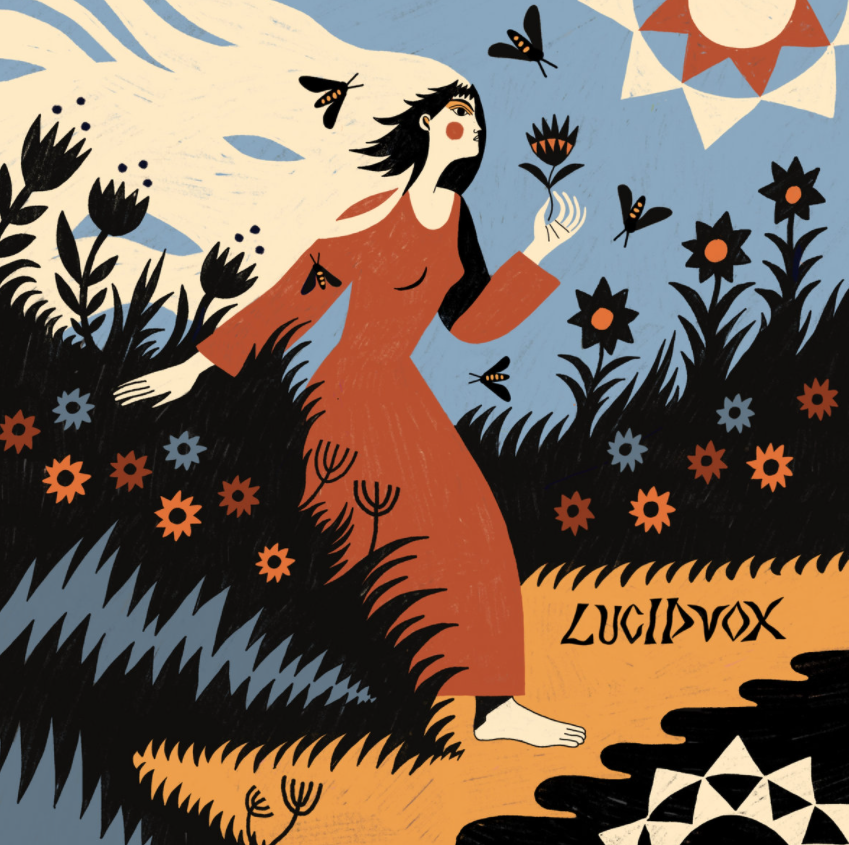
An encapsulation of the last month, the Monolith Cocktail team (Dominic Valvona, Matt Oliver, Brian ‘Bordello’ Shea and Graham Domain) chose some of the choicest and favourite tracks from February. It may have been the shortest of months, yet we’ve probably put together our largest playlist in ages: all good signs that despite everything, from Covid to the Russian invasion of the Ukraine, artists, bands everywhere are continuing to create.
65 tracks, over 4 hours of music, February’s edition can be found below:
That exhaustive track list in full:::
Animal Collective ‘Walker’
Modern Nature ‘Performance’
Gabrielle Ornate ‘Spirit Of The Times’
The Conspiracy ‘Red Bird’
Cubbiebear/Seez Mics ‘All Friended Up’
Dubbledge/Chemo ‘Itchy Itchy’
Dirty Dike ‘Bucket Kicker’
Future Kult ‘Beasts With No Name’
Lunch Money Life ‘Jimmy J Sunset’
Ben Corrigan/Hannah Peel ‘Unbox’
Uncommon Nasa ‘Epiphany’
War Women Of Kosovo ‘War Is Very Hard’
Ben Corrigan/Douglas Dare ‘Ministry 101’
Sven Helbig ‘Repetition (Ft. Surachai)’
Ayver ‘Reconciliacion Con La Vida’
Lucidvox ‘Swarm’
Provincials ‘Planetary Stand-Off’
Wovenhand ‘Acacia’
Aesop Rock ‘Kodokushi (Blockhead Remix)’
Junglepussy ‘Critiqua’
Tanya Morgan/Brickbeats ‘No Tricks (Chris Crack) Remix’
Buckwild ‘Savage Mons (Ft. Daniel Son, Lord Jah-Monte Ogbon & Eto) Remix’
Che Noir ‘Praises’
Koma Saxo w/Sofia Jernberg ‘Croydon Koma’
Medicine Singers/Yontan Gat/Jamie Branch ‘Sanctuary’
Black Josh/Milkavelli/Lee Scott ‘Die To This’
Funky DL ‘I Can Never Tell (Ft. Stee Moglie)’
Mopes ‘Home Is Like A Tough Leather Jacket’
ANY Given TWOSDAY ‘Hot Sauce (Ft. Sum)’
Split Prophets/Res One/Bil Next/Upfront Mc/0079 ‘Bet Fred’
Nelson Dialect/Mr. Slipz/Vitamin G/Verbz ‘Oxford Scholars’
Immi Larusso/Morriarchi ‘Inland’
Homeboy Sandman ‘Keep That Same Energy’
Wax Tailor/Mick Jenkins ‘No More Magical’
Ilmiliekki Quartet ‘Sgr A*’
Your Old Droog/The God Fahim ‘War Of Millionz’
Ramson Badbonez/Jehst ‘Alpha’
Ghosts Of Torrez ‘The Wailing’
Pom Poko ‘Time’
Daisy Glaze ‘Statues Of Villians’
Orange Crate Art ‘Wendy Underway’
Seigo Aoyama ‘Overture/Loop’
Duncan Park ‘Rivers Are A Place Of Power’
Drug Couple ‘Linda’s Tripp’
Ebi Soda/Yazz Ahmed ‘Chandler’
Brian Bordello ‘Yes, I Am The New Nick Drake’
Psychedelic Porn Crumpets ‘Bubblegum Infinity’
Steve Gunn ‘Protection (Ft. Mdou Moctar)’
Jane Inc. ‘Contortionists’
Black Flower ‘Morning in The Jungle (Ft. Meskerem Mees)’
Jo Schornikow ‘Visions’
The Goa Express ‘Everybody In The UK’
Pintandwefall ‘Aihai’
Thomas Dollbaum ‘God’s Country’
Crystal Eyes ‘Don’t Turn Around’
Glue ‘Red Pants’
Super Hit ‘New Day’
Legless Trials ‘Junior Sales Club Of America’
Monoscopes ‘The Edge Of The Day’
Alabaster DePlume ‘Don’t Forget You’re Precious’
Orlando Weeks ‘High Kicking’
Carl Schilde ‘The Master Tape’
Bank Myna ‘Los Ojos de un Cielo sin Luz’
Park Jiha ‘Sunrise: A Song Of Two Humans’
Simon McCorry ‘Interstices’
Our Daily Bread 465: The August List ‘Wax Cat’
August 31, 2021
ALBUM REVIEW/Dominic Valvona
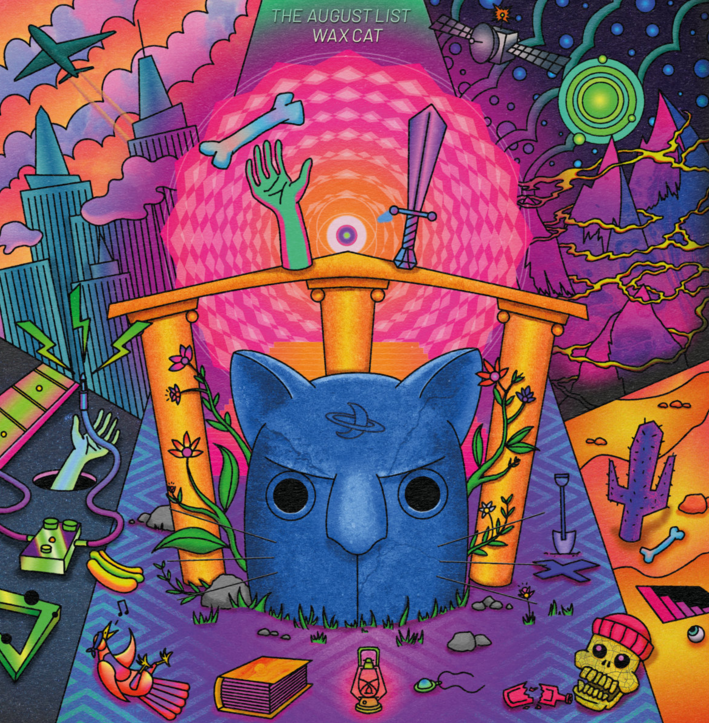
The August List ‘Wax Cat’
(All Will Be Well Records) 3rd September 2021
Another of those English county dreamers reaching for the expansive and more desolate plains of a distant, often imagined, Americana, the Oxford-based August List bend alt-country tastes to their will on the latest album, Wax Cat.
Led by the married couple of Martin and Kerraleigh Child, with a supporting cast of locals on drums, violin, guitar, banjo and synth effects, the band wanders an epic panorama of empowered intensity and more ethereal lush contemplation. Dreaming big with a variety of light and shade, swells and tenderer moments, there’s bowed, waned and searching duet plaints set to northwestern waterway junctions, named in honour of the late 18th century British explorer (‘Puget Sound’), and Tennessee, via Gram’s Joshua Tree and the Laurel Canyon, visions of a heart-rendering, bittersweet and mythologized country songbook landscape. Whether together or riding solo the two voices share quite a good range. Especially Kerraleigh, who can sound empowered and resolute on songs like the opening big-hitter, gnarled ‘Seams’, and like a combination of the Howling Bells, Maria McKee, Leila Moss and Emmylou Harris on the desert’s edge ‘Distorted Mountain’. There’s even an air of the paisley underground on the majestic violin straining ‘I Might Get Low’. It most also be noted that Kerraleigh also plays a most gauzy harmonica on a few tracks too.
That country vibe can be heard roaming into shoegaze, and the crushing quite to crescendo ache of Mazzy Star. Meanwhile the August List’s cover of The Diamond Family Archive’s ‘Big Black Dog’ sounds like Ian MuCulloch fronting Spiritualized, and the enervated, synth warped with flange stroked guitar, ‘God In A Wire’, reminded me a bit of R.E.M.
From the storming Bosco-Delray-wrestles-with-Charlie-Megira-at-a-hoedown ‘Wheelhouse’, to the dreamy ‘Crooked Starlite’, there’s as much quality as there is variety to the crescendo-riven August List sound. Who better to set introspective feelings and longings from the Home Counties to an alternative country soundtrack then Oxford’s very classy August List. In short: a great album from start to finish.
Hi, my name is Dominic Valvona and I’m the Founder of the music/culture blog monolithcocktail.com For the last ten years I’ve featured and supported music, musicians and labels we love across genres from around the world that we think you’ll want to know about. No content on the site is paid for or sponsored and we only feature artists we have genuine respect for /love. If you enjoy our reviews (and we often write long, thoughtful ones), found a new artist you admire or if we have featured you or artists you represent and would like to buy us a coffee at https://ko-fi.com/monolithcocktail to say cheers for spreading the word, then that would be much appreciated.
Our Daily Bread 089: Zoe Polanski, Forest Robot, Stanley J. Zappa, John Howard, Yanti Bersaudara…
July 27, 2020
REVIEWS/Dominic Valvona
As usual, another international whirlwind of stopovers awaits reader, as I pick out choice and interesting new releases and reissues from across the globe. Channeling his traverses, mountain climbs and treks across the California wilderness into ambient peregrinations, Fran Dominguez as the Forest Robot, takes the listener out into the great outdoors, with his latest suite After Geography. An aural escape, a safe spatial plain, Dominguez creates an environment in which to take stock. A Finnish-American freeform jazz partnership is in vogue with Stanley J. Zappa’s new album for the Baltic coastal label We Jazz. Saxophonist and clarinetist Zappa (a nephew of the late Frank) and drummer/percussionist Simo Laihonen traverse British-Columbia and all points in-between on Muster Point. Creating the most hushed and diaphanous of cinematic dreampop, Israeli artist Zoe Polanski releases the Violent Flower album. I also take a look at the troubadour pianist John Howard, who from his Spanish studio home, ties in his latest adroit songbook To The Left Of The Moon’s Reflection with the second part of his published memoirs, Illusions Of Happiness, this month. And in my reissues section there’s the first ever reissue of the West Java Yanti Bersaudara sisters honeyed soul and beat group psych exotic self-titled ’71 nugget. The Australian born, but bought up in a rural backwater of England troubadour Campbell Sibthorpe returns back to his roots with the expansive storybook, Ytown.
Towards the fantastical, though based in geological science, experimental dub unit Cousin Silas And The Glove Of Bones reimagine a lost continental bridge of shared deities and cultures on the new album Kafou In Avalonia. And finally, we have the new no-fi songbook of despondent poetic scorn and resignation from our very own Brian ‘Bordello’ Shea, The King Of No-Fi’.
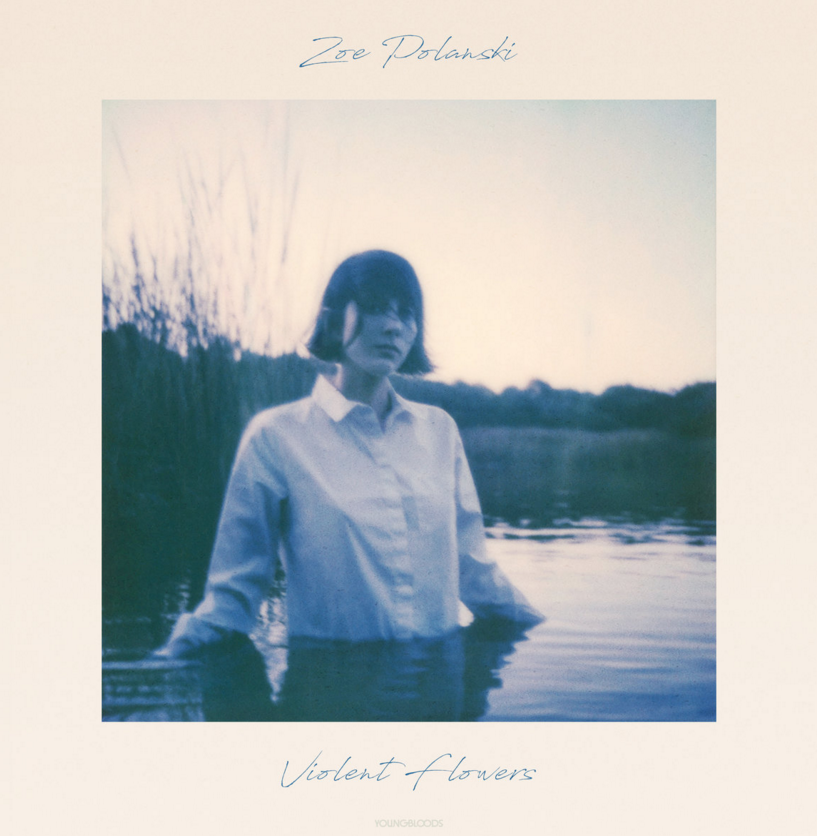
Zoe Polanski ‘Violent Flower’
(Youngbloods) Album/17th July 2020

Despite, at various times, living in one of the most contested dangerous spots on the global stage, Israeli artist Zoe Polanski transduces all the violence, danger and stresses into a most diaphanous, sometimes fantastical, synthesized musical haze. Her latest fully-realized shoegaze electronic swoon of an album – co produced and written with the Tel Aviv producer Aviad Zinemanas – is subtle but immersive, moody yet dreamy. Lit though by Polanski’s travails, a deep sense of sadness and sighed questioning lyricism permeates the wispy vaporous smoke machine pop production.
Beautiful throughout, hushed and fragile, Violent Flowers is a sweeping cinematic articulation of conflicted feelings. The title-track, and former single, draws upon the ongoing Israeli-Palestine tensions; which has taken on even more drama in recent months with the policy of planned Israeli annexations in the West Bank.
Channeling the Cocteau Twins and Chromatics, this gauzy serenade of blossoming synth-pop is a disarming evocation of lightness that features Polanski yearningly searching for a way back home amid the division. The album’s second single, ‘The Willows’, mourns not only the painful end of a “surreal” affair whilst travelling across the USA, but is also inspired by Polanski’s mixed feelings of empathy towards her Palestine neighbours with a longing to escape the rocket attacks that passed overhead when she lived in the atavistic port city of Jaffa, during the 2014 conflict with Gaza.
Born in another ancient city port, Haifa, on the slopes of Mount Carmel, Polanski escaped the tumult through music and cinema. The experimentally burgeoning musician and singer later moved to the States, recording with the NYC band Katamine and enrolling on a summer course in cinematography at the prestigious School of Visual Arts. The fruits of which can be heard evoking a kind of dream realism on this filmic scored album.
As it happens, on returning to Israel and settling in the liberal creative hothouse of Tel Aviv, Polanski started a new project of soaked-reverb “slow cinema verite” named after the renowned Hungarian filmmaker Béla Tarr. Tarr’s actual cinematographer Fred Kelemen caught Polanski at a live show. So impressed, he invited her to score his own upcoming film.
This latest vision sees the visual-audio talent reach ethereal, almost apparitional scales of atmospheric beauty as she sings veiled lines over her creative foil Zinemanas’ mirror-y and airy synthesis of arpeggiator, sine waves and enervated percussion. Dream pop and neon lit electronica meets Israeli panoramas, mysterious island inlets, touches of Vangelis (on the glassy contoured ‘Humboldt Current’), soft bobbing beats and pulchritude waves of silk.
Gentle, enchanting with an aching depth, Zoe Polanski together with Zinemanas have created a refreshing vision of dreamwave electronic pop and filmic music; one that offers a different perspective and sumptuous mystery. Turmoil has seldom sounded so gossamer and hushed.
Kalporz X Monolith Cocktail: Zoe Polanski ‘Pharaoh’s Island’
Stanley J. Zappa ‘Muster Point’
(We Jazz) Album/7th August 2020

A regular stopover on my global tour of reviews, the Helsinki festival-label-store hub We Jazz are proving to be among the most prolific deliverers of quality contemporary and experimental jazz. Earlier this month the assured label put out albums from the Danish-Finn JAF Trio and Gothenburg saxophonist Otis Sandsjö. Their latest release pairs up two former acolytes of the Mitford Graves school of free jazz enterprise: the American tenor/soprano saxophonist and alto clarinetist Stanley J. Zappa (who’s name embellished this LP) and Finnish drummer, percussionist Simo Laihonen. The Queens-made drummer extraordinaire and teacher Graves is renowned for his avant-garde contributions working with Albert Ayler, Paul Bley and the N.Y. Art Quartet; a reputation that is lapped up by his former students on this set of probing impulsive serialism recordings.
You may have guessed by the name, and yes Stanley is indeed a scion of the famous Zappa family tree: a nephew of the late rock-fusion genius Frank. Erring towards jazz, Stanley proves that old adage that the apple doesn’t fall far from the tree; highly adroit and proficient in pushing at the foundations, able to switch between the spiritual and hard bop. His foil Laihonen, of the long-standing Black Motor trio, proves equally as talented, propelling in bursts and snaps or in an amorphous fashion hitting and reeling shapeless accents and meanderings.
Joining them on the odd radial exploration, bassist Ville Rauhala adds some stringy, rubber-band thrummed double-bass runs and bodywork thwacking: less rhythmic and traditional, more loose and wandering.
Muster Point, a reference heavy album of track title locations (much of which name check places in Stanley’s British Columbia Canadian home), was recorded both in the studio and out on the road. You can hear some of the live spontaneity and an appreciative applause on the flighty clarinet and looming bass, with sporadic drum breaks, avant-garde piece ‘Muster Point IV’. Split between shorter ambling and more energetic incipient Muster Point entitled flexes, and deeper, longer workouts this album strikes out towards Pharaoh Sanders’ Egypt on the opening suite to dishing out tougher, heavier breaks on the street map ‘538 E14th, City Of Piss, USA’.
Fluting, twirling and coiling over the tumbling drums, rumbling timpani and shaking percussion, Stanley’s vibrato sax hawks and spirals with both longer and shorter breaths. Often sailing at a counter speed to Laihonen’s quickened rolling patterns, that wondering instrument trills freely as light as air itself. Well, for the most part. Stanley can also toot rapidly and with force when the occasion arises.
From drawing on the ancestral (on the Kahil El’ Zabar watery percussive underflow ‘Pleasant Avenue’) to skitting across a NYC boardwalk, Muster Point plays hard and footloose with freeform jazz; dipping into the spiritual and rapidly evoking hard bop dashes. Yet again its another fruitful experiment and performance from the We Jazz label.
Otis Sandsjo ‘Y-Otis 2’
JAF Trio ‘ST’
Forest Robot ‘After Geography’
Album/28th August 2020

With a deep connective respect to the landscapes this intrepid mountaineer and sonic explorer has scaled and traversed, Fran Dominguez provides a subtly evocative safe space in the most tumultuous of times. When all the elements of a virus epidemic and the ongoing tensions of Black Lives Matter mix with the divisive rage of social media and fake news, the only tool we have left to navigate the storm of constant faux-outrage is “intuition”. Put both together, as the California-based trekker Dominguez has done, and you get a most beautifully subversive ambient soundtrack; a tenderly produced sonic psychogeography of both the synthesized and naturalistic; a million miles away from the hubbub and stress of the online world. A sort of self-help guide for contemplation and rest you could say, the softened bobbing and trickled piano notes and gently blowing winds washing over the listener with just enough depth and interest to transport them to the awe-inspiring landmarks of nature.
With over 400 ascents and 6,000 odd miles of cross-country exploring under his belt, Dominguez tunes into those experiences when composing music under the Forest Robot title. Intuition, that main motivation and driver for the latest tonal contouring suite, After Geography, comes into practice after all the preparation in the world fails to allow for the variables that arise when climbing those magnificent rocky peaks. Though obviously a great title in itself and an encapsulation of the Forest Robot’s meditative semi-classical, semi-Kosmische maps, the inspiration behind it comes from Ringo Starr. As the anecdote from rock’s backpages goes, the bejeweled digit fingered Beatles drummer proposed it when the Fab Four were stumped for a title for their next album after Revolver. As a lighthearted chide at the rivals, The Rolling Stones, who’d just released Aftermath, Starr chimed in with “After Geography”. It seems highly appropriate in this context, and in this time.
An escapist survey that breaths in the influences of Roedelius, Boards Of Canada, Erik Satie, Harold Budd, Nils Frahm and Small Craft On A Milk Sea era Eno, the album covers the terrain in a gauze of delicate resonance, notation and obscured woody movements. Track titles become descriptive reference points and wildlife moments experienced, on this aural map; a clue at times to the scenic inspirations that encouraged them. ‘Of Birds Migrating In The Distance’ is for example a winged patted dance and flutter across the ivory, and the marimba-like bobbing ‘Glacial Architecture Of The Mountain Corridor’ features crystalized icy notes and melting droplets: it’s almost as if Dominguez captures the sunlight gleaming off the slowly melting glacier. ‘Over The Drainage Divide’, which doesn’t exactly sound very inspiring, is surprisingly wondrous, even spiritual, with its choral ethereal waves and hints of ghostly visitations. An ascendant version of that choral spirit can also be heard on the soft droning, delayed and bouncing notes beauty ‘All Across The High Plain After The Storm’.
A mostly peaceable geography, Dominguez’s latest impressive suite offers the safety of a timeless rugged pristine panorama. A breath of fresh air; a sonic plain on which to gain some perspective, that intuitive methodology proves highly successful on a most pleasing, imaginative ambient experience.
Campbell Sibthorpe ‘Ytown’
EP/21st July 2020

Following up on the impressive choral anthem ‘Good Lord’, which we premiered last month on the MC, the yearning troubadour Campbell Sibthorpe proves he has more than it takes to deliver the full emotionally stimulating package with his new, generous EP Ytown. Over seven tracks of similar beautifully realised rustic anthems and shorter mood passages, Campbell expands his themes of escaping the pastoral backwaters of small town life.
Both a travail down memory lane and pilgrimage, nature’s son returns from London to the town in which he spent those formative years, on the outskirts of Bristol, to mull over the past, but above all, as the Australian born songwriter/multi-instrumentalist set out to serenely on that ‘God Lord’ hymn, seeks to find himself amongst the humdrum scenery. Ytown could be many towns, any town, yet it proves evocative and creatively fertile enough to inspire this expansive songbook. The very essence of the place seeps into the music through field recordings and the sound of the local church’s pump organ – used very subtly as a sadly reverent undertow on the setting-sun curtain call ‘Strawberry Line Pt. 2’ a couplet to the EP’s only scenic twinkled if musing instrumental, The Shins like ‘Strawberry Line Pt. 1’.
Entirely self-produced and recorded from the bedroom of his youth, Ytown pays homage to innocence, to his childhood relationship with his ‘Father Carpenter’, and the unburdened freedoms of nature. The first of those is a powered-up Midlake country folk anthem, the latter, an achingly harmony rich longing to be as free and detached as the ‘Dandelion’.
Almost echoing an early Radiohead paired with the Fleet Foxes, the tender woven poetic ‘Pastel Porcelain’ seems to have stepped out of a medieval tapestry, and the opening dappled lit blossoming ‘The Sun Appeared’ shows an almost filmic and experimental quality to Campbell’s music.
A balance of acoustic naturalism and full on, climatic singles, Ytown is a great piece of expansive storytelling, a conceptual EP perfect in length, depth and heartfelt searching.
Campbell Sibthorpe ‘Good Lord’ Premiere
Brian Bordello ‘The King Of No-Fi’
(Metal Postcard Records) Album/16th August

The self-anointed king of no-fi returns with another songbook of quasi-demoed wistful despondency and self-deprecation; a stripped-back one-track display of rough charms that cuts to the heart of the cult St. Helens malcontent’s sardonic, but also extremely vulnerable, annoyances about modern life.
The idiosyncratic de facto leader of the long standing dysfunctional family legends The Bordellos, and the barely concealed instigator of the anti-Brit pop and plodding rock Idiot Blur Fanboy, Brian ‘Bordello’ Shea (who I must also point out is a regular contributor to these very pages) follows up on his recent solo offerings, the Liverpool Hipster Scene EP and Boris Johnson Massacre single, with another album for the Aussie platform, Metal Postcard Records. Recorded during lockdown whilst growing tired at the lack of revolutionary zeal and wit in contemporary music, and the reliance upon of nostalgia, regurgitation in the industry (both musically and through blogs, publications, radio), Brian has penned a quite sincere collection of romanticized sufferings, regrets and love songs.
Making even Sparklehorse sound like ELO in comparison, the no-fi production values on offer are raw but never really coarse or discordant. No augmentation, filters, effects or sundry, just a bare accompaniment of rough’n’ready but melodious acoustic guitar and the whirling of a rudimental four-track; the click of the record button and, at the end of each performance, the stop button.
Channeling various maverick troubadours, post-punk poets (Dan Treacy springs to mind) and a Brylcreem of rock’n’roll idols (ironically enough the release of this album intentionally falls on the anniversary of the true king, Elvis’ death), Brian postulates on a lack of energy and rage in music, the death of the mutherfucker personalities, a bevy of “scarlet” women and lost innocence. Brian can be a romantic sod at times, even sentimental; writing some real tender poetic lines amongst the scorn and despair, with even a hint of Bacharach on ‘Banana Splits’ (yeah, imagine that!). Various stolen kisses, evocations of less complicated, less divisive magical times permeate the album despite the constant references to the death of this and that and the lamentable resignations and threats to give it all up. Sometimes Brian just tersely pays homage to his icons, such as Lou Reed and Billy Fury.
Quite swooning in places, this is neither a plaintive nor angry songbook, but as I said before a sincere often humorous yearn from a maverick soul stuck in lockdown. The King is dead; long live the King.
The Bordellos ‘Debt Sounds’
The Bordellos ‘Will.I.Am You’re Really Nothing’
Cousin Silas And The Glove Of Bones ‘Kafou In Avalonia’
(Submarine Broadcasting Company) Album/19th June 2020

Reimaging a time when Earth’s landmasses were being reshaped, the atavistic geological inspired futurist dub unit pose a cultural “what if?” with their fourth “set”, Kafou In Avalonia. Developing out of a volcanic arc at the northern edges of the “supercontinent” Gondwana (we’re talking about 550 million years ago; when this leviathan contained one-fifth of all the planet’s land) but decoupling to form a drifting micro continent of its own, Avalonia, if it didn’t eventually breakup and collide with Pangea, would have bridged what is now the Atlantic Ocean. Crustal fragments underlie parts of Southwest England, Southern Ireland and the East Coast of America. Wishful dreaming Cousin Silas And The Glove Of Bones picture an alternative reality; one in which Avalonia still existed as a gateway between all Earth’s cultures and peoples. It acts as the crossroads that might have set out an entirely different course for civilization; a more integrated, less fractious one perhaps. In this setting Haitian, Brazilian, Angolan and Nigerian deities, spirits and rituals converge with an experimental soundtrack of post-punk dub, Kosmische and electronica.
Invoking a lost world, a quasi-Atlantis, they merge voodoo ceremony and tribal incantation with sonorous throbbing basslines, barracking drums, heavy reverb and craning Manuel Gottsching like guitar.
A reference heavy album, with various “Loa” (spirits) and divinities summoned and made offerings, the track titles name check a pantheon of the worshipped. The opening gabbling dub and primordial shrouded ethereal jug-poured ‘Oxûm Over Water’ pays homage to the Yoruba peoples river goddess, while the singing chorus and insect chirped trans-Europa rail momentum Kraftwerk meets Guru Guru ‘Oxalá Of The White Sky’ takes its name from the Brazilian “sky father” and creator of human beings. Elsewhere, Haiti’s spiritual ancestors are represented in the shape of the serpent creator of the cosmos, Damballa (the On-U-Sound dub prowling low frequency crumbled bass languorous ‘Damballah Of The Dark Sky’), and senior Petro visitation born from the heinous savagery and injustice of slavery, Ezilí Dantor (the lolloping Orb submersion ‘Ezilí Dantor Awake’). Incidentally, that last spirit especially took kindly too offerings of crème de cacao and jewelry, and on its birthday, a wild pig. It’s believed that one such feast in honor to Dantor preceded the infamous slave revolt of 1791.
Ancestral ghosts meet synthesized futurism on this mystical transformed aural geography, as recordings of various rituals swirl in and around a cosmic soup. A supernatural and celestial, seeping and vaporous vortex of polygenesis sources are gathered together to create an imaginative cosmology hybrid. If The Future Sound Of London and Ash Ra Tempel recorded an album at Lee Scratch Perry’s black ark studio it might very well have sounded something like this. And that’s me saying this is a bloody great experimental dub album. Seek out now.
John Howard ‘To The Left Of The Moon’s Reflection’
(UK John Howard/USA through Kool Kat Musik) Album/7th August 2020

Chiming with the second candid, sometimes wistful, chapter in the pianist raconteur’s memoirs, this latest fragrant songbook manages past regrets with wizened heartfelt balladry. With plenty of time, including the lockdown, to mull over the past, after writing two volumes of self-effacing recollections (part two, Illusions Of Happiness, is scheduled to tie in with this album, published on the 7th August) John Howard channels a lifetime of setbacks and learning through the philosophical and metaphorical.
Coming to terms and letting go in some respects, the fledging 70s star set back by a series of career mishaps and a traumatic accident (forced to make a fateful leap from the window of an apartment he shared in Earl’s Court with some colourful Filipino gay characters, who brought back a mad Russian ‘bit of rough’ intent on murder) muses over breakups (the la la, almost Christmas seasonal, chiming mini anthem ‘I’m Over You’) and a broken friendship (the regretful heartache ‘Echoes Of Pauline’). The latter’s real life subject appears as a recurring figure of that regret in John’s work; the best friend from school losing touch since 1973 (as John admits, probably down to him and not Pauline) first pops up on ‘The Flame’ from the career launching Kid In A Big World showcase, and later on ‘Pauline’s Song’, which featured on the 2009 EP Songs For A Lifetime.
Pauline’s presence, companionship is much missed it seems, as John looks out from his Spanish home veranda on an uncertain, if scenic, world. Idyllic though it is, his life in the Southeastern Spanish town of Murcia can’t make up for the pining of his former Welsh home, and even further back, Lancashire. Moving across the seas to preempt Brexit, John recalls a Welsh pastoral bliss on the wistfully beautiful melodious ‘And Another Day’. Yet both lyrically and through his signature subtle minor key changes moves deftly into the sadness of leaving it all behind. The scented waltz-y ‘Illusions Of Happiness’ ambles through a perfumed garden of delights but also mournfully wades out into the sea; waiting on something, a ship, vessel, the final boat ride perhaps.
Old ghosts mingle with analogies of saviors, and the tropes of coming-to-terms with one’s decisions. This is all done with a most adroit touch of pastoral organ, Baroque chamber pop, gentle Dylan-esque harmonica, concertina and softened tambourine rattled crescendos: all of which is played by John. It’s a sound that is saved from the saccharine and pushed towards the yearning beauty of the early Bee Gees, late 60s Beach Boys and the Incredible String Band, whilst echoing the flourishes of John’s burgeoning pianist troubadour career in the 70s.
The 17th album proper in a career that has regularly stalled (mostly down to the mishandling of others), with gaping holes in which John turned his hand to A&R, the lyrical To The Left Of The Moon’s Reflection follows on from last year’s brilliant Cut The Wire – just one album in a long line of such releases from arguably his most creatively prolific tenure. The poetically scene-setting songbook is a perfect accompaniment to those memoirs; a mature retrospection of a life well lived.
John Howard ‘Cut The Wire’
John Howard ‘Incidents Crowded With Life’
John Howard ‘Across The Door Sill’
Reissue
Yanti Bersaudara ‘ST’
(La Munai Records) Album/7th July 2020

A beautiful three-part harmony serenade drifting out of West Java, the much sought after 1971 album from the endearing Yanti sisters is finally being reissued for the first time ever. From Indonesian musical treasure hunters, La Munai Records, a befitting repackaged version of that original Bamboo Music magical Sundanese suffused treat.
Previous twee recordings, which swing between Merseybeat and enervated gospel soul, have made it digitally onto a number of platforms and compilations over the years, but the sisters’ later self-titled nugget has remained pretty elusive.
Released towards the end of their tenure, this beautifully cooed, lulled and charming harmony rich record seems oddly out of step with its time; though the strict regime in Indonesia had the gall to ban rock’n’roll, and so outpourings of fuzz-thrilled rebellion and salacious gyrating were kept to the minimum: more the early fab four’s ‘Tell Me Why’ or anything by The Tremeloes than the dirty scuzz and teasing of the Rolling Stones. That’s not to say the odd frizzle of psych and a coarse guitar twang or two doesn’t pop up here and there, but this early 70s songbook is mostly dreamy, heavenly even, and spiritual.
Whilst channeling the siblings (that’s Yani, Tina and Lin Hardjakusumah) West Javanese heritage of Bamboo Music, Gamelan and Jaipongan, you will also hear a constant sustained and fanning ray of church organ too. The lovely honeyed vocals even reach the ethereal heights, sounding like an Indonesian version of Dusty sings gospel.
The second most populous ethnic group in Indonesia, the Sundanese people (a name derived from the Sanskrit prefix “su”, which means “goodness”), of which the sisters belong, reside in a part of the country synonymous for its rich musical traditions. Soothed into an exotic dreamboat mix of angklung ringing and bamboo bobbing, reedy staccato surf guitar and ticking away drums those delicate ancestral chimes are propelled into the beat group era, and on the misty organ ghostly ‘Bulan Dagoan’, a spooked funhouse garage band era.
Coquettish, enticing, at other times like the 5th Dimension and choral rhyming, the girls vocal sound is sweetened; flourishing with yearned and exotic swooning.
For those of you wishing to enjoy a languorous dreamy slow boat to Java, with just enough fuzz thrills to pique the interest, let the Yanti sisters provide the hip accompaniment. If you’ve already been entertained by the trio, then you’ll find this ’71 release less saccharine and girl-group than previous albums; more magical and with more stained glass soul.
Hi, my name is Dominic Valvona and I’m the Founder of the music/culture blog monolithcocktail.com For the last ten years I’ve featured and supported music, musicians and labels we love across genres from around the world that we think you’ll want to know about. No content on the site is paid for or sponsored and we only feature artists we have genuine respect for /love. If you enjoy our reviews (and we often write long, thoughtful ones), found a new artist you admire or if we have featured you or artists you represent and would like to buy us a coffee at https://ko-fi.com/monolithcocktail to say cheers for spreading the word, then that would be much appreciated.
Monolith Cocktail X Kalporz: Interview with outlaw hero Orville Peck.
November 25, 2019
Interview
Words: Matteo Bordone

Continuing our content swap with the leading Italian culture/music site Kalporz, the Monolith Cocktail is excited to be hosting Matteo Bordone‘s recent interview with the Canadian mask wearing alternative country artist Orville Peck.
Matteo Bordone: Tell me about the writing of Pony: in previous interviews you stated that the texts are self-referential. When and how did you decide to write these songs?
Orville Peck: They are songs about my life experiences. People I’ve met, places I’ve been. I wanted to make a classic country album, which is exactly that – a collection of stories.
MB: The sounds of your record range from shoegaze to the most classic country: if you had to explain your music through fundamental artists/groups, what would they be and why?
OP: I am of course influenced by the outlaw country musicians like Willie Nelson, Johnny Cash, and Merle Haggard. I combine that classic sound with a few more contemporary sounds or production feelings but to me that is just the natural evolution for country. Country has always evolved and changed and incorporated different sounds and instruments as it grew.
MB: The night is a recurring temporal element in your songs. What role did the night play in the writing of Pony?
OP: I guess a lot of what I do is in the night. It’s definitely easier to be yourself in the night.
MB: The masks you wear helped to create the aura of mystery that characterizes your character. What is your relationship with these?
(no answer/silence – ed)
MB: In a short time your project has seen its fanbase grow, to the point that some of your fans have tattooed lyrics from your songs. How do you manage your relationship with your fans and this sudden wave of popularity?
OP: I think it’s really special. My fans include everything from alternative culture, LGBTQ, older country fans. It’s a really broad spectrum. I think they all connect with it for the same reasons that I do – because everything I sing about is universal. These are struggles and instances that everybody has gone through.
Tickling Our Fancy 079: Aziza Brahim, The Mining Co., Alex Stordiau, Karkara, Compro Oro, Xylouris White, Invisible System, Rafiki Jazz.
October 11, 2019
Album Reviews
Words: Dominic Valvona
Photo Credit: Aziza Brahim taken by Ana Valiño

This week’s recommendations and reviews (for the most part) share a musical hunger for the polygenesis; combining and merging a cornucopia of international sounds and cultures to spread a message of universal suffrage. A case in point, the ever-evolving North-of-England assemblage of migrants and refugees, Rafiki Jazz feature voices and musicians from all over the globe: from Arabia to India. Their fourth and upcoming captivating album, Saraba Sufiyana, is featured in this roundup. Channeling a mystical Maghreb, the French trio of Karkara goes heavy and transcendent on their new acid-doom-rock epic, Crystal Gazer. The Belgium outfit Compro Oro manages to circumnavigate a myriad of international destinations without leaving the suburbs of their native home on the new dance jazz LP Suburban Exotica, and UK producer Dan Harper, under the Invisible System title, once more transforms the traditional and courtly music of Mali, on the new album Dance To The Full Moon. Closer to European shores, Xylouris White, the Hellenic framed project of Dirty Three drummer Jim White and Greek lute player Giorgos Xylouris, release a fourth installment of their Cretan soundscapes, The Sisypheans.
Leading the charge this week though is the encapsulating soulful Aziza Brahim with her upcoming new album, Sahari. Born in the hardened landscape of a Saharawi refugee camp on the border of Algeria and the Western Sahara, the beguiled vocalist now lives in a state of exile in Spain. Her latest album continues to draw attention to not only that plight but also that of all refugees on an album that tries some a little bit different musically.
Something a little different, and away from this general thread of global initiatives, Belgium composer Alex Stordiau releases his inaugural album of Kosmische imbued neo-classical visions, Poking Your Imagination, for Pure Spark Records.
Preview/Feature
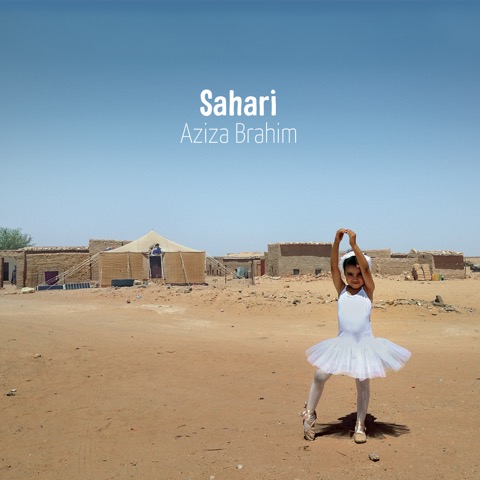
Aziza Brahim ‘Sahari’
(Glitterbeat Records) Album/ 15th November 2019
Bringing the message of the displaced Saharawi people to the world stage, Western Saharan musician/activist Aziza Brahim follows up both her critically rewarded 2014 album Soutak, and the no less brilliant 2016 serene protest of poetic defiance Abbar el Hamada album with her third for Glitterbeat Records, Sahari.
Born in the hardened landscape of a Saharawi refugee camp on the border of Algeria and the Western Sahara, beguiled vocalist Aziza embodies the wandering spirit of her people; their settled, though often borderless and disputed lands, previously claimed by Spain, were invaded in 1975 by Morocco. Though made up of many tribes with many different goals the Saharawi people mounted a fight back. It was in this climate that Brahim was hewed. Exiled in effect, her travails have extended to Cuba, where she was educated as a teenager, and Barcelona, where she now resides and makes music.
Imbued as ever with the desert soul of that disputed region, the latest record, with its visual metaphor of optimism in even the most desperate of backdrops and times – dreams of growing up to be a ballerina proving universal – attempts to marry the beautifully longing and heartache yearns of Brahim’s voice to a number of different styles and rhythms: A subtle change towards the experimental.
Previous encounters have channeled the poetic roots of that heritage and merged it with both Arabian Spain and the lilted buoyancy of the Balearics. Working with the Spanish artist Amparo Sánchez of the band Amparanoia, Brahim has chosen to add a congruous subtle bed of synthesized effects to the recording process: before performing live in the studio, but now recording in various places, the results collected together and pieced together in post-production. This methodology and sound furnishes Brahim’s longing traditional voice with certain freshness and, sometimes, shuffled energy. Songs such as the loose and free ‘Hada Jil’ lay a two-step dance beat underneath a desert song drift. Later on there are dub-y rim-shot echoes and undulating waves of atmospheric tonal synthesizer underpinning that blues-y startling timbre. However, the most surprising fusions to be found on Sahari are the Compass Point reggae-gait ‘Las Huellas’ and the Arabian soul channeling Fado ‘Lmanfra’. There’s even room for a piano on the balladry ‘Ardel el Hub’; a song that plaintively conveys the “impossibility of returning home”, a sentiment the activist Brahim is only too familiar with – denied entry or the right of return, effectively in exile.
The sound of the Sahrawi is never far off, despite the technological upgrade. That most traditional of handed-down instruments, the “tabal drum”, can be heard guiding the rhythm throughout; rattling away and tapping out a beat that changes from the threadbare to the clattering. Brahim’s vocals are as ever effortlessly enriching, captivating and trilling. I dare say even veracious.
Articulating a broader message of global suffrage, Brahim once more encapsulates the sorrows of the exiled and stateless on a sumptuous album, The wanderer and Saharan siren invites new dynamics without changing the intrinsic character and message of her craft, yet ventures beyond those roots to embrace bold new sounds. A most fantastic, poetic songbook that will further cement Brahim’s deserved reputation as one of the deserts most serene artists.
Reviews
Compro Oro ‘Suburban Exotica’
(Sdban Ultra) Album/ 18th October 2019

Illuminating Belgium suburbia with a cornucopia of entrancing and limbering sounds and rhythms from across the world, Compro Oro transport the listener to imaginative vistas on their latest album of jazz imbued exotics. Making waves as part of a loose jazzy Benelux scene, the troupe have even managed to rope in the help of Ry Cooder’s accomplished scion, the multi-instrumentalist talent Joachim Cooder, who adds an “effects-laden” mbira and percussion to a trio of imaginative tracks.
Like their comrades on that scene, Black Flower, the Compro sail into various melting-pot rich harbors, soaking up the atmosphere and embracing what they found, weaving the multilingual sounds into a vibrant soundtrack of tropical new wave pop, dance music, alt rock ‘n’ roll, Turkish-psych and Ethno-jazz fantasy. Cal Tjader, Mulatu Astatke and Marc Ribot are all cited as inspirations, their indelible mark suffused throughout this LP. Add to that trio a strange interpretation of Herbie Hancock (on the Somalia ease-up ‘Mogadishu’; imagine the Dur-Dur Band floating on a kooky jazz cloud above the tumultuous city), Soulwax (on the palm tree Latin dance funk ‘Miami New Wave’) and a rewired Modern Jazz Quartet (that will be the often twinkly and trickling use of vibraphone, but also the marimba too). The curtain call thriller ‘Kruidvat’ even evokes the darker stirrings of later period Can, and the wafting ambiguous snuffles of Jon Hassell.
For the most part dreamy and under a gauze-y veil, Suburban Exotica sashays and drifts across a musical landscape of Arabia, Anatolia, Eastern Africa, The Caribbean and Hispaniola without setting foot outside of their Belgium front door. The more you listen the more you discover and get out of this brilliant dance album of borderless jazz. What a treat to the ears and feet.
Invisible System ‘Dance To The Full Moon’
(ARC Music) Album/ 25th October 2019

An apt hand in transforming the traditional sounds of Mali, the British producer Dan Harper’s experiment in this field stretches back two decades; set in motion by the rudimental laptop-produced Acid Mali project he created whilst working as a Capacity Builder for a local Malian environmental NGO. So taken was Harper with the country, he ended up not only meeting his future wife there but setting up home and a studio in the capital, Bamako. His wife, Hawa, would introduce Dan to childhood friend and renowned guitarist Bandjougou, who in turn would bring in tow the dusty soulful rich vocalist Sambou koyaté to sing for him. Both artists appear on this new album alongside the griot siren Astou Niamé Diabaté, who as it turns out sang at Dan and Hawa’s wedding.
Taken from the same recording sessions as Dan’s previous album, Bamako Sessions, his latest transportive exploration under the nom de plume of Invisible System, once more lends an electrified and synthesized pulse to the spiritual soul of Malian music. Originally put together in a more languorous fashion with a variety of musicians coming and going, jamming in a mattress proofed room in a rented house in the capital, Dance To The Full Moon took shape at the end of a tumultuous and violent period in Mali’s history. Experiencing firsthand (literally on Dan’s own doorstep) the terrorist attacks that followed in the wake of a, finally curtailed, Islamist insurrection and the ongoing war between Mali’s government in the West and the Tuaregs of the North and Eastern desert borders, fighting to set-up an autonomous region, known as the Azawad. Though a certain stability has returned in part to Mali, attacks still occur sporadically; the effects of which permeate throughout the work of the country’s artists, the majority offering a conciliatory tone with the emphasis on unity and understanding. With that in mind, Dan’s album is rich with passionate expressive longing and intensity; the varied juxtapositions of the griot tradition and less rural, more urban vocals combine to deliver some startling performances.
The gently resonate accents and fanned waft of the Malian guitarist’s Kalifa Koné and Sidi Touré accentuate the brilliant vocal parts; a gathering of powerful griot acolytes, singers and even a rapper (Mali rap star Penzy) that includes the already mentioned trio of Bandjougou, Koyaté and Diabaté spiral between the sweetened and intense, the hymnal and physical. Dan boosts and filters those strong performances with a production of techno, modern R&B, dub and futuristic post-punk that sonically weaves in echoes of Massive Attack, Daniel Lanois, King Ayisoba and Dennis Bovell.
Nothing can ever truly improve upon the roots and soul of the traditional courtly music of Mali, its desert blues and Bamako rock of course, but you can push it into exciting directions. Dan’s rewired buzz and pulse does just that, giving a kick and lending an attuned production to the Mali soundscape.
Alex Stordiau ‘Poking Your Imagination’
(Pure Spark) Album/ 30th September 2019
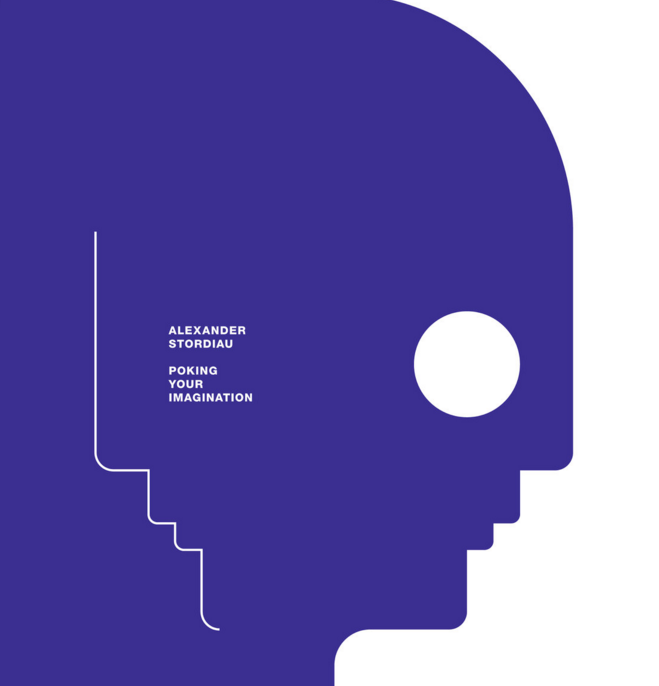
Enticing former label mates from Edinburgh’s Bearsuit Records to his burgeoning venture Pure Spark, Tokyo electronic wizkid Ippu Mitsui welcomes the Brussels based composer Alex Stordiau to the ranks. Featuring alongside House Of Tapes Yuuya Kuno, Stordiau also previously appeared on the Mid Lothian Bearsuit roster – mentioned on this very blog for his standout Vangelis-style voyager waltz into the cosmos ‘Fulfilling Eclipse’, from the label’s The Invisible And Divided Sea compilation.
Like a missing neoclassical Kosmische suite from the Sky Records vault, Stordiau’s inaugural album for Mitsui’s imprint is a serene, though often dramatically stirring, exercise in sculpting retro-electronic soundtracks.
With a classical background, studying at various Belgium conservators, Stordiau combines elements of cascading, romantically accentuated piano and suffused strings with synthesized and computer programmed sine waves, glassy tubular glistened percussion and vaporous sweeps.
The Belgium visionary often works with Bristol musician Lee Williams, who plays, among other things, both electric guitar and bass, and sometimes drums. It sounds as if Williams is present once more, on hand with warm ponderous bass and the odd bit of wilder kooky lead guitar.
Track titles on Poking Your Imagination only go so far in describing each composition’s route on an album of undulating mood pieces. The opening descriptive ‘In The Tepid Shine’ is pure escapist air-bending; crafting vague echoes of Jean Michel Jarre with Roedelius’ more beautifully spherical elevations. Most of these tracks waver over the course of duration; changing or pausing between parts, starting off like the Blade Runner neon skyline lighted ‘Tree Healing’ with a darker, theatrical classical grandeur but suddenly joined by drums and a touch of Vangelis sci-fi. Elsewhere you’re bound to identify the space peril looming shadow of Tangerine Dream and the more popcorn kookiness of Cluster amongst the Baroque cathedral and gravity arcing visions.
A panoramic, mostly cosmic soundtrack of classical Kosmische and humanized electronica, Poking Your Imagination is an assiduous suite of the mysterious, scientific and dreamy.
The Mining Co. ‘Frontier’
Album/ 25th October 2019
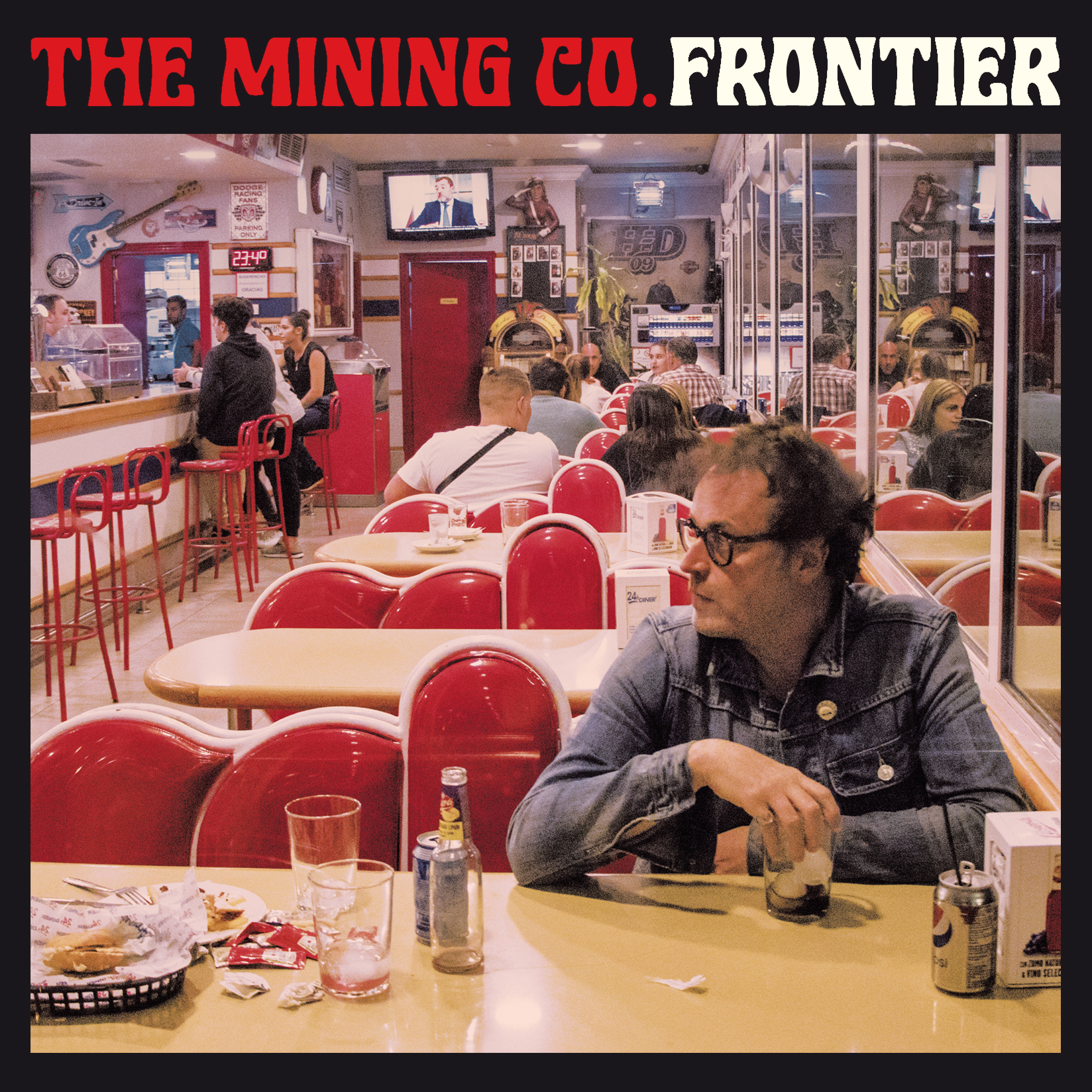
Not that you can detect it from his lilted peaceable, if hearty, Americana burr, or the Western-alluded nom de plume that he goes under, but singer/songwriter Michael Gallagher was born in Ireland. Obvious now you’ve read his actual name I know, but just sound wise, it is difficult to hear that Irish bent. In a similar vein to such luminaries as Simon Bonney, the County Donegal troubadour subtly channels a timeless vision of the lyrical, pioneering old West (and South for that matter) on his new LP, Frontier.
Via a Nashville, Texas and New Mexico panorama, Gallagher tailors personal anxieties of disconnection, dislocation and growing pains with familiar old tropes on a songbook of “hangdog” country fare. A romantic album at that, with shades of a pining Josh T. Pearson, The Thrills, Lee Hazlewood, Tom Petty and the Eels, Frontier showcases the artist’s most tender swoons and yearnings. This is a soundtrack of purposeful blues, skiffles and mellow gospel, all softly laced with a subtle echo of Mariachi horns and tremolo twang.
Various memories of a childhood back in Ireland (the night Elvis died sounding a special resonance on the lilted lap-steel rich ‘The Promised Line’) and phobias (a rational fear in my book of flying inspiring the country-prayer ‘Empty Row’) are transported to wistfully articulate American musical settings; a landscape and sound it seems Gallagher belongs.
The third such album from his The Mining Co. alter ego, Frontier is full of romantic intent and stirring candid cathartic heartache; a shuffling songbook handled with care and tenderness that will unfurl its charms over time.
Xylouris White ‘The Sisypheans’
(Drag City) Album/ 8th November 2019

Less a Greek tragedy, more a kind of acceptance of one’s fate (or, play the hand you’re dealt and make the best of it), the Hellenic inspired collaboration project of Giorgos Xylouris and Jim White take their lead on the purgatory fate of boulder carrier Sisyphean from Albert Camus: to a point.
The absurdist doyen once wrote a famous tract on that Greek fella’s predicament: Punished by Zeus to roll a large boulder up a mountainside in Hades, each time he reached the top the boulder would roll right back down to the start. And so the process began all over again: An endless, thankless trudge and metaphor for all the all too real daily grind of life outside the mythological imagination. Or so you’d think. Camus however saw it not has a pointless waste of effort and slow punishing meaningless task but as a challenge: noble even. That Sisypheans’ repeated burden should be seen as an achievement, that the struggle should be enough to “fill a man’s heart”. Sisyphean has accepted his it and so should you, or, words and sentiment to that effect.
Of course, even deeper contentions can be found in Camus’ essay; how our tragic figure confined to a limited limbo landscape created in his mind a whole universe from it. Xylouris and White themselves pondered how he might experiment with carrying that burdensome rock; alternating hands, carrying behind his back and so on. Essentially though, this is about experiencing, seeing and discovering anew each day with a concentrated mind the things you take for granted: especially your surroundings. The duo initially turn to the atavistic in conveying these ideas and sentiments; using the suffused blown stirrings of the Greek flute (Aulos) and vibrato resonating spindly fanning tones of the laouto (a long-necked fretted scion of the lute family). In addition to these two lead instruments, the scene is set with shrouded misty and soulfully yearned voices, Giorgos’ son Nick on cello and on the serialism waning moodscape second track a ‘Goat Hair Bowed’ instrument. And so a sweeping, mournful at times, traverse that takes in dancing Grecian figures, wedding celebrations, bewailed lament and travels to the furthest reaches of the Greek borders: sailing at one point into the tumultuous mysterious vision of the much-disputed and fought over ‘Black Sea’.
However, the both taught and freeform, skittish experimental percussion and breaks of Dirty Three drummer White adds another dimension to the rootsy and earthy feel. Always tactile and congruous, White lifts or underpins certain tracks with avant-garde taps, clutters, rim rattles and jazzy frills and crescendos. A touch of progressive jazz, even Krautrock, that sends this project into more contemporary climes.
Between the chthonian and ethereal, the philosophical and viscerally dreamy, The Sisypheans minor epic is an extraordinary musical peregrination worth exploring: Music for the cerebral and the senses.
Rafiki Jazz ‘Saraba Sufiyana’
(Konimusic) Album/ October 2019

It’s no idle boast to suggest that the North of England based Rafiki Jazz could be one of the most diverse groups on the world stage. Testament of this can be heard on the troupe’s previous trio of polygenesis albums: an untethered sound that simultaneously evokes Arabia, the Indian Subcontinent, Northern African, the Caribbean, South America and Balkans.
With representatives from nearly every continent, many of which have escaped from their homelands to find sanctuary in the UK, Rafiki Jazz is an ever-evolving ensemble of migrants and refugees alike coming together to produce sweeping divine borderless music.
Their latest visionary songbook is a filmic panoramic beauty, no less worldly and stirring. The opening diaphanous spun ‘Su Jamfata’ encapsulates that perfectly; mirroring the group’s musical freedom and spiritual connection; lilting between a myriad of regions with stunning vocals that evoke both Eastern Europe and the Middle East. The following floaty and ethereal well-of-sorrows ‘Azadi’ even features a Celtic and folksy air (one that is repeated later on). This is in part due of course to the guest performances of both the English fiddle extraordinaire and songwriter Nancy Kerr and traditional Gaelic singer Kaitlin Ross. A third vocal addition, Juan Gabriel, can be heard lending a guttural throated underbelly to an already eclectic chorus of singers.
Buoyant tablas and spindled kora sit in perfect harmony with Arabian oud, tropical steel drums, the Brazilian berimbau and the varied voices of Sufi, Hebrew, Hindu, Egyptian-Coptic and Islamic, without ever feeling crowded or strained.
Saraba Sufiyana translates as “mystic utopia”, a title that epitomizes the group’s curiosity and respect for other culture as they build a brave new sonic world of possibility. One that takes in all the dramas and woes of the current international crisis and the lamenting poetry of venerable hardship – the final quartet cycle of prayer and spiritual yearning, ‘My Heart My Home’, beautifully conveys a multitude of gospel and traditional religious plaint, ending on the stirring Hebrew field song ‘Shedemati’. Twenty years in and still improving on that global remit, Rafiki Jazz delivers a magical and rich fourth LP. Devotional music at its most captivating and entrancing.
Karkara ‘Crystal Gazer’
(Stolen Body Records) Album/ 25th October 2019

There’s a hell of a lot wind blowing throughout the mystical and spiritually Toulouse trio of Karkara’s Crystal Gazer epic. North African wind that is; the exotic charms and mystery of the Maghreb on a swirling breeze, flows through and introduces each incantation heavy communal transcendence.
The mirage-shimmery title-track vignette even features a sirocco echo of ghostly enervated Tuareg desert guitars, whilst the electrified speed freak ‘Zarathoustra’ doesn’t just allude to Nietzsche’s infamous Thus Spoke but astrally heads back to the founding father of that mystical Persian faith via an eastern Link Wray and Gothic soup of Krautrock jazz and acid rock.
The counter flow breathes of another desert also permeate this LP, the sound of a veiled didgeridoo constantly present in building atmosphere and mysticism. Loud and physical, though not without some sensitivity, the trio chant, howl and pray their way through a vortex of flange and fuzz as they soar over a fantastical landscape that takes in the southern constellation star of “proxima centauri” and the gates of the Tunisian Medina, ‘Jedid’.
Allusions to seers, mystics and Gothic romantics abound, whilst the musical inspirations fluctuate between heavy space rock (Hawkwind) and Krautrock (Xhol Caravan, Embryo), post-punk (Killing Joke) and baggy (Stone Roses on a bum ride), and spooked, sleazy rock’ n ’roll (Alan Vega).
Transcended Tangier trips, Karkara aren’t exactly the first group to occupy this space, but they do it with volume and dreamy élan.
Tickling Our Fancy 063: Tony Njoku, Yonatan Gat, Black Light White Light, The Lancashire Hustlers…
April 20, 2018
REVIEWS

Interesting releases from across the world and music spectrums; Tickling Our Fancy is the, Monolith Cocktail founder, Dominic Valvona’s most eclectic of reviews roundups. With no themes, demarcations of any kind, or reasoning other than providing a balanced platform for the intriguing, the great and at times, most odd releases, I bring you this month’s latest selection.
A packed installment this week with the Ennio Morricone suffused debut album from The Magic City Trio, Amerikana Arkana; Black Light White Light’s Martin Ejlertsen takes the band on a Lynchian’ inspired psychedelic journey to new horizons; Op Art meets free-rock, jazz and Krautrock in Geneva 1972 on the latest obscure reissue from the Mental Experience label, Mouvements; Andrew Spackman is back as the spasmodic ennui conjuring electronic music wiz Sad Man, with his latest collection of garden shed productions, Slow Bird; British-Nigerian producer Tony Njoku shares his distinct and stunning soulful avant-garde electronica on his new album, H.P.A.C.; and the Israeli maelstrom guitarist Yonatan Gat records his first album, an expansive entangle of shared history and sounds, for Glitterbeat Records imprint tak:til. There’s also the lush dreamy soulful psychedelic debut track from Evil Bone; the third album from the mysterious Edinburgh electronic and rock guitar welding maverick Bunny & The Invalid Singers; and the upcoming psychedelic pop nostalgic afterglow brilliance of The Lancashire Hustlers.
Tony Njoku ‘H.P.A.C’ Silent Kid Records, 27th April 2018
Bringing a very different perspective and life experience to the London avant-garde art and electronic music scene, the British-Nigerian producer with the earthy falsetto, Tony Njoku, articulates a most unique form of magical soul music.
Though undulated with an ethereal to malady suffused backing of sophisticated synthesized travails, Njoku’s vocals always seem to bobble and float above the choppy breaks and ebbing tides.
Feeling an outsider, transferring at the age of fourteen to London from a life spent hiding his true personality in the toxic macho boarding schools of Lagos, the sensitive Njoku found at least one kind of solace; able to show a vulnerability and pursue the music career he really wanted having previously recorded a number of hip-hop albums (the first when he was only twelve) that proved entirely counterintuitive, but were completely in tune with Nigerian environment he grew up in. Yet in the arts community he joined in his new home of London, he found few Afrocentric voices or people he could identify with or relate to. The arts and, especially avant-garde, music scenes are dominated by what Njoku calls the ‘affluent bourgeoisie’. Though to be fair anything that falls outside the most commercial perimeters is patronized and subsidized in one form or another. And this is obviously reflected in what is a majority European culture: resulting in a lack of voices from Africa. It means that Njoku stands out, but in a positive sense; his music amorphously blending both cultures successfully to create something familiar yet somehow fresh and untethered.
Inspired by the ‘high art sonic’ forms of Arca and Anhoni, and by the metamorphosis nature of Bjork, Njoku’s own compositions feature a beautiful synthetic shuffle of Afrofuturism soul and more searing discordant synth waves that clash and distort on arrival but gradually sync and become part of the motion. From beauty to pain and release, and often back again, each track (and not in a bad way) seems open-ended; a constant flowing cycle of emotions, which can be healed during that moment, in that space and time, but will inevitably return: A calm followed by turbulence and hopefully the light.
Remain Calm, a song in two parts, starting with a romantically plaintive half of bobbing tablas floating on an increasingly choppy mental exerted ocean of troubles before being overpowered and capsized by more stressed and sharper sonic invasions, exemplifies Njoku’s shifting emotional turmoil. It’s also one of the album’s standout tracks; recently featured in our first choice songs of 2018 playlist last month.
The rest of H.P.A.C. is as equally diaphanous, despite the longing, hurt and frailty on display. Remaining buoyant in the face of an increasing voluminous distress on My Dear The Light Has Come; aching on the moonbeam blues All Its Glory; plunging from a cosmic enveloped precipice by the end of the sea of reverb consuming Surely This Is As Good As It Gets; and left “twisted out if shape” like an “origami swan” on the whistle R&B lilted As We Danced, Njoku shares his vulnerabilities like an open book. And doesn’t it sound just wonderful: eloquently in a hymn like fashion between pained malady and the venerable, heavenly but also melancholic and turbulent, a futuristic soul album of delicate intellect. Anguish has seldom sounded sweeter.
Yonatan Gat ‘Universalists’ tak:til/Glitterbeat Records, 4th May 2018

Photo credit: Caio Ferreira.
Banned from performing in his native homeland of Israel for taking his former band Monotonix’s confrontational style of rock’n’roll live and, literally, direct to the audience, Yonatan Gat has channeled the buzz and maelstrom of his entangled guitar work into a productive and creatively eclectic solo career since relocating to New York a number of years ago.
Toning down the shock of Monotonix for something more expansive and ambitious, as the title and imagery of his latest album for Glitterbeat’s more experimentally traversing and meditational imprint tak:til suggests, the Universalists of Gat and his drum and bass wingmen, Gal Lazer and Sergio Sayeg, expand their tumultuous galloping desert transcendence style of echo-y tremolo and fuzz beyond the sand dunes towards the imaginary psychogeography of atavistic Europe, Southeast Asia and Northwest America.
Holding up his guitar like some sort of offering, or a transmitter to the sky, Gat stands as a vessel for a cerebral multilayering of musical influences. Nothing is quite what it seems; ghostly visages of Alan Lomax’s 1950s recording of the Trallalero monosyllabic derived polyphonic style of choral folk song, practiced in the mountain villages and port of Genoa, appear on the opening eloquently shambling (the drums majestically in time rolling down a hill) Cue The Machines, and excerpts from the traditional work songs of Mallorca culture romantically waft over drifting guitar and ambient mirages on Post World. Further on, Gat fuses the Algonquin Eastern Medicine Singers pow wow drum group with his trio’s sinewy trance and scratch work to stomp out a shamanistic post-punk ritual on the Native Indian inspired Medicine.
Gat counterbalances his own group’s mystical maelstroms of pummeling, unblinking rapid rambunctiousness and more dream world jazzy shuffling with passages, memories and textures from socially and geopolitically important traditions. Chronology for example, a peregrination of many segments, features not only a scuzzed-up throw down version of Middle Eastern guitar and a vocal sample (sounding a lot like it was pulled from the ether) of a Spanish harvest song, but also entwines a passage from the famous Czech composer Antonín Dvořak’s String Quartet in F Major: better known as the chamber piece standard, The American Quartet. Written during the composer’s time spent both teaching at the N.Y.C. National Conservatory and living amongst the Czech exiles in the desired haven state of Iowa, this New World Symphony as he called it, is included for its own embrace of Native Indian culture, the Irish immigrants folk songs and the music of the misfortunate African slaves.
Of course you don’t have to pick up on all these deeper references as the music speaks for itself; the ‘universalists’ message of borderless, timeless exploration and shared need for a release from these hostile dangerous times is clear.
Black Light White Light ‘Horizons’ Forwards Backwards Recordings, 20th April 2018
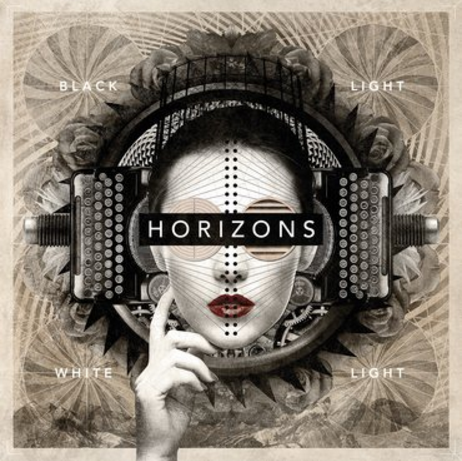
Created out of a desire in 2015 to take stock of the band’s short but impressive back catalogue, the Danish and Swedish exchange Black Light White Light, or more importantly the group’s central focus, singer/songwriter and guitarist Martin Ejlertsen, plow forward with their third vaporwave psychedelic rock hadron collider LP, Horizons.
Obviously as the title would suggest, horizons new and expanding are key; the group in co-operation with new drummer Viktor Höber and producer/engineer and fellow musician Christian Ki, putting into practice, during there basement sessions deep underground in Copenhagen, a vaporous often Gothic pop rock vision of cinematic influenced charter duality and darkly lit escapism.
Though never quite as surreal and twisted, or as violently indifferent as Ejlertsen’s key inspirations, David Lynch and Nicolas Winding Refn, there’s still plenty of cryptic lyricism – usually sung under the smog of megaphone effects and resonating trembled fuzz – and sinister mystery. Take the progressive The Fool, which begins with hints of The Cult, Moody Blues and The Beatles but gradually creeps towards the choral and eastern esotericism of Wolf City period Amon Düül II.
Tailoring each track slightly to throb or hazily permeate with a myriad of musical styles and influences, the group attune themselves to The Painted Palms psychedelic pop on the opening King Kong; transduce the Madchester golden age on the halcyon Teenage Drum; evoke Yeti Lane on the more relaxed space rock pulse of Illusions/Emotions; and pass through the lobbies of both DFA Records, and Factory Records, and pick up melodies and inspiration from Jacco Gardner, Pink Floyd, The Stone Roses and Broadcast on the remainder of the album’s eleven tracks.
Floating between harder, barracking drums led psych rock and a shoegaze dreamy portal, Horizons is no matter how serious and mysterious the intentions (and I’m sure, after catching the odd line amongst the veiled effects, there is some dark and prescient themes being alluded to), filled with nuanced melodies and glimmers of pop. Billed as a very different kind of Black Light White Light album, Ejlersten going as far as strongly considering releasing it under an entirely separate project moniker, the horizons explored and discovered on this record prove very fruitful indeed.
The Magic City Trio ‘Amerikana Arkana’ Kailua Recording, 20th April 2018

It’s as if Ennio Morricone had skulked into town himself, as they very first tremolo resonating notes strike and the lush orchestration sweeps in to announce the arrival of this cinematic Americana imbued suite. A Western adventure of melancholic beauty, the debut album from The Magic City Trio treads familiar ground as it pays homage to a century and more of the frontier spirit and tragedy.
Covering everything from pre-war country music to modern hillbilly noir, this gathering of musicians and artists, which includes The June Brides’ Frank Sweeney and Annie And The Aeroplanes’ Annie Holder serenading and out front, mosey, ponder and lamentably create their own visionary cinematic songbook. Liltingly duets in the manner of an imagined partnership between Lee Hazlewood and Emmylou Harris feature throughout, whilst hints are made to The Flying Burrito Brothers one minute and a lonesome pinning Richard Hawley on the ranch, the next. Sweeney and Holder certainly set the mood when embracing references as varied as Steinbeck’s depression era novels and the murder ballads of the old west borderlands.
Missing out on scoring the golden age of Westerns then, The Magic City Trio (which expands to accommodate a number of guests) walk the walk, talk the talk, but update the old tropes for a post-modernist take. The opening, beautifully crooned, Black Dog Following Me even tackles depression; a subject hardly congruous to the stoic ‘man’s gotta do what a man’s gotta do’ machismo of cowboy yore. It sounds like an unforgiving vision as re-imagined by a 70s period Scott Walker, earmarked for a revisionist Tarantino Western.
You can’t fault the careful and lightly applied musicianship, nor the deliberately pronounced and richly swooned vocal partnership; whether it’s in the mode of a mariachi soundtrack quilted murder scene (22), or a lilting pedal steel, Sweetheart Of The Rodeo, eulogy to a dear departed friend (Goodbye My Friend).
Far more than a pastiche or mere homage, Amerikana Arkana is a subtly attuned to modern sensibilities version of a lost classical Western soundtrack: a most diaphanous and sweetly lamentable one at that.
Mouvements ‘Mouvements’ Mental Experience, March 22nd 2018

How they find them is not our concern, but those fine excavators of miscellaneous avant-garde and leftfield treasures, Mental Experience, don’t half unearth some obscure artifacts. One of their latest reissues is the amorphous experiment between extemporized music and op art Mouvements. This Geneva underground scene missive was originally released as a private box set, limited to only 150 copies and sold at art galleries.
Instigated by the guitar player (though free and easy across a whole instrument spectrum) Christian Oestreicher after meeting the artist and painter Richard Reimann at the Aurora art gallery in Geneva, the Mouvements project emulated what was an already flourishing scene of cross-pollinated arts.
Oestreicher on his part, attempted a process of reification through a mix of free-jazz, musique-concrete, psych rock, tape effects manipulation and Krautrock; Reimann would provide the reference point metallic and shimmered geometric artwork.
Sessions for the eventual album began in 1972; recorded at an ad hoc studio in an occupied mansion using a trio of Revox machines. Joining Oestreicher with his improvisations were friends Jean-Fançois Boillat (of Boillat-Thérace obscurity), Blaise Catalá and Jerry Chardonnens – names which probably mean more to the ‘head’ community, but we can take as granted were probably notable in their fields. Allowing his influences to permeate and flow through each gesture, riff and applied layering, Oestreicher’s troupe – gathered round in a circle to perform – sound like a hazy mixture, a primordial soup and veiled ramble of Zappa, early Can, Ornette Coleman, Chuck Berry, Soft Machine, Amon Düül II and the neo-classical.
Conceived as a concept album, there’s a constant, if interrupted, ebb and flow to proceedings; one that moves between minimal garblings and full-on psychedelic jazzy rock’n’roll. A number of recurring instruments, such as the violin and guitar, return us to some sort of thematic semblance, something to follow and recognize. Oestreicher’s guitar (as you might expect) has a prominent role to play; riffing and contorting rock’n’roll licks with snatches of Manuel Göttsching and jazz.
Often sounding as though they’d been recorded from outside or from the other side of a partitioning wall, these ‘mouvements’ vary in their intensity: the opening Largo Pour Piano Et Océan starts the album off on an isolated beach vista; the serialism piano plucking away therapeutically as the waves hit the shore and lonely breeze blows through. But the next track, Goutte De Sang En Feu takes off into a jamming freestyle of barnyard fiddle folk, Mothers Of Invention and Floh De Cologne. There’s even an attempt at a sort of Afro-funk on the vignette Ailleurs, and Le Voyage Sperber has a concoction of West Coast lounge and Lalo Schifrin soundtrack funky jazz running through it.
The main album’s eight tracks pretty much say it all, but included with this reissue bundle is a smattering of bonus tracks; all of which generally riff on or are cut from the same clothe: The Playwriter’s Drift for example, another variation on the Zappa transmogrified rock groove, and the eighteen minute opus, My Guitar Is Driving Me Mad (Take 2), is a strange attempt by Oestreicher to exorcise his instrument over a creepy psychedelic jam.
A spark of interest for those unfamiliar with the Swiss branch of the art-rock crossover in the early 70s, this most intriguing artifact from the period focuses on a hitherto forgotten, or at least passed over, development in the story of European avant-garde; a time when Op Art and free-music experimentation collided. Not to everyone’s tastes, and covering a lot of familiar ground – the sound quality on my CD was very quiet -, Mouvements is nonetheless a curious suite.
https://soundcloud.com/mental-experience-594217473/sets/mouvements-mouvements-snippets
Sad Man ‘Slow Bird’ 16th April 2018

Featured regularly over the years, the contorted machinations and transmogrified electronic music experiments of artist/composer Andrew Spackman have kept us both entertained and dumbfounded. Building his own shortened, elongated and mashed-up versions of turntables and various plucked, rung or clanged instrumentation in his garden shed, his process methods would seem almost impossible to replicate let alone repeat. And so this often ennui shifting and dislocation of the avant-garde, techno, breakbeat and Kosmische sounds often unique.
Previously causing mayhem under the – Duchampian chess move favorite – Nimzo-Indian moniker, Spackman has now adopted a new nom de plume; a home for what he intends to be, like the name suggests, the most saddest music. Yet with a few releases already under his tool belt, the latest epic, Slow Bird, is more an exploration in confusion and ghostly visages of the cosmos than a melancholic display of plaintive moping. There are by all means some moody, even ominous, leviathans lurking and the odd daemonic vocal effect, but as with most of the tracks on this LP they constantly evolve from one idea into the next: anything from a panic attack to the kooky.
With a menagerie theme running throughout the many song titles, it’s difficult to tell if the source of any of them began with the bird in question or not. The title track itself certainly features flighty and rapid wing flapping motions, yet rubs against more coarse machinery, knife sharpening percussive elements and Forbidden Planet eeriness. Parrot by comparison, sounds like an inverted PiL, languidly reversed to the undulations of bongos, whilst Sparrow pairs Cecil Taylor piano serialism with, what sounds like, a wooden ball rolling across a tabletop. It’s not only the feathered variety being used as bait for spasmodic and galactic manipulation. There’s a Bear Reprise (another repeating theme; ‘reprises’ of one sort or another popping up a lot) of all things, which consists of 808 claps, broken electro and particle dispersing glassy sprinkles, and a very weird tuba like theme tune, dedicated to the Slug.
A cacophony of clever layering and ever-changing focus takes tubular metallics, UNCLE drum break barrages, Ippu Mitsui, Add N To (X), giddy oscillations, haywire computer and staccato phonetic languages, Vader mask style breathing, glints of light beams, the Aphex Twin on xylophone and produces his own, whatever that is, niche of electronic composition. It can feel a slog and overwhelming at times, but Slow Bird is one of his most progressive and well-produced releases yet; mayhem at its best.
Evil Bone ‘In Vain’ 13th April 2018
Battling to overcome the mentally and physical debilitations of anxiety disorder, the artist (who I only know as John) behind this new solo project, Evil Bone, seeks a reification of its enervated effects on the soporific, halcyon In Vain. The title, a quite resigned one, refers to his attempts to beat it: all to no effect. Though, as John candidly muses, it is now a part of his make up, and in many ways impacts on the music he creates.
Despite often stifling creativity, the first track from Evil Bone is a haze of languid shoegaze and soulful dream pop that recalls Slowdive and The Cocteau Twins cloud bursting in vaporous anguish. Influenced by more modern psychedelic vaporwave bands such as the Unknown Mortal Orchestra and Tame Impala (both can be detected here), John is also quite taken with hip-hop, R&B and soul music; especially Anderson Paak and Kendrick Lamar – music with a more colourful sound and soulful vibe. And this can be heard on In Vain’s lush soul-tinged wafted undulations; taking it away from simple lingering dreamwave production towards something with a little more depth and lilt.
Promising an extended release later in the year, In Vain sets the marker for beautifully layered anxious psychedelic pop.
Bunny & The Invalid Singers ‘Fear Of The Horizon’ Bearsuit Records, 20th April 2018
Quite the enigma, the music of Edinburgh solo musician/artist Dave Hillary seems to be adrift of reference, familiarity and classification (an easy one anyway). Though his image is plastered (or is it!) indiscriminately amongst a collage of collected imagery, from holiday postcards to family moments and music paraphernalia, on the inlay of his latest album, his identity has been largely guarded.
Mysterious then, unsettled, the experimental electronic music with textured industrial and squalling rock guitar style of sonic noodling Hillary produces is more akin to an amorphous collection of soundtracks than identifiable song material. Evocations, moods, setting the scene for some futuristic heart of darkness, Hillary fashions a gunship waltz of tetchy synthesized percussion, fairground noises, whistling satellites and rocket attacks on the fantastical entitled Eamon The Destroyer, whilst on the title track, he plays around, almost plaintively, with folksy acoustic plucked notation, sighing strings, twinkly xylophone and arched electric guitar. Hints of the Orient (I’m imagining Hong Kong for some reason) linger on both the weird cut-up The Positive Approach To Talkative Ron and the marooned, twanged and bowed Cast Adrift. Yet, even with title prompts, you could be anywhere on these unique vistas and musings. The closest you’ll find to this meandering is the Leaf label, or the experimental Jezus Lizard sanctioned experiments of Craig Ward.
Fear Of The Horizon is the third such album from the interchangeable Bunny & moniker – Hillary’s debut, Fall Apart In My Backyard, released under the Bunny & The Electric Horsemen title. However, the Bearsuit Records stalwart, constantly popping up on the label’s maverick compilations, and one-time member of Idiot Half Brother and Whizz Kid, is at his most mysterious and serious as Bunny & The Invalid Singers. Truly plowing his very own furrow, Hillary’s warped evolving, sometimes clandestine, electronic and steely guitar evocations once more wander into unusual territory.
The Lancashire Hustlers ‘Stuck In A Daydream’ Steep Hill, 11th May 2018
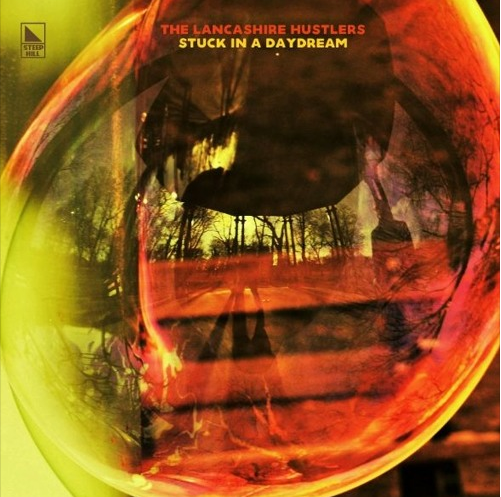
Following on from the warm afterglow of their last outbound journey, Adventure, the London-based (though originally hailing from Southport) duo of lilted psychedelic pop once more dip liberally into the 60s (and early 70s) songbook on their fourth album, Stuck In A Daydream. It’s never quite clear, nostalgia being their bag and signature, if The Lancashire Hustlers are seeking sanctuary in that halcyon age, or commenting wryly on those who seek to turn back the tide of change and return to a preconceived ideal that never quite existed. It is of course what every generation does; fondly celebrating a time they never lived through, and ‘Generation X’ is no different; though the evidence is pretty overwhelming and convincing, the ‘Baby Boomers’ possibly living through an extraordinary golden age, never to be repeated. The duo of Brent Thorley and Ian Pakes sing fondly of that era, relishing in nostalgia on the Celesta dappled and cabassa percussive pining Valley Of The Dinosaurs. Reaching a falsetto pitch at one point, Thorley pays homage to that, not so, lost world; a sort of quasi I Just Wasn’t Made For These Times sentiment.
Suffused with their hazy recondite influences throughout, they channel Jimmy Campbell, Badfinger, Bread and Let It Be era Beatles alone on the first yearning and rolling piano glorious pop song, Consider Me. With a troubadour glow of bouncing lovelorn abandon, the harmonious and ‘considered’ lightness of touch on this perfectly crafted opener is instantly cozy and familiar to the ear. It’s a brilliant breezy start to the album, and exemplifies the duo’s move towards more direct, simpler songwriting.
Later on we hear lullaby twinkled mobiles that hang over daydreamers in the style of Fairfield Parlour; the sea shanty whimsy lament of a lovesick merman as fashioned by The Kinks; troubled relationships as re-imagined by an art philistine metaphorical Rubber Soul era George Harrison; and a sad eulogy to an absent friend as plaintively sung by Gram Parsons.
Let loose in the music box, expanding their repertoire and softened harmonious bulletins, they not only add a wealth of interestingly plucked and dabbed instrumentation (kalimba, taishogoto, metallophone and mellotron) but bring in Rob Milne of the jazzy Afrobeat Nebula Son to play both lingering accentuate flute and bass clarinet and more intense saxophone on a number of the duo’s exotic adventures.
Finding solace in the never-ending 60s revival, The Lancashire Hustlers’ timeless songbook can feel like a nostalgia trip. However, its age old themes speak volumes about the here and now, offering shelter and an antidote to these tumultuous times; those gilded metaphors speaking volumes about the here and now.
NEW MUSIC REVIEW
Words: Dominic Valvona

Featuring: Sergio Beercock, The Bordellos, faUSt, ANi Glass, Duncan Lloyd, Carlo Mazzoli and Mount Song.
Back from a recent sabbatical in Palermo and catching up with all the most interesting releases of the last month, this edition of my regular Tickling Our Fancy revue features an assortment of albums/EPs and tracks from both April and May. An unofficial sort of house band for the blog, St.Helens’ greatest lo fi, les miserable, export The Bordellos have featured on this blog countless times over the years, I take a look at their latest sampler EP, Debt Sounds. There’s also the latest art-attack protestation from the infamous faUSt, a vitriol extemporized road trip across the States with friends entitled Fresh Air, and the latest cathartic songbook from Jacob Johansson, under his latest moniker Mount Song, the second Duncan Lloyd outing, IOUOME, from the Maximo Park guitarist/songwriter, the latest EP from the Welsh siren of the most ethereal and danceable protest rousing electronic pop ANi GLASS, and two new showcase albums from Italian-based bards/troubadours Carlo Mazzoli and Sergio Beercock.
faUSt ‘Fresh Air’
Bureau B, 26th May 2017
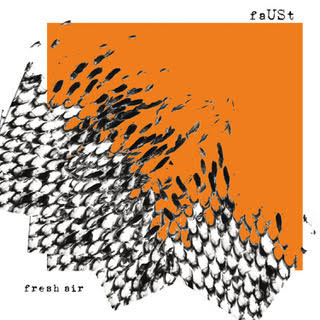
Belligerently sharing the Faust moniker, splitting into a moiety of founding member versions of the original group that so terrorized the 70s underground music scene, the glaring capital letter “US” in this incarnation is used by founding fathers Jean-Hervé Péron and Werner “Zappi” Diermaier.
Still banging the cement-mixer drum and manning the barricades after forty odd years in the business, the, at its most base drummer/percussionist and bassist-come-tormentor of sound, duo’s latest protestation is a sort of art-provocateur road trip of the USA, featuring an abundance of locals and internationalist artists and musicians, picked-up on the way through New York, Texas and California: A counter-cultural agitation travail from coast to coast.
Featuring the usual Faust totems and that workmanlike methodology of extracting sounds and evocations from machinery, found objects, debris and the architecture – even Péron’s front door hinges from home make an appearance – Fresh Air is an urgent gasp for relief from the polluted, choked, environment. It’s also a highly convoluted attempt at transforming geometrical forms and abstractions into a sonic score. Three of the tracks on this album take their inspiration from a faux-workshop at the highly regarded California Institute of the Arts. A session that includes the loony 23-second vocal exercise symphony Partitur – defined loosely as “a sort of Dadaist choir, a musique impressionniste’ by Péron –; the loose Slits do souk jazz, camel ride Chlorophl, which features Barbara Manning “sneaking” in word association sketches alongside Zappi’s own strange utterings; and the saxophone squalling, motoring Lights Flicker, which again features Manning, bridging the role of Laurie Anderson and Patti Smith, repeating an agitated mantra over a quasi art-dance backing.
From the east coast Jersey City leg of their travels, viola player Ysanne Spevack adds a stirring, Jed Kurzel like harrowed drone to the album’s title track. A seven and a half minute opus, building from the narration of a poem, written by a French school friend of Pérons, to a struggle for life, Fresh Air shows that the spirit of ’68 and hunger for transforming and tearing down the destructive political environment hasn’t diminished in all those years. It’s bookended with a soliloquy-like Péron narration on, among other tropes, the confusing, alarming change from childhood to young adulthood on the album’s curtain call, Fish. Tidal washes and suitable transitional analogies on the soul and growing pains profoundly roll over another viola drone and minimal bass drum accompaniment before entering a noisy cacophony of oscillations and sonic crescendos.
Passing through Austin, faUSt capture the Birds Of Texas, merging their crowing calls with a suitable enough mirage-y, Peyote-induced desert peregrination, and open up an interstellar box of tricks to create a space-funk, Teutonic swamp performance – not a million miles away from Can – on La Poulie.
Continuing with their signature agitation, often menacing, call-to-arms whilst also sonically turning the abstract into something audible, Péron and Zappi can still be relied upon to create provocative statements, five decades on from when the original Faust dynamic barraged audiences with the most confrontational and experimental sound ideas. Struggling like the rest of us, but finding a comradely with another generation of artists and musicians, they look for hope in the miasma.
https://soundcloud.com/bureau-1/faust-fresh-air-preview
Mount Song ‘Mount Song’
Suncave Recordings, 5th May 2017
Previously garnering plaudits in his native Sweden for his debut album under the appellation of The Big Monster (no less heralded as the Swedish debut of the year in 2014 by the country’s biggest music publication), the longing singer/songwriter Jacob Johansson is back to contemplate all of life’s harsh lessons and trials on this latest venture, Mount Song.
This self-titled songbook of ambitious poetic campfire musings and inner turmoil spun yearnings is simultaneously both intense and intimate; mixing a catharsis of emotions with a soundtrack of acid-folk, country, psych and alternative pop. As the accompanying notes and music itself testifies, Johansson was “brought up on grunge.” And throughout the album this American export leaves its indelible mark with hazy languid lingering traces and washes of Pearl Jam, Nirvana and Dinosaur Jr. Far from slavishly recreating that grunge sound, our philosophical troubadour and his band merely hint at its presence and influence with a certain panache.
More to the point, it’s that 90s demigod of plaintive despair and torment, Jeff Buckley, who imbues Johansson’s vocals and sound the most. Most obviously and unabashed you can hear an unmistakable melody sequence three quarters of the way through the light and shade softened crescendo Here It Goes. As for that genius fluctuating vocal, from Latin choirboy to candid outpourings of grief, Johansson goes for it on the skipping backbeat psych-grunge Make Up with a falsetto and almost trembling howled vocal performance.
The opening melodrama Halo, which wells up from subtle jangled acoustic guitar to a deeply atmospheric synth and repeating thudding drum punctuation of sorrow, deals with one’s demons in the manner of a sober, more somber Jose Gonzalez and Bonnie ‘Prince’ Billy – two more important influences for Johansson.
Though there’s plenty of sadness and even wallowing, Johansson can hardly be accused of drawing copious amounts of melancholy from the well of self-pity. There is hope after all. And a certain, if naïve at times, call for peace, even a protest song of disarmament in the fashion of the Thunderclap Newman does New Radicals protest anthem, All Over The World.
You can’t avoid, sidestep the multiple political storm clouds amassing overhead, and with all those “inner demons” in tow, not feel anxious and dare say despondent. Though whether the sun will shine through the miasma is another matter, but Johansson handles all this swimmingly, in a gauzy sound space of dissipated crescendos and attentive melodies. Mount Song will take time to unveil its, often languid, subtleties, but is an album with more than enough push and direction.
Duncan Lloyd ‘IOUOME’
Afternoon In Bed Records, 26th May 2017
Seeing as I’d never previously had the inclination nor desire to listen to a Maximo Park record, finding not much of worth and interest in their second-generation Britpop with attitude sound, it’s hardly surprising that the solo career of one of the “driving forces” behind the Newcastle upon Tyne group, guitarist/songwriter Duncan Lloyd, has so far alluded me.
Cut loose of that band I’m happy to reveal that Lloyd has not only stepped out of the – if ever there was a poisoned chalice of validation – Mercury Music Prize nominated stars shadow but creatively blossomed on his own terms.
A fair weather friend, I’ve arrived late, Lloyd having already built-up a considerable catalogue of releases under numerous titles (Decades In Exile, Nano Kino) with various labels (Warp, PIAS, Crash Symbols Tapes). His latest solo outing (the second album released using his own name) is a melodic guitar led mix of gauze-y looseness and swimming longing.
With Maximo drummer Tom English in tow, the IOUOME album travels back further for its inspiration, recalling Postcard Records less fidgety and more hazy offerings, and the early 80s sound of Manchester. Candidly wistful nuanced twanged songs such as You Seem Confused’ bare traces of The Cure and even The House Of Love, underpinned with the limp gait of The Smiths, whilst the halcyon rays through a downpour Steel Pin Raindrops rumbles along to a Joy Division-esque toms beat and disheartened romantic synth. However, our cousins across the Atlantic can be heard on the loose but controlled enough and attentive Tomorrow Fires, as an imaginary Postcard era The Byrds share the melodic sonic landscape with early R.E.M and Midlake.
“Being Frank”, as one of the album’s song titles suggests, is what Lloyd is all about. Not so much a case of moping around in his softened layers and sprawling, relaxed but accentuated network of guitar riffs and lines, our protagonist faces all his emotional turmoil and strife with a songbook of composed observations and intimacy. Written on the road, usually at the end of the day, as ideas become less concrete and evolve instead into something more challenging, these yearnings on “ailing relationships, division and self-destruction” are executed well, both the songwriting and guitar playing subtle but memorable with a real depth of character.
The Bordellos ‘Debt Sounds Sampler EP’
Small Bear Records, Available now

If sales and general acknowledgment amongst the masses is considered validations that a band is entering the general psyche, all my previous efforts to propel St. Helen’s greatest musical export The Bordellos beyond a small circle of appreciative followers and critics have failed dismally. Still mining the pit face of unashamed discordant lo-fi irritant indie after decades, The Bordellos is it seems fated to be forever ignored by the general public.
A hard act to sell granted; knocking out disgruntled low-key underground releases that barely register ad hoc style and keeping a creditable distance from the rest of the music industry. Like a band perpetually mourning the age before Spotify, plugged-in to a continuous John Peel session from a time when it seemed a group of miscreant family band members could take on the world, they seem totally adrift of the times they live in. And all the better for it: if “modern life” was “rubbish” the “tech age” is plain fucking awful.
Even cheaper than The Fall, the group’s tools of trade are usually brought from Cash Converters or Poundland. Their abundance of EPs and albums are created in a rush, often recorded in one take in the shabbiest of mockup home studios. Plucked from a 2009 LP, the group’s third full-length release, the four-tracks on this latest Bandcamp platform broadcast from The Bordellos demonstrate this method well.
Stripped down and raw, Debt Sounds originally vanished as soon as it appeared. Previously, for many obvious reasons, unavailable online, originally sold as a limited run on CDR and snubbed as unsalable by their label at the time, Brutarian, Debt Sounds is a 17-track encapsulation of moping romanticism fueled by late night drinking and whatever else did the trick sessions and self pity. Setting themselves the most restrictive and loony perimeters, including no overdubs and one-take vocals, each song on the album had to be recorded within the same week it was written – and at a nocturnal hour by the sounds of it.
A quartet of tunes, the strain of which helped to break up two relationships, are almost randomly taken from that album and collated under the Sampler EP suffix title; the first of which, Fading Honey sets the My Bloody Valentine on Mogadon, despondent love-sick, bordering on sinister, mood. In a late hour atmosphere of whining plugging-in amp socket hum and low emitting fuzzy static The Bordellos pour out their hearts.
A meeting of generations, the youngest member of this unhappy brood Dan was only seventeen at the time and elder statesman Brian considerably older and cynically wiser, Debt Sounds pits teen angst against a midlife crisis; both appearing to meld in the intimate shared, Inspiral Carpets on a budget, You Better Run and elsewhere.
Really flexing those “outsider” credentials, the next song, Seal Head, is a surreal melodica derangement that languidly emerges then submerges into a slumberous mad-hatter state of weirdness. The most ominous, stalkerish even, is saved until last. Honeypie is an unhinged, electric guitar thrashing and pumped-up bass line session on the psychiatrist’s couch, which features a druggy-drowsy female chorus that sounds like the protagonist’s girlfriend singing it is more captive than willing participant. A lost Jesus And Mary Chain grinder meets stoner garage punk malaise, Honeypie slumps over a sorry state of romantic affairs.
Re-released by the Isle of Man independent label Small Bear Records, you can now appreciate or ignore some lowlights from Debt Sounds album once again; a lost triumph from the band’s rebellious back catalogue that stakes a claim to the real spirit of rock’n’roll. It acts in any case as a bridge between new releases; The Bordellos threatening to release their next album this summer on the Welsh label Recordiau Prin. In the meantime get your lug holes around this underground lo fi down and out.
Sergio Beercock ‘Wollow’
800a Records, May 2017

Quite by chance Sergio Beercock is the first of two artists in this revue to hail from Italy, or rather in his case the strongly independent minded Island of Sicily.
Enjoying a slow revival in fortunes; open for business and tourism after a tumultuous period of inter-war between the Island’s most destabilizing blot on the landscape and psyche, the costra nostra, a tough but fair mayor in the shape of Leoluca Orlando has over several terms in office transformed the capital of Palermo, putting away a huge swathe of Mafioso and funneling their ill-gotten gains into rebuilding the infrastructure and reputation of the city and Sicily as a whole.
Overshadowed for so many decades by this miasma, the capital of Palermo is enjoying a boom in visitors and interest, as I’ve seen firsthand myself after a recent holiday there. With much still to be done, the migrant crisis for one thing – Sicily’s position as a stepping stone between the north African coastline and Europe attracting record numbers – and the staggeringly high unemployment figures, especially among the young, there are still optimistic signs of a resurgence: culturally and musically. Recorded at the 800a collectives multipurpose Indigo Studios in the city, Beercock’s new minimal and bucolic switched-on folk meets acoustic-electro Wollow album is evidence of that optimism.
Half British, half Italian, the Kingston-upon-Hull singer/bard moved to his mother’s homeland at an early age. Working, quite successfully it seems, in both music and theatre the bi-linguist Beercock has built a name for himself in Italy. Wollow though has its sights firmly set on the UK market, with the troubadour presently promoting and showcasing his talent at a number of events and festivals across the country – only last week performing live on London’s Resonance FM and playing spots in Hull, Oxford, Liverpool and at the Wood Festival.
Almost entirely sung in English, except for the final stripped and stark a cappella version of the Argentine singer Pedro Anzer’s stirring Silencio, which is delivered in Spanish, the Wollow album is a pastoral, bordering on Elizabethan at times, and quaintly English “metaphorical journey” through the travails and sounds that have inspired Beercock. The opening gently-plucked entwining Reason – which introduces us to the bard’s impressive though peaceable vocal range -, reverent like misty veils of Canterbury Tor, guitar picked swirling beauty, Naked, and the tumble-in-the-fields-whilst-the-old-man’s-not-looking weary parable, The Barley And Rye, are all unashamedly submerged in the English tradition.
You could say the mix of song covers and original material is of a “timeless” quality. Redefining folk and the atavistic tales of forewarning and life in the manner of such artists as James Yorkston and many others.
Breaking it up however with more ambient instrumental soundscape passages and soaring evocations, Beercock also sails towards the Americas; using a Bolivian flute and the atmospherics of The Andes and Amazon to lift and elevate both An Exaggerated Song and Jester from the less than exotic and magical tempered atmospheres of Northern Europe.
Using a mostly acoustic range of instruments (and even his own body) and his voice – which sounds at times like a chamber-folk Jeff Buckley – our troubadour ups the ante on occasion with a few surprises, launching congruously throughout into energetic, twisting, stretching and straining cello and double bass slapping and avant-jazz like dance beat liveners.
Probably the first time many of us will have heard the Sicilian-based troubadour, Wollow is an attentively as any crafted showcase introduction to a burgeoning experimental folk talent.
Carlo Mazzoli ‘Avalanche Blues’
Available now

The second artist in this revue from Italy, the founding member of folk-rock band Dead Bouquet, Carlo Mazzoli branches out on his own with this self-produced solo effort, Avalanche Blues. Billed as the most intimate of his releases so far, this ambitious songbook flexes Mazzoli’s talents as a yearning blues songwriter and performer troubadour; equally at home romantically flourishing and cascading through a Freddie Mercury like rousing ballad on the piano, as donning the mantle of Neil Diamond and Springsteen on a steel-pedal waning Nashville love tryst.
Singing in English, influenced by a UK/US axis of blues, balladry, country, folk and 70s songwriting inspirations there’s no reference, except a hint in the burr, or signs of Italy to be found. This is after all an international affair musically and thematically, full of the age-old tropes of sadness and joy that are common to all of us.
If there were, however, a leitmotif, an aching bond of familiarity, it would be in Mazzoli’s penchant for the dusty old west trail. There’s certain overtures made to the stoic reflective journeyman and cowboy of that old west lore on Steel Rail Blues, on the rougher-hewn King At The End, and on the Dylan-esque, tremolo twanged love-pranged Goin’ Astray. Flirtations, executed impressively with attentiveness and lyricism, with the mosey-on down blues, Nilsson, Grant Lee and even Elton John – on the closing gospel meets 70s rock radio piano anthem On The Horizons.
From the cynical wells of despair and pity (“It might be the darkest place but it’s not the bottom of the sewer.”) to mountain climb metaphors, Mazzoli flows between crescendo splashes of anguish and saloon dive barreling swank throughout. The field is crowded but there’s more than enough talent and a certain unique style to set Mazzoli out from the legions on Avalanche Blues. As I’ve said before, this is an ambitious album, but also expansive, delving as it does into a myriad of musical styles with a certain ernest elan.
ANi GLASS ‘Ffrwydad Tawel’
Recordiau Neb

Credit: Ani Saunders
Part of a groundswell of artists and bands supporting the use, and by that preservation, of the Welsh language (and Cornish too, but that’s another story for another time), electronic siren, photographer and artist Ani Saunders, better know musically as ANi GLASS, uses what is a most phonetically poetic dialect beautifully. Even when it’s used as a rallying cry on the opening glassy-visage labour of love Y Newid, which weaves the lingering ruminants of a rousing speech by the Socialist activist and Labour councilor Ray Davis with Ani’s breathy defense of the trade union movement, her voice sails close to the ethereal. Echoing even the most amorphous exhaled sighs, utterances and vocal sounds alongside the pronounced, Ani’s Welsh protestations and longings for “change” always sound passionate but disarming.
The obvious impassioned themes of keeping the Welsh heritage alive, of reconnection with that heritage and country, and the hope of building a more stable fair society in the face of such hostile uncertainty runs deep throughout. Inspired by the use and mix of bleak colours and destruction by fellow Welsh contemporary artist Ivor Davis’ 2016 major exhibition at the National Museum Cardiff, Ani’s latest EP reflects that show’s despondent expositions of society in Wales. Later invited to perform with Davis as part of this extended vision, Ani’s resulting material can be heard channeled through the – perhaps most beautifully performed protest song of 2017 – lamentable panoramic closing track Cariad Cudd, which charts the “cruel” decline of Welsh industry.
Elsewhere on this six-track collection, she traverses Baroque new romanticism on the breathy echoing Y Ddawns – last year’s single included once again in this package -, Alison Goldfrapp whispery Dietrich candy strobe light meets Grimes on the cool reflective pulsing Dal I Droi, and a Valley-girl Madonna riding over sine waves on the Moroder-esque Geiriau. It all sounds quite Europhile – in fact Y Ddawns is a prime Eurovision entry in waiting – and glowing, straddling the serious with crystal synth pop.
Critics are always finding the most tenuous evidence and links for trends or movements in music, but Ani is the second former Welsh member of the twee doo-wop girl group The Pipettes to make the shift into electronic music, following her sister, the rising and critically lauded Gwenno, in honing a solo career. Both sisters arrive on a wave of a renaissance in Welsh electronica, with mostly unassuming artists and bedroom mavericks producing some of the best and interesting examples of the genre in the last five or so years; from the avant-garde and techno of R. Seiliog and the Cam o’r Tywyllwch radio show to the Ritalin-starved hyper sample electro-punk of The Conformist.
Ani Saunders is another impressive advocate of the Welsh spirit and artistic confidence, producing some of the most danceable and evocatively politically, socially charged electronic pop in 2017.
 Monolith Cocktail Blog