The Digest for January 2026: New Music/The Social Playlist
January 16, 2026
The monthly Digest includes a clutch of accumulated short new music reviews and the social inter-generational/eclectic and anniversary albums celebrating playlist.
___THE NEW (All those latest & upcoming releases in brief) ___
The Bordellos ‘Who Do you think You Are? Paul McCartney?’
Single – (Metal Postcard Records) 7th January 2025
More The Rutles’ Stig than The Beatles’ McCartney, the latest self-depreciated, no-fi buzzing guitar string strummed piece of “silliness” from The Bordellos family (that’s Brian Shea and his brother Ant, and Brian’s son Dan) pays a handsome tomfoolery homage to good ol’ Paul.
The Bordellos were behind Half Man Half Biscuit and the Cleaners From Venus in the dole queue of the 1980s; powered by aphorism, a ridicule of the current industry, and a litany of muthafuckers from across the golden age of rock ‘n’ roll, punk and post-punk, psych and garage. Brian will be no stranger to followers of the Monolith Cocktail, having regaled us with his reviews over the years, and of course gracing these pages as a solo performer: think John Shuttleworth meets Sparklehorse.
This latest single to be released by the Metal Postcard Records hub was influenced (I quote) “by [Brian’s] love of Paul McCartney and memories of walking up to Dead Fly Rehearsal rooms in the 80’s with my guitar and every time an old man in his garden would shout “Who Do You Think You Are? Paul McCartney”. As I walked past…it never got old for both him and me…I was tempted occasionally to buy a gun and shoot him and shout who do you think you are? John Lennon!”
If skiffle-indie-punk was a thing, then here it is in all its rudimental, near distorted jangled and sprung glory. It actually sounds less Paul and more like a sarky Lennon…that and a touch of Frank Sidebottom. No one quite manages to summarise a feeling, an era, a memory like The Bordellos, nor sound so brilliantly shambolic and devoid of even the rubber bands to replace the long loosened/slackened and fucked bands in their Tascam 4-track recorder. Off to a fine rambling start in 2026.
Greg Stasiw ‘Guesswork’
Album – (Hidden Harmony Recordings) 2nd February 2026
Greg Stasiw could quite rightly be called a polymath with a worldly scope of influences, having travelled and spent time in New York, Tokyo, Toronto, Paris, Boston, and Bratislava. Home, I believe, is New England on America’s Northeastern edge. The CV includes the occupations of experimental musician, visual artist and writer, but also include the study of anthropology, animation and illustration. Channelling all that into a musical sonic practice and the results are less happenstance than that title might suggest.
Guesswork was actually intended as a collaboration, a response to a visual stimulus created by the artist Phillipe Shewchenk. For one reason or another it was shelved, but Stasiw decided to continue experimenting and formulating a ponderous biomorphic set of ideas relating to a range of subjects, from plumbing systems for plants, to real locations and adjective prompts; many of which seem to point to nature, geography and the weather.
Ending up as Stasiw’s debut album, this amorphous blending of vignettes, studies, semi-improvised experiments sounds like a field trip conducted by Walter Smetek, Nicolas Gaunin and Hiroshi Yoshimura. It’s both recognisably trudging through the lush, the humid and exotic environments of Earth, yet simultaneously otherworldly and near sci-fi. To label it ambient would be a mistake, but minimalist all the same with its airs and the skying sound-scaping, the synth effects of kosmische and the new age combined with Harold Budd and his like.
Real sounds, like the bird life under a rich canopy, mix with percussive tools like a pestle and mortar, the knocks of heavy objects, the drawing of chains and desert sonar-like signals. A shuddery and often lovely reflective piano can be heard alongside a church-like organ producing the most melodic of paused moments. Thrusting gleams of light on the horizon; tunnelled chutes to new worlds; windy tundra’s; playful landscapes of bulb-like shaped notes; Stasiw magics up a stimulating, often pretty and with a sonorous depth, soundscape of possibilities and artistic mystery.
Tachube ‘Mincminc’ (Inverted Spectrum Records/PMGJazz)
Album – Released 4th January 2026
An international combination of band members and album facilitators/labels makes for a truly ambiguous and amorphous experiment with the latest moody and wild post-jazz exploration from the improvisational trio of Tachube. Based in the Serbian city of Novi Sad, a culmination of various musical strands and influences brings together Saint Petersburg electroacoustic/noise musician and founder of the Intonema label Ilia Belorukov (who performs on both the alto sax and rudimental, playful fluteophone), plus two active members of the Novi Sad free and ambient jazz and psychedelic dub scenes, Marko Čurčić on effects pedals and electric bass, and Nemanja Tasić on a minimised drum kit.
Their third collaborative release, platformed in conjunction with the independent boutique label and booking agency that spans in Hungary, Serbia and Turkey, Inverted Spectrum Records and the Macedonian label PMGJazz, Mincminc sounds like Anthony Braxton, Andy Haas and Sam Rivers creeping, prowling and consumed on a mysterious plain with Krononaut. It’s a combination of the improvised Polish and American freeform jazz schools, but also an emotional fit and squeeze of mythology, the darkness and the arid; enveloped as it all is by meta and the depth of the trio’s expanded spheres of influence and skills.
Incipient stirrings and jangles create the right mystique, with blows and the driest of alto expressions, quivered and shivered and shaved cymbals, busy undulated and descending bass runs and the knocks and mulch sounds of hidden sources building a serial and abstract atmosphere that vaguely invokes the Balkans and its geographical history, psychogeography and mystery. Something different in the jazz field; an expansion of ideas and moods and the extemporised.
Roudi Vagou & Läuten der Seele ‘Taghelle Nacht’
Album – (Quindi) 6th February 2026
Once more stepping out behind their aliases, the collaborative union of German artists Matthias Kremsreiter and Christian Schoppik (respectfully reimagined as Roudi Vagou and Läuten der Seele) transduce and manipulate ripples in time to invoke both blissfully dreamy and more mysteriously haunting sonic and musical ideas of nostalgia, German nationalism and geography.
Drawing upon their personal connections, their relationship to the lands and the city that moulded and influenced them both, this latest union could be filed under the hauntology label – a very good label as it happens, one that perfectly, if overused and misdirected on occasions, fits this interdimensional album of filmic score passages, vignettes and looped hallucinations. For Taghelle Nacht captures the “day-bright night” character of a simultaneously pastoral Heimatfilm era vision of German cinema, of the surreal, of fairytale and mirages whilst providing a suitably ghostly and occultist atmosphere.
It’s as if Roedelius and Moebius, or even Popol Vuh, fed the movie scores of Hans J. Salter, Philip Martell, Harry Robinson and Ronald Stein into a German time machine. Old matinee and classical suites, songs of the romanticised, the near ethereal coos of apparition sirens and angels, a fairground Bavarian Wurlitzer, the call of an esoteric nature (the field recordings of trampled walks across the land, the birds in the trees), and the sound of woodwind and brass are looped or obfuscated by the sounds of hidden whirly, unoiled sound sources, of Fortean machines and valves, folksy horror soundtracks, the concertinaed and bellowed and surface noise of old wax cylinders. Melodies and the wistful embrace of that old age are embraced and then somehow made more unreal and otherworldly as if transmitted through a séance or played on a possessed record player from an earlier age. And then again, you can pick out hints of Belbury Poly and their ilk, Martin Denny and Drew Mulholland across a haunting backdrop stepped in historical values, horrors and the mystical.
Charles ‘Poppy Bob’ Walker ‘Double-Wide’
Album – (Castle Dome Records) 10th February 2026
Outsider art from the 1980s, the left behind recordings of the fabled Charles ‘Poppy Bob’ Walker have already filled one such album of haunted imaginings, of mirages and dusty Western peregrinations. Released back in 2024, the Dirt Bike Vacation collection platformed a near secret archive of desert renderings, of loosened and ambient-esque country sketches. It reads however like one of those concocted projects, the alias of a very much still-breathing silent partner hiding behind anonymity. But reassuringly, this “normal guy”, who worked hard, kept some friends, though never married or had kids, liked nothing more than to drive off on various recording adventures in his old, yellow Datsun pickup.
The remembrance of an unassuming outsider, articulating or washing or crafting or letting his inner thoughts and observations and meditations of places in and around his Yuma, Arizona home ghostly emit through the lo fi amplified strings of his Martin D-28 guitar, onto his trusty and rudimental Tascam 4-track recorder. And as such an unassuming amateur working in the field, Walker’s music has, refreshingly, no one to please, no one to serve other than its creator’s own vision and perhaps improvised musings and contouring’s of the landscape, the thoughts and reification of mood and place.
At one turn taking on the mantle of a hidden Ry Coder soundtrack, or indeed invoking certain passages and refrains from Dylan’s Pat Garrett and Billy the Kid soundtrack, this latest collection’s controlled, mediated and shortened cinematic qualities build towards an alternative country-waned and mirage-like score. From incorporating a rustic banjo to the electrified vapours and more concrete panning and splayed strums and strikes of his guitar and the chorus of hidden sounds (from the railroad barrier’s bell-rung-like signal to the occasional use of reverberated lo fi synthetic drums, the esoteric rattle snake shaken ceremonies of the second cut, the windbreakers and even the sound of the tape’s hiss and surface sounds) Double-Wide feels like we’re watching a dreamy, hallucinating film of the surreal American West.
If you dig the art and experiments of such alt-country company as Myles Cochran, The Droneroom, the Gunn-Truscinski duo, Daniel Vickers and Chuck Johnson, then Walker should be as much a revelation as a familiar companion on the transformed leftfield road of such maverick artists.
___/The Monolith Cocktail Social Playlist Vol. 104___
The Social Playlist is an accumulation of music I love and want to share, with tracks from my various DJ sets and residencies over the years and both selected cuts from those artists and luminaries we’ve lost on the way and from those albums celebrating anniversaries each month.
In the latter camp we have the following anniversaries to mark:
The oldest celebration this month falls to Them’s mighty garage R&B raver I Can Only Give You Everything, taken from their 1966 LP Them Again. Van the man Morrison in full on maximum R&B glory; turn it up you muthafuckers! Still the best, guaranteed to get every dancefloor riotously jumping. The whole LP is peerless.
David Bowie’s Station To Station is 50 this month, and I’ve picked the Word On A Wing version used in Brett Morgen’s Moonage Daydream spectacular. Bowie’s epitaph Blackstar is 10 in January. I’ve decided on Sue (Or In A Season Of Crime).
Bob Dylan’s Desire is also 50 this month. Not the most sympathetic of subjects to mythologise, what with equal opportunities pain-in-the-neck Mafia types like Joey Gallo, but there’s merit with Oh Sister and its sublime backing vocals by Emmylou Harris (apparently, and very rare, overdubbed a day later). The musical attempt to clear the former middleweight boxer Rubin “Hurricane” Carter on Hurricane is overlong and sanctimonious in comparison.
Another 50th anniversary special, Cheyenne Fowler’s Cheyenne’s Comin’ boards the funky Stevie Wonder goes indigenous funk train. I was nice enough to give this original LP to my old pal James Bull a number of years; it probably now sits in his collection, getting an occasional airing on his turntable making in California.
Lou Reed’s country bar room bell-ringers Coney Island Baby is another LP celebrating the half century mark this month. I’ve gone for the opener, Crazy Feeling, not the best track, but still a favourite.
Only just making our albums of the year list last month with their first album in a decade (Touch), Tortoise’s Millions Now Living Will Never Die is unbelievably 30 this month. An album that defined a post-everything scene and year. And so, what to pick. How about the various gears-changing Glass Museum.
Very different, but from the same era. Britpop’s The Bluetones‘ Expecting To Fly is an unmistakable example of that era’s sound. Slight Return was the single, and track that made them, and still their best moment on wax.
Beth Ditto’s Gossip fired up the noughties, arriving with the vanguard of attitude post-no-wave, funk punk and such titans as the Yeah Yeah Yeahs. Some incredible fiery matriarchs stamped all over the sensibilities of the male dominated indie and rock scenes. The trio’s debut Standing In The Way Of Control is twenty this month, and I could have picked anything from an album that is almost a perfect encapsulation of the times it was made. But here’s Jealous Girls.
I never really need an excuse to feature Serge Gainsbourg, but to honour the memory of that French muse, chanteuse of new age French cinema and 60s starlet Brigitte Bardot here’s Initials B.B and the outlaw duet Bonnie & Clyde. Remarkably still such an icon, despite her best and most of her work being in the 1960s: retiring more or less early to concentrate on animal welfare for the next sixty years of her life.
From the newer section, or those recentish tracks that missed out on a place on the site’s Monthly Playlists, a smattering of tracks released in the last few months (occasionally a little further back). From the Live In Mestre Venezia series of outstanding performances, Get Happy by the ’84 union of sax and jazz pianist icons Sam Rivers and Mal Waldron; made available near the end of 2025. Also, and I’d bet a very popular choice amongst my peers, The House That Doesn’t Exist from Melody’s Echo Chamber’s Unclouded album, released last month; Leave by NEDA, released back in September; Volcano by Penza Penza, released last month; Pete Evans and Mike Pride’s exploratory alchemy of Substance X, also put out last month; Deanna Petcoff’s Not Too Proud, another December release; and Papernut Cambridge’s I’m A Photograph Of You, released just in the last couple of weeks.
From across time, across genres, across geography, a number now of tracks I either played in my various DJ sets over the years, wished I’d owned, or just came across in my research. This includes the mellotron imbued prog-rockers Gracious and Introduction; another prog obscurity, Kingdom Come and Spirit of Joy; American jazz trumpeter Kamal Abdul Alim and Al Nafs; German electronic and kosmische luminary and progenitor Conrad Schnitzler and Convex 4; the Memphis snot rocking garage thumping R&B outfit Compulsive Gambler’s and The Way I Feel About You; the Chicago post-rock-avant-garde Shrimp Boat and Pumpkin Love; the Cleveland garage-prog troupe Damnation ( their name whittled down for some reason by their label from The Damnation of Adam Blessing) and their funky-psych-Hammond cover of The Monkees’ Last Train To Clarksville; hip-hop royalty from the golden age, Showbiz & A.G. with Silence Of The Lambs; strange sampled fruit from Ether Bunny with the Bunny Jump; and because I was recently reminded of this song through Apple TV’s Palm Royale series, Moonshot by the dodgy, or found out, Buffy Saint Marie – not so indigenous American as she had us all believe, and yet, the music is just as sublime, the lyrics incredible.
As a special this time around, and to show at least some support for those bravely taking to the streets of many of Iran’s cities to protest against its authoritarian theocracy, and the crippling cost of living crisis (burdened by Western sanctions), I’ve chosen to include some choice music from the country’s inspiring female underground. Written – and just to show how these protests have continued since the pandemic, flaring up after brutal crackdowns, executions and state murder – back in 2023 my review of AIDA and Nesa Azadikhah’s co-founded Apranik Records compilation platform of Iranian artists is receiving another airing today (read below, with some modifications in light of recent events).
I’m also adding a number of tracks to this month’s social – the least I can do. The left’s moral compass seems stuck at outright condemnation. In fact, it has fallen completely silent on the matter, as thousands of body bags mount up on the Iranian streets. Whilst American influence, and Trump’s threats to strike at the regime if it doesn’t stop murdering its citizen protesters all feed into the conspiracy theories of Western interventionism, it must be pointed out that all previous protests – and we are talking a sizable percentage of the population that are fed up with the hardline authoritarianism; a whole younger generation wishing to have the same freedoms enjoyed in the West, the same opportunities – have failed under heavy handed suppression and sanctioned violence.
Let’s hope the Iranian people can make that change for a much better future.
Various ‘Intended Consequences’
(Apranik Records)
With a hellish multitude of flashpoints and distractions across the globe keeping the continuing fight for women’s liberation in Iran off the news rolls, it has become apparent that the Iranians themselves have been left to carry on the struggle with little support; that is until late last year and early 2026, with Trump weighing in with threatening strikes upon the regime and those that keep them there. In an ongoing war between the forces of the authoritarian religious state and a younger generation demanding an end to the erosions of their civil liberties and freedoms, heavily impeded by sanctions that began as a consequence of the country’s nuclear programme, the crisis in the country entered a dark bloody chapter in 2022 with the murder, in custody, of Masha Zhina Amini by the “morality police”.
After a rightful campaign of protest and action at such a heinous crime, a brutal crackdown by the state led to mass arrests and even executions (mostly of male supporters and activists, usually on trumped up charges). Further restrictions were invoked. And just as horrifying, in 2023 there was a nationwide spate of deliberate poisonings of schoolgirls (one of the groups who mobilised against the authorities in the wake of Amini’s cruel death). Defiant still, even in the face of such oppression, the brave women of Iran have strengthened their resolve only further.
In the face of such attacks, clampdowns, the music scene has responded with a strong message of resistance and solidarity. Despite everything, cities like the capital of Tehran have a strong music scene of contemporary artists, composers, DJs and performers working across all mediums, including art (which is probably why so much of the music is also so visceral, descriptive and evocative of imagery). One such collaborative force of advocates, AIDA and Nesa Azadikhah, co-founded the Apranik Records label, a platform for female empowerment.
Following 2022’s earlier Women Life Freedom compilation, a second spotlight volume delves further into not only the Tehran scene but picks out choice tracks from those female Iranians working outside the country in such epicenters as London (AZADI.mp3) and Berlin (Ava Irandoost).
Sonic wise it covers everything from d’n’b, trance, deep house and techno to sound art experimentation. The range of moods is just as diverse in that respect, from restlessness to the reflective and chaotic.
Contributions from both Azadikhah (the hand drum rattled d’n’b breaks and spacy, airy trance ‘Perpetual’) and AIDA (the submerged melodious and dreamy techno ‘Ode To Expectations’, which features the final love-predicament film sample, “You know that I love you, I really do. But I have to look after myself too.”) can be found alongside a burgeoning talent pool. The already mentioned London-based producer and singer AZADI.mp3 opens this collection with a filtered female chorus of collective mantra protest, set to a sort of R&B, 2-step and bass throbbed production, on ‘Empty Platform’– just one of many tracks that uses the sounds of a more traditional Iran, especially the daf drum, alongside modern and futuristic warped effects. The sound artist and composer Rojin Sharafi likewise features the rattled rhythms of hand drums and some hidden spindled instrument – like running a stick across railings – on her entrancing kinetic techno ritual of “trauma”, ‘dbkk’.
Abji_hypersun allows the sounds of the environment to seep into her slow-building track of field recordings, collage and breaks (two-stroke scooters buzz by as distant female conversations reverberate on the street). Part jungle breaks pirate radio, part Matthew David, Jon The Dentist and LTJ Bukem, ‘Resist The God Trick’ evokes a tunneled vision of haunted reminisces and resistance in the shadows.
Emsho’s ‘Down Time’ is a rotor-bladed electro mix of Basic Channel and The Chemical Brothers, and Aida Shirazi’s mysterious wind of dark meta ‘R.E.V.O.L.U.T.I.O.N’ spells out the rage with a shadowy, near daemonic scripture of wrath and revenge – a gothic synth sinister avenging angel promises that the women of Iran will neither “forget” nor “forgive” their oppressors, torturers and murderers. Farzané seems to evoke the alien, the sci-fi on her experimental, sometimes disturbing dial twisting and crackled ‘Quori’ transmission, and the Berlin-based DJ, video artist and music producer Ava Irandoost draws on Laraaji-like dulcimer tones for her dream mirrored kosmische evocation ‘CINEREOUS’. The Tehran composer, pianist and bassist Ava Rasti draws a close to the compilation with a classical-tinged, harmonic ringed, saddened piano-lingering performance, entitled ‘Eight Night’ – an atmospheric troubled trauma is encapsulated with the deftest of touches.
It might be my own nostalgic penchant for 90s electronic music (my formative years of course), but this series (if we can call it that) could be an Iranian version of the Trance Europe Express compilations brought out during that decade; a treasure trove of discoveries and whole scenes that opened up a world of previously unknown music to many of us not living in the epicenters of North America, the UK and Europe and beyond. Hopefully this latest platform of innovative artists from across the arts will draw the attention it deserves; the message hardly virtuous, in your face, but sophisticated: the very act of female Iranians making a name for themselves despite censorship and bans a sign of empowerment and resistance in itself. Few groups deserve our support (which in the West has been sadly absent) more, but don’t just purchase for the cause but for the musical strives being awakened and produced under tyrannical oppression, and because this is a solid collection of great electronic music.
If you’ve enjoyed this selection, the writing, or been led down a rabbit hole into new musical terrains of aural pleasure, and if you can, then you can now show your appreciation by keeping the Monolith Cocktail afloat by donating via Ko-Fi.
For the last 15 years both me and the MC team have featured and supported music, musicians and labels we love across genres from around the world: ones that we think you’ll want to know about. No content on the site is paid for or sponsored, and we only feature artists we have genuine respect for /love or interest in. If you enjoy our reviews (and we often write long, thoughtful ones), found a new artist you admire or if we have featured you or artists you represent and would like to say thanks or show support, than you can now buy us a coffee or donate via https://ko-fi.com/monolithcocktail
Our Daily Bread 651: From the Archives: A David Bowie Special
January 9, 2026
Anniversary Albums/Playlist: Dominic Valvona

It’s now been a decade since the passing of David Bowie. A decade that can only be described as depressingly bleak and hugely divisive in the extreme.
Alexander Larman’s Lazarus : The Second Coming of David Bowie biography, complete with, we’re told, the inside information on Bowie’s health scares over that same decade (apparently, as we are led to believe, and through inner circle confidents, he had an unnatural amount of heart attacks before being diagnosed in 2014 with the cancer that finally killed him two years later) was released at the start of the year. Pretty much the final word, or at least most comprehensive catalogue of not only the latter half of Bowie’s career, but also the events that led up to his death.
But rather than dwell on the subject, the eulogy, I wish to celebrate and honour; to escape from societal breakdown and the anguished age of high anxiety. And so, I once more want to share my original piece on Bowie’s last act: ‘★’ from 2016. I originally wrote a review like so many others, not knowing about Bowie’s fate – this isn’t entirely true; a musician friend, who’s father somehow was a pal or knew one of Bowie’s oldest school friends, relayed the info of Bowie’s cancer diagnosis to me at the time, but with no way of following that news up, of clarifying or getting confirmation, I left it at that. Just after the album’s release, and with the death of Bowie, I added a preface: my original review however did obviously pick up on the obsession and themes of mortality and death. It felt like he was leaving us a testament.
A special in fact, not only is Bowie’s epitaph ten years old this month but Station to Station is fifty years old this January. Both of my pieces on these albums can be found below, backed up with the playlist I made on hearing of his death and links to my long love letter, album guide in four parts.
‘★’ (ISO/RCA) 2016
A Preface
With hindsight, ‘★’ now seems an obvious epitaph. The clues where all there. The afterlife, resurrection and a string of final farewells hang over the album like a ticking countdown to David Bowie’s death. He did it all of course with a grand flourish, and in some cases, beautifully.
Not wholly plaintive and morose, his eulogy dared to offer up intriguing and ambiguous thoughts. The music itself both referencing some of his most experimental and edgy work, from Diamond Dogs to Outside, and up until the last daring enough to experiment as he adopted a West Village jazz troupe to play rock music in off-kilter, cerebral manner. And if it is true, Brian Eno’s tribute in recent days referred to a possible return to the duo’s Outside project: “About a year ago, we started talking about Outside – the last album we worked on together,” Eno wrote. “We both liked that album a lot and felt that it had fallen through the cracks. We talked about revisiting it, taking it somewhere new. I was looking forward to that.” Muted it seems as a serious potential, the often morbid, avant-garde and industrial art school concept album feels like it did seep into the fabric of, or at least influence ★. I for one will be gutted that he never made it. Cancer got there first. And so, we will never know how that Eno reunion would have turned out.
Looking back now, only actually a week on, at my review I was properly a little harsh on poor Bowie. Songs I mostly dismissed have seduced me since. Though, as I unfortunately pointed out, it did feel like a eulogy, an obsession with mortality. And now we all know why. Yet I will stand by it, as Bowie’s death shouldn’t change, what I believe was a balanced critique. So here it is again in full in case you missed it or need reminding:
Review
Still preoccupied with that old messiah complex and the anxieties of the times, David Bowie unveils his latest ode to resurrection ★ (pronounced Blackstar). Preoccupied with jazz, though as we’re told like a mantra, “This isn’t a jazz album. It’s a rock album played by jazz musicians”. There is a fundamental difference. Off-kilter leanings and daft nuances from the progressive jazz catalogue permeate this album, but that is all. There is no sudden embrace of be or hard bop, or spiritual, modal or psychedelic consciousness. There aren’t even any traces of that much maligned and cringe worthy offshoot “fusion”. Instead, Bowie’s recently recruited hip West Village jazz troupe, led by Donny McCaslin, adds an inventive, fresh lilt to the favoured rock and pop music tropes to create something unique.
It shouldn’t come as a surprise however, Bowie’s very first musical stirrings being on the saxophone as the young Mod about town in the early 60s before he changed his name from the one his mother gave him, David (Davy) Jones, to the immortal Bowie. The long hairs of the psychedelic age beckoned, and Bowie cut loose the restraints of jazz to wear dresses, take on mime and reinvent himself as a cerebral vaudeville troubadour.
He raises, he soars and then he falls, Bowie’s usual cycle of creativity builds and then wears out each new character he adopts. Yet left to his own devices, somewhere out in a metaphysical space, Major Tom is still causing Bowie sleepless nights it seems. The title track from his ‘Wide Eyed Boy’ meets Outside, ‘Blackstar’, was accompanied by a video that featured an unnamed astronaut, fallen and lain dormant covered in dust in Bowie’s apocalyptic cryptic world. Whether he comes to bury old ghosts or inject life into them, the leitmotif of resurrection once again looms large. Mortality preys upon his mind, and why wouldn’t it, as his own trifles with death and the rate of ageing starts to take its toll. Despite the shuffling but tight jazz drum breaks and mourning on a New York dock scene saxophone, these elements are attentive, dampened even, and composed. The title-track a flat beat ten-minute minor opus, rich with hints of Black Tie White Noise, Diamond Dogs (6:50 minutes in) and some melodious reverent classicism, is a song in more or less three parts. Strewn with those obligatory clues and references (which have nothing to do with ISIL and the present Syrian crisis we’re told) it is an ambitious if ambiguous start, and like many songs from the Bowie cannon, its cunning and complexity unveils itself on repeated plays.
So far meeting with worldwide acclaim from critics – the ones allowed to actually hear the LP in its entirety before the official release – Blackstar is musically an improvement on the straighter laced rock songbook of The Next Day. That record is now considered a songbook of nostalgic reminisces; yet he apes if not carries on with the same concerns on this short – more a Station To Station in length and track numbers – follow up. He has even brought back or decided to return and finish the story of The Man Who Fell To Earth, revisiting the tragic alien stuck in exile figure of Thomas Jerome Newton for a Broadway play entitled Lazarus – see, again with the resurrections! Stupefied with the vices and almost resigned languid resentments of Earth, Walter Tevis’s original character made pallid flesh by Bowie in Nicholas Roeg’s stunning, evocative movie adaptation, was last seen in a near somnolent state, more or less beaten, his mission failed and his loved ones dying in the drought that parched his native homeland. The second track to be shared from the album, ‘Lazarus’ features that recurring sweetly forlorn saxophone – found throughout the back catalogue – played over a maudlin, and at first very stark, indulgent wallowing backing track. With usual ambiguity, Bowie once again croons about scars, heaven and breaking free, his slow building indulgence unfurling its depth and maladies at a crawl. Closer to Heathen and Reality, ‘Lazarus’ is influenced to a degree by the critic’s darlings of the music scene Kendrick Lamar and Death Grips but sounds more like TV On The Radio and The XX.
Already gaining airplay and floating around for a while, ‘Tis A Pity She Is A Whore’ is golden Bowie, and the track that gave life to the rumours of his acquired penchant for jazz. Riffing on the infamous 17th century John Ford tragedy of the same name, a forlorn crooning Bowie sings oblique lines over a plaintive saxophone and heavy drum barrage on the fieriest track from the album. In a similar mode, a new punchier version of 2014’s ‘Sue (Or In A Season Of Crime)’ is a less shaky untethered rock and speedy break beat hurtling improvement. And once again features a resigned downcast Bowie taking on the role of a sucker-punched sap. This leaves a trio of material that hasn’t until the album’s release been aired or teased out over the net. ‘Girl Loves Me’ has a harassed Bowie yodelling, wistfully sighing and yearning with his Berlin trilogy style vocals to a methodical striding march, as he converses in a mix of Polari and A Clockwork Orange. Quite a change in tempo and style, ‘Dollar Days’ is again a reflective take, perhaps even a regrettable lament. Plaintive in a ballad style, Bowie almost eulogising, the lyrics are delivered and beautifully caressed. In a similar vein, the album’s finale ‘I Can’t Give You Everything’ is another wistful dip back into the Black Tie White Noise album. Repeating a most poetic set of verses that both unravel and confound, it is a majestic, diaphanous if sad curtain call.
Despite the gloom, Bowie is still a sprightly creative artist, celebrating his 69th birthday with a new album that stretches the imagination and puts most of his peers to shame. Of course, it still isn’t as daemonic, unsettling and untethered to the boundaries of pop and rock music as we’re led to believe; Scott Walker it ain’t, Bowie still transmogrifying his Crowley/Kabbalah/Nietzsche/Occult/Norse and beyond cycle of references into a more sellable pop format no matter how many genres he absorbs. Walker has gone into the abyss in comparison and almost removed any earthly links to melody and song structure. Can the same be said for Bowie despite his recent long-winded jazz influenced opuses?
Saying that, this could be the purest, at least concerned, version of Bowie yet. Resurrected free of his characterisations, the gilded “Blackstar” is just as uneasy and scared at the anxieties, stresses and daunting prospects of the future as the rest of us. Fame, celebratory is mere smoke after all and offers little in the way of comfort and safety in the face of the impending end times. Yet despite being easily his best album since Earthling, it’s still underwhelming and falls short of being a classic. It isn’t even as experimental as Outside, which is a criminally underrated album, and lacks a real punch. But it is moving in the right direction, and instead of listening to those younger hip cats, he’d be better off paying more attention to that other famous Capricorn, Scott Walker.
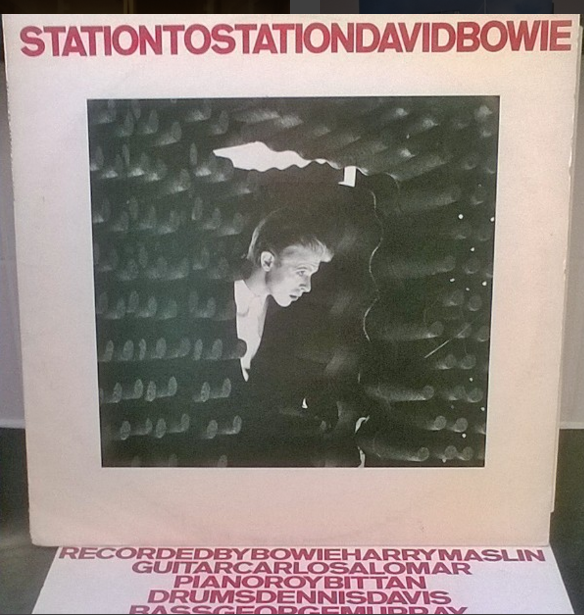
Station To Station (RCA) 1976
A distressed primal howl for the alpine air and culture of Europe were the main motivations for Bowie’s Station To Station LP. It may have been recorded in L.A, but the intention was to reach out across the Atlantic: an escapist gesture of hope to crack the drug habit.
Imbued, or just unashamedly sucking up the innovative vapours of the Teutonic music scene, those previous soul allusions were now entwined with the pan-European express of Cluster/Harmonia (and all the various Roedelius and Dieter Moebius projects), Kraftwerk and Neu!
The autobahn was already spoken for, so it would be the allure of continental train journeys that oiled the wheels of the album’s minor opus title track. Heralding the “return of the thin white duke”, Station To Station traversed disco boogie funk (‘Stay’), doo-wop futurism (‘TVC15’) and featured Bowie the Shakespearian glib, warbled crooner (‘Word On A Wing’, ‘Wild Is The Wind’). Oh yes, the note register was high all right, a resounding plaintive cry before that all-immersive dip into the Berlin years.
The Playlist
A Most ‘Fantastic Voyage’, my eulogy to Bowie still stands. Added to sporadically since putting it together on news of his death, alt takes, live versions, sessions and those favourites of mine are all collated and curated for a most pleasing fashion/experience.
PS:
Links to my Bowie guide, written to celebrate the oeuvre.
A Celebration Part 1: Debut to Pin Ups
A Celebration Part 2: Diamond Dogs to Scary Monsters
A Celebration Part 3: Let’s Dance to Black Tie White Noise
A Celebration Part 4: Outside to Black Star
Here’s the message bit we hate, but crucially need:
If you’ve enjoyed this selection, the writing, or been led down a rabbit hole into new musical terrains of aural pleasure, and if you able, then you can now show your appreciation by keeping the Monolith Cocktail afloat through the Ko-Fi donation site.
The Digest for September 2025: New Music/The Social Playlist/And Archives
September 22, 2025
The monthly Digest includes a clutch of accumulated new music reviews; the social inter-generational/eclectic and anniversary albums celebrating playlist; and choice timely pieces from the archives.
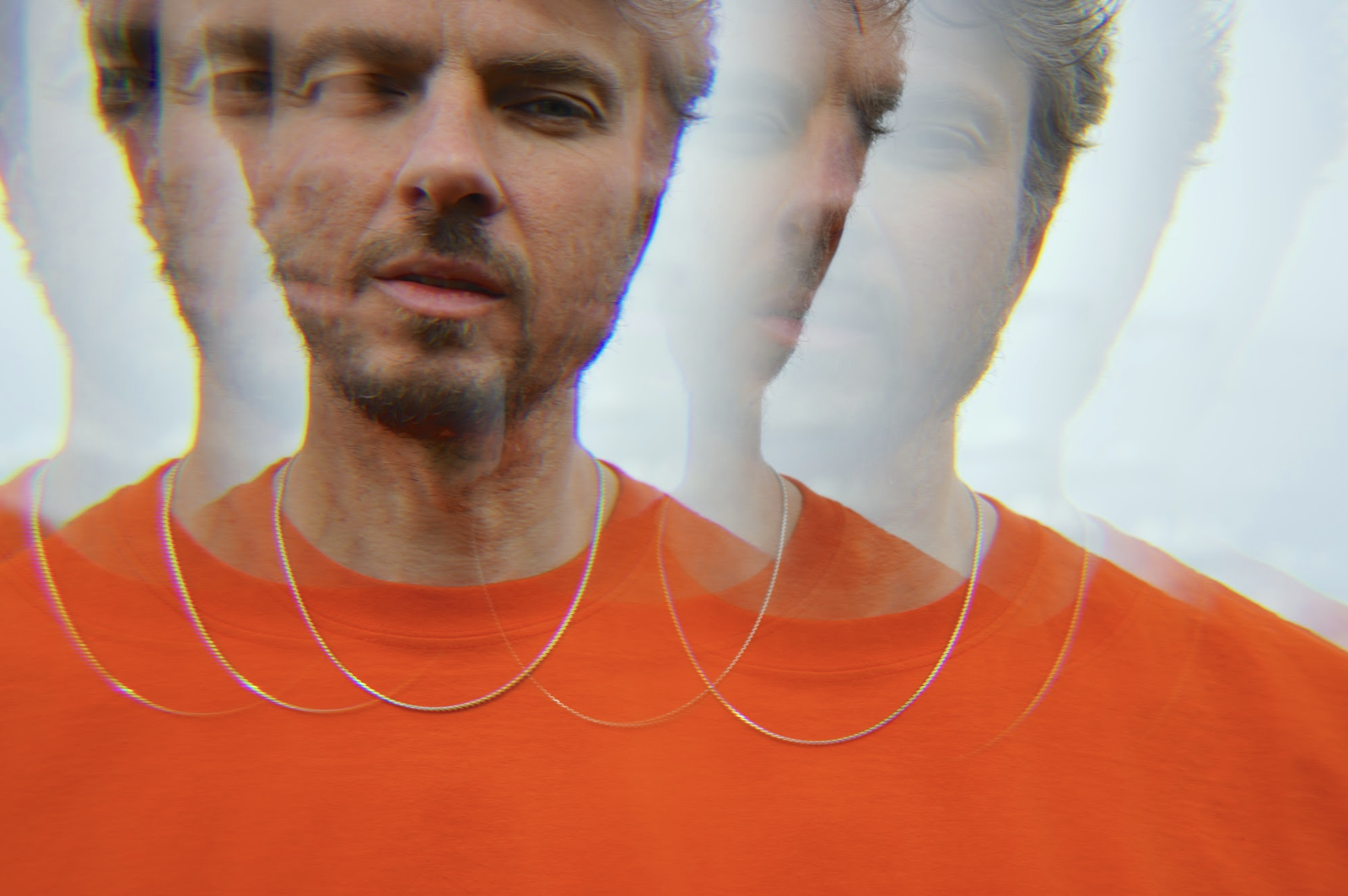
Tom Skinner photograph courtesy of Jason Evans.
___THE NEW___
Group Modular ‘The Tunnel/Lonely Pylon’
Reissue Special Released 19th September
The first transmission (or rather a retransmission if you like) from the Group Modular duo of Mule Driver and Marky Funk in three years, marks the inaugural chapter in a new series of special 7” releases “powered” by the duo’s alter ego Confused Machine and Delights labels. Those lucky enough to have grabbed original copies (sold in separate splits editions, both sold out almost immediately) of ‘The Tunnel’ and ‘Lonely Pylon’ will know that the former was part of Norman Records’ 2021 25th Anniversary split release by Polytechnic Youth, and that the latter was recorded exclusively for the third instalment in Russian Library’s L series of split 7” EPs back in 2022.
Back on the radar, with the chance to own these hauntological sci-fi suites and dramatization soundtracks, the self-described “Outer space sounds from Jerusalem-Tel Aviv route” library music makers reacquaint us all with their brand of analogue period cult space age influences and their taste for atmospheres and theme tunes that emit something that’s near supernatural. ‘The Tunnel’ is a curious Pietro Grossi like rocket ship steam and gas fusion of soft timpani, Roy Budd and Greg Foat-esque barque sci-fi harpsichord, and d ‘n’ b like dub beats. And the electric field throbbed ‘Lonely Pylon’ is a Library music imbued psychogeography of paranormal nature and unnerving children’s sci-fi TV of the 70s and early 80s – imagine Brian Hodgson, Sapphire and Steel and bygone public broadcasted information warnings resurrected by The Advisory Group or My Autumn Empire.
Hopefully this latest 7” series will prove a catalyst for more new recordings from the duo, who haven’t released anything together since Per Aspera Ad Astra in 2022. You’d better be quick, as I have a feeling it will sell out pretty sharpish.
Lt. Headtrip & Steel Tipped Dove ‘Hostile Engineering’
(Fused Arrow Records) 23rd September 2025
The gristle, outpoured thoughts, observations, protestations and glue between the oppressive urban structures of our dysfunctional, unworkable society both poetically and rhythmically twist and flow over a counterculture haunted psychedelic-prog, Krautrock and jazz-soul production on this debut project collaboration.
From the experimental, leftfield platform of Fused Arrow Records and its stalwart producer, engineer, beat maker and artist in his own right, Steel Tipped Dove, a new partnership with rapper, producer and instigator Lt. Headtrip.
Dove’s production and various studio skills can be heard on releases from such notable talent as Fatboi Sharif & Roper Williams, billy woods & Messiah Musik, Darko The Super, MC Paul Barman and Zilla Rocca. He’s also collaborated with the most dope and pioneering Dose One. The Lieutenant’s CV is no less impressive, setting up the ‘we are the karma kids’ label, organizing projects and events in the Brooklyn, Manhattan and Queens areas, and either collaborating or sharing stages with Armand Hammer, Open Mike Eagle, Quelle Chris, Beans, Backwoods Studioz, Reservoir Sound and Uncommon Records.
A magic combination of old hands from the underground scene then, the Hostile Engineering environment that engulfs them is twisted, churned, inhaled and transformed into a sometimes gothic, sometimes industrial, and sometimes more soulfully halo-lit arena for the spoken and rapped lyrics; the cadence of which reminded me at any one time of the Antipop Consortium, Rob Sonic, dalek, and when humorously and from a self-aware but confident in their own skin way, addresses the issues of sexuality, sex and the tired old tropes of rap machismo on the smoochy drifted saxophone and crunched drum beats produced ‘We Got The Sugar’, comes across a little like Homeboy Sandman: a sample of the lyrics being, “last week I was helpin’ his girl find her panties. This week I’m his bro’s new daddy. Just cause I can rap along to Liquid Swords don’t mean my dick’s boring.”
There’s more than enough clever ideas here, with samples I’ve yet to recognize, and an atmosphere that seems to channel all kinds of musical influences; from zappy Kraftwerkian synth and drum pads electro to the Floydian, Roy Ayers, Soul cuts, cult soundtracks (of suspense, horror and sci-fi futurism), heavy rock and prog – I think I’m overthinking it, but alongside what could be a sample from Sabbath or their ilk, it sounds like a short miraged shiver of cymbal resonance and slow drums from Neu!’s ‘Weissensee’ on the automation for the people, insurance servitude and dead-end careers themed polemic ‘0 Days Since Last Accident’.
Bot factories, the nightmarish promises of constant bodily cosmetic regeneration and the self-absorbed legacies that go with hanging on to the bullshit zenith of eternity, high anxiety, and on the repurposed halcyon soul Kayne-Jay-Z-Biggie fantasy “money, money, money” ‘Fund Don’t Stop’, a backslap to rampart consumerism and unsignifying spectacles of Black Friday (“We been shoppin’ since we bought that serpent’s product in the garden.”) – a lifetime of spending, from the womb to the tomb.
At thirty minutes long, there’s no fat on the bones, and yet plenty of tempo, musical changes, and a fresh rap style that neither preaches nor sits back in a nonchalant pose. A really successful pitch, bringing both talents together to fuse and articulate the present depressing miasma of the times in which we all live; glued to this rock, with no anchor, no compass, attached to the screen and validation culture of social media and its puppet masters. One of the freshest hip-hop releases of 2025.
Tom Skinner ‘Kaleidoscopic Visions’
(Brownswood/International Anthem) 26th September 2025
Reaching the midlife point, the UK drummer and composer Tom Skinner finds time to reflect and take stock with a mature kaleidoscope of culminated visions pulled and drawn from a highly prolific career and enviable CV of performances, collaborations and recordings (from Sons of Kemet to The Smile, David Byrne Floating Points…. the notable list goes on).
Arriving a few years after Voices Of Bishara (an album inspired by the American jazz and classical cellist Abdul Wadud and his seminal privately pressed cult masterpiece ‘By Myself’), the follow up weaves the former into a rich, often cinematic, psychedelic and floated meditation and dialogue of jazz, neo soul, cult soundtracks and the contemporary classical. At 45 years of age, the time felt right for such an undertaking. A culmination of experiences, of influences now coming together; a bond that embraces not only Skinner’s vaguely Middle Eastern entitled Bishara live band but a number of congruous international collaborating foils: neo-soul doyen, and right acclaimed, award-wining polymath (but you can list the main qualifications as singer-songwriter, poet and bassist) Meshell Ndegeocello; the self-described multifaceted Charleston musician, score composer, film and radio programmer and vocalist Khari Lucas, otherwise known as Contour; London born and raised but now Berlin-based keyboardist and vocalist Jonathan Geyevu, aka Yaffra; and on electric guitar for a couple of tracks, Adrian Utley of trip-hop luminaries Portishead.
That group of friends is split between two sides of a traditional vinyl format: a moiety of instrumental material and vocalist starring peregrinations, with side A featuring the electric-chamber-jazz Bishara quartet of bassist Tom Herbert, cellist Kareem Dayer, and woodwind and reeds players Robert Stillman and Chelsea Carmichael, and Side B, a cosmic mirage of sung and spoken discourse, soliloquy and healing. Described as “distinct sonic landscapes”, both parts are harmoniously conjoined, with leitmotifs, recurring sounds and an overall feel that draws upon a cosmology of Afro, spiritual, conscious, spacey, psychedelic and experimental jazz.
It begins with the promise of comfort; a putting of the mind at ease so to speak. ‘There’s Nothing To Be Scared Of’ begins with an incipient jingle-jangle and stirring drones of woodwind and the cello before hitting a peak of what can only be descried as Lalo Schifrin meets Bobby Hutcherson and Lonnie Liston Smith and the Cosmic Echoes on a 1960s filmset. From then on out, this jazz-chamber match the flighty, craned and fantastical with amorphous hints of Nicole Mitchell, Village Of The Sun, Kibrom Birhane, the Ancient Infinity Orchestra, Coltrane, Matana Roberts and Sven Wunder. You could call it a cross-generational sound, with the first half of the album feeling itself out across an evocative landscape and more abstract metaphysical space full of reflections on emotional states and those people held either dear or inspirational. That includes the late New Jersey born and raised novelist, writer, memoirist, poet and filmmaker Paul Astor (author of the loose New York Trilogy, Moon Palace and The Music Of Chance), and Skinner’s mother, the former classical concert pianist and victim of the arts misogyny, Anne Shasby.
There are some beautiful moments captured amongst the often-slow momentum, and the gander and bird-like flexes; a sense of the mellow and unfurled: the soulful too. And yet there’s a certain drama to be found, and even mystery to this section of instrumental description, of roots and spiritual emotions.
The second section features the vocal talents and essences of Skinner’s collaborative foils; starting with the soul, funk, jazz, hip-hop, reggae and rock spanning polymath Meshell Ndegeocello, who soulfully and dreamily oozes and woos a sense of both the ancestral therapy and a mirage feeling of homely comfort. Ndegeocello’s voice emerges from a hallucinatory wilderness, floating across a nine-minute cosmic-soul and R&B jazz suite of horn snozzles and soft burbles, glassy bulb vibraphone notes, and gentle plucks.
Taking a sadder, more pained discourse-like tone, Contour’s R&B neo-soul voice aches and yearns on the bluesy chamber-jazz piece ‘Logue’. The language is one of rise and fall, trauma and endurance, survival and striving in a ruthless landscape. And yet, again, there is a kind of near diaphanous beauty about some of the music, the flutier parts and delicate bulb-like notes that seem to float around in a slow ponderous rhythm. It’s the feeling of being drained, and the attempts to break free of the malaise.
The finale, ‘See How They Run’, features the soulful poetic spoken tones of Yaffra both responding to a secondary voice and speaking out loud his thoughts, enquires to the promise of eternal enlightenment, in an almost winding, untethered fashion. It reminded me in part of Andy Hay, Diggs Duke and even Tricky, playing out over another neo-soul leaning dreaminess.
Informed and prompted by middle age (a youthful middle age of experience rather than depressing aging pains), Skinner offers a retrospective pause whilst looking towards a creative future. Cross-generational concerns, references, influences converge in a mature work of feelers, reflections and freedom. Consolation in an age of accelerated isolating atomisation and introspective anxiety.
Water Damage ‘Live At Le Guess Who?’
(Cardinal Fuzz in Europe/12XU in N. America) Released 5th September 2025
In the venerated surroundings of the Medieval city of Utrecht, the religious epicentre of the Netherlands (or so it is said), as part of the Le Guess Who? Festival lineup, the Water Damage ensemble preached their own unique fire and brimstone of monotonous locked-in drones, the wailed and frayed, the squalled and resonant.
Whilst following no recognisable domination on this plane, the Austin collective of like-minded acolytes to all things underground, invoked some kind of near religious sonic experience as they went to work on the opening track, ‘Reel 28’, from their most recent album, Instruments (released back in May of this year). Without a break or let-up, they relentlessly, but slowly, created a mesmerising lumber of the avant-garde, of Motor City, Jap, Kraut and Doom rock. Enslaved to the rhythm you could say, for a full 45 minutes both the group and their audience are caught in the hypnotic flay and sway of the scuzzed and intense bowed needling and sawing momentum that is created.
Absorbed into the core for that performance, guests Ajay Saggar (a serial offender, featured untold times on this site over the years under various collaborative and solo guises: Bhajan Bhoy, Deutsche Ashram, King Champion Sound and University Challenged) and fellow astral traveller Patrick Shiroishi (the Japanese-American multi-instrumentalist and composer, based in L.A., last appeared on this site playing foil on saxophone to Dave Harrington and Max Jaffe on the Speak, Moment collaborative album) take up the mantle on guitar and “free-reeds”. Their contributions are equally as mystical, magical, intense and droning; with Shiroishi especially summoning both a Mogadon Hawkwind and Sam Rivers simultaneously.
With the “Maximal Repetition, Minimum Deviation” motto and mantra, they conure up a monster; a ceremonial rite; even, as the accompanying press release describes it, an exorcism. And yet it is quite melodic. Reference points, for me, would be Tony Conrad and Faust’s seminal Outside The Dream Factory, but also Tony’s Transit Of Venus collab with Hangedup, Glenn Branca, La Monte Young (these last two actually referenced by in the press release), Earth, Boris, Swans, Hala Strana, France, Smote, Pharoah Overlord and Amon Düüls I and II, and The Black Angels. But like the old city that played host to the festival and the Water Damage performance, there’s an almost otherworldly summoning of the Medieval: a sort of mythologised or transmogrified evocation of an abstract atmosphere from that period; it sounds at times almost like a hurdy-gurdy is being wound up like some kind of ancient transmitter; plugged in to a mystical and harrowing age.
I must add, for once, the sound is really good. You can hear every part, every contribution, and even the bass line (you wouldn’t believe how few recordings ever get the bass right, or let you hear anything more than just a mumble of bass; live recordings are often even worse, almost bass free). The bass here is integral to keeping up that never ending rhythmic sway; and despite its repetition, is such a great little riff that is never grows tired. Compliments to the sound engineer, and who ever mastered this performance, then, for instead of a block intensity of lost instruments you get a clear production, with every cog, every drone and note audible.
I’d say an improvement on the album track, and a really intensive yet hypnotic hermetic experience that feels untethered to any particular time, age or period.
___/The Monolith Cocktail Social Playlist Vol. 101___
For the 101st time, the Social Playlist is an accumulation of music I love and want to share, with tracks from my various DJ sets and residencies over the years and both selected cuts from those artists and luminaries we’ve lost on the way and from those albums celebrating anniversaries each month.
Last month we celebrated the 100th edition of this series, which originally began over 12 years ago. The sole purpose being to select an eclectic and generational spanning playlist come radio show, devoid of podcast-esque indulgences and inane chatter. In later years, I’ve added a selection of timely anniversary celebrating albums to that track list, and paid homage to some of those artists lost on the way. In the former camp this month, and to tie in with the Archive spots on Bowie and CAN, there’s a 30th anniversary nod to 1. Outside – a tour I actually witnessed, I kid thee not: Wembley Arena if you must know – and 50th nod to Landed. Joining this celebration there’s also tracks from Kate Bush’s Hounds Of Love (40 this year), The Fall’s This Nation’s Saving Grace (also 40), Blur’s The Great Escape (30), Dexter Gordon’s One Flight Up (60), Wolf Parade’s Apologies to the Queen Mary (20) and Mew’s And The Glass Handed Kites (also 20).
Each month I also like to add a number of newish/recentish tunes (more or less anything from the last year): those that either missed out on the regular Monthly Playlist of brand-new music releases, or only just come to my attention. We have Monde UFO, Lukid, the El Maryacho team up with Nowaah The Flood, Penza Penza, the Tone Of Voice Orchestra, Elkotsch (thanks to blog friend and supporter Andy Haas for recommending this one) and the triumvirate collaboration of Phew, Erika Kobayashi and Moebius. Oh, and something not so much new but surfaced from Dylan this week.
The rest of the playlist is an anything goes selection of stuff I’ve accumulated, loved, treasured, wanted to own or played out during my sets over the decades. In that category there’s music from the Walker Brothers, the Jazzpoetry Ensemble, Mother Lion, Garybaldi, A Tent, The Barrino Brothers, Departmentstore Santas, Gene Martin, and Akofa Akoussah.
Track List:::::
Wolf Parade ‘Shine A Light’
Butterglory ‘She Clicks The Sticks’
Blur ‘Entertain Me’
Mew ‘The Zookeeper’s Boy’
David Bowie ‘We Prick You’
Kate Bush ‘The Big Sky’
Garybaldi ‘Maya desnuda’
The Fall ‘I Am Damo Suzuki’
CAN ‘Vernal Equinox’
The Jazzpoetry Ensemble ‘Motherless (Live)’
Dexter Gordon ‘Darn That Dream’
Polyrhythm Addicts ‘Big Phat Boom’
Akofa Akoussah ‘Sumga Ma Bacci’
El Maryacho & Nowaah The Flood ‘SOAPS’
The Barrino Brothers ‘Born On The Wild’
Tone of Voice Orchestra ‘Tourist at God’s Mercy’
Penza Penza ‘Dusty’
Los Darlings De Huanuco ‘Lobos Al Escape’
Elkotsh ‘Da’a Adeema’
Monde UFO ‘Sunset Entertainment 3’
Phew, Erkia Kobayashi & Moebius ‘Katherine’
The Detroit Escalator Co. ‘Manuel Transmission’
A Tent ‘Seven Years – part 2 (Abundance)’
Lukid ‘The Secret of Bell Making’
Bob Dylan ‘Rocks And Gravel (Solid Road)’
Mother Lion ‘Simple House’
The Walker Brothers ‘Walkin’ in The Sun’
Departmentstore Santas ‘Play in the Sun’
Gene Martin ‘We Shall Be Like Him’
The Hitchhikers ‘Feel A Whole Lot Better’
___/Archives___
From the exhaustive Archives each month, a piece that’s either worth re-sharing in my estimates, or a piece that is current or tied into one of our anniversary-celebrating albums.
This month there’s my previous pieces on CAN’s Landed (50 this year) and Bowie’s 1. Outside (30 years old this month).
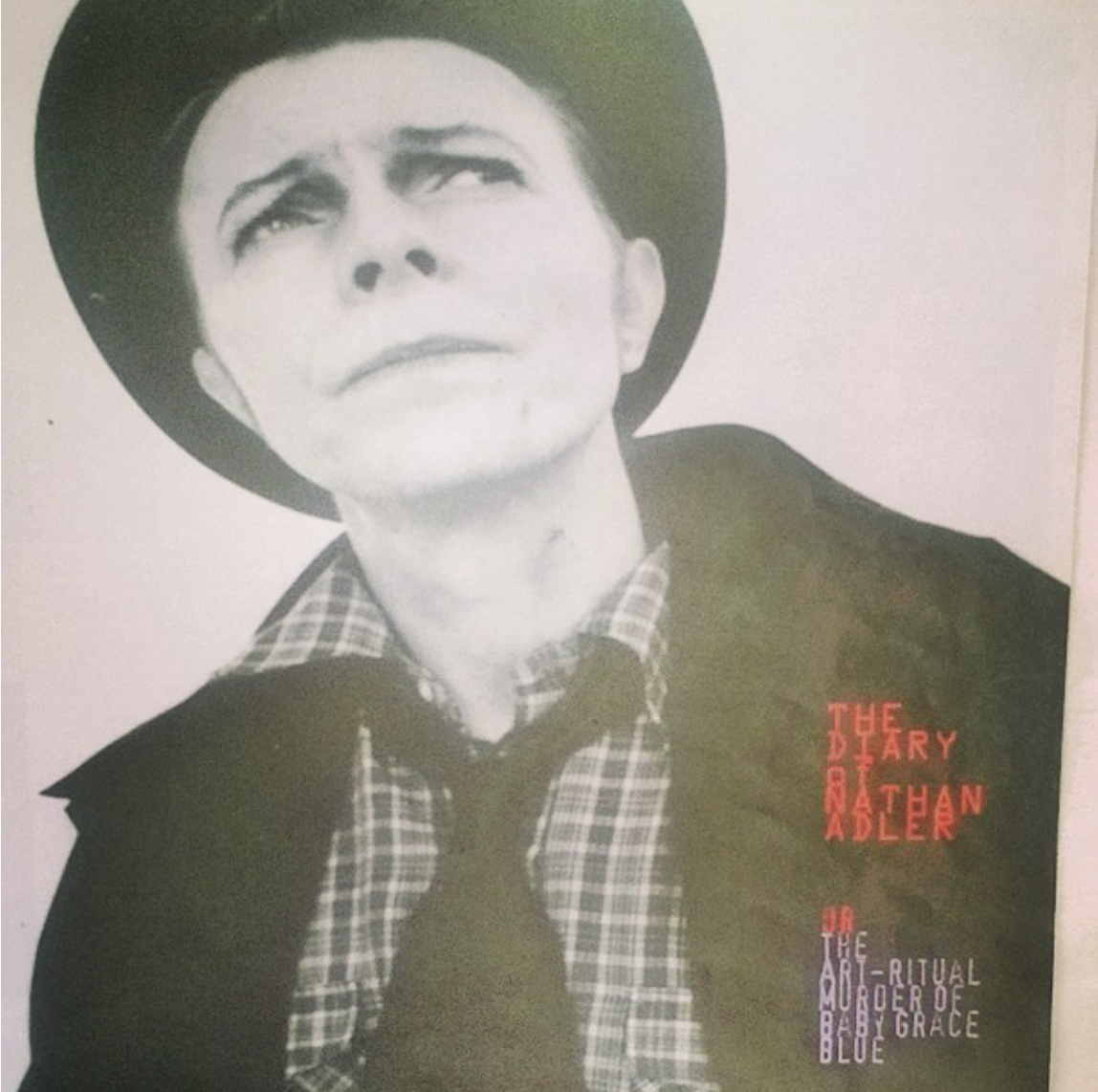
David Bowie 1.Outside (Arista/BMG) 1995
With ‘five years’ remaining until the new millennium, Bowie, tapping into the anxiety and quest for spiritual relief, returned to his first passion: contemporary art.
Back with his most innovative collaborator, Brian Eno, he dredged the bottomless pit of morose and despair. Dreaming up a morbid tale of future sacrificial performance art gone wild and taboo breaking cybernetics he narrated a woeful diegesis through a series of ‘verbasier programmed’ characters.
Disturbing to say the least, our ‘cracked actor’ pitches an avant-garde ‘whodunnit?’, set in a parallel bleak world where the self-mutilated gestures of Günter Brus (the patriarchal figurehead of body art) and ‘the orgiastic mystery theatre’ of Hermann Nitsch have been taken to new, hyper, extremes of bloodletting.
Led by the investigative diary of art crime detective Nathan Adler, a cryptic cut-up of Burroughs/Burgess language is used to not just explain the circumstances that befell the poor victim Baby Grace, but also delve into the collective psyche.
Out on a limb musically, Bowie’s home life may have been content, yet something suddenly propelled him to bravely create a depressive requiem. Easily the best, if not most original, material since Scary Monsters, 1.Outside was entirely written in the studio as the band extemporized: motivated by Eno’s synonymous oblique strategy cards.
Scott Walker lost in cyberspace; the industrial melancholy is at its most anguished on ‘A Small Plot Of Land’ (a version was used on the, Bowie as Warhol starring, tragic biopic of Basquiat directed by Julian Schnabel), yet a more revved-up, pummelling bombastic variant is used on ‘Hallo Spaceboy’ and ‘The Heart’s Filthy Lesson’ (perfectly playing out David Fincher’s Seven).
Leaving many fans bemused (as I myself witnessed on the Outside tour, the baying audience pleading for the greatest hits package), the philosophical snuff opus seemed puzzling to those familiar with the pop-lite Bowie. Thankfully Bowie cut loose the shackles of commerciality for a contemporary blast of shock and dread.
CAN ‘Landed’ (Virgin) 1975
Richard Branson’s pastoral record label Virgin hooked our Cologne ‘seven-day sonic avant-garde evangelists’ in early 1975, tempting them away from the clutches of their former masters United Artists, whose relationship with the band had been tenuous at best. They now joined the hippie-idealistically run, free thinking label of choice – at least that’s how it appeared to the onlooker-, sharing the stable with both fellow countrymen Faust, Tangerine Dream and Slapp Happy, the psychedelic progressive band Gong, and the million zillion selling Mike Oldfield, Virgin’s biggest selling artist by miles – whose Tubular Bells behemoth had reined in a load of money and success, paving and paying the way for most of the roster.
Branson may have looked like he’d stepped off the cover of a Jethro Tull album, but he turned out to be a shrewd businessman. After all, he managed to propel Faust into the album charts with their Faust Tapes mesh-mash classic: albeit that the said album was put on sale for a paltry 49p and probably didn’t actually net the group much money, but hell, it sold over 100,000 copies, so they became a household name in the head community for a while at least.
Business wise, sister label Harvest – equally rich in allusions to the Woodstock ethos – would distribute CAN’s records in their homeland, whilst EMI, who owned both labels, would just count the cash it hoped would now roll in. One of the stipulations in the Virgin contract was that the band would have to use superior recording equipment for their next album. A multi-tracking desk was delivered to their own sacred Inner Space studio HQ, which they were still allowed to use though the records would now be mixed elsewhere. Unfortunately, a deep sense of forlorn began to creep in, mixed with paranoia, the arrival of the new technology now making it possible for the band to record their parts separately if they so wished. Until this point Holger Czukay had masterminded all the recording and editing on just a two-track recorder. He had also always encouraged the group to play together in the spirit of improvisation. But now, the band could successfully overdub and add parts at a higher quality then had previously been possible before, taking a more insular approach to recording.
In scenes not too far removed from the Beatles fractured shenanigans on the White Album, the group began to play some of their own parts in secrecy, the thought of being scrutinized and criticized by their fellow band members filling them with dread.
Again, like The Beatles, they invited an outside musician into the studio to lift the tension and scrutiny. This fortunate man was Olaf Kubler, who had served as producer on both Amon Duul and Amon Duul II albums, although he dramatically fell out with one of AD II’s bandleaders John Weinzierl, who made his feelings towards him pretty clear in recent interviews. Kubler was called in for his saxophone prowess, being asked to lay down some cool sultry cuts on the track ‘Red Hot Indians’ for what would be the Landed LP.
Sessions for what would be the band’s Landed album began in the first few months of 1975, in-between tour commitments, which included a couple of gigs with the troubled American folk troubadour Tim Hardin, who it’s rumoured was asked to join the band full time.
Hardin didn’t really front CAN in these gigs, instead, he would merely leap on stage to perform one of his own tunes, usually something like ‘The Lady Came From Baltimore’, and maybe front a couple of the groups own tracks before exiting stage right. Whether he ever considered seriously joining the band, Hardin’s deadly heroin habit put a damp squib on things, finally getting the better of him in 1980 with one overdose too many.
Anyhow, Karoli had so far done a good job of semi-fronting the band, going on to lead all the vocals on this album; delivering some softly inspired dream like performances throughout.
Landed in some ways directly follows on from their previous effort Soon Over Babaluma, especially in the sound collage experiments of this album’s ‘Vernal Equinox’ centre piece and ‘Unfinished’, both of which re-work similar themes and threads found on ‘Chain Reaction’ and ‘Quantum Physics’. The rest of the LP consists of far rockier progressive tones, with allusions to their contemporaries, particularly Pink Floyd. To a point there is also an attempt towards the glam-rock of both Roxy Music, Bowie and Mott The Hopple – all influences CAN’s peers, Amon Duul II, also breathed-in on the 1974 album Hijack, though to a less successful degree.
‘Full Moon On The Highway’ and ‘Hunters And Collectors’ relish in the glow of these new influences, though remain slightly more conventional compared to CAN’s usual free roaming exploratory material. Most of the seven tracks now run in at under six minutes and sound much more formulated, the exceptions being the already mentioned two saga driven soundscape pieces, which combined, make up three quarters of the overall albums running time.
The lyrics themselves seem to be full of references to mysterious alluring women, clad in leathers, who turn up at ungodly hours on celestial described highways. Analogies run riot, the open road acting as a metaphor for following certain paths, Karoli constantly encouraging the listener to cut loose and float away. Journalist and friend to the band, Peter Gilmour, co-wrote both ‘Full Moon On The Highway’ and the lazy sedate ‘Half Past One’. Peter would also go on to write CAN’s biggest hit, the disco chugger ‘I Want More’.
Many critics have panned Landed, seeing it as the beginning of the end for the group. It does seem a slight exaggeration. Certainly, the dynamics were slowly ebbed away, the production becoming much more polished, though it suffers from some very messy trebly moments at times.
Footage of them performing ‘Vernal Equinox’ on the Old Grey Whistle Test at the time sees Irmin Schmidt wearing a fetching bondage inspired chain mail waistcoat whilst theatrically commits Hari Kari on his keyboards, whilst Czukay, all ten-yard stare, sports white gloves and a sheriffs’ badge. A mid-life crisis beckoned with all this new pomp and strange fashions, turning off many fans, including the disdain of Julian Cope who states that this act of regalia wearing extravagance ended his relationship with the band. So, in a way CAN did seem to be heading over the precipice, the best days behind them, but this album is viewed way too harshly.
Landed for what it’s worth is a decent album, with enough ideas and demonstrations of superb musicianship, Karoli alone performing some of his most sublime guitar work yet.
The albums artwork, by the curiously alluding Christine, displays a collection of passport photo sized images of the band. Each individual photo is covered in graffiti or scribbled on, lending silly moustaches, cartoon glasses and an array of comical hats and hairstyles to the now light-hearted looking band. Peering out from under the heavy de-faced images they pose in a manner that lets us know they still have much to give- also, am I imagining perhaps a Carlos the Jackal type reference here, the many disguises and such.
CAN shifted back towards the Afro-beat and World music styles on their next couple of releases and also brought in ex-Traffic members Rosko Gee on percussion and Reebop Kwaku Baah on the bass to great effect. Czukay moved away from his bass guitar duties so that he could explore radio short wave editing and cutting up techniques in greater detail. He would of course go on to leave the band in 1977, leaving Liebeziet, Schmdit and Karoli to carry on for a while before everyone split for good to pursue their own solo projects, a reunion in 1989 included Malcolm Mooney and resulted in a new album titled Rite Time.
The year is 1975 and CAN have laid down their 7th album, after being together for nearly eight years. To get this far they have travelled an etymological musical odyssey, that has taken in the dark esoteric voila seeped mood of The Velvet Underground, the psychedelic spiritual enlightenment of America’s west coast, the African dance style rhythms of Nigeria and Ghana, the dreamy hypnotic Turkish flavored folk music, the otherworld tour of the nebula emitted from Hendrix and the lessons learnt from Stockhausen and Von Biel. CAN had surpassed all their peers and become possibly one the greatest assembled bands of musicians that the west has ever seen – seriously these guys could out play anyone, though they never had time to wallow in ego and always looked towards experimentation rather than dwelling on their skills.
There now follows a run-through of the album:
Dropping in with an up-tuned arching guitar fuzz and treble heavy hi-hat, ‘Full Moon On The Highway’ leaps straight into action. Jaki Liebezeit sets down an incessant workman like beat, hammering away on the bass drum as Michael Karoli casually begins his salacious vocals –
‘I made it hard today,
For I had to do it to me.
And if it’s only to hold her,
She’s gonna get it today’
A certain sense of portend fear hangs in the air, Karoli in his full Germanic romantic disdain rattles off omnivorous statements about taking to the highway, where star crossed lovers may unlock some inner meaning and truth.
Rock hard screaming lead guitar hooks run rampant, exercising no sign of restraint and sprinting ahead as though in a 100-meter sprint. Piano flourishes and honky tonk bravado light up the mood as those bawling guitars and Alpha 77 effects wail away like banshees. Czukay takes his bass on free roaming tour of run downs, slides and felicitous infused funk workouts, never staying put in one place for too long, always running his fingers all over his instrument. An intense burst of exuberant searing drums, keyboards and clashing turmoil all culminate into a finale furore, that threatens to end in a mess but is saved by the rallying cry of Karoli riding in on his gleamed-up guitar. He transposes glam via Pink Floyd to produce something unheard, a riff from the other side.
Taking a more serene path, ‘Half Past One’ begins with some archaic ethnographically seductive Spanish guitar and heavy tub tapping drums. A dozy laid-back vocal pronounces –
Over the beach,
Into the sun,
Wake again by half past one,
Alright’
The last word being some kind of reassurance amid the strangely relaxed drug induced soirée, that peers at some snapshot of the protagonists’ relationships, a casual affair on the beach in this case.
Schmidt interjects with some delightful mandolin sounding oscillations and yowling alarmed synths, whilst Czukay adds some chuggering engine bass lines, sliding around the neck as though revving it up.
The general breathless ambiance begins to wash ashore, like a lapping tide, meandering its way towards some welcoming gypsy encampment. Quacking wah-wah and folk tale violins add to the general malaise, building towards a newfound intensity as the song picks up momentum: The final 30 seconds bathing in the now pressured final crescendo.
Now steps forward the ambiguous and genre dodging ‘Hunters And Collectors’, with its almost glam postulations and Afro- funk grooves, this four minute Floyd gesturing dose of mayhem ducks any formal categorisation.
A doom-laden piano emphasis each intro chord, like an operatic indulgence. Karoli in magi pose announces the chorus –
‘Hunters and collectors, all come out at night.
Hunters and collectors, never see the light’
The song now kicks in with some sky rocketing theatrics. Dense melodies of climbing synth lines and evocative sexed up Teutonic choral backing adding to the melodrama. Czukay and Liebezeit cook up a fine jumped-up funky backing, with double shimmering hi-hat action and posing bass guitar. They all soon break down into a more stretched out segue way, taking in the early years of Parliament and some Afro highlife.
Karoli now dabbles with the vocals, as they take on some added menace; he conjures up images of leather clad biker gangs, savage sexual degradation and drugs –
Thirty leather kids, on the gang ban trail,
Get your big brown man with the snakes in bed.
Dirty bother me now, it soaks into a cup,
She says “if you don’t start at all, you never have to stop”.
Other worldly radio signals and snippets of conversation from the ether add to the esoteric atmosphere that is entrenched in seedy tales of chemical indulgences.
The opera swoops back in before what sounds like the set-piece breakdown brings the curtain down, as strange broken cogs, ratchets and springs all produce a comical ending, just before the swept in majestic intro of ‘Vernal Equinox’ is brought in.
As the ambivalent last track on side one, ‘Vernal Equinox’ continues the dynamism and piano melody from the previous track, but runs rough shot and fancy free, producing an eight-minute omnivorous jam or epic narrative.
It all begins with a search light introduction of space age doodling, with a chorus of sonar equipment and lasers shooting off in all directions, all played out over a heavy laden piano, hurtling towards a cacophony of destruction.
Rabid lead guitar rips into the track, Karoli literally plays for his life in a fit of feverish exhaustion, running through the full collection of riffs and chord rushes that he’s picked up over the years.
Flailing drums explode like a barrage of mortars, as UFO’s crash land all around, Czukay finds some cover and rattles off his defensive bass.
That Alpha 77, the exulted secret box of tricks, spits out havoc. Crazed wrecking layers of multiplying textures take the drama back to the cosmos soul searching of Soon Over Babaluma, but with a now more invigorated pumped-up stance. The raging narrative falls into one of those accustomed breakdowns. Liebezeit and his meteoric rhythm accompany arpeggiator sonic waveforms and metallic sounding drips during this break in the pace. The full swing returns in style, turning the jamboree into a jazz funk quest, as what sounds like Robert Fripp battling it out with an alien horde from the planet of Sun Ra, delivers a belting finale of elation.
Side two opens with the bongo tribal reggae of ‘Red Hot Indians’, a jaunty slice of infectious pigeon-toed dance rhythms and cool wistful chant like grooves. Karoli goes all faux-Caribbean with his laid-back vocals, he casually lays down some lines in an almost staccato fashion –
‘It’s the DNA song, DNA song, it’s the DNA song.
Strike mess, hole mess, shadow mess’.
Kubler Olaf blurts out an effortlessly uber cool prompting saxophone melody, liberally peppering the track, whist Liebezeit just reclines back on his sun lounger, knocking off some tom rolls and sipping a pina colada.
Mixing in some more African highlife and even-tempered down Roxy Music, this track flows along in its own serenity. The second wind of extra rhythms start to sway in an hypnotic motion, like some kind of mantra as Karoli mumbles recollection of some cryptic halcyon memories –
‘Then you took me back, steam machine.
Dreamt my way into a daydream.
Let me vanish into yesterday,
And my night drops fade away’.
As though to ratify the shambling theme, the song naturally fades out on its own breezy demeanour.
We now come to the soundscape behemoth of ‘Unfinished’, which by its title remains to be determined by the listener as to whether or not this maybe the case.
A set piece of sound cutting and masking that harks back to Future Days, with its reverential cinema scope builds and gliding synths this track could just yet be one of CAN’s finest moments.
Opening with what sounds like an orchestra tuning up, we hear a noisy interlude of violins, strings, brass and unfamiliar instruments all preparing themselves for the performance. That looming ever-present box of tricks, the Alpha 77, fires up and screeches over the top of our orchestra pit, launching bolts of lightning along with the odd spark of lush melodic wonder.
Breathing in the same aroma found on their soundtrack piece ‘Gomorrha’ and the melodic beauty of ‘Bel Air’, our macabre galactic Schmidt now unleashes some welcoming felicitous doses of extreme perturbation, underpinned by some humbling broody but magisterial bass.
All of a sudden, a series of gory effects and sounds enters the stage, as the demonic bound trip to the nebula goes all pants messing chaotic. Squealing guitars, that evoke the sounds of distressed souls pleading, cut through the heightened tense mire.
Factory steam powered machinery like the sort found on the Forbidden Planet, is ratcheted up, bashing away and powering up some monstrous life form. Some tumbling toms are given a swift kicking, the occasional crash of a cymbal unsettling the air as Liebeziet desperately tries to carry on playing whilst his space craft flies into the sun: holding on for dear life he is soon saved by his comrades who now work towards an uplifting final stretch.
Whistling sounds fly overhead, and gongs gently shimmer in the background, Schmidt throws in everything even the studios sink, as a build towards some sort of journey to the upper echelons of the solar system begins.
Escapist melodies and angelic ethereal guitars all scale the dizzying heights, like the dark side of the moon played by Stockhausen and backed by Ornette Coleman. A dream- like vaporous empyrean utopia opens out as our Cologne astronauts now proceed to save the best till last. Pulchritude swathes of divine beauty flow with delight as a lavishly rich melody of heavenly choral opulence raises us to some higher plain. The final few minutes being amongst the most sublime that CAN ever laid down, a spiritual guiding stairway to the universe.
Here’s the message bit we hate, but crucially need:
If you’ve enjoyed this selection, the writing, or been led down a rabbit hole into new musical terrains of aural pleasure, and if you able, then you can now show your appreciation by keeping the Monolith Cocktail afloat through the Ko-Fi donation site.
For the last 15 years both me and the MC team have featured and supported music, musicians and labels we love across genres from around the world: ones that we think you’ll want to know about. No content on the site is paid for or sponsored, and we only feature artists we have genuine respect for /love or interest in. If you enjoy our reviews (and we often write long, thoughtful ones), found a new artist you admire or if we have featured you or artists you represent and would like to say thanks or show support, than you can now buy us a coffee or donate via https://ko-fi.com/monolithcocktail
THE MONTHLY DIGEST INCLUDES A CLUTCH OF ACCUMULATED NEW MUSIC REVIEWS; THE SOCIAL INTER-GENERATIONAL/ECLECTIC AND ANNIVERSARY ALBUMS CELEBRATING PLAYLIST; AND CHOICE PIECES FROM THE ARCHIVES

(Cover Star Macie Stewart. Photo credit Shannon Marks)
_____/THE NEW____
Macie Stewart ‘When The Distance Is Blue’
(International Anthem) 21st March 2025
Perhaps one of the most prolific collaborators of recent years, across several mediums, the multi-instrumentalist, composer, songwriter and artist Macie Stewart has come to represent a flourishing, explorative contemporary music scene with multitudes of connections and threads. Apart from projects with choreographer Robyn Mineko, Sima Cunningham, and the Pacific Northwest Ballet, Stewart has become a stalwart of the International Anthem family, contributing and helping steering releases by Rob Mazurek – who literally appears below this review with his foil Alberto Novelle -, Bex Birch, Damon Locks, Makaya McCraven and Alabaster DePlume.
Another foil, featuring in the intimate ensemble that plays on this Stewart’s first solo album for the imprint – the actual debut solo LP, Mouth Full Of Glass came out a few years back on another label -, is Lia Khol, a cellist and sound artist who already collaborates with Stewart in a duo. There’s also the addition of both the equally versatile artist Whitney Johnson (credits include the Verma band and the avant-pop lo-fi Matchess alias) on viola, and Zach Moore on double-bass. This is where those inter-connections must end, as I could just carry on regaling all the various entries from the bio and dedicate this review piece to one of the most enviable of CVs in the music scene. But we must not get distracted, and instead now look at the album.
When The Distance Is Blue could be read as…well, perhaps blue in mood. But this is an album that slips poetically in and out of consciousness, inhabiting, ruminating over and in some cases writing the aural equivalent of a love letter to the spaces in-between the tangible and the environment, with background passages of field recorded interactions taken from public places. For instance, the famous Tsukjii district of Tokyo, near to the Sumida River (reclaimed originally from lowland marshes) is referenced as the title for an atmospheric piece of recorded street side, market interactions. It carries on over and bridges the reverberating, sifted, swept and delicately plucked and vibrated opening suite ‘I Forgot How To Remember My Dreams’ and the near atavistic recalled, apparitional haunted voiced ‘Murmuration/Memorization’. The former of which features Khol’s clean cello and Stewart’s meticulously struck piano notes in a near forlorn but beautifully evocative mood. It reminded me of both Cage and Reich, of the Japanese school of contemporary classical music, and even a little of Sebastian Reynolds work with cellist Anne Muller. The latter, which is named, in part, after the stunning synchronised patterns of large groups of starlings as they come together in flight, seems to dial into something old or timeless; an elliptical dance of Tony Conrad like bows, Hellenic-like spirit voices rising and falling like their avian subjects, and the neoclassical.
The album title, and the underlying theme, is inspired, imbued by the American writer and activist Rebecca Solnit’s A Field Guide to Getting Lost book. I’ve unfortunately not read it, but the L.A. Times summarised the nine essay pieces that make up this work as: “An intriguing amalgam of personal memoir, philosophical speculation, natural lore, cultural history, and art criticism.” Elsewhere it’s been described as a wondering and lurching zigzag through history, politics and art, with the author described as a “Intellectual nomad” by The Guardian’s Josh Lacey when he reviewed it. But all can agree about the book’s themes of change and transformation. Of which Stewart taps into, recording the almost unnoticed; an essence of a particular time and place; a captured seasonal moment of rumination and episodes that left their mark. Across this a near perfect length album, a complete journey is sounded out through both attentive and deeply felt strings, piano, percussion, wordless voices and double bass. It’s a liminal sound that evokes Sakamoto, Cale, Alison Cotton and a sense of the Oriental slow movement, as it moves beautifully and moodily between pizzicato plucks, the cascaded, watered, resonated and bowed. I’ll say it again, as perfect a vision as you can get, everything about When The Distance Is Blue is just so right; every feeling, note, sensibility carefully pitched in a dreamy and ached, subtle and often mysteriously intriguing way.
Alberto Novelle & Rob Mazurek ‘Sun Eaters’
(Hive Mind Records) 28th March 2025
A moment in time; an afternoon’s encounter. The symbiotic alignment and then transformation of the improvised and layered, sonic and sound art foils Alberto Novelle and Rob Mazurek transduce timbral elements and textures into an amorphous act of existence on their collaborative release for the discerning internationalist label Hive Mind Records.
Created in a day, extemporised to a point, the Sun Eaters album, despite its rhythms, is a serialism of encounters and reactions to recognisable lines, soundings, echoes, flutters, melodic addresses, nature trial organic serenades, shakes, tingles, jangles and bleats from Mazurek’s trumpet, flute and percussion of bells. His partner on this exploration transforms these instruments into hallucinatory and playful electronic, modular and oscillated new atmospheres and ambiguous soundscapes that simultaneously evoke Jon Hassell’s Fourth World inventions, the collaborative work of Ale Hop and Laura Robles, the Aphex Twin, Carmen Jaci and King Champion Sounds.
When you address both participants extensive and envious CVs, you can only assume that together they will make something very experimental and unique, but not so academic and avant-garde as to create something dry, theoretical and impenetrable. Before we can any further, just a brief summary of the experience brought to the Dobialab studio that day in Northeastern Italy. I was only the other month referencing Mazurek in relation to Damon Locks and his List Of Demands LP. The cornetist and interdisciplinary innovator featured Locks in his Exploding Star Orchestra lineup, just one of the numerous groups the countercultural Chicago figure and influencer had instigated over the decades; most notably Isotope 217, the varied Chicago Underground ensembles, and one of my favourites, the Sau Paulo Underground offshoot. I could list umpteen other incredible collaborations (his work with Jeff Parker to name just one), and run-off a long list of influential labels that have carried his work (my friends at International Anthem for one) over the years, but you can get this all off the various bios circulating on the internet. His foil, Novello, often “repurposes found or decontextualised analogue devices to investigate the connections between light and sound in the form of contemplative installations and performances” under the JesterN guise – I borrowed that from his Bandcamp page by the way, hence the italics. He’s assisted such notable talent as Alvin Lucier, David Behman, Nicholas Collins and Trevor Wishart, and improvised with such luminaries as Evan Parker, Butch Morris and Karl Berger.
Combining these experiences, echoes of Don Cherry, Peter Evans and Miles casting shadows across an arid Latin sounded landscape are sampled and looped, turned into a language of abstract data, mechanics, transmissions, signals and pitch registers. There’s a buoyancy swimming below the synthesized beds that indicates a certain rhythm and movement. And yet at times the pair seem to be floating in the cosmos or lost in an illusion as they pull the AEoC through the mirror backwards and shake and rustle the cow bells of a herd heading for Tibetan shrines. Those bells by the way also ring out like tubular long pipes or like a sleigh ride into spiritual transcended. But I can’t help feeling there’s a lot of fun at play too on these peregrinations, especially on the Mexican wrestler referenced snake-rattled and mirage-esque ‘Luchadores Sudden Embrace’.
Taking a completely different direction, the fungi studied inspired finale, ‘A New Mycological Framework of Narrative’, is the sound of Richard H. Kirk’s wordless mewling and mantras, a touch of Kriedler and even Kraftwerk, and Finnis Africae being fed into a strange soundboard and apparatus of conductors.
A different kind of creation, this six-track reconfiguration seems to just be. Neither non-musical nor musical; neither avant-garde nor defined; the results are beyond simplified categorisation. Mood pieces? Sensory exploration? Textual exercises in ambiguity? Abstracted visions conjured out of an apparatus and range of acoustic instruments? All viable descriptions perhaps for an amorphous collaboration. Followers of both artists will be happy with the outcome.
El León Pardo ‘Viaje Sideral’
(AYA Records) 21st March 2025
A “sideral”, or celestial bodies related, “voyage”, the new inviting album from the Colombian brass, wind and multi-instrumental encompassing artist El León Pardo is imbued by pre-colonial Colombian magic and contemporary musical hybrids that fuse cumbia with the Afro-Caribbean and cosmic.
Noted for spreading the word and virtuosity of his chosen instruments and culture to the world through his work with Ondatrópica, Curupira and Frente Cumbiero, Pardo is imbued by the sound and symbolism of the “Kuisi” end-blown flute, and Sierra Nevada de Santa Marta mountain range in which its whistly trill echoed; the loose Colombian originated infectious rhythm of cumbia, which in more recent times has switched the European influence of accordion for electric guitar, but has been restyled and modernised throughout time to include the trends the day; and the ancient Pre-Colombian Zenu people of the Sinú River Valley and their atavistic flute.
Channelling all this to conjure up a dream realism peregrination, dance and wonderment, Pardo invites a number of Colombian foils to join him on a sometimes-surreal corridor to the stars. Taking up the offer is fellow eclectic polymath Edson Velandia, emcee N. Hardem of LNI and Soul Am Beats fame, and “nueva (“new”) cumbia” motivators Frente Cumbiero, who’s main instigator Mario Galeano is also a member of both the already mentioned Ondatrópicaand Los Pirañas groups. This trio’s contributions further expand the scope of influences and ideas, heading down into the lively Bogota barrios, or snake rattling and sauntering into a spellbinding oblivion of magic eye Colombia and the cosmos.
As the tile translates, there’s a relationship between the stars, the celestial spheres, playing out on Viaje Sideral. A both playful and deep immersion of universal mirages and dream states that simultaneously sound Andean and yet futuristic and cosmological, the album’s nine tracks use tradition and modern tech to build up an alternative reality. Analogue synths echo and modulate those space sounds: a representation of beamed astral planes and spectral rays, and travellers from other worlds landing in the mountain valleys of Colombia.
Whilst traditional instruments, the chuffed, short and longer, more drifting and circular convulsed flutes and pipes, both brassy and Latin trumpet, reference imaginative invocations of his homeland. Factor in some of that Afro-Caribbean influence and a touch of Mad Professor dub effects to this playful, inviting, danceable, percussive infectious, pop-y, soulful (there’s even some electric guitar parts that I would swear were Rhythm & Blues flavoured) and mystical, and you have a dreamt landscape brought to vivid, rhythmic life. El León Pardo isn’t however just about the magic, but by using the instruments he does, bonds with and sticks up for those pre-Colonial indigenous roots as a form of activism and conservation, education. This is nothing short of a great imaginative Colombian trip, equally at home under a menagerie canopy of exotic conjuring as it is in space.
Puce Moment ‘Sans Soleil’
(Parenthèses Records) 21st March 2025
Tuning in via the kosmische, new age, trance and ambient imbued modular electronic laboratory to the courtly and Imperial Gagaku tradition, the Puce Moment reconfigure purposeful Japanese ceremony, dance and music to conjure up an otherworldly, haunting and mystical soundscape under a “sunless” sky – if you directly translate that album title of “Sans Soleil”.
Travelling to the notable Japanese city of Tenri (the old capital of Japan, for a very brief period during the late 5th century rule of Emperor Ninken) in 2020 to record and work with the local Gagaku Music Society, the French duo of Nicolas Devos and Pénélope Michel recontextualised an old but continuous form originally performed for the elite. They expanded this exploration turn transformation further with the addition of the São Paulo born choreographer and dancer Vania Vanneau: furthering the soundscape project into dance, visual movement and performance art.
For those unaware of this Japanese form, Gagaku’s roots can be traced back to the 6th century, perhaps earlier, when Japanese delegates were sent to China to learn about its culture. They are said to have brought back a fusion of both Chinese and Korean music, instruments and dances to the Imperial court; to be performed at banquets for the elite. But some historical sources suggest that it was through the spread of Buddhism, making its way across from China to Japan. And one of the main dances, the “Bugaku”, involves the wearing of intricate Buddhist costumes and masks.
Familiar sounds of this form include the famous barrel-shaped wooden “taiko” drum, the “Koto” 13-string zither, the “Biwa” short-necked lute and the “Shō” wind instrument – used for one of the six titles of this peregrination and mood musical work. All of which, I believe, can be heard both in their recognisable form and morphed and woven into a modulated, generated, filtered atmosphere of electronic apparatus drones, fizzes, oscillations and amorphous mysticism.
Hinting at rips in the fabric, a misty geography and periods of historical meaning and reference, Sans Soleil summons ghosts, voices from the ether and the four winds and wisps of Jon Hassell, Hiroshi Yoshimura, Popol Vuh, Tony Conrad’s work with Jennifer Walshe and Ash Ra to magic up a sound world that sits on the border of the alien and cosmic, landscape and pure atmosphere: The word used is liminal. This convergence of trance-y, lucid synthesised sounds and voices on the air merges dreamily and spookily with Japanese tradition, ceremony and choreography to create something more akin to an experience, an immersion and dance.
Alessandro Alessandroni ‘Paesaggio Bellico’
(Four Flies Records) 18th March 2025
Like much of mainland Europe scared, brutally traumatised and worn out by WWII, Italy and its battle-ravaged population pretty much became risk adverse to war. Although eventually changing sides back to the Allies, the ill-fated bedfellows of the Nazi Axis alliance were, apart from the diehards/racists/antisemites/psychopaths, were always ill at ease goosestepping to the tune of Hitler. In fact, no matter how history has been warped, the Italians put down and made the butt of so many jokes, the country had some of the largest numbers of partisans fighting against the Fascist regime – percentage wise in all of Europe, Italian partisans were far more likely to be killed and murdered by the Nazis than anyone else.
Italy favoured internal civil war over the international: a war of ideologies, corruption, state and philosophy that rages to this day. Terrorism and organised crime concentrated the mind. But no one in Italy could turn away from the events that followed in the wake of WWII: the Iron Curtain and Cold War to Korean, Vietnam and so on. And that brings us to the work of the stellar talented and connected iconic and cult Italian composer Alessandro Alessandroni, who scored an impressive range of war themed documentaries and films during a career that spanned a good half of the 20th century.
Born on the release date of this latest battle, war and psychological collection (18th March), Alessandroni came of age during the rise of fascism and the events that would lead to the Allies invasion of first Sicily then mainland Southern and Central Italy, the horrific bloody battle of Monte Cassino and the brutal air raid bombardments that destroyed so much of the country – an agreement between both sides thankfully saved Rome and several other important cultural cities.
During a period between 1969 and 1978, the maverick and highly influential composer and multi-instrumentalist recorded a catalogue of scores and atmospheric pieces, suites that dealt with not only the military aspects but the trauma of war and its effects upon those who both fought and faced its wrath. After the smut and titillation of the Music From Red Light Films 1976-1980 collection, the Italian label Four Flies unearths an impressive and quality selection of these tracks, previously left dormant in the vaults.
A peer, foil, mentor and friend to such luminaries as Ennio Morricone, the Rome born maestro and artist first made a name for himself with his Spaghetti Western twang-y Duane Eddy signature guitar and whistling scores for the highly influential film director Sergio Leone. But Alessandroni also founded the wordless octet vocal group I Cantori Moderni (“The Modern Choristers”), which featured his wife Giulia De Mutiis, and went on to form the brief prog-rock-psych group The Braen’s Machine with fellow Italian cult composer Piero Umiliani.
During the late 1970s he was scoring more and more mondo trash, erotica and garish S&M horror – see Lady Frankenstein and Killer Nun. And yet, the quality of his work is never in doubt; often elevating such tawdry, amateurish affairs to cultish status by the music alone. Although far from serious, it seems Alessandroni’s craft is likened to playing with an amusement park of ideas, sounds and instruments: entertaining but also captivating in equal measures. With an ear attuned to the contemporary fashions, but the classical and traditional too, a lot of musical ground is covered in his compositions: from Italian folkloric standards to disco, library music and the salacious.
In turn, this package (the vinyl copy features 15 tracks, whilst the digital is expanded to include 29) channels much of that legacy, but with far more seriousness, artistic depth, emotion and compassion. Most of those familiar with his work will instantly recognise the signatures and the palette; from the spine-tingling chills and fears of his Giallo-like scores to the arpeggios, the twang and pick of his Wild West evocations – namely on the couplet of cloud hanging “Pattugliamento Aereo” (“Air Patrol”) pieces; although the second “Aereo” matches that with vague Alice Coltrane harp-like plucks and a subtle prog-esque organ.
Where sentimentality and a touching relief is needed, tracks like ‘Lettere dal Fronte’ (“Letters from the Front”) air towards Bacharach and Morricone, and feature that recurring Baroque chamber sound of harpsichord or clavichord that gives each occasion a sense of spindled timelessness. ‘I Sopravvissuti’ (“The Survivors”) is a lovely touching sentimental piece that evokes both the balletic scores of Aram Khachaturian (sounds uncannily like his suite from Kubrick’s 2001: A Space Odyssey) and wartime period classical music. Talking of 2001, with the use of the I Cantori Moderni ensemble of wordless voices both appearing like apparitions and spirits of lost and dead souls, or like some removed version of ecclesial requiem choristers, there’s also a semblance of the stirring visionary ominous fears and otherworldliness of György Ligeti.
Quite rightly, the ‘Dachua’ suite should evoke an enormity of horror, but this score is more in the mode of supernatural horrors from the crypt than genocide shock. It sounds like some lost silent film theme of haywire Baroque piano: a combination of devilment and madness, with one hand delicately lacing the keys, and the other, hitting near off-key jarred and out-of-key notes. And whilst sounding the most terrible aspects of war, from execution to the shelled-out ruins of a psychologically destroyed mind, the music strikes up the military snare, playing it like a spraying machine gun, or, building up an unsettling drama of pain and anguish: all managed beautifully, even when dipping into Library music, the hallucinating, dreamy and psychedelic.
Military timpani and drills aplenty amongst the plaintive recall of the acts and dogs of war, this survey features supernatural forces, cold chills, suspense, loss, remembrance and hope.
The suites, atmospheric pieces, scores and signature found on this Paesaggio Bellico are all far too good to be left undisturbed, languishing in the vaults of cult obscurity. Fans, heads and even those with a cursory interest should investigate.
___/THE SOCIAL PLAYLIST VOLUME 95
The Social Playlist is an accumulation of music I love and want to share; tracks from my various DJ sets and residencies over the years; and both selected cuts from those artists, luminaries we’ve lost and those albums celebrating anniversaries each month.
Running for over a decade or more now, Volume 95 is the latest eclectic and generational spanning playlist come radio show from me – the perfect radio show in fact, devoid of chatter, interruptions and inane self-promotion.
Each month I mark the passing of those artists we’ve recently lost, and as this is the first opportunity to do so, I’ve included homages to the last “doll” David Johansen, the soul music’s Carol King, Roberta Flack, vibes innovator and jazz fusionist Roy Ayers and troubadour Bill Fay.
Anniversary albums wise there’s tracks from Herbie Hanock’s Maiden Voyage (celebrating its 60th anniversary this year), Bob Dylan’s Bringing It All Back Home (also unbelievably 60 years old), David Bowie’s Young Americans (50 this month; see my short analysis in the Archives section below), Parliament’s Chocolate City (also 50), Sonic Youth’s Bad Moon Rising (40 this month), Radiohead’s The Bends (30 years old this month), Gene’s Olympian (another 30th) and Edan’s Beauty And The Beat (where does the time go…seriously! How can this LP be 20 years old this month?!).
As usual, I like to throw in a smattering of cross-generational tracks and some more recent ones – those that missed out on the previous Monthly playlists of new music. In the latter camp, we have a resurfaced (so not strictly new) live version of Throbbing Gristle’s ‘Convincing People’ from Volksbühne, Berlin, recorded on New Year’s Eve in 2005; an imaginative reverberating study, peregrination from Dorothy Carlos; and some mirage grunge indie from Raisa K. In the former, a number of oldies from Krumbsnatcha, 21. Peron, Stanton Davis’ Ghetto/Mysticism, Gloria Jones, Flutronix, Berlin Brats, Pete Dello and more… Expect no substitutes. Expect no algorithmic replicants. Expect no AI bullshit. All playlists are compiled without any external influences, totally conceived by whatever I wish.
IN FULL:
New York Dolls ‘Private World’
Gloria Jones ‘Cry Baby’
Roy Ayers ‘Ain’t No Sunshine’
Roberta Flack ‘Compared to What’
Parliament ‘Ride On’
Edan ‘Promised Land’
Herbie Hancock ‘The Eye Of The Hurrican’
21. Peron ‘Bes’
Bill Fay ‘Dust Filled Room’
Radiohead ‘My Iron Lung’
David Johansen ‘Heart of Gold’
Berlin Brats ‘(I’m) Psychotic’
New York Dolls ‘Don’t Start Me Talking’
Sonic Youth w/ Lydia Lunch ‘Death Valley ‘69’
Throbbing Gristle ‘Convincing People Live’
Dorothy Carlos ‘Balm’
Raisa K ‘Affectionately’
Roberta Flack ‘Some Gospel According to Matthew’
David Bowie ‘Can You Hear Me’
Roy Ayers ‘Pretty Brown Skin’
Stanton Davis’ Ghetto/Mysticism ‘Space-A-Nova II’
Krumbsnatcha ‘Closer To God’
King Honey w/ Hezekiah, Gos and Chief Kamachi ‘Trinity’
Georges Bodossian ‘Punching Bull’
Flutronix ‘Crazy’
Meridionale des cayes ‘Zanmi femme’
Bob Dylan ‘Love Minus Zero’
Bram Tchaikovsky ‘Robber’
Gene ‘Olympian’
Pete Dello and Friends ‘Arise Sir Henry’
___/ARCHIVES
Each and every month, I use the digest as a good excuse to once more retrieve congruous and related posts from the archives. This month, to tie in with the 50th anniversary of David Bowie’s “plastic soul” period, a short piece on one of the soul crooning pale duke’s best album’s Young Americans – well, in my opinion top three.
And from this time, near enough, a decade ago, another chance to read my review of Glitterbeat Record’s Hanoi Masters: War Is A wound, Peace Is A Scar album, raw and therapeutic sessions recorded by Ian Brennan and released during March of 2015.
Disingenuous to a fault, the cracked actor’s ‘plastic soul’ conversion, raised more than a few pencilled-in eyebrows and frowns.
Totally free of his carrot-topped mullet crown, he now hotfooted across the Atlantic to Philly, intoxicated by the city of brotherly love’s sweet, lovelorn soul music.
A new face in town, the burgeoning ‘thin white duke’ employed a cast of ethereal backing singers (including an as yet famous Luther Vandross) and kindred musicians (notably Bowie’s new lead-guitarist foil, Carlos Alomar) on his cocaine-fuelled pursuit.
Calling in the favours, fellow alienated Brit in residence, John Lennon, helped write the cynical snide ‘Fame’ (he plays on the recording and adds harmonies too) and let Bowie cover his stirring cosmological trip, ‘Across The Universe’ – much maligned, but I really dig this version, and even play it regularly in my DJ sets.
Reflective, sophisticated, Bowie and his detractors may have labelled him with derogatory terms, yet there’s no denying it’s another successful musical adoption: truly up there with his best ever work; a complete showman chameleon transformation. Even one of his most infamous haranguers Lester Bangs couldn’t help but admire it: the only Bowie LP he ever gave him credit for.
Decreed as the leading highlight’s of the album by the majority –
Young Americans (single), Win, Fame (single)
Pay attention to these often overlooked beauties –
Somebody Up There Likes Me, Across The Universe
Various ‘Hanoi Masters: War Is A wound, Peace Is A Scar’ (Glitterbeat Records)
A side excursion, travelling due east to Asia and breathing in the evocative songs of Vietnam, Glitterbeat Records launch a new series of field recordings entitled Hidden Musics. Finding a congruous musical link with their usual fare of West African releases, the label sent Grammy-award winning producer Ian Brennan (credits include, Tinariwen, Malawi Mouse Boys, The Good Ones) to Vietnam in the summer of 2014 to record some of the most lamentable and haunting resonating war-scarred music.
Indelibly linked to what the indigenous population call ‘the American war’, the examples of both yearning and praise pay tribute to the fallen: delivered not in triumphant or propagandist bombast but in a gentle meditative manner, these survivors, forty years on from the end of the harrowing and catastrophic (the repercussion still reverberating in the psyche of the burned America and its allies) war still undergoing a healing process.
Tinged with an omnipresent lilting sadness these songs are imbued with battle scares (hence the albums sub-title War Is A wound, Peace Is A Scar), as the featured artisans and traditional music masters who had joined the cause, sometimes for the first time in years, allow` their voices to be heard once again. Brennan’s notes are littered with these various connections to the war: ‘…a thirteen year old whose job was to sing to the troops to boost morale and provide solace. Another was a former AK-47 issued village leader who had not sung in over forty years and proved to be the most dead-on vocally.’
‘Un-mediated’ and as raw as you’ll ever likely to hear these fragile, half-forgotten songs without being there yourself, played on the most obscure accompaniment of moon-shaped 2-stringed and zither instruments – including the strange K’ni, a plucked instrument clasped between the teeth, the local dialectic language spoken through the single string to produce a weird otherworldly vocoder like effect –, each documented performance is a lingering trace of an old world. Industrialisation and technology it seems has no respect for the past, increasingly infringing on even the most remote and relatively atavistic traditions in the mantra of “progress”, replacing those indigenous songs with the cultural imperialism of their south east Asian neighbours (Japan and South Korea) K-pop and karaoke genres. Here then, before they vanish forever, Vietnam’s victors speak; from the sweetly yearned Phạm Mộng Hải eulogy to departed souls For The Fallen to the dew dropping off the blossom love paean to her homeland, Nguyễn Thị Lân sung Road To Home, each purposeful – with the occasional clanging up tempo surprise – song is a revealing glimpse into loss, exile and resistance.
Considering the history and ill blood between cultures – though this has eroded as capitalism takes hold and the country opens up – it has in the past been difficult to investigate for the serene and attentive beauty of the Vietnam music scene, but this earnest and adroit study into a world seldom covered proves enlightening.
Hi, my name is Dominic Valvona and I’m the Founder of the music/culture blog monolithcocktail.com For the last ten years both me and the MC team have featured and supported music, musicians and labels we love across genres from around the world: ones that we think you’ll want to know about. No content on the site is paid for or sponsored, and we only feature artists we have genuine respect for /love or interest in. If you enjoy our reviews (and we often write long, thoughtful ones), found a new artist you admire or if we have featured you or artists you represent and would like to say thanks or show support, than you can now buy us a coffee at https://ko-fi.com/monolithcocktail
THE DIGEST FOR SEPTEMBER 2024: New Music/The Social Playlist/And Archives
September 23, 2024
THE MONTHLY DIGEST INCLUDES A CLUTCH OF ACCUMULATED NEW MUSIC REVIEWS; THE SOCIAL INTER-GENERATIONAL/ECLECTIC AND ANNIVERSARY ALBUMS CELEBRATING PLAYLIST; AND CHOICE PIECES FROM THE ARCHIVES.

____/THE NEW
Holy Matter ‘Beauty Looking Back’
ALBUM 4th October 2024
Bathed in a new diaphanous light, Leanna Kaiser steps away from her ambient shrouded Frances With Wolves duo (albeit with an embraced cast of familiar faces and musicians) to take up the soloist guise of Holy Matter.
Following up on a tapestry of enchanted and dreamy singles, woven from gossamer threads of fairytale and fantasy, the musician, songwriter and filmmaker now unfurls an entire beautiful album of nostalgic imbued troubadour-folk, softened psychedelia and country woes, sad lilted resignation, solace, reflection and pathos.
Using a poetic license inspired by Leonard Cohen (that new moniker lifted straight from the pages of Beautiful Losers, and one inspiring mantra from that same book, “I change; I am the same”, can be read as this album’s slogan) and the Ukiyo-e style artworks of Hishikawa Moronobu as an illustrated mirrored metaphor, Beauty Looking Back explores the personal, environmental and seasoned changes in Kaiser’s life. Namely her move to L.A. from St. Louis, and the relationships either left behind or maintained through the framing of memorable weather and atmospheres.
On the surface a most magical, wisped and tubular bells chiming yearning, and at times full of moving regret and the evocations of the Laurel Canyon and Riot On Sunset Strip eras, there’s a real depth to the lyrics, musicianship and reference points. Moronobu’s iconic Beauty Looking Back painting for instance, features sartorial readings of status and the changing of fashions and traditions in Edo period Japan; the muse, subject of this work embellished in the striking red kimono decorated with chrysanthemums and cherry blossoms of the wealthy and yet to be married. To keep a relative peace during an epoch of conservative but prosperous Shogunate rule, an age of pleasure was ushered in with the building of designated walled areas inside Japan’s cities, put aside for the growth of tea houses, brothels and Kubuki theatre. Artists such as Moronobu were on hand to paint and depict the new “free-flowing nature of urban life”.
Seeking both comfort and reassurance from a nostalgic haze however, Kaiser, together with her former bandmate foil Andy Kahn on keys, guitar and bass, her partner Matt Popieluch (of Big Search note) on classical, near Iberian and South American-flavoured guitar, 12-string and violin, Kate Bellinger on backing vocals, and producer David Glasebrook, who also brings in drummer Raphi Gottesman and upright bassist Josh Housh, convey a mirage shimmer and fey delicate trace of Judee Sill, Sibylle Baier, Jewel, Marina Allen and The Unknown Mortal Orchestra. The vampiric Laurel Canyon ‘Eve’s Hollywood’, apart from its magik and scene-setting lyrics, has a touch of a laconic and knowing Nancy Sinatra about it.
Gazing both lamentably and in sighed resignation from metaphorical fairytale towers and vantage points emphasised by poetic weather patterns, Kaiser gently exudes a longing sense of wistful pulchritude. The past is always near, inescapable and worn like a comfort blanket; moulded to Kaiser’s desires, sorrows, reflections and duality. Holy Matter proves an interesting alluring and enchanting creative progression for Kaiser, her debut solo a refreshing take on the familiar and the tropes of time.
Scarla O’ Horror ‘Semiconductor Taxidermy For The Masses’
ALBUM (Not Applicable)
We could be here all day if I listed the various musical achievements, the actions and the cross-fertilisations and creative fraternizing of this London-based collaboration of jazz (in all its many guises) players and explorers. Within the Scarla O’ Horror’s sphere of influence, in-demand tenor saxophonist, bass and clarinettist James Allsopp has worked with such notable pioneers and shakers as The Last Poets, David Axlerod, Mulatu Astake, Kit Downes, and picked up awards for innovation and the best album from the BBC over the course of a twenty-year thus career. His foils in this quartet include the no less talented and renowned producer, performer and, on this album, trumpet player Alex Bonney, who you may recognize from such groups as Leverton Fox, Brass Mask, lightbox and both Olie Brice’s Quintet and Octet; the multiple award-winning prodigy drummer Tim Giles, who’s credits include collaborations with Allsopp, Riaan Vosloo and Ben Lamdin; and the electronic trick noise maker, sound artist, software developer and composer Sam Britton, otherwise known as Isambard Khroustaliov – Monolith Cocktail readers will definitely recognise this name, as San has appeared under that non de plume a number of times on the site over the years.
An enviable dynamic grouping of talent that’s ready to push the boundaries, react and counteract to the environment, situation and conditions of the studio setup, the quartet pool their resources and experience into another experimental free form and avant-garde extemporization. Dissection, taxidermy, semi-conductors…what’s that all about? Well, sound wise those prompts unleash a supernatural, data and robotic calculus off-world soundtrack of tremulant, tooted, straining brass, rolling and scrabbling drums, near avant-garde classical clarinet strains and synthesized mirages, illusions and gleaming, glinting and searing alien technology. It all begins with the lead-in, introductory ‘Racoon With A Wound’, which reimagines some kind of mysterious, near extraterrestrial fusion of Esa Helasvuo, cult Italian horror soundtracks, Walter Smetek, Don Cherry and Kinkajous.
We then hit the main event, with two uninterrupted improvisations of far out Fortean radar, and ghost freighter free jazz. The first, ‘The Rats Of Gilet Square’ is inspired by the group’s observation one night of rats having a whale of a time scurrying around and “plundering” the rubbish bins outside the Vortex Jazz Club. Sound wise, you can pick up elements of Sun Ra, Kaleidoscope Ornette Coleman, Anthony Braxton, the Art Ensemble of Chicago, BAG, Sam Newsome, Bendik Giske and Marja Ahti. The second long form piece, ‘Ermine Chowder’, reminded me of Chet Baker wandering a futuristic space version of the Mary Celeste. The atmosphere is sifting almost, with peaks and sci-fi, György Ligeti, Khroustaliov’s In The Gloaming album collaboration with Lothar Ohlmeier and Rudi Fischerlehner, Lynch, Eric Dolphy and Daniel Carter’s collab with Jim Clouse.
Untethered responses to a method, of a kind, and process, Semiconductor Taxidermy For The Masses opens up possibilities, spaces and expands horizons further. Concentrated, yet free, exploratory jazz at its finest, the quartet chalk up another illusionary and paranormal, sci-fi and near ominous performance.
Banco de Gaia ‘Trauma’
ALBUM (Disco Gecko)
Has it really been eight years since Toby Marks last made a record under his trance global alter ego Banco de Gaia moniker. Apparently so, as the latest digital and compostable bio-wrapped coloured vinyl LP Trauma follows on from his 2016 set of peregrinations The 9th Of Nine Hearts. And from that title, and period of travails, there is a lot to unpack: climate change, Brexit and an ungovernable land, war, a pandemic, economic disparity, divisiveness on a scale not seen before, the advent of AI….the list goes on and on and on.
For those unfamiliar with Marks Banco de Gaia project and label, next year marks the thirtieth anniversary of his highly influential trance and techno marker Last Train To Lhasa. On the cusp of Britpop, hung-over from grunge, guitars were about to once again dominate whilst house and techno music in all its many guises had reached superclub status; the underground movements fractured and broken up into a myriad of smaller tribes. Ambient and trance, usually the preserve of after hours clubbing or allocated space in the “chill out” zones had already blossomed into its own industry. That unfairly and often fatuous “chill out” idiom used to sell everything from nirvana relaxation and transience to any ‘new age” missive. Never new, until progress and technology made it easier and offered more options, the core ambient ingredient had already been in existence for decades. And despite what you may have read, Eno may have given it a name, but he certainly didn’t invent it. In this evolving stage of dance music, Marks went to town, sitting on a fluffy cloud, hovering between trance and techno.
Last Train To Lhasa’s suffused panoramic station-to-station soundtrack was different. Sharing some of the peaceable beautiful nephology of The Orb and Air Liquid but with the satellite guided twinkle and kinetic rhythms of Orbital, the album sounded every bit as organic as it did electronic. And despite the heavy Tibetan reference, the album and sound was global, taking in samples, sounds from Africa, the Middle East and Orient.
Expanding that unique universe, Marks has built up a discography of eclectic experiments over the decades. And now, in 2024, he’s decided to unload his concerns, worries about the state of the world across eight tracks (the digital versions include two extra tracks, the trauma channelling and pained Natacha Atlas-like, dub-ricochet shot ‘Endure’ andthe Philip K. Dick meets Adamski and Coldcut-up exotic whomp and whooped ‘Electric Sheep’) of varying moods, timings and influences. On an album of, as Marks himself points out, ‘juxtapositions’ the opening serene spacy ‘Mir’ plays of both the Russian translation of that title, “peace”, and the name of that nation’s orbiting space station. Looking down on Earth before re-entering the atmosphere, the Floydian saxophone space bird plaints and enormity-emotional stirrings of guest Matthew Jenkins serenade a prog-ambient yearn. Sparked by a bee sting – the poor crash-landed bee on the album’s cover I’m assuming -, ‘A Bee Song’ features said hive humming buzzes and sense of earthly nature. The first signs of the Banco global samples appear alongside the insect accompaniment, with a recording of a traditional hand and wood clapping song/dance from Namibia. When such ethnic strands meet with electronica and trance, the new age and breaks, it sounds like Real World Records fusing with Gary Numan, System 7, Saafi Brothers and Children of the Bong.
The read-out Cymraeg poem of ‘Draig Ddu’ is a vehicle for Welsh nationalism but is also used here as a process for grieving and loss. An air of mystery wraps itself around this ratcheted-up 90s techno-trance plaint. ‘War is self-explanatory. The frustrations, the breakdown in international dialogue and onset of violence, are transduced into a heavier slice of techno and EDM, with missiles and projectiles and various questioning and resigned spoken samples laid over a production that’s part The Prodigy, part The Orb and part Ammar 808.
Borders, or maverick circumnavigations of them and government control, are the feature of the next track, ‘My Little Country’. To a dance like mix, you can hear the voice of the late radio ham Roy Bates being interviewed on his self-declared Sealand principality and famous former sea fort turn pirate radio station, Roughs Tower; a convoluted story of evading the censorship and draconian broadcasting rules of the 1960s in Britain that needs far more room and space to regale in full here – but look it up.
From the Irish for “my god”, Marks looks at the near religious awe of space exploration, the universe and all that, on the talking head satellite orbiting, Massive Attack and Lisa Gerrard-like ‘Mo Dhia’. But by the “dying light”, the insect chatter has returned, and a sense of universal worth and levity is invoked with a cosmic uplift and bathing light beams. Through it all, Marks finds himself transcending the traumatic breakdowns of communication and umpteen different disasters that threaten to tip civilisation over the edge into total disaster, finding solace and escape routes, ideals and joy despite it all to a soundtrack of trance, EDM, techno, new age, trip-hop, breakbeats and vapour synth conjured moods.
Unicorn Ship Explosion ‘There’s A Rhinoceros In The Mega Church’
ALBUM (Sound Record) 4th October 2024
Refreshingly self-deprecating in their own skills as musicians, despite their listed achievements (of a sort) and obvious knowledge and experiences with juggling around with a multitude of styles and influences, the Unicorn Ship Explosion duo of Rob (who apparently did attend jazz school at least, whatever that is, and is “near the final chapter of piano lessons”) and Sash (a “great guy” we’re assured, but “average musician”, who gets by on tinkering around with modular synths whilst making the odd sound design pitch for designer brands) unleash their debut album of cross-pollinated sounds upon the general public.
Where to begin on an album that seems to pack a lot in, fusing countless genres into a discombobulating and atmospheric playful hybrid that AI would find beyond its capacity to emulate. Just the opening account of ‘All Things Everywhere’, which gives us a clue to this method, traipses over borders, timelines and inspirations to sound at any one time like a limbering Tony Allen, Ethio-jazz, Melt Yourself Down, Embryo and pylon buzzed electricity.
By track two we’ve already shifted the pitch by being introduced to the drawled, questioning and confrontational performative voice of sometime collaborator Agnieszka Szczotka – a Polish cross between Gina X, Saâda Bonaire’s Claudia Hossfeld and Little Annie -, who in lingering and almost dismissive style inhabits the nighttime and dances with identities on the celestial edges primal space bound ‘Agi Took The Choo Choo Train’. Szczotka, a former Royal Academy student of conceptual art, is used sparingly, and only appears again with the Freudian mothering sexual analogy of “cum” and spit loaded poetics ‘Bloody Bastard (Like Mother)’ – there’s many connotations to unload from that one.
The influences, the combinations expand further than that though, with hints of Library music, sci-fi, dark jazz, fusion jazz, percussive passages that sound like the missing link between Tibet and Valentina Magaletti, Battles, Holy Fuck, Jan Hammer, Portico Quartet, International Pony, floppy disk experimenting Sakamoto (listen to ‘Yeah But’ and get back to me if I’m wrong) and Rave At Your Fictional Borders. It’s a mad roll and round kit demonstration of drums and electronic apparatus in full breakbeat, electro, funky, otherworldly and metal pots and pan rattled splash mode. The album bends between playful fuckery and reconfiguration, free of artifice and dullness. Put it this way, they don’t take themselves too seriously: even if there are obvious loaded references, a pun here and there that suggests unease, protestation and that all is not well in the state of the world. Enjoyably familiar at every turn, the duo and their foil partner in this escapade fuse various mood music and energetic performances together to make anew.
ShitNoise ‘I Cocked My Gun And Shot My Best Friend’
ALBUM (Cruel Nature Records)
Shit noise. Shit house. Shit shitty world. Shit outcomes for one and all. Yes, as rats fester on our decline and the parasitic spectres of autocracy, divisive ideologies and malware bleed into our craniums, you can always rely on someone or some group, in this case a duo, to channel such bleak outcomes into a riling torment of mania, hysterical, resigned and frothing near daemonic expression. And ShitNoise dine out on a veritable feast of outrageous indignation, piss poor behaviours, and the problems that grind many of us down each day. But some rats eat out better than others and being down and out in Monte-Carlo is better than most places. Hailing from that Rivera paradise, the duo’s Aleksejs Macions (on vocals and guitar) and Paul Albouy (on drums) can see, experience a near unparalleled division between the casino, the F1 jet set and those eking out a living from the morsels drip fed from those bulging crypto, old money, asset rich digital wallets. There are worse places to be for sure, but a killer to witness all that luxury during an age of such misery and despair.
This brings us to the duo’s latest and third album thus far, I Cocked My Gun And Shot My Best Friend, which is framed as a more polished and mature departure from their more noise-crushing signature. I can hear that. But as someone who is very new to the duo, it still sounds intensely dissonant, grinding and full of barraging, barrelling and head-kicked-in drum bashing. However, it does have melody, and it does have some tunes too. I also believe there are points in which you can even dance to it. They’ve widened their influences, and brought in a little more shade and light, changed the tempos and had a go at knocking the shit out of and repurposing a haul of bands from the punk, metal, alt rock, no wave, noise, grunge, doom and industrial scenes. Although, ‘Hashish (The Yelling Song)’ features UFO oscillating take-offs and Itchy-O ritual magik. It’s like Mudhoney brawling with the Sea Hags one minute, Nitzer Ebb in a knife fight with Ministry and Lightning Bolt the next. And I do believe they are having a lot of fun doing it: despite the crushing blows, dread and yelling!
It gets less noisy as the album progresses; the trajectory between the opening cranium screams and angle grinding industrial punk scrawl of ‘Ho-Ho! (No More)’ and the closing alt-rock late night bar room knockabout chorus affinity of ‘The Ballroom Brawl’ is congruous but worlds apart. The former, sounds like the Revolting Cocks, Spanish underground tape culture of the 80s and CUNTROACHES in some unholy union, whilst the latter, is a more lolling drinking game between Swans and The Heartbreakers, with David Bowie’s Hansa saxophone serenading and coiling round the bar tab. The vocals meanwhile have a range that takes in the Occult Character, the indescribable, the resigned, the sulky and menacing.
Playing hard and loose with the noise, the duo have moulded frustration and protestation into a hacked-off thrashing, barracking and distorting maelstrom of various funnelled music channels and organised chaos.
Leisure FM ‘Illuminated Manuscript’
Single
Like some Gothic fairytale from Eastern Europe, the Szymanek twins materialized a while back in Southeast London, via time spent in the lyrical Wales of Dylan Thomas. From the English capital’s warehouse scene of recent years and a monthly RTM Radio spot, Milena and Weronika progressed to conjuringuphallucinatory imagery, dejection andfate under their later ego, Lesuire FM. Receiving a favourable review by me, their fables EP set an atmosphere of Eastern European morose, magic, demons and cathartic relief.
Loaded with the Catholic imagery and theatre of their Polish homeland, the twins of woozy struggles of the heart turn their chthonian and weary poetic gaze on the fatalistic Greek myth of Icarus with a new single, ‘Illuminated Manuscript’. Flying too close to the sun, his wings clipped and burned and crashing to his death, the tragic parable of that sorry tale and all its connotations are whittled down into a modern resigned plaint that balances the ecstasy of freedom and escape with the agony of falling out of the sky to one’s death, and the devastating consequences of not heeding instruction, advice in the pursuit of big rewards and high risk: in Icarus’s case, ignoring the advice of his sagacious dad Daedalus. This sorry tale plays out to a misty veil of chugging and flange-like Banshees guitar, trip-hop drums and swirled Tom Arnold thriller-like strings, sounding at times like Lomi MC singing over Delerium, Switchblade Symphony, the Tara Clerkin Trio, SU and Propaganda. But in short, thematically, poetically and fatalistically, imagine a Hellenic Lyudmila Petrushevskaya conspiring with Dylan Thomas.
The B-side (in old money) is a guest remix version of the title-track from the twin’s 2023 EP fables. The chosen candidate Kourosh Oliver Floyd Adhemy casts a phantasmagoria spell over the original, adding his very own misty filters, near demonic voice effects, vapours, tabla-like tripsy beats and bulb shaped notes. Together, both tracks atmospherically waft around in Gothic trip-hop revelation, caught between worlds.
Elea Calvet ‘Trigger (Acoustic)’
SINGLE (Mahogany Records)
After artfully captivating listeners with the sighed adroit wistfulness of ‘Sinuous Ways’ earlier this year, the burgeoning enchantress Elea Calvet now breathes an almost knowing southern gothic air of doomed bleak mystery and trauma into the subtly dramatic ‘Trigger’.
Triggering a sublime duality of the diaphanous and noirish, of malady and allurement, of the pained and unbound, Calvet’s vulnerability is matched by her strength in conveying abstract feelings of the bittersweet and identity.
Entirely self-produced over the course of one inspiring weekend at her “overcrowded home studio”, ‘Trigger’ can be imagined as a misty and near supernatural country cinematic hunger of Anna Calvi, PJ Harvey and Amanda Acevado.
We’ve been assured that another single is on its way next month, but in the meantime take in the magical torment and achingly writhed quality of Calvet’s growing songbook.
____/THE SOCIAL PLAYLIST VOLUME 90
The Social Playlist is an accumulation of music I love and want to share, tracks from my various DJ sets and residencies over the years, and both selected cuts from those artists, luminaries we’ve lost and those albums celebrating anniversaries each month.
Running for over a decade or more, Volume 90 is as eclectic and generational spanning as ever. Look upon it as the perfect radio show, devoid of chatter, interruptions and inane self-promotion.
This month’s choice tracks include a bundle of anniversary albums from John Lennon (Walls And Bridges ’74), David Bowie (Tonight ’84), R.E.M. (Monster ’94), Cluster (Zuckerzeit ’74) and Gudrun Gut and Joachim Irmler (500m 2014). I’ve gone for something a little different with the first of those two selections; choosing to kick off the playlist with the TV Personalities rambunctious gnarly version of Lennon’s ‘Whatever Gets You Thru The Night’, and Icehouse’s sympathetic take on Bowie’s ‘Loving The Alien’. I’ve also chosen a live cut of one of my favourite tracks from R.E.M.’s Monster, ‘Strange Currencies’.
There’s a small selection too of newish tracks – those that have been released in the last couple of months that I either missed or didn’t get room to place in the Monthly Playlist selections. In that camp there’s Jay Cue, Conjunto Media Luna, Dr. Walker, Reymour and Vox.
In between those selections I’ve scattered a smattering of music from Bad Dream Fancy Dress, Son Of Noise, Ms. Melodie, Baseball Furies, Tal Rose, Antonino Riccardo Luciani and others. There’s also a cap doffed in respect to the late Herbie Flowers, who passed on earlier this month, with the inclusion of Sunforest’s ‘Where Are You’, just one of many such album session Flowers played on over the years.
tRaCkLiSt
Television Personalities ‘Whatever Gets You Thru The Night’
Flora Purim ‘Stories To Tell’
Cossa Nostra ‘Nuestra Cosa’
Poobah ‘Watch Me’
Reale Accademia di Musica ‘Macumba Hotel’
Azar Lawrence ‘Novo Ano’
Conjunto Media Luna ‘Doombia del Agotamiento’
Dogbowl ‘Love Bomb’
Nicolas Greenwood ‘Hope And Ambitions’
Reymour ‘Sleepy time’
Bad Dream Fancy Dress ‘Lemon Tarts’
Icehouse ‘Loving The Alien’
Jay Cue ‘Hyperbolic Time Chamber’
Dr Walker ‘Was ist Dad Rap?’
Son Of Noise ‘Down With Son Of Noise’
Ms. Melodie ‘Remember When…?’
This Kind Of Punishment ‘Some More Than Others’
Baseball Furies ‘Ain’t Comin’ Home’
Bass Drum of Death ‘Left For Dead’
Tal Ross ‘Green and Yellow Daughter’
R.E.M. ‘Strange Currencies (Live at the BBC)’
Lee Baggett ‘All Star Day’
Appaloosa ‘Tulu Rogers’
Sunforest ‘Where Are You’
Antonino Riccardo Luciani ‘Eclisse lunare’
General Strike ‘Next Day’
Cluster ‘Rotor’
Michael Garrison ‘Theme to Onday’
Vox ‘Metaphysical Back Alley’
Gut und Irmler ‘Chlor’
____/ARCHIVES
Albums decades apart, both released originally during this month, there’s another chance to read my review of Bowie’s Tonight LP from 1984, and Gudrun Gut and Joachim Irmler’s dizzying altitude 500m collaboration of 2014.
Tonight (EMI)
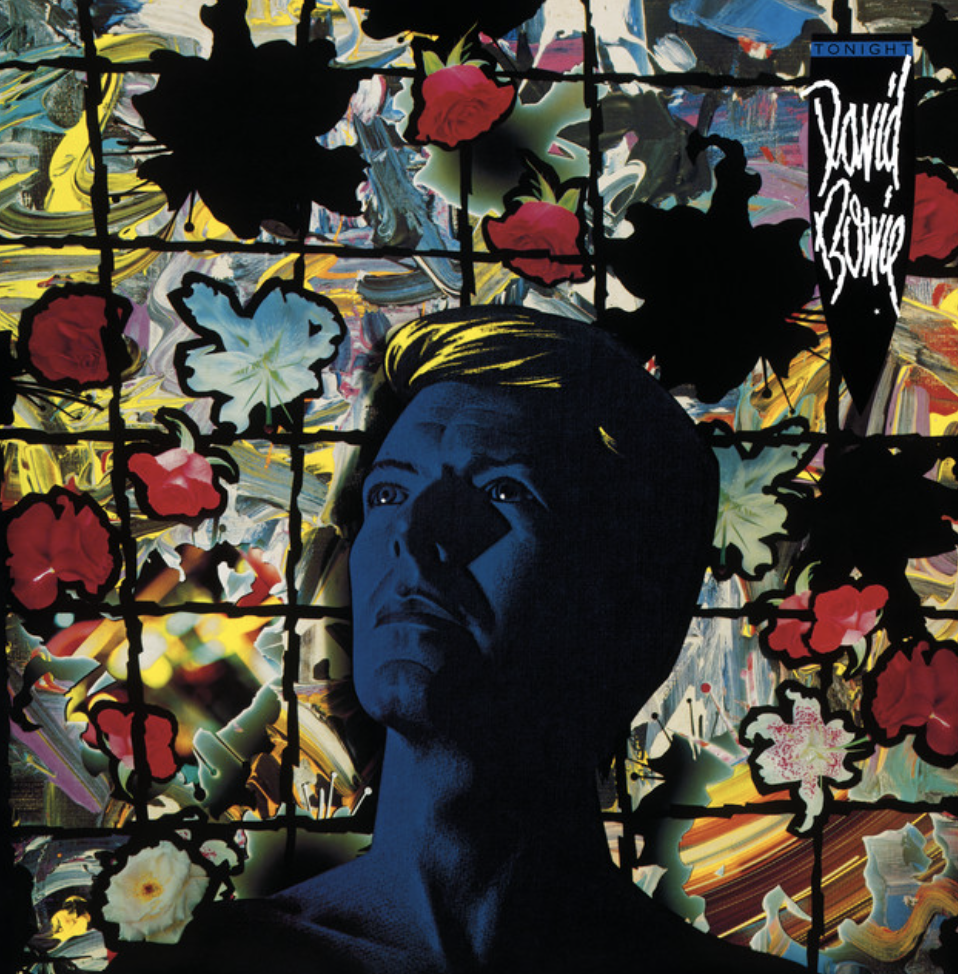
‘Keeping his hand in’ so to speak, Bowie kept up the pop-lit pretence with Tonight. Arriving straight off the back of his Serious Moonlight world tour, and with the very same backing group – including the Borneo horns troupe – the follow-up to his massively successful Let’s Dance showcase was a far patchier affair.
A filled-out, skiing obsessed, pastel shaded crooner, long since divorced from his moiety Angie, and now in custody of their child Zowie, he was less concerned with previous concepts and play acting and more interested in growing pains and heart-strung romantic indulgence.
Of course, every time ‘Davey Jones’ sported new garbs and ventured out on the road he was always acting a part. But the burgeoning film career, which began with The Man Who Fell To Earth through to his stage roles in Baal and The Elephant Man on Broadway, allowed a new avenue of total immersion for Bowie. Channelled then via celluloid, the previous year alone saw him star as a forlorn ageing vampire in The Hunger, and as the English prisoner-of-war ‘Strafer Jack’ Celliers in Merry Christmas Mr. Lawrence: that exuberant theatrical spirit was missing for the most part from his music.
However, Bowie did get to indulge himself on the ‘Blue Jean’ (perhaps Tonight’s saviour from total disaster). Well, the video/mini-movie at least, directed by Julian Temple, and stretched out to twenty-minutes, featured the singer adorned with a makeshift turban and piled-on make-up.
A new production, the largely untested Derek Bramble, and Hugh Padgham tried to mix things up, but instead lost their way as Bowie made a pig’s ear of things. The fact that his knock-about ‘comrade-in-arms’ Iggy Pop pitched in is almost irrelevant, as all the edge is erased by a fuzzy saccharine mush. Using a maudlin calypso and faux reggae backing he teamed up for countless misfires; duetting with Tina Turner on the dawdling title track (originally sung by Pop on his second solo LP, Lust For Life): ruining all his erstwhile partner’s contributions. “God Only Knows” what he was thinking by covering Brian Wilson’s (lyrics by Tony Asher) beatific masterpiece, and you also must question the addition of Jerry Leiber and Mike Stoller’s gold standard, ‘I Keep Forgettin’: thrown in as a so-called return to rock’n’roll? Hardly!
Luckily ‘Saving The Alien’ was on hand to at least stop the spread of rot. ‘All the gear and no idea’, Tonight paved the way for Labyrinth, Bowie’s forked tongue and sardonic protestations all but muted so that his crossover, inter-generational appeal could now reach even the youngest sections of society.
Gudrun Gut and Joachim Irmler ‘500m’
(bureau b) Released 8th September 2014
Doyens, and for that matter mavericks, of the more cerebral and avant-garde boarders of the German music scene, otherworldly evocative organ grinder Hans-Joachim Irmler and his visual artist musical polymath siren, Gudrun Gut, join forces for a mesmerizing electronic trip.
As a founding member of the mighty irritant, heavy mentalists Faust in the 70s, Irmler’s keyboard hovered ominously between the alien and sublime. Continuing to bear the name – existing in a disconnected alter-dimensional timeline with an alternative Faust that features fellow founder members, Jean-Hearve Péron and Werner ‘Zappi’ Diermaier – Irmler founded an eponymous named studio, used by a who’s who of the German and beyond experimental electronica and classical scenes: from Cluster to the Modern String Quartet. Whilst the man himself has collaborated both wide and far, recently releasing the Flut LP with Can’s drum titan, Jaki Liebezeit on his own label, Klangbad – set up 15-years ago to originally release continuing Faust projects, but since expanded into a full-on label and festival, duty bound in ‘nurturing’ ‘genre bending’ music.
Gudrun, no less active, moved to Berlin in the mid 70s. An early member of the industrial strength Einstürzende Neubauten, Gudrun would go on to appear in and help form a number post-punk and electronic bands, including Mania D, Malaria!, Matador and also bring out a solo debut effort, I Put A Record On, in 2007. She is also head honcho at the labels Monika Enterprise and Moabit Musik.
Together, both artists create a collection of transient progressive techno moods. Developed in two stages, the congruous collaboration first improvised at Irmler’s lightheaded inducing Scheer, Baden-Württemberg located Faust studio – the name of the album alluding to the giddy effecting altitude of the studio, 500 meters above sea level, which gave Gudrun a constant sense of dizziness – before Gudrun refined and added her own techy, scuttling and nuanced drum loops, back in her own space. These recordings would then once again make their way back to Irmler for further exploration and tweaking.
Billed as a merger between Irmler’s ‘meandering, wistfully psychedelic organ sound’ and Gudrun’s ‘reverb-laden, whispering, breathy voice’, the results of this union obscure and abstract both. Loaded instead with vapourous and metallic waltzing veils, interchangeable programmed drum patterns (mostly caustically trebly but cut with pinpoint accuracy and among some of the most sophisticated I’ve heard in ages) and esoteric percussion.
Succinctly entitled, each track is both simultaneously a concomitant lead into the next and an individual self-contained, evocative story of its own. Not that those titles give much away, but on occasion they allude to a rectification of some vague theme. For example, ‘Traum’, translated as ‘dream’, has a magical Freudian hallucinatory quality, and festive wintery charm broken up by a freakish raspy and squelching noise, underfoot.
‘Noah’ on the other hand may or may not bare any relationship to the Biblical flood survivor and great God hope for the future, being more of a ritualistic gaze at shooting stars and passing satellites. However, Irmler adds some extemporized gabbling speech, delivered by a remote transmission affected, introverted megaphone – you can even hear Gudrun off mic, laughing or encouraging Irmler, from the sidelines.
‘Früh’ translates as ‘early’, but early for what exactly we can’t quite tell, the rotor-bladed intro cylindrically bringing in a chain-reaction of busily interchanging particles and tight delay mechanics, all heading down a highway marked ‘the future’.
Always moving somewhere, either skywards from a subterranean vault or as with ‘Auf Und Ab’, ‘to and fro’ between the kinetic beats of Detroit techno, circa Rob Hood’s Metroplex days, and a sort of moody decadence. Upward and onwards then, 500m travels on the solar winds and elevates from a reverent esoteric organ produced sanctum into another great mystery.
THE MONTHLY DIGEST OF ACCUMULATED NEW MUSIC; THE SOCIAL INTER-GENERATIONAL/ECLECTIC AND ANNIVERSARY ALBUMS CELEBRATING PLAYLIST; AND ANNIVERSARY PIECES FROM THE ARCHIVES.

THE NEW\___
boycalledcrow ‘Kullau
(Mortality Tables)
A musical atmospheric hallucination and psychedelic dream-realism of a roadmap, the latest transduced-style album from Carl M Knott (aka a boycalledcrow) takes his recollections, memory card filled photo albums, samples and experiences of travelling through Northern India between 2005 and 2006 and turns them into near avant-garde transported passages of outsider art music.
Escaping himself and the stresses and anxieties that had been plaguing him since adolescence, Knott chose to pick up the road less travail(ed) after graduating; making new friends along the way, including the artist (known as James) who provided the album’s image.
If you are aware of the Chester-based composer’s work under numerous labels, and his experiments with weird folk music and signature revolving, splayed, dulcimer and zither-like guitar transformations then Kullu will – albeit more psychedelic and mirage-like – fit in nicely with expectations.
Place names (that album title refers to the village, an ancient kingdom, of ‘Kullu’, which sits in the ‘snow-laden mountain’ province of Himachel Pradesh in the Western Himalayas), Buddhist self-transformation methods (the extremely tough self-observation process of “non-reaction” for the body and mind known as “Vipassana”), Hindu and Jainism yogis (the “Sadhu”, a religious ascetic, mendicant or any kind of holy person who has renounced the worldly life, choosing instead to dedicate themselves to achieving “moksha” – liberation – through meditation and the contemplation of God) and language (the localized distinctive Kullu dialect and syntax of “Kanashi”, currently under threat) are all used as vague reference points, markers in this hallucinatory grand tour.
These captured moments and memories are often masked. It’s the sound of Laaraji stepping across such dizzying spiritually beautiful high altitudes and descending into the valley below; the brief sound of tablas and an essence of reverberating Indian stringed instruments suddenly taking on abstracted forms or reversed and melted into a hazy dream cycle. Nothing is quite what it seems; the imagination reminiscing freely and taking source recordings off on curious tangent. And yet it all makes sense, and somehow quantifies, soundtracks a landscape and period we can identify and experience. You can even work out that much of that plucked, cylindrical, pitch and speed-shifted string sound is coming from the £27 guitar that Knott bought whilst on those same travels (picked up in Dehradun to be specific).
But as with all of Knott’s peregrinations, queries, unrestricted gazes, the sound is very much his own. If you would like some idea of what we are dealing with, maybe Walter Smetak, Land Observation in colour, Fabbrica Vuota, Gunn-Truscinski Nace, and with the playfully strange psychedelic ‘Tuktuk’ ride, a merger of Tortoise, Yanton Gat and Animal Collective. Mind you, the vague echoes of piped church music on ‘Bear River’ (which “bisects” the valley region in which Kullu sits) are closer to the spiritual new age and kosmische – perhaps a hint of David Gasper. If Knott’s soundboard is anything to go by he did indeed find that much needed replenishment of the senses and escape from the mental and health pressures of stress that handicapped his progress. He’s created dreamy encapsulation of a time without burden and restriction; an experience totally free of worry and the strains of the material world out near the roof of the Earth. The results of which can be heard to have clearly been beneficial artistically. Kullu is another magical, strange and explorative soundscape/soundtrack from an independent artist quietly getting on with harnessing a unique sound and way of capturing the impossible.
Amy Aileen Wood ‘The Heartening’
(Colorfield Records)
Not in the literal sense, but the award-winning drummer, multi-instrumentalist, composer and engineer Amy Aileen Wood takes centre stage on her new album for the Colorfield Records label.
The supporting foil on a range of albums and performances with such notable names as Fiona Apple (more from her later), St. Vincent, Tired Pony and Shirley Manson, Wood was initially approached by Colorfield instigator Pete Min (the imprint that’s run out of Min’s Lucy’s Meat Market studios in L.A.) to lead her own solo outing. And although Wood’s stand-out tactile feels and descriptive drumming skills maybe on show and at the forefront, the L.A. based polymath, whilst also playing a wide worldly range of instruments, invites a number of in-demand session players and artists to collaborate, including Apple. An unsurprising choice seeing as Wood’s was not only a member of the recording band on Apple’s Fetch The Bolt Cutters album but also its co-producer. From that same circle, the “veteran” bassist Sebastian Steinberg provides pliable and subtly effective upright bass parts to a majority of the tracks on The Heartening. Apple, for her part, offers cooing “dadodahs” and assonant light dreaminess on the album’s opener, the womb-breached submersed turn Can Unlimited Klezmer ‘Rolling Stops’, and both sighs and giggles of ‘self-love’ on the gamelan cascaded self-help indie-wonk ‘Time For Everything’. Another one of the various guests’ spots goes to Kelsey Wood (relation?), who coos and ahs on the kinetic Alfa Mist-esque ‘Slow Light’.
The Heartening is essentially, if removed and discombobulated or enhanced by a palette of different styles and influences, a jazz album; especially with the addition of the L.A. based saxophonist (amongst other talents) Nicole McCabe, who pushes those personalized thematic exploratory performances and freeform expressions towards flashes of Ivor Pearlman, Alex Roth, Donny McCaslin (I’m thinking especially of his cosmic dissipations), Dave Harrington (funny enough, referenced in the PR notes) and Savoy label era Yusef Lateef.
But the musicality is far reaching, hopping around and landing at one point in Java, the next, in Eastern Europe (those stirring closed-eyes arches, sighs and solace style strings of the renowned Daphne Chen reminding me of Fran & Flora and Alex Stolze’s Galicia classical sympathies). You could also throw in breakbeats, the downtempo, the no wave and various fun fusions into the mix; everything from J Dilla to NAH, TV On The Radio, Arto Lindsay, John Zorn and Lucrecia Dalt.
Wood’s own style of drumming (though as I mentioned, the multi-instrumentalist, true to that title, plays everything from nostalgic iconic midi synths and drum pads to the West African balafon and twines flicked kalimba) is halfway busy and halfway intuitive: a mix of Valentina Mageletti and Emre Ramazanoglo.
Wood is certainly a talented player and full of ideas, as the action moves constantly between the natural and improvised. With a mix of trepidation and “intrigue” Wood’s proves an able leader and catalyst. I’d say this solo venture was the successful start to a new pathway and adventures.
Virgin Vacations ‘Dapple Patterns’
From a multitude of sources, across a number of mediums, the concentrated sonic force that is Virgin Vacations ramp up the queasy quasars and the heavy-set slab wall of no wave-punk-jazz-maths-krautrock sounds on their debut long player. With room to expand horizons the Hong Kong (tough gig in recent years, what with China’s crackdowns on the free press and student activists; installing authoritarian control over the Island) ensemble lay out a both hustled, bustled and more cosmic psychedelic journey, from the prowling to the near filmic and quasi-operatic -from darkened forebode to Shinto temple bell-ringing comedowns that fade out into affinity.
Operating in a liminal realm between the ominous and more mysteriously idyllic; changing mood, sense of place and the sound on every other track; the ensemble channel everything from the Hifiklub, Angels Die Hard and The Pop Group in a wail of bugle horns post-punk jazz (ala Blurt and a vocal-less Biting Tongues) to ‘Gomorrha’ CAN, the Dead Kennedys, film-score Sakamoto, Hawkwind and the Holy Family. That’s of course when they’re not orbiting the celestial jazz of Sun Ra merged with Herbie Hancock on the heavenly spheres and alien evoked ‘Jupiter’: even this track grows into a manic nightmare of broken distorted radio sets.
The trip is a cosmic range of ideas, some driven others far more dreamy, psychedelic and even erring towards the orchestral – there’s plenty of bulb-like note-twinkled glockenspiel to go around too. It begins with a krautrock expulsion of dark materials and ends on a Tomat-like – in union with the Acid Mothers – dissipation of enveloped interplanetary temple vibrations. This only touches the surface however, and Virgin Vacations take flights of fantasy regularly whilst maintaining a heavy-pulsation of uncertainty. Energy is channeled in the right direction, with a force that manages to tap into the anxious and radical whilst finding air to breathe and dappled patterns spread of the title.
he didnt ‘nothingness manifested’
(Drone Alone Records) 24th May 2024
Granular gradients, frazzled fissures and currents appear in the thick set wall of drones emitted by the Oxfordshire-based electronic musician, guitarist and producer’s new numerically demarcated album.
Reading into the monolithic slab sided scale and ambitions of he didnt’s manifestations, these, mostly, long walls of whined, bended, looped, abrasive and sustained guitar and electronic waveforms elicit the feelings of landscape: one that can feel simultaneously overbearing, grand but in motion. Metallic filaments or the pitter-patter of acrid rain, ‘nothingness manifestations III-V’ builds a sonic picture over its duration of some almost alien atmospheric enveloped weather front – reminding me of Hans Zimmer’s bits on Blade Runner 2049, His Name Is Alive, Fiocz and a venerated Tangerine Dream. ‘nothingness manifestations II’ is similar with its alien evocations yet near bestial and slithery too – I’m hearing vague signs of Faust, Sunn O))) and even Spaceman 3 for some reason. Perhaps picking up inspiration from one previous support slot, he didnt channels The Telescopes, minus Stephen Lawrie’s drudgery vocals, and a touch of the J&MC on that heavy meta hewed opener.
But there’s holes too in what is more like a mesh block of wielding drones, with a glimmer, a movement of light audible in the grainy textured fabric around the self-described “void”. In short, something from nothing, materialisations from patterns in the sonic concrete that may just evoke something much bigger.
Ziad Rahbani ‘Amrak Seedna & Abtal Wa Harameyah’
(WEWANTSOUNDS)
Vinyl reprisal specialists WEWANTSOUNDS, in-between reviving and offering remastered runs of cult music from Japan, Egypt and elsewhere, have been picking their way through the back catalogue of the Lebanese polymath Ziad Rahbani (musician, composer, producer, playwright, satirist and activist).
Following on from the crate diggers’ choice 80s Middle Eastern disco-funk-balladry-soul-jazz-Franco-Arabian classic Houdou Nisbi (released by the label in 2022), the Amrak Seedna & Abtal Wa Harameyah combined moiety of congruous theatre play soundtracks offers a generous helping of performance choruses, instrumental theme tunes, ad spots and variations of the main signatures.
Whilst the ongoing sectarian driven civil war (between 1975 and 1990) raged, there was a surreal duel existence of stoicism, the Lebanese people carrying on with life in the face of religious rivalry, unprecedented violence, and infamous acts of massacre (a 150,000 fatalities, maybe more). Importantly Lebanese artists, musicians continued to create – some from abroad as part of a mass exodus (estimates are that a million citizens left the country to escape the horror during that period). Disarming as the musical motifs, dancing rhythms and messages was, cultural idols like Ziad (famously the scion of the feted musician and national star Assi Rahbani and the legendary celebrated siren Fairuz) were fervently political. And among his many talents, Ziad would collaborate with the most vocal of them, including the pioneer singer-songwriter of Arabian political song, Sami Hawat, who appears alongside a whole cast of other notable vocalists on this double helping of stage performances.
Written by fellow Lebanese playwright and actor Antoine Kerbaji, the main acts and catalysts for Ziad’s inspired fusion of the Occidental and Middle East, speak of the times in which they were created. Originally released on the Beirut-based cult label Relaxin in 1987, the emotions run high as the streets outside were paved in bloody retribution along the lines of not only religion (the Christian minority’s rule of decades, and elitist nepotism finally coming to a crashing head as the country’s demographic shifted to a Muslim majority, inflated by two migrations and expulsions from Israel of sizable Palestinians populations in the late 1940s and 60s) but also Cold War divisions. The passion is evident in the various cast or male/female led choruses of yearning expression and more swooning allurement – sometimes almost reminding me of Bollywood, and the dance or romance, courtship between a male and female lead.
Musically however, this is a mixed assortment of near classical piano motifs, Arabian stringed instrumental segments, the new wave, disco and funk fusion and movie soundtrack influences. Glaringly an obvious steal, there’s the recurring use of John Barry’s 007 signature score across a large slice of these tracks. Adopting that most famous iconic mnemonic and its variations, Ziad seems to pinch it back from its own Western takes on the music from his country and the wider region. Marvin Hamlisch dabbled in this area for The Spy Who Loved Me – although his take was on Egyptian disco -, as to did Bill Conti – a mix of Med sounds for For Your Eyes Only. So much of this reminds me of both those top rate composers, especially the near thriller style production and clavichord MOR funky fusion sounds of ‘Al Muqademah 1 (Introduction 1)’. Later on it sounds like Ziad riffs on Hamlisch’s score for The Sting on the relaxed jazzy vaudeville saloon barrel organ reminisce ‘Kabbaret Dancing’.
Away from the 007 themes there’s hints of John Addison and Michael Legrand on the Franco-Arabian boogie musical number ‘Al Piano’, and Richard Clayderman on the beautiful romantic-esque flourish of piano scales, runs and lucidity ‘Slow’. The music slips into the Tango at will, or transports the listener back to the noir 1930s. Although, ‘Mashhad Al Serk’ is a strange one, resembling funky calypso transmogrified with reggae and the new wave. I’m at a loss on occasion to describe what it is I’m hearing, as the palette is so wide and diverse. But in summary, both albums offer a cabaret and theater conjecture of fluidity that takes in the Middle East and fuses it with Western classicism, movie and TV themes, funk and 80s production signatures. Previously only ever released in the Lebanon, WWS have done the decent thing and revived these stage play soundtracks, offering us all a chance to own these expressive and enlightening recordings.
THE SOCIAL PLAYLIST VOLUME 86\____
The Social Playlist is an accumulation of music I love and want to share, tracks from my various DJ sets and residencies over the years, and both selected cuts from those artists, luminaries we’ve lost and those albums celebrating anniversaries each month.
Running for over a decade or more, Volume 86 is as eclectic and generational-spanning as ever. Look upon it as the perfect radio show, devoid of chatter, interruptions and inane self-promotion.
In this edition I’ve chosen to mark the 50th anniversaries of Sparks Kimono In My House, Bowie’s Diamond Dogs, Slapp Happy’s Self-Titled – but referred to as Casablanca Moon, after the opening track -, and Popol Vuh’s Einsjager & Siebenjager albums. A decade closer, and into the 80s, I’ve included tracks from my favourite French new wave spark and cool chanteuse Lizzy Mercier Descloux and her Zulu Rock LP of ’84, plus a slightly different performance of Echo & The Bunnymen’s ‘The Killing Moon’ (the original single also included on the Liverpool’s band’s Ocean Rain of course). Another leap closer, and its 30th anniversary nods to the Beastie Boys ambitious double-album spread Ill Communication, Jeru The Damaja’s The Sun Rises In The East, and The Fall’s Middle Class Revolt. The final anniversary spot this month goes to our very own Brian ‘Bordello’ Shea, or rather the whole Shea brood and their might lo fi cult vehicle The Bordellos. The group’s summary of the world and music industry, Will.I.Am, You’re Really Nothing, is ten years old this month.
We lost even more iconic mavericks and leaders of the form this last month or so. Grabbing, quite rightly, the most attention is the loss of Steve Albini. The legacy is ridiculous, and to be honest, far too many people have already dedicated the space for me to now chip in – I will be frank, where do you start? And so I have chosen to give him a mention but not to pay the homage due. We also lost the last remaining member of the motor city five, Dennis “Machine Gun” Thompson, who pummeled and, quite literally, kicked out the fucking jams. I’ve already made note and selected tracks from their catalogue when poor old Wayne Kramer passed just a few months back, and also their manager – for a time between drug busts – John Sinclair. The Detroit misfits are no more. What a sad state of affairs.
I have however chosen to mark the passing of UK rap icon MC Duke and king of twang, and one of the most important, influential guitarists of all time, Duane Eddy.
There’s a couple of “newish” selections – tracks that I either missed or didn’t get room to include in the Monolith Cocktail team’s Monthly Playlists (next edition due in a week’s time) – from Masei Bey and Martina Berther which I hope will prove intriguing. The rest of the playlist is made up of a smattering of tracks from Tucky Buzzard, Prime Minister Pete Nice, The Bernhardts, Nino Rota, It It, Clive’s Original Band, The Four King Cousins and more.
TRACK LIST________
Sparks ‘Barbecutie’
Tucky Buzzard ‘Time Will Be Your Doctor’
Haystacks Balboa ‘Bruce’s Twist’
David Bowie ‘1984’
Masei Bey ‘Beat Root’
Beastie Boys Ft. Q-Tip ‘Get It Together’
Jeru The Damaja ‘You Can’t Stop The Prophet’
Prime Minister Pete Nice Ft. Daddy Rich ‘Rat Bastard’
MC Duke ‘I’m Riffin 1990 Remix’
Helene Smith ‘Willing And Able’
The Bernhardts ‘Send Your Heart To Me’
Tala Andre Marie ‘Wamse’
Lizzy Mercier Descloux ‘Dolby Sisters Saliva Brothers’
Orchestre regional de Segou ‘Sabu Man Dogo’
Slapp Happy ‘Casablanca Moon’
Nino Rota ‘L’Uccello Magico’
Duane Eddy ‘Stalkin”
Dreams So Real ‘History’
Echo & The Bunnymen ‘The Killing Moon – Life at Brian’s Version’
The Bordellos ‘The Gospel According To Julian Cope’
The Fall ‘Middle Class Revolt’
It It ‘Dream Joel Dream’
David Bowie ‘Rock ‘n’ Roll With Me’
The Bordellos ‘Straight Outta Southport’
Clive’s Original Band ‘Oh Bright Eyed One’
Jodie Lowther ‘Cold Spell’
Martina Berther ‘Arrow’
Fursaxa ‘Poppy Opera’
Popol Vuh ‘Wo Bist Du?’
The Four King Cousins ‘God Only Knows’
ARCHIVES\_____

When gracing the Monolith Cocktail with his very own column of reviews was still years away, Brian “Bordello” Shea was featured for his own music as part of the mighty lo-fi malcontents The Bordellos – Brian one of the co-founding Shea sibling forces behind that celebrated cult outfit. Still for my money one of their finest moments on record, the group’s Will.I.Am, You’re Really Nothing (released at a time when that annoying, talentless opportunist was all over the telly and in the charts in the UK) diatribe is ten years old this month. To celebrate, reprise that essential songbook, I’m once more sharing my original review from 2014. Every word of it still, unfortunately, still holds today.
The Bordellos ‘Will.I.Am, You’re Really Nothing’
(Small Bear Records) Released 31st May 2014
It was Blur, in one of their only true flashes of inspiration, who came closest to summing up the times with their dejected conclusion that, “modern life is rubbish”. That was the early 90s, but depending on how long in the tooth, worn-down and jaded you are, every age can be viewed with the same disappointing sigh of resignation.
Yet, surely the present times take some beating, at least to us, the self-appointed custodians of the past, who remember an age when the culture seemed…. well, at least exciting, linear and comprehendible, instead of appropriated without thought or context, screwed-over and manipulated for largely commercial results, and slotted in to a handy off-the-peg lifestyle choice. Pop has eaten itself, with the lifecycles of trends and music becoming ever shorter.
It is with all this in mind that The Bordellos set out their manifesto. Leveling their criticism at commercial radio and TV especially, they aim their guided missile attacks at the harbingers of the Ed Sheeran topped Urban/Black music power lists, and what seems more and more like the UK publicity wing of conservatism, the BBC. The St. Helens, via a disjointed Merseybeat imbued lineage, family affair replace the “happy-go-lucky” lightweight and deciding suspect womens rights champion, totem of Pharrell Williams, Will.I.Am and all his partners in floppy platitude pop, rock and folk with the arch druid of counter-cultural esotericism and miscreant obscure musical sub-genres (Kraut to Jap via Detroit rebellious and experimental rock) Julian Cope. Grinding out a dedicated epistle to Cope, the trio’s sermon ‘The Gospel According To Julian Cope’ prompts a road to Damascus conversion to the spirit of rock’n’roll, in all its most dangerous guises.
De facto idol, Mr.Cope, pops up again on ‘My Dream Festival’, which as the title suggests is a list of the ideal, once in a lifetime, free festival lineups of lineups; read out in a quasi-Daft Punk ‘teachers’ style bastardized litany to an accompanying Casio pre-set drum track and watery effects. The Casio rhythm pre-sets and occasional sound bites come in handy again on the jaunty, deadpan disco jolly, ‘Elastic Band Man’ – a transmogrified Human League meets John Foxx – and on the broken-up, Robert Wyatt emotional drudge, ‘Between Forget And Neglect’.
Despite going at it hammer and tongs on their anvil-beating Cope Gospel, The Bordellos latest long-player protestation is a forlorn and intimate downbeat record. They can still be relied upon to rattle off a list of grievances and opprobrious pun harangued song titles: from the LP’s play-on-words adopted The Smiths song, reworked to accommodate a big fuck-you to that irritable twat, Will.I.Am, to name-checking another hyperbole anomaly of our Youtube, Google, Facebook, Twitter masters’ bidding, the no less frustratingly lame ‘Gangnam style’ viral – joining the call from last year’s Bring Me The Head Of Justin Bieber EP, for another public execution.
But it’s with a certain lamentable introspection that they also tone the vitriol down to attend to matters of the heart: The kiss-me-quick, misty-eyed ballad to love on a northern coast seaside town, ‘Straight Outta Southport’, and the Hawaiian slide guitar country rock ode, ‘The Sweetest Hangover’, both, despite their tongue-in-cheek titles, bellow a fondness for lovelorn adventures and plaintive break-up regret; proving that despite the bellicose calls for the corporal punishment of the foppish elite and its commercial pop music stars, there is a tender side to the group.
Sounding like it was recorded on an unhealthy dose of Mogadon, Will.I.Am, You’re Really Nothing is a composed grumble from the fringes of a battered musical wilderness. A last cry if you will from the pit-face of rock’n’roll.
Also this month, Bowie’s repurposed Orwellian theatre production Diamond Dogs reaches its 50th anniversary.

David Bowie ‘Diamond Dogs’
(RCA) 1974
“As they pulled you out of the oxygen tent, you asked for the latest party…” And with that the future dystopian, biota canine, leapt from its slumber “onto the streets below”: howling for more.
Bowie never really wanted to be a musician as such: or at least not wholly a musical act. His destiny lied with the grease paint of theatre and allure of cinema. Diamond Dogs of course allowed him to create a spectacle, melding the two disciplines together.
Fate would force the original concept to morph into the achingly morbid and glam-pop genius we’ve now come to love: a planned avant-garde, ‘moonage’, treatment of Orwell’s revered novel 1984 was rebuked by the author’s estate.
Still those augural references to state control and totalitarianism are adhered to throughout – both lyrically and in the song titles –, but attached to visions of a new poetic hell!
The loose, all-encompassing, metaphysical language may promise melancholy and despair, yet it also knows when to anthemically sound the rock’n’roll clarion call too.
Decreed as the leading highlight’s of the album by the majority –
Diamond Dogs (single), Rebel Rebel (single), 1984
Pay attention to these often overlooked beauties –
Rock’n’Roll With Me (single), Sweet Thing
Hi, my name is Dominic Valvona and I’m the Founder of the music/culture blog monolithcocktail.com For the last ten years I’ve featured and supported music, musicians and labels we love across genres from around the world that we think you’ll want to know about. No content on the site is paid for or sponsored and we only feature artists we have genuine respect for /love. If you enjoy our reviews (and we often write long, thoughtful ones), found a new artist you admire or if we have featured you or artists you represent and would like to buy us a coffee at https://ko-fi.com/monolithcocktail to say cheers for spreading the word, then that would be much appreciated.
PLAYLIST/ARCHIVES: DOMINIC VALVONA

The Monolith Cocktail Digest is both home to Dominic Valvona’s long-running eclectic, cross-generational Social Playlist, and a platform for celebrating significant anniversary albums and, more sadly, commemorating those artists we’ve lost in the last month, with pieces from the Archives.
Starting with the 81st edition of that playlist, Dominic has curated a selection of past glories, music from his own collection, reissues, newish tracks and a smattering of choice tunes from albums that have reached either a 60th, 50th, 40th, 30th, 20th or 10th anniversary. In that camp, there’s nods to Yoko Ono’s Feeling The Space, John Lennon’s Mind Games, Alejandro Jodorowsky’s Holy Mountain Soundtrack (see the archive spot piece further down the post) and one of the crowning achievements in documentary, The World At War. All of which have reached the 50th landmark, released and aired as they were in 1973.
A decade later and the electronic/synthesized progenitor Dieter Moebius released both the solo Tonspuren offering and, in communal partnership with krautrock/kosmische pioneer producer Conny Plank and Guru Guru’s maverick drummer-leader Mani Neumeier, the Zero Set albums: both of which have been repackaged and reissued this month. From the same year of 1983, there are tracks from The Rolling Stones’ patchy Undercover and The Fall’s rambunctious magnificent Perverted By Language LPs.
Into the 1990s, and Dominic has chosen representative choices from the Staten Island branch of the shaolin school of kung-fu hip-hop, the Wu-Tang Clan’s classic debut Enter The Wu-Tang (36 Chambers); A Tribe Called Quest’s seminal Midnight Marauders; Bowie’s less than universally championed The Buddha Of Suburbia; and Ritchie Hawtin’s highly influential Plastikman alter-ego intelligent techno masterpiece, Sheet One – another recent reissue, repackaged release.
The rest of the Social features a couple of recent-ish tracks from Lisa Butel and foil Brent Cross, and Royal Flush. And from across the decades and genres, music by Tyvek, Ron House, Mircea Florain, Kong Ney, Crossbones, Lazy Smoke and more… In the Archive section this month, there’s a short piece on Jodorowsky’s alchemist tapestry of esotericism, the Holy Mountain Soundtrack, and from a decade ago, plucked from the back pages, a review of M.I.A.’s Matangi.
TrackList:::
The Rolling Stones ‘Undercover’
The Fall ‘Neighbourhood Of Infinity’
Voluntarios da Patria ‘Io Io’
Tyvek ‘Circular Ruins’
Ron House ‘New Maps Of Hell’
John Lennon ‘Tight A$’
A Bolha ‘E So Curtir’
Yoko Ono ‘Woman Power’
Mircea Florian ‘Harap Alb A Treia Oara Ratacit In Padure’
Jackson Conti ‘Nao Tem Nada Nao’
Moebius/Plank/Neumeier ‘All Repo’
Plastikman ‘Koma’
A Tribe Called Quest ‘We Can Get Down’
Wu-Tang Clan ‘Method Man’
Royal Flush ‘B.O.B.’
Crossbones ‘You Always Get Me Wrong’
Alejandro Jodorowsky ‘Trance Mutation’
Kong Ney ‘Bom Pet’
Luiz Eca ‘La Vamos Nos’
Dick Khoza ‘WD 46 Mendi Road’
Travel Agency ‘Cadillac George’
Danny & Dusty ‘Baby We All Gotta Go Down’
Baker Gurvitz Army ‘The Dreamer’
Under Milkwood ‘Empty Room’
Kaira Ben ‘Mousso Loule’
Moebius ‘Contramio’ Piotr Figiel ‘Skrawek Przestrzeni’
David Bowie ‘Ian Fish UK Heir’
Baaska & Scavelli ‘The Green Hills Of Earth’
Lazy Smoke ‘Sarah Saturday’
Lisa Butel & Brent Cross ‘Vox Canon’
The City Of Prague Philharmonic Orchestra ‘End Theme From The World At War’
ARCHIVE SPOTS

Alejandro Jodorowsky, Don Cherry and Ronald Frangipane ‘Holy Mountain Soundtrack’ 1973
Never formally released at the time of the film itself, the soundtrack to Alejandro Jodorowsky‘s esoteric kool-aid psychedelic movie, The Holy Mountain, has since languished in folklore, only to be bundled out at a later date as part of subsequent DVD reissues. I myself have relied upon the good-nature of others to obtain my copy.
Though the ins-an-outs of musical accreditation remain somewhat recondite and obscure – Jodorowsky taking the lions share –, the well-revered avant-jazz cornetist, Don Cherry, and composer Ronald Frangipane (credits include playing on The Midnight Cowboy and Barberella scores) both played an integral and major part in playing and producing this potted spiritual and alchemical mind trip. Meandering eastern dirges and fluted love swanned serenades meet cult funky B-movie cuts and the less memorable vignettes, used to create the enlightened scenes and atmospherics. ‘Trance Mutation’ for my money, entrancing and ritualistically Kabbalah and Eastern arts/Tibetan hums as it is, cries Cherry. But don’t expect anything close to revelatory; as this soundtrack is for the most part mediocre.

M.I.A. ‘Matangi’ 2013
(Taken from Our Daily Bread 022)
Not so much a klaxon sounding clarion call as a reaffirmation of the voracious M.I.A. manifesto, the latest ‘hyperbolic’ riot of polygenesis colour and sound, Matangi, is quite a measured, translucent, and sparkly in places, personal affair. Mellowed somewhat by the delay in its release by more than a year (at one point M.I.A. threatened to leak the record online, frustrated at the label’s negative response – apparently it wasn’t dark enough for them!).
But fear not as that same explosive ennui driven mix of earth-shaking bhangra, boombox subversion and Arabian chic – as evidenced on the last three records – still permeates and threatens to piss on the apathetic parade: Indecorous to a fault, yet dangerously alive and exciting.
Following in the family name tradition of the last three albums, Mathangi ‘Maya’ Arulpragasam explores the etymological source of her own namesake, the Hindu goddess Matangi. Found amongst the ‘untouchables’ – the poor and destitute – in the slums, Matangi chose to live away from the temples of the gods, to gain a deeper understanding and knowledge of the lower castes: the salt of the earth so to speak. The goddess of inner thought as well as music, her mythical presence and attitude are used as a reference and guide throughout, channeled in the more meditative escapist passages.
A perfect figurehead and encapsulated spirit of the times, a cross-pollinated artist-musician-polymath character seemingly congruous with the Internet, M.I.A. is both an advocate and fierce foil of the digital world. The burgeoning promise of a carefree, interconnected, community, richly educated and informative, has rather disappointingly been hijacked by a camarilla of ‘facilitators’, corporations and an over-zealous state. Intent it seems on eroding free speech and free movement, imposing instead a military style control and surveillance on our lives. In short…. we’ve been sold down the river.
None of this is new to M.I.A. of course, already a well publicised supporter of Wikileaks and its defacto – exiled to the Ecuadorian embassy in London – leader Julian Assange (who recently opened for a M.I.A. performance in New York, via a skype link, and is said to have contributed to the schizoid dubstep Matangi LP track, ‘atTENTion’). But with the ongoing revelations of Edward Snowdon and the increasing torrid of abusive vitriol from her detractors (mostly it must be said from America), there’s more than enough material to transduce into anger, even if M.I.A. and her augury warning, ‘THE MESSAGE’ (the opening gambit from the 2010 MAYA LP), pretty much summed it all up: “iPhone connected to the internet/ Connected to the Goggle/ Connected to the government.”
Using a similar template then, M.I.A. begins with a mantra of intent, delivered over a stuttering electric current: “Ain’t Dalai Lama, Ain’t Sai Baba/ My words are my armour, and you’re about to meet your kharma.” From then on in she amorphously twists and turns, from protestation to romantic stomp, cutting up and reworking R&B, pop and Hip Hop into ringside swagger (‘Only 1 U!’), bombastic gangsta strut (‘Warriors’) and bubblegum dancehall (‘Come Walk With Us’).
Hardly light on rhetoric – whether collecting all the data of hate and criticism, leveled against her (including the ‘one-finger’ Super Bowl debacle, N.Y. Times spread and accusations of provocation), or banging heads on the lack of originality in culture and railing against our failure to fight the systems that seek to turn everything into a humongous pile of shit: “If you only live once, why keep doing the same shit?”
‘Bad Girls’, ‘Bring The Noize’ and ‘Y.A.L.A.’ have all previously been made public in the long run-up to this fourth LP – the original Bad Girls in incubated form was first aired on the 2010 mixtape, Vicki Leeks, later to be accompanied by a car-crazy, Sheiks-do-Hip Hop wild video in 2012. This triumvirate of revved-up ‘nasty’ tracks more or less gives the album its most hardened, prowling highlights. But as the smoke from those riotous, sophisticated joints clear, M.I.A. choses a more indolent swaying direction (well less threatening anyway), her rhyming couplets smoothed and laid back on the neon lit, Siam charmed, ‘Come Walk With Me’, and lamentably swinging on the bookended pairing of ‘Exodus/Sexodus’.
In case you never got the admonitory memo or understood the ‘Lady of Rage’ the first, second and third time around, she once again rattles off another dictate and denunciation for you, whilst raising the game for those who seek to follow in the vapour trail. M.I.A. proves to be the most exhilarating, provocative artist to crossover into the general psyche, without losing their soul; able to roll with the punches and at least stand for something in a mixed-up world of contrary stifled debate and fucked-up moral objection to all the wrong things.
Hi, my name is Dominic Valvona and I’m the Founder of the music/culture blog monolithcocktail.com For the last ten years I’ve featured and supported music, musicians and labels we love across genres from around the world that we think you’ll want to know about. No content on the site is paid for or sponsored and we only feature artists we have genuine respect for /love. If you enjoy our reviews (and we often write long, thoughtful ones), found a new artist you admire or if we have featured you or artists you represent and would like to buy us a coffee at https://ko-fi.com/monolithcocktail to say cheers for spreading the word, then that would be much appreciated.
The October Digest: Social Playlist Volume 80, Tamikrest, Billy Cobham and David Bowie…
October 18, 2023
ANNIVERSARY ARCHIVE SPOTS AND THE 80TH EDITION OF THE MONOLITH COCKTAIL SOCIAL PLAYLIST: DOMINIC VALVONA
Welcome all to the October edition of the Monolith Cocktail Digest, an archival driven column that celebrates anniversary albums each month and marks those special icons we’ve lost. In recent months this column has also become the home of the long-running cross-generational/international eclectic Social Playlist, which reaches its 80th edition this month.
Plucked from those back corridors of the blog’s archive, there are original pieces on the Tuareg desert blues-rockers Tamikrest and their 2013 album, ‘Chatma’, jazz drummer extraordinaire Billy Cobham’s Spectrum (50 years old this month), and David Bowie’s Reality (unbelievably already 20 years old).
The Social meanwhile features tracks from all three of those featured records, plus 50th anniversary mentions for The Who (Quadrophenia) and Elton John (Goodbye Yellow Brick Road), a 40th mention for Bob Dylan (Infidels), and 30th mentions for the Leaders Of The New School (T.I.M.E.), Black Moon (Buck Em Down) and Teenage Fanclub (Thirteen). Amongst that smattering, there’s choice tunes from Henry Franklin, Cee-Rock, David Liebe Hart, Dog Faced Hermans, Elias Hulk, Prix, Sofia Rosa and many more special selective tracks.
FULL TRACK LIST IS AS FOLLOWS::::….
Tamikrest ‘Djanegh Etoumast’
Pinky-Ann-Rihal ‘The Indian Dance’
Dog Faced Hermans ‘How We Connect’
Bob Dylan ‘Man Of Peace’
The Meditation Singers ‘Look At Yourself’
Billy Cobham ‘Spectrum’
Henry Franklin ‘Venus Fly Trap’
Leaders Of The New School ‘Connections’
Black Moon ‘Buck Em Down’
Kid Acne & Spectacular Diagnostics ‘Batman On Horseback’
Cee-Rock, Stealthguhn & Don Jazz ‘Linden Boulez’
officerfishdumplings ‘Divine Procrastinator’
David Liebe Hart & Th’ Mole ‘Michael Likes To Smoke His Weed’
Thiago Franca, Marcelo Cabral & Tony Gordin ‘Parte 1, Pt. 2’
Missus Beastly ‘Gurus For Sale’
Elisa Hulk ‘Ain’t Got You’
David Bowie ‘Never Get Old’
M ‘Baby Close The Window (12” Version)’
The Research ‘Feels Like The First Time’
Teenage Fanclub ‘The Cabbage’
Rabbit Rumba ‘Don Toribio’
Sofia Rosa ‘Kumulundu’
Tabaco ‘San juan Guaricongo’
Dick Stusso ‘Haunted Hotel’
Pin Group ‘Hurricane Fighter Plane’
The Spells ‘Number One Fan’
Prix ‘Girl’
Stiv Bators ‘Little Girl’
Agnes Strange ‘Give Yourself A Chance’
The Who ‘The Real Me’
Shyane Carter & Peter Jefferies ‘Randolph’s Going Home’
Roger Tillison ‘Loving You Is Sweeter Than Ever’
Elton John ‘The Ballad Of Danny Bailey (1909-1934)’
ARCHIVAL SPOTS/ANNIVERSARY CELEBRATING LPS
50th Anniversary Of Billy Cobham’s Spectrum
Moving on into the seventies with the voracious fusion of jazz, funk and the far out, former US army conscript Billy Cobham allowed his drum kit to roam wildly: and take a fair old pummelling in the process.
Leaping from the starched fatigues of conformity into apprentice slots with Miles Davis (famously on the Bitches Brew opus, and sitting-in at the Isle Of Wight Pop Festival of 1970) and Horace Silver, Cobham went on to form the influential Mahavishnu Orchestra: stretching the limitations of jazz all the way.
Whilst still a member of the MO (he’d leave for the first time in 1973, before returning for the MK II incarnation in the 80s), Cobham recorded his solo debut Spectrum; an unequivocal energetic mix of unwieldy cosmic slop guitar, thundering and rapid ricocheting double kick peddling drums, and 12-bar jazz gone native!
Featuring the arching, noodling rock guitar solos and lead that would become a familiar presence to the Cobham sound, Tommy Bolin (later to join Deep Purple), is tasked with really giving it some gospel. Sampled by future generations – Massive Attack fans will recognise Status – Cobham’s first album also drifted across the pond to Europe – Krautrock connoisseurs may pick up on the relationship to the music of Mani Neumeier’s Guru Guru (especially after their UFO LP). No matter how sophisticated, or ‘twiddly muso’, Cobham always inserted some humour into his work, from the video-game effects and title of Snoopy’s Search to the general free spirited nuttiness of some of the playing itself.
A great marker, laid down for the generations to come.
DAVID BOWIE’S REALITY IS TWENTY

Making the most of his creative flow, David Bowie’s next critically assiduous, soul-searching suite would draw from the ‘oil well’ of despair.
The hyper ‘reality’ that permeated throughout this sophisticated album reflected a woeful climate, specifically the unfolding drama in the Middle East. Allusions to neocon diplomacy, nepotism of the most colonially threatening kind and the crescent of Islam are interspersed with more pining romanticized themes of loss.
Assembling a ‘dream team’, Bowie’s backing group once again swelled with the talents of Mike Garson (piano), Tony Visconti (production duties), Earl Slick (guitar) and Carlos Alomar (guitar) – the latter two, both veterans of Young Americans. Slick and Visconti would of course go onto to form part of The Next Day recording hub.
That quality and old camaraderie proved every bit as tightly dynamic, Reality unequivocally the thin white duke’s best work since Earthlings.
Again, Bowie insists on appropriating or at least resorting to past endeavours, recalling Outside on his sardonic hustled cover of Jonathan Richman’s ‘Pablo Picasso’; Tonight on the samba weepie ‘Days’; and Black Tie White Noise on the thinly veiled indicative Dick Cheney putdown, ‘Fall Dog Bombs The Moon’: Bowie at his bleakest, “The blackest of years that have no sound, no shape, no depth, no underground/What a dog!’ But full marks for trying to get a grip of George Harrison‘s ‘Try Some, Buy Some’; made most famous (and infamously) by a reluctant Ronnie Spector.
An augury of what was to follow in 2013, the thumping kickdrum, rollicking anthem ‘Never Get Old’ has a resounding statement of intent from the artist: “Never ever gonna get old!” In character he may be, but Bowie’s cry against mortality is a personal one, echoed in the present. Unfortunately bowing to the so-called market forces – regardless of artistic values and sanctimonious vitriol, he always had an eye for making dough – Bowie lent the tune to mineral water brand Vittel, appearing in an advert which has an uncanny resonance with the ‘The Stars (Are Out Tonight)’ video.
For various reasons outside his control, namely the poor sods heart attack, Bowie had to wait eight years to produce another volume of reactionary post-millennium blues. The Next Day, despite the decade-long absence from recording, picks up where Reality left off.
TAMIKREST’S CHATMA IS TEN YEARS OLD ALREADY
Mali’s rich musical culture isn’t confined to just the central and southern regions of the country, the northern Tuareg desert lands also evoke some passionate, soulfully rhythmic surprises too. Despite the unfavourable attention meted out to the Tuareg community in recent years (there cause for autonomy hijacked by far less scrupulous zealots for there own religious and political ends), many voices from that community have offered their services to peace. One example is the nomadic, sub-Saharan rock’n’rollers Tamikrest, whose Hendrix meets desert blues template proves there are two sides to every story; the new album, Chatma – which translates as ‘sisters’ – a tribute to the courage of the Tuareg women and spirit of a people.
Forced into exile in Algeria, Tamikrest plaintively, but with an ear for a good melody, reflect on the imposition of Sharia law – by those outsiders who at first lent help to the course but soon dominated with their own destructive agenda – and the loss of there heritage. Producing beautifully cooed laments with an infectious kick, but also deftly crafting meandrous, ethereal, desert songs, the group can transverse the grooviest of Bedouin rhythmic funk anthems with ponderous soundscapes – ‘Assikal’ is pure Ash Ra Temple meets atavistic sand dune eulogy.
Separated into many a ‘world music’ best of list this year, the Monolith Cocktail sees no such reason for such boundaries or demarcated categorising; Chatma is simply a wondrous piece of ‘head music’.
The April Digest 2023: Voodoo Drummer, African Head Charge, Marta Salogni and Tom Relleen, Social Playlist #75, Bowie, Sakamoto…
April 11, 2023
New Music on our radar, archive spots and now home to the Monolith Cocktail “cross-generational/cross-genre” Social Playlist
Words/Put Together By Dominic Valvona

A new thread, feed for 2023, the Digest pulls together tracks, videos and snippets of new music plus significant archival material and anniversary celebrating albums or artists -sometimes the odd obituary to those we lost on the way. From now on in the Digest will also be home to the regular Social Playlist (this month reaching its 75th edition); this is our imaginary radioshow, an eclectic playlist of anniversary celebrating albums, a smattering of recent(ish) tunes and the music I’ve loved or owned from across the decades.
April’s edition also features new music from the VOODOO DRUMMER, Peggy Seeger, Marta Salogni & Tom Relleen, Gabrielle Ornate, African Headcharge and Vukovar. And in the Archives there’s a trio of Bowie album celebrations; the 50th anniversary of Aladdin Sane, 40th of Let’s Dance and 30th of Black Tie White Noise (all released in the April of their respective years).
NEW MUSIC IN BRIEF
VOODOO DRUMMER ft. Blaine L. Reininger & Martyn Jacques ‘Aristophanes’ FROGS’
Inspired by he Ancient Greek playwright Aristophanes’ comedic play of the same title, Antiquity beckons on a new triumvirate set of movements from the Greek artist VOODOO DRUMMER and his contributing foils. On this Athenian mythological imbued single of neoclassical, the atavistic, avant-garde, theatrical and yet hopping playfulness, the drumming alter ego is joined by Stavros Parginos on cello, Blaine L. Reininger (of Tuxedomoon note) on violin and Martyn Jacques (Tiger Lillies) echoing the famous line from the play.
The microcosm style odyssey follows the liberating God Dionysus who, despairing of the state of Athens’ tragedies, travels to the underworld of Hades to bring the playwright Euripides back from the dead. And so we begin this adventure to the sounds of rattlesnake percussion, Hellenic pitter-patters, rolling drum rhythms and the plucks of 5th century BC Athens, before rowing across a splish-splashing pizzicato and majestically bowed lake (complete with a croaking frogs chorus), and a sort of Faust meets strangely quaint experimental late 60s vocal. The final movement strikes up a controlled tumult of screaming and harassed viola and “Afro-Dionysus” drums as Hades opens up and swallows whole. An inspired musical, sound experiment performance.
Peggy Seegar ‘The First Time Ever I Saw Your Face’
Of course they’ve all tried, some convincingly, others less so, but the rightly venerated doyen Peggy Seegar is the muse behind this iconic love yearn. And at the age of 87, with all the travails of age and loss, but wisdom and reflection it brings, Peggy reclaims this masterpiece for a new era. ‘The First Time Ever I Saw Your Face’ was originally written for Seeger by her then-estranged lover Ewan MacColl in early 1957. He sang it down a crackling transatlantic phone line to Peggy who had returned to the USA, unwilling to continue an affair with a married man. That was the only time he ever sang the song, but it went on to be covered by most of the greats, and become one of the great standards.
Simplistically stripped to just a piano accompaniment, Peggy’s gracefully works the magic.
Peggy says; I’ve had two life partners, one male and one female, and I have three children and 9 grandchildren. I’ve come to realise that the lyrics can be interpreted in so many ways. Ewan wrote the tune to mimic the heartbeat of someone wildly in love and I used to feel like a soaring bird when I sang this song. Now I’m grounded within it and that makes me happy.
The 2023 recording – released for the 67th anniversary of verse 2 (The first time ever I kissed your mouth…..) – arrives alongside the first segment of a new documentary about Peggy, Scenes From A Life, which details the history of the song.
Marta Salogni and Tom Relleen ‘Internal Logic II‘
A mirage; a twinkle of refractions and calling undulations; the alchemist’s stone drawing light through a filtered bendy lens. Yes, the surroundings found on the new sonic peregrination by Marta Salogni and Tom Relleen invite evocative visions, and convey ambiguous, mysterious settings, landscapes. ‘Internal Logic II’ is just one of a myriad of such electronic cartography inspired traverses from the duo’s upcoming album Music For Open Spaces (released 11th May 2023). If you don’t know the story, Relleen died from cancer just after recording this album, and so this is a posthumous tribute to the late experimental seeker, as a dreamy, deep listen showcase for his foil Salongi.
Conceived between the triangle of the reverent Joshua Tree shrine and desert, the Cornish coastline and London, award winning artist, producer and engineer Marta Salogni (Björk, Holly Herndon, Lucrecia Dalt) and the much missed musician and artist Tom Relleen (Tomaga, Oscillation) conjure alternative road trips, destinations and geography. The first track to be aired, ‘Internal Logic II’ ushers in a promising expanded work.
Gabrielle Ornate ‘Delirium’
Turning on the rawkish rock mode of St. Vincent, but in a 90s invoked musical setting of bohemia, the free-spirited Ornate is back with another full-on maximalist confident pop explosion of “delirious” empowerment. Delirium is just another strong dream spell statement from the versatile artist, who’s currently drawing attention through her Instagram account, the good old word-of-mouth and blogs like mine (although Ornate has also recently featured on the BBC Introducing platform). After a run of equally bestridden pop-rock gems, with hints of Prince and Christina Aguilera, Ornate must be contemplating that first album. I for one will be looking forward to that.
African Head Charge ‘Microdosing’
(On-U Sound)
Taking me back to the toking days of idle youth, splayed out around the Phibb’s house listening to the wafting smoking waves of reggae and dub emanating from Eric’s sound system, one of the most popular choice soundtracks to wile away those 90s hazed evenings was African Head Charge. Of course so very much more, and though generally in a languid intoxication from drugs or booze that iconic project had a lot going on, multilayered in the mix than we first appreciated: Proving highly influential in fact; that sound resonating with subsequent generations, regenerating my decade of the 90s.
After a twelve year layoff, the titans of that UK scene, On-U Sound, have announced the news of a new album entitled A Trip To Bolgatanga. That cult label’s instigator Adrian Sherwood once more joins AHC founding member Bonjo Iyabinghi Noah on another evolving, developing dubby-laden, amorphous Afro trip. Extending that partnership multi-instrumentalist Skip McDonald and fellow Tackhead co-conspirator Doug Wimbish. Drummer Perry Melius, whose involvement in the project dates back to the early 90s, adds a righteous rhythmic heft to a trio of tunes. In addition there are a number of notable fresh recruits. The horns and reeds of Paul Booth, Richard Roswell, and David Fullwood; Ras Manlenzi and Samuel Bergliter on keys; Vince Black on guitar. There’s additional percussion from Shadu Rock Adu, Mensa Aka, Akanuoe Angela, and Emmanuel Okine, strings from Ivan “Celloman” Hussey, plus the voice of the mighty Ghetto Priest. Very special guest, and one of Ghana’s foremost kologo players, King Ayisoba also provides vocals, and demonstrates his dexterity on the traditional two-stringed lute.
From that upcoming album (released July 7th) a taster of the album’s Ghanian roots odyssey, with ‘Microdosing’.
Vukovar ‘An Invisible Prison II/Eternally Yours’
And so the final death knell has been announced for Vukovar. After eight years – despite numerous wrangles and bust-ups, episodes of self-flagellation/self-destruction – the hermetic romantics of cold wave and all its musical bedfellows have signed their fate. The perron foundations are still strong however, with news of a new birth and direction (of a kind). This is a digest of course, so far too much water has flowed down the River Styx to cover in this brief feature, but I feel like a champion for this underground phenomenon – the Monolith has even played host to band members Rick and Dan and their various posts, serialisations over the last few years. And have pretty much covered near enough every release – which in that short period covers at least ten full albums, live ones too, singles and various other releases. And so I will leave you with links to the numerous reviews I’ve penned below.
Vukovar leave one last memento however: the final single, leaving present ‘An Invisible Prison II’ and a B-side of a sort, ‘Eternally Yours’. Treasure them both, as the funeral pyre burns, the alchemists of esoteric new wave are no more.
Vukovar/Michael Cash ‘Monument’
Vukovar ‘The Great Immurement’
Rick Clarke’s The Great Immurement
Rick Clarke ‘Astral Deaths & Astral Lights’
Dan Shea ‘Jukebox Lockdowns/Tribute to Simon Morris’
ARCHIVES/ANNIVERSARY
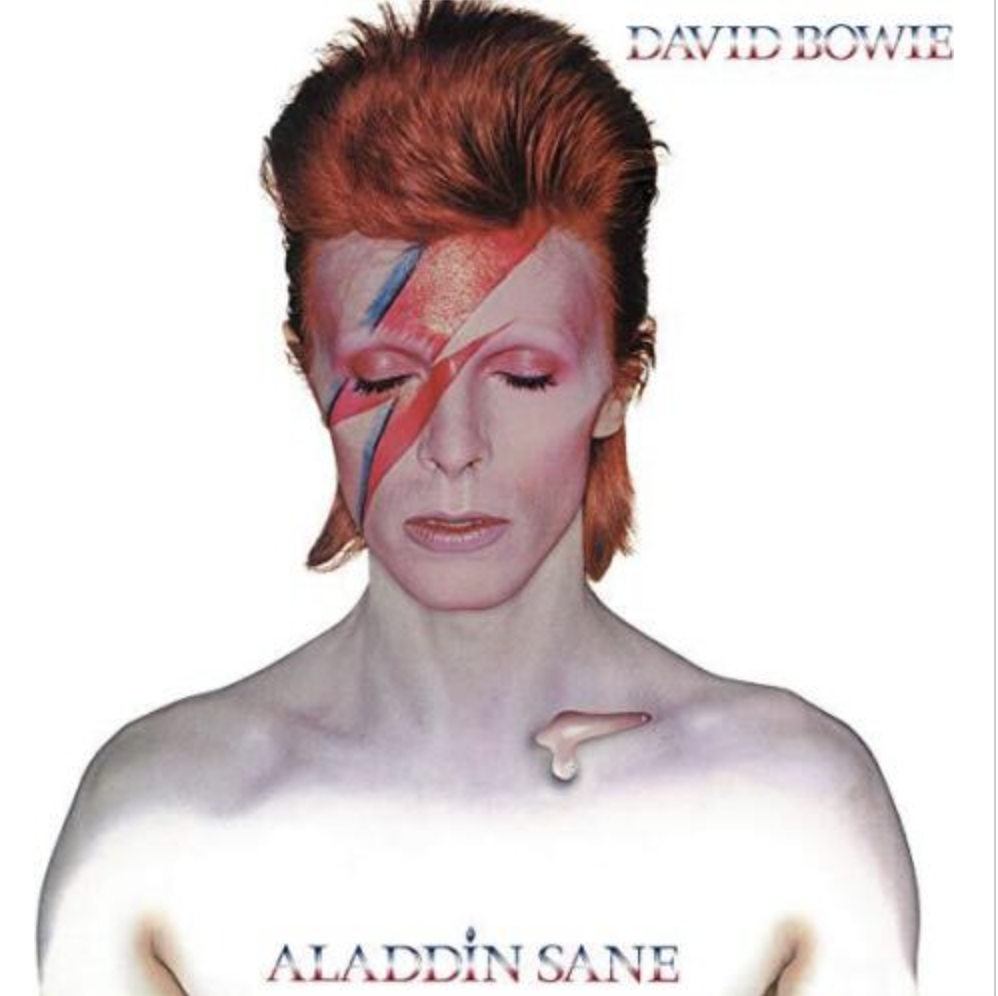
A trio of Bowie album anniversaries of one kind or another this April. The oldest of which, Aladdin Sane is unbelievably 50! Whilst Lets Dance is 40, and Black Tie White Noise is 30 this month.
Killing off Ziggy Stardust to assume the lightning anointed role of Aladdin Sane, Bowie’s split personality only partially moved on from its precursor. If Hunky Dory pretty much alluded to the USA from a distance, then Sane is living it.
From the scuzzed rock’n’roll chugging riffs to the Latin-Cuban styled piano flourishes and ‘give my regards to Broadway’, Bernstein/Brecht passing fancies (thank you Mike Garson on phenomenal pianist chops and theatrical duties), Bowie is cast adrift, absorbed in the aroma of the Americas as an unbalanced gender bending dame, trying to make sense of it all.
Fantastical, yet nostalgic in equal measure, the backlot of 50s drive-ins, Che Guevara styled revolution on the streets of Detroit and heart-crushing laments, effortlessly turn from tears to swaggered rock, with ‘Time’ hanging over proceedings as a monolithic reminder of death: the stereotype rock star death in particular, in the case of the New York Dolls‘ Billy Murcia, as immortalised in the song’s lyrics. That’s all without even mentioning the aching, plaintive malady of ‘Lady Grinning Soul‘; perhaps one of the best things Bowie had ever written to that point.
An ott full-on glamified version of the Stones‘ ‘Let’s Spend The Night Together’ signals Bowie’s intent, a precursor to his love letter to the British ‘beat group’ (1964-67) era, and the covers album Pin Ups – released later in the same year, as the final-finale death knell of Stardust and his alter egos. Glorious, one of Bowie’s greatest fantasies and never out if my top five, if occasionally making the number one spot.
Protesting his innocence, rather too strongly, the $17.5 million dollar-richer Bowie inadvertently struck commercial gold with his 15th studio album Lets Dance. The formative RCA years were replaced with an uneasy transition to EMI, whose pricey acquisition would at least boost the label’s coffers during the mid to late 80s.
Undervalued and inappropriately shafted, Bowie’s long-time collaborator Tony Visconti was dropped at the eleventh hour in favour of Chic’s Nile Rodgers.
What Rodgers brought to the table was a vibrant, polished, more swaggering sound. MTV friendly and able to rouse the masses to their feet – just listen to the infectious gilding that turned a simple backbeat and Kenny Logan-esque guitar lick into something way beyond pop on ‘Modern Love’.
Apart from a few well-meaning but dawdling numbers, this album was really a collection of potential, and in the case of ‘Cat People’, previously successful singles. A jumbled coherence of themes permeate however, as a faux-colonial, abroad in WWII backlit Singapore or Macao, mixed with sharp lemon meringue zoot suit, Bowie launched into a diatribe on domestic abuse, racism and oppression. Taking a special interest in the aborigines cause, he dedicated the eponymous title track to their struggle.
For every guarded metaphorical attack, there was a counterbalanced slide onto the dance floor – ‘Shake It’ one of the thin white duke’s less challenging but contagious soulful paeans to courtship. Presented as a ‘singers’ album, Bowie concentrated on honing his electric-blues vocal delivery, relinquishing the usual playing duties.
Despite selling six million copies and attracting a newfound audience, he resented the attention and increased pressure, especially as Let’s Dance was at odds with his original intentions. He’d blame Rodgers’ varnished production – though this never stopped them from working together again years later on Black Tie White Noise – for sending him in a commercial, but aridly dry artistic direction. However, it’s an impressive work of spritely charming and neon-glowing pop. Just the opening global hot-steeping trilogy of ‘Modern Love’, ‘China Girl’ and ‘Let’s Dance’ would be enough to justify Bowie’s tumultuous decade alone.
Bowie the glowing groom was above the trivial of platitude wedding vowels and practicing special moves for the couple’s signature last dance. For his marriage to Iman Abdulmajid, he composed a typically nuanced musical suite in lovesick tribute.
Part of this ceremonial accompaniment (the opening moiety of ‘The Wedding’ and bookended ‘The Wedding Song’) was integrated, in to what would be, his heralded solo comeback LP, Black Tie White Noise.
Meant as a representation of two entwined cultures, the vaguely eastern romantic saxophone and western backbeat were used as a leitmotif: seeping into a fair share of the album’s twelve tracks. Tied-in with a return to a city that had dominated his songbook with themes of isolation and drug addiction (from Young Americans to Lodger), L.A, would settle for Bowie’s take on the race issues of the day. Jetting in as the whole Rodney King episode sparked off an apocalyptic raging inferno, Bowie both scared and exhilarated, breathed in the toxic air for inspiration.
Eager to refrain from sounding too glib, he wrote the album’s title track as a counterbalance to the grinning, smug optimism found on the “United Colours of Benetton” billboards. Angling his wit at the ethnocentric MOR, Bowie himself liberally drops in slogans and motifs from Marvin Gaye, faux-reggae and New Jack Swing, as he duets with one of the scenes passing stars, Al B Sure!
Mixing it up in the ‘ghetto’, Bowie once again ropes in Niles Rodgers to add some funky gristle and sheen to the jazzy, soulful template. He also took notes from Miles Davis’s late 80s/early 90s adoption of street sounds and be bop; bringing in the revered former Art Ensemble of Chicago’s trumpet player, Lester Bowie, to blow the sort of signature-plaintive squeals and trapped bumble bee solos commonly found in Davis’s repertoire.
The influence works both ways of course, but the omnipresent Scott Walker has always forced Bowie to…well, improve himself. Not so much a competition – Bowie would never quite reach the stripped avant-garde morose of his American rival – the two artists nevertheless spur each other on. Paying back a favour, Bowie covers Walker’s 1978, traversing grown-up, ‘Nite Flights’ (attributed to The Walker Brothers, their last album together as a reformed trio), aping but doing it justice. Whether intentionally imbued by the Walker spirit, the original intended Tin Machine song, ‘You’ve Been Around’ (written with Reeves Gabrels) sounds even more like one of his than Nite Flights.
Former glorious foil, Mick Ronson is heard on the placid, smooth, cover of Cream’s ‘I Feel Free’ (instigated as a result of Ronson’s work on Morrissey’s Your Aresnal) and illusionary rich, autobiographical ‘Jump They Say’: the first time Bowie addresses his half-brother Terry’s suicide in the 80s, by equating his own metaphorical artistic leap.
The odd ‘pop-lite’ tune, Caribbean warbling karaoke ditty (‘Don’t Let Me Down & Down’) and garish, over-egged, rendition of Morrissey’s ‘I Know It’s Going To Happen Someday’ threw spanners into the works, yet Black Tie White Noise pointed towards a wider Bowie renaissance, as it triggered an impending tenure of solid, experimental releases.
Tracks and a few cover version surprises await on the Social Playlist below:
The Social Playlist #75
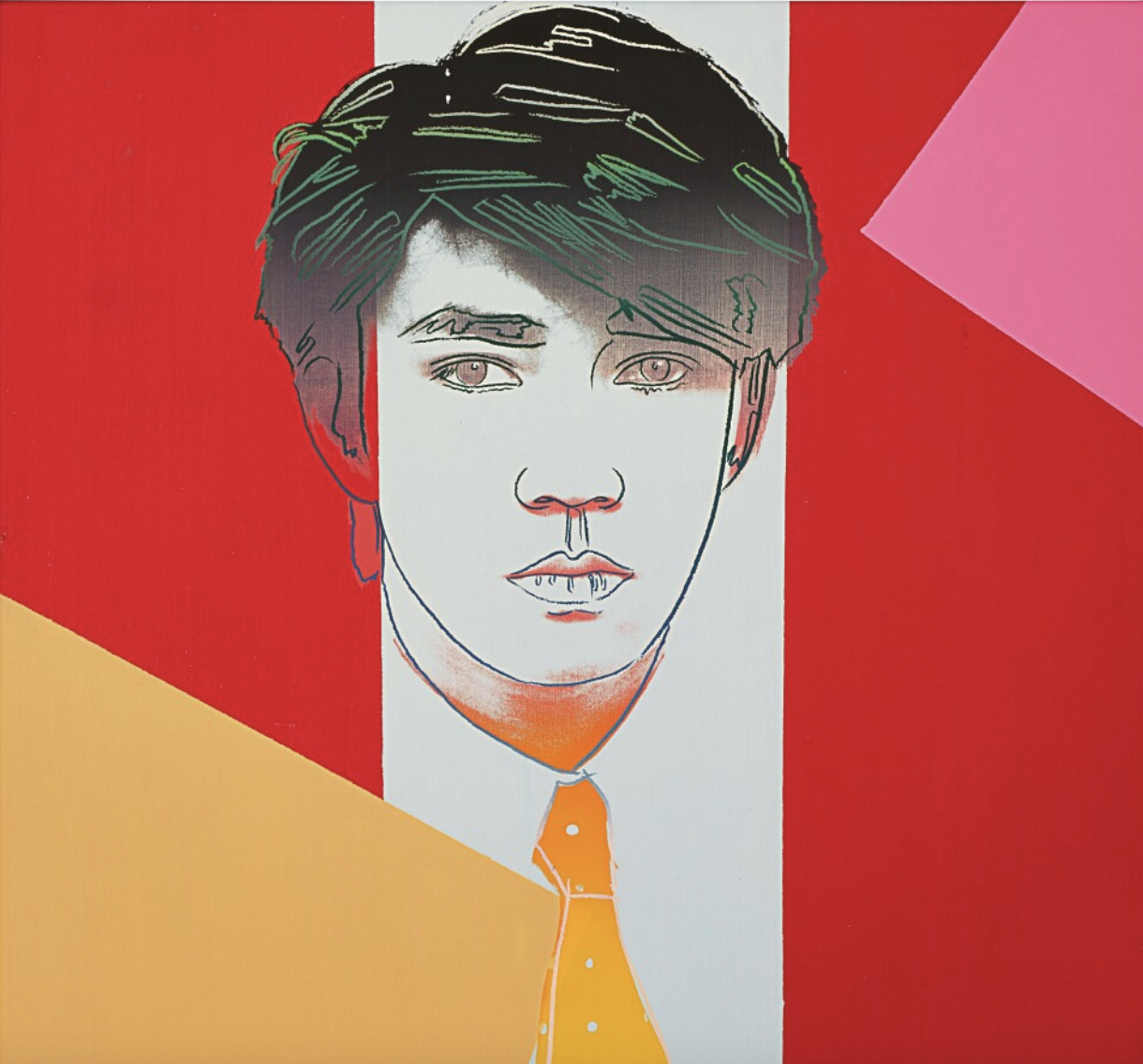
Anniversary Albums And Deaths Marked Alongside An Eclectic Mix Of Cross-Generational Music, Newish Tunes And A Few Surprises.
Just give me two hours of your precious time to expose you to some of the most magical, incredible, eclectic, and freakish music that’s somehow been missed, or not even picked up on the radar. For the Social is my uninterrupted radio show flow of carefully curated music; marking anniversary albums and, sadly, deaths, but also sharing my own favourite discoveries over the decades and a number of new(ish) tracks missed or left out of the blog’s Monthly playlists.
Volume 75 of this long-running playlist series pays a humble, but sizeable, elegy to the recently departed Japanese genius Sakamoto. Whether it was building a unifying electronic music post-war future with the Yellow Magic Orchestra, building Bamboo houses of colour with David Slyvain, scoring the harrowing tragedy of war with Merry Christmas Mr. Lawrence, or winning gold at the Oscars/Grammys for his innovative soundtrack work, the iconic composer reworked neoclassical and electronica into a most influential new language – not totally at odds with its past, yet constantly evolving and probing at the edges of the undiscovered. With over 50 albums, probably a lot more to pick from, I’ve purely chosen personal favourites from a mere smattering of his cannon.
As I mentioned in my Bowie archive spot, and part of this month’s anniversary celebrating albums selections, there’s a healthy dose of original versions and covers from Aladdin Sane, Let’s Dance and Black Tie White Noise. Joining the thinned white duke in the anniversaries are R.E.M. (Murmer is 40 this month), the Freestyle Fellowship (Intercity Griot‘s 30th) and the Yeah Yeah Yeahs (Fever To Tell‘s 20th).
Recent editions to Spotify include Don Cherry and foil Jean Schwarz paying homage to the deity Ornette Coleman on the ’77 Live special Roundtrip, ‘Cat Nip‘ from Levoit‘s Sharav album, and butt end of 2022 tracks from Raw Poetics and Elizabeth M. Drummond. Plus a real catch of choice music from across the ages and genres by New Young Pony Club, Sunny & The Sunliners, Oswald D’Andrea, Fred Pallem, Sweet Tee, Shira Small and others.
THAT TRACK LIST IN FULL________
Octopus ‘Panic In Detroit’
David Bowie ‘Shake It’
New Young Pony Club ‘Hiding On The Staircase’
Ryuichi Sakamoto ‘Just About Enough’
Pralo Ormi e la sua Orchestra ‘Black Pipe’
Ryuichi Sakamoto ‘The Garden Of Poppies’
Leslie Winer ‘John Says’
HEC ‘The Prettiest Star’
R.E.M. ‘West Of The Fields’
Yeah Yeah Yeahs ‘Black Tongue’
Alejandro Bravo ‘Naranjita’
Lulu ‘Watch That Man’
Sunny & The Sunliners ‘I Can Remember’
Oswald D’Andrea ‘Bambou Jump’
Harold McKinney ‘Freedom Jazz Dance’
Freestyle Fellowship ‘Heavyweights’
Ryuichi Sakamoto ‘ADELIC PENGUINS’
Elizabeth M. Drummond ‘Congratulations’
Metro ‘Criminal World’
Terry Riley & John Cale ‘Church Of Anthrax’
Leviot ‘Catnip’
Don Cherry & Jean Schwarz ‘Tribute To Ornette (Live)’
Fred Pellam & Le Sacre du Tympan ‘Stratageme 34’
Ryuichi Sakamoto ‘ISLAND OF WOODS’
David Bowie ‘Miracle Goodbye’
Sweet Tee ‘On The Smooth Tip’
Raw Poetic & Damu The Fudgemunk ‘A Mile In My Head’
Joe Mensah ‘Happy Beat’
Shira Small ‘Lights Gleam Lowly’
David Bowie ‘Nite Flights’
Ryuichi Sakamoto & David Slyvian ‘Heartbeat’
Cheval Sombre ‘Time Waits For No One’
Ryuichi Sakamoto ‘Before The War’
Shukar Collective ‘Calling Tagomago’
Ryuichi Sakamoto ‘riot in Lagos’
The Eclectic/Generational Spanning Playlist
By Dominic Valvona
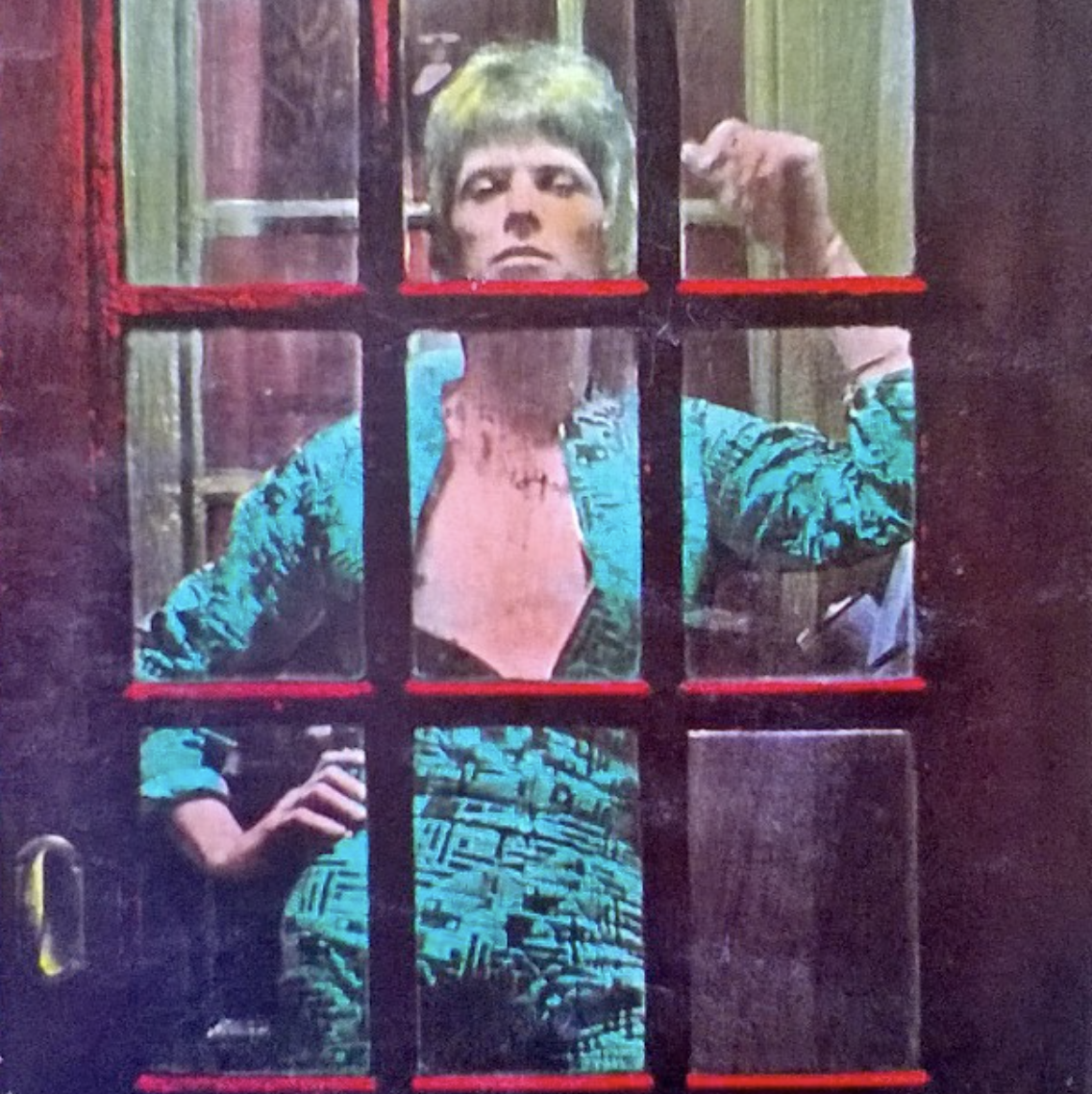
An imaginary radio show/podcast, a taste of Dominic Valvona’s DJ sets, the Monolith Cocktail Social is a playlist selection that spans genres and eras to create the most eclectic of soundtracks. Includes tributes to anniversary celebrating albums, to those who we’ve lost on the way and choice music pulled from Dominic’s vast collection.
Dominic Valvona: the blurb summary of this month’s social.
Arguably the world was already well on its way to going to shit, but since Bowie left this earthly realm it has decidedly got a lot gloomier, his presence never more missed. But what a legacy to leave behind. And this month sees two anniversary album celebrations from the polymath star man; The Rise And Fall Of Ziggy Stardust And The Spiders From Mars reaches fifty, whilst Heathen is twenty years old. Tracks from both albums are included: ‘Soul Love’ via the ’78 Welcome To The Blackout London Live album, and ‘Moonage Daydream’ via a cover by The Chameleons.
Held up as a benchmark of quality and skills in the hip-hop world for those of us of a certain age, Pete Rock & C.L. Smooth’s venerated Mecca And The Soul Brothers is unbelievably thirty years old this June! I’ve included that album’s opening salvo, ‘Return Of The Mecca’.
Each month I also like to pay homage to those artists we’ve lost. Just in the last few days before I compiled this playlist, the ethereal-spirited vocalist whose voice graced David Lynch’s surrealistic daytime drama turn cryptic murder mystery Twin Peaks, Julee Cruise passed away. Now I could have just gone for the obvious but instead here’s something from Cruise’s more recent cooed pillow talk, ‘The Art Of Being A Girl’. We also unfortunately lost ex-Fatima Mansions turn soloist in more recent times, Irish talent Cathal Coughlan and of course, the progenitor soundtrack god, ex-Aphrodite’s Child helmsman and singular as well as collaborator genius Vangelis. I’ve included a smattering of the Greek musical deity’s music, some obvious as well as less so obvious tracks, including a little something from the 666 opus that he more or less conceived and fought to get made and released: which incidentally celebrated its 50th anniversary this month too. I’m also including dear old Alan White, drummer extraordinaire, with a cut from his own solo album Ramshackled.
Older tracks sit alongside relatively new ones from the likes of Party Dozen, Matthew Dear, Sun’s Signature, Wilma Vritra and Rachel Eckroth. There’s the strung-out, the experimental, the sublime, the blessed, the heavy, the psychedelic and everything in between. So let the musical journey begin:
TRACK LISTING::
David Bowie ‘Cactus’
Party Dozen ‘The Worker’
The Gories ‘There But For The Grace Of God Go I’
The Fatima Mansions ‘Blues For Ceauşescu’
Dub Narcotic Sound System ‘Fuck Me Up’
Matthew Dear ‘Talking Sleep’
Bloto ‘Mitomania’
Julee Cruise ‘The Art Of Being A Girl’
The Fallen Angels ‘Room At The Top’
Fat Mattress ‘Anyway You Want’
Muhal Richard Abrams ‘Balu’
Group Home Ft. Guru ‘The Legacy’
Pete Rock & C.L. Smooth ‘Return Of The Mecca’
Scotty ‘Clean Race’
Steroid Maximus ‘Seventy Cops’
Aphrodite’s Child ‘Altamont’
The Chameleons ‘Moonage Daydream’
Alan White ‘One Way Rag’
Vangelis ‘He-O’
Sun’s Signature ‘Golden Air (Edit)’
Furry Lewis ‘Good Looking Girl Blues’
Francis Lai ‘La Chanson de Mélissa (from Bilitis) – Live’
McGough & McGear ‘So Much’
The Apple Pie Motherhood Band ‘Grandmother Hooker’
Juan Wauter w/ Nick Hakim & Benamin ‘Presentation’
A Barca Do Sol ‘Os Pilares da Cultra’
Julian’s Treatment ‘Strange Things’
David Bowie ‘Soul Love – Live’
Wilma Vritra ‘One Under’
Oddjob ‘Where Eagles Dare’
Restiform Bodies ‘Black Friday’
Rachel Eckroth w/Tim Lefebvre and Christian Euman ‘Do Trees Fall In Love?’
Felicia Atkinson ‘Guitar Means Mountain’
Iasos ‘Crystal Petals’
Vangelis ‘Tears in Rain’
Mark Wagner ‘What Do You Want From Life’
Tex Crick ‘Peaches & Cream’
Liam Kazar ‘So Long Tomorrow’
David Bowie ‘A Better Future’
Extra Reading:
David Bowie The Rise And Fall Of Ziggy Stardust And The Spiders From Mars
Aphrodite’s Child 666
 Monolith Cocktail Blog