A world of sonic/musical discoveries reviewed by Dominic Valvona. All entries in alphabetical order.
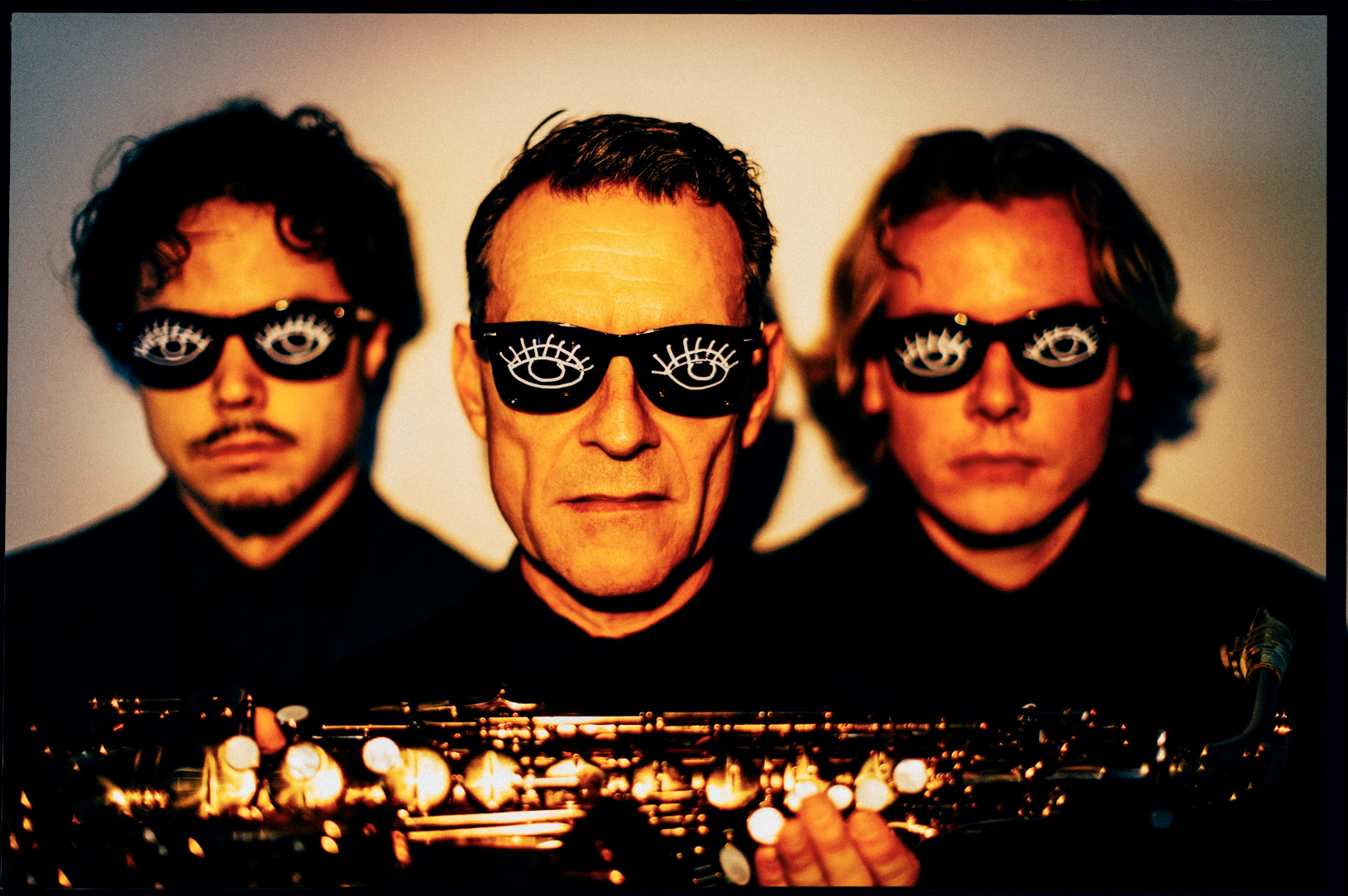
Image Credit: Jonathan Herman
Andy Haas ‘In Praise Of Insomnia’
(Resonantmusic) Released 1st February 2026
I’ve been saddled with insomnia for years, but unlike the highly talented and explorative, and curious saxophonist Andy Haas, I’ve found it difficult to put those waking hours to good use creatively; let alone on the auspicious seasonal occasion of the Winter Solstice, the date on which all these recordings were played and then saved for posterity. I must say, since the double whammy of a kidney autoimmune disease and a minor stroke, my own personal problems of insomnia have pretty much disappeared – I don’t recommend it however! But put to good use here, Andy ushers in the light changes, the almost religious and spiritual emotions and feels of the environment. His sax mirrors the fluctuations and expressions of playing without the hindrance, burden or weight of expectation; just one guy expressing himself and current moods, his experiences of life in the moment on a special day.
Whilst not wishing to repeat myself, I struck up an online and postal friendship with Andy after first writing about the highly experimental saxophonist, trick noise maker and effects manipulator’s turn touring as a band member with Meg Remy’s Plastic Ono Band-esque U.S. Girls a few years before Covid. The former Muffin, NYC side man to the city’s attracted maverick luminaries of the avant-garde and freeform jazz, and prolific collaborator with Toronto’s most explorative and interesting artists, has sent me regular bulletins (and physical copies) of his various projects ever since. Some have been in the solo mode, others with friends, foils and collectives. In Praise Of Insomnia is free of artifice and augmentation; the sound of a singular saxophone and circular breaths (the only other apparatus or consideration is Andy’s stereo manipulations of each track once its finished) alive with a language that admirers and followers of such luminaries as Sam Rivers, Jonah Parzen-Johnson, Evan Parker and Roscoe Mitchell will recognise. It has history and roots, but exists in the now with its squalls, shrills, the fluted, drones, curves, peaks and reedy vibratos that often sound like a mizmar – in fact I sometimes pictured minarets when closing my eyes and just letting the playing transport me from my boring surroundings at home in a dreary, wet Glasgow.
Free and wild, and yet also thought through, almost considered and concentrated, each track (prompted by descriptive and personalised titles) shows purpose; the subject matters often plaint, questioning or disheartened at the metaphorical darkness of the age, but also noting the artist’s own mood changes, and his battles with insomnia itself. It would also make a great soundtrack.
Benjamin Herman ‘The Tokyo Sessions’
(P-Vine Records in Japan/Roach Records & Dox Records the rest of the world) 27th March 2026
Though this is possibly the first time I’ve ever featured the London born but Netherlands raised alto-saxophonist Benjamin Herman on the site, his influence across the European arena of jazz looms large. With over fifty albums and untold thousands of the live gigs (either as a solo artist or as the frontman of the New Cool Collective troupe) to his name during the last thirty or so years, Herman has pretty much convincingly expanded his talents to play foil, collaborator and instigator to projects that span the musical and creative genres – from hip-hop to poetry, to rubbing alongside pop stars and embracing everything from Afrobeat to Latin and film, to the more anarchic and wild.
Venturing out to the far East with double-bassist Thomas Pol and drummer and producer of this album Jimmi Jo Hueting, Herman and his musical partners absorbed everything that was on offer from the eclectic Tokyo hothouse districts of Shimokitazawa and Koenji. Expanding the ranks to include a rich ensemble of guest from the Japanese jazz scene and beyond, they recorded these inspired sessions at the well-known “recording sage” Akihito Yoshikawa’s equally famous Studio Dede hotspot.
Paying homage, spiritual recognition and cultivating the mystique and mystery of Japan’s landscape, its culture, its traditions and abundance of talented jazz players, there’s haywire-like chops of floppy disk experimental Sakamoto, the shrouded misty sounds of Shinto and fluted and blown bamboo music amongst an abundance of reference points from elsewhere. With accomplished musicians like Ko Ishikawa on the Sho (a mouth organ), Tomoaki Baba on sax and Shinpei Ruike on trumpet (bringing a blue shade reminisce of Miles Davis sadness to the studio referenced ‘Dede’) there’s tributes to the Japanese scene and one of its capital’s most famous jazz nightspots, the NRFS abbreviated “no room for squares” – as borrowed from Hank Mobley’s iconic Blue Note released LP of 1964, and more than an inspiration here I believe.
But amongst those cultural appeals, a distillation of the Japanese scene and environment, there’s literal blurts of no wave and post-punk jazz, the noirish and cinematic, show tunes, swing, funk, the wired, colourful, willowy and many examples of mirages and swamp-like veiled mysterious.
At any one time then, you can expect to hear a free flow and agitation of downtown NY, the city skyline jazz scenery of the 50s and 60s, Last Exit, Snapped Ankles, John Zorn, Biting Tongues, Mats Gustafason, Donny McCaslin’s work with Bowie, Jimi Tenor, Comet Is Coming, the Nordic school of jazz, Tong Allen, Lalo Schifrin and John Barry! (in the closing moments of the spy soundtrack does Blue Note ‘Tokyo Moon’ you can hear what sounds like a riff on the 007 theme). Yes, I think we can agree a lot to take in. But with a generous offering of 13 great tracks and no fillers, this Tokyo session is going to appeal to many.
Ombrée ‘Calvaire’
(I Shall Sing Until My Land Is Free) Released 2nd February 2026
Seemingly apt if in an entirely different geographical setting, far from the torn-up battlefields, this album is tied via its facilitator to the Ukraine supporting I Shall Sing Until My Land Is Free label, and its founders own sonic manifestations of doom-laden scared environments: In the case of both Dmyto Fedorenko and Kateryna Zavoloka it’s their native and brutalised country, now in its fifth year of defensive action against the barbaric invasion forces of Putin’s Russia. Meanwhile, coming to terms with their own loss, Ombrée uses a similar soundboard and apparatus of industrial noise, metal machine music, sonorous bass guitar frequencies and slabbed vibrations and crackled pylon charges to process the death of his father, who passed away in February of 2025.
Prompted or set in motion by the sounds of the surroundings and the village’s church bells, Calvaire invokes memory through both field recordings and expressions of death’s many manifestations. Ombrée’s father, we’re told, would have probably hated this musical invocation, illusion and dark meta-built encapsulation of that mourning process, but for its creator and us the album is both a guttural and sophisticated response to its subject.
To the distant echoes of tolled bells and a Gothic atmosphere of an older rural France – the toil of the land, the echoes perhaps of old wars and tragedies still very much of the everyday scenery and psyche – Ombrée scratches the needles of detectors and equipment over the terrain to produce a death noise industrial slab of static, the paranormal, the razored and ghostly. Apparitions in the shadows at every turn; the venerable sounds and atmospheres of the funeral and wake; the coarse fibres of broken electricity and magnetic forces; the Fortean radio set tuned into the afterlife; and the dark materials of trauma uncovered by the plough and spade all come together in one suitably unsettling memorial.
Rocé ‘Palmier’
(Hors Cadres) Released 20th March 2026
With a softer and more melodious flair for an ever-widening use of music references and inspirations, the French-international hip-hop veteran Youcef Kaminsky (better known as Rocé) seamlessly blends new compositions of Latin, French, Italian, North African and South American flavours with modern spells of R&B, rap and electronica on his incredible new album Palmier (“Palm Tree”).
On a disarming pathway, Youcef taps into his roots and his mixed heritage (born in Algeria with his formative years spent in Paris) to rap, sing, report and recall with both emergency and poetic conscious fluidity. And whilst learning of his parents own extraordinary stories and backgrounds – his dad’s history within various anti-colonist resistance movements around the world (Adolfo Kaminsky, as that family name may suggests, are Russo-Algerian French in origin), and his checkered career as a photographer and master forger – and the depth to Youcef’s own studies and extensive recording output, this album has less of a revolutionary zeal and more a sense of real warmth and beauty to it. Listeners will find a sound that’s just as open to the embrace of Morricone as café society jazz, Issac Hayes, cool classical French maladies and American vocoderised soul. In other words: pure class. And yet there’s still an edge to it, a realism and sense of suspense, of the shadows, of current concerns in the search for balance, harmony and identity.
There’s seldom been much like it; the attempt to merge so many cultural markers and ideas and experiences; to recall those innocent and important feelings and places that matter – not in hip-hop anyway. The musicianship and contrast between rapping and a band of jazzy and classical or chamber musicians did remind me a little of Marcelo D2 & SambaDrive ‘Direct-to-Disc’ LP from a couple of years back. But it remains rather unique, crossing over as it does into so many classy and fully lush genres.
You can certainly, even if you don’t understand the French dialect and language, gauge the emotion and the intensity, the themes and scenes conjured out of the notebook and from each instrument. It also helps that guest vocalist, the worldly, Natacha Atlas does much to soothe and dreamily invoke a certain romantic plaint of North Africa to the deft electric piano-like tinged ‘La Voie Laactee’. And whilst we are at it, a shout out to Nathalie Ahadji’s dreamy, wafted and mizzle-like saxophone; to Cisko Delgado’s soulful and light jazzy cosmic keys (though also credited with bass and on arrangements); and to Samy Bishi’s sweeping, near cinematic in places, violin – Youcef can be heard himself picking up the violin on one of the album’s airy mirage-like interludes.
Compositions and songs are mapped out like a personal cosmology of jazzy suites, neighbourhood reportage, frank discussion and more sympathetic articulations and dreams. A great album in short that entertains as much as it educates and impresses.
Nicolas Remondino ‘Hieratico’
(OOH-sounds) 27th March 2026
Scrapes, shavings, rubs, carvings, tangles of tin and metal; various percussive and drum apparatus timbres, textures along with the unidentified sound of spokes are all used to illuminate crepuscular observed moments and experiment in a soundscape of almost silent disturbances, shadows and observations on Nicolas Remondino latest album. Filed under the solo name this time around, Hieratico includes a host of cameos and an appearance from one of the many groups he’s founded over the years, the Dròlo Ensemble. Many voices and musicians join the fold, appearing often for a brief moment, or suffused amongst the avant-garde, explorative and minimalist passages, churns, circular brushing movements of a simultaneously venerable, supernatural and esoteric nature.
Appearing, I believe, for the very first time on the site, Remondino studied under the improvising luminary of classical and jazz piano, Stefano Battaglina. Remondino appears variously under the LAMIEE moniker when in the solo guise but also founded the Tabula Rasa and Silentium ensembles. There’s also been an extensive list of collaborations, some of which appear on this album. And as if to reflect these various foils and their homelands, track titles seem to be in multiple languages: Italian, Spanish, Portuguese, Corsican, but also as far away as Japan. There are some solid names with renowned reputations on the abstract, avant-garde and musique concrète fronts, including the highly respected and experienced musician and vocalist Limpe Fuchs, who’s mantric “no formalism” approach to soundscaping and fluctuated peaks and meandered twisted spoken words can be heard on the strange ching and chimed gamelan-esque ‘Blue Hymn’. The trio of Pierre Bastien (perhaps best known for the Meccano machine Mecanium orchestra), Massimo Silverio (singer-songwriter and composer) and Marco Baldini (a Florence-based composer) manifest some unease amongst the low tuba-like Close Encounters calls and cathedral organ permeation of ‘Tombal’. You could call it an inter-generational balance of ideas, or just feeling out the right sound, the right atmospheres.
Dialects traced back to the time of the Romans, with the Carnic region of the Alps, can be heard in abstracted forms alongside mountain goat trails into, what sounds like, the various ranges that surround Tibet and a reification of the I Ching. Sounds like felt and various materials are wrapped or brushed over the mic, and bottles are rattled, sheets of metal wobbled to resemble a strange thunder, and spoken passages, poems of s sort are pronounced with both wistful resignation and disturbing disquiet.
At times it reminds me of cLOUDEAD and at others of Walter Smetek, but also a whole load of experimental Italian contemporaries too. But at its heart, the album seems unique in its surroundings and processes; the atmosphere and mood personal yet dealing with abstract ideas in a nocturnal climate of freedom and textural experiment. That’s a recommendation by the way!
Snake De ‘Alla Sorrentina’
(Kythibong) 27th March 2026
The results of emptying out an assemblage of hard drives, Dictaphones, mobiles and other assorted devices and units of storage, the collaborative duo of Maxime Canelli and Aymeric Chaslerie put together a less linear and more abstracted, surreal and sci-fi album of eroded fragments, passages, extemporised hauntings and sci-fi interiors.
With a bilingual language of prompted and descriptive titles, each piece seems to have manifested from the ether or the recalled. Like La Monte Young playing exquisite corpses with the Olivia Tremor Control, Basic Channel and a host of kosimsiche innovators, Alla Sorrentina merges the concrete with the tubular, the kinetic, the alien and avant-garde: and many points between. There are touches of the melodic and tuneful amongst the collage and the fragments of data, voices (even continental laughter), static, cosmic bells and the varied jingles and jangles, the hanging and scrapes of the Zodiak and Swiss Cabaret Voltaire art-theatre percussion.
An enervated Faust Tapes perhaps, the album also reminded me in places of playful Cluster and Roedelius. The remnants of near church-like keys are placed with the alpine, the galactic and spells of hallucinatory dream weaving. You could catch something Japanese, something of the Fluxus composers and those working in early electronica as the carousal of sonic ideas and influences circulates. And you can read a lot into the oscillations, the staccato signals, hums, harmonic pings, the indigestive-like masked voices, and the metallic visions of extraterrestrial life.
It’s the sound of liquid bowls; it’s a world both underwater and luna; an hallucination of accumulated sounds, atmospherics, field recordings, tunings, hidden percussive objects, whistled and blown tubes, a baby’s cry and removed surroundings. Something a little different anyway, worthy of investigation and absorption.
Gregory Uhlmann ‘Extra Stars’
(International Anthem) Released 6th March 2026
The innocuous, those meandered thoughts, incidents and gestures magnified, and the noted observations witnessed of nature and its interactions are transformed into a unique musical language by the composer and guitarist (though should really say multi-instrumentalist at this point) Gregory Uhlmann.
A rightly celebrated and held in esteem regular of the L.A scene and constant presence on the rightly revered and much liked International Anthem label, with turns in the collaborative SML collective, a foil to both Perfume Genius (who appears on this album) and to Josh Johnson and Sam Wilkes (last year’s Uhlmann Johnson Wilkes album made my choice release of the year roundup) and to fellow label mate Anna Buterss (anther collaborator who makes an appearance, popping up on bass), Uhlmann has finally found time to go solo with an enriching synthesis of luminescent and ruminated quandaries, descriptions and serendipitous wonders.
Extra Stars inhabits a familiar if now made dreamy, lunar, sometimes oddly and beautifully world and environment; some of it used as prompts and reference points, like Lucia, which refers to the lodge where both Uhlmann and his partner stayed out on the famous Cabrille Highway that runs between San Francisco and Santa Barbara. Less an innocent Beach Boys-like celebration of Big Sur culture and more a tine’s ticking and Mulatu Astatke and Getatchew Mekurya embraced mizzled and snozzled hum of languid unease, the field recorded waves that crashed all around during that stay appear more like tape hiss and noise and point towards the “unnerving”. Though, with Alabasters deft wistful and near serenaded touches it is a beauty of a track. Actually, there’s a feel of that near Ethiopian influence, mixed with something further east and oriental on the beautifully Matmos does cosmic Joe Meek and Django ruminating Days – what a dreamer of a lulled tune that one is. I’m hearing the composition and playing of Emahoy Tsege Mariam Gebru too, but a lot of the calculus of flutters, bulb-like notation, cascades, harmonic twangs, numbers and multi-layered techniques of such luminaries as Riley, Cage, Reich and Spiegel; all made that more appealing, magical, sparkled, lunar and dotty!
There’s a good and transformative use of the guitar, the mellotron and organ, amongst other expanded instrumentation. And even a use of the voice, with guest Tasha Viets-Vanlear’s “bah” voice put through different pitches and sequences on Voice Exchange.
This really is a most delightful and imaginative album, a whirly trip of modulations, sequences at ease, quirks and warbles. Touching on everything from new age avant-garde to the kosmische (some hints of Cluster and their peers), the American school of pioneering electronics, the post-whatever it is that bands like Tortoise do, echoes of Sakamoto at his most loose and experimental, ambience and cosmic shimmered atmospheres. It makes for an intriguing, often woozy and dreamily transformative listening experience.
Here’s the message bit we hate, but crucially need:
If you’ve enjoyed this selection, the writing, or been led down a rabbit hole into new musical terrains of aural pleasure, and if you able, then you can now show your appreciation by keeping the Monolith Cocktail afloat through the Ko-Fi donation site.
The Digest for March 2026: New Music/The Social Playlist
March 9, 2026
The monthly Digest includes a clutch of accumulated short new music reviews and the social inter-generational/eclectic and anniversary albums celebrating picks.
Image: Credited to the Asian Arts Initiative
Something a little different this month after missing February’s Digest deadline. In case readers/followers and those new to the site haven’t heard or seen on some of the blog’s social media platforms, I’ve been in the wars, spending a lot of time this year in hospital. Earlier this year after being ill for a while, I was diagnosed with an autoimmune kidney disease, but then was struck down, out of the blue (and totally unrelated) by a minor stroke. This has meant untold tests, appointments, and treatments, of which I’m merely just beginning to get my head around. I won’t lie, and whilst the stroke is still a mystery with no actual diagnoses as to why I had one yet, it has been a very frightening and confusing time. This will affect the site and my writing going forward, so I ask for some patience and understanding.
I’ve gathered together a number of reviews, pretty much completed before much of this happened for the new(ish) releases section. And for the archives and social playlist have decided to share videos of tracks taken from those albums enjoying various anniversaries this month (or thereabouts), from those dear artists/producers that have left our mortal realm.
___THE NEW (All those latest & upcoming releases in brief) ___
Camille Baziadoly ‘Skin On Fire EP’
(PinDrop) 6th March 2026
Somehow simultaneously intimate yet panoramic and universal, a whole emotive register of vulnerabilities emanates from the both aria-like cutting and yet also diaphanous breathed voice of the French-born, but Oxford-based, singer-songwriter Camille Baziadoly. The new EP, following on from last year’s favourably reviewed and received Fifteen album, opens with the former single and title-track, and from there, unfurls its beauty, its reverence and pained prangs of fragility across a quartet of newly written songs in the key of slowed-trip-hop-crunching-and-mechanized-winding dreampop and Gothic cinematic allurement.
Skin On Fire EP feels like a score; the soundtrack to what’s lyrically alluded to, an abstract feeling of recovery, therapeutic healing and self-care. From the very first line of declaration (“Skin is all I am”) to the loss and grief, the despondency and aches of the transfixed beatific yearned ‘Trial’ and the even more reverent, steamed and mirrored beat cranked ‘Under Water’. The former reminded me of a little of the dreamy, veiled music and voice of Celestial North, but the synths of Chromatics, whilst the latter, recalled the production of Julee Cruise and the submersible aquatic poetry and voice of Nino Gvilia and the atmospheres of This Mortal Coil. The final act, ‘Around You’, is perhaps the most tenderly if plaintive song of them all. Whether stepping outside and removed from this particular relationship, looking in from the ether and from behind the most minimalistic of backings, or lamenting someone else’s, Baziadoly fills the vapours with a real yearning.
Despite the care, gentleness and its subtleties in the use of both instrumentation and the electronic (from minimal but no less evocative piano and organ to various well-placed effects), the production has an air of gravitas and drama about it: of scale too if you like, and of ambition. Much of this is down to the highly prolific (and a constant presence on the Monolith Cocktail) Sebastian Reynolds, who in a producer’s role articulates, emphasis whilst also allowing Baziadoly’s voice to shine, resonate and breath. That production can at any time invoke the influence of Beach House, Air, and the Cocteau Twins.
It is the voice that truly makes this EP however, and its ability to soar towards the birds but also navigate the harsh realities, troubles and traumas of life, love and hurt. Baziadoly brilliantly and cerebrally emerges from the other side having shown such vulnerability and sang such heartaches of balladry to claim another transfixing success.
Márcio Cunha ‘Imaginary Soundtrack’
(Nostril Records) Released 8th January 2026
A sonic showreel collating a year’s worth of recordings made throughout the period of 2019 and 2020 – just as the world lurched fatally over the cliff edge of Covid -, the Portuguese experimental musician, composer and multidisciplinary artist Márcio Cunha’s newest release is a CV of possibilities. As a calling card and sampler of his obvious eclectic and omnivorous influences and talents, this generous thirty-six track work mines, traverse and explores a portfolio’s worth of stand-alone ideas, passages, vignettes, filmic scores, cosmic mirages and electronic motions, and comes together as one loose soundtrack.
Either submerged and muffled or clean and crystal, the overall atmosphere and sound is one of familiar Earth-bound electronica, instances of tangly and strung-out guitar and marching snares, and the buzz, fuzz and static generator force field charges of machines and the alien. For Cunha projects towards the stars, but often toward unseen, mysterious forces beyond our reaches.
Within that universe and orbit you can expect to hear techno, d ‘n’ b, kosmische, all kinds of beat-bouncing electronic, various mechanics, the more tribal, vapour waves, a roll of hand drums, liquidated electro, oscillations, the plastique, Basic Channel, Room Of Wires, Aphex Twin, Mouse On Mars, Sven Vath, Conrad Schnitzler, the industrial, music of the spheres, lunar indolent shimmies, wonky bell-ringing, the burbling, and the tubular. Some come with an added drama and celestial voiced airs, whilst others almost recall the post-punk. But there’s a general signature to be found throughout, connecting all these numerous experiments together; a sort of oeuvre with a general purpose and theme, guided or inspired by the unknown elements of the cosmos.
You’re bound to find something interesting, absorbing or able to send you off on some space adventure from this veritable CV of electronic experiments. A prolific range that will keep you invested for an hour or two.
The Early ‘I Want To Be Ready’
(Island House Recordings) 27th February 2026
Transposing a newly invested language of sonic, musical and extemporised ideas over the last five or six years together, the most recent version of an idea that was formed back in 2004, imbued by many of the Chicago undergrounds’ most enduring post-rock and post-jazz doyens (Tortoise being the most obvious glowing influence), sees guitarists and synths operator Alex Lewis and drummer and electronics manipulator Jake Nussbaum take inspiration from improvised dance.
Taking a lead from the central tenets of the choreographer, researcher and author Danielle Goldman’s 2010 published work I Want To Be Ready: Improvised Dance as a Practice of Freedom, the duo enact the book’s outlined “state of readiness for whatever’s to come”. As repeated and lifted from Goldman’s study, “A skilled improviser will be intimately familiar with her habitual ways of moving, as well as the shifting social norms that gives these movements meaning. Then, on a moment-to-moment basis, she figures out how to move.” This is a distillation of course, whittled down from years and acres of research enquiry. But as a starting point for The Early foils, this demonstratable exploration of improvisation proves a successful prompt to investigate or just let a feel lead the various forms of instrumentation towards interesting, tactile, multilayered and stirring spaces and horizons; some that melt, others that are near otherworldly or like mirages.
From the cluttering to reverberating and shuttering, the off jazzy breaks to post-rock mirages of wrangled, melting and spikier guitar entanglements and loops, meaning is transcribed via the caresses, the resonated touches, scuffs, the subtle streaks of movement up and down the nickel guitar strings, moments of melody, the drifted, the bending and various generated waves of electronica effects. Time itself falls freely in this space, the passing of it almost suspended for the duration as the duo feel their way with a kind of musical telepathy. From Tortoise-style blues to the Fourth World and the redolent explorations of Pacha Wakay, the sound of The Cosmic Range, the Zacht Autommat, of Daniel Lanois, the guitar work of Jeff Parker, Yonatan Gat, Steve Gunn and Christopher Haddow, and the pendulous near swung and thumping drumming of Werner ‘Zappi’ Deirmaier (especially on the Faust-like ‘SandClock’), there’s vague echoes of ethnic sounds and dreamt landscapes. It reminds me of a relatively obscure duo called Pidgins, and the way they stir up such familiar and yet almost unique soundscapes, horizons and atmospheres built from a stream of always evolving sources. And yet, once in the space, once together with the feelers spreading out, can magic up both dreams and the mysterious with equal skills. The non-musical and serial join together with passages of the rhythmic and melodious on an album that will unfurl its full creative expanses and oeuvre over numerous plays. A scion of the Chicago hothouse of such experiment, even if it was made in Philly, The Early pick up the baton and run with it.
MMBTUPM ‘Meditation Music Beyond The Unsleeping Psychopathic Mind’
(Hidden Harmony) 28th February 2026
Directed or merely amorphously suggested a direction by the multi-instrumentalist (mainly focused on the alto sax, the drums and synths, but I guess generally can get a sound out of anything) and prolific instigator Davin Brahja Waldman, the newly brought-together Meditation Music Beyond The Unsleeping Psychopathic Mind troupe of like-minded twisted and untethered artists/musicians invoke various apparitions, paranormal, spiritualist and new age vibrations from the Fortean transmitter on their inaugural session together.
Drawing from an ensemble that includes a triple-threat of saxophonists covering all the tones (Devin himself on alto of course, joined by Adam Kinner on tenor and Conner Bennett on soprano), another triple bill of keys, synth and vocalists (Annie Shaw, Sarah Good and Devin tour mate Nadah El Shazly), and various guitarists and drummers (Vicky Mettler and Alexei Orechin in the former camp, Daniel Gélinas and Philippe Melanson in the latter), Devin stirs up an improvised smog and hauntology of a both damaged and solace-finding bluesy psyche.
From stoking up supernatural atmospheres to charging up meditative pulsations fed through various generators, the atmosphere is heightened by a simultaneously feeling of unease and the unknown in equal measure. Redolent wafts, dried exhales and the pipe strains of jazz and such saxophone luminaries as Julius Hemphill, the Pharoah and Donny McCaslin are woven into a fabric of old RKO ghost scores, the wails, soars and apparitional otherworldly evoking vocal expressions and mewls of Matana Roberts, the synthesized calculus and data of esoteric technology, the brainwave experiments of Nehan, and the body movement mechanism rhythms of David Ornette Cherry. And even within that framework of the extemporised you’ll hear what can only be described as passages of New Orleans dockyard smog and procession, and a near child-like apparatus of ghost house toy instruments on the march.
A peculiar place and vibe are envisioned from an enviable pool of talent (Devin alone has performed with or played foil to Patti Smith, Thurston Moore, Lydia Lunch, his famous poet aunt Anne Waldman, and Malcom Mooney, but also steered his own Brahja band and been a member of Heroes Are Gang Leaders and Land of Kush) on their first outing together. A baptism of strange no wave jazz, the séance, the transcendental and paranormal cross streams in an improvised state awash and circulated by bellowed and wooden mechanised movements, bellows, roulette-like spins of bearings and the spellbound.
Phew & Danielle de Picciotto ‘Paper Masks’
(Mute) 20th February 2026
Whilst unassumingly stuck out in the hinterlands of experiment and electronica, a collaboration between Phew and Danielle de Picciotto proves an unmissable and intriguing phenomenon to experience and savour.
Phew’s own entry into this field of explorative and manipulated investigation and inquiry started with the instigation of the Osaka psychedelic-punk group Aunt Sally in 1978, which she fronted until their brief but influential burnout just a couple of years later. During the next decade Phew would work with an enviable cast of experimental doyens including Ryuchi Sakamoto, DAF’s Christo Haar, and, as if to tie in with this latest union, Danielle’s husband and foil Alex Hacke of Einstürzende Neubauten fame. Fast-forwarding to the noughties and the underground pioneer has performed live and recorded with The Raincoats’ Ana Da Silva, Jim O’Rourke and Ikue Mori and Yoshimi of the OOIOO/Boredoms/Saicobab arc of ensembles. Her solo work tends to err towards amorphous sonic sensibilities that exist both in the metallic gauze of space and in more concentrated earthly reverence.
Danielle meanwhile, is the co-founder of the Love Parade, the lead singer of the Space Cowboys, for a longtime, a stalwart member of Crime And The City Solution and member of Ministry Of Wolves. But for the last nine-years Danielle has been making some her most sublime and interesting work together with her husband Hacke under the “symbiotic” coupled Hackedepicciotto banner – standing at five albums thus far. Mixing anything from heightened snatches of beauty, romance and drama to a backdrop of the Biblical, cinematic and ominous, the Morricone, the Weimer and heavy meta, their sound and performances have proven as captivating as they are dream-like, Gothic and otherworldly.
Produced “quietly” we’re informed over the course of five years, the futuristic, alien and sci-fi contextualised, discombobulated and manipulated Paper Masks finds Danielle’s vocalised and spoken interests, stories, observations, fairy tales and inquisitive announcements transformed via Phew’s various apparatus of effects and minimalistic
Drawing on decades of experience whilst always responding to the now, both partners in this latest enterprise combine forces to create a unique space and soundscape; a cyber ecological plane of archaeology filled with the ghosts, traces, messages, and cerebral memories. Phew envelopes, wraps or places a factory of unseen mysterious alien machines and tech, acid squiggles, looming piercing arcs, code and high pitches and frequencies around, above and under Danielle’s both surreal and evocative wordage. From furry philosophers and ghosts to the tundra and fog, and the flights of whispered thoughts that are prompted by personalised memories and incidents, a transformed language of mewls, phrases, narration, song, the untethered and unshaped is now woven into a dialect both humanly distorted and droid-esque, mournful and ominous. And yet, at times, it feels or sounds like a fairy tale transposed to off-worlds and the age of technological symbiosis.
Simultaneously as haunting and mysterious as it is Intelligent and challenging, Paper Masks wears its many faces well to straddle the worlds of art, theatre, electronica, the spoken word and cyber. A signature Mute experiment and listening experience, and yet something very different and original. Let’s hope the two partners bring their talents together more often in the future.
Toshi Tsuchitori and Ryuichi Sakamoto ‘Disappointment–Hateruma’
(WEWANTSOUNDS) 27th February 2026
Whether it was building a unifying electronic music post-war future with the Yellow Magic Orchestra, building Bamboo houses of colour with David Slyvain, scoring the harrowing tragedy of war with Merry Christmas Mr. Lawrence, or winning gold at the Oscars/Grammys for his innovative soundtrack work, Ryuichi Sakamoto reworked neoclassical and electronica into a most influential new language – not totally at odds with its past, yet constantly evolving and probing at the edges of the undiscovered. But rewinding back further, to the incipient days of the early and mid 70s, whilst still a student at the Tokyo National University of Fine Arts and Music and a contributor to such influential outliers as Transonic Magazine, Sakamoto was navigating his way freely and untethered as a member of the multimedia group Gakushudan alongside future collaborative percussionist and ethnomusicologist Toshi Tsuchitori.
Crossing paths in those burgeoning days, the pair quickly worked upon their obvious musical/sonic chemistry to release a new language and interacted experience devoid of solid foundations and free of boundaries. Tsuchitori had recently returned from New York having imbued himself and embraced the philosophy of free form jazz luminary Milford Graves. For those unfamiliar with Graves natural fused approach, he drew upon Indian, African and Asian rhythms, playing with and for such icons as Sun Ra, Albert Ayler and Anthony Braxton. And if you have been following my Monolith Cocktail Social playlists over the years and months, will perhaps recognise Graves as the drummer totem alongside Arthur Doyle and Hugh Glover in the obscure but highly influential Children of the Forest trio.
Breaking from convention, the duo transmogrifies Shinto spirits and traditions and various other Japanese forms from across the centuries into a hurtled, collapsing, often racing and wild convergence of Western avant-garde forms, abstract-classical, free form jazz and the ambient. Certainly not music in any serial or familiar sense, these experiments, improvisations or whatever you wish to demarcate them are mostly devoid of rhythm and form; more expressive unyielding clashes and quietened passages of air, skying and the wind – passed through vents and metallic contraptions. Taking up a whole side, the opening ‘綾 (Aya)’ is one such climatic acceleration of drums, percussion and running, dashing and scuttling piano that recalls Graves and Billy Cobham stirring up voodoo spells, rituals and an entanglement of scrapes and rattles.
Later on, there’s what sounds like the marimba, the steel drums and more zippy prangs and hinged springs of piqued percussion. ‘a / Φ (musique differencielle 1°)’ however, sounds like something you’d expect to hear on an early Richard James album, and seems almost hypnotic: an early attempt in my mind at combining minimalist techno and mysticism. Playing with their lips and tongues at times, especially on the finale, ‘∫ / 𝔷 (musique differencielle 2°’, there’s another attempt to break away into something highly experimentally weird as, and I’m not sure who it is, puffs, shoos, exhales steam-like breaths and swats whilst the sticks roll across skins and rims, or sometimes fall imaginatively across an apparatus of world drums and percussive tools.
Released for the very first time on vinyl, this original 1976 LP (put out by the notable producer Yukio Kojima on his equally notable imprint label ALM Records) will find room with fans of Sakamoto, but also those craving something highly avant-garde and experimental, just with enough touches of African/Afro-Cuban/Asian and free form jazz drumming. Sakamoto wouldn’t dwell long on this phase of exploration, of breaking entirely from tradition and form, so get your fix whilst you can as I’m sure this highly sought-after vinyl package from the guys at WEWANTSOUNDS (one of my favourite such platforms over the last decade) will fly.
/ALBUM ANNIVERSARIES SECTION_______
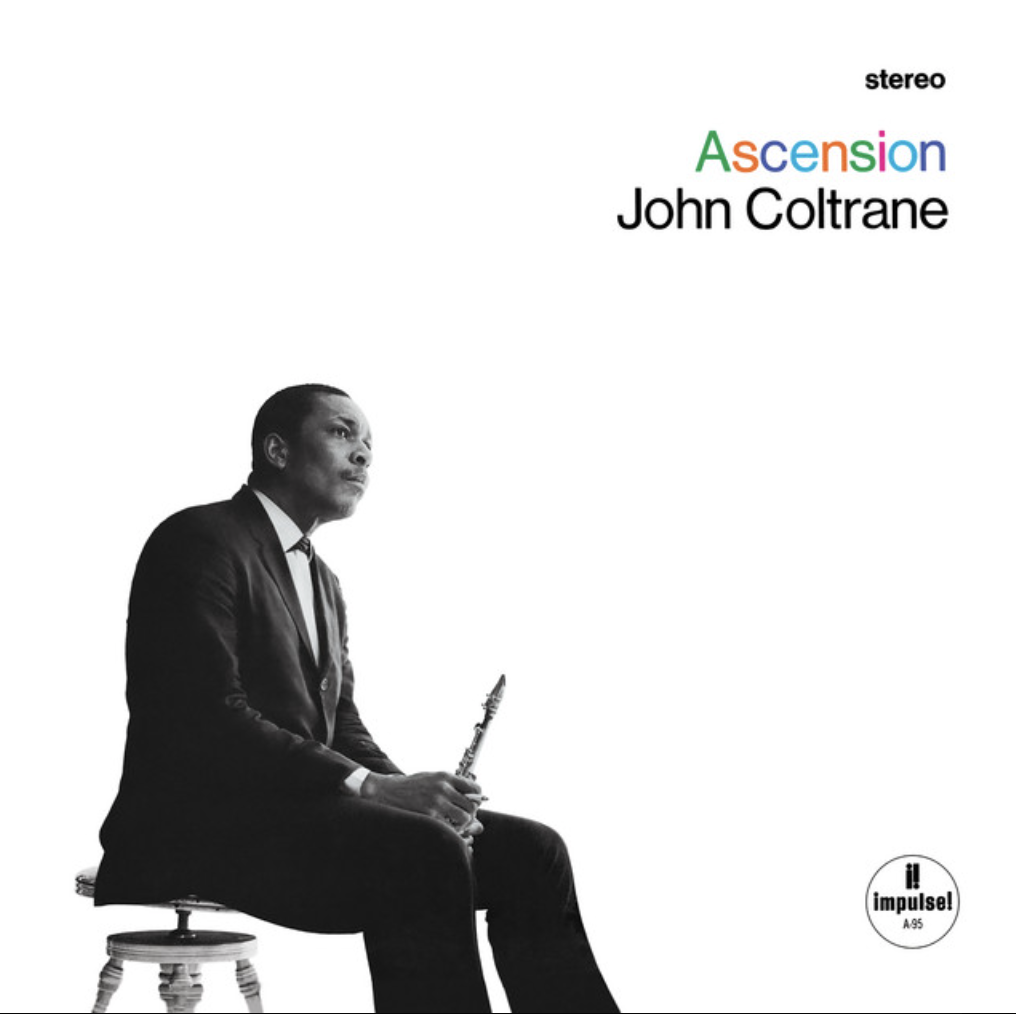
No playlist this month, but video selections tied to those albums celebrating anniversaries this month (and some from February too). Starting with demigod jazz sublime progenitor Coltrane and his 1966 LP Ascension.
Placebo meets Radiohead on the peripherals of Britpop, one of those unique bands form the period that should have been much bigger than they were: accumulating plaudits but not the sales and fame. Subcircus delivered one of the better LPs of that era with their debut Carousel.
Sparks Hello Young Lovers reaches its twentieth anniversary. The Gilbert And Sullivan of cerebral pop music takes the form to ever-new intelligent heights of absurdity and revelation. Daring to merge intellectual ideas and themes into an art form; yet never laborious, condescending or aloof, every song on this theatrical rock and pop suite features an infectious melody, satirical but heartfelt clever lyricism and the usual Noel Coward piano witticisms (updated for the modern age of course).
Time to rip it up with the screamin’ tantrum boom of The Sonics; Garage band proto-punk miscreant royalty, the band’s era defining Boom LP is unbelievably sixty years old.
One of Cope’s muthafuckers and idols, the Arthur Lee led Love dared to dream bigger with their Baroque flourishes, jangles and lamentable love requests. The tapestry songbook that is Forever Changes is also sixty years old this month.
Fast-forwarding to the 90s, and Howie B‘s influential LP, Music For Babies is thirty this month. In that Mo Wax trip hop way, here’s one of my faves, the title track:
Prince time. Parade is forty in March. And here’s my fave of all time video and track, Mountains. The man was incredible. How do you make the shakers effortlessly cool? Or running on the spot in Casanova Rose of Texas gear look cheekily sexy and sassy? Could be naff in anyone else’s hands, but works in the hands of such a singular talent. I miss the conceptual planning, the whole effort from pop stars today as AI does the heavy lifting, and most artists seem totally devoid of ideas. “Guitars and drums on the one!”
Mock 21st century terrordome meets art-punk new wave. Does anyone remember Sigue Sigie Sputnik? Well Flaunt It is forty this month, an LP perhaps ahead of its time or maybe not.
Something more cerebral and experimental now with a live version of the title cut from jazz guitarist progenitor Pat Metheny’s 1976 LP Bright Size Life. Still going strong, with recent releases, we hail back to the 70’s era of fusion-jazz.
__THE DEARLY DEPARTED/___
Pete Dello: Baroque scrolls and flourishes of yearned love, Pete Dello is best remembered as the lead singer of Honeybus during the 60s and for the hit single I Can’t Let Maggie Go. Which is enough in itself to be inducted into great hall of fame and pantheons. But growing up in my household it was Pete’s remarkable And Friends effort Into Your Ears that really resonated and led to my appreciation of his songwriting talents. Quintessentially English, forged from the worlds of Lewis Carroll and T.H. White, this cultish psychedelic Baroque folk songbook uses various characters (including the knightly earwig Harry) to imagine disarming songs of regret, the lovelorn, yearned and fantastical. If in raising a glass to Pete you explore any of his work, this is a great place to start.
John Maus: You got to feel for poor old Maus. Any other vocal pop group of the 60s era may have seen his rep fly. But unfortunately for Maus, he shared the stage with the genius baritone Scott Walker, who’s tones better suited the arrangements and the sense of scale and moodiness of sullen unrequited and dramatic love affairs. Both changed their names to better fit their newly formed Walker Brothers aggrandisement with third member and garage band royalty Gary Leeds (a former Standell no less). But whilst despite his own self-inflicted sabotages, Scott’s star rose, John’s merely fizzled out. And despite attempts to go solo after the Walkers first split in the late 60s, the trio in mosey mode donned cowboy denims and reformed in late ’74. Staying together until the dawn of the next decade before finally drifting aimlessly apart, they did manage to produce the coveted and extremely influential Nite Flights LP, which though unsuccessful in terms of sales is critically up there. In between regular jobs John knocked out the odd recording, but never returned to the heady days or success of the Walkers triumphant period in the 60s. And never really connected with his old foil Scott.
Simon Harris: Almost going unnoticed, but not to an old Britcore Hip-Hop head like me. Producer and Music of Life founder Simon Harris passed away last month. Its’ his highly influential and memorable comps from the 80s that cement the rep for me; platforming early raw tracks from the Demon Boyz, She Rockers, Derek B, Asher D & Daddy Freddy, Hijack, M.C. Duke and many others: part of the original stable of UK talent that fought back against the US wave of hip-hop, giving it a distinct UK twang and even harder edge at times. A real progenitor and leading light in the scene that deserves our full respect.
Country Joe McDonald: I couldn’t not mention counterculture figurehead Country Joe, who literally died in the last couple of days (as I write this). Obvious choice, but his famous crowd-led rendition of THE Vietnam protest song at Woodstock in ’69 – at the age of 17 he enlisted in the US Navy, stationed over in Japan. The Boomer journals will go in overdrive, so I’m not wasting time with obituaries or list of accomplishments. But suffice to say, Country Joe released a hell of a lot of quality protestations, rebellious yells, most notably with his The Fish comrades. Go seek out.
Perusal #76: Howling Bells, The Odes, Magda Drozd, Yoshiko Sai…
February 5, 2026
A world of sonic/musical discoveries reviewed by Dominic Valvona. All entries in alphabetical order.

Magda Drozd ‘Divided By Dusk’
(Präsens Editionen) 13th February 2026
Coupling a renewed interest in Polish folklore, its history and roots with time spent in Japan, the composer, violinist and sound artist Magda Drozd inhabits an often alien, mysterious and experimentally intensity of field recordings, atmospheres, the neo-classical, avant-garde, serial and most hauntingly ethereal.
It’s as much an apparitional-ambient and dream-like album as it is dramatic and full of a certain otherworldly drama. And for some of that time it draws not only from the two countries that inspired it, but also from natural phenomenon: an eclipse to the album’s dusk divided title. For in-between worlds, the Warsaw born, but living between Zurich and London artist Drozd inhabits a sonic and vocally invocative landscape that is one part Theatre Of Eternal Music and another part Noémi Büchi.
Working in part with Japanese foils Rai Tateishi and Koshiro Hino – both of the Osaka rock minimalist troupe goat – Drozd absorbs the sound of the high-pitched Japanese shinobue bamboo flute and the NE Thailand and Laos khaen bamboo mouth organ into a partly neo-classical and abstracted drama of aria-like voices, the slightly industrial, willowy, ghostly and folkloric.
Folk songs transformed, stirred up and given a new impetus meet with klezmer and the courtly (especially on the near fairytale and whistled-pitched ‘Piosenka Ludowa’; a free-form transported interpretation of the folkloric folk song), or come up against heart of darkness style guitar, vocal callings, electronic filaments, ghostly reverberations, and the incantations of crickets and insects. The mood and soundscape are enhanced and given a secondary geographical feel by the use of various instruments and electronic/effects apparatus, including the Lyra-8 – described as an organismic analogue synth, its eight varied generators are referred to as voices that resemble the tones of an old electric organ. And with the addition of both wordless and lyrically sung spells, siren songs and cantos of an abstract kind, the whole album hovers and strains between the esoteric symphonic and the strangely folkloric; between Japanese traditions and environmental music, the harrowed depths and pulls of East European and something not quite of this world. Nightmares and dreams, realities and folklore meet in a new space and time.
Howling Bells ‘Strange Life’
(Nude Records) 13th February 2026
An unforced return and obligation, with enough time (just over twelve years) and distance to make a mature judgement, the Howling Bells are back with a new, and crucially, pretty damn fine album of grown-up indie-rock, indie-pop and the psychedelic.
It must be said however, that in the crazy divisive decade since the band’s initial break-up many of the issues that perhaps led to the split are still to be resolved. Bossing it with a flurry of more stripped-down solo albums, one half of the sibling team that instigated the band, the vocalist and guitarist Juanita Stein has spent the intervening years writing and producing music that erases everything but the most vital, emotionally receptive and connective elements of the Howling Bells sound to produce confident (despite the fragility and vulnerability in places) songbooks of personal memories and identity. Even though Juanita’s brother Joel is just as much an integral wellspring of ideas, motivation and creativity, and despite a number of lineup changes during the band’s career trajectory, the focal point, the spotlight, has always shone brightest on their front woman. That light can also burn, and Juanita’s time spent out at the front hasn’t exactly been a positive one – as referenced on her solo work, especially on 2024’s The Weightless Hour; one of my choice picks of that year. Whilst the bane of music press cliché, the allure of the front woman is nevertheless a phenomenon, a selling point throughout an industry previously dominated by males. It’s felt and seems to perhaps be referenced on this album’s own winding indie and spiky ‘Heavy Lifting’, that relationship and in the press, Juanita was carrying around a lot of weighted expectation on those slim shoulders of hers. Perhaps, now, in more recent years, from the viewpoint of motherhood, Juanita wishes to set things straight, to pass on her knowledge and resolutions from sagacious advantage point, having come out the other side, still persevering and still standing strong.
After originally leaving their Australian home to pursue a music career abroad, Howling Bells moved to London where they quickly stood out amongst the dying embers of the MySpace era and its concentration of raggedly male indie bands and post-post-Britpop wannabes. After being championed to a point by such rags as the NME, they soon hurtled up the ranks and earned a spot supporting one of the biggest, if most boring, bands of the era, Coldplay on a stadium tour. This acceleration would have its drawbacks. But with singles like ‘Setting Suns’ (I would say one of the best, certainly among my favourites, from the early noughties) they managed to be both relatively popular and yet highly credibly creative wise. That time hasn’t been forgotten, and after the first split, made after the band’s 2014 album Heartstrings, there seems to have always been a desire or need to gather back around the Howling Bells catalyst.
But Strange Life is much more than that, it’s also a statement of dreams, plaints and diaphanous psychedelic rock carousal rides on the subjects of nostalgia, ideas of home and resilience. On this theme we can pick out the Echobelly and Mazzy Star-esque ‘Melbourne’, a song with a sad cooed tone that speaks of the letdown in finding that despite returning to the bosom of home and its attractions, the reality is quite different: friends, and those you grew up with more or less all moving on and away. Better to perhaps move forward than back and dwell on the past. Meanwhile, ‘Halfway Home’ seem to catch them cut adrift and homeless yet finding a reassuring candour of belonging.‘Unbroken’ is a great opener, a single if not already in the making, and ‘Angel’ seems to be a real departure for the band towards circus Britpop.
As I’ve already described, there is a new sense of confidence about these songs; the scope of influences and range subtly expanded, helped in many ways by Juanita’s solo pathway, which emphasis the “light” touch over the heavy and raging. Vocally speaking, that voice is just as diaphanous, but able also able to turn on the Grace Slick switch, or to escape down the rabbit hole into metaphorical and allegorical dreaminess. Both Joel and drummer Glenn Moule lay down a solid backbeat that switches between echoes of Jet, the Cocteau Twins, Britpop and Juliana Hatfield. Everything is just so; energetic when needed, subtle and sympathetic at other times, and even psychedelic. As reunions go, it’s a very successful one. The vulnerability shorn, the dreaminess ramped up, and the songs speaking with a more mature strength. I for one am glad to see them back anyway.
Ira Dot ‘In Blue Time’
27th February 2025
In development for the last five years, the debut album of disarming indie-blues melancholy from the Ira Dot collaborative partnership of Eddy Wang and Ryan Akler-Bishop seeks comfort and reassurance in these most disconsolate and plaintive of times. Drawing on a wealth of lament, or yearned expression, and a sense of detachment from not just race but the universe, both foils in this project exude a cosmic, fairytale, whimsy and Chinese-operatic patchwork of early noughties influences in their hour of neediness and slacker-like indolent sadness.
Powered as much by such melancholic dreamers, observers and unfortunates as Virginia Woolf and Marcel Proust as by the writings of the cultural theorist and American literary scholar Anne Anlin Cheng, In Blue Time is essentially rooted, or unrooted as it were, in both the psychological and all too real problems of racial identity. With the musician, filmmaker, Pennsylvania PhD alumni and Toronto Experimental Translation Collective member Wang left a little wanton and dejected over his Chinese heritage and identity, the album’s lyrics – mostly enchantingly downcast or twee – often reference ideas of belonging and detachment. Cheng interestingly, has written much about this, especially from the Chinese and Southeast Asian viewpoint (Cheng is herself of Taiwan heritage); an identity that seems to slip down the virtuous order of importance on the race meter, with Cheng voicing her own criticisms when Asian women are left out of the debate, the picture, and out of the protest movements for social justice despite facing hostility, racism and various forms of abuse. As one of the oldest communities in America if not anywhere, the Chinese are embedded in the fabric of our landscape and culture. However, this relationship has relied mainly on exploitation of one kind or another. But as is often the case, and through the negative effects of the authoritarian rule of the Chinese communist party, the country and its people have been subjected to scrutiny and racial abuse. There’s so much to unpack, and I haven’t the room. But suffice to say Wang’s cultural separation from those roots, growing up in the West, have left a void that needs addressing.
This main thrust is answered by lyrical displays of the longing, wanton and dismayed, put to the production and music of the multi-disciplinary artist, filmmaker and co-editor of the Big Toe magazine Akler-Bishop. With sympathetic pianos, some light but emotionally effective strings, Casio-like shimmies, tropical and celestial atmospheres, various frequencies and interference, the tunning into one sampled or captured narration or metaphor, the accompanying delightful female shadowed vocals, and reverberations the album traverses a whole spectrum of moody blue shades. And within that palette there’s hints of The Unicorns, Jonathan Richman, The Books, Olivia Tremor Control, Frog, Mercury Rev, The Terror Pigeon Dance Revolt!, Broken Social Scene, early Eno, Chinese opera, the Muppet show musical parts and the exotic.
Despite the title it never feels like a malady, nor does it come across as anything but a most lovely indie album of sentiment and belonging. It just gets better on every play, like a musical comfort blanket.
The Odes ‘Déjeuner Sous L’Herbe’
(Not Applicable) 6th February 2026
A union of the untamed, Blurt’s legendary frontman and wild squawking, stonking saxophonist Ted Milton teams up with the electric trick noise maker, sound artist, software developer and composer Sam Britton for a double-album feature of both sonic assemblages backed free-improv/free association vocalisation and shorter poetic vignettes.
Already pretty much a cult progenitor of a sound that could only be riotously described as post-punk-no-wave-protestation-mutant-jazz, Milton’s testaments amd rages transformed the group he founded in 1979 with his sibling and former English prog-psych outfit Quintessence band member Jake and guitarist Peter Greese. And although that group mutated constantly over the following decades, the revolving set-up near enough always featured Ted as chief instigator/performer. Whilst it would be disingenuous to those artists on the vanguard of the 80s scene that took over the downtown scene of NYC and Europe, Ted could be singled out as one of the earliest originators of no wave and its various offshoots. Joined now in 2026 by Britton, who channels much of his idiosyncratic Isambard Khroustaliov alias and work with such troupes as Scarla O’Horror, both Ted’s wild saxophone skonks, squeals, squeezes and drifts and partly Dadaist, partly beat, partly avant-garde and partly snide, sneery and pitying digs at nationalism and the state of society are transmogrified or laced with warping, crunching, enveloping claps of thunderous electronica; punched, slapped and singularly whacked synthetic drum pads; 8-bit and binary distortions; and Populäre Mechaniks.
Forty-five tracks in all, divided into two parts; the first section, the surrealist impressionistic and situationist imbued Déjeuner Sous L’Herbe (which I believe translates as “Lunch Under The Grass”) draws both foils together in a post-punk, fucked-up jazz and leftfield dance music collaboration, whilst the second part, Anti Climb Paint, feature Tim unaccompanied performing over thirty short (some lasting only the time it takes to read out the title) poems of the absurd, politically charged, pitying, silly, observational and comedic: sung at times but mostly spoken, Tim invokes a fusion of Lydon, Ken Livingstone, music hall, a bastardised and updated wrathful version of the WWI poets and Jon Sinclair. The latter section features everything from “stringing up” the Westminster front bench to loud shirts (“Braille for the sighted”), corporate office jobs on the Moon, Captain Tom’s charity walk during Covid (“he kept a walking, flapping his gongs”), and his uneasy relationship, so it seems, with “dad” (a theme that stretches across a number of readings).
The more musical, rhythmic but highly experimental former section could be described as a meeting between the sax of Archie Shepp, Andy Haas, Colin Stetson, Biting Tongues, James Chance and Konk and the off script improvised tubular scaffold effects, wraps and reverberated noise of Britton’s various hidden sources and apparatus: often sounding particular Germanic.
A generous offering of words and sound, anointed under the more lyrically and near disarming (certainly giving zero indication of the nature and to the sound of this duo) The Odes union, Déjeuner Sous L’Herbe and its second act cement reputations, encapsulates the current messy, fucked-up state of the society and politics, and offers up a performance of equals working out on the peripherals of the music world.
Pefkin ‘Unfurling’
(Morc) 30th January 2026
Both drawing from and fascinated by the landscape, the history of Western Scotland and the many islands that sit between itself and Ireland, Gayle Brogan (under the Pefkin alias) once more embodies a both abstracted and devotional near otherworldly vision of that old home. The first album since moving across the Scottish border to the North of England and Sheffield, Unfurling, as its title would suggest, does just that as it unfurls a simultaneously beatific, sober, haunted, mysterious and misty soundtrack to the seasons and the Irish saints sent in their Gaelic etymologically named small lightweight coracles across the sea to pagan Scotland. It’s the mystique, the hermit’s life and the early rituals, the conversion that intrigues.
Emoting a both haunting and hymnal-like atmosphere throughout, Brogan invokes the abstract feels of the environment in a cycle that traverse’s winter and spring. This is done through the use of either apparitional-like or transformative folk choral voices, the use of the viola and violin (erring towards John Cale, and a touch of Jed Kurzel), various drones and purrs, throbs and the sound of the landscape itself: the lapping tides of either the sea or the waters that wash up on Scotland’s dramatic loch topography.
I was reminded in part of Delphine Dora, Susan Alcorn and Simon McCorry. But this album is mostly unique in capturing a mysterious essence and the feel of each season’s embrace or shroud: winter really does seem quite sober, ghostly but also beatific; I can see the heat rising off the damp and melting moss on the opening ‘Green Bound In Ice And Snow’. At other times it feels like a transformative vision of the Gaelic; old songs and geography transcribed beyond the parchment and recordings of scrolls on to the air and into the ether.
An extraordinary work of both the short and long form, Unfurling emotionally and intimately soundtracks a feeling of time and place, of history, and of religious myth.
Yoshiko Sai ‘Mikkou’
(Wewantsounds) 13th February 2026
The famous silk road, from Europe and Persia to China, formed the backdrop or mood for the ethereal and clean-cut siren Yoshiko Sai’s second studio album Mikkou, released back in 1976. Tying the atavistic with the contemporary, picturing in words and music that fabled trade route and the lands it crossed – the Takalamakan desert and such – Sai longingly, seductively and achingly transports the listener to magical, dreamy and mirage-like realms. And yet, despite the fantasy, the relaxed near show-like and almost cabaret funk, the bluesy influences and brassy resonance of such peers as The Far East Family Band and worldly prog, the album is anchored with references and plaints to femineity, freedom and the “passage of generations”.
The singer-songwriter and artist (for it is her fantastical/mythological painted cats and nudist sprites, nymphs, muses that don the various album covers) released a flurry of albums between the mid and late 70s, before talking a considerable respite, and picking up again in 2001. In fact, this latest album to be released from Wewantsounds’ series of Sai vinyl reissues (many receiving a proper international release for the first time) features a new interview with the Japanese cult star. But for those yet to experience her most evocative crystal voiced metamorphosis and vision of folksy-blues and balladry, and know little about her, Sai was born in the old Japanese capital (during the 8th century) seat of Nara, located on Honshu in the 1950s. Surrounded by shrines, temples, architecture and a landscape of great cultural importance, Sai absorbed herself in myth, the dream-realism, the dark and the bizarre literature of such notable Japanese authors as Mushitarō Oguri, Yumeno Kyūsaku and others. It was whilst recovering from a kidney disease and putting on hold her law study at Doshisha University that she began to paint and write poetry and songs. After competing in a number of competitions and submitting songs, she was invited to perform as the opening act for Rabi Nakayam – anointed the female Japanese Bob Dylan. Proving a successful leg on the ladder, Sai was swiftly signed to the Teichiku label, with her inaugural album being released on that label’s subsidiary Black in 1975; produced by the notable Japanese jazz muso Yuji Ohno no less.
Revisited in 2026, accompanied by Hashim Kotaro Bharoocha’s informative liner notes and interview, the Mikkou LP entwines faraway dreamt lands and islands with a most beautifully envisioned songbook of the weepy, sublime and drifted. Creating the right atmosphere of Turkic, Samarkand and Persian allure is the spindly-lattice and springy reverberating sounds of the dulcimer and what sounds like tablas – produced and arranged by the noted Isamu Haruna. But making his mark throughout is the famous Japanese guitar hero Masayoshi Takanaka, who channels his most bluesy credentials with folk, psych, Latin America and country on the silk road of travails and magic.
Soulfully and softly fluctuating between flourishes of old Persia, the Caucuses and China, but also seemingly embracing touches of the Iberian, of the Caribbean lilt, of funk, and the Laurel Canyon, Sai effortlessly oozes fantasy, love and lamented aches. Almost filmic, ambitious yet very much contained and sentimental, Sai’s second LP is a silkscreen of yearning escapism.
Here’s the message bit we hate, but crucially need:
If you’ve enjoyed this selection, the writing, or been led down a rabbit hole into new musical terrains of aural pleasure, and if you able, then you can now show your appreciation by keeping the Monolith Cocktail afloat through the Ko-Fi donation site.
Our Monthly Playlist selection of choice music and Choice Releases list from the last month.
Apologies, as I’m writing this from my bed in the Renal Unit of the Queen Elizabeth mega hospital, waiting on my weekend free pass for home and recovery in much more inviting surroundings. If you haven’t yet heard, I was rushed into Acute last Thursday lunchtime and ended up in the kidney specialist unit; prodded, tested, observed, scanned, observed more, biopsy and trialling various meds: some of left me pretty unfocussed and groggy. You get your own room, own shower and facilities, plenty of sockets and pretty good free WiFi, so it isn’t that bad a stay. Just waiting in limbo for action plans, lifestyle change advice and long-term medication. I will however at least try to get the site on some sort of regular track whilst all this is going on, but events may hinder this, and my state of health may make it impossible sometimes, but we shall see how it goes.
Saying all that, I’m able, or at least in a more awakened state to finish off the month with a revue playlist and selection of choice releases list from January 2026. This list includes both those releases I or my contributors (Matt Oliver and Brian ‘Bordello’ Shea) managed to feature and review on the site and those we just didn’t get the room for – time restraints and the sheer volume of submissions each month mean there are always those records that miss out on receiving a full review, and so we have added a number of these to both our playlist and releases list.
CHOICE RELEASES FROM THE LAST MONTH OR SO:
Elea Calvet ‘Spurious Transmutations’
Chosen by Dominic Valvona
Geologist ‘Can I Get A Pack Of Camel Lights?’
(Drag City) DV Link
Clémentine March ‘Powder Keg’
(PRAH Recordings) DV Link
DakhaBrakha ‘Ptakh’
Chosen by DV
Roc Marciano ‘656’
(Pimpire Records/Marci Enterprises) Chosen by MO & DV
Minor Dents ‘Sitting With The Fish’
EP – (Rose Hill Records) Brian ‘Bordello’ Shea Link
Reine des Lezards ‘Lady Coca-Cola’
EP – (Metal Postcard Records) BBS Link
Sis and the Lower Wisdom ‘Saints and Aliens’
(Native Cat) DV Link
Wilson Tanner Smith ‘Perpetual Guest’
(Sawyer Editions) DV Link
Tachube ‘Mincminc’(Inverted Spectrum Records/PMGJazz)
DV Link
Charles ‘Poppy Bob’ Walker ‘Double-Wide’
Album – (Castle Dome Records) DV Link
Leo Wolf ‘Veiled In Light’
(The Oldest River) DV Link
PLAYLIST:
Sis and the Lower Wisdom ‘Luce’
Tinariwen Ft. Sulafa Elyas ‘Sagherat Assani’
Reine des Lezards ‘I’m Made Up’
Robert Stillman ‘Reality Distortion Field’
Neo-Magics ‘Acid Tongue’
Clementine March ‘After The Solstice’
The God Fahim & Nicholas Craven ‘Bik Luster S’
Roc Marciano ‘Vanity’
Doctor Nativo ‘Chokolate Kakao’
Shabaam Sahdeeq, Es-K & General Steele ‘Top Tier’
Under The Reefs Orchestra/Catherine Graindorge ‘Banquise’
Occult Character ‘Her Name Is Terriible’
The Bordellos ‘Who Do You Think You Are? Paul McCartney?’
Geologist ‘RV Envy’
Sniff, Caneva & Hush One ‘Polo Jacket’
Fliptrix, Forest DLG, Coops ‘Freedom?’
Toni Geitani ‘Ya Sah’
Wilson Tanner Smith ‘Cherry Picking’
DakhaBrakha ‘Kosari Kosait’
Elea Calvet ‘Bad Joke – Transmutation’
Sweeney ‘Lonely Faces’
Cashell ‘These Things Take Time’
Foster Neville ‘Hob Moor’
Strangebird-Sounds ‘CALCITE’
Charles ‘Poppy Bob’ Walker ‘Winterhaven, 1978’
KatzPascale ‘GBTC’
Sonnyjim & Sebb Bash Kezza’
Minor Dents ‘Rituals’
The Digest for January 2026: New Music/The Social Playlist
January 16, 2026
The monthly Digest includes a clutch of accumulated short new music reviews and the social inter-generational/eclectic and anniversary albums celebrating playlist.
___THE NEW (All those latest & upcoming releases in brief) ___
The Bordellos ‘Who Do you think You Are? Paul McCartney?’
Single – (Metal Postcard Records) 7th January 2025
More The Rutles’ Stig than The Beatles’ McCartney, the latest self-depreciated, no-fi buzzing guitar string strummed piece of “silliness” from The Bordellos family (that’s Brian Shea and his brother Ant, and Brian’s son Dan) pays a handsome tomfoolery homage to good ol’ Paul.
The Bordellos were behind Half Man Half Biscuit and the Cleaners From Venus in the dole queue of the 1980s; powered by aphorism, a ridicule of the current industry, and a litany of muthafuckers from across the golden age of rock ‘n’ roll, punk and post-punk, psych and garage. Brian will be no stranger to followers of the Monolith Cocktail, having regaled us with his reviews over the years, and of course gracing these pages as a solo performer: think John Shuttleworth meets Sparklehorse.
This latest single to be released by the Metal Postcard Records hub was influenced (I quote) “by [Brian’s] love of Paul McCartney and memories of walking up to Dead Fly Rehearsal rooms in the 80’s with my guitar and every time an old man in his garden would shout “Who Do You Think You Are? Paul McCartney”. As I walked past…it never got old for both him and me…I was tempted occasionally to buy a gun and shoot him and shout who do you think you are? John Lennon!”
If skiffle-indie-punk was a thing, then here it is in all its rudimental, near distorted jangled and sprung glory. It actually sounds less Paul and more like a sarky Lennon…that and a touch of Frank Sidebottom. No one quite manages to summarise a feeling, an era, a memory like The Bordellos, nor sound so brilliantly shambolic and devoid of even the rubber bands to replace the long loosened/slackened and fucked bands in their Tascam 4-track recorder. Off to a fine rambling start in 2026.
Greg Stasiw ‘Guesswork’
Album – (Hidden Harmony Recordings) 2nd February 2026
Greg Stasiw could quite rightly be called a polymath with a worldly scope of influences, having travelled and spent time in New York, Tokyo, Toronto, Paris, Boston, and Bratislava. Home, I believe, is New England on America’s Northeastern edge. The CV includes the occupations of experimental musician, visual artist and writer, but also include the study of anthropology, animation and illustration. Channelling all that into a musical sonic practice and the results are less happenstance than that title might suggest.
Guesswork was actually intended as a collaboration, a response to a visual stimulus created by the artist Phillipe Shewchenk. For one reason or another it was shelved, but Stasiw decided to continue experimenting and formulating a ponderous biomorphic set of ideas relating to a range of subjects, from plumbing systems for plants, to real locations and adjective prompts; many of which seem to point to nature, geography and the weather.
Ending up as Stasiw’s debut album, this amorphous blending of vignettes, studies, semi-improvised experiments sounds like a field trip conducted by Walter Smetek, Nicolas Gaunin and Hiroshi Yoshimura. It’s both recognisably trudging through the lush, the humid and exotic environments of Earth, yet simultaneously otherworldly and near sci-fi. To label it ambient would be a mistake, but minimalist all the same with its airs and the skying sound-scaping, the synth effects of kosmische and the new age combined with Harold Budd and his like.
Real sounds, like the bird life under a rich canopy, mix with percussive tools like a pestle and mortar, the knocks of heavy objects, the drawing of chains and desert sonar-like signals. A shuddery and often lovely reflective piano can be heard alongside a church-like organ producing the most melodic of paused moments. Thrusting gleams of light on the horizon; tunnelled chutes to new worlds; windy tundra’s; playful landscapes of bulb-like shaped notes; Stasiw magics up a stimulating, often pretty and with a sonorous depth, soundscape of possibilities and artistic mystery.
Tachube ‘Mincminc’ (Inverted Spectrum Records/PMGJazz)
Album – Released 4th January 2026
An international combination of band members and album facilitators/labels makes for a truly ambiguous and amorphous experiment with the latest moody and wild post-jazz exploration from the improvisational trio of Tachube. Based in the Serbian city of Novi Sad, a culmination of various musical strands and influences brings together Saint Petersburg electroacoustic/noise musician and founder of the Intonema label Ilia Belorukov (who performs on both the alto sax and rudimental, playful fluteophone), plus two active members of the Novi Sad free and ambient jazz and psychedelic dub scenes, Marko Čurčić on effects pedals and electric bass, and Nemanja Tasić on a minimised drum kit.
Their third collaborative release, platformed in conjunction with the independent boutique label and booking agency that spans in Hungary, Serbia and Turkey, Inverted Spectrum Records and the Macedonian label PMGJazz, Mincminc sounds like Anthony Braxton, Andy Haas and Sam Rivers creeping, prowling and consumed on a mysterious plain with Krononaut. It’s a combination of the improvised Polish and American freeform jazz schools, but also an emotional fit and squeeze of mythology, the darkness and the arid; enveloped as it all is by meta and the depth of the trio’s expanded spheres of influence and skills.
Incipient stirrings and jangles create the right mystique, with blows and the driest of alto expressions, quivered and shivered and shaved cymbals, busy undulated and descending bass runs and the knocks and mulch sounds of hidden sources building a serial and abstract atmosphere that vaguely invokes the Balkans and its geographical history, psychogeography and mystery. Something different in the jazz field; an expansion of ideas and moods and the extemporised.
Roudi Vagou & Läuten der Seele ‘Taghelle Nacht’
Album – (Quindi) 6th February 2026
Once more stepping out behind their aliases, the collaborative union of German artists Matthias Kremsreiter and Christian Schoppik (respectfully reimagined as Roudi Vagou and Läuten der Seele) transduce and manipulate ripples in time to invoke both blissfully dreamy and more mysteriously haunting sonic and musical ideas of nostalgia, German nationalism and geography.
Drawing upon their personal connections, their relationship to the lands and the city that moulded and influenced them both, this latest union could be filed under the hauntology label – a very good label as it happens, one that perfectly, if overused and misdirected on occasions, fits this interdimensional album of filmic score passages, vignettes and looped hallucinations. For Taghelle Nacht captures the “day-bright night” character of a simultaneously pastoral Heimatfilm era vision of German cinema, of the surreal, of fairytale and mirages whilst providing a suitably ghostly and occultist atmosphere.
It’s as if Roedelius and Moebius, or even Popol Vuh, fed the movie scores of Hans J. Salter, Philip Martell, Harry Robinson and Ronald Stein into a German time machine. Old matinee and classical suites, songs of the romanticised, the near ethereal coos of apparition sirens and angels, a fairground Bavarian Wurlitzer, the call of an esoteric nature (the field recordings of trampled walks across the land, the birds in the trees), and the sound of woodwind and brass are looped or obfuscated by the sounds of hidden whirly, unoiled sound sources, of Fortean machines and valves, folksy horror soundtracks, the concertinaed and bellowed and surface noise of old wax cylinders. Melodies and the wistful embrace of that old age are embraced and then somehow made more unreal and otherworldly as if transmitted through a séance or played on a possessed record player from an earlier age. And then again, you can pick out hints of Belbury Poly and their ilk, Martin Denny and Drew Mulholland across a haunting backdrop stepped in historical values, horrors and the mystical.
Charles ‘Poppy Bob’ Walker ‘Double-Wide’
Album – (Castle Dome Records) 10th February 2026
Outsider art from the 1980s, the left behind recordings of the fabled Charles ‘Poppy Bob’ Walker have already filled one such album of haunted imaginings, of mirages and dusty Western peregrinations. Released back in 2024, the Dirt Bike Vacation collection platformed a near secret archive of desert renderings, of loosened and ambient-esque country sketches. It reads however like one of those concocted projects, the alias of a very much still-breathing silent partner hiding behind anonymity. But reassuringly, this “normal guy”, who worked hard, kept some friends, though never married or had kids, liked nothing more than to drive off on various recording adventures in his old, yellow Datsun pickup.
The remembrance of an unassuming outsider, articulating or washing or crafting or letting his inner thoughts and observations and meditations of places in and around his Yuma, Arizona home ghostly emit through the lo fi amplified strings of his Martin D-28 guitar, onto his trusty and rudimental Tascam 4-track recorder. And as such an unassuming amateur working in the field, Walker’s music has, refreshingly, no one to please, no one to serve other than its creator’s own vision and perhaps improvised musings and contouring’s of the landscape, the thoughts and reification of mood and place.
At one turn taking on the mantle of a hidden Ry Coder soundtrack, or indeed invoking certain passages and refrains from Dylan’s Pat Garrett and Billy the Kid soundtrack, this latest collection’s controlled, mediated and shortened cinematic qualities build towards an alternative country-waned and mirage-like score. From incorporating a rustic banjo to the electrified vapours and more concrete panning and splayed strums and strikes of his guitar and the chorus of hidden sounds (from the railroad barrier’s bell-rung-like signal to the occasional use of reverberated lo fi synthetic drums, the esoteric rattle snake shaken ceremonies of the second cut, the windbreakers and even the sound of the tape’s hiss and surface sounds) Double-Wide feels like we’re watching a dreamy, hallucinating film of the surreal American West.
If you dig the art and experiments of such alt-country company as Myles Cochran, The Droneroom, the Gunn-Truscinski duo, Daniel Vickers and Chuck Johnson, then Walker should be as much a revelation as a familiar companion on the transformed leftfield road of such maverick artists.
___/The Monolith Cocktail Social Playlist Vol. 104___
The Social Playlist is an accumulation of music I love and want to share, with tracks from my various DJ sets and residencies over the years and both selected cuts from those artists and luminaries we’ve lost on the way and from those albums celebrating anniversaries each month.
In the latter camp we have the following anniversaries to mark:
The oldest celebration this month falls to Them’s mighty garage R&B raver I Can Only Give You Everything, taken from their 1966 LP Them Again. Van the man Morrison in full on maximum R&B glory; turn it up you muthafuckers! Still the best, guaranteed to get every dancefloor riotously jumping. The whole LP is peerless.
David Bowie’s Station To Station is 50 this month, and I’ve picked the Word On A Wing version used in Brett Morgen’s Moonage Daydream spectacular. Bowie’s epitaph Blackstar is 10 in January. I’ve decided on Sue (Or In A Season Of Crime).
Bob Dylan’s Desire is also 50 this month. Not the most sympathetic of subjects to mythologise, what with equal opportunities pain-in-the-neck Mafia types like Joey Gallo, but there’s merit with Oh Sister and its sublime backing vocals by Emmylou Harris (apparently, and very rare, overdubbed a day later). The musical attempt to clear the former middleweight boxer Rubin “Hurricane” Carter on Hurricane is overlong and sanctimonious in comparison.
Another 50th anniversary special, Cheyenne Fowler’s Cheyenne’s Comin’ boards the funky Stevie Wonder goes indigenous funk train. I was nice enough to give this original LP to my old pal James Bull a number of years; it probably now sits in his collection, getting an occasional airing on his turntable making in California.
Lou Reed’s country bar room bell-ringers Coney Island Baby is another LP celebrating the half century mark this month. I’ve gone for the opener, Crazy Feeling, not the best track, but still a favourite.
Only just making our albums of the year list last month with their first album in a decade (Touch), Tortoise’s Millions Now Living Will Never Die is unbelievably 30 this month. An album that defined a post-everything scene and year. And so, what to pick. How about the various gears-changing Glass Museum.
Very different, but from the same era. Britpop’s The Bluetones‘ Expecting To Fly is an unmistakable example of that era’s sound. Slight Return was the single, and track that made them, and still their best moment on wax.
Beth Ditto’s Gossip fired up the noughties, arriving with the vanguard of attitude post-no-wave, funk punk and such titans as the Yeah Yeah Yeahs. Some incredible fiery matriarchs stamped all over the sensibilities of the male dominated indie and rock scenes. The trio’s debut Standing In The Way Of Control is twenty this month, and I could have picked anything from an album that is almost a perfect encapsulation of the times it was made. But here’s Jealous Girls.
I never really need an excuse to feature Serge Gainsbourg, but to honour the memory of that French muse, chanteuse of new age French cinema and 60s starlet Brigitte Bardot here’s Initials B.B and the outlaw duet Bonnie & Clyde. Remarkably still such an icon, despite her best and most of her work being in the 1960s: retiring more or less early to concentrate on animal welfare for the next sixty years of her life.
From the newer section, or those recentish tracks that missed out on a place on the site’s Monthly Playlists, a smattering of tracks released in the last few months (occasionally a little further back). From the Live In Mestre Venezia series of outstanding performances, Get Happy by the ’84 union of sax and jazz pianist icons Sam Rivers and Mal Waldron; made available near the end of 2025. Also, and I’d bet a very popular choice amongst my peers, The House That Doesn’t Exist from Melody’s Echo Chamber’s Unclouded album, released last month; Leave by NEDA, released back in September; Volcano by Penza Penza, released last month; Pete Evans and Mike Pride’s exploratory alchemy of Substance X, also put out last month; Deanna Petcoff’s Not Too Proud, another December release; and Papernut Cambridge’s I’m A Photograph Of You, released just in the last couple of weeks.
From across time, across genres, across geography, a number now of tracks I either played in my various DJ sets over the years, wished I’d owned, or just came across in my research. This includes the mellotron imbued prog-rockers Gracious and Introduction; another prog obscurity, Kingdom Come and Spirit of Joy; American jazz trumpeter Kamal Abdul Alim and Al Nafs; German electronic and kosmische luminary and progenitor Conrad Schnitzler and Convex 4; the Memphis snot rocking garage thumping R&B outfit Compulsive Gambler’s and The Way I Feel About You; the Chicago post-rock-avant-garde Shrimp Boat and Pumpkin Love; the Cleveland garage-prog troupe Damnation ( their name whittled down for some reason by their label from The Damnation of Adam Blessing) and their funky-psych-Hammond cover of The Monkees’ Last Train To Clarksville; hip-hop royalty from the golden age, Showbiz & A.G. with Silence Of The Lambs; strange sampled fruit from Ether Bunny with the Bunny Jump; and because I was recently reminded of this song through Apple TV’s Palm Royale series, Moonshot by the dodgy, or found out, Buffy Saint Marie – not so indigenous American as she had us all believe, and yet, the music is just as sublime, the lyrics incredible.
As a special this time around, and to show at least some support for those bravely taking to the streets of many of Iran’s cities to protest against its authoritarian theocracy, and the crippling cost of living crisis (burdened by Western sanctions), I’ve chosen to include some choice music from the country’s inspiring female underground. Written – and just to show how these protests have continued since the pandemic, flaring up after brutal crackdowns, executions and state murder – back in 2023 my review of AIDA and Nesa Azadikhah’s co-founded Apranik Records compilation platform of Iranian artists is receiving another airing today (read below, with some modifications in light of recent events).
I’m also adding a number of tracks to this month’s social – the least I can do. The left’s moral compass seems stuck at outright condemnation. In fact, it has fallen completely silent on the matter, as thousands of body bags mount up on the Iranian streets. Whilst American influence, and Trump’s threats to strike at the regime if it doesn’t stop murdering its citizen protesters all feed into the conspiracy theories of Western interventionism, it must be pointed out that all previous protests – and we are talking a sizable percentage of the population that are fed up with the hardline authoritarianism; a whole younger generation wishing to have the same freedoms enjoyed in the West, the same opportunities – have failed under heavy handed suppression and sanctioned violence.
Let’s hope the Iranian people can make that change for a much better future.
Various ‘Intended Consequences’
(Apranik Records)
With a hellish multitude of flashpoints and distractions across the globe keeping the continuing fight for women’s liberation in Iran off the news rolls, it has become apparent that the Iranians themselves have been left to carry on the struggle with little support; that is until late last year and early 2026, with Trump weighing in with threatening strikes upon the regime and those that keep them there. In an ongoing war between the forces of the authoritarian religious state and a younger generation demanding an end to the erosions of their civil liberties and freedoms, heavily impeded by sanctions that began as a consequence of the country’s nuclear programme, the crisis in the country entered a dark bloody chapter in 2022 with the murder, in custody, of Masha Zhina Amini by the “morality police”.
After a rightful campaign of protest and action at such a heinous crime, a brutal crackdown by the state led to mass arrests and even executions (mostly of male supporters and activists, usually on trumped up charges). Further restrictions were invoked. And just as horrifying, in 2023 there was a nationwide spate of deliberate poisonings of schoolgirls (one of the groups who mobilised against the authorities in the wake of Amini’s cruel death). Defiant still, even in the face of such oppression, the brave women of Iran have strengthened their resolve only further.
In the face of such attacks, clampdowns, the music scene has responded with a strong message of resistance and solidarity. Despite everything, cities like the capital of Tehran have a strong music scene of contemporary artists, composers, DJs and performers working across all mediums, including art (which is probably why so much of the music is also so visceral, descriptive and evocative of imagery). One such collaborative force of advocates, AIDA and Nesa Azadikhah, co-founded the Apranik Records label, a platform for female empowerment.
Following 2022’s earlier Women Life Freedom compilation, a second spotlight volume delves further into not only the Tehran scene but picks out choice tracks from those female Iranians working outside the country in such epicenters as London (AZADI.mp3) and Berlin (Ava Irandoost).
Sonic wise it covers everything from d’n’b, trance, deep house and techno to sound art experimentation. The range of moods is just as diverse in that respect, from restlessness to the reflective and chaotic.
Contributions from both Azadikhah (the hand drum rattled d’n’b breaks and spacy, airy trance ‘Perpetual’) and AIDA (the submerged melodious and dreamy techno ‘Ode To Expectations’, which features the final love-predicament film sample, “You know that I love you, I really do. But I have to look after myself too.”) can be found alongside a burgeoning talent pool. The already mentioned London-based producer and singer AZADI.mp3 opens this collection with a filtered female chorus of collective mantra protest, set to a sort of R&B, 2-step and bass throbbed production, on ‘Empty Platform’– just one of many tracks that uses the sounds of a more traditional Iran, especially the daf drum, alongside modern and futuristic warped effects. The sound artist and composer Rojin Sharafi likewise features the rattled rhythms of hand drums and some hidden spindled instrument – like running a stick across railings – on her entrancing kinetic techno ritual of “trauma”, ‘dbkk’.
Abji_hypersun allows the sounds of the environment to seep into her slow-building track of field recordings, collage and breaks (two-stroke scooters buzz by as distant female conversations reverberate on the street). Part jungle breaks pirate radio, part Matthew David, Jon The Dentist and LTJ Bukem, ‘Resist The God Trick’ evokes a tunneled vision of haunted reminisces and resistance in the shadows.
Emsho’s ‘Down Time’ is a rotor-bladed electro mix of Basic Channel and The Chemical Brothers, and Aida Shirazi’s mysterious wind of dark meta ‘R.E.V.O.L.U.T.I.O.N’ spells out the rage with a shadowy, near daemonic scripture of wrath and revenge – a gothic synth sinister avenging angel promises that the women of Iran will neither “forget” nor “forgive” their oppressors, torturers and murderers. Farzané seems to evoke the alien, the sci-fi on her experimental, sometimes disturbing dial twisting and crackled ‘Quori’ transmission, and the Berlin-based DJ, video artist and music producer Ava Irandoost draws on Laraaji-like dulcimer tones for her dream mirrored kosmische evocation ‘CINEREOUS’. The Tehran composer, pianist and bassist Ava Rasti draws a close to the compilation with a classical-tinged, harmonic ringed, saddened piano-lingering performance, entitled ‘Eight Night’ – an atmospheric troubled trauma is encapsulated with the deftest of touches.
It might be my own nostalgic penchant for 90s electronic music (my formative years of course), but this series (if we can call it that) could be an Iranian version of the Trance Europe Express compilations brought out during that decade; a treasure trove of discoveries and whole scenes that opened up a world of previously unknown music to many of us not living in the epicenters of North America, the UK and Europe and beyond. Hopefully this latest platform of innovative artists from across the arts will draw the attention it deserves; the message hardly virtuous, in your face, but sophisticated: the very act of female Iranians making a name for themselves despite censorship and bans a sign of empowerment and resistance in itself. Few groups deserve our support (which in the West has been sadly absent) more, but don’t just purchase for the cause but for the musical strives being awakened and produced under tyrannical oppression, and because this is a solid collection of great electronic music.
If you’ve enjoyed this selection, the writing, or been led down a rabbit hole into new musical terrains of aural pleasure, and if you can, then you can now show your appreciation by keeping the Monolith Cocktail afloat by donating via Ko-Fi.
For the last 15 years both me and the MC team have featured and supported music, musicians and labels we love across genres from around the world: ones that we think you’ll want to know about. No content on the site is paid for or sponsored, and we only feature artists we have genuine respect for /love or interest in. If you enjoy our reviews (and we often write long, thoughtful ones), found a new artist you admire or if we have featured you or artists you represent and would like to say thanks or show support, than you can now buy us a coffee or donate via https://ko-fi.com/monolithcocktail
Our Daily Bread 651: From the Archives: A David Bowie Special
January 9, 2026
Anniversary Albums/Playlist: Dominic Valvona

It’s now been a decade since the passing of David Bowie. A decade that can only be described as depressingly bleak and hugely divisive in the extreme.
Alexander Larman’s Lazarus : The Second Coming of David Bowie biography, complete with, we’re told, the inside information on Bowie’s health scares over that same decade (apparently, as we are led to believe, and through inner circle confidents, he had an unnatural amount of heart attacks before being diagnosed in 2014 with the cancer that finally killed him two years later) was released at the start of the year. Pretty much the final word, or at least most comprehensive catalogue of not only the latter half of Bowie’s career, but also the events that led up to his death.
But rather than dwell on the subject, the eulogy, I wish to celebrate and honour; to escape from societal breakdown and the anguished age of high anxiety. And so, I once more want to share my original piece on Bowie’s last act: ‘★’ from 2016. I originally wrote a review like so many others, not knowing about Bowie’s fate – this isn’t entirely true; a musician friend, who’s father somehow was a pal or knew one of Bowie’s oldest school friends, relayed the info of Bowie’s cancer diagnosis to me at the time, but with no way of following that news up, of clarifying or getting confirmation, I left it at that. Just after the album’s release, and with the death of Bowie, I added a preface: my original review however did obviously pick up on the obsession and themes of mortality and death. It felt like he was leaving us a testament.
A special in fact, not only is Bowie’s epitaph ten years old this month but Station to Station is fifty years old this January. Both of my pieces on these albums can be found below, backed up with the playlist I made on hearing of his death and links to my long love letter, album guide in four parts.
‘★’ (ISO/RCA) 2016
A Preface
With hindsight, ‘★’ now seems an obvious epitaph. The clues where all there. The afterlife, resurrection and a string of final farewells hang over the album like a ticking countdown to David Bowie’s death. He did it all of course with a grand flourish, and in some cases, beautifully.
Not wholly plaintive and morose, his eulogy dared to offer up intriguing and ambiguous thoughts. The music itself both referencing some of his most experimental and edgy work, from Diamond Dogs to Outside, and up until the last daring enough to experiment as he adopted a West Village jazz troupe to play rock music in off-kilter, cerebral manner. And if it is true, Brian Eno’s tribute in recent days referred to a possible return to the duo’s Outside project: “About a year ago, we started talking about Outside – the last album we worked on together,” Eno wrote. “We both liked that album a lot and felt that it had fallen through the cracks. We talked about revisiting it, taking it somewhere new. I was looking forward to that.” Muted it seems as a serious potential, the often morbid, avant-garde and industrial art school concept album feels like it did seep into the fabric of, or at least influence ★. I for one will be gutted that he never made it. Cancer got there first. And so, we will never know how that Eno reunion would have turned out.
Looking back now, only actually a week on, at my review I was properly a little harsh on poor Bowie. Songs I mostly dismissed have seduced me since. Though, as I unfortunately pointed out, it did feel like a eulogy, an obsession with mortality. And now we all know why. Yet I will stand by it, as Bowie’s death shouldn’t change, what I believe was a balanced critique. So here it is again in full in case you missed it or need reminding:
Review
Still preoccupied with that old messiah complex and the anxieties of the times, David Bowie unveils his latest ode to resurrection ★ (pronounced Blackstar). Preoccupied with jazz, though as we’re told like a mantra, “This isn’t a jazz album. It’s a rock album played by jazz musicians”. There is a fundamental difference. Off-kilter leanings and daft nuances from the progressive jazz catalogue permeate this album, but that is all. There is no sudden embrace of be or hard bop, or spiritual, modal or psychedelic consciousness. There aren’t even any traces of that much maligned and cringe worthy offshoot “fusion”. Instead, Bowie’s recently recruited hip West Village jazz troupe, led by Donny McCaslin, adds an inventive, fresh lilt to the favoured rock and pop music tropes to create something unique.
It shouldn’t come as a surprise however, Bowie’s very first musical stirrings being on the saxophone as the young Mod about town in the early 60s before he changed his name from the one his mother gave him, David (Davy) Jones, to the immortal Bowie. The long hairs of the psychedelic age beckoned, and Bowie cut loose the restraints of jazz to wear dresses, take on mime and reinvent himself as a cerebral vaudeville troubadour.
He raises, he soars and then he falls, Bowie’s usual cycle of creativity builds and then wears out each new character he adopts. Yet left to his own devices, somewhere out in a metaphysical space, Major Tom is still causing Bowie sleepless nights it seems. The title track from his ‘Wide Eyed Boy’ meets Outside, ‘Blackstar’, was accompanied by a video that featured an unnamed astronaut, fallen and lain dormant covered in dust in Bowie’s apocalyptic cryptic world. Whether he comes to bury old ghosts or inject life into them, the leitmotif of resurrection once again looms large. Mortality preys upon his mind, and why wouldn’t it, as his own trifles with death and the rate of ageing starts to take its toll. Despite the shuffling but tight jazz drum breaks and mourning on a New York dock scene saxophone, these elements are attentive, dampened even, and composed. The title-track a flat beat ten-minute minor opus, rich with hints of Black Tie White Noise, Diamond Dogs (6:50 minutes in) and some melodious reverent classicism, is a song in more or less three parts. Strewn with those obligatory clues and references (which have nothing to do with ISIL and the present Syrian crisis we’re told) it is an ambitious if ambiguous start, and like many songs from the Bowie cannon, its cunning and complexity unveils itself on repeated plays.
So far meeting with worldwide acclaim from critics – the ones allowed to actually hear the LP in its entirety before the official release – Blackstar is musically an improvement on the straighter laced rock songbook of The Next Day. That record is now considered a songbook of nostalgic reminisces; yet he apes if not carries on with the same concerns on this short – more a Station To Station in length and track numbers – follow up. He has even brought back or decided to return and finish the story of The Man Who Fell To Earth, revisiting the tragic alien stuck in exile figure of Thomas Jerome Newton for a Broadway play entitled Lazarus – see, again with the resurrections! Stupefied with the vices and almost resigned languid resentments of Earth, Walter Tevis’s original character made pallid flesh by Bowie in Nicholas Roeg’s stunning, evocative movie adaptation, was last seen in a near somnolent state, more or less beaten, his mission failed and his loved ones dying in the drought that parched his native homeland. The second track to be shared from the album, ‘Lazarus’ features that recurring sweetly forlorn saxophone – found throughout the back catalogue – played over a maudlin, and at first very stark, indulgent wallowing backing track. With usual ambiguity, Bowie once again croons about scars, heaven and breaking free, his slow building indulgence unfurling its depth and maladies at a crawl. Closer to Heathen and Reality, ‘Lazarus’ is influenced to a degree by the critic’s darlings of the music scene Kendrick Lamar and Death Grips but sounds more like TV On The Radio and The XX.
Already gaining airplay and floating around for a while, ‘Tis A Pity She Is A Whore’ is golden Bowie, and the track that gave life to the rumours of his acquired penchant for jazz. Riffing on the infamous 17th century John Ford tragedy of the same name, a forlorn crooning Bowie sings oblique lines over a plaintive saxophone and heavy drum barrage on the fieriest track from the album. In a similar mode, a new punchier version of 2014’s ‘Sue (Or In A Season Of Crime)’ is a less shaky untethered rock and speedy break beat hurtling improvement. And once again features a resigned downcast Bowie taking on the role of a sucker-punched sap. This leaves a trio of material that hasn’t until the album’s release been aired or teased out over the net. ‘Girl Loves Me’ has a harassed Bowie yodelling, wistfully sighing and yearning with his Berlin trilogy style vocals to a methodical striding march, as he converses in a mix of Polari and A Clockwork Orange. Quite a change in tempo and style, ‘Dollar Days’ is again a reflective take, perhaps even a regrettable lament. Plaintive in a ballad style, Bowie almost eulogising, the lyrics are delivered and beautifully caressed. In a similar vein, the album’s finale ‘I Can’t Give You Everything’ is another wistful dip back into the Black Tie White Noise album. Repeating a most poetic set of verses that both unravel and confound, it is a majestic, diaphanous if sad curtain call.
Despite the gloom, Bowie is still a sprightly creative artist, celebrating his 69th birthday with a new album that stretches the imagination and puts most of his peers to shame. Of course, it still isn’t as daemonic, unsettling and untethered to the boundaries of pop and rock music as we’re led to believe; Scott Walker it ain’t, Bowie still transmogrifying his Crowley/Kabbalah/Nietzsche/Occult/Norse and beyond cycle of references into a more sellable pop format no matter how many genres he absorbs. Walker has gone into the abyss in comparison and almost removed any earthly links to melody and song structure. Can the same be said for Bowie despite his recent long-winded jazz influenced opuses?
Saying that, this could be the purest, at least concerned, version of Bowie yet. Resurrected free of his characterisations, the gilded “Blackstar” is just as uneasy and scared at the anxieties, stresses and daunting prospects of the future as the rest of us. Fame, celebratory is mere smoke after all and offers little in the way of comfort and safety in the face of the impending end times. Yet despite being easily his best album since Earthling, it’s still underwhelming and falls short of being a classic. It isn’t even as experimental as Outside, which is a criminally underrated album, and lacks a real punch. But it is moving in the right direction, and instead of listening to those younger hip cats, he’d be better off paying more attention to that other famous Capricorn, Scott Walker.
Station To Station (RCA) 1976
A distressed primal howl for the alpine air and culture of Europe were the main motivations for Bowie’s Station To Station LP. It may have been recorded in L.A, but the intention was to reach out across the Atlantic: an escapist gesture of hope to crack the drug habit.
Imbued, or just unashamedly sucking up the innovative vapours of the Teutonic music scene, those previous soul allusions were now entwined with the pan-European express of Cluster/Harmonia (and all the various Roedelius and Dieter Moebius projects), Kraftwerk and Neu!
The autobahn was already spoken for, so it would be the allure of continental train journeys that oiled the wheels of the album’s minor opus title track. Heralding the “return of the thin white duke”, Station To Station traversed disco boogie funk (‘Stay’), doo-wop futurism (‘TVC15’) and featured Bowie the Shakespearian glib, warbled crooner (‘Word On A Wing’, ‘Wild Is The Wind’). Oh yes, the note register was high all right, a resounding plaintive cry before that all-immersive dip into the Berlin years.
The Playlist
A Most ‘Fantastic Voyage’, my eulogy to Bowie still stands. Added to sporadically since putting it together on news of his death, alt takes, live versions, sessions and those favourites of mine are all collated and curated for a most pleasing fashion/experience.
PS:
Links to my Bowie guide, written to celebrate the oeuvre.
A Celebration Part 1: Debut to Pin Ups
A Celebration Part 2: Diamond Dogs to Scary Monsters
A Celebration Part 3: Let’s Dance to Black Tie White Noise
A Celebration Part 4: Outside to Black Star
Here’s the message bit we hate, but crucially need:
If you’ve enjoyed this selection, the writing, or been led down a rabbit hole into new musical terrains of aural pleasure, and if you able, then you can now show your appreciation by keeping the Monolith Cocktail afloat through the Ko-Fi donation site.
A world of sonic/musical discoveries reviewed by Dominic Valvona. All entries are in alphabetical order.
Geologist ‘Can I Get A Pack Of Camel Lights?’
(Drag City) 30th January 2026
Owing to their inarguable influence and impact on the American and international indie and underground scenes of the noughties, any release from a member of the Animal Collective fraternity is news. No less a debut solo, the inaugural album from the collective’s original founding member Brian Weitz, under the Geologist nickname that stuck since collage (apparently a friend misheard his major, but it also refers to the headlamp he wears to see his electronic apparatus during live shows) proves transitional; a step away almost entirely for the material he’s known for with his foils David Portner (better known as Avey Tare) and Noah Lennox (Panda Bear).
Incidentally, and still working in one way of another with his former band mates, Portner, another piler of the long since hibernated Animal Collective, pops up on bass alongside a host of contributions and help from Adam McDonald, Emma Garau, Alianna Kalalal, Ryan Oslance, Shane McCord, Micky Powers and Adam Lion. There’s also an intergenerational appearance from Wietz’s son Merrick on acoustic guitar, playing something resembling an indie-grunge rhythm on the strange bird hooting and whirly ‘Government Job’.
Under a throwaway entitled line, used repeatedly over time as a kind of in-joke, a winking aphorism, Weitz instrumentally and sound wise soundtracks his observations, traverses, reflections, the places he recalls and moments of both retrospection and introspection. But musically, this album is very different, taking as it does inspiration from the noted inventive guitarists Bill Orcutt and Susan Alcorn – though both artists, musicians’ talents extend beyond just that instrument. The steel pedal-like atmospheric and more wiry freeform Americana playing of these influences can be heard throughout, coupled also with Bill’s more gnarly free-post-punk-blues-jazz contortions and distortions (a touch of Bill Frith too for that matter). The second main influence is that of the hurdy-gurdy, its droning windups more in line with Ethan James’ reimagined Medieval tapestries and ceremonies, and Dorothy Carter, Le Tene, and GOAT. Its signature conjures up all sorts of imaginary landscapes, plateaus and scenes; from Tibet and the Himalayan holy valleys to the mirage arid dry lands of the America’s West and a dreamt-up revision of olde pastoral Europe.
With variations on each track, the mood and direction changes often: even if it inhabits an overall thematic musical world of drones, frequencies, circular blows, Chris Corsano-like free drums, the electrified, walking basslines, the hypnotic and near mystical. Period pieces via the Velvet Underground, Matthias Loibner and Emmanuelle Parrenia sit or run into wrangled post-punk post-rock tracks that sound more like a toss-up between PiL and Tortoise, and soundscape scores that wouldn’t sound out of place on a Daniel Lanois production. And then there’s the near native dances of tracks like glittery dusted, hurdy-gurdy wound, and padded foot stomping drummed ‘Pumpkin Festival’, and despite its title, ‘Not Trad’.
From highway oracles to dust bowls and soundtracks paid to the late repeated Altman player and Kubrick whipping girl ‘Shelly Duvall’ and the final desert peregrination turn splashing cymbal dusted and electric band motivated moving ‘Sonora’, the Can I Get A Pack Of Camel Lights? album is an open-ended enquiry of moods and memories; of exploration and the time spent in various places, landscapes. An interesting turn from the member of a band I once called a postmodernist noughties Beach Boys. A very different, unique direction indeed.
Clémentine March ‘Powder Keg’
(PRAH Recordings) 9th January 2026
The French-British chanteuse Clémentine March effortlessly swoons, coos, waltzes, saunters and hovers between the French and South American art pop decades with a multilingual ease on her latest, and third, album. And although its title, Powder Keg, was taken from a lyric out of Bonnie Tyler’s 80s power ballad, a ‘Total Eclipse of the Heart’, the inspiration and music sounds less sentimental big hair belter and more like a freed-up chamber-pop, alt-folk, country waned and glitterball hybrid of gathered thoughts, romantic encounters and introspections voiced by Brigitte Fontaine, Cate Le Bon and Gina Birch.
But that’s only really one part of this album’s scope, with the repertoire and influences opening up even more once March’s cast of friends and foils alike is brought in. Take the former Goat Girl band member turn solo folk singer Naima Bock, who March supported on a tour of the UK. Taking in some of Bock’s shared Greek-Brazilian heritage and folk signature March pays a bit of a homage on the opening song, ‘After The Solstice’; though to my ears, I’m picking up hints of John Cale, Aldous Harding and Dana Gavanski – it’s one of my favourites by the way. The latter of those names on this feathered country art-folk number, Gavanksi, is actually present as one of the many congruous ensemble members of March’s expanding circle. March is flanked throughout by Ollie Chapman on bass and Sophie Lowe on drums, but at any one time you’ll hear pop up a famous artist or musician across this songbook of the heart-pranged, fun, wistful and more driven. For after also paying a tribute of a kind to the Os Mutantes turn three-decade solo Brazilian icon Rita Lee on the suitably South American lilted ‘Lixo Sentimental’, March duets, in a style, with Evelyn Gray on the disco-indie spun ‘Fireworks’. Gray seems the ideal vocal partner on a more upbeat dizzy turn under the glitterball whilst alluding to “romantic encounters” at the Green Man Festival. The song takes in a Come Dancing Blancmange, Postcard Records, Lizzy Mercier Descloux Mambo Nassau and Hercules & The Love Affair.
The title-track itself sounds like a missing McCartneys family song whipped up by the SFA and Stereolab, and ‘Honestly’ sounds like Susana Vega borrowing an old Neil Young number. Little touches cause the ear to wander: the sax on ‘The Power Of Your Dreams’ reminded me of Don Weller’s sessions with 80s Bowie, and the faint Appalachian/bayou stirs of maverick bluegrass and Cajun ‘You Are Everything’ conjured up images of Isabelle Pierre or Karen Dalton fronting The Band. And then you get the more fuzzed-toned and powered-up indie-rock blast of ‘Upheaval’, which sounds like a cross between Husker Du and The Misfits.
As open as always, imbued by but never quite adopting the aloof coolness of the French new wave and its art pop existential chanteuses, March finds a personal, less cloying way of navigating sentiment, romance, the passing of time and how we measure it, the recall of memories and joy. A unique voice, constantly expanding and trying things out, March’s latest magical tour de force is both escapism and a dance around issues that both plague and enrich her life. Already one of my favourite albums of 2026.
Foster Neville ‘Through Lands Of Ghosts’
(Subexotic) 16th January 2026
Imbued by the late travel writer progenitor H.V. Morton and his quest to unearth, contextualise and celebrate the “mythical soul of England” from the 1920s to the 1940s, experimental musician (also the role of sound editor for the digital copy of the Trebuchet contemporary arts magazine) Foster Neville navigates his own sound map of these islands; atmospherically and unnervingly crossing national borders by starting his journey in Scotland before moving south throughout Northern England and the Southwest.
Morton’s never-out-of-print series of guides, written and often an accumulation of his columns for the Daily Express newspaper, have arguably influenced generations. Responsible for around forty such books, the topics covering not only England and Scotland but his numerous journeys throughout the Holy Land, Morton’s idiosyncratic English manners (often travelling in his typically unfussy and understated English motor, a bull-nosed Morris) and vignettes style embodied a near spiritual but difficult to encapsulate essence that bonded old England and its people. His reputational stock has however taken a severe knock ever since the publication of Michael Bartholomew’s biography. Through old dairy entries and letters Morton’s more distasteful and outright disgustingly racist prejudices came to light, most notably his Anti-Semitism but also slights on democracy (not a fan) and various other nationalities – he once described the US, dismissively, as “that craven of Jews and foreigners”. The famed journalist scooper, there at both the famous and infamous opening of Tutankhamen’s tomb, held not just questionable views but unfortunately seemed to flirt with fascism in the run up to the war, declaring that he found many of Hitler’s ideas appealing.
Parking that controversy aside, Foster is personally interested in Morton’s most famous totem, and much lauded In Search Of England, which could be said to lay some of the groundwork for the future study of “psychogeography”. A problematic term that now connects with Foster’s latest work, and pretty much one that is now dismissed by those who are said to embody it, the leading light of such dense readings and speculation of the land, or specific sites and communities (in this case, the Eastend of London) is the rightfully hailed Iain Sinclair. Preferring such terms as “deep topography” (as coined by the “London perambulator”, Nick Papadimitriou), detaching himself from an overused tag, one made almost redundant and often out of context, Sinclair’s own works merge old ghosts with history through the ages, the occult and multiple layers of cultural text. It’s why he was asked to pen an “appreciation” of Foster’s album, or rather the limited-edition vinyl version of Through Lands Of Ghosts – I’ve not had access to this by the way.
Tying together such esteemed authors, Foster’s album carries some weight; a touch of the studied even. And, despite the dismissal by some, uses the psychogeography description in the label’s press briefing; although they also use the more appropriate term of “hauntology” to describe this mystical ghostly and whispered, wisped and Kosmische-style take on the lie of the land.
Foster now builds his own picture; one steeped in the supernatural, of the memories and tracings and scars of locations marked by either death or the movements of time. These places seem empty of everything except its apparitions, its left recordings of voices and the sound and apparatus of subtle atmospheric and ambient equipment. A presence exists throughout; the haunted visitations that occupy a liminal space between the paranormal and more settled visions of an intriguing past and its elementals; of how it speaks to us now.
Sonically capturing something throughout this circumnavigation that seems to wander from the antler framed Highlands of Scotland and its most southern point on the Mull of Galloway and across the border to the site of a rail accident in Derbyshire, a nameless abandoned village and the neolithic chambered tombs of West Kennet’s famous long barrow excavations. Somewhere between the near sci-fi, séance, ambient music and Vangelis Olympian, new agism and apparitional vocals, Fowler engineers an often-veiled mystery of forgotten time and chapters from a both atavistic and more present age: The haunted “residue” of the Chapel-en-le-Firth freight train wreck tragedy, immortalised by Ewan McCall and Peggy Seegar in ‘The Ballad of John Axon’, the train driver who gave his life to avert an even greater disaster (posthumously awarded the George Cross for his actions) is invoked through the spectre aria shoos and coos and movements of sounds and what could be the environment around it.
From observing the dying flickers of lives once lived in the rural villages of WWI England and the absorption of an unseen ancient people who once roamed and buried their dead into the barrow mounds of that same countryside more than three millennia before, Foster connects various epochs, various events and the ebb and flow of time to conjure a 21st century quest to unearth the soul of the UK. I’d recommend this album to attentive listeners with an ear for the works of Oliver Cherer, Cold Hands Warm Heart, Ancient Plastix, Pye Corner Audio, Bagski and Tangerine Dream. A most successful, and I’m going to say it despite myself, psychgeography experience that could well lead to further exploration and investigation of the subject matter and locations mapped out sonically.
Sarah/Shaun ‘In Silence Love Speaks Loudest (EP)’
(Hobbes Music) Digitally Released December 2025/Physical Release 30th January 2026
The Lee Hazelwood and Nancy Sinatra of synthesized dream-pop, the Edinburgh wife and husband team of Sarah and Shaun McLachlan finish of an 18-month triptych run of EPS with this year’s simultaneously optimistic but ached and plaintive In Silence Love Speaks Loudest. Like a space-chartered St. Etienne, the couple’s latest four track showcase for the Scottish capital’s leading leftfield electronic and dance label Hobbes Music is another celestial bound flight of diaphanous pop and trip-hop break-like and trance-y electronica: stepping out on to the neon lit dancefloors on occasion too.
Making their debut in 2024 with the highly rated It’s True What They Say? (see my review of the stargazing EP), followed up by last year’s Someone’s Ghost, the duo has been busy on the live circuit making new allies and fans. And now ahead of the debut album, promised sometime this year, they’ve released this stardust sprinkled songbook of both heartache and romantic reassurances.
You might well recognize Shaun from his previous band, Delta Mainline. Coupling up with the missus, and most wooing of vocalist’s, Sarah, Shaun has concentrated all his efforts on expanding those musical horizons further. When we reviewed his band in the past, we compared them to an angelic Jesus And Mary Chain, OMD, Wilco and Spiritualized. And as it turns out the latter of those references now pops up here, with the group’s Tony ‘Doggen’ Foster adding some subtle sentimental rainbow arcs and bendy guitar/slide guitar to the dry-ice trapped-in-a-French-noir-movie-like floated ‘Desperation Looks Ill (From The Other Side)’. Appearing alongside Foster on that same track is Bruce Michie on Eno/Hansa Studio type romantically alluding saxophone duties and supplying the introductory French wafts of dialect Rebecca Growse.
As always there’s an extended cast number of foils ready to join the ranks, with both serial offenders Jaguar Eyes (a band mate of Shaun’s in Delta Mainline, contributing guitars and synths and arranging strings, programming drums and on engineering duties as well as co-producing the last three records by the coupling), and Darren Coghill (of Neon Waltz fame, providing some percussion, drums and effects) both cropping up. But also, this time around the addition of Roy Molloy (the Alex Cameron mucker appears with a soft toned saxophone sentiment on the finale, ‘Who Just Wants To Survive?’) and Exterior (a fellow Hobbes Music signing adding synths to ‘Heart Started Beating (Backwards)’).
As I’ve said before, the couple have an affinity for the ending of the Star Man movie, and its romantic allusions, but in particular the film’s score, twinned with, to my ears, the sound of dream pop, of waned country music, 80s electro-pop and Sarah Records. With songs that stretch right back to the Covid pandemic (the reassuring, despite the travails, ‘When We Dance’), or at least their inception, to songs written during the most tumultuous of periods, as the world falls apart around us, this third EP in the beautiful cosmic saga recalls hints of Air, The Tara Clerkin Trio, Beach House, The Sundays and the Cocteau Twins.
Tethered to the Earthly pains of the heart but looking towards the stars and the escape hatch, both co-writers, multi-instrumentalists and vocalists draw emotions of desperation and love from an understated but no less ambitious and anthemic production. The mood music of which varies between the near melancholic to the airy and wisped; the sad and more wistfully dreaming. Keeping up the quality, a congruous bookend to the series, In Silence Love Speaks Loudest further expands the sound and scope; an indicator perhaps of what to expect with that near future album.
Sis and the Lower Wisdom ‘Saints and Aliens’
(Native Cat) 9th January 2026
Disarmingly enchanting with the healing balm, the pliable near weightless songstress and multi-instrumentalist Jenny Gillespie Mason once more inhabits the role of generous light-bringing sister or Sis on a most beautiful album of hippy pop excellence.
Surrounded once more with a friendly circle of artis/musicians (named the Lower Wisdom) – you can hear the reassuring thumbs up from the recording studio sound desk on a couple of tunes, but feel a general support system of musical encouragement throughout -, Jenny weaves Alice Coltrane vibes with Fleetwood Mac and Alabaster DePlume to create a sort of jazz-pop-light magic version of new age 70s/80s songwriting.
Alighting the celestial staircase into a yoga retreat of snuggled and drifty serenaded and wafted saxophone, airy mystique and mirages, Saints and Aliens is a poetically descriptive album of both moods and songs. Bringing visitors from the stars to a world imbued by Jenny’s spiritual studies, the philosophical teachings of Sri Aurobindo and the Sanskrit language are called upon once more: or at least referenced on tracks like the near ethereal floaty jazzy calling ‘Yasholipsa’ – which translates into the desire for glory, the aspiration for fame, victory and power, and a spiritual striving for achievement and deep yearning for renown or divine accomplishment.
Away from the Gaia, the Indian divinities and the Gnosticism there’s a lovely blooming of soulful pop free-flowing singles like ‘Luce’ and the almost trippy and poetic opener ‘Crocus Man’: a sample of which is, “Quicksilver clown, you’ve been through hell”.
As diaphanous as it all is, there’s an undulating tone of travail; the lyrics often referring to overcoming various obstacles and finding a way out, the air to breath once more or height to elevate towards: Salvation awaits once you learn that the key is inside all of us.
The Sis alias delivers once more with a near faultless album of dipsy, sprite-like free pop and spiritual altruism. A great start album to start of the new year with.
Wilson Tanner Smith ‘Perpetual Guest’
(Sawyer Editions) 13th January 2026
Tying together the omnipresence, both in the past and in the now, of conflict, the Helsinki-based composer, improvisor/artist Wilson Tanner Smith uses site-specific performance art and music to evoke an essence of what was contained within the walls of the long since disused Kreenholm Textile Factory in Estonia’s Narva region. To be exact, located on an island in the middle of the river that gives its name to the city, slap bang in the middle too of the border with a threatening, overreaching expansionist Russia.
A flashpoint in what’s described as NATO’s most eastern flank, it has been breached in recent months by Russian soldiers – possibly testing reaction and defences. Narva has the largest Russian-speaking population, proportionally, in the EU at 97% (its total population is around 60,000). This is down to a legacy of historical invasions and the transporting of thousands of workers from Russia to work in its factories over time. Sitting across from its Russian counterpart of Ivangorod, the city is fatefully targeted as one of the starting points, if it ever comes, for WWIII: Putin has already mused in that sly threatening way he has that Narva was historically part of Russia and would be “taken back”. The city was of course under Czarist rule for a time until the revolution and Estonia’s fight for independence between 1918 and 1920.
Fast forward a generation and Soviet Russia invaded Estonia at the start of WWII. They lost it to Nazi Germany a short time later, before once more taking it back behind the Iron Curtain after Hitler’s catastrophic failure to invade and knock Russia out of the war. This situation remained right up until the fall of the Berlin Wall and the Soviet Union’s collapse at the start of the 1990s. For a long time after that period, Russians and Estonians moved freely between the two borders; the influx of Russian workers, as I mentioned earlier, living in a now industrialised Estonian city would frequently hop over that same border for shopping trips to St. Petersburg and the like.
With the heinous invasion of Ukraine in the last four years, and ramped-up – despite the talks of bring the conflict to an end – rhetoric of Putin and his expansionist plans to march right into Europe, that all came to a divisive halt. An uneasy situation prevails, with Estonia distancing itself from Russia – Estonia’s first female prime minister Kaja Kallas has been on the front-foot in supplying weaponry to Ukraine and fought to implement sanctions on Russia whilst also offering asylum to Russians escaping conscription. Kallas was at one point, put forward as a possible candidate to lead NATO; an organisation that Smith’s adopted country of Finland joined in 2023 following a rapid policy shift from military non-alignment to alliance membership in response to Russia’s aggression. Finland, which until that point had never countenanced joining, has prior aggrievances with Russia of course: a history that goes back to the Finnish War of 1808-1809, when Alexander’s Imperial Russia, allied with Napoleon, invaded and conquered Finland from Sweden, turning it into the autonomous Grand Duchy of Finland, and much later when fighting off Russia during both the Winter War of 1939 and 1940, and the Continuation War of 1941-44. Despite being heavily outnumbered on all fronts, the Finns managed to fight them off, albeit with a loss of some land. Their example may prove an omen, as Russia have likewise failed to steamroll the Ukrainians; the initial invasion planned to take months if not weeks to fully capture the country and force it back into Russian hands.
Before this becomes a geopolitical, military essay on the state of Eastern Europe and Russia, I should really focus now on Smith’s project; a series of performances created using both instruments brought to the space and the dust, the accumulation of memories of the environment itself. The prompts, the reference points as such or indicators and sparks for creativity reference the various scrapes of signage and other detritus found lying around, or reference and tie together both a shared bond between Finland and Estonia; the closing performance of ‘Läksin minä kesäyönä käymään’ (which can be translated into English as “I went out into the groove on a summer’s night”) is a kosmische-style beamed cathedral wonder of magic that features a melody borrowed from an obscure suite on Finnish Themes by the Russian composer and pianist Dmitri Shostakovich. Embarrassingly for the Soviets, it was meant to be played in Helsinki once it had been conquered during the first of those wars between the two countries. It never happened of course, and now acts in a manner as a reminder of overreached aggression and expansionism coming unstuck.
In this theatre, Smith performs a number of pieces of conceptual and environmental imbued and motivated musical and atonal art. Seeming to speak much of the times, and yet evoke a history of Eastern European malady, toil and travail.
Smith has connected the space and columns that hold it up the factory’s huge celling’s with rope and string, which he pulls on at points in this performance; dragging lightly, fragments of glass or what looks like metal along the floor to elicit a serial percussive sound. At other times, Smith is part of an avant-garde chamber trio of strings and woodwind and apparition vocalist calls from the ancestors; drawing on the labour, the emotive pulls of those that once worked this factory, whilst also referencing the geographical and looming presence of its neighbouring behemoth, Russia. But primarily, Smith is seated in front of the album’s most permeating instrument, a well-used antique harmonium that he found and repaired on site; and itself, handed and passed down from a church to a school, a living room and basement. It’s used to produce some of the most venerable of bathed pastoral drones, resonated chords, concertinaed waves and evocative reverberations. But its frame and lid is used too; the picking up of the hands as they press on the keys, or the foot pedal pump. And yet there’s also passages in which those bellowed-like breaths and airs, beds of layered tones, produce vibrations that are more unsettling (not quite Krzysztof Penderecki-like but getting there), and at other times, closer to psychedelic-folk.
Fluctuating at a slow pace between suggestions of the neo-classical, the work of Cage, Cale and Conrad, and brought forward into to the realms of Colin Stetson, Alison Cotton and Jeff Bird (I’m thinking of his more recent Cottage Bell Peace album), all the instruments and apparatus involved are simultaneously as harmonic as they are expressive in describing the abstract psychogeography of the factory, a location now standing on the edge of potential conflict; perhaps, but lets hope not, about to once more witness Russian expansionism.
Strangebird–Sounds ‘Minerals From The Crust’
(Audiobulb Records) 16th January 2026
Inspired by the natural jewels and gem-like minerals that lie beneath the Earth’s crust, the Belgium experimental composer Gregory Geerts, under the Strangebird–Sounds guise, transforms those crystallised forms into a most pleasant, subtle ambient-techno soundtrack and set of movements.
Materialising, metamorphosing and breathing each track is built around sonically capturing the abstract colourisation, the way the light plays, reflects or gleams on each chosen subject; add to that the soft use of environmental field recordings, the enervated veils of the surroundings and the just as subtle use of the everyday world in the form of various undulating captured voices, of play and people going about their business.
From the more commonly found Calcite to the rare quartz of Ametrine found almost exclusively centuries ago in just one mine in Bolivia, Geerts amplifies a sense of allure and mystery; but also feeds into the marvel of each element as it glistens and grows; pulses and vibrates. In doing so he opens up to the etymology and history, covering a millennia of usage: The atavistic Egyptians used to carve Calcite, relating it to their goddess Bast – hence part of the origins of the word alabaster -, and Ametrine, though long discovered by the native peoples of what would later become Bolivia, was, it’s been documented and said, to have made its way to Europe as part of the dowry between a local Ayoreo princess and Spanish conquistador in the 1600s. Sometimes these references are mythological: see the silicate mineral Neptunite, which is named after the Roman god of the sea of course, though because of its origins and locality of discovery is associated with the Scandinavian god of the sea, Ægir.
With the innovative use, we’re told, of a Eurorack modular apparatus our sound geologist presents an often lush, semi-tropical world of exotic birds, botanical foliage and replenishing life-giving waters. The underground is brought to the surface you could say, out into the open as it meets with the celestial and radiating. This is a subterranean world brough to life.
Both arpeggiator and freed-up notes bobble and bounce, or float like bulb-shaped and translucent particles and gentle specks against the biosphere; the synthesized; the occasional paddled tubular rhythms (on one occasion, almost like a Jeff Mills minimalist techno samba). The sounds of techno at its most sophisticated and ambient music, polygons and crystals, needles and sulphites all merge wonderfully to draw comparisons with the work of Xqui, Boards of Canada and Japanese environment music. Audiobulb continues to release some of the best work in this field, under the radar, out on the peripheral. Geerts Strangebird-Sounds vehicle is no exception; experimental without losing the listener; finding a most pleasant, inviting but also intriguing method, from the ground to the orbital, of giving sound to geological abstracts. `
Leo Wolf ‘Veiled In Light’
(The Oldest River) 13th January 2026
Following up on last year’s excellent I Saw Your Shadow On The Wall, North Carolina artist/musician Leo Wolf once more captures the abstract through the use of ambient, atmospheric and filmic granular processes, sampled material from classical records and field recordings and acoustic instruments; this time focusing on bringing the light in a range of descriptive, atonal and evocative ways.
Secular and venerated, stained glass anointed, veiled light sources cast circular-like beams and impressions on suitably invocative surfaces, columns and precious objects to capture a scenic and textural form of sonic and cinematic mysticism. Like longform and short form scores, a gradual slow movement of whispered and wispy disembodied and scaly voices, tubular machines, generators, apparitions and aliens, the sounds of hive-like buzzes and flies are echoed and reverberated to great descriptive effect. It reminded me in part of Ambient Works Aphex Twin, but also His Name Is Alive and Laraaji’s Baptismal collaboration with Kramer. And on a couple of occasions, when oscillating to an unsettling otherworldly vision of supernatural sci-fi György Ligeti.
Titles give some reference point; although I’m not sure if on the briefly gothic-like announcer’s tone narrated ‘Blood Meets The Iris’ if it is a reference to the revered Iris Murdoch’s The Sandcastle, which mentions some of the descriptive language of the track; especially the ritual part. They could be used of course just to set in motion an idea, theme or initial spark before opening up to be interpreted by the listener.
In ecclesiastical settings, in wet subterrains, from the centre of divination and various rituals, and out on cerebral planes of contemplated life and death cycles, I love how Wolf builds such plays between the venerated and unknown. Ebbing away or in constant motioned waves, the veiled presence and concrete inspirations are exaggerated or made new on an album that challenges as much as envelopes. Is something reaching out to us from the gauze, the soft and wispy shrouds? Only you can work that out. Another sophisticated and immersive ambient score from a deeply engaging composer.
Here’s the message bit we hate, but crucially need:
If you’ve enjoyed this selection, the writing, or been led down a rabbit hole into new musical terrains of aural pleasure, and if you able, then you can now show your appreciation by keeping the Monolith Cocktail afloat through the Ko-Fi donation site.
End of the Year Revue For 2025: Part Two: N to Z
December 15, 2025
Choice Highlights From The Last Year Part Two
In case you missed Part One of this illustrious list, here’s a recap.
I said I wasn’t going to do it this year. And this may be the last. But here is the second part of a comprehensive revue listing of choice albums (some extended EPs too) from 2025 that we returned to the most, enjoyed or rated highly. See it as a sort of random highlights package if you will.
As usual a most diverse mix of releases, listed alphabetically – numerical orderings make no sense to me unless it is down to a vote, otherwise what qualifies the placing of an album? What makes the 25th place album better than the 26th and so on…
Whilst there is the odd smattering of Hip-Hop releases here and there, our resident selector and expert Matt Oliver has compiled a special 25 for 25 revue of his own, which will go out next week.
Part One: A to M can be perused here
N……………
Neon Crabs ‘Make Things Better’ (Half Edge Records)
Review by Dominic Valvona
Noir & Superior, Che ‘Seeds In Babylon’
Picked by Dominic Valvona
Novelle & Rob Mazurek, Alberto ‘Sun Eaters’ (Hive Mind Records)
Review by Dominic Valvona
Nowaah The Flood ‘Mergers And Acquisitions’
Picked by Dominic Valvona
O……………
Occult Character ‘Next Year’s Model’ (Metal Postcard Records)
Picked by Dominic Valvona
P…………….
Philips Arts Foundation, Lucy ‘I’m Not A Fucking Metronome’
Reviewed by Brian Bordello Shea here
Phill Most Chill & Djar One ‘Deal With It’ (Beats House Records)
Picniclunch ‘snaxbandwitches’
Review by Brian ‘Bordello’ Shea
Pound Land ‘Can’t Stop’ (Cruel Nature Records)
Review by Brian ‘Bordello’ Shea
Q……………..
Querci, Cosimo ‘Rimane’ (Quindi Records)
Review by Dominic Valvona
R………………
Robertson, Kevin ‘Yellow Painted Moon’
Review by Brian ‘Bordello’ Shea
Rose, Sophia Djebel ‘Sécheresse’ (Ramble Records/WV Sorcerer Productions/Oracle Records)
Review by Dominic Valvona
Rumsey, Andrew ‘Collodion’ (Gare du Nord)
Review by Brian ‘Bordello’ Shea
S……………….
SAD MAN ‘Art’ (Cruel Nature Records)
Review by Dominic Valvona
Salem Trials ‘Heavenly Bodies Under The Ground’ (Metal Postcard Records)
Review by Brian ‘Bordello’ Shea
Sanders, Pharoah ‘Love Is Here – The Complete Paris 1975 ORTF Recordings’
(Elemental Music Records) Picked by Dominic Valvona
Schizo Fun Addict ‘An Introduction To…’ (Fruits der Mer)
Review by Brian ‘Bordello’ Shea
Schnitzler, Conrad ‘RhythmiCon’ (Flip-Flap)
Review by Dominic Valvona
Scotch Funeral ‘Ever & Ever’
Review by Brian ‘Bordello’ Shea
Silva, Maria Elena ‘Wise Men Never Try’ Review
‘Wise Men Never Try Vol. II’ Review by Dominic Valvona
Širom ‘In the Wind of Night, Hard-Fallen Incantations Whisper’
(Glitterbeat Records) Picked by Dominic Valvona
Sleepingdogs ‘DOGSTOEVSKY’ (Three Dollar Pistol Music)
Picked by Dominic Valvona
Soft Speaker ‘Rippling Tapestries’ (Cruel Nature Records)
Review by Brian ‘Bordello’ Shea
Sol Messiah ‘War of the Gods’ Picked by Dominic Valvona
Staraya Derevyna ‘Garden Window Escape’ (Ramble Records/Avris Media)
Review by Dominic Valvona
Stewart, Macie ‘When The Distance Is Blue’ (International Anthem)
Review by Dominic Valvona
T………………..
Teamaker, Marc ‘Teas n Seas’
Review by Brian ‘Bordello’ Shea
Theravada ‘The Years We Have’ Picked by Dominic Valvona
Toivanen Trio, Joona ‘Gravity’ (We Jazz)
Reviewed by Dominic Valvona here
Tomo-Nakaguchi ‘Out Of The Blue’ (Audiobulb Records)
Review by Dominic Valvona
Tortoise ‘Touch’ (International Anthem X Nonesuch Records)
Review by Dominic Valvona
Toxic Chicken ‘Mentally Sound’ (Earthrid)
Review by Brian ‘Bordello’ Shea
Trupa Trupa ‘Mourners’ (Glitterbeat Records)
Info/Singles Review Feature by Dominic Valvona
U…………………
Uhlmann, Josh Johnson, Sam Wilkes, Gregory ‘Uhlmann Johnson Wilkes’
(International Anthem) Review by Dominic Valvona
Ujif_notfound ‘Postulate’ (I Shall Sing Until My Country Is Free)
Review by Dominic Valvona
V………………….
Various ‘TUROŇ/AHUIZOTL’ (Swine Records w/ Fayuca Retumba)
Review by Dominic Valvona
Various ‘Wagadu Grooves Vol. 2: The Hypnotic Sound Of Camera 1991 – 2014’
(Hot Mule) Review by Dominic Valvona
Vexations ‘A Dream Unhealthy’ (Cruel Nature Records)
Review by Brian ‘Bordello’ Shea
Violet Nox ‘Silvae’ (Somewherecold Records)
Review by Dominic Valvona
Voodoo Drummer ‘HELLaS SPELL’
Review by Dominic Valvona
W…………………..
Wants, The ‘Bastard’ (STTT)
Review by Brian ‘Bordello’ Shea
Warda ‘We Malo’ (WEWANTSOUNDS)
Review by Dominic Valvona
West Virginia Snake Handlers Revival ‘They Shall Take Up Serpents’
(Sublime Frequencies) Reviewed by Dominic Valvona
Winter Journey, The ‘Graceful Consolations’ (Turning Circle)
Reviewed by Dominic Valvona here
Y…………………….
Yellow Belly ‘Ghostwriter’ (Cruel Nature Records)
Review by Brian ‘Bordello’ Shea
Young Mothers, The ‘Better If You Let It’ (Sonic Transmissions)
Review by Dominic Valvona
Z……………………..
Zavoloka ‘ISTYNA’ Picked by Dominic Valvona
For those that can or wish to, the Monolith Cocktail has a Ko-fi account: the micro-donation site. I hate to ask, but if you do appreciate what the Monolith Cocktail does then you can shout us a coffee or two through this platform.
End of the Year Revue For 2025: Part One: A to M
December 11, 2025
Choice Highlights From The Last Year
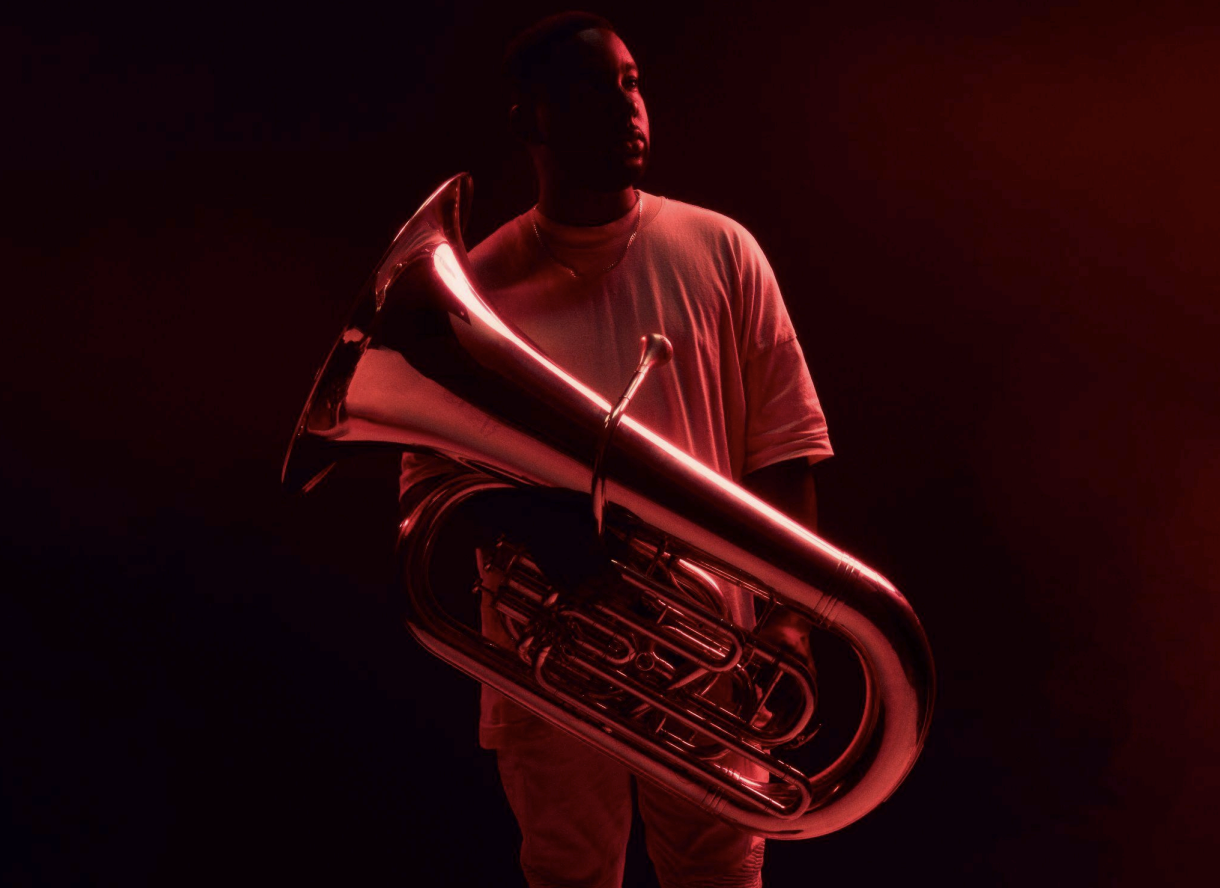
I said I wasn’t going to do it this year. And this may be the last. But here is the first part of a comprehensive revue listing of choice albums (some extended EPs too) from 2025 that we returned to the most, enjoyed or rated highly. See it as a sort of random highlights package if you will.
As usual a most diverse mix of releases, listed alphabetically – numerical orderings make no sense to me unless it is down to a vote, otherwise what qualifies the placing of an album? What makes the 25th place album better than the 26th and so on…
Whilst there is the odd smattering of Hip-Hop releases here and there, our resident selector and expert Matt Oliver has compiled a special 25 for 25 revue of his own, which will go out next week.
Without further ado….the first half of that selected works revue:
A.
A Journey Of Giraffes ‘Emperor Deco’ (Somewherecold Records)
Review by Dominic Valvona
Alien Eyelid ‘Vinegar Hill’ (Tall Texan)
Review by Brian ‘Bordello’ Shea
Allen, Marshall ‘New Dawn’ (Week-End Records)
Review by Dominic Valvona
Armstrong ‘Handicrafts’
Review by Brian ‘Bordello’ Shea
Audio Obscura ‘As Long As Gravity Persists On Holding Me to This Earth’
Review by Dominic Valvona
Aus ‘Eau’ (Flau)
Review by Dominic Valvona
B..
Balloonist, The ‘Dreamland’ (Wayside & Woodland)
Review/Piece by Dominic Valvona
Barman, MC Paul ‘Tectonic Texts’
Picked by Dominic Valvona
Bedd ‘Do Not Be Afraid’
Review by Dominic Valvona
Bird, Jeff ‘Ordo Virtutum: Jeff Bird Plays Hildegard von Bingen, Vol 2’
(Six Degrees Records) Review by Dominic Valvona
Blanco Teta ‘‘La Debacle las Divas’ (Bongo Joe)
Review by Dominic Valvona
Bordellos (with Dee Claw)/Neon Kittens, The ‘Half Man Half Kitten’
(Cruel Nature Records) Review by Dominic Valvona
Braxton, Anthony ‘Quartet (England) 1985’ (Burning Ambulance)
Picked by Dominic Valvona
Brody, Jonah ‘Brotherhood’ (IL Records)
Review by Dominic Valvona
Brother Ali ‘Satisfied Soul’ (Mello Music Group)
Picked by Dominic Valvona
Burning Books ‘Taller Than God’ (Ingrown Records)
Reviewed by Dominic Valvona
C…
Cindy ‘Saw It All Demos’ (Paisley Shirt Records)
Reviewed by Brian ‘Bordello’ Shea here
Craig, Kai ‘A Time Once Forgotten’ (Whirlwind Recordings)
Review by Dominic Valvona
Crayola Lectern ‘Disasternoon’ (Onomatopoeia)
Review by Dominic Valvona
Cross, Theon ‘Affirmations: Live at Blue Note New York’ (New Soil)
Review by Dominic Valvona
Cubillos, Julian ‘S-T’ (Ruination Record Co.)
Review by Dominic Valvona
Cumsleg Borenail ‘10mg Citalopram’ (Cruel Nature Recordings)
Review by Dominic Valvona
Joel Cusumano ‘Waxworld’ (Dandyboy Records)
Review by Dominic Valvona
D….
Dammann Sextet, Christopher ‘If I Could Time Travel I Would Mend Your Broken Heart aka Why Did The Protests Stop’ (Out of Your Head Records) Review by Dominic Valvona
Darko The Super ‘Then I Turned Into A Perfect Smile’
Picked by Dominic Valvona
Dyr Faser ‘Falling Stereos’
Picked by Dominic Valvona
E…..
Eamon The Destroyer ‘The Maker’s Quilt’ (Bearsuit Records)
Review by Brian ‘Bordello’ Shea
Expose ‘ETC’ (Qunidi)
Reviewed by Brian ‘Bordello’ Shea here
F……
Farrugia, Robert ‘Natura Maltija’ (Phantom Limb/Kewn Records)
Reviewed by Dominic Valvona here
Fir Cone Children ‘Gearshifting’ (Blackjack Illuminist Records)
Review by Brian ‘Bordello’ Shea
Fortunato Durutti Marinetti ‘Bitter Sweet, Sweet Bitter’ (Quindi Records/We Are Time)
Review by Dominic Valvona
G…….
Goldman, Ike ‘Kiki Goldman In How I Learned To Sing For Statler And Waldorf’
Review by Brian ‘Bordello’ Shea
Good Ones, The ‘Rwanda Sings With Strings’(Glitterbeat Records)
Review by Dominic Valvona
H……..
Haas & Brian g Skol, Andy ‘The Honeybee Twist’
Review by Dominic Valvona
Howard, John ‘For Those that Wander By’(Think Like A Key)
Review by Brian ‘Bordello’ Shea
I………
Ishibashi, Eiko ‘Antigone’ (Drag City)
Picked by Dominic Valvona
iyatraQuartet ‘Wild Green’
Review by Dominic Valvona
J……….
Jay, Tony ‘Faithless’
Review by Brian ‘Bordello’ Shea
Johanna, John ‘New Moon Pangs’(Faith & Industry)
Review by Dominic Valvona
K………..
Kheir , Amira ‘Black Diamonds’(Sterns Music/Contro Culture Music)
Review by Dominic Valvona
Khodja, Freh ‘Ken Andi Habib’(WEWANTSOUNDS)
Review by Dominic Valvona
Kweli, Talib & J Rawls ‘The Confidence Of Knowing’
Picked by DV
L…………
Lassy Trio, Timo ‘Live In Helsinki’ (We Jazz)
Picked by Dominic Valvona
Last Of The Lovely Days, The ‘No Public House Talk’(Gare du Nord)
Review by Brian ‘Bordello’ Shea
Lt. Headtrip & Steel Tipped Dove ‘Hostile Engineering’ (Fused Arrow Records)
Review by Dominic Valvona
LIUN + The Science Fiction Band ‘Does It Make You Love Your Life?’
(Heartcore Records) Review by Dominic Valvona
Locks, Damon ‘List Of Demands’ (International Anthem)
Reviewed by Dominic Valvona here
M………….
Mikesell, Emily & Kate Campbell Strauss ‘Give Way’ (Ears & Eyes Records)
Reviewed by Dominic Valvona here
Mirrored Daughters ‘S/T’ (Fike Recordings)
Review by Dominic Valvona
Mohanna, Nickolas ‘Speakers Rotations’ (AKP Recordings)
Review by Dominic Valvona
If you’ve enjoyed following and reading the Monolith Cocktail in 2025, and if you can, then please show your appreciation by donating to our Ko-Fi account. The micro donation site has been vital in keeping us afloat this year.
For the last 15 years both me and the MC team have featured and supported music, musicians and labels we love across genres from around the world: ones that we think you’ll want to know about. No content on the site is paid for or sponsored, and we only feature artists we have genuine respect for /love or interest in. If you enjoy our reviews (and we often write long, thoughtful ones), found a new artist you admire or if we have featured you or artists you represent and would like to say thanks or show support, than you can now buy us a coffee or donate via https://ko-fi.com/monolithcocktail
The Perusal #74: F. Ampism, Aus, Burning Books, Mauricio Fleury…
December 3, 2025
A world of sonic/musical discoveries reviewed by Dominic Valvona. All entries in alphabetical order.

F. Ampism ‘The Vertical Luminous’
(Hive Mind) 5th December 2025
A curious and, as the title suggest, luminous biomorphic world of inner and outer bodied molecules, particles and matter, the Brighton-based F. Ampism cuts a most wonderfully playful, curious and intriguing album for the always enlightening and brilliantly experimental label Hive Mind this month.
Ampism (that’s Paul Wilson when uncloaked from their sonic pseudonym) delights in making atoms speak, communicate, sing, gargle, mewl and murmur in a world of floated forms and running, pouring waters. Of an organic nature, sounds both recognisable and not connect with the electronic to create hallucinogenic, near cosmic and twinkled aspects of both cerebral and microscopic observations. And within that sphere there’s a host of fluctuations: ‘Worm Moon’ a near silken spun and spindled delicate vague evocation of Japanese theatre and ambient jazz, whilst the serial rhythms and beats, the suspended alien forms and cup pours of ‘Lunar Mansions’ could be a union between Mira Calix and Carmen Jaci. Such is the gentleness and dreaminess of this amorphous fourth world and bubbling and burbling chemistry that even the synth possessed ‘Midi Evil’ whirls and discombobulates disarmingly and harmlessly. ‘The Severed Head Is Smiling’ is also hardly sinister, caught in a magic-realism of mirrors, hallowed tubular dimensions and the sounds of the bird house.
Lovingly produced, full of that luminosity and replenished liquid growth, the album evokes feelings of happiness, rumination, the inquisitive and of near alien visitations. Less studied and technical, and more an enjoyable life form of music and sounds that proves a most enjoyable and mostly beautiful experience.
Aus ‘Eau’
(Flau) 6th December 2025
Finely balanced, Japan’s national instrument, the koto, is disarmingly and organically taken from its courtly origins and placed in more intimate, attuned settings. With his adroit koto foil Eden Okuno, the Tokyo composer and producer Yasuhiko Fukuzono creates a both fragrant and descriptive subtle album of ambient music, minimalist and environmental electronica; unmistakably Japanese, with threads and traces of the neo-classical and Hogaku music traditions and even further back, and yet almost in the spheres of Fourth World experimentation and the futuristic.
Under the Aus alias, Fukuzono produces a new project that centres around the fine, delicate and spindled use of the half-tube zither koto. Said to be an “ancestor” of the Chinese guzheng, brought over to Japan during either the 7th or 8th century, it’s thirteen or seventeen-stringed forms, strung over movable bridges, are plucked by the fingerpicks on the player’s right hand. Depending on the piece the instrument can be tunned differently, and sometimes, the seventeen-string version, when used in an ensemble, takes on the duties of the bass. It has an instantly recognisable sound; the accompaniment to rumination and contemplation within the bamboo waterfall replenished gardens of Japan; the uncurling flowery weavings and the calligraphy-like strokes of the brush.
Here, Okuno’s keen playing skills dazzle with subtle aplomb, description and a cascade of repeating rhythms as an electronic bed of surfaces and effects are placed underneath or used like an envelope. There’s also an equally subtle use of the piano – the lower-case work of Andrew Heath, a touch of Roedelius and even Tim Story, but also Sakamoto, sprung to mind -, the suffused presence of various poured, ceremonial and dripped waters, and the chimes, the tinkles, jangles and rings of various percussive and wind chime features. Altogether it makes for a most beautifully felt work of sensibilities, the naturalistic and meditative and visceral scales. And within that sound you can hear the crafting and scraping of artistic tools, the atmospheres of the recording settings and spaces, and the near fuzzy hum of the tape.
Attentive to the surroundings, but also aware of pushing the use of the koto, saving it from its more ceremonial staidness and just so preparations, Fukuzono claims the instrument for his own purposes and experiments for something more modern and intimate. For those with a penchant for the music of Satomi Saeki, Jo Kondo, Laraaji – who has even recorded a track after the instrument -, Akira Ito, Masahiro Sugaya and the partnership of Francesco Messina and Raul Lovisoni. Flau continue to produce exquisite, thoughtful works of disarming skill.
Burning Books ‘Taller Than God’
(Ingrown Records) Released 17th November 2025
One day someone will write the great study on music made during the Covid pandemic. A period that defined an era, no matter the cultural, geographical and political differences, by providing far too much time for all of us to think and reflect on the pointlessness of our existence: or was that just me? A shared consciousness of anxiety, stress and uncertainty prevailed, which hasn’t really abated: getting worse if anything. That day is not today, however. But, just one of the latest releases to pop up in my inbox this month from the highly prolific Ingrown Records imprint (if you ever want to disappear down the proverbial rabbit hole, to find new artists on the periphery then head over to the label’s bandcamp page for hours if not days of aural discoveries), Burning Books’ dramatically entitled Taller Than God album, was created during that momentous period.
Despite the epic subject matters, the grappling with all life’s philosophical quandaries, much of the music produced from between 2019 to 2021 was usually quite understated. And even though there is a presence outside us, a looming leviathan to be found hovering and often bearing down over the sonic landscapes here, the production is itself a balance of isolated intimacy and the sonorous heaviness and awe of the gradual, glacial movements of time over that map. A personal attempt to make sense of the enormity without losing sight of the individual at the centre.
And so, the trials and travails, the feelings of mental anguish are all transduced into a stunning work of both ambience and weight, a merger of the haunted and the reflective, the deep and tingly. Enervated passages of past or found recordings, a dancing pirouetted dancer a top of an old music box, can be heard amongst the near Lynchian and prowling as memories pass through the veils and hues of the shadows cast upon the mountain sides and across the plains. Gleams and drones, ebbing waves contour and create various atmospheres, whilst the reverberating chings and fuzz of an electric guitar and bass articulate something more ominous and brooding. The electrification occasionally sounds more like a mirage, almost like the country ambience of Steve Gunn and Daniel Vickers on tracks like the humming tone, soft knocked ‘Mountains Move’. Within that scope, the fateful creep of ‘Death Is Forgetting’ sounds like a union between Mike Oldfield and John Carpenter. There are a few instances of this near supranatural feel and atmosphere to be found, alongside the mysterious deep sounds of a ship in the mist, the bowels letting out some esoteric ferryman’s call. Elsewhere there’s faint hints of Eno, A Lily and the heavy bowed evocations of Simon McCorry. And on the finale title-track a touch of Daniel Lanois amongst the glassy hues, drones, percussive crescendos and scale. Taller Than God ends on the reassurances of hope after immersing us all in a simultaneously personal and collective experience across a varied topography of emotions and reflections. An ‘ode to humanity’, no less, Burning Books has produced one of the very best and well-crafted, sophisticated but empirical albums of this genre in 2025.
Mauricio Fleury ‘Revoada’
(Altercat Records) 5th December 2025
The last time I saw the well-travelled Brazilian musician Mauricio Fleury live was nearly a decade ago, when bandmates from the Bixiga 70 troupe he helped found led a carnival conga of audience members through the aisles of a seated venue as part of Celtic Connections – held each year in Glasgow, my adopted home of the last ten years. That night, and for a further seven or eight years, he was part of a collective that fused the language of Fela Kuti (which they spoke fluently) with a menagerie of Latin influences and the sound of Brazil’s inner-city bustle and hustles. And although it is a much celebrated and critically applauded group, Fleury’s CV is filled with more enviable collaborations, including a meeting and jam session with none other than Afrobeat rhythm provider and progenitor Tony Allen and the “blacktronica” and soulful house luminaries Ron Trent, Theo Parrish and Steve Spacek. This was back in 2007, but alongside his work with both the Brazilian jazz and bossa nova piano icon João Donato and tropicalia titan songstress Gal Costa, proved a catalyst for a migratory-like album of personal indulgences/stories, dramas and experiment.
Stepping out on the solo pathway, inspired as much by the places he’s lived and toured as by his crate-digging passions, the architecture, parks, its exotic bird life, and more urban environments of Brazil and further afield act as melodiously assured but pliable and warm map references. For Revoada is a personal album of worldly influences that springs forth from Brazil into Europe and the gateway to the Mediterranean, the Middle East and Eastern Africa. Starting out in ‘Kadıköy’, a district on the Asian shore of the Bosporus straddling city of Istanbul that overlooks the Sea of Marmara, Fleury reminisces on a hectic hunt for records by the cool Anatolian rock icons Barış Manço, Erkin Koray and Cem Karaca; in the city for a jazz festival back in 2017. This led to dreams of all those records he didn’t manage to find and this composition: the trip also led to Fleury, now living in Berlin, picking up the saz. The album’s opener takes a spice of Koray, a pinch of the backing from Selda Bağcan’s records and matches it with Altin Gun and a warm feeling of clavichord soul and Med grooves: It sounds like the Isley Brothers sunbathing in old Anatolia. There’s just enough electrified fuzz to make this an acid-soul number, as reimagined by Batov Records.
The first trip is followed by memories of home and the playground environment and its formative hangouts. ‘Banhando’ can be translated from Portuguese to mean “showered’ or “bathed”, but in this context is a reference to the nature park in the southeastern Brazilian city of São José dos Campos, where Fleury grew up. With a big rolling intro of bossa that quickly shimmies into a Latin-jazz sound with hints of Brubeck, Ramsey Lewis, Ayzymuth’s ‘Seems Like This’ and Greg Foat, there’s a sense of both breezily laid out memories and reminisces that capture the very feel of the place. The keys sound like bulbs of light. We next head to the city in which Bixiga 70 was formed, São Paulo, and the classic Riviera Bar, a place that obviously holds many memories for Fleury. ‘Tanto Faz’ is meant to be inspired in part by the sound of old TV soap – which it does – but reminded me in part of a Latin Americanised Lalo Schifrin and Michael LeGrand in the middle of a whistle and fluted diaphanous melody of feathered friends.
Fleury himself plays a range of keyboards, analogue synths, the flute and guitar on this musical voyage, aided by longtime foils, a number of notable and exciting Brazilian artists and players, and good friends. On pliable, walking and flexible acoustic and electric basses is the renowned Latin Grammy Award winner, producer and guitarist Fabio Sá;on rolling, falling, splashed drums and dried bone rattled, Latin percussion is the versatile producer and music director Vitor Cabral; the vibraphone and effects of Beto Montag (on the album’s zappy, beamed and jazzy-funk retro-fitted finale ‘Briluz’); and as part of the tumultuous, thunder wrapped dramatic turn Andrés Vargas Pinedo whistled bird called woodwind and brass rich title track ensemble, the flute of Sintia Piccin, oboe of Julianna Gaona, bassoon and French horn of Richard Fermino and clarinet of María “Mange” Valencia. Sá was also asked to write the wind quintet of bird-like mimics on the exotic aviary inspired title-track. This is a composition of contrasts, beginning as it does with a more serious turbulence of wobble board-like thunder and stormy cymbals, both reflecting the themes of travails and more difficult times, and a second part that opens up with that bird call menagerie. Sá also wrote the album’s Eastern African, via the spiritual jazz route, detour, ‘Jimma’. Inspired and influenced by the Ethiopian Jazz luminary Mulatu Astatke, who he toured Brazil with a number of years back, Sá paid homage to the great multi-instrumentalist and arranger’s hometown with a composition of spontaneity; a camel ride like motion trail across the dunes, unseating and decamping to the Addis saloon for a loose Ethio-jazz jamboree around the piano. There are hints of not only Astatke, Hailu Mergia and Abdou EL Omari but The Sorcerers, Ndikhu Xaba and one of Fleury’s biggest influences and musical heroes, Sun Ra.
A most touching, reminiscing and delightful travelogue of places, dear memories, and evocations that shows off, in a disarming and harmoniously melodious and funky jazzy way, Fleury’s capabilities and skills as both a composer and musician. The solo route looks to be a delightful and pleasingly creative one on an album with much to offer, setting out various moods and journeys.
Hamouna Isewlan ‘Təlle Talyadt’
(Remote Records / Studio Mali) Released 28th November 2025
Like many of the desert blues and rock luminaries before and after him, Hamouna Isewlan’s new album is suffused by the nomadic freewheeling and artisanal skills of the Berber ancestral Tuareg people; a loosely atavistic-connected confederacy (to put it into any kind of meaningful context) of diverse tribes that have traditionally roamed Sub-Saharan Africa since time immemorial. If further context and history was needed, this diverse society of various people, grouped together in an age that demanded a label, the term of ‘Tuareg’ is highly contested: arguably brought into the lexicon through the language of European Colonialism, though etymology traces the term back further through multiple sources. But many in the community would prefer we used the original ‘Kel Tamashek’. Isewlan’s rootsarein Mali, a country that he has been forced to leave to seek sanctuary in Algeria due to the unstable conditions; though as I write this, events are overtaking me as both the capital of Bamako and Mali itself are at risk of collapse and takeover by Jihadist groups.
Carved out of France’s greater Western African empire, demarcated without any sympathy for its diverse populations and history, Mali was cut more or less into two on its inception; the poorer north, one such seat of the Kel Tamashek, was more or less left to wither by the south and the government who considered its nomadic peoples backward, uncouth and because of their lighter skin colour, inferior. Though extremely complicated and far more nuanced than space allows here (I recommend reading Tim Marshall’s The Power of Geography: The Maps That Reveal the Future Of Our World for an analysis of the entire Sahel region and its many conflict over the decades), the Kel Tamashek began a decades long fight to create a self-governing autonomous state known as the Azawad. Beginning in the late 1960s and continuing until more recent times, this struggle made worldwide headlines when it was hijacked spectacularly by more extremist Islamic insurgents. Worryingly gaining ground as a Trojan Horse within their nomadic allies’ fight for independence, the destructive Islamist horrified many when they took the ancient seat of West African learning and trade, Timbuktu, and preceded to demolish it like barbarians. Former Colonial masters France were forced to intervene, finally halting the insurgents progress before forcing all groups involved back to where they started: many of them back across the border. Far from ideal, the Islamist usurpers dissipated to a degree but then switched to sporadic acts of terrorism, carrying out smaller militia attacks in Mali’s capital. This was pre Covid of course and the situation has changed dramatically; the threat has intensified with many declaring Mali a state on the verge of a Jihadist takeover. Much of this has been down to the expulsion of France by a Malian junta, led by General Assimi Goita. But with their departure the junta was unable to secure the country or even the capital. They made an even greater mistake by hiring Russian mercenaries, who failed miserably to fight off the main jihadist insurgent group, Jamat Nasr al-Islam wal Muslimin (JNIM), an affiliate of al-Qaeda. The capital of Bamako has been under direct threat and siege by the group who, as The Times reported last month, “paralysed the Malian economy with a fuel blockade that has prevented harvesting in several regions and forced the government to ration power, close schools and restrict civilian movement.” Anything can happen, including another coup within the Malian military itself: the omens are looking bleak; the outcome a possible state run by Jihadists: another Afghanistan in the making. It is undeniable that the country is suffering, with no-go zones across Mali, the threat of extreme violence and of imposed strict Islamic rule in those places controlled by the Jihadist groups. The original Kel Tamashek campaign and fight has been hijacked, its concerns, politics were always more localised but have now been engulfed by terror groups hellbent on a complete takeover of the entire Sahel region.
However, despite all this turmoil music is still being made, life is still going on in the country: as tough as they may be. In the face of such geopolitical upheaval and violence Isewlan chooses to embrace various topics of love: the yielding kind; the plaintive; the yearned; the desired; and the declared. A most touching but also yearning album that tends to the subjects of betrayal, universal and more intimate and personal love.
His new album, under this name (Isewlan in the Tamashek Tuareg language translates poetically as “the mountains of the desert”), is a songbook full of wanton reflections of both a love lost and gained, projected against the desert landscapes of his homeland. You can literally follow the pathways, the very contours, love lines and sloping dunes of Mali through his resonating electrified guitar work and the percussive and drummed rhythms and grooves of the band; many of the tracks moving in a camel or hoofed horsed motion across that iconic terrain.
An incredible player, starting out like so many of his peers and inspirations crafting a rudimental guitar from just tin cans and planks of wood (and still out blasting, outperforming those Western guitar gods with every luxury to hand), Isewlan’s career began to take off during the early noughties after making the leap from performing at weddings to recording with the band he co-founded in 2012, Aratan N’Akalle. Inspired in equal parts by Tinariwen, Ali Farka Touré, Aboubacar Traoré “Karkar”, Mark Knopfler, but most surprising, REM, the burgeoning lead artist now creates multiple evocative mirages and dreamy wanderings from a romantic travail of heartaches and more pleasing paeans to the pursuit of love and his muse.
Musically buoyant, changing from a rockified blues that Southern Americans would recognise (‘War hi toyyed’) to the signature sound of Tuareg desert rock (‘Iamna Iahla’) and a sort of rural form of reggae (‘Tənhay titt in’), the album is full of rich evocations and great flange and reverberated demonstrations of playing. I’m also hearing that Dire Straits influence on the pining resonating ‘Agg Adduniya’, and Vieux Farka Touré on the clopped motioned title-track.
This album, incidentally, has been released by the Bamako label and studio project Remote Records, but been brought to my attention by Paul Chandler, who has chronicled Mali’s music scene for a good couple of decades now. If you’ve been following us for a while, you may recall my piece on Chandler’s most excellent Every Song Has Its End: Sonic Dispatches From Traditional Mali survey (volume 2 of Glitterbeat Records’ Hidden Musics series), which went on to make our choice albums of that year’s list. So, thank you for introducing us to an artist keeping the traditions alive but also in the moment; Təlle Talyadt is an electrifying experience of lovelorn sentiment, rhythm and blues and groove.
Modern Silent Cinema ‘Surveillance Film (Original Motion Picture Soundtrack)’
(Bad Channel Records) 1st December 2025
A veritable flurry of activity this month from Cullen Gallagher’s long-running Modern Silent Cinema project, with both redux versions of archival soundtrack albums The Man Who Stopped and Stared at the Clouds (premiering on CD, vinyl and digital, we’re told, on the 15th December) and Flesh Mother (released on vinyl and CD on the 29th December) plus the new Surveillance Film soundtrack album. But for the purposes of this review, I’m going to focus on the latter, and Gallagher’s fifth collaborative original motion picture score for the Baltimore-based experimental filmmaker Matt Barry.
Plot wise, Barry’s latest docu-fiction movie interweaves the filmmaker’s own questions of intent with theoretical discussions about surveillance aesthetics and early cinema. On previous projects Gallagher reverberations, resonated shakes of the psychedelic, post-rock, krautrock, scuzz and fuzz have been led by the guitar and various atmospherics experiments; the themes ranging from the art of Duchamp, Man Ray and Marc Allégret and Winsor McCay’s famous Gertie On Tour animation. Here though, the sound is inspired or influenced in part by the scores of Ennio Morricone and his oft foil and Italian peer Alessandro Alessandro, but also by the use of the jaw or Jew’s harp in the former’s iconic Western soundtracks – played by Billy Strange. That instrument’s springy and spongy signature bounces and leaps like the march hare across many of the Latinised and Greek mythologically entitled instrumental tracks and vignettes/passages. That crucial instrument forms Riley-like patterns, boings and rebounds, as glass-like bulb, the bell jar notes and the crystal ring out or chime on the first few tracks.
Evocations of Walter Semtak and A Journey Of Giraffes sprung to mind on the first half of the album, that and the essence of those Italian composers working on Giallo soundtracks, Alain Goraguer, and on one of the quartet of mythological referenced Empusa (a one-footed shape-shifting female) tracks John Barry scoring Harry Palmer in an Hellenic setting. Later on, the mood reminded me of the submersible synth and electronic scores of Shepard Stevenson; especially on the plastic tube-y paddled and Fourth World-light ‘Medius’ – named I believe after one of Alexander the Great’s officers and friends, a native of Thessaly. But there’s many changes, from the near supernatural to distorted, the kinetic and library music-esque. It can give a near paranoia feeling, or at times something close to terrifying and ominous. And then again, there’s a sense of mystery, of myth and the ghostly amongst the loosened wires, detuned and both toy-like and spooked piano workings.
Gallagher expands his palette of instruments and ideas for a highly atmospheric score that stands alone and yet doesn’t proving overbearing or distract from the film it accompanies. Well worth the cinema ticket.
Andrew Spackman ‘The Marcus Neiman Cookie Recipe Hoax’
(Mortality Table Records) 12th December 2025
I’ve estimated that Andrew Spackman under his various alias and appellations (from the forlorn SAD MAN to Duchampian Nimzo Indian, Cars From The Future and The Dark Jazz Project) has easily released over thirty albums in just over the last decade. From boffin produced apparatus to techno glitches, distortions and soundtracks, the idiosyncratic inventive trick noise maker has tried his hand at everything, including a number of conceptually minded multimedia projects and stories.
Uncloaked, under his own name, Spackman builds an impressive sonic and melodic world from one of the Internet’s earliest viral bullshit hoaxes. The Marcus Neiman Cookie Recipe, as it was known, fuelled a whole industry of such faked indignations; not the only such lie to run and run, many varied episodes followed in its wake. For one of the best summaries, the Dallas (the city in which this hoax takes part) Eater obliges:
‘A woman visited “Neiman-Marcus Cafe” in Dallas and ordered a dessert after her dinner — the Neiman Marcus cookie. The woman was so enthralled by the delicious cookie that she asked an employee at the cafe if she could have the recipe. When the employee declined, the woman asked to purchase the recipe, and was told that it would cost her “two-fifty.” When the woman received her VISA statement a month later, she’d been charged $285 — $10 each for two salads, $20 for a scarf, and $250 for the famous cookie recipe.’ The outrage however was in mishearing the original “two-fifty”, which in her mind meant $2.50, not $250. And so, both incensed and in pique of revenge, she posted the recipe online for free. It doesn’t matter, as the recipe and entire incident was hokum – although the company at the centre of this lie did decide, after receiving opprobrium and a flood of angry letters, to eventually create their own cookie -, but the actual ingredients and baking instructions were pretty run-of-the-mill: nothing special. Over time, and various iterations the story has changed and the recipe with it: replacing certain ingredients, adding maybe more to the mix.
As a metaphor/analogy on the spread of such “compelling lies” and hyperbole, Spackman has cooked up a fantasy of his own; running with the original tale, handing out the ingredients and building up and scaling up a concept-based album of electronica and vague horns that sweep, drift, herald and toot across a plane of the cerebral, distorted and melodious.
Working across various electronic spines, with passages that conjure up the dramatic and at other times dissonant, the album’s ten tracks vary between shorter and long form passages. Between tubular pipes and scores, it can sound simultaneously like a lost futuristic Vangelis soundtrack or Mike Dred and Richard James lost in the fourth world peregrinations of Hassell and Pekka Airaksinen. There’s much to unravel, as each track develops in its own way and forms a hallucinatory experience of the buzzing, bristled, shaved, blowing and screwy.
Amongst the effects, the electronically synthesized there’s wah-wah-wah, heraldry to jazz tones and airs of sax, Budd-like tinkles and iterations of piano and pipes. A mix of avant-garde, a Riley nightmare on occasions, the most removed wisps of jazz, the cosmic, the metallic and machined and vapored voices, The Marcus Neiman Cookie Recipe Hoax is like a meeting between Variát, Popol Vuh, Robert Musci, and the Warp and Artetetra labels. Both in and projected outside the machine, new sound, sonic and sometimes melodious feelings are fed into the abstract, into entropy, the alarming and liquid. Whilst the themes, the inspiration are concrete, this soundtrack (I would call it it) shutters, expands and atmospherically offers more. Spackman is on a roll, with already a successful SAD MAN enterprise earlier this year, and now this on top of other recent filmic and art-electronic projects. Check back in a week or two to see if it has made my choice albums of the year list.
West Virginia Snake Handlers Revival ‘They Shall Take Up Serpents’
(Sublime Frequencies) Released 3rd October 2025
Reminding in part of the kind of religious sermon broadcasts used to great effect on Eno And Byrne’s My Life In The Bush Of Ghosts, but reverberated here, booming like a bluesman preacher half crazed by the effects of the poisonous serpents he wields and insists take’s a bite out of his arms to show a deadly, fateful commitment to faith, the performances and voices on this latest in-situ recording project by Ian Brennan (in cooperation and facilitated by Sublime Frequencies) is a revelatory reclamation of the original rock and roll and blues spirit. Or at least a more zealous form of the music used to accompany and rally literal interpretations (depending on sources, one that could be very skewed indeed) of lines from the Gospels of both Mark and Luke on healing and showing a strength of faith:
‘Behold, I give unto you power to tread on serpents and scorpions, and over all the power of the enemy: and nothing shall by any means hurt you.’ Luke 10:19
‘And these signs shall follow them that believe: In my name shall they cast out devils; they shall speak with new tongues. They shall take up serpents; and if they drink any deadly thing, it shall not hurt them; they shall lay hands on the sick, and they shall recover.’ Mark 16:17 – 18 (Thanks to Wikipedia for these quotes)
In all his time navigating the most dangerous and difficult to reach peoples and places in the world, it took a trip closer to home, to the only remaining West Virginian community of snake handlers, to witness a truly alien experience. Nothing could prepare for what awaited Ian on that fateful day, setting up his usual stripped-down apparatus of recording equipment, placing mics so as not to interfere or distract from the performances around the alter and platform for both bloodletting and speaker-breaking screaming exaltations.
To put it in more context, loosened and set free from the archetypal studio, Ian’s ad hoc and haphazard mobile stages have in the past included the inside of a Malawi prison, Mali deserts, and the front porches and back rooms of Southeast Asia: one of which was on the direct flight path of the local airport. Even that is only a tiny amount of a near forty release back-catalogue recorded over just the last two decades. As regular followers will know, I’ve interviewed and featured a majority of those projects from the field-recordist, producer, writer and violence prevention expert. But I have to say, this is one of the most incredible and wild yet.
From his own notes and descriptions ‘They Shall Take Up Serpents’ is linked to 2023’s Parchman Prison Prayer – Some Mississippi Sunday Morning album; back in the state penitentiary system, Ian recorded the songs of various prisoners inside the infamous maximum-security facility in the deep, deep South of America, finding a number of surprising performances of redemption and spiritual conversion. On the opposite bank geographically and spiritually speaking, showing certain divisions between the two forms and locations, the Appalachian side of this coin takes its lead from a controversial and dangerous (sometimes fatal) practice with its use of poisonous snakes. So dangerous in fact that at least a hundred prominent pastors have died over the last century, including founding father, the noted George West Hensley – an illiterate Prohibition era convicted moonshiner. Even if you survive, the omens are not great, with all medical intervention strictly forbidden. They do this to primarily test the faith, but also sometimes in the use of healing.
Excuse the pun, but a dying art, the practice as all but vanished from most parts of America; from 500 or more flocks in the 1970s to just a handful of dwindling pockets in the backwoods. As both a religion and way of life, scorned by Middle Class American, frowned upon by many as arcane, primitive and even backwards, the last surviving outposts of this rite stand now as a sort of twisted bastion against modernity and outsiders. The whole region has itself been decimated by globalisation and the move either overseas or away from its most prized industry of coal mining. Gutted out, as Ian would put it, this part of American is now infamous for its drug deaths: the highest per capita.
You may of course have seen the church of snake handler’s phenomenon via the 2020 HBO documentary Alabama Snake, which hones in on the 1991 attempted murder of Darlene Summerford by her husband, snake handling pastor Glenn Summerford (investigative journalist Dennis Covington originally covered this in his Salvation on Sand Mountain book), or through the National Geographic Channel aired Snake Salvation series of 2013 (again, another fatal snake bite killed the show’s main focus, Jamie Coots), or even the Sundance Film nominee Them That Follow, starring current in vogue star of the screen Walton Goggins. If you haven’t, then you’re in for a crazy, wild ride; a vehement demonstration of faith set to both the rawest and most pastoral rock ‘n’ roll and blues accompaniment.
The whole thing is insane, a reclamation of rock ‘n’ roll from Satan. For this church and their forebears believe they actually created the musical form: On the same crossroads as Robert Johnson, but instead of selling one’s soul for it, they wrestled it back from the devil. Near riotous – and Ian’s own descriptions are strikingly vivid, crazy and backdropped by the ritual of blood being spilled liberally from the climatic snake bite wounds; though it seems no one died this time thankfully.
It’s akin to witnessing the first flash of danger/excitement of the original rock ‘n’ roll spirit: say, Jerry Lee Lewis smoking his keys, setting alight to the piano for the first time. A spectacle, stripped back to the essence of performance, scripture and evangelism, every speech is delivered in a weird Captain Beefheart style – could this indeed be where the great progenitor of psych and off-the-grid rock ‘n’ roll and blues got it from in the first place. All the energy, palpitations, heaving convulsions and sweat comes through in the recordings. You could be there, in amongst the congregation as the musicians in the flock belt out roots rock ‘n’ roll like the Jon Spencer Blues Explosion in communion with John Lee Hooker and Canned Heat. Though it could also as easily evoke the MC5, and on the scuffle bluesy boogie ‘Jesus Has To Be #1’ a trace of ‘It’s All Over Now” and Taj Mahal. The more scuzzed-up doomed Biblical prophecy of ‘Prepare For The Time Of Famine’ recalled, to my ears anyway, both Wreckless Eric and electric Muddy Waters. And yet there’s also more refined moments of gospel to be found amongst the possessed teachings; an amble along a less rocky road to the banks of the River Jordon and onto heaven – however, it takes until the very end to hear a lead female vocal, much in the style of June Carter.
The titles are worthy of investigation alone: I never thought I’d ever see “ADHD Meds & Starbucks” in the same sentence together, or the supposedly reassuring and testing fateful last words of “Don’t worry, it’s just a snake bite” – the sub-title in brackets, being a disapproving and rhetorical “what happened to this generation”.
White men (and women) sing the blues in a fevered frenzy of the expelled and exhalated. Foreign, estranged, to even most of their fellow Americans, this practice is given free rein to astound and surprise the listener. Without any hint of the preconceived and without prejudice, Ian shines a light in on a controversial isolated community in the grip of social and economic disillusion and disparity: you could call it a retreat from the mechanisms of the outside world that works against such communities. Ian is neither an interloper nor ethnomusicologist in his role; choosing instead to let us decide or form opinion to these highly dangerous and volatile sermons, the words spoken, and acts invoked. This project is nothing short of a revelation; a glimpse into Godly anointed rock ‘n’ roll of a very disturbing and often evocatively punkish kind.
If you’ve enjoyed this selection, the writing, or been led down a rabbit hole into new musical terrains of aural pleasure, and if you can, then you can now show your appreciation by keeping the Monolith Cocktail afloat by donating via Ko-Fi.
For the last 15 years both me and the MC team have featured and supported music, musicians and labels we love across genres from around the world: ones that we think you’ll want to know about. No content on the site is paid for or sponsored, and we only feature artists we have genuine respect for /love or interest in. If you enjoy our reviews (and we often write long, thoughtful ones), found a new artist you admire or if we have featured you or artists you represent and would like to say thanks or show support, than you can now buy us a coffee or donate via https://ko-fi.com/monolithcocktail
 Monolith Cocktail Blog