Our Daily Bread 313: Vukovar ‘Cremator’
March 29, 2019
Review: Dominic Valvona

Vukovar ‘Cremator’
(Other Voices Records) 25th May 2019
In a constant state of erratic flux, you never know which particular inception of Vukovar will show up when the time comes to laying down their brand of hermetic imbued visions for posterity, the only constant being de facto avatar, whether anyone agreed or not to this appointment, Rick Antonsson.
Yet in only four years since laying down the foundations of their stark morbid curiosity and industrial Gothic pop debut Emperor, Vukovar have managed to record seven albums via umpteen labels and always via a series of travails and fall-outs. Flanked at the time of recording by Dan Shea and Buddy Preston, and with the dutiful Phil Reynolds of Small Bear Records fame sticking it all together once more as producer, the seventh three-syllable signature grand theatre of despondent romanticism is a collaborative affairs of a kind, featuring as it does both the vaporous linger and narration of Holly Hero (Smell & Quim) and omnipresence of Simon Morris (The Ceramic Hobs).
Cremator arrives just as the Vukovar look certain to split: Buddy and Dan breaking away recently to form the Beauty Stab duo, their debut single already released on Metal Postcard Records. Carrying the torch for now, going forward, Rick will continue with the Vukovar mantle. Far from orchestrated, Cremator is nonetheless a swansong, a curtain call at least for the original lineup. It just happens to also be one of the band’s best and most accomplished works.
Suffused with disillusion, as they row across a veiled River Styx (or in this case, as alluded to in the yearning slow junk ride over the lapping black waves of tortured cries of ‘The River Of Three Crossings’, the Japanese Buddhist version of that mythological destination), Vukovar and converts add more fuel to a bonfire of vanities to an overall sound that reimagines Bernard Summer as the frontman of a Arthur Baker produced Jesus And Mary Chain.
Though always wearing their influences on their sleeves, there’s also this time around a trio of cover versions, both obvious and more obscure. These include a despondent if scuzzed growling bass with radiant synth live version of the Go-Betweens ‘Dive For Your Memory’, a cooed ethereal voiced dreamy, with phaser-effects set to stun, diaphanous vision of Psychic TV’s ‘The Orchids’, and, most poignant, a gauze-y heaven-bound ghostly homage (complete with Hebrew vocals) to the late Tel Aviv cowboy Charlie Megira, on the hymnal ‘Tomorrow’s Gone’.
Elsewhere a Gothic esoteric atmosphere of post-punk and apparition crooned rock’n’roll invokes a communion between Alan Vega and the Silver Apples on the magisterial downer ‘Internment By Mirrors’, Coil and Joy Division on the album’s imperial vortex of sorrow, half-narrated, opener ‘Roma Invicta’, and Blixa Bargeld era Bad Seeds leap into the augur’s furnace with The Sisters Of Mercy, on the heavy toiled ‘Voices/Seers/Voices’.
It sounds darkly glorious in all its melodrama and pomposity, with as cerebral high artistic references as the infamous Italian director Pier Paolo Pasolini’s feature length documentary ‘Love Meetings’, and the ‘Decameron’ 100-story spanning novellas of the 14th century Italian author Giovanni Boccaccio: In fact, what with the album’s opening use of the triumphal Latin mantra of an all-conquering Roman Empire (before it’s famous fall), there’s a lot of Italian, both atavistic and modern, on show; that and a prevailing theme of love, whether it’s spurned, lost, mourned or unspoken.
Once more unto the breach, Vukovar cast augurs or reflect, mooningly on the past; channeling various vessels from beyond the ether as they prowl the shadow world in pursuit or articulating a vision of dark arts experimental drama. As with the previous Monument LP they recorded with the gloom luminary Michael Cashmore, Vukovar find congruous soul mates in their choice of collaborators, Hero and Morris; attuning those individuals equally mysterious and supernatural leanings and illusions to the ambitious Vukovar mysticism.
Cremator is a death knell; the end of one era and setting in motion of a new chapter: whatever that ends up looking or sounding like. It just happens that they’ve bowed out in style with, perhaps, the original lineup (of a sort) most brooding masterpiece yet. Long may they continue, in one form or another.
Words: Dominic Valvona
Playlist: Dominic Valvona/Matt Oliver

I’ll be brief – less chat, more music please – as you want the goods, but the Quarterly Revue is our chance to pick out choice tracks to represent a three month period in the Monolith Cocktail’s output. New releases and the best of reissues plucked from the team – me, Dominic Valvona, Matt Oliver, Brian ‘Bordello’ Shea, Andrew C. Kidd and Gianluigi Marsibilio – rub shoulders in the most eclectic of playlists. The full track list is awesome, global and diverse and can be found below.
Tracklist in full:
Abdesselem Damoussi & Nour Eddine ‘Sabaato Rijal’
Bassekou Kouyate & Ngoni Ba (Ft. Abdoulaye Diabate) ‘Fanga’
Foals ‘Cafe D’Athens’
Kel Assouf ‘Tenere’
Deep Cut ‘Sharp Tongues’
Royal Trux ‘Suburban Junky Lady’
Ifriqiyya Electrique ‘Mashee Kooka’
39 Clocks ‘Psycho Beat’
The Proper Ornaments ‘Crepuscular Child’
Swazi Gold ‘Free Nelly’
Eerie Wanda ‘Magnetic Woman’
Julia Meijer ‘Fall Into Place’
Mozes And The Firstborn (Ft. PANGEA) ‘Dadcore’
Lite Storm ‘People (Let It Go Now)’
Downstroke & Gee Bag ‘Ooh My My My’
Errol Dunkley ‘Satisfaction’
Old Paradice/Confucius MC/Morriarchi ‘Sunkissed’
Black Flower ‘Future Flora’
Santiago Cordoba ‘Red’
Dexter Story (Ft. Kibrom Birhane) ‘Bila’
Houssam Gania ‘Moulay Lhacham’
Garrett N. ‘Avant’
Sir Robert Orange Peel ‘I’ve Started So I’ll Finish’
Gunter Schickert ‘Wohin’
Defari & Evidence ‘Ackknowledgement’
Eddie Russ ‘The Lope Song’
Oh No & Madlib ‘Big Whips’
CZARFACE & Ghostface ‘Mongolian Beef’
Greencryptoknight ‘Superman’
Choosey & Exile (Ft. Aloe Blacc) ‘Low Low’
Little Albert ‘Gucci Geng’
The KingDem ‘The Conversation (We Ain’t Done Yet)’
Wiki ‘Cheat Code’
Dear Euphoria ‘Push-Pull’
Tim Linghaus ‘Crossing Bornholmer (Reprise, Pt. II)’
Station 17 (Ft. Harald Grosskopf & Eberhard Kranemann) ‘…And Beyond’
Heyme ‘Noisz’
Clovvder ‘Solipsismo’
Ustad Saami ‘God Is’
Louis Jucker ‘Seagazer’
The Telescopes ‘Don’t Place Your Happiness In The Hands Of Another’
Blue House ‘Margate Jukebox’
Tempertwig ‘Apricot’
3 South & Banana ‘Magdalen Eye’
With Hidden Noise ‘The Other Korea’
Beauty Stab ‘O Eden’
Coldharbourstores ‘Something You Do Not Know’
Katie doherty & The Navigators ‘I’ll Go Out’
Mekons ‘How Many Stars?’
Graham Domain ‘Farewell Song’
Our Daily Bread 312: John Howard ‘Cut The Wire’
March 26, 2019
Album Review: Dominic Valvona
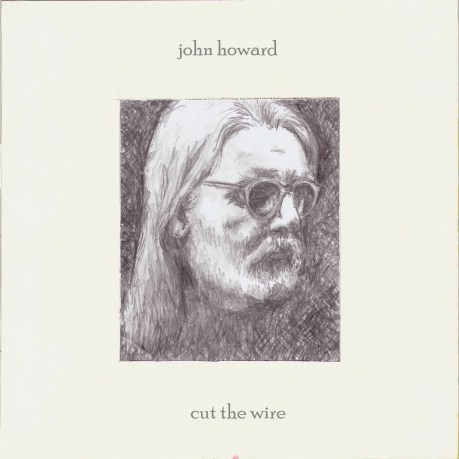
John Howard ‘Cut The Wire’
(You Are The Cosmos) March 15th 2019
Returning after the deep cerebral peregrinations of the previous Across The Door Sill album to the shorter romantic balladry and stage show-like songwriting that first garnered such acclaim for the adroit pianist troubadour, John Howard’s first full songbook in three years is a most sagacious beautifully articulated affair of the heart.
Enjoying a renaissance of interest in recent years; choosing projects wisely and wholly on artistic and desirable (enjoyable too) merit, Howard has recorded a well-received collaboration with Andy Lewis, Ian Button and Robert Rotifer, under the The Night Mail moniker, the already mentioned open-ended experimental ATDS, and delivered the first volume in a vivid and travail autobiography (part two to follow anytime soon) that not only deals with Howard’s haphazard rise and misfortunes in the music industry but chronicles the misadventures of a gay artist in a far from understanding world. The star-turn dealt a typical band hand by the industry as a burgeoning artist in the 1970s, the singer-songwriter pianist turned to A&R (quite successfully as it happens) but always seem destined to plow his own unique furrow; decades later and with wised self-belief, fully in control of his own career. Though he’s found congruous labels, including the wonderful You Are The Cosmos, to launch his recent catalogue of new music, Howard is a candid one-man industry, totally in command of his legacy and story.
So far the overall results of this output have been anything but indulgent, the quality maintained, with arguably some of his best work being produced in the previous five or six years. The 16th studio album, Cut The Wire, is the first to be recorded at Howard’s Una Casita hacienda studio oasis in Murcia; surroundings that lend themselves well to the meditative and questioning yearns of Howard’s most rich balladry.
Those familiar with the previous From The Morning EP of inspired cover versions will hear the imbued spirit of The Incredible String Band once more on this album’s percussive jangly and bellow-y Parisian peaceable opener ‘So Here I Go’ and the mobile-trinket twinkly and bowed strings title-track: The first of those homespun-words-of-wisdom sonnets evoking a Krishna Dylan, even Donovan. Intentioned or not, the softened doo-wopish lull of enduring adversity ‘Keep Going, Angel’, the forlorn venerated organ blessed ‘We Are’, and sweetly-laced Baroque-psych autobiographical ‘Remains’ all sound like lost ballads from The Beach Boys Friends and Surf’s Up albums. You can also pick up the scents of prime 1970s Elton John, The Beatles, Jeff Lynne and Nilsson in the sage’s purposeful beatific longing maladies and paean performances.
Decentering with blissful melodic ease, Howard, with signature vulnerability, swells and also glides through various chapters of his life; ‘Remains’ recalling to a chiming harpsichord and swooning harmonies regrets in not standing one’s ground, and the nostalgic dreamy-pop ‘Idiot Days’ reflects on the foolish indulgences of youth and the oblivious-at-the-time harmful consequences. But Howard, in more mournful mood, also ruminates on the divisive topics of Brexit; sailing on an accordion wafting elegiac barge on ‘Pre-Dawn’ with cathartic despondency to the changing political landscape and the lack of generosity.
A thoughtful songbook that returns to the melodious balladry of past triumphs and a nod to the rich tapestry of influences that first inspired him, Cut The Wire is timeless; another beautifully written and sung album from an artists radiant with quality.
Words: Dominic Valvona
Tickling Our Fancy 073: Blue House, Mekons, Ben Osborn, Rocket Girl 20th Anniversary…
March 11, 2019
Reviews Roundup: Dominic Valvona
Welcome to Dominic Valvona’s regular monthly roundup of eclectic pan-global recommendations and reviews.
This month’s edition includes the iconic Mekons debut release for Glitterbeat – a desert psychodrama of an album, the band’s first in eight years; the stunning sweetly despondent and woozy melodious new album from Blue House, ‘Gobstopper’; the poetic sound designer troubadour and composer Ben Osborn’s debut album for and in conjunction with Alex Stolze’s Nonostar imprint, Letters From The Border; a flight of analogue synth fantasy (literally) from the Cambridge composer Willie Gibson, with his aviation imbued homage to Saint-Ex; the second songbook of Anatolian and Kurdish imbued tradition from the soaring Turkish siren Olcay Bayir, Rüya; and a boxset oeuvre of the obscure but legendary late 70s and 80s Hanover cult band The 39 Clocks.
There’s also two recent unearthed curios of both psychedelic and improvisational counter-culture “head music” from the Spanish Guerssen label hub – the first, rediscovered nuggets from the English prog and pop-sike fuzzed Mandrake Paddle Steamer, the second, a blues odyssey of free-form jazz and Fillmore style West Coast acid from the Hasting’s Street Opera.
And finally, I also celebrate the 20th anniversary of Vinita Joshi’s most eclectic independent label, with a perusal of the special Rocket Girl compilation; a collection of mostly unreleased tracks from both artists that have featured on the label and admirers alike, which includes tracks from Dan Treacy, Silver Apples, Bardo Pond and Andrew Weatherall.
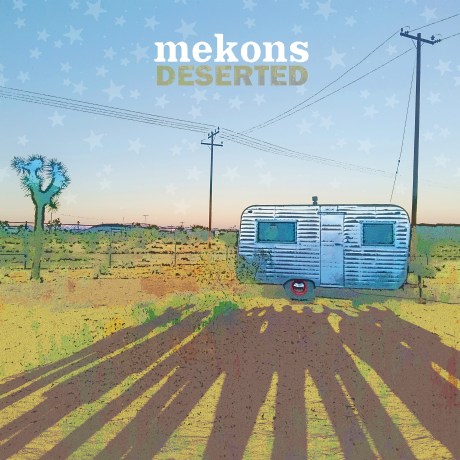
Mekons ‘Deserted’
(Glitterbeat Records) 29th March 2019
Removed by geographical distance and a general disinterest from the headline grabbing London punk explosion the infamous Leed’s outfit the Mekons enjoyed a wry, cynical at times, disassociation from their earnest over-preened compatriots in the capital. This distance allowed them to build up a unique reputation; the rambunctious gang of musical misfits more engaged with reality than myth, questioning the motives and authenticity of others with such barricade rattlers as ‘Where Were You’ and ‘Never Been In A Riot’.
Always on the fringes, drawn throughout their five-decade (and still going) haphazard career to the rough and ready origins of not only punk but also, and with this their latest album, country music, the Mekons have suffered as many setbacks as triumphs. One example of a Lazarus like rise in popularity being through the infamous Revenge Of The Mekons movie, which gained them new audiences and a new generation of followers in the US on its release.
Gravitating towards Joshua Tree in California, with all the various lore and history that iconic location holds, the Mekons rabble find all the space and landscape they need on their first album in eight years, Deserted. Recording just outside the shrine to counter-culture country – resting place homage of that visionary troubadour Gram Parsons -, at the studio of Mekons bassist and foundering member Dave Trumfio, the group explore the metaphysical and psychogeography of their desert muse: An open-ended stark landscape that’s, since the dawn of time, inspired a wealth of literature, music, film and travelogue.
Though entrenched in the “big country” desert panoramas of the USA, the Mekons scope falls wider, taking in the cultural isolation and self-imposed exile of a mournful Rimbaud – turning his back on poetry to leave his fated France to trade coffee – in the remote Ethiopian city of Harar on the slightly swaggering young poet channeled, wandering ‘Harar 1883’, and, at least, by referencing T.E. Lawrence’s Arab freedom fighter persona in ‘Lawrence Of California’, the deserts of Arabia. The wonder, awe and sense of isolation as a speck in the great expanse goes further than the sandscape and into space itself: Grains of sand as stars and galaxies; the Mekons mixing the desert wilderness with respect for the infinitesimal.
Gangly traversing this landscape without a roadmap, they have been pushed, successively, into new terrain sonic wise. Entirely self-imposed, the band showed up to recording sessions without any finished songs; just a few ideas exchanged over email. A continuation of the Mekons un-ended visions, Deserted certainly offers adventure, yet not so experimental as to lose the band’s signature rebellious streak and sound. Spikey, striding towards a mirage, sharing the camel-driven caravan with the Bad Seeds, Damned, Slits, Wovenhand, Radio Clash, Damon Albarn and PiL, they limber in a dub-y post-punk fashion or rattle through a hexed no-wave arid plain when in desert imbued mode, and channel ‘child-of-the-Jago’ old English romanticized poesy and Ronnie Lane gypsy serenaded folk rock when gazing upwards at the night skies.
Two of the album’s most distinctive tracks, ‘How Many Stars?’ and ‘Weimar Vending Machine/Priest?’ pose inquisitive and surreal open-ended titles, but also leave the sandy trail to go off-road into the past and plain weird. The former of these, which features the atmospheric atavistic Celtic swoons and haunting malady of Susie Honeyman’s violin, reimagines a sweetly, if fatefully forlorn, Georgian lament (“Father dig my grave, upon my hand a velvet glove to show I died for love.”), the latter, riffs on a drug-induced (no doubt) Iggy Pop anecdote from the hazy, heady junked-up days of Berlin – the sinewy maverick apparently coming across a peculiar vending machine that sold bags of sand. This madcap, or metaphorical dream, inspired tale launches the band on a suitably Kurt Weil – as bastardised by Iggy and Bowie – like strut that takes in Aladdin Sane at the drive-in, a disturbed Mott The Hoople glam doo-wop chorus and a subtle hint of ‘Boys Keep Swinging’.
To be fair, there is a hell of a lot going on sonically and texturally; the instrumental accompaniment featuring such exotic sounds as the saz and cumbus, but also violin and accordion alongside the standard wanes, tremolo and bendy heated vapour trail guitar and shared vocal duties.
Forty-one years in and showing no signs of fatigue, prompted to probe new sonic horizons, the Mekons inaugural album for Glitterbeat Records (easily one of the best, most diverse labels of the last five years) is possibly the Leeds troupe’s most expansive, deep and tactile albums yet: A distillation of all the group’s best assets. Without doubt one of 2019’s most impressive albums, Deserted reaffirms a legacy and status but offers a way going forward for a band baptized in the inferno of punk.
Blue House ‘Gobstopper’
(Faith And Industry) 29th March 2019
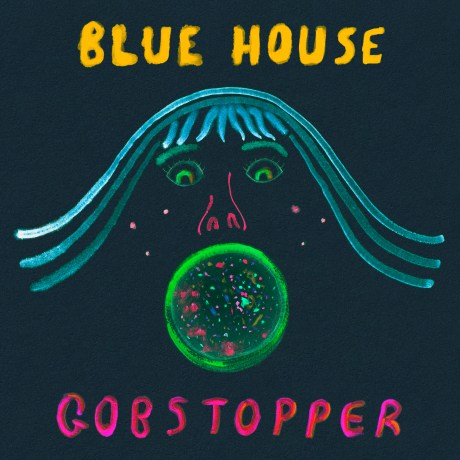
On a roll of late, the sweetly despondent songwriter-singer-musician James Howard continues to survey This Sceptred Isle with wistful melodious aplomb. Howard, under the guise of the Thomas Nation alter ego, delivered a minor historical-spanning album that metaphorically attempted to make sense of Brexit, and in turn nationhood, community and sense of belonging. That cassette tape chronicle, Battle Of The Grumbles – which rightfully made the Monolith Cocktail’s ‘choice albums of 2018’ features – never raised above a peaceable whisper and sigh, but through articulate melody and subtly worked its magic well enough.
The fruits of two-years labour, Howard’s latest appearance as principle writer, is with the Blue House collaboration; a group that boosts the talents of Ursula Russell (drumming for the brilliant Snapped Ankle, and soon to release music under the Ursa Major Moving Group), Dimitrios Ntontis (film composer and member of a host of bands including Pre Goblin) and Capitol K (the nom de plume of the ever-in-demand star producer Kristian Craig Robinson). Following up on the group’s 2016 acclaimed Suppose LP with another rich mellow empirical state-of-the-nation address, the Blue House’s Gobstopper is suffused with a languid disdain, as they drift through the archetypal bleak waiting rooms of nostalgia and the limbo of benefit Britain.
Gently stunning throughout with hues of a gauze-y Kinks, a less nasal Lennon, a more wistful Bowie and woozy Stereolab, Howard and friends perform a disarming mini opus that soaks up the forlorn stench of an out-of-season postcard seaside pub, air-conditioned gyms and quaint English motorways – ‘Accelerate’ in name only, the speed and candour of a hitched-up caravan that’s more ambling (with the radio dial set to Fleetwood Mac bounce) than autobahn motorik futurism.
Revealing its beauty and ambitious scope slowly, Gobstopper often soars with aria like ethereal warbles and dreamy filmic soundtrack panoramas: The soliloquy sepia tinged memory lane heartache of ‘Stay With Me’ marries Morricone with Lee Hazlewood and Richard Hawley, whilst the swooned ‘Delecta’ reimagines an English dancehall Lou Reed rewriting the introduction from the TV show, Jamie And The Magic Torch. Countless passing musical references linger, including the coach tour surrealism of The Magical Mystery Tour, the more serene elements of David Axelrod, Aiden Moffat and Serge Gainsbourg (if he worked on a minimum hours contract in Margate); a full ploughman’s lunch of cozy, if pining, 60s and 70s quality songwriting.
A snapshot of a lifetime, both misspent and blue, Blue House suck on the bitter aftertaste of the original peoples vote, whilst reflecting on the idyllic misrepresentations of nostalgia, yet also drawing forlorn comments on fleeting indignations and trends: Howard references a string of quintessential English preoccupations, from Abu Hamza to Coronation Street (which I never miss an episode of personally), reminding us of the inevitable nature of these obsessions that distract us, “When this is over, something else will come along.”
I may find plenty to discuss, even disagree with, but Gobstopper is without doubt a magnificent, beautifully crafted album; already a choice highlight of 2019.
Ben Osborn ‘Letters From The Border’
(Nonostar Records) 19th April 2019

For a number of reasons the poet-troubadour composer and sound-design architect Ben Osborn could be said to have found an ideal platform for his music, joining the German-based Nonostar label. Sharing both an East European Jewish heritage with its founder, the artist/producer/violinist maestro Alex Stolze, Osborn’s often majestic, sometimes mournful, quality minimal electronic undulated neoclassical compositions and lyrical pining also seem heaven-made for this label; at times crossing over and seeming almost indistinguishable (in a good way) from Stolze’s very own signature solo work. This is hardly surprising as Stolze also produced this debut effort, crafting this subtle gentle songbook at his remote studio on the German-Polish border, in the summer of 2018.
An idyllic sounding retreat that can’t fail to lend the recordings a suffused naturalistic feel, this border positioned studio allowed elements of the surrounding environment to bleed into the production. Aleatory to a point, helping to form a certain ambience, the wandering winds, distant birdsong and chatter, and creaking, stretching movements seem, alongside all the musical breaths, notes and melodies to be purposefully placed: almost perfectly so.
The award-winning sound designer and deft soundtrack composer of acclaimed “libretti” feeds a rich provenance into his debut, Letters From The Border. Drawing parallels with the lamentable diaspora of his ancestors heart-breaking displacement during WWII with the current flight of migrants from the Middle East, North Africa and Asia, Osborn yearnfully finds a common ground. The heartache of isolation and alienation are beautifully swooned and felt throughout this tactile diaphanous album; the movement of people across, increasingly, hostile borders often hauntingly conveyed in the most emotive if nuanced of maladies; points made in a disarming series of venerable but poetically descriptive lyrics.
Reaching into the mystical profound etymology of that Jewish heritage, Osborn chooses to open his ethereal-charmed plucked album with a minor romantic instrumental overture, based around the atavistic Hebrew word for “joy”, ‘Chedvah’. As Osborn himself explains the reasoning behind this choice, the sad waning and earnest introduction represents “…the joy of connecting to something bigger than yourself.” Musicality wise this piece follows a numerical sequence based on the Hebrew letters of the same word: originally taught to Osborn as a breathing meditation by the artist Daniel Laufer.
Later on, coming full circle, he references the equally profound if lamenting, third section of the Hebrew Bible passage, ‘Psalm 22’, on the album’s dreamily nigh sky finale. This oft-quoted, if debated and trawled for meaning, passage features the famous “My God, My God, why hast thou forsaken me?” line; the words of a people in exile at the time; the distress, plight and search for some kind of meaning and purpose to their sufferings inspiring Osborn’s far less despairing but aching swansong.
The plight of refugees, a subject close to both Osborn and Stolze’s hearts, as they occupy the tip-toe piano and choral mood accompanied border soundscape of the Leonard Cohen meets T Bone Burnett like title track, or, wistfully cross a clitter-clatter train track motioned avian symbolic ‘Bridge Of Starlings’.
Osborn also shares, if under a veil of hazy descriptive metaphor, even more personable material amongst the border themes. The woozy, delightfully longing clarinet featured nostalgic malady, with tints of that imbued East European ancestry, ‘My Sister The Swimmer’, is elegiac like; Osborn tenderly cooing sepia toned pool side recollections and memories. No less personable, if meant to “examine” a “universal experience of grief and bereavement”, the dainty piano with quivered violin and gleaned wispy harp accompanied ‘A Guide To Gothenburg’ uses the city’s backdrop to find solace.
Beautifully conveyed at every turn, Ben Osborn uses an assiduous steady hand to evoke connection; a connection to nature; a connection to the plight of modern-day displacement; a connection to our shared roots. Letters From The Border is a delicate, yearning reveal of an album; an album that finds a fine balance between the classical and contemporary to soundtrack an accomplished suite of lyrical venerability and learning: Poetically sublime.
Various ‘Rocket Girl 20’
(Rocket Girl) 1st March 2019

Perhaps one of the most cherished of independent UK labels, Vinita Joshi’s Rocket Girl imprint has over the last twenty years attained an impressive legacy and loyalty from its artists. A mark of that loyalty and respect can be found by way of the contributors lining up to celebrate the label’s twentieth anniversary: some of who, never even released a record on it.
Vinita has come a long way, on a haphazard travail trajectory at times. The Indian lass from Rugby – called an ‘anomaly’ in a white male-dominated music industry by this compilation’s chosen linear note biographer, the Faber author (and super-fan) Richard Milward – gained one of many footholds in the business by managing the influential void-of-despair probing Telescopes. As a precursor to Rocket Girl itself, Vinita set-up, in conjunction with Nick Allport, the London-based Ché label, in 1991; borne from the ashes of the Chere label, intended as a vehicle for the music of Disco Inferno but expanding the remit to include the Tindersticks and the Detroit duo Füxa, who would later, join Rocket Girl, and feature on this anniversary special – a Congo Hammer remix of their acid-blurp Orb-meets-Cabaret-Voltaire dreamy goer ‘Sun Is Shining’ is featured on this most eclectic of spreads.
Despite personal tragedies and various setbacks, Vinita’s label has been both successful and prolific since its inception in 1998, the inaugural ‘rgirl1’ release a 7” single featuring the wonderful psychedelic cosmic electronic progenitors, Silver Apples. Long since a solo affair, the original late 60s founded duo sadly losing Danny Taylor in 2005, under the custodianship of Simeon Oliver Coxe III the Silver Apples brand continues to covet acclaim and attention as an experimental force of giddy nature. Now, as then, a whirly wiz-bang remix of the surreal culinary, chicken-dish mad, ‘Susie’, opens the compilation.
Both established icons and emerging ones appear regularly in the label’s back catalogue; this anniversary package that spans a series of special flexi-discs (a throwback to one of the first formats Vinita was involved with) collectable 7” singles, prints, a fully illustrated hardback book and 16-track compilation (a fuller digital version, which I reviewed, includes the flexi-disc tracks to make it 20), features just a mere smattering of them. The most poignant of which, the Television Personalities wry ramble through their maverick troubled leaders reputable back pages, ‘All Coming Back’, represents one of Vinita’s most enduring if turbulent musical relationships. The TV’s erratic treasured icon Dan Treacy has received plenty of prestige as an influence on everyone from Pavement to Pete Doherty, and released a string of comeback records, including 2006’s acclaimed My Dark Places LP. Volatile and prone to snatching defeat from the jaws of victory, Treacy has suffered badly for his art; addicted to drugs, battling mental health, adding up at one point on remand, the enigma has been off the radar since suffering from a brain injury in 2011, his legacy and blessing for the featured song on this compilation, taken from a small batch of unreleased tracks he recorded before these latest woes, coming from Treacy’s sister.
Another leading light of their particular sound, and again, major influence on those to follow, Robin Guthrie, co-founder of the ethereal vaporous Cocteau Twins, makes an appearance with the suitably echo-y heaven spindled track, ‘Flicker’. Joining him from north of the English border, fellow Scottish band, doyens of post-rock filmic panoramas, Mogwai, lend their fishing port earnest opus ‘Fight For Work’, as one of the flexi-disc specials.
A diverse roster is represented by artists as different and distinct as those earlier acrylates of (though they hate the term) the witch house phenomena, White Ring, and philosophical name-dropping no wave disco troubadour Kirk Lake. White Ring on their part offer a daemonic pulsing industrial skulk with broken-up salacious siren vocals on the brilliant darkwave ‘Heavy’, Lake, goes-for-broke parading countless symbolist thinkers (Lucan, Foucault, Barthes and the song’s own “Adorna”) as he limbers to a DFA meets Blurt NYC sidewalk shuffling ‘Go Ask Adorna’.
It’s telling that the Rocket Girl back catalogue and class of those who gravitate towards it is so immense with quality and diverse in breadth that I’ve not even mentioned the stoner anthemic Philly act Bardo Pond, or the Hazelwood dream pairing with Richard Hawley hymnal troubadour John DeRosa, or, even, the polygenesis producer/remixer extraordinaire Andrew Weatherall. And I could go on.
With discerning taste and strength-of-character to take chances, Vinita has built up a formidable if unassuming and assured label; one that has the depth and scope to keep on going in the face of ever uncertainty. The Rocket Girl anniversary package is a perfect encapsulation of that independent spirit. Go enjoy and celebrate one of the true individuals of the industry while you can. And let’s hopefully raise a glass to another twenty years of equally quality risk-taking.
Mandrake Paddle Steamer ‘Pandemonium Shadow Show’
(Sommor) 17th January 2019
Hasting’s Street Opera ‘Slippery When Wet’
(Out-Sider) 17th January 2019

Via the “head music” and rediscovered musical nuggets channel of Guerssen two extreme rarities from the 1960s for fuzz freaks and progressive psych rock fans to drool over. The first, Mandrake Paddle Steamer’s Pandemonium Shadow Show, released by the Sommor imprint, collates a smattering of the Middle Earth Tolkien imbued Walthamstow band’s archived recordings (none of which were ever released), whilst the second, Hasting’s Street Opera’s Slippery When Wet, released by the most brilliant Out-Sider label, makes a previously private pressing (less than a hundred copies ever produced, and only ever handed out to friends and family) available to the great unwashed public for the very first time.
Formed by an art-school rabble of pals from an East End postcode, the Mandrake Paddle Steamer’s providence is most notable for the fleeting 45” they recorded at Abbey Road in 1967 for Parlophone. Though this fabled label, run by straights admittedly, launched The Beatles, the band was aiming for a deal with the more switched-on and hip Harvest label. Neither in the end took them on, and so what is a “lost classic”, the fuzz pop-sike ‘Strange Walking Man’ single remains their only shot. Still, in a short blossoming, they managed to support Floyd, The Nice and Vanilla Fudge (all three of which rubbed off on them sound wise), do a turn at the infamous salacious spit-and-sawdust Star Club, and set up their own club night (in honor of The Lord Of The Rings naturally) called Asgard.
The Pandemonium Shadow Show features nine varying tracks of bewitching esoteric psych, bordering on the progressive, from the key years of 1968 and 1970: The year they disbanded for good; even after dropping the river boat “paddle steamer” from their name to become just Mandrake. 1968 does seem to garner the lion’s share, with six of the nine tracks recorded in that musical pivotal year, as psych got real and heavy; the step-change being not just culturally but politically too; folk even more weaponised as the totems of the Vietnam War and Civil Rights movement across the Atlantic sank into the consciousness of the Boomer generation that kicked off the whole Hippie revolution. Still inspired on this side of the pond by the antagonistic post-mod rave-ups of John’s Children and Piper At The Gates Of Dawn Floyd, the MPS condensed these inspirations and the metaphorical language of Gothic Poe into the title-track that opens this album. Painting a vivid Halloween phantasm that stars a “moon shadowed witch” siren waltzing on a “fairground of fate”, the band go all out on a spooky acid trip. With the use of the funhouse organ and that quintessential Mellotron – part Procol Harum hymnal tripping, part mind-melting carousel – they evoke The Doors, sometimes, Family, and when the bell tolls and shit gets real, Deep Purple. On the ominous unhinged funny farm ‘The World Whistles By’ – a place where the melancholic and all-too serious themes of mental illness and isolation are highlighted – I’m sure I can hear the early genes of Genesis and even The Alex Harvey Band.
By 1970 they were knee-deep in the primordial, building from a mists-of-time like trudge towards a tavern-staggering-patron opus that consumes The Master’s Apprentice and Vanilla Fudge in a rolling crescendo of epic prog-psych rock lament on the sea-shanty fantasy ‘Stella Mermaid’. And on the waning shimmery wavy, with a polka-like merry-go-round gallop, ‘Simple Song’, they almost merge Focus with The Nice.
All the right ingredients, even ahead of their time as far as the progressive elements are concerned, the MPS story could be painted as a sorrowful tale of a band that were denied a shot – Parlophone putting the kibosh on that inaugural 45” launch after a general lack of interest. Yet, as good as they sound, certainly ambitious, they weren’t quite there and lacked the magic and personality (though luck does come into it too) of their peers who did. Still, the Pandemonium is a real discovery that’s worth investigation and a punt.
Willie Gibson ‘Saint-Ex’
(Gare du Nord) 1st March 2019

An electric glide in blue, maverick synth composer Willie Gibson sets off for an aerial traverse of the philosophical articulated horizons of the legendary pioneering aviator and author Antoine de Saint Expéry. Using the fateful aristocratic pilot’s poetic 1939 published memoir Wind Sand And Stars as a launch pad, Gibson channels the spirit and lament of romanticized adventure through his Eurorack of various iconic modular synths and plugins.
A famed French laureate, the author of The Little Prince novella found his own inspiration in the clouds; first as a commercial mail pilot, later as war drew near, joining the (as yet defeated) French Air Force. When Hitler’s Germany forced an armistice with France, Saint-Ex found himself demobilized. Moving soon after to North America for a total of 27 months, he bided his time writing and importantly trying to convince the USA to enter the war. It was during this imposed sojourn that the enigmatic polymath wrote three of his most important works, including the lyrical, elemental book that now informs this album. Far from grounded, he would travel to join the Free French resistance air force in North Africa. Spurring untold flights of fantasy, Saint-Ex went missing in 1944, disappearing after a reconnaissance flight over the Mediterranean: Neither his body or plane were ever found.
The stuff of adventure then, Saint-Ex’s fate and various exploits as chronicled by those memoirs make for an interesting concept; the passion for flying that underlines it all shared by Gibson, who has himself obtained a “private pilot’s license”. Finding “similarities between operating light aircraft and patching and crafting sounds” with his modular synth apparatus, Gibson composes a linear suite of various knowing library music and 1970s synthesizer imbued peregrinations. His first mini-opus of original music – the previous album, Seasons Change, being a Wendy Carlos like neo-classical riff on Vivaldi’s Four Seasons – plays with the formula, inviting the Gare du Nord label polymath, founder and producer, Ian Button to drive along two of the suites’ five tracks on drums, and Deerful’s Emma Winston to woo the odd accentuate vocal line.
Following an arc, from takeoff to Bermuda Triangle mystery disappearance, Gibson’s fantastic voyage ascends loftily from Saint-Ex’s book cover to arch and loom across a South American, European and North African panorama to a Kosmische style accompaniment that evokes Tangerine Dream, Rick van der Linden and Moroder. Once-up, up and away the serene ‘Dawn Flight’ offers ‘time for reflection”; stirring idyllic memories of the artist’s childhood in Saint-Maurice with a Baroque-synth and Theremin quivery soundtrack that conjures up not only images of the past but some otherworldly, even alien, ones too. The next two desert strafing tracks allude to both Saint-Ex’s dangerous and awe-inspiring mail-drops; ‘Cap Juby’ a staging post on the hazardous Saharan route, where Saint-Ex and his co-pilot navigator crashed in 1935, the pair lucky to survive were rescued by a Bedouin, and ‘Black Pebbles On A White Plateau’, which features a paean to a desolate white stone mesa (tabletop) landing spot – the shiny black pebbles that covered this plateau having a philosophical profound effect on the aviator. The first of these uses a crystalized sandscape of ominous sounds to describe the jeopardy, whilst the second stirs-up the immensity of nature with cathedral and tubular grandeur, and ethereal wafted cooing.
A theatre of lament, ‘July 44’ marks Saint-Ex’s final ascendance into the history books. Gibson uses a stained glass Edgar Froese and Klaus Schulze sonic palette to convey a certain tragedy on this venerable soaring mission.
An odyssey of aerial balletic synths and more moody cascading arpeggiator elemental drama, Gibson’s homage to Saint-Ex is another curious oddity of retro-futurism and serious modular-synth based composing from the Cambridge-based maverick; a nostalgic trip that despite the addition of Button and Winston seems plucked from the pioneering analogue electronica age of the early 1970s. Interesting though, and a potential cult release in its right, Saint-Ex is worth the indulgence.
Olcay Bayir ‘Rüya’
(ARC) 29th March 2019

Marrying an Anatolian heritage with the polygenesis sound of the London metropolis, the multi-disciplined singer Olcay Bayir has injected a new energy and enthusiasm into the traditions and cultures of her homeland.
The daughter of a famed ‘ashik’, a musical bard of the Anatolian region, the purveyors of oral culture in the Alevi sect of the Muslim religion that follows the more mystical teachings of Muhammad’s son-in-law Ali, who ruled over the fourth caliph between 656-661 AD, and his twelve Inman successors – Bayir’s most formative years were imbued with the atavistic music of worship and social ceremony. Born in the ancient southern Turkey city of Gaziantep – among the oldest continuously occupied cities in the world; so old in fact that even the ancient Hittites were around to destroy it – her musical odyssey, from the very start, was steeped in history and reverence: That same city stands as both a “geographical and cultural counterpart” to the fated Syrian city of Aleppo, which lies just across the border.
The southern regions are where Anatolian Turkish and Kurdish cultures meet; forming the inspiration for Bayir’s own music alongside a belief that it’s “culture more than religion or nationality that provides identity.” It is an often frayed relationship; those that follow the Alevi tradition, whether Turkish or Kurdish, for obvious reasons, coming to blows with their Northern compatriots; the Kurdish question of autonomy and in recent years implosive civil war and ISIS insurgency in Syria enabling an ever more autocratic Turkish leader to ramp-up divisions.
Moving around the region every few years with her jobbing ashik father, Bayir was introduced to a cross-pollination of communities before the family’s eventual move to the London melting pot. A cultural shock, to put it mildly, for the sixteen year old who didn’t yet speak any English – though to be fair, Bayir is multilingual, her debut LP sang in five different languages. But through music the vulnerable burgeoning siren slowly opened-up; as the press release puts it, “music was the manner by which Olcay could best interact with the new world around her.”
Absorbing even more of the electric hubbub of her new city, Bayir, who began composing at the age of six, trained as a classical soprano. Those aria soars and vocal control are unmistakable when you hear those rich performances, adding a certain gravitas and expanding the range still further. Refashioned to reflect this providence, the folk songs of Bayir’s homeland were given an endearing, swanned lift on the 2014 debut album Neva (‘harmony”). An introduction to a highly skilled adroit vocal talent, this album showcase brought attention to the Anatolian songbook. Steeped more in that tradition, Neve provided the groundwork for Bayir’s new dream entitled album Rüya.
Still alluding, even referencing, the spiritual yearn and pining mountain steppe folk of that tradition, the afflatus Rüya showcases for the, first time, Bayir’s own original compositions. Taking sagacious romantic wisdom from both the Alevi and Sufi poets, she weaves the journey metaphor of the renowned bard Âşik Veysel Satiroğlu into the album’s serene opener ‘Uzun Ince Bir Yoldayim’ (“long narrowed road”), riffs on the tradition’s analogy for the folly of trying to separate those both destined and integral to each other, such as the honey and bee, on the album’s slinky swooned closer ‘Ari Oldum’ (“I become a bee”), and covers the “graceful” brooding Kurdish love song ‘Ferzê’.
Using a similar enriched lyricism to envisage a better world, whilst yearning wistfully about lost and found love, Bayir’s original lines seem almost indistinguishable from those written in lore.
Lifting those traditions with a sophisticated production and backing, Giuliano Modarelli and Al MacSween of the transglobal music collective Kefaya accentuate the timeless qualities of Bayir’s melodies with a nuanced swirl of jazz, bouncy backbeats, amorphous sounds from Arabia and North Africa, and on the 17th century homage to the asik minstrel Karacaoĝlan, ‘Elif’, a whiff of Ennio Morricone.
Livening up the Anatolian songbook once more, Olcay Bayir and her collaborators make those traditions relevant; stirring the melting pot with dynamic vibrancy, and pushing those enchanting, soaring but also earthly vocals even further.
The 39 Clocks ‘Next Dimension Transfer’
(Tapete Records) 22nd March 2019

Going it alone as the sunglass adorned leather clad beatniks, Hanover’s 1980s cult lo fi (with ambition) miscreants The 39 Clocks were always a bit of an anomaly. Alienating even their fans with a general attitude of indifference and antagonizing audiences with shambling performances more Dadaist provocation than musical (replacing guitars with cleaning appliances for one), even the duo’s identities were masked (well, barely), with chemical equation code, JG-39 and CH-39, replacing the human vessels of Jürgen Gleve and Christian Henjes.
Neither hardcore proponents of punk nor comfortable in the company of Germany’s emerging New Wave, the Clocks were an idiosyncratic bridge between the Lutheran Gothic drone of The Velvet Underground and primal garage band petulance of Nuggets; the results of which proved highly influential to the next generation breaking through: Their self-coined signature “psychobeat” can be heard driving The Jesus And Mary Chain and most of their ilk.
Delivered in the driest of tones with an almost comical heavy deadpan German accent, but with English lyrics, the Clocks, on paper anyway, read as a put-up job from the mischievous mind of Martin Kippenberger. Yet they were certainly committed, and had providence; the Clocks arriving via after two previous incarnations, the Killing Rats and The Automats; the groundwork done during the punk epoch. They even had a cheerleader, in the guise of that most archetypal German-named boffin of rock trivia and taste, Diedrich Diederichsen, who considers them to be the best German band of the entire 1980s.
They only released a handful of albums and singles proper during their tenure career, but left, as this oeuvre-spanning box set proves, quite the legacy. Over-egged in places and perhaps indulged, nonetheless Next Dimension Transfer collects sixty revealing recordings from the duo’s (though they could of course expand to accommodate extra band members when the occasion raised) official and unofficial back catalogue for the very first time.
Sanctioned by the band themselves and featuring a bundle of previously unreleased tracks, both studio and live, this behemoth eases in those that are unfamiliar with this group; the first 2 CDs in this 5xCD overview featuring the Clocks first two albums, 1981’s Pain It Black and the 1982 Subnarotic. The first of these introduces the Clocks’ punk hangover turned spindly jangly futurism rock; tracks such as the grueling cold-war chiller ’78 Soldiers Dead’ inhabit, phantom style, The Normal, Cabaret Voltaire and garage terrains, whilst ‘Psycho Beat’ lays on the flange and phasers, accelerating towards a sulk-in with both the Velvets and Hawkwind. Saxophone, neither jazz nor no wave, is added to a general broody deadpan Gothic stringy malaise; a highlight being a prowling Lou Reed on Mogadon live version of ‘Twist And Shout’ (‘Twisted & Shouts’) that reimagines a bastardised Star Club Beatles transported decades into the future, playing at family fun day event at the local social club.
Subnarotic is no less abrasive and strung-out, beating its junk to a psychodrama of Suicide, Nico, the Voidoids (again, check ‘Shake The Hippie’ from that last album) and Can. ‘Rainy Night Insanities’ though, with its whining nerve-endings violin, sounds like unholy communion between Terry Conrad and John Cale, and ‘A Touch Of Rot’ merges Johnny Thunders, Television and Eno.
Previously (probably for our benefit) unreleased, five scuzzed-up vortex indulgent live performances from the Clocks’ heyday make-up the entire third CD of this set. Met with mostly silence, the odd hand clap applause from either an indifferent or stunned audience, extended versions of ‘Shake The Hippie’, ‘DNS’ and ‘Past Tense Hope And Instant Fears On 42nd Street’ are caked-in reverb, fuzz and distortion – ‘Three Floors Down’ has an erratic avant-garde ring of the Beefheart about it. Shambolic in places, on the verge of collapse, wandering out-of-time, these lo fi deconstructions are heavy and experimental. As a warning, there’s plenty of screeching feedback to pierce the eardrums, so look out. As atmospheres go it is a dank, creepy and Gothic one, the quality of recordings raw.
Let’s be honest, this shelved “live” LP and the material missives that make-up CD4 and CD5 will be what fans and hardliners are craving. With the duo’s involvement, overseeing this collation of their material, there’s plenty of oddities and “what ifs” from the vaults to drool over. Tracks like the California punk, ala The Dils, ‘New Crime Appeal’ and Siouxsie Sioux flanged dreamwave ‘39 Progress Of A Psychotic’ are interesting, and the lion’s share of that 1987 collection 13 More Protest Songs is fantastic: all transmogrified acoustic and electric guitar Byrds and harmonica Bob Dylan, mixed with the Velvets.
If you haven’t heard of The 39 Clocks than wow, what a revelation this box set is going to be for you. They will undoubtedly soon become your favourite 1980s visionaries. For diehards there is something to get excited about in the unreleased 1981 live album and two collections, updated, which make up this homage.
Words: Dominic Valvona
Album Review: Dominic Valvona
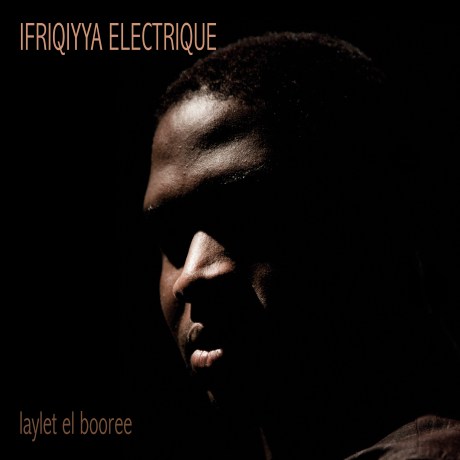
Ifriqiyya Electrique ‘Laylet el Booree’
(Glitterbeat Records) 5th April 2019
Once more into the furnace of voluminous excitations and ritual, the collaborative Ifriqiyya Electrique project that merges Sufi like trance and spirit possession performance from the atavistic mystical depths of Southern Tunisia with grinding deconstructive industrial post-punk from the West, builds on the foundations of the electrifying 2017 debut, Rûwâhîne.
With a slight change in personal, but still led by the musical union’s chief instigators Gianna Greco and François R. Cambuzat, the Electrique broaden the perimeters on their latest intense chthonian frantic exploration of the religious ritual ‘Banga’, Laylet el Booree. Joining the constant scrapped and rattling tin chorus of ‘tchektchekas’ hand percussion and shared exaltation chanting vocals new recruit Fatma Chabbi throws herself into the tumult storm that at times resembles an excitable communion between NIN, Einstürzende Neubauten, Tago Mago era Can and the Tunisian spirit world.
Redefining what it means to totally immerse oneself in exotic, often arcane mystical cultures, Mediterranean punk and avant rock scene stalwarts turn field-recording filmmakers Greco and Cambuzat – when not combining forces with the enigmatic Lydia Lunch under the Putan Club moniker – confront head-on the psychogeography and music of often volatile regions and cultures – previous excursions include the hotly-contested Kurdish regions of Southern Turkey, and the Uyghur region of China; the predominantly Muslim worshiping ethnic group have made the world news in recent months, a million or so of their community interned in the Chinese authority’s detention camps as the Communist regime seeks to ‘re-educate’ and remove any outside influence, culture or religious adherence from the population –, including the legacy of the original Hausa slave people who elevated the celebrated 13th century Sufi mystic Sidi Marzug to the status of venerated saint.
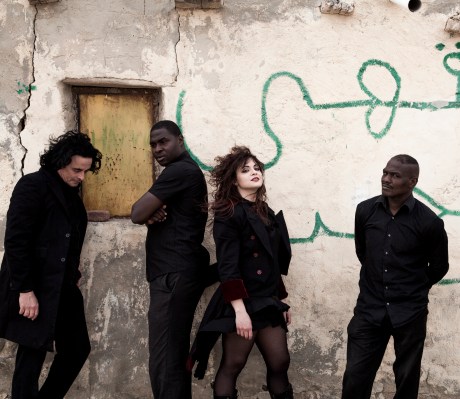
To this day the black communities of Tozeus, Metlaoui and Nefta honour their ancestor, who it is said had at his disposal a retinue, or, “diwan” (“assembly”) of “rûwâhîne” (“spirits”) as allies and servants to call upon through the ritual of Banga. Not so much an “exorcism” as an “adorcism” we’re told, this lively ceremony is meant to placate and calm the spirit who posses the participating initiate. Mesmerized by the hypnotic chanting, drumming dancing performances that accompany it, Greco and Cambuzat moved from bystander documenters to participates; joining the spiritual hubbub by adding a searing, abrasive fuzz, buzz and edgy sawing taste of guitars and effects to the already esoteric experience.
Worried how this hybrid and intrusion would look to the community of the Djerid desert in which it was instigated, the duo and their Electrique company of Hausa collaborators, Tarek Sultan, Yahia Chouchen and Youssef Ghazala performed their debut in the sacred town of Nefta, the sanctuary that holds the body of the “black saint” himself, Sidi Marzug. Though obviously nervous, the locals recognized a “shared music” when they heard it, giving their seal of approval; this baptism of fire inspiring the desired effect as the locals sang, danced, and even went into a trance. Free of hierarchy and structure the Electrique sits well within the untethered traditions of North Africa, yet this meeting of the brutal industrial sound palette and religious spectacle, though unique, also seems to have wowed and had the desired effect on Western audiences.
The second album, Laylet el Booree, which translates as the “night of the madness”, is just as electrifying, exotic and barracking. Mirroring the stamping, emotive and sometimes confusing hallowed intensity of the adorcist ritual from the Banga followers of Tozeur that this album’s title references, the troupe work themselves up into a fervor: this is after all the night when the spirits “actually” take possession of their initiate’s bodies.
Call-and-response chants and communion echo around in a vortex of rustic percussion, strange computer-generated sounds, static, sparks and two-speed rhythms throughout this equally powerful and heavily atmospheric album. Tracks such as the creepy piano prodded, galley-slave rowed Gothic ‘he eh lalla’ sound like Trent Reznor leading The Bad Seeds across an ominous sandy terrain, whilst the next evocation, ‘beesmellah beedeet’, goes ‘baggy’, and ‘moola nefta’ merges dub with snake-charmer Arabian saz mysticism.
Still locked-in to the trance-like venerations of spirit channeling, the Electrique integrate different rhythmic changes and timings; seeming to experiment even more this time around; pushing the envelope further without losing that original tumultuous barrage of bombarding drums/percussion and edgy growling grinding industrial guitar sounds. If anything they’ve unleashed the spirits to roam the amorphous sphere of exploration to draw on even more diverse musical inspirations, creating a highly unique invigorating sensory experience in the process. Industrial post-punk ritual leaves the furnace once more to cause an explosive cacophony.
Images: Renaud de Foville
Review: Dominic Valvona
Monolith Cocktail Social #XXXV: Roger Bunn, Yasuaki Shimizu, Don Muro, Black Savage…
February 28, 2019
Playlist: Dominic Valvona Selects
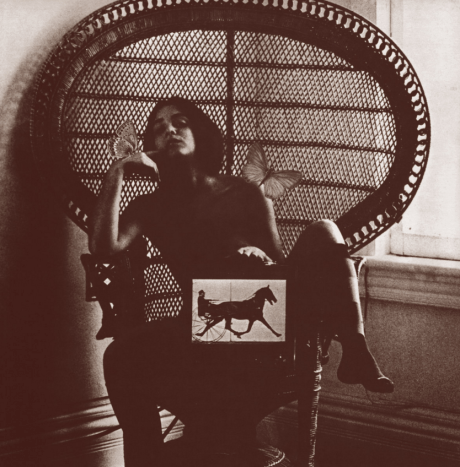
I haven’t put together one of these selections in a while; in fact this, Volume XXXV, is the first Social of 2019. But in danger of repeating myself, for newcomers to the site here’s the premise of my playlist selections:
The Monolith Cocktail Social playlist is the blog’s imaginary eclectic radioshow, or DJ set, selection of throwbacks, missives, golden oldies and just cool shit; from across genres, timelines and borders. Previously only ever shared via our Facebook profile and on Spotify our regular Monolith Cocktail Social playlists will also be posted here on the blog itself.
Enjoy…
Tracks:
Don Muro ‘Camel Ride’
Toncho Pilatos ‘Wait’
Lula Côrtes e Zé Ramalho ‘Maracas de Fogo’
Keni Okulolo ‘You Can Only Live But Once’
Willie Dixon ‘Bring It On Home’
Otis Redding ‘Shout Bamalama’
Black Savage ‘Rita’
Little Mell ‘Ain’t That Funky Monkey Fonky’
Vijay Benedict ‘Kasam Paida Karnewale Ki’
Beat Connection ‘Silver Screen’
Les Garçons ‘Les Deux Amants’
The Nerves ‘Sex Education’
The Goats ‘Do The Digs Dug? (Todd Terry Mix)’
FU-Schnickens ‘True Fuschnick’
Farm ‘Sunshine In My Window’
Maya ‘Distant Visions’
Los Dug Dug’s ‘Lost In My World’
Assagai ‘Telephone Girl’
Black Zenith ‘Shango Oba Onina’
Fear Itself ‘The Letter’
Hand ‘The Load’
Bix Medard ‘Tabi’
Bullion ‘The Age Of Self’
Yasuaki Shimizu ‘Mari-Chan’
Sensations Fix ‘Barnhaus Effect No.3’
Peace And Love ‘We Got The Power’
Bongos Ikwue ‘One United Nigeria’
Society Inc. ‘Disc Jockey Jam’
Bossa Jazz 3 ‘Outra Vez’
Bola Johnson And His Easy Life Top Band ‘Jeka Dubu’
Luli ‘Ballero’
Marconi Notaro ‘Fidelidade’
Peter Schickele & Joan Baez ‘Silent Running’
Chuck & Mary Perrin ‘You Knew All Along’
J. Jasmine ‘Broke And Blue’
Anthony Moore ‘Stitch In Time’
Roger Bunn ‘Gido The Magician’
The Kinks ‘Time Song’
Our Daily Bread 304: Alessio Bondi ‘Nivuru’
February 19, 2019
Album Review: Dominic Valvona
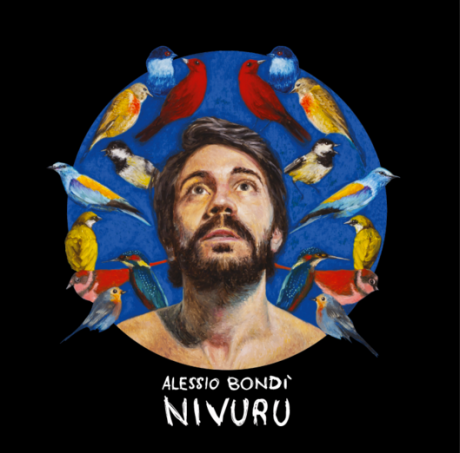
Alessio Bondi ‘Nivuru’
(800A Records) February 2019
The prodigal son returns: And not for the first time. Returning to the bejeweled Mediterranean oasis that is Sicily, after various adventures travelling across South America and Africa, the Sicilian troubadour, balladeer and romantic poet Alessio Bondi once more embraces his roots on a new songbook of heart-wrenched soul and pop.
It’s hard not to fall head-over-heels in love with the Island home of Bondi, despite its obvious dark history – though the grip of organized crime has been loosened in recent decades; Sicily breathing far more easily with a certain confidence, as it enjoys a rightful renaissance, and attracts more and more tourists -; a landscape enriched not scared by its conquerors; the various impressive architectural styles and monuments of the Greeks, Romans, Arabs, Normans and Spanish so ingrained as to be taken for granted by the locals strike a sense of awe and exaltation in the tourist. Having visited the cosmopolitan palmed metropolis capital of Palermo myself a couple of years back (making a return trip I might add in April) I was astounded, hypnotized by the film set like scale of it all: The incredible Triumphal and Porte Felice gateways that stand like titanic totems at either side of the Corso Vittorio Emanuele could have adorned the entrance to an MGM studios sword-and-sandals imagined Babylonian set.
Long ignored, unless for all the wrong reasons, Italy’s often discarded treasure is abundant with a culture and art scene far more polygenesis and open to outsiders than its official Rome-centric administered overlords. Rome pulls and sucks in those looking to escape the provinces in the same way most major capitals or cities of influence do. For example, even one of our hosts when we last stayed in Palermo was based there; the natural international draw for generations of Sicilians, including even Bondi, who moved to Rome to study theatre, graduating as an actor from the Accademia d’Arte Drammatica Corrado Pani.
Continuing to celebrate the melancholic malaise and, almost, sagacious pessimistic – but philosophical – language that runs deep in the Sicilian mindset and art, Bondi follows up his 2015 debut album Sfardo with an equally inviting lyrical collection of both yearning sonnets and more uptempo declarations of love.
The darker pained expression of torrid love affairs, love spurned heartache, the troubled mind and the uneasy relationship that exists between Sicilians and the active volcanic force of the omnipresent Mt. Etna are adhered to by the title of Bondi’s second album, Nivuru, which translates as “black”. Sung in the Sicilian dialect, which isn’t totally alien to those who know their Italian, but has a number of accents, turn-of-phrases and localized pearls of wisdom wordplays unique to the Island, Bondi’s lyrics emphasis a passionate attachment to the “black” miasma that has fueled so much of Sicily’s literature and music.
However Nivuru is predominantly a reference to the “nivi nivura”, the ‘black snow” by-product of Mt. Etna when it erupts. Bondi, channeling Jeff Buckley, pens an especially metaphorical poetic soundtrack to the volcano behemoth that looms ready to one day perhaps destroy the Island, but also nurtures it, on the song of the same title: “Eyes of onyx, ocean of anisette. A volcano’s sciara above me, volcano of flowers inside me.” Evidently, the “sciara” of those lyrics relates to the cooled-down lava when it becomes solid; a phenomenon that attracts tourists; best seen at night when incandescent and showing off its full palette of colours. I only know this because the artist includes footnotes throughout the booklet that accompanies this LP.
Elsewhere Bondi pays a paean of sorts to the Island on the drum shuffling, musing flute and trumpet serenaded ‘L’Amuri Miu Pi Tia’ (“my love for you”); running through a menagerie of Sicily’s natural inhabitants in a swooning declaration of love. But the album’s most heart-twanged lament, ‘Un Favuri’, features an imaginary conversation between Palermo’s famous Formula 1 legend Ninni Vaccarella and his ill-fated son Giovanni; the consequence, in this tale of following in the footsteps of a famous father, ending in tragedy.
The language quirks, expressions are all Sicily, but musically Bondi absorbs the musical influences of his travels to add an often-tropical lilt and rhythm to the earthy romanticism of the Island’s folk traditions. Geographically nestling at the toe of Italy, Sicily is actually a gateway historically, especially in recent years with the migration crisis, to the African continent. Less than a hundred miles from the Tunisian coastline and the next disembarkation spot after the tiny islet of Lampedusa – the first port of call for many migrants making the crossing from Africa to Europe -, Sicily has seen an untold cycle of arrivals. Taking a more practical, even welcoming approach Palermo’s most liberal of mayors, Leoluca Orlando, has attempted to help and integrate these vulnerable migrant arrivals; or at least keep them out of the clutches of the mafia, who he has successfully fought against, jailing in high numbers, confiscating their ill-gotten gains to the benefit of the public, and changing the attitude of locals by encouraging businesses to stop paying for protection (extraordinarily brave in the past, but growing in recent years, shops, cafes et al can even display a sticker in their shop window professing their refusal to pay); encouraging tourism and in the process as, arguably, the architect of Palermo’s renaissance – a city that only two decades ago resembled a war zone, with shoot-outs, explosives and hits carried out on a daily basis, in broad daylight by rival Mafioso clans. Bondi reflects all this by absorbing Afro-funk and fuzz and West African percussion (Djembe, Balafon) on such tumultuous heartbreak as ‘Dammi Una Vasata’ – though there’s an unmistakable air of The Balearics about this song too.
Bringing his signature South American lilt on Bolivian flute to the jazzy, metaphorical drinking-in atmosphere of ‘Café’, fellow Sicilian (well half, the other half being British) troubadour of note, Sergio Beercock helps widen the musical eclectic influences even further.
From a kind of sexy Curtis Mayfield funk vibe to musica popular do Brasil, smooth jazz horns to outright commercial pop, Bondi filters his various musical-peppered travels to produce a cosmopolitan sound: the very epitome of Sicilian culture itself.
Literally baring one’s soul, heart worn on the outside, Bondi is almost always the protagonist, though he shares his sons with a host of hot-blooded Latin stereotypes yet to sign-up to the #metoo agenda –some rather touchy-feely examples. A sensitive poet, Bondi even pens a strange searching requiem to the sisterhood on the starry and filmic ‘Si Fussi Fimmina’, which may lose something in translation (‘if I were a woman”) but is also quite a pained attempt at solidarity.
Guilt, loss, revelation and longing, the full emotional gamut is represented as Bondi, like a cross-between Devendra Banhart and St. Francis of Assisi, or, a penitent balladeer of Sicilian lore breaking bread with Jeff Buckley, channels the earthy soul of Sicily to produce an unguarded love letter to his Island paradise.
Words: Dominic Valvona
Tickling Our Fancy 072: Katie Doherty & The Navigators, Abdesselam Damoussi & Nour Eddine, 3 South & Banana, Günter Schickert…
February 14, 2019
Reviews Roundup: Dominic Valvona
Each month Dominic Valvona brings us the most eclectic recommendations roundups, with reviews of albums, singles and EPs from across the globe and genres.
This latest edition includes a brand new album of unsettling cosmic traverses from Krautrock and Berlin guitar legend Günter Schickert – working with Ja, Panik main man Andreas Spechtl – based around the concept of his home city’s transport system and a moth; the return of the peaceable voiced folk maiden Katie Doherty and her The Navigators pals; the debut album of Latintronica, psych, prog and Kosmische peregrinations from the Argentine artist Santiago Córdoba, ‘En Otres Lugares’; a trio of World Music showcases from the prolific ARC Music catalogue, with collections from the Vietnamese zither maestro Tri Nguyen, the co-production and musical Sufi mystical transforming partnership of Abdesselam Damoussi & Nour Eddine and traditional Thrace mythological imbued Rodopi Ensemble; the debut solo album of ‘attic noise’ from Benelux alt-rock scenester Heyme Langbroek; and the brilliant new album of sentimental dreampop from Toronto musician Charlie Berger, under his newest incarnation With Hidden Noise.
There’s also the upcoming playful psychedelic pop and tropical lilted dance around the Berlin architecture EP, Rooftop Trees, from Aurélien Bernard – under his 3 South & Banana alter ego; the latest in a line of singles from the Oxford-based Swedish angulated indie pop songstress Julia Meijer;and the profound afflatus elegiac opener, ‘When You’re Gone’, from the marital fronted Settle band Society Of The Silver Cross.
Albums
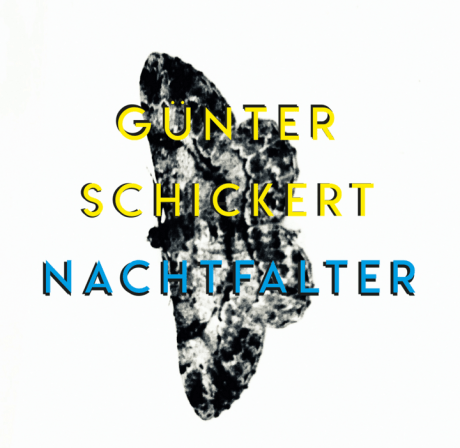
Günter Schickert ‘Nachtfalter’
(Bureau B) 15th February 2019
Notable progenitor of flanging echo-pedal guitar, free-jazz instigator of the traversing cosmic GAM, No Zen Orchestra and Arumaruma (among the least obscure succession of groups), the Berlin Krautrock legend Günter Schickert continues, like so many of his surviving WWII born and Boomer generation comrades, to circumnavigate the sonic unknown; probing for tears in the fabric, looking to penetrate new horizons.
An extension of Schickert’s previous solo flights of guitar exploration – the 1975 Brain label debut Samtvogel, and the Sky label follow-up of 1980 Überfällig – Nachtfalter features all the signature echo-y reverberations and waning searching guitar accentuations. Recorded back in the summer of 2018, in collaboration with Ja, Panik navigator Andreas Spechtl, who refashioned Schickert’s untethered live performances, adding his very own drum accompaniments and loops, this instrumental album evokes both the cosmic mysticism of Ash Ra Tempel and the more haunting, ominous deep space Kosmische of Tangerine Dream. Spechtl’s production, drum patterns and effects however, add a touch of tubular metallic sheen, futuristic tribal percussion and nuanced Techno to the otherworldly, often threatening, mood.
There are two inspirations at work on this LP; the naturalistic progress and presence, and then demise, of the moth that this album is named after (this said moth also features in the artwork) and the motion, rhythm of public transport in the city of Schickert’s birth. As the artist himself says, “I was born in Berlin and I am a true city child.” And like so many before and after, the city has left it’s indelible mark; the beat (not to be confused with the Dusseldorf birthed ‘motorik’ rhythm of Klaus Dinger) on Nachtfalter mirrors the industrious clang, rattle and cycle of Berlin’s metro and buses to an extent, though the northern European atmosphere of the city’s psychogeography attracts a more darker, eerie misaim throughout. The opening ‘Nocturnus’ (as the title might imply) is especially creepy with its Kubrick monolith pulse and unsettling conch shell horn – imagine Faust and Tangerine Dream invoking the arrival of a cosmic Viking long ship, emerging from the mists. The final all-encompassing merging of Schickert’s full gamut of guitar manipulations and strides, ‘Reflections Of The Future’, even evokes moments of John Carpenter’s synth-tracked horrors.
Despite the heart-of-darkness moods and craning instrumental eulogies to the moth that by happenstance entered the studio (clinging to the ceiling all night before dropping dead the next morning) during recordings, there are occasional bursts of energetic thumping rhythm: bordering on juddering Electro on the gliding, county bowed guitar arching and leaning ‘Wohin’ (which translates as ‘Where’: indeed where?!!). There are glimmers of light to be found amongst the darkened unknowing mystery, and far from suppressive and heavy, Schickert’s guitar roams freely, drifting, wafting and expansively has he accents the spaces before him.
An impressive cool transformation of the guitar innovator’s echoed enveloping signatures and traverses, Nachtfalter benefits enormously from Spechtl contemporary and energetic production. A dynamism and touch of modern electronica is added to the Krautrock messenger’s articulations to produce a most unsettling, interesting of musical experiences.
https://soundcloud.com/bureau-1/sets/gunter-schickert-nachtfalter/s-U0Dbo
Santiago Córdoba ‘En Otros Lugares’
(Sounds And Colours) 8th February 2019

A gateway to everything worth celebrating (as much as it might also be confounding and a mystery to many) about the South American and Central American continent, the Sound And Colours hub, which includes one of the most in-depth of reference and news sites, guide books and events, has proved a rich essential source for me. Whether it’s through the site’s cultural, political and historical purview style series of accessible guides to Peru, Brazil and Colombia, or their considered catalogue of music projects, I’m kept up-to-speed and introduced to some of the continent’s most interesting artists and scenes. The latest of which is the emerging and burgeoning solo artist Santiago Córdoba, who releases his panoramic multi-city composed suite En Otros Lugares on the site’s in-house label this month.
ormerly a percussionist band member of the ‘revolutionary’ Tango outfit Violentango, the Argentine born Córdoba left his native home in 2016 for a ‘peripatetic’ life, moving from one place to the next; making a fleeting base of operations for himself in Madrid, Italy and Beirut. Backpacker travails and the sounds of each short-stay imbue this eclectic travelogue; though these often free-spirited peregrinations also stir up cosmic, magical and transcendental horizons as much as the Earthly: As the album title itself alludes, En Otros Lugares translates as “in other places” or “elsewhere”.
Both geographically and musically diverse, the opening panorama, ‘La Llamada’ (“the flamed”), traverses an amorphous Andean outback landscape, filled with ghostly echoes, arid hums and a trance backing, whilst Fuck Buttons meet School Of Seven Bells astral planning over the Amazon on the progressive psychedelic ‘A Dos Leagues’ (“two leagues”).
Post-rock influences merge with Latintronica, 2-Step, free-jazz crescendos, the Kosmische, Refree like harmonic plucks and brushed guitar, and radio transmissions tuned to poignant past figures of interest on a condor flight of fantasy and mystical voyage of thoughtful meditation.
The former Tango agitator expands his tastes and picks up a host of new instruments to fashion an impressive ambitious slow-burner of a debut album. Another brilliant South American export.
Katie Doherty & The Navigators ‘And Then’
(Steeplejack Music) 25th January 2019

Sidetracked, in a positive and inspiring way, by a detour into stage production, folk maiden Katie Doherty has probably taken a lot longer than she envisioned to release another album.
The award-winning songwriter released her debut, Bridges, to favorable reviews back in 2007 and went on to share the stage with such luminaries as Karine Polwart, the McGarrigle Sisters and Ray Davis on a giddying trajectory, before (as Doherty herself puts it) ‘life got in the way’. In that time Doherty, far from idle, took on roles as both a composer for a number of Northern Stage productions and as a MD for a Royal Shakespeare Company production. It is these roles, and ‘broadening’ of horizons that now inform Doherty, her Navigators (Shona Mooney on fiddle and vocals and Dave Gray on the button accordion melodeon) and wider backing group (which includes more chorus vocalists, a cellist, percussionist and double bassist) on the concertinaed pastoral theatrical And Then.
Three tracks specifically sound like they were plucked from the stage. And in a roundabout way they were; the peaceable air-y bellowed shanty dedication to ‘leaving a beloved city behind’ ‘Yours’ and gentle-building lulled symphony finale ‘We Burn’ were both originally commissioned by the November Club for ‘Beyond The End Of The Road’, and the enchanting picturesque scene-setting waltz ‘Heartbeat Ballroom’ was commissioned by the Wallsend Memorial Hall for the reopening of the town’s grandiose ballroom.
Marking ‘change’ in various forms and analogies Doherty’s themes encompass the change of the seasons, the life-altering change of bringing up a child in a changing society hooked-up 24 hours to, an often, poisonous internet, and the rapidly escalating changes in society as a consequence of the equality debate: Doherty, in the shape of an enervated ‘anti-apology’ framed protest, takes a dignified stance on the album’s title track, giving a more considered intensity to a R&B pop-folk backing as she reassures us that “This is not war music. This is not a fighting song.”
Such heavy important anxieties, such as the pressures of expectation (epically in our validation age of social media shaming, easy inflamed indignity and virtue signaling) and responsibility are woven into a lovely songbook, as Doherty’s lightly caressing vocals waft and dance to a mix of Celtic tradition, snow flurry landscape malady, buoyant sea motion affairs of the heart and Eastern European travails.
After years spent away from the studio, Katie Doherty emerges with a purposeful and composed reflective collection of distilled folk.
Heyme ‘Noise From The Attic’
(Jezus Factory) TBA
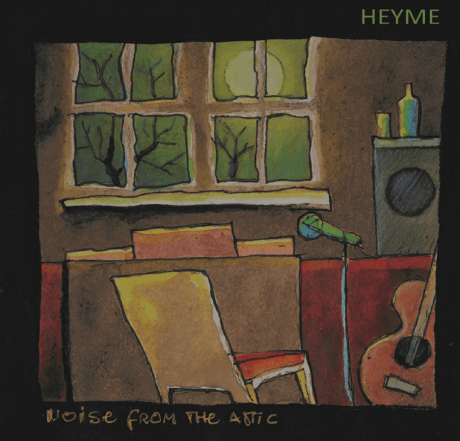
Spending much of his formative musical education in the Benelux, playing with a litany of alternative underground rock and experimental angulated Antwerp bands (Kiss My Jazz, IH8 Camera and Lionel Horowitz & His Combo), the Dutch-born musician Heyme Langbroek now sets out on a solo mission with his curious debut, and self-explanatory entitled, album Noise From The Attic.
Settling (for the last six years at least) in Poland Heyme puts all his past experiences into an understated album of songs and instrumentals created by the use of a loop station; Heyme using this unit to build a basic track which he then plays over the top of with various overlapping melodies, rhythms and improvisations. A quaint routine, Heyme’s attic noises, as the title makes clear, were all recorded in the said attic garret of his house, mostly on alternate Sundays. It might be nothing but by choosing the traditional day of liturgy worship to record his music on, it could be read as a metaphor for cathartic release; unburdening ideas, sentiments and regrets at the altarpiece of a home-recording studio.
Tethered to the past as much as moving forward experimentally, Noise From The Attic is imbued by many of the same performance recording techniques as used by the Antwerp collective of Kiss My Jazz; a group that Heyme served with alongside members from, perhaps Belgium’s most revered and recognized alt-rock group, dEUS. Heyme even reprises one of the band’s estranged songs, ‘Burn In Hell’; a woefully mooning ‘fuck you’ break-up submerged beneath a vacuum of Hawaiian rock’n’roll warbles. On the remainder of the LP he despondently wanes to a suffused template of Casio keyboard like presets, snozzled oozing Roxy Music and Hansa Studio Bowie saxophone, forlorn northern European melodies and chugging guitar. Within those perimeters the moody attic troubadour of alternative lo fi brooding pop does a Sparks, on ‘Klara’, evokes 70s era Floyd, on the mentally fatiguing ‘Paranoid’, adopts Blixa Bargeld’s tonsils and trans-European malady, on ‘Where She Goes (She Goes)’, and channels Eno’s ‘Another Green World’, on the far from discordant row, ‘Noisz’.
Showing the ‘proverbial’ Dutch courage, unloading worn, grizzled sentiments the solitary Heyme provides one of the year’s most peculiar reflective solo experiments. Fans of the solo work of the former dEUS guitar triumvirate of Rudy Trouve, Mauro Pawlowski and Craig Ward will find a fourth such inspired maverick to add to the list.
With Hidden Noise ‘Beside The Sea’
(Loss Leader Records) 18th January 2019
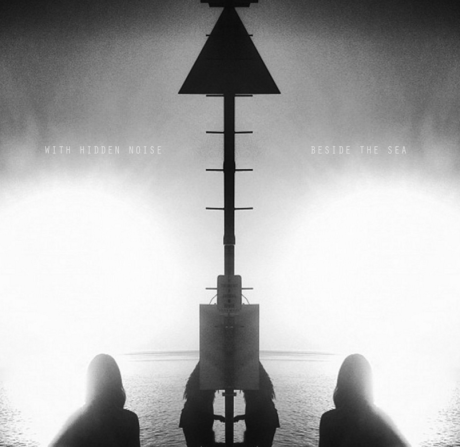
Rising with a certain languid tremble from the nocturnal wintery Canadian frontiers before dissipating back into the ether of a somnolent dreampop soundscape, Charlie Berger under the guises of his newest project, White Hidden Noise, wafts in and out of a fluxes state of pining and sighed romanticism.
Well versed in the dreampop, shoegaze and slowcore departments the Toronto musician-singer-songwriter’s diaphanous brooding album is a congruous continuation in a career that includes stints with Soft Wounds, Slowly and Tone Mirrors, and the launch of his own diy label, Loss Leader Records – of which this LP is released through. In that mode, with influences like Low (a huge influence in fact), Cigarettes After Sex and The Red House Painters lingering throughout the wistful fabric, the veiled Beside The Sea opus dreams big. Berger woos expansive heartache across the panoramas; meditating on the loss of memory to a considered purposeful backing that builds from suffused lulls to gradually built-up and swelled indie-shoegaze choruses.
The album title and gentle prompts, including the artist’s own guidance that this eight-track suite could be “moody late night driving music”, pretty much sets the listener up as to the mood, environment and sentiment. Amongst the bendy tremolo flanges and placid rhythms of the brushed cymbal and echo-y forlorn, the trio of songs, ‘The Other Korea’, ‘Close The Door’ and ‘Look’, placeably break out from their dreamy state into beautiful shoegaze-y Britpop anthems – hues of Slowdive, Gene and Sway drift around in the general absorption of influences.
It could just be me, but I can even hear a touch of early REM in the fanned-drift and soft pained harmony of ‘Further More’ and The Bends era Radiohead on the opening tenderly swooned ‘Window’ metaphor heavy plaint.
Berger’s yearned and pined ‘drive time’ soundtrack beckons the listener into a moody dreamy atmosphere of emotive outpourings; the subject of these songs remaining a lingering presence, lost, with only the traces of those memories remaining. Beside The Sea is a beautiful album – ok, some tracks do overstay their welcome – that reimagines Low as a British 80s dreampop combo.
Rodopi Ensemble ‘Thraki-Thrace-The Path Of Dionysus’
(ARC Music) 25th January 2019
Abdesselam Damoussi & Nour Eddine ‘JEDBA-Spiritual Music From Morocco’
(ARC Music) 25th January 2019
Tri Nguyen ‘The Art Of The Vietnamese Zither-Đàn Tranh’
(ARC Music) 22nd February 2019

Among the most prolific of world music and folk labels the ARC Music catalogue spans eras, genres and geography: In-depth surveys, collections and performances from the Welsh vales to Andean Mountains, from the South African veldts to Arctic Tundra. Probably sending us the most CDs of any label on a weekly basis, ARC’s diverse schedule is always worth further inspection, even if the cover art and packaging suggests the kind of CD you might pick up from a garage – filed under ethnocentric muzak. Far from it, each release is always a showcase of adroit musicianship with only the best examples of every style and tradition covered.
Usually built on the foundations of each respective artists or troupe’s heritage, these albums offer a contemporary twist on occasion: even a fusion.
Not so much randomly but just taking a trio of recent releases from the ARC stable we find three very different examples of this with the music of the atavistic recalled Thracian imbued Rodopi Ensemble, the masterful Vietnamese zither expert Tri Nguyen and Sufi-inspired advocates of Moroccan spiritual music partnership, Abdesselam Damoussi & Nour Eddine. All three commit a new energy to very old forms, and merge with influences outside their source material.
The first of this trio reverts back to the ancient moniker of what was straddling region that encompassed Southern Bulgaria, North West Turkey and the tip of Greece, Thrace; an area dominated by the 240 Km stretching mountain range behemoth that lends its name to this quintet’s ensemble, Rodopi. Steeped in Greek mythology, the Rodopi is synonymous for being the final resting place of Queen Rhodope and her husband King Haemus of Thrace; the lovers, so it is told in legend, rather unwisely offended the Gods Zeus and Hera, and were punished by being turned into the said mountain range.
Inspired by this homeland, Rodopi musically travel through Ottoman dervish, fluting Egyptian and Balkan folk on an erudite and immaculately performed collection of matrimonial, free form and scarf-waving giddy dances. Providing a swirling, but when acquired equally poised forlorn performance, the spindled spiraling lute and Kanun, heavy range of percussion (from the exotic ‘riqq’ to ‘dara-bakka’ and bendir’), swooned clarinet and weeping violin conjure up a vivid homage to a continuously changing landscape. In dual-language, songs and titles cross between Greek and Turkish; wrapped up in the obvious history of the two former dominant Empires: whether it’s in the traditional romantic flower and fauna metaphorical accompaniment of Asia Minors Greek refugees ‘Menexédes Kai Zouboulia’ (Violets And Hyacinths), or, in the tribute to the ensemble’s late clarinetist, Sol Hasan, on the improvisational ‘Roman Havasi’ (The Air Of Gypsies).
A wonderful dance of yearning remembrance and tradition, the music of Thrace is brought back to life with a touch of contemporary dynamism, flair and love.
Presenting the Vietnamese Zither, otherwise known as the sixteen-string Đàn Tranh, in a new light, ‘bi-cultural’ practitioner Tri Nguyen uses both his classical Western training and Vietnamese ancestry to delicately accentuate a collection of poetically brush-stroked scenes and moods. This congruous marriage of forms and cultures often results in moments and swells that evoke the gravitas of the opera or ballet, yet seldom drown out the light deft touches of the lead instrument.
Just as renowned for his adroit pianist articulations as he is for bringing the Đàn Tranh – a cousin of the Chinese ‘guzheng’, Japanese ‘koto’ and Korean ‘gayageum’ – to a wider international audience, Nguyen caresses a diaphanous web of descriptive quivers over classical strings and percussion on this latest showcase.
Emphasizing his native homeland and the countries that border it he mirrors the elements (the flow of a stream; the droplets of gentle rain), wildlife (the blackbird singing proudly; a galloping stoic horse) and moods (a contemplative sad refrain that ushers in a seasonal and metaphorical change; the joy of returning home after a sojourn spent away).
From lullaby to the Imperial, whether it’s a picturesque meditation or a tale from the time of China’s Three Kingdoms, the musical performances are beautifully immaculate. In truth, too classical and varnished for my taste, I have to admire the faultless musicianship.
Personally the more interesting for me of these three ARC titles is the co-production partnership of Moroccan composers Abdesselam Damoussi and Nour Eddine, who bring together a cast of authentic Sufi singers and musicians on the dynamic Jedba album showcase.
With backgrounds in everything from Hip-Hop to Jazz, Rock, Electronica, World Music and (in Eddine’s case) the Vatican’s vaults of Classical music, both musician-producers provide an exciting backing of bombastic percussion and hypnotizing rhythms to the venerable spiritual mystique of the Sufi tradition. Literally invited and transported into the studio from their impromptu performances in the famous walled marketplace of Jemaa el-Fnaa, located in the heart of Marrakech, a cast of mystics, poets and players from various tribes and disciplines gathered together for one collective exchange: The “Jedba” of the title referring to a collective dance in which people from multi faiths including Jewish, Christian and Muslim hold hands in a symbol of harmony and friendship; “united in love of the divine”.
The magic is in the fusion, as instruments as exotic and diverse as the wind equivalent of the Scottish bagpipes, the ‘ghaita’, rasps over a swanning break beat like percussion on the opening title-track, or, Arabian female tongue trills excitably warble in divine celebration over a dramatic filmic bounding accompaniment on the song-of-praise ‘Allah Hay’. Encompassing Berber desert rock, the adoring commanding vocals of Yemdah Selem (the ‘diva’ of desert music as Damoussi puts it), the solitary prayers of the bred and born Sufi and imam of a mosque in Tangiers, Said Lachhab, and giddy dance, the chants and exaltations of these Marrakech street performers is given a new dynamism and energy via the dual purpose of preservation and in beaming this entrancing mystical tradition to a new audience.
EPS
3 South & Banana ‘Rooftop Trees’
(Some Other Planet Records/Kartel) 1st March 2019
Stepping-out from the sunny-dispositional ranks of the psychedelic indie and tropical lilted London-based Cairobi – formerly, for a decade previous to the name-change in 2017, Vadoinmessico – the group’s drummer Aurélien Bernard follow’s up on his last two singles with a new EP of bright disarming soft-shoe shufflers.
The French-born but Berlin-based all rounder uses his adoptive home as inspiration, though musically the compass is pointing towards the tropical equator. The angulated skip and catchy opening track, ‘Magdalen Eye’, treats Berlin as a jump-off point; its architecture and history (where do you start?!!) echoing and reverberating in what sounds like a psychedelic dream pop with Nirvana grunge drop Ariel Pink. It also reminds me of the recent brilliance of fellow French new wavers, grunge and indie sensations Brace! Brace! The very French-esque float-y and whistle-y ‘Soleil’, sung in the native tongue, wistfully bids farewell to the long Berlin winter as the “first warmer sunny days of April” ease in.
Named after one of Bernard’s previous singles, the four-track EP includes 2018’s ‘Rooftop Trees’ and ‘Fake Jungle’ records. The first of which poses a meditation on the tensions between man-made and natural structures to a woozy psychedelic jaunt: Literally dancing to architecture, Bernard dapples the catchiest of psych and cool Gallic pop on a concrete environment. The latter, rather unbelievably, was inspired by a one-off jam session with James Brown (a throwback to Bernard’s days as a session drummer in Las Vegas), and sounds like a swimmingly Malian Syd Barrett produced by Nino Ferrer.
Light and jaunty but with a depth and sense of concern, Bernard’s oddly entitled 3 South & Banana alter-ego delivers a sumptuous cantaloupe lolloping EP of playful catchy brilliance.
Singles
Julia Meijer ‘Train Ticket’
15th March 2019

It seems almost obligatory, at least in the last decade, to affix the fatuous term of Scandi-pop to every single artist or band emerging from Sweden: whether they play guitars or programme synths. Native Swede songstress-musician Julia Meijer is no different. Even though she lives in Oxford her taciturn, slightly skewed angulated indie-pop sound falls easily into the Scandi-pop fold of classification.
With a string of singles behind her, Meijer is finding her feet; trying out new things on every one, with the only real consistency being quality and depth.
The latest, Train Ticket, is no different. A collaborative affair that features a couple of Guillemots in the ranks (Greig Stewart on drums and Fyfe Dangerfield on suffused low-ray burnished Hammond organ) and Oxford’s busiest polymath of the moment Sebastian Reynolds (Flights Of Helios, the Solo Collective, Mahajanaka project) on swallow undulated synth duties, Meijar’s musical partners construct a counterbalance between a Kate Nash fronted New Young Pony Club version of art school indie and looser, almost, quasi-Talking Heads African lilted mirage-y chorus.
Every bit as taut and tense as Meijer planned – reflecting the lyrical anxious sentiments of uncertainty, expectations and disappointments –yet bendy and supple when that same tension is lifted, the page-turning autobiographical Train Ticket proves to be yet another sophisticated slice of unsure protagonist yearned pop, and wrangled, just raw and edgy enough, indie.
Still adapting and evolving, Julia Meijer has laid down a quality series of singles thus far, all slightly different. We’ll be able to soon experience the full effect when she delivers that debut album, Always Awake, in May.
Society Of The Silver Cross ‘When You’re Gone’

Feasting out on the strength of their most afflatus (and only) single, ‘When You’re Gone’, the venerable marital-fronted Society Of The Silver Cross have built up quite a momentum and drawn some considerable weighty acclaim. Wafting on to my radar at the end of last year – included on the last Monolith Cocktail ‘choice’ playlist of 2018 – this bellowed harmonium and zither-droned esoteric profound elegy reimagines the Velvet Underground led by a lapsed-Catholic Kurt Cobain.
Achingly diaphanous despite its forlorn succinct wise cycle of lyrics (“When you’re gone, you’re gone, you’re gone. We’re only here for a while. We’re only here for a day.”), this humbled sea shanty-motion mystery was in part inspired by the band’s husband and wife protagonists’ travels across India; part of that Velvet imbued sound enacted by the Indian auto-harp, the shahi baaja.
With the spotlight drawn towards this Seattle outfit’s Joe Reineke and Karyn Gold-Reineke partnership, the Society Of The Silver Cross does also include a small but extended cast of enablers on an accompaniment that features the mellotron, accordion and host of similar evocative instruments.
Vividly dreamy in a plaintive humbled atmosphere filled with various visual references of haunting iconography, Society Of The Silver Cross’s inaugural single is a most sagacious opener; a stark but confident creation of real quality and depth that merges the underground with Gothic Americana. Brilliant.
Words: Dominic Valvona
Our Daily Bread 300: Kel Assouf ‘Black Tenere’
February 5, 2019
Album Review: Dominic Valvona
Kel Assouf ‘Black Tenere’
(Glitterbeat Records) 15th February 2019
Mirroring the borderless Nomadic freewheeling of the Berber ancestral Tuareg people, a loosely atavistic-connected confederacy (to put it into any kind of meaningful context) of diverse tribes that have traditionally roamed Sub-Saharan Africa since time immemorial, Kel Assouf channels a wealth of musical influences both historically and geographically into an electrified reworking of (as vague and over-used a term as it is) desert rock.
Headed by charismatic Gibson Flying V slinger front man Anana Ag Haroun, who’s own lineage takes in both the landlocked behemoth Niger and bordering Nigeria, the highly propulsive, cyclonic spiraling trio propel that heritage into the 21st century; thanks in many ways to the futuristic cosmic electronic and bass frequency production of the band’s rising innovative keyboardist/producer Sofyann Ben Youssef – a name that should be familiar to regular readers as the dynamic force behind the multimedia musical Pan-Maghreb Ammar 808 project (one of our albums of 2018) and member of the electric jolted Algerian borderlands Bargou 08.
Informed, if not driven, lyrically by Haroun’s Tuareg roots, the Black Tenere album wastes no time in drawing the listener’s attention to the violent struggles endured by the Bedouin in their fight for autonomy and survival. A diverse society of various people, grouped together in an age that demands definition and demarcation, even the term ‘Tuareg’ is highly contested: arguably brought into the lexicon through the language of European Colonialism, though etymology traces the term back further to multiple sources. Haroun would prefer we used the original ‘Kel Tamashek’. The elliptic soft lunging rhythmic desert canter opening ‘Fransa’ poetically, in earthy earnestness, encapsulates these struggles and travails:
“The war during the French colonization was won
by the swords, shields and spears of our ancestors.
How do you want potential allies to provide you with modern cannons and
missiles?
Do you see your sisters every day climbing the border mountains (Tassili),
clandestinely, exhausted, on their knees with bruised feet.”
Much is made of the past and ancestral rights, but the plight of the Kel Tamashek is ongoing. For now an uneasy truce exists between the various city-state governments and their rural and desert populations, especially in Mali, the Kel Tamashek uprisings that first kick-started a decades long fight for an autonomous state, known as the Azawad, in the north eastern desert regions of the Mali, began in the late 1960s; continuing throughout until more recent times when they made worldwide headlines as their struggle was hijacked spectacularly by Islamist insurgents – worryingly gaining ground as a Trojan Horse within their nomadic allies fight for independence; the destructive Islamist fascists horrified many when they took the ancient seat of West African learning and trade, Timbuktu, and preceded to demolish it like barbarians. Former Colonial masters France were forced to intervene, finally halting the insurgents progress before forcing all groups involved back to where they started, and many across the border. Far from ideal, the Islamist usurpers dissipated to a degree but then switched to sporadic acts of terrorism, carrying out smaller militia attacks in Mali’s capital.
In the bordering Niger, the Kel Tamashek have remained more obscure as they fight to maintain their lands and way of life, which is being eroded by climate-change and over-desertification (when relatively dry land becomes increasingly arid, losing bodies of water, vegetation and the wildlife with it).
Sonically given a dynamic but equally yearning, even romantic (especially on the gospel organ and mulling guitar accompanied ethereal-scenic paean to a virtual oasis, ‘Taddout’), boost to the nomadic heritage, they have a certain synthesized edge and twist missing from fellow desert rock groups such as Tinariwen (a major influence on Kel Assouf) and Tamikrest. Those familiar circling trance-y guitar riffs and camel-ride motions of the desert rock genre remain, yet the influence of heavy-hitters such as Hendrix, Deep Purple and Led Zeppelin blend with acid psychedelic rock and more languid stoner rock, ‘astral ambience’ (their words not mine) and even club beats, take it in new directions. Add to this bubbling stew Haroun’s absorption of the cross-pollinating international music of his hometown – for the last eleven years – of Brussels, and the inclusion of local Belgium jazz drummer Oliver Penu adding off-kilter swerve, bounce, shimmery cymbal crescendos and limber, and you have a truly exciting global sound that evokes tribal medicine man dances, ambient traverses, rockier elements of Funkadelic, the Muscle Shoals studio, Black Merde, Terakaft and labelmates Dirtmusic: Sonorous beats and various desert settings from Africa, Mid Western America and the Australian Outback are evoked at any one time in this blazing mix.
A stunning rock odyssey that draws its multiple sources together in both defiance and in the spirit of communication – the Kel Tamashek plight, as guardian-custodians of the desert, translated via the poetic heartfelt earthy soulful lyrics of Haroun – Black Tenere stretches the roots of nomadic rock and blues to reflect ever-expanding musical horizons as the global community grows ever-smaller and music becomes more fluid and spreads with ease. Kel Assouf are on another plane entirely; propelling rock music into the future.
Words: Dominic Valvona
Our Daily Bread 299: Houssam Gania ‘Mosawi Swiri’
February 4, 2019
Album Review: Dominic Valvona

Houssam Gania ‘Mosawi Swiri’
(Hive Mind Records) 22nd February 2019
Already established as both an accomplished student and innovator of the traditional Islamic dance, music and poetry exaltation ‘Gnawa’ and the three-stringed lute-like instrument that goes hand-in-hand with it, the ‘Guimbri’, the twenty-three year old Houssam Gania has fused his Moroccan roots with artists as diverse as James Holden, and on this latest album, a troupe of lively young musicians from the country’s fishing port town of Essaouira.
A chip-off-the-old-block, Houssam follows in the footsteps of his legendary father Maalem Mahmoud Gania. A stalwart master of Gnawa, famous the world over, a repackaged special reissue of Maalem’s sublime venerable Colours Of The Night performances kick-started the Hive Mind label in 2017 – a label I might add, with a considered taste in some of the more understated, lesser known recordings of world-class artisans. This youngest scion of the virtuoso Maalem has obviously inherited all the right attributes, performing as he does, a remarkable adroit soulful ritual of off-kilter spring trances both earthy and transcendental on this new collection.
Aping the North African street market store trade of cassette tapes – artwork wise too; influenced by the packaging of Maalam’s legendary Tichkaphone tape – Houssam’s inaugural recording for the Brighton-based imprint will be limited to only a 100 copies on cassette, though there will, as usual, be a digital version. Though only on its, official, fourth release Hive Mind makes a concession for Houssam’s Mosawi Swiri LP; the label’s original intention being to release everything on vinyl, which on previous releases they have.
Made up of six tracks, Mosawi Swiri takes its inspiration from the ceremonial Musawiyin Suite, the blue-section (we’re informed) of the trance ritual during which the participating musicians invoke Sidi Musa, the master of the sea and sky spirits. As I’ve already mentioned, connecting to the ‘sea’ part of that evocation, Houssam works with a number of aspiring – and as it proves rhythmically locked-in and elliptically elastic – musicians from the coastal Essaouira town and region of Morocco. Fusing together two different disciplines the opening ‘Moulay Lhacham’ track combines an overlapping groove of desert blues, effortless cool polyrhythmic Mali struts, offbeat drum splashes, melodic heavenly synth and deft ‘guimbri’. Cross patterns seem to connect to produce interesting nodes and riffs in a shuffling jam of masterful pan-African musicianship. It stands out as the album’s most electric and eclectic number, the rest of the ‘suite’ settling in for a trance-y meditation and prayer.
Accompanied by his brother Hamza Gania, Mohammed Benzaid, Khalid Charbadou and Amine Bassi the rest of the album springs and canters through a rattling stringy-rhythm of constantly itching lute and a scuttling, scraping tin-like percussion. Following a similar pattern throughout it is the timings and lead and chorus of excitable, soaring and in reverence vocals that offer variation to the untrained ear.
The second album of Moroccan holy music I’ve reviewed this month (look at for the electric-Sufi Moroccan treatment, Jedba, by Abdesselam Damoussi and Nour Eddine, in my upcoming roundup this month), it seems the spotlight is honing in more and more on North East African region – the emphasis in recent years thrust upon the funkier, psychedelic desert rock and Afrobeat of the Central and West African belts. Subtler in impact, the Islamic divine trance of artists such as Houssam Gania is no less dynamic and encapsulating. Mosawi Swiri is another sagacious ‘choice’ release from Hive Mind; an introduction to new voices and sounds, usually lost in the noise of the Internet hubbub.
Words: Dominic Valvona
 Monolith Cocktail Blog