THE MONTHLY DIGEST INCLUDES A CLUTCH OF ACCUMULATED NEW MUSIC REVIEWS; THE SOCIAL INTER-GENERATIONAL/ECLECTIC AND ANNIVERSARY ALBUMS CELEBRATING PLAYLIST; AND CHOICE PIECES FROM THE ARCHIVES.

(Photo by Todd Weaver)
___THE NEW___
Ingebrigt Håker Flaten’s (Exit) Knarr ‘Drops’
(Sonic Transmissions) 22nd August 2025
Growing, developing and expanding the remit from what was meant to be a one-off commission, brought together especially for the Vossajazz Festival, the troupe is now on its third titanic fusion rich studio album proper. Set in motion by Ingebrigt Håker Flaten (who also runs the Sonic Transmissions label, home to the ensemble’s recordings) a number of years back, the (Exit) Knarr now acts as the ‘main creative vehicle’ for the Norwegian bassist going forward it seems.
Settling with a reasonable lineup on this third chapter but inviting in a number of guests on the album’s statement piece, a transformed vision of jazz deity Wayne Shorter’s ‘Deluge’ piece from the revered and influential 1965 album release JuJu, on this outing the sextet takes prompt or inspiration from a more visual source. In the sphere of the Russian maverick abstract visionary and Bauhaus professor Wassily Kandinsky and Swedish mystic and abstract progenitor – some would say the true and first ever abstract artist, beating her peers (Malevich and Mondrian) to pure abstraction by a few good years – Hilma af Klint, a number of graphic scores have been used to foster untethered freedoms and play from a group already in the freeform mode. In one way, addressing perhaps the lack of knowledge, the place in which she should stand, there’s an unsaid elevation of Klint, an early adopter of the very spiritualism, Theosophy, that first led the way for Mondrian and many of his circle to dare to strip away every last visage, reference of the world for abstraction. Arguably Klint can be said to preceded Kandinsky and the others to this goal. And her work is filled with the iconic circular shapes, the colurs that would go on to inspire Sonia Delaunay and many others.
As a visual methodology, these scores go some way to painting a reification of a partly live studio performance and the ‘tweaked’ effected and transmogrified aftermaths.
Bringing together Amalie Dahl on alto, Karl Hjalmar Nyberg on tenor and electronics, Marta Warelis on piano and also on electronics, Jonathan F. Horne on guitar, Olaf Olsen on drums and of course IHF on what sounds like both electric and double bass, the album divides two longer form performances with a couple of shorter pieces. Speaking the experimental language of Anthony Braxton with garbled, hysterical and squeezed abandon, and inspired by the equally freeform pioneering Mats Gustafasson and his No Ensemble, the ensemble open with an already mentioned version of Shorter’s ‘Deluge’; taking the original’s more controlled bluesy swing style of simmering and serenaded and crooned sax for a tumultuous ride on the open seas of both discord and crested freefalls. It starts with twisted guitar wire grabbing and neck sliding and incipient tethered drums but soon develops into a recognisable, familiar feel before numerous swells and peaks resemble a fusion of the Henry Grimes Trio (cicra ‘Fish Story’ if we’re being specific), Rashied Ali, the Anthony Braxton Quartet, Keith Jarratt and Darius Jones. Wild in places, with the guitar going on to sound like a sci-fi dialect of tabbed beeps and switches, and the horns squeezed until the pips fall out, the action is shared out equally between all participants without losing a single instrument.: and that’s when you consider there’s also the guests, Mette Rasmussen on a second alto and a second drummer, Veslemøy Narvesen added to that untamed tidal wave experiment.
The album title is next. A change of a kind in tempo and thought this shorter composition articulates those droplets in various ways on a performance that sounds more open air than studio recorded. The sound of a dragon fly’s wings in rapid hovered form hangs around in a chamber-esque atmosphere of musing and pondering. Part JAF Trio, part ECM and part classical-minded jazz of a certain vintage, the gentle cascade of drips and drops fall very nicely and mysteriously on this Scandinavian ice float.
A second centrepiece if you like, ‘Kanon’ is dedicated to the renowned Norwegian drummer, composer and free jazz improvisor of note Paal Nilssen-Love. From his parents famous Stavanger jazz club located incubator to the capital and onto wide world recognition, Paal played with such notable company as Mats Gustafasson and Peter Brotzmann’s Chicago Tentet, before going on to set up his own All Ears festival. As an inspiration to a generation of Norwegians, Paal’s influence is huge. And in this mode, at this time, the sextet conjures up a semblance of his artform and free experimentation. But first, it all starts with some speaking panning of a curled up rattling drum roll, the quivers and quavers of the piano and what could be the attempt to match the sound of a buzzing bee. But it all soon develops into a wilder proposition of Masayuki Takayanagi, Eric Dolphy (I’m thinking specifically here of Out To Lunch!), Roscoe Mitchell, Andy Haas, Bill Dixon and Last Exit. It keeps changing; whether that’s in the action, dynamics between players, the tampering down parts that then peak into hysterical cries of squeezed, rasped and the burbled. A surprising passage of play even takes on a Lalo Schifrin vibe nearer the end.
The finale is left down to a performance that’s manipulated (or ‘tweaked’ as it’s written here), stretched out and elongated into a sci-fi hallucination. As if being treated and remodelled in real time, it sounds like the band is being pulled via a prism into the mirror backwards. It reminded me of the We Jazz label and their own retreated, remixed projects over the years. But stands as a more electronically led production that offers up a slightly off-kilter and magically alien version of their sound.
Ingebrigt Håker Flaten’s (Exit) Knarr colour new directions with an extended palette of ideas and sounds; heading towards breaking point before returning back to a recognition of the free form jazz movement that we can recognise. Source it out.
Andy Haas & Brian g Skol ‘The Honeybee Twist’
1st August 2025
Striking up an online and postal friendship since first writing about the highly experimental saxophonist, trick noise maker and effects manipulator when touring as a band member with Meg Remy’s Plastic Ono Band-esque U.S. Girls a few years before Covid, the former Muffin, NYC side man to the city’s attracted maverick luminaries of the avant-garde and freeform jazz, and prolific collaborator with Toronto’s most explorative and interesting artists, has sent me regular bulletins (and physical copies) of his various projects. Some have been in the solo mode, others with friends, foils and collectives.
Running off just a smattering of those releases (a majority of which have been with the highly obscure Resonantmusic imprint) from the last decade or so, and you have three extraordinary albums with the stringed-instrumentalist Don Fiorino (American Nocturne, Don’t Have Mercy and Accidentals), various appearances on records by Matt ‘Doc’ Dunn’s The Cosmic Range, the warped and discombobulating For The Time, Being solo act, and the avant-garde improvised performative triumvirate of SCRT with regular collaborator David Grollman and Sabrina Salamone.
Andy Haas now partners up with fellow Toronto native Brian g Skol for an unusual duet of saxophone and drums. Although it was recorded back in that city in 2024, the finished concentration and spatial experiment is now seeing the light with an official release via Haas’s own Bandcamp profile. I’m glad it hasn’t disappeared into obscurity, as it is one of the best, most radical but surprisingly rhythmic and pumped, worldly sounding album’s he’s made; much of this is down to the visual artist and percussionist/drummer Skol’s expressive and grasp/ear for international influences of rhythm, from both the Latin and Afro-South American to North Africa and the influence of Jaki Liebezeit.
The Honeybee Twist is a strange union between two instruments seldom pitted against each other; certainly not in this setting, with Haas once more wildly controlling the panning of his serialism style and both atonal and shrilling, bristled circular breathing sax and Skol combining hand drums, various percussive elements and drum kit breaks to provide a beat, a groove or more sporadic passages of the tactile, textures and tumultuous.
From nothing, reifications of the fire thief Prometheus, compounds, a vertical axis used in a 3-D space to show depth and elevation, self-assembly and play of words take some form of shape across an album of mystery, extemporization, and musing. Whilst stirring up these evocations, these reference points, both players traverse and kick around Arabian landscapes, Jon Hassell’e fourth world, the extremes of Eric Dolphy, Albert Ayler, Sonny Simmons, Andrew Cyrille and Evan Parker, and the factory. The opening mythologically entitled ‘The Eagle And Prometheus’, sounds like a sax and drums transmogrification of Battles; leaping straight in with beating drums, splashes of cymbal and that signature circular breathing technique. This is where I believe you can hear an echo of Saw Delight era CAN relocated to Egypt or the Arabian souk: Haas’s sax starts to sound more like a shrilling vibrating mizmar or even a zurna, and Skol’s drums could be mistaken for the daf and riz on occasion.
Against the near constantly moving, feeling and exploring drums and percussion, Haas’s effected sax goes from blues to freeform jazz, to reflections and colloquy and soliloquy. There’s a harshness and roughness at times to that instrument as it goes through various warbles, buzzes, rasps and drones.
Despite the title of ‘Maybe I’m A Machine’, there is no mistaking that this is a very human interaction between two highly experienced experimental artists circumnavigating any kind of easy label, demarcation. The notes of an abstract nature bristle, vibrate and trill to a near amorphous global rhythm on a most experimentally original collaboration. Please seek it out.
Maria Elena Silva ‘Wise Men Never Try Vol. II’
1st August 2025
As promised last month, the second volume in the Wise Men Never Try series from the near evanescent and relaxed but deeply effecting singer and musician Maria Elena Silva.
After previous releases, some of which featured such notable company as Jeff Parker and Marc Ribot, and after stripping back Bob Dylan’s courtly enigmatic dames to their most essential essences with interpretations of both ‘Queen Jane’ and a summoned bell rung ‘Sad-Eyed Lady of the Lowlands’, the Chicago homed Maria has turned to readapting, revaluating and transposing various themed songbooks from America’s past. Volume I, reviewed in the July Digest, turned to the pages of the Great American Songbook with familiar standards made anew and enigmatic through the emotively ethereal, connective, almost otherworldly and with a real sense of depth and something approaching the tactile – especially instrument wise.
Under that same ‘umbrella title’ the second volume travels further back in time to the America Civil War period of rousing, rallying, sorrow, tragedy and hope sheet music; much of the material used to bolster a flagging campaign by the Union during the early and mid-years of that horrifying, destructive and divisive war – arguably never really settled, with suspicion still between the North and South of the country culturally, politically and economically. In fact, recalling songs from nigh on 160 years ago has never seemed more prescient; chiming true with the age we find ourselves in right now. A balance is struck, history revisited, propaganda resized, and the sentimental repurposed. But arguably, the emphasis in this case is on the music of the eventual winners in this five-year conflict; although a number of the songs and rallying calls for the Union were also adopted and adapted by the Confederacy after they’d seen the effect it had on boosting morale and symbolising the cause.
Once more in an intimate setting with just the accompaniment of Erez Dessel on piano, Tyler Wagner on double-bass, and Maria on guitar, the Civil War period is amorphously twisted into minimalist meanders and dreamily untethered shapes of the tactile, the avant-garde, and descriptive. At the heart of it all, Maria’s voice is relaxed and diaphanous; pitched somewhere between folk, the Celtic, the traditional and the jazzy. The tragically played out ‘Booth Killed Lincoln’ sounds a little like Joan Baez in parts. It certainly, in all its traditionalist lament, has an air of Dylan about it and the Laurel Canyon circle of female troubadours. Like a play in itself, the acts, steps that lead to the assassination of Abraham Lincoln on that fateful day, at that fateful performance at the Ford Theatre, Washington D.C., could be lifted off the sensational pages of that time’s broadsheets. Lincoln’s last breath, rather ironically to the last, is very much Dylan: “Of all the actors in this town, I loved John Wilkes Booth the best.” Musically, there’s but an essence of accompaniment, with the double-bass strings sounding more like a wooden set of spokes and a sort of dampened drum. The odd harmonic is twinged.
However, the album strikes a jarring chord of dissonance, a heavily pressed and free form piano opening gambit of Keith Jarrett and Thomas Schultz. Interpreting the American composer of romance and patriotism George Frederick Root’s most popular rallying call, ‘Battle Cry Of Freedom’, Maria seems to counterbalance Dessel’s passing storms, shades of forbode, salon bar upright tones, uncertainty, the abstract and discordant with disconsolate beauty. A second Root interpretation, the succour giving ‘Tramp Tramp Tramp’ (aka ‘The Prisoner’s Hope’, written in the later stages of the war) is sympathetic to the original, but more melodiously jazzy.
Some of the material leans towards country: albeit a version that exists in a fog of the Appalachians and Woodstock. There’s even a moment on ‘Abraham’s Daughter’ where either the double-bass or guitar resembles a banjo. And the album’s most unusual break from the formula (though to use that word is doing Maria and her foils a disservice), the finale ‘My Old Horse Died’, features a far more rustic, loosely and buzzier more carelessly strummed guitar and the sound of what could be some kind of replicated plucking/picking tines. I do love this song; it sounds like Dylan writing a filmic Western song to feature in Little Big Man or McCabe & Mrs. Miller. As far as I can hear, there isn’t much in the way of horses, but some ironic metaphor for loss, wistful financial and property woes: “Swallowed the place where my home stood. Mortgage guy came round, claimed the hole in the ground where my home once stood.” It almost sounds drunken this slice of Western music from the counterculture.
Remembrance, tragedy, the call to arms, and above all, the encouraging original lyrics of the abolitionist (one of the key themes, subjects of many of these songs) ring like wispy or beautified and pining poetry from the battle fields of America. Only, that same divisive rage, the splits, the distrustfulness and hunger for independence rages still to this day; a constant cry wolf of civil war is voiced whenever the political class weaponizes its losses, or failure to win an election. Handled with subtly, and a classy skill that stretches out the meaning, the lyricism, the mood and intention further, a new spotlight has been drawn upon these historical songs; taken into an avant-garde territory without losing sight of a melody, a form or shape, Maria and her foils create a rather unique and incredible atmosphere; bringing dusted off Civil War pamphlets, sheet music and the like to a new audience. Every bit as encapsulating and dreamy as Volume I. It will be interesting to see what Volume III offers, and where Maria goes next. An excellent, spellbinding series so far.
Saul Williams, Carlos Niño & Friends ‘Saul Williams meets Carlos Niño & Friends at TreePeople’ (International Anthem) 28th August 2025
An enviable collaborative union of talent from both the East and West coasts of an America on the eve (or thereabouts) of Trump’s inauguration, under the TreePeople canopy of righteous indignation at the state of a nation, gathered the totemic voiced poetic polymath Saul Williams, the divine styler, multi-instrumentalist, percussionist and producer of afflatus and new age conscious jazz and its many strands, Carlos Niño, and a host of congruous musical friends from a scene of ever-expanding inter-connections. You can’t get any more symbolic than this; setting up for an experimental – perhaps extemporized in part – performance beneath the black oak and walnut trees in Coldwater Canyon Park, L.A. Recorded at the time and now seeing the light (so to speak) eight months later into the new Presidency, this ensemble piece’s headlined foils and longtime friends since the 1990s, combine forces across an archaeological dig of free associations.
But before peeling back the layers of this psychogeography, a little about the artists involved in this part explorative, part free expressive, part oratory and part theatre. Not that Niño would boast, but the highly prolific producer, ‘expansive percussionist’, experimental composer, connector and communicator, has made albums as and with such notable luminaries as Ammoncontact, Build An Ark, The Life Force Trio, and others. And also overseen the Alice Coltrane protégé – the keyboardist, composer and actor – Surya Botofasina’s2022 devotional Everyone’s Children. All the while, leading or instigating his own loose ensemble of multidisciplinary artists and the & Friends banner. This time around, those friends include recurring foil Nate Mercereau (the solo artist in his own right’s skills include the guitar, composing, songwriting, live sampling and improvising), Aaron Shaw (the horn player has worked with such notable icons and names as Elijah Blake, Anderson Paak., Dave Chappelle, Herbie Hancock, and made music for TV and film), Andres Renteria (the L.A. percussionist/drummer and DJ has worked with an impressive host of artists over the year: Jose Gonzalez, Father John Misty, Flying Lotus and Nick Waterhouse), Maria The Artiste (hot-housed in the AACM of Chicago, the woodwind player, vocalist, vibraphonist, bandleader and composer is also a member of the late Horace Tapscott initiated, and now six decade running, Pan Afrikan Peoples Arkestra), Francesca Heart (the partial alias of Italian artist, researcher and electronic artist with a skill at playing the conch shell Francesca Mariano, who makes new age music of a kind on computers), Kamasi Washington (the saxophonist who’s profile has possibly been highest over the last twenty years, after ushering in a revival of a sort on spiritual, odyssey jazz, has picked up a number of awards and plaudits for his work and collaborations) and Aja Monet (the lauded and awarded contemporary poet, writer, lyricist and activist can be heard joining Williams with a forewarned and haunting poetic vision on ‘The Water is Rising/as we surpass the firing squad’).
Needing no introduction, but getting one anyway, American rapper, singer, songwriter, musician, poet, writer, and actor Saul Stacy Williams first came to attention during the late 1980s on the New York café poetry scene. The burgeoning innovator, mixing beat/poetics/slam and hip-hop, soon stood out. A big break came as the lead in the awarding winning Marc Levin directed movie SLAM in the 90s; the phenomenon of slam poetry, its reach via competitive performance outside academia, set free from the stiff studied branches of the elite institutions. The list of peers that Williams has performed with is incredible; from blast master KRS-One to illmatic Nas, The Fugees, beat poet Allen Ginsberg and Black arts movement luminary Sonia Sanchez. Williams has also been a driving force behind the Brooklyn Afro-punk movement, written a libretto for Ted Hearne’s LA Philharmonic produced oratorio PLACE and two symphonies by the late Swiss composer, Thomas Kessler, based on two books of Saul’s poetry, Said the shotgun to the head and The Dead Emcee Scrolls. The scope and range are wide indeed, with both Williams film roles and a stint on Broadway as the lead in the first hip-hop musical, Holler If You Hear Me – based upon the lyrics of Tupac Shakur – to consider. And on top of that a sextet of studio albums and quartet of poetry books, all translated into multiple languages. The self-titled album debut of which was produced by Rick Rubin. There’s so much more of course; a whole Wikipedia page in fact to delve into.
But what’s important is that the experience, creative richness and innovativeness of all participants in this movement of change is in no doubt. And when all brought together like this, the results have a real depth and breadth, weaving together so many connective threads of outrage and riled injustice and indignation. This is meta, an alternative, sometimes more felt than real, history toiled over until exposing the roots.
To distil this performance down to jazz would be an injustice in itself, as the ensemble and their two leads accentuate, ring and punctuate, and, without rhythm in most cases, build a spiritual, conscious and traumatic atmosphere around and bedded beneath the either peppered, prophesied, near uninterrupted flow of racial injury, of hurt, of rage and recourse. The musical and sound elements certainly recall some of the signatures of jazz; of artists such as Coleman, the Pharoah, the Art Ensemble of Chicago, of Don Cherry, The John Betsch Society, of Brother Ah and Idris Ackamoor. But nothing quite frames this performance, demarcated into four parts with an after show of appreciation and emotional final word sit-down with the audience. For amongst the collage of the atavistic and primal, as prehistoric beasts lift their heads disturbed by the stirring hands of the dig, and Edan’s wildlife emerges from the grasslands, and the sax sings a parched reedy song, the percussion mirrors the sounds of dry bones and beads, and the vibraphone’s bulb-like notes float like particles in the style of Jamal, Williams delivers omens and a associative thread of technological, economic, political, social ills. Williams sounds one part Quelle Chris, another part Amiri Baraka on that opening “land map”: that cradle of uncivilised repeal. Later on, as the poetics seem to be less interrupted or stretched, the style is more Watts Prophets; especially on ‘We are calling out in this moment’, which links together the origins of Manhattan and its stock exchange with the original Lenape peoples that once farmed it, cultivated it and called it home before the arrival of the Dutch and then the English. Origin stories connect with the occupy movement, Black Lives Matter in a flurry of redress; the financial epicentres slave trading roots almost matter-of-factly and shockingly mapped out.
Later on, Williams is joined by Aja Monet for the new age balm turn African wilderness haunting ‘‘The Water is Rising/as we surpass the firing squad’, who’s contribution amongst the vibraphone tinkles and dreamy serenaded saxophone wafts and lingers and pines, and the “insect gossip”, recalls Tenesha The Wordsmith passing the mic to the Last Poets, once Williams takes up his post in front of the said allegorical “firing squad”.
Sitting down with the audience at the very end of this astonishing performance – bordering on both the theatre, the counterculture, and the activist -, and after the stats, the re-purposed jargon, the rebalance of history as it was and is, a time of emotional pleading and reminder that there is still work to be done. But that message is one of community and the need to build and maintain networks of support in the tough times; not to wallow or give in. But as one stage in the fight this album marks a new enterprise and platform for greater harmony and a safe place for experimentation. International Anthem can do no wrong, as they continue to facilitate such creative sparks of inventive free play and poetry.
___/The Monolith Cocktail Social Playlist Vol. 100___
For the 100th time, the Social Playlist is an accumulation of music I love and want to share; with tracks from my various DJ sets and residencies over the years and both selected cuts from those artists and luminaries we’ve lost on the way and from those albums celebrating anniversaries each month.
Running for nearly 12 years now, Volume 100 is the latest eclectic and generational spanning playlist come radio show from me – the perfect radio show in fact: devoid of chatter, interruptions and inane self-promotion.
Here’s to the hundredth edition, which features a homage or two to Terry Reid and Howie Tee, who we both lost recently. Self-coining his own nickname, Reid’s voice was lionised as “superlungs” for his incredible vocal prowess. But as an all-round package, voice, guitarist and rock artist of universal repute – in any article or description, Reid is anointed as the ‘artists’ artist’ -, Reid could shake the foundations of blue-eyed soul and maximum R&B, blues rock and heavy rock. His name was touted around the 1960s, courted to front or join countless luminaries, from Led Zep and Deep Purple (he turned them both down). There’s many eclectic steps on the way, including a penchant for the Latin rhythms of Brazil (falling into his orbit during 1969, Gilberto Gil and Caetano Veloso, recently exiled by the military dictatorship of Brazil, were helped by Reid’s attorney to come to London; they would go on to flank Reid at the seminal Isle of Wight Pop Festival almost a year later in 1970), a direction into introspective jazz, desert mountain commune living and session work for Don Henley, Jackson Browne and Bonnie Raitt – this came after Reid more or less decided to retire from his solo career. A rich life lived. So, in my selection I’ve gone for a smattering spread of tracks from the cannon, starting back at the beginning with the title track from the 1968 LP bang bang you’re Terry Reid plus ‘The Hand Don’t Fit The Glove’, ‘Rich Kid Blues’, ‘Live Life’ and ‘Ooh Baby (Make Me Feel So Young)’.
From a whole other sphere of the musical landscape, Howie Tee, the hip-hop and new jack swing hit maker of repute during the 80s and 90s. Born in the UK, but raised up in Flat Bush, Brooklyn, Tee’s (or the name his folks would recognise, Howard Anthony Thompson) musical protectory took flight with a break in the early electro crew CDIII. Already familiarising himself with the mixing desk and production tools, Tee quickly jumped ship to producing, his first success being in conjunction with U.T.F.O.’s Kangol Kid, with the commercially hot hip-hop group Whistle. At the same time Tee also put together the equally successful Real Roxanne collaboration, scoring with ‘Bang Zoom (Let’s Go-Go)’ – which as the name suggests, rides on the go-go phenomenon. There would also be production credits for records by Cash Crew, Seeborn & Puma, E.S.P. and Izzy Ice. Tee then became the in-house producer for the New Jersey-based independent label Select Records, producing relative hits for Special Ed and Chubb Rock. But it wasn’t all hip-hop orientated, for in 1991 he mixed and co-produced Color Me Badd’s ‘I Wanna Sex You Up’: a Billboard number one. And he also made remixes for such diverse acts as Madonna and Maxi Priest. I’ve chosen both Special Ed and the Real Roxanne, plus Chubb’s bromance cut, ‘DJ Innovator’.
In a celebratory mood, I’ve also kept up the monthly inclusion of anniversary album tracks, with 60th nods to The Beatles Help, Dylan’s Highway 61 Revisited (I’ve gone for, what I hope, is two not so common of known cover versions from both) and Miles Davis E.S.P. There’s also 50th glass raisers to Cortex’s cult favourite, Troupeau Bleu, Don Cherry’s pioneering Brown Rice, and Eno’s Another Green World.
Every month I like to collect up some of the more newish or recent tracks that didn’t make the Monthly playlist selection – either for lack of space or I just forgot to include at the time. In that category there’s Elaine Howley’s diaphanous, translucent ‘Hold Me In A New Way’, Mike Cooper’s vague South Seas, Pacific exotic mirage ‘Eternal Equinox’, U.S. Girls’ Jane (Doe) Country and Plastic Ono Band funk ‘No Fruit’, the collaborative PAUER/Wolfgang Perez/Der Wandler/Magic Island union’s yearning ‘Falling Over You’, and Pons hi-energy 80s work-it no wave dance diatribe ‘Fast Money Music’. There’s also a track from the recently released, and featured, Woody at Home Vols 1 and 2 – Guthrie hanging round like Banquo’s ghost over Dylan, who’s Highway is revisited this month.
The rest of the playlist is made up of cross-generational from across the ages by Jaz-O, Baby Washington, Isan Slete, Vincent Over The Sink, Phantom Payn Days, Lynn Castle, Mad Walls, Massacre and more…
TRACK LISTING:
The Real Roxanne FT. Howie Tee ‘Bang Zoom (Let’s Go-Go)’
Pons ‘Fast Money Music’
Themselves ‘Roman is as Roman Does’
Waylon Jennings ‘You’ve Got To Hide Your Love Away’ Mariangela Celeste & Vangelis ‘Honolulu Baby’
Woody Guthrie ‘One Little Thing An Atom Can’t Do’
Frankie Valli & The Four Seasons ‘Queen Jane Approximately’
Terry Reid ‘The Hand Don’t Fit The Glove’
Baby Washington ‘The Ballad Of Bobby Dawn’
Terry Reid ‘Rich Kid Blues’
U.S. Girls ‘No Fruit’
Lynn Castle ‘You Are the One’
John Baldry ‘It Ain’t Easy’
Isan Slete ‘Lam Phloen’
Terry Reid ‘Bang, Bang (My Baby Shot Me Down)’
Miles Davis ‘R.J.’
Jaz-O ‘Put The Squeeze On ‘Em’
Special Ed ‘I Got It Made’
Cortex ‘Automne – Colchiques’
Brian Eno ‘Sky Saw’
Furniture ‘My Own Devices’
Mad Walls ‘Lily’
Massacre ‘Bones’
Terry Reid ‘Live Life’
Mint Tattoo ‘Wrong Way Girl’
Terry Reid ‘Ooh Baby (Make Me Feel So Young)’
Chubb Rock Ft. Howie Tee ‘DJ Innovator’
Don Cherry ‘Degi-Degi’
Elaine Howley ‘Hold Me In A New Way’
Mike Cooper ‘ETERNAL EQUINOX’
Xul Solar ‘Sigh’
Vincent Over the Sink ‘Number Theory’
Phantom Payn Days ‘primitive chamber music phone call blues’
Woody Guthrie ‘I’m A Child Ta Fight’
Willis Earl Beal ‘Like A Box’
Marcos Resende & Index ‘Nina Nenem’
___/Archives___
From the exhaustive Archives each month, a piece that’s either worth re-sharing in my estimates, or a piece that is either current or tied into one of our anniversary-celebrating albums. From the former category, my original review of Willis Earl Beal’s nite flights soul harrowed and ached Noctunes album, released a decade ago this month.

Willis Earl Beal ‘Noctunes’
(Tender Loving Empire) Released 28th August 2015
Whether stretched beyond the realms of fact and fiction or not, the many travails of Willis Earl Beal fit the outsider artist profile perfectly. With more deaths/rebirths than the Dali Lama’s had reincarnations, Beal’s self-made and put-upon myth status as the Zorro masked articulate esoteric blues and soul poet, only reinforces the mystery that surrounds him. Hardly the result of an easy life – one that’s seen him grow up in a sort of odd isolation, plagued by both physical and mental health; a consequence in no small part of his injuries sustained when trying out for the army.
His musical epiphany arrived whilst down-and-out in Albuquerque, New Mexico. The untrained, and at one time homeless, but naturally gifted songwriter recorded the rawest of lo fi tracks, leaving them with his hand drawn cover art at various coffee shops around town, alongside flyers seeking a girlfriend with his phone number written on them. These unassuming offerings eventually made their way onto the cover of Found Magazine in America and from there, fell into the hands of XL Recordings Jamie-James Medina. Originally signing to the labels Bronx-based offshoot Hot Charity, releasing two well-received albums – his debut Acousmatic Sorcery in 2012 and Nobody Knows follow up in 2013 – Beal succumbed to either ennui, despondency or the pressures of suddenly being foisted into the music business and quit. Beal slopped off into a self-imposed exile in the backwoods of Olympia, Washington, and became the Noctunes crooner.
As the title suggests – a riff on nocturnes – these twelve nocturnal lullabies, paeans and plaintive ballads evoke the romantic nighttime meditations. Stripped to the barest of accompaniments, yearningly swooning with the occasional burst of a drawn-out primal scream, high notes and pained wallowing, Beal creates a haunted soundtrack. Part southern river ambient journey, part soul-baring soliloquy.
Once again dodging definition, he takes the mournful strings and suffused hymn like aspects of his previous recordings and ditches the bounce and R&B elements for minimalism. Still channelling Otis Redding with a side order of Bill Withers and echoing traces of TV On The Radio’s most dilatory maladies, Noctunes is, when prescribed in small doses, a visceral stirring experience. Choosing to say more with a lot less, lyrics, which if uttered by many other artists would sound like mere platitudes, are given a gut-wrenching and despondent leverage when leaving Beal’s lips.
Often draining, and at times laying it on a bit too thick, the album’s impact can be enervated when digested in one session. Lingering manifestations rather than epiphanies, it feels like our protagonist is unburdening his heart. A tough call on paper, yet the bare faint undertones of funeral parlour organ, stuttering jazz style drums, murmuring hums and synths lift the songs gently above morose and indulgence.
We need your help. If you’ve enjoyed this selection, the writing, or been led down a rabbit hole into new musical terrains of aural pleasure, and if you able, then you can now show your appreciation by keeping the Monolith Cocktail afloat by donating via Ko-Fi.
For the last 15 years both me and the MC team have featured and supported music, musicians and labels we love across genres from around the world: ones that we think you’ll want to know about. No content on the site is paid for or sponsored, and we only feature artists we have genuine respect for /love or interest in. If you enjoy our reviews (and we often write long, thoughtful ones), found a new artist you admire or if we have featured you or artists you represent and would like to say thanks or show support, than you can now buy us a coffee or donate via https://ko-fi.com/monolithcocktail
Our Monthly Playlist selection of choice music and Choice Releases list from the last month.
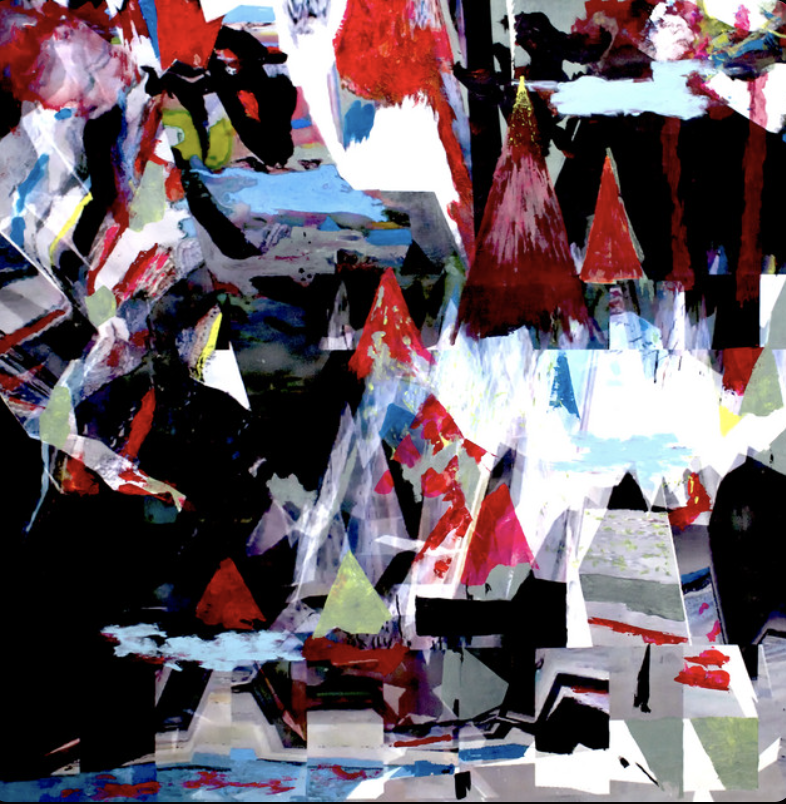
We decided at the start of the year to change things a little with a reminder of not only our favourite tracks from the last month, but also a list of choice albums too. This list includes both those releases we managed to feature and review on the site and those we just didn’t get the time or room for – time restraints and the sheer volume of submissions each month mean there are always those releases that miss out on receiving a full review, and so we have added a number to both our playlist and list.
All entries in the Choice Releases list are displayed alphabetically. Meanwhile, our Monthly Playlist continues as normal with all the choice tracks from July taken either from reviews and pieces written by me – that’s Dominic Valvona – , Brian ‘Bordello’ Shea, and this month, Kalporz writer Samuel Conficoni. Our resident Hip-Hop expert Matt Oliver has also put forward a smattering of crucial and highlighted tracks from the rap arena.
CHOICE RELEASES FROM THE LAST MONTH OR SO:
Blanco Teta ‘‘La Debacle las Divas’
(Bongo Joe) Review
Lukas Cresswell-Rost ‘Weight Away’
(Wayside & Woodland Recordings) Review
Theon Cross ‘Affirmations: Live at Blue Note New York’
(New Soil) Review
Cumsleg Borenail ‘10mg Citalopram’
(Cruel Nature Recordings) Review
Exploding Star Orchestra ‘Holy Mountains’
Fortunato Durutti Marinetti ‘Bitter Sweet, Sweet Bitter’
(Quindi Records/We Are Time) Review
Tony Jay ‘Faithless’
Review
Freh Khodja ‘Ken Andi Habib’
(WEWANTSOUNDS) Review
The Lancashire Hustlers ‘Here But Not Here’
(Steep Hill) Review
Kevin Robertson ‘Yellow Painted Moon’
Review
Maria Elena Silva ‘Wise Men Never Try’
Review
Sol Messiah ‘War of the Gods’
THE PLAYLIST::
Blanco Teta ‘Subiduki’
Scotch Funeral ‘Weak at the Knees’
Freh Khodja ‘Aich Sar Bina Koulili’
Brickwork Lizards ‘All the We Are – Reworked by Sebastian Reynolds’
Natural Information Society ‘Sound Talisman’
Sol Messiah Ft. Sa-Roc ‘Auset’
Raekwon Ft. Ghostface Killah & Method Man ‘600 School’
Mr. Muthafuckin’ eXquire ‘Y.O.Utopia’
Open Mike Eagle ‘ok but I’m the phone screen’
Nicholas Craven & Boldy James Ft. C Dell & Nick Bruno ‘At&T’
Clipse, Pusha T & Malice Ft. Ab Liva ‘Inglorious Bastards’
Estee Nack & V Don Ft. Al-Doe ‘EZBRED’
Rachel Eckroth ‘Yin Yang’
Theon Cross Ft. Isaiah Collier, Nikos Ziarkas & James Russel Sims ‘We Go Again – Live at the Blue Note, NYC’
Peter Evans (Being & Becoming) ‘Malibu’
Homeboy Sandman & Sonnyjim ‘Can’t Stop Me’
Apollo Brown & Bronze Nazareth ‘Wheel Of Misfortune’
Ramson Badbonez & Leaf Dog ‘Celestial Bodies’
Max Schreiber ‘Layla Mistakel’
The Conspiracy ‘Salisbury Road’
SUO ‘Big Star’
Fortunato Durutti Marinetti ‘Beware’
Jeff Tweedy ‘Out in the Dark’
Kevin Robertson ‘Yellow Painted Moon’
Soft Hearted Scientists ‘Hello Hello’
Whitney ‘Dandelions’
The Lancashire Hustlers ‘Perhaps’
Ali Murray ‘ Toby’
Alex G ‘June Guitar’
Spotless Souls ‘In the Heart’
The Noisy ‘Twos’
Wolfgang Perez ‘So Ouco’
Eve Goodman & SERA ‘Blodyn Gwylly’
Joe Harvey-Whyte & Paul Cousins ‘lift’
Sirom ‘For You, This Eve, the Wolves Will Be Enchantingly Forsaken’
Austistici & Jacek Doroszenko ‘After Water Formed A Shape’
Cumsleg Borenail ‘You Mean Something To Me’
Cecil Taylor & Tony Oxley ‘Encore 1’
Exploding Star Orchestra ‘Afterburn (Parable 400)’.
If you’ve enjoyed this selection, the writing, or been led down a rabbit hole into new musical terrains of aural pleasure, and if you can, then you can now show your appreciation by keeping the Monolith Cocktail afloat by donating via Ko-Fi.
For the last 15 years both me and the MC team have featured and supported music, musicians and labels we love across genres from around the world: ones that we think you’ll want to know about. No content on the site is paid for or sponsored, and we only feature artists we have genuine respect for /love or interest in. If you enjoy our reviews (and we often write long, thoughtful ones), found a new artist you admire or if we have featured you or artists you represent and would like to say thanks or show support, than you can now buy us a coffee or donate via https://ko-fi.com/monolithcocktail
THE MONTHLY DIGEST INCLUDES A CLUTCH OF ACCUMULATED NEW MUSIC REVIEWS; THE SOCIAL INTER-GENERATIONAL/ECLECTIC AND ANNIVERSARY ALBUMS CELEBRATING PLAYLIST; AND CHOICE PIECES FROM THE ARCHIVES.
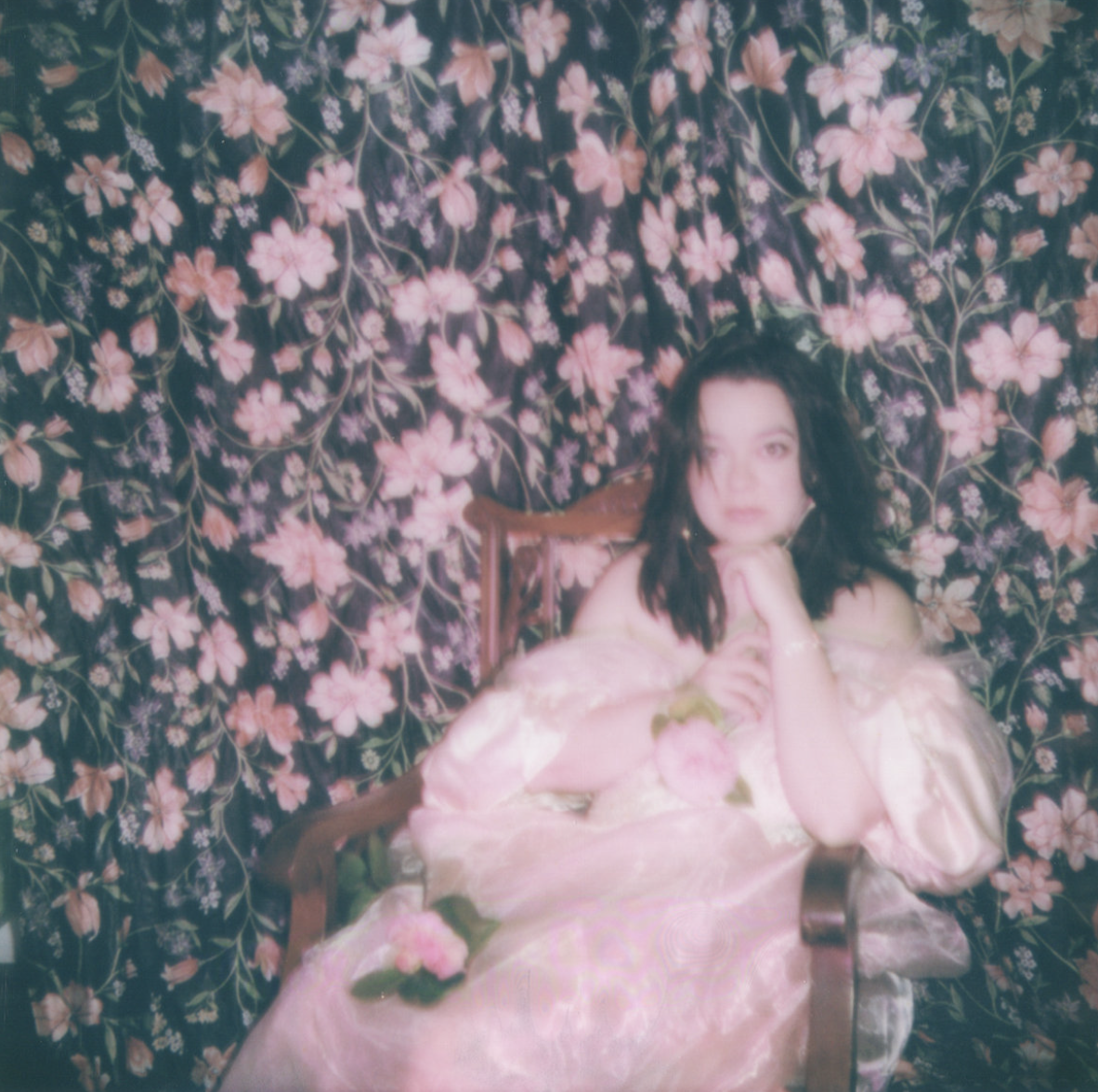
___THE NEW___
Autistici ‘Familiarity Enfolded’
(Audiobulb) 2nd August 2025
The middle sequence in a series of transformations by the Sheffield-based electronic composer, Familiarity Enfolded follows on from the first link in a chain of collaborative immersions, Familiarity Folded – released in just the last week. In what could also be a collaborative showcase for the Audiobulb label too, a smattering of artists who’ve previously released material on the platform now bond and work with Autistici in redeveloping or evolving and remixing his compositions and ideas for a three-part project.
Finding common ambient space and minimalist approaches to visioning new soundscapes and movements, part two includes contributions from Tomo-Nakaguchi (an artist we’ve raved about on the site in the last few years, and made our choice albums of the year lists), A Dancing Beggar (who hasn’t appeared for a very long time on this site, but has made our choice albums lists in the past), Russ Young and OdNu (another artist who has appeared in our reviews sections in the last couple of years). The prospects look good already, with this quartet’s sphere of influences within the ambient and electronic realms both adroit and always worthy of attention.
First up both Autistici and Tomo-Nakaguchi match-up for an incipient majestic awe of both the natural and synthetic on the opening ‘Twilight Glow Of The Sky’. What could be the sound of filaments falling like pattering rain on a drum skin or piece of Tupperware can be heard amongst the moving glimmering light captured at such an inspiring moment in time and place.
The cove atmospheric ‘Caiplie’s Hermitage’ references the atavistic caves of the title, found between the Scottish towns of Anstruther and Crail on the coastal pathways of Fife. A Dancing Beggar is the foil this time around, playing on the hallowed ghosts and history of that mysterious cavern, which is believed to have been used as a place or sanctuary of worship for Christians in the 9th century AD. There’s constant wash or downpour of rain and presence of water elements that continue throughout this piece, and it could be that the artists are perhaps sheltering from it as they build up an abstract picture that’s one part natural and the other near sci-fi. The brassy resonating strings of a guitar are plucked, pulled and sprung as heavenly machines move around in the background. A Dancing Beggar joins both Autistici and OdNu on the finale; a twenty minute plus long form illusion inspired by the track title’s Arthurian referenced enchantress, sibling, shapeshifter and seducer Morgan Le Fay mirage, the ‘Fata Morgana’. A “superior mirage” in other words, this optical phenomenon and complex mirage creates distorted and sometimes fantastical images of distantly observed objects. You must have seen this when looking at to sea in particular conditions and seeing tankers or ships appearing to float above the waves. Sonic wise, this reminded me of Jeff Bird with its essence of piped or pumped pastoral sounds. But there’s also something hallucinogenic about it too. There’s a Mark Hollis solo style piano bit, something that sounds almost like a concertinaed ghostly echo of some shipwreck shanty plus the shimmers and shivers of magic.
That leaves the final track of the quartet, the ‘Dissolved in Light’ collaboration with Russ Young, who I must admit I’m unfamiliar with. It begins with the itchy rubbing chorus of crickets and sundown atmospherics. A veil of mist dissipates to reveal a most minimalist timelessness before Laraaji-like bowls are struck softly and the sound of tines and melodious ambient waves entwine. Andrew Heath evocative piano notes and falls meet an amorphous staccato engine as the track moves along its placeable journey to the sacred.
‘Relinquishing’ control, the concept behind this series has worked rather well; resulting in some magical, stirring and illusionary pieces of sophisticated and highly immersive ambient and lowkey electronica. A Dancing Beggar seems to be adding something of the bucolic and pastoral to the mix to give it a connection to the human and greenery, the nature and history. But all four collaborators prove congruous partners on this project. Part three, Familiarity Unfolded, will follow in due course, and it will be interesting to hear the results of another set of sonic and musical partners.
The Lancashire Hustlers ‘Here But Not Here’
(Steep Hill) 4th July 2025
Rolling with the punches meted out by life; tumbling forward into a new songbook; The Lancashire Hustlers seventh album rings true with disillusion, detachment, bewilderment and isolation. It’s a feeling that’s hard to articulate or relate, but that unease at the tides of time and the disenchanted shrugs of malady sound pretty warm, gentle and sellable.
With a MOR breeze of soul in their sails once more, the long-standing duo of guitarist and vocalist Brent Thorley and drummer and backing vocalist Ian Pakes take beat group, Baroque, psych and troubadour influences for a both funky and yearned trip across the Northern countryside and towns of their home. Transporting a hint of Muscle Shoals to Lancashire for an idiosyncratic English take on the music of the Isley Brothers, Stevie Wonder, Curtis Mayfield, the duo (with an extended apparatus of instruments, which they both share) have a slight saunter and roll to their signature to their songwriting and playing. It’s the sound of The Beatles, of individual Lennon and McCartney on their solo work, of the Stones, of Ollie Halsall and John Compton with an undulation of gospel-light and country-soul electric piano and organ. Talking of the country reference, the most lovely ‘Just Because’ has what could be either a melodica or clarinet sounding like a forlorn but romantically sighed harmonica – there’s also the use of a lap steel guitar.
There are some heartfelt, sad plaints, and rural country swamp pop ditties that wouldn’t sound out of place on McCartney’s eponymous solo album and RAM; some songs that err towards the haunted, albeit with instrumental aping scurrying mouse effects – see the confessional, asking for forgiveness, pest and rodents quirky phobia, and Byzantine Stones flavoured ‘I Killed A Mouse’ -; and some that beat themselves up over guilt, frustration and heartache. Most out there, must be the dejected lament of feeling ignored, ‘Like A Ghost’, which sounds like a detour to some mysterious Hispaniola Les Baxter hideaway island of the occult. And yet, they never feel so down or in the blues funk that each song isn’t rich in playfulness lyrics wise, or ever dour.
Another enchanting as it is sorrowful and disenchanted songbook from a duo that continues to make its own luck, releasing a consistent catalogue of instantly likeable, melodious and breezily catchy albums. It’s always a pleasure to review and hear them.
Maria Elena Silva ‘Wise Men Never Try’
4th July 2025
Recently stripping back Bob Dylan’s courtly enigmatic dames to their most essential essences with interpretations of ‘Queen Jane’ and a summoned bell rung ‘Sad-Eyed Lady of the Lowlands’, Maria Elena Silva now turns to the pages of the Great American Songbook with a first volume of revisited and transposed standards made anew: that is, made emotively ethereal, near evanescence yet connected and with a real sense of depth and something approaching the tactile.
Under the ‘umbrella title’ of Wise Men Never Try, the inaugural volume features a small intimate accompaniment of players to accentuate and punctuate Silva’s carefully placed and near blown words, or, to wind along to a minimalist performance of the artful, the solo play, the quietened and sullen lament, the show tune stripped of artifice, and the enigmatic, near impregnable shell of a smoky cabaret tortured soulstress. Step forward Erez Dessel, who’s piano both articulates the feel and plays with a freer hand of spine-tinkles, ached suspense, distorts and slightly jars the nerves; especially on the opening version of Carolyn Leigh and Cy Coleman’s late 1950’s standard, ‘I Walk A Little Faster’ (the singular “I” has been dropped I assume to reframe the angle for a new interpretation), which was a hit for Blossom Desire in 1958. The original’s slight lilt of 50s swing and jazz is replaced with a jilt of dissonance on the piano; made more so because of the near silence that opens the song. In a bluesy-jazzy fashion that also recalls the theatre, Silva amorphously places the words with lulled and delicate breathless ease. As a theme of heartache and denial, this distillation is as beautiful as it is almost troubling and disconsolate. The album’s finale, ‘Some Enchanted Evening’, is the closet interpretation on the whole album, featuring a lovely melodious piano that wouldn’t sound out of place on the original; all very tender and dreamy. The Rodgers and Hammerstein number, composed for the South Pacific musical, is normally sung by male protagonist Emile as he captures the essence of love at first sight. Out of the female gaze, with a female perspective that theme is not so much lost but redefined.
We also have Tyler Wagner popping up on the double-bass, taking a tactile, textural jazzy approach, offering flexed stretches of the body, sensitive little crawls and climbs, and more physical thwacks of the bass strings. The filmic pining ‘I Should Care’, written by Alex Stordahl, Paul Weston and Sammy Cahn for the 1944 MGM matinee Thrill of a Romance – covered by all the notable greats over the decades, from Sinatra to Peggy Lee, Dizzy Gillespie and Amy Winehouse -, features a bass that quietly thumbs away a jazz rhythm in the style of early Blue Note, as Silva sympathetically oozes soulful pursed heartache.
Completing the accompanying trio – who it must be stated, don’t always play together or on every song – is Ben McDonald on electric guitar. Subtle for the most part, ‘I’m In Love Again’ has McDonald pinging harmonics, brushing up and down the fretboard and playing a nice Reinhardt-esque delicate languid sensitive form of haunted sympathy.
It must be pointed out that Silva also plays acoustic guitar on these numbers. ‘You Don’t Know How Glad I Am’, written by Jimmy Williams and Larry Harrison, and made her own by Nancy Wilson on the 1964 single, is an intimate entwined match of Silva’s climbing vocals and a guitar with a pinch of Spanish flair: albeit kept quite subtle. Silva’s version of that recognisable tune sounds somewhere between Judee Sill and Roberta Flack. It’s there again on the next song, ‘Close To You’, a sort of jazzy-gypsy guitar melancholy.
Silva’s voice is labyrinthine and enigmatic yet can’t quite hide the various emotional toils of disconsolate and sacrificial, torturous and resigned heartbreak. Despite the intimacy of the setting, every song has a stage-like atmosphere about it that croons and soothingly oozes sophisticated, elegant jazzy-blues performance from the stillness and blank space. But that voice is hard to define, to pin down; amorphously pitched between the great jazz singers, the voices of perhaps Julie London and Peggy Lee, and something approaching the folk doyens of the 60s. A beautiful, somewhat pining and plaint start to a series of such interpreted songbooks, volume one is a very personal take and perspective on a songbook we have come to take for granted and heard a thousand or more times. In this moment, this setting, those just recognisable songs have taken on a different quality and encouraged a new reading.
If that grabbed you, Silva will be back next month with a second volume, this time concentrated on songs of a certain vintage, and a prescient history, the American Civil War. Expect to read a review of that album at a later date.
Leo Wolf ‘I Saw Your Shadow On The Wall’
1st August 2025
The flicker of Richter’s candle appearing at the end of the labyrinth; the half-dreamt, half-seen M.R. James’ apparitions; the presence of the supernatural and mysterious prompted by sleep hallucinations; these are all in the essence and conjuring of imagery that is crafted from the North Carolina artist Leo Wolf’s ambient, atmospheric and filmic granular synthesis of processed sampled material from classical records and field recordings. With weight and texture these asynchronously breathed, and space filled recordings exist in a semi dream state, simultaneously paranormal and yet tethered to the search for light and gravitas in a world of synthesized melodic wave forms, tones, passes, undulations and bass-y padded throbs.
Building up a moving, simulating and often dramatic sensory experience from hidden sources, machinery and the recognisable captured moments of the artist’s surroundings – from the rain hitting a metal apparatus in the garden, to the clatter of cutlery and plates, the conversations caught between people in a restaurant or café setting -, this album’s building blocks act together and independently of each other to set in motion a feeling both hypnagogic and hypnotic – the former even features in the title of one track. Are we indeed awake or not? Who can tell, as Leo constructs a surprisingly beautiful work of ambient reflection, soundtracks and filtered brilliance.
A brilliance of light (metaphorical and real) can be found on each and every track more or less, as the mists, haze, the unsure fogs of the musty and gauzy are parted to reveal itself.
It sounds to me like 1980s paranormal VHS merged with His Name Is Alive, synthesized monastic and gothic voices, hollowed beams, overhead craft of an alien nature and generators. Nightmare and the sublime through the grainy lens, I Saw Your Shadow On The Wall envelops the listener in Leo’s personal searches and emotional pulls to create a most moving soundtrack.
___/The Monolith Cocktail Social Playlist Vol. 99___
For the 99th time, the Social Playlist is an accumulation of music I love and want to share; with tracks from my various DJ sets and residencies over the years and both selected cuts from those artists and luminaries we’ve lost on the way and from those albums celebrating anniversaries each month.
Running for nearly 12 years now, Volume 99 is the latest eclectic and generational spanning playlist come radio show from me – the perfect radio show in fact: devoid of chatter, interruptions and inane self-promotion.
Let us pay homage firstly to the late Argentine pianist and composer Lalo Schifrin, who passed away earlier this month. Arguably it took a South American to encapsulate and bottle through blazed horns, funky grooves, a chorus of dramatic near reverent voices, and thriller punches the sound of the streets of San Francisco and New York in the 60s and 70s; when Dirty Harry served Judge Dredd style justice and Steve McQueen handbrake turned and screeched recklessly as a getaway driver. Kung-Fu to Spies, Bossa, Samba, the orchestral, swing, jazz, the cultish and horror, Schifrin’s signature is legendary; his influence so wide and extensive as to have entered the musical lexicon. Arguably amongst the most sampled composers of all time too. So where do you start? How the hell do you represent such a legacy? Well, I’ve chosen a few personal favourites and a couple of more obscure tracks from a cannon that spans over seven decades: the theme from ‘Magnum Force’, ‘Kyrie’, ‘Once A Thief’, ‘Vaccinated Mushrooms’, ‘The Shadow’ and ‘Introit’. And literally as I’m writing this, news arrives of Ozzy Osbourne‘s sad departure from these realms. The Anti-christ, lord of heavy metal (or “heavy mental” as my old man always called it), arguably at least one of the founding fathers of that sound through Black Sabbath of course (or at least one of the earliest adopters), finally succumbed to his plague of illnesses and conditions. Near on breaking his neck on the unseemly naff chariot of a quad bike ages ago, but battling Parkinson’s, a ridiculous amount of addictions, it seemed Ozzy was always on the cusp of death; defying the odds not just to put one foot in front of the other, but to continue his career as dark magi, ring master to metal and its offspring. What seems like an age ago, the TV show that did much to revive his career, one of Brum’s most famous and celebrated sons managed to become relevant again to a whole new generation despite seeing a ramshackle, ailing former rock star on his downers, and unintentionally making a name for himself through various comedic episodes: even entering that lexicon on catch phrases, the metal equivalent of Fred Flintstone’s hollering “Wilma!”, more in desperation, of “Sharon!”. It always seemed a joke, or not to be taken too seriously, all that dark brooding, Satanic rites, devil’s spawn and howling metamorphous werewolf mooning: and it worked very well. And despite the hilarity, the idol status of motel, hotel, holiday inn wrecking, pissing on the Alamo, the Motley Crue pool side incident of snorting a row of ants, wife/partner/enabler/manager Sharon can tell a dark tale or two hundred about Ozzy’s drug-crazed manic violent outbursts. Still, he was a character; a motherfucker as Brian Bordello would say; a true individual; the like of which we won’t ever see again. Many wished Ozzy on, even those who weren’t fans. His final curtain call was only a matter of a few weeks ago, back on home soil. Like the trooper he was, Ozzy gave back to the city that panel-beat and moulded him. I’ve chosen a couple of tunes to see him off (please no jokes about double-checking the coffin on the day), one from the Sabbath days, the other, from Ozzy’s debut 80’s album Dairy Of A Madman.
Moving on now to the anniversary celebrating albums, there’s select tracks from Wayne Shorter’s most (arguably) influential and most covered LP, JuJu (60 this month), The Rolling Stones’ Out Of Our Heads (60 this month), The Fugs’ debut LP (60 this month), Milton Nascimento’s Minas (50 this year), Larry Jon Wilson’s New Beginnings (50 this year), The Verve’s A Northern Soul (unbelievably 30 years old in 2025) and Banco De Gaia’s Last Trian To Lhasa (30 this month).
Each month a smattering of newish tracks that didn’t make the Monthly Playlist of new music manage to creep into the set list. For July, there’s tracks from Nowaah The Flood, Rarelyalways with Nia J,Lunch Money Life, and DJ Haram with Moor Mother and 700 Bliss.
That leaves space for an intergenerational, cross-polygenesis mix of tunes from the triumvirate gathering of Chick Corea, Dave Holland and Barry Altschul (aka A.R.C.), Grass Widow, Julie Coker, Federico Balducci, Johhny Yen Bang, Chakk, MC 900 FT Jesus…
Tracks in full are::::
Lalo Schifrin ‘Theme From Magnum Force’
Banco De Gaia ‘Kincajou’
The Fugs ‘Slum Goddess’
Grass Widow ‘Tattoo’
Mighty Mighty ‘Yours Truly’
Batsumi ‘Mamshanyana’
Federico Balducci ‘Abode’
Black Sabbath ‘Who Are You?’
Lalo Schifrin ‘Kyrie’
Lalo Schifrin ‘Once A Thief’
Wayne Shorter ‘Deluge’
Nowaah the Flood ‘Protocol’
DJ Haram w/ Moor Mother and 700 Bliss ‘Lifelike’
MC 900 Ft. Jesus ‘Dancing Barefoot’
Lunch Money Life ‘The Garden’
Rarelyalways w/ Mia J ‘Paid’
Milton Nascimento w/ Beto Guedes ‘Caso Voce Queira Saber’
El Polen ‘A las Orillas del Vilcanota’
Joe King Kologbo ‘All Fingers Are Not Equal’
Julie Coker ‘Elelemi’
Lalo Schifrin ‘‘Vaccinated Mushrooms’
Chick Corea, Dave Holland & Barry Altschul ‘Games’
Lalo Schifrin ‘The Shadow’
Johnny Yen Bang ‘Kill The Disco’
Harte 10 ‘Some Ronnie – Live’
Ozzy Osbourne ‘Flying High Again’
Chakk ‘Caught in Your Face’
Co-Pilot ‘Cornerhouse’
The Rolling Stones ‘That’s How Strong My Love Is’
Lalo Schifrin ‘Introit’
The Verve ‘On Your Own’
Larry Jon Wilson ‘Broomstraw Philosophers And Scuppernong Wine’
___/Archives___
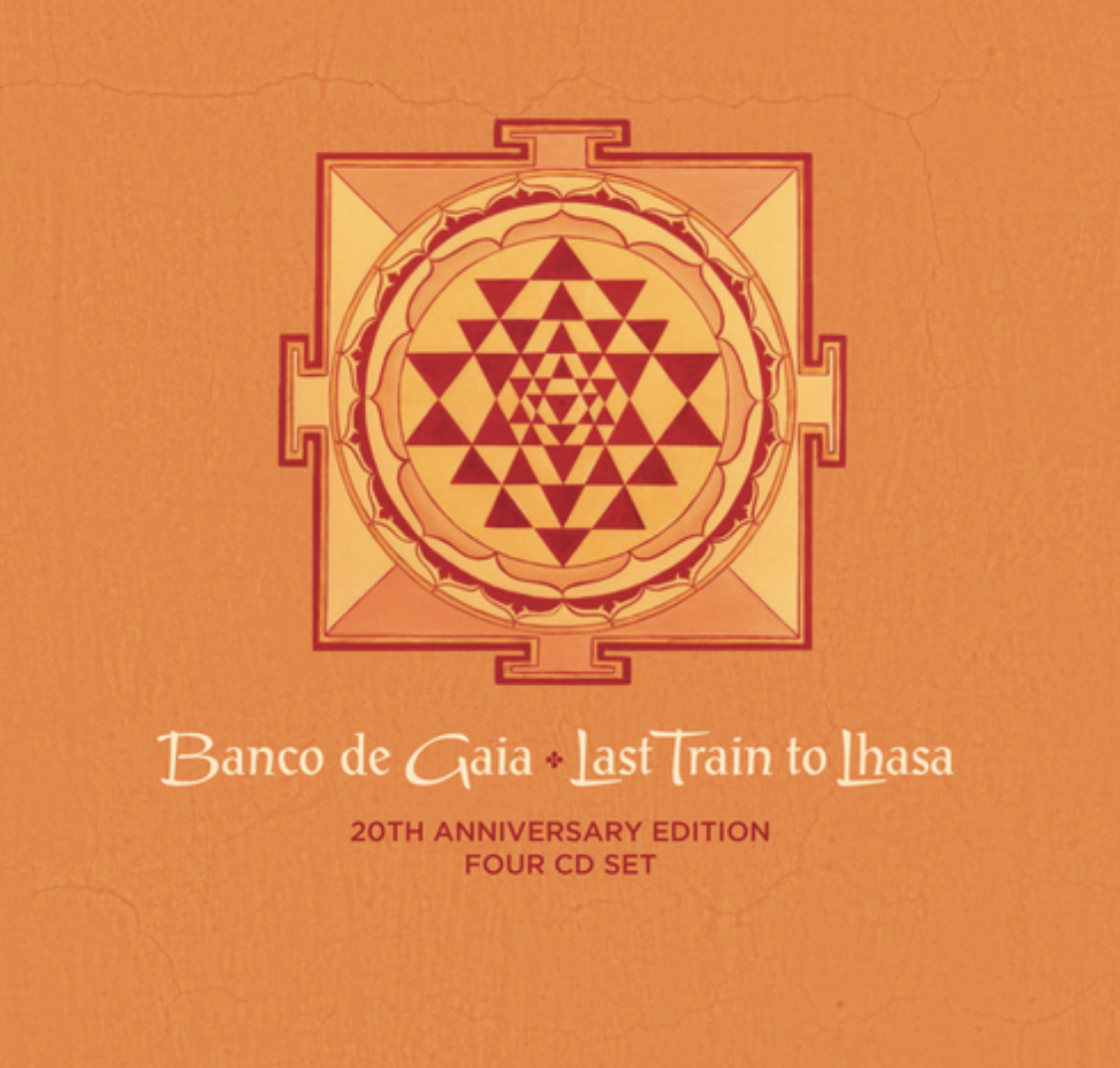
Already represented in volume 99 of the Social Playlist above, another chance to repost my piece on new age techno pioneer Banco De Gaia’s influential 1995 world peregrination Last Trian To Lhasa. Originally appearing as a twentieth anniversary special, with a repackaged version of the album plus extras.
Banco De Gaia ‘Last Train To Lhasa (20th Anniversary 4xCD Set)’
Despite, what on the surface, seems a plausible misconception, one of the UK’s chief progenitors of global trance peregrinations, Banco De Gaia, has become synonymous with all things Tibetan. Re-released on the occasion of its twentieth anniversary, the Banco’s Last Train To Lhasa album may have borrowed the title and evoked a transcendent spirit of the country’s mystical Himalayan landscapes, yet the group’s founder and guiding force Toby Marks never meant to confine his world sounds to one particular place: In truth, more a pan-global sound palette with echoes and traces of the Middle East, Asia and the Orient.
Going as far as to refute suggestions in every subsequent interview since its original release, the LP only actually features a solitary sample from the region and only gained its title from Marks wife on completion. However, Marks lent space on the album’s sleeve to publicising Tibet’s struggle against its overlord Chinese masters and would become a vocal advocate of the Free Tibet campaign – that now seems such a long time ago, and all but forgotten, with China since more or less swallowing Hong Kong and threatening an invasion of Taiwan, which if it does come, might just be the big one: the WWIII event we always dreaded.
Base camp on the enlightened journey to the ethereal, Tibet’s meditative disposition was no match for the authoritarian steamroller of the Communist party machine. And so, an ill-at-ease occupation and stalemate persists a generation later. Its international vessel of protest, the Dalai Lama in his own affable and gentle way backed by the Free Tibet campaign continues to be a big draw yet has decidedly been upstaged by events elsewhere. Clarifying his commitment to the cause, Marks was recently interviewed by the Free Tibet organisation in the run up to his trio of performances at this year’s Glastonbury and the anniversary Last Train To Lhasa release – perhaps a timely reminder.
Musically speaking, as I’ve already mentioned, the twentieth anniversary appraisal of Banco De Gaia’s blueprint reaches far beyond any Tibetan influence, imbued by cultures both imaginary and real from both terra firma and the stratosphere.
Highly praised for merging trance and nuanced electronic four-to-the-floor beats with atavistic echoes from mystically envisioned landscapes, Banco De Gaia’s Last Train To Lhasa was released in the dying ambers of the second rave and house music waves in 1995. On the cusp of Britpop, hung-over from grunge, guitars were about to once again dominate whilst house and techno music in all its many guises had reached superclub status; the underground movements fractured and broken up into a myriad of smaller tribes. Ambient and trance, usually the preserve of afterhours clubbing or allocated space in the “chill out” zones had already blossomed into its own industry. That unfairly and often fatuous “chill out” idiom used to sell everything from nirvana relaxation and transience to any ‘new age” missive. Never new in itself, until progress and technology made it easier and offered more options, the core ambient ingredient had already been in existence for decades. And despite what you may have read, Eno may have given it a name, but he certainly didn’t invent it. In this evolving stage of dance music, Banco De Gaia went to town, sitting on a fluffy cloud, hovering between trance and techno.
LTTL’s suffused panoramic station-to-station soundtrack was different. Sharing some of the peaceable beautiful nephology of The Orb and Air Liquid but with the satellite guided twinkle and kinetic rhythms of Orbital, the album sounded every bit as organic as it did electronic. The original album is boosted by a further three CDs worth of alternative takes, mixes, remixes and the missing until now, Apollo moon landing inspired space-voyage, ‘Eagle’ – recorded at the time but left off the final version of the LP. A box set only available as a limited-edition physical release – though now also available to hear on Bandcamp -, fans and admirers alike can really indulge, with 24 tracks of transcendent aural bliss.
Even if you are far from familiar with the source material, the general method applied is one of respectful tinkering and expansion, with Marks own alternatives plus a line-up of contemporary artists/producer remixes congruously immersive. A ‘Duck Asteroid Extended’ mix of the original ‘Kincajou’ for example, takes the steam driven new age suite on an epic, stripped and even more ambient, 44-minute journey: it takes the mix thirty-minutes to bring in the beats and reach a higher plain. Elsewhere, various tinkering’s of the holy misty mountain proverb ‘China (Clouds Not Mountains)’ takes the languid drifter into ever more esoteric territories, or in the case of Roedelius and Felix Jay collaborator Andrew Heath, adding a diaphanous piano to the meditative calligraphy-brushed valley narrative.
The reverberations of dub, bhangra, and the Orient are sometimes stretched into indolent escapism or given more power and lift on the varied versions of ‘Amber’. Sometimes as with the Carl Craig imbued Bluetech remix of ‘Kuos’, they are taken apart and rebuilt. Though nothing quite matches the rolling timpani introduction and celestial beauty of the original ‘White Paint’, ‘Where’s The Runway Dub’ and alucidnations ‘Dream Remix’ offer interesting interpretations; one a hymn in dub the other a suffused with kosmiche rays romance in the sky.
A carefully considered expansion of the Banco De Gaia panoramic worlds of the mid-90s, the 20th anniversary edition certainly offers the listener an immersive experience. And you can’t complain about getting your money’s worth, with over four hours of music over the four discs to peruse.
If you’ve enjoyed this selection, the writing, or been led down a rabbit hole into new musical terrains of aural pleasure, and if you can, then you can now show your appreciation by keeping the Monolith Cocktail afloat by donating via Ko-Fi.
For the last 15 years both me and the MC team have featured and supported music, musicians and labels we love across genres from around the world: ones that we think you’ll want to know about. No content on the site is paid for or sponsored, and we only feature artists we have genuine respect for /love or interest in. If you enjoy our reviews (and we often write long, thoughtful ones), found a new artist you admire or if we have featured you or artists you represent and would like to say thanks or show support, than you can now buy us a coffee or donate via https://ko-fi.com/monolithcocktail
The Perusal #69: Theon Cross, Wolfgang Pérez, Sebastian Reynolds, Fortunato Durutti Marinetti…
July 7, 2025
A world of sonic/musical discoveries reviewed by Dominic Valvona
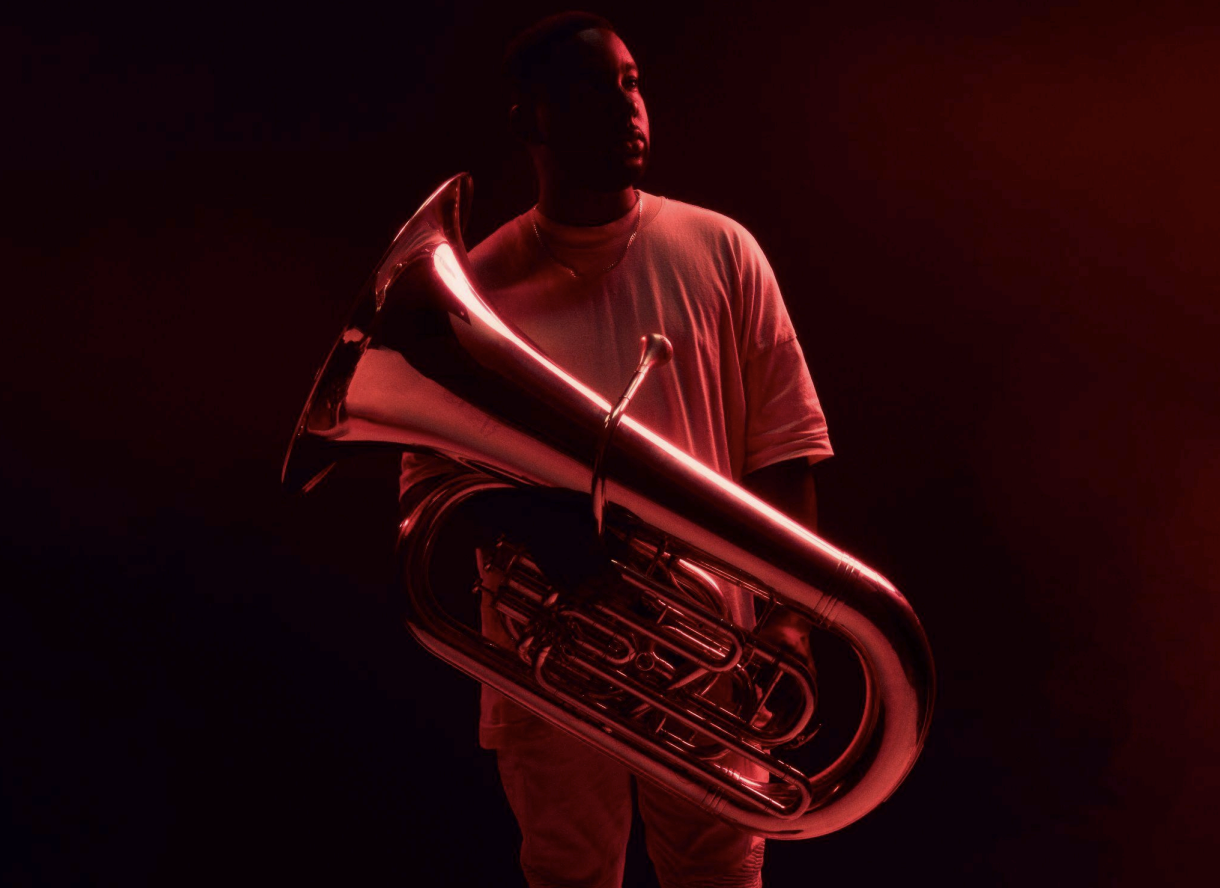
(photo by Ian Hippolyte of Theon Cross)
Lukas Cresswell-Rost ‘Weight Away’
(Wayside & Woodland Recordings) 4th July 2025
A welcome return home and a welcome return to the fold musically speaking, Lukas Cresswell-Rost is back in Yorkshire after spending the best part of the last 15 years ‘living and getting slightly lost in Berlin.’ Engaging once more with the world around and bringing back a collection of songs and pieces of music he created over the years whilst eking out a creative career in the German capital, Lukas proposes a touching reconnection, a sense of loss, of remembrance and reflection on his new songbook, Weight Away.
A tale of two cities, or two locations, a majority of the newly released material was written back in Berlin, tested at gigs there, but was completed in England with the aid of friendly musical companions James Yates (who goes under the Majetona nom de plume, and also plays with epic45, the duo formed by the co-founders of the label that not facilitates this album) on drums, Danny Laycock on both standard and fretless bass guitars, and his wife Emaline Delapaix on backing vocals.
But before we concentrate on the new album, let’s rewind to Lukas’ previous releases – or the ones I reviewed and featured on the site.
If you’ve followed the Monolith Cocktail over the years, you may well have caught my reviews of both his underappreciated Go Dream and Gone Dreamin’ releases. I praised both highly at the time, saying this about the former: ‘Travelling a well-worn highway; tuned into a radio station straight from in-between the 1970s covers of Rolling Stone, Creem and The Village Voice; accompanied by a cast of “misanthropic” characters, the former Leeds troubadour of deconstructed pop Lukas Creswell-Rost dreams up a most sophisticated songwriting opus. His relocation, five years ago, to the creative hive of Berlin has done the artist a world of good, this solid contextual collection of earnest dramas and lamentable episodes from the rock of ages, slowly but surely, unfurling its quality.’ And about the latter, Gone Dreamin’, ‘a reimagined transformation, taken off into more experimental realms, with ideas, scraps of dialogue, riffs and melodies ‘flying around’, merged with various effects and breaks, these original beautifully vaporous soft rock ballads and cruising songs are given a new lease of life.’
But now back on English soil, Lukas takes stock whilst opening up his sound. And whilst there are hints, especially on the instrumental vignettes, of his past work, the sound is a little less Fairlight 70s/80s troubadour pop, and more like a mix of soft dreamy psychedelic indie, folktronica, the classical, and a mirage-like waned version of Americana. Don’t get me wrong, there’s still the odd hint of Steely Dan, of Wings, but now also hints of a subtle The Flaming Lips, a touch of Galaxie 500 and Mike Gale on the tropical blue Hawaiian dreamt ‘Spiral Island’, which features the soft beachcomber lulls of Delapaix and may or may not be hiding far more philosophical quandaries of death and shaking one’s self out of a stupor, the blues, beneath its fantasy islet vibes. Gale popped up a lot when listening through this generous fourteen-track songbook of vocalised and instrumental pieces, lead-ins to fuller songs and momentary breaks – these short pieces range between the incipient plucks of elastic band strings to near plaintive plinks that induce a real sadness; most of them linking or bringing in the next song like the more minimal or ambient and felt congruous stirs of an intro track.
But then I also heard an inkling of the SFA and even The Beach Boys. But shifting those evocations a little, ‘More Jam Than Band’ made me think of the drifted and near dreamy country bluegrass and Americana music and scores of Myles Cochran: that and Blue Rose Code on a song of harmonic pinged atmospherics, DJ lyric analogies, the semi-classical and reflective.
Personal travails, a battle to escape a state of mentally sapping stasis, and the deaths of those close, including the suicide of a friend, breach comfort zones at every turn – good God, the bass, when not in fretless slides, on ‘The Bird Of Prey’ finale reminded me of Climate of Hunter era Scott Walker. And yet, this is a lush at times, often dreamy (as I’ve already mentioned) listen of the picturesque and emotively drawn-out. With a new set-up, an embrace of musical friends Lukas Cresswell-Rost produces a complicated album of feelings and quandaries made melodious and rich in lucidity.
Theon Cross ‘Affirmations: Live at Blue Note New York’
(New Soil) 11th July 2025
Hot footing across the Atlantic on a wave of critical acclaim tubist son of Kemet Theon Cross lands down in one of the most auspicious of jazz crucibles, the Blue Note in New York City. Off the back of a number of long and short players, and a reputation for working with some of the key trailblazers in the contemporary UK jazz movement (most notably Mosses Boyd and Nubya Garcia), Cross has ventured out on his own in recent years to much fanfare, transporting and transforming the sound of his chosen instrument to probe into ever evolving territories, but also once more putting that brassy instrument at the centre.
Although one of the most durable instruments in the jazz cannon, with a history that dates back to that style’s birth in New Orleans, the tuba has often gone in and out of fashion; disappearing from the frontlines during the electrified era or replaced by the bass (whether that’s the double or electric). Hanging on in there, the tuba was ideal for outdoor performances, its natural resonated amplified bassy notes and rumbles carrying far enough without the need for amplifiers. Through such pioneers and luminaries as Bill Barber, who lent his tuba to various Miles Davis albums, and Raymond Drapper, who was said to have beaten Miles to forming the first jazz-fusion’ ensemble in the 1960s, the tuba has been pulled back into focus, the mix and limelight. Drapper for his part was able to bridge jazz with the burgeoning psychedelic and rock scenes of that decade and take it further – a kind of Sly & The Family Stone of jazz-fusion if you like -, but also laid down markers during a previous decade with such luminaries and anointed saints of jazz as Coltrane. Interestingly, Coltrane and his highly influential Live at the Village Gate LP are mentioned in the notes for Cross’ live debut album – ‘honoured’ alongside Sonny Rollins’ Live at the Village Vanguard LP. And although it isn’t obvious, Affirmations: Live at Blue Note New York has echoes of his spirit, channelled through the saxophone of Cross’ saxophone foil, the celebrated and already established all-rounder, Chosen Few band leader and solo talent Isaiah Collier.
As a side note of a sort, early on in this performance there’s a track named ‘Transition’, which I thought might be a reference to Coltrane’s own track of the same name, recorded in 1965 but only released posthumously five years later. It is in fact just that, a ‘transition’ between pieces, a continual bridge on a performance that never really lets up, dynamically fluctuating between the tampered, incipient and full-on. The whole thing runs continuously for 80 minutes, with the odd shoutout, and simmering down and stripped interaction with the whistling and whooping but respective audience to take the action down a notch or two. In fact, Cross’ intention was to structure this live gig like a DJ set. And it does indeed sound like that, albeit on real instrumentation, with lots of grooves, breaks and plenty of bass lines played either on the tuba or the electric bass guitar.
You could say a journey is mapped out, riffing on both tracks that feature on Cross’ 2019 album Fyah, his 2021 album Intra-I (which translates as “within self”) and his single doublet of Wings/Back To Africa (the former gets a serious airing here) and improvisations that predominately featuring the versatility of the tuba – some of the most experimental pieces in the set, they feature Cross either unaccompanied holding the attention or with minimal interaction from his chosen troupe of talented foils. Solo efforts, introductions to the next group effort, they do occasionally star or put in the spotlight his highly in-demand guitarist Nikos Ziarkas. The Greek guitar virtuoso, who moved to London more than a decade ago, and co-leader of Valia Calda, settles in an evolving experimental and descriptive space between that of mirage, phaser lunar bends, the melted, looped and cosmic; evoking echoes of fusion-jazz, Afro-rock and the work of Bill Frisell and Nels Cline – although Hendrix is mentioned in his own bio, and his guitar parts here do verge on the psychedelic at times, but nothing truly bluesy and heavy. There are whole passages for Ziarkas to navigate and enrich, or to wrangle and describe, accentuate or cast off into space.
Completing this gifted assembled quartet is the brilliant Chicago drummer James Russel Sims, who splashes around, gives groove and a percussive lift to the performances. There’s a real feel of the African and even Latin in some of the tapping, bottle-like and jar hitting. Plus, what sounds like recurring shake or rattle of dried beans, rice or grass. Sims keeps momentum with bass drum kicking bounce, breaks, rolls and punctuations.
The album starts with the dry bones shake and stirred synthesized waves of the mystical and sci-fi like spiritual maelstrom ‘Greetings’, which at any one point evokes the work of Donny MacCaslin, Afrikan Sciences, The Comet Is Coming and Pharoah Sanders. From then on in, we are moved between impressive tuba performances that sound like a digeridoo or bass guitar, or chuff and sonorously register and the lowest of frequencies or quicken and pump without taking any breaths. Soulful, funky and R&B like on the finale ‘Confidence of Your Ability’ but raising the tuba like an elephant’s trunk and puffing away like a New Orleans brass band on the Afro-Futurist’s Egyptology ‘Play To Win’, the scope of influences at play is wide and deep, and yet always connective to Cross’ themes and sound: the whole group unifying their ranges and own CVs worth of past and present projects to help create the perfect ensemble piece. I’m hearing Jon Sass, Lester Bowie’s Brass Fantasy, the Soft Machine, Oren Marshall, Karl Hector & The Malcouns, Coltrane’s Ole, funk-jazz, spiritual, and Afro-futurism vibes that almost roll into hip-hop and breakbeat territories: akin to Roots jamming with Archie Shepp and Idris Ackamoor.
From ascending to transcending, the spiritual to otherworldly, the concentrated to parred down, the vibes vary on a live recording that stays consistently inter-dimensional and cosmic yet tethered to the Blue Note legacy and the iconic live showcases that shone even more anointed light upon such luminaries as Rollins and Coltrane. Above all a showcase for Cross’ inventiveness, energy and command of adroit musicianship, this recorded performance will stand as a testament to his brand of tuba fusions and contemporary jazz journeys of futurism and the universal. A lasting legacy at that, and one of the best live performances I’ve heard in a long time.
Cumsleg Borenail ‘10mg Citalopram’
(Cruel Nature Recordings) 27th June 2025
Nightmare or escapism from mental illness and desperation? AI fever dreams or hyperbolic morphing accelerators to total hallucinational evolution? The collider general of all these elements, the anonymous Cumsleg Borenail, seems to exist in-between various consciousnesses, wired in to an intravenous of 21st century tech overload, distractions, glitches in the matrix and the daily dosage of citalopram – for those who would like to know these things, citalopram is an antidepressant that belongs to the ‘selective serotonin reuptake inhibitor class’. It is used to treat major depressive disorder, obsessive compulsive disorder, panic disorder, and social phobia, but just as likely to be induced by those seeking drug comas of a less medicinal kind.
Like hits of dopamine the discombobulations on Borenail’s latest album – one arrives so quickly these days, that by the time you’ve read this it will have been followed up by at least two more releases – is constantly in a manic shift of growing, evolving industrial electronic music, breakbeat, techno, fucked-up hip-hop beats, no wave, glitch and 80s style sound clash transformations: even the “ambient” breather track is a humorous bastardisation of its own purpose, shooting off 12-gauage gunshots like beats, whilst gazing into the flames. But imagine throughout, a broken up phantasmagoric version of Merzbow, Authchere and Nocturnal Emissions – the latter of which I’m picking up a lot during the course of this thrash-electronic mind-warp that takes more cues from Coil, Populaire Mechanik, The Gruesome Twosome, Conformist and Ramuntcho Matta than it does the EDM or tech experiments of our modern age.
From the kink fattening grossness of the accompanying album artwork to snatches and riffs of dialogue and samples off the telly and from the cult film worlds, life’s general dystopian, vacuous and ridiculous noise and ambience is fed into hadron; spewing out nonsense that makes a mockery of society and its mania, its dependency on gratification and manufactured drug hits. I say that: it could just as easily be a celebration of that very nightmarish shopping list of anxiety-inducing bilge. Broken glass, various dialects and soundbites, both the stringy and pained, the supernatural and daemonic get flicked through like a cluttery rolodex of havoc and silliness.
Fabrication could be the order of the day: fabricated artist, fabricated imagery and fabricated prompted noise installations. It’s impossible to tell how and if there is indeed even a real Cumsleg Borenail behind the machine. Whatever the truth, CB makes the most insane and experimental electric-metal-break-techno-no-wave-thrash on the Internet. And you should care about that, and indeed support it.
Fortunato Durutti Marinetti ‘Bitter Sweet, Sweet Bitter’
(Quindi Records/We Are Time) 25th July 2025
With an alias borrowed from a saint, a Spanish anarchist and an infamous Italian futurist poet, disruptor, Daniele Colussi suavely carouses between the emotional quandaries and atavistic dualities of the bittersweet on his upcoming, and fourth, album. And despite those moniker references his music is anything but confrontational and revolutionary. Instead, he creates a familiar but repurposed musical songbook world that takes its inspirations from those disconsolate French singer-songwriters that would forlornly gaze across the Seine and light up a Gitane or Gauloise in philosophical reflection, and from those arch, arty broads and dames that dared to tread their own idiosyncratic musical pathways. For this is a smooth, sophisticated songbook with both Mediterranean resort and French-Canadian vibes that’s easy on the ear; effortlessly and loosely moving between the jazzy (the album’s two instrumental Theme tune vignettes bordering on both classic Blue Note and Affirmation Coltrane, but played by a cool European lounge band), soft funk, troubadour, those French and Italian mavericks of the 70s and 80s, the soulful, the Baroque, and both art-pop and Franco-pop.
Colussi perfectly counters the weary with romantic illusions, metaphors and forlorn absurdity; simultaneously pulling on the heart strings, need consolation, and yet dethatched and self-deprecating. Colussi delivers some great lines throughout. On ‘Do You Ever Think’, and in the manner of Gainsbourg, he comes out with this near sardonic: “And tell me, is that dog that’s drowning in your new painting supposed to look like me?” In the same song he changes that voice to sound almost like Lay Lady Lay era Dylan when in a more poetic mode he comes out with this, “When the hawks rush the morning doves, does that make you think of me.” The dog returns, in a different capacity, on the autobiographic allegorical Baroque-Eno ‘Call Me The Author’: “I started out as a dog/A kind of dog that refused to bark”.
Vocally and lyrically, there’s more than a resemblance to the craft of Llyod Cole, Dr Robert and Leonard Cohen. The latter isn’t so surprising to me, because even if it wasn’t intentional, Colussi recorded this album with a full band and brass section in his adopted Toronto home. And though he also has Turin roots, there is a deep Frenchified sound to this record; and of course, a French-Canadian one. So, Cohen seems a good call to make, even though he isn’t mentioned in the notes and bio. Moving away from that, and with the vocal addition of Victoria Cheong on the Chateau-pop-Rhodes-Wonder soulful and string accompanied walk through ‘Beware’, this could be a reunion between Brigitte Fontaine and Areski Belkacem, or a match-up of Gainsbourg and Little Annie: there’s also a hint of Joanne Grauer about it too.
The title and themes of this album are in part inspired by the Canadian author, poet, essayist, translator and classics professor Anne Carson and her debut book of criticism, Eros: The Bittersweet. At its heart, there is an analysis of that ancient Greek deity’s duality, the simultaneous concepts and experiences within its lore of both pleasure and pain. One of the main thread or sources for this book is Sappho, who is said to have coined the phrase, encapsulation of this duality, “glukupikron”: later translated into the “bittersweet”. Carson sees Eros as “deferred, defied, obstructed, hungry, organised around a radiant absence – eros as lack.” Make what you will of that. Colussi for his part, transfers it to a contemporary setting, and yet feels attached to nostalgia and the past.
Despite the melody, the harmony and smooth musicianship, Colussi pushes himself like never before with “chorus-less compositions swirling in 6/8 time”, and a musical accompaniment that includes the attentive airs and sweep of strings and the soft pipes of brass. The meandering palette expands to evoke signs of Sebastien Tellier, Susana Estrada, Loic Lanteine, Annette Peacock, Ricki Lee Jones, The Blow Monkeys, Bernardo Devlin, and I know this will sound odd, but a touch of Jarvis Cocker. All meet in this drama, this setting of cigarette smoking angels, wistful malady and shrugged romantic surrealism.
Things are wrapped up with the detached state of melancholic dark humour curtain call, ‘My Funeral’, with Colussi observant of his own bluesy-jazzy-Franco Jacques Brel and Brecht accompanied passing. Balancing his own scales with reminders of all those good deeds (“But remember, I held the door open for a little old lady.”), this semi-dirge of the barely trumpeted and sulking is a perfect ending to a bittersweet life of despondency and grace. What an album; the perfect one at that. A great songbook that just gets better with every single play. Colussi has produced his best work yet.
Freh Khodja ‘Ken Andi Habib’
(WEWANTSOUNDS) 4th July 2025
After various international stopovers, the vinyl reissue specialists return to North Africa, and the former French colony of Algeria with one of the most desired LPs from its diaspora, Freh Khodja’s 1975 released Ken Andi Habib showcase.
Reissued for the first ever, after fifty years that French studio recording has finally been accorded a long overture reprise – remastered and with a package that includes liner notes and context by Rabah Mezouane. Given the tip-off, as it were, by DJ Cheb Gero – the Paris-based DJ and curator is responsible for recently curating the Sweet Rebel Rai set, and for working with WEWANTSOUNDS on their Abranis LP revival a while back – Khodja’s seminal album is rightfully given its dues; a highly influential bridge between Alegria and its diaspora’s adopted European homes, the resulting fusion of cultures and influences culminating in a truly international sound that spans various continents, from North And South America to the Caribbean Islands, Arabian North Africa and Cape Verde.
But first, a little background to this story. Khodja was born in 1949 in Sidi Bel Abbès, an Algerian city famous for its markets, agriculture and industry; named after the noted Muslim noble who is buried there. It’s also a centre, of a sort, for Algeria’s highly popular Rai form of folk music. Translating as ‘opinion’, Rai originated in the Algerian city of Oran sometime in the 1920s and developed into a spirited form of protest and nationalistic pride: falling foul of the French overlords as a rallying cry against colonialism.
Although his family pushed him towards sport, the young aspiring musician quickly took to the saxophone whilst studying musical theory and composition. His obvious talents led him to France in the 1960s. Although, as Mezouane shares in his linear notes and interview with the still thriving and passionate Khodja, his move was saddled by the ‘immigrant experiences’ of working “twelve jobs, thirteen miseries”. Reuniting with his brother in Lyon, Khodja was worked as a lab technician for a period, before later returning to Paris where he enrolled at the Ecole Normale de Musique to study saxophone under the tutelage of the classical saxophonist Marcel Josse.
His first furores into the music world included membership of Les Flammes, a group of immigrant musicians mostly drawn from North Africa – actually, a number of them came from the West African island of Cape Verde. But his career went on to span arranging and composing for film, TV and theatre. He even had a few turns on screen as an ‘occasional actor’.
In 1975, backed by Les Flammes, and with the addition of the vocal harmonizing group El Salem, Khodja went into a Parisian studio to record Ken Andi Habib, a versatile set of numbers that featured horns and an electric mix of instruments, mixed vocal choruses and longed, sometimes feminine yearned harmonies and responses.
A ‘commanding performer’ with obvious stage presence and a way of not only singing but acting the lyrics and their emotional draws, Khodja swings the saxophone round to sound out caresses, the pining and soulful – not so much jazzy as Arabian-soul and R&B style. Trumpets join the brass section, and rather than evoke the North African landscapes seem to suggest both Latin America and the Tex-Mex borders as they blaze and herald like a mariachi band crossed with a Sicilian funeral procession, and a removed version of romantically alluding Stax.
There’s funk, there’s R&B, soul, moments of an electrified Rai and allusions to the homeland across a brilliant performance of reminiscing, heartache, lament and various emotional pulls. But though those Arabian roots are all present and correct, the music often spills over seamlessly into the Med, to African Brazil and into America’s deep South – the often simmered and sustained Hammond or organ that’s present on nearly every track, has more than an air of Southern gospel and soul to it. Some of it sounds like a lost soundtrack to some cult Italian or French detective movie. And there’s more than a passing resemblance to the Cape Verde sound of Funaná – an infectious quick-step of driving percussive rhythms that is played with a kitchen knife scrapping over an iron rod, christened the ‘ferro’ or ‘ferrinho’ by the islanders, and the bellowed dizzying sway and short concertinaed melodies and lead of the diatonal accordion.
A standard bearer if you like, this revitalised LP is an incredible, fun at times, and funky showcase of North African diaspora fusions. Surprises galore on an album that is just as comfortable hot-stepping soul with Rai as it is bare-footing across Caribbean sands and merging Latin America with the Med. A great album from start to finish, and worthy of not only attention but your quickly eroded cash supply. I have a feeling this one will fly.
Wolfgang Pérez ‘Só Ouço’
(Hive Mind Records) 18th July 2025
Making a return to the site after last April’s ‘Memorias Fantasmas’ short, Wolfgang Pérez is back with a brand-new album of mirage/hallucination and dreamy-realism, imbued and led by a penchant for all things Música Popular Brasileira – that post-bossa, urban pop music phenomenon that fused Brazil’s various traditional and Portuguese flavours, its poetry and fantasy with Western modern pop, jazz and rock.
As the name might indicate, with the most German of German names and most Spanish of Spanish names, Pérez’s heritage, his “casta”, is a mix of the two nationalities. Based in Essen, the industrial hub of the Ruhr, the songwriter, arranger, guitarist and artist has previously released albums that draw upon this linage: especially 2024’s Spanish language AHORA album, the follow-up to the debut Who Cares Who Cares from 2021. Within that scope of influences there’s a musical embrace of everything from pop to chamber music and jazz.
Memorias Fantasmas – facilitated by those keen folk at Hive Mind Records, who now release this latest anticipated album – drew from Pérez’s Spanish genes with a transmogrification of the beautified coos and voices, and the melodious traditional accompanied music of his family singing in church. Part memories placed in new sonic surroundings, part mirage/hallucination and “phantom” inhabited, recordings taken by his grandfather Fernando on a cheap piece of “shitty” recording equipment in a church in the historically famous Spanish city of Segoiva are rendered otherworldly and near supernatural.
Hanging onto those roots, and the phantom parts, the dreaminess, Só Ouço (“Just Listen”) brings together an extensive cast of musicians from Brazil (mainly Rio de Janeiro) to reimagine the country’s poetic, fantastical, environmental symmetry of chaos and beauty. Using the elementals of Música Popular Brasileira and its concomitant trends of Tropicália and Samba Rock and Psych, Pérez and his band of foils take a snapshot of their surroundings and moods and weave a magical, often meandering and languid, journey full of sound and sampled collage.
The results of an extended stay in Rio a few years ago (part of an 18-month residency and student exchange programme) the album and band that was assembled to deliver this dance, saunter and off-kilter dream was put together off the back of Pérez’s full-on absorption of the city and its life: So absorbed that Pérez went as far as to learn the idiosyncratic slang and the cultural nuances. There would be introductions to the city’s musical luminaries, including the former Lounge Lizard and no wave pioneer Arto Lindsay and Thiago Nassif – who the former feted, and worked with -, and study with the guidance of the celebrated Josimar Carneiro, Marcello Gonçalves and Almir Cortes masters at UFRJ/UNIRIO.
But through happenstance and chance encounter, and through various jam sessions, a band of a kind took shape with the trio of Luis Magalhães (bass), Pedro Fonte (drums) and Paulo Emmery (electric guitar). This alignment began to thrash out arrangements and ideas, leading to a gig at Audio Rebel, where they met Angelo Wolf, the owner of Wolf Estúdio and engineer for artists such as Bala Desejo, Dora Morelenbaum, Zé Ibarra, Marcos Valle, Antonio Neves and Ana Frango Elétrico. Keen on what he heard, Wolf offered them both a residency and studio time. The band was extended further to incorporate a brass and woodwind section, led by the drummer and saxophonist and arranger Antonio Neves, son of the notable and celebrated saxophonist Eduardo. Also joining this fantastical ensemble was the Rio guitarist, singer-songwriter and artist Carol Maia, who brings a reminiscent beautiful soothed voiced evocation of the 60s and 70s to the vocals.
Altogether, this troupe that assembles around the loose direction and giddy at times imagination of its instigator, maps out a spellbound, fantastical tapestry and languorous cross-traffic prism of Brazil. There’s so much to hear and unpack, from what is a highly sophisticated but organic sounding record. From picking up radio waves and signal codes from overhead choppers, as the contemporary pairing of our host and Maia invoke Joyce Moreno and Naná Vasconcelos on the opening dreamy-realist Brazilian oscillation to the near untethered, psychedelic and cosmic influences of the great Caetano Veloso on the trip-y Latin-jazz tinged, sorrowed beachcomber mirage ‘Tristeza’, there is a both vibrant and yet softly hallucinated filter to this songbook. Songs don’t just play and recall the art and beauty of such noted Brazilian pioneers and icons as Hermeto Pascoal, Som Tres, Flora Purim, Jorge Ben Sor, Tom Zé and Gal Costa, but go further in gently pushing the boundaries of the song format, reaching into pure atmospheres and a collage of passing, fleeting sounds and those emanating from memory to conjure up a sense of place, time and emotion. Church bells peal to evoke something of the country’s Catholic culture, daily saintly worship, but also something far more mysterious. But there’s the sounds of the city, the environment, all reimagined and brought in as a sort of meta layer. Instruments too, with the fluted and pan piped essence of the Amazon floating into the mix.
Some songs really go far out, especially Pérez’s venture with the already briefly mentioned Thiago Nassif, who once made my choice albums of the year list with his experimentally cool, liquid tropical no and new wave album Mente – which I described at the time as ‘A leopard skin upholstered, neon-lit sumptuous groove of the fuzzy and sauntering.’ I’m not sure exactly who’s playing or doing what, but their ‘O Mundo É Um Moinho’ collaboration is a strange pairing of Seu Jorge acoustic guitar and the reverb flapping of beating, thudded wings. Ideas, musical threads seem to almost fly off into the imagery, with dreamt vistas and city life forming a backdrop to a lightened mix of brassy, woodwind fluting, whistling accompaniment and the beautifully conveyed poetic emotional states captured moments of the artist’s absorption of Rio and Brazil. It all comes to a curtain call, with a perfect chorus finale of shimmery organ and horns-serenaded and smoked fun and dancing; the perfect bow to a most lovely and inventive album that reimagines a wealth of Brazilian influences, and yet feels refreshingly dreamy and softly adventurous.
Sebastian Reynolds ‘New Beginnings’
(PinDrop) 4th July 2025
After what seemed like an age, and after an enviable prolific string of projects, collaborations and EP releases behind him, Sebastian Reynolds finally managed to release his debut solo album, Canary, a couple of years back. The Oxford polymath -his juggled roles including that of musician, artist, producer, remixer, PR, label boss and damn fine amateur track athlete – has never really taken a pause since he first began making, remodelling, reworking and transforming both his own and a host of collaborators’ various eclectic projects over a decade ago.
But if we take, say, just for an example his work since 2017, Sebastian has helped shape two impressive volumes of electronic-chamber music with the Anglo-German Solo Collective (a trio that included the virtuoso cellist Anne Müller alongside Reynolds’ longtime foil, the violinist, electronic music star Alex Stolze, who makes several appearances on this album); crafted the multimedia Jataka texts inspired Maṇīmekhalā dance and musical scored drama with a host of collaborators, including the Neon Dance company, chorographer Pichet Klunchun and The Jongkraben Ensemble; released The Universe Remembers, Nihilism Is Pointless, Crows and the long distance running inspired Athletics EPs (a sporting passion for Reynolds, who’s a pretty decent amateur runner and contender in his own right). That’s without considering all his production and remixing duties, or his various stints in other groups; a mere smattering of which is represented on his latest collaborative project showcase, New Beginnings.
A sonic imaginative oeuvre of the dreamy, the cosmic and new age unfolds across previously unheard selected reworks and remixes; the central signatures being, the way Sebastian can transform the material, taking the listener beyond into new spaces, environments and dreamt-up visions of Southeast Asia, Arabia, and India.
From his own backyard of Oxfordshire, there’s treatments and transformations of work by the synth-indie quintet Flights of Helios (named after the Titan harbinger of the sun), the Americana-indie band The Epstein, roots, reggae and dub group Dubwiser, and the idiosyncratic Egyptian-English troupe Brickwork Lizards. The first of these actually included Sebastian within its ranks at one time. Now opening this collection, with a sound of metaphysical imbued space hymns, paeans and bliss, their own “beginnings” act as an introduction to an entrancing and danceable house-style experience that evokes traces of a softened LCD Soundsystem and Der Plan, whilst looking to cerebral fields of the celestial. Fast forward to the centre of this album, and you find a remix of Dubwiser’s Renegade Soundwave via On-U-Sound radio Clash ‘The Jackal’. Empathising not only the reverberated dub and echo chambers but its underlying menace, Sebastian goes full on Sabres of Paradise. Formed from a bond and passion for the music of The Ink Spots, the Brickwork Lizards fusion of Ottoman yore and 1920s English dancehalls joyfully bounds between shellac scratched tea dance music, the Sublime Porte and fantastical diva song of Cairo. Here though, ‘All That We Are’ (a track from their 2018 album Haneen) is converted into an essence, a wisp of mystical Istanbul as reimagined by an electro-dub DJ. A voice straight from the minaret sounds out to an hallucination of dry bean shaken percussion and continuous vibrato string. Finally, from the Oxford scene, the earnest parched yearned alt-country band The Epstein are remoulded by Sebastian into another dreamy astral vision. Their anthemic turn of emotional reassurance, ‘Make This Our Home’ (taken from their expansive Burn The Branches album of 2020; the title now playfully changed to reflect Sebastian’s involvement and touch to “drone”) maintains some of the original vocals, the echoes of a sound that absorbs early Radiohead, Fleet Foxes and the Magnetic Fields, but is given a new gravity and beauty of healing balm astral trance.
From beyond Oxford city and the county – although some of these artists have orbited it or been based there – there’s a solid representation of Irish artists working in the UK. There’s the evergreen songstress and ephemeral harpist Bróna McVittie, who’s‘Broken Like The Morning’ (taken from her 2018 album We Are Wildlife), is given an EDM thump, electro pulses and futuristic folky mystical vibrations. The London and Spain-based Donegal troubadour Michael Gallagher, aka The Mining Co., releases his take on the Christmas hit each year. His previous ‘One Year To Go’ pinecone scented yuletide number now resembles a trip-hop treated semi-psychedelic trip into environmental-trance. The duo of Colm O’Connell and Rory McDaid, otherwise known as Rezo, have released a few decent albums now. Sebastian takes ‘Molotov’ from the former Mitcheners bandmates eclectic songbook The Age of Self Help (released last year) and sculpts a menacing dubby version that has more than a touch of Meatraffle, Adrian Sherwood and the trumpeted reverberation of Horace Andy about it.
As examples of the range in scope, the various musical backgrounds and sounds the final trio of artists featured on this selection includes a Balearic drifted vision of the Kentucky-roots guitarist, composer, songwriter and producer Myles Cochran’s (with additional dreamy vocal hums, airs and yearning from the Oxford singer-songwriter and guitarist Kelly Michaeli) placeable, relented ‘If You Could See Me’; a dream-electro and metal textured percussive dance pulsated rework of the Kritters’ ‘New York’ malady to a city they no longer recognise (I’m hearing both Leftfield and The Juan Maclean); and buoyant if wafted Indian geographical mirage rework of the eclectic Will Lawton & The Alchemists’ ‘Fossils of the Mind’ (the title-track from their 2018 album). With just these three examples you have a fusion of electronic dance duo and poetry, a musician who is able to reimagine and score new vistas from bluesgrass, the Baroque, folk and the influence of John Fahey, and a group that seamlessly merges classical music, electronica, jazz, prog and folk. With sophistication and respect for the artists involved, Sebastian manages to expand horizons further, craft new directions and amplify those parts and sounds and moods he finds most interesting or creatively evocative. New Beginnings in fact are born from old material.
A welcome pause or catch-up style showcase, this collection is a great reminder of Sebastian Reynolds’ versatility and depth. He is able to transport the listener without totally losing the original’s intentions and direction, and to create a cerebral atmosphere of that you can dance to. I don’t think it will be long before we get another volume, such is the demand on his services and his prolific working methods.
Cecil Taylor/Tony Oxley ‘Flashing Spirits’
(Burning Ambulance Music) 11th July 2025
Picture a cross-Atlantic meeting of freeform avant-garde jazz luminaries, with the extemporized pairing up of the renowned American pianist Cecil Taylor and British drummer Tony Oxley, who performed a synergy of the energetically chaotic and serial on a stage in Crawley, West Sussex on the 3rd of September 1988.
As part of the adventurous Outside In Festival programme that year, these two foils entered into a barely controlled but studied, steeped with a rich experience, improvisation that slashed, thrashed, splashed, ran back and forth, up and down and across an imaginary abstract canvas. Sizzled with brassy and metallic resonance, the drum kit’s entire makeup, its apparatus, its stands entered into a dynamic off-kilter union with Taylor’s extraordinary atonal and more sporadic phrases, runs and near untethered crashes and near melodic crossings of chords and notes. For nearly forty minutes the duo’s momentum kept at a pace, never really letting up, and with most of the performance a full-on actionist concentration of pure unleashed non-musical adventure. And yet, there’s a semblance of jazz, of the classical, and above all a history of the avant-garde with a performance that rolls and pounds between the theatrical and jazz at the boundaries of experiment. There are also the tracings of a dance; those flashed spirits of the title like lightning bolts or flickered bodies on an abstract staging, jabbed at and falling, but often placed like a strike.
What led to this partnership of constantly moving and metamorphosizing piano and heightened, galloping and percussive descriptive and tumultuous drums? Well, if we take this moment, expand out and incorporate the decade, Taylor’s radical trailblazing career was hit by the loss of his longtime sideman, the alto saxophonist Jimmy Lyons, who passed away in 1986. Lyons had of course been an integral and gifted member of Taylor’s famous 60s quartet. It’s said to have come as a real blow. But Taylor, who had previously turned to teaching during furrow periods a decade earlier in the 70s, proved more prolific in the 80s, releasing a number of LPs for such labels as hatART, Soul Note, FMP and Leo Records – the latter’s founder Leo Feigin is a collaborative partner in releasing this previously ‘unknown archival’ live performance.
An improvised jazz stalwart of the British scene for decades, Oxley was in-between groups, having taken the SOH trio with saxophonist Alan Skidmore and bassist Ali Haurand to its conclusion in 1984, and just about to join Taylor in the intermittent (as it has been described elsewhere) Feel Trio with bassist William Parker (who joined in 1989) – a project that lasted until 1990. Before all that though and stretching right back to the beginning of the 1960s, Oxley was already a notable founding figure in this Island’s improvisational jazz scene; so notable that he got the gig as the in-house drummer at the UK’s foremost jazz mecca Ronnie Scot’s during one of the best periods to have been alive in London. His debut album as a bandleader, The Baptised Traveler, arrived at the end of that decade. The 70s beckoned, bringing with it new challenges and the founding of a new label imprint, Incus Records, with renowned saxophonist Evan Parker and guitarist Derek Bailey.
Taylor and Oxley only crossed paths three months before the performance on this specially retrieved recording – limited on CD to a run of 500, packaged in a heavy-duty gatefold mini-LP sleeve and printed on textural artwork by Burning Ambulance’s Founder I.A. Freeman. Which seems extraordinary and speaks volumes about their reputations and readiness to enter the moment together in front of a live audience filled with expectations. That crowd is to be fair, willing the duo on; they show not only the more respectable obligatory hand claps of bravo, but whistle too and nearly roar, caught up in the experience of witnessing such a dynamic full-on performance.
Full of experience, but hardly weathered or worn, both virtuosos adapted and responded in a split second to each other’s art. Taylor leads, if you can call it that. But only because it seems he lights the torch paper first with incipient pushes and dabs and slashes. But really there’s no telling in who leads what, as the action picks up and runs, leaps, dives, falls, tumbles and flushes through a pummelled, sieving, hoof-like gallop and wild non-rhythmic spirited traffic of drums and elbowed as well as cross handed piano. Despite all this avant-gardism and energy, neither of the percipients ever lose the thread, get lost in the excitement and uncoupled freedoms of spontaneity. There’s a real weight involved with streaks of the 1920, the 30s and 60s alongside a very removed vision of the most experimental aspects of both turn of the century classical music and Latin music. How two players can keep this up is beyond me. But there is a couple of ‘encore’ extras that seem to simmer down the action, offering up attentive and expressive bluesy and stirring conclusions. Pretty unique, being sharply focussed yet layered with so much sound and noise, and being near dissonant, this performance is somehow congruous and complete. Two performers at the height of maturity, abandoning convention and free-wiled, Flashing Spirits is an incredible document of disciplined chaos and play. I’m sure there are many comparisons to be found, but off the top of my head, it recalled Chick Corea and the A.R.C. album.
If you’ve enjoyed this selection, the writing, or been led down a rabbit hole into new musical terrains of aural pleasure, and if you can, then you can now show your appreciation by keeping the Monolith Cocktail afloat by donating via Ko-Fi.
For the last 15 years both me and the MC team have featured and supported music, musicians and labels we love across genres from around the world: ones that we think you’ll want to know about. No content on the site is paid for or sponsored, and we only feature artists we have genuine respect for /love or interest in. If you enjoy our reviews (and we often write long, thoughtful ones), found a new artist you admire or if we have featured you or artists you represent and would like to say thanks or show support, than you can now buy us a coffee or donate via https://ko-fi.com/monolithcocktail
Our Monthly Playlist selection of choice music and Choice Releases list from the last month.
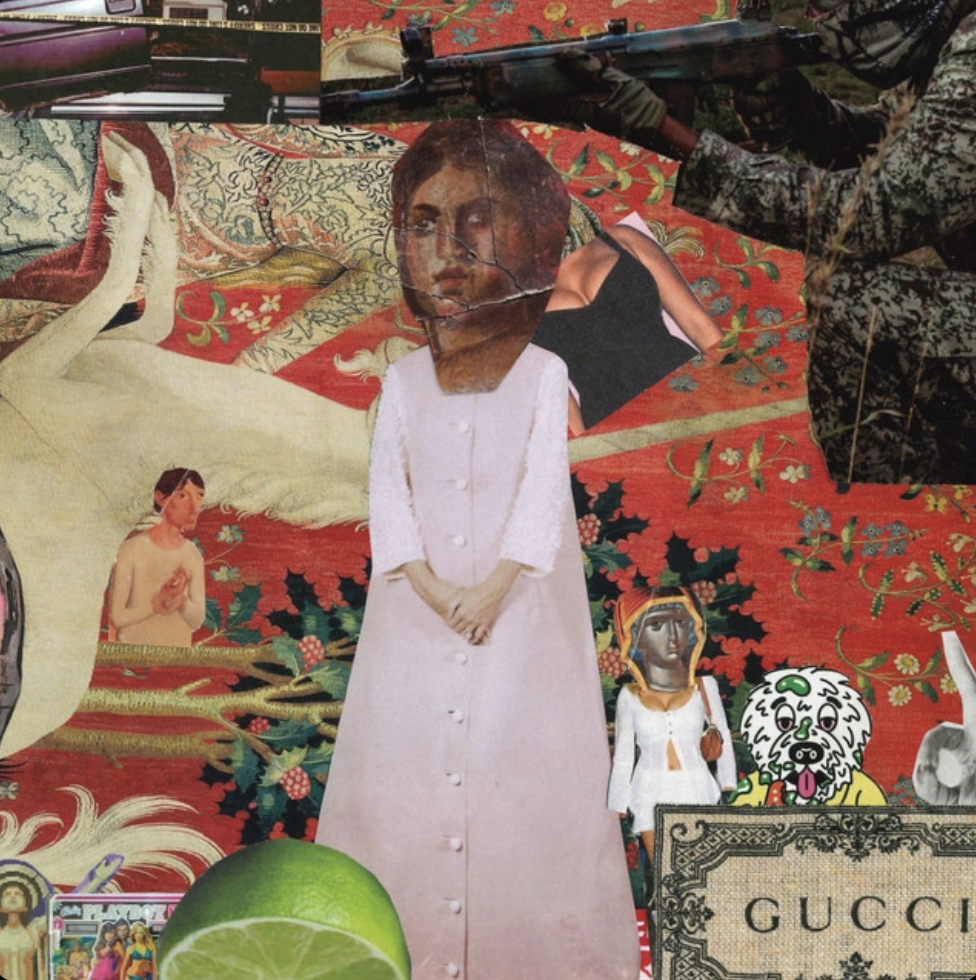
We decided at the start of the year to change things a little with a reminder of not only our favourite tracks from the last month, but also a list of choice albums too. This list includes both those releases we managed to feature and review on the site and those we just didn’t get the time or room for – time restraints and the sheer volume of submissions each month mean there are always those releases that miss out on receiving a full review, and so we have added a number to both our playlist and list.
All entries in the Choice Releases list are displayed alphabetically.
Meanwhile, our Monthly Playlist continues as normal, with all the choice tracks from June taken either from reviews and pieces written by me – that’s Dominic Valvona – or Brian ‘Bordello’ Shea. Our resident Hip-Hop expert Matt Oliver has also put forward a smattering of crucial and highlighted tracks from the rap arena.
CHOICE RELEASES FROM THE LAST MONTH OR SO:
Armstrong ‘Handicrafts’
Review
Audio Obscura ‘As Long As Gravity Persists On Holding Me to This Earth’
Review
Francis Bebey ‘The African Seven Edits’
Jeff Bird ‘Ordo Virtutum: Jeff Bird Plays Hildegard von Bingen, Vol 2’
(Six Degrees Records) Review
Che`Noir ‘The Color Chocolate 2’
Dave Clarkson ‘Was Life Sweeter?’
(Cavendish House) Review
Half Naked Shrunken Heads ‘Let’s Build A Boy’
(Metal Postcard Records) Review
Novelistme ‘Fabulous Nonsense’
Review
Nowaah The Flood ‘Mergers And Acquisitions’
Luiz Ser Eu ‘Sarja’
(Phantom Limb)
Various ‘TUROŇ/AHUIZOTL’
(Swine Records w/ Fayuca Retumba) Review
Voodoo Drummer ‘HELLaS SPELL’
Review
The Wants ‘Bastard’
(STTT) Review
Warda ‘We Malo’
(WEWANTSOUNDS) Review
THE PLAYLIST
Bedd ‘Messed up Your Head’
Dragged Up ‘Clachan Dubh’
John Johanna ‘Seven Hunters’
Vlimmer ‘Gleichbau’
Heavenly ‘Portland Town’
Novelistme ‘I Want You Here’
Half Naked Shrunken Heads ‘Let’s Build A boy’
Juppe ‘Woozy’
Noura Mint Seymali ‘Guereh’
Francis Bebey ‘Agatha – Voilaaa Remix’
Anton de Bruin & Fanni Zahar ‘Running On Slippers’
Chairman Maf ‘Wild Turkey’
Lord Olo & TELEVANGEL ‘BEAT EM!”
Masta Killa Ft. Raekwon & Cappadonna ‘Eagle Claw’
Aesop Rock ‘Movie Night’
Oddisee ‘Natural Selection’
Nowaah The Flood ‘Protocol’
Ello Sun ‘River’
Luiz Ser Eu ‘O Sol Nas Suas Pestanas, Adora’
Elena Baklava ‘Kamber’
Jason van Wyk ‘Remnants’
Mary Sue & Clementi Sound Appreciation Club ‘Horse Acupuncture’
Evidence ‘Different Phases’
Vesna Pisarovic ft. Noël Akchoté, Tony Buck, Greg Cohen, Axel Dörner ‘Vrbas vodo, što se često mutiš?’
Itchy-O ‘Phenex’
Tom Caruana Ft. Dynas ‘Aisle 9’
C-Red & Agent M ‘Godspeed’
Scienze & NappyHIGH Ft. Benny The Butcher and Elaquent ‘Capt. Kirk’
Charles Edison ‘No Love Lost’
Parallel Thought & Defcee ‘Graduation Picture’
Fashawn & Marc Spano Ft. Blu ‘No Comply’
Che Noir ‘Blink Twice’
Saadi ‘Homo sapiens’
Charlie Hannah ‘St. Gregor the Good’
HighSchool ‘149’
Swansea Sound ‘Oasis v Blur’
The Wants ‘Data Tumor’
Tigray Tears ‘Wishing for Peaceful Times to Return’
Jeff Bird ‘Shining White Lillies’
The Good Ones ‘Agnes Dreams of Being an Artist’
Briana Marela ‘Value’
The Still Brothers & Vermin the Villain ‘Alright’
LMNO & D-Styles ‘Best to Lay Low’
The High & Mighty Ft. Breeze Brewin ‘Super Sound’
Slick Rick & Nas ‘Documents’
If you’ve enjoyed this selection, the writing, or been led down a rabbit hole into new musical terrains of aural pleasure, and if you can, then you can now show your appreciation by keeping the Monolith Cocktail afloat by donating via Ko-Fi.
For the last 15 years both me and the MC team have featured and supported music, musicians and labels we love across genres from around the world: ones that we think you’ll want to know about. No content on the site is paid for or sponsored, and we only feature artists we have genuine respect for /love or interest in. If you enjoy our reviews (and we often write long, thoughtful ones), found a new artist you admire or if we have featured you or artists you represent and would like to say thanks or show support, than you can now buy us a coffee or donate via https://ko-fi.com/monolithcocktail
THE MONTHLY DIGEST INCLUDES A CLUTCH OF ACCUMULATED NEW MUSIC REVIEWS; THE SOCIAL INTER-GENERATIONAL/ECLECTIC AND ANNIVERSARY ALBUMS CELEBRATING PLAYLIST; AND CHOICE PIECES FROM THE ARCHIVES.

Cover Stars: Blanco Teta
___THE NEW___
(all reviews are in alphabetical order)
bedd ‘Monday 10:55 EP’
27th June 2025
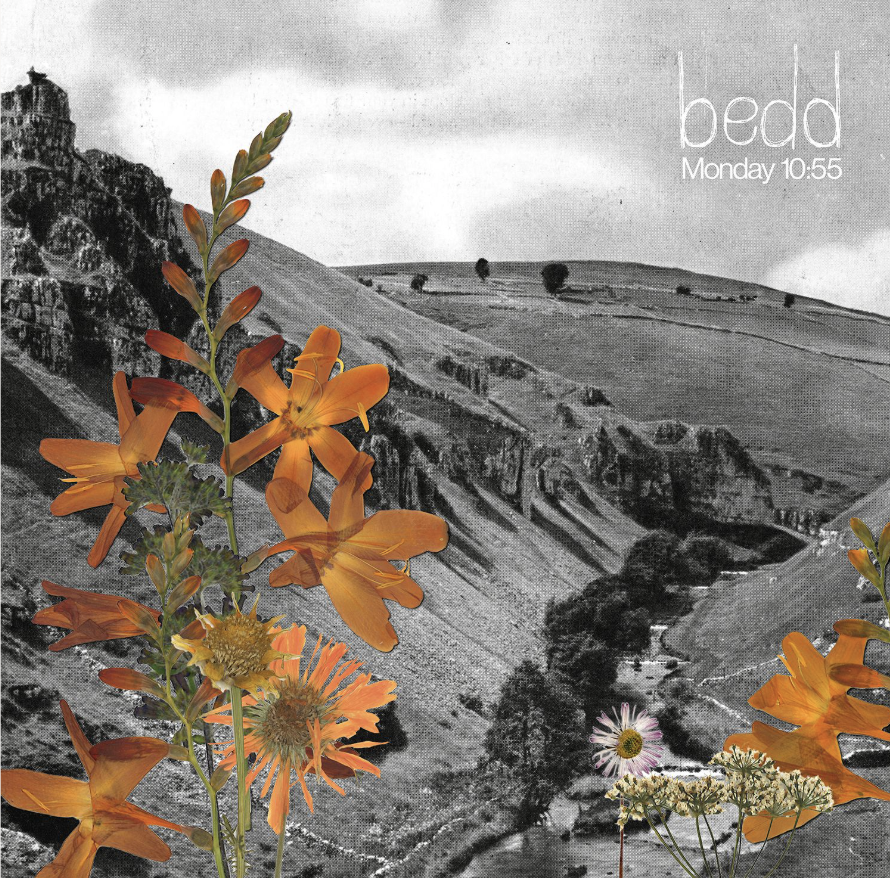
Once more on the site after quite a break – my fault not theirs -, the Oxford project led by singer-songwriter, composer and producer Jamie Hyatt is back with a bridging style EP ahead of a debut album, released in the Autumn.
Sometimes I excel myself with a descriptive summary of a sound, and with bedd’s ‘Auto Harp’ single I described their sound as “an understated breath of fresh air from cosmic suburbia”. This beauty of a single was followed at a later date, during Covid isolation, by a premiere of ‘You Have Nice Things’, which seems to have now continued with its small-town landmarked sense of isolation and sad detachment on the EP’s title-track, the very specifically timed capture of nocturnal plaint and heartache ‘Monday 10:55’. The focus song features fellow Oxford musician, the vocalist and guitarist Emma Hunter (who’s own brand of music, created with drumming foil Tom Bruce, merges the worlds of David Lynch with a penchant for Flamenco, Catholic litany and culture and the 1950s), with extra subtle emotional pull, adding harmony and a touch of the soaring to this drifted indie-blues track. It reminded me in places of Ride and the Engineers.
Before we go any further, we must mention the rest of the band, the ranks of which feature ‘a range of celebrated local Oxford musical talents’, including bass player Darren Fellerdale and guitarist Neil Durbridge, both bandmates from Hyatt’s previous project The Family Machine. Completing the lineup is the guitarist Tom Sharp, electronic musician and producer Tim Midlen (aka The Mancles of Acid) and drummer Sam Spacsman. The EP itself was performed, recorded and produced by Hyatt himself with the band at Glasshouse studios in rural Oxfordshire and mixed and mastered by Robert Stevenson at Sweetzerland Studios.
That’s the credits out of the way. The title-track is flanked at both sides by two very differently paced and performed songs; the opening ‘Messed Your Head’, has more oomph with its mix of Blur’s sliding bass on ‘Beetlebum’ and The Breeders bass line on the equally famous ‘Cannonball’, Elastica-style “woah” and messed up knock-back passionate off-the-chest power-Britpop-indie-rock (I’d go as far as saying an influence of The Pixies), whilst the closer, ‘D Minor’, is a more echo-y reverberated stripped down and atmospheric piece of disconsolate love strains and emotional discourse that has an air of Jeff Buckley about it.
It is not meant as a criticism in anyway, but bedd sent me right back to the 90s with this EP mix of shoegaze, Britpop, indie and grunge-rock. But they add a certain quality of the soundtrack, something that’s a little bit grander. It will be interesting to see what the album is like later this year. But on the strength of this trio of songs, it looks to be a winner.
Blanco Teta ‘La Debacle las Divas’
(Bongo Joe) 4th July 2025
Delivering their 2025 manifesto of the riled and near bestial, the hellraising and electrifying Argentine quartet of Blanco Teta throw off the metaphorical chains of tech disparity and servitude with a mix of the devilish and hardcore.
In the face of AI, ‘crypto-serfdom’, ‘techno-feudalism’, the constantly ever-changing, updated feeds of social media, the pressures of instant gratification and attention seeking validation, and that everything these days only makes an impact culturally if it was prompted or began on tiktok, the group show both their venerability and strengths. They face the uncertainties and anxious dread of our times with velocity as they pound and churn, twist and channel aspects of the post-hardcore sound, punk, riot grrrl-style power-ups, death metal (almost), grunge, rock and 2000s indie-rave-punk-rock.
Marking a return to Bongo Joe, the La Debacle las Divas (‘the debacles of the divas’) album sees the quartet of Josefina Barreix (on vocals), Violeta García (cello), Carlos Quebrada (electric bass) and Carola Zelaschi (drums) change things up, recording for the very first time live in the studio direct to tape. Without edits and overdubs, the album has a real new dynamic; the whole record more or less without a pause, thrashing and driving through an eleven-song set, as if it were a live stage performance. There are various let-ups, if that’s the word, and mood changes, a change in tempo and ferocity too. But this remains a chthonian and cosmic swirl of the grounded-up, menacing, prowled, alarmed, dragged and charged.
The atmosphere of this album is one in which the bonus of youth is wasted, broken upon the pressurised novelties of being young and in the moment, but ready to be disregarded and tossed away into the internet wilderness. They band themselves declare that they feel caught between a stasis of being both in their prime yet already growing too old to be feted. And whilst they were indeed feted, their lives haven’t exactly change for the better: mentally or financially, still burdened to surviving on the vaporous fumes of goodwill, popularity and a presence on the internet. Channelling all that into this diva-rage, borrowing that title and turning its connotations on its head, Blanco Teta (which I think translates as ‘white tit’?) launch a mix of disgruntled and disenchanted maelstroms and more near plaintive reproach and forlorn.
They open with the sound of generator fuzz and scuzz, in a heavy drive of Courtney Love, the Raw Brigade, Bikini Kill and L7. Heavy trebly bass, descending spirals, pounded beaten drums rule the day, but the action and influences fluctuate; on the excitable protestation ‘Subiduki’, I’m hearing Anthrax, Faith No More and Death From above 1979, on raged thud rocked sassy and maniacal decried ‘Joven Promesa’ CSS sharing the stage with Shonen Knife, and on the hardcore, morse code guitar wired space-rocking-psych ‘Perdida’ the Klaxons and The Fall. They also reminded me in part of a Latin version of the Slavic quartet Lucidvox; only with far more guttural daemonic vocals.
Tough and ready for the rumble, yet disconsolate and bereft of answers, Blanco Teta serve up a vortex and heavy meta(l) outcry and alarm at the state of society and the music industry. That debacle of divas has produced one of the year’s most promising, fierce and unique performances.
Dave Clarkson ‘Was Life Sweeter?’
(Cavendish House) 9th May 2025
After briefly crossing paths on Bluesky earlier this month, I’m aware that I’ve entered upon the electronic sound worlds, expressions and atmospheres of Dave Clarkson at a very late point in a career that spans decades of experiment/exploration; at a point when the soloist and collaborating composer is taking stock, questioning that old generational trope of nostalgia for a time that probably never really ever existed. It’s easy to see why of course: seeking comfort, reassurance and perhaps some form of guidance from a period when you were young, still hopeful, at your creative best and fancy free – well for many of us anyway. But no one can really believe at this point in time, with all the social ills, conflict, and tyranny that the future is looking anything but dystopian. Clarkson however draws a line in the sands of wishful thinking time, opting to create a confectionary and candy concepted reification of a childhood. In Clarkson’s own words, this latest album questions ‘the whole hauntological culture of escaping to the past and whether this is a denial of a future left to live.’
Previous works have explored ‘British faded fairgrounds, coastal quicksands, shorelines, caves and forests’, and been created, at least partially, in the field so to speak. Was Life Sweeter? uses a similar device and methodology, with recordings taken in various confectionery sites around the country. And so, you will hear amongst the engineered electronics the complete journey from Space Dust powder, fizzy drinks, ice cream vans and sweet shops indulgence to the inevitable visit to the dentist’s surgery, completed with the sounds of their terrifying cavity filling drills. From what I remember in the 80s, it really didn’t pay to have a sweet tooth; the barbarity of those early visits, the fillings in my milk teeth, still plaguing me with fear to this day.
It all starts in a dreamy-like state, with translucent bulb-like notes suspended and tinkling above the swept waveforms of phaser air, on the mirage of innocence ‘Milk Teeth’. The scoped-up actions, the anticipated weighing of your favourite sweets, is transformed into another piece of skying kosmische fantasy made nearly mystical on ‘Ye Olde Sweet Shop’, whilst space dust explodes on the tongue on the next track: childhood happiness at this candy firework made near dreamlike and then sci-fi. There’s the easily identified fizz of pop later on, and the recordings of voices, the captured playfulness and buzz of devouring such sweet connections to childhood.
The innocuous treat though of a ‘Three Blind Mice’ calling ice-cream van is made cosmic, with the nursery rhyme siren carried on into the infinities of inner space, kept locked in nostalgic memory. And there’s always some sign of the more haunted, more foreboding aspects of that nostalgia trip; recalling those 80s soundtracks from supernatural TV series, the harsh life’s lessons and warnings made terrifyingly clear in TV ads aimed at kids during that decade and something that’s hard to pin down but seems off-kilter and near alien. ‘Sugar Rush (Speed of Life)’ is a speed’s freak sweetened running man, part electro and part German electronica of a certain vintage. An alarm bell rings, and the listener is sprinted off the starting blocks on a rush of candy adrenalin.
Clarkson successfully balances a hallucinatory world of childhood sweetness made more ominous and haunting with abstract quandaries of past lives, miss-reflection and the need to push on through and fully adopt the age in which someone is present. I’d recommend this album for those with an ear for the sounds of the Radiophonic Workshop, Toshimaru Nakamura, The Advisory Circle, Belbury Poly, Jez Butler, Lukid and Harmonia – which should sound like an inviting proposition.
Itchy-O ‘SÖM SÂPTÂLAHN’
Released back in May 2025
Beating out a ritualistic circus of chthonian and alchemist theatre around hell’s gateway, the expanded Denver collective of performers, artists, musicians and conjurers known as Itchy-O once more record their invocations for posterity. Although celebrated for the staging of various themed performances set against a Mad Max meets Mexican Day of the Dead like decorated back drop of iconic and wasteland ruined Denver locations (from the Mission Ballroom to New Tech Machinery buildings, and Covid initiated drive-ins), the circle has only released a smattering of packages to the public since inception.
Described as a ‘Voyage into Exocosm’, their latest behemoth of an album opens both atmospherically disturbing and interdimensional, cosmic instructive portals to the hermetic and spiritual. From – I believe – the Norwegian for ‘seam’ and ‘seven grains’, SÖM SÂPTÂLAHN envelopes mournful bowed Eastern lamented classical strings and the vibrations, frequencies of a specially commissioned apparatus of bronze percussion (to be accurate, 600 pounds of reclaimed bronze remodelled into gongs and metallophones by the group’s collaborative partners, the Colorado School of Mines) with the industrial, otherworldly visitations, magik and necromancy.
Day spa new age outer body experiences tied to mystical and darker forces, transcendental instruction, exercise converge on the astral highway to voodoo and demonology. In practice, that sounds like the Phoenix rising forth, or rather the Great Marquis of Hell, known as ‘Phenex’, to scuzz scales and fried and sawing electric guitar, ringing and resonating gongs and a lattice work of metallophones. It can also sound like an aural rebalance of spectral harmony: As found on the longer form instructive ‘Ptothing/Soktū ōbu’, which soothes the listener with an interactive navigator realignment of the speakers for a cerebral session of breathing exercises and cosmic escape. That greeting and guidance turns into a cinematic-scale, sonorous and daunting projection into dark sci-fi, before release and a unification of mind and body. This is a musical and sonic world in which you will find references to demons, the Latinized groans of chthonian dread, and tuning fork like signals to unnamed leviathans beyond the fourth dimension.
Ambiguously lurking and congregating under the canopy of mystical jungles, or, hanging from the vines; retreating to cult 50s and 60s scored Javanese islands; and conducting ritual replenishment in the shadows of a temple complex, Itchy-O simultaneously draw upon aspects of gamelan, the fairytale, industrial music, the classical, the filmic, folkloric, new age and the avant-garde to pit machine against the physical in an act of exploratory performance, instruction and esoteric mantra.
JLZ ‘Tumba’ (Swine Records) 7th June 2025
Various ‘TUROŇ/AHUIZOTL’ (Swine Records w/ Fayuca Retumba) 17th June 2025
Arriving in the last week or so, a doublet of releases from the collective webmagazine turn newly founded label imprint Swine Records. First up from this venture is the Brazilian producer JLZ’s chthonian and magical esoteric vision of the Brazilian Baile Funk genre known as ‘Romano’. Baile is itself a kind of transformation of hip-hop developed and born in Rio de Janeiro, that takes its influences from a range of sources including Miami bass and freestyle whilst also connecting back to the country’s various indigenous musical styles. The ‘Latin Grammy nominee’ emerges from a thick bass vibrating and high pitch signal arcing canopy of the supernatural and tribal. The EP’s Portuguese title translates into “tomb”, and it’s easy to see why. With a darker electronica filter, some zaps, shuttering and amorphous bass beats and collected vocal samples from hidden sources there’s a suitably mysteriously, hermetic and sometimes Catholic atmosphere of mysticism and multi-layered nocturnal city forebode. Those voices are both evocative of the Afro-Brazilian influence and from some entrancing, lamented corner of the Levant and Middle East. If I had to think of anyone as a reference, then perhaps Cities Aviv, or Escupemetralla.
The second release is a joint venture between the Slovakian imprint and the Mexican label Fayuca Retumba – a project by the Mexican producer Yourte Bugarac. After appearing in an interview for Swine Daily (the web mag outlet of the Swine hub), an idea was formed to commission a number of both Slovak and Mexican artists to create sonic and musical pieces inspired by the “Turoň”, a mythological creature, principally, from Slovak (particularly around Čičmany village), and the Aztec mythological creature “Ahuizotl”. The labels have helpfully summarised, and contextualized each of those inspired prompts for us:
Turoň also called turôň, or chriapa, is a carnival mask that was known not only in Slovakia, but also in Poland and the Czech Republic. Its name is derived from the tur, an animal similar to an ox, which became extinct in Slovakia in the 17th century, and in the magical ideas of our ancestors, symbolized strength and fertility.
Ahuizotl was a water monster in Aztec mythology. It was described as a dog with monkey-like limbs, pointed ears, and a third hand at the end of its long tail. It lured its victims by imitating the cries of a child along the banks of rivers, then caught them with its third hand. The ancient Mexicans considered it an emissary of Tlaloc, the rain god who resided in the depths of rivers. Its function was to catch people by the hand on their tails, drown them, and send them to the god’s house as his servants. In Nahuatl, a(tl) means “water” and huiz(tli) means “thorn”. This name was taken by the warlike and fierce Aztec emperor Ahuítzotl, the eighth tlatoani of Tenochtitlan, who ruled from 1486 to 1502.
Etymology folklore, magic and the ominous converge to form various takes on both of these myths; starting with Lénok electronic pad whipped demonic buzzing hardcore hallucination of swirling vortex orchestra samples, thrashing tentacle slithers and frazzled broken-up beats morphing ‘NeBoyIM’. Dead Janitor’s ‘Ooze’ is like a percussive alien farmyard scene of cow bells and crunchy, crushed d ‘n’ b, whilst Schop1nhauer transmogrifies a creepy hinge worn gate into some industrial haunted factory bit-crush and pylon static frying paranormal unease, on ‘Ungulatheion’. Con Secuencias ‘Stinking Corpse’ opens with cop car sirens before sloping in a laidback style into Miami bass culture repurposed with a flavour of Latin America. The second half of this compilation has a signature Central and South America vibe to its unorthodox techno, trance, EDM and hip-hop sources. El Ángel Exterminador’s ‘Hierba Retorcida’ has just that, a removed rhythmic interpretation of indigenous percussion, a guiro that sounds like a pack of cards being flicked through at high speed, and a sort of cumbia-like vibe that saunters along. The laser shooting 80s VHS cult sounding ‘IZANAMI’ by OFYERF sounds more like Der Plan meets Damon Wild & Tim Taylor.
Altogether a most promising start and introduction to two underground labels doing intriguing, interesting and encouragingly strange, porous boundary experimentation.
Charles Kynard ‘Woga’
(WEWANTSOUNDS Reissue of Mainstream Records original release) 27th June 2025
After recent cult reissues and specials from Egypt and Japan vinyl specialists WEWANTSOUNDS return stateside and to L.A.’s Mainstream Records label, reissuing on wax for the first time the jazz-funk icon Charles Kynard’s much coveted and influential Woga LP.
Regular readers and followers of my review columns over the years may remember the label’s last stopover at Bob Shad’s imprint, with the Mainstream Funk comp a number of years back. One of the brightest progenitors of that roster, the Hammond and electric organist and St. Louis native – before relocating to L.A. after a brief period spent in Kansas – Kynard, memorably fused everything from R&B, the blues, soul and funk to his jazz and gospel background. A staple of the breaks, acid-jazz and hip-hop communities, its highly probable that you’ve heard samples of his music; especially from his key albums for Mainstream in the early 70s, and of course this revitalized LP – remastered with a bonus track and accompanying new notes and essay.
A little background is needed, and one that doesn’t paraphrase those liner notes – of which I learnt a lot. Kynard’s upbringing was imbued by the confluence of sounds washed down the Mississippi and Missouri Rivers. Born in the 1930s in that former French founded outlier, a staging post for Lewis and Clarke’s famous expeditions West, Kynard absorbed the cross- junction of church music, gospel, jazz, blues, soul and R&B at an early age. The virtuoso uprooted, journeying to Kansas before landing for more or less good in L.A. in the early 1960s having made a name for himself. He quickly started recording for the producer Richard Bock and drummer Roy Harte’s Pacific Jazz label – their signature at the time before expanding the remit, “cool West Coast jazz”. It was during this point that Kynard started working with such luminaries as Howard Roberts, Sonny Stitt and Buddy Collette. His actual debut LP came out in the pivotal year of 1963. But he then switched labels, moving over to Prestige Records; a time in which some of his most influential work was recorded: the jazz-fusion specials Reelin’ With The Feelin’ (1969), Afro-Disiac (’70) and Wa-Tu-Wa-Zui (’71).
Such was his status and rep that when once more changing labels, this time to Mainstream on the cusp of a new decade, his next trio of LPs would attract an enviable cast of talented and iconic players. For the debut offering, arriving in a tumult of social and conscious Black power, of activism and protest, the Swahili borrowed word for “fear” (or “timidity”), Woga, featured an ensemble of notable session players; all of whom, more or less, were in their own right also recording stars and bandleaders, but also sidemen and women to some of the most influential names in Black music. Amongst the ranks for that LP were bass player Chuck Rainey, possibly the most credited bassist in recording history (a 1000 album credits its believed); Tennessee bred blues guitarist Arthur Adams; the Canadian-born arranger, conductor, ensemble leader, trombonist David Roberts; Motor City native and Motown horns player George Bohanon, who at one time was a member of Chico Hamilton’s Quartet, and worked with such luminaries as Alice Coltrane, Miles Davis and Michel Legrand (on the Dingo Soundtrack); the lesser known trumpeter and flugelhorn player James Kartchner; Minnesota trumpeter and flugelhorn player Jerome Rusch, who played with such talented icons as Gerald Wilson, Ray Charles and Willie Bobo; and the exceptional Detroit drummer Paul Humphrey, who worked with the Four Tops, Wes Montgomery, Coltrane, Mingus, Marvin Gaye, Solomon Burke and Quincy Jones (the list goes on).
For the bonus track, a cover the actionist soul-funk group The Undisputed Truth’s ‘Smiling Faces Sometimes’, that same set up features a couple of noted replacements, with the infinitely famous and acclaimed Wrecking Crew member Carol Kaye on customary felt and anchored bass, and the electric guitarist Charles Mallory providing heavy soul licks, and Larry McGuire taking a turn on blazed and searing, truth-will-out, trumpet. Incidentally, on an album that split between originals and covers, Rainey played on the original version of Aretha Franklin’s ‘Rock Steady’ the previous year – featured as it was on the soul diva’s inspirational Young, Gifted and Black LP. A new arrangement means at least a variation on Rainey’s Fender tones; especially as Kynard seems to murmur or hum the original tune to slipped bristling hi-hats, breaks style drums and a movie soundtrack horn section.
It is at this point in my review that I feel I should at least outline the backstory of Mainstream Records: the label that facilitated this LP. Set up by Bob Shand as a “broad church”, the label grew out of what was already a 30-year spanning career when it took shape in the 1960s; a showcase for prestigious artists, session players and Blue Note luminaries chancing their arm at the bandleader or solo spotlight. A musical journeyman himself, Shad (whittled down from Abraham Shadrinsky) began his producer’s apprenticeship at the iconic Savoy label, then moved to National Records before taking up an A&R role at Mercury, where he launched his own, first, label EmArcy. It was during this time that Shad would produce records for the venerated, celebrated jazz singer deity Sarah Vaughan, the Clifford Brown & Max Roach Quintet, Dinah Washington and The Big Brother Holding Company.
As a testament to his craft, Vaughan would go on to record eight albums on Shad’s label, the next chapter, leap in a career that traversed five decades of jazz, soul, blues, R&B, rock, psych and of course funk. Mainstream’s duality mixed reissues (from such iconic gods of the jazz form as Dizzy Gillespie) with new recordings; with its golden era arguably, the five-year epoch chronicled in the compilation that WEWANTSOUNDS put out a number of years ago.
Spotting the potential in Kynard’s jazz-fusions and ability to transpose signatures and sounds from a wellspring of Black music styles, Shand invited the keys specialist to record a trio of LPs, with Woga being the first.
Despite the warm tones, the rays, shimmers, buzzes of church organ and of reverence gospel, this LP was forged in a time of the conscious Black movements, of Black power, Vietnam outrage, social division and revolutionary zeal. And so, most of the covers chosen for reinvention and homage were from a cadre of strong, troubled and lamented voices appealing for change. I already mentioned Aretha, but there’s also Donny Hathaway’s iconic soul anthem ‘Little Ghetto Boy’, the glorious Staple Singers’ ‘Name The Missing Word’ and the beautifully mellifluous and aching folk protestation ‘The First Time Ever (I Saw Your Face)’, written originally by Ewan MacColl for folk royalty Peggy Seeger, and made famous, given a soulfully blessed but plaintively charged direction by the late Roberta Flack. The former of that trio adds a touch of Nautilus wavy Bob James to a Southern Spiritual church organ sound of the velvety punched and near scored, whilst the latter transposes a familiar melody to sound almost like an Otis Redding ballad recorded on Stax; the organ simmering like a mirage in the sweltering Southern heat; the horns, in sympathy channelling both R&B and the blues. As a worshipping fan of all things Staples, I was pleased to see Kynard having a go at the smoother gospel-soul-R&B smoky and oozing with cool Southern attitude ‘Name The Missing Word’, first released just the previous year. Kynard retains mood, the flavour, but the bass seems a little more menacing, nearly dark, and the timing changes to one that can only be described as Latin-esque.
Kynard showcases his own talents, not just for rearranging, but for composing new jam-like numbers. The trio of ‘Hot Sauce’, ‘Lime Twig’ and ‘Slop Jar’ shows a range of styles, of timings and moods; the first, fusing soft jazz influences with ghetto soul, R&B, blazing lifted horns from Hollywood, and saddling up to funk with some whammy-like whacker guitar; the second, takes the action down a notch or two, to find a mellower tempo that’s more Herb Albert and Bacharach; the dreaminess and melody reminding me in part of Stevie Wonder. The last of those originals is a cool mix of Steve Cropper meets Hendrix and the J.B.’s. There’s some muscle and grunt to this scorched Hammond number. Occasionally the horns section recalls something of Lalo Schifrin, and at other times, of Gil Evans and his orchestra. A real showcase of influences brought together for an impressive smooth and more punchy fusion.
A treat for samplers and acid-jazz, boogaloo fusion fans alike, the range of this revived LP is wide but tethered as always to Kynard’s impressive and warm radiant, sustained and scorching spiritual, jazzy and soul-gospel keys. His wingmen, and one woman, proving an elite force of super experienced players from every field of Black music going. Anyone with even a passing interest in jazz-fusion and soul should grab a copy: I’ve a feeling this will quickly sell out.
___/The Social Playlist Vol. 98___
The Social Playlist is an accumulation of music I love and want to share; with tracks from my various DJ sets and residencies over the years and both selected cuts from those artists and luminaries we’ve lost and those albums celebrating anniversaries each month.
Running for nearly 12 years now, Volume 98 is the latest eclectic and generational spanning playlist come radio show from me – the perfect radio show in fact: devoid of chatter, interruptions and inane self-promotion.
June has been a cruel month, taking two titans of popular music away from us. Losing Sly Stone is one thing, but Brian Wilson in just the matter of two days seems just plain spiteful. Wilson’s travails have been well documented, the effects of various mental and physical conditions, of traumas, taking their toil for decades. But in losing the one woman who did more than most to bring Brian back into the land of the living, to revive his fortunes, Melinda Ledbetter’s death at the beginning of 2024 must have had an unspeakable impact. Although carrying on for another 18 months, his health deteriorated even further, with news that Brian had dementia; and on the death of Melinda, the family filed a petition to place him under conservatorship to help manage his personal and medical needs. But despite all this, there had been an announcement of a new album, Brian’s country songbook, in 2026 – a revival of the 1970 Cows in the Pasture recordings that were shelved when Brian lost interest. This may now see the light of day as tribute. You will find a piece on the late genius from my Brain Wilson files in the Archives section below this.
Suffering just as many travails, addictions and setbacks, grand funk evangelist Sly Stone had spent his later years in court battling for royalty payments against his former manager – a case he won, but still lost out on -, and living a subsistence lifestyle from a camper van. Although riding high as the true innovator of funk-soul-R&B-psychedelic-rock-pop fusion in the 60s and laying down the rhythms and feel and energy for disco and much or less everything that followed, Sly’s battles with drugs – leading to jail time for absconding a drug-driving arrest – hampered his recording career in the 70s and beyond. And yet, the Pentecostal baptised superstar pretty much invented a whole explosion of unifying voices and sounds that merged the counterculture and pop worlds. He’d find a revolutionary voice alright, but one that still had faith in the spirit of compassion, and one that brought everyone together no matter what the creed.
Both late deities will feature in this month’s Social Playlist selection, with a smattering of choice cuts from each one’s cannon. But joining them this June is the electronic music composer Alexander Julien, who followers may recall appeared many moons ago on the site under one of his many non de plumes, Vision External – others included Vision Lunar and Soufferance. I was contacted by his late spouse Rain Frances recently with the sad news of his passing:
‘Vision Eternel’s Alexander Julien passed away on May 14, 2025. Those who are familiar with Vision Eternel, know that Alex’s music is based on nostalgia, emotion and heartbreak. He experienced a lot of anguish in his short 37 years and was often overcome by it. He translated this pain beautifully into his music. His idea of making concept albums showed his talent as well as his dedication to leaving a legacy of music that told the story of love and heartache. He will be missed by all those who loved him.’
Alexander had left notes in his will instructing Rain to get in contact with all the sites that ever reviewed his work. As part of a Special trio of releases from the North American label Somewherecold, I wrote about his For Farewell Of Nostalgia EP a good few years ago:
‘Back towards the ambient spectrum, the final release in the special is a most emotively drawn and purposeful EP of intimate mood music by the Montréal-based Vision Eternel. Coining the phrase “melogaze” to describe his lush “emo” brand of majestic and caressed swirling feelings, heartbreaks and loves, the band’s founder Alexander Julien soundtracks a love lost affair with a most swaddled suite of ambient music, shoegazing, and semi-classical longings.
Over a quartet of channelled “movements” (rain, absence, intimacy and nostalgia), Julien charts this affair-of-the-heart with a both cinematic and melodious touch. The EP though is a greater conceptual work that even arrives accompanied by a short story and plenty of poetic, stirring baggage. Lingering reminisces pour from this composer’s light yet deep vaporous yearnings.
On the cover itself, Julien is painted as some kind of Left Banke thinker meets Graham Greene Third Man and shoe-string Marlowe; a riff on 50s and older covers of that vogue. And so, nostalgia is certainly evoked on this almost timeless EP of abstracted emotionally pulled memories made tangible. It’s actually a most lovely, touching trembled and graceful encapsulation of the themes; beautifully put together. It’s also entirely different and like all three of these releases pushes experimental, ambient music in different directions, yet never loses sight of taking the listener on those same sonic journeys into the cosmic, imaginary, and intimate.’
A glowing review I think you’d agree. And in tribute and as a mark of respect, a track from this EP will feature in the Social playlist this month.
In a more celebratory mood, I’ve pulled together a selection of tracks from those albums that have reached specific milestones this month and year. These include the tenth anniversary of Vukovar’s debut LP proper Emperor, which is being specially re-released this month (see the Archives this week for my original review), plus tracks from Nick Cave and The Bad Seed’s The Firstborn Is Dead…(forty this month), R.E.M.’s Fables of the Reconstruction (also forth this June), Dylan and The Band’s The Basement Tapes (fifty this June), and Them’s The Angry Young Men (sixty this month).
The rest of the playlist is made up of tracks from across time, with choice cuts from Volume 10, Credit to the Nation, The Neats, Van der Graaf Generator, Helicon, Sahar Nagy, Drug Rug and many more.
That track list in full::::::
Brian Wilson ‘Rhapsody in Blue (Intro)’
Sly & The Family Stone ‘Underdog’
Karim Mosbahi ‘Hanni ya I’hanay karim mosbahi’
Bob Dylan and The Band ‘Odds and Ends’
Sly & The Family Stone ‘I Gotta Go Now (Up On The Floor)/Funky Broadway’
Credit to the Nation ‘Teenage Sensation’
Sahar Nagy ‘Baa Keda’
The Neats ‘Lies’
Kai Martin & Stick! ‘Vi kunde vara allt’
Vukovar ‘The New World Order’
R.E.M. ‘Maps And Legends’
Drug Rug ‘Day I Die’
Brian Wilson & Van Dyke Parks ‘Hold Back Time’
Brian Wilson ‘That Lucky Old Sun’
Vision Eternal ‘Moments Of Absence’
The Beach Boys ‘Cabin Essence’
Niandan Jazz ‘Idissa-So’
Louden Wainwright III ‘Dilated to Meet You’
Them ‘My Little Baby’
The Beach Boys ‘Time To Get Alone’
Brian Wilson ‘Love And Mercy’
Van der Graaf Generator ‘House With No Door’
International Noise Orchestra ‘Groovin up Slowly’
Deuter ‘Der Turm/Fluchtpunkt’
Locomotive ‘You Must Be Joking’
Sly & The Family Stone ‘Searchin’’
Sly & The Family Stone ‘I Want To Take You Higher – Live At Woodstock’
Major Force ‘America 2000’
Sly & The Family Stone ‘Fun’
Volume 10 ‘A’cappella/Styleondeck’
Helicon ‘Chateau H (D.ross Remix)’
Sly & The Family Stone ‘Luv N’ Haight’
Nick Cave & The Bad Seeds ‘Train Long Suffering’
Naked City ‘Surfer Girl/Church Key – Live in Quebec ‘88’
Vukovar ‘Regular Patrons of the Salon Kitty’
___/Archives____
The archives return this morning in homage to the late, great Brian Wilson, with a smattering of pieces from the files. Arguably the late 20th and 21st centuries rhapsodic incarnation of Bernstein, Gershwin and Bach, Brian is perhaps one of the only true geniuses of any age, an example of a once-in-a-generation icon. So where do you start? Well, over the years I’ve written reams on the subject, and of course the group he co-founded, The Beach Boys. I’ve included a piece I wrote back in 2016 on the occasion of the tour anniversary of Pet Sounds, plus my original review of the biopic Love & Mercy movie.
But there’s another chance to read my original review of Vukovar’s debut album, Emperor, which is being re-released on the event of its tenth anniversary. Sadly, the band is now defunct, reincarnated in a different light as The Tearless Life.
Brian Wilson presents ‘Pet Sounds’ 50th Anniversary Celebrations
Friday 27th May 2016 at the Glasgow Royal Concert Hall
In a soft power musical arms race with The Beatles, Brian Wilson more or less now mastering the known limits of the studio, was nudged towards ever more ambitious levels of creativity. As the old adage, music history folklore if you like, goes it was Rubber Soul that finally did it for Brian. The retort to this foil would not only be The Beach Boys first masterpiece, but one of pop and rock music’s most enduring triumphs, Pet Sounds. No longer happy with the California high school, deuce coupe cruising beach party spirit that had so far made the group world famous, cast even further adrift, introspective and all but retired from playing live with the his brothers and comrades, Brian was moving on from the fancy-free and footloose sound of the 45s that had always guaranteed a top ten place in the Billboard charts for something more…well, grown up. Voicing a growing anxiety – or the growing pains – of youth, Brian would compose the sound of young adulthood. As the world came to terms with the idea of the ‘teenager’, Brian began encompassing and articulating a new uneasy transition.
As much about the times as about the heartache and pains of being pure of heart, Pet Sounds marked a growing resentment towards the previous generation. At the beginning of a revolutionary change in attitudes, but a year before the ‘free love’ hippie idealism that brought in the psychedelic epoch, these former golden tanned beachcombers were breaking from their parent’s traditions and rules to set their own course: a life mapped out, from education to career and marriage. But at the very heart of all Brian’s work, even today, was a sense of innocence. An innocence lost as the lovesick but married Brian, now in his mid-twenties, was coming to terms with the anxieties of that adulthood and his growing mental anguish. Undiagnosed for years, left at the mercy of countless well-wishers and confidence tricksters, quacks and pseudo-therapists, Brian’s meticulous obsessive production of Pet Sounds and its subsequent, but not satisfactorily finished until 40 years later, magnum opus SMiLE tipped him over the edge.
Pet Sounds would also mark a lyrically shift, with Brian collaborating with his friend the lyricist and copywriter Tony Asher. A task of reification, Asher would take the often abstract and difficult expressions that roamed around inside the troubled mind and put them into song. Not exactly the most unified of atmospheres, Cousin Mike Love, a constant daddy-o stuck-in-the-mud character, was ready to pour a cold bucket of egotistic sick over anything that he felt would compromise or trouble the calm waters of The Beach Boys, so far, winning formula. To be fair, Love would be right to question this new shift towards the melancholic, almost philosophical anguish. Asher at that time was but a burgeoning talent with little to back up his credibility as a top pop songwriter. Replacing previous writers and solid contributors with an unproven lyricist would however prove to be genius decision. But the success of the album was slow. Its renaissance and rebirth as one of the greatest albums of the twentieth century was down to the audiences overseas. The change in direction had unsettled the market, as America baulked at this sadder, more cerebral tone. Yet, the UK loved it, buying it in droves and sending it to the number 2 spot in the charts – compare that with its 106 placing in the Billboard. Pet Sounds could have been a disaster, but it was saved, becoming a cult, an iconic masterpiece. And though it would take a while to pick up the desirable sales, its legacy grew and grew years after its original release.
Arriving almost in tandem, The Beatles Revolver was released just a couple of months later. Brian’s answer: SMiLE. If Pet Sounds had not only threatened but also sent Brian into a funk, then this grand American musical tour through the ages, from Plymouth Rock to the shores of the Spanish Peninsula, would all but consume and nearly destroy him. So ambitious was the vision that despite the near godlike genius of his assiduous sessions’ ensemble, The Wrecking Crew, the social, political and historically woven rich tapestry lyrics of new songwriting partner Van Dyke Parks, and his own production prowess, the project stalled. Numerous mixes, snippets, vignettes and even completed songs made it onto various albums and compilations over the decades, including the enervated and rushed out – to appease and bring in some much-needed revenue – Smiley Smile. It would take decades for SMiLE to be eventually completed, albeit (sadly and for obvious reasons) without his brothers Dennis and Carl’s near ethereal soulful compassionate voices, and missing any input from Love – now more or less carving the Beach Boys brand up, sporting it like a trophy as he has carte blanche and ownership of the name when touring with his own cabaret version of the group’s back catalogue. Brian did however manage, after spending the longest amount of time and money in recording history on a single, to release the perfectly epic pop rhapsody ‘Good Vibrations’.
Recently documented, quite favourably and sympathetically, by the Love & Mercy movie, Brian’s wilderness years lasted throughout the 80s and into the 90s, before the most accomplished of L.A. bands and Beach Boy fans The Wondermints helped lure Brian back on the road, performing a Pet Sounds extravaganza in 2000. Just four years later the band would join Brian in the studio to finish that nigh mystical, greatest album there never was, SMiLE, before taking it out on the road. Following in 2011 the eventual hidden away, locked in some fabled vaults, SMiLE Sessions of original material was finally released to the public.
A near renaissance, a scarred and troubled but blooming Brian Wilson is back once again on the road. This time he celebrates the 50th anniversary of Pet Sounds, arriving in my new hometown of Glasgow on a nationwide tour. Billed as an ‘anniversary celebration’ – the final performance of the iconic album in its entirety – tonight’s performance is a generous one. Split into two performances of greatest hits and Pet Sounds, with an encore of good time classics, Brian was backed by members of the Wondermints and flanked by special guests, Al Jardine and honouree Beach Boy Blondie Chaplin: a set up that has been repeated on many occasions.
As a steady presence for the vulnerable Brian, Al was on hand to soften the odd tremors of quivered uncertainty. But who was on hand to back up Al? Well as it happens his son Matt Jardine. Proving himself the most apt of Beach Boy scions, he was there to aid his old man and Brian with the most adroit and sweetest of falsetto voices. A counterpoint to the now – and for good reason – limited vocal range of Brian, Matt took on the high notes with aplomb and even performed lead on one of the evenings early highlights, ‘Don’t Worry Baby’. He would play the role of a younger Brian during the entirety of the Pet Sounds album suite, almost seamlessly taking on each alternating verse. However, and it seems almost too disingenuous to point out, there were a few wobbles and miscues throughout that just couldn’t be patched over. Yet we all willed Brian on, and when he took lead on the most diaphanous of love declarations, ‘God Only Knows’, the entire audience stood to their feet in adulated applause – the first of many rapturous ovations that night.
Directed and conducted by Paul ‘Von’ Mertens the entire ensemble began the evening with the heavenly choral warm-up ‘Our Prayer’; featured on 20/20 but originally the lead-in to the album version of SMiLE’s grand trans-American tour ‘Heroes And Villains’, which followed. We were then treated to a litany of favourites from the bobby sox high school daze back catalogue of hits, including a swinging, swayed medley of ‘California Girls’, ‘I Get Around’ and ‘Little Deuce Coupe’. Handing over the spotlight, Al performed centre stage with renditions of ‘Wake The World’, ‘Add Some Music To Your Day’ and ‘Cotton Fields’ – all songs plucked from the Brian breakdown period, when the rest of the Band were prompted to take over the creative reins. As lithe and energetic as ever, former Flame and Beach Boy band member (on tour and in the studio during the early 70s) Blondie Chaplin sprouted onto the stage to add some light-hearted theatrics and rock’n’roll vigour. The much-accomplished Durban guitar maestro, looking more and more like a cross between Jagger and Richards (all that time he spent touring with the Stones in the late 90s has worn off on him), launched into a strutting version of ‘Wild Honey’. Expanded from its soulful howled original setting, Chaplin went into bohemian guitar solo overdrive; showboating across the front of the stage and playing to the audience, who lapped it up. From The Beach Boys’ troubled but most brilliant 1973 album Holland, Chaplin picked up the ocean current waltz ‘Sail On Sailor’. The original vocalist on that recording, he returns to it with carefree élan, adding a wild guitar solo to the end, which sends Brian off into the wings in playful mock exasperation.
Back out for act two, the band minus Chaplin for now, begin the reverent Pet Sounds album. Largely enduring because it encapsulated a particular age and time in Brian’s genius, but mostly for capturing the love tribulations and torments of young adulthood in the most perfect pop songs, the album still chimes deeply with audiences fifty years later. Intricate and multi-layered but never ever laboured or strained – witness the Bond-esque Tropicana lounge instrumental suite title track -, each purposely-poised ballad, paean and tryst says all it needs to in less than two minutes. The rousing ‘Wouldn’t It Be Nice’, shared vocally by the Jardines and Brian, opens proceedings of course, followed by a gentler, more serene ‘You Still Believe In Me’. Highlights from the album set included an Al led version of the sea shanty in the manner of a doo wop Ivy League bruiser, with a reference to a particular paranoia plunged bad acid trip thrown in, ‘Sloop John B’, and flipping over the B-side, a poignant and encouraged Brian led ‘Caroline, No’.
The encore promised a “fun, fun, fun” package of hits. But first the band introductions, each band member receiving a musical signature tune as they came back out onto the stage after the interval. It was then straight into a full cast version of ‘Good Vibrations’, including the gesticulating tambourine wielding Chaplin who turned his percussive role into an art form. Rewinding back through the songbook, we were treated to the sing-along classics ‘Help Me Rhonda’, ‘Barbara Ann’, ‘Surfin USA’ and ‘Fun Fun Fun’. By now the audience were up and out of their seats, dancing where they could in the face of the po-faced security and attendants. From our balcony seats looking down on the main auditorium we witnessed hundreds swaying and weaving in almost perfect timing: the atmosphere couldn’t have been better. On a poignant, perhaps paused note Brian finished the evening with a version of the song that spawned the title of the recent movie, Love & Mercy. Written in more recent times, a reminder of the anxieties and anguish that once crippled Brian, the song’s central tenet is a perfect theme to finish on: a great sentiment for the audience to carry with them as they head home into the night. A joy to witness, the Pet Sounds legacy is in safe hands, especially here in Glasgow; a city twinned with Big Sur for one night only. Simply magical.
Love & Mercy Film Review/Purview
By now (or so I believed) the well documented rise and fall and then revival of one of pop music’s titans and true geniuses, shouldn’t come as any shock. Perhaps the nuanced details remain a mystery to most, but the crippling mental fatigue and illnesses that conspired to overwhelm Brian Wilson now go hand-in-hand with and are synonymous with The Beach Boys legacy. Plagued since childhood by the overbearing bullying of others, Brian was made nearly deaf by the clouting punishment of his patriarch Murry Wilson (a failed composer with little talent, forever enviously cruel towards his eldest son); worn down by his cousin and bandmate Mike Love – a year older than Brian but may as well been twenty, the omnipresent ‘straight’ put off by anything less than sweet and commercial, constantly grappling in a power game to control the band -; and emasculated, cut off from the world by the dubious therapist Dr. Eugene Landy. Arguably this triumvirate of manipulative, all damaged in their own way, individuals reflected their own insecurities, envy and even misunderstandings – Love just not getting it and stoic in not wishing to rock the proverbial boat of success – onto Brian; and perhaps due to a lack of ego himself, was unable to believe in his own self-worth allowing others to both take advantage and question his musical aspirations.
Unnerved, strung out and growing isolated from both his childhood sweetheart and first wife Marilyn, and his siblings, Brian went into a slow and long-drawn-out decline. Rare touches of genius would still sparkle occasionally, but after the less than rapturous reception at the release of Pet Sounds, and the aborted (though saved from the ashes and finally recorded and played live forty years later) American peregrination SMiLE, it was more or less downhill all the way.
Adrift now of The Beach Boys, wheeled out sporadically but later sacked, Brian had already undergone numerous treatments during the late 60s, and in 1975 at her wits end, Marilyn called in the services of the quack to the stars, Landy. The movie depicts his motives and less than orthodox style of treatment as quite sinister, but nevertheless he did manage to reduce a bloated lethargic Brian into a slimmer, healthier individual, ready to return back to The Beach Boys fold. However, as it would transpire, Landy took rather too much of an interest, going as far as to attend band meetings and make decisions on Brian’s creative dealings. He was ceremoniously sacked and cast out, losing not only his golden egg, but also losing his professional licence for his methods and liberal pill dispensing (the press would Christian him Dr. Feelgood). Yet ironically, he was recalled back during the 80s after Brian, at his lowest ebb, took an overdose of alcohol, cocaine and psychoactive drugs. This time Landy gave no quarter and micromanaged every single aspect of his patient’s life. Brian would be completely cut off from everyone, and handled like a simpering child by his new legal guardian (who merely replaced Brian’s monstrous real father Murry), with a team on standby to make sure he never wandered from the good doctor’s path of recovery: a recovery that led to Brian’s eponymous solo album of 1988 (Landy brazenly got credits as executive producer and co-writer), of which the opening track Love & Mercy is used for the film’s title. In fear of being institutionalised, Brain would meekly allow this infringement of his privacy and daily life. Overstepping his remit and coming up against Brian’s – depending on who’s account you believe – saviour Melinda Ledbetter (a model turn Cadillac sales women), Landy was eventually forced out when his name mysteriously appeared as the main benefactor on Brian’s will. Already handing over a percentage and forced back into the studio to cover costs, Brian’s publishing rights would still not satisfy Landy’s mounting costs – charging an eye-watering $430,000 annually between 1983 to 1986 – and this along with Melinda’s timely intervention conspired to finally remove him.
A complicated story then, the emphasis on redeeming a fragile genius from a reversion to a near childlike numb state, the film makers and script writers can’t possibly capture every nuance. Instead, Oren Moverman and Michael A. Lerner‘s touching story and unconventional story arc focuses on the perspectives of Brian and Melinda, and hones in on two specific timelines: the mid 60s and 80s. Whilst the story begins with the muddled mind of a younger Brian (an uncannily fragile and compassionate performance from Paul Dano) fading out to darkness, followed by a background montage of the Beach Boys more naive, carefree days (though even these moments show an already uneasy Brian plucking away on his bass guitar, wishing to be anywhere but on stage or in the limelight), we’re speedily propelled forward to John Casuck‘s placid later day Brian’s first meeting with Melinda. Virtuously played throughout by a thoroughly convincing, purposeful Elizabeth Banks, director Bill Pohlad uses her face as a gauge for reaction, whether it’s being played a whimsically beautiful piano motif or hearing the disturbing abuse meted out to Brian by his father. In her opening scene she attempts to sell him a car, before Landy and his posse arrive, but not before Brian slips her a note with ‘Lonely, scared, frightened’ scrawled on it.
Not that the intention is to show any balance in Landy’s depiction, the wig adorned Paul Giamatti is a raging control freak; ready to suddenly blow in a torrid at any time, and constantly, even when smoothing things over, adding a creepy and threatening undertone to every word of advice and suggestion. Meeting one of the only real forms of opposition, Landy’ warnings towards Melinda eventually boil over into some hostile confrontations: an early scene in the dating storyline, with Giamatti’s Landy holding court whilst flipping burgers, grows steadily uneasy and finally ends with an explosive outburst, as a doped-up Brian petulantly interrupts a boorish egotist regaling his own questionable writing virtues with calls to be fed.
Faithfully recreated, Dano’s parts are sometimes tear-jerking. Though we’ve grown used to the back catalogue, hearing the building blocks and attentive beginnings of ‘You Still Believe In Me’, ‘Surf’s Up’ (this performance further convinces me of its eulogy quality and that it belongs on the 1971 titular LP rather than SMiLE), and ‘God Only Knows’ (stunning even its most fragile form, when the young Brian seeks his father’s approval but is despairingly put down by pater’s heartbreaking responses) send chills down your spine. Enthusiasts will be interested in seeing the mechanics of the Pet Sounds and SMiLE sessions; the fantasy of seeing the famed and near mythical Wrecking Crew at work. The crew’s revered and experienced drummer, possibly the best session drummer of the 60s, Hal Blaine is used as a vessel to get the plot moving; his references and reassurances (in one memorable exchange and moment of doubt, the elder statesman’s and cool Hal, sucking on a cigarette, assures Brian that having worked with Phil Spector and a legendary rooster of other talent, the young pup is on another level entirely of genius) are used to settle a young Brian in the grip of mania. But wait until the final sequences, a redeemed Brian breaking from his stupor, soundtracked by the stunning, and reflective diaphanous ‘Til I Die’ – a song that took Brian a year to complete, and was to no one’s surprise by now, originally dismissed before being embraced by Love.
With the emphasis on these characters, most of the extended cast are reduced to walk-on parts and though some background is referred to, Van Dyke Parks and many others aren’t introduced at all, merely swanning about – apart from a meeting in the swimming pool – at various dinners and pool parties. Even his poor siblings Dennis and Carl are more or less demoted to the odd clueless look whilst Al Jardine doesn’t even get a line: Dennis himself succumbed to his own torments, which left him adrift of his family and band mates; his spiral into drink and drugs ended tragically when he drowned just weeks after his 39th birthday in 1983. It is the mixed portrayal of his cousin Love that is emphasised, not really a hero or villain, but malcontent and totally unhip individual uneasy at the changing face of a turned-on L.A. in the grip of LSD. I feel a little sorry for him, played I might add brilliantly by an unrecognisable Jake Abel, who would eventually have to lead the group and take up the mantle; always that little bit older, not so fortunate in the hair department (his fetish for hats arguably covering up his early balding), and ever the professional he found it hard to fit in.
Love & Mercy moves full circle, Melinda coaxing the responsive artist and adult from his child like shell, finishing with Brian’s – and I was lucky enough to attend one of his comeback shows with the Wondermints – return to the stage in the noughties, performing the titular song. Those stumbling blocks and manias that prevent not just geniuses, from making their ideas concrete, still persist. But at least Brian finally received the correct diagnosis of manic depression with auditory hallucinations that can be successfully treated: Landy’s schizophrenia diagnosis and treatment did more harm than good, arguably worse than the cocktail of illicit drugs that Brian was popping so freely before the quack came on the scene. The best hope is that this movie encourages discussion; that we can talk candidly and address the controlling mechanisms that condemn many people to a life spent dealing in isolation with their mental health.
Vukovar ‘Emperor’
(Small Bear Records) – Originally release in 2015; re-released on the 1st July 2025 with various mixes and extras.
Punching well above its weight, the serendipitous label of vaporous lo fi and languid shoegaze Small Bear Records has slipped onto the market its most ambitious marvel yet. From their Isle of Man recording HQ, the Vukovar builds a funeral pyre for the ‘new world order’.
Helping them man the barricades are Rick Clarke and Dan Shea (also of The Bordellos and Neurotic Wreck, but most formerly of the “disintegrated” The Longdrone Flowers), joined by an extended cast of Small Bear artists; including the dreamily aspiring Postcode’s Mikie Daugherty, Jonny Peacock and Marie Reynolds, and Circus worlD’s Mark Sayle all making guest appearances: a super group performance if you will.
Rallying round the decree of “idealists, voyeurs and totalitarians”, and referencing a list of one-word actions/stances (“Ultra-Realism”, “Depravity”, “Monotony”) to describe their sound, the band’s lyrics certainly seem fuelled with protestation and anger. Yet for the most part, they sound despondently magnificent in the most melodic, beautiful shoegaze fashion. Their brand of lush 80s driven alternative rock and more caustic, punchy industrial noise is far too melodic and majestic to be truly brutal.
Taking their name from the infamous Croatian city, the site of an heinous blight on modern European history (always conveniently airbrushed from bellicose EU propaganda; the sort that preaches its union has put paid to and secured the continent from conflict and war amongst its neighbours), when 300 poor souls, mostly Muslims, were rounded up and barbarically executed by Serb paramilitaries and the Yugoslav People’s Army (the worst committed atrocity of its kind since WWII), Vukovar appeal to the listener who wants to scratch beneath the surface of the banal mainstream. They offer an invitation into the darker recesses of history and social politics unseen in much of the dross that calls itself alternative – even their bandcamp page features an exhaustive manifesto style edict (sometimes tongue-in-cheek) of intent. And so they offer a an out-of-body majestical shoegazing waltz through Reinhard Heydrich’s honey trap brothel and centre of Nazi espionage, the ‘Regular Patrons of Salon Kitty’; drift into Spiritualized and New Order territory on the softly pranged hymn to a former Japanese princess, ‘Part 1: Miss Kuroda’s Lament’; and channel a despondently romantic but resigned Ian Curtis as they utter with despondent beauty that “we’re cowards” on the beautifully sullen and dreamy ‘Nero’s Felines’.
With a maelstrom of clanging, fuzz and Inspiral Carpets jamming with a motor city turned-on Julian Cope vibe, the group yells, shakes and rattles on their noisier outings, ‘Lose My Breath’ and ‘Concrete’. Not always their best material it must be said, they add some tension to the more relaxed melodic and – dare I say – pop songs, which sound far more convincing: ‘Koen Cohen K’ and ‘The New World Order’ are just brilliant; imagine what Joy Division might have sounded like if Ian Curtis had lived on and found solace in the lush veils of shoegaze, or if he fronted Chapterhouse.
Fiddling romantically whilst Olympus burns, the Vukovar’s stand against the illuminati forces of evil couldn’t have sounded any more beautifully bleak, yet somehow liltingly inspiring.
If you’ve enjoyed this selection, the writing, or been led down a rabbit hole into new musical terrains of aural pleasure, and if you can, then you can now show your appreciation by keeping the Monolith Cocktail afloat by donating via Ko-Fi.
For the last 15 years both me and the MC team have featured and supported music, musicians and labels we love across genres from around the world: ones that we think you’ll want to know about. No content on the site is paid for or sponsored, and we only feature artists we have genuine respect for /love or interest in. If you enjoy our reviews (and we often write long, thoughtful ones), found a new artist you admire or if we have featured you or artists you represent and would like to say thanks or show support, than you can now buy us a coffee or donate via https://ko-fi.com/monolithcocktail
A world of sonic/musical discoveries reviewed by Dominic Valvona. All releases are featured in alphabetical order.

Audio Obscura ‘As Long As Gravity Persists On Holding Me to This Earth’
20th May 2025
Slipping in and out of realities and consciousness, between field recordings of nature with its birdcall choruses and the metallics, oscillations of the electronically engineered and synthesized, Neil Stringfellow – aka Audio Obscura – offers a liminal balance of sound collage, melody, and the alien drawn to a both felt and metaphorical gravitational pull on his first album in just over a year.
Returning after a fallow period of sonic recording with a new creative impetus – spending a good part of last year gigging heavily, with notable performances in Poland and at Switched On in Whitby –, As Long As Gravity Persists On Holding Me to This Earth is just the first of a number of releases due out this year – the Mortality Tables label has offered Stringfellow a platform for a new project in September. And it at least in part maintains a connection to last year’s brilliant hagiography album, Acid Field Recordings: the avian signatures and passages that seem near hallucinogenic; the subtle use of underlying or undulated soft beats. The elements of electro and trippy trance-y dub however are not so obvious: don’t get me wrong, you can still pick out evocations of The Orb, FSOL and Amorphous Androgynous. Instead, there is a new found beauty of moving classical strings, more piano and melodious qualities to be found in an amongst the tangible and intangible ambient dreaminess of magic, mystery, inquiry and the universal.
Held together by an ether and a sense that there is something that’s bigger than all of us out there in the expanses beyond these tethered gravity fields, Stringfellow’s expletory recordings seem to drift and linger in an ambience that is one part sci-fi, another organic, and another near cosmically holy. Choral voices, again in the classical mode between the pastoral, spiritual and otherworldly near aria work of György Ligeti and Popol Vuh swell and ascend as ghostly notes and lower-case Andre Heath style piano deeply and softly tinkle or draw into focus, and sonorous low sounds pulsate or throb in the wispy airs of the cerebral.
Despite the ambience and leitmotif of nature, the walks through the meadows and environmental field recorded scenes, some of these tracks offer drama, a gravitas, or break into electronic passages of beats and tubular patterned, plastique padded rhythms: to these ears a touch of Luke Slater, Wagon Christ, Air Liquide and Richard H. Kirk. You could venture to suggest sophisticated, but always felt and evoking, influences of trip-hop, downtempo, minimalist techno, even club electronica. It offers some surprising directions and turns from the spells of dream-realism and amorphous gravitational anchor: you would be hard pressed to plant your feet on ground in this constantly floated mirage, despite that gravitational force that bounds you to it.
A track such as ‘The Weight Of The World’ can throw us off balance with its brilliant and subtle dissonance and giddiness; a sound collage of layers, both found and collected and made anew, includes a kind of Revolution No.9 style Stravinsky type tune-up heightened fit of excitable and swirling orchestra, Don Cherry and Booker Little style cornet trumpet, a trudge through the grass, piques of reality and the beats of Howie B. I’m hearing hints of Fran & Flora, Xqui, Greg Nieuwsma & Antonello Perfetto and Alison Cotton converging with Bernard Szajner and Richard H. Kirk on an album of differing but congruous moods. For this feels like one long conceptual piece: Sure, each track begins as it also finishes as a separate vision, but without much effort they could more or less run seamlessly together with no pauses or interruptions into one ambitious movement of essence and reverberated fantasy.
You’ll be hard pressed to find a better, more complete vision in this field of musical, sonic and field recorded experiment this year: I say experiment, but this is a most lovely if sometimes mysterious and alien work of art to lose yourself in for an hour.
Jeff Bird ‘Ordo Virtutum: Jeff Bird Plays Hildegard von Bingen, Vol 2’
(Six Degrees Records) Released last month
Both outside itself with a certain gravity and majesty and sense of presence that isn’t wholly religious and divine, and yet very personal and sensitive to its creator, Jeff Bird’s second volume of harmonica, organ pump and Fron initiated compositions transposes the liturgies of the venerated historical European polymath figure of Hildegard of Bingen, taking her famous Order of Virtues play and transporting its glorious Benedictine stained-glass chorales and an essence of the anointed versant landscapes of Medieval Europe, to a vision of both of America’s Old West and southern borders.
Essentially, this is a further study and celebration of Bird’s love for the transcendent music of the 12th century abbess, whose talents stretched to practicing medicine, writing, philosophy and mysticism: often referred to as the “Sibyl of the Rhine”. A visionary to boot, she was also just as importantly an influential composer of “monophony”, the simple musical form typically sung by a single singer or played by a single instrumentalist – In choir, or choral form, it usually means the ensemble of voices all singing the same melody. She is indeed the patron saint of musicians and writers – although, her official canonization by the church would take over 800 years. One of her most established, noted works is a collection the Symphonia armonie celestium revelationum, an ordered liturgy of 77 sacred songs. On his previous beatified volume, Bird took another work, the O Felix anima, a piece written in poetry and music as a response to the relatively localised and obscured St. Disibod.
Ordo Virtutum – to give it its Latin name – is an allegorical morality play, or sacred music drama, composed during the construction of Hildegard’s abbey at Rupertsburg in 1151. Theme wise, a lyrical, choral and also more discordant struggle for a human soul, in a theosophy battle between the Virtues and the Devil, the story can be divided into five parts. Each part, character is represented by a singing voice or chorus; only the devil, who Hildegard says cannot produce divine harmony, is missing such a beautiful voice, his parts delivered in grunts or yells. Depending on sources, it has been suggested that the “soul” of that struggle refers to Richardis von Satde, a fellow Benedictine nun and friend, who left to become the abbess of another convent. Richardis was upset by this appointment, attempting to have it revoked. Unsuccessful, Richardis departed only to die some time shortly after – October 29th, 1151, to be precise. It has been also suggested that just before her untimely fateful death, she old her brother Bruno that she wished to return to Hildegard in an act similar to the “repentant soul” of the Ordo Virtutum.
Whatever the allusions, the allegory, it is a beautiful work; one of the first of its kind. Inspiring devotion, touched by the afflatus, Bird now transports the listener from its origins to vistas, reflections and environments that at first seem quite a distance away from that Medieval period struggle and drama. This is mostly down to the choice of instrumentation, with new arrangements created for a string orchestra, a pump organ, the harmonica and the more recently invented Fron – named after its inventor, the clockmaker and woodwork specialist Fron Reilly, this strange looking apparatus is essentially “a cylindrical instrument with a frame drum suspended in the centre of 10 strings. To play it, you have to turn a crank handle to make the instrument spin while using a bow or wand to vibrate its strings.”
A long-time foil within the Cowboy Junkies circle and multi-instrumentalist performer with an enviable list of notable artists over the decades, the founder member of the Canadian folk band Tamarack, who also scores music for TV and Film, sure has a rich CV to draw upon and channel into this project. Mastering an eclectic range of instruments, on last year’s Cottage Bell Peace Now Bird got to grips with a grand imposing pipe organ; a gift that he refurbished over time. I said at the time, when reviewing this highly recommended work, that in his hands the “pumped waves and layers emote spatial lenses, dusted beams of light, the concertinaed, ripples and spells of near uninterrupted cycles of abstract soul searching and peaceful inquiry.” And now back again, entwinned at times with the hinge-motion, country pining, mirage-invoked and concertinaed harmonica, this organ lays down breaths and sonorous deeply moving empyreal and elegiac beds and melodic directions to folkloric warriors, spiritual transcendence, redemption and the solace.
This is music that is both relenting and deeply moving; a sensitive but powerful score that twins alternative Western scores and music with the pastoral, classical and blessed. I’m picturing Bob Dylan Portraits, old Missouri, the southern borders of America in the 19th century, the work of Daniel Vickers, Laaraji and Bruce Langhorne; the lone bugle caller at a fort, a Colliery band, a Lutheran Popol Vuh. There’s just a passing evocation of the Cantonese on the spindled and string pulled ‘The Old Serpent Has Been Bound’; Bird creates a sort of shivered, scaly-like mythical dragon description from his chosen instrument that conjures up esoteric and supernatural illusions.
Dreamily merging various worlds into an hallucination of church parable and the more personal, Bird has pitched this album perfectly between swelling gravitas and the ambient and calming. Hildegard’s original is given a new impetus, a new direction, a living breathing embodiment of Bird’s Western visions and beyond. In one word: superb. And one of my favourite immersive experiences in a long time. The Devil it turns out, doesn’t always have the best tunes.
Dope Purple ‘Children In The Darkness’
(Riot Season Records) 20th June 2025
Seeing the light two years on from its inception in March of 2023, the midnight hour recording sessions that make up this mystical, supernatural album conjure up temple lurked spirits, an expressive cry from the shrouds, and monastic Shinto apparitions. All of which is consumed and enveloped within an acid-psych space-rock and fee-jazz rock out of the contorted, squeezed and wailed.
The Taiwanese group with feelers that extend out towards much of Southeast Asia, were joined on that fateful night by the Malaysian saxophonist Yong Yandsen and the British, but Singapore-based, drummer Darren Moore, and an audience of head music acolytes.
Just the sort of thing you’d expect from the mighty Riot Season camp, the trio of tracks that make up Children In The Darkness sound like Nic Turner going full welly on the saxophone whilst his Hawkwind band mates whip up a cosmic cacophony. But there’s far more to process than just that glib one-liner description, as the group also bleat, go wild, score, screech, peck, spin and whip up evocations of Bill Dixon, the ZD Grafters, Last Exit, Acid Mothers Temple, Ghost, Anthony Braxton and John Sinclair’s Beatnik Youth recordings with Youth.
Whilst unbound to a particular theme or a concept as such, the title was invoked by the atmosphere and mood of that session, recorded at Revolver in the Taiwan capital of Taipei City. And though it summons forth certain allusions to the chthonian, to the esoteric, and to the metaphorical, I can’t help feeling there is something in it about the uncertain, dreaded shadow of China and the limbo of the geopolitical events that could result in an invasion of that sovereign island nation: A new young generation used to freedoms and liberty on the precipice of a tyrannical struggle. For it is certainly near a horror show in places, summoning up the old spirits. But this album seems like a pained whelp from the shadows and an interstellar oscillation, ariel bending motherboard of escapist space projections that go both hard and more sensitively, with plenty of incipient starry passages, the odd near tender, mournful moment and some parts which seem more languid and emotionally drawn.
A great trip from a dope name play on the progenitors of dark and harrowed heavy meta(l), the Purple host go full on cosmic-occult.
Tigray Tears ‘The World Stood By’
13th June 2025
As attention spans seem to contract and the 24-hour newsfeed cycle is forced to update and move on every nanosecond in the battle to retain minds and lock in followers for monetary gain and validation, or to offer up a hit of dopamine, many geopolitical events – once seen as cataclysmic and about to push the world into climate crisis or war – seem to be quickly forgotten about. Usurped for the most part and replaced by the next teetering-into-the-abyss flashpoint, the next outrage. And so, as I’ve said before about the Rohingya genocide in a previous review, do you remember the humanitarian crisis, the large-scale deaths in the conflict between Tigray and Ethiopia? Of course you don’t. That’s old news. Slipped from the public gaze. We’ve had the aftereffects of COVID to contend with, the cost-of-living crisis and high inflation, Russia’s barbaric invasion of Ukraine, the continuing incursions of Islamic terrorism in Africa, and now, since the horrific vile attacks on Israel on October 7th by Hamas, another ongoing escalating conflict in the Middle East. Chuck in Trump’s return to power, and the ensuing appeasement of both Putin and China (will they, won’t they, soon invade Taiwan), the huge mess that is the Tariff wars, civil unrest and disillusionment, and what could be a full scale war between India and Pakistan and there just doesn’t seem to be enough room or bandwidth to take it all in, let alone worry and press for solutions.
Once again, the producer extraordinaire, writer and musician Ian Brennan is on hand to wake us from our stupor and ignorance; this time setting up his in-situ style recording equipment to record the pleaded, sorrowful, longed and outraged but just as magical and astonishing voices and music of exiled Tigray living in the Ethiopian capital of Addis Ababa and the Amhara region; forced to leave their disputed home in what many describe as a civil war, others a conflict over autonomy and rights, and others still, a battle between ethnic groups for dominance in the region.
To be honest, it’s far beyond my own knowledge and scope of specialism, the conflict fought in the Tigray region (the most northern state within the borders of Ethiopia) is convoluted and has a long history stretching back generations. But to be brief, this two-year conflict pitted forces allied to the Ethiopian federal government and Eritrea against the Tigray People’s Liberation Front (TPLF). The TPLF had previously been a dominant force politically in Ethiopia before conflict with its neighbours, unrest within the country, and disputes over leadership spilled out into horrific violence. But during this particular and most recent chapter, between the 3 November 2020and 3 November 2022, it is estimated that two million people were displaced from the region, and 600,000 killed. Tigray was itself left in ruins; its capital turned over to the federal government. Reports began to emerge in the aftermath of ethnic cleansing and war crimes. And the situation is no more stable now, a few years along, with conflict once more looming with Eritrea.
Loosened and set free from the archetypal studio, Ian’s ad hoc and haphazard mobile stages have included the inside of a Malawi prison, disputed regions of the Mali deserts, and the front porches and back rooms of Southeast Asia: one of which was on the direct flight path of the local airport. And yet that is only a tiny amount of the forty plus releases Brennan has recorded over the last two decades.
As if being a renowned producer of serious repute wasn’t already enough, he could also be considered a quality author; so far publishing four digestible tomes on a range of music topics and regularly contributing to a myriad of publications. He’s turn of phrase and candid nature brings music, the relationships, and journeys to vivid life, whilst never blanching from describing the harrowing, disturbing and traumatic realities of the geo-political situations, the violence – each release features a brilliant vivid travelogue written by Brennan to set the mood.
As a violence prevention expert and advocate, Brennan’s recordings can be said to act as both a testament and a healing process. It has taken him and his partner, foil on many of these recording projects, the Italian-Rwandan photographer, author and filmmaker Marilena Umuhoza Delli, who documents each trip, to some of the most dangerous places in the world; many of which have had little or no real coverage by the wider media.
The partnership now turns attention to the injustice and plight of the Tigray, perhaps one of the most forgotten or ignored groups in recent times – although the Rohingya of Myanmar (Brennan released a project on this very topic last year), the Uyghurs of China, and various other ethnic groups that have faced or are facing similar acts of violence, of ethnic cleansing and displacement could argue their cases just as strongly. The exiled are given an opportunity to reach the audience that so ignored them, with various voices conveying their fears and hopes, but also asking, pleading why it was allowed to happen. As Brennan says in the intro, “The majority sang plaintively and with unerring directness. As so often proved the rule, the person with the worst attitude proved the best singer. They were unburdened by any seeming eagerness to please.” But in saying that, there’s not really one example of the angered, the riled rand enraged; seldom any political redress but instead, either humbled and soulfully yearned expressions of the reconciliatory, some with heartache, and others, with voices that carry and echo. You only have to read those titles to gauge the mood here: ‘Wishing For Peaceful Time To Return’, ‘I Want My Mother To Be Happy And At Peace’, ‘Please Speak Kindly To Avoid Arguments (People Should Live In Love)’. All of which, staying connected to their roots and homeland, are sung in the Tigrinya language: from the soul.
Brennan doesn’t normally go in for editing much, nor does he usually add filters or effects, but this time around he seems to have congruously reverberated and played with some of the original organic recordings to give them an experimental and contemporary feel: something that transcends the location, heading towards the otherworldly, cosmic and the atmospheric. None more so than track ‘No Matter Where I Am, I Miss Tigray’, which fades into a gathering of various interlayered high and lower pitched vocals and a near trill but ends up enveloping the participants into some cosmic wind tunnel. And vocal on ‘My Heart Pleads For Your Forgiveness’ is undulated by shooting ray beams and quasi-spacey vibes.
Most of these singers are accompanied by the rustically struck, brushed and rhythmically stringy Krar, a five or six-stringed lyre tuned to the pentatonic scale (that’s five notes per octave) that was used to “adulate feminine beauty, create sexual arousal, and eulogize carnal love”. The Derg military junta that ruled the region and Eritrea between the mid 1970s and 1980s banned its use: going as far as to imprison those who played this popular instrument. The Wikipedia entry states that the krar had been “associated with brigands, outlaws, and Wata or Azmari wanderers. Wanderers played the krar to solicit food, and outlaws played it to sing an Amhara war song called Fano.” Brennan calls it the “sonic core for the [Tigray] culture”.
Sound wise, what is interesting and revelatory is the connections, the similarities and evocations between this region of East Africa and that of Southeast Asia (I’m thinking Cambodia and Vietnam), the Tuareg and actually many of Brennan’s other recordings: a connective sense of roots music, the origins of the blues, but also the theme of processing trauma, a troubled history, the longing for a return – endurance is another.
“What is the world saying about Tigray?” Not much, especially with the crisis in next door Southern Sudan overshadowing all events in East Africa – the humanitarian tumult putting as many as nine million people at jeopardy of starvation in the tumult that has followed that country’s independence and self-determination. But in a small way, Brennan at least tries to draw attention to this plight, and I so doing, introduces many of us to unique, magical, evocative and poetic voices.
Jason van Wyk ‘Inherent’
(n5MD) 13th June 2025
From the very start the subtleties, vapours and tubular notes on the South African composer and producer’s latest album imply a certain gravitas: even in their most serene, quiet and ambient moments. For this is a work of air and wind, but substance and depth that is capable of stimulating and evoking something beyond its both melodic and textural wave forms, its hidden sources of movement and a presence that is difficult to describe.
Said to be ‘a clear evolution of its predecessor’, and striking a balance between melody and atmosphere, Jason van Wyk manages to add drama to the merest of electronic wisps and breaths, and to conjure up feelings, contemplations and yearns. Both futuristic and yet identifiable to our times, with touches of the cosmic and the cerebral, Inherent is both an album that feels connected to self-exploration and the abstract, difficult to describe senses of something greater, an undefined force of nature, of space and emotions.
What’s more, Wyk manages to artfully build some of these fields of cloud and more granular passages into the rhythmic with the introduction of sophisticated beats, throbbing and deep bass, and undulations of the tubular and magnetic. For example, ‘Inner’ evolves from its fading ambience into a trance-like amalgamation of Moroder, Sven Vath and Eastern European techno, whilst ‘Remnants’ starts off with those melodic ambient waves, stirrings of a deeper hummed bass and engine, and builds into a near club-like sound, with echoes also of Emptyset and the Bersarin Quartet. ‘Cascades’ is similar in this regard but feels more like an epic movie soundtrack.
Thrushes of wrapped electronica and static merge with gauze, melodic fluctuations and drifts and a prism of projected light sources on a beautifully produced work of mystery, exploration and reflection.
Voodoo Drummer ‘HELLaS SPELL’
Was Released on the 11th May 2025
A kind of Odyssey, weaving and transposing into something weird, otherworldly and dadaist Greek myth, tragedy, atavistic verse and the classical whilst interrupting both iconic and traditional compositions by various idiosyncratic mavericks along the way, the debut album from the Athenian duo (and contributing friends) of Chris Koutsogiannis and Stavros Pargino takes us on a both fun and evocative theatrical journey in which all roads lead back to the underworld and “hell”.
Referencing all things Greco-absurdist and mythological, the self-anointed VOODOO DRUMMER – a name that formulated after participating, we’re told, in a Benin funeral, and from his appearances on the esoteric New Orleans scene – and his cellist foil fuse lofty aspirations with a spirit of playfulness across an album of original and transmogrified material that, for the most part, relates to Hellenic culture. And yet, off the beaten track, the roots of “rebetiko” Greek music from another age, the ancient scales and poetry of that Mediterranean civilization are crossed with early 20th century America, Western and Eastern European classical music from the 19th century, the avant-garde, the stage and the counterculture.
Those Greek references include a Dionysus leitmotif. The fecund god of wine, vegetation, orchards, fruit, fertility, theatre, religious ecstasy also dealt in ritual madness and insanity, and is featured as the drunken swaying Bacchus, complete with hiccups, unsteady feet and wordless murmurs and mumbles on his namesake track. He then appears as the wicked fickle punisher of the fated mythological king, Pentheus of Thebes, in the ‘Bacchae’ tragedy. In this lamentable tale, written by the famous Euripides during his late flourishing in Macedonian court of Archelaus I, Dionysus drives poor Pentheus mad for rejecting his “cult”: rather grimly, the orgiastic frenzied women of Thebes tear him apart in the final act.
Inspired by the Ancient Greek playwright Aristophanes’ comedic play of the same title, Antiquity beckons once more as Dionysus enters stage left on ‘Aristophanes’ Frogs’; a triumvirate set of movements under one roof. With prompts, scales and falls, the liberating god, who despairing of the state of Athens’ tragedies, travels to the underworld of Hades to bring the playwright Euripides back from the dead. And so, we begin this chthonian adventure to the sounds of rattlesnake percussion, Hellenic pitter-patters, rolling drum rhythms and the plucks of 5th century BC Athens, before rowing across a splish-splashing pizzicato and majestically bowed lake (complete with a croaking frogs chorus), and a sort of Faust meets strangely quaint experimental late 60s vocal. The final movement strikes up a controlled tumult of screaming and harassed viola and “Afro-Dionysus” drums as Hades opens up and swallow’s whole. Koutsogiannis andParginosare joined on this Dionysus inspiration by Blaine L. Reininger (of Tuxedomoon note) on violin and Martyn Jacques (of the Tiger Lillies) echoing the famous line from the play.
At this point, it must be pointed out that the duo expands the ranks to include contributions from a pair of Tiger Lillies and a Malian virtuoso. Koutsogiannis toured with the former in a previous life. Here, he brings in the already mentioned Jacques to narrate the final outro on the L.A. salacious dirty-mouthed referenced figure of countercultural pulp-poet-writer Charles Bukowski – in a somewhat dry, solemn but authoritarian cadence, Jacques echoes the literary badnik’s words, “We’re here to drink beer/We’re here to kill war/To laugh and live our lives so well/that death will tremble to take us.” Tiger foil Adrian Stout takes to the quivering aria apparitional saw on the opening partnership of ‘Pink Floyd in 7/8/John Coltrane’. A Saucerful of Secrets’ ‘Set The Controls To The Heart Of The Sun’ acid-cosmic trip is somehow given a new timing signature (the original is in 7/4 timing I believe) and smoothly twinned with Coltrane’s most beloved influential work, ‘A Love Supreme’ (a more conventional 4/4 time for the most part). It starts with a recurring frame drum or military ritualistic beaten drum, has the chimed ring of tubular-like bell soundings, and features retro Library sci-fi bends and theremin like warbles before changing the rhythm to one of light shuffling jazz. Something familiar of the two separate tracks can be heard, estranged as they are. Featuring on warm and humming, almost ambled bass guitar is another cast member, Tasos Papapanos.
Coining the description of “Afro-Dionysian”, the duo’s Hellenic tastes, reinventions bond with those of West Africa on occasion; especially when the kora marvel and artist Mamadou Diabaté makes an appearance on the ragtime dadaist, boozy cup poured and rattled, shaken voodoo inebriated “Drunk Dionysus”. The Malian virtuoso plays a one octave, out-of-tune version of the African metallophone, the metal balafon (reclassed as the “Weirdofon” by the Voodoo Drummer); sounding out vibes that are one part Roy Ayers, another part bobbing chimes and tinkling tines in the style of the Modern Jazz Quartet on a field trip to Bamako.
Back to those Greek references and allusions, and the second pairing of agreeable – when the timings are changed, the originals transported to Athens – covers, ‘Erik Satie In 7/8/Milo Mou Kokkino’ pulls together the first movement of the French composer’s famous Gnossiennes pieces and a traditional melody and song from Greece. Part of the original Trois Gnossiennes (followed by a further series) that Satie composed in the later years of the 19th century, these iconic and influential piano experiments were based around what is termed a free time method (devoid of time signatures or bar divisions) that plays with form, rhythm and chorded structures. Already etymology wise – and this is very interesting as it ties in with this album’s culture themes – in use before Satie coined the term, “Gnossiennes” could be found in French literature as a reference to the ritual labyrinth dance created by Greek mythological hero Theseus to celebrate his victory over the Minotaur. It was first described in the ‘Hymn to Delos’ by Callimachus, the ancient Greek poet, scholar and librarian, who resided in 3rd century BC Alexandria. Musically those dried bones rattle once more over dainty plucks, dissipated cymbals and a courtly dance. But then the cello, punctuated by a booming beaten drum, both strikes and laments like a siren performing a gypsy folk dance.
Taken in another direction, has is the way of things by this duo, there’s a transformed version of the street poet shaman Moondog’s ‘Elf Dance’, which has a certain classical gravity, a drama, a romantic bluesy feel and touch of Eastern European Klezmer. A very interesting take on an album that transposes the familiar to different climes.
HELLaS SPELL is a Hellenic chthonian voodoo vision in which Cab Calloway, 20s jazz radio hall, the far away influences of Appalachia and New Orleans meet dada and performative conceptual theatre. An intriguing debut that deserves attention.
Warda ‘We Malo’
(WEWANTSOUNDS) 13th June 2025
Continuing to unearth and showcase recordings from those defining sirens and chanteuses of the Arabian world during a golden age, the vinyl specialists WEWANTSOUNDS once more home in on the captivating performances of the late diva Warda Mohammed Ftouk. Simply Warda as she was known to a not only North African, Middle Eastern and Levant audiences but across the world, her name became a totem, and synonymous with the fight for not only Algerian independence in one age, but also as the voice for the soundtrack to the later Arab Spring. Invited as the voice of a nation on the eve of celebrating Algeria’s fiftieth anniversary as an independent country in 2012, right in the middle of the demonstrations, Warda was meant to sing the anthemic ‘We’re Still Standing’. Sadly, it wasn’t to be, as she suffered a fatal heart attack just a couple of months before the performance. Health problems, from a liver transplant in the 1990s to heart surgery in the early 2000s, often hampered Warda’s career, more so in the decades when she returned from her hiatus in the 1960s – her husband of the time, the former FLN (Algerian National Liberation Front) militant, now army officer, Djamel Kesri forbid her to sing, and so she spent a decade concentrating on raising a family before being invited to return to singing once more, in part at the bequest of Algeria’s president Houari Boumédiène who wished her to commemorate the country’s tenth anniversary of independence from France; which she did, performing in Algiers with an Egyptian orchestra. But both sampled liberally by the hip-hop fraternity and beyond, that voice, alongside its stirring, swirled, buoyant and undulating musical accompaniment, seems even more prescient in these troubled times, with conflict and the changing tides of politics in the Middle East and further afield.
Though born in Paris, Warda’s roots were both Algerian and Lebanese. Fate however, due to the ramifications of support for the former’s independence struggle by her father, would see the family expelled from France.
Whilst only a child in the 1950s Warda made her singing debut at her father Mohammed Ftouki’s renowned cabaret and North African diaspora hotspot, La Tam-Tam (the name derives from an amalgamation of Tunisia, Algeria and Morrocco). Here she was soon discovered by Pathé-Marconi’s Ahmed Hachlaf (the artistic director, programmer and radio host charged with looking after the famous studio and label’s Arabic catalogue), who quickly managed a recording session for the nascent star. But after the club was used to hide a cache of weapons bound for the fight against the French state in Alegria (La Tam-Tam and Ftouki tied, it is said, to the FLN and the political Movement for the Triumph of Democratic Freedoms), Warda’s father was imprisoned. After his release, and now denounced by the French authorities, the family left France to live in Beirut, in the Hamra Quarter of the city. Now concentrating his efforts on both Warda and her talented brother Messaoud (a renowned percussionist and composer), Ftouki dedicated his time to training the siblings for artistic success.
A hit on the Beirut cabaret scene, in 1959 Warda’s star would rise further when she met the legendary famous Egyptian composer, screen idol, crooner and songwriter Mohammed Abdel Wahab at a casino in the Lebanon city of Aley. Wahab took the burgeoning siren under his wing, teaching her classical techniques and writing for her: famously adapting the poet Ahmed Shawqi’s ‘Bi-Omri Kullo Habbitak’ “qasida” (an ancient Arabic word for poetry, often translated as “ode”). A leading light, able to rub shoulders with the great and impressive, Wahab’s name could open doors across the board, especially with the Arab leadership of the time, including Gamel Abdel Nasser. The infamous Egyptian leader suggested that Warda be cast in a pan-Arabian opera and perform Wahab’s ‘Al Watan Al Akbar’ song. She was duly signed by Helmy Rafla, the Egyptian director of musicals. A career on stage and the silver-screen followed, with Warda starring in both the Almaz We Abdo El-Hamouly and Amirat al-Arab films.
However, in a new decade, the 1960s, she married Kesriand took a forced break from her singing. Warda would divorce Kesri on the cusp of the 1970s (rather amicably we’re told), once more making a move and taking up permanent residence in Egypt, where she resumed her career once more. During this next chapter, she would remarry the Egyptian composer of note Baligh Hamdi, who went on to compose Warda’s most famous song. Working now with many of the country’s top composers, Warda would however fall foul of Egypt’s leader Anwar Sadat, who banned her from performing after she praised Arab rival leader, and dictatorial Libyan tyrant Muammar Gaddafi in the song ‘Inkan el-Ghala Yenzad’. Egypt’s First Lady and fan, Jehan Sadat, would thankfully soon lift this ban.
Warda’s career hit its peak during that decade, seeing her make a return to France for a famous recital at the iconic Olympia. And during the 80s and 90s, despite numerous health problems, some near fatal, Warda would cement her reputation as one of the Arabian world’s most beloved, respected divas.
This latest release from the vinyl revivalists both honours and goes some way to capturing the star at her peak during the 1970s. Partnering with her husband Hamdi, she created a series of albums filled, as the notes describes, ‘with lengthy, hypnotic compositions that showcased her commanding voice”. WEWANTSOUNDS and their partners have chosen to revive one such album, We Malo (or “So What”); a mesmerising, dramatic and near theatrical live recording from 1975. Backed by an Egyptian orchestra of signature rousing, stirred and attentive strings and the fluted, and by buoyant, dipped hand drums, an organ of some kind and the contemporary addition of a both trebly and bassy electric guitar, Warda, unsurpassed, holds the audience’s attention with a superb performance that runs through the emotions.
As story, declaration, or ode, Warda is as strong as she is venerable, reciting and playing with an appreciative audience, who clap, shout out, whistle and join in like for passages of call-response. She can be as coy and near flirtatious as she can be emotionally rousing and commanding. From plaintive heartache to vocally dancing over the attuned orchestral accompaniment, the nightclub atmospheric performance shimmies, swirls and lifts to a signature Egyptian matinee score. Warda is on a musical or film set, as she flows the contours of the sand dunes and embodies the spirited pull of an exotic land.
Repeating certain parts, musically and vocally, the whole five sectioned alum is essentially one long piece with pauses and sections when the music is wound down ready to strike up again for the next part. From the opulent regal and cabaret stage instrumentation and exotic belly-dancing-like trinkets shaking to the prominent in the mix sliding and plucked guitar notes of the later parts, you can easily hear why so many samplers, crate diggers form the hip-hop community have picked up on Warda’s back catalogue: you’ve probably never even realised that you’ve heard her reverent, romantic pleads and intonation sustained undulations before, cut-up and repurposed for a new generation.
Both very much of her age and yet timeless, stretching back to the atavistic soul of North Africa, but just as relevant for the age of cinema, and propelled forward, the voice of struggle, of self-determination in a tumultuous upended Arabian world, Warda’s voice cuts right through to hit you both hard and softly. But this album is like a familiar friend, welcomed and applauded back into the spotlight; a both fun and emotionally charged drama of falls, sweeps, swoons, the held and powerful. What a talent.
An essential purchase for those with a penchant for revered sirens of the Arabian world, We Malo is a gift of an album. Dominic Valvona
If you’ve enjoyed this selection, the writing, or been led down a rabbit hole into new musical terrains of aural pleasure, and if you can, then you can now show your appreciation by keeping the Monolith Cocktail afloat by donating via Ko-Fi.
For the last 15 years both me and the MC team have featured and supported music, musicians and labels we love across genres from around the world: ones that we think you’ll want to know about. No content on the site is paid for or sponsored, and we only feature artists we have genuine respect for /love or interest in. If you enjoy our reviews (and we often write long, thoughtful ones), found a new artist you admire or if we have featured you or artists you represent and would like to say thanks or show support, than you can now buy us a coffee or donate via https://ko-fi.com/monolithcocktail
The Monthly Playlist selection of choice music, plus our Choice Albums list from the last month.

We decided at the start of the year to change things a little with a reminder of not only our favourite tracks from the last month, but also a list of choice albums too. This list includes both those releases we managed to feature and review on the site and those we just didn’t get the time or room for.
All entries are displayed alphabetically.
Meanwhile, our Monthly Playlist continues as normal, with all the choice tracks from May selected by Dominic Valvona, Matt Oliver and Brian ‘Bordello’ Shea.
CHOICE RELEASES FROM THE LAST MONTH OR SO:
A Single Ocean ‘S-T’
Review
The Balloonist ‘Dreamland’
(Wayside & Woodland) Review/Piece
Black Liq & Dub Sonata ‘Much Given, Much Tested’
The Bordellos ‘Liam Gallagher’
(Metal Postcard)
Cumsleg Borenail ‘It’s Your Collagen Not Your Conversation I Desire, My Pretty’
Famo Mountain ‘For Those Left Behind’ – This month’s cover art
Fir Cone Children ‘Gearshifting’
(Blackjack Illuminist Records) Review
LIUN + The Science Fiction Band ‘Does It Make You Love Your Life?’
(Heartcore Records) Review
Neon Crabs ‘Make Things Better’
(Half Edge Records) Review
SAD MAN ‘Art’
(Cruel Nature Records) Review
Staraya Derevyna ‘Garden Window Escape’
(Ramble Records/Avris Media) Review
Tomo-Nakaguchi ‘Out Of The Blue’
(Audiobulb Records) Review
Zavoloka ‘ISTYNA’
AND NOW, THE MONTHLY PLAYLIST::
LIUN + The Science Fiction Band ‘SPEAK TO ME’
SISTER WIVES ‘YnCanu’
Neon Crabs ‘J Spaceman’s Blues’
Fir Cone Children ‘Madness!’
A Single Ocean ‘White Bright Light’
Your 33 Black Angels ‘Your Sickness Solution’
Dabbla, Ghosttown, Dubbledge ‘Karate Good’
Black Liq & Dub Sonata ’10 Black Commandments’
Homeboy Sandman & Brand The Builder ‘Infinite Pockets’
Milena Casado ‘Yet I Can See’
Wildchild ‘Change For 2 Cents’
The Strange Neighbour & L One ‘625’
Pan Amsterdam & Leron Thomas ‘Evening Drive’
Famo Mountain ‘My Struggle To Survive’
Orain ‘Tangerine’
Smashing Red ‘Dark Eyed Girl’
Meggie Lennon ‘Running Away’
Dyr Faser ‘Sinister Dialogue’
Battle Elf ‘Stops Pretty Places’
Violet Nox ‘Strange Remix by Jonathan Santarelli’
Tomo-Nakaguchi ‘Indigo Line’
Tom O C Wilson ‘Better Off’
The Mining Co. ‘Treasure in Spain’
Oliver Earnest ‘Directionless’
The Bordellos ‘Cabbage Patch Doll Kiss’
Mama Oh No ‘Samba De Janeiro’
Zavoloka ‘Vesnianka’
Cumsleg Borenail ‘Signus Vectors’
OvO ‘Scavo’
Fatboi Sharif & Driveby ‘Swim Team Audible Function’
Cosmic Ear ‘Father and Son’
Staraya Derevnya ‘Tight-Lipped Thief’
Operation Keep The monolith Cocktail Afloat:
Hi, my name is Dominic Valvona and I’m the Founder of the music/culture blog monolithcocktail.com For the last 15 years both me and the MC team have featured and supported music, musicians and labels we love across genres from around the world: ones that we think you’ll want to know about. No content on the site is paid for or sponsored, and we only feature artists we have genuine respect for /love or interest in. If you enjoy our reviews (and we often write long, thoughtful ones), found a new artist you admire or if we have featured you or artists you represent and would like to say thanks or show support, than you can now buy us a coffee or donate via https://ko-fi.com/monolithcocktail
THE MONTHLY DIGEST INCLUDES A CLUTCH OF ACCUMULATED NEW MUSIC REVIEWS PLUS VOLUME 97 OF THE SOCIAL INTER-GENERATIONAL/ECLECTIC AND ANNIVERSARY ALBUMS CELEBRATING PLAYLIST.

Cosmic Ear
___/THE NEW___
LIUN + The Science Fiction Band ‘Does It Make You Love Your Life?’
(Heartcore Records) 23rd May 2025
In the making for five years the latest release from the alliance between the vocalist, artist, bandleader Lucia Cadotsch, producer and saxophonist Wanja Slavin and an ensemble of woodwind, strings and brass and electronic foils, is a magic electroacoustic trip of fantasy and fairytale.
With a voice that floats over contours, swirls, piques, spins, scales, plunges and drops, the dreaminess of Cadotsch is enhanced by an attentive soundtrack that is simultaneously dramatic, theatrical and musical. And yet it’s all somehow tethered to the urban, with its use of electronica (from synth pop to breakbeat and trip-hop) and often subtle but deep bass vibrations and near alien and imposing atmospheres.
Questioning and testing the boundaries without ever falling apart nor sounding incongruous, every turn and sound is perfectly balanced; from the near swells of orchestration that wouldn’t sound out of place in a Hans Zimmer or David Arnold score, to the jazzy woodland spritely breakbeating woodwind evocations of Otis Sandsjö found on the orbital progressive-jazz celestial ‘Bloody Breakup’ – the latter reference is unsurprising, as one of Cadotsch’s other projects, the Speak Low Trio, includes both Sandsjö and Peter Eldh amongst its ranks.
Everything is channelled into a concrete tripsy fusion of contemporary dance and the balletic, with the themes, the language translucently yet deeply connective; a yearn or near wistful set of observations on modern romance, attachment/detachment, place, belonging, and finding your feet and legacy in an increasingly cold and hostile environment. Titles include a reference to the iconic movie dame Faye Dunaway, who has gone through the mill herself, a unique tough singular talent hampered by travails aplenty, mental health, alcoholism, and the focus last year of a major (and candid) documentary, and an innocuous but curiously and inspired observed daddy longleg.
Though Swiss herself, most of Cadotsch’s partners in this union are from or work in Berlin, where this album was forged. The groundwork and ideas of which began back at the start of this decade. Does It Make You Love Your Life? was ushered in and helped on its way by Kurt Rosenwinkel, the American jazz guitarist and polymath who not only plays the synth on this album but also releases it on his own label Heartcore Records.
The talent pool is in no question, the enablers and musicians that join the mizzle and fuzzed, the blizzard-like chuffs, the lifting and raspy saxophone odes, etudes, cycles and sentiments of Slavin’s cinematic, stage and jazzy saxophone, and Cadotsch’s often melisma vocals adding an extended flavour of the playful, the worldly, the sentimental, the classical and avant-garde. At times this sound palette invokes a touch of Southeast Asia, of Indonesian Gamelan, and at others, like a strange version of a Satie music box.
Stirrings of the Tara Clerkson Trio, Qrauer, Ruth Goller, Kreidler, Alex Stolze, Nyman and Glass are transduced into urban pop and trip-jazz for an accomplished, often understated but impactful, album that has soul and magic in equal parts. Well worth the wait.
Your 33 Black Angels ‘Eternities II’
Released last month
Generously gifting us a vinyl version of their eighth album, the second ‘eternities’ volume (arriving six years after the first), the simultaneously pumped, glammed, moody and near psychedelic three-decade spanning New York kissed angels prove able and dynamic at integrating a fusion of electronic genres and ideas into their sound.
Sophisticated and lively, from the dancefloor to the darker creeping recesses of the underground and strip-light flickered underpasses, Dan Rosato, Josh Westfal and Daniel Bombach seem fresh and in an experimental mood. Considering the amount of time they’ve been producing their signature mix of “bubble house”, “acid pop wonder”, “electro” and “dream-pop”, they sound neither jaded nor tired. In fact, as familiar as the elements and various inspirations are, this is a dynamic record of the brooding and near euphoric. This is electronic pop with a certain, sometimes menacing, edge and depth of quality seldom heard in much synth-pop or electronic-indie music. For there is a range of effects, of influences and references both human and near otherworldly and alien – cosmic celestial sounds alongside more twisted and creepy affected voices; dystopian sci-fi against the cool chrome possibilities of Moroder-like arpeggiator.
The difference in mood and style is almost on a track-by-track basis; the atmospheric scene-setting ‘Test_Run’ opener of digital metaphor and cyber dread is from the underpass, or the Tresor bunker, with its pulsated broody beats, hints of Fad Gadget, a less bombastic Muse and Brian Reitzell, whilst the very next track, the surrealist novel inspired ‘Macunaíma’, has a strange, removed Latin electronica feel of vocoder lyrics, tripping memories and touch of Banco da Gaia new age trance. The latter of those two is a reference to the surrealist polymath Mário de Andrade’s famous novel, which I said to have either ushered in or been in the first flourish of what’s termed Brazil Modernism. Far too convoluted to get into here in the form of a music review, the protagonist, “a hero without any character”, stands as magical-realist metaphor for Brazil’s three races origin myths – the white, the black and the native. Director Joaquim Pedro de Andrade made a loosely based film of the story in 1969, changing some of the plot, with our main character near corrupted after leaving his Amazonian home for the city (Rio in the film, Sao Paulo in the book), and undergoing a transformation, changing his very race, meeting terrorists and birthing his only child – his own birth a really strange miracle, emerging fully formed as an adult from his elderly mother. Read into it what you will, but here there is a vibe that is swimmingly tripsy and soaring.
Further on, ‘Light Life’ seems to ape early Richard James and his Polygon Windows phase on Warp, and yet shimmers with globules and digital trails to emerge as a sci-fi pop version of Daft Punk and Beat Connection. ‘It’s In’ reminded me of 80s NYC electronic and synth collage experimentation, post-punk-disco, Front 242, Cabaret Voltaire and the Yellow Magic Orchestra. And ‘Shaggy & Joe’ could be a quirky kiss-off of Foster The People, Apparat and Reflektor era Arcade Fire. They finish off the album on a sort of Cathy Pacific serenade of glissando and plucked gilded beautifully reflective strings. But they really reminded me in places of Barbarian era Young Knifes. The grit and energy perhaps, and the acceleration. Computerised synthesisers, the drum pad fuzzes, breaks and machine-made beats and something of the kinetic is balanced by more humanistic-played instruments and vocals – although at times this voice is filtered, transformed through R&B pop-style vocoder and twisted into the near demonic. A constant thread of lip smacked rebuttals, of breakup and the machine is interlocked into a futuristic dance catalogue of eternal footprints.
Spelterini ‘Hyomon-Dako/Magnésie’
(Kythibong) 20th May 2025
Well-received last time on the Monolith Cocktail (back in 2022 as part of my Perusal #36 column with their ‘Paréidolie’ drum and drone journey) the French quartet are back with a “diptych” style album of longform rhythmic trances and squalling focused intensities.
Named in honour of the 19th century Italian tightrope walker, Maria Spelterini, who’s death-defying stunts included numerous handicapped (blindfolded, manacled or with weighted peach baskets strapped to her feet) walks across the Niagara Falls, the Spelterini pairing of Papier Tigre, La Colonie de Vacances and Chasusse Trappe members likewise walk a similar path, balancing between influences from the post-punk, minimalist, drone, kosmische and krautrock spheres. Once again keeping balanced whilst straddling the rhythmic, the droning, the hypnotising and wilder and more industrial, Pierre-Antoine Parois, Arthur de la Grandière, Meriadeg Orgebin and Nicolas Joubo emerge from their arts lab incubator to progress over what used to be in old money, the equivalent of two sides of a standard LP format.
Covering Side One, if you like, is the staccato turn cymbal splashed motoring (but not motorik) ‘Hyomon-Dako’. The starting point is a Stereolab magnetic bounce and paddled-like drums and dwindled guitars, with an essence of more modern faUSt and Beak>. You’d have to throw in Nurse With A Wound and This Heat as the action seems to build subtly over an entrancing beat that’s one part post-punk and another part locked-in kosmische hypnotism. The finale is a crescendo of harsher, near hardcore and industrial noise and static.
The white powder of magnesium oxide inspired ‘Magnésie’ is another twenty-minute build-up of similar influences but sounds like a transmogrified Velvets at times. Dot-dash-like Morse Code and heavier strains of wielding and welding work in and out of a looping-like concentration of psych-post-punk and needle-registering frequencies.
Spelterini combine their source, influences to create another hypnotising concentration of neo-krautrock and post-punk intensity and an ever-changing progressive trajectory.
Cosmic Ear ‘Traces’
(We Jazz) 25th May 2025
Traces of the Don Cherry sound imbue the debut album from the newly formed Cosmic Ear troupe of celestial and fourth world journeying accomplished intergenerational players. Referencing benchmarks, both familiar sounding and near amorphous geographical points of inspiration, this ensemble embark on the ancient trade routes that connect exotic mirages to straddle a number of inspired jazz soundscapes, rhythms and atmospheres.
No one is more able to carry on the legacy of this album’s spiritual guardian than the Swedish musician, composer and visual artist Christer Bothén, who collaborated frequently with Cherry back in the 70s. Expanding his own skills of instrumentation, and after learning hunter music and taking instruction from the Malian master musician Broema Dombia, Bothén introduced the innovative cornetist to the West African n’goni, a canoe-shaped, dried-animal skin wrapped lute favoured in Mali and its bordering regions. That same instrument now appears here, alongside the Angolan berimbau (a gourd resonating instrument used in Brazilin music) the Malian karignan (a metal scraper) and range of signature jazz instruments, from tenor sax to trumpet (of course), contra bass, clarinets, double bass, piano, various metal and tin sounding percussive tools and the congas.
Furthering the musical scope with Afro sounds (from Afro-jazz to Afro-Brazil and an essence of North Africa and Arabia) the group seamlessly meld flavours and spices, the “brown rice” ingredients, to conjure up their own worldly visionary sound that feeds on Cherry’s explorative work in the 1970s and 1980s; taking in, as referenced on the album’s finale ‘TRACES of Codona and Mali’, Cherry’s Codona triumvirate world fusion and free-jazz crossroads experiment with foils Colin Walcott and Nana Vasconcelos. The echoes ring exotically loud on not only this suite of spindly dulcimer-like threads, both calling and wilder expressions of Albert Ayler-like sax and Miles trumpet, and an overall essence of Alice Coltrane and fourth world possibilities, but across all the album’s six variant mood pieces, travels and motions.
With the leading sideman and instigating Swedish tenor saxophonist Mats Gustafsson, the Croatian roots composer, bandleader and trumpeter force behind the Tropiques, Fire! Orchestra, Angles 9 and Subtropic Arkestra projects Goran Kajfeš, South American studied noted percussionist Juan Romero and bassist and multi-instrumentalist extraordinaire Terbjorn Zetterberg (appearing here under his Kansan Zetterberg alias) completing the circle, the range of experiences is infinite. The quintet expands to include special guest Marianne N´Lemwo, adding a touch more of the West African sound to the varied peregrinations and feel. Within that lineup there’s plenty of crossovers, with various players at various points in their career joining forces: notably Bothén and the reeds experts Gustafsson and Kajfeš, all three Scandinavians having collaborated in various setups over the years.
In practice, this interchange of ideas summons up images of jungles, grasslands, sand dune processions, the cerebral, pining and cosmically mysterious and lunar. On the opening ‘Father and Son’ movement Cherry’s percussive elements – tubular metal instruments, dried beans and rice being shaken like slow waterfalls – mate with bristled and elephant trunk brass and Afro-jazz groove that wouldn’t sound out of place on an Orlando Julius or Peter King track. The near obligatory and worldly free-jazz explorers go to source of inspiration, ‘TRACES of Brown Rice’, draws from the Cherry wellspring but also recalls The John Betsch Society as the group move from the blues to mirage.
A sort of removed, or at less more oblique version of the romantic, ‘Love Train’ certainly has its dreamy evocations and serenades, but progresses from a classical but just off and contemporary enough to slightly jar Abdullah Ibrahim and McCoy Tyner style piano part to echoes of Tangiers and Salah Ragab style Cairo. That is until the horns bleat and scream, cry and climax in near hysterical fits of tumult and emotional discharge. ‘Right Here, Right Now’ features the already mentioned n’goni, but merges a Malian landscape with elements of the AEoC, Andy Haas and the oscillating shimmers of Irmin Schmidt. Sympathetically, and highly atmospheric, the hallucinatory serenades and longing conveyed on ‘Do It (Again)’ once more call upon Cherry’s spirit percussively: the general signature beads that shake and rattle, the textural sounds of instruments unfamiliar to Western ears, forming a lived-in but also fresh and exotic backdrop. There’s a suffix title, “For Sofia Jernberg”, which I believe is a nod to the Ethiopian-born and Swedish adopted singer, improviser and composer, and noted collaborator with her homeland’s most famous export, Hailu Mergia. Whilst nothing is so obvious as to reflect those roots, the track does have a certain vibration and bluesy gauze that could be said to have borrowed from that part of the world, and from Jernberg’s own cross-pollination embrace of the chamber, of jazz, the classical.
A new chapter. A new break. A new legacy-charged and inspired setup from some of Scandinavia’s most important and exploratively adroit players, Cosmic Ear is an open experiment of free, Afro, spiritual, bluesy, rootsy jazz that traverses all points of the African Continent (from South to the West, East and North), South America, the Indian Subcontinent and Arabia, whilst seeking the limitless expanses of the cosmos. A brilliant debut from a mighty fine ensemble of gifted sagacious but playful and experimental artists.
The Mining Co. ‘Treasure In Spain EP’
(PinDrop Records) 30th May 2025
More or less back in the present, or at least with recollections from a much more recent past, the Irish troubadour Michael Gallagher finds gold in his creative home-from-home of Andalusia in Spain. As the title suggests, this is a metaphorical, allegorical treasure of romantism and tender reflections on his muse and partner, but also another chance to bathe in the suffused warmth of Southern Iberia and the inspiring studio of his chosen producer Paco Loco.
Once more in the wings as overseer and foil, Loco (who has worked with the outstanding Josephine Foster, the Jayhawks’ Gary Louris and The Sadies) pitches in on bass and with a touch of glimmered and shimmering sustained Muscle Shoals spiritual organ and what sounds like an opened-up Exiles On Main Street piano – echoes of that iconic dishevelled album can be heard on the EP’s finale, ‘We Are Not Alone’, a country burred amalgamation of the Stones, Josh T Pearson and the Tindersticks in a sort of country-rock séance. That same track carries on the familiar theme of apparitions, spirits, and the supernatural that ran throughout last year’s Classic Monsters album – one of our choice albums 2024 no less –, and to a lesser extent on Gum Card. A creepy invocation, the dead walk amongst us, accompanied by flange effected guitar, harmonies and a full band feel of shambled, breaky heart Stones influences.
Filling out the role of Gallagher’s band is both Rober García and a returning Esteban Perles on drums, and Pablo Errea and Laia Vehí on backing vocals/harmonies. With the feel more or less a comfortable conjuncture of soft Southern soul, R&B backbeats as reimagined by Mick Ronson, Americana and country-rock. Perhaps the most fully realised performance yet, this four-track songbook is the most radio friendly too: which isn’t a bad thing.
With a mix of touching declarations of love and support to his muse and mini dramas, observations and reflections that play with analogies to scarred environments and plaintive souvenir collectors that hide a much deeper, troubling trauma, Treasure In Spain reminded me in parts of John Craigie, the Brakes, the Style Council and Boomtown Rats. Essentially, a well-crafted congruous production of rounded songs that balance paean with the lamented and lilting.
Gallagher’s most commercial, melodiously warm and fully communicated release yet is still rich with his Mining Co. signatures, tweaks, idiosyncrasies, turn-of-phrase and personality. Americana meets the Donegal diaspora after returning to Earth from his cosmological spells and more rooted autobiographical statements. Hopefully after plugging this man’s talents for so many years now, Treasure In Spain will finally shine more light on a under-appreciated songwriting treasure.
___/The Social Playlist Vol. 97___
The Social Playlist is an accumulation of music I love and want to share; tracks from my various DJ sets and residencies over the years; and both selected cuts from those artists, luminaries we’ve lost and those albums celebrating anniversaries each month.
Running for nearly 12 years now, Volume 97 is the latest eclectic and generational spanning playlist come radio show from me – the perfect radio show in fact, devoid of chatter, interruptions and inane self-promotion.
One of the pillars of that playlist series is the anniversary celebrating albums slots: usually 10th, 20th, 30th, 40th, 50th and 60th anniversaries. This month I’ve selected tracks from Albert Ayler’s supernatural apparition sprouting divine styled Spiritual Unity (60 this month); Minnie Riperton’s melliferous and slinking soul fantasy Adventures In Paradise (50th this month); New Order’s third album, the Kraftwerkian, German new waver Lowlife (40 this month); Scott Walker’s harrowed-by-thou-name Tilt (30 this year); and Teenage Fanclub’s Big Star and Crazy Horse imbued Grand Prix (dropping right in the middle of the Britpop phenomena in ‘95).
I always like to select a smattering of recentish releases each month, usually those tunes I missed or didn’t get the room to feature in the site’s exclusively new Monthly Playlist selections: consider it a second chance. May’s edition includes 2025 tracks from MIEN, the Natural Information Society with Bitchin Bajas, Occult Character, The Body, Dis Fig, and Peter Cat.
The rest of the playlist is made-up of tracks I rate, love, wish I owned or indeed do own, from decades of music collecting and DJing. So find RJ Payne, The God Fahim and Knowledge The Pirate on the spook vibes plus Shyheim, Joe Gibbs, Railroad Jerk, Howie B, The Black Lips, Captain Beefheart, Doris, Andre Williams, Kool Kim, Saar Band, The Mice, Toys That Kill, Luke Jenner, The Models, Docteur Nico, Charles Gayle, The Jean-Paul Sartre Experience, Mappa Mundi and French TV.
Tracks in full for Vol. 97 are:::
The Jean-Paul Sartre Experience ‘Einstein’
MIEN ‘Evil People’
Railroad Jerk ‘Don’t Be Jealous’
The Mice ‘Not Proud of the USA’
Captain Beefheart & His Magic Band ‘Click Clack’
Minnie Riperton ‘Feelin’ That The Feeling’s Good’
Saar Band ‘Double Action’
Andrew William’s Velvet Hammer ‘I Miss You So’
Shyheim ‘Here Come The Hits’
Natural Information Society & Bitchin Bajas ‘Nothing Does Not Show’
The Body, Dis Fig ‘Holy Lance (Audiotree Live Version)’
Scott Walker ‘Tilt’
Doris ‘You Never Come Closer’
Albert Ayler ‘Ghosts: First Variation’
RJ Payne, The God Fahim & Knowledge The Pirate ‘THE UGLINESS’
Occult Character ‘She’s A Reptile’
New Order ‘This Time of Night’
Luke Jenner ‘About to Explode’
Docteur Nico ‘Toyei Na Songo’
Joe Gibbs ‘He Prayed Version’
Howie B. ‘How To Suckie’
Kool Kim ‘The Heavenly Sword’
Teenage Fanclub ‘Don’t Look Back’
The Models ‘Bend Me, Shape Me’
Peter Cat ‘Starchamber’
Toys That Kill ‘Psycho Daisies’
Black Lips ‘You’re Dumb’
Charles Gayle ‘Compassion I’
French TV ‘The Kokonino Stomp’
Mappa Mundi ‘Sexafari’
Hi, my name is Dominic Valvona and I’m the Founder of the music/culture blog monolithcocktail.com For the last 15 years both me and the MC team have featured and supported music, musicians and labels we love across genres from around the world: ones that we think you’ll want to know about. No content on the site is paid for or sponsored, and we only feature artists we have genuine respect for /love or interest in. If you enjoy our reviews (and we often write long, thoughtful ones), found a new artist you admire or if we have featured you or artists you represent and would like to say thanks or show support, than you can now buy us a coffee or donate via https://ko-fi.com/monolithcocktail
Our continuing partnership with the leading Italian culture/music site and platform Kalporz. Words by Monica Mazzoli. Translation by Dominic Valvona.
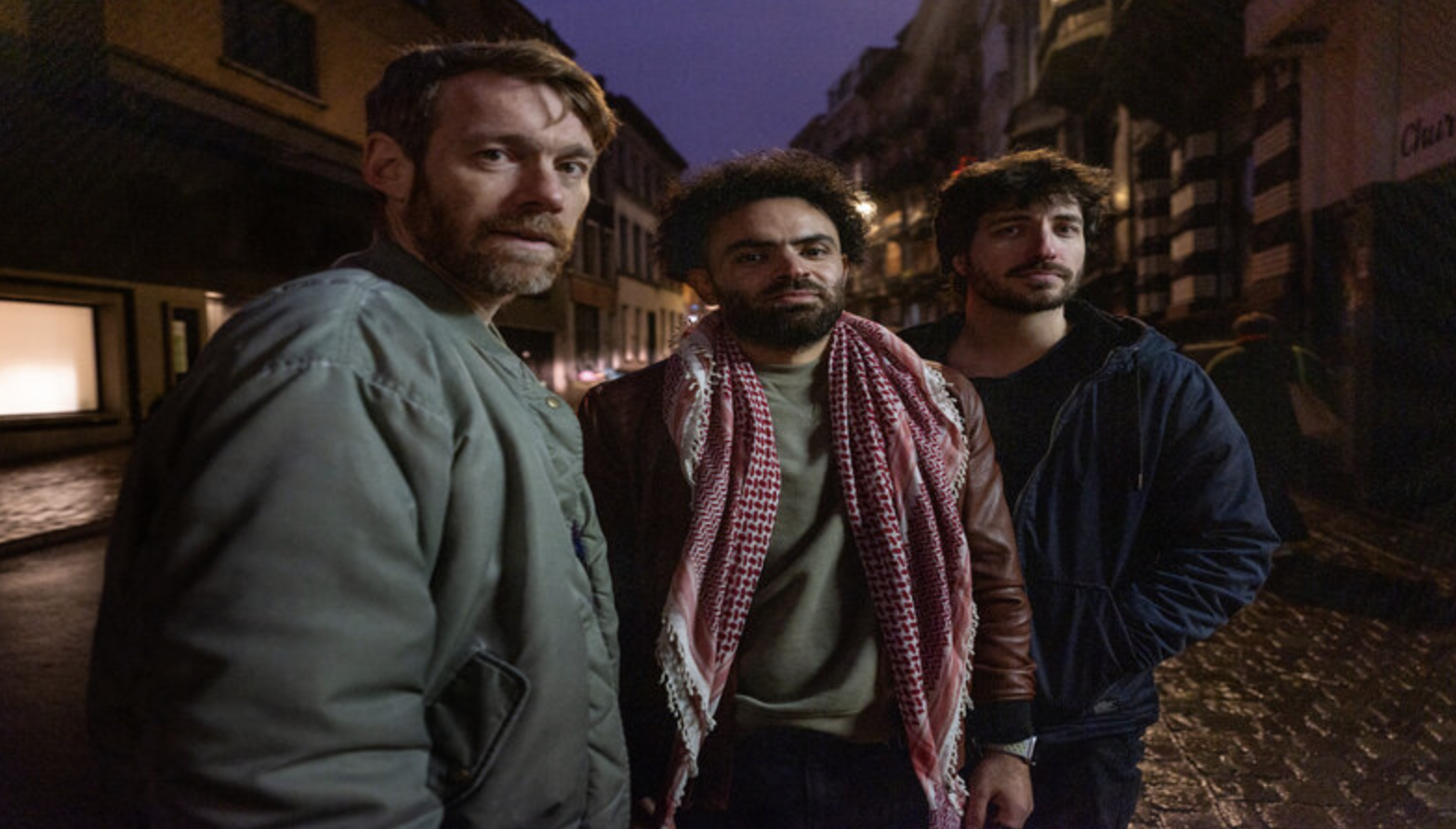
Each month the Monolith Cocktail shares posts from our Italian pen pals at Kalporz. May’s swap finds Monica Mazzoli introducing us to the Belgian-Iraqi trio Use Knife.
“You can’t separate politics from art. […] When we worked together with Saif, that was already a political thing”. With this clear and concise statement released to The Quietus in 2023, Kwinten Mordijck – one of the three minds that gave life to the Belgian-Iraqi trio Use Knife – emphasized the socio-political nature of the artistic project that he was setting up with Stef Heeren and Saif Al-Qaissy . Almost two years have passed and on March 28th, 2025 the second album under the name Use Knife, État Coupable, was released, but Mordijck ’s sentence now rings truer than ever.
The trio’s first album The Shedding of Skin (2022) was born from the meeting of Mordijck, Heeren and Al-Qaissy during a musical research residency at the cultural center of Gent Viernulvier: long sonic jams in which to confront the need to “feel the other’s point of view when making music”, and to think about how “someone from another culture reacts when making music with you” (words in quotation marks by Heeren – always – to The Quietus).
On one side two Belgian musicians who have abandoned their previous sound guise between alt-folk and electroacoustic music ( Kiss The Anus Of A Black Cat ) to experiment with analogue and modular synths and measure themselves against the rhythmic complexity of Arabic and Iraqi music (in this case), on the other, an Iraqi singer and percussionist who left his homeland (Iraq) to escape the war and gives voice to his experiences in music (read the lyrics of “Freedom, Asshole”).
Two distant worlds: neither of the two prevails over the other but a rhythmic magma with many facets is created between West and East. The opening track of État Coupable, the latest album by the trio mixed by Radwan Ghazi Moumneh (Jerusalem in My Heart), “Demain Sera Mieux” is paradigmatic in this sense. In the four and a half minutes of the piece, a 10/6 time signature (popular in Iraq but also in Armenian and Turkish music) is grafted onto a vortex of synths. Or again: the vibrations, the industrial beats of a track like “ Iraqi Drum Set ” are also ignited by the daf percussions (i.e. a frame drum that is part of the Middle Eastern musical tradition) and the chaos of words resulting from sampling the trio’s conversations about Iraqi instruments and their pronunciation.
The sound discourse of Use Knife (the name comes from a verse by Current 93, “the stars spell grammar or use knife”) is sharp and in media res: there are no preambles, we enter into the heart of an artistic creation that wants to become action. MM
 Monolith Cocktail Blog