The Monthly Playlist For August 2024
August 30, 2024
CHOICE MUSIC FROM THE LAST MONTH ON THE MONOLITH COCKTAIL: TEAM EFFORT
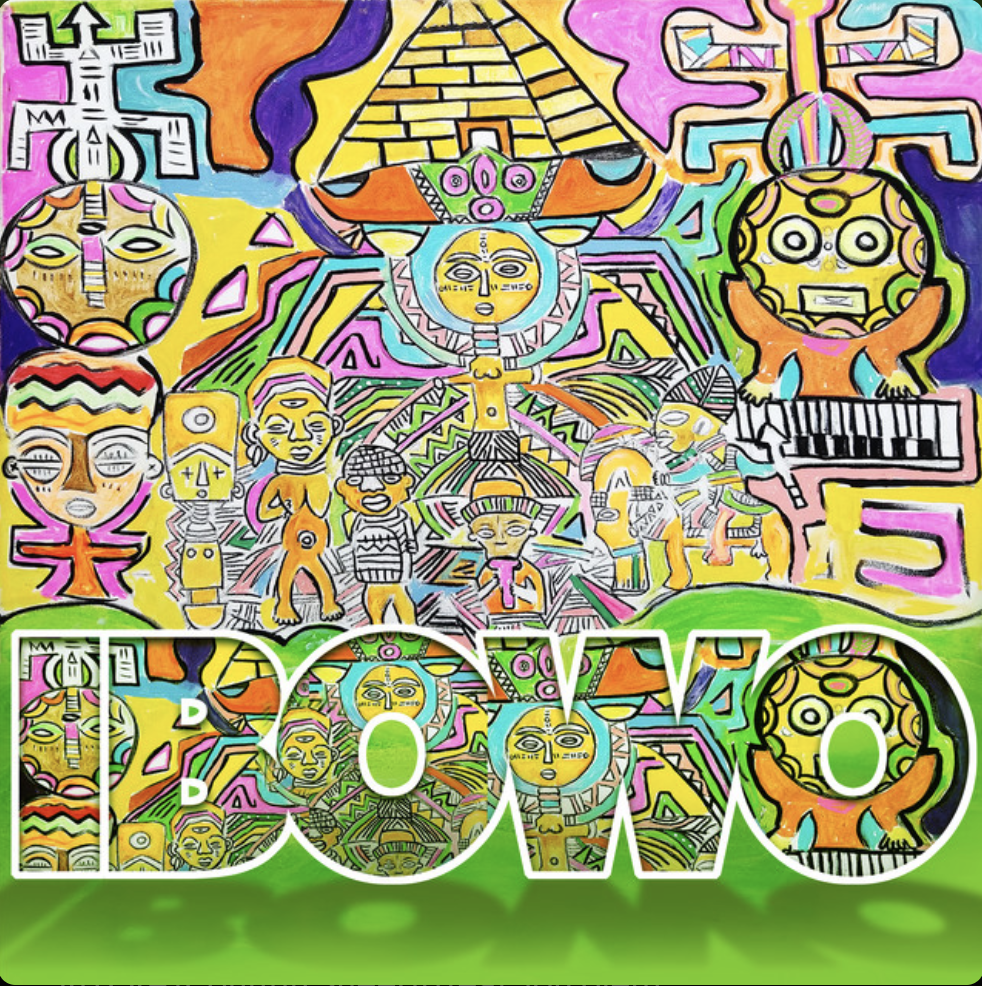
The Monthly Revue for August 2024: Thirty-eight choice tracks chosen by Dominic Valvona, Matt ‘Rap Control’ Oliver and Brian ‘Bordello’ Shea from the last month. Features a real shake up and mix of tracks we’ve both covered in our review columns and articles. We’ve also added a smattering of tracks that we either didn’t get the room to feature or missed at the time. Covering many bases, expect to hear and discover new sounds, new artists. Consider this playlist the blog’s very own ideal radio show: no chatter, no gaps, no cosy nepotism. An Oasis free zone.
TrAcKliSt
Zack Clarke ‘Alternativefacts’
Leif Maine/Jackson Mathod/J. Scienide ‘Volte-Face’
OldBoy Rhymes/Mr. Lif/Sage Francis ‘American Pyramids’
boycalledcrow ‘magic medicine’
Dead Players ‘Gasoline Sazerac’
J Littles & Kong The Artisan ‘Do The Job’
Flat Worms ‘Diver’
Fast Execution ‘Total Bitch’
The Mining Co. ‘Time Wasted’
Tucker Zimmerman/Big Thief/Iiji/Twain ‘Burial At Sea’
Alessandra Leao & Sapopemba ‘Exu Ajuo’
Randy Mason ‘Wallet Phone Keys’
L.I.F.E. Long/Noam Chopski/Elohem Star ‘Cross Ponds’
Jacob Wick Ensemble ‘Rough And Ready’
Silas J. Dirge ‘Running From Myself’
Kayla Silverman ‘Maybe’
Hohnen Ford ‘Another Lifetime’
Sans Soucis ‘Brave’
Sweeney ‘School Life’
Chinese American Bear ‘Take Me To Beijing’
Tony Jay ‘Doubtfully Yours’
The Soundcarriers ‘Sonya’s Lament’
Henna Emilia Hietamaki ‘Maan alle’
Drew Mulholland & Garden Gate ‘Tumulus’
Tetsuo ii ‘Heart of the Oak’
Xqui & Agnieszka Iwanek ‘Echoes of Serenity 10b’
Poeji ‘Whoo’
Camille Baziadoly ‘Fading Pressure’
Petrolio ‘La Fine Della Linea Retta’
Fiorella 16 & Asteroide ‘PRIMAvera’
Michele Bokanowski ‘Andante’
Jan Esbra ‘Returning’
Nicole Mitchell & Ballake Sissoko ‘Kanu’
Jasik Ft. Frankie Jax No Mad ‘Atako (Pass The Champagne)’ Apollo Brown & CRIMEAPPLE ‘Coke with Ice’
Verb T/Malek Winter/BVA ‘Rubble’
Ivan the Tolerable ‘Floating Palm’
Pauli Lyytinen ‘Lehto II’
THE MONTHLY DIGEST OF ACCUMULATED NEW MUSIC; THE SOCIAL INTER-GENERATIONAL/ECLECTIC AND ANNIVERSARY ALBUMS CELEBRATING PLAYLIST; AND CHOICE PIECES FROM THE ARCHIVES.

_____/THE NEW
Ainon ‘Within’
(We Jazz) 6th September 2024
A pastoral suite from the Helsinki-residing “avant-garde chamber jazz” Ainon ensemble, Within is an expressive rites and abstracted conveyance of nature, the environment and the elements. This is the quartet’s second album for the reputable Finnish label We Jazz, following on from their 2020 Drought debut.
Enhancing and honing their craft live in recent years, they’ve managed to both beautifully and exploratively match various jazz forms and influences with the classical, the instruments of saxophone with woodwind and strings. Led by cellist Aino Juutilainen and flanked in a constant movement on all sides, at all angles, by Merimaija Aalto on violin, viola and lofty diaphanous airy voice duties, Milo Linnovaara on saxophone, clarinet and flute, and Joonas Leppänen (who you might recognize from fellow We Jazz travellers Alder Ego) on drums and various percussive tools, apparatus, the Ainon ensemble find inspiration from the beautiful avant-garde taciturn and textual jazz cellist recordings of Abdul Wadud and the often cool West Coast free improvisations of the much underappreciated swing veteran with a romantic sentimental lean, Jimmy Giuffre.
Amongst the undergrowth and fauna, and through the “komorebi” Japanese ideal of sunlight filtered through the leaves of a tree, both of those influences permeate every corner of the ensemble’s musicianship. Expanding further, the melancholic pain of Eastern European classical music, the more pleasing suffused gravity and evergreen pastorals of Vaughn Williams and the woodland magic, the animal clops of Prokofiev are bonded with the waddled and geese-like pecked avian impersonating, resonating, reedy and more fluttered sax, clarinet and flute of Roscoe Mitchell, Anthony Braxton and Jeremy Steig, and the percussion of the Art Ensemble Of Chicago (I’m sure there’s a typewriter dinging away in there somewhere; just one of the many hidden percussive sounds and evocations that don’t seem to have come from an actual instrument).
Bendy and dreamy, detuned and mournful, aspects of the landscape, whether imagined or real, are conveyed in an abstract manner, yet evoke a sprung suite of outstanding beauty and sensory elements. The ensemble match the avant-garde, with the blues (for there is a subtle touch of it to be found throughout), freeform jazz and the classical to find a perfect balance and harmony, yet stretch the perimeters.
Jan Esbra ‘Suspended In A Breath’
(Spirituals) 30th August 2024
A Colombian in Brooklyn, the guitarist, composer and improviser Jan Esbra amorphously merges worlds and a sense of release on his third solo album Suspended In A Breath.
Finding an “emotional outlet” during a time of inner most reflection, Esbra’s daily practice of personal growth was translated into an ambient language of prompted feels, near lunar and unspoiled vague geography and cloud gazing. Fed through the multi-purpose box of tricks known as the Organelle (a toy-like looking combination of synth, sampler, drum machine, sequencer, effects unit and looper), guitar lines and hidden musical sources are transduced and transformed into vapours and the biomorphic.
Within a Venn diagram of early electronic experimentation, the ambient and new age, there’s an echo of Laraaji, Boards Of Canada, Eno, Terry Riley, Beaumont Hannant and, as referenced in the PR notes, Manuel Göttsching’s iconic and highly influential E2-E4 – an album that set a catalyst and template, informing early techno through such progenitors of the form as Carl Craig, who famously remixed Göttsching’s signature.
Over near misty primal coasts and swamps, where old ancestral creatures roam in a lost world, glassy bulb-shaped notes dance and crystalized forms take shape. Various passages of liquid, of water, can be heard in and outside the resonating and gleamed metal tank, feeding softened blossoms as the stars barely shine from above, through a thin gauze of cloud cover. In a liminal zone between the synthesized and organic the merest application of a filter, an enervated loop iteration, satellite data broadcast, loom or oscillation can set a contemplative mood; can prompt thoughts on such subjects as the artificial and human; and can conjure up imaginative locations.
A equilibrium of a kind is found, as Esbra morphs his source material and compositions into something that’s as calming as it is searching and probing. Each subsequent listen reveals more subtle layers, more melodic touches; a slow release of inventiveness.
David Vickers & Sergio Mariani_MRN ‘New Dawn’
(Audiobulb Records) 24th August 2024
A placeable union between the Gloucestershire bred but Seoul-based composer, guitarist, producer Daniel Vickers and Argentine but living in the USA for the past thirty-odd years composer and producer Sergio Mariani (appearing here with the attached underscore _MRN tag), the New Dawn release evokes fourth world visions of ambient America’s interior, its borderlands with Mexico and night time desert vistas.
The most subtle of mirage bendy, tremolo-like trembles and waning arching guitar, obscured field recordings, synthesized glassy gleams and undulations, and toy twinkled xylophone shape moments of time, the sense of a vague panorama and the elements. It’s like setting up a transformed sonic documentation of a quiet, unspoiled environment; the devices picking up the passing of time in a particular landscape.
There’s no getting away from the Americana campfire feels and desert mysticism contours of Ry Cooder, and yet, the tine-like picking, the sound of softened metallic textured rhythms and water carrier, jug-poured percussion denote vague Southeast Asian influences: even Japanese environment music.
Following the day, from dawn until a final night time scene back home, with the shower running in the background as mellow, melted ambience stirs up subtle collected thoughts, Vickers and Mariani describe and emote normally unrecorded daily routines and places for a peaceable, empirical Daniel Lanois-style meditation. New Dawn is a successful collaboration between two artists articulating a sense of “latent” and “natural” with adroit understatement.
Aidan Lochrin ‘Ritual Incantation’
(Submarine Broadcasting Company)
Through unidentified coastal currents and waves and the transformed field recordings taken at both Queens Park in Glasgow’s South Side and Kelvingrove Park in the city’s West End, Aidan Lochrin conveys an abstract, emotive and ghostly veiled sense of the ephemeral on a new album of ambient, minimalist techno and electronic psychogeography and meditative atmospheres.
Written during the year’s “dark winter” months – the Scottish summer thus far will have done little to abate the winter blues – in a period of aimless “ennui”, Ritual Incantation deals with faded memories and past lives through transportive vapours, hidden, or at least barely recognisable, instruments, tools, the captured activities and movements of those in a gauzy background scene and machinery (sounding at times like Popol Vuh’s debut album generators and chambers, and at one point, like fluttered strips of paper being blown about by an air conditioning unit), and spells of Iberian-reminiscent classical guitar and tubular percussion.
Mirage, hallucinations and the near paranormal, each suite is like a Fortean shipping forecast, or ebbing movement of either soothing shadow-gazing or the uneasy. And amongst the filaments, fizzles and fuzzy static, tangible stirrings of Basic Channel, Forest Swords and Mills emerge until once more enveloped or dissipating into ether.
Lochrin is supported by the Glaswegian artist Jude Norton-Smith on the city parks prompted ‘In The Ruins Of No Specific Place’, the Dunfermline composer Somer on the opening seascape of ringing, bobbing buoys and seagull hovering ‘Fragments’, and Christopher Manning on the Tbilisi twinned with Glasgow transmission ‘Mercy IV’. I’m not entirely sure, but on the latter it sounds like there’s a shivered, pained and mournfully bowed violin, viola or cello at work that’s slightly reminiscent of Alison Cotton or perhaps Simon McCorry.
There’s much scope as Lochrin ties together all the various threads of sonic and music from his oeuvre – the Glasgow-based artist mentions both the “noises” and “harsher” sounds of The Death Of Arcadia and the softer synths of that album’s sister Chalkydri in an artist’s statement. And so you find the most minimalist ambient touches and shades of kosmische sharing space with what can only be described as hauntology Baroque on the submerged light bearing antiquarian ‘Divine Sunlight’ – imagine a supernatural transmogrification of Handel by Wendy Carlos or Belbury Poly.
In coastal and abandoned settings, in machine workshops and more alien scenes, Lochrin conjures up the erasure and the half-recalled, the traces of what once existed or what or who passed through this way, with an ephemeral statement of subtle engineering, reification and meditative spiritual pastoralism.
Michèle Bokanowski ‘Cirque’
(Kythibong) 23rd August 2024
It’s a seldom-shared fact, or piece of trivia, but way back in the late 18th century ex-cavalryman and attributed progenitor of the modern circus, Philip Astley, worked out the optimum diameter (42 feet) needed for balancing atop of a horse as it galloped round the circus ring – it’s all to do with centrifugal forces; an inch either way and you’d probably end up being thrown into the audience.
With that mathematical nugget of circus lore in mind, let me bring the Nantes-based label Kythibong’s re-release special of Michèle Bokanowski’s 1995 Cirque LP to your attention; an experimental suite of movements that transmogrified, looped, cut-up and transported the French composer’s various field recordings of the circus – both inside and out of the big top – during a five-year period between 1988 and 1993. All the fun of the fair, the wild excitement and applause of the circus theatrics, clowning buffoonery, high wire suspense was passed through Michèle’s music concrete practice to create juxtapositions of shade and light, fun and the unsettled: imagine Degas circus impressions merging with Ensor’s more disturbing, often macabre, carnival imagines to the serialism composed spectacle of the recognizable and surreal.
Before we move on, a little context and history is needed. For much of her life, living and working out of the French capital, Michèle’s formative years were spent in Cannes: born into a household of music and writing. Although originally imbued by and studying the classical, at the age of twenty-two she ventured into the experimental world of music concrete, inspired by the teachings, writings of such luminaries of the unbounded form as Pierre Schaeffer and René Leibowitz. It was through the Polish and French composer Leibowitz that she was opened up to the iconic progenitor of serialism, Arnold Schönberg.
Michèle would go on to serve a two-year internship in the study of sound synthesis, under the direction of Schaeffer at the famous ORTF Research Department in the early 70s. At a similar time, the burgeoning composer would also study music computing at the Faculty of Vincennes. Periods in the company of Ellane Rodigue led to a pathway in electronic music. But the CV is expansive, with concert intended compositions (including Cirque) appearing alongside pieces for theatre, dance productions and cinema. Collaborations are also numerous; from working with Catheringe Dasté to the choreographers Hideyuki Yano, Marceline Lartigue and Bernardo Montet, and her film director husband Patrick Bokanowski – namely on the score for his art-house film The Angel.
And so, with all those reference points the Cirque album sets an avant-garde mood. The central or recurring feature of which, across a number of classical musical entitled speeds and feels (“Allegro”, “Andante” and “Scherzo”) is a reverberated saw dust kicking horse that gallops into view, emerging out of a loop: vanishing back into an eerie darkness once it has passed us by on a lap of the ring. From the darkness, the shadows, an audience of delighted children and adults shower the performers with applause, whistles and near operatic shrills. But those same sounds are gradually changed and transformed into loops and iterations more maniacal and strange: like a hiccupping cuckoo, a hallucinatory hoot, and in one case, near orgasmic.
A snare roll announces an impressive acrobatic feat to climatic cheers, but a second phase morphs everything into a freak show hall of mirrors. In a whirl, a cylindrical lantern show, real sounds and the generated coalesce in an unsettling and dizzying experiment of magic and illusion; a removed vision of the familiar reactions of an audience caught out in an entirely different kind of sonic experiment. The circus as you’ve never heard it before, but just about recognisable, takes on whole “other” properties under Michèle’s inventive compositional hand; setting the colourful spectacle of the circus in a unique timeless realm.
__/THE SOCIAL PLAYLIST VOLUME 89

Anniversary choices this month are in the form of tracks from Another Side Of Bob Dylan (a staggering 60 years old this month), Portishead’s decade defining trip-hop masterpiece, the Dummy LP, a throwdown from the horrorcore Gravediggaz power team (the Prince Paul, RZA, Frukwan, Poetic supergroup with countless additional pop-ups of hip-hop’s finest) and their 6 Feet Deep LP, and Merchandise’s After The End album from 2014. Re-released, resurrected if you like in 2014, and although it isn’t officially an anniversary, I’ve chosen to include a cut from ZED’s, aka Bernard Szajner, Visions Of Dune LP – my original review from 2014 can be found in the Archive section below.
From across eras, borders and genres the rest of this month’s playlist features recentish additions from Khalab (a remix by Admiral of ‘Drone Ra’) and Lewis Spybey’s Dead Voices On Air project (‘Gray Bay Play Watch’), another revived soundtrack fill from the cult Italian composer Piero Umiliani (‘Basso Nuovo’), and inter-generational tracks from Neuschwanstein, Mad Flava, Koko, Halasan Bazar, Creation Rebel, Renaldo & The Loaf and more…
TRACKLIST:
Koko ‘Grama Graphtos’
Rättö ja Lehtisalo ‘Viisi ystävää’
Pipes You See, Pipes You Don’t ‘Karaoke Free’
Shelagh McDonald ‘Look Over The Hill And Far Away’
Blackburn & Snow ‘Yes Today’
Bob Dylan ‘Black Crow Blues’
Halasan Bazar ‘Live Without Love’
Merchandise ‘Green Lady’
Cee-Rock ‘Linden Boulze’
Gravediggaz ‘Constant Elevation’
Mad Flava ‘From The Ground Unda’
Khalab ‘Drone Ra (Admiral Remix)’
Roland Haynes ‘Kirstn’s Place’
Neuschwanstein ‘Intruders And The Punishment’
Bernard Szajner ‘Harkonnen’
Linear Movement ‘Hydrogens’
Tom Dissevelt, Kid Baltan ‘Vibration’
John Tchicai, Cadentia Nova Danica ‘Fodringsmontage’
Brian Davison’s Every Which Way ‘The Light’
Creation Rebel ‘Conspiring’
Portishead ‘Biscuit’
Dead Voices On Air ‘Gray Bay Play Watch’
Piero Umiliani ‘Basso Nuovo’
K.K’s No. 2 Band ‘Ninim Saa Ka Akyi’
Brahim Izri ‘A Wid Ur N Ehric’
Dschinn ‘I’m In Love’
Donatella Bardi ‘Perche Dovrei Credere’
Renaldo & The Loaf ‘Hambu Hodo’
The Molesters ‘I Am’
Hagar The Womb ‘Dressed To Kill’
___/ARCHIVES

From the vast archives of the Monolith Cocktail, two choice picks from August of 2014; the first, Tampa Bay’s lost boys Merchandise and their album After The End, and the second, Andy Votel’s resurrected release of Bernard Szajner’s 1979 homage to Dune, Visions of Dune.
Merchandise ‘After The End’
(Mute) August 2014
Moping around the darkened swamplands and back lots of a southern sunshine state in existential, switchblade, angst, Tampa Bay’s lost boys once again shift closer to a subtler, rounded and cerebral pop ascetic.
Despite all the talk of their DIY punk and hardcore roots – living and recording together in communal bliss – Merchandise have always flirted with a Howard Deuth and John Hughes vision of 80s adolescence. On their latest transmission from the margins they effortlessly slip between the intellectual aloof alternative rock – the Athens, Georgia scene in particular – of that decade’s college radio stations, and the ray ban donned pop of more recent times as they peruse an imaginary teen doom film set.
Since their inaugural baptism with the mostly applauded 2012 album, Children Of Desire (depending who you listen to, their first album proper), the band have pulled a few surprises from their kit bag – the skulking panoramic moiety of ‘Begging For Your Life/In The City Light’, from the beginning of the year, sounded like Chet Baker teaming up with Gene Vincent at a Velvet Underground happening Boho -, making it difficult to either venerate or write them-off: prone to procrastination and sulky indulgence at times.
Their last hurrah, 2013’s Total Nite, marked the end of another cycle, as the group left their last label to sign with 4AD (home to Scott Walker, tUnE-yArDs and Deerhunter), expanding their ranks in the process and enlisting outside help from producer Gareth Jones. Presumably Jones was picked for his work with the lords of morose, Depeche Mode (moving to the iconic Hansa Berlin studio and recording the bands Bowie mirrored trilogy of Construction Time Again, Some Great Reward and Black Celebration), and for notable duties carried out on albums by Interpol, These New Puritans and, the lighter and disarming Grizzly Bear.
With a far more patient, effortless and breezy demeanour, those maladies remain less intensive, drawn-out from a mostly melodic envelope of multiple guitar tracks. A case in point is the rattlesnake tambourine accented and Gothic Talk Talk piano spanked title track, appearing as the penultimate, frayed emotional downer. At the opposite end of the spectrum, Merchandise adopts – and the jury’s out on this one – a palm tree patterned short-sleeved wearing Mott The Hopple guise for the kooky ‘awaiting on a call’ love sick phaser-beamed ‘Telephone’. A most peculiar, almost old-fashioned vernacular roll back, that once again recalls some hazy 80s high school drama (more Rumble Fish than Ferris Bueller).
But the pulse mainlines a sophisticated accentuated blend of The Smiths (languidly lost in a protestation merry-go-round on ‘Looking Glass Waltz’), the Psychedelic Furs (on the richly melodic, interplaying acoustic and electric guitar, pretty in pink, ‘Enemy’ and broody heart pranged ‘True Monuments’) and early REM. There’s even a quasi-bass line and twisted lick from Bowie’s Scary Monsters period on the group’s most dynamic and catchy standalone, ‘Little Killer’.
As pop becomes the default setting, even for many alternative bands, Merchandise lend it a certain introspective swoon and quality; they may lounge around in moody reflection, but they know how to write a meandering congruous melody.
Not quite as adventurous as their label mates, Deerhunter, or even Bradford Cox’s – though both frontmen share the same surname, their vocal delivery couldn’t be more different, the Merch’s Carson Cox curl-lipped with a subtle southern drawl, sounding like the Tampa Springsteen – solo Atlas Sound side project, the two bands have returned to a harmonic abstract form of rock’n’roll.
Regulated to a point, toned down and spaced evenly throughout, After The End demands repeated plays and attention, before it unveils its multilayers of nuanced and deftly touched craftsmanship. Far from a leap of faith for the ever evolving and experimental band, the move isn’t as drastic or bombastic as we’ve perhaps been led to believe; the hype and numerous interviews and band quotes harking towards a dramatic plunge into the unknown. Like many before them, that progression, both musically and ambitiously from DIY to, potentially, populism, without fatally compromising the spark that set you apart in the first place, has been on this occasion a successful one.
ZED aka Bernard Szajner ‘Visions Of Dune’
(InFiné Music) August 2014
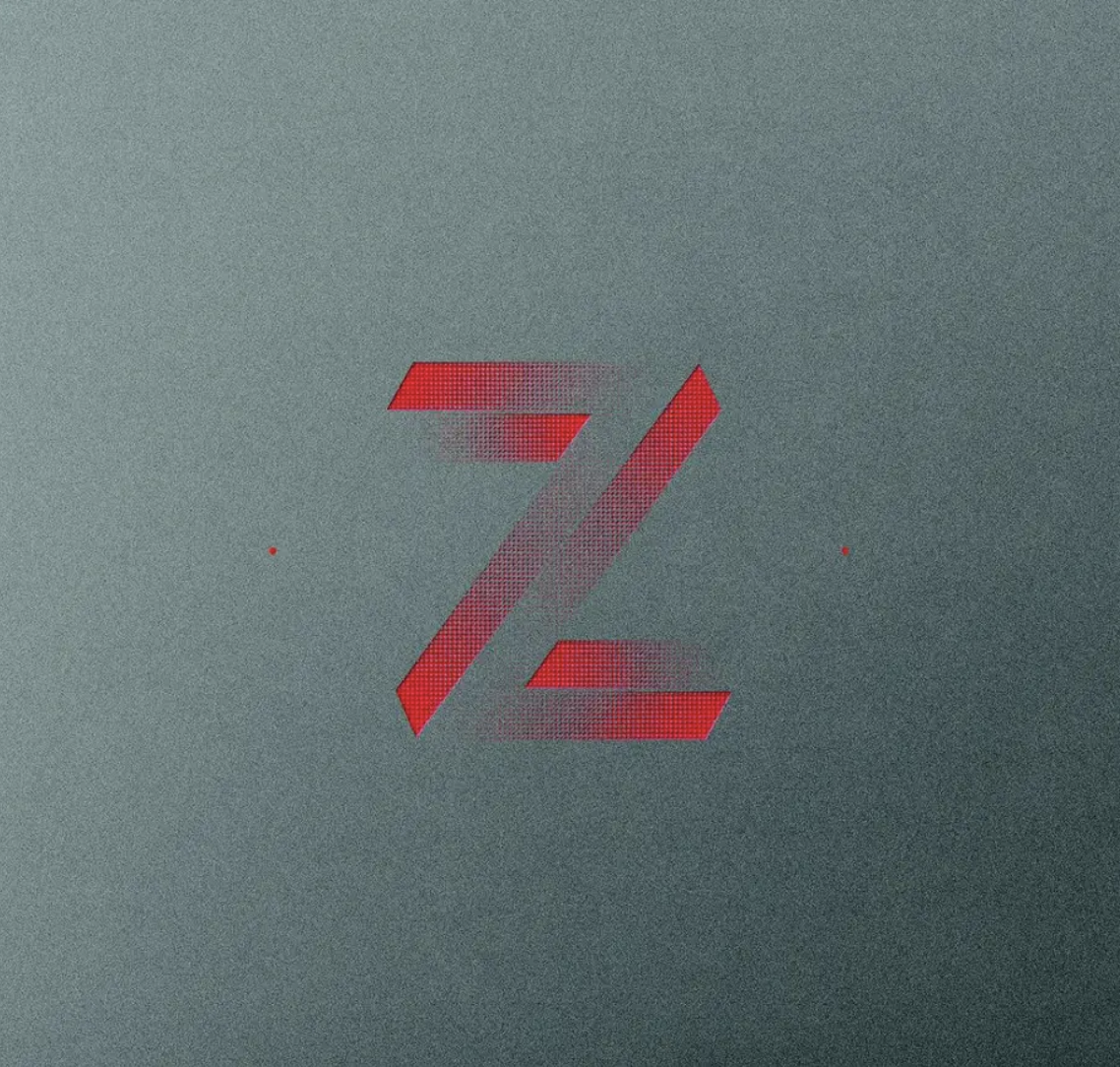
Sealed with an excitable descriptive, cosmic dreamy, forward and minimix teaser by DJ and renowned anthropologist of the most odd and obscure music from across the far flung reaches of the globe (and sometimes, so out there as to sound from another dimension), Andy Votel, a case is enthusiastically made for the resurrection of the French artist, inventor and composer Bernard Szajner’s 1979 homage to Dune.
Esteemed by Votel as a ‘Gallic-magnetic conceptual synth-pop classic’, Szajner’s manipulated Oberheim sequencer led flights of fantasy was essentially a work in progress, its creator self-taught, learning on the job so-to-speak. Under the neon-flickered, Boorman-esque, mystique of ZED, Szajner’s visionary series of loops were produced in a short timeframe: reliant to a point on borrowing equipment from friends, originally requiring an Oberheim for eight days along with a Revox two-track tape recorder, and when that had to go back or had served its purpose, was replaced with an Akai four-track. Transforming his intuitive sense of exploration and experimentation further by introducing the prog-acid-rock journeyman drummer Clément Bailly and Magma’s vocalist Kluas Blasquiz to the mix, the minimalistic Krautrock style synths and vaporised sizzling sonics moved into the realms of space rock and futuristic jazz.
Spending his formative years both designing and performing lights show spectaculars for The Who, Gong and the already mentioned Magma, the conceptual artists Szajner couldn’t help but absorb and channel some of their spirit, though he would also find a certain affinity with the cerebral ambient soundscapes of Brian Eno too.
Remastered by the adroit specialist Rashad Becker from the original tapes (of course), Visions Of Dune conceptually occupies the space between the lunatic Chilean auteur Alejandro Jodorowsky’s epic, if messy, unrealised film version and David Lynch’s mid-eighties space operatic/esoteric soap opera effort.
Of course, we only have one of these soundtracks, though Jodorowsky’s surrealistic magnum opus envisioned a soundtrack that would feature bands such as Pink Floyd. Lynch chose, rather bizarrely, Toto to compose his soundtrack; compensating by offering Eno a solitary and suitably soul-searching ambient ‘Prophecy Theme’ to break up the agonized pomp rock and classicism.
Szajner’s epic was sourced from Frank Herbert’s Dune trilogy of sci-fi novels: a metaphoric futuristic paradigm of Lawrence Of Arabia’s instigated Arab revolt, the Bible and Koran, Zen Buddhism, the fight for resources (oil replaced by the made-up spice mélange, though the sanctity and scarcity of water is echoed in the stories central and most important location, the desert planet of Arrakis) and the all too obligatory intrigues of competing Empires. A subtle amorphous theme is created for the stories most important characters – be it the House Atreides who spawn a messianic liberator or the miscreant maleficent led House Harkonnen -, rituals and notable plot lines, whilst a repeating desert theme permeates throughout.
An almost uninterrupted soundtrack, each passage bleeding into the other, only demarcated by the track titles themselves, the main electro gliding, whooshing magnetic charged foundations signpost Tangerine Dreams own nebular voyages – especially their acid-trance elegiac Phaedra. The opening quartet of ‘Dune’, ‘Bashar’, ‘Thufir Hawat’ and ‘Sardauker’ flow from ponderous exploration via the retro/futuristic generator pulses of the Forbidden Planet powered soundscape, used to represent the foreboding Imperial Guard, to the staccato style rolling drum breaks that kick-in as we’re introduced to the calculative super brain Mentat.
By the end of the first of two acts the mood alters, growing ever more ominous as the spice world of Arrakis’s monstrous sized ‘Shaî Hulud’, sand worms, prompt a squirming and looming otherworldly response. The fateful ‘Duke’ is accorded a shadowy, almost ghostly eulogy style augur of impending doom; his eventual fate alluded to by a hidden snarling beastly presence.
Act two continues with wave after wave of algorithms and arpeggiator patterns, tubular chimed rings but adds menacing alien breaths (Blasquiz’s distorted and masked vocals no doubt) and Goblin style horror show prog.
Tamed and enervated by a flood of similar sequencer-manipulated soundtracks, both before and after Visions Of Dune, it beggars belief that Szajner’s label, Pathé Marconi/EMI, were worried that two of these tracks (the previously mentioned ‘Duke’ and ‘Spice’), were ‘too futuristic’; a crazy reaction, even for in the 70s. Initially left off the original pressing, they’re both included for the first time in this new repackaged, adorned with ‘reimagined’ artwork by Barcelona-based designer Arnau Pi, classic.
Obviously resonating with the recent attention and re-examined Jodowsky project and arriving, perhaps a little too soon, before the 50th anniversary of Herbert’s novel in 2015, Visions Of Dune is certainly a more favorable soundtrack than anything that has gone on before or since, faithful to the wondrous, and sometimes trippy, mystery and evil present in the interstellar epic expansive plot without the bombast and over-indulged operatics.
Hi, my name is Dominic Valvona and I’m the Founder of the music/culture blog monolithcocktail.com For the last ten years I’ve featured and supported music, musicians and labels we love across genres from around the world that we think you’ll want to know about. No content on the site is paid for or sponsored and we only feature artists we have genuine respect for /love. If you enjoy our reviews (and we often write long, thoughtful ones), found a new artist you admire or if we have featured you or artists you represent and would like to buy us a coffee at https://ko-fi.com/monolithcocktail to say cheers for spreading the word, then that would be much appreciated.
A WORLD OF SONIC/MUSICAL DISCOVERIES AND POSSIBILITIES REVIEWED BY DOMINIC VALVONA
(Unless stated otherwise, all releases are available now)
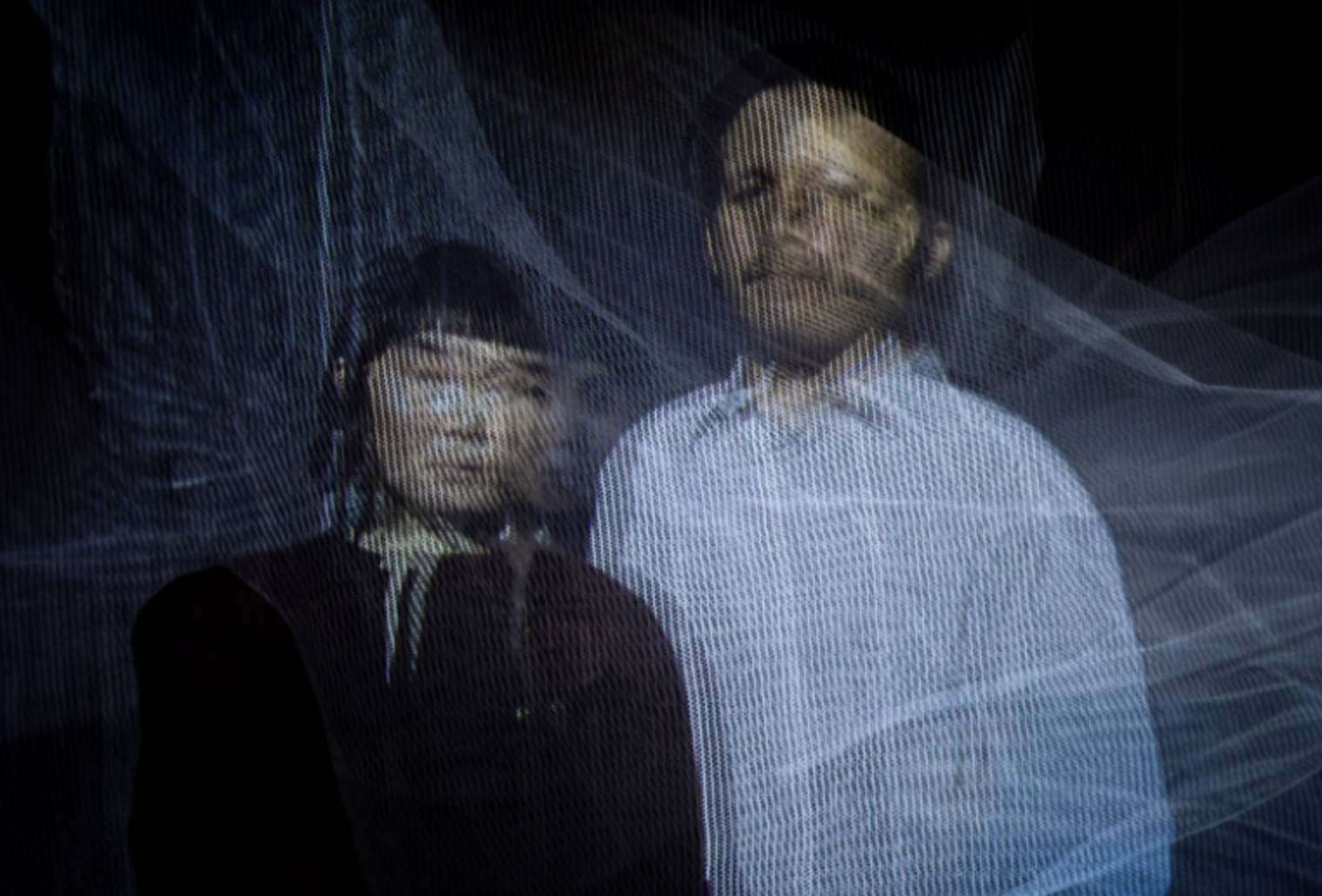
Credit: Hanne Kaunicnik
Poeji ‘Nant’
(Squama)
In shrouded chambers polygenesis cultures and roots cross paths and open up an amorphous portal to a unique world of redolent Asian percussion and Mongolian “urtyn duu” vocal soundings.
Making good on their cryptically coordinate-like coded 031921 5.24 5.53 EP from 2022, German drummer extraordinaire Simon Popp and the Ulaanbaatar born vocalist Enkhjargal Erkhembayar (shortened to Enji) have combined their individual disciplines and scope of influences to venture even further into uncharted territory.
For his part, the Bavarian Popp uses an extensive apparatus of hand drums and worldly sourced percussion to conjure up an atmosphere of both atonal and rhythmic (sometimes verging on a break or two) West Africa, Tibet, gamelan Indonesia and Japan. This in turn evokes a transmogrified vague sense of the avant-garde, of Kabuki theatre, of Shinto and Buddhist mysticism and mystery.
Popp’s collaborative foil Enji is a scion of the old Mongolian tradition of the Long song, a form of singing that emphasis and extends each syllable of text for long stretches of time. It’s said that a song with only ten actual words can last hours. Strong on the symbolism of the Mongolians much dependable horse, the long song form can be philosophical, religious, romantic or celebratory. Now, in a different century, Enji channels this heritage to voice, utter, accent, assonant, woo, and like breathing onto a cold glassy surface, exhales the diaphanous, gauzy, ached and comforting – the truly mysterious hummed ‘Buuwein Duu’ sounds like a lullaby.
Although much of the wording is linked to those roots, there’s an ambiguity to much of the carrying style vocals. For instance, the duo’s appellation of Poeji was chosen because it can be translated into various languages: meaning “sing” in Slovenian and roughly “poetry” in Japanese. The album title, Nant, is itself old Welsh in derivation, and can be translated as both “stream” and “valley”.
A fourth world dialect is achieved; a communication that needs no prior knowledge or understanding as the meaning is all in the delivery, emotion the cadence and largely extemporized feels and mood of the moment.
Described as working in the vernacular of post-dub and the downtemp, Nant reminded me in parts of the “tropical concrete” of the Commando Vanessa label pairing of Valentina Mag aletti and Marlene Riberio, Hatis Noit, Steve Reich and Werner “Zappi” Diermaier’s various drumming experiments as part of the faUSt duo with fellow original Faustian Jean Harve-Pèron. It is a unique conjuring of tones, textures, atmospheres, the avant-garde, the spontaneous (wherever the mood takes them) and the esoteric that won’t scare the horses. Instead, it sets a wispy, shrouded course to ventures into new realms of improvised communication; a bridging of cultures that reaches into new spheres of worldliness and the realms of new dimensions.
Raymond Antrobus & Evelyn Glennie ‘Another Noise’
30th August 2024
So tangible and effective is the clever – if taking a leap into the unknown and by chance – union between the two accomplished deaf artisans of their artistic forms that each pin-like sharp spike, each metallic shave, rattle and atmospheric undulation that builds around the unflinching candid delivery really hits hard and marks: leaves an audible impression.
The musicality, the rhythm is all in the poet Raymond Antrobus’ voice and often put-upon and sometimes self-doubting, cadence. It can’t all be put down to his deafness, but it offers something unique – although the William Blake professor of the album’s final bittersweet sign-off was both condescending and embittered-sounding in his succinct dismissal of Antrobus. I guess what I’m trying to say, is that sure the deafness is crucial, and that it opens up new or different ways of creating and circumnavigating the loss of this sense, but there is so very much more to both partners in this venture’s art form and genius that transcends the deaf condition.
Framed as it is, this inaugural collaboration between the poet and the virtuoso percussionist/composer Evelyn Glennie pushes the boundaries of poetry and sound; causing us to reevaluate our own perceptions. And with the equally acclaimed – and no stranger to this blog, as probably its most prolific featured artist/producer – in-situ producer Ian Brennan on board there’s an authenticity to what develops from the readings and mostly improvised percussive soundscapes.
Both partners on this evocative project can hardly be said to have a condition, a disability, or suffer for it. Glennie especially, through her old teacher Ron Forbes during her formative years, learnt to hear sound through different parts of her body: a physical response and channeling of sound that has helped and shaped the star percussionist to become one of the world’s greatest living musicians.
Unencumbered, the poetic language conveys, describes that unique relationship with sound, music and noise. The opening tubular shaken and spindled ‘The Noise’, which features the wooing, near ethereal sweet hummed undulations of guest artist Precious Perez, is the most obvious example of this. Rather importantly, the classically trained but eclectic Latin singer/songwriter/educator Perez, who is herself blind, is the president of the RAMPD.org charity fighting for disabled performers in the arts and more access. But it is her evocative voice that is called upon to offer something approaching a subtle wooing-like hum.
Giving each poetry performance a shiver of avant-garde, concrete and abstract sound art (even near Dadaist and Fluxus), Glennie (who had no prior knowledge of the material she was contextualizing or sounding) uses an apparatus of spokes, chains, tubes, bells and metallic-sounding brushes to articulate but also dramatically jolt and jar the alien, the unknown, but also the disturbing. She can also emphasis a state of isolation very well too; her foil’s themes often touching on a feeling of dislocation, not only because of his own deafness but because of his mixed ethnic roots: a feeling of the other you could say; of feeling adrift of both his English and Caribbean heritage.
Antrobus is unflinching on the topic of ancestral Black trauma and legacy. ‘Horror Scene As Black English Royal’ is a vivid example of slavery and that heritage that the Black community feels it can never leave behind or unshackle; prompted, I take it, by the whole Meghan Markle debacle and her fleeting acceptance into English royalty before the deluge of perceived outsider, and skin colour muddied the calm waters of stiff upper lipped etiquette in the White establishment. Glennie scores this poem with an atmosphere of horror and hurt; the sound of what could be an animalistic growl and pain striking out from the torture of slavery. ‘Ode To My Hair’ meanwhile, deals with the kinks and prejudice of a said Black “throw”, with Antrobus underlying dislocation once more emphasized as Black enough to be the victim of racism, but not Black enough for some in the Black community itself. There’s also a secondary theme of reconnection, using a haircut to talk about his relationship with his father. There are a few poems like this, where the touching relationship to a loved one, a child and even a cat is poignantly open and candid without resorting to the saccharine or to platitudes.
Talking of animals, birds, with all their various connotations, feature at various points on the album; cleverly linked to the learning of signing and to the very rhythm of city life on the visceral and incredible ‘Resonance’. I love some of the descriptions on this reading, especially the lyrically language used to describe their movement, like an “uncharted astronomy”, and the way Antrobus describes city birds as a whole different species to their country cousins.
Affectionate, personal as much as near dystopian, unnerving and hurting, Another noise is unlike anything you may have heard or felt in some time. For both artists sound and speech is near tangible; something you can almost touch. A sensory experiment, this collaboration does much to push, probe and explore perceptions of language, timbre, performance and delivery. This album is nothing less than a genuine work of artistic achievement from two of the UK’s most important artists.
The Mining Co. ‘Classic Monsters’
(PinDrop Records) 9th August 2024
Continuing to mine his childhood the London-based singer-songwriter Michael Gallagher once again produces a songbook of throwbacks to his formative adventures as a kid growing up in Donegal in Ireland.
His previous album almanac, Gum Card, touched upon a silly fleeting dabble with the occult, but this latest record (his sixth so far) is filled with childhood memories of hammy and more video nasty style supernatural characters, alongside a whole host of “weirdos”, “freaks” and “stoners”.
Once more back in his childhood home, frightened to turn the lights off, checking for Christopher Lee’s Dracula and the Wolfman under his bed, yet daring himself to keep watching those Hammer house of horror b-movies, Salem’s Lot and more bloody shockers, Gallagher links an almost lost innocence with a lifetime of travails, cathartic obsessions and searching desires.
A recurring metaphor, analogy and theme of blood runs throughout Classic Monsters, whether it’s the Top Trumps ghoulish kind of youth, or the more mature, adult-themed kind found on the taking-stock, trying not to run away, ‘Rabbit Blood’. The life force is both a reminder of immortality and the source of adolescent frights.
As always Gallagher’s lyrics are layered with references and meaning, and stretch the loose concept to open-up about anxieties, growing up and both the bliss and pains of love; the alum finale, ‘Planetarium’, sets a near ethereal astrological scene from the said title’s stargazer observatory, as two star-crossed in stoned awe and wonder look up to the celestial heavens to a retro-lunar, Theremin-like voiced and ballad style piano soundtrack. Songs like that evoke Gallagher’s sci-fi passions, and alternative Dark Star songbook score fixations (see the brilliant Phenomenology album). But even though there’s a smattering of space dust, and no matter what, a musical signature that runs throughout all his work – enervated cosmic cowboy troubadour, soft rock and evocations of the Eels, The Thrills, Josh T Pearson, Rezo and The Flaming Lips – Gallagher has changed his set-up a little.
Recording back in the Spanish studio environment that has served him so well, and once again working with the musician and producer Paco Loco (credits and highlights include working with the outstanding Josephine Foster, the Jayhawks’ Gary Louris and The Sadies), Gallagher is now also backed by the Los Jaguares de la Bahía band, who bring subtle psychedelic country and alternative rock influences to the sound. The cover art, especially the lettering style, signals The Flying Burrito Brothers or The Byrds – both of which you may detect – but there’s an almost distinct CAN-style drum on the opening sparse and wisped ‘Failure’, and a touch of Bonnie Prince Billy, Phosphorescent and Fleet Foxes.
Step forward Pablo Erra on bass, Patri Espejo on piano, Esteban Perler on drums and Loco on synths and ambient effects, for they manage to seamlessly evoke Bill Callahan one minute and Lou Reed the next. And yet also sound like Joe Jackson teaming up with Nick Lowe and the Boomtown Rats – to be honest, that last reference is largely down to the piano sound. They make the vampiric and howling themed ‘Blood Suckers’ sound disarmingly like a Scarlet’s Well fairytale of sweet dreams, soothed from beneath a baby’s calming mobile hanging over the cot. Weirdly (or not) both the band and Gallagher reminded me of Elbow and David Gray on the very 90s upbeat tempo’d ‘Killer Sun’.
It’s a winning combination that expands Gallagher’s musical scope without altering his signature style and voice, feel and intimacy. I’ve said it before about Phenomenology, but I really do think this is now his best album to date. And I’m still astounded by the lack of support for his music or exposure, as Gallagher’s The Mining Co. vehicle is worthy of praise, airplay and attention. Hopefully it will be sixth album lucky for the Irishman.
Jessica Ackerley ‘All Of The Colours Are Singing’
(AKP Recordings) 16th August 2024
Gifted guitarist, composer, bandleader and soloist Jessica Ackerley adds even more colour (sometimes vivid and striking, at other times, more pastel or muted) to their pliable sonic/musical palette. Seamlessly crossing over into art – inspired in part by the arid desert outdoor symbolic and metaphorical flowerings and abstracted landscapes of Georgia O’ Keefe – the now Honolulu-based musician turns markings and sketches into both untethered performative compositions that traverse the avant-garde, jazz, blues, experimental rock, R&B and the virtuoso. O’ Keefe’s “to see takes time” wisdom is used almost like a catalyst for the album’s articulation and more energetic ways of seeing.
Recorded in the unceded territory of the indigenous Kanaka Maoli, in the Mānoa Valley (one of Hawai’i’s venerated mythological creation story landscapes) All Of The Colours Are Singing filters an inspiring geography, sense of time and place whilst also channeling Ackerley’s synesthesia – hence that title.
With a rich CV of performances (from John Zorn’s The Stone to The Metropolitan Museum of Art) and projects behind them (from their extensive catalogue of eclectic work with such notable musicians as Marc Edwards, Tyshwan Sorey and Patrick Shiroshi), it’s no wonder that Ackerley manages to attract a talented pool of collaborators or foils. Step forward Walter Stinson on upright bass, Aaron Edgcomb on drums and Concetta Abbata on alternating violin and viola. Boundaries are crossed and blurred with this ensemble on an album of varying beauty and wilder improvisations; an album in which subtle sensibilities are comfortably followed by challenging free expressions of fusion and freeform progressive jazz. If there was an underlying genre or influence sound wise, then it must be jazz in its many forms, with echoes of the Sonny Sharrock Band and Philip Catherine, but also shades of the noirish, the smooth and more impressively quickly played and bent-out-of-shape kinds. Edgcomb’s drums can add to the jazzy feel, but also sieves, brushes and sweeps across the snare in a more tactile fashion – almost like applying brush strokes at times. It might just be me, but he reminded me of Guru Guru’s Mani Neumeier on the changeable in tempo and style, jazz-fusion ‘The Dots Are The Connection’.
But then there’s the near sweetly hummed and dreamy intro to that O’ Keefe borrowed title quote, and then what sounds like Tuareg desert or Songhoy blues guitar on the first part of the ‘Conclusion: In Four Micro Parts’ finale – this soon develops into a bout of buzzy intense Yonatan Gat experimental physical rock. That use of strings obviously steers the music away from the jazz sound towards the classical and chamber. Abbato, subtly reinforcing or emphasising the moments of grief, mourning and thoughtfulness, can both articulate dew being shaken off fluttered shaken feathers and stretch, strain and fray the violin and viola in a more avant-garde fashion – reminding me of Alison Cotton, Alex Stölze and, although she is a cellist, Anne Müller. Ackerley uses the guitar like an artist’s brush stroke, whether it is in a frenzy or blur of abstract or rapid markings and swishes, or more placed and calming. Invoking such refined and experimental bedfellows as Joe Pass, Marisa Anderson, Bill Orcutt, Chuck Johnson and the Gunn-Truscinski Duo, they walk a unique personalised pathway between medias and art forms to showcase and push at the boundaries of artful guitar-led performance and inner emotional workings.
Drew Mulholland & Garden Gate ‘Night Blooming Flowers’
(Subexotic Records) 23rd August 2024

Serial offenders of occult sounds and more nostalgic early analogue and library music, the transatlantic sonic conjuring sparring partners Drew Mulholland and Timmi Meskers have coalesced their individual disciplines for a suitably atmospheric esoteric soundtrack of retro horror novelties and pastoral chamber folkloric magik.
By candelabra light Meskers’ Garden Gate alter ego is called upon to bring a certain ethereal apparitional siren allure, enchantment and vintage, and bowed classical heightened spine-tingles and spooks to Mulholland’s BBC Radiophonics Workshop and his very own Mount Vernon Arts Lab project style electronics.
The University of Glasgow lecturer and composer-in-residence and his American “Baroque psych/horror savant” foil don’t do things by halves, having written a mini synopsis storyline of a kind for the protagonist of this horticultural paranormal and dream-realism tale. The title more or less tells you all you need to know: that is, a search and waylaid adventure to find the rarest of flowers, the botanist’s precious treasure, that only bloom’s at night. In between the start of a expedition and the final unveiling of this sought-after flower, there’s many a misstep along the pathway, as the dark arts merges with pagan and idyllic folklore to drag our main character into various spellbound jeopardies, fairytales and hallucinations.
Imbibed and inspired by a number of sources, one of Meskers most notable is the late British historian Emma Wilby’s Cunning Folk And Familiar Spirits: Shamanistic Visionary Traditions In Early Modern British Witchcraft And Magic tome; the central propound argument of which is that early modern beliefs and witchcraft were influenced by a substratum of shamanistic beliefs found in pockets of Europe – of which they are many detractors. You can throw in the Tarot and what musically sounds like to me the cult British horror soundtracks of the Amicus and Tigon studios, Dennis Wheatley, Isobel Gowdrie and a whole woodland of sprites, fairies and mythical beasts.
Altogether, with both partners’ range of influences, the soundtrack shivers, creeps and in both a supernatural and merrily manner merges the otherworldly analogue-sounding atmospheres of Belbury Poly, The Focus Group, Pye Corner Audio and Bibio with the pastoral willowy tapestries and bewitching spells of Tristram Cary, Marc Wilkinson, James Bernard, Harry Robinson and Sproatly Smith.
From dramatic stiletto piano and meanderings amongst the grass snake foliage and Piltdown Man decorated hilltops, to more hallucinatory passages of enticement, each piece of music conjures up a scene or chapter in a larger idiosyncratic tale from the pages of the Fortean Times, King James’s Daemonologie or pulp supernatural fiction. As Hauntology projects go, Night Blooming Flowers is a retro-styled success of subtle but effective storytelling, mystery and cult references; a soundtrack that now needs a film to go with it.
Asteroide & Fiorella16 ‘Suni A Través Del Espejo’
Downtime ‘Guts’ (Cruel Nature Records)
Through the various sonic peregrinations, noises and protestations of their extensive roster, the Northumberland diy label Cruel Nature travels between the hard bitten dystopias of life in a modern fractured state to more fantastical climes out in the expanses of space. Keeping up a steady prolific schedule each month, the label covers everything from the psychedelic to riled punk and societal angst.
Just dipping into the July haul of releases, I’ve picked out two albums from the mysteriously cosmic and krautrock imbibed camps; the Peruvian pairing of the Asteroide duo and Fiorella16’s Suni A Través Del Espejo and Downtime’s seemingly uninterrupted one-take Guts jam.
The former channels the psychogeography (both atavistic and otherworldly) of the Andean Altiplano, which spans Boliva, Chile and Peru. A natural phenomenon, the Altiplano (from the Colonial Spanish for “high plain”) is the most extensive high plateau on the planet outside of Tibet. It encompasses a whole high altitude giddy biosphere of pristine environments: from the famous Salar de Uyuni salt plains to Lake Titicaca – one of the main hubs along its banks, Puno, is where one half of this collaboration, the indy rock siblings Asteroide, hail from. “Through the looking glass” (as that album title translates), alongside sonic foil José María Málaga, aka Fiorella16, they magic up a highly mysterious communion with the elements and the forms, the ghosts and the extraterrestrial bodies that flicker in and out of the consciousness; that appear like dizzy, lack of oxygen and air, hallucinations and mirages.
A biomorphic score created in-situ, the properties of water, the season of Spring and a hilltop suddenly sound like the cosmic whirrs of UFOs, alien transmissions and caustic stirrings from the belly of volcanic chambers. A mixture of Steve Gunn and The Howard Hughes Suite-like post-rock Americana and harder Sunn O))) and Gunter Schickert guitar and synthesised atmospherics, generators, oscillations, satellites and Throbbing Gristle coarseness build up a near esoteric, primal communication with the plateau’s guardians. The finale, ‘PRIMAvera’, with its ‘Jennifer’ style reverberated throbbing wobbled bass, sulfur waves and data exchanges, finds the collaborative partners finally beamed-up via the tractor beam to some subterranean alien dimension.
A little bit different, though there are some krautrock-style overlaps, the “power duo” Downtime orbit head music space on their latest just-let-the-tape-record-whatever-emerges-from-an-intense-heavy-jam-like-session. Over forty minutes of edited thrashing, kraut/heavy/acid/doom rock, the participants in this expulsion of energy channel everything from the Boredoms, Acid Mothers Temple, Zeni Geva, Hawkwind, Ash Ra Tempel and Boris.
In a cosmic vacuum, near virtuoso fuzzy and scuzzy soloing and ripping phaser and flange guitar and tempo-changing beaten, crashed, squalling drums and acid galactic effects create a heavy meta(l) space rock behemoth of interstellar proportions.
A mere whiff of what to expect from this label’s catalogue, both albums are worthy of your credit and spare change.
Zack Clarke ‘Plunge’
(Orenda)
The critically hailed pianist-composer, New York improvised jazz scene stalwart, and bandleader Zack Clarke finds ever more inventive and omnivorous ways to push both the jazz form and his studied instrument on his latest album for the Orenda label.
“Building” (to paraphrase the album notes) bridges between groups of people, and cleverly merging the intelligent dance music movements with cosmic-funk-jazz, hip-hop breaks, prog and both classical and avant-garde forms, Clarke takes the proverbial “plunge” and resurfaces with a sometimes fun and at other times intense serialism of either spasmodic and stuttering or free-flowing discombobulating performative fusions.
Using modern production methods and a whole kit of tech, Clarke takes the idea of jazz in its earliest incarnation as dance music and runs with it; aping the minimalist techno and electronic rhythmic off-kilter mayhem of such iconic labels as Warp through an effects transforming removed version of the piano.
Dashed, chopped and cross-handed sophisticated modal runs and the piano’s very guts (its inner wiry stringy workings played at times almost like a splayed mallet(ed) chiming dulcimer) work with varied combinations of breakbeats, clattered, rattled, splashing and electronic padded drums and what sounds like 303 or 808 electro synths across a generous sixteen tracks.
At times all this sounds like Keith Jarrett corrupted by Drukqs era Aphex Twin; or like µ-Ziq fucking around with zappy-futuristic Herbie Hancock; or even Zappa jamming with Chick Corea. But then certain compositions (if that’s the appropriate word) reminded me of The Bad Plus, of Radiohead In Rainbows, of Mantronix, Squarepusher and Andrew Spackman’s Sad Man alter ego. It might only be me, but album finale ‘ANTHEM’ sounds like Abdullah Ibrahim transduced through d’n’b and breakbeat filters.
There’s a lot to unpick, to absorb, but weirdly enough Clarke’s inventive intentions are successfully accomplished as he bridges the avant-garde and jazz with a spectrum of fusions and experimental technology to produce a unique vision of dance music for a new century.
___/+ THESE RECOMMENDATIONS IN BRIEF
Any regular readers will know that I pride myself in writing more in depth purview-style reviews with a wider context. This means I naturally take more time and effort. Unfortunately, this also means that I can only ever scratch the surface of the thousands of releases both the blog and I get sent each month. As a compromise of sorts, I’ve chosen to now include a really briefly written roundup of releases, all of which really do deserve far more space and context. But these are recommendations, a little extra to check out of you are in the mood or inclined to discover more.
Poppy H ‘Good Hiding’
ALBUM (Adventurous Music)
In a constant artistic flux, the idiosyncratic trick noise maker and musical statements composer Poppy H always manages to embody a whole new sound with each release and project. The latest is no different for being different in that regard. A Good Hiding (a reference to taking a good beating or kicking, or just literally a “good hiding place”) is both a studied and beautifully evocative chamber haunting of removed folk and traditional ideas, windy funnelled atmospheres, low key padded bobbling and spinning electronics, voices and whispers from the air, ghostly classical piano and suffused ambient drama. To truly articulate the elegance, near Gothic mystery and dreaminess of it all would need far more words and depth: a real long form reading. But hopefully this will be enough to whet the appetite, as this is a very good album indeed.
Cumsleg Borenail ‘Broadmoor Time’
TRACK/VIDEO
Prolific instigator of phantasmagoria electronica Cumsleg Borenail is at it again with another fucked-up nightmare of sonic disturbance. As you may have rightly guessed from the title, this ominous, scary score channels the abusive, harrowing pained psychogeography of the infamous high-security psychiatric hospital in Berkshire, England. A right rogue’s gallery of inmates has occupied this facility over the decades; some of the UK’s very worst and unhinged offenders and murderers. And you can read much into the reasons behind the subject matter, the mental health care aspects and treatment especially, but it is a very haunted soundtrack of the recognisable made otherworldly, scaly and metallic.
Pauli Lyytinen ‘Lehto/Korpi’
ALBUM (We Jazz) 30th August 2024
Conjuring up a whole eco system of forest canopy menageries and lush greenness, the Finnish saxophonist Pauli Lyytinen sets out a “deep forest grove” biosphere of fertile heavenly auras and bird-like reedy probes on his solo debut for the We Jazz label.
A moiety of Don Cherry, both 60s hippy idealistic eco-friendly and more divine Biblical MGM sound studios soundtracks, cylindrical Fourth World blasts, and hints of Stetson and Brötzmann, Lyytinen’s saxophone positively sings on the wing whilst opening a blessed environment. Mentioned in the references, and on the nose, our fluttered, feathery saxophonist has Evan Parker’s own bird songs down to a tee. An unassuming charmer and yet full of experiment and organic untethered freedoms, Lehto/Korpi is far too good an album to be missed or overlooked.
Hi, my name is Dominic Valvona and I’m the Founder of the music/culture blog monolithcocktail.com For the last ten years I’ve featured and supported music, musicians and labels we love across genres from around the world that we think you’ll want to know about. No content on the site is paid for or sponsored and we only feature artists we have genuine respect for /love. If you enjoy our reviews (and we often write long, thoughtful ones), found a new artist you admire or if we have featured you or artists you represent and would like to buy us a coffee at https://ko-fi.com/monolithcocktail to say cheers for spreading the word, then that would be much appreciated.
The Monthly Playlist For July 2024
July 30, 2024
CHOICE MUSIC FROM THE LAST MONTH ON THE MONOLITH COCKTAIL:TEAM EFFORT

The Monthly Revue for July 2024: forty choice tracks chosen by Dominic Valvona, Matt ‘Rap Control’ Oliver and Brian ‘Bordello’ Shea. Features a real shake up and mix of tracks we’ve both covered in our reviews, and those we either didn’t get the room to feature or missed at the time.
____/THOSE TRACKS IN FULL ARE::::::
Penza Penza ‘Much Sharper, More Focused’
Party Dozen ‘Money & The Drugs’
Red Tory Yellow Tory ‘I Hate The Internet’
Kount Fif Ft. Pawz One & Jimmi Da Grunt ‘Cronos’
YUNGMORPHEUS & Alexander Spit ‘A Working Man’
Nicole Faux Naiv & Sunday’s Child 9 ‘Ocenas’
Dyr Faser ‘Are You Out There’
Hannah Mohan Ft. Lady Lamb ‘Hell’
New Starts ‘A Little Stone’
Cuuterz & Dubbul O ‘More Hype’
Lupe Fiasco ‘Til Eternity’
Pataka Boys (PAV4N, Sonnyjim, Kartik) ‘Brown Sauce’
Black Diamond ‘Lost Motion’
Ivan The Tolerable ‘A Hitch, A Scratch’
Dillion & Batsauce ‘Make History’
Previous Industries (Open Mike Eagle, Video Dave, STILL RIFT) ‘Montgomery Ward’
Doctor Zygote & Jam Baxter ‘All Air’
Mr. Key & Illinformed ‘All Right OK’
Common & Pete Rock ‘Lonesome’
Blu & Evidence ‘The Land’
Kid Acne ”95 Wild (Kista Remix)’
Fliptrix & Illinformed ‘Making Waves’
Luke Elliott ‘Land Soft’
Passepartout Duo & INOYAMALAND ‘Xiloteca’
Damian Dalla Torre ‘I Can Feel My Dreams’
Enrique Pinilla ‘Prisma’
Cumsleg Borenail ‘jˈuː fˈʌkɪn lˈa͡ɪ͡ɚ’
Society Of The Silver Cross ‘When You Know’
Myles Cochran Ft. Michelle Packman ‘The Stories We Tell Ourselves’
John Howard ‘I Am Not Gone’
Kevin Robertson ‘Subway Hold’
Rəhman Məmmədli ‘Uca Dağlar Başında’
The Legless Crabs ‘A Real True Man’
The Good Ones ‘Umuhoza, The Worst Days Are Over’
Bhutan Balladeers ‘The Day You Were Born’
Cody Yantis ‘Midland’
Floating World Pictures ‘Hearts Gates (Single Version)’
Miles Otto ‘SQ1 & Avalaunch Run’
Modern Silent Cinema ‘A Life Of Constant Aberration’
Jeff Bird Ft. Sam Cino ‘Peace Today, Peace Tomorrow’
THE MONTHLY DIGEST OF ACCUMULATED NEW MUSIC; THE SOCIAL INTER-GENERATIONAL/ECLECTIC AND ANNIVERSARY ALBUMS CELEBRATING PLAYLIST; PLUS CHOICE PIECES FROM THE ARCHIVES.

CREDIT: Bhutan Balladeers Dorji with drumnyen by Marilena Umuhoza Dell
___/THE NEW____
Bhutan Balladeers ‘Your Face Is Like The Moon, Your Eyes Are Stars’
(Glitterbeat Records) 28th July 2024
Cosmologically poetical in title, the latest production in the highly prolific catalogue of in-situ authentic recordings by Ian Brennan (joined on each expedition by his partner and foil the Italian-Rwandan photographer, author and filmmaker Marilena Umuhoza Delli), finds the acclaimed producer, musician, writer and violence prevention advocate scaling the peaks of the world’s highest nation of Bhutan: a still largely unknown and relatively mysterious culture built around thousands of years of Buddhist conversion and a prohibitive geography, with some of its Himalayan heights remaining unclimbed.
Wishing to draw attention to this small nation’s culture and music (its stats too: more or less ‘zero homicides’, and the ‘first carbon neutral country’ on the planet) Brennan brought together the Bhutan Balladeers of intergenerational voices and musicians to pour out their pining and always melodiously incredible allegories, folklore, storytelling and passed-down songs of localized heartache, woes, proverbs and losses – both national and personal.
Recorded up a mountain with no name, in a stunning hilltop forest location overseen by largest sitting Buddha in the world, outside the capital of Thimphu, various combinations of male and female singers, in both choruses and solo channel the complex extended, counter-flowing vocal tones of the classical 17th century form of Zhungdra. Thanks to the PR notes on this one, the form is derived from “Sanskrit, and the Choekey language (“dharma language”) used in Zhungdra songs is said to be indecipherable to most Bhutanese apart from Buddhist monks.” And is one of the two predominant folk music forms in the realm; or as Wikipedia puts it: “…an entirely endemic Bhutanese style associated with the folk music of the central valleys of Paro, Thimphu, and Punakha, the heart of the Ngalop cultural area.”
Accompanied in various combinations by the Drumnyen (a lute with 3 double-strings, also sometimes known as Drangyen), the Chiwang (a 2-string, bowed fiddle), and the wooden flute, or in the case of the only female participant to accompany herself, Lemo, on the spindly brassy chimed beauty ‘Turning Inauspicious Days Good’, the Yangchen (which is a hammered dulcimer).
From the rarest of elder songs to those dedicated to “our friend” the horse, optimistic augurs and more plaintive tones, the various, mostly a capella performances have an almost otherworldly presence – especially the opening yearned ‘The Day You Were Born’, which seems to have some flange-like vortex effect on the choir of women’s voices that almost sounds spacey, astral and a little Arabian. Like many of Brennan’s global expanding recordings, there’s always something connective; something that sparks evocations of sounds from cultures that aren’t, on the surface, obviously connected. The accompaniment to me sounds at times almost like Moroccan Gnawa, or like a banjo, the voices meanwhile, lean towards Vietnam, China and even India. Always beautifully melodious, harmonic and tunefully struck with a note of quiet romantic heartache.
Powerful whilst unstitched from a silk canvas, or gently contouring the hidden valleys of this green and mountainous world below from a lofty position, the Bhutan Balladeers ensemble makes a four hundred year old form sound very much alive, refreshing and utterly captivating. File under yet another fine example of ears-open-to-new-sounds-you-never-knew-existed-before, as Brennan exposes us to a hidden land of authentic discovery.
Floating World Pictures ‘S-T’
(Lo Recordings)
A vague Swami gauze of bellowing and synthesized waves permeated with field recordings taken from immediate and more exotic-sounding surroundings, the second expanded work from Chestnutt (producer and member of Snapped Ankles) and Raimund Wong’s (graphic and sound artist) Floating World Pictures’ communal expands vaporous horizons once more.
As an amorphous re-juxtaposition and transformed vision of their self-described ‘loud ambient’ peregrinations on the previous debut album, The Twenty-Three Views (released in May of 2022), a connection is maintained with the extended ‘continuous’ four-track suite ‘Look Now For The World Is Shining Bright’, which is suffused with elements from it and its numerous collaborators.
With third wheel foil Ocean Moon also on hand to offer up his Cornwall located studio and additional musical/compositional skills, that culmination of signatures, leitmotifs, wild menagerie and mystique is further transported and remolded to create something like a movement of spiritual risings, searing Laraaji golden divine styled rays, Jason Pierce-like woozy mantras, holy drones and Ariel Kalma-esque saxophone drifts.
Channeling Moon’s (the nom de plume of Jon Tye) coastal studio and the environment outside, another of the ‘continuous’ extended tracks, ‘Have You Met Your Maker’, was recorded by the trio one day last August. With the outdoors bleeding over into the various traversing and reverberating phases, the mood progresses from the ominous to searching then hallucinated.
Variations on the light and shade vibe prompt imaginative landscapes of water replenishing gratitude and lyrically obscured songs of praise, evaporations, oscillations, alien craft and the astral.
At any one time I was picking up Ajay Sagar, Bitchin Bajas, Iasos John Lane, Ambient Works 2 Aphex Twin, Syrinx, Mythos, FSOL and Ivan The Tolerable’s Linthorpe Crepuscule Volume 2 album.
As the name implies, the trio envision spiritual and exotic floating world pictures from out of the sky; pushing ambient music and field recordings in the process until they threaten to get amplified into loud swells of forbade and drama. Seek out intrepid curious listeners, for there are sophisticated and improvised ideas that stretch the imagination and karma to be found.
Miles Otto ‘Desynclined’
(Subexotic)
Miles Otto feeds an absorption of early electronic influences, the kosmische, avant-garde explorations from another age, minimalist techno and cult soundtrack synth music into an analogue apparatus and filters until whole new tangible, tactile and rhythmic patterns emerge.
From sequencer-triggered “chaos” and more ominous sci-fi warped and enveloping threats of particle beam overload, a sense of cosmic floating, of thoughts and contemplation in a both retro-futuristic and machine age, Otto finds space to embrace some removed version of beauty and the melodic. A balance of a kind is struck, with the percolated frazzled raspy and apparitional alien music of Bernard Szjenner and Günter Wüsthoff converging through opening up and turning dials with Delia Derbyshire and Asmus Tietchens. In addition to those references there’s the tight-delay tribal percussive plastique techno of Richie Hawtin going up against the Kubrickian and the more springy soft play of Carmen Jaci.
Noisy dissonance, zip and zaps, rotor-bladed choppy rhythms and ripples in the fabric, the sound of whirly cosmic birds and more obscured creatures; a space walk of ruminated gravitas; vampiric galactic soundtracks, tubular paddled beats; space angels; squiggles, squirms and fizzes. This is the fluctuating, dissipating liminal sound world that is forged from years of study.
Otto’s inaugural fully realized album is said to mark a change in direction from previous EPs – described in the PR notes as ‘inhabiting the margins of dance music and metronomic rhythm’. And if that is indeed so, then this ambitious full canvas of analogue electronica is going to surprise many with its myriad of sources and influences, sound-alikes: everyone from Tangerine Dream to Cluster, Analogue Bubblebath Richard James, Richard H. Kirk, Basic Channel, Michael Kamen and Belbury Poly. Searching for balance and harmony amongst the universal hubris, Otto takes flight into ever more expanding horizons.
Jeff Bird ‘Cottage Bell Peace Now’
(Six Degrees Records)
Imagine a 130-year-old pump organ in the hands of Roedelius, Iasos, John Cale or Florian Fricke and you’d be at least halfway to describing or getting a hold on the amplified bellowed drones, curvatures and sustained hazy beams of light that build up a thoughtful quintet of movements on Jeff Bird’s most recent project.
Cottage Bell Peace Now is an almost sedate, near hopeful title, its architect perhaps finding some kind of relative peace in the polarized, tumultuous times through the curiosity and repair of this latest acquisition.
A long-time foil within the Cowboy Junkies circle and multi-instrumentalist performer with an enviable list of notable artists over the decades, the founder member of the Canadian folk band Tamarack sure has a rich CV to draw upon and channel.
Already mastering an eclectic range of instruments he now gets to grips with the grand imposing pipe organ; a gift that he refurbished over time. Less stained-glass pastoral and reverent in Bird’s hands, the pumped waves and layers emote spatial lenses, dusted beams of light, the concertinaed, ripples and spells of near uninterrupted cycles of abstract soul searching and peaceful inquiry.
However, ‘Peace, You Know You Want It’ introduces stone-chipped percussion to the various pitched and bassy drones and what sounds like croaking crows. The suite also sounds a little Southeast Asian, especially with the traffic and moped-like horns that smatter this busy background interchange as if it were a window in on Saigon or Calcutta.
Working with so many different musicians and artists over time, Bird’s contact book and network is filled with talented foils to call upon. And so he invited the Korean activist, traditional percussionist scion, composer and vocalist Dong Won Kim to lend voice to the spiritually connective, stripped-back yearned ‘Peace Heart’. Soulfully authentic in poetic hunger and assonant tones, Kim’s turn proves transportive and stirring in merging the Eastern with the low and soft organ. Second guest spot goes to the drummer Sam Cino, who offers a sort of post-rock Tortoise and Daniel Lanois drum beat and splash of cymbals to the mysterious seascape melted and Flyodian ‘Peace Today, Peace Tomorrow’.
From just the suffused and shorter reverberations and rises Bird presents soaring, sonorous and recollected expressions that defy easy categorisation; the venerated, attuned and tonal tuned to a very different moving ambient frequency and gravitas.
Modern Silent Cinema ‘Anemic Music’
(Bad Channels Records)
The fourth album in an eventual six album cycle of new and archival recordings from Cullen Gallagher’s long-running Modern Silent Cinema project, Anemic Music reverberates, resonates and shakes to a range of psychedelic, post-rock, krautrock, scuzz and fuzz influences across a myriad of soundtrack-like instrumentals.
Marking the twentieth year of this celluloid, art and avant-garde inspired nom de plume, the collection of guitar-led tunes and shorter experimental studies and passages merges melody with abrasions, the coarse and near distorted; often fusing a eclectic catalogue of international influences, from Michio Kurihara to Bill Orcutt and the Sun City Girls with Thruston Moore, Yonatan Gat, Günter Schickret, Bill Frisell. What starts out with a hint of 90s indie rock or grunge soon transforms into the hallucinogenic, with wobbled, theremin-like sci-fi sounds from old Soviet silent era space movies.
Two of the tracks from this album of previously misplaced but now retrieved recordings (falling within the perimeters of 2008 to 2014) were written to soundtrack two very different if similarly aged, short and silent films. Inspiring the album title, the doyen of conceptual art Marcel Duchamp’s Anemic Cinema, a collaboration with Man Ray and Marc Allégret, features both spinning, whirling circles of optical hypnotizing art and text, which when read aloud suggests scatological and obscene erotic scenarios, puns and alliterations.
A more naïve charming alternative, Winsor McCay’s famous Gertie On Tour animation features a lolloping brontosaurus encountering the, then, modern world – sat next to a beaver and playfully knocking a train off its tracks as if it were a mere kid’s train set. The former is given a suitably quivery and swirling soundtrack of apparitional and hypnotist strangeness, whilst the latter is wobbly and metallic, queer and mirage-like – reminding me of Broken Shoulder, the Gunn-Truscinski Duo and Frank Black for some reason.
Elsewhere there’s flat-of-the-guitar-body like beaten rhythms, a repeating endearing piano, a transmogrified echo of 60s go-go garage band music, a krautrock vision of distorted amp Louisiana blues, and heart of darkness mystery. Modern interpretations and experiment make for some intriguing and interesting, nearly always melodic, soundtracks, vignettes and open-ended probing. Those archives, stored and often forgotten about tunes and ideas prove a valuable insight worth hearing.
__/THE SOCIAL PLAYLIST VOLUME 88__
The Social Playlist is an accumulation of music I love and want to share, tracks from my various DJ sets and residencies over the years, and both selected cuts from those artists, luminaries we’ve lost and those albums celebrating anniversaries each month.
Running for over a decade or more, Volume 88 is as eclectic and generational spanning as ever. Look upon it as the perfect radio show, devoid of chatter, interruptions and inane self-promotion.
As always, each month I select choice cuts from albums that have reached certain milestone anniversaries. This July (or thereabouts) that selection includes an alternative version of the lead anthem from The Beatles A Hard Day’s Night LP (60 this month!) plus choice tracks from Robert Wyatt‘s Rock Bottom (50 years old this month), Hieroglyphics crew member Casual‘s Fear Itself (30), Above The Law‘s Uncle Sam’s Curse (also 30), King Creosote‘s Commonwealth Games soundtrack From Scotland With Love (10), The Cambodian Space Project‘s Whiskey Cambodia (also 10 this month), and Land Observations The Grand Tour (another 10 year celebration) – see also my original review of that album in the archives section below.
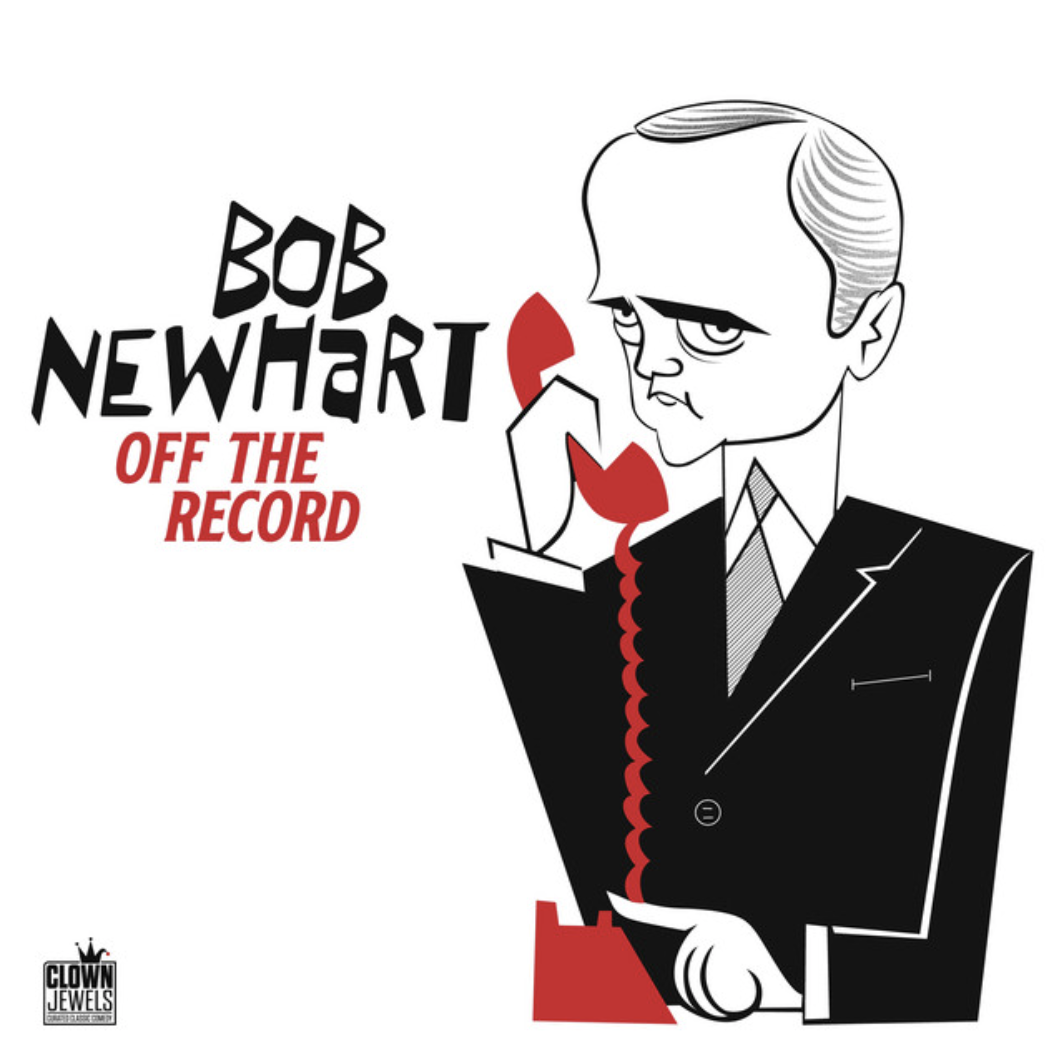
The inevitable nod to those dearly departed, I’ve chosen a sketch from the king of deadpan delivery, the comedian and actor Bob Newhart, who passed away just last week. I can still hear his sketches played repeatedly at my parents’ house when I was a kid in the 80s. The routine I’ve picked was actually riffed on and off by Joel Maisel in the ridiculously popular and incredible Marvelous Mrs. Maisel – trying to pass it off as his own, he stank, and so ended a short-lived side hassle, his marriage and the rise and rise and rise of his belated wife.
I’ve added a sprinkling of newish tunes too; picking tracks I didn’t get the time or room to feature in the Monthly Playlist Revue. That list includes Chris Corsano, The God Fahim, Hifiklub with Marion Brunetto, and Kid Acne and foil Cappo remixed by Tom Carnuana.
That just leaves choice music from my collection (some records I’d love to own too) by Matthew David, Peter Blegvad with John Greaves and Lisa Herman, Cressida, Radio Stars, Malcolm Catto, Ottla, Linkopii, Abdel Aziz El Mubarak and so very much more.
Track list:::
Dionne Warwick ‘A Hard Day’s Night’
The Cambodian Space Project ‘Longing For The Light Rain’
Abdel Aziz El Mubarak ‘Tahrimni Minnak’
Hifiklub w/ Marion Brunetto ‘Rompe Cul’
Chris Corsano ‘The Full-Measure Wash Down’
Malcom Catto ‘Rock’
Radio Stars ‘No Russians In Russia’
Diagram Brothers ‘Those Men In White Coats’
Linkopii ‘Linkopii’
Walter Branco ‘Luar do Sertao’
The God Frahim w/ NicoJP ‘Diamonds’
Casual ‘You Flunked’
Above The Law ‘Concreat Jungle’
Sam Dees ‘Black Tattler’
My Solid Ground ‘The Executioner’
Robert Wyatt ‘A Last Straw’
John Greaves, Peter Blegvad and Lisa Herman ‘Catalouge Of Fifteen Objects And Their Titles’
Ginhouse ‘And I Love Her’
Cressida ‘Survivor’
Matthewdavid ‘No Need To Worry/Mean Too Much (Suite)’
Kid Acne w/ Cappo ‘Healthy Normalz (Tom Carunana Remix)’
Ottla ‘Duck’
Modulo 1000 ‘Lem. Ed. Ecalg’
Land Observations ‘Return To Ravenna’
Hama ‘Ataraghine’
Guitar Red ‘Disco From A Space Show’
Kahil El Zabar’s Ritual Trio ‘Sweet Meat’
Bob Newhart ‘Gettysburg PR’
Zane Campbell ‘Fucked Up On Jesus (Live From The Fort At Sidewalk Cafe)’
Jack Grunsky ‘Is It Worth All The Pain’
__/ARCHIVES____
From the vast archives of the Monolith Cocktail, two choice picks from July of 2014: Land Observations Grand Tour album for the Mute label, and Wah Wah 45s’ special One More Step album showcase of Haitian boogie pianist Henri-Pierre Noel.
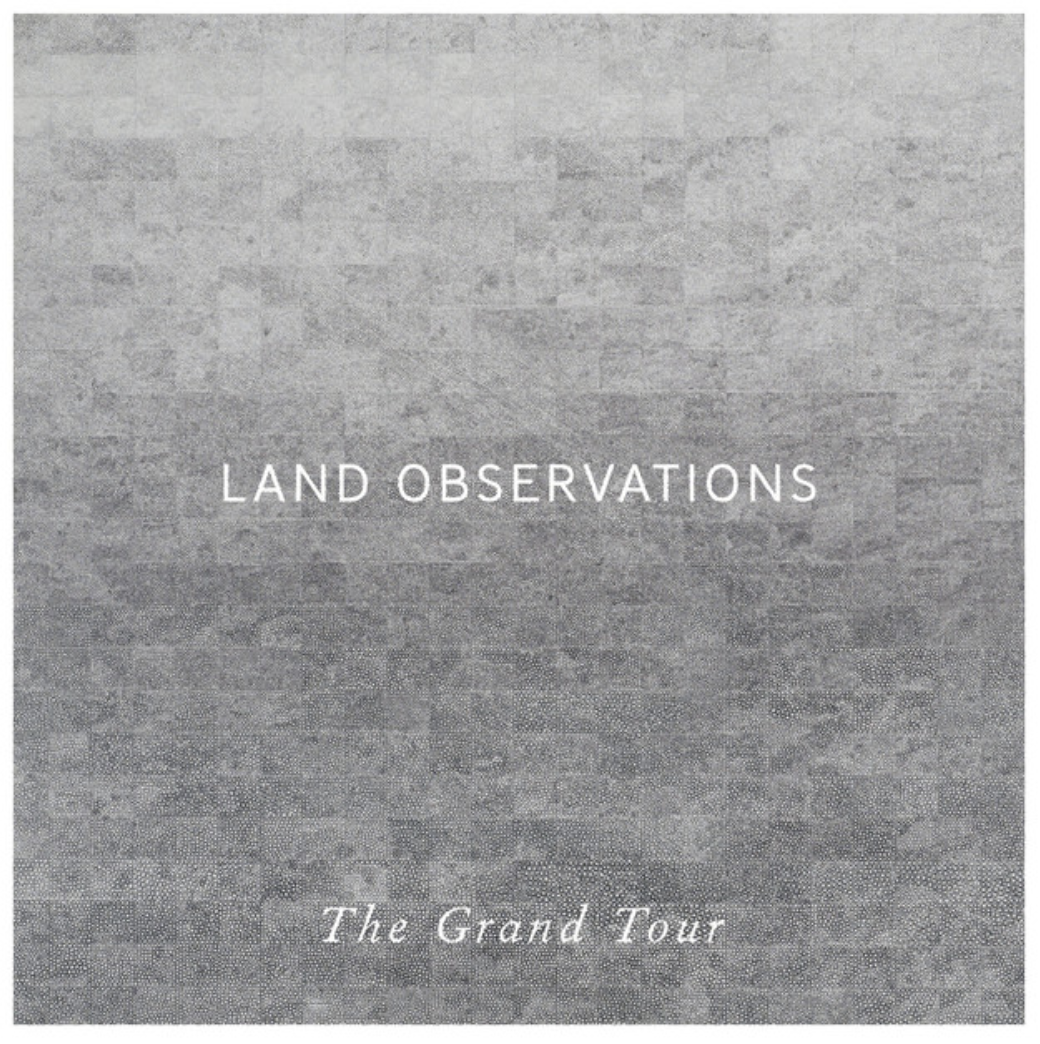
Land Observations ‘The Grand Tour’
(Mute) July 2014
Revisiting the Romans industrious road network, artist and guitar sculptor of meta-textural travelogues, James Brooks once again soundtracks a peregrination that begins with the familiar surroundings of his London address and proceeds across Europe to the one time important capital of the Western Roman empire, the Italian city of Ravenna.
On his previous excursion, Roman Roads IV – XI, Brooks meticulously planned journeys, however minimal and delicate, exuded the beauty of motion: Gently progressing or chugging along in harmonic contemplation, each section of his placable road trip moves on ever forward to a final destination.
Continuing to absorb those landscapes and some new ones, with a cycle of both looped trebly and pronounced bass notes, plus a bed of subtly picked congruous melodics and resonating chimes, Brooks takes the pastoral equivalent of the motorik route. Whereas the Autobahn travelled celebrations of kraftwerk or the repetitive hypnotism of Michael Rothar’s backward bending psychedelics and choppy guitar licks pointed towards the future, The Grand Tour treads a well-worn man-made and historically rich highway: It could be said that Brooks has a foot in both eras: the past and present simultaneously if you like.
The musical accompaniment is only part of the Land Observations methodology, Brooks by extension incorporating a show of postcard inspired artwork – which can be seen further extended in the featured Phil Coy video – and geometric network visuals, all inspired by the layouts and routes of the journeys he maps out aurally.
There are some detours on this return trip of sorts, as Brooks cycles through the ‘Flatlands And The Flemish Roads’ of the lowlands – the flattened layout of Belgium reflected in the strident, though, serene pace of the methodical rhythmic time keeper -, ascends one of the highest mountain routes in the Swiss Alps, on the gently applied rocking motion of the magnificent climb, ‘From The Heights Of The Simplon Pass’, and waltzes through the Austrian capital, on the sacrosanct Baroque ‘Ode To Viennese Streets.
For those accustomed to Brooks multilayered loops and adroit deft touches, there are also the odd piqued moments, usually introductions, of gnarled, almost post-punk, strutting. But these are fleeting and though they never break with convention enough to burst out into song.
For everyone else, newcomers alike, the Grand Tour is pleasing and timeless, if not picturesque, journey through the South East of England and Western Europe.
Henri-Pierre Noel ‘One More Step’
(Wah Wah 45s) July 2014
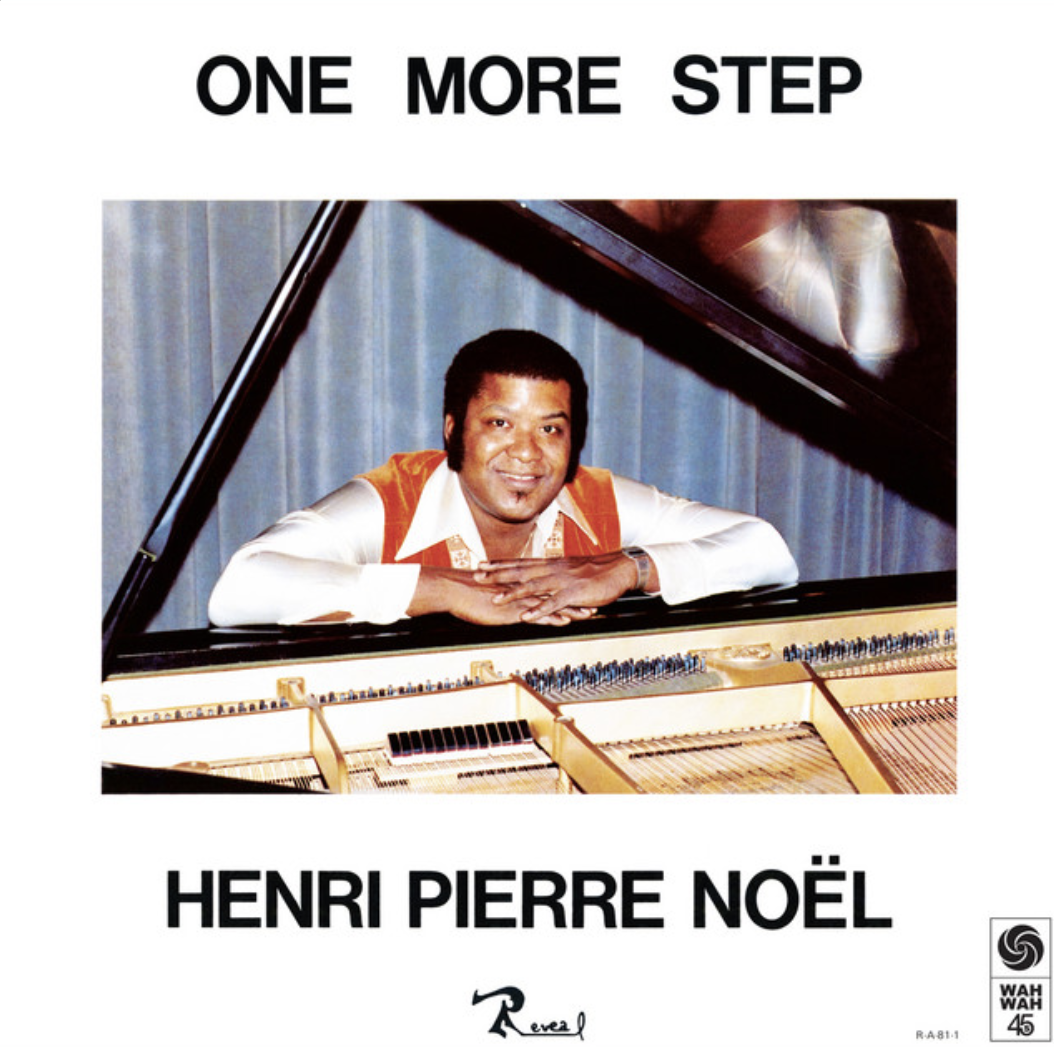
The fault lines may run deep, and the humanitarian crisis resulting from tropical storms may have wreaked utter destruction, but the Haitian people continue to endure. Synonymous since its bitter fought independence from the French in 1804 with the vivid ominous local voodoo culture, and later on with the brutal rule of the infamous Duvalier dynasty, Haiti has fortunately been cast in a far more favorable light over the last few years, drawing the global music tourist into its feverish, infectious web.
In the last year alone Haiti has imbued, beguiled and charged albums by The Arcade Fire (who have an ancestral connection to the island through Régine Chassagne) and tUnE-yArDs, and paired-up local poet/writer legend Frankétienne with experimental Scottish guitarist Mark Mulholland for the Chaophonies collaboration. Already granted very favourable reviews elsewhere, including an entry on the Quietus’s reissues of 2014 selection, Strut Records Haiti Direct compilation treats the island’s 60s and 70s music scene with reverential celebration; echoing the revitalisation and celebratory musical archeology of Analog Africa, Soundway and Jazzman et al, who similarly revere music, previously presumed lost, from the African and South American continents.
With this in mind the Wah Wah 45s label has recently re-issued the polygenesis pianist Henri-Pierre Noël’s classic, One More Step; originally released as a limited pressing in the 80s. Moving from his home to Canada, the former émigré would go on to create a Haitian hybrid of the Kompa Funk and sauntered Latin grooves with North American jazz and disco to produce light breezy and diaphanous gilded dance floor gold.
A moiety, congruous to the previously rediscovered and also re-issued by Wah Wah 45s, Piano suite (released in 2012), One More Step attunes the classicism and amps up the funk and soul with a chorus of rasping horns and spiritually meditative Hammond organ. With an omnivorous craving, Noël loosely crosses over into a range of appetizing styles; sweetly caressing gospel and narrating in a Barry White-esque deep, husky burr, on the love lost lullaby ‘Will Come A Day’, and moseying into Stax, lamps-turned-down-low, balladry on ‘Bluesy Mood’.
Silky smooth with the odd rough and dirty edge, Noel’s swanky sonorous chops splash and spray across the ivory, sliding up and down the scales until they find a neat spot to rattle of the most melodically twinkly solo.
Mother Africa can’t help but shine through; Haiti’s own indelible roots stamped on every track, played and teased with by the composer. None more so than the opening tributary ‘Afro-Funk Groove’, with its feverish pattered congas and polyrhythm shuffles, or the sweltering Funkenstien, doo-wop female backed chorus line, ‘Funky Spider Dance’. Elsewhere the musical net is cast wide and far, merging samba with jazz (‘Latin Feeling’ and ‘Back Home…Sweet Home’) and weaving a new kind of tropical island classical symphony (‘Roller Skate Rhapsody’).
Of all the various Haitian themed, flavoured and re-examined releases in 2014, One More Step is the grooviest and slickest by far; a sweet and cool (very cool) Caribbean breezy accompaniment to our own present heat wave.
Hi, my name is Dominic Valvona and I’m the Founder of the music/culture blog monolithcocktail.com For the last ten years I’ve featured and supported music, musicians and labels we love across genres from around the world that we think you’ll want to know about. No content on the site is paid for or sponsored and we only feature artists we have genuine respect for /love. If you enjoy our reviews (and we often write long, thoughtful ones), found a new artist you admire or if we have featured you or artists you represent and would like to buy us a coffee at https://ko-fi.com/monolithcocktail
to say cheers for spreading the word, then that would be much appreciated.
The Perusal #57: Hannah Mohan, Black Diamond, Society Of The Silver Cross, Passepartout Duo & Inoyama Land…
July 3, 2024
A WORLD OF SONIC/MUSICAL DISCOVERIES REVIEWED BY DOMINIC VALVONA
(Unless stated otherwise, all releases are available now)

Photo credit: George Rae Teensma
Hannah Mohan ‘Time Is A Walnut’
(Egghunt Records) 12th July 2024
Geographically settling long enough to pen this solo songbook offering, but anything but settled emotionally, the former And The Kids vocalist-songwriter Hannah Mohan attempts to process the break-up of all break-ups.
After leaving home at the age of sixteen, restless and curious, Mohan spent her formative years on the road, crisscrossing North America, busking and honing a creative craft. On returning home, after five years of travel and travail, Mohan formed And The Kids with a school friend. After a trio of albums between 2014 and 2019, and with the global pandemic’s nefarious effects on the music industry and wellbeing, the band unfortunately came to an end. Throw in the heartache, the confusing cross-signals of a fateful relationship, and you’ve suddenly accumulated a whole sorry mess of emotional pain and a lot of questions that need addressing or analyses.
Luckily Mohan is a highly talented musician and songwriter, able to turn sorrow and reflection into gold. For Time Is A Walnut is a rich album full of familiarity and yet melodically and lyrically idiosyncratic, shaped as it is to Mohan’s particular cadence, timbre and way-with-words.
Less moping and more a full gamut of hurt, weariness, despondency, incriminations and plaint, Mohan travels full circle on her break-up journey: from shock to vented indignation, from losing one self in the moment to escaping from reality. All the feelings of resentment, the pulling apart of a fragile soul, and decoupling sound surprisingly melodious and disarmingly anthemic throughout: even during the bitterest exchanges and grievances.
Hand-in-hand with producer and musician Alex Toth (of Rubblebucket and Tōth fame), working away with little sleep in Mohan’s basement, the resulting thematic songbook is filled with great alt-pop songs; some with a country lent, others suddenly mystified and misty with an air of atmospheric Celtic vibes, or, channeling 80s new wave German synth music – Toth, I assume, almost in DAF mode on the darker-lit, hurting ‘Peace Be The Day’.
Almost breezy in parts, there’s tunes galore as Mohan evokes the Cowboy Junkies, Angel Olsen, Tanya Donelly, Madder Rose, Sophie Janna (especially on the vapour-piped Ireland illusion ‘Runaway’) and Feist. But you can also throw in a touch of dry-ice 80s synth-pop and a touch of Bacharach on the whistle-y saddened beauty that is ‘Upside Down’.
In sympathy and often softly lifting, there’s a fair use of trumpet on the album. Less jazzy – although saying that, there’s vague suggestions of Chet Baker – and more Southern, nee Mexican serenade and atmosphere, that instrument’s suffused and occasional enervated brassy blazes is a perfect fit with Mohan’s candid, sanguine delivery.
A congruous choice of guest, working in a similar mode, songwriter-musician Lady Lamb features on the 60s troubadour echoed, vibrato-trilled sing-a-long anthem ‘Hell’. The details and the unforeseen circumstances, the ‘messy eroticism’ and loss, disconnection from someone else’s life are all lay bare in a melodious beauty.
Hannah Mohan rides the roller coaster of a drawn-out break-up with quirkiness and vulnerability, turning tortuous heartache into one of the best and most rewarding songbooks of the year. Mohan may have let her soul sing out, as she comes to accept an emotional turbulent period of stresses and anxieties and pain. But whether she’s finally pulled through the other side or not is up to you the listener.
Black Diamond ‘Furniture Of The Mind Rearranging’
(We Jazz)
Transported back in time, and then propelled forward into the now via Chicago’s musical legacy, its rich heritage of innovators and scope in the world of jazz, Artie Black and Hunter Diamond’s dual saxophone and woodwind focused vehicle can trace a line from the Windy City’s smokestack bluesy outlines of the 50s through the icons Sun Ra, Roscoe Mitchell, Eddie Johnson, Lester Bowie, Art Ensemble Of Chicago, Anthony Braxton and the hothouse of undeniable influence and talent, the Association For The Advancement Of Creative Musicians.
Across an ambitious double-album spread of both quartet and duo mode formations, those Black Diamonds don’t so much shine as smolder and fizzle to a smoky and simmering resonance and metropolis backdrop encroached by wild jungles and fertile growth.
The majority of this moiety evolution is handed over to the quartet ensemble, with Artie and Hunter joined by the softened taut but flexing and always on the move double-bassist Matt Ulery and the constant cymbal splashing and rolling, fills and tight woody rattling drum breaking drummer Neil Hemphill. That set both swells and finds pause to a certain lowness and more weighted pull of the freeform and melodic, the rhythmic.
Saxophones sound willowy as they either entwine, take turns on the climb, exhale drawn-out mizzles or drizzles; all the while the action recalls every formative era from the 1920s onwards, from the blues to the African, the spiritual, bop and the serenaded. All those cats mentioned in the opening paragraph pop up alongside the Pharoah, Ornette, Evan Parker (I’m thinking of the woodwind elements, which both Hunter and Artie switch between throughout), Mingus and on the opener, ‘Carrying The Stick’, Lalo Schfrin of all people.
From concrete to near pastoral dustings, a menagerie of bird-like brass and woodwind sings and stretches, often letting the steam out of those valves with a bristle and rasp. The drum and bass combo keep it all moving forward, developing, with Ulery’s slackened bass even opening a couple of tracks.
In a more stripped-down and even more experimental mode, Side D (in old money vinyl terms) of the album is given over to the duo format of sax and woodwind.
Leaning towards Braxton, John Zorn and Andy Haas in near-non-musical freedom of expression, they probe new, amorphous spaces without clear signage or reference to environments or moods. The saxophone often sounds reedier, more rasping, and is enveloped with the very sound of its brassy metallic resonance and surface makeup. Every exhaled breath is used to conjure up the mysterious, the onset of some unease, but also a pauses for certain moments of reflection.
Perhaps a mizmar played at dusk, an ominous peace or a meditative haze, these experiments, forms of tonal, timberical evocation are difficult to describe or catalogue. Only that they fit in with the freedoms, the expressions and language of the Chicago school of freeform inventiveness and exploration, deconstruction of an instrument.
Black Diamond run with the ‘stick’ or baton passed on by the Chicago hothouse of jazz notables and luminaries, proving themselves to be a quality, dynamic act ready to push forward. Rearranging the cerebral and musicality furniture as never sounded both so classy and explorative.
Damian Dalla Torre ‘I Can Feel My Dreams’
(Squama Recordings) 12th July 2024
Subtle in approach and process, the cross-fertilization of South American and European cultures, prompts and environments on Damian Dalla Torre’s second album, I Can Feel My Dreams, is a tangible synthesis of abstract feels, moods and an exchange of musical ideas.
Nodes, points in a larger dream-realism canvas reference the Leipzig-based multi-instrumentalist, composer and producer’s footprints across both continents.
Sparked by a residency to teach, write and practice his craft in the Chilean capital of Santiago, Torre absorbed all that city and its surroundings had to offer: the vistas, colours and art. With a certain amorphous guaze that magical landscape of rainforest canopy enveloped menageries, flowing waters, Andean fluted heights and valleys, and exotic lushness is merged effortlessly with complimentary vocal harmonies and assonant arias, dewy and caressed extended dainty picked harp, quivers of guitar, trembles of piano and spells of electronica. The realms of jazz, sparse techno, ambience, voice experiment, nature, futurism, sound art and the new age seamlessly yield and relent.
The haul of notable guests invited to play on the album is staggering, and in no way distracts from the main leitmotifs and direction of drifted, wispy travel. Instead, each guest enhances with a certain gracefulness and calm each musical expedition and piece of mood music. Unsurprisingly given Leipzig’s musical history and legacy (home to an enviable catalogue of classical music giants over the centuries; perhaps one of the biggest most impressive concentrations in that genre’s history of iconic composers and musicians), but also its more modern burgeoning jazz and electronic music scenes, there is a host of musicians and artists from or based in the German city taking part on the album; cue the blossoming ‘genre traversal’ Jan Soutschek, ensemble singer and soprano soloist Viola Blanche, guitarist and composer Bertram Burkert and jazz improviser, pianist and composer Jonas Timm. Add to that the Austrian-Ethiopian harpist Miriam Adefris, the Danish composer and arranger Christian Balvig, pianist Felix Römer and the range and influences probe even further and deeper. Altogether, from the replenishing waters of renewal to the generator and manipulated electronics of modernity, all these contributions prove beneficially harmonious and complete.
This is a biomorphic world in which echoes of Eno, Alice Coltrane, Talk Talk, Oh No Noh, and Lara Alarcon all coalesce and dream. The architect, Torre, manages to keep everything constantly green and lush; showcasing a flair for pulling together a myriad of sources to create something almost familiar by new.
Society Of The Silver Cross ‘Festival Of Invocations’
(8668 Records)
Stepping from the shadows after abstaining from the material world for the last five years, the matrimonial partnership of Joe Reinke and Karyn Gold-Reinke return with a second rebirth, regeneration of Indian, Byzantium, Egyptian and Gothic imbued pathos and bathos.
Harnessing the themes of fate, the eventual and unavoidable specter of death and its harbingers, its demons, and even its angels, the Seattle couple walks the path of hermetic cults, atavistic Indian spiritualism and magik to induce cosmic awakenings and transformations. With all of mortality’s connotations and meanings, death is also seen as a renewable force on this couple’s second album under the occultist Society Of The Silver Cross heading.
But there’s no escaping the atmospheric dread and the curiosity of deathly rituals invoked by the Indian-style drones, harmonium-pumped sustains and concertinaed bellows – part ‘Venus In Furs’ Velvets, part Alan Edgar Poe shipwreck hauntology shanty, and part courtly mysticism. And yet Karyn’s siren-esque duets with boa Joe can lift towards the light at times, escaping the Fortean broadcasting waves, the splashed crashed tumultuous sea-like cymbals and gongs, Book of the Dead mantras and distressed Andy Haas-like geese pecked sax (if it is indeed even a saxophone) hauntings.
But for a majority of the time the couple’s counterbalancing act of apparitional, bewitching and more baritone, from the bowels of the deep and human soul, vocals muster spiritualist visitations, a theatre of sorrow, past incarnations and an unbreakable multi-levelled circle of added magic both heavy and foreboding.
I was picking up spells of Death In June, Nick Cave’s duet with Kyle, Mick Harvey’s time with P.J. and Amanda Acevedo, Backworld, David Lynch, Dead Can Dance, Current 93 and Angels of Light. The folksy Gothic-art-music-shanty-motioned ‘When You Know’ (with my imagination) sees Serge Gainsbourg laying flowers on Jim Morrison’s alter in the Cimeti ére du Père-Lachaise. The mystical finale, ‘Rajasthan’, not only features those synonymous Indian tones but also has an air of the Spanish-Baroque guitar and a touch of The Limiñanas about it. Shrouded in rousing tribal dramatics and ether visions, the couple’s lasting nod to the land in which they spent much time absorbing the cultural-musical spiritualist vibes before making their debut singles and album (Verse 1), is steeped in the mists of time; invoking India’s largest state before eventual unification, and its history of early Vedic and Indus civilizations. “Rajasthan” is a portmanteau of words, but can be translated as the “Land of the kings”; its courtly, royal verbose and stately reputation echoes as the final word on this album of rebirth and the coming to terms with death. Making true on their previous chapter, Joe and Karyn once more follow the call of the silver cross-societal allure. Atmospheres, processions and possession that are more than just songs, you don’t so much liberally catch, or, casually listen to each propound and chant-like forewarning as enter a fully constructed world of elementals and alchemist mystique. These are drones, dirges and more opened-up astral projections that will stay with you days after first hearing them. A Festival Of Invocations is a chthonian play of supernatural, spiritualist and funeral parlor riches; a successful follow-up after a five year hiatus.
Droneroom ‘As Long As The Sun’
(Somewherecold Records) 19th July 2024
Amorphous Western sun-cooked melting mirage panoramas are stoked and drawn from the Droneroom’s long form guitar peregrinations. The sixth (I believe) alt-country drone-cowboy album from Blake Edward Conley’s singular experiment for the Somewherecold label, As Long As The Sun is a filmic soundtrack-like conjuncture of Paris, Texas, Blood Meridian and a myriad of supernatural and alien visions of the ‘big country’.
The Western sounds of the twang, rattle and bends is unmistakable, and the sounds we’ve taken for granted, like the freight train convey that hurtles down the tracks and with it’s velocity and size shakes the passing dinging and ringing rail barrier junction, but Conley’s familiar markers, references make them near hallucinogenic under the sun’s powerful debilitating rays. I can imagine Ry Coder fronting Ash Ra Tempel, or early Popol Vuh relocated to the arid planes of outlier Texas, or a mule-riding Don Quixote tilting at the shadows of cacti.
A contemplation of all life’s spiritual quandaries and fate no less, all elicited from the magnified and amplified reverberations, quivers, strokes, gestures, brushes and more driven rhythmic passages of the guitar. Fuzzed-up with flange and sustain, these descriptive lines, resonated waves and vibrations are like drawn-out echoes of Michael Rother, Gunn-Truscinski, Jason Pierce (in his Spaceman 3 days) and Yonatan Gat. On the searing, razored and heated coil moody ‘Last Train To Soda Spring’ (the small Idaho city which gets its name from the 100s of carbonated water springs that dot the landscape) there’s a build-up of layering and rhythms that breaches the hazy space rock barriers – Hawkwind crosses fully into Motorhead. Whilst the shamanic marooned, railroad vision, ‘East Facing Window’ has a kind of krautrock generator field around it that hums and pulsates, invoking both alien and paranormal activity – I’m thinking a little of Roedelius’s experimentation on Sky Records.
As Long As The Sun beats down upon Conley’s cowboy hatted noodle, its gravitas, life force and heat inspiring serious abstract empirical vistas, atmospheres and the soundtrack to a movie yet to be made.
Luke Elliott ‘Every Somewhere’
(AKP Recordings) 12th July 2024
Composing a more inclusive biosphere and exchange of cultures, influences and sounds, the Amsterdam-based, Leeds born, sound artist Luke Elliott transforms his source material of field recordings (from what could be acts of making in a workshop to tramples through the undergrowth of Moat Farm in Somerset and the windy tubular sea organ of Zadar in Croatia) into a fully working lunar off-world vision.
A new world no less, Every Somewhere’s vague, recognizable, or by happenstance, playful tastes of gamelan and Southeast Asia, early analogue modulations and patterns, tape music experiments and sonic land art (that already mentioned Zadar organ, which was built as a large scale land art instrument to bring some sort of random melodious colour to the Dalmatian coastal town’s monotonous concrete wall scape, rebuilt with haste after the devastations of WWII) are sampled then re-sampled, fed through effects and an apparatus to build a more sympathetic, attentive environment.
At least influenced in part by a fascination with Alfred W. Crosby’s ‘Colombian Exchange’ theory, as outlined in his 1972 propound book, which gave a now fashionable name to the legacy of colonialism and the destructive and loaded exchanges between the Western hemisphere and the then ‘New World’, Elliott’s imaginative world is more nurtured towards a beneficial exchange of cultures.
In a liminal zone between the earthly, otherworldly, near cosmic, dreamy and liquid, the kinetic, algorithmic, arpeggiator and magnetic atoms and transparent notes bobble and squiggle about over atmospheric ambience and to the rounded rhythms of paddled tubular obscured instruments. And then, once the guitar is introduced to tracks like the glassy delicate ‘Objects Of Virtue’, the mood changes towards a bluesy post-rock vibe.
Magical escapes, stargazing from the observatory, solar winds, near operatic cloudscaping and various gleams, glints and globules recall Goo Ages’s Open Zone album, Tomat, Raymond Scott, Edgar Froese and Zemertz.
Elliott’s debut for the astute AKP Recordings label maps tactile environments both intriguing and melodically mindful. It paves the way for new visions of a more equal future.
Passepartout Duo & Inoyama Land ‘Radio Yugawara’
(Tonal Union) 26th July 2024
The freely geographical traversing Passepartout Duo find congruous partners with collaborative foils Inoyama Land – those fine purveyors of Japanese Kankyō Ongaku, or environmental ambient new age music – on their latest balance of the tactile, organic and synthesized.
A free association of cultures and musical processes, despite laying down loose perimeters, the Italian/US duo of Nicoletta Favari and Christopher Salvito combine explorative forces with the Japanese musical partnership of Yasushi Yamashita and Makoto Inoue for a remarkable interaction with their surroundings, a mix of children’s instruments and percussive and wind apparatus.
Favari and Salvito have already appeared on the Monolith Cocktail, with reviews of both the Chinese art platform-backed Vis-à-Vis and Daylighting albums. Those experiments in the timbrical, rhythmic and melodic, imbued by the Meili Mountains, Lijiang and fabled imaging’s of Shangri-La, were created during and in-between the restrictions of the Covid pandemic. A year before news broke of that global crisis the duo travelled to Japan. Connecting with the Inoyama Band, a duo that had transformed the abstract feelings, magnetism, sublime transcendence and peace of the landscape since the 1980s, they were invited in to their host’s shared space sanctum – an auditorium inside Inoue’s family-run kindergarten in Yugawasa that doubles-up on Sundays as a studio.
Set out on tables for all participants, a myriad of playful and more studied instruments and a set of “game rules”. The quartet could only use the mix of electronic and acoustic instruments separately or altogether for ‘revolving duets’, with each taking turns to play through a cycle of ‘four duos’. But then ‘anything’ was permitted in that session, which lasted three hours. In this complete state, that long improvisation and set of prompts has been distilled into eleven more digestible parts. Within the sonic, contextual and languid peaceable realms of the Kankyō Ongaku genre and greater scope of Japanese acoustic-electronic music, there’s an air of Satoshi Ashikawa, Yasuaki Shimizu, Yoshio Ojima and Tomo-Nakaguchi about this album. You could add hints of Slow Attack Ensemble, Eno, the Hidden Notes label and Bagaski to a subtle layering environment that takes in all points of the compass, with chimed bulb-like notes and the ringing, searing and chimed bamboo music of Java, Tibet, Vietnam and the dreamy.
The recognizable sound of soft-mallet patterned and paddled glockenspiel and xylophone merge fluidly with hand bells, higher-pitch whistled recorders, concertinaed wafted melodica and harmonicas, and racks of wind chimes. Whilst atmospheric elements and the use of electronic devices create mysterious vapours, oscillated wisps, knocked rhythms and floppy disc sampled voices.
Gazing at diaphanous beamed and lit cloud formations from a comfortable snug in the landscape, or, submerged below Mexican waters inhabited by the strange aquatic Axolotl salamander, each part of this performance is somehow similar and yet variably different. Between the illusionary, dreamy, sonorous, see-through and swimmingly, two sets of adroit partnerships create organic meta and a sublime near-nothingness of slow musical peacefulness and environmental absorbed transience.
Myles Cochran ‘You Are Here’
(9Ball Records) 26th July 2024
Unhurried and once more placable, the all-round embracing American composer, songwriter, multi-instrumentalist and producer Myles Cochran follows up his 2021 debut album (Unsung) with another carefully spun canvas of subtle emotive pulls, TV and filmic-like soundtrack scores, ruminations and mirages.
Traversing an amorphous palette of Americana, the blues, classical, folk, experimental, Baroque and traditional, Cochran integrates his Kentucky roots with spells in New York City and the UK (where he’s lived for some time) whilst letting his unprompted imagination travel to more exotic climes and cerebral dreamscapes.
Although an adroit player of many instruments, Cochran’s work is mostly led, directed, informed and suffused by both the acoustic and electric guitar. Understated but keen and expressive, his choice of guitar is once again left to stir up visions of a celluloid panoramic and more mystifying melting Western America, the Appalachians, Ozarks and home. Only this time around he’s also invited in the accomplished cellist Michelle Packman and bassist Reggie Jones to add a transported subtle semblance of chamber music, period drama and jazz. Jones, playing a stand-up (or upright) bass throughout, emphasizes rhythm, a pace and sense of travel – especially so on the shaky rhythmic travelogue ‘Making Something Out Of Nothing’, which, by its title, indicates a conjuring of a composition, performance out of just playing or fiddling around, but evokes (for me) the imagined title sequences of some wintery Northern American drama, out on the road with the harsh, snowy landscape passing by the window of our protagonist’s truck. Meanwhile, the following countrified-meets-the-pastoral-and-renaissance crafted ‘Signs And Symbols’ has an air of Fran & Flora about it with the sounds of a breathy and fiddle-like cello.
Widening the vistas, the quiet inner battles of turmoil and conflict, sympathetic bowing and pining cello enhances the mood and subtle expressions of Cochran’s compositional style, which both ebbs and flows between the echoes of Chuck Johnson, Ry Cooder, Bill Frisell, John Fahey, Martin Renbourn and Jeff Bird.
There’s a pick up in the pace with dusty brushed drums, but for the most part it’s a quivery horizon gaze of sophisticated slow to mid-tempo observations and introspection. None more so then on the mature vocalized jazzy-bluesy and dusty ‘The Deepest Sea’, which sounds like Hugo Race or Chris Eckman in questioning Leonard Cohen mode backed by Chris Rea.
A culmination of travels, thoughts, hopes and fears, You Are Here further expands Cochran’s musicianship and influence. Those Americana roots are being pushed further into new pastures, helped by his cellist and bassist foils and freshly attuned ear. Eroded, waned, giving and dreamily melting in the heat, his guitar parts overlap and transmute into piano, strings and the ambient. Each track is like a short score, the qualities of which offer sensibilities and a way of following or telling a story, a moment in time or scene. In all: a very sensitive work of maturity and unrushed reflection.
___/+ THESE RECOMMENDATIONS IN BRIEF
Any regular readers will know that I pride myself in writing more in depth purview-style reviews with a wider context. This means I naturally take more time and effort. Unfortunately this also means that I can only ever scratch the surface of the 4000+ releases both the blog and I get sent each month. As a compromise of sorts, I’ve chosen to now include a really briefly written roundup of releases, all of which really do deserve far more space and context. But these are recommendations, a little extra to check out of you are in the mood or inclined to discover more.
Pocket Dimension ‘S-T’
(Cruel Nature Records)
Exploratory voyages into the kosmische and sci-fi, straight from the illustrated pages of Stewart Cowley’s Spacecraft 2000 – 2100 AD, the Lanarkshire-based artist Charlie Butler doesn’t so much launch as fire the languid thrusters into the mesmerizing, enticing and dream like voids of a soundtracked cosmos. On many levels, through four continuous stages, the drifted and wonder of space is balanced with fizzled raspy electronica and eventual IDM, siren wailing bends, shoots, and a rotating centrifugal force that seems to envelope the whole trip in both mystery and the presence of unknown forces hovering in the galactic ether.
Various ‘TRÁNSITOS SÓNICOS – Música electrónica y para cinta de compositores peruanos (1964-1984)’ (Buh Records)
Filling in the blanks in the story of South America’s experimental and avant-garde scenes, Buh Records throws the spotlight on Peru and a host of experimental boffins working to cross indigenous sounds with the new and yet to be discovered.
Off-world, futuristic, UFOs, tape manipulation, the shrills of something magnetic, steely industrial tools, reel to reel melting, mind bending and rattling old atavistic bones, assonant female voices, and shamen augers, this compilation includes examples from the likes of Arturo Ruiz del Pozo, Luis David Aguilar, and Corina Bartra; a wealth of cult composers struggling to explore new sonic boundaries in a country devoid of the apparatus, foresight and laboratory conditions. And so most of the atmospheric – sometimes heading towards chilling alien – and transmogrified Peruvian environmental peregrinations were recorded in private studios. The story and scope needs way more room than this piffy, glib little piece. Suffice to say, I highly recommend it.
Rehman Memmedli ‘Azerbaijan Guitara Vol. 2’
(Bongo Joe)
The history and travails of the fecund oil rich country of Azerbaijan are atavistic. This is a nation that has striven to gain independence from a string of empires: both Tsarist and Soviet Russia, Iran, Albania, and much further back, the great Mongol Khan Timur. Desired not only for its abundance in fossil fuels but for its geographical corridor to its fellow Transcaucasia neighbours of Georgia and Armenia in the west, to the south, Iran, in the north, Russia, and to the west, the vast inland lake, the Caspian Sea. And although at various times at war with its direct neighbour Armenia (recent flare ups have led to a startup in violence, and accusations of ethnic removal), the country’s close proximity to a mix of cross-cultural and geographical influences has led to an absorption of all kinds of musical styles.
Bongo Joe‘s second volume of ‘guitara’ music showcases is fronted by another Azerbaijan legend, Rehman Memmedli (the first volume was handed over to the equally iconic Rüstəm Quliyev), who first learnt the accordion and harmonica before picking up a relative’s guitar – but also the region’s synonymous traditional tar instrument too (an ornate curvy looking waisted long-necked lute). Suitably eclectic in styles, from belly dancing Turkey and Arabia to shimmy Bessarabia and local wedding music, Memmedli scores and scorches up and down the fretboard at speed. Spindling, bending, skirting and wobbling, and even sounding at times like an erratic stylophone, vistas and ruminating sonnets are conjured up from a nibble-fingered maverick: Persia, the Caucasus, and beyond are summoned forth from electrified scuzz and fuzz and drama.
Cumsleg Borenail ‘Fragile And Adaptive’
Video – Taken from the new album Time Is A pˈætɚn Of Shifting d͡ʒiˈɑːmətɹiz
Proving incredibly impossible to pin down, whilst impossible to fully keep a track of, such is the prolific output, the artist formerly known as Cumsleg Borenail has released a host of albums, EPs over just the last few months alone.
The latest, and discombobulating entitled, Time Is A pˈætɚn Of Shifting d͡ʒiˈɑːmətɹiz,will officially go live a week or so after this column. As a teaser, Borenail has fucked around with AI to produce this strange, biomorphic, tumorous metamorphous of metallic clay dancers, bound together in some super fucked up hallucinatory creepy body assimilation style video. I will admit that I fucking hate AI – ‘artificially inflated’ as someone has already quipped – so it is lost on me – for those who want the tech, ‘all models’ were ‘created in blender, then whapped into ADOBE to AI generate backgrounds and randomly alter model edges.’ But musically we are talking about whippy body music that channels Detroit mechanic funk techno and the sound of grooving over broken glass. Derrick May, Suburban Knight, Ron Trent in the mechanics of the surreal and industrial. As artificial as it all is, there’s a certain soul in this machine. I look forward to hearing the rest of the album later in the month.
Neon Kittens ‘In The Year Of The Dragon (You Were A Snake)’
(Metal Postcard Records)
System of downer sinewy post-punk, like the Pop Group falling on top of PiL, the latest video output from the ridiculously prolific Neon Kittens is another semi-metal-guitar-string buzz and grind of gnashing venom and risk. The vocals sound like a toss off and up of honey trap glossed fake AI and taking no crap no wave female provocateur in the mode of Michi Hirota, unimpressed by the snake-like actions of a former lover; the action, like a lost grated down stroke of Fripp(ery) from the Scary Monsters And Super Creeps LP.
Keep an eye out next week for Brian ‘Bordello’ Shea’s review of the band’s EP.
Dyr Faser ‘Crime Fever’
(Self-release)
Boston, Massachusetts duo of Eric Boomhower and Amelia May previously skirted the krautrock dreaminess of Amon Duul II on their hermetic, drowsy Karmic Revenge. They seem to change their sound, if only subtly, on each new album, and Crime Fever’s haunted, scuzzed playfulness leans more towards Lou Reed this time around – but only if he’d jammed with Dinosaur Jnr. Jefferson Airplane and Ty Segall.
Still, they maintain a buzzy, fuzzy, and even Byrds-like loose dusting of the psychedelic and a backbeat throughout, with those ether-giddy vocals tones of May invoking Blonde Redhead, Beach House, and of course a little of a slacker rock, shoegaze vision of Renate Knaup-Krötenschwanz.
Needs far more attention than I have the capacity to manage but have a read of my piece on their KR album from a while back to get enthused.
Hi, my name is Dominic Valvona and I’m the Founder of the music/culture blog monolithcocktail.com For the last ten years I’ve featured and supported music, musicians and labels we love across genres from around the world that we think you’ll want to know about. No content on the site is paid for or sponsored and we only feature artists we have genuine respect for /love. If you enjoy our reviews (and we often write long, thoughtful ones), found a new artist you admire or if we have featured you or artists you represent and would like to buy us a coffee at https://ko-fi.com/monolithcocktail to say cheers for spreading the word, then that would be much appreciated.
The Monthly Playlist For June 2024
June 28, 2024
CHOICE TRACKS FROM THE LAST MONTH, CHOSEN BY DOMINIC VALVONA/MATT OLIVER/BRIAN ‘BORDELLO’ SHEA

That was the month that was: June 2024. Representing the last 30 days’ worth of reviews and recommendations on the Monolith Cocktail, the Monthly Playlist is our chance to take stock and pause as we remind our readers and followers of all the great music we’ve shared – with some choice tracks we didn’t get room or time to feature but added anyway. Thanks to Dominic Valvona for curating, and for choices from Matt ‘Rap Control’ Oliver and Brian ‘Bordello’ Shea.
Homeboy Sandman ‘Win Win’
Pastense & Uncommon Nasa ‘The Ills’
Party Dozen ‘Wake In Might’
The Lazy Jesus ‘Smok’
Sis ‘Mother’s Grace’
Yea-Ming And The Rumours ‘Ruby’
Neutrals ‘The Iron That Never Swung’
Hungrytown ‘Another Year’
Herald ‘Hydrogen Tide’
PAV4N, Sonnyjim, Kartik, M.O.N.G.O., Pataka Boys ‘Bappi Lahiri’
Sans Soucis ‘If I Let A White Man Cut My Hair’
Fat Francis ‘BCMW’
The Bordellos ‘Tastes Like Summer’
Swiftumz ‘Fall Apart’
SCHOOL ‘N.S.M.L.Y.D’
E.L. Heath ‘Cambrian’
Beak> ‘The Seal’
Jennifer Touch ‘Shiver (Robert Johnson)’
Ocelot ‘Sun Silmillia’
L’etrangleuse ‘Les Pins’
QOA ‘LIPPIA ALBA’
Mark Trecka ‘Spirit Moves In An Arc’
Cas One ‘No Deer Hunter’
Bill Shakes ‘Don’t Be A Menace To Blackburn While Drinking White Lightning On A Council Estate’
Guilty Simpson, The Alchemist & Kong The Artisan ‘Giants Of The Fall’
Depf & JClean ‘Wasted’
Ivan The Tolerable ‘Cedars’
Charlie Kohlhase’s Explorers Club ‘Tetraktys’
Staple Jr. Singers ‘Walk Around Heaven’
Head Shoppe ‘Parque De Chapultepec’
The Nausea ‘Nil Inultum Remanebit’
Saccata Quartet ‘Oh OK’
Simon McCorry & Wodwo ‘By Spores’
Neuro…No Neuro ‘Story Time’
Cumsleg Borenail ‘Todays Facade For New Environment’
Joey Valence & Brae Ft. Danny Brown ‘PACKAPUNCH’
NightjaR Ft. Pruven, Vast Aire & Burgundy Blood ‘Piano Heights’
Your Old Droog ‘Roll Out’
Conway The Machine, Method Man, SK Da King & Flee Lord ‘Meth Back!’
THE MONTHLY DIGEST OF ACCUMULATED NEW MUSIC; THE SOCIAL INTER-GENERATIONAL/ECLECTIC AND ANNIVERSARY ALBUMS CELEBRATING PLAYLIST; AND CHOICE PIECES FROM THE ARCHIVES.

Photo Credit:: Shalev Ariel
THE NEW/
Apifera ‘Keep The Outside Open’
(Stones Throw) 21st June 2024
Pouring forth from hangout sessions at Yuvi Haukin’s studio (a member of the L.A. based quartet), the friendly, playful and jovial toking environment around Apifera’s second album inspires a constant change and lucid fluctuation between prompted musical fusions.
Near omnivorous in tastes and drivers, the often dreamy, hallucinating moods envelope a psychedelic, trippy palette of jazz-funk, disco, vapour synth music, the kosmische, the progressive, Euro chic scores and Indian influences. The later is can be heard via the cadence, almost meandered mantra vocals, of the album title (“keep the outside open”) on the opening Secret Machines-esque slow released, spacy ‘Iris Is Neil’ – a reference to the search for a missing cat called Iris, who was chasing a bat named Neil at the time of the feline’s disappearance.
Over the course of fifteen tracks (some mere vignettes in duration) Havkin, Nitai Hershkovits, Amir Bresler and Yonatan Albalak open minds and broaden horizons through various portals and mirrors; soaking up the cosmic rays whilst wistfully contemplating the universal, aching dreamily over infatuations and casting drug-induced allusions. Everything is pretty smooth and evened out, the changes in style rounded so as not jolt, but work in harmony together.
With a diverse and notable range of CVs, we have Havkin’s electronic-jazz alter ego Rejoices, Albalak fronting the post-rock-psych-jazz band Geshem, Bresler’s Afrobeat and jazz blended Liquid Saloon, and Hershkovits’s soloist piano outings for the esteemed ECM label. All of which is channeled and merged further with both suffused waves and shorter flashes of Sven Wunder, Wax Machine, The Future era George Duke, Greg Foat, Flying Moon In Space, The Flaming Lips, Jini Tenor, El Michels affair, Les McCann and The Fatback Band.
Extending the loose configuration of influences further still, the quartet invite the trumpeter and ECM signing Avishai Cohen to blow smokestack Miles Davis and more southern border bluesy expressions over the minimal vapors and gauzy airs of the finale, ‘Sera Sam’.
A smattering of made-up characters fashioned from “smoking jams” act as cartoon, psychedelic-like vehicles for sharing concerns, woes, but also for conveying a message of escapism from the increasingly divided, polarised suffocation of a hostile world at war. Advocating a return of a “wilder” untethered “freestate” of culture, music and life, Apifera leave the gateways permanently open, inviting us all to embrace, not fear, such anarchic freewheeling.
Herald ‘Linear B’
(Errol’s Hot Wax) 14th June 2024
If mid-70s Eno working his magic with Merriweather Post Pavilion sounds like a match anointed in heaven then Lawrence Worthington’s ridiculously long-delayed debut album is going to send you into a woozy alt-pop state of bliss. The latter partner in that ideal fantasy of influences is hardly surprising, with the Animal Collective’s “infrequent” co-founding member Josh Dibb (aka Deakin) playing the part of co-producing foil and soundboard. And although the eventual Linear B album was first conceived twenty plus years ago, when the Animal Collective and Panda Bear and a menagerie of congruous bands were building an alternative-psych-pop scene – the darlings (quite rightly) of Pitchfork and the burgeoning MySpace culture -, and when the musical palette of sounds is produced on cheap 90s Casio and Yamaha equipment, Worthington’s Herald nom de plume still resonates and feels refreshingly dreamily idiosyncratic.
And yet of its time, Linear B chimes, swims, shimmers, drifts and bubbles along to tubular and padded Casio percussive presets and both dream and coldwave patterned synths like it’s the late 90s and early 2000s.
The gap, after drumming his way through the 90s with The Male Nurse, Country Teasers and Yummy Fur, is due to such important affairs of the heart as marriage but also relocation and the pursuit of a useful trade – probably more important than ever, with the musician and artist’s plight never so woefully dire in monetary terms.
Picking up the ideas and partially written songs from that time at a much later date, Worthington met Dibb (a natural music partner if ever there was one) whilst (and here’s where that carpentry trade comes in not only useful but fatefully too) helping to build a recording studio. Getting on like the proverbial house-on-fire through a mutual passion for The Residents, Frank Ocean, Love’s Forever Changes, Portishead’s Third and J&MC’s Psychocandy, and spurred on by close friends, that pair set to creative work: Worthington would send his new friend demos until something struck, at which point Dibb’s would suggest booking time in the studio when the real fun began.
The results set a personal psychedelic language of feels and character-dotted whimsy to a maverick alt-synth-pop production: imagine Syd Barrett, K. Leimar and Edward Penfold backed by a Factory Records White Fence or Panda Bear. Unassumingly lo fi yet symphonic, you can hear hints of neo-romantics, colder synth spells, the post-punk, the Bureau B label’s cult German new wave and post-krautrock offerings, John Cale and a very removed vision of The Beach Boys – a stretch I know, but I swear I can hear them on the album’s closer, ‘SS Caledinghi’.
There’s much to love about this album of vapours, rays, waves, almost angelic-like moments of drifting coos. The quality, production is first rate, with each song opening up more of its subtleties and sophistication on every play.
If anything the passing of time, life hiatus, has helped in giving Worthington the space and wealth of experiences to develop and really make the album he always wanted to.
Sis ‘Vibhuti’
(Native Cat) 21st June 2024
“Vibhuti” means many things to many people; the etymology translated differently by a host of Indian cultures, spiritualists and denominations, and depending on which language, can be defined in a myriad of ways. In this case, Sis, the spiritual imbued recording guise of Jenny Gillespie Mason, uses the Sanskrit meaning of that title: “the divine spirit in the human body”.
Framed as a “roving document of spiritual awakening”, prompted by a series of “healing dreams”, the Vibhuti album channels new age motherhood, rebirth and the poetic output of the Indian mystic, nationalist and Noble Prize contender (nominated twice, once for literature and later, for peace) Sri Aurobindo and his partner in spiritual-literary learning and teaching, Mirra Alfasssa: Known as “Mother”, the French national was considered the equal partner of Aurobindo in every way – she would eventually join the maharishi at his Pondicherry retreat pursing a lifetime of philosophical and devotional learning.
An integral part of Mason’s lyricism, that iconic pairing’s message of humanity and the recognition of our divine origins and future ascension is mixed with environmental poetry, gratitude and the wonders of birth and love, love, love.
The musical vibrations are pretty surprising, helped in part by a guest list that includes the notable addition of Devendra Banhart providing subtle electric guitar lines and vibrations to a couple of tracks, but also Will Miller’s overall suffused Fourth World imbued Jon Hassell-like gauzy trumpet pines and snuggles. Longtime foils Brijean and Doug Stuart are also on hand once more to provide chimed, tinkled and trinket shimmer percussion, smooth basslines and production. But this is both a mirage and trance-like electronic alt-pop-jazz-soul-new-age-chill-wave spread of diaphanous and rainbow refracted vapours and more softly driven swells of yearned searching. One minute we’re in the realms of Alice Coltrane and Carlos Niño, the next, 70s Fleetwood Mac harmonising with Karen Vogt. And then there’s spells in which it sounds like a loose merger of Curtis Mayfield Roots period, EDM and the Tara Clerkin Trio. Beautifully sung, expressed and fluid throughout, the articulations and messages of self-healing prove artistically therapeutic and successful. Mason branches musical experimental and commercial to produce a melodious, memorable entrancing and devotional odyssey of discovery and Indian inspired philosophical mindfulness.
Neuro…No Neuro ‘Mental Cassette’
(Audiobulb) 14th June 2024
Charging up the neurons and memory receptors once more, the Tuscon, Arizona synthesist and electronic artist Kirk Markarian softly captures abstract feels and recollected scenes/evocations from his past. Under the binary Neuro…No Neuro nom de plume, Kirk’s bulb shaped translucent spaced-out notes, pips, bubbles and cloud gazing and horizon opening waveforms soundscape the subtle gauzy mental reminisces contained in the memory banks of a febrile mind.
On cassette form, with all its idiosyncratic tweaks and foibles – from a little hiss, the odd spell of bity granular surface noise and some staccato stuttered cuts and breaks in the flow – this latest hallucinogenic mirage of the tingled, arched, bended, warbled and languorous is like being blanketed in the soft play area of a psychoanalyst session.
Woozy ambience and delicate, rounded pollinations and mauve-coloured coated melodic minimal electronics and echoes of Library music conjure up such innocuous prompts as sticky tape, coaches and playground slides. This is like a watercolor version of fond recollections of innocence; an almost hypnotizing and dreamy abstraction of childhood created by a truly unique sound artist.
But changing the mood, the signature, there’s a longer remix treatment of ‘My words Come Out In Different Ways’ by Subgenuis – who, for all I know, might just be another disguise, alter ego of Kirk. This never quite hits its stride, filtering, as it does, in and out of a sort of vapoured psy and techno futuristic vibe; with a sample (I think) of some female writer/speaker communicating some theoretical address to an audience on the processes of something creative that involves dialogue, the sharing of one’s thoughts: and perhaps, repressed memories.
The Mental Tapes now could be said to archive, document for posterity those feelings and emotional states of regression therapy. Connecting with one’s childhood has seldom sounded so oblique and empirical.
Morio Maeda & All-Stars ‘Rock Communication Yagibushi’
(WEWANTSOUNDS)
As part of the vinyl specialist’s Japanese catalogue, WEWANTSOUNDS have thankfully found the time to reissue, for the first time internationally, the coveted jazz-funk-swing Rock Communication Yagibushi fusion by the renowned arranger, pianist Morio Maeda.
A beat-maker, DJ cut chemist’s and crate-digger’s delight, Maeda’s Americanized swung and Lalo Schifrin cop theme scored reinterpretations of age-old Japanese Islands folk songs and dances was originally released on the cusp of a new decade in 1970.
Using a similar formula to its precursor, This Is Rock (recorded in cahoots with foil saxophonist Jiro Inagaki), only this time replacing international hits with the traditional Shinto, the festive, the fisherman’s laments and romantically alluded handed-down songs and poetry of a diverse Pacific geography closer to home, this cult display takes many of its cues from the U.S. of A. – see the already mentioned Schifrin signatures, but also David Axlerod, a little Jerry Fielding, Jimmy Castor Bunch and Ahmed Jamal (I’m thinking specifically here of ‘Footprints’). That and a smattering of 60s Italian cinema and Library music – Armando Trovajoli springs immediately to mind.
The horns blaze and bristle, trill like a mounted curbside bust on the streets of San Fran, or swoon with lovelorn plaint in a similar West Coast location – a dockside romantic moment perhaps – as the more indigenous sounds and song from Yamageta, Kumamoto, the Island of Sado, Fukushima and Akita are transferred, given oomph and a funky showtime swagger. There are exceptions to that rule; the sake drinking seaman’s ode to love, ‘Sado Okesa’, seems to be channeling an Egyptian Hammond vibe and snake charmer’s oboe.
Largely self-taught – although it was with encouragement from his father, who taught him how to read sheet music – the 1930s born Maeda was quick to embrace jazz. Moving to Tokyo in the mid 1950s, the pianist-arranger joined the Japanese guitarist Shungo Sawada’s ensemble, and a little later, the saxophonist Konosuke Saijo’s West Liners band. In-between both those contributions and afterwards, he started his own group, the Wind Breakers, and founded We3 with the notable jazz players Yasuo Arakawa and Takeshi Inomata. He also penned music for the The Blue Coats, Tatsuya Takahasi and Nobuo Hara. The culmination of that provenance, Maeda’s All-Stars – two actual lineups make up that all-star cast, a quintet and a extended ensemble boosted by a larger horn section – Rock Communication Yagibushi adds a fuzz and twang of 60s guitar and jazz drum rolls, crescendos, a glassy-sounding marimba and sustained Dr. Lonnie Smith organ to the native heritage. Breaks aplenty, samples and fun await all those eager to get their hands on an affordable copy of a cult fusion from a revered artist on the fringes of jazz, swing, TV and film scores.
THE SOCIAL PLAYLIST VOLUME 87\__

The Social Playlist is an accumulation of music I love and want to share, tracks from my various DJ sets and residencies over the years, and both selected cuts from those artists, luminaries we’ve lost and those albums celebrating anniversaries each month.
Running for over a decade or more, Volume 87 is as eclectic and generational spanning as ever. Look upon it as the perfect radio show, devoid of chatter, interruptions and inane self-promotion.
As always, each month I select choice cuts from albums that have reached certain milestone anniversaries. This June (or thereabouts) that selection includes tracks from LPs by Bob Dylan and The Band (Before The Flood, 1974), Jade Warrior (Floating Worlds, ’74), Arti & Mestieri (Tilt, ’74), Miles Davis (Decoy, 1984), Nick Cave And The Bad Seeds (From Here To Eternity, ’84) and Noura Mint Seymali (Tzenni, 2014, which is also featured below in the archives section).
There’s also a smattering of homages to the late French chanteuse of forlorn and sorrow, Françoise Hardy, who passed away just last week. An impossible choice, but I’ve picked out a quartet of interesting tunes and covers from different points of her grand sweeping career that spanned six decades.
I’ve added a sprinkling of newish tunes too; picking tracks I didn’t get the time or room to feature in the Monthly Playlist Revue. That roll call includes Chris Cohen, Ivan The Tolerable, Beak>, The Green Kingdom, and a cut from the recently released collection of ‘homegrown’, homespun songs from the much-overlooked troubadour Tucker Zimmerman.
That leaves room for an eclectic mix of intergenerational tunes from a myriad of genres: KMD, Twenty Sixty Six & Then, the Mo-Dettes, Howdy Moon, Drahla, TVEGC, Peter Principle, Bill Dixon, Tadalat and more…
TRACK LIST IN FULL\__________
Françoise Hardy ‘That’ll Be The Day’
Typical Girls ‘Girl Like You’
Meta Meta ‘Oba Ina’
Beak> ‘Ah Yeh’
Julian Jay Savarin ‘Stranger’
Arti & Mestieri ‘In Cammino’
Kante Manfila ‘Diniya’
Miles Davis ‘That’s What Happened’
Bill Dixon ‘Vecctor’
KMD ‘Popcorn’
Tadalat ‘Tamiditin’
Noura Mint Seymali ‘Hebebeb (Zrag)’
Nick Cave & The Bad Seeds ‘Cabin Fever!’
Jade Warrior ‘Red Lotus’
Ivan The Tolerable ‘Supermoon’
The Green Kingdom ‘Softly Away’
David Gasper ‘China Camp’
Tucker Zimmerman ‘It All Depends On The Pleasure Man’
Françoise Hardy ‘Suzanne’
Bob Dylan & The Band ‘Up On Cripple Creek’
Twenty Sixty Six & Then ‘Time Can’t Take It Away’
Françoise Hardy ‘La Sieste’
Chris Cohen ‘Damage’
Howdy Moon ‘For Tonight’
Françoise Hardy ‘Et Voila’
Mo-Dettes ‘Sparrow’
Drahla ‘Second Rhythm’
The Victorian English Gentlemen’s Club ‘I Kick Higher Than A Child’
Peter Principle ‘Friend Of The Extinction’
Saecula Saeculorum ‘Radio no Peito’
ARCHIVES\_____
This month’s archive spots travel back a reasonable and recent decade ago, with the whirlwind dynamic griot star Noura Mint Seymali’s first album, Tzenni, for the Glitterbeat Records label, and Mick Harvey’s re-released consummate 2014 package of homages to Serge Gainsbourg.

Noura Mint Seymali ‘Tzenni’
(Glitterbeat Records)
The technicalities, pentatonic melodies and the fundamental mechanics aside, nothing can quite prepare you for that opening atavistic panoramic vocal and off-kilter kick-drum and snare; an ancestral linage that reaches back a thousand odd years, given the most electric crisp production, magically restores your faith in finding new music that can resonate and move you in equal measure.
The afflatus titular experience channeled with energetic passion and poetic lament, revolves around the whirling – and at its peak moment of epiphany, a fervor – dance. Performed over time under the desert skies and khaima tents by the Moorish griots, this cyclonic Hassaniya worded movement (which variously translates as, ‘to circulate’, ‘to spin’ or ‘to turn’) that enacts the orbiting solar system and with it all the elements (wind and tides) on Earth, is hypnotically invigorating.
From the German label, Glitterbeat Records, this latest Maghreb African transmission follows in the wake of the equally compelling electric transcendent desert blues of Tamikrest, Dirt Music, Samba Touré and the Bedouin diaphanous song of Aziza Brahim. Tzenni by Noura Mint Seymali and her accompanying clan make suggestive musical and social/political connections with all of these groups and artists.
Hailing from the Islamic Republic of Mauritania, nestled in between Algeria, Senegal, Mali and the Western Sahara, with the Atlantic lapping its shoreline, Noura keeps tradition alive in a modern, tumultuous, climate. Her homeland – run ever since a coup in 2008, by the former general Mohamed Ould Abdul Aziz, duly elected president in 2009 – was rocked by the immolation sparked Arab Spring and subsequent youth movement protests; all of which were violently suppressed by the authorities. Add the omnipresent problems of FGM, child labour and human trafficking to the equation and you have enough catalysts to last a lifetime. However, Noura’s veracious commanding voice responds with a dualistic spirit, the balance of light and shade putting a mostly positive, if not thumping backbeat, to forlorn and mourning.
Recorded in New York, Dakar and in the Mauritania capitol, Nouakchott, the album transverses a cosmopolitan map of influences and musical escapism. The original heritage still remains strong, yet the ancient order of griot finds solace with the psychedelic and beyond. Noura’s family linage is one of the regions most celebrated; her father, Seymali Ould Ahmed Vall, was instrumental in bringing Mauritanian music to the outside world, her late stepmother, who the whole nation mourned, was the great Dimi Mint Abba. Noura would serve an apprenticeship with Dimi, and later strike up an inspired union with her husband, the visionary guitarist Jeiche Ould Chighaly, whose dune-shifting amorphous flange-delivered licks and spindly fingered riffs create a kosmiche alien landscape, flirting with both rock and the blues. No less respected, the bass and drums combo of Ousamane Touré and Matthew Tinari bring the funk and groove.
Moving at a momentum and seamlessly across these musical boundaries, the band articulate a mostly uplifting exultation to turbulence and instability, steering through Amon Duul II and Ash Ra Tempel like field studies on the groups break out titular anthem, meditatively channeling the wah-wah delta blues on ‘El Mougelmen’, and paying homage to the prophet with an epic vocal note holding hymn to forgiveness on ‘Soub Hanallah’.
Noura Mint Seymali will undoubtedly follow Tamikrest’s success in reaching across the divide. The Northern Mali electric-blues Tuareg’s, in no small part brought to attention by the escalations in the country’s insurgency and later containment by the former colonists, France, last year wowed new, less keen world music fans. Though obviously a result of its own unique history and culture, Noura’s sound is congruous with that of both Tamikrest and Aziza Brahim – vocally. Like those artists, she will undoubtedly find a receptive, ever hungry for horizons new, audience.
Mick Harvey ‘Intoxicated Man/ Pink Elephants’
(Mute)

Creatively absent from sparring with Nick Cave and the Bad Seeds in 2013, fellow founding member and stalwart Mick Harvey missed out on the group’s mid-life opuscule, Push The Sky Away: an album that surely marks a pinnacle in meditative requiems.
Yet, since leaving the ranks, Harvey has enjoyed a fruitful run of his very own. Despite being ignored by the majority of press and blogs, his charmingly understated Four (Acts Of Love) album of afflatus paeans and lamentable covers and original numbers was wholly embraced by the Monolith Cocktail, the only blog, to our knowledge, to both critically endorse it and grant it a coveted place in a ‘choice LPs of the year’ list. In 2014, Harvey alongside Crime and the City Solutions’ Alexander Hacke and Danielle De Picciotto and musical director Paul Wallfisch, formed the nursery grime musical outfit The Ministry Of Wolves for a set of theater performances. By way of the Pulitzer Prize winning author Anne Sexton’s, even more, macabre revisionist take on the original Brothers Grimm fairy tales, the acclaimed stage production has also spawned a soundtrack LP, Music From Republik De Wölfe – reviewed favorably by us back in February.
And now, we have the re-release, accompanied by live tour dates, of Harvey’s homages to the late great, salacious Gallic maverick, Serge Gainsbourg to once again fall in love with. To coincide with the anniversary of Gainsbourg’s birth, Harvey’s 1990s moiety duo of tributes to the lecherous titan of cool, Intoxicated Man and Pink Elephants, were trundled out on April 2nd. The vinyl versions are earmarked for the 23rd June. As a precursor to this celebratory push, Harvey and his band performed a selection of songs at the Yeah Yeah Yeahs curated ATP festival back in 2013. Threatening to forever bring down the curtain on this tributary oeuvre, he has recently been back out on the road, performing in his native Australia, the UK and throughout Europe, nailing the lid shut on his Gainsbourg infatuation for good with the last date on the 14th June in Tilburg, the Netherlands: or so we believed.
Not without reservation, Harvey the ardent fan, was persuaded and prompted to record a whole catalogue of cover versions whilst working with fellow Antipodean Anita Lane, in the mid 1990s. The sleepy-eyed coquette singer/songwriter, object of desire for Nick Cave during The Birthday Party and burgeoning Bad Seeds days, Lane proposed to record the post-coital ‘Je T’aime…Moi Non Plus’ in English; originally performed of course by Gainsbourg and his English muse, Jane Birkin. Troubled by the inimitable quirks and idiosyncrasies, Harvey labored long and hard to translate the French into a less than preposterous English version: Je T’aime…Moi Non Plus as ‘I Love You…Nor Do I’ is no less steamy but Nick Cave, filling in for the nonplussed Gainsbourg, is a little too theatrical as the song takes on a less shrouded, more mooning, conversion.
Truly egged on, Harvey expanded his horizons and eventually recorded enough material for two albums and more: left over and unreleased at the time, the sociopath loony, ‘Dr. Jeckyll’ and soft focus love tragedy, ‘Run From Happiness’ have been bundled in with this re-release. But none of this would work without the quality of the supporting cast, who excelled. Channeling Gainsbourg’s leading ladies, Lane oozes that same knowing breathy sexiness, her entwined cooing dove vocals and comely sighs emulating the love nest fey Bardot and Birkin. Lane is joined in these misadventures by a qualitative backing of longtime collaborators, such as the already mentioned Cave, and newly appointed Bad Seed miscreant, Warren Ellis (both appearing on the 1997 Pink Elephants LP). Permeating and driving it all on are the lavish, though sumptuously tentative, string arrangements of French musician/composer Bertrand Burgalat and former Orange Juice bassist David McClymont.
The first of those suites, Intoxicated Man, doesn’t shy away from the hard truths, yet it is perhaps the lighter, popier and accomplished of the two records. Released in 1995, this hangover scoundrel of an album merges those blissfully unabashed dry-humping classics with its newly acquired 90s panache for European Yé-Yé, cutesy 60s nostalgia and, itself spurred on by reliving the golden decade, Britpop. However, Harvey also injects some of the more serious, Gothic-tinged, aspects of his infamous day-job band, into the pulchritude mix for good measure. Rather convincingly, Harvey’s intonations and impressions are quite good, and the English language versions of these iconic songs capture the Left Bank spirit: never availed of Gainsbourg’s ever-present genius, but nevertheless offering a fresh take.
Huskily delivered by our troubadour and caressed by Lane’s sultry enchantress tones, the deadpan Harvey begins as he means to go on, with the opening double-entendre chanson, ‘60 Erotic Year’. Flitting and flirting between erotically charged, metaphorical, pop and wanton lust, it proves the ideal introduction. Highlights are frequent, the chariot-to-the-gods, motorcycle riot, ‘Harley Davidson’, a petulant enough anthem of the ‘die young stay pretty’ variety – a rollicking union of Transvision Vamp and Saint Etienne -, just one of the many great three-minute bursts of rebel-rousing freedom. A predilection for auto-erotica persists with the arousing tribute to the Ford Mustang, and with the unfortunate plunge off the cliff road on the way to Monte Carlo, amusing ‘Jazz In The Ravine’ – “At dawn, they used a spoon to scrape up the remains.”
Harvey ups the ante on the carnival, rolling-conga fueled, ‘New York, USA’, and forlornly duets with Lane – stepping in for Bardot – on the fateful depression-era-most-wanted-on-the-run-Rom-com, and standout, ‘Bonnie And Clyde’. Bridget Bardot, whose fleeting but torrid affair with Gainsbourg left plenty of indelible marks, also inspired the album’s whirlwind, stabbing string, final affair, ‘Initials B.B.’: performed with brilliant understated morose.
Complimenting that first volume, the 1997 released, Pink Elephants, is a slightly darker proposition. It begins with the titular instrumental, a swooning cinematic teary-eyed lament, and is followed by the Massive Attack-esque, rolling trip-hop bassline and drum beat slinky, ‘Requiem’: Harvey with a Jarvis Cocker like contemptuous whisper, relishes the opportunity to sneer detestably, “You stupid cunt.” Continuing to echo Gainsbourg’s morbid curiosity and the allure of dysfunction Harvey tackles the pervy, voyeuristic ‘Hotel Specifics’; warns the kids to stay off the hard drugs (“don’t shoot-up that shit”) with wry cynicism on ‘To All The Lucky Kids’; and as Harvey imitating Gainsbourg imitating Jacques Brel, tells a sorry tale of repetitive boredom and depression, as the suicidal ‘Ticket Puncher’.
From the earliest incarnations via the various troubled and sexually heightened duets, Harvey cast his net wide, choosing a varied feast of delectable and lustfully spurned soliloquies and contemptuous exchanges between lovers. Mambo to disco-noir, each manifestation of the troubled, often objectionable and drunkenly debauched, flawed genius’s work is masterfully handled by the ensemble. Translating those quirks of language, phrases and cadence can’t have been easy, and though Harvey doesn’t exactly treat the source material with kid gloves or reverence, his dedication and love for Gainsbourg shines through every note and verse: It’s really quite an accomplishment; pretty much a resounding success.
Hi, my name is Dominic Valvona and I’m the Founder of the music/culture blog monolithcocktail.com For the last ten years I’ve featured and supported music, musicians and labels we love across genres from around the world that we think you’ll want to know about. No content on the site is paid for or sponsored and we only feature artists we have genuine respect for /love. If you enjoy our reviews (and we often write long, thoughtful ones), found a new artist you admire or if we have featured you or artists you represent and would like to buy us a coffee at https://ko-fi.com/monolithcocktail to say cheers for spreading the word, then that would be much appreciated.
The Perusal #56: Staple Jr. Singers, A Journey Of Giraffes, L’ Étrangleuse, Head Shoppe, Pastense…
June 4, 2024
A WORLD OF SONIC/MUSICAL DISCOVERIES REVIEWED BY DOMINIC VALVONA
(Unless stated otherwise, all releases are available now)
(R.C. Brown, Edward Brown and Annie Brown Caldwell by Adam Wissing)
The Staple Jr. Singers ‘Searching’
(Luka Bop) 14th June 2024
Revived five decades after its original localized release in 1975, the folk at Luka Bop made good on their incredible, enlightening compilation of obscured gospel and soul, The Time For Peace Is Now, with a dedicated reissue of The Staple Jr. Singers rarity When Do We Get Paid.
Pressed by that extremely young family unit themselves and sold at shows and on their neighbors front lawns, that rarefied showcase finally received an international release a couple of years ago, prompting a number of live dates for the trio: their first in forty years! Now, and with an extended cast of second and third generation family members, and with the producing talents of Ahmed Gallab (probably better known under his Sinkone artist name), they’ve recorded their first album proper, Searching – a revived title and re-recorded song that previously opened When Do We Get Paid, given a more echoed, stripped and intimate accompaniment the second time around.
Recorded live over two nights in the reverent and supportive surroundings of The Message Center church in West Point, Mississippi, this family affair picks up from where they left off: as if it were yesterday rather than fifty years ago. Those afflatus voices are not so young now of course, but remain still soulfully enriching and youthful in spirit.
Originally from the banks of the Tombigbee River, the family’s sound was, and continues to be, honed in their hometown of Aberdeen, Monroe County. A salvation searching, baptismal liturgy of Southern gospel is injected with a congruous merger of conscious political soul, R&B, funk and delta blues: the very epitome of the Southern crossroads.
From the name you may have assumed that this trio were scions, the offspring perhaps of the divine stylers themselves: The Staple Singers. But, although without doubt a chip off the old block, the group’s moniker is purely used as homage to their idols. Far younger than Mavis and her siblings and pop when they started out in the mid 70s, the Brown family of beautified and expressive soulful vocalists Annie (appearing here as Annie Brown Caldwell) and R.C., and guitarist Edward were in their teens when they made their first recordings. Yet despite being so young, the travails of the civil rights movement and social issues of the day ran throughout the trio’s equally earthy and heavenly soul music. This was a sound in honor to the Lord yet grounded in the wake of Southern desegregation, unrest, the Vietnam War…the list goes on. So whilst Annie soared in full baby Staples mode, and with a vibe of Eula Cooper and Shirley Ann Lee about her, there was plenty of attitude and sass to go around.
Gospel music remained, and still remains central, with plenty of standard Bible belt exultations, paeans and passionate plaints. Some of which, no matter how familiar, seem to have some pretty unique and idiosyncratic rearrangements going on. Bolstered on those formative recordings by bassist Ronnel Brown and drummer Corl Walker, we were treated to a Stax-like revue of beatitude, the venerable and just down-country soulful funk. Echoes of Sam Cooke, Lulu Collins, Crusade Records, Chairman Of The Board and Nolan Porter followed humbled sermons on the soul train to Galilee. An electrifying songbook, When Do We Get Paid proved that this family trio possessed a raw talent, and could hold their own in a field packed with such incredible voices.
Fifty years later, backed this time by R.C.’s son Gary and grandson Jaylin, and Edward’s son Troy, and with the modern sensitive and magical production of the Sudanese-American musician polymath Gallab, it’s now a much more mature version on show.
Shining through at every turn with rarefied authenticity, the Brown familytakes time to softly preach a bluesy soulful gospel of intimate travails and personalized soul-searching. On the redemptive trail whilst also facing the afterlife, and yet comforting with a praised message of deliverance, the lyrics confirms the family’s dedication to walking that righteous path. And yet, amongst the Muscle Shoals bathed organs and relaxed and soothed B.B. King and Otis Rush twanged and sustained bluesy guitar evocations there’s also echoes of a magical realms hovering Dr. John on both the opening backbeat shuffled ‘Living In The World Alone’ and on the Orleans twilight dreamy juju invocation ‘Don’t Need No Doctor’. For the most part the Brown family lets the studio environment of laughter and encouragement seep out amongst the pews, as they slip between visions of a Pastor Champion fronted bluesy-country The Rolling Stones, Percy Sledge and James Carr.
Fifty years is a lifetime to wait for such talented voices to awaken, when it seems that even amongst such gifted peers and icons The Staple Jr. Singers could have still stood out. It’s been well worth it though, with a most wizened and truthful unfiltered timeless bluesy-gospel sound of communal worship and support.
A Journey Of Giraffes ‘Retro Porter’
(Somewherecold Records) 7th June 2024
The sound of John Lane’s most prolific and artistically successful alias, A Journey Of Giraffes, is given more time (almost unlimited time) and space than ever to unfurl on the ambitious opus-spanning Retro Porter album of ambient empirical suites.
An expansion upon Lane’s previous work – especially last year’s choice album entry, Empress Nouveau – each evolving sensory piece allows all the Baltimore composer’s signatures, motifs and serialism-like enquires to recollect memories of places and scenes, of the abstract, over the course of what sounds like a whole day.
Once more akin to Hiroshi Yoshimura, Susumu Yokoto or Harold Budd absorbing the holiday reminisces of Iberia, Retro Porter picks up on the arts and crafts decorative tracery sketches of Empress Nouveau, taking inspiration this time around from the artistry of Gaudí with references to the cemented-together broken tile shards mosaic method of “Trencadis” and his most ambitious, unfinished cathedral of beatific indulgences, the proposed eighteen spires of The Basílica i Temple Expiatori de la Sagrada Família in Barcelona – the largest unfinished Catholic church in the world. Gaudí originally envisioned crowning this behemoth of a church with his monumental depictions of the Apostles, the four Evangelists, the Virgin Mary and Jesus, but only eight of the eighteen statues were completed – the near century-running project was brought a halt during the Spanish Civil War for obvious reasons, but much later, suffered setbacks due to Covid and remains at this present time a building site still.
And so, the influential Spanish architect’s legacy is picked up, his use of folk art and idiosyncratic framing of the Catalan jewel used as a methodology and inspiration for Lane’s own soundscaping craft and mosaic building ambient compositions. The album title however, I believe, is a reference to Lane’s second inspiration, Walter Benjamin’s The Arcade Project preoccupation; the work, a montage-style critique on the “commodification of things” in the age of La Belle Époque. Reflecting the growth of the “bourgeois” class, framed against the glass-roofed arcades of consumerism in late 19th century France, Benjamin writes of change as the new century beckons: and modernism with it. Originally conceived in 1927, it would take thirteen years to finish; completed just as Nazi Germany occupied Benjamin’s homeland, forcing the thinker-writer to flee. Much like Retro Porter, there’s a recurring semblance of the passing of time, of feelings that can’t easily be expressed and said, formed or quantified but an essence of which conjures up emotional pulls and a sense of environment.
Stained-glass passages, bulb-like notes of inspiration, resonated and tubular metallic rings, linger and drift and float in the vapours and obscured fogs of Lane’s creation. In a constant ebb and flow of iterations, reversals, each track is like the chapter of an extensive soundtrack; a balance between a removed channeling of real tangible geography, architecture and masked. And although all these sounds and inspirations draw upon Europe, and both composition wise and sonically hint at Andrew Heath and Matthew David’s corridors of voices, environment and movement, it all still somehow sounds vaguely Japanese: with just the merest hint of Java too.
Like a dialogue with the past, history and the detritus of previous generations that inhabited Lane’s spaces seem to be constantly present: visitations from unidentified vessels like layers of geology. At times we’re subtly pulled towards the shadows, the alien and otherworldliness. But then some passages are edging more towards Laraaji, to cathedral anointed Popol Vuh and the cloudy bellowed Orb. I’d suggest shades too of Andrew Wasylyk, a trumpet-less Jon Hassell, a Mogadon Panda Bear (especially on the extended opening suite, ‘Happy Every Holiday’), Phew and His Name Is Alive.
Mirages, imaging’s, the sound of birds in the iron lattice gardens of an ostentatious arcade percent as described in late 19th century novella’s, sonorous pitches, the softened sound of a taiko drum at the Kabuki theatre, various hinges, dulcimer-like strokes all evaporate then solidify to create an ambient opus; a lifetimes work coalesced into one expansive, layered work of soundscape art and abstraction. Lane has allowed his mind to wander and explore organic and cerebral long form ideas like never before to produce, perhaps, his most accomplished unrestricted work yet.
Pastense Ft. Uncommon Nasa ‘Sidewalk Chalk, Parade Day Rain’
(Uncommon Records)
Continuing to attract and surround himself with like-minded curious, inventive artisans of prose from the underground leftfield hip-hop scene, the Long and Staten Islands’ rapper and producer/beatmaker Uncommon Nasa now facilitates Pastense’s return with a post-pandemic opus of metaphysical, cosmological unraveled consciousness alchemy.
Joining the Uncommon fold and orbit, the eloquently descriptive and connective rapper Pastense emerges from the dystopia of COVID; navigating the current social, divisive and polarizing ills of the modern world by taking sanctuary amongst the city’s sometimes innocuous, passed over and by, patches of life-affirming “beauty”. In a world of urban chaos, destruction and impending war our main protagonist finds solace and inspiration, but also embarks on a whole universal journey of connections prompted by the smallest of curiosities. Inspired by his father’s own ever-inquisitive fascination with the world around him – describing his dad as “the kind of person that will pull over the car just to look at a interesting stone” – and his artistry – providing the artwork for this album’s cover and CD inlay -, he attempts to find the rays of hope in a shadowy miasma of volatility.
With a Your Old Droog crossed with Beans-like delivery, those lyrical links reference both high and low art, culture, basketball gods, the pulling down of statues – at one point connecting the recent destruction wrought and fueled by the BLM movement with the famously, quite literally, armless Venus de Milo – and death: or rather its unavoidable approach.
Creatively opening up the mind and memory banks to contemplate life’s travails and inevitabilities, Pastense cleverly runs free with his highly descriptive and omnivorous evocations. These deliveries are prompted by such original influences as the Portrait of Whistler’s Mother to the unframed beauty of graffiti on the side of a subway train and the way the rain droplets form like “pearls” on the metal debris and rusted machines of industry and transit, left to degrade in every corner of the city. The latter resonates later with the venerated NBA legend Erol Monroe, known as “The Pearl”. It’s as if everything is linked, and comes full circle, with the recurring words, phrases and name-checks popping up across the album’s twelve tracks of astral-planeing, dream realism and sci-fi expansive universal mining: What can’t be solved on Earth, is looked for in the cosmology and future.
With Uncommon as his foil, offering his own lucid candid lines but also building a both menacing and unique sound and sampled world of fluty prog-jazz, video nasties and 80s sci-fi like soundtracks, cult Samurai flicks, mystique and krautrock, Pastense’s visions come to vivid psychedelic life. It’s as if we’d been pulled into The Matrix, or the retrograde arcade where Tron still sits tucked away in the shadows, as those heavy synths invoke dystopian Vangelis, Schulze, later Tangerine Dream, Bernard Szajner, Zeus B. Held and others.
There’s some really cool productions nods, some I just can’t place, including a thriller-type brooding rolling piano (Lalo Schifrin perhaps?) on ‘The Ills’, and a sort of post-krautrock loosened faux-reggae beat that sounds like either the Phantom Band or Dunkelziffer on ‘Broken Statues’. Hopefully Uncommon and Pretense will take this as a compliment, but the whole thing has that Madlib vibe and quality; a touch of the moodier parts from BDP’s final album, Sex and Violence too – especially the atmospherics of ‘The Real Holy Place’ speech. There’s certainly no wastage, nothing out of place; which isn’t to suggest it is lean, but just perfectly aligned, layered and mixed. I especially like the go-go meets Tonto slow roll of ‘Journey Back To Reality’, which also reminded me of the UK’s very own King Kashmere.
From the extended pool of Uncommon Records there’s signature lyrical contributions from Shortrock, Guilty Simpson (highly recommended if you are in the mood for digging), Guillotine Crowns (the Hills To Die On comes highly recommended by me and our resident hip-hop aficionado Matt Oliver), Shortfuze and Junclassic. None of these guest spots seem like opportune showboating, nor are they incongruous to the flow and direction of travel, and the themes. It is yet another example of the rich tapestry of talent that is out there and being missed in favour of vacuous grudge theatrics and tiktok trends.
The fruity shogun beat-provider, Banana Samurai remixes the bonus version of the oasis picturesque urban-building ‘Beautiful’; the beats more staggered and now featuring a ringing glassy resonance and echo.
With no let up in the quality of the expansive lyrical metaverse, tech comes in conflict with the forest’s birds and nature’s fight for survival amongst the concrete and chemically poisoned wells of so-called progression on an artistically simulated and stimulating canvas of thoughts and connectivity.
Pastense, in partnership with Nasa, creates a most excellent mind-expanding universe, and in doing so, one of the year’s best hip-hop albums: this is an artist and record worth championing.
L’ Étrangleuse ‘Ambiance Argile’
(La Curieuse) 7th June 2024
Drawing once more upon his ngoni training and visits to Mali’s capital and centre of musical influence, Bamako, Maël Salètes continues to entwine the sound of his feted African lute instructor Abdoulaye ‘Kandiafa’ Koné and reverberations of Lobi Touré, Bassekou Kouyate and Ali Farka Touré into the Lyon-based L’ Étrangleuse partnership. With his vocalist and harp-playing foil Mélanie Virot, West Africa travels to the dream-reality rural imaging’s of Eastern France’s Swiss border on the duo’s first album since before the Covid crisis.
Whilst setbacks hampered their progress in lockdown limbo, and with years of anxiety building a less certain future for live performance and recording, they decided a rebirth was in order; a revitalized reboot of the signature cross-pollinated sound they’d honed and explored. Already bringing in the drummer Léo Dumont straight after the duo’s last album, 2019’s Dans Le Lieu du Non-Où, but on hold whilst the pandemic crippled the world, a fourth member, the bassist Anne Godefert (also appearing under the electronic guise of Noon) completed the refashioned quartet in 2022. Both obviously double-up the live like sound (billed in the PR notes for the most part as “the sound of four musicians playing live in a room”) but also expand the possibilities and direction of travel. In this setting, in this case, that translates into both nimble tactile plucked and turned over Tuareg desert contoured blues, Bamako fuzz rock, and riffs that could have easily made Maël’s contributions to the Somaliland freedom fighter activist and siren, Sahra Halgan, mixed with rustic folky, psychedelic and post-punk.
Lyrically and vocally, whether whispered or sung or in choral-like harmony and spoken, the quartet channel (in part) the writing processes and dream-realism of Toni Morrison and Russell Banks, and the poetry of Dadaist modernist progenitor and international socialist Srecko Kosovel – leaving an incredibly influential legacy behind despite dying at the age of 22, the poet remains one of Slovenia’s most noted icons and literary figures of the 20th century.
Fantasy is transcribed across a French/Swiss landscape in the age of great anxiety and uncertainty, as the gnarled and scuzzed is balanced with the pastoral and African. At times it comes across like Ben Zabo meets the Incredible String Band and The Raincoats, and at other times, like Hugo Race crossing the arid Malian outlier with Peter Kernal, Crispy ambulance and the Holydrug Couple. The title-track conjured up Faust, but with R.E.M.’s Mike mills on harmony duties. Meanwhile, Mélanie’s delightful harp, falling at times like bucolic snowflakes, reminded me of Catrin Finch’s collaboration with Seckou Keita.
With constant rhythmic and motion changes, the entire album feels quite naturalistic: “organic” as the PR notes say. Nothing feels pushed, artificial, augmented or forced anyway. Although older than Merril Wubslin and Ester Poly it’s those Mitteleuropa dimension hovering groups that L’ Étrangleuse evoke the most as they hoof it, gallop, meander and navigate the clay beneath their feet.
In a dream world of their own reinvention the newly formed quartet expand the worldliness and dreaminess for a both fantastical and recognized fuzz tone album of experimentation.
Head Shoppe ‘S-T’
(Meadows Heavy Recorders)
Mellowed hermetic dimensions are crossed as California’s pine coves and Idyllwild meadows, and the famous city park lungs of Mexico City are given magical-like properties. Yes, the 1960s West coast imbued Head Shoppe, with vague influences of progressive folk and rock, the psychedelic, krautrock and more modern fare as the Unknown Mortal Orchestra, reference their own escapist pastures and an iconic psychogeography held sacred by the Toltecs and then the Aztecs on a self-titled debut LP.
Away from the mania and chaos of the metropolis sprawl, the Eric Von Harding led troupe, which includes Blake Jordon and the album’s producer Kenneth James Gibson sharing keyboard duties, plus Joe De Flore on flute, Eric and Rhea Harding on apparitional coos and dreamy voices and Charlie Woodburn on drums, finds sanctuary in more bucolic retreats. The Chapultepec Park of the opening magically wistful hauntology instrumental name-checks one such hideaway. One of the largest parks in Mexico City, a place of safety held sacred by the ancients, its most defining typography is a hill. Named by the Toltec’s, it translates as “grasshopper hill”, and it’s the sound of those insects that can be heard later on in a humid heat on the album. And although the musical direction of softly turning guitar, enchanted and meandrous airs is closer to Eroc, Sproatly Smith and Belbury Poly there’s a supernatural atmosphere application of otherworldly Latin America in evidence on both the bone rattled, looking glass transformed cover of Violeta Parra’s iconic “prayers of gratitude” ‘Gracis A La Vida’, and on the out-of-body ‘Drive Back From Idyllwild’. The former, with its slow released burnished cymbal reversals and mirage-like dreaminess, channels Alice Coltrane (at the start anyway), Raul Refree, Society Of The Silver Cross and Barrio Lindo on a rattlesnake Blood Meridian reimaging of the classic Peruvian yearn. The latter of the two hovers over a Tex-Mex border version of Twin Peaks, as scored by Broadcast.
Another of the backyard locations, ‘Saunders Meadow’ features some more of that hermetic, pagan naturalistic alchemy; a heavy pollen gauze lingers to a spell of twine and harmonic picked acoustic folksy guitar, felt-ripping flutters, bulb shaped notes, quivery wobbled Moog and Arp and evocations of Mythos, Walter Wegmuller and The Focus Group.
‘Séance’ is every bit as apparitional ether dwelling as it implies. Crossing into the spirit world with Fortean passages of visitation and supernatural elementals, it reminded me in part of Alex Harvey’s more bewitching excursions.
A final ‘Candlelight Vigil’ however, features Faust’s seagulls’ effects, the oceanic lapping tides, country-tone acoustic wanes, pagan-hippie enchantment and touches of Jacco Gardner and the UMO. With a diaphanous mystique of portal-hopping Head Shoppe balance the supernatural with inviting pastoral psych on an occult LP of organic, spiritual simplified escapism; a most spellbinding transported and naturalistically unfurled debut that takes the familiar and makes it sound somehow freshly hallucinating and languidly traversing.
Charlie Kohlhase ‘A Second Life’
(Mandorla Music) 7th June 2024
Maybe it’s with the passing of time, forty years give or take, since the AIDS epidemic, or that despite the initial stigma, ignorance, the lack of compassion and worse, lack of treatment that the autoimmune condition is now, in the space of just one generation (even less) now relatively treatable, understood and certainly far freer from discrimination – there will always be pockets of prejudice and misunderstanding of course, but sufferers no longer face the discrimination, ostracizing they once did; and importantly, it is no longer the death sentence it was neither. Defining the 80s, with gloomy predictions and health campaigns of monolithic doom, AIDS swept through creative society with a scythe; a whole lost generation remembered, amongst its ranks some of the most gifted and accomplished artists/writers/musicians of the age, but still missing. And yet in the last two decades, perhaps even longer, it has been all but forgotten, or at least cosigned to the history books.
Well, that was until now, with concurrent public enquires on the scandal of infected blood both in the UK and USA – as of writing, the UK chair’s damning verdict is both enraging and scary, laying out how governmental ministers and doctors, experts in the NHS acted complicity in covering up infected blood supplies tainted with not only HIV but Hepatitis A, B and C given to hemophiliacs: 30,000 of which were infected between 1971 and 1991, resulting in at least 3000 deaths over time. That scandal aside, HIV and the illness it causes, AIDS is still considered more or less parked: that is unless you are a sufferer.
Contracting HIV in more recent times, a decade ago, the “multi-reedist” and composer Charlie Kohlhase gained the courage to “come out” to his jazz circle, encouraged to tell his story, express his journey by a younger queer jazz musician. The Boston jazz scene stalwart and instigator gives thanks to the Massachusetts health board for his treatment, whilst marking the personal loss of those near to him and the “40 million” people who died from the disease at a time when medical advancements were still a long way off.
A “second life” then, Kohlhase is equally thankful for contracting HIV in more enlightened times, finding empathy in a scene that’s embraced his free-floating and free-jazz triple saxophone explorations since the 80s. Already leading his own Quartet by the end of that decade, Kohlhase also played with the Saxophone Support Group and collaborated long term with the noted John Tchicai, who’s own ‘Berlin Ballad’ composition is sympathetically translated on this new album – still with a certain romantic reflective air of the city, but now with colliery-like brass, a touch of Louis Armstrong and trinket percussive dangles and a shake of Afro-spiritual jazz.
A member of Boston’s Either/Orchestra from ’87 to 2001, rejoining for a second phase in 2008, the baritone-tenor-alto swapping composer also widened his craft collaborating with the Ethiopian icons Mahmoud Ahmed and Mulatu Astatke.
But it’s the lasting relationship with his Explorers Club troupe that is called upon for this latest mix of original material and re-purposed, reconfigured compositions by a host of progenitors and deities of the form. Undergoing various changes over the years, the Explorers Club is now expanded to a Octet, the lineup of which features tenor saxophonist Seth Meicht, trombonist Jeb Bishop, trumpeter Dan Rosenthal, tubist Josiah Reibstein, guitarist Eric Hofbauer, bassist Tony Leve and drummer Curt Newton. In various combinations, with a change in dynamics between all the brass and variations of accompaniment, there’s space enough for each participant to maneuver, diverge and then come together to blend a host of jazz and bluesy styles.
Homages are paid, dues given, to the titans of the free-form and experimental, but also to less championed influences like the jazz pianist, composer and arranger Elm Hope, who recorded with such luminaries as Coltrane and Rollins, working for a large part in the be-bop and hard-bop styles. Hooked on heroin, convicted and encumbered by the authorities in NYC, Hope briefly moved out West, working with Harold Land for a short spell of time (another influence I would suggest is in evidence on this album). Taken far too soon to tragic circumstances, it’s Hope’s noirish plaintive reminisce, ‘Eyes So Beautiful As Yours’ that finds its way on to the album. An empathic version with the evocations of city dockyard blues and Gershwin musical solace, the romantic sympathies remain on what is the most congruous of adaptations.
A moiety of Don Cherry and the science fiction titan Ornette Coleman, ‘Man On The Moon’ borrows liberally and riffs on both icons whilst also channeling Sun Ra, Marshall Allen and Knoel Scott on a celestial wind. The action, part cosmic wild birds, part snuggled elephant trunk rises and part lunar bound.
The album’s more soulful curtain call, ‘Tetractys’, riffs on the American trombonist and composer Roswell Budd’s catchy “four-bar line”. After a serenade and subtle swing, a little echo of Freddie Hubbard, each band member drops out, one-by-one, to mimic the melodious lullaby lull until a harmonious company of voices replaces all the instruments.
Back tot the very start, the personalized ‘Character-Building Blues’ opener is an almost relaxed, a little playful, loose arrangement of New Orleans brass, light jazz guitar hummed meanders and hops, a baritone soliloquy and rustled buzzing trumpet. There are obvious bluesy expressions of doubt, some more woeful uncertain times, but overall it’s a great melodious and yet explorative free-from performance to kick things off with.
The sphere of influence widens on the next arrangement, ‘No Such Explorers’. Inspired in part by the spirited “inganga” music of Burundi, and more dance beat orientated, there’s a bounce and Savoy label skyline sound that also conjures up evocations of Hugh Masekela and Paul Chamber. There are swells of drama, a pecking geese-like wildness and woody harmonic prowling and pulled double bass intro that’s rather cool.
‘Lennette’ – a “portmanteau” of Ornette and the jazz pianist, composer, arranger and teacher Lennie Tristano – has a swing to it, but also features bouts of Roscoe Mitchell heightened stage crescendos, NYC fire escape moon gazing and bleats.
Overall, the Explorers Club lives up to their name across a cross-pollination of moods and descriptive free form languages. Timeless influences seamlessly come together with more heralded, squealed brassy resonance and burnished untethered expressions, and the abstract with the more melodic and tuneful. The sound of many struggles, diagnosis is transduced into an incredible testimony; a “second life”, rebirth that’s sprouted a first rate intelligent and free-spirited leap into the light.
The Nausea ‘Requiem’
(Absurd Exposition/Buried In Slag And Debris)
Anju Singh’s dark materials have developed over time; the breadth and depth expanding from black death metal to chamber and classical heavy meta(l) and dissonance. Under The Nausea inducing guise Singh coalesces the embryonic sound ideas of her 2017 album Requiem Aeternam, and even older catalyst explorations that stretch right back to 2005, for a transmogrified vision of the Latin liturgical and ceremonial.
As any Catholic will know, they can’t half send converts off in morose gilded drama; the funeral services can be lengthy, arcane and solemn. Singh’s own experiences as a young child attending such affairs has struck a chord (or two); the impact, “confusion” and “tears” of which have inspired a strong fascination, leading to such works as this latest repurposed Requiem. With everything that title holds, the history and connotations, Singh processes the various levels of the Latin and Orthodox Greek churches’ writings and etymology on death and fate.
A member of such blood-curdling and morbidly curious bedfellows as Grave Infestation and Ceremonial Bloodbath, the unnerving caustic Fortean-tuned industrial distress that consumes each suite and vignette on this new album is about as close as it gets to those extreme dark invocations. For the multi-instrumentalist stirs up an atmosphere of chthonian Hellenic myth and harrowing distress from Klezmer Galicia, the Balkans and the Middle East through the tonal and psychical experiments of the violin and viola. Already coined as “doom chamber”, this often heightened, sawed, scratched, frayed, attack and stressed style of eliciting and sometimes torturing forebode, trauma and apocalyptic grief summons up vague invocations of Tony Conrad and The Theatre Of Eternal Music, Phillip Glass, Xaos, Scott Walker’s scores for film, Fran & Flora and Luce Mawdsley. And caught between “ascension” and purgatory, reciting Kyrie Eleison and considering the “end”, centuries of melancholic liturgy and dread are stoked up for monumentally disturbing and serious elegies, death marches and Dante spirals into the abyss.
The coarse-charged frazzled override of bestial manifestations, scored marble floors, metal tank reverberations, claw-marked pews, afterlife TV sets, factory noise and apparitions threaten to engulf the classical instrumentation, but the malady, pastoral rustic and fairytale style attuned strings seem to make it out the other side alive.
The album’s enflamed violin artwork is partially right in visioning some funeral pyre; a fiery cleanse of one of the album’s central vessels. But despite the ominous chills, harrowing psychogeography and feel the use of the classical and chamber can sound quite ascendant and sadly yearning in all its dark beauty. Singh’s artistry culminates in a remarkable Requiem for our end times.
QOA ‘Sauco’
(Leaving Records) 21st June 2024
Collaborating with Argentina’s biosphere of fauna, flora, bird and insect life Nino Corti, under the QOA nom de plume, creates a blossoming, growing synthesis of organic and synthesized meta and matter; absorbing the healing, thoughtful and curiosity of a native wilds rich in biodiversity and cleansing balms.
Corti is both replenished by the surroundings and simultaneously plaintive at those elements that have been lost from the atavistic oasis; nature’s medicine cabinet and haberdashery, as referenced in the track-titles, offering up “Senna” – the plant’s leaves and fruit providing a natural laxative amongst other properties – and “Sauco” – used as a dye for basketry by the Coahuilla Indians of Northern Mexico. There are also references to the flowering plant “Lippia Alba”, and the “Anartia” and ‘Zafiro del Talas” butterfly families. From outside the Americas, there is a strange excursion to Japan in the shape of the “Yatai”, or “food cart” that typically sells ramen and other foods. And to further expand the horizons of influence and inspiration, there’s also a reference to the “swamp deer”, the “Barasingha”, found in subcontinent India.
Sonically unfolding and refractive like an engineered life form amongst the glass insect chatter and itches, the crystalized bulbs and filaments, the recurring flow and splash of running water, the jug-like marimba bobs and pebble kinetics envelop transportive airs of Sakamoto and Sylvian Orientalism and soft malleted instruments. And, unsurprisingly considering one of the musician and multimedia artist’s many projects includes a “committed” role as a member of a Gamelan collective, you can hear vague suggestions of Balinese music in the amorphous blending’s of musical and field-recording geography.
Corti pulls you in gently to a both recognizable and almost alien lush, piped, filtered and gladded green world. Ale Hop, the Elusive Geometry of The Reverse Engineer, Autchre, Moebius and Schulze were all brought to mind(fullness) when listening to these absorbed light-bringing tracks, which at times take on a rhythmic quality with mechanized dances of exotic electronica and psytrance.
Alive and in growth at every turn, this is a fecund of meandered and directed chiming, chromatics, searing, sonorous nature, a paradise in the midst of an ever crushingly dull oppressive world of harm and destruction.
___/+ THESE RECOMMENDATIONS IN BRIEF
Regular readers will know that I pride myself in writing more in-depth purview-style reviews with a wider context. This means I naturally take more time and effort. Unfortunately this also means that I can only ever scratch the surface of the 2000+ releases both the blog and I get sent each month. As a compromise of sorts, I’ve chosen to now include a really briefly written roundup of releases, all of which really do deserve far more space and context. But these are recommendations, a little extra to check out of you are in the mood or inclined to discover more.
The Lazy Jesus ‘UA Tribal Vol. 2’
(Shouka) 21st June 2024
A collaborative cross-continental union of the Ukrainian producer The Lazy Jesus, the Peruvian duo Dengue Dengue Dengue and the Argentinian producer JaiJiu, the second volume in this experiment transform’s the former’s heritage of traditional pipe music with bass culture, cumbia and the tribal.
A mizmar-like mystery of faraway places is woven together, through remixes and augmentation, with the stick clattering dance rhythms of South America and Ammar 808-like stumbling and reverberating bass, transporting the source Ukrainian instrumentation beyond its borders into hypnotising realms. A very successful merging of cultures (creating a lost continent of sounds) that makes for some interesting and entrancing club-like imaginings.
Various Artists ‘Turkish Back Porch Scene EP: Vol. 1’
(Bone Union Records) Available Right Now
Hovering Delta slide, bluegrass and heat melting dirt music from the imagined back porches of various (of all places) venues in Turkey, by a clutch of blues-imbibed players, the inaugural EP from the Bone Union label is authentically rich with the genre’s history and legacy, and yet freshly inviting and worth the entrance fee. A mix of standards (Sarp Keskiner’s faithful version of Mississippi Fred McDowell’s quivered sliding ‘Big Stars Falling’) and originals (Bora Çeliker’s ambled old-timer wistful ‘Pine Hill Blues’), each performance is as close as you can get to its source: homage but also the act of passing down to a new generation some of the most authentic of roots sounds. The geography and destination will of course surprise many; a different angle for sure, and reminder that the Blues is universal: think a Turkish Sun Records meets Alan Lomax.
Cumsleg Borenail ‘Another Acid Spew’
Available Right Now
I’ve been meaning to and trying to get a few words up on the site about the prolific discombobulating, A.I. hallucinogenic phantasmagoric maverick that is Cumsleg Borenail for bloody ages. Every time I’m about to, and I think I’ve got a hold on the latest broadcast from that electronic-transmogrifying artist’s over-stimulated mind, another release drops and I’m once more playing catchup. Anyway, I’ve managed to catch this latest squelchy frenzy of high tweaks, acid burbled bubble-baths, bell-tolls and playful twitchy protestations. Think Autechre rewire Lenny Dee’s circuits whilst the Sad Man throws a few spanners into the acid spewing works. Mad, dangerous but good to know, the inner madness and fuckery of Borenail is unveiled in fits and more chemical farting magnificence.
Grotesque Misalignment ‘S-T’
(Syrup Moose Records) 28th June 2024
Prowling amid the gothic, hermetic, post-punk, noisy and bestial the electrifying Grotesque Misalignment sacrifice the Daevid Allen, Killing Joke, Vampire Rodents and other such references on the altar of doom skulking menace. The mysteriously shrouded group, though intensely loaded on the “heavy”, can surprise with their more subtle passages, and even have a swing at times to their rhythm that could almost be interrupted as jazzy! But in the main, this is doom, chthonian metal crawling through a primal abyss.
Saccata Quartet ‘Septendecim’
(We Jazz) 28th June 2024
Avant-hard jazz from the impressive attacking foils Nels Cline, Chris Corsano, Darin Gray and Glenn Kotche, otherwise known as the Saccata Quartet. Stretching, squalling, tearing, drawing wild intensity and ariel droning and alien broadcasts from their apparatus, the free-jazz foursome sound like a harrowing and galloping, scattering merger of Faust, Roscoe Mitchell, Sam Rivers, Zappa and AEOC in a dense experimental world of scares and uncertainty. What’s not to love about that.
E.L. Heath ‘Cambrian’
(Wayside & Woodland) 7th June 2024
Perfectly congruous bedfellows of such scenic cartographers as Junkboy, and for that matter, the entire Wayside & Woodland roster, E.L. Heath’s rolling versent ambles and hazy countryside meanders evoke a pastoral picture of misty recollection, history and daydreams. Trainspotting has seldom sounded so diaphanous as Heath makes personalized, emotively drawn stops along the Cambrian Coast Railway; passing through the loveliest of scenic locations whilst wistfully sighing at the “decommissioned” stations, and unsympathetic, politically motivated and hardened discissions that have left scars across this humbling countryside vista. Totally captivating, a most wispy train ride down memory lane (or should that be memory tracks?).
Hi, my name is Dominic Valvona and I’m the Founder of the music/culture blog monolithcocktail.com For the last ten years I’ve featured and supported music, musicians and labels we love across genres from around the world that we think you’ll want to know about. No content on the site is paid for or sponsored and we only feature artists we have genuine respect for /love. If you enjoy our reviews (and we often write long, thoughtful ones), found a new artist you admire or if we have featured you or artists you represent and would like to buy us a coffee at https://ko-fi.com/monolithcocktail to say cheers for spreading the word, then that would be much appreciated.
The Monthly Playlist For May 2024
May 31, 2024
CHOICE TRACKS FROM THE LAST MONTH, CHOSEN BY DOMINIC VALVONA/MATT OLIVER/BRIAN ‘BORDELLO’ SHEA

Representing the last 31 days’ worth of reviews and recommendations on the Monolith Cocktail, the Monthly Playlist is our chance to take stock and pause as we remind our readers and flowers of all the great music we’ve shared – with some choice tracks we didn’t get room or time to feature but added anyway.
Virgin Vacation ‘RED’
The Johnny Halifax Invocation ‘Thank You’
Chris Corsano ‘The Full-Measure Wash Down’
Essa/Pitch 92 Ft. Kyza, Klashnekoff, Tony D., Reveal, Doc Brown, Perisa, Devise, Nay Loco ‘Heavyweight$’
Hus KingPin ‘Tical’
Nana Budjei ‘Asobrachie’
Amy Rigby ‘Dylan In Dubuque’
The Garrys ‘Cakewalk’
La Luz ‘Always In Love’
Bloom De Wilde ‘Ride With The Fishes’
El Khat ‘Tislami Tislami’
Gabriel Abedi ‘Bra Fie’
Ibelisse Guardia Ferragutti & Frank Rosaly ‘TURBULENCIA’
Red Hot Org, Laraaji, Kronos Quartet, Sun Ra ‘Daddy’s Gonna Tell You No Lie’ (THIS MONTH’S COVER ART)
King Kashmere, Alecs DeLarge, HPBLK, Booda French, Ash The Author ‘Astro Children (Remix)’
Oddisee ‘Live From The DMV’
Amy Aileen Wood ‘Time For Everything’
Low Leaf ‘Innersound Oddity’
Jake Long ‘Celestial Soup’
Jonathan Backstrom Quartet ‘Street Dog’
Gordan ‘Sara’
Cuntroaches ‘III’
Morgan Garrett ‘Alive’
Cadillac Face ‘I Am The Monster’
Tucker Zimmerman ‘Advertisement For Amerika’
Poppycock ‘Magic Mothers’
Little Miss Echo ‘Hit Parade’
Olivier Rocabois ‘Stained Glass Lena’
Ward White ‘Slow Sickness’
Lightheaded ‘Always Sideways’
The Tearless Life w/ Band Of Joy ‘The Leaving-Light’
Michal Gutman ‘I’m The Walker’
Malini Sridharan ‘Beam’
Micha Volders & Miet Warlop ‘Hey There Turn’
Copywrite, Swab ‘Vibe Injection’
Napoleon Da Legend, DJ Rhettmatic ‘The King Walk’
Dabbla, JaySun, DJ Kermit ‘No Plan’
Gyedu-Blay Ambolly ‘Apple’
Brother Ali, unJUST ‘Cadillac’
Hometown Heros, DJ Yoda, Edo. G, Brad Baloo ‘What You Wanna Do’
Cities Aviv ‘Style Council’
Illangelo ‘The Escape’
Mofongo ‘Manglillo’
Aquaserge ‘Sommets’
Xqui, David Ness ‘The Confessions Of Isobel Gowdie’
Conrad Schnitzler ‘Slow Motion 2’
Noemi Buchi ‘Window Display Of The Year’
Hi, my name is Dominic Valvona and I’m the Founder of the music/culture blog monolithcocktail.com For the last ten years I’ve featured and supported music, musicians and labels we love across genres from around the world that we think you’ll want to know about. No content on the site is paid for or sponsored and we only feature artists we have genuine respect for /love. If you enjoy our reviews (and we often write long, thoughtful ones), found a new artist you admire or if we have featured you or artists you represent and would like to buy us a coffee at https://ko-fi.com/monolithcocktail to say cheers for spreading the word, then that would be much appreciated.
 Monolith Cocktail Blog