The monthly Digest includes a clutch of accumulated short new music reviews, the social inter-generational/eclectic and anniversary albums celebrating playlist, and a piece celebrating the 60th anniversary of Pet Sounds from the Archives.
___/NEW MUSIC IN REVIEW____
The Bordellos ‘Let’s Play Lo-Fi’
(Metal Postcard Records) Released 8th May 2026
Marking our own homework so to speak, regular contributor to the site Brian Shea and his family band The Bordellos have released a new album on the unsuspecting public. Well, I say new, but it is in fact another chance to hear a compilation of older tunes recorded over 26 years, mostly over the course of a drunken Friday night at Ant Shea’s abode.
Almost silently slipped out, unheralded and with absolutely jack-shit in the way of promotion, it’s as if it never happened. A campaign run out of embarrassment, or perhaps in the manner of their lo-fi(ish) credentials, dropped out of the ether without a thought. This compilation sounds like it could have in fact been recorded at any time over the last forty odd years. Pop songs saved from obscurity however, we are grateful for this opportunity to rave about the lost band.
A band that revels in self-sabotage, The Bordellos walk a line between notoriety and truth. But they need to unshackle from the lo fi prison they’ve built for themselves, as many of the aphorisms and self-deprecated songs on this new album are far too good to lay languishing in irrelevance and indifference. They are better than many of the bands they emulate, and a damn sight more witty, true and sharp than the overrated Jesus And Mary Chain, who they sometimes evoke – the buzzy and flange indie tune ‘Sleeptight’ sounds like a much more genuine and earnest version of the Scottish band’s Psychocandy era. Dan Shea’s vocals are a highlight as always, but that’s not to do down Ant and Brian Shea. With the bonus of youth, but just as malcontent, Dan isn’t quite as despondent and dispassionate as his dad and uncle, and recalls the very best of Sarah Records, Postcard, and umpteen great indie labels from the golden period of the C86 phenomenon. In contrast, his older generation X relations sound like John Shuttleworth (“Can I borrow Batman Forever? No, you got to bring it back tomorrow”)of John Cooper Clarke over a backing that despite the buzzes, the low rent apparatus, the chirping at one point of a budgie, and the distortion, could be off a New Order demo or The Sundays. Then again, you can’t not pick up on The Fall vibes; the love of beat groups and the garage music of the 1960s; all filtered through the hazy recollections of a Northern town in England during the 80s and 90s.
Appearing on bass, for at least some of the songs, is good old Gary Storey, who emphasis the band’s pop and post-punk credentials with a twang of Hooky and some C86 inspired lines.
An album filled with declaration to that age old trope of unrequited love, or lost love, or a love that cannot survive the class divides of a grimy life spent at the coalface of modern Britain – which is as Blur correctly pointed out, if in an actual halcyon age compared to now, on their famous LP of the early 90s. In the vape shop, nail salons and chicken takeaways dominate arcades and precents of shitty England, the band find something worth putting to song, as they praise, desire and court a string of both unsuitable and suitably uninterested muses. That and the odd drug addict; those that have fallen to the wayside in an age of despair and high anxiety. ‘Driftwood’ is an ode to the high jinks’ tragedy of Dennis Wilson, spooked by a Manson and heavy bass.
The lyrics make the album as usual. Far too many to quote, they could fill a book of modern toss age poetry with observational dark humour, despondent asides and gripes. But love is never far from the sneering captured lines that perfectly sum up the age in which we are unlucky to be living through. Heartfelt, lovelorn and yearning, you get a sense that the band really means it. And that’s where that truth comes to the forefront.
As I said already, this songbook is way too good to be lost on bandcamp amongst the millions of releases dolled out each day. Or indeed on Spotify, where it will be lucky to reach the proscribed limit to receive any compensation of a thousand plays. If this was released over forty years ago, we’d be speaking about The Bordellos in the same breath as the BMX Bandits and their ilk. As it is, this cult release will probably need every push it can get. Then again, the playfulness of the title, the silly snowman dress up costume that Brian adorns on the cover point towards a confliction of amateurish fucking around and finding the audience and acclaim they deserve: that’s showbiz. I’ve done my bit, the rest is up to you, kind followers/readers.
In The Labyrinth ‘Worlds On Fire’
Released 2nd May 2026
Across Nepalese mountain ranges at the heights of nirvana, then seamlessly blending into the Afghan valleys before taking the troubadour’s journey to Turkey and ending up in a fantastical vision of olde Europe, In The Labyrinth’s latest album collection of past material saved from the vaults and remade anew, of original new compositions and transformed covers takes its Nordic roots on a geographical music tour. From Arabia to Peshawar and Iran; from Tudor England to India, there’s musical absorptions that all fans of prog and psych-rock will be familiar with and various signature stopovers on the hippie trail: a Kabul of a very different era, the holy sanctuaries of Varanasi.
Orbiting around the Swedish version of Mike Oldfield – playing an exhaustive and too long to list assortment of instruments -, Peter Lindahl since the early 90s, but born out of the previous Aladdin’s Lantern in the 1980s, In The Labyrinth opens its doors to a wide range of foils and accomplices. So many people are involved, including former band members and acquaintances, over this album’s span of at least forty years of material refashioned or revived and newly augmented. There’s too many to name individually anyway, with various international musicians and voices – including the ethereal, soothing, near spirit-like backing vocals and harmonies of Helena Selander and Natalie Knutsen. One such mirror-y Krishna-vibe atmospheric soundtrack of replenished waters and Yeti era Amon Düül II-esque, ‘Varanasi Sunrise’, is recalled back from the late 90s, just before band member and drummer Feri (Fereidoun Nadimi) returned back to his native Iran.
Pulled through Lewis Carroll’s mirror both forwards and backwards, there’s a spectrum of psychedelic influences at play on this fantasy of tumultuous ills and more dream-like and healthy meditations.
The album opens with a revival of the Catholic litany, as made so cultishly famous by Axelrod’s Electric Prunes project on the Mass In F Minor LP of ’67. Here it’s given an almost pastoral feel that’s somewhere between a Medieval Yes, Clannad and The Far East Family Band sunning it in the Byzantine Court. ‘Kabul’ is very much of its inspiration but reminded me of that electric-saz vamped up Turkish-Anatolian configuration of Baba Zula, whilst the psychedelic posed ‘Disillusion’ – partly a new arrangement of a song from the turn of the 21st century about losing one’s self-esteem during a relationship gone sour – has a touch of Head era Monkees, Van Der Graaf Generator and the Strawberry Alarm Clock. One of the album’s covers/interpretations, ‘Golden Hair’ reimagines the Madcap Laughs Syd Barret in Rapunzel’s Indian acid-fairy tale tower, and the brassy sitar resonated ‘Sagarmatha’ – initially released back in ’99, the song was first featured on the Floralia Volume 3 compilation by Wot 4 Records – once more talks to Yogi on the ADII and Aphrodite’s Child, projecting in a trance-like state to mystical India.
Just when you think you may have the measure of this group, along comes the strange bass heavy and phaser, flange and vapour trip ‘The Endless City’; a mix of Steve Hillage, post-punk, and Hawkwind, this track is, I believe, an amalgamation of the 90s tracks ‘The Black Plague’ and ‘Lovecraft’ originally made under the Lovecraft moniker. The sword and sorcery of ‘Nightriders’ reminded me in part of Jefferson Airplane, whilst the hallucinogenic Alice In Wonderland-ish ‘The Mirror’ somehow reminded me of Bryan Ferry, but partnering up with Steve Hackett and Floyd. There’s also takes on the Swedish prog and rock scene of the 70s with versions of tracks based on or inspired by Gregg Fitzpatrick (the American bred musician slipped the Vietnam War ending up in India, before navigating back west to first Finland than his eventual home of Sweden, where he performed under various Nordic pseudonyms to escape detection, but managed to form many bands and have an eventful career) and Kebnekajse. The former, and the album’s title piece, takes the maverick American’s plaint and Medieval-like folkish lament and adds a mystifying layer of the Indian subcontinent, the Celtic and the environments of a bustling street. The later reprises a traditional Swedish folk song made famous by the “foremost” Swedish folk-rock band, amping up the fuzz and Queen-ish rock postures.
Each song has a story you could say. Each one a chapter in a particular period of the band and its offshoot’s career arcs. But all fit together rather well on this fantastical new age acid trip of evergreen troubadour folkery, prog, the regal, the enchanted and worldly musical.
Kyïvite ‘Broadcast’
(Staalplaat) Released 24th April 2026
As Putin’s increasingly unhinged invasion of Ukraine continues, now stretching into yet another year – a war period so long now that volumes and untold books about it have been published, but been found wanton or made redundant by the escalations and constant changing landscape of events both in Europe and outside it –, the survival of the country’s culture, its music, hasn’t just been left to those fighting on the extensive frontlines but its army of archivists, its radio stations still broadcasting under the frightening threat of drone and missile attacks and its many independent labels.
Despite it all, Putin’s previous cold steely determination and tyrannical unapologetic resolution has taken a battering. His war is all but check-mated, stalled and in fact losing ground. As untold thousands return to home from the front, with limbs missing, psychologically damaged, Russia’s people have seen the Vietnam effect– that and the hundreds of thousands of coffins – and realised the implications and realities of this unjust invasion. And as yet another peace deal, or at least break in the ongoing destruction is tabled, it will take some convincing in making the Ukraine give up any land or concessions, just as the tide has turned and they look to have made significant ground up and penetrated and set fear into the minds of Russia’s ruling regime.
One such conservationist of the country’s musical legacy is the Kyïvite, a Kyïv-based ambient-radio experimental music project that merges electronics with Ukrainian folk, archival recordings and minimalist sound design. Embodying erasure, the loss and way in which we remember fragments and scrapes of the past, the people behind this latest release recall and reprise filtered and deliberately made gauzier and obscured archival material from the country’s renowned Transcarpathian Folk Choir.
Led for a time between the years of 1954 and 1969 by the Kyïv Conservatory hot-housed conductor, composer and vocalist Mykkhailo Krechko, the professional artistic collective and recognized folk choir was founded in the Ukrainian city of Uzhgorod in 1945. Sitting by the Uzh River in Western Ukraine, the city is close to the country’s border with both Hungary and Slovakia; famous for its Medieval castle, its holy places and diverse cross-border mix of cuisines. Enduring the Soviet years, a range of the choir’s beatified and ethereal performances have had new life breathed back into them at a time when the country, suffering unimaginably, is working to save its independency, its spiritual nationalist identity and its very survival against an Empire bent on domination if not erasure of Ukraine and its history. Broadcast, then, isn’t just a creative, artistic exercise but an act of preservation.
Connecting old recordings with a contemporary interference of minimalist techno, broken beats, various sound effects of reverberation and the spectre of war, Kyïvite work a Fortean-like radio set to invoke ghostly visions. A hauntology of a kind, but one that churns, recycles and loops some truly beautifully sung and impressively voiced evocations of remembrance, loss, historical record and pastoral romantism. Holding on to that culture, each track merges its timelines whilst being submerged under a constant soundtrack of wax cylinder-like crackles, record scratches, static, retuning and a signalled calculus of buzzes and oscillations. Some titles prompt more elegiac and serious matters, whilst others reference traditional dances (track eight, ‘dudochka (pipe) dance’, is, I believe, a fast-paced Ukrainian folk dance performed in pairs, lines or solo; moving with lightness and flow) and draw on the country’s diverse historical peoples (a reference to the famed Cossacks of Ukraine; one strand of which can be rooted back to the famous western Zaporizhia Cossacks who were centred near the Dnieper River).
As with the terrain and focus there’s many an elegiac example to be found on this album: ‘ballad of a soldier’, ‘ballad of a widow’, ‘ballad of a Cossack’s death’. But all are as supernatural as they are evocative and near esoteric. Elsewhere there’s spells of what can only be described as dub, and other times, when the choirs are less obfuscated, some passages of the stately, the gospel and filmic.
The machine against the naturalistic vocals of a different time adds up to an experimental broadcast steeped in historical documentation, lament and the beautiful. Time is drawn back and forth in an alternative dimension, as Soviet era Ukraine, very much under the cosh and finding its former independence and sperate culture erased for that of tyrannical Communist ideals, connects with a country once more threatened with the very same erasure. At the time of writing this however, the tide has turned in Ukraine’s favour. Putin looks far less stable, and cracks are emerging. Let’s hope this conflict does end soon in Ukraine’s favour, and that we really don’t have to foresee the eradication of its culture and rich musical heritage.
Neuro…No Neuro ‘Memloss’
(Audiobulb) Released 2nd May 2026
Having had to face a debilitation of my cognitive capabilities, of memory erasure and problems with speech since being hit out of nowhere by a stroke this year (still waiting, still being tested to find out exactly why) I can sympathise and relate to the ongoing work of the Tucson, Arizona synthesist and electronic artist Kirk Markarian. Coming to terms with, or rather as a result of increasingly noticing that his own speech and memory has become inconsistent, Markarian (under his micro-inspired cerebral Neuro…No Neuro alias) finds that everything from articulating his emotions, thoughts and instructions to remembering steps in his various daily tasks are disappearing into the ether and fog. Those aren’t the words he’s using, but I get the sense that, and especially as demonstrated by the small sounds on this latest album, his grip on holding on to such memories is slowly being tested, and that his grasp on the routine tasks is being eroded.
To compensate, or to prompt and kick-start the neurological charges, Markarian has linked together the various detritus and fragments of life through producing a soundtrack of softened bulb-shaped notes, musical microbes and atoms, ambient waves and spheres and the tubular. If it was a colour (as demonstrated by the artwork) it would be a washed-out rose red or an enervated pink.
Using titles as prompts and reference points, a new language is created that hopes to remind or jog a memory in decline. Sometimes almost like illusions or mirages, and at other times like more saddened passages of loss, each track plays with the building blocks a little differently; from searching spheres of pretty notation bouncing or bobbling over vapours, to the glassy, the sticky, the licked and pinged. Sometimes there’s points in which it feels the artist has remembered something only for it to then fade away; a smack of this, a gamelan like pattern suddenly of metallic percussion, and a spacy fur of remembrance.
Tiny steps on the road to recovery of memories and the cognitive, Markarian’s latest work of erasure and recollective gravitas is suddenly more serious; a blueprint to sonically cataloguing and hanging on to what’s been lost.
___/THE SOCIAL PLAYLIST VOLUME 106
The Social Playlist is an accumulation of music I love and want to share; tracks from my various DJ sets and residencies over the years; and both selected cuts from those artists, luminaries we’ve lost and those albums celebrating anniversaries each month.
The series has been running for over a decade or more now. Volume 106 is the latest eclectic and generational spanning playlist come radio show from me – the perfect radio show in fact, devoid of chatter, interruptions and inane self-promotion.
Manic Street Preachers ‘Elvis Impersonator: Blackpool Pier’ – Taken from Everything Must Go album, released this month 30 years ago.
Super Fury Animals ‘Frisbee’ – Taken from the Fuzzy Logic album, released this month 30 years ago.
NOV3L ‘To Whom It May Concern’ – angular no wave funk dance from the Canadian collective.
High Pass Filter ‘Eat System’ – Melbourne electro-dub group, from the mid 90s to the early 2000s; once supported the likes of Tortoise, Fugazi and the Beasties.
Hamburger All-Stars‘One Million Hamburgers’ – Post-punk dub and funk no wave band from the West London squat scene of the early 80s. A shifting lineup as such that featured at any one-time members of Alternative TV, Blue Midnight, The Impossible Dreamers and The Pretenders.
Sleeper ‘Dress Like Your Mother’ – Taken from The It Girl album, released this month 30 years ago.
Dwi ‘Reanimate’ – just love this from the alter ego of Dwight Abell, the Vancouver-based multi-instrumentalist and bassist with The Zolas A newish track.
Nine Days Wonder ‘Hovercraft Queen’ – Sax-honked and squeezed, cow bell rock from the German group.
The Beach Boys ‘You Still Believe In Me (Mono)’ – Taken from the Pet Sounds 60th Deluxe anniversary edition; see also my piece on Pet Sounds in the Archives spot.
Beverly Martin ‘Get To The One I Want To’ – paying homage this month to the late folk icon (left somewhat in the shade by her famous husband), who died earlier this month.
The RDF ‘He Is Coming’ – An abbreviation of the band members, “Russ, Fred, and Dan”, a bluegrass down country Christian outfit.
The Difference Machine ‘Orange Lazarus’ – Futuristic Cosmic dystopian hip-hop from the counterculture Atlanta collective and friends.
Run-D.M.C. ‘Proud To Be Black’ – Taken from the Raising Hell album, released forty years ago this month.
Geeker-Natsumi ‘Advertiser’ – New tune from the Japanese maverick of odd pop and bitcrush game machine electronica shunts.
The Beach Boys ‘I Know There’s An Answer (Stack-O-Vocals)’ – Taken from the Pet Sounds 60th Deluxe anniversary edition; see also my piece on Pet Sounds in the Archives spot.
Keith Jarrett ‘Solara March (Dedicated To Pablo Casals And The Sun)’ – Originally released this month, fifty years ago.
Delired Cameleon Family ‘Le bouef’ – prog-electronica peregrinations from the obscurest 1970s French band.
Beverly Martin ‘Reckless Jane’ – paying homage this month to the late folk icon, who passed away earlier this month.
Nick DeCaro And Orchestra ‘Caroline, No’ – a cover version tribute this month, paying tribute to one of the most complete and perfect album’s ever made: Pet Sounds.
Susan Alcorn ‘Mercedes Sosa’ – new spiritualism suite from the iconic pedal steel guitarist, bandleader, improviser and composer.
The Jerry Hahn Brotherhood ‘Early Bird Café’ – One from the American jazz guitarist of repute and notable sessions star’s 1970 country-rock ensemble.
Electric Sandwich ‘China’ – Very much on topic this month, a hand-drum electrical rock jam from the Krautrock era group.
Pip Pyle ‘Hannello’ – Prog-jazz from the journeyman drummer and Canterbury scenester.
The Beach Boys ‘I Just Wasn’t Made For These Times (Stack-O-Vocals)’ – Taken from the Pet Sounds 60th Deluxe anniversary edition; see also my piece on Pet Sounds in the Archives spot.
Vincent Over The Sink ‘Number Theory’ – psychedelic mirage from the Australian duo.
The Tryp ‘I Dream In Black And White’ – British revivalist psych band.
Sonic Youth ‘Green Light’ – Taken from the Evol album, released forty years ago this month.
Scott Walker ‘Psoriatic’ – Taken From The Drift album, released 20 years ago this month.
The Butthole Surfers ‘Space’ – Taken from the Electriclarryland album, released forty years ago this year.
John Saturley and The Slumber Party ‘Midnight Deathbed’ – North Carolina outfit I believe, with scant information nor any real bio. Kind of spacy Human League meets Numan and Hercules & The Love Affair.
___/ARCHIVES______
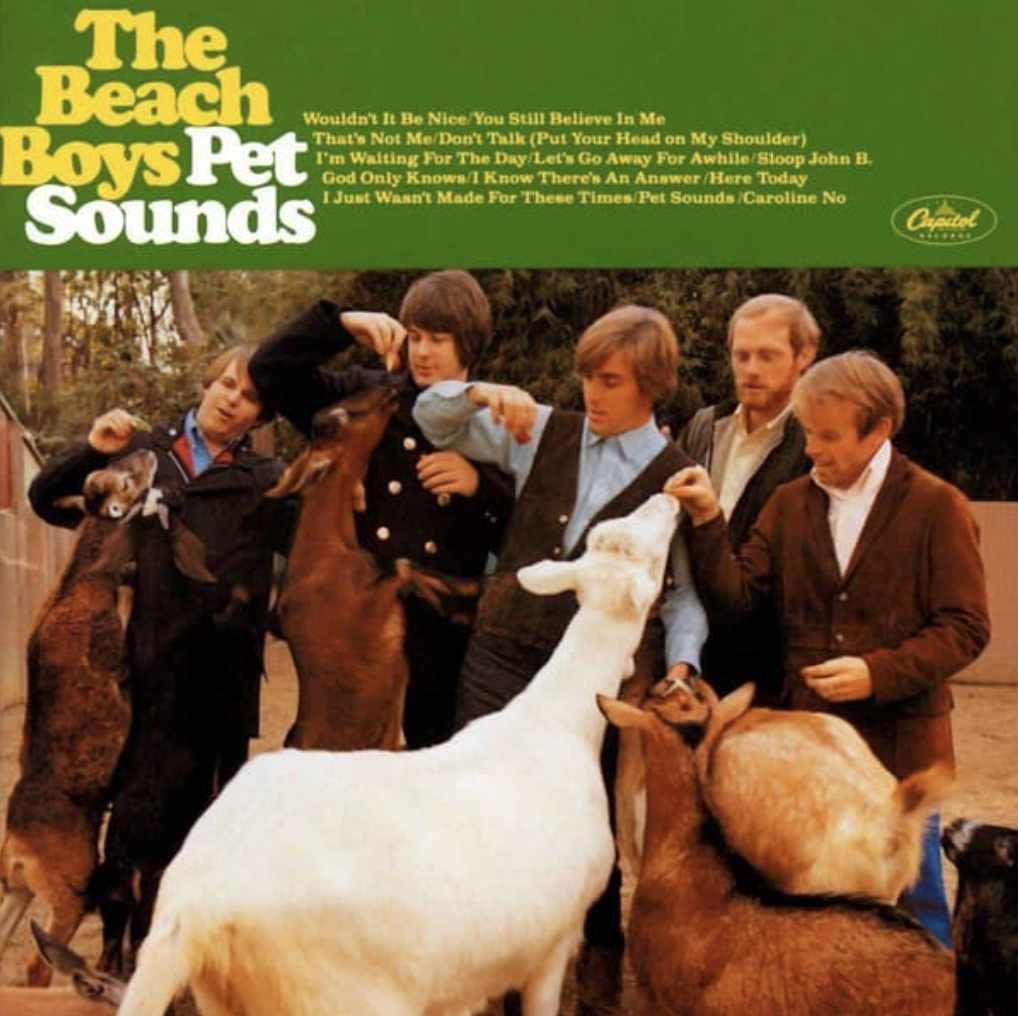
To coincide with the 60th anniversary of Pet Sounds (possibly one of the most complete and greatest albums in the rock/pop cannons), another chance (yet again, having already reprised it after the death of Brian Wilson) to read my review and purview of the 50th anniversary celebrations and tour that stopped off in Glasgow, back in 2016.
Brian Wilson presents Pet Sounds 50th Anniversary Celebrations
Friday 27th May 2016 at the Glasgow Royal Concert Hall
In a soft power, musical arms race with The Beatles, Brian Wilson more or less now mastering the known limits of the studio, was nudged towards ever more ambitious levels of creativity. As the old adage, music history folklore if you like, goes it was The Beatles Rubber Soul that finally did it for Brian. The retort to this foil would not only be The Beach Boys first masterpiece, but one of pop and rock music’s most enduring triumphs, Pet Sounds. No longer happy with the California high school, deuce coupe cruising, beach party spirit that had so far made the group world famous, cast even further adrift, introspective and all but retired from playing live with the his brothers and comrades, Brian was moving on from the fancy-free and footloose sound of the 45s that had always guaranteed a top ten place in the Billboard charts for something more…well, grown up. Voicing a growing anxiety – or the growing pains – of youth, Brian would compose the sound of young adulthood. As the world came to terms with the idea of the ‘teenager’, Brian began encompassing and articulating a new uneasy transition.
As much about the times as about the heartache and pains of being pure of heart, Pet Sounds marked a growing resentment towards the previous generation. At the beginning of a revolutionary change in attitudes, but a year before the ‘free love’ hippie idealism that brought in the psychedelic epoch, these former golden tanned beachcombers were breaking from their parent’s traditions and rules to set their own course: a life mapped out, from education to career and marriage. But at the very heart of all Brian’s work, even today, was a sense of innocence. An innocence lost as the lovesick but married Brian now in his mid-twenties, was coming to terms with the anxieties of that adulthood, and his growing mental anguish. Undiagnosed for years, left at the mercy of countless well-wishers and confidence tricksters, quacks and pseudo-therapists, Brian’s meticulous obsessive production of Pet Sounds and its subsequent, but not satisfactorily finished until 40 years later, magnum opus SMiLE, tipped him over the edge.
Pet Sounds would also mark a shift in lyricism, with Brian collaborating with his friend the lyricist and copywriter Tony Asher. A task of reification, Asher would take the often abstract and difficult expressions that roamed around inside the troubled mind and put them into song. Not exactly the most unified of atmospheres, Cousin Mike Love a constant daddy-o stuck-in-the-mud character, ready to pour a cold bucket of egotistic sick over anything that he felt would compromise or trouble the calm waters of The Beach Boys, so far, winning formula. To be fair, Love would be right to question this new shift towards melancholic, almost philosophical anguish. Asher at that time was but a burgeoning talent with little to back up his credibility as a top pop songwriter. Replacing previous writers and solid contributors with an unproven lyricist would however prove to be genius decision. But the success of the album was slow. Its renaissance and rebirth as one of the greatest albums of the twentieth century was down to the audiences overseas. The change in direction had unsettled the market, as America baulked at this sadder, more cerebral tone. Yet, the UK loved it, buying it in droves and sending it to the number 2 spot in the charts – compare that with its 106 placing in the Billboard. Pet Sounds could have been a disaster, but it was saved, becoming a cult, an iconic masterpiece. And though it would take a while to pick up the desirable sales, its legacy grew and grew years after its original release.
Arriving almost in tandem The Beatles Revolver was released just a couple of months later. Brian’s answer: SMiLE. If Pet Sounds had not only threatened but also sent Brian into a funk, then this grand American musical tour through the ages, from Plymouth Rock to the shores of the Spanish Peninsula, would all but consume and nearly destroy him. So ambitious was the vision that despite the near godlike genius of his assiduous sessions ensemble The Wrecking Crew, the social, political and historically woven rich tapestry lyrics of new songwriting partner Van Dyke Parks, and his own production prowess, the project stalled. Numerous mixes, snippets, vignettes and even completed songs made it onto various albums and compilations over the decades, including the enervated and rushed out – to appease and bring in some much-needed revenue – Smiley Smile. It would take decades for SMiLE to be eventually completed, albeit (sadly and for obvious reasons) without his brothers Dennis and Carl’s near ethereal soulful compassionate voices, and missing any input from Mike Love – now more or less carving the Beach Boys brand up, sporting it like a trophy as he has carte blanche and ownership of the name when touring with his own cabaret version of the group’s back catalogue. Brian did however manage, after spending the longest amount of time and money in recording history on a single, to release the perfectly epic pop rhapsody ‘Good Vibrations’.
Documented, quite favourably and sympathetically, by the Love & Mercy movie, Brian’s wilderness years lasted throughout the 80s and into the 90s, before the most accomplished of L.A. bands and Beach Boy fans The Wondermints helped lure Brian back on the road, performing a Pet Sounds extravaganza in 2000. Just four years later the band would join Brian in the studio to finish that nigh mystical, greatest album there never was, SMiLE, before taking it out on the road. Following in 2011 the eventual hidden away, locked in some fabled vaults, SMiLE Sessions of original material was finally released to the public.
A near renaissance, a scarred and troubled but blooming Brian Wilson is back once again on the road. This time he celebrates the 50th anniversary of Pet Sounds, arriving in my new hometown of Glasgow on a nationwide tour. Billed as an ‘anniversary celebration’ – the final performance of the iconic album in its entirety – tonight’s performance is a generous one. Split into two performances of greatest hits and Pet Sounds, with an encore of good time classics, Brian was backed by members of the Wondermints and flanked by special guests, Al Jardine and honouree Beach Boy Blondie Chaplin: a set up that has been repeated on many occasions.
As a steady presence for the vulnerable Brian, Al was on hand to soften the odd tremors of quivered uncertainty. But who was on hand to back up Al? Well as it happens his son Matt Jardine, proving himself the most apt of Beach Boy scions, was there to to aid his old man and Brian with the most adroit and sweetest of falsetto voices. A counterpoint to the now – and for good reason – limited vocal range of Brian, Matt took on the high notes with aplomb and even performed lead on one of the evenings early highlights, ‘Don’t Worry Baby’. He would play the role of a younger Brian during the entirety of the Pet Sounds album suite, almost seamlessly, taking on each alternating verse. However, and it seems almost too disingenuous to point out, there were a few wobbles and miscues throughout that just couldn’t be patched over. Yet we all willed Brian on, and when he took lead on the most diaphanous of love declarations, ‘God Only Knows’, the entire audience stood to their feet in adulated applause – the first of many rapturous ovations that night.
Directed and conducted by Paul ‘Von’ Mertens the entire ensemble began the evening with the heavenly choral warm-up ‘Our Prayer’; featured on 20/20 but originally the lead-in to the album version of SMiLE’s grand trans-American tour ‘Heroes And Villains’, which followed. We were then treated to a litany of favourites from the bobby sox high school daze back catalogue of hits, including a swinging, swayed medley of ‘California Girls’, ‘I Get Around’ and ‘Little Deuce Coupe’. Handing over the spotlight, Al performed centre stage with renditions of ‘Wake The World’, ‘Add Some Music To Your Day’ and ‘Cotton Fields’ – all songs plucked from the Brian breakdown period, when the rest of the Band were prompted to take over the creative reins. As lithe and energetic as ever, former Flame and Beach Boy band member (on tour and in the studio during the early 70s) Blondie Chaplin sprouted onto the stage to add some light-hearted theatrics and rock’n’roll vigour. The much-accomplished Durban guitar maestro, looking more and more like a cross between Jagger and Richards (all that time he spent touring with the Stones in the late 90s has worn off on him), launched into a strutting version of ‘Wild Honey’. Expanded from its soulful howled original setting, Chaplin went into bohemian guitar solo overdrive; showboating across the front of the stage and playing to the audience, who lapped it up. From The Beach Boys’ troubled but most brilliant 1973 album Holland, Chaplin picked up the ocean current waltz ‘Sail On Sailor’. The original vocalist on that recording, he returns to it with carefree élan, adding a wild guitar solo to the end, which sends Brian off into the wings in playful mock exasperation.
Back out for act two, the band minus Chaplin for now, begin the reverent Pet Sounds album. Largely enduring because it encapsulated a particular age and time in Brian’s genius, but mostly for capturing the love tribulations and torments of young adulthood in the most perfect pop songs, the album still chimes deeply with audiences fifty years later. Intricate and multi-layered but never ever laboured or strained – witness the Bond-esque Tropicana lounge instrumental suite title track -, each purposely-poised ballad, paean and tryst says all it needs to in less than two minutes. The rousing ‘Wouldn’t It Be Nice’, shared vocally by the Jardines and Brian, opens proceedings of course, followed by a gentler, more serene ‘You Still Believe In Me’. Highlights from the album set included an Al led version of the sea shanty in the manner of a doo wop Ivy League bruiser, with a reference to a particular paranoia plunged bad acid trip thrown in, ‘Sloop John B’, and flipping over the B-side, a poignant and encouraged Brian led ‘Caroline, No’.
The encore promised a “fun, fun, fun” package of hits. But first the band introductions, each band member receiving a musical signature tune as they came back out onto the stage after the interval. It was then straight into a full cast version of ‘Good Vibrations’, including the gesticulating tambourine wielding Chaplin who turned his percussive role into an art form. Rewinding back through the songbook, we were treated to the sing-along classics ‘Help Me Rhonda’, ‘Barbara Ann’, ‘Surfin USA’ and ‘Fun Fun Fun’. By now the audience were up and out of their seats, dancing where they could in the face of the po-faced security and attendants. From our balcony seats looking down on the main auditorium we witnessed hundreds swaying and weaving in almost perfect timing: the atmosphere couldn’t have been better. On a poignant, perhaps paused note Brian finished the evening with a version of the song that spawned the title of the recent movie, Love & Mercy. Written in more recent times, a reminder of the anxieties and anguish that once crippled Brian, the song’s central tenet is a perfect theme to finish on: a great sentiment for the audience to carry with them as they head home into the night. A joy to witness, the Pet Sounds legacy is in safe hands, especially here in Glasgow; a city twinned with Big Sur for one night only. Simply magical.
Here’s the message bit we hate, but crucially need:
If you’ve enjoyed this selection, the writing, or been led down a rabbit hole into new musical terrains of aural pleasure, and if you able, then you can now show your appreciation by keeping the Monolith Cocktail afloat through the Ko-Fi donation site.
THE MONTHLY DIGEST OF ACCUMULATED NEW MUSIC; THE SOCIAL INTER-GENERATIONAL/ECLECTIC AND ANNIVERSARY ALBUMS CELEBRATING PLAYLIST; AND CHOICE PIECES FROM THE ARCHIVES.

Photo Credit:: Shalev Ariel
THE NEW/
Apifera ‘Keep The Outside Open’
(Stones Throw) 21st June 2024
Pouring forth from hangout sessions at Yuvi Haukin’s studio (a member of the L.A. based quartet), the friendly, playful and jovial toking environment around Apifera’s second album inspires a constant change and lucid fluctuation between prompted musical fusions.
Near omnivorous in tastes and drivers, the often dreamy, hallucinating moods envelope a psychedelic, trippy palette of jazz-funk, disco, vapour synth music, the kosmische, the progressive, Euro chic scores and Indian influences. The later is can be heard via the cadence, almost meandered mantra vocals, of the album title (“keep the outside open”) on the opening Secret Machines-esque slow released, spacy ‘Iris Is Neil’ – a reference to the search for a missing cat called Iris, who was chasing a bat named Neil at the time of the feline’s disappearance.
Over the course of fifteen tracks (some mere vignettes in duration) Havkin, Nitai Hershkovits, Amir Bresler and Yonatan Albalak open minds and broaden horizons through various portals and mirrors; soaking up the cosmic rays whilst wistfully contemplating the universal, aching dreamily over infatuations and casting drug-induced allusions. Everything is pretty smooth and evened out, the changes in style rounded so as not jolt, but work in harmony together.
With a diverse and notable range of CVs, we have Havkin’s electronic-jazz alter ego Rejoices, Albalak fronting the post-rock-psych-jazz band Geshem, Bresler’s Afrobeat and jazz blended Liquid Saloon, and Hershkovits’s soloist piano outings for the esteemed ECM label. All of which is channeled and merged further with both suffused waves and shorter flashes of Sven Wunder, Wax Machine, The Future era George Duke, Greg Foat, Flying Moon In Space, The Flaming Lips, Jini Tenor, El Michels affair, Les McCann and The Fatback Band.
Extending the loose configuration of influences further still, the quartet invite the trumpeter and ECM signing Avishai Cohen to blow smokestack Miles Davis and more southern border bluesy expressions over the minimal vapors and gauzy airs of the finale, ‘Sera Sam’.
A smattering of made-up characters fashioned from “smoking jams” act as cartoon, psychedelic-like vehicles for sharing concerns, woes, but also for conveying a message of escapism from the increasingly divided, polarised suffocation of a hostile world at war. Advocating a return of a “wilder” untethered “freestate” of culture, music and life, Apifera leave the gateways permanently open, inviting us all to embrace, not fear, such anarchic freewheeling.
Herald ‘Linear B’
(Errol’s Hot Wax) 14th June 2024
If mid-70s Eno working his magic with Merriweather Post Pavilion sounds like a match anointed in heaven then Lawrence Worthington’s ridiculously long-delayed debut album is going to send you into a woozy alt-pop state of bliss. The latter partner in that ideal fantasy of influences is hardly surprising, with the Animal Collective’s “infrequent” co-founding member Josh Dibb (aka Deakin) playing the part of co-producing foil and soundboard. And although the eventual Linear B album was first conceived twenty plus years ago, when the Animal Collective and Panda Bear and a menagerie of congruous bands were building an alternative-psych-pop scene – the darlings (quite rightly) of Pitchfork and the burgeoning MySpace culture -, and when the musical palette of sounds is produced on cheap 90s Casio and Yamaha equipment, Worthington’s Herald nom de plume still resonates and feels refreshingly dreamily idiosyncratic.
And yet of its time, Linear B chimes, swims, shimmers, drifts and bubbles along to tubular and padded Casio percussive presets and both dream and coldwave patterned synths like it’s the late 90s and early 2000s.
The gap, after drumming his way through the 90s with The Male Nurse, Country Teasers and Yummy Fur, is due to such important affairs of the heart as marriage but also relocation and the pursuit of a useful trade – probably more important than ever, with the musician and artist’s plight never so woefully dire in monetary terms.
Picking up the ideas and partially written songs from that time at a much later date, Worthington met Dibb (a natural music partner if ever there was one) whilst (and here’s where that carpentry trade comes in not only useful but fatefully too) helping to build a recording studio. Getting on like the proverbial house-on-fire through a mutual passion for The Residents, Frank Ocean, Love’s Forever Changes, Portishead’s Third and J&MC’s Psychocandy, and spurred on by close friends, that pair set to creative work: Worthington would send his new friend demos until something struck, at which point Dibb’s would suggest booking time in the studio when the real fun began.
The results set a personal psychedelic language of feels and character-dotted whimsy to a maverick alt-synth-pop production: imagine Syd Barrett, K. Leimar and Edward Penfold backed by a Factory Records White Fence or Panda Bear. Unassumingly lo fi yet symphonic, you can hear hints of neo-romantics, colder synth spells, the post-punk, the Bureau B label’s cult German new wave and post-krautrock offerings, John Cale and a very removed vision of The Beach Boys – a stretch I know, but I swear I can hear them on the album’s closer, ‘SS Caledinghi’.
There’s much to love about this album of vapours, rays, waves, almost angelic-like moments of drifting coos. The quality, production is first rate, with each song opening up more of its subtleties and sophistication on every play.
If anything the passing of time, life hiatus, has helped in giving Worthington the space and wealth of experiences to develop and really make the album he always wanted to.
Sis ‘Vibhuti’
(Native Cat) 21st June 2024
“Vibhuti” means many things to many people; the etymology translated differently by a host of Indian cultures, spiritualists and denominations, and depending on which language, can be defined in a myriad of ways. In this case, Sis, the spiritual imbued recording guise of Jenny Gillespie Mason, uses the Sanskrit meaning of that title: “the divine spirit in the human body”.
Framed as a “roving document of spiritual awakening”, prompted by a series of “healing dreams”, the Vibhuti album channels new age motherhood, rebirth and the poetic output of the Indian mystic, nationalist and Noble Prize contender (nominated twice, once for literature and later, for peace) Sri Aurobindo and his partner in spiritual-literary learning and teaching, Mirra Alfasssa: Known as “Mother”, the French national was considered the equal partner of Aurobindo in every way – she would eventually join the maharishi at his Pondicherry retreat pursing a lifetime of philosophical and devotional learning.
An integral part of Mason’s lyricism, that iconic pairing’s message of humanity and the recognition of our divine origins and future ascension is mixed with environmental poetry, gratitude and the wonders of birth and love, love, love.
The musical vibrations are pretty surprising, helped in part by a guest list that includes the notable addition of Devendra Banhart providing subtle electric guitar lines and vibrations to a couple of tracks, but also Will Miller’s overall suffused Fourth World imbued Jon Hassell-like gauzy trumpet pines and snuggles. Longtime foils Brijean and Doug Stuart are also on hand once more to provide chimed, tinkled and trinket shimmer percussion, smooth basslines and production. But this is both a mirage and trance-like electronic alt-pop-jazz-soul-new-age-chill-wave spread of diaphanous and rainbow refracted vapours and more softly driven swells of yearned searching. One minute we’re in the realms of Alice Coltrane and Carlos Niño, the next, 70s Fleetwood Mac harmonising with Karen Vogt. And then there’s spells in which it sounds like a loose merger of Curtis Mayfield Roots period, EDM and the Tara Clerkin Trio. Beautifully sung, expressed and fluid throughout, the articulations and messages of self-healing prove artistically therapeutic and successful. Mason branches musical experimental and commercial to produce a melodious, memorable entrancing and devotional odyssey of discovery and Indian inspired philosophical mindfulness.
Neuro…No Neuro ‘Mental Cassette’
(Audiobulb) 14th June 2024
Charging up the neurons and memory receptors once more, the Tuscon, Arizona synthesist and electronic artist Kirk Markarian softly captures abstract feels and recollected scenes/evocations from his past. Under the binary Neuro…No Neuro nom de plume, Kirk’s bulb shaped translucent spaced-out notes, pips, bubbles and cloud gazing and horizon opening waveforms soundscape the subtle gauzy mental reminisces contained in the memory banks of a febrile mind.
On cassette form, with all its idiosyncratic tweaks and foibles – from a little hiss, the odd spell of bity granular surface noise and some staccato stuttered cuts and breaks in the flow – this latest hallucinogenic mirage of the tingled, arched, bended, warbled and languorous is like being blanketed in the soft play area of a psychoanalyst session.
Woozy ambience and delicate, rounded pollinations and mauve-coloured coated melodic minimal electronics and echoes of Library music conjure up such innocuous prompts as sticky tape, coaches and playground slides. This is like a watercolor version of fond recollections of innocence; an almost hypnotizing and dreamy abstraction of childhood created by a truly unique sound artist.
But changing the mood, the signature, there’s a longer remix treatment of ‘My words Come Out In Different Ways’ by Subgenuis – who, for all I know, might just be another disguise, alter ego of Kirk. This never quite hits its stride, filtering, as it does, in and out of a sort of vapoured psy and techno futuristic vibe; with a sample (I think) of some female writer/speaker communicating some theoretical address to an audience on the processes of something creative that involves dialogue, the sharing of one’s thoughts: and perhaps, repressed memories.
The Mental Tapes now could be said to archive, document for posterity those feelings and emotional states of regression therapy. Connecting with one’s childhood has seldom sounded so oblique and empirical.
Morio Maeda & All-Stars ‘Rock Communication Yagibushi’
(WEWANTSOUNDS)
As part of the vinyl specialist’s Japanese catalogue, WEWANTSOUNDS have thankfully found the time to reissue, for the first time internationally, the coveted jazz-funk-swing Rock Communication Yagibushi fusion by the renowned arranger, pianist Morio Maeda.
A beat-maker, DJ cut chemist’s and crate-digger’s delight, Maeda’s Americanized swung and Lalo Schifrin cop theme scored reinterpretations of age-old Japanese Islands folk songs and dances was originally released on the cusp of a new decade in 1970.
Using a similar formula to its precursor, This Is Rock (recorded in cahoots with foil saxophonist Jiro Inagaki), only this time replacing international hits with the traditional Shinto, the festive, the fisherman’s laments and romantically alluded handed-down songs and poetry of a diverse Pacific geography closer to home, this cult display takes many of its cues from the U.S. of A. – see the already mentioned Schifrin signatures, but also David Axlerod, a little Jerry Fielding, Jimmy Castor Bunch and Ahmed Jamal (I’m thinking specifically here of ‘Footprints’). That and a smattering of 60s Italian cinema and Library music – Armando Trovajoli springs immediately to mind.
The horns blaze and bristle, trill like a mounted curbside bust on the streets of San Fran, or swoon with lovelorn plaint in a similar West Coast location – a dockside romantic moment perhaps – as the more indigenous sounds and song from Yamageta, Kumamoto, the Island of Sado, Fukushima and Akita are transferred, given oomph and a funky showtime swagger. There are exceptions to that rule; the sake drinking seaman’s ode to love, ‘Sado Okesa’, seems to be channeling an Egyptian Hammond vibe and snake charmer’s oboe.
Largely self-taught – although it was with encouragement from his father, who taught him how to read sheet music – the 1930s born Maeda was quick to embrace jazz. Moving to Tokyo in the mid 1950s, the pianist-arranger joined the Japanese guitarist Shungo Sawada’s ensemble, and a little later, the saxophonist Konosuke Saijo’s West Liners band. In-between both those contributions and afterwards, he started his own group, the Wind Breakers, and founded We3 with the notable jazz players Yasuo Arakawa and Takeshi Inomata. He also penned music for the The Blue Coats, Tatsuya Takahasi and Nobuo Hara. The culmination of that provenance, Maeda’s All-Stars – two actual lineups make up that all-star cast, a quintet and a extended ensemble boosted by a larger horn section – Rock Communication Yagibushi adds a fuzz and twang of 60s guitar and jazz drum rolls, crescendos, a glassy-sounding marimba and sustained Dr. Lonnie Smith organ to the native heritage. Breaks aplenty, samples and fun await all those eager to get their hands on an affordable copy of a cult fusion from a revered artist on the fringes of jazz, swing, TV and film scores.
THE SOCIAL PLAYLIST VOLUME 87\__

The Social Playlist is an accumulation of music I love and want to share, tracks from my various DJ sets and residencies over the years, and both selected cuts from those artists, luminaries we’ve lost and those albums celebrating anniversaries each month.
Running for over a decade or more, Volume 87 is as eclectic and generational spanning as ever. Look upon it as the perfect radio show, devoid of chatter, interruptions and inane self-promotion.
As always, each month I select choice cuts from albums that have reached certain milestone anniversaries. This June (or thereabouts) that selection includes tracks from LPs by Bob Dylan and The Band (Before The Flood, 1974), Jade Warrior (Floating Worlds, ’74), Arti & Mestieri (Tilt, ’74), Miles Davis (Decoy, 1984), Nick Cave And The Bad Seeds (From Here To Eternity, ’84) and Noura Mint Seymali (Tzenni, 2014, which is also featured below in the archives section).
There’s also a smattering of homages to the late French chanteuse of forlorn and sorrow, Françoise Hardy, who passed away just last week. An impossible choice, but I’ve picked out a quartet of interesting tunes and covers from different points of her grand sweeping career that spanned six decades.
I’ve added a sprinkling of newish tunes too; picking tracks I didn’t get the time or room to feature in the Monthly Playlist Revue. That roll call includes Chris Cohen, Ivan The Tolerable, Beak>, The Green Kingdom, and a cut from the recently released collection of ‘homegrown’, homespun songs from the much-overlooked troubadour Tucker Zimmerman.
That leaves room for an eclectic mix of intergenerational tunes from a myriad of genres: KMD, Twenty Sixty Six & Then, the Mo-Dettes, Howdy Moon, Drahla, TVEGC, Peter Principle, Bill Dixon, Tadalat and more…
TRACK LIST IN FULL\__________
Françoise Hardy ‘That’ll Be The Day’
Typical Girls ‘Girl Like You’
Meta Meta ‘Oba Ina’
Beak> ‘Ah Yeh’
Julian Jay Savarin ‘Stranger’
Arti & Mestieri ‘In Cammino’
Kante Manfila ‘Diniya’
Miles Davis ‘That’s What Happened’
Bill Dixon ‘Vecctor’
KMD ‘Popcorn’
Tadalat ‘Tamiditin’
Noura Mint Seymali ‘Hebebeb (Zrag)’
Nick Cave & The Bad Seeds ‘Cabin Fever!’
Jade Warrior ‘Red Lotus’
Ivan The Tolerable ‘Supermoon’
The Green Kingdom ‘Softly Away’
David Gasper ‘China Camp’
Tucker Zimmerman ‘It All Depends On The Pleasure Man’
Françoise Hardy ‘Suzanne’
Bob Dylan & The Band ‘Up On Cripple Creek’
Twenty Sixty Six & Then ‘Time Can’t Take It Away’
Françoise Hardy ‘La Sieste’
Chris Cohen ‘Damage’
Howdy Moon ‘For Tonight’
Françoise Hardy ‘Et Voila’
Mo-Dettes ‘Sparrow’
Drahla ‘Second Rhythm’
The Victorian English Gentlemen’s Club ‘I Kick Higher Than A Child’
Peter Principle ‘Friend Of The Extinction’
Saecula Saeculorum ‘Radio no Peito’
ARCHIVES\_____
This month’s archive spots travel back a reasonable and recent decade ago, with the whirlwind dynamic griot star Noura Mint Seymali’s first album, Tzenni, for the Glitterbeat Records label, and Mick Harvey’s re-released consummate 2014 package of homages to Serge Gainsbourg.

Noura Mint Seymali ‘Tzenni’
(Glitterbeat Records)
The technicalities, pentatonic melodies and the fundamental mechanics aside, nothing can quite prepare you for that opening atavistic panoramic vocal and off-kilter kick-drum and snare; an ancestral linage that reaches back a thousand odd years, given the most electric crisp production, magically restores your faith in finding new music that can resonate and move you in equal measure.
The afflatus titular experience channeled with energetic passion and poetic lament, revolves around the whirling – and at its peak moment of epiphany, a fervor – dance. Performed over time under the desert skies and khaima tents by the Moorish griots, this cyclonic Hassaniya worded movement (which variously translates as, ‘to circulate’, ‘to spin’ or ‘to turn’) that enacts the orbiting solar system and with it all the elements (wind and tides) on Earth, is hypnotically invigorating.
From the German label, Glitterbeat Records, this latest Maghreb African transmission follows in the wake of the equally compelling electric transcendent desert blues of Tamikrest, Dirt Music, Samba Touré and the Bedouin diaphanous song of Aziza Brahim. Tzenni by Noura Mint Seymali and her accompanying clan make suggestive musical and social/political connections with all of these groups and artists.
Hailing from the Islamic Republic of Mauritania, nestled in between Algeria, Senegal, Mali and the Western Sahara, with the Atlantic lapping its shoreline, Noura keeps tradition alive in a modern, tumultuous, climate. Her homeland – run ever since a coup in 2008, by the former general Mohamed Ould Abdul Aziz, duly elected president in 2009 – was rocked by the immolation sparked Arab Spring and subsequent youth movement protests; all of which were violently suppressed by the authorities. Add the omnipresent problems of FGM, child labour and human trafficking to the equation and you have enough catalysts to last a lifetime. However, Noura’s veracious commanding voice responds with a dualistic spirit, the balance of light and shade putting a mostly positive, if not thumping backbeat, to forlorn and mourning.
Recorded in New York, Dakar and in the Mauritania capitol, Nouakchott, the album transverses a cosmopolitan map of influences and musical escapism. The original heritage still remains strong, yet the ancient order of griot finds solace with the psychedelic and beyond. Noura’s family linage is one of the regions most celebrated; her father, Seymali Ould Ahmed Vall, was instrumental in bringing Mauritanian music to the outside world, her late stepmother, who the whole nation mourned, was the great Dimi Mint Abba. Noura would serve an apprenticeship with Dimi, and later strike up an inspired union with her husband, the visionary guitarist Jeiche Ould Chighaly, whose dune-shifting amorphous flange-delivered licks and spindly fingered riffs create a kosmiche alien landscape, flirting with both rock and the blues. No less respected, the bass and drums combo of Ousamane Touré and Matthew Tinari bring the funk and groove.
Moving at a momentum and seamlessly across these musical boundaries, the band articulate a mostly uplifting exultation to turbulence and instability, steering through Amon Duul II and Ash Ra Tempel like field studies on the groups break out titular anthem, meditatively channeling the wah-wah delta blues on ‘El Mougelmen’, and paying homage to the prophet with an epic vocal note holding hymn to forgiveness on ‘Soub Hanallah’.
Noura Mint Seymali will undoubtedly follow Tamikrest’s success in reaching across the divide. The Northern Mali electric-blues Tuareg’s, in no small part brought to attention by the escalations in the country’s insurgency and later containment by the former colonists, France, last year wowed new, less keen world music fans. Though obviously a result of its own unique history and culture, Noura’s sound is congruous with that of both Tamikrest and Aziza Brahim – vocally. Like those artists, she will undoubtedly find a receptive, ever hungry for horizons new, audience.
Mick Harvey ‘Intoxicated Man/ Pink Elephants’
(Mute)

Creatively absent from sparring with Nick Cave and the Bad Seeds in 2013, fellow founding member and stalwart Mick Harvey missed out on the group’s mid-life opuscule, Push The Sky Away: an album that surely marks a pinnacle in meditative requiems.
Yet, since leaving the ranks, Harvey has enjoyed a fruitful run of his very own. Despite being ignored by the majority of press and blogs, his charmingly understated Four (Acts Of Love) album of afflatus paeans and lamentable covers and original numbers was wholly embraced by the Monolith Cocktail, the only blog, to our knowledge, to both critically endorse it and grant it a coveted place in a ‘choice LPs of the year’ list. In 2014, Harvey alongside Crime and the City Solutions’ Alexander Hacke and Danielle De Picciotto and musical director Paul Wallfisch, formed the nursery grime musical outfit The Ministry Of Wolves for a set of theater performances. By way of the Pulitzer Prize winning author Anne Sexton’s, even more, macabre revisionist take on the original Brothers Grimm fairy tales, the acclaimed stage production has also spawned a soundtrack LP, Music From Republik De Wölfe – reviewed favorably by us back in February.
And now, we have the re-release, accompanied by live tour dates, of Harvey’s homages to the late great, salacious Gallic maverick, Serge Gainsbourg to once again fall in love with. To coincide with the anniversary of Gainsbourg’s birth, Harvey’s 1990s moiety duo of tributes to the lecherous titan of cool, Intoxicated Man and Pink Elephants, were trundled out on April 2nd. The vinyl versions are earmarked for the 23rd June. As a precursor to this celebratory push, Harvey and his band performed a selection of songs at the Yeah Yeah Yeahs curated ATP festival back in 2013. Threatening to forever bring down the curtain on this tributary oeuvre, he has recently been back out on the road, performing in his native Australia, the UK and throughout Europe, nailing the lid shut on his Gainsbourg infatuation for good with the last date on the 14th June in Tilburg, the Netherlands: or so we believed.
Not without reservation, Harvey the ardent fan, was persuaded and prompted to record a whole catalogue of cover versions whilst working with fellow Antipodean Anita Lane, in the mid 1990s. The sleepy-eyed coquette singer/songwriter, object of desire for Nick Cave during The Birthday Party and burgeoning Bad Seeds days, Lane proposed to record the post-coital ‘Je T’aime…Moi Non Plus’ in English; originally performed of course by Gainsbourg and his English muse, Jane Birkin. Troubled by the inimitable quirks and idiosyncrasies, Harvey labored long and hard to translate the French into a less than preposterous English version: Je T’aime…Moi Non Plus as ‘I Love You…Nor Do I’ is no less steamy but Nick Cave, filling in for the nonplussed Gainsbourg, is a little too theatrical as the song takes on a less shrouded, more mooning, conversion.
Truly egged on, Harvey expanded his horizons and eventually recorded enough material for two albums and more: left over and unreleased at the time, the sociopath loony, ‘Dr. Jeckyll’ and soft focus love tragedy, ‘Run From Happiness’ have been bundled in with this re-release. But none of this would work without the quality of the supporting cast, who excelled. Channeling Gainsbourg’s leading ladies, Lane oozes that same knowing breathy sexiness, her entwined cooing dove vocals and comely sighs emulating the love nest fey Bardot and Birkin. Lane is joined in these misadventures by a qualitative backing of longtime collaborators, such as the already mentioned Cave, and newly appointed Bad Seed miscreant, Warren Ellis (both appearing on the 1997 Pink Elephants LP). Permeating and driving it all on are the lavish, though sumptuously tentative, string arrangements of French musician/composer Bertrand Burgalat and former Orange Juice bassist David McClymont.
The first of those suites, Intoxicated Man, doesn’t shy away from the hard truths, yet it is perhaps the lighter, popier and accomplished of the two records. Released in 1995, this hangover scoundrel of an album merges those blissfully unabashed dry-humping classics with its newly acquired 90s panache for European Yé-Yé, cutesy 60s nostalgia and, itself spurred on by reliving the golden decade, Britpop. However, Harvey also injects some of the more serious, Gothic-tinged, aspects of his infamous day-job band, into the pulchritude mix for good measure. Rather convincingly, Harvey’s intonations and impressions are quite good, and the English language versions of these iconic songs capture the Left Bank spirit: never availed of Gainsbourg’s ever-present genius, but nevertheless offering a fresh take.
Huskily delivered by our troubadour and caressed by Lane’s sultry enchantress tones, the deadpan Harvey begins as he means to go on, with the opening double-entendre chanson, ‘60 Erotic Year’. Flitting and flirting between erotically charged, metaphorical, pop and wanton lust, it proves the ideal introduction. Highlights are frequent, the chariot-to-the-gods, motorcycle riot, ‘Harley Davidson’, a petulant enough anthem of the ‘die young stay pretty’ variety – a rollicking union of Transvision Vamp and Saint Etienne -, just one of the many great three-minute bursts of rebel-rousing freedom. A predilection for auto-erotica persists with the arousing tribute to the Ford Mustang, and with the unfortunate plunge off the cliff road on the way to Monte Carlo, amusing ‘Jazz In The Ravine’ – “At dawn, they used a spoon to scrape up the remains.”
Harvey ups the ante on the carnival, rolling-conga fueled, ‘New York, USA’, and forlornly duets with Lane – stepping in for Bardot – on the fateful depression-era-most-wanted-on-the-run-Rom-com, and standout, ‘Bonnie And Clyde’. Bridget Bardot, whose fleeting but torrid affair with Gainsbourg left plenty of indelible marks, also inspired the album’s whirlwind, stabbing string, final affair, ‘Initials B.B.’: performed with brilliant understated morose.
Complimenting that first volume, the 1997 released, Pink Elephants, is a slightly darker proposition. It begins with the titular instrumental, a swooning cinematic teary-eyed lament, and is followed by the Massive Attack-esque, rolling trip-hop bassline and drum beat slinky, ‘Requiem’: Harvey with a Jarvis Cocker like contemptuous whisper, relishes the opportunity to sneer detestably, “You stupid cunt.” Continuing to echo Gainsbourg’s morbid curiosity and the allure of dysfunction Harvey tackles the pervy, voyeuristic ‘Hotel Specifics’; warns the kids to stay off the hard drugs (“don’t shoot-up that shit”) with wry cynicism on ‘To All The Lucky Kids’; and as Harvey imitating Gainsbourg imitating Jacques Brel, tells a sorry tale of repetitive boredom and depression, as the suicidal ‘Ticket Puncher’.
From the earliest incarnations via the various troubled and sexually heightened duets, Harvey cast his net wide, choosing a varied feast of delectable and lustfully spurned soliloquies and contemptuous exchanges between lovers. Mambo to disco-noir, each manifestation of the troubled, often objectionable and drunkenly debauched, flawed genius’s work is masterfully handled by the ensemble. Translating those quirks of language, phrases and cadence can’t have been easy, and though Harvey doesn’t exactly treat the source material with kid gloves or reverence, his dedication and love for Gainsbourg shines through every note and verse: It’s really quite an accomplishment; pretty much a resounding success.
Hi, my name is Dominic Valvona and I’m the Founder of the music/culture blog monolithcocktail.com For the last ten years I’ve featured and supported music, musicians and labels we love across genres from around the world that we think you’ll want to know about. No content on the site is paid for or sponsored and we only feature artists we have genuine respect for /love. If you enjoy our reviews (and we often write long, thoughtful ones), found a new artist you admire or if we have featured you or artists you represent and would like to buy us a coffee at https://ko-fi.com/monolithcocktail to say cheers for spreading the word, then that would be much appreciated.

