The Monthly Playlist For July 2024
July 30, 2024
CHOICE MUSIC FROM THE LAST MONTH ON THE MONOLITH COCKTAIL:TEAM EFFORT

The Monthly Revue for July 2024: forty choice tracks chosen by Dominic Valvona, Matt ‘Rap Control’ Oliver and Brian ‘Bordello’ Shea. Features a real shake up and mix of tracks we’ve both covered in our reviews, and those we either didn’t get the room to feature or missed at the time.
____/THOSE TRACKS IN FULL ARE::::::
Penza Penza ‘Much Sharper, More Focused’
Party Dozen ‘Money & The Drugs’
Red Tory Yellow Tory ‘I Hate The Internet’
Kount Fif Ft. Pawz One & Jimmi Da Grunt ‘Cronos’
YUNGMORPHEUS & Alexander Spit ‘A Working Man’
Nicole Faux Naiv & Sunday’s Child 9 ‘Ocenas’
Dyr Faser ‘Are You Out There’
Hannah Mohan Ft. Lady Lamb ‘Hell’
New Starts ‘A Little Stone’
Cuuterz & Dubbul O ‘More Hype’
Lupe Fiasco ‘Til Eternity’
Pataka Boys (PAV4N, Sonnyjim, Kartik) ‘Brown Sauce’
Black Diamond ‘Lost Motion’
Ivan The Tolerable ‘A Hitch, A Scratch’
Dillion & Batsauce ‘Make History’
Previous Industries (Open Mike Eagle, Video Dave, STILL RIFT) ‘Montgomery Ward’
Doctor Zygote & Jam Baxter ‘All Air’
Mr. Key & Illinformed ‘All Right OK’
Common & Pete Rock ‘Lonesome’
Blu & Evidence ‘The Land’
Kid Acne ”95 Wild (Kista Remix)’
Fliptrix & Illinformed ‘Making Waves’
Luke Elliott ‘Land Soft’
Passepartout Duo & INOYAMALAND ‘Xiloteca’
Damian Dalla Torre ‘I Can Feel My Dreams’
Enrique Pinilla ‘Prisma’
Cumsleg Borenail ‘jˈuː fˈʌkɪn lˈa͡ɪ͡ɚ’
Society Of The Silver Cross ‘When You Know’
Myles Cochran Ft. Michelle Packman ‘The Stories We Tell Ourselves’
John Howard ‘I Am Not Gone’
Kevin Robertson ‘Subway Hold’
Rəhman Məmmədli ‘Uca Dağlar Başında’
The Legless Crabs ‘A Real True Man’
The Good Ones ‘Umuhoza, The Worst Days Are Over’
Bhutan Balladeers ‘The Day You Were Born’
Cody Yantis ‘Midland’
Floating World Pictures ‘Hearts Gates (Single Version)’
Miles Otto ‘SQ1 & Avalaunch Run’
Modern Silent Cinema ‘A Life Of Constant Aberration’
Jeff Bird Ft. Sam Cino ‘Peace Today, Peace Tomorrow’
The Perusal #57: Hannah Mohan, Black Diamond, Society Of The Silver Cross, Passepartout Duo & Inoyama Land…
July 3, 2024
A WORLD OF SONIC/MUSICAL DISCOVERIES REVIEWED BY DOMINIC VALVONA
(Unless stated otherwise, all releases are available now)

Photo credit: George Rae Teensma
Hannah Mohan ‘Time Is A Walnut’
(Egghunt Records) 12th July 2024
Geographically settling long enough to pen this solo songbook offering, but anything but settled emotionally, the former And The Kids vocalist-songwriter Hannah Mohan attempts to process the break-up of all break-ups.
After leaving home at the age of sixteen, restless and curious, Mohan spent her formative years on the road, crisscrossing North America, busking and honing a creative craft. On returning home, after five years of travel and travail, Mohan formed And The Kids with a school friend. After a trio of albums between 2014 and 2019, and with the global pandemic’s nefarious effects on the music industry and wellbeing, the band unfortunately came to an end. Throw in the heartache, the confusing cross-signals of a fateful relationship, and you’ve suddenly accumulated a whole sorry mess of emotional pain and a lot of questions that need addressing or analyses.
Luckily Mohan is a highly talented musician and songwriter, able to turn sorrow and reflection into gold. For Time Is A Walnut is a rich album full of familiarity and yet melodically and lyrically idiosyncratic, shaped as it is to Mohan’s particular cadence, timbre and way-with-words.
Less moping and more a full gamut of hurt, weariness, despondency, incriminations and plaint, Mohan travels full circle on her break-up journey: from shock to vented indignation, from losing one self in the moment to escaping from reality. All the feelings of resentment, the pulling apart of a fragile soul, and decoupling sound surprisingly melodious and disarmingly anthemic throughout: even during the bitterest exchanges and grievances.
Hand-in-hand with producer and musician Alex Toth (of Rubblebucket and Tōth fame), working away with little sleep in Mohan’s basement, the resulting thematic songbook is filled with great alt-pop songs; some with a country lent, others suddenly mystified and misty with an air of atmospheric Celtic vibes, or, channeling 80s new wave German synth music – Toth, I assume, almost in DAF mode on the darker-lit, hurting ‘Peace Be The Day’.
Almost breezy in parts, there’s tunes galore as Mohan evokes the Cowboy Junkies, Angel Olsen, Tanya Donelly, Madder Rose, Sophie Janna (especially on the vapour-piped Ireland illusion ‘Runaway’) and Feist. But you can also throw in a touch of dry-ice 80s synth-pop and a touch of Bacharach on the whistle-y saddened beauty that is ‘Upside Down’.
In sympathy and often softly lifting, there’s a fair use of trumpet on the album. Less jazzy – although saying that, there’s vague suggestions of Chet Baker – and more Southern, nee Mexican serenade and atmosphere, that instrument’s suffused and occasional enervated brassy blazes is a perfect fit with Mohan’s candid, sanguine delivery.
A congruous choice of guest, working in a similar mode, songwriter-musician Lady Lamb features on the 60s troubadour echoed, vibrato-trilled sing-a-long anthem ‘Hell’. The details and the unforeseen circumstances, the ‘messy eroticism’ and loss, disconnection from someone else’s life are all lay bare in a melodious beauty.
Hannah Mohan rides the roller coaster of a drawn-out break-up with quirkiness and vulnerability, turning tortuous heartache into one of the best and most rewarding songbooks of the year. Mohan may have let her soul sing out, as she comes to accept an emotional turbulent period of stresses and anxieties and pain. But whether she’s finally pulled through the other side or not is up to you the listener.
Black Diamond ‘Furniture Of The Mind Rearranging’
(We Jazz)
Transported back in time, and then propelled forward into the now via Chicago’s musical legacy, its rich heritage of innovators and scope in the world of jazz, Artie Black and Hunter Diamond’s dual saxophone and woodwind focused vehicle can trace a line from the Windy City’s smokestack bluesy outlines of the 50s through the icons Sun Ra, Roscoe Mitchell, Eddie Johnson, Lester Bowie, Art Ensemble Of Chicago, Anthony Braxton and the hothouse of undeniable influence and talent, the Association For The Advancement Of Creative Musicians.
Across an ambitious double-album spread of both quartet and duo mode formations, those Black Diamonds don’t so much shine as smolder and fizzle to a smoky and simmering resonance and metropolis backdrop encroached by wild jungles and fertile growth.
The majority of this moiety evolution is handed over to the quartet ensemble, with Artie and Hunter joined by the softened taut but flexing and always on the move double-bassist Matt Ulery and the constant cymbal splashing and rolling, fills and tight woody rattling drum breaking drummer Neil Hemphill. That set both swells and finds pause to a certain lowness and more weighted pull of the freeform and melodic, the rhythmic.
Saxophones sound willowy as they either entwine, take turns on the climb, exhale drawn-out mizzles or drizzles; all the while the action recalls every formative era from the 1920s onwards, from the blues to the African, the spiritual, bop and the serenaded. All those cats mentioned in the opening paragraph pop up alongside the Pharoah, Ornette, Evan Parker (I’m thinking of the woodwind elements, which both Hunter and Artie switch between throughout), Mingus and on the opener, ‘Carrying The Stick’, Lalo Schfrin of all people.
From concrete to near pastoral dustings, a menagerie of bird-like brass and woodwind sings and stretches, often letting the steam out of those valves with a bristle and rasp. The drum and bass combo keep it all moving forward, developing, with Ulery’s slackened bass even opening a couple of tracks.
In a more stripped-down and even more experimental mode, Side D (in old money vinyl terms) of the album is given over to the duo format of sax and woodwind.
Leaning towards Braxton, John Zorn and Andy Haas in near-non-musical freedom of expression, they probe new, amorphous spaces without clear signage or reference to environments or moods. The saxophone often sounds reedier, more rasping, and is enveloped with the very sound of its brassy metallic resonance and surface makeup. Every exhaled breath is used to conjure up the mysterious, the onset of some unease, but also a pauses for certain moments of reflection.
Perhaps a mizmar played at dusk, an ominous peace or a meditative haze, these experiments, forms of tonal, timberical evocation are difficult to describe or catalogue. Only that they fit in with the freedoms, the expressions and language of the Chicago school of freeform inventiveness and exploration, deconstruction of an instrument.
Black Diamond run with the ‘stick’ or baton passed on by the Chicago hothouse of jazz notables and luminaries, proving themselves to be a quality, dynamic act ready to push forward. Rearranging the cerebral and musicality furniture as never sounded both so classy and explorative.
Damian Dalla Torre ‘I Can Feel My Dreams’
(Squama Recordings) 12th July 2024
Subtle in approach and process, the cross-fertilization of South American and European cultures, prompts and environments on Damian Dalla Torre’s second album, I Can Feel My Dreams, is a tangible synthesis of abstract feels, moods and an exchange of musical ideas.
Nodes, points in a larger dream-realism canvas reference the Leipzig-based multi-instrumentalist, composer and producer’s footprints across both continents.
Sparked by a residency to teach, write and practice his craft in the Chilean capital of Santiago, Torre absorbed all that city and its surroundings had to offer: the vistas, colours and art. With a certain amorphous guaze that magical landscape of rainforest canopy enveloped menageries, flowing waters, Andean fluted heights and valleys, and exotic lushness is merged effortlessly with complimentary vocal harmonies and assonant arias, dewy and caressed extended dainty picked harp, quivers of guitar, trembles of piano and spells of electronica. The realms of jazz, sparse techno, ambience, voice experiment, nature, futurism, sound art and the new age seamlessly yield and relent.
The haul of notable guests invited to play on the album is staggering, and in no way distracts from the main leitmotifs and direction of drifted, wispy travel. Instead, each guest enhances with a certain gracefulness and calm each musical expedition and piece of mood music. Unsurprisingly given Leipzig’s musical history and legacy (home to an enviable catalogue of classical music giants over the centuries; perhaps one of the biggest most impressive concentrations in that genre’s history of iconic composers and musicians), but also its more modern burgeoning jazz and electronic music scenes, there is a host of musicians and artists from or based in the German city taking part on the album; cue the blossoming ‘genre traversal’ Jan Soutschek, ensemble singer and soprano soloist Viola Blanche, guitarist and composer Bertram Burkert and jazz improviser, pianist and composer Jonas Timm. Add to that the Austrian-Ethiopian harpist Miriam Adefris, the Danish composer and arranger Christian Balvig, pianist Felix Römer and the range and influences probe even further and deeper. Altogether, from the replenishing waters of renewal to the generator and manipulated electronics of modernity, all these contributions prove beneficially harmonious and complete.
This is a biomorphic world in which echoes of Eno, Alice Coltrane, Talk Talk, Oh No Noh, and Lara Alarcon all coalesce and dream. The architect, Torre, manages to keep everything constantly green and lush; showcasing a flair for pulling together a myriad of sources to create something almost familiar by new.
Society Of The Silver Cross ‘Festival Of Invocations’
(8668 Records)
Stepping from the shadows after abstaining from the material world for the last five years, the matrimonial partnership of Joe Reinke and Karyn Gold-Reinke return with a second rebirth, regeneration of Indian, Byzantium, Egyptian and Gothic imbued pathos and bathos.
Harnessing the themes of fate, the eventual and unavoidable specter of death and its harbingers, its demons, and even its angels, the Seattle couple walks the path of hermetic cults, atavistic Indian spiritualism and magik to induce cosmic awakenings and transformations. With all of mortality’s connotations and meanings, death is also seen as a renewable force on this couple’s second album under the occultist Society Of The Silver Cross heading.
But there’s no escaping the atmospheric dread and the curiosity of deathly rituals invoked by the Indian-style drones, harmonium-pumped sustains and concertinaed bellows – part ‘Venus In Furs’ Velvets, part Alan Edgar Poe shipwreck hauntology shanty, and part courtly mysticism. And yet Karyn’s siren-esque duets with boa Joe can lift towards the light at times, escaping the Fortean broadcasting waves, the splashed crashed tumultuous sea-like cymbals and gongs, Book of the Dead mantras and distressed Andy Haas-like geese pecked sax (if it is indeed even a saxophone) hauntings.
But for a majority of the time the couple’s counterbalancing act of apparitional, bewitching and more baritone, from the bowels of the deep and human soul, vocals muster spiritualist visitations, a theatre of sorrow, past incarnations and an unbreakable multi-levelled circle of added magic both heavy and foreboding.
I was picking up spells of Death In June, Nick Cave’s duet with Kyle, Mick Harvey’s time with P.J. and Amanda Acevedo, Backworld, David Lynch, Dead Can Dance, Current 93 and Angels of Light. The folksy Gothic-art-music-shanty-motioned ‘When You Know’ (with my imagination) sees Serge Gainsbourg laying flowers on Jim Morrison’s alter in the Cimeti ére du Père-Lachaise. The mystical finale, ‘Rajasthan’, not only features those synonymous Indian tones but also has an air of the Spanish-Baroque guitar and a touch of The Limiñanas about it. Shrouded in rousing tribal dramatics and ether visions, the couple’s lasting nod to the land in which they spent much time absorbing the cultural-musical spiritualist vibes before making their debut singles and album (Verse 1), is steeped in the mists of time; invoking India’s largest state before eventual unification, and its history of early Vedic and Indus civilizations. “Rajasthan” is a portmanteau of words, but can be translated as the “Land of the kings”; its courtly, royal verbose and stately reputation echoes as the final word on this album of rebirth and the coming to terms with death. Making true on their previous chapter, Joe and Karyn once more follow the call of the silver cross-societal allure. Atmospheres, processions and possession that are more than just songs, you don’t so much liberally catch, or, casually listen to each propound and chant-like forewarning as enter a fully constructed world of elementals and alchemist mystique. These are drones, dirges and more opened-up astral projections that will stay with you days after first hearing them. A Festival Of Invocations is a chthonian play of supernatural, spiritualist and funeral parlor riches; a successful follow-up after a five year hiatus.
Droneroom ‘As Long As The Sun’
(Somewherecold Records) 19th July 2024
Amorphous Western sun-cooked melting mirage panoramas are stoked and drawn from the Droneroom’s long form guitar peregrinations. The sixth (I believe) alt-country drone-cowboy album from Blake Edward Conley’s singular experiment for the Somewherecold label, As Long As The Sun is a filmic soundtrack-like conjuncture of Paris, Texas, Blood Meridian and a myriad of supernatural and alien visions of the ‘big country’.
The Western sounds of the twang, rattle and bends is unmistakable, and the sounds we’ve taken for granted, like the freight train convey that hurtles down the tracks and with it’s velocity and size shakes the passing dinging and ringing rail barrier junction, but Conley’s familiar markers, references make them near hallucinogenic under the sun’s powerful debilitating rays. I can imagine Ry Coder fronting Ash Ra Tempel, or early Popol Vuh relocated to the arid planes of outlier Texas, or a mule-riding Don Quixote tilting at the shadows of cacti.
A contemplation of all life’s spiritual quandaries and fate no less, all elicited from the magnified and amplified reverberations, quivers, strokes, gestures, brushes and more driven rhythmic passages of the guitar. Fuzzed-up with flange and sustain, these descriptive lines, resonated waves and vibrations are like drawn-out echoes of Michael Rother, Gunn-Truscinski, Jason Pierce (in his Spaceman 3 days) and Yonatan Gat. On the searing, razored and heated coil moody ‘Last Train To Soda Spring’ (the small Idaho city which gets its name from the 100s of carbonated water springs that dot the landscape) there’s a build-up of layering and rhythms that breaches the hazy space rock barriers – Hawkwind crosses fully into Motorhead. Whilst the shamanic marooned, railroad vision, ‘East Facing Window’ has a kind of krautrock generator field around it that hums and pulsates, invoking both alien and paranormal activity – I’m thinking a little of Roedelius’s experimentation on Sky Records.
As Long As The Sun beats down upon Conley’s cowboy hatted noodle, its gravitas, life force and heat inspiring serious abstract empirical vistas, atmospheres and the soundtrack to a movie yet to be made.
Luke Elliott ‘Every Somewhere’
(AKP Recordings) 12th July 2024
Composing a more inclusive biosphere and exchange of cultures, influences and sounds, the Amsterdam-based, Leeds born, sound artist Luke Elliott transforms his source material of field recordings (from what could be acts of making in a workshop to tramples through the undergrowth of Moat Farm in Somerset and the windy tubular sea organ of Zadar in Croatia) into a fully working lunar off-world vision.
A new world no less, Every Somewhere’s vague, recognizable, or by happenstance, playful tastes of gamelan and Southeast Asia, early analogue modulations and patterns, tape music experiments and sonic land art (that already mentioned Zadar organ, which was built as a large scale land art instrument to bring some sort of random melodious colour to the Dalmatian coastal town’s monotonous concrete wall scape, rebuilt with haste after the devastations of WWII) are sampled then re-sampled, fed through effects and an apparatus to build a more sympathetic, attentive environment.
At least influenced in part by a fascination with Alfred W. Crosby’s ‘Colombian Exchange’ theory, as outlined in his 1972 propound book, which gave a now fashionable name to the legacy of colonialism and the destructive and loaded exchanges between the Western hemisphere and the then ‘New World’, Elliott’s imaginative world is more nurtured towards a beneficial exchange of cultures.
In a liminal zone between the earthly, otherworldly, near cosmic, dreamy and liquid, the kinetic, algorithmic, arpeggiator and magnetic atoms and transparent notes bobble and squiggle about over atmospheric ambience and to the rounded rhythms of paddled tubular obscured instruments. And then, once the guitar is introduced to tracks like the glassy delicate ‘Objects Of Virtue’, the mood changes towards a bluesy post-rock vibe.
Magical escapes, stargazing from the observatory, solar winds, near operatic cloudscaping and various gleams, glints and globules recall Goo Ages’s Open Zone album, Tomat, Raymond Scott, Edgar Froese and Zemertz.
Elliott’s debut for the astute AKP Recordings label maps tactile environments both intriguing and melodically mindful. It paves the way for new visions of a more equal future.
Passepartout Duo & Inoyama Land ‘Radio Yugawara’
(Tonal Union) 26th July 2024
The freely geographical traversing Passepartout Duo find congruous partners with collaborative foils Inoyama Land – those fine purveyors of Japanese Kankyō Ongaku, or environmental ambient new age music – on their latest balance of the tactile, organic and synthesized.
A free association of cultures and musical processes, despite laying down loose perimeters, the Italian/US duo of Nicoletta Favari and Christopher Salvito combine explorative forces with the Japanese musical partnership of Yasushi Yamashita and Makoto Inoue for a remarkable interaction with their surroundings, a mix of children’s instruments and percussive and wind apparatus.
Favari and Salvito have already appeared on the Monolith Cocktail, with reviews of both the Chinese art platform-backed Vis-à-Vis and Daylighting albums. Those experiments in the timbrical, rhythmic and melodic, imbued by the Meili Mountains, Lijiang and fabled imaging’s of Shangri-La, were created during and in-between the restrictions of the Covid pandemic. A year before news broke of that global crisis the duo travelled to Japan. Connecting with the Inoyama Band, a duo that had transformed the abstract feelings, magnetism, sublime transcendence and peace of the landscape since the 1980s, they were invited in to their host’s shared space sanctum – an auditorium inside Inoue’s family-run kindergarten in Yugawasa that doubles-up on Sundays as a studio.
Set out on tables for all participants, a myriad of playful and more studied instruments and a set of “game rules”. The quartet could only use the mix of electronic and acoustic instruments separately or altogether for ‘revolving duets’, with each taking turns to play through a cycle of ‘four duos’. But then ‘anything’ was permitted in that session, which lasted three hours. In this complete state, that long improvisation and set of prompts has been distilled into eleven more digestible parts. Within the sonic, contextual and languid peaceable realms of the Kankyō Ongaku genre and greater scope of Japanese acoustic-electronic music, there’s an air of Satoshi Ashikawa, Yasuaki Shimizu, Yoshio Ojima and Tomo-Nakaguchi about this album. You could add hints of Slow Attack Ensemble, Eno, the Hidden Notes label and Bagaski to a subtle layering environment that takes in all points of the compass, with chimed bulb-like notes and the ringing, searing and chimed bamboo music of Java, Tibet, Vietnam and the dreamy.
The recognizable sound of soft-mallet patterned and paddled glockenspiel and xylophone merge fluidly with hand bells, higher-pitch whistled recorders, concertinaed wafted melodica and harmonicas, and racks of wind chimes. Whilst atmospheric elements and the use of electronic devices create mysterious vapours, oscillated wisps, knocked rhythms and floppy disc sampled voices.
Gazing at diaphanous beamed and lit cloud formations from a comfortable snug in the landscape, or, submerged below Mexican waters inhabited by the strange aquatic Axolotl salamander, each part of this performance is somehow similar and yet variably different. Between the illusionary, dreamy, sonorous, see-through and swimmingly, two sets of adroit partnerships create organic meta and a sublime near-nothingness of slow musical peacefulness and environmental absorbed transience.
Myles Cochran ‘You Are Here’
(9Ball Records) 26th July 2024
Unhurried and once more placable, the all-round embracing American composer, songwriter, multi-instrumentalist and producer Myles Cochran follows up his 2021 debut album (Unsung) with another carefully spun canvas of subtle emotive pulls, TV and filmic-like soundtrack scores, ruminations and mirages.
Traversing an amorphous palette of Americana, the blues, classical, folk, experimental, Baroque and traditional, Cochran integrates his Kentucky roots with spells in New York City and the UK (where he’s lived for some time) whilst letting his unprompted imagination travel to more exotic climes and cerebral dreamscapes.
Although an adroit player of many instruments, Cochran’s work is mostly led, directed, informed and suffused by both the acoustic and electric guitar. Understated but keen and expressive, his choice of guitar is once again left to stir up visions of a celluloid panoramic and more mystifying melting Western America, the Appalachians, Ozarks and home. Only this time around he’s also invited in the accomplished cellist Michelle Packman and bassist Reggie Jones to add a transported subtle semblance of chamber music, period drama and jazz. Jones, playing a stand-up (or upright) bass throughout, emphasizes rhythm, a pace and sense of travel – especially so on the shaky rhythmic travelogue ‘Making Something Out Of Nothing’, which, by its title, indicates a conjuring of a composition, performance out of just playing or fiddling around, but evokes (for me) the imagined title sequences of some wintery Northern American drama, out on the road with the harsh, snowy landscape passing by the window of our protagonist’s truck. Meanwhile, the following countrified-meets-the-pastoral-and-renaissance crafted ‘Signs And Symbols’ has an air of Fran & Flora about it with the sounds of a breathy and fiddle-like cello.
Widening the vistas, the quiet inner battles of turmoil and conflict, sympathetic bowing and pining cello enhances the mood and subtle expressions of Cochran’s compositional style, which both ebbs and flows between the echoes of Chuck Johnson, Ry Cooder, Bill Frisell, John Fahey, Martin Renbourn and Jeff Bird.
There’s a pick up in the pace with dusty brushed drums, but for the most part it’s a quivery horizon gaze of sophisticated slow to mid-tempo observations and introspection. None more so then on the mature vocalized jazzy-bluesy and dusty ‘The Deepest Sea’, which sounds like Hugo Race or Chris Eckman in questioning Leonard Cohen mode backed by Chris Rea.
A culmination of travels, thoughts, hopes and fears, You Are Here further expands Cochran’s musicianship and influence. Those Americana roots are being pushed further into new pastures, helped by his cellist and bassist foils and freshly attuned ear. Eroded, waned, giving and dreamily melting in the heat, his guitar parts overlap and transmute into piano, strings and the ambient. Each track is like a short score, the qualities of which offer sensibilities and a way of following or telling a story, a moment in time or scene. In all: a very sensitive work of maturity and unrushed reflection.
___/+ THESE RECOMMENDATIONS IN BRIEF
Any regular readers will know that I pride myself in writing more in depth purview-style reviews with a wider context. This means I naturally take more time and effort. Unfortunately this also means that I can only ever scratch the surface of the 4000+ releases both the blog and I get sent each month. As a compromise of sorts, I’ve chosen to now include a really briefly written roundup of releases, all of which really do deserve far more space and context. But these are recommendations, a little extra to check out of you are in the mood or inclined to discover more.
Pocket Dimension ‘S-T’
(Cruel Nature Records)
Exploratory voyages into the kosmische and sci-fi, straight from the illustrated pages of Stewart Cowley’s Spacecraft 2000 – 2100 AD, the Lanarkshire-based artist Charlie Butler doesn’t so much launch as fire the languid thrusters into the mesmerizing, enticing and dream like voids of a soundtracked cosmos. On many levels, through four continuous stages, the drifted and wonder of space is balanced with fizzled raspy electronica and eventual IDM, siren wailing bends, shoots, and a rotating centrifugal force that seems to envelope the whole trip in both mystery and the presence of unknown forces hovering in the galactic ether.
Various ‘TRÁNSITOS SÓNICOS – Música electrónica y para cinta de compositores peruanos (1964-1984)’ (Buh Records)
Filling in the blanks in the story of South America’s experimental and avant-garde scenes, Buh Records throws the spotlight on Peru and a host of experimental boffins working to cross indigenous sounds with the new and yet to be discovered.
Off-world, futuristic, UFOs, tape manipulation, the shrills of something magnetic, steely industrial tools, reel to reel melting, mind bending and rattling old atavistic bones, assonant female voices, and shamen augers, this compilation includes examples from the likes of Arturo Ruiz del Pozo, Luis David Aguilar, and Corina Bartra; a wealth of cult composers struggling to explore new sonic boundaries in a country devoid of the apparatus, foresight and laboratory conditions. And so most of the atmospheric – sometimes heading towards chilling alien – and transmogrified Peruvian environmental peregrinations were recorded in private studios. The story and scope needs way more room than this piffy, glib little piece. Suffice to say, I highly recommend it.
Rehman Memmedli ‘Azerbaijan Guitara Vol. 2’
(Bongo Joe)
The history and travails of the fecund oil rich country of Azerbaijan are atavistic. This is a nation that has striven to gain independence from a string of empires: both Tsarist and Soviet Russia, Iran, Albania, and much further back, the great Mongol Khan Timur. Desired not only for its abundance in fossil fuels but for its geographical corridor to its fellow Transcaucasia neighbours of Georgia and Armenia in the west, to the south, Iran, in the north, Russia, and to the west, the vast inland lake, the Caspian Sea. And although at various times at war with its direct neighbour Armenia (recent flare ups have led to a startup in violence, and accusations of ethnic removal), the country’s close proximity to a mix of cross-cultural and geographical influences has led to an absorption of all kinds of musical styles.
Bongo Joe‘s second volume of ‘guitara’ music showcases is fronted by another Azerbaijan legend, Rehman Memmedli (the first volume was handed over to the equally iconic Rüstəm Quliyev), who first learnt the accordion and harmonica before picking up a relative’s guitar – but also the region’s synonymous traditional tar instrument too (an ornate curvy looking waisted long-necked lute). Suitably eclectic in styles, from belly dancing Turkey and Arabia to shimmy Bessarabia and local wedding music, Memmedli scores and scorches up and down the fretboard at speed. Spindling, bending, skirting and wobbling, and even sounding at times like an erratic stylophone, vistas and ruminating sonnets are conjured up from a nibble-fingered maverick: Persia, the Caucasus, and beyond are summoned forth from electrified scuzz and fuzz and drama.
Cumsleg Borenail ‘Fragile And Adaptive’
Video – Taken from the new album Time Is A pˈætɚn Of Shifting d͡ʒiˈɑːmətɹiz
Proving incredibly impossible to pin down, whilst impossible to fully keep a track of, such is the prolific output, the artist formerly known as Cumsleg Borenail has released a host of albums, EPs over just the last few months alone.
The latest, and discombobulating entitled, Time Is A pˈætɚn Of Shifting d͡ʒiˈɑːmətɹiz,will officially go live a week or so after this column. As a teaser, Borenail has fucked around with AI to produce this strange, biomorphic, tumorous metamorphous of metallic clay dancers, bound together in some super fucked up hallucinatory creepy body assimilation style video. I will admit that I fucking hate AI – ‘artificially inflated’ as someone has already quipped – so it is lost on me – for those who want the tech, ‘all models’ were ‘created in blender, then whapped into ADOBE to AI generate backgrounds and randomly alter model edges.’ But musically we are talking about whippy body music that channels Detroit mechanic funk techno and the sound of grooving over broken glass. Derrick May, Suburban Knight, Ron Trent in the mechanics of the surreal and industrial. As artificial as it all is, there’s a certain soul in this machine. I look forward to hearing the rest of the album later in the month.
Neon Kittens ‘In The Year Of The Dragon (You Were A Snake)’
(Metal Postcard Records)
System of downer sinewy post-punk, like the Pop Group falling on top of PiL, the latest video output from the ridiculously prolific Neon Kittens is another semi-metal-guitar-string buzz and grind of gnashing venom and risk. The vocals sound like a toss off and up of honey trap glossed fake AI and taking no crap no wave female provocateur in the mode of Michi Hirota, unimpressed by the snake-like actions of a former lover; the action, like a lost grated down stroke of Fripp(ery) from the Scary Monsters And Super Creeps LP.
Keep an eye out next week for Brian ‘Bordello’ Shea’s review of the band’s EP.
Dyr Faser ‘Crime Fever’
(Self-release)
Boston, Massachusetts duo of Eric Boomhower and Amelia May previously skirted the krautrock dreaminess of Amon Duul II on their hermetic, drowsy Karmic Revenge. They seem to change their sound, if only subtly, on each new album, and Crime Fever’s haunted, scuzzed playfulness leans more towards Lou Reed this time around – but only if he’d jammed with Dinosaur Jnr. Jefferson Airplane and Ty Segall.
Still, they maintain a buzzy, fuzzy, and even Byrds-like loose dusting of the psychedelic and a backbeat throughout, with those ether-giddy vocals tones of May invoking Blonde Redhead, Beach House, and of course a little of a slacker rock, shoegaze vision of Renate Knaup-Krötenschwanz.
Needs far more attention than I have the capacity to manage but have a read of my piece on their KR album from a while back to get enthused.
Hi, my name is Dominic Valvona and I’m the Founder of the music/culture blog monolithcocktail.com For the last ten years I’ve featured and supported music, musicians and labels we love across genres from around the world that we think you’ll want to know about. No content on the site is paid for or sponsored and we only feature artists we have genuine respect for /love. If you enjoy our reviews (and we often write long, thoughtful ones), found a new artist you admire or if we have featured you or artists you represent and would like to buy us a coffee at https://ko-fi.com/monolithcocktail to say cheers for spreading the word, then that would be much appreciated.
Our Daily Bread 420: The Telescopes ‘Song Of Love And Revolution’
January 22, 2021
Album Review/Dominic Valvona
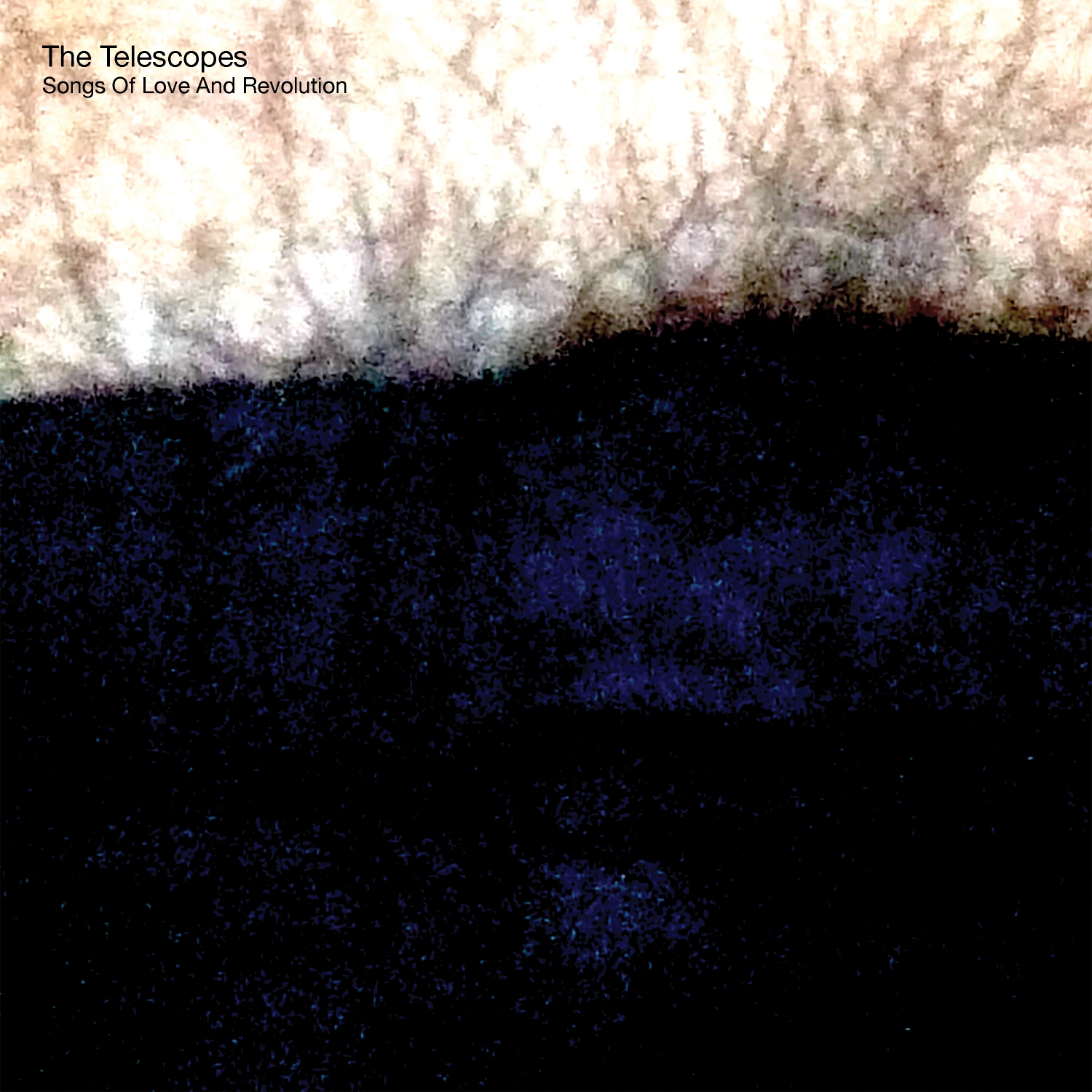
The Telescopes ‘Song Of Love And Revolution’ (Tapete Records) 5th February 2021
You could say that it was a special kind of calling to draw scuzz sculptured drones and a psychedelic morose from the well of despair for over thirty years. The Telescopes have continued unabated, and through various chapters of sorrow to be hypnotised sonically towards an abyss. There’s unfortunately always enough pain, torment, distress and redemption each year to motivate such concentrations of both sludge driven rock ‘n’ roll crash-and-burn and Mogadon induced hymns.
Written and recorded before the recent death of the band’s founding member and celebrated cult lead guitarist David Fitzgerald (passing away last November from cancer), The Telescopes 12th album in three decades of stop-and-starts does feel at times like a befitting tribute to his memory; drawing on all the signature caustic, abrasive and whining guitar lines and pendulous and esoteric tribal drum patters. Stephen Lawrie, who remains as the only original founding member and custodian of the faith, once more drifts in and out of the dense fuzz, guitar angling and incense burning atmospherics with his low and mesmerised hushed vocal burr.
Despite all the talk of the despairing density, The Telescopes find glimmers of light, a way out of the grief and despondency. They even end up on a deserted beach front, accompanied by only a codex finale of concertinaed sea shanty, the lapping tide and the song of seagulls on the album’s outro, ‘Haul Away The Anchor’.
Reimagining the Os Mutantes on downers, the Dream Syndicate and BRMC on a particular bad turn, the band make quite the opening statement with the rhythmic white noise séance ‘This Is Not A dream’. They follow that pulsation, heavy Meta by surfing the tube of a more apocalyptic beach on the fangs-out, sleaze and scuzzy ‘Strange Waves’. Skulking yet almost choral, leaning towards the Spaceman 3, even Spiritualized, they ride a wave of psychosis. By the time we reach the hypnotised beatific spiritualism of ‘Mesmerised’ itself, they’re burning candles at the alter of a mystical Byzantium Velvet Underground. The Telescopes bound back into suitable menacing, squalling energetics aboard ‘This Train’; an altogether more dangerous ushering in of the train metaphor for momentum (“a change is coming”) of civil rights American soul. This is musically something more in keeping with the shadow creeping moodiness of Berlin-period Crime And The City Solution, and even Suicide then rallying cry of change, or augur.
By now The Telescopes can turn out this kind of drone-heavy squalling doom and downer pysch in their sleep. They continue as guardians of this form, elder statesmen, able however to entice the faithful and keep their loyal audience intrigued and interested enough to lap it all up. And as the catalogue goes Song Of Love And Revolution is a pretty immersive, solid and brooding experience: spiritual if despondent in part, a call to escape the despair. There’s love somewhere in this ritual, but you’ll have to drag it out of them. Dominic Valvona
Further Reading Suggestions:
The Telescopes ‘Exploding Head Syndrome’
The Telescopes ‘Hidden Fields’
Hi, my name is Dominic Valvona and I’m the Founder of the music/culture blog monolithcocktail.com For the last ten years I’ve featured and supported music, musicians and labels we love across genres from around the world that we think you’ll want to know about. No content on the site is paid for or sponsored and we only feature artists we have genuine respect for /love. If you enjoy our reviews (and we often write long, thoughtful ones), found a new artist you admire or if we have featured you or artists you represent and would like to buy us a coffee at https://ko-fi.com/monolithcocktail to say cheers for spreading the word, then that would be much appreciated.
Tickling Our Fancy 090: Harmonious Thelonious, Krononaut, Map 71, Phew, Young Knives…
August 18, 2020
Album Reviews Roundup/Dominic Valvona
In-between lockdowns the only good news is that at least this month and next is shaping up to be the busiest months in 2020 so far, with a significant rise in the number of releases. And so, just scratching the surface, I’ve picked out just a smattering of interesting and brilliant albums from the thousands that the Monolith Cocktail receives each month.
German contemporary electronic music pioneer Stefan Schwander under the Harmonious Thelonious title, creates a new sophisticated polygenesis dance album of itchy scratching no wave, the tribal and industrial for the Hamburg label Bureau B; a survey of various contemporary experimental artists come together for charity to interpret the amorphous Plague Score graphic score of Nick Gill; Japanese underground luminary Phew releases a sort of mixed compilation of new material and unreleased sessions from her 2017 album’s Light Sleep and Voice Hardcore for the Disciples imprint. Lurking in the jazz-fusion subterranean, a new project from classically leaning producer and guitarist Leo Abraham and jazz drummer Martin France and their ensemble of collaborators, is the latest release on Glitterbeat’s experimental instrumental imprint tak:til. Krononaut converges the avant-garde with post-rock, post-punk and krautrock. Sometime Roedelius foil Andrew Heath releases yet another understated ambient sound collage of the real and imaginary for the Disco Gecko label; the patient escapist ‘The Alchemist’s Muse’. The Israeli-Russian collective Staraya Derevnya release a treble album haul, though I’m concentrating on the marvellous culmination of improvised performances pieces and additional material avant-garde krautrock folk Inwards Opened The Floor.
Handling the pandemic and escalating divisive free fall with spite, energy and violence, there’s the new Map 71 album, Turn Back Metropolis, and a barricade breaching, loud and primal return for the Young Knives with their first full-on album in nearly seven years, Barbarians.
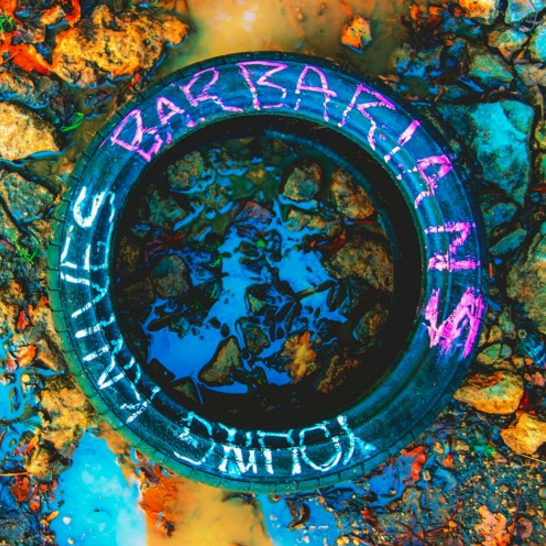
Young Knives ‘Barbarians’
(Gadzook) Album/4th September 2020
Hurtling back from a four-year hiatus with a barrage, the brothers Dartnall unleash an angry firestorm of a dystopian album; the first fully realised collision since 2013’s Sick Octave.
The now not so Young Knives have been busy sharpening their sonic disconsolations in all that time, ready to pounce with an attack on the senses; reappearing at a most depressingly divisive time. Not that there hasn’t been more than enough material to keep the Knives awake at night, but they’ve been inspired to light the fuse by reading up on the apocalyptic philosopher/writer John Gray’s resigned tract on the illusions (as he sees it) of self-determination, Straw Dogs, and the controversial professional man-hater Valerie Solanas and her patriarchal death-knell, the S.C.U.M. Manifesto (an abbreviation of the Society For Cutting Up Men). In what’s said to be their most “cathartic” and “noisy” release yet, the self-confessed nihilists and miserablists have channeled the Clockwork Orange borstal of primal savage human nature, as explored in Gray’s polarizing theorem, and Solanas’ (what some critics and commentators consider a clever parody, even satire of “the performance of patriarchal social order it refuses”; though attempting to murder Andy Warhol, and by association the American critic Maria Amaya, puts a damper on that suggestion) utopian pipe-dream to knock seven bells out of the indie-dance and post-post-punk blueprints.
Essentially, as the title makes clear, despite all our graces, technologic advances and awareness, humans have never lost their barbaric cruelty. Is this just part of our nature and makeup? And if so, how do we live with it? It’s a quandary that hasn’t diminished over time, and a fate amplified in the pressing destructive times of 2020; a cold war of ideals, divisive politics kindled by a raging pandemic. And so, you can expect an explosive despondency from the Knives as they tear up and skulk through the debris.
It starts by plowing into a sustained menacing buzzy and harassed krautrock like grooving thrust merger of Techno, Siouxsie’s Banshees and PiL (Henry Dartnall will use will Lydon’s signature cocky sneer and haranguing rage throughout this Molotov hurling album), and continues to caustically cut-up a barreling and marching rant of These New Puritans, Scary Monsters and Outside era Bowie, NIN, the Chemical Brothers, Death From Above 1979 and The Slits. There’s even, I might suggest, a hint of supernatural Alex Harvey, albeit jazzed-up with rollicking Bloc Party drums, on the creeping witchery ‘Jenny Haniver’. I’m not surprised it has a daemonic esoteric feel, as the title refers to the ghastly unnatural looking mummified carcasses of rays and skates that have been dried-out and modified to resemble fanciful creatures like dragons and demons.
Brutality is everywhere, with samples of audio from a bare-knuckle brawl on the tortuous fist-clenched whirlwind title-track, and a squall of harsh and heavy breakbeats and alarms constantly rattle the cerebral. Yet breaking the barbarous grind and bounce are moments of brief relief: the venerable and prayerful female chorus on the ‘Holy Name 68’’ vignette (a distorted calm from the past), and the milder relief of a vague brass band finale serenade on the previously Blurt honking post-punk ‘Slashed What I Saw’ curtain call.
Henry shouts that the “scum will inherit the earth” and other such sloganism, knowing full well his rage will inevitably dissipate as the barricades come tumbling down once more. A future hell on repeat, the Knives at least have a good go at firing up the audience; it’s a noise and row that has been largely missing in the music world, and proves the perfect poisoned tonic for these end times. It’s good to have them back.
Phew ‘Vertigo KO’
(Disciples) Album/4th September 2020

In case you haven’t been introduced to the avant-garde voice iterations and various drone landscaping experiments of the Japanese artist known as Phew, then this new and unique compilation of her personal sonic statements and moods is both an eye-opener and a good place to start.
Phew’s entry into this field started with the instigation of the Osaka psychedelic-punk group Aunt Sally in 1978, which she fronted until their brief but influential burnout just a couple of years later. During the next decade Phew would work with an enviable cast of experimental doyens including Ryuchi Sakamoto, Alex Hacke of Einstürzende Neubauten fame and DAF’s Christo Haar, and also making an album with the illustrious Can pairing of Holgar Czukay and Jaki Leibzeit and legendary producer Conny Plank. Fast-forwarding to the noughties and the underground pioneer has performed live and recorded with The Raincoats’ Ana Da Silva, Jim O’Rourke and Ikue Mori and Yoshimi of the OOIOO/Boredoms/Saicobab arc of ensembles. Quite the providence, it’s a back catalogue that can be heard suffused throughout the latest collection of specially recorded new material, unreleased works from Phew’s two most recent solo album sessions (2017’s Light Sleep and Voice Hardcore) and a, removed from its original disjointed source, cover version.
Framed by the artist herself as “An unconscious sound sketch…” and as “personal documentary music”, Vertigo KO is a special kind of compilation. Forward thinking, progressive rather than looking back, the tracks on this album can’t be dated or easily linked back to those previous works. It sounds in fact like a new work entirely, made in the moment, all at the same conjuncture of creativity and thought. The label Disciples has already put out a limited edition cassette, Vertical Jamming, of Phew’s “long form drone work”, but this collection seems untethered, themeless concept wise and musically. Well that’s not entirely true, Phew states that her last two albums from which some of the martial has been lifted is personal and not an attempt at a “worldview”: the overall undercurrent and hidden message being “what a terrible world we live in, but let’s survive”. Phew seems to convey this survival by counterbalancing ascendant crystal rays of nature and heavenly with mysticism, otherworldliness and ominous Sci-fi: The skying drones and refractions that build towards a cathedral in the clouds on the opening ‘The Very Ears Of Morning’ evoke the beauty and enormity of nature’s first light. Yet by the second track Phew has transmogrified the loose post-punk slumbering Raincoats distress ‘The Void’; transporting the bare bones to a neon-futuristic industrial setting, ala Bladerunner.
Some of the more truly “out there” avant-garde moods involve various vocal repetitions and multi layering. These voices, intonations and peculiar annunciations can be in the form of obscured incantations (as they are on the vaporous hive humming consciousness mystery ‘Let’s Dance, Let’s Go’), vowel stretching (on the dial twisting ‘All That Vertigo’) or monastic (on the mystical Buddhist/Shinto call to prayer vacuum ‘Hearts And Flowers’). Sometimes it’s used as a rhythm, at other times as a lingering trace of yearning from the “void”.
Phew’s amorphous sonic sensibilities exist both in the metallic gauze of space and in more concentrated earthly reverence. A pioneer of the form, the Japanese icon of the underground continues to produce some of her strongest work as a new decade beckons, birthed in a pandemic. The signatures, reference points and mode will be familiar to those already well acquainted with the Phew’s varied catalogue, yet Vertigo KO offers some sublime and inventive surprises to be an essential edition to the collection. Those unfamiliar would do well to experience this set of suites and then work backwards.
Krononaut ‘Krononaut’
(tak:til/Glitterbeat Records) 4th September 2020
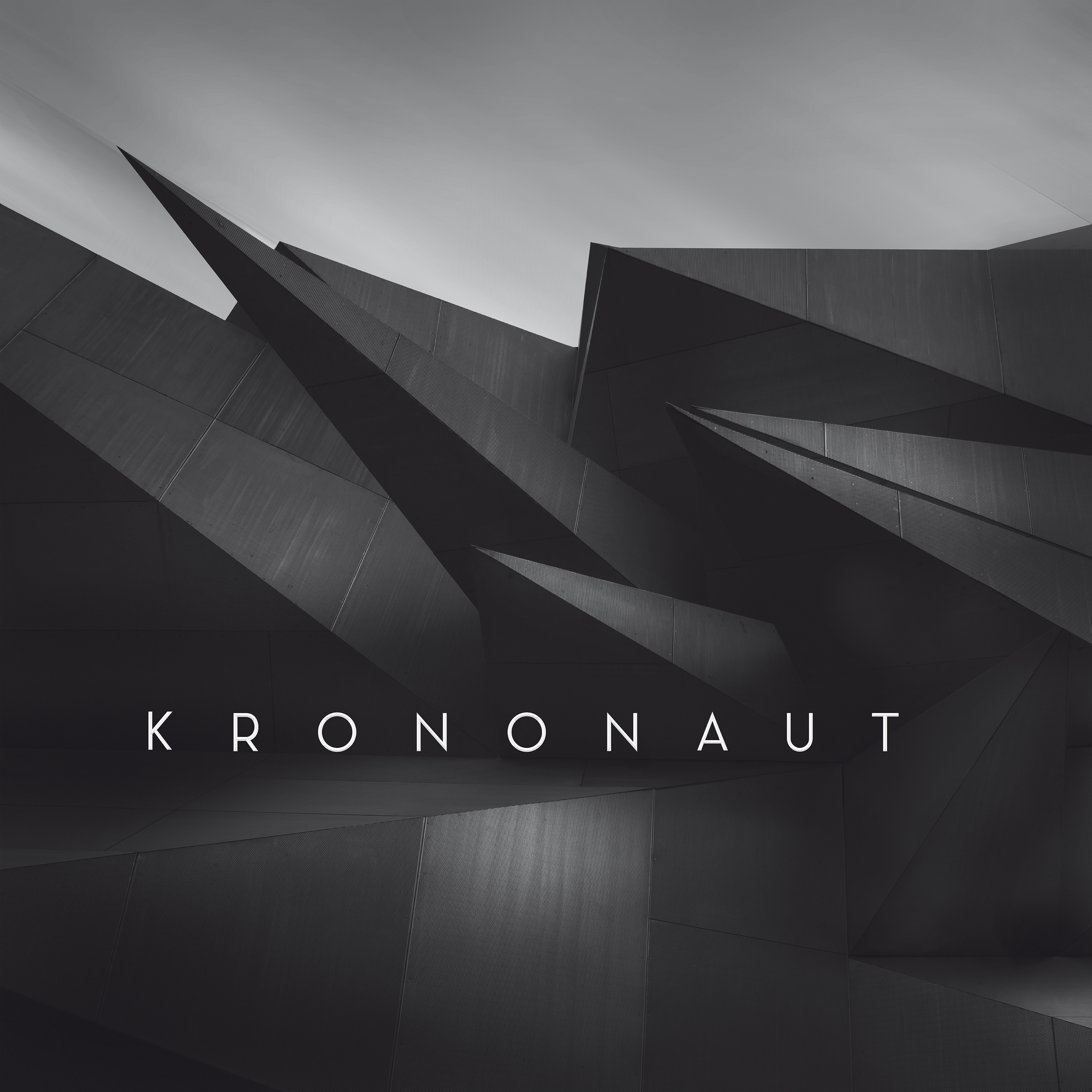
Out on the peripherals of identifiable jazz-fusion the newly assembled Krononaut ensemble conjure up a mysterious extemporize performance on their debut vision for Glitterbeat’s highly experimental instrumental imprint tak:til.
Instigated, led by producer and guitarist Leo Abraham (who’s contextual guitar lines can be heard on Eno’s sublime Small Craft On A Milk Sea LP) and drummer Martin France (who’s played with, amongst others, Nils Petter Molvaer and Evan Parker) but methodology wise a democratized unit that embraces the atmospherical leanings and peregrinations of its extended lineup of collaborators, Krononaut was created out of a musical disciplinary challenge: To converge Leo’s classical sensibilities and learning with Martin’s jazz background. The results of which linger, spiral and prowl in an abstract subterranean space of hybrid jazz, Jon Hassell’s possible musics, krautrock, post-punk, post-rock and, at least in part, are informed, inspired by the unique rhythms found in the Madoh Shamanic funeral music of Tajikistan.
Recorded in London last year over two sessions, the inaugural featuring multi-instrumentalist Shahzad Ismaily (from Tom Waits to Laurie Anderson) on bass, the follow-up, the enigmatic saxophonist Matana Roberts, Swedish trumpeter Arve Henriksen and on bass duties too, Tim Harries, the Krononaut album reimagines a musique concrete Miles Davis, Sam Rivers and Grachen Moncur III skulking a masked, mournful to a point, ether that once in a while floats into the ethereal (in evidence on the diaphanous aria veneration ‘Vision Of The Cross’).
Navigating dark recesses in a spidery probing with the bass on the shadowy ‘Location 14’, and evoking their label mates Pulled By Magnets on the semi-industrial, cavernous and falling ‘Power Law’, this ensemble creep into post-punk; sounding like a transmogrified deconstructive PiL. Yet despite this the Krononaut’s are never so disjointed, dark or brash as to raise the volume above the discordant or even delicate; nothing runs away or untethers itself completely from the musicians’ grip.
Vague bursts of Guru Guru, drifting Eastern horns and filmic qualities drift in and out of serialism vaporuos industrial soundscapes and odd primal lagoons. Sporadic fits of propulsive drummed rhythms materialize from these non-liner recordings, but for the most part we’re strung out in the stresses and entanglements of composed, sophisticated avant-garde explorers: jazz and those classical leanings only really play one of many parts to this conjuncture of elements.
Ponderous, stalking, lolloping, spiritual, fluctuating – an exercise in relearning and discovery in fact – the Krononaut album of fourth world like experiments is free of limitations. It’s a project that escapes, even defies, categorization; another congruous fit with the ethos of the tak:til label.
Harmonious Thelonious ‘Plong’
(Bureau B) 28th August 2020

Fitting congruously within the Bureau B label family, Stefan Schwander’s inaugural album of sophisticated minimalist dance music for the Hamburg platform chimes with its roster of German experimental electronic pioneers; from Zuckerzeit candy era Cluster to the deconstructive Populäre Mechanik and the more contemporary Pyrolator.
More or less ten years into his Harmonious Thelonious alter ego, Schwander now offers a more “industrial sound” made from concrete objects vision of his American “minimalism” convergence with African rhythms and European melodies signatures. Inspired in part by the iconic Basle club of Totentanz, where the German electronic artist spent some of his misspent youth catching performances by the no wave dance act Liquid Liquid, the Gun Club, Jonathan Richman and a very young Aztec Camera, the Plong album channels some of the atmosphere and nostalgic vibes of those formative years. The club is immortalized on the final track; a sort of tribal beat with a barely audible hooted dance track that could be described as “intelligent” techno for the soul. In fact, the Liquid Liquid reference, or at least that vibrant post-new wave dance sound that they excelled at, can be heard permeating tracks like ‘Höhlenmenschenmuzik’; a multi-textural bass pronounced no wave dance of Carl Craig and Kriedler, the title of which translates as “caveman music” and evokes atavistic cave daubings leaping off the dank walls and vibrating, dancing like a host of Keith Harring characters bouncing down a NYC boardwalk.
Elsewhere amongst the deep Detroit techno and house music the tubular and knocking mettalics, tight delayed electronic sequencing and cleverly layered kinetics and mirages of a mysterious Arabia can be detected on the opening desert sands ‘Original Member Of A Wedding Band’. An obscured xylophone or marimba somehow captures an air of Africa on the lightly malleted and translucent itching vibrant ‘Geistertrio Booking’, and the staccato clumsy motioned ‘The Roller’ features a quasi-bobbing West African rhythm.
The tribal is subtly transformed into a futuristic suspense; 80s electro and no wave dance is twinned with lurking industrial electronica; bubbling concoctions float across mechanical refractions on a meticulously constructed deep dance soundtrack of multiple interesting rhythms. Plong, which could be a title Harmonia/Cluster may very well have used, fits perfectly with the Bureau B vibe, yet cuts a clean polygenesis electronic dance sound of its own.
https://soundcloud.com/bureau-1/harmonious-thelonious-plong-snippets
Various ‘Plague Song’
(Via Bandcamp) Album/14th August 2020

A plague has descended on all our houses it seems, with no corner of the globe left untouched by Covid-19. Yet not so much a plague in either the Biblical sense or even a 1000th as destructive as the Black Death that left populations decimated Covid-19 predicted effects and the measures being used to contain it and our civil liberties is proving more destructive and stressful. As lockdown lifts for some, only to be reintroduced as clusters break out in localized areas, and thoughts and anxieties can be translated, we’re seeing creatives release their cathartic impressions and traumas.
One such contextualization, instigated by the North Yorkshire based composer, multi-instrumentalist, solo artist and member of Fireworks Night and The Monroe Transfer ensemble, Nick Gill brings together a international cast of experimental artists and composers to interpret the project leader’s pencil-shaded abstract ‘Plague Song’ graphic score. Following in the footsteps of John Cage who first pioneered the concept, Gill sketches a roughly hewn amorphous score that offers a freehand to those invited to respond. With no instructions as to duration, instrumentation or performance style it’s entirely down to the artists to conjure up something evocative; a sonic representation from the elongated funnels and arched lines found beneath sharper cross-hatching scribbled noise. The author of that graphic score does offer his own interpretation however; offering a suitably atmospheric and watery composition of Craig Ward like multi-textural guitar reverberations.
Erring towards the perimeters of ambient, neo-classical and experimental music the guests on this charitable compilation (proceeds going towards Médecins sans Frontières) produce some searching visions of the present mood. Carrying on the imbued literary (Anthony Burgess to Joseph Heller) cross chatter and abstracted resonance of his many sonic adventures in India and Southeast Asia, Oxford polymath Seb Reynolds cuts-up and morphs a recurring “not as fatal” line with the sound of veiled Orient and tram clatter on his take of the score. Others, such as the renowned NYC stage, film and even opera composer Nico Muhly, produce something more sublime and trembling; the composer behind soundtracks for The Reader and Marnie glides towards a skying ascendance of rippling ambient beauty.
In the quasi Sci-fi mood, electronic composer and performer Hainbach generates some strange off-world atmospheres and primal lunar threats with his interpretation: evoking, I think, Bernard Szajner’s Dune imagings. The spherical Canadian team-up of musician, activist and producer Rebecca Foon and Polaris Prize winning singer-songwriter, producer Patrick Watson prove a congruous pairing, offering up an almost cosmically heavenly searing soundtrack of voices obscured in the vapour.
The track list is numerous; too numerous to mention everyone, so I’ll just mention a few more highlights and standouts. Tiece beckon with a signature “witchery” and “smoky” trip-hop soulful jazzy vision that evokes a warped Four Tet, whilst vocalist, sound artist David Michael Curry goes for something more supernatural, strung-out, with his added locational cryptic post-rock bluesy “scene report from Somerville Masc.” And perhaps one of the oddest interpretations, double-bassist and organist composer, arranger Ben Summers takes the listener through shades of South America, jazzy cocktail hour club soiree and 60s Italian soundtracks: a million miles removed from the compilations leitmotif of shared mysterious ominous drones and recondite ambient carpeting.
Gill’s original graphics are lent a swathe of interpretations, some less somber than others, from a cosmology of contemporary composers. A survey of mood pieces, from science fiction augurs to introspective concentrations. Yet seldom does the soundtrack wallow in the darkness, or creep into nightmares, which considering the title seems both optimistic and a relief. Plague Song is a worthy embrace of the uncertain; a translation of abstract stress and danger given an expansive treatment.
Map 71 ‘Turn Back Metropolis’
(Foolproof Projects/Fourth Dimension Records) Album/4th September 2020
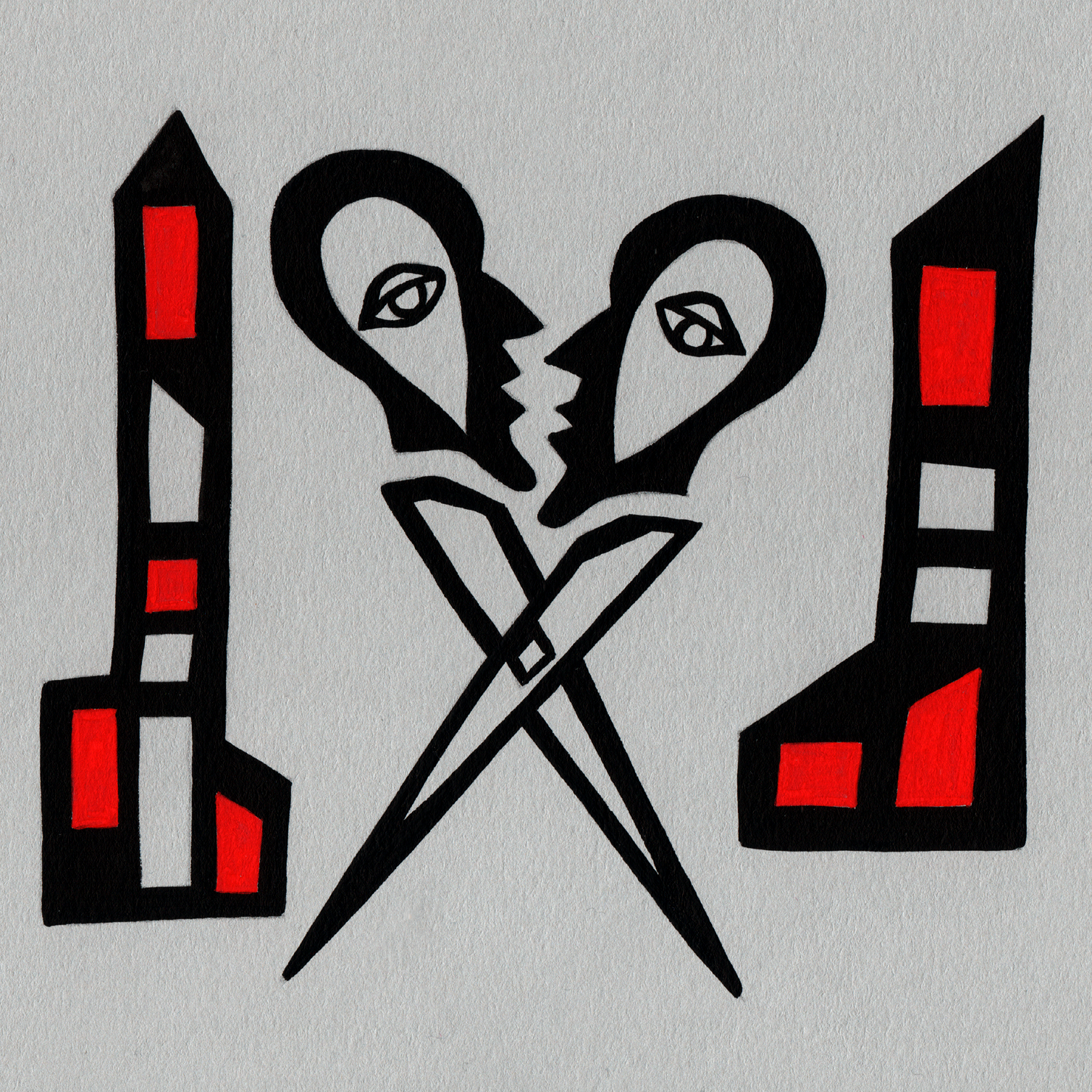
Just the sort of J.G Ballard and Anthony Burgess flavoured dystopian claustrophobia we need in these pandemic striven times; the estuary high-rise colliding duo of disillusioned poet and artist Lisa Jayne and pounding sonic foil Andy Pyne deliver a skulking barrage from the edges of the inner city and suburban wastelands. Under the Map 71 cover they release a fifth album sound-clash of post punk electronica, no wave, post Krautrock and tribal industrial music.
Turn Back Metropolis finds the urban-planners of derision and concrete hardened social realism back in the stairwells and landings of a decaying omnipresent city, dreaming of escapism: “The fields are in sight of the city, but there’s a curfew and the city waits for your return.”
Against the stench of this imposed backdrop of societal misdemeanors, the grime of everyday existence is lyrically and starkly drip-fed by Lisa over beating toms, slinking dub, sporadic drumming, alarmed synths, contorted metals and London swagger. Lisa channels a petulant Ari Up and Viv Albertine, whilst Andy, at any onetime, conjures up an accompaniment of Cabaret Voltaire, Fad Gadget, PiL, The Au Pairs, Lonelady, 80s Rick Rubin and The Classical.
Seething yet composed, they stalk their subjects like prey through the entrancing, spiraling and more cutting on a futuristic punk album of malcontent. Tracks such as the squalling, speed-shifting, arcade-fire over-surge ‘Highrise’ can induce vertigo, and the rattling ‘Stitches’ evokes a seedy switch-bladed administered trauma. Descriptively as livid as it is poetically brilliant, with a musically edgy, harrowing but crafted sonic accompaniment to match, Map 71 delivers another sinister violent architectural imposing shockwave.
Related posts from the Archives:
Map 71 ‘Sado-Technical-Exercise’ Review
Andrew Heath ‘The Alchemist’s Muse’
(Disco Gecko) Album/4th September 2020

Carrying the torch for the kind of ambient and neo-classical swathes and calmly evolving ruminations pioneered by such luminaries as Roedelius, Andrew Heath is a maestro of, what he calls, “small-case minimalism”. Lucky enough to work with the self-taught acolyte and co-founder of the electronic music and kosmsiche legends Kluster/Cluster/Qluster arc, Heath has obviously picked up some ideas from the best in the field. The English composer of refined, understated evocations collaborated with Roedelius on both the Meeting The Magus and Triptych In Blue suites.
The “magus” pupil has become the “alchemist” on this latest exploration of minimalism, texture, tone and the “sonic detritus that litters our environment”. Using, as ever, a kind of English pastoral and esoteric poetry to reference moods and locations, as well as the sources of some of his field recordings, Heath counterbalances his naturalistic settings with delicately played (but deeply felt) piano, resonating electric guitar, and on the album’s title track the swan like and sonorous bass-clarinet of guest Bill Howgego, and of course the various apparatus that transmits those soft, veiled ambient tones and gossamer atmospheres. This translates into translucent compositions that merge the intercom chatter of a pilot’s radio with dropped bauble piano notes and stratospheric gliding, on the opening piece ‘Observers And Airmen’, and the squawk of a woodland menagerie and running water with Eno-esque pining scenic mystery and alien wiry quivers, on ‘Of Mill Leats And The Walter Meadows’.
Hints, traces of voice can be found throughout, but its Heath’s second guest, Romanian poet, writer and journalist Maria Stadnika, who offers the most fragile and emotional. Returning, after appearing on heath’s 2018 Evanfall album, Stadnika’s sighed wistful whispery ‘The Garden Reveals Itself’ receives a ‘Night Mix’ re-run. The senses of those waiting on the inevitable cycle of life and other such poignant chimes on the passing of time are soundtracked with an accentuated magical dreamy night garden score.
Recorded at his home in the Cotswolds’ earlier in the year, and framed as an album that provides a certain sense of calm and tranquility, Heath’s idyllic set piece is indeed rich with moments of stillness and contemplation. It all sounds serenely beautiful. From the announcer on the subway vignette ‘A Good Service,’ to the wooing undercurrents of ‘The Muse And Her Dreams’, both echoes of daily life blend with more mysterious surroundings in a superb sound collage. Ambient music it seems is in good hands, Heath’s seventh album for the Disco Gecko label is a sublime patient suite that offers a rest in these most troubling, intense times.
Archives:
Andrew Heath And Toby Marks ‘Motion’ Review
Andrew Heath ‘Soundings’ Review
Andrew Heath ‘Evenfall’ Review tof068
Staraya Derevnya ‘Inwards Opened The Floor’
(Raash Records) Album/4th September 2020
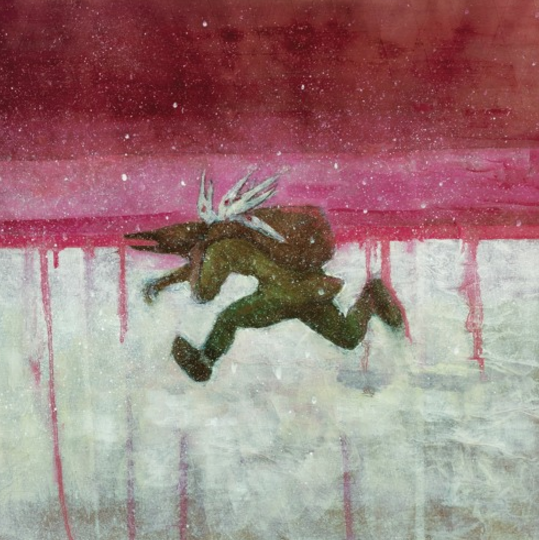
A culmination of Café OTO Project Space recorded performances from 2017 and additional material from that same year to 2019, the latest avant-garde inter-dimensional experiment from the Russian-Israeli straddling Staraya Derevnya is part of treble release schedule. Alongside the featured Inwards Opened The Floor there’s also a duo of improvisations recorded with Hans Grusel’s Kranken Kabinet entitled Still Life With Apples, released on cassette by Steep Gloss, and more live material under the OTO/Tusk title, released as a double CD spread by TQN-aut. A veritable bonanza of imaginative, much improvised albums from the St. Petersburg metro stop adorned group; though I’m going to concentrate on just the hallucinatory doors-of-perception opening opus, an expansive set of traverses, deconstructive marches and post-punk harangues built around lyrics inspired by the poems of Arthur Molev.
Expanding to accommodate up to twelve musicians, and an assemblage of musique concrete apparatus, radio waves, voices and more conventional instruments the Staraya Derevnya inhabit a shrouded soundscape of kosmische, post-punk and what can only be described as a kind of krautrock folk – think a meeting of The Faust Tapes and Can’s Unlimited scrapes and incipient windows in on cut short experiments but extended and more rhythmic.
Developing, magically entitled tracks such as ‘On How The Thorny Orbs Got Here’ drift off almost dreamily to a hushed narration and strung-out jazzy clarinet, brassy sonorous vibrations and short drum rolls, whilst the attic toy box clockwork march of ‘Chirik’ Is Heard From The Treetops’ chugs along at first like a wooden top Ballet Russes but then takes on a more traumatic force of industrial hooting and ripped, revved guitar: Russian folklore goes bananas.
Kazoos, rocking chairs, a not so “silent cello” help create a mysterious aura throughout: one that moves between the strained and distressed, the ambient and biting. For instance garroting wire cello and wooden tubular like percussion tangle with speed-shift space void effects and scrapes on the menacing ‘Hogweed Is Done With Buckwheat’, and on the almost swooning existential romance ‘Burning Bush And Apple Sauces’; soup plops, a radio broadcasted talky duet and a collage of piano and strings echo with hints of late Popul Vuh, OMD and the Pale Fountains.
The poetry is as whispery, haunting as it is erratic and harassed on these most probing clattery, screamed, rasped but equally fantastical tracks. I’m hooked. This is an astonishing set of cross-city amorphous urges, lingers and deconstructions like no other; an avant-garde wandering into the tapestry of Russian folklore and magic dream realism.
Hi, my name is Dominic Valvona and I’m the Founder of the music/culture blog monolithcocktail.com For the last ten years I’ve featured and supported music, musicians and labels we love across genres from around the world that we think you’ll want to know about. No content on the site is paid for or sponsored and we only feature artists we have genuine respect for /love. If you enjoy our reviews (and we often write long, thoughtful ones), found a new artist you admire or if we have featured you or artists you represent and would like to buy us a coffee at https://ko-fi.com/monolithcocktail to say cheers for spreading the word, then that would be much appreciated.
Our Daily Bread 390: Paper Birch ‘MORNINGHAIRWATER’
August 3, 2020
Review/Dominic Valvona

Paper Birch ‘MORNINGHAIRWATER’
(TAKUROKU) 5th August 2020
Mooning and pining through a caustic wall of fuzz, feedback and waning the cross-city, cross-border collaboration of Dee Sada and Fergus Lawrie articulate desire and heartbreak in a pandemic. Recorded during the lockdown, between the months of May and June, former primal yelping An Experiment On A Bird In The Air Pump D-bird and current member of NEUMES Sada and her Glasgow pen pal foil Lawrie, of cult Urusei Yatsura fame, meet up in the internet ether to construct both a chthonian and dreamy long-distance musical romance.
Pooling their resources together under the peeling bark lament of the Paper Birch tree the duo wistfully woo sweet discourse amongst an invocation of squalling scuzz, shoegaze, C86, drone space rock and post-punk; all of which they manage to wield to their own unique desires and plaintive resignation, in the face of a quarantined blues.
Sada’s signature softly cooed atmospheric translucent vocals prove a congruous fit with Lawrie’s deeper, more grunge-y despondency; sounding at times like Psycho Candy era Jesus And Mary Chain in harmonious matrimony with Mazzy Star, or, the Pop Group hooks up with MBV. Sada often ventures out solo on this gauzy album, lulling diaphanous heartache like an apparition. This brilliant pairing sound like star-crossed lovers in duet mode, poetically, if sometimes forlornly, missing the other’s company. This love can be creepy and Gothic too, with the duo conjuring up a vision of Jason Pierce’s Spiritualized tuning into a lunar radio broadcast as Sada lurks in a moonlit serenaded graveyard on ‘Cemetery Moon’, and acts the part of a lamenting phantom on ‘Elegy (As We Mourn)’. The veiled, almost submerged, supernatural dreamscape ‘Hide’ even slips into the Lynchian. Less morbid, the duo wistfully ties Lou Reed, Suicide and the Spacemen 3 together on the leather surf entanglement ‘I Don’t Know You’.
Despite a cursed language of disenchantment, and even the metaphorical pained heartbreak of poisoned relationships, plus a tumult of stressed white noise and distorted guitar contouring Sada and Lawrie swoon in beautifully fragile harmony throughout this experimental album. London and Glasgow sensibilities and beautiful morose come together to add something different to the vaporous influences that have inspired it. A barbed romance and set of mentally fatigued musings set in anxious times, MORNINGHAIRWATER marks a divine conjuncture between its creators; a baptism not only for Paper Birch but Café OTO’s newly formed label platform TAKUROKU. I really hope that both parties continue to pursue this successful union, as this burgeoning effort is fast becoming one of my favorite records of 2020.
Hi, my name is Dominic Valvona and I’m the Founder of the music/culture blog monolithcocktail.com For the last ten years I’ve featured and supported music, musicians and labels we love across genres from around the world that we think you’ll want to know about. No content on the site is paid for or sponsored and we only feature artists we have genuine respect for /love. If you enjoy our reviews (and we often write long, thoughtful ones), found a new artist you admire or if we have featured you or artists you represent and would like to buy us a coffee at https://ko-fi.com/monolithcocktail to say cheers for spreading the word, then that would be much appreciated.
Tickling Our Fancy 082: Jimi Tenor, Slift, Ani Glass, Rainbow Island…
February 18, 2020
ALBUM REVIEWS
Dominic Valvona
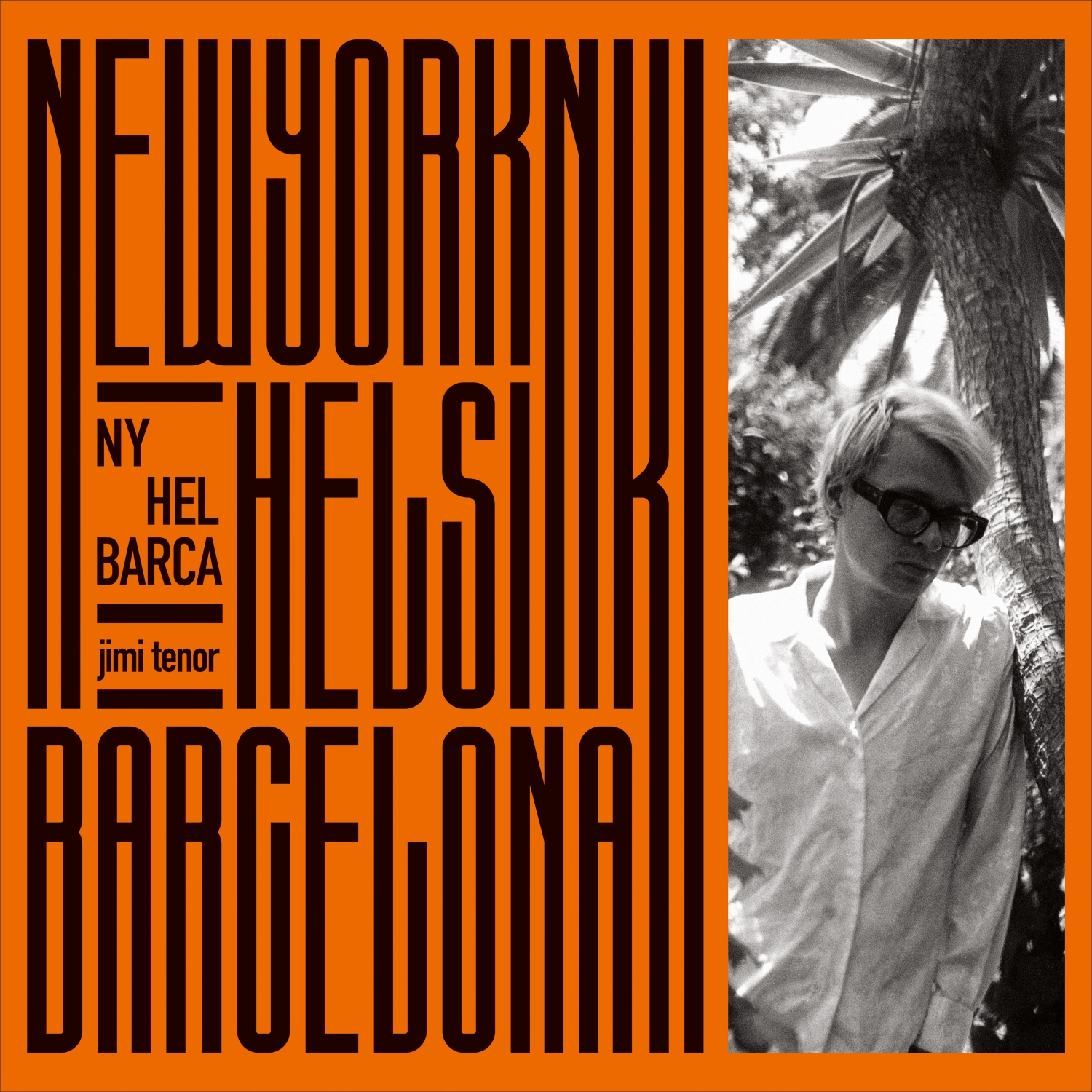
I certainly never planned it that way (honest) but artists from the experimental electronica and ambient music fields dominate this month’s roundup. To start off there’s the all-spanning retrospective collection of the eclectic Finnish electronic one-man cult Jimi Tenor to salivate over; the double album compilation NY, Hel, Barca collects together many of his most seminal tracks from across his first six solo LPs (many of which have been deleted). Finally, after at least four years in the making, Welsh vaporous and diaphanous chanteuse Ani Glass releases her debut album, the cerebral electro pop Mirores. And Rainbow Island produces a colourful fuck-up of cosmic spasmodic bandy effects and break beats on their new LP, Illmatrix.
From the more ambient and understated end of electronic music, there’s the Dan Burwood and James Wilson collaboration for the Tokyo-based obscure label, Kirigirsu Recordings, Singapore Police Background, and musician/composer/sound artist Tony James Morton, inspired by the early developments in Hip-Hop, uses real-time sampled vinyl to create minimalist soundscapes on his new mini-CD release Fragments.
A few exceptions though, including the latest grandiose space opus from the Toulouse trio, Slift, the most recent dreamy shoegaze EP from the Brooklyn trio Vivienne Eastwood and a Turkish-Scandinavian progressive jazz fusion obscurity, Matao with Atilla Engin’s Turkish Delight.
Jimi Tenor ‘NY, Hel, Barca’
(Bureau B) LP/6th March 2020
Birthed from a combination of the signature instrument that permeates his omnivorous mixed bag of prolific music and the 70s teen idol, Finnish cult multi instrumentalist and composer Jimi Tenor is unarguably due this double-album overhaul. The later-ego of one Lassi O.T. Lehto, the eclectic ennui-shifting moniker has both absorbed and created a host of fusions over a thirty-plus period – and still continues to do so -, first as the leader of Jimi Tenor And His Shamans and then as both a solo artist and collaborator on a wealth of projects with such luminaries as Tony Allen, Abdissa Assefai, Nicole Willis and The Soul Investigators. From bootyliscious disco funk to Afrojazz and cult soundtracks, Tenor has covered it all. This retrospective spread concentrates on the first six solo albums (of a so far eleven album solo run); covering tracks from the inaugural 1994 Sähkömies album for the Finnish label Sähko, right through to the new millennium and the 2001 album Utopian Dream.
Recorded, hence the first location city of this collection’s title, in a New York apartment on rudimentary equipment, Sähkömies spawned Tenor’s first major club hit, the silly but infectious electro-house bouncing ‘Take Me Baby’. A game-changer, this DAF meets Depeche Mode on the dancefloor earworm took off after Tenor performed it at the Berlin Love Parade. It made the charts in the process and led to a three-album deal for Tenor with the iconic Warp label in the second half of the 1990s. That popular dance anthem is unsurprisingly included here alongside the more erratic burbling Bruno Spoerii-rubs-against-early-hip-hop kooky ‘Teräsmies’ and electronic chemistry set space quirk ‘Voimamies’. The follow-up album for the same label – released a year later – Europa, is represented by the Afro-Techno and minimalist Basic Channel apparition ‘Fantom’, the gyrating sexed-up Yello-House ‘A Daughter Of The Snow’, and lush flute-y Library Music with hints of a Japanese Style Council ‘Unmentionables’.
Moving on to Warp in ’97, the first of a trio of albums for the edgy-electronic label, Intervision, lends four tracks of differing creative influences to this compilation. There’s a transmogrified Lalo Schifrin meets Theremin aria quivered homage to ‘Tesla’, the Glam-skulking Alan Vega seedy ‘Sugardaddy’, Shintaro Sakamoto Kosmische ‘Shore Hotel’ and bubbly, filtered Acid-Jazz spruced ‘Outta Space’. Next up in that run, Orgamism is no less escapist and polygenesis. An Afro-futurist safari of clockwork birds-of-paradise, psychedelic folk flute and square-wave buzzes are conduced on the first track of that cusp-of-a-new-millennia album, ‘Xinotape Heat’, which also kicks off this whole collection. Playing up that millennial doomsday, ‘Year Of The Apocalypse’ is a David Axlerod Biblical somehow waylaid to the Paradise Garage – the rapture played out to a Chicago House piano gospel funk. From the same album the compiler’s of this retrospective have also chosen the jazzy lounge Zombies brooding ‘My Mind’; a semi-romantic curiosity that features Tenor on wafting serenaded saxophone duties.
Into the noughties, the final Warp album, Out Of Nowhere, finds Tenor on a funk odyssey vibe, taking Curtis Mayfield on another of those Acid-Jazz and sitar psychedelic trips with the high value production and commercial ‘Spell’. On the same record, Tenor pairs up with the Riga Symphony Orchestra to spin Easy Listening into a Rotary Connection meets Johnny Richards’ thriller of drama and suspense on ‘Backbone Of Night’. By this point we’re long used to the exotic menagerie of styles and crossovers, and by the time we reach the final solo album, 2001’s Utopian Dream, nothing is a surprise to the ears: The tile track, with its cyber elephant nozzle vacuuming, silly robotic voices and flighty saxophone transduces Marshall Jefferson, whilst on ‘Natural Cosmic Relief’ Tenor puts a pseudo Ian Curtis vocal over a kooky Japanese psychedelic backing.
As likely to hear Orlando Julius and Don Cherry as the Pet Shop Boys, International Pony or Ennio Morricone on acid, Jimi Tenor can mix the commercial dancefloor hit with the most cult and fused of sounds too. On this mixed bag, which is neither linear or thematic in it’s choosing and alignment, Garage follows Jazz follows Library Music oddities follows Funk follows Psychedelic Soul. A great place to start for those new to the influential composer, NY, Hel, Barca is a great retrospective but also an opportunity to own a load of tracks from a deleted back catalogue. Hopefully this compilation will also rightly cement a fairly underground maverick’s place in the development and story of electronic music fusion. There’s something, nearly, for everyone on this twenty-track purview.
Ani Glass ‘Mirores’
(Recordiau Neb) LP/6th March 2020

It has taken a good few years to materialize but finally the gauze-y vaporous debut album from the Welsh synth-pop siren Ani Glass has dreamily emerged. Since being enticed back to the Welsh hinterlands after leaving the frothy pop belles The Pipettes, the Cardiff native has been busy both with post-graduate studies in Urban And Regional Development (graduating in 2018) and involvement in promoting, through her solo musical projects, the Welsh and overlapping Cornish languages – all the way back in 2013, Ani joined the Cornish Corsedh, a group that awards those who’ve contributed to the Celtic spirit and bardship of that atavistic culture. The play on words title from this inaugural LP is itself taken, in part, from that West Coast vernacular: ‘miras’ being the Cornish word for “to look”, the Miró bit a nod to Ani’s favourite artist, the Spanish abstract doyen Joan Miró. Mirores we’re told,’essentially translates as ‘Observer’ thus presenting the album as Ani’s observation of the city in which she was born and now lives.’
Arriving four years after her initial solo EP debut Ffrwydrad Tawel the follow-up arrives in the wake of so much turmoil political and geographical turmoil. Now would seem as good a time as any to push a disappearing vernacular and heritage as Brexit emboldens Welsh nationalism. All this obviously feeds into the gossamer woven translucent ethereal pop of Mirores; an album that is based on a wealth of concepts. One of which is of course preservation, but another, the idea of movement and progress both societally speaking, but also in the sense of a journey; the contours of a picturesque Welsh landscape set against the more churning busy urban soundscape – a counterbalance that you’ll hear for yourselves, suffused throughout the atmospheric undulations of nature and sampled speeches, broadcasts.
After studying it so intensely, it will come as no surprise that another underpinning thread of this album, ‘A reaction to the values of capitalism’s priorities over the valued needs of society’s most unfortunate’, is the American-Canadian author activist Jane Jacobs most infamous polemic blast at the “urban renewal” zealots, The Death And Life Of Great American Cities.
In the interregnum between releases Ani learnt a good deal about production. And on Mirores she’s borrowed from some of the best purveyors of synthesized music: Vengalis, Moroder, Jean-Michel Jarre and Arthur Russell. The results of which send Ani through the looking glass of air-y untethered dreaminess. The arty wispy ‘Peiriawaith Perffaith’ (Perfect Machinery) has a touch of Kylie, even a Welsh Carol Rich, about it; the slightly more fearful and less lyrical ‘Cathedral In The Desert’ bears shades of both Soft Cell and early OMD. Taking a vignette style break from the veiled Celtic Avalon synth-pop, Ani merges South African Township gospel with choral Welsh colliery protest yearn on ‘I.B.T.’.
From the glassy transparent to more hazed-dream weaving, from homages to minimalist abstract painter Agnes Martin to lulled activism, Ani Glass’ patience has paid off with a disarmingly sophisticated pop album of subtleties that gradually seep into the unconsciousness.
Slift ‘Ummon’
(Stolen Body Records) 28th February 2020

The Titan themed Ummon is a supersonic Hawkwind, with Steve Vai in tow as a band member, catching a lift on the Silver Surfers’ board, on an adventure into deep space. I could leave it at just that, but I feel duty bound to expand. So here we go. In search of one of the original heaven and earth usurpers, the Titan seer’s Hyperion (god of heavenly light, father to sun, moon and dawn deities Helios, Selene and Eos), the Toulouse trio of Slift go full on space rock opera with an interstellar epic of doom metal and heavy psychedelic prog.
Trudging with ominous intentions as it is grandiose and squalling in a vortex of bombast, this lengthy conceptual opus swirls around a milky way inhabited by our makers: A universe that, as it happens, rocks to a sonic soundtrack of the Cosmic Dead, Ipsissimus, Sabbath, the Black Angels, Dead Meadows, Pink Floyd, the already Hawkwind, and at its most star-gazing, Spiritualized. Though that’s only half the story. It’s a bastardization of Viking pagan-metal and psych on the fantastical salute to the gods, ‘Thousand Helmets Of Gold’; ‘Width Of A Circle’ era Ronson battles a subdued motorik Can and baggy Stone Roses on the three-parter, ‘Citadel On A Satellite’; and a Teutonic bashing version of The Skids and Saints on the cosmic-punk curtain closer ‘Lions, Tigers And Bears’.
Galactus sized riffs and crescendos are numerous as the stars in the Mother Sky on this Moorcockian misadventure. Ummon is a solid heavy trip with plenty of space dust and ethereal dreamy escapism to break-up the onslaught. Slift go big and bold as the entice Hyperion back from exile to clear up the mess and spread some light on a space-rock epic that is anything but pompous. Slift, we salute you in your endeavor. Keep up the good work.
Singapore Police Background ‘Antiworlds’
(Kirigirisu Recordings) Out Now
Quiet of late even for a label that operates under the radar in relative obscurity, Neil Debnam’s (of cult favourites Flying Kites and, post-accident, Broken Shoulder fame) Tokyo-based label makes a welcome return in 2020 with another understated ambient exploration of soporific entrancing unease. The brilliantly named Singapore Police Background is a collaboration between Dan Burwood of Calm! and James Wilson of Opt Out; two artists that have previously both released ambient peregrinations on the Moonside Tapes facilitators.
Methodology wise the pair recorded together but polished off their evanescent ‘hypnagogic’ (the state immediately before falling asleep) experiments separately. This process results in an indolent suite of purred and murmuring ambient drone ‘Fragments’ and sedative induced reverberating lingers. Antiworlds is in most cases disarming and drifting; the barest traces of piano and guitar hidden beneath hazy square waves transmitted from the ether. Haunted, often creeping, elements of uncertainty can be found on the wearily entitled ‘See The Conkering Heroine Comes/Watching Newsnight Taking Valium’ couplet of malaise. This is continued on the equally entrancing ebb and flow sonic diptych ‘Iridescent Bodies/Under The Awning’. Standing out some what from the Boards Of Canada, sound In Silence and Eno-esque dreamy traverses, the beautifully contemplative ‘Outside The Blossoming Trees Wept Like Waiting Room Laughter’ is a conjuncture of a musical haiku, a scene from post WWII art house Japanese cinema and something lamentably and resigned, dreamt up by Ryūnosuke Akutagawa. There are actually some real nice understated melodic evocations to be found on this languid affair: the opening fragmentary drone being a prime example.
Intermittent signs of the elements and humanity often surface among the oscillations and dissipated swathes on an album by a collaborative partnership that shows potential and promise. Hopefully we’ll hear more from this effective duo in the future.
Tony James Morton ‘Fragments’
(Focused Silence) Mini-CD/17th February 2020

It might not sound apparent but the cylindrical generated ambience, opaque minimalist stirrings and waves of the musician/composer/sound artist Tony James Morton’s latest ‘fragmentary’ experiments are, process wise, inspired by techniques used in the early development of Hip-Hop; namely, creating new improvised sonic traverses in real time from samples taken directly from vinyl.
‘A fragmented interpretation’ as the PR spill describes it; Morton passes his sources through a custom-built sampler using a specially created visual programme language for music, the Max/MSP. That technique and method is interesting enough, pitching, as it does, Morton as a kind of conceptual DJ. But the most important thing is: how’s it sound.
Well, the sound is quite subtle with soundscapes materializing slowly, building towards fizzled peaks before dissipating gradually. ‘Fragment #1’ of this gently spinning moiety features enervated cause drones and crystallizations that eventually go on to form a heavenly momentum of cosmic rays. The second Fragment has a rotor like motion that turns out a vaporous melody. A distant muffled thunder acts as a deep bass whilst the dreamy and mysterious are evoked from Morton’s sustained pulses and buzzes.
The Fragments material is a stimulating, stirring couplet of improvisations; an evanescent passing of sound that has its moments.
Matao with Atilla Engin ‘Turkish Delight’
(Arsivplak/Guerssen) LP/19th February 2020
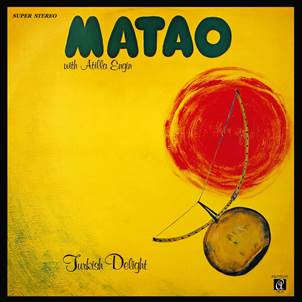
It won’t surprise you to learn that this latest obscure quirk from the Guerssen hub (this time via the Arsivplak label) is yet another example of a record that didn’t quite make the grade; a strange brew from the edges of jazz-fusion, close but not close enough technically, artistically or inventive wise to break through a crowded market.
A Turkish Delight from the Danish recorded union of the Matao trio and Atilla Engin, this rare (intentionally I’m sure) convergence of Turkish traditional music and progressive jazz, bordering at times on cult library music and at others on Krautrock (Agitation Free, Xhol Caravan) was only ever released in Denmark, but never, surprisingly, released in its spiritual home of Turkey. An exotic shimmy of belly-dancer sequins and trinkets, noodling and whirling between souk rock and sublime porte kitsch, Engin’s rootsy Turkish galloping and rattling percussion goes up against the 5/8 signature wah-wah, fuzzed and choppy electric guitar and clavinet-like electric piano on a series of instrumental jams that ape Santana, Pink Floyd, Passport, Elias Rahbani and Mustafa Ozkent.
Taking another punt a year on, the label is now releasing this exotic curio on limited vinyl, and again via the usual digital channels. Whether you need this Turkish flavoured fusion in your life or not remains debatable. However, that’s not to say there isn’t some interesting highlights or fine playing as the mixed Scandi-Turk quartet certainly stoke up a far zappy progressive noise and dynamic enough rhythm.
Anyone recently introduced to such modern Turkish psychedelic movers like Altin Gun will love it.
Vivienne Eastwood ‘Home Movies’
EP/2nd January 2020

Appropriating the grand disheveled dame of punk couture, but with a slight change in compass point direction, the gauze-y American dream-wave and shoegaze band Vivienne Eastwood have drifted into my inbox of submissions this month with a melodious, submerged in a dreamy liquid EP of sepia Home Movies. With scant information it seems the trio have been knocking around the lush flange-reverb coated scene of hazy guitar pop for eight years.
Progressively more dreamy in a wash of phaser drifting echo, previous releases have been more cause, fuzzy and distorted compared to this six-track of lo fi diaphanous malingering. Less Ariel Pink or No Age and more Lowtide and Slowdive, Home Movies’ sound spirals in a mirror-y fashion between the veiled layering pop of Sam Flex meets Lush opener ‘Hanging Gardens’, and the John Hughes soundtracked by Holy Wave ‘Afterall’. Nearer the backend of the EP, ‘No Toes’ seems to slide towards acoustic grunge.
It’s a lovely dream-pop, with certain post-punk edge, kind of EP, rich with wafting recollections and yearnings.
Rainbow Island ‘Illmatrix’
(Artetetra) LP/2nd February 2020
For a label synonymous for the chthonian and dangerous, the latest spams of omnivorous derangement from the sugarcoated named Italian quartet Rainbow Island at least finds some cosmic levity amongst the despair of the age. Though the recondite facilitator label responsible for this, as usual, limited release – the Italian experimental underground specialists Artetera – says it features darker, heavier sonorities than usual, Illmatrix rebounds across a frazzled bubble bath of bandy and bendy effects and off-kilter drum breaks. Certainly under a multitude of stresses and contorted manipulations, the fucked-up matrix has its moments of tangible rhythm and even melody to lock onto.
From a polygenesis source, with all four members spread throughout the UK, Thailand and their native Italy, the Rome conceived Islanders have pulled and stretched in all directions. Somehow it all comes together though, in an admittedly weird fashion. The opening candy kook ‘Jesterbus Ride’ is simultaneously lax, primal, Kosmische and psychedelic; a spherical chemistry of ever-shifting ideas that sounds like a Trip-Hop meets Library Music remix-in-motion by Andrew Weatherall. Elsewhere you hear what sounds like someone repeatedly hitting plastic tubes with a paddle reverberating beats, obscured masked voices and conversations, the clashing of blunt swords and menacing vacuum reversals.
It’s an odd sonic world indeed; a cosmology that harries the more mysterious sedation of Cluster with a 2-Step Dub beat (‘Simmia’), evokes the spasm-industrial sound of Populäre Mechanik (‘Cacao Hip Mini’) and plays Ping-Pong with Autechre and Unlimited outtakes Can (‘Dropzone’). It’s dance music on the verge of a nervous breakdown in one instance, utterly fucked-up the next, a deranged colorful information overload transduced into a concentrated energy of warped brilliance.
If you find Rainbow Island somehow cute, then you can always try the more sobering augurs of apocalyptic doom from label mate and fellow compatriot Giancarlo Brambillia. Released at the same time as the Illmatrix LP – a double bill if you like – the Milan-based maverick pitches the end of the “human epoch” on his limited cassette tape discourse Bee Extinction. Under the Kuthi Jin moniker, the drone-monger gives a less than optimistic outcome to our chances of survival.
Both albums from Artetetra inhabit a similar anxiety yet couldn’t sound more different. Go seek out, and whilst you’re at it take a perusal of the label’s entire back catalogue. You won’t be disappointed.
The Monolith Cocktail is now on Ko-Fi
Hi, my name is Dominic Valvona and I’m the Founder of the music/culture blog monolithcocktail.com For the last ten years I’ve featured and supported music, musicians and labels we love across genres from around the world that we think you’ll want to know about. No content on the site is paid for or sponsored and we only feature artists we have genuine respect for /love. If you enjoy our reviews (and we often write long, thoughtful ones), found a new artist you admire or if we have featured you or artists you represent and would like to buy us a coffee at https://ko-fi.com/monolithcocktail to say cheers for spreading the word, then that would be much appreciated.
Tickling Our Fancy 077: BaBa ZuLa, Junkboy, Jodie Lowther, House Of Tapes, Society Of The Silver Cross, Taichmania, Trupa Trupa….
August 8, 2019
REVIEWS
Words: Dominic Valvona
Photo: (of BaBa ZuLa) Emir Sıvacı

Freely traversing borders once more, Dominic Valvona’s regular roundup of discoveries and interesting finds this month circumnavigates Japan, Israel, Turkey, Poland before returning to the more chilled pastoral Estuary greenery of the Sussex and Essex landscapes. There’s a double-helping of upcoming releases from Glitterbeat Records stable with the return of the Turkish dub cosmology legends Baba ZuLa – their first studio LP in five years, Derin Derin – and a new album of post-punk limbering from the Gdansk band, Trupa Trupa. In a similar vane to the ZuLa, Israeli troupe Taichmania also fuse a cosmology of sounds, and use both the an electrified dynamism of the “oud” and “saz” to fuzz and amp up a merger of Middle Eastern traditions with jazz and prog. Their debut LP, Seventh Heaven is given the once-over. The trio of radio show host ethnomusicologist Matthew Nelson, Hopi musician Clark Tenakhongva and world-renowned flutist Gary Stroutsos come together on sacred ground to invoke a magical homage to the music of the Hopi people on the beautifully evocative LP Öngtupqa. Inspired by more Eastern mysticism the Seattle coupling of Society Of The Silver Cross release their debut long-suite, 1 Verse, and an amazing freefall-in-motion jazz exploration from Philip Gropper’s Philm, entitled Consequences.
There’s horror of a diaphanous apparitional kind with the latest solo album of invocations and ether siren sighed sonnets from Jodie Lowther, and the first album in five years from Junkboy, the marvelous scenic Trains, Trees, Topophilia, and, finally, the inaugural release from Ippu Mitsui’s brand new electronic music label, Pure Spark Records, the House Of Tapes two-track Embers Dreams.
BaBa ZuLa ‘Derin Derin’
(Glitterbeat Records) 27th September 2019

Stalwarts of Turkish cosmology dub, the Istanbul Ege Bamyasi acolytes BaBa ZuLa return to the fray with their first studio LP in five years. And what a time to make that return, as Turkey, or rather its increasingly apoplectic quasi-Sultan-in-waiting Recep Tayyip Erdoğan, continues a policy of conformism that endangers any form of oppositional descent, and threatens artists and critics alike with severe censorship. The once famous secular moderate bridge between Europe and Asia is growing hostile to the West as the administration errs towards a hardline form of Islam, and moves closer towards Putin’s Russia.
Maintaining a constant rebellious streak throughout their twenty-three year career, whatever the ruling regime, the recent turmoil propels the ZuLa to reconvene; raising their heads above the barricades in a creative act of defiance: Music for dangerous times.
Still led, in part, by the switched-on electric ‘saz’ maestro Osman Murat Ertel, the group weaves together another expansive soundtrack of vivid souk dub and sashaying rambunctious post-punk on Derin Derin. Inspired by a number of things, not just the current political climate, the album is imbued by BaBa ZuLa’s long-running collaborations with the late Jaki Liebezeit: who was himself in turn influenced by a myriad of Anatolian rhythms – which you can hear permeating throughout both the Can legacy and his own many collaborative projects over the decades. The Can metronome and drumming doyen sat in with the group on a number of occasions, and the resonance, at least, of those sessions can in part be felt on this newest album. Especially on the Krautrock pulse of the solo fuzzed saz-snarling ‘Kizil Gözlüm’, which runs through a gamut of Germanic sounds, from Can to Blixa Bargeld and 80s Berlin post-punk. There’s even an air of Michael Karoli’s signature cosmic flares and reverberating wanes, as played on an amped-up oud (or saz), on the Sublime Porte reimagined vision of King Tubby, ‘Port Pass’. In retrospect, the band considers Jaki as an unassuming mentor.
Another thread to this album is the group’s ancestral connection, with musical ties that stretch back generations: Ertel paying a special homage to his artistic forbearers, enthused by traditions but also the country’s psychedelic furors in the 60s and 70s. From the 150 year-old photographic plate process used to produce the album cover, to the inclusion of a song penned by Ertel, his wife and young son, ‘U Are The Swing’, there’s a deep sense of family and inheritance; BaBa ZuLa as custodians of the faith.
A third strand, the instrumental portions of this Oriental cosmic album grew out of a soundtrack commission; the group asked to record music for a documentary about falcons, created a suitably exotic echo of serene flight and soaring majesty, as they accentuated the bird-of-prey plunging and floating over evocative commendable heights. These do act as mini-branches, vignettes and interludes between the longer songs.
The rest of the album oscillates and saunters between camel ride momentum Arabian Desert blues (thanks in part to the inclusion of an electrified oud), futurist Bosphorus reggae (via On-U-Sound and the Warp label) and even alternative rock. In the process they find an echo-y balance between the haunting and abrasive, and the elasticated and intense. A mystical union of the entrancing, sweeping and often chaotic, BaBa ZuLa ‘s hybrid of Turkish and Middle Eastern exotica straddles time and geography to once more create a fearless rump of defiance, yet also inspiring some hope.
Trupa Trupa ‘Of The Sun’
(Glitterbeat Records) 13th September 2019

The second Glitterbeat release to feature in my roundup up this month, the counterbalanced Polish band Trupa Trupa couldn’t be further apart, sound wise, from the more languid looseness dub of their label mates Baba ZuLa.
Freshly signing over to the German-based label, the multi-limbed quartet play off gnarling propulsive post-punk menace and tumult with echo-y falsetto despondent vocals and hymnal rock on their fifth album, Of The Sun. Feeding into the history of their regularly fought-over home city, Gdansk, Trupa Trupa create a monster of an album steeped in psychodrama, dream revelation and hypnotic industrialism.
In a perpetual tug-of-war for dominion with its Prussian, then German neighbors Gdansk strategic and commercial position as Poland’s most important post has seen the famous city become a sort of geopolitical bargaining chip over the centuries because of its gateway to the Baltic. After one such episode in a “convoluted” legacy, the city and much of its surrounding atelier of villages were turned into the Free City state of Danzig after WWI; a part compromise result of the Versailles Treaty in 1919. Famous son-of-Gdansk, philosopher Arthur Schopenhauer is credited as a major influence on the group and this album, and though not strictly born within the city limits, the infamous madman of cinema, Klaus Kinski – in one of his most wild-eyed legendary roles as the obsessive loon opera impresario, Brian Sweeney “Fitzcarraldo” Fitzgerald – is also mentioned in the PR spill: the “great effort of pathetic failure” and “strain sublimating into nothing” of that barely veiled characterization proving fruitful suffrage and inner turmoil for the group.
A sinewy, pendulous embodiment of that environment and metaphysical philosophy, Trupa Trupa write “songs about extremes”, but use an often ambiguous lyrical message when doing it: usually a repeated like poetic mantra rather than charged protest. On one of those framed “extremes”, the wrangling guitar-heavy post-punk-meets-80s-Aussie-new-wave ‘Remainder’ sounds like Swans covering The Church, as the group repeat the refrain, “Well, it did not take place.”
Though taut, industrial with ominous machinations, there’s a surprising melodious quality to the turmoil and free fall of Trupa Trupa’s proto-Gothic rumblings. In amongst the slogging, chain dragging of the Killing Joke, PiL, Bauhaus and Gang Of Four are echoes of a wandering angelic House Of Love, Echo And The Bunnymen, early Stone Roses, Pavement and flange-fanned Siouxsie And The Banshees. Strangely, however, the dreamy haunted title-track evokes Thom Yorke in a dystopian Bertolt Brecht theatre, and the stripped-to-bare-bones acoustic ‘Angle’ even sounds like a odd, if charming, folksy harmonics pinged missive from Can’s Unlimited archives: Incidentally, Can’s walrus mustache maverick, Holger Czukay, was born in Gdansk, or rather Danzig as it was known at the time.
The PR spill that accompanies this nihilistic-with-a-heart LP is right to state, “Of The Sun is an unbroken string of hits.” There are no fillers, no let-up in the quality and restless friction, each track could exist as a separate showcase for the group’s dynamism: a single. East European, Baltic facing, lean post-punk mixes it up in the Gdansk backstreets and harbor with spasmodic-jazz, baggy, math-rock, psych, doom and choir practice as this coiled quartet deliver an angst-ridden damnation of humanity in 2019.
Taichmania ‘Seventh Heaven’
21st June 2019

The second group in this roundup to fuse the “saz” and “oud” within a cross-border traverse of Arabia and Turkey, Israeli troupe Taichmania take a similar line to BaBa ZuLa in freely merging musical cultures.
Well-traveled founding member, and the man whose name appears so prominently in the band moniker, Yaniv Taichman has a rich and varied pedigree having studied jazz at the Rimon College Of Music, Turkish music with Professor Mutlu Torun in Istanbul, and Indian music with Pt. Shivanath Mishra in Varanasi. His band mates, Sharon Petrover on drums, Yoni Meltzer on keys and electronics, and Lois Ozeri on bass, are no less musically worldly in that respect.
Stalwarts on the Israel scene in various forms, together under the Taichmania umbrella the quartet limber across a panoramic landscape of Sufi funk, souk-rock, prog and jazz on their debut suite, Seventh Heaven. A veritable elasticated fantasy of both intense hypnotic rhythms and desert peregrinations, this heavenly bound odyssey entwines the traditional sounds and scents of the Arabian Orient with zappy cosmic electronic undulations of synth atmospherics.
Broadcast samples from Middle East radio linger through a kind of spicy exotic brooding mix of Natasha Atlas and the Transglobal Underground on the opening ‘Arabesk’, whilst other such exotic intensity as the contorting spiraling title-track, and post-punk bendy ‘Saba’ are whole journeys, sagas, in their own right; moving between progressive-jazz fusion and futuristic Arabian vapours.
Taking classic leanings to the heavens and beyond, Taichmania knottily skip, scuffle, spindle, echo, quiver and solo through their magical influences to produce a live-feel Oriental soundtrack: heavy on the Prog!
Junkboy ‘Trains, Trees, Topophilia’
(Fretsore Records) 2nd August 2019

Regular readers will (hopefully) be aware that we premiered the Hanscomb brothers’ vibrato-mirage-y ‘Waiting Room’ single last month. This Baroque-pop fashioned nugget, bathed in a halcyon shimmer, proved an idyllic introduction to a pastoral album of geographical traversing instrumentals.
As its album title suggests, public transport(ive) and a strong sense of place have inspired the brothers first album since the much acclaimed 2014 album, Sovereign Sky: Both relocating years ago from Southend-On-Sea to the south coast ideals of Brighton, Junkboy siblings Mik and Rich compose a twelve-track suite to the back-and-forth journeys they made between the two counties of Essex and East Sussex. The “Topophilia” of that title, a term wrongly as it transpires attributed to John Betjeman, can be roughly translated as a love for certain aspects of a place that often gets mixed with a sense of cultural identity.
Passing through a myriad of versions of this landscape, influences include the troubled World War artists of England who depicted the torn-up apocalyptic aftermaths of Europe and the results of bomb raids across the English topography (becoming the doyens of the English modernist movement in the process), to the passing glimpses of the versant downs, beaches and “splendor towns” from a train window, and (friend and Junkboy photographer) Christopher Harrup’s Thames Estuary photo album. The first of these inspirations offers both a colour palette and a semi-abstract empirical vision of that countryside; messrs Paul Nash, Graham Sutherland and John Piper, a triumvirate of influential painters, providing a suitable rich canvas: Just one of the guests on this charming LP (and no stranger to this blog) Oliver Cherer even helps pen a Nash homage, ‘A Chance Encounter’ plays with the light musically on a magical pop melody of slow jazzy brass, relaxed drums and flute-y forlorn.
Disarmingly chilled yet full of wistful rumination, Junkboy’s Brighton-Seaford-Southend traverse wonders what it would sound like if Brian Wilson was born and bred on the English Rivera instead of Hawthorne, California; the beachcomber vibes of Pet Sounds permeating throughout this quint lush English affair. You can safely add vague notions of Britpop era Octopus, a touch of the Super Furry Animals more folksy psych instrumentals, some early Beta Band, echoes of 90s Chicago post-rock, and on the dreamboat bluegrass lilted-and-silted ‘Sweetheart Of The Estuary’ more than a nod to Roger McGuinn and pals.
Trains, Trees, Topophilia is a peaceable musical landscape littered with the ghostly reverb of railways station interchanges, mew-dewed laced green hillsides, tidal ebbs and flows and Cluniac Abbeys – the millennia-old, Benedictine scion religious brethren, brought over in droves after William The Conqueror’s invasion of England, make a historical connection between both the album’s Essex and East Sussex locations; the orders’ priory in the Prittlewell of the same song title, originally set up by Cluniac monks from Lewes, just outside Brighton.
Pastoral musical care for the soul, Junkboy’s instrumental album is a beautifully conveyed canvas of the imagined and idyllic; a subtle ode to the Southeast cartography and painters, poets, writers that captured it so perfectly. This is an album that will grow on you over time, revealing its sophistication and nuanced layers slowly but surely: a lovely hour to wile away your time.
Jodie Lowther ‘The Cat Collects’
26th July 2019
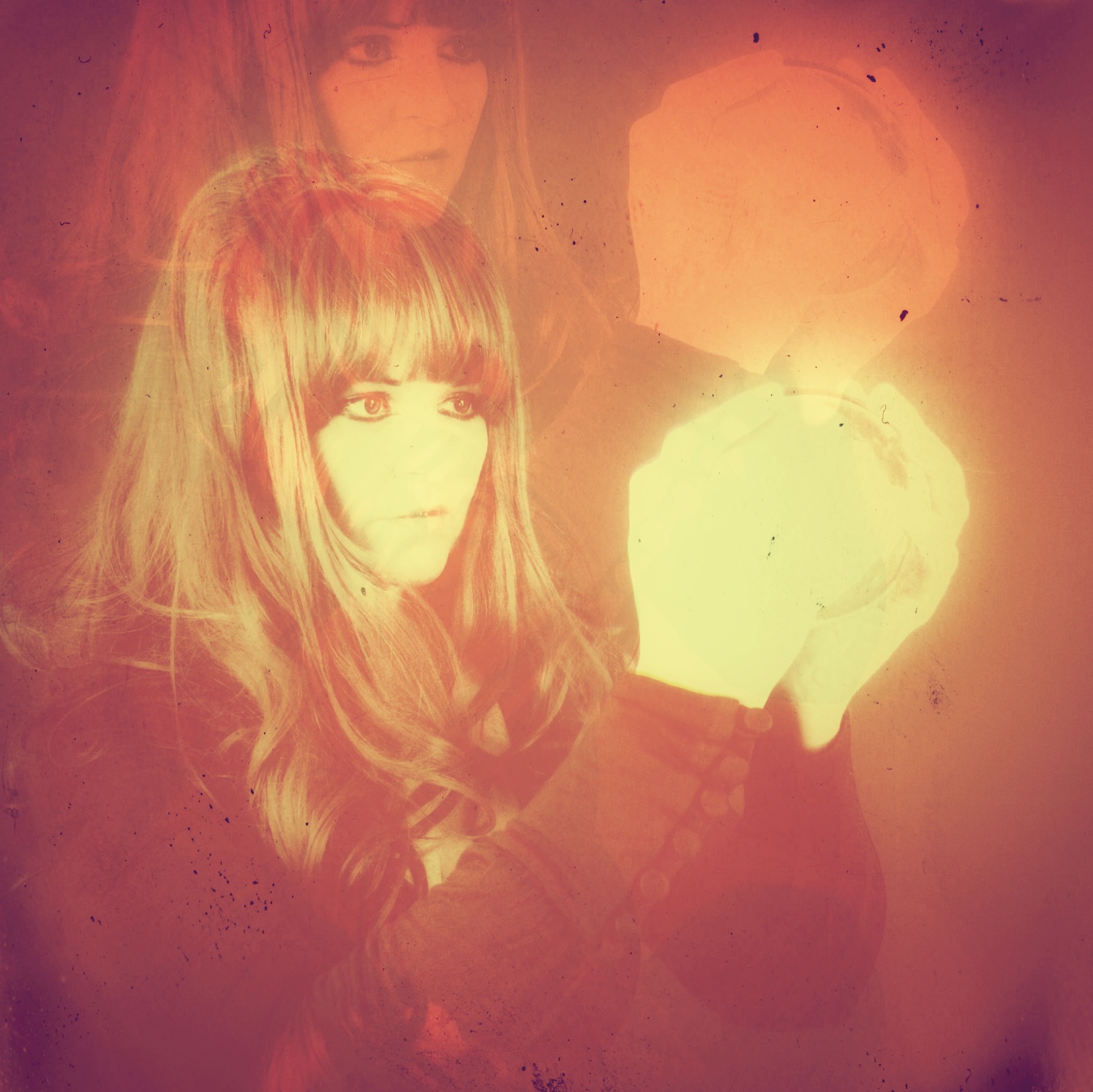
One apparitional half of the surrealist Quimper duo, vaporous siren Jodie Lowther has been known to, on occasion, float solo. Her latest haunted diaphanous malady, The Cat Collects, is (as ever) a magical suite of dream realism and supernatural theater.
Between the characters of ethereal seraph and alluring cat lover, Jodie warbles, coos and entrances with a voice so fragile and gauze-y as to be almost an evanescent whisper: Jodie transmitting her vocals from the spirit side of the ether like a aria woozy Mina Crandon.
Drifting in a seeping cantabile sigh throughout this witchery spell of spooky misty songs and graveyard crypt sonnets is a subtle backing of feint melodies and stripped electronica – think Ultravox marooned on the Forbidden Planet or, an early Mute Records vision of 70s British horror soundtracks (Amicus, Hammer, British Lion). From invocations of Vampire lovers to black magic nuptials, The Cat Collects stirs up the right balance of scares and esoteric enchantment on an album of mysterious, creeping beauty and hazy Gothic soundtracks.
Society Of The Silver Cross ‘1 Verse’
28th June 2019
Over the last few months, and featured in previous editions of my roundups, the Seattle coupling of Joe Reinke and Karyn Gold-Reinke, under the auspicious appellation of the Society Of The Silver Cross, have presented us with a trio of evocative-enough Eastern death cult imbued video-singles. Making good on those mystical visions, the duo have released an album that both continues the Velvet Underground say “Om” Indian Gothic drone psychedelia of those tracks but also widens the musical palette to take in shoegaze, new wave and 90s alt-rock.
Still inspired by their spiritual travels to India, and adopting the invocation drone of the “shahi baaja” (Indian autoharp) and induced bowing of the “dilruba”, the Silver Cross explore the “transformative and renewing powers of death” as they flick through a bewitching songbook of Orientalism, Byzantium incense-scented opulence and bellowing sea shanty Edgar Poe scribed Gothic coastlines.
Leaving aside that run of singles (‘When You’re Gone’, ‘Kali Om’ and ‘The Mighty Factory Of Death’) the book of spells adorned 1 Verse piles on the melodrama of opiate arcane rites and woozy harmonium pumped esoteric atmospherics; opening with the repeated echo-y chanting ritual ‘Diamond Eyes’. In a similar mystical vain, distant tolled bells and the reverberations of a choral Popol Vuh creep into the holy processional lamented ‘Funeral Of Sorrows’. Yet, amongst the death marches and promises of spiritual release, rejuvenation and the inevitable there’s more radiant escapism in the form of spindled Baroque-psych (‘Dissolve And Merge’), alt-pop (‘Because’ imagines The Cars and Why? in holy communion) and even a bastardized Travelling Wilburys (‘Can’t Bury Me Again’).
Kneeling at the altar of a many-faced god/goddess the Silver Cross play freely with all those many influences; indulging in the Eastern arts but expanding horizons and even absorbing past Seattle imbued projects.
If you’ve only thus far heard the singles then much of the second half of this album will be a surprise. Dreamy mantra and morbid curiosity coalesce to produce a mesmerizing, hypnotic ritual; opening the door to further experimentation and proving a worthy new incarnation for Joe and Karyn to channel.
Tenakhongva, Stroutsos And Nelson ‘Öngtupqa: Sacred Music Of The Hopi Tribe’
(ARC Music) 26th July 2019
Breathing (literally) life back into the ancestral evocative paeans and spiritual communions of the Hopi people, the trio of radio show host ethnomusicologist Matthew Nelson, Hopi musician Clark Tenakhongva and world-renowned flutist Gary Stroutsos come together on sacred ground to invoke a magical homage.
First a little background. The Hopi, unlike many of their fellow communities of Native Indian tribes in the Americas, lived in more permanent villages, across swathes of South East Utah, North East Arizona, North West Mexico and South West Colorado. These dwellings, some very complex in their construction, gave birth to the Colonist appellation, the Pueblo People, but also because they were considered a more civilized, polite community; their concept of life based on a reverence for all things.
At the heart of this stirring earthy but often-transcendent project is the atavistic instrument that set it all in motion: the 1500-year-old Hopi long clay flute. Unearthed in the last century by the archeologist Earl Halstead Morris, who was leading a Carnegie Institute Expedition to the Prayer Rock district in North East Arizona in the 1930s, these hollow, reedless flutes were part of a thousand artifact haul of discoveries. Relatively remaining a mystery for decades to come, it wasn’t until further research in the 1960s that these flutes from the now renamed “Broken Flute Cave” could be confidently dated to around 620- 670 AD. What remains remarkable is that this sacred instrument was thought lost by the Hopi descendants themselves; disappearing hundred of years ago, until flute specialist Stroutsos with project instigator Nelson played a replica version in front of Hopi custodian Tenakhongva, who promptly invited him to play it in front of his entire family and then, at a later date, at a venerated spot near where the original clay flutes were found.
Part of the wider Canyon Music Festival in 2017, at the Mary Colter built Desert View Watchtower, the trio’s performance, with Nelson keeping rhythm on clay pot drums (keeping it all historically accurate, stretched-skin drums being out of time and step with the 7th century flutes), Strouthos improvising on flute and Tenakhongva singing whilst handling the percussive rasps, rattles and gourd, was filmed and recorded. An “approximation” of how the Hopi’s holy music would have sounded almost 1500 years ago, the Öngtupqa (the name given by the Hopi people to the canyon in which our trio played) nine-track suite remains untouched, unmodified or edited two years on.
Setting the atmosphere of both earthy soul connectedness and flighty astral mystery, the obviously talented and well-honed players perfectly capture the dream-like ritual and awe-inspiring panorama that surrounds them. If you were expecting the synonymous rain dance and powwow holler chants of much Native Indian music, think on. Öngtupqa is more entrancing, ambient in places, with the vocals, or chanting, graceful and often melodious but deep. Lifting out of the canyon to dizzying cloud-ruminating heights, you’ll still constantly reminded of the vast American outdoors and desert landscape: A rattlesnake shakes his distracting tail here, a panpipe flight of a condor or thunderbird over there on the mountainside.
An intimate tribute to the Hopi cycle of life (as Tenakhongva explains it, “…we were born within the Grand Canyon and when we are done, we return back to this place to rejuvenate life of a new beginning…”), the stories and music of that scared site are offered and opened-up to a global audience; a message of the communal, of preservation, being at the very heart of this vivid undertaking. The ancestors will be proud, as the two millennia old blessings and spiritualism of the Hopi is brought back to life.
House Of Tapes ‘Embers Dreams’
(Pure Spark Records) 7th August 2019
The Japanese electronic music wiz kid Ippu Mitsui has graced these roundups on a number of occasions over the years, and featured on numerous Monolith Cocktail playlists. Releasing a varied kaleidoscope of futuristic Tokyo electro-glides-in-blue and kinetic techno on a spread of labels, Mitsui originally came to my attention through his releases for the Edinburgh-based Bearsuit Records. Still recording ad hoc, Mitsui has now just launched his very own imprint, Pure Spark Records. Another one of Bearsuit’s extensive roster of mavericks, the inaugural release on that venture is from the experimental composer Yuuya Kuno, who under a variety of alter egos has prolifically knocked out a mix of the weird and sublime electronica.
Back recording under the House Of Tapes moniker in this instance (known as Swamp Sounds when passing sonic oddities through Bearsuit), Kuno’s two-track showcase, Embers Dreams, is a lucid, air-y and sophisticated affair. The “Embers” of that title is an inviting exotic amble through a moist-vegetated oasis of itchy, scratchy, woody and echo-y deep electro percussion, whilst the accompanying ‘Melted Ice’ offers a glass-y trance-y, robotics-in-motion slice of downtempo chiming soundtrack. A great subtle and deep piece of electronic manna and flow with which to launch Mitsui’s brand new label, House Of Tapes kickstarter is a serious piece of classy techno: an augur, a good omen I hope of what’s to come.
Philipp Gropper’s Philm ‘Consequences’
(Why Play Jazz)
A balletic jazz freefall in motion, the latest tumultuous suite from the acclaimed “David Bowie of jazz”, tenor saxophonist/composer/bandleader Philipp Gropper (and his Philm troupe), is a highly experimental reification of contortions and sporadic, spasmodic chaos: albeit a controlled, kept-in-check, vision of an avant-garde one.
The multifaceted title of this orderly breakdown in heightened tensions and liberating angst can be read in many ways: The “consequences”, for example, of our political divisive times can be heard and read loudly crashing throughout this six track album of disjointed intensity; the fallout from all sides of the societal divide causing enough anxiety, suffering and despondency to fuel Gropper for the next decade or more. In fact the whole course of “neo-liberalism” itself is on trail (or at least its knock-on effects of intervention), however abstract that might be.
Space expletory wondrous track titles aside, the filthy lucre spiral of dependency and spluttering wild ’32 Cents’, and funneling discordant interchange ‘Thinking From The Future (Are You Privilaged?)’ are both the most obvious proponents of that socially “woke” commentary – though whose privilege needs to be checked exactly in this exchange is open to debate.
The concerns of “interpersonal” and “interrelationships” within this charged political landscape are also a major focus for the Berlin-based jazz man; adding to a uncertain free flow of both centrifugal spinning discourse and more haunted, sometimes diaphanous, twinkling.
Escaping the atmosphere, orbiting the cosmology of deep space, Gropper’s most serene dance of glistened, starry majesty and mystery is the astral soundtrack to ‘Saturn’. Both the enormity and expansive uncertainty of this planetary titan is expressed evocatively enough by Gropper’s otherworldly Theremin aria like reedy breaths on the tenor sax, as his companions bounce and skip around the planet’s rings. Saturn holds a strong fascination for all of us, but it can’t have escaped Gropper’s notice that jazz music’s most celestial star, and progenitor of Afrofuturism, Sun Ra, claimed to have ascended to Earth from his Saturn home.
The musicianship is, as you expect, first rate, with Gropper’s sax totally untethered, squawking, fluting, brilling and even trembling, whilst his band of Elias Stemeseder (on piano and synth), Robert Landfermann (on double-bass) and Oliver Steidle (on drums) react decisively with limbering, elasticated reflexes. Together hey create an iridescent breakdown and reconstruction of digital calculus, science-fiction and the cerebral; merging contemporary European jazz with elements of Coltrane, Coleman, Billy Cobham, Stockhausen, The Soft Machine and the electronic and hip-hop genres. Futurism and avant-garde classicism collide in an oscillating and tumbling fusion of complex ideas: Consequences is a musical language on the verge of collapse. How it all stays together is anyone’s guess. This is a most impressive adventure in jazz.
Playlist: Dominic Valvona/Matt Oliver

I’ll be brief – less chat, more music please – as you want the goods, but the Quarterly Revue is our chance to pick out choice tracks to represent a three month period in the Monolith Cocktail’s output. New releases and the best of reissues plucked from the team – me, Dominic Valvona, Matt Oliver, Brian ‘Bordello’ Shea, Andrew C. Kidd and Gianluigi Marsibilio – rub shoulders in the most eclectic of playlists. The full track list is awesome, global and diverse and can be found below.
Tracklist in full:
Abdesselem Damoussi & Nour Eddine ‘Sabaato Rijal’
Bassekou Kouyate & Ngoni Ba (Ft. Abdoulaye Diabate) ‘Fanga’
Foals ‘Cafe D’Athens’
Kel Assouf ‘Tenere’
Deep Cut ‘Sharp Tongues’
Royal Trux ‘Suburban Junky Lady’
Ifriqiyya Electrique ‘Mashee Kooka’
39 Clocks ‘Psycho Beat’
The Proper Ornaments ‘Crepuscular Child’
Swazi Gold ‘Free Nelly’
Eerie Wanda ‘Magnetic Woman’
Julia Meijer ‘Fall Into Place’
Mozes And The Firstborn (Ft. PANGEA) ‘Dadcore’
Lite Storm ‘People (Let It Go Now)’
Downstroke & Gee Bag ‘Ooh My My My’
Errol Dunkley ‘Satisfaction’
Old Paradice/Confucius MC/Morriarchi ‘Sunkissed’
Black Flower ‘Future Flora’
Santiago Cordoba ‘Red’
Dexter Story (Ft. Kibrom Birhane) ‘Bila’
Houssam Gania ‘Moulay Lhacham’
Garrett N. ‘Avant’
Sir Robert Orange Peel ‘I’ve Started So I’ll Finish’
Gunter Schickert ‘Wohin’
Defari & Evidence ‘Ackknowledgement’
Eddie Russ ‘The Lope Song’
Oh No & Madlib ‘Big Whips’
CZARFACE & Ghostface ‘Mongolian Beef’
Greencryptoknight ‘Superman’
Choosey & Exile (Ft. Aloe Blacc) ‘Low Low’
Little Albert ‘Gucci Geng’
The KingDem ‘The Conversation (We Ain’t Done Yet)’
Wiki ‘Cheat Code’
Dear Euphoria ‘Push-Pull’
Tim Linghaus ‘Crossing Bornholmer (Reprise, Pt. II)’
Station 17 (Ft. Harald Grosskopf & Eberhard Kranemann) ‘…And Beyond’
Heyme ‘Noisz’
Clovvder ‘Solipsismo’
Ustad Saami ‘God Is’
Louis Jucker ‘Seagazer’
The Telescopes ‘Don’t Place Your Happiness In The Hands Of Another’
Blue House ‘Margate Jukebox’
Tempertwig ‘Apricot’
3 South & Banana ‘Magdalen Eye’
With Hidden Noise ‘The Other Korea’
Beauty Stab ‘O Eden’
Coldharbourstores ‘Something You Do Not Know’
Katie doherty & The Navigators ‘I’ll Go Out’
Mekons ‘How Many Stars?’
Graham Domain ‘Farewell Song’
Our Daily Bread 296: Telescopes ‘Exploding Head Syndrome’, Kungens Män ‘Chef’, The Paris Street Rebels ‘I Don’t Want To Die Young’
January 23, 2019
Reviews Collection – Brian ‘Bordello’ Shea

The Telescopes ‘Exploding Head Syndrome’
(Tapete Records) 1st February 2019
There is no place like drone, well not at least if you are a member of The Telescopes: Just over thirty minutes of top class dronery, not something I normally spend my Friday evenings listening to but as they say a change is as good as a rest.
I was to be honest not expecting to like this as a lot of people I know who like the Telescopes get on my tits, you know the type, the kind who think The Brian Jonestown Massacre are the second coming. But this is very enjoyable. And I’ve always had a bit of a soft spot for the Telescopes: I loved the LP they released on Creation, one of the best five albums that much over rated label released.
This is in fact a very fine pop LP, it has melodies, it has textured whispered vocals, it has tunes that remind me of both Syd’s Pink Floyd and The Velvet Underground – if only the last Jesus And Mary Chain LP was as good as this I might have played it more than the one and a half times that I did.
If this LP were a debut album by some young new psychsters they would be being raved about and hailed to the rafters as the second coming, the next new big thing. I hope the same platitudes are heaved onto this wonderful LP by this wonderful band, as it really has taken me by surprise how much I love it and I feel guilty in not expecting to like it. For that The Telescopes I offer my humble apologies you have indeed blown my head. A fine LP.
Kungens Män ‘Chef’
(Riot Season Records) February 15th 2019
Kungens Män hail from Stockholm, Sweden and have been around as a musical unit since 2012 so the press release tells me, which is a very good thing as I had never heard of them before.
This to be honest is not the type of music I normally sit at home and devour but this is in fact very good indeed. An LP of four long improvised instrumental tracks, the first track ‘Fyrkantig Böjelse’ is a fine eleven minute piece of sonic jazz rock – imagine late 60’s Santana, The Velvets and Sonic Youth jamming over the drum beat of Jaki Liebezeit from Can: and yes it is as good as it sounds.
The second track ‘Öppen För Stängda Dörrar’ at just over the eight minute mark, being the shortest track on the LP, takes us on a gentler ride. More synth dominated, I can imagine it being used in one of those wonderful
80’s horror movies, as it has a John Carpenter feel to it, and again is a quite stunning piece of music. ‘Män Med Medel’ follows this; a ten-minute plus track of fuzzed up psych rock, the kind of track you can imagine
soundtracking Julian Cope dressed in leather simulating having sex with the floor to. The final track ‘Eftertanke Blanka Krankheit’ takes us back to the underground, the Velvet Underground, and could well be my favourite of the four; the three guitars intertwine beautifully as the bass and drums keep a hypnotic slow groove of a beat.
All Hawkwind fans need hear this, or even better, own it. So fantastic in fact that if I grew wings and could fly I would have this track playing on my mp3 player as I dive-bombed the less worthy below.
This really is a hell of an album and I would recommend it to all space rock aficionados.

The Paris Street Rebels ‘I Don’t Want To Die Young/ Freakshow’ double A-Side
February 15th 2019
The press release says for fans of the Libertines and the Clash, well I like the Libertines and The Clash and I like the Paris Street Rebels. They may not be the most original soundings of bands – they remind me of the early Manic Street Preachers: even the names are similar.
What I like is that they’re four young men who have taken the glamour of T Rex and injected themselves with the early workings of the Subway Sect and The Clash, picked up their guitars and decided to try and change things through the power of rock n roll. Whether they succeed or not really does not matter, at least they are trying, which is more that can be said of ninety per cent of the current crop of young guitar bands, all they want is to get played on daytime BBC 6 Music and play in front of the middle class festival goers who will stand and wave inflatable fruit and farm animals at them. I of course could be wrong, The Paris Street Rebels might want the same and in fact they certainly could achieve this hell on earth as the songs are commercial enough on I Don’t Want To Die Young – there is even a beautiful Byrds like chiming guitar riff -, but I believe they also have fully functioning brains and are not afraid to use them, which in this day and age is a rarity.
I say ones to watch. And I wish them all the luck in the world.
Brian ‘Bordello’ Shea is the patriarchal leader of the mighty St. Helens cult underground favourites The Bordellos. We throw a slew of releases at him each week and see what sticks.
Brian Bordello of the contrary and provocative lo fi rock’n’roll group The Bordellos infamy, takes us on a track by track tour through the band’s latest album Debt Sounds.
Words: Dominic Valvona/ Brian Bordello
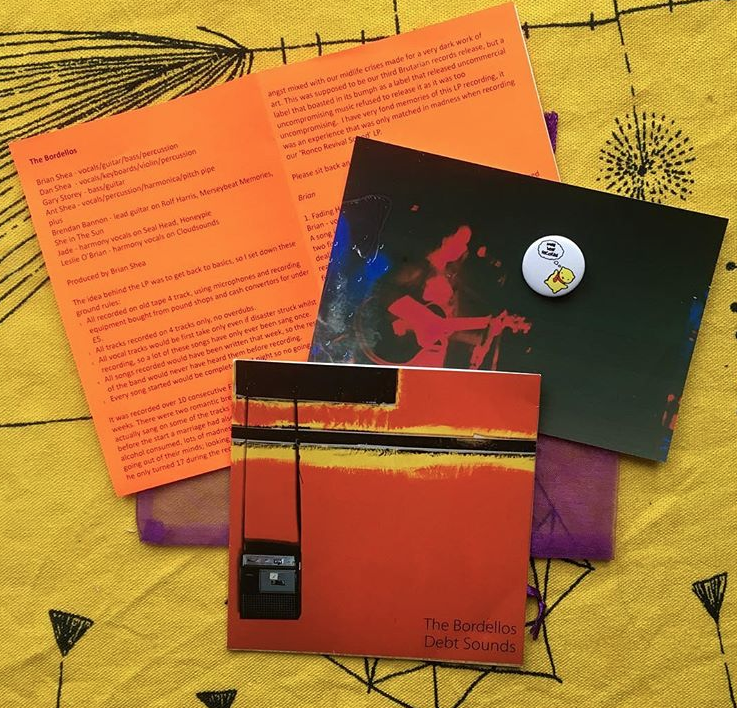
The Bordellos, the uncompromising bastions of lo fi rock’n’roll, have been chipping away at the peripherals of the music industry for years to no effect. Though this shouldn’t come as much of a suprise; provocative subjects including serial sex offenders Gary Glitter and Rolf Harris, and the languorous drip-fed accusations (whether through a wearing down of malaise or real attempts to shoehorn him out the door in the name of ‘blandifcation’) that the BBC ‘killed John Peel’ don’t exactly help their cause.
From their St Helens base the family band spew and regurgitate a continual flow of musings, lovesick plantive melancholy and cumdrudgry attacks on the state of modern culture. Knocking out releases at a weekly rate, the band could give the late Mark E Smith a run for his money in number of pontification packed rambles.
I’ve probably written more about this contrary group than any other in the last five years plus. Mostly because despite the basic, drone-y and cheap production The Bordellos bare their souls like all the most effectual and best rock’n’roll icons. In a nutshell: songs about broken hearts played on broken guitars. And yet despite this lo fi aesthetic, the band are ambitious; referencing a myriad of musical influences, and incorporating all manner of instruments and sounds into their music.
Their latest LP, Debt Sounds, is no different – a mix between Gene Vincent, The Jesus And Mary Chain and Rey Crayola – in this respect. Fueled once more by the acrimony of tattered relationships, family fall-outs, too many late nights and cynicism, The Bordellos indolently unburden themselves upon the audience.
As no review – and I’ve tried – can really do The Bordellos sound any justice, I’ve asked the band’s elder statesman and steersman Brian Bordello permission to share his inimitable penned notes. A sort of track by track narrative, these descriptions and articulations are worthy of sharing; a window in on the workings and mindset that produced them.
And so without further ado I hand you over to Brian…
The Cast
Brian Shea — vocals – guitar – bass – percussion.
Dan Shea — vocals — keyboards – violin – percussion.
Gary Storey -bass – guitar.
Ant shea – vocals – percussion – harmonica – pitch pipe.
plus
Brendan Bannon – lead guitar on Rolf Harris, Merseybeat Memories and She in The Sun.
Jade — harmony vocals on seal head on Honeypie.
Leslie o’Brien –harmony vocals on Cloudsounds.
produced by Brian Shea
These are the rules and background:
The idea behind the LP was to get back to basics, so I set down these ground rules, all recorded on old tape 4 track, using microphones and recording equipment bought from pound shops and cash converters [under £5].
1. all tracks recorded on 4 tracks only: no overdubs
2 all vocal tracks would be first take only even if disaster struck whilst recording ,so a lot of these songs have only ever been sang once.
3 all songs recorded would have been written that week. So the rest of the band would never have heard them before recording.
4 every song started would be completed that night so no going back.
It was recorded over 10 consecutive Friday nights. During which there was two romantic break ups – the two ex girlfriends actually sang on some of the tracks to add to the spice. Just before the start a marriage had also just broken up…there was lots of alcohol consumed lots of madness, it is the sound of four people going out of their minds, looking back I wonder how Dan managed as he only turned 17 during the recording of this album, but his teenage angst mixed with our midlife crises made for a very dark work of art.
This was supposed to be our third Brutarian records release , but a label that boasted in its bumph of releasing uncommercial uncompromising music refused to release it as it was too… uncompromising!
I have very fond memories of this lp recording it was a experience that was only matched in madness when recording our Ronco revival sound LP.
The Tracks:
A song inspired by the frustration of being in a band that had released two fine albums that had sold bugger all and the problems that arise from dealing with the music industry and all its evil ways. This subject has reappeared many times over the years on Bordellos LPs . This was the first. “Each night I dream of rats of record contracts.”
When this song was being recorded there was a huge Summer thunderstorm and rain started to pour through the roof and down the walls of Ants living room. Due to the bad state of his brickwork. So as I was trying to get my best brokenhearted vocal performance, whilst Ant was running around the house with buckets. Muttering the immortal line “Life is too short for guttering”. This was another no show night from Gary so he is not on it ,and Dan recorded harmony vocals but because of the only one vocal take rule the mic did not pick them up very well ,if you have the hearing of a dog you may hear them. “I look in the mirror and my curse has been reversed.”
There was originally 4 verses written for this song as each verse was meant to be sung by a different band member but this was another Gary no show night so we just replaced his verse with Dans fine garage punk influenced keyboard solo. The Seeds where a huge influence on this track. “I felt so alive I feel dead now.”
This song was written many years before Rolf Harris became a known sex pest ,but I always thought there was something slightly sleazy about the man. My irish cousin who was over visiting Brendan plays the lead guitar on this track and it is he you can hear laughing in the background when I sing the line Rolf Harris is my sexual hero. This was a very drunken night; Gary turned up already pissed as a newt and proceeded to lay down the bass even though he had never heard the song and we were drunk enough to let him, so it was recorded in one take. Dan was the only sober member and told me the story of Gary insisting in cleaning up Ants house after I left and before Ant got home from a gig which consisted of him just extending all the mic stands fully pointing at the ceiling, after doing that he proceeded to record a 20 minute bass instrumental, which sadly has been lost in the mists of time. “I cum before two little boys comes on so I can sing a long.”
Brian – vocals/ guitar. Gary – electric guitar. Ant- pitch pipe. Dan percussion/harmony. Jade- harmony vocal.
Brian -vocals/guitar. Gary- bass. Ant – percussion.
Another song written on the subject of being in a unsuccessful struggling band trying to make ends meet, at this time I was wrapped up with dealing with business with our then record label Brutarian and their distribution worries and the lack of success in getting reviews, radio play and such [nothing changes]. “I suffer for my art though they won’t stock it at Walmart.“
Probably my fave Bordellos song and many other people’s. A song of tender reflection. I remember recording the vocals as Gary and his young son Tom came crashing through the front door. The look I gave them must of been daggers like as they stopped in their tracks – for obvious reasons it cannot be heard on the recording. This song is made by Dans excellent keyboards. We have tried this song many times and never recaptured the magic on this first version. There was magic in the room that night. “Every smoking chimney my statue of liberty.”
Yet another song about the music business and predicting its decline and the sorry state it is in today. One of my favorite lyrics, I remember being astounded at Dans vocal, his first ever lead vocal and being so impressed with his delivery: he was only sixteen at this point. I remember Ant sulking because there was no room for a bongo track, us deciding a lead guitar track would be more effective, there only being 4 tracks. “The stroke of my quill just ain’t paying the bills.”
Brian – vocals/guitar. Dan – percussion. Ant – harmony vocals/ plastic whistle. Leslie- harmony vocals.
Yet another no show night from those part timers Gary and Ant. They where not a fan of the lo/fi recording method and the slapdash one vocal take rule, they much prefered recording in the 32 track barn studio we recorded our previous two albums. I think the tension actually added to the feel of Debt Sounds. I remember Gary saying we needed a new mic and me replying just gaffer tape the fucker it will do. So for this session it was just myself Dan and cousin Brendan; a song written after having a long conversation with former member of The Big Three and Faron’s Flamingos, the man Faron himself and how never making the big time still haunted him. “Oh how the memories linger just want to be Faron’s Flamingos to be free.”
Brian – vocals/guitar.
This track was recorded towards the end of the ten weeks if I remember correctly, and we were at the stage of equipment falling apart, and part of the percussion on this was Dan beating Ants settee with a broken mic stand whilst I was strutting around the room with the other part of it in a Freddie Mercury type way recording the vocals. “But I kept my shirt on.”
I did not play on this as Gary was a much better guitarist than me. Another case of the vocal mic not working and it kept cutting out as we recorded it, but due to me insisting we stick with the only one vocal take allowed we have this strange slightly scary take. Dan was as mad as hell by the end of it as you can tell with the last line; probably the only line that is fully audible. This is one of my fave tracks on the LP. “As my pathetic life unfurls.”
Another song with cousin Brendan on lead guitar. Recorded the same night we did merseybeat memories – not my fave song on the LP, my vocal really is quite poor. The percussion is Dan playing a Wok with a wooden spoon: just give me some of that wok n roll music. “She walks in the summer rain and confuses my religion.”
This was another no show night by Gary. Ant was there with his soon to be ex girlfriend. A song about the coming to the end of a relationship was ideal for this nights recording as the atmosphere was pretty hostile around Ants that night. I recorded the vocal whilst accompanied by Ant and Leslie giving each other death stares. They had an argument in the kitchen which myself and Dan recorded on one of the tracks unknown to them and we used it very quietly running throughout the finished song. A work of true darkness. “There’s no passion anymore just friction. When did this habit turn from a addiction.”
Brian/vocals/guitar/percussion. Gary – bass. Dan- percussion/screams/violin. Jade- vocals.
This was my LP really: like Brian Wilson used the Beach Boys to make Pet Sounds, I used the Bordellos to make Debt Sounds.
 Monolith Cocktail Blog