NEW MUSIC REVIEWS
Words: Dominic Valvona

Tickling Our Fancy 047: Ah! Kosmos, Armellodie Records, La Mambanegra, Mokoomba, Omar Rahbany, Taos Humm, and Charles Vaughn.
Welcome to another edition of Dominic Valvona’s, most eclectic, review roundup of new releases. #47 includes a lively and sizzling revitalization of the Salsa music and dance style by Colombia’s La Mambanegra; an ambitious global-stamped passport of world music peregrinations, suites and songs from the Lebanese polymath Omar Rahbany; a Tonga ancestry soundtrack to love, loss and displacement from Zimbabwe’s breezy and playful lilting Mokoomba; the debut kaleidoscope misadventures of Taos Humm; a two-track EP of sophisticated electronic and cerebral synth pop from Ah! Kosmos, and psychogeography style ruminations on the omnipresence of pylons from Charles Vaughn. Plus, Glasgow’s Armellodie Records celebrate their tenth anniversary with a special celebratory showcase compilation of indie and quirky pop.
Omar Rahbany ‘Passport’
Released 10th March 2017

Talk about ambitious. The grandiose debut, part Middle Eastern rhapsody, part global symphony, from the Lebanese musical polymath Omar Rahbany, boasts a cast of 180 musicians and performers, from twelve different nationalities; all pulling together to produce an hour-long lyrical odyssey.
Taking the Beirut-born Rahbany three years to finish, his well-stamped Passport is inspired by a whirlwind of ideas and mediums. Broadening his “total work of art” conceptions to include film and choreography, projecting a mix of evocative instrumentals and vocal suites across a wide-screen vista, his “borderless” experiments are sophisticated, multi-layered and sweeping; often amorphously dropping from the classical into jazz-fusion.
The action and the themes, however, are deeply rooted, growing from a city that’s seen thousands of years of turmoil. Beirut, and the Lebanon, has been both scarred and enriched by countless civilizations, and as a result, the city is a patchwork of languages and religions, all sharing a history no one can agree on, or as the press statement puts it, Lebanon is “a nation that undertakes a constant struggle to find its ‘absolute identity’.” Imbued with a rich heritage that goes back at least two generations – his grandfather, Mansour, and great uncle, Assi, wowed the country with their distinct innovative compositions as the Rahbany Brothers; and his father is a playwright composer/lyricist and mother a famed professional dancer – Omer Rahbany’s opus is unmistakably steeped in the psychogeography of his native land.
Passport begins with a heralded Overture suite, which glides majestically through trilling flutes, accordion, piano and softened timpani, interpreting seasons as it goes and gradually building to a tumultuous crescendo. The Kiev City Symphony, conducted by Volodymyr Sirenko, adds a momentous grandeur of classicism and Bernstein to the Lebanese panorama. This full gamut of emotions score is followed by the heart aching Arabian lamented musical-esque, Umbrella Woman, which features the French Chanson like beautiful spiraling vocal performance of Ghada Nehme, and again, a grandiose orchestra accompaniment. Keeping a semblance of the sinfonietta, but also talking a cue from Amandia period Miles Davis, Rahbany and his extensive cast of players create an askewer avant-garde jazz, reggae and rock music soundtrack to the Biblical referenced vanity project, the tower of Babel, on the constantly evolving and changing Programmusik: Babel. A suitable cacophony is enacted to what was a legendary tower, built to reach the heavens and channel all communications under one universal language; TV and radio transmissions crackle alongside rocket bombardments and speeches to make the point.
Waltzes, rituals, the Tango, Byzantium, allusions to astral-travelling and spiritual peace are played on a mix of both traditional Western and Eastern instruments, including the bezok, rezok and oud. They articulate a wide spectrum of landscapes, from the deserts of North Africa to the reaches of outer space.
A soundtrack to an, as yet, unmade global spanning movie, Passport drifts from Lebanese theatre to jazz and the classical on what is an enthralling and ambitious whirlwind of a modern world music symphony.
https://soundcloud.com/omarrahbany/07-mouwachahat
La Mambanegra ‘El Callegüeso y su Mala Maña’
Released by Movimientos Records, 3rd March 2017

Nothing short of reinventing Salsa, the “machine-drilled nine-piece orchestra” from Colombia, La Mambanegra, promises an indecorous rebirth of the liveliest of Latin America’s music and dance styles. Injecting street smarts and a venomous dose of sass to a genre that has lost its luster in recent times, Jacobo Velez in his role as bandleader takes liberal pinches of inspiration from Salsa’s most vibrant and dynamic old guard and adds a eclectic mix of Nuyorican funk, soul, hip-hop and ragamuffin.
Translating as “The Black Mamba”, the La Mambanegra name and concept is embellished with Colombian mysticism and legend, loosely based on fact and fiction. Charting the story of an anonymous “hero” from the Barrio Obrero neighborhood in Cali (Colombia’s third largest city) and his “fantastic” adventures via La Habana, as he makes a journey to New York. Inspired by Velez’s own great grandfather, the musician Thomas Renteria (known to many as El Callegüeso Antigua), and his misadventures on a perilous voyage to the “Big Apple”, El Callegüeso y su Mala Maña celebrates as much as it focuses on Colombia’s tumultuous history; from the country’s own internal flight of people from the worst-hit areas of fighting between the government and FARC forces (though negotiations for an end to this fifty-year conflict are reaching, what looks like, a peaceful resolution), to cities such as Cali, and the migration to more stable states across the region and further afield, especially to the already mentioned New York. Renteria escaped drowning, thrown overboard on his intrepid voyage. Thankfully he made land; washed-up and stranded in Cuba, his stay proved to have been a productive one as he soon made friends with the famed Chano Pozo, who gave him, as legend has it, a “magical flute” from Africa. This infamous flute made that eventual journey to the USA, and was passed on to Velez, who uses it now as the source of his band name.
Migrating protagonists and snake spirited flutes aside, Velez and his troupe’s self-styled “break Salsa” transformation shoves Salsa towards its original revolutionary and communal dynamism. Sizzling with a wealth of Colombian talent, the La Mambanegra hub expands its ranks to include guest spots from Latin America’s finest. Dutch trumpeter, and Colombian-resident, Maite Hantele appears with the Colombian percussionist Denilson Ibargüen on the sultry, brightened horns, Fania-style trip to Africa via Miami opener, Pure Potenkem, and jazz great, Eddy Martinez can be heard on the more lilting, serenaded, lyrical tongue-twisting, Contare Para Vos. They sweep, but mostly saunter, through a grandiose mix of Kid Frost meet DJ Muggs Latino funking rap (La Compostura and Barrio Caliente, which features a lingering candour of The Pazant Brothers A Gritty Nitty); Albert Ayler jamming with Lalo Schifrin to create a Havana-style Salsa and jazz hybrid (Me Parece Perfecto); and Henri-Pierre Noel Haitian disco converges with South American cabaret (La Kokinbomba).
La Mambanegra’s uncoiled snake spirit spits out a fiery fusion, straddling the old and new guards and adding some 21st century grunt and excitement to a Salsa rebirth. One of many great groups from Colombia enlivened and confident of their vigorous cross-border influences, this multi-limbed orchestra steps up with an invigorated Latin celebration and revival.
Mokoomba ‘Luyando’
Released by Outhere Records, March 10th 2017

The next stop on our global music review is Zimbabwe; home to the energetic Mokoomba. Imbued by the awe-inspiring, life-giving forces of the Victoria Falls and Zambezi River scenery that nurtures the region, the group pay homage, not just with their name, which translates and encapsulates a “deep respect for the river”, but in their lyrics too. Most notably on the opening pan-flute lilting, nylon-string plucked guitar swooning Mokole, which literally translates as “water” in the Ndebele tongue, and pays tribute to the beauty and importance of those impressive and immensely powerful Falls.
Though they use a mix of languages on their latest, self-produced, album Luyando, it is the ethnicity of the Tonga that proves to be the integral ingredient to the Mokoomba sound and subject matters. One of Zimbabwe and the neighboring Zambia’s smallest ethnic groups, the Tonga’s ancestry goes back an age, yet in the second half of the twentieth century they were unceremoniously uprooted from their homes to make way for the Kariba dam. No repatriations were ever made, and fifty odd years later, many are still waiting to be connected to electricity. Their plight forms the backbone of the atavistic meets organically building, call and response, breakbeat Kambowa track. An articulation of pain, loss and longing, this traditional drum and group vocal performance begins as a glimpse into history but soon grows rhythmically, hurtling down the railway track towards a joyful funk.
The balance between tradition and the contemporary continues throughout the album. Growing up in the Chinotimba Township, the group learnt to blend their roots with the rhythms of Zimrock, soukous, ska and salsa. Moving closer towards those roots, Mokoomba have changed direction slightly from their debut in 2012, Rising Tide, which was a more switched-on rocking affair. Luyando is in comparison, more raw and stripped; a mostly acoustic performance that leans towards the local sounds of the region on what the bio declares, “is a quest for the wisdom of tradition and history as well as insight and solace amid contemporary crisis.”
Of course, no conversation, commentary and review on Zimbabwe can continue for long without mentioning the omnipresent Mugabe. Completely impervious to his own people and the neighboring borders and greater international communities; splitting his fiefdom into fierce rivalries whilst the country grinds to a slow collapse, Robert Mugabe has unsurprisingly few admirers within the arts and music world. Yet far from rattling the rafters and bawling in protest, Makoomba meander peaceably through their Tonga heritage, making a connection with the rituals and ceremonies that shaped them: looking back to go forward in a sense. The title track for instance, “mother’s love”, alludes to the Makishi masquerade and joyous graduation ceremony called Chilende; an initiation for boys between the ages of eight and twelve, who leave their village homes and live for one to three months at a bush camp. The song itself is a soothing sweet paean, punctuated by various hooting, animal-like, noises. And the moving, dusty earthy soulful Kumukanda is built around another Tonga initiation ceremony, on the band experienced in their teens.
Raw and emotional raspy; plucking and picking; shuffling and winding; Mokoomba channel their ancestral roots through an often lulled and playful, though at times more intense, spiritually harmonious blend of local and cross border rhythms. The voice of protest and the quest to find an answer to all the turmoil has seldom sounded so breezy and sweetened.
Taos Humm ‘Flute Of The Noodle Bender’
Released by Stolen Body Records/ Howling Owl Records, 17th March 2017

The burgeoning Bristol label, Stolen Body Records, has carved a certain niche for itself delivering some of the best garage band and psychedelic releases of late; somehow squeezing something fresh and inventive out of genres that, lets face it, have been flogged to death.
Among their rich roster, and a constant surprise, is the Isle of Wight émigré abound in Bristol, Edward Penfold, whose debut languid beyond-the-calico-wall psychedelic solo LP, Caulkhead, made our choice albums of 2016. Another year, another set-up and this time a congruous shared release with Howling Owl Records sees Penfold joined by fellow psych initiates Joe Paradisos and Matt Robbins, under the Taos Humm banner.
The trio’s debut, Flute Of The Noodle Bender, might imply some kind of allusion to psychedelia’s golden age, but there’s more of a post-punk, cacophonous feel to this twisted kaleidoscope of haunted somnolence and erratic, jerking, razor-cutting guitar hysteria: and indeed noodling. Though vocally – when there are lyrics, narration and voiced utterances to be found – the reverberations of Kevin Ayers, Syd Barrett and gramophone, calling from a bygone bucolic age, Tiny Tim permeate Taos Humm sound musically like a lax clash of Postcard Record label releases from the early 80s – on the discordant strangulated guitar vortex Hi Hats Are For Post Punk Heroes – and a Galapagos islands Fiery Furnaces – on the alternating attack/ sustain amorphous Velociraptortoise.
Despite the spikiness, intense tremolo quivers and the tortuous Gothic schlock horror screaming and screeching guitar mooning of BB, there’s a semblance of melting psychedelia, shoegaze and pondering post-rock lingering in between the erraticism and urgency. This kool-aid inebriated state can be heard on the wafting, mirage melodious Meek, and the lulling South Seas peregrination Tapestar, which has the group perform a suitable drifting, lush, instrumental and hushed cooing workout over the top of a recorded loop, played off what sounds like (as the title would imply) a tape recorder, from John Barry’s You Only Live Twice soundtrack.
Flute Of The Noodle Bender is full of ideas, both maniacal and languorously vague. Psychedelia, lo fi, shoegaze, post this past that all merge into a mix of wig out adventures and off-kilter velocity that’s way beyond the imaginations of most bands.
Various Artists ‘Armellodie Is 10’
Released by Armellodie Records, 10th March 2017

Self-deprecating. Mocking their status as a relatively obscure record label – as demonstrated by the cover art, which features a blasé Daft Punk, as though beamed down from another planet, loftily show their ignorance to a Glaswegian record shop assistant – the thankless task duo behind Glasgow’s Armellodie Records, Al Nero and Scott Maple, celebrate their tenth anniversary.
A beacon for countless mavericks and eccentrics, Armellodie has – despite alluding universal recognition from silly robotic-helmeted French electronic music stars – released a steady flow of exciting, interesting and melodically diaphanous indie and quirky pop records over the last ten years. Encapsulating, what is and has been, a varied roster Armellodie Is 10 documents the label’s output; picking out twenty tracks.
Featured on the Monolith Cocktail a while back, the collection’s opening artist, the idiosyncratic Yip Man, offers an skewered rhythmic gait version of Squeeze on the inventive pop ditty Barnburner. Also previously receiving our seal of approval, the lush anthemic indie stargazers, The Hazey Janes, are represented by their magnificent Manics-esque emotional rollercoaster The Fathom Line.
Elsewhere, Appletop make US college radio alt-rock sound somehow inimitably Scottish on Burning Land; the rambunctious Super Adventure Club turn in a distressed math rock stormer with Pick Up Sticks; and Conor Mason hands-in the lingering, charming country pick-up Words.
Immensely proud of their roots, referencing through band names and song titles Scotland’s tumultuous but proud history: For instance, The Scottish Enlightenment, which proves to be a great band moniker. However, The Douglas Firs (another cracking name), with all the sincerity in the world, pay a sort of homage to that cult favorite, Highlander – we’ll forget about the loose historical inaccuracies, it is a fantasy after all. The Quickening, which proves to be a folky peregrination around the campfires – pondering between sweetness and ambient experimentation –, takes its title from the, shoddy and usually over-egged pyrotechnic blast onscreen, duel to the death by decapitation of the film and TV franchises’ “immortals”. The song itself sounds serious enough and quite beautiful.
Not that any validation is needed, Armellodie Is 10 is a most brilliant showcase and anniversary celebration from a label that has remained constant. This is a label that thoroughly deserves championing. Here’s to the next anniversary in 2027.
Ah! Kosmos ‘Together We Collide’

Featured for the first time on the Monolith Cocktail in 2013, the Istanbul-born sound designer and electronic music composer Basak Günak was just starting out on a fruitful career, releasing the alien subterranean debut EP, Flesh. Under the cosmological guise of Ah! Kosmos, Günak has, we’re happy to say, gone on to reach international acclaim.
Relocating to Berlin a while back, Günak has composed numerous sound-art pieces and soundtracks for installations, site-specific work, short films and plays, and has also garnered favorable reviews for her experimental electronic and dance music performances. Her latest release, Together We Collide, is a two-track EP; the first track of which, From The Land Below, features the rich polygenesis soulful vocals of Warp label signed artist LAFAWNDAH. Clattering-stick percussion, taut delay, nuanced swaddling horns and a number of synchronized rhythms, both Techno and futuristic jazz leaning, form a sophisticated soundtrack for the undulating vocals. Moody in the manner of Massive Attack, this mythological, spiritual trip starts to click after repeated plays, and sounds more and more melodies each time.
Keeping From The Land Below company is the Tricky-swooning-to-the-moon-above-Eastern-skies, winding and pondering, Silent Safe. Awaiting the listener is a wilderness with symbolic spellbinding ritual yearning, cooing lyricism and tribal trip-hop beats, verging on leftfield synth pop.
Highly sophisticated, nuanced and dare say, cerebral, Günak continues to produce a deep thoughtful mix of electronic and melodic poetics, this latest EP another brilliant example of her growing reputation as an inventive composer and artist.
Charles Vaughan ‘Pylon Reveries’
Released by Wayside & Woodland Recordings, 24th March 2017
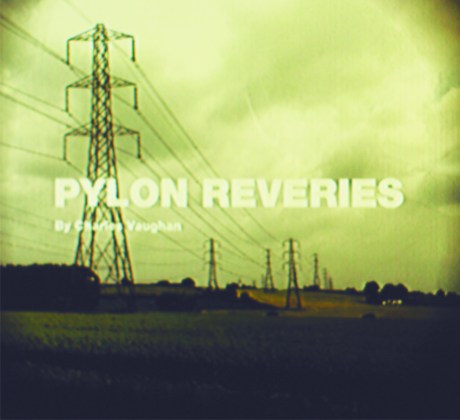
Despite being vividly warned-off, like many of us kids in the 1980s, exposed to TV public health and warning announcements films from playing anywhere near pylons (for obvious reasons). Charles Vaughan is fascinated with these metal leviathans. Collected from a decade’s worth of filled-up hard drives and miscellaneous tapes, his fourth soundscape come psychogeography soundtrack is suffused with the pylons constant throbbing and charged omnipresence.
Attempting in a conceptual sonic manner to escape the overburdened mind, plugged into the overbearing data avalanche of an increasing impossible to break free from technologically connected world, Vaughan shows that even in the middle of an isolated field/meadow it’s near impossible to find a sense of disconnection: the hum, pulse and crackle of technology always close at hand; symbolized by the proliferation of pylons, straddling the landscape.
Handled with subtlety, the fizzled droning undulations of these looming “sentinels” move slowly and sonorously; often in trepidation and constantly unsettling. From shorter, passing vignettes and ruminations to longer, drawn-out ambient pieces, Pylon Reveries fluctuates between Ambient Works era Aphex Twin and Kosmische pioneer Asmus Tietchens, and on the transmogrified harpsichord-like arpeggiator, neo-classical, Revery, Thomas Dinger and Hans-Joachim Roedelius.
There’s a certain wonder and reflection on these “totems”, but also a sense of nostalgia too, one borne out of an interest for the type of dystopia themed TV shows of the late 70s and 80s. Vaughan after all takes his name from a character in the British lo fi drama, Survivors; the synopsis of which has a virus wipe out 98% (very specific!) of the world’s population. Vaughan emerges in the aftermath of this catastrophe with a band of “survivors” to a desolate wilderness. Tasked with collecting information and exploring he hopes to rebuild society from the ground up. Here he is then, reimagined, documenting and creating a reification of the infrastructure that encroaches upon the land and our lives: Is technology freeing us or slowly binding us to a new reliance?
Increasingly uncomfortable with the fears of an ever-connected society, one that is moving towards a fully integrated technology, Vaughan has a myriad of feelings and meditations to represent through sound, but it is an atmosphere of unease and uncertainty, which dominates and prevails.
Our Daily Bread 239: Conrad Schnitzler/Pole ‘Con-Struct’
March 6, 2017
LP REVIEW
Words: Ayfer Simms

Conrad Schnitzler / Pole ‘Con-Struct’
Released by Bureau B, 24th March 2017
This music is described as avant-garde because on the surface the notes appear to be unwelcoming, obscure and almost shuddery, like a sort of peering into a black hole, with simply no place to grip. However the feeling quickly changes as the story emerges skillfully, then, it is like watching a scene shot thirty thousand years ago. The late Conrad Schnitzler, didn’t describe the future, he forged his music drawing from the depth of consciousness, not just the individual’s, but from humankind’s waking one.
Do you hear the sound of the flint, taping on a rock, mechanically and continuously, for centuries?
Sounds of the album are drawn from the past, from our very own flesh as death looms on us, as it did on our ancestors. The future is behind us, within us, the tracks construct the stages of history in their most subtle aspects. On this beautiful album, time is dismantled, space, gravity, dimensions appear like a flash, a glimmer in the most savage and dreary landscape, portraying the different periods of man who despite his insipidity, has gathered, prudently at first, under thorny elements and emerged strong against the deep, coarse and indifferent nature. And now can you hear how a simple combination of synths-effects renders the strength of ancients? That natural longing for war in the thick of our heart as we hunt, gather and hunt. Hunt until our own blossoming death?
Conrad’s frictionless world is the past disguised in the future. To break the code of the album, it’s best listened to loud and near the ears. The tracks will then unlock and tap straight into your bloodstream.
https://soundcloud.com/bureau-1/conrad-schnitzler-pole-con-struct-snippets
LABEL LAUNCH/SINGLE
Words: Dominic Valvona
Jono Podmore & Swantje Lichtenstein ‘Miss Slipper/Lewes’
Released on Psychomat, 6th March 2017
Responsible for a stream of experimental electronic projects, both on the cutting edge of technology and vanguard of a return to the roots of analogue, and a member of the manifesto guided metamono trio, Jono Podmore has cranked-up the generator, punched in new coordinates and blown the dust off the dials to relaunch his influential 90s label, Psychomat.
Renowned for his cerebral collaborations with a number of luminaries from across the electronic music spectrum, but famously for his work with both Can’s Irmin Schmidt (together as the Kumo and Irmin Schmidt duo) and the late Jaki Liebezeit (Cyclopean), Jono’s inaugural label comeback pairs him with the Düsseldorf-based sound writer/performance artist Swantje Lichtenstein.
A conceptual meeting of minds, the duo’s upcoming Michaela Eichwald cover art adorned 7”, which is billed as an actual “work of art” in its own right, features two serialism performance-manipulations recorded at Jono’s on the day of the funeral of his friend, the publisher Felix Hiner, in 2014.
The first of these, Miss Slipper, is of all things, riffing off a piece of writing by Jono’s daughter. A spontaneous freewheeling interpretation of an innocent description of a school art teacher is pushed towards the alien by ring modulations and filter trickery. Obscured and transmogrified into something almost sinister, even daemonic, Swantje’s voice shifts between squelched and metallic strange tongues.
Lingering in the same atmosphere, beyond the stratospheric, the idyllic pastoral East Sussex town of Lewes slips into a parallel dimension of weirdness; the metamono sat-nav tuning into a beacon communal with unknown entities, somewhere yonder in the ether. Based on a set of directions given to the group for a gig in Lewes, this extemporized art-piece glitches, buzzes and chants its amorphous script until it becomes directionless; untethered on wave after wave of tubular ringing, echoed and chromed effects; disappearing into the torn fabrics of space.
Miss Slipper/Lewes is every bit as conceptual and experimental as you’d expect, and lays down the start of, what I hope, will be a fruitful union of art and sound work. We may not have to wait long though for the next installment, as a series of remixes from Pete Hope, Hairy Kipper, Inky Blackness, Bastard Status, Jono in his Kumo guise, and Professor Michael Ball (a colleague of Jono’s and a professor of electronic composition), will be released in the coming weeks and months.
Tickling Our Fancy 045: Bargou 08, Dr Chan, Delicate Steve…
January 26, 2017
NEW MUSIC REVIEW ROUNDUP
Words: Dominic Valvona
Tickling Our Fancy 045: A Journey Of Giraffes, Bargou 08, Delicate Steve, Dr Chan, Emptyset, The Food Of Love Project, Le Petit Diable and Julian & Roman Wasserfuhr.
In this edition of Tickling Our Fancy, the great and good of experimental and atavistic folk interpret sonnets and songs referenced in the works of Shakespeare, on The Food Of Love Project; John Lane produces his most experimental, esoteric, collection of field recordings yet, under his A Journey Of Giraffes alter ego; Delicate Steve marks his return with his first solo LP in four years, a collection of personable “songs without words”, entitled This Is Steve; Dr. Chan make their most “mature” howling skate punk meets primal garage row yet, $outh$ide $uicide; there’s mesmerizing Tunisian desert funk and atavistic vibes from Glitterbeat’s latest signing, the Bargou 08 project; the latest reification sonic suite from Emptyset; the accomplished jazz siblings, Julian & Roman Wasserfuhr’s recruit David Bowie’s Blackstar line-up for their Landed In Brooklyn suite; and finally, a welcome new solo direction from Jinko Vilova’s Ander López.
Bargou 08 ‘Targ’
Released by Glitterbeat Records, 17th February 2017
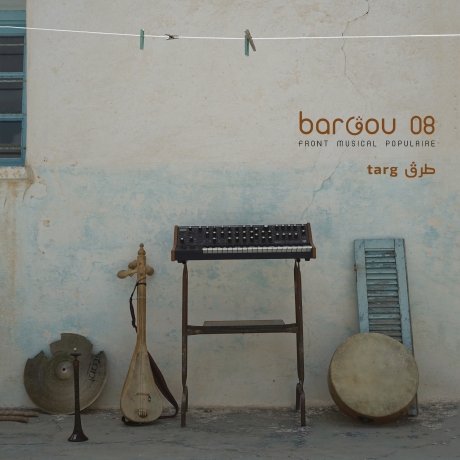
Ahh…the sounds of a dusky reedy gasba flute; the tactile patted and burnished bendir drum; the rustic, earthy strung loutar, and the flowing, scaling vocals of the Bargou 08 project’s chief instigator, Nidhal Yahyaoui, set an impressive atmosphere in the first couple of minutes of the album’s opening, Chechel Khater.
The source of this sound derives from a relatively uncharted region that lies obscured between the mountains of northwest Tunisia and the Algerian border, called the Bargou Valley, which despite its barren isolation, has cultured a unique musical fusion, stretching back hundreds of years. Captivating and magical enough in its ancestral unchanged form, the songs of the valley, sung in the local Targ dialect (a language that is one part Berber, the other Arabic), are given a contemporary jolt that transforms the atavistic paeans, odes and poetry of yore into an intoxicating swirling rapture of electronic North African funk.
In the same way that Noura Mint Seymali’s griot traditions of Mauritania were boosted by an infusion of psych and a polyrhythmic, bordering on breakbeat jazz, drums the Bargou valley’s heritage is given a fattened keyboard bassline, warping Moog oscillations and a modern production. The results are exciting and often lively. The dynamics, especially Yahyaoui’s emotionally powerful vocals, are an especially imaginative giddy thumping mix of desert rock, Arabian dance music and snake-charming mysticism. Suffused with this cocktail of sounds, each passionate evocation, learned and passed on by the village elders, begins with a signature introduction of searching, plaintive or mysterious flute before a pulsing backbeat kicks in; suddenly jump-starting and placing those songs in a modern context. Modulating between the nocturnal desert soundclash of Dek Biya and the Barbary coastal tidal motion candor of Le Min Ijina, different eras are magnificently bridged.
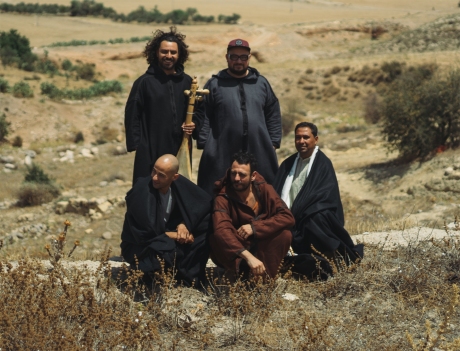
Honed on the road, the Bargou 08 project, conceived by Yahyaoui and steered by his musical partner and friend, keyboard player and producer Sofyann Ben Youssef, was recorded in an ad hoc manner: Youssef juggling both the recording equipment whilst playing the Moog. Yet despite its often loose and hypnotic nature, devoid of tension, this album is a highly sophisticated, joyful, groovy and tight; the musicianship first rate.
Filled with a legacy of turmoil and tension that goes back an aeon the song’s many themes, from describing a lover’s vital attributes on Mamchout to laments of alienation, resonate strongly with the growing unease of events, initiated six years ago by the Arab Spring. Tunisia itself is facing a struggle and teetering on the edge, with no guarantee that certain cultures won’t just disappear or be fragmented in the ensuing melee. Originally setting out to document his Bargou Valley home’s musical heritage before it disappeared, Yahyaoui has successfully and thankfully, with Youssef, captured this rich mesmeric culture for posterity. And in doing so, produced a masterpiece that will endure. 2017 will have to be an exceptional year if Targ doesn’t make this year’s “best of lists”; it’s certainly earmarked for ours.
Various Artists ‘The Food Of Love’
Released by Autolycus Records, via PinDrop and TMD Media, 20th February 2017

Despite being one the most laid back people I know, though judging by the multiple projects, schemes, events and albums he’s working on at any one time he may just be tired out, Oxford polymath Sebastian Reynolds is in a constant state of ennui. He made the TOF column four times in a row last year with various remixes and productions including the multimedia Thai meets West production Mahajanaka – a collaboration fusion of both traditional Thai forms and Western contemporary dance and music, which reinterprets the ancient stories of Buddha on his multiple incarnations journey of perfection towards becoming fully enlightened. In between his roles as a promoter and head honcho at PinDrop, Seb’s set to release a pair of solo albums, Remembrance and Epiphany, later in the year. It is once again in his role as both a performer and instigator that sees him, alongside Tom McDonnell of TMD Media, commission and curate a celebration of the great bard Shakespeare.
Originally part of the wider Oxford Shakespeare Jubilee festival programme in 2016, the adroitly conceived compilation has had some trouble with its official release date, being put back and now hovering over January ready to drop at anytime. But the wait has been worthwhile. The twelve-strong track list features an inspired choice of both Oxford locals and carefully plucked international artists interpreting, transmogrifying and playing around with both the most fleeting and integral songs performed or merely referenced in Shakespeare great cannon of work. In what is now an obligatory requisite, Seb performs with both the electronic-indie outfit he’s been a member for years, Flights Of Helios, and as one half of a unique collaboration with Food Of Love project partner McDonnell, under The Children Of The Midnight Chimes appellation. The first of these is a constantly evolving alternative indie and trip-hop dance peregrination of I Loathe That I Did Love from Hamlet, the latter, is a heavy, thick supernatural vortex drone representation of O Death, Rock Me Asleep from Henry IV Part 2. Considering its source is “allegedly” from a poem written by the tragic fateful Anne Boleyn on the eve of her execution, this abstract soundscape, which features shrouded in the ether vocals from McDonnell, is like a haunting: the unrested spectre of Ann caught in perpetual anguish.
Equally good at removing the original material from any sort of familiarity, taking it over the threshold into alien realms, steam-punk maverick and musical contraption inventor Thomas Truax transforms the Tudor court stalwart Greensleeves into a ethereal cosmic trip abroad Gene Roddenberry’s Starship Enterprise; landing on The Tempest inspired Forbidden Planet. David Thomas Broughton meanwhile closes the album with a ten-minute experimental finale, reinterpreting Lawn As White As Driven Snow from A Winter’s Tale. Sounding like multiple takes of the same song, set into motion at different times and played all at once, Broughton impressively weaves all the discord, overlaps and amorphous bleeds together to create a drifting, sometimes anemic panoply.
In a more congruous manner, closer to the times they were written in, the Scottish troubadour Alasdair Roberts, with only the minimal though attentively atmospheric “historically accurate” lute of Gordon Ferries to back him up, steps straight off a Tudor tapestry to coo in an atavistic lulling timbre the “oblique” referenced Caleno Custure Me from Henry IV Part 2. Elsewhere the tone is of a folksy twee yet often stark and ominous droning beauty. A Highland imbued version of Strength In A Whisper, from Much Ado About Nothing, by, another Scott, the folk songstress Kirsty Law, and a stirring quivered Celtic orchestral treatment of Bonnie Sweet Robin Is To The Greenwood Gone, from Hamlet, by the Dead Rat Orchestra both share hints of Jed Kurzel’s mesmerizing score for the 2015 movie version of Macbeth.
Missing unfortunately from the line-up, the classical folk legend John Renbourn sadly passed away before recording his contribution. The Food Of Love is as a result dedicated to his memory. And it is a touching tribute but most importantly a successful exercise in bringing vitality to Shakespeare’s yellowed parchment; lifting what were in many ways just fleetingly touched upon songs to life.
Delicate Steve ‘This Is Steve’
Released by ANTI-, 27th January 2017
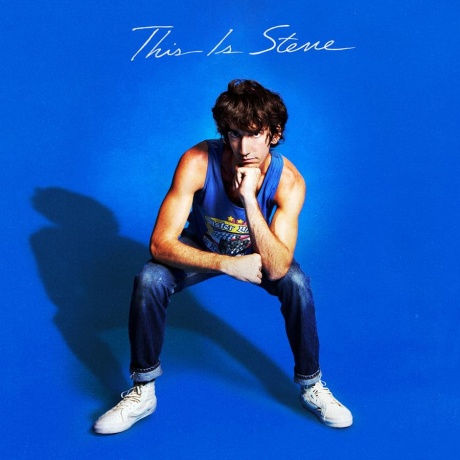
I must confess. Delicate Steve (as he’s known) has until now escaped my detection. The accompanying bio however offers an impressive resume, listing David Byrne, The Dirty Projectors, Lee Ranaldo and tUnE-yArDs as admirers and collaborators. As a testament to Steve’s range, the erudite guitarist and songwriter has “cut records” with both Sondre Lerche and Death Grip’s Zach Hill; and recently appeared playing guitar on the new Paul Simon record.
His first solo album in four years, and the first for the Anti- label, This Is Steve is billed as an “introduction” from the artist to you, the audience. A one-man band, producing and playing everything himself, Steve’s peaceable, often acid-country and surf twanged jaunty and ruminative, guitar themes run through an eclectic array of genres without settling on any specific. The signature cosmic swirling phaser guitar effect and intricate but relaxed perusal technique apes a number of other instruments, including the sitar on the opening glam-psych wilderness of Animals, the zither on the George Harrison exotic bluegrass walk along a California boardwalk Winners, and a Theremin on the nocturnal slouchy candor Nightlife.
Untethered as such; meandering mostly, but at times more forcefully careering through expressions and moods, Steve is scuzzing down ZZ Top’s highway towards a Todd Rundgren drive-through one minute (Cartoon Rock) and yearningly picking out a poignant personal Woodstock gospel anthem the next (This Is Steve).
Despite it being an entirely instrumental affair, you may find yourself singing along. And that’s due to each song’s uncanny familiarity, but also down to Steve’s personable touch, unguarded, channeling a lifetime of both conscious and unconscious melodies and articulating them in his own unique manner.
Emptyset ‘Borders’
Released by Thrill Jockey, January 27th 2017
Transmogrifying, compressing and distorting their chosen “tactile” instruments (which include a six-stringed zither-like contraption and a drum) through vintage analogue equipment, the Emptyset duo perform a live contortion of fuzzy and frazzling trepidation on this latest conceptual offering, Borders.
Commissioned in the past to articulate musically and sonically the abstract; Emptyset have produced successful reification suits, with a number of self-imposed rules, from a number of architectural spaces, including the decommissioned Trawsfynydd nuclear power station and the neo-gothic Woodchester Mansion. This time around, sat in a Faraday cage as towering metal leviathans communicate with each other overhead, James Ginzburg and Paul Purgas set themselves another series of prompting parameters to work within. On this particular score the duo focus on subtly adjusting the timbral qualities of their performance, for an often ominous concatenate series of sonorous and abrasive evocations.
Though Borders doesn’t seem to offer a specific architectural environment; it evokes instead an electrified industrial-scarred force field of dread. Sounding not too dissimilar to Sunn O))) making a cerebral techno album on Basic Channel, the eleven-track soundtrack is suffused with long drawn-out pylon throbbing rhythms, seething and flexing with various fluctuated menace. Descent for instance opens the furnace door of a machine-age fire-breathing Moloch, whilst Speak brays with a monstrous didgeridoo-like rasp.
The album is a heavy dose of bestial sizzled magnetic crackling and giant rumblings; an electrified fence of static doom, both highly atmospheric but also teasing with anticipation.
A Journey Of Giraffes ‘F²’
Self-released, January 11th 2017
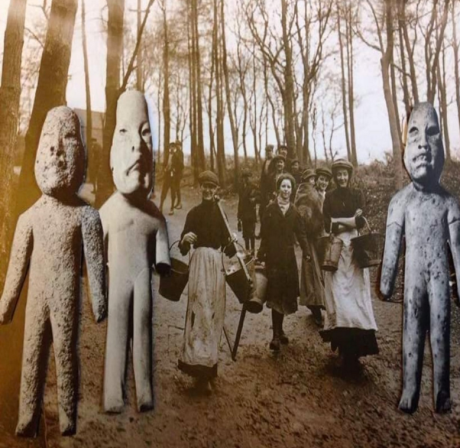
A Journey Of Giraffes’ John Lane has come a long way since his chirpier and languorous lo fi Beach Boys (circa Pet Sounds and SMiLE) inspired renderings and washes. Now almost fully immersed in the esoteric; exploring strange new soundscapes, Lane takes “a long walk into the deep forest” of his Maryland, USA home for something approaching the supernatural. Those California vapours of old do still linger, though removed even further, lost on a swell of reverb, Foley sounds and a heavy miasma of abstracted experimentation. A leitmotif of field recordings from the Hampton’s Cromwell Valley Park underpin this latest journey: the trampling underfoot of the valley floor and, threatening to blow us off-course, gusts of wind create an environment that sounds like an ominous meander into the Blair Witch Project.
Best described as Coil picking apart Panda Bear on the way to Alejandro Jodorowsky’s Holy Mountain, F² (an element which you won’t find on the periodic table; a symbol instead that Lane uses to represent a sentiment of “family first”) features venerable monk-like chants and wordplay, subterranean echoes, Tibetan chimes and paranormal doo-wop. Hermitages, caves, atavistic idols to old gods the ghosts of previous generations that once hewed a living from the landscape and the sainted Father Damien De Veuster of the 19th century leprosy colony of Hawaii’s Molokai Island, all haunt Lane’s imagination.
Self-released via Bandcamp, almost happenstance style, this avant-garde soundtrack opus benefits from the kind of freedom that the internet can offer. However, with no restrictions and a methodology of total exploration, the album is perhaps overly long in places and can stretch the listener’s patience. Still, Lane works out his ideas and expands his sound further on every release; taking that original Beach Boys influence into seldom charted waters.
Dr Chan ‘Southside Suicide’
Released by Stolen Body Records, 24th February 2017

Like some obscure French exchange garage band of students – the kind you’d find, if it existed, on a European version of the Teenage Shutdown! compilations – hanging out in the 80s L.A. of plaid shirt and paisley bandana fatigue wearing skater-punks, Dr Chan are an abrasive and coarse mix of renegade petulant inspirations.
Essentially powered by garage rock and all its various manifestations, the group from the south of France hurtle through an up tempo and raging backbeat of The Chocolate Watch Band, Standells, Rationals, Black Lips and Detroit Cobras. The difference here is that they also throw in a miscreant Molotov of thrash punk, courtesy of Fidlar, and “death rap”, cue Florida’s $uicideboy$, into the riot. It gives the Chan’s brand of garage band mania a different intensity and drive: more screaming in a ball of flames spikiness than tripping psych.
The opening title track is a lively introduction to this controlled chaos; the distorted scrawling spunk-rockers rumbling and attacking surf, bluegrass and rock n roll in adolescent fury. It isn’t always this fast and noisy. I Can’t Change for example takes a, dare I say, poignant respite; sounding like a yearning Roky Erikson dodging the whistling drop of bombs from above.
Despite the increasingly distressed cartoon screamed resigned sentiment of the swansong, Life Is Not Fun – Southside Suicide is a blast. Riled and obviously pissed about the current state of affairs both at home and overseas, Dr Chan’s protests are in keeping with the primal spirit of rock’n’roll: fun, fun, fun! It’s a blast.
Julian & Roman Wasserfuhr ‘Landed In Brooklyn’
Released by ACT, 24th February 2017
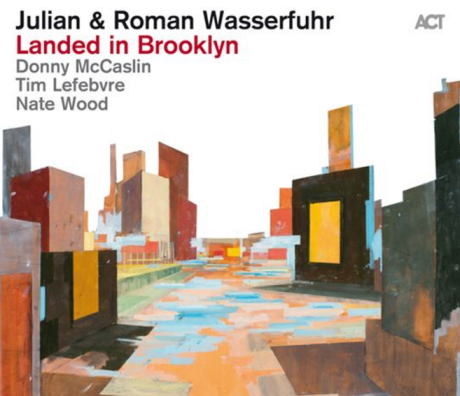
It can hardly be denied that New York always has and always will be an epicenter of musical innovation and fusion. Sure, there’s a growing unease at not just New York but mega beacons of creativity everywhere in the West. That the artists are pushed out and forced into the outlier regions because of gentrification, high rents and a general enervation of culture. Manhattan still has the jazz legacy and sports the venues (from the Lincoln Centre to The Village), but we’re increasingly told the “action” is happening elsewhere: in the borough of Brooklyn to be exact. A sprawling region of the New York panoply, Brooklyn has become a cheaper, more viable alternative; though in the last decade this hotspot has seen a massive influx of millennials, students and creatives flood the area, and so changed the very nature of the neighborhoods and inevitably made it more expensive.
Lured to this hotspot, the exceptionally talented trumpet (though on the latest album also partial to the flugelhorn) and piano sibling partnership of Julian and Roman Wasserfuhr “land” in Brooklyn for their 5th LP together. Prompted by the German jazz label ACT, and producer Siggi Loch (one of the first to foster the brothers talent, Loch produced their debut 2006 album Remember Chet, as part of that label’s “Young German Jazz” series) the duo initially hadn’t given much thought to the project. Spurred on however by the mounting reputation of New York’s largest borough, the brothers relocated. Imbuing themselves with Brooklyn’s history and present “where the action is” status, they recruited members of David Bowie’s Blackstar backline; man-of-the-moment tenor saxophonist and bandleader Donny McCaslin and the equally in-demand, former New York native, electric and double-bass player, Tim Lefebvre. Both have, in great part due to the attention Bowie inevitably drew, helped shape the city’s persona and rep for pushing the boundaries of jazz. And here they do what they do best; lifting and taking ideas and melodies into ever more inventive directions. Consummate enough to boost the foundations, yet also erudite enough to know when to blow or noodle away ten-to-the-dozen, they prove a congruous fit. Finishing the lineup, another link to McCaslin, is supremo drummer Nate Wood, who gets the chance to showboat with a salvo of never-ending rolls and crescendos on the cover of Tokio Hotel’s power-rock ballad, Durch den Monsun – a vast improvement upon the original.
Making a final connection to the city’s wider jazz legacy; the brothers chose to record at Joe & Nancy Marciano’s legendary System Two Recording Studio; using the venerated studio’s classic ribbon mic, once owned by John Coltrane no less, and a piano previously used for concerts at Carnegie Hall. Utilizing the environment, which has seen its fair share of legendary names from the jazz lexicon record there, the quintet produced an extemporized performance. Far from rehearsed and contrived – other than the choice of covers and the odd bit of sheet music – there’s little prompting on Landed In Brooklyn. Instead we get a flowing, loose semi-improvised interplay between all involved. This method is demonstrated on the opening “ensemble sound”, Bernie’s Tune. Relaxed, springy even, Julian Wasserfuhr and McCaslin’s interweaving horn section flews impressively over a quickened backbeat to create an update on the New York siren wailed TV detective theme tune. Roman Wasserfuhr, who leads on most of the album, is deft and supple on the ivories; caressing warming with a rippling effect even though you can tell he’s working hard on some complex countermelodies.
Whether it’s been planned, or unintentionally just floated into the quintet’s melting pot sound, there are traces and nods to a number of key jazz doyens throughout. There’s purposeful, and noted in the album’s accompanying booklet, hints of the horn geniuses Freddie Hubbard and Stanley Turrentine for instance on a couple of tracks, most notably however on the nestled trumpet and swaddling saxophone – Gershwin on Blue Note – Tinderly.
Elsewhere there’s Marimba-lilted waltzes; a 5/4 timing transformation of a moribund Sting song; and a cluttering railway-track travail style meditation on America’s past segregation woes to take in. And marvelous they all sound too. There can be no denying that this is a quality line-up; musically speaking, even if the covers are hardly inspiring, this is an accomplished recording. The Wasserfuhr brothers do creative things with the scenery and mood of a hub currently in the spotlight; producing an album that arguably bridges the old with the new guard.
Le Petit Diable ‘Seeds’
Self-released through Bandcamp, available now
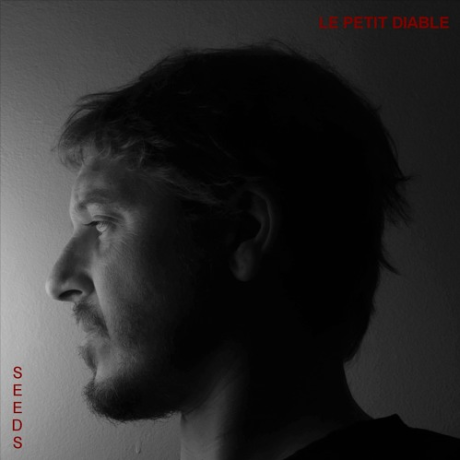
An important force for good on the underground Spanish music scene, predominantly in the last five years with the Krautrock and “Motor City” inspired Jinko Vilova, songwriter/musician and full-on space-rocker Ander López has taken on a new role as a troubadour for his solo album.
As demonstrated on his new collection, under the Le Petit Diable guise, López removes all but a brassy-stringed resonating acoustic guitar from the Jinko Vilova blueprint sound. Taken from the group’s previous LP, Líquid, the opening gambit, You’re Standing, is reduced from its original cosmic thickset Detroit bombast to a far more intimate acoustic affair, which sounds at times like a missing track from Can’s Unlimited Edition. It serves as a transitional introduction to ease the listener into the new raw, stripped direction. The album, Seeds (a metaphor for the ideas he’s evidently planting), has a real live quality about it, recorded in an atmospherically favourable space that lends itself to the echoing chimes and rings of his “lived-in” guitar playing.
Countering a gentler picking and plucking articulation with a mixture of attacking and ringing reverberation style rhythm guitar, López works up a fair old pace at times; filling the space when he needs to: The rebellious folk gallop, Purple Sphere, could be considered even spiky!
Vocally he channels a litany of hard-worn melancholic wayfarers; including Blixa Bargeld (Who Cast The First Stone), Nico (Snake’s Dance, Follow The Leader) and Roy Harper (My Eyes). There’s even a hint of the languid Damo Suzuki about López on the opener.
Le Petit Diable is a welcome move towards a parallel solo career; a surprise exploration and change from the music he’s become synonymous with. There is a lot of promise on this album, and the future looks bright.
Our Daily Bread 232: Moebius ‘Musik fur Metropolis’
January 5, 2017
LP REVIEW
Words: Dominic Valvona

Moebius ‘Musik fur Metropolis’
Released on CD/LP/DD by Bureau B, January 6th 2017
Standing like a shard beacon of expressionist light in 20th century cinema Fritz Lang’s, and let’s not forget his wife and co-auteur on this visionary opus Thea von Harbou, futuristic visual requiem Metropolis is rightly hailed as a classic. Borne out of the most tumultuous of periods in German history, as the artistically creative but decadent disconnect of the Weimar Republic was about to crumble and the menace of the National Socialists was goose-stepping towards an eventual Armageddon, Metropolis may have been about a future world but was making glaringly obvious analogies and metaphors about the present.
Modeled in the Art Deco style of its day the centuries old struggle between the elite and those on the lower strata of society continued unabated in the movie’s 21st century dystopian setting. A privileged minority of wealthy industrialists, living in the lofty heights of a N.Y. on steroids skyline, lorded it over those who toil in perpetual labour below, firing up and feeding the machinery that keeps the balance of power in check. The cast includes the love spurned mad scientist Rotwang, whose resurrection totem robot creation became the poster child for the film and continues to be one of the most iconic symbols of malevolent technology; the dandy of the ‘upper world’ turn inspired ‘mediator’, reformed hero Freder and his father the city’s “master” Joh Fredersen; and the idealist heroine of the piece, Maria. All parties are forced to reconcile after a series of events, sparked by Freder’s epiphany after witnessing a deadly explosion in the boiler rooms; enchanted and led to the workers via his love for Maria.
Ambitious in any era, Metropolis despite pushing cinematography towards dizzying heights of inventiveness and scope was considered too lengthy and it’s central tenet naïve on its inaugural release. A substantial cut was made, losing many scenes and even characters, before a final edited version was released to the greater public. Believed discarded and lost, the original became something of an enigma until a full-length version turned up in 2005 in a museum in Argentina. Restored to near 95% completion it was unveiled five-years later and has ever since been lavished with special screenings and accompanied by a myriad of different scores, including the catalyst for this special release. Invited in 2012 to perform a semi-improvised soundtrack leading avant-garde composer and founding member of the Kluster/Cluster/Harmonia triumvirate of cosmic progressives Dieter Moebius composed a suitably atmospheric, often unsettling and evocative industrial suite. Not the first and certainly not the last artist to soundscape this Silent Age behemoth, attempts to furnish the action with a suitable musical score stretch right back to Gottfried Huppertz’s original in 1928, to Moroder and “friends” gratuitous pop soundtrack remake in the 80s, and the more successful interpretations of Techno music giant Jeff Mills in 2000 and the lavish 96-piece orchestra and 60-strong choir opus in 2004 by Abel Korzeniowski.
Using pre-arranged tracks and samples, treated by an array of effects, Moebius’ one-off performance was always destined for release at a later date. Unfortunately as it turned out a reimagined album version would elude the Kosmische pioneer who passed away in the summer of 2015. With the help and support of his widow Irene and longtime musical partners Tim Story and Jon Leidecker, the Berlin musician Jonas Förster finished the remaining work that needed to be done and completed the production: quite satisfactorily as it transpires. A performance in four concomitant acts, Moebius loyally matches up the drama onscreen with a serial suffused and nuanced avant-garde narrative. Swaying in their unison of drudgery the somnolent work gangs of the opening Schicht (“layer”) section are accorded a lamentable industrial march. At the core of this soundscape is a monotony of hissing valves, descending and bending generator drones and the sound of steam-pumped hydraulics. Layer upon layer is carefully administered whilst the clocking-in gong vibrates a foreboding signal for the day’s subjugated graft.
In a film packed with vivid iconography, analogies and scenes, Freder’s hallucinogenic like vision of the city’s underbelly, the boiler room if you will, reimagines the machineries of Metropolis transformed into the atavistic figurehead for a sacrificial ritual: workers climb the altar steps to be fed into the furnace mouth of the Canaanite god Moloch in one of the movie’s most memorable sequences, and the second chapter on this album. The atmosphere more esoteric, features an ominous – as you’d quite rightly expect – tribal rhythm with stifled synthesizer screams and strange obscured hoots. Yet Moebius, who could go all out on this bestial scene, is quite reserved, holding back from full Biblical bombast and horror. Tiefenbahen is equally as disturbing with its static field of electrons buzzing away to the loading of an unidentified mechanism and the discarded discord of bounding bass drums and a venerable organ: a lingering signature from Kluster. An attempt is made to set into motion a shuffling groove of some kind; again heavy and in keeping with the monotonous miasma of the storyline but offering a glimmer, a lift from the veils of the macabre.
Finally the “mediator” or Mittler, the dystopian end run that brings together all parties and forces mediation – though Lang’s not so subtle communist solutions proved naïve –, beginning with a death grapple between Freder and the miscreant scientist Rotwang, is accompanied by a finger-cymbal and sleigh bells percussion, sharp metallic pulses and what sounds like iron filings being moved around on a sheet of metal.
In safe hands, Moebius’ posthumous Metropolis soundtrack proves a distinctly descriptive enough and evocative narrative experience in isolation, separated from the visual motivation of the film. Fans of the Kosmische progenitor’s work will find it familiar territory but notice enough examples of subtle explorations and interplay unique to an improvised performance to find it worthwhile purchasing.
https://soundcloud.com/bureau-1/sets/moebius-musik-fur-metropolis-snippets

