The Perusal #57: Hannah Mohan, Black Diamond, Society Of The Silver Cross, Passepartout Duo & Inoyama Land…
July 3, 2024
A WORLD OF SONIC/MUSICAL DISCOVERIES REVIEWED BY DOMINIC VALVONA
(Unless stated otherwise, all releases are available now)

Photo credit: George Rae Teensma
Hannah Mohan ‘Time Is A Walnut’
(Egghunt Records) 12th July 2024
Geographically settling long enough to pen this solo songbook offering, but anything but settled emotionally, the former And The Kids vocalist-songwriter Hannah Mohan attempts to process the break-up of all break-ups.
After leaving home at the age of sixteen, restless and curious, Mohan spent her formative years on the road, crisscrossing North America, busking and honing a creative craft. On returning home, after five years of travel and travail, Mohan formed And The Kids with a school friend. After a trio of albums between 2014 and 2019, and with the global pandemic’s nefarious effects on the music industry and wellbeing, the band unfortunately came to an end. Throw in the heartache, the confusing cross-signals of a fateful relationship, and you’ve suddenly accumulated a whole sorry mess of emotional pain and a lot of questions that need addressing or analyses.
Luckily Mohan is a highly talented musician and songwriter, able to turn sorrow and reflection into gold. For Time Is A Walnut is a rich album full of familiarity and yet melodically and lyrically idiosyncratic, shaped as it is to Mohan’s particular cadence, timbre and way-with-words.
Less moping and more a full gamut of hurt, weariness, despondency, incriminations and plaint, Mohan travels full circle on her break-up journey: from shock to vented indignation, from losing one self in the moment to escaping from reality. All the feelings of resentment, the pulling apart of a fragile soul, and decoupling sound surprisingly melodious and disarmingly anthemic throughout: even during the bitterest exchanges and grievances.
Hand-in-hand with producer and musician Alex Toth (of Rubblebucket and Tōth fame), working away with little sleep in Mohan’s basement, the resulting thematic songbook is filled with great alt-pop songs; some with a country lent, others suddenly mystified and misty with an air of atmospheric Celtic vibes, or, channeling 80s new wave German synth music – Toth, I assume, almost in DAF mode on the darker-lit, hurting ‘Peace Be The Day’.
Almost breezy in parts, there’s tunes galore as Mohan evokes the Cowboy Junkies, Angel Olsen, Tanya Donelly, Madder Rose, Sophie Janna (especially on the vapour-piped Ireland illusion ‘Runaway’) and Feist. But you can also throw in a touch of dry-ice 80s synth-pop and a touch of Bacharach on the whistle-y saddened beauty that is ‘Upside Down’.
In sympathy and often softly lifting, there’s a fair use of trumpet on the album. Less jazzy – although saying that, there’s vague suggestions of Chet Baker – and more Southern, nee Mexican serenade and atmosphere, that instrument’s suffused and occasional enervated brassy blazes is a perfect fit with Mohan’s candid, sanguine delivery.
A congruous choice of guest, working in a similar mode, songwriter-musician Lady Lamb features on the 60s troubadour echoed, vibrato-trilled sing-a-long anthem ‘Hell’. The details and the unforeseen circumstances, the ‘messy eroticism’ and loss, disconnection from someone else’s life are all lay bare in a melodious beauty.
Hannah Mohan rides the roller coaster of a drawn-out break-up with quirkiness and vulnerability, turning tortuous heartache into one of the best and most rewarding songbooks of the year. Mohan may have let her soul sing out, as she comes to accept an emotional turbulent period of stresses and anxieties and pain. But whether she’s finally pulled through the other side or not is up to you the listener.
Black Diamond ‘Furniture Of The Mind Rearranging’
(We Jazz)
Transported back in time, and then propelled forward into the now via Chicago’s musical legacy, its rich heritage of innovators and scope in the world of jazz, Artie Black and Hunter Diamond’s dual saxophone and woodwind focused vehicle can trace a line from the Windy City’s smokestack bluesy outlines of the 50s through the icons Sun Ra, Roscoe Mitchell, Eddie Johnson, Lester Bowie, Art Ensemble Of Chicago, Anthony Braxton and the hothouse of undeniable influence and talent, the Association For The Advancement Of Creative Musicians.
Across an ambitious double-album spread of both quartet and duo mode formations, those Black Diamonds don’t so much shine as smolder and fizzle to a smoky and simmering resonance and metropolis backdrop encroached by wild jungles and fertile growth.
The majority of this moiety evolution is handed over to the quartet ensemble, with Artie and Hunter joined by the softened taut but flexing and always on the move double-bassist Matt Ulery and the constant cymbal splashing and rolling, fills and tight woody rattling drum breaking drummer Neil Hemphill. That set both swells and finds pause to a certain lowness and more weighted pull of the freeform and melodic, the rhythmic.
Saxophones sound willowy as they either entwine, take turns on the climb, exhale drawn-out mizzles or drizzles; all the while the action recalls every formative era from the 1920s onwards, from the blues to the African, the spiritual, bop and the serenaded. All those cats mentioned in the opening paragraph pop up alongside the Pharoah, Ornette, Evan Parker (I’m thinking of the woodwind elements, which both Hunter and Artie switch between throughout), Mingus and on the opener, ‘Carrying The Stick’, Lalo Schfrin of all people.
From concrete to near pastoral dustings, a menagerie of bird-like brass and woodwind sings and stretches, often letting the steam out of those valves with a bristle and rasp. The drum and bass combo keep it all moving forward, developing, with Ulery’s slackened bass even opening a couple of tracks.
In a more stripped-down and even more experimental mode, Side D (in old money vinyl terms) of the album is given over to the duo format of sax and woodwind.
Leaning towards Braxton, John Zorn and Andy Haas in near-non-musical freedom of expression, they probe new, amorphous spaces without clear signage or reference to environments or moods. The saxophone often sounds reedier, more rasping, and is enveloped with the very sound of its brassy metallic resonance and surface makeup. Every exhaled breath is used to conjure up the mysterious, the onset of some unease, but also a pauses for certain moments of reflection.
Perhaps a mizmar played at dusk, an ominous peace or a meditative haze, these experiments, forms of tonal, timberical evocation are difficult to describe or catalogue. Only that they fit in with the freedoms, the expressions and language of the Chicago school of freeform inventiveness and exploration, deconstruction of an instrument.
Black Diamond run with the ‘stick’ or baton passed on by the Chicago hothouse of jazz notables and luminaries, proving themselves to be a quality, dynamic act ready to push forward. Rearranging the cerebral and musicality furniture as never sounded both so classy and explorative.
Damian Dalla Torre ‘I Can Feel My Dreams’
(Squama Recordings) 12th July 2024
Subtle in approach and process, the cross-fertilization of South American and European cultures, prompts and environments on Damian Dalla Torre’s second album, I Can Feel My Dreams, is a tangible synthesis of abstract feels, moods and an exchange of musical ideas.
Nodes, points in a larger dream-realism canvas reference the Leipzig-based multi-instrumentalist, composer and producer’s footprints across both continents.
Sparked by a residency to teach, write and practice his craft in the Chilean capital of Santiago, Torre absorbed all that city and its surroundings had to offer: the vistas, colours and art. With a certain amorphous guaze that magical landscape of rainforest canopy enveloped menageries, flowing waters, Andean fluted heights and valleys, and exotic lushness is merged effortlessly with complimentary vocal harmonies and assonant arias, dewy and caressed extended dainty picked harp, quivers of guitar, trembles of piano and spells of electronica. The realms of jazz, sparse techno, ambience, voice experiment, nature, futurism, sound art and the new age seamlessly yield and relent.
The haul of notable guests invited to play on the album is staggering, and in no way distracts from the main leitmotifs and direction of drifted, wispy travel. Instead, each guest enhances with a certain gracefulness and calm each musical expedition and piece of mood music. Unsurprisingly given Leipzig’s musical history and legacy (home to an enviable catalogue of classical music giants over the centuries; perhaps one of the biggest most impressive concentrations in that genre’s history of iconic composers and musicians), but also its more modern burgeoning jazz and electronic music scenes, there is a host of musicians and artists from or based in the German city taking part on the album; cue the blossoming ‘genre traversal’ Jan Soutschek, ensemble singer and soprano soloist Viola Blanche, guitarist and composer Bertram Burkert and jazz improviser, pianist and composer Jonas Timm. Add to that the Austrian-Ethiopian harpist Miriam Adefris, the Danish composer and arranger Christian Balvig, pianist Felix Römer and the range and influences probe even further and deeper. Altogether, from the replenishing waters of renewal to the generator and manipulated electronics of modernity, all these contributions prove beneficially harmonious and complete.
This is a biomorphic world in which echoes of Eno, Alice Coltrane, Talk Talk, Oh No Noh, and Lara Alarcon all coalesce and dream. The architect, Torre, manages to keep everything constantly green and lush; showcasing a flair for pulling together a myriad of sources to create something almost familiar by new.
Society Of The Silver Cross ‘Festival Of Invocations’
(8668 Records)
Stepping from the shadows after abstaining from the material world for the last five years, the matrimonial partnership of Joe Reinke and Karyn Gold-Reinke return with a second rebirth, regeneration of Indian, Byzantium, Egyptian and Gothic imbued pathos and bathos.
Harnessing the themes of fate, the eventual and unavoidable specter of death and its harbingers, its demons, and even its angels, the Seattle couple walks the path of hermetic cults, atavistic Indian spiritualism and magik to induce cosmic awakenings and transformations. With all of mortality’s connotations and meanings, death is also seen as a renewable force on this couple’s second album under the occultist Society Of The Silver Cross heading.
But there’s no escaping the atmospheric dread and the curiosity of deathly rituals invoked by the Indian-style drones, harmonium-pumped sustains and concertinaed bellows – part ‘Venus In Furs’ Velvets, part Alan Edgar Poe shipwreck hauntology shanty, and part courtly mysticism. And yet Karyn’s siren-esque duets with boa Joe can lift towards the light at times, escaping the Fortean broadcasting waves, the splashed crashed tumultuous sea-like cymbals and gongs, Book of the Dead mantras and distressed Andy Haas-like geese pecked sax (if it is indeed even a saxophone) hauntings.
But for a majority of the time the couple’s counterbalancing act of apparitional, bewitching and more baritone, from the bowels of the deep and human soul, vocals muster spiritualist visitations, a theatre of sorrow, past incarnations and an unbreakable multi-levelled circle of added magic both heavy and foreboding.
I was picking up spells of Death In June, Nick Cave’s duet with Kyle, Mick Harvey’s time with P.J. and Amanda Acevedo, Backworld, David Lynch, Dead Can Dance, Current 93 and Angels of Light. The folksy Gothic-art-music-shanty-motioned ‘When You Know’ (with my imagination) sees Serge Gainsbourg laying flowers on Jim Morrison’s alter in the Cimeti ére du Père-Lachaise. The mystical finale, ‘Rajasthan’, not only features those synonymous Indian tones but also has an air of the Spanish-Baroque guitar and a touch of The Limiñanas about it. Shrouded in rousing tribal dramatics and ether visions, the couple’s lasting nod to the land in which they spent much time absorbing the cultural-musical spiritualist vibes before making their debut singles and album (Verse 1), is steeped in the mists of time; invoking India’s largest state before eventual unification, and its history of early Vedic and Indus civilizations. “Rajasthan” is a portmanteau of words, but can be translated as the “Land of the kings”; its courtly, royal verbose and stately reputation echoes as the final word on this album of rebirth and the coming to terms with death. Making true on their previous chapter, Joe and Karyn once more follow the call of the silver cross-societal allure. Atmospheres, processions and possession that are more than just songs, you don’t so much liberally catch, or, casually listen to each propound and chant-like forewarning as enter a fully constructed world of elementals and alchemist mystique. These are drones, dirges and more opened-up astral projections that will stay with you days after first hearing them. A Festival Of Invocations is a chthonian play of supernatural, spiritualist and funeral parlor riches; a successful follow-up after a five year hiatus.
Droneroom ‘As Long As The Sun’
(Somewherecold Records) 19th July 2024
Amorphous Western sun-cooked melting mirage panoramas are stoked and drawn from the Droneroom’s long form guitar peregrinations. The sixth (I believe) alt-country drone-cowboy album from Blake Edward Conley’s singular experiment for the Somewherecold label, As Long As The Sun is a filmic soundtrack-like conjuncture of Paris, Texas, Blood Meridian and a myriad of supernatural and alien visions of the ‘big country’.
The Western sounds of the twang, rattle and bends is unmistakable, and the sounds we’ve taken for granted, like the freight train convey that hurtles down the tracks and with it’s velocity and size shakes the passing dinging and ringing rail barrier junction, but Conley’s familiar markers, references make them near hallucinogenic under the sun’s powerful debilitating rays. I can imagine Ry Coder fronting Ash Ra Tempel, or early Popol Vuh relocated to the arid planes of outlier Texas, or a mule-riding Don Quixote tilting at the shadows of cacti.
A contemplation of all life’s spiritual quandaries and fate no less, all elicited from the magnified and amplified reverberations, quivers, strokes, gestures, brushes and more driven rhythmic passages of the guitar. Fuzzed-up with flange and sustain, these descriptive lines, resonated waves and vibrations are like drawn-out echoes of Michael Rother, Gunn-Truscinski, Jason Pierce (in his Spaceman 3 days) and Yonatan Gat. On the searing, razored and heated coil moody ‘Last Train To Soda Spring’ (the small Idaho city which gets its name from the 100s of carbonated water springs that dot the landscape) there’s a build-up of layering and rhythms that breaches the hazy space rock barriers – Hawkwind crosses fully into Motorhead. Whilst the shamanic marooned, railroad vision, ‘East Facing Window’ has a kind of krautrock generator field around it that hums and pulsates, invoking both alien and paranormal activity – I’m thinking a little of Roedelius’s experimentation on Sky Records.
As Long As The Sun beats down upon Conley’s cowboy hatted noodle, its gravitas, life force and heat inspiring serious abstract empirical vistas, atmospheres and the soundtrack to a movie yet to be made.
Luke Elliott ‘Every Somewhere’
(AKP Recordings) 12th July 2024
Composing a more inclusive biosphere and exchange of cultures, influences and sounds, the Amsterdam-based, Leeds born, sound artist Luke Elliott transforms his source material of field recordings (from what could be acts of making in a workshop to tramples through the undergrowth of Moat Farm in Somerset and the windy tubular sea organ of Zadar in Croatia) into a fully working lunar off-world vision.
A new world no less, Every Somewhere’s vague, recognizable, or by happenstance, playful tastes of gamelan and Southeast Asia, early analogue modulations and patterns, tape music experiments and sonic land art (that already mentioned Zadar organ, which was built as a large scale land art instrument to bring some sort of random melodious colour to the Dalmatian coastal town’s monotonous concrete wall scape, rebuilt with haste after the devastations of WWII) are sampled then re-sampled, fed through effects and an apparatus to build a more sympathetic, attentive environment.
At least influenced in part by a fascination with Alfred W. Crosby’s ‘Colombian Exchange’ theory, as outlined in his 1972 propound book, which gave a now fashionable name to the legacy of colonialism and the destructive and loaded exchanges between the Western hemisphere and the then ‘New World’, Elliott’s imaginative world is more nurtured towards a beneficial exchange of cultures.
In a liminal zone between the earthly, otherworldly, near cosmic, dreamy and liquid, the kinetic, algorithmic, arpeggiator and magnetic atoms and transparent notes bobble and squiggle about over atmospheric ambience and to the rounded rhythms of paddled tubular obscured instruments. And then, once the guitar is introduced to tracks like the glassy delicate ‘Objects Of Virtue’, the mood changes towards a bluesy post-rock vibe.
Magical escapes, stargazing from the observatory, solar winds, near operatic cloudscaping and various gleams, glints and globules recall Goo Ages’s Open Zone album, Tomat, Raymond Scott, Edgar Froese and Zemertz.
Elliott’s debut for the astute AKP Recordings label maps tactile environments both intriguing and melodically mindful. It paves the way for new visions of a more equal future.
Passepartout Duo & Inoyama Land ‘Radio Yugawara’
(Tonal Union) 26th July 2024
The freely geographical traversing Passepartout Duo find congruous partners with collaborative foils Inoyama Land – those fine purveyors of Japanese Kankyō Ongaku, or environmental ambient new age music – on their latest balance of the tactile, organic and synthesized.
A free association of cultures and musical processes, despite laying down loose perimeters, the Italian/US duo of Nicoletta Favari and Christopher Salvito combine explorative forces with the Japanese musical partnership of Yasushi Yamashita and Makoto Inoue for a remarkable interaction with their surroundings, a mix of children’s instruments and percussive and wind apparatus.
Favari and Salvito have already appeared on the Monolith Cocktail, with reviews of both the Chinese art platform-backed Vis-à-Vis and Daylighting albums. Those experiments in the timbrical, rhythmic and melodic, imbued by the Meili Mountains, Lijiang and fabled imaging’s of Shangri-La, were created during and in-between the restrictions of the Covid pandemic. A year before news broke of that global crisis the duo travelled to Japan. Connecting with the Inoyama Band, a duo that had transformed the abstract feelings, magnetism, sublime transcendence and peace of the landscape since the 1980s, they were invited in to their host’s shared space sanctum – an auditorium inside Inoue’s family-run kindergarten in Yugawasa that doubles-up on Sundays as a studio.
Set out on tables for all participants, a myriad of playful and more studied instruments and a set of “game rules”. The quartet could only use the mix of electronic and acoustic instruments separately or altogether for ‘revolving duets’, with each taking turns to play through a cycle of ‘four duos’. But then ‘anything’ was permitted in that session, which lasted three hours. In this complete state, that long improvisation and set of prompts has been distilled into eleven more digestible parts. Within the sonic, contextual and languid peaceable realms of the Kankyō Ongaku genre and greater scope of Japanese acoustic-electronic music, there’s an air of Satoshi Ashikawa, Yasuaki Shimizu, Yoshio Ojima and Tomo-Nakaguchi about this album. You could add hints of Slow Attack Ensemble, Eno, the Hidden Notes label and Bagaski to a subtle layering environment that takes in all points of the compass, with chimed bulb-like notes and the ringing, searing and chimed bamboo music of Java, Tibet, Vietnam and the dreamy.
The recognizable sound of soft-mallet patterned and paddled glockenspiel and xylophone merge fluidly with hand bells, higher-pitch whistled recorders, concertinaed wafted melodica and harmonicas, and racks of wind chimes. Whilst atmospheric elements and the use of electronic devices create mysterious vapours, oscillated wisps, knocked rhythms and floppy disc sampled voices.
Gazing at diaphanous beamed and lit cloud formations from a comfortable snug in the landscape, or, submerged below Mexican waters inhabited by the strange aquatic Axolotl salamander, each part of this performance is somehow similar and yet variably different. Between the illusionary, dreamy, sonorous, see-through and swimmingly, two sets of adroit partnerships create organic meta and a sublime near-nothingness of slow musical peacefulness and environmental absorbed transience.
Myles Cochran ‘You Are Here’
(9Ball Records) 26th July 2024
Unhurried and once more placable, the all-round embracing American composer, songwriter, multi-instrumentalist and producer Myles Cochran follows up his 2021 debut album (Unsung) with another carefully spun canvas of subtle emotive pulls, TV and filmic-like soundtrack scores, ruminations and mirages.
Traversing an amorphous palette of Americana, the blues, classical, folk, experimental, Baroque and traditional, Cochran integrates his Kentucky roots with spells in New York City and the UK (where he’s lived for some time) whilst letting his unprompted imagination travel to more exotic climes and cerebral dreamscapes.
Although an adroit player of many instruments, Cochran’s work is mostly led, directed, informed and suffused by both the acoustic and electric guitar. Understated but keen and expressive, his choice of guitar is once again left to stir up visions of a celluloid panoramic and more mystifying melting Western America, the Appalachians, Ozarks and home. Only this time around he’s also invited in the accomplished cellist Michelle Packman and bassist Reggie Jones to add a transported subtle semblance of chamber music, period drama and jazz. Jones, playing a stand-up (or upright) bass throughout, emphasizes rhythm, a pace and sense of travel – especially so on the shaky rhythmic travelogue ‘Making Something Out Of Nothing’, which, by its title, indicates a conjuring of a composition, performance out of just playing or fiddling around, but evokes (for me) the imagined title sequences of some wintery Northern American drama, out on the road with the harsh, snowy landscape passing by the window of our protagonist’s truck. Meanwhile, the following countrified-meets-the-pastoral-and-renaissance crafted ‘Signs And Symbols’ has an air of Fran & Flora about it with the sounds of a breathy and fiddle-like cello.
Widening the vistas, the quiet inner battles of turmoil and conflict, sympathetic bowing and pining cello enhances the mood and subtle expressions of Cochran’s compositional style, which both ebbs and flows between the echoes of Chuck Johnson, Ry Cooder, Bill Frisell, John Fahey, Martin Renbourn and Jeff Bird.
There’s a pick up in the pace with dusty brushed drums, but for the most part it’s a quivery horizon gaze of sophisticated slow to mid-tempo observations and introspection. None more so then on the mature vocalized jazzy-bluesy and dusty ‘The Deepest Sea’, which sounds like Hugo Race or Chris Eckman in questioning Leonard Cohen mode backed by Chris Rea.
A culmination of travels, thoughts, hopes and fears, You Are Here further expands Cochran’s musicianship and influence. Those Americana roots are being pushed further into new pastures, helped by his cellist and bassist foils and freshly attuned ear. Eroded, waned, giving and dreamily melting in the heat, his guitar parts overlap and transmute into piano, strings and the ambient. Each track is like a short score, the qualities of which offer sensibilities and a way of following or telling a story, a moment in time or scene. In all: a very sensitive work of maturity and unrushed reflection.
___/+ THESE RECOMMENDATIONS IN BRIEF
Any regular readers will know that I pride myself in writing more in depth purview-style reviews with a wider context. This means I naturally take more time and effort. Unfortunately this also means that I can only ever scratch the surface of the 4000+ releases both the blog and I get sent each month. As a compromise of sorts, I’ve chosen to now include a really briefly written roundup of releases, all of which really do deserve far more space and context. But these are recommendations, a little extra to check out of you are in the mood or inclined to discover more.
Pocket Dimension ‘S-T’
(Cruel Nature Records)
Exploratory voyages into the kosmische and sci-fi, straight from the illustrated pages of Stewart Cowley’s Spacecraft 2000 – 2100 AD, the Lanarkshire-based artist Charlie Butler doesn’t so much launch as fire the languid thrusters into the mesmerizing, enticing and dream like voids of a soundtracked cosmos. On many levels, through four continuous stages, the drifted and wonder of space is balanced with fizzled raspy electronica and eventual IDM, siren wailing bends, shoots, and a rotating centrifugal force that seems to envelope the whole trip in both mystery and the presence of unknown forces hovering in the galactic ether.
Various ‘TRÁNSITOS SÓNICOS – Música electrónica y para cinta de compositores peruanos (1964-1984)’ (Buh Records)
Filling in the blanks in the story of South America’s experimental and avant-garde scenes, Buh Records throws the spotlight on Peru and a host of experimental boffins working to cross indigenous sounds with the new and yet to be discovered.
Off-world, futuristic, UFOs, tape manipulation, the shrills of something magnetic, steely industrial tools, reel to reel melting, mind bending and rattling old atavistic bones, assonant female voices, and shamen augers, this compilation includes examples from the likes of Arturo Ruiz del Pozo, Luis David Aguilar, and Corina Bartra; a wealth of cult composers struggling to explore new sonic boundaries in a country devoid of the apparatus, foresight and laboratory conditions. And so most of the atmospheric – sometimes heading towards chilling alien – and transmogrified Peruvian environmental peregrinations were recorded in private studios. The story and scope needs way more room than this piffy, glib little piece. Suffice to say, I highly recommend it.
Rehman Memmedli ‘Azerbaijan Guitara Vol. 2’
(Bongo Joe)
The history and travails of the fecund oil rich country of Azerbaijan are atavistic. This is a nation that has striven to gain independence from a string of empires: both Tsarist and Soviet Russia, Iran, Albania, and much further back, the great Mongol Khan Timur. Desired not only for its abundance in fossil fuels but for its geographical corridor to its fellow Transcaucasia neighbours of Georgia and Armenia in the west, to the south, Iran, in the north, Russia, and to the west, the vast inland lake, the Caspian Sea. And although at various times at war with its direct neighbour Armenia (recent flare ups have led to a startup in violence, and accusations of ethnic removal), the country’s close proximity to a mix of cross-cultural and geographical influences has led to an absorption of all kinds of musical styles.
Bongo Joe‘s second volume of ‘guitara’ music showcases is fronted by another Azerbaijan legend, Rehman Memmedli (the first volume was handed over to the equally iconic Rüstəm Quliyev), who first learnt the accordion and harmonica before picking up a relative’s guitar – but also the region’s synonymous traditional tar instrument too (an ornate curvy looking waisted long-necked lute). Suitably eclectic in styles, from belly dancing Turkey and Arabia to shimmy Bessarabia and local wedding music, Memmedli scores and scorches up and down the fretboard at speed. Spindling, bending, skirting and wobbling, and even sounding at times like an erratic stylophone, vistas and ruminating sonnets are conjured up from a nibble-fingered maverick: Persia, the Caucasus, and beyond are summoned forth from electrified scuzz and fuzz and drama.
Cumsleg Borenail ‘Fragile And Adaptive’
Video – Taken from the new album Time Is A pˈætɚn Of Shifting d͡ʒiˈɑːmətɹiz
Proving incredibly impossible to pin down, whilst impossible to fully keep a track of, such is the prolific output, the artist formerly known as Cumsleg Borenail has released a host of albums, EPs over just the last few months alone.
The latest, and discombobulating entitled, Time Is A pˈætɚn Of Shifting d͡ʒiˈɑːmətɹiz,will officially go live a week or so after this column. As a teaser, Borenail has fucked around with AI to produce this strange, biomorphic, tumorous metamorphous of metallic clay dancers, bound together in some super fucked up hallucinatory creepy body assimilation style video. I will admit that I fucking hate AI – ‘artificially inflated’ as someone has already quipped – so it is lost on me – for those who want the tech, ‘all models’ were ‘created in blender, then whapped into ADOBE to AI generate backgrounds and randomly alter model edges.’ But musically we are talking about whippy body music that channels Detroit mechanic funk techno and the sound of grooving over broken glass. Derrick May, Suburban Knight, Ron Trent in the mechanics of the surreal and industrial. As artificial as it all is, there’s a certain soul in this machine. I look forward to hearing the rest of the album later in the month.
Neon Kittens ‘In The Year Of The Dragon (You Were A Snake)’
(Metal Postcard Records)
System of downer sinewy post-punk, like the Pop Group falling on top of PiL, the latest video output from the ridiculously prolific Neon Kittens is another semi-metal-guitar-string buzz and grind of gnashing venom and risk. The vocals sound like a toss off and up of honey trap glossed fake AI and taking no crap no wave female provocateur in the mode of Michi Hirota, unimpressed by the snake-like actions of a former lover; the action, like a lost grated down stroke of Fripp(ery) from the Scary Monsters And Super Creeps LP.
Keep an eye out next week for Brian ‘Bordello’ Shea’s review of the band’s EP.
Dyr Faser ‘Crime Fever’
(Self-release)
Boston, Massachusetts duo of Eric Boomhower and Amelia May previously skirted the krautrock dreaminess of Amon Duul II on their hermetic, drowsy Karmic Revenge. They seem to change their sound, if only subtly, on each new album, and Crime Fever’s haunted, scuzzed playfulness leans more towards Lou Reed this time around – but only if he’d jammed with Dinosaur Jnr. Jefferson Airplane and Ty Segall.
Still, they maintain a buzzy, fuzzy, and even Byrds-like loose dusting of the psychedelic and a backbeat throughout, with those ether-giddy vocals tones of May invoking Blonde Redhead, Beach House, and of course a little of a slacker rock, shoegaze vision of Renate Knaup-Krötenschwanz.
Needs far more attention than I have the capacity to manage but have a read of my piece on their KR album from a while back to get enthused.
Hi, my name is Dominic Valvona and I’m the Founder of the music/culture blog monolithcocktail.com For the last ten years I’ve featured and supported music, musicians and labels we love across genres from around the world that we think you’ll want to know about. No content on the site is paid for or sponsored and we only feature artists we have genuine respect for /love. If you enjoy our reviews (and we often write long, thoughtful ones), found a new artist you admire or if we have featured you or artists you represent and would like to buy us a coffee at https://ko-fi.com/monolithcocktail to say cheers for spreading the word, then that would be much appreciated.
The Monthly Playlist For June 2024
June 28, 2024
CHOICE TRACKS FROM THE LAST MONTH, CHOSEN BY DOMINIC VALVONA/MATT OLIVER/BRIAN ‘BORDELLO’ SHEA

That was the month that was: June 2024. Representing the last 30 days’ worth of reviews and recommendations on the Monolith Cocktail, the Monthly Playlist is our chance to take stock and pause as we remind our readers and followers of all the great music we’ve shared – with some choice tracks we didn’t get room or time to feature but added anyway. Thanks to Dominic Valvona for curating, and for choices from Matt ‘Rap Control’ Oliver and Brian ‘Bordello’ Shea.
Homeboy Sandman ‘Win Win’
Pastense & Uncommon Nasa ‘The Ills’
Party Dozen ‘Wake In Might’
The Lazy Jesus ‘Smok’
Sis ‘Mother’s Grace’
Yea-Ming And The Rumours ‘Ruby’
Neutrals ‘The Iron That Never Swung’
Hungrytown ‘Another Year’
Herald ‘Hydrogen Tide’
PAV4N, Sonnyjim, Kartik, M.O.N.G.O., Pataka Boys ‘Bappi Lahiri’
Sans Soucis ‘If I Let A White Man Cut My Hair’
Fat Francis ‘BCMW’
The Bordellos ‘Tastes Like Summer’
Swiftumz ‘Fall Apart’
SCHOOL ‘N.S.M.L.Y.D’
E.L. Heath ‘Cambrian’
Beak> ‘The Seal’
Jennifer Touch ‘Shiver (Robert Johnson)’
Ocelot ‘Sun Silmillia’
L’etrangleuse ‘Les Pins’
QOA ‘LIPPIA ALBA’
Mark Trecka ‘Spirit Moves In An Arc’
Cas One ‘No Deer Hunter’
Bill Shakes ‘Don’t Be A Menace To Blackburn While Drinking White Lightning On A Council Estate’
Guilty Simpson, The Alchemist & Kong The Artisan ‘Giants Of The Fall’
Depf & JClean ‘Wasted’
Ivan The Tolerable ‘Cedars’
Charlie Kohlhase’s Explorers Club ‘Tetraktys’
Staple Jr. Singers ‘Walk Around Heaven’
Head Shoppe ‘Parque De Chapultepec’
The Nausea ‘Nil Inultum Remanebit’
Saccata Quartet ‘Oh OK’
Simon McCorry & Wodwo ‘By Spores’
Neuro…No Neuro ‘Story Time’
Cumsleg Borenail ‘Todays Facade For New Environment’
Joey Valence & Brae Ft. Danny Brown ‘PACKAPUNCH’
NightjaR Ft. Pruven, Vast Aire & Burgundy Blood ‘Piano Heights’
Your Old Droog ‘Roll Out’
Conway The Machine, Method Man, SK Da King & Flee Lord ‘Meth Back!’
The Monthly Playlist For May 2024
May 31, 2024
CHOICE TRACKS FROM THE LAST MONTH, CHOSEN BY DOMINIC VALVONA/MATT OLIVER/BRIAN ‘BORDELLO’ SHEA

Representing the last 31 days’ worth of reviews and recommendations on the Monolith Cocktail, the Monthly Playlist is our chance to take stock and pause as we remind our readers and flowers of all the great music we’ve shared – with some choice tracks we didn’t get room or time to feature but added anyway.
Virgin Vacation ‘RED’
The Johnny Halifax Invocation ‘Thank You’
Chris Corsano ‘The Full-Measure Wash Down’
Essa/Pitch 92 Ft. Kyza, Klashnekoff, Tony D., Reveal, Doc Brown, Perisa, Devise, Nay Loco ‘Heavyweight$’
Hus KingPin ‘Tical’
Nana Budjei ‘Asobrachie’
Amy Rigby ‘Dylan In Dubuque’
The Garrys ‘Cakewalk’
La Luz ‘Always In Love’
Bloom De Wilde ‘Ride With The Fishes’
El Khat ‘Tislami Tislami’
Gabriel Abedi ‘Bra Fie’
Ibelisse Guardia Ferragutti & Frank Rosaly ‘TURBULENCIA’
Red Hot Org, Laraaji, Kronos Quartet, Sun Ra ‘Daddy’s Gonna Tell You No Lie’ (THIS MONTH’S COVER ART)
King Kashmere, Alecs DeLarge, HPBLK, Booda French, Ash The Author ‘Astro Children (Remix)’
Oddisee ‘Live From The DMV’
Amy Aileen Wood ‘Time For Everything’
Low Leaf ‘Innersound Oddity’
Jake Long ‘Celestial Soup’
Jonathan Backstrom Quartet ‘Street Dog’
Gordan ‘Sara’
Cuntroaches ‘III’
Morgan Garrett ‘Alive’
Cadillac Face ‘I Am The Monster’
Tucker Zimmerman ‘Advertisement For Amerika’
Poppycock ‘Magic Mothers’
Little Miss Echo ‘Hit Parade’
Olivier Rocabois ‘Stained Glass Lena’
Ward White ‘Slow Sickness’
Lightheaded ‘Always Sideways’
The Tearless Life w/ Band Of Joy ‘The Leaving-Light’
Michal Gutman ‘I’m The Walker’
Malini Sridharan ‘Beam’
Micha Volders & Miet Warlop ‘Hey There Turn’
Copywrite, Swab ‘Vibe Injection’
Napoleon Da Legend, DJ Rhettmatic ‘The King Walk’
Dabbla, JaySun, DJ Kermit ‘No Plan’
Gyedu-Blay Ambolly ‘Apple’
Brother Ali, unJUST ‘Cadillac’
Hometown Heros, DJ Yoda, Edo. G, Brad Baloo ‘What You Wanna Do’
Cities Aviv ‘Style Council’
Illangelo ‘The Escape’
Mofongo ‘Manglillo’
Aquaserge ‘Sommets’
Xqui, David Ness ‘The Confessions Of Isobel Gowdie’
Conrad Schnitzler ‘Slow Motion 2’
Noemi Buchi ‘Window Display Of The Year’
Hi, my name is Dominic Valvona and I’m the Founder of the music/culture blog monolithcocktail.com For the last ten years I’ve featured and supported music, musicians and labels we love across genres from around the world that we think you’ll want to know about. No content on the site is paid for or sponsored and we only feature artists we have genuine respect for /love. If you enjoy our reviews (and we often write long, thoughtful ones), found a new artist you admire or if we have featured you or artists you represent and would like to buy us a coffee at https://ko-fi.com/monolithcocktail to say cheers for spreading the word, then that would be much appreciated.
A WORLD OF SONIC/MUSICAL DISCOVERIES REVIEWED BY DOMINIC VALVONA
(Unless stated otherwise, all releases are available now)
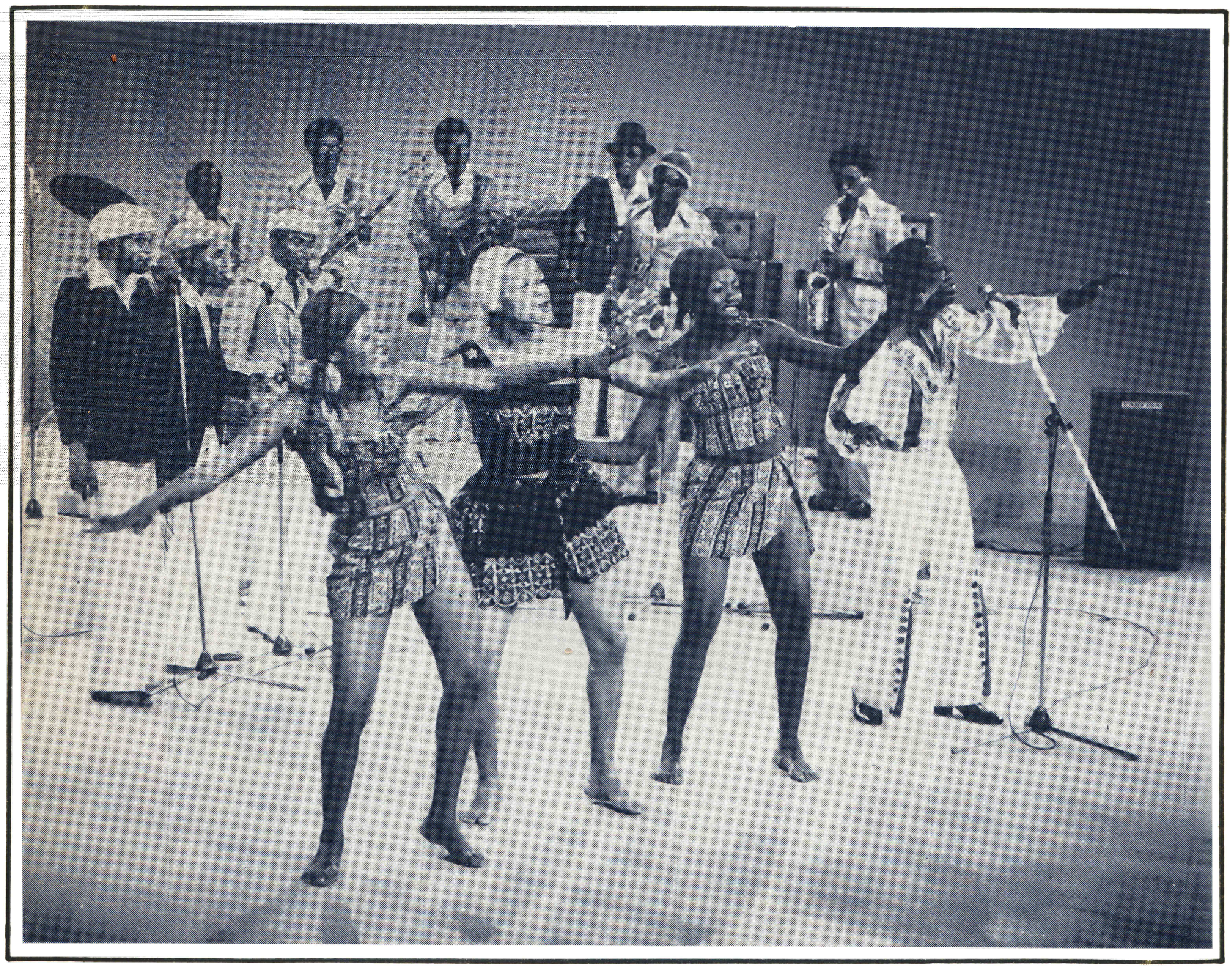
Tabu Ley and African Fiesta National, 1970 (Copyright – Analog Africa)
Various ‘Congo Funk! – Sound Madness From The Shores Of The Mighty Congo River (Kinshaha/Brazzaville 1969-1982)’ (Analog Africa)
A tale of two cities on opposites sides of the same river, the Congo, the latest excursion for the Analog Africa label celebrates and showcases an abundance of dynamite, soul and funk tracks from the two capitals of Kinshasa and Brazzaville.
The roots of both are entwined and yet very different. The mega city of Kinshasa only adopted its name during independence (but not without interference from its former brutal colonial masters Belgium, and also the West, and in more recent times, China) in the 1960s, a product of the “authenticity”, or “renativizing”, policies of Joseph Désiré Mobutu. The largest city and capital of the Democratic Republic of Congo – itself, renamed over centuries depending on who controlled it, but for a twenty-six year window between 1971 and 1997 known as Zaïre – the constantly expanding Kinshasa was founded in the late 19th century by Henry Morten Stanley, who was in the employ at the time of the Congo’s most disastrous barbaric ruler, Leopold II. Named in his honour, it stood for half a century or more as a hub for Belgium’s rape of the gargantuan central African country’s natural resources, minerals and people. Once free (only to a point) of European mastery its name was changed to reflect a hunger for authentic African heritage: named in fact after what was once a humble village on the same site.
On the northern side of the Congo River stands the capital of the Congo Republic, Brazzaville. It too was originally founded by a European, the Italian-born – but later granted French citizenship – explorer Pierre Savorgnan Brazza, who took it as a prize for the French Empire. The name stayed, but after greater independence this city became a thriving hive of activity for the burgeoning music scene: designated by UNESCO in 2013 as a “city of music” no less.
Circling back on its regional neighbor, Kinshasa became a seat of power for the dictatorship of Mobutu (the Belgium and US-backed usurper who took power after the assassination of the promising Black Nationalist, but Soviet-favored, Patrice Lumumba). Famously drawing a global audience in 1974, the world tuned into the legendary, iconic titanic grudge match between Ali and Foreman: aka the “rumble in the jungle”. Instigated by the boxing promoter and hustler Don King off the back of Ali’s full “motherland” endorsed conversion, Mobutu saw the potential in not only raising his own profile but that of his country by vouching for and putting on this great boxing spectacle in a revitalized Kinshasa.
History would later prove Mobutu to be a tyrant and thief, but for this shining moment of self-publicity the American stars of the fighting game and music/entertainment scenes were lured to the city. Seen in various documentaries since, but favouring the American stars of R&B, soul and funk – including the anointed godfather of soul himself, James Brown – the African artists and musicians that took part in a three-day festival of music around the main event included a rafter of local talent too. Competing to gain the spotlight, dominated by the likes of B.B. King, Bill Withers, The Pointer Sisters and The Fania Latin All Stars, were two of the Congo’s most famous icons: the bandleader, honed pioneer of an attacking repetitive guitar style that tore up the local dancefloors and airwaves, Francois “Franco” Luambo, and rival Pascal-Emmanuel Sinamoyi Tabu, aka Tabu Ley, the leading light of African rumba and one of the continent’s most influential artists. Franco fronted the TPOK Jazz troupe at that music extravaganza, a band with a lot of history: famous for their part in spreading Congolese rumba.
The event’s musical organizers, Hugh Masekela and Stewart Levine, gave Franco free reign as a creative guide, but it’s said that Tabu stole the show. It’s a convoluted backstory, but the band that Franco fronted, the TPOK, actually changed their name from the O.K. Jazz band a decade or more after forming in the mid 50s – even more confusing, you will see the name written down in various forms, sometimes with the abbreviated dots. Both this troupe and Tabu make appearances on this Congo Funk! showcase – the funk being only one part of a both dynamite electrifying and more riverside lilted set of Afro-rock, soul, R&B and more localized serenading sweetness. Tabu for his part, leading the Et L’ Orchestra Afrisa, moves to a forgiving soulful rumba-esque groove (Congolese rumba being a signature, often dominate, movement honed in the region by such luminaries as Tabu and the famous Verckys) on the sun-blazed horn serenaded and buzzing guitar licked ‘Adeito’. With their L’ Orchestre additional name, O.K. Jazz makes an appearance under the Lolo affixed title (I will readily admit I have not read the liner notes this time around, and so have no idea if this is an artists or just a reference to one of the villages in the area) on the funky raw Booker T/Stax steal ‘Lolo Soulfire’, and holding the full limelight, go for some “humph” and laughter on ‘Kiwita Kumunani’.
As with much of the collection’s roster, less established acts and groups outside the major label networks (many subsidiaries of Western labels) struggled at first to get heard or raise the prohibitive sums needed to record. The PR notes briefly describe what happened, but to fill the void, a number of pioneering entrepreneurs entered the market to levitate the costly process. The likes of smaller, more independent labels such as Cover No.1, Mondenge, Editions Moninga and Super Contact could take a punt on newly emerging younger artists; those who were influenced by the “rumble in the jungle” festival of sound, going on to cut their own hybrid versions of American soul and funk, of which this compilation is filled. Pumped out across the airwaves of Radio Brazzaville or beamed out by Télé-Zaïre and RTV du Zaïre – the TV shows of which were apparently so huge that the president ordered the latter to put out daily concerts because they were found to quell unrest and criminal activities during transmissions. Arriving at the opposite end of this compilations window, released in 1982, the opening salvo, ‘Sungu Lubuka’ by Petelo Vicka Et Son Nzazi, seems a likely candidate for this change. Sounding like the heralding horn section from a Dexys track and homage to Jackie Wilson and his peers, before slipping into a Latin-like groove, this track connects two worlds: as influenced by the Fania All Stars as it is by disco funk. It’s certainly a blazing start to a cracking collection, and obvious single choice. It’s followed by the Afro-rock and Kuti horns simmering ‘Mfuur Ma’ by the Groupe Minzoto Ya Zaïre; yet another single showstopper that seems to echo the Pazent Brothers and J.B.’s. And another worthy punchy tune, the closing ‘Ah! Congo’ by the Orchestre National Du Congo, proves the perfect, high energy R&B, bookend to a brilliant compilation.
Tracks like Les Bantous De La Capitale’s ‘Ngantsie Soul’ just roll on and on like a 12” disco mix; a funky but not erratic groove that pulls you in with a constantly fluid moving soul riff and clopping percussion. Next to that, Les Frères Soki Et L’ Orchestre Bella-Bella’s ‘Nganga’ shuffles and scuffles down the train tracks to a fit of horns in a workout that lasts nearly nine minutes.
Congo Funk in all its many variations is put under the spotlight, with an outstanding set list of fourteen tracks (whittled down from a container’s worth of singles) that will enthral and educate in equal measures. Essential dance floor fillers await.
Fran & Flora ‘Precious Collection’
(Hidden Notes) 12th April 2024
Arriving just months after Alex Roth’s new Cut The Sky project’s Esz Kodesz debut and Alison Cotton’s Engelchen, Fran & Flora release their own European Jewish culturally and historically inspired album. Addressing similar passages of loss and commemoration to the absence and tragedy of the Eastern and Central European branches of that community’s heritage, they also respond to its most joyous, strengthened traditions, transforming in a sophisticated, adroit and knowledgeable way the music of the Ashkenazi: otherwise known as “Klezmar”. And whilst those mentioned albums by Roth and Cotton channel different aspects of history – the former, covering the same Ashkenazi communities, but in Galicia, and the later, telling the story of the English Cook sisters who helped to save fleeing Jews from Germany during WWII -, the first overlaps this duo’s emotive and stirring story of lineage by overcoming tumultuous times to preserve a culture in a part of the continent that ruthlessly eradicated it’s identity and people.
For as Roth channeled past barbarity and conflict in what is now Ukraine for a harrowing and incredible abstract reaction, Francesca Ter-Berg and Flora Curzon (to give them their full names) also tread the same lands, but also across into Romania – as the album’s second track, the beautifully but moodyily and mysteriously described Eastern-European fairytale ‘Romanian Fantasies II’ makes abundantly clear (imagine the strings aspects of The Holy Mountain soundtrack meets Širom and Gypsy music, whilst a didgeridoo-like sound blows away).
I might be reading too much into it, but the duo’s Precious Collection suite closes with what, over time, has become a formal greeting in the Jewish community: “Sholem Aleichem”. Translating from Hebrew etymology to mean “[May] peace [be] upon you”, it was also the nom de plume of the famous Yiddish author and playwright Solomon Naumovich Rabinovich, whose stories of Tevye the Dairyman were the source for the Fiddler On The Roof musical. Born in the old Tsarist Russian conquered and subjected shtel of Voronkiv in what is now central Ukraine, Rabinovich experienced the pograms firsthand; escaping to the USA at one point, but in doing so promoted the often looked-down-upon Yiddish culture and language. Also, and not surprising when facing the marauding savagery and alienation of the Russian Empire’s genocidal actions, and the Anti-Semitism and ruinous policies of the Austro-Hungarian empire too, that he also advocated the return of his people to the Holy Land as a member of the Hovevai Zion (lovers of Zion) cause. Hounded out of his homeland when alive, a Putin era Russia erected a monument in his honour in Moscow, whilst Ukraine paid homage throughout its many cities and even issued stamps – ironically or not, many of those cities have been bombed relentlessly by Russia in the past two years. Whether this is a mere coincident or not, it’s a useful connection and part of the history of the region covered on this album; especially as the place where Klezmer was born or at least fashioned – that loose confederation of dance tunes, ritual melodies and “virtuosic improvisations” is made up of influences from the Jewish diaspora, from Ottoman Greece and Romania to the Germany and Slavic countries. The “Klei” part of that form means “tools, utensils or instruments of” and the “zemer” translates as “melody”, an assemblage if you like, of different musical threads but rooted in the faith. Klezmer was, and of course still is, played at weddings and other social functions, but more importantly it is a bond and hand-me-down language, poetry and litany of their heritage and story.
Drawing upon this legacy and knowledge the duo of cellist Fran and violinist Flora (both also cover the vocals and electronic elements) both interpret traditional material and compose new arrangements that simultaneously evoke classical music and the atmospheric, with echoes of folktronica, the avant-garde resonance and atonal essence of hidden metallic and instrumental sources and fantastical – imagine Walter Smetek conducting a Eastern European chamber ensemble. There’s even a removed hint of jazz and near breakbeat drums at one point, when they do get to sustain a rhythm. The drumming circle is courtesy of guests Ursula Russell (of Snapped Ankle and Alabaster DePlume fame) and Simon Roth (Chris Potter, Alice Zawadzki, Adrian Dunbar on his CV), plus, what the PR notes call, the appearance of a Ukrainian Poik style marching drum – my research has drawn a blank on this one I’m afraid.
Some pieces of music directly reference Jewish culture, history, with the stripped and plucked diaphanous but haunting ‘Nign’ a unique take on the traditional religious vocal song of the same name. Largely improvised, sung in groups, Bible verses or classical quotes from other Jewish texts are repeated to form what’s know as a “nign”. Sometimes a lamented prayer, and at other times out of joy or victorious, this contemporary vision sounds like beatific and ethereal sirens uttering assonant mystique and worry from behind a translucent covering. But the vibrations, melodies even amongst the most abstracted, near non-musical parts still carry, forming as they do, evocations of landscapes and time. Sympathetic and attentive at all times, the music encompasses wild playfulness and abandonment on the opening running freedom of ‘Nudity’, and nature’s call on the Caucuses imbued, choral lulled ‘Feygele – Little Bird’.
Woven at times like a tapestry, and at other times, near esoteric, the beatific merges with the plaintive, pleaded and mysterious, and folk music is effortlessly weaved with folk-rock, the experimental and the classical. Within that framework traditional dances and songs are wrapped up in a meticulously crafted otherworldly suite of experimental strings and minimalistic electronica. The Klezmer source material is held on to but transformed with a contemporary expansion of ideas and experimental composition, all of which flows lucidly and in a most stirring manner to create an exceptional album.
Herandu ‘Ocher Red’
(Hive Mind Records) 26th April 2024
A second release on the Hive Mind label to feature Misha Sultan, or rather the true face behind that guise, Mikhail Gavrilov, the Herandu debut is a new project and new sound for the Siberian artist and his brother Evgeny (who has his own alias of Dyad).
The siblings, caught between the Covid pandemic and invasion of Ukraine by Russia, put this latest vehicle in motion during trips back home to Siberia’s most populous city of Novosibirsk in 2022. The so-called “Chicago of Siberia”, Novosibirsk is situated on the banks of the Ob River, a crossing point of the romanticised and legendary Trans-Siberian Railway and historically an important flashpoint during the Russian civil war and engine of post-revolutionary Russian industry. Originally founded in 1893 and christened with the Tsarist Imperialist title of Novonikolayevsk after Emperor Nicholas II, the Communists gave it the current name of “New Siberia” in 1926. Geographically sitting between the Ural Mountains and Northern Asia, touching the Pacific in the East, Siberia isn’t just the infamous exiled atelier of record and literature but a beautifully diverse Eurasian landscape.
As on Mikhail’s Misha alias Roots album, released by Hive Mind back in the late Spring of 2022 (as it happens, that marvelous album also included a cameo from his brother, under his Dyad moniker), that famous industrial transport capital and its outlying regions are once more transduced via the soundboard and imagination to articulate and convey backdrop set moments of rumination, of particular captured interactions and moods, and an essence of place and time – the industrial set against the more plush shades of nature. Informing and inspiring a new direction, the label has described the brother’s collaboration as sounding like Metalheadz meets Weather Report; or to my ears, Plug plays around with the music of the Mahavishnu Orchestra using the production of 80s Miles Davis records whilst hauling in later 70s and 80s Herbie Hancock on cosmic ray beam keys and what sounds like a keytar.
Actually, with a mix of warmer sounding live instrumentation (from Stanley Clarke-light jazzy-funk slap and picked bass guitar and Greg Foat-esque electric-piano to pinning, floating and sizzled reedy saxophone – courtesy of friend and musician Vladimir Luchansky) and more programmed synthesized breakbeats, chops and atmospheres, the brothers branche out into all kinds of international genres, with evocations of the Caucasus, Tibet and both East and North Africa merging with photons and clap-drums. Jazz-fusion and world music hybrids from the Silk Road and Samarkand cross paths with Jimi Tenor, Amorphous Androgynous, Rip Rig & Panic, Transglobal Underground and The Pop Group. And yet that only goes so far in describing the subtle but cross-pollination of influences on show. The timpani bounds of ‘An Incident At The Theater’ play up the title’s stage drama, but soon break out into those Weather Report references, and the misty vaporous ‘Downtown Street’, heads off in the direction of both Hansa studio and later Outside period Bowie and 80s Scott Walker.
Trance is spun with bass noodling, Ethio-jazz, post-punk funk, Moroccan and Arabian cassette culture, retro space age keys, no wave dance music and the Aphex Twin to create an interesting explorative zap, skip, playful, mysterious and dreamy vision that mirrors the brothers feelings of their native landscape, and the episodes of life, the shaping of their creativity, born in that setting.
Kira McSpice ‘The Compartmentalization Of Decay’
12th April 2024
Nature’s compartmentalized reactions to injury and decay (via the studied description laid down by the pathologist and biologist Alex L. Shigo) are drawn upon, referenced and used as a metaphor for Kira McSpice’s own coping mechanisms; the American singer-songwriter and musician dealing with trauma by channeling both desirable and undesirable energy into working through the darkest, most fearful physical and mental strains of painful morose.
Almost like therapy, although bad dreams plagued McSpice throughout the writing process, the troubled chanteuse of the self-coined “freak folk” sound faces blow after blow of gothic lament and harrowing despair. And yet there is a beauty too, with passages of the near ethereal, beatific and afflatus ebbing over chthonian mourning and distress. In fact, the suffused nocturnal atmospherics, whilst hiding allegorical esoteric nightmares and spirits, are like a strange fairytale set filled by operatic and theatrical characters and life.
It’s the voice that draws you into that visionary world however; an apparitional-like calling, lulling, assonating and hurting vocal that soars past the contralto-bass to reach near aria like heights. With an obvious keenness and deep knowledge of the craft, McSpice artfully constructs inter-layered choral circles and marooned, mournful and cut-to-the-marrow pained releases, which as the album progresses gradually seem to find the gauzy light – ‘Photosynthesis’ facing that light source and growing in a somnolent fashion sounds almost like a daydreaming Mazzy Star. The welling and plaintive, sometimes struggling, voiced woes and pathos is enveloped with heightened atmospherics, suffused and smothered hazy horns (what sounds like a tuba, but also oboe, clarinet and maybe a saxophone of a sort), a Goth acoustic air of All About Eve, and Tilt-period Scott Walker eerie, stark and heart of darkness style electric guitar. All of which has a very distinct sound: pitched somewhere between haunted chamber music, the operatic and baroque and obscure, hermetic prog-folk. Slowly removing a metaphorical armour. McSpice arises from the symbolic mists and fogs to forge a shaken, knocked but hard-won identity. The rooms and spaces maybe dark, but through McSpice’s cleverly poised and escalating vocal chills and more beautifully heartbreaking, fraught processes there is a clearing of the miasma and the promise of a reprieve. Nothing short of an extraordinary album.
Pando Pando ‘S-T’
(Not Applicable) 12th April 2024
With enviable experience and CVs with incredible depth and variation, all three participants in the Pando Pando project tantalize with the prospects of their experimental explorations. The names of trumpeter, electronic musician, engineer and producer Alex Bonney (performing with Leverton Fox, Scarla O’ Horror, Brass Mask, the list goes on), drummer and percussionist Jem Doultan (played in Róisín Murphy’s band for seven years, drummed in The Thruston Moore Group and is one part of the Too Many Things duo) and fellow drummer/percussionist Will Glaser (a stalwart of the UK jazz scene, teacher and foil for an impressive roster of bands and artists including Soweto Kinch, Kit Downes, Yazz Ahmed and Sly And The Family Drone) will be familiar to many on the contemporary improvisational scene.
All three crossed paths through the New River Studios arts space in London, forming a trio off the back of a series of improvised gigs in the capital. In partially describing their evolution and process they’ve named themselves after one of the natural world’s largest single living connective organisms, or in its scientific terminology, “a clonal organism that represents an individual male quaking aspen that spans 106 acres and is the largest tree by weight and by landmass.” This breathing, living behemoth of plant life is, in case you were interested, located in the District of Fishlake National Forest, between Colorado and South-Central Utah.
Growing in a quasi-organic abstract fashion, the drum and percussion heavy avant-garde movements and stirrings on the trio’s debut album take electroacoustic probes, prods and tumultuous splashes into the depths as a foundation to build otherworldly atmospheric workouts, prowls and freeform breakouts. Recognizable instruments and electronic elements, effects are used to evoke the most unusual and sometimes esoteric. An assemblage of trinkets, bells, finger cymbals, metallic textures, pots and pans and tubular scaffolding are used alongside the drum kit to evoke the influence of such luminaries of the form as the Art Ensemble Of Chicago (mentioned in the PR notes that accompanied this release), but to my ears, also the E.F.S experiment extractions from Can’s Limited/Unlimited LPs, Valentina Magaletti, Krononaut, Mani Neumeier and, on the weird d’n’b veiled clanged and distorted ‘Fluffy Wires’ like Matthewdavid warping a samba band of drummers. However, the peculiarly named ‘Eno’s Bathroom’ is not what I would imagine the ambient doyen’s bathroom to sound like at all; less scented candles, sandalwood and eco-friendly, fair trade handmade soap and more krautrock and ghost freighter Tibetan lurking mind-bended weirdness.
Titles, like much of the music, is on the disturbing side with references to marine deaths (the windbreaker flapping prowl into the ocean abysses ‘The Graveyard Of Sharks’ and incipient sonar signaled, dub-y ricochet thrash around in marooned waters ‘Dolphin Suicide’) and blamed birds (the final wing-flapped primordial squelch, and mystical gongs, bowls and tool brushed and sifted ‘It Must Have Been The Magpies’ –our common English garden visitor has a bad rep for a variety of things, from the old adage about bad luck to stealing anything that glitters, and for savagely protecting its nests).
An evolving organism of their own making, breaking out of, growing and expanding the perimeters of improvised electroacoustic experimentation, the Pando Pando trio make unsettling tones and sounds, rhythms and serialism for ecologically climatic times.
Audio Obscura ‘Acid Field Recordings In Dub’
(Subexotic Records) 26th April 2024

Drifting in and out of post-op drug-induced recuperation, Neil Stringfellow (aka Audio Obscura) laces his dreamscapes and stupors with signature 303 acid squelches and dial releases, frequencies, snatches of broadcasts and bubbled liquids; much of which is transformed or made out of the archive of sounds he’s built up over the last twelve years, from a recurring flock of chirping birdlife to the innocuous, taken for granted and missed, sounds of the streets outside and daily interactions between, in this case, hidden sources of dialogue and conversation, even child’s play.
Take all that and expand the mystery, the unease and esoteric with a wafted reverberation and echo of dub and you have a real hallucinogenic experience, the ebbing of the consciousness between passages of the recognizable and distorted. That roosting menagerie of birds that Neil could hear from his hospital bedside, out of the window on one humid day in 2022, now resembles the acid-dial-turns of Mike Dred, a street cleaner’s broom, banging against his cart as he wheelbarrows it down a hill in Norwich, suddenly mimics a dub snare drum when added with plenty of On-U Sound echo.
The gravity fields, cartography, the memorable (through a soporific haze of painkillers) passages of a day and the unidentified coastline take on otherworldly dimensions through this mirage-inducing lens as elements of Air Liquide, The Orb, Amorphous Androgynous, Cousin Silas And The Glove Of Bones, FSOL, Andrew Wasylak and Cabaret Voltaire pass through – the latter is unsurprising, and not for the obvious reasons that CV are just one of the all-time most influential and inspired electronic groups of all time but because the Cabaret’s Chris Watson hosted a field recording introductory week that Neil attended.
Field recording adventures in sound, under the dreaded sirens of a nuclear winter and apocalyptic distress, this album is a lucid acid wash of near-remembered haunted piano melodies, various sonic yips and yeeps, bulb-shaped notes, recalled melodica, lost transmissions half-heard, radioactive effects, the atonal and prowling. Paranoia meets the languorous and medicated on a productive experiment in acid-dub and sound art.
Khôra ‘Gestures Of Perception’
(Marionette) 19th April 2024
Ambitious in scope and influence, Matthew Ramolo’s Plato-coined Khôra vessel overlaps the afflatus with the mythological, hermetic and philosophical across a double-album spread of peregrinations, processions and transcendental mysticism. References abound from opened seals, with nods to branches of Buddhism, astronomy, the Hellenic, Tibetan, Heliopolis and atavistic: all the way back to the creation myth. Literally from the ground up (the Dzogchen concept of “rigpa”, which subscribes the qualities of purity, spontaneity and compassion to the primordial ground), Ramolo, using an apparatus of international instrumentation, drums-up simultaneous visions of the new age and alien. Name checking the Latinized, the Orient and spiritual Asia in its many forms, but also cosmic projecting, the alchemy at play on this opus vibrates with evocations of ksmische, Jon Hassell’s “fourth world musics” explorations, trance, magnetic electronics, courtly and ceremonial.
The central sounds are percussive in nature; from those Tibetan stirrings of bowls, tubular bells, wind chimes and movements that sound like the turning of a mani wheel, to claves, what sounds like stones, a scaffold of pans and tubes, and frame, hand and other more rhythmic drums. Other elements include electronic vapours and waves, the springy and plucked, divine radio and satellite transmissions, occasional bellowed wafts and bulb shaped notes of light. Yogi talks to, well…the world, as nirvana is opened to all on this trip of dial up meditations, explorations and mysterious off-world atmospherics. The echoes of Syrinx, Kalacakra, Bhajan Bhoy, Ariel Kalma, A.R. & Machines, Sergius Golowin and Iasos wrap themselves around an epic suite of spiritual and mystical excursions in the pursuit of navigating a formless, third way through new envisaged worlds: or something like that. Eastern spiritual music is often abstracted in this world, merged with hidden sources to produce something familiar yet a bit different.
Esbe ‘La Serenissima’
(New Cat Music)
Inhabiting each world she enters as if it were a past life, another reincarnation, the gifted singer-songwriter Esbe steps right out of the times, the locations and scenery as if she was born to it. From atavistic Egyptology to classic songbook reinterpretations, from across the ages and genres, Esbe seems to belong to whatever setting she channels.
Proving consistent in every endeavor and prolific, she now releases her ninth album of magical revue; once more interpreting the old, but also conjuring up original compositions and arrangements that congruously feel like part of the traditional cannon. Sweeping into the city of duality, Venice, or rather the 17th century anointed “La Serenissima” as it was once known, Esbe channels its famous history, literature, art and architecture; from a secret rendezvous on a canal bridge to masked balls, painted scenes from the late Renaissance and cinematic sweeps that move like the tidal currents out of the city and carry on towards the exotic and cosmopolitan hubs of this city-state’s once expansive empire of trading routes. I say duality, because this is both the city of love and center of much political and stately intrigue during the Medieval period, when what we now know as a unified Italian geography was split into various warring and competing Papal states; the port cities being amongst the strongest, carrying more weight with their navies and trading fleets, able to negotiate or bring in allies from abroad to support their claims of dominance.
Mentioned as an inspiration, Shakespeare’s The Merchant Of Venice – or rather its most famed locations within the city – throws up all kinds of Anti-Semitic stereotypes; the city’s Jewish ghetto appalled a conquering Napoléon centuries later: commanding the French forces that occupied Venice in 1797, the as yet to be emperor would famously end the ghetto’s separation from the rest of the city, removing barriers and renaming it the Contrada dell’unione. But Esbe is tapping into the city’s mystery, its art and majesty, whilst casting yearns outbound from the harbor to old trading routes in the Med and further abroad: see the heart-wrenching, diaphanous soaring operatic ‘Palazzo’, a Thomas Newman modern Bond-esque filmic score that evokes Istanbul, passionately sung in the Turkish language.
The very embodiment of a certain style of Venetian art, Canaletto’s iconic (though many disparage it as mere chocolate box art) cityscape dioramas are referenced within the PR briefing; a inspiration, jump off point for magical lyrical and musical painting and storytelling imagination. Almost a feature of a certain time back in England, my late grandfather like many of his generation, had a print on the wall – of Italian decent himself, his one and only actual visit to the homeland was as part of the Allied forces making their way up through Italy to capture Rome during WWII, and even then, he never managed to get to Venice. You can now imagine Esbe, one hand trailing in the canal waters or “sighing” over a romantic set bridge gazing at the light play on the surrounding architecture; dreamily envisioning a bygone time as she sings and coos about imagined liaisons, and characters that could have walked straight off a Medieval tapestry.
As with most of her work, Esbe balances the atavistic and traditional with more modern electronic vapours and wisps of the esoteric, haunting and spellbinding. Sounding somewhere between Dead Can Dance, Maria Callas, the Baroque, folk and Arabian, she can turn a foggy apparitional mystique into an aria, an expelled breath into a whole act, or story. Her most obvious talent is with that already described voice, which is as dramatic and theatrical as it is ethereal and subtle; delivering a suspenseful Latinized lulled and desired vocal on the Catholic regal service ‘Te Amo’ – luring us towards a steeped in mystery and serious alter -, and lending a near dreamy tidal pulled entranced performance on the romantic vision ‘Amarilli, Mia Bella’ – a reinterpretation of Giulio Caccini’s operatic love song, written for the 1602 Le Nuove Musiche collection of monodies and songs for solo voice and basso continuo.
Classical styles feature heavily, but are veiled or gauzily enveloped to sound more haunting, atmospheric and even like a mirage in some cases. Throughout it all the instrumentation, from chamber to synths, guitars and the sound of bubbling waters, are artfully suggestive and stirring; scoring the drama, downcast lament of a returning army from one of the Papal wars, or in emoting misty-eyed overtures to mysterious subjects.
Esbe once again breathes life into her surroundings, this time around playing with and choreographing an inspired songbook of Venetian evocations; absorbing the lagoon and canals of this impressive, iconic city and its forbearers to envision something that’s simultaneously magical and hauntingly surreal.
Hi, my name is Dominic Valvona and I’m the Founder of the music/culture blog monolithcocktail.com For the last ten years I’ve featured and supported music, musicians and labels we love across genres from around the world that we think you’ll want to know about. No content on the site is paid for or sponsored and we only feature artists we have genuine respect for /love. If you enjoy our reviews (and we often write long, thoughtful ones), found a new artist you admire or if we have featured you or artists you represent and would like to buy us a coffee at https://ko-fi.com/monolithcocktail to say cheers for spreading the word, then that would be much appreciated.
Monthly Playlist Revue: March 2024
March 28, 2024
ALL THE CHOICE MUSIC FROM THE LAST MONTH

From the discombobulated and sublime to the sound of AI in the death throes of a nervous breakdown, all tastes are covered, all borders breached on the Monthly Revue: Our chance to compile the best representation of the last month’s choice music, with tracks from both reviews and those we didn’t get time to feature but piqued our interest. Those picks come from myself, Dominic Valvona, plus Matt Oliver, Brian ‘Bordello’ Shea and Graham Domain.
Without further ado, here’s the link and full track list:::
Augusto Martelli & The Real McCoy ‘Calories’
Avalanche Kaito ‘Tanvusse’
Amateur Cult ‘Eyes’
Ill Considered ‘Linus With The Sick Burn’
Rosie Tee ‘Night Creature’
Circe ‘Blue Love’
Diamanda Galas ‘A Soul That’s Been Abused (Live)’
Madison McFerrin ‘God Herself (Tune-Yards Remix)’
Laetitia Sadier ‘Une Autre Attente’
Mark Trecka ‘New Dreaming Gestures’
Curling ‘Hi-Elixir’
NAH ‘People Lie And Suck’
Blu & Shafiq Husayn Ft. MED/THurz/YaH-Ra ‘We Bang’
Pastense & Uncommon Nasa ‘The Ills’
Cookin Soul/The Musalini/Tha God Fahim ’92 Olympics’
Ethnic Heritage Ensemble ‘Hang Tuff’
Mark E Moon ‘Daylight’
Renelle 893 & Bay29 ‘Art Thief’
Leaf Dog ‘Till I’m Clocking Out’
Dave Harrington/Max Jaffe/Patrick Shiroishi ‘Dance Of The White Shadow And Golden Kite’
Twin Coast ‘to feel (Donkey Basketball Remix)’
Cumsleg Borenil ‘exis-ANENCE-sixe, Exis Constraint’
Colin Johnco ‘L’air qui danse’
Lou Lyne & The Blue Almond Project ‘Saudade Tactia’
Luce Mawdsley ‘Latex Feather’
Charlie Risso ‘Good Track’
NCD Instigators ‘Shark Attack’
Felix Machtelinclx ‘Buwigabuwi’
Sinerider ‘Glowing’
Jonah Parzen-Johnson ‘What They Love’
Arushi Jain ‘You Are Irresistible’
Leonidas & Hobbes ‘Space Raga’
Regulat Henry (Moses Rockwell & Plain Old Mike) Ft. Dezmatic ‘Pedal Boat’
Homeboy Sandman ‘Do It Right’
Jynx716 & Che Noir ‘Second Impression’
Omniscence Ft. Toz Torcha ‘Stage Presence’
Mega Ran & Jermiside ‘Drop’
ZA! & Perrate ‘Steve Kahn’
Christian Wittman ‘Birth And Death Of An Unknown Star’
Andrew Heath & Mi Cosa de Resistance ‘Until We Meet Again’
Society Of The Silver Cross ‘Wife of the Sea – Temple Hymns Vol 1’
group O ‘ThickO/not thee brightest spark in ur Fukushima plant (37.3920666, 141.0749483)’
Alison Cotton ‘Crepuscule’
The Monthly Playlist Revue: February 2024
February 29, 2024
ALL THE CHOICE MUSIC FROM THE LAST MONTH

Let’s keep this short and get straight to the action, with the musical journey we’ve created for you. From the Monolith Cocktail TEAM (that’s me, Dominic Valvona, plus Matt Oliver and Brian Bordello Shea) all the choice music from February on one exceptional, eclectic playlist.
:::TRACKLIST:::
Bab L’ Bluz ‘Imazighen’
Liraz ‘Bia Bia – Reeperbahn Festival Collide Session’
Trio Rosario ‘Cuande Me Muera’
Masta Ace & Marco Polo ‘Certified’
Your Old Droog w/ Roman Streetz ‘Northface With The ACGs’
clipping. ‘Tipsy’
Bostjan Simon ‘Bebey’
Vatannar & G.A.M.S. ‘Aminat Pt. 4’
Will C. ‘Colossal Pound Cake Break’
Yamin Semali ‘Boo Boo The Fool’
Juga-Naut ‘Shampain’
Revival Season ‘Chop’
Willie Evans Jr. ‘Bargaining’
Nowaah The Flood & Giallo Point ‘No Speculation’
Black Milk ‘In The Sky’
mui zyu ‘The Mould’
Ariel Kalma, Jeremiah Chiu and Marta Sofia Honer ‘Stay Centered’
OdNu + Umlaut ‘Kaizen’
Louis Carnell & Wu-Lu ‘Eight’
Madeleine Cocolas ‘Bodies II’
Otis Sandsjo ‘OOMY’
David Liebe Hart & Jason The Cat ‘I Believe In The Unknown’
Kahil El’Zabar’s Ethnic Heritage Ensemble ‘Open Me’
Confucius MC, Pitch 92 & Jehst ‘Days Hours Minutes’
Dr. Syntax & Gotcha ‘The Urge’
Sly Moon ‘Aces Baby’
Reef The Lost Cauze ‘Umar’s Revenge’
Renelle 893 & Bay29 ‘Art Thief’
Kingmakers Of Oakland ‘Too Long’
Kemastry, Jazz T & Ramson Badbonez ‘Apocalyptic Flows’
Dyr Faser ‘Bronze’
Ryann Gonsalves ‘Lost & Found’
Oliver Birch ‘On Our Hill’
BMX Bandits ‘Time To Get Away’
DAAY ‘Follower’
Maria Arnqvist ‘Rubies And Gold’
The Children’s Hour ‘Dance With Me’
The Pheromoans ‘Faith In The Future’
Boeckner ‘Euphoria’
epic45 ‘Be Nowwhere’
James jonathan Clancy ‘Black & White’
Flowertown ‘The Ring’
twin coast ‘Forget To Know’
The Legless Crabs ‘Stuckist Manifestos In The Western World’
The Deli, Moka Only & Baptiste Hayden ‘Fivefourthreetwoone’
Ol’ Burger Beats ‘For The Family FT. Awon’
Da Flyy Hooligan, D-Styles ‘Gallery Oasis’
Spectacular Diagnostics ‘1000 Heartbeats’
Our Daily Bread 611: Interview With Forest Swords
February 16, 2024
MIKEY MCDONALD SITS DOWN WITH THE FACE BEHIND THE FOREST SWORDS NOM DE PLUME, MATTHEW BARNES
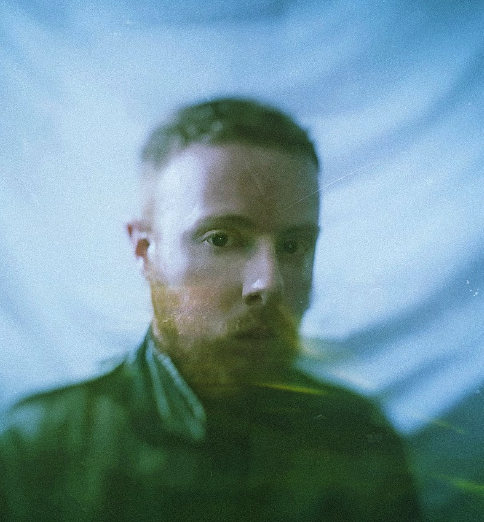
In today’s exclusive interview on The Monolith Cocktail, Mikey McDonald sits down with one of UK’s most talented electronic musicians Matthew Barnes AKA Forest Swords. Barnes hails from Liverpool and has been releasing music under the Forest Swords moniker for over a decade.
They discuss the recent release of his third studio album titled Bolted as well as what the artist has been up to and future plans.
MM. Hi Matthew. Thanks for taking the time to chat, I really appreciate it. First thing is first, congrats on the new album. A mere six years have passed since your last full-length release. Why don’t you start by telling us a little bit about what you’ve been up to in this time?
FS. Mostly concentrating on scoring work. I was lucky to be asked to do a bunch of different stuff across video games, dance and art installations over the past few years and it took up a lot of my time, so it didn’t feel right to try and balance it with starting an album. I’ve learned to listen to those sorts of gut instincts over time.
MM. Obviously Bolted has already received a lot of critical acclaim. Is that something you pay attention to, critic reviews?
FS. I don’t read any reviews, the most I’ll see is maybe just one-line quotes that get put on a press release or whatever. I see some feedback on things like my social media profile but it’s not something I want to be glued to. It’s really bad for anyone’s mental health to be checking in so much with that sort of thing, and I learned pretty early on that it wasn’t good or productive for me to engage with it. I’m really happy and grateful if people connect with anything I make though.
MM. From what I gather you’ve set up your own studio now in a former munitions (military weapons) factory in Liverpool. It was quite interesting to read that as part of your creative process you were visualising what oil spilling might sound like and became interested in things like metal and steel. These are very physical, inanimate things which we wouldn’t normally associate with sound. Working in a space with such history, did that inspiration come about naturally or did you have a particular vision before setting foot in the studio?
FS. I went to a Factory Records exhibition when one of the lockdowns lifted and I decided I really wanted some sort of warehouse or factory space, just to see what kind of things I could cook up in it, and because there’s still a few of these spaces left in Liverpool and they haven’t been gentrified out yet, unlike other cities. It was only really once I got in the space that the feel of the building and the architecture of it started to seep into the sounds I was making and the visual world I was trying to make.
MM. A lot was made about the fact Engravings was mixed outdoors and the impact this had on the record. Engravings has a woodlands feel to it and just listening you can practically hear the tracks leaching out of the soil…I guess the word I’m looking for here is organic. How did the mixing process go this time round? Do you find yourself constantly chopping and changing things in striving for perfection, or is that just it – can striving for perfection be a dangerous thing?
FS. I think like most creative things you just get a sense of when to stop. There’s a point with music, in particular, when you can tinker with something for so long that it loses all sense of excitement, and you also personally lose all objectivity over it. I’ve made enough tracks that I know when that point is before it falls over a cliff, so I’m fairly self-disciplined at stopping. Bolted I mostly mixed while I was going along, so it came out fairly fully formed at the end.
MM. I’m curious as to how you arrived at the album title?
FS. The studio space has these big metal doors I had to unlock every day with deadbolts. It became a sort of visual representation for me of creating the album, and sums up a lot of the sound world on the record too. I was struggling with a broken limb and other stuff while I was making it too so the idea of calling it ‘Bolted’, as in someone running away from something, became kind of bleakly absurd to me.
MM. Did you bother running any of the new tracks through your old four-track tape recorder, just for that extra bit of warmth and texture?
FS. Lots of it went through tape, most of the beats on it. A lot of the rhythms are quite heavy and came back through really blown out. Many of the synth sounds were put through it as well, and even mid-song I’ll switch between the digital version and tape version of a melody or beat. It’s a really hands on and easy way for me to get some texture and artefacts without running it through digital plugins.
MM. Let’s talk about one of my favourite cuts Line Gone Cold. The progression on this one is wild. I don’t know why but I feel like I’m being consumed by a blazing fire when listening to this, then we’re hit with some signature Forest Swords vocal passages. The strings are also a nice surprise, sort of devastating. On this track you sample the late Lee ‘Scratch’ Perry, almost a full decade on after he remixed the otherworldly Thor’s Stone. Was this a case of returning the favour? Cool to think his legacy will live on in your music.
FS. Lee and I had always circled each other but I never met him in person. He was very gracious to do that Thor’s Stone remix and I knew I really wanted him on this record. I’d had this voice note from him for a while and it just seemed to fit right at the end of Line Gone Cold, which was always going to be the last on the track-listing because it felt like quite a finite song somehow. As soon as I put him on there it felt like it immediately crystallised into something more powerful and he kind of completed it for me.
MM. Probably a question you get a lot, but I must ask, what is your desert island synth?
FS. It’s not really a synth but I would want the Electron Octatrack. It’s so unique, frustrating and I also couldn’t live without it.
MM. Any releases you’ve been digging from this past year, electronic or otherwise?
FS. I like Holy Tongue who do dubby live jams, and I’ve rediscovered Seefeel from the 90s who are one of the only bands right now that soothe my brain when I’m feeling frazzled.
MM. Churches or power plants?
FS. A church inside a power plant, ideally.
MM. You’ve been doing this for a while now whilst dabbling in some scoring and side projects. What does the future look like for Forest Swords?
FS. I’ve got a couple of scoring things lined up for this spring and then I’m also chipping away at a new album that will appear at some point. Bolted was personally quite a difficult time for me and so I want to make a record while I’m in a good place. I’m just keen to keep learning and making work in whatever form that comes in.
MM. Well, it’s been a pleasure. Thanks again for chatting and all the very best for the next album and in the future!
Keep up-to-date with Forest Swords releases via the official website.
Or visit the bandcamp page.
The Perusal #52: Meril Wubslin, Maria Arnqvist, Ghost, Otis Sandsjö…
February 13, 2024
A WORLD OF DISCOVERIES REVIEWED BY DOMINIC VALVONA
(Unless stated otherwise, all releases are available now)

Maria Arnqvist ‘Mary Rose And The Purple Quintet’
(Sing A Song Fighter)
An incredible, adventurous concept (of a sort) album from the Swedish multi-instrumentalist and composer that not only showcases a breadth of ideas but also draws upon a wealth of worldly musical escapes and travels, Mary Rose And The Purple Quintet! is an ambitious statement.
One half of the self-professed “voodoo punk, art rock and psychedelic” Swedish duo Siri Karlsson, Maria Arnqvist weaves and sows the seeds for her own solo idiosyncratic fantasy on this character-driven songbook of piano-led or prompted quality vocalized and instrumental evocations.
Classically trained on the ivories, the source of this album’s deeply felt, keen and artfully beautiful material springs forth or subtly flows with an ever-moving cascade; a torrent; a disturbed pool or undulation of waves. Arnqvist proves highly talented in this regard; a near maestro of the instrument in fact, with certainly familiar echoes of what has come before – everything from the obvious classical strains and accentuated touches to the avant-garde of the name-checked Philip Glass and feels of quintessential balladry – but made a new when effortlessly merged with such instruments as the West African kora, an air of the folkloric and strange. Sousou Cissoko plays that kora incidentally, spindled melodically and woven beautifully – it reminded a little of the harpist Catrin Finch’s collaborative partnership with Seckou Keita.
There’s also a sort of Flyodian-progressive and Afro-jazz throaty and more float-y saxophone on a couple of songs. Add chamber-like and dramatic symphonic strings to that soundtrack – every track on this album could be a score in itself – and you have something very special and different and (that word again) worldly: at least transportive. You’ll be unsurprised to learn that Arnqvist has traveled abroad a lot, with stays absorbing the local sounds of instruments in Ouagadougou in Burkino Faso, and Boston in the States. When pulled together the results are both sophisticated and playful; the mood and balance shifting between the oddball theater of late 19th century barrel organ stoked Wild Western saloon japes and shoreline yearned morning choruses to the elements. In fact, this could be an alternative Western, with the unsympathetic roasting sun shimmers and hoofed giddy-up momentum of ‘I Caught You Runnin’ evoking some kind of amalgamation of David Carradine’s Kung Fu, the Mongolian song of Namger, and Sakamoto’s piano – a pursuit across a mirage salt plains perhaps?
At other times the mood is more folksy-classical; although the enchanting opener (a sort of overview overture) seems to reflect a restless spirit, spinning between timeless tones, West African dances and the drama of Mick Harvey’s more stirring sober scores.
The vocals are sung in English when recognizable, as Arnqvist also lyrically and with a melodious air also just swoons or coos the tune, thoughts and descriptive vowels. And the lyrics build up a poetic picture of dramas, emotional ties, scenery and acts, whilst never really making anything explicit as such. Natural elements are left to speak, as Mary Rose and that Purple Quintet meander, fluctuate up and down the scales, quiver and ride the tumultuous softened waves of this loose story.
An enchanting and softening restless spirit is at work on this astonishing, well-thought out and enacted solo turn from the Swedish talent; an album that will gently unfurl its magic and depth over repeated plays and time: and for that, will only get better on each listen.
Lothar Ohlmeier, Rudi Fischerlehner & Isambard Khroustaliov ‘In The Glooming’
(Non-Applicable) 16th February 2024

From the perceptive, intuitive and often haywire minds of the applauded Lothar Ohlmeier, Rudi Fischerlehner and Isambard Khroustaliov (the nom de plume of one Sam Britton) trio, another exploration into the probed parts of the grouping’s psyche, art forms, inquiry and mischief-making. Thematically wise however, this is latest experiment at the edges of electroacoustic serialism and free-roaming is about the trio’s friendship, perseverance, trust and handle on being human: in a world of ever encroaching technological takeover I’d suggest.
Drawing on their myriad of respectable experience over the decades, with Ohlmeier bringing along his bass clarinet (a pretty deft and extraordinary saxophonist too), Fischerlehner on drums and percussive elements, and Khroustaliov rewiring his electronic apparatus, all three participants pull from the “gloaming” (an expressive word taken from Irish lexicon that describes the “twilight”) a strange sound world and performance of avant-garde jazz, Fortean supernaturalism, the alien, odd and indefinable,
Recorded over in the former Cold War walled East Berlin – make what you will of that location -, melodious, almost at times sweetened and floated, clarinet wafts and occasionally strains amongst the clicks, reversals, signals and oscillations of circuitry and transmogrified data language. All the while sifted, brushed, hinged and more bell shaken percussive instruments often amorphously find a rhythm, a hit or timpani roll in the vagueness of an idea and direction. Unsettled and yet never really hostile, totally maniacal or mad, this is a world in which ECM, Sam Newsome, Roscoe Mitchell, The Art Ensemble Of Chicago and Eric Dolphy merge with Walter Smetek (I’m thinking of his 1974 Smetek LP especially), Valentina Magaletti, Affenstunde Popol Vuh, Angelo Bignamini and Lea Bertucci. A track like the tracing of time, weirdly tweaked and near whistled ‘End Zone’ sounds positively sci-fi and a little ominous. Whilst, the classical unhinged toy workshop combination of elements on ‘Violet Weeds’ sounds like Prokofiev conducting Autuchre for a performance of Brian Aldiss’ Hothouse. And ‘Pixel Head’ re-engineers the matrix for an odd futuristic charge of static and cable disarray. Sharing is caring as they say, and this trio seems to deeply feel that connection and intuitive spirit of freedom in creating something challenging, but also in those very special interactive moments: moments inspired in a manner by that twilight hour between the dark and light. A curious, wild and untethered yet professionally made work that defies boundaries.
Meril Wubslin ‘Faire Cą’
(Bongo Joe Records) 1st March 2024

Taking their Mitteleuropa mummers vision on the trail to, of all places, Lewisham in southeast London, and the studio of Kwake Bass, the Meril Wubslin trio cast more hallucinatory hypnotic rhythms in new surroundings without leaving that signature mysterious dimension that hovers between French-speaking Lausanne and Brussels.
Bass (or to give him his full due and title, Giles Kwakeulati King-Ashong) has worked with a myriad of influential and explorative figures over the years (from MF Doom and Roots Manuva to Lianne La Havas and Kate Tempest), so carries more than a touch of class and cache of ingenuity and talent. And yet far from changing the sound, based a lot on repetitive rustic nylon-stringed-like guitar rhythms and both scrappy and dreamy spelled percussion, the producer has continued to aid in magic-ing up a strange rural mysterious combination of Rufus Zuphall, These New Puritans, The Knife, Goat, Holydrug Couple and Die Wilde Jagd.
When the dual male and female vocals – shared and in a strange harmonic symmetry – mistily arise from the mystique and often dreamy-realism of humming motored esoteric vapours and woozy oscillations, they evoke a very removed version of Chanson with Sister Dominique and the pagan song of Summerisle. In fact, there’s a quite a lot of esoteric and folksy-like references sound wise, from the processional to tribal. And a cross-timeline of influences that stretch back into the Medieval. On occasion those hypnotic rhythms and percussive scrapes conjure up Gnawa trance, or the herding of goats in the mountains during older, simpler, primal times. And yet, there’s also a semblance of the Blues, of Dirt Music, to be found amongst the glassy bobbled vibraphone wobbles, trippy drum breaks, pastoral drug lingers, vague visitations from another dimension, UFOs and surreal echoes.
A diaphanous and occult balance of the rural and otherworldly, of enchantment and suffused otherness, Faire Cą is yet another promising statement of headiness and entrancing spells from the trio.
Ghost ‘S-T’, ‘Second Time Around’ and ‘Temple Stone’
(Drag City Records)
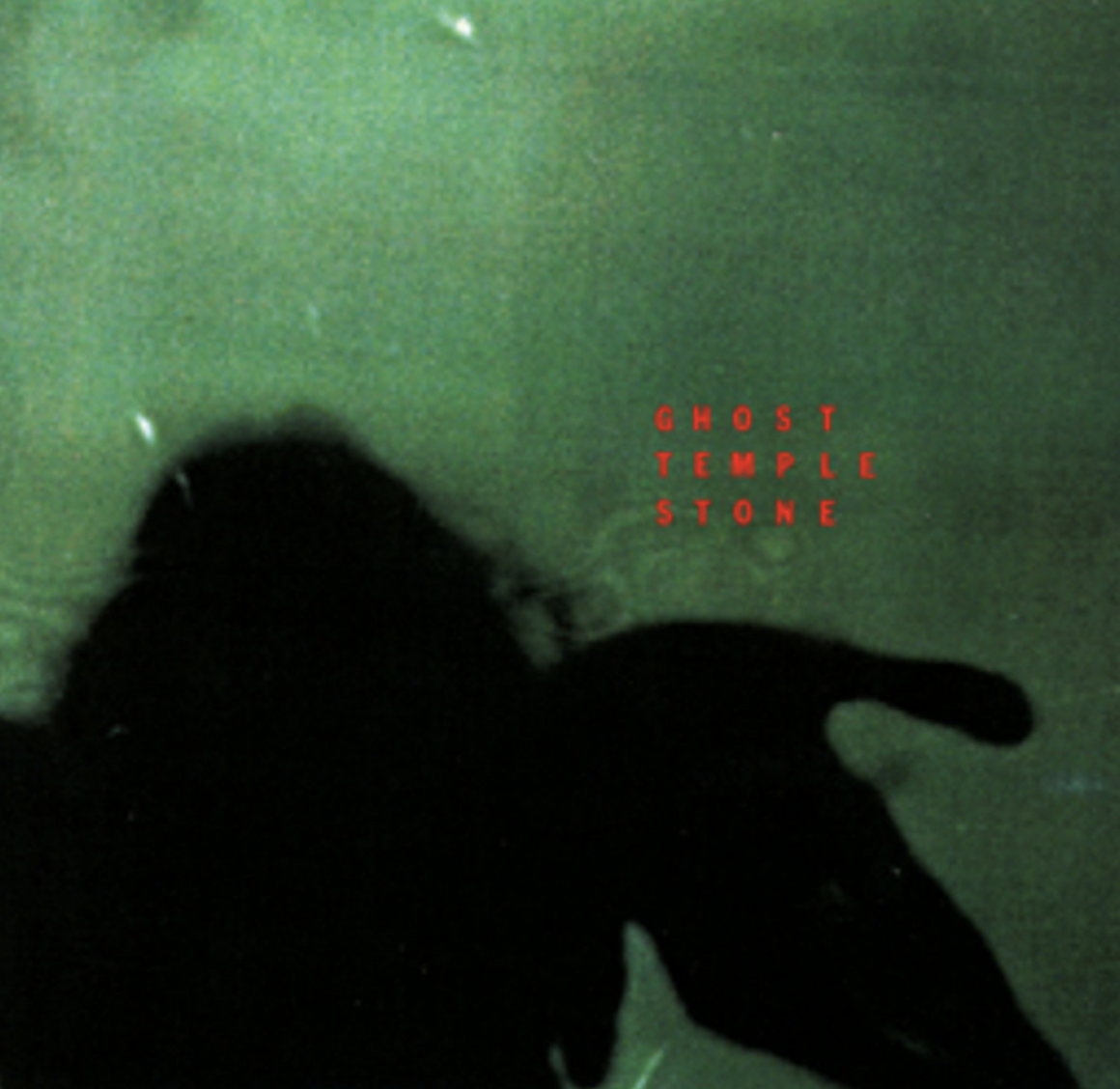
Following in the wake of Masaki Batoh’s most recent of incarnations, the brain waves initiated Nehan project album An Evening With (reviewed last month in my Perusal column), Drag City are reissuing a triple-bill of vinyl albums from the Japanese acupuncturist, musician and apparatus building artist’s most enduring and long-running ensemble Ghost.
Tying in with the fortieth anniversary of that evolving, line-up-revolving group’s conception, and the tenth anniversary of its completion, disbandment, their first run of albums from the 1990s is being given another pressing by the label that originally repressed them in the first place, three decades before: that run quickly selling out off the back of Ghost’s Lama Rabi Rabi debut album release for the American Drag City Records imprint. Originally released by the Japanese P.S.F. label on CD, that triplet of records laid down the foundations for a nomadic commune trip of acid wooziness, otherworldly folklore, abandoned temple spirit communions and visions.
Hauntingly formed in Tokyo in 1984 by underground and head music stalwart Batoh, their existence and presence on the scene were as veiled, translucent and hermitic as their name suggested. Pretty much adapts of Amon Düül II (from Phallus Dei to Dance of The Lemmings) and Popol Vuh, but also the psychedelic and folk movements of the UK in the 60s and 70s (from the Incredible String Band to Third Ear Band, Haps Hash And The Coloured Coats and Floyd), and closer to home, such native acts as the Far East Family Band and Acid Mothers Temple, these hallucinatory seekers explored various forms of transcendental music and tradition – although, in the PR briefing they’ve been compared to Os Mutantes. All of those reference points can be heard over their self-titled debut (1990) and Second Time Around (92) and Temple Stones (94) albums; reissued here on appropriate psychedelic clear coloured vinyl for the first time in 25 years.
Recurring currents and vibrations can be found on all three albums; the last of which is slightly confusing with a lot of crossover track-titles from the previous two; it must be stressed however, that even though they use the exact same names on Temple Stones, they are different, produced it sounds like, from the same session, but either an alternative to or riff on the original source and tune, atmosphere. Starting with the demigod, deity or presence theme of the “Moungod” on the self-titled album, the ghostly visitations traverse misty-veiled shrines, mountainous trails to meetings with kite-flying yogis, Shinto ceremonies and holy cavern settings. Surprisingly avoiding any real freak outs – ok, the occasional build-up of acid rock thrashing, splashing and tumult, but relatively subdued on that part – the music and atmospherics are often drowsy sounding; spiritually wafting along and even traditional: imagine Popol Vuh, the Incredible String Band and Floyd meets Alejandro Jodorowsky on the Holy Mountain. There’s also a touch of Julian Cope and Jason Pierce, even The Cult amongst the Taoism and other venerated mysterious leanings and moss. And, something that will carry over onto all the albums, there’s a constant air of the Medieval, the courtly and a touch of psychedelic folksy parchment; from maypole dances to willowy recorders whistled and fluty pagan pastoral processions and merriment.
Second Time Around is produced in the same mold, but seems to also have a more progressive feel, and even an air of the Celtic about it; another occult folksy-acid journey through mythological and spiritual tapestries. ‘People Get Freedom’ introduces us to a spindled lattice of gong washes and harpist sound-tracked moss gardens; the stepping stones trip then extending out towards a culmination of talking to Yogi ADII, the Moody Blues and wistful waltzes on the title-track. ‘Awake In A Middle’ however, sounds more like Satanic Majesty’s era and ‘Ruby Tuesday’ Stones, a more doleful King Crimson and fiddly acoustic dreamy Yes. There are murmurings and the odd bit of mooning, spooky chanting, and mantras to give it that occult, otherworldly sound from the ether, the gods, and the transcendental planes.
Finally, the Temple Stone album suffusion of veneration and mystique wonders around those ancient alters like an apparitional collective of the Flower Travellin’ Band, Yatha Sidhra and The Mission. Disturbed mood music and background wails and shouts are balanced with strange primal vapours, acid-folk (again), downer almost shoegaze vocals (although, on the old and magical rural never-world of ‘Freedom’, it sounds like AD II’s very own Chris Karrer), Indian brassy resonance, paused thoughtful piano and overhead drones.
All three albums are brilliant at pulling you into the Ghost troupe’s world of mysticism, drifted travels, psychedelic projections and wanderings. And not one of them is any better than the other, quality wise. Together they form a near-linear bond, capturing a short period in the band’s early-recorded history – the first of these albums appearing six years after the group’s initial conception -, which lasted thirty years. If this introduction style purview and review does grab you, then be quick, as I suspect these vinyl editions will fly off the Drag City Records shelves.
Otis Sandsjö ‘Y-OTIS TRE’
(We Jazz Records) 23rd February 2024
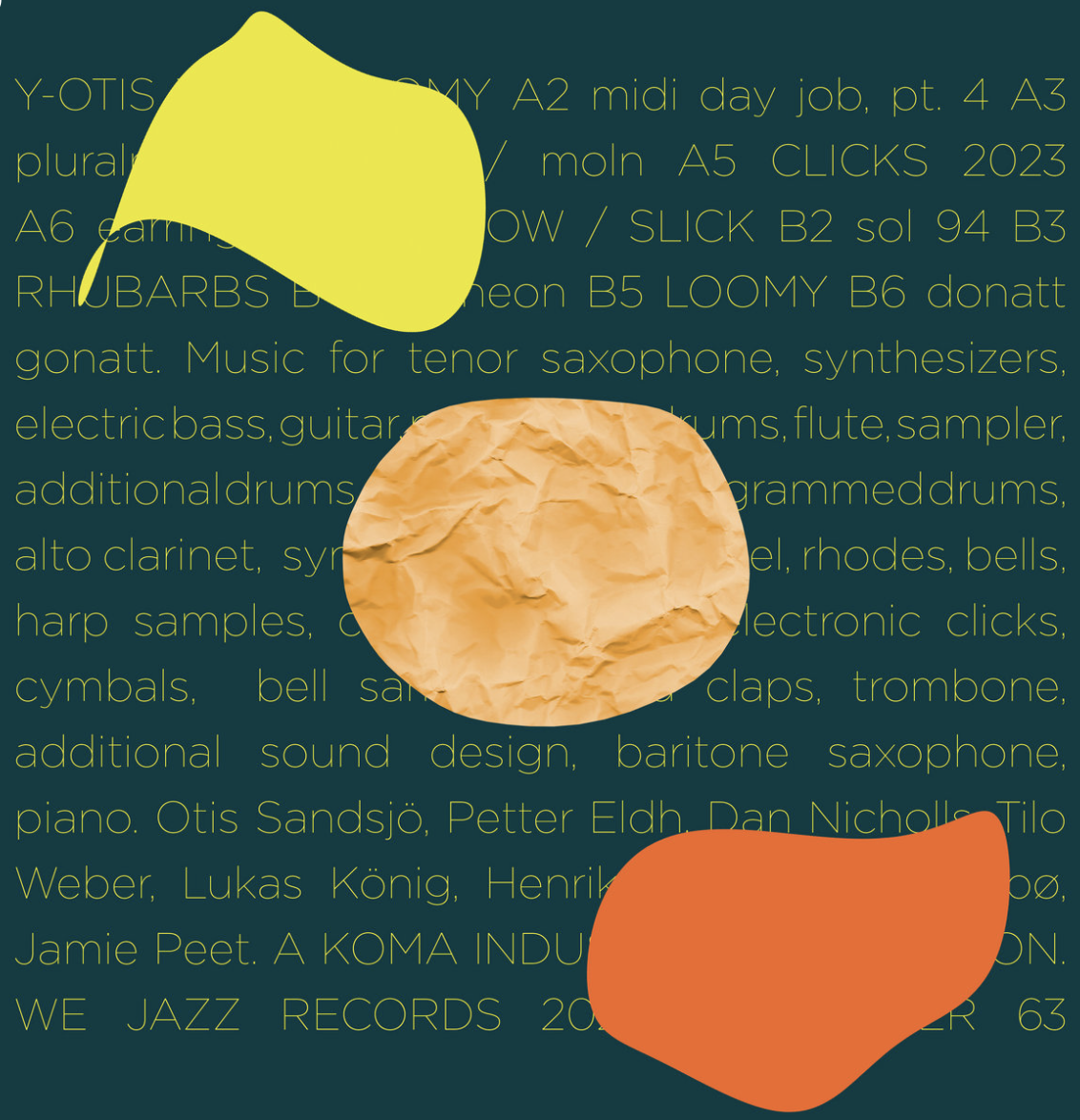
Following up previous albums in the Y-OTIS series, part TRE continues to deconstruct, shape and rebuild in real time the untethered sessions of the Berlin-based, but Swedish born, tenor saxophonist/clarinetist Otis Sandsjö’s studio experiments. With what has been called a “mixtape-like DNA” methodology, Otis with his long-standing foil and Koma Saxo leader Petter Eldh, and keyboardist Dan Nicholls, plus changing ensemble of musicians, remix themselves as they go along; fracturing, stumbling, free-falling, flipping, enveloping, cutting-up and sampling their jams into freeform opportunities and ideas.
The third album is much in the same vein: albeit this time around sounding more like a transmogrification of 90s and 2000s R&B and soul, with echoes and reverberations of slow elongated and stretched breaks. In practice this results in passing moments of J Dilla, Jimi Tenor, Madegg, Gescom, Four Tet, Healing Force Project and Shabazz Palaces tripping-out on jazz, funk and the blues. But that’s only half the story, as hinged and sirocco winded brass and woodwind is flipped out and put with an ever-changing revolution of morphed d’n’b, broken hip-hop beats, vague memory reflexes of Gershwin and the Savoy label era, The NDR Bigband, Philipp Gropper’s Philm and the most wobbly.
Nothing is quite how it seems, as the fluctuations and changes in the groove, timings and direction of travel often end up somewhere different; take the horizon opening ‘orkaneon’, which begins with a Ariel Kalma-style sustained, trance-y new age sax but finishes on Herbie Hancock being vacuumed and flipped by Squarepusher. In short: another successful adventure in the kooky jelly mould of hip-hop-breakbeat-jazz and beyond.
Various Artists ‘Merengue Típico: Nueva Generación’
(Bongo Joe)

A new year and a new musical excursion for the Bongo Joe label; a first foray and survey of the Dominican Republic’s localized ‘frantic’ Merengue phenomenon.
Sharing its Hispaniola Island location with Haiti (a most tumultuous relationship that’s led to various periods of civil war and bloodshed between the two former brutalized European colonies), the Dominican Republic is well placed to absorb the surrounding cultures of both the Caribbean and Latin America, with Merengue being just one these genres. The style was originally tied-in with the Spanish invaders, taking root on the Island in the early 1800s and played on traditional European instruments like the ‘bandurria’ style guitar. As time went by (especially in the more modern ‘Típico’ era) some of those original instruments were replaced by the accordion (introduced via German trade ships), the güira and the more localized two-headed ‘tambora’ drum (salvaged from rum barrels).
Its Island bedfellow of Salsa might be more globally renowned but Merengue is far older and established; a national dance and music used at various points in the country’s history and fight for independence as a rallying call, a unified and shared common bond: although, in one of the more controversial periods, Merengue was pushed and promoted by the military commander turn dictator, Rafael Leónidas Trujillo (nicknamed “El Jefe”). This particular compilation covers the creative boom after Trujillo’s death in the early 1960s – assassinated after a bloody, brutal regime that resulted in the estimated deaths of 50,000 people, including a sizable number of Haitians, and a number of opposition figures overseas. As the reins, paranoia of oppressive rule dissipated, culture grew once more with optimism. Merengue got a new lease of life with contemporary modernizations and expansions to the sound: now featuring strings and the bass. Pioneering figures like the iconic female trailblazer (and one of the stars of this collection) Fefita La Grande helped take the style forward and broke down barriers in a largely male dominated scene. The Afro-Hispaniola influences remained, as did the signature ‘quintillo’ five-beat rhythm, but there was a new step, confidence and joy to the music, which you will hear on this selection of nuggets reissued for the first time ever, chosen by the Funky Bompa – the alias of crate-digger Xavier Dalve.
Ten showcase tunes of quickened concertinaed ribbing (‘picaresque’ style), dancing, sauntering and jauntiness await; music from such commanding artists as the already mentioned Fefita but also the reeling sweetened and passionate tones of the mysterious Valentin and the Trio Royecell. Scuffling and skiffled, with the güira sounding like a scraped metallic washboard or cheese-grater, groups like the Trio Rosario step to a upbeat squeeze of accordion and touch of the Creole on the fun opening ‘Cuando Yo Muera’. But even when the themes, lyrics are meant to be more plaintive, even bluesy like Aristides Ramierz’s ‘Los Lanbones’, the action is less cantina woes and more “amigo” friendly light-heartedness.
The reach, influences, carry far and wide with knockabout she-shanty bellows, folk and the sounds of Afro-Cuba, Haiti and Colombia ringing away to an infectious, speedy and constantly lively rhythm. As an introduction to that, Merengue Típico offers an insightful party album survey of a Dominican Republic phenomenon, in many cases, still unknown to the greater world outside the Latin community. Here’s an infectious invite to put that gap in the musical knowledge right.
The Corrupting Sea ‘Cold Star: An Homage To Vangelis’
(somewherecold Records) 1st March 2024

Mainstay and foundation artist of the label he created, somewherecold’s Jason T. Lamoreaux pays “homage” and fealty to his hero Vangelis on his latest outing as The Corrupting Sea.
Arguably the Greek titan of the electronic and soundtrack form’s most enduring and influential work in the field of cinema and sci-fi, it is the icon’s distilled acid-pin-drop-rain atmospheric waterfall of dystopian mystery noirish Blade Runner score that inspires Jason’s Cold Star suites of synth evocations. The North American composer does this by fluently channeling that data, language and mood music whilst finding rays of hope and chinks in the metallic ominous granular skies.
Track titles will be familiar with even those with only a cursory interest in the grim futurescape and philosophical quandaries of artificial intelligence and what it is to be human storyline, of this bleak but incredibly affecting and prescient film – even more so in light of the introduction of such gimmicky but frightening programs as ChatGPT, and the encroaching possibilities of AI’s applications in making much of what we do redundant: even in the creative fields. For example, the ‘Voight-Kampff’ empathy test used to weed out the “Replicant” from the human in the film based on Richard K. Dick’s Do Androids Dream of Electric Sheep?, is just one such obvious timely example; here, in this state, chiming with softened sleigh bells, shimmery starry waves and crisp little explosions of grainy fuzz bit-crushes.
But as I’ve already mentioned, Jason finds some levitated release of hope in the cogs of technological progress; see the tenderness and reflection that is applied to the short ‘Like Tears In The Rain’ suite, which references Rutger Hauer’s iconic replicant character’s last fatalistic scene and memorable quote of the film: “lost in time…like tears in the rain”. The femme fatale of the picture if you like, ‘Rachael’ (with all that name’s Biblical significance) is also a balance of sci-fi and carefully placed stirrings; the calls of the analogue, of Jarre, of arpeggiator cascaded notes and android data.
Tracks like the grainy chomping and zip-line rippling ‘Four Years’ – the programmed-in longevity of replicants, so they supposedly don’t get the time to achieve human emotions and to rebel from their servitude of heavy lifting and soldiery in futuristic off-worlds – are not so much unsettling, but do have detuned bends and an assailing sense of uncertainty and the alien about them.
‘Replicant Hunters’ which opens this album, is pure Vangelis, but also has a hint of the Klaus Schulze about it too; square waves and bobbed bulb-like notes pass like cruisers in the alt-future nights.
Incidentally, that album title, Cold Star, references the cosmological phenomenon of “failed stars”, or “brown drawfs” as they are also known; a star that doesn’t have enough mass to sustain nuclear fusion in their cores, and so is cold or tepid to the touch. But there is nothing cold or dying about this six-track score, as a final sanctuary of hopefulness in a hopeless bleak dystopia is found on ‘Refuge’ amongst the static-charges and last gasps of a ticking hi-hat rhythm. Corridors are built into these moments of escape and clarity, as Jason pays respect and comes full circle back to his original influence on first starting out in the world of electronic experimentation and mood music.
OdNu + Ümlaut ‘Abandoned Spaces’
(Audiobulb) 10th February 2024
Drawn together and what proves to be a deeply intuitive union for the Audiobulb label, the Buenos Aires-born but NY/Hudson resident Michel Mazza (the OdNu of that partnership) and the US, northern Connecticut countryside dweller Jeff Düngfelder (Ümlaut) form a bond on their reductive process of an album, Abandoned Spaces.
The spaces in that title alongside reference prompts, inspirations motivated by the Japanese term for ‘continuous improvement’, “Kaizen”, and the procrastinated state of weakness of self-will known as the “Akrasia Effect”, are subtly and dreamily wrapped up in a gentle blanket of recollection. The lingering traces of humanity, nature and the cerebral reverberate or attentively sparkle and tinkle as wave after wave of drifty and pristine bulb-like guitar notes hover or linger, and passing drums repetitively add a semblance of rhythm and an empirical and evanescent beat.
The word ‘meticulous’ is used, and that would be right. For this is such a sophisticated collaboration and a near amorphous blending of influences, inspirations and styles: for instance, you can hear an air of Federico Balducci and Myles Cochran in the languorous guitar sculpting and threading, and an essence of jazz on the brushed and sifting, enervated hi-hat pumping drum parts. On the hallucinatory title-track itself there’s a strange touch of Byzantine Velvet Underground, Ash Ra Tempel and Floyd, and on the almost shapeless airy and trance-y ‘Unforeseen Scenes’ a passing influence of Mythos and the progressive – there’s also the first introduction of what sound like hand drums, perhaps congas being both rhythmically padded and in a less, almost non-musical way, flat-handily knocked.
Tracks are given plenty of time to breathe and resonate, to unfurl spells and to open up primal, mirage-like and psyche-concocted soundscapes from the synthesized and played. And although this fits in the ambient electronic fields of demarcation, Abandoned Spaces is so much more – later on in the second half of the eight-track album, the duo express more rhythmic stirrings and even some harsher (though we are not talking caustic, coarse or industrial) elements of mystery, inquiry and uncertainty. Here’s hoping OdNu + Ümlaut continue this collaboration, as this refined partnership proves a winning formula.
Hi, my name is Dominic Valvona and I’m the Founder of the music/culture blog monolithcocktail.com For the last ten years I’ve featured and supported music, musicians and labels we love across genres from around the world that we think you’ll want to know about. No content on the site is paid for or sponsored and we only feature artists we have genuine respect for /love. If you enjoy our reviews (and we often write long, thoughtful ones), found a new artist you admire or if we have featured you or artists you represent and would like to buy us a coffee at https://ko-fi.com/monolithcocktail to say cheers for spreading the word, then that would be much appreciated.
THE MONTHLY DIGEST OF ACCUMULATED NEW MUSIC, THE SOCIAL INTER-GENERATIONAL/ECLECTIC AND ANNIVERSRAY ALBUMS CELEBRATING PLAYLIST, AND ARCHIVE MATERIAL CHOSEN BY DOMINIC VALVONA

Continuing a series that started in 2023, the Digest is my one-stop column of the new and the old; a secondary home to all those releases I missed out on or didn’t get room to feature in either my Perusal reviews features or singular Our Daily Bread posts, plus a chance to celebrate timely anniversary albums and dip into my own record collection with the a special anything goes playlist, and to, finally, dip into the Monolith Cocktail Archives.
The New: this will be a briefing of a sort, with a short outline, thoughts and reactions to a number of recent albums from my inbox – currently a 1000+ releases a month on average!
The Social Playlist: choice music collected from across the ages, borders and genres, with a smattering of tracks from choice anniversary celebrating albums of worth and cult status. Consider it my unofficial radio show.
The Archives: self-explanatory, but each month I chose past pieces from the extensive Monolith Cocktail back pages that have a timely ring to them.
_((THE NEW))_
LINA_ ‘Fado Camões’
(Galileo Music)
Fado dramatist with the spellbinding voice, LINA_ follows up her impressive collaboration with Raul Refree with another unique reading of the famous Portuguese form of sullenness, sorrow and plaint. On that previous project, the diaphanous and emotionally sonorous pulling songstress and composer transformed the music of the Fado legend and actress Amália Rodrigues; filtering that icon’s songbook through a modern production of minimalistic gauze and sonic atmospheric effects.
Back this time with the British producer and musician Justin Adams (credits include projects with Robert Plant, Tinariwen, Eno and Sinead O’Conner to name but a few) and a small ensemble, LINA_ takes on the classical 16th century poetics of Portugal’s most famous literary son, Luís Vaz de Camões. So titan a figure in that country’s rich history, his medieval period language of lyrical romantic aches, mortality and nature is said to be the basis of Portuguese itself: often called the “language of Camões”. Integral to the very soul of Portugal then, it’s fitting that such a talent as LINA_ is behind this interpretation of his work; transcribing it’s prescient and near timeless reach to the music of Fado. Examples of which include, when translated into English from the original lyrical language, “They hear the tale of my misfortunes, and cure their ordeals with my hell”. Tortured but also overwhelmingly beautiful and romantic throughout, it suits the musical form very well across twelve near magical songs of air-y mysticism, the venerable, yearning and dreamy. Musically tender, accentuated and like a fog, mist at times, even vapour of the mere essence of a score, there’s echoes of old Spain, the Balearics, North Africa, the Middle East but also Turkey and the Hellenic. You can also add the supernatural to that list too: a passing over into the ether. At times other times there is an almost semi-classical feel, merged with Iberian and Galician new wave, with some songs standing out as radio-friendly floated diaphanous pop visions of the Fado spirit.
Incredible throughout, LINA_ once more proves herself the most striking if not talented artist in this field of exploration and music; bring together beautifully and evocatively time honoured traditions and the legacy of literary Portugal with the country’s most prized and famous export to magic up another essential album. LINA_ is a leading light, pushing the boundaries without losing the soul, truth and appeal of the music she adopts and transforms. Fado Camões is another artistic triumph.
Andy Haas/David Grollman ‘Act Of Love’
The experimental NYC percussionist-assemblage artist and knight of the Ghosts Of The Holy Ghost Spermic Brotherhood (alongside saxophonist Andy Haas and the late multi-tasking Michael Evans) David Grollman knows more than most about the cruelties of the Alzheimer’s Disease; losing his wife, the poet Rita Stein-Grollman to Early Onset Alzheimer’s in early 2023.
Funneled and channeled into this most recent album with Haas, Grollman and his sonic partner of avant-garde arts and evocations reflect the very essence of loss through an apparatus of Dadaist and Fluxus apparatus: namely in Grollman’s case the balloon, with the textured tactile touches and stretches of its latex surface wrinkling as it expels its air; in a manner, like the life force slowly leaving the deflated body and personality of what someone once was as they lose themselves to this incurable disease. Meanwhile on sax, Haas deals in exaggerated long, slowly drawn-out breathes and blows; sometimes appearing to lift the weight that sits on his lungs, and at other times making noises that resemble steam and the pressure of valves being released and squeezed. Together it sounds like La Monte Young, John Zorn, Anthony Braxton and Marshall Allen in remembrance.
But then there’s another dimension, the brilliant, often acerbic poetry of Rita (written before she succumbed to the disease), which is read out in both almost laconic and grumpy confrontational style by David. Another piece of text, ‘Message From ME’, which the title makes obvious, is a voicemail left by the already mentioned and late Michael Evans (who passed away back in 2021), another knock-about figure on the scene and much missed member of the Ghosts Of The Holy Ghost Spermic Brotherhood. Act Of Love is a challenging and strained but obviously emotional well of remembrance, with the harsh and more attentive abstractions of the performances somehow managing to convey that which can’t always be said or represented.
Variát & Merzbow ‘Unintended Intentions’
(I Shall Sing Until My Land Is Free) – Released the end of last year
Unsurprisingly concentrating the mind, the brutal barbaric dystopian-scarred landscapes of war-torn Ukraine have been transmogrified into the abrasive, concrete debris soundscapes of nightmares by the trick noisemaker of dissonance and pulverizing noise, and co-instigator of the Prostir label, Dmyto Fedorenko (aka Variát). As his homeland continues to be bombarded and churned up by the invading forces of the despot Putin, Fedorenko teams up with fellow noise sculptor of some standing, Masami Akita – the harsh and confrontational Japanese artist behind the 500 plus back catalogue Merzbow project – to reshape the needled, scowled, squalled, overbearing, sinister, menacing and static coarse ruins: the only hope of which, is in the “resilience” of the Ukrainian people holding back the tide of destruction and evil.
Crushing morbid forces merge with the air raids of drone attacks, decay, coded signals, charged force fields, transistors, the Fortean radio set and the alien. Occasionally a keyboard chord materializes, along with the recognizable sounds of toms and breaks – the drums sounding like at times like they’re being beaten with boxing gloved pummeling hands. At one point it could be the set of a roofless cathedral, another, from the charred remains of a devastating fire: I could of course be projecting all this.
Throbbing Gristle, Gunther Wüsthoff, Jóhann Jóhannsson, Sunn O))) (if they cashed in their guitars for synths and a laptop), Oberman Knocks, Boris and Scott Walker are all brought to mind. And yet this is a unique collaborative pneumatic and caustic vision from the two artists, one that can’t help but evoke the devastating, mindless and distressing scenes unfolding. And if you needed any prompting or a reminder, profits for this release all go to supporting ‘Ukraine resistance against Russia’ with donations made to self-defense and humanitarian foundations. PS: Thanks by the way to the label, I Shall Sing Until My Land Is Free, for the CD and stickers; always appreciated to receive something physical in an increasingly soulless, downloaded or streaming, non-committal world.
Various ‘Hyperboloid 2024’
(Hyperboloid Music)
I had to try and shoehorn this end-of-year compilation from the Latvian label in to the Digest this month. Twenty-five visionary trance-y and techno tracks from the roster’s myriad of artists – a sort of Balkans and beyond Warp label Artificial Intelligence series for the new age and new century -, there’s variations of the electronic genre spread out across a generous showcase that marks yet another creatively successful year for the imprint. Old skool rave breaks sit next to entrancing vista soundscapes; d’n’b with hardcore; and near Grimes-like pop electronica with thoughtful rumination. Get stuck in.
Roma Zuckerman ‘Phenomenon of Provincial Mentality’
(Gost Zvuk)
Filaments, electric currents, crispy buzzes and granular fizzles combine to form the most redacted and evocative of minimal techno, deep house and EBM-esque dance music on the Siberian producer’s archival showcase for the Gost Zvuk label. Charged, pulsing and rhythmic at all times, Roma Zuckerman’s spheres of influences run through glimpses and throbs of Basic Channel, Kreidler, Rob Hood and Dave Clarke, twinned and merged with an alternative cosmonaut Soviet era vision of Sky Records. And most surprising of all, on the collection’s finale, ‘Compañeros’, there’s a move toward windy-fluted Latin American with the use of a Spanish pastoral rhythm guitar. Voices, the echoes and morphed ravings, communications and alien warped effects of which, play their part too; at times sounding like Richard H. Kirk, and at others, like some two-way radio cosmic interface between ground control and Soyuz shuttle. A highly recommended slice of deep bass, futuristic and simultaneously retro-futuristic minimalist techno that will almost definitely make the end of year lists.
(((THE SOCIAL/VOLUME 82)))

Continuing with the decade-long Social – originally a DJ club night I’d pick up at different times over the past 20 plus years, and also a café residency from 2012 to 2014 – playlist, each month I literally chose the records that celebrate anniversary albums; those that I’d love to hear on the radio waves or DJs play once and while; and those records that pay a homage and pay respects to those artists who we’ve lost on the way.
January starts with one such sad but celebratory nod to the late Marlena Shaw, who passed away last weekend (I’m incidentally writing this at the start of the third week of the month). The California Soul(stress) had some real sass and attitude, as proven by the provocative, taking-no-shit, title of her 1974 LP, Who Is This Bitch, Anyway?; from which I’ve included the short gospel-light ‘The Lord Giveth And The Lord Taketh Away’. Also 50 this year, there’s tracks from Pekka Pohjola’s Harakka Bialoipokku, Harmonia’s ‘Musik Von Harmonia’ and (sticking with a kosmische/krautrock theme) something from the quartet of albums made under the auspices of The Cosmic Jokers nom de plume – a supergroup that never really was, the main participants of which included such lauded icons as Manuel Göttsching, Klaus Schulze, Jürgen Dollase and Harald Grosskopf fucking around in Dieter Dierks’ studio; the results of which, unknowingly recorded by Rolf-Ulrich Kaiser and Gille Lettman at the time were put out during 1974 – Schulze was incandescent enough to sue over the whole affair.
40th anniversary nods go to Finnis Africae’s incredible fourth world self-titled peregrination, Bob Dylan’s Planet Waves and Harold Budd & Eno’s prized and influential The Pearl LP. A decade later and there’s also tracks from The Wake’s Tidal Wave Of Hope and Air Liquide’s Nephology (see my archive essay style piece further down the column).
I usually leave the most current and newest of tracks to the Monolith Cocktail’s Monthly Playlist (next edition due next week), but have included recent(ish) tracks from Igor Osypov, Bagaski, Nicole Mitchell and, not really new but reissued late last year, a track from the originally 1984 released Ein Bundel Faulnis in der Grube album by Holger Hiller (of Palais Schaumburg German new wave fame) – reissued that is by krautrock/kosmische specialists Bureau B.
The rest is for you to discover; a smattering of eclectic delights, wonders and nuggets from across time and from across the globe. Actually, if you are reading this, and if you have time, I’d really like some feedback on the length of these playlists. I’ve gradually tightened the running order down to around the 30 mark and the length under 3 hours – down from 33 last year, and before that anything from 40 to 100!!! Let me know if this is a ridiculous number, or just right.
___TRACK LISTING AS FOLLOWS:
Marlena Shaw ‘The Lord Giveth And The Lord Taketh Away’
Bob Dylan ‘Tough Mama’
Ethel-Ann-Powell ‘The Jaybird Song’
Acayouman ‘Si Ou Ladje Moin’
The Wake ‘Britain’
A Passing Fancy ‘Your Trip’
The New Tweedy Brothers ‘I Can See It’
Americo Brito ‘Sabe Na Panama’
J.O. Araba ‘Kelegbe Megbe’
Finnis Africae ‘Zoo Zula’
The Cosmic Jokers ‘Power Drive’
Ike Yard ‘Beyondersay’
Air Liquide ‘Semwave’
Holger Hiller ‘Chemische und physikalische Entdeckungen’
Harmonia ‘Sonnenschein’
Fireballet ‘Carrollon’
Pekka Pohjola ‘Hereillakin uni jatkuu’
Dhidalah ‘Adamski’
Son Of Bazerk ‘The Band Got Swivey On The Wheels’
Bagaski ‘Hawkish Torso’
Joe Mubare ‘Number 8’
Nicole Mitchell ‘You Know What’s In There’
Igor Osypov ‘Vango’
Lard Free ‘Warinbaril’
Teengenerate ‘Something You Got’
Tasavallan Presidentti ‘Weather Brightly’
Second Hand ‘I Am Nearly There’
Duffy Power ‘Glimpses Of God’
Grothbros ‘Tollah Tra Flex’
((((ARCHIVES))))
Air Liqude ‘Nephology – The New Religion’ Is 30 Years Old This Month

Selective electronic musicians often come out with the line that they’ve been influenced on a particular album by the Krautrock greats, citing such luminaries as Roedelius, Michael Rothar, Klaus Schulze, Irmin Schmidt etc. – as though they were in some way picking up the baton and running with it.
Of course most of this is a whole crock of shit, as hardly anyone essentially understood that those innovators from the 70s were always moving forward and re-inventing their sound, never usually dwelling on the past; just copying it or reprising it totally misses the point.
OK, so I’m sort of meandering off on a tangent, but basically you can take a look at the likes of Neu!, Cluster, Kraftwerk and CAN and see they were making something fresh and new; to really take on their train of thought means to push those delineated boundaries even further.
Heir apparent to the synthesizer and analogue re-wiring school of exploration, were, and still are, the Cologne duo of Air Liquide. They took up their forefathers brave new world mantle, and built an ambitious and inspiring variation based around the technological leaps in music production; concentrating on the styles of Techno and Acid House.
Their seminal opus of 1994, Nephology, adopts vestiges of cinematic, industrial, ambient and dub; producing an impressive soundtrack that stands up well even by today’s standards, and adheres to the German desires of progress.
The duo comprised of the exceptionally talented Cem Oral and Ingmar Koch, better known as Jamin Unit and Dr. Walker, both entrenched in technical know-how – Koch was the lucky recipient of a Roland JX3P synthesizer on his 14th birthday, a gift that led to him being hired by Korg to program sounds for a number of their iconic models.
Koch began recording in the late 80s, composing, as he puts it, assembly line House and Hip Hop tracks for the German labels Hype! and Technoline. The latter label went bankrupt, prompting him to join a course on electronic composition at a University in Cologne. He would soon meet fellow student and synth enthusiast Oral, and find that he also shared a common interest for groups like Tangerine Dream, CAN, Heaven 17, early New York Hip Hop and Chicago acid: working together seemed almost inevitable.
By the end of 1991 Air Liquide was born, with their first EP release following in a matter of months, and a self-titled debut at the end of 1992. Their second album, the 1994 released Nephology opus, really upped the ante with its mostly innovative themes and layered tracks modeled around the more sophisticated tones of intelligent Techno and dance music – future projects saw the duo experimenting with Gabba hardcore and ethereal fashioned traversing styles of trance.
Singing from the same hymn sheet as The Orb, and many similar ambient acts, they immersed themselves in a haze of new-age touchy-feely rhetoric, using both celestial horizons and the skies above as the central theme to hang their music to: That Nephology title is itself taken from the, originally Greek, word for clouds; adopted as the terminology for the study of their formations – interestingly over the last century it has remained a rather marginalised and forgotten art…well, that was until the recent interest in global warming.
The 14-track album is split into various sections, with the main tracks interspersed amongst the otherworldly type segue ways and vignettes.
A central atmospheric resonance runs throughout, evoking a cosmological and space-age mood, one that has an often ominous or threatening feel to it; charged with rippling static effects.
Mainly we are treated to some indolently and cleverly multi-layering techniques, produced from an impressive display of iconic analogue/electronic equipment, including the Roland Tr 808, Jupiter 8, ARP 2600 and a pair of Moogs.
Side one of this double album entirely consists of acid drenched grooves and bouncing taut techno. The grand opening of ‘The Cloud’ emerges refined and full of empyrean quality from the ether, its tightened rolling drums and throbbing bass cascade over an electrified wild jungle rich sound collage; sounding like a Germanic 808 State. As though in tribune to Klaus Schulze and his cohorts, the duo interweave startling ambient sequences, dousing the beats in swathes of metallic walled corridor sounds and whispering missed conversations.
This swirling tome is followed by the more Chicago house style of ‘Semiwave’; a sauntering announced rhythmic workout, full of ever-tightened repetitive percussion, moody dramatic bass and lethargic plonking notes. Ethereal strains of some distant cooing float in and out of the track, setting the look-to-the-skies above scene perfectly, sending us hurtling ever further into the stratosphere.
Caustic meatier bass lines and squelchy 909 bleeps flourish on the bonus track ‘Auroral Wave’ – seems this and one other tune, are not included on all versions.
Hardened ticking away drums and pre-set handclaps encounter Mo Wax space-esque sustains, whilst moving along at a Mannuel Göttsching pronounced building pace.
Air Liquide manage to absorb many different styles of music including dub; the strong use of dark moody bass can be found on tracks like ‘THX is on’, where Sly and Robbie meet Carl Graig’s Plastic People period flow. There’s also room for Hip Hop, with the duo re-working Cypress Hill’s ‘Insane In The Brain’ for their own beguiling electro track ‘Stratus Static’. They manage to meld both the stoner-induced sample of the Hill’s track with what sounds like a dub-esque clattering Art of Noise, to produce something quite original and sublimely dizzying.
Scattered throughout are more light-hearted moments, including ‘If There Was No Gravity’, where they take on the ambient workshops of both The Orb and Orbital. Wispy willowy female vocals poetically describe a sort of dipsy journey through the clouds, the lyrics leaning towards cliché almost:
“How you’d love to live up there,
Kiss the sun and walk on air.
If there was no gravity,
You’d be in nephology”.
Dubtastic bass lines bumble along to fill the sweeping calm and dreamy melodics, in a display of evanescent pulchritude. The looming presence of Kubrick, or rather the meticulous chosen soundtracks that go hand-in-hand with his films, add dramatic passages of tension and suspense. ‘Die Reisse Im Teekeesel’ (loosely translated as ‘Those travels in the tea boiler’) uses 2001 A Space Odyssey harrowing soundscapes, with the chanting evocative mantras from ‘So Spoke Zarathustra’ to add intrepid doom. Both ‘Kymnea’ and ‘Im Grlenmeyerkolben I and II’ echo and groan with menacing moments plucked straight from A Clockwork Orange: Walter (Wendy) Carlos’s switched on treatment of Henry Purcell’s ‘Music For The Funeral Of Queen Mary’, and the tormented ‘Timesteps’ are brought to mind.
Eerily the duo can’t help but intersperse a sober and haunting array of imbued cinematics, dropping in hints of Dune, Star Trek and The Thing to create an often emotive or imaginative atmospherics, which lends the album a certain gravitas.
On the closing track, ‘The Clouds Have Eyes’, they end on a chaotic hypnotic flourish. Helicopter chopping Jeff Mills style beats rapidly rotate, as an operatic style haunted choral sweep swirls around in the tumultuous cyclonic blades. That almost disturbing voice-like loop, calls out from the melee as though an apparition from some distant planet or dimension: a perfect finish.
Nephology does undoubtedly sound of its time to some extent; tied in some respects to a particular epoch, yet though it’s over thirty-years old it somehow rises above sounding dated. In fact recent revivals of the late 80s and early 90s electronic scenes – where labels such as R & S, Harthouse, Structure and Rising High fed the deep thinking dance music appetite – have encouraged a mini-renaissance and re-valuation. In 2024 you could easily slip a bit of the old Nephology into the club, and no one would blink.
Hi, my name is Dominic Valvona and I’m the Founder of the music/culture blog monolithcocktail.com For the last ten years I’ve featured and supported music, musicians and labels we love across genres from around the world that we think you’ll want to know about. No content on the site is paid for or sponsored and we only feature artists we have genuine respect for /love. If you enjoy our reviews (and we often write long, thoughtful ones), found a new artist you admire or if we have featured you or artists you represent and would like to buy us a coffee at https://ko-fi.com/monolithcocktail to say cheers for spreading the word, then that would be much appreciated.
PART THREE OF THE MONOLITH COCKTAIL’S ALBUMS OF THE YEAR LISTS
Welcome to the concluding part of the Monolith Cocktail’s choice and favourite albums of the year lists (Part One and Part Two). Compiled by Dominic Valvona, Brian ‘Bordello’ Shea and Graham Domain, each entry is in alphabetical order, with this final run down starting at P and finishing at Z.
P________________
Pan Afrikan Peoples Arkestra ‘60’ (The Village)
Chosen by DV/Reviewed by DV/Link
‘Serving the South Central L.A. Black community from within for six decades (and counting), the late Horace Tapscott and his preservation Arkestra ensemble captured and reflected the social and racial injustices of that oppressed community with a righteous politically conscious and radical jazz style blueprint; a documentation, but also self-reliant stand against the state’s brutality and economic suppression.
The 60 album proves an important preservation of a self-reliant social activist institution, integral to the community in which it serves, teaches and rises up. A great encapsulation of that story, musical journey and the changes it has gone through, this will both excite the Ark’s fans and newcomers to the cause.’ DV
Nico Paulo ‘Nico Paulo’ (Forward Music Group)
Chosen by GD/Reviewed by GD/Link
‘This is a wonderful summery album of Bacharach-like melodies by the Portuguese-Canadian singer. A truly remarkable debut of ten self-composed wonderful songs that sound like standards.
Her voice is a bewitching combination of Judy Collins, Joni Mitchell and Natalie Mering (Weyes Blood). Musically it covers a wide spectrum of Tropicalia, Folk, Americana, Jazz and Pop. Her voice conveys real emotion and depth that is bounced off the beautiful melodies and lyrics.
A future classic that will undoubtedly have a far-reaching influence on stars not yet born!’ GD
Hawk Percival ‘Night Moods Vol. 1’ (Think Like A Key)
Chosen by BBS/Reviewed by BBS/Link
‘Oh my god! How I love Hawk Percival. She is like a lo-fi indie Noosha Fox (I am once again showing my age). But come on, ‘S-S-S-Single Bed’ was one of the singles of the 70s and I think that Hawk Percival shows the potential to make something equally as wonderfully magical, as this 6 track mini album shows so much pop suss and quirky originality.
It takes from the past – you can hear the timeless melodies from the 60s/70s – and twists it into something new. She plucks the spinning melodies from the air and weaves them into her own unique creation making an album of future desert island discs. I think Hawk Percival could well be one to watch.
This album is part of the DIY music series released by the excellent Think Like A Key records, and good on them for releasing this little lo-fi treasure.’ BBS
Polobi & The Gwo Ka Master ‘Abri Cyclonique’ (Real World)
Chosen by DV/Reviewed by DV/Link
‘Suffused, elevated and morphed with Parisian-based Doctor L’s jazz, electronica Francophone new waves and trip-hop, the ancestral Guadeloupe rural folk traditions of Léwòz and one of its renowned modern practitioners-deliverers Moïse Polobi is transformed into an environmental traverse. As the good doctor has proscribed so well for Les Amazon D’Afrique and the Mbongwana Stars, the roots of another form are, with subtle wondering and sophistication, given a unique sound experience.
A very personal album, this is the first to be released under Polobi’s own name. Previously the Guadalupe star has performed with his Indestawa Ka band, releasing eight albums and performing internationally. But this cyclonic whirlwind is something different, a galvanised, electrified and bolstered earthy and magical vision of his country’s past, present and future. It’s one of the most interesting albums yet in 2023, with a sound that reboots folkloric traditions in the face of an ever-encroaching modernity.’ DV
Psyche ‘Self-Titled Debut Album’ (Four Flies Records)
Chosen by GD/Reviewed by GD/Link
‘This is a brilliant album of funky Mediterranean psychedelic instrumentals that sits somewhere between Khruangbin and the Barry Gray Orchestra! Every track is a Gem! Wonderful!’ GD
R__________________
Raf And O ‘We Are Stars’ (Telephone Records)
Chosen by Dominic Valvona/Reviewed by DV/Link
‘Few artists have purposely entwined themselves so deeply with their idols than the Raf And O duo of Raf Mantelli and Richard Smith (the “O” in that creative sparked partnership). David Bowie and Kate Bush loom large, permeating near every note and vocal infliction of their idiosyncratic, theatrical, cinematic and up-close-and-personal intimate style of avant-garde pop and art school rock experimentation. Raf even has a Kate Bush tribute side project; coming the nearest I’ve yet heard of anyone to that maverick progenitor’s range-fluctuating, coquettish and empowered delivery, and her musicianship and erudite playful and adventurous songwriting.
An alternative time travelling theatre of interwoven fantasy, dream realism and the reimagined, We Are Stars is as playful with its unique style as it is only too aware of the deep held stresses, strains, pain and detachment that plagues society in the aftermath of a global pandemic, economic meltdown and war. Looking to the stars, but knowing that even escapist dreams of the cosmos have failed us, Raf And O (who I haven’t mentioned in name at all, but is an adroit craftsman of his form, accentuating, punctuating or loosely weaving a meandered musicality around Raf) take their concerns, observations and curiosities into ever more arty and intriguing directions. They remain one of the most individual acts in the UK; true inheritors of Bowie and Bush’s legacy and spirit.’ DV
Refree ‘El Espacio Entre’ (Glitterbeat Records)
Chosen by DV/Reviewed by DV/Link
‘Coming on like an Iberian vision of the Neel Murgai Ensemble and Hackedepicciotto trapped with Nacho Mendez (I’m thinking of the Ángeles y Querubines album) in an undefined, veiled timeline and atmosphere, the follow up sketchbook album of Raul Refree’s imagination is yet again a unique, “seamless”, amalgamation of reflective enquiry, soundtracks, semi-classical etudes and the visceral.
Not so much an album of performances as a quality production of fleeting descriptions, of moments captured in poignant scenery, Refree’s second such album of scores and sound pieces is an incredible, immersive mood board of magical and often plaintive thoughts, feelings, processes and films yet to be made. I’ve been sitting on this album for months and it never loses its initial pull, gut feeling, and yet I can also hear new things on every listen. Raul Refree is a great talent indeed.’ DV
Sebastian Reynolds ‘Canary’ (PinDrop)
Chosen by DV/Reviewed by DV/Link
‘After what seems like an age, and with a prolific string of projects, collaborations and EP releases behind him, Sebastian Reynolds finally unveils his debut solo album.
A near lifetime’s experience and musicology is called upon for a mostly sophisticated and subtle amalgamation of the electroacoustic, trance, EDM, electronic-chamber music, techno ambience and soundtracks on an album that draws on all of Reynolds passions and emotional threads. Self-help guidance with the neurons fired-up, the mind open, Canary counterpoints mistrust with wonderment, alarm with the rational and the optimistic. It has taken a while to arrive, but Reynolds debut expanded album of thoughts and ideas is a mature statement of quality. ‘ DV
Room Of Wires ‘Welcome To The End Game’ (Ant-Zen)
Chosen by DV/Reviewed by DV/Link
‘A buzz, whine, flex and resonating ring of zinc and alloy, of recondite machines, permeates another heavy set from the Room Of Wires duo. The latest in a strong catalogue of such dark materials and alien mystery, Welcome To The End Game ties together a complex of dystopian woes, rage and dramas into an interlayered twisting and expanding metal muscled album of electronic.
Room Of Wires navigate and balance the uncertainty with glimmers of escape, and moments of hope and release; the machinations and unseen forces that bear down upon us all at least dissipated enough to offer some light.’ DV
Seljuk Rustum ‘Cardboard Castles’ (Hive Mind)
Chosen by DV/Reviewed by DV/Link
‘Imbued by a rich history of place and time, and the trading winds that brought so many atavistic and less ancient civilizations to its natural harbor hub, Seljuk Rustum’s Kochi-base of creative activity is a city steeped in polygenesis sounds and ideas.
For the most part the musical mind of Rustum and his partners on this magical, entrancing and dreamy journey, reveals a great sonic knowledge, both a part of, yet also in some ways, escaping history.’ DV
S___________________
Salem Trials ‘What Myths Are We Living’ (Metal Postcard Records)
Chosen by DV & GD/Reviewed by Graham Domain/Link
‘Crawling along dark streets, shadows loom in every doorway, footsteps echo in the night silence. Cold sweat trickling down spine, dark rumblings from a dirty basement, shadows dancing on the barred windows. Fish bones in a mouth. Coughing up blood and the smell of urine. Decay and aftershave. Cracked voice and beer-stained floor. Each step shoes stick. Black trail like slime from a snail. A coffin landfill club of noise and danger! The night ignites with saw-like melodies and cavernous hypnotic rhythms kicking against the pricks! Smoke and dark truths bounce off the walls shaking flesh and brick, glass and bone. Inspiration as sonic affray, until the last notes flare into a howl of darkness. A murder of youth collapse through doors and out along streets. City centre lights, a loneliness of drinkers cast adrift, flowing like a cut artery in a thrombosis of social isolation. Music smashed against walls! Exciting! Unbreakable!’ GD
Ryuichi Sakamoto ‘Ongaku Zukan’ (WeWantSounds)
Chosen by GD/Reviewed by DV/Link
‘A timely, special release in the wake of the Japanese icon’s death in March of this year, the impeccable vinyl specialists WEWANTSOUNDS have reissued Sakamoto’s cult 1984 solo album Ongaku Zukan (or “Musical Encyclopedia”).
Sakamoto assails the mid 80s with his own manual, a merger of signatures and fresh horizons, but above all, rewriting the Japanese cannon whilst reaching into a future yet unwritten. There will be a lot of people very happy that this classic has been rejuvenated, whilst a new generation can hear what all the fuss is about. Not his best by any stretch of the imagination, but everything Sakamoto touched is worthy of investigation, and this feels like a bridge between periods. WWS has done us all a great favour in resurfacing this lost class piece of experimentation and groove.’ DV
Schizo Fun Addict ‘Love Your Enemies’ (Fruits Der Mer)
Chosen by BBS/Reviewed by BBS/Link
‘This album is one of the best and wormiest sounding albums I have heard in many years. It has the same magic and otherworldly but inwardly peaceful calmness about it as Pet Sounds, and there is something about Schizo Fun Addict that reminds me of the Beach Boys but without ever actually sounding like them – I will put it down to musical genius and heavenly inspiration.’ BBS
Seaming To ‘Dust Gathers’ (O Sing At Me)
Chosen by DV/Reviewed by Gillian Stone/Link
‘The structure and tracking of Dust Gatherers are utterly brilliant. Instrumental “AnOverture” introduces the juxtaposition of the electronic and symphonic elements the make up the album’s ethos. The next three tracks, “Blessing”, “Tousles”, and “Brave” are imbued with choral synths and swirling vocals. It is not until the fifth track, “Traveller”, that acoustic instruments come back into the fold, with the introduction of Seaming To’s clarinet. Clarinets then mesh beautifully with synths on “Water Flows”, followed by the instrumental synth piece “xenanmax”. The album then takes a left turn into the string-quartet-driven “Hitchhiker”, and pivots again into the Björk-style melodies and microbeats of “Look Away”. The final two songs on Dust Gatherers, which appear to be companion pieces, harken back to the golden era of jazz, finishing the record with a sense of timelessness. Piano ballad “Pleasures are Meaningless” alludes to the final track, jazz standard “Tenderly”, which is tethered down by pulsing clarinets and synth glitches. Ever present are Seaming To’s profoundly strong character vocals, which evoke goosebumps at every turn.’ GS
Silver Moth ‘Black Bay’
Chosen by GD/Reviewed by GD/Link
‘Cinematic tracks full of atmosphere and grandeur! 45 minutes of Bliss! It may become the holy grail of lost albums in future years – if it slips under the radar!’ GD
Slow Readers Club ‘Knowledge Freedom Power’ (Velveteen Records)
Chosen by GD/Reviewed by GD/Link
‘The fifth (official) album by Manchester band The Slow Readers Club comes across like a live album such is the energy captured in the recording. First track ‘Modernise’ is perhaps the most powerful, if least representative, song on the album. With its Chemical Brothers rave intro and pounding rhythm it also has the most individual sounding vocal on the album, a bit PIL like! It’s a song created to be exciting live and it serves that purpose well!
A great album of powerful anthemic songs and possibly their most consistent effort to date.’ GD
Lonnie Liston Smith ‘Cosmic Change’ (Jazz Is Dead)
Chosen by GD/Reviewed by DV/Link
‘Smooth soulful vibes, bulb-like notes and cosmic fanning rays from the great jazz-funk doyen Lonnie Liston Smith, who released his first album in 25 years in 2023. Thanks to the overseeing facilitators of the enriching Jazz Is Dead label project, Adrian Younge and Ali Shaheed Muhammad have coaxed the legendary artist, ensemble bandleader and sideman for such impressive luminaries as Miles Davis, Pharoah Sanders, Gato Barbieri and Leon Thomas, back into the studio; just one of many great names from the spiritual, conscious and funky-jazz rolls of inspiring talents.
Co-composing and collaborating with their chagrin Younge and Muhammad both work in the old magic with a sense of the new and forward; paying homage yet creating something new, performing the very kinds of influential music that had an impact on those who came later, namely the hip-hop fraternity (Jazzmatazz era Guru and the Digable Planets being just two such notable collaborators and acolytes). and of course, Liston is in supreme form as sagacious keyboard foil.’ DV
Snowcrushed ‘Snowcrush’
Chosen by BBS/Reviewed by BBS/Link
‘Snowcrushed’s A Frightened Man debut album was one of my fave albums of 2021; an album of beguiling atmospheric found sounds ambient gems. But on Snowcrush he’s gone on an alternative music journey of post-punk, Goth and Darkwave, and on occasion lo-fi folk – the excellent ‘Cowardice’ sounding like someone has taken Kurt Cobain’s tortured soul and spread it on Johnny Cash’s toast, which he ate before recording the American Recordings series of albums: A truly dark wonderful song. Although nothing else on the album quite matches up to the brilliance of ‘Cowardice’, which is no slight as not many other tracks I have heard this year matches up to it, the rest of the album is still full of unsettling dark gems.’ BBS
Samuele Strufaldi ‘Davorio’ (Música Mascondo)
Chosen by DV/Reviewed by DV/Link
‘Every expression has meaning, a story, which is then transformed by Strufaldi’s production into something almost dream like and cosmic yet still connected to the villagers’ roots. A transistor radio collage here, some Songhoy Blues on a bustling street with a small amp there; a display of rattled and scrapping percussion and hymnal stirrings merge with zaps, warbles and various embellishments. This cultural exchange with the Ivory Coast blurs the lines between worlds; an act of preservation, but much more, as the foundations of this culture prove intoxicating, dynamic and mesmerising.’ DV
Susanna ‘Baudelaire and Orchestra’ (Susanna Sonata Label)
Chosen by GD
T____________________

Tachycardie ‘Autonomie Menerale’ (Un-je-ne-sais-quoi)
Chosen by GD/Reviewed by GD/Link
‘This is the third album in a trilogy of ambient sound-art works by French composer Jean-Baptiste Geoffroy. Consisting of seven pieces of strange, dark, tribal, alien ambient dissonance and warm unnatural half-light!
In the first piece, ‘Parties sud puis nord’, tribal drums and hyper percussion are intermittently infiltrated by reverberating clangs and deep disturbed atmospheric noise. It is a strangely compelling listen! Although if listened to by those of a disturbed mind it may likely trigger psychosis, one-legged.
You will not find another album like this. It will penetrate your dreams bringing raptures of nightmare terror, joyous pain and nerve scraping pleasure. As the stones with eyes move closer, watching, surrounding your house, you may never ‘escape into night’ or feel at ease again!’ GD
Tele Novella ‘Poet’s Tooth’ (Kill Rock Stars)
Chosen by DV/Reviewed by DV/Link
‘A wistful, almost disarming, Tele Novella weave their magic on an album that takes its cues from Harold & Maude and a removed version of the heartbreak yearning vulnerability of Nashville and Texas country music; albeit a version in which Cate Le Bon and Aldous Harding sip despondently from a bottle of life’s despair. Better still, Mike Nesmith writing for Patsy Cline.
As whimsical and beautifully executed as it all is, Poet’s tooth is a moving album of timeless tropes, somehow delivered musically and visually through a slightly off, sometimes surreal, vision of the familiar. Natalie Ribbons and foil Jason Chronis dream up an idiosyncratic staged world, their moniker taken from the serial drama/soap opera phenomenon of the “television novel”, a format most prominently produced for the Latin American markets.
Adolescence escapism wrapped in a softened, but no less stirring, epiphany, Tele Novella has a surreal, dreamy quality about them. From the Tex-Mex border of yore to the contemporary Austin scene of City Limits, they weave a really impressive songbook that’s as Hal Ashby and Sidney Lumet as it is pining Country and Western. Poet’s Tooth is both lyrically and musically perfect; one of my favourite albums of 2023 – no idle boast. Prepare to be equally charmed and moved with a counterculture resurgence of quality, subtle comedy and tragedy, eccentric disillusion.’ DV
Tomo-Nakaguchi ‘The Long Night in Winter Light’ (Audio Bulb Records)
Chosen by GD/Reviewed by GD/Link
‘This is a beautiful album where each piece conjures-up a different vision of winter – the wonder of nature surviving and flourishing as the seasons change! As the composer himself says, the music reflects the beauty of nature – frost glistening on grass – a field of snow lit by moonlight – the night sky filled with stars! Like a ray of light, a ray of hope, this is beauty that shines through the darkest of times!’ GD
Ali Farka Touré ‘Voyageur’ (World Circuit)
Chosen by DV/Reviewed by DV/Link
‘This latest project, produced by the label’s Nick Gold who spent time with the late Ali (his brilliant accompanying notes are full of vivid anecdotes and adventures spent with the Mali icon) and his scion, the equally gifted virtuoso Vieux Farka Touré is the first album of ‘unheard’ material from the legend since his 2010 posthumously released partnership with Diabate.
Voyageur is a welcoming addition to the catalogue, an incredible nomadic traverse of songs that capture Mali’s diversity and rich musical heritage; especially with his celebrated guests opening the sound up, travelling even further afield to those bordering regions that meet Mali.
Ali Farka Touré aficionados will find this a welcome addition to the chronology, with recordings that many will have either never known about or been anticipating. But I’m sure there’s going to be surprises for even the most committed of fans. And for newcomers to Ali’s legacy, this album will prove a great entry point with its diversity and range, showing Ali with various collaborators and paying homage to several cultural styles, traditions. These songs are anything but unfinished scraps, demos, or downtime experiments. Instead, Voyageur is a collection of real quality.’ DV
Trupa Trupa ‘ttt’ (Glitterbeat Records)
Chosen by DV/Reviewed by DV/Link
‘The Polish outfit Trupa Trupa fashion their very own Faust Tapes out of an accumulation of sonic explorations, unfinished jams and rehearsal sessions, field recordings and play.
In the interval between recording new martial ttt is an almost seamless cassette offering of two experimental sound collages – coming in at just under the forty-minute mark. A development played out under the spell of psychedelic hallucination, mirage and more caustic machined distortions and abrasions, the triple “ts” experiment could be read as a really untethered avant-garde outlet for the band. Not that they’ve ever been conventional on that front with previous works melding and contorting, as they do, psych with no wave, post-punk, the industrial and indie to produce a multi-limbed psycho drama or revelation, the hypnotic and propulsive.
Trupa Trupa are in their ascendency all right, their creative collective consciousness constantly dreaming up fresh ways of hearing and articulating the wastelands of what was once called civilisation; the discourse all but filtered out for the most part on this immersive experience. They can do no wrong it seems at the moment, and must be considered one of the most important bands to emerge from Europe in the last decade. On the strength of this latest release it will be very interesting to know where they will go next.’ DV
V______________________
Various ‘New No York’ (Metal Postcard Records)
Chosen by BBS/Reviewed by BBS/Link
‘A compilation of music from Metal Postcard bands, but what all these bands have in common is Andy Goz. Yes, the guitar genius who’s in all these bands, and all the bands are of course pretty darn special.
New No York is a quite wonderful comp of post-punk invention and fury and no doubt will be soundtracking my next few weeks.’ BBS
Various ‘Parchman Prison Prayer – Some Mississippi Sunday Morning’ (Glitterbeat Records) Chosen by DV/Reviewed by DV/Link
‘Back in the state penitentiary system, the producer, author and violence prevention expert Ian Brennan finds the common ground once more with another cast of under-represented voices. Eight years on from his applauded, Grammy nominated Zomba Prison Project, Brennan, thousands of miles away from that Malawi maximum-security facility in the deep, deep South of America, surprises us with an incredible raw and “uncloyed” (one of Brennan’s best coined interpretations of his production and craft) set of performances of redemption and spiritual conversion.
There’s music, song and litany that would be recognizable to inmates from the turn of the last century, whilst others, tap right into the modern age. The Gospel’s message runs deep in the Southern realms, and encouragingly seems to motivate even those with little hope of being released. Hard times are softened by belief and redemption on a revelatory production. Returning to America after a myriad of recordings throughout the world’s past and present war zones, scenes of genocide and remote fabled communities, Brennan finds just as much trauma and the need for representation back home.’ DV
Various ‘Woman, Life, Freedom’ & ‘Intended Consequences’ (Apranik Records)
Chosen by DV/Reviewed by DV/Link /Link two
‘As the West’s attention is quite rightly invested in the ongoing Russian aggression in Ukraine, it’s fallen on artists, musicians to draw that intense scrutiny on the Iranian regime and its heinous treatment of women. Prompted by the death of Mahsa Jina Amini in the custody of the authorities last year, an ensuing battle of ideals and freedoms has ensued that threatens to topple the tyranny. However, the regime has pushed back harder and with an almost unprecedented violence started executing (mainly men so far) supporters and activists on trumped up, tortured confessional charges of treason. But even in the face of this bloody repression history is on the side of Iran’s younger more liberal generations.
In bringing that plight to Western attention and ears, Iranian artists AIDA and Nesa Azadikhah announced two volumes of not-for-profit compilations.
Both platform a multi-diverse cosmology of electronic female artists working both under endurable pains and censorship inside Iran, or self-exiled and making waves in the diaspora. Each compilation is a discovery of riches in the field of the avant-garde, techno, sound experimentation and protest. There’s been few worthier causes, and few that have been so ignored: the outrage, protests and marches here in the West sadly lacking and silent.’ DV
Violet Nox ‘Vortex And Voices’ (Somewherecold Records)
Chosen by DV/Reviewed by DV/Link
‘A sci-fi chemistry of vapours the Boston, Massachusetts electronic outfit Violet Nox once more entrance with a futuristic new age album of psy-trance, cerebral techno and acid ethereal-voiced self-realization/self-discovery. Wired into the “now” however, messages of self-love and inclusiveness waft and drift to a rhythmic, wavy vision of EDM, crossover rave music and soulful electronica.
For this newest venture – their first for the highly prolific and quality North American label Somewherecold Records – features, more than ever, the experimental, often effected, vocals of group member Noell Dorsey: a mix of hippie cooed yearn, Tracey Thorn, Claudia Brücken and Esbe if you will.
Whether it’s journeying into the subconscious or leaving for celestial rendezvous’, Violet Nox turn the vaporous into an electronic art form that’s simultaneously yearning and mysterious. Fizzing with techy sophistication and escapism, the American electronic group continue to map out a fresh sonic universe.’ DV
W_______________________
The Waeve ‘The Waeve’ (Transgressive)
Chosen by GD/Reviewed by GD/Link
‘The WAEVE are a new band formed by Blur’s Graham Coxon (vocals/sax/guitar/medieval lute) and The Pipettes’ Rose Elinor Dougall (singer/songwriter/piano/ARP 2000 Synth).
The interaction and balance between the two voices is perfect with each singer excelling in their introversion and reserve! The band do have their own sound – a strange mix of folk-rock, punk, no wave, psych and easy listening! A truly great album that deserves a wide audience! Give it a listen – you may be surprised!’ GD
The Wedding Present ’24 Songs’ (HHBTM Records)
Chosen by BBS
‘An album that collects the A and B-sides to the series of singles released last year by the mighty Wedding Present, so obviously one of the best of the year.’ BBS
Y__________________________
Dhafer Youssef ‘Street of Minarets’ (Back Beat Edition)
Chosen by GD
Z___________________________
Zohastre ‘Abracadabra’ (ZamZam)
Chosen by DV/Reviewed by DV/Link
‘Spinning and dancing around the phosphor glowing fire whilst invoking a polygenesis array of pagan, hermetic and galactic deities, the French-Italian combo cast magical spells of progressive, psychedelic, noise, primitivism, electronica and cosmic krautrock on their conjuring sonic Wurlitzer.
Reworking references from each of the duos respective countries into a dizzy and often accelerated kaleidoscope of acid-trip occult ritual and more moody, near eerie, mystical uncertainty, Héloise Thibault and Olmo Guadagnoli combine an electronic soundboard with drums as they hurtle, collide and work a frenzy around the maypole.
For those seeking to discover some lost tribe of extraterrestrial worshipping acolytes with a penchant for Zacht Automaat, Sunburned Hand Of Man and the Soft Machine then ZamZam Records have you covered with an occult and tripping invitation too good to be missed.‘ DV
Hi, my name is Dominic Valvona and I’m the Founder of the music/culture blog monolithcocktail.com For the last ten years I’ve featured and supported music, musicians and labels we love across genres from around the world that we think you’ll want to know about. No content on the site is paid for or sponsored and we only feature artists we have genuine respect for /love. If you enjoy our reviews (and we often write long, thoughtful ones), found a new artist you admire or if we have featured you or artists you represent and would like to buy us a coffee at https://ko-fi.com/monolithcocktail to say cheers for spreading the word, then that would be much appreciated.
 Monolith Cocktail Blog