A world of sonic/musical discoveries reviewed by Dominic Valvona. All entries in alphabetical order.
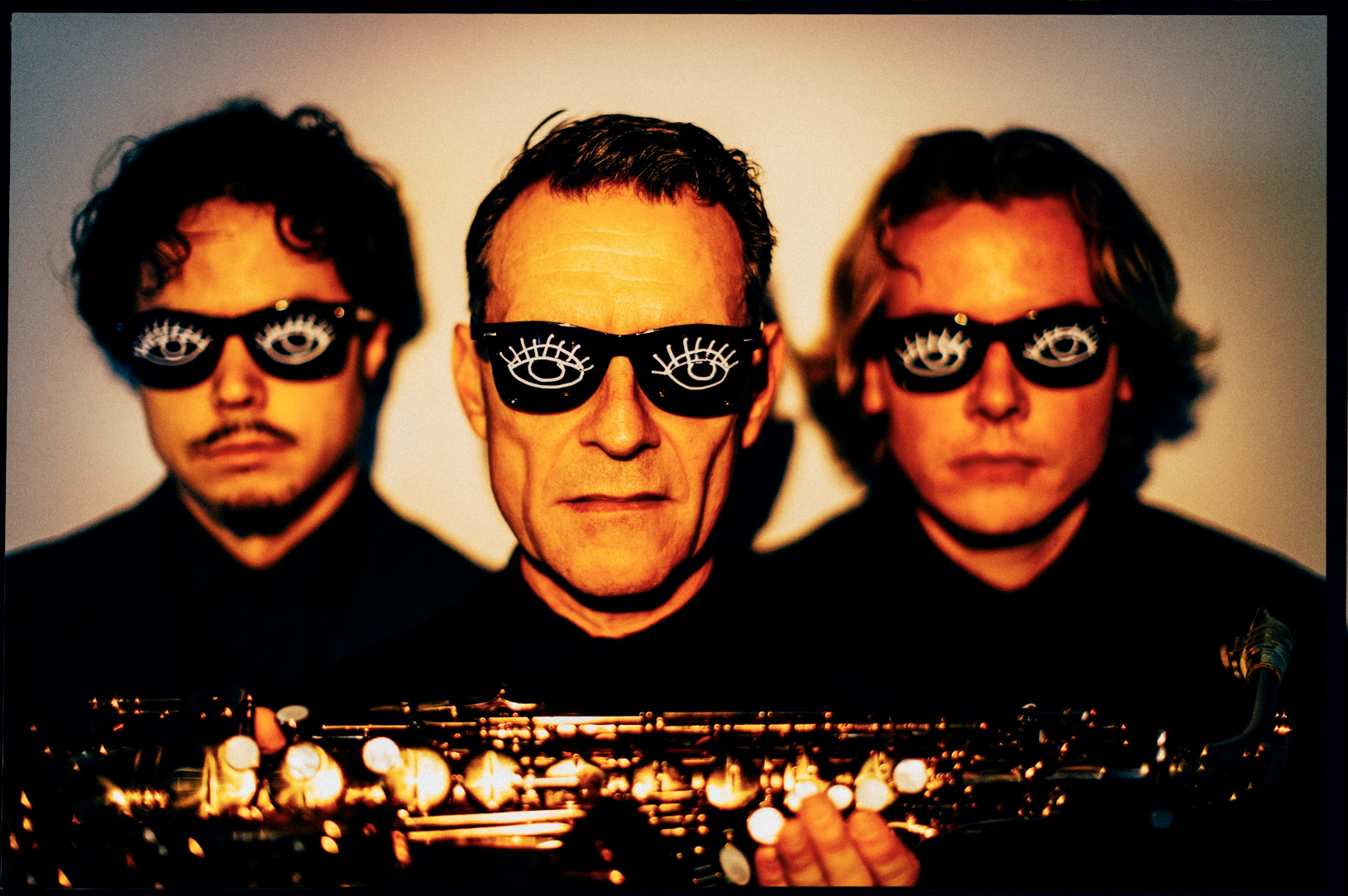
Image Credit: Jonathan Herman
Andy Haas ‘In Praise Of Insomnia’
(Resonantmusic) Released 1st February 2026
I’ve been saddled with insomnia for years, but unlike the highly talented and explorative, and curious saxophonist Andy Haas, I’ve found it difficult to put those waking hours to good use creatively; let alone on the auspicious seasonal occasion of the Winter Solstice, the date on which all these recordings were played and then saved for posterity. I must say, since the double whammy of a kidney autoimmune disease and a minor stroke, my own personal problems of insomnia have pretty much disappeared – I don’t recommend it however! But put to good use here, Andy ushers in the light changes, the almost religious and spiritual emotions and feels of the environment. His sax mirrors the fluctuations and expressions of playing without the hindrance, burden or weight of expectation; just one guy expressing himself and current moods, his experiences of life in the moment on a special day.
Whilst not wishing to repeat myself, I struck up an online and postal friendship with Andy after first writing about the highly experimental saxophonist, trick noise maker and effects manipulator’s turn touring as a band member with Meg Remy’s Plastic Ono Band-esque U.S. Girls a few years before Covid. The former Muffin, NYC side man to the city’s attracted maverick luminaries of the avant-garde and freeform jazz, and prolific collaborator with Toronto’s most explorative and interesting artists, has sent me regular bulletins (and physical copies) of his various projects ever since. Some have been in the solo mode, others with friends, foils and collectives. In Praise Of Insomnia is free of artifice and augmentation; the sound of a singular saxophone and circular breaths (the only other apparatus or consideration is Andy’s stereo manipulations of each track once its finished) alive with a language that admirers and followers of such luminaries as Sam Rivers, Jonah Parzen-Johnson, Evan Parker and Roscoe Mitchell will recognise. It has history and roots, but exists in the now with its squalls, shrills, the fluted, drones, curves, peaks and reedy vibratos that often sound like a mizmar – in fact I sometimes pictured minarets when closing my eyes and just letting the playing transport me from my boring surroundings at home in a dreary, wet Glasgow.
Free and wild, and yet also thought through, almost considered and concentrated, each track (prompted by descriptive and personalised titles) shows purpose; the subject matters often plaint, questioning or disheartened at the metaphorical darkness of the age, but also noting the artist’s own mood changes, and his battles with insomnia itself. It would also make a great soundtrack.
Benjamin Herman ‘The Tokyo Sessions’
(P-Vine Records in Japan/Roach Records & Dox Records the rest of the world) 27th March 2026
Though this is possibly the first time I’ve ever featured the London born but Netherlands raised alto-saxophonist Benjamin Herman on the site, his influence across the European arena of jazz looms large. With over fifty albums and untold thousands of the live gigs (either as a solo artist or as the frontman of the New Cool Collective troupe) to his name during the last thirty or so years, Herman has pretty much convincingly expanded his talents to play foil, collaborator and instigator to projects that span the musical and creative genres – from hip-hop to poetry, to rubbing alongside pop stars and embracing everything from Afrobeat to Latin and film, to the more anarchic and wild.
Venturing out to the far East with double-bassist Thomas Pol and drummer and producer of this album Jimmi Jo Hueting, Herman and his musical partners absorbed everything that was on offer from the eclectic Tokyo hothouse districts of Shimokitazawa and Koenji. Expanding the ranks to include a rich ensemble of guest from the Japanese jazz scene and beyond, they recorded these inspired sessions at the well-known “recording sage” Akihito Yoshikawa’s equally famous Studio Dede hotspot.
Paying homage, spiritual recognition and cultivating the mystique and mystery of Japan’s landscape, its culture, its traditions and abundance of talented jazz players, there’s haywire-like chops of floppy disk experimental Sakamoto, the shrouded misty sounds of Shinto and fluted and blown bamboo music amongst an abundance of reference points from elsewhere. With accomplished musicians like Ko Ishikawa on the Sho (a mouth organ), Tomoaki Baba on sax and Shinpei Ruike on trumpet (bringing a blue shade reminisce of Miles Davis sadness to the studio referenced ‘Dede’) there’s tributes to the Japanese scene and one of its capital’s most famous jazz nightspots, the NRFS abbreviated “no room for squares” – as borrowed from Hank Mobley’s iconic Blue Note released LP of 1964, and more than an inspiration here I believe.
But amongst those cultural appeals, a distillation of the Japanese scene and environment, there’s literal blurts of no wave and post-punk jazz, the noirish and cinematic, show tunes, swing, funk, the wired, colourful, willowy and many examples of mirages and swamp-like veiled mysterious.
At any one time then, you can expect to hear a free flow and agitation of downtown NY, the city skyline jazz scenery of the 50s and 60s, Last Exit, Snapped Ankles, John Zorn, Biting Tongues, Mats Gustafason, Donny McCaslin’s work with Bowie, Jimi Tenor, Comet Is Coming, the Nordic school of jazz, Tong Allen, Lalo Schifrin and John Barry! (in the closing moments of the spy soundtrack does Blue Note ‘Tokyo Moon’ you can hear what sounds like a riff on the 007 theme). Yes, I think we can agree a lot to take in. But with a generous offering of 13 great tracks and no fillers, this Tokyo session is going to appeal to many.
Ombrée ‘Calvaire’
(I Shall Sing Until My Land Is Free) Released 2nd February 2026
Seemingly apt if in an entirely different geographical setting, far from the torn-up battlefields, this album is tied via its facilitator to the Ukraine supporting I Shall Sing Until My Land Is Free label, and its founders own sonic manifestations of doom-laden scared environments: In the case of both Dmyto Fedorenko and Kateryna Zavoloka it’s their native and brutalised country, now in its fifth year of defensive action against the barbaric invasion forces of Putin’s Russia. Meanwhile, coming to terms with their own loss, Ombrée uses a similar soundboard and apparatus of industrial noise, metal machine music, sonorous bass guitar frequencies and slabbed vibrations and crackled pylon charges to process the death of his father, who passed away in February of 2025.
Prompted or set in motion by the sounds of the surroundings and the village’s church bells, Calvaire invokes memory through both field recordings and expressions of death’s many manifestations. Ombrée’s father, we’re told, would have probably hated this musical invocation, illusion and dark meta-built encapsulation of that mourning process, but for its creator and us the album is both a guttural and sophisticated response to its subject.
To the distant echoes of tolled bells and a Gothic atmosphere of an older rural France – the toil of the land, the echoes perhaps of old wars and tragedies still very much of the everyday scenery and psyche – Ombrée scratches the needles of detectors and equipment over the terrain to produce a death noise industrial slab of static, the paranormal, the razored and ghostly. Apparitions in the shadows at every turn; the venerable sounds and atmospheres of the funeral and wake; the coarse fibres of broken electricity and magnetic forces; the Fortean radio set tuned into the afterlife; and the dark materials of trauma uncovered by the plough and spade all come together in one suitably unsettling memorial.
Rocé ‘Palmier’
(Hors Cadres) Released 20th March 2026
With a softer and more melodious flair for an ever-widening use of music references and inspirations, the French-international hip-hop veteran Youcef Kaminsky (better known as Rocé) seamlessly blends new compositions of Latin, French, Italian, North African and South American flavours with modern spells of R&B, rap and electronica on his incredible new album Palmier (“Palm Tree”).
On a disarming pathway, Youcef taps into his roots and his mixed heritage (born in Algeria with his formative years spent in Paris) to rap, sing, report and recall with both emergency and poetic conscious fluidity. And whilst learning of his parents own extraordinary stories and backgrounds – his dad’s history within various anti-colonist resistance movements around the world (Adolfo Kaminsky, as that family name may suggests, are Russo-Algerian French in origin), and his checkered career as a photographer and master forger – and the depth to Youcef’s own studies and extensive recording output, this album has less of a revolutionary zeal and more a sense of real warmth and beauty to it. Listeners will find a sound that’s just as open to the embrace of Morricone as café society jazz, Issac Hayes, cool classical French maladies and American vocoderised soul. In other words: pure class. And yet there’s still an edge to it, a realism and sense of suspense, of the shadows, of current concerns in the search for balance, harmony and identity.
There’s seldom been much like it; the attempt to merge so many cultural markers and ideas and experiences; to recall those innocent and important feelings and places that matter – not in hip-hop anyway. The musicianship and contrast between rapping and a band of jazzy and classical or chamber musicians did remind me a little of Marcelo D2 & SambaDrive ‘Direct-to-Disc’ LP from a couple of years back. But it remains rather unique, crossing over as it does into so many classy and fully lush genres.
You can certainly, even if you don’t understand the French dialect and language, gauge the emotion and the intensity, the themes and scenes conjured out of the notebook and from each instrument. It also helps that guest vocalist, the worldly, Natacha Atlas does much to soothe and dreamily invoke a certain romantic plaint of North Africa to the deft electric piano-like tinged ‘La Voie Laactee’. And whilst we are at it, a shout out to Nathalie Ahadji’s dreamy, wafted and mizzle-like saxophone; to Cisko Delgado’s soulful and light jazzy cosmic keys (though also credited with bass and on arrangements); and to Samy Bishi’s sweeping, near cinematic in places, violin – Youcef can be heard himself picking up the violin on one of the album’s airy mirage-like interludes.
Compositions and songs are mapped out like a personal cosmology of jazzy suites, neighbourhood reportage, frank discussion and more sympathetic articulations and dreams. A great album in short that entertains as much as it educates and impresses.
Nicolas Remondino ‘Hieratico’
(OOH-sounds) 27th March 2026
Scrapes, shavings, rubs, carvings, tangles of tin and metal; various percussive and drum apparatus timbres, textures along with the unidentified sound of spokes are all used to illuminate crepuscular observed moments and experiment in a soundscape of almost silent disturbances, shadows and observations on Nicolas Remondino latest album. Filed under the solo name this time around, Hieratico includes a host of cameos and an appearance from one of the many groups he’s founded over the years, the Dròlo Ensemble. Many voices and musicians join the fold, appearing often for a brief moment, or suffused amongst the avant-garde, explorative and minimalist passages, churns, circular brushing movements of a simultaneously venerable, supernatural and esoteric nature.
Appearing, I believe, for the very first time on the site, Remondino studied under the improvising luminary of classical and jazz piano, Stefano Battaglina. Remondino appears variously under the LAMIEE moniker when in the solo guise but also founded the Tabula Rasa and Silentium ensembles. There’s also been an extensive list of collaborations, some of which appear on this album. And as if to reflect these various foils and their homelands, track titles seem to be in multiple languages: Italian, Spanish, Portuguese, Corsican, but also as far away as Japan. There are some solid names with renowned reputations on the abstract, avant-garde and musique concrète fronts, including the highly respected and experienced musician and vocalist Limpe Fuchs, who’s mantric “no formalism” approach to soundscaping and fluctuated peaks and meandered twisted spoken words can be heard on the strange ching and chimed gamelan-esque ‘Blue Hymn’. The trio of Pierre Bastien (perhaps best known for the Meccano machine Mecanium orchestra), Massimo Silverio (singer-songwriter and composer) and Marco Baldini (a Florence-based composer) manifest some unease amongst the low tuba-like Close Encounters calls and cathedral organ permeation of ‘Tombal’. You could call it an inter-generational balance of ideas, or just feeling out the right sound, the right atmospheres.
Dialects traced back to the time of the Romans, with the Carnic region of the Alps, can be heard in abstracted forms alongside mountain goat trails into, what sounds like, the various ranges that surround Tibet and a reification of the I Ching. Sounds like felt and various materials are wrapped or brushed over the mic, and bottles are rattled, sheets of metal wobbled to resemble a strange thunder, and spoken passages, poems of s sort are pronounced with both wistful resignation and disturbing disquiet.
At times it reminds me of cLOUDEAD and at others of Walter Smetek, but also a whole load of experimental Italian contemporaries too. But at its heart, the album seems unique in its surroundings and processes; the atmosphere and mood personal yet dealing with abstract ideas in a nocturnal climate of freedom and textural experiment. That’s a recommendation by the way!
Snake De ‘Alla Sorrentina’
(Kythibong) 27th March 2026
The results of emptying out an assemblage of hard drives, Dictaphones, mobiles and other assorted devices and units of storage, the collaborative duo of Maxime Canelli and Aymeric Chaslerie put together a less linear and more abstracted, surreal and sci-fi album of eroded fragments, passages, extemporised hauntings and sci-fi interiors.
With a bilingual language of prompted and descriptive titles, each piece seems to have manifested from the ether or the recalled. Like La Monte Young playing exquisite corpses with the Olivia Tremor Control, Basic Channel and a host of kosimsiche innovators, Alla Sorrentina merges the concrete with the tubular, the kinetic, the alien and avant-garde: and many points between. There are touches of the melodic and tuneful amongst the collage and the fragments of data, voices (even continental laughter), static, cosmic bells and the varied jingles and jangles, the hanging and scrapes of the Zodiak and Swiss Cabaret Voltaire art-theatre percussion.
An enervated Faust Tapes perhaps, the album also reminded me in places of playful Cluster and Roedelius. The remnants of near church-like keys are placed with the alpine, the galactic and spells of hallucinatory dream weaving. You could catch something Japanese, something of the Fluxus composers and those working in early electronica as the carousal of sonic ideas and influences circulates. And you can read a lot into the oscillations, the staccato signals, hums, harmonic pings, the indigestive-like masked voices, and the metallic visions of extraterrestrial life.
It’s the sound of liquid bowls; it’s a world both underwater and luna; an hallucination of accumulated sounds, atmospherics, field recordings, tunings, hidden percussive objects, whistled and blown tubes, a baby’s cry and removed surroundings. Something a little different anyway, worthy of investigation and absorption.
Gregory Uhlmann ‘Extra Stars’
(International Anthem) Released 6th March 2026
The innocuous, those meandered thoughts, incidents and gestures magnified, and the noted observations witnessed of nature and its interactions are transformed into a unique musical language by the composer and guitarist (though should really say multi-instrumentalist at this point) Gregory Uhlmann.
A rightly celebrated and held in esteem regular of the L.A scene and constant presence on the rightly revered and much liked International Anthem label, with turns in the collaborative SML collective, a foil to both Perfume Genius (who appears on this album) and to Josh Johnson and Sam Wilkes (last year’s Uhlmann Johnson Wilkes album made my choice release of the year roundup) and to fellow label mate Anna Buterss (anther collaborator who makes an appearance, popping up on bass), Uhlmann has finally found time to go solo with an enriching synthesis of luminescent and ruminated quandaries, descriptions and serendipitous wonders.
Extra Stars inhabits a familiar if now made dreamy, lunar, sometimes oddly and beautifully world and environment; some of it used as prompts and reference points, like Lucia, which refers to the lodge where both Uhlmann and his partner stayed out on the famous Cabrille Highway that runs between San Francisco and Santa Barbara. Less an innocent Beach Boys-like celebration of Big Sur culture and more a tine’s ticking and Mulatu Astatke and Getatchew Mekurya embraced mizzled and snozzled hum of languid unease, the field recorded waves that crashed all around during that stay appear more like tape hiss and noise and point towards the “unnerving”. Though, with Alabasters deft wistful and near serenaded touches it is a beauty of a track. Actually, there’s a feel of that near Ethiopian influence, mixed with something further east and oriental on the beautifully Matmos does cosmic Joe Meek and Django ruminating Days – what a dreamer of a lulled tune that one is. I’m hearing the composition and playing of Emahoy Tsege Mariam Gebru too, but a lot of the calculus of flutters, bulb-like notation, cascades, harmonic twangs, numbers and multi-layered techniques of such luminaries as Riley, Cage, Reich and Spiegel; all made that more appealing, magical, sparkled, lunar and dotty!
There’s a good and transformative use of the guitar, the mellotron and organ, amongst other expanded instrumentation. And even a use of the voice, with guest Tasha Viets-Vanlear’s “bah” voice put through different pitches and sequences on Voice Exchange.
This really is a most delightful and imaginative album, a whirly trip of modulations, sequences at ease, quirks and warbles. Touching on everything from new age avant-garde to the kosmische (some hints of Cluster and their peers), the American school of pioneering electronics, the post-whatever it is that bands like Tortoise do, echoes of Sakamoto at his most loose and experimental, ambience and cosmic shimmered atmospheres. It makes for an intriguing, often woozy and dreamily transformative listening experience.
Here’s the message bit we hate, but crucially need:
If you’ve enjoyed this selection, the writing, or been led down a rabbit hole into new musical terrains of aural pleasure, and if you able, then you can now show your appreciation by keeping the Monolith Cocktail afloat through the Ko-Fi donation site.
End of the Year Revue For 2025: Part Two: N to Z
December 15, 2025
Choice Highlights From The Last Year Part Two
In case you missed Part One of this illustrious list, here’s a recap.
I said I wasn’t going to do it this year. And this may be the last. But here is the second part of a comprehensive revue listing of choice albums (some extended EPs too) from 2025 that we returned to the most, enjoyed or rated highly. See it as a sort of random highlights package if you will.
As usual a most diverse mix of releases, listed alphabetically – numerical orderings make no sense to me unless it is down to a vote, otherwise what qualifies the placing of an album? What makes the 25th place album better than the 26th and so on…
Whilst there is the odd smattering of Hip-Hop releases here and there, our resident selector and expert Matt Oliver has compiled a special 25 for 25 revue of his own, which will go out next week.
Part One: A to M can be perused here
N……………
Neon Crabs ‘Make Things Better’ (Half Edge Records)
Review by Dominic Valvona
Noir & Superior, Che ‘Seeds In Babylon’
Picked by Dominic Valvona
Novelle & Rob Mazurek, Alberto ‘Sun Eaters’ (Hive Mind Records)
Review by Dominic Valvona
Nowaah The Flood ‘Mergers And Acquisitions’
Picked by Dominic Valvona
O……………
Occult Character ‘Next Year’s Model’ (Metal Postcard Records)
Picked by Dominic Valvona
P…………….
Philips Arts Foundation, Lucy ‘I’m Not A Fucking Metronome’
Reviewed by Brian Bordello Shea here
Phill Most Chill & Djar One ‘Deal With It’ (Beats House Records)
Picniclunch ‘snaxbandwitches’
Review by Brian ‘Bordello’ Shea
Pound Land ‘Can’t Stop’ (Cruel Nature Records)
Review by Brian ‘Bordello’ Shea
Q……………..
Querci, Cosimo ‘Rimane’ (Quindi Records)
Review by Dominic Valvona
R………………
Robertson, Kevin ‘Yellow Painted Moon’
Review by Brian ‘Bordello’ Shea
Rose, Sophia Djebel ‘Sécheresse’ (Ramble Records/WV Sorcerer Productions/Oracle Records)
Review by Dominic Valvona
Rumsey, Andrew ‘Collodion’ (Gare du Nord)
Review by Brian ‘Bordello’ Shea
S……………….
SAD MAN ‘Art’ (Cruel Nature Records)
Review by Dominic Valvona
Salem Trials ‘Heavenly Bodies Under The Ground’ (Metal Postcard Records)
Review by Brian ‘Bordello’ Shea
Sanders, Pharoah ‘Love Is Here – The Complete Paris 1975 ORTF Recordings’
(Elemental Music Records) Picked by Dominic Valvona
Schizo Fun Addict ‘An Introduction To…’ (Fruits der Mer)
Review by Brian ‘Bordello’ Shea
Schnitzler, Conrad ‘RhythmiCon’ (Flip-Flap)
Review by Dominic Valvona
Scotch Funeral ‘Ever & Ever’
Review by Brian ‘Bordello’ Shea
Silva, Maria Elena ‘Wise Men Never Try’ Review
‘Wise Men Never Try Vol. II’ Review by Dominic Valvona
Širom ‘In the Wind of Night, Hard-Fallen Incantations Whisper’
(Glitterbeat Records) Picked by Dominic Valvona
Sleepingdogs ‘DOGSTOEVSKY’ (Three Dollar Pistol Music)
Picked by Dominic Valvona
Soft Speaker ‘Rippling Tapestries’ (Cruel Nature Records)
Review by Brian ‘Bordello’ Shea
Sol Messiah ‘War of the Gods’ Picked by Dominic Valvona
Staraya Derevyna ‘Garden Window Escape’ (Ramble Records/Avris Media)
Review by Dominic Valvona
Stewart, Macie ‘When The Distance Is Blue’ (International Anthem)
Review by Dominic Valvona
T………………..
Teamaker, Marc ‘Teas n Seas’
Review by Brian ‘Bordello’ Shea
Theravada ‘The Years We Have’ Picked by Dominic Valvona
Toivanen Trio, Joona ‘Gravity’ (We Jazz)
Reviewed by Dominic Valvona here
Tomo-Nakaguchi ‘Out Of The Blue’ (Audiobulb Records)
Review by Dominic Valvona
Tortoise ‘Touch’ (International Anthem X Nonesuch Records)
Review by Dominic Valvona
Toxic Chicken ‘Mentally Sound’ (Earthrid)
Review by Brian ‘Bordello’ Shea
Trupa Trupa ‘Mourners’ (Glitterbeat Records)
Info/Singles Review Feature by Dominic Valvona
U…………………
Uhlmann, Josh Johnson, Sam Wilkes, Gregory ‘Uhlmann Johnson Wilkes’
(International Anthem) Review by Dominic Valvona
Ujif_notfound ‘Postulate’ (I Shall Sing Until My Country Is Free)
Review by Dominic Valvona
V………………….
Various ‘TUROŇ/AHUIZOTL’ (Swine Records w/ Fayuca Retumba)
Review by Dominic Valvona
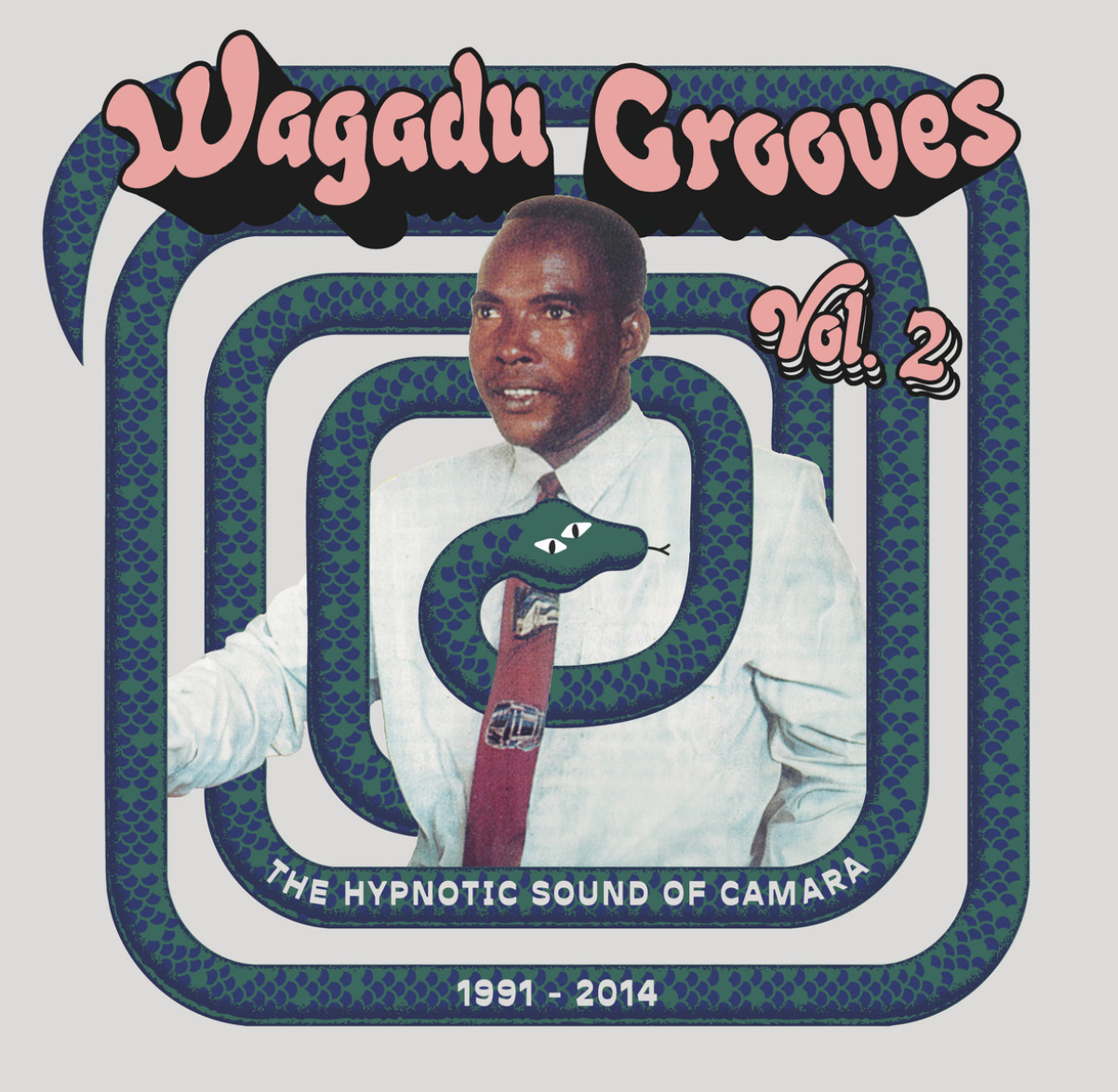
Various ‘Wagadu Grooves Vol. 2: The Hypnotic Sound Of Camera 1991 – 2014’
(Hot Mule) Review by Dominic Valvona
Vexations ‘A Dream Unhealthy’ (Cruel Nature Records)
Review by Brian ‘Bordello’ Shea
Violet Nox ‘Silvae’ (Somewherecold Records)
Review by Dominic Valvona
Voodoo Drummer ‘HELLaS SPELL’
Review by Dominic Valvona
W…………………..
Wants, The ‘Bastard’ (STTT)
Review by Brian ‘Bordello’ Shea
Warda ‘We Malo’ (WEWANTSOUNDS)
Review by Dominic Valvona
West Virginia Snake Handlers Revival ‘They Shall Take Up Serpents’
(Sublime Frequencies) Reviewed by Dominic Valvona
Winter Journey, The ‘Graceful Consolations’ (Turning Circle)
Reviewed by Dominic Valvona here
Y…………………….
Yellow Belly ‘Ghostwriter’ (Cruel Nature Records)
Review by Brian ‘Bordello’ Shea
Young Mothers, The ‘Better If You Let It’ (Sonic Transmissions)
Review by Dominic Valvona
Z……………………..
Zavoloka ‘ISTYNA’ Picked by Dominic Valvona
For those that can or wish to, the Monolith Cocktail has a Ko-fi account: the micro-donation site. I hate to ask, but if you do appreciate what the Monolith Cocktail does then you can shout us a coffee or two through this platform.
A world of sonic/musical discoveries reviewed by Dominic Valvona. All entries in alphabetical order.

Le Grand Couturier ‘S-T’
(Un Je-ne-sais-quoi) 7th November 2025
The hula limbo swinging hoop of French-Polynesia is both languidly and more wildly reimagined, transported and pulled in various directions by the Le Grand Couturier trio of Rachel Langlais (keyboards and vocals), Jean-François Riffaud (composition, steel guitar and sharing vocals) and Clément Vercelletto (drums, synths).
Newly formed for the explorative Un Je-ne-sais-quoi label, with two of that group already familiar names to Monolith Cocktail readers – I reviewed Rachel’s solo avant-garde, textural and tactile prepared piano suites album Dothe for the same label back in 2021, and Clément’s nightjar imbued experimental L’ engoulevant album for the label at the start of this year -, this ensemble of widely diverse experiences draws upon a rich soundscape of tradition and the psychedelic to weave a sort of part-beckoning and part-chaotic Hawaiian homage. Cross-referencing a multitude of sources, some form their own projects, the trio’s debut album is an altogether more mirage and hallucinatory vision of Island life, drawn into a modern world of electrical-charged, felt-like rippled interreferences and coarser transmissions. Whilst sauntering and swaying to a familiar Hawaiian rhythm and melody and the sound of the steel guitar, there’s a constant funnelling and layering of what sounds at times like scraps from CAN’s ‘Unfinished’ and ‘E.F.S.’ series, The Beatles Magical Mystery Tour funfair organ and psych trippy reversals, and musique concrete.
If you loved Pete Fowler’s Monsterism Island curated compilations then you will easily pick out traces of Les Baxter, White Noise, The United States of America (especially Rachels’s ether emergent distant voice on ‘Maneki Neko’, a reference to the lucky “beckoning cat” figurine), The West Coast Pop Art Experimental Band and Martin Denny. But maybe surprised to hear the delightful South Seas motions and lilt of Makoto Kubota & The Sunset Gang and the wavey bendy sounds of bluegrass and country: reimagined by Moebius & Plank, Charlie Megira and Bailey’s Nervous Kats. But what’s this approaching from the sea, paddling through the waves on an outrigger canoe of old, but Dick Dale and The Bel-Airs thumbing a lift in the company of Sonido Galle Negro.
A sanctuary come portal to other worlds, this tropical magical hideaway proves fertile ground for musical and sonic manipulation, repurpose. Hawaiian phrases – ‘I Ku’u Wa Li’i Li’i’ or “my childhood days” for example – and typography, the vibe of the place, its blues and more fragrant wilts, marooned lethargy is not so much guarded or restored as woven into something beguiling, strange, serenading, sometimes distorted and often swimmingly lunar. There’s undoubtedly some layer of post-colonial revisionism, of ownership and the anthesis of European lens ethnography, but the trio’s debut album is just a very lovely, magical thing of Polynesia fantasy. It will be interesting to hear more.
Imperial Motors ‘Charlie Don’t Surf’
Released 21st October 2025
States/countries that claim to have adopted the Marxist doctrine have, historically, usually enforced it with a totalitarian fist, forcing its artists to propagate the authoritarian propaganda of its own choosing. We can forgive the exuberance and contemporary rage of the young, possibly knowing that they will have less, pay more, and lose many of their freedoms in the process: making them a doomed generation depending on your pessimism scale. Marxism has its utopian promises: a fairness of distribution, power to the proletarian and all that – and I’m sure Marx, to paraphrase, said that the worker can never be happy working for someone else: though self-employment is no picnic. But like every idea, in reality fails to grasp our innate individualism, our differences. But as I already opened with, artists in such climates have usually been just as threatened, locked up and sent to Siberia for daring to stray from the one-party line.
Anyway, I’m only banging on about this because the latest agit-post-punk-disco-indie band to emerge from the Brooklyn scene, Imperial Motors, have mentioned it in their email to me. Or at least, as an influence (and damn fine one to have) they cite the Gang Of Four’s version of sonic Marxist rhetoric and fire. Whilst also, it must be stated, they use the term satirical, they wish to employ their political polemics and protestations via music, rather than throw real Molotov’s from the barricades. And yet, despite the rightful outrage, disillusion and riled injustices of our present times the quartet’s debut EP is actually very melodic, tuneful, disarming in parts and full of DFA Records and post-punk disco synth lines and beats: think early LCD Sound System and the anarchic energy and maximalist approach of such contemporary groups as Crack Cloud and Squid matched by Martin Dupont, the Pop Group and Boots For Dancing. And that’s only half the story.
But let’s introduce the band first. We have Liam O’Toole on vocals and guitar, Josh Cukier on drums and also vocals, Ben Biber on synth/keys, and again, sharing vocals, and Andrew Graces on guitar. This core has expanded for the proposes of the EP’s second half pairing of tracks, ‘Sonya’ and ‘Infinite Money Glitch’, bringing in the climatic ariel bending intensity of violists Ryan Anderson and Jarrod Ajhar and violinist Lila Lifton on the latter, and the accompanying vocals of Hely Morales on the former.
Referencing, so it says in the email, a level from Call of Duty but obviously a cultural throwback to Sandinista era The Clash via its original immortal line in Apocalypse Now – spoken by Robert Duvall’s character, Lieutenant Colonel William “Bill” Kilgore -, Charlie Can’t Surf is twisted by the toxins in the waters. Each track is a battle between holding it together and falling apart in a world torn asunder, starting with the brilliant opener ‘Bartender’, which pits our protagonist bar fly spiralling into a pit of doubt and reactionary disillusion by the transactional culture that leave us all numbed, isolated and without any sincerity. Lurching like a derailed David Byrne or even Scary Monsters period Bowie, and even an Eno, between eyeing up the unrequited bartender and spinning into bar stool bursts of preachy frustration; a statement on the poisoned waters and our inability to fish without contamination and erosion of our closeness to nature. It sounds like a slice of Scottish 80s post-punk via XTC and has a great chorus that stays with you.
‘Freeloader’ sees a slight change in direction; still riled-up, and almost unhinged in places, but now evoking signs of ‘Helicopter’ era Bloc Party and The Futureheads. The band attempt to find the tangible, connective in a world of synthetic vacuous exchanges; turning on neighbours like a passionately agitated Talking Heads in suburbia. The EP’s most surprising turn is ‘Sonya’, a damaged love song, about to be squashed by the collapse of the Artic shelf. Their most synth-pop-orientated track is disarming with its subject: climate change apocalypse. The lovelorn glaciologists at the centre of this sorry doomed love explosion of euphoric crescendo art-pop contemplate a sort of Romeo & Juliet suicide in the shadow of ecological destruction.
No one could put it better in trying to explain the finale, ‘Infinite Money Glitch’ than the band themselves: I would have missed most of this contextualised layering. The “uncanny valley is inverted: it’s not machines imitating humans, but humans running on cold, mechanical instinct. Screeching guitar, off-kilter drums, and an asymmetrical bass groove lay the black midi-like foundation as various speakers retell colonial anecdotes through glib, filtered vocals as if automated by their own apathy. “Mortgage rates [are] saved on the mass graves,” sings a real estate agent. “Seafront plots if you can spot some, never mind the bones, the flotsam.” The various narrators then become united by the refrain “help us make a difference / help us make them different, combining into one single voice, one single organism — the US colonial project of subjugation, domination, and profit. In the name of corporate growth, annihilation is just collateral.” You all got that? Good. It’s a very nice closer actually, heavenly gilded with drama and showing signs of all the influences I’ve already mentioned plus Faith No More, PONS and Black Medi. Capitalism is a bitch. Apathy the curse. And yet there is a certain fantastical element, and the sense of something rising up out of the gloom.
An impressive EP that offers much hope and anticipation for the album; a burgeoning band with much potential, caught between dancing and riling at the system.
Shoko Nagai ‘Forbidden Flowers’
(Infrequent Seams) 14th November 2025
Revealing a both playful and more stirring emotional tumult of memories, chapters from the multi-instrumentalist and experimental musician Shoko Nagai’s life encapsulate a musical conjuncture of the wild, the avant-garde and more plaintively classical on a most extraordinary album.
At the head of a new quartet, and in a “semi-autobiographical” mode, Nagai draws upon a lifetime it seems of eclectic influences and experiences; at any one time, and often in the same composition, combining Japanese salon music, free form jazz, klezmer and Eastern European classical tragedy with spine-tingling and haunted tension soundtracks and the manic.
But before we go any further, a little information is needed: some background if you like. For those unaware of Nagai’s reputation and prowess, the keys specialist – I say keys, as on this record, she plays an assortment of such instruments, from the piano to the Farfisa and Fender Rhodes, but is credited for electronics and the most unusual of sound devices, the Nintendo DS – made her way from Japan to the USA, where she studied at the prestigious hot house of Berklee. Career wise, Nagai has rightfully received a number of nominations and awards, and worked with such luminaries as Pauline Oliveros, John Zorn, Butch Morris, Satoshi Takeishi, and Yiddish singers. Joining her on this latest album under the newly assembled quartet are the Brooklyn-based drummer and percussionist Kate Gentile, active on the NYC jazz scene since 2011; the Grammy Award-winning recording artist and composer, and on this album violinist, Pauline Kim Harris; and trumpet/flugelhorn player and composer Pamela Fleming. All three have extensive, admirable CVS, and plenty of experience in their chosen fields. And bring an almost infinite scope of musical and sonic possibilities to the album.
If led is the right word, this ensemble matches and stretches the ideas, sentimental prompts and both bluesy and more poetic fluid language of Nagai’s playing and compositional set-ups. I haven’t any info on how this record was made, so no idea how planned or improvised it is, but it sounds like the perfect balance of both; there’s room for exploration, room for passages and break outs of energy, tension and release, and yet there is something always tangible, a melody, a direction and compositional device to make a return. For every more instantaneous Art Ensemble of Chicago burst or more manic, quick-stepped Bad Plus moment there’s a moment of reflective musical haiku. And for every leap into the jazz-fusion of the Weather Report, or the more fluid quickened piano works of Ryo Fukui and Cecil Taylor, there’s echoes of Cosmic Coltrane, Annie Gosfield and Alex Roth’s Cut the Sky project.
The action is constantly on the move between splashing waves and near cartoon retro gaming music, between deep classical poignancy and the more sinister and troubling. For example, ‘Whispering to the Bubbling Wall’ could be Phillip Glass in troubling, near haunted and ghoulish circumstances, whilst ‘Hello Universe’ sounds like a burbled synth and twinkled keyed and cartoon skidding and skirting of Ethio-jazz and Shigeo Sekito. But then you get pieces that are more like the music of Toru Takemitu, the Jewish diaspora in Eastern Europe, the Don Cherry Quintet and La Monte Young.
Every instrument is put through its paces, stretched but also played with near grace at times, or melodically holding an emotion and reference to a particular piece of Nagai’s story and expressions. And whilst a switchboard of calculations, quirky effects and near shrills and heralded trumpets blast or staccato across kooky flighty spells of quickness, the electrifyingly hectic and whistled, there’s a real weight to each poetically entitled episode in this story. Forbidden Flowers is simultaneously a whirlwind, contemplation, observation and incredible creative outpour of musicianship; the sources and influences proving surprising and dynamically playful in equal measures.
Silver Nun ‘Tabula Rasa’
(The Crystal Cabinet) Release 31st October 2025
Driven up into a ringing and resonating performance of the mystically ritualistic and expressively rallying, the international Silver Nun duo of Lucy Valentine and Simo Laihonen proves that both distance and time are no barriers to a congruous union of creative disciplines. Demarcated to a point, though running near seamlessly into each other, Tabula Rasa is one long complete work set in motion by Valentine and recorded during the Pandemic: born into a very different world to now. On that day, in the venerable, or not, setting of a “deconsecrated” church – shorn of its original afflatus purpose for secular inclusion or as an idiosyncratic venue -, the County Durham silversmith, film maker, label founder (this album is being released through Valentine’s own The Crystal Cabinet imprint, an electroacoustic label that focuses, I believe, on cassettes) and multi-instrumentalist strummed, blazed and whipped up a resounding invocation and rallying concentration on the guitar. This was in 2021. At a later date in 2023, drumming and percussionist foil, Laihonen added his own rhythms, cymbal splashes and crashes and hoof-like gallops. It sounds however like the collaborative partners were both in the same space together, not two years apart, with one in the North of England the other in Finland.
Going much deeper, this nebulous offering and invocation evokes the melodic circled spins and dervish religious music of Iran, of atavistic Persia, the Levant and amorphous echoes of various Gothic folk styles, of doom music and the Biblical. It’s akin at times to dropping Death In June or Ash Ra Tempel in the Middle East of the Sufi. And then again, the stamps and danced steps in places reminded me of Islamic Spain. But then the temenos set ‘Underneath the Hypaethral Sky’ segment sent me into an incense smoked trance-like recall of the Hellenistic. And the guitar at times reminded me of Steve Gunn, and at others, like the music of Wovenhand, the mood describing a more esoteric vision of the old American West.
There’s a lot going on reference wise to be sure: even the title of the album is borrowed from the Latin, “the idea of individuals being born empty of any built-in mental content, so that all knowledge comes from later perceptions or sensory experiences”: or to put it simply, “a clean slate”. And yet “rasa” is also used in Indian culture and religion, describing the aesthetic flavour of any literary, visual or musical work that evokes an indescribable feeling in the reader or listener. Channelled into one reverberating and beating, fluctuating momentum of rattled rhythmic strings, metallic and burnished elements, the spun and more elan, and frame drummed and more kit rolling bounds, both the daemonic and the spiritual collide to create an atmosphere that’s simultaneously refined yet strong. In years to come, generations will study this period of creativity very closely; the most bleak, restrictive and frightening period in most people’s living memory was a catalyst for a pouring of anxieties, stresses but deliverance too. The Silver Nun vehicle, its title reflecting Valentine’s silversmith craftsmanship and how it applies to and informs her musical processes, is ritualistic, a purging almost or letting go; the changes ringing out, sounding out into a suitably atmospheric environment. And yet travelling far, reaching across time and geography to take in near Byzantine and atavistic old evocations. A sound collaboration that proves distance is no barrier to a unifying experience like no other.
SML ‘How You Been’
(International Anthem) 7th November 2025
The inter-connections and overlaps are strong on this one, with the enviable might and scope of influences stretching across a multitude of scenes, styles, decades and geography.
Based in L.A. but from a multi-national and even international cast, the often abbreviated Small Medium Large includes the Aussie-born artist, bassist and composer Anne Butterss (last year’s solo headed, but featuring many SML band mates, Mighty Vertebrate album was included in our choice list of 2024), “synthesist” Jeremiah Chiu (another favourite from 2024, Chiu’s team up with the violist Marta Sofia Horner and luminary of new age trance Ariel Kalma, The Closest Thing To Silence, another highlight of 2024), saxophonist Josh Johnson (back in March Johnson collaborated with fellow SML member Gregory Uhlmann and Sam Wilkes for the Uhlmann Johnson Wilkes triumvirate), drummer Booker Stardrum (this is the first time that the all-round percussionist and drummer, educator and composer, who’s worked with Weyes Blood and Lee Ranaldo, has appeared on this site I believe) and the guitarist Uhlmann. In some ways this combo could be called the International Anthem house band, or the label’s super group of a sort, as near enough each member has released of featured on an album or two on that Chicago institution – celebrating a modest birthday anniversary recently, the label has managed in a quick time to establish itself as one of the most critically favoured experimental imprints; a hub for all things jazz and beyond, and just the other month, the chosen platform for Tortoise’s first album in years – a group who’s imprint can be heard and felt on this SML album.
For the ensemble’s second album together, and following a similar process, methodology to their debut, the rhetorical How You Been features an “extensive post-production of recordings from a handful of shows” pulled together to make a whole – you can hear the audience’s appreciation at one point. Flexing and honing their improvisations and more locked-in work outs, they’ve managed to surprise and take a few quirky, kooky and often funky turns to create a kinetic fusion of post-rock, post-jazz, no wave, agit-dance music body movements, fourth world musics, environmental ambience and vague ethnographic percussion. On one hand its Ariel Kalma and Tortoise meet with Jan Jelinek and Kirk Barley, and on the other, like Kraftwerk deciding to move to downtown NYC in the early 80s. But then again, I’m hearing Eno & Byrne, Golden Teacher, Heroes Side Two Bowie, Kriedler and Carl Stone too. For between the longer future-post-punk-funk and jazz-fusion (if rewired by the Chicago hothouse of stars) numbers there’s shorter passages of the tubular, fluttered, new age and liquid: a lot of water passing through, from deep dives to the ocean bed to water side tranquillity gazing.
Titles merely set out amorphous prompts, steps and references, as a “Moving Walkway” is musically represented more by a Greg Foat-esque walking milky way traverse. And “Blood Board SHROOM” shapes up to be an atmospheric passage of crystallised light forming. But generally, you never know exactly where the SML group are going to take you. Essentially though, this is an outfit with groove and rhythm and confidence in extending an already loose jazz core into new fields and orbits. If no one has put this proposal forward already, they’d be great touring partners with Tortoise.
Snorkel ‘Past Still Present Tense’
(Slowfoot & Archaeon) 14th November 2025
Tortoise with a groove and rhythm as manipulated and effected by Lee Scratch Perry. The Mosquitos meets Populäre Mechanik at the workshop of Walter Smetak. Just as couple of reference point combinations I’m throwing out there to describe this evolving and revolving South London based ensemble’s sound and scope of influences. And yet, it barely scratches the surface, as the fixed – at that moment of time when recording this loose collection come both retrospective and future teasing survey – lineup modulate, discombobulate, stutter, flex, warp, transform, oscillate and reverberate ideas as eclectic as gamelan, industrial funk, krautrock/kosmische, post-rock, jazz, d ‘n’ b, no wave, post-punk, cult library music, the fourth world “musics” of Hassell, Byrne and Eno, and of course dub.
But let’s pull back a moment before ploughing into this generous double-album spread – the group’s third studio album proper I believe, following on from 2007’s Glass Darkly and 2012’s Stop Machine -, and share a little information about this incarnation of Snorkel. Original instigator, drummer-percussionist, performer with This Is Not This Heat, Daniel Sullivan and the Lifetones, and producer for such acts as Gong, Charles Hayward and Vibration Black Fringe, Frank Byng is joined by Ben Cowen (another connection to Vibration Black Fringe, Cowen was also formerly a member of 7-Hurtz and has collaborated with Morcheeba) on keys and synths, Tom Marriott (a member of Pest) on trombone and effects, Roberto Sassi (formerly of the Vole Trio and Cardosanto, and a current member of Heckle Chamber and Charles Hayward’s Abstract Concrete project) on guitar, Ralph Cumbers (releases music under the Bass Clef moniker) on modular synth and samplers, trombone and bass, Charles Stuart (currently the music director for Grace Jones’ live band, but also the driving force behind The Fish Police; Stuart also goes under the “clandestine” cloak of 129 when producing and gets a separate credit under both on this album) on various electronic apparatus, percussion, melodica, vocals, keys and guitar, and, popping up on two tracks on the D-Side of this double-album, Nick Doyne-Ditmas (credits include Pinski Zoo, Monkey Puzzle Trio and Crackle) on bass duties. You’ll probably not going to get the chance to listen to this particular septet configuration again, so enjoy the moments captured, improvisation style, during the time it took to lay all nineteen tracks down in the studio environment. I imagine that whatever happens next, the set-up will again have changed: another varied lineup of connected players from the scene, orbiting around the mainstays.
Past Still Present Tense mixes not only time but combines elements of sci-fi, global rhythms, the near clandestine, Giallo spooks and something more alien into an often-post-punk-funk of the kooky, mystical, esoteric, futuristic and galactic. The foundation, the base, or I should say, the main influence that permeates throughout is dub (more On-U Sound, Lee Scratch Perry and World of Echo); transmogrified and liquified to vibrate and resonate off an electrical wave of zapped electronica and jilted, skewered, wavy metallic dance music. And yet somehow, they’ve managed to run it through the same processors, the same gait metric as Dunkelziffer, Conrad Schnitzler, Der Plan and Klaus Kruger to give it a Germanic bent.
Hand drums, various ethnic percussion and instruments (the Ghanian Gyil is mentioned in the accompanying press notes) are interwoven and merged with electronica, the yells and hysterics and riles of post-punk (the vocals pitched somewhere between the Pop Group, Cabaret Voltaire and Damo Suzuki) and the subversive. There are traces of everything from tubular concrete musique to the ambient, from Bill Laswell to Jeff Parker, Krononaut and Holy Fuck; from Roni Size to Finis Africae, Moebius, The Missing Brazilians, Gary Numan and Irmin Schmidt. The organic and machine in a loose rhythm cross multiple borders to create both a post-no wave dance and more mysterious, sometimes creeping and dystopian sci-fi (the nod to Iain Banks ‘The Wasp Factory’ couldn’t escape anyone’s notice). There’s much to discover and absorb with each play that I can imagine this collection will keep listeners very busy – a lifetime of work in some band’s cases.
Suntou Susso ‘Jaliya Silokang: The Path Of A Griot’
7th November 2025
“Some people are born into a family of kings
Some people are born into a family of farmers
Some people are born into a family of scholars
God has created me to be a Griot.”
Right from the outset the Gambian Griot, multi-instrumentalist, singer, composer and filmmaker (you could claim a true polymath) Suntou Susso sets out his afflatus legacy with the chorus on this album’s title track and opener ‘Jaliya’. Born into a service, the divine anointed position of “cultural guardian”, of “storyteller”, of “praise singer” (all terms used to describe the ancient role that stretches back over 700 years), Suntou like his father before him continues in the grand tradition, yet always looks to pastures new, working with and pushing those roots forward.
Roughly explained as a musician or entertainer from Western Africa whose performances include tribal histories and geologies, the Griot’s instrument of choice is the 21 or 22-string (Suntou favours the later), a long-necked lute crafted out of half a gourd and covered with cow skin. Suntou is just one such brethren from the extended family to play this harp-like sounding instrument; his half-brother is none other than the equally celebrated Seckou Keita (no stranger to this blog over the years), and his father, the legendary Mamudou Susso. Just in the last year or so, Suntou toured the great Griot songbook with his father: an intergenerational experiment you could say. That musical heritage continues through his sister, the applauded vocalist Binto Suso. Binto makes an appearance on the serious kora spilling and, starting off with, near solemn attentive piano backed track ‘Jula Jekereh’; a reimagining of an ancient Griot song, the protagonist of which was a well-known wealthy flamboyant trader called Jekereh Bayo who decided to celebrate the age-old traditional Muslim festival of Tobaski ten days later than usual, co-opting the regions kings and all the right movers with his riches. Close to her brothers lead vocal, Binto carries a beautiful echo of Miriam Makeba – the kora actually reminds me of Suntou’s half-brother Seckou. As the song progresses this voice starts to soar and cover the heights, beautifully sung, like all the songs, in the ancestral Mandinka mother tongue – a community and dialect found predominantly in the Senegambia region, but also in Southern Mali and Eastern Guinea, the Mandinka are said to be descended from the atavistic Mali Empire.
Binto appears alongside a number of special guest stars and an extended company of musicians (twenty in all). For this is nothing if not an ambitious record, recorded both in the UK and Senegal with an expanded ensemble of gifted players; from strings to brass, drums, guitars and of course a host of backing vocalists. Perhaps one of the most iconic names to have contributed to the album is that of the Malian guitar legend Vieux Farka Touré, son of the rightly venerated late icon Ali Farka Touré. He brings a more tamed version of his sustained fuzz desert rock style and Bamako club movers’ shoe-shuffle to ‘Joulou Fula’, a song that entwines both sets of guitar and kora strings together in an electrified bluesy union across the sand dune contours of the land. Another “super” star, the Ghanian performer, vocalist, percussionist, arranger, bandleader and art director Kweku Sackey, otherwise known professionally as K.O.G., makes an appearance and leaves an impression on the Afro-rock fusion ‘Lannaya’. In celebration, the values of trust, integrity, love and mutual respect are given a funky ride, as Kweku both toasts and vocalises with a positive energy: if there was a camera in on the session, I’m sure he’d be very animated and dancing about in the vocal booth.
With a production of both fluidity and softened punches, elliptical and staccato rhythms merging effortlessly with the smooth, Jaliya Silokang: The Path Of A Griot’s amorphously crosses porous borders culturally and musically. With both golden and rustic threads, the spindled and cascading, and a kora sound that is simultaneously harp-like and woven as if making a tapestry, it’s a most pleasant, beautiful, soul-searching, yearned, reflective and gracefully transportive listening experience. And with the addition of strings and serenaded and more drifty saxophones, there’s both subtle evocations of the classical and jazz genres to enrich the overall sound.
All of this fits together very nicely, extending the musical family geographically, and embracing modern sounds and the old in another successful intergenerational project that looks back whilst facing current strife and the topics of immigration. But at the heart of this album is a joy and need to embrace heritage, and to celebrate the Griot: a role that bookends the album, firstly at the very beginning with a song about the family’s traditional roots, and at the end with a ruminating panoramic display of rolling and expressive kora playing that articulates the eternal Griot traveller’s journey from destination to destination, storytelling and musically sharing the stories and bonds of that calling. This is a most ambitious and sprawling album that uses its many threads brilliantly and evocatively and will do much to cement Suntou Susso’s reputation as a burgeoning star and virtuoso of the Griot form and the kora.
Tana Delle Pigri ‘Wunderkammer’
Released 3rd October 2025
Five EPs into a newish project from the very excellent K. Board & The Skreens’ Jacopo and friends Guido and Pioppo, and the Monolith Cocktail is introduced to a languid amorphous sound world of post-punk-jazz, post-punk-funk, krautrock, psychedelia, post-hardcore and vague Ethnic destinations. A play on words that only really works in Italian, Tana Delle Pigri or “Den of the Lazy” repurposes Den of Tigers, is an illusion/hallucination of almost organic and relaxed influences, cast adrift, dangled or hovered, almost as if improvised or in a live setting.
From the mirage like shadows cast across arid plains on the opener to spells in which the atmosphere of finger cymbals and percussion evoke the Middle East and the Far East and the Byzantine, or when the woody breathed and chuffed lazy flute points towards fourth world sketches of the Amazon or Egypt, there’s both a balance of prods and flexed wanders across familiar turned unfamiliar terrains. All the while that trebly bass provokes echoes of post-punk mixed with Fugazi, but also CAN, Dunkelziffer and Embryo. But the vibes change on nearly every track, moving between the Killing Joke and The Untied Knot, Isotope 217, Mosquitoes, The Cosmic Range (for sure on the lovely finale ‘Musica Maestro’) and Slint. There’s even an organ serenade of Ethio-jazz at one point, and a sort of Red Hot Chilli Peppers if warped by Introvoid bit on ‘Felpa Grigia’ (“grey sweatshirt”). Touches on every instrument seem near indolent at times, relaxed, as they manifest pictures, scenes and landscapes both earthly and on the astral planes. But overall, there’s some intriguing and brilliant ideas taking shape from such indolent qualities. A fascinating project from the Italians.
Yalla Miku ‘2’
(Bongo Joe Records) 7th November 2025
Cornering the market in musical Cyril’s it seems, the Swiss-based loose collective of Yalla Miku features both the Cyril Cyril partnership of Bongo Joe label honcho Cyril Yeterian and drummer/percussionist Cyril Bondi, plus a revolving lineup of congruous foils plucked from the canton’s diverse assembly of globally imbued and post-punk groups and projects. The mainstay in this case, and co-founding instigator and Ethiopian and Eretria pentatonic scale Krar lute player come vocalist, Samuel Ades Tesfagergsh brings the roots and connections of his homeland to an already busy and seamlessly blended fecund of sounds and influences. A refugee starting life anew in Switzerland, Tesfagergsh came to the attention of Yeterian through the Bongo Joe shop and hub; the record store and label founder’s own upbringing and roots traverse the Middle East, with the PR notes referencing Lebanon, Syria and pre-Türkiye, Anatolia.
This combination, the spheres of influence and backgrounds makes for some surprising and edgy fusions.
Marking a shift in personal after the departures of Simon Aubert, Annouar Baouna, Vincent Bertholet and Ali Bouchaki, the simply entitled new album, 2, features Boxing Noise’s Emma Souharce on machines, synths and vocals and Louis Knobil, who goes under the Knobil signature, on electric bass and vocals. Apart from slimming down to a quintet, the main changes have been vocally, with now every member of the group providing singing, narrating or talking duties. But the merger of the Swiss post-punk underground and the international sounds of the Middle East, North Africa, but Arabian world at large, remains the focus; it’s to what degree that signature is loosened and widened.
Thematic wise, this album is imbued with references to Tesfagergsh’s former Eritrean home, his culture too. His village of Embeyto is immortalised via the vibes of an East African PiL lurking in a dubby reverberated soundscape of metallic hand drums and creaky opening doors, and a ghostly taste of The Specials. Common throughout the album’s ten tracks, between the authentic trills, hollers, cries of the Arab world, the post-punk jutted, elliptical and spikiness of The Pop Group and the Dead Kennedys (see ‘Post-Aventures’), the resonated dub exotics, otherworldliness and wavey bass lines of The Mosquitos and Jah Wobble, and the Anatolian and Egyptian dance pop disco of Altin Gun, there’s a sound that mimics the organ of both Ethio-jazz and fun house spooks garage music: a ghost train merger of Hailu Mergia, ? And the Mysterians and Baba Zulu. Seemingly more pliable, more crypt frights and hauntology than general dark arts and paranormal, the veils of the esoteric add a layer or mist of mystery and creeping disquiet to the themes being aired: the use of religion as a tool to wield power, the geopolitical and status of disposed, and traditions of marriage. Embeyto could be just a lovely nostalgic admiration of home, but its location within the Tigray region can’t help but draw attention to the recent, and much forgotten, conflict there.
To be honest, it’s far beyond my own knowledge and scope of specialism, the conflict fought in the Tigray region (the most northern state within the borders of Ethiopia) is convoluted and has a long history stretching back generations. But to be brief, this two-year conflict pitted forces allied to the Ethiopian federal government and Eritrea against the Tigray People’s Liberation Front (TPLF). The TPLF had previously been a dominant force politically in Ethiopia before conflict with its neighbours, unrest within the country, and disputes over leadership spilled out into horrific violence. But during this particular and most recent chapter, between the 3 November 2020 and 3 November 2022, it is estimated that two million people were displaced from the region, and 600,000 killed. Tigray was itself left in ruins; its capital turned over to the federal government. Reports began to emerge in the aftermath of ethnic cleansing and war crimes. And the situation is no more stable now, a few years along, with conflict once more looming within Eritrea. If you were interested in Tigray musical culture, and liked the sound of the Krar, then you should check out Ian Brennan’s recent raw and uncloyed production project, Tigray Tears ‘The World Stood By’. There’s even a reference, title wise, on the hoof galloping, gangly post-punk North African dance ‘Alemuya’ to the song and album by the Eritrean singer Dehab Faytinga. Mixed in with the Tigrayan/Eritrean thread are references to the Arabian world, its language and even religion; the diverse region’s music effortlessly fused with a myriad of influences from across the diaspora, from Europe and beyond. One minute its quite chic Swiss French, the next authentically North African. It’s Bloc Party, Stereolab, Dunkelziffer, the Orchestre Tout Puissant Marcel Duchamp and Snapped Ankles meets Bongo Joe’s own Maghreb K7 Club survey and Cyril Cyril in an electrified new wave punk and no wave confederation. I can’t think of a better album with which to encapsulate the Bongo Joe sound, which celebrates its tenth anniversary this year. A highly recommended album.
If you’ve enjoyed this selection, the writing, or been led down a rabbit hole into new musical terrains of aural pleasure, and if you can, then you can now show your appreciation by keeping the Monolith Cocktail afloat by donating via Ko-Fi.
For the last 15 years both me and the MC team have featured and supported music, musicians and labels we love across genres from around the world: ones that we think you’ll want to know about. No content on the site is paid for or sponsored, and we only feature artists we have genuine respect for /love or interest in. If you enjoy our reviews (and we often write long, thoughtful ones), found a new artist you admire or if we have featured you or artists you represent and would like to say thanks or show support, than you can now buy us a coffee or donate via https://ko-fi.com/monolithcocktail
The Monthly Playlist selection of choice music, plus our Choice Albums list from the last month.

A couple of months back we decided to change things a little with a reminder (if you like) of not only our favourite tracks from the last month, but also a list of choice albums too. This list includes both those releases we managed to feature and review on the site and those we just didn’t get the time or room for. All entries are displayed alphabetically.
Our Monthly Playlist continues as normal, with tracks this month chosen by me, Dominic Valvona, Matt Oliver and Brian ‘Bordello’ Shea.
A Journey Of Giraffes ‘Emperor Deco’
(Somewherecold Records) Review
MC Paul Barman ‘Tectonic Texts’
Elea Calvet ‘Seasons’
Inturist ‘Tourism’
(Incompetence Records) Review
Eiko Ishibashi ‘Antigone’
(Drag City)
Timo Lassy Trio ‘Live In Helsinki’
(We Jazz)
Nickolas Mohanna ‘Speakers Rotations’
(AKP Recordings) Review
Che Noir & Superior ‘Seeds In Babylon’
Alberto Novelle & Rob Mazurek ‘Sun Eaters’
(Hive Mind Records) Review
Andrew Rumsey ‘Collodion’
(Gare du Nord) Review
Schizo Fun Addict ‘An Introduction To…’
(Fruits der Mer) Review
Snapped Ankles ‘Hard Times Furious Dancing’
Sonnyjim & Kong Artisan ‘Effortless, Almost Dead’
(Noel & Poland Records)
Russ Spence ‘Phase Myself’
(Metal Postcard Records) Review
Macie Stewart ‘When The Distance Is Blue’
(International Anthem) Review
Gregory Uhlmann, Josh Johnson, Sam Wilkes ‘Uhlmann Johnson Wilkes’
(International Anthem) Review
The Young Mothers ‘Better If You Let It’
(Sonic Transmissions) Review
Previous Monthly Choice Releases:
And now, the tunes of the month playlist selection:
Snapped Ankles ‘Pay The Rent’
Psychedelic Porn Crumpets ‘Weird World Awoke’
MC Paul Barman, Donwill ‘Killinagame’
Jansport J, Airplane James, Sham1016 ‘T-Top’
Alessandro Alessandroni ‘Militari in allarme’
Black Mynah ‘Colleen’
Che Noir, Superior ‘Sovereignty’
Droogie Otis, Boldy James ‘Everything Designer’
Timo Lassy Trio ‘Rumble Outro – Live’
Gregory Uhlmann, Josh Johnson, Sam Wilkes ‘Marvis’
Takuro Okada ‘Howlin’ Dog’
Inturist ‘Special Offer’
Elea Calvet ‘Bad Joke’
Sweeney ‘Love Is A Waste Of Time’
Eiko Ishibashi ‘Antigone’
Meggie Lennon ‘Connexion Astrale’
Apollo Brown ‘Honestly Don’t’
The Moose Funk Squad ‘Cheetah Piss’
Black Josh, Lee Scott ‘Aw, Here It Goes’
Queen Herawin, Pretty Bulli, Illa Ghee ‘Denial’
The Young Mothers ‘Better If You Let It’
Lord Finesse ‘Habits of Desperation’
Sonnyjim, Kong The Artisan, Lord Sko ‘Idiot Savant’
clipping. ‘Polariods’
Macie Stewart, Lia Kohl ‘I Forgot How To Remember My Dreams’
Nickolas Mohanna ‘Past Light Cone’
Previous Industries ‘Adriana Furs’
Sporaterra ‘Unglued’
PremRock, Sebb Bash ‘Did You Enjoy Your Time Here…?’
Flying Tulpa ‘Signless’
Andrew Rumsey ‘The Memorial Service Orders of Friends’
Nick Frater ‘One Minute’
Honor Saint William ‘THE IDIOT’
Puce Moment ‘Bugaku’
Alberto Novello & Rob Mazurek ‘Ricochet Edge Verse’
El Leon Pardo ‘Viaje Sideral’
Mick Harvey & Amanda Acevedo ‘Juliette’
Hi, my name is Dominic Valvona and I’m the Founder of the music/culture blog monolithcocktail.com For the last ten years both me and the MC team have featured and supported music, musicians and labels we love across genres from around the world: ones that we think you’ll want to know about. No content on the site is paid for or sponsored, and we only feature artists we have genuine respect for /love or interest in. If you enjoy our reviews (and we often write long, thoughtful ones), found a new artist you admire or if we have featured you or artists you represent and would like to say thanks or show support, than you can now buy us a coffee at https://ko-fi.com/monolithcocktail
The Perusal #65: The Young Mothers, Inturist, Nickolas Mohanna, A Journey Of Giraffes…
March 5, 2025
A World of Sonic/Musical Discoveries Reviewed by Dominic Valvona

Photo Credit: The Young Mothers shot by Malwina Witkowska
The Young Mothers ‘Better If You Let It’
(Sonic Transmissions) 21st February 2025
Those (Young) Mothers of reinvention transform crate digging reminisces and nostalgic hummed melodies from the age of the Great American Songbook on their new album, Better If You Let It.
Whilst maintaining the freeform principles and eclectic range that has come to define them; cut loose from obligation, any burden, and so free to roam and extend their scope of influences as they please, The Young Mothers return after an interregnum of setbacks, relocation and both forced and unforced breaks: some of that time can be blamed on the global inconvenience of Covid and the resulting lockdowns.
Corralling such a loose configuration of able and notable musicians and artists together is no mean feat; especially with the diversity of schedules, with every willing collaborator and band member in such high demand or leading their own projects. But all six players managed to commune in 2022; coming together to record the group’s third album in Oslo, the capital of TYM’s founding instigator and electric/acoustic bassist Ingebrigt Håker Flaten. The group was actually first conceived when Flaten moved in the opposite direction from Norway – after sojourns with such noted groups as the Norwegian Ornette Coleman imbued trio Neon – to Austin, Texas, back in 2009. Not wasting much time, Flaten’s rich Nordic legacy of contemporary jazz met head-on with the arid Southern state’s burgeoning scene of experimental and leftfield polygenesis collaboration. But after a decade or more of improvising both live and in the studio, Flaten decided to move back home: hence the location of this new album.
But there is a secondary connection to the Nordic scene and homeland through the sextet’s vibraphonist, drummer, percussionist and voice Stefan González, who’s late father, the revered Texan jazz trumpeter Dennis González, recorded an album in Oslo together with some of Norway’s most notable musicians in the early 90s: By the way, that González musical legacy also includes bassist brother Aaron; both siblings play together in various setups, most notably as Akkolyte. Stefan and the group pay tribute to Dennis’s memory, that time and location, on the sombre and mysteriously whispery track, ‘Song For A Poet’. Taking a near esoteric, near Sufi mystical and wild turn with the use of collaborating voices from Klara Weiss and Malwina Witkowska, the mood is at first chthonian, shadowy and near foreboding until the tints and bulb-like vibraphone notes of Milt Jackson and the Modern Jazz Quartet tinkle and hover, and digeridoo-like blows merge with bristled reed breaths in an amorphous dimension of feeling-it-out-jazz and exploration of abstract commemoration and recall.
I must at this point mention the rest of TYM’s lineup, which includes a name Monolith Cocktail regulars will hopefully be familiar with, Frank Rosaly. The attuned, experimental drummer extraordinaire appeared alongside his foil the multimedia performer and singer Ibelisse Guardia Ferragutti on last year’s enriching MESTIZX album – one of my favourite and choice albums of 2024. Sharing the drums with González, but also switching to electronic programming,he’s joined by the Shape of Broad Minds polymath Jawwaad Taylor on trumpet, rhymes and electronic programming, accomplished player Jason Jackson on both tenor and baritone saxophone, and Plutonium Farmer and Flaten regular sparring partner Jonathan F. Horne on guitar.
Between them, they cover everything from post-rock to freeform jazz, hardcore, hip-hop and death metal – I presume its González’s daemonic black metal-esque growling on the album finale ‘Scarlet Woman Lodge’, as he is credited in the liner notes with “voice” duties alongside drumming, percussion and vibraphone.
I think I’m right in saying that this is the first album in which all the participants share writing duties. The inspiration and source, a “whimsical” ballad, behind the opening title-track for instance, was first brought to the band by Jackson as a sort of tribute to the Great American Songbook. In turn inspired by rifling through old records from another age, this original idea, the melody, was transformed, deconstructed, reinvented and fused with the rap style rhyming of the Freestyle Fellowship, The Roots, Death Grips and Talib Kweli, the fuzz scuzz guitar of Monster Movie period Michael Karoli, the soulfulness and vibraphonic twinkle of Isiah Collier and the already referenced Modern Jazz Quartet, and the feels of old time Art Pepper, but all performed by Madlib remixing in real time Isotope 217 and Zu.
There’s a whiff still of nostalgia on the next track, ‘Hymn’, which recalls the Savoy label, the sound of Gillespie, but reconfigured by the Pan Afrikan Peoples Arkestra. As that title suggests, this is a spiritual of a kind that twangs and stirs until reaching a climatic passage of buzzing, croaking, straining saxophone pleads. ‘Lijm’ glues together elements of Q-Tip, clipping., Rahsaan Roland Kirk, Trenchmouth and Sault, with the pulse and current this time being more tuned towards the electronic: flips, mechanical devices and data sit with and underneath the action and the activist coaching.
Engaging and embracing past influences and inspirations, the eclectic ensemble pushes further in stretching the boundaries. And despite the range and scope, the many musical threads, it all comes together quite congruously to produce the perfect rounded album of nostalgic and free jazz, hip-hop, no wave, hardcore and acid rock, and electronica. A definite choice album for March and 2025.
Inturist ‘Tourism’
(Incompetence Records) 14th March 2025
Engaging at the best of times with a wealth of regional cultural/musical/sonic influences and passions, the producer, musician, former Glintshaker instigator and multidisciplinary artist Evgeny Gorbunov continues to transform his various exiled travails and more pleasing creative pilgrimages into magical, playful and odd adventures under the Soviet era borrowed Inturist guise: itself a reference to the sole Soviet era tour operator and travel agency for foreign visitors to the country before the fall of the Berlin Wall.
Sparked by an interest for Southwest Asia and North Africa, Gorbunov’s latest travelogue is a curiosity of mirages, bendy sun-bleached guitar, elastic and rubbery pliable plastic and tubular rhythms, morphed Salyut space programme soundboards, library music oddities and psychedelic primitivism. More attuned to the abstract and both vapoured and hallucinatory transformations of his travels beyond the Russian homeland to the Balkans and Israel than the geopolitical crisis of our times, the worldly sonic traveller finds a balance between the strange and bejewelled. An entire voyage of aural discovery awaits like an escape from the destructive carnage unfolding in real time, with Gorbunov caught between both the Russian invasion of Ukraine and Israel’s fight with Hamas.
Originally in forced exile, having left Russia as it menaced and then set in motion one of the most cruelling and horrifying conflicts of the age, Gorbunov moved to Belgrade, the capital of Serbia – a country fraught with its own history of war and the cracking down in recent times of civil liberties and a free media. However, there would be journeys made further afield, including the city of Tel Aviv (Trump take note, there is already a Middle Eastern Rivera of a kind, and this is it), where he recorded and produced some of the tracks on this fifteen-track travel guide. Luckily not on the frontline of the murderous Hamas insurgency that led to an ever-widening revenge of score-settling by Israel (they’ve been very busy, clearing up a lot of the mess for the West in the process; fighting on at least four different fronts; weakening Iran’s grip and influence; and eradicating much of that empire’s proxies in the bargain), the very last Tel Aviv studio session in 2023 took place on the fatalistic date of October 7th . But this is an album of intriguing, idiosyncratic peculiarities; of sound invention and engagement with a landscape both imagined and real.
Moving seamlessly across that map, influences from the avant-garde, kosmische, psychedelic, ethnic, new age, trance, otherworldly, tropical and no wave cross paths to form a novel retro-futuristic and transmogrified vision of exotic and folkloric ethnography and etymology. As part of that cosmopolitan project, there’s references to the Russian dance and driving-horses harness of “Troika” to the French dialect phrase for “winter landscape” “Paysage d’Hiver”. The former, and opener, is said to include a dance that mimics the prancing of horses puled by a sled or carriage. Musically there’s little to reference this, as the bandy ripping effects of lightly torn felt, the lunar effects of a Soviet era sci-fi movie and padded rhythms amorphous conjure up a movement and direction of a kind. The latter sure has some vague dull sun sparkle of light sharply hitting the wintery scape as a loose spring and twangy Charlie Megira guitar flicks over another cosmonaut lunar spell of retro-space sounds.
The Soviet underground meets Überfällig era Gunther Schickert and Finis Africae on the huffed and mewing voiced, valve opening effects twiddling ‘Special Offer’; and there’s something Malaysian, albeit very removed, sounding on the fluted, piped and tubular blown ‘Reminder’. But if you were looking to get a hold on the overall sound, which changes constantly as it vaguely picks up percussive and rhythmic, folksy and traditional hints of Afro-Brazil, the Balkans and Asia, then imagine Populäre Mechanik booking a surreal tour of those regions with Ramuntcho Matta, Gene Sikora, Sun City Girls, Ganesh Anandan, Moebius & Plank and Aksak Maboul in tow.
A great approach to sound collage and the transference of special held scenes, memories – especially those that offer nostalgia for the cold war period optimism of Soviet technology and the space programme – and trippy dreams, the Tourism album envisions oscillated, melting, animated and cult flights of fantasy that repurpose the terrain and topography. In short: one of my favourite albums of 2025.
Gregory Uhlmann, Josh Johnson, Sam Wilkes ‘Uhlmann Johnson Wilkes’
(International Anthem) 14th March 2025
Hot-housed in various creative incubators both in Chicago and L.A., the triumvirate gathering of guitarist, composer and producer Gregory Uhlmann, saxophonist, composer, multi-instrumentalist and award-winning producer Josh Johnson and bassist, arranger, composer and producer Sam Wilkes can all draw upon a wealth of experience and influences from the jazz world and beyond.
Crossing paths on numerous occasions – only last October both Uhlmann and Johnson appeared on fellow International Anthem artist Anna Butterss’ Mighty Vertebrate album –, all three exceptional musicians and artists congruously join together for an extraordinary attuned, sensitive and improvisational project that fuses the electroacoustic with a removed vision of chamber jazz, Americana and the experimental.
As a most tantalising prospect, this trio was conceived and set in motion by a couple of live shows – you’ll hear the polite but encouraging audience on the first two tracks – and a session at Uhlmann’s pad in L.A. And from that, a near organic growth of both attentive and stirring moods and ideas prompted an evocative language of harmonics, carefully placed twitches and plucks, sustained serenity, moving melodious hallucinations, strained misty breathes, subtle ambient and trance-y beds and wisps, vapours of synthesized effects, and plastique and pad pattered tubular rhythms.
With references to a brand of especially creamy and luxuriously textural toothpaste, the Armenian name for “sunshine” and a Mexican turnip, an international and abstract world of motivations is transduced into a mood music of the dreamy, introspective, soulful, ebbing and amorphous. From landscape gazing with Daniel Vickers, Myles Cochran and 90s David Sylvian (‘Unsure’) to floating in a warbling dreamy alien mirage (‘Shwa’), the performances, interactions effortlessly convey images, emotions as they both daintily and like a vapour of steam seem to drift or chirp along in an almost shapeless form.
In keeping with a theme of introspection, of the loner seeking a moment away from the onslaught of noise and distraction, the trio have chosen to loosely cover McCartney’s wistful break away from the idiosyncratic surreal, music hall and madcap rambunctiousness of the Magical Mystery Tour coach trip, ‘The Fool On The Hill’. It’s a lovely gesture; an indulgent mizzle and long exhaled alto sax breath of hazy and watery trickling finery that blends echoes of healing balm Alice Coltrane and Kamasi Washington with an ambient tremulous and beautiful haze. They’ve pretty much kept the signature melody but stretched it out and dispensed with the whistled flute and felt capped folksy magic for something more in the spiritual mode. A lovely finish to a sympathetically attentive and masterfully felt album that balances the unhurried with the prompted, playful and abstract.
A Journey Of Giraffes ‘Emperor Deco’
(Somewherecold Records) 7th March 2025
I’m taking it personal now. For after years and years of trying to sell the adroit, visionary ambient, neoclassical, electronic works of John Lane, and showcasing the American’s prolific catalogue of explorative opuses, he remains largely ignored: cast out on the fringes. Not that I give a shit about validation, but it would be nice if bandcamp at least wrote a feature, or that his work was played across the airwaves internationally and more regularly.
I’ve championed the unassuming composer since the very start, going back to the very inception of this blog fifteen years ago. From the early days of experimentation and the beachcomber bedroom transformations of Pet Sounds under the Expo guise to his various projects under the A Journey Of Giraffes moniker, I’ve pretty much covered everything John has ever transmitted. And after all this time, I find it bewildering that his music hasn’t managed to cut through.
Arguably John’s most enduring partnership in recent years has been with the North American label Somewherecold Records, who’ve released around eight of his albums, including this concomitant partner to 2023’s Empress Nouveau. There’s been other releases in between, but planned at the time, and now seeing fruition, is his masculine answer to that feminine album’s subtle and decorative qualities, Emperor Deco.
A change musically as he balances the tactile and the refined crafted filigree of that previous conceptual work, the curves and softer lines of Art Nouveau are now replaced by the geometric crystals, the harder light catching shapes and lines of Art Deco – there’s even a reference, title-wise, to famous the Bohemia makers/manufacturers of crystal Art Deco-styled glassware “Karl Palda”. Playing with those era defining art movements, in a literal and metaphorical sense but symbolically too, John now emphasis the noirish and bluesy, the brooding and remunerative.
For Nouveau, arriving during the Belle Epoque of a golden age that soon crumbled during the onset of World War I, its applied softened ideals and art is identified by John as feminine. Whilst Deco is synonymous with the roaring 20s: the feelgood period that despite everything was soon caught up in the Great Depression and then the rise of European Fascism. And this art form, from the design of products to architecture, is defined as masculine by John. Both now converge to form a whole.
Still very much in the ambient field of exploration. And still showing signs of the subtle craft and influence of John’s musical guru Susumu Yokoto. The mood music now embraces a soft layer of smoky, wafted, cuddled, strained, blown, accentuated saxophone and carefully placed synthesized drumbeats and rhythms: of a kind. For John has essentially created a removed version of a jazz album; something more akin to Alfa Mist or Jacek Doroszenko transforming the essence of Pharoah Sanders, Sam Gendel (both are referenced in the accompanying notes), Petter Eldh and Archie Shepp.
You could suggest there was also a “spiritual jazz” vogue to the sound, especially with the shake of trinkets, the amorphous echoes of bells and percussion that could be from the Far East, Tibet and North Africa, and of course the spindled sounds that could have been caressed and woven by Alice Coltrane or Laraaji. And that’s without mentioning the jazzy bulb-like electric piano notes and, what could be, the vibraphone, which has more than an echo of the Modern Jazz Quartet about it.
Add to this noirish, spiritual jazzy feel another subtle layer of Jon Hassell fourth world musics and a resonance of Nyman, Glass, Finis Africae and Sylvain and the perimeters are further expanded, his range growing ever more expansive. We can also hear the odd memory recall from those seashells collecting Brian Wilson-like Expo experiments of old, which when mixed with the jazz elements makes for a winning combination.
John inhabits this space at times like a mizzle, a gauze, effortlessly absorbing references, sounds and moods as he languidly and beautifully captures his concerns, moods and offerings of escapism from the full-on assault of the daily grind. There’s depth, a touch of sadness, but for the most part this is like a mirage or dream that repurposes the sound of jazz.
After last year’s long form Retro Porter (one of my choice albums of 2024) John’s deco-imbued, romantic and smoky album returns to the shorter track format with a generous offering of twenty-two musical pieces, experiences and evocations that never drag, seem indulgent or test the patience: You could say John has found the perfect length of time in which to express himself on an album in which each track is perfectly realised and executed; existing both as a singular moment, passage of time, and yet also forming part of a one whole experience of repeating signatures. This could (should) be the album that finally cements John’s reputation as one of the most imaginative and prolific artists working in this, or these, fields of compositional experimentation.
Nour Symon ‘I am calm and angry • e’
(Magnetic Ambiances) 7th March 2025
Nour Symon’s orchestrated and instigated reification of angst, rage and activism speaks just as much about the present decade’s movement against authoritarianism, the State commodification of education and health, and the erosion of civil rights as it does about this work’s main inspiration, the “Printemps érable” protests of 2012.
You could say that the expressions, the sonic and orchestral devices, the use of voices and poetry, of manifesto and barricade rattling are all just as prescient in the aftermath of the pandemic as they were thirteen years ago when a groundswell of support grew up around demonstrations against the proposed doubling of tuition fees in the province: increasingly expanding the remit, widening the disgruntlement, everyone from labour unions to environmentalists, leftists and marginalised groups ended up supporting a growing resentment, the ranks of which numbered around 250,000 at its peak.
Despite various setbacks – the lockdowns had a knock-on effect for this project, forcing an abandonment of the original plan to work with the Montérégie Youth Symphony Orchestra – the Egyptian-Quebec composer transforms the energy and directs an abstract despair into an avant-garde electroacoustic and experimental voiced theatre of the absurd, dramatic, expressionist and pained. In many ways a cross-generational grief and pull of despair, political activism and action, this album’s notable contemporary poet collaborator Roxanne Desjardin draws upon the 1980s and 1990s countercultural writings of the iconic Quebec poets Denis Vanier and Josée Yvon.
Ambitious and covering a multitude of disciplines from visual and text art (a graphic score was conceived to communicate the concept) to performance, orchestral transmogrification, opera and video, I am calm and angry • e uses a host of renowned, prize nominated poets, soloist musicians and ensembles; far too many to mention in detail here, but all integral to conveying the very real emotional maelstrom and rage of protest. Across six tracks, divided liberally into the Supermusique Ensemble and Collective Ad Lib groupings, mewling, contorting, accented, untethered, enunciated and experimental theatre-like voices circle and ride the contours, rises and quirks of a fusion between the classical avant-garde, experimental arts, Musique concrète, and, of all things, a removed version of freeform jazz.
Recognisable instruments from the wind, strings and brass sections join together with artistic impressionistic symbolism, percussion and electronic elements to evoke forebode, the unearthly, dramatic, mooning, unbalanced and abstract. Reference points within that overlapping sphere of influences and musical threads/connections includes (to these ears anyway) Charlie Morrow, Stockhausen, Cage, György Ligeti, Xenakis, the Art Ensemble of Chicago, Don Cherry and on the heralded, whip-cracked and concertinaed collective agonised ‘I will die in a closed room’, a strange fusion of Alex North and The Drift era Scott Walker.
Unbalanced with the ground constantly shifting below, the tumultuous and agitated are invoked and revoked in a musical experiment of plummets, falls and rises. A mix of French, amorphous and descriptive languages is adopted in a successful attempt to merge the poetic arts with protest, manifesto and performance, whilst physically stimulating the emotions and trauma of such protest.
Nickolas Mohanna ‘Speakers Rotations’
(AKP Recordings) 7th March 2025
A study in time, of impermanence, this uninterrupted continuous work from the New York based artist/composer emits miraged rippling vibrations across amorphous futurist Americana panoramas; stirs up the presence of alien craft overhead; and cloaks mysterious voices and sounds in an ever-changing sonic reverberation and feedback of instrument transmogrification and effected loops and field recordings.
As each track merges into the next, this adroit and evocative survey of a concept both atonally and rhythmically conjures new worlds of fourth world music, the kosmische and shadowy. Mohanna breaths futuristic sci-fi propeller-like zip-lines and long drawn air into the trombone, evokes the guitar drones and hanging astral mind-scaping and astral mysticism of Ash Ra Tempel, and plucks and pulls subtly in a resonating echo the tines of some hidden stringy apparatus. Grand gestures of a kind are made as the visionary scope of fogged and gauzy inner and outer space manifestations sits on a liminal border between the Cosmic Jokers, Daniel Lanois, Faust, Chuck Johnson, the Droneroom and Bill Orcutt.
I’ve now sat through this album over three times, and fully appreciate its skills in evoking not just the hypnotic but the near ominous, and for the way it seems to seamlessly keep changing the mood and the stay intriguing.
Ships of many kinds prowl the metallic fissures and beds of guitar sustain, and the doomish rumbles of the leviathan elements resemble the Lynchian and Bernard Szajner’s alternative score for Dune. And as one sound, one wave dissipates into the ether, or is left behind a weather front, something even more curious, sometimes beautiful, emerges: the brassy saloon bar-like chiming, trembling and spindled piano that starts to take hold in the last part of ‘Hollow In The Rock’ and continues into the finale, ‘Past Light Cone’, reminded me of the heavenly Laraaji.
This is AKP Recordings inaugural release of 2025, and it is of the highest quality. An improvisational soundtrack that vaguely shapes imaginative terrains and textures via the art of speaker rotation, manipulation and the use of the electronic and tactile, this album merges the interplanetary looming hovers of UFOs and sound generators with the cerebral and mystical: the voices, if that is indeed what they are, equally evoking throat-singers and something more hermitic and paranormal. I’d happily recommend this album to anyone wishing to immerse themselves for three quarters of an hour and will be highlighting it as one of my choice picks from the month.
he didnt ‘Distraction Threshold’
(drone alone productions) 14th March 2025
After a sideways venture under the newly conceived guise of i4M2 last year, the mysteriously kept secret Oxfordshire-based electronic musician, guitarist and producer returns under his main he didnt moniker; a project he’s honed over the last few years and across several albums of granular gradients, frazzled fissures, currents and thick set walls of drones.
Creating a certain gravitas that demands more from the listener, his latest album of concreted contours, ripples, movements and metallurgical sonics opens with a fifteen-minute statement of noisy concentrated filaments and machine-made purrs and propellers. Not so much industrial as a longform immersion of drones and cryptic soundscaping, there’s elements of hallowed organ from the church of the Tangerine Dream and early Kluster meeting with the sustained guitar waves of The Spacemen 3 and The Telescopes.
An ominous rippling effect of sci-fi conjures up a frozen tundra ghost world on the album’s title-track. Carrying over that troubling set of propellers from an overhead alien presence or supernatural dimension, the mood is chilling. ‘I Realise Now How It Is Connected To My Youth’ is even darker and menacing; like Jóhann Jóhannsson’s soundtrack for Mandy sharing room on the ghost ship’s bow with Coil and Svartsin. Harrowing images of supernatural psychogeography are dredged up from the recall of the artist’s past on a troubled doom mission.
A little different sonic wise, ‘Luminescent Medium’ brings in a slow deadened drum and a semblance of repurposed dreamy synth-pop. A singular reverberated and echoed hit is all that is needed to change the mood here, as the Cocteau Twins meet the BoC, Cities Aviv and the Aphex Twin in a fizzled arena of helicopter-like rotor blades, Matthewdavid-like real and unreal transmogrified field recordings and broadcasts, and a most out-of-place gallop of horses. It is as hallucinogenic as it is churningly moody and serious.
Distraction Threshold is very much slow music for the masses hooked up to their devices, unable to concentrate for more than a nanosecond let alone make any sort of deep connection or form a relationship with the sounds emanating from their tinny speakers. The aural equivalent of finding profound prophecy and divination from entrails or seaweed, this heavy meta gloomed and movable pull of uncertainty, trauma and metal machine chills focuses the mind with answers and questions to our present and past disturbed natures, as it builds or prompts deeply felt and evoked images and moods. he didnt continues to mine for drone-inspired gold on yet another successful atmospheric work of both the abstract and vivid.
Sporaterra ‘Seven Dances To Embrace The Hollow’
(Präsens Editionen / La Becque Editions) 14th March 2025
Multimedia spheres of sound and performance art, of theatre, of sonics and various forms of music merge on this latest fully realised album from the Italian-Polish duo Sporaterra. Convening under this guise since 2019, artists Magda Drozd and Nicola Genovese roam the catacombs, the psychogeography, the halls and lands of a reimagined Europe and beyond to conceptualise a dream realism of mystery, invocation and intelligent aural archaeology. They uncover and then transform their curiosities and inquiry into something both hermetic and disturbing; old ghosts retrieved from across time, going back as far as the primal, through to ancient Rome, the Renaissance and Baroque époques.
The time-travelling Seven Dances To Embrace The Hollow album unveils itself over seven suites of Mummers parades, Dante imbued evocations, hauntings, mystical disturbing bestial gargles and snarls, and fairytale. Under that Sporaterra entitled partnership – a name that translates as “above the ground” –, the two artists inhabit some strange timelines as they dance to both the heralded and otherworldly manifestations of frame drummed and foggy sonorous cornu accompanied procession and arcane ritual (think Dub Chieftain and Sharron Kraus), the crystal cut dulcimer and glassy bulbs twinkled evocations of Southeast Asia (Park Jiha), the suffused and swaddled atmospheric sax tones of Colin Stetson and Donny McCaslin, and the stirrings of These New Puritans, Italian prog and Sproatly Smith.
Whether it’s the fate of the scaffold, reverberations from the coliseum, Medieval merriment, monastic choral drama, and vocal mewling and mooning, there’s signs of some esoteric presence to be felt throughout. Old lives and movements, actions conjured from beneath are brought to the surface, with the recognisable made anew and slightly estranged. In short: an electroacoustic sonic archaeological dig into the phantom layers of the conceptual, intuitive and imaginative.
Hi, my name is Dominic Valvona and I’m the Founder of the music/culture blog monolithcocktail.com For the last ten years I’ve featured and supported music, musicians and labels we love across genres from around the world that we think you’ll want to know about. No content on the site is paid for or sponsored and we only feature artists we have genuine respect for /love. If you enjoy our reviews (and we often write long, thoughtful ones), found a new artist you admire or if we have featured you or artists you represent and would like to buy us a coffee at https://ko-fi.com/monolithcocktail to say cheers for spreading the word, then that would be much appreciated.
 Monolith Cocktail Blog