In review: a world of sonic discoveries. Dominic Valvona
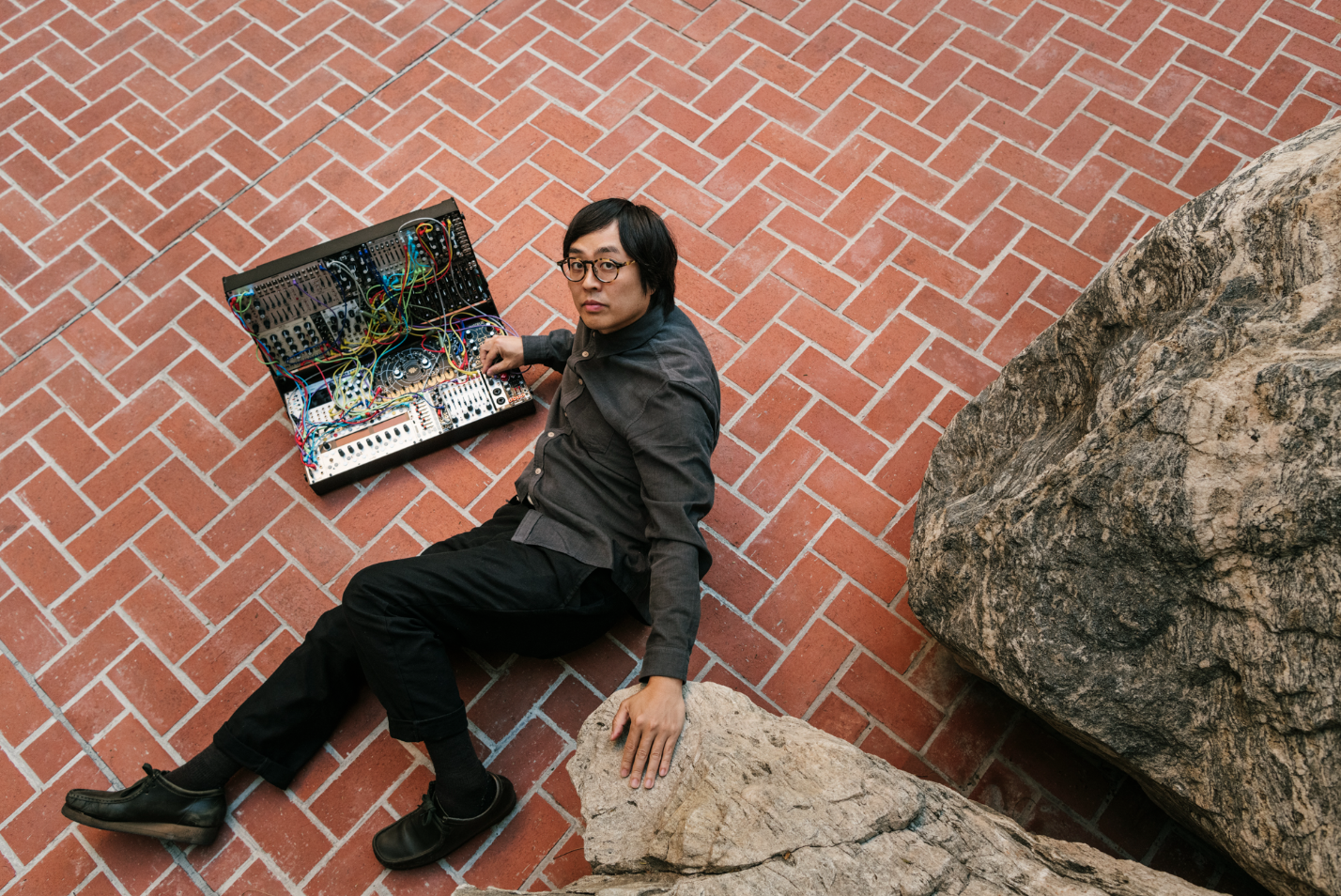
Photo Credit: Jeremiah Chiu by Brian Guido
Beat Keller & Jorge Espinal ‘El Agua Es Lava’
(Defkaz Records) 16th October 2026
Two lone swordsmen of their guitar art in combative experimental mode, the collaboration between the Swiss musician Beat Keller and his Peruvian-born foil Jorge Espinal is an exercise in instrumental transmogrification and the avant-garde.
Aligning respective disciplines with alarming, jarring and haywire results, the composer, sound engineer and, importantly and most demonstrably in this case, guitarist Keller entangles and tabs away to the meta contributions of his Buenos Aires-based trick noise maker. In a serial mode of a kind, with barely anything that would constitute the musical or the rhythmic, El Agua Es Lava (which I believe translates as “the water is lava”) skewers reference points from the most technically fucked-up of jazz guitar sparring and hysterics to the art school performances of Fluxus and their ilk, hardcore music, the industrial and erratically uncategorised.
Hi-pierced squalls and babbles of recognisable electric guitar shredding and fret gymnastics career or scramble across beaten metallics, workshop tools percussion, data coded squeals and thrusted oscillations. From the factory to volcanic explosive backdrops and the spine-chilling, distressed musicianship of a strange and alien kind builds up a crazy exploration of collaborative energies. Interesting sounds emerge: the growl of a revved-up guitar, the distorted coarse wiring and the belted drum kit that sounds like its being shoved down an iron fire escape.
But if you want a summary, and one of my descriptive go-tos, then imagine Gunter Schickert, Bill Orcutt, Steve Vai and Don Fiorino going to work like samurai guitar wielding mavericks against Glenn Branca, Fennesz and Last Exit.
Brama ‘La Raive’
(Airfono) 25th September 2026
Part of a much championed (including on this site) dynamic celebration of the Occitan language and it’s haphazard and continuously hampered cultural ties, the four-piece psychedelic-rock band Brama follow in the footsteps of fellow revivalists Cocanha this year in releasing their very own album.
I reviewed the latter earlier this summer, detailing or at least dipping into the context and foundations of the Occitan scene. So, excuse me if this does seem familiar, but here goes a very brief outlining of that history.
Playing on France’s foundations, pulled together in dominating fashion from various connected but distinguished former independent kingdoms and regions, and the erosion or indeed forced erasure of languages and cultures like the Occitan, the Clermont Ferrand quartet of Brama whisk and conjure up a “path between dream and reality, memory and imagination, where dance becomes a space vivid with memory.” They title this convergence “La Raive” or “The Rave” – an indication of direction and mood.
Though some nationalistic movements seem more in favour than others, France’s flirtations with fascism during the time of the Vichy regime’s collaboration with their Nazi overlords during WWII infamously, and most dangerously, used various folk traditions as state and ideological propaganda. Wrestling those same traditions now, and within the context of attacks in more recent decades on Occitan speakers and its alliance or take-up by activist groups locking horns with the French government, the recent musical forces behind this revival wish to free it from the forces of conservatism, misogyny and the stain imposed upon it by the tyrannical.
Whilst a far more in-depth and researched take is needed on all the ramifications, the nuances and the political outcomes, the strife and acts of resistance that have been imbued within this group’s sound and lyrics can be traced back to the patchwork of Medieval realms in what is now Southern France. A romantic language porously spreading out from its geographical namesake (loosely, I believe, formed on the model of Aquitaine, which is now known as Languedoc) into pockets of the Pyrenees (and so Spain too) and further afield into Italy, Occitan is roughly still in use, spoken by at least (depending on where you get your stats) a couple of million people. It’s poetic and lyrical turns, its polyphonic harmonies now, in part, provide manna and liturgy for Brama’s new album. And though I’m not sure if this instrument can be solely attributed to Occitan culture, the band use that most evocative of wound-up strung and drone intense instruments, the hurdy gurdy – credited to band member Amandine Pauvert.
But as this is, at least in part, a rave-up, the music is at least vibrant and animated; a danceable spell of Occitan etymology and ethnology twinned with excursions of motorik (Neu! via Beak> and The Soundcarriers) Krautrock and the electrified microtonal frills, dotting, dabbing and tabbing of Franco-Arabia. In fact, and I really wasn’t expecting this, Brama would be a great live partner to Qubec’s Angine de Portrine.
They begin, however, with an almost entirely vocal arrangement opener: save for a subtle hurdy gurdy drone that becomes one with the tones of the chorus of voices. Spanning the ages on short waves of passionate harmonious resonance, the quartet offer up a sort of vocalised liturgy come shoe-in for the next track, ‘Belou de jorn’, a more animated burst of motored lively dance-rock; a mix of the already mentioned AdP but also, strangely, Stereolab.
There are songs that groove and songs with a message, all mesmeric and hypnotic. The signature sound of souk-rock disco, the more fuzzed-up, and the near cosmic and starry is experimented with further on every track; as its title suggest, ‘Luminar’ seems to be transmogrifying a borrowed 70s Bee Gees tune and mixing it with the Arcade Fire whilst gazing at passing satellites and shooting stars, and ‘Belou de Nuech’ projects an astral journey to Java via Faust. ‘Niurada’ is like a cross between Alice Dona and Ladytron, played out to the pastoral sound of the cabrette and scrunchy guitar pedal effects.
The hurdy-gurdy drones evoke everything from medieval Occitan and the group France to the Celtic and psychedelically rural, whilst that microtonal guitar and the vocals fit the North African French diaspora. Imagine that all wrapped up in an electrifying Krautrock cornucopia of dancing and raving, and of motoring, and you’ll nearly there. For this is a pop-y like accessible cosmic renaissance of the “d’Oc” culture delivered with fuzzed and scuzzed energy and plastique tubular rhythmic finesse.
Jeremiah Chiu ‘Edge Conditions’
(International Anthem) Physical Release: 9th October 2026/Digital 27th October 2026
Modulating away from and decoupling, and yet once more working alongside his foil of recent years Marta Sofia Honer and band mates from the Small Medium Large ensemble, synthesist imbued composer and multi-instrumentalist Jeremiah Chiu unveils a soloist titled architectural and environmental inspired textural and rhythmic project that’s one part electronica of a 80s and 90s vintage pedigree, another part body music, and yet another that evokes the electronic, the floppy disk cut-ups and environment luminaries of Japan.
Edge Conditions features a pool of talented West Coast and Chicago hot-housed musicians; many of which have either released records on or been a loose part of the International Anthem label family. Whilst drawing upon the amorphous threads of Chiu’s previous collaborations with Honer, but also with the grandee of new age experimentation and fourth world peregrinations, Ariel Kalma, the former Chicago breed and L.A. based artist calls in favours from the Japanese musician, composer and artist of note, Takako Minekawa; the Japanese-American multi-instrumentalist, saxophonist, composer and poet Patrick Shiroishi (previous projects that I’ve reviewed include a match-up with Dave Harrington and Max Jaffe, plus involvement with the underground super group, Water Damage); Chicago jazz trumpeter, composer and bandleader or repute and influence, Marquis Hill; producer, multi-instrumentalist, trumpeter and instigator of the band Whitney, the alter-ego Resavoir and the Les Sons Du Cosmos trio, Will Miller; and the all-rounder percussionist and drummer with untold sessions and collaborations under his belt, plus a quartet of solo albums, and appearance’s in the already referenced SML troupe, Booker Stardum.
Possibly Chiu’s most unique foray into the rhythmical, Edge Conditions combines the plastique with the organic; the synthesized with the electroacoustic; and the concrete with the materials of space. Beats and tempos run out through an apparatus of effects merge with ease with more live or studio played drums, an essence of viola and hazy airs, breaths of trumpet; all of these sounds, patterns and wave forms meeting with the titular edge of both the abstract and the very real buildings, the public and shared spaces, and the places that converge glass and metal with a constant shimmered, bobbled and springy interactive dances and movements of either celebration, joy, introspection and cosmic mystique.
Futuristic and yet retrospective in recalling everything from the Yellow Magic Orchestra and its members various solo projects (I’m reminded of Sakamoto’s Esperanto LP on this album’s earlier tracks), plus their Japanese peers of Yasuaki Shimizu, Hiroshi Yoshimura, Susumu Yokota. This is layered up with shades of Lukid, μ-Ziq, Richard James in both his Aphex Twin and Polygon Window guises, Casino Versus Japan, Robert Hood, various House music and minimalist techno pioneers, and on the album’s metallic acid-house dance number ‘Night Fog’ a meeting of minds between Carl Graig and Felix da Housecat on an imaginary DJax Upbeat 12”.
You have the serious juxtaposed smoothly with club rhythmic body movements; and an assortment of instruments and effects that are often relieved from their serious avant-garde origins or loftier aspirations to just, well…dance around like Richie Hawtin’s Plastik “Men” or polygons and shapes lifted from their staid stasis as materials holding up the edifice of the city. Tracks like ‘Interface’ sound like a calculus centre of Tortoise and Holy Fuck quivery and chemistry wobbled body-rocking popping, whilst ‘Non-narrative’ is like some kind of techno funk from the Warp label of the early 90s. A contrast to both would be the sci-fi operatic VHS score of the fallen, ‘Sentimental Object’ and the Japanese garden wistful lingers, the metal scaffold tapping and the John Zorn like electronic valve instrument (performed by Miller) effected discombobulations and warps of the Fourth World and Ariel Kalma starring vapour thruster title-track. ‘A.M. Fuses’ is another danceable wavey number; worth mentioning for its Aphex and Sakamoto floppy disc cut-up breaking and paddled metallic tubular currents. This is one of those albums you’ll need to revisit often, with its true potential, its magic and groove revealing itself over time; on the fourth play through I’m still picking up on and noticing more modulations, clever interplay and sounds. It won’t light the world on fire but is none the less impressive and immersive for it. A really cool album of possibilities that dances to a mood and rhythm that many of us will find familiar but inviting.
The Corrupting Sea ‘Longing’
(Somnimage Records) 7th October 2026
At the helm, navigating the release of ambient and electronic music from the peripherals for the last decade (anniversaries looming) through his Somewherecold Records label venture whilst also spearheading his very own alias vehicle, The Corrupting Sea, Jason Lamoreaux once more sets both his measured philosophical quandaries and abstracted landscapes and scenes of personal joy, meditation and the existential to a subtle, immersive ecological ambient score.
Before we delve in, I must show my gratitude to Jason and his highly prolific label for offering room and a platform for two of this blog’s biggest champions and American pen pals, John Lane (masquerading wonderfully for years as A Journey Of Giraffes) and Violet Nox. It’s in this role alone that Jason can be held in high regard; offering up a vital showcase for those underground artists staggeringly ignored by the mainstream and even some of the snottier media outlets. I’ve merely dipped in from time-to-time but reviewed quite a haul of those albums over the years; some I’d suggest were every bit as important and good as anything turned out by Warp, Mute and the usual crowd of more celebrated and trumpeted labels.
Twenty-four albums in, with number twenty-five on the horizon (marking another anniversary, and the release of a very special collected works edition of the sonic saga so far), Longing draws on Jason’s own plaintive reminisces, the pains of missing out on exploring the environments, both the awe inspiring and the more intimate spots in nature, that have now become prohibited to hm due to illness. Candid if you ask him, and in the notes to this particular album, Jason has suffered for a long time with physical and mental disabilities; ones that cause extreme exhaustion and fatigue, and for obvious reasons make these youthful treks and communions of the past seem out of reach or difficult to replicate: There’s a specific recall in the notes of summer vacations spent in Yosemite National Park, scored aurally and sonically through the Andrew Heath-like lower-case trickles of piano notes, the churned vapours, the turbine like atmosphere and the language of the aviary on the rhetorical ‘Where Does One Go When One Can Go Nowhere’.
Through the main usage of ambient moods and feelings, Jason ponders with the prompt of descriptive, inquiring titles, the places held dear; scenes and locations of great importance, ones that evoke episodes from his life of safety, curiosity and encouragement. Incipient beginnings of near nothingness gradually take on a soft melodic quality as they grow and build upon the tunnelling rays and tubular synthetic wave forms that seem to convey a real depth and expression of the ecological set pieces, or the memories reflected in each track title.
Surveying a wondrous, mysterious and almost alien-sounded typography, Jason merges cleaner synthesised sounds and hidden sourced machine constructed atmospherics with field recordings of water sprays, moist dripping caverns, and the reverberated song and communications of birds. Some tracks sound more natural than others, whilst some could be said to be almost sci-fi, a touch off-world. Veils descend across fabled lakes with crystallised notation; what could be described as blizzardy specks move cyclonically in a synth-made whiteness; bucketed waters are scooped up in a fashion under the dripped dampness of a cave; and Forest Robots vibes are recalled in the gentle joyfulness and electronica celebration of ‘Tree Swings and Climbing Trees’. All the while that central sensibility of longing is drawn upon to create an album that’s simultaneously as pining as it is aspiring: the mood music of someone forced to watch from a distance, yet feeling some of the vitality, the enormity and inspiration of those landscapes and specific sites, memories that hold a special place in his life.
Allison de Groot & Rich Ruth ‘S-T’
(Western Vinyl) 2nd October 2026
Who knows what a Rich Ruth (the persona alias of Michael Ruth) produced Allison de Groot project would have sounded like in the end; that original remit and plan instead evolving into a shared titular collaboration of equals, with both creative sparks writing together, sharing and developing ideas conjured up in a Nashville studio over the course of a year.
The solo endeavour of the clawhammer banjo maestro of repute de Groot, this traversing work has grown from its incubator southern rooted projection into something, perhaps, much larger in expansive scale and deeper in layered immersive soundscapes. If much of the inspiration derives from that instrument of choice, the introduction of Ruth’s own multi-instrumental rack, plus the contributions of the Canadian and Berklee hot-housed violinist Patrick M’ Gonigle, and the erred wavy mirage-like steel peddle phrases and lines of Ruth’s oft Shrunken Elvis bandmate Spencer Cullum, have all added to the stirring evocations and scored environments that materialise from a reimagined Americana and abstract ambience.
Associated with ‘old-time tunes’, traditional American music and bluegrass, the clawhammer banjo takes its name from the claw-like posture that’s used by the player to ‘hammer’ the strings. This technique is said to emit a gentler and more melodic sound overall, and in this case, effortlessly blend an essence of its country origins with something both transcendent and cosmic: carrying the listener off to planes and places that exceed the borders of the American South and the home of country music itself.
Hear and Be Yonder David Casper and the tubular cascades of Mike Oldfield are transported to the prairie and wheat fields of a more abstract Nashville environment, as a synthesis of neo-classical and chamber dreams are woven together with the hallucinatory, and the more recognisable invocations of flowing, running rivers (the opening Oldfield-esque and dawn awakened light emitting Daniel Lanios golden rayed score ‘Nervion’ is named, I believe, after the Spanish river that runs along the ports and shipyards of Bilbao, out into the Bay of Biscay). Tracks like ‘New Intervention’ reminded me of Glass and Cage relocated to the old West, whilst ‘10-14’ was more like Tortoise panning for gold on the reservation with The Green Kingdom and Laraaji. But the banjo arpeggiator ‘Sorgin’ has a certain Japanese sound of paddled spokes and dulcimer-like woody bobbles, whilst ‘Rocks From The Moon’ could be Suzanne Ciani catching solar flares with Cluster. Imagine, if you will again, that Eno had produced Andrew Tuttle’s Fleeting Adventure, or Marisa Anderson had got together with Bruce Langhorne, for that’s about as close as I can get to describing this transportive new album from the collaborative partnership of de Groot and Ruth. And it must be one of the first albums of its nature to lift the clawhammer banjo from its origins and purpose to different heights, moods and fourth world-esque visions.
Miska Lamberg ‘presage’
(Discreet Archive) 2nd October 2026
And it all amounts to this: the minimalistic but deeply conveyed melodic score that builds into a haunted and sad dreaminess of the Boards of Canada and there like. Yes, the latest sound art or installation-like enveloped immersive experience from Miska Lamberg takes its long-form time to reach a certain gravitas of sound waves melody and feels that make the whole journey worthwhile.
Aptly released via the Discreet Archive platform – a label synonymous for allowing artists with such grand explorations the scope and time to breathe – Lamberg’s forewarned omens on presage use the environment, the hidden and obscured background field recordings of movements, the uncertainty and anticipation of various shortwave radio transmissions, and atonal drones and hums to conjure up a mysterious, sometimes near supernatural and alien landscape.
Lamberg’s biographical blurb states that, ‘pieces have been featured by record labels Sawyer Spaces, Dragons’ Eye Recordings, Falt and PRESQUE TOUT, and in exhibitions and performances at Museum of Technology, Urban Apa X Ateneum, Lighting Mind, Kamara, Swedish International Film Festival, Galleria Kalleria, Penthouse Collective’s gallery space, modern dance festival Tanssivirtaa Tampereella, and KATOAVA Collective’s various events and projects.’ And so, from the conceptualism of the art world to the studio and site specific, Lemberg has covered quite an array of sound experiments and sonic projects to build whole worlds out of not much more than the atonal and recondite. But this time around, prompted or indeed inspiring the stanzas of Minja-Milia Ikonan – which you can find included in the bandcamp description -, Lemberg’s presage evokes an assemblage of Helsinki environmental sourced recorded weather fronts and more disturbing ominous going ons.
Stormy but weightless winds, as noted by Ikonan, billow in across what could be described as cliff tops like synthesised airs: a mist even. Like early Kluster causing a venerable imbued mystique or even cathedral era Tangerine Dream, the atmospherics are liminal: between the otherworldly, the esoteric and sci-fi. Giant strides and brushed walks through grass and upon concrete are interspersed amongst the percolation of something boiling on the stove and the buzz of unidentified insects and those shortwave blizzards of crispy radio waves and radioactivity. This is track one by the way, which suffuses each strand, each tonal layer slowing and gradually over nearly twenty minutes.
Track two starts with an interference in the fabric, hisses and the looming presence of something from beyond. Again, hidden generators and machinery are obscured underneath a sort of greyish film, right up until that descriptive build-up of saddened but moving melodic sound waves that I described in the introduction.
As an experience its certainly an immersive one; a 4-D surrounded environment of the alien and yet familiar, reimagined through an apparatus and process that invokes the descriptive.
Light Conductor ‘Sequence Three’
(Constellation) 25th September 2026
Vapour trails and the luminescent heat patterns of distant planets are conjured up alongside soft hues of abstracted circular colours and amorphous transcended spiritualism on the latest and final sequence from the Montreal partnership of Stephen Ramsey and Jace Lasek: with Lasek’s Besnard Lakes band mate Olga Goreas orbiting as a third moon to the duo’s planetary base camp emissions of synthesised and vintage analogue psychedelic ambient slow-release space rock.
After two previous volumes, Light Conductor (a sort of vessel for the Young Galaxy’s Ramsey and his Besnard Lakes’ foil, Lasek, to pursue visionary drone scapes on distant planets) envision a diaphanous and mysterious escape to off-worlds; the utopia of World Expos and astrophysicists channelled into a long form kosmische and shoegaze imbued immersive experience in which the duo “…apply rockiest sound design to minimalist tracks.”
Through prisms of Fairlight synth, hints of 80s sci-fi VHS scores, Vangelis, Tangerine Dream, Zoon Van Shook, Iasos, new age music of a certain vintage, burbled submerged bass lines and touches of Moebius, our astronautic musicians follow the cosmic rays, watch for visitations from mystical aviators, pray at the altar of sci-fi, and make concrete the abstract perimeters of celestial feels and horizons. All the while they teether themselves to earthly concerns and dystopian crisis with the apparition broadcasts of financial ruination and the crash on the album’s middle marker, ‘Ghost City Radio’; a near Cassandra ominous Evangelistic rebuttal of Wall Street, the Stock Markets and Capitalism as par the course for the millennial generation, put to a saddened vapour, some sharp lifts, bobbed bass, and synthesised pre-set rhythms: a union between John Michal Jarre and University Challenged.
There’s some beautiful, and again, spiritual like expansions to this five-track suite of space dust particle shimmers, curvatures and spectral rainbows. And when Goreas’ signature wispy and husked shoegaze-y vocals emerge on the lush space aviary ‘Omenize’, those lunar mirages transform into a healing balm. The truly long form finale, ‘Supercontinent’, as epic as its title, features another cosmic menagerie alongside its drones, evocations of Cluster, Eat Lights Become Lights, and its plastique shuttled rhythms and metallic language
An immersive experience and cosmic opus of kosmische inspired slow-psychedelic and shoegaze rock from this Canadian collaboration; the perfect ending to a triptych sequence of such materialised interplanetary and otherworldly peregrinations and slow-burn releases of transcended escapism.
Mousecunt ‘Orgasmic Mouse’
(Infibulate Records) 25th September 2026
The inaugural release from the newly orchestrated Infibulate Records label, seeks to make its mark with a most controversially reactionary piece of Goth-synth-barbarity and industrial-EDM bad taste-riven polemics. Torture porn for the lugholes; repulsive lyricism aimed at unsettling; the anonymous Iranian band must have had to dodge the authoritarian camarilla’s morality police (surely) to unveil such filth, bloodiness and sexual depravity.
Information wise, we know that this group features “a woman” performing on Nord synths and vocals; “a man” performing on a Gibson guitar, Hofner bass and sharing vocals; and one more “man” on Tama drums. An anonymous line-up is mixed and mastered by another anonymous engineer in the USA; their task, to produce a sonic assault upon the senses from fortnight session played at a private studio in Azerbaijan earlier this year. They’ve been working under the anonymity cloak of darkness, we’re told, since 2022: and for good reason.
Explosively digging and wrestling in the dirt with themes of extreme artistry practice, domestic violence, volatile (to say the least) relationships, religion, humiliation and abandonment (through the most harrowing of Freudian prisms), the trio let loose with the obscenest lyrics I’ve heard since “GG” Allin or Throbbing Gristle.
Told through an “unreliable narrator” in an autobiographical-like (though it also says “from different perspectives”) style of protestation, name calling and accusation, and with barbed slugged shots of the near physical, Orgasmic Mouse could be deemed a quasi-concept album of a sort. At least joined together in a very abstract form; threaded together by a similar if changing moody production of dungeon abusing vulgarity, maximalist scopes, knife sharpened synths, both death metal guttural and more ghoulish coquettish vocalisation, and horror cult EDM.
It can be an uneasy and even vilely offensive if not dodgy listen lyrically wise – the opening gratuitous perversive analogies and troubling descriptive rage of ‘Fucking The Mirror’ being the worst -, but seems to indulge in the swamps of such criminality and extremism to reach the pit of hellish confession, and to rattle the foundations: In grappling with their subject matters they’ve dredged up the most caustic, spiteful and disturbing dialogues and poetry.
Because of their provenance, it’s impossible not to connect the dots: An Iranian goth-metal-synth-EDM-metal-art band dangerously sailing close to enraging the Islamic Republic’s sensibilities and rule of law. I can’t imagine, considering the recent bombardments from the USA, and the possibility of regime change, and the years since the Arab Spring of continuous opposition against this same regime by a sizeable (often young) part of its population have made it any easier to exist making this kind of music – so many artists, and protestors of recent years have ended up raped, tortured, disappeared or executed (and it must be said, with fuck all help, support or protest by the same brigades marching against Israel and the West week in, week out). Of course, it’s easy to see how reality being referenced and played out on the ghoulish, horror of this album – perhaps mirroring it far too well; the violence is everywhere: from the physical to insulting and sexual.
For a reference, imagine Ministry or Revolting Cocks going toe-to-toe with Xmal Deutschland, Alien Sex Fiend, Mercy Girl, Rosaceae and Nine Inch Niles.
How this will go down is anyone’s guess, but from a label built on provocation and the extremities of contemporary music, it’s a successful launch of offending, violent and more sensory punkified gothic dance music and tortured art performance.
Antonio Raia ‘Σ [sigma]’
(Kohlaas Records) 1st October 2026
Not the focal draw, but as part of his collaborations with fellow Neapolitan artist Renato Fiorito, the body, soul and environment amalgamated – like a united flow – saxophonist, composer and improvisor Antonio Raia has both appeared and been mentioned on the Monolith Cocktail twice: firstly with a premiere, shared with our Italian pen pals at Kalporz, of the eighteen minutes long ‘‘Too Many Reasons’, and then a couple of years later, as part of the greater contextual piece on Fiorito’s Lustra album
The former saw the amorphous saxophonist Raia and his sound artist foil join together to capture the abstract atmospheres of cerebral reconnection; a sonic field in which to escape the stresses and weight of the Covid pandemic. Produced in lockdown, in the partnership’s native Napoli, this imagined space, in which a faded, fuzzy pining and wandering saxophone wafts around a rotated motorised humming and propeller purred windy and airy isolated soundtrack, brought together two experimental composers looking to create an ‘intimate and visceral experience’.
The latter of those two pieces was described at the time as ‘a votive offering of gratitude and devotion’ to that same city; attributed to Fiorito this time around, the track and album was promoted as his ‘personal vision of Naples’. Raia on his part, popped up on the crackling fireside, faint melodic and reflective softly rasped saxophone memory of ‘3694’.
As resumes go, Raia’s includes the critically applauded 2018 debut solo album, Asylum, and the 2023 published soliloquy book, La memoria bucata –a project developed through the sonic manipulation of archival materials by the theatre director Antonio Neiwiller, who passed away prematurely in 1994. In 2024, at the invitation of filmmaker Béla Tarr, a key figure in radical contemporary European cinema, he conceived and realised Facing Béla Tarr, a sound action for saxophone and waterphone based on the film Prologue. Two years later, and bringing us right up to date, in early 2026 he composed and released the soundtrack for [campanamuta], a six-act radio work by Martin Errichiello produced by the Italian National broadcaster Rai Radio3. During that time, he’s also managed collaborations with Alvin Curran, Elio Martusciello, Mike Cooper, Chris Corsano, and David Ryan and others.
Merging once more with his environment – this time the former Wasserturm Berlin water tower, located in Prenzlauer Berg -, Raia uses the architectural acoustics within this long-since decommissioned space to form a bond with the atmospherics and his instruments of choice – in this case both the baritone and alto saxophones and the Japanese Koshi wind chimes. Almost uninterrupted, recorded without overdubs by the Grammy and Emmy Awards-winning producer Francesco Donadello, Raia lets his feelings being roused and stirred, prompted by this peculiar utility turn studio – the oldest such water tower of its kind in the city, built in 1877 and still in operation up until 1952.
But just to draw from further afield too, the album’s title is borrowed from the Greek alphabet, and the album’s only sax-free performance, ‘Veils of Echo’, has a decidedly Morricone-y feel to it – the chimes brushed and swept in glissando style like crystal glass are accompanied by an Alessandro Alessandroni-like reverberated whistle.
Invoking the blues, the noirish, an essence of the 1960s New York jazz scene, and the venrable, Raia’s soundings and dialogues with the reverberations and echoes traverse the lower register honks of a ship’s funnels to the near amplified blows of a near dry spittle and the cyclonic spirals of bird-like higher tones that fly towards the studio’s ceiling. I’m reminded of Jonah Parzen-Johnson’s own solo soliloquies, the explorations of Timo Lassy, and John Buckingham’s parts on Bill Dixon’s Son of Sisyphus album. Also, the Instagram video uploaded and shared soloist musings and outpourings performed by Andy Haas in the gardens of the Modern Art Museum in NYC during covid – just an individual playing and conversing, sending vibrations out into the environment.
You get to hear (I’m assuming) Raia’s voice on the album’s finale, ‘Body and Cipher’. Taking a near liturgy turn of religious holy mantras and cantos, venerated choral voices meet with the deeper and bigger sound of low honked, near tuba-like, sax.
Suffused amongst those instruments, which can be quite melodic and even tuneful at times, even sympathetic, yearned and responsive, are sounds that can only be described as paddled, or full of texture.
The sounds of extrospection, of mystery, of the mournful and the dreamy can be heard across this album’s various ruminative wanderings and reverberations; a combination of the physical and improvised, all prompted by that site-specific recording space.
If you’ve enjoyed this selection, the writing, or been led down a rabbit hole into new musical terrains of aural pleasure, and if you able, then you can now show your appreciation by keeping the Monolith Cocktail afloat through the Ko-Fi donation site.
A world of sonic/musical discoveries reviewed by Dominic Valvona. All entries in alphabetical order.

Le Grand Couturier ‘S-T’
(Un Je-ne-sais-quoi) 7th November 2025
The hula limbo swinging hoop of French-Polynesia is both languidly and more wildly reimagined, transported and pulled in various directions by the Le Grand Couturier trio of Rachel Langlais (keyboards and vocals), Jean-François Riffaud (composition, steel guitar and sharing vocals) and Clément Vercelletto (drums, synths).
Newly formed for the explorative Un Je-ne-sais-quoi label, with two of that group already familiar names to Monolith Cocktail readers – I reviewed Rachel’s solo avant-garde, textural and tactile prepared piano suites album Dothe for the same label back in 2021, and Clément’s nightjar imbued experimental L’ engoulevant album for the label at the start of this year -, this ensemble of widely diverse experiences draws upon a rich soundscape of tradition and the psychedelic to weave a sort of part-beckoning and part-chaotic Hawaiian homage. Cross-referencing a multitude of sources, some form their own projects, the trio’s debut album is an altogether more mirage and hallucinatory vision of Island life, drawn into a modern world of electrical-charged, felt-like rippled interreferences and coarser transmissions. Whilst sauntering and swaying to a familiar Hawaiian rhythm and melody and the sound of the steel guitar, there’s a constant funnelling and layering of what sounds at times like scraps from CAN’s ‘Unfinished’ and ‘E.F.S.’ series, The Beatles Magical Mystery Tour funfair organ and psych trippy reversals, and musique concrete.
If you loved Pete Fowler’s Monsterism Island curated compilations then you will easily pick out traces of Les Baxter, White Noise, The United States of America (especially Rachels’s ether emergent distant voice on ‘Maneki Neko’, a reference to the lucky “beckoning cat” figurine), The West Coast Pop Art Experimental Band and Martin Denny. But maybe surprised to hear the delightful South Seas motions and lilt of Makoto Kubota & The Sunset Gang and the wavey bendy sounds of bluegrass and country: reimagined by Moebius & Plank, Charlie Megira and Bailey’s Nervous Kats. But what’s this approaching from the sea, paddling through the waves on an outrigger canoe of old, but Dick Dale and The Bel-Airs thumbing a lift in the company of Sonido Galle Negro.
A sanctuary come portal to other worlds, this tropical magical hideaway proves fertile ground for musical and sonic manipulation, repurpose. Hawaiian phrases – ‘I Ku’u Wa Li’i Li’i’ or “my childhood days” for example – and typography, the vibe of the place, its blues and more fragrant wilts, marooned lethargy is not so much guarded or restored as woven into something beguiling, strange, serenading, sometimes distorted and often swimmingly lunar. There’s undoubtedly some layer of post-colonial revisionism, of ownership and the anthesis of European lens ethnography, but the trio’s debut album is just a very lovely, magical thing of Polynesia fantasy. It will be interesting to hear more.
Imperial Motors ‘Charlie Don’t Surf’
Released 21st October 2025
States/countries that claim to have adopted the Marxist doctrine have, historically, usually enforced it with a totalitarian fist, forcing its artists to propagate the authoritarian propaganda of its own choosing. We can forgive the exuberance and contemporary rage of the young, possibly knowing that they will have less, pay more, and lose many of their freedoms in the process: making them a doomed generation depending on your pessimism scale. Marxism has its utopian promises: a fairness of distribution, power to the proletarian and all that – and I’m sure Marx, to paraphrase, said that the worker can never be happy working for someone else: though self-employment is no picnic. But like every idea, in reality fails to grasp our innate individualism, our differences. But as I already opened with, artists in such climates have usually been just as threatened, locked up and sent to Siberia for daring to stray from the one-party line.
Anyway, I’m only banging on about this because the latest agit-post-punk-disco-indie band to emerge from the Brooklyn scene, Imperial Motors, have mentioned it in their email to me. Or at least, as an influence (and damn fine one to have) they cite the Gang Of Four’s version of sonic Marxist rhetoric and fire. Whilst also, it must be stated, they use the term satirical, they wish to employ their political polemics and protestations via music, rather than throw real Molotov’s from the barricades. And yet, despite the rightful outrage, disillusion and riled injustices of our present times the quartet’s debut EP is actually very melodic, tuneful, disarming in parts and full of DFA Records and post-punk disco synth lines and beats: think early LCD Sound System and the anarchic energy and maximalist approach of such contemporary groups as Crack Cloud and Squid matched by Martin Dupont, the Pop Group and Boots For Dancing. And that’s only half the story.
But let’s introduce the band first. We have Liam O’Toole on vocals and guitar, Josh Cukier on drums and also vocals, Ben Biber on synth/keys, and again, sharing vocals, and Andrew Graces on guitar. This core has expanded for the proposes of the EP’s second half pairing of tracks, ‘Sonya’ and ‘Infinite Money Glitch’, bringing in the climatic ariel bending intensity of violists Ryan Anderson and Jarrod Ajhar and violinist Lila Lifton on the latter, and the accompanying vocals of Hely Morales on the former.
Referencing, so it says in the email, a level from Call of Duty but obviously a cultural throwback to Sandinista era The Clash via its original immortal line in Apocalypse Now – spoken by Robert Duvall’s character, Lieutenant Colonel William “Bill” Kilgore -, Charlie Can’t Surf is twisted by the toxins in the waters. Each track is a battle between holding it together and falling apart in a world torn asunder, starting with the brilliant opener ‘Bartender’, which pits our protagonist bar fly spiralling into a pit of doubt and reactionary disillusion by the transactional culture that leave us all numbed, isolated and without any sincerity. Lurching like a derailed David Byrne or even Scary Monsters period Bowie, and even an Eno, between eyeing up the unrequited bartender and spinning into bar stool bursts of preachy frustration; a statement on the poisoned waters and our inability to fish without contamination and erosion of our closeness to nature. It sounds like a slice of Scottish 80s post-punk via XTC and has a great chorus that stays with you.
‘Freeloader’ sees a slight change in direction; still riled-up, and almost unhinged in places, but now evoking signs of ‘Helicopter’ era Bloc Party and The Futureheads. The band attempt to find the tangible, connective in a world of synthetic vacuous exchanges; turning on neighbours like a passionately agitated Talking Heads in suburbia. The EP’s most surprising turn is ‘Sonya’, a damaged love song, about to be squashed by the collapse of the Artic shelf. Their most synth-pop-orientated track is disarming with its subject: climate change apocalypse. The lovelorn glaciologists at the centre of this sorry doomed love explosion of euphoric crescendo art-pop contemplate a sort of Romeo & Juliet suicide in the shadow of ecological destruction.
No one could put it better in trying to explain the finale, ‘Infinite Money Glitch’ than the band themselves: I would have missed most of this contextualised layering. The “uncanny valley is inverted: it’s not machines imitating humans, but humans running on cold, mechanical instinct. Screeching guitar, off-kilter drums, and an asymmetrical bass groove lay the black midi-like foundation as various speakers retell colonial anecdotes through glib, filtered vocals as if automated by their own apathy. “Mortgage rates [are] saved on the mass graves,” sings a real estate agent. “Seafront plots if you can spot some, never mind the bones, the flotsam.” The various narrators then become united by the refrain “help us make a difference / help us make them different, combining into one single voice, one single organism — the US colonial project of subjugation, domination, and profit. In the name of corporate growth, annihilation is just collateral.” You all got that? Good. It’s a very nice closer actually, heavenly gilded with drama and showing signs of all the influences I’ve already mentioned plus Faith No More, PONS and Black Medi. Capitalism is a bitch. Apathy the curse. And yet there is a certain fantastical element, and the sense of something rising up out of the gloom.
An impressive EP that offers much hope and anticipation for the album; a burgeoning band with much potential, caught between dancing and riling at the system.
Shoko Nagai ‘Forbidden Flowers’
(Infrequent Seams) 14th November 2025
Revealing a both playful and more stirring emotional tumult of memories, chapters from the multi-instrumentalist and experimental musician Shoko Nagai’s life encapsulate a musical conjuncture of the wild, the avant-garde and more plaintively classical on a most extraordinary album.
At the head of a new quartet, and in a “semi-autobiographical” mode, Nagai draws upon a lifetime it seems of eclectic influences and experiences; at any one time, and often in the same composition, combining Japanese salon music, free form jazz, klezmer and Eastern European classical tragedy with spine-tingling and haunted tension soundtracks and the manic.
But before we go any further, a little information is needed: some background if you like. For those unaware of Nagai’s reputation and prowess, the keys specialist – I say keys, as on this record, she plays an assortment of such instruments, from the piano to the Farfisa and Fender Rhodes, but is credited for electronics and the most unusual of sound devices, the Nintendo DS – made her way from Japan to the USA, where she studied at the prestigious hot house of Berklee. Career wise, Nagai has rightfully received a number of nominations and awards, and worked with such luminaries as Pauline Oliveros, John Zorn, Butch Morris, Satoshi Takeishi, and Yiddish singers. Joining her on this latest album under the newly assembled quartet are the Brooklyn-based drummer and percussionist Kate Gentile, active on the NYC jazz scene since 2011; the Grammy Award-winning recording artist and composer, and on this album violinist, Pauline Kim Harris; and trumpet/flugelhorn player and composer Pamela Fleming. All three have extensive, admirable CVS, and plenty of experience in their chosen fields. And bring an almost infinite scope of musical and sonic possibilities to the album.
If led is the right word, this ensemble matches and stretches the ideas, sentimental prompts and both bluesy and more poetic fluid language of Nagai’s playing and compositional set-ups. I haven’t any info on how this record was made, so no idea how planned or improvised it is, but it sounds like the perfect balance of both; there’s room for exploration, room for passages and break outs of energy, tension and release, and yet there is something always tangible, a melody, a direction and compositional device to make a return. For every more instantaneous Art Ensemble of Chicago burst or more manic, quick-stepped Bad Plus moment there’s a moment of reflective musical haiku. And for every leap into the jazz-fusion of the Weather Report, or the more fluid quickened piano works of Ryo Fukui and Cecil Taylor, there’s echoes of Cosmic Coltrane, Annie Gosfield and Alex Roth’s Cut the Sky project.
The action is constantly on the move between splashing waves and near cartoon retro gaming music, between deep classical poignancy and the more sinister and troubling. For example, ‘Whispering to the Bubbling Wall’ could be Phillip Glass in troubling, near haunted and ghoulish circumstances, whilst ‘Hello Universe’ sounds like a burbled synth and twinkled keyed and cartoon skidding and skirting of Ethio-jazz and Shigeo Sekito. But then you get pieces that are more like the music of Toru Takemitu, the Jewish diaspora in Eastern Europe, the Don Cherry Quintet and La Monte Young.
Every instrument is put through its paces, stretched but also played with near grace at times, or melodically holding an emotion and reference to a particular piece of Nagai’s story and expressions. And whilst a switchboard of calculations, quirky effects and near shrills and heralded trumpets blast or staccato across kooky flighty spells of quickness, the electrifyingly hectic and whistled, there’s a real weight to each poetically entitled episode in this story. Forbidden Flowers is simultaneously a whirlwind, contemplation, observation and incredible creative outpour of musicianship; the sources and influences proving surprising and dynamically playful in equal measures.
Silver Nun ‘Tabula Rasa’
(The Crystal Cabinet) Release 31st October 2025
Driven up into a ringing and resonating performance of the mystically ritualistic and expressively rallying, the international Silver Nun duo of Lucy Valentine and Simo Laihonen proves that both distance and time are no barriers to a congruous union of creative disciplines. Demarcated to a point, though running near seamlessly into each other, Tabula Rasa is one long complete work set in motion by Valentine and recorded during the Pandemic: born into a very different world to now. On that day, in the venerable, or not, setting of a “deconsecrated” church – shorn of its original afflatus purpose for secular inclusion or as an idiosyncratic venue -, the County Durham silversmith, film maker, label founder (this album is being released through Valentine’s own The Crystal Cabinet imprint, an electroacoustic label that focuses, I believe, on cassettes) and multi-instrumentalist strummed, blazed and whipped up a resounding invocation and rallying concentration on the guitar. This was in 2021. At a later date in 2023, drumming and percussionist foil, Laihonen added his own rhythms, cymbal splashes and crashes and hoof-like gallops. It sounds however like the collaborative partners were both in the same space together, not two years apart, with one in the North of England the other in Finland.
Going much deeper, this nebulous offering and invocation evokes the melodic circled spins and dervish religious music of Iran, of atavistic Persia, the Levant and amorphous echoes of various Gothic folk styles, of doom music and the Biblical. It’s akin at times to dropping Death In June or Ash Ra Tempel in the Middle East of the Sufi. And then again, the stamps and danced steps in places reminded me of Islamic Spain. But then the temenos set ‘Underneath the Hypaethral Sky’ segment sent me into an incense smoked trance-like recall of the Hellenistic. And the guitar at times reminded me of Steve Gunn, and at others, like the music of Wovenhand, the mood describing a more esoteric vision of the old American West.
There’s a lot going on reference wise to be sure: even the title of the album is borrowed from the Latin, “the idea of individuals being born empty of any built-in mental content, so that all knowledge comes from later perceptions or sensory experiences”: or to put it simply, “a clean slate”. And yet “rasa” is also used in Indian culture and religion, describing the aesthetic flavour of any literary, visual or musical work that evokes an indescribable feeling in the reader or listener. Channelled into one reverberating and beating, fluctuating momentum of rattled rhythmic strings, metallic and burnished elements, the spun and more elan, and frame drummed and more kit rolling bounds, both the daemonic and the spiritual collide to create an atmosphere that’s simultaneously refined yet strong. In years to come, generations will study this period of creativity very closely; the most bleak, restrictive and frightening period in most people’s living memory was a catalyst for a pouring of anxieties, stresses but deliverance too. The Silver Nun vehicle, its title reflecting Valentine’s silversmith craftsmanship and how it applies to and informs her musical processes, is ritualistic, a purging almost or letting go; the changes ringing out, sounding out into a suitably atmospheric environment. And yet travelling far, reaching across time and geography to take in near Byzantine and atavistic old evocations. A sound collaboration that proves distance is no barrier to a unifying experience like no other.
SML ‘How You Been’
(International Anthem) 7th November 2025
The inter-connections and overlaps are strong on this one, with the enviable might and scope of influences stretching across a multitude of scenes, styles, decades and geography.
Based in L.A. but from a multi-national and even international cast, the often abbreviated Small Medium Large includes the Aussie-born artist, bassist and composer Anne Butterss (last year’s solo headed, but featuring many SML band mates, Mighty Vertebrate album was included in our choice list of 2024), “synthesist” Jeremiah Chiu (another favourite from 2024, Chiu’s team up with the violist Marta Sofia Horner and luminary of new age trance Ariel Kalma, The Closest Thing To Silence, another highlight of 2024), saxophonist Josh Johnson (back in March Johnson collaborated with fellow SML member Gregory Uhlmann and Sam Wilkes for the Uhlmann Johnson Wilkes triumvirate), drummer Booker Stardrum (this is the first time that the all-round percussionist and drummer, educator and composer, who’s worked with Weyes Blood and Lee Ranaldo, has appeared on this site I believe) and the guitarist Uhlmann. In some ways this combo could be called the International Anthem house band, or the label’s super group of a sort, as near enough each member has released of featured on an album or two on that Chicago institution – celebrating a modest birthday anniversary recently, the label has managed in a quick time to establish itself as one of the most critically favoured experimental imprints; a hub for all things jazz and beyond, and just the other month, the chosen platform for Tortoise’s first album in years – a group who’s imprint can be heard and felt on this SML album.
For the ensemble’s second album together, and following a similar process, methodology to their debut, the rhetorical How You Been features an “extensive post-production of recordings from a handful of shows” pulled together to make a whole – you can hear the audience’s appreciation at one point. Flexing and honing their improvisations and more locked-in work outs, they’ve managed to surprise and take a few quirky, kooky and often funky turns to create a kinetic fusion of post-rock, post-jazz, no wave, agit-dance music body movements, fourth world musics, environmental ambience and vague ethnographic percussion. On one hand its Ariel Kalma and Tortoise meet with Jan Jelinek and Kirk Barley, and on the other, like Kraftwerk deciding to move to downtown NYC in the early 80s. But then again, I’m hearing Eno & Byrne, Golden Teacher, Heroes Side Two Bowie, Kriedler and Carl Stone too. For between the longer future-post-punk-funk and jazz-fusion (if rewired by the Chicago hothouse of stars) numbers there’s shorter passages of the tubular, fluttered, new age and liquid: a lot of water passing through, from deep dives to the ocean bed to water side tranquillity gazing.
Titles merely set out amorphous prompts, steps and references, as a “Moving Walkway” is musically represented more by a Greg Foat-esque walking milky way traverse. And “Blood Board SHROOM” shapes up to be an atmospheric passage of crystallised light forming. But generally, you never know exactly where the SML group are going to take you. Essentially though, this is an outfit with groove and rhythm and confidence in extending an already loose jazz core into new fields and orbits. If no one has put this proposal forward already, they’d be great touring partners with Tortoise.
Snorkel ‘Past Still Present Tense’
(Slowfoot & Archaeon) 14th November 2025
Tortoise with a groove and rhythm as manipulated and effected by Lee Scratch Perry. The Mosquitos meets Populäre Mechanik at the workshop of Walter Smetak. Just as couple of reference point combinations I’m throwing out there to describe this evolving and revolving South London based ensemble’s sound and scope of influences. And yet, it barely scratches the surface, as the fixed – at that moment of time when recording this loose collection come both retrospective and future teasing survey – lineup modulate, discombobulate, stutter, flex, warp, transform, oscillate and reverberate ideas as eclectic as gamelan, industrial funk, krautrock/kosmische, post-rock, jazz, d ‘n’ b, no wave, post-punk, cult library music, the fourth world “musics” of Hassell, Byrne and Eno, and of course dub.
But let’s pull back a moment before ploughing into this generous double-album spread – the group’s third studio album proper I believe, following on from 2007’s Glass Darkly and 2012’s Stop Machine -, and share a little information about this incarnation of Snorkel. Original instigator, drummer-percussionist, performer with This Is Not This Heat, Daniel Sullivan and the Lifetones, and producer for such acts as Gong, Charles Hayward and Vibration Black Fringe, Frank Byng is joined by Ben Cowen (another connection to Vibration Black Fringe, Cowen was also formerly a member of 7-Hurtz and has collaborated with Morcheeba) on keys and synths, Tom Marriott (a member of Pest) on trombone and effects, Roberto Sassi (formerly of the Vole Trio and Cardosanto, and a current member of Heckle Chamber and Charles Hayward’s Abstract Concrete project) on guitar, Ralph Cumbers (releases music under the Bass Clef moniker) on modular synth and samplers, trombone and bass, Charles Stuart (currently the music director for Grace Jones’ live band, but also the driving force behind The Fish Police; Stuart also goes under the “clandestine” cloak of 129 when producing and gets a separate credit under both on this album) on various electronic apparatus, percussion, melodica, vocals, keys and guitar, and, popping up on two tracks on the D-Side of this double-album, Nick Doyne-Ditmas (credits include Pinski Zoo, Monkey Puzzle Trio and Crackle) on bass duties. You’ll probably not going to get the chance to listen to this particular septet configuration again, so enjoy the moments captured, improvisation style, during the time it took to lay all nineteen tracks down in the studio environment. I imagine that whatever happens next, the set-up will again have changed: another varied lineup of connected players from the scene, orbiting around the mainstays.
Past Still Present Tense mixes not only time but combines elements of sci-fi, global rhythms, the near clandestine, Giallo spooks and something more alien into an often-post-punk-funk of the kooky, mystical, esoteric, futuristic and galactic. The foundation, the base, or I should say, the main influence that permeates throughout is dub (more On-U Sound, Lee Scratch Perry and World of Echo); transmogrified and liquified to vibrate and resonate off an electrical wave of zapped electronica and jilted, skewered, wavy metallic dance music. And yet somehow, they’ve managed to run it through the same processors, the same gait metric as Dunkelziffer, Conrad Schnitzler, Der Plan and Klaus Kruger to give it a Germanic bent.
Hand drums, various ethnic percussion and instruments (the Ghanian Gyil is mentioned in the accompanying press notes) are interwoven and merged with electronica, the yells and hysterics and riles of post-punk (the vocals pitched somewhere between the Pop Group, Cabaret Voltaire and Damo Suzuki) and the subversive. There are traces of everything from tubular concrete musique to the ambient, from Bill Laswell to Jeff Parker, Krononaut and Holy Fuck; from Roni Size to Finis Africae, Moebius, The Missing Brazilians, Gary Numan and Irmin Schmidt. The organic and machine in a loose rhythm cross multiple borders to create both a post-no wave dance and more mysterious, sometimes creeping and dystopian sci-fi (the nod to Iain Banks ‘The Wasp Factory’ couldn’t escape anyone’s notice). There’s much to discover and absorb with each play that I can imagine this collection will keep listeners very busy – a lifetime of work in some band’s cases.
Suntou Susso ‘Jaliya Silokang: The Path Of A Griot’
7th November 2025
“Some people are born into a family of kings
Some people are born into a family of farmers
Some people are born into a family of scholars
God has created me to be a Griot.”
Right from the outset the Gambian Griot, multi-instrumentalist, singer, composer and filmmaker (you could claim a true polymath) Suntou Susso sets out his afflatus legacy with the chorus on this album’s title track and opener ‘Jaliya’. Born into a service, the divine anointed position of “cultural guardian”, of “storyteller”, of “praise singer” (all terms used to describe the ancient role that stretches back over 700 years), Suntou like his father before him continues in the grand tradition, yet always looks to pastures new, working with and pushing those roots forward.
Roughly explained as a musician or entertainer from Western Africa whose performances include tribal histories and geologies, the Griot’s instrument of choice is the 21 or 22-string (Suntou favours the later), a long-necked lute crafted out of half a gourd and covered with cow skin. Suntou is just one such brethren from the extended family to play this harp-like sounding instrument; his half-brother is none other than the equally celebrated Seckou Keita (no stranger to this blog over the years), and his father, the legendary Mamudou Susso. Just in the last year or so, Suntou toured the great Griot songbook with his father: an intergenerational experiment you could say. That musical heritage continues through his sister, the applauded vocalist Binto Suso. Binto makes an appearance on the serious kora spilling and, starting off with, near solemn attentive piano backed track ‘Jula Jekereh’; a reimagining of an ancient Griot song, the protagonist of which was a well-known wealthy flamboyant trader called Jekereh Bayo who decided to celebrate the age-old traditional Muslim festival of Tobaski ten days later than usual, co-opting the regions kings and all the right movers with his riches. Close to her brothers lead vocal, Binto carries a beautiful echo of Miriam Makeba – the kora actually reminds me of Suntou’s half-brother Seckou. As the song progresses this voice starts to soar and cover the heights, beautifully sung, like all the songs, in the ancestral Mandinka mother tongue – a community and dialect found predominantly in the Senegambia region, but also in Southern Mali and Eastern Guinea, the Mandinka are said to be descended from the atavistic Mali Empire.
Binto appears alongside a number of special guest stars and an extended company of musicians (twenty in all). For this is nothing if not an ambitious record, recorded both in the UK and Senegal with an expanded ensemble of gifted players; from strings to brass, drums, guitars and of course a host of backing vocalists. Perhaps one of the most iconic names to have contributed to the album is that of the Malian guitar legend Vieux Farka Touré, son of the rightly venerated late icon Ali Farka Touré. He brings a more tamed version of his sustained fuzz desert rock style and Bamako club movers’ shoe-shuffle to ‘Joulou Fula’, a song that entwines both sets of guitar and kora strings together in an electrified bluesy union across the sand dune contours of the land. Another “super” star, the Ghanian performer, vocalist, percussionist, arranger, bandleader and art director Kweku Sackey, otherwise known professionally as K.O.G., makes an appearance and leaves an impression on the Afro-rock fusion ‘Lannaya’. In celebration, the values of trust, integrity, love and mutual respect are given a funky ride, as Kweku both toasts and vocalises with a positive energy: if there was a camera in on the session, I’m sure he’d be very animated and dancing about in the vocal booth.
With a production of both fluidity and softened punches, elliptical and staccato rhythms merging effortlessly with the smooth, Jaliya Silokang: The Path Of A Griot’s amorphously crosses porous borders culturally and musically. With both golden and rustic threads, the spindled and cascading, and a kora sound that is simultaneously harp-like and woven as if making a tapestry, it’s a most pleasant, beautiful, soul-searching, yearned, reflective and gracefully transportive listening experience. And with the addition of strings and serenaded and more drifty saxophones, there’s both subtle evocations of the classical and jazz genres to enrich the overall sound.
All of this fits together very nicely, extending the musical family geographically, and embracing modern sounds and the old in another successful intergenerational project that looks back whilst facing current strife and the topics of immigration. But at the heart of this album is a joy and need to embrace heritage, and to celebrate the Griot: a role that bookends the album, firstly at the very beginning with a song about the family’s traditional roots, and at the end with a ruminating panoramic display of rolling and expressive kora playing that articulates the eternal Griot traveller’s journey from destination to destination, storytelling and musically sharing the stories and bonds of that calling. This is a most ambitious and sprawling album that uses its many threads brilliantly and evocatively and will do much to cement Suntou Susso’s reputation as a burgeoning star and virtuoso of the Griot form and the kora.
Tana Delle Pigri ‘Wunderkammer’
Released 3rd October 2025
Five EPs into a newish project from the very excellent K. Board & The Skreens’ Jacopo and friends Guido and Pioppo, and the Monolith Cocktail is introduced to a languid amorphous sound world of post-punk-jazz, post-punk-funk, krautrock, psychedelia, post-hardcore and vague Ethnic destinations. A play on words that only really works in Italian, Tana Delle Pigri or “Den of the Lazy” repurposes Den of Tigers, is an illusion/hallucination of almost organic and relaxed influences, cast adrift, dangled or hovered, almost as if improvised or in a live setting.
From the mirage like shadows cast across arid plains on the opener to spells in which the atmosphere of finger cymbals and percussion evoke the Middle East and the Far East and the Byzantine, or when the woody breathed and chuffed lazy flute points towards fourth world sketches of the Amazon or Egypt, there’s both a balance of prods and flexed wanders across familiar turned unfamiliar terrains. All the while that trebly bass provokes echoes of post-punk mixed with Fugazi, but also CAN, Dunkelziffer and Embryo. But the vibes change on nearly every track, moving between the Killing Joke and The Untied Knot, Isotope 217, Mosquitoes, The Cosmic Range (for sure on the lovely finale ‘Musica Maestro’) and Slint. There’s even an organ serenade of Ethio-jazz at one point, and a sort of Red Hot Chilli Peppers if warped by Introvoid bit on ‘Felpa Grigia’ (“grey sweatshirt”). Touches on every instrument seem near indolent at times, relaxed, as they manifest pictures, scenes and landscapes both earthly and on the astral planes. But overall, there’s some intriguing and brilliant ideas taking shape from such indolent qualities. A fascinating project from the Italians.
Yalla Miku ‘2’
(Bongo Joe Records) 7th November 2025
Cornering the market in musical Cyril’s it seems, the Swiss-based loose collective of Yalla Miku features both the Cyril Cyril partnership of Bongo Joe label honcho Cyril Yeterian and drummer/percussionist Cyril Bondi, plus a revolving lineup of congruous foils plucked from the canton’s diverse assembly of globally imbued and post-punk groups and projects. The mainstay in this case, and co-founding instigator and Ethiopian and Eretria pentatonic scale Krar lute player come vocalist, Samuel Ades Tesfagergsh brings the roots and connections of his homeland to an already busy and seamlessly blended fecund of sounds and influences. A refugee starting life anew in Switzerland, Tesfagergsh came to the attention of Yeterian through the Bongo Joe shop and hub; the record store and label founder’s own upbringing and roots traverse the Middle East, with the PR notes referencing Lebanon, Syria and pre-Türkiye, Anatolia.
This combination, the spheres of influence and backgrounds makes for some surprising and edgy fusions.
Marking a shift in personal after the departures of Simon Aubert, Annouar Baouna, Vincent Bertholet and Ali Bouchaki, the simply entitled new album, 2, features Boxing Noise’s Emma Souharce on machines, synths and vocals and Louis Knobil, who goes under the Knobil signature, on electric bass and vocals. Apart from slimming down to a quintet, the main changes have been vocally, with now every member of the group providing singing, narrating or talking duties. But the merger of the Swiss post-punk underground and the international sounds of the Middle East, North Africa, but Arabian world at large, remains the focus; it’s to what degree that signature is loosened and widened.
Thematic wise, this album is imbued with references to Tesfagergsh’s former Eritrean home, his culture too. His village of Embeyto is immortalised via the vibes of an East African PiL lurking in a dubby reverberated soundscape of metallic hand drums and creaky opening doors, and a ghostly taste of The Specials. Common throughout the album’s ten tracks, between the authentic trills, hollers, cries of the Arab world, the post-punk jutted, elliptical and spikiness of The Pop Group and the Dead Kennedys (see ‘Post-Aventures’), the resonated dub exotics, otherworldliness and wavey bass lines of The Mosquitos and Jah Wobble, and the Anatolian and Egyptian dance pop disco of Altin Gun, there’s a sound that mimics the organ of both Ethio-jazz and fun house spooks garage music: a ghost train merger of Hailu Mergia, ? And the Mysterians and Baba Zulu. Seemingly more pliable, more crypt frights and hauntology than general dark arts and paranormal, the veils of the esoteric add a layer or mist of mystery and creeping disquiet to the themes being aired: the use of religion as a tool to wield power, the geopolitical and status of disposed, and traditions of marriage. Embeyto could be just a lovely nostalgic admiration of home, but its location within the Tigray region can’t help but draw attention to the recent, and much forgotten, conflict there.
To be honest, it’s far beyond my own knowledge and scope of specialism, the conflict fought in the Tigray region (the most northern state within the borders of Ethiopia) is convoluted and has a long history stretching back generations. But to be brief, this two-year conflict pitted forces allied to the Ethiopian federal government and Eritrea against the Tigray People’s Liberation Front (TPLF). The TPLF had previously been a dominant force politically in Ethiopia before conflict with its neighbours, unrest within the country, and disputes over leadership spilled out into horrific violence. But during this particular and most recent chapter, between the 3 November 2020 and 3 November 2022, it is estimated that two million people were displaced from the region, and 600,000 killed. Tigray was itself left in ruins; its capital turned over to the federal government. Reports began to emerge in the aftermath of ethnic cleansing and war crimes. And the situation is no more stable now, a few years along, with conflict once more looming within Eritrea. If you were interested in Tigray musical culture, and liked the sound of the Krar, then you should check out Ian Brennan’s recent raw and uncloyed production project, Tigray Tears ‘The World Stood By’. There’s even a reference, title wise, on the hoof galloping, gangly post-punk North African dance ‘Alemuya’ to the song and album by the Eritrean singer Dehab Faytinga. Mixed in with the Tigrayan/Eritrean thread are references to the Arabian world, its language and even religion; the diverse region’s music effortlessly fused with a myriad of influences from across the diaspora, from Europe and beyond. One minute its quite chic Swiss French, the next authentically North African. It’s Bloc Party, Stereolab, Dunkelziffer, the Orchestre Tout Puissant Marcel Duchamp and Snapped Ankles meets Bongo Joe’s own Maghreb K7 Club survey and Cyril Cyril in an electrified new wave punk and no wave confederation. I can’t think of a better album with which to encapsulate the Bongo Joe sound, which celebrates its tenth anniversary this year. A highly recommended album.
If you’ve enjoyed this selection, the writing, or been led down a rabbit hole into new musical terrains of aural pleasure, and if you can, then you can now show your appreciation by keeping the Monolith Cocktail afloat by donating via Ko-Fi.
For the last 15 years both me and the MC team have featured and supported music, musicians and labels we love across genres from around the world: ones that we think you’ll want to know about. No content on the site is paid for or sponsored, and we only feature artists we have genuine respect for /love or interest in. If you enjoy our reviews (and we often write long, thoughtful ones), found a new artist you admire or if we have featured you or artists you represent and would like to say thanks or show support, than you can now buy us a coffee or donate via https://ko-fi.com/monolithcocktail
The Perusal #51: Nino Gvilia, Nehan, Brion Gysin, Eda Diaz, We Jazz Double-Bill, Ariel Kalma…
January 8, 2024
A WORLD OF DISCOVERIES REVIEWED BY DOMINIC VALVONA
(Unless stated otherwise, all releases are available now)

Ëda Diaz ‘Suave Bruta’
(Airfono) 2nd February 2024
A rarefied artist who manages to merge dream-realism with both the traditional and contemporary, Ëda Diaz occupies multiple realms of geography to produce sublime and club-lite Latin-European R&B pop music.
Between spheres of influence, her French-Colombian heritage is bonded across an exotic soundboard of effects, precise cut electronica, and transformed repurposed old dances and song; the latter of which includes an electrified form of currulao, ‘wonky’ Colombian salsa, bolero, bullerengue, vallenato and ‘dembow’. Most of these styles can be found in Caribbean-Colombia, the roots traced back to Africa and Europe. Currulao, for example, is a fusion of both continents, played by a quartet of musicians to the 6/8 rhythms of the narrow and tall cununo drum, shakers and marimba. By comparison, dembow is a curious one, originating, or rather traced back to the dancehall offshoot of ‘riddim’ it has become synonymous as a Dominican Island phenomenon. Specifically, the opening ‘Nenita’ (“little girl”) is a modern transformation of bullerengue, which is usually the preserved-sung song of elderly women, accompanied by the drum. In this time, Diaz finds a unique angle, viewpoint, across a piano wire dance and bobbing-to-quickening gabbled drum beat of handclaps, clean production and dreamy future pop R&B –reminding me of M.I.A., but also Xenia Rubinos’ Una Rosa album.
As you will hear, the multitalented artist can not only sing beautifully but also play an accentuated, bounding and walking double-bass perfectly, and tinkle the ivories too – a deft, subtle permutation of bulb-like notes, Afro-Latin vibes and more atonal sound effects textures can be heard adding a little extra something to the mood and feel. Diaz started out with classical leanings before moving to the double bass, entwining that instrument with her forgiving, placeable but captivating vocals. But soon enough she married the two with an embrace of the Colombian and South American sounds she heard at her relatives back in Medellin. The title of this, her debut, album is borrowed from one such star of the Colombian salsa and tropical music scene, Joe Arroyo’s popular ‘Suave Bruta’, or “super brute”. Feeding even further into that past scene and heritage, concertinaed accordion samples from Rafael Escalona’s vallenato-styled (Colombian “born in the valley” translated folk music with Caribbean roots) ‘La Casa En El Aire’ can be heard melding effortlessly with a modern production on the Creole flavoured, tin-scrappy shuffled and Amazonian danced ‘Tiemblas’ (“you tremble”). And the sauntered sound of the Colombian legend Lucho Bermudezi’s ‘Fiesta Negritos’ can be felt on the wistful, tight woody-sounding percussive and bandy Cuban-like ‘Sábana y Banano’ (“savanna and banana”).
Back and forth across generations and cities, influences gel seamlessly. Yet invigorate, enrich and entice with something fresh and alluring. For example, hallucinatory dream-realism-lit inspirations influence the Francophone plonked and chamber-esque oasis found on ‘Déjà-Vu’, which includes an exotic wilderness of mirages and non-musical sounds from the lush environment – there’s a lot of these non-musical elements on the album, from sounds record in a hair salon to the buzzing interference of a fly.
Diaz’s production foil since 2017, Anthony Winzenrieth, needs congratulating on a first rate job; lean and sophisticated, but exciting and colourful, he’s managed to compliment all of her talents with an impressive host of effects and programming highlights – imagine CONTENTO meets Diplo and Coco Marie; from dancefloor to exotic magic pop and serenade. Already one of the best albums of 2024, I absolutely love this spellbinding, vulnerable and playful Latin-Euro vision.
Ariel Kalma, Jeremiah Chiu & Marta Sofia Honer ‘The Closest Thing To Silence’
(International Anthem) 2nd February 2024

The Parisian-born electronic composer and saxophonist Ariel Kalma is once more bathing in the light, enjoying attention in recent years, and rejuvenating with a contemporary source of collaborative partners and facilitators of his six-decades legacy of sonic, textural, atonal and musical exploration.
And what a varied legacy it is too; starting out with the recorder and sax before going on to study computer science, which is when he crossed paths with the crooner-balladeer Salvatore Adamo, joining his touring band on the brass instrument that would become part of his signature sound. From there, expanding horizons further, he met and played with the bossa nova guitarist Baden Powell, in the late 1960s and early 70s. More leftfield recordings followed, with innovative experimental tape pieces that featured musical instruments (including a church organ alongside poetry and found sounds. By ’74 the increasingly worldly curious Kalma was bound for India on a one-way ticket. That field trip, in every meaning of the word, involved a full absorption of the country’s culture, music (especially those brassy resonances and drones), spiritualism and meditative practices. On his eventual return home to Europe, he merged these influences and finds with his own compositions and interest in the American minimalist movement of such luminaries as Reich, La Monte Young, Cage and Riley – particularly, I’d suggest, the New York Hypnotic School.
Kalma released his first album, Les Temps des Moissons, a little later whilst working at the famous French Musique concrete composer Pierre Henry’s GRM studio in Paris. Fifty years later and snippets of recording ideas and audio notes from that same period can be heard swimming around and interlaced like mirages with the new improvisations of his collaborative foils, ‘synthesist’ Jeremiah Chiu and violist Marta Sofia Honer. Between those two points there’s at least thirty-six plus albums logged in the Kalma archive; some extremely limited and obscure; released on cassette tape alone in some cases, and covering the new age, avant-garde, collage-edited, non-musical, electro-acoustic, environmental, cosmic and fourth world (possible musics) amorphous border crossings of Jon Hassell.
With a breadth as deep as that catalogue it’s no wonder he was invited to partake in a cooperative session for BBC Radio 3’s Late Junction show. Kalma himself (quickly we’re told) suggested his partners in this performance opportunity; never personally meeting them but perhaps finding common sonic ground with Chiu and Honer’s Åland Islands archipelago inspired/imbued recordings for this same label (International Anthem) – the title of which, The Closet Thing To Silence, is borrowed from a Kalma quote that appeared on a documentary that was packaged with the 2014 An Evolutionary Music compendium-style retrospective, released by RVNG Intl. It’s hardly surprising to find that Chiu has cited Kalam as an influence on his own work, and that of his partnership with Honer (that duo project birthed on IA as well), and so the response was just as quick, to accept working with such an icon of the form.
In communal synchronicity that initial experimental performance session expanded into an album; both spheres converging in a work of light and shadows; the ushering in of rich sound waves, modular rippled oscillations and the equinox. Extended to encompass suffused, sometimes diaphanous and wispy essences of place, time and mood, the eleven passages, suites and collages are as organic sounding as they are synthesized. Across the ages, with no clear boundaries as such, there’s a trace of Schulze, later period Tangerine Dream, Haruomi Hosone, Moebius (especially on the more bubbled, playful ‘Dizzy Ditty’), the minimalist school, Bex Burch, Emerald Webb and Sarah Davachi in the air and on the wind. Kalma’s saxophone, through pursed and more open-mouthed breathes, adds another dimension to the pastoral and neo-folk and classical attuned and held lines of Honer’s empirical viola bows. It sounds like a cyclonic mixture of John Zorn, the Pharoah, Peter Brotzmann and Andy Haas – actually, on the near Afro-jazz light new ager ‘A Treasure Chest’ there’s a hint of a more subdued Peter King.
In signature form, we can also hear hints, traces of mystical Tibet, Arabia and India, but the cosmos as well; an orbiting of heavenly objects and the arppegiator language of retro-futurist visitations. Within those vibrations, contours and drones, harmony is sought and a balance between evocation and the meditative found: an attempt to reach the title’s analogy no less. Coming full circle, those old recycled instructions and prompts now appear more like hallucinatory connections to a burgeoning, freshly investigated period in musical sonic theory. Played alongside the contemporary improvised vision of his two foils, Kalma’s ideas reinvigorate and conjure up new horizons. Proving complimentary bedfellows, Chiu and Honer bring much to this partnership of equals; transcending with a subtle fizziness and subscribing to a sagacious yet fresh sounding soundscape.
Nino Gvilia ‘EP Number 1: Nicole’ (Released 12th January 2024)
‘EP Number 2: Overwhelmed By The Unexplained’ (8th March 2024)
(Hive Mind Records)
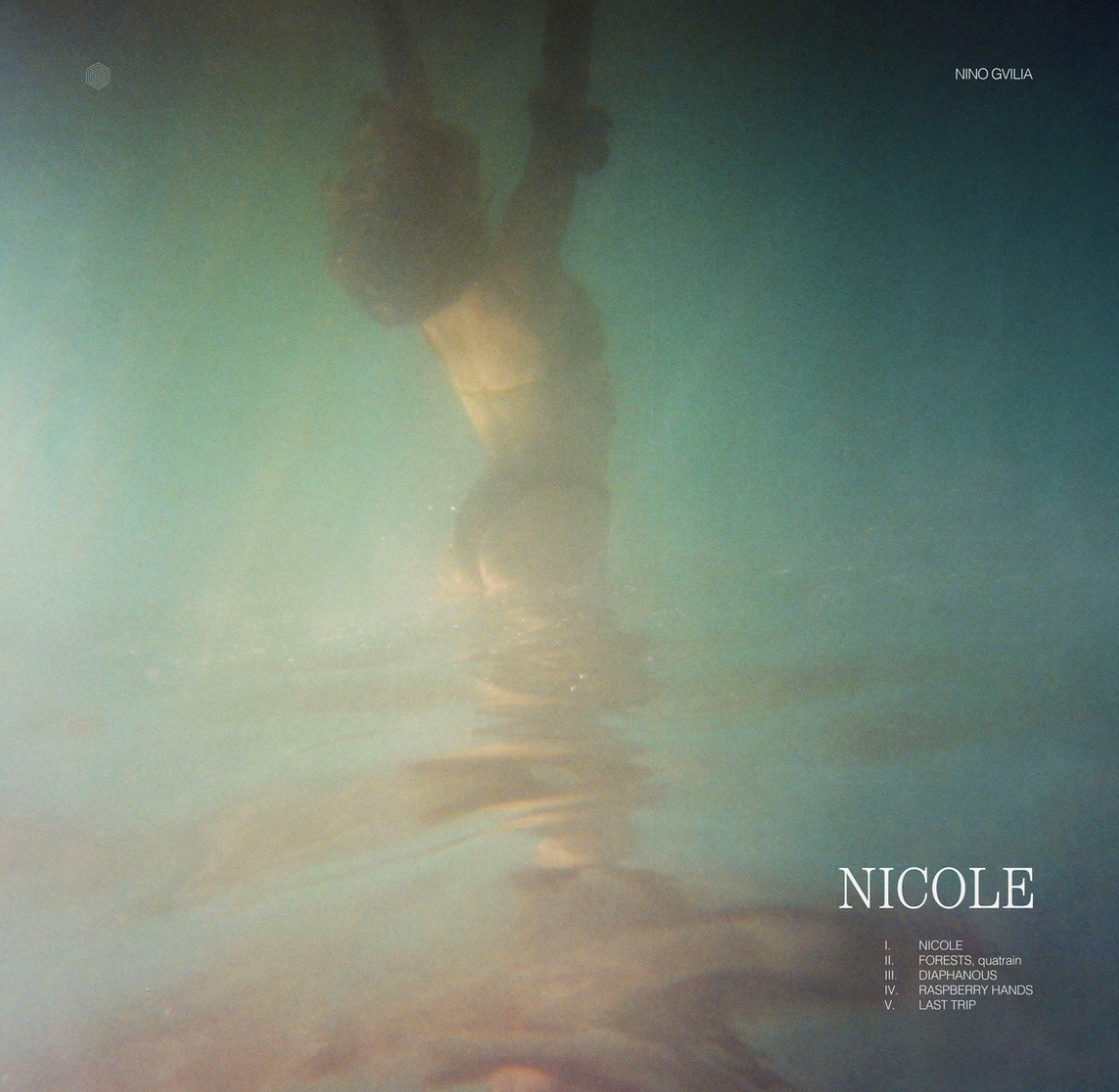
An inspired part of the world, both in antiquity and the now, the roots of Poti in Georgia go back twenty-six centuries; connecting right back to the ancient Greek colony of Phasis – featured in the tales of The Argonauts and the quest for the golden fleece. The city sits as a trading and strategic ‘outlet’, or ‘mouth’, to the Black Sea. It’s also home to the imaginative diaphanous figurehead of Nino Gvilia, the latest worldly wondrous edition to the Hive Mind Records roster. I say imaginary, or rather the label itself does, as Nino appears to be the translucent creation of one Giulia Deval; a character who woos, lulls and beautifully reflects on the themes of ecology and the place of the songwriter in such trying times of geopolitical tumult and crisis.
The songwriter, vocalist, toy guitar/harmonium player and field-recordings composer is joined in this worthy artful cause by a choir of beatific voices, the multitasking foils of Zevi Bordovach and Pietro Caramelli, and by the chamber pop and tapestry renaissance strings of Giulia Pecora (violin) and Clarissa Marino (cello). Across a moiety of EPs, released in a staggered fashion, this ensemble gravitate towards the waters in an entrancing manner; beginning with the seraph-like ethereal biosphere of ‘Nicole’ – it must be pointed out that both EPs seem to be divided, title wise, into the female and male, with Overwhelmed By The Unexplained headed with the popular Scandinavian boy’s name, ‘Anders’. Bathed in the veiled refracted light of aquatic harmonium, subdued percussion, and melodious accentuate piano, the tender choral-voiced opener sounds like an underwater Joanna Newsome or Judee Sill sprite in moving, if leftfield, poetry. The subject of this song seems a most mysterious, wanton presence.
Later, on that second EP, the first directly referenced song title to Deval’s home is made on the strangely plucked, like raindrops on a wooden jetty, ‘Rain On Pallastomi’. Named after a lake outside the city – an archeologically important site that’s given up evidence of the ancient Georgians (known as the Colchis) – this obvious beauty spot of inspiration proves beguiling and dreamily stirring; recalling June McDoom or Natalie Ross Lebracht in a bellowed, concertinaed scenic trance.
Both atmospheric songbook EPs feature a cleverly arranged mixed chorus of venerable, timeless and round voices; at one point, performed in the poetic form of the atavistic ‘quatrain’, a complete encapsulated stanza poem, consisting of four lines and often featuring alternate rhymes – made famous by not only Nostradamus in prophetic form, but also by such seers as Blake, Burns and Thomas Grey. And within the subtle breathing and gauzy spells there are more empirical captured field recordings of nature’s song, of children at play and the environment, alongside talking head experts on ecological sciences – the inter-connective world of bacteria. on the repeated ‘Dirty Is Just What Has Boundaries’ mantra, shown to be integral to humanities survival on Earth. Sounding like a cross between the Celtic, Medieval and folk communal, this interlayered choral circle frees up the subject matter (meta) with a mystical atonal and wire-y stroked vision of arcadia.
Creating a musical, lyrical eco system of their own, soundtracked by folk, minimalism, the hallucinatory and pastoral – with only the final vaporous misty esoteric second EP’s titular track changing from cuckoo-like voiced loops and sympathetic strings to disturbing futuristic daemonic augur –, the Nino Gvilia encompassed guise ebbs and flows with the movement of the replenishing waters, the lakeside and mill turning scenes of the surroundings, to produce a disarming hymn. Idiosyncratic in beauty, I’d recommend this diaphanous (there’s that word again, which even appears as track title in its own congruous right) accomplished mini-opus to those with a penchant for Hatis Noit, Seaming To, Tia Blake and Roberto Musci. Hive Mind Records have unassumingly set the bar high with this latest edition to their stable; a more placeable and visceral release you’d be hard to find in 2024.
A WE JAZZ DOUBLE-BILL
Anni Kiviniemi Trio ‘Eir’ 12th January 2024
Divr ‘Is This Water’ 2nd February 2024

The We Jazz label starts off the year, not with a loud fanfare, but with an assured and intimate double-bill of debut releases; one from the US-based Finnish pianist Anni Kiviniemi and her trio of double-bassist Eero Tikkanen and drummer Hans Hulbaekomo, and the other, from the Swiss Divr trio (more from them later).
Featuring heavily in our end of year lists the Helsinki label, magazine, store and festival hub is among the best jazz labels in the world right now; showcasing, as it does, an enviable roster of Scandinavian talent – its only rival on the continent being the ACT Music stable of world-leading jazz maestros.
Launching the new year schedule, they’ve chosen to open with the adroit original musicianship of Kiviniemi and her bassist/drummer foils, who tiptoe, meander and playfully walk a less travelled road; artfully, moodily, and on occasion, introspectively counterpointing the classical with a freer, looser style of jazz performance.
Although the original compositions were written under certain pre-conditional limitations, once they emerged from the pen, anything goes. A free rein is given in the spirit of improvised democracy – the bandleader-pianist measures this at 95% in the studio, 99% when on stage. This methodology throws up some surprising intense and off-kilter results; a transformed and transcribed form of harpsichord or celeste vision of Schubert at a Georgian dinner party on the textured, descriptive ‘Choral’, and a touch of Marty Isenberg’s Wes Anderson inspired leftfield interpretations on the kooky ‘Judy’. The latter name part of a personal inquiry, love for and ruminations of those held dear and close; the most personal of which, is the album’s Eir title, the name of Kiviniemi’s daughter: born after the recordings but before the album’s release.
Imbued with that closeness, bond, the music is certainly felt. And yet the mood can be transporting; away from Europe to French North Africa ala Tangiers Duke Ellington, and South Africa, ala Abdullah Ibrahim. The art however, is in the way each musician reads the others, and how they respond; creating tumults, fairytales, the blues, mystery and the serenaded from the merest prompt. Kiviniemi’s piano is as classically-tuned as it is able to flourish within the free-form, spiritual and old time idioms of jazz; an incredible constant movement that’s simultaneously capable of catching the listener off-guard with a sharpened, near off-key note or two and alternative scales whilst staying playful and melodious throughout. The in-demand bassist Tikkanen reminded me in part of Thomas Bramerie, his double-bass perception of timing and movement almost impeccable, but freed up and loosening. Meanwhile, Hulbaekmo (a member of fellow We Jazz label mate Gard Nilssen’s Supersonic Orchestra, whose Family album made our choice albums of the year in 2023) can nearly explode like Elvin Jones in between deft tumbles; roll snaps and more percussive bouts of artistry. Encompassing many styles, dalliances and fandangos the trio repurposes classical and jazz influences to write a unique account of personalized feelings, expressions, themes and musicianship. More importantly, this is a trio that gels and sounds telepathic in their interactions. A great way to kick-off the 2024 calendar.
The second album in this We Jazz label double-bill is the Swiss trio Divr’s first release on the Helsinki platform. It also features, just like Anni Kiviniemi’s set-up, the piano in a prominent if unburdened and freely moving role. Based between Zurich and Basel, keys player Philipp Eden, drummer Jonas Ruther and (double) bassist Raphael Walser pool their talents for a reshaping of water in its many forms; from splashes of resonating cymbals to a piano tumult of disturbed choppy waves and the ebbing tides of calmer meditative waters.
Although this is indeed a jazz record, the original compositions and choices of covers extends beyond into trip-hop and the downbeat breaks territory of artists like Ju$ufa and J Dilla – the latter not so surprising as I referenced the late icon on label mate Otis Sandsjo’s two Y-OTIS albums, which featured Dan Nicholls the post-producer of this trio’s debut. You can add touches of Jesse Futerman and the Protico Quartet to that sound too, albeit mostly kept simmered and attuned to the very movements in the air and from off the myriad of watery inspirations. The difference here though is in choosing to, and proving a most congruous to the overall sound and feel of Is This Water, cover music from both Radiohead and Broadcast; the former, translating the In Rainbows low, moody and slowly stirring ‘All I Need’ into a languid and dreamy turn dramatic tighter rolling crescendo, and the latter, a beautifully articulated, dreamt and longed contemplative version of the cinematic but understated beautiful ‘Echo’s Answer’. Both originals are themselves complimentary in the first place, but retuned by the Divr trio they became part of a deeper if often translucent almost gauzy fabric.
It’s a style of musical performance played in, what the trio call, a ‘multi-directional time’; a flow that is based on largely acoustic improvisation and loops. Yet they emphasis that doesn’t mean their music is repetitive, those waves and loops instead subtly changing each time round, the cyclonic aspect so subtle and reverberating as to go almost unnoticed. Instead at times it all sounds near formless: in a good way. The vibrations and quivers evoking atmospheres and presence; especially the finale, ‘A Glass Is No Glass Is A Glass’, which like its name suggests is glassy in substance, but also near spooked and esoteric; certainly mysterious with its constant crispy white noise background, odd jarred glass bulb notes and brushy drag of sticks across drum skins. There’s also the sound of European voices in the background, filtering in from the park or the woods.
There’s a soft but nice span of moods and music, with touches of Francis Bebey and the Ethnic Heritage Ensemble on the tine plucked-like ‘42’, and a feel of Mingus and McCoy Tyner on the slightly skipped, darting and choppy ‘Supreme Sweetness’ – Divr riff on the highly influential American songbook trio of Gus Arnheim, Charles N. Daniels and Harry Tobias’ gold standard from another age.
In a meditative, thoughtful mood throughout, the Pali language ‘Upeksha’ – a spiritual virtue of equanimity, even-mindedness and non-attachment to the fluctuations of worldly fortune – takes things that little further; the drums almost whispered and tinkled, the watery piano notes hypnotic, as if materializing from out of thin air. As fortunes and temperaments change with the ebbing tides, the trio dance and explore in an amorphous fashion across unburdened soundscapes and movements with an improvised musical dialect and flow. Is The Water is an idiosyncratic debut from a leftfield jazz troupe; an ideal signing for the leading Northern European We Jazz label: fast becoming a stamp of authority in that field of music.
Walter Kemp 3 ‘Black Whole Live’
26th January 2024

The highly acclaimed bandleader-pianist and teacher Walter Kemp lays down a near perfect set with his new Black Whole Live album. Taking melody and recognized tunes on a ride, Kemp and his foils turn earthly and city-hive incubated compositions and autumnal romantic serenades into the cosmic stratosphere and beyond. Freeform, conscious jazz is effortlessly entwined with the classical, the avant-garde, funky, the blues and sci-fi as Kemp and his dynamic quartet stretch themselves to the limits.
It sounds like a lifetime of experience and influences are drawn upon, with Kemp’s formative years of studying classical and gospel (inspired by his father’s own career as a composer-performer in those fields), and the pull towards jazz, used as the jump-off points.
From the atonal to sharply jarring, and the tuneful to experimental, his piano, Rhodes and Viscount organ (named after the UK maker, this instrument is voiced to sound like an English pipe organ) skills are both stirring and tumultuous in equal measures: a touch of Monk here, Ahmed Jamal and Jimmy McGriff there. Held suffusions of gospel can be found alongside La Monte Young experimentation, and both dramatic and accentuate flourishes. But it’s Allan Mednard’s Billy Cobham-like tight incipient tumbles, rolls and percussive soloing that gets the whole live performance in motion; carrying over into the first mini opus, ‘Novum’ (the Latin for “new thing”, and brought into the lexicon by the sci-fi scholar Darko Suvin and his peers to describe the ‘scientifically’ plausible innovations used in that genre’s narratives). In nine or so minutes the ensemble cover a multitude of bases, from jazz-fusion to the wild violin off-the-scale elbow frantic’s of Tony Conrad, Michael Urbaniak and Jason Kao Hwang (courtesy of the Grammy Award-winning violinist Scott Tixier).
Another band member, Brent Birckhead, offers whistled and bird-like floating exhales and squeezes of woodwind to that simultaneously concentrated and free workout. Rishan Odel meanwhile, is switching between thick-stringed taut and more loosened double-bass runs and a little slap electric bass funk – Odel and the rest of the group going as far as to evoke a grooving Herbie Hancock and Weather Report jamming with The Time, on the soul-jazz flexed ‘Don’t Step In It’.
There’s certainly a lot going on at any one time, and yet you can hear every note, every phrase, chord, triplet and riff: even in the more chaotic maelstroms. From melodious parts of Duke Ellington, Count Bassie and Blue Note to the flare-ups of ECM, the Pharoah, Marius Neset and Devin Gray and the more out-there echoes of Steve Swell & Andrew Cyrille’s partnership, the Art Ensemble of Chicago and Walter Semtek, the musicality, feel and direction of travel is deep and wide-ranging. Kemp and his ensemble are nothing short of accomplished, performing not only a highly recommended live but essential jazz album. Already, in my humble opinion, one of the year’s standard bearers and highlights: it will take some beating. Expect to see this album in my end of year’s list.
Nehan ‘An Evening With Nehan’
(Drag City) 26th January 2024
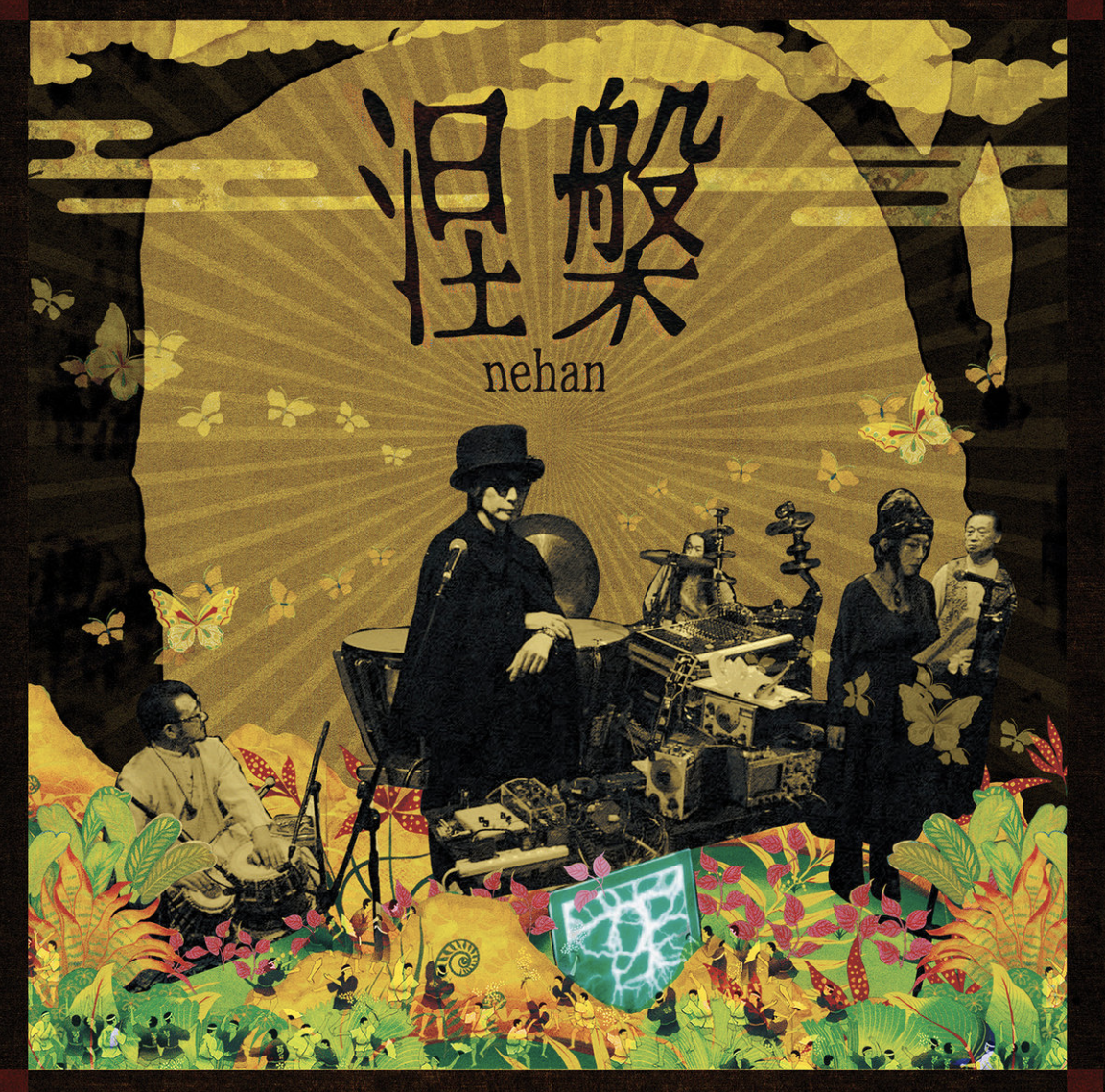
Something unique, process and methodology wise, from the Japanese improvisational underground with the Nehan quintet’s ‘brain waves’ initiated performance. Literally powered, or directed, by a willing “testee” and their emitted 9hz brain waves, extemporized vibes are set in motion for a set of serialism peregrinations performed by an ensemble that includes members of wound-down and still active projects: from the band leader’s own Ghost and Batoh groups to Acid Mothers Temple acolytes and members of The Silence and Espvall.
Instigated by Masaki Batoh, an acupuncturist (of all things), musician and designer of the machine apparatus behind this experiment, the Nehan guise is an amorphous vehicle brought into existence from a relaxed but alert state of consciousness. Tapping into the new age, the scientific and meditative, the generated sonic data channeled results are simultaneously far out, avant-garde and progressive.
This particular release was originally recorded from a live evening performance at Tokyo’s Guk Sound in August of 2022; divided here into Nehan and Ocean sides. The volunteer brain pulse oscillator subject isn’t named, but the set-up on this chosen night included the willing Futoshi Okano, Haruo Kondo and Junzo Tateiwa; between them, navigating an instrumental apparatus of gongs, timpani, tablas, drums, percussion, crumhorn (a Renaissance-period double-reed instrument from Swabia), bagpipes, mellotron and sound effects.
From pulsations emerges two undefined events; with vague references to Shinto, India, Tibet and the ether, yet far from ceremonial or religious. A chthonian mysticism of guirro-like stretches, ratcheted bows, burnished resonated struck gongs, spoke rattled percussion, piercing reeds, bounded timpani rolls and a mix of Fortean and Zodiak Club Berlin radio dial craziness. Side one draws us into an otherworldly realm of Toshiro Mayuzumi & Makoto Moroi, Popol Vuh amd Walter Smetak invocations. But then, almost out of nowhere, a rhythm, synchronization is found and explosion of Embryo and Acid Mothers freakouts kick in. This all simmers down into a stripped down Sergius Golowin like traversing.
The flip side, ‘Ocean’, reminded me of Yamash’ta & The Horizon; a little too of Terry Riley & Don Cherry’s Koln partnership, His Name Is Alive and, when the generators start to mimic a steam-like train chugged and speaker rotating movements, Bowie’s Station To Station meets Fripp & Eno’s No Pussyfooting. The elements of thunderous rumbles and warped board shakes of a leviathan looming above are contrasted with a virtual South Seas oasis of birds-of-paradise. Intermittent scribbled and wiry broadcasts and discordant white noise tune into some esoteric visitation from the cerebral hypnotic state; brain waves that leap between the picturesque to near jarring. An interesting process provokes open-ended sonic results on this new age curious project. Lovers of the Japanese underground will be queuing around the block.
Brion Gysin ‘Junk’
(WEWANTSOUNDS) 26th January 2024
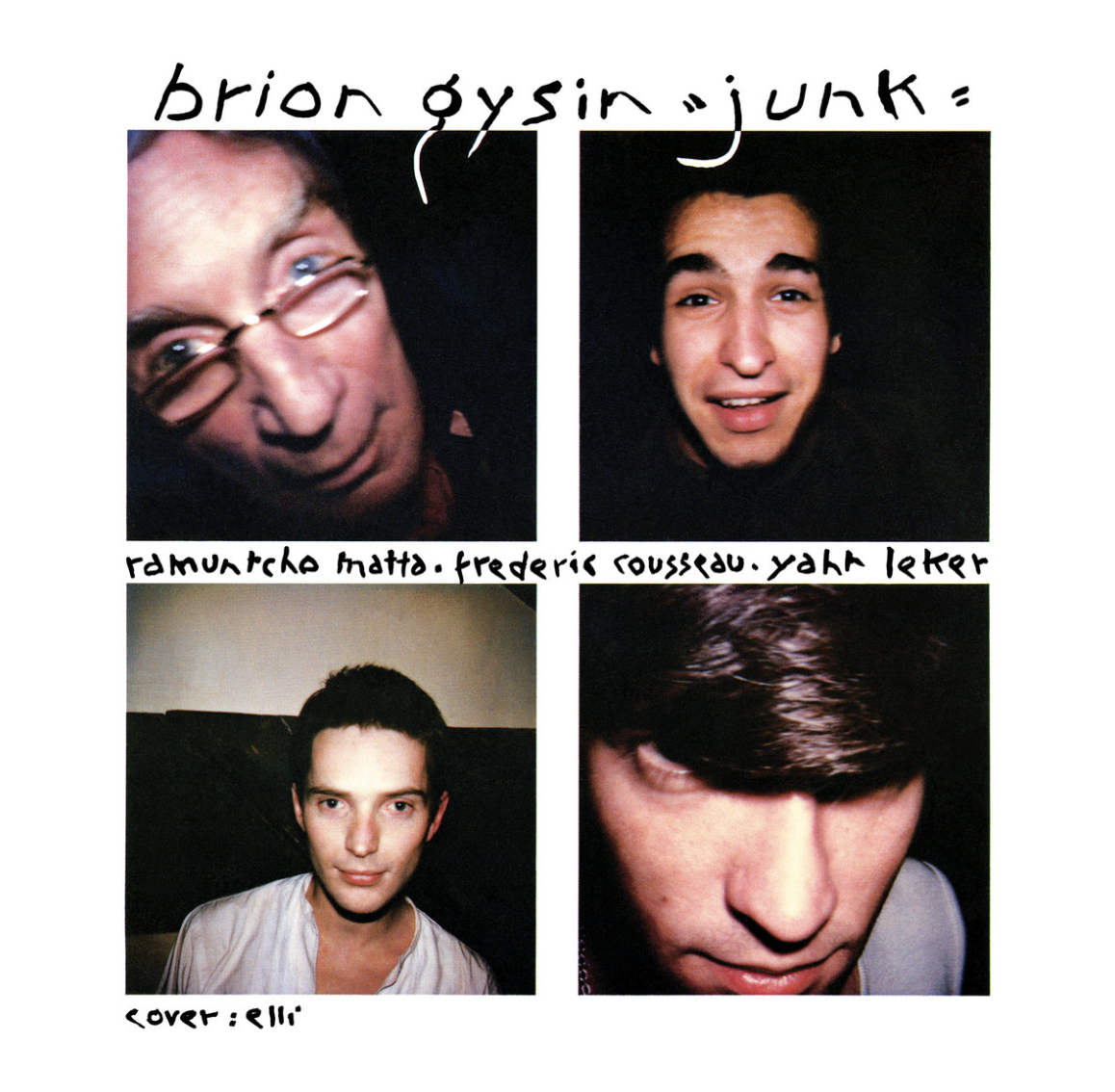
The late outstanding contributor to the arts may have his name on the album but Junk is the second album taken from the Ramuntcho Matta vaults by the reissue vinyl specialists WEWANTSOUNDS. Following on from last year’s self-titled Ramuntcho Matta LP, the Brion Gysin headed habit-kicking Junk is another feather in the cap of this well-connected creative nomad, who produced it and helped shape this collaborative work of avant-garde funk, no wave and refashioned beat poetry. And so once more the label hones in on one of his most esteemed collaborations.
The younger sibling to and scion of the Matta artist brood – his father, the Chilean-born Roberto, a key if not always congruous member of the Surrealist movement with his ‘psychological morphologies’ or alien ‘inscapes’ coined subconscious manifestations, and brother, Gordon Matta-Clark, the ‘anarchitecture’ pioneer of such concepts as the ‘split’ house and various art performances – Ramuntcho quickly made a name for himself in the same creative fields of influence; in part by his formative years as an aide to the celebrated polymath Gysin: poet, writer, calligraphic abstract artist, excommunicated Surrealist, Tangier restaurateur, inventor of the ‘dream machine’ and progenitor of the famous cut-up writing techniques favoured by such luminaries and acolytes as Bowie. In a world of crossovers, inter-connectivity, Gysin also famously knocked about with William Burroughs, sharing his discovery of that same cut-up technique with the Naked Lunch author during their time at the infamous Beat Hotel in Paris.
A titan of the alternative arts world, it’s no wonder that the British-born, but of Canadian heritage, Gysin opened doors for his aide; living at this time in the mid 1970s and working with Ramuntcho in New York – talking of those wild links, Ramuntcho shared a flat with scenesters Nana Vasconcelos and Arto Lindsay, in the same building as the Talking Heads’ Chris Frantz and Tina Weymouth. Although tragedy would strike with the death of Ramuntcho’s brother and conceptual art icon Gordon in the late 70s, the burgeoning producer would stay on in New York, falling in with the Mudd Club, CBGB and Danceteria in-crowd; taking note of the evolving polygenesis movements of early hip-hop, post-punk, electronica, no wave funk and more worldly sounds (from Soweto to the outback, Caribbean and Hispaniola). But it all came together, or rather this particular project did – dusted off, remastered and given a deserving vinyl reissue by WEWANTSOUNDS – in the French capital.
With the CV –notably recording Don Cherry’s 1983 ‘Kick’, the opening track on Junk, as asingle for the boutique French label Mosquito – and network expanding ever further with a move to Paris, there would be performances with the Senegalese group Xalam and the Arabic rock group Carte de Séjour, with Rachid Taha. A residency in Lyon led to a meeting with the Algerian-born French avant-garde choreographer Régine Chopinot, who had taught dance at the city’s Croix-Rousse before forming her own experimental multimedia company. Chopinot invited Ramuntcho to compose the soundtrack to her upcoming Via show – the costume designer of which was a young aspiring Jean-Paul Gaultier. Resulting in the, already mentioned, self-titled 1985 released production, which was produced between Ramuntcho’s home and the Studio d’Auteuil in Paris, tracks were recorded with a couple of the same musicians that appeared on Junk: most notably, the Stinky Toys and Elli & Jacno duo’s Elli Medeiros on guest vocals, and Suicide Romeo’s Frederic Cousseau (better known as Fred Goddard) on drums. They were joined on the Gysin trip by Xalam’s Abdoulaye Prosper Niang on hand drums, the Modern Guy group’s Yann Le Ker on bass, and guests Caroline Loeb (the French actress, radio host, singer and director), Lizzy Mercier (hot property French new wave pop star) and of course, leading the way and literally kicking off the LP, Don Cherry.
Essentially putting cool-as-fuck, happening music to Gysin’s late 1950s famous habit-kicking beat poetics, the Junk LP is a both grizzled and bouncing street level and discothèque mantra on addictions. Hardly surprising with the track records of Gysin and Cherry: two better foils you couldn’t meet in that regard. Preempting, or prophesying, his own death just a couple of years later after setting up in the studio to make this LP (the notes say that Ramuntcha put this together over a time period between 1980 and ‘84, with the LP’s release in ‘85), the hacking coughed skull and crossbones warning of ‘Stop Smoking’ makes a real Ludus, Altered Images and Bush Tetras post-punk jangle funk out of Gysin’s fateful nicotine addiction. Already surviving the trauma of colon cancer in the 70s – the surgery and treatment so savage that he nearly committed suicide -, Gysin would tragically contract lung cancer in the 80s, succumbing to the disease in ‘86. With the featured French chic chorus of Elli Medeiros – “Isn’t the cough that carries you off, it’s the coffin they carry you off in” -, cigarette brands enter the lucid chat like alluring sponsors of death to a new wave saunter and rolled hand drums loose funeral dance.
For his part, Cherry, sounding not too dissimilar to 80s period Miles, tickles and cycles languid cornet riffs and swirls to a mix of Afro-jazz, downtown funk and go-go: like Gil Scott-Heron on a Keith Herring scribbled walled skid row, strutting in a bandy fashion to a boom box of Maximum Joy, Talking Heads, Liquid Liquid, early Hip-Hop and Parisian aloofness. Many will probably know this one off-by-heart, may even have spotted the much-sampled licks. As part of this new package – only ever re-released I think on CD in 1991 -, there’s two previously unreleased 7” vinyl versions of the opener; an ‘alternative’ more contained beat rolled and buoyant version and an ‘instrumental’.
The tile-track is unsurprising another one of those rough repeated vocal prompts to, well…kick the habit. The music has a very Afro-Caribbean bent to it; Island life, with the subtle sounds of glasses chinking; perhaps a beachside getaway, only you’ve pitched up in Jamaica with all its own enticing addictions. Old style ringing alarm clocks, used as a sort of percussion, sound alerts as a near polyrhythm Postcard Records era guitar riff plucks away.
A voice of a generation, Gysin’s part in the beat movement is given an energetic, bandy and bendy, funky and world musical sound; a collage of all those various NYC and Paris influences, art and attitude. Liner notes author Jason Weiss had a lovely, and brilliant expression for that voice and poetry style: “Permutation poems […] like etudes for expressivity”. On the R&B bent funky-disco street jive ‘Sham Pain’, he sounds almost in a lucid despondent stupor, but like he’s having some bawdry playful fun on the later CAN period, maybe a touch of Dunkelziffer, swinging on the concrete jungle vines hooted and whistled ‘Baboon’. Gysin is later flanked by the French chanteuses of cool – Lizzy Descloux and Caroline Loeb – on the new wave sassy victory, “fun, fun, fun”, bravado ‘V.V.V’. This reminded me of both 80s period Marianne Faithful, coquettish Jane Birkin of the same period, and Annie Anxiety.
As a crossover with Ramuntcha’s own self-titled LP, as an additional bonus of a kind, there’s a previously unreleased version of the Congo-esque twine twirled and turning overruminated ‘All Those Years’. This version is more tines turning, more acoustic and intimate, and a nice way to bring closure to an ill-fated artist’s song.
Continuing to draw the spotlight on the work and productions of Ramuntcha Matta, WEWANTSOUNDS have revived a cult encapsulation of that early, polygenesis 80s music scene in Paris; bringing attention to two truly funky, cool and worldly cats in the process. Junk sounds as fresh now as it must have done back in ’85; uncannily, fitting in with the contemporary music scene. Which is why I’m perplexed that Ramuntcha is a name that seems to be missing from the current lexicon of influences, as integral as Art Lindsey and his crowd to the development and widening of the musical language. This LP package, just like the previous Ramuntcha Matta S-T LP, should right that.
Hi, my name is Dominic Valvona and I’m the Founder of the music/culture blog monolithcocktail.com For the last ten years I’ve featured and supported music, musicians and labels we love across genres from around the world that we think you’ll want to know about. No content on the site is paid for or sponsored and we only feature artists we have genuine respect for /love. If you enjoy our reviews (and we often write long, thoughtful ones), found a new artist you admire or if we have featured you or artists you represent and would like to buy us a coffee at https://ko-fi.com/monolithcocktail to say cheers for spreading the word, then that would be much appreciated.

