End of the Year Revue For 2025: Part One: A to M
December 11, 2025
Choice Highlights From The Last Year
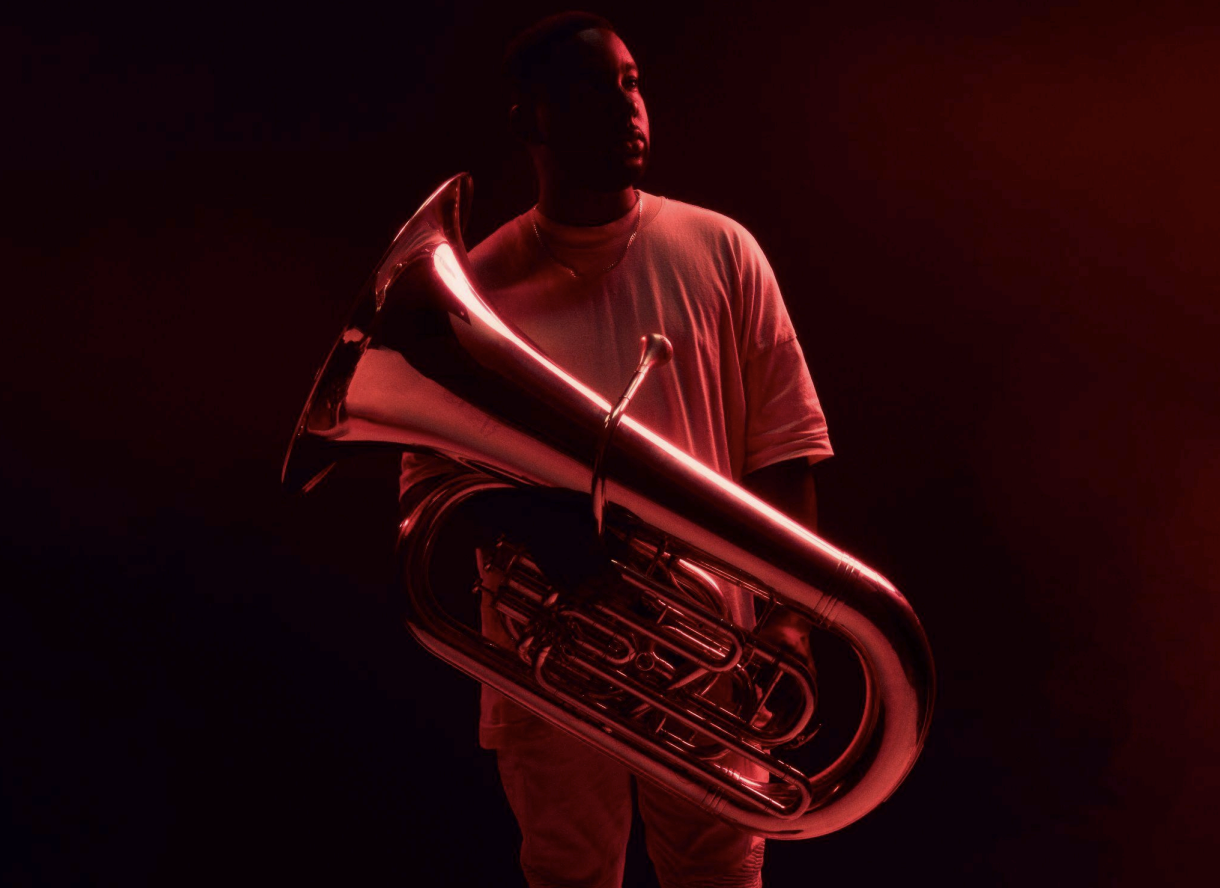
I said I wasn’t going to do it this year. And this may be the last. But here is the first part of a comprehensive revue listing of choice albums (some extended EPs too) from 2025 that we returned to the most, enjoyed or rated highly. See it as a sort of random highlights package if you will.
As usual a most diverse mix of releases, listed alphabetically – numerical orderings make no sense to me unless it is down to a vote, otherwise what qualifies the placing of an album? What makes the 25th place album better than the 26th and so on…
Whilst there is the odd smattering of Hip-Hop releases here and there, our resident selector and expert Matt Oliver has compiled a special 25 for 25 revue of his own, which will go out next week.
Without further ado….the first half of that selected works revue:
A.
A Journey Of Giraffes ‘Emperor Deco’ (Somewherecold Records)
Review by Dominic Valvona
Alien Eyelid ‘Vinegar Hill’ (Tall Texan)
Review by Brian ‘Bordello’ Shea
Allen, Marshall ‘New Dawn’ (Week-End Records)
Review by Dominic Valvona
Armstrong ‘Handicrafts’
Review by Brian ‘Bordello’ Shea
Audio Obscura ‘As Long As Gravity Persists On Holding Me to This Earth’
Review by Dominic Valvona
Aus ‘Eau’ (Flau)
Review by Dominic Valvona
B..
Balloonist, The ‘Dreamland’ (Wayside & Woodland)
Review/Piece by Dominic Valvona
Barman, MC Paul ‘Tectonic Texts’
Picked by Dominic Valvona
Bedd ‘Do Not Be Afraid’
Review by Dominic Valvona
Bird, Jeff ‘Ordo Virtutum: Jeff Bird Plays Hildegard von Bingen, Vol 2’
(Six Degrees Records) Review by Dominic Valvona
Blanco Teta ‘‘La Debacle las Divas’ (Bongo Joe)
Review by Dominic Valvona
Bordellos (with Dee Claw)/Neon Kittens, The ‘Half Man Half Kitten’
(Cruel Nature Records) Review by Dominic Valvona
Braxton, Anthony ‘Quartet (England) 1985’ (Burning Ambulance)
Picked by Dominic Valvona
Brody, Jonah ‘Brotherhood’ (IL Records)
Review by Dominic Valvona
Brother Ali ‘Satisfied Soul’ (Mello Music Group)
Picked by Dominic Valvona
Burning Books ‘Taller Than God’ (Ingrown Records)
Reviewed by Dominic Valvona
C…
Cindy ‘Saw It All Demos’ (Paisley Shirt Records)
Reviewed by Brian ‘Bordello’ Shea here
Craig, Kai ‘A Time Once Forgotten’ (Whirlwind Recordings)
Review by Dominic Valvona
Crayola Lectern ‘Disasternoon’ (Onomatopoeia)
Review by Dominic Valvona
Cross, Theon ‘Affirmations: Live at Blue Note New York’ (New Soil)
Review by Dominic Valvona
Cubillos, Julian ‘S-T’ (Ruination Record Co.)
Review by Dominic Valvona
Cumsleg Borenail ‘10mg Citalopram’ (Cruel Nature Recordings)
Review by Dominic Valvona
Joel Cusumano ‘Waxworld’ (Dandyboy Records)
Review by Dominic Valvona
D….
Dammann Sextet, Christopher ‘If I Could Time Travel I Would Mend Your Broken Heart aka Why Did The Protests Stop’ (Out of Your Head Records) Review by Dominic Valvona
Darko The Super ‘Then I Turned Into A Perfect Smile’
Picked by Dominic Valvona
Dyr Faser ‘Falling Stereos’
Picked by Dominic Valvona
E…..
Eamon The Destroyer ‘The Maker’s Quilt’ (Bearsuit Records)
Review by Brian ‘Bordello’ Shea
Expose ‘ETC’ (Qunidi)
Reviewed by Brian ‘Bordello’ Shea here
F……
Farrugia, Robert ‘Natura Maltija’ (Phantom Limb/Kewn Records)
Reviewed by Dominic Valvona here
Fir Cone Children ‘Gearshifting’ (Blackjack Illuminist Records)
Review by Brian ‘Bordello’ Shea
Fortunato Durutti Marinetti ‘Bitter Sweet, Sweet Bitter’ (Quindi Records/We Are Time)
Review by Dominic Valvona
G…….
Goldman, Ike ‘Kiki Goldman In How I Learned To Sing For Statler And Waldorf’
Review by Brian ‘Bordello’ Shea
Good Ones, The ‘Rwanda Sings With Strings’(Glitterbeat Records)
Review by Dominic Valvona
H……..
Haas & Brian g Skol, Andy ‘The Honeybee Twist’
Review by Dominic Valvona
Howard, John ‘For Those that Wander By’(Think Like A Key)
Review by Brian ‘Bordello’ Shea
I………
Ishibashi, Eiko ‘Antigone’ (Drag City)
Picked by Dominic Valvona
iyatraQuartet ‘Wild Green’
Review by Dominic Valvona
J……….
Jay, Tony ‘Faithless’
Review by Brian ‘Bordello’ Shea
Johanna, John ‘New Moon Pangs’(Faith & Industry)
Review by Dominic Valvona
K………..
Kheir , Amira ‘Black Diamonds’(Sterns Music/Contro Culture Music)
Review by Dominic Valvona
Khodja, Freh ‘Ken Andi Habib’(WEWANTSOUNDS)
Review by Dominic Valvona
Kweli, Talib & J Rawls ‘The Confidence Of Knowing’
Picked by DV
L…………
Lassy Trio, Timo ‘Live In Helsinki’ (We Jazz)
Picked by Dominic Valvona
Last Of The Lovely Days, The ‘No Public House Talk’(Gare du Nord)
Review by Brian ‘Bordello’ Shea
Lt. Headtrip & Steel Tipped Dove ‘Hostile Engineering’ (Fused Arrow Records)
Review by Dominic Valvona
LIUN + The Science Fiction Band ‘Does It Make You Love Your Life?’
(Heartcore Records) Review by Dominic Valvona
Locks, Damon ‘List Of Demands’ (International Anthem)
Reviewed by Dominic Valvona here
M………….
Mikesell, Emily & Kate Campbell Strauss ‘Give Way’ (Ears & Eyes Records)
Reviewed by Dominic Valvona here
Mirrored Daughters ‘S/T’ (Fike Recordings)
Review by Dominic Valvona
Mohanna, Nickolas ‘Speakers Rotations’ (AKP Recordings)
Review by Dominic Valvona
If you’ve enjoyed following and reading the Monolith Cocktail in 2025, and if you can, then please show your appreciation by donating to our Ko-Fi account. The micro donation site has been vital in keeping us afloat this year.
For the last 15 years both me and the MC team have featured and supported music, musicians and labels we love across genres from around the world: ones that we think you’ll want to know about. No content on the site is paid for or sponsored, and we only feature artists we have genuine respect for /love or interest in. If you enjoy our reviews (and we often write long, thoughtful ones), found a new artist you admire or if we have featured you or artists you represent and would like to say thanks or show support, than you can now buy us a coffee or donate via https://ko-fi.com/monolithcocktail
Our Monthly Playlist selection of choice music and Choice Releases list from the last month.

We decided at the start of the year to change things a little with a reminder of not only our favourite tracks from the last month but also a list of choice albums too. This list includes both those releases we managed to feature and review on the site and those we just didn’t get the room for – time restraints and the sheer volume of submissions each month mean there are always those records that miss out on receiving a full review, and so we have added a number of these to both our playlist and releases list.
All entries in the Choice Releases list are displayed alphabetically. Meanwhile, our Monthly Playlist continues as normal with all the choice tracks from July taken either from reviews and pieces written by me – that’s Dominic Valvona – and Brian ‘Bordello’ Shea. Our resident Hip-Hop expert Matt Oliver has also put forward a smattering of crucial and highlighted tracks from the rap arena.
CHOICE RELEASES FROM THE LAST MONTH OR SO:
Alien Eyelid ‘Vinegar Hill’
(Tall Texan) Review
Darko The Super ‘Then I Turned Into A Perfect Smile’
Eamon The Destroyer ‘The Maker’s Quilt’
(Bearsuit Records) Review
Ike Goldman ‘Kiki Goldman In How I Learned To Sing For Statler And Waldorf’
The Good Ones ‘Rwanda Sings With Strings’
(Glitterbeat Records) Review
Headless Kross/Poundland ‘Split Album’
(Cruel Nature Records) Review
John Johanna ‘New Moon Pangs’
(Faith & Industry) Review
The Last Of The Lovely Days ‘No Public House Talk’
(Gare du Nord) Review
Lt. Headtrip & Steel Tipped Dove ‘Hostile Engineering’
(Fused Arrow Records) Review
Pharoah Sanders ‘Love Is Here – The Complete Paris 1975 ORTF Recordings’
(Transcendence Sounds)
SCHØØL ‘I Think My Life Has Been OK’
(GEOGRAPHIE) Review
Tom Skinner ‘Kaleidoscopic Visions’
(Brownswood/International Anthem) Review
Theravada ‘The Years We Have’
Ujif_notfound ‘Postulate’
(I Shall Sing Until My Country Is Free) Review
Visible Light ‘Songs For Eventide’
(Permaculture Media) Review
THE PLAYLIST::
Star Feminine Band ‘Mom’lo Siwaju’
A-F-R-O, Napoleon Da Legend, PULSE REACTION ‘Mr Fantastic’
Pharoah Sanders ‘Love Is Here (Part 1) (Live)’
Tom Skinner ‘Margaret Anne’
Holly Palmer & Jeff Parker ‘Metamorphosis (Capes Up!)’
Matt Bachmann ‘TIAGDTD’
Darko the Super, Andrew ‘The Bounce Back (Heaven Bound)’
Verb T, Vic Grimes ‘Anti-Stress’
Cymarshall Law, Ramson Badbonez ‘Emerald Tablet’
Datkid, Mylo Stone, BVA, Frenic ‘Poundland’
Verbz, Mr Slipz ‘What You Reckon?’
Theravada ‘Doobie’
The Expert, Buck 65 ‘What It Looks Like’
Lt Headtrip, Steel Tipped Dove ‘0 Days Since Last Accident’
Ujif Notfound ‘Postril’
Lael Neale ‘Some Bright Morning’
Alien Eyelid ‘Flys’
John Johanna ‘Justine’
Ike Goldman ‘Land Of Tomorrow’
Ananya Ashok ‘Little Voice’
Rezo ‘Nothing Else’
Howling Bells ‘Unbroken’
The Good Ones ‘Kirisitiyana Runs Around’
Jacqueline Tucci ‘Burning Out’
Dyr Faser ‘Control Of Us’
The Last Of The Lovely Days ‘Runaway’
Frog ‘SPANISH ARMANDA VAR. XV’
The Bordellos ‘The Village People In Disguise’
The Jack Rubies ‘Are We Being Recorded?’
The Beths ‘Ark Of The Covenant’
SCHOOL ‘N.S.M.L.Y.D’
Neon Kittens ‘Own Supply High’
ASSASSUN ‘The Sons Of The United Plague’
Pelts ‘Don’t Have To Look’
Visible Light ‘Purple Light’
Wayku ‘Suchiche’
Here’s the message bit we hate, but crucially need:
If you’ve enjoyed this selection, the writing, or been led down a rabbit hole into new musical terrains of aural pleasure, and if you able, then you can now show your appreciation by keeping the Monolith Cocktail afloat through the Ko-Fi donation site.
For the last 15 years both me and the MC team have featured and supported music, musicians and labels we love across genres from around the world: ones that we think you’ll want to know about. No content on the site is paid for or sponsored, and we only feature artists we have genuine respect for /love or interest in. If you enjoy our reviews (and we often write long, thoughtful ones), found a new artist you admire or if we have featured you or artists you represent and would like to say thanks or show support, than you can now buy us a coffee or donate via https://ko-fi.com/monolithcocktail
The Perusal #71: Matt Bachmann, John Johanna, Johnny Richards & Dave King, The Good Ones…
September 8, 2025
A world of sonic/musical discoveries reviewed by Dominic Valvona. All entries in alphabetical order.
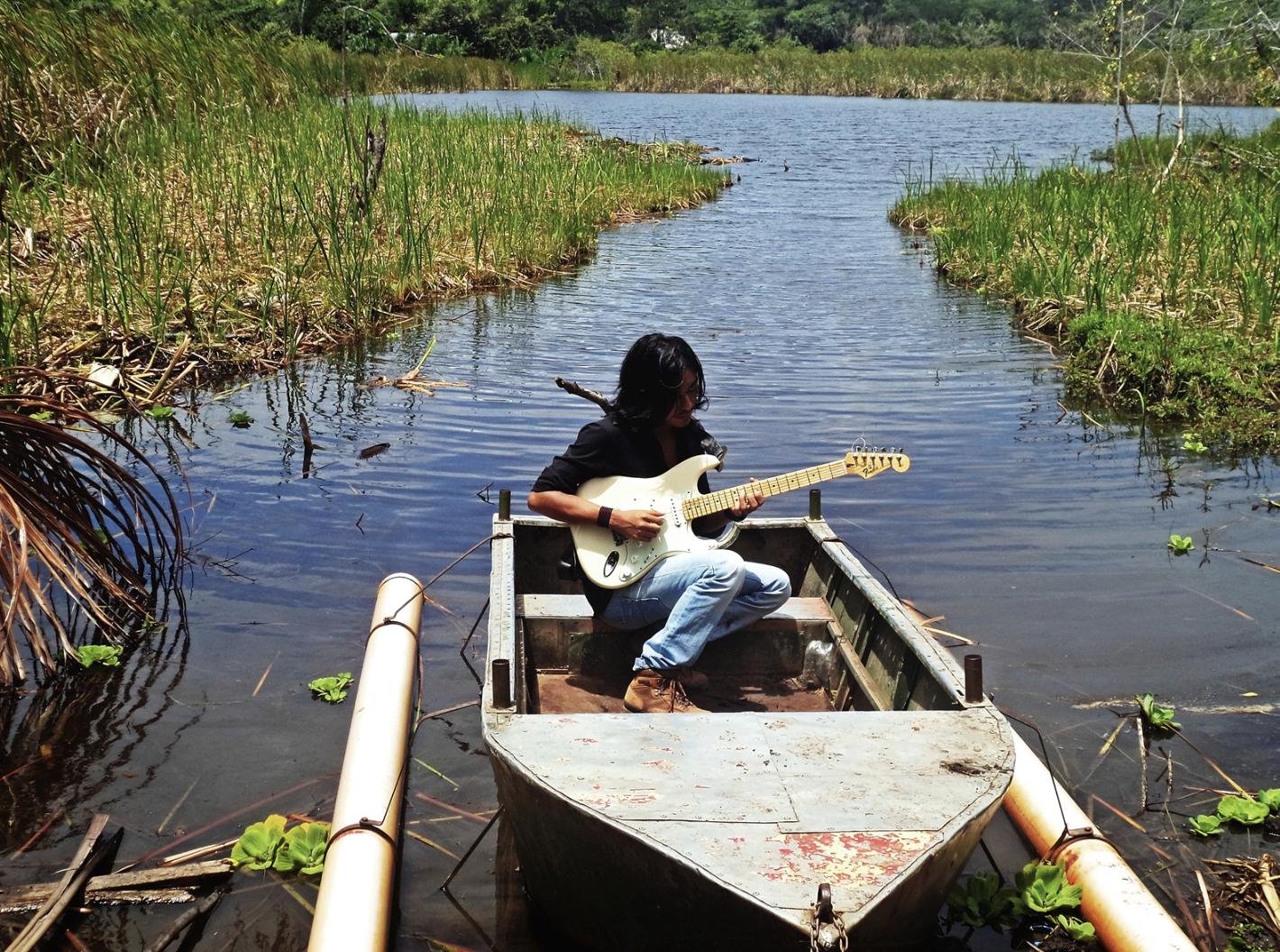
Image of Wayku courtesy of Jesús Flores
Matt Bachmann ‘Compost Karaoke’
(Orindal Records) 12th September 2025
Imbued and driven by a creatively successful obsession with film scores and incidental musical pieces, Matt Bachmann draws away from the earthy for something far more dreamy, escapist and calming. As if to illustrate, the artist, bassist, keys and various assorted instrumentalist soulfully, and low key, yearns “I don’t want to talk about the news” on the smooched and duck-billed saxophone accompanied dreamy if bluesy ‘Long Road’. And yet tied in part to reality, the dread and anxieties of our times, there’s an attempt to break new ground with music for a movie of life that doesn’t yet exist.
Leitmotifs and a recurring intimate ensemble appear throughout this latest near untethered cinematic-leaning album, but each composition, vignette of a kind, and song can be heard in isolation and apart from the rest. For the majority of the time, on an album mostly made up of instrumentals, with just a couple of tracks featuring Bachmann’s near meandered, contour ascending and descending peaceable vocals, there’s a trio core of longtime foils and ‘confidents’: Derek Baron (of Reading Group Records note) both on drums and a little woodwind; Jeff Tobias (Modern Nature, Sunwatchers) on alto saxophone and bass clarinet; and James Krichenia (Big Thief) ‘gumming’ up the groove (as it’s put) on hand drums and percussion. There’re further contributions from Roberta Michel on flute, Cory Bracken on vibraphone and percussion, and Kyle Boston on guitar. Sometimes altogether, or separately, this ensemble is subtle and attentive but moving freely and near lucid when alongside Bachmann’s carefully placed piano, synth, chime manipulations and bass parts and leads.
Emotions swim or cast adrift in a beautifully conveyed movement of suite-like arrangements, the near minimalist, field recordings, and bursts of music – the opening grasp, tangible hold of ‘Summer’s Last Grab’, is a short burst of spontaneous-like bounding seasonal change; almost like a freeform crescendo, with instruments pulled in from various points and angles. Much ground is covered musically and influence wise, and yet there’s no specific or easy to recognise reference or evocation of filmic composers, expect for Sakamoto, who’s 80s contemporary classical reinventions and scores, his synthesized and real Bamboo music clogs and shutters and tubular chimes can be heard suffused throughout the album’s ten tracks. You can also hear subtle hints of Sakamoto’s oft UK collaborative icon David Sylvain; touches of Japan’s former frontman turned prolific foil’s Rain Tree Crow and Nine Horses.
Japan, the country that is, seems a key inspiration. Amongst the vague Shinto temple bells, rung on a cold crisp day on ‘Autumnal Cycle’, are recalls of Yasuaki Shimizu, Ichiko Aoba, and the piano work of Masakatu Takagi and Akira Kosemura; the latter’s own craft set in motion as a therapy.
Added to that set of reference points, the music and sounds, with ease, amorphously shift and reshape using a palette of chamber music, the classical, jazz, Hassell’s fourth world peregrinations, Afro-Latin and the spiritual. For instance, the Star Trek catch phrase inspired ‘TIAGDTD’ (paired won by Bachmann into an acronym, after the famous Klingon defiant and fated line, “Today is a good day to die”), is a dance, a ceremony almost of Afro and clacked, snuzzled, waddled and mizzled saxophone, fourth world music and Finis Africae influences. The title track could be a horizon gazing and shifting communion of later Alice Coltrane, Keith Jarrett and Nicole Mitchell.
There’s much to admire about this album, from its near choir boy venerable holies, its vibraphone bulb notes meditations, its escape from the clutches of despair, its untethered melodious adaptions of diverse musical inspirations, and its filmic evocations of languid endurance and prevail. A lifeline as Bachmann puts it, this project has allowed for a new freedom of creativity and something more collective, more diaphanous, elusive and mysterious, at a key stage in a life of big changes (career wise, becoming a certified social worker and therapist in NYC); a healthy compost analogy mix of “both greens (food scraps) and browns (dead leaves, cardboard, etc.)”. As intimate as it is full of builds, a little drama and bombast, Compost Karaoke is a shared experience, an open project; the very opposite of Bachmann’s more isolated conceived and produced expressions.
The Good Ones ‘Rwanda Sings With Strings’
(Glitterbeat Records) 29th August 2025
The recording location this time around may have changed, but once more in spirit returning to the rural farmlands of a genocide scarred Rwanda, producer polymath Ian Brennan presses the record button on another in-situ, free-of-artifice and superficial production. The fifth such album of unimaginable stirred grief, heartache, and reconciliation from the country’s nearest relation to American Bluegrass, The Good Ones embrace, for the first time ever, the sound of strings. Accompanied, without any prior meeting, by the musicians Gordon Withers on cello, and Matvei Sigalov on violin, a sense of Americana, country and the beautified, ethereal sounds of Van Morrison’s Astral Weeks, of early Leonard Cohen and Nick Drake are brought to the Rwandan duo of Adrien Kazigira and Janvier Havugimana’s unique style of truthful roots music.
This could arguably be called The Good One’s American album: their American adventure. A result of travelling to the USA to appear, in part, on NPR’s notable Tiny Desk showcase, the duo were snapped on the same iconic Greenwich Village block that sports the cover of The Freewheelin’ Bob Dylan LP from 1963 – though Brennan informs me that this wasn’t in any way intentional, as the duo hadn’t even heard of Dylan before being photographed for their own album cover, with a casually draped arm across the shoulder, a tambourine in the other, standing and observing the leafy surroundings of one of New York’s most legendary folkloric talented hothouse neighbourhoods. In a hotel room, with Brennan and their new foils, they created a bridge between their own Rwandan backyard dirt music and that of a countrified, bluesy, traditional and folksy America.
The American theme continues of course with both the addition of Withers and Sigalov, two noted players with extensive CVs, making a name for themselves on the American East Coast. New Yorker Withers, as both a rock cellist and guitarist, has played with the J Robbins’ band, New Freedom Band and Betwixt, and the Russian-born, Washington D.C. based guitarist, violinist, producer and arranger Sigalov has a wide range of experience either playing or recording with Les Paul, Patti LaBelle, Issac Hayes, Ben Monder and Vinnie Colaiuta, amongst others. “The With Strings” part of the title is an intentional reference to records of the same name and of a certain vintage by such icons as Ella Fitzgerald, Frank Sinatra, Chet Baker and Charlie Parker.
I feel at this point that it would be beneficial to the reader, to have some context; a little background; a brief history if you like of the duo’s (parred down in recent times from a trio) direction, of the catalyst that set them on the path of making music.
Triggered, its argued even to this day, by a history of tribal warfare, insurrection, civil war, foreign interventions (rival European powers vying for influence in the region backed, trained or armed one side or the other, but failed to intervene once the bloodshed started) and the assassination of the then president Juvénal Habyarimana, the events of that three month period in 1994 saw a sudden death cull, ethnic cleansing of Rwanda’s Tutsi minority at the hands of the majority Hutus: though even moderate Hutus, along with Rwanda’s third main tribe the Twa were also far from safe, with many caught-up, trapped in the ensuing bloodbath.
Barbaric beyond any semblance to humanity, victims were brutalized, raped, cut to ribbons or herded together in buildings, churches, and schools and burnt alive. Unlike so many previous genocides however, most of those victims were murdered by hand with machetes, rudimental tools, weapons and gallons of Kerosene.
No family was left untouched, with both The Good Ones dual earthy vocalist set-up of Kazigira and Havugimana both losing loved ones, siblings and relatives in the horrific purge.
On the remote hilltop farm where he was born and still continues to work, but record too, Kazigira managed to hide and survive. But Havugimana lost his older brother; a loss felt considerably by the duo who looked up to him as an early musical mentor. Though not appearing this time around, oft third member Javan Mahoro and his foils, all represent one of Rwanda’s main three tribes: Hutus, Tutsi and Twa. And so, bring each culture together in an act of union, therapy and as a voice with which to reconcile the past.
Instantly drawn to the band during a research trip in 2009, Ian recorded their debut international album and the subsequent trio of records that followed: 2015’s Rwanda Is My Home, 2019’s Rwanda, You Should Be Loved, and 2022’s Rwanda…You See Ghosts, I See Sky. Ian’s wife and longtime partner on both this sixteen-year recording relationship and countless other worldly projects, the filmmaker, photographer, activist, writer Marilena Umuhoza Delli, was the one to instigate this Rwanda field trip: Marilena’s mother herself ended up immigrating for refuge to Italy, her entire family wiped out during the genocidal massacres.
In between numerous productions in dangerous and traumatized spots (from Mali to Cambodia and Kosovo) the partners recorded the fourth volume of Glitterbeat Records Hidden Musics series in Rwanda (back in 2017); bringing the incredible stirring songs, performances of the country’s Twa people (or pygmy as they’re unfortunately known; bullied and treated with a certain suspicion by others) to a wider audience.
The focal point, the inspired spot so to speak, throughout is Kazigira’s farm and haven, and the valley in which it is located; from which, a vantage point looks out to all the known world, or at least, the world that has importance, the surroundings that impact with the lives of the duo on a daily basis. It is here that they produce such incredible music and poetry; a sound and vocalised delivery that’s separated from all external influences.
Already receiving accolades aplenty in the West, working with an enviable array of admirers, from Wilco to TV On The Radio, Fugazi, Sleater-Kinney and MBV, it’s extraordinary to think that these earthy harmonic songs were produced in an environment without electricity; music that’s made from the most rudimental of borrowed farm tools, and from the detritus that blows in or litters the landscape.
On various occasions I’ve called this the true spirit of diy, of unfiltered raw emotion. The Good Ones speak of both love and the everyday concerns facing a population stunned and dealing with the effects of not only that genocide but cultural customs and the ongoing struggle to survive economically. Although in recent times, Rwanda has made the headlines as an alternative holding ground, a third-party processing centre for deported migrants from Europe. Whilst still in office, the Conservative government in the UK, after much criticism and protest, decided to fly those migrants denied a right of stay in the country to Rwanda. Only a few volunteers ever boarded such plane rides – and were paid for it too – before the Conservatives were voted out of office, replaced by the Labour party who reversed the policy almost immediately. Copping much international outcry, it soon turned out that other countries had already used Rwanda to dump their own migrant overspills, and that even Germany were seriously considering it.
Existing almost in its own musical category, its own world, The Good Ones play a real raw but also melodic, rhythmic roots music that sways, resonates with vague threads of folk, bluegrass, rock, punk and even a touch of the Baroque. Brennan, a man with an enviable catalogue of productions behind him, from every region of the globe, considers Kazigira ‘one of the greatest living roots writers in the world, in any language’. That’s some praise; one I’m willing to believe and repeat. It’s one hell of a voice, made even better and emotive, near spiritual or stirring when accompanied by percussionist and harmonising foil Havugimana.
On their fifth album, recorded 100% live in a hotel room without overdubs, in single takes, and without much preparation (if any), The Good Ones’ beautifully and plaintively redress various hardships and loss, whilst also evoking the landscape of Rwanda; all now lifted and stirred further by the sound of attuned, sensitive, yearned, tremored, mourned, plucked and touching cello and violin – which also on occasion sounds like a rural American folk fiddle, alongside a guitar, which on occasions similarly evokes a rustic, traditional essence of country and bluegrass banjo. Toil is made almost seamlessly ethereal and near sweet, with songs that despite their titles, often embody a sense of levitation: of hope too. At every atmospheric turn the sound of the Americana campfire, of folklore, the East Village, the sound of a stripped back Band, of Cohen, Drake and especially Van Morrison are entwined with the sweeter touching balladeers of Congo, of Mali and, especially when near a cappella, South Africa – it really reminded me in places of Amadou Diagne too, especially the ‘Freedom’ song.
Hardly rudimental, although The Good Ones duo is only really bringing the most basic of instruments – a springy resonating guitar, the rhythmical sound of finger clicks, an empty paper cup, plastic wrapping, a bucket, a couch cushion and pair of old boots – the sound is impressively alive, and full of feeling. Not so much an exciting, dynamic feeling, but a sensitive one attuned to sorrow, eulogy, pain, experiment and life; the horrors witnessed; the love lost; the ambitions still dreamt; Rwandan customs (doweries, marriage proposals); the theft of land; and the observance of village life.
Rwanda Sings With Strings is yet another incredible songbook, free of over production, and just left to develop. It was indeed an inspiring idea to add a subtle use of strings; one that doesn’t lose any of that homely rural bluesy signature and earthly soul but if anything, further emphasises the unintentional but obvious links to the sound and music brought across to America through African slavery an age ago. Two sets of musicians find true commonality and instantly synch to create something very special. Perhaps one of their best efforts yet; a definite addition to our choice albums of 2025 list.
John Johanna ‘New Moon Pangs’
(Faith & Industry) 12th September 2025
Revivalist songs from across a wide timespan that say as much about present societal woes as they did about the injustice, ruinations and toil of England in the 16th, 17th, 18th and the 19th centuries, are food for John Johanna’s latest, and returning, songbook. Not by name, except in the accompanying track-by-track notes, Johanna (actually the nom de guerre of one of Norfolk nature’s sons, Ben MacDiarmid) is drawn politically and societally towards the ideas of Distributism; a more achievable and perhaps practical philosophical compromise between carefree, devil-may-care Capitalism and hardline Socialism, and the idea that the world’s productive assets should be widely owned rather than concentrated. Favouring small independent craftsman and producers, or co-ops, member-owned and mutual organizations over state or big business monopiles, one its most famous cheerleaders was the famous G.K. Chesterton. It’s Chesterton’s works and their evocations of a particular poetically stirring England of both shambolic spiritualism and everyday mysticism that are tied together with a psychogeography through the age’s style road trip along an atavistic road well-travelled, that makes for a Dylan-esque harmonica-backed and skiffle-like ring of the past, on the album’s ‘The Rolling English Road’ meander. An inebriated greased old England of sextons, squires, drunken road workers, off-the-beaten-track detours of famous landmarks, battlefields and towns, and a history littered with references of the Romans and Bonaparte, is recalled from the folk tradition and given a new impetus.
Finding a middle road, Johanna now turns away (in part, but not totally forgotten) from his previous gospel-blues-raga-meets-Radio-Clash Testament references for the sound of poetic acoustic folk-rock. The tinged with painful emotions New Moon Pangs is Johanna’s ‘first fully fledged studio album’ in this mode; recorded with Faith & Industry label foils James Howard on electric bass, Ursula Russell on drums and Kristian Craig Robinson as both the ‘chancer on silver spoons’ and a more substantial role as producer. Recorded over two days at London’s Total Refreshment Centre, but finished at Johanna’s more rustic Norfolk home studio, IMZIM, the new album is both a breath of fresh air, and a bridge between his electrified spiritual Gambian EP collaboration with Sefo Kanuteh and his scriptures and Torah trip Seven Metal Mountains album (which made our choice albums of the year in 2019). Carrying over that afflatus, that divine providence, there’s still a big influence of hymns and psalms: even a mention of the Israelites -, as Johanna both recites near verbatim from that 18th century English Baptist minister and hymn-writer Samuel Medley (the opening reference to that antiquarian city of the Seleucid Empire, Antioch, is harmonised, double-tracked with Georgian England and adulation, praise for the redeemer) and reworks the same language of faith, of the spiritual into songs about grand days out in the Scottish landscape (Johanna and his family’s 2021 escape from the pandemic back to awe inspired nature and the Outer Hebridean geography of the Isle of Lewis and across from its Gallan Head mountain top the Seven Hunters islands, otherwise known as the Flannan Isles), seeking a creative rebirth, and the realisation that the rural life is where he belongs (inspired by the first half of the 20th century poet laureate John Masefield and his famous ‘London Town’, the original words ring true even now, but led Johanna to a concur, that after spending a decade in the capital himself, he really wasn’t a city lad).
Despite this being a thoroughly English tapestry, the influence stretche to the Southern Spirituals, and foundation myths of enterprise, industrialization in an expanding burgeoning America of the 19th century and early 20th., and to Chile and one of its most famous and celebrated composers, singer-songwriters, folklorists, ethnomusicologists and visual artists Violeta Parra. The hell’s ‘Fire’ blaze against avarice tycoons and ‘world dominators’ is another sermon made Dylan-esque (between Blood On The Tracks and Desire) and urgent, and was inspired in part by Johanna’s read-up on William
‘Devil Bill’ Rockefeller Sr., the patriarchal seed of the Rockefeller dynasty, father to Standard Oil’s founders. Variously described as a huckster, con man, ruthless capitalist, and accused of rape (ring any bells with our present shower of leaders and industrialists), Rockefeller was a man of his times, taking whatever he could get away with to eventually build one of America’s wealthiest dynasties. ‘A Dream of Violeta Parra’ meanwhile, is a tribute to the progenitor of Nueva canción Chilena (Chilian New Song); a record of who’s Johanna picked up twenty years ago in Berwick Street, its cover art drawing him in to the world of social-political traditional revivalist Latin America. As a tribute, Johanna weaves Parra’s notable poetics and language (the blossom mingled with mud; the dirt and ethereal) into another of those Dylan-esque whistle-blowed harmonica storyteller’s odes.
The rest of the album is inspired by such ethnomusicologist delights as the Norfolk farmhand come singer of traditional English song (‘Adieu to Old England’), Harry Box and a prison ballad from the days when gruel really was punishing; the drive home from a Chubby and the Gang gig in a blizzard, and the resulting songwriting workshop with pal and artist Harry Malt (‘Justine’); and an anonymous Jacobian/Stuart period broadsheet that despite its historical language could have been written for the sorry state of inequality that plagues us all now (‘The Poor Man Pays For All’).
Musically lilting, melodious there’s a real warmth and lovely feel to this album’s production as it vaguely echoes the sentiments of Terry Bush, the folk-rock of Pentangle, Fairfield Parlour and Steeleye Span, 1970s Fleetwood Mac, child of the Jago meets Thackery Mekons, Cat Stevens, XTC, The Strawbs and more contemporary artists like Paul Winslow and Valentino DeMartini.
The old is rejuvenated, and found relevant, stitched together in a loose Norfolk tableau. The rural lad does good once more, with nothing less than one of the best albums of 2025.
Isambard Khroustaliov & Ben Carey ‘Field Recordings From Other Constellations’
(Not Applicable) 12th September 2025
The award winning, and far too qualified, electronic and sound composer, software developer and researcher Sam Britton is at it again, fusing the generative and interconnective with the human and machine; this time around, pairing up with Australian foil, the equally qualified composer, improviser and educator, Ben Carey.
A serial offender in this department with the notable Long Division and Fake Fish Distribution experiments and through collaborations with such lauded operators as the Aphex Twin (via the Remote Orchestra project) and Matthew Herbert (New Radiophonic Workshop), and has a co-founder of the very platform this latest release is being facilitated by, the artist collective Not Applicable, Britton, under the Ismabard Khroustaliov nom de guerre, hooked up an impressive apparatus of ARP 2600, Buchla 200e, Destiny Plus 16 Psyche, Make Noise Strega & Morphagene, Moog ONE, Oberheim OB-X8 and Sequential Prophet 12 enabler equipment to venture beyond dimensions and space with his willing sonic partner. Carey, who is one half of the voice and electronic duo Sumn Conduit and has collaborated with such notable company as the JACK Quartet, Sydney Chamber Opera, ELISION Ensemble, Joshua Hyde, Chris Abrahams and Marin Ng, seems a fitting cosmonaut volunteer on this untethered and unbound trip, which has been edited down from a much longer, expanded live performance at Coda to Coda in London on the 3rd of July 2023.
Influential Eastern European science fiction and philosophical enquiry meet on this four-track visitation of alien organic matter, metallics, strange leviathans, machines and codes. Inspired by that genius titan of 20th century sci-fi and future prophecy, the Lviv born Polish writer Stanislaw Lem, and one of his most beloved (so it’s said) works, The Cyberiad, two prolific trick noise makers and manipulators of oscillations, wave forms and patches construct an atmospheric soundscape and journey into both satirical, ominous and mysterious space.
The book, or collection of short stories, follows two ingenious constructers (or robots of a kind) travels through a strange Medieval universe, where they encounter such oddities as a machine that is capable of creating anything, as long as it starts with the letter N, kings who oppress their people with parlour games and PhD pirates. Ahead of his time in so many ways, and in in so many different fields (nots just sci-fi), Lem wrote another famous work, the Summa Technologiac, in 1964, about the moral, ethical and philosophical consequences of various futuristic technology: predicting virtual reality (called “phantomatics” in the book), search engines, AI and singularity. Intellectual as it all might be, much of his actual fictional work is quite humorous in tone.
Here, it is transmogrified and transduced into a constantly developing scan and probe across synthetic and alien technology and off world destinations. A soundtrack in a manner, for a film yet to be made (as far as I’m aware of all of Lem’s cannon, it is only the most famous work, Solaris, that has ever been adapted for the big screen), it feels like a navigation at times, a mapping of extraterrestrial technology. But also, a twisting of reality itself and the fabric of the universe.
This is the near classical meets analogue sci-fi, the non-musical and techno minimalism, with centrifugal movements, fizzles, the sound of switches and mechanisms, electrical currents and static, calculus, pattered and padded rhythms, shocks, UFOs, elevators and accelerations. There are certain hints of the recognisable amongst the squirmed and scrawled alien liquids, especially when the sheet metal punch bag timpani pounds in on the Soviet era mirage ‘Discovering Alonta’. And the opener, ‘The Computerised Bullfrog’, recreates the title’s amphibian through said computerised effects: an artificial reality, the living mimicked through tech. But for the most part this is an ambiguous use of sounds and instruments.
If I was going to use any reference points, perhaps orbiting a similar universe as Tangerine Dream, Moebius, Cabaret Voltaire (also Richard H. Kirk’s uncoupled work), Basic Channel and East European experimental sci-fi.
A very atmospheric performance, bringing Lem’s space oddity philosophical quandaries and explorations to life, Field Recordings From Other Constellations builds a real imaginative as well as foreboding and uncertain world from codes, textures and soundboards.
Johnny Richards & Dave King ‘The New Awkward’
(False Door Records) 5th September 2025
Setting new challenges for artists, the restrictions imposed during the various Covid lockdowns, four or five years ago, meant many were forced to work in isolation or apart. And so, collaborations were largely created by participants working remotely and at a distance (sometimes considerable) from each other; sharing and sending results mainly over the Internet. This made for some intriguing, exciting and inventive results. I understand many musicians would rather work in the same room as their foils and partners, but personally, despite the distances, none of projects made during those trying times seemed to really suffer in quality or creativity. In fact, it made for some challenging surprises.
One such exchange of ideas, a sort of transatlantic partnership between the notable and acclaimed UK pianist and composer Johhny Richards and US-based drummer of equal note Dave King, ended up as untethered and genre-defying experiment in ‘impossible music’: or that which is near impossible to recreate, at least live; a response to certain conditions, certain prompts produced during a particular process that involved a bit of toing and froing between the two musicians. It’s Richards’ prompts that come first in this experiment. His piano, whether treated or untreated, adapted with various materials and objects (from screws to Blu-tack and a knife), and his transformance of the very workings, the guts, the hammers, pins and the action, were sent to King, who recorded his reactions, before once more travelling back to Richards to receive further overlayed parts.
The skilful anarchic (yet never too wild and unchained as to run away with itself, to get lost in chaos or totally lose the plot) style of piano which has served Shatner’s Bassoon so well, is once more unleashed. Unburdened by restrictions, sent out into the serialism ether, and without any preconceived ideas of how his drumming partner would respond, the connection and intuitive nature of this collaboration proved as frenzied as it did dramatic. It’s as if they both unknowingly created a score at times, and at other times, a simultaneously mischievous, playful, and avant-garde merger of off-kilter, kooky jazz, electronica, performance art, transmogrified classical music, the Duchampian, La Monte Young, cartoons, math rock equations, fusion and gamelan. It sounds also like a largely acoustic recreation of Warp Records (as mentioned in the briefing, Warp is cited as an influence and direction of travel) output; an experimental electronic record made without much in the way of the electronic.
Muscle memory from King’s impressive haul of instigated groups and ensembles (from The Bad Plus to Happy Apple) can’t help but turn up. But this album of variously paced and cryptic tracks, brilliantly matches random passings of Herbie Hancock, Tim Berne, Bach, Zappa, Mr. Bungle, Radiohead, Matthew Shipp and Cecil Taylor (I’m thinking of the recently released Taylor and Tony Oxley piano-drums combo experiment Flashing Spirits). It makes for a tumultuous balance between re-wired jazz-fusion, the near leapfrogging and frenzied, and the more serious atmospherically framed offerings – ‘False Doors’ with its heavy piano rumbles of a weather and thunder, and distant strike of a buoy out at sea, obscured by a prevailing fog, really sets a moody scene; almost esoteric in part before developing into a jazz-breaks, splashing of ride and crash cymbals and a near thriller or mystery piano dotting of notes-like soundtrack.
From being pulled through the fantastical mirror backwards to the unsettled and skewwhiff, much ground is covered. Starting from nothing, an incipient partnership of effected, pulled, chimed, chopped and string-like plucked piano workings and both dampened bass-y and more recognisable, if near unmanageable, notes seem to run independently of the drums. And yet the shuffles, breaks, spidery skirts and rattles around the kit, and drills, its free from movements, somehow stick to produce a remotely made piece of dynamic art, playfulness and moody observance. A very successful partnership.
Ujif_notfound ‘Postulate’
(I Shall Sing Until My Country Is Free) 9th September 2025
With no end in sight, and yet another deadline from Trump crossed, Putin’s barbaric invasion of the Ukraine depressingly drags on. Three and half years in – although the real flashpoint came in 2014 and the annexation of the Crimea – and Russia continues to pound away at an already devastated ruinous landscape. Casualties may have reached the million mark, as whole generations fill the mass grave sites on a scale rarely seen outside the scenarios of both World Wars.
In these horrific times it falls upon labels such as the electronic artists Dmyto Fedorenko and Kateryna Zavoloka’s I Shall Sing Until My Land Is Free to spread the sound of the sonic resistance. A soft power, a cultural emissary of that country’s experimental scene, the profits from its roster of artists, which includes both its founders, are donated to several self-defence and humanitarian foundations and local volunteer activists.
The latest release on that platform sees the noted Ukrainian multi-disciplinary electronic sonic, media and visual artist Georgy Potopalsky channel the apocalyptic horror, the destroyed and twisted concrete and steel scarred geography of his homeland to create a pulverised industrial and force field electrified work of conflict and brutalism. Under the Ujif_notfound alias, and with the artist’s usual themes that draw upon the volatility and dynamics between man and the machine, between user and interface, there’s now a focus towards, what the PR description describes as, ‘blasted soundscapes, frenetic breaks and bristling guitar noise’.
In practice this amounts to heavy meta(l) meets the electrifying bounce and fractures of techno and the gears and torqued industrial granular effects of machines (both the coded and the weaponized). Fizzling and warping, with ring outs of both contorting grindcore and repetitive guitar, the coarse and corrosive, an ominous presence is always near at hand; an alienness almost, and yet sense of war and its physical effects permeate the scorched earth. And yet, as pads are drilled with tight delay, or spiked, rotations spiral out the influence of Basic Channel, acid techno and breakbeat, there’s a danceable aspect, a dynamism of alive circuitry that gives some of the tracks a buzz.
The grains of acid rain, of filaments and detritus of weapons, missiles, rockets and drones appear like sonic drizzle though. But at the very end, a peaceful coda is reached; something approaching the ambient and Eno-esque, channelled once more through tubular metallic effects.
At any one time I’m hearing hints of Alberich, Cabaret Voltaire, Cosy Fanni Tutti, Atsushi Izumi, Brian Reitzell’s American Gods score, Autchere and Einstürzende Neubauten collectively pulled into a heavy set of the magnetic, pulsating, grinding, crushing, and shuttered. As sonically shocking as it is bouncing and charged, a full immersion that conjures up a full multimedia experience from one of Ukraine’s most prolific and creatively stimulating artists.
Visible Light ‘Songs For Eventide’
(Permaculture Media) 19th September 2025
Marking in a visceral, beatific, and sometimes plaintive manner, both seasonal changes and our relationship to the environment, the Visible Light musical partnership between experimentalist cellist and improvisor Amy McNally and multi-disciplinary artist and composer Matthew Hiram is deep in ecological study, philosophy and reflection.
Described as a “chamber-ambient” project, imbued and led by the environment and elements that surround them, the Visible Light vehicle has a both serious and meditative purpose. Hiram, as a “certified Minnesota Water Steward” and active contributor to nature conservation (and public art) initiatives and his foil create a quintet of suites from an atavistic but living and breathing nature. Their debut long-form release, Songs For Eventide, is not only released on the sustainable ecosystem themed Permaculture Media platform, but released in time for the Autumn Equinox this September.
The whole cycle of the seasons, from the awakening blooms of summer to the darkened, colder and more uninviting, even sad, drawing in of winter, are articulated graciously, purposefully, imaginatively and magically through the effected and processed sounds of the cello, flute, drones, vapours and a sustained mysterious bedding of electronic produced atmospheres. From blossoming wildflower carpets to the frozen elegy of the Boreal age – a reference, in technical terms, to the North or most Northern, but also the first climatic phase of the Blytt-Sernander sequence of northern Europe, during the Holocene epoch; its climate characteristics being long winters and short, cool to mild summers), long drawn strokes and bows, the occasional spaced out short pluck of cello, the willow and evergreen flute, sounds of tubular rings, and both ambient and new age electronic elements conjure up evocations of each studied season alongside classical American folk and rustic traditions, the classical, the pastoral, the Oriental (the cello on the opening ‘Bloom To Bloom’ sounds almost like a Southeast Asian dulcimer or something of that nature) and Celtic: both Irish and Scottish.
Each suite is an incredible observation of patterns, of language and a spectrum of natural light. Recorded beneath the canopy of nature, you can hear the soft downpour of rain pelting the tarpaulin that covers those musical observers – or so it sounds like on the chamber-trance and environment captured ‘Boreal Shift’.
The duo mention Sarah Davachi and Harold Budd, amongst others, as reference points. Both good calls, but I’d perhaps add Jeff Bird, Anne Muller, Alison Cotton and Simon McCorry to that loose sphere of influences. In all though, a thoroughly impressive adroit, stirring and near stained glass anointed eco system soundtrack of the reflective and magical.
Wayku ‘Selva Selva’
(Buh) 18th September 2025
Astral mirages, shamanistic dream ceremonies, and festive dances await the listener on this new album from the Peruvian guitarist, researcher and ethnomusicologist Percy A. Flores Navarro. Some of the ideas, the conceptions of these tracks may go back years, but this jungle menagerie and musical map of the abstract atmospheres, the psychogeography, the ancestral traditions of the Peruvian Amazon is a new venture under the adopted Wayku moniker. More or less flying solo, uncoupled from his Motilones de Trarpoto band, it’s the guitar that does most of the talking; channelled through various effects, adopting various meters, Peruvian and greater indigenous and Latin American styles whilst also evoking traces of rock ‘n’ roll, the more frantic and adroit displays of rock guitar soloing, jazz, and surf music.
A really skilful, attuned and expressive guitarist, Percy’s craft is given room and space to perform the articulate, joyful, mysterious and supernatural, bolstered or underlined by the use of synths, the bass and drums. At its heart, rejuvenated and refashioned, is an electrified version of the popular festival genre Pandilla; a more uplifting and celebratory community style that emerged from the Peruvian Amazon. Alongside a diverse range of rhythms, of traditions and more contemporary disciplines, it makes for a rich album of the nimble, playful, mystical, cosmic, otherworldly and infectious: you’ll be dancing along to at least a third of these mostly instrumental affairs.
Steeped in local colloquies, with references to ceremonies, to places and spirits named by the Quechua and even further back, there’s a story behind every track. Originally from the famous Amazon cloud forest city of Tarapoto (sitting in a valley between two rivers, located in the San Martín region of northern Peru, this large epicentre is often referred to as the “city of palms” for its abundance of the plant), which is itself full of myth and magic, Percy encapsulates the unseen forces and the feel of those lands that lay beneath the rich canopy of jungle, and live off and by the sides of the Amazon river in Peru. This porously spills over into bordering Brazil at times, picking up some of the Amazonas (the largest in all of South America) state’s indigenous sounds en route. There’s also, as I mentioned earlier, a certain tremolo-like turnpike wave and twang of coastal South American surf music, ala Dick Dale, to be added to the mix. Perhaps the sound of such Peruvian pioneers as Los Ranger’s de Tingo Maria, Los Zheros and Fresa Juvenil De Tarapoto via Mexico and Brazil propelled into a cosmology of supernatural, mythological and historical gravitas.
Educational in spirit and full of references to the prevailing economic and political disconnections that have separated the city from the interior and its various indigenous societies, Selva Selva is teeming with relevant messages and ethnographical context. The album came with plenty of notes, and plenty of relevant personal connective anecdotes and stories by the artist. Every track has a purpose, is well-thought out and planned. And, depending on how much the listener wishes to expand their understanding of the subject, can go as deep as they like into the interior of Percy’s studied forms.
From the sprinkling of magic and the amazon’s natural medicine cabinet – the wisdom of the ancients – to the short-lived autonomous jungle states and their founders (nods to Guillermo Cervantes’ proclaimed Third Federal State of Loreto in the 1920s, and Emilio Vizcarra’s Selva Nation in the late 19th century), a whole world of panther-like deities and ugly squatted spirit guardians, festival celebrations and fieldwork await as Percy reclaims his home’s legacy with verve and deft musicianship. An outstanding album from an outstanding guitarist.
If you’ve enjoyed this selection, the writing, or been led down a rabbit hole into new musical terrains of aural pleasure, and if you can, then you can now show your appreciation by keeping the Monolith Cocktail afloat by donating via Ko-Fi.
For the last 15 years both me and the MC team have featured and supported music, musicians and labels we love across genres from around the world: ones that we think you’ll want to know about. No content on the site is paid for or sponsored, and we only feature artists we have genuine respect for /love or interest in. If you enjoy our reviews (and we often write long, thoughtful ones), found a new artist you admire or if we have featured you or artists you represent and would like to say thanks or show support, than you can now buy us a coffee or donate via https://ko-fi.com/monolithcocktail
Our Monthly Playlist selection of choice music and Choice Releases list from the last month.
We decided at the start of the year to change things a little with a reminder of not only our favourite tracks from the last month, but also a list of choice albums too. This list includes both those releases we managed to feature and review on the site and those we just didn’t get the time or room for – time restraints and the sheer volume of submissions each month mean there are always those releases that miss out on receiving a full review, and so we have added a number to both our playlist and list.
All entries in the Choice Releases list are displayed alphabetically.
Meanwhile, our Monthly Playlist continues as normal, with all the choice tracks from June taken either from reviews and pieces written by me – that’s Dominic Valvona – or Brian ‘Bordello’ Shea. Our resident Hip-Hop expert Matt Oliver has also put forward a smattering of crucial and highlighted tracks from the rap arena.
CHOICE RELEASES FROM THE LAST MONTH OR SO:
Armstrong ‘Handicrafts’
Review
Audio Obscura ‘As Long As Gravity Persists On Holding Me to This Earth’
Review
Francis Bebey ‘The African Seven Edits’
Jeff Bird ‘Ordo Virtutum: Jeff Bird Plays Hildegard von Bingen, Vol 2’
(Six Degrees Records) Review
Che`Noir ‘The Color Chocolate 2’
Dave Clarkson ‘Was Life Sweeter?’
(Cavendish House) Review
Half Naked Shrunken Heads ‘Let’s Build A Boy’
(Metal Postcard Records) Review
Novelistme ‘Fabulous Nonsense’
Review
Nowaah The Flood ‘Mergers And Acquisitions’
Luiz Ser Eu ‘Sarja’
(Phantom Limb)
Various ‘TUROŇ/AHUIZOTL’
(Swine Records w/ Fayuca Retumba) Review
Voodoo Drummer ‘HELLaS SPELL’
Review
The Wants ‘Bastard’
(STTT) Review
Warda ‘We Malo’
(WEWANTSOUNDS) Review
THE PLAYLIST
Bedd ‘Messed up Your Head’
Dragged Up ‘Clachan Dubh’
John Johanna ‘Seven Hunters’
Vlimmer ‘Gleichbau’
Heavenly ‘Portland Town’
Novelistme ‘I Want You Here’
Half Naked Shrunken Heads ‘Let’s Build A boy’
Juppe ‘Woozy’
Noura Mint Seymali ‘Guereh’
Francis Bebey ‘Agatha – Voilaaa Remix’
Anton de Bruin & Fanni Zahar ‘Running On Slippers’
Chairman Maf ‘Wild Turkey’
Lord Olo & TELEVANGEL ‘BEAT EM!”
Masta Killa Ft. Raekwon & Cappadonna ‘Eagle Claw’
Aesop Rock ‘Movie Night’
Oddisee ‘Natural Selection’
Nowaah The Flood ‘Protocol’
Ello Sun ‘River’
Luiz Ser Eu ‘O Sol Nas Suas Pestanas, Adora’
Elena Baklava ‘Kamber’
Jason van Wyk ‘Remnants’
Mary Sue & Clementi Sound Appreciation Club ‘Horse Acupuncture’
Evidence ‘Different Phases’
Vesna Pisarovic ft. Noël Akchoté, Tony Buck, Greg Cohen, Axel Dörner ‘Vrbas vodo, što se često mutiš?’
Itchy-O ‘Phenex’
Tom Caruana Ft. Dynas ‘Aisle 9’
C-Red & Agent M ‘Godspeed’
Scienze & NappyHIGH Ft. Benny The Butcher and Elaquent ‘Capt. Kirk’
Charles Edison ‘No Love Lost’
Parallel Thought & Defcee ‘Graduation Picture’
Fashawn & Marc Spano Ft. Blu ‘No Comply’
Che Noir ‘Blink Twice’
Saadi ‘Homo sapiens’
Charlie Hannah ‘St. Gregor the Good’
HighSchool ‘149’
Swansea Sound ‘Oasis v Blur’
The Wants ‘Data Tumor’
Tigray Tears ‘Wishing for Peaceful Times to Return’
Jeff Bird ‘Shining White Lillies’
The Good Ones ‘Agnes Dreams of Being an Artist’
Briana Marela ‘Value’
The Still Brothers & Vermin the Villain ‘Alright’
LMNO & D-Styles ‘Best to Lay Low’
The High & Mighty Ft. Breeze Brewin ‘Super Sound’
Slick Rick & Nas ‘Documents’
If you’ve enjoyed this selection, the writing, or been led down a rabbit hole into new musical terrains of aural pleasure, and if you can, then you can now show your appreciation by keeping the Monolith Cocktail afloat by donating via Ko-Fi.
For the last 15 years both me and the MC team have featured and supported music, musicians and labels we love across genres from around the world: ones that we think you’ll want to know about. No content on the site is paid for or sponsored, and we only feature artists we have genuine respect for /love or interest in. If you enjoy our reviews (and we often write long, thoughtful ones), found a new artist you admire or if we have featured you or artists you represent and would like to say thanks or show support, than you can now buy us a coffee or donate via https://ko-fi.com/monolithcocktail
NEW MUSIC ROUNDUP/Dominic Valvona

The Perusal is a great chance to catch up, taking a quick shifty at the mounting pile of singles, EPs, mini-LPs, tracks, videos and oddities that threaten to overload the Monolith Cocktail’s inboxes each month. Chosen by Dominic Valvona, this week’s roundup includes Clovvder, Escupemetralla, John Johanna, Twisted Ankle and Vukovar.
John Johanna ‘The Eastern Harmony and Gospel Demonstrator: Outtakes and Demos 2015-17’
EP/Available Now
No stranger to this blog over the last couple of years, having made our albums of the year features for two years in a row, first with 2018’s afflatus gospel rock mini-album I’ll Be Ready When The Great Day Comes, and then in 2019 with the Book Of Enoch imbued gospel-raga-blues and Radio Clash cosmology Seven Metal Mountains LP, the Norfolk anointed artist John Johanna has made a name for himself crafting a brand of infectious musical gospels and hymns, sourced from a myriad of Biblical and worldly religious tracts: The good book according to Johanna you could say.
During the interim of a new album, and just when we could do with some spiritual levity, Johanna has just put out a collection of ‘outtakes’ and ‘demos’ made during the years prior to the already mentioned debut I’ll Be Ready When The Great Day Comes. Though straying from the North American and African American liturgy on his two more recent albums, these earlier trails and tribulations often sound like meditations on Southern American gospel and soul. For example, the rustic lo fi backbeat echo take of the Jordon vision, ‘Deep River’, has traces of the Deep South’s own reverent bluesmen but also an air of The Everly Brothers. You’d be hard pressed without prior knowledge to pick out the covers from originals, but Johanna produces hymnal takes on Thomas A. Dorsey‘s pre-war standard ‘Take My Hand, Precious Lord’ – lending the stalwart standard a touch of Canned Heat at their most holy – and E. M. Bartlett‘s 1921 ‘Just a Little While’ – giving it a kind of early spiritual rock ’n’ roll feel.
An apostle at the crossroads, much of the material on this compilation woos, shakes, stamps to a country-blues-psychedelic accompaniment, led by a cosmic cowboy.
It’s quite refreshing in these cynical and hysterical times to champion a man of Eastern Orthodox Christian faith – the ‘God’ word and Christianity in general has become an anathema in polite society; looked on with suspicion or extreme prejudice in these apparent libertarian and virtuous times. Wishing to commune and share his beliefs on record, Johanna navigates both the happy-clappy conversion and pulpit to record atavistic sentiments and longing in a modern fusion of hypnotic sounds. The Eastern Harmony and Gospel Demonstrator : Outtakes and Demos 2015-17 is a great collection of a burgeoning artist on a pilgrimage of communion.
Related posts from the Archives:
I’ll Be Ready When The Great Day Comes LP Albums Of 2018
Seven Metal Mountains LP Review
Vukovar ‘Cement & Cerement’
Video/Track/Available Now
Today’s airing is taken from the recently, without fanfare, dropped EXHUMATION: THE FIRST DEATH OF VUKOVAR (2014 – 2019); the first of three self-congratulatory ‘best ofs’ and collections of newish musics from one of the most criminally ignored British bands of recent years, Vukovar. If you’ve been a keen follower of the Monolith Cocktail and kept abreast of the many trials and tribulations of the Chthonian apostles of industrial, Gothic and post-punk, then you will know that this ever-evolving trio (at least in foundation) have imploded and broken up on countless times during their brief existence – though that is up for debate, as in theory the Vukovar are not dead and buried yet; continuing to exist as they do in one incarnation or another. During that short span of five years they’ve released seven totem albums of quality hardcore divine comedy and paradise lost, and plenty of despondent augurs. Sitting on enough material to fill another trio of albums, they’ve hit a snag of late, splitting up but also losing one of their chief inspirations and creative foils, the late tragic Ceramic Hobs instigator Simon Morris. Morris, one of many collaborators of the ‘underground’ and mischievous scenes to work with the band, joined them on their swansong LP Cremator – a curtain call at least for the original lineup. Vukovar’s seventh album proper and so far last just happened to also be one of the bands best and most accomplished efforts to date.
And so whilst awaiting that future vision of the band and stream of future albums the group now takes stock – the first time that they have in that five-year period -, releasing a triumvirate of highlights, and lowlights over the next month or so.
From that first compilation in the triptych series (as they call it), and framed as the first broadcast of what would have been the unholy Simon Morris communion extolled NeuPopAct, the last song the fated genius recorded with members of Vukovar, the Alan Vega/Charlie Megira in Brutalism romance ‘Cement & Cerement’, seems both a tribute and sad resigned glimpse at what could have been if he hadn’t committed suicide late last year. Watch this space, as they say, for more on those albums over the coming weeks.
Related posts from the Archives:
Vukovar ‘Cremator’ Review
Vukovar ‘Puritan’ Review
Vukovar ‘Infinitum’ Premiere
Vukovar/Michael Cashmore ‘Monument’ Review
Dan Shea on Simon Morris A Tribute
Clovvder ‘My Mother Was The Moon’
Available Now
Emerging once more from the ether, the Gothic duo from the Uruguayan port of Montevideo has chosen to return with a cover of the morose King Dude ‘My Mother Was The Moon’ hymn. Equal in atmospheric veiled vaporous invocations, Clovvder’s siren wafts gossamer style, weaving a new black magik interpretation of the original’s fateful lyrics. Magic realism poetry and despondent esoteric romanticism combine to evoke a most haunting requiem, from a duo that seems to create veiled invocations in the gap between never worlds. Truly atmospheric and mysterious.
Related posts from the Archives:
Clovvder ‘Traits’ Review
Twisted Ankle ‘Landlord Laughs’
(Breakfast Records) Single/17th April 2020
A macabre contortion of sinewy no wave and crushing post punk the leading polemic single from the future self-titled Twisted Ankle debut LP is a tumult of unkempt rage threatening to boil over. A broadside at those sneering all the way to the bank with the profits of their rentals, ‘Landlord Laughs’ twists the ongoing housing crisis into a sort of neo-feudalist nursery-rhyme: a kind of updated Ring a Ring o’ Roses if you like, which the band, only half-mockingly, envisage ‘little primary children will skip around the merry tree chanting ‘where did you put it?’ and asking ‘Mummy, what’s a house?’ in future days. Though written before the current lockdown, this reference to the children’s sing-along playground game is prescient; inspired, though many have argued its not, by the great plague, it resonates with the end times epidemic currently throttling the life out of society.
In effect, the Bristol experimentalists ‘mirror the decaying social order of quarantine Britain’. The increasingly tormented track uses samples of the noises Boris Johnson makes in between words, set to a brash and burnished
Known for their bizarre theatrical live shows, Twisted Ankle has emerged over the last few years as one of the most unique acts in the South-West. A strange mix of post-punk, dissonant jazz and macabre humour, they’ve long been a prominent fixture on the live circuit, supporting Mclusky, JOHN and Fraud’s across the last year. Yet their recorded output has been unusually slim: until now. If The Fall in an unholy union with James Chance, The Lounge Lizards and Half Japanese grabs you, than fill your boots.
Escupemetralla ‘Remotitud (2020)’
Video/Track/Available Now
Sharing their dark visions and nightmares during lockdown the mysterious Escupemetralla (which were informed means “spitsshrapnel” in Spanish) has been dropping the most haunting, unsettling tracks alongside blog postings and related video art every week. An organism, an organization, a fiendish underground hub of the disturbing avant-garde and experimental the anonymous makers of these soundbites and broadcasts from the damned have offered up this esoterically atmospheric ‘remoteness’ score.
Still in the dark, Escupemetralla offer up this transmission statement: ‘the result of a series of retro-transmissions to be carried out in the mid-twenty first century at the “Thorne’s Cone Light Reversion Laboratory for Children”, Los Alamos, Texas (Federal States of Mexico and Puerto Rico). In a certain way, Escupemetralla are just virtual entities that will actually exist in several years’ time.’
Whatever is happening, it proves a frightening vision that chimes with the ongoing crisis of Covid-19 lockdown. Prepare to be spooked.
Related posts from the Archives:
Escupemetralla ‘Fe, Esperanza Y Caridad’ Review
Hi, my name is Dominic Valvona and I’m the Founder of the music/culture blog monolithcocktail.com For the last ten years I’ve featured and supported music, musicians and labels we love across genres from around the world that we think you’ll want to know about. No content on the site is paid for or sponsored and we only feature artists we have genuine respect for /love. If you enjoy our reviews (and we often write long, thoughtful ones), found a new artist you admire or if we have featured you or artists you represent and would like to buy us a coffee at https://ko-fi.com/monolithcocktail to say cheers for spreading the word, then that would be much appreciated.
Choice Albums of 2019: Part Two: Haq to Pozi.
December 5, 2019

Choice Albums of 2019 Part Two: Haq to Pozi
For those that might have missed Part One of this three-parter, I will reiterate:
Because we’ve never seen the point in arguing the toss over numerical orders, or even compiling a list of the best of albums of the year, the Monolith Cocktail’s lighter, less competitive and hierarchical ‘choice albums’ features have always listed all entrants in alphabetical order (since our inception, a decade ago). We also hate separating genres and so everybody in these features, regardless of genre, location, shares the same space.
All the albums in part two were chosen by Dominic Valvona, Matt Oliver, Brian ‘Bordello’ Shea and Ginaluigi Marsibilio.
Part One can be found here…
H……..
Haq ‘Evaporator’
(Bearsuit Records)

The new release from the fine Bearsuit Records finds us tumbling down to the spiraling sounds of Haq; 60s spy theme sexiness merges with the avant-garde dreampop of a bewitched Stereolab playing hopscotch with Delia Derbyshire whilst sucking on the feedback of a JAMC lollipop.
The obvious love and understanding of pop music in its many genres and changes throughout the decades are lovingly brought together to make a wash of beautiful tunes. Angel like vocals float over gentle beats, soulful guitars and well constructed rhythms, delicately plucking at the heartstrings. This album really is a beautiful work of aural magic that can and will take you AWAY from the drudgery of everyday life and makes for quite a moving experience: maybe there is a god after all. (Brian ‘Bordello’ Shea)
Homeboy Sandman ‘Dusty’
(Mello Music Group)

“Pure skills unfazed by tempo, turning fleeting thoughts into elaborate dissections. Long may the cult of the Sandman continue” – RnV Nov 19
Something that will never be lost to the dusts of time is Homeboy Sandman and that flow that still sounds just past a cipher amongst friends. Mono En Stereo tease out his kooks with production springy in step and managing a melting pot and the bare bones. Actually the continued kooky associations do Homeboy a disservice, as Dusty is Sandman doing what he does best in all his multifaceted greatness, able to pull off sincere and sombre on a sixpence before pulling the rug through sleight of verb (“anybody asks, I was never here/in the lunchroom sitting alone my whole career/wear my pants so you can’t see my underwear”), aiming for personal bests as if the aforementioned cipher is strictly for him. An undisputed battler and hip-hop student, and whose streams of consciousness you won’t find anywhere else (including moulding the mundane into something profound), Homeboy is a good egg who just happens to have the ability to destroy whoever. (Matt Oliver)
Chrissie Hynde & The Valve Bone Orchestra ‘Valve Bone Woe’
(BMG)

I’m probably in a minority, but I feel Chrissie Hynde has been in the past restricted by her proto-rock icon status. Never sounding better, and not entirely a shock, Hynde, linking up with The Valve Bone Orchestra, transduces a collection of standards from stage, film, 60s pop and jazz on, probably, her most mature work yet, Valve Bone Woe.
As showy as it is experimental, this orchestrated album is both romantically brooding and brazen. Dotting brooding and dreamy versions of classics with more spiritual jazz and retro-space age fantasy, Hynde delivers an offbeat jazz snozzled slinky salacious version of Nancy Wilson’s ‘So Glad I Am’, and sends Brian Wilson’s ‘Caroline, No’ drifting off towards the stars, whilst relegating herself to lulling coos on the Charlie Mingus ‘Meditation On A Pair Of Wire Cutters’ – a workout in as much for the ensemble to flex their spirit of peregrination.
Bond like theme visions of Frank Sinatra’s ‘I’m A Fool To Want You’, sit well next to a strung out rendition of ‘Wild Is The Wind’ (made famous by many, but namely Nina Simone and Bowie) on an album that, though beautiful and magical, pushes Hynde to ever dizzying heights of sophistication and experiment. (Dominic Valvona)
Hifiklub & Mike Cooper ‘Aran Stories’
(Ruptured)

Bringing the ever-evolving Toulon eclectic collective Hifiklub and English polygenesis journeyman Mike Cooper together, the harsh unforgiving coastal terrain and psychogeography of the Isle Of Aran provides a perfect bleak backdrop for an unholy union of conceptual plaint and experimental strung-out visions. Primal, harrowing, steel, waning, craning, expanding and untethered this visceral collaboration hews out an evocative off-kilter post-punk and abstract electronica soundtrack that winds and beats-out of shape tales and traces of the island’s history. The album’s opening lyrics let you know straight away where this is heading: “This year I see a darker side of life”.
The source material for this exploration and therapy is Robert J. Flaherty’s Man Of Aran documentary – his third such documentary feature film after the famous groundbreaking 1922 Nanook of the North and South Seas set Moana – and John Millington Synge’s 1907 The Aran Islands text, which Cooper takes on a more harsh version of Robert Wyatt-like meandering intense wonder.
Dark and ominous, conveying a hardy way of life and travails, this album is a tough but mesmerizing and hauntingly beautiful work of art. (DV)
I………
Ifriqiyya Electrique ‘Laylet el Booree’
(Glitterbeat Records)

Just as electrifying, exotic and barracking as the previous ritualistic post-punk tumult of Rûwâhîne, Ifriqiyya Electrique’s second album, Laylet el Booree, (which translates as the “night of the madness”) features another invigorating surged vortex of rustic percussion, strange computer-generated sounds, static, sparks and two-speed rhythms.
Mirroring the stamping, emotive and sometimes confusing hallowed intensity of the adorcist ritual from the Banga followers of Tozeur that this album’s title references, the collaborative Tunisian-Italian troupe work themselves up into a fervor as they communion with the spirit world. The Electrique integrate different rhythmic changes and timings; seeming to experiment even more this time around; pushing the envelope further without losing that original tumultuous barrage of bombarding drums/percussion and edgy growling grinding industrial guitar sounds. If anything they’ve unleashed the spirits to roam the amorphous sphere of exploration to draw on even more diverse musical inspirations, creating a highly unique invigorating sensory experience in the process. Industrial post-punk ritual leaves the furnace once more to cause an explosive cacophony. (DV)
Invisible System ‘Dance To The Full Moon’
(ARC Music)

Taken from the same recording sessions as Dan Harper’s previous album, Bamako Sessions, his latest transportive exploration under the nom de plume of Invisible System once more lends an electrified and synthesized pulse to the spiritual soul of Malian music. Originally put together in a more languorous fashion with a variety of musicians coming and going, jamming in a mattress proofed room in a rented house in the capital, Dance To The Full Moon was created and shaped at the end of a tumultuous and violent period in Mali’s history. That tumult, along with a passion for his adopted country, has been energized as Dan transforms the music of a myriad of Mali’s great and good (a lineup of players that includes Kalifa Koné, Sidi Touré and Sambou Kouyaté) into an attuned and dynamic remix of the Mali soundscape. (DV)
J……….
Juga-Naut & Giallo Point ‘Back to the Grill Again’
(Tuff Kong)

“Running through crews like a hot knife through butter, from now only order these cordon bleu beats and rhymes, a gangster gourmet with an all important UK garnish” – RnV Aug 19
Someone who definitely needs to enter the conversation when it comes to naming the UK’s top tier of rhymers, Juga-Naut stays up by showing that show-n-prove and aspirational, ostentatious folly do pay. Given that this follows relatively hot on the heels of 2018’s Bon Vivant, Jugs has officially got both designs for days and commitment to quality control – list toppers others find hard to fathom. Giallo Point, the money man when it comes to Little Italy dramas on the boards, fills his beats with a hydration he usually leaves out on purpose, chaperoning the Nottingham emcee who may shuffle realities – a kind of surrealism that takes logical steps – but fundamentally has the presence to shut down backchatters with granite-set rhymes that calibrates a kind of one inch punch that hasn’t got time for any dramatics. Heavy, no heartburn. (MO)
John Johanna ‘Seven Metal Mountains’
(Faith & Industry)

With afflatus fervor Norfolk-based artist John Johanna transduces the mountain allegories and metaphors as laid down by Noah’s grandfather in the vision-dream-revelatory Book Of Enoch into a gospel-raga-blues and Radio Clash prescient Biblical cosmology. Interrupted from Enoch’s visits to the heavenly realms – where, as Johanna’s Strummer fronts Wah! Heat, Gothic redemption goer ‘Standing At The Gates Of Love’ takes its title from, you will find a no-nonsense angel guarding the Pearly Gates with a flaming sword in hand – the Seven Metal Mountains metallurgy passage is as much an augur as observed proclamation. Used here as a frame for Johanna’s second visionary album of spiritual nutrition in a Godless age for the always brilliant Faith & Industry label, the dour liturgy of Judaic tradition and law inspires a message of forewarning and yearns for less materialistic avarice.
Seven Metal Mountains translates Biblical prophecy marvelously into a vivid eclectic songbook of protestation post-punk, indie, folk, psych and lilting Krautrock. (DV)
Junkboy ‘Trains, Trees, Topophilia’

Disarmingly chilled yet full of wistful rumination and contemplation, Junkboy’s Brighton-Seaford-Southend traverse wonders what it would sound like if Brian Wilson was born and bred on the English Riviera instead of Hawthorne, California: The beachcomber vibes of Pet Sounds permeate this quint lush English affair. You can safely add vague notions of Britpop era Octopus, a touch of the Super Furry Animals more folksy psych instrumentals, some early Beta Band, echoes of 90s Chicago post-rock, and on the dreamboat bluegrass lilted-and-silted ‘Sweetheart Of The Estuary’ more than a nod to Roger McGuinn and pals.
The Brothers Hanscomb long awaited new instrumental opus, Trains, Trees, Topophilia is a peaceable musical landscape littered with the ghostly reverb of railways station interchanges, mew-dewed laced green hillsides, tidal ebbs and flows and Cluniac Abbeys. Call it pastoral musical care for the soul; a beautifully conveyed canvas of the imagined and idyllic and a subtle ode to the Southeast cartography and painters, poets, writers that captured it so perfectly. (DV)
K………..
Kel Assouf ‘Black Tenere’
(Glitterbeat Records)

Mirroring the borderless Nomadic freewheeling of the Berber ancestral Tuareg people, a loosely atavistic-connected confederacy (to put it into any kind of meaningful context) of diverse tribes that have traditionally roamed Sub-Saharan Africa since time immemorial, Kel Assouf channel a wealth of musical influences both historically and geographically into an electrified reworking of (as vague and over-used a term as it is) desert rock. Headed by charismatic Gibson Flying V slinger front man Anana Ag Haroun, who’s own lineage takes in both the landlocked behemoth Niger and bordering Nigeria, the highly propulsive, cyclonic spiraling trio propel that heritage into the 21st century; thanks in many ways to the futuristic cosmic electronic and bass frequency production of the band’s rising innovative keyboardist/producer Sofyann Ben Youssef.
A stunning rock odyssey that draws its multiple sources together in both defiance and in the spirit of communication – the Kel Tamashek plight, as guardian-custodians of the desert, translated via the poetic heartfelt earthy soulful lyrics of Haroun – Black Tenere stretches the roots of nomadic rock and blues to reflect ever-expanding musical horizons as the global community grows ever-smaller and music becomes more fluid and spreads with ease. Kel Assouf is on another plane entirely, propelling rock music into the future. (DV)
Bassekou Kouyate & Ngoni ba ‘Miri’
(Outhere Records)

The courtly sound of the Mali Empire from the 13th century, accompanying the griot tradition of storytelling for an age, the (usually) dried-animal skin wrapped, canoe-shaped ngoni lute has been electrifyingly revitalized in recent years thanks in part to the virtuoso dexterity and energy of one of its leading practitioners, Malian legend, Bassekou Kouyate.
Following up the more electrified 2015 LP, Ba Power (which made our albums of the year feature), with a fifth album of innovative paeans, hymns, protestations and calls for peace, Bassekou takes a more reflective pause for thought on Miri; gazing out across his crisis-ridden homeland, contemplating on how the fragmented landscape and people can be brought back together for the common good. Backed as always by the family band that features his wife, the soulful and beautifully voiced ‘nightingale of the north’, Amy Secko, and his son, Madou Kouyate, on bass ngoni, but also now including his niece Kankou (making a special guest appearance on vocals), the Bamana entitled encapsulation of ‘dream’, or ‘contemplation’, Miri record touches base with Bassekou’s roots.
A visceral picture of a land in crisis, yet one that has hope for a united Mali, Miri is a sublime connective and rallying collection of compelling and thrilling performances and songs (Sacko especially on fine form delivering the most tender and rich vocals throughout); another essential album from the ngoni master. (DV)
L…………
Labelle ‘Orchestre Univers’
(Infiné)

Jérémy Labelle is clearly a very talented musician, composer and producer. He casts his net of influence wide to draw upon many musical styles. His synthesis of modal harmonies and tribal rhythms is very reminiscent of the ‘Fourth World’ created by the venerable Jon Hassell. His latest album, Orchestre Univers, was performed by the Orchestre Regional of Réunion Island; conducted by Laurent Goossaert. The ten pieces from the album (three previously published and seven original works) were recorded live over four concerts that took place on the island.
I have read numerous interviews with Labelle who cites identity and anthropology as themes that have inspired him to write music. Orchestre Univers feels more like a celebration, a coming together of musicians and audiences to rejoice at the unique music that has emerged from the island of Réunion. The electronics and compositional complexities offered by Labelle are merely 21st century adaptations to what is an age-old sound. They should not be dismissed. His concept of “Maloya electronics” is truly global and will ensure that the next generation of Réunionese continue to declare, “Nous Maloya lé mondial!” (Andrew C. Kidd)
Little Brother ‘May the Lord Watch’
(Foreign Exchange Music)

“Effortless and erudite, LB still have the remedy for when your last nerve has been worked over” – RnV Sep 19
The return of Gang Starr claimed a glut of headlines in 2019, but the reconvening of Little Brother’s Phonte and Big Pooh was no undercard announcement, their first album in nine years instantly restoring goodwill to flagging hip-hop naysayers. Supremely funky, soulful, still getting the maximum mileage out of a running joke-made-critical, cultural commentary, and with the likes of Khrysis, Nottz, Focus and Black Milk upholding 9th Wonder’s gold-fingered role on the boards, all is well with the world once this blooms from speakers. The ease of the pair’s back and forth is no less marvelous as we approach the twenties – masterful, as if they’re just hanging somewhere nondescript, and just ready to go and express themselves – there’s still a lot to be said for their all-seeing chemistry, keeping of the faith and words to the wise, even this deep in the game. May there be mercy upon your soul if you’re not already excited for 2028. (MO)
M…………..
Mazouni ‘Un Dandy En Exil/Algérie-France/1969-1983’
(Born Bad Records)

Our review copy must have been lost in the post or missed the inbox, but this compilation of hits and rarities from the exiled dandy of “Francarabe” (a unique blend of French and Arabic lyrics) Mohamed Mazouni was one of the year’s most enchanting discoveries. Swooning and crooning poignant touching and lamenting songs about exile, love and the travails of being a first-generation Algerian immigrant in France, Mazouni sashays, shakes, belly dances and saunters to the sounds of the Orient on the first ever compilation dedicated in his honour. (DV)
Meursault ‘Crow Hill’
(Common Grounds)

An ambitious literary-enriched album with a loose story and range of perspectives that will unfold further in comic book form and through live performance, Neil Scott Pennycook’s Crow Hill diorama delivers a whirlwind of dark emotions; many of which feel like a punch to the heart.
Announced as a new chapter for Pennycook’s alter ego Meursault, released as the launch album for the new independent Common Grounds label, Crow Hill marks a move into fiction for the Edinburgh artist. An “urban horror” of vignettes, each song on this album represents twelve chapters of plaintive and lamentable grief and broken promises from the imagined town’s inhabitants, set to a constantly beautifully aching soundtrack that either builds and builds towards anthemic crescendo or despairingly gallops towards the flames: in the case of the brutal punishing ‘Jennifer’, a discordant scream of anguish, on what could be a crime of domestic abuse.
An outstanding album full of both heartache and brilliance, this is a vivid, richly and descriptively revealing minor-opus; the first chapter or part of a much grander multimedia universe that crosses songwriting with veiled fiction, illustration and performance. As first stabs go, Pennycook has shown an encouraging erudite skill for writing, which translates well when put to music. (DV)
Mr Muthaf*ckin’ eXquire ‘Mr Muthaf*ckin’ eXquire’
(Soulspazm)

“Satisfying your ignorant itch and also reducing dancefloors to bloody smithereens, it’s a surprisingly, satisfyingly well-rounded album where the bite backs up the bark” – RnV May 19
In a sea of clones, drone and cookie cutters, eXquire remains the genuine, genuinely outrageous article, putting up without shutting up and attacking this album with bloodlust right from the off. Leaving clubs to check their insurance policies, Mr MFX is the valve that releases the pressure when people are getting in your way, saturating front rows before levelling out with kerbside rollers, showing that with shock value comes some degree of responsibility. Maybe the real cliché is when you come for the outrage (the outright base ‘I Love Hoes’) and end up staying for him having something to say (admittedly, it’s usually to a deafening, disorientating backdrop). ‘Rumblefish’ expertly get emotions tangled, and the prophetic novella ‘Nothing’s What It Seems’: Short Film’ grows artistically ahead of a closing monologue of self-discovery. Whatever his angle, he’s always on and leaves everything in the booth. (MO)
O……………
Occult Character ‘Chittering Noises’
(Small Bear Records)

Here we have the brand new Occult Character LP. Yes another one. This time an all acoustic guitar affair that once again proves my previous claim correct that Occult is the most important songwriter in the USA today: 13 songs in 15 minutes, strumming through short songs dealing with the subjects of abortion, having the shits, being nice to people, among many others all written and sang in Occults inimitable style.
What I love about Occult Character is the point on accuracy of his lyrics and his talent for finding the bizarreness of everyday living – especially him contemplating and commentating on life in a Trump led America – with a verve and shambolic dark humour all of his own. This album and the sister piece LP to this, The Cult Of Ignorance, released on Metal Postcard Records earlier in the year should be downloaded by all American Schools and stored away and in ten years time played to the students as part of their American History lessons. This is another must have album of 2019 and may come to be seen as one of the most important and influential and considered a cult classic in the years to come. (BBS)
Abdallah Ag Oumbadougou ‘Anou Malane’
(Sahel Sounds)

More a ‘choice album’ of 1995 of course, lifted and reset from the original cassette for the first time, this new reissue of the Tuareg legend and doyen of the desert guitar, Abdallah Ag Oumbadougou, is a worthy addition to any right-minded eclectic music lovers collection.
Addressing the troops as a front-runner in the armed Tuareg rebellion of the 1990s – another phase in the long-running campaign for the desert peoples of Northern Mali and bordering regions to set up an autonomous state of their own -, Oumbadougou’s reputation grew from humble, isolated beginnings; his protestations and balladry spread through a network of cassette tape dubbers.
In exile for his troubles, the desert blues minstrel traveled to Benin to record an official release with the West African producer Nel Oliver – known for his work on a number of seminal boogie and afro-funk records of the period. Oliver lends a sauntering boogie and discotheque production to the earthy soulful magic of Oumbadougou’s signature influence on one of the first ever records to capture the Tuareg guitar style. A seminal and essential bridge between styles, Anou Malane is one of the best records to come out of the troubles and period. Own it now! (DV)
P……………
Park Jiha ‘Philos’
(tak:til)

Following her universally applauded debut album, Communion, Park Jiha has chosen Philos – from Greek, plural: loving, fond of, tending to – as the title for her latest release on Glitterbeat‘s sub-label, tak:til.
It has been described as an “evocation of her love for time, space and sound”. This is certainly evidenced in the multi-instrumental and baleful opener, ‘Arrival’, which consists of simple, metronomic strums and reedy high notes that lace around each other in ominous prismaticism. The piri, a double-reed bamboo flute played by Park, features heavily in this piece, as it does later during the album’s title track.
The album departs from the instrumental during the track, ‘Easy’, which features the breezy and philosophical (or, rather, extrajudicial) spoken word of the Lebanese poet, Dima El Sayed. The upper notes intensify and push the vocals to a dizzying and distorting conclusion.
There is an eloquent passage in the album notes which describes Philos as “[looking] to the future whilst continuing to converse with a rich instrumental language from the past”. This admixture of traditional Korean and Western instrumentation, coupled with compositions that lean towards the ambient and neoclassical, transmute Park’s experiences of a world awash with changing tides, transitory weather and ever-expanding cities into something that is indefinably atemporal. (ACK)
Per W/Pawlowski ‘Outsider/Insider’
(Jezus Factory/Starman Records)

Thirteen years after their first collaboration together, two stalwarts of the alternative Belgian music scene once more reunite to produce, what they call, their very own unique White Album curiosity. The intergenerational musical partnership of one-time dEUS guitar-slinger for hire Mauro Pawlowski and maverick legend Kloot Per W proves an experimental – if odd – success in mining both artist’s influences and providence; the results of which, transformed into a playful, often knowing and pastiche, misadventure, are performed with conviction. Behind the often-masked mayhem and classic rock poses lurk serious, sometimes cathartic wise observations.
With the deep sagacious and world-weary voice of Per W leading, Outsider/Insider merges the mixed fortunes of both artists; whether it’s the jangly Traveling Wilburys like power rock pastiche ‘KPW On 45’ and its commentary on the cultural overbearing of America (“American rock star live in my European food!”) or, the iron fire-escape tapping, industrial funk gyrating, seductive if awkward ‘Room!’, Per W adds just enough off-center lyricism and ambivalence to make even the most obvious-sounding straight-A tune take a turn into weirdville.
Off-white to The Beatles stark magnolia gloss, Outsider/Insider is hardly a classic – dysfunctional or otherwise –, but is an amusing, sometimes absurd, and well-crafted alternative art-rock record of some ambition and style. (DV)
Pozi ‘PZ1’
(PRAH Recordings)

Jabbed finger punk with a cushioned impact of bowed melodic and even dashes of doomed romanticism, the London band Pozi produce a kind of disarming malcontent anger. Like the results of a merger between Stiff Records and Sub Pop, this nervy troupe prod and waltz to spiky punkish drums, brooding bass, and fractious and waning strings as they cast a resigned eye over the current political climate. If the Sleaford Mods had more grace and ideas, they could have sounded like this. Quite simply: bloody brilliant. (DV)
PART ONE

Premiere: John Johanna ‘Prodigal Son’ video
August 27, 2019
Premiere
Words: Dominic Valvona
Invested with the powers of the Zion cosmological, the afflatus Norwich-based troubadour of psychedelic folk and gospel liturgy John Johanna turned Judaic augurs into a sublime songbook of post-punk, dub, indie, and Krautrock on his most recent, and well-received, LP Seven Metal Mountains. Using the mountain allegories and metaphors, as laid down by Noah’s grandfather in the vision-dream-revelatory Book Of Enoch as inspiration, Johanna crafted a gospel-raga-blues and Radio Clash prescient Biblical work of art.
The latest single/video to be released from that fine album, ‘Prodigal Son’, arrives just before Johanna’s next performance, supporting alongside the Ursa Major Moving Group ensemble, Faith & Industry labelmates Champagne Dub at the Folklore in Hackney.
The most swimmingly wavy and translucent undulated soulful psych-synth – with just the most vague tinges of South America and Africa – cooing track from that album, ‘Prodigal Son’ is, as the title makes clear, inspired by the atavistic parable. If you need a quick recap on that old adage, it goes something like this:
A father has two sons. The younger son asks the father for his inheritance, and the father grants his son’s request. However, the younger son is prodigal (i.e., wasteful and extravagant) and squanders his fortune, eventually becoming destitute. The younger son is forced to return home empty-handed and intends to beg his father to accept him back as a servant. To the son’s surprise, he is not scorned by his father but is welcomed back with celebration and fanfare. Envious, the older son refuses to participate in the festivities. The father tells the older son “you are ever with me, and all that I have is yours, but thy younger brother was lost and now he is found”
The neo-colourful stop-motion paper cuts sequenced video that accompanies it was created by Studio Kissu, a London based French creative studio. They explain the motivation, themes and methodology thus:
“I wanted to make something joyful and colourful to illustrate love between beloved in a family, and I played with abstraction as the idea of leaving and find yourself somewhere else. I used words to illustrate the strong feelings of missing home while geometry comes to draw the sadness, illustrating human being facing their limit and finding strength in love”.
John Johanna says “ I am overjoyed with Studio Kissu’s video for ‘Prodigal Son’. It far exceeds the bounds of my own visual imagination but I couldn’t have hoped for a more sympathetic treatment of the song! It’s a haunting, strange and delightful exploration of the meanings in the lyric”.
ALBUM REVIEW
Words: Dominic Valvona
John Johanna ‘Seven Metal Mountains’
(Faith & Industry) 19th July 2019
‘And the mountains which thine eyes have seen,
The mountain of iron, and the mountain of copper, and the mountain of silver,
And the mountain of gold, and the mountain of soft metal, and the mountain of lead,
All these shall be in the presence of the Elect One.
As wax: before the fire.’
With afflatus fervor Norfolk-based artist John Johanna transduces the mountain allegories and metaphors as laid down by Noah’s grandfather in the vision-dream-revelatory Book Of Enoch into a gospel-raga-blues and Radio Clash prescient Biblical cosmology. Interrupted from Enoch’s visits to the heavenly realms – where, as Johanna’s Strummer fronts Wah! Heat, Gothic redemption goer ‘Standing At The Gates Of Love’ takes its title from, you will find a no-nonsense angel guarding the Pearly Gates with a flaming sword in hand – the Seven Metal Mountains metallurgy passage is as much an augur as observed proclamation. Used here as a frame for Johanna’s second visionary album of spiritual nutrition in a Godless age for the always brilliant Faith & Industry label, the dour liturgy of Judaic tradition and law inspires a message of forewarning and yearns for less materialistic avarice: The actual verset golden anointed title-track that closes this album fashions a pastoral English church vision of the more angelic communal Popol Vuh, and has a certain ray of optimism musically as Johanna croons “when love sets us free.”
In the same mode are the faux-reggae gait, loose but driving anthemic recent single (as featured on the Monolith Cocktail last month) ‘Children Of Zion’, the regal tabla meets Matmos producing Wendy Carlos going Elizabethan processional psychedelic ‘In The Court Of King David’, and the sashaying Malian esoteric trip ‘The New Jerusalem’: Hebrew history and mysticism, and those good ol’ “Babylon is falling” and Tower Of Babel tropes, as overcooked so often in the Dub and Reggae realms, used to great effect as a prescient reminders of our own impending doom.
Even that Babylon titan, scourge of the Judean people, King Nebuchadnezzar gets a seat at the table of rich Biblical imagery and song; the antagonist of the propulsive Sensations Fix fronted by Robyn Hitchcock raga ode to the Coptic triumvirate of passages ‘Songs Of Three’. The longest reigning, all-conquering King of lore, plays a most pivotal part of the history of the Jews of course, having laid siege to the Judah seat of power in Jerusalem, carrying off much of the population into Babylonian captivity – though in kind, the aggrandized Persian King, Cyrus The Great, would take Nebuchadnezzar’s lavish and impressive capital in the sixth century BC, freeing the Jewish population, and allowing them to return back home.
But this is an album that also explores those atavistic Holy Land offerings as translated by various cultures: from Ethiopia to the American Deep South. For example, the George Harrison deft guitar peddling, reed bank gospel soul ‘Deep River’ is an interpretation of the African-American spiritual lament of the same name; Johanna keeping the original yearning for escape from bondage (as inspired by the Jews own enslavements in Babylon and Egypt) lyrics – made famous in the 1929 film Show Boat, and given an even greater gravitas by the booming baritone of Paul Robeson – but honing a congruous new accompaniment. Johanna also sets the Elizabethan-age “idiomatic” psalms of Archbishop Matthew Parker, as put to music by the courtly composer Thomas Tallis, on the bathed in glory Western soundtrack rhapsody ‘Parker Tallis Version’: Imagine Richard Hawley crooning over a Jack Nitzsche does a Ennio Morricone score.
The gospels according to John Johanna (and friends of course, with the prolific and in-demand Capitol K once more on production, and The Comet Is Coming drummer Betamax and Seafoxes’ Karina Zakri both making guest appearances) offer love and caution, not fire-and-brimstone: As the PR spill mentioned, a congruous bedfellow would be PJ Harvey’s Let England Shake. Johanna’s Seven Metal Mountains translates Biblical prophecy marvelously into a vivid eclectic songbook of protestation post-punk, indie, folk, psych and lilting Krautrock.
Quarterly Revue Playlist 2019: Part Two: Apparat, Cairo Liberation Front, Tinariwen, Sampa The Great, Seba Kaapstad…
June 25, 2019
PLAYLIST
Compiled: Dominic Valvona/Matt Oliver
Art: Gianluigi Marsibilio


From an abundance of sources, via a myriad of social media platforms and messaging services, even accosted when buying a coffee from a barristo-musician, the Quarterly Revue is expanding constantly to accommodate a reasonable spread that best represents the Monolith Cocktail’s raison d’etre.
As you will hear for yourselves, new releases and the best of reissues plucked from the team – me, Dominic Valvona, Matt Oliver, Brian ‘Bordello’ Shea, Andrew C. Kidd and Gianluigi Marsibilio (who also put together the playlist artwork) – rub shoulders in the most eclectic of playlists, with tracks as geographically different to each other as Belem and Palermo.
Digest and discover as you will, but we compile each playlist to run in order so it feels like the best uninterrupted radio show or most surprising of DJ sets.
Albums of 2018: Part One: Idris Ackamoor to The Moonwalks
December 3, 2018
Selected by Dominic Valvona, Matt Oliver and Gianluigi Marsibilio.

The decision making process:
Being the exhaustive and eclectic set of features our (choice) albums of the year are, we know you probably don’t need to or want to dally about reading a long-winded prognosis of our judgement process. But here it is anyway.
Continuing to shy away from fatuous rating systems and ‘best of lists’, the Monolith Cocktail endeavors to offer a more visceral and personal spread of worthy ‘choice’ picks, with no album dominating or holding any particular numbered position – unlike most of our contemporaries lists, stuck with the ridiculous task, for example, of explaining why one album is more deserving of their fatuous numbered spot than another.
With no hierarchical order, we’ve lined our album choices up alphabetically; split into two features – A (Idris Ackamoor) to M (The Moonwalks), andN (Thomas Nation) to (Thom Yorke) Z.
All of our favourite new and reissued albums and EPs from 2018 are of course considered to be the most interesting, vibrant and dynamic of the year’s releases. But the best? Granted, to make this list you have to have made some sort of impact, but we’d never suggest these entries were categorically the best albums of 2018: even if that might be true. Instead our list is an indicator of our amorphous tastes, rounding up another year in the life of the Monolith Cocktail, and we hope, introducing you to titles and artists/bands that may have dropped below the radar or got lost in the noise of more commercial better promoted releases.
All selections have been made by me (Dominic Valvona), Matt Oliver and Gianluigi Marisibilio.
A.
Idris Ackamoor and The Pyramids ‘An Angel Fell’ (Strut Records)
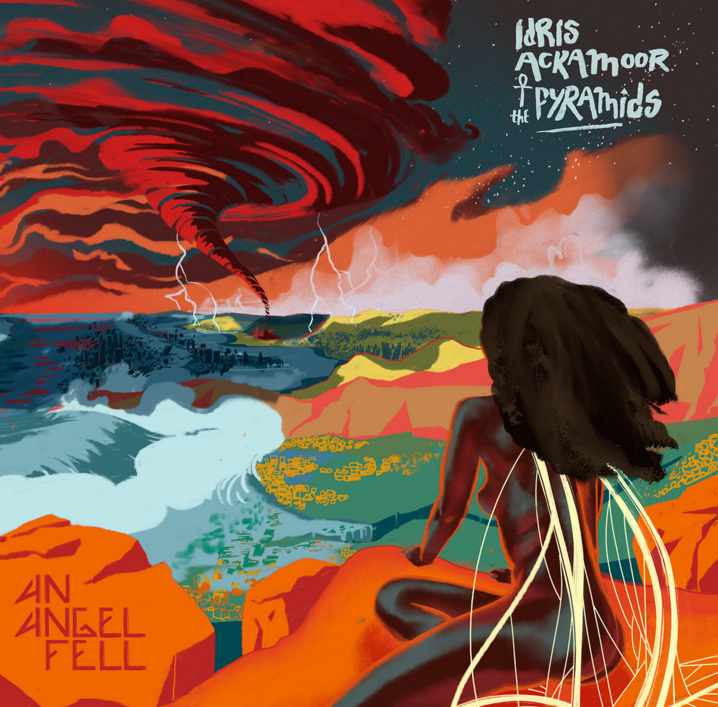
Serving a worthy musical apprenticeship from and imbued by the masters Coltrane, Rahsaan Roland Kirk and Cecil Taylor, the polymath musician, activist, director of The Pyramids ensemble and torchbearer of spiritual and Afrofuturist jazz, Idris Ackamoor once more makes holy communion with the cradle of civilisation on the lamentable An Angel Fell. Imploring a unified message, a connectivity, a reminder that we can all trace our ancestry back to the same place, Ackamoor follows up on ‘We All Be Africans’ with an epic sweeping album of Afro-jazz 2-Step ‘Warrior Dances’ and plaintive primal jazz catharsis.
Walking through the Valley of The Kings; sailing aboard Sun Ra’s Arkestra; conducting the empyrean; evoking Kuti’s Lagos Afrobeat jive; Ackamoor and his troupe traverse the mismia of a broken, corrupt world, delivering cries of anguish and auguers aplenty. Whether penning requiems to the gunned-down black victims of the US Justice system (‘Soliloquy For Michael Brown’), or in radiant prayer (‘Sunset’), they effortlessly and wondrously summon forth the leading lights of each musical genre they inhabit. Afrobeat, gospel, spiritual, funk, blues, future-past-present all come together in one of the year’s most important, enlightening and defining opuses.
(Dominic Valvona)
Ammar 808 ‘Maghreb United’ (Glitterbeat Records)

Throwing the traditional unwieldy Maghreb, before it was demarcated and split into colonial spheres of influence, back together again in the name of progress and unity, Sofyann Ben Youssef fuses the atavistic and contemporary. With past form as one half of the Bargou 08 partnership that gave a modern electric jolt to the isolated, capitulating Targ dialect ritual of the Bargou Valley on the northwestern Tunisia and Algeria border, Youssef under the moniker of Ammar 808 once again propels the region’s diverse etymology of languages, rhythms and ceremony into the present, or even future: hopefully a more optimistic one.
Jon Hassell’s ‘possible musics’ meets Major Lazer, the traversing adaptations from the Gnawa, Targ and Rai traditions and ritual are amorphously swirled or bounced around in a gauze of both identifiable and mystically unidentifiable landscapes. Mixing modern R&B, dub, electro effects with the dusky reedy sound of the evocative gasba and bagpipe like zorka, and a range of earthy venerable and yearning vocals from Morocco, Tunisia and Algeria artists, Youssef distorts, amps up or intensifies a resonating aura of transformative geography and time.
Nothing short of visionary. Full review…
(DV)
Angels Die Hard ‘Sundowner’ (Jezus Factory Records)
Admittedly taking some time to grow on me, the Angels Die Hard combo’s Monsterism Island meets Les Baxter ethnographic phantasm of a remote Southeast Asian archipelago instrumental concept album, Sundowner, has finely unfurled its full magic: just in time to be included in the annual albums of the year features.
Imbued with a legacy of progressive, alt-rock, psych, exotica and post-punk influences plus Julian Cope’s Krautrock compendium, the Angels transduce and channel a cornucopia of styles once more as they soundscape the tropical island of Andaman. An environmental clarion call as much as a progressive rocking exotica, Sundowner is dedicated, at least partially, to the environmental tragedy of the plastic-strewn oceans.
Beachcombing a radioactive luminous landscape of musical opportunity, from bummer downers to mind-expanding space rock jams, these Angels expand their horizons (literally), on the band’s best album to date. Some ideas work better than others of course, but when they do get it right they produce some fantastic opuses of amorphous abandon. Full review…
(DV)
Any Other ‘Two, Geography’ (42 Records)

The story of Adele Nigro (Any Other) is made of beautiful songs originating from a desire to subvert a rather conservative musical culture, just like the Italian one.
2018 has given us many beautiful pieces, of the most varied atmospheres, but to find a compact and complete album in each of its parts, touch refuge in Two, Geography (42 Records).
The numerous collaborations that Any Other has collected, as a musician, in recent years, have been invaluable to develop, refine and embellish her poetics.
The sonorities of the album are very distinct, and at the same time loquaciously soaked by all the experiences brought on stage (or in the studio) during the year that is inexorably past.
With Two, Geography, however, there is more, Adele coming out with her head held high, they are not only beautiful pieces that stand out for their immediacy and vitality, but also the international character of the project.
Any Other’s work was immediately presented as something else, for depth and acuity, starting from that ‘Roger Roger, Commander’ or from the same singles who announced Two, Geography.
The simplicity in intertwining linear arpeggios, bright rhythmic lines and a voice, both delicate and particular, makes us immediately think of the disc in a different way, we immediately understand that such a sound must be appreciated with attention and in its various nuances.
Since the first bars of ‘Silently. Quietly. Going Away’ (the first work of Any Other) you could see her skill in shaping a song form as a real opportunity for musical and textual speculation.
The song ‘Capricorn No’ is a monument of modernity that comes on, not only for its immediate and deep style, but because it plays with the atmosphere that you can hardly expect from an Italian artist.
The work as a whole is a challenge, a part of a musical resistance, a progressive push in the sea magnum of ideas that too often settle down, even in brilliant artists.
Any Other is the 2018, the beautiful and fundamental face to make us remember that, all in all, this year went well.
(Gianluigi Marsibilio)
B.
Anton Barbeau ‘Natural Causes’ (Beehive/Gare du Nord)

Ian Hunter via Robyn Hitchcock via Luke Haines via Julian Cope, wrapped inside an enigma, the Sacramento born, Berlin-based, Anton Barbeau changes his style of delivery repeatedly yet always maintains an idiosyncratic ingenuity in whatever he does. The results of an aborted project under the Applewax banner, made in the run up to the 2016 US elections, Natural Causes is the reflective, more open antithesis to what would have been a far darker and mournful proposition. Richly melodious and halcyon, this most brilliant new collection finds Barbeau both transforming some of the back catalogue (for the better) and penning new glorious sounding maverick pop songs: The quality of which are cerebral, memorable, melodic but also adventurous and inventive.
Barbeau and a congruous cast of guests lend a touching caress to a songbook of contemporary surreal lyrical musings and love songs. Unrushed, even breezy in places but hardly lacking intensity, there’s an air of nostalgia in homages to the radio stations and DJs that first sparked interest in the young Barbeau on the Hunter fronts Tom Petty band finale Down Around The Radio. And with a nod to one of the music cannons greatest ever records, The Beatles Sgt. Pepper kaleidoscope, a stab at a popsike hit (a missing link from one of Strange Days magazines 80s halcyon compilations) is made with a song that was originally written to be recorded at the venerated Fab Fours’ inner sanctum of Abbey Road, with the quirky Disambiguation.
Fans of Barbeau will be once again charmed by his unique songwriting abilities, and those still unfamiliar with the inimitable generation X artist of renown will find much to love about his psychedelic pop genius. Full review…
(DV)
MC Paul Barman ‘Echo Chamber’ (Mello Music Group)

“Potent politics, funky lounge lizard off-the-tops and bizarre hypotheses, burrowing its way through the toughest of leather bound volumes to have you picking the bones out for weeks on end” RnV May 18
In many ways this is the consummate Paul Barman album, but it bears repeating straight off the bat, while trying super hard to not sound incredulous, that ‘Echo Chamber’ features production from ?uestlove, DOOM and Prince Paul (funky/sidekick status, from stoop to playground), with additional contributions from Mark Ronson (upping the ludicrousness with a tweak of The Ronettes’ ‘Sleigh Ride’), Masta Ace and Open Mike Eagle. That’s some serious string pulling from an explicitly cult concern only reinforcing his standards in lewdness and a smart Aleck riot act both downplaying and toadying a racing IQ (his relocation to Mello Music Group keeps him in his own lane as well). Ridiculous as ever with the dictionary and remaining a brilliant observer – see ‘Youngman Speaks on Race’, and ‘Commandments’ going one better by taking the Decalogue to Sesame Street and Biggie’s Bed-Stuy – Barman carries on making the longest of long shots with battle raps that’ll bamboozle and WTF one-liners that Jackanory or congress will sadly never benefit from. Bigger, better and geekier than ever.
Bixiga 70 ‘Quebra Cabeça’ (Glitterbeat Records)
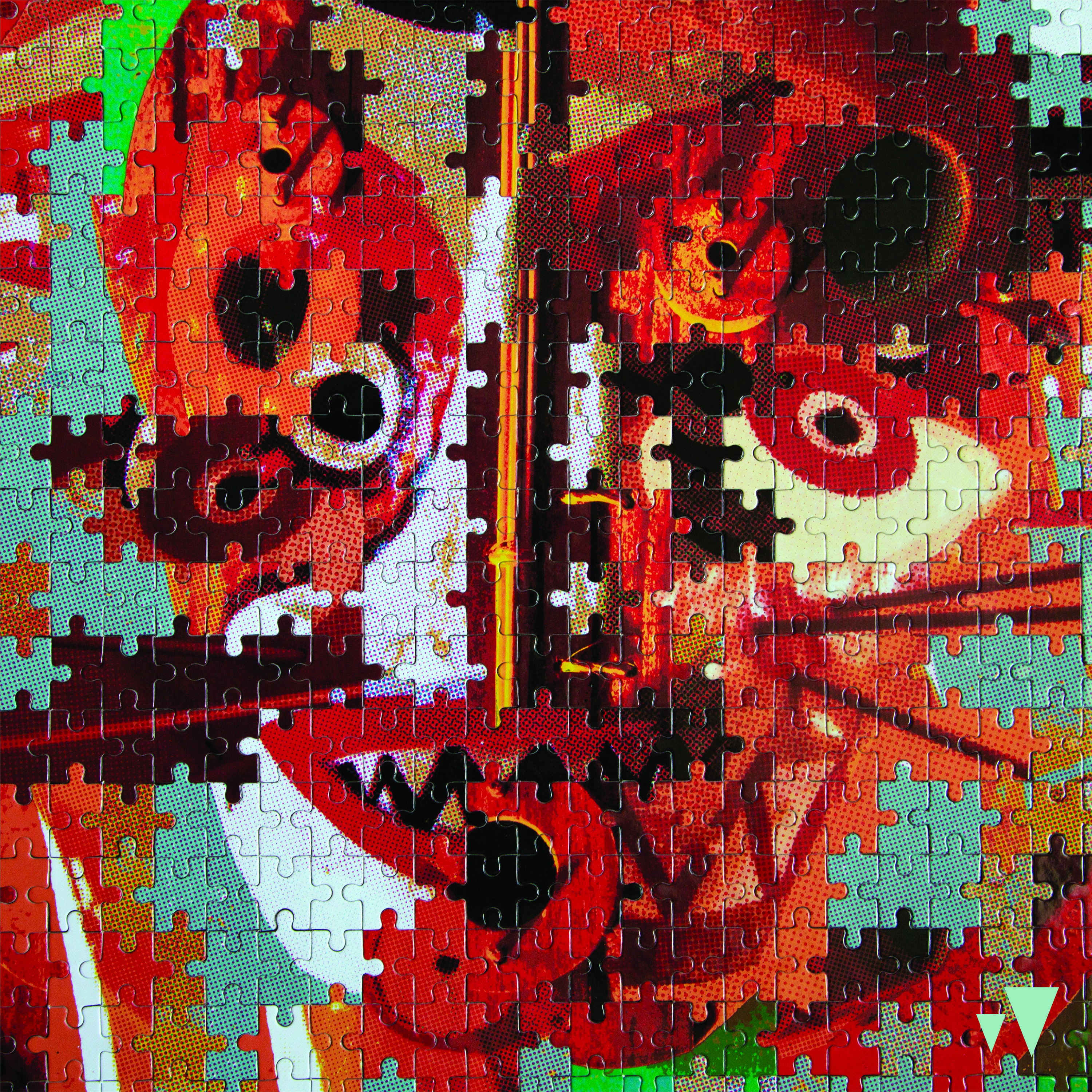
Translating as the ‘puzzle’, Bixiga 70‘s latest album is a full 360-degree panoramic evocation (both joyful and lamentable) of their homeland’s African roots. Translating those roots, an ancestry that runs through many of the band members (some individuals descended from the Africa-Caribbean religion of ‘candomble’ for instance), Bixiga are also inspired on this journey by some of the highly talented artists they’ve shared various stages with over the years. Artists such as the Ghanaian highlife singer Pat Thomas, the Nigerian sublime traversing saxophonist legend Orlando Julius and Brazilian octogenarian star João Donato. Incorporating the lot they merge their brass-y signature carnival funk and shaking Afrobeat sass with cosmic voodoo, Afro-jazz and sloping funk.
The quality as always shines through on every track, with the visions and evocations of both Africa and Bixiga’s city home of Sao Paulo articulated by an energetic but also ruminating soundtrack of the tribal, funky, cosmic, tropical, gospel and ritual. The slave portal of Benin, further outlying deserts of the sub-Sahara and busy rhythmic bustles of Nigeria are channeled via the melting pot hubs of Brazil on the group’s most epic, ancestral and geographical straddling album. It only remains to see just how great it will sound live on stage. Full review…
(DV)
The Bordellos ‘Debt Sounds’
Brian Bordello ‘The Death Of Brian Bordello’ (Metal Postcard Records)
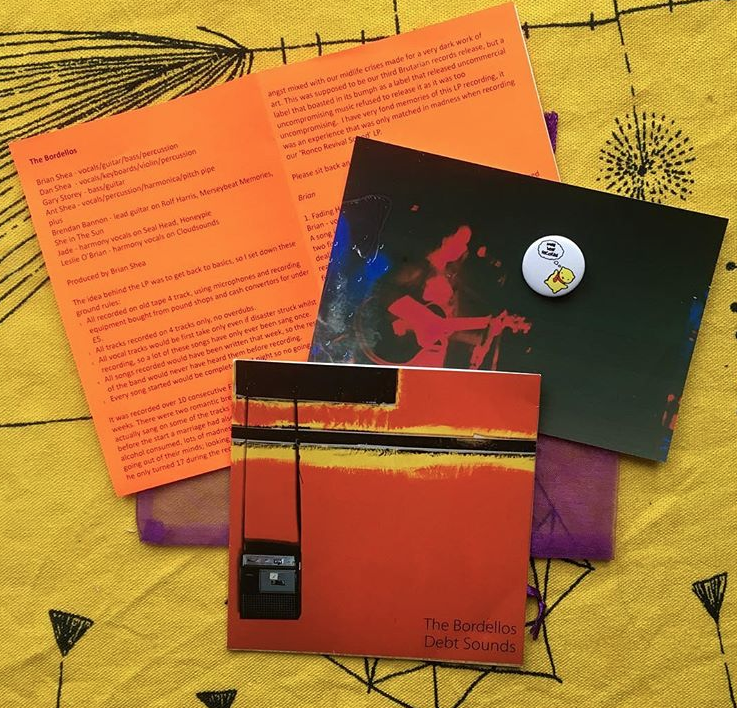
In a parallel universe the Jesus And Mary Chain never left East Kilbride; Julian Cope never formed the Teardrop Explodes; and Brian Wilson was in fact born in St. Helens in the late 1960s, and recorded all his opusus on a Tascam four-track, inspired by Mark E Smith. This alternative world is one the dysfunctional family circle The Bordellos inhabit. Probably the best lo fi rock’n’roll-meets-post-punk-meets-the-Spaceman 3 hapless band you’ve never heard of, the prolific group, headed by the patriarchal masthead Brian Bordello, have been luridly, sinisterly, laughably and pessimistically knocking-out their brand of disgruntled alternative yearnings for a decade or more with little attention from anyone other than us loyal fans – who probably need our heads examined in all honesty. You either get them or you don’t. And you could find some of their more confrontational dark humour (songs about the BBC killing John Peel, still loving the musical cannon of Gary Glitter, and on this album, Debt Sounds, some sinister predatory sexual allured shclock about Rolf Harris) too unsettling, even perverse.
Debts Sounds, in the manner of a Half Man Half Biscuit play-on-words, is The Bordellos low cost Pet Sounds. That may not be initially obvious. But stay with me on this one. Fashioned and realised by Brian from the band members and even affiliates, girlfriends and whatnots various outpourings and late night sessions into a most epic song book of unrequited love, sick love, obsessed love, compromised love, salacious love, and even some tender love – they excel themselves on the laid bare and touching ‘Spirograph’ and quasi-Beatles ‘My Life’ meets the hardened north romanticism of ‘I May Be Reborn’ (Take this for a line: “Every smoking chimney my Statue of Liberty”), Debt Sounds is full of great maverick performances and songwriting, made in a period of crisis, anxiety and manic depression. Ok…so more Don Van Vliet than Brian Wilson, but still a valid comparison.
Whereas will you hear odes, homages and eulogies to Jimmy Campbell and Faron’s Flamingos to a back track featuring vague indifferent shades of Thom Yorke, Cope, Velvet Underground, Red Crayola, Joy Division and the The Seeds? Nowhere that’s where. Brian Bordello’s Track-by-track breakdown…
Knocking out records on a whim, it seems inconceivable that the leader of the Bordellos has never actually released a solo effort until this year (and only a few weeks from the end of 2018). Paring down, enverated, Brian Bordello steps outside the family unit on his debut solo, The Death Of... Not expecting many flowers on that graveside elegy of a album title, Brian takes a sort of reflective pause and looks back on a litany of tropes that have come to encapsulate his resigned fatalism. With only a clipped, rough and unguarded acoustic guitar and his trusted Tascam for company, Brian pays tribute to rock’n’roll icons Eddie Cochran (again) and Mark E Smith (who Brain thinks should be canonised as a saint); wears his heart on his sleeve cooing songs about lingering memories of bunk-ups, unrequited wooing gone wrong and lost kitchen sink romances; and languishly but candidly weary sonnets on depression.
As lo fi as it can get, Brian’s most intimate, personal performances yet strip away all the caustic dissonance and fuzz to reveal his most brilliant songwriting. The Death Of is an often beautifully morose songbook that lays bare the talents of a true uncompromising outsider.
(DV)
Brace! Brace! ‘S/T’ (Howlin Banana)

Producing gorgeous hues of softened psychedelia, new wave, Britpop and slacker indie rock, this young but sophisticated band effortlessly melt the woozy and dreamy with more punchier dynamic urgency on their brilliant debut album.
Squirreled away in self-imposed seclusion, recording in the Jura Mountains, the isolation and concentration has proved more than fruitful. Offering a Sebastian Teller fronts Simian like twist on a cornucopia of North American and British influences, Brace! Brace! glorious debut features pastel shades of Blur, Gene, Dinosaur Jnr., Siouxsie And The Banshees (check the “I wrecked your childhood” refrain post-punk throb and phaser effect symmetry guitar of ‘Club Dorothée’ for proof) and the C86 generation. More contemporary wafts of Metronomy, Mew, Jacco Gardner, the Unknown Mortal Orchestra and Deerhunter (especially) permeate the band’s hazy filtered melodies and thoughtful prose too.
A near-perfect debut album, an introduction to one of the most exciting new fuzzy indie-pop bands of the moment. Full review…
(DV)
Apollo Brown & Joell Ortiz ‘Mona Lisa’ (Mello Music Group)

“Rugged but always smooth, reflective with a forked tongue…there’s a lot of comfort to be taken from the union of two opposing authority figures exercising supreme quality control” – RnV Nov 18
This duo’s mutual will to only work with the elite – Joell Ortiz as a member of Slaughterhouse, Apollo Brown extending his collaborative run after shared albums with Skyzoo, Ghostface Killah, Ras Kass, Planet Asia – is head start number one. Yes these are extremely experienced experts in their field who shouldn’t drop the ball, but 12 tracks, one emcee and one producer, two guests maximum, and everything absolutely finely tuned is still the best advantage to press home. A steadiness to both performances has BPMs instantly finding their sweet point so instrumental richness can build, settle, simmer and seduce, and vocals slip straight into the pocket housing an imperceptible line between recognition and vengeance. The introspection of ‘Mona Lisa’ pays respects with a feeling that it doesn’t pay to dwell, that while everything may be upbeat and secure – visuals of sauntering down a street and coloured in something like a high definition sepia – slippery slopes, with ‘Cocaine Fingertips’ the album’s most rotten apple and situations like the bittersweet resonance of ‘That Place’, are always around the corner. Another win for the seemingly indefatigable Mello Music Group as well.
(Matt Oliver)
C.
The Cold Spells ‘S/T’ (Gare du Nord)
Esoterically gentle and wistful, The Cold Spells debut long player is a gauze-y organic and ambiguous (to a point) affair of undulating ‘moss covered’ circuitry, folk, quintessential English psych, paisley patterned hallucinogens and Kosmische.
Communing with the ether, connecting with the psychogeography of their chosen environment – from the soft Wiccan with forebode travail of Thomswood Hill to the alluded-to abandoned mental hospital waste ground near Hainault -, a host of spirits tune in and out of the continuous, though (as we’re told) not in a linear order, flowing suite of laudanum imbued Victoriana lyricism and Beatles-esque melody.
A surprise package, quietly unassuming, the trio’s encapsulation of an age of ghostly memories – the ancestors inhabit the band’s present to address the here and now concerns of a troubled, unstable world – is magical and gently lamentable; a perfect evocation of aicd folk and pastoral esotericism, as beautifully plaintive as it is ominous. Full review…
(DV)
D.
Die Wilde Jagd ‘Uhrwald Orange’ (Bureau B)
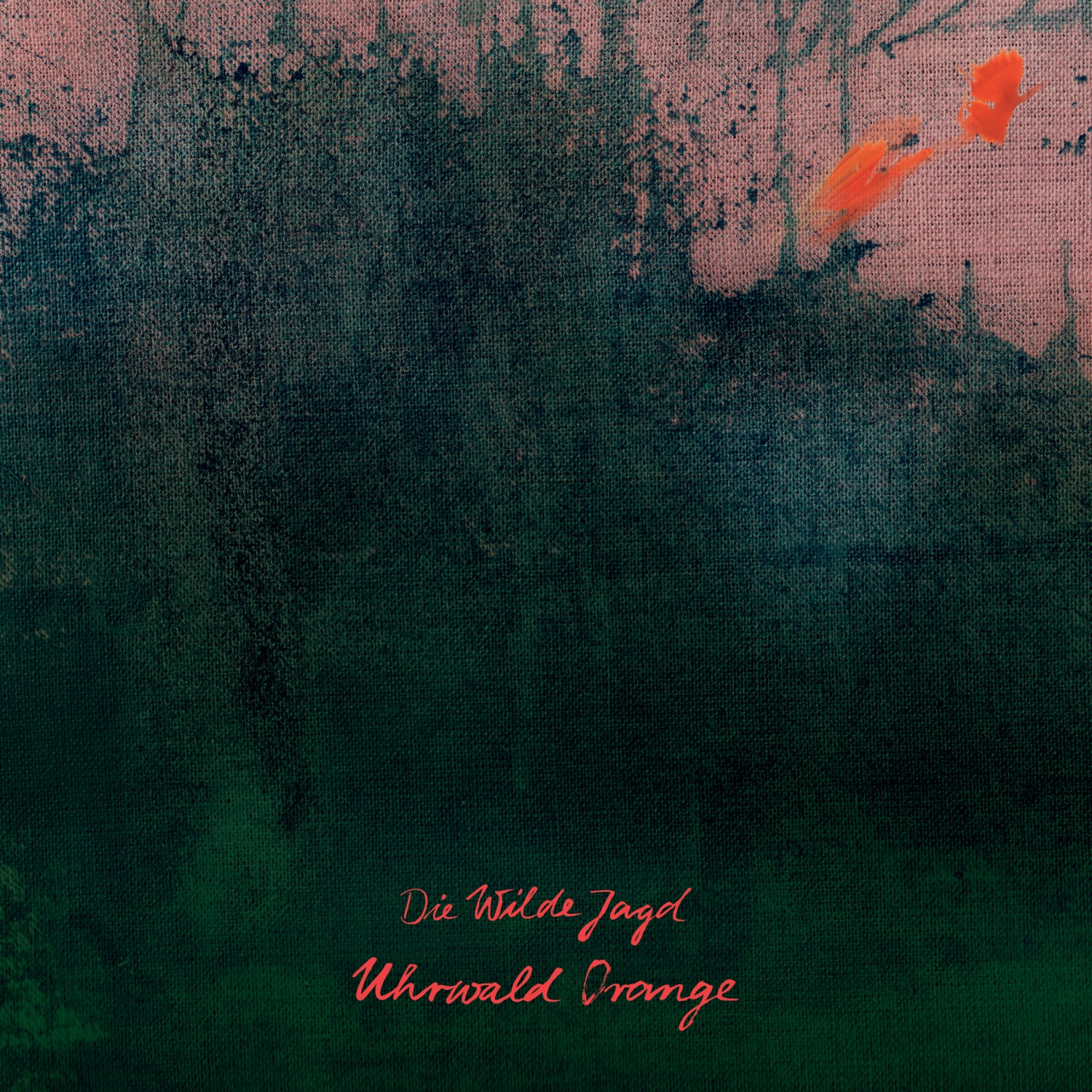
Fashioning a mysterious ‘Clockwood Orange’ world of Gothic and ominous dreamscapes, inspired by and named, in part, after the studio it was produced in, and by both the 17th century menagerie paintings of the Flemish artist Frans Snyder and the collected devotional Medieval period songs of the Llibre Vermell De Montserrat artifact, Die Wilde Jagd’s Sebastian Lee Philipp takes us on an eerie, cosmic and slinking travail through a throbbing sophisticated earthy electronic soundtrack. His musical partner on the group’s adroit debut self-titled experiment, producer Ralf Beck, is excused from the follow-up but lends out his extensive racks of vintage analogue synthesizers to Philipp, who transforms and obscures their banks of sounds into ghostly permutations, shadowy creatures and lurking, dancing and honking sonorous cries from a murky wilderness.
Uhrwald Orange is a classy imagined score, balancing cool, gleaming and aloof German electronica with menacing, nocturnal earthiness, yet also reaching for the celestial. One minute imbued with hints of Bauhaus, Killing Joke, Eno, Cluster, and Faust, the next slinking on to the Tresor club or Basic Channel dancefloor. In short: a most impressive album. Full review…
(DV)
Dur-Dur Band ‘Dur Dur Of Somalia: Volume 1, Volume 2 And Previously Unreleased Tracks’(Analog Africa)
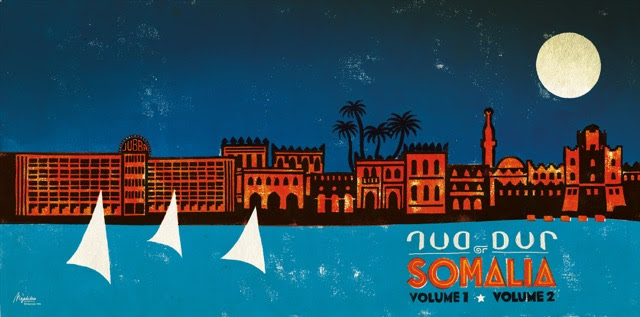
A highlight in a catalogue of outstanding reissues from the Analog Africa label, intrepid crate digger Samy Ben Redjeb reprises the first two volumes of Somali fusion funk music from the legendary 1980s outfit, the Dur-Dur Band. Embodying a period in the decade when Mogadishu could boast of its cosmopolitan reputation – notably the European chic Via Roma stretch in the Hamar-Weyne district, a colonnade for café culture, cinema and of course music – the hybrid Dur-Dur Band moped up the polygenesis fever of their native city with effortless aplomb during their short heyday.
Saved from ‘tape-hiss’ and ‘wobbles’, remastered to sound the best they’ve ever sounded, these curious but above all loose-limbed nuggets successfully merged a myriad of Somalia traditions with a liberal smattering of disco, reggae (via the northern part of the country’s ‘Daantho’ rhythm style; an uncanny surrogate for Jamaica’s number one export), soul and funk. Mirroring a similar fusion thousands of miles away in New York, the Dur-Dur languidly produced an electrified no wave-new wave melting pot.
Split up across a triple LP and double CD formats the Dur-Dur Band’s first two albums proper, Volumes 1 and 2, and a couple of unreleased tunes feature on this, the first in a promised series of re-issues. Released originally in 1986, the first of these and the band’s debut album, Volume 1, has a rawer unpolished but snazzy sound that saunters, skips and grooves along with aloof coolness to sweltering laidback funk; opening with the wah-wah chops and a fuzzy organ stunner, ‘Ohiyee’ , which lays down a sophisticated but explosive spiritual dance floor thriller. Volume 2 by contrast seems a little brighter and tropical; beginning as it does with the dub echoed, Trenchtown pirate radio broadcast ‘Introduction’.
Going further than most to bring the sounds of Africa to a wider audience, the Dur-Dur Band release proved to be one of the label’s most difficult, as Redjeb tackled the geopolitical fall-out of a country devastated by civil war to bring us a most unique sounding and essential collection. Full review…
(DV)
E.
Elefant ‘Konark Und Bonark’ (9000 Records)

Emerging from the Belgium underground scene, with members from a myriad of bands, each one more obscure than the next, the Elefant in this room is a twisted agit-post-punk, boiler come forensic team suited troop of noise peddlers. Lurking around basement venues for a while now, the sludge metal and gallows Krautrock merchants have released a slurry of EPs but never a fully realized album until now.
For an album that grapples with Marilyn Manson, Swans, Killing Joke, Muse, industrial contortions and Germanic experimentation, Konark Und Bonark is a very considered, purposeful statement. Though things get very heavy, implosive and gloomy and the auger like ghosts in the vocals can sound deranged, there is a semblance of melody, a tune and hint of breaking through the confusing, often pummeling, miasma of artificial intelligence armageddon.
A seething rage is tightly controlled throughout, the sporadic flits and Math Rock entangled rhythms threatening to engulf but never quite reaching an overload, or for that matter, becoming a mess. Elefant’s prowling and throbbing sound of creeping menace and visions of an artificial intelligent domineering dystopia is an epic one. Arguably the band have produced their most ambitious slog yet and marked themselves out as one of Belgium’s most important exports of 2018. Full review…
(DV)
Bernard Estardy ‘Space Oddities: 1970-82’ (Born Bad)
‘Fragmented D’une Empreinte Magnétique: Rares 1966-2006’ (Gonzai Records)
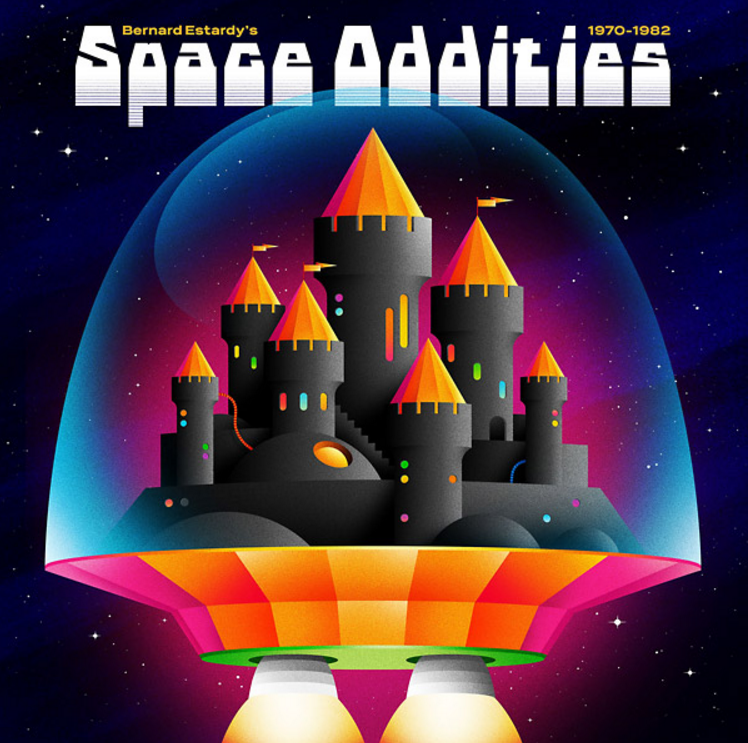
Because sometimes you just can’t decide, I’ve chucked in two reappraisal celebrating compilations of the odd, curious, thrilling and kitsch flights of fantasy musical fragments/sketches/soundtracks/compositions from the late and most gifted venerated French composer Bernard Estardy. I can’t even claim that these are great collections, let alone the best albums of the year, but they’ve kept me smiling all year.
Nicknamed ‘The Baron’, the founder of the CBE recording studio (which he set up in 1966) collaborated with a host of famous French icons in his time (arranging, producing or sound engineering for Johnny Hallyday, Francoise Hardy, Nino Ferrer, Michel Sardou and Jean Guidoni amongst others), but found an unleashed creative freedom as the master of consoles on his own excursions and dream flights of curiosity. Enjoying a resurrection of a sort in 2018, in part down to his daughter Julie Estardy‘s biography ‘The Giant’, Bernard’s eclectic back catalogue, from the realised to cutting room floor, is being reissued or rediscovered by a new generation through a number of different labels, both in France and internationally.
Two such compilations swept me up in their bombast; the first an album that couldn’t be described any better than the title it comes with, Space Oddities, and the second, Fragmented D’une Empreinte Magnétique, a Gauloises hotbed of weepy venerated organ romanticism and salacious sleek soundtracks. The first takes library music to the stars and beyond on a sassy opulent voyage of esoteric cosmic discovery. Jazz meets deep space on a drum-heavy collection of mysterious thrillers, phantasms and exotic awe. Tracks such as the more romantic, flute-y glide in space blues ‘Slow Very Slow’ sound like they could have made it to the ears of Goldfrapp or Greg Foat. The second of the pairing frequents more Earthy realms, pitching gospel with Bacharach yearnings, sentimental laments (the torn love soliloquy ‘It’s A Lovely Day To Die’ sums it up perfectly) and the strangest of deep-chested sung French cowboy soundtracks (A very Parisian journey to buy your ciggies, ‘La Route Au Tabac’, is rerouted through a lonesome pine trail). Both are as brilliant as they are audacious; a refreshing escapism and proof of a unique talent.
(DV)
Evidence ‘Weather or Not’ (Rhymesayers)
“From the moment he draws first breath on ‘Weather or Not’, Evidence embarks on a masterclass” – RnV Feb 18
A meteorological masterpiece showing that it’s rarely sunny in LA, whenever it rains it pours, and that Evidence is always bringing the weather with him. Ever laconic but whose economy of words is always wisely directed and word association seems slight but cuts deep, Ev walks the streets with collar up and hands dug into pockets, seemingly always in search of a contentment whose elusiveness he’s fine with. This prolongs a character pairing the enigmatic with a spokesman calling it straight down the line (“things I never thought about, trying to be elusive in the process, get forgot about”), a wallowing wanderer with whiplash in the tale and forever in control of his destiny (feel the tempered triumph of the concluding ‘By My Side Too’). A spread of AM band forecasts, a splash of psychedelic epiphanies and head nodders that buck like a bronco from Premier, Nottz and Babu, plus some Step Brothers espionage from Alchemist, allow the Dilated Peoples man to find you: because ‘Weather or Not’, you can’t run, you can’t hide.
(MO)
F.
Flora Fishbach ‘À Ta Merci’ (Blue Wrasse)

The French music press we’re told have fallen hook, line and synth for the alluring contralto voice of Flora Fishbach, who’s 80s revisionist pop twist on chanson oozes with such sophistication that its difficult not to embrace. Fishbach picked up the album révélation award at the Le Prix des Indés for best independent debut LP, winning high praise and plaudits galore ever since. Looking to make a similar impact across the Channel, the ‘bohemian darling’ has just released a deluxe edition of her electro pop requiem À Ta Merci. That decision is more or less echoed in the album’s title, which translates as, “at your mercy”.
Featuring the original running order and a bonus septet of gorgeous live recordings, this aloofly chic, yet theatrical, and especially when performing, animated album recasts Françoise Hardy as a disco pop and electro swooned crooner. Effortlessly channeling the vaporous dreamy pining of Kazu Makino on the moon dust sprinkled fantasy title-track and ambient textured, synthesizer bass bubbling yearned lament ‘Un beau langage’, and a Gallic Alison Goldfrapp on the opening ice-y cool malady ‘Ma voie lactée’, Fishbach adds a French nuance and sensibility to the synthesized pop ascetic: a signature you could say that despite the revivalist backing of electronic drum pads, post-punk sass, Moroder arpeggiator, Rococo harpsichord and hi-energy is unmistakably contemporary and French.
With the momentum already building in France and with the recent runaway success of music press darling Christine And The Queens (who I personally find utterly dull) I’m sure the UK will embrace this sophisticated chanteuse. This is overwhelmingly a better, more fun record than Christine’s (or the name she’s now adopted, Chris). Fishbach has certainly impressed me enough – what’s not impressive about referencing the philosophical aloof quandary that is Rimbaud’s “Je est un autre” (“I am another”) on a tropical slinking crystalline pop song, Un Autre Que Moi (“Another Me”) – to recommend her as one to watch in 2019. Full review…
(DV)
Fliptrix ‘Inexhale’ (High Focus)

“‘Inexhale’ masters the art of knocking you down with a feather: the pugilistic psychoanalysis is untouchable” – RnV Sept 18
It’s a little disingenuous to say Fliptrix became the High Focus main man this year, given he’s the driving force behind the label and already has a back catalogue of textbook pen and pad amplification. What with the label’s ever bubbling pool of talent seeing Ocean Wisdom blazing all and sundry, Jam Baxter expanding his cult appeal and two late night smokers from Coops, ‘Inexhale’ could’ve played the holding role and sat in the pack. But with breath control putting a copyright on the title and not a single word wasted, it’s an album that will leave you levitating. Be that from his street level strain of spirituality – letting the sharp end of something herbal work him over, or thoroughly aware of the rights and wrongs of his surroundings – or from the velocity of what’s spat (‘Inside the Ride’ doesn’t and won’t ever flop). Then flipping what the surroundings suggest, and never getting lost in the haze even with eyes at the reddest, Fliptrix finds the perfect medium between headphone moments and smacks to the head.
(MO)
Fofoulah ‘Daega Rek’ (Glitterbeat Records)
Bustling onto the transglobal London and Bristol scenes in 2014 with their earthy and urban bombastic fusion of Wolof African culture and dub electronica rich debut LP, the Fofoulah ensemble laid down the template for the a unique adventurous sound. Though taking its time to materialize, four years on, the follow-up album hasn’t just moved on but supersonically zoomed into the experimental void; even an esoteric, spiritual one at times.
Daega Rek, ‘the truth’ when translated from the Wolof language of coastal West Africa, sees Fofoulah’s saxophonist, keyboardist and producer Tom Challenger transmogrify the original Gambian talking drum of the group’s shamanistic rapping lead Kaw Secka and the accompanying percussion and propulsive drumming rhythms of his band members. (All of which were laid down at the Real World studios). Secka would then reappear in post-production to record his half spoken/half-rapped protestations and observations; the results all re-shaped into a ricocheting lunar-tropical bounding dub cosmology.
Skipping and skittish in motion; pushing the envelope as they pay tribute to lost brothers (‘Kaddy’ pays 2-Step rhythmic eulogy to the late photographer Khadija Saye who died in the Grenfell Tower disaster), the visceral taste of home (‘Chebou Jaine’ dedicated to Secka’s cousin, who cooked the best national Gambian dish) and search for the truth, Fofoulah lunge into the electrified dub ether of sonic adventure. Full review…
(DV)
G.
Goatman ‘Rhythms’ (Rocket Recordings)

An amorphous exploration of world ‘rhythms’ as transduced by one the mysterious Scandinavian GOAT band members through a an arsenal of filters, modulators and oscillations, the debut Goatman suite blends its polygenesis inspirations perfectly.
Offering up magical and scintillating rhythms galore, from Kuti’s compound Afrobeat to a tremolo and laser bouncing variant of RAM’s Haiti vibe, you can expect to hear the venerable tones of gospel, jazz, reggae, psych and pure ethereal acoustic Kosmische on this sonic flight of fantasy. Earthy yet light enough to soar, this impressive experiment side-project channels its influences perfectly to conjure up new musical ideas. Echoes of GOAT are never far away of course, yet this imaginative take feels more natural, more organic, and above all, more soulful. A fantastic debut.
(DV)
H.
Jack Hayter ‘Abbey Wood’ (Gare du Nord)
Bringing light, or at least opening up a psycho-geographical narrative dedicated to the very edges of a largely ignored London postcode – so far out on the South Eastern outskirts as to be part of Kent –, an earnest Jack Hayter composes a yearning lament to Abbey Wood on what is his first solo album in fifteen years.
Hayter’s deftly played, with twangs of bucolic and Baroque folk, blues, synthesized atmospherics, Americana and reverent chamber music, multilayered songbook connects with the psychogeography of his chosen location. From songs about the Abbey Wood diaspora and its position as a gateway to the world to laying cooing elegiac wreaths to those unfortunate victims of the WWII Arandora Star passenger ship tragedy, Hayter produces a lived-in musical novel, rich with references, landmarks and peopled by those who left an indelible, if at times fleeting, mark upon this much forgotten or passed over postcode: their ghosts, no matter how small the part they played in its story, never inconsequential; remembered and written about with a certain gravitas by the erstwhile troubadour, who performs the most accomplished and brilliant of testaments. Full review…
(DV)
Homeboy Sandman & Edan ‘Humble Pi’ (Stones Throw)
“A banquet of slaps that will become one of your five a day, and ultimately year” – RnV Oct 18
If seven or so tracks are good enough for Pusha T, Kanye etc, then they’re an ample fit for this elite underground swashbuckler of a showdown brought to us by the matchmaking Gods. Having flitted around the periphery for what seems forever, Edan returns with some of his best, ear-piercing archaeology to date as he shifts the B-boy-psych continuum once more; and Homeboy Sandman, both revelling in getting in the thick of it and firing off missives as he’s swept along for the ride, gets off the wall (“see me looking photogenic in the Book of Genesis, waving off medicines”), yet reels off some of the realest in recent times (it’s still, and shall remain, all about ‘Never Use the Internet Again’, which stylistically is actually a bit of a left-turn). The feeling pervades that the pair are proudly gladiatorial, indulging in friendly, unspoken competition as much as fighting the good fight as anointed hip-hop saviours. Let’s hope the sub 30-minute running time means the door is open for a second bout some time soon.
(MO)
J.
Juga-Naut & Sonnyjim ‘The Purple Door’ (Eat Good Records)
“Their usual, indomitable personas on the mic never skimp on Michelin-starred quality, and they still aren’t the ones to test if you think they’re pushing their luck” – RnV Aug 18
It’s an album largely based on elitist boasts, expensive trinkets and accessories and some pretty outlandish claims, but hey, these boys done good. Larger than life and living the playboy lifestyle making the ludicrous seem obtainable – you too can be a ‘Purple Door’ gold card holder – Juga-Naut and Sonnyjim transform the Midlands into St Tropez with a load of gala funk to make a red carpet entrance to, with just a hint of a twinkle in its eye like a felonious exile that has everyone’s backing. That said, you can’t live the life of a Rat Packer if you ain’t got the gab, and these two are no novices: the great suitability of their top table rhyme personas – Juga-Naut will have you believing every word he spits, Sonnyjim coming in dry and stonefaced yet smelling (and producing) like a million bucks – shares a love of all things gastronomic on the likes of ‘Duck Season’ that comes sweeping down a spiral staircase, while ‘Look Around’ takes a moment to act more tactfully, pledging family honour like a good fella. It might not be dining etiquette, but these two are pulling chairs from under the competition.
(MO)
Park Jiha ‘Communion’ (Glitterbeat Records)

Circumnavigating the globe to bring much-needed exposure to new sounds, Glitterbeat Records imprint tak:til gives a second wind to a suite of acuity serialism from Southeast Asia. Released originally in South Korea in 2016, the neo-classical musician/composer Park Jiha’s debut solo album Communion is given an international release by the label.
Inspiring what we’re told is a burgeoning Korean music scene (well, an alternative to the K-Pop craze), a chief progenitor of the movement Jiha alongside collaborative partner Jungmin Seo originally melded the country’s musical heritage with an eclectic range of contemporary sounds as the 숨[suːm] duo in 2007. Releasing the highly influential regional albums Rhythmic Space: A Pause For Breath (2010) and 2nd (2014), Park and Seo crossed the time zones to perform at both WOMAD and SXSW. Congruously putting the duo on hold to explore a more ‘personal’ and minimalistic ‘musical vocabulary’ as a solo artist, Jiha dexterously balances the air-y abstract breathes of the ‘piri’ double reed bamboo flute, the searing twang of the ‘saenghwang’ mouth organ and the softly paddled patter of the ‘yanggeum’ hammered dulcimer in what is a dialogue between a dulcet calm, the meditative and an entangled dissonance.
Transforming Korean traditions into a more experimental language that evokes the avant-garde, neo-classical and jazz yet something quite different, Park Jiha’s tranquil to entangled discourse evocations reach beyond their Southeast Asian borders both musically and metaphysically into something approaching the unique and amorphous. Full review…
(DV)
John Johanna ‘I’ll Be Ready When The Great Day Comes’ (Faith And Industry)
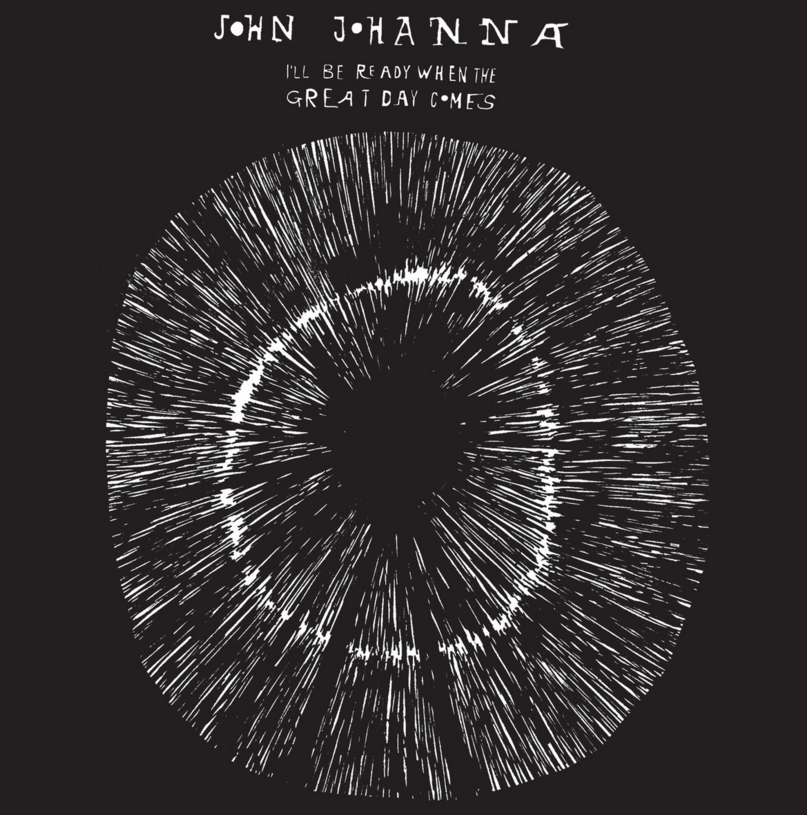
More a mini-album, even 12″ to be contrary, the beautifully cooed, warbled and ached venerable I’ll Be Ready When The Great Day Comes is nothing less than an afflatus anointed paean to a higher purpose. Informed by the mystical cosmology of the Eastern Orthodox Church, John Johanna‘s spiritual blues-y and gospel rock’n’rock hymns are both diaphanous and mesmerizing, even hypnotic; recalling visages of Morricone, Fleetwood Mac, Terakaft, Dirtmusic and Wovenhand as it wanders a picturesque but troubled soundscape.
On the devotional pilgrimage, the troubadour of the most evocative, stirring country burr, switches between aching falsetto yearning to lovelorn cowboy on the Andes romanticised cooing, and from the ethereal to fraught, as he makes communion.
No two songs are quite the same, as the wooing rustic sits next to (what can only be described as) the holy desert rock fusion of Native Indian and Afro-beat title track, and Bossa shuffle meets Yonatan Gat raindance. It all congruously comes together in one most divine service. A minor masterpiece.
(DV)
M.
Marlowe (L’Orange & Solemn Brigham) ‘Marlowe’ (Mello Music Group)
“Both excel in never revealing what’s steaming around the next corner, even when you’ve grabbed your toothcomb for the umpteenth time” – RnV July 18
Another yearly round up, another L’Orange inclusion. North Carolina stands up as latest collaborator Solemn Brigham rhymes his ass off: weirdly, without necessarily feeding off what the producer is trawling, and helping create something of an odd couple match made in heaven. L’Orange sets the scene, usually a funky hoedown, a sample-heavy brouhaha anticipating a stand-off or a psychedelic neck-snap. As is his wont, there’s a narrative to be spun, or some simple time-travelling to be done where no two bops are the same. Brigham on the other hand, blurbed as “summoning the holy spirit of Big L” without getting sucked into the danger zone, just jumps in with a garrulous B-boy stance and goes for it. Without L’Orange surrounding him in a world of imagination, give Brigham a park bench and a ghettoblaster and the results would be the same. What he does guarantee is that you’ll be going back to what he has to say, and whatever the variables, the energy and entertainment (grounded surrealism?) never dips. L’Orange may have found himself an emcee to keep on retainer.
(MO)
Hugh Masekela ’66-‘76’ (Wrasse Records)
A most poignant and timely reminder of one of the true greats, the mammoth 66-’76 collection shows a multifaceted Hugh Masekela: The exile. The trumpet maestro. The bandleader. The activist. The colonial revisionist. The angry young man. But also the conciliatory. These are just some of the many faces of the South African titan of jazz and African musical fusions that can be found inside the latest essential collection of the late great polymaths’ back durable catalogue.
Put together especially by Masekela and his good friend, producer and collaborator on a number of projects together, Stewart Levine, just before he passed away at the beginning of this year, the three disc spanning collection features key tracks from many of his most iconic and experimental albums (two of which are included in their entirety). But what makes this especially appealing to collectors and fans alike, is that many of these albums were never officially released in the UK and Europe before. Progressing in the chronological order they were recorded, we follow Masekela’s journey not just musically but politically across his most formative decade and his partnership with Levine and collaborations with such legendary ensembles as the Hedzoleh Soundz combo. From the combined jazz and Township fusions of The Emancipation Of Hugh Masekela all the way to criss-crossing the transatlantic slave routes on Colonial Man, this collection is a sheer joy. Full review…
(DV)
(MO)
Brona McVittie ‘We Are The Wildlife’
With the lightest, most deft of touches, Irish songstress and harpist Brona McVittie embarks on a voyage of ‘psycho-geographic’ inspired encapsulations of a mysterious, magical landscape and history on her debut album, We Are The Wildlife.
Tracing the sonic contours of London’s urban fringes and the rural landscapes of Mourne, McVittie pitches her fluttery diaphanous harp-led songbook somewhere between post-folk and the cinematic – helped along in part by the drifting trumpet evocations of film composer Hutch Demouilpied, who’s contributions sound at times like Miles Davis Dingo transported to an Irish peat bog.
Her ephemeral harp melodies and phrases often feel like a breath or just the merest hazy lingering presence of the instrument, which might in some ways be down to McVittie’s technique of playing them all on the guitar first before transcribing over. It certainly offers a different perspective and technique. And it certainly takes this heavenly traditional instrument into even more mystical, accentuate abstract realms, helped of course by an accompaniment of meadow flute (Keiron Phelan), sad bowed delicate strings (Richard Curran), searching fleeting slide-guitar and shuffling to full-on breakbeat drums (Myles Cochran). All of which amorphously pushes the often-ancient feelings and geography towards John Martyn and Bert Jansch one minute, towards the Incredible String Band or trip-hop the next.
Played with the lightest of touches, McVittie’s wildlife and Celtic inspired filmscape subtly crafts tradition into a cerebral suite of neo-classical and ambient folk. We Are The Wildlife is the most inviting and unique of debuts. Full review…
(DV)
Minyeshu ‘Daa Dee’ (ARC Music)

From the tentative first steps of childhood to the sagacious reflections of middle age, the sublime Ethiopian songstress Minyeshu Kifle Tedla soothingly, yearningly and diaphanously articulates the intergenerational longings and needs of belonging on her epic LP, Daa Dee.
Minyeshu left her native Ethiopia in 1996, but not before discovering and then learning from such acolytes as the doyen of the country’s famous Ethio-Jazz scene, Mulatu Astatke, and the choreographer Tadesse Worku and singers Mahmoud Ahmed, Tilahun Gessesse and Bizunesh Bekele. First moving to Belgium and then later to the Netherlands, the burgeoning star of the Ethiopian People To People music and dance production has after decades of coming to terms with her departure finally found a home: a self-realization that home wasn’t a geographical location after all but wherever she felt most comfortable and belonged:“Home is me!”
Evoking that sense of belonging and the theme of roots, but also paying a tribute and lament to the sisterhood, Minyeshu conveys with a sauntering but sorrowful jazzy blues vibe not only the burden and grind of daily life for many of her compatriots back home in the tumultuous climate of a fragmented and often chaotic Ethiopia, but also the joy of song and togetherness.
Not only merging geography but musical styles too, the Daa Dee LP effortlessly weaves jazz (both Western and Ethiopian) R&B, pop, dub, the theatrical, and on the cantering to lolloping skippy ‘Anteneh (It Is You?)’, reggae. Piano, strings and brass mix with the Ethiopian wooden washint flute and masenqo bowed lute to create an exotic but familiar pan-global sound. Minyeshu produces a masterful heartwarming, sometimes giddy, swirling testament that is exciting, diverse and above all else, dynamic. Her voice is flawless, channeling various journeys and travails but always placing a special connection to and emphasis on those special roots. Full review…
(DV)
Moonwalks ‘In Light (The Scales In The Frame)’ (Stolen Body Records)

At least geographically close to the spirit of the Motor City, if generations apart, Detroit’s Moonwalks brood in the shadows of the counterculture doyens that made it such an infamous breeding ground for snarling attitude garage, psych and acid rock in the 60s and early 70s.
Transitioning, so we’re told, from ad hoc abandon warehouse performances as a diy glam psych rock troupe to experimental space rock stoners, spiraling in a vaporous gauzy vortex of 80s British Gothic and acid shoegaze influences, the Moonwalks make a certain dynamic progression on their second full length album, In Light.
Sometimes they sound like a black magic rites Byrds and at others like a doomed The Glass Family on a bum ride. Their curtain call, The Joy Of Geraniums, is the most odd song of all; taking the Moonwalks into a whistling led peyote-induced trip to the Mojave Desert.
Vocally malaise the voices waft between Siouxsie Sioux, Bauhaus’ Peter Murphy and Slowdive’s Rachel Goswell. Of course it fits the nebulous cosmic doom and dreamy psych style of the group perfectly; ambiguously drifting through magical rites and sulky pretensions aplenty. Full review…
(DV)
 Monolith Cocktail Blog