Quarterly Revue Playlist 2018 Part One:
March 15, 2018
The Quarterly Playlist chosen by Dominic Valvona, Matt Oliver and Ayfer Simms

A reasonable assessment of the last three months, the Quarterly Playlist features an eclectic selection of ‘choice’ tracks from the Monolith Cocktail team. From across the musical spectrum, songs from the far east sit alongside glittering pop; traversing meditations share room with hip-hop and the Kosmische.
The inaugural revue playlist of 2018 features Plastic Ono Band sultry protest pop from U.S. Girls, fragmented reeling breakbeats from Cut Chemist and friends, Motorik mooning from Station 17, electrified dance jazz from Hailu Mergia, mystical cosmic cumbia from Sonido Gallo Negro, a cappella paean to Nelson Mandela by the Afrika Mamas, direge-y garage rock from the Moonwalks and 38 other equally interesting and varied tracks from across the globe.
Tracks in full:
‘Incidental Boogie’ U.S. Girls (review)
‘Look At Your Hands’ Tune-Yards (review)
‘Well Who Am I’ Band Of Gold
‘Die Cut (Theme)’ Cut Chemist feat. Deantoni Parks (review)
‘(((leapfrog)))’ MC Paul Barman (review)
‘Addis Nat’ Hailu Mergia
‘Ein Knall’ Station 17 feat. Harald Grosskopf and Eberhard Kranemann (review)
‘The Timeless Now’ Nonpareils
‘1001 Nights’ Ouzo Bazooka (review)
‘Fresh Product’ Awate
‘Anything Goes’ Andy Cooper feat. Abdominal (review)
‘Efrati’ Fadaei
‘Black Sambo’ Skyzoo (review)
‘Kingz & Bosses’ Slim Thug feat. Big K.R.I.T. (review)
‘That Jazz’ Coops (review)
‘Cumbia Ishtar’ Sonido Gallo Negro
‘A Casa De Anita’ Camarao
‘All That We Are’ Brickwork Lizards (review)
‘Hlala Nami’ Hot Soul Singers
‘Le Château’ Fishbach (review)
‘Into Space’ Sailing Stones
‘Illogical Lullaby’ Hatis Noit (review)
‘Also’ Astrid Sonne (review)
‘Reptile’ Soho Rezanejad (review)
‘Remain Calm’ Tony Njoku
‘Air Rage’ Lukas Creswell-Rost (review)
‘Embers’ Flights Of Helios (review)
‘And The Glamour Fell On Her’ Brona McVittie feat. Myles Cochran and Richard Curran (review)
‘Same Old, Same Old’ The Cold Spells (review)
‘Winter Bound’ Hampshire & Foat (review)
‘Vidsel-Sthlm, Enkel’ Bättre Lyss (review)
‘Akokas’ Tal National
‘The Border Crossing’ Dirtmusic (review)
‘I’ll Be Ready When The Great Day Comes’ John Johanna
‘Diego Says Hello’ Modulus III (review)
‘Communion’ Park Jiha (review)
‘De Roda’ Rodrigo Tavares (review)
‘You Get Brighter’ John Howard (review)
‘Tata Madiba’ Afrika Mamas (review)
‘In Between Stars’ Eleanor Friedberger
‘No Place Like Home’ Life Pass Filter’ (review)
‘I Don’t Wanna Dance (with My Baby)’ Insecure Man
‘Israel Is Real’ Moonwalks (review)
‘Men Of The Women’ Peter Kernel (review)
‘We Have Always Lived In The Palace’ Sunflowers (review)
MATT OLIVER’S ESSENTIAL HIP-HOP ROUNDUP

Singles/EPs
No time to celebrate 50 Cent becoming a bitcoin millionaire or Snoop releasing a gospel album, or Mos Def and Talib Kweli touting a Black Star reunion produced by Madlib. Right about now, groggy jazz from Jazz T and bleary digs from Lee Scott make potent points on ‘Ceiling’/’Urn Money’, matched by sweet and sour remixes from Pitch92 and Sleepwalker. The superior, subliminal sales technique of Genesis Elijah primes ‘How to Lose Fans and Alienate Listeners’ as a bestseller and puts a police cordon around the club. Weighing in at a headbanging ‘310 Pounds’, Juga-Naut and Mr Brown use the devil’s horns as their finishing move. A good heart these days is hard to find, so Ty giving you the benefit of his 20/20 vision is like a shot from Cupid on the breezy seesaw ‘Eyes Open’ featuring Durrty Goodz.
Wise-past-midnight pair Summers Sons are ones to cling to when the next weather warning comes calling, ‘Undertones’ an EP of sticky jazz drifts keeping it moving while remaining perfectly still. In the same postcode, Fanshore & Tropic’s touch of the ‘Reaper’ finds Hawaiian flutter in the Big Smoke, and the softly spoken stream of Coops’ ‘That Jazz’ means now he’s gonna rip you apart. Thug paradise, J Rocc-style, is to blend Mobb Deep and Sade into a whole new bunch of quiet storms. Tasked with the smooth operation of hijacking every 80s wine bar ever, six ‘Thug Ballads’ copy-and-paste their way up for coffee.
Underground bout of the year is found on the comic book crash course ‘Nautical Depth’, where Czarface and DOOM cause forum frenzy with pay-off lines galore and a bassline drilling into your ears. Apathy has also been busy doing dream team deals, appearing with Pharoahe Monch on the Pete Rock-made ‘I Keep On’, then swinging hard over ‘The Order’ of DJ Premier. On the move and on the loose, Sav Killz’ ‘Thundercats’ calls to the wild for some rough and tumble sent cartwheeling by Dirty Diggs. Credit to PHZ-Sicks for turning Sisqo’s most infamous panty raid into a hard hitting address causing ‘Riot in My Memory’. Moodie Black’s punishing industrialism lead by guesting gatekeeper Ceschi sews ‘Lips’ shut; dangerously atmospheric, as hell’s gates remove their padlock. Fake news gets a brick of actual fact to the face, unexpectedly from People Under the Stairs, playing the role of upset press blowing ‘Dog Whistles’.
Albums
Dr Syntax and Pete Cannon are back in full effect, opening up essential dialogue on ‘Let’s Talk’. Ever the polite pop culture vulture, Syntax thumbs through school photos and double-barrels the handbook of how to be an upstanding citizen and a hip-hop A-Z, with Cannon’s bruising beats keeping it cheeky, including one of his infamous Commodore-sponsored jungle jump-ups. Entertaining each and every time, the double act should be kept on speed dial in case of emergencies.
The main pastimes in the 20-strong Brighton borough of ‘Wizville’ are savagery and thrill rides. Ocean Wisdom stretches his rep with that 0-to-60 flow causing heart tremors, playing with the pitch control on the beats to alter the shades of black and blue he leaves the scene with, and placing guests Method Man, Rodney P, Roots Manuva, Jehst and Dizzee Rascal as almost incidental. Just when you think he’s showing signs of flagging, the assault rages on, maintaining Wisdom’s impressive ascent and already giving 2018 plenty to ponder.
Farma G’s wistful beats introduce ‘The Sentimental Alien’ to the modern world. Wishful thinkers and regal peace seekers from the Task Force intel, make it easy for handpicked emcees like Recognize Ali, Ric Branson, Smellington Piff, Anyway Tha God and Dirty Dike to dirty up a sound tinted a fine shade of rose. The custom brand, don’t-care daggers flung by Lee Scott and Black Josh create the monster that is the B-Movie Millionaires. With Sam Zircon behind the camera and keeping things eerily sluggish/sluggishly eerie, ‘Attack of The 50,000 Ft Sweg Lawds from Outer Space’ is a slumping battle royal of a snuff flick, a beast showing how it “put two and two together and got triple six”. The cure for a sub-zero February is having Pupils of the Clock waiting on you, enterprising Cornwall pair Tok and Lazy Eyez forging a clear path through crisp beats nudging the drowse button and sixth sense connections on ‘Timeless’. No danger of them following through on the declaration that “when we’ve got nothing left to say, that’s the point that we’ll call it a day”.
From the moment he draws first breath on ‘Weather or Not’, Evidence embarks on a masterclass. The man himself states “there are no wasted words”, inspiring under grey skies (the Dilated Peoples man is always better when there’s a storm afoot), holding your attention, and making you feel he’s dismissing (though not dissing) you as he lays everything bare with no discernible change in temperament. The forecast? One of 2018’s best.
Putting “the sublime in the subliminal”, Skyzoo’s ‘In Celebration of Us’ is some of the smoothest psychology and concrete consciousness you’ll hear this year. Written in the streets, penned to stir and examine the soul with his conversion of gunfingers to quotation marks, and cornering both the lounge and the late night creep, Skyzoo raises a glass with vitamin-rich articulation undercut with provocation, and making it look easy while his does it. One to be toasted over and over.
After Adrian Younge offered you ‘Twelve Reasons to Die’, Apollo Brown gives you another dozen dirty deeds to hold your head high by/duck down to. Repackaged as ‘The Brown Tape’ with Ghostface Killah exacting sepia-toned revenge, Wu-Tang Clan members to the right (wild for the night), and Brown providing his own gentlemen’s agreements regarding dead body disposal, it’s a classy sister dynasty mixing noble finesse and brute strength. With Sonnyjim selling you glamorous 70s crime and circling the block like a vulture, Chicago’s Vic Spencer puts his business card in the shop window for the rest of the year on ‘Spencer for Higher’. Top of his CV: the perfect voice for completing a schemes and hustles to-do list, and spitting with a charm happy to chew you up and spit you out.
You can’t keep a good man down, and Planet Asia, riding beats like a son of a gun about to clean up town, gets you wise to the ways of ‘The Golden Buddha’. That West Coast flow is still in fine fettle, sounding typically parched but never found dousing his disdain for non-believers and those slow on the draw. Still a deadlock breaker you can trust.
Room temperature boom bap sending you to the land of head nod, Klim Beats adds to the instrumental handbook focusing on jazz and funk. Hip-hop to do your spring cleaning by, though you’ll do well to come up as spotless as the Ukrainian’s ‘Natural’ sound. Looking to goad emcees into action, Badhabitz unveils a bulk of soul flips and darker omens. Staunch kicks and snares earning top dollar throughout, ‘Beat Library Volume 1’ makes itself easily available for your ears.
Under the name of an end of level boss with an Esoteric twang, Rock Mecca fights for the right to earn the freedom of ‘Ironworld’. To a flood of swirling symphonies within touching distance of Armageddon and pyrotechnics bankrolled by Hollywood, Vast Aire, Roc Marciano, Kool Keith and Canibus all try on knuckle dusters for size. Those unable to stand the heat will quickly be directed to the kitchen door. Now for the new album from Ugly Duckling’s Andy Cooper, in three easy, foolproof steps: grab a microphone, despatch a bunch of funk breaks hula-hooping or celebrating Mardi Gras, and invite Blabbermouf and Abdominal to challenge the rules on tongue-twisters. Doing what he does best, that’s ‘The Layered Effect’ for you.
For your eyes only: Cut Chemist versus the photofit, and hooray for Hozay.
MATT OLIVER’S ESSENTIAL MONTHLY HIP-HOP REVIEW
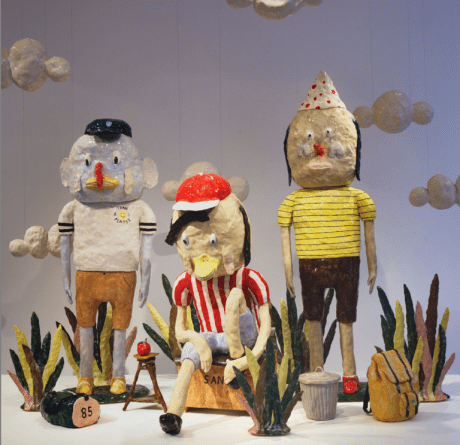
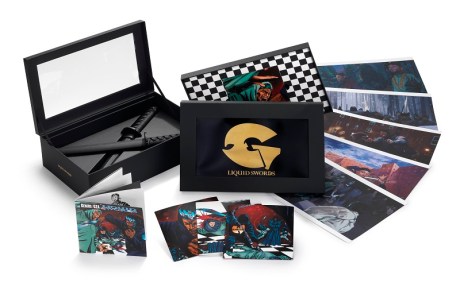
A happy new year to all freshly affiliated and dyed-in-the-wool Rapture & Verse rapscallions, climbing off its seasonal sickbed by thinking Eminem’s ‘Revival’ would be the antidote (it isn’t, by an unimaginable distance), and surprised that in the era of health and safety, you can still buy a GZA ‘Liquid Swords’ reissue complete with mini toy weaponry. Hopefully last month’s comprehensive Monolith Cocktail round-ups have put you in the picture as to 2017’s ins and outs; while we catch up with December’s overspill, there’s always Skillz and Uncle Murda squabbling for your retrospective vote.
Singles/EPs
After worming his way into the inner circle of Madlib and DOOM, electronic/house superpower Four Tet doesn’t fluff his audition remixing ‘Madvillainy’, a satisfyingly clean alternative bringing its own worldly daredevilry to the original’s boggy waddling. ‘No Excuses’ asserts Big Cakes, and the seven, Queen’s English-get-the-money tracks don’t pull their punches, making a convincing argument to go for second helpings. More international assassination from Endemic Emerald sends his latest platoon into battle, with Scorzayzee and Tragedy among the stripes-earners, while his string sections get the streets surrounded, the granite-and-gasoline ‘Black Bag Operation’ taking the opportunity to dump rubbish.
Liquid refreshment from Moka Only & E.d.g.e. comes ‘Lucid’ to a fluorescent twittering of too cool-for-clubs synths. Noteworthy for the useful mantra that “rap always overgrown, the grass need a mow y’know, too abstract to be quotable”. The trife life sticks close to Muja Messiah, taking on Roc Marciano’s sweat-trickling gangster leisure time; ‘Saran Rap’ is a half dozen street codes with eyes wide open that would relax if the stakes weren’t so high. Illogic re-enters his astral plane to tell everyone about ‘The Beauty in Evolution’, fastening his seatbelt and hanging out the window with a mix of dubby, jazzy instrumentals and rhymes trying to keep a lid on sounding awed.
Straightforward instructional from Slim Thug throws itself into the front row as he sorts ‘Kingz & Bosses’ with Big KRIT, pleasingly muted in measuring for crowns and emperor’s robes. The sledgehammer sound of BigBob pulverising a piano allows Sadat X and Big Twins to carefully take aim and open fire on the enjoyably unequivocal
roach-stomper ‘The Truth’. When the streets are watching, it’s ‘All Eyes On Us’, with Jamo Gang – Ras Kass, El Gant and J57 – bristling at the wheel of a related, get down or lay down steamrollering.
Albums
Completing his Michigan trilogy, Dabrye’s ‘Three/Three’ invites over a glut of underground hip-hop firebrands, but taps a sign that reads ‘respect our neighbours’ every time one takes to the booth. A stylish, steady holding it down, passing pure hip-hop, neo-soul and electronic routings rarely trespassing into the reds, with DOOM, Guilty Simpson, Ghostface, Danny Brown, Nolan the Ninja and Jonwayne standing for a fine album that doesn’t shout so from the rooftops.
High Focus maximise their strength by mix-and-matching two of their topmost chefs souring their latest specials board. Never a duo for soft centres, Jam Baxter and Ed Scissor spray disarray to decorate ‘Laminated Cakes’, their gateaux filled with mercurial gall and grit, and with Ghosttown providing the tough base and sprinkle of hallucinogens that aren’t exactly melt in the mouth. As they make you head nod like there’s a guillotine blade eying up your scone, Pierce Artists are the ‘Kings Returning’ to a hard-backed throne. Unlike the nation’s cricketers, Elliot Fresh and Deeq determinedly dig in, don’t waft at anything airy-fairy and never take their eye off the ball, to Rack Mode keeping perfect line and length on the beats. Part superhero, part vicious dental plan, ‘Teeth Ledger’ has Datkid and Bailey Brown flexing the sort of infectiously perturbing superiority that comes easy. Hood rat rhymes do obnoxious as matter of fact, and beats shrug in the face of catastrophe while waiting for the night bus: both have got a garrison of goods to set wintry nights ablaze, anchored by the supreme head-trolling ‘Whos Dat’. Another slow release slug to your chest from Bisk, with Sam Zircon assisting the leech-like tactics, makes it rain with ‘Saucemoney’ – perfect for when the sun refuses to come up.
Oh No cherrypicking from cool Cali stronghold Now Again is a funk/soul think tank that sounds played by ear, and whose good-paced trolley dash of sounds masks meticulous programming. Keeping a queue of mic antagonists waiting while mentally composing a posse cut’s posse cut, the dustiness of ‘Oh No vs Now Again 3’ is dredged in gold and will reactivate your head. Cutting through early year frostiness is Pete Rock and his ‘Lost Sessions’ finding sunshine on the horizon. Of casual instrumental majesty, the MPC finds the balcony view to its liking once given plenty of breathing space. No need to pass the aux here. The first hip-hop signing by The White Stripes’ Jack White is inauspiciously named New York emcee SHIRT – sartorially scruffy (and a search engine’s nightmare), but with enough raw, nomadic swagger to have you recognising the ‘Pure Beauty’ within.
David Begun continues to meddle in the affairs of Nas and Madlib, ‘Nasimoto: The Even Further Adventures’ playing God with the Gods and bootlegging to a boss standard. Fresh perspectives that push all the right, corresponding buttons. The crux of Masta Ace’s ‘Son of Yvonne’ gets renovated by a host of European producers that do both proud to earn their place in the album’s family portrait. Funky on the low but full of that all important snap that makes Ace tick, the tight-knit promise to never from the beaten track claims a companion to complement and rival the original.
Playing street games and getting results, Religion’s ‘The Demo Reel’ rigs up cop themes crossing the wrong side of town until reality starts to distort. Mists paint the scene from the ground up and freaks come out at night for loops and kicks that will work your neck blue, allowed a seldom spring in its step. For those still walking around in a post-Christmas fug, ‘The Top Left: Skeleton Staff’ from Mistah Bohze will shake you by the collar and out of your resolution-dodging malaise. Bulky from first to last until you’re swamped, and including a crafty reinvention of ‘Kernkraft 400’, the Glasgow emcee ploughs through on his own can’t stop-won’t stop manifesto.
“This is not trap, we don’t mumble neither: closed mouths don’t get fed”. Redbaren 907 and Deep of 2 Hungry Boys are ‘Unbreakable’, and you soon believe them: a won’t flop beats and rhymes unit (‘Barz Flows and Delivery’ hammering the point home), dishing out a one-two you can reliably gain muscle to. With the globe circling the drain, KXNG Crooked presents blow by blow coverage from the disaster zone with a flow to make you put your foot through the TV. ‘Good vs Evil 2: The Red Empire’ is iron-fisted intensity not sugar-coating narratives (despite some carnal urges) for anyone; despite the bleak pictures he paints, you trust the KXNG, whose force relegates beats to a footnote, to repair the job in hand.
Mixtapes
Everything worth hearing from Jeru the Damaja – a higher 90s heyday than most – gets its laundry aired on the ‘Dirty Rotten Mixtape’, Chrome and Donnie Propa in charge of putting together the best wrathful mathematics going. On the surprisingly lightweight ‘Emperor Nehru’s New Groove’, giving brains not too much to worry about, Bishop Nehru is on cruise control when flaunting shiny wares for the club and lounge: smooth operations hanging at the shallow end. Bruse Wane declaring ‘The Batman Should’ve Been On It’ transitions between classic beat loans and original album prep, swooping like charity gala attendee by day before night shift vengeance takes over. The bat signal is fairly strong with this one.
No videos this month. Go catch up with a boxset instead.
You can check out all Matt’s past roundups here…
And all his reviews/roundups/selections from 2017 here…
Quarterly Playlist: Part Four: U.S. Girls, TootArd, Sparks…
December 18, 2017
CHOICE TRACKS OF 2017: PART FOUR
SELECTION: DOMINIC VALVONA, AYFER SIMMS, MATT OLIVER

Wrapping up 2017 with the final part of our quarterly playlist revue, Matt Oliver, Ayfer Simms and Dominic Valvona have chosen another eclectic genre spanning collection of ‘choice’ tracks from the latter end of the year. From the Golan Heights (TootArd) to the cantons of Switzerland (Ester Poly), from weaponised disco pop (U.S. Girls) to attacking vibrant Curaçao electro protest (Kuenta i Tambú), from Gilbert and Sullivan cerebral pop (Sparks) to unearthed lost golden 60s nuggets (Cymbeline), this last curtain call of the year playlist reflects our tastes and opinions, and reflects what has been an anxious, unsettling twelve months.
Tracklist:
Mark Barrott ‘The Pathways Of Our Lives’
Snapped Ankles ‘Hanging With The Moon’
Kuenta i Tambu ‘E Kalakuna’
TootArd ‘Laissez Passer’
Mustafa Ozkent ‘Kasap’
Los Camaroes ‘Mbembe Ndoman’
The Movers ‘Kansas City’
U.S. Girls ‘Mad As Hell’
Destroyer ‘Cover From The Sun’
Wild Ones ‘Invite Me In’
The Moth Poets ‘The Shabby Gentlemen’
Ester Poly ‘Dienstag’
Alpine Those Myriads ‘Mail Order Doom (WHWGH)’
L’Orange ‘Cooler Than Before’
Danny Watts & Aye Mitch ‘Young & Reckless’
Evidence ‘Jim Dean’
Thavius Beck ‘Akhenaten’
Ocean Wisdom ‘Eye Contact’
Antiheroes, Lee Scott & Salar ‘No Sleep Till Mars’
Psycho & Plastic ‘Boojum’
Alexander Stordiau ‘Fulfilling Eclipse’
Solo Collective: Anne Muller & Alex Stolze ‘Solo? Repeat! (Live)’
Audiac ‘Gospels Unreal’
Bjork ‘Arisen My Senses’
Miles Cooper Seaton ‘I Am That’
Gwyneth Glyn ‘Tanau’
The Cornshed Sisters ‘The Message’
Girl Ray ‘Preacher (Radio Edit)’
Wesley Gonzalez ‘Piece Of Mind’
Cymbeline ‘Strax Nedenfor Tomen’
Martian Subculture ‘Chewing Gum’
John Howard ‘From The Morning’
Sparks ‘I Wish You Were Fun’
Previous Quarterly Playlists from 2017:
Part 3
Part 2
Part 1
CHOICE ALBUMS/EPS OF 2017 PART TWO: M – Z
SELECTION/WORDS: DOMINIC VALVONA, MATT OLIVER and AYFER SIMMS
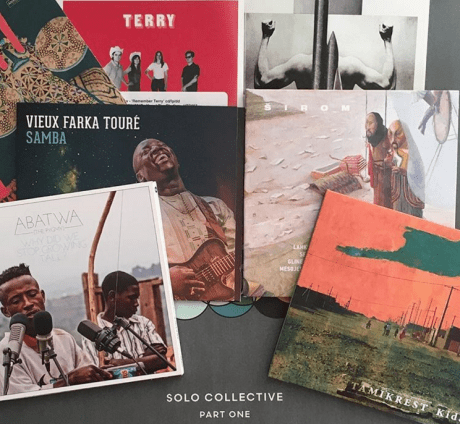
M – Z : Mazzi & SOUL Purpose to Msafiri Zawose.
Welcome to part two of our mega ‘choice albums/EPs of 2017’ feature. If you haven’t already checked it out, have a good perusal of part one, as the second part is a continuation, carrying on in an alphabetical order from where we last left off.
The decision making process:
Continuing to shy away from fatuous rating systems and ‘best of lists’, the Monolith Cocktailendeavors to offer a more eclectic spread of worthy ‘choice’ picks, with no album dominating or holding any particular numbered position – unlike most of our contemporaries lists stuck with the ridiculous task, for example, of explaining why one album is more deserving of their fatuous number 32 spot than another.
Lined up in alphabetical order then, our favourite new and reissued albums and EPs from 2017 are of course considered to be the most interesting, vibrant and dynamic of the year’s releases. But the best? Granted, to make this list you have to have made some sort of impact, but we’d never suggest these entries were categorically the best albums of 2017, even if that might be true. Instead our list is an indicator of our amorphous tastes, rounding up a year in the life of the Monolith Cocktail, and we hope, introducing you to titles and artists/bands that may have dropped below the radar or got lost in the noise of more commercial better promoted releases.
M.
Mazzi & SOUL Purpose ‘The Building’ (SOUL Purpose)

“A towering B-boy document gives familiar samples new life and piles banks of bricks and mortar beats and rhymes you can always back to do the business”. RnV, Feb 17
The Building by established New Jersey movement Mazzi & SOUL Purpose is built on two levels and ends up a skyscraper, to a specification of telepathy that works from close range or miles away. Mazzi as emcee rhymes his ass off for fifteen tracks without leaving you behind (“love what you’re doing and you’ll never have to work a day in your life”) and not without addressing the state of the world, relationship complexities and being prepared to fight (with the listener playing the twelfth man).
The SOUL Purpose movement begins with a mash-up of every essential hip-hop break known to man, going on to cover cavernous, fusionist swells of sound, B-Boy skippers, deep cover gangster business, and samples found in Boots adverts/Sugababes singles and on Madonna tours. That the album was also helping do its bit for good causes added an extra layer to the album’s complete package status. Matt Oliver
Nicole Mitchell ‘Mandorla Awakening II: Emerging Worlds’ (FPE Records)
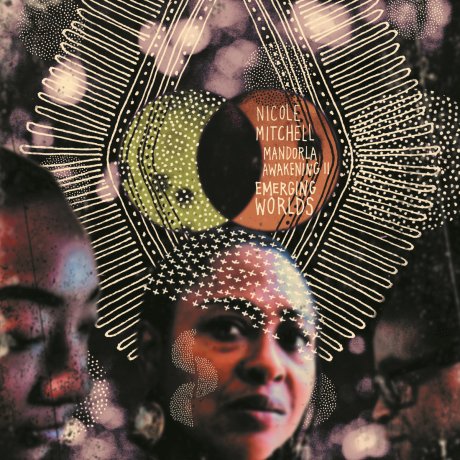
Taken from a 2015 live performance commissioned by the Chicago Museum of Contemporary Art, the erudite American jazz flautist, composer, bandleader, educator, scion of Afrofuturism, former president of Chicago’s Association for the Advancement of Creative Musicians and a founder of The Black Earth Ensemble, Nicole Mitchell’s outstanding Mandorla Awakening II: Emerging Worlds conceptual suite, straddles two evocatively imagined contrasting worlds: the tumult of a patriarchal world, called The World Union, in decay against the egalitarian desire of the advanced utopia called Mandorla, where technology and nature, freedom and tolerance are in ultimate synchronization.
Set in the year 2099 this multimedia project, which includes a short novella, blurs the line between philosophy, mysticism, modern art, science fiction and radical political critique on what is both a diaphanous and moody groundswell soundtrack of contorting confusion and beautiful flute accompanied polygenesis magic. To suggest this album of instrumental peregrinations and odysseys and poetically conscious soulful lectures and passionate, Last Poets meet Pharaoh Sanders, declarations – courtesy of Avery R Young – can be simply classed as a jazz is to ignore how amorphous the musicality of Mitchell and her reconfigured Black Earth Ensemble is in transcending the genre. With an expansive range of instruments and sounds, including Kojiro Umezaki on shakuhachi, Renée Baker on violin, Tomeka Reid on both cello and banjo, Alex Wing on electric guitar and oud, Tatsu Aoki playing bass, shamisen and taiko, and Jovia Armstrong handling percussion, the paradise versus dystopia exoticism of the ‘awakening’ simultaneously evokes orientalism, fantasy, nature, the classical and the atavistic.
At its heart, articulating the nervous but adventurous, pinning but diaphanously elevating characteristics of the narrative, Mitchell’s flute performances are stunning and spiritual throughout, even gracious. And the direction of travel is never quite certain, but always impressive and questioning.
As a frame for this conceptual suite, Mitchell asks: “What would a world look like that is truly egalitarian, with advanced technology that is in tune with nature?” We may never know, but the tumultuous journey towards it certainly sounds magnificently ominous and beautifully experimental. Dominic Valvona
N.
Nolan the Ninja ‘Yen’ (Left of Center)
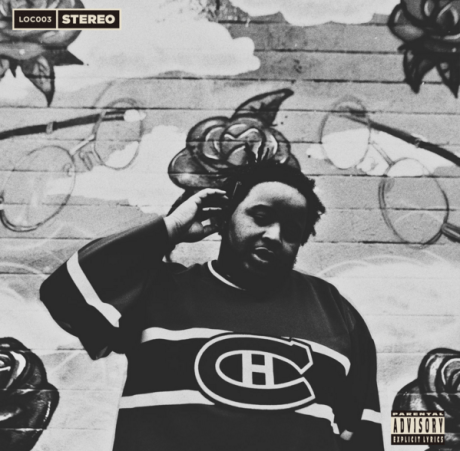
“Aggressive, eyeballing rhymes to get you bouncing, and beats strategically picking their punches”. RnV, Oct 17
In his bid “to retire before I’m 35” and “trying to see a million before I go to sleep”, Nolan the Ninja absolutely busts a gut to get his rhymes hurrying up his pension plan. Landing haymakers on dosed up vintage Queensbridge and clatters of muddy kicks and snares that can call up a posse from miles, the Detroit dragon slayer also knows that living by an all-or-nothing mindstate means every single syllable has to have the clarity to rightfully shatter ciphers.
Getting Royce 5’9” to guest on Calisthenics is a smart move in seeing whose chest is first to tighten, and Chess is the least civil checkmate recorded as everything threatens to spin of control. The album actually decelerates – or likelier, gives the music a chance to catch up – to show that the go-for-mine Nolan can manage the throttle when soulful drops start clearing the debris. MO
O.
Open Mike Eagle ‘Brick Body Kids Still Daydream’ (Mello Music Group)

“Maintaining his rightful place in the line of ghetto superheroes”. RnV, Aug 17
Two tracks define the multi-talented emcee’s latest intricacies and humour, cosmopolitan accessibility and underground elusiveness. Open Mike Eagle draws himself from his shell by completely rewriting the rules on what it means to be hard in hip-hop on No Selling. Despite the Dark Comedy compère being a nostalgic peacekeeper for a lot of Brick Body…, capable of bringing up an argument about which condiment is king of the kitchen to prove a greater point, the album’s political piece de resistance, My Auntie’s Building, fights for what he believes in with tangible rage, a housing project held close providing the album with an explosive conclusion that might have got lost further up the album sequence.
We disagree that “everything is better when you don’t know nothing” – everyone needs Eagle in their corner – but can certainly vouch for the confirmation of “I promise you, I will never fit in your descriptions”. MO
P.
Hermeto Pascoal ‘Viajando Com O Son (The Lost ’76 Vice-Versa Studio Session)’
(Far Out Recordings)
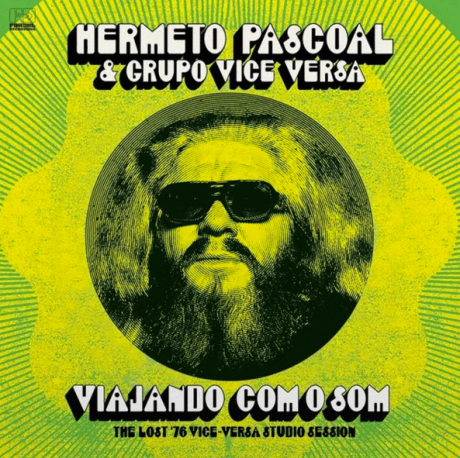
Thankfully surfacing forty odd years after the fabled ’76 sessions at Rogério Duprat’s São Paulo Vice Versa studio, the extemporized jazz performances of Hermeto Pascoal and his impressive Paulo troupe sound every bit as fresh and dynamic as the day they were recorded.
Held in high esteem, in the upper echelons of experimental traversing exotic jazz pantheon, anointed by a hyperbolic Miles Davis who called him “the most impressive musician in the world” after catching him play live, Pascoal’s transcendent voyages from Brazil have become the stuff of legends. Crate-diggers and jazz or indeed even world music aficionados have always salivated at the prospect of such material being found and released, and the missing Viajando Com O Son session is up there with the most desired.
Unburdened by such trivialities as time and composition, this four track suite shimmers with the celestial as it dreamily saunters through a tropical rainforest groove on the opening Dança do Pajé; quacks and quivers through a percussive bending bright organ peregrination on Mavumvavumpefoco and mysteriously and surreptitiously explores an exotic landscape, tip toeing and lovingly serenaded by magical flutes, on Natal. However, the main, twenty-six minutes long, expansive highlight, Casinha Pequenina, follows on from the previous tracks with similar leitmotifs played out and taken into ever more experimental directions: from Miles Davis to Guru Guru.
The Lost ’76 Vice-Versa Studio Session is a lush tropical jazz odyssey from the Brazilian maverick and genius that’s well worth every penny. DV
Piano Magic ‘Closure’ (Second Language Music)

Calling time on a twenty-year career with one last swansong, the Anglo-French Baroque indie dreamers Piano Magic echo the sentiments and themes of their 2000 song No Closure on their final majestic and profound album, Closure.
Drawn to a despondent melancholy, a most diaphanous one at that, the sagacious founder member and songwriter Glen Johnson is aided in his last ever enterprise by Franck Alba (guitars), Jerome Tcherneyan (drums, percussion), Alasdair Steer (bass) and the band’s original drummer from their debut gig at the infamous Wag Club, Paul Tornbohm, now providing keyboards. Wounded and troubled as ever by the lingering traces and ghosts of past relationships and liaisons, Johnson’s resigned poetics attempt to meet head-on those feelings he just can’t seem to lay to rest: as Johnson calls it, the “mythical formal conclusion”, the need to “move on” from broken relationships is not so easy. And so he croons, “Let’s get this thing sewn up” on the Morricone meets Ry Cooder cinematic title track, knowing full well that “…you never get closure.” The supernatural echoes of a lost love, channeled through a dusty answering machine message séance, on Landline leave the singer’s voice paled and weakened; lamenting loss form the far side of the ether. Marooned as a passive onlooker to the goings-on in the backstreets of his southeast London neighbourhood, a voyeuristic, removed Johnson (in Talk Talk mode) vanishes almost completely before our very ears. The song’s sad lyrics it must be said are a most beautiful kind of misery.
Magnificent in their despair, the musicianship poised, purposeful and subtly stirring, Piano Magic’s last ever fling is one of the band’s most accomplished, and definitely one to savour. As near perfect as any Piano Magic suite can be, Closure proves that you can perhaps after all find a satisfactory ending. DV
R.
Reverse Engineer ‘Elusive Geometry’ (Floored Music)
Both in the moniker by which the Edinburgh-based ‘sonic experimentalist’ Dave House is known by, and deduced from the title of his latest album, Elusive Geometry, we can view the sound-artist’s music as a restructuring of sounds and mechanics.
House unravels, strips and inverts his apparatus of field recordings and sampled instruments to reconstruct new, often mysterious and at times foreboding soundscapes; some of which recall Jon Hassell’s Fourth World Musics explorations: a trace of the Javanese or Malay can be heard like a veil hanging over the uneasy densely packed traverse of cascading crystal droplets, marimba and tubular echoed Proto, and a similar, familiar yet obscured sense of place can be heard on the bamboo shuttling Insider, which also features the bobbing and dipped percussion and tablas of sound-designer and producer Pete Vilk.
A transformation of House’s themes of ‘transition, self (re)discovery and moving on’, the precise chemistry of his compositions and use of collaborators – the already mentioned Vilk is joined by the jazz vocalist Matty Eeles, harpist Esther Swift and BAFTA award-winning cellist Atzi Muramatsu – sends these explorations off into numerous nuanced, but untethered, atmospheres. Masked looming leviathans, honked saxophone like probes, coils and springs, stone and vegetation, the odd guitar strike drift over or interweave through sophisticated minimalist beats and breaks – the most abstract and discordant drum break of which features on the hallucinatory Decoherence -, with the mood fluctuating between both controlled uncertainty and more deconstructive chaos.
Elusive Geometry will tease out and reveal its textures and intricacies slowly, each listen drawing your attention to some other interesting interplay and sparse sound. House has in short created a brilliant album of thoughtful, moody transitions and discovery. DV
S.
Miles Cooper Seaton ‘Phases In Exile’ (Ascension Hall Recordings)
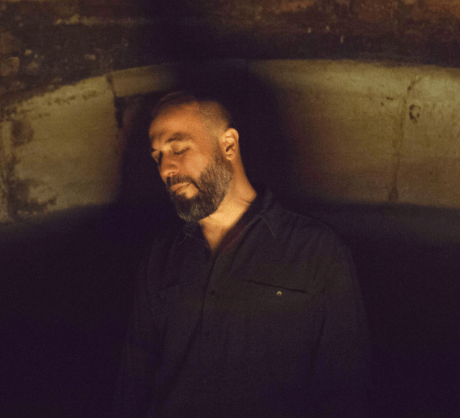
This music is a cinematic poetic recitation, an eloquent art object; sticking to the blurry lines of your shadow while you float through this existence, this street, this town-deserted-or this day, mundane. That dreamy music with the aura of a long lost ocean is the sound of the beyond: you will see, in a cloud, half stunt postures of people trying to deal with mourning. Their eyes wide open yet unsure of how to breathe. And while they exhale, the music pours as if descending from a kind heaven, nested in peace, cooing for drenched figures of the earth.
Miles Cooper Seaton is the ghost who reaches out, entrusting us with a sensation of hope and relief, tranquility, a loophole, mindfulness. Forgive and forget. In the morning dreamers try to get a hold of their visions, trying to catch a glimpse of that faint reality; Miles’ music is lingering too. It tinkles and echoes with a slowness. This is how the rhythm goes, lingering among a field of green, yellow barns, with an horizon of blue and grey shades, some drops sweep the face of a child who understands it all. The clamorous pearls are just from the fierce-y wind. Inside he is all right. The album is dense and tortured. Inside he is all right; the child has grown, and given us these notes. Ayfer Simms
Sentidor ‘Am-Par-Sis’ (Sounds And Colours)
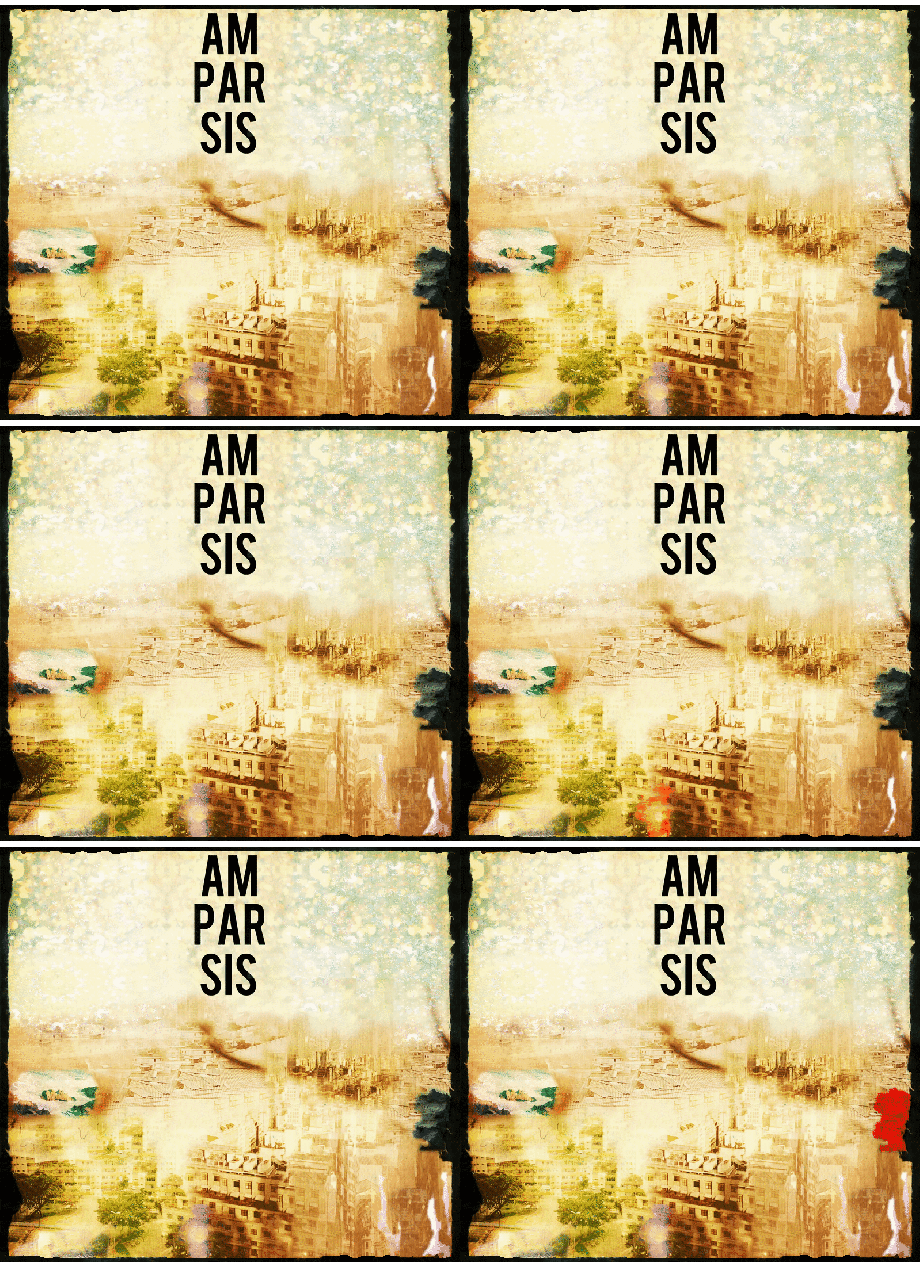
A most congruous if challenging futuristic Rio de Janeiro psychogeography remix of sounds and ideas, built around the transformed cut-up samples and influence of one of Rio’s most famous sons, Tom Jobim, and his post-bossa nova peak leftfield experiment Passarim, fellow compatriot and burgeoning experimental music star João Carvalho creates one of the year’s most haunting and magnificent lush ambient suites, Am-Par-Sis.
Synonymous and celebrated for bringing bossa nova to the world, Jobim’s explorations outside the genre had gone largely unnoticed. Under his alter ego, Sentidor, Carvalho sheds new light on the legendary artist’s innovative experiments whilst also drawing on the drone, ambient, trance, funk carioca, classical and plunderphonics styles to create a uncertain multi-textured augur for future generations to ponder over.
On, what is the most traversing of ambient and collage concept albums, he poses a number of questions, such as: How would Jobim’s record be interpreted by a new generation whose connection with the past and the rest of the world has been cut? How would the record be used in creating new rituals? How can art be reorganized and rebuilt democratically? It also questions the very ideas of what constitutes as the public domain in the modern world and whether something sacred should be preserved or rather gather dust and slowly turn into something else.
Via the power of a seamless, amorphous soundtrack of ethereal pulchritude, cascading veiled piano, ether Panda Bear like voices and song, atmospheric manipulations, transmogrified melodies, whispery winds, Neu! boat trips, reversed samples and magic Carvalho sets out to mull over and articulate these questions. DV
Shadow ‘Sweet Sweet Dreams’ (Analog Africa)
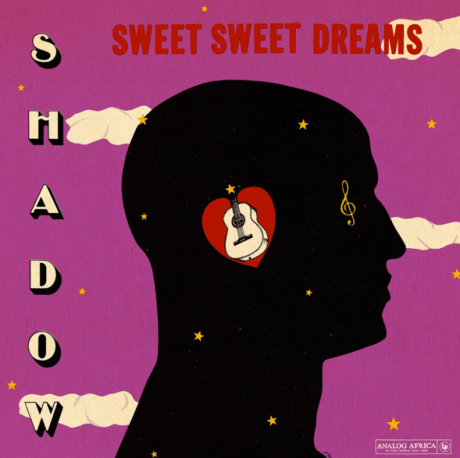
For the first time branching out towards the Caribbean Islands, Africa Analog turn their attention to one of Trinidad & Tobago’s most enigmatic music stars, Winston Bailey, better known as Shadow.
Previously marooned on a desert island of obscurity, panned by critics at the time and failing to sale, Bailey’s bouncing scintillating Soca-boogie and Calypso hybrid lovesick dance floor tracks were ahead of their time. Unlike anything coming out of the islands at the time, these often bright, swaying pop love spurned and springy ballads took the island’s sound into the cosmos.
Bailey started out in the mid 70s reinvigorating the Calypso genre, adding a slick production to the atavistic roots sound that made its way across the Atlantic via the slave trade, and giving it panache and a slinky radiating candour. Though originally used as a tool for social commentary, the synonymous rhythm of the Caribbean is channeled into a number of space age love songs. But despite the lamentable aspects, Bailey’s vocals are sunbaked with ripe swoon and lilting soul, fit for the dancefloor.
A missing masterpiece waiting to be (re) discovered, Sweet Sweet Dreams is simply a beautiful pop album. DV
John Sinclair & Youth ‘Beatnik Youth Ambient’ (Ironman Records)
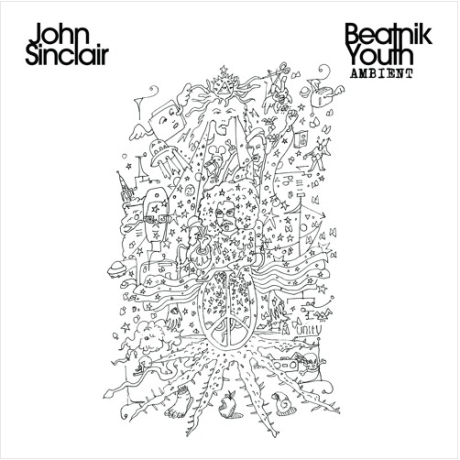
Synonymous for steering and kicking out the jams in his short role as manager of Detroit’s renowned rebel rousing motherfuckers The MC5, renegade poet, scholar, activist and establishment rattler John Sinclair is also remembered for his free radical zeal and dalliances with the law – leading to a short spell in the slammer. Keeping his hand in so to speak, but taking up residency in Amsterdam – a much safer bet -, the beatnik jazz sage continued, and as you can hear on this latest recording, continues, to record and perform in a host of setups with a multitude of contributors and backing bands.
The appropriately (in every sense) entitled Beatnik Youth Ambient mini LP is a foretaste, and as the title implies, ambient treatment version of material from a full-length album, released a couple of months later. The “Youth” of that title refers of course to the Killing Joke bassist turn in-demand producer Martin Glover. Arguably one of the most consistent producers over the last few decades in the UK, Glover, under his Youth alter ego, has taken on more or less most forms of music and worked on both commercial and underground experimental projects. He now provides Sinclair’s “literary synthesis” with a suitable “beatnik ambient” soundtrack: a serialism quartet of turmoil, turbulent jazz and dreamier trance.
Running through a vivid purview of postwar counterculture, bringing to life the energy and excitement that writers such as Kerouac (who gets referenced a lot) captured when seeing the Bebop jazz revolution and its great proponents perform, Sinclair delivers a magical enthusiastic experience on another track, evoking Thelonious Monk’s 1957 LP of the same name, Brilliant Corners. Titans of American beatnik and psychedelic literature lineup, Burroughs, Ginsberg and Neal Cassady (“…had the ability to park a car anywhere”, just one of his talents alongside his status as the “human bridge between the 50s and 60s.”), rubbing shoulders with jazz music’s new guard Lester Young, Byrd and Gillespie; immortalized by Sinclair to “head music” cosmos of jazzy lamenting woe, ghostly squawking and hooting saxophone and swirling mirages.
If anything, Beatnik Youth Ambient leaves the listener pining for a lost age; Sinclair’s evocative prose and delivery lifted (and cradled at times) by Youth’s congruous seething tensions and floaty dream-like production, which enthrall me to once again get stuck in to the “beat generation” and spin those Savoy label jazz totem recordings again. A prompt for the present times, the zeal of the postwar “baby boomers” (those with a soul anyway) counterculture not necessarily translating to generations X, Y and Z, even if it is needed; Sinclair’s language is nevertheless just as powerfully descriptive and energizing now as it was over forty years ago. DV
Širom ‘I Can Be A Clay Snapper’ (tak:til/Glitterbeat)
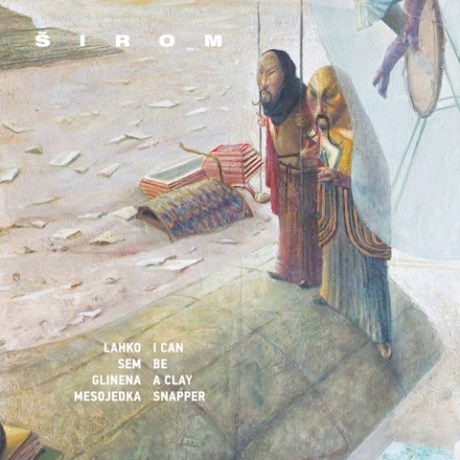
With an unspecified, but as the name suggests, emphasis on the “tactile”, Glitterbeat Records new imprint label gives a welcome platform to entrancing experimental tonal performances and sonic polygenesis traverses alike. In the latter camp is this Slovenian peregrination suite from the landlocked, Alps nestling country’s visceral sonic conjurors, Širom.
Evoking memories and feelings, both real and imagined, with a soundtrack thick with atavistic connections, the trio of punk and post-rockers turn experimental folk and acoustic instrumental cartographers convey a personal relationship to their homeland, on their second album together under the Širom banner.
Yet whatever the backgrounds, traces of North Africa, the Adriatic and the Middle East, the performances sail scenically through a dreamy otherworldly representation of Slovenia: Oriental, alien and Balkan visions permeate the plucked, malleted, chimed and purposefully played compositions, which subtly and rather cleverly build up complicated layers and various overlapping time signatures during the course of their journey.
Theremin like siren voices drift in and out, enacting the myth and seraph, whilst on the watermill turning Everything I Sow Is Fatal Sun Ra travels with John Cale and Pharaoh Sanders on a pilgrimage to Samarkand. The most recurring sounds however pay testament to the Balkans ghosts. The folkloric stirrings, lulls and yearning of Slovenia’s past bordering both a pan-Europa of migration and grief – stretching back a millennia – are transduced into often haunted vistas and metaphysical passages.
A most impressive and expansive inaugural Balkans travail; different from the previous two releases on this burgeoning new imprint, yet keeping to the tactile, accentuate and imaginative remit, whilst conjuring up mystical new soundscapes. DV
Solo Collective ‘Part One’ (Nonostar)
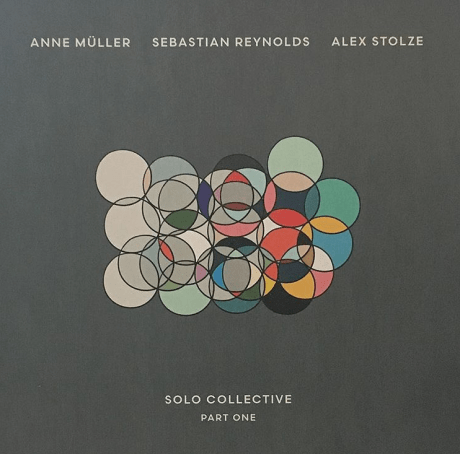
Gathered together in a congruous union under the Solo Collective umbrella, the Anglo-German partnership of virtuoso performers/composers Anne Müller, Seb Reynolds and Alex Stolze take turns in the spotlight and provide supporting roles with a cast of additional collaborators on the chamber pop meets traversing evocations suite Part One.
An interconnected triangle of familiar themes and musicality, with each musician also individually experimenting and creating their own solo pathway, in their respective field, all three artists have crossed paths and worked together previously on a variety of projects; some of which, in alternative neo-classical stripped versions, appear on this album. For instance, the original pizzicato acoustic-electronic Don’t Try To Be, from the violinist Stolze’s 2016 EP, Mankind Animal, now features Müller’s yearning emphatic cello, and is striped of its synthesizer electronics in favour of woodblock percussion and doleful low bass notes to create a more tragic and sad version.
A showcase for a particularly harmonious partnership of individuals with a pan-Europa vision of collaboration and crossing sublime musical boundaries, Part One – of what I hope will be a continuing venture – proves to be a stirring neo-classical ambient collection of solo and ensemble performances; each artists sharing and pooling their obvious talents to find a common interplay and a bond to create a challenging but mostly beautiful album. DV
Sparks ‘Hippopotamus’ (BMG)
Bombastically pitched as a “comeback” album, unseasonal followers and those not so familiar with the maverick siblings Sparks career may have been under the impression that the much-hyped Hippopotamus marked some kind of return from an imagined sabbatical, a retirement or an emergence from the wilderness. It was nothing of the sort of course, their last official Sparks albums may have been released in 2008 (Exotic Creatures Of The Deep) and 2009 (The Seduction Of Ingmar Bergman), yet they also went on to collaborate with Franz Ferdinand in 2015 for the mighty team-up FFS. Three albums in seven years isn’t bad, considering the rate most groups knock out records these days, and considering Ron Mael is in his early seventies and brother Russell is only a few years behind.
Maybe what the media meant was a return to form. Admittedly – apart from FFS, which made our albums of the year in 2015 – the music hasn’t quite matched the quality of their 70s output or indeed the 2002 triumph Lil’ Beethoven and the 2006 follow-up Hello Young Lovers. Hippopotamus I can thankfully say is very much Sparks at the top of their game.
The Gilbert And Sullivan of cerebral pop music takes the form to ever-new intelligent heights of absurdity and revelation. Daring to merge intellectual ideas and themes into an art form; yet never laborious, condescending or aloof, every song on this latest theatrical rock and pop suite features an infectious melody, satirical but heartfelt clever lyricism and the usual Noel Coward piano witticisms (updated for the modern age of course).
Communicating both the frankly bizarre and the almost insignificant of contemporary foibles (from the middle class anxiety of stylish furniture design, on the Kierkegaard ponders Scandinavian Design, to the difficult to usually rhyme with anything in any song, surreal assortment of metaphorical, or very real, items and figureheads tormenting Russell in his room on the title track), the Mael Brothers frame all their ditties within a melodramatic often plaintive setting of levity.
Minor concertos and pop triumphs abound, as Sparks use the usual assortment of figureheads, including Edith Piaf and an ambiguous French film director auteur, to articulate their feelings on an assortment of theatrical and operatic (the almost aria style domestic imaginings of The Macbeths on the Living With The Macbeths duet) anthems – though of course, Piaf “always said it better”.
Cleverly creating social and political satire and commentary without the rage, finger wagging and virtue signaling, Sparks remain one of the most consistent bands – or duos if you like – in music history; five decades on and still producing epic pop, the likes of which has seldom been equaled. DV
Strange U ‘#LP4080’ (High Focus)
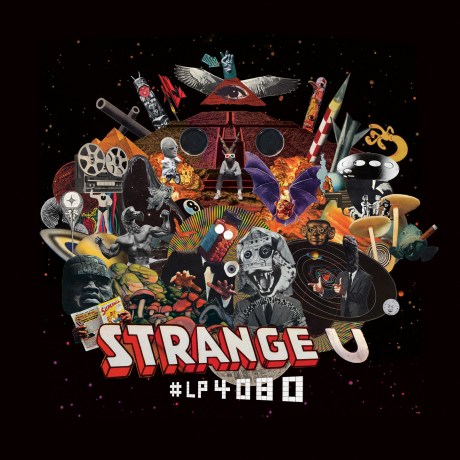
“#LP4080 has a deftness that allows it to be daft; a first class bizarre ride to and from the far side”. Our Daily Bread 234, Feb 17
It’s always fun and games when King Kashmere/The Iguana Man/Lord Rao starts spraying jocular, juvenile sci-fi syllables and delirious, crowd-pleasing hooks at will. When he hits hyperspace, he’s an unstoppable force of nature few can compare to – “you enjoy buying trainers, a person like me enjoys firing lasers” – though his intergalactic court jester act belies the wicked yarns he spins about our alien overlords and fantastical set-plays (environmental health, relationships, politics) that are closer than you think.
Helming a future primitive craft with Dr Zygote, mechanic to an 8-bit jalopy with head knocks and funky splutters aplenty, Strange U float through the cosmos as an entertainingly erratic two-man crew. Despite being recorded in a studio far, far away, LP#4080 has got its head screwed on with attention to the fundamentals – the MC-producer combination, prime beats and rhymes, a concept that works, and a spectacle promising multiple revisits. MO
T.
Tamikrest ‘Kidal’ (Glitterbeat Records)
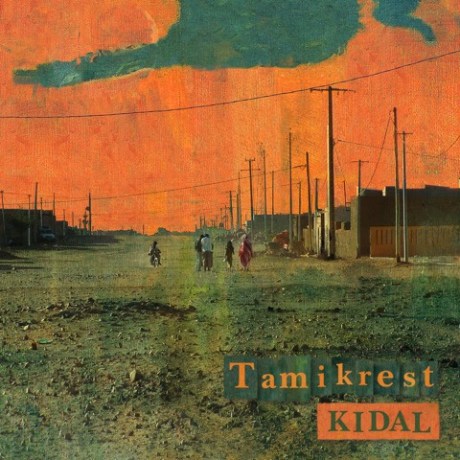
Still without a homeland, though liberated from their draconian partners, the Tuareg are once again left, as wanderers in their own lands, the unofficial guardians and custodians of the Saharan wilderness. For now only a dream, best realized and protested through music, the rock’n’roll Bedouins Tamikrest emerge once more from the barren landscape with a message of “power and resistance”, on their fourth, equally entrancing, album Kidal. Paying homage to the strategically and spiritually important cultural trading town of the title, the highly-acclaimed (and rightly so) Tamikrest exude both the sadness and suffering of the dispossessed people who cling to the southwestern Saharan hub that is Kidal: a town which has seen its fair share of fighting, fought over, conquered and reconquered over time, it remains a symbolic home to the Tuareg. This is after all the town that nurtured them and where it all began.
Preserving an increasingly endangered ancestral culture and language, Tamikrest’s cause cannot be separated from their music. Yet, rather than protest with bombast or angry rhetoric, they articulate their woes with a poetic, lyrically sauntering cadence. Oasmane Ag Mosa’s earthy lead vocals resonate deeply, even if his timbre maintains a stoic dignified pitch. Backed by Aghaly Ag Mohamedine and Cheick Ag Tiglia on backing and duets, a lulling sweetness transcends, which on occasions adds a certain romanticism to the impassioned struggle. Swaying effortlessly between the meandering and up-tempo, the accentuated dynamics of Mosa and Paul Salvagnac’s entwined, untethered and contoured guitar work, Mohamedine’s “gatherer” Djembe rope-tuned goblet drumming, Nicolas Grupp’s askew backbeats and Tiglia’s smooth, free-roaming bass lines transport the listener to the mystical topography of the desert.
Assiduous, confident and articulate, the musicianship shows not so much a progression as a balance between the meditative and rock’n’roll spirit of the Tuareg musical resistance. Tamikrest are as brilliant as ever musically, and Kidal is, despite its plaintive and lamentable subject woes, a beacon of hope in an ever-darkening world of uncertainty. DV
Tanzania Albinism Collective ‘White African Power’ (Six Degrees Records)

In so many respects a “spiritual follow-up” to the acclaimed producer Ian Brennan’s Grammy Award-nominated Zomba Prison Project and follow-on from the equally evocative and raw Hanoi Masters sessions, White African Power attentively and respectfully draws out the repressed voices of the Albino community in Tanzania. Brennan’s productions often serve as a kind of hands-off form of creative counseling and healing; helping people to overcome trauma, such as the survivors of Pol Pot’s genocide in Cambodia. He’s renowned for being the most inconspicuous of in the field and on location producers, letting the atmosphere and elements, the moment if you like, and even serendipity bleed into the performances he captures for posterity. And the production methodology used for this latest project, recording the songs of the Standing Voice Community of Ukerewe, is no different.
A safe haven, Ukerewe, where Ian travelled to in 2016 to document their plight, is the largest inland island in Africa, only reachable by a four-hour ferry ride. Its community is, hardly surprising, haunted by their experiences. Self-conscious, avoiding eye contact, it proved a difficult task for the producer to encourage his subjects to open up. But open up they did, and the results are often surprisingly melodious, poetic, and diaphanous if raw and emotional. Far from a harrowing catalogue of despair and pity, the 23 recordings on this collection prove illuminating.
Fitting no obvious style, these amorphous performances do however resonate both with the delta blues of Louisiana and the stark, stripped down and earthy blues of South East Asia. Touches of raw African dusty tradition do appear, ascending and descending alongside gospel and soulful voices, naturally echoed, sighed and open-heartedly sung with a pure vulnerability. They’re accompanied either by stark lo fi electric guitar performances, that range from scratchy, straggly proto-punk to slower scrabbly emotive twangs, or an acoustic backing of rubber-band and bottle shaking percussion. Standing out production wise though is the classical – imagine Brahms on harpsichord transferred to East Africa in the 80s – reverberating cradling deep soulful ballad, Never Forget The Killings.
Ian Brennan coaxes another startling, eye opening, set of recordings from the victims of trauma; one that proves every bit as impressive as it does plaintive and sad. The collective will astonish, if not surprise listeners, those suppressed voices, thankfully released and given an international platform, sound emotionally honest and revelatory. DV
Terry ‘Remember’ (Upset The Rhythm)

The disarming world-weary punk and quirky pop touting quartet of Melbourne scenesters, banding together under the ubiquitous Terry moniker, follow up a prolific run of 2016 EPs and their debut LP with another acerbic witted, snappy melodious release of profound disenchantment and wistful “wish fulfillment”.
Continuing with the shared girl/boy dynamic of lulling, placeable idiosyncratic vocals and flexible punk, country and new wave bubblegum backing, Terry look to expand their repertoire on Remember. The combined musical savvy and experiences of band members Amy Hill (of Constant Mongrel and School Of Radiant Living), Al Montfort (UV Race, Dick Diver, Total Control), Zephyr Pavey (Eastlink, Russell St Bombings and also Total Control) and Xanthe White (Mick Harvey, Primo) push the quartet into all kinds of nonchalant mischief. The gang embraces nonplussed French new wave chanteuse vibes on the brilliant breezy, mosey country lilting, Toy Love meets Serge Gainsbourg Take Me To The City (one of the tracks of the summer), and snappy, bouncy indie synth pop on Rio. At their most raucous, rough and ready to tumble, Terry softens the edges of The Damned on both their keystone kops rave-up Start The Tape and spiky frazzling Give Up The Crown.
Suggesting nothing more rebellious than a cheeky smoke behind the bike sheds, the group’s knockabout catchy hooks and charm cloak a personal profound response to the political and personal anxieties and dramas of the times. And they do this with a certain aloof coolness and adroit ear for a great tune, making this 2017’s most melodious and catchy album of knowing pop slanted punk. DV
Vieux Farka Touré ‘Samba’ (Six Degrees Records)
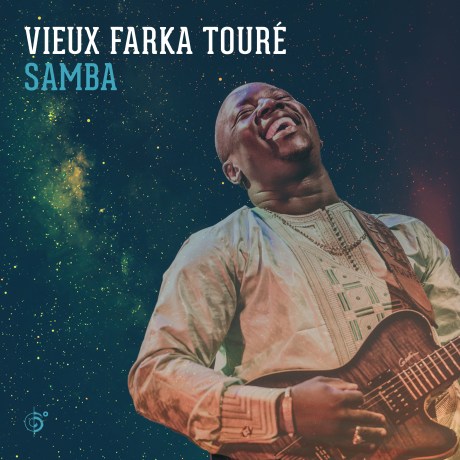
A studio recording with a difference, played out and developed live in front of just fifty lucky people in Saugerties, N.Y., Vieux Farka Touré’s latest album blurs the boundaries between performance and the processes of making an album.
Ever the consummate maestro and backed by an equally accomplished band of musicians, there was some initial apprehension on Touré’s part about allowing an audience into the studio. Though we have the finished product, free of any mistakes, restarts and disagreements, it seems this audience far from unnerving the band, egged it on, with the results sounding effortless and natural. There were overdubs of course and one of the songs was recorded back home in Mali – the calabash driven Ni Negarba. But far from cutting corners or relying on the back catalogue, Touré has fashioned an entirely new songbook of vocal and instrumental material for Samba. Some of which amorphously touches upon unfamiliar influences, including reggae on the unapologetically roots-y swaying Ouaga.
Touré is as the Songhai title of his new album Samba translates, the second son of the late Ali Farka Touré, a doyen of the Mali music scene himself who left an indelible mark. If we expand on the title’s meaning, “Samba” is a byword for “one who never breaks”, “who never runs from threats, who is not afraid”. It is even said that those adorned with the name are “blessed with good luck.” Inspired by his ancestry, imbued with three generations, Touré’s album is suffused with special tributes to his family. Outside the family sphere, Touré confronts both Mali’s recent Jihadist takeover – only stopped and defeated by the intervention of the country’s former colonial masters, France – on the radiantly rippling, chorus of voices, funky blues number Homafu Wawa, and environmental issues on the dexterously nimble-fingered bluesy rock, Nature.
The almost never-ending efflux, the constant lapping waves of textures that Touré plays, which offer a cyclonic bed on which to add the deftest licks, have never sounded so sagacious and free flowing. This ain’t no Saharan Hendrix at work, this is something else entirely, and better for it. This is the devotional, earthy soul of Mali, channeled through a six-string electric guitar. DV
V.
VVV ‘Bozo Boyz’ (VVV)
“The trio take apart prowling club beats powered by the high beams of an 80s sportscar”. RnV, Nov 17
Preceded by Apocalypse Trent poking fun yet completely understanding modern hip-hop’s rules, the Nottingham trifecta of Vandal Savage, Cappo and Juga-Naut are a heavy rotation of individual voices.
Rhymes and word associations – pop culture, mind’s eye observations, opaque battle bars covered in enough 80s hairspray to tear the ozone layer a new one – jut out at free-flowing, at times unworkable angles, yet are held together by undeniable dope infused with a carried over drop of cheek.
Flicking VVVs at club beats, a slim line 80s synth chassis is rolled out to maximum effect (an evolutionary eye-opener for East Midlands rap fans – this won’t be their usual milk and two sugars). Both chilled and chilling, sonically Bozo Boyz lives an alternate life of soundtracking a slasher movie making a wrestler’s entrance to the ring. One of the more idiosyncratic hip-hop picks on this list, it’s VVV for victory. MO
Various ‘Hidden Musics 4: Abatwa: Why Did We Stop Growing Tall?’
(Glitterbeat Records)
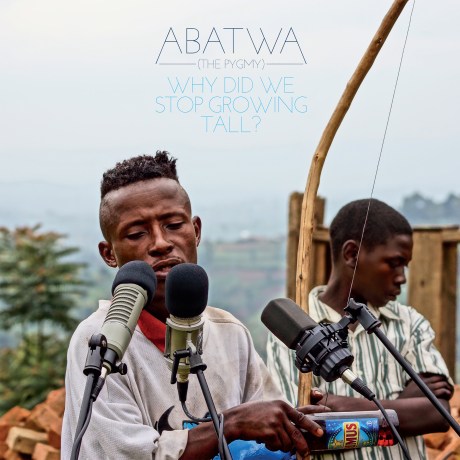
Ian Brennan, yet again, probing the furthest, most inhospitable and outright dangerous places in the world to record marginalized voices, journeys to the post genocide borderlands of Rwanda on the fourth volume of Glitterbeat Records illuminating Hidden Musics series.
Taking the unmarked, haphazard, road (less traveled) to the edges of Rwanda, avoiding the animosity and embers of vengeance that still burn and remain between the country’s minority Tutsis and majority Hutu communities, Brennan visited and recorded for posterity the Abatwa tribe’s seldom heard lament, anger and incredible soulful, if raw, blues.
The Abatwa name remains mostly unknown outside Africa, that’s because, due to their limited growth, we know them better as the ‘Pygmy’. A derogatory name loaded with infamy, yet preferred by the very people it derides, the tribe rather that put-down than (as Brennan puts it) “the official PC mouthful/post-genocidal replacement: The people who were left behind because of the facts of Rwandan history.”
What you get from this community is battery powered electronics and rusty, ramshackle dusty instruments coming together in hybrids that evoke ritual, the ceremonial but equally the blues, soul and hip-hop; all played with an undeniably emotional Rwandan verve and lilt. Make no mistake; this is performance in its most deconstructive raw form. Devoid of embellishments and overbearing production, recorded in situ with only the rudimentary elements and atmosphere for company, and it sounds great. It is nothing short of revelatory; field recordings of hope and recovery created in the face of despair. DV
Various ‘Pop Makossa: The Invasive Dance Beat Of Cameroon 1976-1984’
(Analog Africa)
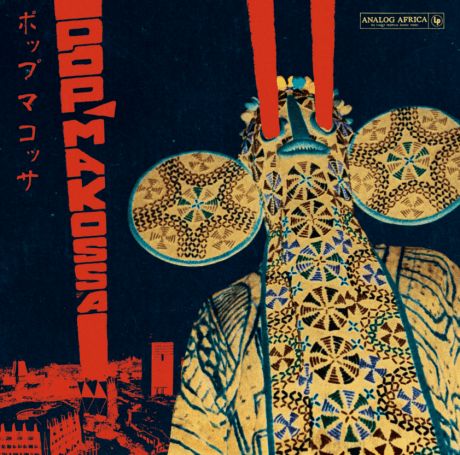
The latest in a tenure adventure of excavating lost treasures from the African continent; Analog Africa’s main man Samy Ben Redjeb once more digs deep, sifting through a daunting mountain-size pile of records and recordings as he draws the spotlight on Cameroon’s Makossa scene of the 70s and 80s.
Originally the traditional rhythm and funeral dance of Cameroon’s Sawa and Essewé peoples, later transformed in the country’s cities as it collided with everything from merengue and rumba to Highlife and disco, Makossa, which means, “to dance” in the Cameroon Douala language, is a highly loose and adaptable style: as you will hear on this twelve-track collection of hits and rarities from the golden era of pop makossa.
Honing in on the period when makossa rubbed-up against funk and disco, this balmy dance beat compilation’s pulse is luminous and fluid and most importantly, funky. This is in major part down to some of the most smooth, bouncing, slick and relaxed but constantly busy of bass lines – Cameroon’s bass players rightly revered as among the best throughout the world – and the constantly shuffling hi-hats, tom rolls and splashing drums.
Every bit as “invasive”(and infectious) as the extended album title suggests, the classy pop massoka sound – once considered the unofficial national sound of Cameroon – is waiting to be rediscovered and let loose once again. In what seems like a recent shift in direction at the Analog Africa label, with the emphasis on the late 70s and 80s – from last year’s Space Echo collection from Cape Verde to reissues of Trinidad & Tobago star Shadow’s Sweet Sweet Dreams and the Benin solo singer Vincent Ahehehinnou’s Best Woman – this latest survey continues to unearth musical treats from the same era, albeit in different geographical settings, yet sharing many of the same production and trends traits. In short, another classy sun-basking exposé of the most sauntering, scintillating African pop from one of the top labels in the field. DV
Vukovar ‘Puritan’ (The Brutalist House)
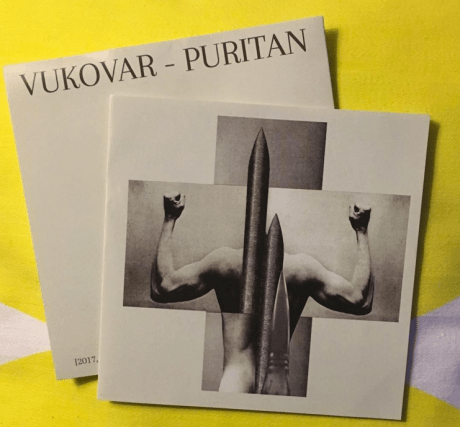
Following in the tradition of their three-syllable sloganist album titles, Vukovar’s fourth LP drums home the Puritan mantra and analogies; a cleansing if you will of the status quo, a year zero, and perhaps also a return to the roots and communal deliverance of protest in music – not, I hope, the ‘puritanical’ steeple hat and buckle shoe wearing bible bashing of zealots, burning heretics at the stake, nor the bloody zeal of so many badly turned-out revolutions that end up creating just as terrible a reign of tyranny. The only fires here are the metaphorical kind; a funeral pyre of mediocrity, a bonfire of vanities, the-bland-leading-the-bland towards a conversion of raw intensity, dangerous, shamanistic performed anarchistic rock’n’roll: well I think that’s the idea.
As the band’s previous album, Fornication showed, Vukovar have at least listened to many of the right bands; released at the start of the year, this amorphous, transmogrified covers style collection featured reconfigured homages to a host of iconic luminaries including David Sylvian, Coil, The Monks, The Birthday Party and Neu!. Cultish in a manner, the band’s influences and manifesto statements of propaganda intent, plus allusions to cultural regicidal and ability to shrink from publicity – even self-sabotage any signs of success or promotion – suggests a band that takes itself very seriously. Yet even with countless references to history’s outsiders, philosophers, discontent mavericks, revolutionaries and demons throughout their previous trio of albums, and the elegiac resignation that shadows them, they waltz sublimely (for a majority of the time), rather than rage in romanticized contempt, as Olympus slowly grumbles.
Between the Gothic skulking and crystalline rays of shared 80s synth new romanticism Vukovar wander transfixed in a nightmare state of both despair and indolent antagonism; with stark lyrics more descriptively visceral than forced down the listener’s throat. Donning the vestiges of the Puritan, the front man, an amalgamation vocally of both Ian Curtis and Bernard Sumner, sets the scene (“I am a sinful man, yet an honest man”) to a backing track of slung low growled bass, Jesus and Mary Chain’s bastardize Spector drum death knells and the miasma threat of Nick Cave’s Bad Seeds on the opening inflicted and gradually ascendant Nietzsche propound Übermensch.
The most complete and best produced encapsulation of Vukovar’s sound and venom yet, balancing both their experimental raw and ritualistic live performances with melancholic post-punk, and even brooding new romanticism pop, Puritan offers a travail through the dirge and gloom of our (end) times with all its sinful and cleansing, often biblical, connotations and language. Though it also often sounds like some kind of personal tortured Nick Cave love requiem, unfolding in the midst of chaos, looking over the edge into the abyss, the heretics taking over the asylum. DV
Y.
Your Old Droog ‘Packs’ (Fat Beats)

“Working a number of hustles and stakes-high dice games, with a penchant for humour and words to the wise on a varied album with no time to waste”. RnV, Mar 17
Your Old Droog’s crowning glory pays the utmost attention to album constructs. Packs is 11 tracks all vying to be the jump-off, featuring skits that help rather than hinder, and guests like Danny Brown and Edan giving the action a hot cameo.
In running his own Grand Theft Auto route through New York (if there’s ever a Baby Driver sequel, or Marvel need a new street hero, surely Droog’s your man), storylines find time to dispense worldly wisdom that you’d be foolish to leave unheeded, and punchlines show that firing from that borderline meh mouth of his, is always smarter than letting off a few from the trigger finger. A 30 minute car chase always in complete control, cool with wrenching the steering wheel off-road before resuming its day-to-day cruising, and whose crucially compact composition makes it a red letter day for the rewind button. The Nas comparisons are now ancient history. MO
Z.
Msafiri Zawose ‘Uhamiaji’ (Soundway Records)
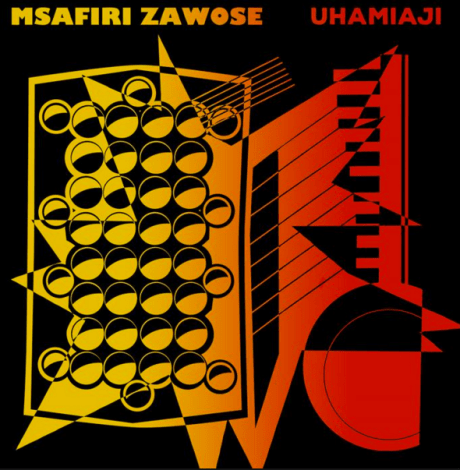
Handing on the baton, so to speak, to another generation, the late great Gogo Tanzanian musician Hukwe Zawose’s equally talented son Msafiri takes up the reigns on his latest album for Soundway Records, Uhamiaji.
From the heartlands of Tanzania, Msafiri in collaboration with the much-respected Santuri platform – enablers and promoters for a much neglected East African music scene – and SoundThread’s Sam Jones has created a vibrant and sauntering, drifting adventure in dub and Afrofuturism jazz from the gogo traditions. Building to a degree on his father’s own 2002 experimental collaboration with ambient electronica producer Michael Brook, on the album Assembly, Msafiri takes his heritage into new and expansive sonic territories whilst intrinsically sounding African.
Buzzy, bright, hypnotic and at times trickling like watery vibes, this amorphous album is an odyssey of the lilting, danceable, meditative and peaceable. A peregrination of mystery, a journey across acoustic and electric frontiers musically and vocally, Uhamiaji is both a most beautiful and imaginative album. DV
Our Choice Albums/EPs of 2017: Part One: Yazz Ahmed to Al Lover Meets Cairo Liberation Front
December 4, 2017
CHOICE ALBUMS/EPS OF 2017 PART ONE: A – L
SELECTION/WORDS: DOMINIC VALVONA & MATT OLIVER

The decision making process:
Continuing to shy away from fatuous rating systems and ‘best of lists’, the Monolith Cocktail endeavors to offer a more eclectic spread of worthy ‘choice’ picks, with no album dominating or holding any particular numbered position – unlike most of our contemporaries lists stuck with the ridiculous task, for example, of explaining why one album is more deserving of their fatuous number 32 spot than another.
Lined up in alphabetical order then, our favourite new and reissued albums and EPs from 2017 are of course considered to be the most interesting, vibrant and dynamic of the year’s releases. But the best? Granted, to make this list you have to have made some sort of impact, but we’d never suggest these entries were categorically the best albums of 2017, even if that might be true. Instead our list is an indicator of our amorphous tastes, rounding up a year in the life of the Monolith Cocktail, and we hope, introducing you to titles and artists/bands that may have dropped below the radar or got lost in the noise of more commercial better promoted releases.
The Context: An Age Of Hysteria. Dominic Valvona
The silent majority to the wrath and often derision of a mouthy, louder, minority carried on defying and surprising the establishment on both sides of the political divide in 2017. The ‘outraged’ of Tunbridge Wells in the letters pages of yore has been replaced with the ‘outraged of social media’, as the year’s unofficial collective anxious end times tagline #losingourshit replaces moderation, distance and analyses: comment before taking it in fully and reading without prejudice.
Context is thrown out the window when the instant gratification of outrage surfaces.
Despite the rolling news miasma of events feeding into the social media vacuum that has now, more or less, become impossible to ignore or leave; despite the encroachment on every facet of our daily lives by technology and the progressive zealots augurs of a complete matrix like synchronization with our gadgets and tech, the fact that people can be bothered to release music on vinyl still, let alone cassette tapes, is heartening, even if the naysayers bemoan that it’s a gimmick, mostly repackaging old material and reissues or an excuse to charge a lot of money for the tactile and physical. The death of everything physical – from books to newspapers, vinyl to CDs – has always been exaggerated; fueled in hope more than actual demand by the camarilla of Silicon Valley.
Still, streaming is fast becoming the most popular model, even though hardly anyone is benefitting – even Spotify, whose business model is particularly hostile towards the artist, is branching out into other industries, including makeup, because though their value is constantly marketed as high, they have failed to make a profit. Soundcloud, running ads now, is constantly teetering on the edge of folding. And the high expectations, glossy launch of the artist love-in Tidal has failed likewise in changing that model, currently languishing way behind its rivals. Bandcamp meanwhile remains the best choice for artists at present, and gives more control to those who use it. Yet, Bandcamp have recently moved into marketing those who frequent its site, writing roundups and blog posts, moving into a promotional critic’s role. How far this will go is anyone’s guess, I’m a little uncomfortable myself with its implications, its method of choosing the worthy from its vast catalogue, and what incentivizes them. How any of these platforms will hold-up going into another uncertain year politically and economically is anyone’s guess, yet despite the constant harping and expectancy of one of these sites and many like them to close, they’ve all managed to limp on regardless.
A teetering stasis between the physical and the digital exists for now. Writing anyone off at this stage would be foolish.
History is a marvelous scholarly pursuit. Yet anything past the year dot of social media’s conception is either revised to fit contemporary fashions or discarded totally. And so a sense of perspective is needed more than ever, especially up against the worrying diplomatic and military developments taking place throughout the Middle East, Europe (both at the very heart of the EU, including Brexit and with the unfolding independence row in Catalonia, but also Russia’s continuing moves and baiting in the Ukraine), Central and South America and Asia.
We also have the march of the robots and automation to consider, the impact of which will take a little time to filter through but will eventually change all our lives, not necessarily for the better – the most repeated mantra that it will only replace the most monotonous, labour intensive and under resourced job roles shtick is evidently untrue, as automation, bots and the programs being designed and rolled out are coming not only for the middle class occupations but all our creative roles too.
Unsurprisingly much of the music that has been released in the past year reflects the ‘fake news’ obsessed, Trumpism, post-postmodern era in which we find ourselves, some brilliantly, others whining and melodramatic – the cyclone of #metoo and the mounting charge sheet of sexual assaults and misdemeanours stacking up against men in, it seems, most industries is live, but yet to filter through yet on record (well there are few exceptions of course). Not many artists offer answers, certainty or solutions though. And some would say that we’re missing the venom, bite, and the rebellious streak that defined the spirit of rock’n’roll, punk and hip-hop.
And so below, the albums and EPs chosen by myself, Matt Oliver and Ayfer Simms reflect the concerns, protestation, lament of the times in which we live: for better or for worse. And not just from the myopic view of the UK, Europe and North American music scenes, but also from Africa, South America, Australasia and Southeast Asia. The Monolith Cocktail has always done its utmost to draw our readers attention to what’s happening outside the Western dominated music industry, and this year’s two-part feature includes artists as diverse as the entrancing Algerian/Tunisian Bargou 08 and Moroccan Gnawa legend Maalem Mahmoud Gania.
So without further ado…here is the first part of this year’s ‘choice albums’ feature. Part two will follow in a week’s time, and our final Quarterly Revue Playlist the week after that.
A.
Yazz Ahmed ‘La Saboteuse’ (Naim Records)
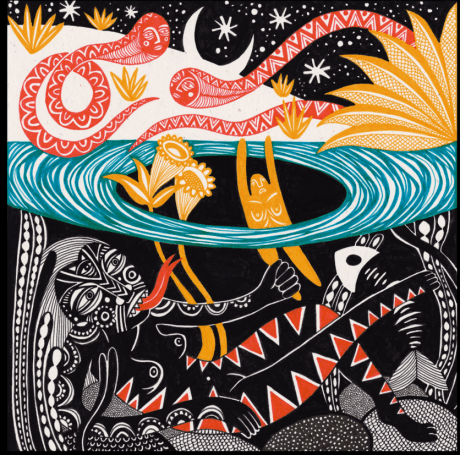
Encapsulating the dreamy enchantment and exotic peregrinations of her Bahrain heritage with the polygenesis jazz scene of her London home, soloist, collaborator and composer extraordinaire Yazz Ahmed takes us on an evocative, transcendental at times, voyage with her new album, La Saboteuse.
Working with everyone from Radiohead – who’s Bloom track is covered by Yazz on this imaginative Arabian suffused suite – to These New Puritans, from Lee ‘Scratch’ Perry to Amel Zen, trumpet virtuoso – though she seems to be proficient with most wind and brass instruments, including the flugelhorn – Yazz steps out to lead her own small troupe on her first solo album since 2011’s Finding My Way Home. With Shabaka Hutchings on bass clarinet and Naadia Sheriff on Fender Rhodes piano, she lingers in an entrancing and often mysterious world of magical brooding vistas and dusky silhouetted sand dunes.
Isolated trumpet lingers and wafting meditations and traverse style vignettes are placed between longer performances of spiritual and Miles Davis sublimity, as Yazz guides us under the starry skies of Arabia and beyond. Dominic Valvona
Tony Allen ‘The Source’ (Bluenote)
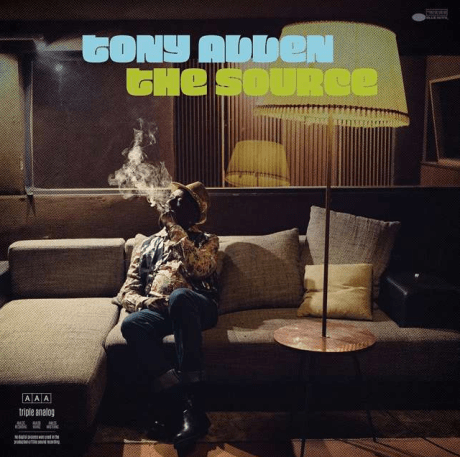
The divine rhythm-provider to Fela Kuti, trustee of the Afrobeat groove, Tony Allen has, and not before time, been recognized for his ability to transcend the style he’s rightly venerated for. Hardly surprising to find him furnishing the jazz tastemakers choice label, Blue Note, with an impressive hybrid album of both – though arguably Afrobeat and jazz have influenced and inspired each other over the decades.
Releasing a four-track homage earlier in the year for the same label, a nod to one of his inspirations, Art Blakey (A Tribute To Art Blakey And The Jazz Messengers), Allen traverses that Blakey swing and the sound of the Savoy label via Lagos and the Parisian joints of the city he has called home for years on the polyrhythm elasticated The Source. Joining him on this enterprise is a band of Paris jazz musicians and the Cameroonian guitarist Indy Dibongue providing the licks, as well as the odd guest spot, including Damon Albarn’s low key contribution to the heralding Kuti funk Cool Cats – a reference no doubt to ‘Sir’ Victor Olaiya’s highlife band of the same name that Allen was hired to play claves for in his early career.
As I say, it has the swing, it has the funk, it has the jazz, and most definitely it returns to the source. Allen bends morphs and pushes those rhythms beyond showboating to produce a remarkable fusion and synergy. DV
Chino Amobi ‘PARADISO’ (UNO)

Looking out from the balcony of a crumbling civilization, reciting a chilling poetic melodramatic transmogrification of Edgar Allan Poe’s The City In The Sea, as tumultuous storms and waves, the sound of seagulls, the crashing of towers fallen into the sea and gargling howls conjure up all manner of Chthonian trepidation, Chino Amobi’s displaced stark and bleak electronic collage soundtrack PARADISO begins as it means to go on.
The Richmond, Virginia artist has dropped his Diamond Black Hearted Boy moniker in favour of his own name for this expansive plunge into the void. And what a dark world it is to discard masks and alter egos in.
A co-founder of the NON collective of African artists, and of the diaspora, Amobi’s remit is focused on ‘using sound as’ the ‘primary media, to articulate the visible and invisible structures that create binaries in society, and in turn distribute power. The exploration of ‘non, prior to the adjective gives intel into the focus of the label, creating sound opposing contemporary canons’.
This translates in the short concatenate serialist style vignettes and passages of worrying trepidation, heavy thumping, bleak, chilling and uncertain twisted minimal electronica, concrete, post punk, Foley sounds and experimental dystopian vistas. A long list of NON collaborators make appearances on this disturbing, at times violent, end times suite, whether it’s through narrated passages, occasional erratic and gauze-y raps or radio show interjections.
A contorted reality awaits, a world without end. Are we circling the void or already in it? Meanwhile crows feed on the flesh, heralded fanfares sound and bestial cyclones blow us off course from Paradise Lost into a sonic chaos. Yet, we’re not so lost as to be totally incapable of redemption; and the ill effects, as the glimmers that do appear allude and Amobi himself has suggested, are reversible. DV
Austra ‘Future Politics’

Imbued by, amongst others, the work of Nick Srnicek and Alex Williams and their manifesto for the end of capitalism tome, Inventing The Future, which calls for and envisions better days for all of us – an escape from the toxic neoliberalism that has defined that last twenty years -, the Canadian synth siren Katie Stelmanis creates a most encapsulating, pining and beautiful glossy synthesizer pop opus on Future Politics.
Written before the Trump victory of 2016 and the spiraling decay of both political and societal moderation that followed in its wake, Stelmanis, under her Austra persona, has inadvertently synchronized her angelical and suffused dreamy pop swooning airs, arias and coos to the anxious end times.
Stelmanis excels, as you will hear for yourselves, in evocative and cool glimmer-of-hope dreamy minimalist electronica pop. She strips away any excess this time around, going further than usual in producing a starker but highly melodious, trance-y and vaporous swooning melodrama fit for the club and heart. DV
B.
Bargou 08 ‘Targ’ (Glitterbeat Records)
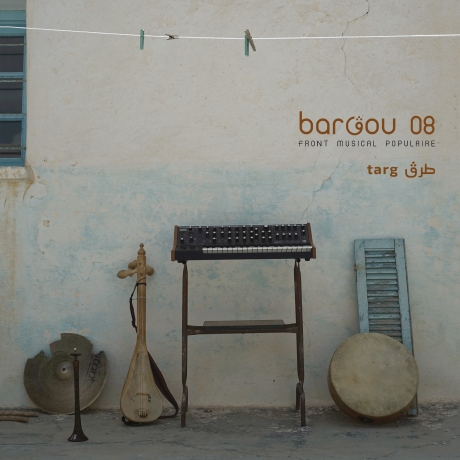
Ahh…the sounds of a dusky reedy gasba flute; the tactile patted and burnished bendir drum; the rustic, earthy strung loutar, and the flowing, soaring scale vocals of the Bargou 08 project’s chief instigator Nidhal Yahyaoui, set an impressive atmosphere in the first couple of minutes of the album’s opening track, Chechel Khater. And that’s all you’d need, except there’s another eight equally evocative and thrilling tracks to hear.
The source of this sound derives from a relatively uncharted region that lies obscured between the mountains of northwest Tunisia and the Algerian border, called the Bargou Valley, which despite its barren isolation, has cultured a unique musical fusion, stretching back hundreds of years. Captivating and magical enough in its ancestral unchanged form, the songs of the valley, sung in the local Targ dialect (a language that is one part Berber, the other Arabic), are given a contemporary jolt that transforms the atavistic paeans, odes and poetry of yore into an intoxicating swirling rapture of electronic North African funk.
Filled with a legacy of turmoil and tension that goes back an aeon the album’s many themes, from describing a lover’s vital attributes on Mamchout to laments of alienation, resonate strongly with the growing unease of events, initiated six years ago by the Arab Spring. Tunisia itself is facing a struggle and teetering on the edge, with no guarantee that certain cultures won’t just disappear or be fragmented in the ensuing melee. Originally setting out to document his Bargou Valley home’s musical heritage before it disappeared, Yahyaoui has successfully and thankfully, with his musical partner, producer and the album’s keyboard player Sofyann Ben Youssef captured this rich mesmeric culture for posterity. And in doing so, produced a masterpiece that will endure. DV
Beans ‘Love Me Tonight’ (Tygr Rawwk Records)

Returning after a short hiatus with a highly prolific fervor, the founding member of the legendary Anti-Pop Consortium leftfield hip-hop troop Beans has made a sort of triple album comeback; putting out a triumvirate of bold, salacious, congruous and provocative records all within a few months of each other. It’s hard to choose but preference dictates that it is the middle of that trio Love Me Tonight that edges it.
A futuristic gleam of eeriness and trepidation hangs over proceedings as Beans travails Cliff Martinez meets Daft Punk club, torture chamber chiming gloom, Super Mario jazz acceleration, Exorcist organ and female led R&B. Changing moods convincingly each and every time, you think you’re getting a Kanye West style dancefloor disco rap album one minute, the next, a dystopian cerebral hip-hop ride into the abyss.
Reading out prose, narratives, scripts and passages like a rap ‘beat poet’ (as well as recording Beans has also released his debut novel, Die Tonight, this year) Beans spit is almost like abstract narration; lyrics broken down into compounds like chemistry and descriptive soliloquy.
In keeping with rap music’s provocative of featuring a roll call of collaborators and guests, Elucid and the Kid Prolific chide in on the hiccup scratching, “that dream is over”, – and perhaps my favourite track of Beans – dark chiming Waterboarding, and the darkwave R&B artist Prince Terrence adding the right soulful yearning tones to the Talons love-in, and pep to the club pumped opener, Apeshit.
Passing lyrical dexterity and abstract thoughts on all the ills currently spinning round in the tumult vortex of 2017, but also carrying on a theme of domestic abuse through a number of tracks, with a running forensic detailed commentary on a father and son crime scene on the disturbing V.X., Beans Love Me Tonight seems like a cry for help, or at least an attempt to make sense of it all. Though at times the lyrics are outright schlock pornographic, and accent hardly plaintive. In a manner it’s a tease, attracting certain condemnation as well as respect. DV
Big Toast & Ill Move Sporadic ‘You Are Not Special’ (Starch Records)

“Blocking today’s culture of aspiration with dollops of common sense; a specialist subject for this year’s UK curriculum that won’t fail you”. RnV, Aug 17
In these troubled times we need assurance and support more than ever. Big Toast and Ill Move Sporadic are not the knights in shining armour the situation requires, rerouting British bulldog spirit by mapping out modern reality more genuine than a million so called keep-it-realists. With one of the great voices to dwarf the mic on his way to becoming his own protest march, Big Toast hammers home the black and white of life ten times over, a dismissive totem who won’t budge for anyone and will battle any life aspect until it’s crying back to its casting couch.
IMS has the cheek to throw in a couple of slow jams to tuck you in when Toast is tucking you up, otherwise coming out swinging from the first bell and landing tooth-loosening one-twos. Anti-motivational speakers who will get your arse in gear, and what the youth of today should be listening to. Matt Oliver
Black Angels ‘Death Song’ (Partisan Records)

If you were looking for a creative musical reaction to Trump and the anxious times we live in then The Black Angels beautiful apocalyptic Death Song must be one of the most anguished and daemonic of responses. The Austin psych-rocking overlords first album in four years was written and recorded during the miasma of the US elections after all: and doesn’t it show!
An emotionally charged despair and anger with moments of catharsis, carried out to a Byzantine flavored soundtrack of esoteric Amon Duul II and Far East Family Band psych, a vortex of 80s Goth inspirations – including The cult and Siouxsie and the Banshees – and the tolling chimes of doom and drone, Death Song is, as the title suggests, a heavy, but most excellent trip.
Brooding romantically in Gothic tragedy as the world continues to turn, undaunted by the prospects of universal uncertainty, The Black Angels spread their wings magnificently on what is, perhaps, one of their best albums yet. The leviathans of the psych-rock scene have learnt much and after a recording hiatus return with something sharper, refined but just as mystical and hallucinatory. DV
The Bordellos ‘Love, Life And Billy Fury’ (Recordiau Prin)
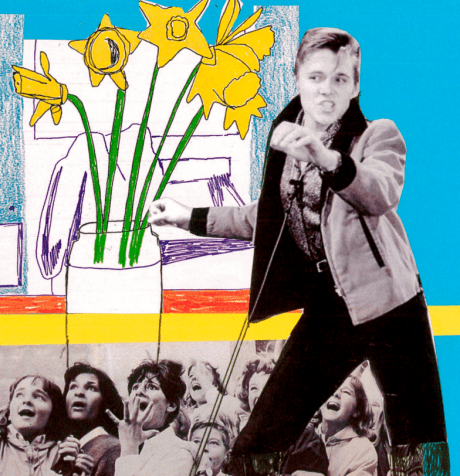
Prolific, if haphazardly, dropping albums upon the unsuspecting, and quite frankly undeserving, public at a whim, St. Helen’s greatest dysfunctional family bring us one of their most ambitious collections of cynical derision and honest yearned anxiety yet: a kind of Joy ‘de vive’ Division.
More or less The Bordellos love songs collection, this latest lo fi affair – that makes even The Fall sound professional – is a raw opening of the heart, and in some cases, the veins. Transmogrifying Spector’s voices of the beehives (The Crystals to The Ronettes), the Spacemen 3, The Cure and, of course, The Velvet Underground, The Bordellos eulogize the nearly man of British rock’n’roll, Billy Fury, craft (perhaps) one of their most beautiful ballads, Starcrossed Radio, and pen a “speeding train” metaphor themed ode to breakups.
Romancing the stoned, the life, loves and failures of rock’n’roll are laid bear and as usual, ignored by an unsympathetic, disinterested public. But despite mostly alluding recognition and validation (because that seems to be all that matters in the social media age: affirmation from the echo-chamber of peers), The Bordellos mope and grind on, producing some of the most important diatribes and, in this case, scuzzy, dirge-y and primal garage band spirited love-pained grievances. DV
Brother Ali ‘All the Beauty in This Whole Life’ (Rhymesayers)

“A triumph of crowd gathering words to the wise meets devil’s advocacy, guaranteeing end of term honours”. RnV. May 17
In these troubled times we need assurance and support more than ever. Comparing two of 2017’s most prominent protesters, Joey Bada$$ (on All Amerikkkan Bada$$) got you to show your colours while keeping it funky. Brother Ali on the other hand was there so a circle could form around him when handing out affirmative rhymes that wouldn’t sound out of a place around a campfire, promising the “type of love you can’t type with your thumbs”.
Without detracting from the former, it’s the latter’s warmth that makes him sound like he’s talking to you one to one, and where a rapt audience will follow, that gets the nod; a soft, grit-speckled delivery assuring everything’s gonna work out even when he’s recounting history lessons to the contrary. To a backdrop of blazing suns starting to dip and winter huddles taking shape thanks to great cleanse and polish from Atmosphere’s Ant Davis, it’s confirmation you should always put faith in Brother Ali’s hands. MO
C.
Dr. Chan ‘Southside Suicides’ (Stolen Body Records)
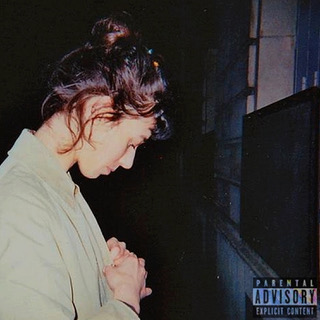
Like some obscure French exchange garage band of students – the kind you’d find if it existed, on a European version of the Teenage Shutdown! compilations – hanging out in the 80s L.A. of plaid shirt and paisley bandana fatigue wearing skater-punks, Dr Chan are an abrasive and coarse mix of renegade petulant inspirations.
Essentially powered by garage rock and all its various manifestations, the group from the south of France hurtle through an up tempo and raging backbeat of The Chocolate Watch Band, The Standells, The Rationales, Black Lips and Detroit Cobras. The difference here is that they also throw in a miscreant Molotov of thrash punk, courtesy of Fidlar, and “death rap” – cue Florida’s $uicideboy$ and their dollar sign typeface indulgence – into the riot on their Southside Suicides protest. It gives the Chan’s brand of garage band mania a different intensity and drive: more screaming in a ball of flames spikiness than tripping psych.
Riled and obviously pissed about the current state of affairs both at home and overseas, Dr Chan’s rage and insolence is in keeping with the primal spirit of rock’n’roll: fun, fun, fun! It’s a blast. DV
Oliver Cherer ‘The Myth Of Violet Meek’ (Wayside & Woodland)

Set in the Forest of Dean, this lamentable concept album (billed as ‘part-fiction’ ‘part fact’) from the man behind Dollboy, Oliver Cherer, weaves the dreamy folkloric story of the tragic protagonist Violet Meek (a play on words of ‘violence’); mauled to death or not by the dancing bears of a visiting circus troupe in the twisted and, musically alluded ominous maybe magical, tree thickened woods. Based we’re told on a vaguely real event that happened in the 1880s, Cherer’s story isn’t just a vintage walk in the past and melodic indictment on the cruelty of Victorian society towards women, but draws parallels with the continuing issues of inequality, chauvinism and mistreatment still prevalent in our own times.
This is an unforgiving unflattering portrayal of England, a nascent nostalgic one with little room for equality and the presence of outsiders, but every bit as revealing about our present. As lovely, often dreamily so, as the music is the 70s pastoral accompaniment is often trembling and quivering, the fiddles distressed and bewitchery, enticing us into a esoteric psychogeography that features a languid brushed backbeat and Morris Dancers like flourish around the maypole on one song, but finds evil in the idyllic scenery on another.
In short, it is a most stunning, ambitious and beautiful minor opus. For those who like their folk and pastoral eerie and esoteric. DV
The Church ‘Man Woman Life Death Infinity’
To infinity and beyond, Australia’s stalwart alternative rock and pop guitar romantics The Church, nearly thirty years since their inception continue to breathily produce quiet masterpieces; continue to experiment and explore new sonic textures. Travelling into the ethereal, the sagacious Man Woman Life Death Infinity is a suffused glide and traverse of air-y vapours and misty mystery; beginning with the opening, soaring minor opus Another Century, sustained throughout, with each song materializing out of the ether.
Reflecting but an unconscious inspiration, The Church’s founding member Steve Kirby calls this album the group’s “water record”. Though all the characteristics of water, trickling chords, cascaded dripping notes and a sense of floating are all correct, this dreamy pop and transient songbook seems to leave the ocean floor and rivers for something more astral. Songs such as Submarine for instance seem imbued with a spirit of the Kosmische. Yet fans of the group’s staple of pop guitar swan songs and subtle psychedelic 80s lovelorn classics will love Before The Deluge and I Don’t Know How I Don’t Know: both of which show traces of that college rock meets garage riffage that arguably inspired or was picked up by The Stone Roses.
Still writing timeless anthems without lazily reverting to the back catalogue, still pushing forward after four decades, The Church can still illuminate and surprise. This, there 26th, album is anything but jaded. If anything it seems that The Church are still very much in the game, and able to balance familiarity with discovery. DV
Clap Your Hands Say Yeah ‘The Tourist’
Inimitably jump-starting a cerebral indie-pop scene in the mid noughties with his unique off-kilter melodies and quivered, yodeled vocals, the fiercely independent, Alec Ounsworth created major ripples with his nom de plume, Clap Your Hands Say Yeah’s self-released debut in 2005.
Ounsworth stumbles and ponders through a “post factual” strewn world of challenging emotions trying to make sense of it all on The Tourist. At times the album title could even be said to act as a metaphor for the artist’s own estranged and removed soul-searching: a tourist in his own country. Despite some sad and profound pathos heavy lyricism, Ounsworth’s “purging” of thoughts is meant to be a cathartic experience. The anxieties of our times can’t help but leak from every other line, yet this album is a fairly warm, jangly surprise package of lolloping and anthemic songs.
Building and soaring to an emotive brightened crescendo of sweetness and yearning on The Vanity Of Trying; contorting and bending guitar textures in a Robert Fripp fashion on the psych-pop gnarled Down (Is Where I Want To Be); and, up close and personal (every breathe audible) to the mic, driving through an 80s nocturnal rock ballad on Better Off, the inimitable Ounsworth careers through a full gamut of moods and chaos in the most natural and energetically purposeful way.
Clocking in at well under the forty minute mark (bands and artists take note) The Tourist is an unlabored, near-perfect melodious album. It says all it needs to and more; free of indulgence, and despite its bombast, sophisticated suffused layering is incredibly lean and brisk. A most enjoyable if poignant experience, this album already sets the benchmark in 2017, and is without doubt one of CYHSY’s best. DV
Full review…
Anna Coogan ‘The Lonely Cry Of Space & Time’
Not the easiest of bedfellows, difficult to love and often (rightly) condemned as indulgent and overblown, but the worlds of rock and opera do occasionally overlap in a congruous union. The unquestionably talented Anna Coogan for instance, mixes the two majestically, using her finely trained 3-octave soprano and classical background to offer fluttering siren-like arias that seem to surreptitiously manifest from, what is, an ever-changing metamorphosis of musical styles, on her latest album, The Lonely Cry Of Space & Time.
Inspired by scientific discoveries, a “childhood listening to Puccini’s La Boheme”, the fateful poet Sylvia Plath, the tumultuous grave mistakes of intervention in the Middle East and, no surprises, the 2016 US elections Coogan’s ambitious suite of songs and instrumental evocations is far from lofty and classical.
Spanning country, Ry Cooder desert meditations, Anna Calvi like trembled sensual emulations, PJ Harvey and even bubbly synth pop, Coogan together with musical collaborator Willie B – offering atmospheric Moog bass line undertones and drums – produces a ‘wave’ fixated lamenting and balletic travail and a surprise highlight of 2017. DV
D.
Daniel Son ‘Remo Gaggi’ (Crate Divizion)
“Toasting the high life and low lives, gangster rap bearing honourable intentions”. RnV, May 17
Canadian slick talker Daniel Son is the front for this, one of many Giallo Point heists that the UK producer ran during 2017. With the authentic mob experience evident in such titles as Flat Tyers, Car Seizures, Strippers Den etc and the kingpin adoring the sleeve, it’s instantly noticeable how dry GP’s noir-ish production is; sharply tailored loops of muted house band jazz that has seen nefarious comings and goings, but are gagged by confidentiality agreements and the fear of loose lips sinking ships.
Potent in what it doesn’t disclose, display one bead of sweat and you’re in trouble. Before you know it Daniel Son – “we the reason that the yacht insurance be going up” – has decked you with a leg sweep before disappearing back into the night. While it’s easy to apply Godfatherly stereotypes to Remo Gaggi, the style of this international union contrasting brash and diligent, compellingly separates the best from the rest. MO
Dope KNife ‘NineteenEightyFour’ (Strange Famous)

“An absolute battering ram of four wheel drive blasting through the boggiest of boom bap. Big Brother would think twice about listening in”. RnV, Feb 17
We’re not trying to discredit Dope KNife by saying that NineteenEightyFour is an almost unfashionable antidote to tween trap, happily, mercilessly fanning the flames of the very 2017 argument of what constitutes real hip-hop between upstarts and originals (and if there’s an argument abound, it’s only right that Sage Francis is tagged in as well). Far from an Orwellian vision yet probably something of a dystopia to some as he walks with an intimidating shadow, DK comes slathered in dirt, ready to punch you in the ear with a splattered larynx.
As a one-man steamroller on beats and rhymes it’s not an exact science, but that’s absolutely fine with us, the battle-hardened, bitter-as-blasé (yet also able to reference the Fresh Prince theme tune) Georgia emcee leaving competition standing (“I can’t help being a damn cynic, this damn planet got a fucking lot of wack in it”). MO
The Doppelgangaz ‘Dopp Hopp’ (Groggy Pack)
“A drop of ‘Dopp Hopp’ a day will keep the haters away; will creep up on the button marked ‘repeat’ until it progresses to heavy rotation”. RnV, Jul 17
Despite the sub-Gothic sleeve looking like the NY pair are auditioning badly for a death metal gig, Dopp Hopp ranks high on this year’s list on the strength of its smoothness alone. “Live by the cloak, die by the cloak” say The Ghastly Duo; but the mystery ends once their views from West Coast low riders, developing a smoky lens that’s intoxicating but never fuggy, embrace the inevitable sunshine.
Also readymade for reminiscing as on E.W.W. and Strong Ankles, the ‘Gangaz have set themselves the relatively easy task of riding the vibes properly, and they oblige with a natty turn of phrase prepared to shift towards the nearest street corner at their leisure. Dopp Hopp is another feather in a cap looking more and more like the crown jewels. Beats and rhymes guarantee return visits to golden-edged climes, where you simply have to rewind the boast that “if ‘Dopp Hopp’ was a beer, it’d be an IPA”. MO
75 Dollar Bill ‘Wood/Metal/Plastic/Pattern/Rhythm/Rock’
(Glitterbeat Records)
This album could have rightly qualified for last year’s feature, but re-launched, repackaged for Glitterbeat Records’ burgeoning new imprint tak:til, 75 Dollar Bill gets another shot: mainly because it slipped under most radars on its maiden voyage in 2016. Now in 2017 with a hopefully wider global release it will shine.
Adhering to Jon Hassell’s “fourth world music” blurring of the division between futurism and tradition the 75 Dollar Bill duo of NYC-based musicians Rick Brown and Che Chen, traverse the psychedelic desert rock and trance of the Maghreb, avant-garde, jazz and even swamp boogie delta blues in a most indolent but listless transient manner on W/M/P/P/R/R. Motivated by an interest in “compound meters” – meter involves the way multiple pulse layers work together to organize music in time; a compound essentially dividing the beat into three equal parts -, but playing in a fashion that feels natural and organic, the follow-up to 2015’s more “forward momentum, stomping and shaking” style Wooden Bag is a nuanced clever exploration of interconnected tonality and tactile responses to a wealth of harmonics and melodies from a pan-global array of influences: from modal jazz to Arabic modes and eastern scales.
What they produce is an often adumbrate, repetitive experience that builds gradually, slowly releasing various tangents of interplay between the principle duo and their extended backing group of friends; traversing genres and moods to evoke new expletory musical spaces. DV
E.
Ester Poly ‘Pique Dame’ (Ikarus Records)
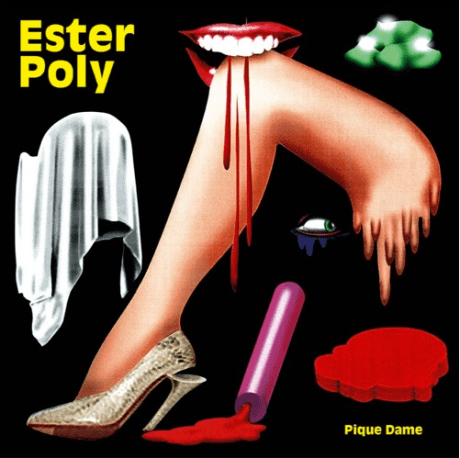
Experimentally rocking the cantons of their Swiss home for a while in their respective separate outfits, Béatrice Graf and Martina Bérther unite as an unholy drum and electric bass alliance under the Ester Poly (a scramble of ‘polyester’ of course) banner.
Pitching generation X(er) Bérther with Y(er) Graf, this rambunctious vehicle for the duo’s feminist protestations and irony is hardly hampered by the limitations of their chosen drum and bass instrumentation, and hardly comparable to any of the many such similar combinations plying their trade. Instead, Ester Poly use a stack of effects and distortion tools to widen their sound spectrum; evoking hints and obvious homages to post-punk, art school, Jazz, doom rock, heavy metal, no wave and Krautrock in the process.
Recorded in more or less one-takes, both combatants facing off against each other in the studio with no headphones or click track, Pique Dame captures not only the lively, hostile and enraged but also the humour (even if it is dark and resigned) of this energetic union. Despite the raging tumults, dynamism and soundclash of ideas, this album is a steady and even showcase of festering ideas and moods. It’s also quite brilliant and encapsulates the ‘pique’ perfectly; arousing, curious and irritated! DV
F.
Faust ‘Fresh Air’ (Bureau B)
Still banging the cement-mixer drum and manning the barricades after forty odd years in the business, the Jean-Hervé Péron and Werner “Zappi” Diermaier duo version of Faust – at its most base drummer/percussionist and bassist-come-tormentor of sound – and their latest protestation Fresh Air is a sort of art-provocateur road trip of the USA, featuring an abundance of locals and internationalist artists and musicians, picked-up on the way through New York, Texas and California: A counter-cultural agitation travail from coast to coast.
Featuring the usual Faust totems and that workmanlike methodology of extracting sounds and evocations from machinery, found objects, debris and the architecture – even Péron’s front door hinges from home make an appearance – Fresh Air is an urgent gasp for relief from the polluted, choked, environment. It’s also a highly convoluted attempt at transforming geometrical forms and abstractions into a sonic score. Three of the tracks on this album take their inspiration from a faux-workshop at the highly regarded California Institute of the Arts. A session that includes the loony 23-second vocal exercise symphony Partitur – defined loosely as “a sort of Dadaist choir, a musique impressionniste” by Péron –; the loose Slits do souk jazz, camel ride Chlorophyll, which features Barbara Manning “sneaking” in word association sketches alongside Zappi’s own strange utterings; and the saxophone squalling, motoring Lights Flicker, which again features Manning, bridging the role of Laurie Anderson and Patti Smith, repeating an agitated mantra over a quasi art-dance backing.
Continuing with their signature agitation, often menacing, call-to-arms whilst also sonically turning the abstract into something audible, Péron and Zappi can still be relied upon to create provocative statements, five decades on from when the original Faust dynamic barraged audiences with the most confrontational and experimental sound ideas. Struggling like the rest of us, but finding a comradely with another generation of artists and musicians, they look for hope in the miasma. DV
Craig Finn ‘We All Want The Same’ (Partisan Records)
Occupying a rich postmodern American literary landscape, channeling such celebrated chroniclers as Bruce Springsteen and Vic Chesnutt, former The Hold Steady, and prior to that Lifter Puller, front man Craig Finn has in more recent years carved out a career as a successful solo artist. In true Springsteen style, though with far less guttural bombast, Finn brings a certain levity and importance to the lives of America’s “ordinary folk”, building a highly erudite diorama to stage the unfolding, and to outsiders, the often inconsequential dramas that are acted out across the States on a daily cycle.
Subtly tapping into the “liberal” creative psyche of America, one that’s still in a state of shock, but also the so-called “blue collar” America that put Trump in the White House, Finn doesn’t so much point fingers or berate as reflect the resignation of a cast on the peripherals of society.
Enriched with the graceful subtle presence and soaring vocal harmonies of Caithlin De Marrais and singer/songwriter Annie Nero, the keys of Sam Kassirer, swaddling and lifting horns maestro Stuart Bogie and longtime contributor from The Hold Steady, guitarist Tad Kubler, the musical backdrop is a mix of rolling Warren Zevon piano psychodrama, bluesy rock’n’roll and Ashbury Park period E Street Band brass. A solid performance and assiduous edition to the modern American songbook, Finn’s third solo album shows a full-bodied, sagacious artist at his pinnacle. DV
G.
Maalem Mahmoud Gania ‘Colour Of The Night’ (Hive Mind Records)
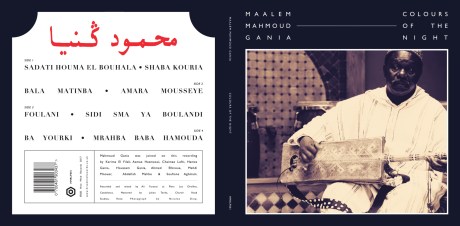
Maalem Mahmoud Gania, the near-exulted star of the Moroccan honed Gnawa – a style of traditional Islamic dance, music and poetry with roots spread across the sub-Saharan crescent of Africa; considered by many to be one of the origins of the “blues” rhythm – and artisan of the genre’s key instrument, the camel-skin covered three-string lute like “guimbri”, released an extensive catalogue of recordings for labels such as Tichkaphone, La Voix El Maaref and Sonya Disques.
Choosing such a revered icon with which to launch their inaugural new imprint Hive Mind Records, the Brighton outfit’s inaugural baptism is the legend’s final studio recording, the afflatus, entrancing Colours Of The Night. What makes it special is that this is the first solo release by the artist outside his native homeland to be released on vinyl.
Stringy, wiry, occasionally a tone or two lower and played like a quasi-bass guitar, Gania’s playing style is raw, deep and always infectious: from blistering solos to slower and lighter ruminating descriptive articulations; this is equally matched by his atavistic soulful voice and the chorus of swooning, venerated female and male voices and harmonies that join him on each track.
Colours Of The Night is a highly hypnotic collection of performances both magical and transcendental, beautifully traversing Arabia and desert blues traditions. DV
Golden Teacher ‘No Luscious Life’
Seeming to just follow wherever the groove takes them, whether it’s ESG uptown/downtown Boho Noho Soho New York, electro Afrobeat, the griot traditions of West Africa or 80s Chicago House, the polygenesis influences of Glasgow’s sonic multilingual Golden Teacher sextet seamlessly entwine to produce the most solid of on-message dance music.
Flexing and limbering to a hip 80s heavy melting pot of sounds and references, the Glasgow troupe move like liquid through a soundtrack of polyrhythms, acid and tight drum presets, oscillations, clean and not so clean futuristic galactic house funk. Not many groups can inaugurate and move between both the Senegalese griot matriarch Aby Ngana Diop and Cabaret Voltaire on the same album, but such is the myriad of musical backgrounds, and they encompass every kind of genre you can think of, of the band members that make up this loose collective, you’re never quite sure what you might hear next.
Though rhythmically and melodically, pumping and sonically doing all the talking for them, there are succinct, atmospheric vocals from Cassie Ojay and Charles Lavenac to give either a certain sway and louche entrancing quality or, as on the opening Afro-funk meets pumping House Sauchiehall Withdrawal – a reference to one of Glasgow’s most, famous and popular main thoroughfares, with everything from the Glasgow School Of Art and CCA art hub of venues and galleries to shopping and nightclubs on its mile and a half long strip – a soulful austerity groundhog day political context: dutifully working the daily slog and for what?!
Moving to Glasgow, from about as far south of the border as you can go, a couple of years ago, one of the first gigs I saw was a sort of impromptu, diy style, performance from the group at The Old Hairdressers in town. Improvised to a degree they caught the wide-eyed excitement and dynamism of an earlier time as if it was fresh and new. A must-see live turn, the group has, unlike so many others before them, captured that free spirit and looseness on record. Yet production is really slick.
The city has always enjoyed a reputation for the eclectic, and Golden Teacher more than most, encapsulate that cross-pollination, borderless approach to absorbing music from across the globe – from The Levant to Compass Point – and making it funky. DV
H.
Happyiness ‘Write-In’ (Moshi Moshi)
Ah…the sound of a band embracing the heartfelt warmth, accentuated dazed melodies and special feel of such 70s fare as Randy Newman, Harry Nilsson and Big Star, Happyness evoke the hazy fond memories and subtle sophistication of these and other complimentary artists on their brilliant album Write In.
The opening Falling Down gambit, with its radiant phaser guitar, conjures up the Scottish indie supremos (and fellow Big Star acolytes) Teenage Fanclub, whilst the pastel-shaded saddened tone of The Reel Starts Again sounds like a lost, ghostly remnant of a George Harrison and Jeff Lynne malady. A touch of the Brighten The Corners era Pavement permeates the band’s weary slacker muffled Uptrend/Style Raids, but by the time we reach the halfway stage of the album the lads are back to thrashing out a languorous grunge-y grind on Bigger Glass Less Full.
Subtle and confident, Write In is a halcyon, beautifully executed album with real depth and personality. Happyness have found their flow with loose but perceptively well-crafted gentle pop songs of a timeless quality: to be played as the “credits roll forever”. DV
Here Are The Young Men And Uncle Peanut ‘This Is Standard Life’
(Musical Bear Records)
Unceremoniously released almost on the sly, though because we are inundated with 100s of releases every week it could be we missed this one, the brilliant cut price, and with far more humour, authenticity and irony than the Sleaford Mods (as if scribbled by David Shrigley) Here Are The Young Men & Uncle Peanut are back with a load more broadsides leveled at life’s most cunty personalities and foibles.
Not so much poetic, not really rap in the true sense of the word either, they make observational snatches of overheard misnomers, condemnations and Estuary patois on the modern toss life of a pissed-stained mattress society. Modern life isn’t so much rubbish as depressingly shite, as the group transmogrify a sort of Daft Punk ‘Teachers’ style litany of great influential bands into a council estate, backroom punk paean to the spirit of punk and good music; safe in the knowledge that Mark E Smith Is Still Doing The Fall, even after a hundred years!
Diatribes on outsourcing, hipsters (the Day The Hipsters Stole Our Look; those penny-farthing riding tossers), lads banter (“yes mate, yes mate, standard”), gentrification, “nobbers” (who are “fucking everywhere!” on the Underworld goes punk song of the same name) and pop stars abound, and there’s even collaborations with Art Brut’s inimitable Eddie Argos (on the and Billie Ray Martin (of S’Express and Electribe 101 fame).
It’s nothing short of fucking brilliant, short and anything but sweet. The use of swearing alone is commendable. A sort of vitriolic, generation X middle-aged series of rants on what we’ve lost, what we are set to lose and what we could do without. DV
I.
Ifriqiyya Électrique ‘Rûwâhîne’ (Glitterbeat Records)

Capturing something quite unique, the collaborative industrial post-punk and avant-garde rock scenes of Europe clash head-on with the descendants of the Hausa slaves atavistic rituals styled group, Ifriqiyya Electrique, create an often unworldly chthonian conjuncture of Sufi trance, spirit possession performance and technology.
A film project and now immersive sonic experience, inspired by the important Banga music traditions and the accommodating, rather than exorcising, of spirits ceremonial wild dances and call and response chanted exaltations of the black communities – originally transported to the region from sub-Saharan Africa – in the oasis towns of southern Tunisia, this astounding meeting of cultures and history is anything but scenic.
Formed in the Djerid Desert, the idea forged by field-recordist and veteran guitarist of the politically-charged Mediterranean punk and “avant-rock” scenes, François Cambuzat, and bassist Gianna Greco – both of which occasionally join forces with that livewire icon of the N.Y. underground, Lydia Lunch, to form the Putan Club -, the Ifriqiyya Electrique spans both continents and time. For their part, Cambuzat and Greco provide the grind, industrial soundscape texturing, sonorous drones and flayed guitars, but mostly, the “electrique”, whilst, offering a dialogue with the spirits and the tradition, Banga musician Ali Chouchen – joined in the live theatre by an expanded cast of fellow voices, krabebs and Tunisian tabla players from the community, which includes Tarek Sultan, Yahia Chouchen and Youssef Ghazala – provides peripheral sounding evocative echoed and esoteric vocals and equally haunting nagharat.
Spiritual conversations transformed and realigned with the machine age turmoil of industrial noise, Arthur Baker style rock and hip-hop production, post-punk and even Teutonic techno, Rûwâhîne is a rambunctious unique force. DV
J.
Jam Baxter ‘Mansion 38’ (High Focus)
“Half cut, whip smart. Ultimate, grungy outlaw hip-hop, putting the trap in trapdoor”. RnV, Mar 17
UK crown rulers High Focus reached new levels of cult when Mansion 38 became that creepy house at the end of the road that may be good for a heart-in-mouth laugh at Halloween, but not somewhere you’d venture to acquire a friendly cup of sugar.
Recorded and produced in Bangkok, Jam Baxter’s quotable cynicism is of an emcee breed that gets caught in a landslide escaping reality in a bid to keep himself amused, but whose focus is actually doing overtime. Seeming nonsense suddenly swoops down at you with lethal intent, most notably on the shrewd consumerist commentary on offer For a Limited Time Only. He of The Gruesome Features squats on Chemo’s production, and where there’s no such thing as a wrong turn, it’s alien, exotic, and worryingly comforting at once, slowly beginning sinkhole formation, and with Dumb demanding you take cover while running in slow-motion. Bugged out, bug-bombed, brilliant. MO
Jehst ‘Billy Green is Dead’ (YNR)

“Showing the sort of word association and plain English penmanship that has long made him the UK’s premier emcee”. RnV, Jun 17
Whether the eponymous subject of Jehst’s sixth full-length is man or myth, a reflection on society or the High Plains Drifter letting his imagination run wild while disclosing clues from his own personal memoirs, you’ll be hanging on Billy Green’s every move, tic and confession.
It’s the album’s lost, tired soul trying to keep the walls from closing in, but then seeming to be at peace with any pending doom. It’s the human element, from the debilitation of an everyday Joe to referencing the Kardashians and when the most important decisions can sometimes boil down to choosing “the Snickers or the Mars, E&J liquor or the six-pack of the Stella Artois”. It’s Jehst’s delivery that even when close to succumbing to heat exhaustion, finds a reserve from deep down that’s of an improbable, impeccable sharpness. It’s the simmering sphere of wax and wane production whose highs and lows run a perfect parallel. ‘Billy Green is Dead’, long live Jehst. MO
Jonwayne ‘Rap Album Two’ (Authors Recording Co)

“Personal struggle both poignant and unapologetic for showing its hand…watch its humble humanity become the choice of the open eared this year”. RnV, Feb 17
Rap Album Two approaches that long-standing hip-hop (and society in general) elephant in the room: the refusal to admit vulnerability. In laying crises on the line, Jonwayne becomes his own therapist and subsequently an outlet for the hesitant and anxious to claim as their own. At his most lo-fi, the times to think become deafening and don’t necessarily mean there’s a clean pathway to redemption.
It would take a kingsized about-turn for Jonwayne to become self-destructive on record, but it’s the legitimacy of his 20/20 vision and the potential of the what-ifs that sit kindly. Particularly on the beautifully dejected/accepting Out of Sight and Afraid of Us, bearing the powerful “look at these people, counting on me when I can’t even count on myself”, you can hear him fighting for his very survival. Also behind the excellent Black Boy Meets World by Danny Watts (who features here), Rap Album Two bridges the gap between cult hero and everyman icon. MO
K.
King Ayisoba ‘1000 Can Die’ (Glitterbeat Records)
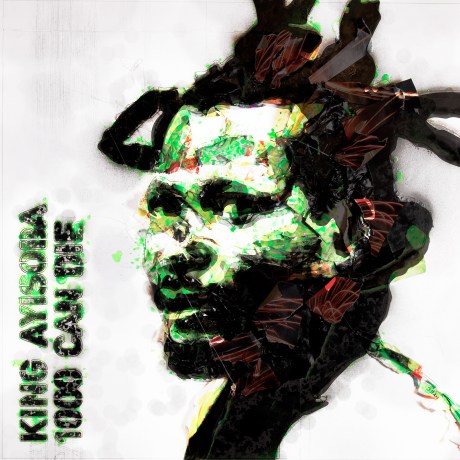
Sounding the klaxon call in defense of his native Ghana, and Africa at large, on his inaugural LP for Glitterbeat Records, the striking, lively King Ayisoba, from the roots up, uses his guttural earthy howl and atavistic kologo lute to great effect in demonstrating not only a raw anger but also a deep love for a much misunderstood continent.
From the very outset Ayisoba and his contributors Wanlov da Kubolar & Big Gad – just two of the many guest appearances on this album – rap, sing and stamp a slogan sentiment on the opening Africa Needs Africa of, “Let’s fight for Africa/Africa needs us.” Covering the North African diaspora, the boat people’s sorry saga, the colonial past and umpteen other issues that more or less shape the image that those observers from outside the continent believe is the only side to Africa – between a misplaced sentimentality and outright ignorance. There is protestation and indictment, but also a lively focus on the positives too; finding solutions through the medium of music and culture.
In-between the fiery, bordering on punk, clatter of guluku, dundun and Djembe drums and rambunctious electronic phasing beats there are more plaintive, yearning stripped-back moments: Grandfather Song, a toiled from the soil of tragedy lament, offers a more intimate knee-jerk from the full-on band sound, and Dapagara is sent off into a sweeping, wafting vista by the Nigerian legend Orlando Julius’ traversing, reedy accentuated saxophone.
Raw from the heart, highly evocative and rebellious, King Ayisoba’s songs of rage and vitality actually offer a kind of hope in the face of adversity. The future of Ghana’s music scene is in good hands at least. DV
L.
L’Orange ‘The Ordinary Man’ (Mello Music Group)
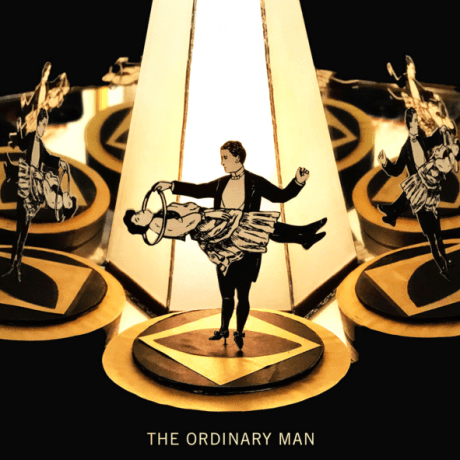
“An evocative performance capturing a concerto producer whose trick-from-sleeve ratio remains visionary”. RnV, Nov 17
Another 12 months of might and magic on Mello Music Group, including must-checks from Oddisee and Mr Lif and Akrobatik as the reconvening Perceptionists. However, it’s the beatsmith with the knack from Nashville building up quite the back catalogue where Tenneseein’ is Tennebelievin’. Loosely based around the sleight-handed history of when illusionists were the rockstars of their day – on premise alone, L’Orange is out by himself – the mostly instrumental The Ordinary Man is described as “vaguely reminiscent of RJD2’s ‘Deadringer’”, where loops slip off straitjackets and straight up gallivant.
Reserving the mic for only a handful of guests after a starry stack of collaborative LPs, L’Orange offers jazziness with a spring in its step, even when its grainy monochrome quality appears to be suffering (perhaps reflecting his own personal health issues). Covered in a sweet patchwork of samples, the headnodding will rock your neck stiff (Cooler than Before soars like the plane on Raekwon’s Criminology), while placing it delicately upon a pillow. MO
Liars ‘TFCF’ (Mute)
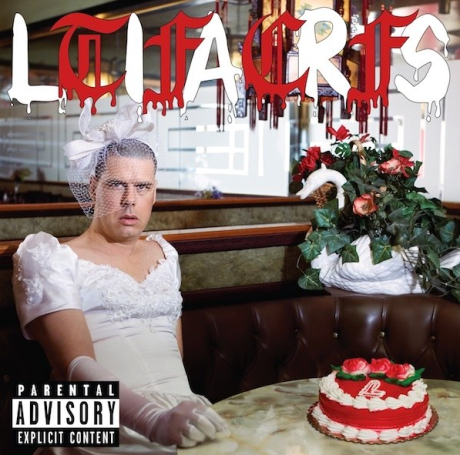
The confusing soundtrack to a musical divorce, the enduring creative partnership behind the Liars, Angus Andrew and Aaron Hemphill, finally fell apart after the release of Mess. Though confounding fans and critics alike on every release, the now streamlined version of the Liars sees Andrew at the helm of, essentially, a one-man band, churning up and lurching through what should by rights be another ‘mess’ of ideas to produce something quite vivid and experimentally sharp.
Chronicling what he felt was akin to a musical marriage, Andrew sitting miserably slumped in a wedding dress, left holding the bouquet on the cover of TFCF (Theme From Crying Fountain) charts a deteriorating relationship, with dysfunctional material – some of which was marked for the next Hemphill & Andrew Liars album – spun into a brilliant sulky, miserable melodrama of electronic, new wave, punk and cerebral pop.
Leaving L.A. for his native home of Australia, a dethatched Andrew transmogrifies those American influences into acoustic, labored drum break lamentable sneers (The Grand Delusional), Love style Mexican psych flare crossed with Medieval courtship (Cliché Suite) and disjointed daggered, The Knack meets Beck, lurches (Cred Woes).
Often resigned, hurt, pranged with pity throughout, it hardly sounds appealing, yet TFCF is full of reinvention, experimentation and lyrically, both dreamily and petulantly opprobrious. DV
Al Lover Meets Cairo Liberation Front ‘Nymphaea Caerulea’ (Hoga Nord)
A meeting of exotic minds, San Francisco producer/remixer Al Lover (The Brian Jonestown Massacre to Goat) and the Tilburg collective Cairo Liberation Front set out on an evocative mesmerizing flight of escapist fantasy on the extended Nymphaea Caerulea EP.
Continuing a partnership with the Hoga Nord label and following up the previous Zodiak Versions, Al and his collaborators merge psychedelic dance music with a spiritually mysterious imagined vision of Egypt: Nymphaea Caerulea being the Latin name for the blue Egyptian lotus, a flower of the Orient.
Over six ‘levels’ they traverse and evoke entrancing Egyptian flute led feverish ritual, mysticism, sweeping desert winds, ancient kingdoms, belly dancing and cyclonic Afro-Futurist beats.
References to a new sonic deliverance, a musical Arab Spring, infuse the six instrumental tracks with a certain levity and theme. But rather than bang the drum of rage and protest in the land of the Pharaohs and old gods, Al and the Cairo Liberators create a moody mysterious, veiled soundtrack fit for the dancefloor. DV
Rapture & Verse: October Edition: Sampa the Great, Prince Po, Nolan the Ninja, Danny Watts…
October 17, 2017
THE ESSENTIAL HIP-HOP REVIEW
WORDS: MATT OLIVER
Singles/EPs
Another day, another dollar – or if you’re Ghostface, a denomination of your own cryptocurrency – and Rapture & Verse starts October by blowing its pumpkin fund on black magic to make featherweight crews levitate. ‘Rhymes to the East’ by Sampa the Great is a great slice of mystical hip-hop forcing you to use your illusion. ‘Heads Up Eyes Open’ is the posture adopted by Talib Kweli, telling the truth with trademark conviction, bringing the “facts versus the facsimile” to a jazzy room-filling mood boost, cross referenced by Rick Ross.
Cloudy slickness from Young RJ goes through the ‘Motion’, drowse drawing from Jay Dee and shaken up with nimble lyrics as his album approaches the throne. ChanHays’ bounce and bubble nibbles at the stone faced Cool Kids on ‘New Bag’, acting as if they’re too cool to be related to the quirky soul chops. Draped in what can only be described as crime strings, Rediculus remixes Recognize Ali’s ‘Season of the Rebel’ and regulates music to watch your step by. Prince Po and Pawz1 bottle ‘The Raw Essence’ and saturate the streets like they’re pouring a lil liquor, and Rez4Real and Skyzoo ride such waves with gusto, boom bap wailer ‘Stick N Move’ defined by Cookin’ Soul’s central spectre tricking and treating the hairs on the backs of necks. Showing off undefeatable finishing moves, Yinka Diz takes the belt of ‘Mr Perfect’ with trap scissoring through the club like a peacocking wrestler asking ‘who do you love?’
Funk speedsters The Allergies challenge Andy Cooper to a remix race on ‘Blast Off’ before sprinting off on ‘You Got Power’, both coming with their own dizzying troupe of high kickers and baton twirlers. Savvy goes axe shredding with his signature flow, because it’s ‘The Only Way I Know’, rock-rap carefully measuring its run-up to the front five rows. Prince Po has been unearthing remixes for new project ‘The Redux’, ranging from MC Paul Barman’s networking exasperations, DOOM, Wordsworth and Chubb Rock navigating urgent chops and changes, and De La Soul easing back.
Albums
Now’s the time of year when albums start creeping up on the blindside of end-of-year assessors. Detroit’s Nolan the Ninja, a dervish occasionally drifting into a Big L twang, comes with the dopest dragon punch. The currency of ‘Yen’ trades on aggressive, eyeballing rhymes to get you bouncing, and beats strategically picking their punches, whether they be soul-powered or sent in to slug it out.
Taking a trip to ‘South City’, livewire London pair Too Many Ts bring power to the people with an electricity hip-hop crowds would be remiss to keep to themselves. A little cheek going a long way and craziness staying certified PG, Leon Rhymes and Standaloft shut down the show arm in arm, doing block party rockin’ (‘Hang Tight’ is something like a phenomenon) and jump-up audience ignition.
Setting you up for the day is one of UK hip-hop’s most reliable. The ever obliging Verb T finds a perfect ally in producer Pitch 92 for ‘Good Evening’, a leisurely, watertight LP that breaks down the day to day – the system, vices, and the people lost to both – and sets your mind at rest as your neck sweats it. With the elite onside as well – Kashmere, Jehst, Ocean Wisdom, Fliptrix – this one can and will go all night long.
In charge of a landscape both dense and set adrift, Upfront rascally rattles through the A-Z on ‘Lettermorphosis’. The cause for mass head down huddles bobbing from beneath hoods, the Bristol rhymer values every syllable when pitching between Ocean Wisdom, Dabbla and Frisco. Summed up in the line “got a grip so tight when I write that my mic hand’s bleeding”, Upfront’ll make you think from underneath the stockpile of verbs you’re buried under. Ded Tebiase has a ‘Landspeed’ record, his means of travel an unapologetic golden age sound – horns, sleighbells and low cuts of bass that can only be listened to in carparks by the pack load – that laces up grit-caked Timbs and wears them like comfy slippers. Kelz, Sir Beans OBE, Ash the Author and Benaddict come along for a ride perfect for the pending autumn-winter changeover.
“’Apocalypse Trent represents Nottingham’s new wave of rap music, or not”: so say the inscrutable VVV crew, lead by Cappo, Juga-Naut and Vandal Savage. A not entirely serious collection of synth loungers, skittering, bare bones club beats, off-the-tops and lyrical mind boggles trained to be dope, that’s not to say there isn’t freshness within. Knowing exactly what’s going on, the thin line between attacking and appreciating the state of play puts the rewind button to work.
The meeting of Slaine and Termanology was always going to be a backstreet brawl. Uncompromising is the word tattooed across ‘Anti-Hero’, duty bound to hammer nails into coffins and treating ciphers like cage matches. To their credit they do add some clear-headed perspectives amidst the constant of calling it as they see it. Bun B, Everlast, Evidence, Psycho Les and lll Bill are amongst those egging them on. In their roles of hammer and sickle, Apathy and OC drum home their own history lesson of ‘Perestroika’. Apathy’s signature going for throats and OC maintaining DITC dignity, conduct subzero hostilities looking to conscript captive audiences, the Soviet shtick ratting out defectors in a second. “Broadcasting for those behind enemy lines”, this is blunt with a capital B.
Calm and dignified in a world hugging the down slope, CunninLynguists present ‘Rose Azuro Njano’; funk and blues taking to the stage and taking responsibility to provide both salvation and eloquent discussion, standing up without sugar-coating it. When pushing ‘Music I Wanna Make’, John Reilly comes up with a respect earner, him and Rediculus on production taking no shortcuts with beats and bars built to stick around.
Thavius Beck’s gravitational pull on ‘Technol OG’ vaporises dancefloors, with dictionaries a close second. Blasting out descrambled sonic challenges to rip glitterballs off their axis in 30 minutes, Beck’s seasoned interstellar highwayman act, available on amazing-looking gold vinyl, grabs the game by the balls as if the whole world is in his hands.
Guided by Jonwayne to the brink and back on the boards, a bluesy wait for psychedelics to take effect, Danny Watts has the ability to take a look around before sounding like one of hip-hop’s coldest. Watts shifting his peripheral vision can be your best friend and worst enemy, as well as his own when cruising and concealing turmoil. Houston’s Watts is a champion, and another threat to the end of year monopoly.
The million dollar Wu-Tang sound gets caught in familiar post-dynasty malaise when Masta Killa asserts ‘Loyalty is Royalty’. Despite a lot of clansmen coming through – Method Man, RZA, GZA, Inspectah Deck, Cappadonna – it’s an album rooted in indifference. Even bigger shrugs are reserved for PMD’s ‘Business Mentality’. Swamped in guests – Ace Brav and RJ da Realst should really be co-headliners – and rugged beats overwhelming the solitary smooth ones, this business lacks legs to move up the ladder. An Erick Sermon appearance on the prescient ‘The Real is Gone’ fails to provide a saving grace on a project playing catch-up.
As angels and demons battle for room on his shoulders, Denzil Porter details the ‘Semantics of Mr Porter’ with Kendrick Lamar/Big Sean sensibilities, digitally precise roughhousing, mainstream accessibility with beats and hooks to hang onto, and developed narratives you might not expect after blustery opening exchanges. A new volume of ‘The Good Book’ from the collar-poppin’ Alchemst & Budgie turns the booth into a confessional for a lengthy second sermon, unofficially defined by the former reaching out to the recognised underground and the latter introducing a flock to follow up on. Flipping religious recordings and soundbites into an immaculately packaged soul-soaked baptism, Royce 5’9″, Westside Gunn & Conway, Meyhem Lauren, Durag Dynasty, Your Old Droog, Evidence and Jeremiah Jae are part of the mass chewing on titbits and spreading thoughts to take home.
Mixtapes
Your first stop for a commemorative throwdown, Hellee Hooper gives it some golden age largesse with Diamond D’s ‘Stunts, Blunts and Hip-Hop’ given a 25-year salute. Comprised of the usual congratulatory handshake of source material, samples and remixes, you’ll struggle to find a funkier 55 minutes this year.
Nowt on telly? Try Skipp Whitman’s shopping channel, Chairman Maf’s anarchist cookbook and Murs rewriting the classics.
Rapture & Verse: August: Stig Of The Dump, DOOM, Kutmah…
August 15, 2017
HIP-HOP REVUE
WORDS: MATT OLIVER
Singles/EPs
Straight into it this month, and re-emerging as per the ID, Nomad rides five tracks produced by the Richardson Brothers – dusty, but crisp with it – with a moth-eaten mic and the flow of someone who’s been up all night. No fear though, ‘Preludes’ has the canniness that has long defined the slumbering SFDB imprint. Coming off the top turnbuckle, Legion of Goon luminaries Stig of the Dump and Stu the Don hold a B-boy stance until godly status prevails, ‘YKWTI’ shellacking you with North East show and prove. Less delicacy, more slow boiler with a kick below the tongue, ‘Sushi’ has Bisk, Milkavelli, Salar and Lee Scott huddling against the elements and keeping it low key.
Booda French skulks like a sensei pickpocket on the equally discreet ‘Masterpiece’: give him an inch and he’ll sneak a mile. Champions of ‘The Working Class’, The Other Guys ease back with a batch of instrumentals handing you a cold beer at the end of a day’s toil, with a shot of something stronger to go with it. With expert reminiscing from no less sages than Masta Ace and Large Professor, Son of Sam’s ‘Come a Long Way’ is a heartening, butter smooth breakaway doing big things for the imminent album. As Diamond D waits on him, you can tell culinary mic crusher Dillon has been dying to dine out on the line “I had to link up with Diggin’ In The Crates/the homie Dillon keeps the fork diggin’ in the plates”. Notes for ‘Feast’: earthy, with a twang. Drip feeding you fresh dirt, DOOM’s achingly intense ‘Negus’ with Sean Price is the dark alley you shouldn’t pass through after dark.
Albums
Selfie takers. Broken Britain contributors. Portuguese football managers (maybe). ‘You Are Not Special’ is the call of the towering Big Toast and Ill Move Sporadic’s slap-up studio skills, blocking today’s culture of aspiration with dollops of common sense. Match a highly strung yet heavyweight flow and fast bowler-beats targeting your unguarded bonce with a touch of sidespin, and this is reality brought down to earth with a major bump. A specialist subject for this year’s UK curriculum that won’t fail you.
Getting his kingpin on where power and respect can never be overstated, Da Flyy Hooligan goes for his on ‘S.C.U.M.’, brusquely piling his platinum plate high with producer Agor keeping him decked out in fine and furious funk styles. The iron braided West Londoner preaches designer danger, a wardrobe ready for war and the trigger temper and snap of a mantrap, momentarily checked by a tribute to Sean Price.
Ideas about newfound maturity have been bandied about upon the release of Tyler The Creator’s ‘Flower Boy’. If anything he’s making his character more complex, and probably even more polarising when lavish funk and soul musicianship beds down the articulate thoughts of an at-odds soul inviting in Frank Ocean, Estelle, Jaden Smith and Lil Wayne. The fact he’s still able to rip a few new ones without a second thought and turn over Dee-lite’s greatest hit, suggests the nous of his operations has gone up a few gears.
The psychedelic experience shattering the rainbow and ransacking the pot of gold at the end of it, Kutmah’s dense layering exacts ‘The Revenge of Black Belly Button!’ Though unwieldy, his instrumental curveballs are fascinating, electronic hip-hop shapeshifts and fly-by-night sketches-made-epic finding some sort of groove, and the right accompaniment when needs be in Holy Smoke, Jonwayne, N8noface and Chris P Cuts. Cornering the B-Boy/android/mad scientist market, Kutmah’s ‘TROBB’ crash-lands hip-hop and gets high off the fumes before simmering down.
Blues, soul, boom bap: Illinformed’s instrumental ‘The Age of Ignorance’ swaggers on through with lots of character, whether that be honourable old timer or the brashly pimpish, from well executed loop work. Don’t take Mic Legg’s ‘Chill Yard’ as seen (or heard); a beat tape full of finger-tapping pleasantness and loop doodles turned steady rockers, with a nice slice of subversion undercutting your comfort zone as the chill develops into an icepick. Aver’s ‘Die Berlin Dateien’ is another classy lounger pouncing on any whiff of danger, like putting your feet up with a pistol still stashed in your sock: a wind down zone for those playing with flick knives like a fidget spinner. Throwing in a lot of funk and whatever radio reception he can get on his road trip aiming to beat the setting of the sun, Don Leisure as the mysterious convoy leader ‘Shaboo’ pieces together a treasure map full of prize breaks and tantalising titbits. Bin the sat-nav and up the volume. Laidback and steaming the creases out of your day, Jermiside cuts the mic and goes resplendently horizontal as he takes ‘A Moment Between Places’.
‘Step Up to Get Your Rep Up’: a cast-iron call out from home bankers Heavy Links, El Tel, Habitat and Donnie Propa pumping out pure Lincolnshire firepower and reliably safeguarding hip-hop’s essentials with the best of British. With runaway chatter reminiscent of a certain bottle blond motormouth in his prime, Rick Fury as the don ‘Lego Scarface’ reps Newcastle at length with entertaining, can’t-sit-still facts and fuck-yous. “Broke since Donovan rocked that dreamcoat”, he’s backed by 80s patron DJ A.D.S., including a memorable meddling in the affairs of Foreigner. Ho’way the lad.
Value for money comes as standard from Tanya Morgan’s ‘YGWY$4 (You Get What You Pay For)’. Donwill and VonPea peak with a slick ease of unifying, buxom funk, pulling the (purse) strings of the best outdoor shindig you’ve ever attended, including skits that keep the album moving and spirits high. A party album also acting as the responsible adult, giving you the benefit of experience while mixing it with the in-crowd. We need a ‘Resolution’, and we’ve also long needed Mr Lif and Akrobatik to reunite as The Perceptionists. Though missing DJ Fakts One, it’s the perfect two-man blend of street and book knowledge, keeping the faith, mic swaps and the narrative style that served ‘Black Dialogue’ so well, and knowing when to attack (including some surprise trap offensives) and when to defend.
Once Danny Lover has had you over for ‘The Church Restaurant Official Soundtrack’, sucker punching you into a beanbag that continues to sag from under you, imagine if trap came loaded with an actual trapdoor; and instead of the bass booming from the boot, it was more a primal, tribal heartbeat of an unknown force or being. That’s kind of the deal with ZGTO – Shigeto and ZelooperZ – who shun the club for ‘A Piece of the Geto’. The slang stays the same, but when entwined with the inhospitable below the underground, a strange voodoo is summoned as sharp and threatening as trap’s regular 808 players. Uncommon Nasa’s ‘Written at Night’ invokes the fire in which independent rap burned in its late 90s heyday, beats and rhymes fired at awkward angles but grittily entrenched in the underground as it clocks up the light years. Guilty Simpson, Mike Ladd and King Kashmere are on hand with extra sonic screwdrivers.
Raydar Ellis is back with a ‘Bang!’, the ‘Late Pass’ provider dropping eight engaging tracks going straight up and broadening out as a source of infotainment until you’re sticking ‘em up in appreciation. Playful, introspective and tightly coiled all at once, Open Mike Eagle’s ‘Brick Body Kids Still Daydream’ has “been woke so long I might need to take a nap”, provides the hard man anthem of the year, and concludes with supreme condemnation: all while maintaining his rightful place in the line of ghetto superheroes.
Mixtapes
For those itching to get their Halloween decorations up, Onry Ozzborn has got your back for when the gates of hell swing open. ‘Black Phillip’ is only 35 minutes long, but that’s more than enough time for your speakers to pay attention as if guided by poltergeist power. The sound of looking at the sun for too long, Ireland trap tranquilizers NEOMADiC revel in summer’s last moments with ‘The NEOMADiC Tape’: boys in their own bubble personalising the snooze button experience.
Tune into Rap Noir’s weather forecast, understated negotiating from Action Bronson, and Dave East telling you to pace yourself.
ALBUM REVIEW
WORDS: MATT OLIVER

Danny Lover ‘The Church Restaurant Official Soundtrack’
Blah Records, 11th August 2017
Anyone who’s read past Rapture & Verse columns won’t have failed to notice the recurring themes of the seedy and illicit from Bisk, Sam Zircon, Morriarchi, Lee Scott and Stinkin Slumrock that have put Blah Records on the map of UK hip-hop’s nether regions. Almost reinventing, or inverting, the concept of chopped and screwed (an infamous, Southern United States technique of slowing down albums until the source material becomes an almost out of body experience), their dazed means of sloth-hop, teetering against the tide in a substance-addled state of straitjacketed comfort, is distinctive the moment it feels like setting up shop underneath the flesh.
So where does Ontario’s Danny Lover fit into all this?
Like Blah’s aforementioned wigged out lieutenants, Lover is a scabrous vessel for stuffing up the ether, building up a lo-fi back catalogue (‘Career Suicide’ – described by R&V as “like a head-on smash in slo-mo” – ‘Cigarette Kisses, Death Wishes’, ‘My Best Friends Keep Dying’ – on paper, decorating Lover with scythe and cowl), groping at stooping beats and going way past an attack of the munchies. Don’t think because he’s more withdrawn/broken than some of his label mates, that he’s any less dialed in or aware of how to pimp the vibe into something gratifyingly gratuitous.

Reducing all the glamour from hip-hop’s ostentatious ways, Lover may be treading water, but The Church Restaurant… goes beyond the blasé. Production from his go-to guy, the late 19 Thou$and, is a distillation of once was: not stark or even empty as you might anticipate, its business done in the dying embers. ‘Secrets’ has all the brags of a flosser: the fact eyes are rolling beyond the skull adds a different, unsettling dimension of hip-hop showmanship. The IDGAF persona is in its own way, harder to rationalise (as in you must be an easier target when you’re of a flaky-sounding mind state), and even harder to combat as an opponent when time either stands still or travels backwards. In the battle of bark versus bite, once Lover’s gummy venom soaks in, slow surrender becomes inexplicably inevitable.
‘Skinny Pimp’ lolls pleasantly in a soft focus string loop, but the strung out vibe both conveys and emits paralysis. On ‘Food’ an airy, fading flashback, Lover sounds like he’s doing his best to cut through with rhymer’s authority: the fact he’s unsuccessful, wanting to leap into the front row but finding his feet stuck, is part of the album’s temptation, leaving it to MiCon and Mos Pants to pep things up akin to scoffing on forbidden fruit. A touch of emotional fragility on ‘Rose Garden’ adds and asks more questions of the personality presumed too baked to tap into anything private, and ‘Peel Street High’ is the benchmark for the album’s wonderland offering what-could-have-been; washed out swagger undercut with bass, lapsed boom bap and debilitation.
A live translation must be 99% out of the question, and you’re not getting quotable by the barrel either. Because of the ironic, laconic delivery coming desert-dry, you may happen upon a one-liner that reaches catchphrase/t-shirt slogan status: Lee Scott’s trademark Scouse sneer alongside Salar on ‘Rare Nirvana’, smears a can’t-be-arsed guitar loop thinking it’s still gonna make it as a rock star. If birds are already circling your head and pink elephants are regularly at eye level, curiosity will get the better of you as the cult of ‘The Church…’ compels you.
THE ESSENTIAL HIP-HOP REVIEW
WORDS: MATT OLIVER
Prodigy, Mobb Deep, 1974-2017
The clickbait-certified Rapture & Verse has been keeping its cool by ducking into reissues of old skool watersheds from Boogie Down Productions, Special Ed, Run DMC, Del tha Funkee Homosapien and Souls of Mischief, and noting Main Source are on their way to London for a 25th anniversary ‘Breakin Atoms’ tour. Everywhere else, the heat has been melting minds and addling brains, what with 90s legends found sporting socialite attire, the honourable Ugly God cornering a battle rap niche by slagging himself off, Chance the Rapper in a supposed trademark dispute with a pastry chain, and of course Jay-Z releasing a new album, belatedly working out what to do when life gives you lemons.
Singles/EPs
Confucius MC and Mr Brown are all about ‘The Artform’, a straight up seven track EP radiating heat from an undisclosed location. Rhymes retort with polar-level poise to beats turning the screw, and both send the temperature rising until it becomes an interrogation tactic. In ‘The Garden of Eden’, Benaddict stays true, a leisurely stroll allowing his thoughts to roam freely and find their target with finely detailed accuracy. ‘I Arrived Late’ announces Verb T, but you’ll forgive his tardiness when the chipper yet advisory rhymes and bubbly organ-pushed beats of Pitch 92 get you out your seat. Not quite a fascist regime and requiring little instruction, Too Many T’s’ ‘God Save the T’s’ bounces on through, mics attached to wrecking ball elastic.
To an itchy, tripped out beat from BBS, Lost Identity cuts through the haze on ‘Plaque’, spitting hard and unperturbed by the shadows inching up towards him. New York-Yorkshire monopoly Madison Washington show the power of non-conformity on the ‘Code Switchin’ EP, a half dozen shake up where Malik Ameer and thatmanmonkz keep their cool when mixing rolling funk and flows, and creating scenes with arch alchemy. Spectacular Diagnostics gets close to the edge, so don’t push him – ‘Rambo Bars’ a big boom bap deal thrashed out by Conway the Machine, Chris Crack and Nolan the Ninja. With Apollo Brown barely cueing a fusty, unsteady piano loop, Planet Asia and Willie the Kid reveal ‘Dalai Lama Slang’ to put the peace firmly in its place.
Four tracks from DJ Shadow, including his recent collaboration with Nas and a typically steamin’ performance from Danny Brown, bugged out electro boom bap and cinematic cyber engineering, make ‘The Mountain Has Fallen’ an EP with plenty of chameleon behaviour. Simultaneously spacious and claustrophobic, Grieves precedes a new LP by trying to hold back encroaching walls on the eerily gracious ‘RX’. Crowning the ‘Samurai Killa’, Big Bob reading up on how to create a dynasty involving nunchucks and ancient scriptures is enough for five hungry combatants to vie for the belt. John Reilly is a sure shot smoothly cocking back when ‘High Noon’ comes around: simple as.
Albums
Fresh from his fine Frankenstein project fusing Nas and Madlib, David Begun introduces Eminem and Pete Rock to his bootleg laboratory. Suffice to say it’s unsettling to hear the cartoon capers and savage psychosis of Slim Shady smoothed out by The Chocolate Boy Wonder, but that’s the essence of ‘Marshall and The Soul Brother’ for you. Fresh from redressing ‘The Symphony’, the posse cut’s posse cut now found wearing daisy chains, maverick soundsmith Will C sets out to ‘Bless the Beats & Children’ with his hip-hop hot take on The Carpenters. Tastefully calibrated instrumentalism is the pleasing result to get all cynics onside.
For the hardcore head nod faction, Tone Chop and Frost Gamble make a good case for the fact ‘Respect is Earned Not Given’. New York honour is defended through raspy chew ups and spit outs, unequivocal titles such as ‘Get Beat Down’, ‘Walk the Walk’ and Guillotine Chop’, and producer process that cools down and wades in once his vocalist finds his lane. Chop and Gamble land their punches as a safe bet. Though a different beast from his old man, the one and only Big Punisher, the ‘Delorean’-riding Chris Rivers is super lyrical, coming on hardcore while still leaving plenty of room for the clubs and the ladies. Although prey to the age old quandary of attempting to nail every modern hip-hop convention, Rivers’ photo is never found fading, a good quality, next generation endorsement of capital punishment.
A drop of ‘Dopp Hopp’ a day will keep the haters away, The Doppelgangaz keeping you on your toes despite placing their worth on the cusp of a spiralized trip. The lyrical NY jabs and way of thinking from beneath superhero/clergy robes will have this creep up on the button marked ‘repeat’ until it progresses to heavy rotation. By design or otherwise, everything feels summery, completed by the G-funk themes of ‘Roll Flee’ and ‘Beak Wet’.
A free download for a limited time celebrating 30 years of shutting ‘em down, Public Enemy’s ‘Nothing is Quick in the Desert’ keeps fire in its belly, can still shred an axe and dismissively fires off messages that still can’t be argued with (particularly with social media giving them a whole new profile to blast at). Street struck off some back alley black magic are LMNO and Twiz the Beatpro. Either riding the bull into the red rag as ‘Cohorts’ or found twitching under the influence of the illusionary, there’s an unseen pull making it an album that offers more than just tough-tipped, rough lipped beats and rhymes.
More smooth criminal masterminding from that man Giallo Point, this time with the sure and spiky Smoovth leading operations, makes ‘Medellin’ a mob merry-go-round reaching out to a varied cast (Sonny Jim, Vinnie Paz but two on call) of cold hearts applying heat. Actually quite a relaxed listen, transporting you to a world of mythological opulence while secretly measuring you for concrete shoes. Vince Staples’ negotiation of fresh house, garage and twists on trap veers between foot down force and playing suitably vacant for the club’s benefit. With the miscellany of ‘Big Fish Theory’, come for the rebel, stay for the rhythms.
Mixtapes
A daunting reconstruction of peace out of crumpled MPCs and repurposed trap, Clams Casino’s ‘4’ gets industrially scalded hip-hop beats to smash into post-dubstep introspection, stirring a beast raging inside abstract beauty, and making you nod into a complex but satisfying headspace. Though it’s long understood there are six million ways to die, Royce da 5’9” has got the next six million trademarked with the incredible show & prove of ‘The Bar Exam 4’, destroying vernacular establishment for 28 tracks and 90 minutes at a frankly preposterous level of breaking mics down to their very last compound.
Come and watch Datkid turn the world inside out, a face-off between Tyler and A$AP Rocky, and The Mouse Outfit’s latest uprising.

