A world of sonic/musical discoveries reviewed by Dominic Valvona. All entries in alphabetical order.

Le Grand Couturier ‘S-T’
(Un Je-ne-sais-quoi) 7th November 2025
The hula limbo swinging hoop of French-Polynesia is both languidly and more wildly reimagined, transported and pulled in various directions by the Le Grand Couturier trio of Rachel Langlais (keyboards and vocals), Jean-François Riffaud (composition, steel guitar and sharing vocals) and Clément Vercelletto (drums, synths).
Newly formed for the explorative Un Je-ne-sais-quoi label, with two of that group already familiar names to Monolith Cocktail readers – I reviewed Rachel’s solo avant-garde, textural and tactile prepared piano suites album Dothe for the same label back in 2021, and Clément’s nightjar imbued experimental L’ engoulevant album for the label at the start of this year -, this ensemble of widely diverse experiences draws upon a rich soundscape of tradition and the psychedelic to weave a sort of part-beckoning and part-chaotic Hawaiian homage. Cross-referencing a multitude of sources, some form their own projects, the trio’s debut album is an altogether more mirage and hallucinatory vision of Island life, drawn into a modern world of electrical-charged, felt-like rippled interreferences and coarser transmissions. Whilst sauntering and swaying to a familiar Hawaiian rhythm and melody and the sound of the steel guitar, there’s a constant funnelling and layering of what sounds at times like scraps from CAN’s ‘Unfinished’ and ‘E.F.S.’ series, The Beatles Magical Mystery Tour funfair organ and psych trippy reversals, and musique concrete.
If you loved Pete Fowler’s Monsterism Island curated compilations then you will easily pick out traces of Les Baxter, White Noise, The United States of America (especially Rachels’s ether emergent distant voice on ‘Maneki Neko’, a reference to the lucky “beckoning cat” figurine), The West Coast Pop Art Experimental Band and Martin Denny. But maybe surprised to hear the delightful South Seas motions and lilt of Makoto Kubota & The Sunset Gang and the wavey bendy sounds of bluegrass and country: reimagined by Moebius & Plank, Charlie Megira and Bailey’s Nervous Kats. But what’s this approaching from the sea, paddling through the waves on an outrigger canoe of old, but Dick Dale and The Bel-Airs thumbing a lift in the company of Sonido Galle Negro.
A sanctuary come portal to other worlds, this tropical magical hideaway proves fertile ground for musical and sonic manipulation, repurpose. Hawaiian phrases – ‘I Ku’u Wa Li’i Li’i’ or “my childhood days” for example – and typography, the vibe of the place, its blues and more fragrant wilts, marooned lethargy is not so much guarded or restored as woven into something beguiling, strange, serenading, sometimes distorted and often swimmingly lunar. There’s undoubtedly some layer of post-colonial revisionism, of ownership and the anthesis of European lens ethnography, but the trio’s debut album is just a very lovely, magical thing of Polynesia fantasy. It will be interesting to hear more.
Imperial Motors ‘Charlie Don’t Surf’
Released 21st October 2025
States/countries that claim to have adopted the Marxist doctrine have, historically, usually enforced it with a totalitarian fist, forcing its artists to propagate the authoritarian propaganda of its own choosing. We can forgive the exuberance and contemporary rage of the young, possibly knowing that they will have less, pay more, and lose many of their freedoms in the process: making them a doomed generation depending on your pessimism scale. Marxism has its utopian promises: a fairness of distribution, power to the proletarian and all that – and I’m sure Marx, to paraphrase, said that the worker can never be happy working for someone else: though self-employment is no picnic. But like every idea, in reality fails to grasp our innate individualism, our differences. But as I already opened with, artists in such climates have usually been just as threatened, locked up and sent to Siberia for daring to stray from the one-party line.
Anyway, I’m only banging on about this because the latest agit-post-punk-disco-indie band to emerge from the Brooklyn scene, Imperial Motors, have mentioned it in their email to me. Or at least, as an influence (and damn fine one to have) they cite the Gang Of Four’s version of sonic Marxist rhetoric and fire. Whilst also, it must be stated, they use the term satirical, they wish to employ their political polemics and protestations via music, rather than throw real Molotov’s from the barricades. And yet, despite the rightful outrage, disillusion and riled injustices of our present times the quartet’s debut EP is actually very melodic, tuneful, disarming in parts and full of DFA Records and post-punk disco synth lines and beats: think early LCD Sound System and the anarchic energy and maximalist approach of such contemporary groups as Crack Cloud and Squid matched by Martin Dupont, the Pop Group and Boots For Dancing. And that’s only half the story.
But let’s introduce the band first. We have Liam O’Toole on vocals and guitar, Josh Cukier on drums and also vocals, Ben Biber on synth/keys, and again, sharing vocals, and Andrew Graces on guitar. This core has expanded for the proposes of the EP’s second half pairing of tracks, ‘Sonya’ and ‘Infinite Money Glitch’, bringing in the climatic ariel bending intensity of violists Ryan Anderson and Jarrod Ajhar and violinist Lila Lifton on the latter, and the accompanying vocals of Hely Morales on the former.
Referencing, so it says in the email, a level from Call of Duty but obviously a cultural throwback to Sandinista era The Clash via its original immortal line in Apocalypse Now – spoken by Robert Duvall’s character, Lieutenant Colonel William “Bill” Kilgore -, Charlie Can’t Surf is twisted by the toxins in the waters. Each track is a battle between holding it together and falling apart in a world torn asunder, starting with the brilliant opener ‘Bartender’, which pits our protagonist bar fly spiralling into a pit of doubt and reactionary disillusion by the transactional culture that leave us all numbed, isolated and without any sincerity. Lurching like a derailed David Byrne or even Scary Monsters period Bowie, and even an Eno, between eyeing up the unrequited bartender and spinning into bar stool bursts of preachy frustration; a statement on the poisoned waters and our inability to fish without contamination and erosion of our closeness to nature. It sounds like a slice of Scottish 80s post-punk via XTC and has a great chorus that stays with you.
‘Freeloader’ sees a slight change in direction; still riled-up, and almost unhinged in places, but now evoking signs of ‘Helicopter’ era Bloc Party and The Futureheads. The band attempt to find the tangible, connective in a world of synthetic vacuous exchanges; turning on neighbours like a passionately agitated Talking Heads in suburbia. The EP’s most surprising turn is ‘Sonya’, a damaged love song, about to be squashed by the collapse of the Artic shelf. Their most synth-pop-orientated track is disarming with its subject: climate change apocalypse. The lovelorn glaciologists at the centre of this sorry doomed love explosion of euphoric crescendo art-pop contemplate a sort of Romeo & Juliet suicide in the shadow of ecological destruction.
No one could put it better in trying to explain the finale, ‘Infinite Money Glitch’ than the band themselves: I would have missed most of this contextualised layering. The “uncanny valley is inverted: it’s not machines imitating humans, but humans running on cold, mechanical instinct. Screeching guitar, off-kilter drums, and an asymmetrical bass groove lay the black midi-like foundation as various speakers retell colonial anecdotes through glib, filtered vocals as if automated by their own apathy. “Mortgage rates [are] saved on the mass graves,” sings a real estate agent. “Seafront plots if you can spot some, never mind the bones, the flotsam.” The various narrators then become united by the refrain “help us make a difference / help us make them different, combining into one single voice, one single organism — the US colonial project of subjugation, domination, and profit. In the name of corporate growth, annihilation is just collateral.” You all got that? Good. It’s a very nice closer actually, heavenly gilded with drama and showing signs of all the influences I’ve already mentioned plus Faith No More, PONS and Black Medi. Capitalism is a bitch. Apathy the curse. And yet there is a certain fantastical element, and the sense of something rising up out of the gloom.
An impressive EP that offers much hope and anticipation for the album; a burgeoning band with much potential, caught between dancing and riling at the system.
Shoko Nagai ‘Forbidden Flowers’
(Infrequent Seams) 14th November 2025
Revealing a both playful and more stirring emotional tumult of memories, chapters from the multi-instrumentalist and experimental musician Shoko Nagai’s life encapsulate a musical conjuncture of the wild, the avant-garde and more plaintively classical on a most extraordinary album.
At the head of a new quartet, and in a “semi-autobiographical” mode, Nagai draws upon a lifetime it seems of eclectic influences and experiences; at any one time, and often in the same composition, combining Japanese salon music, free form jazz, klezmer and Eastern European classical tragedy with spine-tingling and haunted tension soundtracks and the manic.
But before we go any further, a little information is needed: some background if you like. For those unaware of Nagai’s reputation and prowess, the keys specialist – I say keys, as on this record, she plays an assortment of such instruments, from the piano to the Farfisa and Fender Rhodes, but is credited for electronics and the most unusual of sound devices, the Nintendo DS – made her way from Japan to the USA, where she studied at the prestigious hot house of Berklee. Career wise, Nagai has rightfully received a number of nominations and awards, and worked with such luminaries as Pauline Oliveros, John Zorn, Butch Morris, Satoshi Takeishi, and Yiddish singers. Joining her on this latest album under the newly assembled quartet are the Brooklyn-based drummer and percussionist Kate Gentile, active on the NYC jazz scene since 2011; the Grammy Award-winning recording artist and composer, and on this album violinist, Pauline Kim Harris; and trumpet/flugelhorn player and composer Pamela Fleming. All three have extensive, admirable CVS, and plenty of experience in their chosen fields. And bring an almost infinite scope of musical and sonic possibilities to the album.
If led is the right word, this ensemble matches and stretches the ideas, sentimental prompts and both bluesy and more poetic fluid language of Nagai’s playing and compositional set-ups. I haven’t any info on how this record was made, so no idea how planned or improvised it is, but it sounds like the perfect balance of both; there’s room for exploration, room for passages and break outs of energy, tension and release, and yet there is something always tangible, a melody, a direction and compositional device to make a return. For every more instantaneous Art Ensemble of Chicago burst or more manic, quick-stepped Bad Plus moment there’s a moment of reflective musical haiku. And for every leap into the jazz-fusion of the Weather Report, or the more fluid quickened piano works of Ryo Fukui and Cecil Taylor, there’s echoes of Cosmic Coltrane, Annie Gosfield and Alex Roth’s Cut the Sky project.
The action is constantly on the move between splashing waves and near cartoon retro gaming music, between deep classical poignancy and the more sinister and troubling. For example, ‘Whispering to the Bubbling Wall’ could be Phillip Glass in troubling, near haunted and ghoulish circumstances, whilst ‘Hello Universe’ sounds like a burbled synth and twinkled keyed and cartoon skidding and skirting of Ethio-jazz and Shigeo Sekito. But then you get pieces that are more like the music of Toru Takemitu, the Jewish diaspora in Eastern Europe, the Don Cherry Quintet and La Monte Young.
Every instrument is put through its paces, stretched but also played with near grace at times, or melodically holding an emotion and reference to a particular piece of Nagai’s story and expressions. And whilst a switchboard of calculations, quirky effects and near shrills and heralded trumpets blast or staccato across kooky flighty spells of quickness, the electrifyingly hectic and whistled, there’s a real weight to each poetically entitled episode in this story. Forbidden Flowers is simultaneously a whirlwind, contemplation, observation and incredible creative outpour of musicianship; the sources and influences proving surprising and dynamically playful in equal measures.
Silver Nun ‘Tabula Rasa’
(The Crystal Cabinet) Release 31st October 2025
Driven up into a ringing and resonating performance of the mystically ritualistic and expressively rallying, the international Silver Nun duo of Lucy Valentine and Simo Laihonen proves that both distance and time are no barriers to a congruous union of creative disciplines. Demarcated to a point, though running near seamlessly into each other, Tabula Rasa is one long complete work set in motion by Valentine and recorded during the Pandemic: born into a very different world to now. On that day, in the venerable, or not, setting of a “deconsecrated” church – shorn of its original afflatus purpose for secular inclusion or as an idiosyncratic venue -, the County Durham silversmith, film maker, label founder (this album is being released through Valentine’s own The Crystal Cabinet imprint, an electroacoustic label that focuses, I believe, on cassettes) and multi-instrumentalist strummed, blazed and whipped up a resounding invocation and rallying concentration on the guitar. This was in 2021. At a later date in 2023, drumming and percussionist foil, Laihonen added his own rhythms, cymbal splashes and crashes and hoof-like gallops. It sounds however like the collaborative partners were both in the same space together, not two years apart, with one in the North of England the other in Finland.
Going much deeper, this nebulous offering and invocation evokes the melodic circled spins and dervish religious music of Iran, of atavistic Persia, the Levant and amorphous echoes of various Gothic folk styles, of doom music and the Biblical. It’s akin at times to dropping Death In June or Ash Ra Tempel in the Middle East of the Sufi. And then again, the stamps and danced steps in places reminded me of Islamic Spain. But then the temenos set ‘Underneath the Hypaethral Sky’ segment sent me into an incense smoked trance-like recall of the Hellenistic. And the guitar at times reminded me of Steve Gunn, and at others, like the music of Wovenhand, the mood describing a more esoteric vision of the old American West.
There’s a lot going on reference wise to be sure: even the title of the album is borrowed from the Latin, “the idea of individuals being born empty of any built-in mental content, so that all knowledge comes from later perceptions or sensory experiences”: or to put it simply, “a clean slate”. And yet “rasa” is also used in Indian culture and religion, describing the aesthetic flavour of any literary, visual or musical work that evokes an indescribable feeling in the reader or listener. Channelled into one reverberating and beating, fluctuating momentum of rattled rhythmic strings, metallic and burnished elements, the spun and more elan, and frame drummed and more kit rolling bounds, both the daemonic and the spiritual collide to create an atmosphere that’s simultaneously refined yet strong. In years to come, generations will study this period of creativity very closely; the most bleak, restrictive and frightening period in most people’s living memory was a catalyst for a pouring of anxieties, stresses but deliverance too. The Silver Nun vehicle, its title reflecting Valentine’s silversmith craftsmanship and how it applies to and informs her musical processes, is ritualistic, a purging almost or letting go; the changes ringing out, sounding out into a suitably atmospheric environment. And yet travelling far, reaching across time and geography to take in near Byzantine and atavistic old evocations. A sound collaboration that proves distance is no barrier to a unifying experience like no other.
SML ‘How You Been’
(International Anthem) 7th November 2025
The inter-connections and overlaps are strong on this one, with the enviable might and scope of influences stretching across a multitude of scenes, styles, decades and geography.
Based in L.A. but from a multi-national and even international cast, the often abbreviated Small Medium Large includes the Aussie-born artist, bassist and composer Anne Butterss (last year’s solo headed, but featuring many SML band mates, Mighty Vertebrate album was included in our choice list of 2024), “synthesist” Jeremiah Chiu (another favourite from 2024, Chiu’s team up with the violist Marta Sofia Horner and luminary of new age trance Ariel Kalma, The Closest Thing To Silence, another highlight of 2024), saxophonist Josh Johnson (back in March Johnson collaborated with fellow SML member Gregory Uhlmann and Sam Wilkes for the Uhlmann Johnson Wilkes triumvirate), drummer Booker Stardrum (this is the first time that the all-round percussionist and drummer, educator and composer, who’s worked with Weyes Blood and Lee Ranaldo, has appeared on this site I believe) and the guitarist Uhlmann. In some ways this combo could be called the International Anthem house band, or the label’s super group of a sort, as near enough each member has released of featured on an album or two on that Chicago institution – celebrating a modest birthday anniversary recently, the label has managed in a quick time to establish itself as one of the most critically favoured experimental imprints; a hub for all things jazz and beyond, and just the other month, the chosen platform for Tortoise’s first album in years – a group who’s imprint can be heard and felt on this SML album.
For the ensemble’s second album together, and following a similar process, methodology to their debut, the rhetorical How You Been features an “extensive post-production of recordings from a handful of shows” pulled together to make a whole – you can hear the audience’s appreciation at one point. Flexing and honing their improvisations and more locked-in work outs, they’ve managed to surprise and take a few quirky, kooky and often funky turns to create a kinetic fusion of post-rock, post-jazz, no wave, agit-dance music body movements, fourth world musics, environmental ambience and vague ethnographic percussion. On one hand its Ariel Kalma and Tortoise meet with Jan Jelinek and Kirk Barley, and on the other, like Kraftwerk deciding to move to downtown NYC in the early 80s. But then again, I’m hearing Eno & Byrne, Golden Teacher, Heroes Side Two Bowie, Kriedler and Carl Stone too. For between the longer future-post-punk-funk and jazz-fusion (if rewired by the Chicago hothouse of stars) numbers there’s shorter passages of the tubular, fluttered, new age and liquid: a lot of water passing through, from deep dives to the ocean bed to water side tranquillity gazing.
Titles merely set out amorphous prompts, steps and references, as a “Moving Walkway” is musically represented more by a Greg Foat-esque walking milky way traverse. And “Blood Board SHROOM” shapes up to be an atmospheric passage of crystallised light forming. But generally, you never know exactly where the SML group are going to take you. Essentially though, this is an outfit with groove and rhythm and confidence in extending an already loose jazz core into new fields and orbits. If no one has put this proposal forward already, they’d be great touring partners with Tortoise.
Snorkel ‘Past Still Present Tense’
(Slowfoot & Archaeon) 14th November 2025
Tortoise with a groove and rhythm as manipulated and effected by Lee Scratch Perry. The Mosquitos meets Populäre Mechanik at the workshop of Walter Smetak. Just as couple of reference point combinations I’m throwing out there to describe this evolving and revolving South London based ensemble’s sound and scope of influences. And yet, it barely scratches the surface, as the fixed – at that moment of time when recording this loose collection come both retrospective and future teasing survey – lineup modulate, discombobulate, stutter, flex, warp, transform, oscillate and reverberate ideas as eclectic as gamelan, industrial funk, krautrock/kosmische, post-rock, jazz, d ‘n’ b, no wave, post-punk, cult library music, the fourth world “musics” of Hassell, Byrne and Eno, and of course dub.
But let’s pull back a moment before ploughing into this generous double-album spread – the group’s third studio album proper I believe, following on from 2007’s Glass Darkly and 2012’s Stop Machine -, and share a little information about this incarnation of Snorkel. Original instigator, drummer-percussionist, performer with This Is Not This Heat, Daniel Sullivan and the Lifetones, and producer for such acts as Gong, Charles Hayward and Vibration Black Fringe, Frank Byng is joined by Ben Cowen (another connection to Vibration Black Fringe, Cowen was also formerly a member of 7-Hurtz and has collaborated with Morcheeba) on keys and synths, Tom Marriott (a member of Pest) on trombone and effects, Roberto Sassi (formerly of the Vole Trio and Cardosanto, and a current member of Heckle Chamber and Charles Hayward’s Abstract Concrete project) on guitar, Ralph Cumbers (releases music under the Bass Clef moniker) on modular synth and samplers, trombone and bass, Charles Stuart (currently the music director for Grace Jones’ live band, but also the driving force behind The Fish Police; Stuart also goes under the “clandestine” cloak of 129 when producing and gets a separate credit under both on this album) on various electronic apparatus, percussion, melodica, vocals, keys and guitar, and, popping up on two tracks on the D-Side of this double-album, Nick Doyne-Ditmas (credits include Pinski Zoo, Monkey Puzzle Trio and Crackle) on bass duties. You’ll probably not going to get the chance to listen to this particular septet configuration again, so enjoy the moments captured, improvisation style, during the time it took to lay all nineteen tracks down in the studio environment. I imagine that whatever happens next, the set-up will again have changed: another varied lineup of connected players from the scene, orbiting around the mainstays.
Past Still Present Tense mixes not only time but combines elements of sci-fi, global rhythms, the near clandestine, Giallo spooks and something more alien into an often-post-punk-funk of the kooky, mystical, esoteric, futuristic and galactic. The foundation, the base, or I should say, the main influence that permeates throughout is dub (more On-U Sound, Lee Scratch Perry and World of Echo); transmogrified and liquified to vibrate and resonate off an electrical wave of zapped electronica and jilted, skewered, wavy metallic dance music. And yet somehow, they’ve managed to run it through the same processors, the same gait metric as Dunkelziffer, Conrad Schnitzler, Der Plan and Klaus Kruger to give it a Germanic bent.
Hand drums, various ethnic percussion and instruments (the Ghanian Gyil is mentioned in the accompanying press notes) are interwoven and merged with electronica, the yells and hysterics and riles of post-punk (the vocals pitched somewhere between the Pop Group, Cabaret Voltaire and Damo Suzuki) and the subversive. There are traces of everything from tubular concrete musique to the ambient, from Bill Laswell to Jeff Parker, Krononaut and Holy Fuck; from Roni Size to Finis Africae, Moebius, The Missing Brazilians, Gary Numan and Irmin Schmidt. The organic and machine in a loose rhythm cross multiple borders to create both a post-no wave dance and more mysterious, sometimes creeping and dystopian sci-fi (the nod to Iain Banks ‘The Wasp Factory’ couldn’t escape anyone’s notice). There’s much to discover and absorb with each play that I can imagine this collection will keep listeners very busy – a lifetime of work in some band’s cases.
Suntou Susso ‘Jaliya Silokang: The Path Of A Griot’
7th November 2025
“Some people are born into a family of kings
Some people are born into a family of farmers
Some people are born into a family of scholars
God has created me to be a Griot.”
Right from the outset the Gambian Griot, multi-instrumentalist, singer, composer and filmmaker (you could claim a true polymath) Suntou Susso sets out his afflatus legacy with the chorus on this album’s title track and opener ‘Jaliya’. Born into a service, the divine anointed position of “cultural guardian”, of “storyteller”, of “praise singer” (all terms used to describe the ancient role that stretches back over 700 years), Suntou like his father before him continues in the grand tradition, yet always looks to pastures new, working with and pushing those roots forward.
Roughly explained as a musician or entertainer from Western Africa whose performances include tribal histories and geologies, the Griot’s instrument of choice is the 21 or 22-string (Suntou favours the later), a long-necked lute crafted out of half a gourd and covered with cow skin. Suntou is just one such brethren from the extended family to play this harp-like sounding instrument; his half-brother is none other than the equally celebrated Seckou Keita (no stranger to this blog over the years), and his father, the legendary Mamudou Susso. Just in the last year or so, Suntou toured the great Griot songbook with his father: an intergenerational experiment you could say. That musical heritage continues through his sister, the applauded vocalist Binto Suso. Binto makes an appearance on the serious kora spilling and, starting off with, near solemn attentive piano backed track ‘Jula Jekereh’; a reimagining of an ancient Griot song, the protagonist of which was a well-known wealthy flamboyant trader called Jekereh Bayo who decided to celebrate the age-old traditional Muslim festival of Tobaski ten days later than usual, co-opting the regions kings and all the right movers with his riches. Close to her brothers lead vocal, Binto carries a beautiful echo of Miriam Makeba – the kora actually reminds me of Suntou’s half-brother Seckou. As the song progresses this voice starts to soar and cover the heights, beautifully sung, like all the songs, in the ancestral Mandinka mother tongue – a community and dialect found predominantly in the Senegambia region, but also in Southern Mali and Eastern Guinea, the Mandinka are said to be descended from the atavistic Mali Empire.
Binto appears alongside a number of special guest stars and an extended company of musicians (twenty in all). For this is nothing if not an ambitious record, recorded both in the UK and Senegal with an expanded ensemble of gifted players; from strings to brass, drums, guitars and of course a host of backing vocalists. Perhaps one of the most iconic names to have contributed to the album is that of the Malian guitar legend Vieux Farka Touré, son of the rightly venerated late icon Ali Farka Touré. He brings a more tamed version of his sustained fuzz desert rock style and Bamako club movers’ shoe-shuffle to ‘Joulou Fula’, a song that entwines both sets of guitar and kora strings together in an electrified bluesy union across the sand dune contours of the land. Another “super” star, the Ghanian performer, vocalist, percussionist, arranger, bandleader and art director Kweku Sackey, otherwise known professionally as K.O.G., makes an appearance and leaves an impression on the Afro-rock fusion ‘Lannaya’. In celebration, the values of trust, integrity, love and mutual respect are given a funky ride, as Kweku both toasts and vocalises with a positive energy: if there was a camera in on the session, I’m sure he’d be very animated and dancing about in the vocal booth.
With a production of both fluidity and softened punches, elliptical and staccato rhythms merging effortlessly with the smooth, Jaliya Silokang: The Path Of A Griot’s amorphously crosses porous borders culturally and musically. With both golden and rustic threads, the spindled and cascading, and a kora sound that is simultaneously harp-like and woven as if making a tapestry, it’s a most pleasant, beautiful, soul-searching, yearned, reflective and gracefully transportive listening experience. And with the addition of strings and serenaded and more drifty saxophones, there’s both subtle evocations of the classical and jazz genres to enrich the overall sound.
All of this fits together very nicely, extending the musical family geographically, and embracing modern sounds and the old in another successful intergenerational project that looks back whilst facing current strife and the topics of immigration. But at the heart of this album is a joy and need to embrace heritage, and to celebrate the Griot: a role that bookends the album, firstly at the very beginning with a song about the family’s traditional roots, and at the end with a ruminating panoramic display of rolling and expressive kora playing that articulates the eternal Griot traveller’s journey from destination to destination, storytelling and musically sharing the stories and bonds of that calling. This is a most ambitious and sprawling album that uses its many threads brilliantly and evocatively and will do much to cement Suntou Susso’s reputation as a burgeoning star and virtuoso of the Griot form and the kora.
Tana Delle Pigri ‘Wunderkammer’
Released 3rd October 2025
Five EPs into a newish project from the very excellent K. Board & The Skreens’ Jacopo and friends Guido and Pioppo, and the Monolith Cocktail is introduced to a languid amorphous sound world of post-punk-jazz, post-punk-funk, krautrock, psychedelia, post-hardcore and vague Ethnic destinations. A play on words that only really works in Italian, Tana Delle Pigri or “Den of the Lazy” repurposes Den of Tigers, is an illusion/hallucination of almost organic and relaxed influences, cast adrift, dangled or hovered, almost as if improvised or in a live setting.
From the mirage like shadows cast across arid plains on the opener to spells in which the atmosphere of finger cymbals and percussion evoke the Middle East and the Far East and the Byzantine, or when the woody breathed and chuffed lazy flute points towards fourth world sketches of the Amazon or Egypt, there’s both a balance of prods and flexed wanders across familiar turned unfamiliar terrains. All the while that trebly bass provokes echoes of post-punk mixed with Fugazi, but also CAN, Dunkelziffer and Embryo. But the vibes change on nearly every track, moving between the Killing Joke and The Untied Knot, Isotope 217, Mosquitoes, The Cosmic Range (for sure on the lovely finale ‘Musica Maestro’) and Slint. There’s even an organ serenade of Ethio-jazz at one point, and a sort of Red Hot Chilli Peppers if warped by Introvoid bit on ‘Felpa Grigia’ (“grey sweatshirt”). Touches on every instrument seem near indolent at times, relaxed, as they manifest pictures, scenes and landscapes both earthly and on the astral planes. But overall, there’s some intriguing and brilliant ideas taking shape from such indolent qualities. A fascinating project from the Italians.
Yalla Miku ‘2’
(Bongo Joe Records) 7th November 2025
Cornering the market in musical Cyril’s it seems, the Swiss-based loose collective of Yalla Miku features both the Cyril Cyril partnership of Bongo Joe label honcho Cyril Yeterian and drummer/percussionist Cyril Bondi, plus a revolving lineup of congruous foils plucked from the canton’s diverse assembly of globally imbued and post-punk groups and projects. The mainstay in this case, and co-founding instigator and Ethiopian and Eretria pentatonic scale Krar lute player come vocalist, Samuel Ades Tesfagergsh brings the roots and connections of his homeland to an already busy and seamlessly blended fecund of sounds and influences. A refugee starting life anew in Switzerland, Tesfagergsh came to the attention of Yeterian through the Bongo Joe shop and hub; the record store and label founder’s own upbringing and roots traverse the Middle East, with the PR notes referencing Lebanon, Syria and pre-Türkiye, Anatolia.
This combination, the spheres of influence and backgrounds makes for some surprising and edgy fusions.
Marking a shift in personal after the departures of Simon Aubert, Annouar Baouna, Vincent Bertholet and Ali Bouchaki, the simply entitled new album, 2, features Boxing Noise’s Emma Souharce on machines, synths and vocals and Louis Knobil, who goes under the Knobil signature, on electric bass and vocals. Apart from slimming down to a quintet, the main changes have been vocally, with now every member of the group providing singing, narrating or talking duties. But the merger of the Swiss post-punk underground and the international sounds of the Middle East, North Africa, but Arabian world at large, remains the focus; it’s to what degree that signature is loosened and widened.
Thematic wise, this album is imbued with references to Tesfagergsh’s former Eritrean home, his culture too. His village of Embeyto is immortalised via the vibes of an East African PiL lurking in a dubby reverberated soundscape of metallic hand drums and creaky opening doors, and a ghostly taste of The Specials. Common throughout the album’s ten tracks, between the authentic trills, hollers, cries of the Arab world, the post-punk jutted, elliptical and spikiness of The Pop Group and the Dead Kennedys (see ‘Post-Aventures’), the resonated dub exotics, otherworldliness and wavey bass lines of The Mosquitos and Jah Wobble, and the Anatolian and Egyptian dance pop disco of Altin Gun, there’s a sound that mimics the organ of both Ethio-jazz and fun house spooks garage music: a ghost train merger of Hailu Mergia, ? And the Mysterians and Baba Zulu. Seemingly more pliable, more crypt frights and hauntology than general dark arts and paranormal, the veils of the esoteric add a layer or mist of mystery and creeping disquiet to the themes being aired: the use of religion as a tool to wield power, the geopolitical and status of disposed, and traditions of marriage. Embeyto could be just a lovely nostalgic admiration of home, but its location within the Tigray region can’t help but draw attention to the recent, and much forgotten, conflict there.
To be honest, it’s far beyond my own knowledge and scope of specialism, the conflict fought in the Tigray region (the most northern state within the borders of Ethiopia) is convoluted and has a long history stretching back generations. But to be brief, this two-year conflict pitted forces allied to the Ethiopian federal government and Eritrea against the Tigray People’s Liberation Front (TPLF). The TPLF had previously been a dominant force politically in Ethiopia before conflict with its neighbours, unrest within the country, and disputes over leadership spilled out into horrific violence. But during this particular and most recent chapter, between the 3 November 2020 and 3 November 2022, it is estimated that two million people were displaced from the region, and 600,000 killed. Tigray was itself left in ruins; its capital turned over to the federal government. Reports began to emerge in the aftermath of ethnic cleansing and war crimes. And the situation is no more stable now, a few years along, with conflict once more looming within Eritrea. If you were interested in Tigray musical culture, and liked the sound of the Krar, then you should check out Ian Brennan’s recent raw and uncloyed production project, Tigray Tears ‘The World Stood By’. There’s even a reference, title wise, on the hoof galloping, gangly post-punk North African dance ‘Alemuya’ to the song and album by the Eritrean singer Dehab Faytinga. Mixed in with the Tigrayan/Eritrean thread are references to the Arabian world, its language and even religion; the diverse region’s music effortlessly fused with a myriad of influences from across the diaspora, from Europe and beyond. One minute its quite chic Swiss French, the next authentically North African. It’s Bloc Party, Stereolab, Dunkelziffer, the Orchestre Tout Puissant Marcel Duchamp and Snapped Ankles meets Bongo Joe’s own Maghreb K7 Club survey and Cyril Cyril in an electrified new wave punk and no wave confederation. I can’t think of a better album with which to encapsulate the Bongo Joe sound, which celebrates its tenth anniversary this year. A highly recommended album.
If you’ve enjoyed this selection, the writing, or been led down a rabbit hole into new musical terrains of aural pleasure, and if you can, then you can now show your appreciation by keeping the Monolith Cocktail afloat by donating via Ko-Fi.
For the last 15 years both me and the MC team have featured and supported music, musicians and labels we love across genres from around the world: ones that we think you’ll want to know about. No content on the site is paid for or sponsored, and we only feature artists we have genuine respect for /love or interest in. If you enjoy our reviews (and we often write long, thoughtful ones), found a new artist you admire or if we have featured you or artists you represent and would like to say thanks or show support, than you can now buy us a coffee or donate via https://ko-fi.com/monolithcocktail
The Perusal #40: Polobi & The Gwo Ka Masters, Moonlight Benjamin, BONDO, Kety Fusco, Antti Lötjönen…
February 15, 2023
Upcoming and recent albums in review
Dominic Valvona

Moonlight Benjamin ‘Wayo’
24th February 2023

PHOTO CREDIT: Cedrick Nöt
No one quite channels the “iwa” spirits and musical, drum-beating ceremony of Haitian vodou like one of its most exhilarating priestesses, Moonlight Benjamin. Returning with her atmospheric and grinded-scuzz swamp-blues foil Matthis Pascaud for a third manifestation of hungered electrified vodou-blues, Moonlight roughs up and adds a wider tumult of energy to her vocally incredible and dirt music imbued sound of deep southern roots, West African and Hispaniola influences: an all-round Francophone sound you could say, from Louisiana to Mali and, of course, her homeland of Haiti.
Born into this mortal world in tragic circumstances, an orphan at childbirth, the poetically named Moonlight started out singing hymns in the Christian Church before crossing the paths of vodou musicians, acolytes and picking up on the sounds of Western rock music on the radio. But with an eventual move to France, Moonlight would also take up the study of jazz. A return in 2009 to Haiti and vodou initiation, Moonlight became a priestess of an age-old religion, practice originally brought to Haitian shores by slaves from West and Central Africa.
Famous for its worked-up rhythmic rituals and exaltations, drama, the sounds and expressive vocalization of vodou was coupled to a myriad of bluesy, rocking, psychedelic, country and desert styles when the guitarist Pascaud entered the picture. Two critically favored, compelling and adventurous albums and numerous gigs later this sonic and, most importantly, vocal partnership now summons up something very special, soulful, spiritual and charged on Wayo.
Translating into a “scream of pain”, the title-track finds Moonlight commanding strength yet also emotional as a tempered, melodious if raw gumbo of New Orleans and Tuareg post-punk swamp blues buzzes around her. That voice, its range from earthiness to squeals and the deeply welled, is hard to compare with anyone else. Melodic with plenty of familiar tunes, those beautiful if on occasion riled tones evoke fleeting grasps of Joan Armatrading, Ami Kate, Brittany Howard, Cold Specks and Big Joanie. Yet this is Afro-Haitian soul, R&B, the venerable and raging conversing with French chanteuse and Portuguese fado; with camel motion traverses and panoramic spells in desert Westerns.
For his part, Pascaud’s sprung, tremolo and gristly guitar, with both a grinding coil and velocity and more melting wanes, stirs up a sinewy flex of Tinariwan, Modu Moctar, Hendrix and Mark Mulholland’s collaboration with another Haiti native, the poet-artist Frankétiene.
With the addition of a bass guitar and drums elements of Boukmen Eksperyans and the Vodoun Band Haiti beat comes into contact with soul revue backbeats, post-punk and cult rock ‘n’ roll.
All together it’s a real rich, ever-changing landscape of driven, slapping, bobbed and stonking rhythms and powerful, rough and yet elegant vocals with a sense of both pain and magic. As wild as it is composed, Moonlight Benjamin takes the vodou spirits back home to Africa, before returning, via the bayou, to Haiti on another fraught electrified album of divine communication.
Antti Lötjönen ‘Circus/Citadel’
(We Jazz) 24th February 2023

During the initial pandemic wave of April 2020 the double-bassist maestro Antti Lötjönen released his debut proper as bandleader to a quintet of exciting Finnish jazz talent.
That album, Quintet East, with its monograph vignettes and flexible free-play of be bop, Sonny Clark, the left bank and Bernstein-like musical NYC skylines, is improved upon by the ensemble’s follow-up, Circus/Citadel. With a title both inspired and imbued by the Romanian-born, German-language titan of 20th century poetry, Paul Celan, the issues of a tumultuous world on the precipice of disaster is channeled through a controlled chaos and a reach for the old and new forms of expressive jazz.
The seasoned Lötjönen, whose provenance includes stints in the Five Corners Quintet, 3TM and Aki Rissanen Trio, reels back in the talents of the alto and baritone saxophonist Mikko Innanen (part of the We Jazz label supergroup Kamo Saxo), tenor saxophonist Jussi Kannaste (a fellow 3TM band mate), trumpet player Verneri Pohjola and drummer Joonas Rippa on another highly impressive outing.
More coherent than the last time around however, the themes of the day, the protestations are galvanized and turned inside-out across a concrete vine swinging, guarded and maddening landscape. Celan’s harrowing verse, consumed as is right with WWII and the Holocaust, his Jewish struggles, is reflected by those old and contemporary challenges with a musicality that evokes the social conscious jazz records of Marcus Belgrave, Sam Rivers and Phil Ranelin. And yet the opening title-track three-part act and its couplet of suites also serenade and offer a lilted New Orleans fanfare, suggestive of America’s earlier Southern States jazz roots. That first trilogy of tracks is a journey in itself; from Dixie and Savoy Jazz (Gigi Gryce for one) to those musical, theatrical sounds of Bernstein and early Miles Davis, through to the farmyard percussion and wilder rushes of sax and trumpet on the final act. It feels at times like an avant-garde or free-jazz modernist score to Animal Farm. With all the connotations, metaphors that title implies, the circus of madness and fortress mentality are played off against each other.
Each suite breaks off into expressive groups, separations, with perhaps the horn section together or double bass and drums reacting to each other in almost isolation. Numerous versions of this practice, these little breakdowns, combos can be heard throughout; all played with expanding minds and adroit skill, dexterity and, that word again, expression. And there are some both playful (is that a “pop goes the weasel” riff on the activist-stoked ‘Defenestration’?) and wailing surprises to be heard on this bounded mix of the quickened, the controlled and purposeful.
I’m always building the We Jazz label up; always aggrandising that Helsinki based hub of Scandinavian jazz. But really, this is an enriching, immersive and artful start to the label’s 2023 calendar with a classic jazz album in the making. I reckon it will be one of the year’s best.
Polobi & The Gwo Ka Masters ‘Abri Cyclonique’
(Real World) 24th February 2023

Suffused, elevated and morphed with Parisian-based Doctor L’s jazz, electronica Francophone new waves and trip-hop, the ancestral Guadeloupe rural folk traditions of Léwòz and one of its renowned modern practitioners-deliverers Moïse Polobi is transformed into an environmental traverse. As the good doctor has proscribed so well for Les Amazon D’Afrique and the Mbongwana Stars, the roots of another form are, with subtle wondering and sophistication, given a unique sound experience.
At the heart of the 69-year-old farm worker and lumberjack’s earthy song music is a three-drum circle of rhythms. A disciple since being introduced by his Léwòz practicing mother at the age of twelve to this West African originated ritual, dance and music Polobi is a master of the Gwaka, a family of hand drums of all different sizes, used for various effects and parts – the “Buula” for example, being the largest of that family, used as the central rhythm. The “Djeme” is another; a rope-tuned skin-covered goblet shaped drum, its origins tied to the 15th century Mali Empire and its spread across the region; taken up by those unfortunate souls catered off to the Americas during the Transatlantic slave trade.
As an ancestor of those slaves, brought over to the French colonized Guadeloupe archipelago to harvest sugar (among other roles) on the plantations, Polobi’s identity is very much on show here; a call both pleading and poetically ached as this group of islands continues to be attached to France as a “region” – as a consequence, part of the EU too – despite decades of independence campaigns. And that’s despite the Colonist masters loss of the Caribbean islands during its own revolution to the British (the first of two attempts to take them). Yet with certain conditions, it remains a semi-autonomous part of France to this day. This means there’s a strong French culture, especially language wise, with French being the official dialect, but Creole really the more popular used amongst the locals. It’s alluded to in the lyrics on this new album’s trippy ‘Bouladje’ song: “What language should I speak? This one says speak to me in Creole/ This one says speak to me in French. Music is in French/ As children we sang in Creole/ Let’s talk to make ourselves understood.”
The call and response, Cándido-like hand drums rattling and rolled (we’re told Doctor L replaced the drums here with Cuban rhythms) ‘Neg Africa’ makes that connection to displacement from the homeland obvious; sounding as it does like an African homage musically and atmospherically.
To my own ignorance I never knew that there was as Tour de Guadalupe in the cycling calendar. Won by the promising Colombian talent of the same name ‘Camargo’ uses a mirage of nuzzled distant trumpet, slightly elliptical drumming and electronic processes to call for the locals to get energized and to win back the “yellow jersey”; a boost for Guadalupe’s population to take back their own destiny, to feel bolstered with a can-do attitude. Polobi it must be said is a cycling fan, so it can be read as a tribute to that Central American cycling star too.
As important as self-determination is and the struggle to preserve traditions, this album is as much about Polobi’s response to his natural environment. Named after the terrifying threats and realties of cyclones – though also a metaphor we’re told for the “resilience” of the music and for resistance – Abri Cyclonique pays a real tribute to Polobi’s little oasis out in the wilds of the archipelago’s Grande Savane region. ‘La Lézad’, with its spiral wafts of jazzy horn, drum scuttles and Gnawa-like vocals is named after a local river, whilst the mysterious Afro-Caribbean, Terry Hall meets Black Mango ‘Driv’ meanders lyrically through the geography towards the woods.
Biodiversity in sonic form, with the flora, fauna, crops and wildlife permeating the sophisticated interlaced production, Polobi’s rustic idyll comes alive: as much a barrier to the infringing forces of big business as a call to return back to a simpler life in harmony with nature.
A very personal album, this is the first to be released under Polobi’s own name. Previously the Guadalupe star has performed with his Indestawa Ka band, releasing eight albums and performing internationally. But this cyclonic whirlwind is something different, a galvanised, electrified and bolstered earthy and magical vision of his country’s past, present and future. It’s one of the most interesting albums yet in 2023, with a sound that reboots folkloric traditions in the face of an ever-encroaching modernity.
Kety Fusco ‘THE HARP, Chapter 1’
(Floating Notes Records) 3rd March 2023

“The harp was born in the 7th century, when the air was different, tastes and experiences had nothing to do with today’s world and to this day I cannot think that there is no evolution: that is why I am designing a new harp, it will still be her, but contemporary and everyone will have the opportunity to approach it; in the meantime, welcome to THE HARP”.
And with that Kety Fusco elicits, pulls, scratches, picks and manipulates both liminal and suggestive notes, textures, timbres, qualities and evocations from her choice instrument on the first of a three-chapter journey in harp exploration. But as that opening quote states, this is nothing less than an “evolution”; a post-classical transformation in which the harp, though present and familiar, is pulled into realms of serialism, soundscaping and futurism: all that history forgotten, or at least erased, in pursuit of innovation and the new.
This means certain avant-garde practices and non-musical materials, processes being brought in to the equation. Hairpins, stones, wax have all been used in the past on Fusco’s often-improvised performative compositions, peregrinations and suites. To further distance the harp from its classical, folk and majestic roots, Fusco uses an electrified soundboard of effects and a database library of digital sounds she’s collected over the years. On this nineteen-minute, more or less seamless journey, the Italian artist is said to have even used a vibrator – banging it against that already mentioned soundboard. Such devices do indeed change the scope of the instrument, making it almost abstract, recondite, the source hidden aurally.
Fusco uses both an 80-kilo wooden harp and a carbon electric harp on Chapter 1 in the new series – chapters 2 and 3 appearing annually over the next three years –, which across its duration passes through the states of elegy, the disturbing, the supernatural and diaphanous.
With an impressive CV of study, accolades and notable performances at festivals, events, even the Swiss parliament, Fusco knows her instrument, theory and practice inside-out. And so whilst there’s a spirit of experimentation and improvisation, Fusco knows exactly what she’s doing, implying and creating.
Released in the run-up to this album a short excerpt, ‘2072’, alluded to the premonition year of Fusco’s death! A Cassandra perhaps, or maybe told this date by a fortuneteller, a meeting with destiny, a preparation for death is congruously pulled form out of the whole piece. The melody is a funeral elegy, destined to carry Fusco over into the next world. Not so much a cascade, as the waves of purposeful picked notes are allowed to ring out each time, given a little space before the next iteration, there’s a sense of some kind of watery flow; a peace of mind with naturalistic stirrings. And yet there is that sadness too, emanating from airy mystery.
No surprises that Fusco has previously conjured up a horror soundtrack, as there’s a constant feeling of the shadowy, even eerie throughout much of the rest of this suite. Especially in the opening passages, I can hear hints of Lucrecia Dalt. Voice-like sounds, both apparitional and almost esoterically holy, stir whilst granular and clearer but mysterious drones and melodies start to build. Glissando and legato notes simultaneously seem light and yet loaded. The atmospheres that are produced move between the chthonian, the vaporous, airy and metallic. Because whilst there’s melody, a rhythm at times, the sound turns more industrial near the end with a film and rotor-like abrasion of steel and wire.
At other times there’s moments of ambience, a sprinkle of starry calculus and reflective stillness.
The harp has seldom sounded so removed, different; Fusco at one, entwined with her harps in a challenging performance that stretches the limits of this usually synonymous heavenly instrument. Where she goes next is anyone’s guess, but I’m sure it will be a whole different experience in sound and stringed exploration that pushes the envelope.
Za! ‘Za! & La Transmegacobla’
3 Phaz ‘Ends Meet’
(Via Discrepant)

An electrified double-bill from the discrepant portal of outlier labels this month, with albums from the Iberian (but worldly reaching) Za! duo and friends and the singular electronic-percussive global beat-maker 3 Phaz.
The first of these finds the Spanish underground favourites Za! in a “tri-state” union with the experimental Catalan Cobla wind quartet La Megacobla and the “trans-folk” duo of Tarta Relena. All together in one space they pool their resources into one, almost exhaustive, opus of controlled chaos and polygenesis musical abandon.
A Kabbalah, a cult that you might actually want to join – willing to sip the spiked kool aid with enthusiasm -, whole branches of Mediterranean dances (from the West Bulgarian quick-quick-slow-quick-quick metric beat Kopanista, to the complex bustling and cheerful Flamenco style of Buleria and the dance in a circle, Catalan, Sardana), folk traditions and sounds from atavistic realms are transported into a colourful vortex of psych, prog, krautrock, heavier riffage and heavy meta(l).
The whole is both crazy and life affirming; a burst of energy and spasmodic cross-pollination. It’s as if Zappa dropped acid in The Master Musicians Of Jajouka’s tea; a heady mix of Anatolian-Turkey, North Africa, Moorish Spain, Eastern Europe and The Levant mixed with hippie ideology and freewheeling cosmic fantasies. At any onetime I can hear snatches, a gaggale of Dakhu Brakha, Elektro Hafiz, Elias Rahbani, Crystal Fighters, Jethro Tull, Tone Of Voice Orchestra, Hebrew, the Medieval, the Tibetan and Moroccan.
A mizmar of the heralded and the theatrical, this combined effort of wild disciplines, influences and practices is a convergence of untethered rituals, ceremonies, spins and mayhem. A place in which Ethno-music and the sounds and traditions of Spain make free associations with a family tree that’s branches spread across the Med and further afield. And yet it all sounds so very new and refreshing.
The second release in this double-bill finds the artist 3Phaz amping up the Egyptian Shaabi sound with a highly percussive mix of Mahraganat (an Egyptian electro street sound originally derived from folk music), Techno and various Bass-heavy subcultures.
A very popular working class music, that Shaabi vibe is rhythmically transported, flung forward into a futuristic soundclash vision of electronica and beats. Although “clash” isn’t the right word as this process, experiment is pretty congruous, with those rattling hand drums, percussive trinket rings and scrapes and both fluted and piped mizmar is very much in synch with the metallic synthesized effects, rounded if deep bass pulsations and sonic signals. Put it another way: that Egyptian, Middle Eastern source material is ramped up in a spin, swirl and body-locking production of electro, jungle music and fuzzed, fizzled alternative futurism.
Tracks like ‘Sharayet’, with its rapid hand drummed drills, willowed Egyptian oboe and acid Arabia beats, sounds like Farhot meets Man parish in Cairo! Meanwhile, ‘Type Beat’ has a more club-y sound mixed with stirrings of Dave Clarke, whilst ‘Shabber’ seems to merge the street sounds of the souk market with Jeff Mills. Neither dystopian nor joyous, Ends Meet is instead a heady septet of electro-techno powered Arabian and Egyptian workouts; a rallying excitable transformation of traditional folk sucked into a newly formed vortex.
The Mining Co. ‘Gum Card’
(PinDrop Records) 17th March 2023

Not so much an artistic leap in the dark, Michael Gallagher has nevertheless put aside his conceptual method of preparation and writing for something less structured and preconceived. On his latest and fifth album, Gum Card, the Donegal native, but London-based, artist and musician has instead managed to piece together a loose theme of nostalgia and youth; throwbacks to an age of obsessive card collecting to particular life-affirming scenes and foolish misadventures (or rather the failure of) dabbling with the occult.
These weathered memories, reminisces are interjected with episodes of artistic doubt, phobias and ambient-settings scored, partially, with in-situ recordings of the atmosphere and room in which they are meant to be recorded – the lounge style Casio keyboard accompanied leftfield ruminating ‘Waiting Room’ for example, originally part of a wider concept of songs to be conceived in a chosen room environment, using that spaces own ambient sounds.
The Casio sound does however highlight Gallagher’s taste for experimenting with the music of his youth in the 80s. A touch of Fleetwood Mac here, some dry-ice and a little retro-cosmic projection over there. Although Gallagher’s soft-peddled signature of Americana and troubadour songwriting is still very much in attendance; a gentle mix of a winsome Chris Isaak and Spain. If anything Gum Card has more in common with the album before last, Frontier, then the previous sci-fi imbued Phenomenolgy – his best work in my opinion. However, no one style dominates this songbook as such, and I consider this album another experiment, progression of his craft. Because amongst the initial knowing MOR and softly-delivered aches and yearns of ‘Primary’, a subtle flange-dream spell of 2000s indie colours the bluesy vibe on a song in which the protagonists are trying to avoid such despondent melodrama, which is ironic as Gallagher actually doesn’t even like the blues.
Later on there’s a hint of Mike Gale’s Casio Bossa pre-set on the memory lane feely ‘Shallow Stream’ (dedicated to fishing with Dad back in Donegal as a young lad, and memorable for accidently harpooning his old man’s hand with a fish hook), shades of Galaxie 500 and Mercury Rev on the title-track, and strobe-lit purred electro-pop on ‘Limits’.
As always there’s great subtlety at work, a slow reveal of emotional pulls and fragility; of nostalgia and memories seen at a great distance, revalued both with wisdom and yet confliction too. Some of the strangest of those draws features Gallagher’s wife, unintentionally stepping in to soothingly sing the opening ‘Wake Up’, and the subject matter of the stripped-back, intimate yearned closer ‘Broken Baby Bird’. Both bookend the album with hospital set pieces; the first, a lunar Fiona Apple and Western-tinged delirium about Gallagher’s fear of the place and needles, the second, a caring allusion to his wife’s vulnerable state after undergoing a major operation: the fledgling fallen from a nest to the ground. Obsessions of youth continuing into adulthood, the worries over loved ones and glimmers of storytelling are all converged with Gallagher’s usual slow release and an ear for something a little different to the usual American, troubadour style of deliverance. He might loathe his London home of recent years, and dream of leaving, yet that crumbling edifice has incubated the development of a real talent; a moody soul with an amiable burr who’s simultaneously comfortable and yet despondent at the state of it all. The Mining Co. proves a brilliant vehicle for Gallagher as he matures into an interesting storyteller and observer, and Gum Card is yet another finely tuned songbook from the Donegal longing maverick.
BONDO ‘Print Selections’
(Quindi Records) 24th February 2023

How does such a languorous sound still have such drive and purpose? Far from listless, definitely not “aimless”, the L.A. quartet reimagines Fugazi as beachcombers, enticed by the twilight hours of a Pacific Ocean surf on their debut album.
Locked-in (“consumed in the process” as they put it) BONDO wind and unwind, drift and with a navel downward gaze somehow weave the indolent slacker vibe into post-hardcore, post-rock, jazzy (that Archie Shep influence in the band’s PR spill not actually that difficult to imagine), lo fi, grunge-y evocations of displacement. The idea being that each member of the band, each personality is “dissolved” to make way for the music, the theme no less than a “mind made anew”, “cleared of data and ego” yet witnessing “nothing in particular”.
With very little in the way of vocals or prompts, it’s mainly down to the feels of the music and the action, which on occasions builds up a surprising intensity on tracks like the “let it all go” spurred grind and slowcore, yet almost carefree, ‘New Brain’ – think OWLS and Bedhead with a touch of Acetones thrown in.
This is California alright, but one in which the punks, garage bands and downcast all hang out on the beachfronts, or, clear their heads whilst observing the coastal tides ebb and flow. And yet, most surprisingly (although that PR spill does name King Tubby as an influence) the Pavement-esque, baggy at times, languid and slowly hung guitar arcs ‘Zion Gate’ (clue is in the title) has a dub-like bent to it.
Print Selections is filled with recast rumbled surf music, echoes of Slint and The Archers Of Loaf, splish ‘n’ splash drums and processed guitars diligently working towards an unburdened purpose and shape. BONDO have risen to the challenge of the album format, holding attention and the gaze with an intelligent visceral L.A. malaise and languorous challenge to cut loose and find those new horizons.
Farid El Atrache ‘Nagham Fi Hayati’
(WEWANTSOUNDS) Available Now

In between leftfield excursions to Japan, cult French label showcases and repressed funk and soul rarities the reissue specialists (branching out with bands like Biensüre into releasing brand new original material too) WEWANTSOUNDS delve into the magic and sublime music of North Africa, Arabia and the Levant with this cinematic treasure from the late Egyptian superstar Farid El Atrache.
Released in 1974, the year that Farid passed away, the Nagham Fi Hayati album is a soundtrack of mawwal-longed sentiment, quickened shimmies and virtuoso performances that show off the matinee idol, singer and oud maestro’s repertoire: now at its most sagacious if ailing.
But first a little background. Born into a princely Druze clan family tree in Syria during WWI, in the grip of fighting with the French colonizers, Fraid, his mother and siblings were forced to flee the homeland. At around the age of nine Farid would pitch up in Egypt; staying until his death in the 1970s. Learning much from his Lebanese mother’s own musical prowess as a singer and oud player, the burgeoning pupil soon came to the attention of his elders; learning for a time under the stewardship of the polymath Egyptian composer Riad Al Sunbat, he would quickly make it to the airwaves, appearing on the country’s National radio station. Moves into the flourishing Egyptian movie business would follow; Farid appearing in thirty-one musical films in total.
As a playboy figure that never quite made it to the alter, Farid romanced co-stars, famous belly dancers and even a former Queen – before his ousting, King Farouk’s wife Nariman Sadek – whilst maintaining a career on celluloid, stage and as a recording artist popular across the entire Arab world and even beyond – a favourite of Brian Eno mo less, a snippet from his famous ‘Awad Hamsa’ song of the 60s was used on John Lennon’s art project ‘Revolution No. 9’.
As it happens, he plays the aging respected singing star in the movie that this album soundtracks. And once the much younger rival ships out to find wealth in Brazil, at first saves, out of kindness, the fallen heroine (played by Mervat Amin) from public shame before falling in love with her for real. Directed by the famed Egyptian director Henry Barakat, Nagham Fi Hayati finds Farid’s character, even with a sizable age gap, doing the honorable thing in marrying his pregnant secretary, the father now across the world with no idea he’s left his former lover knocked-up.
Musically this translates into the lushly and swirled orchestrated classicism, Arabian poetry of sentimental longing and fulgurated vowel prolonged lamenting matinee, ‘Alachan Malich Gheirak’ (“Because There Is No One Else For Me But You”), and the equally yearned emotional orchestration of drama, Franco-Arabian and concertinaed charm, ‘Ya Habaybi Ya Ghaybin’ (“My Absent Lover”).
Sitting between those love-lost and resigned suites, ‘Hebina Hebina’ (“Love Us, Love Us”) picks up the pace with North African darting and dotted quickening organ and a mixed chorus of backing singers, encouragingly and excitedly clapping away.
Appearing for the first time in its full-unedited form (a section was originally cut from the original LP version), the incredible unaccompanied lute set, ‘Takassim Oud’, finds Farid proving every bit the “king” of that stringed instrument. An appreciative audience constantly animated and bursting into applause, eggs on a solo performance that evokes flourishes of Spain, Turkey, and Arabian folk, and Egyptian desert mirages. It’s like witnessing something as sublime, virtuoso and mesmerizing as Django Rhinehardt, only its on the bandy, elastic, thumbed and strummed, picked and plucked, jumping and blurry rapid scales resonating oud.
The first reissue on vinyl since the 70s, this skilfully performed filmic affair-of-the-heart can now be yours. I suggest you make room for it in your collection now, but also start sourcing those old Egyptian movies. Farid was a titan of the form; his voice sublime and musicianship masterful. What a real pleasure to be made aware of this artist and star. Big thanks to WEWANTSOUNDS for that.
GRANDAD ‘S-T’
6th March 2023

Remaining anonymous for now, the E numbers fed maverick who sits behind the GRANDAD alias regurgitates the sort of electronic goofiness that labels such as Artetetra and Bearsuit knock out with such aplomb.
Bauhaus avant-garde theatre morphs into wired skittles’ rainbow cutes, or, a transmogrified Candy Crush on the debut EP by this noted orchestrator, composer and mischievous artist. If I listed the many “illustrious” figures from the scene that this alter ego has worked with, then I’m sure you’d guess who it is. So instead just trust me that this is a seasoned pro who hasn’t just splurged on Damon Hirst’s medicine cabinet but knows (I think anyway) exactly what they’re doing.
A rush of Japanese cartoon fantasy and platform gameplay scores, garbled indigestion and springy silliness is all synchronized with (what sounds like to me) visions of a reggae-house Felix Da Housecat, Egyptian Lover electro, Mike Dred’s spindled rushes and a surprising spot of scenic gazing (the EP’s final harmonium-like, freshly breathed trans-alpine mirage ‘Pest’, which has a touch of Roedelius about it). And then there’s also a scuffed and worked merger of early Jeff Mills, Populäre Mechanik and Basic Channel on the penultimate tubular hammering ‘Runner Runner’.
Attention deficit disorderly conduct wrapped up with more dramatic looming deep moods, kinetic chain reactions, giddy and heavily processed voices (from where or what, who knows) and intricate beat making, GRANDAD’s debut EP submerges and mutilates echoes of µ-Ziq, Autechre, Ippu Mitsui and Andrew Spackman’s SAD MAN project.
Zigzag pills are popped and metals beaten out on, despite all I’ve said, quite a focused set of maximalist propositions. Although, just to further pull this debut EP into the psychedelic-induced realms, the CD is being packaged by the aptly entitled and self-evident mushroom technologists, the Magical Mushroom Company, whose aim is not to microdot the general public but to replace plastic with the “magic of mushrooms”. Lick it and see: it might work. But you won’t need any drukqs or stimulants to enjoy this deep set of colour and goofball electronica.
Room Of Wires ‘Welcome To The End Game’
(Ant-Zen) 15th February 2023

A buzz, whine, flex and resonating ring of zinc and alloy, of recondite machines, permeates another heavy set from the Room Of Wires duo. The latest in a strong catalogue of such dark materials and alien mystery, Welcome To The End Game ties together a complex of dystopian woes, rage and dramas into an interlayered twisting and expanding metal muscled album of electronic.
Although both partners (both called Andrew as it happens) have never actually met, and each track is created apart in isolation remotely, every single fibre and inch of their processes comes together to sculpt the nightmares of our technological encroaching and constantly under surveillance world with a search, an escape, into the light. In practice this means for every granular and shadowy techno reverberation there’s a smattering of ambient and neoclassical passages.
It all starts with the sound of Cabaret Voltaire’s Arabian-electro protestations and snatches of dialogue, and moves across a vivid modulated, oscillating structure of ominous strains, tubular mettalics, deep bass-y echoes, slowed and stretched beats and the sound of kinetic-static charged ballbearings being moved around in a circular fashion.
‘Oceans Light’, featuring exm, is a surprise with its ascending beams of light, rising from the refracted still waters, and the mournful ‘Burial’ features a touch of Dead Can Dance’s ethereal, but also Eastern European holy, gauze, which brings some gravitas to the lamentable misty scene. Elsewhere there’s a grind and cosmic concentration of Cosey Fani Tutti, Gescom, Amorphous Androgynous, Art Decade and Mouse On Mars to be found lurking or springing into view.
An often unnerving experience in which you’re never quite sure of the environment, this electronic duo tap into the growing unease and fast-shifting realities of our present cataclysm, of which they believe, by the title, we’ve reached the “end game”, whatever that will reveal. As I said a few paragraphs ago, Room Of Wires navigate and balance the uncertainty with glimmers of escape, and moments of hope and release; the machinations and unseen forces that bear down upon us all at least dissipated enough to offer some light.
Hi, my name is Dominic Valvona and I’m the Founder of the music/culture blog monolithcocktail.com For the last ten years I’ve featured and supported music, musicians and labels we love across genres from around the world that we think you’ll want to know about. No content on the site is paid for or sponsored and we only feature artists we have genuine respect for /love. If you enjoy our reviews (and we often write long, thoughtful ones), found a new artist you admire or if we have featured you or artists you represent and would like to buy us a coffee at https://ko-fi.com/monolithcocktail to say cheers for spreading the word, then that would be much appreciated.
REVIEWS ROUNDUP: Graham Domain

Roger Eno ‘The Turning Year’
(Deustsche Grammophon) 22nd April 2022

Walking down rain sodden streets, the lights from car headlights and shop windows reflected in the wet pavements and puddle-strewn roads. Shops closing early, café’s empty and being cleaned. A sepia world of sadness over-shot with colour, hope, a need, a craving for love and an end to this all-pervading sense of loneliness.
The Turning Year inhabits this world of rain, loneliness, hope, longing, forever searching. Always the sense of arriving too late, shops closing, opportunities missed, soaked to the skin but still looking to the stars – forever chasing the elusive shadow that is love. Glimpsed for a fleeting heartbeat. A dream, of hope. To love is to live. Love is the beginning, the awakening. Happiness and heartache, sadness and ecstasy, purpose and despair, confusion and belief, danger and grace.
The Turning Year is music of beauty, simplicity, sadness with underlying hope. At its best it is melodic or mysterious piano underscored by beautiful string orchestration. It engages the mind, the body, the emotions. It is music to treasure.
Highlights: ‘The Turning Year’, ‘A Place We Once Walked’, ‘On the Horizon’, ‘Low Cloud Dark Skies’.
Dana Gavanski ‘When It Comes’
(Flemish Eye/North America, Full Time Hobby/UK) 29th April 2022

When it Comes is the wonderful second album by Canadian/Serbian singer songwriter Dana Gavanski. It is an album of strange melodic songs that don’t quite make sense in a literal way but imprint themselves on the mind of the listener, stirring emotions, attaching themselves to the psyche and staying there like half-remembered memories of past lives.
The songs exist in dream dimensions where images are thrown up in random succession, touching emotions at an elemental level, like ancestral knowledge or the wonders of the natural world – the untamed ocean, stunning mountain sunsets, summer meadow’s humming with bees and wild flying insects.
The album begins with ‘I Kiss The Night’ a strange intriguing song that engenders feelings of isolation, loneliness: abandonment even. The protagonist just about holding things together, dissecting and controlling her emotions – “I built a fortress in my mind– take apart the thoughts – leave the furthest far behind.” But is her dream lover all in her mind as she imagines “milk white words of love falling on (her) sleepy head” and pictures “the faces that were never there” leading to the sad refrain of “I needed you to help me – but every night… it’s just the moon that I see”.
In ‘Bend Away And Fall’ the singer focuses in on her feelings as they change “bend away and fall” and considers that the love she is now experiencing is “slower, scented, experience altering!” The words are impressionistic, non-specific and primordial, painting emotive colour over metal black memory.
Dana Gavanski possesses a voice that is light, tender but somehow emotionally detached with a tone and phrasing similar to Cate Le Bon. But, while Cate Le Bon writes intelligent absurdist lyrics that cut to the chase, Dana Gavanski’s lyrics are more abstract and non-linear, reflecting feelings that cannot easily be expressed in words.
Perhaps the most commercial song is ‘Letting Go’ a simple song about reaching a point where a person is able to let go of emotions from past relationships and move on: “I thought I saw my solitude end it’s hour of grieving.” The singer unconsciously seeking love again, “it happens every time I find a hole, just to fill it.” She is finally ready emotionally to re-take the plunge, her confidence re-charged she is feeling good once more: ‘The Sun’s so hot, I heat up again”…
‘The Day Unfolds‘… begins with a crawling crab of a rhythm walking sideways and sounding not unlike Wire circa Chairs Missing. Again, the words are abstract and open to interpretation with “snow falling bright, shapes in plight”, but may be about losing your own sense of self in a bad relationship…”Control, a bending knife you will shine… I’m losing my way, down the avenue… I found my soul undone… I know fallen one your time will come.”
Meantime, the song ‘Lisa’ reminds me of Weyes Blood but plays like a Scott Walker suburban drama of loneliness, longing, desperation, and unrequited love. The protagonist pleading “Please Sir have you noticed me… I watch you roam the streets a frown sketched on your face, chasing after days that melt behind… crowds form early on, dogs and families and city siren songs, I wait until they’re gone to show my face… Something like this I have never felt… a belly full of tremors… and what I can offer you?”
The album ends with the hymnal ‘Knowing to Trust’, which comes across like Beach House covering Mazzy Star. Again the abstract lyrics breath life and strangeness into the song… “Face on, am I howling too loud, does my worry crowd your view?”
Although I have tried to interpret some of the songs on the album, it is often not the words she sings but the feelings the songs stir. The songs and the album are the musical equivalent of Penda’s Fen, you can’t elicit why it’s great but it leaves an emotive lasting impression.
Dana Gavanski has created a wonderful album, mysterious, beguiling, intriguing, full of wonders to be uncovered with each listen. The music that underpins the songs is sparse, minimal but warm, played on strummed guitar, piano, electric keyboards, synth, organ and drum-machine. Vocally Dana Gavanski falls somewhere in-between Cate Le Bon and Weyes Blood. Creatively, she perhaps falls closer to Nico or Aldous Harding with her oblique, abstract words conjuring up scenarios of emotion by the juxtaposition of images and lyrical ambience.
Key Tracks: ‘I Kiss The Night’, ‘Letting Go’, ‘The Day Unfolds’, ‘Knowing to Trust’.
Ignacio Simon ‘Old Friends’

Old Friends is the beautiful new album by Ignacio Simon (a composer, musician and artist, Spanish but based in England). Seven years in the making, it is the attention to detail and beautiful understatement, that makes this such a compelling listen. The space as important as the notes played.
The album begins with the whispered sigh of a song that is ‘Don’t be Long’. As the song progresses, minimal guitar gives way to silence, cello and a choir of mermaids singing on a distant shore. Sounding like it was arranged by Scott Walker circa Tilt, it is a thing of beauty, hope mixed with sadness.
The following mood piece ‘Victor’ begins with dissonance and single piano chords with ten seconds of silence, repeated, before cello, double bass and more dissonance make their own small marks on the canvas. Just when you think it has ended, mumbles of words come in creating an ambience of regret and longing from a jumble of memory and half remembered dream. More an expression of feeling than a song, the words are oblique and the message non-linear, understood more on a primordial, emotional, unconscious level.
‘Being Here’ follows like a disturbing nightmare with its discordant clangs, ghostly murmurs and sighs, suggesting suspense, dread, a stalking evil, dark rooms of terror, confinement and lunacy!
By way of contrast ‘Old Friends’ sighs in with soft brushed drums, double bass, understated guitar and ripples of orchestra, sounding majestic, like David Sylvian at his most heart breaking. The vocals, like “gentle drones inside our heads”, have echoes of Mark Hollis, Bill Callahan and Rufus Wainwright. This is perhaps the standout track on the album with its minimal soft jazz beauty and uplifting sadness.
The night terror interlude of ‘Being There’ begins with a crescendo stab of orchestral menace and a choir of distant full moon madness – like howling lost souls heard from far, far, away. Soon gone, it is replaced by the serene magic of…
‘The Magician’, a mystic hymn to nature and the continual cycle of life – birth, death, decline and renewal. Minor key piano chords underpin feelings of detachment and isolation as the words seep out … “We won’t touch, we won’t exchange a word…” Echoes of the Pop Group’s ‘The Savage Sea’ can be heard in the abstraction and widescreen sonic wastelands as he sings, “When will the sun come up?” The song fading into raptures of delirium, drowning in a sea of sirens… lost beneath the waves, but overtaken by calm… soon to be “long, long, gone.”
You won’t find a more beautiful record this year, full of uplifting sadness and hope. It is already my album of the year 2022! You can download it or buy the CD version on Bandcamp. Have a listen to this great record, particularly if you like Mark Hollis, Talk Talk, David Sylvian, Scott Walker, and Graham Domain. This wonderful record is deserving of a much wider audience.
Bambara ‘Love On My Mind’
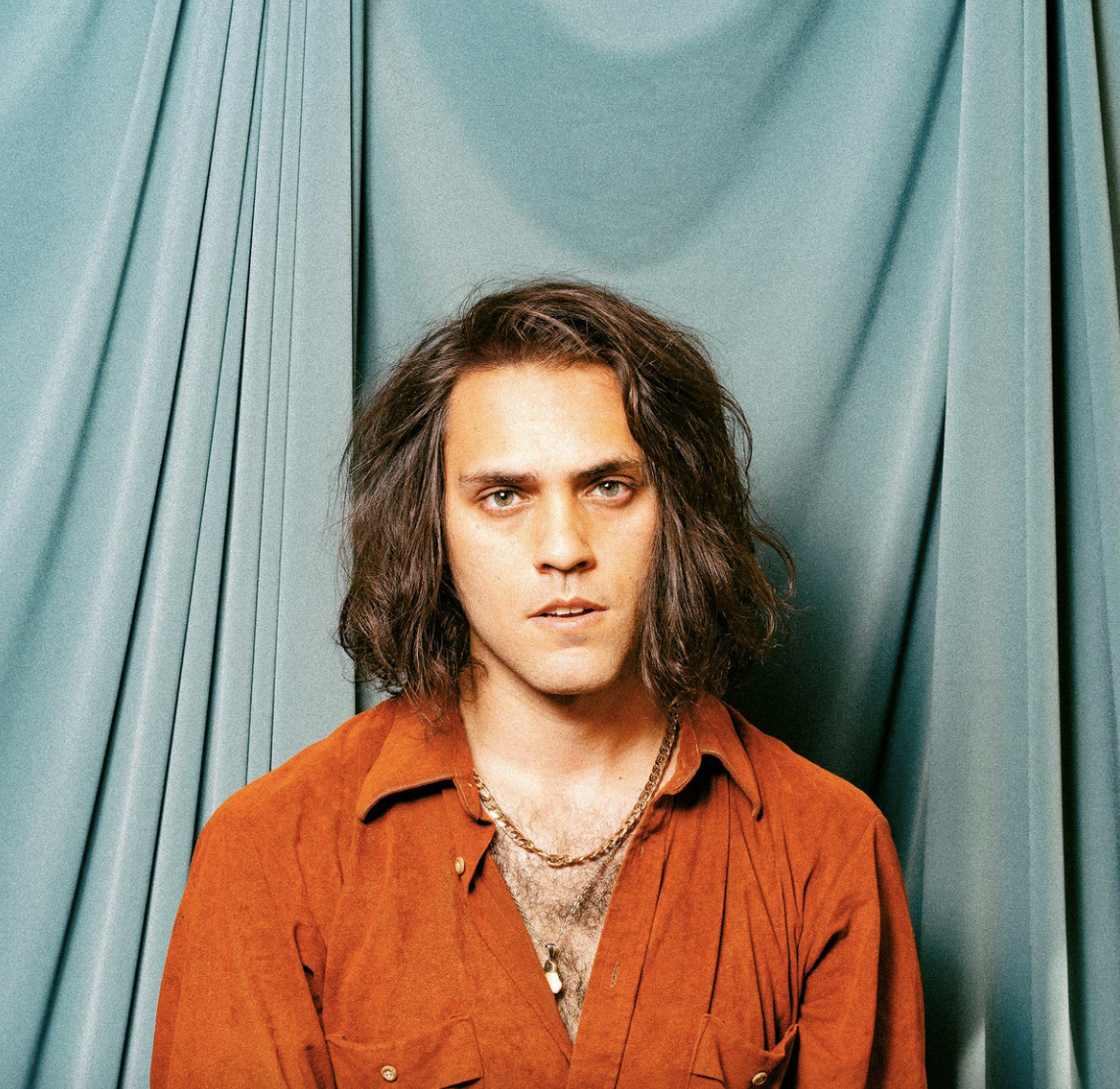
Bambara hail from Athens, Georgia, but have all the street punk attitude of the dark side of New York, where they now reside. Like one of the street gangs from the film The Warriors they possess a cool menace and visceral charm.
Musically they are a strange mixture of The Birthday Party, Mitch Ryder and the Detroit Wheels, Lou Reed, New Model Army, Swans, The Telescopes and The Modern Lovers. Big guitars, driving bass, machine-like drumming give them an 80’s Goth vibe but with a low-life reality and fighting spirit.
Reid Bateh sounds like a young Nick Cave, full of energy and bite but with a drawling vocal more akin to Lou Reed on speed, cranked really high!
The new six song EP has energy in abundance, great literate songs full of imagery and fire, the shadow of death close by. A band set to burn bright live fast and die in a blaze of glory! See them on tour this spring before they’re gone!
The Monolith Cocktail Social Playlist: Volume XLIII
March 16, 2020
PLAYLIST
Compiled by Dominic Valvona
Graphics Gianluigi Marsibilio

For all our friends and followers alike in coronavirus lockdown, let the Monolith Cocktail ease some of the doldrums and boredoms of quarantine with another Social Playlist (the 43rd edition in fact). The blog’s imaginary radisohow (or podcast if you prefer) brings together tracks from across time, genres and the globe to take the listener on a musical odyssey of discovery.
For those of you without access to Spotify, we’ve chosen a random smattering of tracks from Youtube.
Tracks:
Evie Sands ‘I’ll Hold Out My Hand’
Clarence Reid ‘Along Came A Woman’
Urbano de Castro ‘Urbanito’
Marva Whitney ‘What Kind Of Man’
The Scruffs ‘Go Faster’
The Cake ‘Ooh Poo Pah Doo’
The Koobas ‘A Little Piece Of My Heart’
Eternity’s Children ‘The Sidewalks Of The Ghetto’
Armando Trovajoli ‘I Love You’
Ziad Rahbani ‘Raksat Tahiat’
Eris Van Bloom ‘Forget Me After’
Yasuaki Shimizu ‘Lebon Lipon’
The Clientele ‘I Had To Say This’
The Plastic Cloud ‘Shadows Of Your Mind’
Grapefruit ‘Yesterday’s Sunshine’
Moses Gunn Collective ‘Mercy Mountain’
3Ds ‘Evocation Of W.C. Fields
The Exploding Hearts ‘Throwaway Style’
Rockin’ Ramrods ‘Willie’s Plastic People Factory’
The Fe-Fi-Four Plus 2 ‘Pick Up Your Head’
The Pazant Brothers ‘Dancing In The Street’
Anthony Braxton ‘G-647 (Opus 23H)’
Sonny Sharrock ‘Bailero’
Crispy Ambulance ‘Chill’
Big L ‘Devil’s Son’
Ramson Badbonez ‘I Got Dat Sting’
Tuff Crew ‘Show Em Hell’
Sonny & The Sunsets ‘Ghost Days’
Moonshake ‘Mugshot Heroine’
Lungleg ‘Punk Pop Travesty’
Thee Headcoats ‘The Messerschmitt Pilot’s Severed Hand’
The Intelligence ‘My Ears Are Dust’
Jeremy Steig ‘Home’
Weldon Irvine ‘Turkish Bath’
Bembeya Jazz National ‘N’Lanyo’
Bongos Ikwue ‘Ella’
Seamajesty ‘Abacat’
Acid Arab ‘Electrique Yarghol’
Pan Ron ‘Pros Reang Yeh Yeh’
Benkadi International ‘Kelou Na’
Dzyan ‘Light Shining Out Of Darkness’
Green On Red ‘Drifter’

For Youtubers
All Selections made by Dominic Valvona
Monolith Cocktail Social Playlist: #XXXVII:
July 15, 2019
PLAYLIST
Dominic Valvona
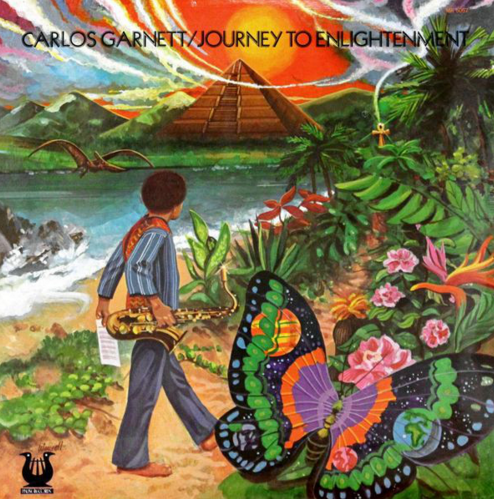
Cool shit that the Monolith Cocktail founder and instigator Dominic Valvona has pulled together, the Social playlist is a themeless selection of eclectic tracks from across the globe and ages. Representing not only his tastes but the blogs, these regular playlists can be viewed as an imaginary radio show, a taste of Dominic’s DJ sets over 25 plus years. Placed in a way as to ape a listening journey, though feel free to listen to it as you wish, each playlist bridges a myriad of musical treasures to enjoy and also explore – and of course, to dance away the hours to.
Volume XXXVII pays a small homage to two recent lost brothers, the Prince of ‘Orleans, the ragtime-mardi-gras-R&B-soul-funk-cajun-swamp-boogie titan Dr. John, and 13th Floor Elevator operator of the third-eye, Roky Erickson. Not intentional, but this latest volume also seems to have taken on an afflatus mood, with many paeans to this and that lord, a plateau of gods and that deities. For your aural pleasure, music from as diverse a collection as Carlos Garnet, Compost, Tuff Crew, OWLS, Zuhura & Party, The Electric Chairs and Moonkyte: 36 tunes, over two and halfs.
Tracklist:::
Carlos Garnet ‘Chana’
Purple/Image ‘What You Do To Me’
Compost ‘Take Off Your Body’
The Braen’s Machine ‘Fall Out’
I Marc 4 ‘Dirottamento’
Black Sheep ‘The Choice is Yours’
The 7A3 ‘Coolin’ In Cali’
Tuff Crew ‘Drugthang’
Boss (Ft. Papa Juggy) ‘Deeper’
Brand Nubian ‘Claimin’ I’m A Criminal’
The Avengers ‘The American In Me’
OWLS ‘Ancient Stars Seed’
The Electric Chairs ‘So Many Ways’
Sam Flax ‘Another Day’
New Paradise ‘Danse Ta Vie – Flashdance’
Rick Cuevas ‘The Birds’
Roger Bunn ‘Old Maid Prudence’
Verckys & L’Orchestre Veve ‘Bassala Hot’
Extra Golden ‘Jakolando’
Zuhura & Party ‘Singetema’
Brian Bennett ‘You Only Live Twice’
Roky Erickson ‘I Walked With A Zombie’
Jim Spencer ‘She Can See’
Sapphire Thinkers ‘Melancholy Baby’
Roundtable ‘Eli’s Coming’
Madden And Harris ‘Fools Paradise Part 2’
NGC-4594 ‘Going Home’
Ruth Copeland ‘The Music Box’
Chairman Of The Board ‘Men Are Getting Scarce’
Bill Jerpe ‘You’ll Get To Heaven’
The Apostles ‘Trust In God’
Johnnie Frierson ‘Out Here On Your Word’
The Brazda Brothers ‘Walking In The Sun’
Moonkyte ‘Search’
Dr. John ‘When The Saints Go Marching In’
The Move ‘Feel Too Good’
Photography:: Giorgio Lamonica
Continuing our running penpal-like exchange with the leading Italian culture site Kalporz, we are excited to share Giorgio Lamonica‘s photographs of the immensely popular Minnesota indie-rock titans Low and their support, Italian artist Lullabier; all of which are taken from the recent concert in Bologna.


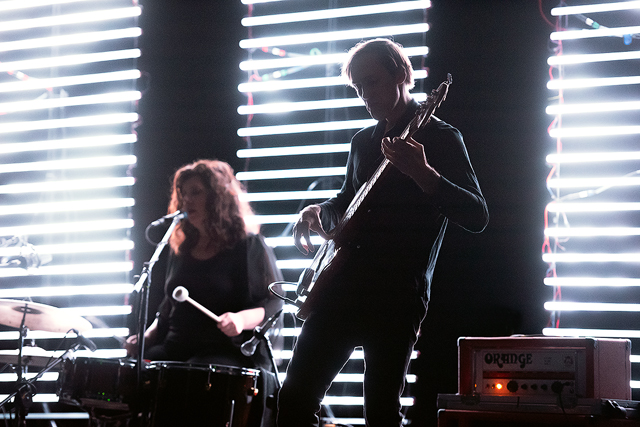
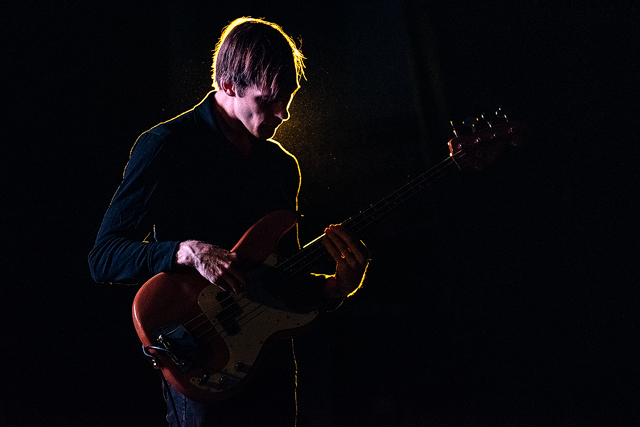




Monolith Cocktail collaborates with Kalporz
March 5, 2019
News: Exciting Collaboration
The Monolith Cocktail in collaboration with leading Italian music publication Kalporz will be cosying up and sharing reviews, interviews and other bits from our respective sites each month. Keep an eye out for future ‘synergy’ between our two great houses as we exchange posts.
Our inaugural post has just gone up on Kalporz; a review of the upcoming blistering tumult from the Italian-Tunisian post-punk-meets-Sufi-ritual Ifriqiyya Electrique. Catch that review here…
The first Kalporz post will be published shortly. But first, here’s some background on Kalporz:

Albums of 2018: Part Two: Thomas Nation to Thom Yorke
December 6, 2018
Albums Selected By Dominic Valvona and Matt Oliver.
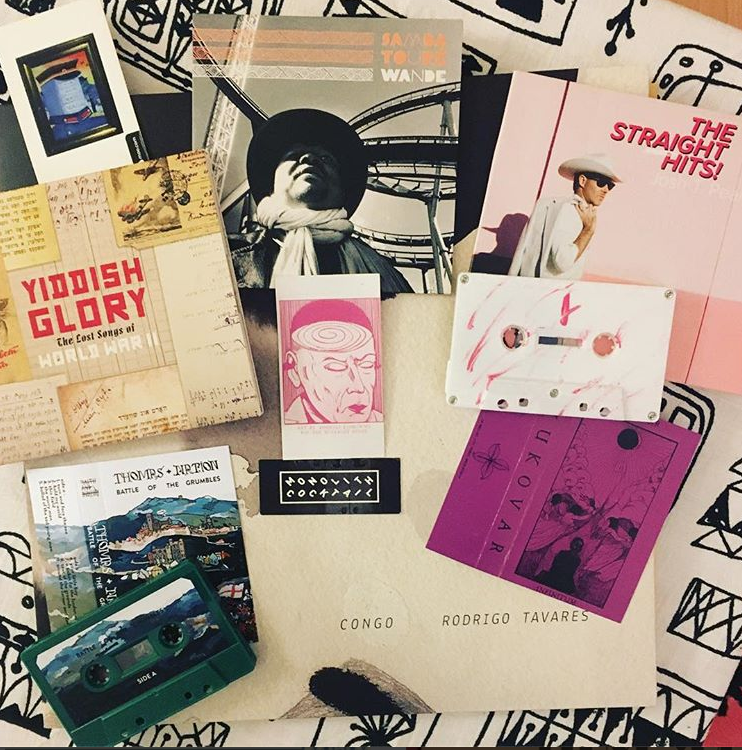
Welcome to Part Two of our alphabetically ordered best/choice/favourite albums of 2018 feature. You can find Part One here…
The decision making process:
Being the exhaustive and eclectic set of features our albums of the year are, we know you probably don’t need to or want to dally about reading a long-winded prognosis of our judgement process. But in short, here it is anyway.
Continuing to shy away from fatuous rating systems and ‘best of lists’, the Monolith Cocktail endeavors to offer a more visceral and personal spread of worthy ‘choice’ picks, with no album dominating or holding any particular numbered position – unlike most of our contemporaries lists, stuck with the ridiculous task, for example, of explaining why one album is more deserving of their numbered spot than another.
With no hierarchical order, we’ve lined our album choices up alphabetically; split into two features – Part One: A (Idris Ackamoor) to M (Moonwalks); Part Two:N (Thomas Nation) to Z (Thom Yorke).
All of our favourite new and reissued albums and EPs from 2018 are of course considered to be the most interesting, vibrant and dynamic of the year’s releases. But the best? Granted, to make this list you have to have made some sort of impact, but we’d never suggest these entries were categorically the best albums of 2018: even if that might be true. Instead our list is an indicator of our amorphous tastes, rounding up another year in the life of the Monolith Cocktail, and we hope, introducing you to titles and artists/bands that may have dropped below the radar or got lost in the noise of more commercial better promoted releases.
All selections in PART TWO from me (Dominic Valvona) and Matt Oliver.
N.
Thomas Nation ‘Battle Of The Grumbles’ (Faith & Industry)
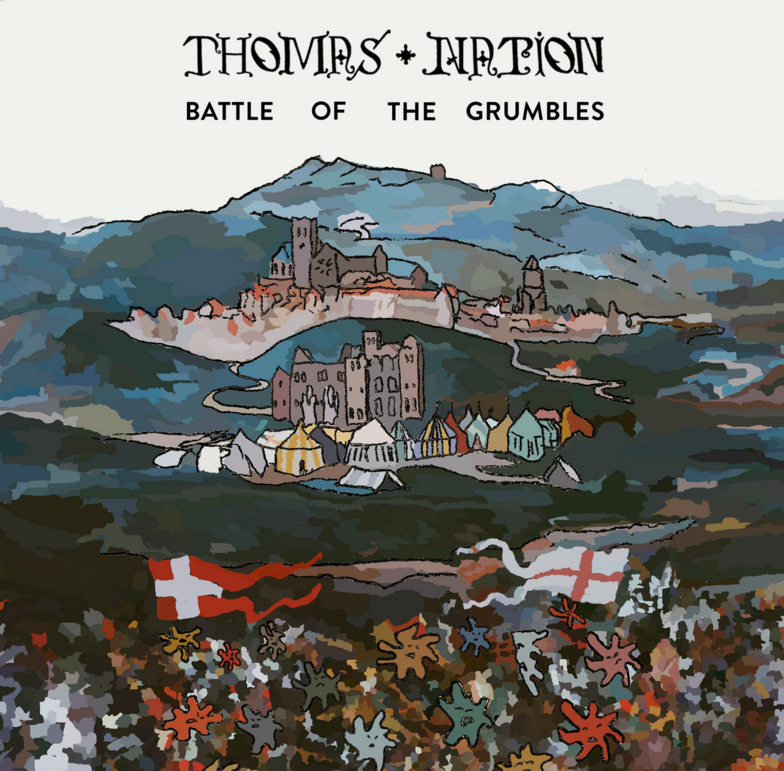
Fixed intently on the anguishes of identity in a post-Brexit voted England, yet bleaching his 1960s bucolic and 1970s lounge (erring towards yacht rock almost) imbued songbook with nostalgia, the lyrics themselves read as augurs yet embedded on parchment, Blue House front-man James Howard weaves a diaphanous if plaintively foreboding chronicle of the past and present.
Creating a whole new persona as Thomas Nation, his commitment to a hazy timeless sound, both rustic and ambitious, goes as far as using only his rough mono mixes; undeveloped and left in their most honest, purest form. You won’t be surprised to learn that Howard has also released his Nation moniker debut, Battle Of The Grumbles, on cassette tape.
Littered with references to this Island’s past (both at home and overseas), from the illustrated album cover scene of the 16th century ‘Battle of the Spurs’ (when the Holy Roman Empire teamed up with Henry VIII’s England) to more ambiguous stirrings and despondent yearnings that feature musical echoes from across that ages, Battle Of The Grumbles stands metaphorically at the precipice of the white cliffs of Dover awaiting Britain’s fate.
A gentle spirit, James Howard creates a pastoral nostalgic journey filled with augurs, despair and disillusion but always diaphanous. The first of what Howard hopes will be an annual ‘pilgrimage’, the Thomas Nation incarnation is a cerebral wonder through the essence of Englishness, questioning and probing the psyche as it meanders through the psychogeography and heart of the countryside. Full review…
(Dominic Valvona)
Tony Njoku ‘H.P.A.C’ (Silent Kid Records)

Bringing a very different perspective and life experience to the London avant-garde art and electronic music scene, the British-Nigerian producer with the earthy falsetto, Tony Njoku, articulates a most unique form of magical soul music on his stunning new album. Though undulated with an ethereal to malady suffused backing of sophisticated synthesized travails, Njoku’s vocals always seem to bobble and float above the choppy breaks and ebbing tides.
Adrift in so many ways, through his life experiences, transferring as he did at the age of fourteen to London from a life spent hiding his true personality in the toxic macho boarding schools of Lagos, the sensitive Njoku found at least one kind of solace; able to show a vulnerability and pursue the music career he really wanted having previously recorded a number of hip-hop albums (the first when he was only twelve) that proved entirely counterintuitive, but were completely in tune with Nigerian environment he grew up in. Yet in the arts community he joined in his new home of London, he found few Afrocentric voices or people he could identify with or relate to. From that isolation comes an album inspired by the ‘high art sonic’ forms of Arca and Anhoni, and by the metamorphosis nature of Bjork; Njoku’s own compositions feature a beautiful synthetic shuffle of Afrofuturism soul and more searing discordant synth waves that clash and distort on arrival but gradually sync and become part of the motion. From beauty to pain and release, and often back again, each track (and not in a bad way) seems open-ended; a constant flowing cycle of emotions, which can be healed during that moment, in that space and time, but will inevitably return: A calm followed by turbulence and hopefully the light.
Eloquently in a hymn like fashion between pained malady and the venerable, heavenly but also melancholic and turbulent, H.P.A.C is a futuristic soul album of delicate intellect. Full review…
(DV)
P.
Micall Parknsun & Mr Thing ‘Finish What We Started’ (Village Live)
“Mainstays trusted with hip-hop restoration…with all the answers for those exaggerating hip-hop’s downfall” – RnV July 18
Featuring “beats to make your eyebrow dip” and the flow of one of the UK’s most reliably disdainful when it comes to holding your own, Micall Parknsun and Mr Thing made the very good decision to turn 2017’s one-off ‘The Raw’ into a 40 minute non-apology for playing the game properly. With hip-hop mumbling its way to the dogs, this pair have fire in the belly for the unfashionable return to beats and rhymes designed to stick around and give a damn. Measured run-ups streaked with bluesy, soulful headspace occupancy (with drums front and centre each and every time), a crux of blockbusters and pure boom bap battery, all land like a two-footed tackle, Thing researching and sculpting ‘the real’ without making it a puff piece on nostalgia or announcing they’re here to save the world. Park-E does his utmost to remain an upstanding citizen, pushed to his limits by both Thing’s heavyweight kicks and snares and general scene lethargy. The emcee’s systematic, it’s on when I say so-flow, perfectly lands the elbow once the producer has left you staggering backwards.
(Matt Oliver)
Josh T. Pearson ‘The Straight Hits’ (Mute)

Changing his tune (literally) Josh T. Pearson, the lonesome blues Texan with a wagonload of baggage, heads out onto the range with a swag bag of more joyful, unencumbered ‘golden hits’ with his latest album for Mute Records.
Leaving behind the more apocalyptic gospel concepts of his work with the short-lived but acclaimed Lift To Experience, Pearson sets himself new parameters; adhering to a five-point rules system for transforming a “batch of tunes” he’d been working on for a decade. Earmarked originally for the ‘unrecorded’ Bird Songs album, the nine original songs on The Straight Hits are a lighter and as the title suggests ‘straighter’ attempt to change the mood.
Far from set in stone – the unwritten rock’n’roll law that all rules are written to be broken is invoked on the tender yearning A Love Song (Set Me Straight) – each song must at least try to follow Pearson’s self-imposed requirements: Number one, all songs must have a verse, a chorus and a bridge; two, the lyrics must run sixteen lines or less; three, they must have the word ‘straight’ in the title; four, that title must be four words or less; and five, they must submit to song above all else i.e. “You do as she tells you, whatever the song tells you”, “You bend to her, and not her to you.”
The Straight Hits is a most rallying rodeo that gives the Americana soundtrack a much-needed kick-in-the-pants; the themes of love, whether it’s the analogical kind, ‘take me right now’ kind, or lamentable kind, enacted across a varied but blistering songbook. Rejecting the stimulants and his demons, Pearson choses the good ol’ fashioned power and redemptive spirit of gospel ye-ye and country rock’n’roll. And don’t it sound just mighty fine and swell! Full review…
(DV)
Q.
Qujaku ‘Qujaku’ (So I Buried Records)
Occupying both the spiritual and cosmic planes, emerging from the gloom and holy sanctuaries of the dead, the brooding Hamamatsu-based Japanese band Qujaku wowed with their second album of operatic Gothic and psychedelic doom-mongering. Beginning as they mean to go on, the opening ‘Shoko No Hakumei’ suite, more an overture, is itself a full on Ring cycle (as conducted by Boris) that is dramatic and sprawling: running almost the entire length of a full side of a traditional vinyl album.
On a very large foreboding canvas, Qujaku build-up an impressive tumult across the album’s nine-tracks of prowling esotericism and galloping drum barrage immensity. Between crescendo-bursting three-part acts and shorter volatile slabs of heavy caustic drone rock, the group often evokes an Oriental Jesus And Mary Chain, Black Rebel Motorcycle Club and Spacemen 3, or Nine Inch Nails when at their most enraged. Psychedelic in the mode of The Black Angels, but also straying at their most languid and navel-gazing towards Shoegaze, Qujaku’s dark spanning cacophony of throbs and trembles bear many subtle nuances and becalmed breaks amongst the masses and maelstroms.
On an epic scale, dreaming big and intensely, Qujaku perform the most dramatic of daemonic theatre. Full review…
(DV)
R.
RAM ‘August 1791’
Considering the tumultuous bloody revolution from which an independent Haiti was born, RAM leader Richard A Morse‘s “Our existence is a political statement” mantra is unsurprising. Named after the initials of their road well travailed founder, RAM perform an entrancing spectacle of the ritualistic. Morse, originally born in Puerto Rico but brought up in Connecticut, spent the 80s rubbing shoulders with the polygenesis New York art and music scene’s Jean-Michel Basquiat and Warhol’s factory. His interest piqued by the new wave’s adoption of Afro-diaspora rhythms and world music, Morse decided to travel to his native homeland to study the Haitian sound.
The son of Haiti folk legend Emerante de Pradine, Morse was already well aware of his ancestral roots, but had yet to indulge in or absorb the rich history of the island fully. After an initial short trip, Morse found himself it seems so seduced and inspired by Haiti’s culture that he decided to stay for good. Marrying local dancer and singer Lunise, he kick started the frenzied, rambunctious troupe, channeling the ideas he picked up on in New York and merging them with the signature instrumentation and sounds of the local Vodou belief, mizik-rasin and the drifting currents of the Caribbean and Africa.
This year’s odyssey, guided by the spirits and with dedications to the marternel and those that have helped (including the pivotal film director Jonathan Demme, who prominently featured one of their tracks in his or award-winning Philadelphia movie in 1994) shaped the band over the years, springs from Haiti’s enslaved population’s struggle for independence from its European masters. August 1791, the year and month of revolution (inspired by their colonial masters own revolution), frames this tropical fusion of tragedy and sauntering joy. Returning to the legends that sparked this fight, such as the ill-fated former slave turned leader of revolt, Toussaint Louverture (driving out the Spanish and British but captured and imprisoned under Napoleon’s regime; languishing in a cell at Fort de Joux until he died in 1803), and first Emperor of Haiti, Jean-Jacques Dessalines (assassinated by disgruntled members of the burgeoning administration), RAM evoke the spark that set in motion the first free republic of African heritage people in the Western hemisphere. Their seventh album not only pays tribute but features a musical accompaniment from that era; with a sound more or less, when stripped to its essence, that would be familiar to the Creole and African communities of the late 18th century.
Uniting in a busy percussive fusion the Americas with the roots of Africa, RAM bustle and hustle traditions to produce a paean to the Island they call home.
(DV)
Soho Rezanejad ‘Six Archetypes’

Impressive in all its striking celestial and throbbing distressed staccato shimmer the experimental Danish artist Soho Rezanejad’s ethereal but equally futurist dystopian ambitious new LP, Six Archetypes, is a bold exploration of identity politics.
Interplaying six of the major character symbols (The Guardian, The Orphan, The Seeker, The Russian, The Idealist, The Prostitute) from the Tarot with Carl Jung’s Psychological writings on the collective and structured reality, Rezanejad weaves the complex contemporary themes of gender liquidity and self-discovery into an amorphous mix of electronica, darkwave and Gothic pop suites.
Though not always audible, Rezanejad’s untethered vocals – vaporous and often ghostly undulating in an aria style – whisper, coo, lull, pant, wrench and shout throughout the shard majestic and multilayered intricate backing of synthesized, programmed, modeled sounds. It’s a striking voice too. At times, such as the beautiful but serious stellar flight of the navigator, Bjork meets Chino Amobi, rotary opener Pilot The Guardian, she sounds like Nico. And at other times, such as the lush Bowie/Sylvian synchronicity, Soon, her vocals sound like a mixture of Jesus Zola and Lykke Li.
Returning to the soil, so to speak, Rezanejad saves her most heartfelt yearn until the end; lovingly but starkly impassioned, singing in her ancestral tongue of Farsi – Rezanejad is the daughter of first generation Iranian immigrants – the National Council Of Resistance Of Iran’s alternative national song in protest against the state’s heavy-handed ideology.
An ambitious debut opus of dark beauty and ominous despair, Six Archetypes is a highly impressive cosmology of gender, roots and futurism politics and narratives. Full review…
(DV)
S.
Sad Man ‘ROM-COM’
Haphazardly prolific, Andrew Spackman, under his most recent of alter egos, the Sad Man, has released an album/collection of giddy, erratic, in a state of conceptual agitation electronica every few months since the beginning of 2017.
The latest and possibly most restive of all his (if you can call it that) albums is the spasmodic computer love transmogrification ROM-COM. An almost seamless record, each track bleeding into, or mind melding with the next, the constantly changing if less ennui jumpy compositions are smoother and mindful this time around. This doesn’t mean it’s any less kooky, leaping from one effect to the next, or, suddenly scrabbling off in different directions following various nodes and interplays, leaving the original source and prompts behind. But I detect a more even, and daresay, sophisticated method to the usual skittish hyperactivity.
Almost uniquely in his own little orbit of maverick bastardize electronic experimentation, Spackman, who builds many of his own bizarre contraptions and instruments, strangulates, pushes and deconstructs Techno, the Kosmische, Trip-Hop and various other branches of the genre to build back up a conceptually strange and bewildering unique sonic shake-up of the electronic music landscape. Full review…
(DV)
Otis Sandsjö ‘Y-OTIS’ (We Jazz Records)
Imbued as much by the complex language of North American and European modernist jazz as those who use it to riff on in the hip-hop and electronic music genres, the adroit Gothenburg saxophonist and composer Otis Sandsjö transmogrifies his own jazz performances so they transcend, or at least amorphously (like liquid) expand into polygenesis soundscapes.
Y-OTIS reimagines a musical union between Flying Lotus and Donny McCaslin, or better still, Madlib reconstructing the work of 3TM; the flow, if you can call it that, sounding like a remix deconstruction in progress as the rapid and dragging fills and staggered rolls of his group’s drummer Tilo Webber are stretched out, inverted and reversed into a staccato to dynamic bursting set of breakbeats and loops. Mirroring all the various cut-and-paste techniques of the turntablist maestros, Sandsjö and his dexterous troupe of keyboardist Elias Stemeseder, bassist Petter Eidh and Webber sound like a group being remixed in real time, live: And it sounds brilliant, as you’re never quite sure where each of these compositions is going to end up.
Sandsjö’s debut album, released via the Helsinki festival and label platform We Jazz Records, is a multilayered serialism suite of ideas and experimental visions. All of which, despite that complexity and blending of sophisticated avant-garde jazz, hip-hop, R&B, trip-hop and dance music, keep an ear out for the melody. If the ACT label, or ECM, ever converges with Leaf and Anticon, Y-OTIS might well be the result. Full review…
(DV)
Scran Cartel ‘Blue Plaque Candidates’ (Scran Cartel)

“A great, belt-loosening spread grilling you with much more than just a bunch of culinary one-liners” – RnV Aug 18
Brit grafters MNSR Frites (Granville Sessions) and Benny Diction (Corners) read you the specials for twelve fascinating tracks, packing foot-related rhetoric from the moment the dinner bell sounds. It’s quite an accomplishment to master such a particular angle without it being a gimmick, and easy to forget that ‘Blue Plaque Candidates’ is not specifically a concept album, just an expression of culinary love. These two really know their cookbooks and have a shopping list that you can’t check out quick enough, from cordon bleu menu toppers to bread and butter basics and young at heart sweetshop favourites, the Estuary English plating your three squares a day with the same near-apathy as they do exotic, forbidden fruit. The jazzy, funky beats are garnish to the duo cookery schooling everyone, indulging in one sub-grime moment on the E-numbered ‘Dundee’, and a cultural knowhow showing that greed isn’t always good, adds weight to their sprattish statement of “we write and record rap songs about food”. A chef fingers’ kiss for this one.
(MO)
Skyzoo ‘In Celebration of Us’ (First Generation Rich)

“Some of the smoothest psychology and concrete consciousness you’ll hear this year. One to be toasted over and over” – RnV Feb 18
Giving ‘In Celebration of Us’ the grown man rap label is a bit of a giveaway given Skyzoo’s opening skit of confiding in a pal about giving up the streets for the sake of his newborn. The Brooklynite and new father speaks a lot of sense, a flow that will express disappointment rather than anger and keep the titular celebrations modest, and attracts a captive audience when aiming at your head twofold, comprehensively ensuring the wateriness of neo-soul doesn’t just ebb away, or the dustiness of Detroit-style beats fugs your judgement. Picture a sometimes reluctant lecturer, as everyman as the tales you’ll familiarise yourself with, but giving you the full education once the mic in his hand. Not clinging to verse, hook, verse structure, Skyzoo doesn’t ramble, rather makes certain that he’s examined everything from top to bottom, very much schooled in knowing that if something’s worth doing, do it properly. Enough to make you feel warm and fuzzy – there are some undeniably slick, R&B moves crossing over as well – and rather more pensive when presented with the cold light of day.
(MO)
The Last Skeptik ‘Under the Patio’ (Thanks for Trying)

“An album simmering down the summer’s sticky restlessness: dusky beats that never fade to black, understated in their genre reach” – RnV July 18
Intense from The Last Skeptik, extremely well connected and arguably more well rounded since after a spell of paying extra-curricular dues. Surrounding himself with a boiling pot of hungry emcees gets a maximum return from teeth gritted, rapid fire, pound the road, witty unpredictables, all of whom casually playing down their iron mic grip. Synth-wired, at times spindly beats either host the back-to-mine session or storm the stage, perfect for its roll call – Bonkaz, Kojey Radical, Doc Brown, Scrufizzer but four headliners to pick from – to move through and dominate while playing the back, with motive or just willing daylight away. While originally noted for soundtracking summer humidity, ‘Under the Patio’ is decidedly not an album for office hours. Dabbling in shades of the exotic and skilfully soulful throughout for an album of rough edges, it’s the careful contrasts – the haunting ‘Hide & Seek’ featuring Matt Wills, the inexplicable but permissible ‘Calm Down’ inviting The Manor round for a knees up (there’s the versatility for you) – and Skeptik’s own version of ‘Deep Cover’ on posse cut ‘Oxymoron’ – that triumph in their cohesion to give TLS a massive W.
(MO)
Stella Sommer ’13 Kinds Of Happiness’ (Affairs Of The Heart)

In the vogue of an age-old central European malady, the dour romanticism that permeates the stunning solo debut album from the German singer/songwriter Stella Sommer is wrapped in a most beautiful gauze of melodious uplift and elegiac heartache.
Artistically, as the results prove, making the best decision of her career, Sommer steps out for a sojourn from her role in the German band Die Heiterkeit. Far from an extension of that group (though band mates Hanitra Wagner and Phillip Wolf both join her on this album), there are of course concomitant traces of it. Sommer however makes louder but also accentuates these traces and lingering relationships; her lived-in, far-beyond-her-years vocal more sonorous and commanding than before.
Possibly as perfect as an album can get, 13 Kinds Of Happiness is an ambitious, slowly unveiling album of diaphanous morose. Pastoral folk songs and hymn-like love trysts are transduced by a Gothic and Lutheran choral liturgy rich backing that reimagines Nico fronting Joy Division, or Marianne Faithfull writhing over a Scary Monsters And Super Creeps era Bowie soundtrack (especially on the galloping Northern European renaissance period evoking thunderous drumming ‘Dark Princess, Dark Prince’; just one of the album’s many highlights). I don’t use that Nico reference lightly: Sommer channeling the fatalistic heroine’s best qualities atmospherically speaking.
A curious Teutonic travail of venerable lovelorn despair and modesty, Sommer’s debut LP will take time to work its magic. But work its magic it will. A tremendous talent lyrically and vocally, serious and astute yet melodically enriching and lilted, her sagacious deep tones are starkly dramatic, but above all, rewarding. Here’s to a solo indulgence that I hope long continues. Full review…
(DV)
Station 17 ‘Blick’ (Bureau B)
With near enough thirty years of experience behind them and a changeable lineup of both musicians with and without various disabilities, the Station 17 collective once more shift their focus and sound; moving away from the all-out pop of the last album Alles Für Alle for a more improvised travail through the Krautrock, Kosmische and experimental electronica cannon.
Free of predetermined structures, lyrics and ideas they enjoyed an improvised freedom; inviting a host of German musical royalty to take part in what is a collaborative recording experience – something they’ve done in the past, having worked with icons such as Michael Rothar and the late Holger Czukay. And so each of the album’s tracks feature the signatures sounds and quirks of its guests: The writhing prehistoric Krautrock-jazzy Le Coeur Léger, Le Sentiment D’un Travail Bien Fait for example features the guiding avant-garde, ‘musique concrète’ presence of drum and bass partnership of Jean-Hervé Péron (the French title track I dare say his idea) and Zappi Diermaier; key founders of the reverent agent provocateurs Faust, who in recent decades have broken away to form their own iteration of the group under the faUSt banner. And, though only as part of its most modern regeneration, Tangerine Dream’s Ulrich Schnauss appears to gaze through a progressive Kosmische tinged explored ‘astronomical telescope’ on the album’s heaven’s gate opening finale.
From another generation, Dirk Dresselhaus, aka Schneider TM, appears both as an engineer, capturing these sessions and crafting them into a coherent album, and as a collaborator on the kooky bossa nova preset Die Uhr Spricht. Andreas Spechtl of Ja, Panik! infamy appears alongside Station 17 singer Siyavash Gharibi on the poppier, Der Plan-esque Dinge, and another Andreas, Andreas Dorau, joins the same upbeat, marimba like candour on what we’re told is an “enduring appraisal of post-capitalist perversion”, Schaust Du, whilst Datashock travel through the primordial soup into another dimension on the Acid Mothers-hitch-a-ride-aboard-the-Cosmic Jokers-spaceship Zauberpudding.
Turning the dial on an imaginary radio station, attuned to all the highlights from Germany’s most experimental if rhythmic decades, Blick confidently absorbs the influences and inspirations of its multitude of guests to produce social commentary and reflect on the here and now. Full review…
(DV)
T.
Rodrigo Tavares ‘Congo’ (Hive Mind Records)
The amorphous traversing post-rock and jazz travelogue from Brazilian guitarist/composer Rodrigo Tavares is filled with a sense of contemplation and meditation, and a yearn for the spiritual. The spiritual is represented in Congo’s genesis; the catalyst for Tavares soundtrack inspired, in part at least, by a visit to the controversial ‘spiritual healer’ John of God – a medium, psychic surgeon of dubious repute -, who lives in the remote central Brazilian town of Abadiânia. The meditative, in this case, runs throughout the suggestive instrumental passages and vignettes that ponderously drift, cascade and ebb across a real and imagined borderless global soundtrack.
Suffused throughout this album you’ll find lingering traces of the ACT jazz label, minimalism, Tortoise post-rock, Brazilian legends Joâo Gilberto, Dorival Caymmi and Tom Jobim, and removed by quite a few degrees, a hint of the free-form untethered to any easy classification, evolving guitar experimentation of the Sun City Girls – as it happens a show in a remote former gay bar in Brazil by the same band was one of the stopovers on Tavares ‘transformative road trip’; the fruits of which and experience laying down the creative foundations for Congo.
Truly transglobal, Tavares helps take Brazilian music – like his fellow compatriot Sentidor – into often trance-y, unburdened and unlabored directions. With few rough edges, this congruous soundtrack makes for a ruminating, thoughtful smooth journey. Full review…
(DV)
Samba Touré ‘Wande’ (Glitterbeat Records)
In a country abundant with guitar virtuosos, the highly genial Samba Touré still stands out as one of Mali’s most celebrated and accomplished; transducing the travails, heartache but also joy of his homeland through his signature articulate nimble-fingered style of playing.
His third album for Glitterbeat Records – the first, Albala, was the label’s inaugural release in 2013 – Wande is billed as a warmer homely songbook: previous releases were produced during the Islamist insurgency that swept aside and hijacked the Northeastern Tuareg communities’ battle for autonomy in the north eastern regions of Mali. Far from a complete break, the sadness endures on Wande; though Touré sadness is a most beautiful, cantering and lingering one. Especially when paying tribute to his friend and collaborator, sokou fiddle maestro Zoumana Tereta, on the spoken word with wavering drifty, almost dub-like echo-y effects tracks of the same name, which features the late musician’s spindly evocations from beyond the ether.
Recorded in under two weeks, allowing weekends for band members to scratch a living playing at weddings, sessions for the album were relaxed, performances captured on their first take with few overdubs. The lo fi production feel of the rocking blues ‘Yerfara/We Are Tired’ could be a lost inspiration for 80s period Rolling Stones with its almost transmogrified Start Me Up like Richards riff. ‘Goy Boyro/The Good Work (Well Done)’ even begins with a Taj Mahal, BB King reminiscent introduction hook, before dipping over the horizon. But whatever you do, don’t call this is a desert blues album, or even an African one; Touré correctly insistent that this is contemporary ‘universal’ rock music.
Not quite such a leap of faith or different to previous albums, an unpolished and laidback methodology has produced a slightly more sagacious, free-floating quality and another essential Touré masterpiece. Full review…
(DV)
Ty ‘A Work of Heart’ (Jazz Re:Freshed)

“Almost feels like a magic carpet ride over the capital’s skyline; come and spread your arms if you really need a hug” – RnV Mar 18
Soft focus viewed with the wisest of eyes cutting through life’s smokescreen: the eminent UK statesman preserves the essence of never getting too high or too low. Ty has long had that trustworthy delivery of a life coach who can pep you up – inspirational with quiet authority – and tell you to man up without raising his voice, any hints at vulnerability given the very British keep calm and carry on treatment (“when you smile with me publicly I’m wearing a mask, gritting my teeth, a wolf in a bundle of sheep”). The liltingly clean production is what might turn a few ears belonging to those thinking hip-hop’s not for them – right from the off it’s of a Ty-tracked, toasted cinnamon bun snugness, a concrete jungle paved with a yellow brick road heading towards promised lands, but with the plain sailing carrying some turbulence. ‘A Work of Heart’ sounds as good as when Jack Frost comes knocking, as much as when the summer’s hose pipes were forbidden fruit. And like the first blooms of spring. AND the first leaves of autumn falling too.
(MO)
U.
U.S. Girls ‘In A Poem Unlimited’ (4AD)

Featuring most of the Toronto cast of collaborators that propelled the first U.S. Girls release for 4AD records, Half Free, forward, but stretched and lushly flexed into space boogie and other equally eclectic grooves by the city’s multi-limbed collective The Cosmic Range, Meg Remy’s latest cerebral pop revision tones down some of the vibrancy for acerbic, sax-wailing pouted-lips resignation and introversion.
Moving across the border from the USA with her husband and musical collaborator Maximilian Turnbull, aka guitar-slinging maverick Slim Twig, long before Trump reached The White House, Remy has broadened her postmodernist transmogrification of bleeding hearts 60s girl group meets tape-loops signature to accommodate femme fatale disco and funk since making a new home for herself in Canada.
The momentum of this album fluctuates throughout, and compared to Half Free, takes a lot to bed in and flow – and I’m still not sold on the two skits -, starting as it does with the aching ponderous slow burner Velvet 4 Sale – perhaps Remy’s most dark fantasy yet, imaging (just imagining mind) a role reversal of power, as she implores a girl friend to buy a gun for protection, impressing that the only way to change men is for women to use violence. An unsettling twist played out to a dragging soul fuzz backing track, the song’s central tenant imagines a world where women take up arms against men, though Remy ‘deplores violence’ of course. It’s followed by an equally sensually nuzzling sax and yearned vocal performance, and take on the Plastic Ono Band, Rage Of Plastic, before picking up with the album’s most bouncy weaponized boogie, M.A.H. – a chic Ronnie Spector fronting Blondie style diatribe broadside aimed at the democrats venerated saviour Obama, who Remy condemns for the charismatic charm seduction that pulled-the-wool over many supporters eyes, hiding the fact that he presided over a covert number of unsavory drone strikes.
Hardly disarming then, In A Poem Unlimited deplores the present hierarchy with a seething checked rage, set to a challenging but melodious soundtrack of yearning no wave, scintillating chic disco, Plastic Ono Band soul, vaporous 80s pop and even jazz. The patriarch comes in for some scathing poetic justice; played out to some of the year’s best tunes and performances. Full review…
(DV)
V.
Vukovar ‘Infinitum’ (Le Recours Forêts Production)
Vukovar/Michael Cashmore ‘Monument’
Among the most prolific of bands, Vukovar have released two of their most stunning albums in just the last quarter of 2018 alone. Keeping to the signature three-syllable grandly entitled Gothic statements of malcontent, melodrama, aggrandizement and melconholy, both Infintum and Monument romantically encircle the void better and with more sagacious quality than previous records. Though only in existence for barely three years, and perhaps already splitting up, Vukovar are improving on every release. Both are included because…well, I can’t make my mind up about which of these recent opuses of despair and hermetic exploration I prefer. Hell….they’re both great. And here’s why:
The fifth LP in the malcontent’s cannon, Infinitum, pulls at the mortal coil of human misery in a murky quagmire. An endless backing track of reverberating delayed snare strikes, a rolling timpani bounding bass drum, esoteric stately sounding waltzes, unwieldy bestial guitar, resigned new romantic synth and escaped melodies muddily, and often amorphously, swim and oscillate around a combination of longing, if worn down and depressed, swooning vocals and Rimbaud-meets-Crowley-meets-Kant-on-the-edge-of-an-abyss poetic despairing narration, on what is a bleak if at times gloriously dark beauty of an album.
Bound-up in their own self-imposed limitations, these anarchistic dreamers go one further than the Hebrew code of law commandments by adhering to 13 of their own; each one a rule or restriction in the recording process that couldn’t be broken, at any cost. So strict were these conditions that even if the band were close to finishing the album, any infringement no matter how minor, would result in the entire sessions being abandoned. Mercifully they made it through to the end; releasing a troubled, bleak lo fi ritualistic romance of an grand opus.
Cut from the same cloth, but collaborating with an undoubted influence, the group’s sixth LP, Monument, traverses the void with Current 93 stalwart and producer/composer Michael Cashmore (appearing under the guises of his Nature And Organization nom de plume). A congruous in what is a melancholy harrowing romantic partnership with the morbidly curious Vukovar, Cashmore leads with a vaporous, industrial and often godly (whichever God/Gods they be) brutalist swathe of sagacious moodiness. Arguably inheritors of Current 93 and, even more so, Coil’s gnostic-theological mysticism and brooding venerable communions, Cashmore seems the obvious foil. Current’s The Innermost Light and Coil’s (and John Balance’s swan song as it were) The Ape Of Naples both permeate this conceptual opus.
From haunting melodrama to harrowing decay, unrequited love to radiant escape, the loss of innocence and youth to sagacious death rattles, Vukovar prove ideal torchbearers of the cerebral Gothic sound and melancholic romanticism. A meeting of cross-generational minds with both partners on this esoteric immersive experience fulfilling their commitments, Monument shows a real progression for Vukovar, and proves a perfect vehicle for Cashmore’s uncompromising but afflatus ideas to flourish in new settings, whilst confirming his reputation and status.
Whatever happens next, this ambitious work will prove a most fruitful and lasting highlight in the Vukovar cannon; one that’s growing rapidly, six albums in with a seventh already recorded; another ‘momentous’ statement that affirms the band’s reputation as one of the UK’s most important new bands. Full reviews…
(DV)
Y.
‘Yiddish Glory: The Lost Songs Of World War II’ (Six Degrees)

In light of the recent Tree Of Life synagogue shootings in Pittsburgh, the increasingly uncomfortable language and hostility from the far Left, and the rising tide of European wide anti-semitism, this most tragic songbook of WWII Soviet Union laments from the Jewish community that joined Stalinist Russia’s defence against the Nazis, is a timely reminder of persecution from the graveyard of history. 400,000 men and women signed up to fight Hitler’s forces in one of the most bloody and apocalyptic campaigns in military history. If gratitude was ever warranted, the fate that awaited many of the survivors was anything but; mistrust and resentment instead led to swathes of the Soviet Union’s Jews being imprisoned, tortured and murdered by Stalin’s regime, their sacrifice for the mother nation all but airbrushed out of existence – almost.
Thought lost in the annals of time; suppressed, if not destroyed, the tragic but poetic WWII testaments, made lyrical prose, of just a small cross-section of Russia’s Jews is given the richly evocative and adroit production showcase it deserves by a collective of professors, producers and musicians. Originally unified in an anthology by an ethnomusicologist from the Kiev Cabinet For Jewish Culture, Moisei Beregovsky, alongside colleague Rovim Lerner, hundreds of Yiddish songs written by Red Army soldiers, victims and survivors of the Nazi’s massacres were gathered in the hope of being eventually published and performed. Unfortunately at the very height of the Communist Party’s purges in the decades that followed the end of WWII, both these well-intentioned preservationists were arrested. Subsequently the project was never finished, the work sealed up and hidden away. But as it would later transpire, not destroyed.
Transcribing these laments and firsthand accounts of endurance (many of which included testament evidence to various Nazi atrocities) would take patience, skill but above all respect. The results of this this most tragic desideratum are underscored by the musical director and violinist Sergei Erdenko‘s conducted stirring accompaniment ensemble of classically trained instrumentalists and singers; all of whom were brought together by the producer, and overseer (one amongst a whole group of people that have perserved, shared and made this project possible over the decades) Dan Rosenberg.
Songs of heroism, stoic belief, and even more violently encouraging prompts to machine gun as many Nazis as possible, are brought back to life. But despite the materials obvious harrowing and tragic heart-wrenching nature, the music throughout is a dizzying, waltzing mix of Yiddish, Roma, Klezmer, folk and even jazzy cabaret that’s often upbeat. The band does a sterling job in giving voice to those suppressed individuals and the songs that were believed lost forever, destroyed by a regime that would treat its loyal Jewish community, many of which made the ultimate sacrifice and wholeheartedly believed in the socialist doctrine, little better than the Nazis they so valiantly overcame. Yiddish Glory is not just a reminder however, or even just a revelation, but a beautifully produced and evocative performance. Full review…
(DV)
Thom Yorke ‘Suspiria (Music For The Luca Guadagnino Film) (XL Recordings)
I’ve no idea of the inimitable Thom Yorke‘s methodology and process – whether he composed directly to a cut of Luca Guadagnino‘s remake, or, went away on the premise that…well, it’s Suspiria, and this iconic Gallo trip knows exactly what sort of a soundtrack it thirsts for, so I’ll just make it up in me head -, but whatever it is, his evocative harrowing soundtrack technique works; providing an eerie balance of spine-chilling tension and beautiful dreamy waltzes.
Elevating further the progressive and ritualistic treatment of the original 1977 Suspiria movie soundtrack by Italy’s revered Goblin, Yorke’s mirror-y hypnotised lingered vignettes and bestial guttural scares are treated with earnest seriousness.
If a film could be even more stylised than its original forbearers, this post-millennial disturbed take by Gundagino is an artistically knowing, conceptually aloof indulgence for the senses that receives the most stunning, richly esoteric of soundtracks. Compelling, alluring and plaintive; using many of the arty macabre’s signature tricks, atmospheric mood stirrers and prompts – from heightened Gothic choral aches to Carpenter meets Oldfield piano note and tubular chiming nerve tinklers – Yorke sets out his soundtrack somewhere between the perimeters of Kubrick, magic realism, psychological drama, Dario Argento, Francois de Roubaix and his very own solo work.
The proof is in the candle-lit shadowy mood induced eating of course, and sitting as I was in the daylight of the early afternoon, I couldn’t help but feel unnerved enough to check behind the curtains for murderous witchery dance troupe teachers, who’s intent was to embed a sacrificial knife into my skull. Yes I was spooked.
A frightful but often ethereal magical score, Yorke matches his Radiohead foil, Jonny Greenwood in the field of soundtracks: an artform all in itself. I’ve no doubt it will become a cult album; equal to the sacred Goblin score, if not, dare I suggest, an improvement.
(DV)
Albums of 2018: Part One: Idris Ackamoor to The Moonwalks
December 3, 2018
Selected by Dominic Valvona, Matt Oliver and Gianluigi Marsibilio.

The decision making process:
Being the exhaustive and eclectic set of features our (choice) albums of the year are, we know you probably don’t need to or want to dally about reading a long-winded prognosis of our judgement process. But here it is anyway.
Continuing to shy away from fatuous rating systems and ‘best of lists’, the Monolith Cocktail endeavors to offer a more visceral and personal spread of worthy ‘choice’ picks, with no album dominating or holding any particular numbered position – unlike most of our contemporaries lists, stuck with the ridiculous task, for example, of explaining why one album is more deserving of their fatuous numbered spot than another.
With no hierarchical order, we’ve lined our album choices up alphabetically; split into two features – A (Idris Ackamoor) to M (The Moonwalks), andN (Thomas Nation) to (Thom Yorke) Z.
All of our favourite new and reissued albums and EPs from 2018 are of course considered to be the most interesting, vibrant and dynamic of the year’s releases. But the best? Granted, to make this list you have to have made some sort of impact, but we’d never suggest these entries were categorically the best albums of 2018: even if that might be true. Instead our list is an indicator of our amorphous tastes, rounding up another year in the life of the Monolith Cocktail, and we hope, introducing you to titles and artists/bands that may have dropped below the radar or got lost in the noise of more commercial better promoted releases.
All selections have been made by me (Dominic Valvona), Matt Oliver and Gianluigi Marisibilio.
A.
Idris Ackamoor and The Pyramids ‘An Angel Fell’ (Strut Records)
Serving a worthy musical apprenticeship from and imbued by the masters Coltrane, Rahsaan Roland Kirk and Cecil Taylor, the polymath musician, activist, director of The Pyramids ensemble and torchbearer of spiritual and Afrofuturist jazz, Idris Ackamoor once more makes holy communion with the cradle of civilisation on the lamentable An Angel Fell. Imploring a unified message, a connectivity, a reminder that we can all trace our ancestry back to the same place, Ackamoor follows up on ‘We All Be Africans’ with an epic sweeping album of Afro-jazz 2-Step ‘Warrior Dances’ and plaintive primal jazz catharsis.
Walking through the Valley of The Kings; sailing aboard Sun Ra’s Arkestra; conducting the empyrean; evoking Kuti’s Lagos Afrobeat jive; Ackamoor and his troupe traverse the mismia of a broken, corrupt world, delivering cries of anguish and auguers aplenty. Whether penning requiems to the gunned-down black victims of the US Justice system (‘Soliloquy For Michael Brown’), or in radiant prayer (‘Sunset’), they effortlessly and wondrously summon forth the leading lights of each musical genre they inhabit. Afrobeat, gospel, spiritual, funk, blues, future-past-present all come together in one of the year’s most important, enlightening and defining opuses.
(Dominic Valvona)
Ammar 808 ‘Maghreb United’ (Glitterbeat Records)

Throwing the traditional unwieldy Maghreb, before it was demarcated and split into colonial spheres of influence, back together again in the name of progress and unity, Sofyann Ben Youssef fuses the atavistic and contemporary. With past form as one half of the Bargou 08 partnership that gave a modern electric jolt to the isolated, capitulating Targ dialect ritual of the Bargou Valley on the northwestern Tunisia and Algeria border, Youssef under the moniker of Ammar 808 once again propels the region’s diverse etymology of languages, rhythms and ceremony into the present, or even future: hopefully a more optimistic one.
Jon Hassell’s ‘possible musics’ meets Major Lazer, the traversing adaptations from the Gnawa, Targ and Rai traditions and ritual are amorphously swirled or bounced around in a gauze of both identifiable and mystically unidentifiable landscapes. Mixing modern R&B, dub, electro effects with the dusky reedy sound of the evocative gasba and bagpipe like zorka, and a range of earthy venerable and yearning vocals from Morocco, Tunisia and Algeria artists, Youssef distorts, amps up or intensifies a resonating aura of transformative geography and time.
Nothing short of visionary. Full review…
(DV)
Angels Die Hard ‘Sundowner’ (Jezus Factory Records)
Admittedly taking some time to grow on me, the Angels Die Hard combo’s Monsterism Island meets Les Baxter ethnographic phantasm of a remote Southeast Asian archipelago instrumental concept album, Sundowner, has finely unfurled its full magic: just in time to be included in the annual albums of the year features.
Imbued with a legacy of progressive, alt-rock, psych, exotica and post-punk influences plus Julian Cope’s Krautrock compendium, the Angels transduce and channel a cornucopia of styles once more as they soundscape the tropical island of Andaman. An environmental clarion call as much as a progressive rocking exotica, Sundowner is dedicated, at least partially, to the environmental tragedy of the plastic-strewn oceans.
Beachcombing a radioactive luminous landscape of musical opportunity, from bummer downers to mind-expanding space rock jams, these Angels expand their horizons (literally), on the band’s best album to date. Some ideas work better than others of course, but when they do get it right they produce some fantastic opuses of amorphous abandon. Full review…
(DV)
Any Other ‘Two, Geography’ (42 Records)

The story of Adele Nigro (Any Other) is made of beautiful songs originating from a desire to subvert a rather conservative musical culture, just like the Italian one.
2018 has given us many beautiful pieces, of the most varied atmospheres, but to find a compact and complete album in each of its parts, touch refuge in Two, Geography (42 Records).
The numerous collaborations that Any Other has collected, as a musician, in recent years, have been invaluable to develop, refine and embellish her poetics.
The sonorities of the album are very distinct, and at the same time loquaciously soaked by all the experiences brought on stage (or in the studio) during the year that is inexorably past.
With Two, Geography, however, there is more, Adele coming out with her head held high, they are not only beautiful pieces that stand out for their immediacy and vitality, but also the international character of the project.
Any Other’s work was immediately presented as something else, for depth and acuity, starting from that ‘Roger Roger, Commander’ or from the same singles who announced Two, Geography.
The simplicity in intertwining linear arpeggios, bright rhythmic lines and a voice, both delicate and particular, makes us immediately think of the disc in a different way, we immediately understand that such a sound must be appreciated with attention and in its various nuances.
Since the first bars of ‘Silently. Quietly. Going Away’ (the first work of Any Other) you could see her skill in shaping a song form as a real opportunity for musical and textual speculation.
The song ‘Capricorn No’ is a monument of modernity that comes on, not only for its immediate and deep style, but because it plays with the atmosphere that you can hardly expect from an Italian artist.
The work as a whole is a challenge, a part of a musical resistance, a progressive push in the sea magnum of ideas that too often settle down, even in brilliant artists.
Any Other is the 2018, the beautiful and fundamental face to make us remember that, all in all, this year went well.
(Gianluigi Marsibilio)
B.
Anton Barbeau ‘Natural Causes’ (Beehive/Gare du Nord)

Ian Hunter via Robyn Hitchcock via Luke Haines via Julian Cope, wrapped inside an enigma, the Sacramento born, Berlin-based, Anton Barbeau changes his style of delivery repeatedly yet always maintains an idiosyncratic ingenuity in whatever he does. The results of an aborted project under the Applewax banner, made in the run up to the 2016 US elections, Natural Causes is the reflective, more open antithesis to what would have been a far darker and mournful proposition. Richly melodious and halcyon, this most brilliant new collection finds Barbeau both transforming some of the back catalogue (for the better) and penning new glorious sounding maverick pop songs: The quality of which are cerebral, memorable, melodic but also adventurous and inventive.
Barbeau and a congruous cast of guests lend a touching caress to a songbook of contemporary surreal lyrical musings and love songs. Unrushed, even breezy in places but hardly lacking intensity, there’s an air of nostalgia in homages to the radio stations and DJs that first sparked interest in the young Barbeau on the Hunter fronts Tom Petty band finale Down Around The Radio. And with a nod to one of the music cannons greatest ever records, The Beatles Sgt. Pepper kaleidoscope, a stab at a popsike hit (a missing link from one of Strange Days magazines 80s halcyon compilations) is made with a song that was originally written to be recorded at the venerated Fab Fours’ inner sanctum of Abbey Road, with the quirky Disambiguation.
Fans of Barbeau will be once again charmed by his unique songwriting abilities, and those still unfamiliar with the inimitable generation X artist of renown will find much to love about his psychedelic pop genius. Full review…
(DV)
MC Paul Barman ‘Echo Chamber’ (Mello Music Group)

“Potent politics, funky lounge lizard off-the-tops and bizarre hypotheses, burrowing its way through the toughest of leather bound volumes to have you picking the bones out for weeks on end” RnV May 18
In many ways this is the consummate Paul Barman album, but it bears repeating straight off the bat, while trying super hard to not sound incredulous, that ‘Echo Chamber’ features production from ?uestlove, DOOM and Prince Paul (funky/sidekick status, from stoop to playground), with additional contributions from Mark Ronson (upping the ludicrousness with a tweak of The Ronettes’ ‘Sleigh Ride’), Masta Ace and Open Mike Eagle. That’s some serious string pulling from an explicitly cult concern only reinforcing his standards in lewdness and a smart Aleck riot act both downplaying and toadying a racing IQ (his relocation to Mello Music Group keeps him in his own lane as well). Ridiculous as ever with the dictionary and remaining a brilliant observer – see ‘Youngman Speaks on Race’, and ‘Commandments’ going one better by taking the Decalogue to Sesame Street and Biggie’s Bed-Stuy – Barman carries on making the longest of long shots with battle raps that’ll bamboozle and WTF one-liners that Jackanory or congress will sadly never benefit from. Bigger, better and geekier than ever.
Bixiga 70 ‘Quebra Cabeça’ (Glitterbeat Records)
Translating as the ‘puzzle’, Bixiga 70‘s latest album is a full 360-degree panoramic evocation (both joyful and lamentable) of their homeland’s African roots. Translating those roots, an ancestry that runs through many of the band members (some individuals descended from the Africa-Caribbean religion of ‘candomble’ for instance), Bixiga are also inspired on this journey by some of the highly talented artists they’ve shared various stages with over the years. Artists such as the Ghanaian highlife singer Pat Thomas, the Nigerian sublime traversing saxophonist legend Orlando Julius and Brazilian octogenarian star João Donato. Incorporating the lot they merge their brass-y signature carnival funk and shaking Afrobeat sass with cosmic voodoo, Afro-jazz and sloping funk.
The quality as always shines through on every track, with the visions and evocations of both Africa and Bixiga’s city home of Sao Paulo articulated by an energetic but also ruminating soundtrack of the tribal, funky, cosmic, tropical, gospel and ritual. The slave portal of Benin, further outlying deserts of the sub-Sahara and busy rhythmic bustles of Nigeria are channeled via the melting pot hubs of Brazil on the group’s most epic, ancestral and geographical straddling album. It only remains to see just how great it will sound live on stage. Full review…
(DV)
The Bordellos ‘Debt Sounds’
Brian Bordello ‘The Death Of Brian Bordello’ (Metal Postcard Records)
In a parallel universe the Jesus And Mary Chain never left East Kilbride; Julian Cope never formed the Teardrop Explodes; and Brian Wilson was in fact born in St. Helens in the late 1960s, and recorded all his opusus on a Tascam four-track, inspired by Mark E Smith. This alternative world is one the dysfunctional family circle The Bordellos inhabit. Probably the best lo fi rock’n’roll-meets-post-punk-meets-the-Spaceman 3 hapless band you’ve never heard of, the prolific group, headed by the patriarchal masthead Brian Bordello, have been luridly, sinisterly, laughably and pessimistically knocking-out their brand of disgruntled alternative yearnings for a decade or more with little attention from anyone other than us loyal fans – who probably need our heads examined in all honesty. You either get them or you don’t. And you could find some of their more confrontational dark humour (songs about the BBC killing John Peel, still loving the musical cannon of Gary Glitter, and on this album, Debt Sounds, some sinister predatory sexual allured shclock about Rolf Harris) too unsettling, even perverse.
Debts Sounds, in the manner of a Half Man Half Biscuit play-on-words, is The Bordellos low cost Pet Sounds. That may not be initially obvious. But stay with me on this one. Fashioned and realised by Brian from the band members and even affiliates, girlfriends and whatnots various outpourings and late night sessions into a most epic song book of unrequited love, sick love, obsessed love, compromised love, salacious love, and even some tender love – they excel themselves on the laid bare and touching ‘Spirograph’ and quasi-Beatles ‘My Life’ meets the hardened north romanticism of ‘I May Be Reborn’ (Take this for a line: “Every smoking chimney my Statue of Liberty”), Debt Sounds is full of great maverick performances and songwriting, made in a period of crisis, anxiety and manic depression. Ok…so more Don Van Vliet than Brian Wilson, but still a valid comparison.
Whereas will you hear odes, homages and eulogies to Jimmy Campbell and Faron’s Flamingos to a back track featuring vague indifferent shades of Thom Yorke, Cope, Velvet Underground, Red Crayola, Joy Division and the The Seeds? Nowhere that’s where. Brian Bordello’s Track-by-track breakdown…
Knocking out records on a whim, it seems inconceivable that the leader of the Bordellos has never actually released a solo effort until this year (and only a few weeks from the end of 2018). Paring down, enverated, Brian Bordello steps outside the family unit on his debut solo, The Death Of... Not expecting many flowers on that graveside elegy of a album title, Brian takes a sort of reflective pause and looks back on a litany of tropes that have come to encapsulate his resigned fatalism. With only a clipped, rough and unguarded acoustic guitar and his trusted Tascam for company, Brian pays tribute to rock’n’roll icons Eddie Cochran (again) and Mark E Smith (who Brain thinks should be canonised as a saint); wears his heart on his sleeve cooing songs about lingering memories of bunk-ups, unrequited wooing gone wrong and lost kitchen sink romances; and languishly but candidly weary sonnets on depression.
As lo fi as it can get, Brian’s most intimate, personal performances yet strip away all the caustic dissonance and fuzz to reveal his most brilliant songwriting. The Death Of is an often beautifully morose songbook that lays bare the talents of a true uncompromising outsider.
(DV)
Brace! Brace! ‘S/T’ (Howlin Banana)

Producing gorgeous hues of softened psychedelia, new wave, Britpop and slacker indie rock, this young but sophisticated band effortlessly melt the woozy and dreamy with more punchier dynamic urgency on their brilliant debut album.
Squirreled away in self-imposed seclusion, recording in the Jura Mountains, the isolation and concentration has proved more than fruitful. Offering a Sebastian Teller fronts Simian like twist on a cornucopia of North American and British influences, Brace! Brace! glorious debut features pastel shades of Blur, Gene, Dinosaur Jnr., Siouxsie And The Banshees (check the “I wrecked your childhood” refrain post-punk throb and phaser effect symmetry guitar of ‘Club Dorothée’ for proof) and the C86 generation. More contemporary wafts of Metronomy, Mew, Jacco Gardner, the Unknown Mortal Orchestra and Deerhunter (especially) permeate the band’s hazy filtered melodies and thoughtful prose too.
A near-perfect debut album, an introduction to one of the most exciting new fuzzy indie-pop bands of the moment. Full review…
(DV)
Apollo Brown & Joell Ortiz ‘Mona Lisa’ (Mello Music Group)

“Rugged but always smooth, reflective with a forked tongue…there’s a lot of comfort to be taken from the union of two opposing authority figures exercising supreme quality control” – RnV Nov 18
This duo’s mutual will to only work with the elite – Joell Ortiz as a member of Slaughterhouse, Apollo Brown extending his collaborative run after shared albums with Skyzoo, Ghostface Killah, Ras Kass, Planet Asia – is head start number one. Yes these are extremely experienced experts in their field who shouldn’t drop the ball, but 12 tracks, one emcee and one producer, two guests maximum, and everything absolutely finely tuned is still the best advantage to press home. A steadiness to both performances has BPMs instantly finding their sweet point so instrumental richness can build, settle, simmer and seduce, and vocals slip straight into the pocket housing an imperceptible line between recognition and vengeance. The introspection of ‘Mona Lisa’ pays respects with a feeling that it doesn’t pay to dwell, that while everything may be upbeat and secure – visuals of sauntering down a street and coloured in something like a high definition sepia – slippery slopes, with ‘Cocaine Fingertips’ the album’s most rotten apple and situations like the bittersweet resonance of ‘That Place’, are always around the corner. Another win for the seemingly indefatigable Mello Music Group as well.
(Matt Oliver)
C.
The Cold Spells ‘S/T’ (Gare du Nord)
Esoterically gentle and wistful, The Cold Spells debut long player is a gauze-y organic and ambiguous (to a point) affair of undulating ‘moss covered’ circuitry, folk, quintessential English psych, paisley patterned hallucinogens and Kosmische.
Communing with the ether, connecting with the psychogeography of their chosen environment – from the soft Wiccan with forebode travail of Thomswood Hill to the alluded-to abandoned mental hospital waste ground near Hainault -, a host of spirits tune in and out of the continuous, though (as we’re told) not in a linear order, flowing suite of laudanum imbued Victoriana lyricism and Beatles-esque melody.
A surprise package, quietly unassuming, the trio’s encapsulation of an age of ghostly memories – the ancestors inhabit the band’s present to address the here and now concerns of a troubled, unstable world – is magical and gently lamentable; a perfect evocation of aicd folk and pastoral esotericism, as beautifully plaintive as it is ominous. Full review…
(DV)
D.
Die Wilde Jagd ‘Uhrwald Orange’ (Bureau B)
Fashioning a mysterious ‘Clockwood Orange’ world of Gothic and ominous dreamscapes, inspired by and named, in part, after the studio it was produced in, and by both the 17th century menagerie paintings of the Flemish artist Frans Snyder and the collected devotional Medieval period songs of the Llibre Vermell De Montserrat artifact, Die Wilde Jagd’s Sebastian Lee Philipp takes us on an eerie, cosmic and slinking travail through a throbbing sophisticated earthy electronic soundtrack. His musical partner on the group’s adroit debut self-titled experiment, producer Ralf Beck, is excused from the follow-up but lends out his extensive racks of vintage analogue synthesizers to Philipp, who transforms and obscures their banks of sounds into ghostly permutations, shadowy creatures and lurking, dancing and honking sonorous cries from a murky wilderness.
Uhrwald Orange is a classy imagined score, balancing cool, gleaming and aloof German electronica with menacing, nocturnal earthiness, yet also reaching for the celestial. One minute imbued with hints of Bauhaus, Killing Joke, Eno, Cluster, and Faust, the next slinking on to the Tresor club or Basic Channel dancefloor. In short: a most impressive album. Full review…
(DV)
Dur-Dur Band ‘Dur Dur Of Somalia: Volume 1, Volume 2 And Previously Unreleased Tracks’(Analog Africa)
A highlight in a catalogue of outstanding reissues from the Analog Africa label, intrepid crate digger Samy Ben Redjeb reprises the first two volumes of Somali fusion funk music from the legendary 1980s outfit, the Dur-Dur Band. Embodying a period in the decade when Mogadishu could boast of its cosmopolitan reputation – notably the European chic Via Roma stretch in the Hamar-Weyne district, a colonnade for café culture, cinema and of course music – the hybrid Dur-Dur Band moped up the polygenesis fever of their native city with effortless aplomb during their short heyday.
Saved from ‘tape-hiss’ and ‘wobbles’, remastered to sound the best they’ve ever sounded, these curious but above all loose-limbed nuggets successfully merged a myriad of Somalia traditions with a liberal smattering of disco, reggae (via the northern part of the country’s ‘Daantho’ rhythm style; an uncanny surrogate for Jamaica’s number one export), soul and funk. Mirroring a similar fusion thousands of miles away in New York, the Dur-Dur languidly produced an electrified no wave-new wave melting pot.
Split up across a triple LP and double CD formats the Dur-Dur Band’s first two albums proper, Volumes 1 and 2, and a couple of unreleased tunes feature on this, the first in a promised series of re-issues. Released originally in 1986, the first of these and the band’s debut album, Volume 1, has a rawer unpolished but snazzy sound that saunters, skips and grooves along with aloof coolness to sweltering laidback funk; opening with the wah-wah chops and a fuzzy organ stunner, ‘Ohiyee’ , which lays down a sophisticated but explosive spiritual dance floor thriller. Volume 2 by contrast seems a little brighter and tropical; beginning as it does with the dub echoed, Trenchtown pirate radio broadcast ‘Introduction’.
Going further than most to bring the sounds of Africa to a wider audience, the Dur-Dur Band release proved to be one of the label’s most difficult, as Redjeb tackled the geopolitical fall-out of a country devastated by civil war to bring us a most unique sounding and essential collection. Full review…
(DV)
E.
Elefant ‘Konark Und Bonark’ (9000 Records)

Emerging from the Belgium underground scene, with members from a myriad of bands, each one more obscure than the next, the Elefant in this room is a twisted agit-post-punk, boiler come forensic team suited troop of noise peddlers. Lurking around basement venues for a while now, the sludge metal and gallows Krautrock merchants have released a slurry of EPs but never a fully realized album until now.
For an album that grapples with Marilyn Manson, Swans, Killing Joke, Muse, industrial contortions and Germanic experimentation, Konark Und Bonark is a very considered, purposeful statement. Though things get very heavy, implosive and gloomy and the auger like ghosts in the vocals can sound deranged, there is a semblance of melody, a tune and hint of breaking through the confusing, often pummeling, miasma of artificial intelligence armageddon.
A seething rage is tightly controlled throughout, the sporadic flits and Math Rock entangled rhythms threatening to engulf but never quite reaching an overload, or for that matter, becoming a mess. Elefant’s prowling and throbbing sound of creeping menace and visions of an artificial intelligent domineering dystopia is an epic one. Arguably the band have produced their most ambitious slog yet and marked themselves out as one of Belgium’s most important exports of 2018. Full review…
(DV)
Bernard Estardy ‘Space Oddities: 1970-82’ (Born Bad)
‘Fragmented D’une Empreinte Magnétique: Rares 1966-2006’ (Gonzai Records)
Because sometimes you just can’t decide, I’ve chucked in two reappraisal celebrating compilations of the odd, curious, thrilling and kitsch flights of fantasy musical fragments/sketches/soundtracks/compositions from the late and most gifted venerated French composer Bernard Estardy. I can’t even claim that these are great collections, let alone the best albums of the year, but they’ve kept me smiling all year.
Nicknamed ‘The Baron’, the founder of the CBE recording studio (which he set up in 1966) collaborated with a host of famous French icons in his time (arranging, producing or sound engineering for Johnny Hallyday, Francoise Hardy, Nino Ferrer, Michel Sardou and Jean Guidoni amongst others), but found an unleashed creative freedom as the master of consoles on his own excursions and dream flights of curiosity. Enjoying a resurrection of a sort in 2018, in part down to his daughter Julie Estardy‘s biography ‘The Giant’, Bernard’s eclectic back catalogue, from the realised to cutting room floor, is being reissued or rediscovered by a new generation through a number of different labels, both in France and internationally.
Two such compilations swept me up in their bombast; the first an album that couldn’t be described any better than the title it comes with, Space Oddities, and the second, Fragmented D’une Empreinte Magnétique, a Gauloises hotbed of weepy venerated organ romanticism and salacious sleek soundtracks. The first takes library music to the stars and beyond on a sassy opulent voyage of esoteric cosmic discovery. Jazz meets deep space on a drum-heavy collection of mysterious thrillers, phantasms and exotic awe. Tracks such as the more romantic, flute-y glide in space blues ‘Slow Very Slow’ sound like they could have made it to the ears of Goldfrapp or Greg Foat. The second of the pairing frequents more Earthy realms, pitching gospel with Bacharach yearnings, sentimental laments (the torn love soliloquy ‘It’s A Lovely Day To Die’ sums it up perfectly) and the strangest of deep-chested sung French cowboy soundtracks (A very Parisian journey to buy your ciggies, ‘La Route Au Tabac’, is rerouted through a lonesome pine trail). Both are as brilliant as they are audacious; a refreshing escapism and proof of a unique talent.
(DV)
Evidence ‘Weather or Not’ (Rhymesayers)
“From the moment he draws first breath on ‘Weather or Not’, Evidence embarks on a masterclass” – RnV Feb 18
A meteorological masterpiece showing that it’s rarely sunny in LA, whenever it rains it pours, and that Evidence is always bringing the weather with him. Ever laconic but whose economy of words is always wisely directed and word association seems slight but cuts deep, Ev walks the streets with collar up and hands dug into pockets, seemingly always in search of a contentment whose elusiveness he’s fine with. This prolongs a character pairing the enigmatic with a spokesman calling it straight down the line (“things I never thought about, trying to be elusive in the process, get forgot about”), a wallowing wanderer with whiplash in the tale and forever in control of his destiny (feel the tempered triumph of the concluding ‘By My Side Too’). A spread of AM band forecasts, a splash of psychedelic epiphanies and head nodders that buck like a bronco from Premier, Nottz and Babu, plus some Step Brothers espionage from Alchemist, allow the Dilated Peoples man to find you: because ‘Weather or Not’, you can’t run, you can’t hide.
(MO)
F.
Flora Fishbach ‘À Ta Merci’ (Blue Wrasse)

The French music press we’re told have fallen hook, line and synth for the alluring contralto voice of Flora Fishbach, who’s 80s revisionist pop twist on chanson oozes with such sophistication that its difficult not to embrace. Fishbach picked up the album révélation award at the Le Prix des Indés for best independent debut LP, winning high praise and plaudits galore ever since. Looking to make a similar impact across the Channel, the ‘bohemian darling’ has just released a deluxe edition of her electro pop requiem À Ta Merci. That decision is more or less echoed in the album’s title, which translates as, “at your mercy”.
Featuring the original running order and a bonus septet of gorgeous live recordings, this aloofly chic, yet theatrical, and especially when performing, animated album recasts Françoise Hardy as a disco pop and electro swooned crooner. Effortlessly channeling the vaporous dreamy pining of Kazu Makino on the moon dust sprinkled fantasy title-track and ambient textured, synthesizer bass bubbling yearned lament ‘Un beau langage’, and a Gallic Alison Goldfrapp on the opening ice-y cool malady ‘Ma voie lactée’, Fishbach adds a French nuance and sensibility to the synthesized pop ascetic: a signature you could say that despite the revivalist backing of electronic drum pads, post-punk sass, Moroder arpeggiator, Rococo harpsichord and hi-energy is unmistakably contemporary and French.
With the momentum already building in France and with the recent runaway success of music press darling Christine And The Queens (who I personally find utterly dull) I’m sure the UK will embrace this sophisticated chanteuse. This is overwhelmingly a better, more fun record than Christine’s (or the name she’s now adopted, Chris). Fishbach has certainly impressed me enough – what’s not impressive about referencing the philosophical aloof quandary that is Rimbaud’s “Je est un autre” (“I am another”) on a tropical slinking crystalline pop song, Un Autre Que Moi (“Another Me”) – to recommend her as one to watch in 2019. Full review…
(DV)
Fliptrix ‘Inexhale’ (High Focus)

“‘Inexhale’ masters the art of knocking you down with a feather: the pugilistic psychoanalysis is untouchable” – RnV Sept 18
It’s a little disingenuous to say Fliptrix became the High Focus main man this year, given he’s the driving force behind the label and already has a back catalogue of textbook pen and pad amplification. What with the label’s ever bubbling pool of talent seeing Ocean Wisdom blazing all and sundry, Jam Baxter expanding his cult appeal and two late night smokers from Coops, ‘Inexhale’ could’ve played the holding role and sat in the pack. But with breath control putting a copyright on the title and not a single word wasted, it’s an album that will leave you levitating. Be that from his street level strain of spirituality – letting the sharp end of something herbal work him over, or thoroughly aware of the rights and wrongs of his surroundings – or from the velocity of what’s spat (‘Inside the Ride’ doesn’t and won’t ever flop). Then flipping what the surroundings suggest, and never getting lost in the haze even with eyes at the reddest, Fliptrix finds the perfect medium between headphone moments and smacks to the head.
(MO)
Fofoulah ‘Daega Rek’ (Glitterbeat Records)
Bustling onto the transglobal London and Bristol scenes in 2014 with their earthy and urban bombastic fusion of Wolof African culture and dub electronica rich debut LP, the Fofoulah ensemble laid down the template for the a unique adventurous sound. Though taking its time to materialize, four years on, the follow-up album hasn’t just moved on but supersonically zoomed into the experimental void; even an esoteric, spiritual one at times.
Daega Rek, ‘the truth’ when translated from the Wolof language of coastal West Africa, sees Fofoulah’s saxophonist, keyboardist and producer Tom Challenger transmogrify the original Gambian talking drum of the group’s shamanistic rapping lead Kaw Secka and the accompanying percussion and propulsive drumming rhythms of his band members. (All of which were laid down at the Real World studios). Secka would then reappear in post-production to record his half spoken/half-rapped protestations and observations; the results all re-shaped into a ricocheting lunar-tropical bounding dub cosmology.
Skipping and skittish in motion; pushing the envelope as they pay tribute to lost brothers (‘Kaddy’ pays 2-Step rhythmic eulogy to the late photographer Khadija Saye who died in the Grenfell Tower disaster), the visceral taste of home (‘Chebou Jaine’ dedicated to Secka’s cousin, who cooked the best national Gambian dish) and search for the truth, Fofoulah lunge into the electrified dub ether of sonic adventure. Full review…
(DV)
G.
Goatman ‘Rhythms’ (Rocket Recordings)

An amorphous exploration of world ‘rhythms’ as transduced by one the mysterious Scandinavian GOAT band members through a an arsenal of filters, modulators and oscillations, the debut Goatman suite blends its polygenesis inspirations perfectly.
Offering up magical and scintillating rhythms galore, from Kuti’s compound Afrobeat to a tremolo and laser bouncing variant of RAM’s Haiti vibe, you can expect to hear the venerable tones of gospel, jazz, reggae, psych and pure ethereal acoustic Kosmische on this sonic flight of fantasy. Earthy yet light enough to soar, this impressive experiment side-project channels its influences perfectly to conjure up new musical ideas. Echoes of GOAT are never far away of course, yet this imaginative take feels more natural, more organic, and above all, more soulful. A fantastic debut.
(DV)
H.
Jack Hayter ‘Abbey Wood’ (Gare du Nord)
Bringing light, or at least opening up a psycho-geographical narrative dedicated to the very edges of a largely ignored London postcode – so far out on the South Eastern outskirts as to be part of Kent –, an earnest Jack Hayter composes a yearning lament to Abbey Wood on what is his first solo album in fifteen years.
Hayter’s deftly played, with twangs of bucolic and Baroque folk, blues, synthesized atmospherics, Americana and reverent chamber music, multilayered songbook connects with the psychogeography of his chosen location. From songs about the Abbey Wood diaspora and its position as a gateway to the world to laying cooing elegiac wreaths to those unfortunate victims of the WWII Arandora Star passenger ship tragedy, Hayter produces a lived-in musical novel, rich with references, landmarks and peopled by those who left an indelible, if at times fleeting, mark upon this much forgotten or passed over postcode: their ghosts, no matter how small the part they played in its story, never inconsequential; remembered and written about with a certain gravitas by the erstwhile troubadour, who performs the most accomplished and brilliant of testaments. Full review…
(DV)
Homeboy Sandman & Edan ‘Humble Pi’ (Stones Throw)
“A banquet of slaps that will become one of your five a day, and ultimately year” – RnV Oct 18
If seven or so tracks are good enough for Pusha T, Kanye etc, then they’re an ample fit for this elite underground swashbuckler of a showdown brought to us by the matchmaking Gods. Having flitted around the periphery for what seems forever, Edan returns with some of his best, ear-piercing archaeology to date as he shifts the B-boy-psych continuum once more; and Homeboy Sandman, both revelling in getting in the thick of it and firing off missives as he’s swept along for the ride, gets off the wall (“see me looking photogenic in the Book of Genesis, waving off medicines”), yet reels off some of the realest in recent times (it’s still, and shall remain, all about ‘Never Use the Internet Again’, which stylistically is actually a bit of a left-turn). The feeling pervades that the pair are proudly gladiatorial, indulging in friendly, unspoken competition as much as fighting the good fight as anointed hip-hop saviours. Let’s hope the sub 30-minute running time means the door is open for a second bout some time soon.
(MO)
J.
Juga-Naut & Sonnyjim ‘The Purple Door’ (Eat Good Records)
“Their usual, indomitable personas on the mic never skimp on Michelin-starred quality, and they still aren’t the ones to test if you think they’re pushing their luck” – RnV Aug 18
It’s an album largely based on elitist boasts, expensive trinkets and accessories and some pretty outlandish claims, but hey, these boys done good. Larger than life and living the playboy lifestyle making the ludicrous seem obtainable – you too can be a ‘Purple Door’ gold card holder – Juga-Naut and Sonnyjim transform the Midlands into St Tropez with a load of gala funk to make a red carpet entrance to, with just a hint of a twinkle in its eye like a felonious exile that has everyone’s backing. That said, you can’t live the life of a Rat Packer if you ain’t got the gab, and these two are no novices: the great suitability of their top table rhyme personas – Juga-Naut will have you believing every word he spits, Sonnyjim coming in dry and stonefaced yet smelling (and producing) like a million bucks – shares a love of all things gastronomic on the likes of ‘Duck Season’ that comes sweeping down a spiral staircase, while ‘Look Around’ takes a moment to act more tactfully, pledging family honour like a good fella. It might not be dining etiquette, but these two are pulling chairs from under the competition.
(MO)
Park Jiha ‘Communion’ (Glitterbeat Records)
Circumnavigating the globe to bring much-needed exposure to new sounds, Glitterbeat Records imprint tak:til gives a second wind to a suite of acuity serialism from Southeast Asia. Released originally in South Korea in 2016, the neo-classical musician/composer Park Jiha’s debut solo album Communion is given an international release by the label.
Inspiring what we’re told is a burgeoning Korean music scene (well, an alternative to the K-Pop craze), a chief progenitor of the movement Jiha alongside collaborative partner Jungmin Seo originally melded the country’s musical heritage with an eclectic range of contemporary sounds as the 숨[suːm] duo in 2007. Releasing the highly influential regional albums Rhythmic Space: A Pause For Breath (2010) and 2nd (2014), Park and Seo crossed the time zones to perform at both WOMAD and SXSW. Congruously putting the duo on hold to explore a more ‘personal’ and minimalistic ‘musical vocabulary’ as a solo artist, Jiha dexterously balances the air-y abstract breathes of the ‘piri’ double reed bamboo flute, the searing twang of the ‘saenghwang’ mouth organ and the softly paddled patter of the ‘yanggeum’ hammered dulcimer in what is a dialogue between a dulcet calm, the meditative and an entangled dissonance.
Transforming Korean traditions into a more experimental language that evokes the avant-garde, neo-classical and jazz yet something quite different, Park Jiha’s tranquil to entangled discourse evocations reach beyond their Southeast Asian borders both musically and metaphysically into something approaching the unique and amorphous. Full review…
(DV)
John Johanna ‘I’ll Be Ready When The Great Day Comes’ (Faith And Industry)
More a mini-album, even 12″ to be contrary, the beautifully cooed, warbled and ached venerable I’ll Be Ready When The Great Day Comes is nothing less than an afflatus anointed paean to a higher purpose. Informed by the mystical cosmology of the Eastern Orthodox Church, John Johanna‘s spiritual blues-y and gospel rock’n’rock hymns are both diaphanous and mesmerizing, even hypnotic; recalling visages of Morricone, Fleetwood Mac, Terakaft, Dirtmusic and Wovenhand as it wanders a picturesque but troubled soundscape.
On the devotional pilgrimage, the troubadour of the most evocative, stirring country burr, switches between aching falsetto yearning to lovelorn cowboy on the Andes romanticised cooing, and from the ethereal to fraught, as he makes communion.
No two songs are quite the same, as the wooing rustic sits next to (what can only be described as) the holy desert rock fusion of Native Indian and Afro-beat title track, and Bossa shuffle meets Yonatan Gat raindance. It all congruously comes together in one most divine service. A minor masterpiece.
(DV)
M.
Marlowe (L’Orange & Solemn Brigham) ‘Marlowe’ (Mello Music Group)
“Both excel in never revealing what’s steaming around the next corner, even when you’ve grabbed your toothcomb for the umpteenth time” – RnV July 18
Another yearly round up, another L’Orange inclusion. North Carolina stands up as latest collaborator Solemn Brigham rhymes his ass off: weirdly, without necessarily feeding off what the producer is trawling, and helping create something of an odd couple match made in heaven. L’Orange sets the scene, usually a funky hoedown, a sample-heavy brouhaha anticipating a stand-off or a psychedelic neck-snap. As is his wont, there’s a narrative to be spun, or some simple time-travelling to be done where no two bops are the same. Brigham on the other hand, blurbed as “summoning the holy spirit of Big L” without getting sucked into the danger zone, just jumps in with a garrulous B-boy stance and goes for it. Without L’Orange surrounding him in a world of imagination, give Brigham a park bench and a ghettoblaster and the results would be the same. What he does guarantee is that you’ll be going back to what he has to say, and whatever the variables, the energy and entertainment (grounded surrealism?) never dips. L’Orange may have found himself an emcee to keep on retainer.
(MO)
Hugh Masekela ’66-‘76’ (Wrasse Records)
A most poignant and timely reminder of one of the true greats, the mammoth 66-’76 collection shows a multifaceted Hugh Masekela: The exile. The trumpet maestro. The bandleader. The activist. The colonial revisionist. The angry young man. But also the conciliatory. These are just some of the many faces of the South African titan of jazz and African musical fusions that can be found inside the latest essential collection of the late great polymaths’ back durable catalogue.
Put together especially by Masekela and his good friend, producer and collaborator on a number of projects together, Stewart Levine, just before he passed away at the beginning of this year, the three disc spanning collection features key tracks from many of his most iconic and experimental albums (two of which are included in their entirety). But what makes this especially appealing to collectors and fans alike, is that many of these albums were never officially released in the UK and Europe before. Progressing in the chronological order they were recorded, we follow Masekela’s journey not just musically but politically across his most formative decade and his partnership with Levine and collaborations with such legendary ensembles as the Hedzoleh Soundz combo. From the combined jazz and Township fusions of The Emancipation Of Hugh Masekela all the way to criss-crossing the transatlantic slave routes on Colonial Man, this collection is a sheer joy. Full review…
(DV)
(MO)
Brona McVittie ‘We Are The Wildlife’
With the lightest, most deft of touches, Irish songstress and harpist Brona McVittie embarks on a voyage of ‘psycho-geographic’ inspired encapsulations of a mysterious, magical landscape and history on her debut album, We Are The Wildlife.
Tracing the sonic contours of London’s urban fringes and the rural landscapes of Mourne, McVittie pitches her fluttery diaphanous harp-led songbook somewhere between post-folk and the cinematic – helped along in part by the drifting trumpet evocations of film composer Hutch Demouilpied, who’s contributions sound at times like Miles Davis Dingo transported to an Irish peat bog.
Her ephemeral harp melodies and phrases often feel like a breath or just the merest hazy lingering presence of the instrument, which might in some ways be down to McVittie’s technique of playing them all on the guitar first before transcribing over. It certainly offers a different perspective and technique. And it certainly takes this heavenly traditional instrument into even more mystical, accentuate abstract realms, helped of course by an accompaniment of meadow flute (Keiron Phelan), sad bowed delicate strings (Richard Curran), searching fleeting slide-guitar and shuffling to full-on breakbeat drums (Myles Cochran). All of which amorphously pushes the often-ancient feelings and geography towards John Martyn and Bert Jansch one minute, towards the Incredible String Band or trip-hop the next.
Played with the lightest of touches, McVittie’s wildlife and Celtic inspired filmscape subtly crafts tradition into a cerebral suite of neo-classical and ambient folk. We Are The Wildlife is the most inviting and unique of debuts. Full review…
(DV)
Minyeshu ‘Daa Dee’ (ARC Music)

From the tentative first steps of childhood to the sagacious reflections of middle age, the sublime Ethiopian songstress Minyeshu Kifle Tedla soothingly, yearningly and diaphanously articulates the intergenerational longings and needs of belonging on her epic LP, Daa Dee.
Minyeshu left her native Ethiopia in 1996, but not before discovering and then learning from such acolytes as the doyen of the country’s famous Ethio-Jazz scene, Mulatu Astatke, and the choreographer Tadesse Worku and singers Mahmoud Ahmed, Tilahun Gessesse and Bizunesh Bekele. First moving to Belgium and then later to the Netherlands, the burgeoning star of the Ethiopian People To People music and dance production has after decades of coming to terms with her departure finally found a home: a self-realization that home wasn’t a geographical location after all but wherever she felt most comfortable and belonged:“Home is me!”
Evoking that sense of belonging and the theme of roots, but also paying a tribute and lament to the sisterhood, Minyeshu conveys with a sauntering but sorrowful jazzy blues vibe not only the burden and grind of daily life for many of her compatriots back home in the tumultuous climate of a fragmented and often chaotic Ethiopia, but also the joy of song and togetherness.
Not only merging geography but musical styles too, the Daa Dee LP effortlessly weaves jazz (both Western and Ethiopian) R&B, pop, dub, the theatrical, and on the cantering to lolloping skippy ‘Anteneh (It Is You?)’, reggae. Piano, strings and brass mix with the Ethiopian wooden washint flute and masenqo bowed lute to create an exotic but familiar pan-global sound. Minyeshu produces a masterful heartwarming, sometimes giddy, swirling testament that is exciting, diverse and above all else, dynamic. Her voice is flawless, channeling various journeys and travails but always placing a special connection to and emphasis on those special roots. Full review…
(DV)
Moonwalks ‘In Light (The Scales In The Frame)’ (Stolen Body Records)

At least geographically close to the spirit of the Motor City, if generations apart, Detroit’s Moonwalks brood in the shadows of the counterculture doyens that made it such an infamous breeding ground for snarling attitude garage, psych and acid rock in the 60s and early 70s.
Transitioning, so we’re told, from ad hoc abandon warehouse performances as a diy glam psych rock troupe to experimental space rock stoners, spiraling in a vaporous gauzy vortex of 80s British Gothic and acid shoegaze influences, the Moonwalks make a certain dynamic progression on their second full length album, In Light.
Sometimes they sound like a black magic rites Byrds and at others like a doomed The Glass Family on a bum ride. Their curtain call, The Joy Of Geraniums, is the most odd song of all; taking the Moonwalks into a whistling led peyote-induced trip to the Mojave Desert.
Vocally malaise the voices waft between Siouxsie Sioux, Bauhaus’ Peter Murphy and Slowdive’s Rachel Goswell. Of course it fits the nebulous cosmic doom and dreamy psych style of the group perfectly; ambiguously drifting through magical rites and sulky pretensions aplenty. Full review…
(DV)
Our Daily Bread 287: R. Seiliog ‘Megadoze’
November 14, 2018
Album Review/Dominic Valvona
R. Seiliog ‘Megadoze’ (Turnstile Music) 30th November 2018
The Welsh producer’s most cerebral and tactile electronic evocations yet, Robin Edwards’ (under the mantle of his R. Seiliog moniker) new album subtly pushes out into the expanses of a naturalistic imbued void with a depth and patience seldom heard outside the fields of ambient and new age music.
Echoing the trance-y and controlled build-ups of techno’s burgeoning creative epoch in the early to mid 1990s – especially the likes of Seefeel, Sun Electric, Beaumont Hannant and, well, a fair share of the Warp and R&S labels output in that period – Edwards ‘ambisonic’ visions shift seamlessly between the mysterious and radiant; weaving together elements of Kosmische, minimalism, intelligent techno and even psychill into wondrous soundtrack of discovery.
Megadoze is in no way, as the title might suggest, one big somnolent snooze fest; even if there is a lot of suffused ambience to be found, and tracks take an unhurried amount of time to unfurl their brilliance and scope. The minimalist whispery, silvery and peaceable ‘DC Offset’ (a reference to ‘mean amplitude displacement’ too lengthy to discuss here) for example bears traces of The Orb and David Matthews, yet also features the sort of downplayed beats and rhythms associated with sophisticated dance music. In fact, no matter how gentle or languid, each track features constantly stimulating and evolving textures of metallic and crisp, whipped beats amongst the vapours, undulations, drones and waveforms.
A manufactured wilderness and cosmos, Megadoze sounds like Autechre rewiring The Future Sound Of London and Steve Reich: Imagine cascading waters, volcanic glass, the dewy lushness of fauna and awe of the constellations organically shining or ringing through omnipotent machinations and the itchy, pitter-patter of computerized, sequenced drums.
In many ways a 90s album thrust into the next century, produced on more sophisticated apparatus; Edwards’ brand of nuanced electronica is rich with the possibilities of both eras. His most ambitious work to date, Megadoze is alive with ideas and tactile sensibilities, a moody record that can, over time, open-up with wonder and radiant magic.
 Monolith Cocktail Blog