The Monthly Playlist selection of choice music, plus our Choice Albums list from the last month.

We decided at the start of the year to change things a little with a reminder of not only our favourite tracks from the last month, but also a list of choice albums too. This list includes both those releases we managed to feature and review on the site and those we just didn’t get the time or room for.
All entries are displayed alphabetically.
Meanwhile, our Monthly Playlist continues as normal, with all the choice tracks from May selected by Dominic Valvona, Matt Oliver and Brian ‘Bordello’ Shea.
CHOICE RELEASES FROM THE LAST MONTH OR SO:
A Single Ocean ‘S-T’
Review
The Balloonist ‘Dreamland’
(Wayside & Woodland) Review/Piece
Black Liq & Dub Sonata ‘Much Given, Much Tested’
The Bordellos ‘Liam Gallagher’
(Metal Postcard)
Cumsleg Borenail ‘It’s Your Collagen Not Your Conversation I Desire, My Pretty’
Famo Mountain ‘For Those Left Behind’ – This month’s cover art
Fir Cone Children ‘Gearshifting’
(Blackjack Illuminist Records) Review
LIUN + The Science Fiction Band ‘Does It Make You Love Your Life?’
(Heartcore Records) Review
Neon Crabs ‘Make Things Better’
(Half Edge Records) Review
SAD MAN ‘Art’
(Cruel Nature Records) Review
Staraya Derevyna ‘Garden Window Escape’
(Ramble Records/Avris Media) Review
Tomo-Nakaguchi ‘Out Of The Blue’
(Audiobulb Records) Review
Zavoloka ‘ISTYNA’
AND NOW, THE MONTHLY PLAYLIST::
LIUN + The Science Fiction Band ‘SPEAK TO ME’
SISTER WIVES ‘YnCanu’
Neon Crabs ‘J Spaceman’s Blues’
Fir Cone Children ‘Madness!’
A Single Ocean ‘White Bright Light’
Your 33 Black Angels ‘Your Sickness Solution’
Dabbla, Ghosttown, Dubbledge ‘Karate Good’
Black Liq & Dub Sonata ’10 Black Commandments’
Homeboy Sandman & Brand The Builder ‘Infinite Pockets’
Milena Casado ‘Yet I Can See’
Wildchild ‘Change For 2 Cents’
The Strange Neighbour & L One ‘625’
Pan Amsterdam & Leron Thomas ‘Evening Drive’
Famo Mountain ‘My Struggle To Survive’
Orain ‘Tangerine’
Smashing Red ‘Dark Eyed Girl’
Meggie Lennon ‘Running Away’
Dyr Faser ‘Sinister Dialogue’
Battle Elf ‘Stops Pretty Places’
Violet Nox ‘Strange Remix by Jonathan Santarelli’
Tomo-Nakaguchi ‘Indigo Line’
Tom O C Wilson ‘Better Off’
The Mining Co. ‘Treasure in Spain’
Oliver Earnest ‘Directionless’
The Bordellos ‘Cabbage Patch Doll Kiss’
Mama Oh No ‘Samba De Janeiro’
Zavoloka ‘Vesnianka’
Cumsleg Borenail ‘Signus Vectors’
OvO ‘Scavo’
Fatboi Sharif & Driveby ‘Swim Team Audible Function’
Cosmic Ear ‘Father and Son’
Staraya Derevnya ‘Tight-Lipped Thief’
Operation Keep The monolith Cocktail Afloat:
Hi, my name is Dominic Valvona and I’m the Founder of the music/culture blog monolithcocktail.com For the last 15 years both me and the MC team have featured and supported music, musicians and labels we love across genres from around the world: ones that we think you’ll want to know about. No content on the site is paid for or sponsored, and we only feature artists we have genuine respect for /love or interest in. If you enjoy our reviews (and we often write long, thoughtful ones), found a new artist you admire or if we have featured you or artists you represent and would like to say thanks or show support, than you can now buy us a coffee or donate via https://ko-fi.com/monolithcocktail
The Monolith Cocktail Serialises Andrew C. Kidd’s Tennyson Imbued Opus
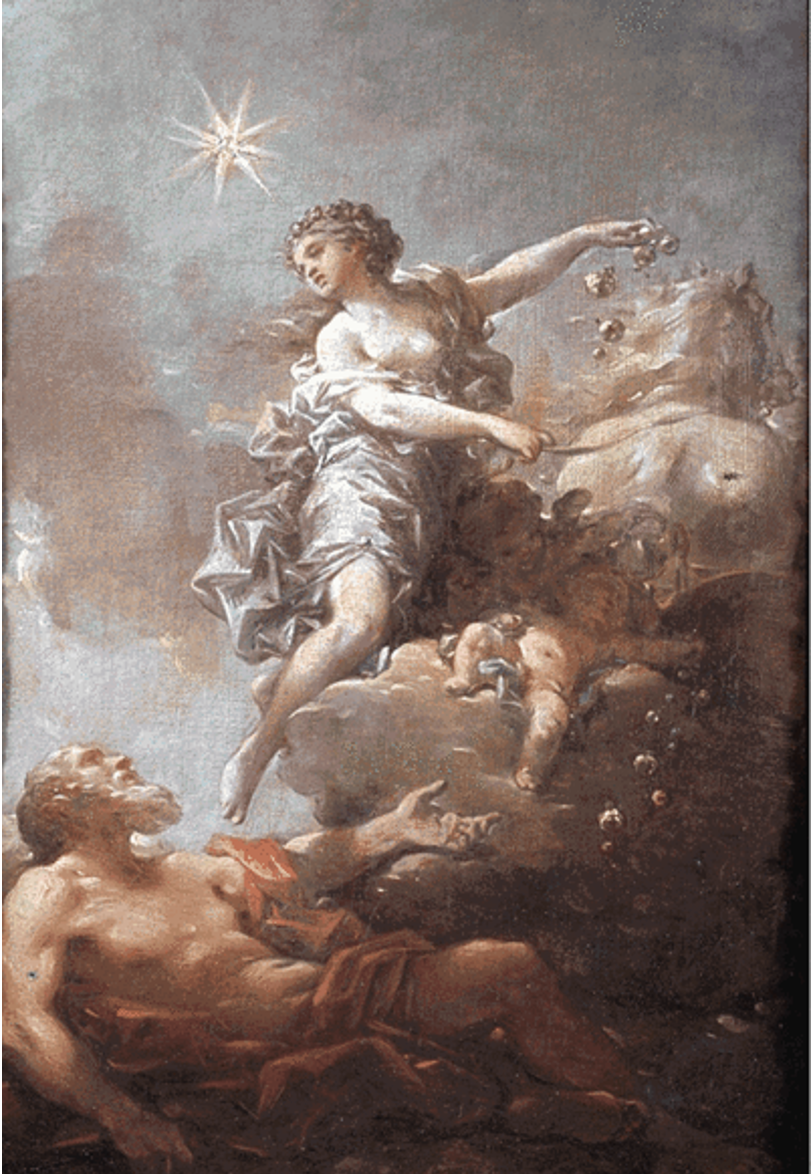
Dabbling over the decade with showcasing exciting, sometimes improbable, intriguing work from new and aspiring writers, the Monolith Cocktail has played host to serialisations of stories by Rick Clarke (of Vukover and The Tearless Life infamy) and Ayfer Simms (the Franco-Istanbul writer, and for a few years, an integral member of the MC team offering various reviews and conducting interviews).
Furnishing the site since Covid with review pieces and the odd feature, Glaswegian-based writer Andrew C. Kidd now adds his name to this list, sharing his grand interstellar opus with the MC readers through an epic serialisation. In the last couple of months we’ve published the Prologue and Part One and Part Two of The Violin: the first chapter of this grand sci-fi story. We now set a course for the next chapter in this vast odyssey, with the first two parts of Hic Sunt Leones Et Corvi.
Andrew seeks inspiration from music and anything that chronicles the fantastical. And in Tennyson, he finds sentiment, solace, experiment and adventure in interstellar space.
“What omens may foreshadow fate to man
And woman, and the secret of the Gods”
From Tiresias by Alfred, Lord Tennyson
“Activity does not necessarily mean life.
Quasars are active.
And a monk meditating is not inanimate”
From A Scanner Darkly by Philip K. Dick
The sound echoed distantly at the treeline boundary. Beyond that, a grassy field opened out to end at the top of a small hillock. A solitary figure pulled back the leaves and stooped under a larger branch to exit into the clearing. The forest breathed quietly behind him.
Louder, duller, without echo – further calls were nearer now.
A stilly silence soon settled upon the scene. Grass blades remained rooted firmly. There was no wind to unsettle them. Their sharp tops speared towards the sky.
Looking up, he saw the wings spread out. It moved swiftly and silently, silhouetting black against the dying light of dusk…
The heat (unbearable to begin with) had started to dissipate. A low-frequency rumble continued to propagate though his body.
In the distance, the hazy outline of a tree, flat-topped, bowed over the ground, came into view. The ground began to elevate; he would soon be standing on the top of a hill. Each step was an effort. Numbed and calloused, his bare feet no longer stung in the sand.
Having stopped momentarily in this arid place, he resolved to keep moving. He had to keep moving.Defiantly, he walked towards the sounds of the distant growling…
Part 1
‘Human remains in the lower decks.’
The interference of the radio hissed into the ears of the Overseer.
‘Have you located the wheelhouse?’
‘Yes, Ma…’ The crackled reply broke off abruptly.
The Overseer moved closer to the remnants of the starboard viewing platform. Through it, she observed the nullity of space.
Her team had entered the forward portion of this once grand vessel. The narrow, box-like dimensions and icy stillness of the plain interior of the bridge were firmly funereal. Glass that once covered this space had been blown out. Its contents had long been jettisoned.
She wore a life-sustaining suit emblazoned with an emblem that was as orange as Mercury and lined white with symbols of stars. Dark pools semi-circled below her eyes. Space was a sleepless place for some. The drugs that the medic prescribed seemed to imbue everything other than somnolence.
Nineteen-years, she thought as she sifted silently through the wreckage. Ninete…
Those years had felt more like a lifetime. The vessels that she and her crew boarded dangled lifelessly in these deeper reaches. Most had been lost long before she had even taken on this role.
Her attention returned to her team who clambered over the remaining chambers of this particular vessel. She sent the Adjutant to locate the stateroom and the Auxiliaries to the fo’c’sle. A Medic remained with her on the obliterated bridge.
Rudderless and shorn from its engine, the ship floated aimlessly in an endless orbit.
The gloved hands of the Overseer gripped the metallic surface of what remained of the broken luminescence control panel. Dials would have once dotted across a large glass control board. Not even the smallest of its shattered shards had been left to salvage. Blown and space-buffeted, everything had spilled out into the cosmos.
As she moved towards the far end of the bridge and descended into the fo’c’sle, a panicked voice suddenly broke through on the radio.
‘T–the––bow… the bowsprit… all personnel report to the listening chamber!’
The Overseer and Medic swiftly made their way to the prow of the vessel. They clambered through a small opening made by the welding torch of one of the Auxiliaries.
A solitary figure sat perfectly still in the centre of this small chamber. Long white hair fountained out of his scalp, cascading down past his shoulders, feathering around him as if charged by the high-electric potential of an electrostatic generator.
The Overseer felt the immediate tranquillity of this space. It was in direct opposition to the disorderly bridge merely ten ladder-steps above it. She observed the Medic drifting around the small podium upon which the cross-legged man sat. He paused as he looked into the youthful face of the Radioman whose body was composed and unaltered.
The Radioman wore no helmet. No oxygen apparatus was attached. This chamber had been apparently airtight until their impromptu opening exposed it to the breathless vacuum of space.
The Overseer quickly placed her ancillary oxygen mask over the stock-still mouth of this solitary figure.
‘A helmet!’, she barked out, beckoning the other Auxiliary to locate one.
The Overseer talked quietly and reassuringly at the Radioman. She had already placed the palms and fingers of her left hand over his eyes: an act that served as a temporary skin-seal to prevent the low-pressure of space from inflating him.
As she held firm, the Radioman still had not moved. He had not even blinked. His muscles were completely devoid of fasciculation and involuntary spasm. It was as if he was dead, yet his skin was a fresh as that of the rescue personnel who had only just boarded this ravaged vessel.
All the other crew of this stricken vessel had been found lifeless. Those who had been salvaged behind oxygen-rich compartments had decomposed. The rest floated lifelessly, forever captured in the positions they held in the final moments before their respective last breaths.
Siss of the radio now danced invariably in her helmet.
‘Repeat last transmission’, an unknown voice demanded airily.
The Overseer paused. Her monitor confirmed that this message had travelled a long distance from their present location. It had been sent by the Theban which was levitating somewhere in solar space on the other side of the Heliosphere. Those onboard this flagship would be listening apprehensively for the reply of the rescue personnel.
‘Repeat your last trans…’
The sibilance of the radio whispered again.
The Overseer left the Radioman under the care of the Medic. She exited the listening chamber and passed through the fo’c’sle to return to the bridge.
‘Remove yourself from that console’, she ordered. ‘Look at the dial. The electromagnetic interference is far too high to transmit at this present juncture. We will retry once we have established RQZ.’
The Auxiliary nodded in silent acknowledgment. He fumbled with his portable transmitter. His actions had been chaotic. He had never witnessed death before. Its facelessness haunted him.
The Overseer manoeuvred past the central workstation to locate the backup navigations.
‘Adjutant, get that Auxiliary out of here… the man’s a wreck. He’s about to keel over.’
She looked over at the Adjutant again.
‘Now, have you retrieved that log yet?’ A small, cylindrical object had been deployed by the Adjutant who was situated in the stateroom on the deck below. This had once been the Captain’s quarters. The cellular implement clicked into life and whirred quietly as it burrowed into the stricken ship’s volatile memory unit. A faint blue light on its interface flashed rhythmically: the download of the devastated vessel’s data had begun.
* * *
Oblivion.
It had been generations since the brilliance of a passing dwarf star or the swansong of a dying sun had shone upon the great body of this vessel.
The ship took on the form of pentagonal prism with many edges and vortices. Its bridge was located at the stern. Those who commanded this hulking monolith observed the midship slope obtusely down towards the fo’c’sle. There were no gunwales. Its port and starboard sides rolled seamlessly over to join with the hull.
At the prow of the ship, a small projection pointed outwardly to space. This was the bowsprit. Within the bowsprit was a small chamber. It assumed the shape of a square-based pyramid. The base of the pyramid backed onto the main body of the ship. Its edges angulated away towards an apex. Once this apex had been reached, the triangle pointed towards shapeless space. This was an antenna. It was composed entirely of a carbon composite.
A Radioman existed inside the bowsprit. He sat cross-legged in the centre of this small chamber. Its three walls converged at different angles to maximise the incoming acoustics. His function onboard the ship was simple: he was to simply listen.
Attached to his head was a light electroencephalographic cap. Intermittent bright dots covered its surface. The postsynaptic potential of every pyramidal neuron in his neocortex was measured. Changes in voltage were interpreted by those who commanded on the bridge. Incoming radio waves were picked up as electromagnetic radiation, and upon entering a conducting body, a current was created. The radiomen and women were band-pass filters, capable of radiofrequency hearing. Uninfluenced and unbiased, the data from their EEGs filtered back to their superiors to ensure safe passage of these grand celestial vessels through the incalculable vastness of deep space.
The Radioman of this particular ship sat in a deeply meditative state. Those who had been given the responsibility of attending to him would glimpse through the small porthole to observe him in aural meditation. He contemplated only the sounds that entered him. The hyperfocus of a trained radioman would open the human mind to the most wonderful and hideous of hidden sounds.
In his training he had experienced momentary distractions such as the pulsatile hum of tinnitus or the oceanic sounds of blood flowing. He eventually learned how to disconnect himself completely from internal and external stimuli to concentrate purely on the deafening silence that consumed him.
The universe in all its unfiltered aural glory shone into the bowsprit. Radio waves, immune to the deafness brought on by the vacuity of space, percolated its walls, tumbling like a torrent into this still river of silence.
Listening. Forever listening.
Each and every wavelength passed through his external auditory canal to vibrate his tympanic membrane, moving his malleus and incus like beaters on a minuscule glockenspiel. The stapes pressed down, disturbing the perilymph which waved to rush into the open window of his semicircular canals and cochlea.
The otherworldly sounds of space cascaded down his vestibular and cochlear nerves unto his auditory cortex.
He listened to the numb static of radio feedback as well as asteroids that collided with rings around exoplanets, ricocheting into unfortunate ships that sent out futile distress signals. He heard hissing and white noise and voices that chattered indistinctly as if partaking in some great celestial conversation, nebulae apart. He eavesdropped on outgassing comets and plasma winds that changed direction.
All individual soundwaves were unique, symphonic even, but nothing was more beautiful to the Radioman than the faint finale of fusing black holes in the distance.
Such polyphony, such maddening repetition in sound, forever-wavelengths that spanned even time itself, beguiled the Radioman who remained cross-legged in the centre of the bowsprit antenna.
* * *
Eyes closed and breathing steadily, the precise and periodic rhythms of pulsars pulsed. The low-frequency bass of matter exiting from a black hole came into and out of focus. He averted his attention away from those unimaginable and terrifying sounds, because once this cacophony had concluded, the remaining souls left alive listening would be the last to applaud the end of everything.
The Radioman focused his thoughts on the Heliosphere on the very periphery of the solar system. Interstellar gasses moved beyond this point marker, whispering indecipherable sounds in the absence of coronal mass ejections from the Sun.
He leant down to listen further. His auricles picked up faint sounds. Nothing significant – something slightly louder than silence.
An inner voice had recently surfaced. His own mouthless monologue.
… and the growling.
These peculiar frequencies he had longed heard but never understood. He had journeyed to them tirelessly. They were closer than they had ever been.
His mind wavered in the heat of the arid land that stretched out before him. Soft sand covered his feet. Sharp-edged grasses scored his bare ankles as he trod softly, edging closer to the low rumbling sounds. He dared not traipse over a branch or let his feet scuff the gravel. Such a careless approach could be ill-afforded. He continued to move over the clay-rich soil.
A large tree silhouetted black against the orange horizon. Its flat canopy of leaves stretched out to shade what lay beneath it. He edged ever closer to this tree, an acacia, one discreet and heedful step at a time. The Radioman knew that source of growling lay beyond this tree.
These sounds had reached him at the same time the vessel approached the Heliosphere. Their volume had progressively increased since then.
He observed the others who moved in the opposite direction. They were making their escape. He had sent them in that direction. Their footsteps faded quickly in the light winds that spread over this dusty land.
The sibilanceof radio interference had been strong on the day that he received the final communiqués from the colossal flagship which remained within the confines of the Heliosphere. It had been gently buffered by solar winds. On the other side of that shield, harmful cosmic rays would batter continuously at the thin walls of their vessel.
The electroencephalograph of the Radioman broadcast its usual complex patterns to those on the bridge. γ waveforms danced interchangeably on the glass display.
He continued to listen.
Part 2
The Radioman jolted. A winged body flew overhead. Its call had been loud. It settled on a nearby branch. Its throat rattled and clicked in a strange sub-song. His ears tracked the unmistakable music. Another figure stood silently on an old wooden fence.
The Radioman remained cross-legged in his chamber in this half-trance. He could not see through his cataracts (opacification of the lenses were the sequalae of a lifetime shrouded by the radiation of space).
The figure on the fence was black-billed and body-black. He followed the movements of this ancient shape-shifter. Entering an even deeper trance, the cataleptic Radioman slipped further down into the cavern of his subconscious.
The cawing of the eye-eater persisted. It, like many others of its kind, was the blinder of souls. Its black head turned steadily. Its eyes squinted into the opaque night. It prepared for flight. A stout bill motioned to caw, yet no sounds left its larynx.
Silence!
Silence was usually an ill-fated omen. He contemplated these visions. Nothing good would come from them.
Caw! Caw!
The harsh sound of two other bodies reverberated around the field, amplified by the concavity of the trees that bound it. He heard the grating cawing of others that had flown in from their sky-occupied position. They landed to perch on branches which buckled slightly. Their black feathers pushed away the leaves.
The cawing intensified further into a cacophony of sound. Each blackened figure flew down from the trees to litter the grassy ground. Their thin feet pattered around droplets of rain which had had started to descend.
At first, they formed a half-circle, cluttered and unorderly. In the proceeding minutes, the separated edges of the collective met to become a whole circle that was absolute and infinite.
The sky above darkened further. Clouds greyed and made indistinct shapes in the higher altitudes. Down on the sodden earth, the circle cackled and clacked.
A larger figure broke away from the feather-black ring and cautiously approached one of its comrades who stood in the centre.
Unblinking, their eyes met.
The cawing suddenly stopped. A strange silence shrouded the scene. Stygian clouds loomed in the semi-darkness. The larger of the two black bodies started to circumnavigate its comrade. It stooped to observe the broken wings, the torn feathers, the blood that pooled blue after mixing with the green grass.
The larger figure moved away momentarily but turned to face its stricken comrade. It kicked off from its backfoot, half-winging upwards, delivering a fatal blow. The already wounded soul opened its wings to reveal its breastbone in readiness for the blow. A sharp beak speared into it. Slowly, the punctured figure fell to the ground.
The circle of observers cried out solemnly. Their forlorn cawing rose and rose until the sound was so sharp that it tore open the heavens. Rain started to descend upon the body in the centre of the circle. Water pooled on the dry ground and rose quickly to consume it in a burial of mud.
The electroencephalograph of the Radioman spiked transitionally during these visions. His head ached. Away from the flood waters in this field, a raging fire had broken out in the surrounding forest. His introspections flashed between this place and a place that seemed more familiar to him. He observed an engine room and the cross-sections of decks of a large vessel. A plasma rifle fired at the glass of the bridge. It did little other than discolouring its clarity. Those on the wrong side of the burning bridge shouted breathlessly, and ultimately, hopelessly.
Fires globed out from the carbon fibre structure of the vessel. Support beams collapsed. The ship ate itself from within. Souls were ejected as burnt embers from its portholes and escape tunnels. They cartwheeled into deep space. Their cries slowly dissipated into the radio static. All the time, the rains continued to fall and the crows cawed maddingly.
He held his head in his hands.
Why had the larger figure killed its comrade? Had it been a hierarchical act? Punishment for a calamitous and insubordinate act?
His EEG readings intensified. Those on the bridge above the Radioman observed these high amplitude projections.
In this shallower phase, having yet to pass through the termination shock of the Heliosphere, the Captain paused to consider the importance of what he was observing.
* * *
Overweight and overwrought, the broad figure of Crone stared intently into the never-ending night. He doffed his sweat-stained battle garments. His chalk-white uniform soon beamed in the fluorescent light of the bridge. A thick band of black ran from his collar and ended as epaulettes.
He had felt the sonic boom of solar winds as they crashed into the magnetosphere of the Sun. They had safely crossed the Heliosphere to enter interstellar space. He relayed the command to relay the news of their safe passage to Earth.
Such an achievement was momentous. They would name institutions after his vessel and crew. He would be bemedaled and showered with honoraria. Yet he struggled to conjure up the appropriate words to mark the occasion. There was no sense of achievement for Crone. His mission was to continue into deep space, to pave the way for other research vessels and passenger ships alike as the lines on the cosmic map were drawn and re-drawn. He waved away his Second Officer as she entered the bridge to congratulate him.
Day progressed into evening. Crone had retired to his quarters and sat in pensive state. The increasingly indiscriminate output from the Radioman concerned him.
He stared at the darting display of peaks and troughs in the stateroom of the fo’c’sle. The readings of the Radioman spiked repeatedly. A pattern had emerged: seven sharp surges were being discharged irregularly. Sharp waves. 100 milliseconds.
Crone had become adept at understanding subtle messages contained within the amplitudes of the electroencephalographs during his years commanding vessels like these.
One spike inferred nearby cosmic detritus.
Tandem spikes alluded to phenomena such as the altering speed of the solar, and now plasma, winds, or a change in the electromagnetic frequencies beyond which the ancillary radio tower could perceive. These were usually precursory. Directional and velocity changes were inevitable in space, likewise, radio chatter. In contrast, two-spike data were impactful. Decisions would be made after observing these.
Spike and wave complexes implied only one thing: danger. Crone had never witnessed this phenomenon before. He wished never to be privy to those inauspicious amplitudes.
In reality, the outputs of those who existed in radio rooms were more difficult to interpret than the oversimplified one-two-spike/wave system prescribed by the protocol. Despite their extraordinary skill and extrasensory perception, radiomen and radiowomen were ultimately human, and humans experience anxiety, annoyance, anticipation, amazement, and even periods of inattentiveness.
Crone knew that their existence was an isolated one. Living in such a permanently pensive state would inexorably impact their mental state. Everything they felt and dreamt were visible as lines on their respective EEGs.
Yet discrepancies caused by discharging neurons had to be interpreted carefully. Any decision made was based on the output of the graphs conveyed to those like Crone. Margins of error were incredibly narrow (effectively zero) in this inhospitable place.
Crone’s musings persisted as he looked out of his stern window. Zodiacal light proliferated in the black ether. The dust-strewn spawn of Jupiter’s comets stretched across space. Their faint glow and explosive sequins delicately manoeuvring in pursuit of the Sun. He knew this to be a false dawn.
* * *
In the bowsprit, the Radioman sat meditatively.
It had been getting warmer. He moved closer to the acacia tree.
The collective low-growl rumbled into the air. Ochre-coloured grasses hid their true size. He counted seven whiskered heads. One stood up slowly and stared purposefully in his direction. Opening its mouth in a slow-yawn, the Radioman looked into the black emptiness of space. He quickly ducked back down under the grasses.
He had only caught a glimpse of its eyes. Swirling fires whorled outwardly from their irises to meet periorbital darkness. They had fixed upon something in the distance. He hoped that it had not been the others making their escape.
He had also caught a glimpse of the canines that thorned out of their abysmal mouths. He grasped the dry grasses nervously. The growling had settled for now. He resolved to edge ever closer to the tree.
Andrew C. Kidd
THE MONTHLY DIGEST INCLUDES A CLUTCH OF ACCUMULATED NEW MUSIC REVIEWS PLUS VOLUME 97 OF THE SOCIAL INTER-GENERATIONAL/ECLECTIC AND ANNIVERSARY ALBUMS CELEBRATING PLAYLIST.

Cosmic Ear
___/THE NEW___
LIUN + The Science Fiction Band ‘Does It Make You Love Your Life?’
(Heartcore Records) 23rd May 2025
In the making for five years the latest release from the alliance between the vocalist, artist, bandleader Lucia Cadotsch, producer and saxophonist Wanja Slavin and an ensemble of woodwind, strings and brass and electronic foils, is a magic electroacoustic trip of fantasy and fairytale.
With a voice that floats over contours, swirls, piques, spins, scales, plunges and drops, the dreaminess of Cadotsch is enhanced by an attentive soundtrack that is simultaneously dramatic, theatrical and musical. And yet it’s all somehow tethered to the urban, with its use of electronica (from synth pop to breakbeat and trip-hop) and often subtle but deep bass vibrations and near alien and imposing atmospheres.
Questioning and testing the boundaries without ever falling apart nor sounding incongruous, every turn and sound is perfectly balanced; from the near swells of orchestration that wouldn’t sound out of place in a Hans Zimmer or David Arnold score, to the jazzy woodland spritely breakbeating woodwind evocations of Otis Sandsjö found on the orbital progressive-jazz celestial ‘Bloody Breakup’ – the latter reference is unsurprising, as one of Cadotsch’s other projects, the Speak Low Trio, includes both Sandsjö and Peter Eldh amongst its ranks.
Everything is channelled into a concrete tripsy fusion of contemporary dance and the balletic, with the themes, the language translucently yet deeply connective; a yearn or near wistful set of observations on modern romance, attachment/detachment, place, belonging, and finding your feet and legacy in an increasingly cold and hostile environment. Titles include a reference to the iconic movie dame Faye Dunaway, who has gone through the mill herself, a unique tough singular talent hampered by travails aplenty, mental health, alcoholism, and the focus last year of a major (and candid) documentary, and an innocuous but curiously and inspired observed daddy longleg.
Though Swiss herself, most of Cadotsch’s partners in this union are from or work in Berlin, where this album was forged. The groundwork and ideas of which began back at the start of this decade. Does It Make You Love Your Life? was ushered in and helped on its way by Kurt Rosenwinkel, the American jazz guitarist and polymath who not only plays the synth on this album but also releases it on his own label Heartcore Records.
The talent pool is in no question, the enablers and musicians that join the mizzle and fuzzed, the blizzard-like chuffs, the lifting and raspy saxophone odes, etudes, cycles and sentiments of Slavin’s cinematic, stage and jazzy saxophone, and Cadotsch’s often melisma vocals adding an extended flavour of the playful, the worldly, the sentimental, the classical and avant-garde. At times this sound palette invokes a touch of Southeast Asia, of Indonesian Gamelan, and at others, like a strange version of a Satie music box.
Stirrings of the Tara Clerkson Trio, Qrauer, Ruth Goller, Kreidler, Alex Stolze, Nyman and Glass are transduced into urban pop and trip-jazz for an accomplished, often understated but impactful, album that has soul and magic in equal parts. Well worth the wait.
Your 33 Black Angels ‘Eternities II’
Released last month
Generously gifting us a vinyl version of their eighth album, the second ‘eternities’ volume (arriving six years after the first), the simultaneously pumped, glammed, moody and near psychedelic three-decade spanning New York kissed angels prove able and dynamic at integrating a fusion of electronic genres and ideas into their sound.
Sophisticated and lively, from the dancefloor to the darker creeping recesses of the underground and strip-light flickered underpasses, Dan Rosato, Josh Westfal and Daniel Bombach seem fresh and in an experimental mood. Considering the amount of time they’ve been producing their signature mix of “bubble house”, “acid pop wonder”, “electro” and “dream-pop”, they sound neither jaded nor tired. In fact, as familiar as the elements and various inspirations are, this is a dynamic record of the brooding and near euphoric. This is electronic pop with a certain, sometimes menacing, edge and depth of quality seldom heard in much synth-pop or electronic-indie music. For there is a range of effects, of influences and references both human and near otherworldly and alien – cosmic celestial sounds alongside more twisted and creepy affected voices; dystopian sci-fi against the cool chrome possibilities of Moroder-like arpeggiator.
The difference in mood and style is almost on a track-by-track basis; the atmospheric scene-setting ‘Test_Run’ opener of digital metaphor and cyber dread is from the underpass, or the Tresor bunker, with its pulsated broody beats, hints of Fad Gadget, a less bombastic Muse and Brian Reitzell, whilst the very next track, the surrealist novel inspired ‘Macunaíma’, has a strange, removed Latin electronica feel of vocoder lyrics, tripping memories and touch of Banco da Gaia new age trance. The latter of those two is a reference to the surrealist polymath Mário de Andrade’s famous novel, which I said to have either ushered in or been in the first flourish of what’s termed Brazil Modernism. Far too convoluted to get into here in the form of a music review, the protagonist, “a hero without any character”, stands as magical-realist metaphor for Brazil’s three races origin myths – the white, the black and the native. Director Joaquim Pedro de Andrade made a loosely based film of the story in 1969, changing some of the plot, with our main character near corrupted after leaving his Amazonian home for the city (Rio in the film, Sao Paulo in the book), and undergoing a transformation, changing his very race, meeting terrorists and birthing his only child – his own birth a really strange miracle, emerging fully formed as an adult from his elderly mother. Read into it what you will, but here there is a vibe that is swimmingly tripsy and soaring.
Further on, ‘Light Life’ seems to ape early Richard James and his Polygon Windows phase on Warp, and yet shimmers with globules and digital trails to emerge as a sci-fi pop version of Daft Punk and Beat Connection. ‘It’s In’ reminded me of 80s NYC electronic and synth collage experimentation, post-punk-disco, Front 242, Cabaret Voltaire and the Yellow Magic Orchestra. And ‘Shaggy & Joe’ could be a quirky kiss-off of Foster The People, Apparat and Reflektor era Arcade Fire. They finish off the album on a sort of Cathy Pacific serenade of glissando and plucked gilded beautifully reflective strings. But they really reminded me in places of Barbarian era Young Knifes. The grit and energy perhaps, and the acceleration. Computerised synthesisers, the drum pad fuzzes, breaks and machine-made beats and something of the kinetic is balanced by more humanistic-played instruments and vocals – although at times this voice is filtered, transformed through R&B pop-style vocoder and twisted into the near demonic. A constant thread of lip smacked rebuttals, of breakup and the machine is interlocked into a futuristic dance catalogue of eternal footprints.
Spelterini ‘Hyomon-Dako/Magnésie’
(Kythibong) 20th May 2025
Well-received last time on the Monolith Cocktail (back in 2022 as part of my Perusal #36 column with their ‘Paréidolie’ drum and drone journey) the French quartet are back with a “diptych” style album of longform rhythmic trances and squalling focused intensities.
Named in honour of the 19th century Italian tightrope walker, Maria Spelterini, who’s death-defying stunts included numerous handicapped (blindfolded, manacled or with weighted peach baskets strapped to her feet) walks across the Niagara Falls, the Spelterini pairing of Papier Tigre, La Colonie de Vacances and Chasusse Trappe members likewise walk a similar path, balancing between influences from the post-punk, minimalist, drone, kosmische and krautrock spheres. Once again keeping balanced whilst straddling the rhythmic, the droning, the hypnotising and wilder and more industrial, Pierre-Antoine Parois, Arthur de la Grandière, Meriadeg Orgebin and Nicolas Joubo emerge from their arts lab incubator to progress over what used to be in old money, the equivalent of two sides of a standard LP format.
Covering Side One, if you like, is the staccato turn cymbal splashed motoring (but not motorik) ‘Hyomon-Dako’. The starting point is a Stereolab magnetic bounce and paddled-like drums and dwindled guitars, with an essence of more modern faUSt and Beak>. You’d have to throw in Nurse With A Wound and This Heat as the action seems to build subtly over an entrancing beat that’s one part post-punk and another part locked-in kosmische hypnotism. The finale is a crescendo of harsher, near hardcore and industrial noise and static.
The white powder of magnesium oxide inspired ‘Magnésie’ is another twenty-minute build-up of similar influences but sounds like a transmogrified Velvets at times. Dot-dash-like Morse Code and heavier strains of wielding and welding work in and out of a looping-like concentration of psych-post-punk and needle-registering frequencies.
Spelterini combine their source, influences to create another hypnotising concentration of neo-krautrock and post-punk intensity and an ever-changing progressive trajectory.
Cosmic Ear ‘Traces’
(We Jazz) 25th May 2025
Traces of the Don Cherry sound imbue the debut album from the newly formed Cosmic Ear troupe of celestial and fourth world journeying accomplished intergenerational players. Referencing benchmarks, both familiar sounding and near amorphous geographical points of inspiration, this ensemble embark on the ancient trade routes that connect exotic mirages to straddle a number of inspired jazz soundscapes, rhythms and atmospheres.
No one is more able to carry on the legacy of this album’s spiritual guardian than the Swedish musician, composer and visual artist Christer Bothén, who collaborated frequently with Cherry back in the 70s. Expanding his own skills of instrumentation, and after learning hunter music and taking instruction from the Malian master musician Broema Dombia, Bothén introduced the innovative cornetist to the West African n’goni, a canoe-shaped, dried-animal skin wrapped lute favoured in Mali and its bordering regions. That same instrument now appears here, alongside the Angolan berimbau (a gourd resonating instrument used in Brazilin music) the Malian karignan (a metal scraper) and range of signature jazz instruments, from tenor sax to trumpet (of course), contra bass, clarinets, double bass, piano, various metal and tin sounding percussive tools and the congas.
Furthering the musical scope with Afro sounds (from Afro-jazz to Afro-Brazil and an essence of North Africa and Arabia) the group seamlessly meld flavours and spices, the “brown rice” ingredients, to conjure up their own worldly visionary sound that feeds on Cherry’s explorative work in the 1970s and 1980s; taking in, as referenced on the album’s finale ‘TRACES of Codona and Mali’, Cherry’s Codona triumvirate world fusion and free-jazz crossroads experiment with foils Colin Walcott and Nana Vasconcelos. The echoes ring exotically loud on not only this suite of spindly dulcimer-like threads, both calling and wilder expressions of Albert Ayler-like sax and Miles trumpet, and an overall essence of Alice Coltrane and fourth world possibilities, but across all the album’s six variant mood pieces, travels and motions.
With the leading sideman and instigating Swedish tenor saxophonist Mats Gustafsson, the Croatian roots composer, bandleader and trumpeter force behind the Tropiques, Fire! Orchestra, Angles 9 and Subtropic Arkestra projects Goran Kajfeš, South American studied noted percussionist Juan Romero and bassist and multi-instrumentalist extraordinaire Terbjorn Zetterberg (appearing here under his Kansan Zetterberg alias) completing the circle, the range of experiences is infinite. The quintet expands to include special guest Marianne N´Lemwo, adding a touch more of the West African sound to the varied peregrinations and feel. Within that lineup there’s plenty of crossovers, with various players at various points in their career joining forces: notably Bothén and the reeds experts Gustafsson and Kajfeš, all three Scandinavians having collaborated in various setups over the years.
In practice, this interchange of ideas summons up images of jungles, grasslands, sand dune processions, the cerebral, pining and cosmically mysterious and lunar. On the opening ‘Father and Son’ movement Cherry’s percussive elements – tubular metal instruments, dried beans and rice being shaken like slow waterfalls – mate with bristled and elephant trunk brass and Afro-jazz groove that wouldn’t sound out of place on an Orlando Julius or Peter King track. The near obligatory and worldly free-jazz explorers go to source of inspiration, ‘TRACES of Brown Rice’, draws from the Cherry wellspring but also recalls The John Betsch Society as the group move from the blues to mirage.
A sort of removed, or at less more oblique version of the romantic, ‘Love Train’ certainly has its dreamy evocations and serenades, but progresses from a classical but just off and contemporary enough to slightly jar Abdullah Ibrahim and McCoy Tyner style piano part to echoes of Tangiers and Salah Ragab style Cairo. That is until the horns bleat and scream, cry and climax in near hysterical fits of tumult and emotional discharge. ‘Right Here, Right Now’ features the already mentioned n’goni, but merges a Malian landscape with elements of the AEoC, Andy Haas and the oscillating shimmers of Irmin Schmidt. Sympathetically, and highly atmospheric, the hallucinatory serenades and longing conveyed on ‘Do It (Again)’ once more call upon Cherry’s spirit percussively: the general signature beads that shake and rattle, the textural sounds of instruments unfamiliar to Western ears, forming a lived-in but also fresh and exotic backdrop. There’s a suffix title, “For Sofia Jernberg”, which I believe is a nod to the Ethiopian-born and Swedish adopted singer, improviser and composer, and noted collaborator with her homeland’s most famous export, Hailu Mergia. Whilst nothing is so obvious as to reflect those roots, the track does have a certain vibration and bluesy gauze that could be said to have borrowed from that part of the world, and from Jernberg’s own cross-pollination embrace of the chamber, of jazz, the classical.
A new chapter. A new break. A new legacy-charged and inspired setup from some of Scandinavia’s most important and exploratively adroit players, Cosmic Ear is an open experiment of free, Afro, spiritual, bluesy, rootsy jazz that traverses all points of the African Continent (from South to the West, East and North), South America, the Indian Subcontinent and Arabia, whilst seeking the limitless expanses of the cosmos. A brilliant debut from a mighty fine ensemble of gifted sagacious but playful and experimental artists.
The Mining Co. ‘Treasure In Spain EP’
(PinDrop Records) 30th May 2025
More or less back in the present, or at least with recollections from a much more recent past, the Irish troubadour Michael Gallagher finds gold in his creative home-from-home of Andalusia in Spain. As the title suggests, this is a metaphorical, allegorical treasure of romantism and tender reflections on his muse and partner, but also another chance to bathe in the suffused warmth of Southern Iberia and the inspiring studio of his chosen producer Paco Loco.
Once more in the wings as overseer and foil, Loco (who has worked with the outstanding Josephine Foster, the Jayhawks’ Gary Louris and The Sadies) pitches in on bass and with a touch of glimmered and shimmering sustained Muscle Shoals spiritual organ and what sounds like an opened-up Exiles On Main Street piano – echoes of that iconic dishevelled album can be heard on the EP’s finale, ‘We Are Not Alone’, a country burred amalgamation of the Stones, Josh T Pearson and the Tindersticks in a sort of country-rock séance. That same track carries on the familiar theme of apparitions, spirits, and the supernatural that ran throughout last year’s Classic Monsters album – one of our choice albums 2024 no less –, and to a lesser extent on Gum Card. A creepy invocation, the dead walk amongst us, accompanied by flange effected guitar, harmonies and a full band feel of shambled, breaky heart Stones influences.
Filling out the role of Gallagher’s band is both Rober García and a returning Esteban Perles on drums, and Pablo Errea and Laia Vehí on backing vocals/harmonies. With the feel more or less a comfortable conjuncture of soft Southern soul, R&B backbeats as reimagined by Mick Ronson, Americana and country-rock. Perhaps the most fully realised performance yet, this four-track songbook is the most radio friendly too: which isn’t a bad thing.
With a mix of touching declarations of love and support to his muse and mini dramas, observations and reflections that play with analogies to scarred environments and plaintive souvenir collectors that hide a much deeper, troubling trauma, Treasure In Spain reminded me in parts of John Craigie, the Brakes, the Style Council and Boomtown Rats. Essentially, a well-crafted congruous production of rounded songs that balance paean with the lamented and lilting.
Gallagher’s most commercial, melodiously warm and fully communicated release yet is still rich with his Mining Co. signatures, tweaks, idiosyncrasies, turn-of-phrase and personality. Americana meets the Donegal diaspora after returning to Earth from his cosmological spells and more rooted autobiographical statements. Hopefully after plugging this man’s talents for so many years now, Treasure In Spain will finally shine more light on a under-appreciated songwriting treasure.
___/The Social Playlist Vol. 97___
The Social Playlist is an accumulation of music I love and want to share; tracks from my various DJ sets and residencies over the years; and both selected cuts from those artists, luminaries we’ve lost and those albums celebrating anniversaries each month.
Running for nearly 12 years now, Volume 97 is the latest eclectic and generational spanning playlist come radio show from me – the perfect radio show in fact, devoid of chatter, interruptions and inane self-promotion.
One of the pillars of that playlist series is the anniversary celebrating albums slots: usually 10th, 20th, 30th, 40th, 50th and 60th anniversaries. This month I’ve selected tracks from Albert Ayler’s supernatural apparition sprouting divine styled Spiritual Unity (60 this month); Minnie Riperton’s melliferous and slinking soul fantasy Adventures In Paradise (50th this month); New Order’s third album, the Kraftwerkian, German new waver Lowlife (40 this month); Scott Walker’s harrowed-by-thou-name Tilt (30 this year); and Teenage Fanclub’s Big Star and Crazy Horse imbued Grand Prix (dropping right in the middle of the Britpop phenomena in ‘95).
I always like to select a smattering of recentish releases each month, usually those tunes I missed or didn’t get the room to feature in the site’s exclusively new Monthly Playlist selections: consider it a second chance. May’s edition includes 2025 tracks from MIEN, the Natural Information Society with Bitchin Bajas, Occult Character, The Body, Dis Fig, and Peter Cat.
The rest of the playlist is made-up of tracks I rate, love, wish I owned or indeed do own, from decades of music collecting and DJing. So find RJ Payne, The God Fahim and Knowledge The Pirate on the spook vibes plus Shyheim, Joe Gibbs, Railroad Jerk, Howie B, The Black Lips, Captain Beefheart, Doris, Andre Williams, Kool Kim, Saar Band, The Mice, Toys That Kill, Luke Jenner, The Models, Docteur Nico, Charles Gayle, The Jean-Paul Sartre Experience, Mappa Mundi and French TV.
Tracks in full for Vol. 97 are:::
The Jean-Paul Sartre Experience ‘Einstein’
MIEN ‘Evil People’
Railroad Jerk ‘Don’t Be Jealous’
The Mice ‘Not Proud of the USA’
Captain Beefheart & His Magic Band ‘Click Clack’
Minnie Riperton ‘Feelin’ That The Feeling’s Good’
Saar Band ‘Double Action’
Andrew William’s Velvet Hammer ‘I Miss You So’
Shyheim ‘Here Come The Hits’
Natural Information Society & Bitchin Bajas ‘Nothing Does Not Show’
The Body, Dis Fig ‘Holy Lance (Audiotree Live Version)’
Scott Walker ‘Tilt’
Doris ‘You Never Come Closer’
Albert Ayler ‘Ghosts: First Variation’
RJ Payne, The God Fahim & Knowledge The Pirate ‘THE UGLINESS’
Occult Character ‘She’s A Reptile’
New Order ‘This Time of Night’
Luke Jenner ‘About to Explode’
Docteur Nico ‘Toyei Na Songo’
Joe Gibbs ‘He Prayed Version’
Howie B. ‘How To Suckie’
Kool Kim ‘The Heavenly Sword’
Teenage Fanclub ‘Don’t Look Back’
The Models ‘Bend Me, Shape Me’
Peter Cat ‘Starchamber’
Toys That Kill ‘Psycho Daisies’
Black Lips ‘You’re Dumb’
Charles Gayle ‘Compassion I’
French TV ‘The Kokonino Stomp’
Mappa Mundi ‘Sexafari’
Hi, my name is Dominic Valvona and I’m the Founder of the music/culture blog monolithcocktail.com For the last 15 years both me and the MC team have featured and supported music, musicians and labels we love across genres from around the world: ones that we think you’ll want to know about. No content on the site is paid for or sponsored, and we only feature artists we have genuine respect for /love or interest in. If you enjoy our reviews (and we often write long, thoughtful ones), found a new artist you admire or if we have featured you or artists you represent and would like to say thanks or show support, than you can now buy us a coffee or donate via https://ko-fi.com/monolithcocktail
Brian ‘Bordello’ Shea’s Reviews Roundup – Instant Reactions

ALL ENTRIES IN ALPHABETICAL ORDER
Tristan Armstrong ‘Lonely Avenue’
Album (Self Release) Already Out There On Bandcamp
Power Pop, Power Pop, Power Pop…I get sent so much power pop that I despair. Not that I don’t like power pop: I do. But only when it has a touch of adventure and thrill, and songwriting talent, and so much of it is so bloody average. They all know how to make power pop records; they just forget to write good songs: it’s all shit lyrics and borrowed melodies and crunchy guitars.
But this album by Tristan Armstrong succeeds where so many other fail, as he has the crunchy guitars but he has also songwriting talent and remembered that music is an artform and there is more to life than The Beatles, Big Star and Bad Finger. Tristen adds Americana, and I can hear just as much influence of Gram Parsons and Whiskeytown and Wilco than the usual three B’s, and so this has a lovely subtle urge of mild experimental warmth and texture that lesser artists would not consider. And when he does venture into the Big Star territory with “Queen Of Diamonds”, he does it with a natural flowing charm.
Yes indeed “Lonely Avenue” is a fine pop rock album and one that I would recommend to both power pop lovers and those who just love and enjoy a bloody good album.
Fran Ashcroft ‘Box Harry Day’
Album 30th May 2025
Box Harry Day is the third album from Fran Ashcroft, and anyone who has been lucky enough to enjoy his last two gems will indeed enjoy this his third foray into his own whimsical and darkly dour comical view on life and the characters he comes across in this not-so-Great Britain.
The twelve tracks on this album are split between six wonderful written vignettes and six beautiful orchestral instrumentals composed by Fran using AI, but in this case Fran being an extremely talented producer and musician has composed some rather beautiful pieces of music and they fit in well with his more lo-fi lyrical gems, and proving in the right creative hands AI can be used to make some quite beautiful art. Box Harry Day is an album of warmth, beauty and songs of lyrical accuracy of everyday British life that stands alongside the works of Coward, Davies, Dury and Haines.
bigflower ‘Something Appears’
Single – Already Out There On Bandcamp
Bigflower is back with his usual blast of monthly excellence, this time with a sonic endeavour of synth excellence. Yes indeed, “Something Appears” is a monster of a track, part Giorgio Moroder part Manchester rave; a track so buoyant that if Shelly Winters had this on her iPod in The Poseidon Adventure she would not have drowned and would have lived to swim another day: you could say she was raving not drowning.
Cody Brant & Diumal Burdens ‘A Panacea Nurtured Gurgles’
Album (Cruel Nature Records) Already Out There On Bandcamp
An aural montage of madness is maybe how one can describe this mixture of found sounds, drumbeats and samples. For “A Panacea Nurtured Gurgles” and albums of this ilk are really works of aural art best enjoyed when trying to escape the mundanities of life; finding escape in the subtle humour and the strategic placing and overlaying of sounds to create a painting of sound: a painting you can close your eyes and lose yourself in.
Fir Cone Children ‘Gearshifting’
Album (Blackjack Illuminist Records) Already Out There On Bandcamp
This album is very good – now there’s a review for you. But I’m not lying, it is very good. It sounds like the Shop Assistants, Ride and the Olivia Tremor Control getting together to gatecrash the local school indie disco to impress nobody but themselves. It has melody, charm and a not so deadly danger. It has what everyone wants from their indie album: pop suss, experimental joy mixed in with the usual post punk bass extravagancies and chiming flange melodious guitar with some rather fetching vocal harmonies – and I can even hint a subtle influence of Syd’s Pink Floyd in the mix. Can I say anymore to convince you to give this fine album a listen… if not, then bugger you. It’s your loss.
Mama Oh No ‘The Mutant’
Single Already Out There
I have more than a soft spot for 60’s Garage Rock, so this wonderful blast of riffery is indeed a blessing to the ears; a track that could have walked off any of those wonderful 60’s garage rock compilations I used to spend my teenage years rifling through in the old Prope Records in Button Street in Liverpool in the 80’s. Yes indeed, ‘The Mutant’ is blessed with a rather wonderful walking bass riff, fuzz guitars and an organ sound that would make the organist from the Fuzztones weep with joy. As you will need not telling, I await the album.
òrain ‘Hanging Fruit’
EP (Practise Music) Already Out There
This four-track EP is a rather lovely warm sounding thing of indie pop splendour; an EP of wonderfully written songs that has one’s head spinning in a slow like carousel waltz of melancholy and pure bliss. Songs that lovers of Belle And Sebastian and the Sundays will grab and hold to their hearts and play until they are paisley etched shadows of forgotten dreams and half remembered fantasy wishes.
St Johns Wood Affair ‘2’
Album 23rd May 2025
The swinging sounds of the 60’s are plundered and rediscovered in this gem of psych tinged poptitude; all original songs all steeped in the love of all things 60s pop. “Center Of Your Universe” the opening track is all “Last Train To Clarksville” guitar jangle and tells you what to expect from the rest of the album: all in your mind’s eye lyrics and the spirit and love of 1967. If an album was made to come with a cardboard cutout Kaftan, it was the St Johns Wood Affair’s 2.
Byrds like harmonies and backward guitars abound on “Hoping On The Train In Vain”, and “Magic Carpet Ride” haunted by the ghosts of the memory of late 60’s Small Faces. My favourite track, the lovely “Secret Garden”, is a kiss of pure psych pop bliss.
2 is an enjoyable and fun listen, especially for us who are still in love with the 60s sound and the 60s dream that will never fade.
Sister Wives ‘YnCanu’
Single (Libertino) Already Ou There
There is something rather beautiful about the Welsh language, and this fine single “YnCanu” by Sister Wives is a rather dark and gothic psych-Grunge gem sang in their native language. Imagine if you will The Feminine Complex being transported twenty years into the future to Seattle and told to make their mark on the local rock scene. If you can imagine that you may have some idea what this single may sound like. If you can’t imagine that just give it a listen…you will not be disappointed.
Smashing Red ‘Dark Eyed Girl’
Single (Metal Postcard Records) Already Out There
The ‘Dark Eyed Girl’ is a 60’s tinged guitar pop song that could have appeared any time over the last 50 years. It could have been performed equally by The Honeycombs (have you heard their stunning flop single “Eyes”, a forgotten dark masterpiece), The House Of Love or even Luke Haines’s Auteurs in a less narky moment. Yes, the ‘Dark Eyed Girl’ is indeed a fine guitar pop song, one that weaves a sensual sinister magic that is strangely attractive like a 60’s Mick Jagger in a floral dress.
Hi, my name is Dominic Valvona and I’m the Founder of the music/culture blog monolithcocktail.com For the last ten years both me and the MC team have featured and supported music, musicians and labels we love across genres from around the world: ones that we think you’ll want to know about. No content on the site is paid for or sponsored, and we only feature artists we have genuine respect for /love or interest in. If you enjoy our reviews (and we often write long, thoughtful ones), found a new artist you admire or if we have featured you or artists you represent and would like to say thanks or show support, than you can now buy us a coffee at https://ko-fi.com/monolithcocktail
Our continuing partnership with the leading Italian culture/music site and platform Kalporz. Words by Monica Mazzoli. Translation by Dominic Valvona.
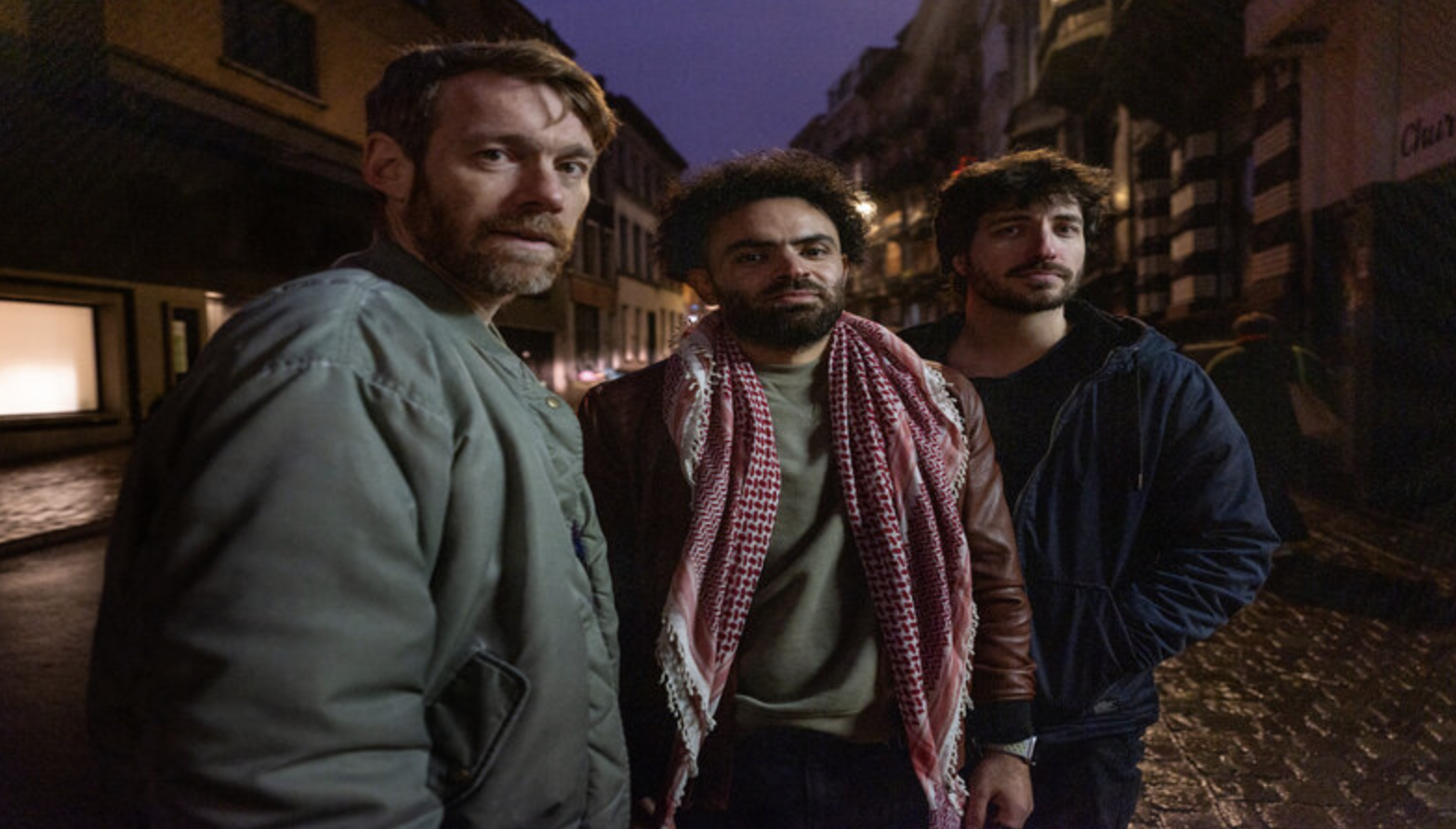
Each month the Monolith Cocktail shares posts from our Italian pen pals at Kalporz. May’s swap finds Monica Mazzoli introducing us to the Belgian-Iraqi trio Use Knife.
“You can’t separate politics from art. […] When we worked together with Saif, that was already a political thing”. With this clear and concise statement released to The Quietus in 2023, Kwinten Mordijck – one of the three minds that gave life to the Belgian-Iraqi trio Use Knife – emphasized the socio-political nature of the artistic project that he was setting up with Stef Heeren and Saif Al-Qaissy . Almost two years have passed and on March 28th, 2025 the second album under the name Use Knife, État Coupable, was released, but Mordijck ’s sentence now rings truer than ever.
The trio’s first album The Shedding of Skin (2022) was born from the meeting of Mordijck, Heeren and Al-Qaissy during a musical research residency at the cultural center of Gent Viernulvier: long sonic jams in which to confront the need to “feel the other’s point of view when making music”, and to think about how “someone from another culture reacts when making music with you” (words in quotation marks by Heeren – always – to The Quietus).
On one side two Belgian musicians who have abandoned their previous sound guise between alt-folk and electroacoustic music ( Kiss The Anus Of A Black Cat ) to experiment with analogue and modular synths and measure themselves against the rhythmic complexity of Arabic and Iraqi music (in this case), on the other, an Iraqi singer and percussionist who left his homeland (Iraq) to escape the war and gives voice to his experiences in music (read the lyrics of “Freedom, Asshole”).
Two distant worlds: neither of the two prevails over the other but a rhythmic magma with many facets is created between West and East. The opening track of État Coupable, the latest album by the trio mixed by Radwan Ghazi Moumneh (Jerusalem in My Heart), “Demain Sera Mieux” is paradigmatic in this sense. In the four and a half minutes of the piece, a 10/6 time signature (popular in Iraq but also in Armenian and Turkish music) is grafted onto a vortex of synths. Or again: the vibrations, the industrial beats of a track like “ Iraqi Drum Set ” are also ignited by the daf percussions (i.e. a frame drum that is part of the Middle Eastern musical tradition) and the chaos of words resulting from sampling the trio’s conversations about Iraqi instruments and their pronunciation.
The sound discourse of Use Knife (the name comes from a verse by Current 93, “the stars spell grammar or use knife”) is sharp and in media res: there are no preambles, we enter into the heart of an artistic creation that wants to become action. MM
Wayside And Woodland Recordings Ben Holton shares his latest album as The Balloonist, Dreamland, and a specially curated accompanying playlist with our Monolith Cocktail readers. Author: Ben Holton and Dominic Valvona.
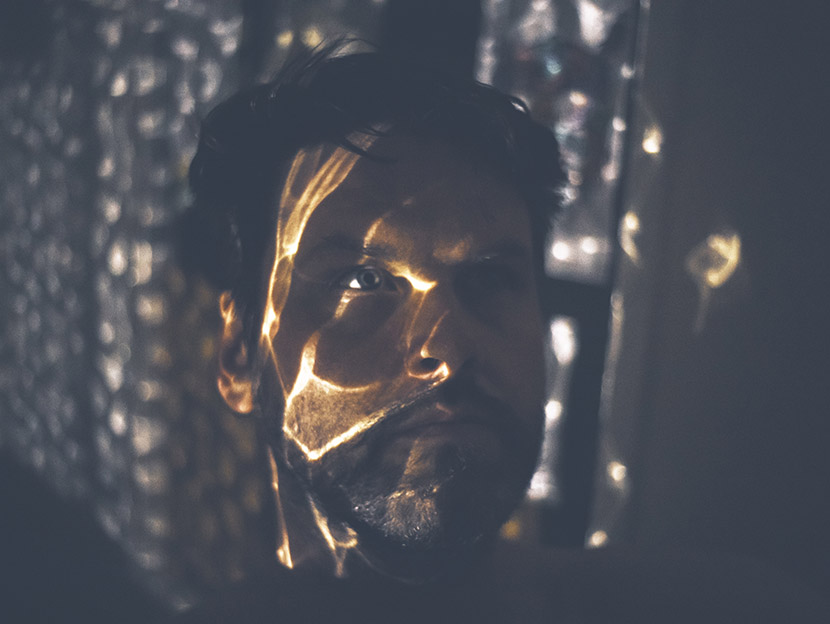
A week on from the release of Ben Holton’s latest stunning and mesmerising hazy album under The Balloonist appellation, the Monolith Cocktail is pleased to have been asked to share a specially curated accompanying playlist palette of musical and atmospheric influences chosen by the co-founder of the South Staffordshire and West Midlands based record and print platform Wayside And Woodland Recordings.
Thematically, through the delicate and gauzily floated and sparkled, Dreamland is inspired by Holton’s ‘childhood memories’ and ‘how they echo and ripple through adolescence, young adulthood and beyond.’ Retrieved and conjured up into spells of ambient ghostly resonance, the more hypnotising and hazily filtered, these visitations from the past are both magical and oblique. The Balloonist’s oeuvre of recollected memories prompted by landmarks on the environment, and the more abstract formed dreamscapes of his imagination form an understated but no less stunning, visualised soundtrack.
Holton’s Bandcamp entry offers up ‘shades of The Caretaker, July Skies, Basinski etc but also ghostly echoes of Prefab Sprout, Pet Shop Boys and other smudged 80s/early 90s sounds…’ All of which I’d concur with, but also offer a touch of the Durutti Column and Mark Hollis. Most of those inspirations, or at least congruous bedfellows, can be found in the playlist that Holton has specially compiled for the blog below.
From sisters with transistors to new age ambient composers, 80s art pop and school TV soundtracks, the journey that Holton has laid out for our readers and followers is sublime and majestic: a rich compilation of crystallised heralding, synthesised bells and tender sweeps.
I now hand you over to Ben who has written an insightful accompaniment that informs and offers a window in on his and that of The Balloonist’s processes and inspirations:
‘For this mix I’ve included music that hovers in and around the last three The Balloonist albums and, in some ways, has been feeding into my subconscious over the last 43 years. This is music I never thought, when I first started making music, would be influencing the sounds I made myself.
Specific to Dreamland, though, and the only ‘song’ featured on the playlist, we begin with ‘Wild Horses’ by Prefab Sprout. There are actually a fair few 80s pop songs I could have included here but that wasn’t quite my aim for this mix. ‘Wild Horses’ is a spectacular production, one which teeters on the edge of a dream and, at points, falls right in (maybe it’s when we hear the breathy voice of Jenny Agutter?). This is the exact kind of song I was imagining falling in and out of sleep listening to, whilst be driven around the warm summer lanes in the late 80s/early 90s. It’s all about those warm pads and chimes.
Ray Russell is an English session musician and Jazz player and it’s very likely you’ve heard some of his soundtrack and incidental music on one of the many TV shows he appears in. The album ‘Childscape’ is my particular favourite and features many glistening, chiming pieces that transport me back to childhood (as I’m guessing was at least *part* of his aim?).
More library music now, with the legendary Trevor Bastow of Bruton Music fame etc. It’s his late 80s and 90s work that fascinate me the most though. Seen by some as a little sterile (maybe?), to me, it’s the soundtrack to childhood intrigue and the subtle beauty of the every day. ‘Preservation’ is a perfect example of this.
Watching the ITV Schools programming of the 80s and early 90s, either in school on a massive telly on wheels or at home feeling ‘slightly unwell’ was an absolute delight (for some strange reason I can’t quite put my finger on!). One of my favourite bits though was the in-between segments, during which we waited for a programme to start, literally watching a chrome ITV logo slowly rotate. To aid our anticipation, were treated to Brian Bennett’s wonderfully exploratory ‘The Journey’, lulling us into a hazy daydream. Then, to snap us out of it and gently rouse us for the ‘main feature’, we’d have the cheery ‘Just A Minute’ (not included here). Both classics.
I only discovered Suzanne Ciani a couple of years ago and it may have been the cover that caught my eye. A soft-focus image of a lady in white, in front of a big mixing desk. And behind her, a couple of lovely big synthesisers in front of a nice big window. It put me in mind of a living room from the early 80s, all wood panelling and afternoon sun. The album is an absolute beauty and ‘Malibuzios’ blew me away when I first heard it. The descending synth chimes were so familiar and connected with something deep inside, something that, you’ve guessed it, whisked me back to the warmth of childhood. In particular the quiet weekdays on which I reflected on the ‘A Quiet Day’ album.
Will Ackerman is an artist I’ve only recently delved into properly, after dipping my toe into the world of his California based Windham Hil label (now sadly defunct) a little over the years. His is a sound I feel very familiar with. Not just the folk inspired acoustic guitar, a sound I grew up hearing, but the fretless bass, synth pads and crisp reverb that accompanies and enhances it. Again, it’s a sound that takes me back to my 80s childhood, listening to tapes in my parent’s car. The way folk music, such as Fairport Convention adapted to the popular pallet of times is where I can trace this familiarity back to, I think. Also, as with Suzanne Ciani, there’s the aspect of New Age music here that, as a kid, being exposed to it by my mum, kind of annoyed and infuriated me. However, those sounds stayed in my head and I’m becoming more and more open to those sounds as time goes on.
My good friend Antony Harding of July Skies introduced me to (Genesis founder member) Anthony Phillips a few years ago and I am eternally grateful to him for that. I mainly love Anthony’s home recorded ‘Private Parts and Pieces’ series that started in the late 70s. Dreamlike snapshots that can lull one into a nostalgic revery at the drop of a well-timed key change. ‘Summer Ponds and Dragonflies’ is a good example of this.
I’m not sure how I stumbled onto the work of Kuniyuki Takahashi, but it was definitely via Bandcamp. I don’t really know any of his other music other than his ‘Early Tape Works’ compilations to be honest but was captivated, totally, the first time I heard them. There’s something about the saturated warmth of these tape recordings that, especially on headphones, just completely encapsulates me. Cocoon-like. I think some of this definitely seeped into certain tracks on Dreamland.
I’ve been listening more and more to artists on the German ECM label over the past few years and Eberhard Weber is one of my favourites. Again, like the New Age music I detested as a kid, Jazz is something I’ve grown to absolutely adore, especially the stuff that borders on ambient and New Age. It’s definitely something I’m leaning into with The Balloonist. As I’m by *no means* a jazz proficient guitarist, it’s fun to pretend I am and, as a result, it pushes me into unfamiliar territory. Which is important as an artist, I think.
Staying with the ambient Jazz theme I’ve chosen another of the greatest exponents of the genre, Pat Metheny. His chord phrasing, tone and melodic sense is just magical I think.
And to end, we go back to pop music. But this time it’s a drifting, dreamlike deconstruction of ‘Everybody Wants To Rule The World’ by Tears For Fears. I heard this many moons ago on the b-sides compilation CD ‘Saturnine Martial & Lunatic’ which I’d borrowed from a friend of mine. I was enjoying the gently swaying rhythm and synth pads and then I was hit by that beautiful pirouetting guitar line. Eventually it resolved into the familiar cyclical pattern we all know and love and I realised it was some kind of meditation on the original theme of the song. I was quietly blown away. In some ways it’s the ultimate reference point for Dreamland, as it’s literally a piece of drowsy ambience with disembodied elements of pure pop threaded and weaving through it like ribbons of memory.
So, in short, with The Balloonist, I’m leaning into sounds that informed my childhood in ways that other music didn’t. The less obvious sounds. Half heard smooth radio pop, incidental TV music and 80s folk. Also, sounds that I actively *didn’t like* as a young teenager, namely Jazz and New Age which have taken on a deeper resonance and poignance over time, further opening my ears and mind to the infinite possibilities of making music.’ Ben Holton
Hi, my name is Dominic Valvona and I’m the Founder of the music/culture blog monolithcocktail.com For the last ten years both me and the MC team have featured and supported music, musicians and labels we love across genres from around the world: ones that we think you’ll want to know about. No content on the site is paid for or sponsored, and we only feature artists we have genuine respect for /love or interest in. If you enjoy our reviews (and we often write long, thoughtful ones), found a new artist you admire or if we have featured you or artists you represent and would like to say thanks or show support, than you can now buy us a coffee at https://ko-fi.com/monolithcocktail
A WORLD OF SONIC/MUSICAL DISCOVERIES REVIEWED BY DOMINIC VALVONA
Battle Elf ‘10’
(Birdman Records) 2nd May 2025
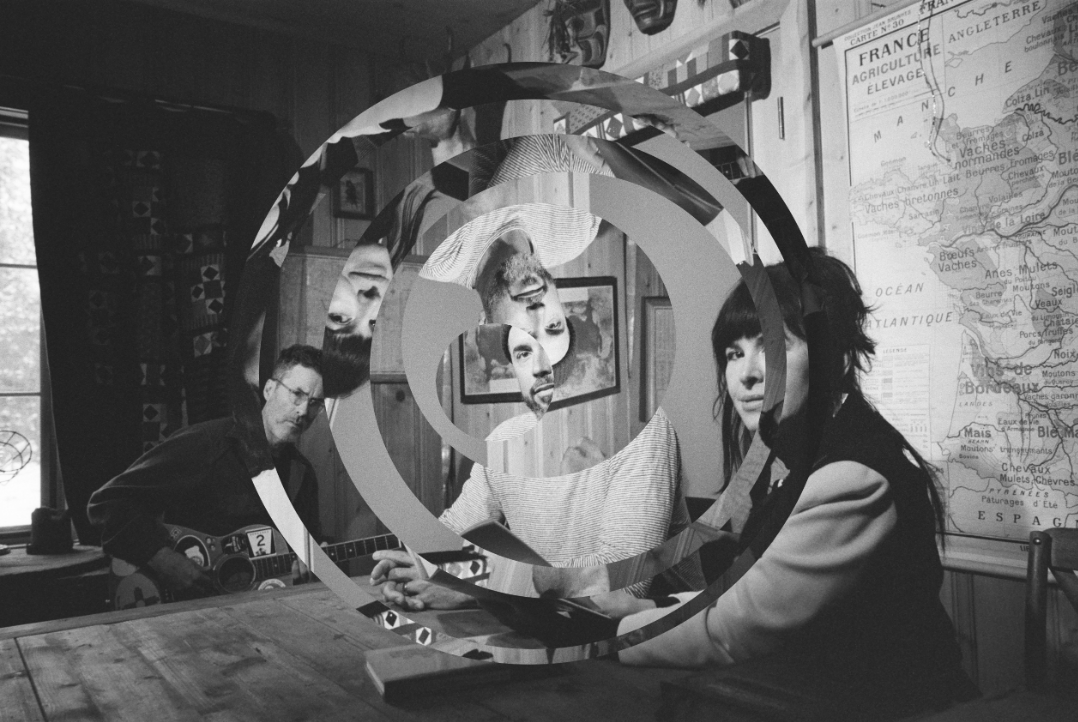
Tago Mago era CAN invoking visitations in cahoots with Third era Soft Machine, the sound of the motor city trio of Battle Elf is a mysterious, supernatural concentration of various elementals and threads pulled together in heavy psychedelic dose of “conflict” and “redemption”.
Harnessing the Detroit environment of both active and defunct, rusted decayed industry and manufacture, the triumvirate draw of Gretchen Gonzales and Chris Peters on guitars and David Hurley on drums moves across a simultaneously disturbing and experimentally evocative landscape of cosmic and tribal mirages, the barren and chaotic. With leaps and bounds of faith and reaction, they recall the already mentioned influences of CAN – especially ‘Aumgn’, although ‘Stops Pretty Places’ could be a live version of the group – and the Soft Machine – tell me that doesn’t remind you of proto–Mike Ratledge Geiger-counter-like ripped organ on the opening part of the album’s first track, ‘Behind The Wilderness’ – alongside Fred Frith, Eddie Hazel, Ash Ra Tempel, and most surprisingly, the Cosmic Jokers. Apart from the Canterbury troupe, the rest are all referenced in the PR notes. But you could add Bill Orcutt and maybe some Faust to that list, along with a whole modern smorgasbord of similar sounding kosmische and experimental psych travellers, of avant-garde and space jazz funk influences. For an album without brass or horns of any kind, 10 has a real jazz feel and sound about it: you could say a Cosmic Slop version of Bitches Brew and such psychedelic affected LPs.
It helps that all three members of this project, between them, have a diverse range of bands, collaborations to channel; from Peters’ Racehorses Are Resources union with hip-hop producer and artist Quelle Chris, to Gonzales’ Universal Indians partnership with John Olson of Wolf Eyes note, and Hurley’s membership and crossover union with Peters in the Panto Collapsars trio. All tangents, interactions now meet at the Detroit crossroads: motor city now a distant memory of a heyday, superseded by kick out the jams, the revolutionary call of post-industry decline and the electricity and rebellion that forged the techno movement of the 1980s.
In this time and space, out on the margins, they counter actions of entanglement with the resonating effects of machinery and steel, the otherworldly and alien with the chthonian and wild. Free-range and yet examined, this avant-hard mood music of a kind is both improvisational and yet concentrated in heavy meta.
There’s plenty of nice touches, surprising and intriguing sounds and motions to be found across the quartet of long form pieces, with untethered rhythms emerging from the melee and more considered passages of guitar play and obscured atmospheric soundings. At times they manage to echo Manuel Gottsching’s transcendent and alien visions: both the menacing kind and the inviting astral plane kinds.
A cult record for head music nuts, the fantastical role-playing Battle Elf pulls together a strange, unearthly and yet industrial scarred heavy psych trip of the supernatural, marooned and wild.
A Single Ocean ‘S-T’
2nd May 2025
From the Chicago hot-house resurgence of cross-pollinated ideas and experiments, another vital conjuncture of that city’s underground post-everything sounds. In the form of an amorphous single ocean of rhythms, of fourth world possible and Japanese environmental musics, of organic electronica and analogue patterns, of post-rock-no-wave-funk and the chimed, the trio of Cameron Brand, Scott McGaughey and Christopher Schreck come together in a special union of transformed and edited improvisation.
After ‘formerly’ coming together to produce a solo album by McGaughey back in 2018, all three foils decided to continue the good work under the open-ended, all flows into the same body of water metaphor, A Single Ocean heading. The collaboration’s debut album is an impressive, congruous but fluctuating immersion and absorption of influences both studied and traversing.
There’s subtlety but more than enough surprising turns on the way, as that ocean of music ebbs and flows between shifts in emotion, pitch, rhythm and style. But that rhythmic response and the ease of the swimmingly and magnetic flows alongside the quirks, the manipulations, and building blocks (layering like bricks of sound, loops, percussion on top of each other) that echo Harmonia & Eno’s ’76 union as much as they do Eno’s My Life In The Bush Of Ghosts collab with Byrne, and even, Bowie’s Hansa period – especially the momentary squeezes and freedom wafts of saxophone. But from the opening dulcimer-like chimes and bamboo music, the near breathes of flute and the use of what could be a Fairlight-like 80s evocative synth, the trio meticulously seem to place the inspired spark of influence soundly in the 1980s and late 1970s. I’m hearing Japan (both the country and band) on the sprinkled ‘Cascades’ alongside Cybe; a hint of Orchestral Manoeuvres In The Dark’s inaugural LP alongside skying new age trance, Masayoshi Fujita and Tortoise – taking the post-rock out of the highly influential Chicago ensemble’s sound – on the poles and tubular synth shuttered and percussive ‘6.4 Blocks’; and a near complete change around of brooding bass and cool no wave on the synth-pop meets 80s cut-up hip-hop collage ‘White Bright Light’. You could add shades of moody TV On The Radio, Holy Fuck and Major Force to the latter. This is all within the boundaries of the first few tracks on a twelve-track spread, as the trio merge hidden sources of percussive instrumentation with the tubular and the electronic. For instance, ‘Waterways’, to these ears, reminded me of a Warp 9 kind of near nu-funky bassline, yet also seemed to work in Jon Hassell and Ramuntcho Matta to the clap of wood and bubbled bulbs of sparkle and strange dialectical, non-religious but near sacred or mysteriously voiced, hints of Bowie’s Low period. Voices, when they appear, are often obscured in some way, or broken up like a clicky disembodiment. There are snatches of what could be samples, snippets from various sources adding to a sense of tuning in to the frequency of the time and place, but perhaps eliciting another evocation, a sense that there is more going on beneath and surface and woven into the fabric.
By the time we reach the second half of the album, there are beams of near cathedral and pastoral organ, those drifted elements of a transmogrified Modern Jazz Quartet, and moments of Casio preset Arabia, Tonto’s Exploding Head Band, Richard Pinhas, Myssa Musique and Lukid; all effortlessly flowing to a data calculus, chemistry and airy mix of electronic movement music. A perfect balance and perfect album that will surprise as much as hypnotise and transport you, A Single Ocean is fresh and inventive enough to softly and subtly set its own course over familiar seas of sounds and influences. This comes highly recommended, especially for those fans of International Anthem and the rich Chicago underground scene.
OvO/Mai Mai Mai ‘Split Album’
(Arsenic Solaris) 25th April 2025
Both frightening visions and supernatural arcane traditions are invoked by the two sets of partners on this split album release from the French label. Having crossed paths a few years back at the Roadburn Festival in the Netherlands, the Ravenna-originating noiseniks OvO duo of chthonian and daemonic Biblical sludge-metal-doom-dread and the disguised Rome-based sonic explorer Mai Mai Mai converge for a special shared vinyl title: four new tracks from the former and two from the latter.
I’ve championed the work of Mai Mai Mai before. A few years back, I was kindly asked to premiere the ‘Fimmene Fimmene’ track from 2023’s double-spread Rimorso album, a work that drew upon the traditions and mysticism of the Apulia region of Italy’s deep south and included a contribution from the mesmerising ethereal elementals siren and Apulia folkloric choreographer dancing spirit of Vera di Lece. Something I called “Gothic ethnological” at the time, Mai Mai Mai transforms, transmogrifies the rural outliers, the regions shrouded in occult traditions, taking recordings from toiled fields, old superstitious rituals and traditional forms of music and combining them with the industrial, proto-techno, drones and, sometimes, punishing miasmic electronics.
Identified as Toni Curtone when unshrouded, the Rome artist now provides a couplet of supernatural atmospheres based around real documentations of spiritualism and old beliefs. ‘Affascino’ (or “I fascinate”) uses a recording of a Calabrian ritual to protect against the “evil eye”. Slowed down otherworldly transformations of monastic-like ceremonial incantation and instruction are merged with force fields, unidentified looming and zip-line craft, exorcism and an anointing cleansing cymbal brush.
‘Portatore di Luce’ (“bearer of light”) is similar in atmosphere and theme, featuring as it does the credited voice of M.E.R. taking part in a Mediumship trance. Communing with the spirit world in whispers before inhabiting some strange apparitional force, the voices of spiritualism are gradually turned into near animalistic barks, pants and unholy evocations as sonic wisps of paranormal activity envelope an ominous entrancement.
OvO (who I must admit I’m not familiar with) consists of guitarist and vocalist Stefania Pedretti and drummer Bruno Dorella, who seem to drag up from the bowels of hell, a heavy meta(l) of apocalyptic distress and bestial vocalised conniption. Across a quartet of fresh recorded material, the duo generates tunnelled industrial unit forbode, drag carcasses across morbidly curious horizons and attune themselves to heretic broadcasts. From the near laboured, and in some kind of near suspended pendulum drop, to accelerated kick drumming pummels and needle-like scratches, various 666 invocations and more mystical cultish atavistic forces are conjured up in infinite realms of horror and trauma. Pedretti talks in tongues, curses and growls from the very depths of pained recall and stressed guttural unhinged torment, as noise, various metals and machinery, and pulses stir up something unashamedly prophetic and fucked-up. ‘In Hollywood’ for example, features a repeated sample from some radio announcement transmogrified into something weirdly supernatural and creepily abstracted.
Together in a near unholy and otherworldly premonition of sonic manipulation, both partners prove their worth in striking up visitations and avant-doom communions.
SAD MAN ‘Art’
(Cruel Nature Records) 9th May 2025
The title is Art, and perhaps the first time that the Sad Man – uncloaked as Andrew Spackman – has cast off the implied references to his great love, his career outside the circuitry and boffin-made instrumentation and electronics of sound and rhythm, to make clear his intentions and inspirations.
Spackman’s most prolific guise yet is once more absorbed in the concept of art, or to be more particular surrealism. Taking as a muse, or a springboard for leaps further into the fantastical, this latest work of electronica and voice manipulation, dream-realism and alien supernaturalism is inspired by the famous English surrealist artist and poet Emmy Bridgwater. Though her station in Edwardian England and before WWII was hardly destitute, but of working-class stock, her progression and life choices were stymied – both due to her parent’s profession and her sex. And yet she entered both the Birmingham and London circles of the Surrealist movement, becoming a prominent member of both groups through her use of automatist pen ink drawings, magic realist and abstract paintings and collage.
Unlike many of her peers at the time, there would be no artistic furores to Paris, the epicentre of that movement during the first half of the 20th century. Many of Emmy’s contemporaries were of largely middleclass and upper-class stock, and so able to afford the time to pursue their art, to travel freely and even idle away their lives dining out on their radical ideas and playing out various stunts to overthrow closeted society. Emmy was already relied upon to care for her disabled sister, and when her mother took ill, she was forced to pretty much stall her artistic ambitions. But there would be return, in the 1970s, a time far more used to conceptualism and long since familiar with surrealism and all its eccentricities. The focus was now on collage and that continued use of juxtaposition and symbols, of placing the familiar in more magical or strange landscapes and situations.
One piece in particular, the Garden of Pleasure, has informed Spackman’s latest Sad Man concept story and soundtrack. A menagerie of animals both wild and domesticated, from a bird of prey to Heffer, butterflies and elephants, have been picked up and placed in a new setting, up on the hills whilst down below a cast of characters (from the shoulders up) have been plunked on pedestals. And a group of straw-hatted workers toil away in an unspecified field in the corner of the picture. The train-of-thought that has been imitated has spun a woven back story featuring a fictionalised version of Emmy; pulled out of time and cast in a story that both makes some sense and none at all. For a father, who isn’t really who he says he is, dies and leaves the family farm to his daughter Emmy – very prescient in these times, with Labour’s inheritance tax changes to farmers, and the ensuing battle between a political metropolitan class at odds with those of the traditional rural heartlands. Whilst travelling to the village in which she grew up, and to claim her holdings – although she doesn’t want or need a farm, and will sell it -, Emmy meets various suicidal characters and ghosts of the past. Between the linear narrative there’s chapters that hark back to the family history; a father overseas winning the war but making a fateful poor decision to throw the deeds on the show of a hand of cards, and Emmy’s special gift of talking to animals is described through what could be imagined events. The farm is central to all this, but the village pub, which is situated, it is said, across ley lines, is also a focus of strange going ons, a time-travelling portal to inquiries and philosophical questions of time itself and belonging.
Each chapter (there is ten in all) loosely applies to the sound world and the manifestations conjured and manipulated by Spackman on the score to this tale. However, the soundtrack extends to twelve pieces, each one having its own title and flight of reference point fantasy. Some of which seem to be computed spelling glitches, others more obvious descriptions such as ‘Voice’, which builds an almost serial suite and canvas of mysterious futurism, rotary shaved metallic pins, a walking or stomping soft but deep bass sense of movement and cybernetic techno from the panted, the uttered, rattled and detuned samples of an AI-like siren – sounding like Holly Herndon, who Spackman has collaborated with in the past on a NFT project that used her Holly+ AI digitalised vocals, and Laure Anderson. I’m convinced that this voice is repeating a line that sounds something like “hot house” at the start of the track.
Capturing the “surrealist” element in the making, Spackman’s artform is an attempt to subvert and find a unique or new approach to creating music and sound; to encapsulate the abstract in a form that doesn’t depend on the usual tools, the usual processes, especially in his chosen field of experimental electronica and soundtrack. Whilst even with the Panglossian lure and excitement of AI, it is almost impossible to make anything anew, unheard before. But Spackman’s discontented sounding Sad Man has a good try at remodelling a form that has now been around for half a century, combining a constant movement, his own juxtaposition of abrasive, coarse, needle-sharp electronic stalactites and beats, of magnetics and metal fillings with melodic touches, airs, beams of Tangerine Dream-like cathedral cosmic light, and the vapoured visions of Vangelis. He is after all looking for the “beauty” in such harsh examples of the kinetic, of mechanics and the bit-crushed and tightly wound.
Across both longer and shorter pieces, all of which themselves go through various changes, never ending up in the place in which they started, there’s those moments of tubular rays, wisps of cloud, dreamt vistas, parallel worlds and the playful. Overall, that grasp, the unearthing or celebration of crystal light and beams, reflections, is very sci-fi. Solar airs and stratospheric cathedrals hover and hang over a more hardened techno and electronic soundscape, as hints of Riley and Glass emerge from force fields, obscured alien terrains and ghostly visitations. The familiar trigger of tablas and a near lulling guitar stand out in the washes, the moistened dripped environments, and constantly evolving, changing passages of distortion, the plastique, and granular shapeshifting. Within that sphere there are sounds that could be alien breathing apparatus, an electrical storm of hailstones falling on a screen and shooting lasers.
Choosing a more inventive way to form this soundtrack, Spackman’s mode of dream-realism, his surrealist inspirations, sound somehow out of time and yet very much futuristic. The Garden of Pleasure collage is now more alien and needs deciphering, transformed as it is into a space between technological meltdown and the hallucinogenic. For Spackman this is yet another intriguing conceptual score and piece of literature fantasy. Art also pays homage to a pivotal figure within the English surrealist movement, and a local Brummie icon in freedom and inventive art – Spackman is himself from near about that neck of the wood -; one that deserves far wider attention.
Tomo-Nakaguchi ‘Out Of The Blue’
(Audiobulb Records) 3rd May 2025
A refined balance of the sonorous and lightened, of microtonal sounds and wave forms, and transformed instruments, constantly drifting and wafting and sometimes reverberating over a traverse of serenity, the lunar and blossomed, Tomo-Nakaguchi’s third album for the Audiobulb label is, as it is billed in the promotional material, “meticulous” and “intricate”.
Adroit with every sound, every texture and translucent jingle and tinkle placed perfectly to both subtly evoke a dance of filaments, of abstracted but felt scenes, moments captured in time and more cosmic/kosmische suspended animations.
As the title suggest, Out Of The Blue does have its surprises; the appearance out of more quiet and subdued ambient fields of a more abrasive but not overhearing electric guitar, sustained in an ebbing fashion, or, the beauty of a beachside aviary succumbing to hallucinatory mirages of the acoustic guitar: as transformed as it to sound more like a dulcimer or even a celeste. The flap of loosened recording tape, the sound of an amp switch, of the power sources that fire it up are there to offer a technological contrast to the more naturalistic soundings, the weightless and warming.
The generated soon winds down. The beauty soon shines through. And distortions never hide or shade the mostly floated airs of the saxophone, the bulb-like electric piano notes that pollinate the sun-bathed haze and various glassy tones. Environment music of 80s Japan, a touch of early Cluster, even something approaching the Kraftwerkian on the majestic ‘Filament’, and A Journey of Giraffes all came to mind when absorbing this slow ambient, modernist classical and cerebral electronic voyage of the inner and outer spaces, imaginings and landscapes transduced into an atmospheric dream. In all, a most immersive experience from the Japanese musician and composer, and contender for this month’s choice albums list.
Neon Crabs ‘Make Things Better’
(Half Edge Records) 2nd May 2025
Another twisted conception as members of the highly prolific and durable Neon Kittens and The Legless Crabs pool together in both a riled and darkly humorous, embittered frenzy; with jived barbed lyrics and wrangled steely sinewy guitar projectiles, sustain, wails and chugged punk-snot-rock and post-punk velocity aimed at the Trump administration and the greater board of douche bags running the “USS of A”. Yes, as the title of this remotely orchestrated and recorded project’s opening salvo makes clear, this is a rebellious sonic and hardwired dig at the authoritarian rule of the Donald and his cronies; a call-to-arms against the fascistic goosestepping march of a class that seems to relish being a piece-of-no-good-shit.
From both sides of the Atlantic, the British Neon’s instigator Andy Goz and his foils Nina K and Hope Munro join forces with their estranged Legless Crabs American maverick cousin Matt Nauseous on an album of bleak aphorisms, derangement, petulance and suicidal tendencies. Catching the zeitgeist, as the Trump maxim of unchained and lethal disruption, bullying negotiation and chaotic messaging throws up a new kind of hell and threatens to supersede the globalised norms of the past two decades for an unruly alliance of authoritarian “strongmen”, this violent, contortion of underground artists mines the present landscape of drug dependency escapism, disillusion, victimhood, suffering, austerity and anxiety.
Coming on at times like a wake-up call from a union between Iggy Pop and the B52s, and at others, like a skulking PiL and Scary Monsters Bowie, or even Sonic Youth, the action and timings fluctuate between the driven, the motoring and more strung-out. For this is often an album that evokes a bastardised and re-routed route 66 rock’n’roll Alan Vega shake of the open and on the road vision of America. Nauseous takes this on an amusing detour, via the Hitchhiker’s Guide To The Galaxy, The Beach Boys and Kim Fowley’s Animal God of the Streets, on the phaser and flange guitar mockery of intergalactic frippery ‘Space Vibes USA’ – a dig perhaps at the egotistical Musk and other entrepreneurial space dreamers.
The lyrics, as always, are fucking great; both fun, mocking (that word again) and hardcore. Not so much whining or crying, but simultaneously as irreverent as they are making a serious point about the disfunction of our times, and the spectre of fascism – I’d argue this word has been often overused in the past, and perhaps has outlived its usefulness, as fascism now, to me, doesn’t so much reflect its origins, its supremacist roots as stand for authoritarianism nationalism of a different ideological stripe; so for instance, Russia is fascistic, Iran is fascistic, China is fascistic, and so on and so on. A civil war, a cultural war has already begun – perhaps as long ago as a decade or more. A battle between the classes and the politics of globalism, open borders against the warranted fears of those that haven’t benefited a cent or penny from it. I’m being glib, opining a summary, when the various motivations and reasons need reams and hours of discussion. The Neon Crabs have a good stab at it though; paring down sometimes into one line how we all feel, or how fucking crazy the whole damn situation is.
Concerning to these ears though, the dejected Heroes style ‘Age of Annihilation’ sounds like a suicide chatroom. Nina K delivers a customary deadpan mix of virtual girlfriend empathetic malfunction and a Slavic version of Michi Hirota on this distraught Armageddon anthem. In contrast, ‘Some Random Country’ takes the throwaway disingenuous bully boy put-downs and antagonism of Trump and his shrill Vance against foreigners and the international community on a hyperbole piss-take – Vance, as he showed against Zelensky in the worst disrespected exchange to soil the White House, has no real grasp of history or geography; his comments aimed at Europe, but we all know he meant Britain and France, on war and conflict were so twisted and contemptible as to make this plank sound like a thicko tool in pay of the Russian state. (Has America actually won, outright, a single conflict on its own? Britain in contrast has, and so has France, but both have enabled, sacrificed and fought with America; both joined the coalitions in America’s war with Iraq and Afghanistan alongside something like 50 other countries. America, for all its recent pomp, hasn’t stood alone since Vietnam: and we all know how that turned out.)
As Nauseous hails on the drug-kick Iggy turn ‘J Spaceman’s Blues’ “wake up man!”. But then he also sings, “you bring the needle, I’ll bring the crystal”, and fist pumps drug addiction as Rome comes tumbling down around him. As the American SS reigns supreme, ripping up and skidding across the White House lawn in their gas-guzzling convertible Humvee, the Neon Crabs shake, rattle and roll up a post-punk derisory resistance. Long live this cross-Atlantic union.
Xqui ‘The Colour Of Spring’
2nd May 2025
Although, for the most part, a form of emotive evocative purity, of colder near tundra-like white breaths, tubular airs and chills, the highly prolific experimental composer Xqui ushers in the warming seasonal change, as the clocks go forward and the evenings get lighter. For Spring sounds less like a pretty, flowering, budding and blossoming dance of dewdrops and hazy sun beams, and more a thawing out distillation of Winter.
And then again, just to throw us off the scent, Xqui pays homage to the late, great Mark Hollis by naming both the album title and tracks after both songs from his Talk Talk and soloist (if that did mean only one, very influential and acclaimed, album under his own birth name) catalogues. The legacy of the adventurous and pioneering artful pop group Talk Talk is echoed mostly through those title references, with examples such as ‘Life’s What You Make It’, ‘Spirit of Eden’, ‘After The Flood’ and ‘Chameleon Day’. But it is Hollis’s sparser minimalistic later work that can be detected here across eleven ambient, atmospheric and near glacial visions of the crystalized, blowen and clean. Visions that often promise serenity and reflection, but also offer subtle hints of enormity, of environmental change and the cosmic. Some tracks could even be said to be moving in a sci-fi direction, aping echoes of the Kubrickian, of Tangerine Dream and a host of other quality synthesized and analogue space score sculptors. There are signs of deeper leviathans, of the alien, or a presence of some kind – maybe even some form of craft, or Arthur C. Clarke visionary intelligence aboard…I don’t know, maybe a cigar-shaped, impenetrable ship that hovers on the border of the ominous and awe-inspired on the edge of our atmosphere. At other times, this could the bow of a ship hidden in a fog or even an ether, slowly passing by in cycles. The ether element is a key one I think, as sometimes the atmospheres, the refined, perfectly measured minimal waves, pitches, scales seem to serenely merge with such a substance and mystery.
Alongside the mentioned spheres of influence and sounds, there’s a sense of drama, a transformed version of hidden sources and instruments and sentiment of reverence – especially on the lower but soft scales and movements of the mysterious ship like bows on ‘It’s Getting Late In The Evening’ – a title borrowed from the B-side to one of Talk Talk’s most commercially successful singles, ‘Life’s What You Make It’. Elsewhere, we are submerged within amorphous shaped clouds and elements that seem to have no density at all. And yet there is a real weight to it all that’s hard to describe. But for the most part Xqui creates the merest of essences, as he sculpts and prompts reactions and encapsulates a feeling and scape from the ether, his sources and finely attuned inspirations. Not so much a homage, as a prompt, a transformed response to the late Hollis, Spring is an original seasonal abstraction, and further expansion of Xqui’s desire to carry on communicating his sonic and compositional experiments to the wider world.
Greg Nieuwsma & Antonello Perfetto ‘Bird Brain’
(Cruel Nature Records) 25th April 2025
Connecting in Krakow as members of the progressively experimental Sawark before an eventual disbandment, the Midwest American and Neapolitan bred musicians Gerg Nieuwsma and Antonello Perfetto formed the Corticem partnership before sporting their own birth names for a new avant-garde chapter. After a number of albums, and once more partnering up with the Cruel Nature Records limited edition cassette platform, the duo expands their sound further still, prompted by a pair of nesting blackbirds observed over a month-long duration on Nieuwsma and his family’s balcony.
Taking the usual “bird brain” put-down and flipping it round to reflect both an affinity and near reverence for our avian friends, the duo sound out and react to the cerebral, philosophical and impressive behaviour and communications of the blackbird. But, inspired by Nieuwsma and his wife studying with curiosity and anticipation the birth of a quartet of “nestlings”, these themes also incorporate the very humanistic feelings of loss and nurturing, with Nieuwsma’s own thoughts about his kids leaving the family roost. And yet, after reading and swatting up on the study of such pioneering theorists as Robert Dooling and the philosophers Michel Serrer and Vinciane Despret, found that his perceptions, his sympathies and actions to protect and nurture were unwarranted. This was made clear when with a concentrated mind and plenty of research material, he found that blackbirds, and all birds, measured time differently: to them a month may seem like a year. This was made clear when the blackbird family abandoned their nest after only a month on Nieuwsma’s balcony, bringing up their family of fledglings in what seemed like such a short space of time.
Time and perception are the key words, but this album is also the reification of fascinating stats and theories on how we perceive the life cycle and our humanistic projections on nature as a whole. It all makes for an interesting, near miraged at times and psychedelic, soundboard experiment and device for free-improvised quantification. The blackbird’s song, the communication between its cloud or merl, are transformed from the familiar to the near alien, disturbing and supernatural through a trio of environmental field recordings. In either naturalistic real time or stretched-out and compressed, these recordings take on various transformative values; the variations change from the tranquil capture of passing time to a near otherworldly and paranormal pairing of cult Italian horror suspense and early Amon Düül II. Chirps suddenly sound more like squiggles, as the passing motions of hidden real sounds take on the generated machine sounds of a space craft.
Musically though, the rest of the album is in either a state of near slow suspension, a slowing down of time, or more spilled and splashing with the feelers in a sort of improvised mode of travel. With Nieuwsma on guitar and his foil Perfetto on a constant move across his drum kit and percussive apparatus, the playing shifts between a slacker-like bluesy psych vibe, post and math-rock, raga-like hallucinations and melts, and a strange aping of Moroccan gnawa. You could describe it better as Guru Guru meets King Champion Sounds, Don Caballero and Rhyton in a loose, acid head rock world of the wild and more languorous – throw in a little Velvets and a Mogadon induced Archers of Loaf to that mix for the full picture.
As momentary expectant, encouraging parents to a blackbird family, Nieuwsma and Perfetto channel study, theory, surprise, shock, and observation into a musical and sonic experimental flight of fantasy and improvised-like free play. Cerebrally transducing how time is measured by more or less embodying or looking at the subject through the eyes and brains of our avian friends, the duo question, inquire and mark their intricate behavioural patterns and unsaid intelligence, their speech and remarkable life cycles.
Hi, my name is Dominic Valvona and I’m the Founder of the music/culture blog monolithcocktail.com For the last ten years both me and the MC team have featured and supported music, musicians and labels we love across genres from around the world: ones that we think you’ll want to know about. No content on the site is paid for or sponsored, and we only feature artists we have genuine respect for /love or interest in. If you enjoy our reviews (and we often write long, thoughtful ones), found a new artist you admire or if we have featured you or artists you represent and would like to say thanks or show
 Monolith Cocktail Blog