Perusal #83: megiapa, Stylianos Ou, Devon Church, Dragonflies…
September 16, 2026
In review: a world of sonic discoveries. Dominic Valvona
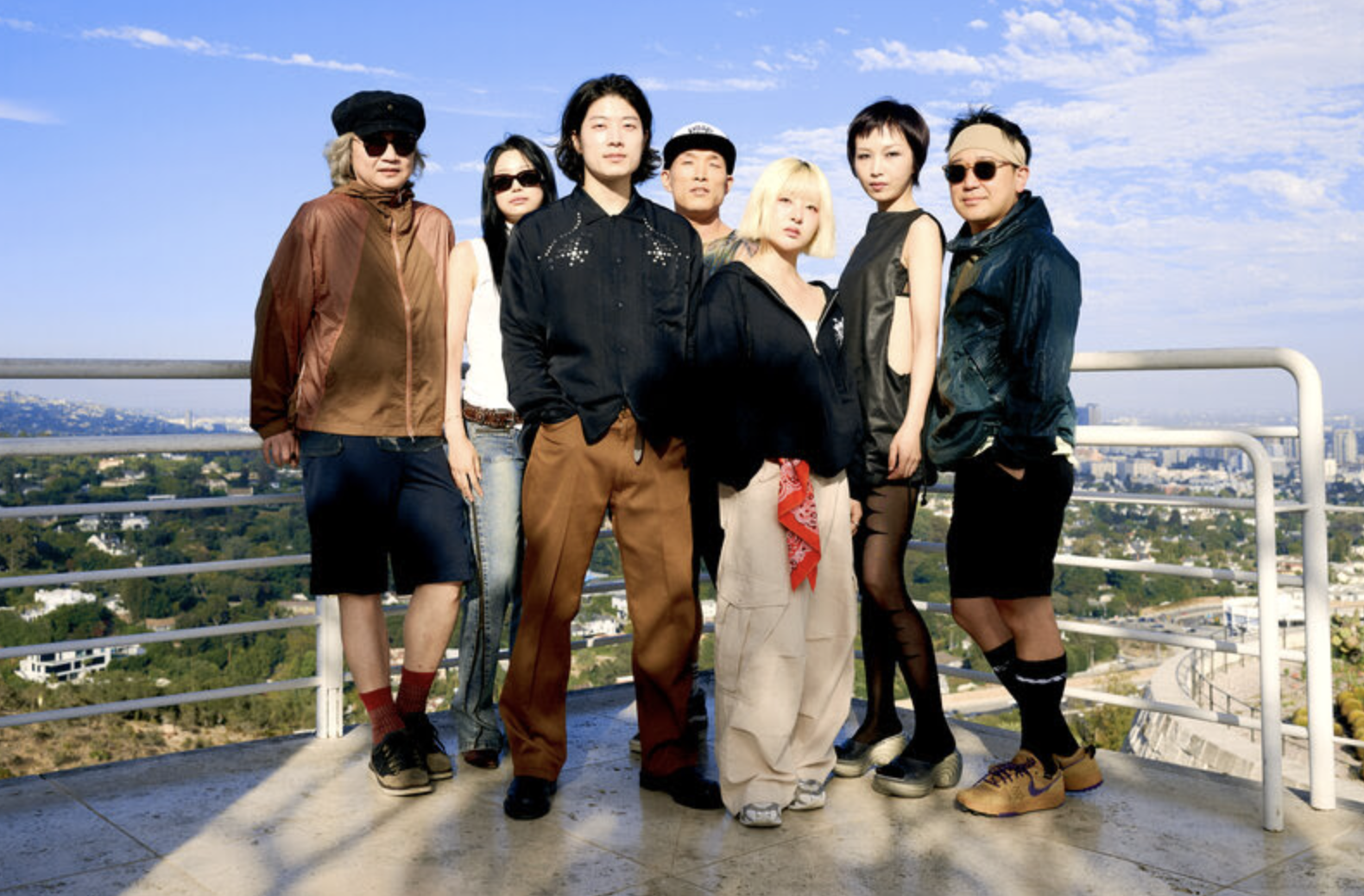
Photo by Robert Macaisa for Off the 405, Courtesy of Getty Museum
An Ambiances Magnétiques Label Double-Bill
Super Scintillant ‘Tarot’
Érick d’Orion’s ‘Mes fantômes’
(Ambiances Magnétiques) Both Released 25th September
Two similar(ish) spheres of influence and conceptual works from artists aligned with the Canadian label’s “adventurous music-making” aesthetic this month. Only appearing recently on my radar, the Ambiances Magnétiques platform is based on and around the province of Québec; it’s stock in trade to showcase interesting, explorative and avant-garde releases from both some heavy hitters in the form and burgeoning fresh talent.
Firstly, the debut collaboration between the performer, electronic musician and artist Nicolas Bernier and his foil, the notable bass clarinettist, lecturer and professor Mélanie Bourassa, Tarot. With everything that title might allude to, from its Kosmische and early analog conceptual traditions to its hermetic and esoteric connotations, its symbolism and prophetic omens and warnings, that umbrella is used amorphously to explore and shape electroacoustic and modular apparatus conjured atmospheres and descriptions manipulated, or so it sounds, in real time.
Both partners on this sonic mystery and sci-fi adventure, draw upon their extensive backgrounds; Bernier with both his merging of musical and artistic projects, and his extensive prolific catalogue of collaborations, including with leftfield underground hip-hop Antipop Consortium con-founder Beans, and Bourassa with her study and teaching, and depth of experiences working with the Québec Symphony, the Metropolitan Orchestra, the Montreal Symphony and Violons du Roy.
Crossing the classical, the avant-garde, even hints of jazz with that “super scintillant” of electronic sparks and effects, the signal from Bourassa’s bass clarinet is routed directly into Bernier’s “rig”, allowing him to control the parameters of his system using her output. That’s the underlying method that sets in motion a both alien and reimagined pastoral investigation of the instrument; transduced and transformed from its familiar bass-y tones and higher flutiness and cyclonic flutters to sound both of its tradition and yet astral and part of the Fourth World legacy of Hassell and Roberto Musci too.
Fibres, metallics, space craft mechanisms, counterflows, the tubular plastique and unsettling whispers move around or directly reverberate off the bass clarinet’s audible finger work, its space bird-like cries, duck billed croaks, its squeezes and piped melodic spirals and song.
There’s one point where the clarinet travels almost to Egypt – not without diverting via NYC Gershwin and a stalk in the bush -, another where the instrument reminded me of Park Jiha’s work, Sakamoto and Arve Henrikisen.
It’s a both kinetic and improvised entwinning of the two disciplines and their scopes to perform a contemporary ballet of machine engineering and the acoustically amplified and breathing. A stellar futuristic whisk and more majestically adroit collaboration of mystique and atmospheric stirrings that can sometimes being near hymnal and other times unsettling or at least filled with a sense of in trepidation.
Delving much further into a metaphorical Venn diagram of supernatural and paranormal alluded untethered jams, Érick d’Orion‘s septet assemble of eclectically concentrated musicians’ tune into the psychic to communicate with old and new apparitions. I say apparitions, but this is a live (by the sounds of the audience appreciation) draw of influences, inspirations and record collections plucked from the ether or pulled from past experiences to march and rollick all over any semblance of preparation.
The multi-disciplinary audio artist, composer and improviser of note has shared his skills and exploratory travelling mind with such notable company as Evan Parker, Martin Tétreault, Otomo Yoshihide, Robin Fox, Ilpo Vaisanen, Alexandre St-Onge, Sam Shalabi, Günter Müller, and eRikm. An enviable and diverse list that now comes in handy on this expedition beyond the paranormal.
Gathering together Marie-Pierre Brasset on synths, Émile Boucher Cloutier on percussion, Michel Potiron on electric guitar, Réal Gagnon on drums, Stéphane Beaulieu on electric bass and Nicolas Gobeil on trumpet for an invocation and dance with the phantoms of past musical excursions and memories (both the conscious and unconscious kinds), Érick plugs into a Fortean amplifier to create an Acid Mothers Temple-Last Exit scuff and splash of Poltergeist activity at a Sly & The Family Drone punch up with Fugazi and The Pop Group.
Over two sides (though my edition came with an unnamed bonus track) the troupe of sonic psychic investigators communicate with feedback and foldback invoked ghosts, unholy disorder and knocked transmissions from beyond even Mina Crandon’s imaginative cons, before the tempo, the direction of travel changes towards a sudden lilted sympathetic echo of Don Cherry’s cornet trumpet that soon apes the bugle call of some lost fort in a matinee film. But then, just as you get a pause in the action, a handle, we roll up into the freeform drumming prowess and wild kit turnouts of Milford Graves and Tatsuya Yoshida. But again, we then leap into the gargled revved-up attitude of hardcore and jazzgrind, of a leaderless and instrumental live Black Flag and the Dead Kennedys pulling out a knife on the Red Hot Chilli Peppers.
And that’s only track one, ‘Spectres’: which to be fair is over twenty minutes plus in duration. ‘Ectoplasm’ is shorter but no different in its mix of ideas and improvised scope, starting with occultist atmospherics, Faust-like ceremonial ominous punctuations, and metal shredded guitar. However, it takes hold of a groove of a kind, or a momentum; a space rock flight of fantasy over Tangiers, with elements of Hawkwind and Amon Düül II and the Arabian desert trumpet evocations of Lee Morgan and Chet Baker. Metallic whips lash at the spectacle, whilst electronic apparatus concoct zips, the bass a growl, and the drums scuff and gallop towards the demonic icon.
I will just mention that third track, which begins with a hand drums and group effort embrace of Afro-funk before switching to the esoteric procession and ending up once more in the hardcore and jazzcore realms of free enterprising dread: it actually reminded me weirdly of Wicked Lady, and also has an air of prog and metal about it too.
If Ill Considered and Scarla O’Horror spent more time skateboarding in the late 1980s or hooked up for a musical collaboration with Laddio Bolockos and Massacre than this might well be the result. And if that doesn’t pique your interest then nothing will.
The Bordellos ‘Oh Nora’
(Metal Postcard Records) 11th September 2026
No, not a tribute (as I initially thought when seeing the title) to Nora Batty the pinny wearing, wrinkled stockings and hair nut costumed stoic and hard-faced muse of Compo in that quintessential English comedy of life in a Northern town, Last Of The Summer Wine, the protagonists of this latest song from the maverick family band, The Bordellos, are two star crossed lovers/singers sharing the same name; neither of whom are aware of each other’s romantic infatuation with the other. Both Nora’s – one an aspiring younger singer trying to crack the music industry, the other, in her mid-sixties, finding a newfound cult status after her 1970s flopped LP is picked up by a new generation, and once again appearing on stage – love one another from a far without knowing it. And it’s that relationship, or the simultaneously tantalising and both hand-wrung agonising over the prospects of what could be that are so movingly and whimsically sung about on this latest single.
Taken from what could be (if the band’s co-founder and the vocalist and acoustic guitar player of this song, Brian ‘Bordello’ Shea, ever gets the time) a larger planned musical entitled ‘Oh Nora – A Small Town Story’, this single sets the lo fi sympathetic plaintive tone; a sort of grim up North version of folkish-country Dylan with a lilted lean towards Simon & Garfunkel’s ‘Mrs. Robinson’, and yet unmistakably low rent English kitchen sink romance. Brian’s son, Dan Shea (of Vukovar and Beauty Stab fame, also known to have penned the odd piece for this site over the years) can be heard weeping a haunted malady of steel pedal wanes and quavers, whilst Uncle and brother Ant Shea completes this disenchanted but romantic trio on harmonica and vocal harmonies.
Perhaps one of the band’s most charming, less acerbic and jokey polemics on the state of the nation, yet set to small town suspicions, bigotries and the unwillingness of some to accept change, Oh Nora’s central characters are used to demonstrate a continued sneering and outright homophobic prejudice to same sex relationships and of openly gay people in close-nit communities: especially in towns long since left to rack and ruin by not only Tory policies but Labour’s too.
There’s a real tenderness here, even nostalgia (though not for the 60s of homosexual criminality, nor the early 70s when artists were obliged if not forced to hide their sexuality even in a supposed “gender-bender” age), yet it’s saved from being truly saccharine by The Bordello’s signature lyrical takes on the everyday detritus of pop culture, of fumbled love affairs and the innocuous habits that immediately conjure up life in a Northern town of old: This is a liaison that is quintessentially both English and Northern.
It remains to be heard what can be expanded upon, but The Bordellos certainly have the groundings for a sweetened if self-depreciating propounded musical.
Devon Church ‘The Shame Of Winnipeg”
(Ruination Records) 18th September 2026
Taking its cue, I’m sure, from Leonard Cohen’s (written with his collaborative foil Sharon Robinson) languorous rile at the rotten state of the world, ‘Everybody Knows’, NY producer and songwriter Devon Church encapsulates the underlying sour and the disenchantment of that 1988 anthem to despondent protestation and cynical beguilement.
Originally released on Cohen’s I’m Your Man LP, and if anything, a resounding triumph of the poet’s disgruntled take on the stench of the times and the decades previous (a contemporary chime with the AIDs epidemic of course, but also with long held musings on both relationships and religion, thrown in with corruption), it’s since become a totem; a go-to for wised-up film producers and directors on the hunt for that one song that so sums up the times.
But Devon doesn’t just write a long love letter to that iconic tune, nor just snatch its sound, but delves deeper into the catalogue to reprise that sort of Med Greek Island holidaying and retreated Cohen vibe too; a subtle breezy adoption of sun-kissed adult louche new wave, rock and troubadour vibes that called be described in some instances as yacht rock. Then again, inspired by his early adoption analog, mic and keyboard purchases during the Covid pandemic, Devon also adopts a shimmy chimmy sound of swimming and faux-Latin presets, a flange-y and phaser-ed embrace of Isaak and Lynchian noir and a subtle borrow of the Aussie sound that became synonymous with Crime And The City Solution, and some of the Bad Seeds work during the later 80s.
Despite hanging out with the Millennials, feeling their pains and carrying their withering gripes – as laid down by the Frankfurt School, Reductionist and Deconstruction theorists –, Devon’s tone seems more boomer, or even Generation X; his influences obviously for the music and activist poetics and polemics of the ageing Boomer class of Cohen, Scott Walker and even Dylan (really hearing some chimed evocations of his 80s works). But it’s actually executed with a smoothness and maturity that might be beyond Devon’s years. He certainly seems to thread if not make obvious connections across the generations and years like Dylan; his reference points and slogans in a lucid if sometimes vague coalesce that attempts to wrap up the last century and the slow collapse of humanity and society in the face of capitalism’s battle with feudal technocratic authoritarianism, globalism, the drag of neo-liberalism and both a crash that still hasn’t ever been resolved and a pandemic that pretty much destroyed everything we know and hold dear (form our jobs to relationships, most obviously our health mentally, and our suspicions about those who hold high office).
How this pans out can be summed up on the open ‘Back From The Grind’ salvo at the rich, the multinational companies, the online titans, and the unedifying prospects of having to earn one’s own living in very discouraging and bleak roles: well, earning your paltry, just living salary to feather the beds of those at the very top pf the chain – that old adage that money trickles down, which might have been true decades ago, doesn’t cut it in the 2020s. I say a salvo, but Devon has turned his (I quote) “The body is the engine of the economy” mantra into a cooly and sexy indolent and disarming Marxist despondent grudge at those who would force him to leave his lover’s embrace (and more) and his own bed to clock in. To a signature cool wave and the pad drums and pre-sets of his Korg Mini Pop analog drum machine (if we’re being specific for tech heads, a SR-120 wooded panelled edition of the Japanese’s companies early drum machine, brought out in 1976) and that Isaak noirish ‘Wicked Game’ borrow, one of Devon’s many guests pull up to offer sighed breathless harmonies and confessions.
In a similar mode, albeit recalling for me, vocally, Babybird and both voice wise and musically Aldo Struyf’s Belgian psycho-killer super project Creature With An Atom Brain, ‘Neon Genesis Fidel Castro’ and its Western-Gothic mood weaves the Communist’s muses and champions in with a loose connective spook of apportions and UFOs. Paying metaphorical gratitude’s and reparations to the Civil Rights heroine of the desegregation crisis of November 1960, ‘Ruby Bridges’ is tied together with further lyrical broadsides at capitalism’s failures, and the narcissist crisis of our online era; An American almanac that reaches from the start of one decade – starting off with Bridges place in history, bang in the middle of policy and racial changes as the first African American student to attend the previous “Whites-only” William Frantz Elementary School in Louisiana – to finish on the dying embers of a civil rights and generational uprising at the other – referencing the pied piper of alt-counter-culture malevolence and chemical fuelled Manchurian candidate bloody sacrifice, Charlie Manson. Musically it all sounds a bit like a lo fi Spector Girl Group in bed with Dylan at a Black Panthers benefit.
I could easily write about every single track on this album, such is the abundance of musical layering and topics to unpick, but will briefly just mention the cooed caressed feminine accompaniments on the Heyme recalled and shimmied diaphanous new age curtain call title-track – a reference maybe to Kent Monkman’s exhibition of the same name in that city, or just because it’s yet another rile against those pesky colonists that took the land from its indigenous folk -, and the definitely Yacht Rock vibes of the Mediterranean lovesick Cohen-esque ‘Jamie Joins The Priesthood’. The latter is a story of protagonists, and the disappointments and despondent fatalistic chasms of expectation – a kind of Millennial Catcher in the Rye perhaps? There’s one bit where the female voices seem to mimic a reimagining of the Stones’ ‘Paint It Black’, though with all the medicinal meds I’m taking these days to stay alive, I could be hallucinating this.
There’s a mention of the Durutti Column’s Vini Reilly in the press notes and briefing; his signature flange-y and dreamy guitar pining’s and playing style being compared to Devon’s. A good call, but I’d throw in Kevin Ayers perhaps too, a little of Crime And The City Solution and of course the new wave school.
Biblical propositions, fables and bad omens are grafted to a louche and languorous spectre and cerebral backing that Cohen would possibly smile at. It’s a deep listen on some levels, but tuneful and pleasant at every turn; less a whine really and more a sophisticated, mature (that voice both often gravelly and filled with life experiences of and wry knowing; not so much miserable as making sense of how society came to its current crisis) observation to these trying times and the cultural malaise.
Dragonflies ‘S-T’
(Dark Horse Records/BMG) 18th September 2026
Drawn together under the fluttered magical and dreamy wings of Dragonflies, foils Dhani Harrison and Nigel Godrich make hay as the dream collaboration.
Touching base at different points in their respective careers, Harrison originally reached out to Godrich for “guidance” on what would become his second solo album, Innerstanding. This was during the concentrated, time-on-their-hands, period of the Covid pandemic. Fast forward a few years and invited by Godrich to shape a collaboration together in his Brixton studio, Harrison channelled his inner light whilst his creative partner shaped the results in real time. All of which was augmented or accompanied by the sensitive swells and lower case scored strings of the famed Canadian composer and arranger David Campbell, and the added shaken and shimmered percussion of Godrich’s Ultraísta and Atoms for Peace bandmate Joey Waronker.
Just a cursory glance at the enviable CVs on paper is more than enough to whet the appetite and rally anticipation. Godrich with his producing and engineering prowess, working and guiding everything from Radiohead’s highly influential and experimental catalogue to records by Beck, R.E.M., Pavement, U2, Arcade Fire, and Paul McCartney. As a musician in his own right Godrich has helped instigate both the cross-Atlantic experimental rock trio of Ultraísta with Waronker and Laura Bettison, and the international supergroup Atoms For Peace with oft foil Thom Yorke, Flea, Waronker (again) and Mauro Refosco – God knows how the dairies and commitments align for that one.
Dhani….well, apart from the near obligatory mention of his late iconic father and former Beatle, George – perhaps also proving a pressure to bear on those slim shoulders; to live up to that legend would fuck with anyone’s confidence – , the musician, composer and singer-songwriter has carved out a solo career for himself, whilst also fronting his own thenewno2 band, and joining another supergroup lineup, the Fistful of Mercy, with Ben Harper, Joseph Arthur, Jim Keltner and Jessy Greene.
Lauded quite rightly by the industry, at this point in both their careers they could choose or dismiss whatever projects they want. So, it’s encouraging to see – wished on by fans alike – that they’ve pulled together their talents, their aspirations, as well as more bluesy plaintive woes and concerns for a fragilely and honestly projected psychedelic trip-hop experience: a balance of organic intuition and the synthesized that works rather well.
Their titular debut opens with the dreamily Floydian via Radiohead ‘Slower’, which also recalls a softer and more trippy‘Sätt att se’ by Dungen and both the suspended slow “tiss” sounded drums of Portishead and the vocal delivery style of their frontwoman Beth Gibbons (credited as one of the trip-hop inspirations for this album). At this point Harrison’s voice is in a psychedelic mode, but they can also sail close to the delivery, cadence, mood (and production wise, the electronic accompaniment too) of early 90s David Sylvain, especially on the more minimalist step-padded and ghostly Radiohead-esque piano drifted ‘Straight Line’: you could throw in an essence of Mark Hollis to that equation too. It’s an amalgamation of spiritual yin, plaint vulnerabilities, disarming polemics against the material world, and the feminine; interwoven with the instinctive, near organic if synthesized and electronic backing of Godrich.
I found the whole thing surprisingly soulful, with touches of modern R&B to be found permeating amongst the very on-trend 90s influences (UNKLE for sure, but as I already referenced Radiohead, and also Lamb and some of the early Mo Wax releases). Harrison’s sensitive soul gives it a unique direction and when needed a certain elevation above the wallowed dystopian lament of signature trip-hop: I’m aware it’s not always like that, but anything Portishead wise, or that features Thom Yorke, could be said to encourage such moody inspection and a certain sorrowful tone.
Anyway, as a collaborative project Dragonflies seems both confidently experimental but also bankable and appealing enough to crossover the generations and fractured scenery of the present leftfield genre. I’d call that a success and expect to hear more from both Godrich and Harrison in the future.
Leenalchi ‘Sugungga’
(Luka Bop) 2nd October 2026
K-pop’s saccharine and vacuous domination eclipses all, delivered through its TikTok friendly vessel. And it would seem, as we are led to believe in the West, that this is all South Korea has to offer creatively and culturally at present. But there are thankfully many alternatives, including the ensembled septet of Leenalchi (very important so as not to multilingually astute and respectful in the company of South Koreans or your international friends that you drop the “L” and pronounce the moniker as “EEE-nal-chi”) who transform the age-old traditional form of pansori with a taste of the eclectic and hot-wired wildness and funk of the contemporary. You could say it was a colourful alternative to the performative pop music of K-pop, which leaves many of its acts’ soulless throwaways, exhaustively worn out and replaced by the next shiny and ever younger next big thing.
Instigated or led by composer extraordinaire (incredibly successful career at the vanguard of South Korean cinema with scores for Train to Busan, Sympathy for Mr. Vengeance and The Wailing) and indie scenester of repute (one such band, SsingSsing apparently “clocking up” nearly ten million views for their Tiny Desk Concert) Jang Young Gyu, the Seoul-based septet merge playfulness with the theatrical on their fantastical reinvention of storytelling, poetic yearning and surrealist posed tapestries of allegory and metaphor.
Jang (just to complicate matters further, its occasionally written as Youngkyu Jang) corrals the talents of singer, songwriter, and artist EJae on bass, Oh Hyung Suk on drums, and the quartet of Park Soo Bum, Ahn Yi Ho, Ra Seo Jin and Choi Su In on vocals. And together, this big sound can both bombastically or in more sophisticated strains inhabit both visceral worlds of influence; from stage acted folk, the unveiling plays of yesteryear, to the slicker finger-snapping funk and electronica R&B of a more contemporary climate.
Firstly, a little background on the band’s main focus and sound. Pansori’s etymology can be broken down thus: the “pan” part can be translated as an open space or a place where many can gather, whilst “sori” could be interpreted as singing, a sound, or song. The form itself dates back to the 17th century, with its settings, characters and situations rooted in Korea’s Joseon period (the longest and very last imperial dynasty in that region’s history, a period that ran from 1392 until 1910), set, at that time, in the capital of Hanyang (present day Seoul). It’s believed to have evolved from the expressions and narrative songs of the shaman; remaining for much of its existence as a purely oral tradition until the 19th century pansori acquired ever more sophisticated literary layers: A popular form by then with the urban elite. But through increasing rapid industrialisation and modernization in the next century and the explosion of Western influences on the musical culture this ancient storytelling tradition began to fade. However, there would be a revival in the 1960s with pansori securing its survival and posterity as a National Intangible Cultural Property.
Over the course of that history, pansori has retained, if evolved, its original performance set-up: stories are both sung or spoken by a single female or male performer called either a “gwangdae” or a “sorigun”, accompanied by a seated drummer (called a “gosu”). The spoken parts are called “aniri” and the sung parts, “chang”, and both are usually mixed into each performance, which can last anywhere up to eight hours in duration! The double-headed barrel shaped drum (a “buk”) can be said to emit a rattling sound, played as it is with a drumstick in one hand whilst the opposite hand maintains the rhythm.
With stylised speech, narrations and gesticulations both cyclical tales of love across class divides mix with more satirical and witty observances of the fantastical and surreal. Updated and thrust into a new millennium no less, Leenalchi home in on the anthropomorphism aspects; namely with the album’s leading single, ‘Crying Softshell Turtle’, the tale of the titular character’s quest to cure the dragon king. Through a thumped backbeat, synthy zaps, 90s indie vibes and tribal voices, a magical, if gory in places, fairytale unfolds: our protagonist turtle brings a sacrificial rabbit filled with medicinal greatness to the court with a beseeched implored promise and contract: “I beg you to open his belly, and I pray to God there is a liver there. But if there isn’t a liver, you can execute my whole family and tear me to pieces, and I won’t have any regrets.”
From the symbolism of courtly fairytales to the ridiculous, Sugungga opens with the silly mantra of ‘Mao Mao Mao’: more “mewl” “mewl” “miaow” than communist chairman propagandist. Sliding M People-esque soul-pop sidles up to guttural theatre and the paddled plastique. In a similar mode, yet far more disco and funkier, ‘Tiger Is Coming’ sounds simultaneously like kabuki and something from the Mongolian steppes. ‘A Fish Map’, with its funky duck bass lines, could be a toss-up between Bootsy Collins, Basement Jaxx and International Pony.
Touches of psych, a very removed vision of R&B, rock ‘n’ roll, electronica and pop match with a diverse register of vocals either agitated, dramatically acted, hysterical, throaty, bluesy, mulled and heavily accented. It’s different for sure. A harmonious funkified union that congruously revives an old tradition, still breathing and most importantly, still relevant in a technological divisive, anti-humanist world of AI and screen time indoctrination. It’s possibly even best experienced with friends and a dancefloor; its playful spirit whimsical yet showing depth without losing its energy and infectious call to shake that booty.
megiapa ‘Intentions’
(International Anthem) 25th September 2026
A match made in the heavens of soulful humanistic futurism and beat-making, the linguist, producer, visual artist and vocalist megiapa seemed destined to join Chicago’s renowned International Anthem label family. Making an album debut on that community hub’s platform, the Ohio-born soulstress gathers together material imbued, inspired and brought together on the Chicago underground beat scene; sounds forged and created through regular spots at the Push Beats, Open Beats and Fresh Roasted showcases, and from sharing the stage with such notable company as Sev Seveer, Radius ETC, Elijah Jamal Asani and DJ Moppy.
Leaving Chicago for L.A. in 2023, megiapa was soon embedded in that city’s “low end theory” imbued underground and leftfield hip-hop and jazz scenes; namely in the enviable company of such luminaries of the form as Madlib, Flying Lotus, Daedelus and Georgia Ann Muldrow – I can hear the latter’s signature to a degree laced throughout Intentions. And so, this becomes an album born of both cities, the finishing touches galvanised on the West Coast but starring a cast of contributions from across state lines, brought into the studio as both an additional band and chorus of voices and vocalists.
That relationship with International Anthem was originally inaugurated by the community leader, curator, radio broadcaster and DJ, King Hippo (the alias of Alejandro Ayala) who wove megiapa’s beat making soulful sounds into the label’s live presentations. There would be subsequent openings for the roster’s recording artists Makaya McCraven, Bottle Tree and Ben LaMar Gay.
From initially creating music in headphones at home and through the use of the popular audio editing and recording app Audacity, that sound has blossomed and expanded to now incorporate a full band of musicians (more or less) and host of networked foils. Step forward bassist (though a multi-instrumentalist too) and artist The Growth Eternal; Sudan Archives collaborator and pianist Ahmed Muhammad (aka Kafari); the cross-generational L.A. community institution, Pan Afrikan People’s Arkestra musical director and drummer Mekala Session; producer, composer and artist Telemakus; trumpeter, producer and composer Will Miller (who goes under the Resavoir project); and percussionist Allakoi “Mic Holden” Peete. Completing that gathered ensemble is the vocal pool of Aankha Neal (of the notable eclectic spiritual Voice of Creation choir), Blvck Spvde, 10.4 ROG and others.
Fluidly congruous with vocals both diaphanously porous and soulfully experimental, megiapa’s sound is floated and chicly layered up with melodious R&B, jazz, hip-hop, funk and celestial. From not so straight-shooting smooth soul of either a 90s or a further back 70s vibe to crystalised fantasies aboard sci-fi funkified UFOs and beat manipulations of the already mentioned Madlib but also Madegg and J Dilla kind, there’s an abundance of lyrical and musical ideas expressed and played with throughout the album’s fifteen-track running order (track number fifteen, a beautifully marooned pop-soul electronic love paean entitled ‘Together Forever’, in this case, and on the version I was sent, is marked down as a bonus).
That voice, which is at the centre of this whole enterprise, can change from soul diva to just the echoed reverberations of the non-worded, an essence in fact at times, or the multi-layered; sometimes reminding me of Khruangbin and Janelle Monáe, and at other times of NicoTheGodess and Martina Topley-Bird. In fact one voice or voices that came to mind was the Rotary Connection, who happen to be covered effortlessly well and dreamily on this album with a steel drums-like and willowed fluted oasis lush take on their most famous psychedelic-spiritual-soul tune ‘Black Gold of the Sun’ (for the pedantic, this gold-standard neo-soul classic originally featured on the 1971 LP Hey, Love; the inaugural airing of the group’s The New Rotary Connection change in moniker).
Cascades and the sprung are cross-patched with Prince and slick noodled funk, as perfectly floated bulb-shaped crystal notes from a jazzy electric piano, a distant hand drum rhythm reminiscent of Curtis Mayfield and Marvin Gaye, the sound of futurism, the laughter and sampled memories, recalls, healing balm and reassurance of friends, and both ends of the romantically alluded spectrum (from declarations of love to plaintive soul yearns of coping with and enduring bad relationships and the self-absorbed personalities of old lovers). Every single element, ingredient of which is all just so; placed to near perfection in its flow: and that’s despite the more staccato and not so much broken up but eloped and changing beats and rhythms that add a subtle friction or point towards more exotic and off-world planes.
In short: astral soul for the beats’ generation. A most satisfactory organic ear, attuned to the stars, the cerebral and the soul, and perfectly settled within the International Anthem family.
Stylianos Ou ‘Moodtoxicosis’
(Jollies Records) 10th September 2026
Nothing concentrates the mind or leads to anxious panics like a cancer diagnosis. But the Athens published author, article contributor, visual artist and trick sonic experimentalist Stelios Papagrigoriou has transduced his treatment (the ordeal of a thyroidectomy) for thyroid cancer into dadaist and fantasy arcade game symphonic spurt and cut-up of manipulation and discombobulation.
In no way wishing to make this about my own pains and travails, I can sympathise having been diagnosed at the start of the year (and spent much time in hospital) with an autoimmune disease that had attacked and damaged my kidneys, and then on release suffering a stroke. Just like Stelios completing and wishing to capture the exact moments of the worst and most hallucinogenic abstract pains of his illness on his laptop in hospital, hooked up to monitors, I was writing and trying to keep this site afloat and running whilst recovering from a biopsy, prodding, tests and various medicated experiments: unlike our Greek patient, my writings stayed within the lines of the barely coherent despite my cognitive issues and the constant exhaustion.
In an avant-garde mode, Moodtoxicosis processes and then releases the procedure and its effects like crazy sonic and vocalised microbes and cells bursting to escape and wreck mischief, havoc and tricksiness. With title references to adjacent or causal conditions (the ‘Hashimoto’ of ‘Hashimoto’s Cave’ namechecking a deliberating autoimmune disorder that attacks the thyroid gland) and medicines used to alleviate it (the ‘Levothyroxine’ of the ‘Levothyroxine Lament’ used to treat an underactive thyroid) fitted alongside various described metaphorical fortresses of the mind state and beastly phantoms, the tripping illusions and hallucinations of a time spent fighting off and repairing the inner and physical vessel that’s gone through hell are turned into a both near cartoon and Fluxus musical mania.
The Art of Noise meets Taito on a drug bender; the Aphex Twin’s own form of sound drukqs makes play time with Zappa; the haphazard sporadically bursts into song against a soundscape of scanners and distorted signals. Yes, this is both a crazy and fitting experiment in bubble gum game boy platforming, conceptual sound forms, floppy disc voices, the dreamy and tine plucked – coming unstuck or in a spindly condition of chirped and pinged chimes. And within that description there’s an abundance of unusual and transmogrified noises and tonsil gymnastics and hysterics.
Get well Stelios (that should be Stylianos Ou if we are to be true to the alias), and never lose that zest for experimental reinvention that’s served you so well.
Here’s the message bit we hate but crucially need to keep going:
If you’ve enjoyed this selection, the writing, or been led down a rabbit hole into new musical terrains of aural pleasure, and if you able, then you can now show your appreciation by keeping the Monolith Cocktail afloat through the Ko-Fi donation site. You can buy us the equivalent currency of a simple coffee, or maybe more if you are inclined. Thank you.


[…] Perusal #83 – Super Scintillant, Érick d’Orion’s ‘Mes fantômes’, The Bordellos, Devon Church, Dragonfli… […]