BRIAN ‘BORDELLO’ SHEA’S REVIEWS ROUNDUP – INSTANT REACTIONS.

PHOTO IMAGE: THE TULIPS
In Alphabertical Order::::
Armstrong ‘Future In The Present Tense’
Single (Self-Release)
Armstrong usually deal in producing quite beautiful pastoral pop, and to be honest Julian Pitt (aka Armstrong) has a god given talent for writing quite sublime melodies, and “Future In The Present Tense” has all the usual heavenly pop wonder he usually releases. But this time he has swapped the acoustic guitar for a synth and instead released a sublime synth pop single, one you could imagine buzzing around the charts in the early to mid 80’s. Once again naggingly catchy and rather beautiful.
Aiden Baker/Jack Chuter/Ryan Durfee ‘Laika World’
Album (Cruel Nature Records)
“Laika World” was made as a tribute to Laika the soviet Space dog, the first animal to ever orbit the earth, on November the 3rd 1957. How many other animals have since orbited the earth I do not know: I suppose if you have the burning need, just Google it.
This album is a strange sonic but relaxing adventure of floating in space ambiance, a totally relaxing and dreamlike set of instrumentals that is all reverb guitars and floating soothing synths and the far in the distance echoes of drums and tinkling keyboards with the occasional treated and cut up vocal, which on “Night Capsule Demand” sounds like a countdown to entering heaven.
“Laika World” is an excellent and rewarding listen, and is the ideal accompaniment for when you need that time to yourself to drift off into semi consciousness and enjoy your own thoughts.
bigflower ‘The King’
Single (Self-Release)
Another new track from bigflower; there really is no stopping the man. “The King” is a sonic escapade of ambient guitar and swamp jazz, a song that deals with having a dream of entering Graceland and finding Elvis dead on the floor; an atmospheric musical tale of ethereal sorrow and tragedy set in a mist like state of transient bliss and soft focus solitude.
Bloom De Wilde ‘The Circular Being’
Album
I love the muse and the music of Bloom de Wilde. It has a tender all-consuming innocence and hope that calmly plays Rock Paper Scissors with a wistful sadness and melancholy.
Bloom writes songs that offer hope against all the odds; songs that embrace the eccentrics and outsiders, all the underdogs in life. Maybe that is why I feel a connection to her music and at times find myself totally engrossed with her beautiful tapestry of pop, jazz, folk and psychedelia, which she has woven with great love and skill to make great art.
Bloom is a fine songwriter, which may sometimes be overlooked due to the wonderful eccentricities of her personality and is a quite an accomplished and original lyricist, as this fascinating eleven song album of love, hope and magic shows.
Empty Cut ‘Allens Cross’
Album (Cruel Nature Records)
Allens Cross is a leftfield album of derision and distorted beauty, music that incorporates electronica, hardcore, dub, jazz and industrial shoegaze and punk rock to quite magnificent affect. At times reminding me of the latter work of the Godlike genius of Scott Walker, and at other times like Throbbing Gristle – sometimes difficult to listen to but ultimately always rewarding.
There is a darkness and granite slab graininess that celebrates the everyday mundane life but fascinating in its unique perspective on their childhood growing up in Birmingham that inspires this fine album. “Fidget” is Black Sabbath like in its heaviness and desolateness, and “Spleen” is a sludge heavy dose of modern-day psychedelia with whirring synths and cut up spoken samples. All eight tracks on Allens Cross take you on a fascinating aural trip, and it really is a journey worth taking.
Ex-Vöid ‘Swansea’
Single (Tapete Records)
What we have here is another enjoyable romp of indie guitar rock. Yes, more of it. But unlike a lot of the indie guitar rock I’m hearing lately “Swansea” has a melody and fine Dinosaur Jnr like guitars, quite lovely male female vocals, which are almost folk-like but not in a way of old tin whistles and feeding the whippet the last of the bacon kind of way. I suppose this just gives it something slightly different feel to the other 1001 indie rock tracks I’ve heard this week. One that floats to the top like a becoming jellyfish with a sting in its tale. [if Jellyfish had tales].
Fun Facts ‘Apartment Rock’
Album 22nd November 2024
There is a lovely warm heavenly wonkiness to this album I very much appreciate, it has a certain dreamy like pop/psych experimental charm that comes on like Stereolab discovering the age of Aquarius in the local bar where hipsters hang out. Yes, it has the same slightly off kilter but straight-ahead pop that I so admire the great Schizo Fun Addict for. They have the same love of melody, and supply music that could soundtrack an angel licking ice cream from a cone whilst you wait in the dying embers of the day for your future true love to walk by and catch the glint in your eye and return it with honey wrapped heartfelt kisses. A fine album of pure blissful pop music.
Jamison Field Murphy ‘It Has To End’
Album (Tomato Flower) 11th November 2024
Ah yes this is more like it. At last, an album with warmth, soul experiment and beauty. Just when I was beginning to think that it was a thing of the past James Field Murphy turns up with this home recorded gem, an album that combines all the things I love about the magic of music: songs with melody, “That Boy” could well be an outtake from The Beach Boys Smiley Smile album, and “It has To End” has a wonderful bonkers McCartney feel to it [remember McCartney was the most experimental of all the Beatles], and this track combines pop with experimental to a beautifully short and wistful degree. “Hate” is another beautiful song; yes indeed, a hate that is alright to love and love it I do. I love the tape pops in the background: you really cannot beat recording on tape.
It Has To End is a rare thing, an album you do not want to end. It’s an album I will be returning to on a regular basis over the coming months as James manages to balance off pop/psych beauty with experimentation perfectly.
John Howard ‘If There’s A Star/ Little Prince’
Single 8th November 2024
I love the music of John Howard as it is just so elegant and eloquent. There is a timelessness to his songs; he writes songs that could have graced the stage in the days of Coward and Berlin, or, in the days of Ray Davies or even McCartney in his genius Ram days, or, in even more recent times, Neil Hannon who waved a stylish wand over the lads and birds debauched Brit Pop era whist arching his eyebrow and sipping a dry sherry.
John Howard has the same qualities of all these genius composers and with this fine single he supplies us with two short and sweet pop songs of baroque poptitude that most of us really do not deserve. If only life was like a John Howard piano ballad.
Humdrum ‘Every Heaven’
Album (Slumberland Records)
Humdrum must have a death wish, or a band with a massive amount of confidence. I mean, fancy calling yourselves Humdrum and then making an album of out and out pure jangle. Yes, need I say more. We all know what it sounds like, nothing that really steps out of the indie pop jangle. But it is a fine jangle album, at times reminding me of a jangly Cure but without the uniqueness of Robert Smiths voice: actually, the instrumental “Every Heaven” could well be a Cure backing track.
Yes, the usual influences; I’m sure every member of Humdrum have the complete collection of Sarah Records 7-inch singles and every edition of the C86 Boxset and own a Pastels badge. But that is what we love about jangle bands, their out and out passion for jangle. And this album I’d recommended for all those jangly guitar fiends.
Neon Kittens ‘Trick’
EP
The Neon Kittens are back with a 4-track EP to celebrate Halloween with four horror themed songs. The EP is called “Trick” and it is actually a bit of a treat for myself and the ever growing army of Neon Kittens fans. The obstreperous guitar wizardry once again all tangent shapes of misguided ridicule and delight taunt and encourage the ice cool aloofness of the no wave Lady Penelope Creighton-Ward into some quite deliciously salacious tales of horror and misadventure.
The Neon Kittens are not just a band worthy to write home about but are actually worthy enough to leave home just so you can write home about them.
Occult Character ‘Don’t Come To Mars’
EP (Metal Postcard Records)
The second October-released EP from Occult Character is here, and as I wrote in the review of their earlier Swifties EP, he is not always the easiest of artists to listen to but always fascinating. Once again these three tracks are not just fascinating but also highly enjoyable, especially the dark comedic and spot on lyrically “Cyber Cult” and “Jupiter Cellphone Survey”. All three tracks on this EP capture all the madness and darkness of modern life. Occult Character is an artist I recommend that you the listener get acquainted with.
The Tulips ‘Stars Dream Of You’
Single
“Stars Dream Of You” is a rather beautiful little pop song; a lovely sedate musical stroll down the winding paths of the totally besotted. Yes, a song that captures the first throes of love and yearning; a song that will remind you what it is like to feel that special feeling once again.
Author of this spread, Brian ‘Bordello’ Shea and his lo fi cult maverick band, have recently released a clutch of “Lo Fi Misses” , via Metal Postcard Records, on both Bandcamp and Spotify.
The Monthly Playlist for October 2024
October 31, 2024
CHOICE MUSIC FROM THE LAST MONTH ON THE MONOLITH COCKTAIL: TEAM EFFORT

The Monthly Revue for October 2024: Sixty choice tracks from the last month, chosen by Dominic Valvona, Matt ‘Rap Control’ Oliver and Brian ‘Bordello’ Shea. Features a real shake up and mix of tracks we’ve both covered in our review columns and articles over the last month.
We’ve also added a smattering of tracks that we either didn’t get the room to feature or missed at the time. Covering many bases, expect to hear and discover new sounds, new artists. Consider this playlist the blog’s very own ideal radio show: no chatter, no gaps, no cosy nepotism.
tRaCkLiSt
Anna Butterss ‘Bishop’
Peter Evans w/ Petter Eldh and Jim Black ‘Fully Born’
Juga-Naut ‘Two Thousand’
Mark Ski & Katiah One ‘I’m A Gamer’
Hemlock Ernst & Icky Reels ‘Break Time/In The Factory’
The Eurosuite ‘Bagman’
Not My Good Arm ‘Let em burn’
TRAINNING + Ruth Goller ‘lineage’
SCHØØL ‘The End’
Cosmopaark ‘Olive Tree’
Sassyhiya ‘Boat Called Predator’
Paten Locke & Dillon ‘JustRockin’
Sadistik & Alla S. ‘Figure with Meat’
Philmore Greene ‘Money Over Vegas Story’
Habitat 617 & DJ Severe ‘Soundclash’
Mr Slipz, Vitamin G, Jehst & Farma G ‘The Internet’
Rev. Eddie James and Family ‘Jesus Will Fix It’
Khalab ‘I Need A Modem (Nihiloxica Remix)’
Distropical ‘Independent Cricket League’
Greentea Peng ‘TARDIS (hardest)’
Che Noir & Rapsody ‘Black Girl’
Exterior ‘Boreal (Edit)’
Elea Calvet ‘Don’t make me go’
Juanita Stein ‘Mother Natures Scorn’
The Tearless Life ‘Beyond the Thread the Spinners Span’
Newburg Radio Chorus ‘Stand Up for Jesus’
Donald Beaman ‘Old Universe’
Groupe Derhane ‘IIkmge Tillnam’
The Poppermost ‘I Don’t Want To Know’
The Armoires ‘Ridley & Me After the Apocalypse’
Mike Chillingworth ‘Friday The Thirteenth’
Rachel Eckroth & John Hadfield ‘Saturn’
Niwel Tsumbu ‘Afrique Moderne’
Annarella and Django ‘Aduna Ak Asaman’
Alex Stolze ‘Tumult’
Violet Nox ‘Umbre’
Rhombus Index ‘Giiflora’
freddie Murphy & Chiara Lee ‘Terra Nova Part II’
Suumhow ‘E’
Cumsleg Borenail ‘Words Formed Around Swollen Gums Then Puked’
Yellow6 ‘Restart’
Max Jaffe ‘The Droopy’
Kungfoolish ‘Guns Down’
Skuff ‘Doozie’
Habitat 617, Lee Ramsay & Scorzayzee ‘The Settlement’
Sonnyjim, Giallo Point & Farma G ‘Exotic Cough’
Wish Master & Sonnyjim ‘Crème de la Crème’
Aidan Baker & Stefan Christhoff ‘Januar Pt.4’
Ex Norwegian & John Howard ‘What Are We Doing Here?’
The Junipers ‘While You Preside’
The Smashing Times ‘Mrs. Ladyships and The Cleanerhouse Boys’
Yaryu ‘Gandhara’
The Bordellos ‘I’m A Man’
Farma G & Jazz T ‘In Between The Lines’
The Expert & NAHreally ‘Sports!’
Wish Master, Kong The Artisan & Datkid ‘Masterpiece’
Jabee & Marv Won ‘Money Ain’t Everything’
Sparkz & Pitch 92 ‘Start And Show’
Clbrks & NickyDiesel ‘ADIOS’
Newburg Radio Chorus ‘Calvary’
Hi, my name is Dominic Valvona and I’m the Founder of the music/culture blog monolithcocktail.com For the last ten years I’ve featured and supported music, musicians and labels we love across genres from around the world that we think you’ll want to know about. No content on the site is paid for or sponsored and we only feature artists we have genuine respect for /love. If you enjoy our reviews (and we often write long, thoughtful ones), found a new artist you admire or if we have featured you or artists you represent and would like to buy us a coffee at https://ko-fi.com/monolithcocktail to say cheers for spreading the word, then that would be much appreciated.
Halloween 2024: Chthonian Party Tunes: King Gizzard, Vampire Rodents, Dust, Paten Locke, Head Shoppe…
October 24, 2024
THIS YEAR’S FIENDISH PLAYLIST SELECTED BY DOMINIC VALVONA
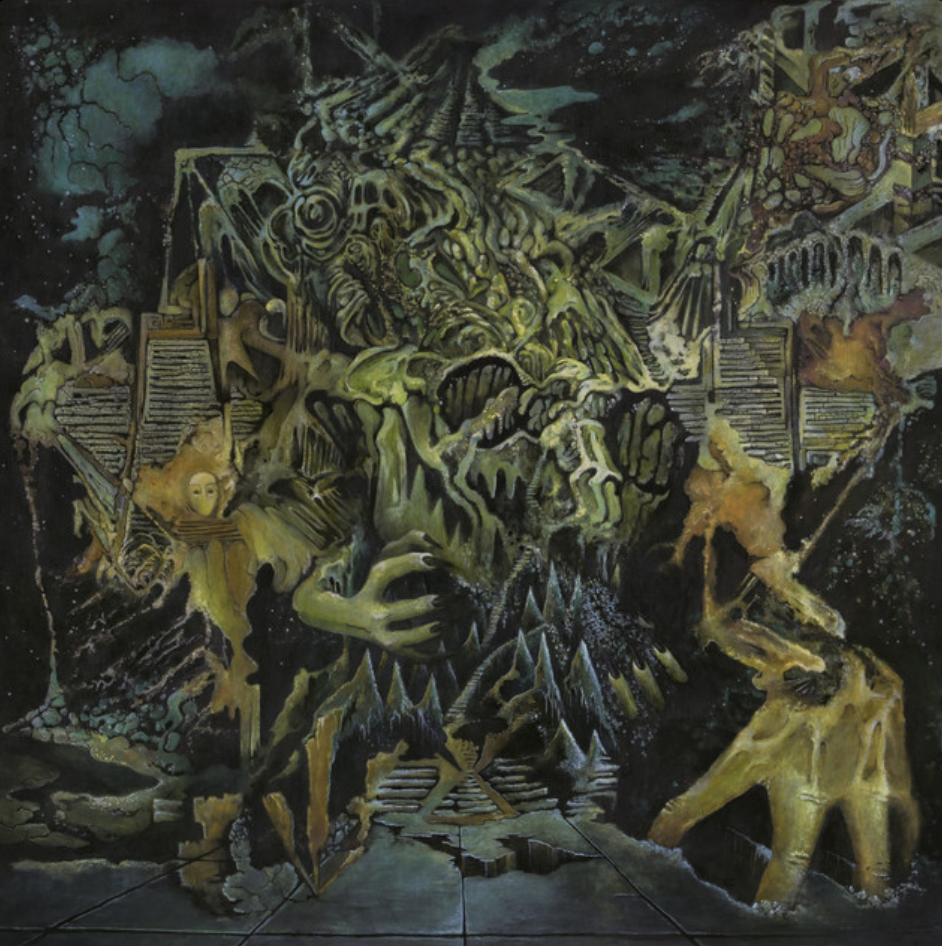
Morbid curiosities, ghoulish treats, horrorcore, and japes aplenty in this year’s Halloween playlist, as Dominic Valvona picks out 33 spooked, daemonic, Fortean and atmospheric tracks from across the decades and from an array of genres.
For your weekend mis-pleasures, sabbaths or monster mashing rave-ups, an ideal playlist of the macabre, esoteric and hellish.
Philip Martell ‘The Devil Rides Out Main Theme’
Shakane ‘Dance of the Dead’
Bass Drum of Death ‘No Demons’
Aphrodite’s Child ‘Babylon’
Andarta ‘Dehumanise’
King Gizzard & The Lizard Wizard ‘Vomit Coffin’
Vampire Rodents ‘Creeper’
CIX ‘Male Fantasies’
Vampire Lust ‘Lucretia My Reflection’
The Nausea ‘Respice Finem’
Drew Mulholland & Garden Gate ‘Witching Hours’
Tudor Lodge ‘Willow Tree’
Dhidalah ‘Dead’
Nicole Faux Naiv ‘Neocortex’
Ivan The Tolerable ‘Time Is A Grave’
Giuseppi Logan Quartet ‘Dance of Satan’
The Bollock Brothers ‘Horror Movies’
Dust ‘Learning To Die’
Lincoln Street Exit ‘Die’
Hawkestrel ‘Now I’m Feeling Zombiefied’
Pidgins ‘These Models Scale’
Faust ‘Beam Me up, Scotty’
Vox ‘Metaphysical Back Alley’
RJD2 ‘The Horror’
Paten Locke ‘Canseco’
MadShroom MC, Wolftone ‘WOLF SCAT’
Peter Principle ‘Werewolves at the Gates’
Dylan Jack Quartet ‘Of Caves, Tombs and Coffins’
Dando Shaft ‘The Black Prince Of Paradise’
Andre Tschaskowski ‘Threat and Suspense Pt. 11’
Modern Silent Cinema ‘The Moving Coffin’
Head Shoppe ‘Seance’
Philip Martell ‘Dracula AD 72 Main Theme’
THE MONTHLY DIGEST INCLUDES A CLUTCH OF ACCUMULATED NEW MUSIC REVIEWS; THE SOCIAL INTER-GENERATIONAL/ECLECTIC AND ANNIVERSARY ALBUMS CELEBRATING PLAYLIST; AND CHOICE PIECES FROM THE ARCHIVES.

____/THE NEW
Annarella and Django ‘Jouer’
ALBUM (We Are Busy Bodies/Sing A Song Fighter)
Born from the Senegalese imbued and inspired hub built around Sweden’s Wau Wau Collectif, another cross-cultural project that embraces that West African nation’s (and its neighbours) rich musical heritage. Fusing the roots, landscape and themes of Senegal with those of Europe, the partnership of Swedish flutist Annarella and the Malian born ngoni master Django absorbs the very atmosphere of that westernmost African republic, transposing and transforming age old traditions with a hybrid of contemporary musical effects and influences and guest list of diverse musicians and voices.
But before we go any further, delve deeper into this partnership’s debut album, a little background information/ context is needed. A key member of Karl Jonas Winqvist’s Wau Wau Collectif gathering since 2016, making the motivational trip to Senegal that more or less inspired that group’s sound, network of collaborators and friends – a trip that also planted the seed for Winqvist’s Sing A Song Fighter label, a partner in the release of the this album alongside We Are Busy Bodies -, the Örebro born flutist Annarella, believe it or not, trained as a psychologist. Honed on woodwind, but able to play a variety of instruments, Annarella has chosen a more playful approach to her craft: an eclectic one at that.
Annarella’s musical foil, meanwhile, was born in Mali and brought up in the ancient griot tradition of storytelling. The family tree of which is impressive. His cousin was the late and great kora (a 21-string long-necked harp-like instrument crafted out of a gourd, covered in cow skin) virtuoso Toumani Diabaté, who famously partnered with another legend, Ali Farka Touré, for a duo of Grammy Award winning albums. And his uncle was the master balafon (one of Mali and Western Africa’s most recognised sounds, the balafon is a gourd-resonated xylophone) player Kélétigui Diabaté. It’s no surprise then that Django picked up the ngoni, a (normally) animal skinned wrapped canoe-shaped lute instrument synonymous for accompanying the griot storyteller: A tradition that, some say, dates back to the Malian Empire of the 12th century. Django however upped sticks and made the move to Senegal and the capital of Dakar many years ago. It’s a city that is abstractedly threaded into the very fabric of this album: immortalised alongside Annarella’s hometown on the album’s first single and this debut album’s third track.
Whilst on tour together as part of the Wau Wau, they found themselves wiling away the downtime hours by jamming. A spark was ignited. A project formed. But for a time, both musicians had to return to their respective homes, where it seems they set to work on composing and laying down tracks for each other, ideas and prompts to riff on.
The sphere of influence grew further, as both participants in this international peregrination invited in several musicians and artists to carry the music into articulate and more atmospheric new spaces. Joining the duo were of course Winqvist, as co-producer and a member of the filled-out rhythmal section that also includes Lars Fredrik Swahn and Pet Lager, the renowned Swedish folk musician and multiple instrumentalist Ale Möller, who provides not only trumpet but the Jew’s harp, accordion, melodica and the double-reed shawm, and Django’s wife, Marietou Kouyaté, on harmonical vocals.
Altogether, this circle of impressive talent conjures up an atmosphere of the willowy, mystifying, hazy, rhythmically shuttering, dreamy, ached and yearning. Because whilst uniting two cultures together in a most congruous sounding, melodious and beautiful union, there are both musically felt and more obvious appearances of social and economic protestation to be found.
After the fluted leafy pastoral airs and light nimble twine of the intro, the gentle hi-hat claps, Arabian-like shawm, whistles, chuffs and fluty blows of the Francis Bebey motion ‘Aduna Ak Asaman’, and the near Malian Turag camel drive with bird-like woodwind and Chet Baker mirage trumpeted ‘Dakar-Örebro’, there’s a short tunning-like, freely and spiritual jug carrying backed snippet of the American economist Richard David Wolff besmirching the virtues of capitalism on ‘No More’. A noted Marxist economist, part of the Rethinking Marxism movement, Wolff’s words chime with the rampart, unforgiving nature of what I would call a twisted form of capitalism; the ill effects felt no more so than on the scarred, mined lands of Africa and its people. Picking up the ‘Megaphone’, the style is more African with a soft Dirt Music backbeat, the voices more reminiscent of Amadou & Mariam. That vocal partnership can be heard again on the longed and languid sand dune contoured, flighty and reedy trill fluted ‘Sarajalela’.
Django’s home environment and the outlier around it seeps into and materializes like a dreamy haze across all the album’s tracks, as evocations of the classical, of jazz and the blues mixes with the local stew of diverse languages. Tracks like ‘Degrees of Freedom’ are more mystical sounding, near cosmic, as the band saunter like gauze under the moon and across the desert’s sandy tides. There’s the Arabian, the African, the otherworldly and fantastical all rolled into a seamless hover and spindle of enchantment and mystery. ‘Hommage á Dallas Dialy Mory Diabate’ however, is just a pretty, sentimental passage of loving tribute – the tune is very familiar, but I’m kicking myself to place it.
Jouer, which translates from the French into “play”, is just that, a lovely stirring union of the playful that seamlessly entwines the two musician’s respective practices with sympathy, respect and the earthly concerns of our endangered societies and world. Hopefully this collaboration will continue and grow over the years; there’s not been a better one since Catrin Finch teamed up with Seckou Keita.
Peter Evans ‘Extra’
ALBUM (We Jazz) 25th October 2024
A meeting of avant-garde minds to savour, the union of Peter Evans with Koma Saxo and Post Koma instigator and bassist Petter Eldh and New York downtown experimental rock and jazz drummer pioneer Jim Black is every bit as dynamic, explosive, torqued, moody, challenging and exciting as you’d imagine.
Heading this trio and making his debut on Helsinki’s We Jazz label-festival-magazine platform (one of the best contemporary jazz labels in the universe, certainly quality wise and highly prolific with it), the New York-based musician and noted improviser synchronizes and leads a constant movement of breakbeat drums and wood stretched, thumbing and busy bass on his small, higher octave pitched, piccolo trumpet.
A crossroads of separate entangled influences and backgrounds, legacies, with all three practitioners in this Evans-fronted project and their CVs stretching back a few decades, the avant-garde rubs up against the blues, hard bop, atmospheric set scores, hip-hop style breaks, the electronic and classical. By using both the piccolo and flugelhorn on this album, some passages sound like Wynton Marsalis playing over Mozart, or Alison Balsom lending classical airs to an Alfa Mist production.
The classical brass is however adopted and adapted to stir up a wind and tumult of uncertainty as to what’s coming next. For the action, the rhythm and direction is as tightly wound as it is loose and slowed down: the ‘Nova’ passage, this album’s shortest track, seems to lurk in a strange otherworldly atmosphere of mysterious thriller piano prompts and vibrated percussive and cymbal shivered resonance. The following track, ‘Movement 56’, starts off with the brass sounding like it’s being played through a cone, before buzzing and expanding, contouring a cosmic calculus performance of the alien, unsure, spatial and lunar. It finishes with a bended generator motored ripple and signal that wouldn’t sound out of place on a Bernard Szajner record.
Elsewhere the action blows and gallops between moods and intensity. The opening ‘Freaks’ has a busy rhythm section, yet tampered, the nearly skims along (imagine Ben Riley circa ‘The Bridge’, a recognisable sprouting of Art Blakey, and touch of Mingus) that evokes 60s NYC skylines (but no swing) and the downtown happenings of the 80s with something quite bluesy but very of the moment. Meanwhile, Evan’s short and longer cyclonic trumpet breaths recall Ralph Alessi, Tomasz Stańko and Miles Davis. On the staccato fashion prowl of ‘Boom’, it’s Chet sharing room with Kirk Knuffke over a slightly less erratic and menacing Last Exit.
There’s so much to love about Extra. A combo that has worked together before I believe, shows how to find a perfect challenging balance of the dashed, of action and the more tactile and explorative without losing that essential breakbeat and woody stretched body resonating and pulled spring bass rhythm and movement: that movement always being ever forward. Never dwelled on, nor really repeated, this feels like an improvised session without the need for analysis or instruction from its leader Evans. Possibly one of the best jazz albums you’ll hear all year, with a spot saved for the choice albums of the year lists, Extras is a thoroughly inventive and exciting dynamism of contemporary luminaries at the height of their skills and knowledge.
Yaryu ‘For Damage’
ALBUM (Ramble Records – AUS/ Centripetal Force – US/ Cardinal Fuzz – UK)
25th October 2024
Eclectic Japanese collective Yaryu, birthed just a couple of years ago, invite a host of peers and influential teachers from the country’s acid, psych, cosmic and astral scenes to sprinkle some magic on the new album, For Damage.
Led by bulb-note and caressing soulful electric pianist, wafted and concertinaed melodica player, atmospheric stirring autoharpist, synthesist and percussionist Hyzo, the group play host to members of Sundays & Cybele, Dhidalah and the freak out titans of the form, the Acid Mothers Temple. In all, at least seventeen participants, playing everything from the instruments of a conventional band set-up to woodwind, traditional Japanese and brass. Some of which also lend various forms of vocalisation, from the mewling to folky, strange and supernatural.
Fanning out and expanding the range of spiritual and emotional influences, the album starts out with a seamless continuation of elemental waters (trickles, pours, running streams to more settled, light refracting twinkles), the leafy and blossoming, diaphanous and glittery. The gentle opening introduction of ‘Up The Creek’ is a beautiful guide to this magical, enchanted, but simultaneously mystical and mystery balance of tranquilly and the otherworldly; sounding at times like Mythos connecting with Hiroshi Yushimura and Meitei, and existing in the same realms of Kankyō Ongaku, or “environmental music”. ‘Asobe’ (which I think means “not working”, but spelt slightly different, could be a reference to the Shinto priestesses that performed rituals that appeased the souls of the dead during the Heian period) drifts towards dry bone rattled, ceremonial caravan of Alice Coltrane, Bernie Maupin and Pharoah Saunders vibes.
But though keeping in that relatively subtle direction, ‘Nagare’ seems a little jazzier and more soulful as it follows the currents of running water. It features a cornet-like trumpet, some soft whistles, a near wafted Hawaiian guitar – think Makoto Kubota – and hand drums in the mode of Curtis Mayfield as it sets out some idyllic castaway plane. ‘Utena’ floats close to the Far East Family Band, but with a Fleetwood Mac bassline, constant metronome like ticking away and shimmering cymbals. But by the time we reach the atavistic sounding ‘Gandhara’ (the ancient Indo-Aryan civilization centred in what it is today present northwestern Pakistan and northeastern Afghanistan), the mood is far more mystical and shrouded; a Japanese Gothic-psych visitation from the psychogeography of the wailed and ghostly. ‘Sacrifice’ is noirish in comparison but begins with a sort of Cluster-like synth-pop rhythm, before shimmering and soulfully gliding into Greg Foat territory. It evokes sun-lounging attendees at the shrine on one of Japan’s most exotic, paradise island borders.
The album finishes on what in old money vinyl terms would be the whole side of an album, and the near twenty-minute “melody” suite ‘Shirabe’. A wilderness of trees and roots and creaking, croaking bird life is converged with tranquil jazzy evocations, woodpecker knocks, soft and low inviting sax blows and subtle funky guitar. As the peregrination continues, that sax goes into Donny McCaslin mode, and connects to the weird and cosmic.
Another name to add to the rich legacy of cult, psychedelia, folk, esoteric and cult sounds emanating from Japan, Yaryuand their distinguished guests connect with the elements, the spirits and sprites, and the roots of their magical astral plane on several levels to create a both earthly, supernatural and spiritual daydream. Tending the garden whilst offering up mysticism and languid stirrings of the elements.
The Tearless Life ‘Conversations With Angels’
ALBUM (Other Voices Records) 27th October 2024
Both a transference of souls from the now cremated – or laid to rest, depending on your choice of metaphorical ritual death – Vukovar plus a host of orbiting “other voices”, the make-up of The Tearless Life remains relatively, and intentionally, shrouded, obscured.
What we do know is that this new entity is a meeting of minds that have spent the last decade ploughing their own unique vision of hermetic, esoteric alchemy of synth-pop, industrial, post-punk, darkwave and a form of neo-new-romantism influences. And whilst they remained criminally overlooked – sometimes due to their own self-sabotage – they attracted such acolytes and luminaries of the genre as Rose McDowall, Michael Cashmore and the late Simon Morris, all of whom proved worthy foils on various Vukovar-headed collaborative releases.
Taking a while to materialize, The Tearless Life’s debut opus is both the announcement of new age, but also a bridge between this latest incarnation and the former Vukovar invocation – they are in essence, a band that continues to haunt itself. Old bonds remain, sound wise and lyrically, but with a new impetus of murky, vapoured, gossamer, mono and ether effected solace, tragic romanticism, pleaded and afflatus love, spiritual inspired yearning and allegorical hunger.
The void needs to be fed in a Godless world as they say, as addictions, troubled relationships, the longing for a special someone who remains aloof, untouchable and beyond reach, and the metaphysical coalesce with an all-consuming passion.
Talking to angels, conversing with both the seraph and the fallen, the daemons and spirits of the alchemist’s alternative dimensions, the group transduce the writings of that most visionary seer John Dee, the opium eater Thomas De Quincey, William Blake, and the far more obscure Samuel Hubbard Scudder, who’s 19th century, fairy-like, Frail Children of the Air: Excursions Into The World Of Butterflies publication of philosophical essays lends its title to a song of tubular airy manifestations, distortion, wisped spiralling piques and beautified touching emotional anguish.
Atmospheric at every turn, swilling around in the shrouds, a Victorian music box and toll of peeling bells can evoke the creeping, the mysterious and tormented. Psychological trauma, and physical pains roam the wards of a mental hospital; stained-glass rays anoint lovers; death’s touch is never far away; the talking of tongues and language of the shriven invokes fantasies; and the spectre of morose dines on the unfortunates to create an esoteric banquet.
Some of these songs will sound familiar to those missing Vukovar, but The Tearless Life seem to have integrated a duality of harmonies and vocals much better. The music is itself at least attempting to find the light at the end of the tunnel, touching upon snatches, vague influences of Nature And Organisation, Death in June, Jarboe, Brian Reitzell, the Pale Fountains, Scorpion Wind, Les Chasseurs De La Niot, Alan Vega, and on the pump organ-like remembrance of darkened soul mates, ‘The Mistress’, a combination of Purple Rain era Prince and Ultravox!
My only disappointment is in the production, which could be so much more dynamic and clearer, instead of being so murky. I think it loses some of its impact. But this is minor in comparison to the depth, quality and atmospherics of such an ambitious undertaking. For this album transfers poetry, the writings and fiction of the hermetic and the dreamers wonderfully, if plaintively. If the world was indeed not so bereft of celestial beings’ wisdom and advice as it is, it would rightly receive the critical acclaim it deserves. Conversations With Angels is epic; the first step in, what I hope, will be a fruitful conversation to divine enlightenment, curiosity, psychological and philosophical intelligent synth-pop.
i4M2 ‘Shut Up’
ALBUM (Drone Alone Records)
Whilst eliciting feelings of grand, sometimes overbearing, landscapes and a sense of movement from granular gradients, frazzled fissures, currents under the he didnt appellation back in the summer, the shrouded Oxford-based producer, guitarist and musician now ventures out under the new guise of i4M2.
Although similarly charged with electricity, white noise, static and magnetic filings Shut Up is a very different record indeed. Gone are, for the most part, the blocks of drones for a tubular metallic coursing of melodic music, found sounds and field recordings of captured voices from a city environment, and the mysterious near supernatural at times: or perhaps more unknown, hard to figure out, and maybe alien. Whilst recognisable glimpses of overheard and taped conversations, of a company of choral singers, and wobbled broadcasts of a kind suggest humanity, there’s much machine coded, synthesised and cybernetic surface noise and unnerving drama to be found.
Inspired in part by the “…pirate-radio noise the kids play on their mobile phones at the back of the bus in London.” And by the energy of all those “…cool beats and ideas”, this debut album channels those sparks of inspiration into a sophisticated construction of techno, electronica, the metallic, buzzing and fizzled. Beats arrive in the form of the rotor-bladed, the wing flapped, corrosive, spun, padded and sizzled. Together with those passages and undulations of melody and tune, it sounds like a mix of Nik Colk Void, early Tresor, The Pyrolater, Aphex Twin, Carter and Tutti, Oberman Knocks and Boards of Canada.
Both forms of the London scenester dropped in rural Oxford are great, but for me, I think this latest alter ego just about edges it. Seek it out.
Suumhow ‘5ilth’
ALBUM (n5MD)
You could consider the fifth album from the Belgian experimental duo of Suumhow as a sonic companion piece to i4M2’s ‘Shut Up’ (see above); fizzing as it is with electrical charges, frazzles and sculpted, purposed distorted crunches and metal filings, but balanced by a certain sensitivity and pull towards hazy, gauzy light forces. For there is melody, a tune to be found amongst the bristled blizzard effects and slabs of static buzzing, the corrosive and outright “filthy”. That last one being especially prominent in both the language and text used to promote this album, and in the distorted joy of sonic bombardment and bracketed vibrated grimy, glitchy drilling.
5ilth is by nature a counterpoint of distressed post-industrial techno, the leftfield, the pneumatic and ricocheting, which then opens out into calmer, more reflective ambient passages and square waves; sometimes floating or maybe drifting above the clouds, and other times, ascending towards the light. Far from brutal, despite the rasping scrunched beats, and chain clinked synthesized percussion, the mood is mostly mysterious and dreamy, with some parts akin to gliding in the stratosphere – see the obliquely, not giving anything away, entitled ‘F’. Like rips and tears in the fabric, yet somehow harmonically compatible, the duo’s work craftily spins a harsh, ratcheted and crackled abrasion of sounds and effects with ambient stirring evocations of thought, quite wanderings and reflection.
I hate to repeat myself, but as with the last review, I’m hearing Aphex Twin, but this time in the company of Petrolio, Room of Wires, Emptyset and Forest Swords. Which I think is a very inviting proposition.
Rich God ‘Unmade’
ALBUM (Somewherecold Records) 31st October 2024
The third such album of static-charged dissonance and fizzles, sculpted to and rendered to provide the sound, score and expression of the concrete this month, the pairing of Blake Edward Conley, who regular readers will recognise as the droneroom, and Jason T. Lamoreaux, who goes under The Corrupting Sea appellation, will appeal to those who like to read the abstract messages and gauge a sense of place, time and mood from industrial noise and corrosive electricity.
Mainstay and founding artist of the experimental label, Somewherecold Records, Jason teams up with one of his most prolific label singings to sculpt meaning from the frazzled generated noise, crunched barrages of drums and the sifting, fizzled and warped rhythms. Conway’s usual signature of minimal alt-country and drone cowboy electric guitar tracings, brushes, hovered notes and sun-cooked melting vistas is absorbed and sometimes crushed almost by Jason’s industrial effects and mettalic needling.
With nothing to go on, theme wise or explanation wise to the album’s seven titles, it is left to us the listener to make what we will of this union. But my reading is a transmogrified vision of post-industrial rust belt horror and trauma. There’s certainly prompts in the use of samples taken from broadcasts, perhaps the TV – which often sounds like a flickering portal set to the paranormal and Fortean -, with some guy’s diatribe against the banks or stock exchange/Wall Street (“If money is evil, then that building is hell!”) and a radio phone-in exchange about some horrific psychosomatic condition (the words murder scene and suicide both pop up).
In what sounds like a psychogeography of old machinery, the apparatus of production and a troubled society, Unmade whips up a blizzard of crickets on a sweltering day on the road towards a run-down and foreboding field of decay; conjures up the empty silos, rusted conveyer belts of a desolate wrecked farming community; and uses the needle scratches of a polygraph test and the resonance of steel mill saws to channel a recognisable fear.
Whipped and industrialised, yet also showing less harsh and abrasive fragments, pauses in the rippled tears of the bestial, spooky, alien and caustic, Unmade is like a distortion of Bleaeck, Raime, Atsushi Izumi, Cabaret Voltaire and IDM influences. Not the easiest of listens, and certainly challenging, but worth the effort, as two experimental artists combine their signature qualities into a heavy loaded sonic statement for the times we find ourselves in.
Andy Haas ‘For The Time, Being’
ALBUM (Resonantmusic)
Time has never sounded so warped and amorphous, bereft of reference in a space that morphs into serialism, the surreal, the painful, the otherworldly, paranormal, conceptual and indescribable. Yes, once more the experimental saxophonist Andy Haas ventures into sonic territories seldom explored with his latest (I believe either 19th or 20th release for the Resonantmusic label) album of abstract trauma, avant-gardism, playfulness, and physicality. For this album is indeed a physical experience, focussed as it is on the Andy’s unique method of strapping a small tremolo box to his leg so that he can control the depth and the rate of extreme panning whilst playing the sax, and manipulating slowly spun vinyl records.
The discombobulating, shrieking, sonorous diffusions and effects hit hard at times, leaving a real sense that the soundwaves have penetrated the listener’s body and senses: To get the full effect, Andy stresses that For The Time, Being is experienced best on a system with better low end response: laptop speakers just won’t cut it.
Out on the fringes for at least five decades (and counting), with a brief period of commercial success as a founding member of the Canadian new wave band Martha And The Muffins (leaving the group after three albums to pursue more adventurous pathways in the New York underground scene of the early-to-mid 80s) , Andy’s original sparks of inspiration and catalysts for picking up the saxophone (his first instrument being one he rented for $5 a month in the 70s) were jazz avant-garde supremos Anthony Braxton and Evan Parker, who he witnessed playing together in concert at an early age back in the 70s. Both icons of the form permeate much of Andy’s work, including this newest experiment. But you can add a channelling of such diverse company as John Zorn, Marc Ribot, Zeena Parkins, Ikue Mori, Thurston Moore, Keiji Haino and Fred Firth, all artist’s Andy has worked with since the 80s, to that sound palette.
In more recent times, during the late nineties and the noughties, he’s collaborated with stringed-instrumentalist Don Fiorino on three extraordinary albums (American Nocturne, Don’t Have Mercy and Accidentals), toured and recorded with the Plastic Ono Band-esque reinvention of Meg Remy’s U.S. Girls, and been a member of Matt ‘Doc’ Dunn’s The Cosmic Range. Again, feeding into an already expansive field of influences.
But here, in solo mode, the perimeters, experiences are all reset and transmogrified into an intense, frightening and sometimes near cartoonish world of spatial manipulation and hallucination. This is jazz at its furthest boundaries, the avant-gardism of Fluxus, of Monty Young, Alan Sondheim (specifically T’ Other Little Tune LP), Richard Maxfield, David Tudor and Takehisa Kosugi combining with the dry, bristled and trilled raspy reedy blows, plastic tube-like sucks, flapped air and wind, the hinging and the movement of valves and atonal resonance, and the more melodic flutters and mizmar-like drones of Braxton, Parker, Roscoe Mitchell, Ornette Coleman, Marshall Allen and Oliver Lake.
Each track varies between unseen sources of accelerating motors, hovering drones overhead, the disorientating, the wounded, the near sci-fi and triggered, with signals and codes manipulated like slowing and speeding reel-to-reel tapes. Reality is questionable and the sense of time (although there is a parenthesis “nocturne” reference on one track) akin to a fever dream. Andy produces a unique physically effective sound experiment that is impossible to define; his saxophone simultaneously recognisable and yet parping, droning and in a cycle that pushes that instrument towards the tactile and spatial.
___/PLAYLIST: THE MONOLITH COCKTAIL SOCIAL VOLUME 91
The Social Playlist is an accumulation of music I love and want to share, tracks from my various DJ sets and residencies over the years, and both selected cuts from those artists, luminaries we’ve lost and those albums celebrating anniversaries each month.
Running for over a decade or more, Volume 91 is as eclectic and generational spanning as ever. Look upon it as the perfect radio show, devoid of chatter, interruptions and inane self-promotion.
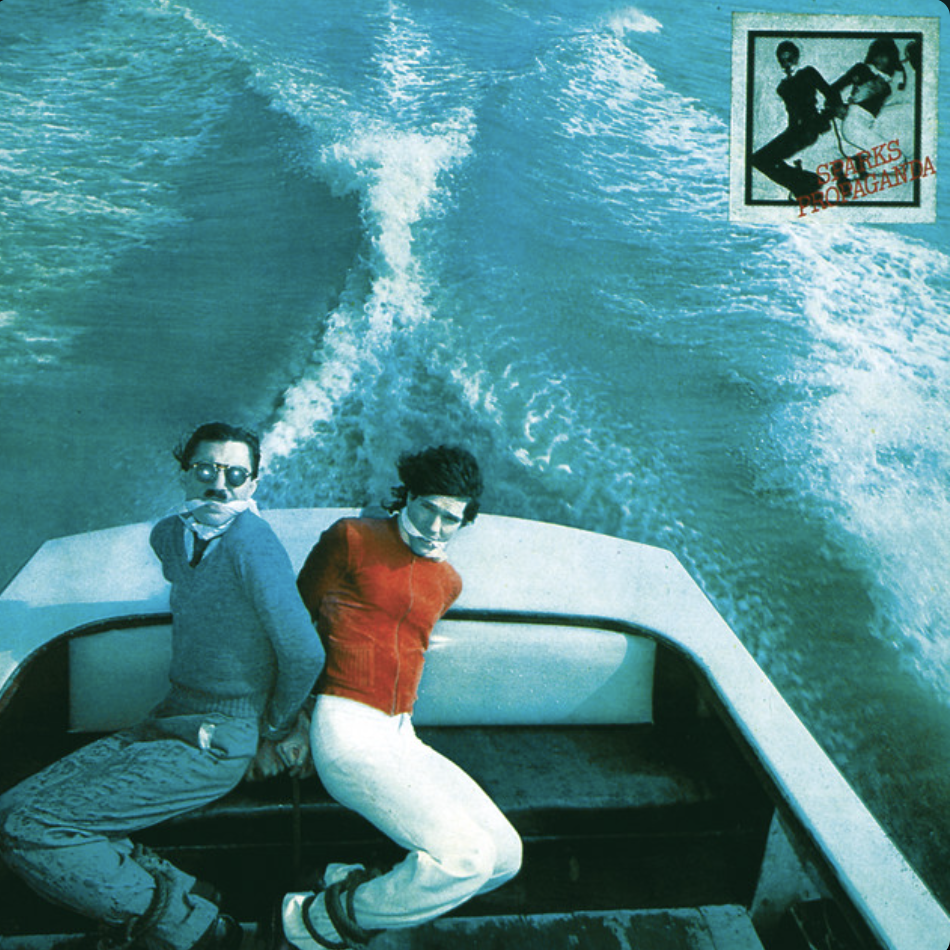
First up the LP anniversaries, starting with 50th nods to Sparks Propaganda (in my estimates, the double-acts’ best 70s album), Redbone’s Beaded Dreams Through Turquoise Eyes, Yumi Arai’s Misslim, and The Rolling Stones It’s Only Rock ‘n Roll – see below in the archives section for my little summary, if dismissive, piece on the album.
Released this month forty years ago, there’s tracks from The Fall’s The Wonderful And Frightening and Cabaret Voltaire’s Micro-Phonies. Jumping forward another decade, and I’ve also included a track from the Digable Planets’ 94’ released Blowout Comb. Another leap forward and I’ve chosen to also mark the tenth anniversary of Scott Walker’s collaboration with Sunn O))), Soused – you can read my original piece on the album in the archive below; one of my finest hours I reckon.
Whilst the Monolith Cocktail’s Monthly Playlist is all about the newest music, I miss things or just don’t have room to feature everything. And so, the Social offers room to some of those newish, recent releases that missed out. This month there’s choice tracks from Heyme, Waaju and Majid Bekkas, The Bordellos, Reverand Baron and Calvin Love, and Paten Locke.
You’ll also find, from across the decades, borders and genres, a smattering of musical choices from Heltah Skeltah, Lowlife, Samuel Prody, Gilli Smyth, The Sun Also Rises, Michel Magne, Debile Menthol, Lita Bembo, Art Zoyd, Tudor Lodge, Tommy Keene, The Silver Dollar, Vince Martin & Fred Neil, Yoch’ko Seffer, Male and Mahjun.
TrAcKlIsT iN fUlL
Michel Magne ‘Cine qua pop’
Debile Menthol ‘Tante Agathe’
Samuel Prody ‘She’s Mine’
Tudor Lodge ‘The Lady’s Changing Home’
Tommy Keene ‘My Mother Looked Like Marilyn Monroe’
The Rolling Stones ‘Dance Little Sister’
Cabaret Voltaire ‘James Brown’
The Bordellos ‘King Of The Bedroom’
The Fall ‘2 X 4’
Male ‘Bilk 80’
The Jazz June ‘Silver Dollar’
Mahjun ‘L’un dans I’autre’
Art Zoyd ‘Alleluia’
Yochk’o Seffer ‘GONDOLAT’
Waaju and Majid Bekkas ‘Fangara (Live Edit)’
Yumi Arai ‘On the Street of My Home Town’
Lita Bembo ‘Muambe’
Digable Planets Ft. Guru ‘Borough Check’
Paten Locke ‘Widdit’
Heltah Skeltah ‘Clan’s, Posse’s, Crew’s & Clik’s’
Redbone ‘Cookin’ with D’Redbone’
Heyme ‘Downtown Train’
Reverend Baron & Calvin Love ‘Famous Feelin’’
Scott Walker & Sunn O))) ‘Brando’
Lowlife ‘Again And Again’
Citymouth & People’s Palms ‘Singlecycles’
Gilli Smyth ‘Shakti Yoni’
The Sun Also Rises ‘Wizard Shep’
Vince Martin & Fred Neil ‘Morning Dew’
Sparks ‘Bon Voyage’
/ARCHIVES_____
This month, I’m reviving my archived pieces on The Rolling Stones It’s Only Rock ‘n Roll, which is fifty years old this month, and the late Scott Walker’s unholy alliance with Sunn O))), Soused, which reaches its tenth anniversary in October.
Relax, It’s Only Rock ‘n Roll. The Stones ’74 LP is 50 this month. (Appearing originally in my four part potted history of the group).
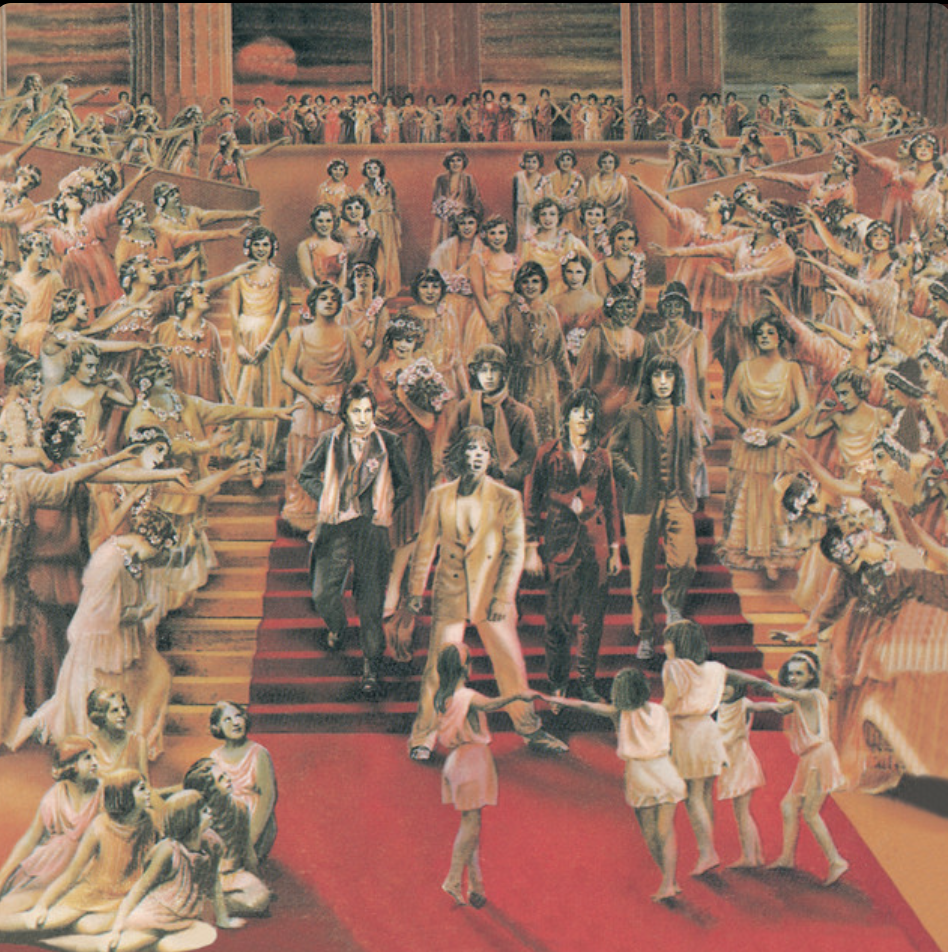
The basic premise of the Stones 12th album was to give their critics, especially the punctilious music writer Lester Bangs, the bird-finger.
Bangs’ condemnation at the paucity and profligate decline of the group was particularly scathing – quite justified in some respects – and only increased with each new release.
Incredulous at the growing derision and, as they viewed it, over-the-top analyses of their music, this album makes no bones about its regression back into the rock ‘n roll womb: albeit a version of that initial scene performed by a languid miscreant bunch of lolloping posers reprising oldies from the blues-R&B-r’n’r cannon.
The self-titled track and single from It’s Only Rock ‘n Roll (And I Like It) was strangely – so it’s claimed by Richards – conceived by a testy Jagger and recorded with his new “soul mate” Bowie as a rough demo. Such was the internal drift between the Stones creative partnership that Jagger often composed and thrashed out ideas away from his Glimmer Twins foil. During this break in communications, Richards was hanging out with The Faces lead guitarist and crow-haired sporting Ronnie Wood at his London studio. Wood had begun recording a solo LP and had asked along both Richards and Mick Taylor to add a touch of sleazy blues. Whilst at one of these relaxed sessions, Jagger dropped in and cut a version with Woods and, Small Faces/Faces drummer, Kenny Jones, but also produced another version with his comrades at a later date (Woods again played on this, contributing the rhythm guitar part on the 12-string). Regardless of who had their paws on it, It’s Only Rock ‘n Roll (And I Like It), is a stereotypical Stones pruning swaggered anthem, one that leans very heavily upon the strutting glam-rock pout of T-Rex.
Geographically separated, and as usual, sabre-rattling with the establishment, the band pushed-on, even though by now Richards’s increasing drug-fuelled skirmishes looked certain to scupper any attempts to successfully record.
To top it all, Taylor’s growing resentment at the lack of credit and acknowledgement for his contributions set the ball in motion for his resignation from the band a year later. Yet despite his disgruntlement, Taylor hung-on in there, playing on a majority of the albums ten-songs but not the title-track single; even though he appears in the video.
Without their due-diligent and overseeing producer, Jimmy Miller, the production fell to the aggrandising pairing of Jagger & Richards. Miller, a stalwart member of their inner circle and sometimes sobering force for good, had finally succumbed to his drug habit (picked-up whilst working with the band) and left, leaving the pair to take control for the first time since Their Satanic Majesties Request. And we all know how that turned out!
Scott Walker + Sunn O))) ‘Soused’ – Harrowed by thy name.

The usual rolled-out cliché of criticism that always greets every Scott Walker release, charts the enigmatic artist’s pop light to experimental morose career arc; from the teen swoon idol heady days of the Walker Brothers, via monastic alienation and Jacques Brel inspired crooner of esoteric idiosyncrasies, to existential avant-garde isolation.
Inhabiting the darkest recesses of humanity and history for at least half of that time, we should be used to this morbid curiosity, worn with earnest pride by Walker, who peers into the abyss on our behalf. Confronting with a meta-textural style the barbarity and failings of humanity for at least thirty odd years then, any developments in the Walker peregrination, shouldn’t really surprise anyone: at least the critic.
In what was met with certain trepidation or surprise by many, his unholy union with the habit adorned disciples of hardcore drone Sunn O))) is actually a very shrewd and congruous partnership; a 50/50 immersive experience, with both parties seemingly egging each other on. Walker for his part lyrically less cryptic, the Sunn chaps pushed to produce one of their most poetic and nuanced beds of sustained drones yet, and on this occasion, even cracking out various wild shortened, punctuating and unyielding riffs – verging on full metal and heavy rock riffage. Letting rip with a resonant field of sustained one-chord statements and caustic stings that bend or longingly fade out into a miasma, trying to find a meaning in these drones is akin to an Auger interpreting symbols and signs from the entrails of a wretched, just slain sacrificial beats. Yet it does work, and the bare minimal, fuzzy and wrenching bed of murmuring, primal guitars perfectly set up the intended atmosphere.
Once again, Daemonic forces have conspired. The result, a five act guttural opus, entitled Soused – in this instance the title is to be taken as a plunging or submersion into liquid or water, rather than a slang for hard liquor intoxication (though if it were, the brew on offer would be hemlock!).
What starts out and continues as a sort of proxy chorus (the nearest you’ll ever get to one on a Walker outing), the introductory crystallised, even dreamy, sense of melodic relief that introduces the album’s first musical tome, ‘Brando’, is soon corrosively despoiled by the menacing first strikes of a signature Sunn O))) chord and bullwhip.
A rather odd theme for Walker to build a threatening tower of misery from, the song alludes to the obligatory sacrificial martyrdom of the title’s Marlon Brando. Whether as self-flagellation, Brando had a penchant for taking on or even bringing (off his own back, so to speak) the act of taking a brutalised beating to his roles: from vigilante beatings in The Wild One to feeling the sharp end of a Elizabeth Taylor horse whipping in Reflections In A Golden Eye. Brando’s fatalistic characters were either the naïve well-intentioned disaffected (Terry Malloy in On The Waterfront) or assassinated disenchanted mavericks (Colonel Kutz in Apocalypse Now). The repeated lashings of a bull whip in this instance, however, refer to his role as the conniving bank robber Rio in the western One Eyed Jacks; one of the movie’s most memorable scenes being when Rio is administered the whipping of his life by a disgruntled and wronged former criminal partner, Dad Longworth (played by Karl Malden), in front of the towns people.
Perhaps this series of observations, first set off by watching One Eyed Jacks, from Walker is over-played, but it is remarkable as you play back through the actor’s movie catalogue and find a connective theme of taking the blows and even death on the chin. Probably reading too much into now and Walker does have a history of wry and acerbic wit, but Brando could be said to be offering his body up to the mortal sins as a punch bag (taking method acting literally) or was just masochistic (Last Tango In Paris M’lud). You decide, it makes for one reason or another a most apocalyptic soundtrack, mixing as it does, doom with Walker’s almost uplifting, visionary vocals to a flaying cycle of whip happy bullies.
Biblical in more ways than one, the standout mega-bestial centrepiece must be the harrowing ‘Herod 2014’; an atavistic disturbing chapter from the Roman occupied Middle East, it alludes to, what many historians say, is a wholly fictional tale of King Herod’s decreed infanticide of his kingdom (allowed by the Roman occupiers to reign over Judea and surrounding areas). Bathed in a sonorous reverberation of fearful discordance and a distressed unworldly cry of danger, this twelve-minute opus is stalked by the harangued forces of malcontent and revved-up torturous drones. The conceptual allusions, which can’t help but echo through time to the present, are far bigger than this baby cull, the region has, after all, always been awash with both the fabled and all too real episodes of death and misery for thousands of years. Yet despite this, the song is itself one of Walker’s best and even most melodically poetic, sitting happily with the material on his last two albums, The Drift and Bish Bosch.
Lyrically traumatic, but almost beautifully hewn from the English language, the opening lines bellow a nuanced scene-setting intellect, more novelistic pyschogeography than song: ‘She’s hidden her babies away. Their soft gummy smiles won’t be gilding the memory.’ In setting up the horrid event and psychological primal emotions that resonate with his audience, Walker goes on to mention two of the most famous painters to depict this crime, Nicolas Poussin and Rubens, who both fashioned their own (setting it in their own time) Massacre of The Innocents.
Herod 2014 straddles the LP like a monolithic titan. A real horror show, both wrenching yet also surprisingly compelling.
You would perhaps be fond of some relief after sitting through all that, but Walker won’t let you off that easily; summing another Sunn 0))) crackled, anvil- beating, industrial chorus of esoteric dread. ‘Bull’ is fraught with tension, languidly striking with stabbing guitars and post-industrial riffs one minute, sinking into the mire of silence and emerging like a troubled crooner monk the next. Heavy and brooding with mechanical timepieces, crowing shadows and subterranean spirits moving amongst the low buzzing presence of a pant-messing sustained drone, the Bull is unsettling to say the least, like a game of tag in the Labyrinth of the Minotaur. And the song with the longest outré of all; Walker finishing off his cryptic lines halfway through, leaving the last four minutes to his comrades to play out.
‘Fetish’ as it may already suggest is a sadomasochistic affair. A soundtrack set to some cannibalistic or serial killer shocker, where the action is carried out entirely on a Mona Hatoum barbed wire bed in a meatpacking factory. Thrashing around and violently piqued by a harassed beak like attack, the backing is a maelstrom of dentist drills, panting shakers and eerie hanging silence, until it breaks out with the album’s first drum break and rhythmic holy chorus. Throughout, Walker swoons in resignation, dropping lines like, “acne on a leaper”, and “glim away little brute”, in a disjointed narrated sombre tone that gets more dangerous as the song churns to its climax. A ritualistic metaphor, the song’s central tool of terror, the blade or scalpel, is held as an abstract reference point to gleam some meaning, whether it pertains to the cosmetic, life-threatening surgery, torture, the sexual or even tattooing, Walker and Sunn O))) build a nuanced layer upon layer of industrial buzzing queasiness to a trope.
Be under no illusion with the finale to this Dante inferno, the ‘Lullaby’ tones on offer here in no way promise a good night’s sleep. This is after all Walker’s crooned eulogy to assisted lullaby suicide, and the sound of death’s hallucinatory vibrations, gradually taking hold.
Interpreting the song in her own enigmatic way, Ute Lemper bravely grappled with the song for her 1999 album, Punishing Kiss, but Walker now takes back what he at first giveth, converting it into an even gloomier anthem with his monastic brethren.
You can almost hear the percussive ticking of a Newton’s cradle: the mortal clock running out as the drugs take effect; comfort is not an option. The whole thing sounds like a seething hotbed of psychological thrillers and horror, played out remorsefully until the final bleep of the life support signals the end. Walker never nails home his own social or political solutions, and so this, very much a topic debated in recent years and ongoing, is more a diorama set piece, which neither condones nor condemns assisted suicide.
Disturbing throughout, this unnerving suite is obviously not to be recommended to those already on the knife-edge or for those who stay clear of the news or anything that may remind them of human suffrage. You also need stamina and plenty of nerve to sit through this uncomfortable 49-minutes of music at its most challenging. Not so much hostile as shredded by a repeating rotor blade cutting action that piques and prods, even the quietest passages are threatened by an unseen presence of danger. Hell knows (literally) how this album would go down live, the option tentatively hanging in the air, depending on its reception; a possibility that could see the maverick auteur and theatrical seven-day avant-gardist performing for one of the first times in eons.
Both parties in this experiment prove their mettle, reinforcing their reputations but producing an album that is not only accessible to the devotees and followers but also those who’ve previously skirted around taking a walk through the catacombs of the bleakest recesses of a conflicted mind.
BRIAN ‘BORDELLO’ SHEA’S REVIEWS ROUNDUP – INSTANT REACTIONS.
Unless stated otherwise, all releases are available to purchase now

Aiden Baker & Stefan Christoff ‘Januar’
ALBUM (Cruel Nature Records) 25th October 2024
Januar is a five-part suite of heartfelt improvised musical interplay, a heart play if one likes; an album of minimalistic experimental ambience; a conversation between piano and guitar electronic tonal seduction. Importantly Januar was recorded live in the studio, so capturing the emotion and power of Baker & Christoff‘s performance.
The five tracks weave a becoming slow dance of meditation lulling one into a dreamlike state and letting the waves of pure bliss wash over you leaving you mesmerised and in awe of the fragility and beauty of the music. Januar is an artful bewitching delight of improvised brilliance.
Bell Monks ‘Watching The Snow Fall’
ALBUM (Wayside & Woodland) 1st November 2024
Is slowcore-indie-hipster-post-jazz a musical genre? If not, it doesn’t matter as that is how I am describing this rather beautiful album of, well…slowcore-indie-hipster-post-jazz. What does slowcore-indie-hipster-post-jazz sound like? Well, it sounds like the Bell Monks. Okay, imagine The Cure and Low and the Postal Service and Red House Painters having a cravat wearing competition, or party even, and sipping on a sherry in dimmed lights and recording whilst their wives and kids are sleep. Yes, it is all hushed tones, hushed deep vocals and general blue moods.
How could it not be beautiful, it’s called “Watching The Snow Fall” after all. And is indeed an album to close the curtains to and lock yourself away from the cold and the outside pressures of life.
Broken Candles ‘Falling Asleep In The Sky’
ALBUM (Cruel Nature Records) 25th October 2024
I wonder, does the ghost of Elliott Smith roam this land taking hold of the imaginations and musings of the wandering minstrel, the heartbroken troubadour, as I feel he certainly means a great deal to the life of Broken Candles as this album contains ten songs of supreme sadness steeped in a melancholy prose that Elliott Smith would be proud of.
I’m not saying that Broken Candles is a Smith copyist, just that he walks the same winding path of sadness and hope. Both have beautiful voices and the gift of writing sublime melodies.
“Falling Asleep In The Sky” is an album of pure stillness and beauty.
Cosmopaark ‘Backyard’
EP (Howlin’ Banana Records)
The Backyard EP is five tracks of extremely easy on the ear catchy indie pop/shoegaze, and of course nothing that one has never heard before, but there is nothing wrong with that. Cosmopaark do this shoegaze business with enough enthusiasm and aplomb that lovers of this kind of soundtrack to looking at your shoes business will no doubt lap it up and enjoy it so much that they’ll be heading down to Clarkes to get themselves a new pair of sandals to stare at whilst listening.
Ex Norwegian And Friends ‘Sing Wistle Tunes’
ALBUM
Sing Wistle Tunes is a tribute to the late John Entwistle, of course former bassist with The Who. And this is an album of his songs written by the great man, performed by the wonderful Ex Norwegian and friends.
I must say I’m not a huge Who fan. I loved them from 1965 up until Tommy (1968) and then I found them a bit hit and miss [never really got on with Roger Daltrey and his vocal histrionics]. So, I’m not a man who is too precious about the band and their musical output. But saying that, I find this an enjoyable romp through songs I’m not overly familiar with, taking in melody filled tracks of psych-tinged power pop and alt rock. Highlights there are many, and I must point out one of them is the quite wonderful drumming on all the Ex Norwegian tracks [somebody buy that drummer a drink]. John Howard performs with almost Beach Boys like beauty the song “What Are We Doing Here”, which is all harmonic 70s like filled grace, and “When I Was A Boy”, where Ex Norwegian is joined by Fernando Perdomo, which is a self-celebratory delight of psych pop wonder. There are many gems on this album, and I’d recommend it to you if you love The Who, or don’t really care, as it’s an album of fine pop.
High Wasted Genes ‘Skatepark’
SINGLE
I like this single. I like the 80s like synth power chords and the beguiling nostalgia of the lyrics; it paints a picture of the happier trouble-free times of your youth, hanging out with your friends in the sunshine and trying to unpeel the apple of your eye. A song steeped in heartfelt pop wisdom.
The Junipers ‘Imaginary Friends’
ALBUM
The Junipers…now then, if I’m not mistaken my band The Bordellos once appeared on a compilation album alongside these lovely lads. The Future Is Bright The Future Is Cloudy or vice versa. Anyway, a fine compilation from many years ago. But I digress once again.
What we have here is the fourth album from the group, and what a cracking little pop gem it is. An album of pure pop, the kind Macca and Gilbert O Sullivan used to make in the early seventies, with a touch of pure 60s pop harmony magic that The Zombies would no doubt write home to their mothers about, and playful psych undertones that yearns for the day when London used to swing and Russ Sainty used to loiter outside the Bag O Nails with that bunch of dandies The First Impression. Imaginary Friends is a wonderful album filled with quite wonderful songs. And is really made for your record collection.
The Loved Drones ‘Live at Atelier Rock HUY’
ALBUM
Welcome to the live sonic space rock world of the quite wonderful Loved Drones, a band that takes psych, post-punk and space rock to new and cosmically dizzy heights.
Recorded live in Belgium this year it’s a perfect introduction to anyone who has not yet had the pleasure to lay ears on the band.
The album kicks off with the quite excellent “Dirt & Leaves”, which is all Fall like lead guitar riffs, sonic ambiance and Julian Cope like 2 car garage like rock ‘n’ roll [I told you they were good].
The Loved Drones have a power and an all-round likability and uniqueness that all the great bands have. They are a band who plough their own furrow through live casting off tangent animal shapes at the sun, raising two fingers to the lack of talent and originality that currently is forced upon us by the mainstream radio and press. The Loved Drones are quite wonderful.
“The Hindenburg Omen” is a instrumental that a blockbuster film should be made just so it can be included on the soundtrack, and “Human’s Can’t Compete” once again is brimming with a Cope-like magnificence. These eight live tracks show what a great band we have in our mists and really should be heard and appreciated by all us music lovers who love mind bending space hopping cosmic musical delights.
Occult Character ‘Swifties’
EP (Metal Postcard Records)
There is a darkness about this EP that I find quite enlightening. Four very short tracks that capture the slight unhinged mess of the times we find ourselves in. I have written about Occult Character many times over the years and the more I hear, the darker and twisted his music seems to become.
He is a modern-day musical folk anti-hero: part Woody Guthrie part Walmart Eminem. He is a one off, and he captures the mood of America; not always in what he is saying, but how he is saying it, and with the atmosphere that surrounds his music.
Occult Character is a very important musical artist and one day he will be discovered, receiving the acclaim he richly deserves. He may not always be easy to listen to but is always fascinating.
Pound Land ‘Live At New River Studios/ Worried’
ALBUM (Cruel Nature Records) 25th October 2024
This new album by Pound Land is a double whammy of an affair. The first side recorded live, captures the band without guitar but with a rather fetching squelching punk rock synth suppling the health out of the watching masses.
Pound Land are of course a punk and post punk rock outfit of political magnitude. A band that captures the atmosphere of living in this divided land we call the United Kingdom and make a hell of a fine racket while capturing the atmosphere as the live side of this cassette magically proves. The second side is taken up by the thirty-one-minute track, “Worried”, which is a fine sonic journey of sadness, horror and experimental splendour that takes in dub, punk, and electro soundscapes; a dream of a nightmare track that really needs to be heard by all.
Salem Trials ‘Big Bad King’
SINGLE
The Salem Trials are back with a fuzzed distorted post-punk slice of punk rock. Yes, two tracks of pure unadulterated alternative pop frenzy with melodies bathed in menace and slightly gone off honey. Yes a honey larynx explosion of pure spite and delight, in that order.
The Smashing Times ‘Mrs. Ladyships And The Cleanerhouse Boys’
TRACK
I really like this track. Imagine if you will the early Go Betweens deciding to go all 60s: just pre psychedelic pop. It’s all 12-string guitar chime but played by someone who is slightly down on life, a melancholic haze of happy memories and flat beer. If this song was a girlfriend, it would be a keeper. But I bet your mum would not approve, but your dad would.
Juanita Stein ‘Mother Natures Scorn’
SINGLE (Agricultural Audio)
What I really like about this little beauty of a song is the stripped backline of it. No drums, no bass, just electric guitar and beautiful harmony, it gives the song room to breathe and to draw you into the soundscape fragility, and to bask in the fading sun quality of the song. A lovely little thing indeed.
The Striped Bananas ‘Flowers In The Air’
SINGLE – 25th October 2025
“Flowers In The Air” is a bit of a gem, all sixties Hammond organ prose and garage flower beat, the sound of Neil Young Jamming with the Strawberry Alarm clock in the hope of making the perfect single to spread the message of free love and discotheque flashback ecstasy.
Swansea Sound ‘Toxic Energy’
SINGLE (Skep Wax (UK), Formosa Punk (Germany) and Sm. Craft Advisory (US))
“Toxic Energy” is an imagined duet between the late great Terry Hall and the ‘I have no idea what his time keeping is like but there is nothing great about him apart from what a great nasty piece of work he is’ Elon Musk.
And a fine single it is too. A song full of vim and vigour and annoying urgency and indeed energy, and the energy is indeed toxic as I am currently doing laps around the living room trying to lasso Reilly the cat. I’m sure “Toxic Energy” will be lighting up the alternative airwaves over the next few weeks. It should come with a health warning.
Kalporz X Monolith Cocktail: CARIBOU “Honey” Review
October 15, 2024
ALBUM REVIEW FROM OUR FRIENDS AT Kalporz
AUTHORED BY GABRIELE PROSPERO TRANSLATED BY DOMINIC VALVONA

Continuing our successful collaboration and synergy with the leading Italian music publication Kalporz , the Monolith Cocktail shares and translates reviews, interviews and other bits from our respective sites each month. This month Gabriele Prospero reviews the latest album by the Canadian musician Dan Snaith’s alter ego vehicle Caribou.
CARIBOU “Honey”
ALBUM (City Slang, 2024)
Caribou‘s characteristic ability to blend electronics, pop, psychedelia and dance is fully felt in this latest release. “Honey”, released on October 4th, is the artist’s sixth album; 12 tracks that explore various experimental sounds, introspective lyrics and almost futuristic atmospheres, characterised by warm synths, enveloping beats and very well manipulated vocals.
Listening to it seems like a return to the dance floor in the 90s but dressed in 2020s clothes, the touch of current events, with a disparate use of modern sounds and instruments fused with that attitude of the past makes Caribou’s project truly peculiar.
Songs like “August 20/24” and “Climbing” fully highlight a tendency to play with sounds and create truly particular atmospheres, moreover Caribou on this album wants to demonstrate the ability to connect the emotional side of electronic music with elements of everyday life, creating a deep and personal listening experience. “Honey” seems to be a further step in this direction, with themes that explore love, human connections and intimacy.
On his artistic evolution he said: ‘One thing that has never changed for me since the beginning is a maniacal curiosity to see what can be created with sound’. And with these 12 tracks we can see, or rather hear, how what he thinks has been fully put into practice in the creation of the album. Gabriele Prospero
RATING: 77/100
The Perusal #60: Anna Butterss, Niwel Tsumbu, TRAINNING + Ruth Goller, Donald Beaman…
October 10, 2024
A WORLD OF SONIC/MUSICAL DISCOVERIES REVIEWED BY DOMINIC VALVONA
(Unless stated otherwise, all releases are available now)

Anna Butterss ‘Mighty Vertebrate’
(International Anthem)
Branching out once more to lead a company of long-time collaborators on an expletory journey of groove and rhythm (because no matter what the concept, the theory, the strategy, this album has both), bassist and composer Anna Butterss fuses the likely and unlikely into a new album of expressive possibilities, landscapes and feels.
The scope of wandering into new worlds, conjuring up new moods and peregrinations is large. Mainly a result of wanting to write music after a long period of extensive touring, Mighty Vertebrate is a refreshing outlet of ideas prompted by Oblique Strategy-like stimulations. Hardly restricting, as I’ve already laid out, these strategies spark creative trains-of-thought, of process, methodology and performance. So, for example, as Butterss describes, they are “…going to make a song where the bass doesn’t function in the role of a bass”, or, “…make a song that uses groups of three-bar phrasing”. And so on. Technical yet simultaneously vague and even open-ended, this amorphous set of rules merely acts as a starting point: not only for the in-demand bassist but their foils as well. And despite all that technical musical language and the range of influences, sounds, ideas, the bass guitar (sometimes Butterss switches to the upright) is mostly recognisable: sounding on occasion quite funky (think Bootsy Collins) and soulful, rather than avant-garde and deconstructed.
Moving in the right-on circles in L.A., and very much in-demand for not only heading their own projects but collaborating and improvising with such notable names as Jeff Parker, Makaya McCraven, Phoebe Bridges and Jason Isbell, the Australian-born artist is a member of that city’s Small Medium Large super-quintet. Members of that same group now join their bandmate on their solo adventure, with both Gregory Uhlmann (on guitar) and Josh Johnson (on saxophone) contributing parts throughout alongside International Anthem’s (pretty much) in-house sound mixer, Call & Response concert series founder, in-demand drummer and multi-instrumentalist Ben Lumsdaine (acting as the album’s co-producer and percussionist). Added to that quality lineup, the L.A. based guitarist and composer, “prolific sideman”, oft member of the highly influential Tortoise and founding member of both Isotope 217 and the Chicago Underground, Jeff Parker offers up a special one-off turn on the electro 80s, Japanese new wave and jazz twiddling fusion ‘Dance Steve’.
Hints and recalls from all the above’s own groups, ensembles and projects can be heard at one time during the duration of Mighty Vertebrate. And why not? This is one talented bunch of players and innovators, working in a very hot scene right now; encouraged by one of the most prolifically brilliant labels of recent years in contemporary jazz and beyond. And yet it feels like a culmination of musical threads being put together, whether intentionally or just going with the energy, the directional prompts of the moment.
Across many of the tracks there’s a balafon-like bobble and shuttering woody percussive influence of Africa (Mali, perhaps Kenya too), a simmered down Afrobeat rhythm ala Tony Allen in places, and the saxophone of Peter King. This fuses with a Tortoise, Yoshiaki Ochi and Ramuntcho Matta vibe on the opening ‘Bishop’, and merges with touches of label mates Jeremiah Chiu And Sofia Honer, Antibalas and LAGOSS on the fluted and smoky sax serenaded ‘Shorn’.
The more gently inclined and peaceable ‘Ella’ reminisce takes a jazzier blues and American prog approach. And the following mirage shimmered ‘Lubbock’ (named after the Texan city with a famous son, Buddy Holly, and famously nicknamed “Hub City”) reminded me of both Daniel Vickers and Daniel Lanois. ‘Breadrich’ is a real mix, with its crunching more gnarly bass, Cobham fusion jazz inklings and Brides Of Funkenstein meets cosmic 80s Italian new wave vibes. And then at other times it’s more like Ariel Kalma, Chick Corea’s Elektric Band, Alfa Mist, Joe Zawinul, Coltrane, and Matthew Halsall. But regardless of all that, Butterss finds a near intuitive pathway of individuality that crosses borders, timelines, moods, musical signatures and structures to find rhythm and groove balanced by emotional pulls to important reference points and feelings in their life. I’m not even sure if you’d call it leading so much, but this solo gig proves a stimulating treasure trove of musical and sonic ideas with purpose and skill.
TRAINNING + Ruth Goller ‘threads to knot’
(Squama Recordings) 18th October 2024
Two connective forces in the experimental, inventive contemporary jazz scenes combine their experiences and art on this sonic and musical hybrid.
Although both participants have crossed paths previously, this is the inaugural adventure from the German drumming and saxophone combo of Max Andrzejewski and Johannes Schleiermacher and the serial UK jazz movement instigator Ruth Goller. Regular readers may have recognised the former pairing, both being synonymous with the HÜTTE name, an ensemble that began back in 2011, and featured on the Monolith Cocktail back in 2019 with their radical take on the music of Robert Wyatt. Born out of more recent rehearsals, the TRAINNING appellation has stuck for now, and it is in this form that they appear now – although that Northern European HÜTTE influence is hard to resist.
Goller’s CV is way too impressive and prolific to list in its entirety here, but the composer and bass player’s most notable credits include two of the most important and influential groups to set off a jazz renaissance in recent years, Acoustic Ladyland and Melt Yourself Down. Goller has also performed with such luminaries as Kit Downes, Sam Amidan, Marc Ribot and (Sir) Paul McCartney, and plays with both Let Spin and Vula Viel.
There’s enough threads, nodes and junctions in between to feed off, but both partners in this knotted tension and more spiritual, lofty, airy and aria-like ether Linda Sharrock “ah’d” fusion of influences and prompted sparks of inspiration read each other very well. Directed by, and riffing off, the “Exquiste Corpse” parlour game so beloved by the Surrealist movement, the trio of players expand beyond the jazz idiom into shadow worlds, the mysterious, supernatural, cosmic and near industrial.
Although popular in France amongst many circles, the Surrealists used the exquisite corpse game as a subversive collaborative drawing exercise in which each participant added whatever subconscious extension they could dream up to a chain of hidden images, the results of which when revealed could result in the weirdest of oddities. With the likes of grand doyen of the form, and way beyond, Max Ernst taking part alongside Dali and Miró you might have big bird’s plumage next to the shapely naked crossed legs of a muse and tennis racket feet. It’s used differently here however, generations on, and in musical form, with one of the players either writing bars or music, but then passing only the last bar, or sometimes only the last two notes, onto the next, then the same again to the next player and so on until a song’s skeleton was formed.
Far from exotic creatures and humans of dreams and nightmares, the results are a mix of chaotic freeform, post-punk prowling, the down beat, the foggy and the fourth world experiments and suffused atmospheres of Jon Hassell.
Both the TRAINNING lads also play synths and guitars, and so the range of sounds and instruments is expanded even further than sax, drums, voice and bass: sometimes towards the electronic. There are oscillations, arpeggiators and synth lines that hint at the kosmische and early analogue sound: from Conrad Schnitzler to Kraftwerk and Schulze. The guitars meanwhile have more than a hint of Marc Ribot about them, especially in passages on the hovering, alt-country ritual of ‘Backlog’ – this one is as disturbing as it is mysterious and vague with its post-rock doom threads, singular thumped drum, shimmered hazy rattle shakes of percussion and harmonic picks and plucks.
Elsewhere, old as dirt, ‘Agelong’ walks in the shadows of Scott Walker and Krononaut; the bass guitar, gnarled and trebly in a post-punk fashion, lurking and shaking in an atavistic gloom. And the messy off-kilter escalation that grows out of the opening electronics of ‘Threadfin’ is more like Last Exit and Peter Brötzmann. But then as the track progresses the mood changes again, merging math rock and punk no wave with Ethio jazz, veiled gauzy voices and instances of a more soothed Ivo Pearlman in a spiritual communion with Matana Roberts. By contrast, ‘Finback’ reminded me of Tortoise in some parts, and Donny McCaslin in others, whilst the dotted cone-like electronics that bring in ‘Lineage’ change shape and form, breaking out into a spell of Ill-Considered jamming with Nocturnal Emissions.
Pretty much out on the peripherals of jazz, ascending, flexing, rasping, soothing and breathing iterations and more untethered expressions of freeform music, TRAINNING + Ruth Goller fashion organic fusions from a process that promises the wild, tumultuous, wrangled and strange, yet also provides the melodic and dreamy.
Niwel Tsumbu ‘Milimo’
(Diatribe Records)
So, what does it sound like when a Democratic Republic of Congo born and raised virtuoso guitarist brought up on that central African region’s homegrown Soukous, studies the classical, relocates to Ireland, and finds themselves recording their debut LP at Peter Gabriel’s famous Real World label studios with the assistance of the renowned engineer Dom Shaw. Well, it sounds almost courtly, Iberian, Baroque, intricate, studied, and bluesy with a jazzy lilt and underlying feel of the homeland. For such is the range of Niwel Tsumbu’s skills as a deft and expressively rich maestro of the nylon-stringed guitar that the blending of international inspirations and absorptions is near effortlessly merged to create something quite unique.
Outlined in the press blurb, Tsumbu’s music and direction of travel is as influenced by the classical genius of Bach as it is by the Spanish Flamengo maestro Paco de Lucía and jazz deity Charlie Parker. Match this with the inspirational sounds of François Luambo Luanzo Makiadi, aka the legendary “Sorcerer of the guitar” Franco, one of the most influential figures in Congolese music in the last century (one time leader of the mighty TPOK Jazz band), and Congolese Rhumba’s more up-tempo and brighter, more intricately played scion/offshoot, Soukous, and you have a real worldly fusion of cultures at play.
With not much more than a guitar, and on only one occasion, a voice that seems to follow that guitar’s versant and twirling patterns, you can hear legato, glissando and the “rubato” (from the Latin for “stolen time”) signature of expressing rhythmic freedom by slightly speeding up and the slowing down the tempo forms of those referenced inspirations. It’s de Lucía, with a little Sabicas too, on the opening ‘Rubato’ reflection, and on the entwinned gypsy classical, plucked and pricked ‘Polyphony’; Bach, with touches of courtly old England on the trio of ‘Etude’ shorts; and Parker, joined by Wes Montgomery, on the near romantic dappled and picked ‘Tirizah’. The open-ended finale of watery motioned notes, ‘To Be Continued’, could be Bach resurfacing during the jazz age of 1920s America. And the sliding intro title-track has a nylon buzzy toned resonation of Mali blues to it.
The album’s most experimental performance/composition, ‘The Silence Within’, takes a completely different turn. A resonation of harmonics, a shimmer and rung pluck of notes hangs and lingers in the echoed canyons of Tsumbu’s inner sanctum.
With both a depth and real intricate lightness of touch to the often rapid, near seamless phrases, runs, articulations and intonations on this solo offering, and with a foot in both Africa and abroad, a classical learning is blended with a contemporary ear and musically well-travelled soul to produce a modern guitar gem.
Donald Beaman ‘Fog On Mirror Glass’
(Royal Oakie) 25th October 2024
The play and course of light, the recurring “phantom” and a beautiful subdued, nigh on elegiac poetry conjures up a simultaneous union of the beatific and longing on the latest solo effort from Donald Beaman.
Like a drifter’s songbook of subtle, intimate and home-recorded wanderings, metaphors and the like for yearned and plaintive romantic loss, fondness, the passing/measuring of time, and the urge to find comfort and solace, Fog On Mirror Glass uses memories of the weather, the way the light touched or dimmed at a given moment in time, and the smallest of witnessed movements/touches to evoke the right atmosphere of gossamer and sparsity.
Although backed on his previous four outings by a full band, Beaman has stripped right back, recording the bulk of the material in his own living room: where he sat and wrote most of the songs. Longtime stalwart Kit Land helped Beaman set up a makeshift studio of a sort, whilst also contributing bass and keys, and that room’s resonance and reverberated surface sounds can be heard throughout. It also gives the album sound an almost lo fi quality at times: in a good way. Yet despite that pared down approach, Beaman states that this album emerged from an idea he had to “present solo performances in conversation with full-band work”. And so, he brings in Michael Nalin on brushing and dusting light drum duties – occasionally those same accentuated, snare resonating rattled and languid drums gather some more pace and rhythm -, Jen Benoit to add a subtle and emotional touch of attentive backing vocals to the stairway of winding time, ‘Awhile’, and the yearned, disconsolate ‘Usual Phantom’, and Ken Lovgren on additional guitar for the slow-paced, fatigued title-track.
In a former life part of The Doubles band, and a mover on the turn of the new millennium New York City scene, Beaman has in one guise or another shared stages with a staggeringly impressive range of artists, from the late Jonathan Richman to Sharon Van Etten, Mdou Moctar and Marisa Anderson, and toured with an eclectic list of noughties influencers.
But his music, and in this instance, is like a Venn diagram of Cass McCombs, Bob Dylan, Bert Jansch, Jeffery Silverstein, Jake Xerxes Fussell, The Mining Co. and early Fleetwood Mac. However, the opening lovely trickled and drifted warmth and resonance of ‘Glass Bottom Boat’, formed in New York and finished once making it to his new home of North California, has an air of Robbie Robertson playing some Baroque or near Greek beauty on a mandolin about it – by the way, I don’t believe it is actually a mandolin being played on the record, just has that feel. A wanderer’s tale; an alternative aquatic floating road trip in the humid heat, it’s perhaps one of my favourite songs on the album.
Some songs also have almost a country and bluegrass feel to them, like the skiffle and shuffled “drawn by the light” ‘Old Universe’ – one of those themes of distilling the entire gravity of it all, the world, the universe, into a moment captured, a gesture, a turn or look in a very particular room, on the stairwell or in an idyllic but less than homely scene by a river. There’s also the inclusion of a church-like organ to add some kind of beatific bathed light on the Leonard Cohen-esque ‘Your Dreaming Eyes’.
In all, a most impressive and understated songbook of honest quality and performance, themed largely around the way light falls upon any given metaphor, analogy, phrase, description and texture. Unadorned, the feelings are left to pull and draw the listener into a most intimate world. Each play reveals more, as the album really begins to grow on you. A fine record indeed.
Rhombus Index ‘hycean’
(See Blue Audio)
Named after the hypothetical type of planet with liquid water oceans under a hydrogen atmosphere – in other words, a promising candidate for habitability -, Rhombus Index’s fourth album for the discerning introspective ambient and electronic label See Blue Audio reflects on the ever expanding, and encroaching, fusion of artificial intelligence and the organic. Sonically in wonderment, if near joyously radiant and positive in places, that relationship between nature and the digital is stimulating, regenerative and subtly hypnotically entrancing.
Back in solo mode after his collaboration with See Blue Audio label mate f5point6, the West Yorkshire artist and crafter of biomorphic worlds continues that “symbiotic” union by releasing his album on the same day as his foil. Both are similarly cut from the same kinetic ambient and electronic cloth it seems.
hycean however, has a certain life force of softly bobbing bulb-like notes, melodic wave forms, gentle ebbing synthetic tides, dancing atoms and dispersing playful pollen fizzes that builds towards insect wing fluttered and rotor-bladed itchy ticking techno beats. The natural shapes of geography are mapped out on a soundboard of the blanketed, submerged, the beaming and vaporous. In fact, the gentle ambient undulated ‘Coastal Curve’ uses a “sonification of coastal path measurement data” to evoke the desired effect.
Sometimes the beats are more active, like on ‘Flotsam’. Here they sound almost like some kind of transformed version of sticks or hand drums, or even tablas, tapping away in a near soft d’n’b style. ‘Digital Anemone’ (from looking it up, I’ve come up with “anemone” being the word for a genus of flowering plants in the buttercup family) doesn’t so much break out into but builds lovingly towards a joyful beaming dance of subtle techno and trance.
A musical photosynthesis; a sonic growth of fauna, flora and algae; hycean is both an audio and image generated fusion – see the videos and accompanying artwork – of crystallisation, the blooming and expanding: an image manifestation that shows nature in a very alien new light. Part Dr. Alex Paterson ‘Loving You Live’, part Seefeel, part eco trance, it will (excuse the pun) really grow on you with each new listen.
Poppy H ‘Wadham Lodge’
(Self-Release)
Haunted invocations of past lives and half lost and half hallucinatory recalled memories swim around in the metallic filament ether of Poppy H’s imagination on the mysteriously veiled experimental artist’s latest release.
In “celebration” of the cassette format – the first physically tactile album in a while from the prolific composer -, all the foibles of that format are emphasised and played with; from the degradation in quality, changes in speed, and the signature surface sounds of tape itself, to the physical presses of the stop, pause and play buttons on a tape recorder. Finding its way onto tape culture, the expletory concept and processes used to conjure up Wadham Lodge – apart from the name of the semi-professional East London football team Walthamstow F.C.’s home ground, and the Tudor era Wadham patrons who founded an Oxford Collage, I’m not sure if this title is borrowed, meant to be based on a real place or a reference, or made up – are new. Physical recordings of his catalogue of work, both old and unreleased, were played and mixed live simultaneously, and accompanied by original live improvisation and compositions. This multilayered process was then captured and mixed, like much of his work, on to a mobile phone.
An interesting and novel concept that results in Fortean transmissions, mirages and vague traces of human activity, conversations and environment. Greyed out, filtered and often in a lo fi magnetic shroud that borders on the paranormal and apparitional, more melodic tunes, mechanised beats and sonic illusions manifest from the mystical fabric of reconstructed time.
Memories are fed into a cryptic model of visitations and sonic consciousness. Take ‘loosely based on grief’, which merges the familiar – albeit manipulated and filtered – sounds of industry and the train yard contact points – the iron scuffed and screeched sounds of a train moving down the tracks – with a Faust Tapes-like foreign broadcast. Or the woody mechanical slot machine-like sounds that merge with a mist of a supernatural Murcof and the Aphex Twin and tweeting bird life on the time measured ‘wild stab in the dark’. From these prompts, these maybe half lingered forgotten thoughts of scenes and the moving world around him, emerge visages and emotions.
It’s the sound of the Boards of Canada, Matthewdavid, Lukid and Oberman Knocks half reminisced, and captured on to ghost tapes. Another unique experiment from Poppy H that elicits new visions.
The Galactic Cowboy Orchestra ‘Lost In Numbers’
(Independent) 11th October 2024
Losing themselves in the mathematical technicalities, phrasings and time signatures of a tumultuous, but kind and melodious, jazz-prog-country-indie-alt-rock fusion, the highly talented Galactic Cowboy Orchestra run the numbers forwards, backwards and every which way their dynamic performances take them.
Originally founded back in 2009 by bassist extraordinaire John Wright, imbued and prompted by the music of such notable influences as King Crimson, Mahavishnu Orchestra and The Dixie Dregs, the quartet have since fashioned their own form of technically challenging music that expands beyond the fusion sphere into all kinds of genres and moods.
The most recent iteration of the group features John’s wife and electric violin/lead vocalist foil Lisi Wright, drummer/percussionist Mario Dawson and acoustic and electric guitarist Dan Neale (who also occasionally picks up the mandolin, in true prog rock instrument switching style). Across various themes they masterfully gallop, spike and pique, riding a constant shimmer and splash of cymbals and percussion, as they fuse a squalling Michael Urbaniak and Jessica Pavone with Arti & Mestieri, a noodling Jaco Pastoruis and King Crimson: and that’s just on the opening title-track. When Lisi sings however, the mood is more like The Charlottes or Belly, even Madder Rose, backed by Zappa or Rush – see the math rock prog and alt 90s female-led ‘Righteous’ and more enchanting lyrical winding ‘Faith, Peace, Hope’.
To further the sound and influences even further, the group mimic the speedy flourishes and scales of the Raga Piloo on ‘In Passing’ – entwinning the traditional Indian form with ariel-like violin and active busy drums -, and sound positively supernatural, otherworldly on, what I take to be a tamed riff on Coltrane’s even wilder, maddening ‘Ascension’.
The Galactic Cowboy Orchestra’s new album (their sixth I believe) is for those seeking something different in the jazz and rock-fusion worlds, something as melodic and tuneful as it is technically clever and complicated.
Groupe Derhane/ freddie Murphy & Chiara Lee ‘Batch #4’
ALBUM (Purplish Records)
When not in the company of the celebrated Tuareg musician-guitarist Mdou Moctar (in a roll that includes bass, guitar, backing vocals, drum machine and producing duties) Mikey Coltun runs his Purplish Records label, dropping unconventional releases in “batches”: a singing of which is the already mentioned Moctar. With this unique method, Coltun twin’s artists from completely different backgrounds, international zones and genres, in a double cassette package.
Volume #4 really attracts polar opposites, with albums from both the Niger Tuareg band Groupe Derhane, fronted by Issouf Derhane, and the Italian experimental partnership of freddie Murphy and Chiara Lee, who also go under the name of Father Murphy, channelling Catholic guilt through natural and synthetic manipulation.
What unites both participants is a shared reification of the concepts, atmospheres and geographies of deserts; Derhane, with the most exquisite camel motioned rhythm and with that signature desert blues and rock guitar resonance, contouring and paying respect, whilst also longing, for the south central Saharan region of Ténéré (which in the Tuareg language literally means “desert”), and the Murphy/Lee duo scoring the overwhelming nothingness of the white desert landscapes of Antarctica for fellow Italian film director Lorenzo Pallota. Both works find their creators embedded in the landscape, performing and extracting the mood of the place.
With a remarkable back story of travails and movement, Issouf Derhane started off life in the Tuareg (though it must be pointed out, depending on who you ask, that many from this community of freewheeling Beaudoin prefer the term Kel Tamashek instead of the later Tuareg colonial loaded name) encampment of Tidene in Niger, a hub as it turns out for exceptional musicians, including Omara “Bombino” Moctar. But he was quickly swept up, we’re told, and itching to travel, ending up in Libya where he picked up the guitar. As the horrific, destabilising shitstorm of that country’s civil war broke out, and the Gaddafi regime tumbled, Derhane was forced to move once again, returning to Niger and the city of Agadez, the “gateway to the desert”, in 2015. This is where he met a fellow guitar enthusiast by the name of Mohamed. A connection was made, fuelled by shared roots, and together they formed the Groupe Derhane band, which quickly became a bit of a sensation in Tuareg circles.
Channelling a tumultuous time in the Tuareg plight, with the fight still ongoing for autonomy within the regions that spread across Niger, Chad, Mali and the Sahel, the increasingly alarming over-desertification and effects of climate change, and preservation of their way of life, the Derhane group encapsulate a longing and paean for home and their roots that sounds entrancing, beautifully and emotionally charged. The clapped rhythms, motions of the camel trail and shifting sand dune contours, and constantly turning, brightly resonating and buzz of the guitar are close to the sound of such Tuareg icons of the form as Faris, Terakraft and Tinariwen. It’s not mentioned in the notes, but I take it that both the opening ‘Tamidtin’ and closing ‘Ténéré’ are both riffs on or covers of Tinariwen’s songs, albeit with a less bassy and low vocal, more echo and brightness.
There’s a subtle use of the synthesized and electronic, which makes the reverberating and buoyant ‘Khay Tamadroyte Tamacheq’ sound near cosmic and throbbing.
The six-track showcase is an invitation to dig deeper, consume and absorb a burgeoning talent on the Tuareg scene.
Sharing this dispatches double-bill, the Torino-based sonic partnership of freddie Murphy (the lower case is intentional) and Chiara Lee channel a whole different kind of desert. More an isolated, white awe-expansive tundra, they transform the abstract forbode, mystery and overwhelming senses of vast Antarctica into a soundtrack for Lorenzo Pallotta’s experiences aboard an icebreaker. On his return from this field trip, the film director emphasised the shock of readjustment in a land where the sun never sets; where time has no meaning, or at least is hard to measure. Pallotta also described the vibrations, the breakage of the vessel as it cut through the ice, sounding like a constant earthquake.
All of this is fed into a soundtrack of the paranormal, primal, fogged, beastly and wonderous. Manipulated off-world readings, hums, surfaces noises, drones, dissonance and obfuscated voices provide the paranoid, the esoteric and a sense of movement through a world with no borders, nothing concrete but just space: lots of white space. Nurse With Wound, Throbbing Gristles, Gunther Westhoff and Szajner lost in the cold psychogeography, the Antarctic is as disturbing as it is a polar adventure vision of the Heart Of Darkness. But then the finale double of ‘Intermezzo + Closer’ sounds like an electronic kosmische scenery of Dinger and Cluster and cult Library music; the radiant magnetic lights of the southern hemisphere shimmy to a tubular dance.
Consider the mood set, the senses retuned.
Batch number four is yet another unique pairing of influences and sounds; two different geographies, different methods, yet both sharing a general theme of landscape and all the unsaid or unsayable abstract feelings, atmospheres that go with it.
Pyramid Waves ‘Screaming Brain’
(Syrup Moose Records) 18th October 2024
A cerebral haemorrhage; a blunt force of industrial sonics, caustic electronica and Fortean distress, the fifth work of traumatic discourse and dissonance from the French duo of Pyramid Waves drills into the four pillars of our dysfunctional modern society: that being, addictions, mental health, anxiety and cravings.
A bastard trauma of Front Line Assembly, Test Dept. and Merzbow, the Screaming Brain improvisations (recorded at their home studio) will leave you in no doubt as to the pained sufferings of its creators.
Demarcated into four parts of static white noise, analogue reverberations and interdimensional radio transmissions, crunch and crumbled beats, and echoed voices from some distant harrowing memory, doors to a tumultuous mind are opened to forces from beyond the mortal world. Because whilst the gristle for this album is all very real, the sounds grate, spin, switch towards a phantasm of the paranormal and alien. It’s as if a trapped psychogeography of echoing stresses and long dormant troubled episodes in the cortex has been wired into a supernatural apparatus of haunted and bestial sonorous severe disturbances.
Unsettling to put it mildly – especially the repeating dreamy melodic piano part that plays and meanders over a coarse bed of fearful distortion on ‘Trapped Underwater’ -, this uncomfortable but fascinating pull into the metal torture workshop of neuroscience squeals, slaps meat, drills and thumps its way to challenging and meeting its psychological demons.
If Richard H. Kirk, Richard James and SEODAH invoked Cthulhu whilst all in a room together, hunched over an apparatus of transistors, generators, motors, tools, drum pads and effects, then this is surely what it would sound like. Screaming Brian by name and nature, Pyramid Waves dissect the psyche of our troubling times, and the battles faced by the individual screwed-up by the system with horror and hurt.
Hi, my name is Dominic Valvona and I’m the Founder of the music/culture blog monolithcocktail.com For the last ten years I’ve featured and supported music, musicians and labels we love across genres from around the world that we think you’ll want to know about. No content on the site is paid for or sponsored and we only feature artists we have genuine respect for /love. If you enjoy our reviews (and we often write long, thoughtful ones), found a new artist you admire or if we have featured you or artists you represent and would like to buy us a coffee at https://ko-fi.com/monolithcocktail to say cheers for spreading the word, then that would be much appreciated.
BOX SET REVIEW/PURVIEW
Dominic Valvona
Various Artists ‘I’m Glad About It: The legacy Of Louisville Gospel 1958 – 1981’
(The Louisville Story Program/Distributed Through Light In The Attic)
When Ben Jones, one of the many voices of authority and leading lights of the Louisville gospel legacy, enthuses that the talent at every Black church during the golden years chronicled in this ambitious box set was akin to witnessing and hearing “ten Aretha Franklins at every service”, he’s not boasting. Jones’ contributions, as outlined in this multimedia package’s accompanying 208-page full colour booklet, lays down the much unrepresented story of a thriving, enduring scene. Alongside a host of reverent members of the various Evangelist, Pentecostal, Baptist and Apostolic churches, artists, instigators and custodians, his informative, animated and passionate words draw you into a most incredible cross-community of afflatus bearers of the gospel tradition. For the Louisville scene was and continues to be every bit the equal of its more famous and celebrated rivals across the American South. And that Aretha quote is no exaggeration, as you will hear some of the most incredible voices and choirs to ever make it on to wax, or, in some cases, make it onto the various radio stations and TV shows that promoted this divine expression of worship. 83 songs, hymns and paeans of assurance, great comfort, tribulations and travails from a gospel cannon of pure quality, moving testament and joy.
‘I’m Glad About It: The legacy Of Louisville Gospel 1958 – 1981’ is an unprecedented example of just how to display and facilitate such a multifaceted project of documentation and archive – in the package I received there were links to a brilliant visual timeline and archive of some 1000 songs recorded by 125 different gospel artists. A labour of love and recognition, taking over three years to put together, The Louisville Story Program has not just set out to preserve but also equip the communities they serve with a genuine platform which can be added to overtime. But importantly, they’ve brought in a number of inspiring voices to help build a concise story of legacy and continued influence of the city and gospel music in general – Ben Jones citing Drake and Kayne unable to find a beat that they didn’t hear in church.
Louisville, one of the oldest American cities west of the Appalachians, is settled in the northeast corner of the state of Kentucky, a stone’s throw from bordering Indiana. Serving the great Ohio River, the city grew in importance and influence over the centuries, since its foundations during the American Revolution of the late 1700s (named after the King Louis XVI, in recognition of French support during the war against the British): mainly unloading and moving the river commerce before it met the famous Ohio Falls. Off the backs of the enslaved African Americans who provided the labour, Louisville expanded its economic influence and position as a major port. It was a jump off point to relative freedom for those escaping to the free state of Indiana during the Civil War. And although Union troops were stationed on mass in the city and greater state of Kentucky, making sure it didn’t secede and join the Confederacy, in the aftermath of the Civil War the city was dominated politically by those that fought on the losing side.
The next century was no kinder, especially with the zoning codes that segregated and designated where the Black community could live – eventually overturned through activism and the Supreme Court. And yet on some levels, Louisville was considered relatively progressive compared to its Southern neighbours. But it has been said that the supremist, segregated practices of Jim Crow were not maintained by law so much as observed as a custom.
As the city boomed a greater number of people would flow into the city from the country to work in the factories and blossoming industries, with numerous churches set up to accommodate their beliefs. This bolstered an already thriving gospel scene, thanks in part to a great mix and talent pool, some of which had been drawn from the deep south and further out east; lured sometimes by the affordable studio rates that another key figure in the Louisville gospel story, Joe Thomas, offered through his Sensational Sounds label – one of the many iconic labels, platforms that proved vital in spreading the good word.
Another leading voice, Raoul Cunningham proves enlightening in summing up gospel lore; his observations and authoritative teachings illuminating the change once emancipation came from the more sombre songs of the spirituals to gospel – the iconic figure of Thomas Dorsey first adding a touch of jazz and rhythm to pull the solemn scared songs of another century towards what we now know as gospel music. Cunningham opines that when freedom came the Black community wanted to forget their past and no longer identified with Africa. They stopped singing the spirituals and changed the name of their churches in the process.
As much a testament to the endurance and continued influence of gospel music on every subsequent generation coming through – every generation, that is, finding some kind of solace, a belief, a message and even purity and truth in the teachings as performed through the most beatific and soulful of voices -, the songs, hymns and paeans on this remarkable box set speak of assurance and a great comfort, but also of tribulations and travails. Some of them even rock “Zion” to its very core, causing the walls of Jericho to come tumbling down in defeat to such dynamic choral performances and electrified outpourings of devotion.
But where do you to start on a survey that more or less encompasses every change, every variation on the gospel signature, from the opening Golden Tones a cappella pull of bass and near falsetto voiced ‘Just A Closer Walk With Thee’, to Rev. Tommy William & The Williams Family’s Ray Charles-like bluesy ‘I Want To Thank Jesus’, and, the already mentioned, Joe Thomas’ and his stained glass lit and beautifully plaintive Percy Sledge and Sam Cooke delivered ‘I Won’t Mind’.
Just to show the diversity of background and the movement of travel – as outlined in the accompanying booklet, which features a history and information on every artist involved -, The Golden Tones roots lay with their Mississippi founder Leroy Graves, who relocated after military service to Kentucky and the First Baptist Church in Elizabeth Town. They started off as a cappella group before incorporating instruments, a practice that so many of the groups on this collection followed; in part down to certain churches hostility to electrified music or instruments of any kind other than the church organ, being used to embellish or even distract the purity of the choral voices. This number was recorded for the Grace label – one of many iconic labels mentioned and poured over in the accompanying booklet -, released in 1971. The group sang together for fifty years.
Rev. Tommy William & The Williams Family is more of a mystery however, with this 45” on the WMS label believed to be their only known release. Thomas, perhaps one of the most repeated names in this story, was a noted church organist, music teacher, composer, arranger, record engineer and label owner: a one-man industry. Likely the most prolific collaborator in the Louisville gospel community through his BJ Sounds studio, he would sit in on most recordings.
Four discs, 83 tracks, we really are spoilt for choice. Just taking a cursory glance, naming a mere smattering of delights, I loved both The Travelling Echoes entries: ‘He’s A God’ from 1959, released on the Avant label, and ‘Looking And Seeking’ from 1960, released on Tye. The former reminded me of the revived gospel soul queen Naomi Shelton and a little of Aretha, being emotionally exalted over a tremulant organ and near swinging R&B rhythm. The latter, a little closer to Dorthey Love Coates and The Staples Singers and the school of gut rousing delivery.
Completely different, the award-winning soloist, who started young (from the age of seven, which is not uncommon in the gospel community), Joe Robinson makes a moving case for God’s magnificence on the harpsichord-like flange organ divine ‘How Great Thou Art’. If you wanted to dig a little deeper, this song was released on his only album, Joe Robinson Remembers, which he recorded in memory of the great gospel icon Mahalia Jackson after she died in January 1972.
Other notable (though there isn’t a single track without merit and quality: the perfect compilation in other words) entries include the Atlanta-based The Echoes Of Zion’s B-side cut ‘Just A Closer Walk With Thee’, another gem recorded at Joe Thomas’ Sensational Sounds set-up. The vibe is strangely not too dissimilar to Monty Young’s ‘James Bond Twist’ from the Dr. No soundtrack, but with a walking bassline and lilt of rock ‘n’ roll. Rev. William H. Ryan’s ‘There Is Someone To Care’, released in 1967, sees the Salem Baptist Church pastor channel Otis Redding and Solomon Burke in exalting God’s grace, whilst the highly gifted Beatrice Brown and her singers (another entry in the Sensational Sounds stable of acts) merge marimba Afro-sounds with a Meters backbeat on ‘You Are Special’. The intergenerational The Religious Five Quartet prove their worth and importance with four entries, some of which were recorded from performances on Bishop Cliff Butler’s gospel variety TV show, Lifting Jesus. One of which, retold by the grown-up lad himself in the booklet, included the young drumming prodigy Nathaniel ‘Peewee’ Brown, who was eight at the time when he made his TV debut with one such incarnation of the group. The most memorable of their contributions includes the playful ad-lib Calloway-like routine on cheating lovers – featuring door rapping effects -, ‘Running For A Long Time’.
On what feels like a journey, we meet some remarkable characters, with remarkable back stories and connections. Take Jimmy Ellis for example, son of a pastor and longtime member of the Riverview Baptist Church’s Spiritual Singers. An accomplished boxer, who softened the blows thankfully when it came to pining redemptive gospel soul and Godly embraces, Jimmy’s fame grew as a friend of Louisville’s most celebrated sporting icon, the “Louisville lip” Muhammed Ali, and for holding the World Heavyweight title during Ali’s conscientious objection to the Vietnam War in the late 60s. Once Ali was stripped of his title, the World Boxing Association staged an eight-man tournament to determine a new champion. Ellis won, holding it for two years. From then on out The Riverside Spiritual Singers became known as Jimmy Ellis and The Riverside Spiritual Singers.
And what about Rev. Charles Kirby, the country-born son of sharecroppers, who formed his own church in the mid 50s after moving to Louisville from the sticks. In between Civil Rights marches, boycotts, the setting up of a free food store, Kirby was renowned for his singing prowess. He sounds like a bluesy pulpit Wilson Pickett on the familiar sounding ‘Lord Come On’ – recorded live at Southern Star for the Cincinnati label Vine.
And I can’t not mention gospel music’s Jackson Five, The Junior Dynamics. “Pre-teen prodigies” with a fervour for the good book, they’re represented by the astonishing live performance recording of ‘God Is Using Me’. Recorded at the Lamentations Baptist Church in 1968, these vehicles of the Lord begin with testified seriousness and more dour suffused evangelical suffrage before upping the tempo and building up to a crescendo of soul power gospel ye-ye.
The cast of this carefully curated box set is numerous, the background information truly enlightening. This project’s partners have invested a huge amount of time and effort into setting the scene, making sure every detail is correct, and that not only the music but the accompanying booklet and liner notes are just as inviting, riveting and extraordinary. Everyone benefits from what is a gold standard in not only celebrating but educating an audience eager to learn and consume some of the greatest gospel music ever recorded and performed.
Louisville has so much to offer still, and future generations will thank the organisers, the researchers and custodians behind this epic retelling of a community previously overlooked, overshadowed.
Without doubt The legacy Of Louisville Gospel 1958 – 1981 is one of the best things I’ve heard in years: it truly made a believer out of me. I’ve learnt so much, and enjoyed a whole day of gospel heaven listening to all four discs in one go. I’d be amazed if it doesn’t make all the end-of-year lists: disappointed too. Because it certainly makes mine. And that is as good a recommendation as you can get. In short: nothing less than an exceptional example of how to showcase music history, one that is still ongoing and thriving.
Our Daily Bread 628: The Armoires, The Boy With Perpetual Nervousness, Eurosuite, The Poppermost, Sassyhiya…
October 2, 2024
BRIAN ‘BORDELLO’ SHEA’S REVIEWS ROUNDUP – INSTANT REACTIONS.
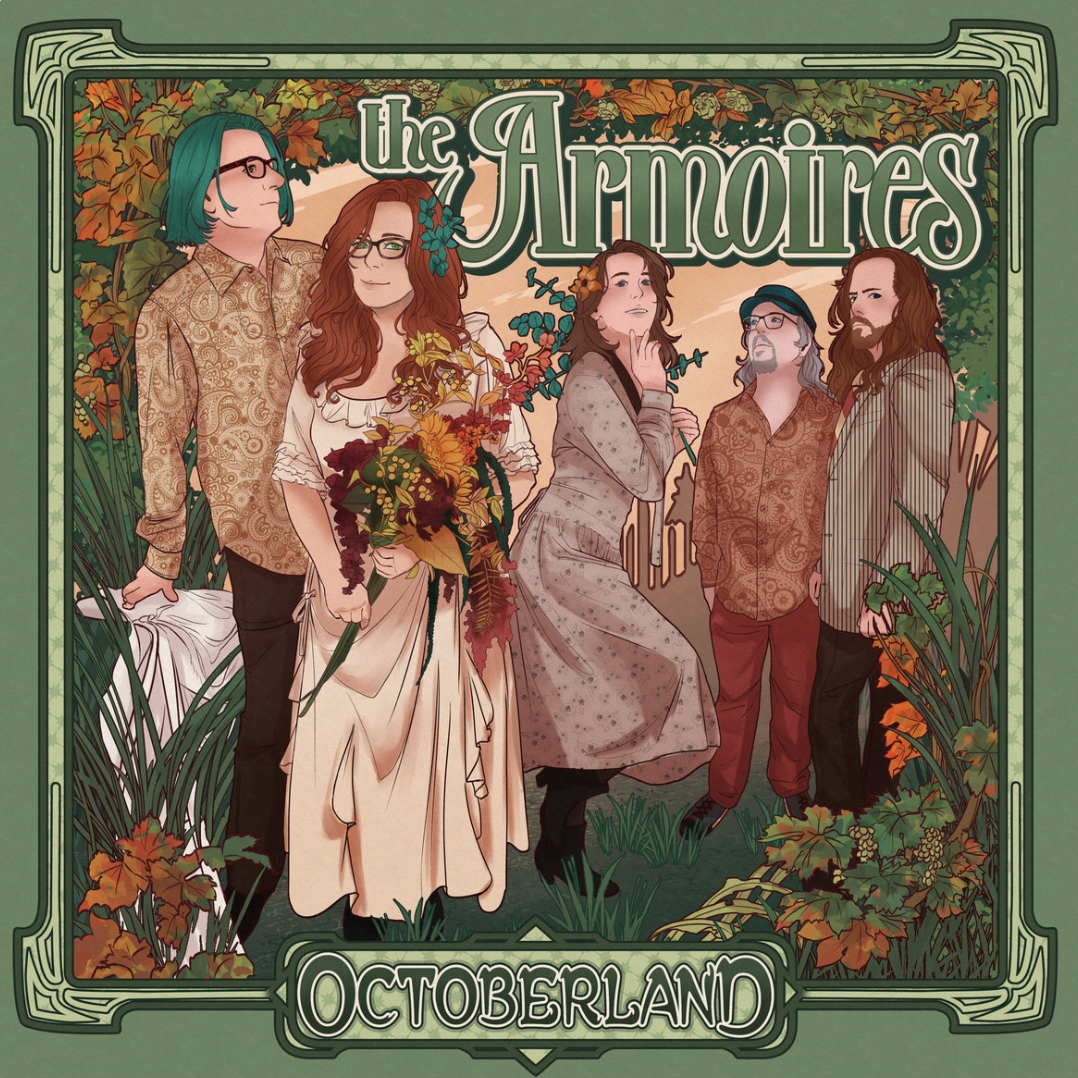
The Armoires ‘Octoberland’
ALBUM (Big Stir Records) 11th October 2024
Octoberland is the second album from The Armoires, or should I call it the Sophomore release as they are American and they call it such over there in the USA, but as I am a cantankerous old northern git from the UK I will call it the second release. Yes, their second album, the follow up to their debut “Incognito”, which if I remember correctly was one of my albums of the year. And Octoberland is another fine album from the band.
What I like about The Armoires is the way they take their influences and meld them into sounding like The Armoires. They take Alt rock 60s jangle guitar and Folk and indie and AOR pop, Psych and country and mould it into a stew of great American beauty. Octoberland is the aural equivalent of spending a sunny autumn day walking in the park with your true love.
Beauty Stab ‘GUIDE/FRISK’
ALBUM
After a five plus year wait, we have the debut, and who knows, only album from the one time much tipped for big things Beauty Stab. An album filled with sex sleaze and glamour but with a healthy or unhealthy dose of darkness. Ten songs that mine electro/synth pop, Scary Monsters era Bowie and a touch of goth alongside the duo’s own genius layer of pop suss. If “Bring Me The Boy”, a gem of a synth/dance song and the first single from the album, in a remixed form, was released in the 80’s on a major label it would no doubt had been a top ten smash.
The sound and feel of eighties chart land I think has a big influence on Beauty Stab. They do share a name with ABC’s second album after all, and I can almost hear Martin Fry emote over the bass heavy synth pop funk of “Manic”.
“GUIDE/FRISK” is a wonderful and inventive crafted album that celebrates the joy and darkness and power that great pop music can bring to your life and really deserves to be heard by all.
Black Mirage ‘Black Mirage’
ALBUM (Inner Demons Records)
If John Carpenters Halloween was set in the midst of The Power of The Flower hippiedom of 1967 this fine debut album by Black Mirage could well be the soundtrack. A strummed and picked dulcimer emotes beautifully over some quite marvelous drones and whooshes of synth creating a quite beautiful and sometimes eerie montage of aural dulcitude. With Halloween soon approaching, and as the dark early Autumn nights move in, this could well be the ideal musical accompaniment for the rain tapping on your windowpane.
Black Wick ‘Video/Droned’
ALBUM (Ingrown Records)
“Video\Droned” is a 27-track album of computer game pop, found sound magic and tuneful and drifting synth mellow instrumental magic, with the odd [very odd] drone chucked in for good measure. There is something that it totally relaxing about putting on this long and rewarding album, and just closing your eyes and letting the music sooth you into a state of semi consciousness, taking in the experimental magic and letting it wash over you.
The Boy With Perpetual Nervousness ‘Dead Calm’
ALBUM (Bobo Integral Records)
The Boy With Perpetual Nervousness are a delightful sounding chiming guitar band. No more, no less, Dead Calm is an album that evokes the sounds of the three power pop B’s, The Byrds, The Beatles and Big Star, and is really an enjoyable listen. But what tears it apart from albums that plough the same jangle furrow is the quite sublime songwriting and lead vocals, which at times remind me if Teenage Fanclub had they decided to go in cahoots with Jackson Brown and record an album full of L.A. sunshine. A lovely pop album.
Eurosuite ‘Totally Fine’
ALBUM (Human Worth) 18th October 2024
Unhinged chaotic angry shouty music with a dark sense of humour still has a place in my life, even at my age I am so pleased to say. And “Totally Fine” by Eurosuite is all the above. It has a madness that brings to mind the much-missed Ceramic Hobs and Whitehouse, and at times The Sleaford Mods. And in 2024 we need a bit of anger to soundtrack these angry mixed up disturbing times. Eurosuite indeed do a fine job of supplying that soundtrack.
Kitchen Cynics & Margery Daw ‘As Those Gone Before’
ALBUM (Cruel Nature Records)
I admit I have a bit of a soft spot for weird, strange folk music, I put it down to watching too much Bagpuss and The Clangers as a toddler: wasn’t the 70’s a wonderful decade to be a child. So, this fine album of weird, strange folk songs is right down my summer pathway stroll of mischievous delight.
Kitchen Cynics & Margery Daw go from the childlike tales of the sinister folk whimsy “Christopher Tadpole” to the dark and cold clawing of “Mole Man“; if you wondered what story time at the nursery school on summer isle might sound like, these gems will answer your wonderings. “The Four Trains That Killed Me” and “Last Of The Little Lost Lambs” are both wonderfully John Cale like in the darkness and utter beauty as much as “Accused Isle” is like listening to a slightly deranged Pam Ayres on the old Radio Luxembourg via an old transister radio under the bed clothes in the darkest of nights [wasn’t the 70’s a wonderful decade to be a child]. “As Those Gone Before” is a true magical gem of off-kilter folk whimsy, an album of true eccentric magnificence.
Not My Good Arm ‘Coffee’
ALBUM
Who are Not My Good Arm I hear you ponder to yourself as you peruse this DFB [Damn Fine Blog]. Well our dear readers they are a DFB [Damn Fine Band] that hail from Leicester, I think, and are a five piece that produce a hell of a musicality charade.
They take Rock ‘n’ Roll, Ska, Punk and Soul and tie it up and skin it alive whilst berating it with the sort of political soulful joyful nous that hasn’t been heard or witnessed since the Mighty Dexy’s Midnight Runners held the Top Of The Pops viewers enrapt with their explosion of attitude and musical good taste back in the early 80’s. Yes indeed, Coffee is a Northern indie soulful romp of an album by a band that I can imagine being a hell of a good night out to watch and by the looks of it gig on a very regular basis. So, keep your eyes scanned as they may be coming to your locality soon. I understand you can pick up a copy of Coffee on CD from their gigs, as by the looks of it they’ve not yet updated their bandcamp: probably too busy putting the fun into funk.
The Poppermost ‘I Don’t Want To Know’
SINGLE
The Poppermost are back with another slice of retromania, another slice of ‘I cannot believe it was not recorded in the 60s’. Another fine single, yes indeed. “I Don’t Want To Know” has one wondering, “is this what it would have sounded like if Gilbert O Sullivan had for some reason hired the circa 1966 Kinks to back him”, on this just pre Psych pop frivolity that’s all backwards guitars and Beatle Boots. Another timeless gem.
Salisman Communal Orchestration ‘Of The Desert’
EP (Cruel Nature Records)
There is something quite mind swaying, something that exports brilliance about this EP. It is a wonderful experimental warm pop dance psych hybrid; like a 60’s garage band being dragged through a vacuum of all musicality that lies ahead in the future. It rocks and rolls like rock ought to roll, but very rarely does in this day and age. I love the way the singer sings “I don’t believe” on the second track “Precipice”, it makes me want to believe in the magic of life again. I love the heartwarming experimental cacophony of “Men Of The Desert” and the all-out beautiful psych of the final track “Friendly Beast”. A quite genius four track EP.
Sassyhiya ‘Boat Called Predator’
SINGLE (Skep Wax)
The lovely sound of rocking indie pop is alive and well it seems with this really, quite catchy little ditty. What I love about it is it actually sounds like a single and not just a track that sounds like an album track released to appear on youtube and Spotify just to let people know that an album will soon be on its way. Yes, I am old fashioned; I remember when singles used to be commercial and released in hope of garnering radio play and such a song a milkman could whistle as he delivered a daily pint…yes, the good old days when a single was a single and not a seven-minute dirge of regret.
SCHØØL ‘The End’
SINGLE (Géographie)
“The End” is a bit of an indie rock toe tapper; yes, a song one can indeed tap their toes to or even somebody else’s toes if you have their permission. It’s the kind of song you might have heard on snub tv back in the day, all J Masics guitars and slacker vocals saying nothing in particular but still saying it with enough panache to tap your toes to [or somebody else’s]. I’m sure both indie kids and indie pensioners will enjoy the wrap around familiarity of this track.
Twile (featuring Laura Lehtola) “Hunger Moon”
ALBUM (Cruel Nature Records)
“Hunger Moon” is an album that combines folk, trip-hop, electronica and magic, and weaves together a tapestry of undiluted majestic swoonincity that has not been heard since the Portishead debut album “Dummy”.
Hunger Moon really does not put a foot out of place as it flows and hooks you into its warm strangeness, cradling you and sweeping you up to a safe place where dreams are free to play and cast shadows over your deepest thought and emotions. Eight tracks to soundtrack you as you come down from your highest high. Truly magnificent.
The Monthly Playlist For September 2024
September 30, 2024
CHOICE MUSIC FROM THE LAST MONTH ON THE MONOLITH COCKTAIL: TEAM EFFORT

The Monthly Revue for September 2024: Fifty choice tracks from the last month, chosen by Dominic Valvona, Matt ‘Rap Control’ Oliver and Brian ‘Bordello’ Shea. Features a real shake up and mix of tracks we’ve both covered in our review columns and articles. We’ve also added a smattering of tracks that we either didn’t get the room to feature or missed at the time. Covering many bases, expect to hear and discover new sounds, new artists. Consider this playlist the blog’s very own ideal radio show: no chatter, no gaps, no cosy nepotism.
TrAcKliSt
David Liebe Hart ‘James Earl Jones’
Mosik Rhymes & Tha God Fahim ‘E.S.P.’ – this month’s cover art
Seez Mics & Metermaids ‘Walter Wrong’
Kong The Artisan, Essa & Phat Kat ‘Get Nasty’
Etran de L’Air ‘Amidinine’
Carmen Souza ‘Amizadi’
Daniel Inzani ‘Beyond The Pale’
Zerrin ‘Spring Cleaning’
Black Artist Group ‘For Peace And Liberty Part 2’
Michal Urbaniak ‘UrbTrap’
AINON ‘Komorebi’
Derrero ‘Painting with Sound’
Neon Kittens ‘Lika Like’
SHITNOISE ‘Gum Opera’
The legless Crabs ‘Piercings And Tattoos’
I do You do Karate ‘Jabiru’
Cuushe ‘Faded Corners’
Inflatable Men ‘He’s Going Out With Marilyn’
Inre Kretsen Grupp & Prins Emanuel ‘Volta Semantron’
Phantom Handshakes ‘Dusk Enchanted’
Xeno & Oaklander ‘Via Negativa (in the doorway light)’
Beauty Stab ‘Use Me As Bait’
Wings Of Desire ‘OTTAMYMIND’
Nonpareils ‘Bring It On’
Short Fuze & 4Most ‘3AM Thoughts’
Desert Camo, Heather Grey & Oliver the 2nd ‘Sun Lord Mixtape’
leisure fm ‘illuminated manuscript’
Ghostwriter ‘Satan, Your Kingdom Must Come Down’
Elea Calvet ‘Trigger – Acoustic’
Holy Matter ‘The Dove’
Trust Fund ‘The Mirror’
Christopher Haddow ‘Look Homeward’
John Howard ‘Great Horse’
Minarets of Nessef ‘Instrumental’
Daniilaioi Brotherhood Choir ‘Christos Anesti, Mode Plagal A’
Umlaut ‘Gaze back into you’
Anja Ngozi & OKI ‘Utanobori’
Will Lawton and the Alchemists ‘Fossils of the Mind – Sebastian Reynolds Rework’
The New Tigers ‘Saba’
Viktor Ori ‘Vsetci sme v tom spolu’
Banca De Gaia ‘Electric Sheep’
Tanya Morgan, 6th Sense & Rob Cave ‘The Motion’
The Doppelgangaz ‘W.I.T.H.H.’
Xray & Monsta Island Czars ‘Evacuate The Club’
Jon Phonics ‘U JUST A LYING ASS HOE’
Ant ‘4-Track Beyond Beat 1996’
Leonard Charles ‘Rose’
Dr. Syntax & Pete Canon ‘Robot Problem’
Diamond D & KRS-One ‘THE KINGS’
Dead Players ‘Just Above Water’
 Monolith Cocktail Blog