CONVERSATION PIECE/ANNIVERSARY FROM OUR FRIENDS AT Kalporz
AUTHORED BY PAOLO BARDELLI/SAMUEL CONFICONI/RAFFAELE CONCOLLATO
TRANSLATED BY DOMINIC VALVONA
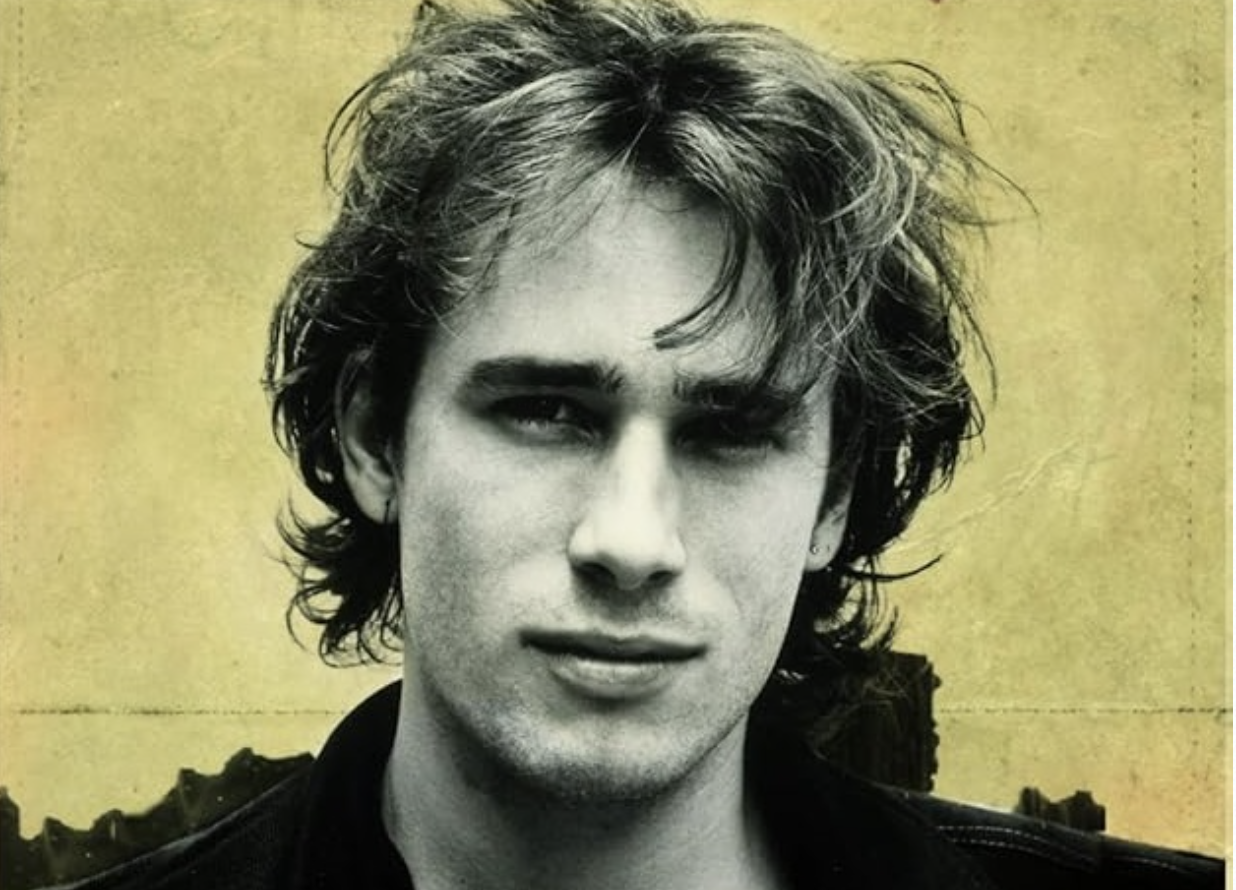
Continuing our successful collaboration and synergy with the leading Italian music publication Kalporz , the Monolith Cocktail shares and translates reviews, interviews and other bits from our respective sites each month. This month the Kalporz editorial team explore the legacy of the late and great tortured troubadour Jeff Buckley, thirty years after the release of his decade defining album Grace.
Jeff Buckley’s “Grace” turns 30 on August 15 [1]. Instead of making a complete analysis of that album ,which we have already done song by song for the 20th anniversary , this time we asked ourselves what remains – today – of Jeff Buckley’s artistic legacy. These are the contributions of Paolo Bardelli, Samuele Conficoni and Raffaele Concollato to the question.
Let’s immediately address the legacy that pisses us off the most: that Jeff Buckley has been transhumed into the collective imagination of talent shows because at least one in three approaches his version of “Hallelujah” , thus reaching us for a song that wasn’t even written by him, is truly a crime. But, as we know, we shouldn’t worry about talent shows and we shouldn’t even consider them, so let’s focus the answer on much more important areas. Like whether there are artists today who can build on his legacy, and whether his memory and importance are well understood today. The fact that there are few artists who demonstrate a talent comparable to Jeff demonstrates his uniqueness: among the many, only that loose cannon that is Tamino would come to mind , but it would be nice to identify someone who has the same fire of passion for music and not someone who is similar on an artistic level.
As for his importance today, we know that music cannot be recomposed and evaluated only with numbers, but sometimes they can help: this month on Spotify Buckley has totalled 3.9 million listeners, against for example Lou Reed’s 5.5 million. If we want to consider that Reed has produced much more, it would seem that there is still a lot of attention on Jeff Buckley, and the streaming numbers should represent the new generations more than the old ones (who have the possibility of physical listening). It is therefore difficult to answer the question we asked ourselves, whether Jeff Buckley is still influential or not, as there are contrasting elements. There is one certainty though: we must stop looking at the new releases that will continue from now on with material pulled out of the drawers, because Jeff Buckley’s legacy is clear with only “Grace” and “Sketches…”, in addition – if you really want to -there are the first official live performances (“Live at Sin-é”, “Mystery White Boy”, “Live A L’Olympia”) and the outtakes “Songs To No One” with Gary Lucas. Last year “Gods And Monsters” was released which is indecent in terms of sound quality, it would be worthy of immediate denunciation.
Personally, to feel close to him, I have been using a tactic for some time: following an Instagram page that only posts photos of Jeff Buckley (among the many I point out this one ) which creates an alienating effect: on the one hand, at first glance, Jeff might seem always present, but it is a fleeting sensation, which disappears immediately to leave room for the awareness of the melancholy of no longer having him with us. We who wait every day for another artist like him (and like Kurt Cobain) with the same desire for redemption, for emotion, for beauty, for anger, to express himself, to unite, to tell, to communicate, to make ourselves better by receiving his notes . That is his legacy.
(Paul Bardelli)
The greatness and relevance of Jeff Buckley, like that of the many artists who have left us too soon, lies not only in what he wrote, said and published, but also in what he could have written , said and published if he had not passed away. “Grace” is a traditional rock album and at the same time seminal and innovative, and this is perhaps its most extraordinary quality and its most surprising merit, which make it a milestone even thirty years after its publication. Without messing up the pages and the history of the novel of American rock which in the meantime continued to be written, adjusted and annotated, Jeff Buckley was able to give his contribution and make that genre his own by emptying it and making it a primitive shell to be filled; to be able to arrive at “Grace” he immersed it in a noble and refined musical tradition whose fil rouge was able to make the jazzy chanson of Nina Simone , the acid rock of Led Zeppelin , the poetic and visionary songwriting of Bob Dylan and Leonard Cohen and even classical music coexist. Where a cacophonous and ungovernable chaos could have arisen, a grace has instead sprouted that which seemed impossible to model from those ingredients, but which in the end succeeded.

It is precisely this gigantic merit of his, which has been able to influence artists of the caliber of Radiohead, Lana del Rey, Adele, Mitski and Phoebe Bridgers , just to name a few, and which has made him recognized as a big name in music by sacred monsters such as Bob Dylan himself, David Bowie and Morrissey, which makes his first and only studio album a room whose doors fold in on themselves and always lead back to that same place: the revolutions that started from there will be captured and in all respects written by others, others who have visited, lived and studied that room deeply. We already know where the others have gone and, as far as the future is concerned, we will know. Where he would have gone, on the other hand, we will never know, even if the never-completed recordings for what would have been his second studio album give us some clues. Unfortunately for us, however, that is a dead-end track, and here we return to the incipit of our discussion: it is as if two paths emerged from “Grace”, one that we have tested – and that, after thirty years, we are still testing – with our hands, and one that we will never know and that perhaps, in a parallel universe, is still being completed. But “this is not for our eyes”.
(Samuel Conficoni)
Despite his short career, Jeff Buckley’s influence on the music of the last few decades is profound. The unclassifiable genre he created, a mix of folk, rock, blues and world music, has left an indelible mark on many artists. His enormous talent in the use of his voice, capable of conveying the delicate vulnerability that inspired a generation of singers and pushed them to explore their vocal abilities in an unconventional way, is proof that he was not just ‘one of many’.
Just think of his cover of Leonard Cohen‘s “Hallelujah”, which became so iconic that it became a point of reference for subsequent reinterpretations. His expressiveness led to a return to authenticity and emotional honesty that left a mark on Thom Yorke, who often cited him as one of his main influences, both for his vocal style and for having pushed him to think outside the box. Damien Rice , whose direct and intimate style he took, also carries his legacy. Of course, Damien then completed the “masterpiece” with poetic lyrics, but the affinities with Jeff’s style are evident. Another artist inspired by Buckley was Justin Vernon (Bon Iver) , where the introspection and songwriting leave no doubts.
From a strictly musical point of view, Buckley can be found in the British band Alt-J, who with their experimental and eclectic sound echo the fusion of different genres mentioned above. Finally, we cannot fail to mention Daughter, with the delicate and desperate voice of Elena Tonra and the haunting melodies of the group, where Buckley’s spirit echoes in almost every song.
Others, perhaps even indirectly or lateral, have inherited Jeff Buckley’s legacy, ensuring him an artistic legacy that places him among the most influential figures in modern music.
(Raffaele Concollato)
Our Daily Bread 623: Tetsüo ii ‘Menagerie’
August 16, 2024
ALBUM REVIEW/ANDREW C. KIDD
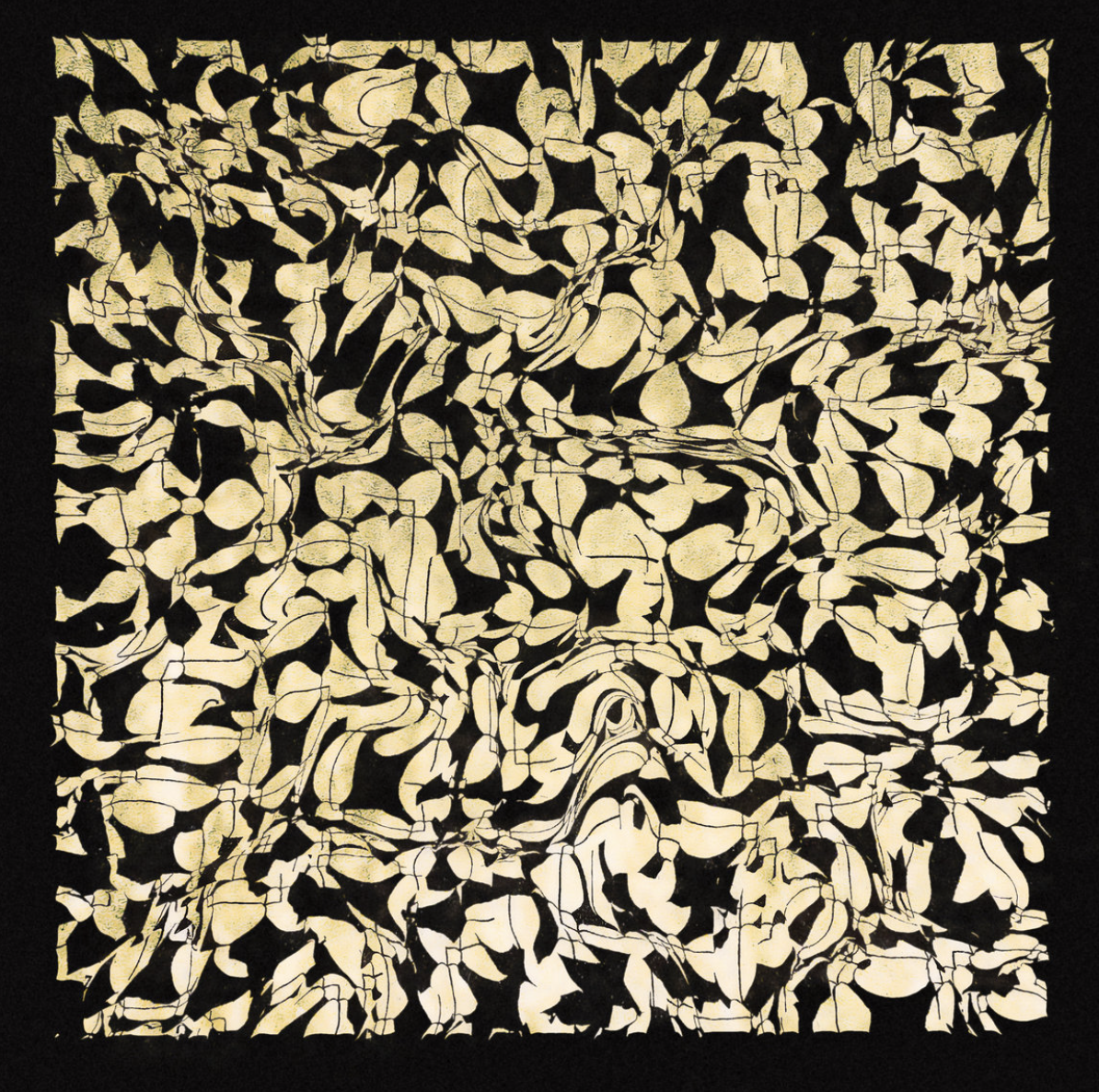
Tetsüo ii ‘Menagerie’
Available Now
You have emerged from a deep dive with eyes still blurry from the salt water. Silhouetted figures stand on a smoke-brimmed horizon. Rather than focusing on the outlines of the indistinct entities that come slowly into view, observe their shadows that coalesce into transient forms. Embrace the illusory. Meet the unperceivable as Tetsüo ii do. Sonically (and thematically), Dave Duval and Scott Saad reside in these foggy realms. Their musical introversions are often brief, but when listened to sequentially, each piece becomes part of a greater whole.
There are hallmarks of the duos previous works on Menagerie. Every semibreve, every cadence, every rest note is deliberate and measured. They continue to locate discreet spaces within the phonic interstitium. The synth patches are still carefully woven into a complex, three-dimensional quilt. The listener experiences synaesthesia on Summer’s Veil. Sustained pads play out on Getting Late. A lithe, piccolo-high melody aerates the beatless and breathy Pale Blue. The step-like, almost cinematic pattern that emerges on Heart of the Oak yields to a fixed tonality that cuts right through the piece, severing it in two. This funnelled distortion in the opening act serves to test the listener.
The experimentation continues on Whose Roots are Stars in the Human Mind (the title presumably inspired by the guttered glistening of the half-painted, half-photographic patchwork of images of Yggdrasill by avant-gardist filmmaker, Stan Brakhage). Here, Morton Subotnick meets LFO-circa-1995. There are: circling analogue sounds; minor key pseudo-melodia; glistening silver-like sounds. Akin to the Brakhage footage, I start to envisage static shots of sun glitter bursting out between the clouds.
The musical theme on Menagerie is not a melodious one. And neither is it confluent. One or two keyed synth notes sink and echo and play out in a repetitive refrain; each one is inkier than the last. The demonic horn on Molten Synapse (another nod to Brakhage) are future sirens. These are wavelengths that serve to warn. Perhaps they are the final sounds that enter the last auditory meatus there ever was. A similarly low-frequency waveband emerges between the swathes of CS-80-sounding pads that key a mournful melody on the title track. A strange electro-woodwind solo whistles. A whirling, grey-noise outro serves as an intermission.
What noises do clouds make when they move? Is there a symphonic kinesia? The undercurrent that rumbles and whirrs and distorts on Hungry Skies proffers one theory. The synth-work is arpeggiated, contrapuntal even. There is a reprise of Whose Roots are Stars in the Human Mind. Clangs and analogue splashes are perhaps indicative of precipitation. Where do these raindrops fall? The organ-inspired synths of Terra carefully bellow the longest melody of the album. And like organs, they expand and breathe. From the mid-way point on this piece, there is sonic diffidence. I imagine the droplets being absorbed into the earth, saturating the seeds that take root. In some respects, this mirrors the structure of the opening piece Heart of the Oak; yet here, in the deeper reaches of the album, there is no reprise of the organ that came before it. We are left in a cold place – a lightless space. Or perhaps we are simply deaf to the symphony of soil-concealed germination.
Coarse crackles like thunder introduce the The Swimmer. There is a bright, almost chromatic opening that edges upwards. The first sprouts peek out and gain height. Their stalks extend like limbs to touch an uncertain world. Bassy undertones provide rhythmic stability. Each stalk is anchored and made unmovable in their firmly-rooted positions. A deep synth note continues to play. The oscillating broken sounds – again, a little like a siren – would normally serve as a background; yet, at this point in the denouement of the piece, I concentrate on it almost entirely. Here, the listener is reminded that the fruits of the growing plants will eventually be threatened. As the wizened voice on the title track stated earlier in the album: “Even the most prolific species cannot be controlled by the sheer variety of life in the bush…and the variety of appetites they possess.”
Duval and Saad pen concept works. Menagerie is to be considered their ‘deep earth’ album, somewhat contrasting their previous ‘deep space’ releases (Tetsüo ii, released by Dagger Forest, and !!, self released, both in October 2023). Menagerie ends with Summer’s Veil (Reprise) which is a fragmented version of its former self. Nature seems to prosper here, but only temporarily. The light melody soon disappears into the umbra of the deep earth.
A WORLD OF SONIC/MUSICAL DISCOVERIES AND POSSIBILITIES REVIEWED BY DOMINIC VALVONA
(Unless stated otherwise, all releases are available now)
Credit: Hanne Kaunicnik
Poeji ‘Nant’
(Squama)
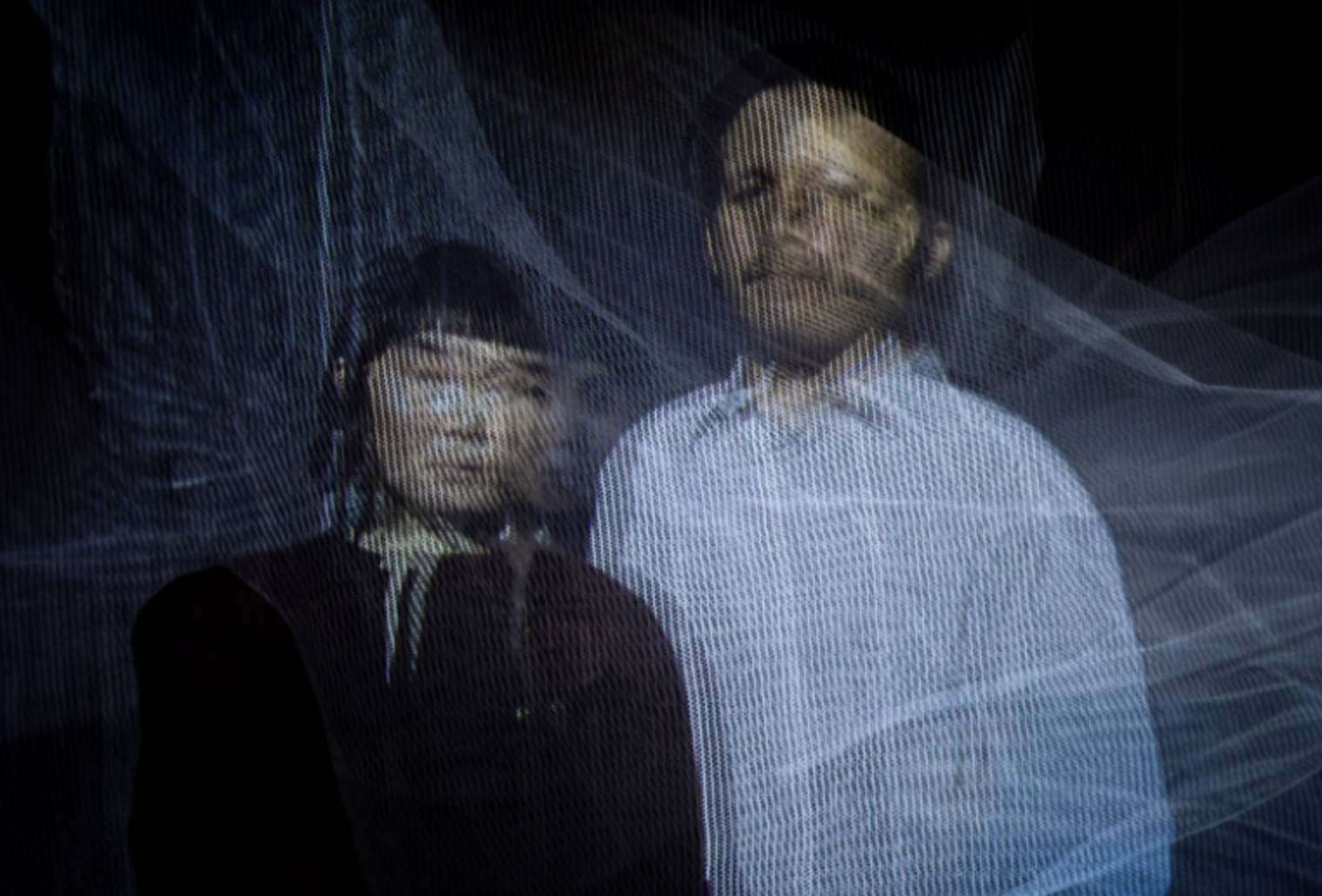
In shrouded chambers polygenesis cultures and roots cross paths and open up an amorphous portal to a unique world of redolent Asian percussion and Mongolian “urtyn duu” vocal soundings.
Making good on their cryptically coordinate-like coded 031921 5.24 5.53 EP from 2022, German drummer extraordinaire Simon Popp and the Ulaanbaatar born vocalist Enkhjargal Erkhembayar (shortened to Enji) have combined their individual disciplines and scope of influences to venture even further into uncharted territory.
For his part, the Bavarian Popp uses an extensive apparatus of hand drums and worldly sourced percussion to conjure up an atmosphere of both atonal and rhythmic (sometimes verging on a break or two) West Africa, Tibet, gamelan Indonesia and Japan. This in turn evokes a transmogrified vague sense of the avant-garde, of Kabuki theatre, of Shinto and Buddhist mysticism and mystery.
Popp’s collaborative foil Enji is a scion of the old Mongolian tradition of the Long song, a form of singing that emphasis and extends each syllable of text for long stretches of time. It’s said that a song with only ten actual words can last hours. Strong on the symbolism of the Mongolians much dependable horse, the long song form can be philosophical, religious, romantic or celebratory. Now, in a different century, Enji channels this heritage to voice, utter, accent, assonant, woo, and like breathing onto a cold glassy surface, exhales the diaphanous, gauzy, ached and comforting – the truly mysterious hummed ‘Buuwein Duu’ sounds like a lullaby.
Although much of the wording is linked to those roots, there’s an ambiguity to much of the carrying style vocals. For instance, the duo’s appellation of Poeji was chosen because it can be translated into various languages: meaning “sing” in Slovenian and roughly “poetry” in Japanese. The album title, Nant, is itself old Welsh in derivation, and can be translated as both “stream” and “valley”.
A fourth world dialect is achieved; a communication that needs no prior knowledge or understanding as the meaning is all in the delivery, emotion the cadence and largely extemporized feels and mood of the moment.
Described as working in the vernacular of post-dub and the downtemp, Nant reminded me in parts of the “tropical concrete” of the Commando Vanessa label pairing of Valentina Mag aletti and Marlene Riberio, Hatis Noit, Steve Reich and Werner “Zappi” Diermaier’s various drumming experiments as part of the faUSt duo with fellow original Faustian Jean Harve-Pèron. It is a unique conjuring of tones, textures, atmospheres, the avant-garde, the spontaneous (wherever the mood takes them) and the esoteric that won’t scare the horses. Instead, it sets a wispy, shrouded course to ventures into new realms of improvised communication; a bridging of cultures that reaches into new spheres of worldliness and the realms of new dimensions.
Raymond Antrobus & Evelyn Glennie ‘Another Noise’
30th August 2024
So tangible and effective is the clever – if taking a leap into the unknown and by chance – union between the two accomplished deaf artisans of their artistic forms that each pin-like sharp spike, each metallic shave, rattle and atmospheric undulation that builds around the unflinching candid delivery really hits hard and marks: leaves an audible impression.
The musicality, the rhythm is all in the poet Raymond Antrobus’ voice and often put-upon and sometimes self-doubting, cadence. It can’t all be put down to his deafness, but it offers something unique – although the William Blake professor of the album’s final bittersweet sign-off was both condescending and embittered-sounding in his succinct dismissal of Antrobus. I guess what I’m trying to say, is that sure the deafness is crucial, and that it opens up new or different ways of creating and circumnavigating the loss of this sense, but there is so very much more to both partners in this venture’s art form and genius that transcends the deaf condition.
Framed as it is, this inaugural collaboration between the poet and the virtuoso percussionist/composer Evelyn Glennie pushes the boundaries of poetry and sound; causing us to reevaluate our own perceptions. And with the equally acclaimed – and no stranger to this blog, as probably its most prolific featured artist/producer – in-situ producer Ian Brennan on board there’s an authenticity to what develops from the readings and mostly improvised percussive soundscapes.
Both partners on this evocative project can hardly be said to have a condition, a disability, or suffer for it. Glennie especially, through her old teacher Ron Forbes during her formative years, learnt to hear sound through different parts of her body: a physical response and channeling of sound that has helped and shaped the star percussionist to become one of the world’s greatest living musicians.
Unencumbered, the poetic language conveys, describes that unique relationship with sound, music and noise. The opening tubular shaken and spindled ‘The Noise’, which features the wooing, near ethereal sweet hummed undulations of guest artist Precious Perez, is the most obvious example of this. Rather importantly, the classically trained but eclectic Latin singer/songwriter/educator Perez, who is herself blind, is the president of the RAMPD.org charity fighting for disabled performers in the arts and more access. But it is her evocative voice that is called upon to offer something approaching a subtle wooing-like hum.
Giving each poetry performance a shiver of avant-garde, concrete and abstract sound art (even near Dadaist and Fluxus), Glennie (who had no prior knowledge of the material she was contextualizing or sounding) uses an apparatus of spokes, chains, tubes, bells and metallic-sounding brushes to articulate but also dramatically jolt and jar the alien, the unknown, but also the disturbing. She can also emphasis a state of isolation very well too; her foil’s themes often touching on a feeling of dislocation, not only because of his own deafness but because of his mixed ethnic roots: a feeling of the other you could say; of feeling adrift of both his English and Caribbean heritage.
Antrobus is unflinching on the topic of ancestral Black trauma and legacy. ‘Horror Scene As Black English Royal’ is a vivid example of slavery and that heritage that the Black community feels it can never leave behind or unshackle; prompted, I take it, by the whole Meghan Markle debacle and her fleeting acceptance into English royalty before the deluge of perceived outsider, and skin colour muddied the calm waters of stiff upper lipped etiquette in the White establishment. Glennie scores this poem with an atmosphere of horror and hurt; the sound of what could be an animalistic growl and pain striking out from the torture of slavery. ‘Ode To My Hair’ meanwhile, deals with the kinks and prejudice of a said Black “throw”, with Antrobus underlying dislocation once more emphasized as Black enough to be the victim of racism, but not Black enough for some in the Black community itself. There’s also a secondary theme of reconnection, using a haircut to talk about his relationship with his father. There are a few poems like this, where the touching relationship to a loved one, a child and even a cat is poignantly open and candid without resorting to the saccharine or to platitudes.
Talking of animals, birds, with all their various connotations, feature at various points on the album; cleverly linked to the learning of signing and to the very rhythm of city life on the visceral and incredible ‘Resonance’. I love some of the descriptions on this reading, especially the lyrically language used to describe their movement, like an “uncharted astronomy”, and the way Antrobus describes city birds as a whole different species to their country cousins.
Affectionate, personal as much as near dystopian, unnerving and hurting, Another noise is unlike anything you may have heard or felt in some time. For both artists sound and speech is near tangible; something you can almost touch. A sensory experiment, this collaboration does much to push, probe and explore perceptions of language, timbre, performance and delivery. This album is nothing less than a genuine work of artistic achievement from two of the UK’s most important artists.
The Mining Co. ‘Classic Monsters’
(PinDrop Records) 9th August 2024
Continuing to mine his childhood the London-based singer-songwriter Michael Gallagher once again produces a songbook of throwbacks to his formative adventures as a kid growing up in Donegal in Ireland.
His previous album almanac, Gum Card, touched upon a silly fleeting dabble with the occult, but this latest record (his sixth so far) is filled with childhood memories of hammy and more video nasty style supernatural characters, alongside a whole host of “weirdos”, “freaks” and “stoners”.
Once more back in his childhood home, frightened to turn the lights off, checking for Christopher Lee’s Dracula and the Wolfman under his bed, yet daring himself to keep watching those Hammer house of horror b-movies, Salem’s Lot and more bloody shockers, Gallagher links an almost lost innocence with a lifetime of travails, cathartic obsessions and searching desires.
A recurring metaphor, analogy and theme of blood runs throughout Classic Monsters, whether it’s the Top Trumps ghoulish kind of youth, or the more mature, adult-themed kind found on the taking-stock, trying not to run away, ‘Rabbit Blood’. The life force is both a reminder of immortality and the source of adolescent frights.
As always Gallagher’s lyrics are layered with references and meaning, and stretch the loose concept to open-up about anxieties, growing up and both the bliss and pains of love; the alum finale, ‘Planetarium’, sets a near ethereal astrological scene from the said title’s stargazer observatory, as two star-crossed in stoned awe and wonder look up to the celestial heavens to a retro-lunar, Theremin-like voiced and ballad style piano soundtrack. Songs like that evoke Gallagher’s sci-fi passions, and alternative Dark Star songbook score fixations (see the brilliant Phenomenology album). But even though there’s a smattering of space dust, and no matter what, a musical signature that runs throughout all his work – enervated cosmic cowboy troubadour, soft rock and evocations of the Eels, The Thrills, Josh T Pearson, Rezo and The Flaming Lips – Gallagher has changed his set-up a little.
Recording back in the Spanish studio environment that has served him so well, and once again working with the musician and producer Paco Loco (credits and highlights include working with the outstanding Josephine Foster, the Jayhawks’ Gary Louris and The Sadies), Gallagher is now also backed by the Los Jaguares de la Bahía band, who bring subtle psychedelic country and alternative rock influences to the sound. The cover art, especially the lettering style, signals The Flying Burrito Brothers or The Byrds – both of which you may detect – but there’s an almost distinct CAN-style drum on the opening sparse and wisped ‘Failure’, and a touch of Bonnie Prince Billy, Phosphorescent and Fleet Foxes.
Step forward Pablo Erra on bass, Patri Espejo on piano, Esteban Perler on drums and Loco on synths and ambient effects, for they manage to seamlessly evoke Bill Callahan one minute and Lou Reed the next. And yet also sound like Joe Jackson teaming up with Nick Lowe and the Boomtown Rats – to be honest, that last reference is largely down to the piano sound. They make the vampiric and howling themed ‘Blood Suckers’ sound disarmingly like a Scarlet’s Well fairytale of sweet dreams, soothed from beneath a baby’s calming mobile hanging over the cot. Weirdly (or not) both the band and Gallagher reminded me of Elbow and David Gray on the very 90s upbeat tempo’d ‘Killer Sun’.
It’s a winning combination that expands Gallagher’s musical scope without altering his signature style and voice, feel and intimacy. I’ve said it before about Phenomenology, but I really do think this is now his best album to date. And I’m still astounded by the lack of support for his music or exposure, as Gallagher’s The Mining Co. vehicle is worthy of praise, airplay and attention. Hopefully it will be sixth album lucky for the Irishman.
Jessica Ackerley ‘All Of The Colours Are Singing’
(AKP Recordings) 16th August 2024
Gifted guitarist, composer, bandleader and soloist Jessica Ackerley adds even more colour (sometimes vivid and striking, at other times, more pastel or muted) to their pliable sonic/musical palette. Seamlessly crossing over into art – inspired in part by the arid desert outdoor symbolic and metaphorical flowerings and abstracted landscapes of Georgia O’ Keefe – the now Honolulu-based musician turns markings and sketches into both untethered performative compositions that traverse the avant-garde, jazz, blues, experimental rock, R&B and the virtuoso. O’ Keefe’s “to see takes time” wisdom is used almost like a catalyst for the album’s articulation and more energetic ways of seeing.
Recorded in the unceded territory of the indigenous Kanaka Maoli, in the Mānoa Valley (one of Hawai’i’s venerated mythological creation story landscapes) All Of The Colours Are Singing filters an inspiring geography, sense of time and place whilst also channeling Ackerley’s synesthesia – hence that title.
With a rich CV of performances (from John Zorn’s The Stone to The Metropolitan Museum of Art) and projects behind them (from their extensive catalogue of eclectic work with such notable musicians as Marc Edwards, Tyshwan Sorey and Patrick Shiroshi), it’s no wonder that Ackerley manages to attract a talented pool of collaborators or foils. Step forward Walter Stinson on upright bass, Aaron Edgcomb on drums and Concetta Abbata on alternating violin and viola. Boundaries are crossed and blurred with this ensemble on an album of varying beauty and wilder improvisations; an album in which subtle sensibilities are comfortably followed by challenging free expressions of fusion and freeform progressive jazz. If there was an underlying genre or influence sound wise, then it must be jazz in its many forms, with echoes of the Sonny Sharrock Band and Philip Catherine, but also shades of the noirish, the smooth and more impressively quickly played and bent-out-of-shape kinds. Edgcomb’s drums can add to the jazzy feel, but also sieves, brushes and sweeps across the snare in a more tactile fashion – almost like applying brush strokes at times. It might just be me, but he reminded me of Guru Guru’s Mani Neumeier on the changeable in tempo and style, jazz-fusion ‘The Dots Are The Connection’.
But then there’s the near sweetly hummed and dreamy intro to that O’ Keefe borrowed title quote, and then what sounds like Tuareg desert or Songhoy blues guitar on the first part of the ‘Conclusion: In Four Micro Parts’ finale – this soon develops into a bout of buzzy intense Yonatan Gat experimental physical rock. That use of strings obviously steers the music away from the jazz sound towards the classical and chamber. Abbato, subtly reinforcing or emphasising the moments of grief, mourning and thoughtfulness, can both articulate dew being shaken off fluttered shaken feathers and stretch, strain and fray the violin and viola in a more avant-garde fashion – reminding me of Alison Cotton, Alex Stölze and, although she is a cellist, Anne Müller. Ackerley uses the guitar like an artist’s brush stroke, whether it is in a frenzy or blur of abstract or rapid markings and swishes, or more placed and calming. Invoking such refined and experimental bedfellows as Joe Pass, Marisa Anderson, Bill Orcutt, Chuck Johnson and the Gunn-Truscinski Duo, they walk a unique personalised pathway between medias and art forms to showcase and push at the boundaries of artful guitar-led performance and inner emotional workings.
Drew Mulholland & Garden Gate ‘Night Blooming Flowers’
(Subexotic Records) 23rd August 2024

Serial offenders of occult sounds and more nostalgic early analogue and library music, the transatlantic sonic conjuring sparring partners Drew Mulholland and Timmi Meskers have coalesced their individual disciplines for a suitably atmospheric esoteric soundtrack of retro horror novelties and pastoral chamber folkloric magik.
By candelabra light Meskers’ Garden Gate alter ego is called upon to bring a certain ethereal apparitional siren allure, enchantment and vintage, and bowed classical heightened spine-tingles and spooks to Mulholland’s BBC Radiophonics Workshop and his very own Mount Vernon Arts Lab project style electronics.
The University of Glasgow lecturer and composer-in-residence and his American “Baroque psych/horror savant” foil don’t do things by halves, having written a mini synopsis storyline of a kind for the protagonist of this horticultural paranormal and dream-realism tale. The title more or less tells you all you need to know: that is, a search and waylaid adventure to find the rarest of flowers, the botanist’s precious treasure, that only bloom’s at night. In between the start of a expedition and the final unveiling of this sought-after flower, there’s many a misstep along the pathway, as the dark arts merges with pagan and idyllic folklore to drag our main character into various spellbound jeopardies, fairytales and hallucinations.
Imbibed and inspired by a number of sources, one of Meskers most notable is the late British historian Emma Wilby’s Cunning Folk And Familiar Spirits: Shamanistic Visionary Traditions In Early Modern British Witchcraft And Magic tome; the central propound argument of which is that early modern beliefs and witchcraft were influenced by a substratum of shamanistic beliefs found in pockets of Europe – of which they are many detractors. You can throw in the Tarot and what musically sounds like to me the cult British horror soundtracks of the Amicus and Tigon studios, Dennis Wheatley, Isobel Gowdrie and a whole woodland of sprites, fairies and mythical beasts.
Altogether, with both partners’ range of influences, the soundtrack shivers, creeps and in both a supernatural and merrily manner merges the otherworldly analogue-sounding atmospheres of Belbury Poly, The Focus Group, Pye Corner Audio and Bibio with the pastoral willowy tapestries and bewitching spells of Tristram Cary, Marc Wilkinson, James Bernard, Harry Robinson and Sproatly Smith.
From dramatic stiletto piano and meanderings amongst the grass snake foliage and Piltdown Man decorated hilltops, to more hallucinatory passages of enticement, each piece of music conjures up a scene or chapter in a larger idiosyncratic tale from the pages of the Fortean Times, King James’s Daemonologie or pulp supernatural fiction. As Hauntology projects go, Night Blooming Flowers is a retro-styled success of subtle but effective storytelling, mystery and cult references; a soundtrack that now needs a film to go with it.
Asteroide & Fiorella16 ‘Suni A Través Del Espejo’
Downtime ‘Guts’ (Cruel Nature Records)
Through the various sonic peregrinations, noises and protestations of their extensive roster, the Northumberland diy label Cruel Nature travels between the hard bitten dystopias of life in a modern fractured state to more fantastical climes out in the expanses of space. Keeping up a steady prolific schedule each month, the label covers everything from the psychedelic to riled punk and societal angst.
Just dipping into the July haul of releases, I’ve picked out two albums from the mysteriously cosmic and krautrock imbibed camps; the Peruvian pairing of the Asteroide duo and Fiorella16’s Suni A Través Del Espejo and Downtime’s seemingly uninterrupted one-take Guts jam.
The former channels the psychogeography (both atavistic and otherworldly) of the Andean Altiplano, which spans Boliva, Chile and Peru. A natural phenomenon, the Altiplano (from the Colonial Spanish for “high plain”) is the most extensive high plateau on the planet outside of Tibet. It encompasses a whole high altitude giddy biosphere of pristine environments: from the famous Salar de Uyuni salt plains to Lake Titicaca – one of the main hubs along its banks, Puno, is where one half of this collaboration, the indy rock siblings Asteroide, hail from. “Through the looking glass” (as that album title translates), alongside sonic foil José María Málaga, aka Fiorella16, they magic up a highly mysterious communion with the elements and the forms, the ghosts and the extraterrestrial bodies that flicker in and out of the consciousness; that appear like dizzy, lack of oxygen and air, hallucinations and mirages.
A biomorphic score created in-situ, the properties of water, the season of Spring and a hilltop suddenly sound like the cosmic whirrs of UFOs, alien transmissions and caustic stirrings from the belly of volcanic chambers. A mixture of Steve Gunn and The Howard Hughes Suite-like post-rock Americana and harder Sunn O))) and Gunter Schickert guitar and synthesised atmospherics, generators, oscillations, satellites and Throbbing Gristle coarseness build up a near esoteric, primal communication with the plateau’s guardians. The finale, ‘PRIMAvera’, with its ‘Jennifer’ style reverberated throbbing wobbled bass, sulfur waves and data exchanges, finds the collaborative partners finally beamed-up via the tractor beam to some subterranean alien dimension.
A little bit different, though there are some krautrock-style overlaps, the “power duo” Downtime orbit head music space on their latest just-let-the-tape-record-whatever-emerges-from-an-intense-heavy-jam-like-session. Over forty minutes of edited thrashing, kraut/heavy/acid/doom rock, the participants in this expulsion of energy channel everything from the Boredoms, Acid Mothers Temple, Zeni Geva, Hawkwind, Ash Ra Tempel and Boris.
In a cosmic vacuum, near virtuoso fuzzy and scuzzy soloing and ripping phaser and flange guitar and tempo-changing beaten, crashed, squalling drums and acid galactic effects create a heavy meta(l) space rock behemoth of interstellar proportions.
A mere whiff of what to expect from this label’s catalogue, both albums are worthy of your credit and spare change.
Zack Clarke ‘Plunge’
(Orenda)
The critically hailed pianist-composer, New York improvised jazz scene stalwart, and bandleader Zack Clarke finds ever more inventive and omnivorous ways to push both the jazz form and his studied instrument on his latest album for the Orenda label.
“Building” (to paraphrase the album notes) bridges between groups of people, and cleverly merging the intelligent dance music movements with cosmic-funk-jazz, hip-hop breaks, prog and both classical and avant-garde forms, Clarke takes the proverbial “plunge” and resurfaces with a sometimes fun and at other times intense serialism of either spasmodic and stuttering or free-flowing discombobulating performative fusions.
Using modern production methods and a whole kit of tech, Clarke takes the idea of jazz in its earliest incarnation as dance music and runs with it; aping the minimalist techno and electronic rhythmic off-kilter mayhem of such iconic labels as Warp through an effects transforming removed version of the piano.
Dashed, chopped and cross-handed sophisticated modal runs and the piano’s very guts (its inner wiry stringy workings played at times almost like a splayed mallet(ed) chiming dulcimer) work with varied combinations of breakbeats, clattered, rattled, splashing and electronic padded drums and what sounds like 303 or 808 electro synths across a generous sixteen tracks.
At times all this sounds like Keith Jarrett corrupted by Drukqs era Aphex Twin; or like µ-Ziq fucking around with zappy-futuristic Herbie Hancock; or even Zappa jamming with Chick Corea. But then certain compositions (if that’s the appropriate word) reminded me of The Bad Plus, of Radiohead In Rainbows, of Mantronix, Squarepusher and Andrew Spackman’s Sad Man alter ego. It might only be me, but album finale ‘ANTHEM’ sounds like Abdullah Ibrahim transduced through d’n’b and breakbeat filters.
There’s a lot to unpick, to absorb, but weirdly enough Clarke’s inventive intentions are successfully accomplished as he bridges the avant-garde and jazz with a spectrum of fusions and experimental technology to produce a unique vision of dance music for a new century.
___/+ THESE RECOMMENDATIONS IN BRIEF
Any regular readers will know that I pride myself in writing more in depth purview-style reviews with a wider context. This means I naturally take more time and effort. Unfortunately, this also means that I can only ever scratch the surface of the thousands of releases both the blog and I get sent each month. As a compromise of sorts, I’ve chosen to now include a really briefly written roundup of releases, all of which really do deserve far more space and context. But these are recommendations, a little extra to check out of you are in the mood or inclined to discover more.
Poppy H ‘Good Hiding’
ALBUM (Adventurous Music)
In a constant artistic flux, the idiosyncratic trick noise maker and musical statements composer Poppy H always manages to embody a whole new sound with each release and project. The latest is no different for being different in that regard. A Good Hiding (a reference to taking a good beating or kicking, or just literally a “good hiding place”) is both a studied and beautifully evocative chamber haunting of removed folk and traditional ideas, windy funnelled atmospheres, low key padded bobbling and spinning electronics, voices and whispers from the air, ghostly classical piano and suffused ambient drama. To truly articulate the elegance, near Gothic mystery and dreaminess of it all would need far more words and depth: a real long form reading. But hopefully this will be enough to whet the appetite, as this is a very good album indeed.
Cumsleg Borenail ‘Broadmoor Time’
TRACK/VIDEO
Prolific instigator of phantasmagoria electronica Cumsleg Borenail is at it again with another fucked-up nightmare of sonic disturbance. As you may have rightly guessed from the title, this ominous, scary score channels the abusive, harrowing pained psychogeography of the infamous high-security psychiatric hospital in Berkshire, England. A right rogue’s gallery of inmates has occupied this facility over the decades; some of the UK’s very worst and unhinged offenders and murderers. And you can read much into the reasons behind the subject matter, the mental health care aspects and treatment especially, but it is a very haunted soundtrack of the recognisable made otherworldly, scaly and metallic.
Pauli Lyytinen ‘Lehto/Korpi’
ALBUM (We Jazz) 30th August 2024
Conjuring up a whole eco system of forest canopy menageries and lush greenness, the Finnish saxophonist Pauli Lyytinen sets out a “deep forest grove” biosphere of fertile heavenly auras and bird-like reedy probes on his solo debut for the We Jazz label.
A moiety of Don Cherry, both 60s hippy idealistic eco-friendly and more divine Biblical MGM sound studios soundtracks, cylindrical Fourth World blasts, and hints of Stetson and Brötzmann, Lyytinen’s saxophone positively sings on the wing whilst opening a blessed environment. Mentioned in the references, and on the nose, our fluttered, feathery saxophonist has Evan Parker’s own bird songs down to a tee. An unassuming charmer and yet full of experiment and organic untethered freedoms, Lehto/Korpi is far too good an album to be missed or overlooked.
Hi, my name is Dominic Valvona and I’m the Founder of the music/culture blog monolithcocktail.com For the last ten years I’ve featured and supported music, musicians and labels we love across genres from around the world that we think you’ll want to know about. No content on the site is paid for or sponsored and we only feature artists we have genuine respect for /love. If you enjoy our reviews (and we often write long, thoughtful ones), found a new artist you admire or if we have featured you or artists you represent and would like to buy us a coffee at https://ko-fi.com/monolithcocktail to say cheers for spreading the word, then that would be much appreciated.
BRIAN ‘BORDELLO’ SHEA’S REVIEW SECOND REVIEWS ROUNDUP OF MAY – INSTANT REACTIONS.

Credit: Eleanor Petry
Chinese American Bear ‘Yummy Yummy Yummy’
SINGLE
There is something quite psychotically wonderful about this throwaway piece of indie pop fluff, a charming jangly little song about the joys of eating noodle soup. And why on earth not find pleasure in the simple small things, and the bigger problems in life do not seem so bad.
Silas J Dirge ‘Swan Songs’
ALBUM
I normally give music that’s described in the press release in the release as Americana a miss, like I do music that is described as Shoegaze or if Joy Division is mentioned as an influence. Not that I don’t like all three. I just normally don’t like the artist that is normally described as such by the unimaginative PR company.
But there is always an exception to the rule, and this is it. Swan Songs is rather fine in a dark rootsy way: I can imagine Silas J Dirge wearing a train driver’s hat and chewing a matchstick in the side of his mouth and calling ladies ma’am; I can picture him sat in a field next to a blazing fire singing songs to whoever will listen, and singing songs of darkness and lost love with a profound knowledge of both. I like Silas J Dirge and his deep knowledge of the darkness of life.
Ex Norwegian ‘Sketch (Extra Sketch Edition)’
ALBUM
This is the life. The sun is shining and I’m listening to the reissued second album from the quite excellent poptastic Ex Norwegian, a band that takes the beauty of melody and twists it into sublime songs of love and loss; a band that at times reminds me of the wonderful and underrated Jellyfish who share those two things with Ex Norwegian, who are also wonderful and underrated.
Yes indeed, any fans of alt guitar pop/power pop and have not yet indulged in the magic of Ex Norwegian should do so. They will love the Big Star like “Sky Diving”, and the quirky acoustic sexiness of “Your Elastic Over Me”, which is quite beautifully eccentric. And that is what puts them a notch above 99 per cent of the other bands, as they take their influences and mould them into the image of Ex Norwegian: a little like The Beatles did so well.
Fast Execution ‘Menses Music’
EP (DandyBoy Records)
What we have here is simply a six track EP/mini LP of straight ahead alternative guitar Riot Girl punk rock ala Hole circa “Live Through This”. And if you like Hole, or a slightly scuzzier Best Coast, you will indeed enjoy this. For there is nothing not to like and plenty to enjoy, for Fast Execution are very good at what they do.
Hohnen Ford ‘I Wish I Had A God’
EP (Young Poet)
“I Wish I Had A God” is a rather beautiful thing, a wonderfully written jazzy pop piano ballad that is filled with a breezy melancholy – something you do not come across everyday. And what I love most about this track is that Hohnen Ford has a beautiful voice and does not at all feel the need to over sing the beauty, letting the melody and sadness seep from the speakers and cover you in a blanket of love.
Neil Gardner ‘Said The Blackbird’
ALBUM (Half A Cow Records)
As you, the normal readers of my roundups, know, I really only write about new music and give reissues a miss. But there is always an exception to the rule and “Said The Blackbird” by Neil Gardner is such an exception, as it was barely released in the first place. It was originally released in 1972 on the small Tasmanian record label Spectangle and there were only 50 copies pressed: so hardly a major release.
So this is the first reissue and is a rather fetching psych/folk album; an album that captures the mood and times of the late 60’s early 70’s beautifully. Neil Gardner is a talented songwriter and guitarist, and it’s really quite a surprise that he is not better known, and at times reminds me of the wonderful and equally ignored Liverpool late 60’s folk singer Mike Hart who released the excellent Mike Hart Bleeds on John Peels Dandelion Records label in the late 60’s. They both have a rather beautiful way of writing beautiful songs that combine a real-life melancholy and sadness with a touch of dark humour.
I am sure the second time round “Said The Blackbird” will garner the success and plaudits it deserved on first time of release. Better late than never…so they say.
Tony Jay ‘Knife Is But A Dream’
ALBUM (Galaxy Train (Japan), Paisley Shirt Records)
Knife Is But A Dream is a beautiful album of sonic escapades and lo-fi balladry, a mixture of ambient instrumentals and the JAMC with a hangover feeling of the sentimental and melancholy, and expressing their feelings into a lo-fi recording device. Another example how beautiful and rewarding for the heart and soul it can be to make and listen to music recorded in a home setting. An album to close one eyes to and drift off to a more relaxing and safe heavenly moment.
Martial Arts ‘Friends For Fools’
SINGLE
This is quite a catchy little number, a bit of a toe tapper. That’s what they used to say back in the days of good old pop music. Back in the days when milkmen used to whistle a merry old tune, in fact, the days when they had milkmen. This is a song full of nostalgia. A song performed by a band who probably know a great deal about pop music. A band whose eyes will probably turn moist when “Up The Junction” magically appears on the radio. Martial Arts are a band that mine the same pop gold as “Mozart Go-Kart” and “Novelty Island” and that is certainly not a bad thing.
Kayla Silverman ‘Heaven Can Wait’
SINGLE
A lovely little pop song catchy that is slightly saucy. A song that I can imagine appealing to the part of your musical sensibility that lets you enjoy the pop suss of Taylor Swift. I’m sure that I’m not the target audience of young Kayla Silverman, but this ageing buffoon was young once and I’m sure had hormones and testosterone racing around his now depilated body, and can still appreciate a good melody and the magic of a radio and young person’s exuberance.
The Soundcarriers ‘Already Over’
SINGLE (Phosphonic)
The sweet 60’s jazzy beatnik cool swagger of the Soundcarriers is once again with us. The sound of Matt Helm loading his pistol whilst casting glances at his mini skirt clad partner. Yes, the sound and the fantasy romance of the hip swinging 60’s is alive and well and flourishing on the grooves of “Already Over”.
The Monthly Playlist For July 2024
July 30, 2024
CHOICE MUSIC FROM THE LAST MONTH ON THE MONOLITH COCKTAIL:TEAM EFFORT

The Monthly Revue for July 2024: forty choice tracks chosen by Dominic Valvona, Matt ‘Rap Control’ Oliver and Brian ‘Bordello’ Shea. Features a real shake up and mix of tracks we’ve both covered in our reviews, and those we either didn’t get the room to feature or missed at the time.
____/THOSE TRACKS IN FULL ARE::::::
Penza Penza ‘Much Sharper, More Focused’
Party Dozen ‘Money & The Drugs’
Red Tory Yellow Tory ‘I Hate The Internet’
Kount Fif Ft. Pawz One & Jimmi Da Grunt ‘Cronos’
YUNGMORPHEUS & Alexander Spit ‘A Working Man’
Nicole Faux Naiv & Sunday’s Child 9 ‘Ocenas’
Dyr Faser ‘Are You Out There’
Hannah Mohan Ft. Lady Lamb ‘Hell’
New Starts ‘A Little Stone’
Cuuterz & Dubbul O ‘More Hype’
Lupe Fiasco ‘Til Eternity’
Pataka Boys (PAV4N, Sonnyjim, Kartik) ‘Brown Sauce’
Black Diamond ‘Lost Motion’
Ivan The Tolerable ‘A Hitch, A Scratch’
Dillion & Batsauce ‘Make History’
Previous Industries (Open Mike Eagle, Video Dave, STILL RIFT) ‘Montgomery Ward’
Doctor Zygote & Jam Baxter ‘All Air’
Mr. Key & Illinformed ‘All Right OK’
Common & Pete Rock ‘Lonesome’
Blu & Evidence ‘The Land’
Kid Acne ”95 Wild (Kista Remix)’
Fliptrix & Illinformed ‘Making Waves’
Luke Elliott ‘Land Soft’
Passepartout Duo & INOYAMALAND ‘Xiloteca’
Damian Dalla Torre ‘I Can Feel My Dreams’
Enrique Pinilla ‘Prisma’
Cumsleg Borenail ‘jˈuː fˈʌkɪn lˈa͡ɪ͡ɚ’
Society Of The Silver Cross ‘When You Know’
Myles Cochran Ft. Michelle Packman ‘The Stories We Tell Ourselves’
John Howard ‘I Am Not Gone’
Kevin Robertson ‘Subway Hold’
Rəhman Məmmədli ‘Uca Dağlar Başında’
The Legless Crabs ‘A Real True Man’
The Good Ones ‘Umuhoza, The Worst Days Are Over’
Bhutan Balladeers ‘The Day You Were Born’
Cody Yantis ‘Midland’
Floating World Pictures ‘Hearts Gates (Single Version)’
Miles Otto ‘SQ1 & Avalaunch Run’
Modern Silent Cinema ‘A Life Of Constant Aberration’
Jeff Bird Ft. Sam Cino ‘Peace Today, Peace Tomorrow’
THE MONTHLY DIGEST OF ACCUMULATED NEW MUSIC; THE SOCIAL INTER-GENERATIONAL/ECLECTIC AND ANNIVERSARY ALBUMS CELEBRATING PLAYLIST; PLUS CHOICE PIECES FROM THE ARCHIVES.

CREDIT: Bhutan Balladeers Dorji with drumnyen by Marilena Umuhoza Dell
___/THE NEW____
Bhutan Balladeers ‘Your Face Is Like The Moon, Your Eyes Are Stars’
(Glitterbeat Records) 28th July 2024
Cosmologically poetical in title, the latest production in the highly prolific catalogue of in-situ authentic recordings by Ian Brennan (joined on each expedition by his partner and foil the Italian-Rwandan photographer, author and filmmaker Marilena Umuhoza Delli), finds the acclaimed producer, musician, writer and violence prevention advocate scaling the peaks of the world’s highest nation of Bhutan: a still largely unknown and relatively mysterious culture built around thousands of years of Buddhist conversion and a prohibitive geography, with some of its Himalayan heights remaining unclimbed.
Wishing to draw attention to this small nation’s culture and music (its stats too: more or less ‘zero homicides’, and the ‘first carbon neutral country’ on the planet) Brennan brought together the Bhutan Balladeers of intergenerational voices and musicians to pour out their pining and always melodiously incredible allegories, folklore, storytelling and passed-down songs of localized heartache, woes, proverbs and losses – both national and personal.
Recorded up a mountain with no name, in a stunning hilltop forest location overseen by largest sitting Buddha in the world, outside the capital of Thimphu, various combinations of male and female singers, in both choruses and solo channel the complex extended, counter-flowing vocal tones of the classical 17th century form of Zhungdra. Thanks to the PR notes on this one, the form is derived from “Sanskrit, and the Choekey language (“dharma language”) used in Zhungdra songs is said to be indecipherable to most Bhutanese apart from Buddhist monks.” And is one of the two predominant folk music forms in the realm; or as Wikipedia puts it: “…an entirely endemic Bhutanese style associated with the folk music of the central valleys of Paro, Thimphu, and Punakha, the heart of the Ngalop cultural area.”
Accompanied in various combinations by the Drumnyen (a lute with 3 double-strings, also sometimes known as Drangyen), the Chiwang (a 2-string, bowed fiddle), and the wooden flute, or in the case of the only female participant to accompany herself, Lemo, on the spindly brassy chimed beauty ‘Turning Inauspicious Days Good’, the Yangchen (which is a hammered dulcimer).
From the rarest of elder songs to those dedicated to “our friend” the horse, optimistic augurs and more plaintive tones, the various, mostly a capella performances have an almost otherworldly presence – especially the opening yearned ‘The Day You Were Born’, which seems to have some flange-like vortex effect on the choir of women’s voices that almost sounds spacey, astral and a little Arabian. Like many of Brennan’s global expanding recordings, there’s always something connective; something that sparks evocations of sounds from cultures that aren’t, on the surface, obviously connected. The accompaniment to me sounds at times almost like Moroccan Gnawa, or like a banjo, the voices meanwhile, lean towards Vietnam, China and even India. Always beautifully melodious, harmonic and tunefully struck with a note of quiet romantic heartache.
Powerful whilst unstitched from a silk canvas, or gently contouring the hidden valleys of this green and mountainous world below from a lofty position, the Bhutan Balladeers ensemble makes a four hundred year old form sound very much alive, refreshing and utterly captivating. File under yet another fine example of ears-open-to-new-sounds-you-never-knew-existed-before, as Brennan exposes us to a hidden land of authentic discovery.
Floating World Pictures ‘S-T’
(Lo Recordings)
A vague Swami gauze of bellowing and synthesized waves permeated with field recordings taken from immediate and more exotic-sounding surroundings, the second expanded work from Chestnutt (producer and member of Snapped Ankles) and Raimund Wong’s (graphic and sound artist) Floating World Pictures’ communal expands vaporous horizons once more.
As an amorphous re-juxtaposition and transformed vision of their self-described ‘loud ambient’ peregrinations on the previous debut album, The Twenty-Three Views (released in May of 2022), a connection is maintained with the extended ‘continuous’ four-track suite ‘Look Now For The World Is Shining Bright’, which is suffused with elements from it and its numerous collaborators.
With third wheel foil Ocean Moon also on hand to offer up his Cornwall located studio and additional musical/compositional skills, that culmination of signatures, leitmotifs, wild menagerie and mystique is further transported and remolded to create something like a movement of spiritual risings, searing Laraaji golden divine styled rays, Jason Pierce-like woozy mantras, holy drones and Ariel Kalma-esque saxophone drifts.
Channeling Moon’s (the nom de plume of Jon Tye) coastal studio and the environment outside, another of the ‘continuous’ extended tracks, ‘Have You Met Your Maker’, was recorded by the trio one day last August. With the outdoors bleeding over into the various traversing and reverberating phases, the mood progresses from the ominous to searching then hallucinated.
Variations on the light and shade vibe prompt imaginative landscapes of water replenishing gratitude and lyrically obscured songs of praise, evaporations, oscillations, alien craft and the astral.
At any one time I was picking up Ajay Sagar, Bitchin Bajas, Iasos John Lane, Ambient Works 2 Aphex Twin, Syrinx, Mythos, FSOL and Ivan The Tolerable’s Linthorpe Crepuscule Volume 2 album.
As the name implies, the trio envision spiritual and exotic floating world pictures from out of the sky; pushing ambient music and field recordings in the process until they threaten to get amplified into loud swells of forbade and drama. Seek out intrepid curious listeners, for there are sophisticated and improvised ideas that stretch the imagination and karma to be found.
Miles Otto ‘Desynclined’
(Subexotic)
Miles Otto feeds an absorption of early electronic influences, the kosmische, avant-garde explorations from another age, minimalist techno and cult soundtrack synth music into an analogue apparatus and filters until whole new tangible, tactile and rhythmic patterns emerge.
From sequencer-triggered “chaos” and more ominous sci-fi warped and enveloping threats of particle beam overload, a sense of cosmic floating, of thoughts and contemplation in a both retro-futuristic and machine age, Otto finds space to embrace some removed version of beauty and the melodic. A balance of a kind is struck, with the percolated frazzled raspy and apparitional alien music of Bernard Szjenner and Günter Wüsthoff converging through opening up and turning dials with Delia Derbyshire and Asmus Tietchens. In addition to those references there’s the tight-delay tribal percussive plastique techno of Richie Hawtin going up against the Kubrickian and the more springy soft play of Carmen Jaci.
Noisy dissonance, zip and zaps, rotor-bladed choppy rhythms and ripples in the fabric, the sound of whirly cosmic birds and more obscured creatures; a space walk of ruminated gravitas; vampiric galactic soundtracks, tubular paddled beats; space angels; squiggles, squirms and fizzes. This is the fluctuating, dissipating liminal sound world that is forged from years of study.
Otto’s inaugural fully realized album is said to mark a change in direction from previous EPs – described in the PR notes as ‘inhabiting the margins of dance music and metronomic rhythm’. And if that is indeed so, then this ambitious full canvas of analogue electronica is going to surprise many with its myriad of sources and influences, sound-alikes: everyone from Tangerine Dream to Cluster, Analogue Bubblebath Richard James, Richard H. Kirk, Basic Channel, Michael Kamen and Belbury Poly. Searching for balance and harmony amongst the universal hubris, Otto takes flight into ever more expanding horizons.
Jeff Bird ‘Cottage Bell Peace Now’
(Six Degrees Records)
Imagine a 130-year-old pump organ in the hands of Roedelius, Iasos, John Cale or Florian Fricke and you’d be at least halfway to describing or getting a hold on the amplified bellowed drones, curvatures and sustained hazy beams of light that build up a thoughtful quintet of movements on Jeff Bird’s most recent project.
Cottage Bell Peace Now is an almost sedate, near hopeful title, its architect perhaps finding some kind of relative peace in the polarized, tumultuous times through the curiosity and repair of this latest acquisition.
A long-time foil within the Cowboy Junkies circle and multi-instrumentalist performer with an enviable list of notable artists over the decades, the founder member of the Canadian folk band Tamarack sure has a rich CV to draw upon and channel.
Already mastering an eclectic range of instruments he now gets to grips with the grand imposing pipe organ; a gift that he refurbished over time. Less stained-glass pastoral and reverent in Bird’s hands, the pumped waves and layers emote spatial lenses, dusted beams of light, the concertinaed, ripples and spells of near uninterrupted cycles of abstract soul searching and peaceful inquiry.
However, ‘Peace, You Know You Want It’ introduces stone-chipped percussion to the various pitched and bassy drones and what sounds like croaking crows. The suite also sounds a little Southeast Asian, especially with the traffic and moped-like horns that smatter this busy background interchange as if it were a window in on Saigon or Calcutta.
Working with so many different musicians and artists over time, Bird’s contact book and network is filled with talented foils to call upon. And so he invited the Korean activist, traditional percussionist scion, composer and vocalist Dong Won Kim to lend voice to the spiritually connective, stripped-back yearned ‘Peace Heart’. Soulfully authentic in poetic hunger and assonant tones, Kim’s turn proves transportive and stirring in merging the Eastern with the low and soft organ. Second guest spot goes to the drummer Sam Cino, who offers a sort of post-rock Tortoise and Daniel Lanois drum beat and splash of cymbals to the mysterious seascape melted and Flyodian ‘Peace Today, Peace Tomorrow’.
From just the suffused and shorter reverberations and rises Bird presents soaring, sonorous and recollected expressions that defy easy categorisation; the venerated, attuned and tonal tuned to a very different moving ambient frequency and gravitas.
Modern Silent Cinema ‘Anemic Music’
(Bad Channels Records)
The fourth album in an eventual six album cycle of new and archival recordings from Cullen Gallagher’s long-running Modern Silent Cinema project, Anemic Music reverberates, resonates and shakes to a range of psychedelic, post-rock, krautrock, scuzz and fuzz influences across a myriad of soundtrack-like instrumentals.
Marking the twentieth year of this celluloid, art and avant-garde inspired nom de plume, the collection of guitar-led tunes and shorter experimental studies and passages merges melody with abrasions, the coarse and near distorted; often fusing a eclectic catalogue of international influences, from Michio Kurihara to Bill Orcutt and the Sun City Girls with Thruston Moore, Yonatan Gat, Günter Schickret, Bill Frisell. What starts out with a hint of 90s indie rock or grunge soon transforms into the hallucinogenic, with wobbled, theremin-like sci-fi sounds from old Soviet silent era space movies.
Two of the tracks from this album of previously misplaced but now retrieved recordings (falling within the perimeters of 2008 to 2014) were written to soundtrack two very different if similarly aged, short and silent films. Inspiring the album title, the doyen of conceptual art Marcel Duchamp’s Anemic Cinema, a collaboration with Man Ray and Marc Allégret, features both spinning, whirling circles of optical hypnotizing art and text, which when read aloud suggests scatological and obscene erotic scenarios, puns and alliterations.
A more naïve charming alternative, Winsor McCay’s famous Gertie On Tour animation features a lolloping brontosaurus encountering the, then, modern world – sat next to a beaver and playfully knocking a train off its tracks as if it were a mere kid’s train set. The former is given a suitably quivery and swirling soundtrack of apparitional and hypnotist strangeness, whilst the latter is wobbly and metallic, queer and mirage-like – reminding me of Broken Shoulder, the Gunn-Truscinski Duo and Frank Black for some reason.
Elsewhere there’s flat-of-the-guitar-body like beaten rhythms, a repeating endearing piano, a transmogrified echo of 60s go-go garage band music, a krautrock vision of distorted amp Louisiana blues, and heart of darkness mystery. Modern interpretations and experiment make for some intriguing and interesting, nearly always melodic, soundtracks, vignettes and open-ended probing. Those archives, stored and often forgotten about tunes and ideas prove a valuable insight worth hearing.
__/THE SOCIAL PLAYLIST VOLUME 88__
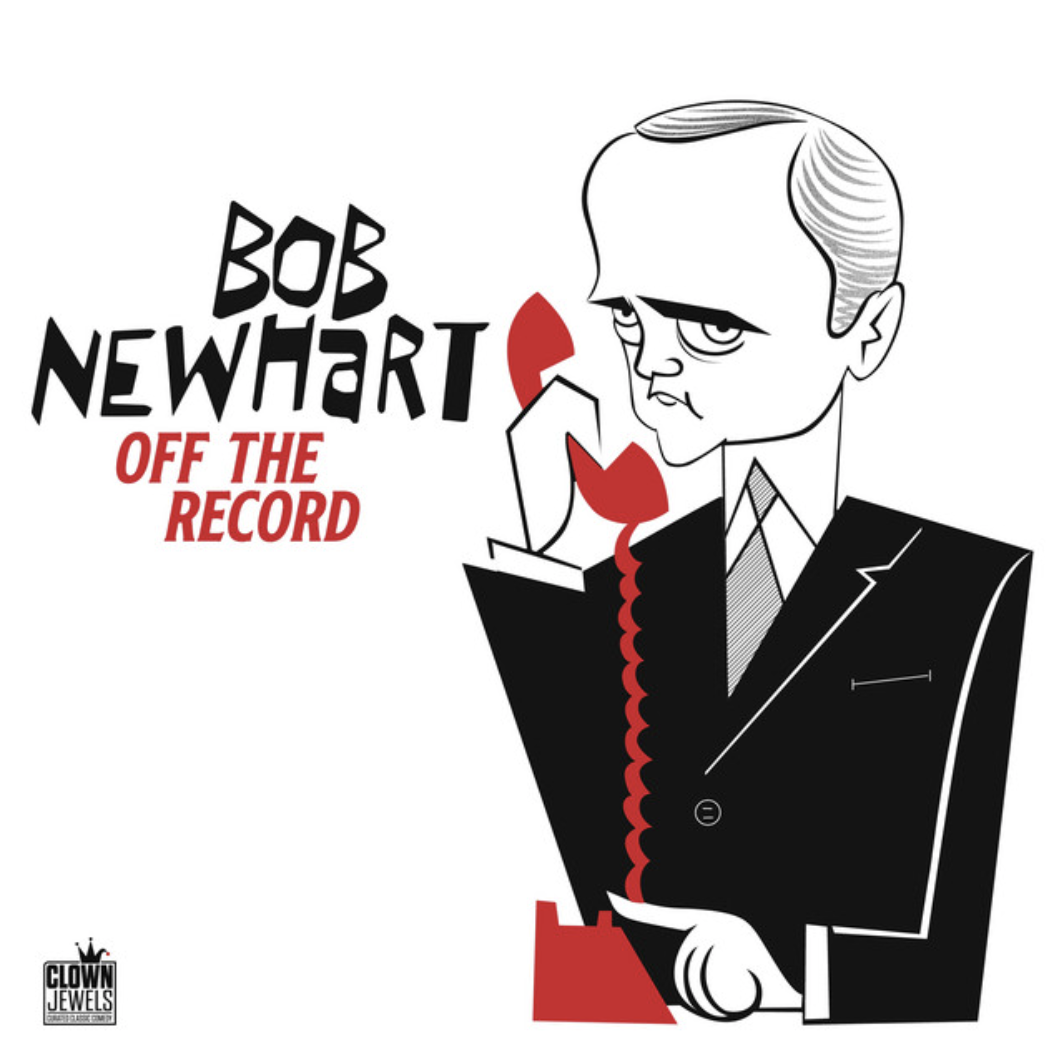
The Social Playlist is an accumulation of music I love and want to share, tracks from my various DJ sets and residencies over the years, and both selected cuts from those artists, luminaries we’ve lost and those albums celebrating anniversaries each month.
Running for over a decade or more, Volume 88 is as eclectic and generational spanning as ever. Look upon it as the perfect radio show, devoid of chatter, interruptions and inane self-promotion.
As always, each month I select choice cuts from albums that have reached certain milestone anniversaries. This July (or thereabouts) that selection includes an alternative version of the lead anthem from The Beatles A Hard Day’s Night LP (60 this month!) plus choice tracks from Robert Wyatt‘s Rock Bottom (50 years old this month), Hieroglyphics crew member Casual‘s Fear Itself (30), Above The Law‘s Uncle Sam’s Curse (also 30), King Creosote‘s Commonwealth Games soundtrack From Scotland With Love (10), The Cambodian Space Project‘s Whiskey Cambodia (also 10 this month), and Land Observations The Grand Tour (another 10 year celebration) – see also my original review of that album in the archives section below.
The inevitable nod to those dearly departed, I’ve chosen a sketch from the king of deadpan delivery, the comedian and actor Bob Newhart, who passed away just last week. I can still hear his sketches played repeatedly at my parents’ house when I was a kid in the 80s. The routine I’ve picked was actually riffed on and off by Joel Maisel in the ridiculously popular and incredible Marvelous Mrs. Maisel – trying to pass it off as his own, he stank, and so ended a short-lived side hassle, his marriage and the rise and rise and rise of his belated wife.
I’ve added a sprinkling of newish tunes too; picking tracks I didn’t get the time or room to feature in the Monthly Playlist Revue. That list includes Chris Corsano, The God Fahim, Hifiklub with Marion Brunetto, and Kid Acne and foil Cappo remixed by Tom Carnuana.
That just leaves choice music from my collection (some records I’d love to own too) by Matthew David, Peter Blegvad with John Greaves and Lisa Herman, Cressida, Radio Stars, Malcolm Catto, Ottla, Linkopii, Abdel Aziz El Mubarak and so very much more.
Track list:::
Dionne Warwick ‘A Hard Day’s Night’
The Cambodian Space Project ‘Longing For The Light Rain’
Abdel Aziz El Mubarak ‘Tahrimni Minnak’
Hifiklub w/ Marion Brunetto ‘Rompe Cul’
Chris Corsano ‘The Full-Measure Wash Down’
Malcom Catto ‘Rock’
Radio Stars ‘No Russians In Russia’
Diagram Brothers ‘Those Men In White Coats’
Linkopii ‘Linkopii’
Walter Branco ‘Luar do Sertao’
The God Frahim w/ NicoJP ‘Diamonds’
Casual ‘You Flunked’
Above The Law ‘Concreat Jungle’
Sam Dees ‘Black Tattler’
My Solid Ground ‘The Executioner’
Robert Wyatt ‘A Last Straw’
John Greaves, Peter Blegvad and Lisa Herman ‘Catalouge Of Fifteen Objects And Their Titles’
Ginhouse ‘And I Love Her’
Cressida ‘Survivor’
Matthewdavid ‘No Need To Worry/Mean Too Much (Suite)’
Kid Acne w/ Cappo ‘Healthy Normalz (Tom Carunana Remix)’
Ottla ‘Duck’
Modulo 1000 ‘Lem. Ed. Ecalg’
Land Observations ‘Return To Ravenna’
Hama ‘Ataraghine’
Guitar Red ‘Disco From A Space Show’
Kahil El Zabar’s Ritual Trio ‘Sweet Meat’
Bob Newhart ‘Gettysburg PR’
Zane Campbell ‘Fucked Up On Jesus (Live From The Fort At Sidewalk Cafe)’
Jack Grunsky ‘Is It Worth All The Pain’
__/ARCHIVES____
From the vast archives of the Monolith Cocktail, two choice picks from July of 2014: Land Observations Grand Tour album for the Mute label, and Wah Wah 45s’ special One More Step album showcase of Haitian boogie pianist Henri-Pierre Noel.
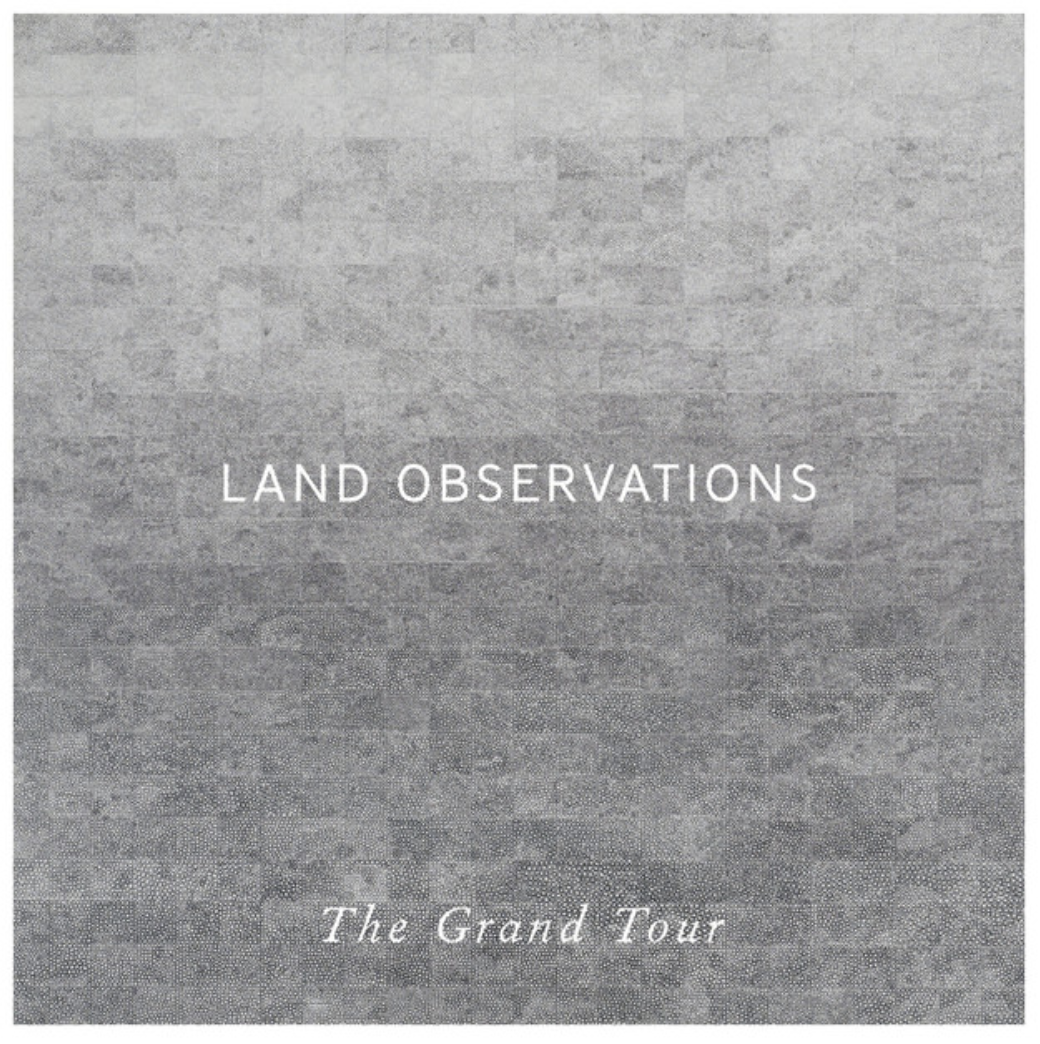
Land Observations ‘The Grand Tour’
(Mute) July 2014
Revisiting the Romans industrious road network, artist and guitar sculptor of meta-textural travelogues, James Brooks once again soundtracks a peregrination that begins with the familiar surroundings of his London address and proceeds across Europe to the one time important capital of the Western Roman empire, the Italian city of Ravenna.
On his previous excursion, Roman Roads IV – XI, Brooks meticulously planned journeys, however minimal and delicate, exuded the beauty of motion: Gently progressing or chugging along in harmonic contemplation, each section of his placable road trip moves on ever forward to a final destination.
Continuing to absorb those landscapes and some new ones, with a cycle of both looped trebly and pronounced bass notes, plus a bed of subtly picked congruous melodics and resonating chimes, Brooks takes the pastoral equivalent of the motorik route. Whereas the Autobahn travelled celebrations of kraftwerk or the repetitive hypnotism of Michael Rothar’s backward bending psychedelics and choppy guitar licks pointed towards the future, The Grand Tour treads a well-worn man-made and historically rich highway: It could be said that Brooks has a foot in both eras: the past and present simultaneously if you like.
The musical accompaniment is only part of the Land Observations methodology, Brooks by extension incorporating a show of postcard inspired artwork – which can be seen further extended in the featured Phil Coy video – and geometric network visuals, all inspired by the layouts and routes of the journeys he maps out aurally.
There are some detours on this return trip of sorts, as Brooks cycles through the ‘Flatlands And The Flemish Roads’ of the lowlands – the flattened layout of Belgium reflected in the strident, though, serene pace of the methodical rhythmic time keeper -, ascends one of the highest mountain routes in the Swiss Alps, on the gently applied rocking motion of the magnificent climb, ‘From The Heights Of The Simplon Pass’, and waltzes through the Austrian capital, on the sacrosanct Baroque ‘Ode To Viennese Streets.
For those accustomed to Brooks multilayered loops and adroit deft touches, there are also the odd piqued moments, usually introductions, of gnarled, almost post-punk, strutting. But these are fleeting and though they never break with convention enough to burst out into song.
For everyone else, newcomers alike, the Grand Tour is pleasing and timeless, if not picturesque, journey through the South East of England and Western Europe.
Henri-Pierre Noel ‘One More Step’
(Wah Wah 45s) July 2014
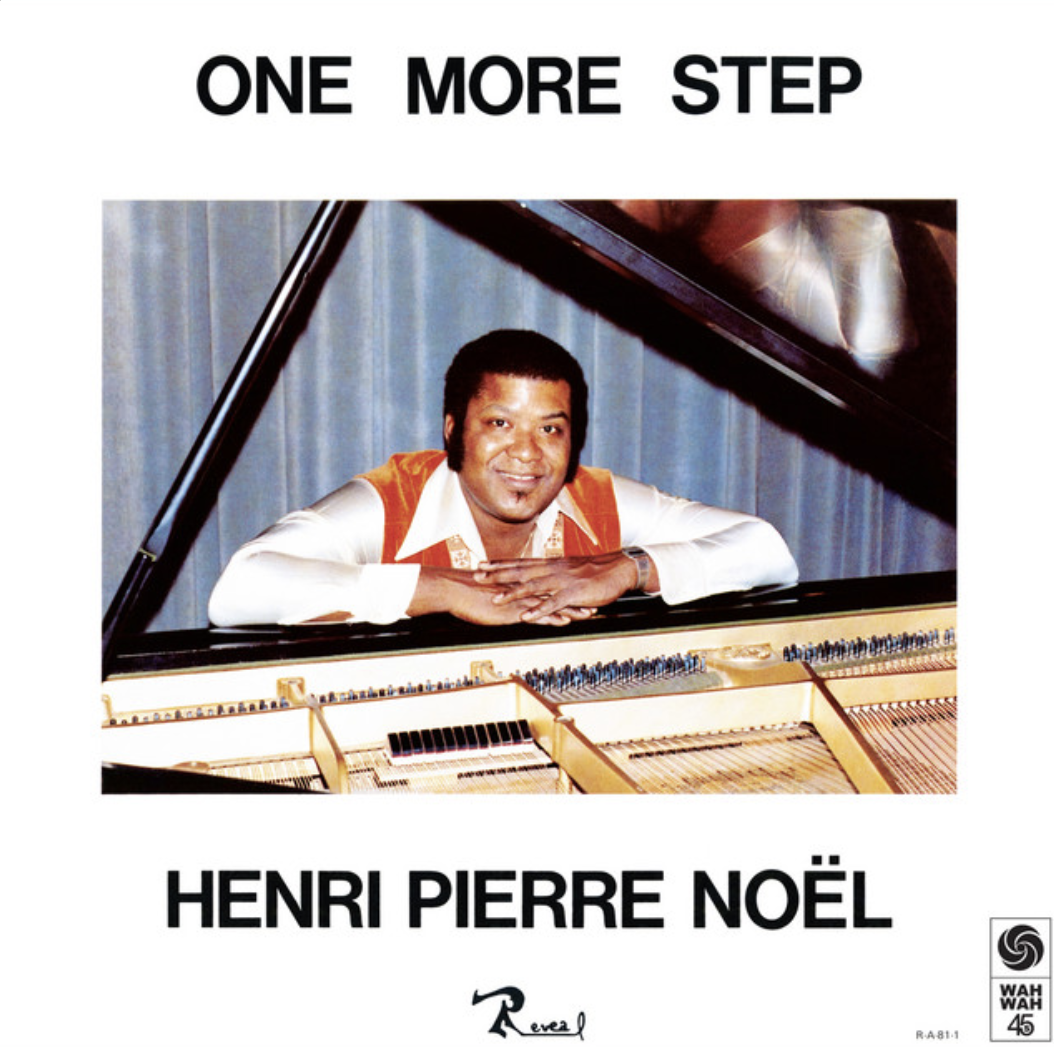
The fault lines may run deep, and the humanitarian crisis resulting from tropical storms may have wreaked utter destruction, but the Haitian people continue to endure. Synonymous since its bitter fought independence from the French in 1804 with the vivid ominous local voodoo culture, and later on with the brutal rule of the infamous Duvalier dynasty, Haiti has fortunately been cast in a far more favorable light over the last few years, drawing the global music tourist into its feverish, infectious web.
In the last year alone Haiti has imbued, beguiled and charged albums by The Arcade Fire (who have an ancestral connection to the island through Régine Chassagne) and tUnE-yArDs, and paired-up local poet/writer legend Frankétienne with experimental Scottish guitarist Mark Mulholland for the Chaophonies collaboration. Already granted very favourable reviews elsewhere, including an entry on the Quietus’s reissues of 2014 selection, Strut Records Haiti Direct compilation treats the island’s 60s and 70s music scene with reverential celebration; echoing the revitalisation and celebratory musical archeology of Analog Africa, Soundway and Jazzman et al, who similarly revere music, previously presumed lost, from the African and South American continents.
With this in mind the Wah Wah 45s label has recently re-issued the polygenesis pianist Henri-Pierre Noël’s classic, One More Step; originally released as a limited pressing in the 80s. Moving from his home to Canada, the former émigré would go on to create a Haitian hybrid of the Kompa Funk and sauntered Latin grooves with North American jazz and disco to produce light breezy and diaphanous gilded dance floor gold.
A moiety, congruous to the previously rediscovered and also re-issued by Wah Wah 45s, Piano suite (released in 2012), One More Step attunes the classicism and amps up the funk and soul with a chorus of rasping horns and spiritually meditative Hammond organ. With an omnivorous craving, Noël loosely crosses over into a range of appetizing styles; sweetly caressing gospel and narrating in a Barry White-esque deep, husky burr, on the love lost lullaby ‘Will Come A Day’, and moseying into Stax, lamps-turned-down-low, balladry on ‘Bluesy Mood’.
Silky smooth with the odd rough and dirty edge, Noel’s swanky sonorous chops splash and spray across the ivory, sliding up and down the scales until they find a neat spot to rattle of the most melodically twinkly solo.
Mother Africa can’t help but shine through; Haiti’s own indelible roots stamped on every track, played and teased with by the composer. None more so than the opening tributary ‘Afro-Funk Groove’, with its feverish pattered congas and polyrhythm shuffles, or the sweltering Funkenstien, doo-wop female backed chorus line, ‘Funky Spider Dance’. Elsewhere the musical net is cast wide and far, merging samba with jazz (‘Latin Feeling’ and ‘Back Home…Sweet Home’) and weaving a new kind of tropical island classical symphony (‘Roller Skate Rhapsody’).
Of all the various Haitian themed, flavoured and re-examined releases in 2014, One More Step is the grooviest and slickest by far; a sweet and cool (very cool) Caribbean breezy accompaniment to our own present heat wave.
Hi, my name is Dominic Valvona and I’m the Founder of the music/culture blog monolithcocktail.com For the last ten years I’ve featured and supported music, musicians and labels we love across genres from around the world that we think you’ll want to know about. No content on the site is paid for or sponsored and we only feature artists we have genuine respect for /love. If you enjoy our reviews (and we often write long, thoughtful ones), found a new artist you admire or if we have featured you or artists you represent and would like to buy us a coffee at https://ko-fi.com/monolithcocktail
to say cheers for spreading the word, then that would be much appreciated.
Our Daily Bread 621: New Starts, Neon Kittens, The Legless Crabs, The Sad Eyed Beatniks…
July 16, 2024
BRIAN ‘BORDELLO’ SHEA’S REVIEWS ROUNDUP FOR JULY – INSTANT REACTIONS
UNLESS STATED OTHERWISE ALL RELEASES CAN BE PURCHASED RIGHT NOW.
Bigflower ‘Strange Days’
Single (Self-Released)
“Strange Days” is an atmospheric gem of a beauty, a tune in search of a movie. As I’ve said many times before about bigflower, they have a cinematic elegance, a widescreen view of musicality. There really aren’t that many artists making music like bigflower. They have their own sound, an echoing cavernous emptiness that is both enriching and steeped in a melancholy that is thought provokingly wonderful.
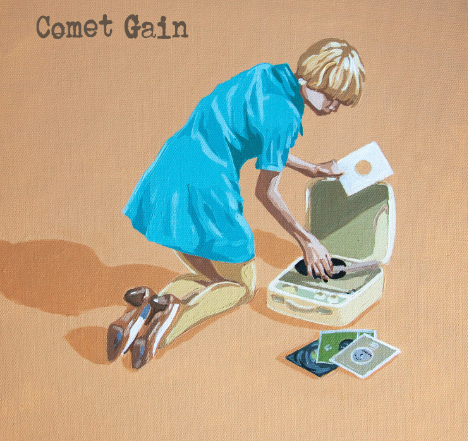
Comet Gain ‘Only Happy When I’m Sad/ Dreams Of A Working Girl’
Single (Spinout Nuggets)
What else can you expect from one of the finest guitar bands from the last thirty years or so, but a splendid slice of summery pop. Two songs that whistle and breezes, so full of summer goodness you will have to take hay fever medication after hopefully hearing them drift from the radio in the coming months. The phrase Pop gems was invented for this fine double sided delight of a single.
The Legless Crabs ‘No Condoms Just Satan’
Album (Metal Postcard Records)
The sound of rock ‘n’ roll future and past collide in this nineteen track beauty of anger and attitude: songs that deal with the strangeness of living in this world today.
From the Cramps like “I Catfished My Brother” and the sonic escapades of “Rope Bunny”, to the heaviness and sludge-rock dark humour of “Shark Lover” this is an album that should be all over alternative radio, and once again, has to compete with far less talented and easier and blander beige alternative rock.
The legless Crabs over the years have become one of those bands that never disappoints and takes from punk, electro and indie pop grunge and mashes it all into a strange kind of Alternative musicality with fine lyrics shouted/whispered /spoken or sang over.
They’re are one of the most important bands in the current underground musical scene and this album should be heard and loved by all as darkness, humour and danger really does need to make a comeback into mainstream music as an alternative to the current worship of pleasant but far to healthy and clean and wholesome pop that currently filling the Ticketmaster friendly airwaves today.
Neon Kittens ‘Minutes Of Fun’
EP (Metal Postcard Records)
This brand new four track EP is as good as you would expect it to be, depending on how much you love the kittens. And I adore them, so of course I love this EP. As angular sexy as no-wave and avant-garde as always – and really would we have it anyway else -, the sound of Miss Kitten bitching to a friend on her smartphone whilst the Fire Engines rehearse in the same room is pure bliss.
New Starts ‘Asbestos Roof’
Single (Fika Recordings)
I have always liked the songwriting of Darren Hayman. I love his pinpoint accuracy in the details of relationships gone right or wrong in his lyric writing. And once again he has supplied us with another gem, which has me looking forward to the forthcoming debut album from this his brand new band.
Red Tory Yellow Tory ‘Omni–Party’
Album (Highest Common Denominator)
Its all very nice all very good, it’s new music, it’s the future, it is no longer important it is a model of your greatest fancy sculptured out of Spam – the kind you used to get on rations in the good old days when we were getting bombed by Nazi Germany. This is the kind of album people who employ friends to clean their house would hate. It has no jangly guitars or songs about being broken hearted because the girls of your dreams are just a figment of your imagination. No, this is an album that takes the beats of late 80s early 90s chill dance music and indie with sampled vocal layers of synth and repetitive yearnings of art that reminds one of Throbbing Gristle or Add N To X or the KLF in their more mellow moments. This is an album that will appeal to those who used to enjoy listening to John Peel and now try and catch every show on Dandelion Radio at least once every month. This album is fun it has a sense of humour and an enjoyability that I find humorous and enjoyable.
Kevin Robertson ‘The Call Of The Sea’
Album
“The Call Of The Sea” is the fourth solo album from Kevin Robertson, a man who is also one of the vocalists/guitarists from Scottish guitar band The Vapour Trails. And here we have him once again showering us with sublime melodies. Melodies that are wrapped in Byrdsian like guitar jangle and vocal harmonies that have just stepped from scratched vinyl copies of ye olde mid-sixties beat boom collectables stopped for a cup of the finest Earl Grey with late 80’s early 90’s Scottish indie guitar wunderkinds’ Teenage Fanclub and Superstar while scribbling on postcards to send their love to those old scouse reprobates Shack and The La’s and the Coral. I will be honest, I get sent loads and loads of albums to review all showing these very same influences but the main difference here being Kevin is a very good songwriter with a gift for melody that would have had him stood head-to-head, shoulder to shoulder with his influencers. And if was performing in the 1960’s would no doubt have been a regular on Shindig and Ready Steady Go, and signed to Decca or Fontana or Pye.
The Sad Eyed Beatniks ‘Ten Brocades’
Album (Meritorio Records)
The sound of The Velvet Underground, The Pastels, The Go Betweens, the question is, if I was asking a question, would be do you like them? If the answer is in the affirmative, no doubt this album would be right up your street as it’s full of the things you associate with the said bands: the lovely jangling guitars, the raise of the arched eyebrow – like if Roger Moore was the Beatnik James Bond -, the blissful melodies, the soundtrack to wearing a black polo neck jumper. Yes indeed this album is the sound of the local music scene, the sound of youth and the still wonder you can find from the strumming of the electric guitar.
The Sad Eyed Beatniks will indeed bring tears to your eyes. But they will be tears of memories of romance and yearning and failed romantic dalliances and the memories of the guitar chord playing British Bulldog with your heart.
Vinyl Kings ‘Big New Life’
Album
Now I was not expecting this. For some reason I was expecting just another power pop album, but no, this is an album of 70s radio friendly pop rock tracks that had me hurling back to my preteen days of having the transistor radio glued to my ear; the days of me wearing flared jeans and T-shirt’s with the Silver Surfer on them while my older brother looked resplendent in Star Tank Tops and flared cords.
Yes this is one of those albums of pure perfect pop, just like they used to make: 70s Cliff wrestling with the sound of ELO, David Cassidy singing the songs of Harry Nilsson. “Smoke Rings For Renee” is an example of drop dead gorgeous pop songwriting. McCartney/Billy Joel like ballads, “So Easily Fooled”, rubbing shoulders with guitar tones that have not been heard since the days of the Grange Hill Theme. This is a beautiful album of pop finery that should be treasured by all.
OUR FRIENDS AT Kalporz BRING OUR ATTENTION TO A NEW BAND
AUTHORED BY Monica Mazzoli – TRANSLATED BY Dominic Valvona
Continuing our successful collaboration with the leading Italian music publication Kalporz , the Monolith Cocktail shares and translates reviews, interviews and other bits from our respective sites each month. Keep an eye out for future ‘synergy’ between our two great houses as we exchange posts during 2024 and beyond. This month regular Kalporz scribe Monica Mazzoli reviews the newly released album, previously on hold, from the Austrian duo Nový Svět, DeGenerazione.
Nový Svět ‘DeGenerazione’
(Quindi Records)
Fifteen songs broken inside by dreams and nightmares, fragments of something that could have been, and wasn’t, degenerating: DeGenerazione by the Austrians Nový Svět, which features a framing of Nelly Bordon’s (Barbara Bouchet ) dance on the cube in Fernando Di Leo ‘s noir Milano Calibro 9 (1972) on the cover, is a work that rises from its own ashes.
The track recordings found on DeGenerazione were originally made in 2007 but abandoned for years. They were later recovered in extremis, ending up online not long ago, and published now, in 2024, on disc by the Florentine label Quindi Records.
Irregular, unfaithful wavering sound fragments with an indefinite and indefinable shape: a derailment from genres – neofolk, dark ambient, post-industrial…? – and consequently a caustic destruction of the latter. The album – we read on Nový Svět ’s Bandcamp – was supposed to be the final part of a Spanish trilogy that began with the 2004 conceived “Fin. Finito. Infinito.” However, deemed “too Spanish” it was put aside.
In reality, this album by the Viennese group is everything and the opposite of everything: an uncontrolled binge of sounds, noises. From the disturbing carillon of “Tibidabo” (with a video inspired by
Aldo Lado ’s 1971 Short Night of the Glass Dolls ) to the claustrophobic guitar loop of “Raja”, and from the alienating rhythmic delirium, lacerating cowbells of “Alarma” and “Tierra (Sanguine II / Noticias)” to the manipulated spoken word of “Torbellinos”.
Rated: 80/100
The Perusal #57: Hannah Mohan, Black Diamond, Society Of The Silver Cross, Passepartout Duo & Inoyama Land…
July 3, 2024
A WORLD OF SONIC/MUSICAL DISCOVERIES REVIEWED BY DOMINIC VALVONA
(Unless stated otherwise, all releases are available now)

Photo credit: George Rae Teensma
Hannah Mohan ‘Time Is A Walnut’
(Egghunt Records) 12th July 2024
Geographically settling long enough to pen this solo songbook offering, but anything but settled emotionally, the former And The Kids vocalist-songwriter Hannah Mohan attempts to process the break-up of all break-ups.
After leaving home at the age of sixteen, restless and curious, Mohan spent her formative years on the road, crisscrossing North America, busking and honing a creative craft. On returning home, after five years of travel and travail, Mohan formed And The Kids with a school friend. After a trio of albums between 2014 and 2019, and with the global pandemic’s nefarious effects on the music industry and wellbeing, the band unfortunately came to an end. Throw in the heartache, the confusing cross-signals of a fateful relationship, and you’ve suddenly accumulated a whole sorry mess of emotional pain and a lot of questions that need addressing or analyses.
Luckily Mohan is a highly talented musician and songwriter, able to turn sorrow and reflection into gold. For Time Is A Walnut is a rich album full of familiarity and yet melodically and lyrically idiosyncratic, shaped as it is to Mohan’s particular cadence, timbre and way-with-words.
Less moping and more a full gamut of hurt, weariness, despondency, incriminations and plaint, Mohan travels full circle on her break-up journey: from shock to vented indignation, from losing one self in the moment to escaping from reality. All the feelings of resentment, the pulling apart of a fragile soul, and decoupling sound surprisingly melodious and disarmingly anthemic throughout: even during the bitterest exchanges and grievances.
Hand-in-hand with producer and musician Alex Toth (of Rubblebucket and Tōth fame), working away with little sleep in Mohan’s basement, the resulting thematic songbook is filled with great alt-pop songs; some with a country lent, others suddenly mystified and misty with an air of atmospheric Celtic vibes, or, channeling 80s new wave German synth music – Toth, I assume, almost in DAF mode on the darker-lit, hurting ‘Peace Be The Day’.
Almost breezy in parts, there’s tunes galore as Mohan evokes the Cowboy Junkies, Angel Olsen, Tanya Donelly, Madder Rose, Sophie Janna (especially on the vapour-piped Ireland illusion ‘Runaway’) and Feist. But you can also throw in a touch of dry-ice 80s synth-pop and a touch of Bacharach on the whistle-y saddened beauty that is ‘Upside Down’.
In sympathy and often softly lifting, there’s a fair use of trumpet on the album. Less jazzy – although saying that, there’s vague suggestions of Chet Baker – and more Southern, nee Mexican serenade and atmosphere, that instrument’s suffused and occasional enervated brassy blazes is a perfect fit with Mohan’s candid, sanguine delivery.
A congruous choice of guest, working in a similar mode, songwriter-musician Lady Lamb features on the 60s troubadour echoed, vibrato-trilled sing-a-long anthem ‘Hell’. The details and the unforeseen circumstances, the ‘messy eroticism’ and loss, disconnection from someone else’s life are all lay bare in a melodious beauty.
Hannah Mohan rides the roller coaster of a drawn-out break-up with quirkiness and vulnerability, turning tortuous heartache into one of the best and most rewarding songbooks of the year. Mohan may have let her soul sing out, as she comes to accept an emotional turbulent period of stresses and anxieties and pain. But whether she’s finally pulled through the other side or not is up to you the listener.
Black Diamond ‘Furniture Of The Mind Rearranging’
(We Jazz)
Transported back in time, and then propelled forward into the now via Chicago’s musical legacy, its rich heritage of innovators and scope in the world of jazz, Artie Black and Hunter Diamond’s dual saxophone and woodwind focused vehicle can trace a line from the Windy City’s smokestack bluesy outlines of the 50s through the icons Sun Ra, Roscoe Mitchell, Eddie Johnson, Lester Bowie, Art Ensemble Of Chicago, Anthony Braxton and the hothouse of undeniable influence and talent, the Association For The Advancement Of Creative Musicians.
Across an ambitious double-album spread of both quartet and duo mode formations, those Black Diamonds don’t so much shine as smolder and fizzle to a smoky and simmering resonance and metropolis backdrop encroached by wild jungles and fertile growth.
The majority of this moiety evolution is handed over to the quartet ensemble, with Artie and Hunter joined by the softened taut but flexing and always on the move double-bassist Matt Ulery and the constant cymbal splashing and rolling, fills and tight woody rattling drum breaking drummer Neil Hemphill. That set both swells and finds pause to a certain lowness and more weighted pull of the freeform and melodic, the rhythmic.
Saxophones sound willowy as they either entwine, take turns on the climb, exhale drawn-out mizzles or drizzles; all the while the action recalls every formative era from the 1920s onwards, from the blues to the African, the spiritual, bop and the serenaded. All those cats mentioned in the opening paragraph pop up alongside the Pharoah, Ornette, Evan Parker (I’m thinking of the woodwind elements, which both Hunter and Artie switch between throughout), Mingus and on the opener, ‘Carrying The Stick’, Lalo Schfrin of all people.
From concrete to near pastoral dustings, a menagerie of bird-like brass and woodwind sings and stretches, often letting the steam out of those valves with a bristle and rasp. The drum and bass combo keep it all moving forward, developing, with Ulery’s slackened bass even opening a couple of tracks.
In a more stripped-down and even more experimental mode, Side D (in old money vinyl terms) of the album is given over to the duo format of sax and woodwind.
Leaning towards Braxton, John Zorn and Andy Haas in near-non-musical freedom of expression, they probe new, amorphous spaces without clear signage or reference to environments or moods. The saxophone often sounds reedier, more rasping, and is enveloped with the very sound of its brassy metallic resonance and surface makeup. Every exhaled breath is used to conjure up the mysterious, the onset of some unease, but also a pauses for certain moments of reflection.
Perhaps a mizmar played at dusk, an ominous peace or a meditative haze, these experiments, forms of tonal, timberical evocation are difficult to describe or catalogue. Only that they fit in with the freedoms, the expressions and language of the Chicago school of freeform inventiveness and exploration, deconstruction of an instrument.
Black Diamond run with the ‘stick’ or baton passed on by the Chicago hothouse of jazz notables and luminaries, proving themselves to be a quality, dynamic act ready to push forward. Rearranging the cerebral and musicality furniture as never sounded both so classy and explorative.
Damian Dalla Torre ‘I Can Feel My Dreams’
(Squama Recordings) 12th July 2024
Subtle in approach and process, the cross-fertilization of South American and European cultures, prompts and environments on Damian Dalla Torre’s second album, I Can Feel My Dreams, is a tangible synthesis of abstract feels, moods and an exchange of musical ideas.
Nodes, points in a larger dream-realism canvas reference the Leipzig-based multi-instrumentalist, composer and producer’s footprints across both continents.
Sparked by a residency to teach, write and practice his craft in the Chilean capital of Santiago, Torre absorbed all that city and its surroundings had to offer: the vistas, colours and art. With a certain amorphous guaze that magical landscape of rainforest canopy enveloped menageries, flowing waters, Andean fluted heights and valleys, and exotic lushness is merged effortlessly with complimentary vocal harmonies and assonant arias, dewy and caressed extended dainty picked harp, quivers of guitar, trembles of piano and spells of electronica. The realms of jazz, sparse techno, ambience, voice experiment, nature, futurism, sound art and the new age seamlessly yield and relent.
The haul of notable guests invited to play on the album is staggering, and in no way distracts from the main leitmotifs and direction of drifted, wispy travel. Instead, each guest enhances with a certain gracefulness and calm each musical expedition and piece of mood music. Unsurprisingly given Leipzig’s musical history and legacy (home to an enviable catalogue of classical music giants over the centuries; perhaps one of the biggest most impressive concentrations in that genre’s history of iconic composers and musicians), but also its more modern burgeoning jazz and electronic music scenes, there is a host of musicians and artists from or based in the German city taking part on the album; cue the blossoming ‘genre traversal’ Jan Soutschek, ensemble singer and soprano soloist Viola Blanche, guitarist and composer Bertram Burkert and jazz improviser, pianist and composer Jonas Timm. Add to that the Austrian-Ethiopian harpist Miriam Adefris, the Danish composer and arranger Christian Balvig, pianist Felix Römer and the range and influences probe even further and deeper. Altogether, from the replenishing waters of renewal to the generator and manipulated electronics of modernity, all these contributions prove beneficially harmonious and complete.
This is a biomorphic world in which echoes of Eno, Alice Coltrane, Talk Talk, Oh No Noh, and Lara Alarcon all coalesce and dream. The architect, Torre, manages to keep everything constantly green and lush; showcasing a flair for pulling together a myriad of sources to create something almost familiar by new.
Society Of The Silver Cross ‘Festival Of Invocations’
(8668 Records)
Stepping from the shadows after abstaining from the material world for the last five years, the matrimonial partnership of Joe Reinke and Karyn Gold-Reinke return with a second rebirth, regeneration of Indian, Byzantium, Egyptian and Gothic imbued pathos and bathos.
Harnessing the themes of fate, the eventual and unavoidable specter of death and its harbingers, its demons, and even its angels, the Seattle couple walks the path of hermetic cults, atavistic Indian spiritualism and magik to induce cosmic awakenings and transformations. With all of mortality’s connotations and meanings, death is also seen as a renewable force on this couple’s second album under the occultist Society Of The Silver Cross heading.
But there’s no escaping the atmospheric dread and the curiosity of deathly rituals invoked by the Indian-style drones, harmonium-pumped sustains and concertinaed bellows – part ‘Venus In Furs’ Velvets, part Alan Edgar Poe shipwreck hauntology shanty, and part courtly mysticism. And yet Karyn’s siren-esque duets with boa Joe can lift towards the light at times, escaping the Fortean broadcasting waves, the splashed crashed tumultuous sea-like cymbals and gongs, Book of the Dead mantras and distressed Andy Haas-like geese pecked sax (if it is indeed even a saxophone) hauntings.
But for a majority of the time the couple’s counterbalancing act of apparitional, bewitching and more baritone, from the bowels of the deep and human soul, vocals muster spiritualist visitations, a theatre of sorrow, past incarnations and an unbreakable multi-levelled circle of added magic both heavy and foreboding.
I was picking up spells of Death In June, Nick Cave’s duet with Kyle, Mick Harvey’s time with P.J. and Amanda Acevedo, Backworld, David Lynch, Dead Can Dance, Current 93 and Angels of Light. The folksy Gothic-art-music-shanty-motioned ‘When You Know’ (with my imagination) sees Serge Gainsbourg laying flowers on Jim Morrison’s alter in the Cimeti ére du Père-Lachaise. The mystical finale, ‘Rajasthan’, not only features those synonymous Indian tones but also has an air of the Spanish-Baroque guitar and a touch of The Limiñanas about it. Shrouded in rousing tribal dramatics and ether visions, the couple’s lasting nod to the land in which they spent much time absorbing the cultural-musical spiritualist vibes before making their debut singles and album (Verse 1), is steeped in the mists of time; invoking India’s largest state before eventual unification, and its history of early Vedic and Indus civilizations. “Rajasthan” is a portmanteau of words, but can be translated as the “Land of the kings”; its courtly, royal verbose and stately reputation echoes as the final word on this album of rebirth and the coming to terms with death. Making true on their previous chapter, Joe and Karyn once more follow the call of the silver cross-societal allure. Atmospheres, processions and possession that are more than just songs, you don’t so much liberally catch, or, casually listen to each propound and chant-like forewarning as enter a fully constructed world of elementals and alchemist mystique. These are drones, dirges and more opened-up astral projections that will stay with you days after first hearing them. A Festival Of Invocations is a chthonian play of supernatural, spiritualist and funeral parlor riches; a successful follow-up after a five year hiatus.
Droneroom ‘As Long As The Sun’
(Somewherecold Records) 19th July 2024
Amorphous Western sun-cooked melting mirage panoramas are stoked and drawn from the Droneroom’s long form guitar peregrinations. The sixth (I believe) alt-country drone-cowboy album from Blake Edward Conley’s singular experiment for the Somewherecold label, As Long As The Sun is a filmic soundtrack-like conjuncture of Paris, Texas, Blood Meridian and a myriad of supernatural and alien visions of the ‘big country’.
The Western sounds of the twang, rattle and bends is unmistakable, and the sounds we’ve taken for granted, like the freight train convey that hurtles down the tracks and with it’s velocity and size shakes the passing dinging and ringing rail barrier junction, but Conley’s familiar markers, references make them near hallucinogenic under the sun’s powerful debilitating rays. I can imagine Ry Coder fronting Ash Ra Tempel, or early Popol Vuh relocated to the arid planes of outlier Texas, or a mule-riding Don Quixote tilting at the shadows of cacti.
A contemplation of all life’s spiritual quandaries and fate no less, all elicited from the magnified and amplified reverberations, quivers, strokes, gestures, brushes and more driven rhythmic passages of the guitar. Fuzzed-up with flange and sustain, these descriptive lines, resonated waves and vibrations are like drawn-out echoes of Michael Rother, Gunn-Truscinski, Jason Pierce (in his Spaceman 3 days) and Yonatan Gat. On the searing, razored and heated coil moody ‘Last Train To Soda Spring’ (the small Idaho city which gets its name from the 100s of carbonated water springs that dot the landscape) there’s a build-up of layering and rhythms that breaches the hazy space rock barriers – Hawkwind crosses fully into Motorhead. Whilst the shamanic marooned, railroad vision, ‘East Facing Window’ has a kind of krautrock generator field around it that hums and pulsates, invoking both alien and paranormal activity – I’m thinking a little of Roedelius’s experimentation on Sky Records.
As Long As The Sun beats down upon Conley’s cowboy hatted noodle, its gravitas, life force and heat inspiring serious abstract empirical vistas, atmospheres and the soundtrack to a movie yet to be made.
Luke Elliott ‘Every Somewhere’
(AKP Recordings) 12th July 2024
Composing a more inclusive biosphere and exchange of cultures, influences and sounds, the Amsterdam-based, Leeds born, sound artist Luke Elliott transforms his source material of field recordings (from what could be acts of making in a workshop to tramples through the undergrowth of Moat Farm in Somerset and the windy tubular sea organ of Zadar in Croatia) into a fully working lunar off-world vision.
A new world no less, Every Somewhere’s vague, recognizable, or by happenstance, playful tastes of gamelan and Southeast Asia, early analogue modulations and patterns, tape music experiments and sonic land art (that already mentioned Zadar organ, which was built as a large scale land art instrument to bring some sort of random melodious colour to the Dalmatian coastal town’s monotonous concrete wall scape, rebuilt with haste after the devastations of WWII) are sampled then re-sampled, fed through effects and an apparatus to build a more sympathetic, attentive environment.
At least influenced in part by a fascination with Alfred W. Crosby’s ‘Colombian Exchange’ theory, as outlined in his 1972 propound book, which gave a now fashionable name to the legacy of colonialism and the destructive and loaded exchanges between the Western hemisphere and the then ‘New World’, Elliott’s imaginative world is more nurtured towards a beneficial exchange of cultures.
In a liminal zone between the earthly, otherworldly, near cosmic, dreamy and liquid, the kinetic, algorithmic, arpeggiator and magnetic atoms and transparent notes bobble and squiggle about over atmospheric ambience and to the rounded rhythms of paddled tubular obscured instruments. And then, once the guitar is introduced to tracks like the glassy delicate ‘Objects Of Virtue’, the mood changes towards a bluesy post-rock vibe.
Magical escapes, stargazing from the observatory, solar winds, near operatic cloudscaping and various gleams, glints and globules recall Goo Ages’s Open Zone album, Tomat, Raymond Scott, Edgar Froese and Zemertz.
Elliott’s debut for the astute AKP Recordings label maps tactile environments both intriguing and melodically mindful. It paves the way for new visions of a more equal future.
Passepartout Duo & Inoyama Land ‘Radio Yugawara’
(Tonal Union) 26th July 2024
The freely geographical traversing Passepartout Duo find congruous partners with collaborative foils Inoyama Land – those fine purveyors of Japanese Kankyō Ongaku, or environmental ambient new age music – on their latest balance of the tactile, organic and synthesized.
A free association of cultures and musical processes, despite laying down loose perimeters, the Italian/US duo of Nicoletta Favari and Christopher Salvito combine explorative forces with the Japanese musical partnership of Yasushi Yamashita and Makoto Inoue for a remarkable interaction with their surroundings, a mix of children’s instruments and percussive and wind apparatus.
Favari and Salvito have already appeared on the Monolith Cocktail, with reviews of both the Chinese art platform-backed Vis-à-Vis and Daylighting albums. Those experiments in the timbrical, rhythmic and melodic, imbued by the Meili Mountains, Lijiang and fabled imaging’s of Shangri-La, were created during and in-between the restrictions of the Covid pandemic. A year before news broke of that global crisis the duo travelled to Japan. Connecting with the Inoyama Band, a duo that had transformed the abstract feelings, magnetism, sublime transcendence and peace of the landscape since the 1980s, they were invited in to their host’s shared space sanctum – an auditorium inside Inoue’s family-run kindergarten in Yugawasa that doubles-up on Sundays as a studio.
Set out on tables for all participants, a myriad of playful and more studied instruments and a set of “game rules”. The quartet could only use the mix of electronic and acoustic instruments separately or altogether for ‘revolving duets’, with each taking turns to play through a cycle of ‘four duos’. But then ‘anything’ was permitted in that session, which lasted three hours. In this complete state, that long improvisation and set of prompts has been distilled into eleven more digestible parts. Within the sonic, contextual and languid peaceable realms of the Kankyō Ongaku genre and greater scope of Japanese acoustic-electronic music, there’s an air of Satoshi Ashikawa, Yasuaki Shimizu, Yoshio Ojima and Tomo-Nakaguchi about this album. You could add hints of Slow Attack Ensemble, Eno, the Hidden Notes label and Bagaski to a subtle layering environment that takes in all points of the compass, with chimed bulb-like notes and the ringing, searing and chimed bamboo music of Java, Tibet, Vietnam and the dreamy.
The recognizable sound of soft-mallet patterned and paddled glockenspiel and xylophone merge fluidly with hand bells, higher-pitch whistled recorders, concertinaed wafted melodica and harmonicas, and racks of wind chimes. Whilst atmospheric elements and the use of electronic devices create mysterious vapours, oscillated wisps, knocked rhythms and floppy disc sampled voices.
Gazing at diaphanous beamed and lit cloud formations from a comfortable snug in the landscape, or, submerged below Mexican waters inhabited by the strange aquatic Axolotl salamander, each part of this performance is somehow similar and yet variably different. Between the illusionary, dreamy, sonorous, see-through and swimmingly, two sets of adroit partnerships create organic meta and a sublime near-nothingness of slow musical peacefulness and environmental absorbed transience.
Myles Cochran ‘You Are Here’
(9Ball Records) 26th July 2024
Unhurried and once more placable, the all-round embracing American composer, songwriter, multi-instrumentalist and producer Myles Cochran follows up his 2021 debut album (Unsung) with another carefully spun canvas of subtle emotive pulls, TV and filmic-like soundtrack scores, ruminations and mirages.
Traversing an amorphous palette of Americana, the blues, classical, folk, experimental, Baroque and traditional, Cochran integrates his Kentucky roots with spells in New York City and the UK (where he’s lived for some time) whilst letting his unprompted imagination travel to more exotic climes and cerebral dreamscapes.
Although an adroit player of many instruments, Cochran’s work is mostly led, directed, informed and suffused by both the acoustic and electric guitar. Understated but keen and expressive, his choice of guitar is once again left to stir up visions of a celluloid panoramic and more mystifying melting Western America, the Appalachians, Ozarks and home. Only this time around he’s also invited in the accomplished cellist Michelle Packman and bassist Reggie Jones to add a transported subtle semblance of chamber music, period drama and jazz. Jones, playing a stand-up (or upright) bass throughout, emphasizes rhythm, a pace and sense of travel – especially so on the shaky rhythmic travelogue ‘Making Something Out Of Nothing’, which, by its title, indicates a conjuring of a composition, performance out of just playing or fiddling around, but evokes (for me) the imagined title sequences of some wintery Northern American drama, out on the road with the harsh, snowy landscape passing by the window of our protagonist’s truck. Meanwhile, the following countrified-meets-the-pastoral-and-renaissance crafted ‘Signs And Symbols’ has an air of Fran & Flora about it with the sounds of a breathy and fiddle-like cello.
Widening the vistas, the quiet inner battles of turmoil and conflict, sympathetic bowing and pining cello enhances the mood and subtle expressions of Cochran’s compositional style, which both ebbs and flows between the echoes of Chuck Johnson, Ry Cooder, Bill Frisell, John Fahey, Martin Renbourn and Jeff Bird.
There’s a pick up in the pace with dusty brushed drums, but for the most part it’s a quivery horizon gaze of sophisticated slow to mid-tempo observations and introspection. None more so then on the mature vocalized jazzy-bluesy and dusty ‘The Deepest Sea’, which sounds like Hugo Race or Chris Eckman in questioning Leonard Cohen mode backed by Chris Rea.
A culmination of travels, thoughts, hopes and fears, You Are Here further expands Cochran’s musicianship and influence. Those Americana roots are being pushed further into new pastures, helped by his cellist and bassist foils and freshly attuned ear. Eroded, waned, giving and dreamily melting in the heat, his guitar parts overlap and transmute into piano, strings and the ambient. Each track is like a short score, the qualities of which offer sensibilities and a way of following or telling a story, a moment in time or scene. In all: a very sensitive work of maturity and unrushed reflection.
___/+ THESE RECOMMENDATIONS IN BRIEF
Any regular readers will know that I pride myself in writing more in depth purview-style reviews with a wider context. This means I naturally take more time and effort. Unfortunately this also means that I can only ever scratch the surface of the 4000+ releases both the blog and I get sent each month. As a compromise of sorts, I’ve chosen to now include a really briefly written roundup of releases, all of which really do deserve far more space and context. But these are recommendations, a little extra to check out of you are in the mood or inclined to discover more.
Pocket Dimension ‘S-T’
(Cruel Nature Records)
Exploratory voyages into the kosmische and sci-fi, straight from the illustrated pages of Stewart Cowley’s Spacecraft 2000 – 2100 AD, the Lanarkshire-based artist Charlie Butler doesn’t so much launch as fire the languid thrusters into the mesmerizing, enticing and dream like voids of a soundtracked cosmos. On many levels, through four continuous stages, the drifted and wonder of space is balanced with fizzled raspy electronica and eventual IDM, siren wailing bends, shoots, and a rotating centrifugal force that seems to envelope the whole trip in both mystery and the presence of unknown forces hovering in the galactic ether.
Various ‘TRÁNSITOS SÓNICOS – Música electrónica y para cinta de compositores peruanos (1964-1984)’ (Buh Records)
Filling in the blanks in the story of South America’s experimental and avant-garde scenes, Buh Records throws the spotlight on Peru and a host of experimental boffins working to cross indigenous sounds with the new and yet to be discovered.
Off-world, futuristic, UFOs, tape manipulation, the shrills of something magnetic, steely industrial tools, reel to reel melting, mind bending and rattling old atavistic bones, assonant female voices, and shamen augers, this compilation includes examples from the likes of Arturo Ruiz del Pozo, Luis David Aguilar, and Corina Bartra; a wealth of cult composers struggling to explore new sonic boundaries in a country devoid of the apparatus, foresight and laboratory conditions. And so most of the atmospheric – sometimes heading towards chilling alien – and transmogrified Peruvian environmental peregrinations were recorded in private studios. The story and scope needs way more room than this piffy, glib little piece. Suffice to say, I highly recommend it.
Rehman Memmedli ‘Azerbaijan Guitara Vol. 2’
(Bongo Joe)
The history and travails of the fecund oil rich country of Azerbaijan are atavistic. This is a nation that has striven to gain independence from a string of empires: both Tsarist and Soviet Russia, Iran, Albania, and much further back, the great Mongol Khan Timur. Desired not only for its abundance in fossil fuels but for its geographical corridor to its fellow Transcaucasia neighbours of Georgia and Armenia in the west, to the south, Iran, in the north, Russia, and to the west, the vast inland lake, the Caspian Sea. And although at various times at war with its direct neighbour Armenia (recent flare ups have led to a startup in violence, and accusations of ethnic removal), the country’s close proximity to a mix of cross-cultural and geographical influences has led to an absorption of all kinds of musical styles.
Bongo Joe‘s second volume of ‘guitara’ music showcases is fronted by another Azerbaijan legend, Rehman Memmedli (the first volume was handed over to the equally iconic Rüstəm Quliyev), who first learnt the accordion and harmonica before picking up a relative’s guitar – but also the region’s synonymous traditional tar instrument too (an ornate curvy looking waisted long-necked lute). Suitably eclectic in styles, from belly dancing Turkey and Arabia to shimmy Bessarabia and local wedding music, Memmedli scores and scorches up and down the fretboard at speed. Spindling, bending, skirting and wobbling, and even sounding at times like an erratic stylophone, vistas and ruminating sonnets are conjured up from a nibble-fingered maverick: Persia, the Caucasus, and beyond are summoned forth from electrified scuzz and fuzz and drama.
Cumsleg Borenail ‘Fragile And Adaptive’
Video – Taken from the new album Time Is A pˈætɚn Of Shifting d͡ʒiˈɑːmətɹiz
Proving incredibly impossible to pin down, whilst impossible to fully keep a track of, such is the prolific output, the artist formerly known as Cumsleg Borenail has released a host of albums, EPs over just the last few months alone.
The latest, and discombobulating entitled, Time Is A pˈætɚn Of Shifting d͡ʒiˈɑːmətɹiz,will officially go live a week or so after this column. As a teaser, Borenail has fucked around with AI to produce this strange, biomorphic, tumorous metamorphous of metallic clay dancers, bound together in some super fucked up hallucinatory creepy body assimilation style video. I will admit that I fucking hate AI – ‘artificially inflated’ as someone has already quipped – so it is lost on me – for those who want the tech, ‘all models’ were ‘created in blender, then whapped into ADOBE to AI generate backgrounds and randomly alter model edges.’ But musically we are talking about whippy body music that channels Detroit mechanic funk techno and the sound of grooving over broken glass. Derrick May, Suburban Knight, Ron Trent in the mechanics of the surreal and industrial. As artificial as it all is, there’s a certain soul in this machine. I look forward to hearing the rest of the album later in the month.
Neon Kittens ‘In The Year Of The Dragon (You Were A Snake)’
(Metal Postcard Records)
System of downer sinewy post-punk, like the Pop Group falling on top of PiL, the latest video output from the ridiculously prolific Neon Kittens is another semi-metal-guitar-string buzz and grind of gnashing venom and risk. The vocals sound like a toss off and up of honey trap glossed fake AI and taking no crap no wave female provocateur in the mode of Michi Hirota, unimpressed by the snake-like actions of a former lover; the action, like a lost grated down stroke of Fripp(ery) from the Scary Monsters And Super Creeps LP.
Keep an eye out next week for Brian ‘Bordello’ Shea’s review of the band’s EP.
Dyr Faser ‘Crime Fever’
(Self-release)
Boston, Massachusetts duo of Eric Boomhower and Amelia May previously skirted the krautrock dreaminess of Amon Duul II on their hermetic, drowsy Karmic Revenge. They seem to change their sound, if only subtly, on each new album, and Crime Fever’s haunted, scuzzed playfulness leans more towards Lou Reed this time around – but only if he’d jammed with Dinosaur Jnr. Jefferson Airplane and Ty Segall.
Still, they maintain a buzzy, fuzzy, and even Byrds-like loose dusting of the psychedelic and a backbeat throughout, with those ether-giddy vocals tones of May invoking Blonde Redhead, Beach House, and of course a little of a slacker rock, shoegaze vision of Renate Knaup-Krötenschwanz.
Needs far more attention than I have the capacity to manage but have a read of my piece on their KR album from a while back to get enthused.
Hi, my name is Dominic Valvona and I’m the Founder of the music/culture blog monolithcocktail.com For the last ten years I’ve featured and supported music, musicians and labels we love across genres from around the world that we think you’ll want to know about. No content on the site is paid for or sponsored and we only feature artists we have genuine respect for /love. If you enjoy our reviews (and we often write long, thoughtful ones), found a new artist you admire or if we have featured you or artists you represent and would like to buy us a coffee at https://ko-fi.com/monolithcocktail to say cheers for spreading the word, then that would be much appreciated.
The Monthly Playlist For June 2024
June 28, 2024
CHOICE TRACKS FROM THE LAST MONTH, CHOSEN BY DOMINIC VALVONA/MATT OLIVER/BRIAN ‘BORDELLO’ SHEA

That was the month that was: June 2024. Representing the last 30 days’ worth of reviews and recommendations on the Monolith Cocktail, the Monthly Playlist is our chance to take stock and pause as we remind our readers and followers of all the great music we’ve shared – with some choice tracks we didn’t get room or time to feature but added anyway. Thanks to Dominic Valvona for curating, and for choices from Matt ‘Rap Control’ Oliver and Brian ‘Bordello’ Shea.
Homeboy Sandman ‘Win Win’
Pastense & Uncommon Nasa ‘The Ills’
Party Dozen ‘Wake In Might’
The Lazy Jesus ‘Smok’
Sis ‘Mother’s Grace’
Yea-Ming And The Rumours ‘Ruby’
Neutrals ‘The Iron That Never Swung’
Hungrytown ‘Another Year’
Herald ‘Hydrogen Tide’
PAV4N, Sonnyjim, Kartik, M.O.N.G.O., Pataka Boys ‘Bappi Lahiri’
Sans Soucis ‘If I Let A White Man Cut My Hair’
Fat Francis ‘BCMW’
The Bordellos ‘Tastes Like Summer’
Swiftumz ‘Fall Apart’
SCHOOL ‘N.S.M.L.Y.D’
E.L. Heath ‘Cambrian’
Beak> ‘The Seal’
Jennifer Touch ‘Shiver (Robert Johnson)’
Ocelot ‘Sun Silmillia’
L’etrangleuse ‘Les Pins’
QOA ‘LIPPIA ALBA’
Mark Trecka ‘Spirit Moves In An Arc’
Cas One ‘No Deer Hunter’
Bill Shakes ‘Don’t Be A Menace To Blackburn While Drinking White Lightning On A Council Estate’
Guilty Simpson, The Alchemist & Kong The Artisan ‘Giants Of The Fall’
Depf & JClean ‘Wasted’
Ivan The Tolerable ‘Cedars’
Charlie Kohlhase’s Explorers Club ‘Tetraktys’
Staple Jr. Singers ‘Walk Around Heaven’
Head Shoppe ‘Parque De Chapultepec’
The Nausea ‘Nil Inultum Remanebit’
Saccata Quartet ‘Oh OK’
Simon McCorry & Wodwo ‘By Spores’
Neuro…No Neuro ‘Story Time’
Cumsleg Borenail ‘Todays Facade For New Environment’
Joey Valence & Brae Ft. Danny Brown ‘PACKAPUNCH’
NightjaR Ft. Pruven, Vast Aire & Burgundy Blood ‘Piano Heights’
Your Old Droog ‘Roll Out’
Conway The Machine, Method Man, SK Da King & Flee Lord ‘Meth Back!’
 Monolith Cocktail Blog