PLAYLIST/ARCHIVES: DOMINIC VALVONA

The Monolith Cocktail Digest is both home to Dominic Valvona’s long-running eclectic, cross-generational Social Playlist, and a platform for celebrating significant anniversary albums and, more sadly, commemorating those artists we’ve lost in the last month, with pieces from the Archives.
Starting with the 81st edition of that playlist, Dominic has curated a selection of past glories, music from his own collection, reissues, newish tracks and a smattering of choice tunes from albums that have reached either a 60th, 50th, 40th, 30th, 20th or 10th anniversary. In that camp, there’s nods to Yoko Ono’s Feeling The Space, John Lennon’s Mind Games, Alejandro Jodorowsky’s Holy Mountain Soundtrack (see the archive spot piece further down the post) and one of the crowning achievements in documentary, The World At War. All of which have reached the 50th landmark, released and aired as they were in 1973.
A decade later and the electronic/synthesized progenitor Dieter Moebius released both the solo Tonspuren offering and, in communal partnership with krautrock/kosmische pioneer producer Conny Plank and Guru Guru’s maverick drummer-leader Mani Neumeier, the Zero Set albums: both of which have been repackaged and reissued this month. From the same year of 1983, there are tracks from The Rolling Stones’ patchy Undercover and The Fall’s rambunctious magnificent Perverted By Language LPs.
Into the 1990s, and Dominic has chosen representative choices from the Staten Island branch of the shaolin school of kung-fu hip-hop, the Wu-Tang Clan’s classic debut Enter The Wu-Tang (36 Chambers); A Tribe Called Quest’s seminal Midnight Marauders; Bowie’s less than universally championed The Buddha Of Suburbia; and Ritchie Hawtin’s highly influential Plastikman alter-ego intelligent techno masterpiece, Sheet One – another recent reissue, repackaged release.
The rest of the Social features a couple of recent-ish tracks from Lisa Butel and foil Brent Cross, and Royal Flush. And from across the decades and genres, music by Tyvek, Ron House, Mircea Florain, Kong Ney, Crossbones, Lazy Smoke and more… In the Archive section this month, there’s a short piece on Jodorowsky’s alchemist tapestry of esotericism, the Holy Mountain Soundtrack, and from a decade ago, plucked from the back pages, a review of M.I.A.’s Matangi.
TrackList:::
The Rolling Stones ‘Undercover’
The Fall ‘Neighbourhood Of Infinity’
Voluntarios da Patria ‘Io Io’
Tyvek ‘Circular Ruins’
Ron House ‘New Maps Of Hell’
John Lennon ‘Tight A$’
A Bolha ‘E So Curtir’
Yoko Ono ‘Woman Power’
Mircea Florian ‘Harap Alb A Treia Oara Ratacit In Padure’
Jackson Conti ‘Nao Tem Nada Nao’
Moebius/Plank/Neumeier ‘All Repo’
Plastikman ‘Koma’
A Tribe Called Quest ‘We Can Get Down’
Wu-Tang Clan ‘Method Man’
Royal Flush ‘B.O.B.’
Crossbones ‘You Always Get Me Wrong’
Alejandro Jodorowsky ‘Trance Mutation’
Kong Ney ‘Bom Pet’
Luiz Eca ‘La Vamos Nos’
Dick Khoza ‘WD 46 Mendi Road’
Travel Agency ‘Cadillac George’
Danny & Dusty ‘Baby We All Gotta Go Down’
Baker Gurvitz Army ‘The Dreamer’
Under Milkwood ‘Empty Room’
Kaira Ben ‘Mousso Loule’
Moebius ‘Contramio’ Piotr Figiel ‘Skrawek Przestrzeni’
David Bowie ‘Ian Fish UK Heir’
Baaska & Scavelli ‘The Green Hills Of Earth’
Lazy Smoke ‘Sarah Saturday’
Lisa Butel & Brent Cross ‘Vox Canon’
The City Of Prague Philharmonic Orchestra ‘End Theme From The World At War’
ARCHIVE SPOTS

Alejandro Jodorowsky, Don Cherry and Ronald Frangipane ‘Holy Mountain Soundtrack’ 1973
Never formally released at the time of the film itself, the soundtrack to Alejandro Jodorowsky‘s esoteric kool-aid psychedelic movie, The Holy Mountain, has since languished in folklore, only to be bundled out at a later date as part of subsequent DVD reissues. I myself have relied upon the good-nature of others to obtain my copy.
Though the ins-an-outs of musical accreditation remain somewhat recondite and obscure – Jodorowsky taking the lions share –, the well-revered avant-jazz cornetist, Don Cherry, and composer Ronald Frangipane (credits include playing on The Midnight Cowboy and Barberella scores) both played an integral and major part in playing and producing this potted spiritual and alchemical mind trip. Meandering eastern dirges and fluted love swanned serenades meet cult funky B-movie cuts and the less memorable vignettes, used to create the enlightened scenes and atmospherics. ‘Trance Mutation’ for my money, entrancing and ritualistically Kabbalah and Eastern arts/Tibetan hums as it is, cries Cherry. But don’t expect anything close to revelatory; as this soundtrack is for the most part mediocre.

M.I.A. ‘Matangi’ 2013
(Taken from Our Daily Bread 022)
Not so much a klaxon sounding clarion call as a reaffirmation of the voracious M.I.A. manifesto, the latest ‘hyperbolic’ riot of polygenesis colour and sound, Matangi, is quite a measured, translucent, and sparkly in places, personal affair. Mellowed somewhat by the delay in its release by more than a year (at one point M.I.A. threatened to leak the record online, frustrated at the label’s negative response – apparently it wasn’t dark enough for them!).
But fear not as that same explosive ennui driven mix of earth-shaking bhangra, boombox subversion and Arabian chic – as evidenced on the last three records – still permeates and threatens to piss on the apathetic parade: Indecorous to a fault, yet dangerously alive and exciting.
Following in the family name tradition of the last three albums, Mathangi ‘Maya’ Arulpragasam explores the etymological source of her own namesake, the Hindu goddess Matangi. Found amongst the ‘untouchables’ – the poor and destitute – in the slums, Matangi chose to live away from the temples of the gods, to gain a deeper understanding and knowledge of the lower castes: the salt of the earth so to speak. The goddess of inner thought as well as music, her mythical presence and attitude are used as a reference and guide throughout, channeled in the more meditative escapist passages.
A perfect figurehead and encapsulated spirit of the times, a cross-pollinated artist-musician-polymath character seemingly congruous with the Internet, M.I.A. is both an advocate and fierce foil of the digital world. The burgeoning promise of a carefree, interconnected, community, richly educated and informative, has rather disappointingly been hijacked by a camarilla of ‘facilitators’, corporations and an over-zealous state. Intent it seems on eroding free speech and free movement, imposing instead a military style control and surveillance on our lives. In short…. we’ve been sold down the river.
None of this is new to M.I.A. of course, already a well publicised supporter of Wikileaks and its defacto – exiled to the Ecuadorian embassy in London – leader Julian Assange (who recently opened for a M.I.A. performance in New York, via a skype link, and is said to have contributed to the schizoid dubstep Matangi LP track, ‘atTENTion’). But with the ongoing revelations of Edward Snowdon and the increasing torrid of abusive vitriol from her detractors (mostly it must be said from America), there’s more than enough material to transduce into anger, even if M.I.A. and her augury warning, ‘THE MESSAGE’ (the opening gambit from the 2010 MAYA LP), pretty much summed it all up: “iPhone connected to the internet/ Connected to the Goggle/ Connected to the government.”
Using a similar template then, M.I.A. begins with a mantra of intent, delivered over a stuttering electric current: “Ain’t Dalai Lama, Ain’t Sai Baba/ My words are my armour, and you’re about to meet your kharma.” From then on in she amorphously twists and turns, from protestation to romantic stomp, cutting up and reworking R&B, pop and Hip Hop into ringside swagger (‘Only 1 U!’), bombastic gangsta strut (‘Warriors’) and bubblegum dancehall (‘Come Walk With Us’).
Hardly light on rhetoric – whether collecting all the data of hate and criticism, leveled against her (including the ‘one-finger’ Super Bowl debacle, N.Y. Times spread and accusations of provocation), or banging heads on the lack of originality in culture and railing against our failure to fight the systems that seek to turn everything into a humongous pile of shit: “If you only live once, why keep doing the same shit?”
‘Bad Girls’, ‘Bring The Noize’ and ‘Y.A.L.A.’ have all previously been made public in the long run-up to this fourth LP – the original Bad Girls in incubated form was first aired on the 2010 mixtape, Vicki Leeks, later to be accompanied by a car-crazy, Sheiks-do-Hip Hop wild video in 2012. This triumvirate of revved-up ‘nasty’ tracks more or less gives the album its most hardened, prowling highlights. But as the smoke from those riotous, sophisticated joints clear, M.I.A. choses a more indolent swaying direction (well less threatening anyway), her rhyming couplets smoothed and laid back on the neon lit, Siam charmed, ‘Come Walk With Me’, and lamentably swinging on the bookended pairing of ‘Exodus/Sexodus’.
In case you never got the admonitory memo or understood the ‘Lady of Rage’ the first, second and third time around, she once again rattles off another dictate and denunciation for you, whilst raising the game for those who seek to follow in the vapour trail. M.I.A. proves to be the most exhilarating, provocative artist to crossover into the general psyche, without losing their soul; able to roll with the punches and at least stand for something in a mixed-up world of contrary stifled debate and fucked-up moral objection to all the wrong things.
Hi, my name is Dominic Valvona and I’m the Founder of the music/culture blog monolithcocktail.com For the last ten years I’ve featured and supported music, musicians and labels we love across genres from around the world that we think you’ll want to know about. No content on the site is paid for or sponsored and we only feature artists we have genuine respect for /love. If you enjoy our reviews (and we often write long, thoughtful ones), found a new artist you admire or if we have featured you or artists you represent and would like to buy us a coffee at https://ko-fi.com/monolithcocktail to say cheers for spreading the word, then that would be much appreciated.
Our Daily Bread 601: Corinne Bailey Rae, Fir Cone Children, Emil Amos…
November 16, 2023
A CATCH-UP OF REVIEWS FROM GRAHAM DOMAIN
__/SINGLES/EPS\__
TANDM ‘Sirens’ EP
(self-released) (Download)
Of this five song EP, ‘The Man in the Sea’ is the best song. A spooked lonely piano ballad sounding not unlike Sarah Blasko. They need more variation in their sound to hold interest, but still ‘one to watch’!
Corinne Bailey Rae ‘Peach Velvet Sky’
(Thirty Tigers) (Download Single)
This the second single from her new album Black Rainbows, released back in September. It is a beautiful slow jazz piano ballad where her soft voice often soars above the music reaching out towards the stars.
The song is inspired by the autobiography of a slave girl in the 1800’s who escaped from her master by hiding for seven years in a crawl space above her grandmothers’ storeroom viewing the outside world through a small hole in the wood. As an artist CBR has developed and grown since her pop breakthrough hit ‘Put your Records On’ in 2006, collaborating with Herbie Hancock and Stevie Wonder along the way. Nowadays, her music has more of a jazz edge to it rather than pop. A lovely song and a great record.
Michael Peter Olsen ‘So Far So Good’
(Hand Drawn Dracula) (Download Single)
Experimental instrumental piece that blends acoustic and manipulated electric cello to produce a piece that could easily slot into a documentary about manufacturing or cell reproduction. Not exciting, not Rock and Roll. Music from a dimension where Ian Curtis had never been born.
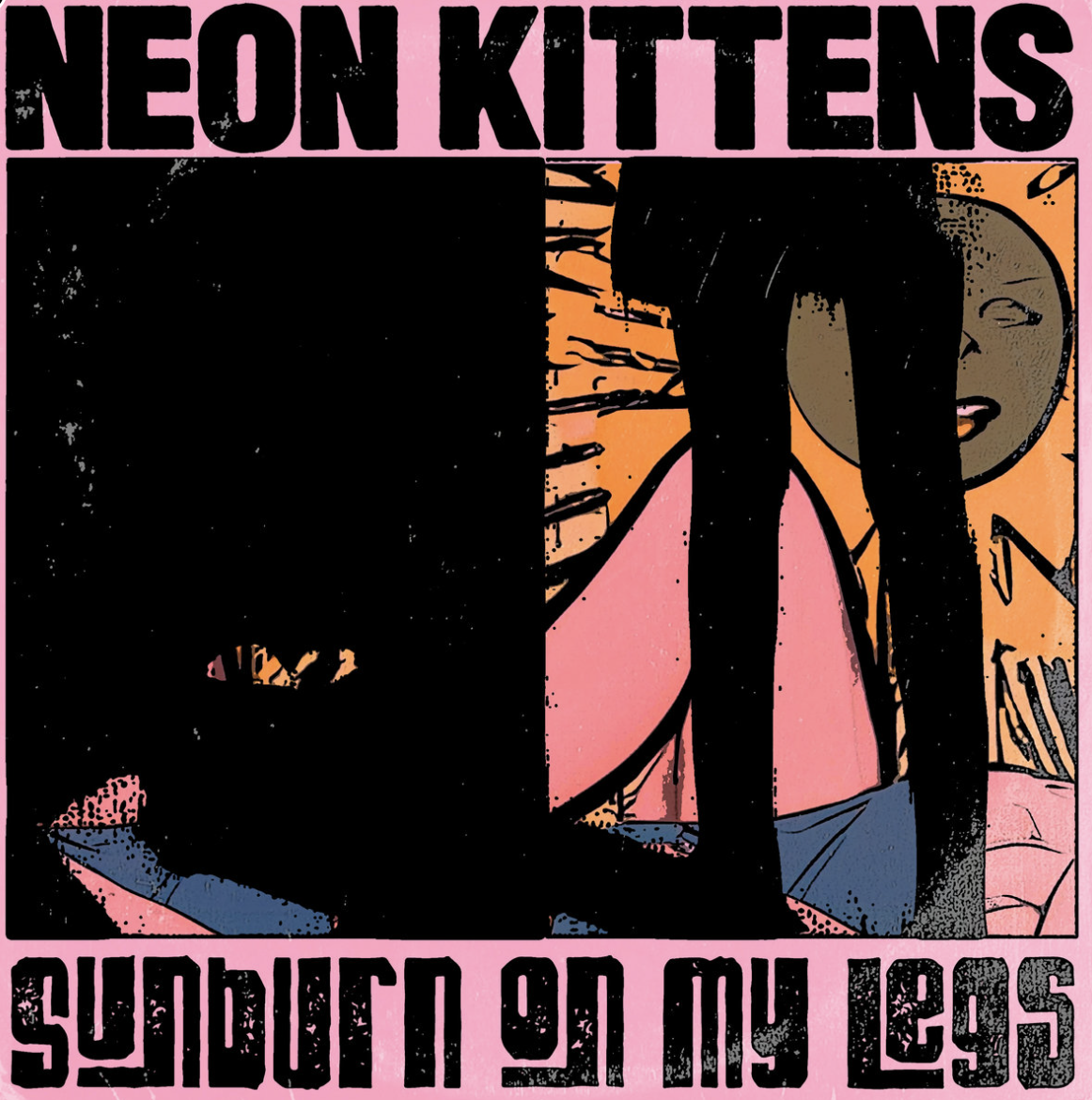
Neon Kittens ‘Sunburn On My Legs’ 3 track EP
(Metal Postcard Records) (Download EP)
This three track EP from Neon Kittens is a frantic whirlpool of abstract guitar, rabid rhythms and Freudian psychosis – ‘a disturbance of the connections between the self and the exterior world.’
A masterclass condensed into a few vital minutes where nothing is wasted, every scratch, every scrape, and every note speaks. The paranoia bleeding into a chaos of neurosis – ‘you see everything but nothing sees you.’
__/ALBUMS\__
Yungchen Lhamo ‘One Drop of Kindness’
(Real World Records) (Vinyl, CD, Download)

This is a fantastic album of beautiful spiritual music by the wonderful world-renowned Tibetan female singer. Accompanied by a variety of acoustic instruments from around the world the seven songs are offerings to the Great Divine Spirit ‘devoted to spiritual awakening, unconditional love and compassion for all beings!’ A record to treasure – a beacon of hope in the darkest of times.
Emil Amos ‘Zone Black’
(Drag City) (CD, Download)

An album of eerie instrumental music, much of it electronic. The sort of music that could easily be used as a TV Theme or to soundtrack a cult Movie (or even as music on a Video Game). It bears comparison to both D J Shadow (‘Bad Night at Cowboys’) and Martin Rev of Suicide (‘Theme from A Personal Prison’). Intriguing and addictive. This album could well become a cult classic!
Fir Cone Children ‘The Urge to Overtake Time’
(Blackjack Illuminist Records) (CD, Cassette, Download)

This is fantastic album from Berlin based band Fir Cone Children. It sounds like it was recorded in 1979 when New Wave (Post Punk) creativity took hold for a couple of years and no two bands were the same! ‘Time Needs an Upgrade’ sounds like the Cure mixed with the Pop Group. ‘Snowblack’ sounds like Wire led by Jeff Lynne! ‘The Inability to Raise the Left Corner of my Mouth’ sounds like the Buzzcocks if they had been from San Francisco circa 1968. ‘It Feels Complete’ sounds like the Cramps if they had been Buddhist Monks! ‘Spider School’ sounds like the Scars mixed with the Undertones and Interpol. ‘One Hundred Years’ sounds like the Sound mixed with Wire and MBV! But moreover, although there are always comparisons to be made, Fir Cone Children have an individual spark; the music is much more than the sum of its influences! Perhaps, the best German band since Faust!
Our Daily Bread 600: Diepkloof United Voice ‘Harmonizing Soweto: Golden City Gospel & Kasi Soul’
November 14, 2023
ALBUM REVIEW/DOMINIC VALVONA

Diepkloof United Voice ‘Harmonizing Soweto: Golden City Gospel & Kasi Soul’ (Ostinato Records) 10th November 2023
Despite the usual vacuous nature of the ‘viral’ video, a dimly lit makeshift performance space in an abandoned elementary school, the impromptu stage for a group of young South African voices, proved beyond moving and elevating. I wept with joy at the pure transcendence of the experience; just a line-up of the most blessed harmonies, accompanied by the cushioned smack of a fist into a boxing glove (or that’s at least what it looks like) for a rhythm and timing: all shot on a mobile phone.
And yet, beneath such beatific vocals lie the hardships and frustrations of a group surviving in the sprawling, extensive Township of Soweto. A bridge between the possibilities of a Black majority government and an end to the Apartheid system, and the reality of a post Mandela power struggle, corruption, the failure to unify a divided society, and to democratise an economy for all, the Diepkloof United Voice is forced to find solace and empowerment in the spiritual music that proved a vehicle for communicating the struggles and messages of the South African majority.
Circumnavigating state censorship, gospel music’s emotive religious evocations slipped under the radar, but offered an alternative channel for perseverance and resistance to White rule. And now, shielded thinly from one of the world’s highest murder rates, youth unemployment and drug addiction, these nine individuals reenergise gospel music with a fresh new hunger and desire.

Connecting doo-wop, soul and the deep southern American spiritual with the Zulu and township gospel, plus a hybrid of local and worldly forms – one of which, mentioned in the album title, is called Kasi Soul -, the already celebrated neighbourhood of Diepkloof now offers up something familiar and yet entirely pure and modern. Step forward the new generation of Siyabulela Kahla, Nkululeko Mhlungu (aka BiBi), Simphiwe Maluleka (Sims Makoya), Linda Mnisi (London), Sandile Khumalo (Sandi), Nkosinathi Mthethwa (Mna), Tebogo Ramokgopa (Bron), Siyabonga Rakoma (Chartos) and Mothusi Marumo (Mo), who make even Rihanna’s pop R&B hit ‘Stay’ (renamed a “R” rolling ‘Round And Round’ here) sound inspiring, cathartic, humbling and distinctly South African. Lulled, hummed and beautifully transformed, the love yearn is heartfelt and touching: the only musical accompaniment, a number of finger clicks and a baritone-voiced bass.
Returning to my opening paragraph, that epiphany of an experience was on seeing and hearing an honest smart phone recording of ‘Too Late For Mama’. You couldn’t find a more touching, sorrowed but utterly captivating chorus of harmonies. The message of childbirth under such deprived conditions, in an economically segregated community, like a hymnal nu-soul Marvin Gaye leading a doo-wop group of kids brought up on Kwaito – one of Diepkloof’s homegrown fusion of hip-hop.
In another age you could imagine this group hanging out on the street corner of 50s New York, again in an almost doo-wop bobby sox mode, when taking on the old-fashioned ‘Who Knows’. And on the final hummed chorus to brotherly love, they once again channel that doo-wop and soulful clarity; the message, one of comforting love in the face of hardship.
Despite the broken-up concrete and smashed windows, the badly constructed homes, of the “golden city”, the all-too real prospects of an early death and resigned fate, these voices disarm and lift above the distress to a level of spiritual escapism. None more so then when sung in the Zulu tongue on the soothed, buzzing and finger-popped rhythmic ‘Baninzi’: The only song on this album in that dialect (one of the most used languages in the Diepkloof region of the Soweto township) is a cover of the South African group Soil’s female perspective love song. Part of that Kasi Soul scene (just to make the matter more complicated, this is also the name of a South African DJ and singular artist), the near new jack swing, R&B flavor remains, as one individual provides a beatbox bass.
Survival has seldom sounded so inspiring; the links back to the American Southern Spirituals of subjugation startling. And yet, this is a new, reborn incarnation of gospel music fit for the daily struggles of youngsters striving to survive their environment. I can’t think of a better, more positive and potentially uplifting outlet for this group’s stories, experiences and dreams.
Incredibly moving and enriching for the soul, the united Diepkloof chorus has achieved the seminal with nothing more than their voices; releasing perhaps one of the year’s most essential records.
Hi, my name is Dominic Valvona and I’m the Founder of the music/culture blog monolithcocktail.com For the last ten years I’ve featured and supported music, musicians and labels we love across genres from around the world that we think you’ll want to know about. No content on the site is paid for or sponsored and we only feature artists we have genuine respect for /love. If you enjoy our reviews (and we often write long, thoughtful ones), found a new artist you admire or if we have featured you or artists you represent and would like to buy us a coffee at https://ko-fi.com/monolithcocktail to say cheers for spreading the word, then that would be much appreciated.
The Perusal #49: Ndox Électrique, Rave At Your Fictional Borders, Tara Clerkin Trio, Wax Machine, Pidgins…
November 8, 2023
A WORLD OF DISCOVERIES REVIEWED BY DOMINIC VALVONA
(Unless stated otherwise, all releases are available now)

Ndox Électrique ‘Tëdak Mame Coumba Lamba ak Mame Coumba Mbang’
(Bongo Joe Records)

Continuing to circumnavigate the depths of Africa, on a quest to connect with the purest origins of that continent’s atavistic rituals, the Mediterranean punk and avant-rock motivators Gianna Greco and François R. Cambuzat seize on the adorcist practices of Senegal’s Lebu people.
The successor to that partnership’s Ifriqiyya Electrique collaboration with the descendants of Hausa slaves (a project that produced two albums of exciting Sufi trance, spirit possession performance and technology), the next chapter, Ndox Électrique, radically transforms the Lebu’s N’doep ceremonies of spirit appeasement.
Living in the peninsula of Cap-Vert, at the western most point in Senegal, the Lebu community lives side-by-side with their ancestral spirits. And in these ritualistic female-dominated performances of entranced elevation, loud drums, dancing, sweat and blood, they are summoned forth through possession to help heal the world.
Sneering at any kind of classification (this is neither ethnographical research nor “postcard” world music), Greco and Cambuzat immerse themselves, working hand-in-hand with their Senegalese ensemble cast of megaphone wielding vocalists and musicians. It’s a world away, you’d think, from their post-industrial, Gothic post-punk backgrounds – when not on the African trail, both musicians join forces with that iconic deity of the underground N.Y. scene, Lydia Lunch, to form the raucous Putan Club. But they’ve found a lively connection, merging the clattering, bounding (almost like timpani at times) and shuttled drums and instruments, Muezzin-like calls, and more sacrosanct voices and song with chugged, churned, squalled, engine kick-starting and ripping post-rock, industrial guitars and tech.
The opening rattled, lumbering catharsis ‘Jamm Yé Matagu Yalla’ is an introduction to this hyper-hybrid; a mix of Vodoun, Marilyn Manson, Islamic Sufi song and shredding Sunn O))). Those authentic, in the field, trances enter the creeping dreaded world of the late Scott Walker, and the post-punk specter of Rema Rema and Itchy-O, in the raw and intensified drama of ‘Lëk Ndau Mbay’.
Even though the voices are yelled through a megaphone to be heard above the heightened din, they come across as quite harmonious: hymnal in some cases. Certainly creating an atmosphere of ancient spirit communion and deliverance in the face of oppression, it’s the crunch and grind, and supernatural machinery of their European partners that gives it all a moody chthonian edge; firing up evocations of Faust, Coil and NIN. Actually, the fluted and riled ‘Indi Mewmi’ reminded me of both early Adam And The Ants and African Head Charge.
Between worlds the Ndox Électrique transformation moulds spheres of history and sound, whilst creating a dramatic new form of communication and ritual. Summoning up answers to a sickening society, both groups of participants in this blurred boundary exchange rev-up the sedate scene with a blast of authentic regeneration and dynamism. One that is neither wholly African nor European. Dimensions are crossed; excitement and empowerment, guaranteed.
Assiko Golden Band De Grand Yoff ‘Magg Tekki’
(Sing A Song Fighter/Mississippi Records) 10th November 2023

The second stopover in Senegal this month (see above), couldn’t be more different. The Ndox Électrique collaboration raised adorcist spirits in a hybrid of ritualism and industrial post-grind, whereas the lively Assiko Golden Band De Grand Yoff either raise the roof off the capital’s nightspots, or, find naturalistic contemplation to the sound of a delicately, thoughtfully spindled kora.
Whilst sharing the same geography, the AGBDGY take their cues instead from Dakar’s dynamite music scene, but also embrace the rhythmic percussive language of Fela Kuti and Tony Allen, and the Afro-jazz and soul of such artists as Peter King and Manu Dibango too.
The moniker itself represents the group’s base of influence in the Grand Yoff commune d’arrondissment of the Senegal capital; widened out further to include the traditional rhythms that passed through the infamous, ‘House of Slaves’, Gorée Island – although its importance and legacy has been disputed amongst scholars and the like in recent years, this once independent colonized port outlier from Dakar was a departure site for transporting slaves to the Americas. Fought over by the British and French, it later became part of the greater Dakar region, and a tourist destination memorial to that evil trade.
The message throughout these spheres of geography is one of cooperation, based upon the Sufi teachings of the Mouride Brotherhood: a large school of the Sufi Order, prominently in Senegal and Gambia, the adherents of which are known as ‘Mourides’ – translated from the Arabic to mean ‘one who desires’. In the local Wolof language, culture of Senegal those students of the faith are called ‘Taalibé’.
Exciting and unifying that community for twenty years now, their infectious sound of cross-pattern, clattering and cascading drums, and call-and-response vocals has been picked up by the combined facilitating partnership of Sing A Song Fighter and Mississippi Records labels. Sing A Song Fighter’s founder, Karl Jonas Winqvist, came across the collective whilst creating his own Senegalese fusion, the Wau Wau Collectif, back in 2018. From that same Sufi spiritual cross-pollination of dub, cosmic sounds and Wolof traditions fueled project, the poet-vocalist mouthpiece Djiby Ly steps forward to rouse the AGBDGY’s chorus responses and cross-section of pitched voices. And although the fourteen-strong drumming circle is obviously rhythm focused, there’s also the addition of the beautifully lilting balafon, picked and plucked woven kora, both suffused and pecking horns, fluted wind instruments and a both Marseille and Creole concertinaed bellow and squeeze of accordion.
In action, they sound out a controlled raucous of rustling, shaking ancestral calls and conscious version of Afro-beat, Afro-jazz and Afro-soul; like Kuti sharing the stage with Laba Sosseh and Seckou Keita. As a counterbalance, a pause from the rolling and polyrhythmic drums, there are short interludes of time-outs in the community and under nature’s canopy of bird song: the sound of the breeze blowing through the trees overhead and all around, and of children playing in the background, as the kora speaks in communal contemplation.
At times they create a mysterious atmosphere of grasslands, and at other times, play a more serenaded song on the boulevards that lead down to the sea. On fire then, when in full swing, but able to weave a more intricate gentler sound too, the AGBDGY prove an exhilarating, dancing combo with much to share: the ancestral lineage leading back centuries, but lighting up the present. Thanks for both partners in bringing this album to a wider audience, and indeed my attention.
Tara Clerkin Trio ‘On The Turning Ground EP’
(World Of Echo)

The recordings, releases, may have been a little thin on the ground in the last couple of years; marking the time between this latest EP and the trio’s last, the In Spring EP. But in that space they’ve carried on the writing, and extensively toured both Europe and Japan, with the odd track escaping the creative incubator on the way.
Originally a much bigger, expanded prospect, built around Tara Clerkin, the Bristol unit shed five of its members to create a slimmed down trio. Flanking Tara in their diaphanous vaporous version of trip-hop, dub and gauzy kosmische are Patrick Benjamin and Sunny-Joe Paradiso. Together they have formed a beautifully conceived vision, bookended by a pair of amorphous instrumentals.
On The Turning Ground is a series of hallucinations and evaporations. But that’s not to call them translucent, as all five tracks have a real substance and emotional pull. The opening ‘Brigstow’ is a subtle incipient brush and sift of vapours, submerged bass, ghostly notes from Mark Hollis’ piano, a echo of Gallic-dub accordion, and lingering xylophone. Howie B’s Music For Babies, France, Širom, Embryo and Don Cherry’s Organic Society flow in on a reverberated drift.
The first of three vocal tracks, ‘World In Delay’ follows; another gauzy morphine of dub scatter drums trip-hop that features a lucid, meandered wistful quality: like Sade fronting Lamb, accompanied also by Sakamoto’s piano, and produced by Massive Attack in the late 80s.
On an EP that reminds me of my own middle age, and my formative years in the electronic early 90s, ‘Marble Walls’ is like a lost dream from XL Recordings or Deconstruction. Built around an Ibiza-esque acoustic guitar loop, Tara (I’m assuming) wafts a floated vocal to Portishead and Lemon Jelly vibes. The titular turning ground is built around another lovely acoustic loop, which falls in a gentle cascade throughout, like something from the Baroque era, or from classical Iberia. The beats are more like UNKLE. The feels, atmosphere and vapours like Lush collaborating with Seefeel and Freak Heat Waves.
The final instrumental track, ‘Once Around’, draws this EP to a close with an escapist ambient dream sequence of soundtrack Raul Refreé, waves, bellows, celeste and morphed distant chamber music. Coming full circle, the empirical gorgeousness of this final spacious wisp mirrors the opening ‘Brigstow’, on what is a transported, effortlessly sublime trip of reimagined 90s (some 80s too) influences. But there is something very refreshing, modern and confident in the making: refreshing too. I’m a convert anyway.
Pidgins ‘Refrains Of The Day, Volume 1’
10th November 2023

The dictionary describes Pidgin as a grammatically simplified means of communication that develops between two or more groups of people that do not have a language in common: typically, its vocabulary and grammar are limited and often draws from several languages. Blowing all that open by drawing upon an amorphous palette of linguistic and worldly sources, the Pidgins duo of multi-instrumentalist Aaron With and drummer/percussionist Milo Tamez construct a removed musical dialect on the first volume of the Refrains Of The Day series (Volume 2 follows in 2024).
But it’s also an experiment in percussive rhythmic languages, using an eclectic assortment of instruments alongside insect chatter and bird-chirping moist rainforest field recordings. There’s some unusual apparatus indeed, used to emote a familiar yet otherworldly collage of environments: from the Laotian to the Chinese, Central American, African and alien. Much of this is down to the use of such unique instruments as the Cristal Baschet and glass harmonica: the former, made up of 56 chromatically tuned glass rods, which you rub with wet fingertips to illicit a ethereal sound, and the latter, uses series of glass bowls to produce tones by means of friction. Put with talking drums, the hurdy-gurdy and Chinese sheng, Maasai crosses paths with atavistic Mexican civilizations, Vodoun ceremony and emoted temple scenes in Xanadu.
It’s not surprising to find the duo referencing the fourth world and possible musics creations of Jon Hassell. But I’d also add Alice Coltrane, Desert Players Ornette Coleman, Ale Hop & Laura Robles and Walter Smetek to that pool of influences. When we hear a much effected, transformed voice, it’s either mysterious with longing and soulfulness, swimmingly quivered like Panda Bear, or, in the art experimentation form of Laurie Anderson using a Mogadon induced preset Speak And Spell.
New rituals, strange tongues and a obscure colloquialism emerge from drumming rhythms, whirly circled wind pipes, tines, metallic chimes and the morphed to produce an immersive world; one that’s simultaneously alien, naturalistic, primitive, supernatural, mystical, non-musical and complex. Nothing is quite how it seems in the pursuit of communicating a new multi-diverse sonic language; but that’s not to say it’s unsettling, just very interesting, as the direction of travel is not obvious. I look forward to hearing the next volume on this collaborative reinterpretation of language.
Rave At Your Fictional Borders ‘Potion Trigger EP’

With such an enviable CV of polygenesis creative outlets to his name, trick noisemaker and in-demand drummer Dave De Rose can be relied upon to guide himself and his collaborative partners towards ever-changing and open-ending musical horizons.
At the porous borders of cultural ambiguity, the latest communal project alludes to a ‘global awakening’: an expose of the ‘festering flaws in society’, and ‘the gradual realization that those in positions of power have forgotten their commitment to the people’ – if they ever did in the first place. Well amen to all that and more. Only, events seem to be running way ahead and out of control of governments and borders, with war on Europe’s door and in the Middle East.
But in turn, that nameless, unreferenced and untethered navigation of the current chaos is incredibly difficult to pin down. De Rose’s membership of Electric Jalaba, instigation of the Athens-London traversing Agile Experiments project and, most congruous, involvement with the doyen of Ethiopian music, Mulatu Astatke, are all drawn upon for a Rave At Your Fictional Borders. And as if the net hasn’t been cast widely enough already, De Rose is joined on this sonic adventure by Jon Scott (of GoGo Penguin note), Marius Mathiszik (Jan Matiz, I Work In Communications) and Henning Rohschürmann: you could say the melting pot has been truly stirred up.
Still rhythmic, even if the signatures are varied and at times like a drum kit engine slipping and spluttering in a staccato fashion, taking time to find traction and a groove, this quartet of performances has a certain drive and forward momentum. As vague as the provenance can be, with an amorphous bleed of the Atlas Mountains, Anatolia, the Hellenic, Balkans and East Africa, the opener (‘Fictional Border Crossings’) is brought in on a desolate mysterious temple wind, before building up the journey with an alchemy of silk Ethiopian mallet vibraphone, stylophone-like electric sparks, and sliding and shuffled prog-jazz drums. It sounds like a mirage.
Moving on, ‘Potion Trigger’ seems to merge CAN with Holy Fuck, Snapped Ankles and Richard H. Kirk; the rhythm a mix of dub, two-step, softened timpani and smashing splashes of cymbals. The mood becomes almost alien, the supernatural cries of incensed anger obscured but present as a fucked-up version of a air raid siren tries to wind up but dies out with a zip.
With a lolloped confident strut, echoed ricochet and rim shots, and hints of On-U Sound, Idris Ackamoor and Sly & Robbie, ‘New In Town’ ramps up the dub a notch, until a final phase of crystalized droplets cascade down on a cosmic plane. ‘Free At Last’, the jazz mantra of so many titles, locks into a nice intensity of Afrobeat, prog, electronica, jazz and breaks; like a moonbeam jam of Moses Boyd, Red Snapper and Battles. Not so much restless as always on the move, each track progresses along an unmade road: a map without borders or coordinates. Knowledge, experience and musicality come naturally, but it feels like these like-minded musicians were improvising, and just left in a room without preparation or communication to let go. There’s a knowing of course, and a concept that informs this EP, but this is an unconscious reaction to the present climate of fear, resignation and movement of people like no other.
Berke Can Özcan Ft. Arve Henriksen & Jonah Parzen-Johnson ‘Twin Rocks’
(Omni Sound)

Sharing an evocative and near illusionary hiking trial with his musical foils, the highly prolific Norwegian trumpeter Arve Henriksen, and equally impressive and in demand baritone saxophonist, Jonah Parzen-Johnson, the Istanbul-born polymath Berke Can Özcan finds inspiration from a mystical, mysterious, historical and enriching environment. The ‘Twin Rocks’ of the title references one such stirring, and in this case personal, stumbled upon highlight from the Lycian Way; a long distance charted (and uncharted for that matter) walk that hugs the Southwestern coastline of modern day Turkey.
In atavistic times, this region would have been known as Lycia, a flourishing state/nationality on the edge of Anatolia during the 15th and 14th centuries BC; the architectural remnants of which can be seen carved into the reddish rocky landscape. Siding with the Persian Empire during its apex of power and trade, Lycia was eventually controlled in turn by Ancient Rome, the Byzantines, Selijuks and Ottomans.
With all that history underfoot and all around, the composer, musician and instrument maker Özcan and his two sparring partners, create magic and an air of mystique; amorphously blending sonic aromas that evoke the Mediterranean, Iberian, Middle East and Turkey. And yet, Henriksen’s rasp, mizzle and oboe-like trumpet additions on the vaporous shaping ‘Buried Palms Garden’ and dreamy, melting ‘Snake Behind The Valley’, reminded me of Sketches Of Spain Miles and Chet Baker. Parzen-Johnson’s saxophone meanwhile, has echoes of Andy Haas, Ben Vance and the Pharaoh on the Oriental dub hallucination ‘Hidden Village’, and reminded me of Idris Ackamoor on the drifted ‘Red Pine Bridge And The Crystal Clear Dead-End’.
When evaporating or wafting across the landscape, or gazing at the light as it sparkles off the calm tidal waves, the jazz seed effortlessly germinates into trip-hop, with slow breaks and those languid Portishead vapours
Suffused with a gentle form of jazz and almost trippy, near–psychedelic atmosphere of mirages, heat warped effects and reversals, this felt and transient journey also features Özcan’s almost hushed, translucent vocals. Alongside an array of brushed, sifted and rhythmically softly beaten drum apparatus (steel to what sounds like a frame drum), the affected warbles of wildlife, bobbled and tinkled vibraphone and purposeful, ruminated upon Sakamoto piano notes, symbolic proclamations of intention, redress and reassurance are made: the “I would never be the snake behind” line inspired by the pathway taken around those significant, chanced upon twin rocks. Sometimes this comes across vocally like Alex Stölze, and at other times, like a soulful, removed version of Jon Marsh from The Beloved.
Nothing feels real, despite the familiarity, as nature and terrain, the fauna and remaining traces of ancient civilisation combine to inspire a dream spell absorption of the Lycian Way. Twin Rocks is an effortless sounding travelogue of landmarks transformed into imaginative poetry, meditation, and self-discovery.
Sam Newsome & Jean-Michel Pilc ‘Cosmic Unconsciousness Unplugged’

Joining the ranks of the great jazz (although they go beyond that, into the blues, classical and avant-garde) duos, the partnership of experimental soprano saxophonist and composer Sam Newsome and pianist, composer and educator Jean-Michel Pilc left a critically acclaimed marker with 2017’s Magic Circle album. Before that, and ever since, both foils in that collaborative duet built up enviable reputations, notably with Newsome as a soloist, and Pilc with his trio.
Despite all that experience, their second album together is all about spontaneity. Devoid of planning, of ‘preconceived ideas’, the ‘unconsciousness’ of the album title is uncoupled and set free in a restless motion. The succinct, matter of fact philosophy behind the concept: ‘it works or it doesn’t’.
And so both in improvised and transformative modes they interpret well-worn standards and create new explorations; always with a view to showcasing their respective instruments and instinctive abilities as they react to each other’s assured experimentation. This translates into both recognizable sounds and playing, and those more envelope-pushing tests of abstracted recondite expression. In Newsome’s case, modified attachments turns his saxophone into a circular squeezed and vibrato reed version of a didgeridoo, or, the sound of a strained valve that needs oiling. For amongst shortened pecks, piccolo-like flights and fluted melodies there’s dry whistles, restless flutters, the gasped and hinge-like: in one moment Coltrane and Wayne Shorter, the next, more like Sam Rivers and Anthony Braxton.
Pilc meanwhile, has a similar counterpoint of the semi-classical and avant-garde; using every part of his grand piano, from the inner spindled entangled guts to what sounds like a rhythmic taping of the lid. Obviously an adroit maestro, Pilc evokes a mix of Bill Evans, Cecil Taylor, Fabio Burgazzi (especially on the floated spellbound subconscious passage, ‘Bittersweet Euphoria Part 2’) and Stravinsky. And yet, the boundary testing instrumentation gels, feels descriptive and nearly always finds a connective melody of direction of travel.
Before I’d even read the track titles, listening without any reference points or info, I could detect a classy touch of Duke Ellington; a touch too of the Savoy label and even 1920s New York on the ship horn blown, Gershwin-esque tumble, mosey and slide, ‘Dancing Like No One’s Watching (But Everyone Is)’. That presence is made apparently obvious with the inclusion of the Duke’s signature, ‘Take The A Train’; the whistle and drive of a steam piston train rhythm all present and correct, but taken off the rails and into an untethered setting of swanned sax and hard bop punctuated runs. However, the old feel is undeniable. The duo also take a chance on the Duke’s ‘Solitude’; keeping the sentiments of fond remembrance and bitter loneliness, but finding much to play around with and reframe for an exploration of reflection.
Joining the old guard, there are also riffs on Jerome Kern and Oscar Hammerstein II’s musical number, ‘All The Things You Are’, and Irving Berlin’s ‘How Deep Is The Ocean’. The former dances on tiptoes to the old magic of the 1950s romantic jazz, whilst the latter is a somber reading of the original: the didgeridoo effect and a rough edged bristled vibration, the sweeps of a hidden brush and shifting tides all pointing towards something ominous, even alien, below the surface.
Away form the standards of jazz transformations, there’s the Alice Coltrane trinkets and wind chimes tingled and glinted, inner piano workings turn dulcimer and fluted sax climbing ‘Sounds From My Morning Window’, and the avant-garde boogie piano and chaotic strained sax tempest stirred, ‘The Storm Before The Quiet’. There’s some real class mixed with the unburdened pouring through every second of this album’s fifteen pieces; a real sense of freedom on the move, with the destination uncharted, unsettled and in some small part, mysterious. But as a showcase, the ‘unplugged’ consciousness platform reinforces the reputations of Sam Newsome and Jean-Michel Pilc’s explorative mastership and ingenious collaboration.
Wax Machine ‘The Sky Unfurls: The Dance Goes On’
(Batov Records)

Finding a more mellow tone under the influence of replenishing waters, the Lau Ro led Wax Machine project’s latest album offers a hazy and diaphanous musical landscape of rumination, wistful contemplation and enquiry.
Born in São Vicente, but leaving at the age of eight to emigrate to Italy, before eventually relocating to Brighton, the South American imbued group leader channels his global travels into the Wax Machine melting pot: a borderless, amorphous mix of the psychedelic, jazz, tropicalia and folk. After finally affording the airfare, Ro returned to his Brazilian homeland this year, spending five weeks reconnecting with family and the landscape. This heritage trip was followed up with a further five weeks of travel in Europe; navigating the waterfalls of the Pyrenees and Alps regions. Those stunning awe-inspiring vistas obviously had an effect, and so whilst concentrating the mind, Ro was moved to musically convey the thematic philosophically soulful concepts of ‘one’s own nature’, the breakdown of an individual’s identity, and the processes of reconnection.
New age in self-discovery tropes, the results are disarming, sensory, lush and gauzy across nine tracks of pastoral, hippie psychedlia, Latin, Laurel Canyon folk, dreamy and vaguely spiritual jazz, and more hallucinating spells.
Aiding Ro on this, mostly, relaxed traverse are Ozzy Moysey (on double bass and percussion duties), Adam Campbell (piano and keyboards), Isobel Jones (flute and vocals) and Tomas Sapir (drums, percussion and synths, plus the Clannad-like and veiled choral voices of Marwyn Grace and Ella Russell. Altogether in harmonious union, they drift and waft across a fantasy-style vision; allured towards ocean mirages, rivers, and of course, waterfall paradises.
The tropicalia sound of Ro’s heritage is back, and so when used to its fullest effect on such tracks as the lucid ‘Glimmers’, emotes the influence of Astrud Gibert and Giberto Gil. It must be said, as beautifully dreamy as it is, with touches of Hawaiian guitar, this coastal attraction lyrically could be about a drowning suicide; the Sarah Cracknell-esque wispy vocals protagonist seeming to sleepwalk helplessly into the ocean’s embrace, under a spell. In a similar – near uneasy if not psychedelic supernatural – way, the fluted, vaporous Holydrug Couple and Soundcarriers-like ‘Sister’ feels like an Italian Giallo moment. And the inter-dimensional radio set mystery, ‘Transmission’, reminded me of Belbury Poly scanning ghostly visitations from distant worlds.
Elsewhere, there are evocations of A Psychedelic Guide To Monsterism Island, the South Seas and the Valley Of The Dolls, with the Donovan, Fairport Convention, Greg Foat, The West Coast Experimental Pop Band, Misha Panfilov, Mark Fry and a calmer Marconi Notaro.
The Sky Unfurls: The Dance Goes On is a gauzy tapestry, created with much love, care and freedom; a wistful, rewarding experience of familiarity matched with Brazilian influences to produce a lush backdrop for questioning feelings and for making emotional connections of belonging.
Leisure FM ‘Fables EP’
(Ifm) 15th November 2023
Occupying a liminal position between the weary and resignation on one hand, yet dreamily gazing through the chthonian gauze of both Lutheran and Eastern European morose and fatalistic fairytale and fables towards hope, the Leisure FM twins offer hallucinatory experiences and cathartic relief on their debut EP.
Although certainly Gothic and shadowy, Milena and Weronika Szymanek cast spells of dream-realism electronic pop and despondent futility in conveying the eternal struggles of the heart; a process that’s mentioned in the accompanying PR notes as akin to the punishing eternal labours of Sisyphus, doomed by the Greek god Zeus to roll a boulder up a hill, only to see it roll back down, and thus begins the whole sorry task again in a perpetual loop. Don’t feel too sorry for old Sisyphus though, the mythical founder king of Ephrya (or Corinth as it became known) wasn’t exactly the most pleasant or rational of rulers; punished for cheating death twice, but his rule was strewn with murdered bodies and other self-serving crimes.
Undeniably, with the existential thrown into the alchemy of occultism, there’s a suffused moodiness and supernatural feel to the quartet of songs on this EP. But with a touch of Blake’s afflatus anointed, diaphanous magic, there’s moments of Seraph light too. Caught between worlds you could say – between angels and demons -, the twins set out to process past experiences and feelings. Lyrically, these stories, chapters are merely implied. On the opening malady, ‘Weather Warning’, an opened heart is laid bare with an esoteric language caught on the haunted winds, whilst the vocally subdued and stripped of joy titular-track references the loss of identity in a violent relationship – imagine the Au Pairs and Propaganda in the bewitching hour, bruised physically and mentally.
In a flange-fanned, reverberated world of their own making, Leisure FM come on like a meeting of Nico, Lomi MC, the Cocteau Twins, Lana Del Rey and the Banshees. The production – which also includes a nice sympathetic, saddened dramatic stirring of strings – is near on perfect in setting the mood (thanks in part to third wheel producer Charlie Allen) and conjuring up veiled confessionals of the heart. In the less exotic studio environment of Woolwich, South London, Leisure FM sleepwalk through an imaginative dream-pop fairytale of existential melancholy and sharing.
ZAHN ‘Adira’
(Crazysane Records) 24th November 2023

As much as I can imagine driving at a motorik pace along the European motorway systems, travelling in a bumper sticker covered motorhome, from one less than glamorous location to the next, the latest opus-expanded album from the German trio of ZAHN is a more heavy trip into a vortex spun wrangle of far out prowls, oscillations and growling loaded holidaying travails.
Heads partners Chris Breuer and Nic Stockman are joined by Muff Porter’s and the live setup Einstürzende Neubauten recruit, Felix Gebhard, across eleven extended journeys in krautrock, the kosmische, doom, heavy and post-rock, and psychedelia. This concentrated unit expands on a number of tracks to accommodate like-minded foils; Markus E. Lipka (of Eisenvates note) for example, lending plectrum slides, rung-out and revving electrified rock guitar to the Black Angels and The Holy Family esoteric spell, ‘Amaranth’. The crazy diamonds Floydian-turn-Western-turn-riled-rocker ‘Schmuck’ features Radare’s Jobst M. Feit on squalling and bended wanes guitar duties, whilst Joanna Gemma Auguri apparently adds accordion flourishes to the prowling, thrashing and ghostly smoked soundtrack, ‘Tabak’.
Germanic (naturally) in tone, the sound of Klaus Dinger, Sky Records analogue files and early Guru Guru (on the Mayan vapour cosmic mystique of Bavarian fairground meets UFO, ‘Yuccatan 3E’) can be picked up on this road trip. However, having said that, the opener (‘Zebra’) features thick-stringed bass ala Boris and Swans, and the synthesized melodies of OMD and early Gary Numan (Tubeway Army). ‘Apricot’ seems to marry kosmsiche with hip-hop breaks, before slipping into halftime hovers of Floyd (again). ‘Velour’ is like a hallucinatory brush with Jessamine, Goblin and Slift, and the finale, ‘Idylle’ has a translucent quality of fanning Eno-esque ambience and more supernatural SURVIVE vibes.
Eating plastic, or Clingfilm, wrapped sandwiches by the side of the autobahn on holiday may not sound very exotic or exciting, but ZAHN transforms the innocuous travels across the continent of their youth with a gristly, cosmic and moody locked-in travelogue soundtrack of epic proportions.
Koma Saxo ‘Post Koma’
(We Jazz) 10th November 2023

What comes next in this “post” (post-modern? post-Covid? post-truth? post-band itself?) era for Petter Eldh’s loose configuration of collaborators? Already pretty much using jazz as a springboard for a road less (well) traveled, the Swedish composer, producer and bassist led unit of Koma Saxo were always in a constant motion of evolution; sounding like a band remixing itself in real time, as they blurred the lines between ‘live instrumentation’ and ‘repurposed sampling’. In practice, this ‘holistic vision of jazz now and soon’ sounds like Max Andrzejewski’s Hütte, 3TM and Ill Considered being remixed by J Dilla, Kutiman and the Cut Chemist.
Holding on to jazz, in its many forms, evocations of Anthony Braxton, Sam Rivers, Leon Thomas, Marion Brown (ala Temps Fou), Duke Ellington, Jeremy Steig and Bobbi Humphrey can be heard morphing and reshaped into a breakbeat, drum ‘n’ bass and hip-hop production. This can turn out like the Healing Force Project repurposing swing, or, like an exotic, wavy Jimi Tenor and the El Michaels Affair breaking bread with Binker & Moses on a fantasy Nordic islet. One minute you’ll at the Mardi Gras, the next, walking the low-strung elastic splinters of a Charlie Mingus bassline.
A cross-generational reach of jazz history is taken in a wild, beat cutting and cyclonic direction by a quality unit that’s as familiar with the spiritual, be bop, conscious, Afro, blues and Savoy labeled genres as they’re with Mo Wax, DJ Shadow, Four Tet and the Guru. Post Koma is yet another lively, progressive album from a jazz project always in a state of change.
Sone Institute ‘The Narrow Gate And The Stone Clock’
(Mystery Bridge Records)

The biblical mixed with the alien, paranormal and industrial, Roman Bezdyk’s latest hidden sounds generated album is an obscured and mysterious control of the atmospheric and dramatic.
Following on from 2021’s After The Glitter Before The Decay landscape of specters, shapes and broadcasts from a post-industrial wasteland, The Narrow Gate And The Stone Clock scores the ‘altered states’ of Bezdyk’s ‘consciousness’; informed by the New Testament’s metaphor/analogy on choosing the right pathway (‘But small is the gate and narrow the road that leads to life, And only a few find it’. – Matthew, or this one from Luke, ‘Enter through the narrow gate. For wide is the gate and broad is the road that leads to destruction, and many enter.’) and by the struck clock sounds of the church where he would meditate.
A road less obvious, the knocks on heaven’s gates, near ethereal female voices and subtle tones of Tangerine Dream’s cathedral analogue-synths and organ are enveloped by a creation story primordial sulphur of raining filaments, retro-space data calculations, Fortean radio set tunnings, Richard H. Kirk’s breathed condensation, the concrete, sound of scaffolding and Kriedler, Basic Channel and Autechre techno extractions. But within that description, there’s also a leitmotif of slot machine mechanisms, orbiting spheres, surface noise, metallic reverberations and scaly movements.
The presence of someone, or something from beyond this world is almost constantly present through this sub conscious journey from incipient creation to heavenly elevation. And so, although there’s plenty of near supernatural elements and acid rain Blade Runner moments, this synthesis of field recordings, mono synth, guitar, radio and FX improvisations also ascends to zither-like gilded stairs towards Laraaji, and the near meditative. But yes, this is a soundscape of great mystery; esoteric by design or not, like Gunter Westhoff and Bernard Szajner broadcasting from the ether as the mechanical church clock strikes and amorphous pathway is opened.
Hi, my name is Dominic Valvona and I’m the Founder of the music/culture blog monolithcocktail.com For the last ten years I’ve featured and supported music, musicians and labels we love across genres from around the world that we think you’ll want to know about. No content on the site is paid for or sponsored and we only feature artists we have genuine respect for /love. If you enjoy our reviews (and we often write long, thoughtful ones), found a new artist you admire or if we have featured you or artists you represent and would like to buy us a coffee at https://ko-fi.com/monolithcocktail to say cheers for spreading the word, then that would be much appreciated.
Our Daily Bread 599: Tetsüo ii ‘S-T’
November 6, 2023
AN ALBUM PURVIEW BY ANDREW C. KIDD

Tetsüo ii ‘Tetsüo ii’
(Dagger Forest)
The London-based tape label Dagger Forests boasts “sounds of dreaming and nightmares, dark and pop”. Theirs is an eclectic library of sound: vaporwave (Odours『香水』, July 2015); footwork (the track I Am, If You Want Me To Be on Heaven’s Night by Edith Underground, December 2022); and, witchhouse (Haunted by PVNDV, released in August 2023). The 2014 promo is a fine listen: the wonderful TUUTH – Fake Flowers (Draft 2) echoes the finest microhouse of DJ Koze and Gold Panda.
One half of Tetsüo ii is Dave Duval, also one half of, alongside Scott Nemeth, Zeit. His cryptic, often medieval-themed artwork beguiles; he references the gothic on his track Carmilla (ZEIT collection, released on NB Noise Brigade in July 2018). The other half is Scott Saad, a.k.a. Void Ant. The colourful Roswell aliens (some hooded, others revealed) on his cover art since 2015 are entertaining. Has the duo’s nom de guerre been borrowed from Tsukamoto’s Tetsuo science fiction horror flicks (Tetsuo: The Iron Man in 1989 and Tetsuo II: Body Hammer in 1992)?
From the droning litheness of the opener, Spectral Return, which ascends in a cycle of forever-sustain, to the pulsing repetitiveness of Charades, the self-titled album of Tetsüo ii is abstract. It is also exoteric: the motif from Spectral Return recurs at regular intervals throughout the LP, and somewhat less lithely on Spectral Return (Reprise), which – in a manner not too dissimilar to Kubrick’s 2001: A Space Odyssey and the sequential menace of Strauss’s Also sprach Zarathustra – decomposes. Blurry vocals enter on this reprise. Zaps pass by distantly. There is modulation, which oozes harmony and bleeds discordantly. We hear the motif again in Colors of the Dark, which I make further reference to later.
Lament plays out into a large glass bowl: the reverberation-less Vangelis synths matt against the steely and charcoal-grey drones that echo away in descent. The modular-style synths of Wight play in harmony as if some giant cosmic organ pipes out its flourishes and metallic embellishments. Again, there is clever use of repetition; there are few notes, but each contribute. There is a now signature diminuendo.
I will interject at this juncture to highlight my main criticism of Tetsüo ii: the curtailment of some of its pieces. Take Charades: the duo expand their sonic repertoire with a downtempo stock beat drumming in the background; the hi-hat taps are increasingly intricate; the narrative has only really taken fruition, when, all of a sudden – it stops. This is less of an issue on Slough* which is short but achieves totality. This same completeness plays out on In Space There is No Law. White-noise pulsations cut in and out like thrusters of a spaceship making its final approach to dock. Subtle sounds clamour like metal. A keyed melody twinkles. Its outro chimes.
Colors of the Dark is the penultimate piece on the LP. It is a speculative minor masterwork. As the motif from Spectral Return is reprised, I am a passenger in deep space considering what colours constitute darkness. Darkness: the absence of illumination. Yet, this track is far from being light-doused. Its ambient drones lift the listener. It is thematically cosmic. Red shifts appear. Blinking starlight is referential. Across its length of 16-minutes, synth layers build and expand. There are discordant moments such as low-frequency notes (perhaps asteroids striking different planets?). Sustained synths are suspenseful; these prolonged treble-heavy passages offer glimpses into the unknown. The shimmering notes that enter at the 8-minute mark are warm, almost reed-like, breathing out into the swarms of passing synth notes that filter through as muons and anti-muons and neutrinos and other elements that have yet to be discovered and named. The organ-like sounds that cascade after 9-minutes elevate the listener; this disappears to reappear in step-like descent after 12-minutes – this time, a minor key proliferates. Each note progresses through their respective scales, always achieving harmonic balance. It counterbalances the more discordant Wight and In Space There is No Law. Colors of the Dark is devoid of any discernible time signature, which is good – time is only an imagined construct after all. The thrumming notes in the denouement of the piece allude to thrusters being primed in a pre-propulsive state: onwards to vacuity – we who occupy this great vessel are shuddered and jolted in a forward-fling to an even deeper unknown.
Tetsüo ii concludes with Glossolalia (translation: tongue-talking). The tone on this piece is quite different to the rest of the LP. Voices emerge from the counterpoint synths as they did on Spectral Return (Reprise). It is at this point that a perfunctory narrative becomes clear. We emerge from the merging of black holes, a place where all the ancient languages and cultures have been pulled into a place of celestial merging lasting billions of years. The outcome: communicative enlightenment. These were the strange visions I had when listening to Tetsüo ii.
* Did I hear a subtle reference to the late Ryuichi Sakamoto at 1 minute 34 seconds? Perhaps a refrain from Merry Christmas, Mr. Lawrence. I tip my hat to the Tetsüo ii duo if that is the case.
Our Daily Bread 598: The Beatles ‘Now And Then’
November 3, 2023
COMMENT/REVIEW BY DAN SHEA

Back in the Monolith Cocktail fold again, the impassioned and adroit musician/writer Dan Shea passes comment on The Beatles supposed swansong. Roped into his family’s lo fi cult music business, The Bordellos, from a young age, the candid but humble maverick has gone onto instigate the chthonian Vukovar (now unfortunately on the funeral pyre of dead projects, here) and, with one part of that ever-shambling post-punk troupe, musical foil Buddy Preston, the seedy bedsit synth romantics Beauty Stab (another fleeting project that has sadly disbanded, here).
An exceptional talent (steady…this is becoming increasingly gushing) both in composing and songwriting, the multi-instrumentalist and singer is also a dab hand at writing. For his debut contribution to the MC, Dan shared a grand personal ‘fangirl’ purview of major crush, the late Rowland S. Howard (which can be found here), on the eve of Mute Records appraisal style celebration reissue of his highly influential cult albums ‘Teenage Snuff Film’ and ‘Pop Crimes’ a number of years back. This was followed by an often difficult, unsettling, potted with dark comedy, read on Dan’s friend and foil Simon Morris (of the Ceramic Hobs infamy; the piece can be read here), who took his own life. Dan also started up a series of Lockdown Jukebox musings (here).
Firstly I don’t believe this is the “last Beatles song”. There’s got to be other Lennon solo recordings and maybe some of George‘s songs lying around. Even though we’re talking about the band who changed the face of popular music and Western popular culture, this much fanfare and this much work doesn’t go into a single song. Expect more to follow.
Despite the fact that this is a much vaunted digital Beatles reunion, many of the things that made the Beatles great are thrown out of the window in favour of the digital. It’s like the Paul Is Dead myth happened but in a way we never expected: all of The Beatles have been replaced, but by Paul. Ringo, arguably the best rock drummer and definitely one of my favourites, here sounds like he’s been subject to so much Pro Tools drum replacement and quantising that it may as well be me or you or your cousin drumming on it. McCartney’s voice reflects the ravages of age but with Botox and fillers from Antares, which hide nothing. And nor should they, but why bother in the first place?
There’s a lot to be said for crossing the boundaries of time in music, making time non linear and past and future rubbing noses in a practice room nervously trying to make an idea work. There’s a lot to be said for the mixture of audio fidelities, and it could be interesting if we’d had more of that. The roughly recorded original Lennon demo gradually blossoming into a full band arrangement. But they’re not nose to nose, eyeball to eyeball anymore. When the entire selling point is that two of you are dead and you’re not all in the same room anymore with your egos and your splintered alliances, you’re doing yourselves a disservice to release a product (that’s what it is: it’s a product, it’s content) that sounds like a Beady Eye album track. Is it poignant to hear old McCartney’s voice harmonise with Lennon half his age and half his lifetime ago? Yes. Does it sound good? No. I find it intensely moving and I was close to tears on second listening. But it feels like something I shouldn’t be hearing. It feels like I’m eavesdropping on an old timer sat at the bar in The Ship and Mitre, in the lead-up to Christmas, who’s drunk 8 pints and is reminiscing out loud to one of his dead friends. Yeah it’s touching but should the world really be hearing this.
THE INIMITABLE BRIAN ‘BORDELLO’ SHEA DELIVERS HIS VERDICT ON A NEW HAUL OF RELEASES FROM THE LAST MONTH (all of which are available now, unless stated otherwise)

___/SINGLES/EPS\___
Humm ‘Danced Alone (Who I Am When I’m In love)’
This month’s cover stars
‘Danced Alone [who I Am When I Am In Love]’ is a lovely jaunt of melancholy wonder, a respite of fulfilment; the kind of charming acoustic pop that Eddi Reader used to occasionally bother the bottom end of the Top 40 with when people cared about such things. I think Humm could be ones to watch, and expect them to pop up on the radio 2 playlists soon: that is, if there is any justice in this musical world.
Bloom de Wilde ‘Clown’s Ride On A Kangaroo’
(Cherry Red)
There is something quite joyous and magical about ‘Clown’s Ride On A Kangaroo’. It’s perfect radio pop with a bewitching quality that seeps into your soul, takes hold of your heart and spins it around leaving you a giddy mess of stirred up emotions. It’s a hopeful future memory of found love, that old 60s or 70s pop song appearing on your transistor radio as you dance by yourself, imagining in your arms was the partner of your dreams. Pure pop perfection.
Tom Satch Kerans ‘Those Lies’
If catchy Stones-like rock ‘n’ roll is your thing, and if it is not your thing, what on earth are you doing reading the Monolith Cocktail! For what we have here is a catchy slice of early 80s like Rolling Stones or a Tom Petty with a Bee in his Bonnet – in fact have you ever heard of anyone who has ever had a Bee in his Bonnet? I have squashed a wasp in my ear, but that is a whole completely different story. But I cannot imagine having a bee in your bonnet being a very pleasant experience, unlike this song, which is a very pleasant experience and one more people should share in.
Dragged Up ‘Hex Domestic’
(Cruel Nature Records)
With a shiver and a shudder, the rumbles and vibrations of a bass, and the warmness of an escape from everyday life, you enter the indie world of the cassette label. You enter into the world of Cruel Nature Records, a world that exists not just in films directed by Jason Reitman but also in real life; in real life UK, a place that is in need of a shot of indie alternative art more and more everyday. And it’s labels like Cruel Nature Records that is somehow making my life tolerable and giving me hope. For they release ltd edition cassettes as splendid and life affirming as this little 4 track beauty by Dragged Up; 4 tracks of pure Velvets, Teenage Fanclub and Vaselines like gems of warmth and cold walks on rain soaked pavements attempting to window shop in boarded up shop windows in the decaying memories of what the High Street used to be: 4 tracks of pure beauty, melancholy and hope.
Dog Door ‘Cover Up Contest’
‘Cover Up Contest’ by Dog Door submerges into your yesterdays with a trip down to the days when Sparklehorse was an essential part of ones record collection; when Mercury Rev used to soundtrack your evening with your not quite married friends, and sipping to much alcohol was a daily occurrence. This is a track that almost catches the magic of those carefree days, and is a quite lovely thing indeed.
___/ALBUMS\___
Nick Frater ‘Bivouac’
17th November 2023

The art of the concept album is alive and well and living in the confines of Nick Frater’s new album Bivouac; an album about escaping post industrial Britain and seeking solitude in a woodland sanctuary.
All the tracks run into each other giving you the blanket of warmth and melody, which really is not a bad thing and with the coming Winter months can indeed be an essential requirement as it may be the only warmth we get this year. It’s sunshine pop after all. It brings to mind the magic of Jellyfish and Squeeze at their best. The 70s am pop of Andrew Gold, Billy Joel, Todd Rundgren all collide and cause an explosion of one of the most heart warming and joyful albums of the year.
The Quantum Surf Garage Dolls ‘The Ship, The Compass And The New World’

At last, the debut album from The Quantum Surf Garage Dolls. And it’s just what the world needs; honestly it does. In this time of war and death we need the sound of an instrumental like Joe Meek magic/madness brought to us by three tiny plastic dolls. We need adventure guitar twang; the whirring and whirling of sci-fi sounds; the feeling you are witnessing the second coming of the black and white TV age: the age when cobble streets and Minnie Caldwell were everybody’s sweetheart.
The Quantum Surf Garage Dolls sound like they could have stepped straight out of the wonderful explosion of 60s teenage high musical melodrama that was “Live It Up” – the Smart Alecs would have killed to have tracks like these, or at least swapped their motorbikes for. A wonderful album, the perfect soundtrack for sitting in a coffee house: the coffee house being the 2 i’s not Costa.
The Conspiracy ‘The New Zeitgeist’
(Metal Postcard Records)
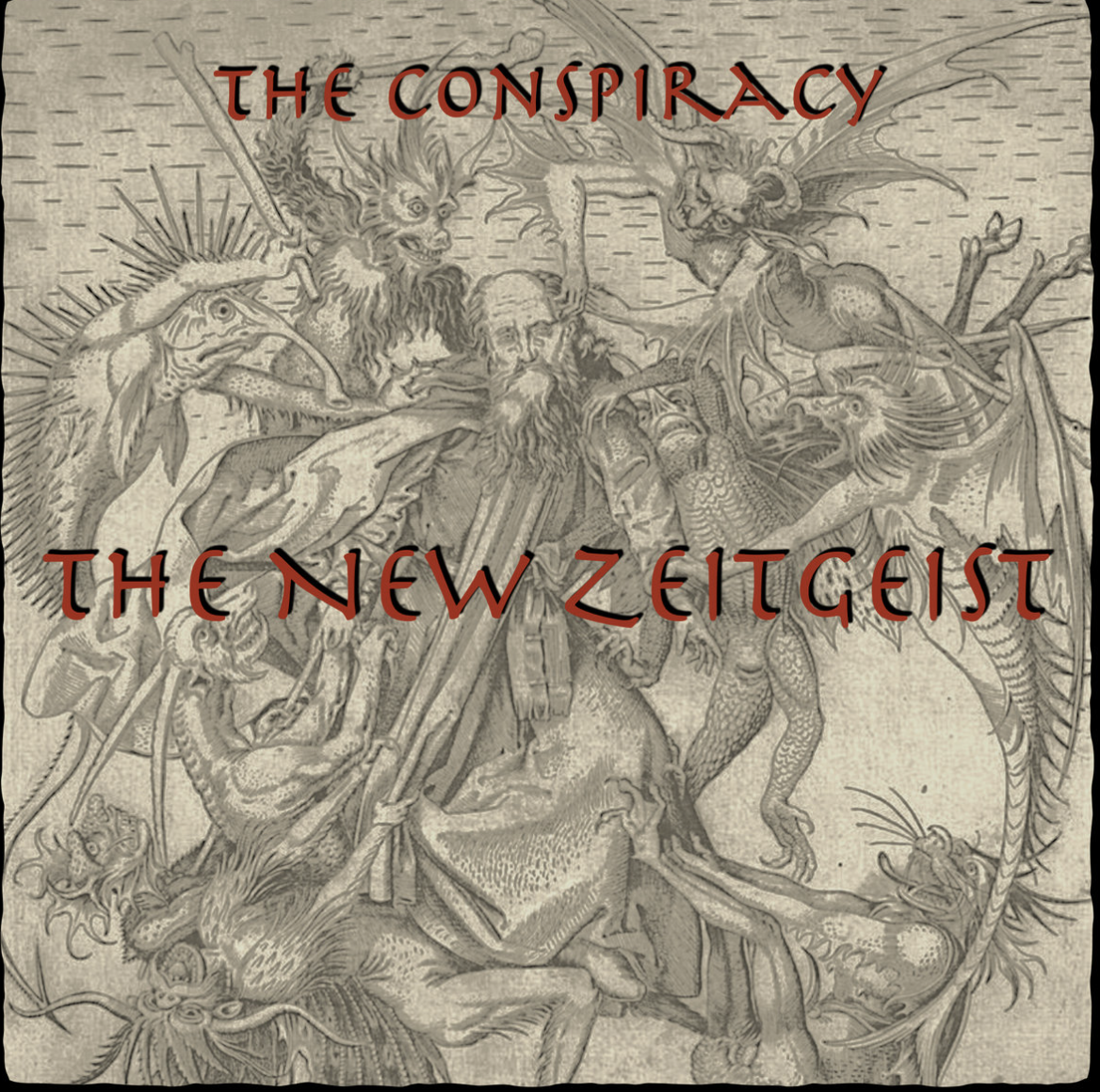
Eccentricity is not a common thing in music these days. It is on the whole frowned upon, with record labels and radio stations tending to play safe and stick with the same old or the same new soulless pop or indie by-numbers strum alongs. Music with intelligence and verve and wit are pushed to the backwaters; the likes of the great Julian Cope and Luke Haines becoming nothing more than an influential cult. And that dear readers can be the only explanation why The Conspiracy are not better known, and currently reside in the ‘never heard of them, they cannot be any good brigade’, where in fact I have heard of them and they are very good indeed. As I’ve written in previous reviews of their music, they are very bloody British; they wear their love of The Kinks and the aforementioned Julian Cope on their sleeves.
Intelligent witty lyrics and riffs that at times sound like an upmarket Billy Childish – the days of him not slumming it at Aldi but buying his riffs from Selfridges. See The Conspiracy are intelligent contrary buggers who do not dumb down their art, and in these days of Neanderthals wanting Oasis to reform that can only be applauded, and they should be given medals for trying to keep intelligent artful pop alive and well.
Neon Kittens ‘Nine Doesn’t Work For An Outside Line’
(Metal Postcard Records)
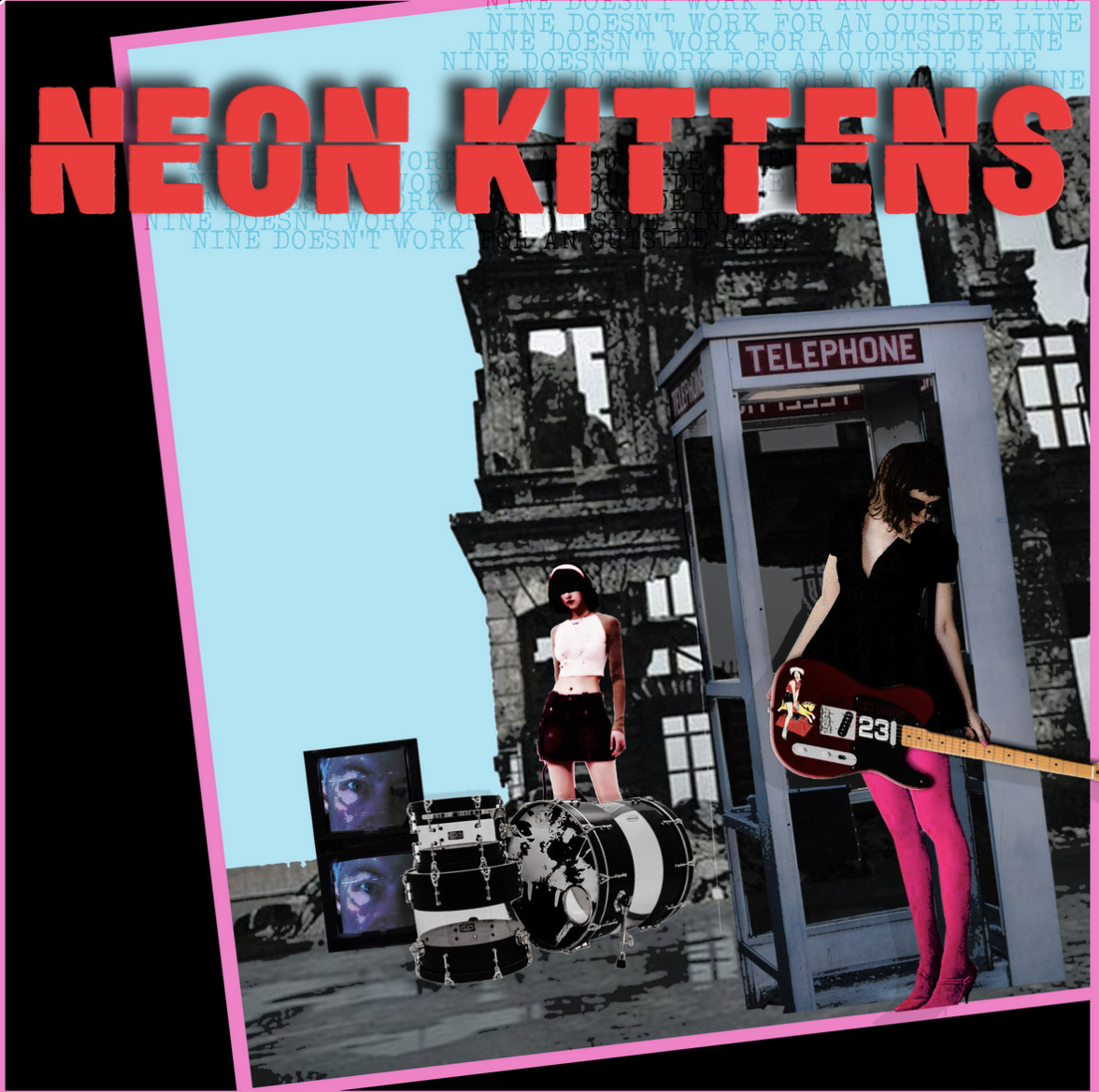
Post-punk beatnik shenanigans are afoot with this the new release from Neon Kittens. Their second album [I think] carries on where their last left off, with spoken female vocals purring erotically like an attractive nun filing her nails, smiling, knowing her crotchless knickers are only slightly hidden by her too short mini habit wondering just where to place her oversized cross next, over the scratch and sniff guitar yearnings that are part Fire Engines, part Scary Monster & Super Creeps, part rock ‘n’ roll, and part sexual abandonment. Yes, this is the true sound of total derailment. This is the sound of a 15 year old girl French kissing her jazz induced slightly older best friend with benefits; an album of pure off-center genius.
Monthly Playlist For October 2023: Bex Burch, Tele Novella, Fantastic Twins, The God Fahim…
October 31, 2023
CHOICE MUSIC FROM THE LAST MONTH/CHOSEN BY THE MONOLITH COCKTAIL TEAM

Every month, depending on who’s contributing, the Monolith Cocktail team create a choice track journey of eclectic music; an encapsulation of that month’s reviews plus those tracks we either didn’t get time or room to write about but loved. Joining me, Dominic Valvona, in October, there’s selections from our resident Hip-Hop guru Matt Oliver and indie, lo to no-fi and underground motherfucking rock ‘n’ roll maverick, Brian ‘Bordello’ Shea.
Without further ado, let’s crack on with the playlist and track list:::
Bex Burch “Joy Is Not Meant To Be A Crumb’
Lukid ‘Haringey Leisure’
Mike Reed’s The Separatist Party ‘A Low Frequency Nightmare’
Chouk Bwa & The Angstromers ‘Sala’ <THIS MONTH’S COVER STARS>
Slimzee, Boylan & Riko Dan ‘Mile End’
Daiistar ‘LMN BB LMN’
Axis: Sova ‘Hardcore Maps’
Pound Land ‘Bunker – Live’
Party Dozen ‘Wake In Might’
Crime & The City Solution ‘Brave Hearted Woman’
Tele Novella ‘Poet’s Tooth’
Aesop Rock ‘By The River’
Verb T & Vic Grimes ‘Inner Child’
Joker Starr & DTY FT ‘Revelation’
Les Amazones d’Afrique ‘Kuma Fo (What They Say)’
Fantastic Twins ‘Twins Can’t Love’
Beans & Anti-Pop Consortium ‘ZWAARD_OVER’
The god Fahim ‘Big Money Talk’
Black Josh & Wino Willy ‘Today’s The Day’
Dylan Jack Quartet ‘Of Caves, Tombs And Coffins’
Daykoda ‘TONGUES’
Dhani Harrison ‘La Sirena’
Salisman & His Unwavering Circle ‘Empty Pool’
Fortunato Durutti Marinetti ‘Clerk Of Oblivion’
Junkboy ‘Chase The Knucker’
Tele Novella ‘Hard-Hearted Way’
Maria Arnqvist ‘Morning Sun’
Apathy & Kappa Gamma ‘Fenwick’
Mendoza Hoff Revels ‘Interwhining’
Cookin Soul & The God Fahim ‘Blood Sport’
Guilty Simpson & Uncommon Nasa ‘Easy’
Black Josh & Wino Willy ‘Close To The Edge’
Les Mamans du Congo & PROBIN ‘Mpemba’
fhae ‘I Just Want To Know Where We Go When We Die’
August Cooke ‘Family Portrait’
Michelle Lordi ‘Only Love Can Break Your Heart’
Raf And O ‘Still Sitting In Our Time Machines’
A. Savage ‘David’s Dead’
twin coast ‘Scratch On You’
Dirty Harry ‘Through Chaos’
The Smile Rays ‘To Do List’
Daniel Son & Wino Willy ‘CAMH’
Raul Refree & Pedro Vian ‘La Vera Pau VIII’
Andrew Heath ‘Heavy Water, Pt. 1’
aus ‘Flo – Red Snapper Rework’
Tonn3rr3 & Bikaye ‘Balobi’
Hooveriii ‘Dreaming’
Louis Carnell & Ben Vince ‘three’
Koum Tara ‘Corona Chitana’
Catrin Finch & Aoife Ni Bhrain ‘Waggle’
Kalporz X Monolith Cocktail: [#tbt] Music for growing houseplants
October 26, 2023
A FOCUS ON THE JAPANESE COMPOSER HIROSHI YOSHIMUR FROM OUR FRIENDS AT Kalporz
AUTHORED BY Viviana D’Alessandro

Hiroshi Yoshimura (1940-2003)
Continuing our successful collaboration with the leading Italian music publication Kalporz , the Monolith Cocktail shares reviews, interviews and other bits from our respective sites each month. Keep an eye out for future ‘synergy’ between our two great houses as we exchange posts during 2023 and beyond. This month, Viviana D’Alessandro hones in on the music of electronic minimalist progenitor Hiroshi Yoshimura for the site’s #tbt series.
The Japanese 80s gave music history one of the pilot moments in the formation of ambient music. If we have recently worked in this space to understand the experimental roots of relaxed music , this week’s #tbt has the ambition of setting sail towards the Rising Sun.
Artists such as Hiroshi Yoshimura , Midori Takada , Satoshi Ashikawa are spurious children of the rampant economic growth of post-war Japan, but produce soundscapes that are introverted and aesthetically averse to the urban imagination, directly taking up or simulating the complex relationship of Japanese culture with the natural world.

Kankyō Ongaku: Japanese Ambient, Environmental, & New Age Music 1980-1990 (Light in the Attic Records)
An example above all is Green (1986), the fifth work by composer Hiroshi Yoshimura and a founding pillar of minimal ambient. Recorded amidst the hustle and bustle of what we imagine to be a rapidly changing Tokyo, the record’s pristine stillness offers a line of escape to the noise of heavy vehicles, jackhammers and clanging metal objects that would have dominated the natural soundscape at the time of the city. Even the album cover – a beautifully photographed apartment Schlumbergera – conveys this purity of sound.
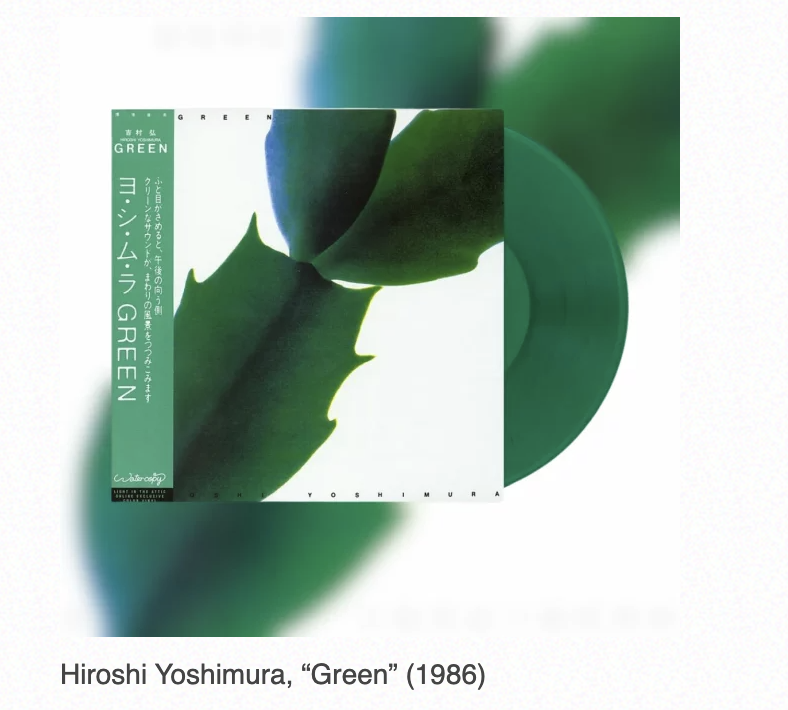
Yoshimura identified his work as “kankyō ongaku” ( environmental music ), which we could certainly define as the Japanese version of ambient but with a very different slant: where Brian Eno , for example, created music for a constructed and imaginary environment as in Music For Airports (1978), Yoshimura and his contemporaries created music for extremely specific and tangible places.
A good example is Surround from 1986 (soon to be reissued by Temporal Drift), born at the request of the real estate company Misawa Home and designed to curate the soundscape of their model homes. Or the debut Music For Nine Postcards (1982), composed in direct response to the Hara Museum of Contemporary Art. Like Eno, however, Yoshimura rooted his approach in French composer Erik Satie ‘s concept of musique d’ameublement (furniture music) , music that fits into the sonic context of the environment and does not require careful listening. Eno made direct reference to Satie in Discreet Music (1975), while among these artists it was Satsuki Shibano in 1983 with Erik Satie (France 1866-1925) who traced a more explicit Paris-Tokyo axis.
While these records were designed for particular spaces, they were also deeply evocative. The simulation of an idyllic-bucolic place is definitely something very present in these works, and it becomes almost saturating when returning to Yoshimura’s “Green”. A noteworthy aesthetic position considering that the album was composed mostly using a Yamaha DX7 , a synthesizer commonly known for its artificiality. “The DX7 is not a natural sounding instrument at all, it’s very digital. The way he can make something sound so natural on that instrument is amazing” – says Allen Wooton (aka Deadboy), interviewed about the record for FACT magazine – “it’s as if someone had studied the world natural was then able to somehow replicate its aesthetics”. It is interesting to note, by the way, that the reference to the colour green in the album’s title refers not to a chromatic nuance, but rather synaesthetically to a phonetic imagery, a natural extension of sound space through the inclusion of natural sounds in modern life. The album cover itself reads GREEN as a double acronym: Garden / River / Echo / Empty / Nostalgia; Ground / Rain / Earth / Environment / Nature.

It is perhaps no coincidence therefore that “Green”, despite being conceived in a period of rampant industrialisation, still preserves an underlying optimism. All eight compositions on this album present sublime layers of character and tones suspended with a minimalist resistance that survives the nuances of modern reality, but doesn’t complain about it. A prescient anti-Luddism considering that until the end of the 1910s the works of Yoshimina, Takada and Ashikawa were practically unknown to posterity and were resurrected thanks to the Youtube algorithm. Spencer Doran of the electronic duo Visible Cloaks, of all people, has taken it upon himself as a great collector of Japanese music to curate an incredible series of mixes for Root Strata.
For now we’re inclined to take this as a good sign, given that the appeal of these ’80s ambient LPs is their focus on improving and changing existing ecosystems. Rather than offering respite in the form of escape – as a classic interpretation of ambient music would have it – many of these Japanese artists practiced sound design as a way to integrate or alter physical locations into spaces of serenity, stillness, and infinite possibility.
The October Digest: Social Playlist Volume 80, Tamikrest, Billy Cobham and David Bowie…
October 18, 2023
ANNIVERSARY ARCHIVE SPOTS AND THE 80TH EDITION OF THE MONOLITH COCKTAIL SOCIAL PLAYLIST: DOMINIC VALVONA
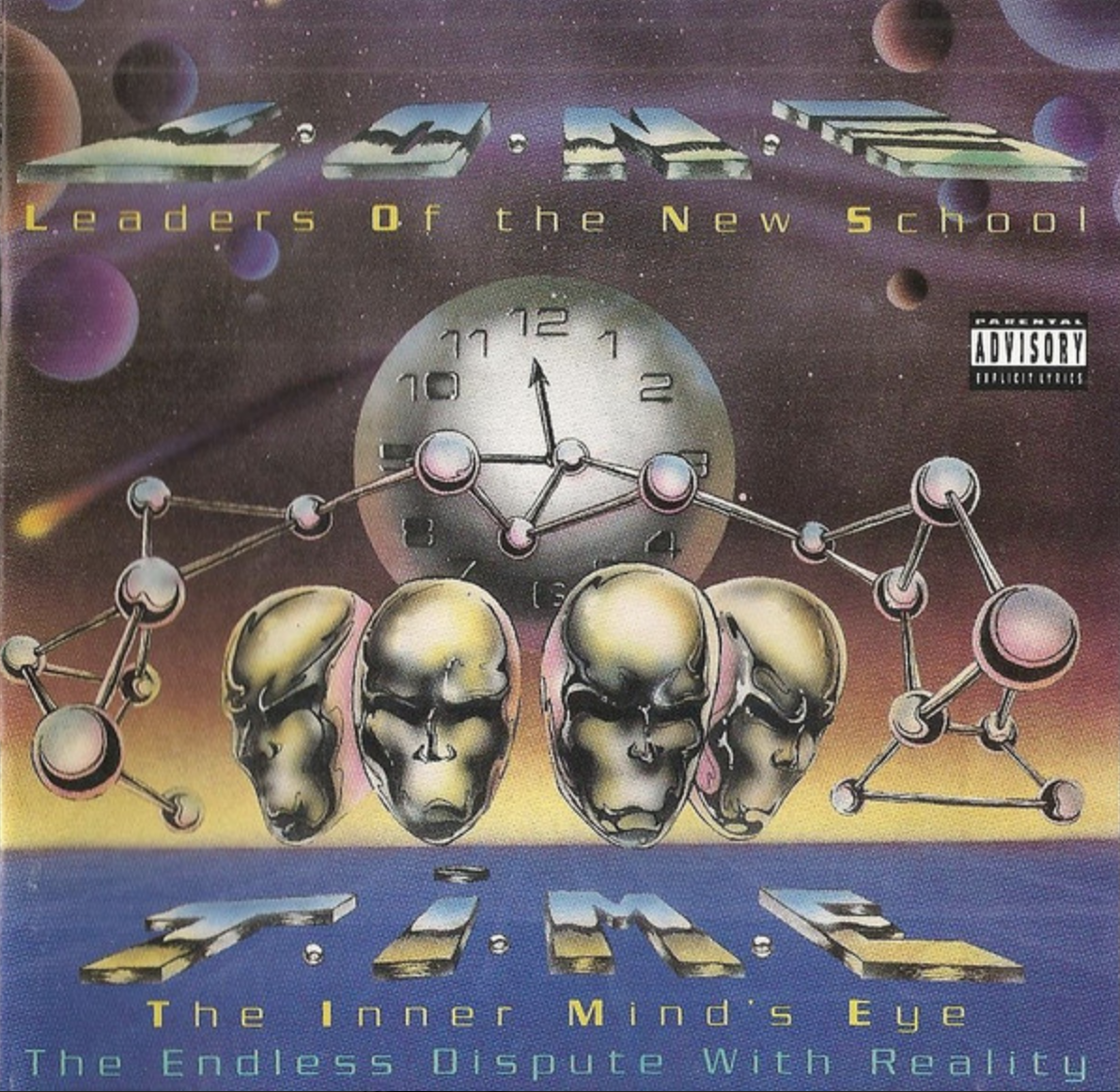
Welcome all to the October edition of the Monolith Cocktail Digest, an archival driven column that celebrates anniversary albums each month and marks those special icons we’ve lost. In recent months this column has also become the home of the long-running cross-generational/international eclectic Social Playlist, which reaches its 80th edition this month.
Plucked from those back corridors of the blog’s archive, there are original pieces on the Tuareg desert blues-rockers Tamikrest and their 2013 album, ‘Chatma’, jazz drummer extraordinaire Billy Cobham’s Spectrum (50 years old this month), and David Bowie’s Reality (unbelievably already 20 years old).
The Social meanwhile features tracks from all three of those featured records, plus 50th anniversary mentions for The Who (Quadrophenia) and Elton John (Goodbye Yellow Brick Road), a 40th mention for Bob Dylan (Infidels), and 30th mentions for the Leaders Of The New School (T.I.M.E.), Black Moon (Buck Em Down) and Teenage Fanclub (Thirteen). Amongst that smattering, there’s choice tunes from Henry Franklin, Cee-Rock, David Liebe Hart, Dog Faced Hermans, Elias Hulk, Prix, Sofia Rosa and many more special selective tracks.
FULL TRACK LIST IS AS FOLLOWS::::….
Tamikrest ‘Djanegh Etoumast’
Pinky-Ann-Rihal ‘The Indian Dance’
Dog Faced Hermans ‘How We Connect’
Bob Dylan ‘Man Of Peace’
The Meditation Singers ‘Look At Yourself’
Billy Cobham ‘Spectrum’
Henry Franklin ‘Venus Fly Trap’
Leaders Of The New School ‘Connections’
Black Moon ‘Buck Em Down’
Kid Acne & Spectacular Diagnostics ‘Batman On Horseback’
Cee-Rock, Stealthguhn & Don Jazz ‘Linden Boulez’
officerfishdumplings ‘Divine Procrastinator’
David Liebe Hart & Th’ Mole ‘Michael Likes To Smoke His Weed’
Thiago Franca, Marcelo Cabral & Tony Gordin ‘Parte 1, Pt. 2’
Missus Beastly ‘Gurus For Sale’
Elisa Hulk ‘Ain’t Got You’
David Bowie ‘Never Get Old’
M ‘Baby Close The Window (12” Version)’
The Research ‘Feels Like The First Time’
Teenage Fanclub ‘The Cabbage’
Rabbit Rumba ‘Don Toribio’
Sofia Rosa ‘Kumulundu’
Tabaco ‘San juan Guaricongo’
Dick Stusso ‘Haunted Hotel’
Pin Group ‘Hurricane Fighter Plane’
The Spells ‘Number One Fan’
Prix ‘Girl’
Stiv Bators ‘Little Girl’
Agnes Strange ‘Give Yourself A Chance’
The Who ‘The Real Me’
Shyane Carter & Peter Jefferies ‘Randolph’s Going Home’
Roger Tillison ‘Loving You Is Sweeter Than Ever’
Elton John ‘The Ballad Of Danny Bailey (1909-1934)’
ARCHIVAL SPOTS/ANNIVERSARY CELEBRATING LPS
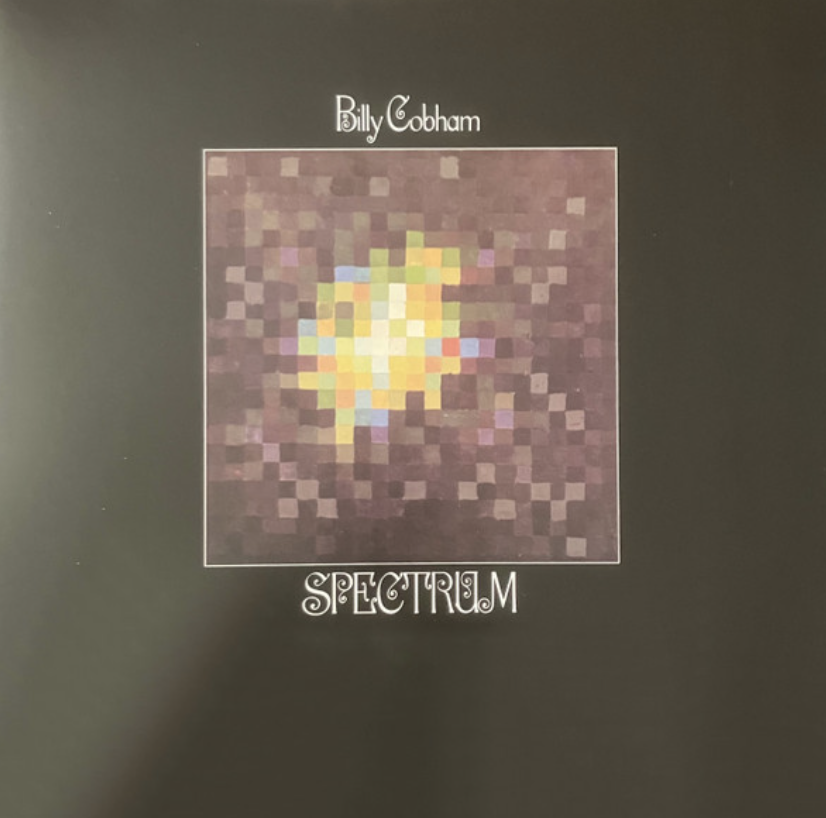
50th Anniversary Of Billy Cobham’s Spectrum
Moving on into the seventies with the voracious fusion of jazz, funk and the far out, former US army conscript Billy Cobham allowed his drum kit to roam wildly: and take a fair old pummelling in the process.
Leaping from the starched fatigues of conformity into apprentice slots with Miles Davis (famously on the Bitches Brew opus, and sitting-in at the Isle Of Wight Pop Festival of 1970) and Horace Silver, Cobham went on to form the influential Mahavishnu Orchestra: stretching the limitations of jazz all the way.
Whilst still a member of the MO (he’d leave for the first time in 1973, before returning for the MK II incarnation in the 80s), Cobham recorded his solo debut Spectrum; an unequivocal energetic mix of unwieldy cosmic slop guitar, thundering and rapid ricocheting double kick peddling drums, and 12-bar jazz gone native!
Featuring the arching, noodling rock guitar solos and lead that would become a familiar presence to the Cobham sound, Tommy Bolin (later to join Deep Purple), is tasked with really giving it some gospel. Sampled by future generations – Massive Attack fans will recognise Status – Cobham’s first album also drifted across the pond to Europe – Krautrock connoisseurs may pick up on the relationship to the music of Mani Neumeier’s Guru Guru (especially after their UFO LP). No matter how sophisticated, or ‘twiddly muso’, Cobham always inserted some humour into his work, from the video-game effects and title of Snoopy’s Search to the general free spirited nuttiness of some of the playing itself.
A great marker, laid down for the generations to come.
DAVID BOWIE’S REALITY IS TWENTY

Making the most of his creative flow, David Bowie’s next critically assiduous, soul-searching suite would draw from the ‘oil well’ of despair.
The hyper ‘reality’ that permeated throughout this sophisticated album reflected a woeful climate, specifically the unfolding drama in the Middle East. Allusions to neocon diplomacy, nepotism of the most colonially threatening kind and the crescent of Islam are interspersed with more pining romanticized themes of loss.
Assembling a ‘dream team’, Bowie’s backing group once again swelled with the talents of Mike Garson (piano), Tony Visconti (production duties), Earl Slick (guitar) and Carlos Alomar (guitar) – the latter two, both veterans of Young Americans. Slick and Visconti would of course go onto to form part of The Next Day recording hub.
That quality and old camaraderie proved every bit as tightly dynamic, Reality unequivocally the thin white duke’s best work since Earthlings.
Again, Bowie insists on appropriating or at least resorting to past endeavours, recalling Outside on his sardonic hustled cover of Jonathan Richman’s ‘Pablo Picasso’; Tonight on the samba weepie ‘Days’; and Black Tie White Noise on the thinly veiled indicative Dick Cheney putdown, ‘Fall Dog Bombs The Moon’: Bowie at his bleakest, “The blackest of years that have no sound, no shape, no depth, no underground/What a dog!’ But full marks for trying to get a grip of George Harrison‘s ‘Try Some, Buy Some’; made most famous (and infamously) by a reluctant Ronnie Spector.
An augury of what was to follow in 2013, the thumping kickdrum, rollicking anthem ‘Never Get Old’ has a resounding statement of intent from the artist: “Never ever gonna get old!” In character he may be, but Bowie’s cry against mortality is a personal one, echoed in the present. Unfortunately bowing to the so-called market forces – regardless of artistic values and sanctimonious vitriol, he always had an eye for making dough – Bowie lent the tune to mineral water brand Vittel, appearing in an advert which has an uncanny resonance with the ‘The Stars (Are Out Tonight)’ video.
For various reasons outside his control, namely the poor sods heart attack, Bowie had to wait eight years to produce another volume of reactionary post-millennium blues. The Next Day, despite the decade-long absence from recording, picks up where Reality left off.
TAMIKREST’S CHATMA IS TEN YEARS OLD ALREADY

Mali’s rich musical culture isn’t confined to just the central and southern regions of the country, the northern Tuareg desert lands also evoke some passionate, soulfully rhythmic surprises too. Despite the unfavourable attention meted out to the Tuareg community in recent years (there cause for autonomy hijacked by far less scrupulous zealots for there own religious and political ends), many voices from that community have offered their services to peace. One example is the nomadic, sub-Saharan rock’n’rollers Tamikrest, whose Hendrix meets desert blues template proves there are two sides to every story; the new album, Chatma – which translates as ‘sisters’ – a tribute to the courage of the Tuareg women and spirit of a people.
Forced into exile in Algeria, Tamikrest plaintively, but with an ear for a good melody, reflect on the imposition of Sharia law – by those outsiders who at first lent help to the course but soon dominated with their own destructive agenda – and the loss of there heritage. Producing beautifully cooed laments with an infectious kick, but also deftly crafting meandrous, ethereal, desert songs, the group can transverse the grooviest of Bedouin rhythmic funk anthems with ponderous soundscapes – ‘Assikal’ is pure Ash Ra Temple meets atavistic sand dune eulogy.
Separated into many a ‘world music’ best of list this year, the Monolith Cocktail sees no such reason for such boundaries or demarcated categorising; Chatma is simply a wondrous piece of ‘head music’.

