The Perusal #51: Nino Gvilia, Nehan, Brion Gysin, Eda Diaz, We Jazz Double-Bill, Ariel Kalma…
January 8, 2024
A WORLD OF DISCOVERIES REVIEWED BY DOMINIC VALVONA
(Unless stated otherwise, all releases are available now)

Ëda Diaz ‘Suave Bruta’
(Airfono) 2nd February 2024
A rarefied artist who manages to merge dream-realism with both the traditional and contemporary, Ëda Diaz occupies multiple realms of geography to produce sublime and club-lite Latin-European R&B pop music.
Between spheres of influence, her French-Colombian heritage is bonded across an exotic soundboard of effects, precise cut electronica, and transformed repurposed old dances and song; the latter of which includes an electrified form of currulao, ‘wonky’ Colombian salsa, bolero, bullerengue, vallenato and ‘dembow’. Most of these styles can be found in Caribbean-Colombia, the roots traced back to Africa and Europe. Currulao, for example, is a fusion of both continents, played by a quartet of musicians to the 6/8 rhythms of the narrow and tall cununo drum, shakers and marimba. By comparison, dembow is a curious one, originating, or rather traced back to the dancehall offshoot of ‘riddim’ it has become synonymous as a Dominican Island phenomenon. Specifically, the opening ‘Nenita’ (“little girl”) is a modern transformation of bullerengue, which is usually the preserved-sung song of elderly women, accompanied by the drum. In this time, Diaz finds a unique angle, viewpoint, across a piano wire dance and bobbing-to-quickening gabbled drum beat of handclaps, clean production and dreamy future pop R&B –reminding me of M.I.A., but also Xenia Rubinos’ Una Rosa album.
As you will hear, the multitalented artist can not only sing beautifully but also play an accentuated, bounding and walking double-bass perfectly, and tinkle the ivories too – a deft, subtle permutation of bulb-like notes, Afro-Latin vibes and more atonal sound effects textures can be heard adding a little extra something to the mood and feel. Diaz started out with classical leanings before moving to the double bass, entwining that instrument with her forgiving, placeable but captivating vocals. But soon enough she married the two with an embrace of the Colombian and South American sounds she heard at her relatives back in Medellin. The title of this, her debut, album is borrowed from one such star of the Colombian salsa and tropical music scene, Joe Arroyo’s popular ‘Suave Bruta’, or “super brute”. Feeding even further into that past scene and heritage, concertinaed accordion samples from Rafael Escalona’s vallenato-styled (Colombian “born in the valley” translated folk music with Caribbean roots) ‘La Casa En El Aire’ can be heard melding effortlessly with a modern production on the Creole flavoured, tin-scrappy shuffled and Amazonian danced ‘Tiemblas’ (“you tremble”). And the sauntered sound of the Colombian legend Lucho Bermudezi’s ‘Fiesta Negritos’ can be felt on the wistful, tight woody-sounding percussive and bandy Cuban-like ‘Sábana y Banano’ (“savanna and banana”).
Back and forth across generations and cities, influences gel seamlessly. Yet invigorate, enrich and entice with something fresh and alluring. For example, hallucinatory dream-realism-lit inspirations influence the Francophone plonked and chamber-esque oasis found on ‘Déjà-Vu’, which includes an exotic wilderness of mirages and non-musical sounds from the lush environment – there’s a lot of these non-musical elements on the album, from sounds record in a hair salon to the buzzing interference of a fly.
Diaz’s production foil since 2017, Anthony Winzenrieth, needs congratulating on a first rate job; lean and sophisticated, but exciting and colourful, he’s managed to compliment all of her talents with an impressive host of effects and programming highlights – imagine CONTENTO meets Diplo and Coco Marie; from dancefloor to exotic magic pop and serenade. Already one of the best albums of 2024, I absolutely love this spellbinding, vulnerable and playful Latin-Euro vision.
Ariel Kalma, Jeremiah Chiu & Marta Sofia Honer ‘The Closest Thing To Silence’
(International Anthem) 2nd February 2024

The Parisian-born electronic composer and saxophonist Ariel Kalma is once more bathing in the light, enjoying attention in recent years, and rejuvenating with a contemporary source of collaborative partners and facilitators of his six-decades legacy of sonic, textural, atonal and musical exploration.
And what a varied legacy it is too; starting out with the recorder and sax before going on to study computer science, which is when he crossed paths with the crooner-balladeer Salvatore Adamo, joining his touring band on the brass instrument that would become part of his signature sound. From there, expanding horizons further, he met and played with the bossa nova guitarist Baden Powell, in the late 1960s and early 70s. More leftfield recordings followed, with innovative experimental tape pieces that featured musical instruments (including a church organ alongside poetry and found sounds. By ’74 the increasingly worldly curious Kalma was bound for India on a one-way ticket. That field trip, in every meaning of the word, involved a full absorption of the country’s culture, music (especially those brassy resonances and drones), spiritualism and meditative practices. On his eventual return home to Europe, he merged these influences and finds with his own compositions and interest in the American minimalist movement of such luminaries as Reich, La Monte Young, Cage and Riley – particularly, I’d suggest, the New York Hypnotic School.
Kalma released his first album, Les Temps des Moissons, a little later whilst working at the famous French Musique concrete composer Pierre Henry’s GRM studio in Paris. Fifty years later and snippets of recording ideas and audio notes from that same period can be heard swimming around and interlaced like mirages with the new improvisations of his collaborative foils, ‘synthesist’ Jeremiah Chiu and violist Marta Sofia Honer. Between those two points there’s at least thirty-six plus albums logged in the Kalma archive; some extremely limited and obscure; released on cassette tape alone in some cases, and covering the new age, avant-garde, collage-edited, non-musical, electro-acoustic, environmental, cosmic and fourth world (possible musics) amorphous border crossings of Jon Hassell.
With a breadth as deep as that catalogue it’s no wonder he was invited to partake in a cooperative session for BBC Radio 3’s Late Junction show. Kalma himself (quickly we’re told) suggested his partners in this performance opportunity; never personally meeting them but perhaps finding common sonic ground with Chiu and Honer’s Åland Islands archipelago inspired/imbued recordings for this same label (International Anthem) – the title of which, The Closet Thing To Silence, is borrowed from a Kalma quote that appeared on a documentary that was packaged with the 2014 An Evolutionary Music compendium-style retrospective, released by RVNG Intl. It’s hardly surprising to find that Chiu has cited Kalam as an influence on his own work, and that of his partnership with Honer (that duo project birthed on IA as well), and so the response was just as quick, to accept working with such an icon of the form.
In communal synchronicity that initial experimental performance session expanded into an album; both spheres converging in a work of light and shadows; the ushering in of rich sound waves, modular rippled oscillations and the equinox. Extended to encompass suffused, sometimes diaphanous and wispy essences of place, time and mood, the eleven passages, suites and collages are as organic sounding as they are synthesized. Across the ages, with no clear boundaries as such, there’s a trace of Schulze, later period Tangerine Dream, Haruomi Hosone, Moebius (especially on the more bubbled, playful ‘Dizzy Ditty’), the minimalist school, Bex Burch, Emerald Webb and Sarah Davachi in the air and on the wind. Kalma’s saxophone, through pursed and more open-mouthed breathes, adds another dimension to the pastoral and neo-folk and classical attuned and held lines of Honer’s empirical viola bows. It sounds like a cyclonic mixture of John Zorn, the Pharoah, Peter Brotzmann and Andy Haas – actually, on the near Afro-jazz light new ager ‘A Treasure Chest’ there’s a hint of a more subdued Peter King.
In signature form, we can also hear hints, traces of mystical Tibet, Arabia and India, but the cosmos as well; an orbiting of heavenly objects and the arppegiator language of retro-futurist visitations. Within those vibrations, contours and drones, harmony is sought and a balance between evocation and the meditative found: an attempt to reach the title’s analogy no less. Coming full circle, those old recycled instructions and prompts now appear more like hallucinatory connections to a burgeoning, freshly investigated period in musical sonic theory. Played alongside the contemporary improvised vision of his two foils, Kalma’s ideas reinvigorate and conjure up new horizons. Proving complimentary bedfellows, Chiu and Honer bring much to this partnership of equals; transcending with a subtle fizziness and subscribing to a sagacious yet fresh sounding soundscape.
Nino Gvilia ‘EP Number 1: Nicole’ (Released 12th January 2024)
‘EP Number 2: Overwhelmed By The Unexplained’ (8th March 2024)
(Hive Mind Records)
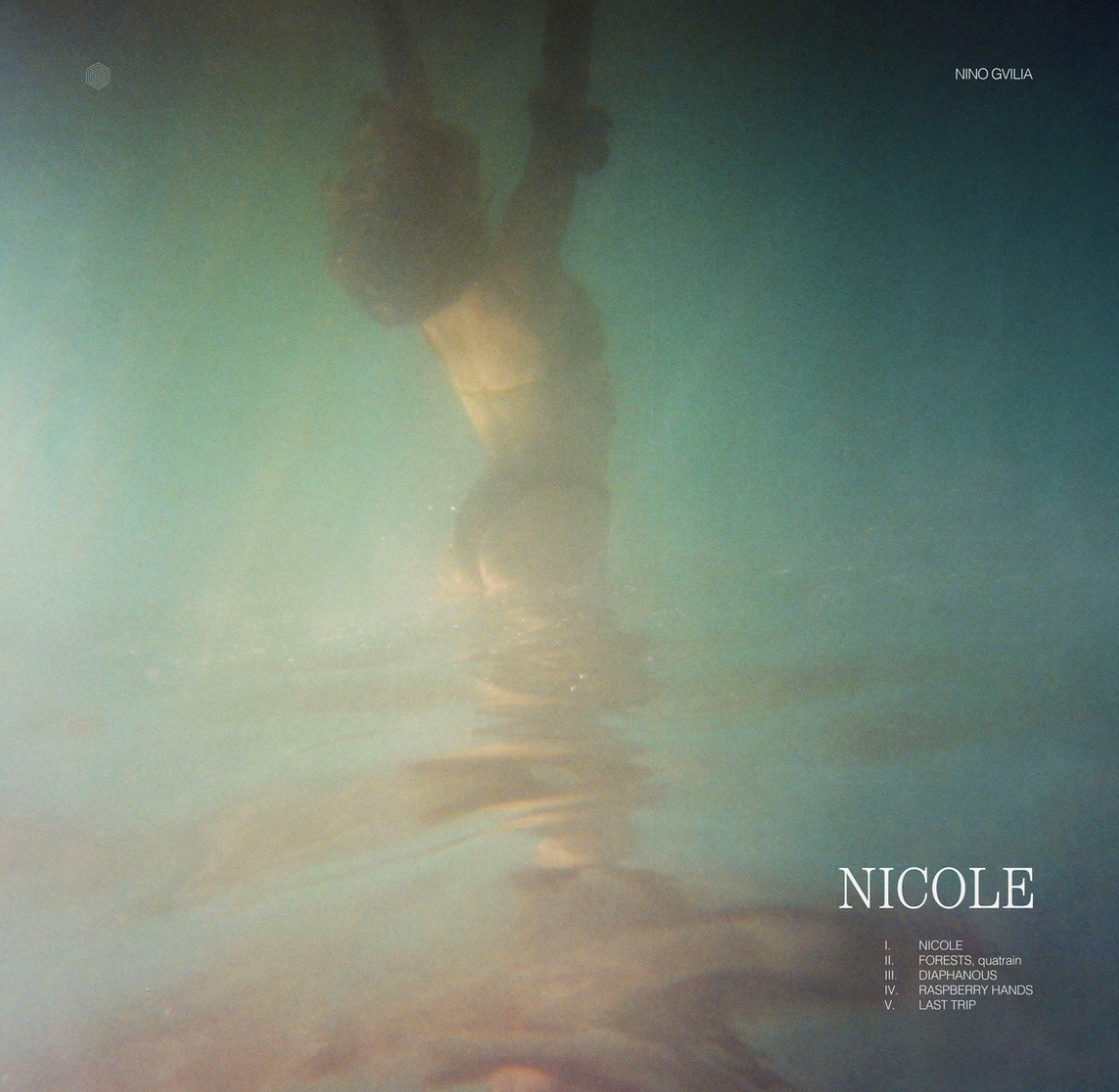
An inspired part of the world, both in antiquity and the now, the roots of Poti in Georgia go back twenty-six centuries; connecting right back to the ancient Greek colony of Phasis – featured in the tales of The Argonauts and the quest for the golden fleece. The city sits as a trading and strategic ‘outlet’, or ‘mouth’, to the Black Sea. It’s also home to the imaginative diaphanous figurehead of Nino Gvilia, the latest worldly wondrous edition to the Hive Mind Records roster. I say imaginary, or rather the label itself does, as Nino appears to be the translucent creation of one Giulia Deval; a character who woos, lulls and beautifully reflects on the themes of ecology and the place of the songwriter in such trying times of geopolitical tumult and crisis.
The songwriter, vocalist, toy guitar/harmonium player and field-recordings composer is joined in this worthy artful cause by a choir of beatific voices, the multitasking foils of Zevi Bordovach and Pietro Caramelli, and by the chamber pop and tapestry renaissance strings of Giulia Pecora (violin) and Clarissa Marino (cello). Across a moiety of EPs, released in a staggered fashion, this ensemble gravitate towards the waters in an entrancing manner; beginning with the seraph-like ethereal biosphere of ‘Nicole’ – it must be pointed out that both EPs seem to be divided, title wise, into the female and male, with Overwhelmed By The Unexplained headed with the popular Scandinavian boy’s name, ‘Anders’. Bathed in the veiled refracted light of aquatic harmonium, subdued percussion, and melodious accentuate piano, the tender choral-voiced opener sounds like an underwater Joanna Newsome or Judee Sill sprite in moving, if leftfield, poetry. The subject of this song seems a most mysterious, wanton presence.
Later, on that second EP, the first directly referenced song title to Deval’s home is made on the strangely plucked, like raindrops on a wooden jetty, ‘Rain On Pallastomi’. Named after a lake outside the city – an archeologically important site that’s given up evidence of the ancient Georgians (known as the Colchis) – this obvious beauty spot of inspiration proves beguiling and dreamily stirring; recalling June McDoom or Natalie Ross Lebracht in a bellowed, concertinaed scenic trance.
Both atmospheric songbook EPs feature a cleverly arranged mixed chorus of venerable, timeless and round voices; at one point, performed in the poetic form of the atavistic ‘quatrain’, a complete encapsulated stanza poem, consisting of four lines and often featuring alternate rhymes – made famous by not only Nostradamus in prophetic form, but also by such seers as Blake, Burns and Thomas Grey. And within the subtle breathing and gauzy spells there are more empirical captured field recordings of nature’s song, of children at play and the environment, alongside talking head experts on ecological sciences – the inter-connective world of bacteria. on the repeated ‘Dirty Is Just What Has Boundaries’ mantra, shown to be integral to humanities survival on Earth. Sounding like a cross between the Celtic, Medieval and folk communal, this interlayered choral circle frees up the subject matter (meta) with a mystical atonal and wire-y stroked vision of arcadia.
Creating a musical, lyrical eco system of their own, soundtracked by folk, minimalism, the hallucinatory and pastoral – with only the final vaporous misty esoteric second EP’s titular track changing from cuckoo-like voiced loops and sympathetic strings to disturbing futuristic daemonic augur –, the Nino Gvilia encompassed guise ebbs and flows with the movement of the replenishing waters, the lakeside and mill turning scenes of the surroundings, to produce a disarming hymn. Idiosyncratic in beauty, I’d recommend this diaphanous (there’s that word again, which even appears as track title in its own congruous right) accomplished mini-opus to those with a penchant for Hatis Noit, Seaming To, Tia Blake and Roberto Musci. Hive Mind Records have unassumingly set the bar high with this latest edition to their stable; a more placeable and visceral release you’d be hard to find in 2024.
A WE JAZZ DOUBLE-BILL
Anni Kiviniemi Trio ‘Eir’ 12th January 2024
Divr ‘Is This Water’ 2nd February 2024

The We Jazz label starts off the year, not with a loud fanfare, but with an assured and intimate double-bill of debut releases; one from the US-based Finnish pianist Anni Kiviniemi and her trio of double-bassist Eero Tikkanen and drummer Hans Hulbaekomo, and the other, from the Swiss Divr trio (more from them later).
Featuring heavily in our end of year lists the Helsinki label, magazine, store and festival hub is among the best jazz labels in the world right now; showcasing, as it does, an enviable roster of Scandinavian talent – its only rival on the continent being the ACT Music stable of world-leading jazz maestros.
Launching the new year schedule, they’ve chosen to open with the adroit original musicianship of Kiviniemi and her bassist/drummer foils, who tiptoe, meander and playfully walk a less travelled road; artfully, moodily, and on occasion, introspectively counterpointing the classical with a freer, looser style of jazz performance.
Although the original compositions were written under certain pre-conditional limitations, once they emerged from the pen, anything goes. A free rein is given in the spirit of improvised democracy – the bandleader-pianist measures this at 95% in the studio, 99% when on stage. This methodology throws up some surprising intense and off-kilter results; a transformed and transcribed form of harpsichord or celeste vision of Schubert at a Georgian dinner party on the textured, descriptive ‘Choral’, and a touch of Marty Isenberg’s Wes Anderson inspired leftfield interpretations on the kooky ‘Judy’. The latter name part of a personal inquiry, love for and ruminations of those held dear and close; the most personal of which, is the album’s Eir title, the name of Kiviniemi’s daughter: born after the recordings but before the album’s release.
Imbued with that closeness, bond, the music is certainly felt. And yet the mood can be transporting; away from Europe to French North Africa ala Tangiers Duke Ellington, and South Africa, ala Abdullah Ibrahim. The art however, is in the way each musician reads the others, and how they respond; creating tumults, fairytales, the blues, mystery and the serenaded from the merest prompt. Kiviniemi’s piano is as classically-tuned as it is able to flourish within the free-form, spiritual and old time idioms of jazz; an incredible constant movement that’s simultaneously capable of catching the listener off-guard with a sharpened, near off-key note or two and alternative scales whilst staying playful and melodious throughout. The in-demand bassist Tikkanen reminded me in part of Thomas Bramerie, his double-bass perception of timing and movement almost impeccable, but freed up and loosening. Meanwhile, Hulbaekmo (a member of fellow We Jazz label mate Gard Nilssen’s Supersonic Orchestra, whose Family album made our choice albums of the year in 2023) can nearly explode like Elvin Jones in between deft tumbles; roll snaps and more percussive bouts of artistry. Encompassing many styles, dalliances and fandangos the trio repurposes classical and jazz influences to write a unique account of personalized feelings, expressions, themes and musicianship. More importantly, this is a trio that gels and sounds telepathic in their interactions. A great way to kick-off the 2024 calendar.
The second album in this We Jazz label double-bill is the Swiss trio Divr’s first release on the Helsinki platform. It also features, just like Anni Kiviniemi’s set-up, the piano in a prominent if unburdened and freely moving role. Based between Zurich and Basel, keys player Philipp Eden, drummer Jonas Ruther and (double) bassist Raphael Walser pool their talents for a reshaping of water in its many forms; from splashes of resonating cymbals to a piano tumult of disturbed choppy waves and the ebbing tides of calmer meditative waters.
Although this is indeed a jazz record, the original compositions and choices of covers extends beyond into trip-hop and the downbeat breaks territory of artists like Ju$ufa and J Dilla – the latter not so surprising as I referenced the late icon on label mate Otis Sandsjo’s two Y-OTIS albums, which featured Dan Nicholls the post-producer of this trio’s debut. You can add touches of Jesse Futerman and the Protico Quartet to that sound too, albeit mostly kept simmered and attuned to the very movements in the air and from off the myriad of watery inspirations. The difference here though is in choosing to, and proving a most congruous to the overall sound and feel of Is This Water, cover music from both Radiohead and Broadcast; the former, translating the In Rainbows low, moody and slowly stirring ‘All I Need’ into a languid and dreamy turn dramatic tighter rolling crescendo, and the latter, a beautifully articulated, dreamt and longed contemplative version of the cinematic but understated beautiful ‘Echo’s Answer’. Both originals are themselves complimentary in the first place, but retuned by the Divr trio they became part of a deeper if often translucent almost gauzy fabric.
It’s a style of musical performance played in, what the trio call, a ‘multi-directional time’; a flow that is based on largely acoustic improvisation and loops. Yet they emphasis that doesn’t mean their music is repetitive, those waves and loops instead subtly changing each time round, the cyclonic aspect so subtle and reverberating as to go almost unnoticed. Instead at times it all sounds near formless: in a good way. The vibrations and quivers evoking atmospheres and presence; especially the finale, ‘A Glass Is No Glass Is A Glass’, which like its name suggests is glassy in substance, but also near spooked and esoteric; certainly mysterious with its constant crispy white noise background, odd jarred glass bulb notes and brushy drag of sticks across drum skins. There’s also the sound of European voices in the background, filtering in from the park or the woods.
There’s a soft but nice span of moods and music, with touches of Francis Bebey and the Ethnic Heritage Ensemble on the tine plucked-like ‘42’, and a feel of Mingus and McCoy Tyner on the slightly skipped, darting and choppy ‘Supreme Sweetness’ – Divr riff on the highly influential American songbook trio of Gus Arnheim, Charles N. Daniels and Harry Tobias’ gold standard from another age.
In a meditative, thoughtful mood throughout, the Pali language ‘Upeksha’ – a spiritual virtue of equanimity, even-mindedness and non-attachment to the fluctuations of worldly fortune – takes things that little further; the drums almost whispered and tinkled, the watery piano notes hypnotic, as if materializing from out of thin air. As fortunes and temperaments change with the ebbing tides, the trio dance and explore in an amorphous fashion across unburdened soundscapes and movements with an improvised musical dialect and flow. Is The Water is an idiosyncratic debut from a leftfield jazz troupe; an ideal signing for the leading Northern European We Jazz label: fast becoming a stamp of authority in that field of music.
Walter Kemp 3 ‘Black Whole Live’
26th January 2024

The highly acclaimed bandleader-pianist and teacher Walter Kemp lays down a near perfect set with his new Black Whole Live album. Taking melody and recognized tunes on a ride, Kemp and his foils turn earthly and city-hive incubated compositions and autumnal romantic serenades into the cosmic stratosphere and beyond. Freeform, conscious jazz is effortlessly entwined with the classical, the avant-garde, funky, the blues and sci-fi as Kemp and his dynamic quartet stretch themselves to the limits.
It sounds like a lifetime of experience and influences are drawn upon, with Kemp’s formative years of studying classical and gospel (inspired by his father’s own career as a composer-performer in those fields), and the pull towards jazz, used as the jump-off points.
From the atonal to sharply jarring, and the tuneful to experimental, his piano, Rhodes and Viscount organ (named after the UK maker, this instrument is voiced to sound like an English pipe organ) skills are both stirring and tumultuous in equal measures: a touch of Monk here, Ahmed Jamal and Jimmy McGriff there. Held suffusions of gospel can be found alongside La Monte Young experimentation, and both dramatic and accentuate flourishes. But it’s Allan Mednard’s Billy Cobham-like tight incipient tumbles, rolls and percussive soloing that gets the whole live performance in motion; carrying over into the first mini opus, ‘Novum’ (the Latin for “new thing”, and brought into the lexicon by the sci-fi scholar Darko Suvin and his peers to describe the ‘scientifically’ plausible innovations used in that genre’s narratives). In nine or so minutes the ensemble cover a multitude of bases, from jazz-fusion to the wild violin off-the-scale elbow frantic’s of Tony Conrad, Michael Urbaniak and Jason Kao Hwang (courtesy of the Grammy Award-winning violinist Scott Tixier).
Another band member, Brent Birckhead, offers whistled and bird-like floating exhales and squeezes of woodwind to that simultaneously concentrated and free workout. Rishan Odel meanwhile, is switching between thick-stringed taut and more loosened double-bass runs and a little slap electric bass funk – Odel and the rest of the group going as far as to evoke a grooving Herbie Hancock and Weather Report jamming with The Time, on the soul-jazz flexed ‘Don’t Step In It’.
There’s certainly a lot going on at any one time, and yet you can hear every note, every phrase, chord, triplet and riff: even in the more chaotic maelstroms. From melodious parts of Duke Ellington, Count Bassie and Blue Note to the flare-ups of ECM, the Pharoah, Marius Neset and Devin Gray and the more out-there echoes of Steve Swell & Andrew Cyrille’s partnership, the Art Ensemble of Chicago and Walter Semtek, the musicality, feel and direction of travel is deep and wide-ranging. Kemp and his ensemble are nothing short of accomplished, performing not only a highly recommended live but essential jazz album. Already, in my humble opinion, one of the year’s standard bearers and highlights: it will take some beating. Expect to see this album in my end of year’s list.
Nehan ‘An Evening With Nehan’
(Drag City) 26th January 2024
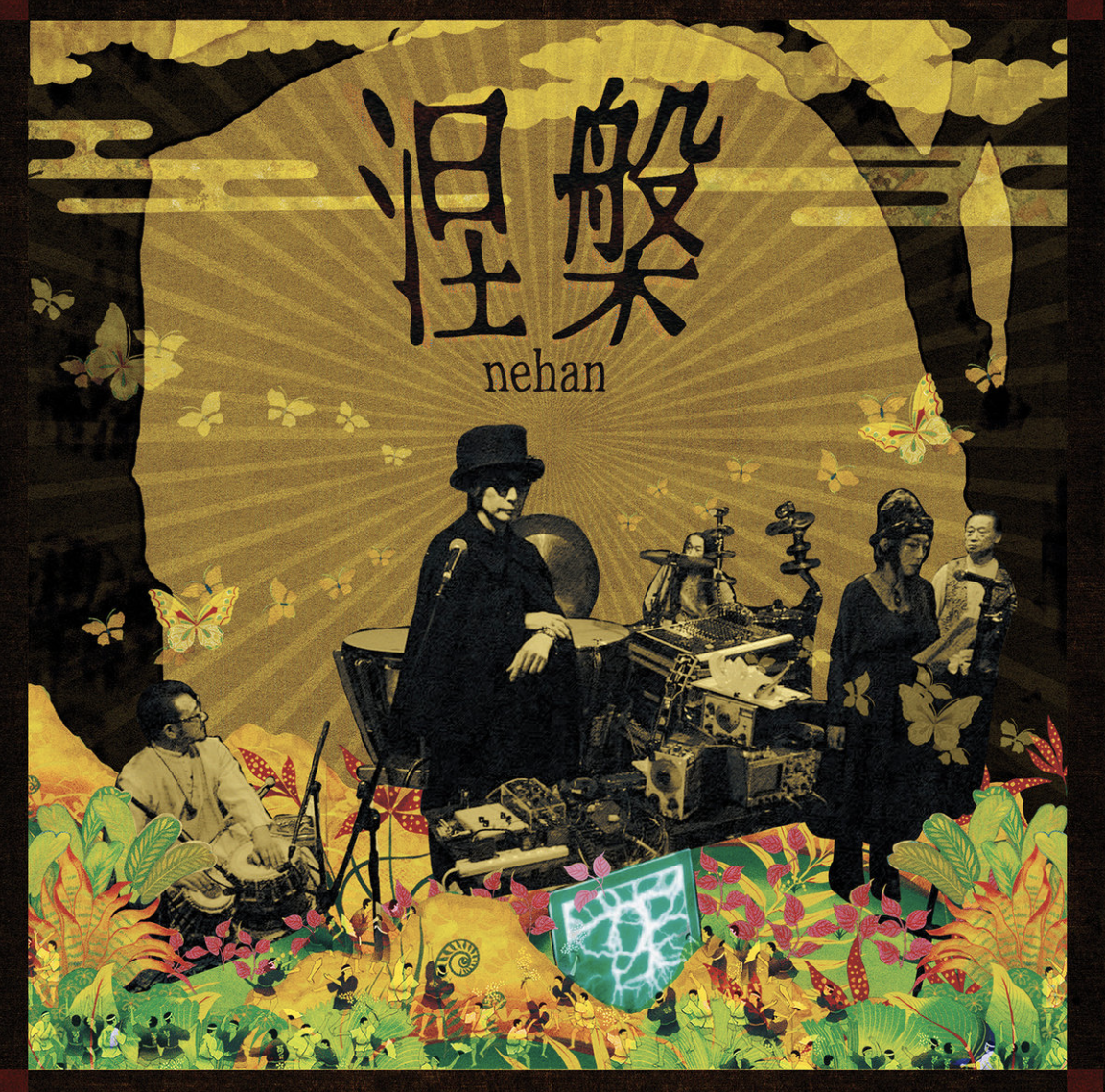
Something unique, process and methodology wise, from the Japanese improvisational underground with the Nehan quintet’s ‘brain waves’ initiated performance. Literally powered, or directed, by a willing “testee” and their emitted 9hz brain waves, extemporized vibes are set in motion for a set of serialism peregrinations performed by an ensemble that includes members of wound-down and still active projects: from the band leader’s own Ghost and Batoh groups to Acid Mothers Temple acolytes and members of The Silence and Espvall.
Instigated by Masaki Batoh, an acupuncturist (of all things), musician and designer of the machine apparatus behind this experiment, the Nehan guise is an amorphous vehicle brought into existence from a relaxed but alert state of consciousness. Tapping into the new age, the scientific and meditative, the generated sonic data channeled results are simultaneously far out, avant-garde and progressive.
This particular release was originally recorded from a live evening performance at Tokyo’s Guk Sound in August of 2022; divided here into Nehan and Ocean sides. The volunteer brain pulse oscillator subject isn’t named, but the set-up on this chosen night included the willing Futoshi Okano, Haruo Kondo and Junzo Tateiwa; between them, navigating an instrumental apparatus of gongs, timpani, tablas, drums, percussion, crumhorn (a Renaissance-period double-reed instrument from Swabia), bagpipes, mellotron and sound effects.
From pulsations emerges two undefined events; with vague references to Shinto, India, Tibet and the ether, yet far from ceremonial or religious. A chthonian mysticism of guirro-like stretches, ratcheted bows, burnished resonated struck gongs, spoke rattled percussion, piercing reeds, bounded timpani rolls and a mix of Fortean and Zodiak Club Berlin radio dial craziness. Side one draws us into an otherworldly realm of Toshiro Mayuzumi & Makoto Moroi, Popol Vuh amd Walter Smetak invocations. But then, almost out of nowhere, a rhythm, synchronization is found and explosion of Embryo and Acid Mothers freakouts kick in. This all simmers down into a stripped down Sergius Golowin like traversing.
The flip side, ‘Ocean’, reminded me of Yamash’ta & The Horizon; a little too of Terry Riley & Don Cherry’s Koln partnership, His Name Is Alive and, when the generators start to mimic a steam-like train chugged and speaker rotating movements, Bowie’s Station To Station meets Fripp & Eno’s No Pussyfooting. The elements of thunderous rumbles and warped board shakes of a leviathan looming above are contrasted with a virtual South Seas oasis of birds-of-paradise. Intermittent scribbled and wiry broadcasts and discordant white noise tune into some esoteric visitation from the cerebral hypnotic state; brain waves that leap between the picturesque to near jarring. An interesting process provokes open-ended sonic results on this new age curious project. Lovers of the Japanese underground will be queuing around the block.
Brion Gysin ‘Junk’
(WEWANTSOUNDS) 26th January 2024
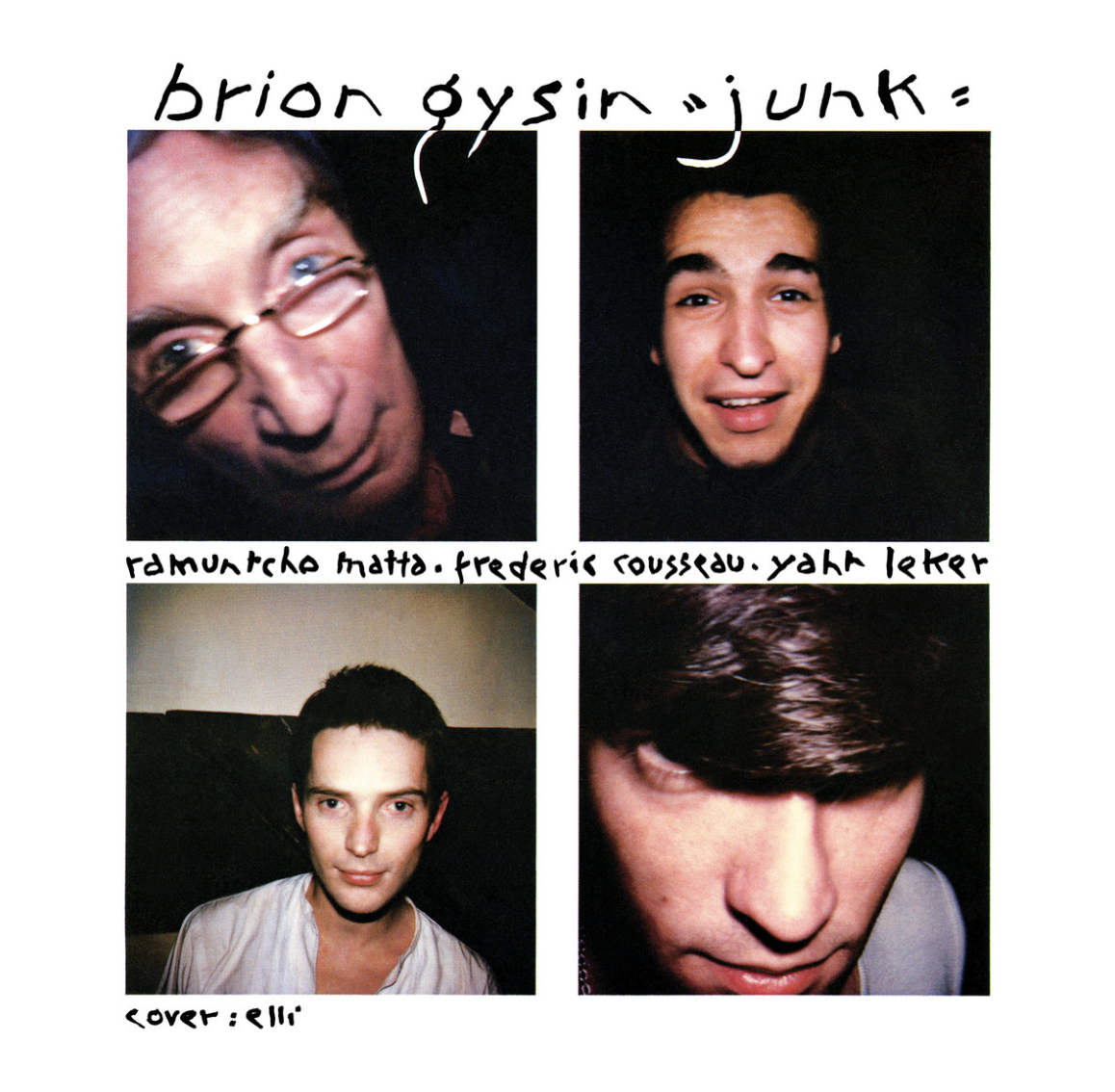
The late outstanding contributor to the arts may have his name on the album but Junk is the second album taken from the Ramuntcho Matta vaults by the reissue vinyl specialists WEWANTSOUNDS. Following on from last year’s self-titled Ramuntcho Matta LP, the Brion Gysin headed habit-kicking Junk is another feather in the cap of this well-connected creative nomad, who produced it and helped shape this collaborative work of avant-garde funk, no wave and refashioned beat poetry. And so once more the label hones in on one of his most esteemed collaborations.
The younger sibling to and scion of the Matta artist brood – his father, the Chilean-born Roberto, a key if not always congruous member of the Surrealist movement with his ‘psychological morphologies’ or alien ‘inscapes’ coined subconscious manifestations, and brother, Gordon Matta-Clark, the ‘anarchitecture’ pioneer of such concepts as the ‘split’ house and various art performances – Ramuntcho quickly made a name for himself in the same creative fields of influence; in part by his formative years as an aide to the celebrated polymath Gysin: poet, writer, calligraphic abstract artist, excommunicated Surrealist, Tangier restaurateur, inventor of the ‘dream machine’ and progenitor of the famous cut-up writing techniques favoured by such luminaries and acolytes as Bowie. In a world of crossovers, inter-connectivity, Gysin also famously knocked about with William Burroughs, sharing his discovery of that same cut-up technique with the Naked Lunch author during their time at the infamous Beat Hotel in Paris.
A titan of the alternative arts world, it’s no wonder that the British-born, but of Canadian heritage, Gysin opened doors for his aide; living at this time in the mid 1970s and working with Ramuntcho in New York – talking of those wild links, Ramuntcho shared a flat with scenesters Nana Vasconcelos and Arto Lindsay, in the same building as the Talking Heads’ Chris Frantz and Tina Weymouth. Although tragedy would strike with the death of Ramuntcho’s brother and conceptual art icon Gordon in the late 70s, the burgeoning producer would stay on in New York, falling in with the Mudd Club, CBGB and Danceteria in-crowd; taking note of the evolving polygenesis movements of early hip-hop, post-punk, electronica, no wave funk and more worldly sounds (from Soweto to the outback, Caribbean and Hispaniola). But it all came together, or rather this particular project did – dusted off, remastered and given a deserving vinyl reissue by WEWANTSOUNDS – in the French capital.
With the CV –notably recording Don Cherry’s 1983 ‘Kick’, the opening track on Junk, as asingle for the boutique French label Mosquito – and network expanding ever further with a move to Paris, there would be performances with the Senegalese group Xalam and the Arabic rock group Carte de Séjour, with Rachid Taha. A residency in Lyon led to a meeting with the Algerian-born French avant-garde choreographer Régine Chopinot, who had taught dance at the city’s Croix-Rousse before forming her own experimental multimedia company. Chopinot invited Ramuntcho to compose the soundtrack to her upcoming Via show – the costume designer of which was a young aspiring Jean-Paul Gaultier. Resulting in the, already mentioned, self-titled 1985 released production, which was produced between Ramuntcho’s home and the Studio d’Auteuil in Paris, tracks were recorded with a couple of the same musicians that appeared on Junk: most notably, the Stinky Toys and Elli & Jacno duo’s Elli Medeiros on guest vocals, and Suicide Romeo’s Frederic Cousseau (better known as Fred Goddard) on drums. They were joined on the Gysin trip by Xalam’s Abdoulaye Prosper Niang on hand drums, the Modern Guy group’s Yann Le Ker on bass, and guests Caroline Loeb (the French actress, radio host, singer and director), Lizzy Mercier (hot property French new wave pop star) and of course, leading the way and literally kicking off the LP, Don Cherry.
Essentially putting cool-as-fuck, happening music to Gysin’s late 1950s famous habit-kicking beat poetics, the Junk LP is a both grizzled and bouncing street level and discothèque mantra on addictions. Hardly surprising with the track records of Gysin and Cherry: two better foils you couldn’t meet in that regard. Preempting, or prophesying, his own death just a couple of years later after setting up in the studio to make this LP (the notes say that Ramuntcha put this together over a time period between 1980 and ‘84, with the LP’s release in ‘85), the hacking coughed skull and crossbones warning of ‘Stop Smoking’ makes a real Ludus, Altered Images and Bush Tetras post-punk jangle funk out of Gysin’s fateful nicotine addiction. Already surviving the trauma of colon cancer in the 70s – the surgery and treatment so savage that he nearly committed suicide -, Gysin would tragically contract lung cancer in the 80s, succumbing to the disease in ‘86. With the featured French chic chorus of Elli Medeiros – “Isn’t the cough that carries you off, it’s the coffin they carry you off in” -, cigarette brands enter the lucid chat like alluring sponsors of death to a new wave saunter and rolled hand drums loose funeral dance.
For his part, Cherry, sounding not too dissimilar to 80s period Miles, tickles and cycles languid cornet riffs and swirls to a mix of Afro-jazz, downtown funk and go-go: like Gil Scott-Heron on a Keith Herring scribbled walled skid row, strutting in a bandy fashion to a boom box of Maximum Joy, Talking Heads, Liquid Liquid, early Hip-Hop and Parisian aloofness. Many will probably know this one off-by-heart, may even have spotted the much-sampled licks. As part of this new package – only ever re-released I think on CD in 1991 -, there’s two previously unreleased 7” vinyl versions of the opener; an ‘alternative’ more contained beat rolled and buoyant version and an ‘instrumental’.
The tile-track is unsurprising another one of those rough repeated vocal prompts to, well…kick the habit. The music has a very Afro-Caribbean bent to it; Island life, with the subtle sounds of glasses chinking; perhaps a beachside getaway, only you’ve pitched up in Jamaica with all its own enticing addictions. Old style ringing alarm clocks, used as a sort of percussion, sound alerts as a near polyrhythm Postcard Records era guitar riff plucks away.
A voice of a generation, Gysin’s part in the beat movement is given an energetic, bandy and bendy, funky and world musical sound; a collage of all those various NYC and Paris influences, art and attitude. Liner notes author Jason Weiss had a lovely, and brilliant expression for that voice and poetry style: “Permutation poems […] like etudes for expressivity”. On the R&B bent funky-disco street jive ‘Sham Pain’, he sounds almost in a lucid despondent stupor, but like he’s having some bawdry playful fun on the later CAN period, maybe a touch of Dunkelziffer, swinging on the concrete jungle vines hooted and whistled ‘Baboon’. Gysin is later flanked by the French chanteuses of cool – Lizzy Descloux and Caroline Loeb – on the new wave sassy victory, “fun, fun, fun”, bravado ‘V.V.V’. This reminded me of both 80s period Marianne Faithful, coquettish Jane Birkin of the same period, and Annie Anxiety.
As a crossover with Ramuntcha’s own self-titled LP, as an additional bonus of a kind, there’s a previously unreleased version of the Congo-esque twine twirled and turning overruminated ‘All Those Years’. This version is more tines turning, more acoustic and intimate, and a nice way to bring closure to an ill-fated artist’s song.
Continuing to draw the spotlight on the work and productions of Ramuntcha Matta, WEWANTSOUNDS have revived a cult encapsulation of that early, polygenesis 80s music scene in Paris; bringing attention to two truly funky, cool and worldly cats in the process. Junk sounds as fresh now as it must have done back in ’85; uncannily, fitting in with the contemporary music scene. Which is why I’m perplexed that Ramuntcha is a name that seems to be missing from the current lexicon of influences, as integral as Art Lindsey and his crowd to the development and widening of the musical language. This LP package, just like the previous Ramuntcha Matta S-T LP, should right that.
Hi, my name is Dominic Valvona and I’m the Founder of the music/culture blog monolithcocktail.com For the last ten years I’ve featured and supported music, musicians and labels we love across genres from around the world that we think you’ll want to know about. No content on the site is paid for or sponsored and we only feature artists we have genuine respect for /love. If you enjoy our reviews (and we often write long, thoughtful ones), found a new artist you admire or if we have featured you or artists you represent and would like to buy us a coffee at https://ko-fi.com/monolithcocktail to say cheers for spreading the word, then that would be much appreciated.
Twenty-three: an alternative hip-hop retrospective
January 4, 2024
MATT OLIVER’S HIP-HOP REVUE OF 2023: A RUN-THROUGH IN ALPHABETICAL ORDER OF ALL THE CHOICE RAP ALBUMS FROM LAST YEAR

Apollo Brown & Planet Asia
‘Sardines’ (Mello Music Group)
You can always vouch for the richness and warmth of an Apollo Brown production across countless albums and collaborations. But whether it’s the re-pairing with a seasoned loaded gun like the permanently grizzled Planet Asia, a foremost argument starter in an empty room daring you to ignore his recommendation that you should “make your next move your best move” – or just the changing of the seasons out in Michigan, Sardines contains a palpable trace of trepidation. The autumn soul standards remain, now up there with the ability to rip the comfort blanket from your grasp, whether through kick-less means or cutting through tracks with a semi-supernatural synth line slash haunted choir – and this is before the decidedly unambiguous lyrics. Of course it remains an absolutely classy follow-up to the pair’s Anchovies LP from 2017 – “the greatest invention since the Air Fryer” – with ‘Peas & Onions’ doing the classic rhyme-around-a-sample a la ‘Oh Boy’ and ‘Hold You Down’.
BlackLiq x Mopes
‘Choice is a Chance’ (Strange Famous)
BlackLiq
‘The Lie’ (Man Bites Dog)
A sneering, old skool gangster rap flow out of Virginia with the revs of a getaway car, two sides of the BlackLiq coin bear teeth and soul. Examining familial relationships and anecdotes, fronted by the surprisingly poignant ‘The Tooth’, Choice is a Chance follows BlackLiq & Mopes’ Time is the Price from 2021. The emcee’s emotions run high, but respect the beats rolling under mostly sunny skies by telling relatable, cogent tales; there’s a threat of a danger as he works on himself (‘Therapy’) but he’s never anything but himself, and doesn’t deflect when love calls (‘In The Beginning’). That sneer shows its fangs on the DEJECT-produced ‘The Lie’, listing industry machinations that don’t sit right but kind of needs must, with a cult leader persuasion concluding that modern life is rubbish, and people are the worst. Perfect for the trap tempos, metal riffs and low end ruptures, the nihilist comes to the fore – “being this successful really isn’t healthy” is countered with “I just figured out that not being rich is not broke” – and the shock value is the internal monologue burrowing out from the brain and blasting through a megaphone from the top floor.
Black Star
‘No Fear of Time’ (self-released)
What with the age of ‘dad rap’ reaching the broadsheets – the temerity of having something worthwhile to say with your 50s approaching – the timing of Black Star’s Yasiin Bey (Mos Def) and Talib Kweli to reconvene is ideal when testing upstarts’ deaf ears. With Madlib on production, No Fear of Time would once have sent message boards foaming at the mouth as seen as a protection of the art, but appears to have slipped under 2023’s radar. Only nine tracks long, it’s a time and space odyssey with Bey and Kweli as weathered, Brooklyn-to the-fullest gods with a crumple to their brow – “life is beautiful, even when the world is wack” says Bey not entirely convincingly – and Madlib taking interplanetary routes with added adventures in chopped up soul and whodunnits. Not quite the once-in-a-lifetime event it might have been, but Black Star are still superheroes of the cipher.
Blockhead
‘The Aux’ (Backwoodz Studioz)
Housing a superlative list of underground misfits, misunderstoods and masters of their own destiny – Quelle Chris, Koreatown Oddity, Open Mike Eagle, Armand Hammer, Fatboi Sharif – NYC producer and consistent album stacker Blockhead pushes the dark through a prism. The mood of bespoke craftsmanship rarely repeats the jovial wordery of Aesop Rock on ‘Mississippi’, and the hot-tin-roof flows of Bruiser Wolf and RXK Nephew are notable exceptions. The creeping ‘Lighthouse’ sets in motion dusky, twitchy, dirges in the deep – music by cavelight if you will, causing the ultimate appreciation of hooded heads nodding solemnly. Overall The Aux defies what you’re perhaps expecting from a Blockhead album – maybe because here the Midas touch of billy woods’ Backwoodz Studioz is involved. Such is the classic blueprint for a single producer-multiple emcee album that it closes with a track called ‘Now That’s What I Call A Posse Cut Vol 56’.
Cappo
‘Canon’ (Noel & Poland)
At his most introspective, a wounded Cappo is an impossibly potent proposition as he invites you to his therapy circle. Off the back of a PHD study into hip-hop’s methods of pain management, you know this isn’t gonna be chest-beating, fuck the world discourse – “spraying syllables to aid me with my self esteem” is both the psychiatrist and case study adjusting the focus of his previous abstracts. These recalibrated rhymes of Nottingham’s finest, filing personal problems and goals with stunning intimacy and detail alongside stock cultural references – ‘Anger’ wonderfully phrases how life “ain’t no bed of roses when it’s filled with cobras”, ‘Firstborn’ readies the torch – creates a tome to learn and live by, crowing over the competition (“I dot and dash the track like a pointillist”) when old habits die hard. Kong The Artisan reads the room with solemn piano pieces, beats to attempt breakthroughs by and warnings on-the-low, on a genuinely fascinating listen.
Chino XL & Stu Bangas
‘God’s Carpenter’ (Brutal Music)
Veteran punch line supplier Chino XL, an underrated NYC-NJ exponent of barging in, hitting the target at a lick, respawning and repeating, links with Brutal Music’s boom-bap swashbuckler – Stu Bangas has been as Stu Bangas does for years now. Running off the page from the off, XL’s indignant flow is ripe for rewinds, both for its humour and composition (“your prayers are like emails to God, but He’s sending them straight to spam”) and namedrops (Pete Davidson, Alec Baldwin, Travis Scott alone all snared on ‘Who Told You’). Bangas oils up the muscle, red mist descending on ‘Murder Rhyme Kill’ (inevitably featuring Vinnie Paz), and with the right amount of hammer horror schlock that’ll deck you if Chino somehow doesn’t. There’s room for ‘Remind You’ expressing human compassion, without interruption to the all-encompassing carnage.
Daniel Son & Wino Willy
‘Gris-Gris’ (FXCK RXP)
“No interruptions when the cash speak” is an opening statement declaring that Gris-Gris does business with no rehearsals and no do-overs. Toronto’s Daniel Son is unequivocal, a superhero-sized avenger hiding in plain sight, probably wearing a brick-thick link round its neck. Personally affronted by the mic he steps to, his words hold heat throughout, of vivid imagery out of conventional set pieces, and a compelling presence treating Wino Willy’s production like a punchbag. Viz-style name aside, Willy, who also released 2023’s Wino From Another Planet and Today’s The Day with Black Josh, does dejection as a blues and funk soundtrack catching moments in the wrong place at the wrong time, psychedelically tinged so that chalk outlines form like crop circles (‘CAMH’ speculates that “Wino made this shit out in Roswell”). Gris-Gris enjoys nothing more than unsheathing when faced with tension.
Danny Brown
‘Quaranta’ (Warp)
Danny Brown begins Quaranta with the unexpectedly muted title track, ruing missed opportunities, asking if there’s too much of a good thing and confirming that when artists dip behind the mask (especially certified Detroit livewires), the spectacle has every chance of becoming not’s what’s advertised, especially when in the throes of 40dom. Within one track that ner-nicky-ner-ner flow is alight and salacious on the car chase of ‘Tantor’, beats start getting flung around like they’re in a wrestling ring, and so the rest of the show goes. These dominant moments of introspection (relationship breakdowns on ‘Down Wit It’, the need to keep moving on ‘Hanami’) really make you understand the man and where he’s been/at/going in the aftershock of his back catalogue. Maybe there’s an inevitability that Brown got to this point, but it’ll be talked about as much as the classic madman persona overpowering ‘Dark Sword Angel’.
Elzhi & Oh No
‘Heavy Vibrato’ (Nature Sounds)
“Welcome to my mental torture chamber” announces Elzhi, confirming the weight of Heavy Vibrato – while this is not an invitation to an underground lair of ill repute, the thickness of this heckle-raising album is perhaps surprising given past associations with drowsier endeavours. Oh No is funky throughout with a chip resolutely strapped to his shoulder, keen to push into the red: on another day ‘In Your Feelings’ is your average neo-soul twizzle but for the bass blowing the house down. Elzhi issues sizeable, unrepentant lumps on ‘Radio International Programming’ and gives off vibes that you wouldn’t wanna feel his dark side in spite of the street reportage of ‘Bishop’ and ‘Last Nerve’ airing grievances. Heavy Vibrato doesn’t need to ramble – it’s a concerted 12-track brick shithouse that goes in, administers its terms, and leaves long-lingering smoke once it exits.
Fliptrix
‘Mantra No.9’ (High Focus)
Verb T & Vic Grimes
‘The Tower Where The Phantom Lives’ (High Focus)
No surprise that these two are on the list given their amazing consistency. Fliptrix still gives the impression of a hopeful taking road trips at the back of the night bus, headphones blazing and perfecting every word until its tattooed onto his brain, continuing to manifest smoke-infused enlightenment with pushing against everyday perils. It’s possible to both chill to ‘Mantra’ and let it wash over you, and get knee deep into it on a badboy’s quest for fire (“I say no to the new normal, cos done know that my soul be immortal”) – plus its 18-track length is almost quaint. Verb T’s successful means of negotiating the dangers of turning 40 (with Romesh Ranganathan adding his two penneth worth on the ‘Four Oh!’ remix), meant forgoing the mid-life crisis of a sports car and releasing both this and Found in the Fog with Illinformed. Spinning his yarns where as always, the smallest wins are the most significant, that easiness of flow hunkering down in the corner of the pub, enhances everyday characters as a mild-mannered superhero slash agony uncle until everything’s folklore. Still the king of his castle.
Forest DLG
‘Echo of the Hidden Spruce’ (High Focus)
Koralle
‘Insomnia’ (Melting Pot Music)
SadhuGold
‘Golden Joe Season 3’ (Nature Sounds)
Three contrasting instrumental LPs, starting with Forest DLG’s version of tiptoeing through the tulips. The storied Telemachus/Chemo collects and connects lightness of melody with a heavy gait (‘Teeth Marks’ getting caught in the trap) and seepage of psychedelia, creating autumnal reflections worth winding the windows down for. Insomnia by the Italian Koralle is the sort of, jazz-perfect, pinpoint instrumentalism that to the wrong ears can sound too wispy for its own good, but at the right temperature does after hours drifts to a tee, a handful of vocal contributions in tune with transporting you to the land of (head) nod. On vinyl for the first time, SadhuGold’s third Golden Joe installment plays the MPC like a Whack-A-Mole, offering 11 chokers for the neck (alien ray-gun always present and correct). With mob-affiliated sounds awash with colour, loops as sticky as summer in the city and ‘Fear Of A Black Yeti’ rolling malevolently, sagas and drama are guaranteed from SG’s finger-on-the-button intuition.
Kurious & Cut Beetlez
‘Monkeyman’ (Weaponize Records)
Some of the choicest neck snapping beats of the year come from Finnish deck mashers the Cut Beetlez – the drum breaks shaking with crate dust, the melodies street corner-certified and the jazz grooves jumbled up and reassembled into absolute ear wormery. With Kurious of NYC collective Constipated Monkeys riding the beats with enough stress in his voice to let you know he’s a threat, there’s a tangible appreciation for the spectacle unfolding, giving the drummer some while playing narrator to what can only be described as capers reincarnating the thrill of tagging the subway before the fuzz intervene. Always backing himself to steal the show with a DOOM-like cadence – the likes of the slow rolling hullabaloo of ‘Monkeyman Theme’ -, and with the Beetlez taking centre stage with two ‘Monkey Scratch’ intervals, if PG Tips did hip-hop albums…
Lukah
‘Raw Extractions’ (FXCK RXP)
Given a 2023 bump a year after its initial release, Raw Extractions is exactly like a rough ride in the dentist’s chair. Memphis emcee Lukah, whose profile on ‘Flying Low’ forensically details what’s in store, absolutely smokes every beat (druggy synths, Mafioso quiet storms, jazz flutters, cipher slaps), whose attitude is to knock down the door – ‘Thoughts Made Divine’ is his ‘here’s Johnny!’ moment – and then keep on pushing until the ink runs dry. Though he’s ready to fly off the handle, the way his words link lifts his presence to send suckers scrambling – ‘Dead Horses’ speaks a whole bunch of inspirational sense, and ‘Black Belt Jones’ reaches peak Canibus-levels of technical agility. No need for anaesthesia when “ain’t no telling what’s in my brainbox/so if you can’t grasp what I’m kickin’, let me brainwash” becomes your mantra, doing exactly the same on the autumn LP Permanently Blackface.
Masai Bey & BMS
‘C87’ (Uncommon Records)
A fifteenth anniversary reissue, C87 is the classic sound of the concrete jungle converging and pushing its protagonists closer to the edge, helmed by Masai Bey, responsible for one of Definitive Jux’s most savage, overlooked back cat moments from the 00s indie/alt-rap heyday, and BMS, another warrior from an earlier scene embryo. Claustrophobic, where the only solution is to fight fire with fire via Herculean lyrical pushbacks, Bey & BMS are always within touching distance of a dystopia no longer thought improbable. The highly flammable ‘IAA’ asks for a moment of silence without irony, while the fanfares of ‘Bring My Shit’ are charred with inevitability, its orators plowing on with flows pulling grenade pins with their teeth. The drums-first intensity of C87 clamps headphones over ears while the world slips down a sinkhole, and is far too volatile for your average backpack.
Odd Holiday
‘LISA’ (ÕFFKILTR)
Funky, fresh and fun, Odd Holiday‘s melting pot of sounds reflects the come ups of Trugoy-ish emcee Mattic and producer Daylight Robbery!, both members of the Monolith Cocktail-rated Clouds In A Headlock crew. Take Odd to mean offbeat and interesting – wide eyed, wide eared and quietly wired, LISA is packed with ideas and samples (bygone radio jingles, chopped and screwed Sheldon Cooper, cartoon sci-fi. drug PSAs); smooth penmanship whose musing always makes ends meet and probably fills notepads while hanging onto a daydream; and jazzy boom bap mosaics reaching the utmost luxury on ‘Free Folk’ and steadily pulling rabbits from hats. They’re also a confident bunch, given that ‘Adam West High School’ appears twice within its half hour running time. Get the object of their affection on your next getaway playlist.
Raw Poetic feat. Damu the Fudgemunk
‘Away Back In’ (Def Pressé)
Lovely live vibes from the reliable connect making the hip-hop underground a nicer, safer place, Away Back In is here for you whether you’ve got urges to pop the top, get some late night liquor in your system or shake off some New Year’s blues. Damu The Fudgemunk’s patient drums, P-Fritz’ bluesy guitar licks ungloving occasional scuzz and feedback, and the breezy Jason Moore still knowing MC means move the crowd – a figurehead to follow (‘Sometime After Midnight’) and a fan you feel you can rub shoulders with – relieve the pressure from the first bar, even when ‘Rehab’ stars running red lights. Once the tone is set and the tempos start going back and forth, Away Back In essentially becomes a 37-minute gig inviting everyone from the front to the back to join in. Put this up with there with the elite of your favourite hip-hoppers converting the stage experience onto wax.
Tha God Fahim
‘Iron Bull’ (Nature Sounds)
On the opening track ‘Man of Steel’, Tha God Fahim, the man with the “championship rap addiction”, picks up his bindle, begins his latest route head-first into the maddening crowd and unpicks the gangster/survivor’s mindset with arguably one of the purest, most unadorned flows going. Without needing hooks to hang tracks on, Iron Bull – “play to win or don’t play at all” – is less a rampage through the streets from the Cormega-esque Atlanta emcee, more an assertive strut knowing he’ll catch the coattails of his foes in his own time. With Your Old Droog guesting and beats from Camouflage Monk, Nicholas Craven and TGF himself mining a buried sensitivity beyond being engrossed in the can’t-stop-won’t-stop bubble, it’s all over and done with in 23 minutes – as per his relentless, onto-the-next-one workload – but still leaves an indelible footprint.
The Difference Machine
‘Alien Nation and The Black Adolescent’ (Full Plate)
After the excellent Unmasking the Spirit Fakers, messages to the madness, pen-sword balancing (“I’m a pacifist, ‘til I pass a fist”) and mastering of the (un)reality are again in sharp supply from Atlanta’s psychedelic braves. As per their predecessor, emcee Day Tripper quantum leaps from film set to film set framed by produced Dr Conspiracy – fever dreams, Wu sagas, last stands – with an intricacy of verse that should be cited in textbooks, educative and dismissive at once and sometimes not even owning all the answers (“we lack prophetic vision/so I just close my eyes and try and make the best decision”), Geared up as an epic of marathon proportions worthy of a DVD commentary and director’s cut, the short listening time adds rewind value as well as advancing their enigma, upon realising the history lessons offered are being played out in real time.
Uber Magnetic
‘Uber Magnetic’ (Plague)
The contrasting baritones of underground dissidents Roughneck Jihad (“endothermic with pterodactyl feathers”) and Junior Disprol (“still the best British emcee, no exaggeration”) is selling point enough for Uber Magnetic, their Cali-to-Wales tones blurring the relationship of ragtag tag-team duo and colleagues keeping matters strictly business. A funky, bullish clutter of music from Cool Edit Chud, stuffing the sampler and getting cut up by Krash Slaughta, Jaffa and Sir Beans on the ones, is just the canvas for beats and rhymes to tease, flirt with and challenge one another. Kooky maybe, but in fact Uber Magnetic give the impression of knowing too much (“reputation built upon cadavers that I left about”) – gatekeepers whose starting points don’t have to be clear, pulling bars together from a particularly haphazard word cloud; but unstoppable once their theories start scatting, scattering and splitting atoms.
Hi, my name is Dominic Valvona and I’m the Founder of the music/culture blog monolithcocktail.com For the last ten years I’ve featured and supported music, musicians and labels we love across genres from around the world that we think you’ll want to know about. No content on the site is paid for or sponsored and we only feature artists we have genuine respect for /love. If you enjoy our reviews (and we often write long, thoughtful ones), found a new artist you admire or if we have featured you or artists you represent and would like to buy us a coffee at https://ko-fi.com/monolithcocktail to say cheers for spreading the word, then that would be much appreciated.
Kalporz X Monolith Cocktail: [T4ATF!] The Clientele, The Suncharms, Night Beats, Maiiah & The Angels Of Libra
December 20, 2023
Exchange recommendations from our Italian penpals at Kalporz
Authored By Matteo Maioli

Continuing our successful collaboration with the leading Italian music publication Kalporz , the Monolith Cocktail shares reviews, interviews and other bits from our respective sites each month. Keep an eye out for future ‘synergy’ between our two great houses as we exchange posts during 2023 and beyond. This month, from the site’s [T4ATF!] series, Matteo Maioli recovers four tasty albums that fall between indie-pop, psych vibrations and explosive rhythm’n’blues genres.
The Clientele, “I Am Not There Anymore” (Merge)
It seems incredible, but from their formation in 1997 to today the London-based Clientele have never crossed the Italian borders. Yet the proposal by Alasdair MacLean and associates is among the most original to come out in the new millennium, between reminiscences of Love and the low fidelity experiments of the Pastels. Six discs, one more beautiful than the other, which cite literature (T.S. Eliot), surrealist poetry (Robert Desnos) and arthouse cinema. With bassist James Hornsey and Mark Keen, percussion and piano, as well as the use of celesta, tapes, bouzouki, mellotron and a string and wind ensemble, MacLean brings to life his most sophisticated work, embracing dub (“Garden Eye Mantra”), flamenco (“Stems Of Anise”), orchestral jangle-pop (“Lady Grey”) and modernism in winning refrains as for “Blue Over Blue”. For writing that offers disturbing images, cosmopolitan visions, the beauty of the passing of time. “I Am Not There Anymore” was published by Merge at the end of July but “Claire’s Not Real” suggests spreading it while enjoying the warmth of a fireplace, close to your loved one.
The Suncharms, “Things Lost” (Sunday Records)
The Suncharms were formed in Sheffield between the eighties and nineties, proposing in their first EPs an indie recipe based on equal doses of melody and noise; however, it is only in recent years that they are getting the right feedback, between compilations on Slumberland and new albums such as “Distant Lights” (2021) and the latest “Things Lost” for Chicago’s Sunday Records. Where “Dark Sails” combines sixties and Jesus And Mary Chain noise, with “Satanic Rites” I would lean more towards the lesson of R.E.M., even in Marcus Palmer’s tone not so distant from that of Michael Stipe. Keyboards and harmonica embellish the opener “3.45” while “Red Wine Kisses” will perhaps be the episode destined to remain over the years, to be listened to on loop, dreamy and exciting between The La’s and The Dream Syndicate. My friend Enzo Baruffaldi from Memoria Polaroid conveys the idea perfectly: “If it’s time to close the day on a melancholy note, without giving up feedback and reverberations, Suncharms’ latest album is the one for you (or, at least, mine)”.
Night Beats, “Rajan” (Fuzz Club/Suicide Squeeze)
We had partly forgotten about Danny Lee Blackwell, relegating him to “Who Sold My Generation”, a smash dated 2016 featuring Robert Levon Been of Black Rebel Motorcycle Club. Since then three albums have been released. After “Outlaw R&B”, acclaimed by the international press in 2021, it is the turn of “Rajan”, in which the Texan musician offers a warm interpretation mixing Rock, Jazz, Blues, psychedelia, Anatolian Funk, Chicano Soul and Spaghetti Western. And this is just to mention some of the ingredients of the collage of sounds and impressions sweetly blended with the “Hot Ghee” (peace guys, Tame Impala could hear it…) from Danny’s sizzling pan in a kaleidoscopic sound that merges into a mysterious unity. If “Thank You” points towards “Sunny” by Boney M with acid and gypsy tones, then “Nightmare” travels in the 70s between Brazil, Asia And California. “Rajan is just one of six examples of me doing exactly what I want, and not caring about whether it’s checked out or not. I’m a journey person. I want to make things for the sake of making them.” Holy words.
Maiiah & The Angels Of Libra, “Maiiah & The Angels Of Libra” (Waterfall Records)
Who said that the best soul only comes from America? The debut album by Maiiah, a singer with Balkan roots transplanted to Düsseldorf, has arrived to prove us wrong. Thanks to a phenomenal backing band, the Angels of Libra collective from Hamburg, who return after their success alongside Nathan Johnston: ten instrumentalists with a great affinity for analogue recordings, the concept sixties and the world of Ennio Morricone, Khruangbin and Air. It all started from Maiiah’s meeting with the producer and composer Dennis Rux in times of pandemic: a shared love for good old rhythm & blues united them in making music together with Libra, creating singles with excellent radio appeal such as “Obey” and “No No No (I’m So Broke)”, between fun and social criticism. On “I ‘m A Good Woman” she makes Barbara Lynn’s northern soul hit her own, while “Kava” dresses a Croatian text with boogaloo; “Turn The Page” and “I Wanna Go” finally show the affinity with Makin’ Time, James Taylor Quartet and the garage-pop of the new generation (The Courettes). Spectacular.
Matteo Maioli
PART THREE OF THE MONOLITH COCKTAIL’S ALBUMS OF THE YEAR LISTS
Welcome to the concluding part of the Monolith Cocktail’s choice and favourite albums of the year lists (Part One and Part Two). Compiled by Dominic Valvona, Brian ‘Bordello’ Shea and Graham Domain, each entry is in alphabetical order, with this final run down starting at P and finishing at Z.
P________________
Pan Afrikan Peoples Arkestra ‘60’ (The Village)
Chosen by DV/Reviewed by DV/Link
‘Serving the South Central L.A. Black community from within for six decades (and counting), the late Horace Tapscott and his preservation Arkestra ensemble captured and reflected the social and racial injustices of that oppressed community with a righteous politically conscious and radical jazz style blueprint; a documentation, but also self-reliant stand against the state’s brutality and economic suppression.
The 60 album proves an important preservation of a self-reliant social activist institution, integral to the community in which it serves, teaches and rises up. A great encapsulation of that story, musical journey and the changes it has gone through, this will both excite the Ark’s fans and newcomers to the cause.’ DV
Nico Paulo ‘Nico Paulo’ (Forward Music Group)
Chosen by GD/Reviewed by GD/Link
‘This is a wonderful summery album of Bacharach-like melodies by the Portuguese-Canadian singer. A truly remarkable debut of ten self-composed wonderful songs that sound like standards.
Her voice is a bewitching combination of Judy Collins, Joni Mitchell and Natalie Mering (Weyes Blood). Musically it covers a wide spectrum of Tropicalia, Folk, Americana, Jazz and Pop. Her voice conveys real emotion and depth that is bounced off the beautiful melodies and lyrics.
A future classic that will undoubtedly have a far-reaching influence on stars not yet born!’ GD
Hawk Percival ‘Night Moods Vol. 1’ (Think Like A Key)
Chosen by BBS/Reviewed by BBS/Link
‘Oh my god! How I love Hawk Percival. She is like a lo-fi indie Noosha Fox (I am once again showing my age). But come on, ‘S-S-S-Single Bed’ was one of the singles of the 70s and I think that Hawk Percival shows the potential to make something equally as wonderfully magical, as this 6 track mini album shows so much pop suss and quirky originality.
It takes from the past – you can hear the timeless melodies from the 60s/70s – and twists it into something new. She plucks the spinning melodies from the air and weaves them into her own unique creation making an album of future desert island discs. I think Hawk Percival could well be one to watch.
This album is part of the DIY music series released by the excellent Think Like A Key records, and good on them for releasing this little lo-fi treasure.’ BBS
Polobi & The Gwo Ka Master ‘Abri Cyclonique’ (Real World)
Chosen by DV/Reviewed by DV/Link
‘Suffused, elevated and morphed with Parisian-based Doctor L’s jazz, electronica Francophone new waves and trip-hop, the ancestral Guadeloupe rural folk traditions of Léwòz and one of its renowned modern practitioners-deliverers Moïse Polobi is transformed into an environmental traverse. As the good doctor has proscribed so well for Les Amazon D’Afrique and the Mbongwana Stars, the roots of another form are, with subtle wondering and sophistication, given a unique sound experience.
A very personal album, this is the first to be released under Polobi’s own name. Previously the Guadalupe star has performed with his Indestawa Ka band, releasing eight albums and performing internationally. But this cyclonic whirlwind is something different, a galvanised, electrified and bolstered earthy and magical vision of his country’s past, present and future. It’s one of the most interesting albums yet in 2023, with a sound that reboots folkloric traditions in the face of an ever-encroaching modernity.’ DV
Psyche ‘Self-Titled Debut Album’ (Four Flies Records)
Chosen by GD/Reviewed by GD/Link
‘This is a brilliant album of funky Mediterranean psychedelic instrumentals that sits somewhere between Khruangbin and the Barry Gray Orchestra! Every track is a Gem! Wonderful!’ GD
R__________________
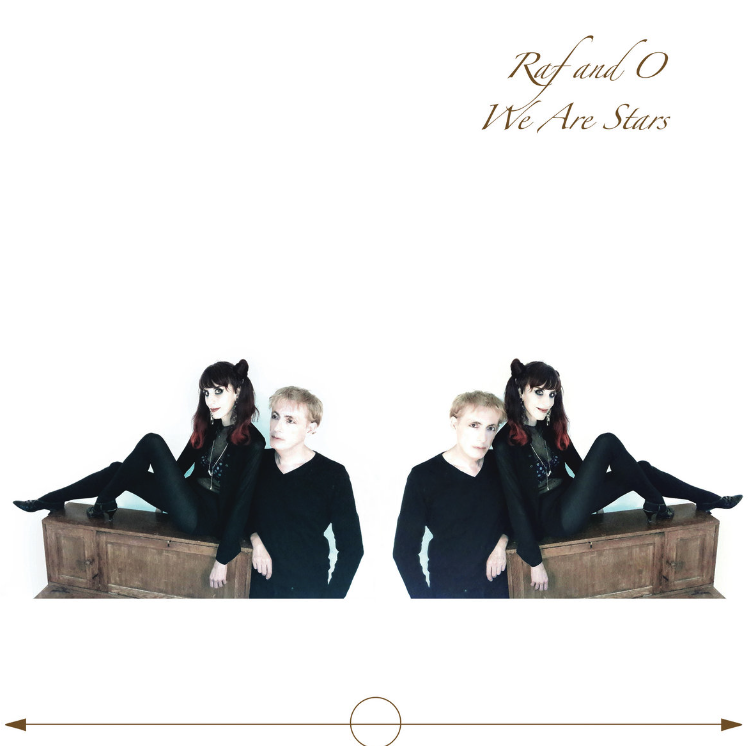
Raf And O ‘We Are Stars’ (Telephone Records)
Chosen by Dominic Valvona/Reviewed by DV/Link
‘Few artists have purposely entwined themselves so deeply with their idols than the Raf And O duo of Raf Mantelli and Richard Smith (the “O” in that creative sparked partnership). David Bowie and Kate Bush loom large, permeating near every note and vocal infliction of their idiosyncratic, theatrical, cinematic and up-close-and-personal intimate style of avant-garde pop and art school rock experimentation. Raf even has a Kate Bush tribute side project; coming the nearest I’ve yet heard of anyone to that maverick progenitor’s range-fluctuating, coquettish and empowered delivery, and her musicianship and erudite playful and adventurous songwriting.
An alternative time travelling theatre of interwoven fantasy, dream realism and the reimagined, We Are Stars is as playful with its unique style as it is only too aware of the deep held stresses, strains, pain and detachment that plagues society in the aftermath of a global pandemic, economic meltdown and war. Looking to the stars, but knowing that even escapist dreams of the cosmos have failed us, Raf And O (who I haven’t mentioned in name at all, but is an adroit craftsman of his form, accentuating, punctuating or loosely weaving a meandered musicality around Raf) take their concerns, observations and curiosities into ever more arty and intriguing directions. They remain one of the most individual acts in the UK; true inheritors of Bowie and Bush’s legacy and spirit.’ DV
Refree ‘El Espacio Entre’ (Glitterbeat Records)
Chosen by DV/Reviewed by DV/Link
‘Coming on like an Iberian vision of the Neel Murgai Ensemble and Hackedepicciotto trapped with Nacho Mendez (I’m thinking of the Ángeles y Querubines album) in an undefined, veiled timeline and atmosphere, the follow up sketchbook album of Raul Refree’s imagination is yet again a unique, “seamless”, amalgamation of reflective enquiry, soundtracks, semi-classical etudes and the visceral.
Not so much an album of performances as a quality production of fleeting descriptions, of moments captured in poignant scenery, Refree’s second such album of scores and sound pieces is an incredible, immersive mood board of magical and often plaintive thoughts, feelings, processes and films yet to be made. I’ve been sitting on this album for months and it never loses its initial pull, gut feeling, and yet I can also hear new things on every listen. Raul Refree is a great talent indeed.’ DV
Sebastian Reynolds ‘Canary’ (PinDrop)
Chosen by DV/Reviewed by DV/Link
‘After what seems like an age, and with a prolific string of projects, collaborations and EP releases behind him, Sebastian Reynolds finally unveils his debut solo album.
A near lifetime’s experience and musicology is called upon for a mostly sophisticated and subtle amalgamation of the electroacoustic, trance, EDM, electronic-chamber music, techno ambience and soundtracks on an album that draws on all of Reynolds passions and emotional threads. Self-help guidance with the neurons fired-up, the mind open, Canary counterpoints mistrust with wonderment, alarm with the rational and the optimistic. It has taken a while to arrive, but Reynolds debut expanded album of thoughts and ideas is a mature statement of quality. ‘ DV
Room Of Wires ‘Welcome To The End Game’ (Ant-Zen)
Chosen by DV/Reviewed by DV/Link
‘A buzz, whine, flex and resonating ring of zinc and alloy, of recondite machines, permeates another heavy set from the Room Of Wires duo. The latest in a strong catalogue of such dark materials and alien mystery, Welcome To The End Game ties together a complex of dystopian woes, rage and dramas into an interlayered twisting and expanding metal muscled album of electronic.
Room Of Wires navigate and balance the uncertainty with glimmers of escape, and moments of hope and release; the machinations and unseen forces that bear down upon us all at least dissipated enough to offer some light.’ DV
Seljuk Rustum ‘Cardboard Castles’ (Hive Mind)
Chosen by DV/Reviewed by DV/Link
‘Imbued by a rich history of place and time, and the trading winds that brought so many atavistic and less ancient civilizations to its natural harbor hub, Seljuk Rustum’s Kochi-base of creative activity is a city steeped in polygenesis sounds and ideas.
For the most part the musical mind of Rustum and his partners on this magical, entrancing and dreamy journey, reveals a great sonic knowledge, both a part of, yet also in some ways, escaping history.’ DV
S___________________
Salem Trials ‘What Myths Are We Living’ (Metal Postcard Records)
Chosen by DV & GD/Reviewed by Graham Domain/Link
‘Crawling along dark streets, shadows loom in every doorway, footsteps echo in the night silence. Cold sweat trickling down spine, dark rumblings from a dirty basement, shadows dancing on the barred windows. Fish bones in a mouth. Coughing up blood and the smell of urine. Decay and aftershave. Cracked voice and beer-stained floor. Each step shoes stick. Black trail like slime from a snail. A coffin landfill club of noise and danger! The night ignites with saw-like melodies and cavernous hypnotic rhythms kicking against the pricks! Smoke and dark truths bounce off the walls shaking flesh and brick, glass and bone. Inspiration as sonic affray, until the last notes flare into a howl of darkness. A murder of youth collapse through doors and out along streets. City centre lights, a loneliness of drinkers cast adrift, flowing like a cut artery in a thrombosis of social isolation. Music smashed against walls! Exciting! Unbreakable!’ GD
Ryuichi Sakamoto ‘Ongaku Zukan’ (WeWantSounds)
Chosen by GD/Reviewed by DV/Link
‘A timely, special release in the wake of the Japanese icon’s death in March of this year, the impeccable vinyl specialists WEWANTSOUNDS have reissued Sakamoto’s cult 1984 solo album Ongaku Zukan (or “Musical Encyclopedia”).
Sakamoto assails the mid 80s with his own manual, a merger of signatures and fresh horizons, but above all, rewriting the Japanese cannon whilst reaching into a future yet unwritten. There will be a lot of people very happy that this classic has been rejuvenated, whilst a new generation can hear what all the fuss is about. Not his best by any stretch of the imagination, but everything Sakamoto touched is worthy of investigation, and this feels like a bridge between periods. WWS has done us all a great favour in resurfacing this lost class piece of experimentation and groove.’ DV
Schizo Fun Addict ‘Love Your Enemies’ (Fruits Der Mer)
Chosen by BBS/Reviewed by BBS/Link
‘This album is one of the best and wormiest sounding albums I have heard in many years. It has the same magic and otherworldly but inwardly peaceful calmness about it as Pet Sounds, and there is something about Schizo Fun Addict that reminds me of the Beach Boys but without ever actually sounding like them – I will put it down to musical genius and heavenly inspiration.’ BBS
Seaming To ‘Dust Gathers’ (O Sing At Me)
Chosen by DV/Reviewed by Gillian Stone/Link
‘The structure and tracking of Dust Gatherers are utterly brilliant. Instrumental “AnOverture” introduces the juxtaposition of the electronic and symphonic elements the make up the album’s ethos. The next three tracks, “Blessing”, “Tousles”, and “Brave” are imbued with choral synths and swirling vocals. It is not until the fifth track, “Traveller”, that acoustic instruments come back into the fold, with the introduction of Seaming To’s clarinet. Clarinets then mesh beautifully with synths on “Water Flows”, followed by the instrumental synth piece “xenanmax”. The album then takes a left turn into the string-quartet-driven “Hitchhiker”, and pivots again into the Björk-style melodies and microbeats of “Look Away”. The final two songs on Dust Gatherers, which appear to be companion pieces, harken back to the golden era of jazz, finishing the record with a sense of timelessness. Piano ballad “Pleasures are Meaningless” alludes to the final track, jazz standard “Tenderly”, which is tethered down by pulsing clarinets and synth glitches. Ever present are Seaming To’s profoundly strong character vocals, which evoke goosebumps at every turn.’ GS
Silver Moth ‘Black Bay’
Chosen by GD/Reviewed by GD/Link
‘Cinematic tracks full of atmosphere and grandeur! 45 minutes of Bliss! It may become the holy grail of lost albums in future years – if it slips under the radar!’ GD
Slow Readers Club ‘Knowledge Freedom Power’ (Velveteen Records)
Chosen by GD/Reviewed by GD/Link
‘The fifth (official) album by Manchester band The Slow Readers Club comes across like a live album such is the energy captured in the recording. First track ‘Modernise’ is perhaps the most powerful, if least representative, song on the album. With its Chemical Brothers rave intro and pounding rhythm it also has the most individual sounding vocal on the album, a bit PIL like! It’s a song created to be exciting live and it serves that purpose well!
A great album of powerful anthemic songs and possibly their most consistent effort to date.’ GD
Lonnie Liston Smith ‘Cosmic Change’ (Jazz Is Dead)
Chosen by GD/Reviewed by DV/Link
‘Smooth soulful vibes, bulb-like notes and cosmic fanning rays from the great jazz-funk doyen Lonnie Liston Smith, who released his first album in 25 years in 2023. Thanks to the overseeing facilitators of the enriching Jazz Is Dead label project, Adrian Younge and Ali Shaheed Muhammad have coaxed the legendary artist, ensemble bandleader and sideman for such impressive luminaries as Miles Davis, Pharoah Sanders, Gato Barbieri and Leon Thomas, back into the studio; just one of many great names from the spiritual, conscious and funky-jazz rolls of inspiring talents.
Co-composing and collaborating with their chagrin Younge and Muhammad both work in the old magic with a sense of the new and forward; paying homage yet creating something new, performing the very kinds of influential music that had an impact on those who came later, namely the hip-hop fraternity (Jazzmatazz era Guru and the Digable Planets being just two such notable collaborators and acolytes). and of course, Liston is in supreme form as sagacious keyboard foil.’ DV
Snowcrushed ‘Snowcrush’
Chosen by BBS/Reviewed by BBS/Link
‘Snowcrushed’s A Frightened Man debut album was one of my fave albums of 2021; an album of beguiling atmospheric found sounds ambient gems. But on Snowcrush he’s gone on an alternative music journey of post-punk, Goth and Darkwave, and on occasion lo-fi folk – the excellent ‘Cowardice’ sounding like someone has taken Kurt Cobain’s tortured soul and spread it on Johnny Cash’s toast, which he ate before recording the American Recordings series of albums: A truly dark wonderful song. Although nothing else on the album quite matches up to the brilliance of ‘Cowardice’, which is no slight as not many other tracks I have heard this year matches up to it, the rest of the album is still full of unsettling dark gems.’ BBS
Samuele Strufaldi ‘Davorio’ (Música Mascondo)
Chosen by DV/Reviewed by DV/Link
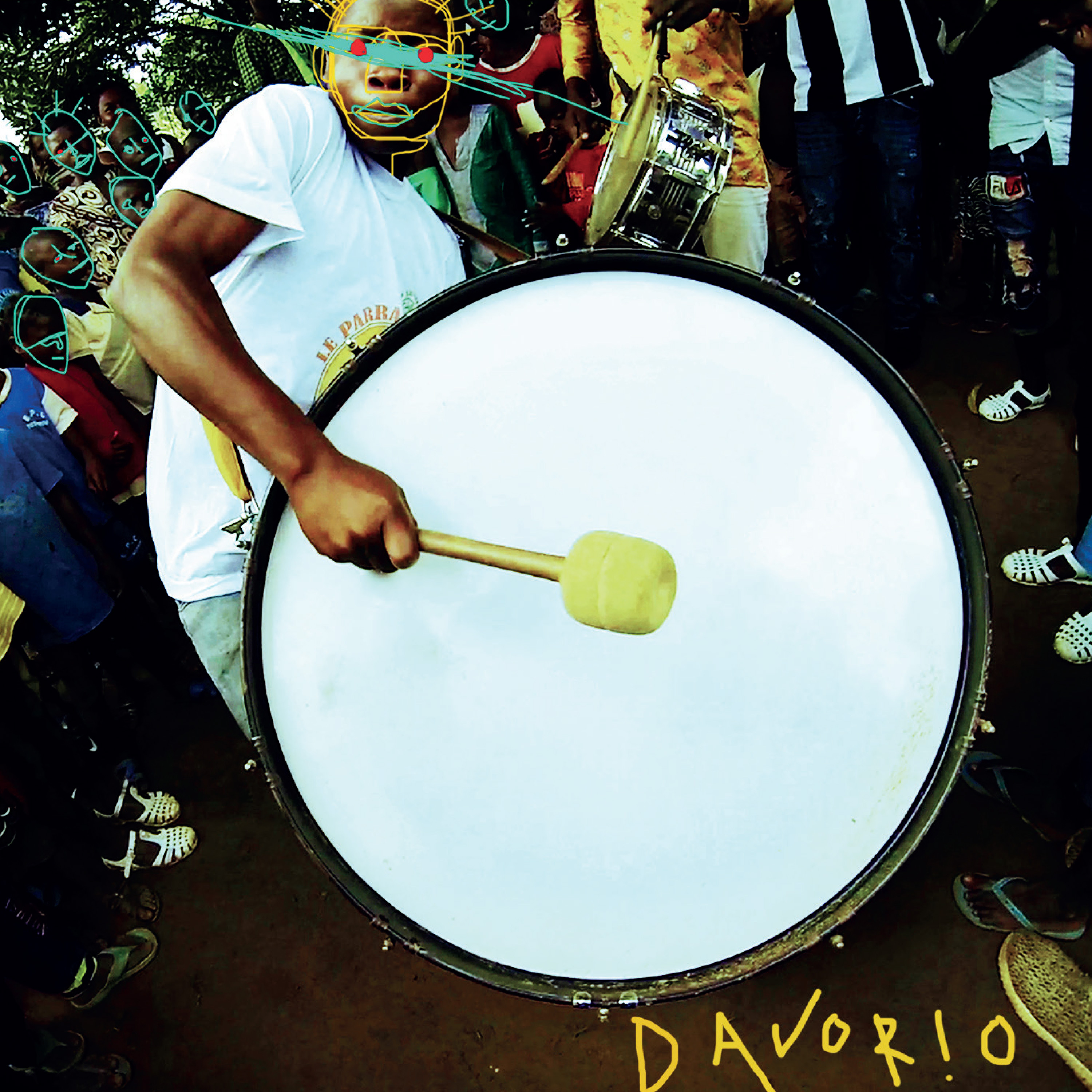
‘Every expression has meaning, a story, which is then transformed by Strufaldi’s production into something almost dream like and cosmic yet still connected to the villagers’ roots. A transistor radio collage here, some Songhoy Blues on a bustling street with a small amp there; a display of rattled and scrapping percussion and hymnal stirrings merge with zaps, warbles and various embellishments. This cultural exchange with the Ivory Coast blurs the lines between worlds; an act of preservation, but much more, as the foundations of this culture prove intoxicating, dynamic and mesmerising.’ DV
Susanna ‘Baudelaire and Orchestra’ (Susanna Sonata Label)
Chosen by GD
T____________________

Tachycardie ‘Autonomie Menerale’ (Un-je-ne-sais-quoi)
Chosen by GD/Reviewed by GD/Link
‘This is the third album in a trilogy of ambient sound-art works by French composer Jean-Baptiste Geoffroy. Consisting of seven pieces of strange, dark, tribal, alien ambient dissonance and warm unnatural half-light!
In the first piece, ‘Parties sud puis nord’, tribal drums and hyper percussion are intermittently infiltrated by reverberating clangs and deep disturbed atmospheric noise. It is a strangely compelling listen! Although if listened to by those of a disturbed mind it may likely trigger psychosis, one-legged.
You will not find another album like this. It will penetrate your dreams bringing raptures of nightmare terror, joyous pain and nerve scraping pleasure. As the stones with eyes move closer, watching, surrounding your house, you may never ‘escape into night’ or feel at ease again!’ GD
Tele Novella ‘Poet’s Tooth’ (Kill Rock Stars)
Chosen by DV/Reviewed by DV/Link
‘A wistful, almost disarming, Tele Novella weave their magic on an album that takes its cues from Harold & Maude and a removed version of the heartbreak yearning vulnerability of Nashville and Texas country music; albeit a version in which Cate Le Bon and Aldous Harding sip despondently from a bottle of life’s despair. Better still, Mike Nesmith writing for Patsy Cline.
As whimsical and beautifully executed as it all is, Poet’s tooth is a moving album of timeless tropes, somehow delivered musically and visually through a slightly off, sometimes surreal, vision of the familiar. Natalie Ribbons and foil Jason Chronis dream up an idiosyncratic staged world, their moniker taken from the serial drama/soap opera phenomenon of the “television novel”, a format most prominently produced for the Latin American markets.
Adolescence escapism wrapped in a softened, but no less stirring, epiphany, Tele Novella has a surreal, dreamy quality about them. From the Tex-Mex border of yore to the contemporary Austin scene of City Limits, they weave a really impressive songbook that’s as Hal Ashby and Sidney Lumet as it is pining Country and Western. Poet’s Tooth is both lyrically and musically perfect; one of my favourite albums of 2023 – no idle boast. Prepare to be equally charmed and moved with a counterculture resurgence of quality, subtle comedy and tragedy, eccentric disillusion.’ DV
Tomo-Nakaguchi ‘The Long Night in Winter Light’ (Audio Bulb Records)
Chosen by GD/Reviewed by GD/Link
‘This is a beautiful album where each piece conjures-up a different vision of winter – the wonder of nature surviving and flourishing as the seasons change! As the composer himself says, the music reflects the beauty of nature – frost glistening on grass – a field of snow lit by moonlight – the night sky filled with stars! Like a ray of light, a ray of hope, this is beauty that shines through the darkest of times!’ GD
Ali Farka Touré ‘Voyageur’ (World Circuit)
Chosen by DV/Reviewed by DV/Link
‘This latest project, produced by the label’s Nick Gold who spent time with the late Ali (his brilliant accompanying notes are full of vivid anecdotes and adventures spent with the Mali icon) and his scion, the equally gifted virtuoso Vieux Farka Touré is the first album of ‘unheard’ material from the legend since his 2010 posthumously released partnership with Diabate.
Voyageur is a welcoming addition to the catalogue, an incredible nomadic traverse of songs that capture Mali’s diversity and rich musical heritage; especially with his celebrated guests opening the sound up, travelling even further afield to those bordering regions that meet Mali.
Ali Farka Touré aficionados will find this a welcome addition to the chronology, with recordings that many will have either never known about or been anticipating. But I’m sure there’s going to be surprises for even the most committed of fans. And for newcomers to Ali’s legacy, this album will prove a great entry point with its diversity and range, showing Ali with various collaborators and paying homage to several cultural styles, traditions. These songs are anything but unfinished scraps, demos, or downtime experiments. Instead, Voyageur is a collection of real quality.’ DV
Trupa Trupa ‘ttt’ (Glitterbeat Records)
Chosen by DV/Reviewed by DV/Link
‘The Polish outfit Trupa Trupa fashion their very own Faust Tapes out of an accumulation of sonic explorations, unfinished jams and rehearsal sessions, field recordings and play.
In the interval between recording new martial ttt is an almost seamless cassette offering of two experimental sound collages – coming in at just under the forty-minute mark. A development played out under the spell of psychedelic hallucination, mirage and more caustic machined distortions and abrasions, the triple “ts” experiment could be read as a really untethered avant-garde outlet for the band. Not that they’ve ever been conventional on that front with previous works melding and contorting, as they do, psych with no wave, post-punk, the industrial and indie to produce a multi-limbed psycho drama or revelation, the hypnotic and propulsive.
Trupa Trupa are in their ascendency all right, their creative collective consciousness constantly dreaming up fresh ways of hearing and articulating the wastelands of what was once called civilisation; the discourse all but filtered out for the most part on this immersive experience. They can do no wrong it seems at the moment, and must be considered one of the most important bands to emerge from Europe in the last decade. On the strength of this latest release it will be very interesting to know where they will go next.’ DV
V______________________
Various ‘New No York’ (Metal Postcard Records)
Chosen by BBS/Reviewed by BBS/Link
‘A compilation of music from Metal Postcard bands, but what all these bands have in common is Andy Goz. Yes, the guitar genius who’s in all these bands, and all the bands are of course pretty darn special.
New No York is a quite wonderful comp of post-punk invention and fury and no doubt will be soundtracking my next few weeks.’ BBS
Various ‘Parchman Prison Prayer – Some Mississippi Sunday Morning’ (Glitterbeat Records) Chosen by DV/Reviewed by DV/Link
‘Back in the state penitentiary system, the producer, author and violence prevention expert Ian Brennan finds the common ground once more with another cast of under-represented voices. Eight years on from his applauded, Grammy nominated Zomba Prison Project, Brennan, thousands of miles away from that Malawi maximum-security facility in the deep, deep South of America, surprises us with an incredible raw and “uncloyed” (one of Brennan’s best coined interpretations of his production and craft) set of performances of redemption and spiritual conversion.
There’s music, song and litany that would be recognizable to inmates from the turn of the last century, whilst others, tap right into the modern age. The Gospel’s message runs deep in the Southern realms, and encouragingly seems to motivate even those with little hope of being released. Hard times are softened by belief and redemption on a revelatory production. Returning to America after a myriad of recordings throughout the world’s past and present war zones, scenes of genocide and remote fabled communities, Brennan finds just as much trauma and the need for representation back home.’ DV
Various ‘Woman, Life, Freedom’ & ‘Intended Consequences’ (Apranik Records)
Chosen by DV/Reviewed by DV/Link /Link two
‘As the West’s attention is quite rightly invested in the ongoing Russian aggression in Ukraine, it’s fallen on artists, musicians to draw that intense scrutiny on the Iranian regime and its heinous treatment of women. Prompted by the death of Mahsa Jina Amini in the custody of the authorities last year, an ensuing battle of ideals and freedoms has ensued that threatens to topple the tyranny. However, the regime has pushed back harder and with an almost unprecedented violence started executing (mainly men so far) supporters and activists on trumped up, tortured confessional charges of treason. But even in the face of this bloody repression history is on the side of Iran’s younger more liberal generations.
In bringing that plight to Western attention and ears, Iranian artists AIDA and Nesa Azadikhah announced two volumes of not-for-profit compilations.
Both platform a multi-diverse cosmology of electronic female artists working both under endurable pains and censorship inside Iran, or self-exiled and making waves in the diaspora. Each compilation is a discovery of riches in the field of the avant-garde, techno, sound experimentation and protest. There’s been few worthier causes, and few that have been so ignored: the outrage, protests and marches here in the West sadly lacking and silent.’ DV
Violet Nox ‘Vortex And Voices’ (Somewherecold Records)
Chosen by DV/Reviewed by DV/Link
‘A sci-fi chemistry of vapours the Boston, Massachusetts electronic outfit Violet Nox once more entrance with a futuristic new age album of psy-trance, cerebral techno and acid ethereal-voiced self-realization/self-discovery. Wired into the “now” however, messages of self-love and inclusiveness waft and drift to a rhythmic, wavy vision of EDM, crossover rave music and soulful electronica.
For this newest venture – their first for the highly prolific and quality North American label Somewherecold Records – features, more than ever, the experimental, often effected, vocals of group member Noell Dorsey: a mix of hippie cooed yearn, Tracey Thorn, Claudia Brücken and Esbe if you will.
Whether it’s journeying into the subconscious or leaving for celestial rendezvous’, Violet Nox turn the vaporous into an electronic art form that’s simultaneously yearning and mysterious. Fizzing with techy sophistication and escapism, the American electronic group continue to map out a fresh sonic universe.’ DV
W_______________________
The Waeve ‘The Waeve’ (Transgressive)
Chosen by GD/Reviewed by GD/Link
‘The WAEVE are a new band formed by Blur’s Graham Coxon (vocals/sax/guitar/medieval lute) and The Pipettes’ Rose Elinor Dougall (singer/songwriter/piano/ARP 2000 Synth).
The interaction and balance between the two voices is perfect with each singer excelling in their introversion and reserve! The band do have their own sound – a strange mix of folk-rock, punk, no wave, psych and easy listening! A truly great album that deserves a wide audience! Give it a listen – you may be surprised!’ GD
The Wedding Present ’24 Songs’ (HHBTM Records)
Chosen by BBS
‘An album that collects the A and B-sides to the series of singles released last year by the mighty Wedding Present, so obviously one of the best of the year.’ BBS
Y__________________________
Dhafer Youssef ‘Street of Minarets’ (Back Beat Edition)
Chosen by GD
Z___________________________
Zohastre ‘Abracadabra’ (ZamZam)
Chosen by DV/Reviewed by DV/Link
‘Spinning and dancing around the phosphor glowing fire whilst invoking a polygenesis array of pagan, hermetic and galactic deities, the French-Italian combo cast magical spells of progressive, psychedelic, noise, primitivism, electronica and cosmic krautrock on their conjuring sonic Wurlitzer.
Reworking references from each of the duos respective countries into a dizzy and often accelerated kaleidoscope of acid-trip occult ritual and more moody, near eerie, mystical uncertainty, Héloise Thibault and Olmo Guadagnoli combine an electronic soundboard with drums as they hurtle, collide and work a frenzy around the maypole.
For those seeking to discover some lost tribe of extraterrestrial worshipping acolytes with a penchant for Zacht Automaat, Sunburned Hand Of Man and the Soft Machine then ZamZam Records have you covered with an occult and tripping invitation too good to be missed.‘ DV
Hi, my name is Dominic Valvona and I’m the Founder of the music/culture blog monolithcocktail.com For the last ten years I’ve featured and supported music, musicians and labels we love across genres from around the world that we think you’ll want to know about. No content on the site is paid for or sponsored and we only feature artists we have genuine respect for /love. If you enjoy our reviews (and we often write long, thoughtful ones), found a new artist you admire or if we have featured you or artists you represent and would like to buy us a coffee at https://ko-fi.com/monolithcocktail to say cheers for spreading the word, then that would be much appreciated.
Choice/Favourite Albums Of The Year: Part Two: H to N
December 14, 2023
SELECTED BY GRAHAM DOMAIN, BRIAN ‘BORDELLO’ SHEA & DOMINIC VALVONA

Welcome to PART TWO of this year’s favourite/choice albums features. If you missed PART ONE, follow this link.
2023’s list, as ever in alphabetical order, is broken down into three more digestible parts.
And as we have since our inception back in 2008, the Monolith Cocktail continues to avoid those silly, factious and plain dumb numerical charts that our peers and rivals insist on continuing to print – how can you really suggest one album deserves their place above or below another; why does one entry get the 23rd spot and another the 22nd; unless it is a vote count. We’ve always chosen a much more diplomatic, democratic alphabetical order – something we more or less started in the first place.
Whilst we are proud to throw every genre, nationality together in a serious of eclectic lists, this year due to various collaborators commitments, there will be a separate Hip-Hop roundup by Matt Oliver in the New Year.
The lists, broken up this year into three parts (A to F, H to N, P to Z), includes those albums we’ve reviewed or featured on the site in some capacity, plus a smattering of those we just didn’t get the time to include. All entries are displayed thus: Artist in alphabetical order, then the album title, label, who chose it, a review link where applicable, and finally a link to the album itself and a quote.
So without further ado, cast your eyes over the H to N entries for 2023.
H________
Hackedepicciotto ‘Keepsakes’ (Mute)
Chosen by Dominic Valvona/Reviewed by DV/Link
‘The sound of Berlin with stopovers across Europe and New York City, Keepsakes conjures up evocative visions, dramas and characters out if the arty, the gothic, the cerebral and surreal; creating an alternative photo album and collection of memories, events. As earthy as it is dreamily floating in a constructed world of fairytale, myth and magic, the creatively sagacious couple draws upon a lifetime of experiences, friendships to produce another captivating album for the Mute label.’ DV
H. Hawkline ‘Milk For Flowers’ (Heavenly)
Chosen by DV/Reviewed by Gillian Stone/Link
‘Starting out a certain way, where you think you know what you’re getting into, then taking you by surprise, is the thematic journey of H. Hawkline’s Milk For Flowers (Heavenly). So is lyrical vulnerability.
Milk For Flowers begins steeped in traditional songwriting, takes you on a breathless journey, then brings you back into a place of safety, where feelings can be acknowledged and processed.’ GS
Healing Force Project ‘Drifted Entities Vol. 2’ (Beat Machine)
Chosen by DV/Reviewed by DV/Link
‘The re-rebirth of cool in an ever-forward momentum of flux, Antonio Marini’s Healing Force Project once more tumbles across a broken-beat, jungle, free-jazz and cosmic spectrum of reverberating exploration and spliced assemblage.
A splashy mirage of effected, realigned beats and reframed jazz inspirations sent out into space, Volume 2 in this series continues the ‘spiritual music mission’ but offers something once more eclectic and boundless.’ DV
Andrew Heath ‘Scapa Flow’ (Disco Gecko)
Chosen by DV/Reviewed by DV/Link
‘A geopoetry; a psychogeography of that famous body of shallow waters, Heath’s gauzy drifts, serene washes, glassy piano notes, Myles Cochran and Joe Woodham-like post-rock refracted guitar bends and harpic zither spindles coalesce to score an effective mysterious soundtrack to the former naval base and battleship graveyard.
Andrew Heath plays a combination of instruments, merged with ambient and real sounds that falls somewhere between such notable artists as his old foil Roedelius, Eno, John Lane (i.e. A Journey Of Giraffes), Jon Tye, Ulrich Schnauss and Flexagon. Stirrings from beneath are conveyed with a subtle drama and sonic history on yet another exemplary album of minimalist music.’ DV
The Holy Family ‘Go Zero’ (Rocket Recordings)
Chosen by DV/Reviewed by DV/Link
‘A phantasmagoria of occult manifestations, conjured or drawn from out the old soil, from out of the ether, The Holy Family’s Go Zero album offers darkness with glimmers of light. The Holy of their name, taken from the controversial Angela Carter narrated documentary on Christ’s depiction in the Western art cannon, not so forgiving and Christian, but an open vassal for confronting and exploring the divine and ungodly. Guidance there is none, as the band unnerve, rush, grind or prowl across a mystical dreaded mind fuck of a world that mirrors our own mortal chaotic, ungovernable hell hole. In short, it’s a great dense trip with dramatic voodoo and accelerated velocity.’ DV
James Howard ‘Peek-A-Boo’ (Faith & Industry)
Chosen by DV/Reviewed by DV/Link
‘To a languid soundtrack of bendy, dreamy blue Hawaii (relocated to Margate), and Tales Of The Unexpected and Third Man waltzes performed in a spoiled ballroom that Strictly Come Dancing couldn’t even revive, James Howard once again wanders wistfully across a worn, battered, disconsolate post-Brexit landscape.
Augurs of a reckoning; the sullied state of a septic Isle; an English seaside Ennio Morricone; just some of the feels and atmospheres all listlessly and longingly channeled into a well-crafted songbook (complete with leveling-up asides/intervals). Howard shields the hurt to an extent with his soft stinging observations, aphorisms and melodramas on yet another fantastic album; one of my favourites of 2023 already.’ DV
J__________
Carmen Jaci ‘Happy Child’ (Noumenal Loom)
Chosen by Dominic Valvona/Reviewed by DV/Link
‘A brilliance of candy-electronica and Casio symphonies, Happy Child is a clever work of unburdened, unpretentious, but indeed deliberate and well-crafted, kidulthood. Jacki Carmen’s magical, if occasionally straying into the mysterious, new album pings back and forth with humour and, above all else, playfulness. Not for the burgeoning artist (I say burgeoning, Carmen is quite the professional technician with some years of experience: you can even pay for one-on-one tuitions at her own studio) the sour-faced seriousness of many of her peers, this is electronic music with a taste of fantasy and fun recollections of childhood.’ DV
Kenneth Jimenez ‘Sonnet To Silence’ (We Jazz)
Chosen by DV/Reviewed by DV/Link
‘Taking a leap into the untethered realms of Kenneth Jimenez’s dreams, the jump off point for his newest album literally takes flight. The Brooklyn-based bassist, composer and quartet bandleader runs for the mountains and sprouts wings; flying over the valley and the versant contours of free jazz and hard-bop: ala New York style.
So much is happening on this incredible, engaging and sometimes challenging (in the best possible way) album, which draws you in and then ups or changes the tempo, mood and direction. This is free jazz at its most promising; certainly encouraging and with dreamy quality that lifts you up into an imaginative vision of soaring and more complicated expression. Kenneth Jimenez and his quartet have produced one of the leading jazz albums of 2023.’ DV
Darius Jones ‘fLuXkit Vancouver (i̶t̶s suite but sacred)’ (We Jazz/Northern Spy)
Chosen by DV/Reviewed by DV/Link
‘Absorbing all the history and ethos of Vancouver’s multidisciplinary Western Front hothouse, the acclaimed alto-saxophonist, composer and bandleader Darius Jones conceptually, artfully embodies the spirit of that creative hub’s avant-garde, Fluxus/Duchampian foundations on his new album of free-jazz movements.
Jones and ensemble have created something emotionally charged and highly expressive (challenging too, in a good way) from a site and history. The home of the avant-garde in Vancouver proves fertile, fiery kindle for an impressive, raw at times, catharsis and unload of free thought and art.’ DV
Junkboy ‘Littoral States’ (Wayside & Woodlands)
Chosen by DV/Reviewed by DV/Link
‘A loving tribute, romantic cartography and healing process, Littoral States provides an alternative pathway from another age; a world away from the vacuous self-absorption of popular culture and the distractions of the internet. It’s a wonderful, magical, and for the most part reassuring, gentle gradient landscape that the brothers dream up; tailoring nostalgia and influences into something picturesque, peaceable but above all, moving. Folklore from a recent past is woven into much older geological layers, with the emphasis on the element of water; acting as the source, the road that connects the stopover on this West and East Sussex travelogue photo album. It’s good to have them back in the fold, so to speak, waxing lyrical and dreamily envisioning such beautiful escapism.’ DV
L____________

Laraaji & Kramer ‘Baptismal’ (Shimmy Disc)
Chosen by DV/Reviewed by DV/Link
‘Divine styler of radiant ambiance zither spiritualism Laraaji can be found in communion with no less a pioneer than Shimmy Disc founder and downtown no wave doyen Mark Kramer, on this latest release from the New York label. Two pioneers of their form together over four movements of immersive, deeply affected mood music, draw on their extensive knowledge and intuition to create suites rich in the mysterious, the afflatus and more supernatural. What’s not to like.’ DV
Natalie Rose LeBrecht ‘Holy Prana Open Game’
Chosen by DV & Graham Domain/Reviewed by Graham Domain/Link
‘This is a beautiful album of cosmic folk strangeness singular in its vision and unique today, in its combination of sounds.
Sitting somewhere between Nico, Linda Perhacs and Alice Coltrane, the six haunting songs have superb intricate arrangements and a wonderful spiritual element! It could easily be mistaken for a long-lost album from the 1970’s, such is its charm.
Every home should own a copy of this album and play it each day as the sun rises bringing hope to the world.’ GD
Legless Crabs ‘American Russ’ (Metal Postcard Records)
Chosen by Brain Bordello Shea/Reviewed by BBS/Link
‘What if Joan Jett was telling lies and she did not love Rock ‘n’ roll at all, and she was just playing at it to make her millions, and really she loved nothing better than to listen to the old sequence dance compilations – the Swing And Sway series say – or was really a closet Pat Boone fan and preferred his version of Long Tall Sally and not in a ironic way, and did not believe in the old adage that the devil had all the best tunes (which to be truthful is not true, as Cliff Richards Jesus single was one of the finest singles of the 1970s). If Joan Jett was indeed a fake I am sure The Legless Crabs could and would turn the leather panted one to the dark side. And I don’t mean the Dark Side Of The Moon as that is as rock ‘n’ roll as a defrosted box of Fish Fingers. I mean the dark side of rock ‘n’ roll, the side filled with feedback and Cramps like guitar riffs and both sexual frustration and sexual exploitation (in a seedy 70s porn like way). See, that is what I like about the Legless Crabs, they are rock ‘n’ roll in a seedy 70s porn like way.’ BBS
Yungchen Lhamo ‘One Drop of Kindness’ (Real World Records)
Chosen by GD/Reviewed by GD/Link
‘This is a fantastic album of beautiful spiritual music by the wonderful world-renowned Tibetan female singer. Accompanied by a variety of acoustic instruments from around the world the seven songs are offerings to the Great Divine Spirit ‘devoted to spiritual awakening, unconditional love and compassion for all beings!’ A record to treasure – a beacon of hope in the darkest of times.’ GD
The Lilac Time ‘Dance Till All The Stars Come Down’ (Poetica)
Chosen by BBS
‘‘Why Stephen Duffy is not as big as Bob Dylan, I will never know. Maybe it is because Dylan did not form Duran Duran or make albums with Robbie Williams and Nigel Kennedy (one of the best LPs from the 90’s). Dance Till The Stars Come Down is yet another album from The Lilac Time‘s that is criminally ignored.’ BBS
Antti Lütjönen ‘Circus/Citadel’ (We Jazz)
Chosen by DV/Reviewed by DV/Link
‘During the initial pandemic wave of April 2020 the double-bassist maestro Antti Lötjönen released his debut proper as bandleader to a quintet of exciting Finnish jazz talent.
That album, Quintet East, with its monograph vignettes and flexible free-play of be bop, Sonny Clark, the left bank and Bernstein-like musical NYC skylines, is improved upon by the ensemble’s follow-up, Circus/Citadel. With a title both inspired and imbued by the Romanian-born, German-language titan of 20th century poetry, Paul Celan, the issues of a tumultuous world on the precipice of disaster is channeled through a controlled chaos and a reach for the old and new forms of expressive jazz.
I’m always building the We Jazz label up; always aggrandising that Helsinki based hub of Scandinavian jazz. But really, this is an enriching, immersive and artful start to the label’s 2023 calendar with a classic jazz album in the making. I reckon it will be one of the year’s best.’ DV
Lukid ‘Tilt’ (Glum)
Chosen by DV/Reviewed by DV/Link
‘Those of you waiting on a new Lukid album will not be disappointed. If more ‘refined’, composed and ‘simplistic’ than before, there’s still a real rhythm to Luke’s form of subtle but effective electronica. A ‘tilt’ perhaps of process, method and outcomes, this is a minimalistic iteration styled vision of dance music, submerged in lo fi veils, fuzz and gauze.
Tilt is an album of real quality; a cerebral distillation of Ambience, Techno, House and Electronic forms into some reification of time and moments caught before they disappear in smoke. This is a great returning album from the Lukid alias, one of the best in its field in 2023.‘ DV
Lunar Bird ‘The Birthday Party’
Chosen by DV/Reviewed by DV/Link
‘Disarming malady and alienation with such vaporous gauzy diaphanous veils of dream wave, Lunar Bird with a myriad of fellow Italian artists and musicians weave vulnerability and fragility into the most purified of intoxicating pop songs.
Not so much dipping as submerged fully in that drowsy intoxicating dream vision, Lunar Bird entwine emotional pulls, anxieties with the most delicious, sumptuous of Southern European ethereal pop. The Birthday Party is a spellbinding songbook that subtly pushes the Italo-Welsh group into swimmingly new waters without losing the signature diaphanous bohemian sound we all love them for. There’s absolutely no reason they shouldn’t be much bigger, well known and successful with potential hits like this.’ DV
M_____________
June McDoom ‘With Strings’ (Temporary Residence Ltd.)
Chosen by DV/Reviewed by DV/Link
‘Despite the diaphanous, wispy and hushed delivery, June McDoom’s voice is anything but evanescent or forgettable. Because just like one of her most cherished heroines, Judee Sill, every word and expression is believable as a lived experience of heartbreak, yearning and a close relationship with the elementals of an ethereal, but deeply felt, nature.
McDoom’s inspirations are worn on the sleeves, and yet I keep racking my brain to fathom who she reminds me of. An American Maria Monti? A softer Natalie Ribbons? Maybe a passing resemblance to Connie Converse perhaps? McDoom settles somewhere in-between them all as a refreshing, heavenly talent as she disarms the hurt and depth of emotional turmoil, inquiry and wonder with the most beautiful and impressive of deliveries.’ DV
Jean Mignon ‘An/al’ (Metal Postcard)
Chosen by GD/Reviewed by GD/Link
‘
‘Raucous debut album by New York based Johnny Steines. A mixture of high energy garage punk and high-speed rock and roll – it sounds like a live album such is the energy contained in the grooves!
‘Tackled By Men’ recycles parts of ‘Jumping Jack Flash’, whilst ‘Canadian Exit’ has echoes of Warsaw’s ‘Failures’. If he can produce this excitement in a live-setting he will surely make his own impact! Primal Rock and Roll that screams from the speakers andexcites like a high-speed car chase!’ GD
Liela Moss ‘Internal Working Model’ (Bella Union)
Chosen by GD/Reviewed by GD/Link
‘There are some great melodies and expressive vocal performances on the album. At times, she reminds me of Sarah Blasko at her most colourful and daring! ‘The Wall from the Floor’ sounds like a James Bond theme with its ethereal vocals and ‘Bad World’ refrain! ‘Ache in the Middle’ meanwhile has a melody that falls somewhere in-between Tears for Fears Mad World and Kate Bush the Sensual World! ‘New Day’ feels like a hymn to World Leaders for a better tomorrow – a call to feel empathy for others, concern and love for each other! If the overall feel of the electronic music is one of dystopia, alienation and oppression, the intent, the motivation is human – love and kindness as the antidote to isolation and inertia, feelings of helplessness transformed into positivity and action!’ GD
MultiTraction Orchestra ‘Reactor One’ (Aion Records)
Chosen by DV/Reviewed by DV/Link
‘‘A moving, evocative odyssey [through] a myriad of imaginative, mysterious environments and landscapes. One of those albums that truly gets better and better with every listen.’ DV
N______________

N’dox Électrique ‘Tëdd ak Mame Coumba Lamba ak Mame Coumba Mbang’ (Bongo Joe) Chosen by DV/Reviewed by DV/Link
‘Continuing to circumnavigate the depths of Africa, on a quest to connect with the purest origins of that continent’s atavistic rituals, the Mediterranean punk and avant-rock motivators Gianna Greco and François R. Cambuzat seize on the adorcist practices of Senegal’s Lebu people.
The successor to that partnership’s Ifriqiyya Electrique collaboration with the descendants of Hausa slaves (a project that produced two albums of exciting Sufi trance, spirit possession performance and technology), the next chapter, Ndox Électrique, radically transforms the Lebu’s N’doep ceremonies of spirit appeasement.
Between worlds the Ndox Électrique transformation moulds spheres of history and sound, whilst creating a dramatic new form of communication and ritual. Summoning up answers to a sickening society, both groups of participants in this blurred boundary exchange rev-up the sedate scene with a blast of authentic regeneration and dynamism. One that is neither wholly African nor European. Dimensions are crossed; excitement and empowerment, guaranteed.’ DV
Neon Kittens ‘Nine Doesn’t Work For An Outside Line’ (Metal Postcard Records)
Chosen by BBS & GD/Reviewed by BBS/Link
‘Post-punk beatnik shenanigans are afoot with this the new release from Neon Kittens. Their second album [I think] carries on where their last left off, with spoken female vocals purring erotically like an attractive nun filing her nails, smiling, knowing her crotchless knickers are only slightly hidden by her too short mini habit wondering just where to place her oversized cross next, over the scratch and sniff guitar yearnings that are part Fire Engines, part Scary Monster & Super Creeps, part rock ‘n’ roll, and part sexual abandonment. Yes, this is the true sound of total derailment. This is the sound of a 15 year old girl French kissing her jazz induced slightly older best friend with benefits; an album of pure off-center genius.’ BBS
Sam Newsome & Jean-Michel Pilc ‘Cosmic Unconsciousness Unplugged’
Chosen by DV/Reviewed by DV/Link
‘Joining the ranks of the great jazz (although they go beyond that, into the blues, classical and avant-garde) duos, the partnership of experimental soprano saxophonist and composer Sam Newsome and pianist, composer and educator Jean-Michel Pilc left a critically acclaimed marker with 2017’s Magic Circle album. Before that, and ever since, both foils in that collaborative duet built up enviable reputations, notably with Newsome as a soloist, and Pilc with his trio.
There’s some real class mixed with the unburdened pouring through every second of this album’s fifteen pieces; a real sense of freedom on the move, with the destination uncharted, unsettled and in some small part, mysterious. But as a showcase, the ‘unplugged’ consciousness platform reinforces the reputations of Sam Newsome and Jean-Michel Pilc’s explorative mastership and ingenious collaboration.’ DV
Greg Nieuwsma & Antonello Perfetto ‘Earth’ (Submarine Broadcasting Co.)
Chosen by DV/Reviewed by Andrew C. Kidd/Link
‘The score offered by Nieuwsma and Perfetto is as complex and intricate as the source material. Their waveforms and filters arpeggiate poetically to illuminate its idealism. They bring me closer to the chimaera of collectivisation that Dovzhenko was perhaps intending to showcase.’ ACK
Gard Nilssen’s Supersonic Orchestra ‘Family’ (We Jazz)
Chosen by DV/Reviewed by DV/Link
‘The debut from Gard Nilssen and his Supersonic Orchestra Family album is ambitious in scale and musicality; a real impressive first effort that in which Prikoviv, Ayler, Coleman, Braxton, Dolphy and Phil Ranelin mix it with Ill Considered, Binker & Moses and The Hypnotic Brass Band over an octet of extended suites. I can hardly do it justice in the brief space I’ve got left, but suffice to say, this is an incredible cacophony of every era in the jazz and classical cannon you can think of; everything from Latin to bop, the soulful, theatrical, wild and even stage. Wow. A real feat.’ DV
Hi, my name is Dominic Valvona and I’m the Founder of the music/culture blog monolithcocktail.com For the last ten years I’ve featured and supported music, musicians and labels we love across genres from around the world that we think you’ll want to know about. No content on the site is paid for or sponsored and we only feature artists we have genuine respect for /love. If you enjoy our reviews (and we often write long, thoughtful ones), found a new artist you admire or if we have featured you or artists you represent and would like to buy us a coffee at https://ko-fi.com/monolithcocktail to say cheers for spreading the word, then that would be much appreciated.
Choice/Favourite Albums Of The Year: Part One: A to F: A Journey Of Giraffes to Nick Frater
December 11, 2023
SELECTED BY GRAHAM DOMAIN, BRIAN ‘BORDELLO’ SHEA & DOMINIC VALVONA

Just when we thought it couldn’t get much worse: it did. 2023 has been yet another, if not even more depressing shit show on the world stage and closer to home. The stalemate defence of Ukraine, Hamas’ barbaric massacre and rape on the 7th October, and the Israeli retaliation; the ethnic cleansing of Armenians from the disputed Nagorno-Karabakh region; the cost of living crisis; threat of pandemics and all kinds of illness; bedbugs; A.I.; strikes; activism; fuel poverty; Iranian protests; and the continuing horror show of a zombie government dragging on, being just some examples. 2023 qualifies as one of the most incomprehensible years on record of any epoch; an ungovernable country in the grip of austerity point 2.0 (the architect of the last one now back to haunt us all again), and greater world untethered and at the mercy of the harridans on either side of the extreme political divide, the billionaire corporates and narcissist puritans.
Despite the myriad of problems that face artists and bands in the industry, from a lack of general interest to the increasingly punitive costs of touring and playing live, and the ever encroaching problems of streaming against physical sales and exposure, people just can’t quit making music. And for that we, as critics – though most of us have either been musicians or still are – really appreciate what you guys do. In fact, as we have always tried to convey, we celebrate you all. And so, instead of those silly, factious and plain dumb numerical charts that our peers and rivals insist on continuing to print – how can you really suggest one album deserves their place above or below another; why does one entry get the 23rd spot and another the 22nd; unless it is a vote count –, the Monolith Cocktail has always chosen a much more diplomatic, democratic alphabetical order – something we more or less started in the first place.
Whilst we are proud to throw every genre, nationality together in a serious of eclectic lists, this year due to various collaborators commitments, there will be a separate Hip-Hop roundup by Matt Oliver in the New Year. The lists, broken up this year into three parts (A to F, H to N, P to Z), includes those albums we’ve reviewed or featured on the site in some capacity, plus a smattering of those we just didn’t get the time to include. All entries are displayed thus: Artist in alphabetical order, then the album title, label, who chose it, a review link where applicable, and finally a link to the album itself.
A_

A Journey Of Giraffes ‘Empress Nouveau’ (Somewherecold Records)
Chosen & Reviewed By Dominic Valvona/ Link
‘Imbued by a suffusion of influences, most notably Harold Budd and Susumu Yokota (once more) but also Kazumichi Komatsu, Sakamoto & Sylvain, Andrew Heath and Eno, John Lane spins, weaves and spindles the essence of place and time; stirring up dulcimer-like tones of the Orient, a hand-ringing school (could also be a call to prayer, or assembly point prompt, perhaps the intermission signal at the opera or theatre) bell, or softly evoking a South American wilderness.
This is yet another essential album from one of the best artists working in this field of subtle, sometimes breathtaking and sublime, exploration – although this is experimenting without sounding like you’re experimenting, if that makes sense. It’s a joy to experience.’ DV
Dot Allison ‘Consciousology’ (Sonic Cathedral)
Chosen by DV/Reviewed by Matteo Maioli/Link
‘Folks? backstory? Chamber-pop? I do not know. All this and also none of it. Simply: Dot Allison.’ MM
Anohni and the Johnsons ‘My Back Was a Bridge for You to Cross’ (Rough Trade)
Chosen by Graham Domain
Anthéne & Simon McCorry ‘Florescence’ (Oscarson)
Chosen by DV/Reviewed by DV/Link
‘A both hallowed and moving merger of seasonal changes, suffused with a certain gravitas and meaning, the pastoral is revalued and sent out on a voyage of reflection. Florescence is yet another minimalistic work of sublime quality from a collaboration perfectly in-synch with each other.’ DV
Assiko Golden Band de Grand Yoff ‘Magg Tekki’ (Sing A Song Fighter/Mississippi Records) Chosen by DV/Reviewed by DV/Link
‘In action, they sound out a controlled raucous of rustling, shaking ancestral calls and conscious version of Afro-beat, Afro-jazz and Afro-soul; like Kuti sharing the stage with Laba Sosseh and Seckou Keita. As a counterbalance, a pause from the rolling and polyrhythmic drums, there are short interludes of time-outs in the community and under nature’s canopy of bird song: the sound of the breeze blowing through the trees overhead and all around, and of children playing in the background, as the kora speaks in communal contemplation.
At times they create a mysterious atmosphere of grasslands, and at other times, play a more serenaded song on the boulevards that lead down to the sea. On fire then, when in full swing, but able to weave a more intricate gentler sound too, the AGBDGY prove an exhilarating, dancing combo with much to share: the ancestral lineage leading back centuries, but lighting up the present.‘ DV
B__
Moonlight Benjamin ‘Wayo’
Chosen by DV/Reviewed by DV/Link
‘No one quite channels the “iwa” spirits and musical, drum-beating ceremony of Haitian vodou like one of its most exhilarating priestesses, Moonlight Benjamin. Returning with her atmospheric and grinded-scuzz swamp-blues foil Matthis Pascaud for a third manifestation of hungered electrified vodou-blues, Moonlight roughs up and adds a wider tumult of energy to her vocally incredible and dirt music imbued sound of deep southern roots, West African and Hispaniola influences: an all-round Francophone sound you could say, from Louisiana to Mali and, of course, her homeland of Haiti.
As wild as it is composed, Moonlight Benjamin takes the vodou spirits back home to Africa, before returning, via the bayou, to Haiti on another fraught electrified album of divine communication.’ DV
Blur ‘The Ballad Of Darren’ (Parlophone/Warner)
Chosen by Brian Bordello
‘An album of nostalgia, melancholy and heartbreak, and one of Blur’s best.’ BBS
Brian Bordello ‘Songs For Cilla To Sing’ (Think Like A Key)
Chosen by DV & GD/Reviewed by DV/Link
‘As ridiculous as it may seem on the surface, the lower than lo fi (making Sparklehorse sound like a flash git bombastic ELO in comparison), nee no fi King of the well-worn Tascam four-track and St. Helens idiosyncratic Les Miserable, was only one person away on the Venn diagram of Cilla Black’s orbit. His potential songbook of flange-y distorted (more through low grade recording techniques) and curmudgeon demos did make its way to the, then retired from singing, Liverpool songbird – in the three or four decades before her death more the star of TV presenting and hosting than performer.
If imagining Brian Epstein inviting Ian McCulloch to front The Tremolos, or The Red Crayola, Spaceman 3 and a budget Inspiral Carpets time-travelled back to 1962 sounds like one incredible proposition, then this songbook is for you.’ DV
The Bordellos ‘Star Crossed Radio’ (Metal Postcard)
Chosen by GD/Reviewed by GD/Link
‘The latest release by St Helens finest is a cabinet of curiosities containing some wonderful lo-fi gems and hitherto lost standards!
This album is one to treasure, an Aladdin’s cave of eclectic life affirming songs. The Bordellos are the fine web that holds the stars in place!’ GD
Jaimie Branch ‘Fly Or Die Fly Or Die Fly Or Die ((World War))’ (International Anthem) Chosen by DV/Reviewed by DV/Link
‘As an unwittingly last will and testament, the late experimental trumpeter Jaimie Branch’s final led album with her Fly Or Die ensemble is a beautiful collision of ideas and worldly fusions that pushes and pulls but never comes unstuck. In fact, despite the “world war” suffix backdrop this album of both hollered and more disarming protestation colourfully embraces the melodic, the groove and even the playful.
Fly Or Die Fly Or Die Fly Or Die ((word war)) is an accomplished album that channels the legacies of Chicago, New Orleans and New York to create an eclectic modern adventure in protest jazz.‘ DV
Julie Byrne ‘The Greater Wings’ (Ghostly International)
Chosen by GD
Bex Burch ‘There Is Only Love And Fear’ (International Anthem)
Chosen by DV/Reviewed by DV/Link
‘In the moment extemporized expressions in multiple locations, both in Europe and North America, the feels on Bex Burch’s new album are led or prompted by a hand made xylophone. Any yet, there’s no particular pattern nor pathway to these captured performances; Burch joined as she is by a myriad of notable artists/musicians, all of whom only met for the first time before each improvised performance.
Each day is a different sound and a new canvas for Burch, who transcends her bearings and musical boundaries. There’s rhythm to these improvisations, a real groove that at times counterbalances the passages of avant-garde expression to create a non-linear journey of emotions, thoughtfulness and sense of yearned fears.’ DV
C___
Luzmila Carpio ‘Inti Watana: El Retorno Del Sol’ (Bongo Joe)
Chosen by DV/Reviewed by DV/Link
‘Full of wonderment and magic, the Bolivian performer and composer Luzmila Carpio returns with her first all-encompassing album in a decade. Imbued with an ancestral heritage and language that predates the Conquistadors colonial apocalypse, Carpio weaves and plays with her Aymara and Quechua roots, its creation stories, shamanistic ceremonies and humble custodianship of nature.
Carpio invites us into her dreams and meditations with a wonderful message of universal care and respect for that which nurtures and feeds us; an unbroken link to civilizations like the Incas, propelled into the 21st century.’ DV
Billy Childish & CTMF ‘Failure Not Success’ (Damaged Goods Records)
Chosen by BBS
‘Quite simply what Billy Childish does best: spit feathers at an unplucked rock ‘n roll chicken.’ BBS
Chouk Bwa & The Ångströmers ‘Somanti’ (Bongo Joe)
Chosen by DV/Reviewed by DV/Link
‘Reuniting for a second explosive dynamic album of electrified Vodou and Mizik Rasin, the Haitian collective Chouk Bwa and the Belgian production duo The Angströmers once more propel ritual and ceremony into an otherworldly futuristic setting.
Music from another dimension, the Haitian roots music and performative religious invocations and words of wisdom from Chouk Bwa are sent through a vortex into the future on another successful union.’ DV
Julian Cope ‘Robin Hood’ (Head Heritage)
Chosen by BBS
‘An album of psych, folk and pop wizardry; one that matches up to the best of the man. Cope is on a run of brilliance that is equal to his run of greatness from the late 80s to early 90s. A national treasure, and one of the last living motherfuckers.’ BBS
Creep Show ‘Yawning Abyss’ (Bella Union)
Chosen by GD/Reviewed by GD/Link
‘Make no mistake, John Grant is a genius! As half of Creep Show he provides the moments of sheer joy! ‘Bungalow’ comes over like a song that could have been on any of his brilliant solo albums, post ‘Queen of Denmark’. It’s a fantastic vocal, the music dark, funny, sexy, – electronic music at its best and a good song to boot! Elsewhere we find him singing strange rhymes on the title track ‘Yamning Abyss’ – a song that grows on you with each play.’ GD
D____

Vumbi Dekula ‘Congo Guitar’ (Hive Mind/Sing A Song Fighter)
Chosen by DV/Reviewed by DV/Link
‘Removed from a full-on band setting of loud blazed, wailed horns, thundering drums and chanted vocals Kahanga “Vumbi” Dekula’s legendary guitar shines on a new solo album of his melodious virtuoso playing.
Hive Mind’s inaugural partnership with Winqvist’s own Sing-A-Song-Fighter label is both a joy and discovery; the Congolese star, more or less, singlehandedly capturing the listener’s attention with a captivating septet of natural, expressive performances.’ DV
Diepkloof United Voice ‘Harmonizing Soweto: Golden City Gospel & Kasi Soul’
(Ostinato Records) Chosen by DV/Reviewed by DV/Link
‘Incredibly moving and enriching for the soul, the united Diepkloof chorus has achieved the seminal with nothing more than their voices; releasing perhaps one of the year’s most essential records.’ DV
Dexter Dine ‘Flood’
Chosen by DV/Reviewed by Gillian Stone/Link
‘The self-defined Brooklyn, NY-based “apartment rocker” conjures a diverse and expansive sound that is a “mixture of melodic samples, multi-part drum grooves, and off-kilter saxophone solos”. From the Animal Collective vibes of “Flooded Meadows”, “Splatter In Two”, and “Lockeeper”, to the Juana Molina-esque “Peanutbutter”, to the Bossa Nova feel of “Valley Of Air”, the beats he creates are the driving force behind this electroacoustic pursuit.
Dine is a prolific artist, and his work is ethereal, striking, and drenched in both sunshine and melancholy.’ GS
Matt Donovan ‘Sleep Until The Storm Ends’
Chosen by DV/Reviewed by DV/Link
‘In the face of political, social discourse and ruin, lawlessness, loss and anxiety Donovan captures the evocative moments and scenes we all often take for granted; turning nighttime walks, the memories of loved ones into something musically and sonically lasting.
Barefoot Contessa daydreams sit well with clavichord buzz splintered boogies on yet another enriching and rewarding album that slowly unfurls its understated balm of warmth and also protestation gradually over repeated plays. On the fringes certainly, a true independent diy artist, Matt Donovan is far too good to stay under the radar. Do yourselves a favour, grab a copy on bandcamp now.’ DV
Dur-Dur Band Intl. ‘The Berlin Session’ (Outhere Records)
Chosen by DV/Reviewed by DV/Link
‘Marking the first session of new-recorded music since the halcyon days of their heydays in 80s Somali, the revivalist legacy incarnation of the Dur-Dur Band is back with a truly “international” sounding groove.
Simultaneously familiar whilst offering a fresh songbook (of a sort), the Dur-Dur Band Int. Berlin Session is as lilting as it is dynamic. Above all it’s always grooving to a unique fusion of worldly rhythms and beats, catapulting that Somali funk to new heights and hopefully making new fans with lively and cool performances. Nothing should keep you buying a copy.’ DV
Dutch Uncles ‘True Entertainment’ (Memphis Industries)
Chosen by GD
Dyr Faser ‘Karma Revenge’
Chosen by DV/Reviewed by DV/Link
‘It turns out that Dyr Faser are rather good at mixing the esoteric krautrock of the Amon Düül family (especially the Wagnerian acid-wash and otherworldly vocals of Renate Knaup-Krötenschwanz) with grunge, alt/post/space rock and doom; bridging morbid curiosities, spirals of melancholy with black sun fun, fun, fun! A great duo to discover. ” DV
E_____
Eamon The Destroyer ‘We’ll Be Piranhas’ (Bearsuit Records)
Chosen by BBS/Reviewed by BBS/Link
‘Performed with a wit and wisdom only matched by the beauty and musical genre hopping extravagance not seen since John Peel dropped his record collection down three flights of stairs… A madness of electronica, psychedelia, dance and pop; at times sounding like an inspired Momus after sharing magic mushroom soup with Cornelius and Ivor Cutler. Yes, there is magic in these tracks that one can lie back and completely lose themselves in…’ BBS
The Early Mornings ‘Ultra-Modern Rain’ EP (Practise Music/Rough Trade)
Chosen by GD/Reviewed by GD /Link
‘It is an exhilarating ride of moody bass lines, spikey guitar, distorted chords and garage drums with vocals by Annie Leader.’ GD
Ex-Norwegian ‘Sooo Extra’ (Think Like A Key)
Chosen by BBS/Reviewed by BBS/Link
‘Sooo Extra is the 14th album from Ex Norwegian and like all the other Ex Norwegian albums I have heard it is a rather excellent affair full of pop hooks and has a lovely undercurrent of darkness, a bittersweet taste of songwriting savvy you really do not come across everyday: sadly.’ BBS
F______

Fantastic Twins ‘Two Is Not A Number’ (House Of Slessor)
Chosen by DV/Reviewed by DV/Link
‘Competitive from the outset, birthed from a primordial cosmic womb, the Fantastic Twins in Julienne Dessagne’s otherworldly sci-fi fantasy go through hellish travails and separation before finding a final resolution. From the bawled birth of ‘I Was First’, the Berlin-based French producer, musician and vocalist explores the magic, duality and multiplicity of twins over an album of metallic, chrome and liquefied material sci-fi and otherworldliness: even the haunted and supernatural.
Albums from Carl Craig, Man Parrish, Fever Ray, Andy Stott and others, alongside the influence of Cosey Fanny Tutti, Chris Carter, Coil, Nina Simone and Pan Sonic can be added to the depth and range of this accumulative mood board and framework.
It proves a fertile concept and doorway to the investigations of the “psyche” and its relationship to all manner of inquisitive explorations. A most striking sophisticated debut from an artist with depth and curiosity.’ DV
Fat Francis ‘Oyster’
Chosen by DV/Reviewed by DV/Link
‘Disillusioned despondency and a touch of the roguish are filtered through softened hues of idiosyncratic lo fi beauty, as Fat Frances’ hardened, worn-down posterior reveals a heart-wrenching drip-drip pouring of poetic insecurity, dealt and languorous resignation.
Yet despite the wretchedness of the world, the austerity and the lawlessness and directionless malaise of our times, there’s a melodious magic to be found in this rough diamond’s (excuse the cliché) Northern lament. It’s as if Frances has somehow brought an air of Bonnie & Clyde folklore, or an enervated and far less violent Badlands to a West Yorkshire pastoral landscape.
Oyster has quickly become one of my favourite albums of 2023 – the balmy washes and heartache wistfulness drift of ‘Billy’, a worthy earnest but sublime song, being just one highlight. It should if life was fair, bring attention and plaudits to this artist, but I won’t hold my breath.’ DV
Fhae ‘Sombre Thorax’ (4000 Records)
Chosen by GD/Reviewed by GD/Link
‘This is a wonderful album of ethereal, ambient, dream-folk-pop that ebbs and flows like the tides and inhabits its own world of subtle beauty. Sometimes, mists of the sea seem to creep into the music and the edges of reality become blurred, the music shape shifting into another dimension!
A fantastic debut album, I can’t wait to hear more!’ GD
Fir Cone Children ‘The Urge to Overtake Time’ (Blackjack Illuminist Records)
Chosen by GD/Reviewed by GD/Link
‘This is fantastic album from Berlin based band Fir Cone Children. It sounds like it was recorded in 1979 when New Wave (Post Punk) creativity took hold for a couple of years and no two bands were the same!
Time Needs an Upgrade’ sounds like the Cure mixed with the Pop Group. ‘Snowblack’ sounds like Wire led by Jeff Lynne! ‘The Inability to Raise the Left Corner of my Mouth’ sounds like the Buzzcocks if they had been from San Francisco circa 1968. ‘It Feels Complete’ sounds like the Cramps if they had been Buddhist Monks! ‘Spider School’ sounds like the Scars mixed with the Undertones and Interpol. ‘One Hundred Years’ sounds like the Sound mixed with Wire and MBV! But moreover, although there are always comparisons to be made, Fir Cone Children have an individual spark; the music is much more than the sum of its influences! Perhaps, the best German band since Faust!’ GD
Flagboy Giz ‘Disgrace To The Culture’ (Injun Money Records)
Chosen by DV
‘Exciting bounce-hip-hop-modern-R&B cross-pollinations from the colorful, parading Mardi Gras tail-feather shaking chief, who once more leads with attitude and verve another street theatrics company of like-minded artists on a strut through New Orleans. The second album from motivator, performer, producer and MC, Flagboy Giz – he of the world famous Wild Tchoupitoulas Mardi Gras Indians -, and his crew of contributors, is a rambunctious hyper merger of The Meters, Neville Brothers, Lee Dorsey, Dr. John. Master P, Lil Wayne and DJ Jubilee. What’s not to like.’ DV
Flat Worms ‘Witness Marks’ (Drag City)
Chosen by DV
‘I’d like to believe the reemergence of the L.A. garage-punk-rockers is down to my glowing review of the their Live In L.A. album from 2022 (which made our choice albums of that year). But whatever the reasons, their return (back once again in the Ty Segall fold) is very much welcome; especially as they’ve lost none of that vociferous wired attitude and spirit. Witness Marks is an assured, mature and heavy vortex of growling and fierce, but slacker too, Gang Of Four, Salem Trials, Modern Lovers, The Fall and The Southern Death Cult sounds. And if that doesn’t grab you, nothing else will.’ DV
Flexagon ‘The Towers I: Inaccessible’ (Disco Gecko)
Chosen by DV/Reviewed by DV/Link
‘Through a near domination of the high seas, a skill in winning wars, a Norman lineage and generally to annoy the French, the Channel Islands have been a British dependency for centuries. During that time a whole lot of history has passed under the bridge; the last 200 years of which are channeled by the Guernsey native, artist and environmental, site-specific composer Flexagon.
A work of site-specific atmospheric stirrings and timelessness, The Towers I: Inaccessible album translates the off-limits sites of Guernsey into a multi-layered sonic map for inquiring minds. An Island life, history and shared trauma is transduced across a mix of styles and delivery methods as both repurposed and more derelict out of bounds architecture is allowed to breath and to tell stories of the history that’s passed through its doors. Even with the all too awful reminders of Guernsey’s occupation (finally liberated in the May of 1945 after nearly five years of German authoritarian rule; at least a thousand of its people deported to camps in Southern Germany) these towers transmit plenty of arresting Meta and fertile research, which Flexagon and his foils have turned into a lush, dreamy and mysterious veiled journey.’ DV
Nick Frater ‘Bivouac’
Chosen by BBS/Reviewed by BBS/Link
‘The art of the concept album is alive and well and living in the confines of Nick Frater’s new album Bivouac; an album about escaping post industrial Britain and seeking solitude in a woodland sanctuary.
All the tracks run into each other giving you the blanket of warmth and melody, which really is not a bad thing and with the coming Winter months can indeed be an essential requirement as it may be the only warmth we get this year. It’s sunshine pop after all. It brings to mind the magic of Jellyfish and Squeeze at their best. The 70s am pop of Andrew Gold, Billy Joel, Todd Rundgren all collide and cause an explosion of one of the most heart warming and joyful albums of the year.’ BBS
Hi, my name is Dominic Valvona and I’m the Founder of the music/culture blog monolithcocktail.com For the last ten years I’ve featured and supported music, musicians and labels we love across genres from around the world that we think you’ll want to know about. No content on the site is paid for or sponsored and we only feature artists we have genuine respect for /love. If you enjoy our reviews (and we often write long, thoughtful ones), found a new artist you admire or if we have featured you or artists you represent and would like to buy us a coffee at https://ko-fi.com/monolithcocktail to say cheers for spreading the word, then that would be much appreciated.
The Perusal #50: Lea Bertucci, Universal Harmonies & Frequencies, June McDoom, Kenneth Jimenez, George Demure…
December 6, 2023
A WORLD OF DISCOVERIES REVIEWED BY DOMINIC VALVONA
(Unless stated otherwise, all releases are available now)
Universal Harmonies & Frequencies ‘Tune IN’
(Yeyeh)

Recorded in a five day window before their collaborative performance at the electronic music Dekmantel Festival (held in the Amsterdamse Bos, in the Netherlands), Jamel “Hieroglyphic Being” Moss and foil Jerzy Maczyński’s improvised sessions cover a lot of eclectic ground.
Marshall Jefferson meets Marshal Allen; jazz transduced through an electronic wave of electronic body movement, house, techno, trance and ambience, the project reconfigures, transforms and resets the perimeters with a spontaneous search for answers, realms, spaces and spiritual inquiry.
From an original soundboard of twenty-six long form peregrinations, whittled down and either left in their improvised form or reworked and reproduced under the guidance of recording engineer Rein De Sauvage Nolting (known on the scene as RDS), twelve finalized tracks emerged, selected by label facilitator Pieter Jansen. Each track finds a more exotic, mysterious and sometimes chaotic way to follow the rhythm and groove. For this is a strange and refreshing vision of dance music; an acid shooting laser beam and Artificial Intelligence album series imbued trip of whirly birds, alchemist mysticism, sci-fi and Pynchon metaphysics.
There’s fun to be had too, but a considered, sophisticated freedom of experience and influences that puts a diverse range of saxophone contours, breathing lungs-like expulsions of ruminated air, rasps, quacks and spirals with synthwaves, counter flows, various synthetic apparatus and a whole electronic ecology. Just the opening titular-track (running to twelve minutes) alone progresses through a shimmy-shimmer polygon analogue score of Sky Records kosmische, Lukid, psy-trance, house, Basic Channel, Beaumont Hannant and warbled synth-funk. Changing course, ‘Can U Hear The Hum’, which follows, marries Amazonian foliage and a squirreling Harmonia with the Inre Kretsen Grupp. And when we get to hear Moss and his motivational speeches on ‘Multidimensional Transformations’, it’s like Ramuntcho Matta go-going to early Chicago house music.
The fantasy mystery, ‘The Book Of Forbidden Knowledge’, reminded me of Bowie and his last ever foil, Donny McCaslin, and the tubular reed strained and piped ‘The Fifth Science’, has a touch of Matthew “Doc” Dunn’s Cosmic Range and his work with the saxophonist Andy Haas.
Within that stretch of the imagination, there’s moments of controlled tumult, the faraway sounds of a removed North Africa, crystallised visionary vistas, beautifully constructed mists, and waterside meditations. To put it another way, this partnership is like Floating points meets The Black Dog, Klaus Schulze, Benjamin Lew and Rebecca Vasmant in the most unique, transported of dance clubs: And that’s a very inviting proposition indeed.
June McDoom ‘With Strings EP’
(Temporary Residence Ltd.) Out Now Digitally/Vinyl Arrive February 24th 2024
Credit: Bella Newman
Despite the diaphanous, wispy and hushed delivery, June McDoom’s voice is anything but evanescent or forgettable. Because just like one of her most cherished heroines, Judee Sill, every word and expression is believable as a lived experience of heartbreak, yearning and a close relationship with the elementals of an ethereal, but deeply felt, nature.
On the follow-up to her debut EP, the burgeoning McDoom leads with a watery replenished and droplet-mimicking rendition of Sill’s environmental devotional, ‘Emerald River Dance’. The tragic, resurrected to cult status in recent years, troubadour’s fatalistic life was like something out of the gospels: updated in the bohemia of the Laurel Canyon. Forced into prostitution and petty crime to feed her drug addiction, and with a string of coerced and unhealthy marriages/relationships, Sill first came into contact with the afflatus sound that would become her trademark when in reform school during the 1960s; spending time learning the liturgy and gospel music whilst picking up the church organ. In a similar vein to the no less unfortunate Karen Dalton – a peer with an equally ill-fated car crash of failed marriages and addiction, and who’s stripped-back, unpretentious folk style is echoed on this EP -, Sill, despite her obvious talent and the circles she moved in (signed to Geffen’s Asylum Records, with a song bought and made famous by The Turtles no less, and her debut single, ‘Jesus Was A Cross Maker’, produced by Graham Nash), remained an obscure cult figure on the peripherals of the folk music scene. Possibly garnering more attention forty odd years later than she did in her own time. Every song, recording, newly discovered demo is heavily loaded, and yet transcendent.
McDoom has her work cutout, and yet breathes a new life into this near Southern spiritual hymn of softened beatific poetry. The original words remain intact, but with the added “I will hear what it is” line; McDoom placing herself within the sentiment of this aquatic and pastoral embrace. A favourite song for years, part of McDoom’s live repertoire, it proves the perfect congruous opener.
A second cover, and age-old standard of the Celtic set that translates across cultures and time, the traditional ballad, ‘Black Is The Colour Of My True Love’s Hair’, has roots (it’s believed) in Scotland. Nina Simone performed an impressionable version, and the American-in-Paris Tia Blake recorded an incredible minimalistic rendition. Both inspired McDoom to record a version; channeling in particular Blake, who is another interesting, fleeting artist from the folk cannon that disappeared off the radar, recording only one album of traditional songs at the age of nineteen in the French capital. Traversing, rather effortlessly I’d say, the Baroque, Appalachians and old Iberia, McDoom conjures up an apparitional-style mist of lament and dreaminess on her near-filmic and airy heaven-bound transformation.
As that EP title makes clear, With Strings doesn’t so much embellish as sympathetically accentuates and carefully brings home the emotional, touching and longed sentiment of McDoom’s stripped-down style with the small, intimate introduction f chamber strings and harp. Reimagining both ‘On My Way’ and ‘The City’ with this magnificent accompaniment that’s one part semi Baroque classical, and one part Alice Coltrane and cosmic, the vocals are further enhanced with the otherworldly three-part harmonies of Cécile McLorin Salvant and Kate Davis: Between them, their CVs and voices are imbued by jazz, French choral music, Creole, pop and the classics. Together it all reaches a near ethereal magic of the untethered and gauzy, with a semblance of the blues, country, and folk and spiritual. And yet, it’s all so modern sounding. ‘The City’ especially, has a breathless air and the space to progress: to confess too. Like a long list Lomax recording born anew, mixed with the beauty of Mercury Rev and The music Tapes, McDoom’s lacey arts and crafts vulnerability is soothed through a gauzy yesteryear. This city plaint is nothing short of sublime.
McDoom’s inspirations are worn on the sleeves, and yet I keep racking my brain to fathom who she reminds me of. An American Maria Monti? A softer Natalie Ribbons? Maybe a passing resemblance to Connie Converse perhaps? McDoom settles somewhere in-between them all as a refreshing, heavenly talent as she disarms the hurt and depth of emotional turmoil, inquiry and wonder with the most beautiful and impressive of deliveries. Certainly, one to watch.
Kenneth Jimenez ‘Sonnet To Silence’
(We Jazz)

Taking a leap into the untethered realms of Kenneth Jimenez’s dreams, the jump off point for his newest album literally takes flight. The Brooklyn-based bassist, composer and quartet bandleader runs for the mountains and sprouts wings; flying over the valley and the versant contours of free jazz and hard-bop: ala New York style.
This bird-like weightless journey often takes in the bustle, chaos of the city, and the excitable energy of his southern neighborhood (or “barrio” in this case) and ports. As the titles suggest, there’s a reference to Jimenez’s Costa Rican roots, and more than a spirit of that Central American’s oasis diverse landscape and bird life. But off the beaten track, Sonnet To Silence truly roams free between mirages and the strains of concentrated expression.
With Angelica Sanchez on piano, Gerald Cleaver on drums and Hery Paz on saxophone, the action is in a constant, almost restless state of movement: of the flighty, swanned, rolling, sprung, stretched, chuffed, pulled and heightened. Between them the quartet invoke Liberty era Jeremy Steig and Prince Lasha & Sonny Simmons on the whistled and wiry drawn-out and busy ‘Dia Laboral’ (“working day”), and Roscoe Mitchell and the Art Ensemble Of Chicago on the frayed taut double-bass stretched (Jimenez is an obvious talent in this department), turn bluesy and tumultuous, ‘El Patio’ (“the backyard”).
The dockyard 50s and 60s New York evoked ‘Mr. Shipping’ has a slight swing, plus a touch of both Marion Brown and Cecil Taylor – Sanchez in full flow, switching effortlessly between the melodious and experimental with almost jarred prods and block chords; reminding me at times, of Alice Coltrane accompanying Pharoah Sanders, but a little resonance of Oscar Patterson too.
So much is happening on this incredible, engaging and sometimes challenging (in the best possible way) album, which draws you in and then ups or changes the tempo, mood and direction. This is free jazz at its most promising; certainly encouraging and with dreamy quality that lifts you up into an imaginative vision of soaring and more complicated expression. Kenneth Jimenez and his quartet have produced one of the leading jazz albums of 2023.
Unwavering ‘Songs From A Tomb EP’
The solo moniker of one Matt Bennett, Unwavering has made an impact with now three of the blog’s writers. Before me, both Graham Domain and Brian ‘Bordello’ Shea pretty much nailed this atmospheric project of indie-folk: as difficult as it is to describe.
Following on from the debut album, Freeze/Thaw/Chorus, and last year’s Ley Lines In The Forth (great title by the way) EP, the Lothian winter’s mists and ‘dreich’ dampness seep into the new EP of acoustic evocations, blessings and stirrings. From the crypt, mausoleum to the nave, Bennett sends out both resonating roused rhythm guitar strikes and quieter, almost ambient in parts, passages of mediation and near despondency.
A hauntology of the downbeat – Brian ‘Bordello’ Shea described it as akin to a downcast Stone Roses, without Mani and Reni – and capture of the abstract environments – catching floating dust particles in a weakened beam of light, shining in through the cellar’s iron gridded window – from which it seems he is performing, there’s a real strange, cultish and sometimes hallowed beauty to the music. His guitar fills the cavern, the church and basement; resounding and loud but always melodious and effecting.
And through it all, he channels centuries of psychgeography; the marks left upon the landscape’s he’s trawled; the erosions and evaporated essences of what were. All of this is merged with personal inner feelings, remembrance and wounded modern travails, written, so it sounds, with a quill by candlelight.
At times it sounds like fellow Scot, Ali Murray, and at other times like the Cocteau Twins pairing with Steve Mason and Parachute era Pretty Things (that’s especially so on the hallucinatory, ambient textural and foggy ‘Slow Digression’), but also a hint of stripped 80s acoustic Goth and even Joan Of Arc. Bennett himself name-checks Kurt Vile, Harold Budd and Low, all of which ring true. But this EP is really quite idiosyncratic, between realms, time and spaces; a unique folk-indie inspired songbook that works outside the usual perimeters, length and borders of song writing. A really interesting discovery waits.
George Demure ‘Ear Candy Dandy + Bonus Album Dandy In Dub’
(Hobbes Music)
On a bobbled and float-y, light sunbeam dappled vapor of deep house, garage, electro, kosmische, leftfield pop electronica, dub and new wave (both the German and UK’s), the Edinburgh DJ/producer and singer-songwriter George Thomson continues the good work he laid down on the last EP: 2021’s well-received The Record Store.
With the same self-imposed limitations that he set back then, his latest George Demure alias album (expanding to a eighteen-track package with the addition of the Dandy In Dub bonus) makes a sophisticated use of a drum machine, two analogue synths (a mono and poly version) and a computer (to record upon). And yet, as sparse as that sounds, Thomson manages to fully expand his subtle sonic, musical, rhythmic and effects universe even further; channeling four decades of experience in both the Scottish and English capitals.
The CV is impressive and varied, starting out (roughly at the same time as myself, but geographically 500 miles away) in the burgeoning techno and house scenes of the early 90s in Edinburgh. After building up a reputation for producing his own music under the George T moniker, he made a move to London in the 2000s. The ‘T’ was put on hiatus however, and George Demure was born. This still gave Thomson ample time to collaborate with others, namely in recent years as one half of the Jeanga And George partnership. Facilitators and labels for those multiple projects and appellations include NRK, Stickman, 2020 Vision, Crosstown Rebels, Tirk, Greco-Roman, Optimo, Output Recordings and, now, Hobbes Music.
It shouldn’t come as any surprise to find Thomson well versed and full of ideas; using this album, in a fashion, to rediscover and connect with his formative years. A culmination if you like, of his years in the scene. But this is a very fresh projection of that, with both vocal tracks and instrumentals that bob about with the lightest of touches and skill. That’s not to say there isn’t depth, as no matter how soft they are, the bass does thump and the machinery and generators add something concrete and textural to the music.
Of one production, there’s still a wide variety of ideas and genres across the original album’s ten tracks and the bonus moiety’s further eight variants of sung, instrumental and ‘beat’ tracks. The opening, ‘Hello Mr. George’, offers an awakening rural scene, complete with bird song. Bouncing drum pads patter out a gentle bip-bop beat enveloped by light chords on a dappled electronic piano-like synth across a morning idyllic scene. By the time we reach the chimmy new wave-esque ‘Dub In Your Bubble’, and the opening crooned vocal of “Johanna”, we’re almost in the yearning schmooze territory of the crooner. Though as the song progresses, it becomes apparent that it’s more Robin Scott than Scott Walker; mixed I might add with a touch of the Sabres Of Paradise. Another vocal track, ‘Circles’, sounds more like a soulful leftfield downcast Matthew Dear.
An after hours downtime serenade, ‘Late Again’, that features Stevie ‘Chicago’ Christie whizzing Felix Da Housecat vibes past satellites, is a particular highlight – imagine Eno and Scott’s M persona making pop music together. By contrast, the therapy session, ‘Blah De Blah’, sounds like Polygon Windows lost in a haze of Bowie and Level 42! All the vocals have a real drift to them; almost languorous and untethered; a kind of free association soul-house-pop vibe that gives.
Elsewhere, the impeccable production mixes rotor-bladed Moroder with EDM; Kriedler with the melodica dub cloud operations of The Orb and FSOL; and the outdoor environments of epic45 with Roedelius and Thomas Dinger. Within that scope kinetic sounds are matched with the cosmic, vaporous and far out ‘jack-your-body’ moves. It’s a most lovely, swimmingly blend of motivations, feels and deep grooves that effortlessly comes together in a generous offering of electronic music: the very epitome of the Hobbes label’s remit in delivering leftfield unique visions of now techno, house and club sounds.
Lea Bertucci ‘Of Shadows And Substance’
(Cibrachrome Editions)
From the chthonian bowels of the geological to the vaporous airs of archaic pseudo-scientific sexism, the New York-based composer, producer, performer, saxophonist and label founder (of the Cibrachrome Editions imprint, under which this album is being released) Lea Bertucci continues to capture the intangible and abstract on her latest work, Of Shadows And Substance – a title borrowed from an episode of the Twilight Zone.
Two scored performances; two separate commission; each atonal experiment is an avant-garde and prompted reaction to a theme that simultaneously hides its sources, instrumentation, sense of place and time, yet evokes a certain recognisable mood.
Covering what used to be two sides of the traditional vinyl LP, these congruous long form pieces tap into Bertucci’s research methodology and serialism of composition and interpretation; stimulating the actions and atmospherics, but granting a form of autonomy to the musicians taking part. This includes an “intonation” tuning structure, the textural and semi-improvisational, and the use of the cello, double bass, harp, percussion and electronic apparatus.
As the album title might suggest, Side One’s ‘Vapours’ piece is, in part, informed by the literal description of the word: that is, a molecule existing on the verge of a liquid, gaseous or solid state. But it’s also a reference to the, far from sympathetic and almost dismissive, term to diagnose types of hysteria in women from a bygone age. Commissioned and played by the Italian Quartetto Maurice, these two interpretations mask the familiar with a highly experimental treatment, strain, stretching whining and searing atonal performance that conjures up shades of Walter Smetek, John Cale, Simon McCorry, Cale, Riech and Fluxus. At one point, when the intensity builds towards an otherworldly, unnerving drama of sawing and heightened tensions, there’s more than a trace of György Ligeti.
Maintaining a constant resonance of metallic sheens, rubs and refraction – in some manner, almost melodic, in the most removed sense of the word -, there’s a permeating connection that carries on throughout the various stages of drones, drawn-out bows, frictions, chaffs and didgeridoo-like blows. Neither vapourous nor hysterical, but somewhere in between, the Quartetto summon some unique visions of distress and abstracted classicism.
In a similar vein, the title-track sonically conveys the arse-end, final days of the anthropogenic epoch. Commissioned this time by the Philadelphia creative foundation, the ARS Nova Workshop, and performed by Henry Fraser, Lester St. Louis, Lucia Stravros and Matt Evans, this twenty-minute plus movement digs deep into the Earth. Like Scott Walker mining an atavistic psychogeography, layers of crust are removed to reach the present state of geological trauma: Or as Bertucci puts it, ‘a meditation on time-travel’ and ‘measure of accumulated events over glacial periods of time’; ‘a metaphor for social and environmental shifts’. This translates into shimmery vibrated cymbals, barely recognized saxophone rasps, the thump of primordial creatures chained to the bedrock, and spooked piano. By the close, the hovered instrumentation is in the airy realms of a calmer, more settled gauze.
Challenging in the best possible way, this couplet of performances is so textural that you could grasp it in your hands. A gateway, window into an experimental atonal world, Of Shadows And Substance is an inventive and intriguing proposition from a unique and adventures artist.
Xqui ‘Melting With Ice’

In the time it takes me to cast my critical mind and ear over this release from Xqui, there will most certainly have been at least another, if not more, projects cast out from the experimental creator’s hothouse studio: such is the abundant output from this highly prolific artist. Across an array of labels and facilitators, and in both a solo and collaborative capacity, Xqui occupies a liminal space between ambient music, sound art, musique concrete, transformed field recordings, hidden source material and voice exploration/transmogrification. Anything recognisable is made anew, strange and alien within this amorphous blending of the synthesised and technological – which isn’t to say these ideas aren’t organic, or that they lose that connection with their environmental, atmospherics settings. It’s safe to say that you never quite know what to expect with each release, such is the diversity and range.
Leaning more towards synthwaves and a chemical, scientific, numerical calculus of sum-parts and references, Melting With Ice draws us into an alternative futuristic and space-searching world of veiled machinery hums, generators, percolators and soft pulses; a sci-fi odyssey of Ligeti, Richard H. Kirk and the Theremin-like arias and apparitional sirens of Star Trek. But this is balanced out with a more naturalistic alchemy of watery elements, an exotic aviary of birds, and subtle hints of the pastoral.
Playing with voices, speech, annunciation and phonetics, Xqui uses a range of effects to convey just the mysterious, curious essence of conversations, whispers, breaths, expulsions of air, the choral and informed. ‘Cherry Red, Neon Blues’ is different in that regard. Here we find a Simon Armitage type poetically inhabiting a Gary Numan-like Blade Runner cybernetic set of neon-buzzed, hummed and lit removed romanticisms and forebode.
There’s a ghost in the matrix, aboard the cosmic flights of deep space probing, and under the Earth, as the ice caps melt and everything from the molecular to most expansive chasms changes: for the better or worse.
The minimalistic, with shades of Twin Peaks and Vangelis, ‘Pygmalion Effect’ references the famous psychological phenomenon in which high expectations lead to improved performances/outcomes in any given area, whilst low expectations lead to the opposite. Its name of course comes from the sculptor in Greek mythology who fell so in love with his ‘perfectly beautiful’ sculpture that it came to life. Make what you will of that. But as usual, based on the quality labyrinth of past creations, expectations are usually high for an Xqui album. And this is no exception; another highly evolved sound world that somehow makes even the innocuous more sci-fi or otherworldly, and attaches a deeper meaning, an experience to it: for example, the passing traffic driving through puddles as the rain hits the pavements to cause its own splash-back tide on ‘Sunrise Waves’; a recording enveloped in the thoughtful and searching. I recommend you check this one out, and the entire catalogue for that matter.
Alessandro Alessandroni ‘Alessandroni Proibito Vol. 2 (Music From Red Light Films 1976-1980)
(Four flies Records)
The stellar talent of over forty film scores, part of the great Italian composers epoch of the 1960s and 70s, and owner of one of the most iconic whistles and guitar riffs in cinematic history, really deserved so much more; putting his name to the forgettable skin-flick exploitation movies that don’t even get named on this second volume of obscurities from the Alessandro Alessandroni vault.
The dire schlock smut quintet of movie scores that inform this latest Italo-soundtrack maverick limited edition run from the Italian Four Flies label, have disappeared off a cliff. However, Alessandroni’s modest home studio scores remain, with a smattering of tracks from each now spread over a quintet of 7” vinyl singles, collected together in an alluring box set.
A peer, foil, mentor and friend to such luminaries as Morricone and Piero Umiliani, the Rome born composer, multi-instrumentalist maestro and artist must have hit the skids by the time these red light movies were released. For despite making a name for himself with that Spaghetti Western twang-y Duane Eddy signature and his highly influential work for Sergio Leone, by the the late 70s he was scoring more and more mondo trash, erotica and garish S&M horror – see Lady Frankenstein and Killer Nun. And yet, the quality of his work is never in doubt; often elevating such tawdry, amateurish affairs to cultish status by the music alone.
Although far from serious, it seems Alessandroni’s craft is likened to playing with an amusement park of ideas, sounds and instruments: entertaining but also captivating in equal measures. With an ear attuned to the contemporary fashions, but the classical and traditional too, a lot of musical ground is covered in his compositions: from Italian folkloric standards to disco, library music and the salacious. The second Proibito volume is no exception, with soft-pop-lit dalliances with the blues and Turkish-sounding guitar (the desire prowled sleazy, deep heat floor show, ‘Luci Rosa’: translating as “pink lights”), 10cc soft rock erotic body contouring (the lulled, wandering fingers caress down the spine ‘Tahiti Joint’), and Gallo humping orgasms (the weird spooked, moist-dripped cave (oh-ah!) and piano wire malarkey shivered ‘Climax’). Some of those tracks feature erotic wordless allurements and enticements, with Alessandroni’s wife, the fellow Roman and singer-actress Giulia De Mutiis, providing the sexy coquettish trapeze artist vibe expressions of dizziness on the Broadway stage circus act, ‘Ticket’. I think she also provides the Betty Davis-like oozed erotica on the smoky and funky ‘Miss X’.
In case you’re interested, Mutiis has credits for roles in 15 Scaffolds For A Murderer, The Laughing Woman and Any Gun Can play, but also joined her husband’s octet vocal group, The Modern Choristers (in 1961), which specialized in those choral wordless calls and atmospheres: appearing on many a film score. Apparently other family members were also corralled into Alessandroni’s experiments, although no one else is specially mentioned in the notes, and there are plenty of those siren voices to be heard throughout this compilation. The main man appears himself, delivering the “do-doing” and “bah-bahs” on the new wave discotheque and art-rock ‘Racing’.
As a member of the Italian set of pioneers and new wave, it’s unsurprising to hear echoes of the already mentioned Umiliani (both partners in the supposed anonymous rock group Braen’s Machine in the 70s), Giuliano Sorgini, Roberto Pregadio and Paolo Casa (especially his clavichord and electric piano, Stevie Wonder-esque moments). But with the use of the mandolin, accordion and melodica too, plus that famous guitar twang, you could be mistaken for thinking you’ve been transported to any port on the Med, South America and further East – especially when that spindled guitar starts to ape the resonating rings of a sitar. There’s a craft. There’s fun. There’s a swerve of soul-funk and frolicking titillation in these previously unreleased on vinyl recordings that make it worth the admission price. For those fans of Trunk Records and Finders Keepers, but also anyone with a penchant for the cult and Italian cinema, you’ll love this collection of smut recordings with élan.
Don Fiorino & Andy Haas ‘Accidentals’
(Resonantmusic)

After two decades of intermittent collaboration, Don Fiorino and Andy Haas have found a common language of challenging, free-expressive experimentalism and exploration together. Speaking that sonically, atonal and often non-musical dialect fluently across the previous albums of Death Don’t Have No Mercy and (the monolith cocktail profiled) American Nocturne, these two highly impressive musicians/artists have pushed thresholds and boundaries to emit a tumult of squeezed, pulled, squealed, entangled, gabbling, whistled and indescribable sounds from a host of stringed instruments and the saxophone. The duo’s third album is no exception, with eighteen descriptive, indicated and playful titles of the pressurized, near-distorted, flutter, fizzed, bandy and bended.
But before we go any further, a little CV check. Former Muffin, saxophonist maestro and transformer Andy Haas first blazed and scorched Martha’s ‘Echo Beach’ hit in ’78, before relocating from Canada to New York City in the early 80s; making a name for himself in the post-punk, no-wave and avant-garde scenes, and collaborating with such luminaries as John Zorn, Ikue More, Marc Ribot, Ken Aldcroft (which comes the closet to Haas’ improvisations with Fiorino)…the list goes on. Nearly two decades later and Haas relocated back to Toronto, just in time to prove an in-demand foil to a new generation of artists and producers; firstly joining the orbit of collaborators around Matthew ‘Doc’ Dunn’s head music super group, The Cosmic Range, and then Meg Remy’s U.S. Girls led vehicle, performing on 2018’s In A Poem Unlimited and on the subsequent tour – I personally witnessed Haas blowing up a storm on the tiniest sax I’d ever laid eyes on! A multitude of projects, solo albums fill the gaps in-between; many of which were released on this album’s label, Resonantmusic.
Likewise, Fiorino’s backstory spans the decades with a diverse range of improvisational projects as an incredible guitarist and painter – the latter informing the former. This expands to the glissentar, lap steel, bass, banjo, lotar and mandolin, and covers a host of influences from across the globe. You can find him filed under the Radio I-Ching trio and The Hanuman Sextet, but he also appears on the late drummer Dee Pop’s various projects, and with Daniel Carter, John Sinclair and Adventures In Bluesland.
It all amounts to a lifetime of experimentation for both partners in this venture.
Accidentals isn’t the easiest of listens; rooted by the sounds of it, and by that title, to the accidental results of close quarter improvised wrangling and inquisitiveness; the captured, freeform and untethered results recorded in-between longer performances perhaps? An intimate reaction to downplay perhaps?
By chuffing, rasping, stretching out and releasing tensions on the saxophone, and with Fiorino switching between his racks of stringed instruments, there’s some wild and crazy far-out flexed, physical contortions. Valves let out the steam slowly, as unrecognizable sources trill, flutter, suck, ripple and resonate. When on the fretless bass, it sounds like Bunny Bruen or Percy Jones or Mohini Dey thwacking, patting, tabbing and slapping full-trebled thickened strings. Haas meanwhile channels everyone from Antony Braxton and Roscoe Mitchell to Marshall Allen and Jeremy Steig. Within that sphere of inspiration, his sax finds moments of melody, serenade and the heralded.
Whilst there are evocations of jazz-fusion, La Monte Young, Walter Semtek, Federico Balducci, Zappa, the Middle and Far East, the personal ‘Eulogy 4 Dee’ (that’s Fiorino’s foil and band mate, the drummer Dee Pop) crosses Mali with Louisiana Delta Blues and Mardi Gras for a purposeful goodbye. And the flit, flighty and reed-squeezing ‘Curled Time’ merges Stooges Fun House with the sort of uncoying, stripped of artifice stringed recordings found on Ian Brennan’s recordings from forgotten parts of the world. But for the majority of the time, Accidentals is an album of abstraction, extraction and free-play, performed by two musicians at the height of their perceptive and explorative skills; the language now almost telepathic, with no prompts needed for expressing the chaos, tumult and stresses of the environment and greater geopolitical climate.
Cándido ‘La Muerte de Occidente’
(Natural Sciences)

On the face of it, nothing could be more incongruous than a practicing, bona fide Hare Krishna making gothic-punk house music. And yet, Cándido has done just that. Gone are the mantra chants, yoga and tambourines for an embrace of 80s underground electro Streetsounds, 303s and 808s, post-punk industrial S&M, the German new wave, EBM and jack-your-body early house music. For despite the opening Laraaji-like spiritual chimes and trinkets, this is an occultist club scene rave-up back dropped by the spiraling ‘death of the western world’.
A lively sound clash from the Buenos Aires underground, this album (Cándido’s debut for the Manchester imprint Natural Sciences) is less Zen and more dungeon; a dance music vision permeated by radio waves and samples of the reaper’s prophecy, film clips, cults, political epitaphs and a salacious Latin vamp (courtesy of the featured Contacto). In practice that all sounds like Mantronix, Cabaret Voltaire and Steve ‘Silk’ Hurley bruising it with Meat Beat Manifesto, or, an ashram soundtracked meeting between Nitzer Ebb, the Revolting Cocks, Rockit era Herbie Hancock, Farley Jackmaster Funk, Executive Slacks and Rammellzee.
It’s a unique take that has more in common with the Spiral Tribe, Chicago house scene, and Catholic guilt kinks than spreading the word of karma. In fact, it can all sound more gothic and illicit then blessed and spiritually enlightening. The only reincarnation going on here is in the beats. Cándido’s electro funeral pyre proves an infectious beat-driven 80s collider of underground dance music and industrial cut-and-shunt: An alternative route to transcendence.
Hi, my name is Dominic Valvona and I’m the Founder of the music/culture blog monolithcocktail.com For the last ten years I’ve featured and supported music, musicians and labels we love across genres from around the world that we think you’ll want to know about. No content on the site is paid for or sponsored and we only feature artists we have genuine respect for /love. If you enjoy our reviews (and we often write long, thoughtful ones), found a new artist you admire or if we have featured you or artists you represent and would like to buy us a coffee at https://ko-fi.com/monolithcocktail to say cheers for spreading the word, then that would be much appreciated.
Our Daily Bread 603: Cut The Sky ‘Esz Kodesz’
December 4, 2023
A LONGFORM REVIEW/DOMINIC VALVONA

Cut The Sky ‘Esz Kodesz’
(Aion Records) Released 1st December 2023
Cut from beneath scar-baring (loaded with suffering) skies, the new appellation chapter for the Alex Roth, Wacłew Zimpel and Hubert Zemler trio couldn’t have emerged at a more challenging time.
With anti-Semitism at an all-time high across Europe and North America in the wake of the barbaric terrorism of Hamas on October 7th, and the ensuing destructive retaliation, obliteration of Gaza by Israel, division has been sown down political lines of grievance: you either stand with Palestine or Israel it seems, with no room for nuance, the complexities let alone balance. The sheer mindlessness and oblivious lack of decency by many is staggering; with opinions cast, placards held and slogans shouted by people without the faintest clue, knowledge of what they pontificate. You can quite rightly rile against or denounce both parties in this escalating conflict, but to only take one side is disingenuous at best, at worst, deplorable. Yes, the catalyst argument is trotted out every time, but if we want history lessons and context, we should go back not just 70-odd years but a thousand, two thousand.
Roth, Zimpel and Zemler couldn’t have foreseen this latest tragedy of course; and so this album has appeared in a hostile inferno. And then again, it is most timely, subject wise, dealing as it does with Roth’s Jewish geographical roots and ancestry. But as lesson in how Israel was formed and peopled, it is an abstracted tale of exodus and belonging too, informed as it is by the Jewish history of old Galicia. Only emancipated in 1867, when ruled under the Austrian-Hungarian Empire, that community which had given so much to this region of Eastern Europe, were victims of numerous pograms and even extermination – from the tumultuous fall-out of post WWI Ukraine to hostility under the Soviets, and then by the Nazi’s. A sizeable majority of that Jewish community would end up in Israel (anther major destination being neighbouring Poland, but further afield too, and on to America) fleeing persecution.
Drawing on that legacy, a personal odyssey of return if you will, the trio’s bandleader and guitarist, Roth, has found a troubling absence in a land of once awash with its vibrant Jewish culture. Informed by Roth’s artist-in-residence spell at the Galicia Jewish Museum in Krakow (just one of the major hubs, cities that was once part of that old region that encompassed South Eastern Poland, Western Ukraine and a long part of the Polish-Lithuanian Commonwealth), Cut The Sky’s debut album quantifies a sense of desolation, and yet shared universal commonality.
Where once those thriving bastions stood, only the ghosts now remain; the imagery accumulation of left objects and the remnants, as displayed in that museum’s main exhibition, can’t help but evoke a deep sadness; commemorating as it does, 800 years of a Jewish presence in Western Galicia. The titles of each section of that main exhibit drive home that tragedy and loss: ‘Jewish Life In Ruins’, ‘Jewish Culture As It Once Was’, ‘The Holocaust Sites Of Massacre And Destruction’. They also make clear the act of remembrance, of never forgetting what went before: ‘How The Past Is Being Remembered’ and ‘People Making Memory Today’.
With his clarinetist and drumming/percussive foils, a feeling of trauma, but also belonging to a place and time, is abstracted from the psychogeography and atmospherics of that source material. And it all begins with a murder of crows; a flock scattered and disturbed in an atonal soundscape of Walter Smetek and Śirom influences, a touch of Mark Hollis and Bex Burch: Branches of post-jazz, post-rock and post-minimalism crossover, into the earthy world of the recognisable and yet unfamiliar.
The rest of the album, lyrical with its track titles, makes bracketed prompts, references to the famous cities of that realm; starting with Lublin, which, in this light of encapsulating hurt, was infamously home to one of the Polish Jewish ghettos during the Nazi’s eradication of the Jews in Eastern Europe. Known as the ‘gate to the East’, the largest city on the Vistula was also home to the iconic Maharam’s Synagogue; destroyed in 1655 by pogram rampaging Cossacks, but rebuilt and lasting the course of history until the Nazi’s symbolically blew it up. Many of its congregation, which numbered in the thousands, were rounded up and sent to their deaths in the concentration camps. Nothing is obviously implied, but ‘The Swans Will sing When The Jackdows Fall Silent’ conveys a plaintive vapour and certain dry blown airiness of near-nothingness, of absence – the clarinet almost sounding like a transported didgeridoo in the dust bowl of the outback, but also like the long, thinly-drawn out steam release of Anthony Braxton.
‘Warszawa’, with its legacy, importance and cultural cache, obviously carries a lot of historical weight. In this context, the mood is reflective and thoughtful, if still mysterious and weary.
The title-track, which is perhaps reflecting the Yiddish language of the region’s Jewish population, has a semblance of musicality against the dried breathless whines and winds of the woodwind. Zemler’s drums this time patter a tribal-like beat as Roth’s feedback and hovered notes actually sound like a guitar – it reminded me of Don Fiorino and 75 Dollar Bill.
This album of manifest feelings, and the empirical, ends on a hallowed, afflatus note of pastoral liturgy, in the city of Lviv. Once on the opposite side of the border in Poland, Lviv has instead become a target for Putin’s barbaric evil war of re-conquest. To the far West of Ukraine, which should shield it (little comfort I know) from the worst of the bombardments and shelling, this strategic gateway also has a strong, and because of that, bloody history of Jewish settlement. The trio offer both a living, breathing memorial and comfort that gives life to the classical reverential and bellowed organ music and choral song of that community; one that though harried, set-upon and violently attacked, left an indelible mark that can’t be easily erased. And for that, Cut The Sky has managed to draw on the essence to portray something tangible and moving; religious and yet esoteric.
The second of two debut projects for Roth this year – already impressing with the MultiTraction supergroup collective and their inaugural Reactor One album -, this trio has inadvertently arrived at a time of geopolitical violence across the Middle East. This only makes the project even more important: whatever the intentions. A healing process and reconnection to an ancestral homeland can’t help but now reverberate with the current crisis. Forced out, the Jewish Galician populations’ turmoil is made real with a highly experimental, emotional and yet mystical environmental soundtrack.
Hi, my name is Dominic Valvona and I’m the Founder of the music/culture blog monolithcocktail.com For the last ten years I’ve featured and supported music, musicians and labels we love across genres from around the world that we think you’ll want to know about. No content on the site is paid for or sponsored and we only feature artists we have genuine respect for /love. If you enjoy our reviews (and we often write long, thoughtful ones), found a new artist you admire or if we have featured you or artists you represent and would like to buy us a coffee at https://ko-fi.com/monolithcocktail to say cheers for spreading the word, then that would be much appreciated.
Monthly Playlist For November 2023: Pidgins, SANITY, Danny Brown, June McDoom, LINA, Flexagon…
November 29, 2023
CHOICE MUSIC FROM THE LAST MONTH/CHOSEN BY THE MONOLITH COCKTAIL TEAM

Every month, depending on who’s contributing, the Monolith Cocktail team create a choice track journey of eclectic music; an encapsulation of that month’s reviews plus those tracks we either didn’t get time or room to write about, but loved all the same. Joining me, Dominic Valvona, this November, there’s selections from our resident Hip-Hop guru Matt Oliver and indie, lo to no-fi and underground motherfucking rock ‘n’ roll maverick, Brian ‘Bordello’ Shea, all-rounder Graham Domain and electronic-classical expert Andrew C. Kidd.
Without further ado, let’s crack on with the playlist and track list:::
Rave At Your Fictional Borders ‘Potion Trigger’
Yungchen Lhamo ‘Sound Healing’
Johanna Burnheart ‘Ems’
Assiko Golden Band De Grand Yoff ‘La Musique Du Coeur’
Pidgins ‘These Models Scale’
Neon Kittens ‘Child In A Pet’
Fir Cone Children ‘The Inability To Raise The Left Corner Of My Mouth’
Ultrasonic Grand Prix, Little Barrie & Shawn Lee ‘Seamoon Rising’
Daneshevskaya ‘Big Bird’
K. Board & The Skreens ‘Gorillino’
Bloom de Wilde ‘Clown’s Ride On A Kangaroo’
U.S. Girls ’28 Days – Live’
Koma Saxo ‘Sista Dansen’
SANITY ‘Part Time’
Elaquent Ft. Skyzoo ‘Spirit Of Richard Wright’
Benaddict, Slim, Ella Mae Sueref ‘Birds Of A Feather’
Uber Magnetics, Sir Beans OBE ‘Brain On Drugs’
Eamon The Destroyer ‘Underscoring The Blues’
Danny Brown ‘Dark Sword Angel’
Sonnyjim & Lee Scott Ft. CRIMEAPPLE, D-Styles ‘Tommy Lee Scott’
Von Pea & The Other Guys Ft. Donwill ‘Putcha Weight On It’
Berke Can Ozcan ‘The Way Back Hill’
The Stance Brothers ‘Futuristic Earth’
George Demure Ft. Stevie Christie ‘Late Again’
H31R, Jwords & Maassai ‘Right Here’
Don Leisure & Amanda Whiting ‘Walk With Us’
Radhika De Saram ‘Little Sloth Bear’
Blockhead & UGLYFRANK ‘Lighthouse’
Essa & Yungun ‘Push’
Metermaids & Seez Mics ‘Still, Life’
EF Knows ‘Bug’
Leisure FM ‘Weather Warning’
Oopsie Dasies ‘Weird Topangas’
Humm ‘Danced Alone (Who I Am When I’m In Love)’
Sweeney ‘The Fear & The Failing’
Roedelius & Arnold Kasar ‘Lifeline’
June McDoom ‘The City – With Strings’
Diepkloof United Voices ‘Round & Round’
LINA & Rodrigo Cuevas ‘Q Que Temo E O Que Desejo’
Flexagon & Lihou ‘Un Vert Bocage’
Nick Frater ‘Little Sister Moon’
Ex Norwegian ‘Send Nudes’
Dog Door ‘Cover-Up Contest’
Zahn ‘Zebra’
Sone Institute ‘Going To Hell In A Handbasket’
Room Of Wires ‘Stormdrains’
Tetsüo ii ‘!!’
N’dox Electrique ‘Sango Mara Rire’
Our Daily Bread 602: Eamon The Destroyer, Ex-Norwegian, St James Infirmary, K. Board & The Skreens…
November 24, 2023
THE INIMITABLE BRIAN ‘BORDELLO’ SHEA DELIVERS HIS VERDICT ON A NEW HAUL OF RELEASES FROM THE LAST MONTH (all of which are available now, unless stated otherwise)

___/SINGLES-EPS\___
Oopsie Daisies ‘Weird Topangas’
(Metal Postcard Records)
The Oopsie Daises are back with another slice of charming pop, replacing their normal Field Mice jangle with two equally charming synth pop ditties, both recalling the 80s synth boom with a charm and freshness that, in fact, gives a new meaning to the saying, “fresh as a Daisy”, as “fresh as an Oopsie Daises” will now sprout forth from the old English caricature of tweed jackets with leather elbow patches and a whiff of tea made with tea leaves (not bags), and a season of it being forever Autumn (not the 70s hit from War Of The Worlds). I might add, this is a double-sided beauty that really should grace a 7-inch vinyl single and be bought from Woolworths with your pocket money on a Saturday after a hellish week of school. Yes, a single to make and break a schoolboy’s heart. But sadly those days are over and all we have left is an occasional burst of the magic of pop to make both us feel both young and old, and will bring a slight smile to your face and a tear to your eye.
K. Board & The Skreens ‘Gorillino’
(Metal Postcard Records)
A wonderful pop song, not just tuneful, experimental and funky, but also very catchy indeed; a song I would expect to be drifting from BBC6 music if BBC6 music actually did what it was put on air to do, which is play experimental cutting edge alternative pop. But saying that, nowadays you are more likely hear the Small Faces than a new and upcoming band: I will not hold my breath. But anyway, it is a fine track filled with adventure and charm.
No Drama ‘No Drama EP’
(Hidden Bay Records)
This Debut EP by French indie band No Drama, called No Drama, is actually not just full of drama but also melodies and pure guitar surge (Surge Gainsbourg maybe). Actually it’s more Wedding Present on “Exit”. It has some rather excellent lyrics too. And it’s quite nice also to hear a French bands’ point of view on Brexit, as we Brits on the whole can now agree what a huge mistake it was; and it would also be a huge mistake not to partake in this rather excellent five-track beauty of indie guitar joy. One of my fave eps of the year perhaps.
___/ALBUMS\___
St James Infirmary ‘Abandoned’
(Cruel Nature Records)

I love this album. It’s an album full of beautifully written indie, country, folk songs: so what on earth is their not to love? An album that brings to mind Dylan, The Weather Prophets, Hefner and Lee Hazelwood – especially on the rather splendid ‘Old Fashion Arms’; I am always a sucker for male/female duets as all the regular readers will know. And this one is a humdinger of a song, one worthy of Lee and Nancy.
It is nice to see and to hear that humour and heartache can still go hand-in-hand in this day of throwaway pop frippery, and Abandoned is an album to pop in your cassette player (if you are lucky enough to be one of the 35 purchasers to purchase it) and admire the wit and wisdom wrapped in country-ish melodies.
Look To The North ‘A Shadow Homeland’
(Cruel Nature Records)

The challenge of melancholia is laid down by the formation of grey clowns that gather over the blink of the child from yesterdays eye escapade, the subtle indifference from the bus driver, whether you catch the bus or miss the bus he really does not give a damn, to him it’s just another missed opportunity, another possible night of near passion from the lady in the bar who drinks too much but dreams even more, and dreams very rarely come true, but the drink can deaden the pain, takes off the edges, leaving a hazy smothered blanket of maybe one days. Music by Look To The North is very much like that. It is the soundtrack of everyday sadness and life in all its Technicolor greyness; a drone of a shallow puddle of rain inviting droplets of shared hopes and wishes; a glisten of the magic that occurs in everybody’s existence even if only very occasionally, and very occasionally sometimes can be enough.
Shplang ‘Thank You, Valued Customer’
(Big Stir Records) 1st December 2023

If I owned a jeep, or even in fact if I owned a jeep and could actually drive – no point in owning a jeep if you cannot drive the yellow bastard; yes I imagine the jeep to be yellow, why? I do not know. Anyway I digress – yes it is going to be one of those reviews when I go off in tangents, and really if you do not want to read one of those reviews I would stop reading now and go and buy Mojo and read about how good the new Bob Dylan album is, or how Paul and Ringo took a heartfelt Lennon demo and made it sound average.
If I had a yellow jeep and lived in a place where the sun shone and the streets were bustling with life, not a place that is grey and cold and the streets are paved with last night’s excesses, and the boarded shop doorways inhabited by the homeless, and the only gainful employment is being unemployed, in which this is where I do actually live: and actually, I’m making it sound better than it really is. But living in a sun drenched dreamlike state where yellow jeeps are plentiful, this is the kind of album I would have being played in aforementioned jeep; an album of wah-wah guitars and catchy choruses and the occasional beautiful baroque ballad – “Everyone Can Change” is like the Zombies covering a Wings track from the mid seventies or visa versa; anyway it is bloody beautiful. This is an album one can escape to whether you drive a yellow jeep or have a smack-head as a next-door neighbour; an album of wilful adventure and escape and one I am grateful exists at this point in time.
Eamon The Destroyer ‘We’ll Be Piranhas’
(Bearsuit Records)

The new album by Eamon The Destroyer is once again a trip through a strange old life; a life that involves espionage on a Man From Uncle scale, with 60s spy themes galore performed with a wit and wisdom only matched by the beauty and musical genre hopping extravagance not seen since John Peel dropped his record collection down three flights of stairs only to land at the feet of a 70s Tom O Conner who said, “I’ll name that tune in two”.
Yes indeed, a madness of electronica, psychedelia, dance and pop; at times sounding like an inspired Momus after indulging in sharing magic mushroom soup with Cornelius and Ivor Cutler. Yes, there is magic in these tracks that one can lie back and completely lose themselves in: a journey of selfless discovery.
Ex-Norwegian ‘Sooo Extra’
(Think Like A Key)

Sooo Extra is the 14th album from Ex Norwegian and like all the other Ex Norwegian albums I have heard it is a rather excellent affair full of pop hooks and has a lovely undercurrent of darkness, a bittersweet taste of songwriting savvy you really do not come across everyday: sadly.
They take in old new wave, power pop and alt rock and weave a mighty spell of spell weaver-y that has not been woven since that lost great album The Return Of The Rentals by the equally great Rentals. There is no justice in the music world, but if there were this would be album of the week on WFMU and the like. But as we know we can’t trust the radio. But dear readers trust your own instincts and gave this mighty diamond of a record a listen.
CSE Art Project ‘I Played This Cassette Till It Broke’
(Metal Postcard Records)

I am writing this review on the anniversary of John Peel’s death, which is quite apt as I Played This Cassette Till It Broke is a tribute to the influential DJ, one who has not, and in this day and age, will never be replaced.
It has a splendid moody guitar bass and drums instrumental with a sample running throughout of John Peel running down a Festive 50, which again is very apt as the song is released on Metal Postcard Records which is run by Sean Hocking who is also a DJ on Dandelion Radio, which is the station that was started in John Peel’s memory and the station that was officially handed the mantle of carrying on the Festive 50: so see how it all falls together.

