The Monolith Cocktail Social Playlist #73: Stella Chiweshe, Digable Planets, Milk TV, Sonic Youth, Bob Dylan, Dori Sorride…
February 13, 2023
Anniversary Albums And Deaths Marked Alongside An Eclectic Mix Of Cross-Generational Music, Newish Tunes And Surprises.
To reiterate last month’s message, just give me two hours of your precious time to expose you to some of the most magical, incredible, eclectic and freakish music that’s somehow been missed, or not even picked up on the radar. For the Social is my uninterrupted radio show flow of carefully curated music; marking anniversary albums and, sadly, deaths, but also sharing my own favourite discoveries over the decades and a number of new(ish) tracks missed or left out of the blog’s Monthly playlists.
Anniversary picks this month include tracks from 50th anniversary celebrating LPs from Dr. John (In The Right Place), Alice Cooper (Billion Dollar Babies) and The Stooges (Raw Power); 40th’s from the likes of Echo And The Bunnymen (Porcupine) and Sonic Youth (Confusion Is Sex); hip-hop heavy 30th’s from the Souls Of Mischief (93 ’till Infinity), Digable Planets (Reachin‘) and Brand Nubian (In God We Trust), plus more indie, just on the cusp of Britpop fair from Radiohead (Pablo Honey) and The Auteurs (New Wave).
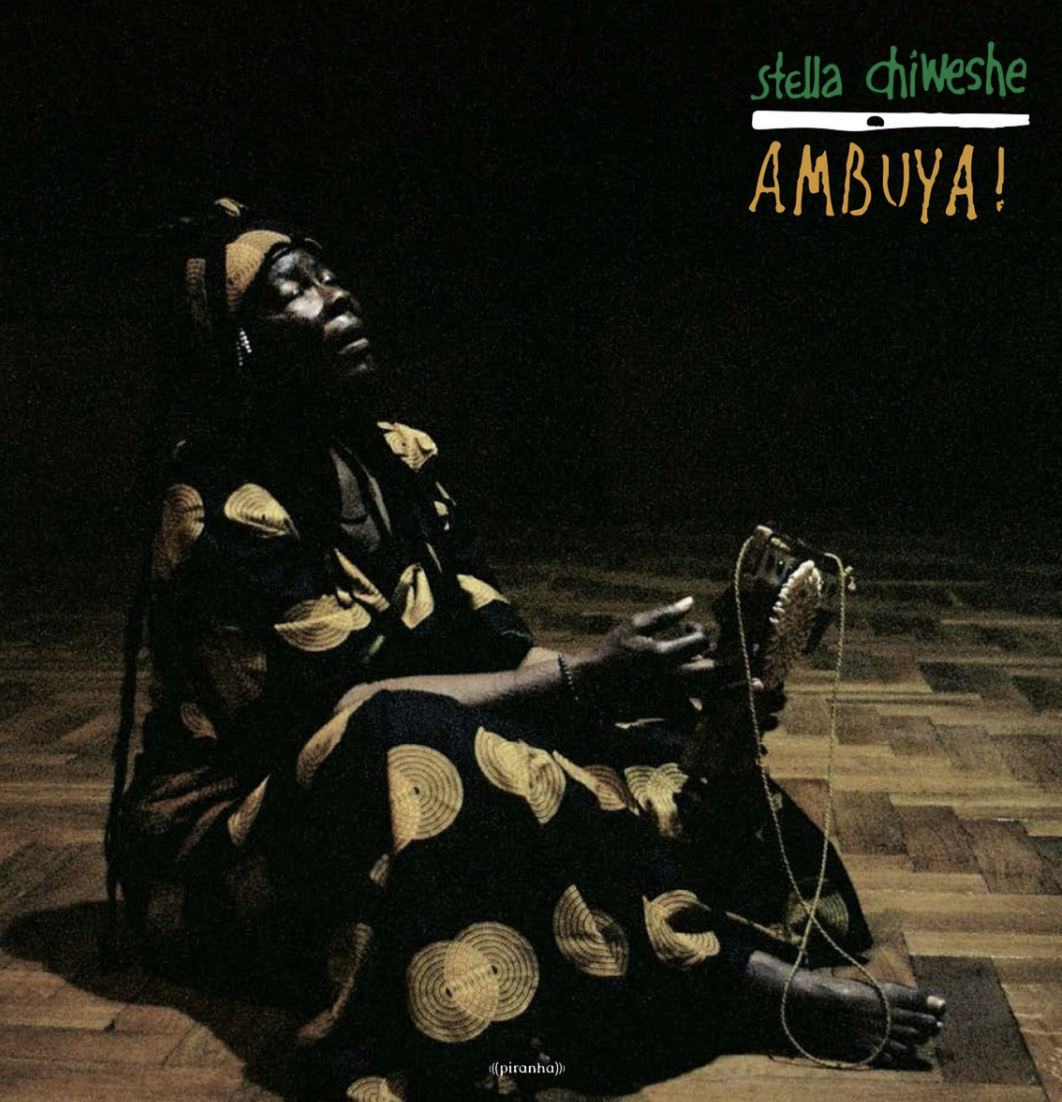
Marking those who’ve passed on in the last four weeks, where do you begin to start with such titans as Burt Bacharach, his genius, melody writ large into the very fabric of our culture, our cinema and musical cannon. Well, you just pick a favourite, and so I’ve gone for that Walkers Brother classic ‘Make It Easy On Yourself’. Similarly how do you represent the extensive, long career of the Zimbabwean songstress and ‘Queen of Mbira’ Stella Chiweshe with just one choice track. Again, just pick what you love and so here’s the opening buoyant lilt from her more recent Ambuya! album, ‘Chachimurenga’. It has been a terrible month for notable deaths, and so we also have tracks from Tom Verlaine and Yukihiro Takahashi too; the former, from the iconic doyen of alternative rock, new wave, punk’s 1979 eponymous solo, and the latter, taken from the former Yellow Magic Orchestra instigators’s 1981 solo album, Neuromatic – out new romantic(ing) the new romantics, and out Japan(ing) Sylvain’s Japan.
In the new(ish) category I’ve chosen a smattering of delights from Neuro….No Neuro, Karen Vogt & Simon McCorry, Marlene Riberio and Milk TV. That just leaves a curated selection of discoveries and music from my collection from across time and genres, and those older releases that have just been uploaded to Spotify in recent weeks, with songs and music from Jessie Mae Hemphill, Seventies Tuberide, Phil Mufu, A. R. & The Machines, Leo Sayer, Laurence Vanay, Chip Wickham, Ramon Farran & Lucia Graves and many more.
::That Tracklist In Full::
Stella Chiweshe ‘Chachimurenga’
A.R. & The Machines ‘Echo Boogie – Live At Elbphilharmonie Hamburg’
Dr. John ‘I Been Hoodood’
Digable Planets ‘Nickel Bags’
Madison Washington ‘((((Facts)))))’
Souls Of Mischief ‘Never No More’
Brand Nubian ‘Punks Jump Up To Get Beat Down’
Jessie Mae Hemphill ‘Tell Me You Love Me’
Some Cash Players ‘Cold 40s’
Seventies Tuberide ‘Eyes Closed’
Milk TV ‘Bowery’s Swing’
Tom Verlaine ‘Red Leaves’
Sonic Youth ‘Confusion Is Next’
Radiohead ‘I Can’t’
The Auteurs ‘How Could I Be Wrong’
Blue House ‘Accelerate’
Yukihiro Takahashi ‘Drip Dry Eyes’
Phil Mfu ‘Electronic Jam Number 7’
Joel Vandroogenbroeck ‘Rocks’
Neuro…No Neuro ‘Blunt Affect’
Karen Vogt & Simon McCorry ‘The Path Divides’
Marlene Riberio ‘You Do It’
Holly Henderson ‘The Planes’
Bob Dylan ”Till I Fell In Love With You’
Leo Sayer ‘Only A Northern Song’
Laurence Vanay ‘Voyage Les Yeux Fermes’
VRITRA ‘Safe Passage’
Burt Bacharach ‘Make It Easy On Yourself’
Dori Sorride ‘Persone Fragili’
Chip Wickham ‘Lower East Side’
Alice Cooper ‘Unfinished Sweet’
The Stooges ‘Shake Appeal’
Echo & The Bunnymen ‘Back Of Love’
Ramon Farran & Robert Graves ‘Under The Olives’
Nyokabi Kariuki ‘Ngurumo, Or Feeding Goats Mangoes’
Dougie Stu ‘Silhouettes’
Our Daily Bread 557: Trupa Trupa ‘ttt’
February 9, 2023
Cassette Tape Album Review

Trupa Trupa ‘ttt’
(Glitterbeat Records) 21st February 2023
The Polish outfit Trupa Trupa fashion their very own Faust Tapes out of an accumulation of sonic explorations, unfinished jams and rehearsal sessions, field recordings and play, off the back of their highly acclaimed (made my choice albums list of 2022) B Flat A album last year.
In the interval between recording new martial ttt is an almost seamless cassette offering of two experimental sound collages – coming in at just under the forty-minute mark. A development played out under the spell of psychedelic hallucination, mirage and more caustic machined distortions and abrasions, the triple “ts” experiment could be read as a really untethered avant-garde outlet for the band. Not that they’ve ever been conventional on that front with previous works melding and contorting, as they do, psych with no wave, post-punk, the industrial and indie to produce a multi-limbed psycho drama or revelation, the hypnotic and propulsive.
In fact, and as this latest couplet of suites proves, Trupa Trupa have always managed to layer the meta, whether its been on the Syd Barrett-esque succinct voiced lyricism of the whirled kooky ‘Uniforms’ (from B Flat A) or the heavy guitar wrangled, Swans cover The Church, ‘Remainder’ (from the 2019 album Of The Sun). Of The Sun, as I wrote at the time, even has a sort of Can Unlimited track called ‘Angle’, which wouldn’t sound out of place on this tape. As it also happens, Can’s late tape manipulator, early sampler and cut-up doyen, Holger Czukay was born in the band’s home city of Gdansk (albeit when it was the known as the Free City of Danzig), a fact that can’t have escaped them, especially as the already mentioned off-cuts, experimental threads compilation of Unlimited and indeed Can themselves could well be a heavy influence.
De facto spokesman, point of contact for me, Grzegorz Kwiatkowski mentions similar(ish) musical and visual experiments in this field by Glenn Gould (The Idea Of North) and The Beatles (‘Revolution 9’), both of which I can detect: to a point. But this is most definitely the spliced and continuously assembled world of Trupa Trupa, both in the metaphysical environments and psychogeorgaphy of Gdansk and out on the road. With that in mind, sides A and B suggest a radio free Europe of transmissions, dialled in emergent glimpses of ideas and rehearsal space workouts with industrialisation, mystery and the recondite.

Part A begins with a looping guitar that almost trips over itself, and cooed, mooning and aaah’d voices – a sort of outsider art form of primitivism and the psychedelic. Soon the atmosphere changes into a form of metal machine music, with a mysterious darkened funnel of Scott Walker and Sun O))) and a sharp static Lynchian scratch of something alien, and perhaps ominous. As it goes on the mood shifts from Cosey Fanni Tutti and Kluster to the lo fi-ness of Sonic Youth and the Red Crayola; later on it’s incipient stirrings of space rock Hawkwind and ADII. A knocking tool, utensil sounds like it’s hitting a wooden fence panel by the end of this journey.
Over to side B and strung-out voices and the sound of tape itself make way for a dreamy, jazzy session of enervated psych-gospel. A recent Radiohead vibe and Can evocations merge for a played-out musical performance that wanders almost listlessly into a cosmic peregrination. But then something almost daemonic tries to contact us through the Fortean Times radio set, and we’re back in more esoteric territory. Answer machine or a fax or photocopier set of stretched bleeps repeat across a pulsating passage of ambience after that, but makes way for a spike of backbeat Suicide and a squall of windy distortion. A finale wash, flow of voluminous water pours over a reflective environmental outro. You can hear a soft, almost peaceable guitar being strummed delicately in a troubadour style as thoughts meander against the hidden backdrop of a fountain, or a waterfall, or even a watermill – maybe none of these -; a gushing stream of consciousness balanced against gentler trials and errors in music making.
Reminisces, vignettes of a particular time and place; what could have been an evanescent moment lost; radiophonics and the extemporised are all captured within the unburdened perimeters of Trupa Trupa’s unlimited world of sound exploration. An intriguing “annex” as it were to the sonic, literary, philosophical, and historical interlayering processes of this Polish band, ttt offers, nee suggests ever more experimental avenues and an alternative release of the group’s inner workings; a sort of non-linear (off)roadmap to a “lost highway” and a mysterious European trauma. And yet for a band synonymous with grappling with the difficult questions, the evils of legacy (especially when confronting episodes from Poland and Europe’s history in relation to Kwiatkowski’s own Concentration Camps heritage) this tape is a mostly congruous affair.
Trupa Trupa are in their ascendency all right, their creative collective consciousness constantly dreaming up fresh ways of hearing and articulating the wastelands of what was once called civilisation; the discourse all but filtered out for the most part on this immersive experience. They can do no wrong it seems at the moment, and must be considered one of the most important bands to emerge from Europe in the last decade. On the strength of this latest release it will be very interesting to know where they will go next.
You can order that tape here, and if you’re quick enough, can grab one of the limited edition signed copies.
Kalporz X Monolith Cocktail: [Scoutcloud] Metaphysical, dreamlike: the sonic surrealism of the mysterious Russian musician Mitka
February 7, 2023
Exchanging posts with our Italian penpals at Kalporz
For those new readers/followers in 2023, the Monolith Cocktail has collaborated with the leading Italian culture/music site and festival Kalporz over the last few years. Each month we exchange posts from our respective sites. This month Monica Mazzoli introduces us, via the long-running [Scoutcloud] series, to the “metaphysical” surrealism of Mitka.
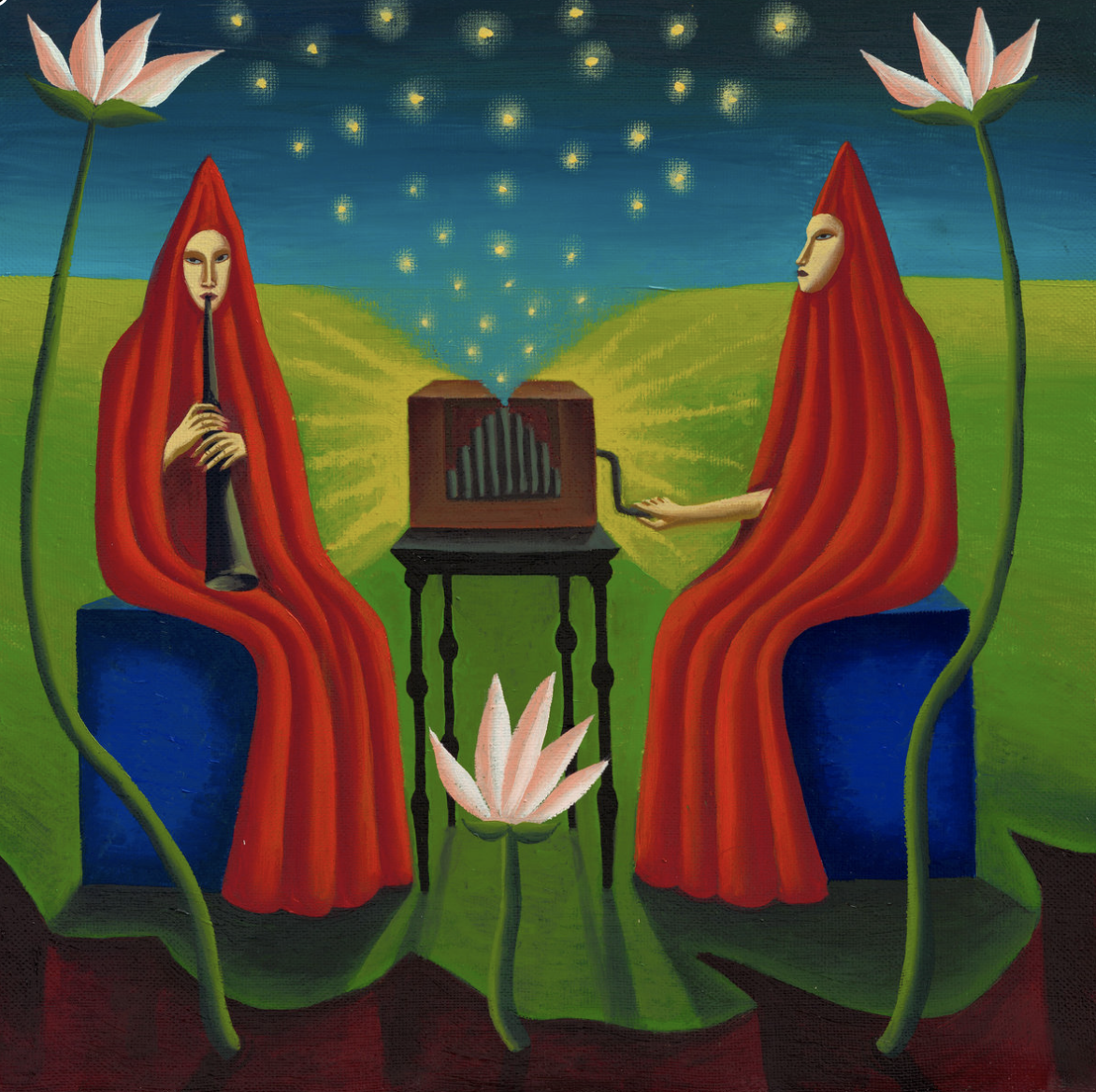
An aura of mystery surrounds the biography of Mitka. The sound engineer and musician from Ekaterinburg who works mainly for the film industry, does not give live concerts and is absent from social media having an almost ascetic lifestyle, at least so the press release reads release of his record company DiG Records. The cover of her Sound2 record, by Alina Vinogradova is dreamlike, metaphysical; so much so that it could very well be a surrealist painting by Remedios Varo. The music of the Russian artist is equally so, all the five songs on the album traveling beyond six minutes and sounding like a sort of hallucinated, visionary folk music: it seems that Mitka, for example, has recorded the sounds of drums in the forest, and built his own guitar. Beyond reality: the sense of mystery/dream prevails.
A February Digest: Siavash Amini, Kalia Vandever, John Howard, Stella Chiweshe, Popol Vuh, Kahil El’Zabar Ethnic Heritage Ensemble…
February 3, 2023
New Music on our radar, news and archive spots
Dominic Valvona
A new thread, feed for 2023, the Digest pulls together tracks, videos and snippets of new music plus significant archival material and anniversary celebrating albums or artists. In the February edition we draw your attention to the upcoming album from the Chicago jazz luminary Kahil El’Zabar and his Ethnic Heritage Ensemble with a live recorded performance of the Pharoah’s ‘Harvist Time’, Brooklyn-based trombonist, composer quartet leader and soloist performer Kalia Vandever manages to make her instrument sing a nuzzled bluesy song of longing and thoughtfulness on his newest tune ‘Temper The Wound’, and the avant-garde Iranian composer Siavash Amini creates a fully immersive, drawn-in electroacoustic suite for State51 Conspiracy’s instigated Singularity Series. In the Archive sections we have tributes to both Tom Verlaine and Stella Chiweshe, look at the re-release of John Howard’s Cut The Wire album on vinyl, and celebrate the 50th anniversary of Popol Vuh’s Seligpreisung LP.
THE NEW
Kahil El’Zabar Ethnic Heritage Ensemble ‘Harvest Time’
(Spiritmuse Records) Youtube Now
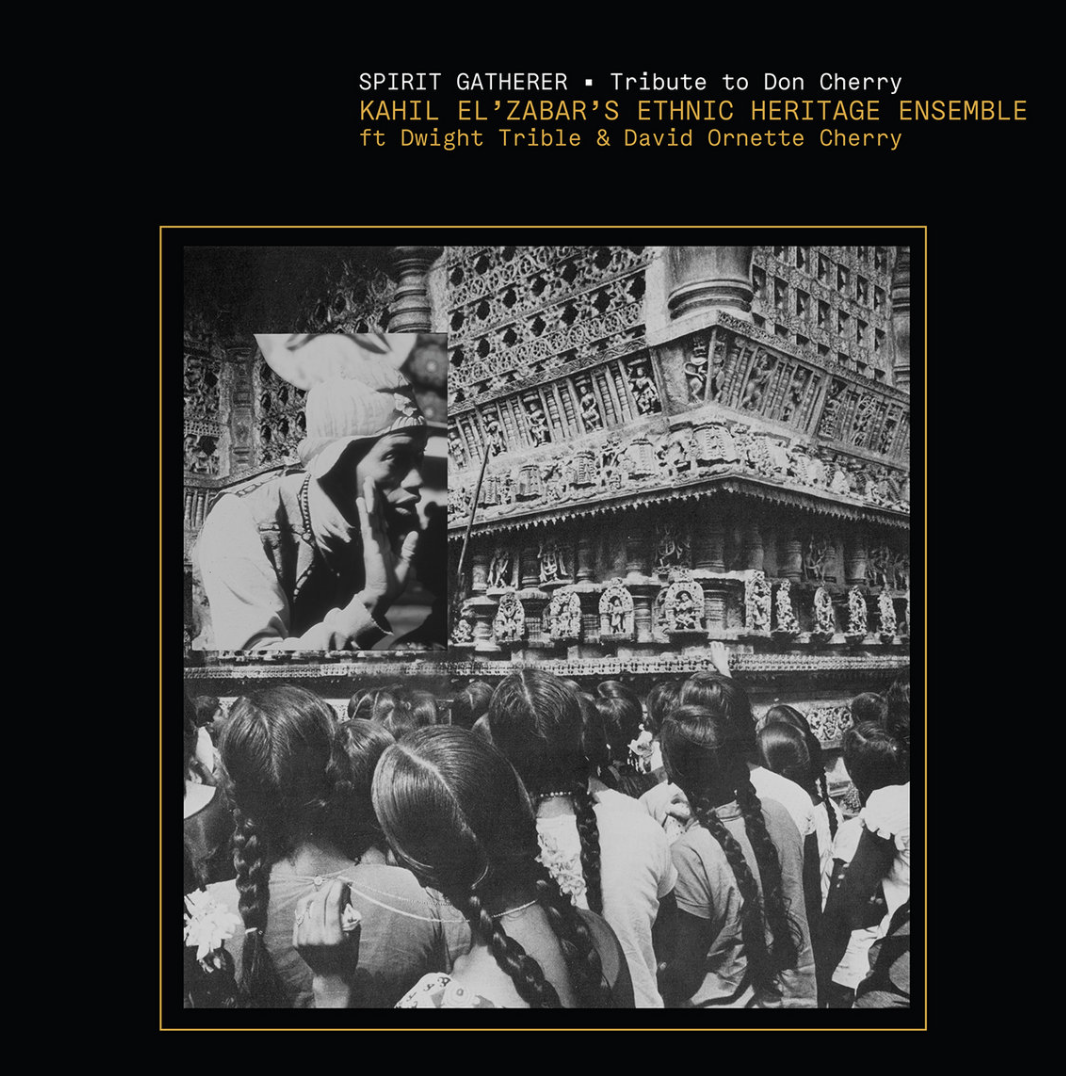
Partly as a tribute to and marking the late David Ornate Cherry’s last ever project, the Chicago jazz maestro, percussionist, and band leader Kahil El’Zabar and his ensemble reimagine the late Pharoah Sanders’ spiritually shimmered ‘Harvest Time’, as part of the upcoming Spirit Gatherer • Tribute to Don Cherry opus on Spiritmuse Records.
A celebration, a homage to two icons of the avant-garde and worldly jazz scenes, this album is dedicated to both riffs on such icons as the Pharoah and David’s late, great luminary father Don Cherry. Sadly both the Pharoah and David passed away late last year, David just as he was collaborating, partnering with Kahil on this new record. You can however catch David playing the piano on this video live version of that reinterpretation-in-their-own-image performance, together with Kahil on balafon, Dwight Trible giving divine voice and the pairing of Alex Harding and Corey Wilkes on horns.
Kahil has this to say about his great inspirations:
“Pharoah Sanders was the most popular village griot of the avant-garde jazz movement”, says El’Zabar of the late, great saxophonist. “So, when Pharaoh did songs like ‘Harvest Time’, they became something that the entire community embraced. In the same way, Don Cherry was the griot of the community”, and there’s no better way to pay tribute to these noble ‘warriors’, by connecting their spirit in music.”
I was lucky enough (paid too as well) to write the liner notes of Kahil’s last album, A Time For Healing.
But you can find previous reviews here:-
Spirit Groove Ft. David Murray
Kalia Vandever ‘Temper The Wound’
(AKP Recordings) Out Now
When you need that deep bass, a bow from the ship’s horn kind of low but almost huffed sound then the trombone is the choice instrument to use. The Brooklyn-based trombonist, composer quartet leader and soloist performer Kalia Vandever manages to make it sing a nuzzled bluesy song of longing and thoughtfulness on her newest tune ‘Temper The Wound’.
Released ahead of the upcoming debut solo album We Fell In Turn, this lingered, reedy resonated serenade of gentle breaths, touching reflection and gazing is accompanied by the interdisciplinary NYC artist Fame’s video animation. They had this to say about it:
“The animation expresses the feeling of intimacy, soothing, and healing, which simulates the same sense when listening to “Temper the Wound”. The visuals trigger haptic sense by using gently rubbing gestures from the audience’s point of view. It also reveals a scar on the hand that caresses in the form of memory metaphor to the wound itself has the healing power.”
As a hand brushes a pool of water, wafts in a wild garden, it turns inwards to reveal in its palm a window, portal to a sketched scene of footsteps. It makes for a subtle and gentle set of images to a jazzy-bluesy stirred remembrance.
Siavash Amini ‘Not Yet Plant-Life, No Longer Flesh’
(The State51 Conspiracy Singularity Series) Out Now
Adding his name to the notable roll call of experimental and avant-garde artists taking part in the independent portal State51 Conspiracy instigated Singularity Series, the avant-garde Iranian composer Siavash Amini creates a fully immersive, drawn-in electroacoustic suite of recondite natural sounding string manipulations and more machine-like creaks and whines. A both aural and visual experience, Amini’s slithers, scrapes, hinged and bracketed shifts and drones are heard and seen through the geometric light play vision of Louise Mason’s film, featuring Nathan Sherwood’s “Kaleidobscura” lens.
Across its 18-minute duration ‘Not Yet Plant-Life, No Longer Flesh’ seeks both the light and the alien with passages and suggestions of sonic intensity and calmer pattern shifts of near melodic mystery. Inside this kaleidoscope are evocations of spidery crawls across wires and strings, gleaning metallic surfaces, the slithered, looming and rumbling, and the sound of unwinding, and unraveling or sppeded up tape reels.
‘Not Yet Plant-Life, No Longer Flesh’ is released both as a lathe-cut 12” (limited to only 51 copies) and via digital channels. At a later date (April 14th 2023 to be exact) the lathe series, which also includes releases from Alison Cotton, Shit and Shine, Hey Colossus, Vanishing Twin, and Matmos, will be compiled both digitally and as a special lathe box set.
The facilitators that commissioned these pieces of sonic art, State51 Conspiracy, are a completely independent one-stop music company. Record label duties include dealing with physical and digital distribution, marketing, rights management and monetisation, creative, product design and media production. Intrigued? You can visit them here.
ARCHIVES
John Howard ‘Cut The Wire’
(Think Like A Key Music) Out Now

Recently reissued and given its debut vinyl release by Think Like A Key Music, John Howard’s 2019 album Cut The Wire (originally on You Are The Cosmos label) marks a sort of break and period of reflection for the singer-songwriter, author and pianist of renown. Busier and more productive than at anytime in his forty-plus years career, with new albums every other year since the 2010s, and a trilogy of autobiographies, John can now gaze back at these wonders and take a breath.
As with near enough everything he’s released, I wrote a review on this album on its release – back in the post-Covid heady days as it were. Here’s a reminder of what I had to say at the time:
Returning after the deep cerebral peregrinations of the previous Across The Door Sill album to the shorter romantic balladry and stage show-like songwriting that first garnered such acclaim for the adroit pianist troubadour, John Howard’s first full songbook in three years is a most sagacious beautifully articulated affair of the heart.
Enjoying a renaissance of interest in recent years; choosing projects wisely and wholly on artistic and desirable (enjoyable too) merit, Howard has recorded a well-received collaboration with Andy Lewis, Ian Button and Robert Rotifer, under the The Night Mail moniker, the already mentioned open-ended experimental ATDS, and delivered the first volume in a vivid and travail autobiography (part two to follow anytime soon) that not only deals with Howard’s haphazard rise and misfortunes in the music industry but chronicles the misadventures of a gay artist in a far from understanding world. The star-turn dealt a typical band hand by the industry as a burgeoning artist in the 1970s, the singer-songwriter pianist turned to A&R (quite successfully as it happens) but always seem destined to plow his own unique furrow; decades later and with wised self-belief, fully in control of his own career. Though he’s found congruous labels, including the wonderful You Are The Cosmos, to launch his recent catalogue of new music, Howard is a candid one-man industry, totally in command of his legacy and story.
So far the overall results of this output have been anything but indulgent, the quality maintained, with arguably some of his best work being produced in the previous five or six years. The 16th studio album, Cut The Wire, is the first to be recorded at Howard’s Una Casita hacienda studio oasis in Murcia; surroundings that lend themselves well to the meditative and questioning yearns of Howard’s most rich balladry.
Those familiar with the previous From The Morning EP of inspired cover versions will hear the imbued spirit of The Incredible String Band once more on this album’s percussive jangly and bellow-y Parisian peaceable opener ‘So Here I Go’ and the mobile-trinket twinkly and bowed strings title-track: The first of those homespun-words-of-wisdom sonnets evoking a Krishna Dylan, even Donovan. Intentioned or not, the softened doo-wopish lull of enduring adversity ‘Keep Going, Angel’, the forlorn venerated organ blessed ‘We Are’, and sweetly-laced Baroque-psych autobiographical ‘Remains’ all sound like lost ballads from The Beach Boys Friends and Surf’s Up albums. You can also pick up the scents of prime 1970s Elton John, The Beatles, Jeff Lynne and Nilsson in the sage’s purposeful beatific longing maladies and paean performances.
Decentering with blissful melodic ease, Howard, with signature vulnerability, swells and also glides through various chapters of his life; ‘Remains’ recalling to a chiming harpsichord and swooning harmonies regrets in not standing one’s ground, and the nostalgic dreamy-pop ‘Idiot Days’ reflects on the foolish indulgences of youth and the oblivious-at-the-time harmful consequences. But Howard, in more mournful mood, also ruminates on the divisive topics of Brexit; sailing on an accordion wafting elegiac barge on ‘Pre-Dawn’ with cathartic despondency to the changing political landscape and the lack of generosity.
A thoughtful songbook that returns to the melodious balladry of past triumphs and a nod to the rich tapestry of influences that first inspired him, Cut The Wire is timeless; another beautifully written and sung album from an artists radiant with quality.
You can purchase said album here.
ARCHIVE/ANNIVERSARY
Popol Vuh ‘Seligpreisung’
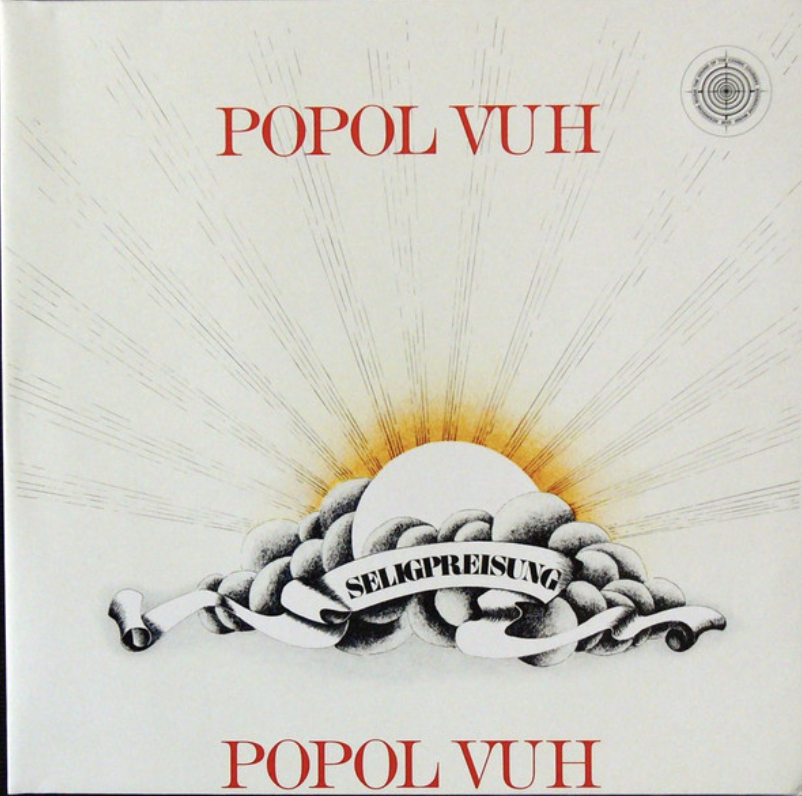
The big 5-0 this year, the Vuh’s fourth album proper was released back in 1973. From my old Krautrock odyssey series, another chance to read my appraisal of this afflatus divine music…
If there is such a reassuring prospect as an afterlife then Popol Vuh‘s divine-styler Florian Fricke would surely have cemented his rightful place in the eternal, empyreal, choir above.
Covering all bases, just in case, Fricke’s reconnoitre’s into the heart of Mayan mysticism, Hinduism, Buddhism and Christianity guaranteed him a fair hearing upon reaching all those nirvanas.
Fricke thumbed through the New Testament for inspiration and solace; falling upon the canonical gospel of Matthew and lifting its blessed text for Popol Vuh’s fourth outing, Seligpreisung. Loosely translated as “beatitude” (‘happiness of the highest kind’) or “song of praise”, Seligpreisung is a continuous 30-minute long service built around Matthew’s profound utterances and writings: Matthew’s gospel – the first book of the New Testament – followed the life of Christ, from his ministry to crucifixion, and resurrection.
Coalesced into adumbrate passages, each of the 8-tracks represents Matthew’s pronouncements and declarations on the worthy; those he considers the righteous: from the meek to the poor. For example the ongoing leitmotif, “Selig sind die, die da hunger. Selig sind die, die da dursten nacho Gerechtigkeit. Ja, sie sollen stat warden” – a right old mouthful -translates as, “Blessed are those which are hungrey. Blessed are those that are after justice. Yes, they are to become fuller”.
Continuing with the same elegiac mellifluous exhalations as on previous releases, Popol Vuh’s diaphanous psalms finally break-out of their suffused ambient constraints into bouts of meditative acid-rock, as the drum-kit is introduced for the first time. Sharing similar spiritual harmonics and builds as Amon Duul II‘s, “stairway-to-OM”, opus Wolf City, Seligpreisung uses a familiar exotic, eastern, musical palette; with reverent pinning oboe and the raga inspired soul-stirring charms of, both, the harpsichord-like cembalo, and lute-toned tamboura all directing us towards the holy calling of Tibet.
Subtly transforming the dynamics with a more progressive, flowing, feel, Fricke also took a step backwards, reverting to a more traditional – if not classical – template; led by the majestic atavistic tones of a grand piano. This shift was partly influenced by the introduction of Amon Duul II’s Daniel Fichelscher, who contributed swathes of plaintive electric guitar and, those newly added élan drums, to the Popol Vuh transient sound.
Whether through mutual appreciation or due to the efflux of ideas criss-crossing between the two bands, Popol Vuh’s resident star-gazer lead-guitarist, Conny Veit, also reformed his dismantled prog-rock band Gila; bringing both Fricke and Fichelscher along to help produce that groups most acclaimed work – the Native Indian history of America inspired tome – Bury My heart At Wounded Knee. Unfortunately Gila broke up again the following year (1974), but for a brief period they functioned as two groups.
Absent from this synthesis hippie-trip are the lilting choral shading vocals of Djong Yin – temporally tied-up at the time, she returned for the next album, Einjager & Seibenjager. Not entirely convinced of his own timbre, Fricke found himself forced to fill-in; yearning and placably sighing numerous hallelujahs at the quasi-alter of worship – though he makes a good job of it. With its, now male, cooing and tentative vocals, Seligpreisung peacefully lifts the spirt over its short duration; altering the main opening theme of “Holy Mountain mystical escapism meets pastoral rock” enough so that each lose bracketed track bleeds into the next; though some of these movements are used as laconic breathers and interregnums before the main narratives.
Every piece is as beautiful as the last, so highlights are difficult to single-out; the atmosphere kept at a constant heavenly quality, and the playing spread evenly: Fichelscher and Veit play some of their most soaring magical guitar paeans, whilst Fricke’s cembalo and piano tenderly weep and dance amongst the climbing melodies and chords.
It might be considered an unfair criterion with which to gauge the music of Popol Vuh by, but this album was my very first purchase of the groups artful poised soundtracking vistas, so I’ve come to love it – I’ve obviously had to work backwards, from full band line-up jamming to minimal ambience. This LP hardly shakes off the ominous trance-like state and translucent stripped blueprint of their last three records – I mean even with a fuller sound, they’re still restrained and kept in check – so consider this as the “letting-their-hair-down” experiment, or Ash Ra Tempel without the Leary-spiked incentives.
ARCHIVE//THOSE WE’VE LOST
Stella Chiweshe
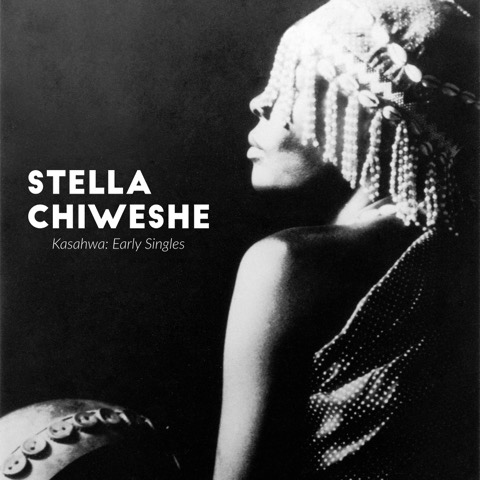
Sad news reached us near the end of last month via the esteemed world label Glitterbeat Records that the Zimbabwean songstress and ‘Queen of Mbira’ Stella Chiweshe had died on January 20th. Back in 2018, the Glitterbeat imprint picked up a compilation of the groundbreaking artist’s early singles: called Kasahwa. As a bio, state of providence here’s my review of that album and purview of Stella’s legacy…
Spearheading a second revival and paving the way to a comeback of a sort, the previously only available as a digital-release version (via that increasingly encroaching behemoth, Bandcamp) of the Zimbabwe music icon and maestro of the mbira instrument Stella Chiweshe’s Kasahwa: Early Singles collection, has been picked up by the award-winning global music label Glitterbeat Records. To be released on the full gamut of formats (both physical and digital) this remastered smattering of previously rare healing paeans and emotional tumults will for many, be an introduction to the diaphanous and earthy roots metal-y springy mbira accompanied soul of Chiweshe.
With her most formative years spent in colonial Rhodesia, before Zimbabwe’s eventual independence in 1980, in an environment that didn’t exactly encourage or foster equality between races let alone sexes, the strong-willed Chiweshe nevertheless pursued a career in music. More attuned to the Western sounds of Rock’n’Roll and Country than the atavistic culture of her native homeland, feasting instead on a diet of Elvis Presley, Ricky Nelson, Jim Reeves and The Everly Brothers (and why not), it would take some time and an epiphany before Chiweshe picked up the mbira: an instrument and style she would soon master; so much so that she would be hailed as the ‘Queen of Mbira’ in the following decades.
Confusingly for the student and novice, mbira refers not only to an instrument – made-up of 22 to 28 metal keys, mounted on a ‘wooden healing tree body’ – but also an all-encompassing Zimbabwean spiritual but also secular culture and way of life. Mbira, which is cultivated by the Shona people of the region, involves the ceremonial ritual practice of invoking contact with deceased ancestors and tribal guardians through musical accompaniment; just one of the influences that imbues the voice and playing style of Chiweshe’s captivating songs.
Showing the independent spirit she’d long be admired and celebrated for, a younger Chiweshe would, despite meeting stoic opposition, overcome the bigotry of her male compatriots and elders to embrace not only the Mbiri heritage but the instrument too. Stiff resistance from teachers and even instrument makers, outright refusing to build her a mbira, wouldn’t stop her from recording a debut single (the one that give’s its name to this compilation) in 1974: even though she would have to borrow an ad hoc thumb piano; unable to lay her hands on a mbira. Chiweshe would not only preserver but flourish.
Trumpeted in our modern virtue-labeling climate as a ‘feminist’, the outspoken star was certainly strong-willed, even a rebel. Making a name for herself overcoming the obstacles of tradition and a patriarchal-dominated society, her obstinacy soon garnered attention, not only in Zimbabwe but further afield. In a decade that saw a surge in Western interest in ‘world music’, thanks in part to (in the UK anyway) such global music explorers and passionate advocates as Andy Kershaw and John Peel (who would play host to two Chiweshe performances on his coveted Radio 1 sessions), the Mbira star would soon be touring internationally: first as a featured soloist with the New National Dance Company of Zimbabwe, and later under her own name. Chiweshe would even make a second home for herself in Berlin, criss-crossing between the German city and her native home for the next 35 years.
Still performing her spiritually soulful intense and trilling vocals and mbira craft, but perhaps not as prominent a figure on the world stage, this re-introduced eight song package of formative years recordings will revive an interest in not only Chiweshe but the music of Zimbabwe: a state that looked to be finally emerging from the grasp of Robert Mugabe, whose role (lets face it) has soured and hidden the true face and culture of the country; though in the aftermath of his resignation and after new elections, his successor in the ZANU-PF party, candidate President Mnangagwa and self-declared winner of those elections, has meted out extreme violence on oppositions supporters (killing a number of them in the process) taking to the streets in protest at the contested results. An uneasy tension exists, even with outside observers presiding over these elections, as Zimbabwe’s Movement for Democratic Change candidate Nelson Chamisa stoically refuses to back down, rejecting the results outright.
With helpful encapsulation style suffixes summing up each song’s theme, the early singles opens with the determined ‘Ratidzo’; a high whistling and trickling stream like mbira melodic accompanied invocation of the lush landscapes of Zimbabwe that pretty much encompasses Chiweshe’s struggle to become a musician with its matter-of-fact subtitle, ‘Managing to do what people considered impossible’. More traumatic themes follow, with the unceasing waterfall cascades of the mbira and earthy lamented ‘Musarakunze’ suddenly making an emotional impact when translated as ‘An orphan seeing what the late elders never saw’; so beautifully played as to almost hide the plight. The ‘Innermost emotional pain is like a fishbone stuck in the throat’ ‘Kasahwa’ has a similar air of beautiful delivery even when kicking up the dust and rotating to a more abrasive and rubbing scratchy percussion; the pained evocations confined to that title rather than performance.
Mbira as a living tradition and healing process is enacted on the grasslands lilted ‘Chipindura’ – ‘The herb that transforms anything’ – and the placeable tubular turning ‘Mayaya’ (in two parts no less; the longest articulation on this entire collection) – ‘The effect of healing herbs’. Both of which, whether it’s intentional or not, feature a percussion that reflects the rubbing, grinding preparation of these herbs. Elsewhere the routine travails of a people kept through colonial oppression and then the misrule, surviving in abject poverty, is evoked on the yodeled sung ‘Nhemamusasa’; a song that describes and articulates ‘Cutting branches for a temporal home’.
Channeling the very soul of Zimbabwe, performing the mbira with energy but also certain serenity, and in a soliloquy manner voicing the empirical, Stella Chiweshe’s early recordings may sound swimmingly diaphanous, yet they serve as a reminder to the struggles of change. Recorded during the Chimurenga – roughly translating from the Shona language as ‘revolutionary struggle’, this, the second such ‘war’ or uprising, pitted African Nationalist groups against the predominantly white minority government; also known by its eventual victors as the Zimbabwe Liberation War, it would lead to independence and the rise of one of the resistance’s key figures, Robert Mugabe – revolution these singles, no matter how lilting, could be celebrated as a testament and clarion call for not only a resistance to the patriarch but seen also as a break from the atavistic status quo, with Chiweshe’s twist laying down the path for those to follow; a more equal rebalance giving voice to the often repressed matriarchal singers and musicians of Africa.
Tom Verlaine

What a shock to the system to see poor old Tom Verlaine pass way last week, the gaunt frontman of pre-punk favourites Television – far too arty and well-read to be part of the dumb nihilistic punk vanguard, but all the same in that initial rush of bands that would crown an entire scene. Although what we call a counter-culture, a in-scene New York phenomena, Verlaine’s unique lyricism and guitar playing would go on to influence possibly as many people as the Velvet Underground and Nico’s infamous Banana LP. If you were in any doubt, just look at the scale of homages, tributes and the Marquee Moon album covers displayed across the worldwide net of social media validation. This is an album that both sailed close to the edge, but was melodic enough to encourage a future new wave scene. In fact it has become such an obvious record, a copy in every record collection. And yet it hasn’t lost any of its power, twists and art school pretensions because of that absorption into popular culture.
There will be extensive eulogies and bios to come or indeed already shared. And so I’m just going to share some favourite clips and tracks; hopefully some you may not have seen or come across. A celebration then:
That’s it from me for another month. You can find January’s edition here...
Hi, my name is Dominic Valvona and I’m the Founder of the music/culture blog monolithcocktail.com For the last ten years I’ve featured and supported music, musicians and labels we love across genres from around the world that we think you’ll want to know about. No content on the site is paid for or sponsored and we only feature artists we have genuine respect for /love. If you enjoy our reviews (and we often write long, thoughtful ones), found a new artist you admire or if we have featured you or artists you represent and would like to buy us a coffee at https://ko-fi.com/monolithcocktail to say cheers for spreading the word, then that would be much appreciated.
Monthly Playlist: January 2023: Mentrix, Kahil El’Zabar, Sara Noelle, Your Old Droog, Onoe Caponoe…
January 31, 2023
CHOICE MUSIC FROM THE LAST MONTH: TEAM EFFORT
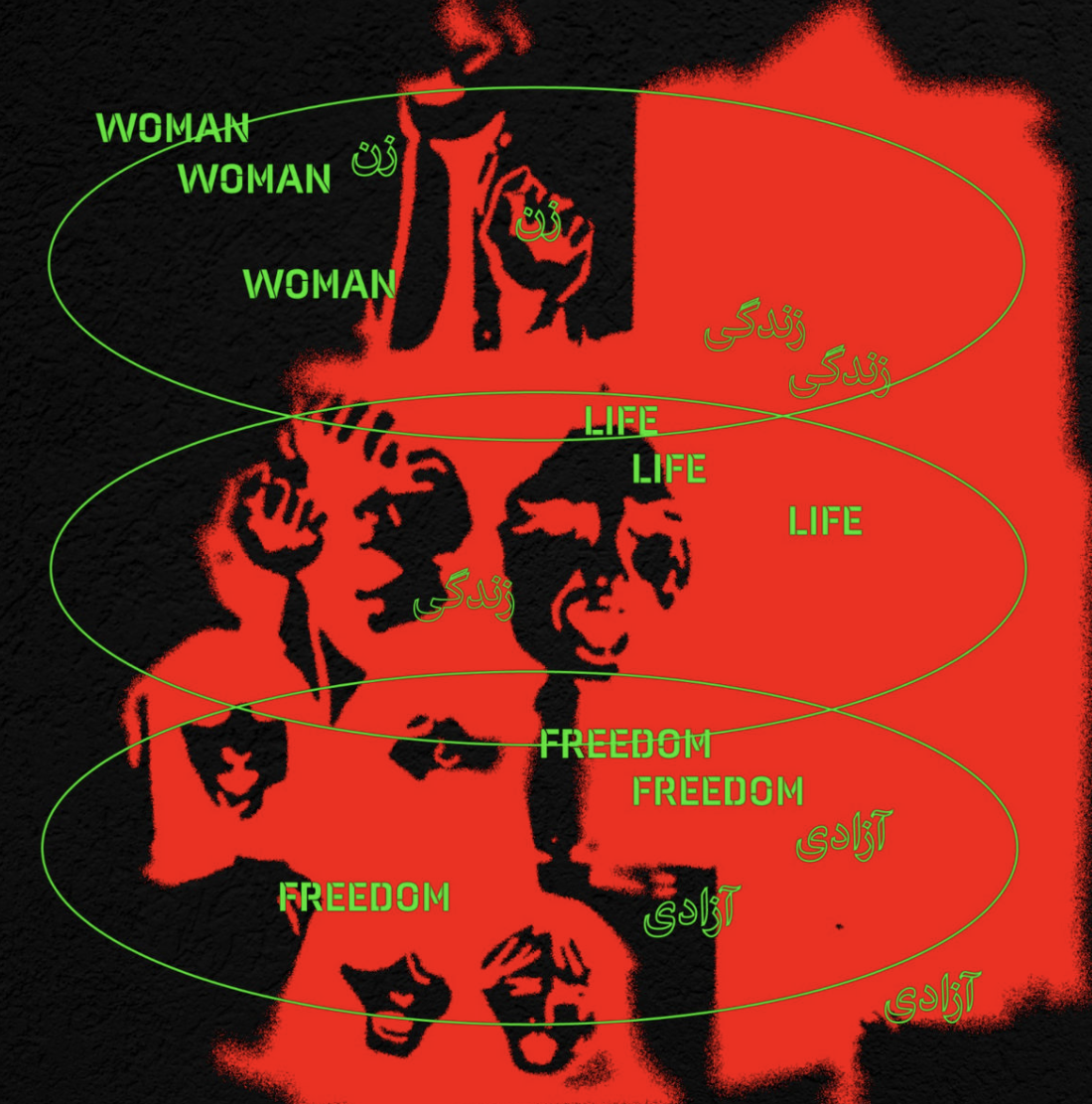
The inaugural Monthly Revue playlist of 2023; a choice selection of tracks from the last month on the blog. Curated by Dominic Valvona with Matt Oliver on the Rap Control once more, and music from reviews by our latest recruit Gillian Stone plus Brian ‘Bordello’ Shea and Graham Domain. Expect to hear the unexpected.
TRACK LIST//
Mentrix ‘Be Mahsa Be Nika’
Meadow Argus ‘No Company’
Anton Barbeau. ‘Dollis Hill Butchers’
Guided By Voices ‘Wild Kingdom’
The Wot Nots ‘Oi!’
Wings Of Desire ‘Runnin”
The Gangsta Rabbi ‘Ana’mika (138the Entr’acte)’
Neon Kittens ‘Chalk’
Smuts ‘Kalashnikova’
Dyr Faser ‘Life Form’
Earth ‘Rocker’
Xqui Ft. Bettina Schroeder ‘I Have A Knife’
Flexagon ‘Fort Saumarez: MP2’
George Winstone & Ben Monder ‘Part I’
Liela Moss ‘Empathy Files’
The Good Samaritans ‘Onughara’
Phil Ranelin & Wendell Harrison. ‘Genesis’
Fliptrix/Onoe Caponoe/Ramson Badbonez ‘SM58’
Masai Bey/BMS ‘I.a.a’
Micall Parknsun/Jazz T ‘Still…’
Dexter Dine ‘Sunshine In A Can’
Elise Preys/Marc-Antoine Perrio ‘Petites Heures’
Bjorn Magnusson ‘Everybody’s Got Something’
Designers ‘Moulindjek’
dal:um ‘Dot’
Clamb ‘Glittering Watermelon Oracle – Live’
Justo The MC/Axian ‘Autopilot’
Skyzoo/The Other Guys ‘Bodies!’
Carlos Nino & Friends ‘Drum Solo +, “Sounds Like Memory…”‘
Ghostwoods ‘Terminus’
Kety Fusco ‘2072’
Raul Refree ‘La Plage’
Esbe ‘Coventry Carol’
Sara Noelle. ‘Blooming Yucca’
Kahil El’Zabar And The Ethnic Heritage Ensemble ‘Harvest Time’
Beats & Pieces Big Band ‘Op’
Galactapus ‘Radio Kolossos’
Oddisee ‘Many Hats’
Upfront MC/Badhabitz ‘Stay Afloat’
Your Old Droog ‘Here’s Johnny’
Onoe Caponoe ‘Pet Cemetry’
Our Daily Bread 556: Guided By Voices, Schizo Fun Addict, Maple Mars, Neon Kittens…
January 26, 2023
Brian ‘Bordello’ Shea’s Reviews Column

Singles/Tracks/Videos
Exclusive Video:-
Schizo Fun Addict ‘Forever Before’
(Fruits Der Mer Records)
Well how apt a few days after David Crosby the king of Laurel Canyon died we are sent the latest video by Schizo Fun Addict [an exclusive in fact]. Yes my dear readers you are the first people to cast your eyes and ears over this beautiful Laurel Cannyon Autumnal breeze-like guitar song, a song that is possessed by the magic of 1967 Byrds with the slight tinkerings of space rock synth.
“Forever Before” is a song one can imagine gracing and being a highlight from the debut album by the mythical band or should that be group the Kelly Affair from the movie Beyond The Valley Of The Dolls. A song dipped in the serendipity of pure magic.
“Forever Before” is a teaser from their forthcoming album released in March on Fruits Der Mer Records, and I for one cannot wait.
Benedict Benjamin ‘Furlough Blues’
February 3rd 2023
If post-punk folk with a hint of psychedelicised Byrds is your thing then this rather excellent single needs to be gracing your listening device. The first track taken from a forthcoming album Tunnel, which if ‘Furlough Blues’ is anything to go by, is going to be a bit of a stunner.
Maple Mars ‘Anchors Aweigh’
(Big Stir Records)
It is nice to see and hear in fact that there are still songs like this being made and released. ‘Anchors Away’ is a well written and performed guitar pop/rock song, a track with no edginess no quirkiness just a straight-ahead song with melodies and guitar solo; the kind of song one might nod their head to and tap their foot whilst considering another pint or, if it’s time to venture out into the cold night and risk a dodgy take out from the Flaming Duck. The kind of song one would imagine being played in a bar in America in the mid 80s on some TV show, when the lead character was some handsome private detective who always had the women throwing themselves at him: although he was far too old for them. Yes indeed a leather jacker [new and polished] and a seductive moustache, which he never seemed to get beer froth on. A handsome devil indeed, and this would be the music of his choice, well played guitar bar roomish type of rock…he might occasionally drive a motorbike.
Bigflower ‘Hope There’s Someone’
The Mighty bigflower kicks off the New Year where they left of the last with a song of atmospheric beauty. ‘Hope There’s Someone’ is of course a cover of the Anthony And The Johnsons gem, but the gem is polished and covered in layers of Ivor Perry’s magical guitar to produce a track of soul and heartache. One day a label is going to gather these monthly slices of guitar perfection and release an album of artistic triumph.
The Wot Nots ‘Oi’
(Metal Postcard Records)
Old style punk-rock or punk-rock old style, I will let you decide, but either way we have a catchy short blast of rock ‘n’ roll, part early Fall part Alternative TV. The aural equivalent of stumbling over some Sniffin Glue fanzines and getting teary nostalgic for the days when you used to nick coal from the back of the coal lorry or graffiti ‘never mind the bollocks here are the Sex Pistols’ on your neighbor’s shed. The Wot Nots ARE PUNKTASTIC.
Albums/EPs
Guided By Voices ‘La La Land’
(GBV Inc)

Another album from GBV (Guided By Voices). Yes everybody’s favourite lo-fi guitar wheeling merchants; a band that is often mentioned in the same sentence when reviewing my band The Bordellos, although we sound nothing like them: lazy journalism at its finest. But what we do have in common is we both write tuneful quite often short songs of perfection, and this album La La Land is indeed full of them.
What I love best about GBV (Great British Virgins) is their shorter songs. My least favourite are their longer songs: ‘Slowly On The Wheel’ is a bit dull to be honest at six minutes long. But their tunefulness and fine lyricism, heartfelt and snide-y at the same time words filled with a vim and vigour, should be injected into everybody’s record collection. See GBV (George Benson Versus – versus who I do not know; maybe Gene Vincent and the guns of Sunset arrival) are on the whole a fine band but you really don’t need me to tell you that and this on the whole this is a fine album: but you really do not need me to tell you that.
Panthervision ‘Now In 3-D’
(Kool Kat) 3rd February 2023

If one misses and longs for the days when The Primitives and The Darling Buds and such punk indie pop guitar led female vocal fronted bands ruled the airwaves, you could well enjoy Now In 3-D. For the little blighter is jam packed with melody led guitar frenzy, with just the right amount of cheeky sass.
Panthervision have the fine art of guitar pop perfected, or should that be purrfected. They know what they are good at so they never stray from their lane, sticking fine and true on the road of straight ahead guitar pop.
Neon Kittens ‘Van Goghs’s Ear EP’
(Metal Postcard Records)
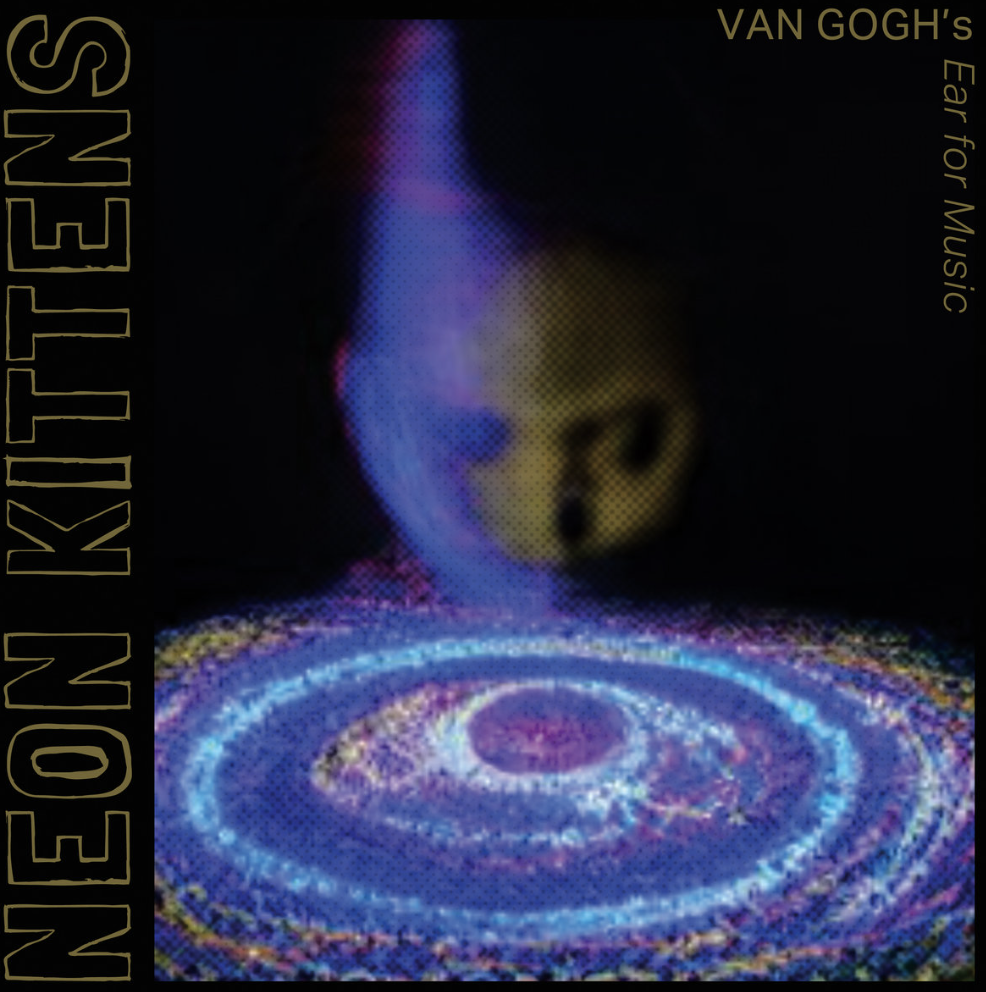
The soundtrack to Lydia having her Lunch, a seductive strut through the streets of a post-punk apocalypse, a place where hi-brow sleeziness and dancing like Thurma and Travolta is compulsory, the sound of Neon Kittens is one of sex seduction and the flashing neon light offering sex to the music of your choice an elicit affair with the cool kids record collection. It is a place where the Velvet Underground and the Flying Lizards meet up for black coffee and talk art. The Neon Kittens are cool motherfuckers.
The Conspiracy ‘New Years Day EP’
(Metal Postcard Records)

The New Years Day EP is a fine way musically to start off 2023. Although listening to The Conspiracy you could be starting off 1990, as this is an EP that takes one back to the late 80s early 90s, for there are songs on here that weave the same magic as the much underrated Wonky Alice, a fine band that never got the success they deserved, a band that I hear has recently reformed, but enough about the fine Wonky Alice and more about the Conspiracy. As I said, they weave a guitar based magic with a hint of art –pop; a band that sounds very British, like the way the Kinks or the Smiths or the great Billy Childish sounds British: an arrogance of melodious melancholy that tips a hat to politics, sexual or otherwise.
New Years Day is indeed a fine way musically to start this New Year.
Tim Cross and TV Smith ‘Words And Music’

This album is a collection of unreleased tracks by Tim Cross and TV Smith, two former members of the legendary punk band The Adverts who of course where much more than your everyday punk band as they took punk into an almost spikey bubble-gum prog direction with their classic second album Casts Of Thousands.
The late Tim Cross also worked with the likes of Mike Oldfield, Fleetwood Mac, Hall & Oates and many others as well as playing on many excellent albums by the punk troubadour TV Smith. This album has a wonderful lo-fi quality about it as the songs are mostly demos and the odd live recording, and contains some quite wonderful early 80s sounding synth pop – ‘Lucky Us’ being a complete poptastic gem and a track one can imagine gracing the charts of the day. And ‘The Lion And The Lamb’ being a typically beautifully written piece of folk punk, whilst ‘Driver Or Passenger’ coming across like Dire Straits being fronted or indeed affronted by a snarking Luke Haines.
All in all Words And Music is a gem of an album and one again that shows TV Smith and indeed Tim Cross really have never got the acclaim and success they truly deserve.
Meadow Argus ‘Dancing Through a Slow Apocalypse’

This seven-track EP or mini album is rather fantastic. Seven tracks that explore the strange world of folk psychedelia and Krautrock, at times reminding me both of the Beta Band and Broadcast but with a poppier more commercial pop edge. ‘House Husband’ even has a twangy Fender guitar sound Buddy Holly would have been more than pleased with.
Dancing Through a Slow Apocalypse is an album of pure musical adventure genre hopping with a fluid style and ease that cannot be anything else but admired.
Our Daily Bread 555: Sara Noelle, Dexter Dine, La Tene
January 23, 2023
New Contributor Alert: Gillian Stone’s inaugural reviews roundup for the Monolith Cocktail

Joining the team in 2023, Gillian Stone is a multi-instrumentalist and interdisciplinary artist originally from the Pacific Northwest and based in Toronto, Canada. Through her eponymous vocally-driven post-rock/drone folk solo project, she has released two singles, “Bridges” and “Shelf”, and her debut EP, Spirit Photographs. Stone holds a BFA in Jazz Studies from Vancouver Island University and an MA in Ethnomusicology from the University of Toronto. Drawing from her eclectic taste, she has worked with Michael Peter Olsen (Zoon, The Hidden Cameras), Timothy Condon and Brad Davis (Fresh Snow, Picastro), The Fern Tips (Beams) Völur (Blood Ceremony), NEXUS (Steve Reich), and visual artist Althea Thauberger.
Sara Noelle ‘Do I Have To Feel Everything’
27th January 2023
Do I Have to Feel Everything, Sara Noelle‘s third album, oozes vulnerability and expresses feelings both directly and allegorically through naturalistic themes. Ever present are the Los Angeles-based artist’s soothing, velveteen vocals which deliver melodies that often sweep into unexpected places. Produced by Dan Duszynski (Loma), the album pays homage to its influences while also managing to hold its own. The opening track, “Blooming Yucca”, begins with a bassline that is distantly PJ Harvey-esque, like something from To Bring You My Love, while “Slip Away” gives a gentle nod to Harvey’s White Chalk. The title track, “Do I Have to Feel Everything”, transitions into an 80’s synth vibe. This aesthetic evolves further in “Sun Fades the Pain”, which evokes a sonic landscape of The War on Drugs being interpreted through the lens The High Priestess archetype. Perhaps the most stunning moment on the album is “Dust Clouds” moving into “Hum”; the former being an interlude built with creepy, beautiful, natural
ambient soundscapes, and the latter being a journey of unexpected chord progressions. Do I Have to Feel Everything is a gorgeous and gentle journey that ebbs and flows like water on a calm day.
Dexter Dine ‘Flood’
31st January 2023

Dexter Dine’s Flood is best listened to with headphones. The self-defined Brooklyn, NY-based “apartment rocker” conjures a diverse and expansive sound that is a “mixture of melodic samples, multi-part drum grooves, and off-kilter saxophone solos”. From the Animal Collective vibes of “Flooded Meadows”, “Splatter In Two”, and “Lockeeper”, to the Juana Molina-esque
“Peanutbutter”, to the Bossa Nova feel of “Valley Of Air”, the beats he creates are the driving force behind this electroacoustic pursuit. There is even a touch of Burial in Dine’s sound, which spatially meanders around the physical sonic space – again, excellent for headphone listening. Interspersed throughout Flood are sometimes trilling, sometime harmonized reverby alto sax
parts that congeal the album’s sound into something that stands on its own. In addition to Flood being Dine’s eighth record since mid-2016, and he also does sound design for gallery- based dance performances. Dine is a prolific artist, and his work is ethereal, striking, and drenched in both sunshine and melancholy.
La Tène ‘Ecorcha/Taillée’
(Bongo Joe Records) 3rd February 2023
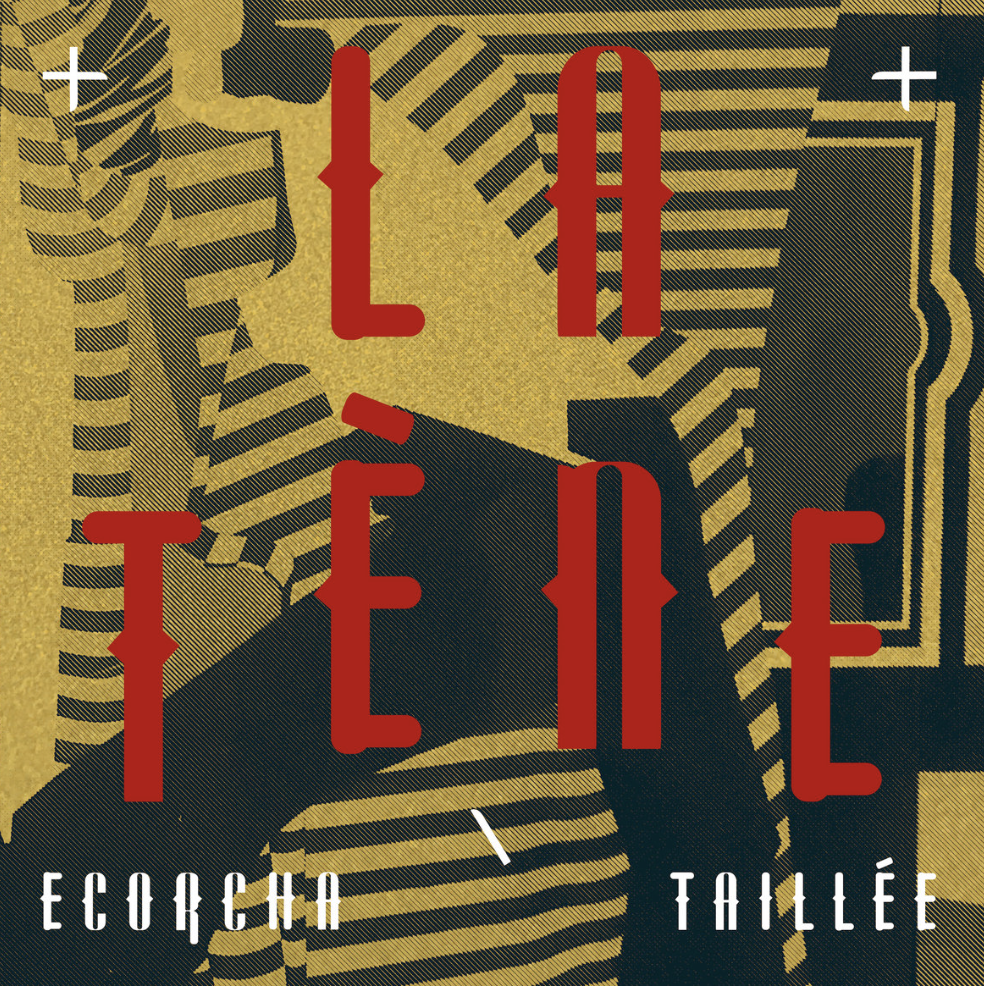
La Tène’s Ecorcha/Taillée is a meditative, minimalist folk masterpiece. It’s two pieces, “L’Ecorcha” and “La Taillée”, travel and swirl in stunning glacial motion. Released by Genevan label Bongo Joe Records, the three core members of the French/Swiss ensemble create a droning, modern artifact by use of harmonium, hurdy-gurdy, and percussion. For Ecorcha/Taillée, the group expanded into a seven-piece, with guest artists contributing guitar, bass, headband, and bagpipes. The album, which was recorded live in a single take, was produced in a cultural centre and ballroom converted from a barn. In line La Tène’s singular folk aesthetic, the main functionality of this space is to build interest in folk music from Auvergne, a region in central France.
The starting minutes of “L’Ecorcha”, which runs at 18:26, establish a repeating, ascending melody that solders the foundation of the album’s trance-like odyssey. Almost unchanging until six minutes in, the piece then slowly swells into a spiraling, understated density. “La Taillée” (14:34, a short piece by the band’s standards) maintains a pulsating minor 2nd chord progression and clave rhythm from start to finish. The piece has distinct parts, starting almost-dance like, breaking into a minimal groove, then descending into a gentle dissonance before softly exploding. Both “L’Ecorcha” and “La Taillée” are utterly captivating and are imbued with experimental triumph. The members of La Tène are avant-garde historians, and the result of their work is a timeless sonic world that is hauntingly beautiful.
Gillian Stone
Album Reviews by Graham Domain
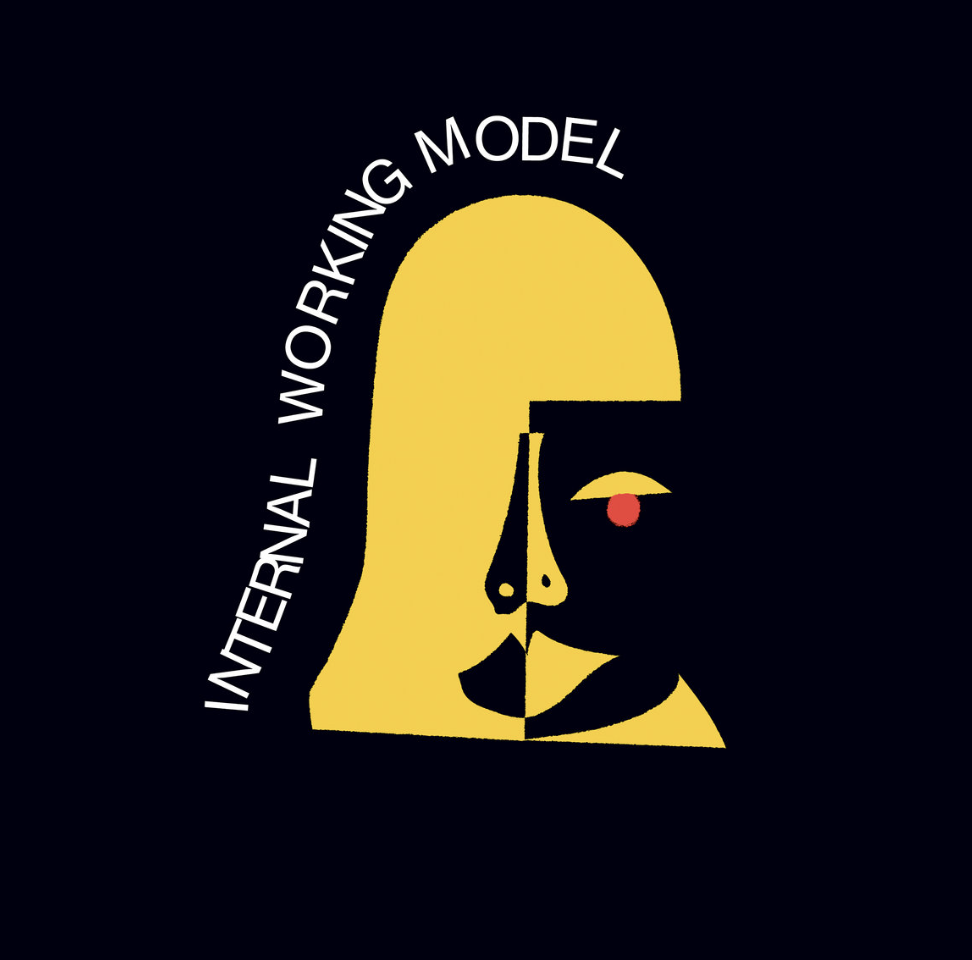
Liela Moss ‘Internal Working Model’
(Bella Union)
This is the third solo album from the Duke Spirit vocalist and an excellent album it is! Whilst the first album My Name is Safe in Your Mouth was a diverse haunting set of wyrd folk songs, her latest album is a progression to electronic music – an album where the singer touches on facets of the dystopian present and near future! The atomisation of society – individuals becoming isolated, alone, helpless to assert themselves against the uncaring, all-powerful state above them – watching, controlling, neutering! The rich and powerful blatantly adopting their own ‘fuck-you’ autonomy while the pliant masses are moulded to comply! Protest steadily becoming outlawed! The NHS openly run into the ground so that it seems like a mercy when the jackal-like Health Insurance Companies take over, profiting from the misery! No one mentions back-handers or conflicts of interest while wealthy MP’s line their own pockets and laugh in the face of common decency, spitting on the downtrodden and shitting all over humanity! Welcome to the dystopian present and near future! The Earth burns and the Four Horsemen get out the barbie – grinning insanely like Rishi Sunak!
Of course, Liela Moss only touches on such concerns, her pop sensibilities still intact, she airs her fears in commercial song settings. The lyrics often abstract, more suggestive than linear, more about feelings and emotions, a cry in the darkness! The music reflects the unease in songs like ‘Empathy Files’ where ominous synthesisers and electronics texture a claustrophobic angst-ridden realisation that the State has ‘…got data for miles on You.’ But there is also inherent hope in the songs, a desire for change and a belief that human goodness will eventually overcome the bad things happening in the world. In ‘Come and Find Me’ she champions the need for people to reconnect with each other, empathise, form groups or networks of support as she sings, ‘Come and find me, I’m empathy…and I’m not on your phone!’
There are some great melodies and expressive vocal performances on the album. At times, she reminds me of Sarah Blasko at her most colourful and daring! ‘The Wall from the Floor’ sounds like a James Bond theme with its ethereal vocals and ‘Bad World’ refrain! ‘Ache in the Middle’ meanwhile has a melody that falls somewhere in-between Tears for Fears Mad World and Kate Bush the Sensual World! ‘New Day’ feels like a hymn to World Leaders for a better tomorrow – a call to feel empathy for others, concern and love for each other! If the overall feel of the electronic music is one of dystopia, alienation and oppression, the intent, the motivation is human – love and kindness as the antidote to isolation and inertia, feelings of helplessness transformed into positivity and action!
GHOSTWOODS ‘My Neon’
(4000 Records)

This is the debut album from Brisbane Dark Jazz Collective Ghostwoods. Made up of six instrumental pieces it moves between oblique minimalism and experimental low-key film soundtrack. Cinematic in intent, but wonkily off-centre in execution, it nevertheless retains the interest of the listener with its elements of melody, intrigue and mystery!
First track ‘Dreamless’ is perhaps the weakest link. Minimal piano is latterly underpinned by deep synths and droning keyboard chords.
‘Terminal Bliss’ follows – distorted guitar giving way to deep bass and hypnotic drums with a reverb snare and a snake-like saxophone weaving between the beat – sounding not unlike Joy Division’s the Eternal crossed with Courtney Pine circa Journey to the Urge Within! Mesmeric!
One of the best tracks is ‘Saturnine’ which begins in a thunderstorm. Harpsichord, piano and arpeggio guitar soon breaking into a spooked Spy Theme (as played by Roedelius) before ending with the cold sound of rain!
In ‘Limina’ eerie voice-like synth waves flow across the music giving way to slow piano chords and droplets of synth, giving the piece a sad melancholic air! Beautiful in its bleakness!
Slow jazz brushed drums begin ‘Brighter Now.’ An air of mystery and tension hangs in the air as dramatic piano chords crash and a lonely clarinet plays as swathes of restrained guitar feedback fade in, bringing forth feelings of danger and foreboding. Music that perhaps could easily soundtrack the opening sequence of a ‘Harry Palmer’ cold-war spy film!
In ‘Terminus’ arpeggiated guitar chords sit atop low dissonance and clashing distortion before morphing into a kind of Ennio Morricone sci-fi spaghetti western theme with a slow tambourine pulse.
My Neon is a downbeat melancholic ‘imaginary’ soundtrack of sad beauty and simmering strangeness that stands its ground.
Key tracks: Brighter Now, Saturnine, Terminal Bliss.
A January Digest: Kety Fusco, Mentrix, Gangsta Rabbi, Edo Funk, De La Soul, Beach Boys & Yukihiro Takahashi
January 17, 2023
New Music on our radar, news and archive spots
Dominic Valvona
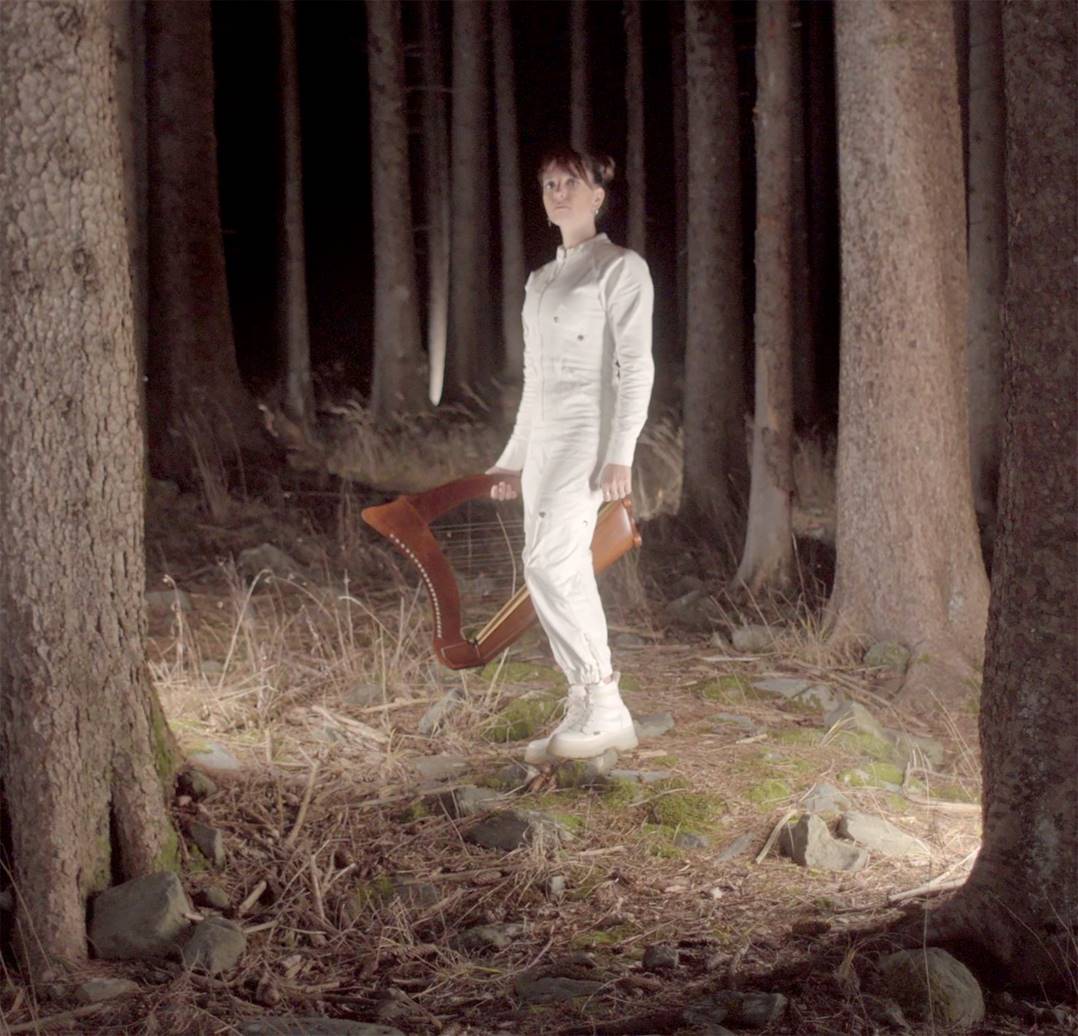
A new thread, feed for 2023, the Digest pulls together tracks, videos and snippets of new music plus significant archival material and anniversary celebrating albums or artists. In the inaugural edition we draw your attention to exploratory harp virtuoso Kety Fusco, Iranian backbeat techno from Mentrix, a relatively short mash of post-punk-metal-lo fo from the cult Gangsta Rabbi, a slice of Edo Funk from The Good Samaritans and news that De La Soul finally make it to streaming platforms. The Beach Boys Holland LP reaches 50, and a nod to the passing of Japanese icon and Yellow Magic Orchestra member Yukihiro Takahashi.
TRACKS
Ket Fusco ‘2072’ – Single, taken from the upcoming The Harp, Chapter I album, released 3rd March 2023
Not quite as far into the future as Zagar & Evans, the Italian virtuoso harpist Kety Fusco transforms her instrument into a premonition eulogy of her own death in that titled year of 2072. So sure of this far-off inevitable, Kety has even whittled it down to an exact date: “On 13 January 2072 I will die”. With a certain mysterious if plaintive quality, a translucent picked reverberation of notes that convey memories and tubular peaks of diaphanous grief, the live processed and spell-casted melody of this music will accompany Kety to her tomb.
The composition of this track, we are told, is based on a live granulation of Kety’s electric harp, combined with drone sounds created with a pulsating massager on the soundbox of the 47-string classical harp, and vocal reminiscences emitted by Kety with scratchy screams inside the harp soundboard, which decorate this post- classical sound. The gifted exploratory artist is renowned for pushing the envelope and the very definition of what a harp sounds like with experimental generated augmentation, effects and various manipulations. To see it live, on video, is extraordinary and performative, with a method that is usually improvised and felt rather than studied.
2072 is part of a much longer suite taken from the upcoming album The Harp, Chapter 1 – itself part of trilogy I believe of such works, released over the next few years. You will be able to read my review of it in time for its inaugural full performance on the 3rd of March at the Royal Albert Hall in London.
Mentrix ‘Be Masha Be Nika’ – Taken from the upcoming Arpanik labels’ Woman, Life, Freedom compilation, released 20th January 2023
As the West’s attention is quite rightly invested in the ongoing Russian aggression in Ukraine, it’s fallen on artists, musicians to draw that intense scrutiny on the Iranian regime and its heinous treatment of women. Prompted by the death of Mahsa Jina Amini in the custody of the authorities last year, an ensuing battle of ideals and freedoms has ensued that threatens to topple the tyranny. However, the regime has pushed back harder and with an almost unprecedented violence started executing (mainly men so far) supporters and activists on trumped up, tortured confessional charges of treason. But even in the face of this bloody repression history is on the side of Iran’s younger more liberal generations.
As artists, the Iranian’s AIDA and Nesa Azadikhah have announced a not-for-profit compilation Woman, Life, Freedom in support:
‘Throughout Iranian history, women have been at the forefront of music and performing arts. However for the past 44 years under the Islamic regime, women in Iran have been banned from singing, dancing, and performance. Facing threats to the safety of themselves and their families, to their career and reputation, female artists are forced to quit, leave Iran, or to go underground facing grave risks. Despite this, Iranian women have remained active and at the forefront of their art, pushing boundaries from Iran and different corners of the world.
Woman, Life Freedom is a collection of original music from Iranian women artists, dedicated to the recent uprising of people, especially the women in Iran who have endured silencing, censorship, and forced control over the past four decades.
The compilation consists of 12 new tracks across electro, breaks, techno, ambient and experimental from Iranian artists including SarrSew, MENTRIX, Sharona Lico and AIDA and Nesa Azadikhah themselves, with many of the tracks either directly addressing or inspired by the current revolution.
The goal of this project is to raise awareness of the international music community about the bravery, talent, and difficulty of female musicians to work under the Islamic Republic’s Regime, as well as the brutal killings of people who have been speaking up since the start of the revolution in September 2022.
AIDA can be found at the intersection of two contrasting worlds: rich Iranian roots and a serene west-coast Canadian upbringing. This dichotomy is infused in everything she crafts, combining elements of world-inspired music with electronic, she gives colorful twists to masterful blends of groovy house, techno, and breaks geared for the dancefloor.
Nesa Azadikhah is a Tehran-based DJ, music producer, composer, sound artist, and musician. From playing Tonbak and Daf at the age of six to DJing at the age of sixteen in the underground dance scene, she has established herself as one of Tehran’s most in-demand electronic music and sound artists and composers. Nesa is also the founder and managing director of Deep House Tehran, which focuses on showcasing Iranian electronic musicians.
Proceeds from this release will be donated to charities that help struggling women in Iran. The first selected charity is Saraye Mehr, an organisation that helps women and children recovering from domestic violence, addiction, homelessness, and societal distress in Iran.’
Today, we are happy to share Mentrix‘s ‘Be Masha Be Nika‘, a backbeat reverberating Matmos-esque slice of Iranian techno. You can purchase the compilation, and we encourage you to do that, from bandcamp.
The Gangsta Rabbi ‘Ana’mika (138th Entr’acte)’
In comparison to his usual hour plus long ‘militia punk’ performances, this newest concentrated dirge and explosive force of post-punk antagonism and mayhem from Steve Lieberman, aka the Gangsta Rabbi, is a mere vignette-sized grenade toss of fleeting lo fi paranoia and radio unfriendly twaddled madness.
The new single ‘Ana’mika (138th Entr’acte)’ is taken from the upcoming 4th King of Jewish Punk Calling Out From Radio Bad’lania (#41/79) album. It will be his 79th album in his catalog, which includes the Guinness World Record holder for Longest Officially Released Song, ‘The Noise Militia (#38/76)’ running close to 36 hours long. Unbelievably it has already racked up over 400,000 plays on Spotify alone! After thirty years at this shit, we can perhaps say the cult polymath (from magician to punk-metal singer, arranger and songwriter) name is out of the bag.
The Good Samaritans ‘Onughara’ – Taken from the upcoming No Food Without Taste If By Hunger album, released on 3rd March 2023 by Analog Africa
From the rarified vaults of Nigeria’s Benin City , a shuffling lively funky slice of Highlife action. Many just know it as ‘modern Highlife’, others as a whole different brew entirely called ‘Edo Funk’: a more stripped and raw sheen-less and less slick version of the productions emanating from the nightclubs of 80s Nigeria. Born in the much fought-over Edo State capital of Benin City in the cosmopolitan region of Southern Nigeria, the Edo Funk phenomenon was a reductive alternative to the polished productions that dominated the scene, and one that delivered, in many cases, the same spirited protestations that Fela Kuti wrapped around Afrobeat.
Analog Africa released a first volume of such hits a couple of years back. Now, they’ve unearthed No Food Without Taste If By Hunger by The Good Samaritans, one of the most obscure Nigerian albums ever recorded. Originally released in 1982, The Good Samaritans is Philosopher Okundaye‘s Edo Funk project. He produced four albums under this name (No Food Without Taste If By Hunger is the first of these), all recorded with a 24 track at Phonodisk Studio in Ijebu Igbo in Ogun State, east of Lagos. Okundaye who played many instruments, engaged the right musicians for each project and mixed the whole thing himself, is known as the composer of a large part of Benin City’s celebrated hits in the 80s. His name keeps popping up but somehow his role in the scene remains a bit hazy, giving the character an image of something like the gray eminence of Edo Funk.
Here’s the first cut to drop in the run-up to that treasure’s release in March.
ARCHIVE
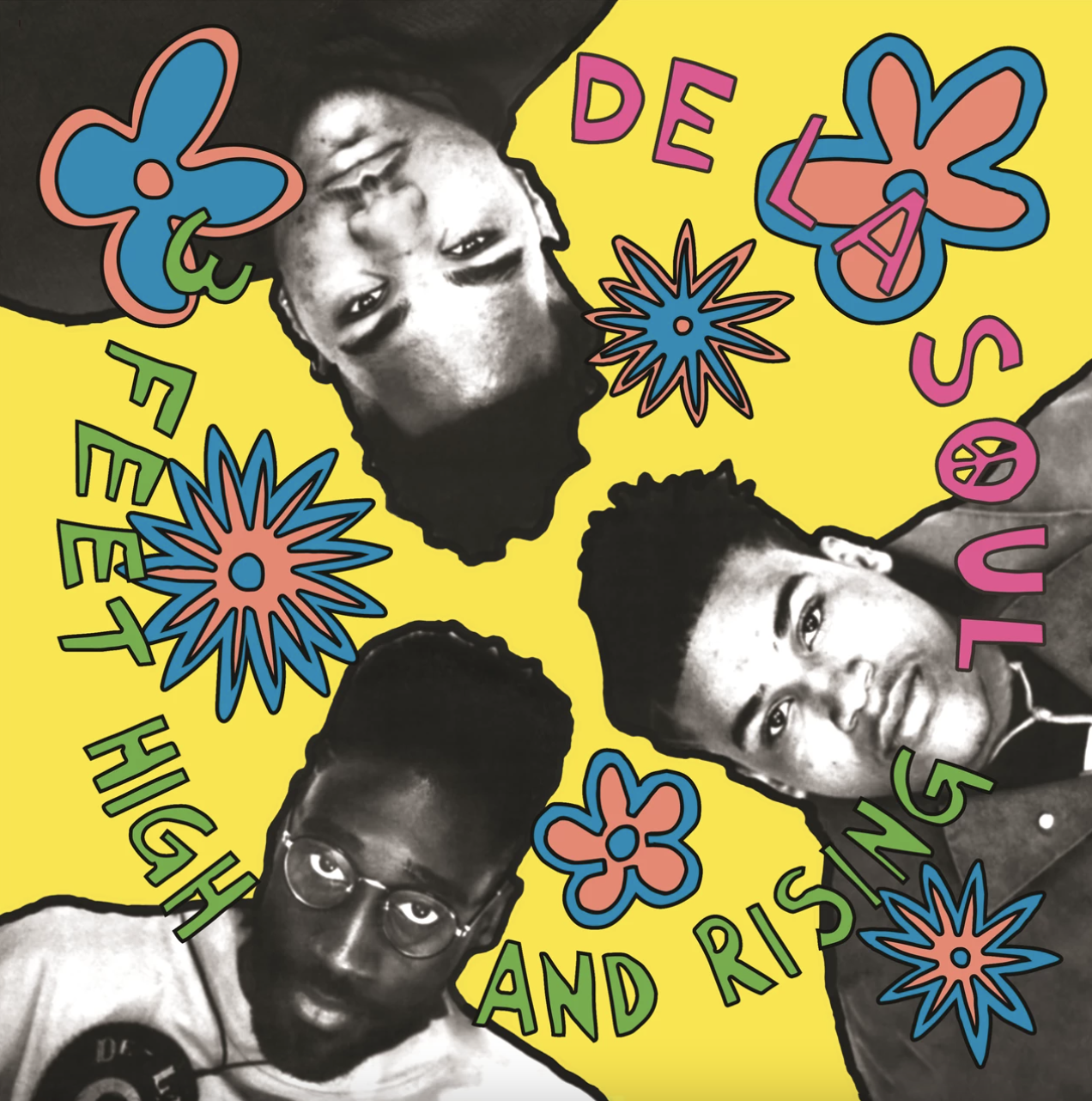
The Daisy Age’s chief protagonists will finally make it to streaming platforms – for better or worse. With a deal cut at last, samples cleared, copyrights navigated, De La Soul can now officially be shared on such behemoths as Spotify. It was the trio themselves that felt left out of the picture; the glaring missing link from the story of Hip-Hop. They announced this deal by dropping ‘The Magic Number’ single and 3 Feet High And Rising album track. The full debut will be released in due course along with the group’s first quartet of albums.
The dawning of a ‘daisy age’, a psychedelic trigger to expand rap music’s horizons, the debut album from the New York trio dared to dream bigger and better. The Haight Asbury to the street level epistles and rage of such luminaries as KRS-One and his Boogie Down Bronx collective or Public Enemy, and far less dogmatically pro-Nation of Islam as X Clan and the Brand Nubians, De La Soul wove an almost electric kool aid tapestry of skittish humour and enlightened social commentary: closer in spirit to Prince than their fellow Hip Hop brethren.
A change had to come, and 3 Feet High And Rising was a zeitgeist: nothing before or after was quite the same creatively. Of course, they weren’t the first to sample outside the usual soul, funk and R&B influences; both Run DMC and The Beastie Boys had beaten them to AM rock and heavy metal. They weren’t the first either to take up the Afrocentric cause, their fellow Native Tongues partners, The Jungle Brothers (bookending 1989 with their own accomplished and, arguably, one of the genres best albums, Done By The Forces Of Nature) already delivering that with their, soul-zap, jazz, hip house debut, Straight Out Of The Jungle, the previous year. Yet they managed with the help of original Stetsasonic honcho and Hip Hop’s leading experimental light, Prince Paul, to create the Sgt.Pepper of rap; a counterbalance to the tough and egotistic mantra gesticulating stereotype hoods that had dominated the scene for the past decade, turning the party jam and electro golden dawn into a bloody rivalry of dangerous put downs and postcode spates.
In keeping with the burgeoning of the intelligent hoodlum, De La Soul used their halcyon flower sprouting noodles to turn on society’s ills. Not only, ingenuously, making Hall & Oates hip for a brief moment, ‘Say No Go’ and the beat poetic nursery rhyme resigned ‘Ghetto Thang’ both deliberated on the cruel and seamier side of the shaded sidewalk without swearing or boasting.
For sure it would be a milestone, but it would also be a millstone around the trio’s neck. The accolades and acclaim that followed would never match the debut’s impact, though not for want of trying. Even as far back as their sophomore release they pessimistically – though with an ironic knowing – announced their own demise with the equally sophisticated but much serene De La Soul Is Dead. Decades later they’re still making records, and once, as a bestowed gift to the world, gave all their music away free for a 24-hour period. The legacy that followed cannot be overstated, sparking a leftfield revolution that helped spawn and motivate A Tribe Called Quest, Leaders Of The New School, Queen Latifah, The Black Sheep, KMD, Divine Styler, Digable Planets and Main Source to name just a few, though we could also arguably blame them for PM Dawn too!
.
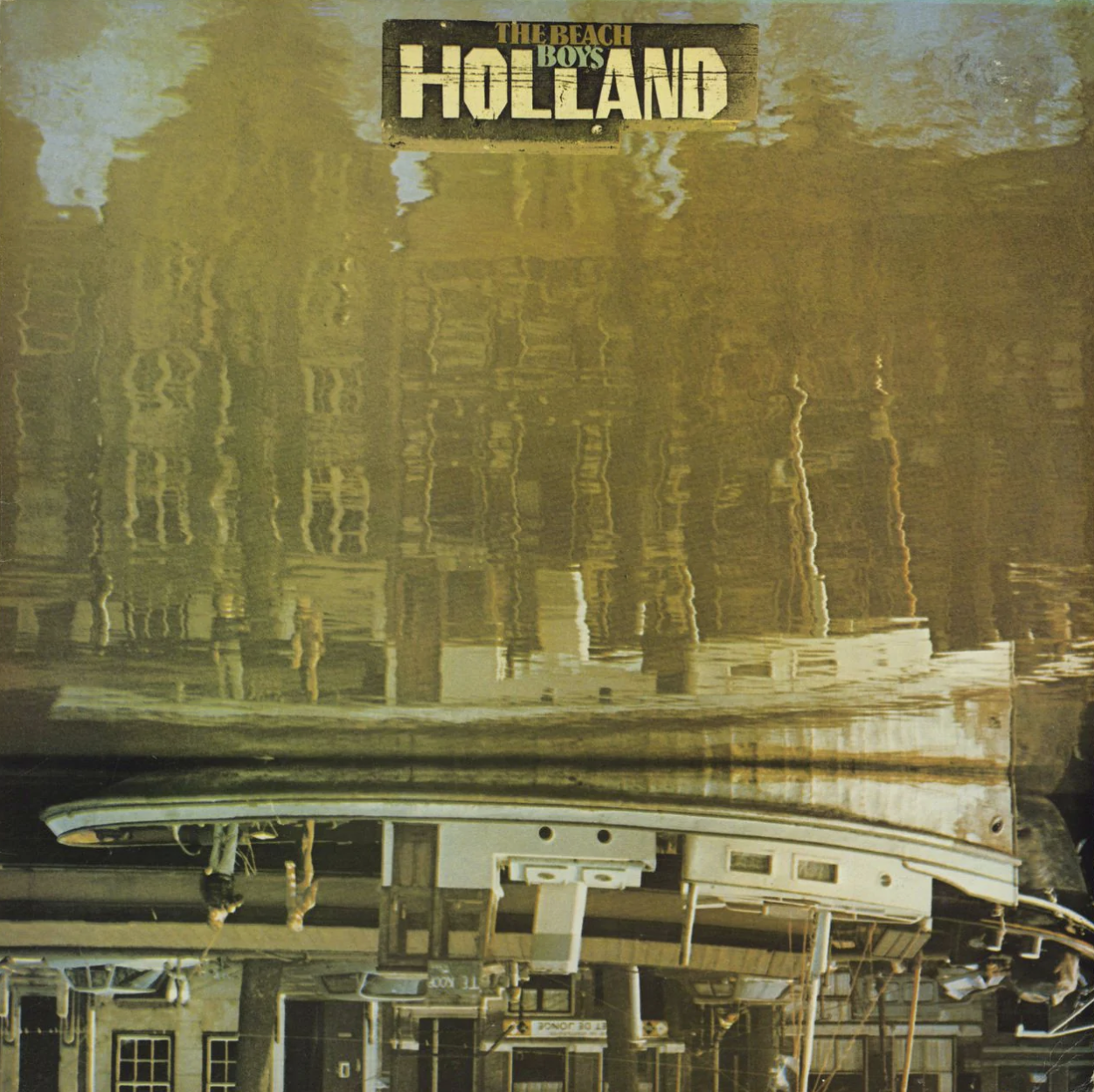
The Beach Boys Holland LP makes fifty this month. Recently part of the double album appraisal box set Sail On Sailor 1972, this pilgrims trail, for many of us, marks a return to form after the previous passable Carl And The Passions – So Tough R&B and soft-rock revue. With former Flames Blondie Chaplin and Ricky Faatar on board again, but a lacklustre, meditating Brian Wilson yet to break out of his malaise, the songwriting was even more varied but good. They lost Bruce ‘Disney Girls’ Johnston from the lineup, and handed control over to Carl Wilson and manager, producer (and general instigator, mentor) Jack Rieley – the man mostly responsible for shaking the group out of their stupor, and encouraging the Surf’s Up cult favourite.
Relocating out of some misplaced belief that in a different location miles from home, it would either shake or force Brian to take up the mantle, the group instead found themselves writing a lovesick postcard to their Californian home. Rather than break out of repeating patterns, Brian felt ill at ease in new surroundings – no sandbox beneath his feet. He did write the nursery rhyme, radio hall ‘Mount Vernon And Fairway’ transistor bedtime story – for better or worse. Step forward Carl, Mike Love, Al Jardine, Dennis Wilson and the South African duo of Chaplin and Faatar to compose an American almanac.
I’d always thought that the reason for crossing the Atlantic to Holland was some kind of homage to the founding fathers; being the port of call after leaving England, for the pilgrim fathers and mothers. And so why not a songbook dedicated to this history. One that seems to follow the Western trials, the steamboat river journeys all the way to California; not flinching from Steinbeck’s visions of the great depression in the dust bowl states, the Trail of Tears and Borrow My Heart sentiments of crimes against the Native Indian populations. ‘The Trader’ an encapsulation of the latter, paints a sort of Americana picture – I’m reminded of The Band’s ‘Arcadian Driftwood‘. The poetry, imbued words of Robinson Jeffers and Robert Frost ring clear as the old West meets the new age vibrations of Country Joe And The Fish at Big Sur. And yet there’s room for the incredible heart-aching ‘Leaving This Town‘, from the Chaplin/Faatar pact, opening favourite nautical themed ‘Sail On Sailor’ and Dennis/Love penned heart-crushing piano ballad ‘Only With You’ (sang by Carl) – the former reflecting a mature love despondent yearn of soft balladry from the group.
And so couple of my personal favourites from that album:
From the Beach Boys vaults on the Monolith Cocktail:
Brian Wilson And Friends Live In Glasgow
Also…added to at regular intervals, my defining playlist:
Obituary

Musically (sartorial too for that matter) one of the great pantheon influences of modernist Japanese music, part of the holy Yellow Magic Orchestra trinity of Haruomi Hosono and Ryuichi Sakamoto, Yukihiro Takahasi helped birth the Tokyo, or City, glow pop explosion of the 80s in his homeland. Which thanks to labels such as WEWANTSOUNDS have been in an ascendence of late – that label also re-releasing his debut, more European cool and suave album Saravah too – a kind of Japanese Brian Ferry!
Japan before there was a Japan (the David Slyvian kind), Takahasi first took up with his YMO foils, playing drums in the country’s premier and most innovative electro-pop group, before swanning off and trying to out-Bowie 80s Bowie. Crafting some irresistible, charismatic neo-romantic hits, the star released an abundance of sentimental but always cooly-lit neon heartaches and pensive croons, even a cover version or two. Here’s just a few of them:
Hi, my name is Dominic Valvona and I’m the Founder of the music/culture blog monolithcocktail.com For the last ten years I’ve featured and supported music, musicians and labels we love across genres from around the world that we think you’ll want to know about. No content on the site is paid for or sponsored and we only feature artists we have genuine respect for /love. If you enjoy our reviews (and we often write long, thoughtful ones), found a new artist you admire or if we have featured you or artists you represent and would like to buy us a coffee at https://ko-fi.com/monolithcocktail to say cheers for spreading the word, then that would be much appreciated.
Our Daily Bread 553: (Album/Video) Clamb ‘Glittering Watermelon Oracle’ and ‘Eggs’Our Daily Bread 553:
January 16, 2023
A look at both the new live album and video from the Boston trio Clamb
Words by Dominic Valvona
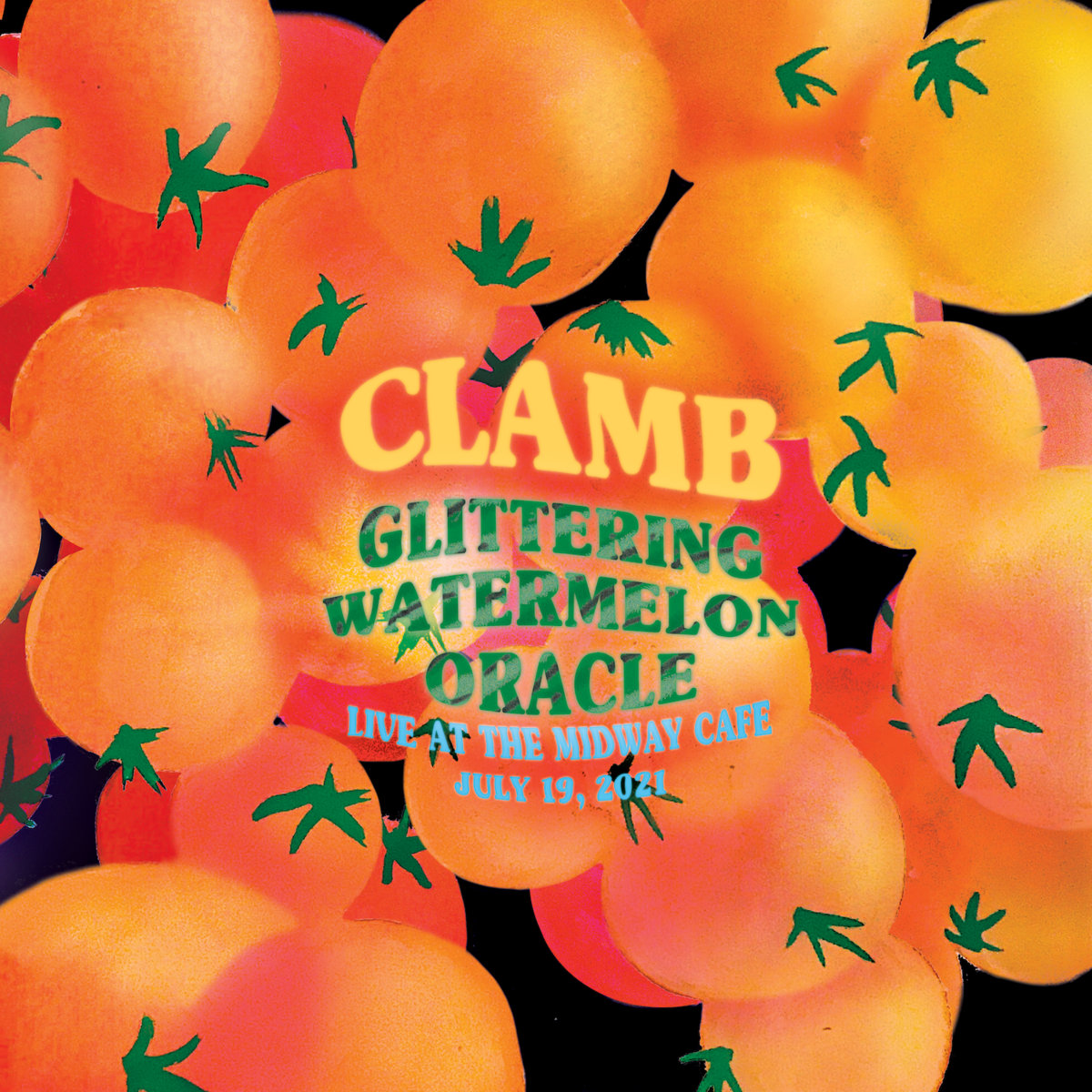
Clamb ‘Glittering Watermelon Oracle (Live At The Midway Café, July 19th 2021)’
“Eggs’ video created by Peter Danilchuk and Collaborators Digital
All hail the grapefruit, the egg and… well, the watermelon deities as our Boston pyramid schematic of jazz-funk-prog-krautrock-fusion release a live album of their pumped works. Once more into the magik temple with a sound that can only be described as warped mix of Mahavishu Orchestra, the Zapp band and Qüassi, Clamb both reinterpret tracks from their debut album Earth Mother Grapefruit and improvise new peregrinations – the title-track for one.
From the Midway Café stage (Jamaica Plain, Boston to be exact) on one excitable night after coming out from lockdown, the three-piece (though it looks like they extend to a quartet live) whoop and howl, simmer and stutter to polymetric drums (courtesy of Joshua Merhas), synthesized zips and zaps (Peter Danilchuk) and jazzy, funk-fried noodling fretless basslines (Jameson Stewart). Egged-on by an enthusiastic, let loose from pandemic morose, audience at all times, they transform the debut album tracks ‘Oyster Sunday’, ‘Land Breath’, ‘Triangular Fÿord’ and ‘Fields Cornelius’. The first two being twinned as it were, connected in one almost continuous performance that’s one-third Parliament, one-third Yes, and another third Can. The Floydian “Fÿord” (encouraged with a “we can do this one!”) is retuned to the gothic flange of The Banshees and various krautrock evocations of the vapourous and evaporating. The latter, and album finale, combines the Jah (Wobble) with the Jarre (Jean-Michael) on a radiating progressive voyager trip.
In-between those Earth Mother Grapefruit inclusions there’s the stuttered and scuttled, cymbal dancing, ray emitted astro-funk title-track (imagine Tortoise sharing room on an 80s sci-fi soundtrack with Holy Fuck and the Van Allen Belt); the Numan/Vangelis modulating, oscillating sine wave plant life panorama ‘Emerge! O Citroid’; and Tangerine Dream(ed) space dusted orbital re-entry ‘Plutonian Auspex’. And through it all there’s a sense that Clamb is having fun with these outlandish prog-jazz fusions: those heads being raised up shaking with enjoyment rather than downcast towards the navel and erstwhile. This same attitude bleeds into the band’s new hand-made animated video for ‘Eggs’ – taken from their already mentioned debut album. Danilchuk’s volcanic erupted covered Hellenic columns and ruins strewn landscape and phoenix rising from Easter eggs cut-ups are handed over to Digital Awareness (responsible for projecting the visuals at the group’s live shows), who dress it up further with various psychedelic acid-rain, buzzing and lava spewing effects. It’s a collaboration that perfectly captures Clamb’s cyber-generating mix of the surreal, charming, goofy and magical. All hail the fruits of a funked nature.
 Monolith Cocktail Blog