Premiere: (EP) Cephas Teom ‘Feet Of Clay’
October 14, 2020
Premiere/Dominic Valvona
Photograph credit to Natasha Alipour-Faridani
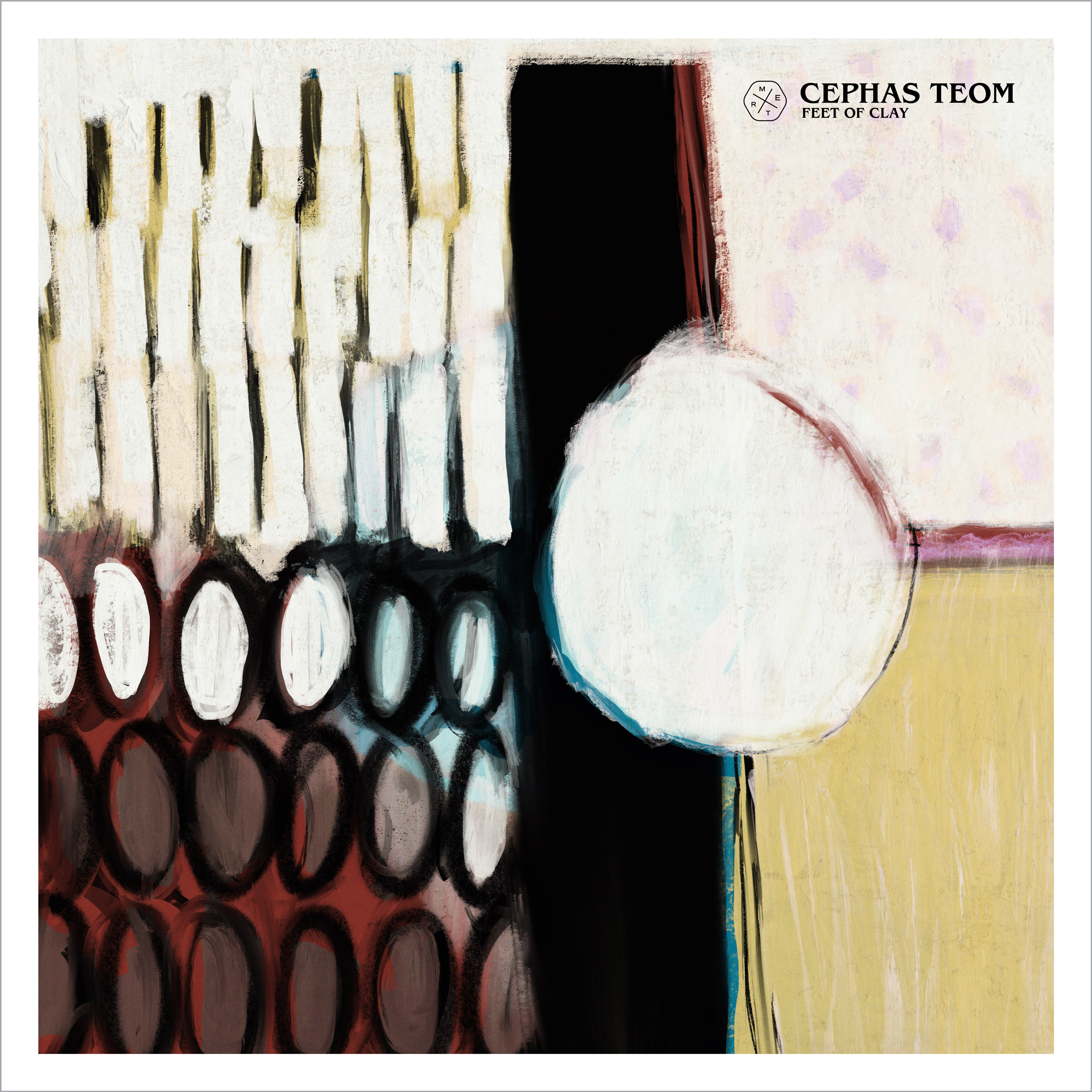
Cephas Teom ‘Feet Of Clay’
(METR Music) 16th October 2020
Overpowered by the wild elements of his Dartmoor studio retreat, the debut release from Nightjar Pete Thomas took on an entirely transformed electronic and programmed form; the consequences of an unwelcoming imposition by nature forcing the Bristol musician to change his acoustic methodology.
Known previously for his part in the folksy ensemble The Nightjar, Thomas moved to an isolated spot on the moors and a self-built studio in a former mining crater, to pursue new sonic horizons. Under the atavistic holy land alternative version of his own name (“Cephas” is the Aramaic name for “Peter”, “Teom” the Hebrew for “Thomas”) alter ego, this first Cephas Teom release is also a showcase of intention for his burgeoning co-led label METR Music: His partner in this venture being fellow producer-artist James Cameron, who trades under KAMS amongst many other names.
The opening account is all about the synthesis: a synthesis of the algorithmic compositional programs Supercollider and Tidal Cycles, and, as Thomas puts it, a “natural synthesis of the mystical jazz esotericism of Sun Ra married with the dense technical schematics of pioneers of generative process, Visible Cloaks and Mark Fell.” And yet, it does to a degree pull this conjuncture, counterbalance off; though less esoteric and more just a tad mysterious and starry.

Firstly the most ominous, disturbed part of this EP is the star-gate ascendance to dreamt-up superior overlords from another space, ‘The Kingdom Of Heaven’. Ping-Pong algorithms, kinetic nodes, videogame operatics and hits of Richard James at his sweets and most entrancing (yes it does happen) cloak a more sinister and profound theme of cultist indoctrination, seduction in an epoch in which institutions and reliable sources, guardians are collapsing. A transmogrified sample of one such fatalistic cult recruitment video cuts through the echo-y spells: that is the death cult Heavens Gate, who’s members committed a shared suicide pact in 1997, in what they thought would be a lift aboard a comet-trail hidden UFO to utopia.
The rest of this EP masks, veils, any other kind of dangerous disturbances; setting off a minimalistic Techno and Tibetan percussive ringing peregrination on the soulful and quivered bobbing notes meander ‘In Whom Can We Trust’, and gentle evoking, gilded intersection of the Bureau B label, House Of Tapes, Kota Motemura and Sakamoto on the Japanese imbued ‘Zen Brouchure’. Enervated industrial components, rattles of steel mesh, jug poured liquid atmospherics, pondered electric piano, metallic percussion connect on a most subtle and sophisticated record. A synthesized soundboard certainly, but one that has soul and atmosphere: Imagine a jazzier Autuchere and more twinkled yuk..
A great start then to an emerging transformation, and one we are lucky enough to share with our followers before the official release on Friday the 16th October. You can hear the full five-track EP below for a limited time.
Our Daily Bread 405: Kahil El’ Zabar ‘America The Beautiful’
October 13, 2020
Album Review/Dominic Valvona

Kahil El’Zabar ‘America The Beautiful’
(Spiritmuse) 23rd October 2020
Continuing a creative partnership with the Spiritmuse label, Chicago jazz luminary Kahil El’Zabar releases his third African rhythmic imbued spiritual album in two years; working yet again with an ever changing lineup of fellow visionaries and rising virtuosos from his home city and beyond. Following last year’s Be Known Ancient/Future/Music (which made our albums of the year) and this year’s Spirit Groove album collaboration with David Murray, the jazz incubator School of The Association for Advancement of Creative Musicians alumni and five decade jazz veteran pieces together a suitable afflatus cry from the despair of modern America on his latest sweeping grand gesture, America The Beautiful.
Though obviously, as you will hear for yourselves, chiming with the current divisive turmoil that has erupted in the wake of George Floyd’s “unconstitutional murder, and the Covid-19 pandemic, the catalyst was Kahil’s score for Darryl Robert’s award winning documentary film of the same title: a 2007 film about “self-image” in the USA. That title music, two versions of which bookend this ancient with a modern pulse oeuvre, is itself both an ironic and sneering riff on the original patriotic anthem that was written by Katherine Lee Bater, with music by church organist Samuel A. Ward, over a century ago. Bates the scholar, collage professor and highly prolific writer first wrote the proud-swelling lyrics as a poem (Rikes Peak) after being inspired by the great American outdoors and the country’s own version of the seven wonders. Countless versions have been performed, recorded since, including the maverick jazz artist Gary McFarland who devoted a conceptual eclectic musical suite to its rousing evocations; in the process jazzing and funking up the old bird. This take however finds little to rouse patriotism, sharing more in common with Ornette Coleman’s grandiose symphonic dissonance Skies Of America; that suite a contortion of Coleman’s naturalistic Native American rituals inspired master plan.
Kahil includes both a lilted and horn blown Bernstein-via-a-century’s-worth-of-Chicago jazz instrumental take, and a 80s pepped dance groove vocal version: The latter features the bandleader straining, pulling, mooning and crooning the original lyrics of ‘America The Beautiful’ to a dance limbering Chicago House like beat.

Building a fully realized album around that anthem, Kahil went back to record an array of new material and riffs on standards: his choices proving more spiritual, healing than angry and enraged. For this is a jazz artist preaching connectivity during a momentous epoch. A time, he hopes, that despite the tumultuous unrest and anxieties can offer us time to pause, reflect and reassess. In the spirit of one of Kahil’s idols, Coltrane, his inspiration is that grand doyen of jazz’s message of a “love supreme”, and also the African adventures of Byrd and Gillespie via Sun Ra’s cosmology of Afro-futurism. And so musically, despite the swells and layering of discordant instrumentation wailing, and crying out, this is a mostly divine experience; sweetened by the inclusion of a romanticized, serenaded beautiful version of the Bee Gees (via Al Green’s more soulfully hushed vision) ‘How Can You Mend A Broken Heart’. Only Kahil switches the “you” to “we”, and in doing so forces the emphasis on all of us to mend the rift. Musically it’s a swoon; a walk through a sweet Central Park backdrop. It has an air of both pained heartbreak yet also hope, and is the album’s most tender performance.
Swinging to a ‘Orleans gait, Kahil’s big band version of Charles Wright & The Watts 103rd Street Rhythm Band’s famous strut ‘Express Yourself’ is reimagined as a semi-classical jazz funk of King Curtis and Albert Ayler. Classically trained jazz cellist and Nicole Mitchell’s Black Earth Ensemble student, Tomeka Reid offers part of that semi-classical feel with a deep, arching quivery cello accompaniment.
Closing a quartet of congruous cover transformations, Kahil ad his troupe expand on the Afro-jazz percussive-heavy ‘Afro-Blue’ odyssey; the first jazz standard in the States built on a typical African 3:2 cross rhythm. Made famous by Mongo Santamaria with the Cal Tjader Sextet in ’59, and transformed by Coltrane who took it in a waltz-y swinging direction, this Chicago hothouse of talent goes earthy and deep, atavistic and dramatic. Samuel Williams plays a harassed, pointed elbow thrashing violin against the clay percussion and Masekela trumpet on a message from the motherland.
With all the original connotations bought into a modern epoch of discord, these standards now echo a longing and pain for change.
The rest of the album channels the inimitable groove that runs through Chicago jazz, soul, R&B, blues and dance music. ‘Jump And Shout (For Those Now Gone)’ is a poignant example of this history; evoking the city’s spiritual and avant-garde masters – The Art Ensemble Of Chicago being one. It’s a kind of sentiment, a yearning for justice, but with a bounce and venerated enlightenment. ‘Freedom March’ couldn’t be more relevant; the long march to equality accompanied by apparitional wails, shackles shaking percussion and anguished rasps of sax. It also sadly marks one of the late baritone saxophonist greats, Hamiet Bluiett’s last performances. Not only a phenomenal sax presence, but also a renowned clarinetist and composer, the co-founder of the late 60s Louisiana Black Artists Group and former member of the Charlie Mingus Quintet and the Sam Rivers large ensemble, blows a moving honked and aria-like squealing raspy baritone through this counterbalance of Mardi Gras swing and the disconsolate.
Kahil, literally, preys for guidance on both the electric piano dabbing, lamenting swell ‘That We Ask Of Our Creator, and the sweeping fluty beat-stretched ‘Prayer For The Unwarranted Sufferings’. Both draw from the pool of despair, yet find just as much hope to offer some glimmer of overcoming the impasse.
An extraordinary portrait of the current mood, Kahil’s conscious divine spiritual jazz opus channels the contorted soul of Chicago’s rich musical heritage; spanning eras as old as atavistic Africa, the be-bop, swing eras, leaping through the avant-garde and 80s dance music culture to create a soulful and always grooving purview of the American social-political divide in 2020: Election year.
An incredible jazz score no less from one of the most active and transformative artists in the field, a true acolyte of the scene’s most celebrated, progressive greats, Kahil carries the torch for a more healing engagement with the causes, activism he holds dear. There’s no mistaking where he’s coming from, with an album that has never been more vital and enriching to a culture and creative form under pressure and fire to react to the changes taking place.
See also…
Ethnic Heritage Ensemble ‘Be Known Ancient/Future/Music’ (here…)
Kahil El’ Zabar’s ‘Spirit Groove Ft. David Murray’ (here…)
Hi, my name is Dominic Valvona and I’m the Founder of the music/culture blog monolithcocktail.com For the last ten years I’ve featured and supported music, musicians and labels we love across genres from around the world that we think you’ll want to know about. No content on the site is paid for or sponsored and we only feature artists we have genuine respect for /love. If you enjoy our reviews (and we often write long, thoughtful ones), found a new artist you admire or if we have featured you or artists you represent and would like to buy us a coffee at https://ko-fi.com/monolithcocktail to say cheers for spreading the word, then that would be much appreciated.
Reviews Galore/Brian ‘Bordello’ Shea

The cult leader of the infamous lo fi gods, The Bordellos, Brian ‘Bordello’ Shea has released countless recordings over the decades with his family band of hapless unfortunates, and is the owner of a most self-deprecating sound-off style blog. His most recent releases include The Bordellos beautifully despondent pains-of-the-heart and mockery of clique “hipsters” ode to Liverpool, the diatribe ‘Boris Johnson Massacre’ and just in the last month, The King Of No-Fi album. He has also released, under the Idiot Blur Fanboy moniker, a stripped down classic album of resignation and Gallagher brothers’ polemics.
Each week we send a mountain of new releases to the self-depreciating maverick to see what sticks. In his own idiosyncratic style and turn-of-phrase, pontificating aloud and reviewing with scrutiny an eclectic deluge of releases, here Brian’s latest batch of recommendations.
Marshall Holland ‘Paper Airplane’
Album, 21st September 2020
Oh, fuck me let’s get it over with and call it power pop shall we. Yes why the hell not. It has all the right boxes ticked: fine melodies, 60’s, early to late 70’s, early 80’s pop guitar music influences. I have been inundated with requests over the last few days with bands pushing their latest waxings in the power pop variety some of it good some of it not so good and some of it bloody exceptional. I’m pleased to say that this falls into the exceptional category. I’m doing it a slight disservice, tagging this album in any genre, for this has much more to offer. Marshall himself has such a wonderful pop voice and is also a fine songwriter and a very good lyricist. He has a wonderful quirky way with words and imagery: one you do not really get to come across very often. He even has guitar solo’s that does not have me shouting get the fuck on with it which is very rare thing, which no doubt pleases my wife no end as I suppose it can be a bit off-putting having some aging old chap clad in pajamas and head phones shouting get the fuck on with it while you are trying to watch TV. But you do not want to hear about my quirks, this album is very fine indeed with not a bad track just joyous pop performed with energy originality soul and style: the key word being soul.
Another beauty for 2020.
Rob Clarke And The Wooltones ‘Putting The L In Wooltones’
Album
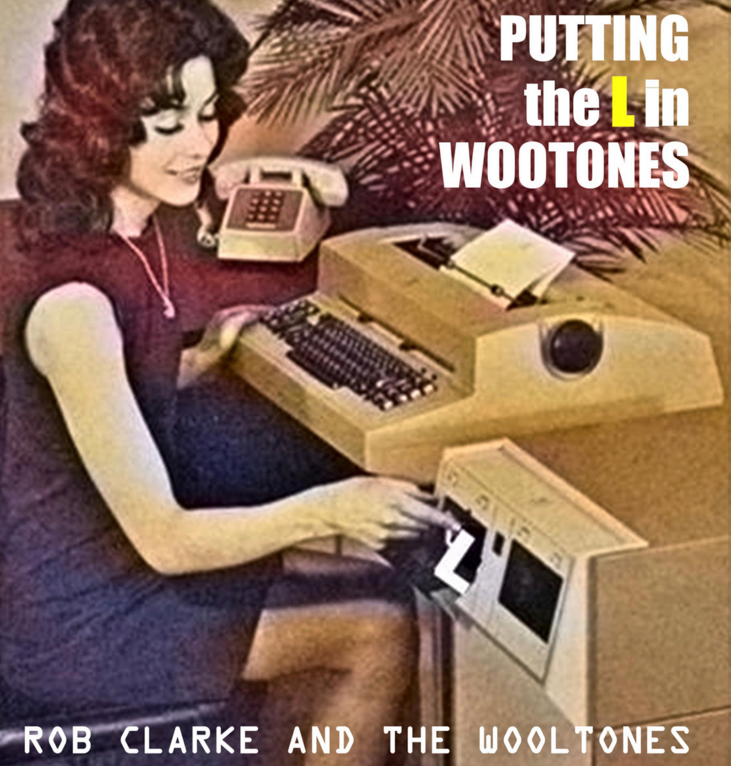
Nostalgia on the whole is something I avoid normally musically. I don’t mind listening to things influenced by the past but rammed on pastiche is something I normally find irritating to the extreme but as they say there is always an exception to the rule and this Rob Clark and the Wooltones album is one of those exceptions, as let’s be honest, Rob has set his cap on the power and joyous beat of the sixties, taking in Beat groups, psychedelia and pop. And he manages to capture the joy and fun in full Technicolor Glory with tongue in cheek humour and love, from what I think is a kazoo, on the ode to Liverpool beat poet ‘Adrian Henry’ – who was also was a subject of a song by the wonderful Liverpool songwriter Jimmy Campbell, which also featured a kazoo -, to the Shakin’ All Over guitar riff on ‘Statue at The Pier Head’. So, Rob certainly knows his rock n roll cult history. He also knows his way around a melody and is a fine guitarist. This album also has a warmth to the production that is very appealing and without looking at the credits is no doubt down to the production skills of Fran Ashcroft, if it is not I apologize to whoever it is but they have done a fine job on what is a very enjoyable album.
Lisa Mychols & Super 8 ‘ST’
Album
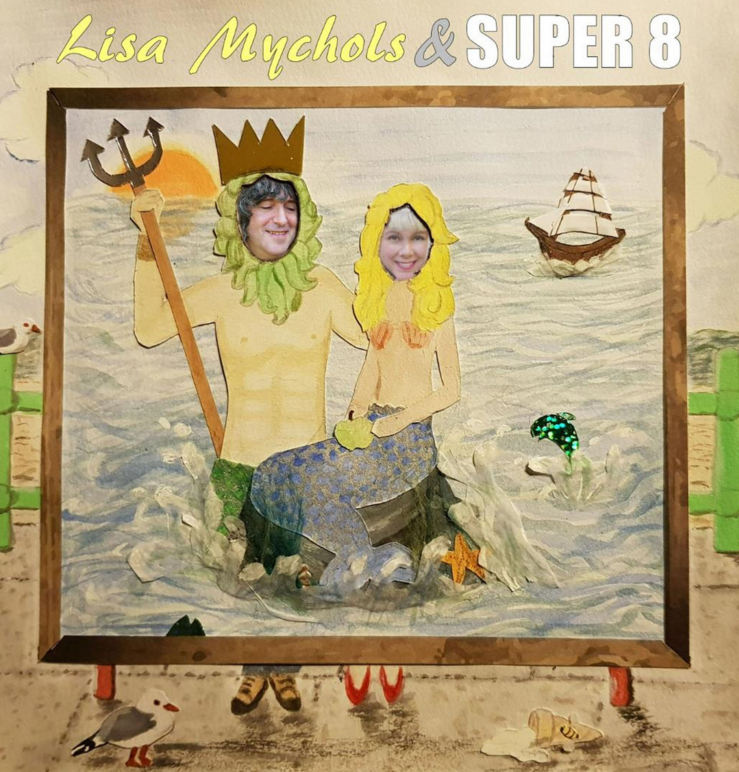
If you start off your album with Beatles like harmonies and ‘Come And Get It’ piano you are always going to get my attention. It is the holding my attention that is the difficult part, but this album does indeed do more than hold my attention. In fact it has me smiling and nodding my head, which in itself is a worrying state of affairs and something I’m not prone to normally do: my wife thought I must be having a stroke and I had to throw myself across the room to stop her dialing 999. For this is indeed a pure album of pop splendour from the Beatles through to the gorgeously gorgeous Carpenters like ‘You & Me Me & You’, which is one of the finest slices of pure pop I have heard in many a year. The very silly but clever ‘Monkee Song’ follows; again a lesson in how pop music can and should be both engrossing and throwaway at the same time. This a beautiful album that has one thinking of the Sunshine pop of the late 60’s early 70’s with the odd sprinkling of bubble-gum pop and West Coast mellow rock; the Partridge Family meet Carol King ‘Peaceful’ being one of the many highlights. And this beautiful album has quickly become one of my albums of the year; an album of lovingly written and performed pure pop magic, and one I cannot recommend enough.
Goodparley ‘Delay Cycle: Becoming’
(Recordiau Prin) Album/18th September 2020

There is no place like drone, especially guitar drone. For when it’s done well it’s the aural equivalent of swimming with dolphins or losing yourself in the blissful awash of yesterday’s memories, or taking a long bus ride to a place you have never been before, an expectant pause of the tulip symphony.
That is what we have here five longish tracks to lose yourself and let the sound wash over you, close your eyes and let your mind run and roam free. For that is the beauty of guitar dronery, it gives you the chance to relax and exercise your mind. Some mate call’s it “soundscapes”, I call it “soundescapes”. With most people not being able to take a holiday this year why not give yourself a Winter break without leaving your home; just place this fine album on your listening device close your eyes and let the music take you to places you have never been before.
Prize Pig ‘Out In The Street’
Single, 7th October 2020

Prize Pig is back with his second helping of home-produced bedroom diy pop and indeed it is another gem, one that has one’s mind racing to the halcyon days of when XTC ruled the roost in the intelligently produced pop stakes but with this I sense a touch of Devo like wizardry slipping in with this slice of perfect pop Fuzz guitars, catchy keyboards and for god’s sake even the drum machine is catchy. I await the album with baited breath.
Masayuki Sasano ‘Fighter Plane Moon Jelly’
(Dry Flowers Records) Single

There is a certain beautiful eloquent grace about this track you normally do not hear too much in the Alternative Rock of today. Normally it is the same old same old, but this has a musicality about it that is certainly refreshing; so many different melodies at one time colliding and causing an explosion of pure joy: one that wants you to investigate the music of Masayuki Sasano further. A quite beautiful alternative guitar pop song.
Goat Girl ‘Sad Cowboy’
(Rough Trade Records) Single
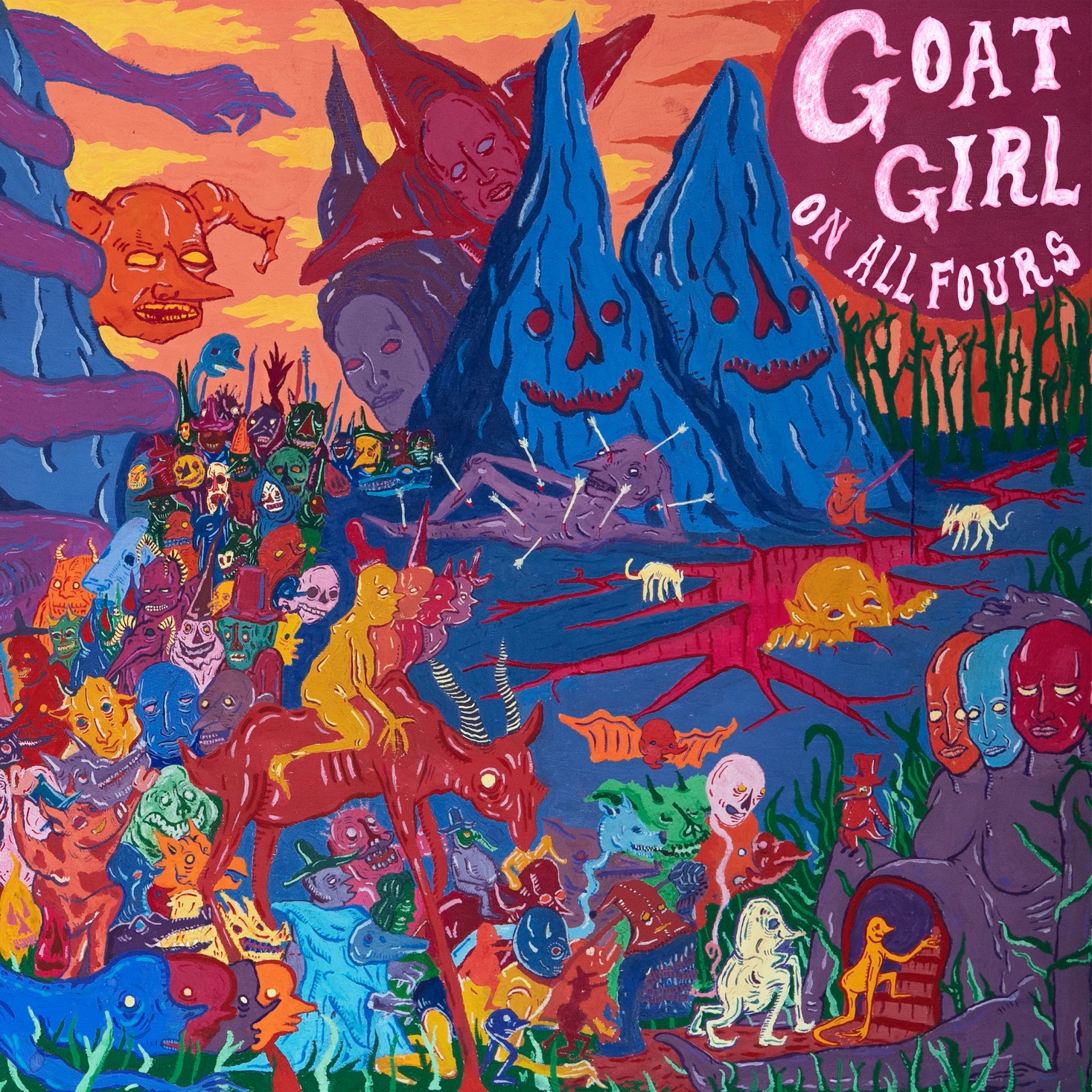
What I really like, not the track but near the beginning of the video, is that one of the blokes who is dressed like a animal is whittling a piece of wood and it really looks like he is having a wank. Yes, call me childish. Call me immature. Maybe it’s myself growing up with a diet of Carry On films…but “oooooooomatron” he really is scuttling his wicket. Well worth watching it for that piece of immature fun alone. The track itself is pleasant enough; all the guitars and keyboards are in the right places. A decent piece of modern indie rock/pop, one that will garner plenty of airplay from the BBCs sinking flagship 6music…but just watch the vid.
Salem Trials ‘The Lockdown Trilogy: Waiting To Surface /Stay At Home/Light IT Up’
(Metal Postcard Records) Album/6th October 2020

The best guitar band of 2020 no doubt is the Salem Trials, so what we have here is what they are calling the lockdown trilogy: the three albums they recorded on lockdown and have decided to release on the same day through Metal Postcard Records. And what a mighty trio of albums: Waiting To Surface, Stay At Home and Light It Up.
All three are filled with rock n roll splendor, as is the other three albums they have already released this year, which are all worth checking out. What I adore about this band is their obvious love of music and knowledge of the rock n roll past; the way they combine the best of the post punk north (The Fall, Magazine, Joy Division). You can hear all their influences in there but you can also hear how they have a love of sixties psych and 70’s prog and glam and punk and how they feed those influences into the music and come up with their own unique sound. I love how the vocals float just underneath the music and not above it; how both members of the band sometimes sound like they are having completely different breakdowns but in the same room. There is a quite staggering beautiful underlay of darkness and humour in their music.
It is difficult to pick a favourite album out of the three but if forced at gun point I would venture that Light It Up is probably my fave as it is the most melodious and wrapped in such wonderful Velvet like riffs, especially on the opening number ‘4 Views’, and the post punk guitar delight that is ‘Ice Cream Soda’, which sounds like the myth of Postcard Records being eaten whole by Don Van Vilet. But all three albums have tracks that are currently head and shoulders above the current crop of guitar pretenders: take for instance the wayward guitar sleaze of ‘Conversation No 2’ from Stay At Home, or the cracked guitar turmoil of ‘Ugly Puppets’ from Waiting To Surface, or the following track of lyrical mastery that is ‘Suit Of Shadows’, maybe my favourite track from the three albums – but that is like choosing a favourite Beatle. Like I’ve said so many times before The Salem Trials are a rare and beautiful thing; a treasure that has been buried for too long and needs discovering and admired and enjoyed by one and all, not just us lucky few.
Hi, my name is Dominic Valvona and I’m the Founder of the music/culture blog monolithcocktail.com For the last ten years I’ve featured and supported music, musicians and labels we love across genres from around the world that we think you’ll want to know about. No content on the site is paid for or sponsored and we only feature artists we have genuine respect for /love. If you enjoy our reviews (and we often write long, thoughtful ones), found a new artist you admire or if we have featured you or artists you represent and would like to buy us a coffee at https://ko-fi.com/monolithcocktail to say cheers for spreading the word, then that would be much appreciated.
Kalporz X Monolith Cocktail: TRICKY ‘Fall to Pieces’
October 8, 2020
Album Review/Nicola Guerra

Continuing with our collaboration with the leading Italian music publication Kalporz a short summer break, the Monolith Cocktail will be cosying up and sharing reviews, interviews and other bits from our respective sites each month. Keep an eye out for future ‘synergy’ between our two great houses as we exchange posts.
This month Nicola Guerra goes deep in analysing trip-hop luminary Tricky’s Fall To Pieces album.
TRICKY ‘Fall to Pieces’
(False Idols, 2020)
I spent the whole summer thinking about Tricky. Not specifically about him and not even about the huge tragedy that afflicted the former couple Adrian Thaws (aka Tricky) and Martina Topley Bird (the suicide of their daughter Mazy Mina on 29 May). No, I thought about how crucial to Tricky’s career was a gloomy record like Pre-Millenium Tension. An album that was sacked after the great success of Maxinquaye, a milestone in trip-hop, and which, incredibly, he pulled out of it in an oblique and really personal way. So, I thought, from the pedestal of the world to the suburb of the soul the step was short. But how can you face the opposite? How do you react when the darkness is greater than you can imagine? Look for the light or sink without going back up?
Fall to Pieces does not give answers. The fourteenth (!) work of the Bristol artist is deliberately unfinished, almost as if to re-emphasize the inability to concentrate on details but leave the instinct to communicate something free. But what? What do you try to say when the world collapses under your feet? What do you say when really “Hell is round the corner”? The song that most explains this non-form of self-analysis is ‘Running Off’, a metropolitan tarantella that contrasts the melody of slow and powerful basses that could sink to infinity. Instead, one minute forty-four and you change register. Why not go deeper? Because it hurts too much to investigate. It hurts too much to try to understand.
It is better to hover in search of beauty. In search of Pop, as good Tricky says (“Fall Please”, splendid piece that hides love). Then comes, in the middle, “Hate This Pain”. “What a fucking game What a fucking game I hate this fucking pain I hate this fucking pain Was crying, endless coast Baby girl, she knew me most I hate this fucking pain I hate this fucking pain At ten, I’ll take a flight Try to be there, I guess I might I miss my baby while I fly In my head, I want to die…” I want to die, the former Tricky Kid whispers angrily (one of the few songs sung by him, the rest is entrusted to the female voices of Oh Land and Marta Ziakowska).
Instead, music wins. Once again.
Hi, my name is Dominic Valvona and I’m the Founder of the music/culture blog monolithcocktail.com For the last ten years I’ve featured and supported music, musicians and labels we love across genres from around the world that we think you’ll want to know about. No content on the site is paid for or sponsored and we only feature artists we have genuine respect for /love. If you enjoy our reviews (and we often write long, thoughtful ones), found a new artist you admire or if we have featured you or artists you represent and would like to buy us a coffee at https://ko-fi.com/monolithcocktail to say cheers for spreading the word, then that would be much appreciated.
Our Daily Bread 403: Bastien Keb ‘The Killing Of Eugene Peeps’
October 7, 2020
Album Review/Dominic Valvona
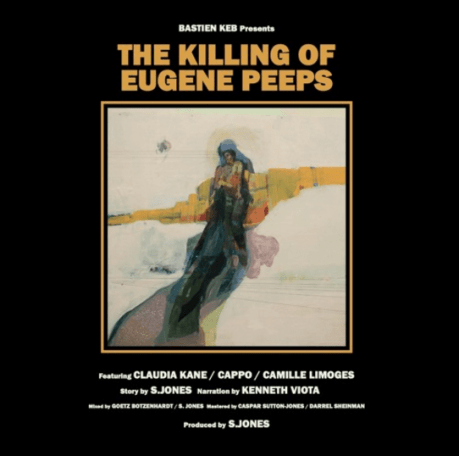
Bastien Keb ‘The Killing Of Eugene Peeps’
(Gearbox Records) 9th October 2020
The soundtrack to an American-noir-meets-Jackie Brown-meets-cross-continental-cult-60s movie that’s playing out in the head of Sebastian Jones, this ambitious suite of partly lulled and narrated cinematics, instrumentals and set pieces is as diaphanous as it is mournful. With a wide lens Jones (under the nom de plume of Bastien Keb) languidly drip feeds his fatigued melancholy, anxieties and deepest thoughts through a sorry tale of death and despair; as unveiled by a gonzo/Burroughs monologue style gumshoe, and sung, cooed by a fragile soul.
An ode we’re told to Italian Gallo paperbacks on screen, crime flicks of many other kinds and French New Wave cinema, The Killing Of Eugene Peeps mixes genres and influences up into a nostalgic opus that also has something to say about the draining mental stresses and indolent fatalism of the modern world too. Jones, using music as some kind of therapeutic outpouring, impressively managed to find the strength and will to create this impressive (if downbeat and aching) album whilst working a hard slog in a warehouse each night: The exhausting effects of which Jones says turned him into a zombie for a year.
The talented multi-instrumentalist, apart from guest spots by Kenneth Viota, Cappo and Camille Imogues, even played, recorded and produced this whole album single-handedly.
A work in three parts (the film score, soundtrack and incidental music), the dead-body-in-the-room Peeps is not so much told as a murder mystery but dissected in the form of soliloquys and resigned derisions on how this sad tragic event unfolded.
There’s plenty of title riffing on those crime flick inspirations, and musically Jones uses a leitmotif of nods to Lalo Schifrin, Issac Hayes, Alessandro Alessandroni and Krzysztof. A recurring San Fran/New York 70s detective movie and TV sound can he heard on the opening ‘Main Title’, which sounds like Hayes conducting an elegiac Corleone death march side-by-side with a New Orleans band, as a proto Tom Waits drawled figure narrates our city skyline information. Yet musically Jones moves on with the very next track, the soulful oozing pained ‘Lucky (Oldest Grave)’, which has an air of both a choral Clouddead (especially Yoni Wolf) and TV On The Radio about it. Sometimes the vocals are double-tracked, with one track being slurred as to sound almost drugged and lethargic. By the time we reach ‘Theme for An Old Man’ the brass and timpani detective noir is mixed seamlessly with jazz, soul and trip-hop (imagine Four Tet playing around with Portishead). And then the dreamy fluty gauze of ‘All That Love In Your Heart’ evokes some kind of 60s Italian or French flashback.
Echoes of dub, vibes, Ethno-jazz, Bernard Estardy, Miklos Roza, James Reese And The Progressions, Curtis Mayfield and hip-hop follow. Deft Nottingham rapper Cappo switches the narrative and sound, letting loose to a zappy 70s cult score with a consciousness left to roam freely flow on the ominous ‘Paprika’. A jazzy vision of Mike Patten and Jean-Claude Vannier’s creative partnership one moment, a wah-wah soul maverick cop score the next, Jones eclectic musicianship produces a modern noir both poignant and clever. All those various strands are pulled together for a sophisticated despair and eulogy, but also curiosity. This is a most beautiful, ambitious if often traumatic inquiry of a fully released drama, a filmic album of great depth and scope that has Jones channel his personal struggles to the soundtrack of poignant drama.
Reviews
Brian Bordello

The cult leader of the infamous lo fi gods, The Bordellos, Brian ‘Bordello’ Shea has released countless recordings over the decades with his family band of hapless unfortunates, and is the owner of a most self-deprecating sound-off style blog. His most recent releases include The Bordellos beautifully despondent pains-of-the-heart and mockery of clique “hipsters” ode to Liverpool, the diatribe ‘Boris Johnson Massacre’ and just in the last month, The King Of No-Fi album. He has also released, under the Idiot Blur Fanboy moniker, a stripped down classic album of resignation and Gallagher brothers’ polemics.
Each week we send a mountain of new releases to the self-depreciating maverick to see what sticks. In his own idiosyncratic style and turn-of-phrase, pontificating aloud and reviewing with scrutiny an eclectic deluge of releases, here Brian’s latest batch of recommendations.
IKLAN featuring Law Holt ‘Suffer 2’
(Soulpunk) Single/24th September 2020
This is unusual and I like it a great deal: an atmospheric almost psychedelic chant of darkness depression and suffering; a track of true warmth and soul that is normally lacking in so much of the music I get to hear, sometimes sparse cold synths and a heavenly voice is all that is required.
Juanita Stein ‘Snapshot’
(Nude Records) Album/23rd October 2020

Sometimes you need to feel pain to know you still exist, other times you need to sing about it, and other times you need to listen to other sing about it. This is a case in hand with Snapshot, an album of well-played melancholia that engulfs you in swathes of memories of the little glories of life and the senses of loss, guilt, regrets and hopes one feels as they approach middle age.
Snapshot is one of those albums you can feel yourself getting attached to; one of those albums you will automatically put on when you get up in the morning or one of those you play as you sit alone in the evening tide of your existence losing yourself in the beauty of Juanita Steins songs and the smooth ache of her voice. Yes this is one of those albums that will slowly become like one of your best friends; one you will never feel like not seeing or spending time with, which goes to show that the art of songwriting is just that: an art that paints pictures with the melodies and words, and that over used phrase the magic of music, could rightly be used in this case as the album conjures up all kinds of sublime images and feelings. Snapshot is an album of true beauty and worth.
Marten Larka ‘Parfum De Nuit / Je Suis Un Rocker’
Single/30th October 2020

I may not be the best at speaking French and it’s many years since I was expelled from school, but even I know “Je Suis Un Rocker” means “I am a rocker”, and what I love about this single is I think he might be a bit off his rocker as well, which I like as all the best people I find have a slightly away with the fairies eloquence about them and this double tracker is a lovely thing. What is there not to love about it? Beautiful melodies, lo-fi attitude and it does have a bit of the Serge Gainsbough’s about it, which to my mind is always a good thing. A big thumbs up from me, or “un gros pouce en l’air” even.
The Cult Of Free Love ‘Visions’
Album/19th September 2020
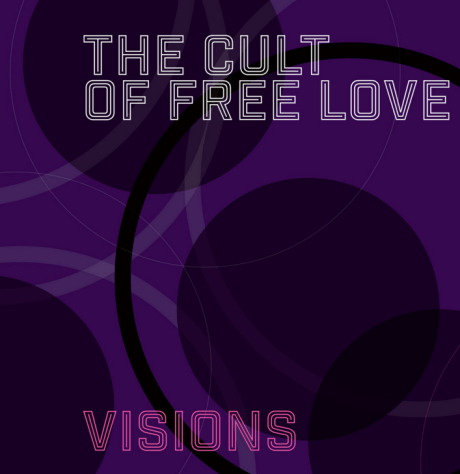
What we have here is the first release from the born again influential underground label Northern Star; a label that released the four CD Psychedelica series of compilations that caught the mood and excitement of the bourgeoning new psychedelic scene of the time. This series of releases influenced many a new band and caught some now very well known and established bands early in their careers. So to kick off the rebirth of the mighty fine label we have the second album from The Cult Of Free Love and to be honest if this album had been released on the Fruits Der Mer label it would have already sold out and been acclaimed as a modern psychedelic masterpiece. Yes, this album is that good.
Orb like trance and late 80’s acid house mingle with the lost summer of love of ‘67 to weave a spell of blissed out magic. There is no one highlight on Visions as the whole album is one long stream of melody and blissed out splendor. This album I cannot recommend enough to anyone with a love of modern psychedelia or somebody wanting to know what it was like to visit the legendary Hacienda in its pomp: An album to turn this winter of discontent into the third summer of love.
Le Couleur ‘Silenzio’
(Lisbon Lux Records) Single/24th September 2020
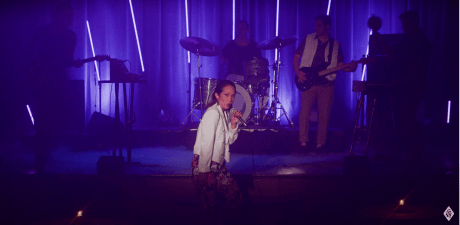
This is a disco sausage of a track, the kind of thing we used to soak up in the late 70’s by the Dooleys and the like. That is no insult, as much as the Dooleys were reviled by the serious music snobs of the days they made some rather splendid pop singles and this is indeed a rather splendid fun pop song that should be soaked up and danced to and enjoyed.
Flavigula ‘Jēmaraz’
(Submarine Broadcasting Co.) Album/September 15th 2020

I think I’ll call this “modern art atmospheric jazz”. Why? I hear you shout, yes you at the back screaming what the hell is modern art atmospheric jazz. Well you cretin this is modern art atmospheric jazz. Charles Mingus has a salad with Ryuichi Sakamoto whilst listening to the brain patterns of Zappa whilst watching black and white flashbacks of Delia Derbyshire getting undressed: that is atmospheric jazz. And if it is not that, what the fuck is it?!
Yes this is a strange old album for these strange old times, but what do you expect from the wonderful Submarine Broadcasting label. You are not going to get an album of Instagram friendly booty shaking smartphone paps are you now. SB release thought provoking atmospheric hugging slices of art melancholia. Which Flavigula do very well. It is the sound of a breeze overestimating its own power and causing ripples in the sea of self-doubt soundtracked by the faint beating heart of a lost angel in jack boots: an album of beautiful extremes.
Nick Frater ‘Fast & Loose’
Album/19th September 2020

Any album that kicks off with a groovy 70’s spy like film theme instrumental is alright with me and then proceeds to take us down the avenue of perfect pop 70’s style where the musings of an Andrew Gold or Todd Rundgren in a mellow mood might reside. Things only get better and better, from the beautiful ‘The Ship Has Sailed’ to the even more baroque beauty of ‘Moonstruck’ – a track worthy of the zombies at their finest.
This is an album that will have all those power poppers doing cartwheels and even might actually be one of those very rare albums that will bring them to total agreement that this album is indeed worthy of the tag power pop: it certainly has power and it certainly has pop and is certainly a pure delight to listen to. One of pure pop sunny delight sunshine pop at its finest.
Reviews
Dominic Valvona

In this amorphous crisscross of genres and borders I take a look at the latest in the label Night Dreamers ‘direct-to-disc’ series, a dynamic live album of fresh performances from Istanbul’s legendary souk reggae/dub and Krautrock psych legends BaBa ZuLa; Analog Africa delve through the stranger corners of the “B-movie” Colombian label Disco Machuca on their upcoming La Locura de Machuca compilation; and Daniel O’Sullivan explores library music for his latest transformation, a series of instrumental albums in collaboration with KPM.
Two front vocalists step away from their bands to go solo, with Ghent stoner/alt-rock band Wallace Vanborn frontman Ian Clement returning to the fold after many travails with a personal songbook collection, See Me In Synchronicity, and Diamond Thug’s Chantel Van T going out on her own with a debut country blues imbued songbook, entitled Nicalochan.
There’s also a label special, with three recent and upcoming ambient and experimental imbued records from the North American hub Somewherecold Records: an ambitious cosmic suite of Kosmische analogue synth odysseys from Giacomelli, snapshots, threads and lingering traces of esoteric and ether materialised country and bluegrass guitar sketches from Droneroom, and an emotive suite of love-lost movements from Vision Eternel.
BaBa ZuLa ‘Hayvan Gibi’
(Night Dreamers) Album/2nd October 2020
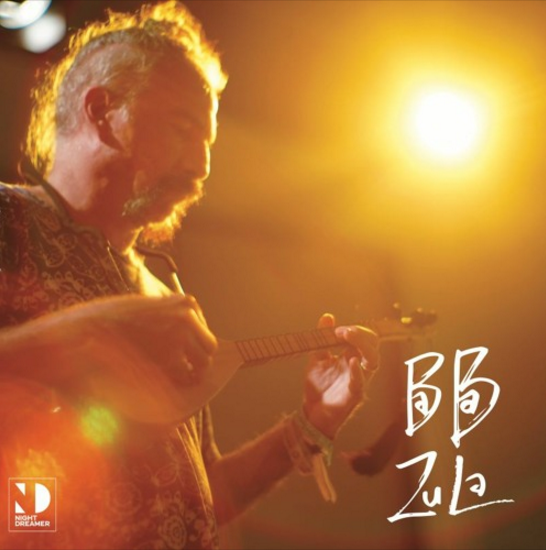
The latest release in Night Dreamer’s “direct-to-disc” series stars the rebellious stalwarts of Anatolian cosmic dub and psych, BaBa ZuLa: a three decade spanning Istanbul group originally birthed from the embers of the band ZeN.
Fusing the folkloric with solar flares of Krautrock, souk reggae, 60s and 70s Turkish psych and cosmic-blues the rambunctious group come on like a Sublime Porte vision of Can’s Ege Bamyasi and Soundtracks albums, only replacing much of the Teutonic legends setup with more traditional instruments like the “oud” and “saz”: albeit electrified and fuzzed up to the gills. That Can reference isn’t so surprising, as the BaBa have worked with the band’s late human metronome Jaki Liebezeit on numerous occasions: his two-way influence felt and inspiration noted on BaBa’s 2019 album Derin Derin. That same 2019 album, like so much of their output, was originally produced for a soundtrack, a documentary about falcons. And this latest “live” and direct special showcase includes a number of such tracks scored for film and stage; it also, like that falcon inspired work captures the materializations, mood, feelings of a menagerie of symbolic animal subjects.
Recorded before lockdown in the pre-pandemic nightmare, Hayvan Gibi (which means ‘to act with the natural grace of an animal’) includes six almost untethered, unleashed vivid performances from the Istanbul mavericks. It’s an album that seeks to fulfil the “live” feel and energy that some fans have commented has been lacking on previous studio albums. Invited to the Artune Studio setting in Haarlem by the label, they were encouraged to freely take-off on a flight of Eastern fantasy; encouraged to also riff on and extend past glories too. “A musician’s dream” as the band’s electric, scuzzy defacto leader and founding member Osman Murat Ertel puts it, this, also challenging, method of recording and cutting a disc from start to finish on one session gives them that energetic impetus. It also showcases each of the band’s talents. On the elliptical rhythmic Can-like dervish ‘Sipa Dub’ (also known as “The Foal”), the group’s braying oud soloist and keyboardist Periklis Tsoukalas gets to shine and sing a kind of spiritual Sufi-imbued emotive intensity on a song about an Aegean coast donkey and its foal. Percussionist virtuoso Ümit Adakale is unleashed unaided on the drilling, rattling and hotfooted breakbeat ‘Nal’ (or “Horseshoes”).
Old favourites like the ‘Çöl Aslanlari’ (“desert lion”) composition, originally made for Antonie de Saint-Exupéry’s stage production of The Little Prince, go off on a long improvised peregrination of clopping psych-rock and shimmering cymbal washes, whilst the group’s earliest groove, ‘Tavus Havasi’ (which furnished the soundtrack to the Tabutta Rövasata film) assails close to the mooning of Guru Guru and a Turkish Bar dance.
A let loose BaBa ZuLa is a most incredible experience; a scuzzed, scuffed, trinket shimmery, rippling and blazing rhythmic energy and dynamism both intense and yet also a mirage of reggae and dub imbued Anatolia mountain gazing. It’s also a reminder of what we’ve been missing in these dragging pandemic restrictive times.
Further Reading…
BaBa ZuLa ‘Derin Derin’ here….
BaBa ZuLa ‘XX’ here…
Various ‘La Locura de Machuca: 1975 – 1980’
(Analog Africa) Album/16th October 2020
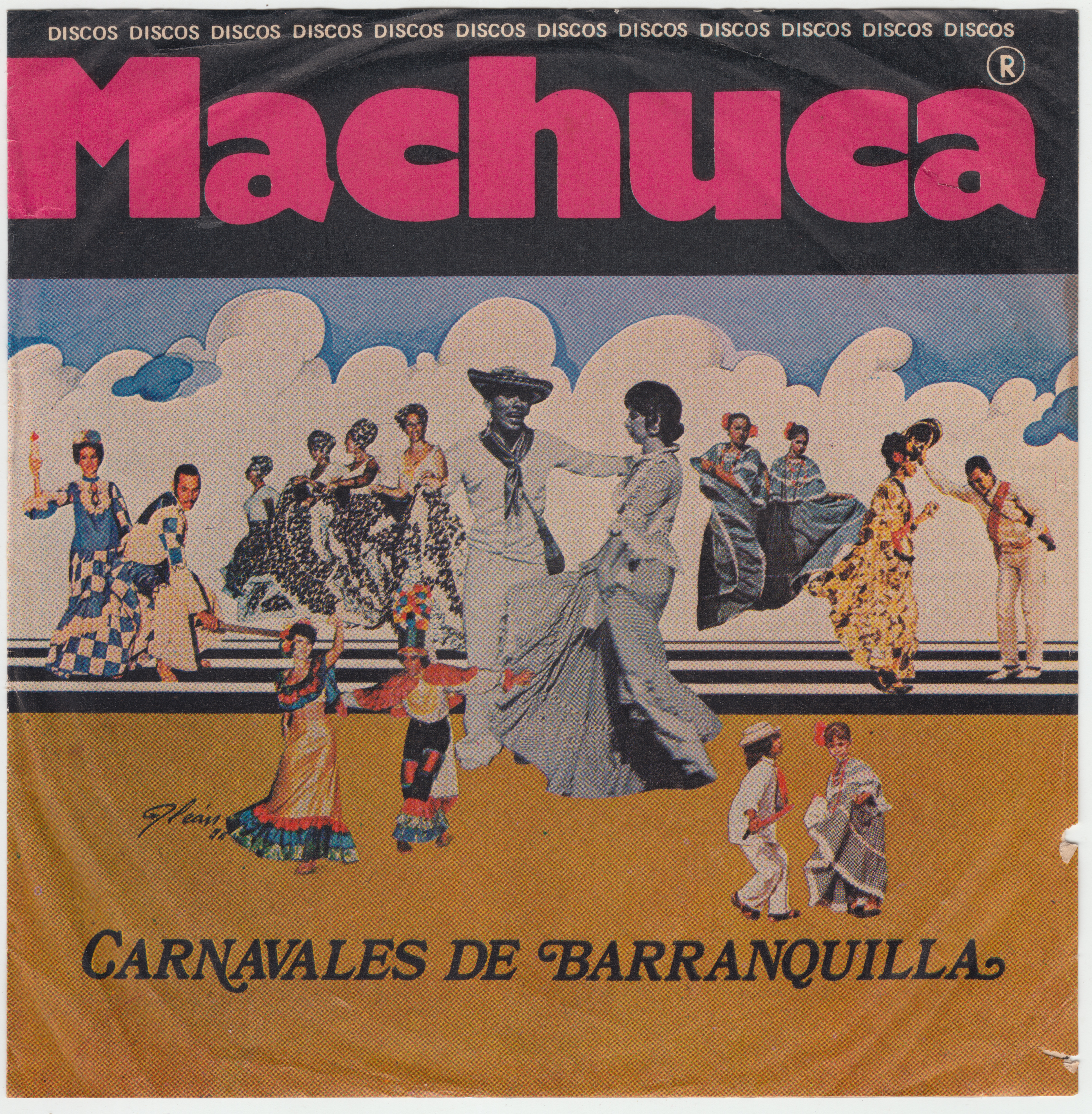
Quite possibly the kookiest oddity so far in the Analog Africa catalogue, this distant outlandish relative to the label’s Diablos Del Ritmo: The Colombian Melting Pot 1960 – 1985 compilation from 2012 is the sort of “B-movie” discovery you’d expect Finders Keepers to release. From the same international Colombian gateway of Barranquilla as that collection’s purview, La Locura de Machuca: 1975 – 1980 features a similar spread of Afro-Colombian saunters, scuttles and scratchy percussive funk as that record, yet finds a twist: a kink.
For all the familiar traces of that folkloric electrified Cumbia, the Caribbean-African-Colombian hybrid Champeta Criolle, and Congolese rumba (to name just a few styles), the music that flourished from the Colombian underground is…well, different. Much of this is down to the genius and bizarre mind of the former tax-lawyer turn record company executive Rafael Machuca, who wowed and seduced by the Barranquilla music scene jacked in the day job to set-up and sit behind the control desk as the producer of his own label enterprise, Disco Machuca. This was the heady mid 70s, an age in which Colombia’s music scene was thriving with the sounds of imported nuggets and blasts from the African continent. Though native dance styles such as Bolero and Vallento still rocketed up the charts, the fervor was for a spread of Afro prefixed sounds that proved popular at the neighbourhood sound-system joints, known as “the picos”. The locals would in time add more traditional flavours, including the already mentioned versatile Cumbia, but also more modern influences such as psychedelic music and disco.
Machuca channeled that exciting dance mix with his unique label of specially put-together one-offs and more established mavericks; the often experimental and kitsch productions of which is described as the “B-movies of Colombian music” by the label’s stalwart recording engineer Eduardo Dávila. Some of that self-depreciative description is warranted for the label’s roster of artists and acts, but also for Machuca’s habit of just creating from scratch a studio band to front one-off singles and albums when he couldn’t find the right band to realize whatever vision he had leaping about in his head. Two of which, the mono skiffley itching and squiggly, Stylophone like buzz and gargled organ Samba Negra and the bongo rattling, carnival lolloping space age garage band El Grupo Folelórico, lasted only the time it took to enter the studio and press stop on the recording desk. Both of these outlets feature heavily on the compilation. Though the El Grupo Folelórico’s binary data zapping Afro bustle ‘Tamba’ qualifies as the closet of these tracks towards that B-movie status.
The label could accommodate such fancies with the money they made from more established and popular stars; such as Alejandro Durán (left off this more unconventional comp) and Aníbal Velásquez (who does feature with his slightly unhinged belly laughing and hurried Cumbia track ‘La Mazamorra del Diablo’). “Fringe artists” like La Bande Africana, King Somalie, Conjunto Barbaco and Aberladro Carbono were able to cut loose off the back of those hit-makers. The first of those names lends the collection a salacious boy/girl hush and sigh of Gainsbourg meets Bollywood in a Colombian coastal town, with their coquettish and playful ‘Te Clavola…Mano’. King Somalie meanwhile riffs on the “funky monkey” with a talky Afro-boogie and turns in a sexy fun conversational on ‘La Mongui’.
Personal favourite of mine is The Grupo Bela Roja, or to be more exact their both swooning and jaunty lead singer who channels a young Miriam Makeba on the beachside ‘Caracol’.
There’s much to discover from this sometimes-unhinged label, yet nothing so avant-garde or “loco” as to neglect an essential rhythm or hypnotic good groove. Samy Ben Redjeb’s decade-long-in-the-making project unearths some mesmerising rarities from the stretched-descriptive scenes of Afro-Caribbean and Afro-Colombian music, throwing in some curveballs and raw 45s.
For those looking for a fresh perspective and for something strange, the La Locura de Machura compilation will fill that need. Ad for everyone else, this is just a great vibrant mad world of South American sounds that deserves space inside your noggin.
Further Reading…
Analog Africa Tenth Anniversary Special here…
Various ‘Jambú e Os Míticos Sons Da Amazônia’ here…
Chantel Van T ‘Nicalochan’
Album/23rd October 2020

Stepping out on her own from the South African dreamy space-indie Diamond Thug, the country blues and folksy lilted voiced Chantel Van T makes a boldly intimate and vulnerable statement on the debut solo songbook Nicalochan. Via a Danish solstice and summers spent contemplating at the shoreline’s edge, the hushed and swooned songwriter/singer opens up in a considered, soothed and sometimes creeping fragile manner over gently sweeping Dylan-esque Western soundtracks, mountain songs, the knowing enchantment of Lee Hazelwood, and lush morning dew yearn of Catherine Howe.
With a maturity and depth beyond her years, the often sadly but constantly dreamy Cape Town artist seems to channel a country twang that evokes shades of Emmylou Harris, Bonnie Dobson, and on the prohibition era Appalachian Lomax ‘Bittersweet Absolute’ a touch of Josephine Foster. Chantel has a voice deep, diaphanous, ached, resigned, and drifting, yet at times almost fatalistic.
An introduction to Chantel as much a candid therapy and chance to let all those thoughts and philosophically poetic questions on what reciprocated love really means (and how far it can be taken), the growing pains of womanhood and childhood.
A suffused accompaniment (all recorded with the Danish producer Anders Christopherson and a small intimate ensemble of musicians) of wallowed brass, softened string caresses, gauzy tremolo twanged and acoustic rhythm guitar, and patted toms and splashes of cymbal provide a subtle stripped backing track. One that sometimes can’t help but meander into Dylan’s ‘Knocking On Heavens Door’ on the leading, waning beauty travail single ‘Rumble And Crawl’, and a 50s yuletide mix of Rosemary Clooney and bobby-sox Spector on the album’s early punt at a seasonal number, ‘Christmas’.
Full of pining, searching affairs of the heart Nicalochan is a most hazy and beautifully executed testament of timeless country blues imbued vulnerability from an artist going it alone: A great debut of understated wisdom and inquisitive questioning songwriting, which I can see making many of the end-of-year lists, including my own.
A Somewherecold Records Special:
Vision Eternel ‘For Farwell Of Nostalgia’ Out Now
Giacomelli ‘Cosmic Order’ 9th October 2020
Droneroom ‘Blood On Blood’ 16th October 2020
All three released via Somewherecold Records.
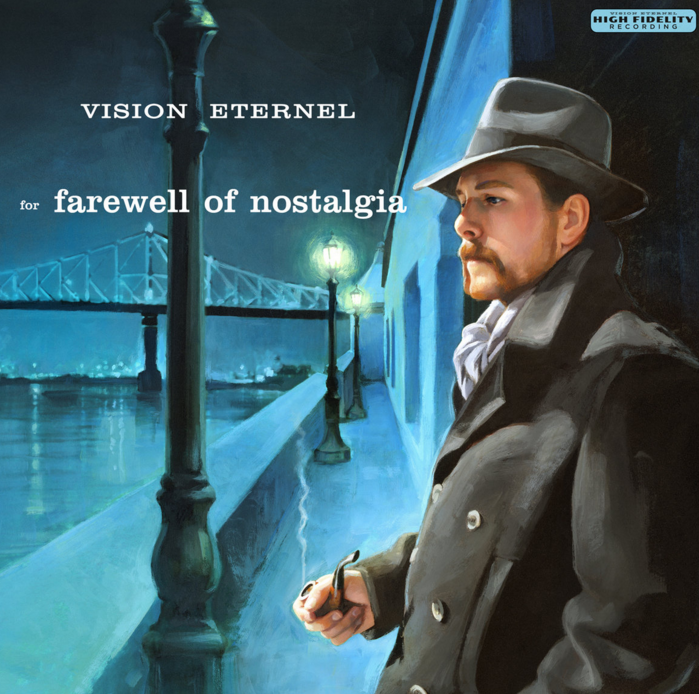
From the highly prolific online magazine/shop-front and facilitator of various underground electronic and experimental artists, a trio of recent refined and concept-bound releases has drifted onto the Monolith Cocktail’s radar: Just three from an exhaustive roster that’s updated weekly. Extensively a soundboard and platform for composers and mavericks alike from both sides of the North American border, Somewherecold Records offer up the intimate and ambitious, depth and the translucent, peregrinations and wanderings with their most recent spread of albums.
The first of these is the grand Kosmische analogue spanning opus from Silicon Valley composer Steve Giacomelli; a triple CD expansive series of cosmic ordered suites that traverse the astral plane, new age transcendence, various thermos, gases and topographic ebbs and flows. Giacomelli’s fourth such album of cosmic ambient minimalism for the label, this celestial and evolutionary mined impressive ARP Odyssey (portable) synth birthed work of thirty-six scales into deep space, refractions of light play, pulse and gravitas uses a number of techniques to accomplish an overall sound of forgotten Sky Record maestros, Tangerine Dream, early Cluster, Tomat and Vangelis. This synthesised vision – that can sometimes err towards the ominous forebode and mystery of Kubrick – synthesis of the abstract, deep space, the inner mind, nature and the heavenly is accomplished with an apparently limited pallet and the use of counterpoint sequences, the generative and a method, favoured by Frank Zappa, called “xenochrony” – that is the extracting of a solo or other part from its original context and placing it into a completely different song/composition.
A three-hour journey through the imaginings of Giacomelli’s inner and outer star-guided mind, compositions vary between the beautiful cathedral-in-the-sky heralded ‘Cosmic Fanfare’ and the Klaus Schulze-rescores-Zardoz forebode and deep space hum of ‘The Best Laid Plans’; from the 8-bit orchestral manoeuvres of ‘SMPTE Of The Universe’ to the heavenly choral-blowing space fantasy ‘Diplodicus Green’, and the tubular generator, dash communicating ‘Remembrance Petition’.
No matter where he guides us, Giacomelli fashions a most diaphanous and mysterious epic. The Cosmic Order is a grand project, nothing short of immersive and starry.
The second of this trio of albums and EPs from the label takes us into the Kosmische-cowboy experimental soundscaping world of the Louisville-based artist Blake Edward Conley. Trading, moseying and meandering under the Droneroom alter ego, Conley pulls together a number of tracks and ideas from compilations for this transformative and transduced album of layered resonating guitar soundtracks and pauses.
A “two-lane blacktop” drive across the imagined travails of an alternative strung-out country and bluegrass accompanied America of gas station stops, mechanical breakdowns, and side road excursions, Blood On Blood gathers those “stray tracks”, threads and “snapshots” to meander through an evocative if distant landscape. Whether inspired by or in their finished state sailing close to, a number of these drowsed post-country instrumentals are dedicated to Conley’s fellow compatriots, and both explorative and old testament liturgy guitar imbued artists: The Tennessee psalm fanning Joseph Allred and folk artist Cole Morse to name just two.
Some of these sonic-thoughts-out-loud ruminations and traverses are more country than others. A certain cowboy swoon can be plucked from the lingering traces of ghostly country blues and bowing vibrato of ‘Truckstop Déjà vu’, and there’s an air of a Lynchian vision of Ry Coder on the galvanized steel gate stick rattled and didgeridoo like drone mysterious ‘And On The Last Day The Land Did Sing Me’. A removed form of Americana, with the tremolo wanes and quivers and spirit all there but veiled by the Baroque, Latin, cosmic and supernatural, ‘Let The Bluegrass Hold My Head’ is anything but. However, the dreamily acid ‘The Coyote Adrift In The Unfamiliar’ evokes a more Kosmische and Krautrock influence; sounding like an esoteric ripple in the fabric by Ash Ra Temple. In fact there’s a lot of spacey spectral leanings, an otherness, even alien, from beyond the ether: There’s even a supernatural enough transmission from that void in the shape of ‘Ghosts For Sale’.
Another impressive if unassuming album for the label that does something different, out there with its source, Droneroom’s Blood On Blood is an incredibly strange album of guitar experimentation that warrants discovery: A cult album in the making.
Back towards the ambient spectrum, the final release in the special is a most emotively drawn and purposeful EP of intimate mood music by the Montréal-based Vision Eternel. Coining the phrase “melogaze” to describe his lush “emo” brand of majestic and caressed swirling feelings, heartbreaks and loves, the band’s founder Alexander Julien soundtracks a love lost affair with a most swaddled suite of ambient music, shoegazing, and semi-classical longings.
Over a quartet of channeled “movements” (rain, absence, intimacy and nostalgia), Julien charts this affair-of-the-heart with a both cinematic and melodious touch. The EP though is a greater conceptual work that even arrives accompanied by a short story and plenty of poetic, stirring baggage. Lingering reminisces pour from this composer’s light yet deep vaporuos yearnings.
On the cover itself, Julien is painted as some kind of Left Banke thinker meets Graham Greene Third Man and shoe-string Marlowe; a riff on 50s and older covers of that vogue. And so nostalgia is certainly evoked on this almost timeless EP of abstracted emotionally pulled memories made tangible. It’s actually a most lovely, touching trembled and graceful encapsulation of the themes; beautifully put together. It’s also entirely different and like all three of these releases pushes experimental, ambient music in different directions, yet never loses sight of taking the listener on those same sonic journeys into the cosmic, imaginary, and intimate.
Somewherecold Records is proving a catalyst and platform for some of the most interesting and ambitious of under-the-radar artists. Expect to see plenty more or their releases on the Monolith Cocktail in the future.
Ian Clement ‘See Me In Synchronicity’
(Cobraside Records) Album/October 2nd 2020

All the better for it, full of sagacious yearning, frontman of the Ghent stoner/alt-rock band Wallace Vanborn, Ian Clement makes a welcoming return to the musical fold with his second solo album See Me In Synchronicity. After many travails and a series of breakdowns, Clement opens up with a songbook collection of musings on troubled romances, escaping, intimacy and more mystical, metaphysical queries on the altered states of consciousness: a subject that stems from the earnest singer/songwriters interest in mysticism and the spiritual, and its place in an increasingly secularized, atheistic Western culture.
Further, as Clement himself illuminates, “mysticism and madness touch each other, even in ordinary life. The daydreamers whose hope lies in love and fantasy or in loneliness or madness, is something that everyone can relate to.” And there is, at least, some of that title’s “synchronicity”; as also reflected on the album cover’s dream state alpine juxtaposed with cityscape and beret fitted beachcomber meandering below a seductive muse collage artwork.
Though far from mystical sounding or esoteric, this is a solid songbook with just enough edge to set it apart from the well-worn tropes and sounds found in most alt-rock of a similar persuasion. For Clement traverses not only hard rock but also country (verging on Americana), indie, post-Britpop and, even, new wave (chugging away tot the dashboard emotional pulling pop motor pop of The Cars on the “consciousness” imbued ‘Turtle & Crow’). And so you can expect to hear a subtle pallet of influences and sounds prompting this brooding but often mature and wise album.
Vocally Clement evokes a touch of Jeff Buckley (via Blackbud’s Joe Taylor) and Mark Lanegan, whilst the mix of blazing rock guitar shadings and hooks leans towards Bends period Radiohead, post-punk and early noughties Bowie. However, the most surprising humbling and yet bittersweet romantic song, ‘Bliss’, strays into the Floydian. There’s also a dappled gospel-tinged organ that keeps popping up throughout the album; a kind of low-key Muscle Shoals vibe.
Making sure this all gels, and offering some of that edge, is the luminary German producer Renė Tinner, who knows a thing or two about pushing the envelope and finding that important synchronicity between the commercial and experimental having worked with such polar opposites as Can and George Harrison. This culminates in a production and sound with depth, soul and a few surprises. Clement unloads his pains and intimate resolutions on a most sophisticated, hard-fought and lyrical work: A brave work at that.
Daniel O’Sullivan ‘Electric Māyā: Dream Flotsam And Astral Hinterlands’
(VHF Records/KPM) Album/23rd October 2020
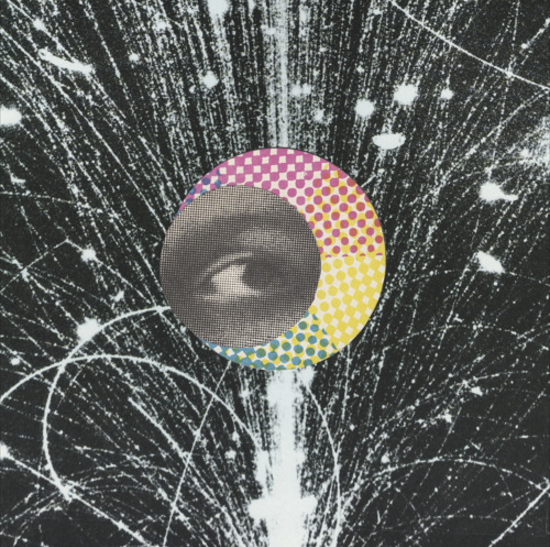
The latest in a long run of explorative transformations for Daniel O’Sullivan, of both Grumbling Fur and This Is Not This Heat fame, sees the London-based musical polyglot traversing the “library music” oeuvre.
Although often the preserve for lovers of cult mavericks and the kitsch, library music is infinite in scope and varies considerably in quality. Often, because of its very nature dismissed as either a pale imitator of the sound and music it’s trying to ape, or void of true artistry and depth: produced in many cases as a background soundtrack and cheap off-the-shelf filler. Of course this is all bullshit, the label itself now so diverse and overused as to include some truly gifted composers alongside one-offs and obscure unknown peddlers of lo fi and unassuming skits. Essentially though, it is seen as music that fits specific criteria or commission, as O’Sullivan puts it, music made “more for functionality than sonic self-portraiture”.
It also includes, in more recent years, an increasing number of artists-in-the-know appropriating library music’s guilty pleasures and forgotten acolytes: Not so much as pastiche but rather in the mode of homage and mining ever more obscure sounds. And so a very much “knowing” O’Sullivan in collaboration with those purveyors of such rediscovered treasures, KPM, invests a lot of time and effort in producing an 18-track suite of sophisticated redolent library music gestures, sweeps, memories and fleeting incipient soundtracks on the first of a trio of such albums. The challenge however is in creating a fully-realised composition with a start, middle and sort of conclusion in short form: every track on the album being more or less under the 3-minute mark.
Delving into the cosmology of the elaborately psychedelic entitled Electric Māyā: Dream Flotsam And Astral Hinterlands you’ll find a full body of atmospheres, inner spaces, emotions, sciences and supernatural elements articulated by a diverse pallet of sounds and instrumentation. O’Sullivan caters for every occasion, from beatific meditation Eastern transcendence (‘Adoring Solitude’) to emerging from a mysterious mist-clearing landscape (‘Butterscotch Broth’) and Tomat evoked celestial cathedrals-in-the-sky (‘Eagle Ears’). And that’s all within the first five tracks: the mystical, the ambient unveiling of inspired scenery and the cosmos. Elsewhere there’s deft evocations of the sort of tender Italian pianist-driven soundtracks of the 70s favoured by Greg Foat (‘Flashbulb Memory’), a bird’s eye view from above wispy, translucent clouds (‘Feathered Earth’), a kooky burbled and steam-post-punk merger of Kraftwerk, Bernard Estardy and Jon Hassell (‘Gray’s March’) and haunted monastic dream muses (‘Sybil’).
From the sublime to the strange, ethereal to the earthy, most bases are covered on this expansive album of the vapourous and gazing. Most of which is beautifully produced and entrancing. Mixing semi-classical with ambient music, avant-garde and electronica, O’Sullivan has created an inspiring sonic journey through library music’s most lunar and traversing, stirring highlights without reverting to that pastiche and lazy homage. It is nothing short of a great piece of instrumental work, the soundtrack to a most wondrous ambitious movie.
Hi, my name is Dominic Valvona and I’m the Founder of the music/culture blog monolithcocktail.com For the last ten years I’ve featured and supported music, musicians and labels we love across genres from around the world that we think you’ll want to know about. No content on the site is paid for or sponsored and we only feature artists we have genuine respect for /love. If you enjoy our reviews (and we often write long, thoughtful ones), found a new artist you admire or if we have featured you or artists you represent and would like to buy us a coffee at https://ko-fi.com/monolithcocktail to say cheers for spreading the word, then that would be much appreciated.
Monolith Cocktail Monthly Playlist: September 2020:
September 28, 2020
PLAYLIST REVUE/Dominic Valvona/Matt Oliver/Brain ‘Bordello’ Shea

Join us for the most eclectic of musical journeys as the Monolith Cocktail compiles another monthly playlist of new releases and recent reissues we’ve featured on the site, and tracks we’ve not had time to write about but have been on our radar.
Expect to hear everything and anything; from Azerbaijan guitar heroes (very perceptive at the moment considering the geopolitical border shooting in the news), jazz peregrinations, lopsided psychedelic pop, stop-start funk, abstract deconstructions, Beach Boys imbued ebb and flow ruminating, sketches from a doyen of Krautrock, a cross pollination of 808 Maghreb and India, poignant personal ambient laments, plus a load of choice Hip-Hop cuts. 50 tracks in all.
Those Tracks In Full Are:
Songhoy Blues ‘Barre’
Leron Thomas ‘Endicott’
Nubya Garcia ‘The Message Continues’
Dele Sosimi, Medlar ‘Gudu Gudu Kan’
Sidi Toure ‘Farra Woba’
Floodlights ‘Matter Of Time’
Lou Terry ‘The View’
Lizzy Young ‘Obvious’
Sampa The Great, Junglepussy ‘Time’s Up (Remix)’
Marques Martin ‘Hailey’
Nicky William ‘Pathetic Fuck’
Gibberish ‘I Dreamed U’
La China de La Gasolina ‘El Camino’
The Green Child ‘Fashion Light’
Ludwig Dreistern ‘New Oddity’
Namir Blade ‘Stay’
This Is The Kit ‘Coming To Get You Nowhere’
Esbe ‘My Love Knows No Bounds’
Stella Sommer ‘The Eyes Of The Summer’
Brona McVittie ft. Isan & Myles Cochran ‘Falling For Icarus’
Badge Epoque Ensemble ft. U.S. Girls & Dorothea Pass ‘Sing A Silent Gospel’
Liraz ‘Injah’
Junkboy ‘Belo Horizonte’
Rustem Quilyev ‘Ay Dili Dili’
Phew ‘All That Vertigo’
Krononaut ‘Leaving Alhambra’
The Strange Neighbour ‘Stuntman’
dedw8, Conway The Machine, 0079 ‘Clean The Whole Room Out’
Syrup, Twit One, Turt, C.Tappin, Summers Sons ‘Burn Out’
Verb T, Illinformed ‘New Paths’
Good Doom ‘Zig Zag’
Sheltered Workshop Singers ‘Dan I Am’
Staraya Derevnya ‘Hogweed Is Done With Buckwheat’
Sheltered Workshop Singers ‘My Life’
Violent Vickie ‘Serotonin’
Julia Meijer ft. Fyfe Dangerfield ‘The Place Where You Are’
Mike Gale ‘Pastel Coloured Warm’
Michael Rother ‘Bitter Tang’
Extradition Order ‘Let’s Touch Again’
Schlammpeitziger ‘Huftgoldpolka’
Ammar 808 ft. Kali Dass ‘Ey Paavi’
Edrix Puzzle ‘Jonny Buck Buck’
SOMA, Shumba Maasai, Hermes ‘Rudeboi’
Babylon Dead ‘Nineteen84’
The Jux, Turkish Dcypha, Wavy Boy Smith ‘Lost In Powers’
Verbz, Mr. Slipz ‘2202 Fm’
Tune-Yards ‘Nowhere, Man’
Chiminyo ‘I Am Panda’
Sebastian Reynolds ‘Heartbeat’
Tamar Collocutor, Tenesha The Wordsmith, Rebecca Vasmant ‘Yemaya (Vasmant Mixmaster)’
Hi, my name is Dominic Valvona and I’m the Founder of the music/culture blog monolithcocktail.com For the last ten years I’ve featured and supported music, musicians and labels we love across genres from around the world that we think you’ll want to know about. No content on the site is paid for or sponsored and we only feature artists we have genuine respect for /love. If you enjoy our reviews (and we often write long, thoughtful ones), found a new artist you admire or if we have featured you or artists you represent and would like to buy us a coffee at https://ko-fi.com/monolithcocktail to say cheers for spreading the word, then that would be much appreciated.
Our Daily Bread 401: Ustad Saami ‘Pakistan Is For The Peaceful’
September 25, 2020
Review
Words: Dominic Valvona

Ustad Saami ‘Pakistan Is For The Peaceful’
(Glitterbeat Records) Album/9th October 2020
The only living master of an ancient Sufi devotional form in transcendence, the seventy-six year old Ustad Saami lives in hope that his transportive blessed “Surti” music may yet bring peace to a most turbulent and dangerous Pakistan. In a region in which fundamentalism holds a powerful grip of fear on the population, most forms of music that don’t conform to a strict Islamic code are banned or at the very least pressured to go underground.
The danger is all too real and prevalent, and in venturing to Pakistan a few years ago to record the great adorations of Saami, the in-situ American producer Ian Brennan (no stranger to this blog) was taking a huge risk. Brennan is of course used (to a point) of luring out forgotten, ignored and obscure voices from some of the most inhospitable places and warzones in the world. The Hidden Music series for Glitterbeat Records, of which this is the second Saami album to be appear, has seen the Grammy Award winning producer already travel to both a post genocide Rwanda and Cambodia, and also to a mine-riddled Vietnam to coax out the most striking emotional of open and frank recordings. Now capturing for posterity, he once again facilitates the most intimate conditions for another deeply immersive liturgy of heavenly Surti adulations.
Pakistan Is For The Peaceful is, considering the geopolitical tumult and violence, a hopeful title. But then the exalted master has spent a lifetime in the service of his music; learning the forms 49-note microtonal system of vocal prayers since being singled out for the pathway to devotion. It has been a harsh learning at that; the pupil Saami forbidden by his master from speaking or communicating verbally, instead guided towards lyrical expressions. He wouldn’t even get to step on stage to perform this eight centuries generational hand-me-down veneration until the age of thirty-five. And then, until only in recent years, more or less confined to his home of Pakistan. Now in his mid seventies, a more worn Saami still manages to rise every morning at 4am to practice and perform his drill exercises until dawn.
Following on from the well-received 2019 album God Is Not A Terrorist this second brassy resonating, concertinaed and bellowed magisterial rich suite of incredibly hypnotic lengthy performances is even better.
Joined by his four sons (Rauf, Urooj, Ahmed and Azeem), who both vocally respond to Saami’s paeans and provide an assortment of dipped, purposeful and reverberating harmonium, tambura and tabla, the master conjures up a holy out-of-body experience. Performing from Saami’s rooftop home in Karachi, this ensemble entrance and send the listener off into the inspired heavens.
The leading voice of Saami comes from the gut, but isn’t so much guttural as aching in its reverence and otherworldliness. Those shimmering nodes of resonance and sorrowed drones meanwhile stir up a spiritual epiphany: something extremely special.
This album is why I started this whole damn blog; a search for those uncynical real performances that get lost in the daily hubris of incessant noise and divisive outrage. This is music from another dimension in comparison to all that. And thanks in part to Brennan; it will now exist as a recorded testament forever, even if it this form of Islamic spiritualist music is set to die out with its leading light. As sad as that sounds, that dying art has never sounded so ethereal and yet alive. So I say: soak it up; bathe in the glow.
Also…
Ustad Saami ‘God Is Not A Terrorist’ here…
Glitterbeat Records 5th anniversary special here…
The Ian Brennan interview here…
Hi, my name is Dominic Valvona and I’m the Founder of the music/culture blog monolithcocktail.com For the last ten years I’ve featured and supported music, musicians and labels we love across genres from around the world that we think you’ll want to know about. No content on the site is paid for or sponsored and we only feature artists we have genuine respect for /love. If you enjoy our reviews (and we often write long, thoughtful ones), found a new artist you admire or if we have featured you or artists you represent and would like to buy us a coffee at https://ko-fi.com/monolithcocktail to say cheers for spreading the word, then that would be much appreciated.
Monolith Cocktail Social Playlist: Vol. XLIX: Kamuran Akkor, Zoot, Awate, Dead Moon, Cut Worms…
September 23, 2020
PLAYLIST
Dominic Valvona

For all our friends and followers alike in the shadow of a second coronavirus lockdown, let the Monolith Cocktail ease some of the doldrums and boredoms of a partial restricted winter with another Social Playlist (the 49th edition in fact). The blog’s imaginary radio show (or podcast if you prefer) brings together tracks from across time, genres and the globe to take the listener on a musical odyssey of discovery; with a few recent reissues and even newish tracks thrown in. Expect to anything or everything between Turkish sirens, troubled troubadours that failed to break through, preposterous hard rawk and kitsch beat band cover versions, diaphanous voices from North Africa, the sounds of liberation, concept prog, moseying cowboy blues and good ol’ gospel veneration.
For those of you without access to Spotify, we’ve chosen a random smattering of tracks from Youtube below the track list.
TRACK LIST FOR VOLUME XLIX:
Kamuran Akkor ‘Yorgun Gozler’
Gina X Performance ‘Strip Tease’
Ilous & Decuyper ‘Beruk !!!’
Jon English ‘Laughing At The Guru’
Selda Bagcan ‘Yaz Gazeteci Yaz’
Peter Ives ‘In Pursuit Of Treasure’
Zoot ‘Eleanor Rigby’
Iron Claw ‘Gonna Be Free’
Guadalcanal Diary ‘Michael Rockefeller’
The Toms ‘It’s Needless’
Charanjit Singh ‘Hey Mujhe Dil De’
Orchestre Regional De Mopti ‘Boro’
Sounds Of Liberation ‘Billie One’
Kool Blues ‘Can We Try Love Again’
Los Teddy’s ‘Soy Jack Flash’
Kim Tolliver ‘I Gotta Find A Way’
Derrick Morgan ‘Never Stop Loving You’
Awate (Ft. Turkish Dcypha) ‘Austerity’
Haiku D’ Etat ‘Slower Traffic To The Right’
Nice & Smooth ‘How To Flow’
Maryn E. Coote ‘Emotion’
James Reese & The Progressions ‘You Can Make It If You Try/Love Ain’t Easy’
These Trails ‘Sowed A Seed’
Nahawa Doumbia ‘Blonde Yirini’
Emerald Web ‘Openings’
Good Doom ‘Multi Level Lounge’
Cut Worms ‘Every Once In A While’
Front Page Review ‘FEELS LIKE LOVE’
Julian’s Treatment ‘Fourth From The Sun’
Blackfeather ‘Seasons Of Change Pt. 1’
Deux Filles ‘Shalama’
Rufus Zuphall ‘Knights Of The 3rd Degree’
Speed, Glue & Shinki ‘Mr. Walking Drugstore Man’
Cowboy ‘Use Your Situation’
Washington Phillips ‘Take Your Burden To The Lord And Leave It There’
Dead Moon ‘Can’t Help Falling In Love’
And those Youtube versions:
Hi, my name is Dominic Valvona and I’m the Founder of the music/culture blog monolithcocktail.com For the last ten years I’ve featured and supported music, musicians and labels we love across genres from around the world that we think you’ll want to know about. No content on the site is paid for or sponsored and we only feature artists we have genuine respect for /love. If you enjoy our reviews (and we often write long, thoughtful ones), found a new artist you admire or if we have featured you or artists you represent and would like to buy us a coffee at https://ko-fi.com/monolithcocktail to say cheers for spreading the word, then that would be much appreciated.
 Monolith Cocktail Blog