The Perusal #71: Matt Bachmann, John Johanna, Johnny Richards & Dave King, The Good Ones…
September 8, 2025
A world of sonic/musical discoveries reviewed by Dominic Valvona. All entries in alphabetical order.
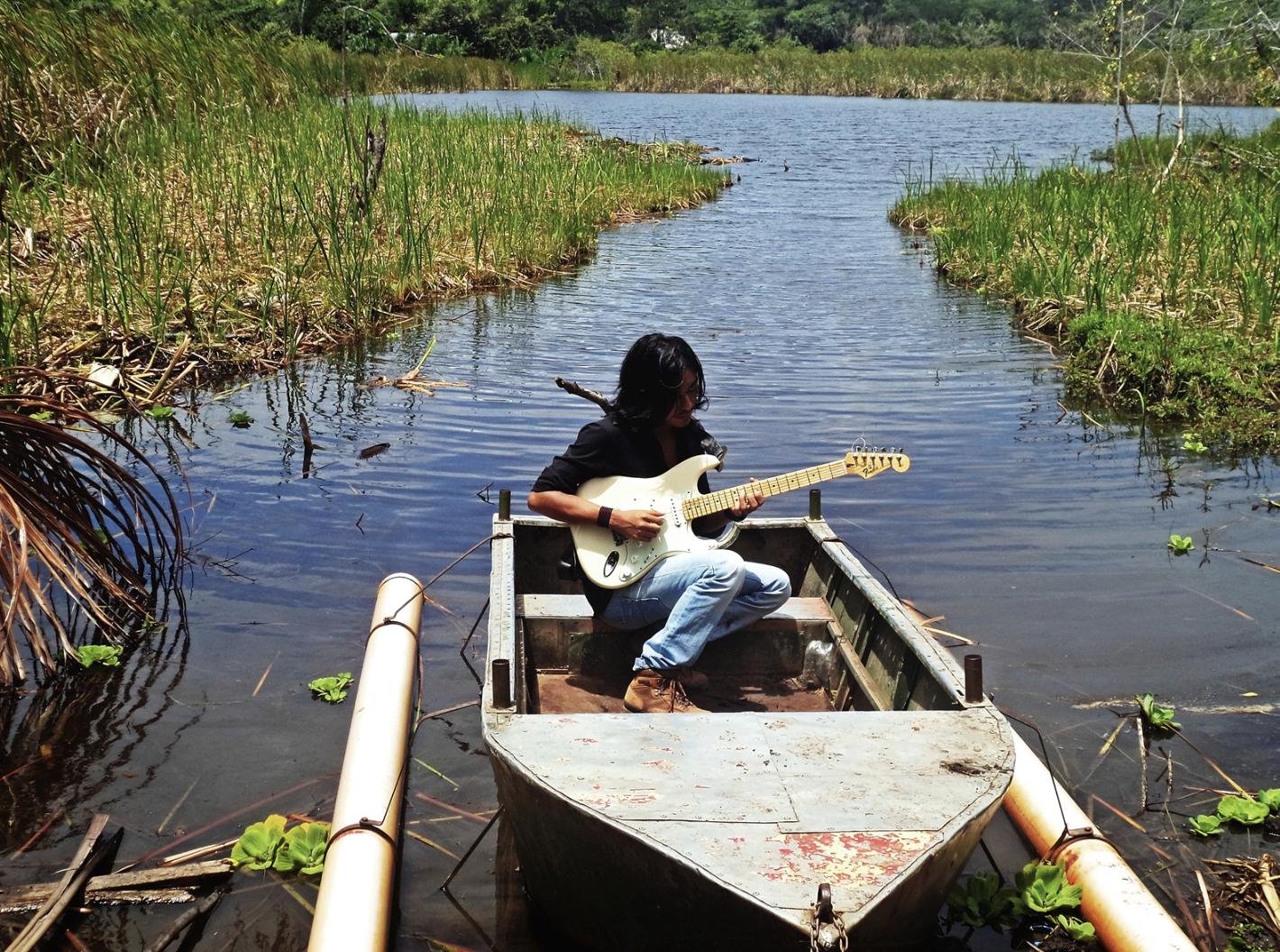
Image of Wayku courtesy of Jesús Flores
Matt Bachmann ‘Compost Karaoke’
(Orindal Records) 12th September 2025
Imbued and driven by a creatively successful obsession with film scores and incidental musical pieces, Matt Bachmann draws away from the earthy for something far more dreamy, escapist and calming. As if to illustrate, the artist, bassist, keys and various assorted instrumentalist soulfully, and low key, yearns “I don’t want to talk about the news” on the smooched and duck-billed saxophone accompanied dreamy if bluesy ‘Long Road’. And yet tied in part to reality, the dread and anxieties of our times, there’s an attempt to break new ground with music for a movie of life that doesn’t yet exist.
Leitmotifs and a recurring intimate ensemble appear throughout this latest near untethered cinematic-leaning album, but each composition, vignette of a kind, and song can be heard in isolation and apart from the rest. For the majority of the time, on an album mostly made up of instrumentals, with just a couple of tracks featuring Bachmann’s near meandered, contour ascending and descending peaceable vocals, there’s a trio core of longtime foils and ‘confidents’: Derek Baron (of Reading Group Records note) both on drums and a little woodwind; Jeff Tobias (Modern Nature, Sunwatchers) on alto saxophone and bass clarinet; and James Krichenia (Big Thief) ‘gumming’ up the groove (as it’s put) on hand drums and percussion. There’re further contributions from Roberta Michel on flute, Cory Bracken on vibraphone and percussion, and Kyle Boston on guitar. Sometimes altogether, or separately, this ensemble is subtle and attentive but moving freely and near lucid when alongside Bachmann’s carefully placed piano, synth, chime manipulations and bass parts and leads.
Emotions swim or cast adrift in a beautifully conveyed movement of suite-like arrangements, the near minimalist, field recordings, and bursts of music – the opening grasp, tangible hold of ‘Summer’s Last Grab’, is a short burst of spontaneous-like bounding seasonal change; almost like a freeform crescendo, with instruments pulled in from various points and angles. Much ground is covered musically and influence wise, and yet there’s no specific or easy to recognise reference or evocation of filmic composers, expect for Sakamoto, who’s 80s contemporary classical reinventions and scores, his synthesized and real Bamboo music clogs and shutters and tubular chimes can be heard suffused throughout the album’s ten tracks. You can also hear subtle hints of Sakamoto’s oft UK collaborative icon David Sylvain; touches of Japan’s former frontman turned prolific foil’s Rain Tree Crow and Nine Horses.
Japan, the country that is, seems a key inspiration. Amongst the vague Shinto temple bells, rung on a cold crisp day on ‘Autumnal Cycle’, are recalls of Yasuaki Shimizu, Ichiko Aoba, and the piano work of Masakatu Takagi and Akira Kosemura; the latter’s own craft set in motion as a therapy.
Added to that set of reference points, the music and sounds, with ease, amorphously shift and reshape using a palette of chamber music, the classical, jazz, Hassell’s fourth world peregrinations, Afro-Latin and the spiritual. For instance, the Star Trek catch phrase inspired ‘TIAGDTD’ (paired won by Bachmann into an acronym, after the famous Klingon defiant and fated line, “Today is a good day to die”), is a dance, a ceremony almost of Afro and clacked, snuzzled, waddled and mizzled saxophone, fourth world music and Finis Africae influences. The title track could be a horizon gazing and shifting communion of later Alice Coltrane, Keith Jarrett and Nicole Mitchell.
There’s much to admire about this album, from its near choir boy venerable holies, its vibraphone bulb notes meditations, its escape from the clutches of despair, its untethered melodious adaptions of diverse musical inspirations, and its filmic evocations of languid endurance and prevail. A lifeline as Bachmann puts it, this project has allowed for a new freedom of creativity and something more collective, more diaphanous, elusive and mysterious, at a key stage in a life of big changes (career wise, becoming a certified social worker and therapist in NYC); a healthy compost analogy mix of “both greens (food scraps) and browns (dead leaves, cardboard, etc.)”. As intimate as it is full of builds, a little drama and bombast, Compost Karaoke is a shared experience, an open project; the very opposite of Bachmann’s more isolated conceived and produced expressions.
The Good Ones ‘Rwanda Sings With Strings’
(Glitterbeat Records) 29th August 2025
The recording location this time around may have changed, but once more in spirit returning to the rural farmlands of a genocide scarred Rwanda, producer polymath Ian Brennan presses the record button on another in-situ, free-of-artifice and superficial production. The fifth such album of unimaginable stirred grief, heartache, and reconciliation from the country’s nearest relation to American Bluegrass, The Good Ones embrace, for the first time ever, the sound of strings. Accompanied, without any prior meeting, by the musicians Gordon Withers on cello, and Matvei Sigalov on violin, a sense of Americana, country and the beautified, ethereal sounds of Van Morrison’s Astral Weeks, of early Leonard Cohen and Nick Drake are brought to the Rwandan duo of Adrien Kazigira and Janvier Havugimana’s unique style of truthful roots music.
This could arguably be called The Good One’s American album: their American adventure. A result of travelling to the USA to appear, in part, on NPR’s notable Tiny Desk showcase, the duo were snapped on the same iconic Greenwich Village block that sports the cover of The Freewheelin’ Bob Dylan LP from 1963 – though Brennan informs me that this wasn’t in any way intentional, as the duo hadn’t even heard of Dylan before being photographed for their own album cover, with a casually draped arm across the shoulder, a tambourine in the other, standing and observing the leafy surroundings of one of New York’s most legendary folkloric talented hothouse neighbourhoods. In a hotel room, with Brennan and their new foils, they created a bridge between their own Rwandan backyard dirt music and that of a countrified, bluesy, traditional and folksy America.
The American theme continues of course with both the addition of Withers and Sigalov, two noted players with extensive CVs, making a name for themselves on the American East Coast. New Yorker Withers, as both a rock cellist and guitarist, has played with the J Robbins’ band, New Freedom Band and Betwixt, and the Russian-born, Washington D.C. based guitarist, violinist, producer and arranger Sigalov has a wide range of experience either playing or recording with Les Paul, Patti LaBelle, Issac Hayes, Ben Monder and Vinnie Colaiuta, amongst others. “The With Strings” part of the title is an intentional reference to records of the same name and of a certain vintage by such icons as Ella Fitzgerald, Frank Sinatra, Chet Baker and Charlie Parker.
I feel at this point that it would be beneficial to the reader, to have some context; a little background; a brief history if you like of the duo’s (parred down in recent times from a trio) direction, of the catalyst that set them on the path of making music.
Triggered, its argued even to this day, by a history of tribal warfare, insurrection, civil war, foreign interventions (rival European powers vying for influence in the region backed, trained or armed one side or the other, but failed to intervene once the bloodshed started) and the assassination of the then president Juvénal Habyarimana, the events of that three month period in 1994 saw a sudden death cull, ethnic cleansing of Rwanda’s Tutsi minority at the hands of the majority Hutus: though even moderate Hutus, along with Rwanda’s third main tribe the Twa were also far from safe, with many caught-up, trapped in the ensuing bloodbath.
Barbaric beyond any semblance to humanity, victims were brutalized, raped, cut to ribbons or herded together in buildings, churches, and schools and burnt alive. Unlike so many previous genocides however, most of those victims were murdered by hand with machetes, rudimental tools, weapons and gallons of Kerosene.
No family was left untouched, with both The Good Ones dual earthy vocalist set-up of Kazigira and Havugimana both losing loved ones, siblings and relatives in the horrific purge.
On the remote hilltop farm where he was born and still continues to work, but record too, Kazigira managed to hide and survive. But Havugimana lost his older brother; a loss felt considerably by the duo who looked up to him as an early musical mentor. Though not appearing this time around, oft third member Javan Mahoro and his foils, all represent one of Rwanda’s main three tribes: Hutus, Tutsi and Twa. And so, bring each culture together in an act of union, therapy and as a voice with which to reconcile the past.
Instantly drawn to the band during a research trip in 2009, Ian recorded their debut international album and the subsequent trio of records that followed: 2015’s Rwanda Is My Home, 2019’s Rwanda, You Should Be Loved, and 2022’s Rwanda…You See Ghosts, I See Sky. Ian’s wife and longtime partner on both this sixteen-year recording relationship and countless other worldly projects, the filmmaker, photographer, activist, writer Marilena Umuhoza Delli, was the one to instigate this Rwanda field trip: Marilena’s mother herself ended up immigrating for refuge to Italy, her entire family wiped out during the genocidal massacres.
In between numerous productions in dangerous and traumatized spots (from Mali to Cambodia and Kosovo) the partners recorded the fourth volume of Glitterbeat Records Hidden Musics series in Rwanda (back in 2017); bringing the incredible stirring songs, performances of the country’s Twa people (or pygmy as they’re unfortunately known; bullied and treated with a certain suspicion by others) to a wider audience.
The focal point, the inspired spot so to speak, throughout is Kazigira’s farm and haven, and the valley in which it is located; from which, a vantage point looks out to all the known world, or at least, the world that has importance, the surroundings that impact with the lives of the duo on a daily basis. It is here that they produce such incredible music and poetry; a sound and vocalised delivery that’s separated from all external influences.
Already receiving accolades aplenty in the West, working with an enviable array of admirers, from Wilco to TV On The Radio, Fugazi, Sleater-Kinney and MBV, it’s extraordinary to think that these earthy harmonic songs were produced in an environment without electricity; music that’s made from the most rudimental of borrowed farm tools, and from the detritus that blows in or litters the landscape.
On various occasions I’ve called this the true spirit of diy, of unfiltered raw emotion. The Good Ones speak of both love and the everyday concerns facing a population stunned and dealing with the effects of not only that genocide but cultural customs and the ongoing struggle to survive economically. Although in recent times, Rwanda has made the headlines as an alternative holding ground, a third-party processing centre for deported migrants from Europe. Whilst still in office, the Conservative government in the UK, after much criticism and protest, decided to fly those migrants denied a right of stay in the country to Rwanda. Only a few volunteers ever boarded such plane rides – and were paid for it too – before the Conservatives were voted out of office, replaced by the Labour party who reversed the policy almost immediately. Copping much international outcry, it soon turned out that other countries had already used Rwanda to dump their own migrant overspills, and that even Germany were seriously considering it.
Existing almost in its own musical category, its own world, The Good Ones play a real raw but also melodic, rhythmic roots music that sways, resonates with vague threads of folk, bluegrass, rock, punk and even a touch of the Baroque. Brennan, a man with an enviable catalogue of productions behind him, from every region of the globe, considers Kazigira ‘one of the greatest living roots writers in the world, in any language’. That’s some praise; one I’m willing to believe and repeat. It’s one hell of a voice, made even better and emotive, near spiritual or stirring when accompanied by percussionist and harmonising foil Havugimana.
On their fifth album, recorded 100% live in a hotel room without overdubs, in single takes, and without much preparation (if any), The Good Ones’ beautifully and plaintively redress various hardships and loss, whilst also evoking the landscape of Rwanda; all now lifted and stirred further by the sound of attuned, sensitive, yearned, tremored, mourned, plucked and touching cello and violin – which also on occasion sounds like a rural American folk fiddle, alongside a guitar, which on occasions similarly evokes a rustic, traditional essence of country and bluegrass banjo. Toil is made almost seamlessly ethereal and near sweet, with songs that despite their titles, often embody a sense of levitation: of hope too. At every atmospheric turn the sound of the Americana campfire, of folklore, the East Village, the sound of a stripped back Band, of Cohen, Drake and especially Van Morrison are entwined with the sweeter touching balladeers of Congo, of Mali and, especially when near a cappella, South Africa – it really reminded me in places of Amadou Diagne too, especially the ‘Freedom’ song.
Hardly rudimental, although The Good Ones duo is only really bringing the most basic of instruments – a springy resonating guitar, the rhythmical sound of finger clicks, an empty paper cup, plastic wrapping, a bucket, a couch cushion and pair of old boots – the sound is impressively alive, and full of feeling. Not so much an exciting, dynamic feeling, but a sensitive one attuned to sorrow, eulogy, pain, experiment and life; the horrors witnessed; the love lost; the ambitions still dreamt; Rwandan customs (doweries, marriage proposals); the theft of land; and the observance of village life.
Rwanda Sings With Strings is yet another incredible songbook, free of over production, and just left to develop. It was indeed an inspiring idea to add a subtle use of strings; one that doesn’t lose any of that homely rural bluesy signature and earthly soul but if anything, further emphasises the unintentional but obvious links to the sound and music brought across to America through African slavery an age ago. Two sets of musicians find true commonality and instantly synch to create something very special. Perhaps one of their best efforts yet; a definite addition to our choice albums of 2025 list.
John Johanna ‘New Moon Pangs’
(Faith & Industry) 12th September 2025
Revivalist songs from across a wide timespan that say as much about present societal woes as they did about the injustice, ruinations and toil of England in the 16th, 17th, 18th and the 19th centuries, are food for John Johanna’s latest, and returning, songbook. Not by name, except in the accompanying track-by-track notes, Johanna (actually the nom de guerre of one of Norfolk nature’s sons, Ben MacDiarmid) is drawn politically and societally towards the ideas of Distributism; a more achievable and perhaps practical philosophical compromise between carefree, devil-may-care Capitalism and hardline Socialism, and the idea that the world’s productive assets should be widely owned rather than concentrated. Favouring small independent craftsman and producers, or co-ops, member-owned and mutual organizations over state or big business monopiles, one its most famous cheerleaders was the famous G.K. Chesterton. It’s Chesterton’s works and their evocations of a particular poetically stirring England of both shambolic spiritualism and everyday mysticism that are tied together with a psychogeography through the age’s style road trip along an atavistic road well-travelled, that makes for a Dylan-esque harmonica-backed and skiffle-like ring of the past, on the album’s ‘The Rolling English Road’ meander. An inebriated greased old England of sextons, squires, drunken road workers, off-the-beaten-track detours of famous landmarks, battlefields and towns, and a history littered with references of the Romans and Bonaparte, is recalled from the folk tradition and given a new impetus.
Finding a middle road, Johanna now turns away (in part, but not totally forgotten) from his previous gospel-blues-raga-meets-Radio-Clash Testament references for the sound of poetic acoustic folk-rock. The tinged with painful emotions New Moon Pangs is Johanna’s ‘first fully fledged studio album’ in this mode; recorded with Faith & Industry label foils James Howard on electric bass, Ursula Russell on drums and Kristian Craig Robinson as both the ‘chancer on silver spoons’ and a more substantial role as producer. Recorded over two days at London’s Total Refreshment Centre, but finished at Johanna’s more rustic Norfolk home studio, IMZIM, the new album is both a breath of fresh air, and a bridge between his electrified spiritual Gambian EP collaboration with Sefo Kanuteh and his scriptures and Torah trip Seven Metal Mountains album (which made our choice albums of the year in 2019). Carrying over that afflatus, that divine providence, there’s still a big influence of hymns and psalms: even a mention of the Israelites -, as Johanna both recites near verbatim from that 18th century English Baptist minister and hymn-writer Samuel Medley (the opening reference to that antiquarian city of the Seleucid Empire, Antioch, is harmonised, double-tracked with Georgian England and adulation, praise for the redeemer) and reworks the same language of faith, of the spiritual into songs about grand days out in the Scottish landscape (Johanna and his family’s 2021 escape from the pandemic back to awe inspired nature and the Outer Hebridean geography of the Isle of Lewis and across from its Gallan Head mountain top the Seven Hunters islands, otherwise known as the Flannan Isles), seeking a creative rebirth, and the realisation that the rural life is where he belongs (inspired by the first half of the 20th century poet laureate John Masefield and his famous ‘London Town’, the original words ring true even now, but led Johanna to a concur, that after spending a decade in the capital himself, he really wasn’t a city lad).
Despite this being a thoroughly English tapestry, the influence stretche to the Southern Spirituals, and foundation myths of enterprise, industrialization in an expanding burgeoning America of the 19th century and early 20th., and to Chile and one of its most famous and celebrated composers, singer-songwriters, folklorists, ethnomusicologists and visual artists Violeta Parra. The hell’s ‘Fire’ blaze against avarice tycoons and ‘world dominators’ is another sermon made Dylan-esque (between Blood On The Tracks and Desire) and urgent, and was inspired in part by Johanna’s read-up on William
‘Devil Bill’ Rockefeller Sr., the patriarchal seed of the Rockefeller dynasty, father to Standard Oil’s founders. Variously described as a huckster, con man, ruthless capitalist, and accused of rape (ring any bells with our present shower of leaders and industrialists), Rockefeller was a man of his times, taking whatever he could get away with to eventually build one of America’s wealthiest dynasties. ‘A Dream of Violeta Parra’ meanwhile, is a tribute to the progenitor of Nueva canción Chilena (Chilian New Song); a record of who’s Johanna picked up twenty years ago in Berwick Street, its cover art drawing him in to the world of social-political traditional revivalist Latin America. As a tribute, Johanna weaves Parra’s notable poetics and language (the blossom mingled with mud; the dirt and ethereal) into another of those Dylan-esque whistle-blowed harmonica storyteller’s odes.
The rest of the album is inspired by such ethnomusicologist delights as the Norfolk farmhand come singer of traditional English song (‘Adieu to Old England’), Harry Box and a prison ballad from the days when gruel really was punishing; the drive home from a Chubby and the Gang gig in a blizzard, and the resulting songwriting workshop with pal and artist Harry Malt (‘Justine’); and an anonymous Jacobian/Stuart period broadsheet that despite its historical language could have been written for the sorry state of inequality that plagues us all now (‘The Poor Man Pays For All’).
Musically lilting, melodious there’s a real warmth and lovely feel to this album’s production as it vaguely echoes the sentiments of Terry Bush, the folk-rock of Pentangle, Fairfield Parlour and Steeleye Span, 1970s Fleetwood Mac, child of the Jago meets Thackery Mekons, Cat Stevens, XTC, The Strawbs and more contemporary artists like Paul Winslow and Valentino DeMartini.
The old is rejuvenated, and found relevant, stitched together in a loose Norfolk tableau. The rural lad does good once more, with nothing less than one of the best albums of 2025.
Isambard Khroustaliov & Ben Carey ‘Field Recordings From Other Constellations’
(Not Applicable) 12th September 2025
The award winning, and far too qualified, electronic and sound composer, software developer and researcher Sam Britton is at it again, fusing the generative and interconnective with the human and machine; this time around, pairing up with Australian foil, the equally qualified composer, improviser and educator, Ben Carey.
A serial offender in this department with the notable Long Division and Fake Fish Distribution experiments and through collaborations with such lauded operators as the Aphex Twin (via the Remote Orchestra project) and Matthew Herbert (New Radiophonic Workshop), and has a co-founder of the very platform this latest release is being facilitated by, the artist collective Not Applicable, Britton, under the Ismabard Khroustaliov nom de guerre, hooked up an impressive apparatus of ARP 2600, Buchla 200e, Destiny Plus 16 Psyche, Make Noise Strega & Morphagene, Moog ONE, Oberheim OB-X8 and Sequential Prophet 12 enabler equipment to venture beyond dimensions and space with his willing sonic partner. Carey, who is one half of the voice and electronic duo Sumn Conduit and has collaborated with such notable company as the JACK Quartet, Sydney Chamber Opera, ELISION Ensemble, Joshua Hyde, Chris Abrahams and Marin Ng, seems a fitting cosmonaut volunteer on this untethered and unbound trip, which has been edited down from a much longer, expanded live performance at Coda to Coda in London on the 3rd of July 2023.
Influential Eastern European science fiction and philosophical enquiry meet on this four-track visitation of alien organic matter, metallics, strange leviathans, machines and codes. Inspired by that genius titan of 20th century sci-fi and future prophecy, the Lviv born Polish writer Stanislaw Lem, and one of his most beloved (so it’s said) works, The Cyberiad, two prolific trick noise makers and manipulators of oscillations, wave forms and patches construct an atmospheric soundscape and journey into both satirical, ominous and mysterious space.
The book, or collection of short stories, follows two ingenious constructers (or robots of a kind) travels through a strange Medieval universe, where they encounter such oddities as a machine that is capable of creating anything, as long as it starts with the letter N, kings who oppress their people with parlour games and PhD pirates. Ahead of his time in so many ways, and in in so many different fields (nots just sci-fi), Lem wrote another famous work, the Summa Technologiac, in 1964, about the moral, ethical and philosophical consequences of various futuristic technology: predicting virtual reality (called “phantomatics” in the book), search engines, AI and singularity. Intellectual as it all might be, much of his actual fictional work is quite humorous in tone.
Here, it is transmogrified and transduced into a constantly developing scan and probe across synthetic and alien technology and off world destinations. A soundtrack in a manner, for a film yet to be made (as far as I’m aware of all of Lem’s cannon, it is only the most famous work, Solaris, that has ever been adapted for the big screen), it feels like a navigation at times, a mapping of extraterrestrial technology. But also, a twisting of reality itself and the fabric of the universe.
This is the near classical meets analogue sci-fi, the non-musical and techno minimalism, with centrifugal movements, fizzles, the sound of switches and mechanisms, electrical currents and static, calculus, pattered and padded rhythms, shocks, UFOs, elevators and accelerations. There are certain hints of the recognisable amongst the squirmed and scrawled alien liquids, especially when the sheet metal punch bag timpani pounds in on the Soviet era mirage ‘Discovering Alonta’. And the opener, ‘The Computerised Bullfrog’, recreates the title’s amphibian through said computerised effects: an artificial reality, the living mimicked through tech. But for the most part this is an ambiguous use of sounds and instruments.
If I was going to use any reference points, perhaps orbiting a similar universe as Tangerine Dream, Moebius, Cabaret Voltaire (also Richard H. Kirk’s uncoupled work), Basic Channel and East European experimental sci-fi.
A very atmospheric performance, bringing Lem’s space oddity philosophical quandaries and explorations to life, Field Recordings From Other Constellations builds a real imaginative as well as foreboding and uncertain world from codes, textures and soundboards.
Johnny Richards & Dave King ‘The New Awkward’
(False Door Records) 5th September 2025
Setting new challenges for artists, the restrictions imposed during the various Covid lockdowns, four or five years ago, meant many were forced to work in isolation or apart. And so, collaborations were largely created by participants working remotely and at a distance (sometimes considerable) from each other; sharing and sending results mainly over the Internet. This made for some intriguing, exciting and inventive results. I understand many musicians would rather work in the same room as their foils and partners, but personally, despite the distances, none of projects made during those trying times seemed to really suffer in quality or creativity. In fact, it made for some challenging surprises.
One such exchange of ideas, a sort of transatlantic partnership between the notable and acclaimed UK pianist and composer Johhny Richards and US-based drummer of equal note Dave King, ended up as untethered and genre-defying experiment in ‘impossible music’: or that which is near impossible to recreate, at least live; a response to certain conditions, certain prompts produced during a particular process that involved a bit of toing and froing between the two musicians. It’s Richards’ prompts that come first in this experiment. His piano, whether treated or untreated, adapted with various materials and objects (from screws to Blu-tack and a knife), and his transformance of the very workings, the guts, the hammers, pins and the action, were sent to King, who recorded his reactions, before once more travelling back to Richards to receive further overlayed parts.
The skilful anarchic (yet never too wild and unchained as to run away with itself, to get lost in chaos or totally lose the plot) style of piano which has served Shatner’s Bassoon so well, is once more unleashed. Unburdened by restrictions, sent out into the serialism ether, and without any preconceived ideas of how his drumming partner would respond, the connection and intuitive nature of this collaboration proved as frenzied as it did dramatic. It’s as if they both unknowingly created a score at times, and at other times, a simultaneously mischievous, playful, and avant-garde merger of off-kilter, kooky jazz, electronica, performance art, transmogrified classical music, the Duchampian, La Monte Young, cartoons, math rock equations, fusion and gamelan. It sounds also like a largely acoustic recreation of Warp Records (as mentioned in the briefing, Warp is cited as an influence and direction of travel) output; an experimental electronic record made without much in the way of the electronic.
Muscle memory from King’s impressive haul of instigated groups and ensembles (from The Bad Plus to Happy Apple) can’t help but turn up. But this album of variously paced and cryptic tracks, brilliantly matches random passings of Herbie Hancock, Tim Berne, Bach, Zappa, Mr. Bungle, Radiohead, Matthew Shipp and Cecil Taylor (I’m thinking of the recently released Taylor and Tony Oxley piano-drums combo experiment Flashing Spirits). It makes for a tumultuous balance between re-wired jazz-fusion, the near leapfrogging and frenzied, and the more serious atmospherically framed offerings – ‘False Doors’ with its heavy piano rumbles of a weather and thunder, and distant strike of a buoy out at sea, obscured by a prevailing fog, really sets a moody scene; almost esoteric in part before developing into a jazz-breaks, splashing of ride and crash cymbals and a near thriller or mystery piano dotting of notes-like soundtrack.
From being pulled through the fantastical mirror backwards to the unsettled and skewwhiff, much ground is covered. Starting from nothing, an incipient partnership of effected, pulled, chimed, chopped and string-like plucked piano workings and both dampened bass-y and more recognisable, if near unmanageable, notes seem to run independently of the drums. And yet the shuffles, breaks, spidery skirts and rattles around the kit, and drills, its free from movements, somehow stick to produce a remotely made piece of dynamic art, playfulness and moody observance. A very successful partnership.
Ujif_notfound ‘Postulate’
(I Shall Sing Until My Country Is Free) 9th September 2025
With no end in sight, and yet another deadline from Trump crossed, Putin’s barbaric invasion of the Ukraine depressingly drags on. Three and half years in – although the real flashpoint came in 2014 and the annexation of the Crimea – and Russia continues to pound away at an already devastated ruinous landscape. Casualties may have reached the million mark, as whole generations fill the mass grave sites on a scale rarely seen outside the scenarios of both World Wars.
In these horrific times it falls upon labels such as the electronic artists Dmyto Fedorenko and Kateryna Zavoloka’s I Shall Sing Until My Land Is Free to spread the sound of the sonic resistance. A soft power, a cultural emissary of that country’s experimental scene, the profits from its roster of artists, which includes both its founders, are donated to several self-defence and humanitarian foundations and local volunteer activists.
The latest release on that platform sees the noted Ukrainian multi-disciplinary electronic sonic, media and visual artist Georgy Potopalsky channel the apocalyptic horror, the destroyed and twisted concrete and steel scarred geography of his homeland to create a pulverised industrial and force field electrified work of conflict and brutalism. Under the Ujif_notfound alias, and with the artist’s usual themes that draw upon the volatility and dynamics between man and the machine, between user and interface, there’s now a focus towards, what the PR description describes as, ‘blasted soundscapes, frenetic breaks and bristling guitar noise’.
In practice this amounts to heavy meta(l) meets the electrifying bounce and fractures of techno and the gears and torqued industrial granular effects of machines (both the coded and the weaponized). Fizzling and warping, with ring outs of both contorting grindcore and repetitive guitar, the coarse and corrosive, an ominous presence is always near at hand; an alienness almost, and yet sense of war and its physical effects permeate the scorched earth. And yet, as pads are drilled with tight delay, or spiked, rotations spiral out the influence of Basic Channel, acid techno and breakbeat, there’s a danceable aspect, a dynamism of alive circuitry that gives some of the tracks a buzz.
The grains of acid rain, of filaments and detritus of weapons, missiles, rockets and drones appear like sonic drizzle though. But at the very end, a peaceful coda is reached; something approaching the ambient and Eno-esque, channelled once more through tubular metallic effects.
At any one time I’m hearing hints of Alberich, Cabaret Voltaire, Cosy Fanni Tutti, Atsushi Izumi, Brian Reitzell’s American Gods score, Autchere and Einstürzende Neubauten collectively pulled into a heavy set of the magnetic, pulsating, grinding, crushing, and shuttered. As sonically shocking as it is bouncing and charged, a full immersion that conjures up a full multimedia experience from one of Ukraine’s most prolific and creatively stimulating artists.
Visible Light ‘Songs For Eventide’
(Permaculture Media) 19th September 2025
Marking in a visceral, beatific, and sometimes plaintive manner, both seasonal changes and our relationship to the environment, the Visible Light musical partnership between experimentalist cellist and improvisor Amy McNally and multi-disciplinary artist and composer Matthew Hiram is deep in ecological study, philosophy and reflection.
Described as a “chamber-ambient” project, imbued and led by the environment and elements that surround them, the Visible Light vehicle has a both serious and meditative purpose. Hiram, as a “certified Minnesota Water Steward” and active contributor to nature conservation (and public art) initiatives and his foil create a quintet of suites from an atavistic but living and breathing nature. Their debut long-form release, Songs For Eventide, is not only released on the sustainable ecosystem themed Permaculture Media platform, but released in time for the Autumn Equinox this September.
The whole cycle of the seasons, from the awakening blooms of summer to the darkened, colder and more uninviting, even sad, drawing in of winter, are articulated graciously, purposefully, imaginatively and magically through the effected and processed sounds of the cello, flute, drones, vapours and a sustained mysterious bedding of electronic produced atmospheres. From blossoming wildflower carpets to the frozen elegy of the Boreal age – a reference, in technical terms, to the North or most Northern, but also the first climatic phase of the Blytt-Sernander sequence of northern Europe, during the Holocene epoch; its climate characteristics being long winters and short, cool to mild summers), long drawn strokes and bows, the occasional spaced out short pluck of cello, the willow and evergreen flute, sounds of tubular rings, and both ambient and new age electronic elements conjure up evocations of each studied season alongside classical American folk and rustic traditions, the classical, the pastoral, the Oriental (the cello on the opening ‘Bloom To Bloom’ sounds almost like a Southeast Asian dulcimer or something of that nature) and Celtic: both Irish and Scottish.
Each suite is an incredible observation of patterns, of language and a spectrum of natural light. Recorded beneath the canopy of nature, you can hear the soft downpour of rain pelting the tarpaulin that covers those musical observers – or so it sounds like on the chamber-trance and environment captured ‘Boreal Shift’.
The duo mention Sarah Davachi and Harold Budd, amongst others, as reference points. Both good calls, but I’d perhaps add Jeff Bird, Anne Muller, Alison Cotton and Simon McCorry to that loose sphere of influences. In all though, a thoroughly impressive adroit, stirring and near stained glass anointed eco system soundtrack of the reflective and magical.
Wayku ‘Selva Selva’
(Buh) 18th September 2025
Astral mirages, shamanistic dream ceremonies, and festive dances await the listener on this new album from the Peruvian guitarist, researcher and ethnomusicologist Percy A. Flores Navarro. Some of the ideas, the conceptions of these tracks may go back years, but this jungle menagerie and musical map of the abstract atmospheres, the psychogeography, the ancestral traditions of the Peruvian Amazon is a new venture under the adopted Wayku moniker. More or less flying solo, uncoupled from his Motilones de Trarpoto band, it’s the guitar that does most of the talking; channelled through various effects, adopting various meters, Peruvian and greater indigenous and Latin American styles whilst also evoking traces of rock ‘n’ roll, the more frantic and adroit displays of rock guitar soloing, jazz, and surf music.
A really skilful, attuned and expressive guitarist, Percy’s craft is given room and space to perform the articulate, joyful, mysterious and supernatural, bolstered or underlined by the use of synths, the bass and drums. At its heart, rejuvenated and refashioned, is an electrified version of the popular festival genre Pandilla; a more uplifting and celebratory community style that emerged from the Peruvian Amazon. Alongside a diverse range of rhythms, of traditions and more contemporary disciplines, it makes for a rich album of the nimble, playful, mystical, cosmic, otherworldly and infectious: you’ll be dancing along to at least a third of these mostly instrumental affairs.
Steeped in local colloquies, with references to ceremonies, to places and spirits named by the Quechua and even further back, there’s a story behind every track. Originally from the famous Amazon cloud forest city of Tarapoto (sitting in a valley between two rivers, located in the San Martín region of northern Peru, this large epicentre is often referred to as the “city of palms” for its abundance of the plant), which is itself full of myth and magic, Percy encapsulates the unseen forces and the feel of those lands that lay beneath the rich canopy of jungle, and live off and by the sides of the Amazon river in Peru. This porously spills over into bordering Brazil at times, picking up some of the Amazonas (the largest in all of South America) state’s indigenous sounds en route. There’s also, as I mentioned earlier, a certain tremolo-like turnpike wave and twang of coastal South American surf music, ala Dick Dale, to be added to the mix. Perhaps the sound of such Peruvian pioneers as Los Ranger’s de Tingo Maria, Los Zheros and Fresa Juvenil De Tarapoto via Mexico and Brazil propelled into a cosmology of supernatural, mythological and historical gravitas.
Educational in spirit and full of references to the prevailing economic and political disconnections that have separated the city from the interior and its various indigenous societies, Selva Selva is teeming with relevant messages and ethnographical context. The album came with plenty of notes, and plenty of relevant personal connective anecdotes and stories by the artist. Every track has a purpose, is well-thought out and planned. And, depending on how much the listener wishes to expand their understanding of the subject, can go as deep as they like into the interior of Percy’s studied forms.
From the sprinkling of magic and the amazon’s natural medicine cabinet – the wisdom of the ancients – to the short-lived autonomous jungle states and their founders (nods to Guillermo Cervantes’ proclaimed Third Federal State of Loreto in the 1920s, and Emilio Vizcarra’s Selva Nation in the late 19th century), a whole world of panther-like deities and ugly squatted spirit guardians, festival celebrations and fieldwork await as Percy reclaims his home’s legacy with verve and deft musicianship. An outstanding album from an outstanding guitarist.
If you’ve enjoyed this selection, the writing, or been led down a rabbit hole into new musical terrains of aural pleasure, and if you can, then you can now show your appreciation by keeping the Monolith Cocktail afloat by donating via Ko-Fi.
For the last 15 years both me and the MC team have featured and supported music, musicians and labels we love across genres from around the world: ones that we think you’ll want to know about. No content on the site is paid for or sponsored, and we only feature artists we have genuine respect for /love or interest in. If you enjoy our reviews (and we often write long, thoughtful ones), found a new artist you admire or if we have featured you or artists you represent and would like to say thanks or show support, than you can now buy us a coffee or donate via https://ko-fi.com/monolithcocktail
Our Monthly Playlist selection of choice music and Choice Releases list from the last month.

We decided at the start of the year to change things a little with a reminder of not only our favourite tracks from the last month but also a list of choice albums too. This list includes both those releases we managed to feature and review on the site and those we just didn’t get the room for – time restraints and the sheer volume of submissions each month mean there are always those releases that miss out on receiving a full review, and so we have added a number of these to both our playlist and releases list.
All entries in the Choice Releases list are displayed alphabetically. Meanwhile, our Monthly Playlist continues as normal with all the choice tracks from July taken either from reviews and pieces written by me – that’s Dominic Valvona – and Brian ‘Bordello’ Shea. Our resident Hip-Hop expert Matt Oliver has also put forward a smattering of crucial and highlighted tracks from the rap arena.
CHOICE RELEASES FROM THE LAST MONTH OR SO:
Kai Craig ‘A Time Once Forgotten’
(Whirlwind Recordings) Review
Crayola Lectern ‘Disasternoon’
(Onomatopoeia) Review
Julian Cubillos ‘S-T’
(Ruination Record Co.) Review
Daemon ‘Euphonic’
Escupemetralla ‘Exotic Matter of the Universe Series of Albums: Sublimado Corrosivo, Burros de Dios / Asses of God, Vida y Color, The Third World Chickenpoxp, Multimierda’ Independently Released Review
Andy Haas & Brian g Skol ‘The Honeybee Twist’
Review
Mico Boule ‘Cellular Degradation’
Review
The Neon Crabs ‘Drop It On Ya!’
Album (Metal Postcard Records) Review
Scotch Funeral ‘Ever & Ever’
Review
Maria Elena Silva ‘Wise Men Never Try Vol. II’
Review
Soft Speaker ‘Rippling Tapestries’
Album (Cruel Nature Records) Review
Marc Teamaker ‘Teas n Seas’
Review
Various ‘Live Outside Vol. 2’
(Playing For Change Records)
Saul Williams, Carlos Niño & Friends ‘Saul Williams meets Carlos Niño & Friends at TreePeople’ (International Anthem) Review
THE PLAYLIST::
Julian Cubillos ‘Fruit Stripe’
Ghostface Killah ‘Windows’
Daemon ‘Megalodon (Top of the World)’
Cumsleg Borenail ‘At Least There Is A Personality To Disorder’
Alexei Shishkin ‘Disco Elysium’
James Brett ‘Torrential Rain’
hyacinth. ‘do the lovers still meet at the challenger shuttle memorial?’
Binary Star Ft. Buff1, Decompoze, One Be Lo, Vital & Senim ‘Fellowship’
billy woods Ft. Messiah Musik ‘Golgotha’
Playing For Change & Tinariwen ‘Le Chant des Fauves’
Kai Craig ‘Namesake’
The Cords ‘I’m Not Sad’
The 1981 ‘Soft Goodbye’
The Stripped Bananas ‘Vampire of Mine’
Oopsie Daisies ‘As If’
Scotch Funeral ‘She’s A Writer’
Neon Crabs ‘Pumps On A Puma’
Occult Character ‘Butterfly’
CRIMEAPPLE & DJ Skizz ’97 Tape Master’
Nacho Picasso, Milc & TELEVANGEL ‘Tubbs & Crockett’
Dr. Syntax & Boyce ‘Smoking’
Jazz T, Micall Parknsun, Joker Starr & MCM Caveman ‘Nebula X’
Nourished by Time ‘Max Potential’
Saul Williams, Carlos Nino & Friends ‘The Water is Rising/as we surpass the firing squad…’
John Robinson, BudaMunk, Elon Kush & Invizible Handz ‘Stealth’
OldBoy Rhymes Ft. Ariano ‘Curly Head’
Mr. Lif, Jehst, Illogic & Spectacular Diagnostics ‘If Not Now’
Marc Teamaker ‘North Dakota’
Four Day Beard ‘Stay’
Tiberius ‘Sag’
Crayola Lectern ‘Dissolve’
SUO ‘The Troubling’
The Northern Lighthouse Board ‘Secret Worship’
The Besnard Lakes ‘Give Us Our Dominion’
Ingebright Haker Flaten ‘Austin Vibes’
Soft Speaker ‘Nautilus’
The New York Salsa Company ‘This Machine Won’t Stop’
geeker-natsumi ‘Signal140’
If you’ve enjoyed this selection, the writing, or been led down a rabbit hole into new musical terrains of aural pleasure, and if you can, then you can now show your appreciation by keeping the Monolith Cocktail afloat by donating via Ko-Fi.
For the last 15 years both me and the MC team have featured and supported music, musicians and labels we love across genres from around the world: ones that we think you’ll want to know about. No content on the site is paid for or sponsored, and we only feature artists we have genuine respect for /love or interest in. If you enjoy our reviews (and we often write long, thoughtful ones), found a new artist you admire or if we have featured you or artists you represent and would like to say thanks or show support, than you can now buy us a coffee or donate via https://ko-fi.com/monolithcocktail
Our Daily Bread 645: James Brett, Hyacinth, The Neon Crabs, The New York Salsa Company…
August 25, 2025
Brian ‘Bordello’ Shea’s Reviews Roundup – Instant Reactions. All entries in alphabetical order.

The 1981 ‘Soft Goodbye’
Single (Dandy Boy Records) Released 29th August 2025
‘Soft Goodbye’ is an example of the jingle-jangle joy of a fine guitar riff, and it really is a fine guitar riff and well worth giving a listen just for the joy that the magic of the riff emits from your listening device.
James Brett ‘Torrential Rain’
Single Released 15th August 2025
I’m not really a fan of the hot weather, but I’m a fan of Torrential Rain, and as I write this it’s pushing 29 degrees. This blast of indie dance is indeed refreshing; it comes across like I imagine what a Shaman demo may have sounded like in the late 80’s or an EMF demo. There is a somewhat home recorded slightly off-centre quality about it that I feel very appealing indeed.
The Jimmy C ‘Refreshing’
Vinyl Album Edition (Think Like A Key) 5th September 2025
Refreshing is an album of mostly extremely short pop songs performed with so much vim and vigour that a 70’s tv advert would be embarrassed by its vigorous vim. And indeed, it is a fine album of home recorded power pop, Americana and indie rock n roll that at times reminds one of both Red Kross and Jellyfish. And I’m sure it will find itself in the record collections of all those sun-hugging guitar loving power pop aficionados out there.
The Cords ‘I’m Not Sad’
Single Released 13th August 2024
How on earth could anybody be sad when this under two-minute rambunctious slice of indie guitar pop reverberates into your jolly old lugholes; sounding not unlike The Primitives when they were young and carefree and did not have mortgage worries, and whether you were too old to wear denim shorts that did not reach your knees…ah those where the days.
Flea ‘Sick Bake’
Single, released 1st August 2025
‘Sick Bake’ is a fine single. It has the sound of 80’s Manchester before Baggy took over. It’s all grumbled vocals and harsh guitars: a little like that fine, and now rarely mentioned band the Inca Babies. It reminds me of the days of trawling around Afflecks Palace shopping for clothes, records and whatever else grabbed our fancy back in the day. Great days, great music and ‘Sick Bake’ is a great single.
Four Day Beard ‘Stay’
Single (Dark Fur Records) Released 23rd July 2025
There is no need for me to proclaim not to be confused with Rhianna‘s ballad ‘Stay’ because it is a blinking blimey cover version of the blighter. And a lovely charming, beautiful cover version it is as well, all deep yearning and heartfelt vocals performed no doubt by a gent with a fading twinkle of fond memories and lustful regrets, as sweet as a young child dipping their licked finger into a bag of their older sisters Sherbert.
Hyacinth ‘In Heaven’
Album (Cruel Nature Records) Released 1st August 2025
Have you ever drunkenly danced in the early hours of the morning to the soundtrack of the Teletext music on the television, if not why not? Obviously, that only applies to people of a certain age when teletext on tv was such a thing…those who probably remember the Hitman and Her, or hazily remember it anyway. Why I hear you probably ask yourself, as you think what is this old duffer pontificating about now. Well, it’s because that is what this quite enjoyable forage into the midstream of ambiance dance reminds me of. The warm bewitching sound of the blissful memory of youth entwining the thought of only hours before sharing time with your friends and old lover over more than a few bottles/pints of the demon brew, and as you both sway in a staggered like out-of-it-Travolta way (or in my case an out-of-it-Jarvis Cocker) you gently sway in the memory of the laughter and goodnight kisses.
Monogroove ‘Popsicle Drivethru’
Vinyl Album Edition (Think Like A Key) 29th August 2025
I wonder if Monogroove have listened to an album not made after 1966, as Popsicle Drivethru is an album of 60’s beat music, all very poppy and jangly like, the kind of thing you hear on a documentary about The Beatles made by a cable tv station that can’t afford to license the actual music by The Beatles so have music by a band playing in the background with a similar energy. Monogroove indeed are full of pop energy 60’s Beat style with songs of borrowed melodies and a certain charm. Popsicle Drivethru is indeed an enjoyable album especially if you are all consumed with the British beat pop between the years of 1963 and 1966.
The Neon Crabs ‘Drop It On Ya!’
Album (Metal Postcard Records) Released 28th July 2025
The cold steel flash of post-punk genius is once again wafted in by the rather excellent Neon Crabs. Iggy and The Stooges, Atari Teenage Riot and early Adam and The Ants collide in this misadventure of dark humour influenced by the world and the ridiculous life we are all living.
It is only a matter of time before the Neon Crabs are blasting on a daily basis from BBC 6 Music and getting write ups from the Blogs that people read, and being name dropped by influencers, and Matt is being touted as one of the great lyricists in modern underground music today (which he indeed is), and Andy supplies the ideal soundtrack with his incendiary shrapnel chord meanderings. The Neon Crabs are the ideal band to soundtrack life in a not ideal world. Also, every time Matt says, “Lets Rock”, it makes me grin from ear to ear.
The New York Salsa Company ‘This Machine Won’t Stop’
Single (Bad Soup Records) Released 27th August 2025
If sinister Garage rock Psych is the bag you are carrying, then this rather fetching blast of noise plumage is just for you. Short and sweet and sensual like a sexy primetime Fuzztones but with artier leanings; like a strawberry dipped in chocolate with imagined lipstick yearnings.
Soft Speaker ‘Rippling Tapestries’
Album (Cruel Nature Records) Released 1st August 2025
Rippling Tapestries is an album of hazy psychedelic indie rock songs covered in a warm blissed out sadness. Not unlike the first House Of Love album Motion Sensor (it could have stepped right off it in fact), the Soft Speaker have the same qualities as the afore mentioned band but with very subtle Americana undertones – but that could well be because they are indeed American and in fact they do produce Rippling Tapestries of songs: so a band that live up to their name in a very good way.
Some Brian Bordello News:
If you are currently suffering from Oasis hyperbole derangement, and need the antidote, then you can purchase our Brian and his dysfunctional family band The Bordellos’ Liam Gallagher EP diatribe via Bandcamp now:
The very same label, Metal Postcard Records, will soon be releasing the latest single ‘Village People’ in due course (no link or pre-order as yet, but keep checking out the label’s bandcamp page). However, the band showcased the track at the recent Preston Pop Festival jamboree, and you can now view that performance below:
If you’ve enjoyed this selection, the writing, or been led down a rabbit hole into new musical terrains of aural pleasure, and if you can, then you can now show your appreciation by keeping the Monolith Cocktail afloat by donating via Ko-Fi.
For the last 15 years both me and the MC team have featured and supported music, musicians and labels we love across genres from around the world: ones that we think you’ll want to know about. No content on the site is paid for or sponsored, and we only feature artists we have genuine respect for /love or interest in. If you enjoy our reviews (and we often write long, thoughtful ones), found a new artist you admire or if we have featured you or artists you represent and would like to say thanks or show support, than you can now buy us a coffee or donate via https://ko-fi.com/monolithcocktail
THE MONTHLY DIGEST INCLUDES A CLUTCH OF ACCUMULATED NEW MUSIC REVIEWS; THE SOCIAL INTER-GENERATIONAL/ECLECTIC AND ANNIVERSARY ALBUMS CELEBRATING PLAYLIST; AND CHOICE PIECES FROM THE ARCHIVES.

(Photo by Todd Weaver)
___THE NEW___
Ingebrigt Håker Flaten’s (Exit) Knarr ‘Drops’
(Sonic Transmissions) 22nd August 2025
Growing, developing and expanding the remit from what was meant to be a one-off commission, brought together especially for the Vossajazz Festival, the troupe is now on its third titanic fusion rich studio album proper. Set in motion by Ingebrigt Håker Flaten (who also runs the Sonic Transmissions label, home to the ensemble’s recordings) a number of years back, the (Exit) Knarr now acts as the ‘main creative vehicle’ for the Norwegian bassist going forward it seems.
Settling with a reasonable lineup on this third chapter but inviting in a number of guests on the album’s statement piece, a transformed vision of jazz deity Wayne Shorter’s ‘Deluge’ piece from the revered and influential 1965 album release JuJu, on this outing the sextet takes prompt or inspiration from a more visual source. In the sphere of the Russian maverick abstract visionary and Bauhaus professor Wassily Kandinsky and Swedish mystic and abstract progenitor – some would say the true and first ever abstract artist, beating her peers (Malevich and Mondrian) to pure abstraction by a few good years – Hilma af Klint, a number of graphic scores have been used to foster untethered freedoms and play from a group already in the freeform mode. In one way, addressing perhaps the lack of knowledge, the place in which she should stand, there’s an unsaid elevation of Klint, an early adopter of the very spiritualism, Theosophy, that first led the way for Mondrian and many of his circle to dare to strip away every last visage, reference of the world for abstraction. Arguably Klint can be said to preceded Kandinsky and the others to this goal. And her work is filled with the iconic circular shapes, the colurs that would go on to inspire Sonia Delaunay and many others.
As a visual methodology, these scores go some way to painting a reification of a partly live studio performance and the ‘tweaked’ effected and transmogrified aftermaths.
Bringing together Amalie Dahl on alto, Karl Hjalmar Nyberg on tenor and electronics, Marta Warelis on piano and also on electronics, Jonathan F. Horne on guitar, Olaf Olsen on drums and of course IHF on what sounds like both electric and double bass, the album divides two longer form performances with a couple of shorter pieces. Speaking the experimental language of Anthony Braxton with garbled, hysterical and squeezed abandon, and inspired by the equally freeform pioneering Mats Gustafasson and his No Ensemble, the ensemble open with an already mentioned version of Shorter’s ‘Deluge’; taking the original’s more controlled bluesy swing style of simmering and serenaded and crooned sax for a tumultuous ride on the open seas of both discord and crested freefalls. It starts with twisted guitar wire grabbing and neck sliding and incipient tethered drums but soon develops into a recognisable, familiar feel before numerous swells and peaks resemble a fusion of the Henry Grimes Trio (cicra ‘Fish Story’ if we’re being specific), Rashied Ali, the Anthony Braxton Quartet, Keith Jarratt and Darius Jones. Wild in places, with the guitar going on to sound like a sci-fi dialect of tabbed beeps and switches, and the horns squeezed until the pips fall out, the action is shared out equally between all participants without losing a single instrument.: and that’s when you consider there’s also the guests, Mette Rasmussen on a second alto and a second drummer, Veslemøy Narvesen added to that untamed tidal wave experiment.
The album title is next. A change of a kind in tempo and thought this shorter composition articulates those droplets in various ways on a performance that sounds more open air than studio recorded. The sound of a dragon fly’s wings in rapid hovered form hangs around in a chamber-esque atmosphere of musing and pondering. Part JAF Trio, part ECM and part classical-minded jazz of a certain vintage, the gentle cascade of drips and drops fall very nicely and mysteriously on this Scandinavian ice float.
A second centrepiece if you like, ‘Kanon’ is dedicated to the renowned Norwegian drummer, composer and free jazz improvisor of note Paal Nilssen-Love. From his parents famous Stavanger jazz club located incubator to the capital and onto wide world recognition, Paal played with such notable company as Mats Gustafasson and Peter Brotzmann’s Chicago Tentet, before going on to set up his own All Ears festival. As an inspiration to a generation of Norwegians, Paal’s influence is huge. And in this mode, at this time, the sextet conjures up a semblance of his artform and free experimentation. But first, it all starts with some speaking panning of a curled up rattling drum roll, the quivers and quavers of the piano and what could be the attempt to match the sound of a buzzing bee. But it all soon develops into a wilder proposition of Masayuki Takayanagi, Eric Dolphy (I’m thinking specifically here of Out To Lunch!), Roscoe Mitchell, Andy Haas, Bill Dixon and Last Exit. It keeps changing; whether that’s in the action, dynamics between players, the tampering down parts that then peak into hysterical cries of squeezed, rasped and the burbled. A surprising passage of play even takes on a Lalo Schifrin vibe nearer the end.
The finale is left down to a performance that’s manipulated (or ‘tweaked’ as it’s written here), stretched out and elongated into a sci-fi hallucination. As if being treated and remodelled in real time, it sounds like the band is being pulled via a prism into the mirror backwards. It reminded me of the We Jazz label and their own retreated, remixed projects over the years. But stands as a more electronically led production that offers up a slightly off-kilter and magically alien version of their sound.
Ingebrigt Håker Flaten’s (Exit) Knarr colour new directions with an extended palette of ideas and sounds; heading towards breaking point before returning back to a recognition of the free form jazz movement that we can recognise. Source it out.
Andy Haas & Brian g Skol ‘The Honeybee Twist’
1st August 2025
Striking up an online and postal friendship since first writing about the highly experimental saxophonist, trick noise maker and effects manipulator when touring as a band member with Meg Remy’s Plastic Ono Band-esque U.S. Girls a few years before Covid, the former Muffin, NYC side man to the city’s attracted maverick luminaries of the avant-garde and freeform jazz, and prolific collaborator with Toronto’s most explorative and interesting artists, has sent me regular bulletins (and physical copies) of his various projects. Some have been in the solo mode, others with friends, foils and collectives.
Running off just a smattering of those releases (a majority of which have been with the highly obscure Resonantmusic imprint) from the last decade or so, and you have three extraordinary albums with the stringed-instrumentalist Don Fiorino (American Nocturne, Don’t Have Mercy and Accidentals), various appearances on records by Matt ‘Doc’ Dunn’s The Cosmic Range, the warped and discombobulating For The Time, Being solo act, and the avant-garde improvised performative triumvirate of SCRT with regular collaborator David Grollman and Sabrina Salamone.
Andy Haas now partners up with fellow Toronto native Brian g Skol for an unusual duet of saxophone and drums. Although it was recorded back in that city in 2024, the finished concentration and spatial experiment is now seeing the light with an official release via Haas’s own Bandcamp profile. I’m glad it hasn’t disappeared into obscurity, as it is one of the best, most radical but surprisingly rhythmic and pumped, worldly sounding album’s he’s made; much of this is down to the visual artist and percussionist/drummer Skol’s expressive and grasp/ear for international influences of rhythm, from both the Latin and Afro-South American to North Africa and the influence of Jaki Liebezeit.
The Honeybee Twist is a strange union between two instruments seldom pitted against each other; certainly not in this setting, with Haas once more wildly controlling the panning of his serialism style and both atonal and shrilling, bristled circular breathing sax and Skol combining hand drums, various percussive elements and drum kit breaks to provide a beat, a groove or more sporadic passages of the tactile, textures and tumultuous.
From nothing, reifications of the fire thief Prometheus, compounds, a vertical axis used in a 3-D space to show depth and elevation, self-assembly and play of words take some form of shape across an album of mystery, extemporization, and musing. Whilst stirring up these evocations, these reference points, both players traverse and kick around Arabian landscapes, Jon Hassell’e fourth world, the extremes of Eric Dolphy, Albert Ayler, Sonny Simmons, Andrew Cyrille and Evan Parker, and the factory. The opening mythologically entitled ‘The Eagle And Prometheus’, sounds like a sax and drums transmogrification of Battles; leaping straight in with beating drums, splashes of cymbal and that signature circular breathing technique. This is where I believe you can hear an echo of Saw Delight era CAN relocated to Egypt or the Arabian souk: Haas’s sax starts to sound more like a shrilling vibrating mizmar or even a zurna, and Skol’s drums could be mistaken for the daf and riz on occasion.
Against the near constantly moving, feeling and exploring drums and percussion, Haas’s effected sax goes from blues to freeform jazz, to reflections and colloquy and soliloquy. There’s a harshness and roughness at times to that instrument as it goes through various warbles, buzzes, rasps and drones.
Despite the title of ‘Maybe I’m A Machine’, there is no mistaking that this is a very human interaction between two highly experienced experimental artists circumnavigating any kind of easy label, demarcation. The notes of an abstract nature bristle, vibrate and trill to a near amorphous global rhythm on a most experimentally original collaboration. Please seek it out.
Maria Elena Silva ‘Wise Men Never Try Vol. II’
1st August 2025
As promised last month, the second volume in the Wise Men Never Try series from the near evanescent and relaxed but deeply effecting singer and musician Maria Elena Silva.
After previous releases, some of which featured such notable company as Jeff Parker and Marc Ribot, and after stripping back Bob Dylan’s courtly enigmatic dames to their most essential essences with interpretations of both ‘Queen Jane’ and a summoned bell rung ‘Sad-Eyed Lady of the Lowlands’, the Chicago homed Maria has turned to readapting, revaluating and transposing various themed songbooks from America’s past. Volume I, reviewed in the July Digest, turned to the pages of the Great American Songbook with familiar standards made anew and enigmatic through the emotively ethereal, connective, almost otherworldly and with a real sense of depth and something approaching the tactile – especially instrument wise.
Under that same ‘umbrella title’ the second volume travels further back in time to the America Civil War period of rousing, rallying, sorrow, tragedy and hope sheet music; much of the material used to bolster a flagging campaign by the Union during the early and mid-years of that horrifying, destructive and divisive war – arguably never really settled, with suspicion still between the North and South of the country culturally, politically and economically. In fact, recalling songs from nigh on 160 years ago has never seemed more prescient; chiming true with the age we find ourselves in right now. A balance is struck, history revisited, propaganda resized, and the sentimental repurposed. But arguably, the emphasis in this case is on the music of the eventual winners in this five-year conflict; although a number of the songs and rallying calls for the Union were also adopted and adapted by the Confederacy after they’d seen the effect it had on boosting morale and symbolising the cause.
Once more in an intimate setting with just the accompaniment of Erez Dessel on piano, Tyler Wagner on double-bass, and Maria on guitar, the Civil War period is amorphously twisted into minimalist meanders and dreamily untethered shapes of the tactile, the avant-garde, and descriptive. At the heart of it all, Maria’s voice is relaxed and diaphanous; pitched somewhere between folk, the Celtic, the traditional and the jazzy. The tragically played out ‘Booth Killed Lincoln’ sounds a little like Joan Baez in parts. It certainly, in all its traditionalist lament, has an air of Dylan about it and the Laurel Canyon circle of female troubadours. Like a play in itself, the acts, steps that lead to the assassination of Abraham Lincoln on that fateful day, at that fateful performance at the Ford Theatre, Washington D.C., could be lifted off the sensational pages of that time’s broadsheets. Lincoln’s last breath, rather ironically to the last, is very much Dylan: “Of all the actors in this town, I loved John Wilkes Booth the best.” Musically, there’s but an essence of accompaniment, with the double-bass strings sounding more like a wooden set of spokes and a sort of dampened drum. The odd harmonic is twinged.
However, the album strikes a jarring chord of dissonance, a heavily pressed and free form piano opening gambit of Keith Jarrett and Thomas Schultz. Interpreting the American composer of romance and patriotism George Frederick Root’s most popular rallying call, ‘Battle Cry Of Freedom’, Maria seems to counterbalance Dessel’s passing storms, shades of forbode, salon bar upright tones, uncertainty, the abstract and discordant with disconsolate beauty. A second Root interpretation, the succour giving ‘Tramp Tramp Tramp’ (aka ‘The Prisoner’s Hope’, written in the later stages of the war) is sympathetic to the original, but more melodiously jazzy.
Some of the material leans towards country: albeit a version that exists in a fog of the Appalachians and Woodstock. There’s even a moment on ‘Abraham’s Daughter’ where either the double-bass or guitar resembles a banjo. And the album’s most unusual break from the formula (though to use that word is doing Maria and her foils a disservice), the finale ‘My Old Horse Died’, features a far more rustic, loosely and buzzier more carelessly strummed guitar and the sound of what could be some kind of replicated plucking/picking tines. I do love this song; it sounds like Dylan writing a filmic Western song to feature in Little Big Man or McCabe & Mrs. Miller. As far as I can hear, there isn’t much in the way of horses, but some ironic metaphor for loss, wistful financial and property woes: “Swallowed the place where my home stood. Mortgage guy came round, claimed the hole in the ground where my home once stood.” It almost sounds drunken this slice of Western music from the counterculture.
Remembrance, tragedy, the call to arms, and above all, the encouraging original lyrics of the abolitionist (one of the key themes, subjects of many of these songs) ring like wispy or beautified and pining poetry from the battle fields of America. Only, that same divisive rage, the splits, the distrustfulness and hunger for independence rages still to this day; a constant cry wolf of civil war is voiced whenever the political class weaponizes its losses, or failure to win an election. Handled with subtly, and a classy skill that stretches out the meaning, the lyricism, the mood and intention further, a new spotlight has been drawn upon these historical songs; taken into an avant-garde territory without losing sight of a melody, a form or shape, Maria and her foils create a rather unique and incredible atmosphere; bringing dusted off Civil War pamphlets, sheet music and the like to a new audience. Every bit as encapsulating and dreamy as Volume I. It will be interesting to see what Volume III offers, and where Maria goes next. An excellent, spellbinding series so far.
Saul Williams, Carlos Niño & Friends ‘Saul Williams meets Carlos Niño & Friends at TreePeople’ (International Anthem) 28th August 2025
An enviable collaborative union of talent from both the East and West coasts of an America on the eve (or thereabouts) of Trump’s inauguration, under the TreePeople canopy of righteous indignation at the state of a nation, gathered the totemic voiced poetic polymath Saul Williams, the divine styler, multi-instrumentalist, percussionist and producer of afflatus and new age conscious jazz and its many strands, Carlos Niño, and a host of congruous musical friends from a scene of ever-expanding inter-connections. You can’t get any more symbolic than this; setting up for an experimental – perhaps extemporized in part – performance beneath the black oak and walnut trees in Coldwater Canyon Park, L.A. Recorded at the time and now seeing the light (so to speak) eight months later into the new Presidency, this ensemble piece’s headlined foils and longtime friends since the 1990s, combine forces across an archaeological dig of free associations.
But before peeling back the layers of this psychogeography, a little about the artists involved in this part explorative, part free expressive, part oratory and part theatre. Not that Niño would boast, but the highly prolific producer, ‘expansive percussionist’, experimental composer, connector and communicator, has made albums as and with such notable luminaries as Ammoncontact, Build An Ark, The Life Force Trio, and others. And also overseen the Alice Coltrane protégé – the keyboardist, composer and actor – Surya Botofasina’s2022 devotional Everyone’s Children. All the while, leading or instigating his own loose ensemble of multidisciplinary artists and the & Friends banner. This time around, those friends include recurring foil Nate Mercereau (the solo artist in his own right’s skills include the guitar, composing, songwriting, live sampling and improvising), Aaron Shaw (the horn player has worked with such notable icons and names as Elijah Blake, Anderson Paak., Dave Chappelle, Herbie Hancock, and made music for TV and film), Andres Renteria (the L.A. percussionist/drummer and DJ has worked with an impressive host of artists over the year: Jose Gonzalez, Father John Misty, Flying Lotus and Nick Waterhouse), Maria The Artiste (hot-housed in the AACM of Chicago, the woodwind player, vocalist, vibraphonist, bandleader and composer is also a member of the late Horace Tapscott initiated, and now six decade running, Pan Afrikan Peoples Arkestra), Francesca Heart (the partial alias of Italian artist, researcher and electronic artist with a skill at playing the conch shell Francesca Mariano, who makes new age music of a kind on computers), Kamasi Washington (the saxophonist who’s profile has possibly been highest over the last twenty years, after ushering in a revival of a sort on spiritual, odyssey jazz, has picked up a number of awards and plaudits for his work and collaborations) and Aja Monet (the lauded and awarded contemporary poet, writer, lyricist and activist can be heard joining Williams with a forewarned and haunting poetic vision on ‘The Water is Rising/as we surpass the firing squad’).
Needing no introduction, but getting one anyway, American rapper, singer, songwriter, musician, poet, writer, and actor Saul Stacy Williams first came to attention during the late 1980s on the New York café poetry scene. The burgeoning innovator, mixing beat/poetics/slam and hip-hop, soon stood out. A big break came as the lead in the awarding winning Marc Levin directed movie SLAM in the 90s; the phenomenon of slam poetry, its reach via competitive performance outside academia, set free from the stiff studied branches of the elite institutions. The list of peers that Williams has performed with is incredible; from blast master KRS-One to illmatic Nas, The Fugees, beat poet Allen Ginsberg and Black arts movement luminary Sonia Sanchez. Williams has also been a driving force behind the Brooklyn Afro-punk movement, written a libretto for Ted Hearne’s LA Philharmonic produced oratorio PLACE and two symphonies by the late Swiss composer, Thomas Kessler, based on two books of Saul’s poetry, Said the shotgun to the head and The Dead Emcee Scrolls. The scope and range are wide indeed, with both Williams film roles and a stint on Broadway as the lead in the first hip-hop musical, Holler If You Hear Me – based upon the lyrics of Tupac Shakur – to consider. And on top of that a sextet of studio albums and quartet of poetry books, all translated into multiple languages. The self-titled album debut of which was produced by Rick Rubin. There’s so much more of course; a whole Wikipedia page in fact to delve into.
But what’s important is that the experience, creative richness and innovativeness of all participants in this movement of change is in no doubt. And when all brought together like this, the results have a real depth and breadth, weaving together so many connective threads of outrage and riled injustice and indignation. This is meta, an alternative, sometimes more felt than real, history toiled over until exposing the roots.
To distil this performance down to jazz would be an injustice in itself, as the ensemble and their two leads accentuate, ring and punctuate, and, without rhythm in most cases, build a spiritual, conscious and traumatic atmosphere around and bedded beneath the either peppered, prophesied, near uninterrupted flow of racial injury, of hurt, of rage and recourse. The musical and sound elements certainly recall some of the signatures of jazz; of artists such as Coleman, the Pharoah, the Art Ensemble of Chicago, of Don Cherry, The John Betsch Society, of Brother Ah and Idris Ackamoor. But nothing quite frames this performance, demarcated into four parts with an after show of appreciation and emotional final word sit-down with the audience. For amongst the collage of the atavistic and primal, as prehistoric beasts lift their heads disturbed by the stirring hands of the dig, and Edan’s wildlife emerges from the grasslands, and the sax sings a parched reedy song, the percussion mirrors the sounds of dry bones and beads, and the vibraphone’s bulb-like notes float like particles in the style of Jamal, Williams delivers omens and a associative thread of technological, economic, political, social ills. Williams sounds one part Quelle Chris, another part Amiri Baraka on that opening “land map”: that cradle of uncivilised repeal. Later on, as the poetics seem to be less interrupted or stretched, the style is more Watts Prophets; especially on ‘We are calling out in this moment’, which links together the origins of Manhattan and its stock exchange with the original Lenape peoples that once farmed it, cultivated it and called it home before the arrival of the Dutch and then the English. Origin stories connect with the occupy movement, Black Lives Matter in a flurry of redress; the financial epicentres slave trading roots almost matter-of-factly and shockingly mapped out.
Later on, Williams is joined by Aja Monet for the new age balm turn African wilderness haunting ‘‘The Water is Rising/as we surpass the firing squad’, who’s contribution amongst the vibraphone tinkles and dreamy serenaded saxophone wafts and lingers and pines, and the “insect gossip”, recalls Tenesha The Wordsmith passing the mic to the Last Poets, once Williams takes up his post in front of the said allegorical “firing squad”.
Sitting down with the audience at the very end of this astonishing performance – bordering on both the theatre, the counterculture, and the activist -, and after the stats, the re-purposed jargon, the rebalance of history as it was and is, a time of emotional pleading and reminder that there is still work to be done. But that message is one of community and the need to build and maintain networks of support in the tough times; not to wallow or give in. But as one stage in the fight this album marks a new enterprise and platform for greater harmony and a safe place for experimentation. International Anthem can do no wrong, as they continue to facilitate such creative sparks of inventive free play and poetry.
___/The Monolith Cocktail Social Playlist Vol. 100___
For the 100th time, the Social Playlist is an accumulation of music I love and want to share; with tracks from my various DJ sets and residencies over the years and both selected cuts from those artists and luminaries we’ve lost on the way and from those albums celebrating anniversaries each month.
Running for nearly 12 years now, Volume 100 is the latest eclectic and generational spanning playlist come radio show from me – the perfect radio show in fact: devoid of chatter, interruptions and inane self-promotion.
Here’s to the hundredth edition, which features a homage or two to Terry Reid and Howie Tee, who we both lost recently. Self-coining his own nickname, Reid’s voice was lionised as “superlungs” for his incredible vocal prowess. But as an all-round package, voice, guitarist and rock artist of universal repute – in any article or description, Reid is anointed as the ‘artists’ artist’ -, Reid could shake the foundations of blue-eyed soul and maximum R&B, blues rock and heavy rock. His name was touted around the 1960s, courted to front or join countless luminaries, from Led Zep and Deep Purple (he turned them both down). There’s many eclectic steps on the way, including a penchant for the Latin rhythms of Brazil (falling into his orbit during 1969, Gilberto Gil and Caetano Veloso, recently exiled by the military dictatorship of Brazil, were helped by Reid’s attorney to come to London; they would go on to flank Reid at the seminal Isle of Wight Pop Festival almost a year later in 1970), a direction into introspective jazz, desert mountain commune living and session work for Don Henley, Jackson Browne and Bonnie Raitt – this came after Reid more or less decided to retire from his solo career. A rich life lived. So, in my selection I’ve gone for a smattering spread of tracks from the cannon, starting back at the beginning with the title track from the 1968 LP bang bang you’re Terry Reid plus ‘The Hand Don’t Fit The Glove’, ‘Rich Kid Blues’, ‘Live Life’ and ‘Ooh Baby (Make Me Feel So Young)’.
From a whole other sphere of the musical landscape, Howie Tee, the hip-hop and new jack swing hit maker of repute during the 80s and 90s. Born in the UK, but raised up in Flat Bush, Brooklyn, Tee’s (or the name his folks would recognise, Howard Anthony Thompson) musical protectory took flight with a break in the early electro crew CDIII. Already familiarising himself with the mixing desk and production tools, Tee quickly jumped ship to producing, his first success being in conjunction with U.T.F.O.’s Kangol Kid, with the commercially hot hip-hop group Whistle. At the same time Tee also put together the equally successful Real Roxanne collaboration, scoring with ‘Bang Zoom (Let’s Go-Go)’ – which as the name suggests, rides on the go-go phenomenon. There would also be production credits for records by Cash Crew, Seeborn & Puma, E.S.P. and Izzy Ice. Tee then became the in-house producer for the New Jersey-based independent label Select Records, producing relative hits for Special Ed and Chubb Rock. But it wasn’t all hip-hop orientated, for in 1991 he mixed and co-produced Color Me Badd’s ‘I Wanna Sex You Up’: a Billboard number one. And he also made remixes for such diverse acts as Madonna and Maxi Priest. I’ve chosen both Special Ed and the Real Roxanne, plus Chubb’s bromance cut, ‘DJ Innovator’.
In a celebratory mood, I’ve also kept up the monthly inclusion of anniversary album tracks, with 60th nods to The Beatles Help, Dylan’s Highway 61 Revisited (I’ve gone for, what I hope, is two not so common of known cover versions from both) and Miles Davis E.S.P. There’s also 50th glass raisers to Cortex’s cult favourite, Troupeau Bleu, Don Cherry’s pioneering Brown Rice, and Eno’s Another Green World.
Every month I like to collect up some of the more newish or recent tracks that didn’t make the Monthly playlist selection – either for lack of space or I just forgot to include at the time. In that category there’s Elaine Howley’s diaphanous, translucent ‘Hold Me In A New Way’, Mike Cooper’s vague South Seas, Pacific exotic mirage ‘Eternal Equinox’, U.S. Girls’ Jane (Doe) Country and Plastic Ono Band funk ‘No Fruit’, the collaborative PAUER/Wolfgang Perez/Der Wandler/Magic Island union’s yearning ‘Falling Over You’, and Pons hi-energy 80s work-it no wave dance diatribe ‘Fast Money Music’. There’s also a track from the recently released, and featured, Woody at Home Vols 1 and 2 – Guthrie hanging round like Banquo’s ghost over Dylan, who’s Highway is revisited this month.
The rest of the playlist is made up of cross-generational from across the ages by Jaz-O, Baby Washington, Isan Slete, Vincent Over The Sink, Phantom Payn Days, Lynn Castle, Mad Walls, Massacre and more…
TRACK LISTING:
The Real Roxanne FT. Howie Tee ‘Bang Zoom (Let’s Go-Go)’
Pons ‘Fast Money Music’
Themselves ‘Roman is as Roman Does’
Waylon Jennings ‘You’ve Got To Hide Your Love Away’ Mariangela Celeste & Vangelis ‘Honolulu Baby’
Woody Guthrie ‘One Little Thing An Atom Can’t Do’
Frankie Valli & The Four Seasons ‘Queen Jane Approximately’
Terry Reid ‘The Hand Don’t Fit The Glove’
Baby Washington ‘The Ballad Of Bobby Dawn’
Terry Reid ‘Rich Kid Blues’
U.S. Girls ‘No Fruit’
Lynn Castle ‘You Are the One’
John Baldry ‘It Ain’t Easy’
Isan Slete ‘Lam Phloen’
Terry Reid ‘Bang, Bang (My Baby Shot Me Down)’
Miles Davis ‘R.J.’
Jaz-O ‘Put The Squeeze On ‘Em’
Special Ed ‘I Got It Made’
Cortex ‘Automne – Colchiques’
Brian Eno ‘Sky Saw’
Furniture ‘My Own Devices’
Mad Walls ‘Lily’
Massacre ‘Bones’
Terry Reid ‘Live Life’
Mint Tattoo ‘Wrong Way Girl’
Terry Reid ‘Ooh Baby (Make Me Feel So Young)’
Chubb Rock Ft. Howie Tee ‘DJ Innovator’
Don Cherry ‘Degi-Degi’
Elaine Howley ‘Hold Me In A New Way’
Mike Cooper ‘ETERNAL EQUINOX’
Xul Solar ‘Sigh’
Vincent Over the Sink ‘Number Theory’
Phantom Payn Days ‘primitive chamber music phone call blues’
Woody Guthrie ‘I’m A Child Ta Fight’
Willis Earl Beal ‘Like A Box’
Marcos Resende & Index ‘Nina Nenem’
___/Archives___
From the exhaustive Archives each month, a piece that’s either worth re-sharing in my estimates, or a piece that is either current or tied into one of our anniversary-celebrating albums. From the former category, my original review of Willis Earl Beal’s nite flights soul harrowed and ached Noctunes album, released a decade ago this month.

Willis Earl Beal ‘Noctunes’
(Tender Loving Empire) Released 28th August 2015
Whether stretched beyond the realms of fact and fiction or not, the many travails of Willis Earl Beal fit the outsider artist profile perfectly. With more deaths/rebirths than the Dali Lama’s had reincarnations, Beal’s self-made and put-upon myth status as the Zorro masked articulate esoteric blues and soul poet, only reinforces the mystery that surrounds him. Hardly the result of an easy life – one that’s seen him grow up in a sort of odd isolation, plagued by both physical and mental health; a consequence in no small part of his injuries sustained when trying out for the army.
His musical epiphany arrived whilst down-and-out in Albuquerque, New Mexico. The untrained, and at one time homeless, but naturally gifted songwriter recorded the rawest of lo fi tracks, leaving them with his hand drawn cover art at various coffee shops around town, alongside flyers seeking a girlfriend with his phone number written on them. These unassuming offerings eventually made their way onto the cover of Found Magazine in America and from there, fell into the hands of XL Recordings Jamie-James Medina. Originally signing to the labels Bronx-based offshoot Hot Charity, releasing two well-received albums – his debut Acousmatic Sorcery in 2012 and Nobody Knows follow up in 2013 – Beal succumbed to either ennui, despondency or the pressures of suddenly being foisted into the music business and quit. Beal slopped off into a self-imposed exile in the backwoods of Olympia, Washington, and became the Noctunes crooner.
As the title suggests – a riff on nocturnes – these twelve nocturnal lullabies, paeans and plaintive ballads evoke the romantic nighttime meditations. Stripped to the barest of accompaniments, yearningly swooning with the occasional burst of a drawn-out primal scream, high notes and pained wallowing, Beal creates a haunted soundtrack. Part southern river ambient journey, part soul-baring soliloquy.
Once again dodging definition, he takes the mournful strings and suffused hymn like aspects of his previous recordings and ditches the bounce and R&B elements for minimalism. Still channelling Otis Redding with a side order of Bill Withers and echoing traces of TV On The Radio’s most dilatory maladies, Noctunes is, when prescribed in small doses, a visceral stirring experience. Choosing to say more with a lot less, lyrics, which if uttered by many other artists would sound like mere platitudes, are given a gut-wrenching and despondent leverage when leaving Beal’s lips.
Often draining, and at times laying it on a bit too thick, the album’s impact can be enervated when digested in one session. Lingering manifestations rather than epiphanies, it feels like our protagonist is unburdening his heart. A tough call on paper, yet the bare faint undertones of funeral parlour organ, stuttering jazz style drums, murmuring hums and synths lift the songs gently above morose and indulgence.
We need your help. If you’ve enjoyed this selection, the writing, or been led down a rabbit hole into new musical terrains of aural pleasure, and if you able, then you can now show your appreciation by keeping the Monolith Cocktail afloat by donating via Ko-Fi.
For the last 15 years both me and the MC team have featured and supported music, musicians and labels we love across genres from around the world: ones that we think you’ll want to know about. No content on the site is paid for or sponsored, and we only feature artists we have genuine respect for /love or interest in. If you enjoy our reviews (and we often write long, thoughtful ones), found a new artist you admire or if we have featured you or artists you represent and would like to say thanks or show support, than you can now buy us a coffee or donate via https://ko-fi.com/monolithcocktail
Tennyson In Space: Appl. E. Chapters One & Two
August 15, 2025
The Monolith Cocktail Serialises Andrew C. Kidd’s Tennyson Imbued sci-fi Saga.
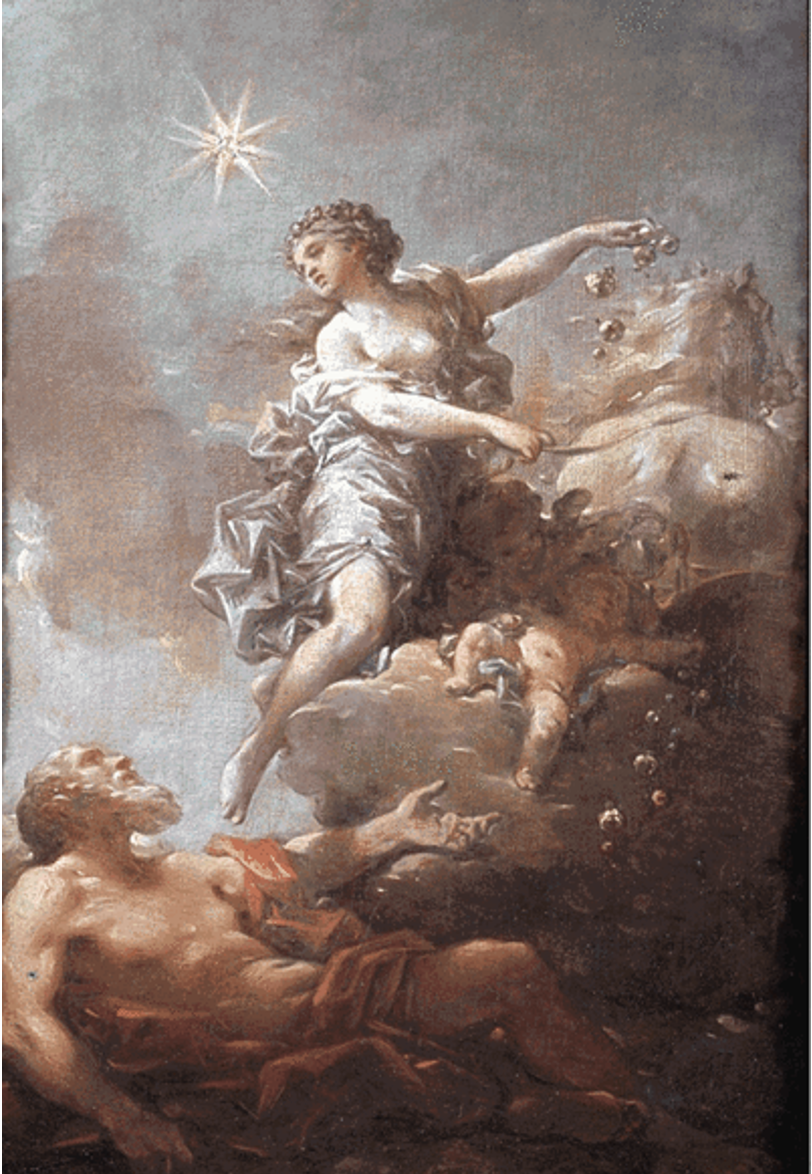
Dabbling over the last decade with showcasing exciting, sometimes improbable, intriguing work from new and aspiring writers, the Monolith Cocktail has played host to serialisations of stories by Rick Clarke (of Vukovar and The Tearless Life infamy) and Ayfer Simms (the Franco-Istanbul writer, and for a few years, an integral member of the MC team offering various reviews and conducting interviews).
Furnishing the site since Covid with review pieces and the odd feature, Glaswegian-based writer Andrew C. Kidd now adds his name to this list. Andrew shares his grand interstellar saga, Tennyson In Space, with the MC readers through an epic serialisation. Over the last four months or so we’ve published the Prologue, Part One and Part Two of The Violin, all four parts of the Hic Sunt Leones Et Corvi suite and the Pink Nepenthe. Now we are proud to share the first two chapters of Appl. E.
Appl. E
“Lest their shrill happy laughter come to me
Walking the cold and starless road of death”
From Œnone by Alfred, Lord Tennyson
“How sweet.
Just to register emotion, jealousy – devotion,
And really feel the part”
Tin Man, Wizard of Oz
Part 1
All manner of blues in their nightly state were gradually lightened to a lilac hue by the bright white starlight that circled above Alard. Yawning silently, his final thoughts of the day had settled on all the possibilities of tomorrow’s conference.
Would he be scorned as his previous employers on Eris had scorned him? The Eridian administration had decided that they wished no part in his research. Possibly borne out of fear, they justified non-action through esoteric ethical codes and abstract governance. The contempt they had displayed only served as a catalyst to send him on the long road of discovery.
There was no doubt that Alard possessed a detailed knowledge of the science, yet it had been his enterprising spirit that had led him to identify the missing link in the equation – an equation that had stumped so many of the great scientists of his day. He deemed the inaction of his Eridian superiors to be unacceptable.
Let Alard do the bidding of the diffident. Alard the decisive! Alard the subversive!
Once his work had been published, validation would follow. After that, accolades and the yearning of all scholarly minds: affirmation.
Alard had fallen asleep.
The applause he had been receiving had become amplified to uncomfortable levels. The dream sequence had evidently changed. He stirred unpleasantly. A cold sweat enveloped him. Would he have to admit that the idea was never actually his? He gripped at the sheets.
His sleep-self descended into a cavernous place. He was weightless. The long limbs of a nightmarish phantom appeared from the abyss and started to grapple at his naked body. Beads of sweat trickled out. He was being pulled down into a small pool. At the point of submersion, he woke suddenly.
The porthole above him framed a scene of fervent lightness which was blackened only by the opaque canvas of deep space. Dry-mouthed, his mind reset in the awareness of his awake state. His heart rate slowly settled. Sleep would soon prevail once more.
His subconscious mind returned to that late December evening when he stumbled upon the seed that would blossom into his remarkable discovery.
* * *
Alard sat in the refectory of the Institut de Sobere. Three weeks had passed since his landing on the icy trans-Neptunian object. He had been working as an Auxiliaire Biomédical in the Département de Microbiologie on one of the research modules on Eris.
Dinner was a late affair that evening. A forgettable experiment in one of the accessory laboratories had run over and he arrived to pick at the dregs of the evening service. After tucking into the crusty winged remnants of some types of Orthoptera, a well-heeled laboratory manager chewed loudly on the bench in front of him. This corpulent woman had her back turned to him. She spoke confidently, and evidently, drunkenly.
‘Cut it out… with a k-knife, or a schalpel…’, she slurred, ‘…a scalpel!–’ clumsily correcting herself ‘–and… and I said… well, you know… blast! I really can’t remember in all honeschty?’ She laughed loudly.
Alard was dining alone. He looked around at the rows of benches, all full of people conversing and eating, most noisily.
‘Ahem!–’ the drunkard cleared her throat ‘–a scal-pel…’ She spilt the word in two, placing additional emphases on the ls. This had been an obvious attempt to retain some form of professional standing amongst the junior researchers who were accompanying her.
‘I… I must b’xshcused…’
After stumbling away from the bench to the toilet, Alard turned his attention to the two juniors talking quickly and quietly amongst themselves. He continued to tuck into his grilled grasshopper.
A short interval passed and the sottish drunk fumbled her way back over to the bench. Spittle glistened on her chin.
‘Yes… yes…’, she smiled contortedly. ‘I must admit that I have forgotten what I was saying.’
Exasperated expressions were etched on the young faces of those who sat with her.
‘You were talking about the funeral fields’, the boyish researcher said.
‘And the ethics council’, the other added. ‘You were telling us about your meeting with them – what did they say?’
She eyed her environment cautiously before whispering.
‘It was an outright rejection! And no blooming wonder…’ She paused to turn round to look at Alard who was playing masterfully at demonstrating disinterest in their conversation. Had he looked up, a face, beaming red in the warmth of the refectory and through the vasodilatory effects of the liquor, would have glared back at him.
‘Surely, they will have to rethink their decision. I mean–’
‘I think we will have to watch what we are schaying.’
The playful mask of the senior scientist suddenly revealed an angry temperament. Her orbicular face reddened further.
‘No… yes–’ a confused look emerged ‘–listen, we are in a public space, and we really schouldn’t be talking about such matters of such… of such…’ Words were clearly lost to her again.
‘Magnitude?’, the other junior transplanted, charging her superior’s glass with more of the crimson fluid.
‘Importan-schce was the word I was going to schay’, she misarticulated, taking a further sip of wine. ‘S-ay… I must insist that you stop interrupting me!’ She pronounced the sist of the word insist with a trailing th that sharpened on the tip of her tongue.
‘But it could provide the answer to biopolymer degradation. You said it yourself!’, the boyish inferior declared in hushed tones.
‘No… no, we must desist from any further discussion pertaining to this matter’, she reiterated, shaking her bulb-like head. Another mouthful of wine was gulped down. Her glass clinked as she placed it next to the emptied bottle.
‘In fact…’, she proceeded, ‘…the matter has been put to the same place where… that… ahem, I am presently going to the place of the matter.’ She tutted. ‘No! No… the matter of the place.’
She paused before standing up. Alard caught her awkward smile. Wine-stained teeth dulled in the half-light of the corridor that led away from the canteen. She was evidently, and unannouncedly, retiring to her quarters.
Alard raised his eyebrows subtly as he sipped from his cup. He remarked that the alcohol had clearly made her loquacious. It had imbued high spirits, yet he knew that she would have an altogether different demeanour tomorrow morning as she clung onto the bowled alter of veisalgia.
He returned to the remnants of his meal. The two junior researchers engaged in their private conversation of hushed tones and rapid glances around the room. Alard had an impossible job of understanding them. His mind fantasised about all the possible schemes they could be hatching. He resolved that he would find out what they had discovered, and why it was so important, and why their superior, upon momentary sobriety, had insisted on such sudden and unflinching confidentiality.
He stood up from his bench and walked over to the duo.
‘Hello’, he said, smiling at them with bright-eyes.
* * *
The morning of the conference had arrived. Alard woke to bright white starlight that crowned the sky. This was a projected visual. An image recorded in high-definition. The artificial luminance shone gradually to induce wakefulness.
Situated some several hundred meters underground, he felt the warmth of this base. It had been built as a defensive bunker in the Never Wars. Long vacated, the Domini had repurposed this as a neutral meeting place.
He had been told that underground streams flowed in abundance here. Alard took this rare opportunity to immerse himself in a water-bath. He stared at the pipes that appeared and reappeared at impossible angles across the four walls. His eyes stung a little in concentration. He knew that his sleep had been interrupted, yet the memory of what had caused his partial insomnia was indistinct. The black pool had been drained from his mind.
A dark suit had been selected for him by the Domini’s anthropomorphous assistants. Alard knew very little about couture. Having been given a choice of garments, he deferred such judgement to these humanoids. A gown, adorned with braided aiguillettes, was placed over his head in quiet ceremony.
He was accompanied from his room down a passageway. It narrowed to end at a small entranceway through which a large stone-grey chamber towered higher than he thought possible in these subterranean depths. It stretched out horizontally across his immediate horizon. The imposition of the conference hall had little effect on Alard. The magnitude of his discovery weighed heavily on his mind; it was far more formidable than any underground atrium.
He was quickly introduced to the Domini. This one-eyed elder studied the youthful scientist who stood before him. Alard’s compressed and block-like hexagonal face fascinated the Domini. His jaw was not so much chiselled, but roughly hewn, flattening out to a chin that was broader than most. The Domini imagined a sculptor who had evidently hammered too hard; corrective sanding had subsequently worn away more than intended.
Another automated assistant appeared. Alard was ushered away from the Domini. As he walked towards the area where the conference was taking place, he noticed the elder’s periodic smile and darting eyes. Alard knew that he was distracted.
His assumption had been correct, for although the Domini was playing the polite and unassuming role, he had sent two of the automated assistants to search Alard’s room. The visual display on the clear meniscus over the right eye of the Domini projected the output of these automations.
Alard had brought only one case with him which was presently upturned. The Domini spotted a large piece of fabric on the only table in the room. It was a quilt composed of variable square pieces of material. Each cutting appeared to have originated from hats and upper body garments and torn trouser pieces. Their dimensions were exact. A small sewn number, stitched into the top right of each square, suggested a cataloguing process. Whatever the purpose, the Domini considered this haphazard arrangement to be strange and meaningful.
Back in the chamber, Alard followed the steps of a small stairway that led to an elevated platform. Four automatons guarded this concourse; beyond it lay the Domini’s domain.
Above the gallery was a large portrait. The outline of the sitter was obscured by the inky-dark background they had been painted against. Alard could vaguely discern a figure cloaked in black – so black that those who dared to study it would claim to have been given a cursory insight into the very infinitude of time itself.
He walked through a partitioned area which served to reduce the apparent size of this cavernous chamber. It was an illusion that only worked on those who remained focused on its four perfectly painted walls. An upward glance would reveal the illimitable ceiling of this atrium.
He sat down at an elliptical table and counted five other positions at sixty-degree angles around him. Alard’s hand moved across the polished surface of the wood nervously. He recalled the plants of his youth. Ruscus aculeatus. Or was it hypoglossum?
In three of the pre-ordained seating positions, small hexagonal platforms were visible. Power units, each one displaying a holographic image, lifeforms from unknown places relayed many miles away. They flickered emptily as he stared at them.
The Domini made his entrance and sat down at the head of the table. A subaltern detailed the order of proceedings. Those at the meeting were formally welcomed. Peace was pledged.
Alard had become distracted by the large portrait that hung over the Domini’s domain. He was absorbed in its charcoal-black colour. Whether smoke, or asteroids in a solar wind, or a helical representation of something metaphorical, its mystery drew him in. He half-expected the black-gloved hand to slowly finger down the surface of the portrait, feeling its way over the partition in the chamber, reaching for him.
‘Docteur Alard–’ A voice snapped. His looked at the platforms on the table. The holographs were no longer void. Bright-coloured visuals sparkled before him.
‘I was saying that we always adhere to the laws of governance’, a tall woman had concluded.
She was dressed entirely in white. One shoulder was enshrouded by flowers. Her holograph was transmitting directly across from Alard. The light garment she wore shimmered against the dimmed lights of the chamber.
‘Pah! Their scaffolds are purely aesthetic, nothing more. If your decision lies with Clan Dœmae, then more fool you.’ The representative of Aēr spoke measuredly yet authoritatively. ‘We offer leading–’
‘You offer nothing more than a monopolistic dominion!’, barked the hologram of the interjector next to the representative of Aēr. She stared blankly at the antagonistic intermediary of Pallas who continued:
‘Our facility at Auriga offers the only viable location to carry out the necessary work. We received your data prior to this conference. It has advanced our understanding immeasurably.’
She bowed before Alard, breaking off momentarily. The momentary skip in her channel meant that she had snapped immediately back into an upright position. She wavered as the image came back into focus.
‘We at Pallas are very grateful for this.’
Her attention returned to the representative of Aēr.
‘However, what has been presented is merely a signal at this stage. Our researchers have been working on similar projects, adding further data to augment what we already understand. I am afraid that much more work is needed to ensure success in this field.’
Alard had been somewhat taken aback by the sharp tone of the elfin figure that scintillated before him. She spoke in the hammered polyphonic tones of Mandarabic, the vernacular of the present-day, an amalgamation of the Mandarin and Semitic languages. Occasional English words were thrown in (the use of the Anglophonic language of the Anthropocene, now consigned to antiquity, implied that the orator had been well-educated).
Her dark brown hair fell in ringlets over her narrow frame. She wore an achromatic-grey garment. A dulled gold hue shone underneath this. Jewellery? Or armour? An emblem appeared next to her name on the screen. It took on the shape of a Capra. Three horned protuberances jutted from its head.
The representative of Aēr was subsequently given the floor. She shot a subtle sideways glance at the intermediary of Pallas before addressing Alard.
‘We offer–’ she cleared her throat ‘–let me rephrase… Appl. E. is your discovery. Should you choose our organisation to be its beneficiary, we would work together to lengthen the very coil that makes us mortal. You see, we are offering you our Ma-ga-leading facilities. Our researchers do not want for anything. We already occupy this space. Your technology would hasten the great work that we have already carried out in this field, and as you will be aware, our expeditionary programme has proffered us with collaborative capabilities that stretch to the very reaches of our Heliosphere. Our base on Auriga would bestow the privacy that you so desire, away from the prying eyes of the…’
She stopped herself to survey the Domini and his associate at the far end of the table. A false smile emerged from behind the rocky outcrops of her rough-textured features.
‘Dr. Alard’, she spoke confidently. ‘Let our confederation be the one to actualise your vision.’
‘You speak confidently on behalf of an organisation that has a track record of abject failure in the field of regenerative medicine.’ The foursquare intermediary of Pallas communicated plainspokenly. ‘You are conquistadors. And your conquests require bodies on the ground. You seek Appl. E. to reign supreme in the Heliosphere.’
The intermediary of Pallas paused.
‘Do not let her obliqueness cloud your judgement’, she concluded.
Part 2
Alard glared at □. Her screen was opaque-white. Glimmers of iridescent bronze and oxidised iron-green shone through at irregular intervals. The thin-framed magnicles pinched his nasal bridge as he read her latest output.
‘Gram-positive Firmi…’
Lines of zeros and ones filed across his monitor in quick succession. He winced. The oppressive laboratory lights bore down on him. Soon, the headache would crescendo.
‘…and Gram-negative Bacteroi…’
The black text continued. Alard, cup in hand, leaned forward to interrupt □.
‘Check object code: line three. Define: ‘resistance’. Enter: ‘hydroxyl’. Align with ‘distal’ and ‘group’. End stri…’
‘Do you mean, ‘assign with’?’, □ enquired.
Alard was tired. The work that he and □ were conducting was in place of sleep. As a laboratory assistant, he was chained to a seven-day schedule. Had there been the same resources on the mountainous Manitoud, he would have extended his leave to complete their research there.
‘Accept correction’, he yawned at □.
The watermark of CHSMC was centred on his screen. It had been during his time on Manitoud that he had first utilised this software. Abstruse to the programming uninitiated, its methods of learning were unsupervised and advanced. Ultimately, CHSMC offered anonymity which was coveted by the likes of Alard who sought to harness hyper-intelligence without interference.
‘End string. Return to superphylum. Define: phylogenetic tree. Check: ‘fermentation’…’
He had programmed □ using CHSMC. Alard had decreed that it was in fact she, and that she would be trained to assist him in his endeavours. During her development, the name Œn+, or ONE1 (pronounced one squared) filtered through to him. It had been she who requested to be known in her runic form as □.
‘… define: ‘pilus’ and ‘assembly’. Remove sequential patterns. Run.’
The cursor on the white screen blinked at Alard. After a short while, a binary sequence started to stream in lines and filled his visual fields. This was the genomic sequence of the polyketide skeleton of a novel microbiota.
He smiled the same bright-eyed smile he had beamed at the youthful researchers in the refectory on Eris. Four months had passed since they had told Alard all they knew about this particular bacterium. It had supposed origins in Scarabaeidae. It failed to retain crystal violet. It was intolerant of oxygen.
The swift ‘redeployment’ of the two young scientists to MakeMake in the Kuiper belt came as a surprise to Alard. As far as he was aware, the high concentrations of nitrogen ices on that dwarf planet were incompatible with life. This had served as a warning to him. If he wished to remain in this Eridian facility, his work would have to be carried out in secret.
As Alard interpreted the read-out on the screen, □ continued:
‘Look at the transcriptomic profile. Its expression pattern–’
‘I can see it’, Alard interrupted, ‘define: GTR–’
‘Acronyms, Alard’, □ chided.
‘Guided. Tissue. Regeneration’, he supplanted.
‘Enter: ‘immune’… no, ‘immuno-modulatory’. Check… wait… add: ‘map regionalisation–’ he paused ‘–check string. End.’
His mind wondered back to his initial encounter with the researchers. They had seemed avoidant, perhaps frightened, when discussing its origins. Harvesting it had been their biggest concern.
Alard knew that success in this field would have Heliospheric-shattering consequences. Unlike their commercial contemporaries, the reputation of the Institute Sobere had remained unsullied despite their conquests in regenerative medicine. It was a complex business, marred by failures, and restricted by ethics.
A mirthful Alard stared at the monitor. He had returned to this godforsaken dwarf planet to continue his controversial experiments within the confines of the Institute. His discovery would be made in their laboratories. Alard and □ worked diligently as they burned through the midnight fluorescence.
* * *
The representative of Aēr had finished talking. Wisps of thin blonde hair bristled from the cloth-crown on her head. Alard remarked that this caul had been made from delicately shuttle-woven silk. The embossed patterns radiated in the dull light of the chamber.
A holographic image hovered beside him. The emissary of another one of the research institutions vying for Alard’s collaboration came into focus.
She was dressed in a white linen garment which had the most unusual form. A shaped shawl enwrapped her neck. It cascaded from behind her ears to follow the contour of her sharp jawline, finally tracking upwards to her mouth so that the point of the ascending triangular lines met at her lower lip. The shawl draped down to her broad shoulders, pointing outwardly. An inverted triangle pointed down to a long skirt that converged at her ankles. She bore the appearance of a four-pointed star, the tips of which meeting sharply at her head and her shoulders and her legs.
Emblazoned over the right shoulder of the shawl was an arrangement of five-petalled flowers that assumed a strange crescent shape. Stamens burst out of these cupped flowers as if multiple explosions of light had been captured in their maximal phosphorescence. Alard knew that these were a descendent of Myrtaceae. Their white petals shone in an abstract representation of beauty. The concerted and connected display suggested order and affiliation. They diffused a sense of devotedness.
The shawled woman spoke.
‘Alard, having reviewed the documents kindly provided to us by you, and made accessible by the Domini–’ she bowed her head benevolently at the cloaked figure ‘–we at Clan Dœmae believe that we can solve the predicament of antimicrobial resistance together. We can offer scholastic prosperity.’
Across from Alard, the holographic display of the intermediary of Pallas wavered as she shook her head.
Predicament. Scholastic prosperity. It was obvious to her that these words were forced. She knew that Clan Dœmae had no track record in this field. Their research focus had been purely in cosmetology, resulting in alterations in phenotypes rather than genuine gains in regenerative medicine.
‘Aesthetics… aesthetics, aes–thet–ics.’ The intermediary of Pallas’s words slowed in a form of vocal ritardando. ‘That is all Clan Dœmae stands for’, she said after a deep inhale. ‘It is all they are good for.’
The Domini raised his hand slowly, beckoning silence from the intermediary of Pallas. Alard smiled at the shawled woman.
* * *
It had been on the Secondary Basement level of the Eridian research facility that Alard observed the cultured myocytes on one side of the extracellular matrix. Stimulation provided by the probe would normally result in cellular death. Black necrosis would spread through these tissues like water droplets bleeding into paint. Subsequent contractions would cause the dying cells and their weakened walls to rupture, spilling their mitochondria and nuclei into the culture medium.
On this occasion, there had been no such death. The tissue cultures seemed to multiply. They proliferated and provided solid foundations upon which new tissue could grow.
Alard returned to his calculations. The superadded bacteria appeared to ‘cleanse’ the process.
Augmentation of the microbiome? His thoughts multiplied. Immune proliferation in an otherwise exhausted microenvironment? Sensitisation?
He even pondered the thaumaturgical: the possibility that these bacteria possessed some kind of god-like property.
His immediate concern was whether these bacteria had a sustained response in their new hosts. Only time would decide this. For now, he quietly revelled in his victory.
‘Appl. E. serves to facilitates gas diffusion, which promotes vascularisation. This is the key that appears to unlock the Nixon cathartic problem’, Alard dictated. ‘Once a steady physiological state is achieved, tissue growth follows.’
The output on □’s screen blinked at him.
‘Obviously, validation follows.’ He winked back at □.
* * *
Alard faced the foothills of Manitoud. He stood with those who had climbed the steps from the depths of the chamber into this pillbox position. A thin opening provided a grand vista.
As he stared out at the expanse of land that lay before him, he imagined wiping his memory of all that he knew so that he could see it all for the very first time. Years on Eris blunted his sensations. It had numbed him. He wished to experience the sheer awe that he once felt for this place.
Alard continued to peer out through the gap. Warm air was being cooled. Mist formed and tumbled down as a faint tsunami from the higher ground. The lowlands were partaking in their morning cleansing.
A quiet klaxon sounded in the pillbox. It beckon those to return from their planned interval to the subterranean chamber. The conference was soon to re-commence. Alard turned to descend the ladder that led away from this world that felt foreign to him.
He sat in his chair and observed the images on his screen fade to a dark green. His thoughts remained on the surface of this planet. He was soon interrupted from his distractions by the sound of a woman’s voice.
‘–and that is why I offer you the opportunity to work with Docteur El-hen.’ The emissary of Clan Dœmae opened her palm by way of introduction.
Alard sat forward to get a closer view of the monitor. A faint figure appeared in a sub-hologram. She was shawled like a Dœmaen. A crossbeam forehead held a weighty expression. Alopecia had evidently robbed her of eyebrows and hair on her head. Her malar bones were protuberant. The shadow from these hid thin lips that appeared to have been half-sketched.
As she leant over the laminar air flow unit, Alard caught sight of her eyes. Unblinking in pupillary standstill, her azurean irises steadied. She was staring fixedly at him.
The aesthetic emissary of Clan Dœmae smiled at Alard as she continued.
‘I must also introduce you to her devoted husband, Professeur Ian Meuse.’
A tall gentleman appeared to the right of Alard’s screen.
‘Avec plaisir’, his broad grim affirmed.
He intoned in the unstressed language of French. What a relief to Alard! Meuse’s whitened teeth appeared to sparkle. He held a confident pose. His auburn hair burned in the bright light of the conference chamber. He had eyes that would pierce their observer.
‘Dr. El-hen and Professeur Meuse are two of our finest principal scientists at Clan Dœmae. Should you choose our institution, you will work closely with them. It is our firm conviction that–’
The words of this nameless representative trailed off in Alard’s mind. His attention remained firmly, and fixedly, on Dr. El-hen.
* * *
The moment of discovery, the revelation, the summation of years of scientific endeavour! Alard felt a weight lifting from him as he peered at the digitalised output of his work.
‘A bacterium, of the phyla Elusimicrobia, isolated from the…’ Alard paused as he looked up at La Directrice. He scolded himself internally for carelessness.
‘Its origins I shall disclose in time, once I have published my work.’
‘Publish?’, the squat Directrice sitting across from him inflected. ‘You must remember that we operate in a commercially sensitive environment, and what you have discovered… this… this “novel microbiota” as you have so termed it… well, it… it…’
She placed both hands down on the bench. Her mouth, straight-lined and stony, imparted a sullenness. She had elected to change her phrasing.
‘To be perfectly frank, Docteur–’ she squinted at the small font of the name badge on his tunic ‘–Alard. You have not had permission to undertake this type of work. As such, in the eyes of the Institute, it has not happened.’
‘Has not happened?’ Alard raised his eyebrows reflexively.
‘If I may elaborate’, La Directrice continued. ‘You have received neither the permission nor the funding for the work that you have so boldly conducted–’ her tone was sardonic now ‘–and that is the reason that your employment with this facility is being severed.’
She paused as she sipped from her glass.
‘You are lucky that we are not taking this matter further. I have been in contact with the Microbiologiste Principal. It would appear that you have been very busy using the facilities in our module, gratuitement, at the expense of Sobere. He also informs me that having reviewed your preliminary data, you had not applied to conduct this work through the ethics council. If this is true, such a transgression is normally in punishable by–’
‘Punishable?!’, Alard thundered.
‘Yes!’, she replied in lightning fashion. ‘Punishable indeed. If it is true, then this will be treated as an infringement of interstellar research law–’
‘The laboratory-derived samples on this barren rock are flawed’, Alard retorted swiftly. ‘There has been no yield from them. They lack any signature that is useful to in vivo research.’ Alard spoke quickly and with clear diction. ‘My chance discovery has–’
‘Surely you cannot think we are that naïve to believe that the Elusimicrobia originated from an apple?’, La Directrice interrupted. She smirked flippantly after she spoke.
Alard was somewhat surprised. He had never disclosed his plan to claim that he had isolated this bacterium from a pome fruit. Perhaps they had accessed these data without his knowledge? This seemed very unlikely given the watertight encryption afforded by CHSMC.
He looked up at the screens that hung from the ceiling. They hovered over the laboratory stations lifelessly. □ suddenly entered his thoughts. She and only she had known this. He shook his head, denying to himself that she was the betrayer. Alard moved away from the workbench and sat down on a chair. He looked over at the glass storage cabinet to his right.
La Directrice followed his movements. This young man was lying. She had no doubts about that. Her impertinence had spooked him, but she had thrown her gauntlet down too early. He now had the upper hand.
Alard turned his head back towards his superior. He knew that he needed to act quickly. Sobere were not known for their clemency. Images of MakeMake filtered into his subconscious. It was deathly cold there. He stood up and walked back over to the bench. His findings were too important to risk exposition.
‘I accept my termination’, he said plainly, leaving the laboratory immediately.
Alard made the short journey to his quarters. An automated craft wheeled slowly over the white surface of the planet. Coin-stacks of methane bubbles beneath him gave the impression that everything on this barren place was being held up by a great many alkane stilts.
His head pressed against the ill-fitting helmet. Condensation misted his view. Lights from the residence modules were starting to halo around him. He closed his eyes and let his head loll around in transit.
The craft came to a sudden stop. His solar visor dropped down and obscured his surroundings. The faint hiss of the door opening followed. He clambered out and waited in the airlock. The sudden rise in temperature turned the crystal air into a steaming dew. His suit was dried off. He doffed this for more comfortable attire. The short walk along the passageway to his dormitory followed.
Alard thought about what he could call the Elusimicrobia. Nomenclature of other microbiota followed a genus-species naming system. Escherichia Coli. Clostridium perfringens. Clostridium botulinum.
Why not alter the order to species-Elusimicrobia? After all, what he possessed would change the way we live, or rather, continue to live. It was unique, and its representation should be likewise.
The dormitory door clicked shut. Alard stood by the mirror in the bathroom.
He recalled the journeys he had once shared with □ to obtain the original samples. It had been her idea. She had infiltrated the Eridian systems to commandeer the vessels that took them there.
Alard stared at himself in the mirror. His face seemed longer than it had before. Grey hairs glinted uninvitingly in the half-light.
Light suddenly filtered outside of the bathroom. A long shadow had appeared at the threshold. A fellow scientist lumbered in to collapse onto their bunk below his. They mumbled something instinct. Alard smiled disinterestedly. He climbed into his sleeping pod and shut the door. Turning to one side, he pulled out his book of quilts and fabrics and leafed through these. Souvenirs. Leavings.
Alard recounted his meeting with La Directrice. The apple had always seemed a credible source, yet she had doubted it. How has she come to know of his decision to choose an apple as the root of his bacteria?
Apple, or æppel… no, the derivation of apple is malus… no…
A golden-brown apple, already in the early stages of decomposition, had presented itself to Alard on one of the workbenches. A fermenting pome fruit yielding powers of regeneration. There was a playful irony to that! So became Apple Elusimicrobia, arranged in order of species-genus; its short form: Appl. E..
Kalporz X Monolith Cocktail: Nourished By Time
August 13, 2025
Our continuing partnership with the leading Italian culture/music site and platform Kalporz. This month, a briefing on Kalporz cover artist Nourished By Time.

At regular points during the year the Monolith Cocktail shares posts from our Italian pen pals at Kalporz. The site recently celebrated its 25th anniversary – more or less coinciding with our very own 15th anniversary. Here’s to longevity, which isn’t easy in the unstable online world.
This month, the editorial team give us a briefing on burgeoning R&B, soul house star Nourished By Time; the cover star and spotlighted artist on Kalporz this August.
Nourished by Time sounds like ’80s music, but it belongs to an alternate timeline, where Reagan’s opulence and carefree attitude give way to a more abrasive, convoluted, and disenchanted interpretation of time and things. Or perhaps it’s simply a highly accomplished postmodern reinterpretation of those sounds and that vast aesthetic—R&B, soul, house—with the curious paradox that the eclectic Baltimore musician never truly lived through that era.
Marcus Brown, the producer who gave life to the Nourished by Time project in 2019, is in fact just thirty years old, and with the release of his next work “The Passionate Ones” (XL Recordings), for which he earned the cover of our August issue, he is destined to make the big leap – the most attentive will have noticed his name among those already announced for the next edition of C2C , and this too must mean something.
But these mere CV issues aside, we’ve been won over by all of the artist’s recent releases, most notably his debut LP “Erotic Probiotic 2” from 2023 and the EP “Catching Chickens” from the following year, which contain timeless tunes like this , this , and this .
With the release of “The Passionate Ones”, scheduled for August 22nd , we can only expect great things. Even judging by the singles released so far, which show Brown in truly dazzling form. Judge for yourself.
A world of sonic/musical discoveries reviewed by Dominic Valvona. All entries in alphabetical order.

::: Image of Kai Graig courtesy of Christian Cody
A DAAM label double-bill:
Mico Boule ‘Cellular Degradation’
Kerchief ‘At Knees Start’
Both released on 15th August 2025
The soulless, divided online world we’ve all tuned into and have at least some small part in making has eroded our liberties, our mental and physical health, commodified our lives for not much more than convenience, and remodelled our reality to suit certain agendas on both the left and right. Tied like hostages to a smartphone screen – to an infinity of newsfeed scrolling soundbites and narcistic attention seeking – society is heading into an abyss of loneliness and detachment: with empathy itself is on the line.
The first of two releases from the highly experimental DAAM platform is a sonic avant-garde and unabated disconsolate poetry of the consciousness stand against this encroachment and control. Aligning themselves to the machine, to the algorithmic mechanisms and code, Michel van Collenburg of ambient-punk Nobuka note and Stefan Kollee of the alternative art-pop and super punk trio Oh Hazar combine forces under the Mico Boule heading.
The Dutch duo create an atmosphere of transmissions, the kinetic, both unrhythmic and rhythmic drums, tubular electronics, electricity, the submerged, the industrial and the kosmische. The production is both lo-fi and degraded, reminding me of the underground cassette culture of both the punk and post-punk electronic experimental scenes in Spain and Italy during the late 1970s and 1980s. And so, it sounds sometimes like a found relic from those times and yet feels very contemporary.
In an ambience that is both sci-fi and metallic, the very fibres of the cables and wires is alive and breathing with static, frequencies and meter readings. And through it all there’s a coarse produced beat or bounce and padding of drums and an obstructed and filtered vocalised poetry of the frustrated, detached and disenchanted from the avant-garde art scene, and the early days of analogue experiment and sound art.
If I had to name reference points, perhaps Richard H. Kirk at his most out there, Sutcliffe Jugend, The Rita, Throbbing Gristle, Nocturnal Emissions and Loris Cericola. But Cellular Degradation is in truth a unique experiment and encapsulation of our online captivity.
The second release from the DAAM hub is a new project by the psych doom and post-metal One Eyed Ancestor instigator Ben Wiggs. After many years away from his UK home Wiggs is back with a more avant-garde sound collage of both recondite sourced noise and voices and wildly effected but more obvious sounding drums and guitars.
Under the head covering Kerchief moniker, Wiggs expresses signs of ‘existential bewilderment’ and more random, extemporized experiment through both the near menacing and playfully challenging. But At Knees Start was actually ‘born’ from grief: a reaction to the passing of Wiggs’ father. He’s found a way to engage with these feelings, and with the abstract on an album that sounds like This Heat, Faust and The Sun City Girls being transmogrified by Le Forte Four and Nam June Paik.
Amidst the musique concrète, the reconfigured and manipulated voices that blend into the reconstructed accumulation of sounds, conversations and passing speech, there’s plenty of broken up readings and needle-like stylophone signals from a paranormal and mysterious radio set.
Framed in part as ‘ultimately a celebration of understanding how little can actually be understood’, the atmosphere is often heavy and darkened, the voice-like sounds near bestial and alien. That unpredictability throws up hysterical scribbles and unnerving surges. The drums – when they do arrive – are often crushing, beaten or pummelled like a punch bag or just really noisy: more heavy ‘meta’ than heavy metal. It sounds like a merger of Swans, Valentina Magaletti and Sunburned Hand of Man in those incidences.
Wiggs creates a sonic and expressive musical language whilst falling deep into the avant-garde on an album of untethered fearlessness bereft of control: and all the better for it.
Kai Craig ‘A Time Once Forgotten’
(Whirlwind Recordings) 8th August 2025
Keeping up with, and at one, with the old folks, the burgeoning jazz drummer talent that is Kai Craig makes a real impactful statement on his debut album A Time Once Forgotten. Crossing timelines and digging back and forth between eras, his own informative study and influences, inter-generational homages bound on a record imbued by, and riffing off an incredible legacy of jazz luminaries from both sides of the Atlantic. A Cross-continental, you could say, draw of pioneers find their work rejuvenated and given a new lease of life and zest amongst a set list that also showcases both Craig and his band mates’ own skills as original composers.
Framed in part as a summary of ‘everything that’s bought Kai to this point’, this inaugural album pays its dues to the old guard whilst simultaneously projecting the future with a touch of originality and improvisation.
But before we delve any further, a little background is needed for those that haven’t yet cottoned on to the young drummer extraordinaire, now in the spotlight. The Brighton born Craig was hot housed at the Royal Academy of Arts in London, ‘mentored’ by the American jazz and soul drummer of note Gregory ‘Hutch’ Hutchinson – who now looms large over this recording with the producer’s credit. Only graduating quite recently (2022 to be exact), Craig has gone on to work with Soweto Kinch, Seamus Blake, Raynald Colom, Francesco Cafiso, Jon Gordon and many others. Craig moved to Paris for a time, soaking in the local jazz scene, before another move to NYC – a city that’s more or less his base for the foreseeable future. The debut album though has been recorded in Köln, Germany, with a talent pool of inspiring new generational talents. Some have worked with Craig already, including the French bassist Géraud Portal. Whilst others have either crossed paths or found themselves in similar European jazz orbits. Both saxophonist, composer, educator and former Young Jazz Musician of the year nominee Sean Payne and trumpeter James Copus played with the titan of British jazz drumming Clark Tracey. Other strands include the ACT label – one of Europe’s most important jazz labels for fostering new talent and new collaborative projects in both the contemporary and neoclassical fields -, with Payne’s extensive credits including stints with one of the label’s key signings Gwilym Simcock. But the connection is with Rainer Böhm, the outstanding and acclaimed German jazz pianist, who not only released his own solo-headed album on ACT but has appeared in collaborative unions with Dieter Ig and a number of others on the label over the years.
As foils to Craig’s lively but also tactile expressive drums, all four acclaimed artists and soloist virtuosos pitch in composition/arrangement wise. As a show of Craig’s generous spirit and willingness to share, the opening track ‘Namesake’ is from Payne, who Craig describes as ‘his closet friend both personally and musically’. Announced by a splash of cymbal and dusting of the ride, a bounce on the kit, Payne’s composition recalls Blue Note at its best, with a scene from a NYC skyline, and a touch of Sonny Rollins and Art Blakey. The piano is more attuned to Cecil Taylor and Herbie Hancock – as it is throughout. Payne, credited along with Craig, is also half responsible for the album’s closer too, with the nod to Jack De Johnette – the American drummer, pianist and composer who worked with such deities of the jazz form as Charles Lloyd, Freddie Hubbard and Keith Jarrett – ‘Afterthought’. A controlled maelstrom is reached on a short goodbye, with the sax and drums pretty much tight, busy in the wash.
Later on, we get Craigs’s own Blue Note inspired ‘Dealin’’ – choosing the lates 60s period of that label’s iconic catalogue. There’s a swing this time around, the sound of the bright lights and trumpet of Roy Hagrove on a score that offers freedom to the piano and a stretching and expanding of the double-bass. Another Craig number, ‘The Chieftain’, elicits a certain emotional tumult and pull. As with the majority of tracks, there’s a reference to a particular drummer, this time around the American legend Jeff ‘Tain’ Watts, who worked with such icons as Wynton Marsalis and his brother Branford, Alice Coltrane and Betty Carter. Craig’s personal gratitude is played out in part on this original composition, which crashes and skips, rests and rolls in another example of controlled tumult. Almost like a warm-up, a run over the kit and show of the tactile, this opportunity highlights the drummer’s superb command of the descriptive and near improvised.
Giving praise to mentors and luminaries alike, the rest of the album is made up of takes on both the obscure and wider known compositions of Wayne Shorter, Fred Hersch, John Taylor, Kenny Kirkland and Michael Brecker. Whilst Shorter is rightly revered and been covered multiple times for his earlier work, his JuJu and Footprints, Criag and his ensemble have chosen to home in on his lesser celebrated 80s period, with a transformative take on ‘When You Dream’. Appearing on the 1985 LP Atlantis, a work known for its own group compositions and arrangements, and with the addition of Brazilian and funk influences, this as dreamy as the title suggests mirage is smooth with a hint of funky jazz fusion and synthesized rays – sounding a bit like a keytar or Stanley Clarke, and unmistakably 80s.
There’s a trio version of the American pianist, composer and prolific Grammy nominee Hirsch’s – who I must admit to my ignorance, I know very little of – ‘Phantom of the Bopera’ that kicks off with rubbery loose double-bass and harmonics. It’s a delightful swung and swinging translation, with hints of New Orleans, the Blues and the freeform, of Cecil Taylor meets Toussaint. Different and yet similar at the same time, with the piano in my estimation taking the spotlight – quite rightly too, as Böhm is an astounding player with a hand in the classical and freeform, the modes and untethered realms of jazz.
The self-taught pianist John Taylor is, I must readily admit, someone I’ve never come across before. In a homage to not only Taylor but the European school at large, Craig has chosen to transform ‘Dry Stone’; re-modelling it with experimental elan into something more bluesy, tactile and weeping. Undulations and breaking waves of drums make for an unstable foundation, as the trumpet bleats in plaintive and sensitive tones.
Moving on, and there’s versions, adaptations and rejuvenated visions of both Kirkland’s nighttime serenade ‘Midnight Silence’ and Brecker’s obscure ‘Lunations’ – which I believe is very difficult to get hold of. The former by the renowned American pianist and keyboardist, is given a little more energy with the influence of Elvin Jones style drums. The romantic allusions remain, but the vibe a touch tighter and tauter with small drills and bounces off the kit. The latter, by the impressive and ridiculously prolific American saxophonist of choice across rock, jazz, blues, experimental and pop genres (as a soloist, session player and sideman, Brecker’s credits run to 900 albums; from Zappa to Lennon) is a rattle and shake-up of the funky and swinging. Again, there’s a trace of Orleans at play, and some Latin, on a most stirring and fired-up performance: the horns positively sing. Whatever the material, Craig and his troupe make it their own.
It would be easy for Craig to leap in, perhaps overexcited and in making an impression launch a wild and showboated turn. But despite the passages of tumult, the maelstrom waves that crash on the cymbals, it never feels uncontrolled or overstated. Every drill, roll, shimmer, wash and bound, skip feels purposeful. Each musician gets to perform take a turn in performing a near solo role or in lead position; sometimes sharing the duties, sometimes playing in triangular or doublet formations.
Dipping in and out of the decades, recalling times past, Craig does a lot of justice to his mentors and inspirations whilst announcing his arrival on the stage of contemporary jazz. An excellent, dynamic start from a drummer with so much more to give and space to grow. ‘A Time Once Forgotten’ is a contender for brightest hope in the jazz field this year.
Crayola Lectern ‘Disasternoon’
(Onomatopoeia) 15th August 2025
Once again bathed in the same South Downs of Southeast England water, on both the West and East Sussex coasts, Chris Anderson’s Crayola Lectern project waltzes and serenades to the final curtain call song at the end of the pier show. In nostalgic recall to an absinthe green kaleidoscopic sepia filter of eccentric English psychedelia, Anderson’s melancholic fears, losses, bereft sentiments and grievances are made diaphanous and beautiful; swelled with the influence of matinee film scores, and music from the stage, theatre, music hall and recital: wallowing has never sounded so pretty and sublime.
With drummer and percussionist Damo Waters (of The Electric Soft Parade, Agebaby and Spratley Japs, amongst many other aliases, note) and trumpet/cornet and glockenspiel player Alistair Strachan as foils, and guests Christian ‘Bic’ Hayes (of the Cardiacs) on guitar and Maria Marzaioli (the CV includes YOU&TH and Slum of Legs) on violin, Anderson’s ensemble embark on a quasi-sort of maverick English rock opera through the strange/estranged times in which we have been unceremoniously dumped.
Finding sentiment, romance perhaps, and at least relief on the way, Disasternoon is like a Van Dyke Parks and Brian Wilson almanac rewrapped in the studio of Robert Wyatt and his artist wife and foil Alfreda Benge. The latter’s indelible water mark is not just musical but visual, with Alfreda’s artwork furnishing the cover. But Wyatt is the main influence at play; suffused in every bar, every phrase and subtle eccentric twist: lyrically the dreams of Hockney’s California; holding hands on the motorway in that dysfunctional, uncomfortable way us English do in displaying romantic gestures and touching declarations of love or sex; and room for a less than vitriolic spitting but upset rile against various injustices, the erroneous societal declines and effects of the ever greedy billionaires’ club in that quintessentially polite and poetic polemic English way.
Wyatt isn’t the only inspiration or influence in town, however. Across eight tracks (which I firmly believe is the best length) there’s a brilliant sadness and quivery aria-like theremin-like warble of The Beatles (especially McCartney’s turns), Virginia Ashley, Louie Hardin, Syd Barrett, Blue House, Talk Talk, Mercury Rev, Jeff Lyne and SFA (more Phantom Power and later). With a woodwind and brass section pitched somewhere between colliery band, English tea dance jazz, chamber, psych and late 1960s Abbey Road, and a wistful sieve of dejection and a military-style roll of the snare, this album finds a real emotional pull and drama throughout. Captivating, at times near innocent, and yet rejecting the stale miasma of coastal town malaise and bedsit land. Nostalgic in a sense, and yet timelessly captured in a place that hasn’t really moved on: England’s dreaming and all that. From Lincolnshire Georgian market town to the adoption of a South American and Falklands Island swan (yes there are the occasional times when Anderson pays homage or notice to his past life and birth right up North, or times when the references are that much more exotic or international), something personal and intimate is reached. The vocals deliver that sense with a mellotron inspiral psychedelic filter, part Wyatt, part Barrett and part Mark Hollis.
The album can be unassuming but is nevertheless ambitious, bookended as it is with two overture-like suites – the opening cornet blown song of decline ‘Sad Cornetto’ (I’m getting evocations of Brian Wilson’s SMiLE, albeit lost in the English music hall) and grand finale plaint rock opera ‘Coscoroba’. It can border on a controlled rhapsody at times, a chamber piece lost at Lewis Carroll’s garden fete, or the sort of score that evokes the 1920s English silent cinema and later productions of a fairytale, or at one point, a Graham Greene filmic adaptation – I must also point out, I wrote down Bernard Hermann and Alex North.
Better on every single play, an extraordinary achievement, and one of the year’s best albums by far.
Julian Cubillos ‘S-T’
(Ruination Record Co.) Released on the 25th July 2025
Totally passing me by over the years (my fault), this introduction to the L.A. born and raised, but Queens NYC based, multi-instrumentalist, singer-songwriter, producer and artist Julian Cubillos is a very happy one; albeit the themes circling and bandying around on this latest songbook of instant infectious hooks are often dreamily and disarmingly full of anxieties, of personal and heartache travails and various challenges at re-discovery.
Bringing myself and everyone else in the same boat up to speed, Cubillos has released a number of albums under his own name, but also been on hand to act as foil to Ivy Meissneri in her Little Mystery project. Very much in demand we’re told, the CV mentions the sharing of stages and recording sessions with such notable artists as Okkervil River and Will Self, The Antlers, Christian Lee Hutson and Alena Spanger (the list does go on). But this latest, self-titled, album has been a long time coming; its predecessor, In Heaven, was released back in 2018. However, the material on the simply entitled Julian Cubillos is credited in the notes as ‘largely a run-off that had accumulated around the making of 2015’s big-swing alt-rock opus Evil’. What an accumulation of material to have: as this record will prove over time.
It clocks in at repeatedly playable thirty minutes or so, with every track more or less instigated by a repeated loop, a line or drum beat of some kind. Quirky off-steps hit softly with a sound that effortlessly and without any straining seems to hark to a lo fi Prince and Sly Stone (I found this hard to believe when I first saw it referenced, but ‘Family Affair’ Riot era is definitely there on the album’s wavy high-voiced hushed lead single ‘Price Of Guilt’) on some songs, and Beck, Todd Rundgren, Thiago Nassif and Vovô Bebê (the two latter references especially on the now wave South American-esque floppy and bendy ‘Talking to Myself’). But I’m picking up Harrison vibes a lot on the opening solid stroked woody guitar repeated rhythmic, rubbery bass burbled and eventual wildlife Foley escape routed ‘Returning’ – there’s a ‘Departing’ too, albeit a reverberated farewell of hidden sourced movements, comings and goings and switches with a synthesized ambience that feels like a captured point in time, a mood and abstract way of quantifying leaving.
But just as you get some kind of hold on the album, Cubillos suddenly strikes up a fuzz-grinded grunge guitar crush as he defiantly finds his voice and identity after years of being sidelined and perhaps reluctant to be his true self, on the near pissed, ripping and keytar-like Prince solo attitude ‘I Used To Be Someone’.
As disorientating as the concept, the feelings beneath and put to song, this album conveys tough topics and sentiments with levity and a playfulness. In and out of dreams, of states of anxiety, of post therapy, fear, episodes of Attention Deficit Disorder joyriding and paranoia, Cubillos’s ‘holistic vision’ uses a rich palette of colourful pop, new wave, no wave and indie-rock references with which to do it.
Dolores Mondo Stash ‘Dirt Collected Reminiscences Like Rivers Of Molasses’
(Cruel Nature Records) 1st August 2025
Accumulated memories, half-forgotten or distorted, collect like syrupy silt on the banks of distraction, in an exercise of self-exploration and cerebral learning.
Romanian solo artist Dan Tecucianu’s latest album under the Dolores Mondo Stash appellation is a disorientating experience of the caustic, distorted, crushing, harrowing and phantasmagorical. Drowning or pulled beneath the electronica, the guitar and hidden sourced barrage of reverberated noise, fizzles and mooning, looning stretched time capsules, Tecucianu’s cortex is opened up to reveal a both peculiar and emotional scowl of cold alienation, coping strategies, haunted past lives and psychological states of unnerving episodic trauma and compulsion. Or at least that’s what it sounds like to me.
Dirt Collected Reminiscences Like Rivers Of Molasses is mind map or mind-field of degraded quality transmissions and recalls that stretches between the haunted industrial rumbles, envelopes and metal noises of Joe Potts, John Duncan and Throbbing Gristle and the strange ambient industry of Cementation Anxiety, Pressed Flowers and Skinny Puppy. And yet ‘Empty From Here On’, with its use of hysterical voices and various time warped effects, mixes House music with jazzcore and breaks for something altogether different: slipping in and out of consciousness. ‘Streams Of Compulsion’ meanwhile, which follows it, is like a lost 80s synthesized VHS horror score by Alan Howarth or John Carpenter. And the distressing howl of industrial inferno that is ‘The Wildlife Left Orphan By The Fire’ soundsa bit like the Aphex Twin’s ‘#4’ in parts, but also like Einstürzende Neubauten soundtracking Gary Simmons Ashes To Ashes chalk on board piece.
Elsewhere it’s the sound of aerial guitars, primitivism rhythms and percussive elements, the foreboding and forbidden, cold winds through the Cerebrum, a stimulus of distortions, and dying requiems. Really very interesting. A true immersion into a complex mind of memory reallocation and re-engineered cerebral therapy.
Escupemetralla ‘Exotic Matter of the Universe Series of Albums: Sublimado Corrosivo, Burros de Dios / Asses of God, Vida y Color, The Third World Chickenpoxp, Multimierda’ Independently Released during July 2025
Corrosive hallucinations, hauntings and paranormal activity from Spain’s past lives – Inquisition, Civil War, Fascism, Catholic complicity, Separatism, Latin America, Soviet influence– are dredged up once more by the obscure and hidden Escupemetralla network of anonymous trick noise makers and acid magnetic degraded invocation experimentalists.
Scions of Spain’s previous underground diy cassette tape culture of the late 70s and 80s, the collective, the cable behind this platform now dumps a bundle of relics (originally concocted between 1988 and 1995) upon the poor unsuspecting public. Five albums of varying bastardised folklore, menace, acid-tunings, Foretan transmitter frequencies, séances, Communist occult manifestations, Soviet fetishism, apparitions, drills, avant-garde sampling, fucked scratching electro, tape experimentation, Catholic guilt, supernatural psychogeographic atmospheres, noisy meat beat manifestos, holy disorder, self-flagellation and the defrocked.
Re-floated, re-charged for another century, and painfully still relevant, this scrawl of anarchic frazzled, static-buzzed, flipped, churned and reversed industrial house music beat-up of non-music is as daunting, hysterical and cryptic as it is transfixing.
The best course of action is to just leap into this generous dispatch, which at any one time recalls Esplendor Geométrico, Hunting Lodge, Foetus, Quaxer, Landscape, Joe Potts, Coil, Revolting Cocks, Nocturnal Emissions and Basic Channel. Visitations from scarred Spain and socialist phantasmagoria await anyone who dares to delve in to this curious sonic mission.
The Northern Lighthouse Board ‘Lost Worlds’
Released on the 13th July 2025
From the spiritualist parlours of Victorina to the pastoral spirituals of the English church, the mysteriously veiled artist/artists behind this hauntology certainly seem skilled in creating the right supernatural, hermetic and unearthly atmospheres: atmospheres that are as eerie as they are near magical and dreamy.
The fifth album from this esoteric board of northern lighthouse keepers – if reimagined by H.P. Lovecraft or M. R. James – once more conjures up visitations and strange mist circling vapours of arcane secretive meetings in sanctified and reverent locations. From the séance performances of Mina Crandon and Florence Cook to what could be the site of Atlantis itself, the Lost Worlds of the album title gently beckon the listener into a manifestation of 70s/80s analogue and kosmische electronics, hymnal and choral mimicked music and occult soundtracks.
The familiar sounds of pealing parish church bells, the song and communications of a menagerie of woodland birds (from crows to the higher pitched and more melodious of our avian friends) and the reverberated and cloaked conversations of people in the ether are absorbed into a soundtrack of tubular and sustained or wafted wave forms and synthetic modulations, bulb-like notes that float around like pollen, and various ghostly effects. Sometimes this can sound like the Tangerine Dream’s space generator mating with the Fortean transistor, or like the Belbury Poly and The Balustrade Ensemble settled in the pews with Elgar under stained-glass light.
The sound of the air, both prickly and cold, blows through shadowed trees, hollows and sacred clearings, whilst polygons and crystals emerge from the various synthetic apparatus to create a convincing score to a phantom and sorcery, magik, wiccan film yet to be made. I’d recommend this curiosity of Victorina and beyond hauntology to those with a taste for Drew Mulholland, Jodie Lowther, Garden Gate, Angelo Badalamenti and the Focus Group. But also, for anyone into disturbing atmospheres both enticing and foreboding and mysterious.
If you’ve enjoyed this selection, the writing, or been led down a rabbit hole into new musical terrains of aural pleasure, and if you can, then you can now show your appreciation by keeping the Monolith Cocktail afloat by donating via Ko-Fi.
For the last 15 years both me and the MC team have featured and supported music, musicians and labels we love across genres from around the world: ones that we think you’ll want to know about. No content on the site is paid for or sponsored, and we only feature artists we have genuine respect for /love or interest in. If you enjoy our reviews (and we often write long, thoughtful ones), found a new artist you admire or if we have featured you or artists you represent and would like to say thanks or show support, than you can now buy us a coffee or donate via https://ko-fi.com/monolithcocktail
Our Daily Bread 644: The Cords, Fat Concubine, Ali Murray…
August 4, 2025
Brian ‘Bordello’ Shea’s Reviews Roundup – Instant Reactions. All entries in alphabetical order.

The Cords ‘Fabulist’
Single (Skep Wax Records) Released 22nd July 2025
‘Fabulist’ is a fine jingle-jangle indie pop rush of pure young person want; a sonic three chord extravaganza of the sound of young Scotland relishing the first flush of summer romance; a song to make an old man sit and weep at the loss of his youth and memories of the days when C86 was where it was at.
Fat Concubine ‘Empire’
Album (Cruel Nature Records) Released 12th September 2025
Empire is the sound of falling out of a nightclub worse for wear, staggering the dark cold streets, queuing in a chippy and ordering something with chips and covering it with gravy or curry sauce or both and then sloppily eating it spilling it all down your going out clubbing clothes while standing in someone else’s sick as you wait for a taxi not to show up. It is getting home and fumbling with your key to get into your abode and wondering both where did you put your phone and where on earth is the tv remote. You then pass out on the settee as your cat alternates nesting your chest and gently pawing your face. It’s great to be young.
Headless Kross/Poundland
Split Album (Cruel Nature Records) Released 12th September 2025
I have to admit to being a pop music lover. I’m a man who’s reduced to a quivering wreck by the sound of Billy Fury singing a song by Jimmy Campbell; a man who has to wipe a tear from his eye when a blast of 70’s pop nostalgia sneaks unexpectantly from the radio/tv. But that doesn’t mean I don’t love the sound of sludge rock, a little metallic evil blackness to avail itself to my inner soul. Nor does it mean I cannot get excited by one of the most important bands in the UK at the moment, that being Poundland doing what they do best in soundtracking the state of the UK with its pounding experimental punk rock attitude and noise, but with the right amount of melody to make it commercially viable to the general public: and the more people who get to hear their blast of wanton grinditude the better the good old jolly UK will become.
This split album by Headless Kross and Poundland delivers both the charming brooding sludge-like metal of Headless Kross and Poundland doing what they do best. And if you are so inclined to have a step away from middle aged men wanting to be Roger McGuinn, then this could well be worth your time and trouble and cash.
The Last Of The Lovely Days ‘No Public House Talk’
Album (Gare du Nord) Released 19th August 2025
This debut from The Last Of The Lovely Days is a rather lovely jangly guitar pop beast of an album; an album that once again evokes not just the golden days of indie pop but also has a rather fetching undercurrent of 60’s girl group panache – just like those two fine bands from the 80’s, The Shop Assistants and The Primitives, did so well. Songs that deal with the never grows old subject of love lost and found. And these fine songs are wrapped lovingly with charming melodies and hooks that will linger and help your day be a much more enjoyable experience.
Ali Murray ‘The Summer Laden’
Album Released July 1st 2025
It makes a rather pleasant change to receive an album from an artist from Scotland that doesn’t sound like Teenage Fanclub. Not that I may add, I have anything against Teenage Fanclub, I find them rather spiffing, but a change is as good as a rest or so they say.
The Summer Laden is in fact a rather lovely pop album of breezy mostly mellow pop songs. Indeed, it is “Laden” with the sound of summer, and has a melodeon sway that is quite bewitching, and could be Celtic cousins with that Welsh wonder of verse and catchy chorus, Armstrong (Julian Pitt).
Occult Character ‘Butterfly’
Single (Metal Postcard) Released 24th July 2025
“Float like a butterfly, sting like a bee” Muhammad Ali once famously said, and that would be a perfect description of this short new track by Occult Character, funnily enough called ‘Butterfly’, as it floats with an uneasy synth pop sway fluttering away in an eccentric manner, pulling one in with its gentle experimental charm only to be knocked out by the sucker punch of the dark brooding lyrics.
Oopsie Daisies ‘As If’
Single (Metal Postcard) Released 18th July 2025
Synth pop boogie at its finest. Yes, a song of charm and home recorded warmth that could have easily emerged from a demo tape from a budding new romantic dreamboat from the early 80s; a song that fills me with a quirky nostalgia of the days when there were three weekly music papers as well as the pop twice weekly No 1 and Smash Hits pop glossies. And it could well have been featured in all five: maybe not Sounds, As If would maybe a little too on the frivolous side for them.
Scotch Funeral ‘Ever & Ever’
Album Released 30th July 2025
If rumble tumble grunge fuzz-soaked guitar is heaven to your ears, then this fine album by Scotch Funeral is for you; an album of true indie rock ‘n’ roll. “New Found Happiness” is a melody pop punk delight worthy of Ash in their glory years; the closer, “In Dreams“, is a fine mishmash of Daniel Johnston like poetry and Nirvana like grunge; and “She’s A Writer” could have stepped straight off a K records compilation album. If Scotch Funeral were on K Records or a similar label of such acclaim, they may well get the attention they deserve, for they have that special something you cannot quite put your finger on that separates them from 99 per cent of all the other indie punk pop rock ‘n’ rollers out there. Ever & Ever is certainly an album that deserves your attention.
Alexei Shishkin ‘Tiki Taka (2006)’
Track taken from the upcoming Album, Good Times (Rue Defense) Released 5th September 2025
Is this the best song recorded about football or soccer for our American readers? I think it could well be. It has a wonderful semi slacker psych vibe; it’s like being drunk and on your settee hazily watching the beautiful game unfold until you lose your will to live or you’re too drunk to reach the remote. A song of laidback excellence.
The Striped Bananas ‘Vampire of Mine’
Single Released 25th July 2025
Psych Grunge now there’s a thing for you. Imagine if you will that Kurt Cobain had worn velvet pantaloons and love beads and had hooked up with a disco dolly from a Matt Elm film in a nightclub scene instead of Courtney Love and appeared in an episode of the Banana Splits. Nirvana could well have sounded like this. A fine and dandy cartoon pop song, in fact two fine cartoon pop songs as the B-Side ‘Venus Die Trap’ is pretty nifty as well.
Tiberius ‘Sag’
Single (Audio Antihero) Released 18th July 2025
I thought for the first twenty seconds of this fine single that it was Lloyd Cole causing a commotion, but then it soon shifted into a Jeff Buckley guitar alt rock melodramatic bombast, the kind that hasn’t been heard since the days Buffalo Tom walked the earth. And while I am mentioning other artists, I will mention Oasis, not because it sounds like them, but because it doesn’t and that is another point in its favour believe you me.
Tugboat Captain ‘Pest Control’
Single
‘Pest Control’ is a fine slice of extremely British boutique pop art; a singalong song of arch darkness; a calling card into an exclusive quaint drinking club frequented by Neil Hannon, Ray Davies and John Howard, and every playlist must include Shorley Wall by Ooberman. This track has been culled from their album Dog Tail, and maybe worthy of further investigation.
Our Monthly Playlist selection of choice music and Choice Releases list from the last month.
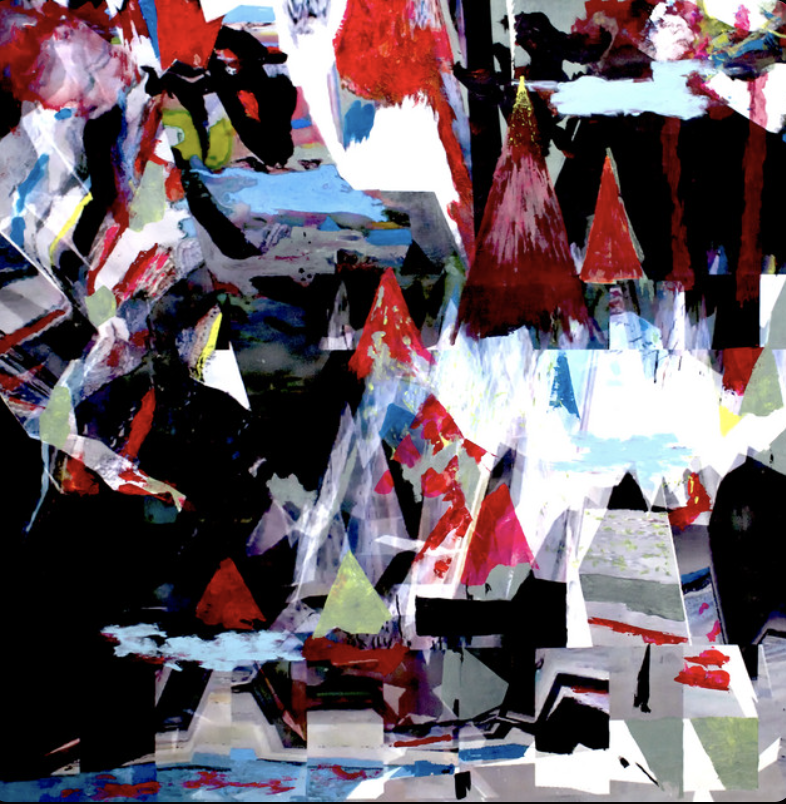
We decided at the start of the year to change things a little with a reminder of not only our favourite tracks from the last month, but also a list of choice albums too. This list includes both those releases we managed to feature and review on the site and those we just didn’t get the time or room for – time restraints and the sheer volume of submissions each month mean there are always those releases that miss out on receiving a full review, and so we have added a number to both our playlist and list.
All entries in the Choice Releases list are displayed alphabetically. Meanwhile, our Monthly Playlist continues as normal with all the choice tracks from July taken either from reviews and pieces written by me – that’s Dominic Valvona – , Brian ‘Bordello’ Shea, and this month, Kalporz writer Samuel Conficoni. Our resident Hip-Hop expert Matt Oliver has also put forward a smattering of crucial and highlighted tracks from the rap arena.
CHOICE RELEASES FROM THE LAST MONTH OR SO:
Blanco Teta ‘‘La Debacle las Divas’
(Bongo Joe) Review
Lukas Cresswell-Rost ‘Weight Away’
(Wayside & Woodland Recordings) Review
Theon Cross ‘Affirmations: Live at Blue Note New York’
(New Soil) Review
Cumsleg Borenail ‘10mg Citalopram’
(Cruel Nature Recordings) Review
Exploding Star Orchestra ‘Holy Mountains’
Fortunato Durutti Marinetti ‘Bitter Sweet, Sweet Bitter’
(Quindi Records/We Are Time) Review
Tony Jay ‘Faithless’
Review
Freh Khodja ‘Ken Andi Habib’
(WEWANTSOUNDS) Review
The Lancashire Hustlers ‘Here But Not Here’
(Steep Hill) Review
Kevin Robertson ‘Yellow Painted Moon’
Review
Maria Elena Silva ‘Wise Men Never Try’
Review
Sol Messiah ‘War of the Gods’
THE PLAYLIST::
Blanco Teta ‘Subiduki’
Scotch Funeral ‘Weak at the Knees’
Freh Khodja ‘Aich Sar Bina Koulili’
Brickwork Lizards ‘All the We Are – Reworked by Sebastian Reynolds’
Natural Information Society ‘Sound Talisman’
Sol Messiah Ft. Sa-Roc ‘Auset’
Raekwon Ft. Ghostface Killah & Method Man ‘600 School’
Mr. Muthafuckin’ eXquire ‘Y.O.Utopia’
Open Mike Eagle ‘ok but I’m the phone screen’
Nicholas Craven & Boldy James Ft. C Dell & Nick Bruno ‘At&T’
Clipse, Pusha T & Malice Ft. Ab Liva ‘Inglorious Bastards’
Estee Nack & V Don Ft. Al-Doe ‘EZBRED’
Rachel Eckroth ‘Yin Yang’
Theon Cross Ft. Isaiah Collier, Nikos Ziarkas & James Russel Sims ‘We Go Again – Live at the Blue Note, NYC’
Peter Evans (Being & Becoming) ‘Malibu’
Homeboy Sandman & Sonnyjim ‘Can’t Stop Me’
Apollo Brown & Bronze Nazareth ‘Wheel Of Misfortune’
Ramson Badbonez & Leaf Dog ‘Celestial Bodies’
Max Schreiber ‘Layla Mistakel’
The Conspiracy ‘Salisbury Road’
SUO ‘Big Star’
Fortunato Durutti Marinetti ‘Beware’
Jeff Tweedy ‘Out in the Dark’
Kevin Robertson ‘Yellow Painted Moon’
Soft Hearted Scientists ‘Hello Hello’
Whitney ‘Dandelions’
The Lancashire Hustlers ‘Perhaps’
Ali Murray ‘ Toby’
Alex G ‘June Guitar’
Spotless Souls ‘In the Heart’
The Noisy ‘Twos’
Wolfgang Perez ‘So Ouco’
Eve Goodman & SERA ‘Blodyn Gwylly’
Joe Harvey-Whyte & Paul Cousins ‘lift’
Sirom ‘For You, This Eve, the Wolves Will Be Enchantingly Forsaken’
Austistici & Jacek Doroszenko ‘After Water Formed A Shape’
Cumsleg Borenail ‘You Mean Something To Me’
Cecil Taylor & Tony Oxley ‘Encore 1’
Exploding Star Orchestra ‘Afterburn (Parable 400)’.
If you’ve enjoyed this selection, the writing, or been led down a rabbit hole into new musical terrains of aural pleasure, and if you can, then you can now show your appreciation by keeping the Monolith Cocktail afloat by donating via Ko-Fi.
For the last 15 years both me and the MC team have featured and supported music, musicians and labels we love across genres from around the world: ones that we think you’ll want to know about. No content on the site is paid for or sponsored, and we only feature artists we have genuine respect for /love or interest in. If you enjoy our reviews (and we often write long, thoughtful ones), found a new artist you admire or if we have featured you or artists you represent and would like to say thanks or show support, than you can now buy us a coffee or donate via https://ko-fi.com/monolithcocktail
Kalporz X Monolith Cocktail: Top 7 Of The Week
July 25, 2025
Our continuing partnership with the leading Italian culture/music site and platform Kalporz. Samuel Conficoni brings us a choice septet of curious and interesting new/releases.
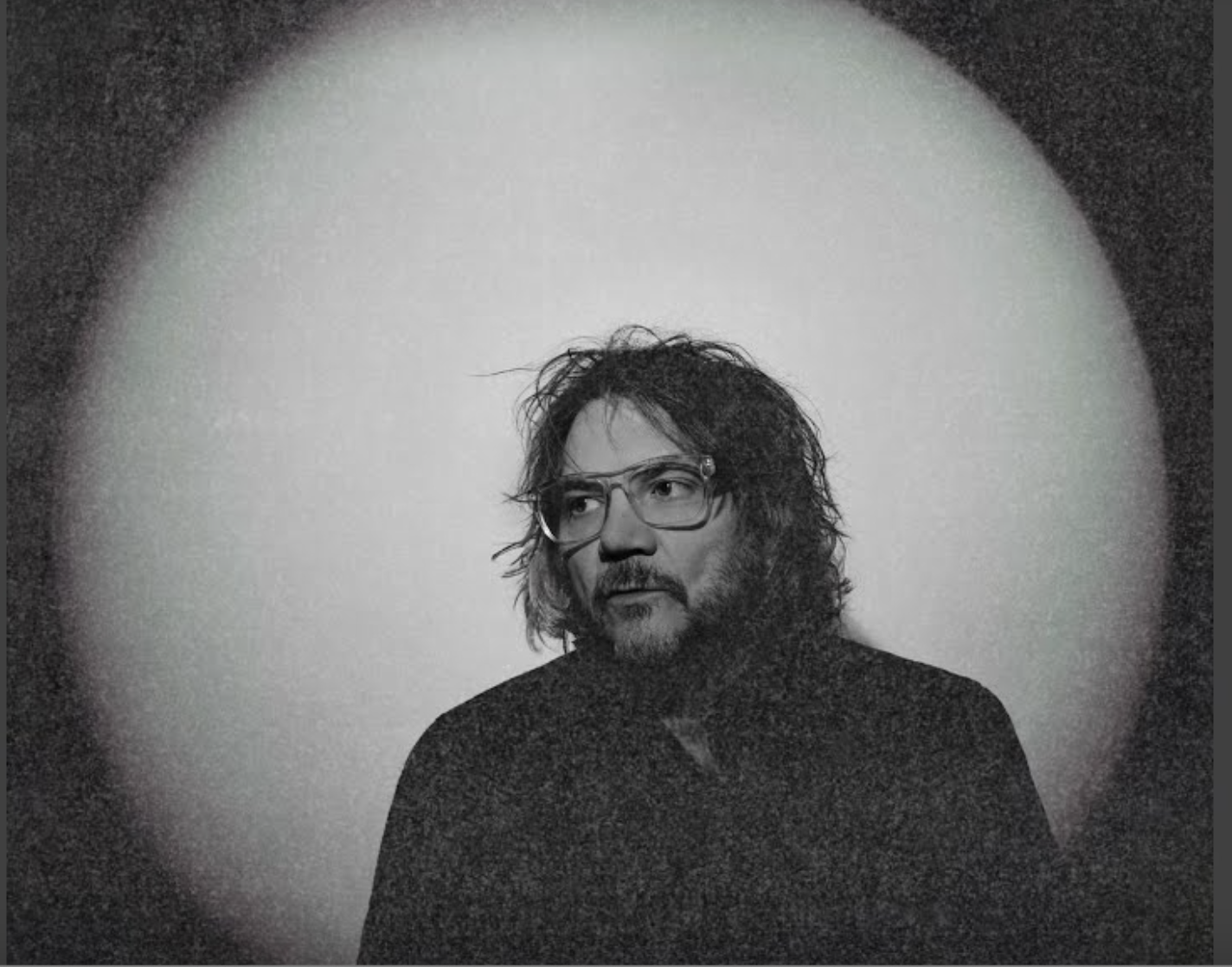
Jeff Tweedy of Wilco.
At regular points during the year the Monolith Cocktail shares posts from our Italian pen pals at Kalporz. The site recently celebrated its 25th anniversary. Here’s to longevity, which isn’t easy in the unstable online world.
From the site’s regular new series, This Week’s Top 7, Kalporz mainstay Samuel Conficoni shares seven (plus a sneaky bonus) choice recommendations; many of which lean towards the country, or share a theme with Bob Dylan.
7. Ever true to themselves, the Whitneys have released a new song.
“Dandelions” previews Small Talk, the new album released this November by Max Kakacek and Julien Ehrlich’s group, and the follow up to 2022’s Spark album.
6. Margo Price between innovation and quotation.
With a visual reference to Bob Dylan‘s legendary 1965 music video for “Subterranean Homesick Blues”, the singer-songwriter’s new single, which follows on from the previous intriguing “Don’t Let the Bastards Get You Down”, is titled “Don’t Wake Me Up” and features Jesse Welles. Her new album, “Hard Headed Woman”, will be released at the end of August on Loma Vista.
5. An unleashed Jeff Tweedy announces a new triple album and a tour.
Twilight Override will contain thirty songs and be released at the end of September. The Wilco leader offers us a taste of his new solo album by sharing four previews: “Enough”, “One Tiny Flower”, “Out in the Dark” and “Stray Cats in Spain”. Tweedy and his band will be in North America this fall, and in Europe next February.
4. “She Explains Things to Me” is David Byrne’s kaleidoscopic new track.
After last month’s “Everybody Laughs”, a new preview that gives us a taste of the intensity of Who Is the Sky?, the Talking Heads frontman’s new solo album, due out in early September on Matador.
3. 80 years later, the Kronos Quartet commemorates J. Robert Oppenheimer’s atomic bomb test by performing (in two versions) a Bob Dylan classic.
To commemorate the extraordinary event of July 16, 1945, the Kronos Quartet has recorded two versions of “A Hard Rain’s A-Gonna Fall”, the poetic gem that Bob Dylan composed in late 1962, likely inspired by the Cuban Missile Crisis, and which he included on his masterpiece album The Freewheelin’ Bob Dylan, released the following May. Among the names featured on the project are Willie Nelson, who, at 92, is currently touring the US with his Outlaw Festival, which also features Bob Dylan and his band; Ringo Starr, who turned 85 a few days ago; Iggy Pop; Laurie Anderson; Tom Morello; and Charlotte Gainsbourg. One version of the song is intense and hypnotic folk-rock, while the other, the “Drone Version”, is a reinterpretation of the classic in spoken-word form.
2. A passionate tribute to Jason Molina, so we never forget him.
Jason Molina, best known for his singer-songwriter project Songs: Ohia, passed away prematurely in 2013. After the fascinating and seminal reissues of much of his catalogue over the past decade or so, a compilation album dedicated to him, titled I Will Swim to You: A Tribute to Jason Molina, will be released by Run for Cover in early September. The album features, among many others, MJ Lenderman, Hand Habits, Sun June, Advance Base, Lutalo, and Horse Jumper of Love. Lenderman’s version of Molina’s “Just Be Simple” was shared the other week.
1. Woody Guthrie again, unforgettable and ever-present.
Shamus Records will release a fascinating double volume entitled Woody at Home in mid-August, containing 22 previously unreleased tracks by the legendary singer-songwriter. Among the many fascinating pieces is his only recording of “Deportee”, a legendary song performed over the decades by Bob Dylan, Pete Seeger, Bruce Springsteen, and Joni Mitchell, which Guthrie wrote after the deaths of 38 people, including 22 migrant farmworkers, in a 1948 plane crash. Thanks to the restoration of some analog tapes, on which Guthrie himself recorded these songs at home when he was 38, these two volumes have reached us. They will be enhanced by a book containing exclusive photos of Guthrie and his family and some of his lyrics, obtained from the Woody Guthrie Center in Tulsa.
[Bonus Track] 0. Headlights by Alex G is a great album.
Headlights, the tenth studio album by Alex G (the moniker of American singer-songwriter Alex Giannascoli) our artist of the month was released this month. This is his first release for a major label, in this case RCA, and from the first listens – as the singles that preceded it had already demonstrated – it seems to be an excellent album, yet another step forward for an artist who knows how to renew himself and make his compositions engaging every time while maintaining a sincere, visionary style that is true to himself.

