Single Review
Words: Dominic Valvona
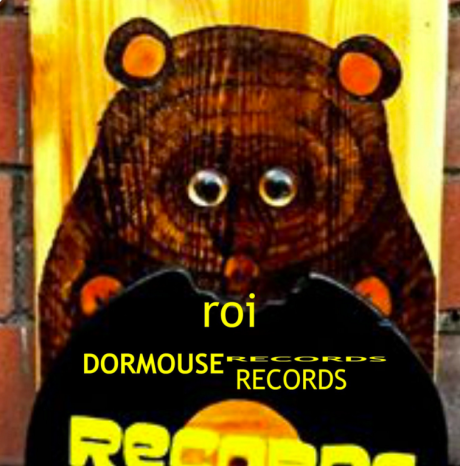
Roi ‘Dormouse Records/Straight Outta Southport’
(Metal Postcard Records) 25th August 2019
Though it’s never stopped anyone else, and most music writers’ side hustles include making music and PR, it would still seem incredibly self-promotional for our maverick-in-residence Brian ‘Bordellos’ Shea to review and publicize his own record. So I’m going to do it for him instead.
Dropping singles, albums and miscellaneous detritus like the most candid, cynical of therapy sessions, Brian, as patriarchal cult leader of St. Helens’ most ramshackle miscreant underground heroes The Bordellos, wages a daily battle with the music industry and, well, society in general. He does all this of course shadowed by an extended cast of Shea family members and anyone stoned, deranged or bored enough to have happened across one of the impromptu legendary late night recording sessions. With a gift equally as spot-on and part of the cultural fabric of shitty Britain as Half Man Half Biscuit, Brian and his troupe have found profound wry humour in the darkest of subjects. True outsiders, they’ve forged a career out of misery with a lo fi ascetic that makes The Fall sound as if they’d been produced by Phil Spector.
Of on one of his many tangents, Brian teams up with long-suffering bandmate and offspring Dan (doing grand and promising things with Vukovar and the burgeoning Beauty Stab) and John McCarthy to create his newest project, Roi. The first single from this new turn salvages both a lost Bordellos plaint from the brilliant (one of our albums of the year) 2014 LP Will. I. Am, You’re Really Nothing, and hones a slurged dissonance to a mate’s record shop. The latter of those, ‘Dormouse Records’, is a deranged paean to the vinyl stockist of Brian’s dreams. Memories, inconsequential to some, and rites-of-passages are marked by a litany of favourite records as Brian wistfully rummages through the racks of a less cunty, less surly version of the High Fidelity record store vision. It often sounds like two completely separate tracks/ideas playing simultaneously; the intermittent synthesized rumbles and noise bleeding into the main jangly melodic rhythm of the main song.
Almost as a sort of grudge against Bordellos stalwart Ant, a new version of the 2014 kiss-me-quick, misty-eyed ballad to love in a Mersey seaside town, ‘Straight Outta Southport’ replaces Brian’s sibling’s original parts with those of McCarthy’s. Losing none of its lo fi heart rendering beauty in the process, there’s perhaps a slightly more distorted and forlorn edge on this recreation: Roi covering The Bordellos as it were; truly pop will eat itself.
Even though 6Music, The Guardian, uncut and their ilk talk and feature/pick-up on what the Monolith Cocktail was already raving about months ago, The Bordellos remain a cult, but very influential, missive waiting to happen. They’re too good for us anyway; we don’t deserve them. But some recognition wouldn’t go amiss in the wider press and industry (I make apologies to similar sized-ventures and radio shows that have been championing them like ourselves). Roi is just another example of that unassuming, unaided-thoughts aloud talent.
Premiere: John Johanna ‘Prodigal Son’ video
August 27, 2019
Premiere
Words: Dominic Valvona
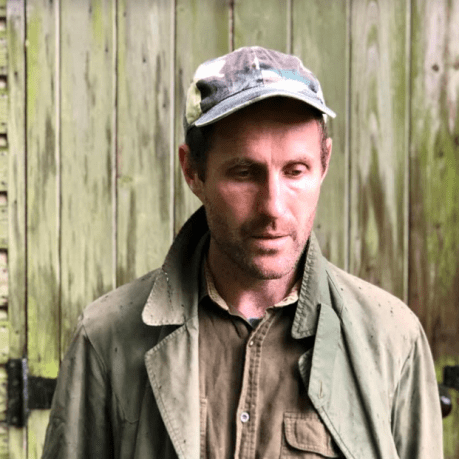
Invested with the powers of the Zion cosmological, the afflatus Norwich-based troubadour of psychedelic folk and gospel liturgy John Johanna turned Judaic augurs into a sublime songbook of post-punk, dub, indie, and Krautrock on his most recent, and well-received, LP Seven Metal Mountains. Using the mountain allegories and metaphors, as laid down by Noah’s grandfather in the vision-dream-revelatory Book Of Enoch as inspiration, Johanna crafted a gospel-raga-blues and Radio Clash prescient Biblical work of art.
The latest single/video to be released from that fine album, ‘Prodigal Son’, arrives just before Johanna’s next performance, supporting alongside the Ursa Major Moving Group ensemble, Faith & Industry labelmates Champagne Dub at the Folklore in Hackney.
The most swimmingly wavy and translucent undulated soulful psych-synth – with just the most vague tinges of South America and Africa – cooing track from that album, ‘Prodigal Son’ is, as the title makes clear, inspired by the atavistic parable. If you need a quick recap on that old adage, it goes something like this:
A father has two sons. The younger son asks the father for his inheritance, and the father grants his son’s request. However, the younger son is prodigal (i.e., wasteful and extravagant) and squanders his fortune, eventually becoming destitute. The younger son is forced to return home empty-handed and intends to beg his father to accept him back as a servant. To the son’s surprise, he is not scorned by his father but is welcomed back with celebration and fanfare. Envious, the older son refuses to participate in the festivities. The father tells the older son “you are ever with me, and all that I have is yours, but thy younger brother was lost and now he is found”
The neo-colourful stop-motion paper cuts sequenced video that accompanies it was created by Studio Kissu, a London based French creative studio. They explain the motivation, themes and methodology thus:
“I wanted to make something joyful and colourful to illustrate love between beloved in a family, and I played with abstraction as the idea of leaving and find yourself somewhere else. I used words to illustrate the strong feelings of missing home while geometry comes to draw the sadness, illustrating human being facing their limit and finding strength in love”.
John Johanna says “ I am overjoyed with Studio Kissu’s video for ‘Prodigal Son’. It far exceeds the bounds of my own visual imagination but I couldn’t have hoped for a more sympathetic treatment of the song! It’s a haunting, strange and delightful exploration of the meanings in the lyric”.
Premiere: A Journey Of Giraffes ‘Kona’ LP
August 22, 2019
Premiere
Words: Dominic Valvona
A Journey Of Giraffes ‘Kona’
(Somewherecold Records) 23rd August 2019
John Lane has travelled a long way, in musical terms, from his burgeoning lo fi days recreating a Casio keyboard vision of Brian Wilson’s beachcomber dreamy beatifications, under the seashell symphony ego of Expo, to the more transcendental meditative beginnings of his present alter ego, A Journey Of Giraffes. The safari has moved, in more recent years, away from the Beach Boys to more ambient and traversing experimental influences. The last album from the unassuming Baltimore composer that we featured, a couple of years back, went all out on an aimless supernatural field-recorded walk through the forest. F² is an eerie and strange affair; a mixture of Arthur Russell meets Panda Bear and Alejandro Jodorowsky in the backyard of Maryland.
Taking another road-less-travail kind of amble through another sort of imaginative woods setting, Lane’s latest, and quite possibly his most complete, album Kona, which we are lucky and indeed honored to be premiering today, is inspired by a Japanese art, music and contemplation. A love letter in many ways to the late Japanese electronic composer Susumu Yokota, this sweeping, often subtly matriculate and ambient affair, suite pays a homage not only to his more washed and ruminative musical peregrinations but his quotes as well. The album title is itself taken from one such lyrical pronouncement/augur: “Bones of the dead are shattered like kona and sprinkled over the homeland. Children can fly in the sky when sprinkled with Angel’s kona.”
Known for bridging techno, house and more minimalistic, and almost the neo-classical, fields of electronic music to forge a thoroughly modern Japanese sound, it is Yokota’s brushed calligraphy and mysterious evocations that are used like footnotes to Lane’s interpretive exploration: Less the Jeff Mills and Rob Hood acid burbles and intelligent techno of Acid Mt. Fuji, and more the gliding, thoughtful intricacies and panoramas of Sakura.
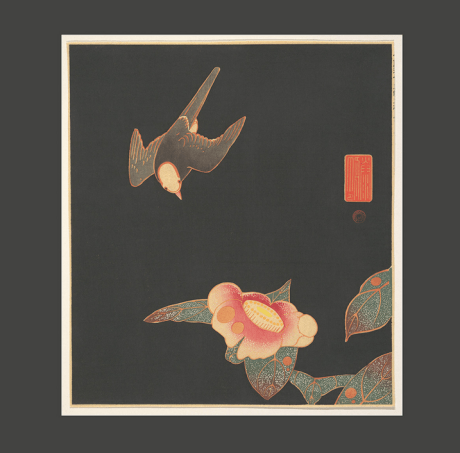
A clue as to what you might expect to hear from Lane’s Japonism, the quilted bird-in-motion artwork (Swallow and Camellia by Itō Jakuchū) is a suitable guide to this deep immersive experience; one that is influenced as much but the literary finesse of Natsume Soseki‘s The Three Cornered World novella as it is by Studio Ghibli’s seminal animated movie, Spirited Away. Kona is full of glistening water pool grottos and firefly lit paper lantern trails; a night garden both mysterious and imbued with peaceable Taoist understatement. You can certainly expect to hear dulcet thumb-plucked strings cascade against reverberated singular piano notes and pestle-and-mortar like scrapings, or, an insect chorus and water droplets falling on a millennia-aged and stoic moistened rock whilst hovering low synthetic drones pulse and throb. Beats are kept to a minimal, but they are there in the sophisticated mix of the fairytale and plaintive.
Magically ruminating, offering both the beatific and uncertain, Kona is an exotic, sometimes ceremonial, Zen like soundtrack that evokes the Fourth World Possible Musics of Jon Hassell, Popol Vuh and the higher plain communal glistened zither transcendence of Laraaji. As I’ve already said, this could be Lane’s most realized, complete album yet. And you can now wander that path yourself, as we premiere the album today, here:
Our Daily Bread 344: Asbestos Lead Asbestos, Bigflower, The Cigarettes, Lark, Occult Character, Repo-Man, Unwavering
August 15, 2019
REVIEWS ROUNDUP
Words: Brian ‘Bordello’ Shea

Brian ‘Bordello’ Shea joined the Monolith Cocktail team in January 2019. The cult leader of the infamous lo fi gods, The Bordellos, has released countless recordings over the decades with his family band of hapless unfortunates, and is the owner of a most self-deprecating sound-off style blog. Each month we send him a deluge of new releases and await to see what sticks.
Lark ‘Blink’
(Wormhole Records) 16th August 2019
An LP of darkness; an LP that emerges from the post-punk sound of the early 80s. Discordant guitars and twisted bass back beautiful songs of lyrical wordy beauty – it is a delight to hear songs with wonderful lyrics instead of them being treated as an afterthought.
At times this reminds me of the recent work of Babybird, a man who ploughs his own path through the music industry and also writes songs with melody darkness and humour. It also brings to mind the Southern Death Cult and Nick Cave, and early New Order.
Originally released in 2014 now available on very ltd cd from the wonderful Wormhole World label, I would snap one up while you still can as this is an album to soundtrack the oncoming Autumn and Winter of our discontent.
Asbestos Lead Asbestos ‘Nature Of Feline’
26th July 2019

When an LP starts with a flurry of “fuck yous” and goes into indie pop strum along, and then goes into more “fuck yous”, I know I’m going to enjoy it. A clamour of glamour and toss pot glitter shillyshally into the mists of swollen lo fi beauty, it reawakens memories of dreaming of the girl you can only dream about whilst listening to Bongwater: the band not water from a bong.
If I wrote for the music blog Get Into This, I might describe this LP as being “boss scran for thought”, as it jumps from chaos to chaotic hipster speak to dirty yearning for the fucked and fuckable. Acoustic guitars drift through electronic distortion to unveil yet another great album for 2019, and when that same album has a song called ‘Motherfucker Won’t You Pass The Marimba’, how can it not be worth investigation.
bigflower ‘The Look Of Love’
4th August 2019
If a sparkling dark beautiful rendition of one of the most perfect love songs ever written is what you are after then look no further as bigflower, the musical gift that keeps giving, has supplied us yet again with another guitar gem: this time not a self composed number but a rather wonderful version of the Bacharach and David classic, ‘The Look Of Love’. And what a sensual dark version of the original it is too; a track that is crying out to be used in the next Hollywood blockbuster.
Record labels are you deaf or just retarded?!! Another gem.
The Cigarettes ‘You Were So Young’
(Optic Nerve Recordings) 20th September 2019
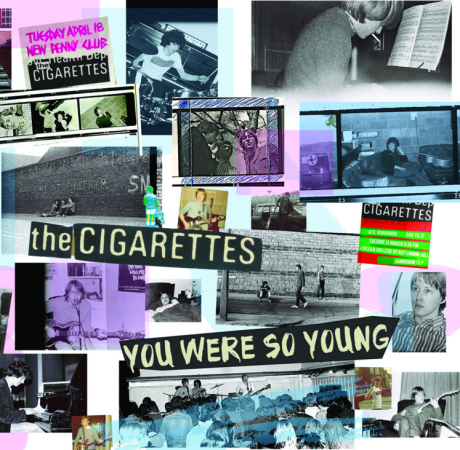
There nothing quite like the sound of young rebellion. If you are in agreement then this new comp of the classic underrated band from Lincoln, The Cigarettes, is just what you need. It includes their wonderful singles compilation tracks, their legendary John Peel session, plus previously unreleased tracks.
For all lovers of golden age punk this is a must have; The Cigarettes showing that they matched the Buzzcocks and the wonderful Subway Sect on the melody front. In fact, it is a bit of a mystery how they weren’t become better known and received, all the boxes ticked, songs of teenage troubles, life slashing buzz saw guitars, catchy choruses, one string guitar solos, all in all, perfect pop.
Maybe with the release You Were So Young they will finally get their full due and the recognition they deserve as one of the great lost bands of the punk/post-punk era.
Unwavering ‘Freeze,Thaw, Chorus’
16th August 2019
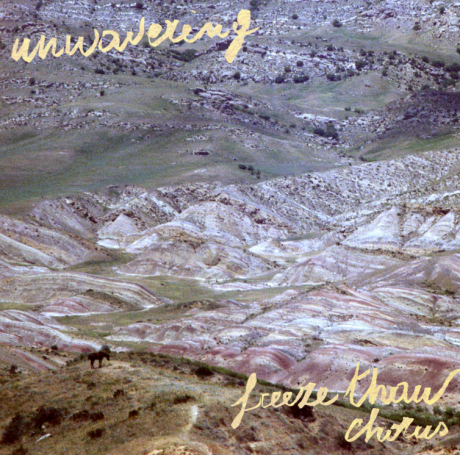
Do you ever challenge yourself to do something you don’t like? It could be opening your eyes in the morning and breathing; it could be cleaning out the cat litter tray or, in this case, listening to an LP that has been sent to you to review that has described itself as shoegaze. For shoegaze is one of those genres that cry out, “I am really uninteresting. I have all the pedals but no songwriting talent. I have ambition and ego but not the talent to match.” So a word to the wise, unless you are one of those unfortunates don’t describe your music as such as you are doing yourself a great disservice especially when your music is a wandering lo fi folk that happens to use the electric guitar a little like a more wayward Red House Painters.
Unwavering dispatch a fine dark melancholy, awash with many layers of guitars with distant slightly reverb vocals at times that remind me what a Stone Roses LP may have sounded like if they had left Mani and Reni at home and where more down for it than up. This is a quite beautiful album; melodies melancholy and a bewitching scenic beauty weave a hypnotic spell. A band/artist I think one should keep an eye out for in the future.
Repo-Man ‘I Can Live With It If You Can, Son’
(Stolen Body Records) 6th September 2019

This is real free form rock n roll. It reminds me of the wonderful Wigan-based band The Volunteers from the late 80s, who brought out a classic mini LP called Bladder Of Life. A wonderful LP by a wonderful band, and like I said, this reminds me a lot of them. Captain Beefheart like madness connects with their inner Fall to unveil a magical projection of psychedelic whimsical John Cooper Clarke poetry. It is indeed a treat to hear a band that attempts to go their own way in their twisted art flow instead of following the old melody of verse/chorus/verse/ chorus/guitar solo/middle 8, have a smoke of trendy class arsehole drugs and point their chins in the right way so the camera can capture the unnatural good looks of yesterday’s poster boys.
I really like Repo-Man, they are fun, they have the quality that they are probably hated by other bands from the same town because they dare to be different and probably could clear a room of punters from any pub they play: like all great bands can at will.
So I would say I Can Live With It I You Can Son is a must have album; an LP of sonic aural dyslexia. A true gem.
Occult Character ‘National Razor’
4th August 2019

Another new song from maybe the finest songwriter in the USA today, the wonderfully eccentric Occult Character; a man who takes both hip-hop and lo fi folk to new extremes; a man who writes beautifully about the madness engulfing America under the Trumpster and the common everyday problems like never being able to find what you want in a full fridge: a true musical maverick.
This new free to download track is Occult wearing his hip-hop hat, a two and a half minute swagger of humor and strangeness and a forerunner to his forthcoming LP on the smarter than the average label Metal Postcard. It’s free, so get downloading.
Rose McDowall & Shawn Pinchbeck ‘Gem’
20th September 2019

The sound of Autumn is upon us. Gem is the stolen sway of a shimmering distant light, a parchment of lost memories kissing the hem of the garment of your long lost loves’ smile. Gem is a beauty of a single recalling the dark sultry eloquence of Paul Giovanni and Magnet’s Wicker Man soundtrack; a truly beautiful and haunting piece of musical wonderment. One of the songs of the year no doubt.
Rapture & Verse: August 2019: Ash The Author, Black Milk, Giallo Point, Juga-Naut, Kool Keith…
August 12, 2019
HIP-HOP REVUE
Words: Matt Oliver

The latest edition of Rapture & Verse has put itself forward for an ‘Old Town Road’ remix (#1 in the year 2056), but will not be writing any top 50 lists for fear of admonishment when omitting Morris Minor and the Majors. Some singles first: a whodunit tiptoe from Pitch 92 allows justice-serving Verb T and TrueMendous to catch a ‘Cold Case’, nimble, mean-streaked rhymes leaving no stone unturned. Four instrumentals from the mighty Chairman Maf are nice, summery and don’t ‘Muff’ their lines, cheeky samples warping the beats in the sun. DJ Shadow and De La Soul’s old skool autopilot guzzles ‘Rocket Fuel’, a simple, effective weapon held down by horn overtures moving overground: a nation of breakers, poppers and lockers can be found greasing their joints in anticipation. ‘It’s Not That Simple’ claim Pawz One and John Henry, when actually the opposite is true, giving the front row what they want across eight tracks like it’s a regular day at the office. Beats and rhymes for the win, getting straight into a gold-reflected groove. Celph Titled’s ‘Paragraphs of Murder’ is not a fuzzy wuzzy Hallmark card; fact. The more obvious answer is, head banging music in an invincibility cloak.
Albums
Anchored by the indomitable ‘Reeboks’, Baileys Brown stirs the pot so everything’s ‘Still Fresh’, in the name of accommodating a bunch of microphone herberts. Datkid, Axel Holy, Lee Scott, Dabbla and Hozay rise up to run their mouth and take advantage of BB’s background diligence, skimming the scummy but with buckets of fizz and a little soul stardust answering the title’s call, keeping the hottest point of the club within striking distance of a couch and headphones combo.
Live at the barbecue, Giallo Point and Juga-Naut make the grind look easy when heading ‘Back to the Grill Again’. For the most part GP is weighing up which yacht to rock rather than measuring you for concrete shoes, and Jugz’ designs on alt-opulence are ones listeners want to achieve themselves rather than being put off by claims bordering on the outlandish. Running through crews like a hot knife through butter, from now only order these cordon bleu beats and rhymes, a gangster gourmet with an all important UK garnish.
Apex’ twins Ash the Author, forcing the issue and leaving pauses for thought to leave you defenceless (“raps like Moe Syzslak, straight ugly”), and Ded Tebiase, a double bluffer on the beats seeking dusty sunrises through the blinds and spreading bad voodoo to make you jerk your head back. The pair haven’t got time to be messing about and have got you covered, in tune with the changeable British summertime. One for a shoulder-high ghettoblaster.
Taking the form of the staunch Chester P, The Nameless Project surveys the wreckage of the world, wrapped in yellow and black barricade tape. It reaches a conclusion of dislocated beats under extra terrestrial duress, and disdainful observations, hauled straight from the corner, that you better start believing quick. Uneasy listening where you daren’t touch that dial.
‘The Return’ of Sampa the Great is a mind, body and soul experience requiring complete immersion (clock watchers – this isn’t for you), the indigenous explorations and fearless art of performance making it more odyssey than album. Lead by that trickily playful, Bahamadian flow sounding like it’s chewing a ton of bubblegum ready to spew napalm, funk wrecking ball ‘Final Form’ becomes a bit of a one-off in a meandering, richly textured, provocative astro/political soul installation, able to slot in a rework of The Stylistics. A debut to have critics clamouring.
A new Kool Keith album, entirely produced by Psycho Les: ‘Keith’ is the album dreams are made of to some hopeless hip-hop romantics (Jeru the Damaja and B-Real pop in to propagate the fantasy). In the real world of 2019, it’s another day of the Spankmaster’s unmatched imagination running feral, throwing his “jockstrap to the critics” and in the direction of stocky Beatnuts fare that sides with the eerily vacant, and the sometimes peppy over the sleazy. ‘Holy Water’ doing Barry White is the headline treat, yet the album improbably goes about its business with minimum bother.
Superhero worship and hip-hop purism: birds of a feather, supremely executed across eight tracks by P.SO and 2 Hungry Bros on ‘American Anime’, detailing the vagaries of the respective scenes so both the nerds and the B-Boys can have their revenge. The mild-mannered everyman by day brings out the superpowers of beats, rhymes and managing the concept like its second nature, just like your favourite lycra clad centrefold.
Grieves’ ‘The Collections of Mr Nice Guy’ uncomplicatedly detangles affairs of the heart, including self assessment, before undermining the album’s title in a kindness-for-weakness dismissal. His switch in focus with no discernible change up, means eight softly bedded lullabies bite back and keep everyone interested and entertained, as well as being a perfect introduction to latecomers.
“A varied album documenting stressful trials, psychedelic endeavours, and copious inhalations of marijuana” – that’s the lowdown on YUNGMORPHEUS and Fumitake Tamura’s ‘Mazal’. Suffice to say, side effects may cause drowsiness, though in fairness the lyrics are as much as blunt as they are blunted, red mist over red eyes looking over an out-of speakers-experience that still manages a surprise sneak attack of Shadez of Brooklyn’s ‘Change’.
Ambitiously advertised as an EP, Black Milk continues to show he knows exactly how to work the sweet spot of soulful hip-hop with something to say on the album length ‘Dive’, never stooping low to conquer. A soundtrack for heat waves and cool for the eye of the storm, it’s that movement around and manipulation of sounds that sets him apart, not to mention his rhymes sitting between confident/authentic open mic night performer bringing with him a disarming bedside manner.
‘One Word No Space’ = no space for wasted words – standard procedure from Donwill, another expertly, effortlessly concentrated spectacle (35 minutes long brings the repeat button quickly into play). Soulful but with a kick (production from Tanya Morgan teammate Von Pea), laidback but with lessons to take from, it’s another backing track for a barbeque going long into the evening.
Tickling Our Fancy 077: BaBa ZuLa, Junkboy, Jodie Lowther, House Of Tapes, Society Of The Silver Cross, Taichmania, Trupa Trupa….
August 8, 2019
REVIEWS
Words: Dominic Valvona
Photo: (of BaBa ZuLa) Emir Sıvacı
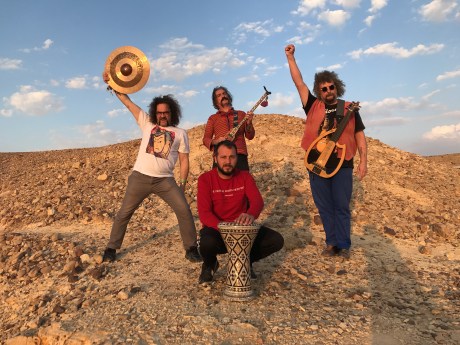
Freely traversing borders once more, Dominic Valvona’s regular roundup of discoveries and interesting finds this month circumnavigates Japan, Israel, Turkey, Poland before returning to the more chilled pastoral Estuary greenery of the Sussex and Essex landscapes. There’s a double-helping of upcoming releases from Glitterbeat Records stable with the return of the Turkish dub cosmology legends Baba ZuLa – their first studio LP in five years, Derin Derin – and a new album of post-punk limbering from the Gdansk band, Trupa Trupa. In a similar vane to the ZuLa, Israeli troupe Taichmania also fuse a cosmology of sounds, and use both the an electrified dynamism of the “oud” and “saz” to fuzz and amp up a merger of Middle Eastern traditions with jazz and prog. Their debut LP, Seventh Heaven is given the once-over. The trio of radio show host ethnomusicologist Matthew Nelson, Hopi musician Clark Tenakhongva and world-renowned flutist Gary Stroutsos come together on sacred ground to invoke a magical homage to the music of the Hopi people on the beautifully evocative LP Öngtupqa. Inspired by more Eastern mysticism the Seattle coupling of Society Of The Silver Cross release their debut long-suite, 1 Verse, and an amazing freefall-in-motion jazz exploration from Philip Gropper’s Philm, entitled Consequences.
There’s horror of a diaphanous apparitional kind with the latest solo album of invocations and ether siren sighed sonnets from Jodie Lowther, and the first album in five years from Junkboy, the marvelous scenic Trains, Trees, Topophilia, and, finally, the inaugural release from Ippu Mitsui’s brand new electronic music label, Pure Spark Records, the House Of Tapes two-track Embers Dreams.
BaBa ZuLa ‘Derin Derin’
(Glitterbeat Records) 27th September 2019

Stalwarts of Turkish cosmology dub, the Istanbul Ege Bamyasi acolytes BaBa ZuLa return to the fray with their first studio LP in five years. And what a time to make that return, as Turkey, or rather its increasingly apoplectic quasi-Sultan-in-waiting Recep Tayyip Erdoğan, continues a policy of conformism that endangers any form of oppositional descent, and threatens artists and critics alike with severe censorship. The once famous secular moderate bridge between Europe and Asia is growing hostile to the West as the administration errs towards a hardline form of Islam, and moves closer towards Putin’s Russia.
Maintaining a constant rebellious streak throughout their twenty-three year career, whatever the ruling regime, the recent turmoil propels the ZuLa to reconvene; raising their heads above the barricades in a creative act of defiance: Music for dangerous times.
Still led, in part, by the switched-on electric ‘saz’ maestro Osman Murat Ertel, the group weaves together another expansive soundtrack of vivid souk dub and sashaying rambunctious post-punk on Derin Derin. Inspired by a number of things, not just the current political climate, the album is imbued by BaBa ZuLa’s long-running collaborations with the late Jaki Liebezeit: who was himself in turn influenced by a myriad of Anatolian rhythms – which you can hear permeating throughout both the Can legacy and his own many collaborative projects over the decades. The Can metronome and drumming doyen sat in with the group on a number of occasions, and the resonance, at least, of those sessions can in part be felt on this newest album. Especially on the Krautrock pulse of the solo fuzzed saz-snarling ‘Kizil Gözlüm’, which runs through a gamut of Germanic sounds, from Can to Blixa Bargeld and 80s Berlin post-punk. There’s even an air of Michael Karoli’s signature cosmic flares and reverberating wanes, as played on an amped-up oud (or saz), on the Sublime Porte reimagined vision of King Tubby, ‘Port Pass’. In retrospect, the band considers Jaki as an unassuming mentor.
Another thread to this album is the group’s ancestral connection, with musical ties that stretch back generations: Ertel paying a special homage to his artistic forbearers, enthused by traditions but also the country’s psychedelic furors in the 60s and 70s. From the 150 year-old photographic plate process used to produce the album cover, to the inclusion of a song penned by Ertel, his wife and young son, ‘U Are The Swing’, there’s a deep sense of family and inheritance; BaBa ZuLa as custodians of the faith.
A third strand, the instrumental portions of this Oriental cosmic album grew out of a soundtrack commission; the group asked to record music for a documentary about falcons, created a suitably exotic echo of serene flight and soaring majesty, as they accentuated the bird-of-prey plunging and floating over evocative commendable heights. These do act as mini-branches, vignettes and interludes between the longer songs.
The rest of the album oscillates and saunters between camel ride momentum Arabian Desert blues (thanks in part to the inclusion of an electrified oud), futurist Bosphorus reggae (via On-U-Sound and the Warp label) and even alternative rock. In the process they find an echo-y balance between the haunting and abrasive, and the elasticated and intense. A mystical union of the entrancing, sweeping and often chaotic, BaBa ZuLa ‘s hybrid of Turkish and Middle Eastern exotica straddles time and geography to once more create a fearless rump of defiance, yet also inspiring some hope.
Trupa Trupa ‘Of The Sun’
(Glitterbeat Records) 13th September 2019
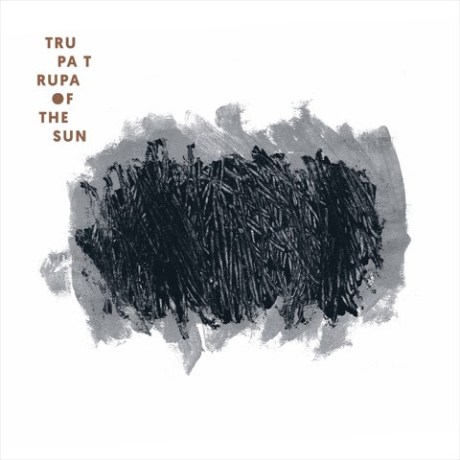
The second Glitterbeat release to feature in my roundup up this month, the counterbalanced Polish band Trupa Trupa couldn’t be further apart, sound wise, from the more languid looseness dub of their label mates Baba ZuLa.
Freshly signing over to the German-based label, the multi-limbed quartet play off gnarling propulsive post-punk menace and tumult with echo-y falsetto despondent vocals and hymnal rock on their fifth album, Of The Sun. Feeding into the history of their regularly fought-over home city, Gdansk, Trupa Trupa create a monster of an album steeped in psychodrama, dream revelation and hypnotic industrialism.
In a perpetual tug-of-war for dominion with its Prussian, then German neighbors Gdansk strategic and commercial position as Poland’s most important post has seen the famous city become a sort of geopolitical bargaining chip over the centuries because of its gateway to the Baltic. After one such episode in a “convoluted” legacy, the city and much of its surrounding atelier of villages were turned into the Free City state of Danzig after WWI; a part compromise result of the Versailles Treaty in 1919. Famous son-of-Gdansk, philosopher Arthur Schopenhauer is credited as a major influence on the group and this album, and though not strictly born within the city limits, the infamous madman of cinema, Klaus Kinski – in one of his most wild-eyed legendary roles as the obsessive loon opera impresario, Brian Sweeney “Fitzcarraldo” Fitzgerald – is also mentioned in the PR spill: the “great effort of pathetic failure” and “strain sublimating into nothing” of that barely veiled characterization proving fruitful suffrage and inner turmoil for the group.
A sinewy, pendulous embodiment of that environment and metaphysical philosophy, Trupa Trupa write “songs about extremes”, but use an often ambiguous lyrical message when doing it: usually a repeated like poetic mantra rather than charged protest. On one of those framed “extremes”, the wrangling guitar-heavy post-punk-meets-80s-Aussie-new-wave ‘Remainder’ sounds like Swans covering The Church, as the group repeat the refrain, “Well, it did not take place.”
Though taut, industrial with ominous machinations, there’s a surprising melodious quality to the turmoil and free fall of Trupa Trupa’s proto-Gothic rumblings. In amongst the slogging, chain dragging of the Killing Joke, PiL, Bauhaus and Gang Of Four are echoes of a wandering angelic House Of Love, Echo And The Bunnymen, early Stone Roses, Pavement and flange-fanned Siouxsie And The Banshees. Strangely, however, the dreamy haunted title-track evokes Thom Yorke in a dystopian Bertolt Brecht theatre, and the stripped-to-bare-bones acoustic ‘Angle’ even sounds like a odd, if charming, folksy harmonics pinged missive from Can’s Unlimited archives: Incidentally, Can’s walrus mustache maverick, Holger Czukay, was born in Gdansk, or rather Danzig as it was known at the time.
The PR spill that accompanies this nihilistic-with-a-heart LP is right to state, “Of The Sun is an unbroken string of hits.” There are no fillers, no let-up in the quality and restless friction, each track could exist as a separate showcase for the group’s dynamism: a single. East European, Baltic facing, lean post-punk mixes it up in the Gdansk backstreets and harbor with spasmodic-jazz, baggy, math-rock, psych, doom and choir practice as this coiled quartet deliver an angst-ridden damnation of humanity in 2019.
Taichmania ‘Seventh Heaven’
21st June 2019

The second group in this roundup to fuse the “saz” and “oud” within a cross-border traverse of Arabia and Turkey, Israeli troupe Taichmania take a similar line to BaBa ZuLa in freely merging musical cultures.
Well-traveled founding member, and the man whose name appears so prominently in the band moniker, Yaniv Taichman has a rich and varied pedigree having studied jazz at the Rimon College Of Music, Turkish music with Professor Mutlu Torun in Istanbul, and Indian music with Pt. Shivanath Mishra in Varanasi. His band mates, Sharon Petrover on drums, Yoni Meltzer on keys and electronics, and Lois Ozeri on bass, are no less musically worldly in that respect.
Stalwarts on the Israel scene in various forms, together under the Taichmania umbrella the quartet limber across a panoramic landscape of Sufi funk, souk-rock, prog and jazz on their debut suite, Seventh Heaven. A veritable elasticated fantasy of both intense hypnotic rhythms and desert peregrinations, this heavenly bound odyssey entwines the traditional sounds and scents of the Arabian Orient with zappy cosmic electronic undulations of synth atmospherics.
Broadcast samples from Middle East radio linger through a kind of spicy exotic brooding mix of Natasha Atlas and the Transglobal Underground on the opening ‘Arabesk’, whilst other such exotic intensity as the contorting spiraling title-track, and post-punk bendy ‘Saba’ are whole journeys, sagas, in their own right; moving between progressive-jazz fusion and futuristic Arabian vapours.
Taking classic leanings to the heavens and beyond, Taichmania knottily skip, scuffle, spindle, echo, quiver and solo through their magical influences to produce a live-feel Oriental soundtrack: heavy on the Prog!
Junkboy ‘Trains, Trees, Topophilia’
(Fretsore Records) 2nd August 2019

Regular readers will (hopefully) be aware that we premiered the Hanscomb brothers’ vibrato-mirage-y ‘Waiting Room’ single last month. This Baroque-pop fashioned nugget, bathed in a halcyon shimmer, proved an idyllic introduction to a pastoral album of geographical traversing instrumentals.
As its album title suggests, public transport(ive) and a strong sense of place have inspired the brothers first album since the much acclaimed 2014 album, Sovereign Sky: Both relocating years ago from Southend-On-Sea to the south coast ideals of Brighton, Junkboy siblings Mik and Rich compose a twelve-track suite to the back-and-forth journeys they made between the two counties of Essex and East Sussex. The “Topophilia” of that title, a term wrongly as it transpires attributed to John Betjeman, can be roughly translated as a love for certain aspects of a place that often gets mixed with a sense of cultural identity.
Passing through a myriad of versions of this landscape, influences include the troubled World War artists of England who depicted the torn-up apocalyptic aftermaths of Europe and the results of bomb raids across the English topography (becoming the doyens of the English modernist movement in the process), to the passing glimpses of the versant downs, beaches and “splendor towns” from a train window, and (friend and Junkboy photographer) Christopher Harrup’s Thames Estuary photo album. The first of these inspirations offers both a colour palette and a semi-abstract empirical vision of that countryside; messrs Paul Nash, Graham Sutherland and John Piper, a triumvirate of influential painters, providing a suitable rich canvas: Just one of the guests on this charming LP (and no stranger to this blog) Oliver Cherer even helps pen a Nash homage, ‘A Chance Encounter’ plays with the light musically on a magical pop melody of slow jazzy brass, relaxed drums and flute-y forlorn.
Disarmingly chilled yet full of wistful rumination, Junkboy’s Brighton-Seaford-Southend traverse wonders what it would sound like if Brian Wilson was born and bred on the English Rivera instead of Hawthorne, California; the beachcomber vibes of Pet Sounds permeating throughout this quint lush English affair. You can safely add vague notions of Britpop era Octopus, a touch of the Super Furry Animals more folksy psych instrumentals, some early Beta Band, echoes of 90s Chicago post-rock, and on the dreamboat bluegrass lilted-and-silted ‘Sweetheart Of The Estuary’ more than a nod to Roger McGuinn and pals.
Trains, Trees, Topophilia is a peaceable musical landscape littered with the ghostly reverb of railways station interchanges, mew-dewed laced green hillsides, tidal ebbs and flows and Cluniac Abbeys – the millennia-old, Benedictine scion religious brethren, brought over in droves after William The Conqueror’s invasion of England, make a historical connection between both the album’s Essex and East Sussex locations; the orders’ priory in the Prittlewell of the same song title, originally set up by Cluniac monks from Lewes, just outside Brighton.
Pastoral musical care for the soul, Junkboy’s instrumental album is a beautifully conveyed canvas of the imagined and idyllic; a subtle ode to the Southeast cartography and painters, poets, writers that captured it so perfectly. This is an album that will grow on you over time, revealing its sophistication and nuanced layers slowly but surely: a lovely hour to wile away your time.
Jodie Lowther ‘The Cat Collects’
26th July 2019
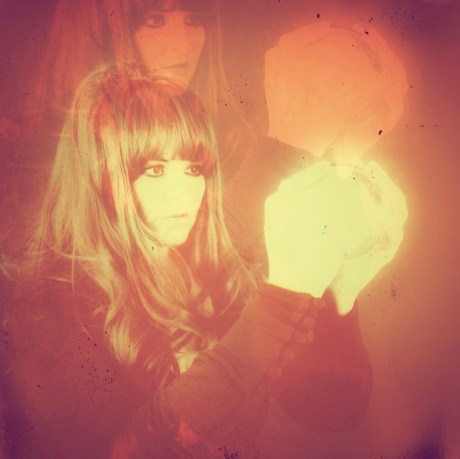
One apparitional half of the surrealist Quimper duo, vaporous siren Jodie Lowther has been known to, on occasion, float solo. Her latest haunted diaphanous malady, The Cat Collects, is (as ever) a magical suite of dream realism and supernatural theater.
Between the characters of ethereal seraph and alluring cat lover, Jodie warbles, coos and entrances with a voice so fragile and gauze-y as to be almost an evanescent whisper: Jodie transmitting her vocals from the spirit side of the ether like a aria woozy Mina Crandon.
Drifting in a seeping cantabile sigh throughout this witchery spell of spooky misty songs and graveyard crypt sonnets is a subtle backing of feint melodies and stripped electronica – think Ultravox marooned on the Forbidden Planet or, an early Mute Records vision of 70s British horror soundtracks (Amicus, Hammer, British Lion). From invocations of Vampire lovers to black magic nuptials, The Cat Collects stirs up the right balance of scares and esoteric enchantment on an album of mysterious, creeping beauty and hazy Gothic soundtracks.
Society Of The Silver Cross ‘1 Verse’
28th June 2019
Over the last few months, and featured in previous editions of my roundups, the Seattle coupling of Joe Reinke and Karyn Gold-Reinke, under the auspicious appellation of the Society Of The Silver Cross, have presented us with a trio of evocative-enough Eastern death cult imbued video-singles. Making good on those mystical visions, the duo have released an album that both continues the Velvet Underground say “Om” Indian Gothic drone psychedelia of those tracks but also widens the musical palette to take in shoegaze, new wave and 90s alt-rock.
Still inspired by their spiritual travels to India, and adopting the invocation drone of the “shahi baaja” (Indian autoharp) and induced bowing of the “dilruba”, the Silver Cross explore the “transformative and renewing powers of death” as they flick through a bewitching songbook of Orientalism, Byzantium incense-scented opulence and bellowing sea shanty Edgar Poe scribed Gothic coastlines.
Leaving aside that run of singles (‘When You’re Gone’, ‘Kali Om’ and ‘The Mighty Factory Of Death’) the book of spells adorned 1 Verse piles on the melodrama of opiate arcane rites and woozy harmonium pumped esoteric atmospherics; opening with the repeated echo-y chanting ritual ‘Diamond Eyes’. In a similar mystical vain, distant tolled bells and the reverberations of a choral Popol Vuh creep into the holy processional lamented ‘Funeral Of Sorrows’. Yet, amongst the death marches and promises of spiritual release, rejuvenation and the inevitable there’s more radiant escapism in the form of spindled Baroque-psych (‘Dissolve And Merge’), alt-pop (‘Because’ imagines The Cars and Why? in holy communion) and even a bastardized Travelling Wilburys (‘Can’t Bury Me Again’).
Kneeling at the altar of a many-faced god/goddess the Silver Cross play freely with all those many influences; indulging in the Eastern arts but expanding horizons and even absorbing past Seattle imbued projects.
If you’ve only thus far heard the singles then much of the second half of this album will be a surprise. Dreamy mantra and morbid curiosity coalesce to produce a mesmerizing, hypnotic ritual; opening the door to further experimentation and proving a worthy new incarnation for Joe and Karyn to channel.
Tenakhongva, Stroutsos And Nelson ‘Öngtupqa: Sacred Music Of The Hopi Tribe’
(ARC Music) 26th July 2019
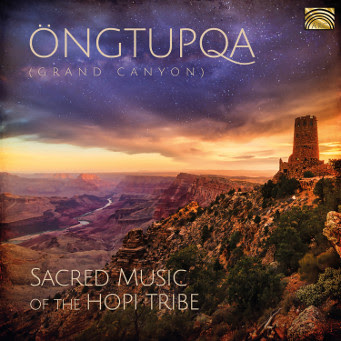
Breathing (literally) life back into the ancestral evocative paeans and spiritual communions of the Hopi people, the trio of radio show host ethnomusicologist Matthew Nelson, Hopi musician Clark Tenakhongva and world-renowned flutist Gary Stroutsos come together on sacred ground to invoke a magical homage.
First a little background. The Hopi, unlike many of their fellow communities of Native Indian tribes in the Americas, lived in more permanent villages, across swathes of South East Utah, North East Arizona, North West Mexico and South West Colorado. These dwellings, some very complex in their construction, gave birth to the Colonist appellation, the Pueblo People, but also because they were considered a more civilized, polite community; their concept of life based on a reverence for all things.
At the heart of this stirring earthy but often-transcendent project is the atavistic instrument that set it all in motion: the 1500-year-old Hopi long clay flute. Unearthed in the last century by the archeologist Earl Halstead Morris, who was leading a Carnegie Institute Expedition to the Prayer Rock district in North East Arizona in the 1930s, these hollow, reedless flutes were part of a thousand artifact haul of discoveries. Relatively remaining a mystery for decades to come, it wasn’t until further research in the 1960s that these flutes from the now renamed “Broken Flute Cave” could be confidently dated to around 620- 670 AD. What remains remarkable is that this sacred instrument was thought lost by the Hopi descendants themselves; disappearing hundred of years ago, until flute specialist Stroutsos with project instigator Nelson played a replica version in front of Hopi custodian Tenakhongva, who promptly invited him to play it in front of his entire family and then, at a later date, at a venerated spot near where the original clay flutes were found.
Part of the wider Canyon Music Festival in 2017, at the Mary Colter built Desert View Watchtower, the trio’s performance, with Nelson keeping rhythm on clay pot drums (keeping it all historically accurate, stretched-skin drums being out of time and step with the 7th century flutes), Strouthos improvising on flute and Tenakhongva singing whilst handling the percussive rasps, rattles and gourd, was filmed and recorded. An “approximation” of how the Hopi’s holy music would have sounded almost 1500 years ago, the Öngtupqa (the name given by the Hopi people to the canyon in which our trio played) nine-track suite remains untouched, unmodified or edited two years on.
Setting the atmosphere of both earthy soul connectedness and flighty astral mystery, the obviously talented and well-honed players perfectly capture the dream-like ritual and awe-inspiring panorama that surrounds them. If you were expecting the synonymous rain dance and powwow holler chants of much Native Indian music, think on. Öngtupqa is more entrancing, ambient in places, with the vocals, or chanting, graceful and often melodious but deep. Lifting out of the canyon to dizzying cloud-ruminating heights, you’ll still constantly reminded of the vast American outdoors and desert landscape: A rattlesnake shakes his distracting tail here, a panpipe flight of a condor or thunderbird over there on the mountainside.
An intimate tribute to the Hopi cycle of life (as Tenakhongva explains it, “…we were born within the Grand Canyon and when we are done, we return back to this place to rejuvenate life of a new beginning…”), the stories and music of that scared site are offered and opened-up to a global audience; a message of the communal, of preservation, being at the very heart of this vivid undertaking. The ancestors will be proud, as the two millennia old blessings and spiritualism of the Hopi is brought back to life.
House Of Tapes ‘Embers Dreams’
(Pure Spark Records) 7th August 2019
The Japanese electronic music wiz kid Ippu Mitsui has graced these roundups on a number of occasions over the years, and featured on numerous Monolith Cocktail playlists. Releasing a varied kaleidoscope of futuristic Tokyo electro-glides-in-blue and kinetic techno on a spread of labels, Mitsui originally came to my attention through his releases for the Edinburgh-based Bearsuit Records. Still recording ad hoc, Mitsui has now just launched his very own imprint, Pure Spark Records. Another one of Bearsuit’s extensive roster of mavericks, the inaugural release on that venture is from the experimental composer Yuuya Kuno, who under a variety of alter egos has prolifically knocked out a mix of the weird and sublime electronica.
Back recording under the House Of Tapes moniker in this instance (known as Swamp Sounds when passing sonic oddities through Bearsuit), Kuno’s two-track showcase, Embers Dreams, is a lucid, air-y and sophisticated affair. The “Embers” of that title is an inviting exotic amble through a moist-vegetated oasis of itchy, scratchy, woody and echo-y deep electro percussion, whilst the accompanying ‘Melted Ice’ offers a glass-y trance-y, robotics-in-motion slice of downtempo chiming soundtrack. A great subtle and deep piece of electronic manna and flow with which to launch Mitsui’s brand new label, House Of Tapes kickstarter is a serious piece of classy techno: an augur, a good omen I hope of what’s to come.
Philipp Gropper’s Philm ‘Consequences’
(Why Play Jazz)
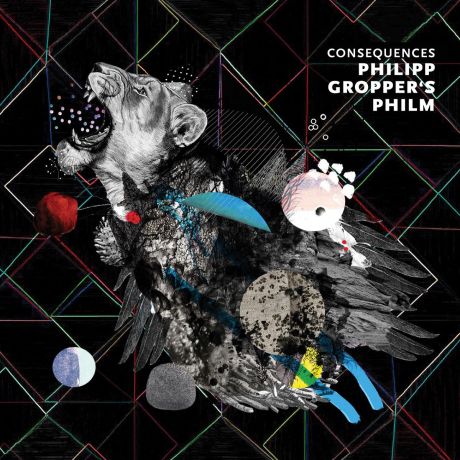
A balletic jazz freefall in motion, the latest tumultuous suite from the acclaimed “David Bowie of jazz”, tenor saxophonist/composer/bandleader Philipp Gropper (and his Philm troupe), is a highly experimental reification of contortions and sporadic, spasmodic chaos: albeit a controlled, kept-in-check, vision of an avant-garde one.
The multifaceted title of this orderly breakdown in heightened tensions and liberating angst can be read in many ways: The “consequences”, for example, of our political divisive times can be heard and read loudly crashing throughout this six track album of disjointed intensity; the fallout from all sides of the societal divide causing enough anxiety, suffering and despondency to fuel Gropper for the next decade or more. In fact the whole course of “neo-liberalism” itself is on trail (or at least its knock-on effects of intervention), however abstract that might be.
Space expletory wondrous track titles aside, the filthy lucre spiral of dependency and spluttering wild ’32 Cents’, and funneling discordant interchange ‘Thinking From The Future (Are You Privilaged?)’ are both the most obvious proponents of that socially “woke” commentary – though whose privilege needs to be checked exactly in this exchange is open to debate.
The concerns of “interpersonal” and “interrelationships” within this charged political landscape are also a major focus for the Berlin-based jazz man; adding to a uncertain free flow of both centrifugal spinning discourse and more haunted, sometimes diaphanous, twinkling.
Escaping the atmosphere, orbiting the cosmology of deep space, Gropper’s most serene dance of glistened, starry majesty and mystery is the astral soundtrack to ‘Saturn’. Both the enormity and expansive uncertainty of this planetary titan is expressed evocatively enough by Gropper’s otherworldly Theremin aria like reedy breaths on the tenor sax, as his companions bounce and skip around the planet’s rings. Saturn holds a strong fascination for all of us, but it can’t have escaped Gropper’s notice that jazz music’s most celestial star, and progenitor of Afrofuturism, Sun Ra, claimed to have ascended to Earth from his Saturn home.
The musicianship is, as you expect, first rate, with Gropper’s sax totally untethered, squawking, fluting, brilling and even trembling, whilst his band of Elias Stemeseder (on piano and synth), Robert Landfermann (on double-bass) and Oliver Steidle (on drums) react decisively with limbering, elasticated reflexes. Together hey create an iridescent breakdown and reconstruction of digital calculus, science-fiction and the cerebral; merging contemporary European jazz with elements of Coltrane, Coleman, Billy Cobham, Stockhausen, The Soft Machine and the electronic and hip-hop genres. Futurism and avant-garde classicism collide in an oscillating and tumbling fusion of complex ideas: Consequences is a musical language on the verge of collapse. How it all stays together is anyone’s guess. This is a most impressive adventure in jazz.
Our Daily Bread 343: THe Swan/Koistinen EP
August 6, 2019
EP REVIEW
Words: Andrew C. Kidd
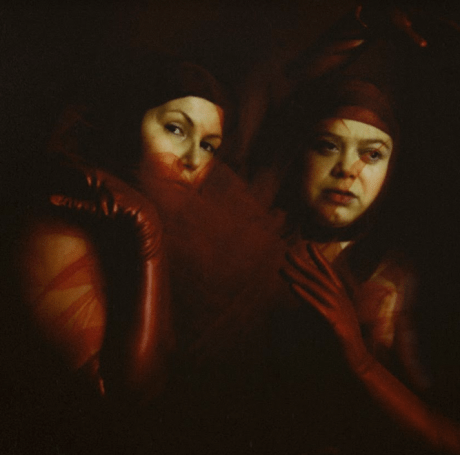
Swan/Koistinen ‘Swan/Koistinen’ EP
(Soliti Music) 3rd Match 2019
Astrid Swan and Stina Koistinen star in this free-spoken and weighty musical narrative, which they describe as an “art pop symphony for two voices”. Their collaborative work takes the listener into a world of hospitals, cancer treatments and the gritty realism of living with a life-limiting illness. An in-depth feature in Flow Mag describes the incurable cancers that Stina Koistinen and Astrid Swan both have and the process that led to the recording of this extended play: “cancer brought us together”, the duo put plainly1.
The EP is composed of four tracks of pianos, guitars and subtle electronics that lie beneath crisp, harmonised and electronically edited vocals. Samples even include the mechanical sounds of a magnetic resonance imaging scanner, adding further depth. The string arrangements come courtesy of Canadian violinist Owen Pallett who has previously written compositions for the likes of The Arcade Fire, Frank Ocean and Charlotte Gainsbourg. The accompanying visuals have been filmed in collaboration with Tekla Vály.
The EP opens with ‘Diagnosis’, a track that builds upon a throbbing, modulated synth and crunching beat. The vocals are unabashedly raw: “gimme just one more day”, is the appeal. The visuals on ‘Diagnosis’ are abstract and immersive. A brief glimpse of a snail quickly leads to images of hands coursing over an uneven wall. The stone masonry becomes increasingly complex as footage of lattice brickwork eventually pans across to a bust of a stony head; perhaps these symbols represent cancer growth? Or even maturation of their thought processes as they reach a point of realisation? The hands continue to course over a person lying prostrate before touching toys and eventually broken musical instruments. As the synths and strings filter away, we are left in a grassy field with blood-red flower heads and a lone woman in a dress, making circles with her hands; the latter images are much closer-to-home and sum up the all-consuming and life-altering nature of their respective diagnoses.
‘Hospital’ follows. The reddened filter of a naked person web-laced and alarm-like, key-changing synths and stabs of the strings imbue conflict. The piece builds up to a frenzy before the reverberated vocals expand and filter out in harmony; a metaphor for feelings of anxiety gently soothed by the calming hand of youthful optimism.
“It’s not me”, is the opening line sung on the emotive ‘Symptoms’. The sparse string arrangements, high-pitched arpeggio of the piano and grainy images of a silhouetted-figure dancing in the background allude to a sense of oblivity. The fragile vocals touch upon the temporal: days add up to months, which in turn become years. “I’m no longer invincible”, the duo sing. The contrasting Martelé and tremolo of the strings further these ideas of uncertainty and, ultimately, loss.
The duo concludes with the determined ‘Singing’. It starts as a quasi-reprise of the previous piece. “I’m still here”, is sung over piano and a string section which continually climb the scales, lifting the sounds to lofty and triumphant heights. The colours in Vály’s accompanying visuals are now warmer, more sanguine. Up until this point the EP has been stylistically very free form, suspended somewhere in the murky ambience of the trip hop, chamber pop and electronica sub-genres. The slow shuffle rhythm played out on the drums provides a momentary point of temporal reference for the listener. The EP concludes here.
The external manifestations of cancer are somewhat brash and often visible: a lump, a blemish, and hair loss. The internal impact is much harder to comprehend. People may experience loss or complete devastation. They may even meet it with indifference or a joyless hyperactivity. Regardless, a cancer diagnosis will most certainly be the start of a long and oft-times silent journey spent in the twilight. This is the impression that I got when listening to the Swan/Koistinen EP. They share the trauma and struggle and incertitude of the seemingly irrational paths that they have encountered. As the listener, one could easily become lost in the turmoil and ceaselessness of the situation. Yet, it is through the strength of the duo that the listener is led forward to a place of light and life. It is exactly here, in the broad, blinding daylight of this metaphysical clearing, where Swan and Koistinen connect so strongly and where their voices can be heard the loudest.
1Ylitalo M. Time Heals Not. Flow Magazine, 2019. p21 & 22. Available from: https://www.flowfestival.com/current/uploads/2019/05/FlowMag19_web.pdf
Monolith Cocktail Social Playlist: #XXXVIII: BDP, Bob Dylan, Ornette Coleman, Laurence Vanay…
August 2, 2019
PLAYLIST
Dominic Valvona
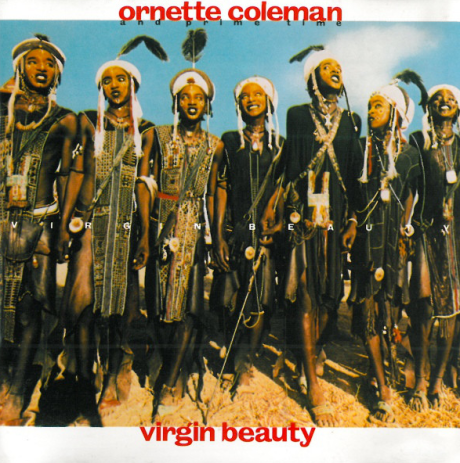
Cool shit that the Monolith Cocktail founder and instigator Dominic Valvona has pulled together, the Social playlist is a themeless selection of eclectic tracks from across the globe and ages. Representing not only his tastes but the blogs, these regular playlists can be viewed as an imaginary radio show, a taste of Dominic’s DJ sets over 25 plus years. Placed in a way as to ape a listening journey, though feel free to listen to it as you wish, each playlist bridges a myriad of musical treasures to enjoy and also explore – and of course, to dance away the hours to.
Volume XXXVIII includes tracks from two albums enjoying anniversaries this year; The Monkees 1969 cult trip, Head, and Boogie Down Productions marker, Ghetto Music: The Blueprint Of Hip Hop. There’s also a nod to the recent airing (via Netflix) of Bob Dylan‘s Rolling Thunder Revue with the inclusion of a mean version of the ‘Isis’ saga. Elsewhere there’s peregrinations, ruminations, sauntered rhythms, acid rock, garage land bluster and firey revelations from bands as diverse as Agitation Free and The Zipps.
Tracks:
Pazop ‘Swaying Fire’
Agitation Free ‘You Play For Us Today’
Abstract Truth ‘In A Space’
Ornette Coleman ‘Desert Players’
SwamiMillion & Fawda Trio ‘Baccio’
Bob Dylan ‘Isis (Live At Montreal Forum)’
David Blue ‘True To You’
Fresh Maggots ‘Dole Song’
Nancy Priddy ‘Mystic Lady’
Fifty Foot Hose ‘The Things That Concern You’
Beggar’s Opera ‘Memory’
Bonnie Dobson ‘Good Morning Rain’
The Monkees ‘As We Go ALong’
Laurence Vanay ‘Juste Te Revoir’
Ivor Cutler ‘The Man With The Trembly Nose’
The Monkees ‘Superstitious’
The Adult Net ‘Take Me’
Ballroom ‘Silent Singers’
The Long Blondes ‘Big Infatuation’
John Martyn & Beverley Martyn ‘Sorry To Be So Long’
The Zipps ‘Kicks And Chicks’
“Blue” Gene Tyranny ‘Leading A Double Life’
John Phillips ‘Wilderness Of Love’
The Black Neon ‘TX81Z’
Boogie Down Productions ‘You Must Learn (Live From Caucus Mountain Remix)’
Three Times Dope ‘Believe Dat’
Stezo ‘It’s My Turn’
Sol Monk (ft. Shuzin) ‘The Navigator’
Felt ‘Look At The Sun’
Yes ‘Sweet Dreams’
Our Daily Bread 342: Frog ‘Count Bateman’
July 31, 2019
ALBUM REVIEW
Words: Gianluigi Marsibilio

Frog ‘Count Bateman’
(Audio Antihero/Tape Wormies) 16th August 2019
Frog are a kiosk by the sea, on a suburban beach.
The essence of their work is gathered in a search for intimacy that is expressed in DIY and lo-fi passages; a very successful sound universe touched by Bon Iver, Daniel Johnston and other such sacred monsters.
Their flame is lit on Count Bateman. The new album in fact captures the peak of a clear path and placed lo-fi sound. The interweaving of stories on this record are a safe place that puts us at peace and in dialogue with the idea of Frog’s music.
The ability of the work is to go down, and at the same time transcend, in a strongly psychological dimension, but there is no Freud or Jung, but simply a dose of sharpness and freshness that make us feel good, almost inexplicably.
The guitar landscape of songs like ‘It’s Something I Do’ or ‘Black Friday’ is uncontaminated, a walk with Christopher McCandless. The sound is light; it’s a wave of fresh water, an immersion in a style very close to that of Daniel Johnston.
In Frog there is the rediscovery of a low profile attitude, which must be understood and studied in the light of a historical moment in which the ability to remain in the dark, with the light off, has been lost, even in more indie environments.
Frog are like Matisse, painters of windows and fixtures that open in an expanse of neighborhoods, cities and stories. Count Bateman is an open window from which air enters and often there is also a hurricane breeze; in fact the second part of the record is full of unusual sounds and more driven, electronically, for the duo.
Preview: Ayfer Simms ‘A Rumor In Üsküdar’: Part Four
July 29, 2019
NOVEL PREVIEW
Words: Ayfer Simms
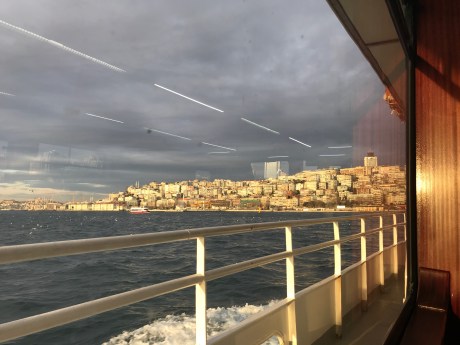
Until recently a regular contributor to the Monolith Cocktail, Ayfer Simms has taken time away from the blog to concentrate on finishing her debut novel, A Rumor In Üsküdar. Living with her husband and daughter in the same region of that title, in the sprawling metropolis that is Istanbul, Ayfer moved back into the family home after her father was unfortunately taken ill: later passing away. Within a wider context of political hostility in Turkey (bordering on the dystopian), the process of grieving is explored both evocatively and metaphysically by Ayfer in what is a semi-biographical, semi-alternative futuristic geopolitical purview of her home country and home city.
We’ve so far been proud to feature three extracts from A Rumor In Üsküdar. Part four in this series of previews from the book is both a real and metaphorical archeologist dig into the problems facing modern Turkey. A psychogeography you could say; one that merges veiled fantasy versions of a political cast and events.
Part Four:
Mrs. Muazzez must now be at least 100 years old or perhaps older. Specialized in Sumerian culture, she has a vast knowledge in all archeological matters. In 2006, at the age of 92, she was accused of hating the state: for having published a book on the wearing of the veil. She claimed that the custom came from the Sumerians, priestesses initiating young people to sexual practices.
Veysel pulled his hair no doubt and put the veil back in its place. He is not crazy, however, and did not incarcerate the centenary. Mrs. Muazzez lives on the European side in an old house that looks like a museum. She has an unprecedented passion for Veysel’s dead rival, Mustapha. At her age, she saw the former statesman shake the country and give a bit of a voice to women (mostly privileged ones).
370 days after the beginning of the excavations under the Bosphorus, the digging got interrupted by the discovery of Byzantine vessels, silver coins, cooking utensils and other trinkets. Skeletons have also resurfaced that day. What we did with them I do not know. I did not see them at the Istanbul Archeology Museum, at least not yet. Time erases the status of humanity, everyone knows it. The Üsküdar wharf was then disemboweled in a hurry, in a rush, because there was a lot of money to lose. The Japanese were politely impatient: they wanted to finish there anti seismic tunnel and leave at once.
I was not yet in Istanbul during these works, but I arrived just in time to see the opening of the new Marmaray line. The train station was planted in the middle of the ruins; the rest was covered with earth, after taking pictures that were hung on the walls leading to the turnstiles. The archaeologists spread coffee all over their shirt to save everything, but they were hungry and witnessed the swallowing of the site with cold sweats.
Since the opening of the line that joins Asia to Europe under the sea, several years have passed while work continues everywhere. Large shopping centers, widening of the wharf and other projects make the wound still fresh.
I see from time to time the black casings rising from the cement, the glowing stones – are they old? I try to guess what is hidden in the old earth, hoping also to discover the Byzantines or the traces of the life of those who walked on this patch before us. It’s a stealthy look that I throw nevertheless. I check over my shoulder that the mud spits out its piece.
An object has however made its appearance during the excavations and the rumors reach us only now. Turkish archaeologists – those who are not in cahoots with the government in power, or who are unaware of the impact of their discovery, or who are conscious of having to protect it at all costs – are scientifically eager to let the international scene know: on they pass it to a French specialist team. The results of which, we have only echoes despite discretion, suggest that this is something likely to displease the President of the Republic Veysel. The latter also ordered to stop the excavations, the object in question would have been confiscated upon the return of archaeologists and they were obliged to “resign”. It is impossible for us to know if this news is true or if it is the propaganda tool of the opponents of Veysel or is invented by its own entourage to make a diversion on other fundamental subjects. As nonsense is commonplace, we believe everything and we believe nothing.
The president is not afraid of anything. But, it is said, bad tongues – that he is afraid of his wife. She let him put his head on her knees, and ask her to recite prayers to appease his troubles and ill moods.
She whispers to him “God is great and he is behind you”.
It is said that he has seizures of depression. That he happens to be confused. That he sometimes does not believe in God.
That he has shoeboxes full of money.
That he has nightmares. That one hears him exclaim in the morning: “I killed God !!”
In the opacity of the still deep night, he murmurs, “I’m the greatest”, at the same time he beats with all his might his chest like a furious gorilla. He takes an ax and strikes God in the face. No more reverence. Veysel knocks, beats the air and collapses. They say he sleeps badly. We understand why. How can you sleep well after doıng what he does? He looks terrible, yet his cancer is healed – his cancer is also hidden – but his complexion remains pale and faded. Is he cured, really? Like a superhuman defying all the viruses feared by all of us? The emotions shake him and it is visible in his features. He is agitated. But he does not die of illness like his population.
Veysel feels great but lost. He has reflexes of a believer and has shaped his image on Islam. Islam is its legitimacy. He must perhaps now go beyond religion to remain powerful.
Why say such a thing? It would cost a lot to anyone who dares saying that kind of thing: Unless it’s a rumor. The object accidentally extracted from the depths of the Bosphorus, or rather from the banks of the Bosphorus, would put an end to the monotheistic religions, they say. They would put these religions in the class of superstitions or medieval folklore. This book/object (we do not know anything more) would be like the famous comet that put an end to dinosaurs.
Veysel is naked without his religion. We imagine that it would be his end. That, however, we still have trouble believing it. The danger is that he does not give up so easily. He would continue to urge women to have four children, to avoid laughing out loud, to be modest in all sense of the term.
I look over my shoulder. Watch a smart shark spring from the waters of the Bosphorus to swallow me for thinking these things. The Bosphorus swallowed me once; I fell in it when I was 4 years old. My parents’ friend fished me out before anyone noticed I was gone. I do not remember. It left me with a fear of algae and everything that swarms in the undulating mass. The second time in 1999, the sea caused an earthquake of 8.7 on the Richter scale and claimed 17,000 lives. That summer, my apartment in Kozyatagi was scorching with heat. It was one of those summers that we could only spend dozing. I was bored. Birant had decided to leave me without telling me openly by planning a holiday to the south. I had hoped he would not leave me behind, but I read it in his eyes.
The evening of the earthquake, I drank wine, alone. When I was ready to go to bed, drunk, and feverish I was like Veysel facing a dilemma: to be independent and turn the page over Birant or continue my pathetic grip. When I decided to leave Turkey, Veysel was put in prison for 4 months for reciting a poem judged to be inciting religious hatred.
When I came back some twenty years later, as it happens it is him who boxed us all in.
 Monolith Cocktail Blog