ALBUM PURVIEW by Andrew C. Kidd
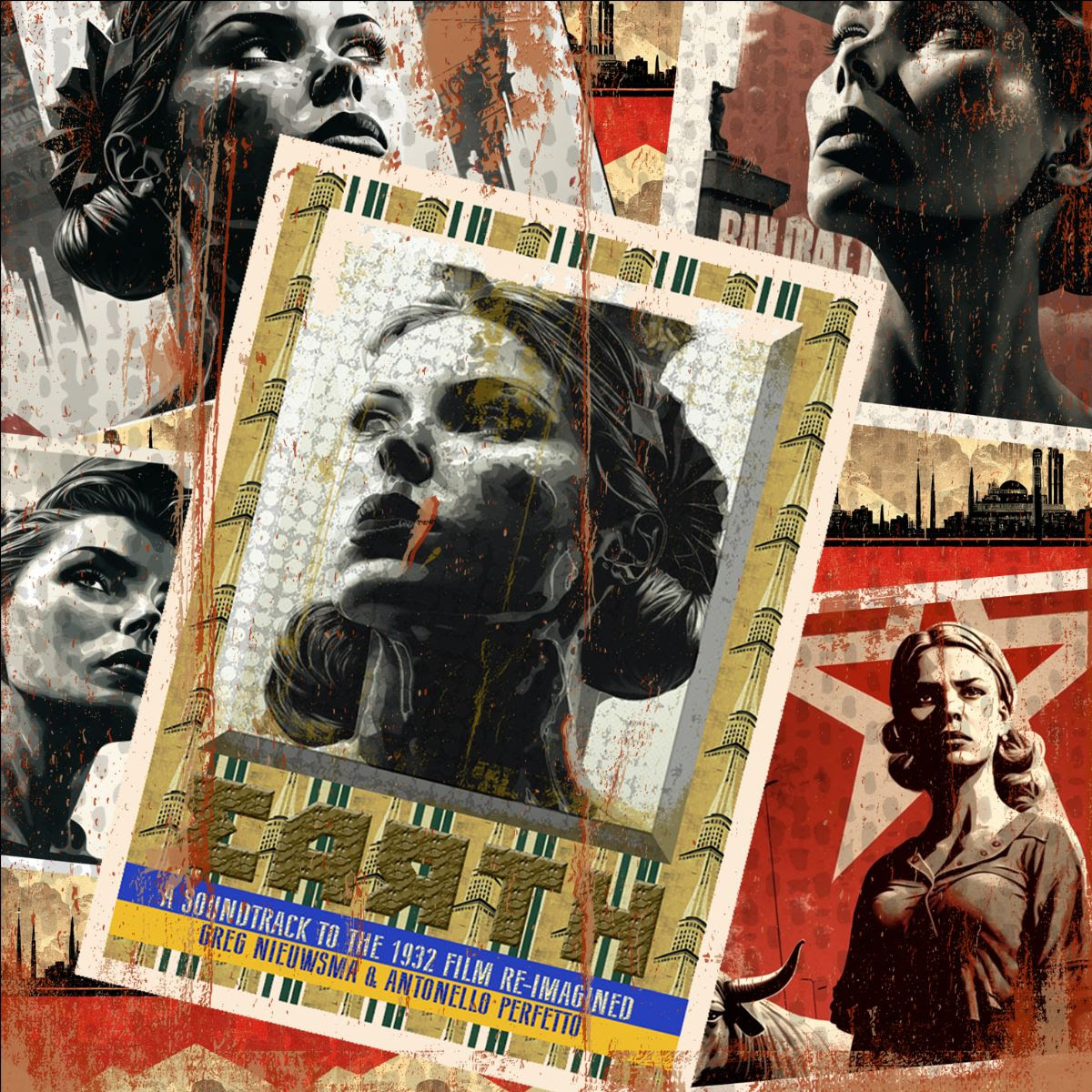
Greg Nieuwsma and Antonello Perfetto ‘Earth’
(Submarine Broadcasting Co.)
Although Oleksandr Dovzhenko’s Earth aligned with many of the Soviet ideologies of its day, the film stands irresolute in this regard. This is perhaps because it is viewed through the retrospectoscopic lens of the present-day. Even so, its poetic symbols must have seemed somewhat removed from the usual plainsong of socialist realism of its day. I detect agitation. Take the crushed chaff of the wheat that billows into the air, referencing the yellow-blue bicolour of the Ukrainian flag that was banned at the time. In the same breath, Earth promotes atheism and contains split-screen shots of humans and plant life (depicting the ‘community of life’), which are more in keeping with the Soviet aesthetic. These opposing philosophies are not co- equal; rather, Earth is predominantly realist, somewhat beset by moments of idealism. In newspeak: idrealism.
The silent film inspired Greg Nieuwsma and Antonello Perfetto to compose a novel score, which has been released on the Submarine Broadcasting Company label. Before the tribulation of synchronising the original cinematic footage on YouTube with this new score (which, coincidentally, was one of the joys of reviewing this piece), I decided to explore some of the antecedent outputs by the duo. Asylum, released by Hreám Recordings in May 2021, is absurdist, disentangling reality through its revision of everyday objects. Then there is the obfuscous Aquarium LP, another Submarine Broadcasting Company release in June 2021. The track ‘Momento’ on the Hiyachuchi LP (Submarine Broadcasting Company, April 2022) had all the xylophonic-analogue-drone futurism of a Jon Hassell release. The musique concrete of El-Dabh echoes distantly on ‘dsinθ=mλ’ on the LP Interference Patterns (released on Strategic Tape Reserve in November 2021).
I return to Earth. The Carpenter-esque ‘Opening Credits’ rattle and jangle into Chapter 1. We are standing in an open field of grass and grain and sunflowers and apples. Songbirds natter in the background. A lightly tapped acoustic drum beats down rhythmically like the hot sun. Altered strings and distorted guitars cut into the tiers of droning synths that sway like wheat crops in the wind. The strings are like that of a bandura, the lute-zither of Ukraine. It is an Eden-like opening – a Tolstoyan utopia. It is equally unnerving and fugitive. An old peasant, the grandfather of Vasyl who we will meet shortly, dies quietly in an orchard. An arabesque melody is played out on woodwind. I imagine this as a sopilka flute. It is limber, and light. This Byzantine influence features throughout the score. It is synonymous with the music of the Russian orthodoxy (I suspect antonymic on the most part here).
We inevitably meet the cold hand of conflict in Chapter 2. This is Soviet cinema after all. On screen, fists clench. Vasyl and his father argue. Their argument concerns dekulakisation, the targeting of wealthier landowners (kulak in Russian, or kurkul in Ukrainian) under Stalin’s First Five-Year Plan. The son takes a pro-stance on the assimilation of individuals’ farms into landholdings owned by the state. The father is doubting. The hammer action of piano keys pulse scornfully and guitar chords stab into an ascending scale. We meet Vasyl again in Chapter 3. He smiles youthfully. His father is ashen. A plodding off-key melody kicks in as the plot quickens. In Chapter 4 we are outside again. This time, clouds gather and wheatgrass jolts. The music is sustained. The piano from Chapter 2 is reprised – this time it plays freeform. Children observe an old man sitting reflectively by a grave. He places his ear to the ground. The children laugh and are scorned. The rhythm is kick-drum-heavy. A glockenspiel plays melodiously. The cowbells match the cows in the field. Farmers and tractors are in motion. The score quickens and loops round like the brief shot of a windmill. The tractor makes its arrival to a full audience. It overheats. Peasants piss onto the radiator tank. After it cools down, it flies. “We’ll prosper with tractors!”. The music is privately triumphant: stock brass and horns play gleefully, perhaps ironically. They dance a desultory dance. This chapter concludes with a ritardando and staccatos to a halt. Nieuwsma and Perfetto have been clever here, matching the antagonistic approach taken by Dovzhenko. Did he know that the celebrations would be short-lived? In the two years that followed the premiere of Earth, a famine caused by collectivisation would kill millions.

Earth was filmed in Poltava Oblast in Ukraine on the left bank of the Dnieper. I can visualize Tara Shevchenko’s poem Testament: “in steppeland without bound / whence one may see wide-skirted wheatland”. An arpeggiated synthesiser melody ascends and descends and churns into itself like the harvester threshing the land on Chapter 5. The modular sequence twists into complex patterns like the hands of the on-screen women who thatch-weave. Vasyl is taking a merry ride in his tractor. His father hacks at the land with his scythe. The score pulses and thrums and clangs and echoes. A baying horse welcomes a counter melody. It is here that the famous sequence starts to play out: the grain of wheat jostles and shakes fervently in its wooden containers and carriages. A psychedelic mélange of guitar notes tremolo as the wet dough peels off the churning blades – and just like that, bread is made. It conveyor-belts away on the soft bow of a stringed solo.
Chapter 6 opens circumspectly. The strings are tentative, the visuals blurry. It is dawn. A light choral section is advective: it rolls off like water vapour on a cold river. The morning mist manoeuvres in diagonal ascent: step-like, and slow. The effect here is to disarm the listener. The same effect is created on-screen as crepuscular rays rip through the sky. The piano opens up here despite this. The guitar and drum sections are undeniably krautrock as Vasyl dances a traditional dance called a hopak. The altering time signature of the score keeps apace with his heels that kick white dust of the track into the air. It is incorporeal. Again, we have poetic symbols: Vasyl’s hopak mirrors the earlier mechanisms of the modern bread-making process; the dust dug up from the land serves to foretell his murder.
Chapter 7A is mesmeric. “Vasyl is dead!”. Horror is scored into his fiancé’s face. The guitar and drums rattle into an accusatory double-snare-hit rock rhythm. “Khoma, was it you?”. A cymbal crashes. The melody flat-lines out into a whorled mass of contemplation. An off-beat rhythm drives the scene forward. It was Khoma. He will eventually go insane. The synth sparkles as the guitar picks away unconsciously. The piano keys half-glissando as the score disintegrates, almost completely, until it finds salvation in a glockenspiel. This is apparition-like as it appears and reappears. The burial will be an irreligious affair. Denuntiatio dei. Vasyl’s father opts for a new way. The score masterfully conveys this. Simple synth-fare plays a melodic canto; wordlessly, it sings peacefully – funereal even. Chapter 7B is a powerful sequence. The aforementioned music of the Byzantium Empire reappears here as women make crosses with their hands. The composers start to revisit all their previous motifs and compositional elements. I close my eyes for a moment. I imagine the reverse-tape looping as the farmers on-screen playing the otherworldly tsymbaly (a Ukrainian hammer dulcimer). I imagine the swathes of synths as long notes of a trembita (wooden horn) and gusli (a Ukrainian relative of the zither). G-modal tuning is being plucked on a kobza (lute). The dead Vasyl files past the bowing sunflowers in a cart- coffin. The scene is both warm and distant. The priest scorns the impious. Words of resistance flash on the screen: “It’s my Earth, I won’t give it up!”. Rather poignantly, the chorus line is not sung in anger. A mournful string section plays as the synths are laid bare like Vasyl’s naked fiancé. A symbolic downpour ensues to cleanse the world. It is the lifeblood of the fields and the orchards. The bright key change in the score reflects this. In its denouement, there is false peace.
I have listened to previous scores to Dovzhenko’s Earth, including Ovchinnikov’s famous 1971 version and the poly-symphonia of the live bijū recording on Komuna Warszawa. The score offered by Nieuwsma and Perfetto is as complex and intricate as the source material. Their waveforms and filters arpeggiate poetically to illuminate its idealism. They bring me closer to the chimaera of collectivisation that Dovzhenko was perhaps intending to showcase.
Our Daily Bread 570 : Khotin ‘Release Spirit’
April 18, 2023
ALBUM REVIEW/ANDREW C. KIDD
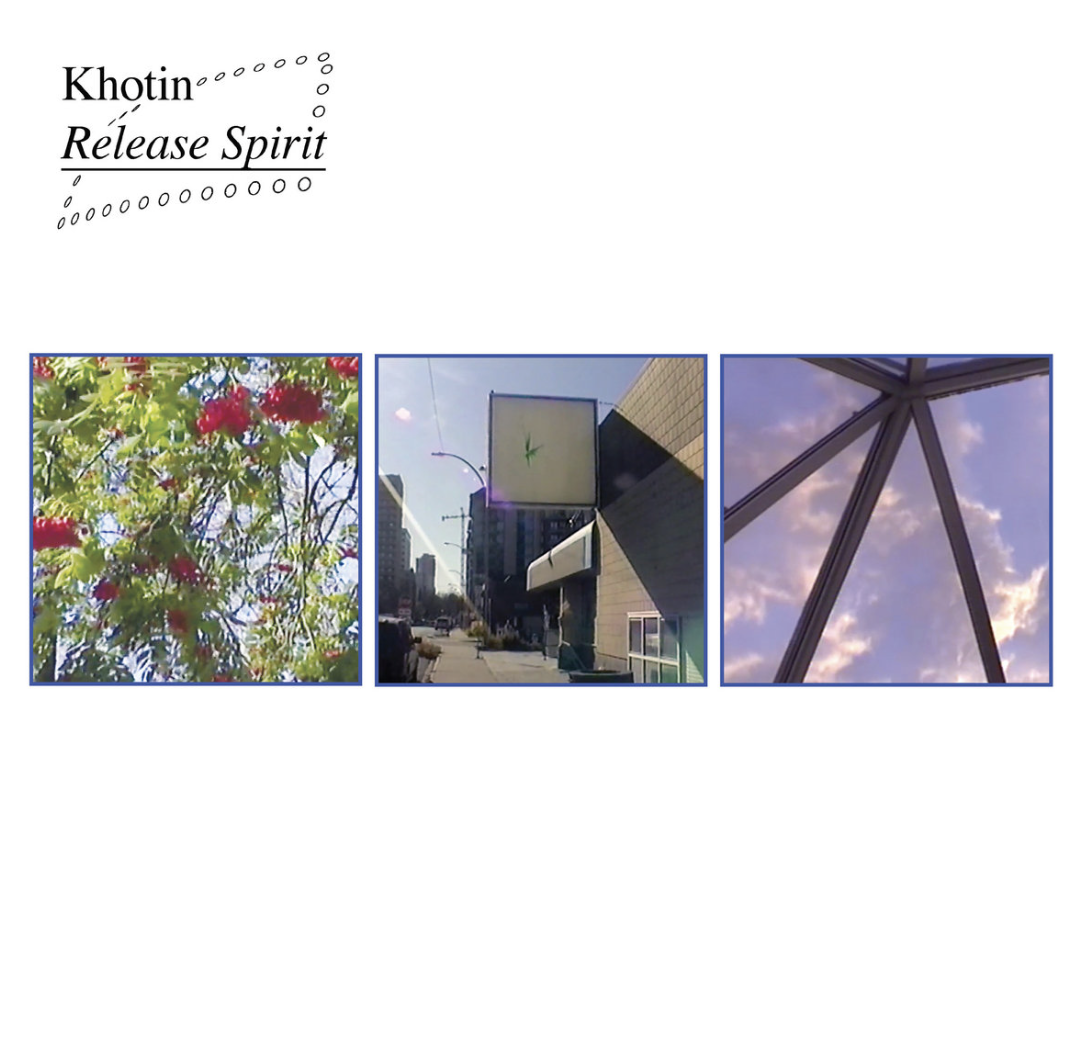
Khotin ‘Release Spirit’
(Khotin Industries)
I have been following the story of Dylan Khotin-Foote and his musical adventures for nigh on a decade. He released Hello World under his Khotin alias in 2014. New Tab followed. It was a wonderful collection of digital grooves and soundscapes that moved mellifluously through transformational field recordings and unabashed Russiky-Angliysky conservations. Beautiful You was meltingly tender and chock-full of quasi-melodies. It was also somewhat non-conformist and rhythmically periodic – tracks diverged and converged to and from the downtempo (Planet B), vaporwave (Alla’s Scans) and beatless trance musical sub-genres (Vacation). Finds You Well was low-fidelity, tape hissing gold.
It is March 2023. A month has passed since Release Spirit was released on Ghostly International. The harmonic distortion and analogue warmth of HV Road once again immerse me in a vessel of unknowable proportions. A phantasmagoria of tonal and atonal synths playfully hopscotch around on Lovely and My Same Size: synthetic bowed strings vibrato and legato on the former; the semi-automated synths twinkle in the half-light of the latter as its hook climbs up and down a laddering scale akin to the hyper-ambience of his Area 3 alias. The semitonal key drop on the crystalline keys on Unlimited ❤ underpins his predilection for modulation. Home World 303 is unmistakably litmus-red; the bass synthesiser melody ascends up a broad staircase of sound. Khotin progresses his signature melodia, plashing (not saturating) his 4-4 beat with stock cymbal crashes and hi-hat taps.
3 pz delivers the moment of tragicommedia that has become so idiosyncratic with his work. The lithe water-plopping synths and whirling synths gently cycle around the darkly comic Anglo-Russian vocal sampling. They are dichotomous like a Pinter play. Incongruity persists on the dreamworld of Computer Break (Late Mix). High-pitched synths lasso themselves around the rhythm section. It is the closest Khotin-Foote gets to the temple of house music that he once resided. This celebration of its 4-4 and hook-heavy totem is particularly evident on and the eponymous and Flight Theme tracks of Hello World and the fantastically named Data Orb / Nessie’s Revenge under his Waterpark nom de plume.
And then there is Fountain, Growth. Piano keys push through waves of bright and reverberating synths. The breathy vocals of Tess Roby billow beautifully. She sings the chorus line “let go all you know / let go” with lyrical litheness. The piano is reprised on Life Mask. Birdsong and the ambience of a cityscape echo quietly in the background. A tin can- like sound disappears chaotically into the distance. The esoteric Techno Creep emerges. Its Subotnick-esque noises and shaman-like rhythm section which make the dream scenario more complex. It is as if the conscious self (guitar tremolo, zither-like cascades) and the subconscious self (modular synth improvisation) exist contemporaneously, and openly.
Release Spirit is at times unsubstantial, chimeric – oneiric even. It is no less illusory or meltingly melodic than its precursors. Arguably the strongest piece is its finale: Sound Gathering Trip. Indistinct sounds tremble in the opening seconds. Piano notes play measuredly. It is without percussion – this is not needed as no formal time signature has been applied. Khotin builds the piece but never progresses it beyond where it has to be. It remains ambivalent throughout. Low-fidelity moments like this defined his earliest works (listen to For Trial Listening, particularly tracks #08 and #15, which he recorded under the alias Happy Trendy). Refinement in sound has meant that such instances in his work are fleeting, yet Khotin-Foote’s musical narrative started in this imperfect space of thudding keyboards, rough-cut crackles and degraded audio signal. These chapters are the ones that leave the most indelible of impressions.
A (near) 150 albums survey of the year, with choice eclectic albums chosen by the Monolith Cocktail Team.

Well was I wrong last year when I called 2021 the annus horribilis of all years. It has been soundly beaten by the shit-show that is 2022. The invasion of the Ukraine, cost of living crisis, another hideous wave of Covid – which even if the jabs are being rolled out, and the deaths rate, hospitalisations is nothing like the first wave back in 2020, is still causing major illness, absences and disruptions to a society already facing a heap of doomsday scenarios -, strikes, activism, fuel poverty, Iranian protests, and the continuing horror show of a zombie government being just some examples. Yes 2022 qualifies as one of the most incomprehensible years on record of any epoch; an ungovernable country in the grip of austerity point 2.0, and greater world untethered and at the mercy of the harridans on either side of the extreme political divide, the billionaire corporates and narcissist puritans.
And yet, it has been another great year for music. Despite the myriad of problems that face artists and bands in the industry, from a lack of general interest to the increasingly punitive costs of touring and playing live, and the ever encroaching problems of streaming against physical sales and exposure, people just can’t quit making music. And for that we, as critics – though most of us have either been musicians or still are – really appreciate what you guys do. In fact, as we have always tried to convey, we celebrate you all. And so, instead of those silly, factious and plain dumb numerical charts that our peers and rivals insist on continuing to print – how can you really suggest one album deserves their place above or below another (why does one entry get the 23rd spot and another the 22nd; unless it is a vote count) –, the Monolith Cocktail has always chosen a much more diplomatic, democratic alphabetical order – something we more or less started in the first place. We also throw every genre, nationality together in a serious of eclectic lists: no demarcation involved.
The lists include those albums we reviewed, featured on the site in some capacity, and those we just didn’t get the time to include. All entries are displayed thus: Artist in alphabetical order, then the album title, label, who chose it, a review link where applicable, and finally a link to the album itself.
Because of the sheer number of entries, we’ve split that list in to two parts: Part One (A – L) starts with Anthéne & Simon McCorry and finishes with Lyrics Born; Part Two (M-Z) begins with Machine Girl and finishes with The Zew.
This year’s picks have been chosen by (Dominic Valvona), Brian ‘Bordello’ Shea, Matt Oliver, Andrew C. Kidd and Graham Domain.
A.
Anthéne & Simon McCorry ‘Mind Of Winter’ (Hidden Vibes) Dominic Valvona
Review
Seigo Aoyama ‘Prelude For The Spring’ (Audiobulb) DV
Review
Armstrong ‘Happy Graffiti’ Brian ‘Bordello’ Shea
Review
Yara Asmar ‘Home Recordings 2018-2021’ (Hive Mind) DV
Review
Avalanche Kaito ‘S-T’ (Glitterbeat) DV
Review
Avantdale Bowling Club ‘TREES’ Andrew C. Kidd
B.
Caterina Barbieri ‘Spirit Exit’ (Warp Records) ACK
Review
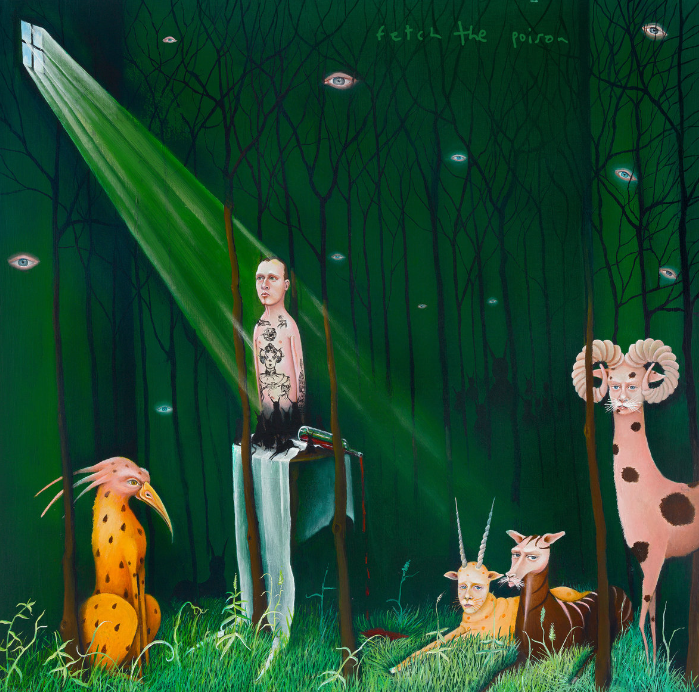
Jam Baxter ‘Fetch the Poison’ (Blah) Matt Oliver
Oliver Birch ‘Burning Daylight’ BBS
Review
Black Mesa ‘Research Facility’ (猫 シ Corp. ‘Selected Works’) ACK
Brigitte Beraha ‘Blink’ DV
Review
Brian Bordello ‘Cardboard Box Beatles’ (Metal Postcard Records) DV
Review
The Bordellos ‘Ronco Revival Sound’ (Metal Postcard Records) Graham Domain
Review
Boycalledcrow ‘Wizards Castle’ (Waxing Crescent Records) BBS
Review
Broadcast ‘The Maida Vale Sessions’ (Warp Records) GD
Apollo Brown & Philmore Greene ‘Cost of Living’ (Mello Music Group) MO
Brown Calvin ‘dimension//perspective’ (AKP Recordings) DV
Review
C.
Loyle Carner ‘Hugo’ (EMI) MO
Tom Caruana ‘Strange Planet’ (Tea Sea Records) MO
Cities Aviv ‘Man Plays The Horn’ (D.O.T.) DV
Claude ‘A Lot’s Gonna Change’ (American Dreams) DV
Review
Clouds in a Headlock ‘Breakfast in Phantasia’ (Offkiltr/Fat Beats) MO
Julian Cope ‘England Expectorates’ BBS
Link
D.
The Dark Jazz Project ‘S-T’ (Irregular Frequencies) DV
Review
Aftab Darvishi ‘A Thousand Butterflies’ ACK
Review
The Difference Machine ‘Unmasking the Spirit Fakers’ (Full Plate) MO
Review
Ferry Djimmy ‘Rhythm Revolution’ (Acid Jazz) DV
Matt Donovan ‘Habit Formation’ DV
Review
The Doomed Bird Of Providence ‘A Flight Across Arnham Land’ DV/BBS
Review
Dubbledge ‘Ten Toes Down’ (Potent Funk) MO
Review
E.
Eamon The Destroyer ‘A Small Blue Car – Re-made/Re-modelled’ (Bearsuit Records) BBS
Review
El Khat ‘Albat Alawi Op.99’ (Glitterbeat) DV
Review
Kahil El’Zabar Quartet ‘A Time For Healing’ (Spiritmuse) DV
Roger Eno ‘The Turning Year’ (Deutsche Grammophon) GD
Review
Eerie Wanda ‘Internal Radio’ (Joyful Noise Recordings) DV
Exociety ‘Deception Falls’ (Exociety) MO
F.
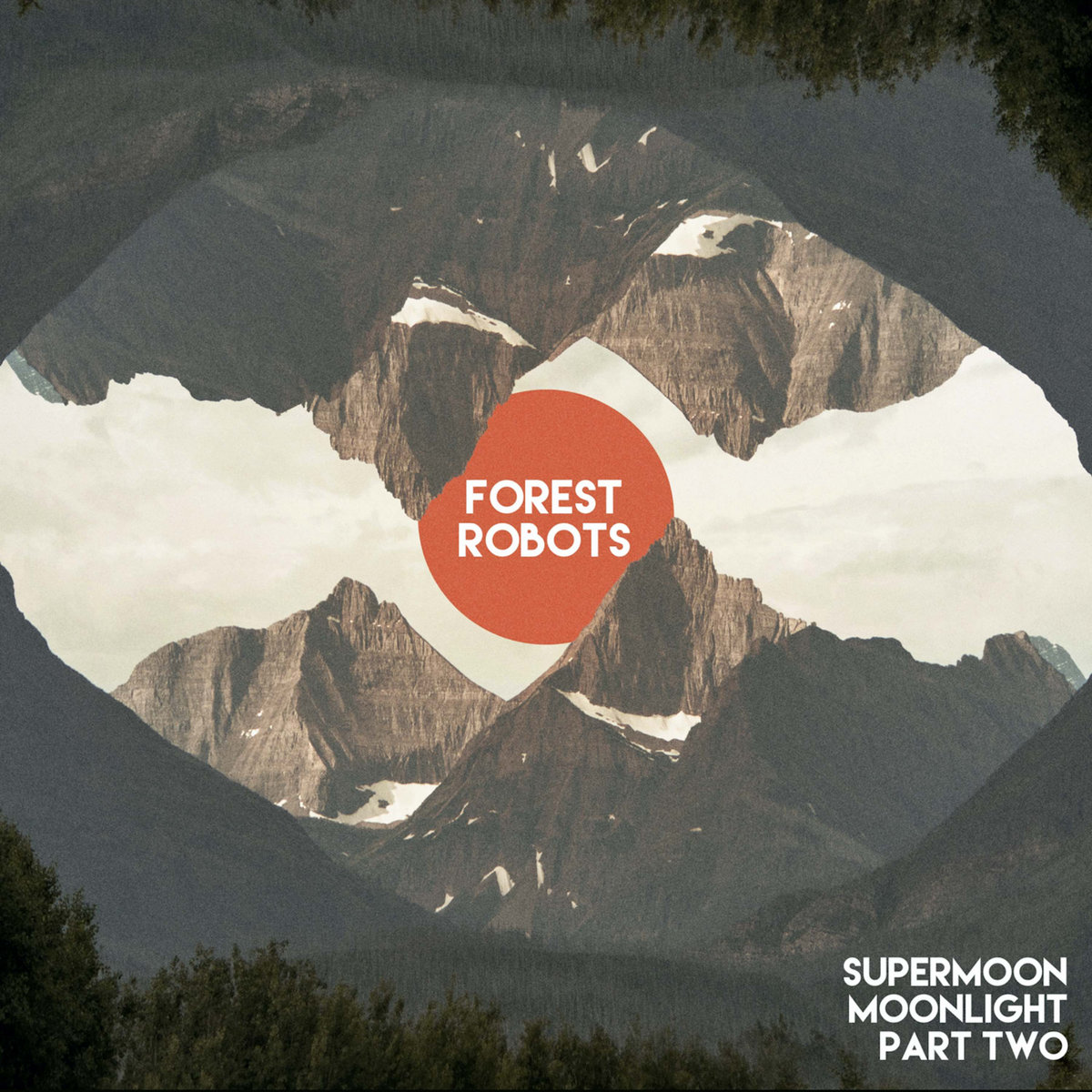
Fera ‘Corpo Senza Carne’ (Maple Death Records) DV
Catrin Finch & Seckou Keita ‘Echo’ (bendigedig) DV
Review
Flat Worms ‘Live In Los Angeles’ (Frontier Records) DV
Review
Forest Robots ‘Supermoon Moonlight Part Two’ (Subexotic) DV
Review
Nick Frater ‘Aerodrome Motel’ (Big Stir Records) BBS
Review
Future Kult ‘S-T’ (Action Wolf/AWAL) DV
Review
G.
Mike Gale ‘Mañana Man’ DV
Premiere
Dana Gavanski ‘When it Comes’ (Full Time Hobby / Flemish Eye) GD
Review
Gold Panda ‘The Work’ (City Slang) ACK
The Good Ones ‘Rwanda…You See Ghosts I See Sky’ (Six Degrees) DV
Review
Goon ‘Hour of Green Evening’ (Demode Recordings) Graham Domain
Review
Guillotine Crowns ‘Hills to Die On’ (Uncommon Records) MO
Review
Gwenno ‘Tresor’ (Heavenly Recordings) GD
H.
Aldous Harding ‘Warm Chris’ (4AD) GD
Healing Force Project ‘Drifted Entities Vol. 1’ (Beat Machine Records) DV
Review
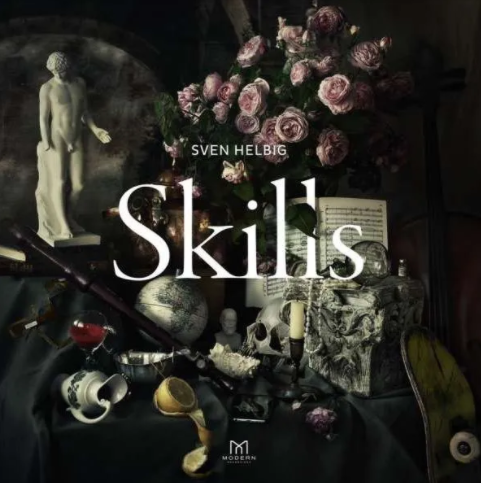
Sven Helbig ‘Skills’ (Modern Recordings) DV
Review
Bruno Hibombo ‘Parting Words’ DV
Houseplants ‘II’ (Win Big Records) DV
Review
John Howard ‘From The Far Side Of A Miss’ (Kool Kat) DV
Review
I.
IBERI ‘Supra’ (Naxos World Music) DV
J.
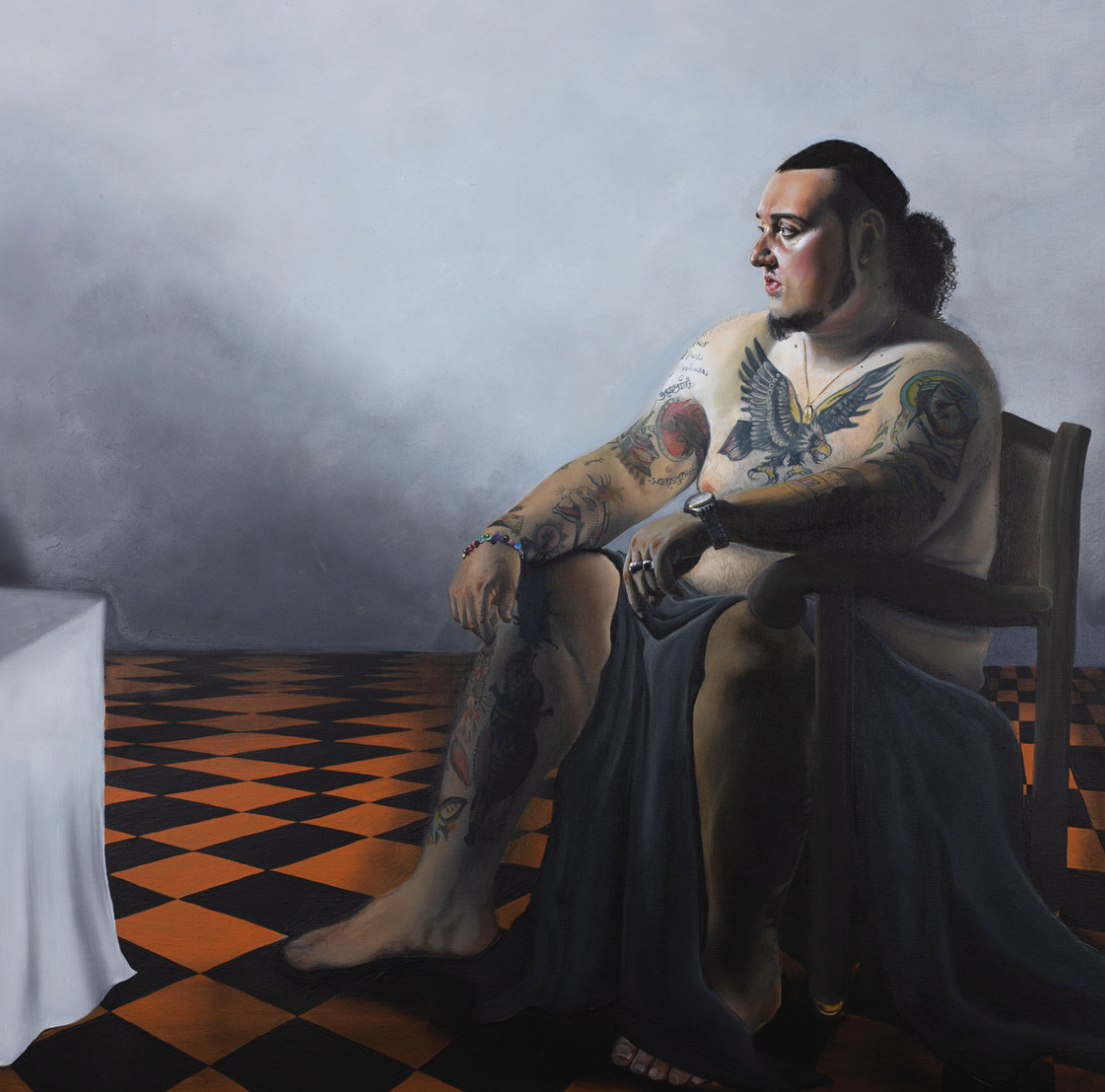
Juga-Naut ‘Time & Place’ (Juga-Naut) MO
JPEGMAFIA ‘OFFLINE!’ ACK
K.
Kamikaze Palm Tree ‘Mint Chip’ (Drag City) BBS
Review
Kick ‘Light Figures’ (Anomic Records/Dischi Sottoernnei/Sour Grapes) DV
Review
King Kashmere ‘Woof’ (High Focus) MO
Evan Kertman ‘Rancho Shalom’ (Perpetual Doom) BBS
Review
KMRU ‘Temporary Stored’ ACK
L.
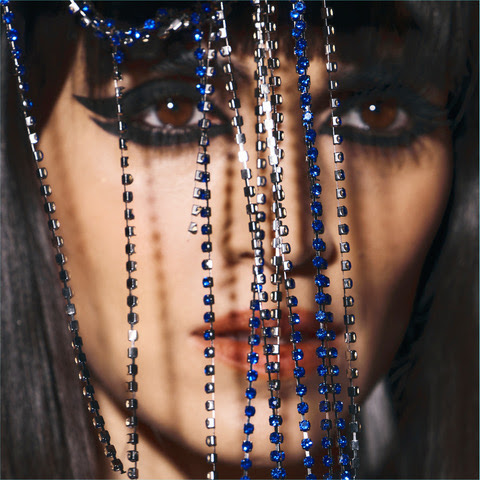
Labelle ‘Éclat’ (Infiné) DV
Review
The Legless Crabs ‘Always Your Boy’ (Metal Postcard Records) BBS
Review
The Legless Trials ‘Cheese Sandwich’ (Metal Postcard Records) BBS
Kristine Leschper ‘The Opening Or Closing Of A Door’ (Anti-) DV
Review
Liraz ‘Roya’ (Glitterbeat) DV
Review
Francesco Lurgo ‘Sleep Together Folded Like Origami’ (Bosco Records) DV
Review
Lyrics Born ‘Mobile Homies’ (Mobile Home Recordings) MO
Review
Keep an eye out later this week for Part Two.
Hi, my name is Dominic Valvona and I’m the Founder of the music/culture blog monolithcocktail.com For the last ten years I’ve featured and supported music, musicians and labels we love across genres from around the world that we think you’ll want to know about. No content on the site is paid for or sponsored and we only feature artists we have genuine respect for /love. If you enjoy our reviews (and we often write long, thoughtful ones), found a new artist you admire or if we have featured you or artists you represent and would like to buy us a coffee at https://ko-fi.com/monolithcocktail to say cheers for spreading the word, then that would be much appreciated.
Monthly Playlist Revue: October ’22: Muramuke, Marlowe, Voice Actor, Lira, Underground Canopy, Keep Shelly In Athens…
October 31, 2022
PLAYLIST SPECIAL
TEAM EFOORT/COMPILED BY DOMINIC VALVONA

Each month the Monolith Cocktail pool of collaborators search long and hard for the choicest of choice tracks; mixing genres and geography into an encapsulation of the last month on the blog.
That team includes me (Dominic Valvona), Matt ‘rap control’ Oliver, Brian ‘Bordello’ Shea, Andrew C. Kidd and Graham Domain.
You may have noticed since the summer that we’ve started compiling a Youtube playlist version, which includes extra bonuses from the No Base Trio and a seasonal treat from Escupemetralla plus some alternative tunes from the same artists on the Spotify list.
So without further ado, here is the October Revue:
And the Youtube version:
Full Track List:-
Montparnasse Musique Ft. Muambuyi and Mopero Mupemba ‘Panter’
Muramuke ‘Just One More’
Balaklava Blues ‘BEAT UP’
Marlowe/L’Orange/Solemn Brigham Ft. Deniro Farrar ‘Godfist’
Rockness Monsta/Method Man/Ron Browz ‘Beastie Boyz’
BeTheGun ‘Metropolis’
Lee Tracy/Isaac Manning ‘Love Is Everything’
Lee Scott Ft. Sly Moon ‘THE MORE I THINK ABOUT IT, THE LESS I CARE’
Voice Actor ‘Battling Dust’
Juga-Naut ‘To The Table’
Ernesto Djédjé ‘Nini’
Liraz ‘Mimiram’
Mehmet Aslan/Niño de Elche ‘Tangerine’
Underground Canopy ‘Space Gems’
Valentina Magaletti ‘Low Delights’
Carl Stone ‘Sasagin’
Tau & The Drones Of Praise ‘Bandia’
Keep Shelly In London Ft. Sugar For The Pill ‘Don’t Want Your Romance’
Librarians With Hickeys ‘I Better Get Home’
Una Rose ‘Partly’
Carla dal Formo ‘Side By Side’
Derrero ‘Long Are The Days’
Super Hit ‘Donde’
Rahill ‘Haenim’
David Westlake ‘English Parish Churches’
Cormac o Caoimh ‘Didn’t We’
VRï ‘Aberhonddu’
Tuomo & Markus ‘Highest Mountain’
Pitou ‘Dancer’ Dana Gavanski ‘Strangers’
The Zew ‘Come On Down’
Brona McVittie ‘Living Without You’
Brian Eno ‘These Small Noises’
Edouard Ferlet ‘REFLEX’
Rich Aucoin ‘Esc’
Puppies In The Sun ‘Light Became Light’
Short Fuze Ft. Dr. Khil ‘Love Letters To The Lost’
Loyle Camer ‘Speed Of Flight’
Ill Move Sporadic/Tenchoo ‘Amulet Chamber’
Atmosphere ‘Sculpting With Fire’
Ghoster ‘CRAME 4’
Clark ‘Frau Wav (Brief Fling)’
Verbz/Mr Slipz ‘Music Banging Like’
Jester Jacobs/Jack Danz ‘Opportune’
Darko The Super/Yuri Beats ‘Don’t Stay’
Open Mike Eagle ‘I’ll Fight You’ A.G. ‘The Sphinx’
El Gant Ft. DJ Premier ‘Leave It Alone’
Heavy Links/Luca Brazi ‘Complicated Theory’
Fliptrix, King Kashmere/Pitch 92 ‘Primordial Soup’
Shirt/Jack Splash ‘Death To Wall Art’
Smellington Piff/Ill Informed ‘Hard Times’
Hi, my name is Dominic Valvona and I’m the Founder of the music/culture blog monolithcocktail.com For the last ten years I’ve featured and supported music, musicians and labels we love across genres from around the world that we think you’ll want to know about. No content on the site is paid for or sponsored and we only feature artists we have genuine respect for /love. If you enjoy our reviews (and we often write long, thoughtful ones), found a new artist you admire or if we have featured you or artists you represent and would like to buy us a coffee at https://ko-fi.com/monolithcocktail to say cheers for spreading the word, then that would be much appreciated.
Our Daily Bread 545: Clark ‘Body Riddle & 05-10’
October 12, 2022
ALBUM REVIEW
ANDREW C. KIDD

ÉLIANE RADIGUE ‘Occam XXV’
(Organ Reframed, 2022)
I am writing this review in 2022. But to give it its full consideration, I have to transport myself back to October 2006 when I was relatively new to Warp’s output. I spent much of my spare cash on the label’s releases in the local music shop, and by the autumn of that year, my CD collection included the likes of Geogaddi by Boards of Canada (2002), Arrhythmia by Antipop Consortium (2002), One Word Extinguisher by Prefuse 73 (2003) and Untilted by Autechre (2005). I owned no Clark records at that time. Body Riddle was my first. I found the CD wedged somewhere between Basement Jaxx and Deep Dish in a dusty shelf of said local music shop.
Back to 2022. Body Riddle has been remastered and released alongside a LP titled 05-10, a collection of previously unreleased recordings. For the purposes of this review, I will critique Body Riddle as a record in its own right with no references to Clark’s other portfolio pieces. I have left any comparisons to his preceding and proceeding works in my write-up of 05-10.
*
Body Riddle sounds as chaotic now as it did back when it was first released. From the opening, hung-drawn-and-quartered live drumming of Herr Barr, to the steely bells and light analogue melodies that ascend to the heady-high treble of altered synths, its opening track spans all the frequency ranges. Shining out of this rhythmic roughhouse are glints of fragility on Frau Wav. The immersive string section is drawn and meditative. Bridging outros were in mode back in its day; less so nowadays. Brother Boards had already lain the concrete slabs within which skits and short between-pieces had become cemented in the electronica of the day. Springtime Epigram and the already-struck cymbals and strange analogue moments on Dew on the Mouth are examples of these on Body Riddle. What Clark masterfully constructed though were doorways and dark hatches of half-melodies and tones chipped into these slabs that would become part of later pieces. Clark reaches his live drumming zenith on Roulette Thrift Run. The snare rolls, playful claps and off-beat vocal cuts showcase his command of knotty rhythms. Clark’s track placement is also noteworthy. The progression from Herzog to Ted remains one of the best track transitions in electronic music. On Herzog there are counter melodies within melodies and clock hands that keep time and strangely held wind-whorling notes that appear and disappear. The synths crunch and grain and spit and shout and yell and yell louder. The chain-rattling outro that precedes Ted is a master stroke. Ted is a piece of brutalistic beauty that builds upon itself to eventually tower like a giant musical steel structure. Metallic sounds bounce around, sparking off molten beats and alloyed rhythms.
The syncopated rhythms of Vengeance Drools is Four-Tet-circa-Rounds. The everyday ambience is Shadow-esque. Its pulsatile beat denatures uncomfortably. It is grotesque, and beautiful. Now to Matthew Unburdened and its macabre, off-key, honky tonk sound that builds into a deeply emotive whorl of otherworldly pianos and deep-noted cello strings that pull the listener by the lapels towards Clark. We are so close to him that we can feel his breath. We are facing the man at this moment.The chiming fibrillation of Night Knuckles has always been hypnotic. The playful melody runs away on marimba- and kettle drum-like notes. The shuffling percussive elements add depth. The switch between syncopation and gentle horn-frequency swathes of sound would fill any empty space. Its claustrophobia is finally offset by the introspections of The Autumnal Crash. Tom- and crash cymbal-heavy drums circle around to uplift the listener before everything quietly disintegrates away.
*
05-10 is an offering for the fans who are treated to sounds and styles that nestle somewhere between late-90s IDM and mid-2000 ambience. Re-Scar is more of the former. It is acid-infused and cymbal-driven. Dead Shark Eyes and Roller the Wick would result in a similar tone of red on musical litmus paper. The unmistakable amen break of Urgent Jack Hell showcases his rhythmicity (was this a nod to label mate Squarepusher?). The energy on these tracks is reminiscent of Clark’s own phantasmagoric album, Turning Dragons (Warp, 2008). 05-10 is an imperfect release. It is not the gesamtkunstwerk of Body Riddle; rather, we are offered sketches and faint reflections that reference Clark’s other works, for example, Dusk Raid shades a little like Iradelphic (Warp 2012). There are passages of brilliance in each of its pieces. One such example is the modern-day landscape that Clark builds on Dusk Swells. We are in a land far removed from Body Riddle. Here we have Clark the composer. His signature strings build and layer to become polysymphonic. I am reminded of the eerily tonality of The Last Panthers (Warp, 2016).
05-10 is strongest as it approaches its ambient end. Dusk Raid is a deeply complex piece. The rhythm shuffles around the wheezes of a recorder and distorted guitar strums. Its faintly-definable chorus decays even further before illuminating the second half of the piece. There is progression of the previous rhythm. The plucks and faint horn sounds melt away again into quietude. The downtempo vibe is welcome catharsis. The sustained synths of Autumn Linn are held and played in free-form fashion. The watery change in timbre during its concluding minutes is life-giving. Sparrow Arc Tall is interludinal. It provides an inkling of hope, like a slit of light that steals through a closed curtain. The light piano notes and synth throbs are rays of illuminated dust. Clark also has an enduring ability to distort. Take the other-dimensional Herr Barr (Improv). The rhythm pulses like an incantation, and despite the departure from its source material, the original’s élan vital still flickers. Such transmutation continues on Observe Harvest which opens with an end-times-like pummel of minor key and splintered Rhodes notes. The white noise oscillates to crackle and pop as if this were the last vinyl being played. Dust has filled the grooves. The stylus scores its way into the record, edging slowly towards an inevitable end.
*
My anatomisation of Clark’s body of work could be essay-length. This review has already surpassed 1,000 words. To sum up, I regard Body Riddle as his most influential album. It remains one of the defining sounds of mid-noughties Warp. Despite it being a full sixteen years after the original release, its complex rhythms are as intricate as the milled timepiece it was back then, and its fresh metal sounds are as burnised as they were upon its formation. Body Riddle was composed in a gilded age of electronic music. It is still lustrous like gold.
Our Daily Bread 542: Christina Vantzou, Michael Harrison and John Also Bennett ‘Self-Tilted’
September 26, 2022
ALBUM REVIEW
Andrew C. Kidd
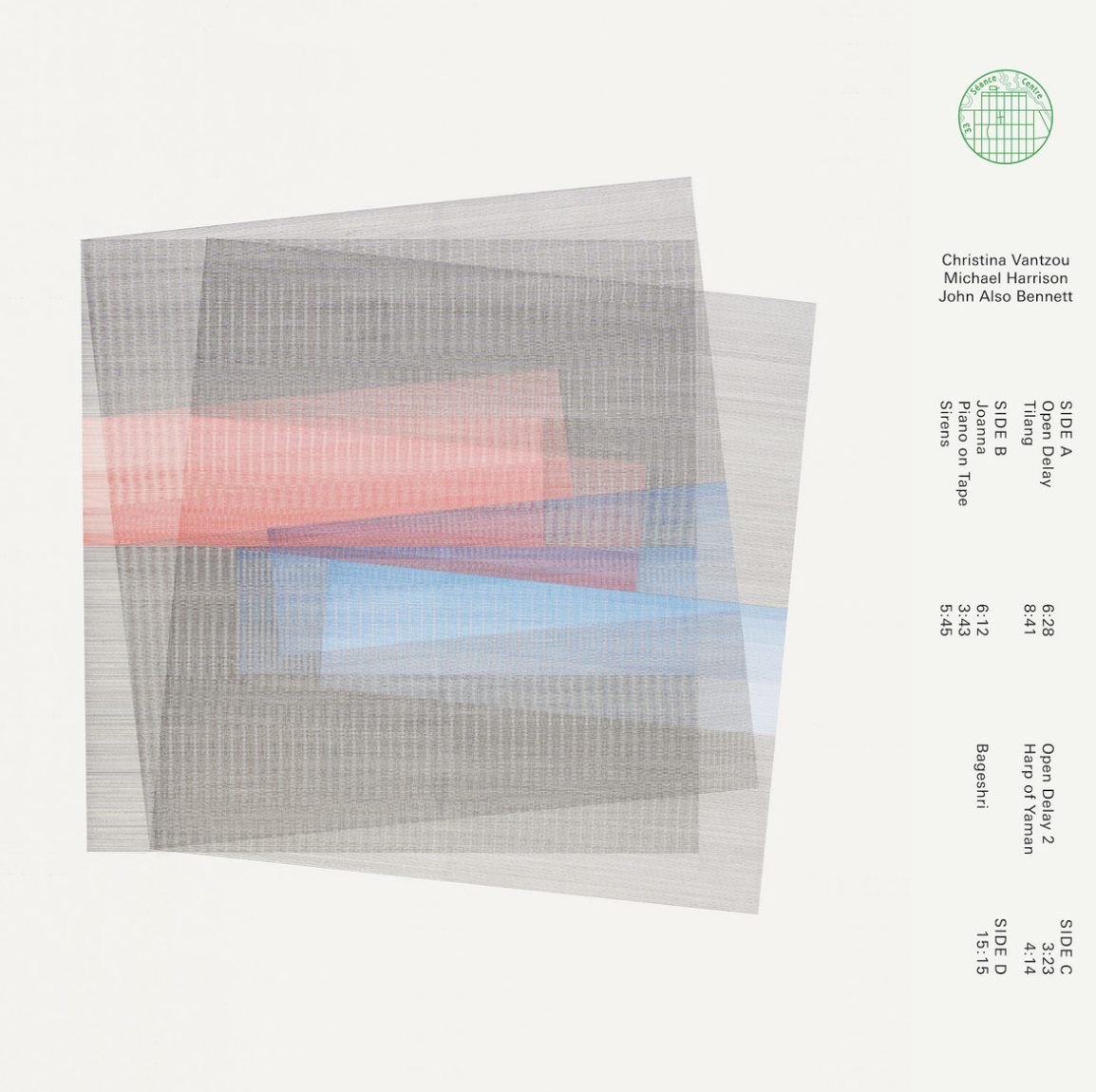
Christina Vantzou, Michael Harrison and John Also Bennett ‘Self-Tilted’
(Séance Centre)
The Séance Centre is one of those labels that rove. They are a little bit like Phaethon with headphones except that they are in control of the chariot. From the map-making Schleswig-Holstein Aufnahmen (Phil Struck) to the modular musings of Kobzir (Oren Cantrell) and dubby zings of Le Sommeil Vertical (Shelter) they command a central place in the cobbled and too-often potholed ambient avenue of today. Bandcamp Daily even featured them in one of their revues last year. Before Dominic Valvona (Editor of The Monolith Cocktail) contacted me about this self-titled release, I had listened to Fly Me to the Moon (Joseph Shabason/ Vibrant Matter) during a Bandcamp lottery play day earlier this year.
So enter Christina Vantzou, Michael Harrison and John Also Bennett with a very different sound. Their principal instrument is the piano, played by Harrison. There is clever use of droning synthetics by Bennett. Under Vantzou’s direction (or “observation”, as alluded to in the pre-release information provided by the label), their tri-synergy is powerful. It is a difficult sound to describe. I have tried a few different approaches to summarising what has been offered here. The creator of the faded geometric artwork that accompanies the album (Parul Gupta) is quoted as saying that “the songs feel like an extension of silence”. I think this is an accurate description.
The listener is immediately met by ‘Open Delay’, which wave-forms and disfigures to scale its octaves. Notes are held before being gently released. The left hand keys are altered and rustle quietly in the background. ‘Tilang (33SC)’ opens up to showcase more technical pianistic nous. A tilang is a classical Indian raga, or form of melodic improvisation. Both the ascent up (arohana) and descent down the scale (avarohana) are played here. The piano on this album is the string of a sitar, and the synth is the plucking of a tanpura.
There are beautifully expressive moments on the album, such as those played on ‘Bageshri’ and ‘Joanna’. More on ‘Bageshri‘ later. The piano notes of Joanna play atop a droning and subtly changing synth backdrop. The piano notes have an indefinable depth of feeling. I cannot tell if loss or joy was felt when the composer penciled this. I suppose it does not matter as each emotion inevitably self-circles to meet the other in the ceaseless sphere of life. This contrasts heavily with the discord of ‘Piano on Tape’. The left hand of the piano climbs a seemingly unattainable summit. It is masterfully contained.
Electronics feature heavily in tracks such as ‘Sirens’ and ‘Open Delay’. The former opens with a Vangelis-esque whorl of modular synths, as if wind is coursing through its coiled and interconnecting wires. There are analogue ‘Subotnicktronics’ that dial in later. The elongated acoustics melt in like long notes played on a future accordion where the ivories have been replaced by emotionally receptive faders. The album at times feels like a giant echo chamber.
‘Open Delay 2’ shares reverberances with its predecessor. It is more fragmented though, as if some of the wavelengths have been swallowed in the endless ether of space. The same can be said of the heptatonic ‘Harp of Yaman (33SC)’. When viewed on my music player, its amplitudes display as a sawtooth-like waveforms. The tone is not sharp but muted. Its denouement is an album highlight where deep bass notes gradually climb to grace note at the scale’s peak.
As previously alluded to, ‘Bageshri’ is beautiful. A bageshri is a raga that portrays the emotions of a lover’s reunion. In this piece we have the soft interplay of finely balanced notes that are sustained by clever foot peddling. An introspective motif appears around its halfway mark and expands to hit piercingly high top notes that tie. The frequencies do not exceed pianissimo or mezzo piano. A feeling of anticipation is invoked here. The entire piece also sits within a major key, which is joyous. It gently filters away in quasi niente. What a peaceful way to conclude this most delicate and modest of albums.
The Monolith Cocktail Monthly Playlist Revue: Future Kult, Your Old Droog, Baby Cool, Drug Couple, Brown Calvin…
August 31, 2022
PLAYLISTS SPECIAL
TEAM EFFORT/ CURATED BY DOMINIC VALVONA

All the choice tracks from the last month, selected by the entire Monolith Cocktail team: Dominic Valvona, Matt Oliver, Brian ‘Bordello’ Shea, Graham Domain and Andrew C. Kidd.
For the past couple of months we’ve been experimenting with both Spotify version and Youtube (track list will vary) versions of the playlist. Whatever your preference found both below:
TRACKLIST
Future Kult ‘We’
Grooto Terazza ‘Tropische Krankheiten’
Speech Debelle Ft. Baby Sol ‘Away From Home’
Joe Nora & Mick Jenkins ‘Early’
A.G. ‘Alpha Beta’
Your Old Droog & Madlib ‘The Return Of The Sasquatch’
Gabrielle Ornate ‘The Undying Sleep’
Yumi And The Weather ‘Can You Tell’
Baby Cool ‘Magic’
Claude ‘Turn’
Lunar Bird ‘Venilia’
Imaad Wasif ‘Fader’
Legless Trials ‘X-Tyrant’
Dearly Beloved ‘Walker Park’
Staraya Derevnya ‘Scythian Nest’
Short Fuze & Dr. Kill ‘Me And My Demons’
Group ‘The Feeling’ JJ Doom ‘Guv’nor’ (Chad Hugo Remix)
DJ Nappa ‘Homeboys Hit It’
DJ Premier Ft. Run The Jewels ‘Terrible 2’s’
Zero dB ‘Anything’s Possible’ (Daisuke Tanabe Remix)
Underground Canopy ‘Feelm’
Revelators Sound System ‘George The Revelator’
Montparnasse Musique Ft. Muambuyi & Mopero Mupemba ‘Bonjour’
The Movers ‘Ku-Ku-Chi’
Yanna Momina ‘Heya (Welcome)’
Vieux Farka Toure & Khruangbin ‘Savanne’
Barrio Lindo ‘Espuma De Mur’
Brown Calvin ‘Perspective3’
Nok Cultural Ensemble Ft. Angel Bat Dawid ‘Enlightenment’
Li Yilei ‘A Hush In The Dark
Celestial North ‘Yarrow’
Andres Alcover ‘White Heat’
Nick Frater ‘Aerodrome Motel’
Drug Couple ‘Lemon Trees’
Cari Cari ‘Last Days On Earth’
Ali Murray ‘Passing Through The Void’
Diamanda La Berge Dramm ‘Orangut The Orangutan’
Your Old Droog ‘The Unknown Comic’
Jesse The Tree ‘Sun Dance’
TrueMendous & MysDiggi ‘Talkk’
STS & RJD2 ‘I Excel’
Jester Jacobs & Jack Danz ‘HIT’
Oliver Birch ‘Docile Healthier’
GOON ‘Emily Says’
Lucy & The Drill Holes ‘It’s Not My War’
Apathy, Jadekiss & Stu Bangas ‘No Time To Waste’
Verbz & Mr Slipz ‘Music Banging Like’
Sly Moon ‘Back For More’
Guilty Simpson Ft. Jason Rose & DJ Ragz ‘Make It Count’
Hi, my name is Dominic Valvona and I’m the Founder of the music/culture blog monolithcocktail.com For the last ten years I’ve featured and supported music, musicians and labels we love across genres from around the world that we think you’ll want to know about. No content on the site is paid for or sponsored and we only feature artists we have genuine respect for /love. If you enjoy our reviews (and we often write long, thoughtful ones), found a new artist you admire or if we have featured you or artists you represent and would like to buy us a coffee at https://ko-fi.com/monolithcocktail to say cheers for spreading the word, then that would be much appreciated.
Our Daily Bread 535 : Helena Celle ‘Music For Counterflows’
August 10, 2022
ALBUM REVIEW
ANDREW C. KIDD

Helena Celle ‘Music For Counterflows’
(False Walls)
Marilyn Monroe once affirmed, “if you can’t handle me at my worst, then you sure as hell don’t deserve me at my best”. I think Helena Celle (aka Kay Logan) paraphrased this quote in the title of her debut release on Night School Records. It was filled with trippy tape loops and glitch-skips. Imagine Oval underwater, Yasunao Tone upside-down, Prefuse 73 in reverse. The outcome: an aqueous amalgam of melodia, a scatterplot of musical notation. The neighbouring tracks ‘I’m Done With 666’ and ‘Miming Swinging Baseball Bat’ were electronica bliss, ambrosia for the audiophile. That was 2016. Fast forward to present times and Music For Counterflows, which was recently released on the False Walls label. This one-hour continuous piece of music was originally written for Counterflows 2021, Glasgow’s annual festival celebrating experimentalism. The name suggests a stream pushing itself upriver. It serves as an artistic anti-current.
Patterned is how I would describe Music For Counterflows. Celle’s repeated designs are muddy clangs and clock-like bells that helicopter around in fragmenting movements. Although cyclical, each of its musical lines never cross the x- and y-axes twice. The grains of a broken beat provide minimal reference, like the paper of a map that has lost its inked markings. During my first listen, I wondered whether the drum machine was going to be the constant in this altering equation. Alas, it disintegrates later like every other variable in the algorithm. The Waldorf Blofeld synthesiser wails and howls. Its syncopated notes eventually become held-notes. There are key changes aplenty. Melody is fugitive. Music for Counterflows was composed using MaxMSP, the limitless visual programming system with graphical as opposed to textual programming. This partly explains what I am listening to. The rest I have attributed to Celle’s magicry.
According to the interview on the Counterflows website [1] (and also included in the CD booklet), Celle described similarities in her sound to “late-period Frank Zappa”, particularly his Synclavier works. I can also hear echoes of influence on Amnerika from his post-humour album Civilization Phase III. She also mentioned being inspired by Annea Lockwood. Lockwood, the piano burner. Lockwood, the academic. I regard Celle as more of an alchemist than an academic. She transfigures time and place and transforms rhythm into the irrhythmic. She improvises and hypnotises and experiments from an electronic playbook less-leafed. My applause goes to her.
Reference:
- Helena Celle by Stewart Smith. Available from: https://counterflows.com/interview/helena-celle-by-stewart-smith/
Our Daily Bread 526: Jill Richards/Kevin Volans ‘Etudes’
July 11, 2022
ALBUM REVIEW
Andrew C. Kidd
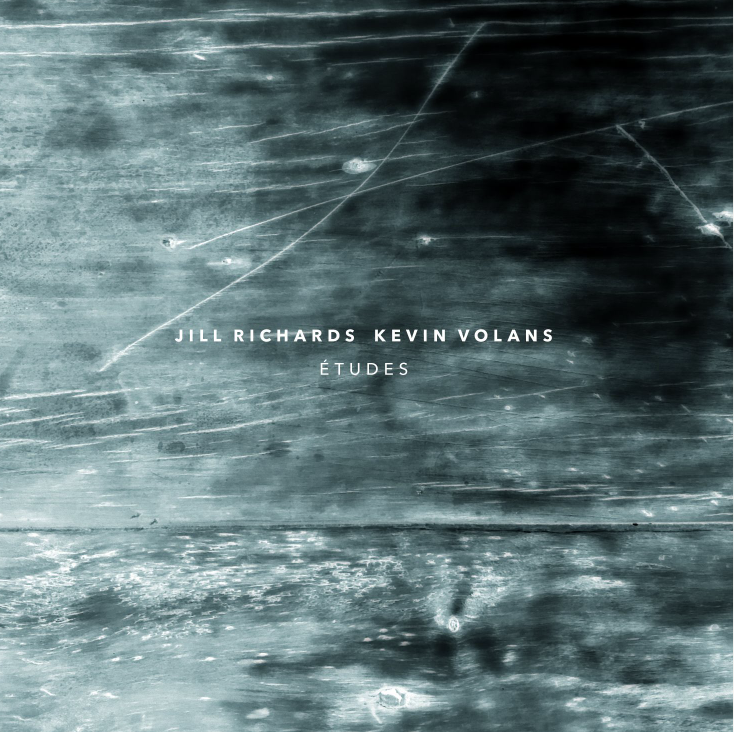
Jill Richards/Kevin Volans ‘Études’
(Diatribe Records)
Kevin Volans is probably most famous for the 1984 Kronos reworking of White Man Sleeps. His beginnings in South Africa to the Neue Einfacheit (in English, New Simplicity) of West Germany with the theorist Karlheinz Stockhausen, whose seminal sine-waves and soundscapes shaped the landscape we understand in electronic music today, are well-documented. The Man With Footsoles of Wind, an opera about the enterprise of the influential poet Arthur Rimbaud in Ethiopia, remains very much on my ‘listening wishlist’. Volans is obviously a musicologist. He is undoubtedly a modernist. This is 2022. He has offered us Études, a collection of his own previously unreleased solo piano works performed by Jill Richards and a second-half where he performs Liszt. The listener has been invited into “a sound world” with “extremely complex and challenging arrangements”. There is also an allusion to twenty fingers playing, rather than ten. These are just some of the insights that accompany the liner notes. My following review reflects the two halves of this collection.
Jill Richards plays Kevin Volans
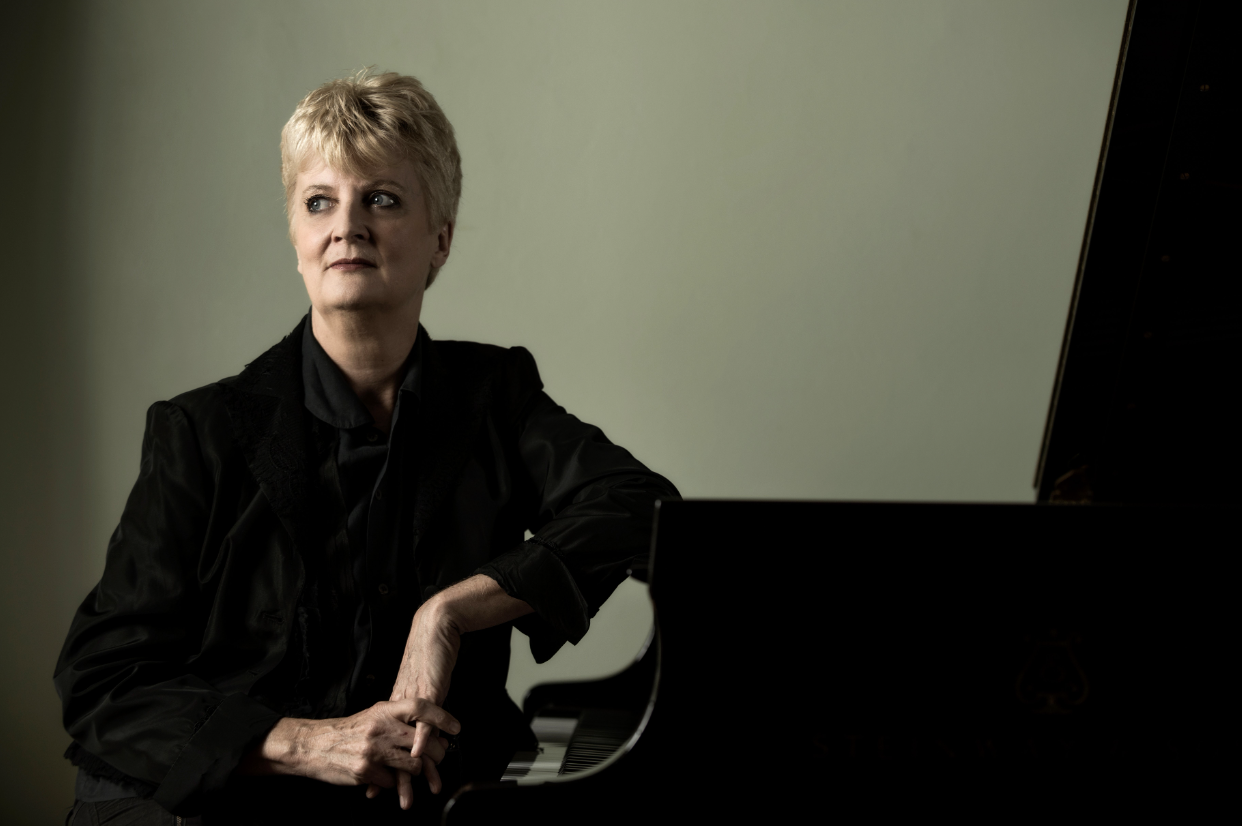
An étude is a short piece of music that demonstrates skill. The skill is in the composition as well as the performance. Jill Richards, an accomplished pianist and long-standing collaborator of Volans, opens with the Second Étude. It is a rift of split chords and dissociated notation. There are mirroring moments: chords that delve inwards, returning later at varying degrees, but never selfsame. The piece is steady but not stately. It is measured, and open. Throughout this first half, this openness, or rather, these open spaces, are particularly evident on the Seventh Étude where the musical interstices are left unfilled. He also offers more fleeting movements such as the brushed-stabs that flee as harmonic echoes on the Fourth Étude and the alarm-like opening to the First Étude. The latter piece has a walk-around dance motif which toes lightly over the weighty bass clef. Volans opts to juxtapose the tempos of his works on Études. He presses for accelerando whilst raising the reins of decelerando. The icy and pointed Third Étude marks a sudden departure from the glacial kinesia of the Second Étude. The notes of the former rise and fall. Nothing is sequential. There is rhythmic abandonment, best evidenced by the First Étude. The Sixth Étude is an example of anti-meter. It quietly stirs. The Seventh Étude is periodic and concludes by disintegrating completely.
Kevin Volans plays Franz Liszt

From the glissandos that flitter away like rippling caustics of light through water on Fountains Of The Villa D’este to the sweeping whorl of Transcendental Étude No 11 Harmonies Du Soir, Volans captures the beauty and rhythmic complexity of Lizst. On Cypresses Of The Villa D’este, a padding crescendo presses and stresses and accentuates. Liszt’s transcription of Wagner’s Liebestod (from the German, liebe, love, and tod, death) was originally the concluding act to Wagner’s operatic drama, Tristan und Isolde. The famous five-note motif is delicately played by Volans. The lovers are beside one another. The piano slowly grows, the tremolandi becomes stronger, the accelerando pulses, the appassionato intensifies. There is quiet transfiguration in its concluding major key. Here Isolde is weeping over the dead Tristan. The calando that Volans plays out continues to emanate away into the lull and loft of her tears that river and mouth and basin. The theme is solemn, yet the piano notes wave and glint away like sun-glitter. The listener is carried outwards to drift on this sonorous and sonic sea. My water metaphor was inspired by the libretto from Tristan: “ertrinken, versinken, – unbewusst, – höchste Lust!” (in English, “to drown, to founder – unconscious – utmost bliss!”).
I consider Études to be a diptych. Volans showcases his pianistic skill and appreciation of the transformative romanticism of Liszt. There is catharsis in the atonality and arrhythmia of his preceding compositions that blow open like air. In the interstitial spaces of each half, he beckons the listener into darkness, yet ultimately bathes us in light.
Our Daily Bread 521: Audiobulb Records Double-Bill: Jacek Doroszenko Ft. Ewa Doroszenko, Flavia Massimo
June 6, 2022
ALBUM REVIEWS
ANDREW C. KIDD

Jacek Doroszenko ft. Ewa Doroszenko ‘Bodyfulness’
(Audiobulb) 25th June 2022
It is May. I am penning this review when my tissue tethers to the touchscreen. My hands pixelate to dissipate into my keyboard. I centrifuge away on algorithms and platforms. My consciousness becomes collective. My flesh is cast aside. I am husked hollow and left as a digitalised hide. It is here in this virtual space that I encounter Bodyfulness.
I am met by art: first, a lenticular and lipless fleshy lower face; then, a predominance of pink and bluish blushes and hazy ribbon-like photographs pushed into position. There are prints of arms. I see hands handling hands. Are these the same hands that play the fluted-key flourishes on Landscape of Algorithmic Desire? They are husky and light. Ghostly background clicks are fleeting and apparition-like. They reappear as the gentle euphoria that blends into the pulsing syncopation of Generated Pleasures. Sub-bass melodies emerge, merge and exit reimagined. It is this symbiosis of the analogue and sounds from the natural world on Bodyfulness that fills me. Composed as a critique of digital intimacy, it is a distorting melange of imagery and music. At times there is opposition. For example, the opaque drones on the title track and depths of analogue on Night Masque contrast starkly with the clarity of the field recordings of water on The Molecule of Everyday Life. The album finale – Visible Dream Space – is dissonant. A slightly off-key synth sequence brims away into nothingness. It disconnects me from the melodia and fusion of what preceded it.
The Dorozenkos’ triumph though is their mid-album triptych. A dreamlike nostalgia weeps and stoops over the sun-kiss and splash of past summers on Get The Perfect Mental Surface. Bells are part-sung atop heavy production and dart around a Rhodes piano and subtle bass melody on Synthetic Skin. This complex symphony weaves and weaves some more until it is shocked into life by two clear bells. Oh these bells! How they sing! I could write poetry about them. They pitch high and are kept momentarily afloat by the fleeting breath of a string section that twists away into the earthy distance. Synthetic Nap is the entr’acte: analogue synths hum and thrum and bass and turn and twist and heighten and heighten higher to steeple and quieten and quieten further to silence to further silence and still.
Flavia Massimo ‘Glitch’
(Audiobulb) 8th June 2022
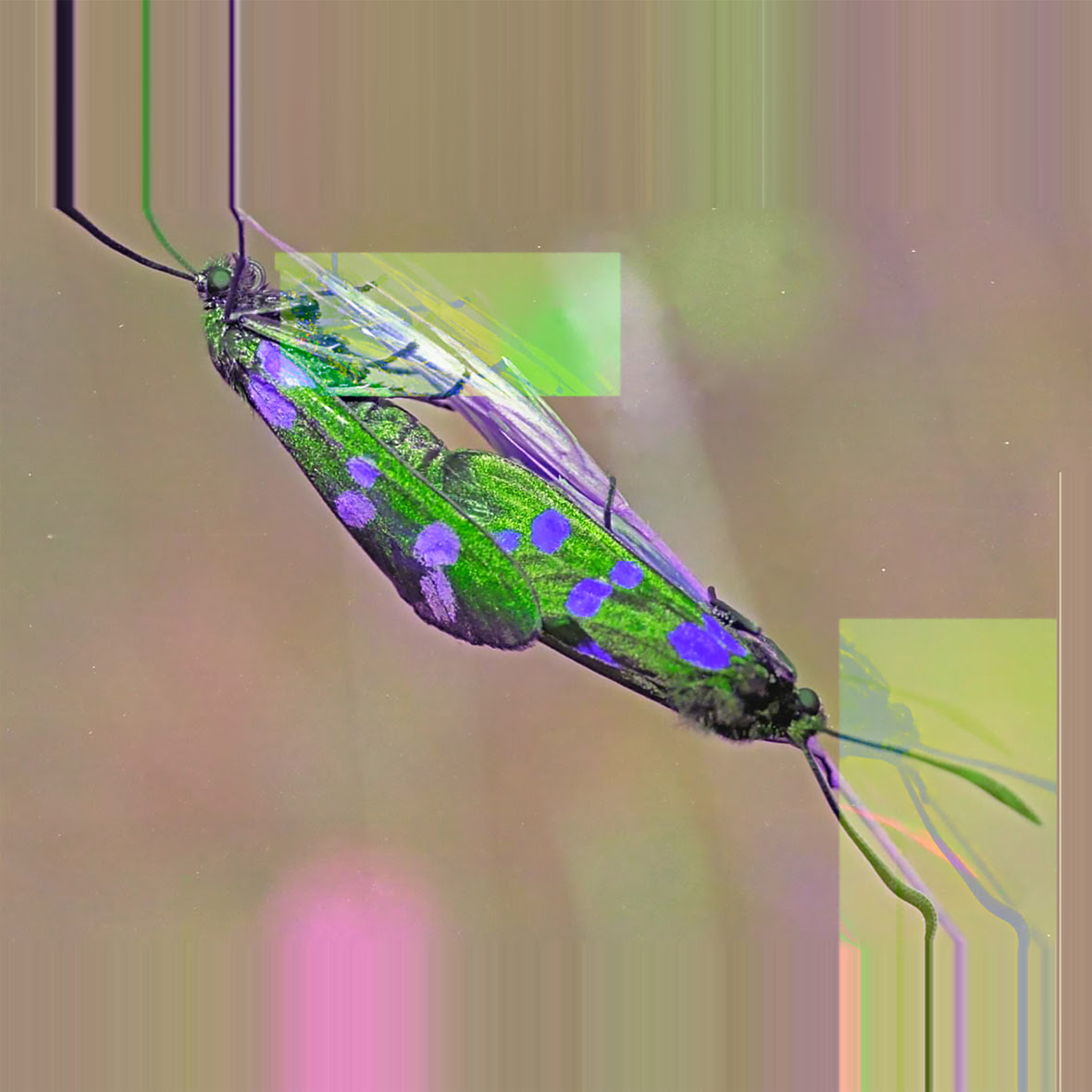
Classico-electonica is an atoll where music is bountiful. The ringed-islets and sandy spaces have surfaced as the result of the volcanism of the modernists and post-romanticists. A deep lagoon saucers in the centre. The turquoise-blue water quavers and trebles endlessly. Time is not continuous here. Varèse and Stockhausen had once inhabited the islets and moved on to become coral. This is the post-world of Moondog and Pierre Henry. This is the precursor to an unknowable futurism. This is the present day space where Frahm and Richter key quietly in the twilight. The reedy bass of Stetson offsets the lilting harp strings of Lattimore. The warmth of the cello-bowing of Coates radiates like the sun. Along the shorelines and sands, the horizon is momentarily interrupted by a dot that hazes gently in the distance. The dot blots and slowly comes into focus. This is Flavia Massimo. She is rowing across the calm sea. She will shortly arrive on the beach to play Glitch.
There is an innate delicateness to Massimo’s sound. Gentle gongs reverberate and pace-make on ‘Gagaku’. They bob like buoys in open water. She hits, strings and bows in triadic equipoise. The result is meditative. Here, Massimo beautifully blends these ritualistic traditions (Gagaku is an ancient form of Japanese court music) with the opposing turbulence (at points she channels the lightspeed of L. Shankar) and broad-stroke soundscaped minimalism that are idiosyncratic to modern ambienism. She approaches the beach.
‘Steps’ is balladic. The notes disembark and tip-toe around a pas de deux interplay of slapped pizzicato. This motif steadily repeats around the brooding narrative of tremolo and white noise and analog effects. It beguiles.
‘Data Transfer’ opens as a thrashing melee. Alive and anatomical, the piece builds into a pulsing polyphony. The vocals inhale and exhale. The held chords are choral. The 4-4 beat is plainsong steady. The élan vital here is Massimo’s mastering of the interstitium, i.e., the spaces between the tissue planes that she slowly electrifies and neon-ifies. She lets her attack-mode-driven pulses laser and spark. She stands steady with cutters and feeds wires into her classical instrumentation.
‘Oxygen’ is a journey of aerobic respiration. The oxygen enters our bodies through the measured adagio. The sforzando is the lifeblood: rubrous, iron-clad, heavy. Her legato bowing echoes the held synths of Vangelis. The beat is opaque. Through its structural complexities, and eventual degradation, we witness the metamorphosis of oxygen. We are left with energy, and water.
I envisage quiet rainfall on ‘Bit Pass’. The leggiero sings. High-pitched static are droplets on my window. The subtle percussive pops puddle on the periphery. The piece is endless, like precipitation. It is symphonic. It is beautiful. If Glitch was a symphony, this would be its adagietto. It simply glistens.
‘Chromosome Xx’ marks a departure from the organic. The machinations and collé bowing are rhythmically complex and the plucked-strings halo circumferentially in slow-motion to disintegrate into noisecore distance. The ending is subtle. It warps into quietude, like Tchaikovsky’s Sixth.
This is undoubtedly a strong debut from Massimo. She has set up camp on the atoll where her sound pools quietly in the lagoon. She offers us abstract minimalism. There is an off-set asymmetry to her sound. The tone is elegiac. She channels classicism but in measured doses. She appears to find joy in the uncertainty. To her, form appears unnecessary. Like the wavelets that milled through her cogwheeling oars in open water, she is strongest in the existential spaces that float around us.
 Monolith Cocktail Blog