The Perusal #74: F. Ampism, Aus, Burning Books, Mauricio Fleury…
December 3, 2025
A world of sonic/musical discoveries reviewed by Dominic Valvona. All entries in alphabetical order.

F. Ampism ‘The Vertical Luminous’
(Hive Mind) 5th December 2025
A curious and, as the title suggest, luminous biomorphic world of inner and outer bodied molecules, particles and matter, the Brighton-based F. Ampism cuts a most wonderfully playful, curious and intriguing album for the always enlightening and brilliantly experimental label Hive Mind this month.
Ampism (that’s Paul Wilson when uncloaked from their sonic pseudonym) delights in making atoms speak, communicate, sing, gargle, mewl and murmur in a world of floated forms and running, pouring waters. Of an organic nature, sounds both recognisable and not connect with the electronic to create hallucinogenic, near cosmic and twinkled aspects of both cerebral and microscopic observations. And within that sphere there’s a host of fluctuations: ‘Worm Moon’ a near silken spun and spindled delicate vague evocation of Japanese theatre and ambient jazz, whilst the serial rhythms and beats, the suspended alien forms and cup pours of ‘Lunar Mansions’ could be a union between Mira Calix and Carmen Jaci. Such is the gentleness and dreaminess of this amorphous fourth world and bubbling and burbling chemistry that even the synth possessed ‘Midi Evil’ whirls and discombobulates disarmingly and harmlessly. ‘The Severed Head Is Smiling’ is also hardly sinister, caught in a magic-realism of mirrors, hallowed tubular dimensions and the sounds of the bird house.
Lovingly produced, full of that luminosity and replenished liquid growth, the album evokes feelings of happiness, rumination, the inquisitive and of near alien visitations. Less studied and technical, and more an enjoyable life form of music and sounds that proves a most enjoyable and mostly beautiful experience.
Aus ‘Eau’
(Flau) 6th December 2025
Finely balanced, Japan’s national instrument, the koto, is disarmingly and organically taken from its courtly origins and placed in more intimate, attuned settings. With his adroit koto foil Eden Okuno, the Tokyo composer and producer Yasuhiko Fukuzono creates a both fragrant and descriptive subtle album of ambient music, minimalist and environmental electronica; unmistakably Japanese, with threads and traces of the neo-classical and Hogaku music traditions and even further back, and yet almost in the spheres of Fourth World experimentation and the futuristic.
Under the Aus alias, Fukuzono produces a new project that centres around the fine, delicate and spindled use of the half-tube zither koto. Said to be an “ancestor” of the Chinese guzheng, brought over to Japan during either the 7th or 8th century, it’s thirteen or seventeen-stringed forms, strung over movable bridges, are plucked by the fingerpicks on the player’s right hand. Depending on the piece the instrument can be tunned differently, and sometimes, the seventeen-string version, when used in an ensemble, takes on the duties of the bass. It has an instantly recognisable sound; the accompaniment to rumination and contemplation within the bamboo waterfall replenished gardens of Japan; the uncurling flowery weavings and the calligraphy-like strokes of the brush.
Here, Okuno’s keen playing skills dazzle with subtle aplomb, description and a cascade of repeating rhythms as an electronic bed of surfaces and effects are placed underneath or used like an envelope. There’s also an equally subtle use of the piano – the lower-case work of Andrew Heath, a touch of Roedelius and even Tim Story, but also Sakamoto, sprung to mind -, the suffused presence of various poured, ceremonial and dripped waters, and the chimes, the tinkles, jangles and rings of various percussive and wind chime features. Altogether it makes for a most beautifully felt work of sensibilities, the naturalistic and meditative and visceral scales. And within that sound you can hear the crafting and scraping of artistic tools, the atmospheres of the recording settings and spaces, and the near fuzzy hum of the tape.
Attentive to the surroundings, but also aware of pushing the use of the koto, saving it from its more ceremonial staidness and just so preparations, Fukuzono claims the instrument for his own purposes and experiments for something more modern and intimate. For those with a penchant for the music of Satomi Saeki, Jo Kondo, Laraaji – who has even recorded a track after the instrument -, Akira Ito, Masahiro Sugaya and the partnership of Francesco Messina and Raul Lovisoni. Flau continue to produce exquisite, thoughtful works of disarming skill.
Burning Books ‘Taller Than God’
(Ingrown Records) Released 17th November 2025
One day someone will write the great study on music made during the Covid pandemic. A period that defined an era, no matter the cultural, geographical and political differences, by providing far too much time for all of us to think and reflect on the pointlessness of our existence: or was that just me? A shared consciousness of anxiety, stress and uncertainty prevailed, which hasn’t really abated: getting worse if anything. That day is not today, however. But, just one of the latest releases to pop up in my inbox this month from the highly prolific Ingrown Records imprint (if you ever want to disappear down the proverbial rabbit hole, to find new artists on the periphery then head over to the label’s bandcamp page for hours if not days of aural discoveries), Burning Books’ dramatically entitled Taller Than God album, was created during that momentous period.
Despite the epic subject matters, the grappling with all life’s philosophical quandaries, much of the music produced from between 2019 to 2021 was usually quite understated. And even though there is a presence outside us, a looming leviathan to be found hovering and often bearing down over the sonic landscapes here, the production is itself a balance of isolated intimacy and the sonorous heaviness and awe of the gradual, glacial movements of time over that map. A personal attempt to make sense of the enormity without losing sight of the individual at the centre.
And so, the trials and travails, the feelings of mental anguish are all transduced into a stunning work of both ambience and weight, a merger of the haunted and the reflective, the deep and tingly. Enervated passages of past or found recordings, a dancing pirouetted dancer a top of an old music box, can be heard amongst the near Lynchian and prowling as memories pass through the veils and hues of the shadows cast upon the mountain sides and across the plains. Gleams and drones, ebbing waves contour and create various atmospheres, whilst the reverberating chings and fuzz of an electric guitar and bass articulate something more ominous and brooding. The electrification occasionally sounds more like a mirage, almost like the country ambience of Steve Gunn and Daniel Vickers on tracks like the humming tone, soft knocked ‘Mountains Move’. Within that scope, the fateful creep of ‘Death Is Forgetting’ sounds like a union between Mike Oldfield and John Carpenter. There are a few instances of this near supranatural feel and atmosphere to be found, alongside the mysterious deep sounds of a ship in the mist, the bowels letting out some esoteric ferryman’s call. Elsewhere there’s faint hints of Eno, A Lily and the heavy bowed evocations of Simon McCorry. And on the finale title-track a touch of Daniel Lanois amongst the glassy hues, drones, percussive crescendos and scale. Taller Than God ends on the reassurances of hope after immersing us all in a simultaneously personal and collective experience across a varied topography of emotions and reflections. An ‘ode to humanity’, no less, Burning Books has produced one of the very best and well-crafted, sophisticated but empirical albums of this genre in 2025.
Mauricio Fleury ‘Revoada’
(Altercat Records) 5th December 2025
The last time I saw the well-travelled Brazilian musician Mauricio Fleury live was nearly a decade ago, when bandmates from the Bixiga 70 troupe he helped found led a carnival conga of audience members through the aisles of a seated venue as part of Celtic Connections – held each year in Glasgow, my adopted home of the last ten years. That night, and for a further seven or eight years, he was part of a collective that fused the language of Fela Kuti (which they spoke fluently) with a menagerie of Latin influences and the sound of Brazil’s inner-city bustle and hustles. And although it is a much celebrated and critically applauded group, Fleury’s CV is filled with more enviable collaborations, including a meeting and jam session with none other than Afrobeat rhythm provider and progenitor Tony Allen and the “blacktronica” and soulful house luminaries Ron Trent, Theo Parrish and Steve Spacek. This was back in 2007, but alongside his work with both the Brazilian jazz and bossa nova piano icon João Donato and tropicalia titan songstress Gal Costa, proved a catalyst for a migratory-like album of personal indulgences/stories, dramas and experiment.
Stepping out on the solo pathway, inspired as much by the places he’s lived and toured as by his crate-digging passions, the architecture, parks, its exotic bird life, and more urban environments of Brazil and further afield act as melodiously assured but pliable and warm map references. For Revoada is a personal album of worldly influences that springs forth from Brazil into Europe and the gateway to the Mediterranean, the Middle East and Eastern Africa. Starting out in ‘Kadıköy’, a district on the Asian shore of the Bosporus straddling city of Istanbul that overlooks the Sea of Marmara, Fleury reminisces on a hectic hunt for records by the cool Anatolian rock icons Barış Manço, Erkin Koray and Cem Karaca; in the city for a jazz festival back in 2017. This led to dreams of all those records he didn’t manage to find and this composition: the trip also led to Fleury, now living in Berlin, picking up the saz. The album’s opener takes a spice of Koray, a pinch of the backing from Selda Bağcan’s records and matches it with Altin Gun and a warm feeling of clavichord soul and Med grooves: It sounds like the Isley Brothers sunbathing in old Anatolia. There’s just enough electrified fuzz to make this an acid-soul number, as reimagined by Batov Records.
The first trip is followed by memories of home and the playground environment and its formative hangouts. ‘Banhando’ can be translated from Portuguese to mean “showered’ or “bathed”, but in this context is a reference to the nature park in the southeastern Brazilian city of São José dos Campos, where Fleury grew up. With a big rolling intro of bossa that quickly shimmies into a Latin-jazz sound with hints of Brubeck, Ramsey Lewis, Ayzymuth’s ‘Seems Like This’ and Greg Foat, there’s a sense of both breezily laid out memories and reminisces that capture the very feel of the place. The keys sound like bulbs of light. We next head to the city in which Bixiga 70 was formed, São Paulo, and the classic Riviera Bar, a place that obviously holds many memories for Fleury. ‘Tanto Faz’ is meant to be inspired in part by the sound of old TV soap – which it does – but reminded me in part of a Latin Americanised Lalo Schifrin and Michael LeGrand in the middle of a whistle and fluted diaphanous melody of feathered friends.
Fleury himself plays a range of keyboards, analogue synths, the flute and guitar on this musical voyage, aided by longtime foils, a number of notable and exciting Brazilian artists and players, and good friends. On pliable, walking and flexible acoustic and electric basses is the renowned Latin Grammy Award winner, producer and guitarist Fabio Sá;on rolling, falling, splashed drums and dried bone rattled, Latin percussion is the versatile producer and music director Vitor Cabral; the vibraphone and effects of Beto Montag (on the album’s zappy, beamed and jazzy-funk retro-fitted finale ‘Briluz’); and as part of the tumultuous, thunder wrapped dramatic turn Andrés Vargas Pinedo whistled bird called woodwind and brass rich title track ensemble, the flute of Sintia Piccin, oboe of Julianna Gaona, bassoon and French horn of Richard Fermino and clarinet of María “Mange” Valencia. Sá was also asked to write the wind quintet of bird-like mimics on the exotic aviary inspired title-track. This is a composition of contrasts, beginning as it does with a more serious turbulence of wobble board-like thunder and stormy cymbals, both reflecting the themes of travails and more difficult times, and a second part that opens up with that bird call menagerie. Sá also wrote the album’s Eastern African, via the spiritual jazz route, detour, ‘Jimma’. Inspired and influenced by the Ethiopian Jazz luminary Mulatu Astatke, who he toured Brazil with a number of years back, Sá paid homage to the great multi-instrumentalist and arranger’s hometown with a composition of spontaneity; a camel ride like motion trail across the dunes, unseating and decamping to the Addis saloon for a loose Ethio-jazz jamboree around the piano. There are hints of not only Astatke, Hailu Mergia and Abdou EL Omari but The Sorcerers, Ndikhu Xaba and one of Fleury’s biggest influences and musical heroes, Sun Ra.
A most touching, reminiscing and delightful travelogue of places, dear memories, and evocations that shows off, in a disarming and harmoniously melodious and funky jazzy way, Fleury’s capabilities and skills as both a composer and musician. The solo route looks to be a delightful and pleasingly creative one on an album with much to offer, setting out various moods and journeys.
Hamouna Isewlan ‘Təlle Talyadt’
(Remote Records / Studio Mali) Released 28th November 2025
Like many of the desert blues and rock luminaries before and after him, Hamouna Isewlan’s new album is suffused by the nomadic freewheeling and artisanal skills of the Berber ancestral Tuareg people; a loosely atavistic-connected confederacy (to put it into any kind of meaningful context) of diverse tribes that have traditionally roamed Sub-Saharan Africa since time immemorial. If further context and history was needed, this diverse society of various people, grouped together in an age that demanded a label, the term of ‘Tuareg’ is highly contested: arguably brought into the lexicon through the language of European Colonialism, though etymology traces the term back further through multiple sources. But many in the community would prefer we used the original ‘Kel Tamashek’. Isewlan’s rootsarein Mali, a country that he has been forced to leave to seek sanctuary in Algeria due to the unstable conditions; though as I write this, events are overtaking me as both the capital of Bamako and Mali itself are at risk of collapse and takeover by Jihadist groups.
Carved out of France’s greater Western African empire, demarcated without any sympathy for its diverse populations and history, Mali was cut more or less into two on its inception; the poorer north, one such seat of the Kel Tamashek, was more or less left to wither by the south and the government who considered its nomadic peoples backward, uncouth and because of their lighter skin colour, inferior. Though extremely complicated and far more nuanced than space allows here (I recommend reading Tim Marshall’s The Power of Geography: The Maps That Reveal the Future Of Our World for an analysis of the entire Sahel region and its many conflict over the decades), the Kel Tamashek began a decades long fight to create a self-governing autonomous state known as the Azawad. Beginning in the late 1960s and continuing until more recent times, this struggle made worldwide headlines when it was hijacked spectacularly by more extremist Islamic insurgents. Worryingly gaining ground as a Trojan Horse within their nomadic allies’ fight for independence, the destructive Islamist horrified many when they took the ancient seat of West African learning and trade, Timbuktu, and preceded to demolish it like barbarians. Former Colonial masters France were forced to intervene, finally halting the insurgents progress before forcing all groups involved back to where they started: many of them back across the border. Far from ideal, the Islamist usurpers dissipated to a degree but then switched to sporadic acts of terrorism, carrying out smaller militia attacks in Mali’s capital. This was pre Covid of course and the situation has changed dramatically; the threat has intensified with many declaring Mali a state on the verge of a Jihadist takeover. Much of this has been down to the expulsion of France by a Malian junta, led by General Assimi Goita. But with their departure the junta was unable to secure the country or even the capital. They made an even greater mistake by hiring Russian mercenaries, who failed miserably to fight off the main jihadist insurgent group, Jamat Nasr al-Islam wal Muslimin (JNIM), an affiliate of al-Qaeda. The capital of Bamako has been under direct threat and siege by the group who, as The Times reported last month, “paralysed the Malian economy with a fuel blockade that has prevented harvesting in several regions and forced the government to ration power, close schools and restrict civilian movement.” Anything can happen, including another coup within the Malian military itself: the omens are looking bleak; the outcome a possible state run by Jihadists: another Afghanistan in the making. It is undeniable that the country is suffering, with no-go zones across Mali, the threat of extreme violence and of imposed strict Islamic rule in those places controlled by the Jihadist groups. The original Kel Tamashek campaign and fight has been hijacked, its concerns, politics were always more localised but have now been engulfed by terror groups hellbent on a complete takeover of the entire Sahel region.
However, despite all this turmoil music is still being made, life is still going on in the country: as tough as they may be. In the face of such geopolitical upheaval and violence Isewlan chooses to embrace various topics of love: the yielding kind; the plaintive; the yearned; the desired; and the declared. A most touching but also yearning album that tends to the subjects of betrayal, universal and more intimate and personal love.
His new album, under this name (Isewlan in the Tamashek Tuareg language translates poetically as “the mountains of the desert”), is a songbook full of wanton reflections of both a love lost and gained, projected against the desert landscapes of his homeland. You can literally follow the pathways, the very contours, love lines and sloping dunes of Mali through his resonating electrified guitar work and the percussive and drummed rhythms and grooves of the band; many of the tracks moving in a camel or hoofed horsed motion across that iconic terrain.
An incredible player, starting out like so many of his peers and inspirations crafting a rudimental guitar from just tin cans and planks of wood (and still out blasting, outperforming those Western guitar gods with every luxury to hand), Isewlan’s career began to take off during the early noughties after making the leap from performing at weddings to recording with the band he co-founded in 2012, Aratan N’Akalle. Inspired in equal parts by Tinariwen, Ali Farka Touré, Aboubacar Traoré “Karkar”, Mark Knopfler, but most surprising, REM, the burgeoning lead artist now creates multiple evocative mirages and dreamy wanderings from a romantic travail of heartaches and more pleasing paeans to the pursuit of love and his muse.
Musically buoyant, changing from a rockified blues that Southern Americans would recognise (‘War hi toyyed’) to the signature sound of Tuareg desert rock (‘Iamna Iahla’) and a sort of rural form of reggae (‘Tənhay titt in’), the album is full of rich evocations and great flange and reverberated demonstrations of playing. I’m also hearing that Dire Straits influence on the pining resonating ‘Agg Adduniya’, and Vieux Farka Touré on the clopped motioned title-track.
This album, incidentally, has been released by the Bamako label and studio project Remote Records, but been brought to my attention by Paul Chandler, who has chronicled Mali’s music scene for a good couple of decades now. If you’ve been following us for a while, you may recall my piece on Chandler’s most excellent Every Song Has Its End: Sonic Dispatches From Traditional Mali survey (volume 2 of Glitterbeat Records’ Hidden Musics series), which went on to make our choice albums of that year’s list. So, thank you for introducing us to an artist keeping the traditions alive but also in the moment; Təlle Talyadt is an electrifying experience of lovelorn sentiment, rhythm and blues and groove.
Modern Silent Cinema ‘Surveillance Film (Original Motion Picture Soundtrack)’
(Bad Channel Records) 1st December 2025
A veritable flurry of activity this month from Cullen Gallagher’s long-running Modern Silent Cinema project, with both redux versions of archival soundtrack albums The Man Who Stopped and Stared at the Clouds (premiering on CD, vinyl and digital, we’re told, on the 15th December) and Flesh Mother (released on vinyl and CD on the 29th December) plus the new Surveillance Film soundtrack album. But for the purposes of this review, I’m going to focus on the latter, and Gallagher’s fifth collaborative original motion picture score for the Baltimore-based experimental filmmaker Matt Barry.
Plot wise, Barry’s latest docu-fiction movie interweaves the filmmaker’s own questions of intent with theoretical discussions about surveillance aesthetics and early cinema. On previous projects Gallagher reverberations, resonated shakes of the psychedelic, post-rock, krautrock, scuzz and fuzz have been led by the guitar and various atmospherics experiments; the themes ranging from the art of Duchamp, Man Ray and Marc Allégret and Winsor McCay’s famous Gertie On Tour animation. Here though, the sound is inspired or influenced in part by the scores of Ennio Morricone and his oft foil and Italian peer Alessandro Alessandro, but also by the use of the jaw or Jew’s harp in the former’s iconic Western soundtracks – played by Billy Strange. That instrument’s springy and spongy signature bounces and leaps like the march hare across many of the Latinised and Greek mythologically entitled instrumental tracks and vignettes/passages. That crucial instrument forms Riley-like patterns, boings and rebounds, as glass-like bulb, the bell jar notes and the crystal ring out or chime on the first few tracks.
Evocations of Walter Semtak and A Journey Of Giraffes sprung to mind on the first half of the album, that and the essence of those Italian composers working on Giallo soundtracks, Alain Goraguer, and on one of the quartet of mythological referenced Empusa (a one-footed shape-shifting female) tracks John Barry scoring Harry Palmer in an Hellenic setting. Later on, the mood reminded me of the submersible synth and electronic scores of Shepard Stevenson; especially on the plastic tube-y paddled and Fourth World-light ‘Medius’ – named I believe after one of Alexander the Great’s officers and friends, a native of Thessaly. But there’s many changes, from the near supernatural to distorted, the kinetic and library music-esque. It can give a near paranoia feeling, or at times something close to terrifying and ominous. And then again, there’s a sense of mystery, of myth and the ghostly amongst the loosened wires, detuned and both toy-like and spooked piano workings.
Gallagher expands his palette of instruments and ideas for a highly atmospheric score that stands alone and yet doesn’t proving overbearing or distract from the film it accompanies. Well worth the cinema ticket.
Andrew Spackman ‘The Marcus Neiman Cookie Recipe Hoax’
(Mortality Table Records) 12th December 2025
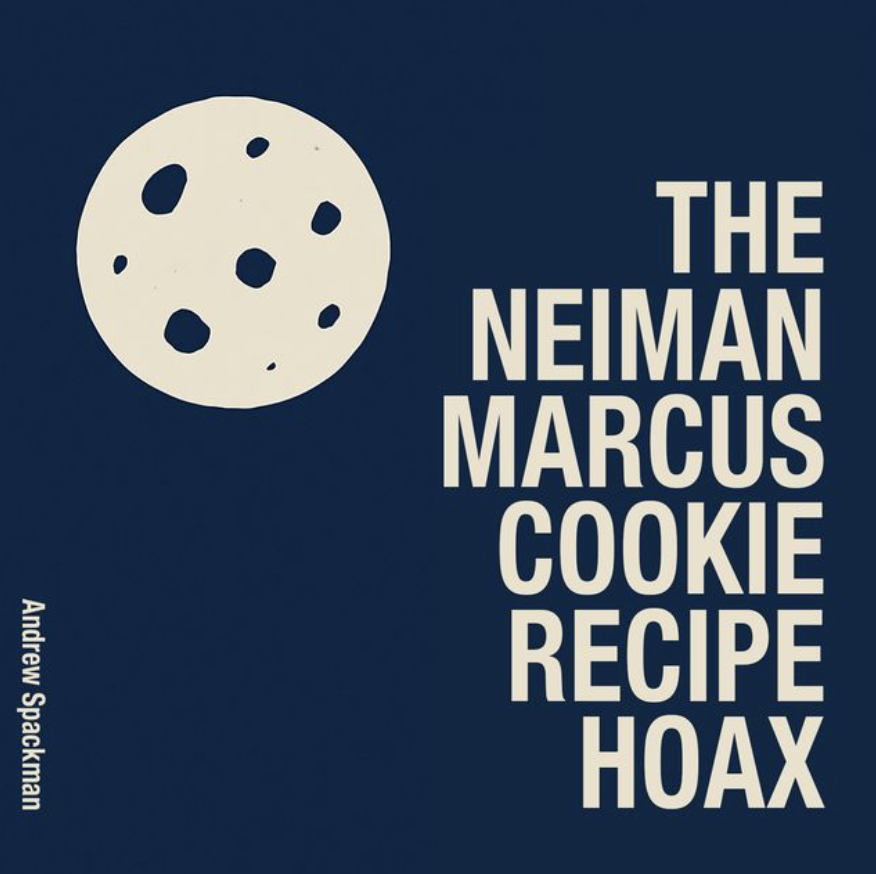
I’ve estimated that Andrew Spackman under his various alias and appellations (from the forlorn SAD MAN to Duchampian Nimzo Indian, Cars From The Future and The Dark Jazz Project) has easily released over thirty albums in just over the last decade. From boffin produced apparatus to techno glitches, distortions and soundtracks, the idiosyncratic inventive trick noise maker has tried his hand at everything, including a number of conceptually minded multimedia projects and stories.
Uncloaked, under his own name, Spackman builds an impressive sonic and melodic world from one of the Internet’s earliest viral bullshit hoaxes. The Marcus Neiman Cookie Recipe, as it was known, fuelled a whole industry of such faked indignations; not the only such lie to run and run, many varied episodes followed in its wake. For one of the best summaries, the Dallas (the city in which this hoax takes part) Eater obliges:
‘A woman visited “Neiman-Marcus Cafe” in Dallas and ordered a dessert after her dinner — the Neiman Marcus cookie. The woman was so enthralled by the delicious cookie that she asked an employee at the cafe if she could have the recipe. When the employee declined, the woman asked to purchase the recipe, and was told that it would cost her “two-fifty.” When the woman received her VISA statement a month later, she’d been charged $285 — $10 each for two salads, $20 for a scarf, and $250 for the famous cookie recipe.’ The outrage however was in mishearing the original “two-fifty”, which in her mind meant $2.50, not $250. And so, both incensed and in pique of revenge, she posted the recipe online for free. It doesn’t matter, as the recipe and entire incident was hokum – although the company at the centre of this lie did decide, after receiving opprobrium and a flood of angry letters, to eventually create their own cookie -, but the actual ingredients and baking instructions were pretty run-of-the-mill: nothing special. Over time, and various iterations the story has changed and the recipe with it: replacing certain ingredients, adding maybe more to the mix.
As a metaphor/analogy on the spread of such “compelling lies” and hyperbole, Spackman has cooked up a fantasy of his own; running with the original tale, handing out the ingredients and building up and scaling up a concept-based album of electronica and vague horns that sweep, drift, herald and toot across a plane of the cerebral, distorted and melodious.
Working across various electronic spines, with passages that conjure up the dramatic and at other times dissonant, the album’s ten tracks vary between shorter and long form passages. Between tubular pipes and scores, it can sound simultaneously like a lost futuristic Vangelis soundtrack or Mike Dred and Richard James lost in the fourth world peregrinations of Hassell and Pekka Airaksinen. There’s much to unravel, as each track develops in its own way and forms a hallucinatory experience of the buzzing, bristled, shaved, blowing and screwy.
Amongst the effects, the electronically synthesized there’s wah-wah-wah, heraldry to jazz tones and airs of sax, Budd-like tinkles and iterations of piano and pipes. A mix of avant-garde, a Riley nightmare on occasions, the most removed wisps of jazz, the cosmic, the metallic and machined and vapored voices, The Marcus Neiman Cookie Recipe Hoax is like a meeting between Variát, Popol Vuh, Robert Musci, and the Warp and Artetetra labels. Both in and projected outside the machine, new sound, sonic and sometimes melodious feelings are fed into the abstract, into entropy, the alarming and liquid. Whilst the themes, the inspiration are concrete, this soundtrack (I would call it it) shutters, expands and atmospherically offers more. Spackman is on a roll, with already a successful SAD MAN enterprise earlier this year, and now this on top of other recent filmic and art-electronic projects. Check back in a week or two to see if it has made my choice albums of the year list.
West Virginia Snake Handlers Revival ‘They Shall Take Up Serpents’
(Sublime Frequencies) Released 3rd October 2025
Reminding in part of the kind of religious sermon broadcasts used to great effect on Eno And Byrne’s My Life In The Bush Of Ghosts, but reverberated here, booming like a bluesman preacher half crazed by the effects of the poisonous serpents he wields and insists take’s a bite out of his arms to show a deadly, fateful commitment to faith, the performances and voices on this latest in-situ recording project by Ian Brennan (in cooperation and facilitated by Sublime Frequencies) is a revelatory reclamation of the original rock and roll and blues spirit. Or at least a more zealous form of the music used to accompany and rally literal interpretations (depending on sources, one that could be very skewed indeed) of lines from the Gospels of both Mark and Luke on healing and showing a strength of faith:
‘Behold, I give unto you power to tread on serpents and scorpions, and over all the power of the enemy: and nothing shall by any means hurt you.’ Luke 10:19
‘And these signs shall follow them that believe: In my name shall they cast out devils; they shall speak with new tongues. They shall take up serpents; and if they drink any deadly thing, it shall not hurt them; they shall lay hands on the sick, and they shall recover.’ Mark 16:17 – 18 (Thanks to Wikipedia for these quotes)
In all his time navigating the most dangerous and difficult to reach peoples and places in the world, it took a trip closer to home, to the only remaining West Virginian community of snake handlers, to witness a truly alien experience. Nothing could prepare for what awaited Ian on that fateful day, setting up his usual stripped-down apparatus of recording equipment, placing mics so as not to interfere or distract from the performances around the alter and platform for both bloodletting and speaker-breaking screaming exaltations.
To put it in more context, loosened and set free from the archetypal studio, Ian’s ad hoc and haphazard mobile stages have in the past included the inside of a Malawi prison, Mali deserts, and the front porches and back rooms of Southeast Asia: one of which was on the direct flight path of the local airport. Even that is only a tiny amount of a near forty release back-catalogue recorded over just the last two decades. As regular followers will know, I’ve interviewed and featured a majority of those projects from the field-recordist, producer, writer and violence prevention expert. But I have to say, this is one of the most incredible and wild yet.
From his own notes and descriptions ‘They Shall Take Up Serpents’ is linked to 2023’s Parchman Prison Prayer – Some Mississippi Sunday Morning album; back in the state penitentiary system, Ian recorded the songs of various prisoners inside the infamous maximum-security facility in the deep, deep South of America, finding a number of surprising performances of redemption and spiritual conversion. On the opposite bank geographically and spiritually speaking, showing certain divisions between the two forms and locations, the Appalachian side of this coin takes its lead from a controversial and dangerous (sometimes fatal) practice with its use of poisonous snakes. So dangerous in fact that at least a hundred prominent pastors have died over the last century, including founding father, the noted George West Hensley – an illiterate Prohibition era convicted moonshiner. Even if you survive, the omens are not great, with all medical intervention strictly forbidden. They do this to primarily test the faith, but also sometimes in the use of healing.
Excuse the pun, but a dying art, the practice as all but vanished from most parts of America; from 500 or more flocks in the 1970s to just a handful of dwindling pockets in the backwoods. As both a religion and way of life, scorned by Middle Class American, frowned upon by many as arcane, primitive and even backwards, the last surviving outposts of this rite stand now as a sort of twisted bastion against modernity and outsiders. The whole region has itself been decimated by globalisation and the move either overseas or away from its most prized industry of coal mining. Gutted out, as Ian would put it, this part of American is now infamous for its drug deaths: the highest per capita.
You may of course have seen the church of snake handler’s phenomenon via the 2020 HBO documentary Alabama Snake, which hones in on the 1991 attempted murder of Darlene Summerford by her husband, snake handling pastor Glenn Summerford (investigative journalist Dennis Covington originally covered this in his Salvation on Sand Mountain book), or through the National Geographic Channel aired Snake Salvation series of 2013 (again, another fatal snake bite killed the show’s main focus, Jamie Coots), or even the Sundance Film nominee Them That Follow, starring current in vogue star of the screen Walton Goggins. If you haven’t, then you’re in for a crazy, wild ride; a vehement demonstration of faith set to both the rawest and most pastoral rock ‘n’ roll and blues accompaniment.
The whole thing is insane, a reclamation of rock ‘n’ roll from Satan. For this church and their forebears believe they actually created the musical form: On the same crossroads as Robert Johnson, but instead of selling one’s soul for it, they wrestled it back from the devil. Near riotous – and Ian’s own descriptions are strikingly vivid, crazy and backdropped by the ritual of blood being spilled liberally from the climatic snake bite wounds; though it seems no one died this time thankfully.
It’s akin to witnessing the first flash of danger/excitement of the original rock ‘n’ roll spirit: say, Jerry Lee Lewis smoking his keys, setting alight to the piano for the first time. A spectacle, stripped back to the essence of performance, scripture and evangelism, every speech is delivered in a weird Captain Beefheart style – could this indeed be where the great progenitor of psych and off-the-grid rock ‘n’ roll and blues got it from in the first place. All the energy, palpitations, heaving convulsions and sweat comes through in the recordings. You could be there, in amongst the congregation as the musicians in the flock belt out roots rock ‘n’ roll like the Jon Spencer Blues Explosion in communion with John Lee Hooker and Canned Heat. Though it could also as easily evoke the MC5, and on the scuffle bluesy boogie ‘Jesus Has To Be #1’ a trace of ‘It’s All Over Now” and Taj Mahal. The more scuzzed-up doomed Biblical prophecy of ‘Prepare For The Time Of Famine’ recalled, to my ears anyway, both Wreckless Eric and electric Muddy Waters. And yet there’s also more refined moments of gospel to be found amongst the possessed teachings; an amble along a less rocky road to the banks of the River Jordon and onto heaven – however, it takes until the very end to hear a lead female vocal, much in the style of June Carter.
The titles are worthy of investigation alone: I never thought I’d ever see “ADHD Meds & Starbucks” in the same sentence together, or the supposedly reassuring and testing fateful last words of “Don’t worry, it’s just a snake bite” – the sub-title in brackets, being a disapproving and rhetorical “what happened to this generation”.
White men (and women) sing the blues in a fevered frenzy of the expelled and exhalated. Foreign, estranged, to even most of their fellow Americans, this practice is given free rein to astound and surprise the listener. Without any hint of the preconceived and without prejudice, Ian shines a light in on a controversial isolated community in the grip of social and economic disillusion and disparity: you could call it a retreat from the mechanisms of the outside world that works against such communities. Ian is neither an interloper nor ethnomusicologist in his role; choosing instead to let us decide or form opinion to these highly dangerous and volatile sermons, the words spoken, and acts invoked. This project is nothing short of a revelation; a glimpse into Godly anointed rock ‘n’ roll of a very disturbing and often evocatively punkish kind.
If you’ve enjoyed this selection, the writing, or been led down a rabbit hole into new musical terrains of aural pleasure, and if you can, then you can now show your appreciation by keeping the Monolith Cocktail afloat by donating via Ko-Fi.
For the last 15 years both me and the MC team have featured and supported music, musicians and labels we love across genres from around the world: ones that we think you’ll want to know about. No content on the site is paid for or sponsored, and we only feature artists we have genuine respect for /love or interest in. If you enjoy our reviews (and we often write long, thoughtful ones), found a new artist you admire or if we have featured you or artists you represent and would like to say thanks or show support, than you can now buy us a coffee or donate via https://ko-fi.com/monolithcocktail
A WORLD OF SONIC/MUSICAL DISCOVERIES REVIEWED BY DOMINIC VALVONA

Battle Elf ‘10’
(Birdman Records) 2nd May 2025
Tago Mago era CAN invoking visitations in cahoots with Third era Soft Machine, the sound of the motor city trio of Battle Elf is a mysterious, supernatural concentration of various elementals and threads pulled together in heavy psychedelic dose of “conflict” and “redemption”.
Harnessing the Detroit environment of both active and defunct, rusted decayed industry and manufacture, the triumvirate draw of Gretchen Gonzales and Chris Peters on guitars and David Hurley on drums moves across a simultaneously disturbing and experimentally evocative landscape of cosmic and tribal mirages, the barren and chaotic. With leaps and bounds of faith and reaction, they recall the already mentioned influences of CAN – especially ‘Aumgn’, although ‘Stops Pretty Places’ could be a live version of the group – and the Soft Machine – tell me that doesn’t remind you of proto–Mike Ratledge Geiger-counter-like ripped organ on the opening part of the album’s first track, ‘Behind The Wilderness’ – alongside Fred Frith, Eddie Hazel, Ash Ra Tempel, and most surprisingly, the Cosmic Jokers. Apart from the Canterbury troupe, the rest are all referenced in the PR notes. But you could add Bill Orcutt and maybe some Faust to that list, along with a whole modern smorgasbord of similar sounding kosmische and experimental psych travellers, of avant-garde and space jazz funk influences. For an album without brass or horns of any kind, 10 has a real jazz feel and sound about it: you could say a Cosmic Slop version of Bitches Brew and such psychedelic affected LPs.
It helps that all three members of this project, between them, have a diverse range of bands, collaborations to channel; from Peters’ Racehorses Are Resources union with hip-hop producer and artist Quelle Chris, to Gonzales’ Universal Indians partnership with John Olson of Wolf Eyes note, and Hurley’s membership and crossover union with Peters in the Panto Collapsars trio. All tangents, interactions now meet at the Detroit crossroads: motor city now a distant memory of a heyday, superseded by kick out the jams, the revolutionary call of post-industry decline and the electricity and rebellion that forged the techno movement of the 1980s.
In this time and space, out on the margins, they counter actions of entanglement with the resonating effects of machinery and steel, the otherworldly and alien with the chthonian and wild. Free-range and yet examined, this avant-hard mood music of a kind is both improvisational and yet concentrated in heavy meta.
There’s plenty of nice touches, surprising and intriguing sounds and motions to be found across the quartet of long form pieces, with untethered rhythms emerging from the melee and more considered passages of guitar play and obscured atmospheric soundings. At times they manage to echo Manuel Gottsching’s transcendent and alien visions: both the menacing kind and the inviting astral plane kinds.
A cult record for head music nuts, the fantastical role-playing Battle Elf pulls together a strange, unearthly and yet industrial scarred heavy psych trip of the supernatural, marooned and wild.
A Single Ocean ‘S-T’
2nd May 2025
From the Chicago hot-house resurgence of cross-pollinated ideas and experiments, another vital conjuncture of that city’s underground post-everything sounds. In the form of an amorphous single ocean of rhythms, of fourth world possible and Japanese environmental musics, of organic electronica and analogue patterns, of post-rock-no-wave-funk and the chimed, the trio of Cameron Brand, Scott McGaughey and Christopher Schreck come together in a special union of transformed and edited improvisation.
After ‘formerly’ coming together to produce a solo album by McGaughey back in 2018, all three foils decided to continue the good work under the open-ended, all flows into the same body of water metaphor, A Single Ocean heading. The collaboration’s debut album is an impressive, congruous but fluctuating immersion and absorption of influences both studied and traversing.
There’s subtlety but more than enough surprising turns on the way, as that ocean of music ebbs and flows between shifts in emotion, pitch, rhythm and style. But that rhythmic response and the ease of the swimmingly and magnetic flows alongside the quirks, the manipulations, and building blocks (layering like bricks of sound, loops, percussion on top of each other) that echo Harmonia & Eno’s ’76 union as much as they do Eno’s My Life In The Bush Of Ghosts collab with Byrne, and even, Bowie’s Hansa period – especially the momentary squeezes and freedom wafts of saxophone. But from the opening dulcimer-like chimes and bamboo music, the near breathes of flute and the use of what could be a Fairlight-like 80s evocative synth, the trio meticulously seem to place the inspired spark of influence soundly in the 1980s and late 1970s. I’m hearing Japan (both the country and band) on the sprinkled ‘Cascades’ alongside Cybe; a hint of Orchestral Manoeuvres In The Dark’s inaugural LP alongside skying new age trance, Masayoshi Fujita and Tortoise – taking the post-rock out of the highly influential Chicago ensemble’s sound – on the poles and tubular synth shuttered and percussive ‘6.4 Blocks’; and a near complete change around of brooding bass and cool no wave on the synth-pop meets 80s cut-up hip-hop collage ‘White Bright Light’. You could add shades of moody TV On The Radio, Holy Fuck and Major Force to the latter. This is all within the boundaries of the first few tracks on a twelve-track spread, as the trio merge hidden sources of percussive instrumentation with the tubular and the electronic. For instance, ‘Waterways’, to these ears, reminded me of a Warp 9 kind of near nu-funky bassline, yet also seemed to work in Jon Hassell and Ramuntcho Matta to the clap of wood and bubbled bulbs of sparkle and strange dialectical, non-religious but near sacred or mysteriously voiced, hints of Bowie’s Low period. Voices, when they appear, are often obscured in some way, or broken up like a clicky disembodiment. There are snatches of what could be samples, snippets from various sources adding to a sense of tuning in to the frequency of the time and place, but perhaps eliciting another evocation, a sense that there is more going on beneath and surface and woven into the fabric.
By the time we reach the second half of the album, there are beams of near cathedral and pastoral organ, those drifted elements of a transmogrified Modern Jazz Quartet, and moments of Casio preset Arabia, Tonto’s Exploding Head Band, Richard Pinhas, Myssa Musique and Lukid; all effortlessly flowing to a data calculus, chemistry and airy mix of electronic movement music. A perfect balance and perfect album that will surprise as much as hypnotise and transport you, A Single Ocean is fresh and inventive enough to softly and subtly set its own course over familiar seas of sounds and influences. This comes highly recommended, especially for those fans of International Anthem and the rich Chicago underground scene.
OvO/Mai Mai Mai ‘Split Album’
(Arsenic Solaris) 25th April 2025
Both frightening visions and supernatural arcane traditions are invoked by the two sets of partners on this split album release from the French label. Having crossed paths a few years back at the Roadburn Festival in the Netherlands, the Ravenna-originating noiseniks OvO duo of chthonian and daemonic Biblical sludge-metal-doom-dread and the disguised Rome-based sonic explorer Mai Mai Mai converge for a special shared vinyl title: four new tracks from the former and two from the latter.
I’ve championed the work of Mai Mai Mai before. A few years back, I was kindly asked to premiere the ‘Fimmene Fimmene’ track from 2023’s double-spread Rimorso album, a work that drew upon the traditions and mysticism of the Apulia region of Italy’s deep south and included a contribution from the mesmerising ethereal elementals siren and Apulia folkloric choreographer dancing spirit of Vera di Lece. Something I called “Gothic ethnological” at the time, Mai Mai Mai transforms, transmogrifies the rural outliers, the regions shrouded in occult traditions, taking recordings from toiled fields, old superstitious rituals and traditional forms of music and combining them with the industrial, proto-techno, drones and, sometimes, punishing miasmic electronics.
Identified as Toni Curtone when unshrouded, the Rome artist now provides a couplet of supernatural atmospheres based around real documentations of spiritualism and old beliefs. ‘Affascino’ (or “I fascinate”) uses a recording of a Calabrian ritual to protect against the “evil eye”. Slowed down otherworldly transformations of monastic-like ceremonial incantation and instruction are merged with force fields, unidentified looming and zip-line craft, exorcism and an anointing cleansing cymbal brush.
‘Portatore di Luce’ (“bearer of light”) is similar in atmosphere and theme, featuring as it does the credited voice of M.E.R. taking part in a Mediumship trance. Communing with the spirit world in whispers before inhabiting some strange apparitional force, the voices of spiritualism are gradually turned into near animalistic barks, pants and unholy evocations as sonic wisps of paranormal activity envelope an ominous entrancement.
OvO (who I must admit I’m not familiar with) consists of guitarist and vocalist Stefania Pedretti and drummer Bruno Dorella, who seem to drag up from the bowels of hell, a heavy meta(l) of apocalyptic distress and bestial vocalised conniption. Across a quartet of fresh recorded material, the duo generates tunnelled industrial unit forbode, drag carcasses across morbidly curious horizons and attune themselves to heretic broadcasts. From the near laboured, and in some kind of near suspended pendulum drop, to accelerated kick drumming pummels and needle-like scratches, various 666 invocations and more mystical cultish atavistic forces are conjured up in infinite realms of horror and trauma. Pedretti talks in tongues, curses and growls from the very depths of pained recall and stressed guttural unhinged torment, as noise, various metals and machinery, and pulses stir up something unashamedly prophetic and fucked-up. ‘In Hollywood’ for example, features a repeated sample from some radio announcement transmogrified into something weirdly supernatural and creepily abstracted.
Together in a near unholy and otherworldly premonition of sonic manipulation, both partners prove their worth in striking up visitations and avant-doom communions.
SAD MAN ‘Art’
(Cruel Nature Records) 9th May 2025
The title is Art, and perhaps the first time that the Sad Man – uncloaked as Andrew Spackman – has cast off the implied references to his great love, his career outside the circuitry and boffin-made instrumentation and electronics of sound and rhythm, to make clear his intentions and inspirations.
Spackman’s most prolific guise yet is once more absorbed in the concept of art, or to be more particular surrealism. Taking as a muse, or a springboard for leaps further into the fantastical, this latest work of electronica and voice manipulation, dream-realism and alien supernaturalism is inspired by the famous English surrealist artist and poet Emmy Bridgwater. Though her station in Edwardian England and before WWII was hardly destitute, but of working-class stock, her progression and life choices were stymied – both due to her parent’s profession and her sex. And yet she entered both the Birmingham and London circles of the Surrealist movement, becoming a prominent member of both groups through her use of automatist pen ink drawings, magic realist and abstract paintings and collage.
Unlike many of her peers at the time, there would be no artistic furores to Paris, the epicentre of that movement during the first half of the 20th century. Many of Emmy’s contemporaries were of largely middleclass and upper-class stock, and so able to afford the time to pursue their art, to travel freely and even idle away their lives dining out on their radical ideas and playing out various stunts to overthrow closeted society. Emmy was already relied upon to care for her disabled sister, and when her mother took ill, she was forced to pretty much stall her artistic ambitions. But there would be return, in the 1970s, a time far more used to conceptualism and long since familiar with surrealism and all its eccentricities. The focus was now on collage and that continued use of juxtaposition and symbols, of placing the familiar in more magical or strange landscapes and situations.
One piece in particular, the Garden of Pleasure, has informed Spackman’s latest Sad Man concept story and soundtrack. A menagerie of animals both wild and domesticated, from a bird of prey to Heffer, butterflies and elephants, have been picked up and placed in a new setting, up on the hills whilst down below a cast of characters (from the shoulders up) have been plunked on pedestals. And a group of straw-hatted workers toil away in an unspecified field in the corner of the picture. The train-of-thought that has been imitated has spun a woven back story featuring a fictionalised version of Emmy; pulled out of time and cast in a story that both makes some sense and none at all. For a father, who isn’t really who he says he is, dies and leaves the family farm to his daughter Emmy – very prescient in these times, with Labour’s inheritance tax changes to farmers, and the ensuing battle between a political metropolitan class at odds with those of the traditional rural heartlands. Whilst travelling to the village in which she grew up, and to claim her holdings – although she doesn’t want or need a farm, and will sell it -, Emmy meets various suicidal characters and ghosts of the past. Between the linear narrative there’s chapters that hark back to the family history; a father overseas winning the war but making a fateful poor decision to throw the deeds on the show of a hand of cards, and Emmy’s special gift of talking to animals is described through what could be imagined events. The farm is central to all this, but the village pub, which is situated, it is said, across ley lines, is also a focus of strange going ons, a time-travelling portal to inquiries and philosophical questions of time itself and belonging.
Each chapter (there is ten in all) loosely applies to the sound world and the manifestations conjured and manipulated by Spackman on the score to this tale. However, the soundtrack extends to twelve pieces, each one having its own title and flight of reference point fantasy. Some of which seem to be computed spelling glitches, others more obvious descriptions such as ‘Voice’, which builds an almost serial suite and canvas of mysterious futurism, rotary shaved metallic pins, a walking or stomping soft but deep bass sense of movement and cybernetic techno from the panted, the uttered, rattled and detuned samples of an AI-like siren – sounding like Holly Herndon, who Spackman has collaborated with in the past on a NFT project that used her Holly+ AI digitalised vocals, and Laure Anderson. I’m convinced that this voice is repeating a line that sounds something like “hot house” at the start of the track.
Capturing the “surrealist” element in the making, Spackman’s artform is an attempt to subvert and find a unique or new approach to creating music and sound; to encapsulate the abstract in a form that doesn’t depend on the usual tools, the usual processes, especially in his chosen field of experimental electronica and soundtrack. Whilst even with the Panglossian lure and excitement of AI, it is almost impossible to make anything anew, unheard before. But Spackman’s discontented sounding Sad Man has a good try at remodelling a form that has now been around for half a century, combining a constant movement, his own juxtaposition of abrasive, coarse, needle-sharp electronic stalactites and beats, of magnetics and metal fillings with melodic touches, airs, beams of Tangerine Dream-like cathedral cosmic light, and the vapoured visions of Vangelis. He is after all looking for the “beauty” in such harsh examples of the kinetic, of mechanics and the bit-crushed and tightly wound.
Across both longer and shorter pieces, all of which themselves go through various changes, never ending up in the place in which they started, there’s those moments of tubular rays, wisps of cloud, dreamt vistas, parallel worlds and the playful. Overall, that grasp, the unearthing or celebration of crystal light and beams, reflections, is very sci-fi. Solar airs and stratospheric cathedrals hover and hang over a more hardened techno and electronic soundscape, as hints of Riley and Glass emerge from force fields, obscured alien terrains and ghostly visitations. The familiar trigger of tablas and a near lulling guitar stand out in the washes, the moistened dripped environments, and constantly evolving, changing passages of distortion, the plastique, and granular shapeshifting. Within that sphere there are sounds that could be alien breathing apparatus, an electrical storm of hailstones falling on a screen and shooting lasers.
Choosing a more inventive way to form this soundtrack, Spackman’s mode of dream-realism, his surrealist inspirations, sound somehow out of time and yet very much futuristic. The Garden of Pleasure collage is now more alien and needs deciphering, transformed as it is into a space between technological meltdown and the hallucinogenic. For Spackman this is yet another intriguing conceptual score and piece of literature fantasy. Art also pays homage to a pivotal figure within the English surrealist movement, and a local Brummie icon in freedom and inventive art – Spackman is himself from near about that neck of the wood -; one that deserves far wider attention.
Tomo-Nakaguchi ‘Out Of The Blue’
(Audiobulb Records) 3rd May 2025
A refined balance of the sonorous and lightened, of microtonal sounds and wave forms, and transformed instruments, constantly drifting and wafting and sometimes reverberating over a traverse of serenity, the lunar and blossomed, Tomo-Nakaguchi’s third album for the Audiobulb label is, as it is billed in the promotional material, “meticulous” and “intricate”.
Adroit with every sound, every texture and translucent jingle and tinkle placed perfectly to both subtly evoke a dance of filaments, of abstracted but felt scenes, moments captured in time and more cosmic/kosmische suspended animations.
As the title suggest, Out Of The Blue does have its surprises; the appearance out of more quiet and subdued ambient fields of a more abrasive but not overhearing electric guitar, sustained in an ebbing fashion, or, the beauty of a beachside aviary succumbing to hallucinatory mirages of the acoustic guitar: as transformed as it to sound more like a dulcimer or even a celeste. The flap of loosened recording tape, the sound of an amp switch, of the power sources that fire it up are there to offer a technological contrast to the more naturalistic soundings, the weightless and warming.
The generated soon winds down. The beauty soon shines through. And distortions never hide or shade the mostly floated airs of the saxophone, the bulb-like electric piano notes that pollinate the sun-bathed haze and various glassy tones. Environment music of 80s Japan, a touch of early Cluster, even something approaching the Kraftwerkian on the majestic ‘Filament’, and A Journey of Giraffes all came to mind when absorbing this slow ambient, modernist classical and cerebral electronic voyage of the inner and outer spaces, imaginings and landscapes transduced into an atmospheric dream. In all, a most immersive experience from the Japanese musician and composer, and contender for this month’s choice albums list.
Neon Crabs ‘Make Things Better’
(Half Edge Records) 2nd May 2025
Another twisted conception as members of the highly prolific and durable Neon Kittens and The Legless Crabs pool together in both a riled and darkly humorous, embittered frenzy; with jived barbed lyrics and wrangled steely sinewy guitar projectiles, sustain, wails and chugged punk-snot-rock and post-punk velocity aimed at the Trump administration and the greater board of douche bags running the “USS of A”. Yes, as the title of this remotely orchestrated and recorded project’s opening salvo makes clear, this is a rebellious sonic and hardwired dig at the authoritarian rule of the Donald and his cronies; a call-to-arms against the fascistic goosestepping march of a class that seems to relish being a piece-of-no-good-shit.
From both sides of the Atlantic, the British Neon’s instigator Andy Goz and his foils Nina K and Hope Munro join forces with their estranged Legless Crabs American maverick cousin Matt Nauseous on an album of bleak aphorisms, derangement, petulance and suicidal tendencies. Catching the zeitgeist, as the Trump maxim of unchained and lethal disruption, bullying negotiation and chaotic messaging throws up a new kind of hell and threatens to supersede the globalised norms of the past two decades for an unruly alliance of authoritarian “strongmen”, this violent, contortion of underground artists mines the present landscape of drug dependency escapism, disillusion, victimhood, suffering, austerity and anxiety.
Coming on at times like a wake-up call from a union between Iggy Pop and the B52s, and at others, like a skulking PiL and Scary Monsters Bowie, or even Sonic Youth, the action and timings fluctuate between the driven, the motoring and more strung-out. For this is often an album that evokes a bastardised and re-routed route 66 rock’n’roll Alan Vega shake of the open and on the road vision of America. Nauseous takes this on an amusing detour, via the Hitchhiker’s Guide To The Galaxy, The Beach Boys and Kim Fowley’s Animal God of the Streets, on the phaser and flange guitar mockery of intergalactic frippery ‘Space Vibes USA’ – a dig perhaps at the egotistical Musk and other entrepreneurial space dreamers.
The lyrics, as always, are fucking great; both fun, mocking (that word again) and hardcore. Not so much whining or crying, but simultaneously as irreverent as they are making a serious point about the disfunction of our times, and the spectre of fascism – I’d argue this word has been often overused in the past, and perhaps has outlived its usefulness, as fascism now, to me, doesn’t so much reflect its origins, its supremacist roots as stand for authoritarianism nationalism of a different ideological stripe; so for instance, Russia is fascistic, Iran is fascistic, China is fascistic, and so on and so on. A civil war, a cultural war has already begun – perhaps as long ago as a decade or more. A battle between the classes and the politics of globalism, open borders against the warranted fears of those that haven’t benefited a cent or penny from it. I’m being glib, opining a summary, when the various motivations and reasons need reams and hours of discussion. The Neon Crabs have a good stab at it though; paring down sometimes into one line how we all feel, or how fucking crazy the whole damn situation is.
Concerning to these ears though, the dejected Heroes style ‘Age of Annihilation’ sounds like a suicide chatroom. Nina K delivers a customary deadpan mix of virtual girlfriend empathetic malfunction and a Slavic version of Michi Hirota on this distraught Armageddon anthem. In contrast, ‘Some Random Country’ takes the throwaway disingenuous bully boy put-downs and antagonism of Trump and his shrill Vance against foreigners and the international community on a hyperbole piss-take – Vance, as he showed against Zelensky in the worst disrespected exchange to soil the White House, has no real grasp of history or geography; his comments aimed at Europe, but we all know he meant Britain and France, on war and conflict were so twisted and contemptible as to make this plank sound like a thicko tool in pay of the Russian state. (Has America actually won, outright, a single conflict on its own? Britain in contrast has, and so has France, but both have enabled, sacrificed and fought with America; both joined the coalitions in America’s war with Iraq and Afghanistan alongside something like 50 other countries. America, for all its recent pomp, hasn’t stood alone since Vietnam: and we all know how that turned out.)
As Nauseous hails on the drug-kick Iggy turn ‘J Spaceman’s Blues’ “wake up man!”. But then he also sings, “you bring the needle, I’ll bring the crystal”, and fist pumps drug addiction as Rome comes tumbling down around him. As the American SS reigns supreme, ripping up and skidding across the White House lawn in their gas-guzzling convertible Humvee, the Neon Crabs shake, rattle and roll up a post-punk derisory resistance. Long live this cross-Atlantic union.
Xqui ‘The Colour Of Spring’
2nd May 2025
Although, for the most part, a form of emotive evocative purity, of colder near tundra-like white breaths, tubular airs and chills, the highly prolific experimental composer Xqui ushers in the warming seasonal change, as the clocks go forward and the evenings get lighter. For Spring sounds less like a pretty, flowering, budding and blossoming dance of dewdrops and hazy sun beams, and more a thawing out distillation of Winter.
And then again, just to throw us off the scent, Xqui pays homage to the late, great Mark Hollis by naming both the album title and tracks after both songs from his Talk Talk and soloist (if that did mean only one, very influential and acclaimed, album under his own birth name) catalogues. The legacy of the adventurous and pioneering artful pop group Talk Talk is echoed mostly through those title references, with examples such as ‘Life’s What You Make It’, ‘Spirit of Eden’, ‘After The Flood’ and ‘Chameleon Day’. But it is Hollis’s sparser minimalistic later work that can be detected here across eleven ambient, atmospheric and near glacial visions of the crystalized, blowen and clean. Visions that often promise serenity and reflection, but also offer subtle hints of enormity, of environmental change and the cosmic. Some tracks could even be said to be moving in a sci-fi direction, aping echoes of the Kubrickian, of Tangerine Dream and a host of other quality synthesized and analogue space score sculptors. There are signs of deeper leviathans, of the alien, or a presence of some kind – maybe even some form of craft, or Arthur C. Clarke visionary intelligence aboard…I don’t know, maybe a cigar-shaped, impenetrable ship that hovers on the border of the ominous and awe-inspired on the edge of our atmosphere. At other times, this could the bow of a ship hidden in a fog or even an ether, slowly passing by in cycles. The ether element is a key one I think, as sometimes the atmospheres, the refined, perfectly measured minimal waves, pitches, scales seem to serenely merge with such a substance and mystery.
Alongside the mentioned spheres of influence and sounds, there’s a sense of drama, a transformed version of hidden sources and instruments and sentiment of reverence – especially on the lower but soft scales and movements of the mysterious ship like bows on ‘It’s Getting Late In The Evening’ – a title borrowed from the B-side to one of Talk Talk’s most commercially successful singles, ‘Life’s What You Make It’. Elsewhere, we are submerged within amorphous shaped clouds and elements that seem to have no density at all. And yet there is a real weight to it all that’s hard to describe. But for the most part Xqui creates the merest of essences, as he sculpts and prompts reactions and encapsulates a feeling and scape from the ether, his sources and finely attuned inspirations. Not so much a homage, as a prompt, a transformed response to the late Hollis, Spring is an original seasonal abstraction, and further expansion of Xqui’s desire to carry on communicating his sonic and compositional experiments to the wider world.
Greg Nieuwsma & Antonello Perfetto ‘Bird Brain’
(Cruel Nature Records) 25th April 2025
Connecting in Krakow as members of the progressively experimental Sawark before an eventual disbandment, the Midwest American and Neapolitan bred musicians Gerg Nieuwsma and Antonello Perfetto formed the Corticem partnership before sporting their own birth names for a new avant-garde chapter. After a number of albums, and once more partnering up with the Cruel Nature Records limited edition cassette platform, the duo expands their sound further still, prompted by a pair of nesting blackbirds observed over a month-long duration on Nieuwsma and his family’s balcony.
Taking the usual “bird brain” put-down and flipping it round to reflect both an affinity and near reverence for our avian friends, the duo sound out and react to the cerebral, philosophical and impressive behaviour and communications of the blackbird. But, inspired by Nieuwsma and his wife studying with curiosity and anticipation the birth of a quartet of “nestlings”, these themes also incorporate the very humanistic feelings of loss and nurturing, with Nieuwsma’s own thoughts about his kids leaving the family roost. And yet, after reading and swatting up on the study of such pioneering theorists as Robert Dooling and the philosophers Michel Serrer and Vinciane Despret, found that his perceptions, his sympathies and actions to protect and nurture were unwarranted. This was made clear when with a concentrated mind and plenty of research material, he found that blackbirds, and all birds, measured time differently: to them a month may seem like a year. This was made clear when the blackbird family abandoned their nest after only a month on Nieuwsma’s balcony, bringing up their family of fledglings in what seemed like such a short space of time.
Time and perception are the key words, but this album is also the reification of fascinating stats and theories on how we perceive the life cycle and our humanistic projections on nature as a whole. It all makes for an interesting, near miraged at times and psychedelic, soundboard experiment and device for free-improvised quantification. The blackbird’s song, the communication between its cloud or merl, are transformed from the familiar to the near alien, disturbing and supernatural through a trio of environmental field recordings. In either naturalistic real time or stretched-out and compressed, these recordings take on various transformative values; the variations change from the tranquil capture of passing time to a near otherworldly and paranormal pairing of cult Italian horror suspense and early Amon Düül II. Chirps suddenly sound more like squiggles, as the passing motions of hidden real sounds take on the generated machine sounds of a space craft.
Musically though, the rest of the album is in either a state of near slow suspension, a slowing down of time, or more spilled and splashing with the feelers in a sort of improvised mode of travel. With Nieuwsma on guitar and his foil Perfetto on a constant move across his drum kit and percussive apparatus, the playing shifts between a slacker-like bluesy psych vibe, post and math-rock, raga-like hallucinations and melts, and a strange aping of Moroccan gnawa. You could describe it better as Guru Guru meets King Champion Sounds, Don Caballero and Rhyton in a loose, acid head rock world of the wild and more languorous – throw in a little Velvets and a Mogadon induced Archers of Loaf to that mix for the full picture.
As momentary expectant, encouraging parents to a blackbird family, Nieuwsma and Perfetto channel study, theory, surprise, shock, and observation into a musical and sonic experimental flight of fantasy and improvised-like free play. Cerebrally transducing how time is measured by more or less embodying or looking at the subject through the eyes and brains of our avian friends, the duo question, inquire and mark their intricate behavioural patterns and unsaid intelligence, their speech and remarkable life cycles.
Hi, my name is Dominic Valvona and I’m the Founder of the music/culture blog monolithcocktail.com For the last ten years both me and the MC team have featured and supported music, musicians and labels we love across genres from around the world: ones that we think you’ll want to know about. No content on the site is paid for or sponsored, and we only feature artists we have genuine respect for /love or interest in. If you enjoy our reviews (and we often write long, thoughtful ones), found a new artist you admire or if we have featured you or artists you represent and would like to say thanks or show
The Perusal #62: Kotra, Niton, Ruth Goller, The Dark Jazz Project, Martin Tétreault…
December 3, 2024
A WORLD OF SONIC/MUSICAL DISCOVERIES REVIEWED BY DOMINIC VALVONA
PHOTO CREDIT: PAULA RAE-GIBSON
(Unless stated otherwise, all releases are available now)

Kotra ‘Grit Light’
(I Shall Sing Until My Land Is Free)
As Putin’s invasion of the Ukraine depressingly continues unabated, passing the 1000 days mark a few weeks ago – which also happens to near enough coincide with the Ukraine’s commemorations of the Holodomer, a timely reminder of “mother” Russia’s destructive despotism and politically sanctioned revenge policies -, it falls upon labels like the electronic artists Dmyto Fedorenko and Kateryna Zavoloka’s I Shall Sing Until My Land Is Free to spread the sound of the sonic resistance. A soft power, a cultural emissary of that country’s experimental scene, the profits from its roster of artists, which includes both its founders, are donated to several self-defence and humanitarian foundations and local volunteer activists.
To paraphrase the opening from my 2024 review of Fedorenko (appearing under his Variát moniker) and the harsh and confrontational Japanese artist Merzbow’s Unintended Intentions collaboration, nothing concentrates the mind more than witnessing the brutal barbaric dystopian-scarred landscapes of war-torn Ukraine, and the carnage, loss of lives in the meat grinder of a bastardised WWI battle for survival. The fear, destruction of this conflict has been transmogrified into the abrasive, concrete debris soundscapes of nightmares on both that album and others; the Berlin-based Fedorenko appearing under a number of different guises, channelling heavy abstractions of sophisticated, industrial, intelligent techno and dance music across a swathe of concepts and works.
Escalating into the broader war many had forewarned, but unless willing to accept capitulation, further violent barbarity and the military conquest of even more of Eastern Europe, the Baltic nations and Balkans, there is no real painless conclusion to this invasion. Trump’s boastful rhetoric is just that. But worrying all the same, as negotiations, which can’t truly be anything other than favourable to Putin in any scenario offered, seem very likely in the New Year. The transactional President will want to wrap this horrifying, economically destructive war up, and so there is a rush now for both sides to gain their territorial footholds (the Ukraine’s incursion and hold over swathes of the Russian Kursk region will be vital in any deal negotiated; one of the country’s most successful military coups, and almost in itself the sole campaign that unnerved and setback Putin’s war machine the most). At long last the UK and America have given the go-ahead for long range missile attacks – though confined to the Kursk region. But it has come at such a late stage, even too late, just as the encumberment Ukraine supporting Biden administration is about to leave the White House. If delivered sooner alongside the delayed Leopard tanks and the F-16s (or in the numbers that President Zelensky asked for), we may very well be seeing the Ukraine in a much more favourable position. As it is, one of the only leverages that Trump could have used, those long range ATACMS, has been played. And what the Ukraine needs more than anything else is manpower.
Still, Putin’s Russia has failed to bully the Ukraine into subjugation and defeat. Russia’s military, for all the world to see, has been shown up on the battlefield and forced into sacrificing untold numbers in suicidal missions to gain mere yards of empty landscape. Drones have had the better of the Russians across the trenches and out at sea against the Black Sea fleet on numerous occasions. And in recent months, they’ve been joined by anywhere between ten to eleven thousand troops from North Korea in an attempt push the Ukrainians out of the Kursk. But even more unnerving and dramatic for the Russians is the unfolding events in Syria, which have taken Putin’s ally Assad by complete surprise. Insurgent/rebel groups opposed to the Syrian dictator have, even to their own astonishment, gained a vital foothold in Aleppo – the first time the Syrian government has lost control of the strategic and important city since the start of the civil war. A stretched Russia is currently bombing the hell out of them. The world is hanging on to see what happens next.
Bearing testimony to what has taken place and what might be about to happen in 2025, Fedorenko once more takes on the guise of another of his many faces, that of Kotra, to charge up the electrodes and electrical barbed wire with another heavy bass suffused and industrial techno album of electrification, force fields and buzzed machine hive activity. From dissonance and pulverizing bass noises a rhythm is hewn and honed; a buzz and scaffold of signals, of invisible forces and currents fused together with a bounce.
Carried across an hour-long immersion of sonic forbode and shuttered, tubed, kinetic and frazzled IDM-styled beats, there’s a thematic atmosphere of heavy payload alienness and humming, engineered and motorised machines. Some of these sounds mirror the ominous buzz of drones in the theatre of war, and others, the propeller-like hovered flight of bombers. In short, picture Rob Hood or Jeff Mills on Tresor, maybe even Basic Channel, collaborating with Carter Tutti Void whilst caught up in industrial scale warfare. I Shall Sing Until My Land Is Free have proved their worth in exporting such electronic experimentation to an international audience if nothing else. But this truly is music with a serious intention, forged in the darkness of barbaric invasion, from those who fight culturally and physically for the survival of their country’s identity.
Niton ‘11’
(Shameless Records/Pulver und Asche Records)
A connection to the Island of my birth, the Italian-Swiss trio of Niton bears the name of the small village on the Isle of Wight where Marconi famously and successfully transmitted some of the first wireless waves. On the 23rd of January 1901, on the verge of a new century, just a day after the death of Queen Victoria and that enduring epoch, the Italian inventor’s transmission reached from the southernmost tip of the Island to Lizard in Cornwall. By the end of that same year Marconi would attempt to reach America.
As we locals pronounce it, “Knighton” – which is really confusing as there is an actual Knighton on the Island too; we differentiate them by calling the latter “K-nighton” -, Niton lies close to the more famous and larger one-time Victorian resort of Ventnor on the southern coast. Marconi’s picturesque spot is the site of St. Catherine’s Lighthouse, looking out to the great beyond, where no land can be sited, and all that lies ahead is the expanse of the English Channel. Many have attached significance to this location over the years, and this experimental electronic-acoustic group have decided to adopt it as a link from one age to the next; of progression, the sense of opportunity and technological advancement against the implications of more foreboding era in which democratized altruism has turned into a dystopian nightmare.
Choosing a significant date of correspondence, “11th January 1901”, from the lead up to that successful experiment, the trio invite the French-born British composer, multidisciplinary artist and researcher Olivia Louvel to run Marconi’s written words through the Fortean radio set on the opening atmospheric piece from side B of their newest, and fourth, album. Currently (or so when I looked it up recently on Louvel’s own site) studying a PhD at Brighton – where coincidently I worked before making the move to Glasgow in 2015 – in the interplay of voice and sculpture across that University’s fine arts and sound art departments, the award-winning artist doesn’t just read aloud but transforms the material by playing with the language, from Italian to English and vice versa. Historical timelines are recalled but also erased by blankets of foggy time, separation and vaporous disembodied elements, as Louvel sounds both of that Victorian-on-the-cusp-of-a-new-century era and yet futuristically oblique.
A reference to that date, but also the number of collaborative artists taking part for the first time in expanding Niton’s sonic investigation and freedoms, 11 marks the group’s tenth anniversary and new approach.
Widening participation with an international cast, electronic violinist Zeno Gabaglio, analogue synthesist Luca Xelius and “amplified objects” manipulator El Toxyque work with both noted veterans and exciting burgeoning artists across a diverse range of genres and disciplines to provide something different; avenues, turns, peregrinations toward the surprising, intense or avant-garde.
Just to pluck out a few examples, the twin contributions of the Casablanca singer-songwriter and solo artist Meryem Aboulouafa and the award-winning Swiss poet, Babel festival for literature and translation founder/artistic director Vanni Bianconi open the album by airing an Italian poem read out and mystified with poignancy and pain of the bittersweet over a wispy mirage of amorphous Arabian and North African desert stirrings. But it’s followed by a complete change in direction with the glitch kinetics and quarks, the Duchampian bicycle wheel spokes turning and rattled, and drum smacked, punched and physically handled abstract ‘Spin-orbit interaction’, which features the experimental drummer-percussionist Julian Sartorius. There are experiments too that sound like a very removed vision of jazz with the English saxophonist John Butcher channelling Mats Gustafsson and Andy Haas strained sucked dry vibes and Krononaut-like abstract chills, visitations and alienness on the alternative Bureau B label-esque ‘I was dying’. And the Ex and Dog Faced Hermans guitarist Andy Moor provides resonating copper stringy wrangle, scraped and scratchy lines, carries, sustained hovers that sound like a fusion of the Red Crayola, Derek Bailey and Yonatan Gat on the psych-jazzy and mysterious living, breathing entity ‘Huella infinite’.
But perhaps the most out-there of these collaborations is with the Cameroon shaman Achille Ateba Mvando, who both ceremonially and excitable utters and dances the ancestors Bantu rituals to a combination of traditional hand drums and handclapped rhythms and more modern buzzes, glitches and starry projected ambience – reminding me in some ways of both Bantou Mentale and Avalache Kaito.
Transcribing a feel, a sense of history, invention and amorphous globalism, Niton and their foils/partners converse with the past whilst venturing further into electronic experiment and soundscaping on an immersive album of sonic atmospheres, investigation and evocation.
Ruth Goller ‘SKYLLA’
(International Anthem) 6th December 2024
For those that missed out at the time on the Italian-born but London-based composer, bassist and experimental vocalist Ruth Goller’s 2021 debut LP, those gracious folk at International Anthem have pressed another batch of vinyl copies: Such was the initial demand, and three years on, a clamour to own Goller’s inaugural soloist fronted album, that it felt right to make it available again. Originally released on longtime collaborator Bex Burch’s Vula Viel Records label – also, confusingly, the name of the composer, percussionist, producer and instrument maker’s group -, SKYLLA showcased an inner lucidity of expressive vocalisation and pinged, plucked, spindled and resonating bass guitar harmonics that garnered a host of plaudits.
But this timely reissue arrives in the wake of Goller’s impressive scope of activities since that album’s release, and just a few months after the release of the follow-up, SKYLLUMINA. The CV is way too prolific to list in its entirety here, but the expletory composer and bass player’s most notable credits include two of the most important and influential groups to set off a jazz renaissance in recent years, Acoustic Ladyland and Melt Yourself Down. Goller has also performed with such luminaries as Kit Downes, Sam Amidan, Marc Ribot and (Sir) Paul McCartney, and plays with both Let Spin and Vula Viel. And just in the last month Goller teamed up with the German drumming and saxophone TRAINING combo of Max Andrzejewski and Johannes Schleiermacher for the wild, tumultuous, wrangled and strange, yet also melodic and dreamy threads to knot album – a collaboration so good that it makes this year’s choice albums list, which goes out in the next week.
In an experimental, expressive and often otherworldly atmosphere – like a cross between introspective cerebralism, the alien and, later, the near chthonian and darkened –, Goller’s Nordic/Icelandic-like vocal utterances, soundings and spatial harmonical airings mirror the vibrating and trebly harmonic twangs, pulls and language of both the electric and double-bass. Accompanied by the attuned, often choral and tripsy sprite vocals of Alice Grant and Lauren Kinsella, the odd caught recognisable word is entwined with coos of the pastoral, the neoclassical, ethereal and pronounced and instrumental gangly strands and shuttered and bassy sonorous reverberations.
You could imagine Bjork, flanked by Susanna and Hatis Noit, conducting an alternative ceremony or a Northern European pagan woodland choir to the experimental bass guitar work of Jaco Pastorius and evocations of dal:um, Gunn-Truscinski, Ramuntcho Matta and on ‘In more turbulent times, she managed to take the perfect shot’ a touch of Refree – there’s what I can only describe as a transmogrified feel of the Iberian to this track. The vibes on the final third part of the album are more ominous, almost menacing, and recall the work of Scott Walker and Boris; albeit with more untethered, lighter voices floating about.
If any of that sounds like an invitation to rediscover Goller’s unique entwinned dance and abstract airs of voice and bass then you’d better make sure you get that copy ordered pronto, as the last time it sold out quickly.
To coincide with this reprise, Goller and filmmaker Pedro Velasco have created a suitable visual abstract swim of a video for the album track ‘What’s really important she wanted to know, pt. 2’. Filmed entirely underwater at a local public pool, the conceptual feelings of both floating and swimming in an abstract liquid are cut to the harmonic pings, padded springy climbs of the music.
The Dark Jazz Project ‘5’
(Irregular Patterns)
After a prolific fluctuation of identities and experiments, the singular maverick electronic and art-house boffin Andrew Spackman hung-up his former SAD MAN alias (after a splurge of numerous releases over the last five years) a few years back to crunch the codes of jazzcore under The Dark Jazz Project title.
‘100% political, 100% jazz, 100% dark’ we we’re told, this most recent platform for Andrew’s often sporadic leaps in electronic music and crushing techno filament cut ups is about as removed from that jazz tag as you can get. Any semblance to jazz has been lost under a heavy tubular and granular transmogrification of the ominous, mysterious and, well, dark. And after three albums in that mode, and after another change in the direction of travel with this April’s cult (re)score of The Cabinet of Dr. Caligari, Spackman drops a surprise album of material that further expands the boundaries – the only recurring theme being that you won’t find a shred of jazz.
Album number “5” combines the apparitional dance music and pop synth vocals of seafarer’s ghosts, dream creations and new age with the techno of the Artificial Intelligence series, House music and a range of sounds that can only be described as whistled pipes, magnetic, kinetic, crystalised and bassy.
Beneath, above and consumed by metaphorical and thematic waves, a shipping forecast of hallucination, ethereal allure, and the emotive is transduced and transmogrified through Spackman’s unique apparatus. For glimpses of Radiance Basic Channel, the acid of LFO, and dreaminess veils of epic45 morph into spells of Mixmaster Morris and 808 State on the 90s meets Ibiza entranced ‘The Boat Is Sinking’ – no, not a screaming tumult of shipwrecked fear and danger, but far more soulful electronic mirage of haunted dance music.
Tracks like ‘Too Far Away’ weave giddy high octave, near cartoonish, EDM singing with Depeche Mode and Mark Franklin, and the spatial counterpoint between space age fantasy and the more unsettling ‘Testpiece’ sounds like acid rain hitting a windowpane whilst Moroder sequences a trip through the mists of time. The opening thwack turn rhythmic, drum pad crunched metallic spindled ‘Thunder’, features turnkey twists and a strange, obscured sound source horn that sounds like something from Eno and Jon Hassell’s “possible musics” explorations.
For a reference and theme, Spackman maps out a new sound by utilising the plaint songs of love lost upon the waves. Meanwhile, the album’s artwork, credited to B.S. Halpern, illustrates the density of commercial shipping throughout the world’s oceans. But, as with so many of Spackman’s projects, those prompts are transformed into something alien and cerebral, yet also striking, discombobulating. I will say, it is among his most soulful and melodious works to date. A layered album of many strands musically and sonically, the voices, mostly ghostly but in a nice melodic dreamy way, go well together with the balance of electronic forces. Considering, and I lost track a while back now, that Spackman has probably released nigh on fifty albums and pieces since this blog started, he continues to equally surprise and develop.
Xqui & Dog Versus Shadows ‘Dwell Time’
(Subexotic) 6th December 2024
Mundane behemoths of consuming spending, the Arndale chain of America-style shopping malls, first exported to UK shores in the early 1960s, provides the environment and atmosphere for the latest project by the sonic partnership of Xqui and Dog Versus Shadows.
Lancashire artist Xqui will need little introduction to regular followers of the Monolith Cocktail. The highly prolific artist, occupying a liminal space between ambient music, sound art, musique concrete, field recordings, hidden source material, found sounds and voice experimentation/transference, has frequented my reviews roundups for years; always playing catch-up, he no sooner releases one project than another arrives along the pipeline a week or two later. But featuring for the first time on the site, Dog Versus Shadows is the nom de plume of the Nottingham-based and no less prolific Lee “Pylon”, who switched roles from platforming an abundance of experimental electronic sounds as the host of the underground radio show Kites & Pylons (broadcast on Doncaster’s Sine FM) to making music himself.
As part of a trilogy of shopping centre albums, made by a host of experimental contemporary artists for the Subexotic Records label, this duo transduces the innocuous consumption and day-to-day thoroughfare of such commercial spaces into J.G. Ballard style dystopias, the sci-fi, esoteric, playful, and inter-dimensional. Defined as the length of time a shopper spends in a shopping centre – from the moment they enter till the moment they leave -, the language of capitalist spending theory, “Dwell Time”, is enveloped by the synthesized, warped, mechanized and consumed atmospherics, sine waves, filters, effects, degraded surface sounds, rhythms, chemistry, liquids and data of electronic music.
Whilst no particular Arndale centre is named or made obvious – there were 23 of them built, from Aberdeen to Dartford -, the most infamous is probably Manchester, which was devastated by an IRA bomb in the mid 90s. Closer to home – well Lee’s anyway, there’s also one in Nottingham. Derided, quite rightly, for their original brutalist and unsympathetic architecture, and the way they popped up over the rubble and dust of far more congruous, loved Victorian High Streets, they’ve often served as the blights of modernity, a totem for all modernist ills and the degradation of far less consumerist-obsessed times, when shopping was a gentler and more localised affair. From the lay-out to displays and choice of pipped “muzak”, the Arndale – a portmanteau of its architects Arnold Hagenbach and Sam Chippendale – meccas of pointless spending lure the consumer into an artificial, alternative reality in which time, location doesn’t exist.
Here, the duo emphasis this dreamier fantastical but alien and looming ominous despair, balancing indoor water feature idyllic whimsy and enchantment, the projected paradise of shop display Flamingos with forbode, unease and the surreal. And so, they somehow express the hallucinatory transfixed shopper’s gaze at plastic exotica, so entranced that for a moment they zone out into a weird void, or, make something as ordinary as roller shutters, the mechanisms, and drudgery of opening or closing up take on something far more dramatic and overbearing – there’s what sounds like a enervated lash or whip that trashes away indolently throughout. ‘Bargain Bin Shuffle’ takes on a sort of train-like rhythm, whilst the retro ‘A Fancy Electronic Gadget’ tweets and bobbles like something from the minds of Bruno Spoerri and Nino Nardini. Weirdly, the title-track sounds like an ethnographic Dadaist take on Javanese music.
Mark E. Smith once prompted a Northern uprising over these encroaching dystopian examples of rampant consumerism, on his 1980 track ‘N.W.R.A.’; lyrically picturing the day it was razed to the ground (which nearly happened 16 years), with “security guards hung from moving escalators” – rather strong. Chiming even then with the loss of community shops to such temples of commercialism, it marked a worrying change in habits and spending powers. Xqui and Dog Versus Shadows channel such apocalyptic concerns, protestations and the mundane and artificialness of such environments into something approaching a both playful, retro, knowing and sci-fi soundtrack of transmogrified muzak.
Various Artists ‘Fauna’
(n5MD) 10th December 2024
A deeply connective reminder about what we owe to the natural environment and its wildlife, the newest compilation from Oakland-based label n5MD finds roster signing Franck Zaragoza (otherwise known as Ocoeur) curating a curious and emotionally pulled gathering of congruous ambient peregrinations, scores and vapoured sensibilities that abstractedly, or otherwise, fall under the topic heading.
The label statement drives at humanities growing divisions, pursuit of consumerist and selfish pleasures, destructive consumptions and exploitation of the planet. All this at the expense of our animal friends; our lengthy historical relationship one of detachment to their pain, emotions and needs. Released on International Animal Rights Day (December the 10th), and with proceeds going towards the French organization L214 (taking their name from the French rural code in which animals are described, or translated, as “sensitive beings”, this group’s origins grew out of a campaign to abolish the cruel practices of foie gras, and mass industrial scale meat and dairy production), Fauna gathers together the work of an international host of mostly solo electronic and neoclassical composers, musicians and duos. Many of which have released or continue to release music on the Californian label.
It’s curator himself, Zaragorza, lends a beautifully cooed and vaporous ambient evocation to the compilation. The French minimalist, known for his introspective pieces and soundtracks for video games and documentaries, appears under his long-standing Ocoeur moniker with the rather pleasing and drifted ‘Second Chance’.
But the album opens with the Turin artist Memory Noise, who ushers in the collection with the recollected vapours, adult and children’s voices of laughter and play, airy and surface atmospheric ‘L’ora’, which reminded me of both the Aphex Twin’s Selected Ambient Works Volume 2 LP and Eno. Memories resonate amongst the sine waves, shrouds of time and melodious textures on this stirring piece.
Within the fields of ambient music and its many pathways there’s examples of artists using subtle if deep and sonorous neoclassical piano (the Athens born but France-based multimedia composer of note, Zinovia Arvanitidi’s capitulating and heavenly play of elemental nature ‘Light And Clouds’, which is exquisite and moving, and reminded me of both Hania Rani and Nils Frahm), and what sounds like guitar (Micah Templeton-Wolfe, otherwise known as Stray Theories, use of a lingered and drifted guitar line on the glassy chimed, deep thinking if broody ‘Veil’ adds a touch of Land Observation to a Boards of Canada backdrop).
In the more ominous category, the Sardinian composer Martina Betti scores a dramatic psychogeography of welled suspense and lament and foreboding electricity on the incredibly evocative ‘Invisible Cities’. Whilst there’s a real hymnal beauty and emotional felt pull on Mikael Lind’s patter-like melodies and searching lullaby turn heightened strings stirring ‘Fur and Feathers’ – think a lamented tearful Sigur Ros collaborating with Harold Budd; one of the compilation’s highlights for me.
An emotional ambient coalesce of like-minded artists, aiming to make the world a better place, and to rebalance our neglective relationship and dominion over those we share planet Earth with, the benevolent Fauna is a gift, a magical and often mood-shifting immersive draw of top-quality stirring electronica.
Martin Tétreault ‘Vraiment plus du Snipettes!!!’
(DAME/Ambiances Magnétiques) 6th December 2024
As the exclamation marks denote this is the third such volume of retrieved archival experiments produced via an apparatus of record player, cassettes, radio and various surface sounds from the free improvisation Québec innovator Martin Tétreault. With over sixty releases under his belt there’s a lot of material floating about: a lot of it previously unused.
Although there’s been considerable gaps in this series, which initially began back in 1992 with the limited cassette collection Snipettes!, followed by a “reprise” in 2007 after that inaugural instalment was re-released on CD, the latest volume continues to draw upon the idiosyncratic turntablist’s more “irreverent” sonic, dialogue, concrete and musical collages. For there is levity, a sense of fun, playfulness, wit in the way each avant-garde etude, passage or improvised performance is spliced (more in the sense of how it sounds than actual methodology) and put together.
At the centre of it all, or most of this play, is the turntable, which often sounds as if it is being impeded or led astray through pitch and speed manipulation and covered or wrapped by hidden materials. Less Qbert or DJ Shadow and more Basquiat or Nam June Paik qualifying for an avant-garde version of the DMC World Championships, captured extracts of serious theory, science, philosophy, lectures, the state of consciousness are morphed, twisted or shunted by a lifetime of accumulated snippets from TV, radio, cartoons, theatre, the opera, the rock concert and the art world. High meets low art, popular soundtracks meet the Afro-Cuban, and retro futuristic predictions of computer power, of domed utopias and the like come up against the mooning, the loony and ridiculous.
At times it plays out like Fluxus skits, and at others, finds a new rhythm and groove bordering on Afro-jazz or no wave or even funk from the transformed source material. A bastardised jazz-prog-noodling Zappa can suddenly also evoke Django Reinhardt fronting The Fugs; an informative French speaker is taken over by staccato nylon-strung Caribbean music and an off-kilter transformation of the Tango; Michèle Bokanowski “cirque’ comes to town under a bendy hallucination of shooting effects and Library music zaps; an echo of Jef Gilson is lost in the background cacophony of classical theatre; articulated ideas on science and reality sit next to feminine coquettish French annunciation and the scraping, rubbing and distorted abrasion of paper; and retro computerised calculus and sci-fi is paired with the spooky gothic theatrics of Edgar Allen Poe. These are just some of the happy accidents or intended results (in my mind) of these often humorous and amusing snippets. The uninspiring concrete mundanity of loading the tape recorder and other mechanised clicks, the dialling of an old telephone, stretch the imagination, whilst also stretching the listener’s patience in what can only be described as another of these Tétreault teases or in-jokes.
Originally these recordings would have been directly recorded on to a reel-to-reel, bypassing any mixing console. And so all the “quirks” the surface noises, the fizzes, crispy crinkles and muffles are kept as part of the makeup, the character; as Tétreault puts it, in keeping with preserving as much of the original recordings as possible.
Reanimating and morphing a diverse range of collected fragments from lessons in hypnotising to Marx Brothers like nights at the opera, and from echoes of the Art Ensemble of Chicago to recontextualised lofty addresses and sketches, Vraiment plus du Snipettes!!! is in many ways an antidote to the seriousness and earnestness of this art form.
Facilitated by the Canadian Ambiances Magnétiques – just one of the many labels that gathers under the Distribution Ambiances Magnetiques (or DAME as it is known) platform umbrella – this third collection of fragments, variations further cements Tétreault’s playful and experimental legacy, whilst also introducing a new generation to his pioneering work in the field of turntable-led, but also radio and cassette tape, exploration and transference. I’d recommend to anyone interested in Philip Jeck, Christian Marcley, People Like Us and Milan Knizak.
Black Temple Pyrämid ‘Frontier Plains Wonderers’
(Cruel Nature Records)
Someone could easily dedicate a blog to just reviewing the output of Cruel Nature Records. This onslaught of a label catalogue can boast of around 58 releases in 2024 alone, ranging from the sublime to barracking and raw, the kosmische to avant-garde.
Brian ‘Bordello’ Shea has already dipped his toe into the prolific giving waters, reviewing a couple of records from the November schedule last month, but I’m going to pick up on a returning entity, the obscured Black Temple Pyrämid, who featured on this site back in 2021 with the veiled atmospheric acid-hippie folk, post-punk and kosmische style The Hierophant album – released on the most brilliant underground label Submarine Broadcasting Co.
Details remain succinct, but opening gateways into cultist worlds, imbued by the Teutonic luminaries of acid, trance krautrock, the Pyrämid seem to broadcast from Colorado. This latest album was previously “nestled” amongst a number of releases held together within Patrick R. Pärk’s Desolate Discs hexalogy, released back in October. Now uncoupled in its full visionary glory, the experience is one of hallucination, the paranormal, the pagan, the hermitic, the entrancing, the disturbed and alien.
Across a quartet of both rhythmic and soundtrack-style preignitions, the mood is one of mysterious immersion, occultist weird folk, of amorphous sounds from different geographical realms and vague religious atmospheres; starting with the near sinister industrial steam-pressed tunnel slow-beaten and clang-reverberated ‘Fishers Peak Worship Song’, which could be a slowed down version of a monotonous Neu! traveling down a metallic corridor with Fritch and A.R. & Machines until the krautrock vibes become overbearing, eating away at this Faust-like march.
‘6,651 Days’ (which I think I’ve calculated as eight years and a few months) is an oddity and off-kilter dance of Krautrock-jazz, Bex Burch and Brahja-like Ethnic fusions, and American Monoexide elements, whilst ‘Alchemy of Emptiness’ draws, at first, on John Carpenter and Goblin, before a supernatural fusion of Current 93 and Drew Mulholland passages emerge. You can throw in a transformed version of techno 2-step, steely effects pedal Ash Ra Tempel, ethereal spells of renaissance hermitic invention and the sound of a guitar being sawed or sheared on a workshop grinder.
The finale is a 23-minute soundtrack of twisted dirge-y post-punk and mystical pagan ceremonial rites and mood music. Suffrage, the state of it all, this traditional whole side of an LP spanning score keeps a constant smirched and gloomy rolling, beating rhythm whilst adding or subtracting, or congruously moving into varied passages of the choppy, the skippy, mystical, pained, recollected and at the very end a droning stained-glass ray of hope. I’m calling this is an atmospheric convene between The Legendary Pink Dots, a more subdued GOAT, the Velvets and Nature And Organisation.
Pitching it just right as always, Black Temple Pyrämid invoke mystery, thought and the abstract feelings of “loss” and “mid-life growth” in a temporal framework of visions.
For the last ten years I’ve featured and supported music, musicians and labels I and the blog’s other collaborators love across genres from around the world that we think you’ll want to know about. No content on the site is paid for or sponsored and we only feature artists we have genuine respect or love for. If you enjoy our reviews (and we often write long, thoughtful ones), found a new artist you admire, or if we have featured you or artists you represent and would like to buy us a coffee at https://ko-fi.com/monolithcocktail to say cheers for spreading the word, then that would be much appreciated.
Choice Albums of 2019: Part Three: Chris Quelle to Yugen Blakrok.
December 10, 2019

Choice Albums of 2019 Part Three: Chris Quelle to Yugen Blakrok
Welcome to the final part of our ‘choice albums’ features of 2019. To reiterate once more in case you missed parts one and two, because we’ve never seen the point in arguing the toss over numerical orders, or even compiling a list of the best of albums of the year, the Monolith Cocktail’s lighter, less competitive and hierarchical ‘choice albums’ features have always listed all entrants in alphabetical order (since our inception, a decade ago). We also hate separating genres and so everybody in these features, regardless of genre, location, shares the same space.
Choice were made by Dominic Valvona, Matt Oliver, Brian ‘Bordello’ Shea and Gianluigi Marsibilio.
Previous parts:
One
Two
Q…………….
Quelle Chris ‘Guns’
(Mello Music Group)

“The definition of enterprising, Quelle Chris remains a singular underground voice, loading latest album ‘Guns’ with intelligent angles on a topic never far from the news” – RnV Apr 19
You’ve got guns, we’ve got guns, the serious ones…Quelle Chris leaps to your attention at the best of times, now notwithstanding an album called Guns and his head engulfed in firearms on the sleeve – he could well have parodied the world’s accessory of choice such is the way he owns his own lane (the next album will guaranteed to be off on a completely different tangent). Instead of simply just pointing and shooting, his firing range is well-rounded opinion and scenario without turning Guns into documentary, his chuntering under his breath potent enough to never have to repeat himself, and knitted tightly enough to get you going back over and over. He holds back some of his stock off-kilterness – “I was never a weirdo, they just had to acclimate” – for production that can go from slight and soulful to screwface to thick and sludgily underground. That said, we can’t pass by the fact that on ‘Straight Shot’, he builds into a solemn contemplation somehow featuring comedian James Acaster as an apparitional, free-roaming sensei. (Matt Oliver)
R………………
Raf And O ‘The Space Between Nothing And Desire’
(Telephone Records)

Imbued by both the musicality and spirit of David Bowie, Scott Walker, David Sylvian (both as a solo artist and with the fey romantics Japan), Kate Bush and in their most avant-garde mode, Bjork, the South London based duo of Raf (Raf Montelli) and O (Richard Smith) occupy the perimeters of alternative art-rock and experimental electronica as the true inheritors of those cerebral inspirations.
Sublime in execution, subtle but with a real depth and levity, TSBNAD is an astonishing piece of new romantic, avant-theater pop and electronica that dares to unlock the mind and fathom emotion. I’m not sure if they’ve found or articulated that space they seek, between nothing and desire, but the duo have certainly created a master class of pulchritude magnificence. Lurking leviathans, strange cosmic spells and trips into the unknown beckon on this, perhaps their most accomplished and best album yet; an example of tactile machinations and a most pure voice in synergy.
The influences might be old and well used, but Raf And O, as quasi-torchbearers, show the way forward. They deserve far more exposure and acclaim, and so here’s hoping that TSBNAD finally gains this brilliant duo their true worth. (Dominic Valvona)
Rafiki Jazz ‘Saraba Sufiyana’
(Konimusic)

It’s no idle boast to suggest that the North of England based Rafiki Jazz could be one of the most diverse groups on the world stage. Testament of this can be heard on the troupe’s previous trio of polygenesis albums: an untethered sound that simultaneously evokes Arabia, the Indian Subcontinent, Northern African, the Caribbean, South America and Balkans.
The troupe’s latest visionary songbook is a filmic panoramic beauty, no less worldly and stirring. The opening diaphanous spun ‘Su Jamfata’ encapsulates that perfectly; mirroring the group’s musical freedom and spiritual connection; lilting between a myriad of regions with stunning vocals that evoke both Eastern Europe and the Middle East. Saraba Sufiyana translates as “mystic utopia”, a title that epitomizes the group’s curiosity and respect for other cultures as they build a brave new sonic world of possibility. One that takes in all the dramas and woes of the current international crisis and the lamenting poetry of venerable hardship – the final quartet cycle of prayer and spiritual yearning, ‘My Heart My Home’, beautifully conveys a multitude of gospel and traditional religious plaint, ending on the stirring Hebrew field song ‘Shedemati’. Devotional music at its most captivating and entrancing. (DV)
Rapsody ‘Eve’
(Jamla)

“An unflinching belief system sees off the ill-equipped not so much striking a chord as demolishing it with style” – RnV Sep 19
Certainly not short on confidence or ambition – second track ‘Cleo’ goes for self over Phil Collins’ most famous ode to lifeguards – this is good and sassy throughout from an emcee going from strength to strength. ‘Eve’ = education, verbs, entertainment, dovetailing with the knowledge and understanding of Sa-Roc and the fearlessness of Rah Digga. “To be more than a woman now comes with some ties” – but digging in and challenging the status quo is all Rapsody knows, not by just saying that women on the mic aren’t going quietly, but you should know that they’ve always been putting in work. Every track is named after an influential female figure (‘Oprah’, ‘Serena’), and 9th Wonder’s lion’s share of production is a direct reflection of the orator – wise, feisty, a savant of pure hip-hop’s nuts and bolts, playful, and able to take on anyone on away turf. A safe pair of hands for the artform’s future that’s celebratory, but adamantly not cutting corners. (MO)
Ras Kass ‘Soul on Ice 2’
(Mello Music Group)

“In the mood for a high score body count, maximising velocity on every single word as if it’s his last” – RnV Sep 19
If you’re fake, wack or simply don’t measure up to his standards, eternal underdog Ras Kass will call you on it, the ‘sequel’ to 1995’s Soul On Ice roaring out the traps with two opening cuts that should soundtrack summits and state of emergency think tanks. In a way the phony stasis of hip-hop should keep up its shoddy work – it’s all ammunition for the West Coaster to dismantle and hopefully reroute some career paths. More than just a battler to the death doling out deliciously vindictive punchlines, the world in its entirety is made to wobble on its axis once Ras has got stuck into society as well: again, thank God life is hurtling towards hell in a handbasket, so Ras can take its photo like an end of rollercoaster insta-snap. His knowledge of album flow and addition of prestige guests, plus production that 1) makes Ras flip his lid and 2) makes him even more potent when reducing the heat…how many more warnings do you need? Go get. (MO)
Royal Trux ‘White Stuff’
(Fat Possum Records)

Royal Trux has returned without great proclamations and arrogance, to put themselves to the test with a music scene completely revolutionized since the early 90s. The duo have maintained the avant-garde drive and the desire to be something else, completely different from whatever the word Rock means today, because even if important projects such as The War On Drugs, The National or others are easily indicated in one vein, the Royal Trux remain other, but not only in terms of sound, their choice is an aptitude that deeply distances the duo from any other band.
Twin Infinities (1990) could be a good problem, such a monumental work of historical impact can lead to comparisons, further comparisons, but in the end an album like White Stuff also touches important peaks in songs like ‘Sic Em Slow’ or ‘Under Ice’. The psychedelic progression is preponderant in tracks like ‘Purple Audacity #2’, and the dreamlike wandering that lasted about 20 years offers a solid and iconic cue. Hagerty and Herrema show that they can complete themselves extensively, but above all they can make up for each other at the limits of the other, hiding personal and non personal smears and imperfections: it’s clear that the tumultuous journey that ended in 2001 is an example of what it means to complete, wander and start again. (GM)
S………………
Sad Man ‘Untitled Album’ ‘Indigenous & Indigenous 2’

Haphazardly prolific, Andrew Spackman, under the plaint alter ego of the Sad Man, improves with every release he puts out. Included yet again in the choice features, a trio of releases from 2019 cement a growing reputation for pushing the electronic music envelope. Still on the peripheral, Spackman has been working like a boffin from his shed, building the homemade musical contraptions that form the base of his loony and radical deconstructions for years.
Perhaps coming near to his most perfect album yet, Untitled is a full spread of cosmic techno imbued and ridiculous pottering’s, debris, flotsam and more celestial dancefloor goers. The Indigenous moiety of releases however further muddies the waters, as Spackman’s improvised mixes of his own tracks go into jazzier, tribal and skittish realms of unpredictability. All three are worthy of your attention. (DV)
Sampa the Great ‘The Return’
(Ninja Tune)

“A debut to have critics clamouring” – RnV Aug 19
Brought to the fore by the fantastic front foot funk of Final Form, The Return is an event calling the shots as to which top 10s it’ll occupy in the year’s retrospectives. Culturally rich, musically articulate and ambitious, and with a rhymer fighting for every movement and inch of space with a heavy side of attitude blowing bubblegum bombs, The Great one carves out a singular mic presence. The album’s extended length turns the Aussie-based sovereign’s debut into act-by-act theatre, full of moving parts and motifs in shifting through global soul and jazz, always evolving and with twists, turns and exclamation points to jolt you from you wind down and settle you back down from a vicious dancefloor circle. These variations mean that even if your powers of endurance aren’t up to much, you can still make two or three separate playlists from the styles she assimilates and owns, including the crowns previously held by Hill and Badu. (MO)
SAULT ‘5’ and ‘7’
(Forever Living Originals)

Knowing next to nothing about this limbered band of no wave funk ravers, I completely came across this release by chance. SAULT has released two albums of similar sassy ESG meets Liquid Liquid buffalo girls hopscotch this year; the sound of New York, an 1980s one I admit, but they have given it a touch of the contemporary to make it once more dynamically and soundly relevant and alive.
There’s nothing in it really, both albums are equally class in merging political funk with post punk, Annie, R&B, early Hip-Hop and neo-soul to infectious heights of both smooth and elasticated contorting. Buy both. (DV)
Seba Kaapstad ‘Thina’
(Mello Music Group)

Soulfully churning a cornucopia of intricate but organic kinetics and beatific yearnings, the polygenesis Seba Kaapstad create a beautiful cosmology on the sumptuous Thina. Capturing the moment and mood with the most meandrous and softened of diaphanous deliveries, they merge R&B with jazz, hip-hop with neo-soul to forge a seamless celestial and spiritual imbued traverse. Joyful and lamentable in equal measures, Seba Kaapstad lushly reaches dizzying heights on this magically sophisticated bowed, arching, liquid soundtrack. (DV)
Silver Sound Explosion ‘Pop Dithyramp’

Hooray the Silver Sound Explosion is back together after splitting about six or seven years ago. They were and are a wonderful band from the Manchester area. They recorded many demos that make up this their debut LP. And after much encouragement and prompting by myself, they have finally released it.
They’re led by Ben Fuzz, one of those songwriters who has soaked up the spirit and history of Rock N roll and releases the spirit in finely written pop songs that take in 60s pop, garage rock, late seventies power pop and the post punk 80s indie, and mesh it all together to make the most perfect pop imaginable.
You will be hard pressed to find a better debut LP this year; an LP that deserves much more than a small scale release on the bands band camp: creeping out without any fanfare. And it is a pay what you want to download release at that. So what you waiting for?! Fill your winklepickers. A true undiscovered gem that needs discovering. (Brain ‘Bordello’ Shea)
Širom ‘A Universe That Roasts Blossoms For A Horse’
(tak:til/Glitterbeat)

Channeling the varied topography of their respective parts of the Slovenian landscape via a kitchen table of both recognizable instrumentation and found assemblage (everything including the kitchen sink and water tank), the Širom trio of Iztok Koren, Ana Kravanja and Samo Kutin create another vivid album of dream realism with their second LP, A Universe That Roasts Blossoms For A Horse. Inspired by this environment yet ambiguous, they float across the borders to evoke a certain mystery and yearn to create something new. In so doing, they’ve coined the term ‘imaginary folk’ to describe their amorphous blending of geographical evocations and echoed fables.
From the Mongolian Steppes to sorrows of East Europe and the hints of the Appalachians and Sumatra, Širom draw inspiration – whether intentional or not – from a fecund of sources; the Slovenian backdrop melting into a polygenesis mirage. With this spiritual, ritual, dreamy longing for a kaleidoscope of real and imaginary cultures the trio’s second album for the Glitterbeat label’s instrumental imprint tak:til is as poetically wondrous as it is (sometimes) supernatural and otherworldly. An alternative folk fantasy imbued in part by the hard won geography, Širom once more wander unafraid across an ever-ambiguous musical cartography that (almost) fulfills their wish to produce something unique: A soundtrack of infinite possibilities. (DV)
Snapped Ankles ‘Stunning Luxury’

The whirring and exciting sounds of post punk circa 2019 coming at you like a extravagant wholemeal piece of chiffon scarred alternative disco meat; the sound of Devo fucking the brains and beats out of the B52s whilst the horny ghost of Mark E Smith watches on making cutting asides whilst stomping on the hopes and dreams of the not yet born love child of David Byrne and Lena Lovich.
Stunning Luxury is dirty, it is funky, it is experimental, it is blistering rock ‘n’ roll. (BBS)
Stereo Total ‘Ah! Que! Cinema’

This LP is bloody genius. Any LP that kicks off with a track that sounds like The Prodigy but played on a Bontempi organ is not going to go very wrong, and then carries on with the pure blissfulness of French lo-fi garage pop.
This LP is so good it has pissed me off a little. I thought I’d made the album of the year with the Bordello and Clark Atlantic Crossing LP, but this has knocked it into a cocked hat. But I don’t mind, especially when there are bands capable of making records of such beauty; when bands can come on like Stereolab one minute and a French Velvet Underground the next – ‘Brazil Says’ is a track worthy of the Velvets at their finest: pure pop heaven.
I think the playing of Ah! Quel Cinema may become a daily event this year; an LP to lose yourself in the pure beauty of perfect lo fi pop. (BBS)
SUO ‘Dancing Spots And Dungeons’
(Stolen Body Records)

Stolen Body Records have released some wonderful albums this year, and here is yet another one. This is a fine pop album, all power punk chords and girl group kisses. Part Blondie part Suzi Quatro, it really has a late 70s feel to it; the kind of record you can imagine blasting from your old tiny transistor on a summer night. An LP with a lovely warm sound (maybe one of the best sounding records I’ve have heard all year) it embraces all that is magical about pop music; it is sexy, laid back, moving and fun all at the same time, an album of extremely well written and crafted guitar pop songs with a 70s new wave twist. Dancing Spots And Dungeons is a really lovely sounding record. (BBS)
T………………
The Telescopes ‘Exploding Head Syndrome’

There is no place like drone, well not at least if you are a member of The Telescopes: Just over thirty minutes of top class dronery, not something I normally spend my Friday evenings listening to but as they say a change is as good as a rest.
If this LP were a debut album by some young new psychsters they would be being raved about and hailed to the rafters as the second coming, the next new big thing. I hope the same platitudes are heaved onto this wonderful LP by this wonderful band, as it really has taken me by surprise how much I love it and I feel guilty in not expecting to like it. For that The Telescopes I offer my humble apologies you have indeed blown my head. (BBS)
Thirty Pounds Of Bone and Philip Reeder ‘Still Every Year They Went’
(Armellodie Records)

This is a bewitching LP of old sea shanties recorded on a working fishing boat at sea; a wonderful idea and quite stunningly performed. There is a beauty in the loftiness which captures the dark magic romance of the sea and also keeps alive some quite genius beautiful old folk songs.
Acoustic guitars blend beautifully with the sound of crashing waves and sea birds weaving a spellbinding web of sound. In this day and age of here-today- thrown-away-tomorrow it makes more than a refreshing change to hear a album that you will keep and play and be a mainstay in your music collection for the rest of your days: a truly beautiful collection. (BBS)
Toxic Chicken ‘Uncomfortable Music’

This LP has everything that I love about the magic and joy of music. It has humour and a madness that at times reminds me of the great Syd Barrett and the wonderful White Noise Electric Storm LP. It is eccentric pushed to the extreme. Songs with the subject matter of eating politicians and love songs for cats and for Mother Nature and what is bad about England, but that track only being under two minutes long does not quite manage to list everything.
Uncomfortable Music is certainly an enjoyable and rewarding listening experience, and at times, the subject matter does live up to its title. But this album is a pay-what-you-want to download, so is well worth a listen. Another great album from a great artist: And I mean artist. And the track ‘Little Snail’ is the best dance track I have heard all year. (BBS)
Owen Tromans ‘Between Stones’
(Sacred Geometry)

In the spirit of maverick adventure, Hampshire-based singer-songwriter Owen Tromans walks a similar path to the arch druid of counterculture and psychogeography traversing, Julian Cope. The co-founder of the most informative sonic accompanied rambling fanzine guide, Weird Walks, Tromans (and his co-authors) circumnavigates the hidden British landscape of run-down flat roof pubs whilst waxing lyrical about the fantasy role-play meets Black Metal flowering of the Dungeon synth scene, and the more well-known traipsed chalk pits and megalith landmarks.
The soundtrack is important, both as an enriching experience and communicative tool. And on Between Stones the soundtrack could be said to be a surprising one. Ambling certainly; wandering this sceptered Isle imbued typography with all the ancient lore it entails, yet far from held-down to the British sound, Tromans actually channels a English pen pal version of R.E.M. and the great expansive outdoor epic trudge of Simon Bonney on the album’s hard-won stirring opus ‘Grimcross’: Imagine an 80s American college radio John Barleycorn. There’s even a touch of a mellower Pixies and early Dinosaur Jnr. on the grunge-y ‘Vague Summer’, and hints of Mick Harvey throughout the rest of the album.
Beautifully conveyed throughout with subtle Baroque-psych chamber strings and a country falsetto, Tromans follows the desire lines, hill forts and undulating well-travail(ed) pathways on a most ruminating magical songbook; a thoughtful and poetic accompaniment that goes hand-in-hand with those “weird” and wonderful walks. (DV)
Trupa Trupa ‘Of The Sun’
(Glitterbeat Records)

Freshly signing over to the German-based label Glitterbeat, the multi-limbed quartet play off gnarling propulsive post-punk menace and tumult with echo-y falsetto despondent vocals and hymnal rock on their fifth album, Of The Sun. Feeding into the history of their regularly fought-over home city, Gdansk, Trupa Trupa create a monster of an album steeped in psychodrama, dream revelation and hypnotic industrialism.
A sinewy, pendulous embodiment of their Polish city environment and metaphysical philosophy, Trupa Trupa write “songs about extremes”, but use an often ambiguous lyrical message when doing it: usually a repeated like poetic mantra rather than charged protest. On one of those framed “extremes”, the wrangling guitar-heavy post-punk-meets-80s-Aussie-new-wave ‘Remainder’ sounds like Swans covering The Church, as the group repeat the refrain, “Well, it did not take place.”
The PR spill that accompanies this nihilistic-with-a-heart LP is right to state, “Of The Sun is an unbroken string of hits.” There are no fillers, no let-up in the quality and restless friction, each track could exist as a separate showcase for the group’s dynamism: a single. East European, Baltic facing, lean post-punk mixes it up in the Gdansk backstreets and harbor with spasmodic-jazz, baggy, math-rock, psych, doom and choir practice as this coiled quartet deliver an angst-ridden damnation of humanity in 2019. (DV)
U……………….
Uncommon Nasa & Kount Fif ‘City as School’
(Man Bites Dog)

“Blockbuster burners laid end to end as outlaws of the corridors, “trust the process, avoid the nonsense” at all costs” – RnV Nov 19
If Uncommon Nasa and Kount Fif were headmasters, the pep rally would be a Deftones meltdown and the Ofsted inspection would get ‘Funcrusher Plus’, ‘The Cold Vein’, ‘The Multi Platinum Debut Album’ etc straight on the syllabus. Blocky, rocking beats, rhymes that hang with a critical pause and judder across the page for greatest impact, b-boys and backpackers and headbangers all in the same corner…City as School gives hope as to what the underground can still be. By mining the last great boundary and perspective shift from the mid to late 90s, its drum machines and steel rain synth sweeps also sound like a comic book metropolis to sink yourself in, and its New York influence replicates there being so much to take in amidst a battery of dazzling lights, but with something always rumbling in the sewers. “History don’t repeat, it rhymes” is Nasa & Fif’s ‘O Captain My Captain’ call to arms – class not to be dismissed. (MO)
The Untied Knot ‘Falling Off The Evolutionary Ladder’
(Sonic Imperfections)

Imbued with a sense of scientific methodology and monocular dissection, the experimental United Knot duo of Nigel Bryant and Matt Donovan attempt once more to sonically convey the wonders and enormity and chaos of the universe on Falling Off The Evolutionary Ladder.
With both band members serving a variation of roles in the improvisational and electronic music fields, Bryant and Donovan have all the experience and skills needed to create something that is refreshingly dynamic as it is ponderous. Playing hard and loose with a myriad of influences, Donovan’s constantly progressive drum rolls, tribal patters, cymbal burnishes and more skipping jazzy fills recall Faust’s Weiner ‘Zappi’ Diermaier and Guru Guru’s Mani Neumeier, whilst surprisingly, on the late 60s West Coast rock experiment ‘Rhythm From Three Intervals’ a touch of Mick Fleetwood. Meanwhile, Bryant, on both bass and atonal guitar duties (both also share the synth), channels Ax Genrich, Jah Wobble and Youth.
On what could be the duo’s, in this incarnation, last furore together, the Untied Knot sound far from weary and burnt-out: going out on a high. They stretch their influences with improvised skill and depth, a buzz saw, scrawling caustic but investigative soundtrack for the times. (DV)
V………………….
Vampire Weekend ‘Father of The Bride’
(Columbia Records)

Vampire Weekend sings on Father of The Bride, of a humanity that lives on a suffering planet. The album is, however, an opportunity to subvert a catastrophic narrative and, in fact, throughout the work, it raises, through a series of pop melodies perfectly designed by Ezra Koenig and his companions, an aura of incredible positivity. Vampire Weekend give their best in songs like ‘Married In a Gold Rush’ or ‘Jerusalem, New York, Berlin’, which through a dialogue between various piano chords draws a line that links stories, eras and ideas, not only in music but also in politics. The key to the album is the story of a humanity that, on the brink of a catastrophe, finds the right coordinates to find itself, to be reborn.
The Vampire Weekend in each of the 18 tracks try to deconstruct, both conceptually and semantically, the idea of an end in itself chaos applied to the world. The essence of the poetic and tragic paradox of life itself is sung in ‘Harmony Hall’: “I don’t wanna live like this, but I don’t wanna die”.
Vampire’s songs always show an ethereal shine, this characteristic has always been fundamental for their clear and absolutely unique songwriting. The culture in which Ezra & co are immersed is a melting pot functional to the construction of a strong identity, and that in a few years has also established itself in the live dimension of the band. The album plays with the tragic and stimulating oppositions of contemporary society, confronts itself with the cultural and technological change that pushes all of us to a deeper analysis, which also touches on issues such as faith and the mystery of humanity.
Ezra Koenig is a pop-priest, but he doesn’t need to draw moral conclusions, he simply points to a new way to tell us the tales of the world.
Exactly in this set of meanings and themes moves this band that, in recent years, has shown to be a multifaceted reality but perfect.
The strength is all in the centered ability to develop a story, an idea and a vision of the world that is transformed into storytelling that speaks and is combined with the present. (GM)
Verb T & Pitch 92 ‘A Question of Time’
(High Focus)

“Grown man hip-hop in the business of casual downtime – will see off those that can’t handle ‘Time’ on their hands” – RnV Sep 19
One of the UK’s great unflinching voices – get all up in his grill and he won’t bat an eyelid, just deconstruct you with a slight shrug – teams with a producer becoming a fixture on the phones of homegrown hip-hop’s best and brightest. A muscular sound full of fluid funk melodies, dimming the lights before snapping out of it with Mobb Deep levels of hectic on ‘Frostbitten’, is glided over by modern life manifestos with the usual one-take snap that could go back to chatting at the bar at any moment. This is the 14th+ album Verb T has put his name to in a remarkably consistent run, but there’s much more to simply knowing what you’re gonna get. He won’t be starting anything stupid, but has formed yet another partnership of strong potential when in cahoots with someone who sounds like he’s tracked his partner’s every move for the whole of the noughties (also see Pitch 92’s ‘3rd Culture’ collaboration from this year). Beats and rhymes not to be questioned. (MO)
Vukovar ‘Cremator’
(Other Voices Records)

In a constant state of erratic flux, you never know which particular inception of Vukovar will show up when the time comes to laying down their brand of hermetic imbued visions for posterity, the only constant being de facto avatar, whether anyone agreed or not to this appointment, Rick Antonsson.
Suffused with disillusion, as they row across a veiled River Styx (or in this case, as alluded to in the yearning slow junk ride over the lapping black waves of tortured cries of ‘The River Of Three Crossings’, the Japanese Buddhist version of that mythological destination), Vukovar and converts add more fuel to a bonfire of vanities to an overall sound that reimagines Bernard Summer as the frontman of a Arthur Baker produced Jesus And Mary Chain.
Though always wearing their influences on their sleeves, there’s also this time around a trio of cover versions, both obvious and more obscure. These include a despondent if scuzzed growling bass with radiant synth live version of the Go-Betweens ‘Dive For Your Memory’, a cooed ethereal voiced dreamy, with phaser-effects set to stun, diaphanous vision of Psychic TV’s ‘The Orchids’, and, most poignant, a gauze-y heaven-bound ghostly homage (complete with Hebrew vocals) to the late Tel Aviv cowboy Charlie Megira, on the hymnal ‘Tomorrow’s Gone’.
Cremator is a death knell; the end of one era and setting in motion of a new chapter: whatever that ends up looking or sounding like. It just happens that they’ve bowed out in style with, perhaps, the original lineup (of a sort) most brooding masterpiece yet. Long may they continue, in one form or another. (DV)
W…………………..
White Fence ‘I Have To Feed Larry’s Hawk’

The unassuming maverick artist Tim Presley paints outside the lines; his idiosyncratic applied coloring-in like a double vision of kaleidoscopic floating blurriness. Deeply felt yet softened and often languid in practice, Presley’s off-kilter musings blend lo fi psychedelia with quirky troubadour sadness, jilting punk, library music, and early analogue synthesized music, and on this latest album of sweetened, hazy malady, the Kosmische to create the most dreamy of soft bulletins.
Amorphously wafting between the bucolic and tragic psychedelic whimsy of England, the Warm Jets era of Eno, the fragility lament of Nilsson and the cerebral lurch of The Swell Maps, Richard Hell and David Byrne, Presley’s bendy vulnerabilities sound understated and lo fi but dream big. The title-track, with postmodernist élan, embodies this spirit perfectly, merging the magical if unsure twinkle of Willy Wonka with Pete Dello, Syd Barrett and a slacker Ray Davis. Suffused venerable organs, monastery-like intonations, and the lightest of washes all sit well with the gangly disjointed lolloping guitars and the woozy drug-induced new wave rock’n’roll longing of such tragic mavericks as Johnny Thunders, who Presley dreamt appeared before him, from beyond the grave, with a message of encouragement: “To be honest and simple”.
Tethering a multitude of ideas and influences to something more concrete and solid can’t have been easy, but I Have To Feed Larry’s Hawk captures those blurred reimaging’s within the amorphous boundaries of a successful off-kilter album of dreamy magnificence and wonky indulgences. (DV)
Y……………………
Your Old Droog ‘Transportation’
(Mongoloid Banks)

“The smoothest source of scornful, so-what couplets and eyewitness accounts” – RnV May 19
An end of year round up in itself given that Droog release two more stellar albums within months of one another, Transportation edges out the prior It Wasn’t Even Close (though just buy both and be done with it) on account of its vaguely attached vehicular theme (see the ad campaign-in-waiting ‘Taxi’). Otherwise it’s Droog groundhog day: punchlines to pull faces to, and that ever pleasingly natural delivery that for all its cheek-pinching aggression is like a serene countryside commute, while a batch of funk, soul and psych rock rifles gambol and prance (YOD doesn’t seem to have a natural habitat beats-wise, everything’s fair game to get taken). Also housing a bunch of sampled misfits, the kind of which you’d only meet on the night train or on the highway with their thumbs out, ‘My Plane’, including the most straightforwardly effective dis on everyone, and ‘Train Love’ smooth it out with a knowing nod, still creating an expressive world as easy on the eye as the ear. (MO)
Yugen Blakrok ‘Anima Mysterium’
(IOT)

“Prophecies and riddles raining down like an RPG sherpa, where you best take the right path or else” – RnV Jan 19
Hip-hop has a long, varied and invariably inaccurate relationship with the scientific and forces of another nature. On Anima Mysterium, South Africa’s Yugen Blakrok pulls back the curtain to her own vision of Alice in Wonderland, a grimly relentless world of full moon theoreticals, secret handshakes and rune-patterned combination locks to burial ground gates. Karma is looking bad, and believable, with this one. With her expressive doom-mongering, Kanif the Jhatmaster’s 50 shades of black production is as big a trigger for imaginations running wild, leaving you fearful as to what’s not being revealed, intimation and presence of blank gaps as powerful as revealing truths by torch light. Which brings up another premise – Yugen, delivering parables like she herself is being subjected to some sort of mind control. You’ll be hard pressed to find an album from the last 12 months that sounds like anything like this one: umpteen rewinds later and you’ll still only be half way towards the truth. (MO)
Tickling Our Fancy 069: Minyeshu, Dr. Chan, Brace! Brace!, Grand Blue Heron, Don Fiorino and Andy Haas…
October 9, 2018
Dominic Valvona’s new music reviews roundup

Another fine assortment of eclectic album reviews from me this month, with new releases from Papernut Cambridge, Sad Man, Grand Blue Heron, Don Fiorino and Andy Haas, Junkboy, Dr. Chan, Minyeshu, Earthling Society and Brace! Brace!
In brief there’s the saga of belonging epic new LP from the Ethiopian songstress Minyeshu, Daa Dee, a second volume of Mellotron-inspired library music from Papernut Cambridge, the latest Benelux skulking Gothic rock album from Grand Blue Heron, another maverick electronic album of challenging experimentation from Andrew Spackman, under his most recent incarnation as the Sad Man, a primal avant-garde jazz cry from the heart of Trump’s America from Don Fiorino and Andy Haas, the rage and maelstrom transduced through their latest improvised project together, American Nocturne; and a bucolic taster, and Music Mind compilation fundraiser track, from the upcoming new LP from the beachcomber psychedelic folk duo Junkboy.
I’ve also lined up the final album from the Krautrock, psychedelic space rocking Earthling Society, who sign off with an imaginary soundtrack to the cult Shaw Brothers Studio schlockier The Boxer’s Omen, plus two most brilliant albums from the French music scene, the first a shambling skater slacker punk meets garage petulant teenage angst treat from Dr. Chan, The Squier, and the second, the debut fuzzy colourful indie-pop album from the Parisian outfit Brace! Brace!
Minyeshu ‘Daa Dee’ (ARC Music) 26th October 2018
From the tentative first steps of childhood to the sagacious reflections of middle age, the sublime Ethiopian songstress Minyeshu Kifle Tedla soothingly, yearningly and diaphanously articulates the intergenerational longings and needs of belonging on her latest epic LP, Daa Dee. The sound of reassurance that Ethiopian parents coo to accompany their child’s baby steps, the title of Minyeshu’s album reflects her own, more uncertain, childhood. The celebrated singer was herself adopted; though far from held back or treated with prejudice, moving to the central hub of Addis Ababa at the age of seventeen, Minyeshu found fame and recognition after joining the distinguished National Theatre.
In a country that has borne the scars of both famine and war, Ethiopia has remained a fractious state. No wonder many of its people have joined a modern era diaspora. Though glimmers of hope remain, and in spite of these geopolitical problems and the fighting, the music and art scenes have continued to blossom. Minyeshu left in 1996, but not before discovering such acolytes as the doyen of the country’s famous Ethio-Jazz scene, Mulatu Astatke, the choreographer Tadesse Worku and singers Mahmoud Ahmed, Tilahun Gessesse and Bizunesh Bekele; all of whom she learnt from. First moving to Belgium and then later to the Netherlands, the burgeoning star of the Ethiopian People To People music and dance production has after decades of coming to terms with her departure finally found a home: a self-realization that home wasn’t a geographical location after all but wherever she felt most comfortable and belonged: “Home is me!”
The beautifully stirring ‘Yetal (Where Is It?)’ for example is both a winding saga, with the lifted gravitas of swelling and sharply accented strings, and acceptance of settling into that new European home.
Evoking that sense of belonging and the theme of roots, but also paying a tribute and lament to the sisterhood, Minyeshu conveys with a sauntering but sorrowful jazzy blues vibe the overladen daily trudge of collecting wood on ‘Enchet Lekema’; a hardship borne by the women of many outlier Ethiopian communities. Though it can be read as a much wider metaphor. The blues, in this case, the Ethiopian version of it (perhaps one of its original sources) that you find on ‘Tizita’ (which translates as ‘longing’ or ‘nostalgia’), has never sounded so lilting and divine; Minyeshu’s cantabile, charismatic soul harmonies, trills and near contralto accenting the lamentable themes.
There is celebration and joy too; new found views on life and a revived tribute to her birthplace feature on the opulently French-Arabian romance ‘Hailo Gaja (Let’s Dance)’, and musically meditating, the panoramic dreamy ‘Yachi Elet (That Moment)’ is a blissed and blessed encapsulation of memories and place – the album’s most traversing communion, with its sweet harmonies, bird-like flighty flutes and waning saxophone.
Not only merging geography but musical styles too, the Daa Dee LP effortlessly weaves jazz (both Western and Ethiopian) R&B, pop, dub, the theatrical, and on the cantering to lolloping skippy ‘Anteneh (It Is You?)’, reggae. Piano, strings and brass mix with the Ethiopian wooden washint flute and masenqo bowed lute to create an exotic but familiar pan-global sound. Minyeshu produces a heartwarming, sometimes giddy swirling, testament that is exciting, diverse and above all else, dynamic. Her voice is flawless, channeling our various journeys and travails but always placing a special connection to those Ethiopian roots.
Don Fiorino and Andy Haas ‘American Nocturne’ (Resonantmusic) 16th September 2018
Amorphous unsettling augers and outright nightmares permeate the evocations of the American Nocturne visionaries Don Fiorino and Andy Haas on their latest album together. Alluded, as the title suggests, by the nocturne definition ‘a musical composition inspired by the night’, the darkest hour(s) in this case can’t help but build a plaintive warning about the political divisive administration of Trump’s America: Nicola Plana’s sepia adumbrated depiction of Liberty on the album’s cover pretty much reinforces the grimness and casting shadows of fear.
Musically strung-out, feeding off each other’s worries, protestations and confusion, Fiorino and Haas construct a lamentable cry and tumult of anger from their improvised synthesis of multi-layered abstractions.
Providence wise, Haas, who actually sent me this album after seeing my review of a U.S. Girls gig from earlier in the year (he was kind enough to note my brief mention of his Plastic Ono Band meets exile-in-America period Bowie saxophone playing on the tour; Haas being a member of Meg Remy’s touring band after playing on her recent LP, In A Poem Unlimited), once more stirs up a suitably pining, troubled saxophone led atmosphere; cast somewhere between Jon Hassell and Eno’s Possible Musics traverses, serialism jazz and the avant-garde. The Toronto native, originally during the 70s and early 80s a band member of the successful Canadian New wave export Martha And The Muffins, is an experimental journeyman. Having moved to New York for a period in the mid 80s to collaborate with a string of diverse underground artists (John Zorn, Marc Ribot, Thurston Moore and God Is My Co-Pilot) he’s made excursions back across the border; in recent times joining up with the Toronto supergroup, which features a lion’s share of the city’s most interesting artists and of course much of the backing group that now supports Meg Remy’s U.S. Girls, the Cosmic Range (who’s debut LP New Latitudes made our albums of the year feature in 2016). He’s also been working with that collective’s founder, Matt ‘Doc’ Dunn, on a new duo project named KIM (the fruits of which will be released later this year). But not only a collaborator, Haas has also recorded a stack of albums for the Resonantmusic imprint over the years (15 in total), the first of which, from 2005, included his American Nocturne foil, Fiorino. An artist with a penchant for stringed instruments (guitar, glissenter, lap steel, banjo, lotar, mandolin), Fiorino is equally as experimental; the painter musician imbued by blues, rock, psychedelic, country, jazz, Indian and Middle Eastern music has also played in and with a myriad of suitably eclectic musicians and projects (Radio I Ching, Hanuman Sextet, Adventures In Bluesland and Ronnie Wheeler’s Blues).
Recorded live with no overdubs, the adroit duo is brought together in a union of discordant opprobrious and visceral suffrage. Haas’ signature pained hoots, snozzled snuffles and more suffused saxophone lines drift at their most lamentable and blow hard at their most venerable and despondent over and around the spindly bended, quivery warbled and weird guitar phrases of Fiorino. Setting both esoteric and mysterious atmospheres, Haas is also in charge of the manic, often reversed or inverted, and usually erratic drum machine and bit-crushing warped electronic effects. Any hint of rhythm or a lull in proceedings, and it’s snuffed out by an often primal and distressed breakdown of some kind.
Skulking through some interesting soundscapes and fusions, tracks such as the opening ‘Waning Empire Blues’ conjures up a Southern American States gloom (where the Mason-Dixon line meets the dark ambient interior of New York) via a submerged vision of India. It also sounds, in part, like an imaginary partnership between Hassell and Ry Cooder. ‘Days Of The Jackals’ has a sort of Spanish Texas merges with Byzantium illusion and ‘New Orphans’ transduces the Aphex Twin into a shapeless, spiraling cacophony of pain.
With hints of the industrial, tubular metallic, blues, country, electro and Far East to be found, American Nocturne is essentially a deconstructive jazz album. Further out than most, even for a genre used to such heavy abstract experimentation, this cry from the bleeding heart of Trumpism opposition is as musically traumatic as it is complex and creatively descriptive. Fiorino and Haas envision a harrowing soundtrack fit for the looming miasma of our times.
Papernut Cambridge ‘Mellotron Phase: Volume 2’ (Ravenwood Music/Gare du Nord) 5th October 2018

A one-man cottage industry (a impressively prolific one at that) Ian Button’s Eurostar connection inspired label seems to pop up in every other roundup of mine. The unofficial houseband/supergroup and Button pet project Papernut Cambridge, the ranks of which often swell or contract to accommodate an ever-growing label roster of artists, is once again widening its nostalgic pop and psychedelic tastes.
Following on from Button’s debut leap into halcyon cult and kitsch library music, Mellotron Phase: Volume 1 is another suite of similar soft melodic compositions, built around the hazy and dreamy polyphonic loops of the iconic keyboard: An instrument used to radiant, often woozy, affect on countless psych and progressive records. That first volume was a blissful, float-y visage of quasi-David Axelrod psychedelic litany, pop-sike, quaint 60s romances and a mellotron moods version of Claude Denjean cult lounge Moog covers.
This time around the basis for each instrumental vision is the rhythm accompaniments from Mattel’s disc-based Ontigan home-entertainment instrument. These early examples of instrumental loops and musical breaks were set out across the instrument’s keys so that chord sequences and variations can be used to construct an arrangement. Mellowed and toned-down in comparison to the first volume, though still featuring drum breaks, percussion, bass and on the Bacharach-composes-a-screwball-tribute-to-French-Western-pulp-fiction (Paris, Texas to Paris, France) ‘A Cowboy In Montmartre’, an accordion. If the French Wild West grabs you then there’s plenty of other weird and wonderful mélanges to be found on this whimsically romantic, sometimes comically vaudeville, and often-yearning fondly nostalgic album. The swirling cascade of soft focus tremolo vibrations of the stuttered ‘Cha-Cha-Charlie’ sounds like Blue Gene Tyranny catching a flight on George Harrison’s Magical Mystery Tour. The Sputnik space harp pastiche of ‘Cygnus Probe’ is equally as Gerry Anderson as it is Philippe Guerre, and ‘Boss Club’ reimagines Trojan Records transduced through lounge music. Kooky Bavarian Oompah Bands at an acid-tripping Technicolor circus add to the mirage-like mellotron kaleidoscope on ‘Sergeant Major Mushrooms’, Len Deighton’s quintessentially English clandestine spy everyman, as scored by John Barry, cameos on the clavinet spindly and The Kramford Look-esque ‘Parker’s Last Case’, and Amen Corner wear their soft soul shufflers on the Tamala backbeat ‘Soul Brogues’.
A curious love letter to the forgotten (though a host of champions, from individuals to labels, have revalued and showcased their work) composers and mavericks behind some of the best and most odd library music, Mellotron Phase will in time become a cult album itself. As quirky as it is serenading, alternative recalled obscure soundtracks that vaguely recall Jean-Pierre Decerf, Jimmy Harris, Stereolab, Jean-Claude Vannier and even Roy Budd are given a fond awakening by Button and his dusted-off mellotron muse.
Sad Man ‘ROM-COM’ October 2018
Haphazardly prolific, Andrew Spackman, under his most recent of alter egos, the Sad Man, has released an album/collection of giddy, erratic, in a state of conceptual agitation electronica every few months since the beginning of 2017. Many of which have featured in one form or another in this column.
The latest and possibly most restive of all his (if you can call it that) albums is the spasmodic computer love transmogrification ROM-COM. An almost seamless record, each track bleeding into, or mind melding with the next, the constantly changing if less ennui jumpy compositions are smoother and mindful this time around. This doesn’t mean it’s any less kooky, leaping from one effect to the next, or, suddenly scrabbling off in different directions following various nodes and interplays, leaving the original source and prompts behind. But I detect a more even, and daresay, sophisticated method to the usual skittish hyperactivity.
Showing that penchant for exploration tracks such as the tribal cosmic synwave ‘Play In The Sky’ fluctuate between the Twilight Zone and tetchy, tentacle slithery techno; whilst the shifting bit-crush cybernetic ‘Hat’ sounds like a transplanted to late 80s Detroit Art Of Noise one minute, the next, like a isotope chilled thriller soundtrack. Reverberating piano rays, staggered against abrasive drumbeats await the listener on the sadly melodic ‘King Of ‘. That is until a drilling drum break barrels in and gets jammed, turning the track into a jarring cylindrical headbanger. ‘Coat’ whip-cracks to a primitive homemade drum machine snare as it, lo fi style, dances along to a three-way of Harmonia, The Normal and Populare Mechanik, and the brilliantly entitled ‘Wasp Meat’ places Kraftwerk in Iain Banks Factory.
Almost uniquely in his own little orbit of maverick bastardize electronic experimentation, Spackman, who builds many of his own bizarre contraptions and instruments, strangulates, pushes and deconstructs techno, the Kosmische, Trip-Hop and various other branches of the genre to build back up a conceptually strange and bewildering new sonic shake-up of the electronic music landscape.
Grand Blue Heron ‘Come Again’ (Jezus Factory) October 19th 2018

Grand Blue Heron, or GBH as it were, do some serious grievous harm to the post-punk and alt-rock genres on their latest abrasive heavy-hitter, Come Again. Partial to the Gothic, the Benelux quartet prowl in the miasma; skulking under a repressed gauze and creeping fog of doom as they trudge across a esoteric landscape of STDs, metaphorical crimes of the heart and rejection.
Born out of the embers of the band Hitch, band mates Paul Lamont (who also served time with the experimental Belgium group and Jezus Factory label mates, A Clean Kitchen Is A Happy Kitchen) and Oliver Wyckhuyse formed GBH in 2015 as a vehicle for songs written by Lamont. Straight out of the blocks on their thrashing debut Hatch, they’ve hewn a signature sound that has proven difficult to pin down.
Both boldly loud with smashing drums and gritty distorted guitars, yet melodic and nuanced, they sound like The Black Angels and Bauhaus working over noir rock on the vortex that is ‘Wwyds’, a grunge-y Belgium version of John Lyndon backed by The Pixies on the controlled maelstrom title-track, and Metallica on the country-twanging, pendulous skull-banger ‘Head’. They also sail close to The Killing Joke, Sisters Of Mercy (especially on the decadent wastrel Gothic ‘The Cult’), Archers Of Loaf and, even, The Foo Fighters. They rollick in fits of rage and despondency, beating into shape all these various inspirations, yet they come out on top with their own sound in the end.
Playing live alongside some pretty decent bands of late (White Denim, Elefant, The Cult Of Dom Keller) the GBH continue to grow with confidence; producing a solid heavy rock and punk album that reinforces the justified, low-level as it might be, hype of the Belgium, and by extension, Flanders scene.
Dr. Chan ‘Squier’ (Stolen Body Records) October 12th 2018

Keeping up the petulant garage-punk-skate-slacker discourse of their obstinate debut, the French group with just a little more control and panache once more hang loose and play fast with their spikey influences on the second LP Squier.
Hanging out with a disgruntled shrug in a 1980s visage of L.A. central back lots, skating autumn time drained pools in a nocturnal motel setting, Dr. Chan crow about the transition from adolescence to infantile adulthood. Hardly more than teenagers themselves, the band seem obsessed with their own informative years of slackerdom; despondently ripping into the status of outsiders the lead singer sulkingly declares himself as “Just a young messy loser” on the opening boom bap garage turn space punk spiraling ‘Wicked & Wasted’, and a “Teenage motherfucker” on the funhouse skater-punk meets Thee Headcoats ‘Empty Pockets’.
The pains but also thrills of that time are channeled through a rolling backbeat of Black Lips, Detroit Cobras, Brian Jonestown Massacre, The Hunches, Nirvana and new wave influences. The most surprising being glimmers of The Strokes, albeit a distressed version, on the thrashed but polished, even melodic, ‘Girls!’ And, perhaps one of the album’s best tracks (certainly most tuneful), the bedeviled ride on the 666 Metro line ‘The Sinner’, could be an erratic early Arctic Monkeys missive meets Blink 182 outtake.
The Squier is an unpretentious strop, fueled as much by jacking-up besides over spilling dumpsters, zombified states of emptiness and despair as it is by carefree cathartic releases of bird-finger rebellious fun. Reminiscing for an adolescence that isn’t even theirs, Dr. Chan’s directed noise is every bit informed by the pin-ups of golden era 80s Thrasher magazine as by Nuggets, grunge and Jon Savage’s Black Hole: Californian Punk compilation. The fact they’re not even of the generation X fraternity that lived it, or even from L.A. for that matter, means there is an interesting disconnection that offers a rousing, new energetic take. In short: Ain’t a damn thing changed; the growing pains of teenage angst still firing most of the best and most dynamic shambling music.
Brace! Brace! ‘S/T’ (Howlin Banana) 12th October 2018

Looking for your next favourite French indie-pop group? Well look no further, the colourful Parisian outfit Brace! Brace! are here. Producing gorgeous hues of softened psychedelia, new wave, Britpop and slacker indie rock, this young but sophisticated band effortlessly melt the woozy and dreamy with more punchier dynamic urgency on their brilliant debut album.
Squirreled away in self-imposed seclusion, recording in the Jura Mountains, the isolation and concentration has proved more than fruitful. Offering a Sebastian Teller fronts Simian like twist on a cornucopia of North American and British influences, Brace! Brace! glorious debut features pastel shades of Blur, Gene, Dinosaur Jnr., Siouxsie And The Banshees (check the “I wrecked your childhood” refrain post-punk throb and phaser effect symmetry guitar of ‘Club Dorothée’ for proof) and the C86 generation. More contemporary wafts of Metronomy, Mew, Jacco Gardner, the Unknown Mortal Orchestra and Deerhunter (especially) permeate the band’s hazy filtered melodies and thoughtful prose too.
At the heart of it all lies the subtly crafted melodies and choruses. Never overworked, the lead-up and bridges gently meet their rendezvous with sweet élan and pace. Vocals are shared and range from the lilted to the wistful and more resigned; the themes of chaste and compromised love lushly and wantonly represented.
This is an album of two halves, the first erring towards quirky new wave, shoegaze-y hearty French pop – arguably featuring some of the band’s best melodies -, the second, a more drowsy echo-y affair. Together it makes for a near-perfect debut album, an introduction to one of the most exciting new fuzzy indie-pop bands of the moment.
Junkboy ‘Old Camera, New Film’ – Taken from Fretsore Record’s upcoming Music Minds fundraiser compilation; released on the 12th October 2018
Quiet of late, or so we thought, the unassuming South Coast brothers Hanscomb have been signing love letters, hazy sonnets and languorous troubadour requests from the allegorical driftwood strewn yesteryear for a number of years now. The Brighton & Hove located siblings have garnered a fair amount of favorable press for their beautifully etched Baroque-pastoral idyllic psychedelic folk and delicately softly spoken harmonies.
To celebrate the release of their previous album, Sovereign Sky, the Monolith Cocktail invited the duo to compile a congruous Youtube playlist. Proper Blue Sky Thinking didn’t disappoint; the brothers’ Laurel Canyon, Freshman harmony scions and softened psychedelic inspirations acting like signposts and reference points for their signature nostalgic sound: The Beach Boys, Thorinshield, Mark Eric, The Lettermen, The Left Bank all more an appearance.
A precursor to, we hope, Junkboy’s next highly agreeable melodious LP, Trains, Trees, Topophilia (no release date has been set yet), the tenderly ruminating new instrumental (and a perfect encapsulation of their gauzy feel) ‘Old Camera, New Film’ offers a small preview of what’s to come. It’s also just one of the generous number of tracks donated to the worthy Music Minds (‘supporting healthy minds’) cause by a highly diverse and intergenerational cast of artists. Featuring such luminaries as Tom Robinson, Glen Tilbrook and Graham Goldman across three discs, the Fretsore Records release coincides with World Mental Health Day on the 12th October.
Sitting comfortably on the second disc with (two past Monolith Cocktail recommendations) My Autumn Empire, Field Harmonics and Yellow Six, Junkboy’s mindful delicate swelling strings with a hazy brassy, more harshly twanged guitar leitmotif beachcomber meditations prove a most perfect fit.
Earthling Society ‘MO – The Demon’ (Riot Season) 28th September 2018

Bowing out after fifteen years the Earthling Society’s swansong, MO – The Demon, transduces all the group’s various influences into a madcap Kool-aid bathed imaginary soundtrack. Inspired by the deranged Shaw Brothers film studio’s bad-taste-running-rampart straight-to-video martial arts horror schlock The Boxer’s Omen, the band scores the most appropriate of accompaniments.
The movie’s synopsis (though I’m not sure anyone ever actually wrote this story out; making it up in their head as they went along more likely) involves a revenge plot turn titanic spiritual struggle between the dark arts, as the mobster brother of a Hong Kong kickboxer, paralyzed by a cheating Thai rival, sets out on a path of vengeance only to find himself sidetracked by the enlightened allure of a Buddhist monastery and the quest to save the soul of a deceased monk (who by incarnated fate happens to be our protagonist’s brother from a previous life) killed by black magic. A convoluted plot within a story of vengeance, The Boxer’s Omen is a late night guilty pleasure; mixing as it does, truly terrible special effects with demon-bashing Kung Fu and Kickboxing.
Recorded at Leeds College of Music between November 2017 and February of 2018, MO – The Demon is an esoteric Jodorowsky cosmology of Muay Thai psychedelics, space rock, shoegaze, Krautrock and Far East fantasy. Accenting the mystical and introducing us to the soundtrack’s leitmotif, the opening theme song shimmers and cascades to faint glimmers of Embryo and Gila; and the craning, waning guitar that permeates throughout often resembles Manuel Göttsching later lines for Ash Ra Tempel. By the time we reach the bell-tolled spiritual vortex of the ‘Inauguration Of The Buddha Temple’ we’re in Acid Mothers territory, and the album’s most venerable sky-bound ascendant ‘Spring Snow’ has more than a touch of the Popol Vuh about it: The first section of this two-part vision features Korean vocalist Bomi Seo (courtesy of Tirikiliatops) casting incantation spells over a heavenly ambient paean, as the miasma and ominous haze dissipates to reveal a path to nirvana, before escalating into a laser whizzing Amon Duul II talks to Yogi style jam. The grand finale, ‘Jetavana Grove’, even reimagines George Harrison in a meeting of minds with Spiritualized and the Stone Roses; once more setting out on the Buddhist path of enlightenment.
Sucked into warped battle scenes on the spiritual planes, Hawkwind (circa Warriors On The Edge Of Time) panorama jams and various maelstroms, the Earthling Society capture the hallucinogenic, tripping indulgences of their source material well whilst offering the action and prompts for another set of heavy psych and Krautrock imbued performances. The Boxer’s Omen probably gets a much better soundtrack than it deserves, as the band sign off on a high.
Tickling Our Fancy 054: Oliver Cherer, Joss Cope, Gwyneth Glyn, Sad Man…
September 19, 2017
NEW MUSIC REVIEWS ROUNDUP
WORDS: DOMINIC VALVONA
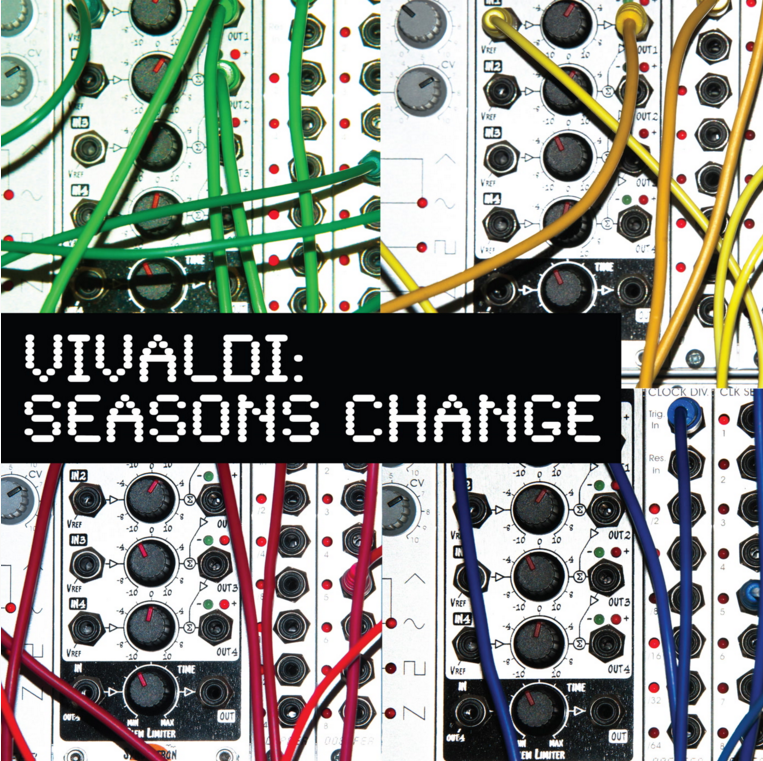
A mixed bag, even for me, this month, with a triple haul of albums from the Kent estuary dreamers wishing to travel far, Gare du Nord. A trio of releases from Ian Button‘s pet project label includes a Pop-sike collection from Joss Cope, fairytale metaphor folk spells from Karla Kane and a ‘switched-on Bach’ like treatment of Vivaldi Baroque classics from modular synth composer Willie Gibson. We also have a new album of Victorian themed pastoral forebode that chimes with our times from Oliver Cherer; a brilliant experimental grunge, new wave and alt-rock experimental album from Martin Mânsson Sjöstrand; the debut album from Gwyneth Glyn for the new artist/label partnership Bendigedig; and finally, two chaotic avant-garde electronic music soundclashes from maverick artist Andrew Speckman, under his recently adopted Sad Man persona.
Read on….
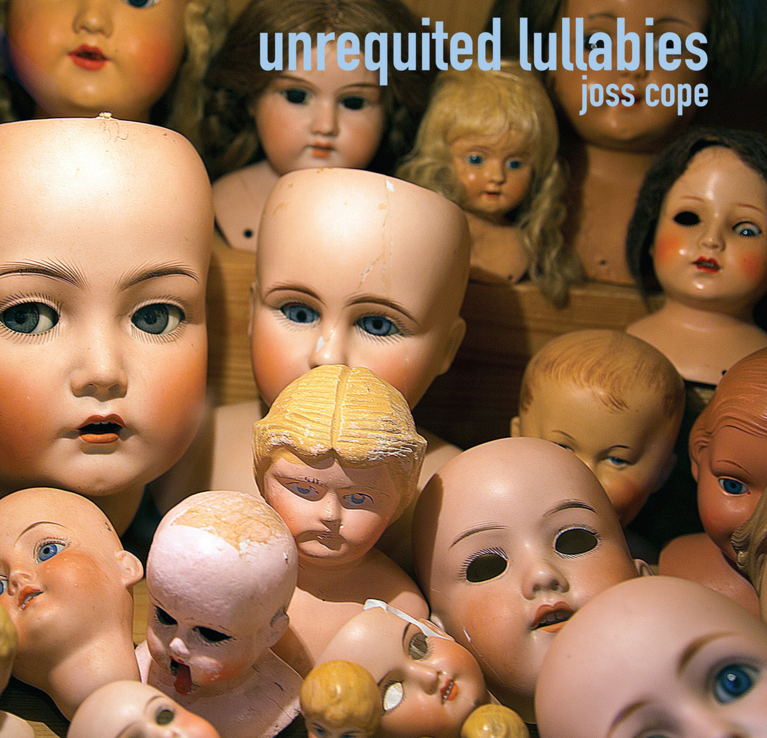
Joss Cope ‘Unrequited Lullabies’ (6th October 2017)
Karla Kane ‘King’s Daughters Home For Incurables’ (6th October 2017)
Willie Gibson ‘Vivaldi: Seasons Change’ (13th October 2017)
All three released on the Gare du Nord.
Absent from my review selections for a while now, estuary romantics Gare du Nord – Ian Button’s independent label, run from an HQ that sits on the edge of the metropolis of London and the pastoral pleasantries of backwaters Kent – have sent us a triple bundle of releases, all earmarked for release in the first half of October. This autumnal flurry includes a new album of psychedelic pop soft bulletins from Joss Cope; an Anglophile hushabye fairytale of folk from Californian sun-kissed artist Karla Kane, of The Corner Laughers fame; and a transduced ‘switched-on’ modular synth treatment of Baroque Vivaldi classics from, the non de plume of George Baker, Willie Gibson.
A real mixture you’ll agree, the first of which, Cope’s Unrequited Lullabies, is in the mode of classic 60s revivalism and 80s psychedelic pop.
Sibling to arch druid polymath of the ‘head’ community, Julian, brother Joss Cope shares an equally colourful CV; serving and rubbing shoulders during his formative years with a number of famous and cult figures from the Liverpool music scene, including Echo & The Bunnymen Les Pattinson, Wah Heat’s Peter Wylie and Spiritualized’s Mike Mooney. Not before fleetingly spearheading Bam Caruso label favorites Freight Train – releasing the modestly pivotal album Man’s Laughter in 1985 – before splitting and joining ‘rivals’ the Mighty Lemon Drops, Joss left Liverpool to be absorbed into the Creation Records mayhem of London. During his spell in the capital he played with Crash, The Weather Reports and Rose McDowell before carving out a solo career, releasing two albums under the Something Pretty Beautiful banner.
Inevitably Joss would at some point cross paths with his elder brother, contributing famously to the Fried and St. Julian solo albums; co-writing with both Julian and his former Freight Train band mate Donald Ross Skinner the album tracks Pulsar and Christmas Morning.
Before this becomes just a biography, Joss would form and play with many more bands during the 90s and noughties – The United States of Mind, Dexter Bentley and Sergeant Buzfuz among them -, balancing music with a careers as a video director for MTV, narrator for a children’s BBC animation series and an online producer/activist for Greenpeace.
This latest chapter in a checkered backstory of affiliations sprung from Joss’ regular sleepovers in Finland, home to his current partner, the cartoonist Virpi Oinonen. In 2016 he began collaborating with the guitarist Veli- Pekka Oinonen, bassist Esa Lehporturo and percussionist Ville Raasakka trio of Helsinki talent, and the (what must be the most Irish of Irish sounding names in history) keyboardist O’Reilly O’Rourke on what would become this album, Unrequited Lullabies.
Not quite as gentle as the title suggests, but still quite meandrous, peaceable and safe, the lullabies, coastal tidal ebbs and flows and metaphorical drownings include the full range of influences from Joss’ earlier output on Bam Caruso; namely the cult label’s Circus Days compilations of obscurities and novelties from the mostly kaleidoscopic afterglow music scene of English psych and pop-sike. At various times you can expect to hear traces of 70s era Pretty Things, House Of Love, Mock Turtles, early Charlatans, Robyn Hitchcock, Dave Edmunds, XTC, The Eyes, and most obviously (and prominent) Syd Barrett. Controlled with assured maturity throughout, those influences loosely flow between the pastoral, shoegaze, backbeat pop and acid psychedelia.
Yet despite tripping occasionally into mellotron steered mild hallucinogenics, there’s nothing here that ventures beyond the ‘calico wall’; no surprises or raw energetics; no teeth rattling scuzz and fuzz or melting chocolate watchbands. Unrequited Lullabies is instead an understated effort, erring towards gestures of love – as Joss himself rather poignantly and regretfully puts it about one particular song, “Love songs to the children I never had…’ -, with a side order of ruminations and the sagacious forewarning advice of a late generation X(er) on the ‘good and bad’ aspects of life ‘in this magical place’. All played out to a most melodic songbook of classic psychedelic pop.
Time-travelling off on a completely different tangent, the Willie Gibson alter-pseudonym of one-time British soul journeyman George Barker (playing trumpet back in the late 60s and early 70s with J J Jackson, Tony Orlando and Dawn, and the “sweet soul music” Stax legend, Arthur Conley) transduces the Baroque classics of Vivaldi via a range of modular synthesizers; ala a strange kitsch sounding combination of Wendy Carlos, stock 80s paranormal soundtracks and a quaint sounding Kraftwerk.
Moving from soul into post-minimalist electronica on the cusp of a new era in technological advances, Barker was among the first recipients of the iconic all-in-one multi purpose digital synth/sampler/workstation, the Fairlight CMI; using its signature sound to produce sound design and music for radio and TV commercials in the 80s, whilst also lending his skills on this apparatus to Madness and Red Box on a number of recordings during the same period. Under the Ravenwood Music banner, Barker has carved out a career for himself as a producer and music publisher of synth based composition.
Modulating a fine sine wave between ‘on hold’ call-waiting style background electronica classicism and cult retro-futurism, this latest treatment of the Italian genius’ most familiar and celebrated set of opuses – Opus 8, Il Quatrro Staginoni i.e. ‘the four seasons’ – certainly has its moments. The actual execution, made more difficult by Barker’s process of ‘un-creatable’ layering, playing one part at a time with no recall, but constantly evolving his set-up and expanding until all that remains is the ‘control data’ – like the written score itself – is quite clever.
Split into triplets of quarters, each section features a subtle fluctuation of changes and melodies. The first trio of compositions, La Primavera 1 – 3, features fluttering arpeggiators, heralded pomp and glassy toned spritely descending and ascending robotic harpsichord. It sounds at times like a 80s video arcade symphony from Stranger Things. Both majestically reverent and cascading patterns follow, as Barker conducts his way through a carnival four seasons and trilling Baroque sitting room recital. Later on however, the L’Inverno 1 – 3 suite sends Vivaldi towards Georges Méliès visions of space; bounding and mooning around on a nostalgic romanticized dreamy lunar surface.
A future cult obscurity, Seasons Change is a knowing, clever exercise in retro-modular synthonics; returning to the classical source to produce a well-produced and crafted homage.

The final album release of October from the label is in conjunction with the group that US troubadour Karla Kane leads, The Corner Laughers: all three band members including husband Khoi Huynh, who co-produces and accompanies Kane throughout, appear on this album.
A cross-Atlantic venture between the two, Kane’s debut solo, King’s Daughters Home For Incurables, unveils its true intentions and angst from behind an enchanting, lullaby-coated folksy and disarming veneer. Partly post-Trump diatribe fashioned to a rich metaphor of Grimm tale whimsy and a Lewis Carroll meets a lilting Ray Davis like meander through – what I interpret as – a sulky ironic vision of an old insular England and aside at those who voted for Brexit, this songbook, written under the comforting shade of a beloved oak tree in Kane’s California backyard, states a clear position; knowing exactly which side of the fence it sits.
An Anglophile of a sort, much of this solo debut is informed by Kane’s experiences touring the UK. Recordings from an idyllic pastoral England, courtesy of Richard Youell, imbue endearing lulls with birdsong and the friendly buzz of bumblebees. Also from this ‘septic isle’, the idiosyncratic Martin Newell of the cult favorites Cleaners From Venus fame is invited to add a narrated stream of British institutions and romanticized descriptions of eccentric foibles and pastimes in a sort of Larkin-style (“cricket matches seen from trains”).
Mellifluously sung and played, though on a few occasions pushed through with bit of intensity and swelling anger, Kane’s sugar-coated ruminations are deeply serious; touching as they do on feminism, immigration and the anxieties of motherhood in what can, especially in the demarcated political bubble of social media, seem like an ever more oppressive climate. Kane does hold out hope however; as the accompanying PR blurb cites, Kane has a deep desire to summon optimism and hope in a dark world. Something I can confirm she conveys extremely well on this, her debut solo album.

Oliver Cherer ‘The Myth Of Violet Meek’
Wayside & Woodland, 29th September 2017
Wayside & Woodland, home to haunting folk, conceived not under an old steadfast oak tree but the man-made pylon, and super 8 nostalgic field recordings, has been busy of late. A flurry of activity has seen a duo of albums – an appraisal collection of Home Electronics produced in the 90s by the Margate dreamers of ambitious electro and new wave pop, They Go Boom!!, and the Bedrooms, Fields & Houses compilation sampler of label artists – released in recent weeks. And now, following in their wake, and earmarked for a 29th September release date, is this latest brilliant travail from Oliver Cherer, The Myth Of Violet Meek.
Probably most recognized for his Dollboy persona, Cherer’s varied musical affiliations and projects also includes the big beat Cooler, Non-Blank and experimental popsters Rhododendron. Here, he drifts towards a hazy fictional reminiscent style of folk and pastoral psych, a musical vision pulled from the ether and a Bellows Camera captured past, on this poignant fantastical tale of Victoriana.
Set in the Forest of Dean, this lamentable concept album (billed as ‘part-fiction’ ‘part fact’) weaves the dreamy folkloric story of the tragic Violet Meek (a play on words of ‘violence’); mauled to death or not by the dancing bears of a visiting circus troupe in the twisted and, musically alluded ominous maybe magical, tree thickened woods. Based we’re told on a vaguely real event that happened in the 1880s, Cherer’s story isn’t just a vintage walk in the past and melodic indictment on the cruelty of Victorian society towards women, but draws parallels with the continuing issues of inequality, chauvinism and mistreatment still prevalent in our own times.
This album is also a homage of a sort to Cherer’s own formative years as a teenager spent in the Forest of Dean – the diorama setting for this sorry tale – and a troubled and plaintive denouncement of the suspicions and distrust of a small community; casting out the strange misunderstood and foreign. It is the treatment of Violet though, slurred by innuendo – sharing a similar kind of ‘horseplay’ sexual predilection of idle gossip, and immature sniggers that continues to still colour the reputation of Catherine The Great – that lies at the heart of and moves on this beautifully articulated collection of harmonious crooning, lulling laments and leitmotif instrumentals.
This is an unforgiving unflattering portrayal of England, a nascent nostalgic one with little room for equality and the presence of outsiders, which is every bit as revealing about the present. As lovely, often dreamily so, as the music is the 70s pastoral accompaniment is often trembling and quivering, the fiddles distressed and bewitchery, enticing us into a esoteric psychogeography that features a languid brushed backbeat and Morris Dancers like flourish around the maypole on one song, but finds evil in the idyllic scenery on another.
Traces of 70s era Floyd, Wiccan folk, the Super Furry Animals and Darren Hayman’s civil war opus The Violence fill my senses; though Cherer stamps his own signature confidently among the inspirations and influences. Dollboy fans will find much to admire in this understated, assured and beautifully put together minor opus, as will those familiar with the Wayside & Woodland label output. A most stunning and beautiful work.

Sad Man ‘S/T’ (OFF Records), ‘CTRL’ (Self-released)
Both released on 8th September 2017
From the harebrained imagination of garden shed avant-garde (and often bonkers) electronic music composer Andrew Spackman, emanates another of his personas, the Sad Man. Like an unconscious, untethered, stream of sonic confusion and madness, Spackman’s experiments, played and transmogrified through a collection of purpose-built gizmos – including remodeled and shunted together turntables -, combine art school practice conceptualism with the last thirty years worth of developments in the electronic and dance music arenas.
Acid, techno, trip-hop, breakbeat, UNKLE, DJ Shadow and early Warp (especially the Aphex Twin) are all channeled through the Duchampian inspired artist’s brain and transformed into an often rambunctious, competitive soundclash.
Featured on the Monolith Cocktail under his previous Nimzo-Indian identity, Spackman’s newest regeneration is an exploration in creating ‘the saddest music possible’. It is far from that. More a sort of middle age resigned sigh and sonic assault with moments of celestial melodic awe than plaintive and melancholic despair. Perhaps throwing even more into the Sad Man transformation than he did with the Nimzo-Indian, all the signature wonky squiggles, interchanges; quirks and quarks remain firmly in place, though heavier and even more bombast.
Usually found, and despite my positive reviews, by mistake, languishing on Bandcamp, Spackman deserves a far wider audience for his maverick mayhem and curiosity. This month he plows on with a duo of Sad Man showcases; the first, a generous self-titled compilation of released through the Belgian enterprise OFF Records, the other, a shorter self-released keyboard command inspired album, CTRL. The former, launched from a most suitable platform, features an idiosyncratic collection of obscure recordings, spread over a traditional 2xCD format. Full tracks of caustic, twitchy, glitches-out cosmic mayhem and internal combustions sit alongside shorter sketches and edits, presenting the full gamut of the Sad Man musical vernacular. CTRL meanwhile, if it has a concept or pattern at all, seems to be a more quantifiable, complete experience, far less manic and thunderously chaotic.
Kosmische, acid gargles, breakbeats, trip-hop and the trusty faithful speeded-up drum beat pre-sets of late 80s and 90s techno music wrestle with each other for dominance on this seven-track LP – each track named after a key command, all five combining for some imaginary keyboard shortcut. Struggling to break through a constant rattling, distressed and distorted barrage of fuzzy panel-beaten breaks are cosmic symphonic melodies, stain glass organs and tablas. And so, pummeled, punch bag warping ride over serene glimpse of the cosmos, and raspy rocket thrusters blast off into more majestic parts of the galaxy. A space oddity for sure, a tumultuous flight into the unknown lunar expanses, but also a soundtrack of more Earthly chaos, CTRL is essentially a mental breakdown yet strangely also packed full of lighter more fun moments.
Thankfully neither of the Sad Man releases live up to the central ‘saddest music’ tenet, though probably best experienced in small doses to be on the safe side. This duo of offerings will hopefully cement a reputation for eccentric electronic cacophonies, and showcase an interesting body of work.
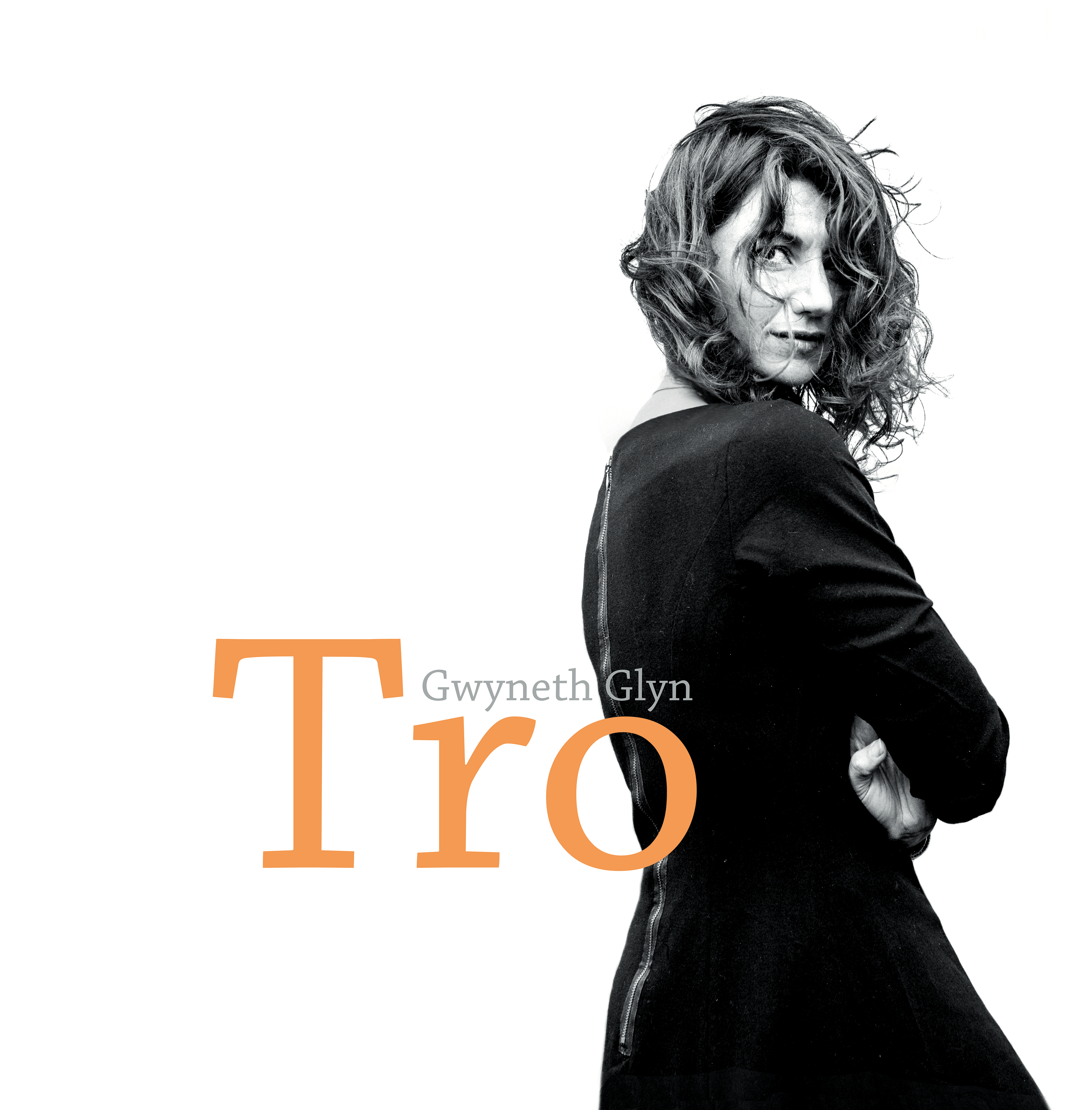
Gwyneth Glyn ‘Tro’
Bendigedig, 29th September 2017
Lighting the way for a new ‘integrated independent partnership’ between the Cardigan-based Theatr Mwldan, the polygenesis renowned ARC label, and artist, the first major solo album from assiduous writer, poet and songstress Gwyneth Glyn, effortlessly traverses the Welsh valleys, Scottish Highlands, Appalachian Mountains and West African landscapes with an assured earnestness and the most delicate of touches.
In what will be a long gap in scheduled releases – the next in line an album from Catrin Finch and Seckou keita won’t be out until April 2018 -, Glyn’s inaugural album of both Welsh and English language sung songs proves a wise choice with which to usher in the Bendigedig platform.
The Jesus College, Oxford philosophy and theology student and revue performer, with stints in the folk Americana group Coco Rose and the Dirty Cousins, was the Welsh poet laureate for children between 2006 and 2007, and it’s her native home to which she returns again on Tro. A journey back to Glyn’s roots in rural Eifionydd, after a five-year sojourn in Cardiff, Tro, or ‘turn’, is inherently a Welsh imbued songbook. However, despite ten of the thirteen odes, ballads, elegies and explorations being sung in the native tongue, Glyn’s transformations of universal and ancestral standards drift subtly across the Welsh borders into a Celtic and beyond inspired influence of sound and ideas.
Previous collaborations with Indian music artist Tauseef Akhtar and the already mentioned Senegal kora player Seckou Keita resonate on this ‘Wales meets the world’ self-styled album. Keita in fact adds a touch of plucked lilting Africa to many of the songs on Tro; joining the sounds of the metal tine African mbira, played throughout by Glyn’s producer and the multi-instrumentalist Dylan Fowler, who also performs on an array of equally exotic instruments from around the globe on Tro.
Dampened, often wafting along or mirroring the ebb and flow of the tides and shifts of both the ominous and changing prevailing winds, the backing of plucked mandocello, tabwrdd one-handed snare drum, bellowed shruti box and banjo sitar genteelly emphasis and pushes along the imagined atmospheres; moving from the Celtic to country genres, the Indian drone to the south of the equator music zones.
Glyn’s choice of cover material and her controlled but stirring, lingering vocals hint at America and Britain’s legacy of counterculture troubadour heroines, including Joan Baez, Vashti Bunyan, Joni Mitchell – a famous quote of Mitchell’s, ‘Chase away the demons, and they will take the angels with them’, is used as catalyst for Glyn’s music in the press release – and the not so political, more sedate, Linda Ronstadt. The train-like motion rhythm Ffair, – a translation of the Irish folk song She Moved Through The Fair – even sounds like a Celtic Baez, and the American/Scottish woe Y Gnawas (The Bitch) – an adaption of the old standard Katie Cruel – was first brought to Glyn’s attention via another revered voice of the times, Karen Dalton, who as you expect, made her own inimitable, unique mark upon the song when she covered it many moons ago.
Unfamiliar with the Welsh dialect as I am, I can only imagine that the lyrical tumults offer the usual fare of sad betiding’s and lament. Whatever the subject may be, she sings, nee swoons, with ease and comfort; the phrasing unforced, flowing but far from untethered. And so Glyn proves to be a singer of great talent and skill as she bares her soul across an age of pastoral, rural furrowed folk.
Ushering in the label/artist partnership on an adroit, though at times indolent, debut, Tro is a subtle refined encapsulation of the Bendigedig platform’s raison d’être; an enriching experience and showcase for an impressive singer. On the strength of this album alone that new venture looks set to be creatively rewarding.
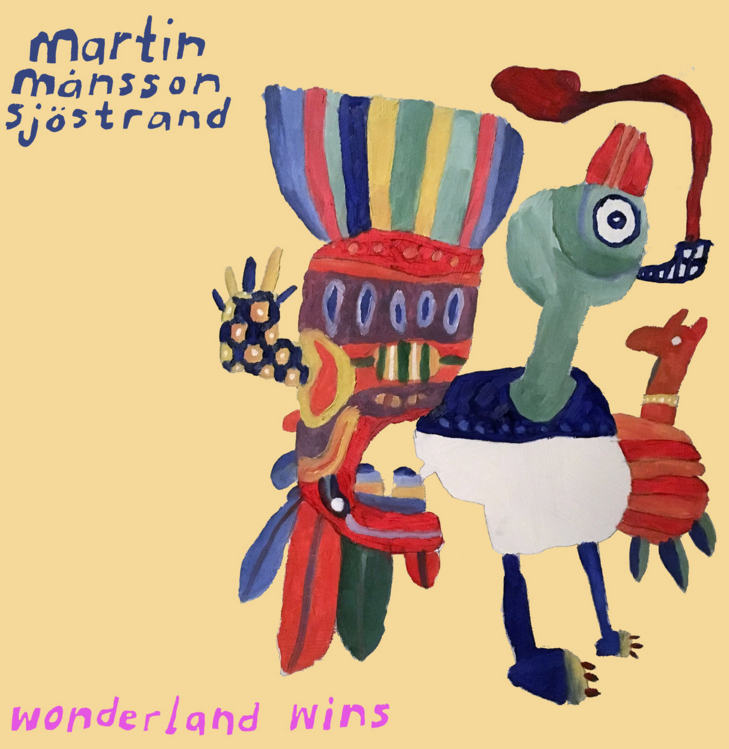
Martin Mânsson Sjöstrand ‘Wonderland Wins’
Jangle Nest, September 2nd 2017
Recording under a variety of guises over the years, including Dog, Paper, Submarine and This Heel, the Swedish songwriter and multi instrumentalist Martin Mânsson Sjöstrand uses his own name once again on this, perhaps one of his most, omnivorous of albums. Stridently changing styles at a whim, Sjöstrand has previously tested himself with lo fi, instrumental surf, prog and alternative rock, but now tries his luck with a mixture of grunge, indie and new wave influences on the recently released Wonderland Wins.
Those influences play out over a combination of shorter incipient doodles and fleeting meditations and more complete songs; Pavement on the garbled megaphone vocal lo fi strummed In the Orbit Of The Neutron and sunshine pop remix of Calla Lily, Weezer on Man Of Self Contempt, and Nirvana, well, everywhere else. But saying that, you’re just as likely to pick up references to Guided By Voices, Devo, The Residents, Flaming Lips and DEUS on an album that doesn’t really have a theme as such or musical leitmotif.
There is a sort of coherency here however with the album’s brilliant Archers Of Loaf meets Placebo power pop alt-rocker Waiting: a full on electric Yank-twanged vocal version opens the album, and a stripped-down more poignant and sad live version (Live At The Animal Feed Plant) closes it. Waiting for a myriad of cryptic endings and a release, this standout minor anthem sounds like a missing gem from the grunge era of the early 90s.
Sjöstrand also likes to experiment, and those already mentioned shorter excursions certainly head off on curious tangents. The most silly being the self-titled fairground organ giddy romp; the most plaintive, the acoustically picked romantic “last dance”, Myling; and the most ominous, the force field pulsing bassline warning and crackling heavy transmission, The Moon Is A Playground.
A quirky take on a familiar back catalogue of inspirations, playing with a number of classic alt-rock tropes, Sjöstrand’s Wonderland is a well-produced, confident album of ideas, and more importantly has one or two great tunes.
 Monolith Cocktail Blog