Archive spots and now home to the Monolith Cocktail “cross-generational/cross-genre” Social Playlist – Words/Put Together By Dominic Valvona

A new thread, feed for 2023, the Digest pulls together tracks, videos and snippets of new music plus significant archival material and anniversary celebrating albums or artists -sometimes the odd obituary to those we lost on the way. From now on in the Digest will also be home to the regular Social Playlist. This is our imaginary radio show; an eclectic playlist of anniversary celebrating albums, a smattering of recent(ish) tunes and the music I’ve loved or owned from across the decades.
July’s edition features Volume 78 of the Social plus, in honour of the late Yanna Momina, another chance to read my piece on her last recording, Afar Ways, and a 50th anniversary celebration of Can’s Future Days opus: their most complete, sublime album in my opinion.
The Social Playlist #77

Anniversary Albums And Deaths Marked Alongside An Eclectic Mix Of Cross-Generational Music, Newish Tunes And A Few Surprises
Repeating myself, but if this is your first time here, first of all, welcome, and secondly here’s the lowdown on what the Social is:
Just give me two hours of your precious time to expose you to some of the most magical, incredible, eclectic, and freakish music that’s somehow been missed, or not even picked up on the radar. For the Social is my uninterrupted radio show flow of carefully curated music; marking anniversary albums and, sadly, deaths, but also sharing my own favourite discoveries over the decades and a number of new(ish) tracks missed or left out of the blog’s Monthly playlists.
With tributes to those fallen comrades, we mark the passing of The Pop Group (second tragedy to hit that era-defining group, with Mark Stewart‘s death only a couple of months back) and Maximum Joy‘s John Waddington, the late Djibouti songstress Yanna Momina and highly influential avant-garde jazz saxophonist and clarinetist Peter Brötzmann.
There’s album anniversary celebrations as usual too, with the 50th anniversaries of Funkadelic‘s Cosmic Slop, Lou Reed‘s Berlin saga, Bob Dylan‘s Pat Garrett & Billy The Kid Soundtrack and Can‘s Future Days, the 40th anniversary of Whodini‘s 1983 debut, 30ths of Cypress Hill‘s Black Sunday and the Super Furry Animals Phantom Power.
Newish of a kind entires include Penza Penza, Alogte Oho & His Sounds Of Joy, J. Scienide, Brian Eno and Homeboy Sandman. Whilst from across the ages and genres there’s tracks from Camera237, Heaven & Earth, Andwella, Oberman Knocks, Kalacakra and more. 30 choice tracks in all.
___[TRACKLIST]___
Penza Penza ‘My Friend Ash’
Funkadelic ‘You Can’t Miss What You Can’t Measure’
Har-You Percussion Group ‘Feed Me Good’
Alogte Oho & His Sounds Of Joy ‘O Yinne!’
Lou Reed ‘Oh Jim’
Maximum Joy ‘Dancing On My Boomerang’
Kalacakra ‘Deja Vu’
Whodini ‘Magic’s Wand’
Cypress Hill ‘Break ‘Em Off Some’
The Pop Group ‘3:38’
Peter Brötzmann ‘Never Run But Go II’
Super Djata Band ‘Fassiya’
Benkadi International ‘Kolankoma’
Bobby Cole ‘Status Quo’
J. Scienide & Napoleon Da Legend ‘Bats In Wuhan’
Konstruckt/Peter Brötzmann ‘Tepe’
Brian Eno ’77 Million Paintings 3′
Yanna Momina ‘For My Husband’
Homeboy Sandman ‘Off The Rip’
The Prisonaires ‘Just Walkin’ In The Rain’
Bob Dylan ‘Billy 1’
Nicole Croisille ‘J’aime Pas Quand Tu Pars’
Andwella ‘Hold On To Your Mind’
Heaven & Earth ‘Song For Craig’
Super Furry Animals ‘Bleed Forever’
SPIME.IM ‘Heliotrope’
Oberman Knocks ‘Degonnt Type Runners’
Rabih Abou-Khalil ‘The Lewinsky March’
Camera237 ‘John Arne’
Can ‘Future Days’
ARCHIVES/ANNIVERSARY
Future Days The Big 5-0

BACKDROP
The dynamic German underground graphic artists Ingo Trauer and Richard S Ludlow’s artwork for the front cover of Can’s fifth studio album, Future Days, features a couple of mystical arcane symbols full of meaning, and steeped in ethnography.
Both the trident and Hexagram icons found on the cover add to the prevalent spiritual mood that now surrounded the group: producing extra layers of connotation and interweaving mysteries.
The Hexagram, an almost missed set of broken lines type logo that sits beneath the album’s title, is taken from the Chinese I Ching book of ancient symbols. Each of these symbols is made up out of a series of sticks sorted into six broken lines (Ying) and unbroken lines (Yang), which are given cryptic parables relating to their individual shape. Our featured configuration is known as Ting – The Cauldron, or, as Holding, so called because of its cooking pot like appearance.
The Cauldron represents the sharing of a well-prepared meal that acts as a ritual for cultivating bonds between communities. Ting itself symbolises the provision of both the body and the spiritual extras: an emphasis that shouldn’t be overlooked.
The trident carries its own abundance of meanings and features heavily throughout history and ancient mythology, especially of course in Greek mythology with Poseidon, and in Hinduism with Shiva.
Hindu myth refers to the three pronged weapon and spectre of power as representing past, present and future or the place where all three main energy channels in the body meet at the brow.
It also appears as a symbol of unification for the old Slavic tribes that once roamed the Ukraine, and crops up in Russia as a rallying cry for the downtrodden to band around in their hour of need.
Encryption is not entirely necessary but it may help build up a picture of where Can’s mindset was attuned during the making of Future Days, an album of majestic splendour and ethereal elevated beauty.
Indeed, you could say they were anointed with a heavy spiritual crusade, to produce a work of art good enough to be received in the highest echelons of heaven itself – the empyrean.
The serene shift away from the dance grooves and darkly esoteric improvised mind fucks of Ege Bamyasi and Tago Mago now made way for an exuberance of those much loved Afrobeat rhythms and ambient transcendental flowing soundscapes.
A much needed summer break of 1973 helped to refresh the band and put them at ease enough to create possibly their greatest coherent work yet.
But let’s go back for a moment to the previous year, which saw the ongoing dispute with their former manager Abi Ofarim and the worrying near death experience of Michael Karoli, whose perforated ulcer damn near cut his life short.
Karoli luckily recovered of course, though not until the spring of ’73 after being out of action, unable to even practice, for nigh on six months.
Carrying on as well as they could, Jaki Liebezeit and Holger Czukay turned their free time to producing a record for the solo artist Alex on the Ariola record label. Czukay was also putting the finishing touches to his own solo work Cannexias 5, an album of montage sound pieces.
Irmin Schmidt meanwhile locked himself away to study obsessively, while Damo Suzuki just…well, just hung about.
Financial problems once again became a worrying issue as with no touring and little in the way of soundtrack work, the band where finding it tough to survive.
Schmidt’s wife Hildegard was on hand to save the guys from disaster, rolling up her sleeves she acquired a bank loan, which went towards re-kitting the studio and setting up a 60 date tour for when Karoli eventually returned to the fold. This tour would be more like a workout than set of concerts, taking in the UK, France and the homeland all within the short period of spring 73: ending just in time to give them a brief summer holiday before recording started again.
During this period Damo would start to get cold feet and wander off, returning to his much missed Japan just before the start of the sessions for Future Days. In his absence the band began to start recording at the now re-christened Inner Space studios in Weilerswist, just outside Cologne.
This former cinema, transformed into a purpose built studio, was where the band had recorded the previous album Ege Bamyasi. New equipment and upgrades began to arrive much to Czukay and Schmidt’s delight, though there wasn’t much time to experiment as the new record’s deadline was earmarked for the autumn of 1973.
Czukay declined the engineering tasks this time around, wishing to concentrate fully on his bass playing duties. Instead a newly paid bunch of roadies were now responsible for all the lifting and setting up, allowing the guys to concentrate entirely on the task at hand. Czukay did however manage to still be in charge of editing and cutting – credit also goes to both Chris Sladdin and Volker Liedtke who recorded the sessions and mixed the record.
Damo’s eventual arrival – from a sabbatical in Japan – couldn’t arrive quick enough; already large swathes of the backing had been worked on and recorded, allowing only a small amount of room for his vocals and not as much interaction as he’d been used to on previous records.
His vocals suffered from a real murky low level mix, lending a certain ghostly and almost absent charm to the record that obscures Damo’s lyrics somewhat. Later on with the remastered CD versions these enervated vocal performances were amended and turned up, made cleaner: though this does alter the sound somewhat.
I can’t help but feel that his eventual departure was imminent when listening to Future Days: Can would feel a little lost without a lead vocalist, eventually having to share those duties between Karoli and Schmidt, though they already seemed to be heading towards a pure instrumental sound, and could have at a push, gone without Damo’s contributions.
When he does get his chance, Damo offers a guiding light through the epic opuscule; especially on the breath-taking odyssey of Bel Air, his repeating chorus perfectly encompassing the effortless allure found in the melody.
Future Days features only four tracks, three being over eight minutes long, with an entire side being bequeathed to that seminal peregrination.
The title track speaks for itself and sets the general atmosphere and themes that are echoed throughout, the album’s ending more or less finishing where it began. The Sun Ra invoking soundscape Spray adds some strange jazz and blues reworking to the album; an eight-minute display in the avant-garde direction, full of soul.
A short interlude can be found on side one with the Ege Bamyasi familiar three-minute evocative dance-like structure track, Moonshake. Neither is it a companion piece to Tago Mago or an extension of the tracks Vitamin C or I’m So Green, instead Moonshake manages to sound fresh and breaks new ground. Its short stomp intermission finely balances out the symphonic set pieces.
Side two concentrates all its efforts on the glorious sprawling Bel Air; uplifting heavenly elegance pours out of every nuance on this progressively sophisticated hymn to the days yet to come. The title is slightly wry, as this particular region is most fondly known as the affluent hillside suburb in L.A, mainly infamous for its celebratory residents hiding behind high walls and tight security. Founded and named by the oil tycoon turned congressman Alphonzo E Bell Sr in 1923, this area was originally earmarked as his own rich kingdom to pontificate and rule his bronze wrinkled fellow spoilt peers from. Did you know that it’s also ironically, and quite timely, the name of a rather unsafe and infamous slum area of Haiti? Though surely after the recent catastrophes, most parts of the island are now levelled out and share the same common denominator – fucked.
Coincidentally or not, Chevrolet made a pretty fine gas-guzzling model named the Bel-Air, which features in the James Bond film Live And Let Die, the same year as this album.
On the record itself this song is actually titled as Spare A Light, whether this is a further enlightened reference or not, I’m not sure. It has subsequently come to “light”, thanks to one Al de Baran, that it is the name of a cigarette. This would explain the “spare a light” alternative title, though other than a prop, favourite brand of cigs, doesn’t really have any meaning.
Czukay sums up the record as:-
“Electric symphony group performing a peaceful, though sometimes dramatic landscape painting”.
Recording took a speedy two months to complete and the album was, after all the touring and commitments, released on time.
Again the usual plaudits and champions extolled Future Days, praising the slight change in step that the band had taken.
Sales didn’t match their previous two albums but they had managed to win over some new fans with the airy new sound and meditatively heavenly direction.
This record managed two landmarks, one the first to not feature any soundtracks work and the last to feature Damo, who soon married his German girlfriend and converted to being a Jehovah’s Witness; turning his back on music for a considerable time and leaving Can for good.
A lot of critics and even fans such as Cope, describe this as the last truly classic album from the group, namely due to the departure of Damo, who added a certain focus and outsider dynamic.
Like many groups since and before ‘breaking up is so very hard to do’ and it prompted Can to perhaps look inward, becoming more introverted, lacking in direction.
Can would never manage to quite connect in the same way after Future Days, the chemistry would never reach the same consistency again.
REVIEW
Steam-powered machines and reverberating murky atmospheres in the mists, emerging to wrap themselves around the introduction to side one’s title track, ‘Future Days’. The creepy, almost unnerving opening starts to evaporate, making way for an array of soft shimmering percussion and cushioned gongs. Slowly fading in, the main rhythm section materializes at an articulate pace, shuffling along in a downplayed manner.
Jaki Liebezeit soon lets loose with his respective nod to Ghana and Nigeria, those Afrobeat and Highlife rhythms working up a sweat and continuing throughout the entire album. Peddling over the top of these infectious grooves is the team of Michael Karoli and Holger Czukay, who ratify the African treaty of influence with some precise shimmy hooks and riffage. They take this worldly influence and run with it through an intergalactic corridor, stopping off at the most inopportune moment to return free fall style back to Cologne.
Joining the cortege of unabandoned soulful melodies that now swirl around the track is an all in sundry display of shakers and chimes; adding some degree of sparkle.
A deft understated announcement from Damo floats upon the hotbed of rhythms, soft crooning strains of cryptic meaning unravel themselves over the course of the song before disappearing back into some kind of low mix ether.
Cryptic broken English pronunciations like:-
“I just think that rooms to end,
How commend them from their dreams?
Send the money for a rainy day,
For the sake of future days”
Backward meaning and confusing command of the language make for a mysterious unfathomable song subject, dropping in and out almost sporadically.
Now the unmistakable tones of accordion and violin seep into the magical mix as Damo moves over the congas, slapping them with abandon.
As the halfway mark is reached, Schmidt allows himself a chance to impress with a melodic display of surging swirling choruses and whirling shit storm echo a rallying call to arms. The tempo now quickens and Liebezeit raises the roof with his tight rolls and bursting cymbal clashes.
Damo, whose vocals had sounded like they’d been recorded in a different dimension, now gets to bleat out as though talking through an inverted megaphone. His verbal like threats escape the cacophony of layers that have so far held him back; with menace the lyrics project forth –
“You’re spreading that lie, you know that,
You’re getting down, breaking your neck.
When doing that was breaking home,
What have you done, free the night”
A deep protruding bass line delivered from Czukay rumbles on, low drawn out notes and disciplined melodies allow Karoli the space to pinpoint some celestial accents before the song draws to a close.
The final moments are played out with peculiar sandpaper rubbed sounds, which become louder and louder, all the while the bass drum of the real man-machine Liebezeit goes off like a rocket. He presses on the foot pedals like a jackhammer, pulverizing them into the ground.
Flittering tapes and Schmidt’s arpeggiator frenzied operatics compete with the now pumped up drums until someone on the studio console felt compelled to fade it all out. Only to have second thoughts and reverse his momentary decision and crank the fader straight back up.
Spray is more or less a song in two sections, the first namely a building progressive themed landscape suite, the second is a Damo led love ode.
Starting with the fraught shaking organs and attention seeking flourishes that emanate from the altar of Schmidt’s hammer house of horror invoking backline of synths and keyboards, we are party to a harrowing episode of simmering effects and bubbling chemist set theatrics, which emphasis the moody tone as the gothic meets Sun-Ra in an epic face off.
After Schmidt has so enthusiastically conveyed his sermon, Damo sets to work on the bongos, all the while the trebly tight delayed clash of cymbals resonate in his ears.
Czukay manages to play a highly amusing old rhythm and blues standard twelve-bar, before sliding off into an up-tempo octave free for all, executing the bass playing equivalent of doodling.
Entering this frayed stage is Karoli, who chops up some solid riffs and takes a gander through swamp rock, blues and even rockabilly, all the time bending his rhythm guitar around the loitering bass.
Dribs and drabs of metallic droplet sounds bring in a peculiar middle section, the music dieing down for a brief moment as the drums fade in and out of obscurity. Dreamy guitar and relaxed calm bass ride over the top, accompanying this interlude.
Damo’s smothered voice can just be made out, he meanders through the multi-story layering of impending sounds and effects the best he can.
Ineligible lyrics find it difficult to stand out, though the attempt brings a much welcome light and majestic cooing interjection, moving the piece into a highly spiritual direction.
Schmidt has the final word with his ambrosial sweeps and rapturous oscillating scales of abandon, that spoilt fidgety elbow of his crashes down to sign of the song.
‘Moonshake’ truly carries out its title wishes, by shaking up the so far celestial suite of symphonic concerto rich songs. This short wake up call acts as a momentary respite before we head back into the higher strata’s on side two.
An uncompromising jaunty dance track bursts in, foot-tapping afro-beat funk instantly grabs us by the lapels, even if were not wearing them.
Liebezeit conjures up a stalking infectious beat of repetitive sinewy snare and tight then tight hi-hat; the occasional crash cymbal interrupts his metronome trance like state.
Underpinning this boogie is Czukay’s melodic deep jazz bass and Karoli, who lends some Paul Simon type African bends and twangs.
A mirage of world music percussion is thrown in, cabasa’s, guiros and the djembe hand drums all make an appearance and are backed by some odd ratchet and cranking sounds.
Damo gets to lead the track with those vocals coming through loud and clear for a change, though what he’s singing is still uncertain.
The sounds close-knit barrage of ethnicity and sophisticated Afro-beat would rear its head on future recordings, such as the Saw Delight album.
Can transgress their peers by moulding dance fusion enriched jazz and funk to a long history of European avant-garde, producing an inert new German sound that no one else has been able to reproduce in quite the same manner.
Flipping over the original record we find the twenty-minute opuscule Bel Air, or Spare A Light as it’s entitled here.
We begin this series of four acts cinematic saga with the slow lapping waves washing over our feet, as the opening landscape is built up around us.
Karoli and Czukay both carouse with their lightly crafted bass and sonic exploration, gentle lush sustained plucks and harmonies waft from this partnership.
Pulsating soaring synths and seething unkempt melodies now take the lead, as Liebeziet gently tip toes in and taps out a sophisticated restrained beat on the cymbals, sometimes venturing onto some rolls.
Damo swoons and croons some fragmented story type ode :-
“And when nobody can say that you hate,
But then your story made the store right now.
And when you started to say that you hate,
You’re coming down to the start up gown”
Beautifully lamented in waves, the vocals act as a guiding lantern to this grandiose epic.
Soon a build up of toms and excited choppy guitars bring in a sea change, Czukay going into that free rolling octave hyperbole he does so well.
A hypnotic climax is reached as Karoli’ lightly phased guitar works up a funk rock lead in, straining on the last held notes for posterity.
The next act moves towards a more up-tempo dance mode, Soft Machine and Sly Stone mixed into a heavy rhythmic soul odyssey.
Czukay slides into a higher fret pilgrimage before running out of notes, returning instead to the rumbling undercurrent low notes that could bring down a plane.
Our oriental troubadour begins to free form lyrics all over the place, using his voice like a solo instrument, while a choral wooing chorus adds momentum.
Liebezeit beats his kit into submission, lifting off the drum stool as he kicks his feet through the bass drum and up the backside of Schmidt, who has not had much of a look in.
Crying guitar leads and hung over notes linger in the atmosphere, tensions now building towards a more serious direction.
As act three begins in the afterglow of chaotic clattering and high powered rhythms, a tranquil come down beckons as we wander through in a sumptuous meadow and woods on a summer’s day.
Birds and insects interacting with each other going about their business, this chilled blissful meander brings us to a comforting pause.
In the undergrowth lurks a muffled inaudible voice, almost an incantation that hides underfoot like some disturbed green man.
The main theme starts to fade back in, with Damo now reinvigorated and freshened up after the mid section stroll.
Karoli is given ample room to display his itinerary of textbook licks, caressing and attempting a sort of foreplay, seducing the angelic melody of the first act.
Lifting synths and alluring sweeping layers now pour from the magical laboratory of Schmidt; he conducts the graceful composition like a high priest, all hundred-yard stare, interlocked in a battle between the greater good.
Liebezeit totally psyched up lets go with a fever of drums, barracking and rattling along a now ballistic fashion, whilst Czukay wanders off on his own thread, all wide eyed and dreamy.
Damo ready to unleash the final punch now repeats the chimerical dreamy chorus of:-
“Spinning down alone, spinning down alone.
Spinning down alone, you spin alive”
This chaos theory breakdown certainly runs through all the emotions, bringing us back down to earth with a ceremonial crashing bang before reaching a climatic burst of nodding nonsense.
Can collapse into a stupefied like finale with Schmidt’s long ringing out organ note: like a future re-ordered piano ending from ‘A Day In The Life’.
Liebezeit won’t give up the ghost so easily, those crashing drums still milling around in the final throes of these dying embers.
Just when we believe it’s all over for good, our intrepid band come back for a curtain call, the main heavenly theme making an captivating return before finally concluding on the last bass notes of Czukay. And like that they are gone.
The ethereal divine Future Days album will stay with you for weeks on end, ringing around your mind in-between plays.
If one LP encapsulates the greatest moments in Can’s history, then this is it, with Bel Air being there finest performance.
No excuse is warranted – buy this record immediately and sit back ready to be baptised in the glow of this symphonic triumph.
In Honour Of The Late Yanna Momina

In tribute to the star of Ian Brennan’s in-situ style Afar Ways album, recorded back in 2022, another chance to read my glowing review of Momina’s distinctive, enigmatic and sagacious voice.
Crisscrossing a number of the world’s most dangerous and often remote locations for the Glitterbeat Records label since 2014, the renowned Grammy Award winning polymath-producer Ian Brennan has repeatedly remained hidden as his subjects open up and unload a lifetime of trauma, or, candidly lay bare some of the most stripped, free of artifice performances you’ll ever likely to hear.
And so it’s always a treat, an eye and ears opener to hear about the latest travelogue-rich production. On the occasion of the tenth release in this cannon, Brennan lands down in Djibouti, on the horn of Africa, to capture the evocative voice and music of the enigmatic Yanna Momina and ‘rotating cast of friends’, who passed around a couple of guitars and the slapped, struck percussive Calabash as the only means of accompaniment. Our producer’s usual hands-off approach allows this 76-year-old star to let rip; unleashing an incredible, unique vibrato trill and excitable expressive vocal that resonates loudly and deeply. There’s also a playful improvised outburst of primal-rap to enjoy on the animal-cooee hollered ‘The Donkey Doesn’t Listen’; the only backing on this occasion a wobbled human beatbox and bass thump. Yet a real groove is struck when it gets going, a sort of stripped ESG meets Funkadelic in the surroundings of ‘Aunt’ Momina’s stilted hut.
A member of the Afar people, an atavistic ancestry that spreads across the south coast of Eritrea, Northern Ethiopia and of course Djibouti (early followers of the prophet, practicing the Sunni strand of the faith), Momina is a rarity, a woman from a clan-based people who writes her own songs. This honoured artist – though not in the myopic, over-celebrated way in which we in the West would recognise the word – also plays the two-stringed ‘shingle’, an instrument played with nails. This is complimented – if you can call it that – by an improvised version of the maracas: basically a matchbox. But you would never guess it.
Recorded in a thatched hut, with the surrounding waters threatening to wash up into the ad-hoc studio, the outdoor sounds can’t help but bleed into the recordings: a distant crowing of birds, the fluctuation of creaks and a lapping tide. Intentionally this is an all-encompassing production that discards nothing and invites in the elements, the un-rehearsed, all to spark spontaneity and the magical moments that you’d never get if they were forced. It’s what Brennan is known for, a relaxed encouraging setup that proves free of the artificial and laboured.
The results are more akin to eavesdropping than a recording session, a once in a lifetime performance. And so nothing on this album feels pushed, composed or directed. Songs like the dancing ‘Honey Bee’ seem to just burst out of nowhere – a more full-on rhythmic joy of the Spanish Sahara bordering on the Balearic; an Arabian Gypsy Kings turn of loose and bendy-stringed brilliance.
This method also lends itself to coaxing out some of the most special if venerable performance, the heartbroken a cappella ‘My Family Won’t Let Me Marry The Man I Love (I Am Forced To Wed My Uncle)’ is Momina at her most intimate and lamentably fragile.
With a murmured hum turn loudly expressed vocal, Momina’s opening evocation ‘Every One Knows I Have Taken A Young Lover’ seems to stir up something both mystical and magical in its performer: a glow even. With a repeated thrummed strummed note and a barely rhythmic movement of percussion we’re transported to some very removed vision of deep-fried Southern blues. There’s more of that feel on the slap-y clap-y ‘Ahiyole’, this time though, of the Tuareg variety. And the beaten hand drummed ‘For My Husband’ has an air of voodoo Orleans about it.
Momina’s voice is however absent on the Andre Fanazara lead, ‘Heya’ (or “welcome”); another Spanish guitar flavoured soulful turn that features a collective male chorus of soothed, inviting harmonies.
Despite her years, Momina sounds full of beans; excited, fun and even on the plaintive performances, so alive. This isn’t a dead music, a version of the ethnographical, but a life affirming call of spontaneity in a world suffocated by over-produced pap and commercialism. Just when you think you’ve heard everything, or become somehow jaded by it all, Brennan facilitates something extraordinary and astounding. Cynicism died as soon as the first notes and that voice struck; this isn’t an exercise nor competition to see who can find the most obscure sounds, but a celebration and signal that there is a whole lot of great performers, musical performances that exist if you’d only look.
Monthly Playlist Revue: October ’22: Muramuke, Marlowe, Voice Actor, Lira, Underground Canopy, Keep Shelly In Athens…
October 31, 2022
PLAYLIST SPECIAL
TEAM EFOORT/COMPILED BY DOMINIC VALVONA

Each month the Monolith Cocktail pool of collaborators search long and hard for the choicest of choice tracks; mixing genres and geography into an encapsulation of the last month on the blog.
That team includes me (Dominic Valvona), Matt ‘rap control’ Oliver, Brian ‘Bordello’ Shea, Andrew C. Kidd and Graham Domain.
You may have noticed since the summer that we’ve started compiling a Youtube playlist version, which includes extra bonuses from the No Base Trio and a seasonal treat from Escupemetralla plus some alternative tunes from the same artists on the Spotify list.
So without further ado, here is the October Revue:
And the Youtube version:
Full Track List:-
Montparnasse Musique Ft. Muambuyi and Mopero Mupemba ‘Panter’
Muramuke ‘Just One More’
Balaklava Blues ‘BEAT UP’
Marlowe/L’Orange/Solemn Brigham Ft. Deniro Farrar ‘Godfist’
Rockness Monsta/Method Man/Ron Browz ‘Beastie Boyz’
BeTheGun ‘Metropolis’
Lee Tracy/Isaac Manning ‘Love Is Everything’
Lee Scott Ft. Sly Moon ‘THE MORE I THINK ABOUT IT, THE LESS I CARE’
Voice Actor ‘Battling Dust’
Juga-Naut ‘To The Table’
Ernesto Djédjé ‘Nini’
Liraz ‘Mimiram’
Mehmet Aslan/Niño de Elche ‘Tangerine’
Underground Canopy ‘Space Gems’
Valentina Magaletti ‘Low Delights’
Carl Stone ‘Sasagin’
Tau & The Drones Of Praise ‘Bandia’
Keep Shelly In London Ft. Sugar For The Pill ‘Don’t Want Your Romance’
Librarians With Hickeys ‘I Better Get Home’
Una Rose ‘Partly’
Carla dal Formo ‘Side By Side’
Derrero ‘Long Are The Days’
Super Hit ‘Donde’
Rahill ‘Haenim’
David Westlake ‘English Parish Churches’
Cormac o Caoimh ‘Didn’t We’
VRï ‘Aberhonddu’
Tuomo & Markus ‘Highest Mountain’
Pitou ‘Dancer’ Dana Gavanski ‘Strangers’
The Zew ‘Come On Down’
Brona McVittie ‘Living Without You’
Brian Eno ‘These Small Noises’
Edouard Ferlet ‘REFLEX’
Rich Aucoin ‘Esc’
Puppies In The Sun ‘Light Became Light’
Short Fuze Ft. Dr. Khil ‘Love Letters To The Lost’
Loyle Camer ‘Speed Of Flight’
Ill Move Sporadic/Tenchoo ‘Amulet Chamber’
Atmosphere ‘Sculpting With Fire’
Ghoster ‘CRAME 4’
Clark ‘Frau Wav (Brief Fling)’
Verbz/Mr Slipz ‘Music Banging Like’
Jester Jacobs/Jack Danz ‘Opportune’
Darko The Super/Yuri Beats ‘Don’t Stay’
Open Mike Eagle ‘I’ll Fight You’ A.G. ‘The Sphinx’
El Gant Ft. DJ Premier ‘Leave It Alone’
Heavy Links/Luca Brazi ‘Complicated Theory’
Fliptrix, King Kashmere/Pitch 92 ‘Primordial Soup’
Shirt/Jack Splash ‘Death To Wall Art’
Smellington Piff/Ill Informed ‘Hard Times’
Hi, my name is Dominic Valvona and I’m the Founder of the music/culture blog monolithcocktail.com For the last ten years I’ve featured and supported music, musicians and labels we love across genres from around the world that we think you’ll want to know about. No content on the site is paid for or sponsored and we only feature artists we have genuine respect for /love. If you enjoy our reviews (and we often write long, thoughtful ones), found a new artist you admire or if we have featured you or artists you represent and would like to buy us a coffee at https://ko-fi.com/monolithcocktail to say cheers for spreading the word, then that would be much appreciated.
Premiere: Simon McCorry ‘The Nothing That Is’
February 6, 2020
Video/Single
Words: Dominic Valvona
Photo Credit: James Kriszyk
Simon McCorry ‘The Nothing That Is’
(Close Recordings) Single/7th February 2020
Following on from last year’s acclaimed (especially by us) ambient album of field recording manipulations Border Land, classically trained cellist and composer Simon McCorry is back with an equally evocative, though far less supernatural and mysterious, work of atonal art, ‘The Nothing That Is’.
Created from the musical ideas that informed his involvement with the original score for Javaad Alipoor’s play Rich Kids: A History of Shopping Malls in Tehran – which premiered at the Traverse as part of the Edinburgh Fringe Festival in 2019 -, ‘The Nothing That Is’ peregrination is a subtly airy and stripped back performance that builds upon McCorry’s use of live looping and computer processing: processes and technologies that transform the cello to sound ever more ambiguous.
As McCorry explains it: “Each layer [on ‘The Nothing That Is’] has one sustained note followed by silence. As one note finishes the next is added. An overall harmonic motion is established that pushes the piece to its conclusion. There is no melodic solo line to tie everything together. The cycling individual tones all together create an emotive power. By themselves they are just looped individual notes and reveal nothing.”
Imbued with Brian Eno’s pioneering long tape loop works of Discreet Music and in part by ‘Fratres, Cantus in Memoriam Benjamin Britten and Tabula Rasa by Arvo Pärt, The Nothing That Is – which takes its title from a line in the American modernist poet Wallace Stevens’ seminal and empirical ‘The Snowman’ poem –The Nothing That Is continues McCorry’s exploration of compositional techniques that perfectly marry sound, space and silence.
Expanding on the track and accompanying video, McCorry explains, “My thought is being influenced by reading David Abram’s The Spell of the Sensuous: Perception and Language in a More-Than-Human World or rather I’m finding a lot that resonates in how I’m thinking at the moment. The Nothing That Is video looks at diverse processes and their cycles in time and how they are all similar, whether “artificial” or “natural”. They all ‘flow’ and ‘ebb’ in similar ways. There is also an underlying theme of the anthropocene and the decay of civilization, the tension between our dominant ‘modern’ logical positivist approach to the world around us and dislocation from ourselves as other animals, as living breathing entities in a living breathing environment.”
The Monolith Cocktail is pleased to share with its readers the precursor video version of this track ahead of its official release tomorrow, Friday the 7th February 2020.

Background: Having worked as a composer for theatre, contemporary dance and circus, McCorry has channeled his experiences of creatively supporting the conveyance of a narrative or theme and laid down a series of responses to what he sees in the world at large. Originally born in London to mixed Indian/British heritage, McCorry trained in cello at The Centre for Young Musicians & Morley College then studied philosophy at Durham University. He is now based in Stroud, Gloucestershire. As a performer McCorry is well travelled, he has performed at many prestigious events and institutions including in Orlando Warrior with Julia Cheng at the South Bank as part of China Changing Festival 2017 and more recently supported luminaries such as ambient electronic legends The Orb.
Further Reading From The Archives:
Border Land in review from 2019
Glitterbeat Records 5th Anniversary: A Celebration
March 22, 2018
Words: Dominic Valvona

If the Glitterbeat Records label had a remit, ‘a raison d’etre’, it would be all about transcending borders, whether it’s the physical, geographical or subconscious kind, to bring the most ‘vibrant’ and ‘committed’ of artists to a global audience. Finding existing and ‘possible musics’ (to borrow a term from the label’s own reissue of Jon Hassell and Brian Eno‘s iconic 1980 transformative soundscape experiment, Fourth World Volume One: Possible Musics) from across the world, the independent German-based sister label to Glitterhouse Records has in a short timeframe helped reshape and redefine what we know as ‘world music’ – a fatuous term in itself, still largely used to denote anything outside the comfort zone of Western commercial music.
Originally putting out a catalogue of sublime and obscure records from some of Malia’s most important, traversing desert blues and rock artists (from Ben Zabo to Tamikrest and the Songs For Desert Refugees compilation) on Glitterhouse, world traveler bluesman Chris Eckman of Dirtmusic fame (the labels unofficial in-house band) went on to co-found the Glitterbeat imprint with Peter Weber in 2013. The inaugural release on that label, now celebrating its fifth anniversary, was a 12″ remix of Ben Zabo’s Dana by Mark Ernestus (Rhythm & Sound, Basic Channel), released sometime around March 22nd, 2013.
From the already mentioned desert blues stars of Mali and ‘beyond’, Eckman’s ever growing roster of contemporary sonic adventurers hail from a number of other African countries, including Ghana, Mauritania and the Bargou Valley bordering Algeria. And has since gone on to expand its remit and reach out to include music from the Balkans, Southeast Asia, the Levant and South America.
As you can imagine, this global expansion encompasses a myriad of musical styles, many of which were in serious danger of disappearing into obscurity if not for the work of music ethnologists such as Paul Chandler and Grammy Award winning field-recordist/producer Ian Brennan (we were lucky enough to interview Ian a couple of years ago), who both recorded for posterity ‘lost voices’ and atavistic guardianship documented collections for the label under the Hidden Musics series.
So busy and bustling with potential releases, in the last couple of years they’ve set up a congruous imprint of their own, the tak:til scion: an extension and home for more transcendental, meditative and experimental material that doesn’t quite fit the main label. Featuring a mix of re-released and remastered iconic albums from the ambient, soundscape and devotional genres – including the already mentioned inaugural Jon Hassell and Brian Eno collaboration -, Tak:til has featured Širom‘s Slovenian odyssey I Can Be A Clay Snapper and 75 Dollar Bill‘s psychedelic desert rock and trance of the Maghreb, avant-garde, jazz and even swamp boogie delta blues transient W/M/P/P/R/R.
From handkerchief waving Albanian songs of sorrow to Istanbul dub; from hybrid collaborations such as Tony Allen‘s album with some of Haiti’s finest musicans, the Afro-Haitian Experimental Orchestra, to the electric griot psych of Noura Mint Seymali; from the Turkish pregriation and siren vocals of Gaye Su Akyol to the carnival funk of Bixiga 70; Glitterbeat Records has helped uncover a whole new musical world of discovery for people like me. It’s no surprise that they’ve won the WOMAX label of the year so many times, and attracted heaps of acclaim. I’ve more or less featured every single one of their forty plus releases, and seldom found a dud. And Glitterbeat Records have appeared more times than any other label in our end of year features.
To celebrate the label’s fifth anniversary, I’ve chosen both personal favourite releases and tracks from the back catalogue.
Lobi Traoré ‘Bamako Nights: Live At Bar Bozo 1995’ 2013
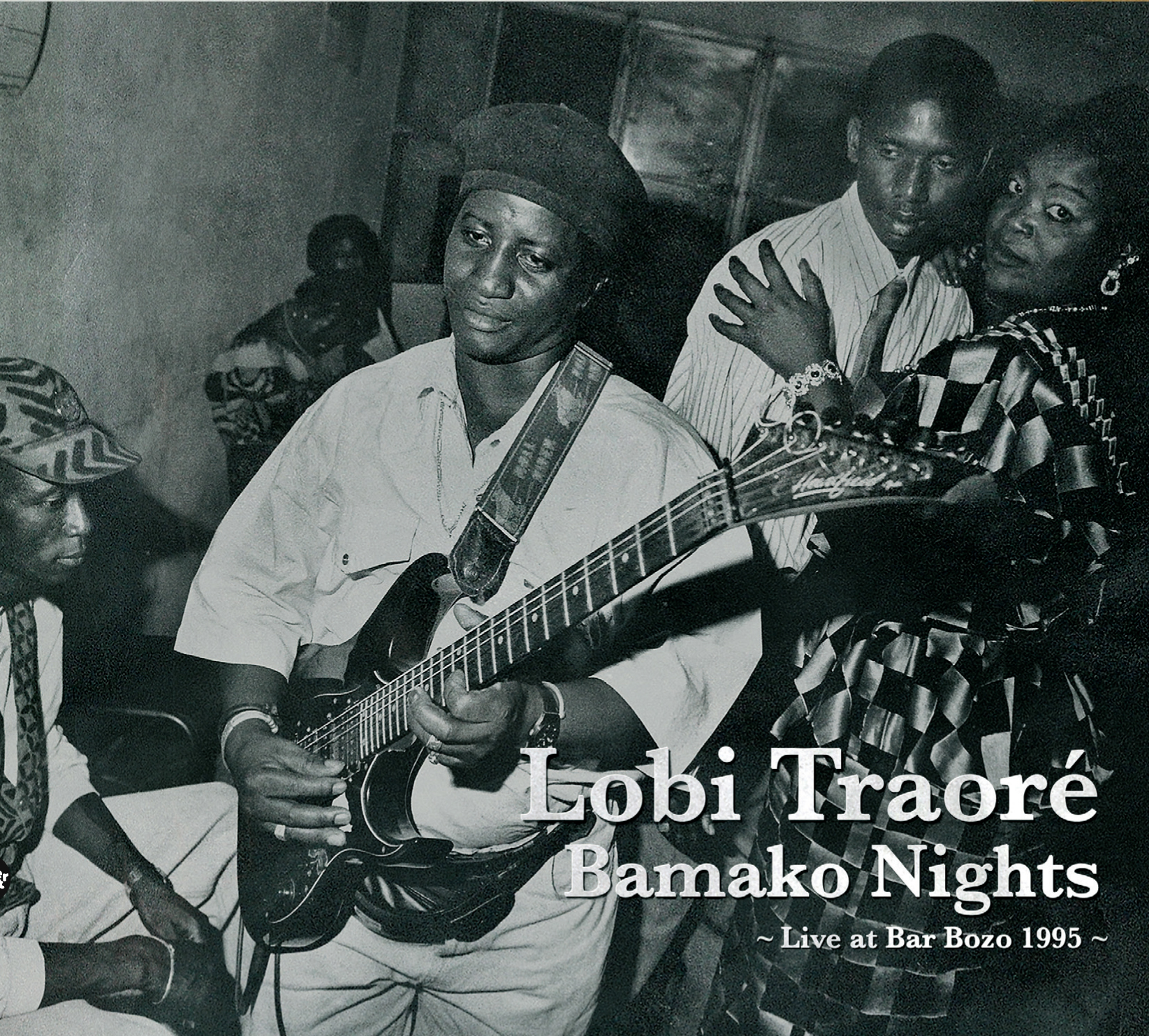
From the very beginning, one of Glitterbeat Records earliest releases, Bamako Nights captures the loose, almost extemporized sounding, drift of the late Malian legend Lobi Traoré (who died at the age of 49 in 2010); capturing one of his ‘packed-to-the-rafters’ live shows from the feted and iconic Bar Bozo. The singer/songwriter takes the crowd with him as he meditatively affects an adroit passage through Mali’s social and political pains. Attenuate guitar lines bolstered by flanger; licks powered by enveloping sustain; and a band whose steady yet often expletory solo spotted, bubbling bass and rapid percussion bind the nuanced accents together, all prove rhythmically hypnotic.
To have been a-fly-on-the-wall at one of these intimate, intense, shows must have been a magical experience; especially as Traoré kept the anticipation building; the appreciative audience either enthralled by every descriptive note and earthy toiled vocal or adding their own backing chorus of spiritual hollering and hand clapping: You’ll be hard-pressed to find a greater live experience and encapsulation of the atavistic West African blues.
Samba Touré ‘Albala’ 2013
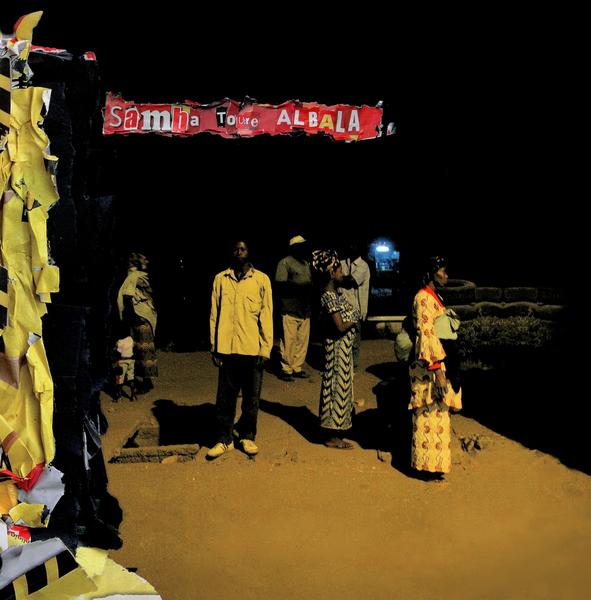
As Mali continues to exist in a fragile union after the recent Islamic hijacked insurgency (curtailed by former colonial masters France with additional support from the UK), a host of the country’s great and good (Bassekou Kouyate, Fatoumata Diawara, Baba Salah, Tamikrest to name just a few), compelled to speak out, have added gravitas to their praised sweet tribal blues in defiance of the regimes that would have banned or at the very least censored their music. Known for his work with the late Malian legend, Ali Farka Touré, Samba Touré is an amiable enough chap whose previous acclaimed albums, Songhaï Blues and Crocodile Blues, were more genial affairs, shows his disapproval with a grittier, riskier brand of protest on Albala.
Albala – translated from the Songhaï language as ‘danger’ or ‘risk’ – is a darker, albeit lamentably so, album. But so delicately melodious and nimble is the delivery that the cries of woe remain hymn-like and hypnotically diaphanous: the blues may have turned a deeper shade of forlorn yet still sways with meandrous buoyancy and restrained elegance.
A traditional accompaniment from Touré’s regular band mates Djimé Sissoko (on ngoni) and Madou Sanogo (tapping out a suitable candour on congas and djembe), with guest performances from celebrated ‘master’ of the one-stringed violin, the souk, Zoumana Tereta, and fellow Malian ‘neo-traditional’ singer Aminata Wassidje Touré is bolstered by effective guitar and keyboard layers from Hugo Race (The Bad Seeds, Dirtmusic, Fatalists). This subtle mix works wonders, giving the overall sound a mystical delta blues feel, resplendent with fuzz, wah-wah and wailing soul.
Aziza Brahim ‘Soutak’ 2014

Born in the hardened landscape of a Saharawi refugee camp on the border of Algeria and the Western Sahara, beguiled vocalist Aziza Brahim embodies the wandering spirit of her people; their settled, though often borderless and disputed lands, previously claimed by Spain, were invaded in 1975 by Morocco. Though made up of many tribes with many different goals the Saharawi people did mount a fight back. It was in this climate that Brahim was hewed.
Soutak, or ‘your voice’, is centered on just that. The backing is striped to a degree, so the poetic reverberated vocals can echo and warble soulfully without interruption. Though there is no mistaking that strong, robust and primal Saharan spirit, the congruous accompaniment is a mix of both Balearic and folk rock styles – especially the deep sleek bass guitar notes that slide and weave under Brahim’s distinctive voice.
Produced by Chris Eckman (of Dirtmusic fame), whose assiduous talents have done wonders with Malian blues rockers Tamikrest and Bamako Afrobeat artist Ben Zabo, Soutak was recorded live in Barcelona: the fluid lilting cosmopolitan sound of that city is unmistakable.
Serene and subtly sung, the choral, almost desert gospel hymns take time to unfurl their charms, so be patient. Once again Glitterbeat and Eckman have a classic world music crossover on their hands.
Dirtmusic ‘Lion City’ 2014

Connecting the ‘dirt music’ environment of an unforgiving Australian outback with the Cajun swamplands, desert and bustling African townships, Glitterbeat Records co-founder and producer of their awe-inspiring roster of world music greats, Chris Eckman, leads his nomad troupe across esoteric and meditative terrain soundscapes.
At times almost alien, their borderless approach to mixing rock, blues and (mostly) West African music in a seamless wash, creates something both mysterious and original. Recorded at the same time as their last album Troubles, in Bamako, Lion City couldn’t help but be guided politically and socially by the upheaval in Mali. A testament to the eerie developments and a lament that also offers hope, Dirtmusic and their guests (which include such luminaries as the Ben Zabo Band and Samba Touré) prove that you can work alongside African artists without succumbing to condensation.
Far more successful if not authentic than anything Albarn or indeed the ‘Radio’ polygenesis collectors The Clash could ever produce, these Westerners move serenely, blurring the cultural boundaries as they circumnavigate the psychogeography of the chaotic city and romanticized but often harsh sand dune landscapes of both West and North Africa. You could say it was a culmination of the entire Glitterbeat labels stock, condescend into one challenging soundtrack.
Noura Mint Seymali ‘Tzenni’ 2014

The technicalities, pentatonic melodies and the fundamental mechanics aside, nothing can quite prepare you for that opening atavistic, panoramic vocal and off-kilter kick-drum and snare; an ancestral lineage that reaches back a thousand odd years, given the most electric crisp production, magically restores your faith in finding new music that can resonate and move you in equal measure.
Hailing from the Islamic Republic of Mauritania, nestled in between Algeria, Senegal, Mali and the Western Sahara, with the Atlantic lapping its shoreline, Noura Mint Seymali keeps tradition alive in a modern, tumultuous, climate. Her homeland – run ever since a coup in 2008, by the former general Mohamed Ould Abdel Aziz, duly elected president in 2009 – was rocked by the immolation sparked Arab Spring and subsequent youth movement protests, all of which were violently suppressed by the authorities. Add the omnipresent problems of FGM, child labour and human trafficking to the equation and you have enough catalysts to last a lifetime. However, Noura’s veracious commanding voice responds with a dualistic spirit, the balance of light and shade putting a mostly positive, if not thumping backbeat, to forlorn and mourning.
Recorded in New York, Dakar and in the Mauritania capital of Nouakchott, Tzenni transverses a cosmopolitan map of influences and musical escapism. The original heritage still remains strong, yet the ancient order of griot finds solace with the psychedelic and beyond.
Jon Hassell/Brian Eno ‘Fourth World Vol.1: Possible Musics’ 2014
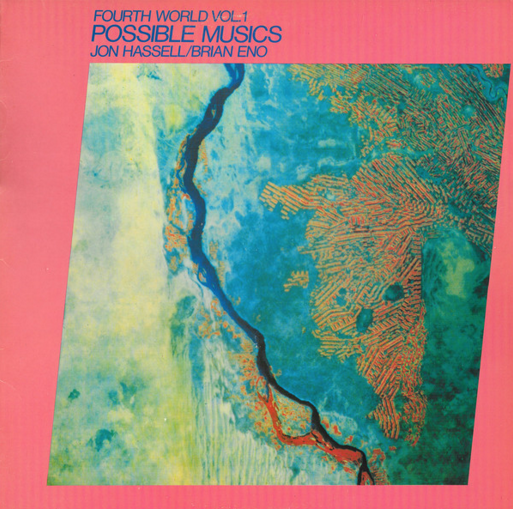
Already riding high on a crust of acclaimed production projects and numerous semi-successful collaborations and solo albums, when Brian Eno touched down in New York City in 1978 he would unintentionally help direct another important development in ambient and world music (and also end up staying for five-years). Absorbed in what the city had to offer him musically, Eno came across the stripped and atmospherically rich experiments of trumpeter/composer Jon Hassell, who’s own pathway from adroit pupil of Stockhausen to seminal work on Terry Riley’s harangued piano guided In C, encompassed an polygenesis of influences: a lineage that draws inspiration from avant-garde progenitors like La Monte Young, and travels far and wide, absorbing sounds from Java to Burundi.
Though a minor figure in the sense of worldwide recognition, and never one to brush with any sort of commercial popular appeal, Hassell irked out his own personal philosophy. With a handy masters degree in composition, he attempted a reification of what he would term the “fourth world”; a style that reimagined an amorphous hybrid of cultures; a merger between the traditions and spiritualism of the third world (conceived during the “cold war” to denote any country that fell outside the industrious wealthier west, and not under the control of the Soviet Empire) and the technology of the first.
Untethered to any particular landscape and age (though traversing for the most part the mysterious, veiled continent of a inter-dimensional Africa), geographical and environmental alluded titles act as points of reference; alluding both to such diverse subject matter as the traditional songs of the Central African pygmy tribes (Ba-Benzéle) and the latitudes and weather phenomenon of an undisclosed landscape or city (Rising Thermal 14° 16’ N; 32° 28’ E).
Moving at a similar pace throughout, the lingering vapours drift over and enclose the listener; hinting always at some mystical or miasma presence; steeping each composition in a sepia of low emitting foggy harbour like droning horns, plastic pipe sounding percussion, tape echo experimentation, panoramic glides over the savannahs and of course Hassell’s stripped bare, reedy and masked stirring trumpet.
An almost continuous set of transient movements, the mood varied from lightly administered rhythmically slow paced pieces to cerebral blankets of panoptic memory; a style coined as “future primitive”. Reissued by Glitterbeat Records under their visionary imprint Tak:til, this album can be read as a principle guiding light and inspiration for their roster and ambitions.
Various ‘Hanoi Masters: War Is A wound, Peace Is A Scar’ 2015
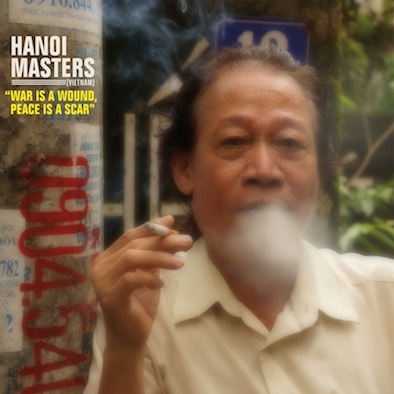
A side excursion, travelling due east to Asia and breathing in the evocative songs of Vietnam, Glitterbeat Records launched their new series of field recordings entitled Hidden Musics with the Hanoi Masters compilation. Finding a congruous musical link with their usual fare of West African releases, the label sent Grammy-award winning producer Ian Brennan (credits include, Tinariwen, Malawi Mouse Boys, The Good Ones) to Vietnam in the summer of 2014 to record some of the most lamentable and haunting resonating war-scarred music. Indelibly linked to what the indigenous population call ‘the American war’, the examples of both yearning and praise pay tribute to the fallen: delivered not in triumphant or propagandist bombast but in a gentle meditative manner, these survivors, forty years on from the end of the harrowing and catastrophic (the repercussion still reverberating in the psyche of the burned America and its allies) war, were still undergoing the healing process.
Tinged with an omnipresent lilting sadness these songs are imbued with battle scars (hence the albums subtitle War Is A wound, Peace Is A Scar), featured artisans and traditional music masters who had joined the cause, sometimes for the first time in years, allow their voices to be heard once again and recorded for posterity.
Considering the history and ill blood between cultures – though this has eroded as capitalism takes hold and the country opens up – it has in the past been difficult to investigate the serene and attentive beauty of the Vietnam music scene, but this earnest and adroit study into a world seldom covered proves enlightening and humbling.
Bixiga 70 ‘III’ 2015

Speaking Fela fluently with marked respect and reverence, going as far as to borrow part of the late Nigerian bandleader and doyen of Afrobeat’s backing group moniker, Bixiga 70 may be inspired and informed by Kuti but they do so much more with his high energy polyrhythms and feverish hot-footed anthems. The eclectic Sao Paulo band, who joined the Glitterbeat family in 2015, add even more flavour to the Afrobeat template on this their third album. Energised by their performances in the hotbeds of fusion, from North Africa to Europe, and working with a decentralised method of producing new material, the III album reaches out and embraces an even richer array of world sounds.
Incorporating the rhythms and dances of their own continental home, Bixiga shake and shimmy to the local customs of cumbia and the sensual hip movements of the carimbo on a trio of slinky paeans to the indomitable spirit of joyous release. Congruously they go, flowing from one source to the next deftly, passionately and with a raw powered energy, our Brazilian friends relationship with Glitterbeat has proved to be a sound move; an ideal home for the group’s ever expanding fields of sound and exploration.
Afro-Haitian Experimental Orchestra ‘A.H.E.O’ 2016
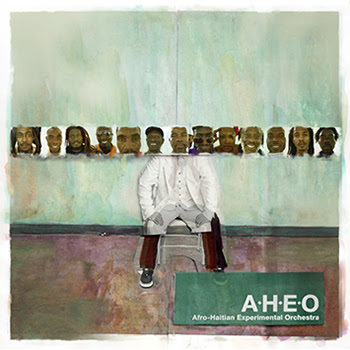
Progenitor and embodiment of the Afrobeat drum sound, still in high demand four decades after his explosive partnership with Fela Kuti, the much-venerated Tony Allen extends his infectious percussion style beyond the African homeland. Sharing an obvious entwined history with Africa, the shared Hispaniola Island of Haiti proves both an esoterically mysterious and congruous collaborative foil to Allen’s distinct drumming patois.
Invited to perform in 2014 by the French Institute Of Haiti’s director Corinne Micaelli, Allen’s visit would end with a public broadcasted concert in the main square of the capital, Port-au-Prince. Collaborating with Allen would be a cross-section of local percussionists and singers recruited by vocalist, dancer, ‘voodoo priest’ and director of the Haitian National Bureau Of Ethnology, Erol Josué; Josué would himself lend his sweet yearning and reflective tones to two of the tracks on this album.
The call went out and the great and good of the Haitian music scene came. Racine Mapou de Azor, the Yisra’El Band, Lakou Mizik and RAM. Another Monolith regular and one-time Port-au-Prince resident, Mark Mulholland was drafted in as the experimental orchestra’s guitarist, and as it would turn out, eventual legacy overseer. With only five days of studio rehearsal time to gel and work out their performance, the sessions proved both, as Mulholland observed, ‘chaotic’ and overwhelming’.
Elevating beyond the borders it was created behind, the Afro-Haitian Experimental Orchestra root foundations shuffle and shake free of their stereotypes to move freely in an increasingly amorphous musical landscape. You’re just as likely to hear vibrations and traces of Dub, native Indian plaintive ghostly echoes, Sun Ra’s otherworldly jazz and funk as to hear the indigenous Haiti sounds and Afrobeat pulse. Tony Allen is once more at the heart of another bustling, dynamic explosion in rhythm.
Various Artists ‘Hidden Musics Vol 2. Every Song Has Its End: Sonic Dispatches From Traditional Mali’ 2016

Though no less an achievement, the second volume in Glitterbeat Records “Hidden Musics” series offers the full gamut not just musically but visually too, and is a far more ambitious documentation of a troubled country’s lost tradition than the 2015 Hanoi Masters survey. Expanding to include 11 concatenate videos, Every Song Has Its End is the most complete purview of Mali’s musical roots yet. This is due to the project’s mastermind and architect Paul Chandler, who has documented Mali’s music scene for more than a decade.
Forgotten in some extreme cases, ignored or considered as Mali’s past by new generations, maestros of the 6-string Danh, such as Boukader Coulibaly, and the Balafon, Kassoun Bagayoko, are celebrated and interviewed for this collection. Whether it’s traversing the Gao region in the northwest to record the earthy desert pants of the female vocal ensemble, Group Ekanzam, or capturing a Sokou and N’goni love paean performance by Bina Koumaré & Madou Diabate in the heart of the country, this chronicle of the pains, virtues, trauma and spirit of the country’s musical heritage is an extraordinary love letter and testament to the country.
Bargou 08 ‘Targ’ 2017

Ahh…the sounds of a dusky reedy gasba flute; the tactile patted and burnished bendir drum; the rustic, earthy strung loutar, and the flowing, soaring scale vocals of the Bargou 08 project’s chief instigator Nidhal Yahyaoui, set an impressive atmosphere in the first couple of minutes of the album’s opening track, Chechel Khater. And that’s all you’d need, except there’s another eight equally evocative and thrilling tracks to hear.
The source of this sound derives from a relatively uncharted region that lies obscured between the mountains of northwest Tunisia and the Algerian border, called the Bargou Valley, which despite its barren isolation, has cultured a unique musical fusion, stretching back hundreds of years. Captivating and magical enough in its ancestral unchanged form, the songs of the valley, sung in the local Targ dialect (a language that is one part Berber, the other Arabic), are given a contemporary jolt that transforms the atavistic paeans, odes and poetry of yore into an intoxicating swirling rapture of electronic North African funk.
Filled with a legacy of turmoil and tension that goes back an aeon the album’s many themes, from describing a lover’s vital attributes on Mamchout to laments of alienation, resonate strongly with the growing unease of events, initiated six years ago by the Arab Spring. Tunisia itself is facing a struggle and teetering on the edge, with no guarantee that certain cultures won’t just disappear or be fragmented in the ensuing melee. Originally setting out to document his Bargou Valley home’s musical heritage before it disappeared, Yahyaoui has successfully and thankfully, with his musical partner, producer and the album’s keyboard player Sofyann Ben Youssef captured this rich mesmeric culture for posterity. And in doing so, produced a masterpiece that will endure.
Širom ‘I Can Be A Clay Snapper’ 2017
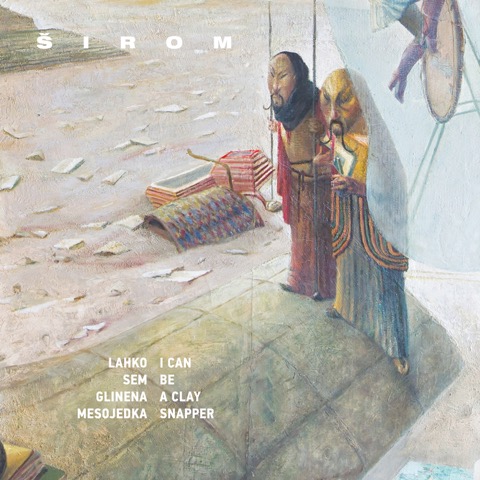
With an unspecified, but as the name suggests, emphasis on the “tactile”, Glitterbeat Records new imprint label gives a welcome platform to entrancing experimental tonal performances and sonic polygenesis traverses alike. In the latter camp is this Slovenian peregrination suite from the landlocked, Alps nestling country’s visceral sonic conjurors, Širom.
Evoking memories and feelings, both real and imagined, with a soundtrack thick with atavistic connections, the trio of punk and post-rockers turn experimental folk and acoustic instrumental cartographers convey a personal relationship to their homeland, on their second album together under the Širom banner.
Yet whatever the backgrounds, traces of North Africa, the Adriatic and the Middle East, the performances sail scenically through a dreamy otherworldly representation of Slovenia: Oriental, alien and Balkan visions permeate the plucked, malleted, chimed and purposefully played compositions, which subtly and rather cleverly build up complicated layers and various overlapping time signatures during the course of their journey.
Theremin like siren voices drift in and out, enacting the myth and seraph, whilst on the watermill turning Everything I Sow Is Fatal Sun Ra travels with John Cale and Pharaoh Sanders on a pilgrimage to Samarkand. The most recurring sounds however pay testament to the Balkans ghosts. The folkloric stirrings, lulls and yearning of Slovenia’s past bordering both a pan-Europa of migration and grief – stretching back a millennia – are transduced into often haunted vistas and metaphysical passages.
A most impressive and expansive inaugural Balkans travail; different from the previous two releases on this burgeoning new imprint, yet keeping to the tactile, accentuate and imaginative remit, whilst conjuring up mystical new soundscapes.
Tamikrest ‘Kidal’ 2017
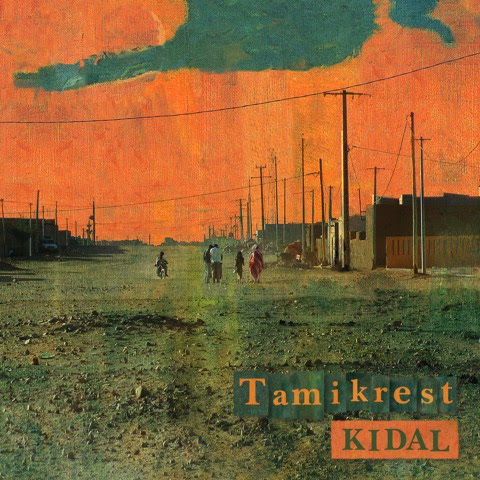
Still availed of a homeland, though now liberated from their draconian Islamist partners, the Tuareg are once again left as wanderers in their own land, the unofficial guardians and custodians of the Saharan wilderness. For now only a dream, best realized and protested through music, the rock’n’roll Bedouins Tamikrest emerge once more from the barren landscape with a message of “power and resistance” on their fourth, equally entrancing, album Kidal. Paying homage to the strategically and spiritually important cultural trading town of the title, the highly-acclaimed (and rightly so) Tamikrest exude both the sadness and suffering of the dispossessed people who cling to the southwestern Saharan hub that is Kidal: a town which has seen its fair share of fighting, fought over, conquered and reconquered over time, it remains a symbolic home to the Tuareg. This is after all the town that nurtured them and where it all began.
Assiduous, confident and articulate, the musicianship shows not so much a progression as a balance between the meditative and rock’n’roll spirit of the Tuareg musical resistance. Tamikrest are as brilliant as ever musically, and Kidal is, despite its plaintive and lamentable subject woes, a beacon of hope in an ever-darkening world of uncertainty.
Ifriqiyya Électrique ‘Rûwâhîne’ 2017
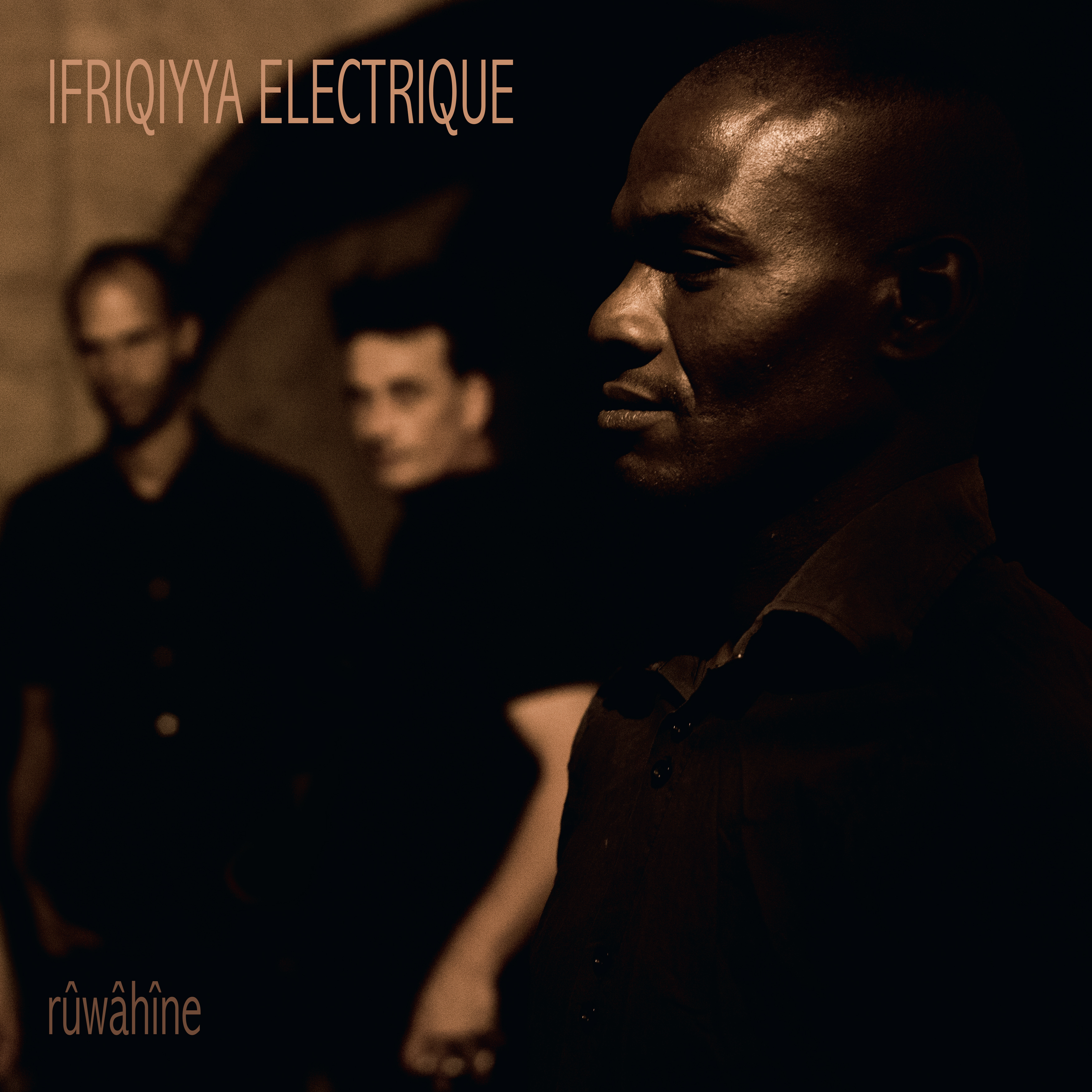
Capturing something quite unique, the collaborative industrial post-punk and avant-garde rock scenes of Europe clash head-on with the descendants of the Hausa slaves atavistic rituals styled group, Ifriqiyya Electrique, create an often unworldly chthonian conjuncture of Sufi trance, spirit possession performance and technology.
A film project and now immersive sonic experience, inspired by the important Banga music traditions and the accommodating, rather than exorcising, of spirits ceremonial wild dances and call and response chanted exaltations of the black communities – originally transported to the region from sub-Saharan Africa – in the oasis towns of southern Tunisia, this astounding meeting of cultures and history is anything but scenic.
Formed in the Djerid Desert, the idea forged by field-recordist and veteran guitarist of the politically-charged Mediterranean punk and “avant-rock” scenes, François Cambuzat, and bassist Gianna Greco – both of which occasionally join forces with that livewire icon of the N.Y. underground, Lydia Lunch, to form the Putan Club -, the Ifriqiyya Electrique spans both continents and time. For their part, Cambuzat and Greco provide the grind, industrial soundscape texturing, sonorous drones and flayed guitars, but mostly, the “electrique”, whilst, offering a dialogue with the spirits and the tradition, Banga musician Ali Chouchen – joined in the live theatre by an expanded cast of fellow voices, krabebs and Tunisian tabla players from the community, which includes Tarek Sultan, Yahia Chouchen and Youssef Ghazala – provides peripheral sounding evocative echoed and esoteric vocals and equally haunting nagharat.
Spiritual conversations transformed and realigned with the machine age turmoil of industrial noise, Arthur Baker style rock and hip-hop production, post-punk and even Teutonic techno, Rûwâhîne is a rambunctious unique force.
Park Jiha ‘Communion’ 2018

Circumnavigating the globe to bring much-needed exposure to new sounds, Glitterbeat Records imprint tak:til gives a second wind to a suite of acuity serialism from Southeast Asia. Released originally in South Korea in 2016, the neo-classical musician/composer Park Jiha’s debut solo album Communion is given an international release by the label of repute.
Inspiring what we’re told is a burgeoning Korean music scene (well, an alternative to the K-Pop craze), a chief progenitor of the movement Jiha alongside collaborative partner Jungmin Seo originally melded the country’s musical heritage with an eclectic range of contemporary sounds as the 숨[suːm] duo in 2007. Releasing the highly influential regional albums Rhythmic Space: A Pause For Breath (2010) and 2nd (2014), Park and Seo crossed the time zones to perform at both WOMAD and SXSW. Congruously putting the duo on hold to explore a more ‘personal’ and minimalistic ‘musical vocabulary’ as a solo artist, Jiha dexterously balances the air-y abstract breathes of the ‘piri’ double reed bamboo flute, the searing twang of the ‘saenghwang’ mouth organ and the softly paddled patter of the ‘yanggeum’ hammered dulcimer in what is a dialogue between a dulcet calm, the meditative and an entangled dissonance.
Transforming Korean traditions into a more experimental language that evokes the avant-garde, neo-classical and jazz yet something quite different, Park Jiha’s tranquil to entangled discourse evocations reach beyond their Southeast Asian borders both musically and metaphysically into something approaching the unique.
Playlist
Our Daily Bread 259: Jon Hassell ‘Dream Theory In Malaya: Fourth World Volume Two’
September 8, 2017
REVIEW
WORDS: DOMINIC VALVONA
PHOTO CREDIT: JIMMY DE SANA
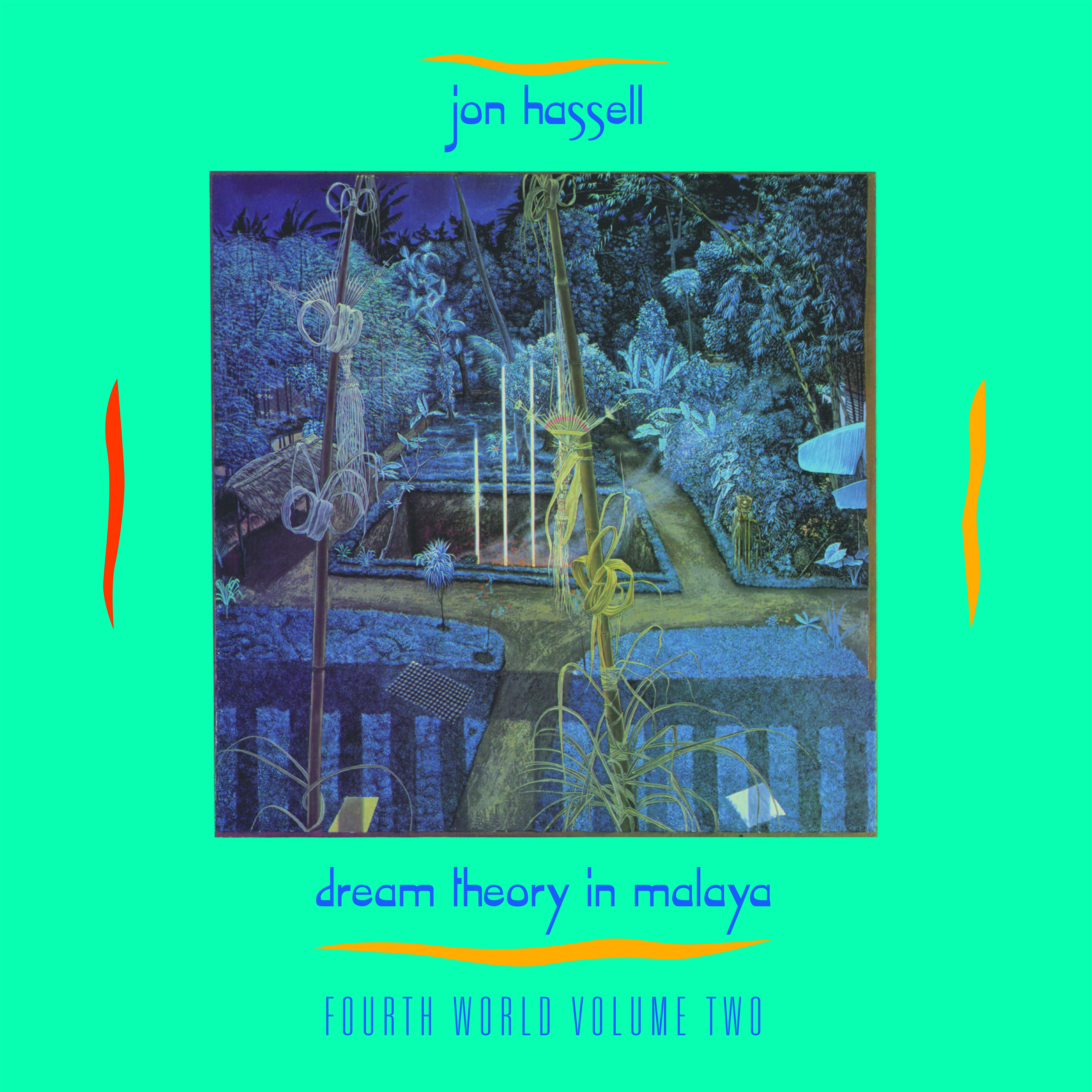
Jon Hassell ‘Dream Theory In Malaya: Fourth World Volume Two’
tak:til/Glitterbeat Records, 29th September 2017
Proving a fruitful enterprise in the exploratory music department and a welcome extension of the ambient and minimalist genres, the, what should seem on the surface, harmonious partnership between Brian Eno and Jon Hassell proved anything but; leading eventually towards acrimony. These now iconic Fourth World Music albums, the first volume being Possible Musics, were borne entirely from Hassell’s solo traverses in global music experimentation, though Eno’s minor but significant, if not entirely obvious, involvement grabs the attention and headlines: The second volume, Dream Theory In Malaya made no such distinctions, and would be credited wholly to Hassell.
Already artistically riding high on a crust of acclaimed production projects and numerous semi-successful collaborations and solo albums, when the famous Eno touched down in New York City in 1978, the ambient pioneer would nonetheless unintentionally help direct another important development in the fields of ambient and world music. Absorbed in what the city had to offer him musically, Eno would fatefully during his investigations come across the stripped and atmospherically rich experiments of the gifted trumpeter/composer Hassell, whose own pathway from adroit pupil of Stockhausen to seminal work on Terry Riley’s harangued piano guided In C, encompassed a polygenesis of influences: a lineage that draws inspiration from avant-garde progenitors like La Monte Young, and travels far and wide, absorbing sounds from Java to Burundi.
So impressive is Hassell’s CV and study credentials – studying with an array of diverse bastions of indigenous music styles, including Hindustani classical singer and mystic, Pran Nath – that many other such luminaries, both before and since, attempted to court his attention for possible collaborations (Peter Gabriel, David Sylvain included). Though a minor figure in the sense of worldwide recognition, and never one to brush with any sort of commercial popular success, Hassell irked out his own personal philosophy. With a handy masters degree in composition, he attempted a reification of what he would term the “fourth world”; a style that reimagined an amorphous hybrid of cultures; a merger between the traditions and spiritualism of the third world (conceived during the “cold war” to denote any country that fell outside the industrious wealthier west, and not under the control of the Soviet Empire) and the technology of the first. The record that initially charmed and impressed Eno, Hassell’s eclectic Vernal Equinox, blended a mystical suffused atmosphere of the Middle East with vaporous trials of South America and the Orient to the West to create minimalistic transmissions from a timeless geography. A meeting at the performance artist space The Kitchen cemented the deal that would see Eno produce Hassell’s, now iconic, visionary Fourth World Vol.1: Possible Musics peregrination – also, though a while ago now, reissued by Glitterbeat Records.
Annoyed and aggrieved, Hassell had seen as a result of Eno’s contributions his work categorized under the English ambient progenitors own name in record stores; demoted to support or a bit-part player role on his own compositions. He’d also been more than a bit frustrated and peeved that Eno was heavily borrowing and appropriating Hassell’s Fourth World concepts for his subsequent famous collaborations with David Byrne on the My Life in The Bush Of Ghosts and Remain In Light albums.
Eno was however forgiven long enough to be welcomed back into the fold on Dream Theory; even going as a far as to grant him a trumpet solo on the out-of-body projected traverse of a wet Malaysian jungle peregrination These Times. And because he was always generous with the introductions, and more importantly, they offered ‘exceptional rates’, Eno put Hassell in touch with the ‘enterprising and talented’ Lanois brothers (Daniel and Bob) who at that time, on the cusp of the 80s, were building a steady reputation for themselves out of their ‘chez’ home studio in Hamilton, close by to Toronto.
Adding to this musical exploration dream team was sessions coordinator Michael Brooks (known for his work with the celebrated Nusrat Fateh Ali Khan), who’s home in Toronto Hassell commuted from to the studio each day, and in the most removed way, former Velvet Underground drummer (the first in fact to sit in for the band) and renowned conceptual artist/land art sculptor Walter De Maria, who popped in just for ‘fun’ and may or may not have left a presence of distant drums on the misty fuzz veiled Polynesian fantasy, Courage.
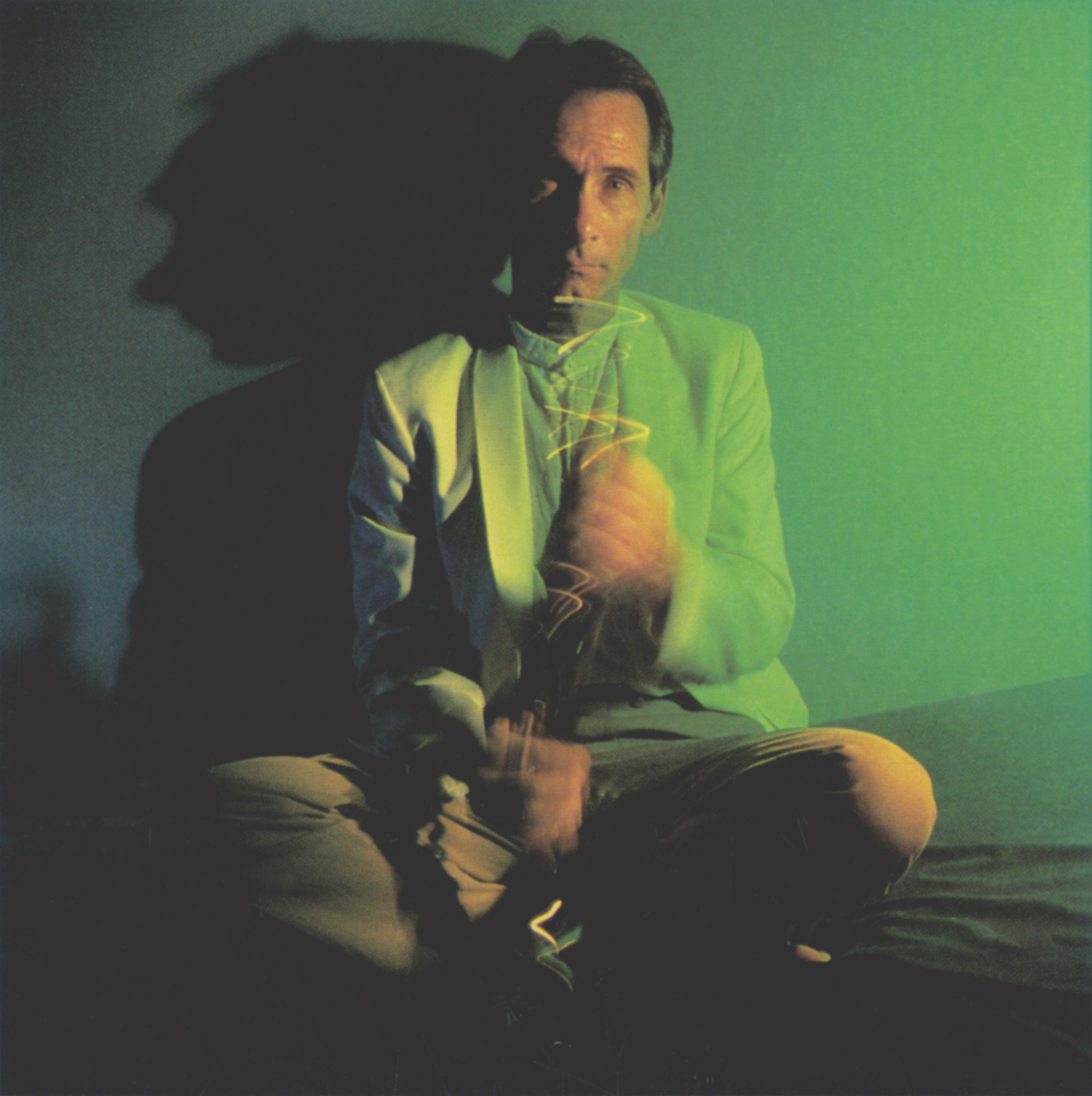
In the borderless compositions of Hassell, evocative traces, hazy semblances and the reification of dreams manifest through transformed instrumentation to create an amorphous reimagined soundscape. As the leading quote from Hassell’s linear notes make clear, this is a new form of classicism – a re-classification if you like -; eroding the dominance of central Europe’s great composers for that of cultures from Southeast Asia, Africa and Australasia.
The concept of Dream Theory In Malaysia is no different, the central theme and interest piqued both by the anthologist study of the same name by Kilton Stewart, and the ‘water splash rhythm with giggling children and birds from a [the Semelai] tribe’ sound recording that accompanied the Queen’s tour of the Commonwealth sanctioned book, Primitive Peoples. Adventurer Stewart famously chronicled the ‘dream tribe’ Senoi people of the central Malaysian peninsular, whose ancestors had made the voyage across from Southern Thailand 4,500 years ago. The Senoi are practitioners of ‘lucid dreaming’ of course, a phenomenon that Hassell lapped up in a romantic affair with the region and its people (as an aside, Hassell’s notes throw in a love tryst with an ‘exotically-tuned’ woman from Kuala Lumpur for good measure).
Leaving his mind to wander, Hassell’s transmogrified nuzzling trumpet was set loose on the dreamy visages of Malaya. Invented scales transcribed over mysterious celluloid picturesque panoramas and more humid, almost stifling and abundant muffled fauna and vegetation wild spaces permeate this ambient escapism, as subtle echoes of the indigenous instrumentation ring out in a ghostly fashion; especially the Malay tambourine known as a ‘rebana’, and the local variant of a gong, as used by the Semelai people – like the Senoi dreamers, another branch of the Orang Asli collective of ethnic peoples that inhabit Malaysia’s peninsular, brought into the sphere of this semi-fictional, semi-factual suite.
Paddle beaten percussion, wooden fluty drones, a languid bass guitar, and what sounds like the kind of car horn you’d find on a Model T Ford, merge in this vaporous swirl of a soundscape. But it’s Hassell’s serialism and transduced tones and layers that guide the listener; from sucked-in heralded fanfares to snuffling and zigzagging ripples of descriptive scene setting and landscaping.
Re-released, for the first time since its original release in 1981, Dream Theory In Malaya is the fourth album in Glitterbeat Records new tak:til series. It fits congruously of course within this imprints framework and vision of a borderless reimagined musical landscape unbeholden to convention and structure. And once again celebrates the mavericks and pioneers striving to reinvent what ‘global music’ can be: in this case an undiscovered expanse of imagination and possibilities.
Choice Albums of 2016 (Part One): A – L
December 1, 2016
Aesop Rock to Bob Lind.

Continuing to shy away from fatuous rating systems and ‘best of lists’, the Monolith Cocktail endeavours to offer a more eclectic spread of worthy ‘choice’ picks, with no album dominating or holding any particular numbered position – unlike most of our contemporaries lists; stuck with the ridiculous task, for example, of explaining why one album doesn’t deserve the number 32 spot and has been placed at number 33 instead.
Lined up in alphabetical order then, our favourite new and reissued albums from 2016 are of course considered to be the most interesting, vibrant and dynamic of the year’s releases. But the best? Granted, to make this list you have to make some sort of impact, but we’d never suggest these entries were categorically the best albums of 2016, even if that might be true. Instead our list is an indicator of our amorphous tastes, rounding up a year in the life of the Monolith Cocktail, and we hope, introducing you to titles and artists/bands that may have dropped below the radar.
Split into two parts, the first installment begins with Aesop Rock’s‘s hip-hop masterpiece The Impossible Kid and ends with the latest adroit songbook from the legendary troubadour Bob Lind. In between those two sagacious bookends are albums from David Bowie, David Broughton, Danny Brown, Cluster, Eleanor Friedberger and John Howard (plus many others).
Aesop Rock ‘The Impossible Kid’ (Rhymesayers)
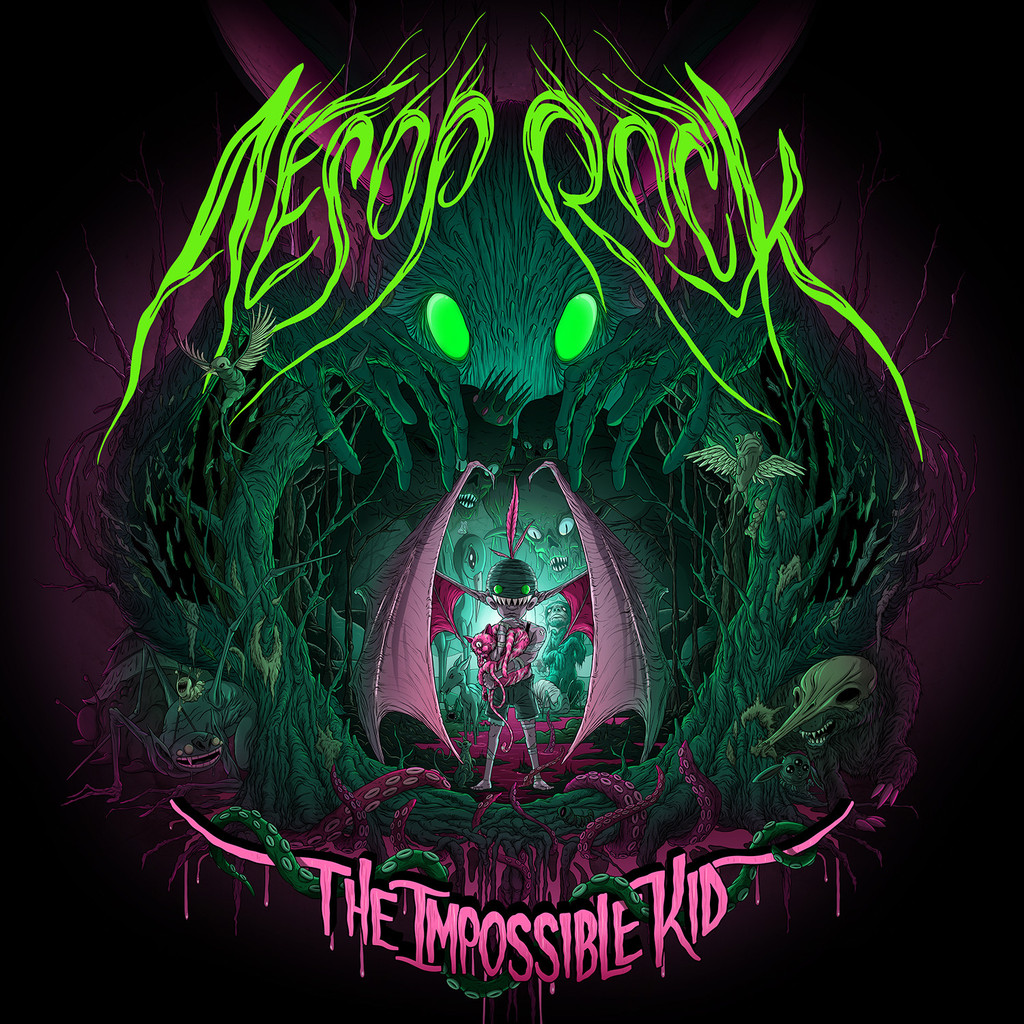
“The waterfall of words, snide quips and intricate stories recalled from both close to home and far away worlds, are as good as he’s ever done”. Matt Oliver
Seeming to get better rather than older (and don’t you dare mention the ageing process as per ‘Lotta Years’), the original ‘Bazooka Tooth’ is still ablaze out of somewhere to the left, but now giving lesser mortals more of a chance of accessing him than ever before. Entirely self-produced and applying funkiness to the bulkiness of alien-scanned beats he’s always rocked his way, AR’s extra superpower as the self-deprecating hero of syllaballistics (“the impossible kid , everything that he touch turns probably to shit”), is to humanise the fantastical and still make the everyday sound like a comic book lead, even when soul is bared for all to analyse. Rock also added more great cover art, and the visuals for ‘Rings’ and ‘Kirby’ are bound to feature in hip-hop video of the year lists.
Read original review here…
Afro-Haitian Experimental Orchestra ‘A.H.E.O’ (Glitterbeat Records)
‘Elevating beyond the borders it was created behind, the Afro-Haitian Experimental Orchestra’s root foundations shuffle and shake free of their stereotypes to move freely in an increasingly amorphous musical landscape. You’re just as likely to hear vibrations and traces of Dub, native Indian plaintive ghostly echoes, Sun Ra’s otherworldly jazz and funk as to hear the indigenous Haiti sounds and Afrobeat pulse. Tony Allen is once more at the heart of another bustling, dynamic explosion in rhythm.’ Dominic Valvona
Progenitor and embodiment of the Afrobeat drum sound, still in high demand four decades after his explosive partnership with Fela Kuti, the much-venerated Tony Allen once more extends his infectious percussion style beyond the African homeland. Sharing an obvious entwined history with Africa, the shared Hispaniola Island of Haiti proves both an esoterically mysterious and congruous collaborative foil to Allen’s distinct drumming patois.
Invited to perform in 2014 by the French Institute Of Haiti’s director Corinne Micaelli, Allen’s visit would end with a public broadcasted concert in the main square of the capital, Port-au-Prince. Collaborating with Allen would be a cross-section of local percussionists and singers recruited by vocalist, dancer, ‘voodoo priest’ and director of the Haitian National Bureau Of Ethnology, Erol Josué; Josué would himself lend his sweet yearning and reflective tones to two of the tracks on this album.
The call went out and the great and good of the Haitian music scene came. Racine Mapou de Azor, the Yizra’El Band, Lakou Mizik and, featured on the Monolith Cocktail at the start of the year and one of the choice albums of 2016 with their highly-rated Manman M Se Ginen LP, RAM. Another Monolith regular and one-time Port-au-Prince resident, Mark Mulholland was drafted in as the experimental orchestra’s guitarist, and as it would turn out, eventual legacy overseer. Swelling the ranks still further were Olaf Hund, recruited on keyboards and ‘electronics’, and an old friend of Allen’s, the bassist Philippe Dary, who became the de facto musical director. With only five days of studio rehearsal time to gel and work out their performance, the sessions proved both, as Mulholland observed, ‘chaotic’ and overwhelming’. Based upon various sparks of inspiration and rhythmic workouts the eventual structured compositions took shape from organically flowing jams. At the heart of each, Allen’s signature Afrobeat drums and Dary’s liquid, and often funky sumptuous basslines.
Read the full review here…
Bitori ‘Legend of Funaná – The Forbidden Music Of The Cape Verde Islands’
(Analog Africa)

‘Following the summertime thrills aplenty Space Echo – The Mystery Behind The Cosmic Sound Of Cabo Verde Finally Revealed compilation, with the emphasis on the Funaná; Analog Africa continues to pay homage to the previously suppressed music genre with a reissue of, what many consider, the best Funaná album ever recorded, Bitori Nha Bibinha.’ DV
Helping to ignite a full-on Funaná revival, the quintessential and legendary anthem of Cape Verde’s once banned – considered too salacious and unruly by the Portuguese authorities who ran this archipelago of islands until the mid 1970s – infectious music style was given a reprise by Analog Africa this year. A master class from the inter-generational duo of singer Chando Graciosa and renowned gaïta maestro Victor Tavares (better known as Bitori), who’d both grown up with the blazing and often raucous Funaná, Bitori Nha Bibinha captures the passion and spirit of the people and the times it survived.
Read the full review here…
The Bordellos ‘How To Lose Friends And Influence No-One’
(Small Bear Records)

‘Despite the caustic bravado and world-weary bitterness channeled into the antagonistic song titles on this new album, The Bordellos lo fi edicts are always surprisingly melodic. Think of them as a tuneful The Fall; resigned and swiping at society but hopeful enough to challenge it despite banging their collective heads on the doors of the music industry for years.’
Gaining this coveted spot (sic) in our ‘choice albums’ feature for perseverance in the face of despair, the St. Helens trio once more man the barricades with another despondent protest. Feeling, like many of us (I know we do), out of synch with the digital epoch, they rally against the Internet’s most depressing byproducts, and the loss of real ‘motherfuckers’ from the music world – who they duly list on a song of the same name; a cry for a new leader or at least more individuals and rebels. Wearily antagonistic, righting slights and a lifetime of rejection, The Bordellos go for broke on How To Lose Friends And Influence No-One with titles such as ‘Did The Bastards At The BBC Kill John Peel?’, ‘Gary Glitter’ and ‘Piss On Spotify’. Uneasy truths to a lo fi backing of The Velvet Underground, Julian Cope and The Fall abound, yet this could be the group’s best and most complete songbook to date.
Read the full review here…
David Bowie ‘Blackstar’ (ISO/RCA)

‘…this could be the most pure, at least concerned, version of Bowie yet. Resurrected free of his characterisations, the gilded “Blackstar” is just as uneasy and scared at the anxieties, stresses and daunting prospects of the future as the rest of us. Fame, celebratory is mere smoke after all and offers little in the way of comfort and safety in the face of the impending end times. Yet despite being easily his best album since Earthling, Blackstar is still underwhelming and falls short of being a classic.’ DV
The swansong of an irreplaceable polymath proved to be one of the year’s most sad moments, as the man who fell to Earth, Aladdin Sane, the Young American, the thin white duke, the absolute beginner, whichever version you fell in love with, departed for the ether. We lost a great many unique and inimitable artists in 2016 but though ever death is tragic none left quite the pit of despair that David Bowie‘s did. Don’t even try to crown a successor; he was a force unto himself, the “Blackstar”, the supernova of pop. Reams have been written – a great many by myself – yet no one will ever truly reflect his importance and legacy.
Though released just before his death the augur that is ★ was a curtain call. Just as oblivious to Bowie’s fatal cancer as everyone else, I did remark at the time that this album seemed to be a poignant goodbye, an elegy even. Returning to a first love, jazz, Bowie who proved an eager saxophonist in the burgeoning years of his career worked with a N.Y. West Village jazz troupe to produce one of his best albums in decades. Old faces, including a decomposing Major Tom, themes and sounds returned, with traces of Diamond Dogs, Scary Monsters, Black Tie White Noise and Outside. Despite the often cryptic and veiled words, this was an anxious, weary and reflective Bowie; looking back before a rebirth. A pity time ran out for him.
Read the full review here…
David Thomas Broughton ‘Crippling Lack Vol. 1 – 3’ (Song, By Toad Records)

‘An ambitious undertaking, David Thomas Broughton’s sprawling opus Crippling Lack is both musically and geographically expansive. Recorded trans-continental style with a host of collaborators over the last few years, Broughton, who’s based himself more recently in the capitals of, unbelievably, North and South Korea, has laid down various parts and vocals in France, the UK and the US. Logistically impressive, Crippling Lack is a testament to the DIY ethic and remote collaborative experimentation.’ DV
A magnificent and masterful undertaking by Broughton, the Crippling Lack trio of recordings is demarcated into three parts, the entire song collection, if you decide to experience in one sitting, stretching to 1 hour 40 minutes. It features twelve songs in all of varying meticulously and slowly unfurled beauty, with some, epics in their own right. The press release separates the album out into a musical journey, beginning with what it calls ‘deceptively approachable pop songs’, moving through a more testing ‘unraveling and disintegrating and barely-stretched fragments’ segment, before ending with a final section that ‘slowly weaves’ all the loose and previous sections together.
It is nothing short of a magnum opus; cohesive and flowing along to a sophisticated backing, sonorous with the artist’s venerable travailed voice, and his acerbic foils wit. The album’s scope is immense even though it meanders to a, mostly, folk signature and gentle accompaniment. It is outstanding even by Broughton’s standards.
Read the full review here…
Danny Brown ‘Atrocity Exhibition’ (Warp)
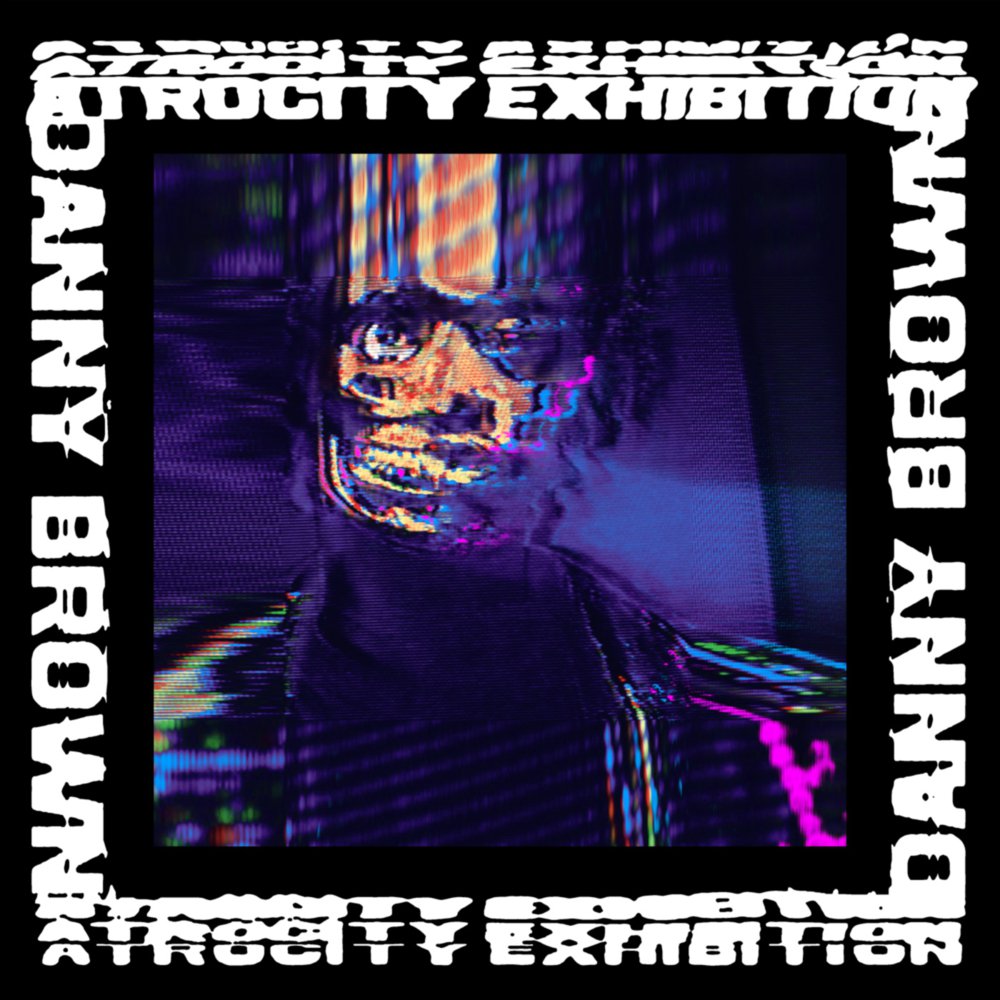
“Juggling the mic like a grenade missing a pin…one of 2016’s most individual threats.” MO
‘Atrocity Exhibition’ throws up so many positive talking points. #1 – the transatlantic odd couple of Danny Brown and Paul White, a relationship rooted in 2011’s ‘Rapping With Paul White’ album, fears nothing and no-one. #2 – Brown continues to show he has one of the maniacal mic grips in the game that you can’t ignore, here with added malleability. #3 – White’s reputation has really hit its stride on an upward curve; though other producers contribute (Black Milk, Alchemist and Evian Christ are not to be sniffed at), it’s essentially the Englishman’s show on the boards. #4 – a show stopping hook from Kendrick Lamar on ‘Really Doe’ doesn’t hurt one bit. #5 – despite Brown’s mile-a-minute persona shearing safety bars off rollercoasters, and White and co by default becoming the straight man sidekick, you really have no idea what’s around the next corner, from soaring superhero soundtracks to proper hip-hop dope to something suspiciously shuffling through the undergrowth. “This is not regular rap”, Brown offers. Amen.
Read the original review here…
Cappo ‘Dramatic Change of Fortune’ (YNR)

“When autumn becomes winter, here’s your listening.” MO
You should always bet on the flow of Nottingham’s finest that has evolved into a complex work of art. On past albums and years gone by Cappo would’ve destroyed opposition with crosshairs locked and ammo loaded; here his own brand of introspection, still packing uniquely orbital rhyme schemes but now more than ever full of coded messages and open ended verses awaiting interpretation, kills the noise and heighten the mysteries surrounding the emcee’s inner thoughts and circles. It packs two absolutely heaters of singles as well – ‘OOB’ and ‘Ether’ are both unassuming phantoms of the opera, but white hot in a pretty slimline session – another contributing factor to the building of the suspenseful and mournful, chilling on a razor’s edge. YNR took the weight off their plates in 2016, but this was easily the jewel in their calendar year crown.
Read original review here…
CHUCK ‘My Band Is A Computer’ (Old Money Records)

‘CHUCK’s kooky collage-rock and lo fi wonky electronic pop, which congruously flows between The Magnetic Fields, Mercury Rev, Weezer, Apples In Stereo and even The Pixies, absorbs its influences to create a gorgeous, quietly optimistic, kind of melancholy and pathos.’ DV
From the inimitable label of hopeless optimism and resigned despair another lo fi songbook of obscure modern idiosyncratic pathos. Released via Audio Antihero’s new imprint Old Money Records this marvelous kooky collection from Massachusetts’s songwriter and multi- instrumentalist CHUCK is a congruous bedfellow of the label’s previous releases from Benjamin Shaw, Frog and Cloud.
Bringing an upstate, more pastoral, lilt to the New York metropolis where he now resides, CHUCK’s quasi-Tropicana Casio preset bed of quirky wounded observations are both funny and profoundly sad; lo fi but ambitious. An outsider in some sense; an observer of the foibles and peculiarities of the Brooklyn boroughs, the maverick artist paints a reflective, wry and often ironic picture of our modern times.
Far too good to be hidden away his collection of songs, penned over the last decade, have thankfully been given the platform to reach a wider audience.
Read the full review here…
Clipping ‘Splendor & Misery’ (Sub Pop)

“Provocative electronics and sermons from the LA leftfielders will clamp you to the edge of your seat.” MO
For the record, ‘Splendor & Misery’ is a 20/80 split in favour of the latter. Comprehensively proving that the end of the days is still compelling material when done as well as this, particularly in this year of all years, Clipping were another to give themselves a veneer of accessibility with their zero gravity screams. Futility set adrift to a perfectly captured fear found frozen behind the visor, had rhymes dealing with the pending shitstorm with West Coast fearlessness usually reserved for low-rider rollin’. Interspersed with choral episodes praying for the album’s lead, the intelligent stage management demands your full attention; that’s to say, it’s a struggle to dip in and out or pick a favourite track by itself – do so and you’ll risk detracting from the whole performance pushing hip-hop’s outersphere. What odysseys are made of and reputations are built on.
Read the original review here…
Cluster ‘1971 – 1981’ (Bureau B)

‘Patriarchs of the German music scene, Cluster, are quite rightly celebrated for their contribution to the last forty-odd years of experimental electronic and ambient music with this latest grandiose gesture of adulation. Though attempts have been sporadic, past collections have gathered together, more or less, all the standard Cluster recordings, leaving out live and more obscure albums, until now. German label Bureau B, concentrating on the group’s output from 1971 to 1981, chronologically compile a full discography from that decade, which for the first time ever includes the previously unreleased Konzerte 1972/1977 album.’ DV
All attentively remastered, rather impressively I might add, by Willem Makkee, the nine-album box set offers the die-hards another excuse to own the back catalogue, with the added bonus of requiring that former live LP that got away, Konzerte, and for those not familiar or with a passing fancy, the best complete picture and evolution yet of the much revered group. 1971- 1981 will serve as a worthy testament and reawakening of the Cluster back catalogue and legacy: now sounding better than ever, the remastering for once very much welcomed.
Read the full review here…
Ian William Craig ‘Centres’
Passing us by on release Ian William Craig‘s unassuming but nevertheless epic sweeping ambient opus Centres arrived without much fanfare on its release. However, these cerebral peregrinations, songs of hope, soulful expansive hymns and sonic journeys into space were given rave reviews by those who did pay attention. And so initially missing coverage on the Monolith Cocktail, we’ve made up for it since by featuring tracks from the album in our ‘quarterly playlists’ and now, in our ‘choice albums of 2016’ feature. It is one of the year’s most beautiful, inspiring and often just meditative concatenate suites; offering glimmers of awe. DV
Dillon & Paton Locke ‘Food Chain’ (Full Plate)

“Gourmet underground platters rooted in the South but giving you seven courses of funk and back.” MO
It might only be found as small print on some menus, but who are we to ignore prime indie cuts encouraging you to “pour a bucket of gravy over yourself and just feel that”. When they’re not rewriting the rules of the Ice Bucket Challenge, Dillon & Paton Locke are always gnawing on something, rhyming as they chew it. Funky, crate-rifling beats are laced with an overzealous streak, cogently able to stop the album dead from 60 to 0 and then re-energise it the other way, and a press-record-and-just-go appetite never misses a trick on the mic, with a hint of political soap-boxing and getting down to some grown man, take a look around biz. Their guest chef specials aren’t too salty either – R&V favourites Homeboy Sandman and J-Live, Dres from Black Sheep and people’s president Lobsterdamus, help flavour a certified belly-buster for 2016.
Read the original review here…
Ed Scissor & Lamplighter ‘Tell Them It’s Winter’ (High Focus)
“An intriguingly created world of wisdom, paranoia, numbness and finding peace in its own mind”. MO
High Focus have had the mother of all years, the consistency of everything they’ve dropped dominating the last 12 months of homegrown hip-hop. Ocean Wisdom (‘Chaos 93’) boasted youthfully infinite ammunition. Dabbla (‘Year of the Monkey’) got up to a whole load of japery reaching across the bar. Fliptrix (‘Patterns of Escapism’) executed label ideals to the fullest. Yet in the spirit of thinking differently, Ed Scissor and Lamplighter, the absolute antithesis of those mentioned, take the honours by a short head. Blair Witch hip-hop with its nose to the wall, barely keeping its head above water while barely raising an eyebrow, pulls off the Houdini-like stunt of subverting hip-hop norms while sticking close to them like a second skin. A slow and deliberate bittersweet bloom of triumph, creating the ultimate flip script of offering easy solace and comfort when all looks lost.
Read the original review here…
Elzhi ‘Lead Poison’ (Glow365)
“Ear-catching narratives covering the everyday grind…not far off being a complete LP”. MO
Coming out the other side of mental health issues has Elzhi using ‘Lead Poison’ as catharsis, resulting in some of the year’s most vividly delivered rhymes and storytelling in the process. Done so in near enough bite sized chapters, proves that if the story’s interesting enough, it’s long enough. Never buckling under pressure, even when the likes of ‘Cloud’ feel like everything is conspiring against him (not to mention the potential of his health showing overall weakness), heart is worn on sleeve and self-examinations are set to a forceful soul soundtrack pushing its protagonist. With softer neo-soul going back to Elzhi’s Slum Village heritage, there’s also room for a little light heartedness, with ‘She Sucks’ doing forbidden love by garlic and wooden stakes, and ‘MisRight’ bending the thesaurus. An album that goes from strength to strength, listen on listen.
Read the full review here…
Eleanor Friedberger ‘New Views’ (Frenchkiss Records)

Another album we missed on its release, Eleanor Friedberger‘s third solo spot New View is another impressive songbook of idiosyncratic pop. Streamlining the signature intelligent reference-heavy prose of her sibling act The Fiery Furnaces, Eleanor continues the clever turns of phrase but in a more attentive, breezier and lightened but less cluttered manner. With elan she sets out on a dry-witted but emotionally philosophical picnic through the East Village with Patti Smith and Harry Nilsson in tow.
Paul Hawkins and the Awkward Silences ‘Outsider Pop’ (Blang Records)

‘Lethargically executed and quintessentially an antifolk statement of protest, Outsider Pop is a highly infectious album of pop parodies that penetrate the bland veneer of the contemporary irksome vacuum known as the mainstream. Shambling discontent at its finest.’ DV
The disgruntled savant of disco funk pop and antifolk Paul Hawkins completely in the dark, oblivious to the dreadful proclamation of David Bowie’s impending death paid an augur homage to his white-suited and booted pop incarnation of the 1980s by transmogrifying ‘China Girl’ into an Outsider Pop anthem. Produced by that nutflake nostalgist, and one of the busiest men in the industry right now Ian Button (of the mighty Papernut Cambridge, Gare du Nord label and umpteen other projects), Hawkins’ third album also finds foibles of inspiration from REM, The Fall, Toto and The Art Of Noise; reflecting a much broader sound than before. The no wave, white funk, pop melodies act as a Trojan Horse, the themes far from advocating a hedonistic lust for life or suggesting the listener suppress the doldrums of modern life, are filled with malcontent at the state of the world.
Read the full review here…
John Howard ‘Across The Door Sill’ (Occultation Recordings)

‘Not so adrift and experimental as to have cut all ties to his signature profound sincerity and sad romanticism, John Howard’s Across The Door Sill dares to go further with an even more immersive experience. Expanding his poetic lyricism and piano performances, stark and stripped-back, his vocals multiplied to fill the space and build the atmosphere; Howard has room and time to create some stirring music. It is a most sagacious reflection from the artist, still finding the inspiration to develop and take risks. In doing so he’s reached what could be one of the creative pinnacles of his career.’ DV
Imbued with the 13th century poet Rumis ‘Quatrains’ poem, which encourages us to broaden our horizons and to not just accept what we’ve done in the past, the adroit songwriter and pianist John Howard experiments with a stripped back sound of multilayered vocals and the melodious gravitas on his latest songbook Across The Door Sill. Attentive and epic the album’s sagacious stream of consciousness is a deeply reflective observance on where we are now. In no hurry to get to a hook or chorus, his source material, a collection of unhindered, unhurried and floating poems, was developed overtime, set to music in an organic fashion. Hence why three of the five songs on this LP are nine-minutes long. On a successful run of collaborations and solo projects Howard is enjoying his most productive period yet in a career that’s spanned five decades.
Read the full review here…
Illogic ‘A Man Who Thinks With His Own Mind’ (Weightless)

“Streams of quotable IQ create a fever dream. Snooze, you lose.” MO
Ohio rhyme scientist Illogic provided his own version of a hip-hop out of body experience, a canon of verbosity when bedding down for the night and setting free streams of consciousness while looking through a telescope. This in itself created its own contradiction of being an album expressly trained to set you afloat (The Sound Cultivator’s star-shaped soul powered by plasma rays > strictly no cloud rap), which still kept you wide awake with naturally intricate rhymes, both book and street smart, about life, the universe and everything else. Anyone who starts an album with the observation that “the tofu was not as firm as I’m used to” deserves nothing but praise and respect. The modern equivalent of becoming engrossed in a good book that tells your imagination to run.
Read the original review here…
J-Zone ‘Fish n Grits’ (Old Maid Entertainment)

“Dripping in home truths from his funk soapbox, disillusionment with hip-hop and its cultural hangers-on has never been more entertaining”. MO
Better placed than most to justify a love-hate relationship with hip-hop, J-Zone proclaimed “there’s only two types of music – good and bad. Make good music, or shut the fuck up.” Paired with helium alter-ego/juvenile imaginary friend Chief Chinchilla as hilarious equal opportunity offender, and showing the strain of ‘Peter Pan Syndrome’ remains strong, ‘Fish n Grits’ goes in with scathingly relatable accuracy about the state of the game, misty-eyed nostalgia replaced by a nose-bloodying team of goons busting a whole load of myths. Additionally, whereas Zone’s production used to pop off all over the place in a skilfully spring-loaded criss-cross, he’s honed his own funk skills into a true mastery to compliment his industry disses. Hallelujah that he can’t leave the game alone.
Read the full review here…
Fela Ransome-Kuti And His Koola Lobitos ‘Highlife-Jazz And Afro-Soul 1963-1969’ (Knitting Factory Records)
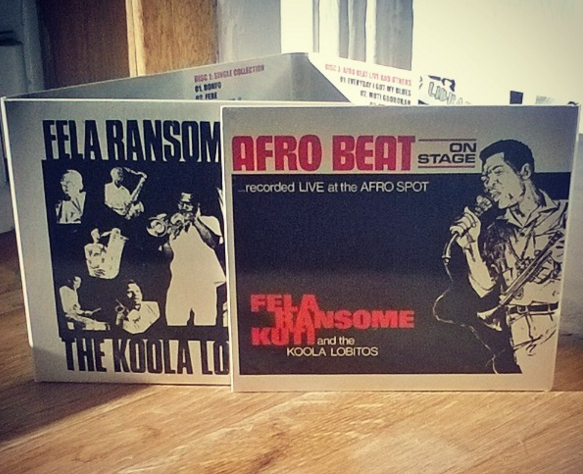
‘Hot stepping and sure footing through Savoy label like jazz and Stax/Volt revue soul, Fela and his first ever professional band Koola Lobitos were the missing link on the eventual road to the Afrobeat phenomenon. An evolving Fela, only a few shuffles short of cultivating his signature, already shows a raw energy on this compilation’s studio and live recordings.’ DV
In the midst of another celebration and anniversary appraisal the Afrobeat pioneer and political protagonist Fela Kuti has seen the back catalogue legacy re-released and repackaged countless times. There’s been a stage production of his life, and a documentary film in the last couple of years alone. But one of the most revealing and raw tributes is this burgeoning showman showcase; a labour of love that collates together a number of previously scattered, thought lost, rare early recordings – both in the studio and on stage – from the stax/funk/soul years. A “labour of love”, stemming from Toshiya Endo’s African Music Home Page website, launched in the late 90s, the Fela Kuti and His Koola Lobitos material were collected from around the world, from the collections of various fans. By day a professor of Chemistry at Ngoya University, Endo’s passion and hobby of cataloguing West African music attracted the author of the Fela: The Life & Times Of An African Musical Icon bio Michael E. Veal. Lucky for us the dynamic duo produced this lavish and arduous compilation of explosive early Fela beauties; one of the best and revelatory introductions to the great polymaths work yet.
Read the full review here…
Bob Lind ‘Magellan Was Wrong’ (Ace Records)

Another masterclass from the sagacious Bob Lind, his latest album is a majestical and often jazzy lilting lesson in songwriting. With decades of elan and adroit performance behind him Lind isn’t ready just yet to rest on past melodic triumphs and spoils, showing himself ready to adopt and try out new ideas on Magellan Was Wrong – a reference to the Portuguese explorer who first circumnavigated the world, proving it was of course a globe and not flat, though Lind’s song of the same name and homage metaphor questions that wisdom in the face of despondency and disappointment. The characteristic voice and style is of course signature Lind, the songs and themes timeless. With a host of producers, including progressive jazz pianist and composer Greg Foat, on board this strongly nautical feel and reference strong songbook, both the entertainer and troubadour are lent a new lease of life.
 Monolith Cocktail Blog